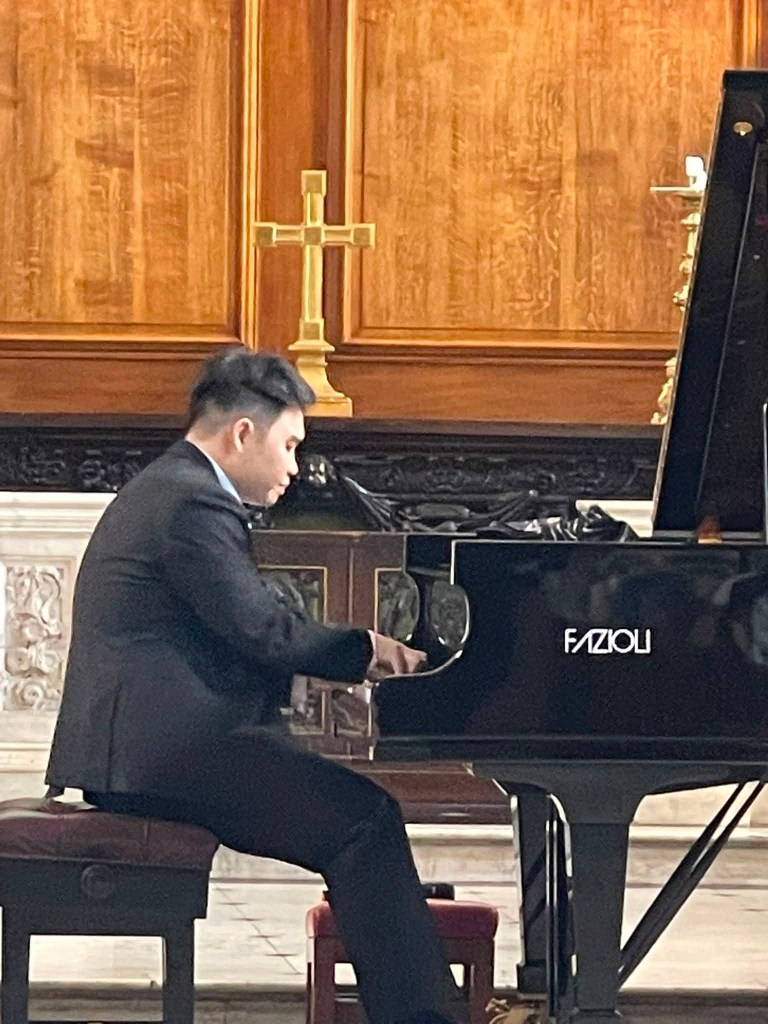
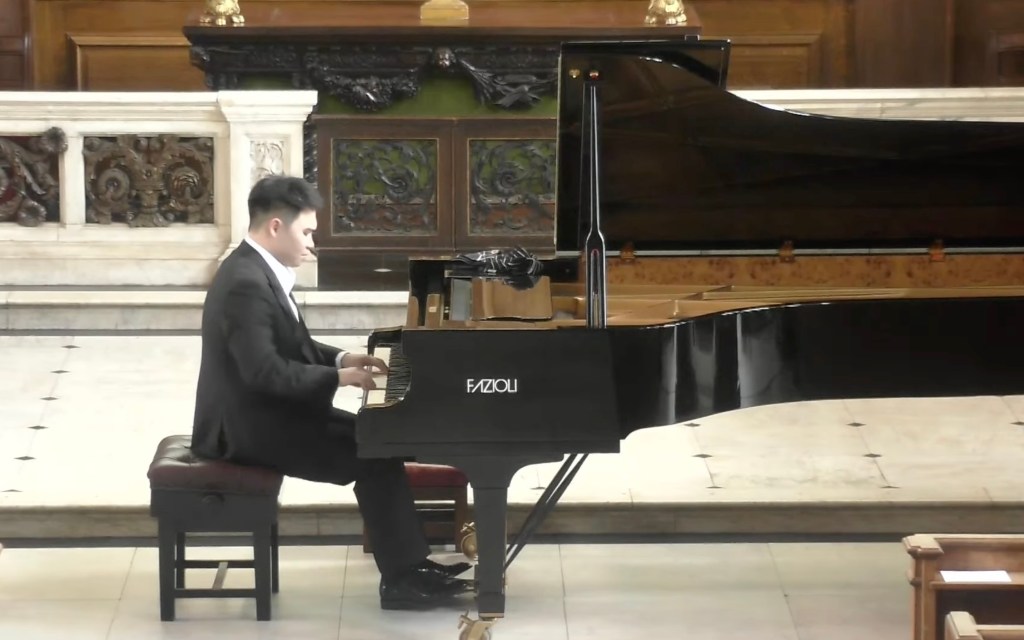
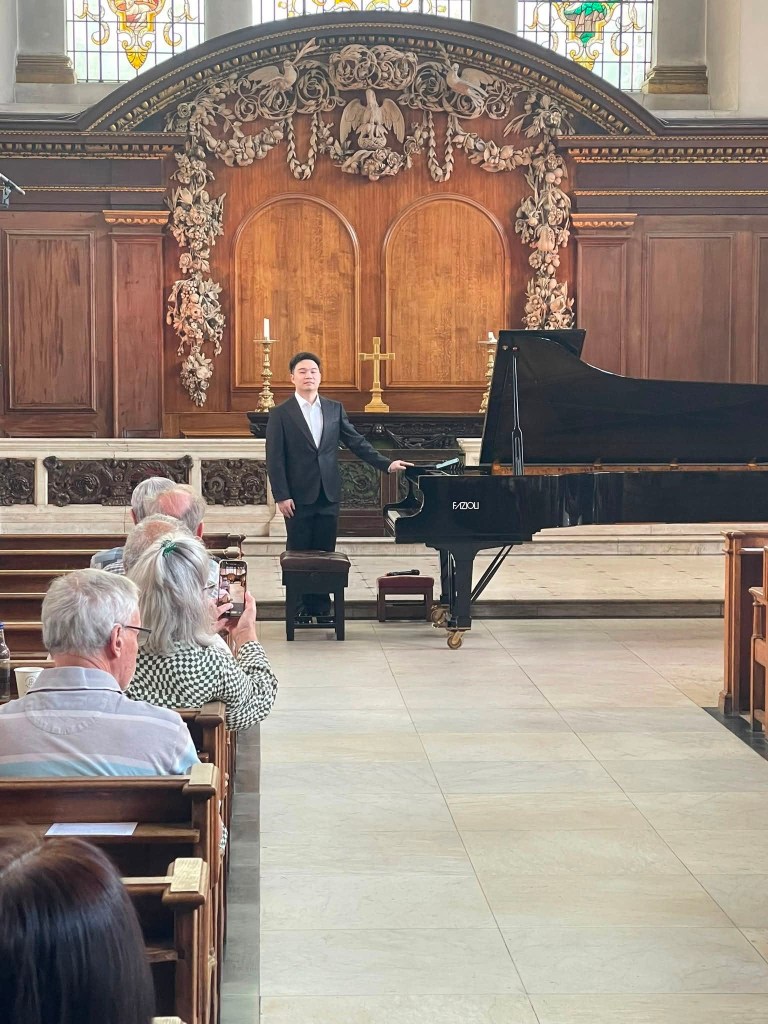
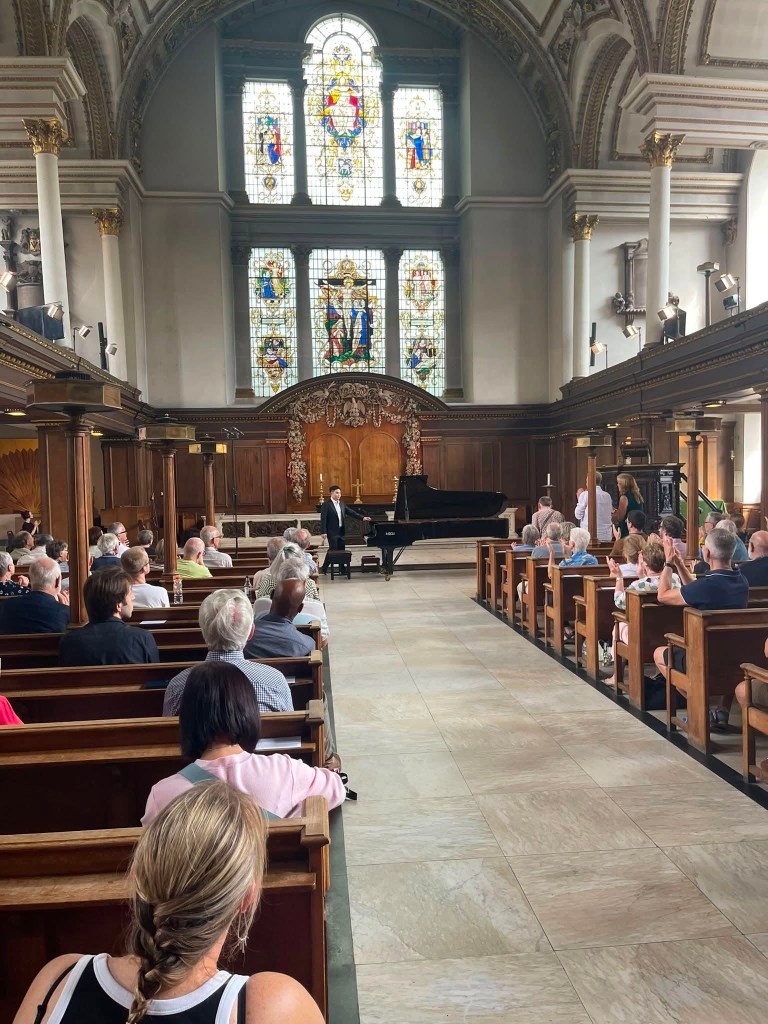
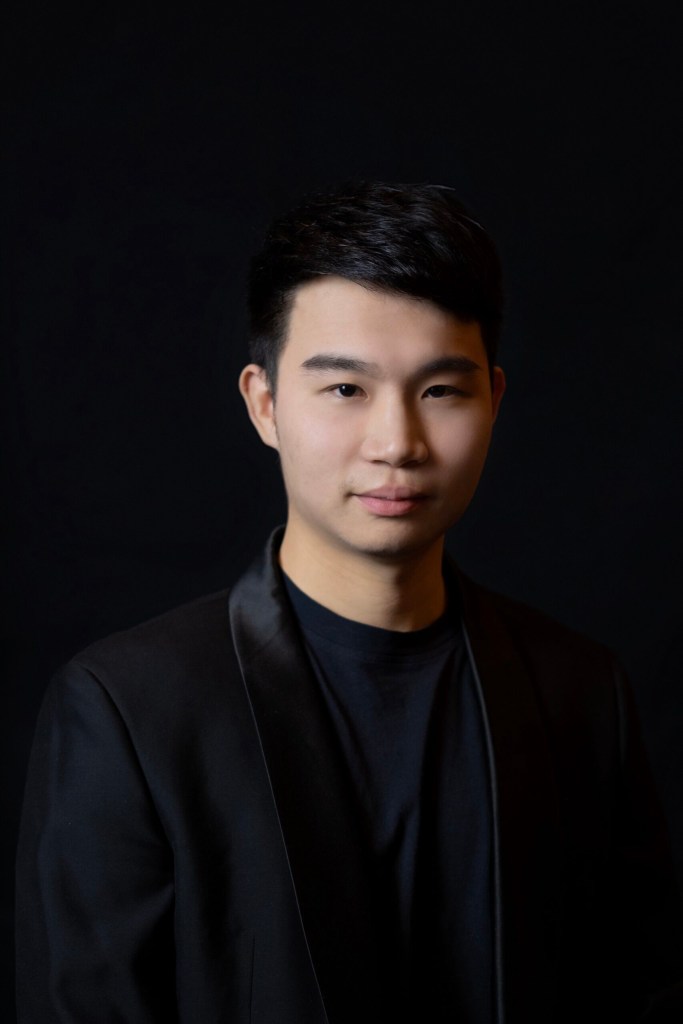
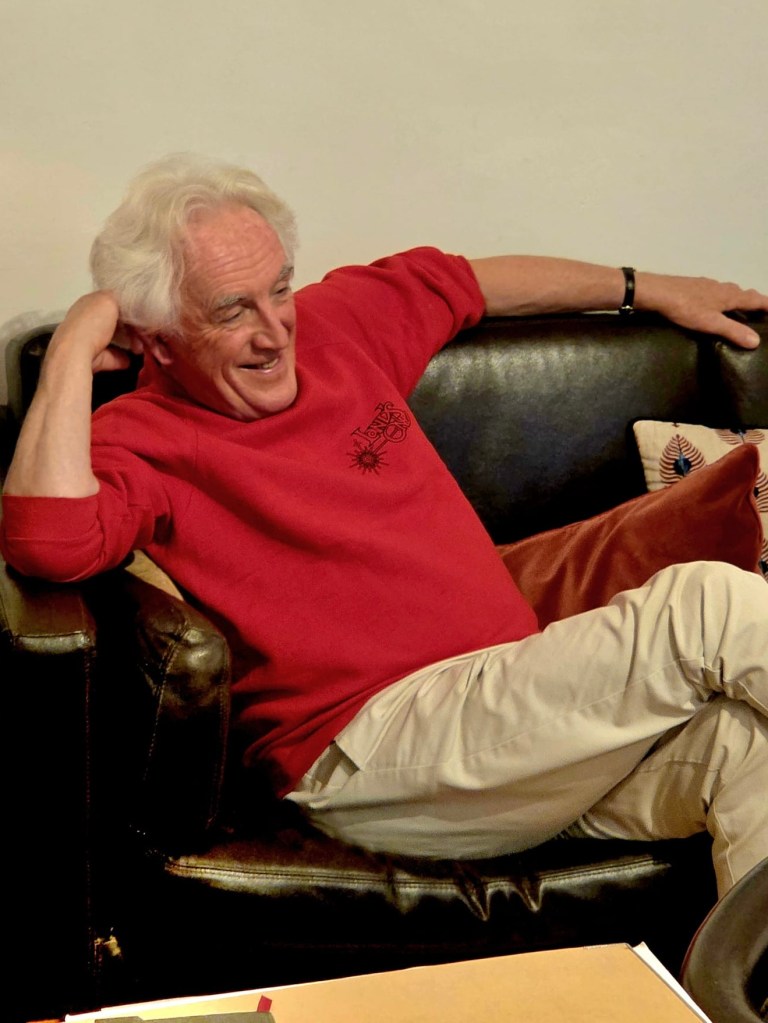
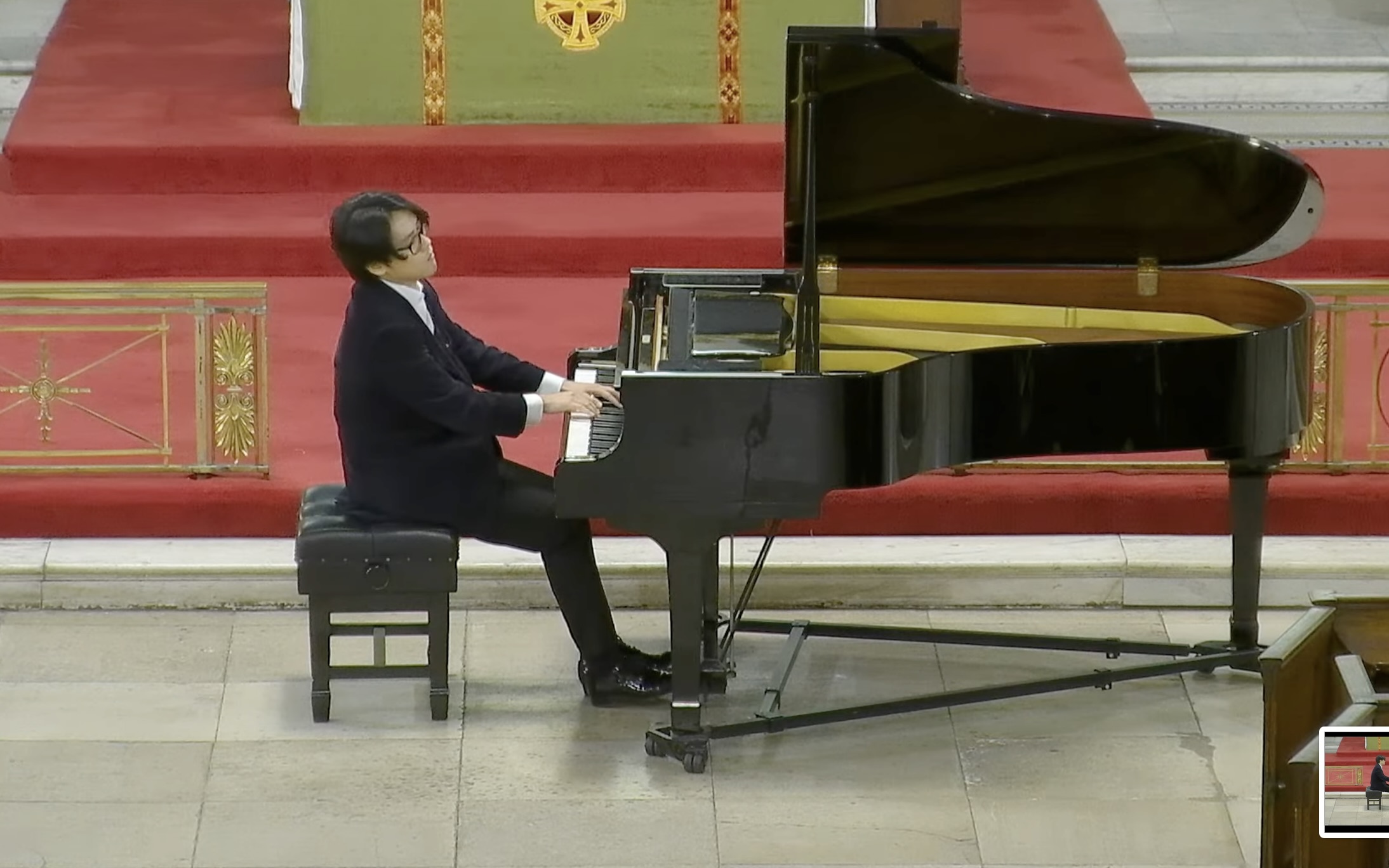
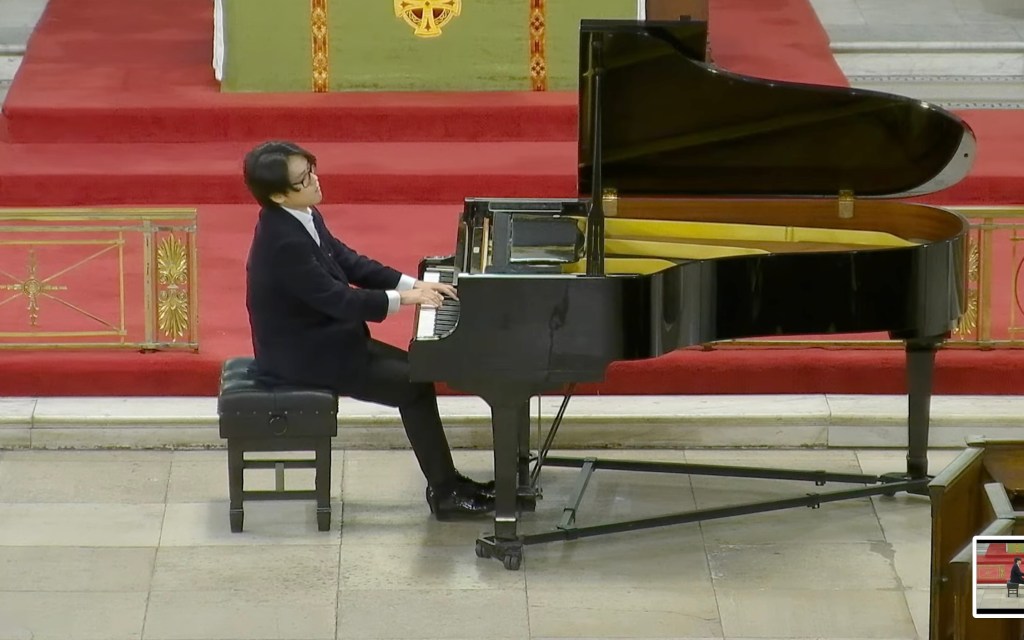
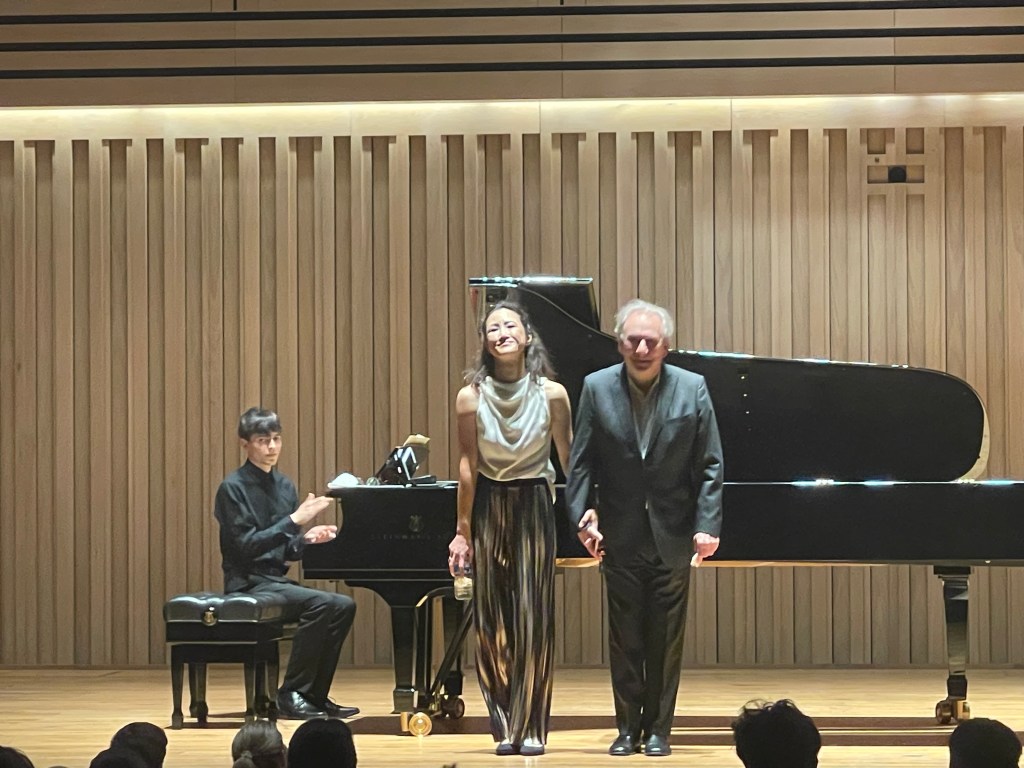
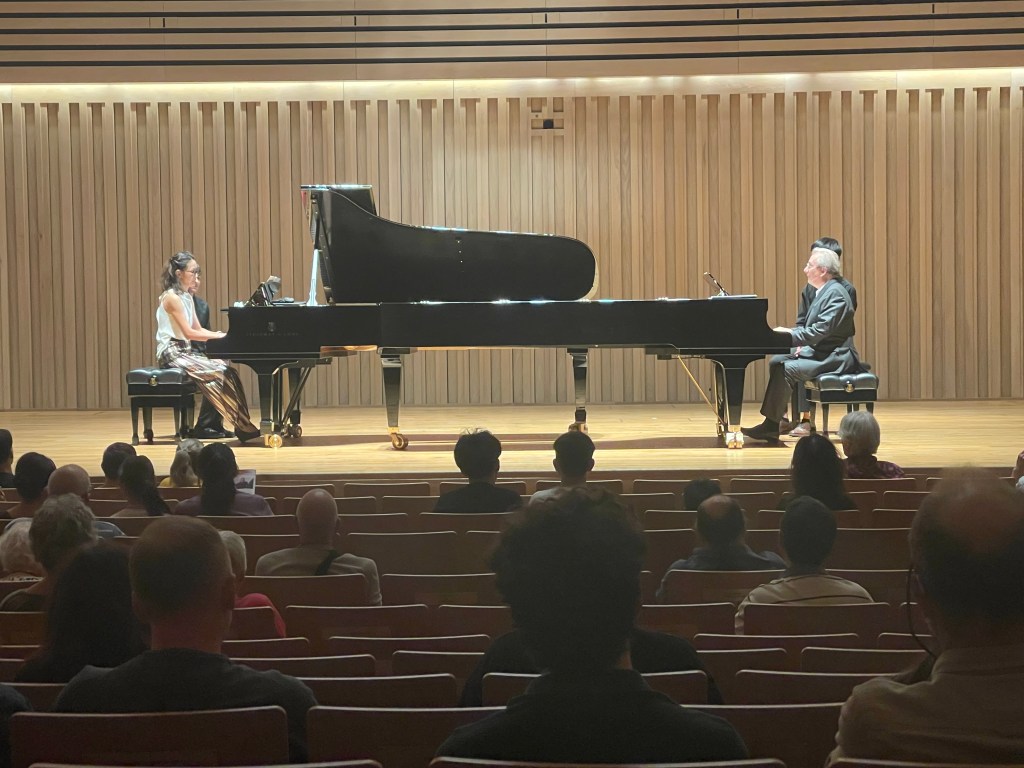
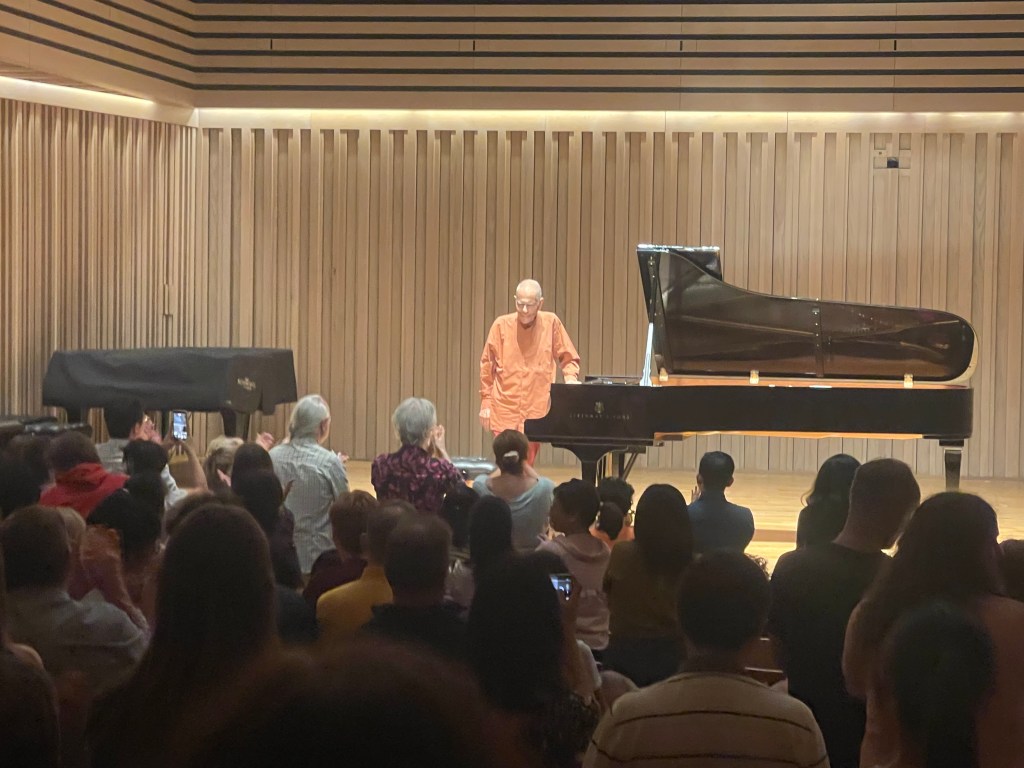
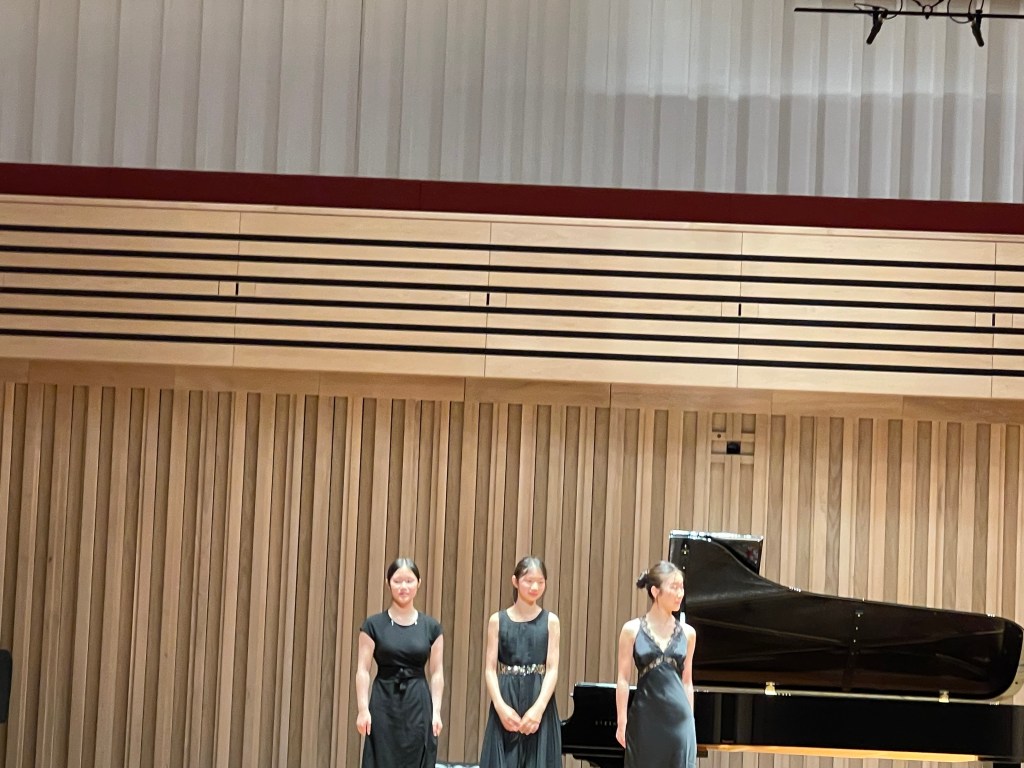
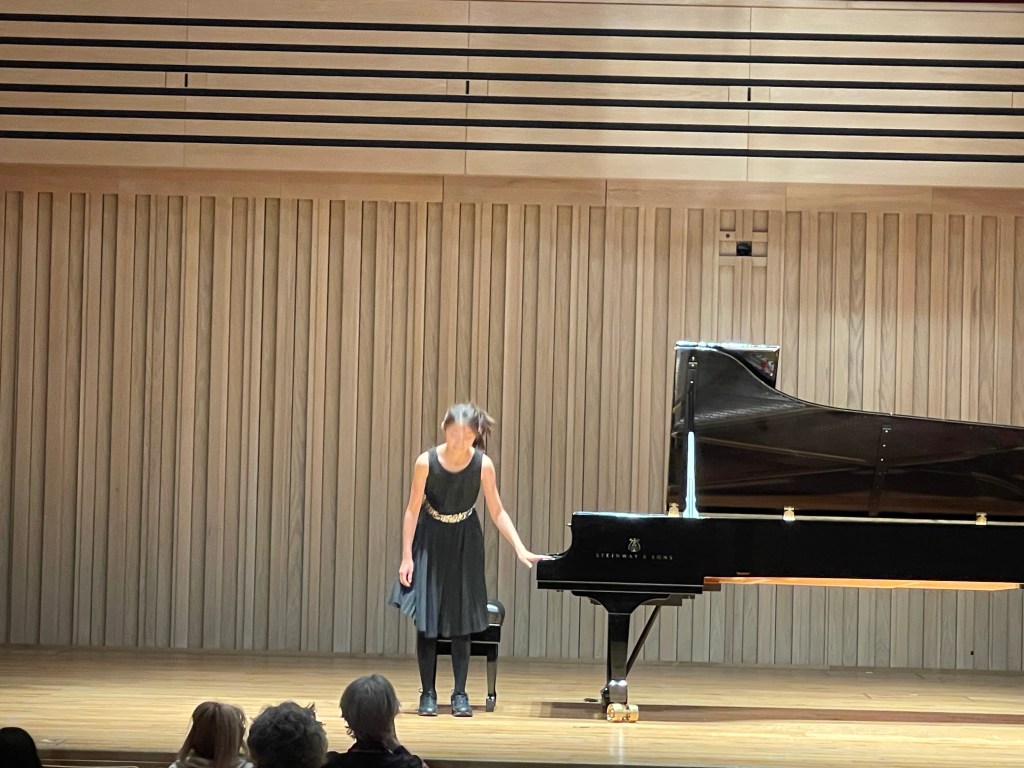
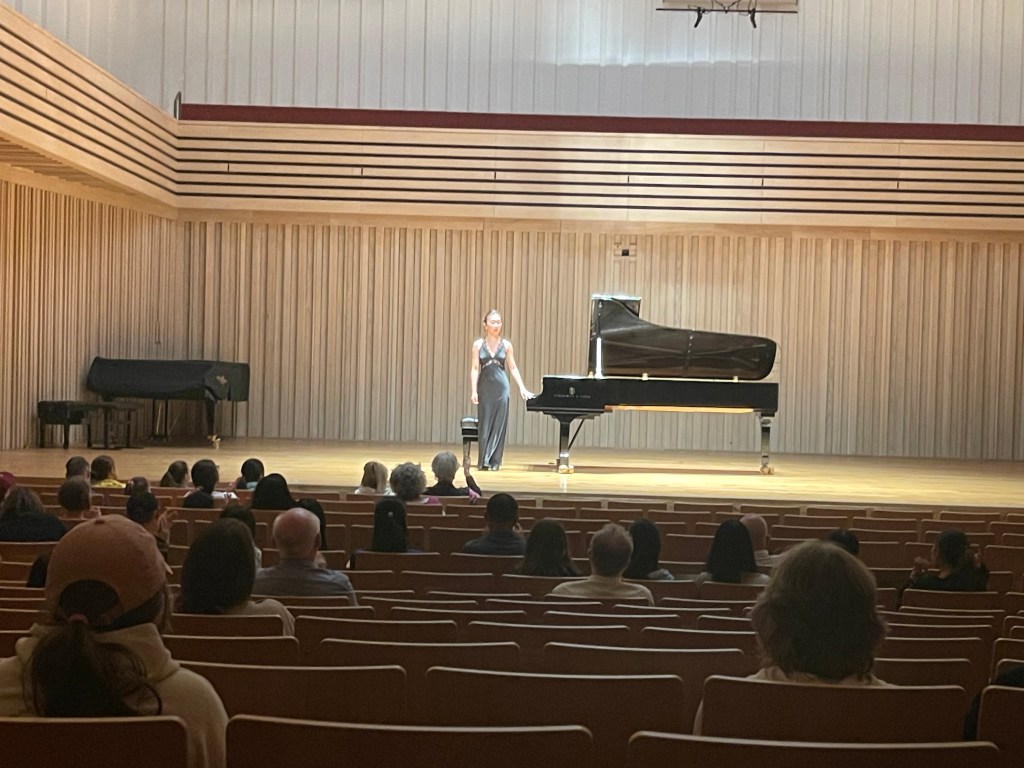
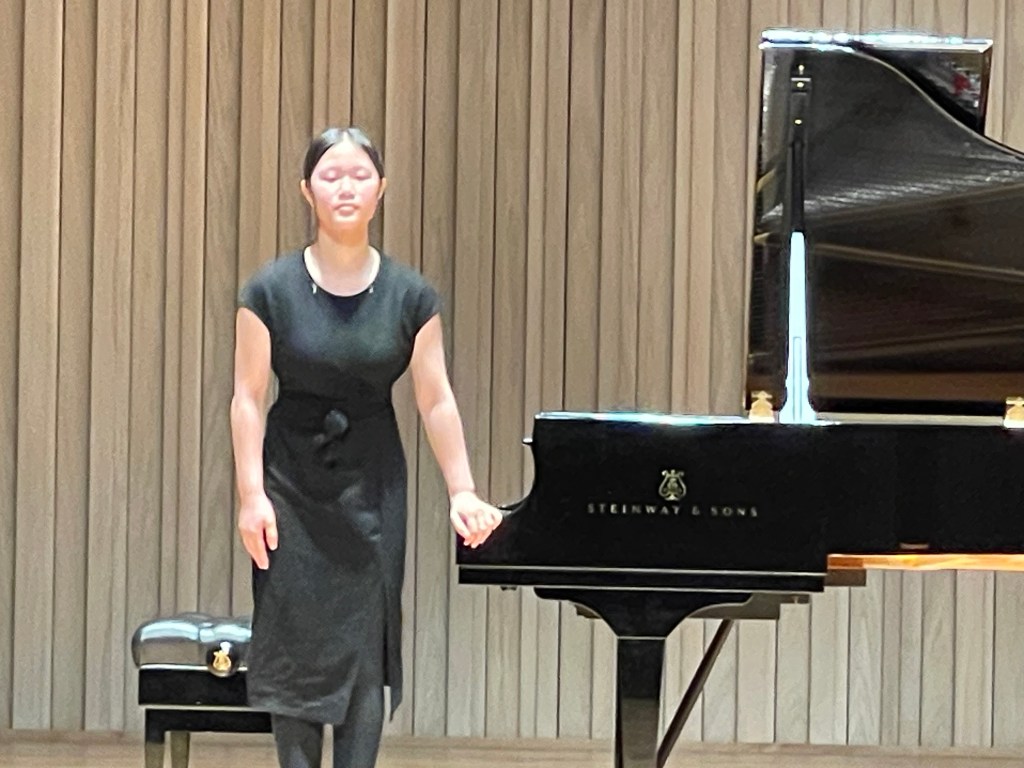
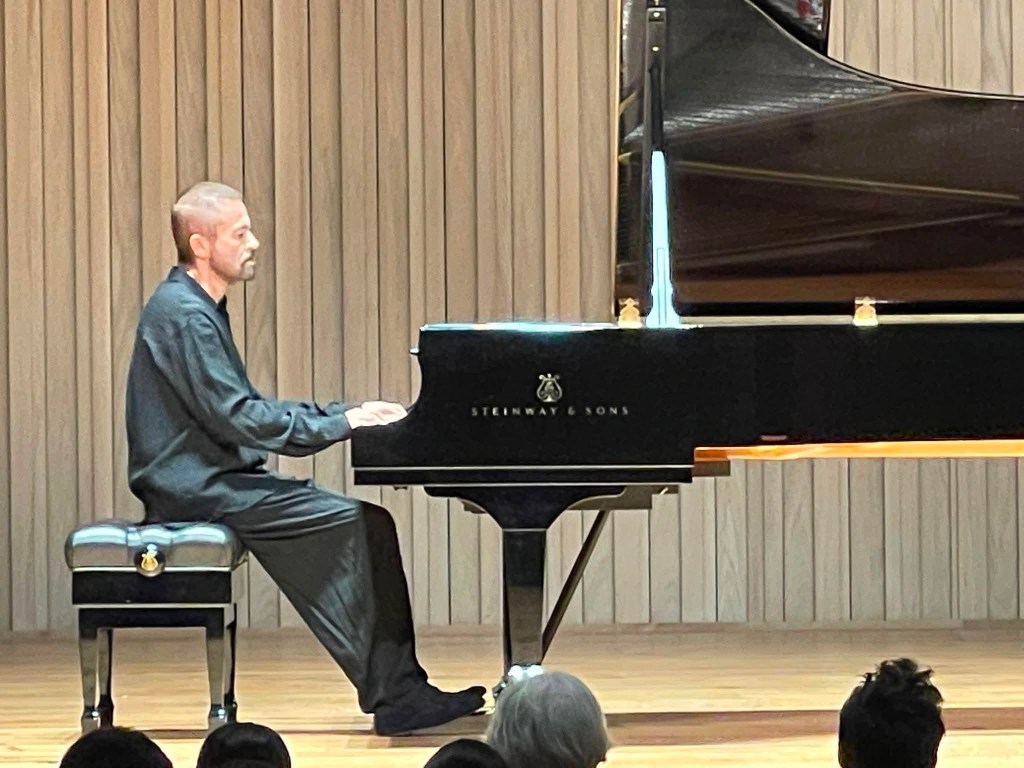
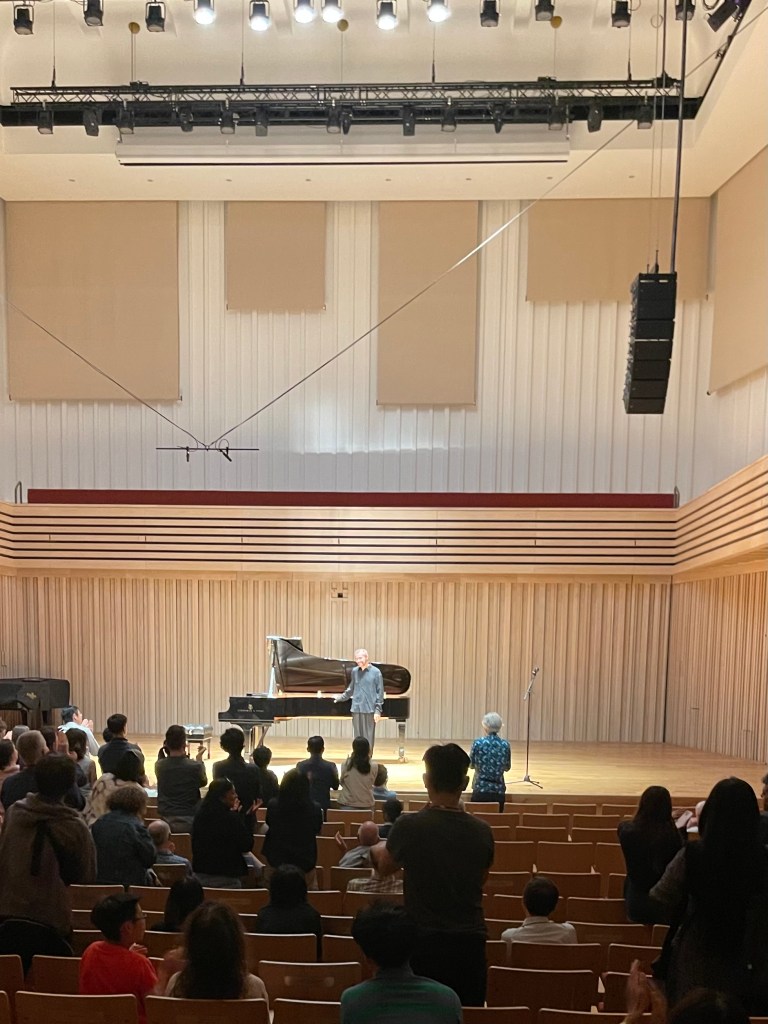
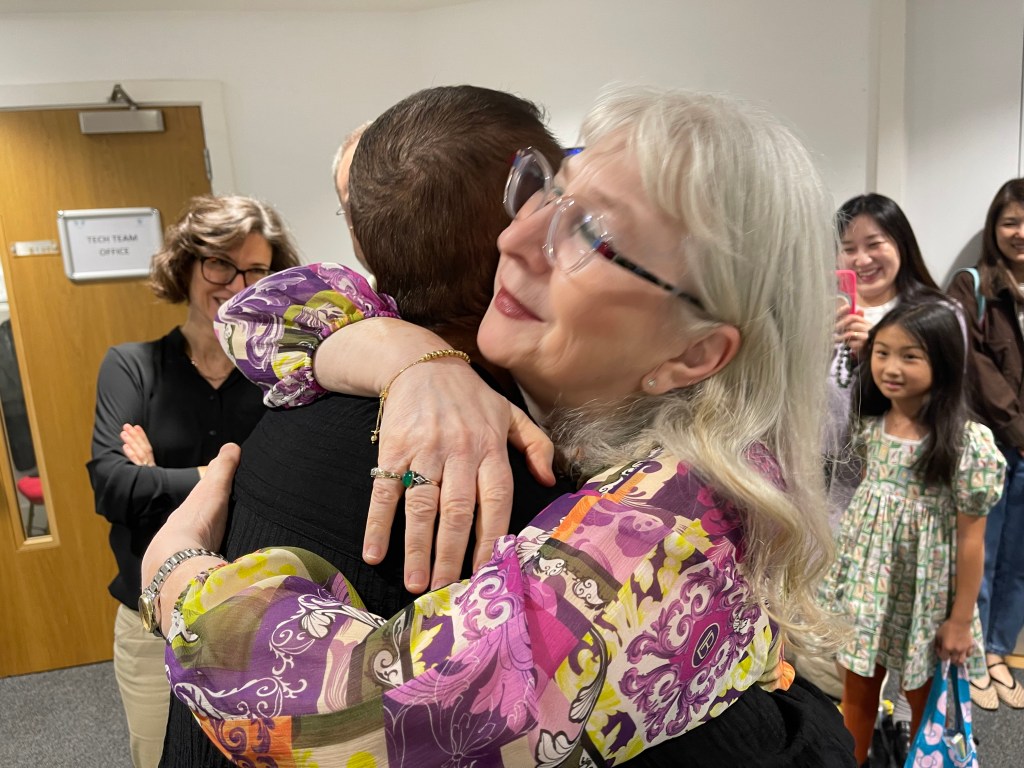
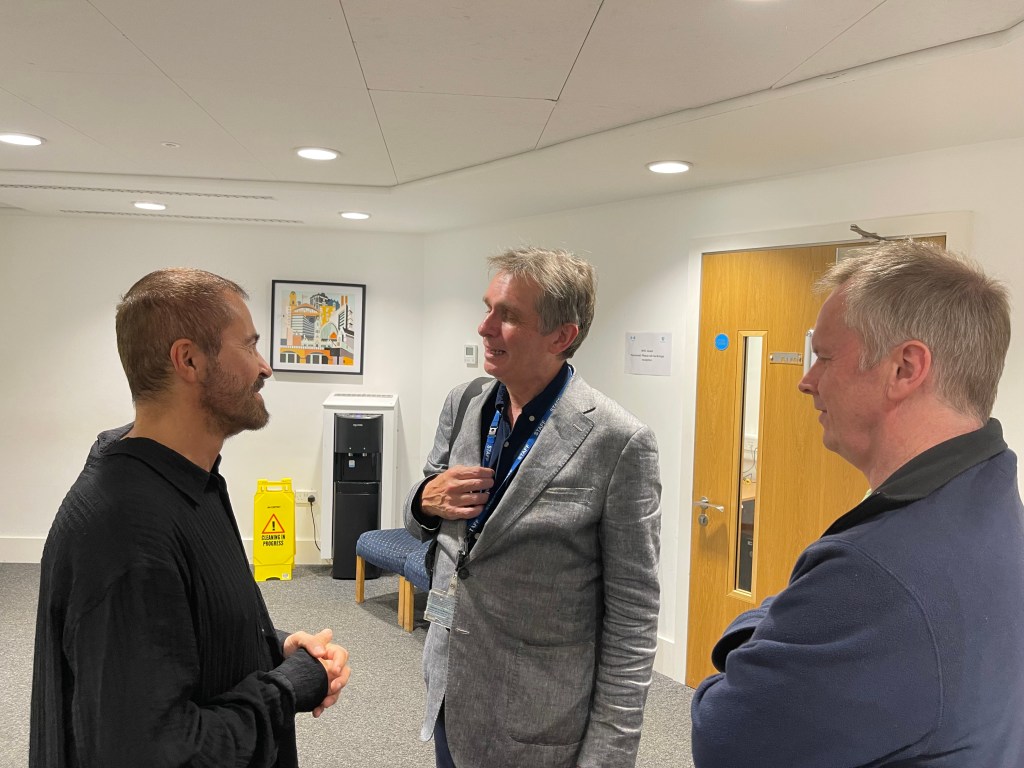
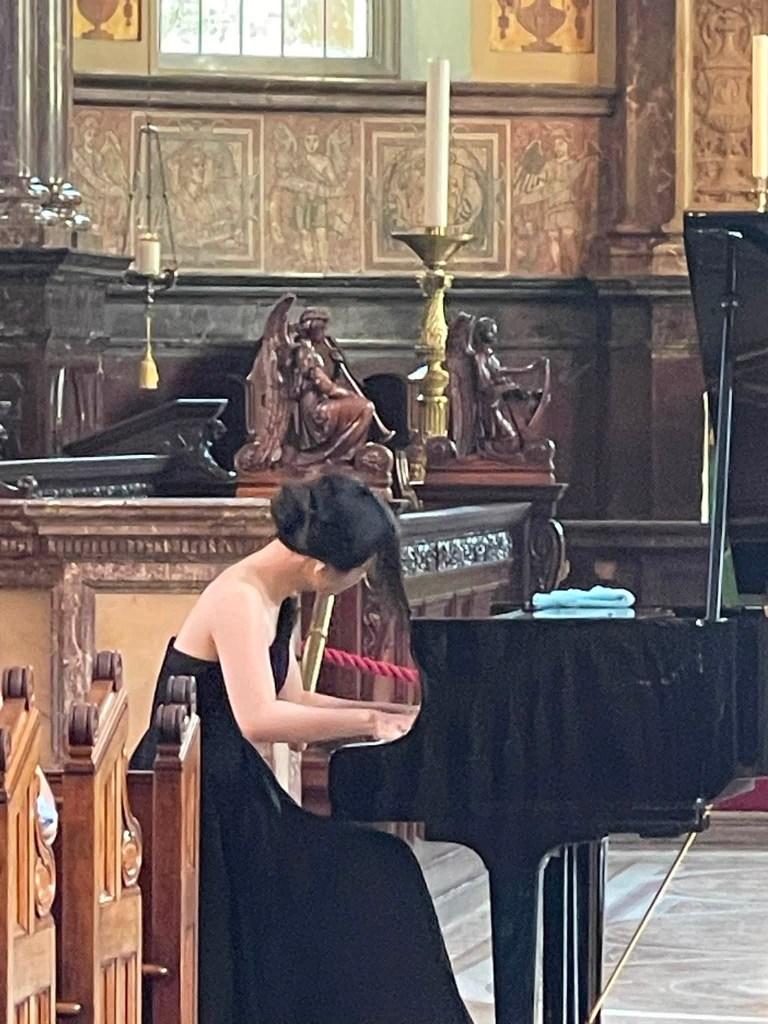
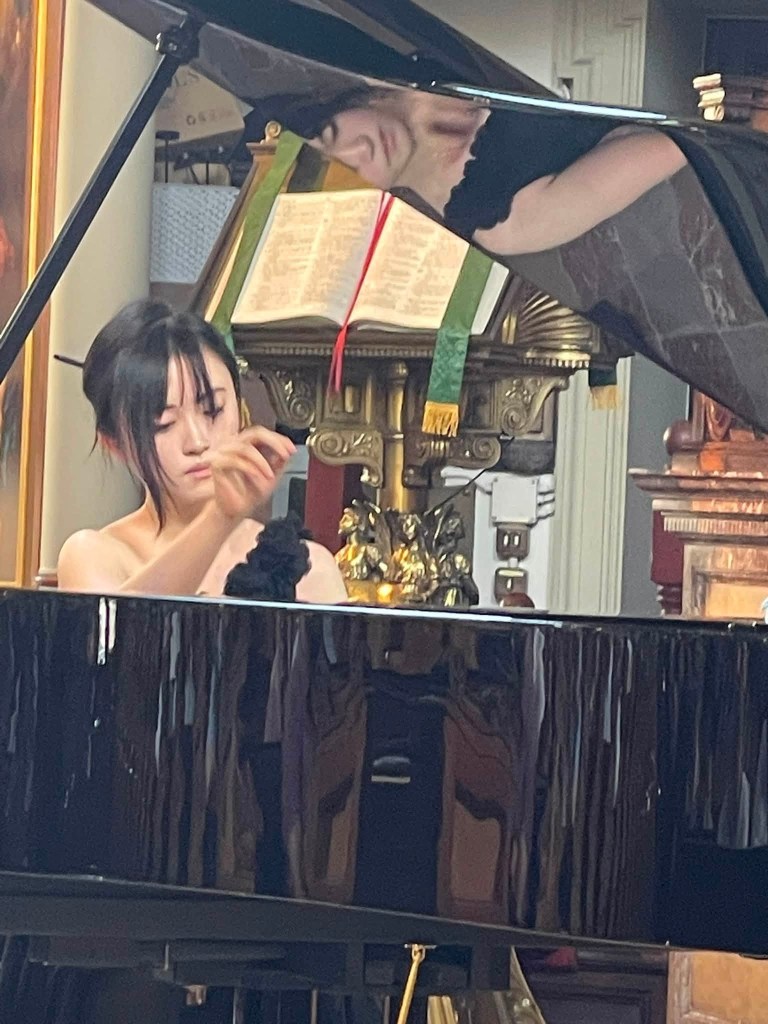
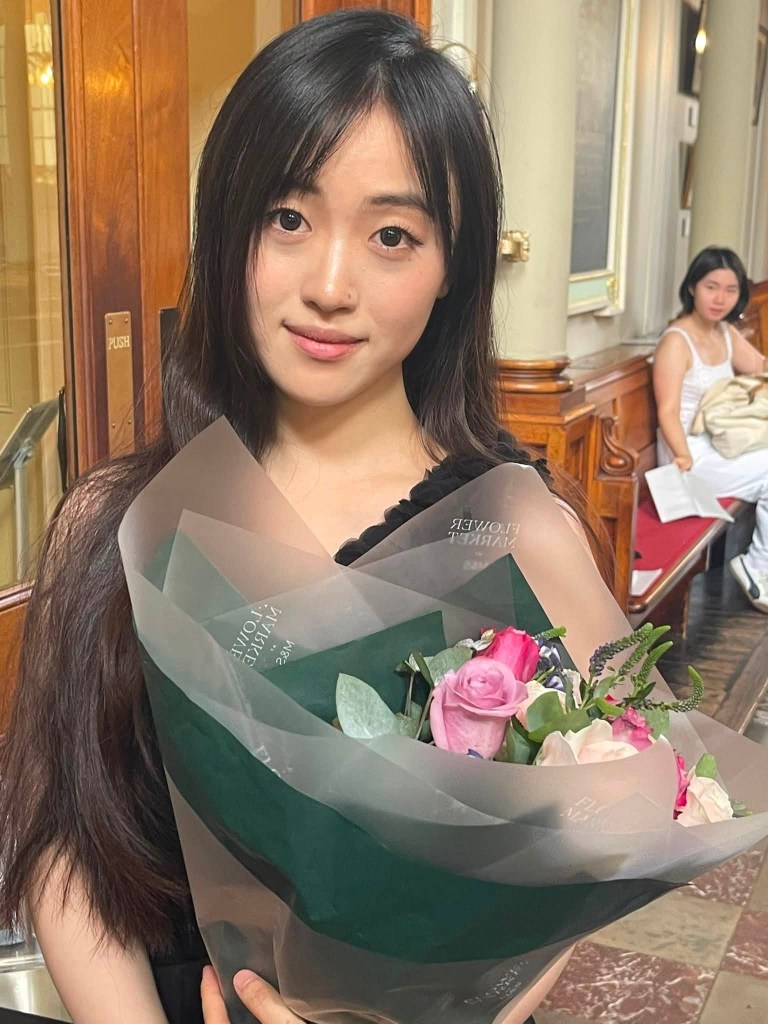
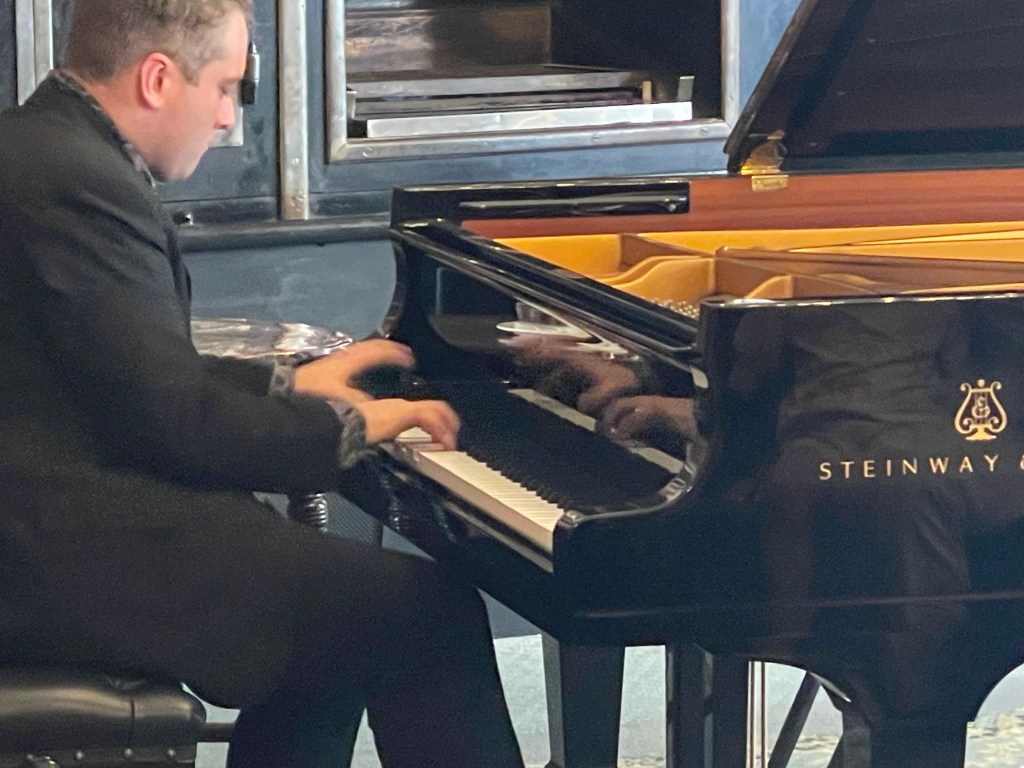
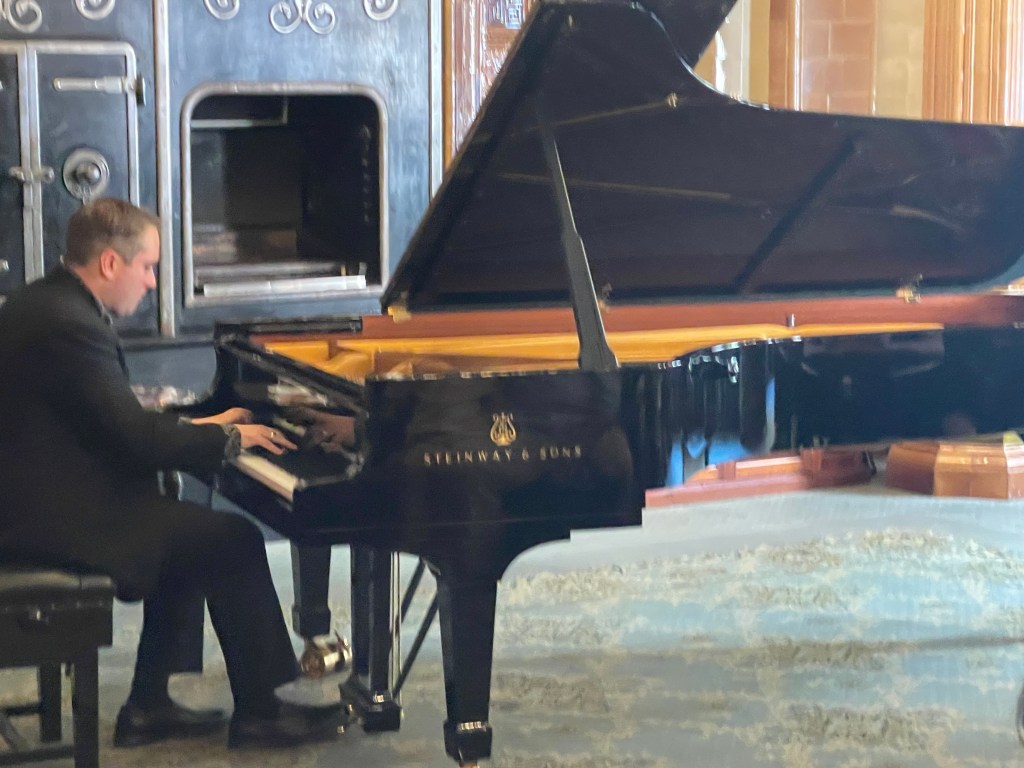
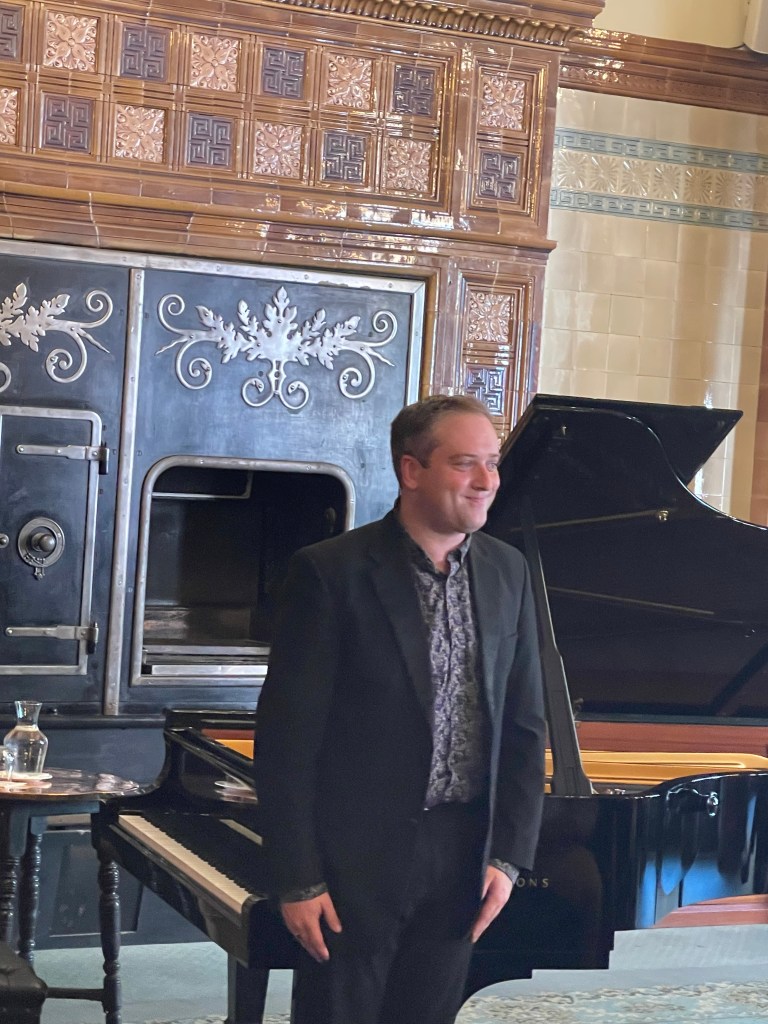
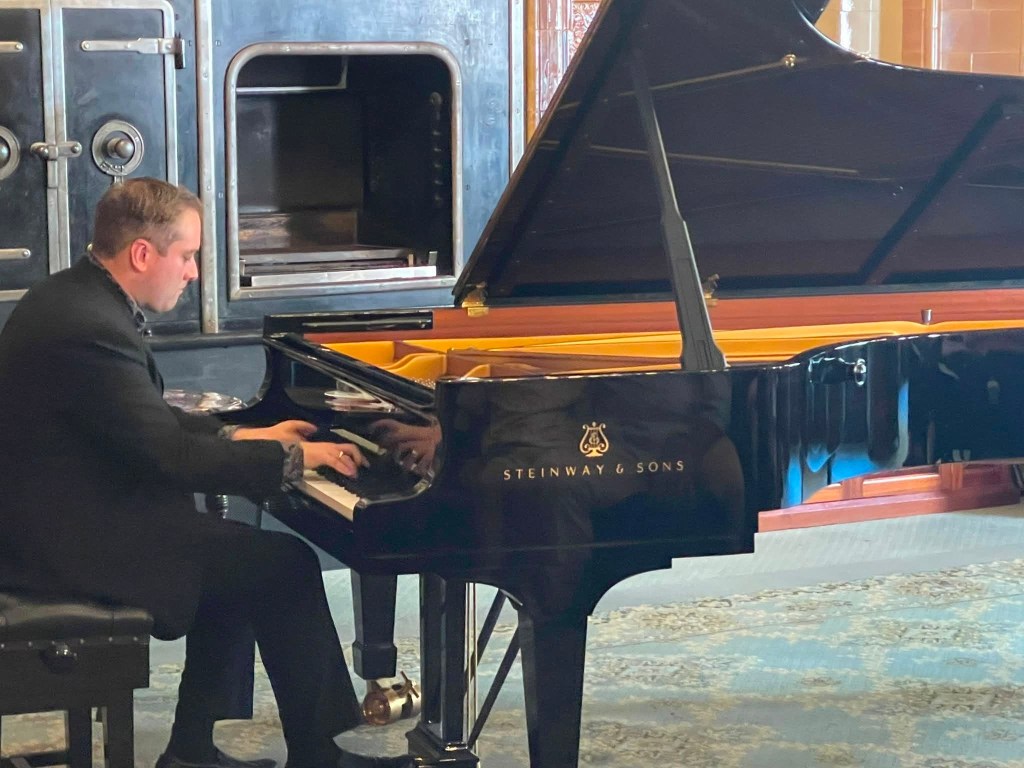
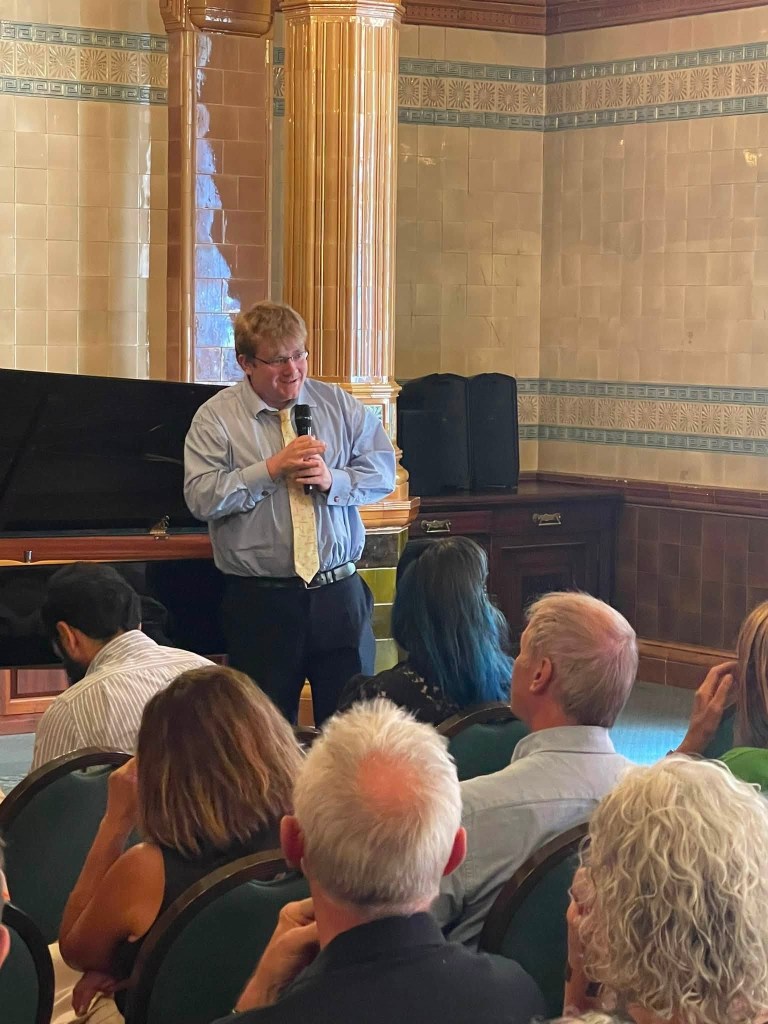
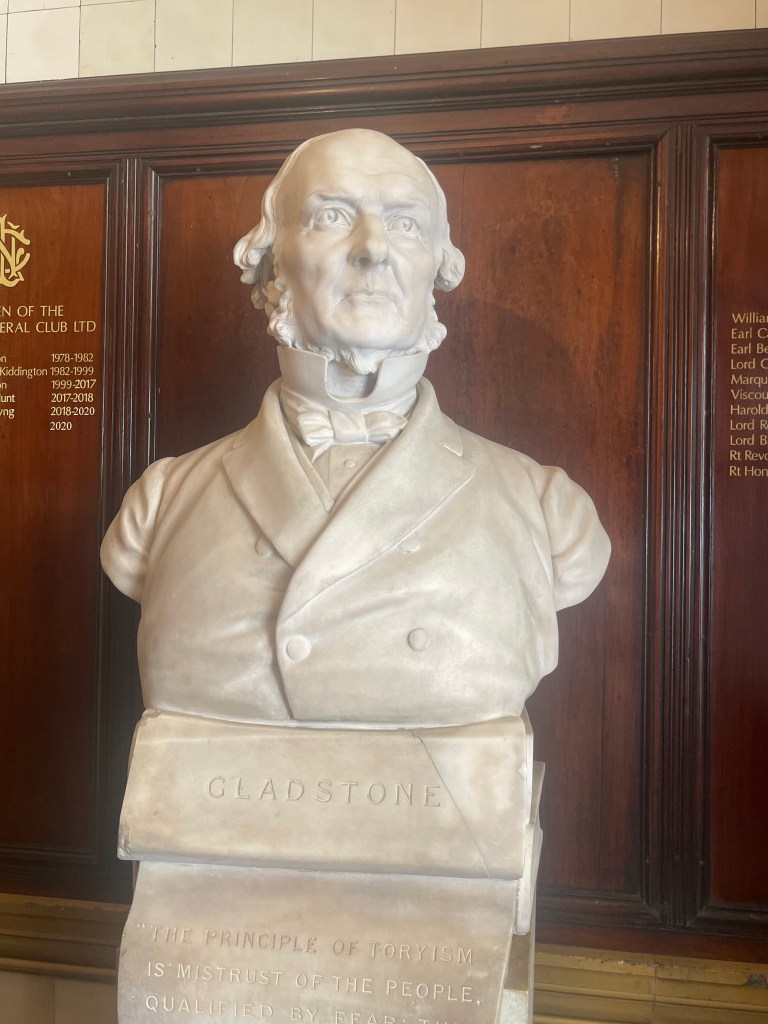
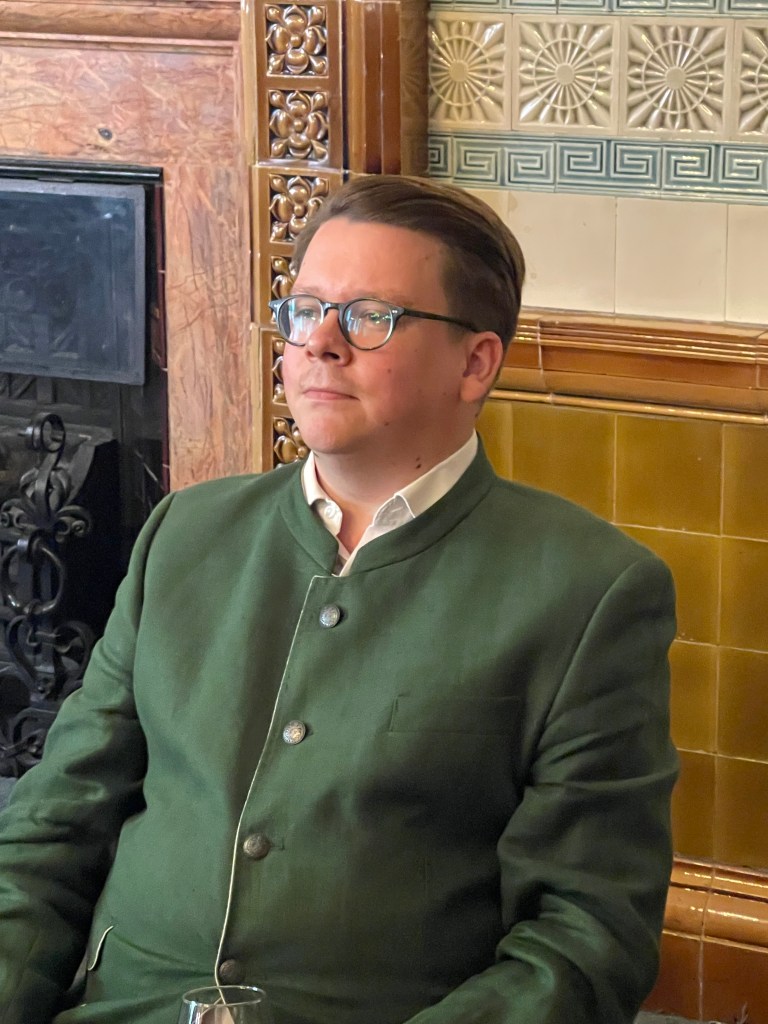
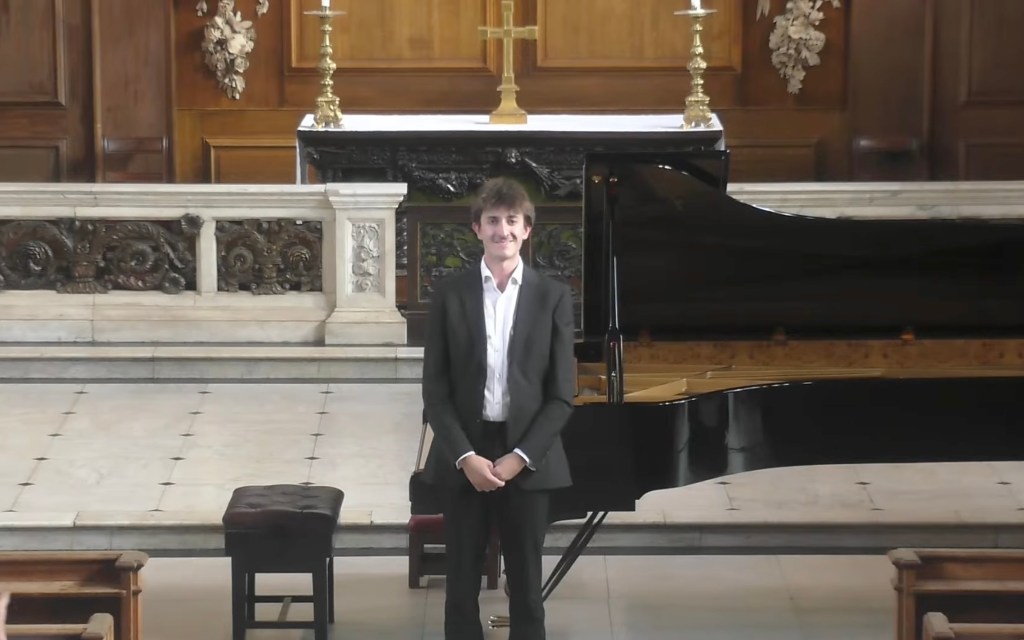
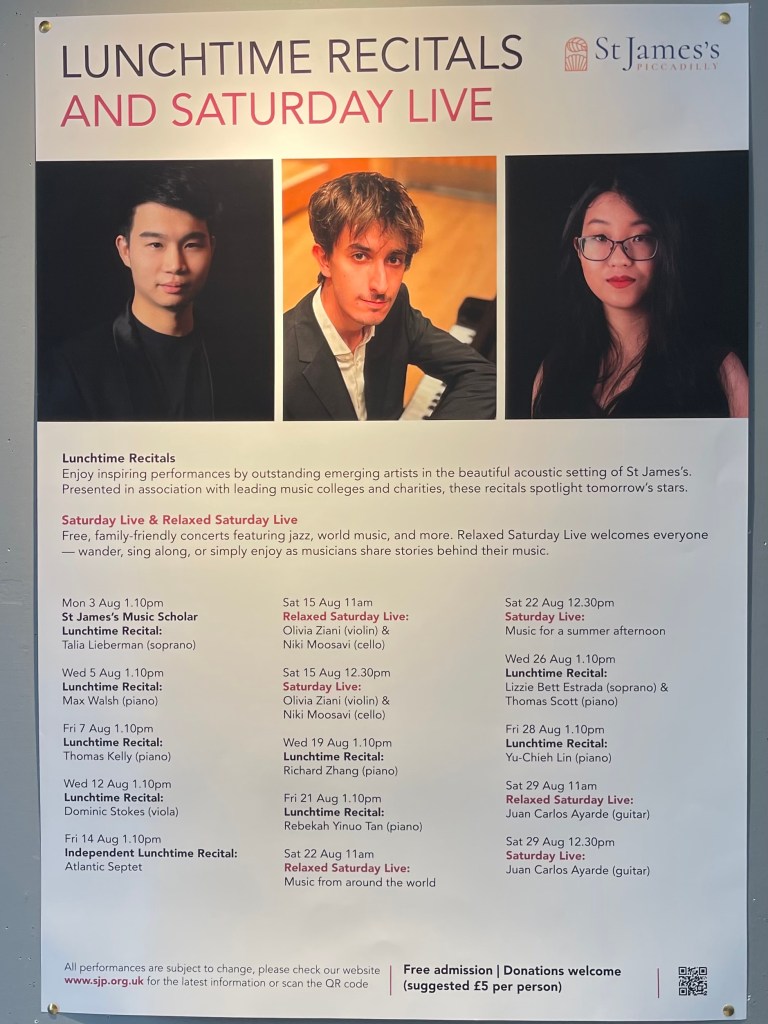
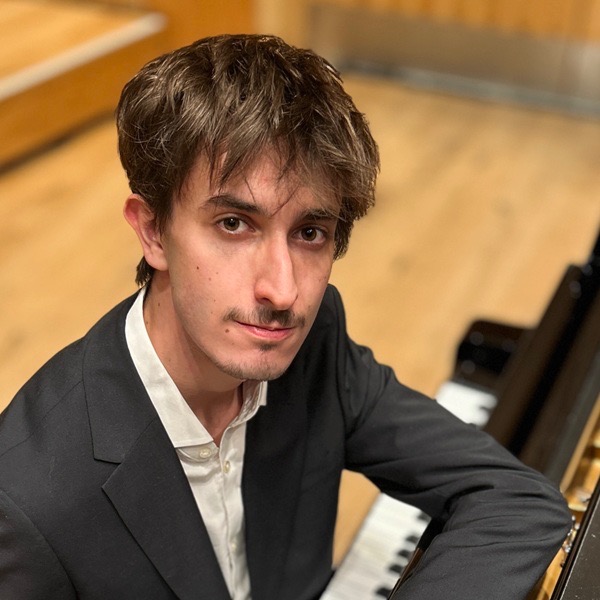
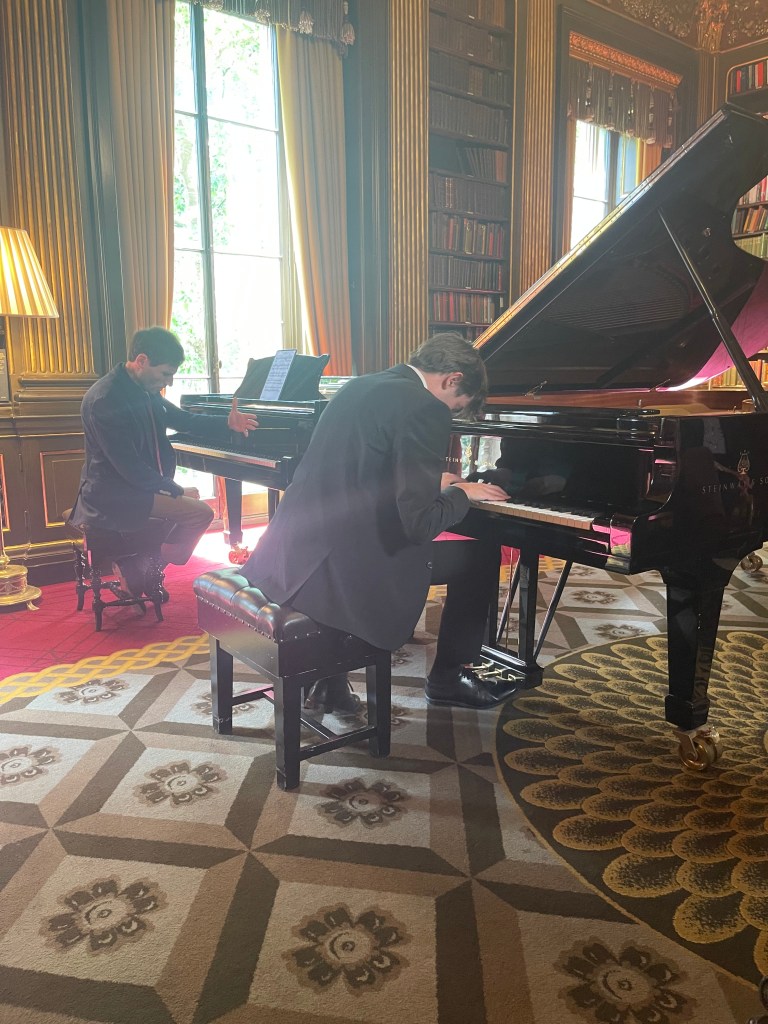
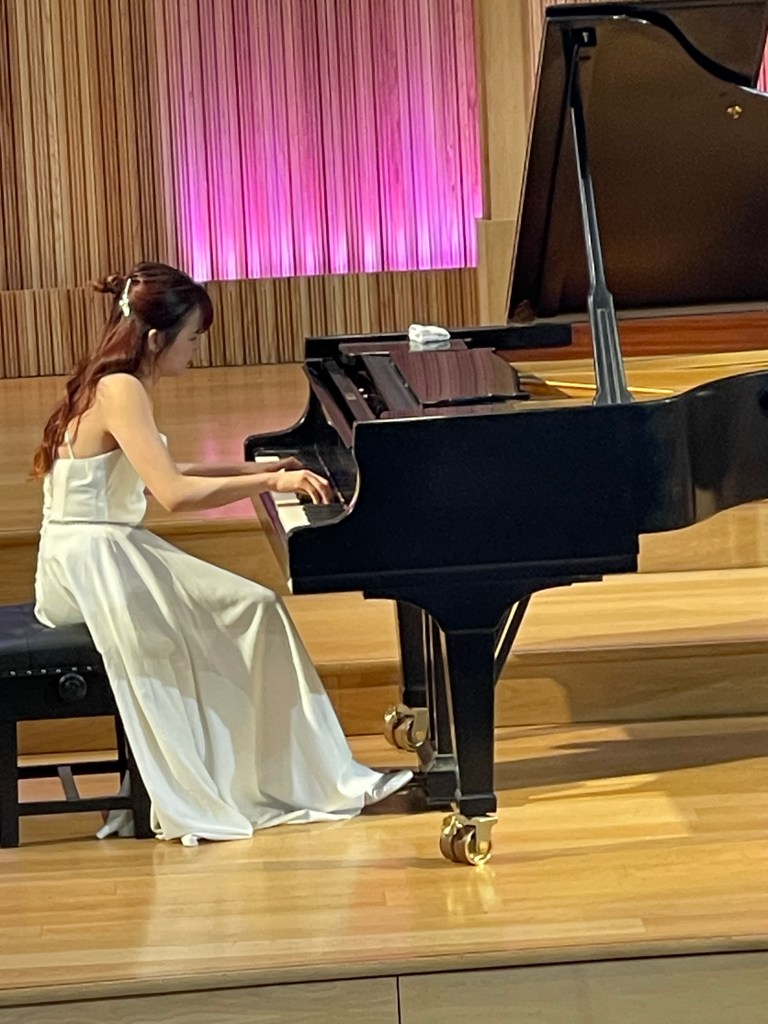
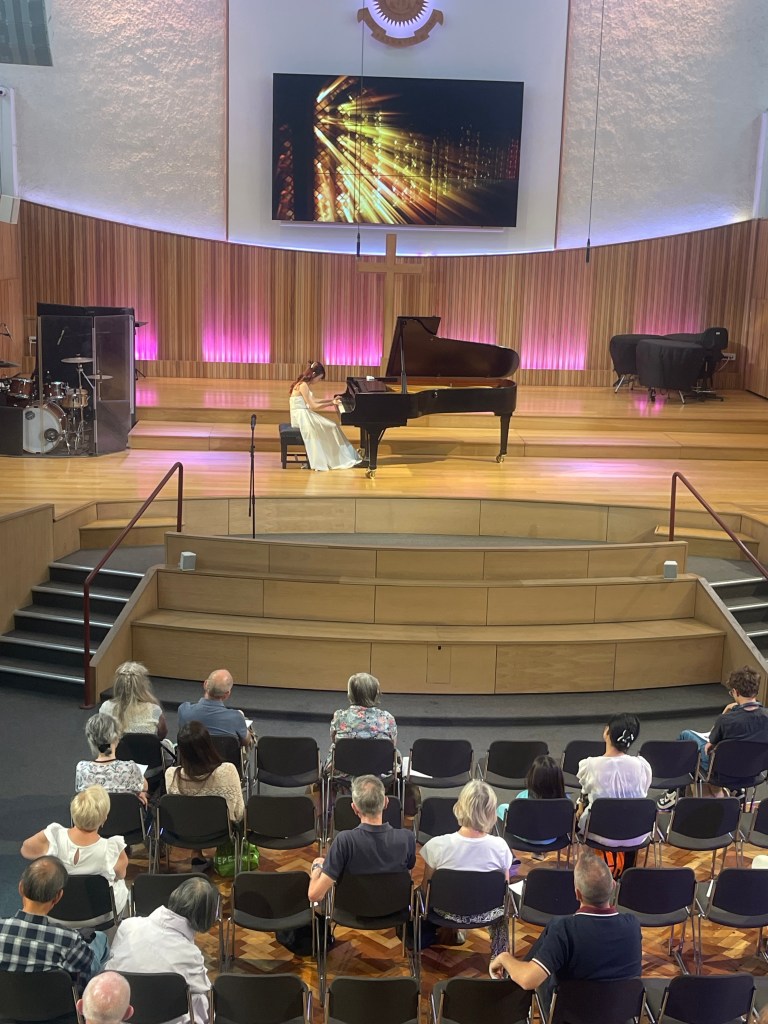
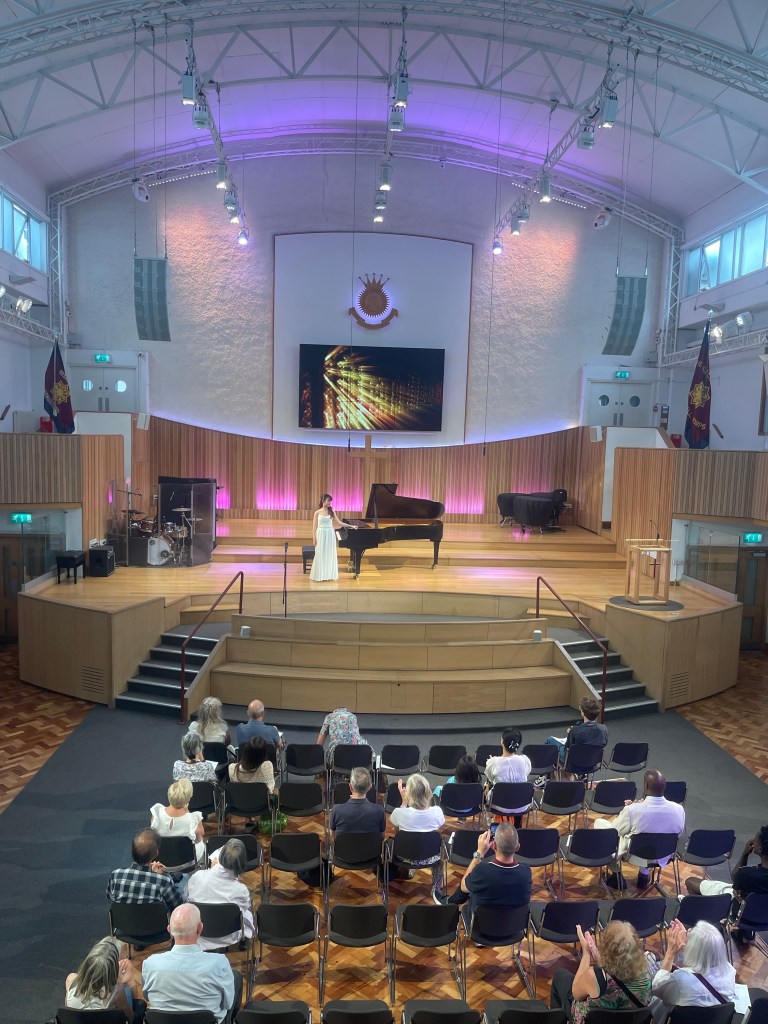
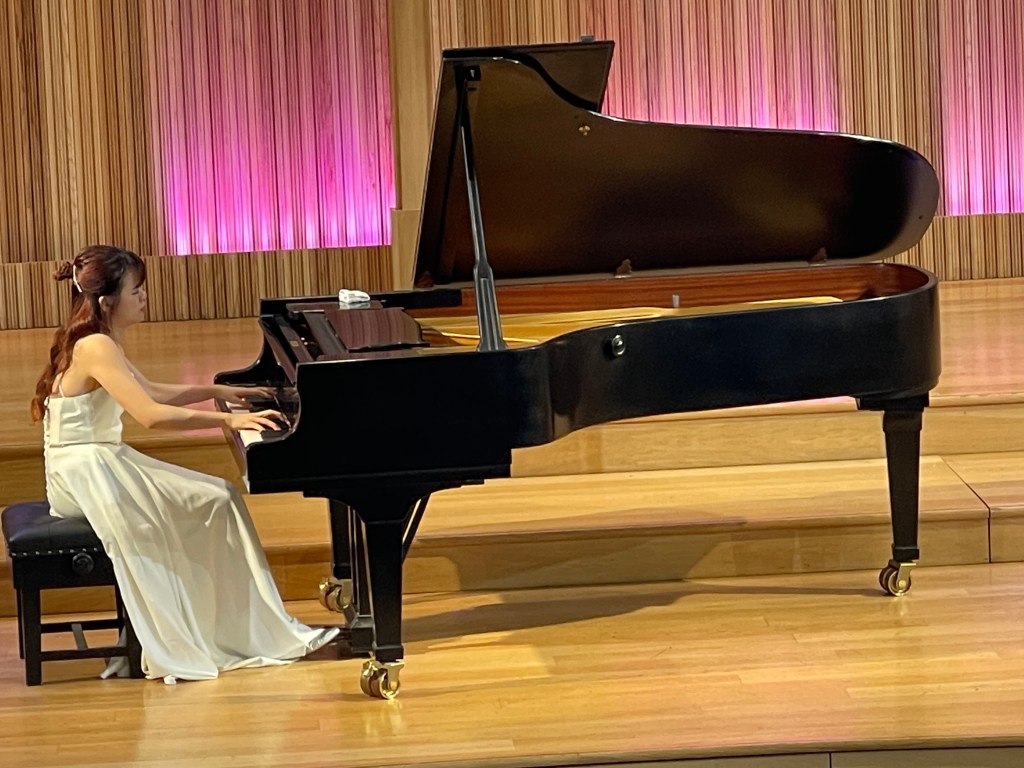
A young Sicilian who had to come to New York to be aware of what poetry he has in his soul. Bequeathed to him from a childhood surrounded by love integrity and feelings that transcend any rhetoric but go straight from the heart to the heart. A sensibility of poetic beauty of refreshing simplicity and innocence and a musician who has a transcendental mastery that allows him to share with us emotions and sentiments of heartrending sensibility where words are just not enough.
Miraggio with etherial sounds of two voices communing with each other – the present and the past- a resonance in which Alessio captures that ‘fragile space’ with fluidity and glowing beauty. Sumptuous rich sounds as the memory becomes more vivid with the waves of the ever more unreachable sea of his childhood and a musical outpouring that owes much to the poetic sound world of Debussy.
La Nebbia nel Piletto weighted chords played with gleaming resonance like a clock chiming and time passing, with deep bass glowing sounds reaching out to us on high.
La Forest dei Desideri, back to reality with music with a wonderful forward lilting melodic line .Wafts of sounds pass over the keys as the music carries on it’s inevitable course disappearing into the distance as it finds it’s own way forward.
Due volpi nella neve, after pieces in 12/8 and 4/2 a simple down to earth Waltz time as the childhood complicity with his brother Giorgio brings warmth and emotion to his playing with a rich palette of sounds and a continual forward movement . Cascades of notes, unexpected, clear the air taking us back again to that cocoon of sounds of a submerged ‘engloutie’ ever ready to resurface.
Un’ultima volta in common time as Alessio recaptures his childhood tunes. Played with poignant beauty as a haunting echo is heard throughout with remarkable poetic fantasy. A life affirming declamation as Alessio’s mastery of balance and sound create such extraordinary vivid pictures in sound.
Acchiappasogni, marked ‘lento fluttuante’ with a magic atmosphere created by mirrored images . A single note shines, ever present pervading the whole atmosphere evoking the silence of the night. A central episode of beguiling insistence opens up as night is now suggested by a chorale of sumptuous fullness with the tension rising only to dissolve with the relief of a re-found peaceful existence. Calm is restored but not before a mighty chordal climax played with a remarkable lack of vertical hardness as Alessio’s playing resonated within and without, as his beautifully whispered coda evoked the re-found etherial peace of resonating beauty.
Servilismo with a deep brooding and a luminosity of meandering uncertainty played with searing intimate intensity and questioning.
Altalena liquida. ‘Sbilenco flessibile ‘. A quixotic juxtaposition and a continual change of mood and character played with sumptuous chameleonic sounds with even the last chord played with ‘martellato’ impatience . It is marked ‘piano’ in the score signifying that music like emotions and memories are continually evolving within the depths of this young Sicilian poet of the keyboard. One of the shortest of these miniature tone poems
Due Amanti del Sud ‘Polemico-contrito’ with it’s continual chattering and bickering rhythmic changes but sweeping all aside with a wash of sounds across the keys as a seemingly peaceful coda of appeasement is heard with glowing beauty but with its inconclusive final comment growling deep in the bass.
Fantoccio A grotesque march played with bewitching rhythmic elan as this young man shows us with elusive changes of character, trying to walk before he can run, realising with an ending just thrown off with the ease and nonchalance of what love and expectation can really mean .
La razza di rimanere a terra ‘Calmo’. A beautiful evocation of the sea that shaped Alessio’s life from an early age but that always, with fear and respect, he could portray the washes of sound with the constant lapping present in a piece of searing beauty and turbulent uncertainty .
Abisso. Rhapsodic, a long drawn out barcarolle of sensual beauty with a wonderful sense of balance where the melodic line was revealed with a ‘poco meno mosso’ of poignant beauty somewhat reminiscent of the early works of Chopin.
Lasciari Epilogue. Golden sounds of repetitive radiance and expansive luxuriant beauty with the regularity of a heart that is beating with constancy and is a love letter of untarnishable significance inspired by his childhood in Sicily.
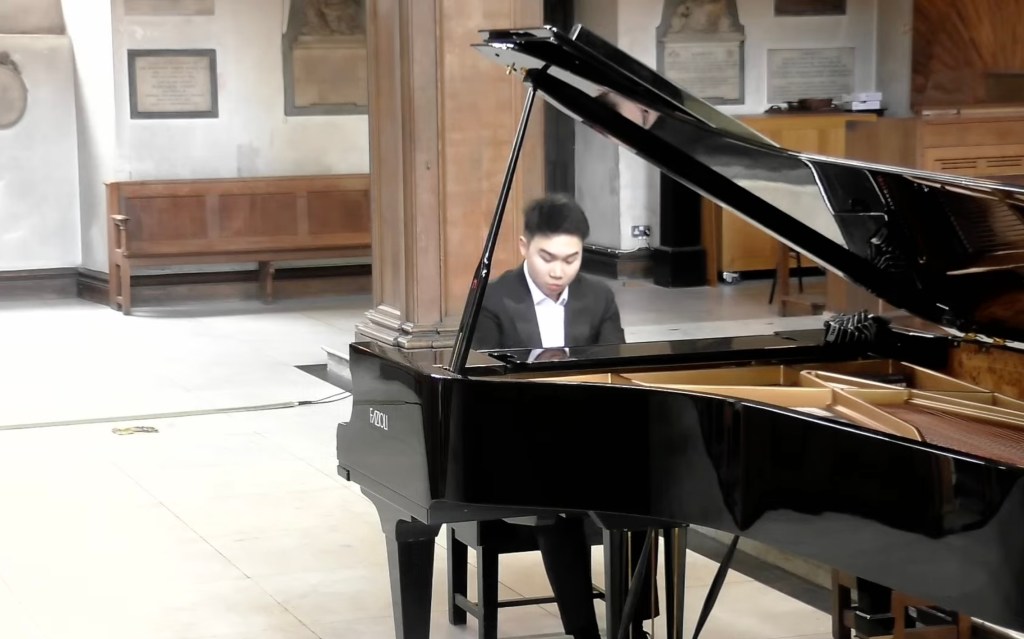
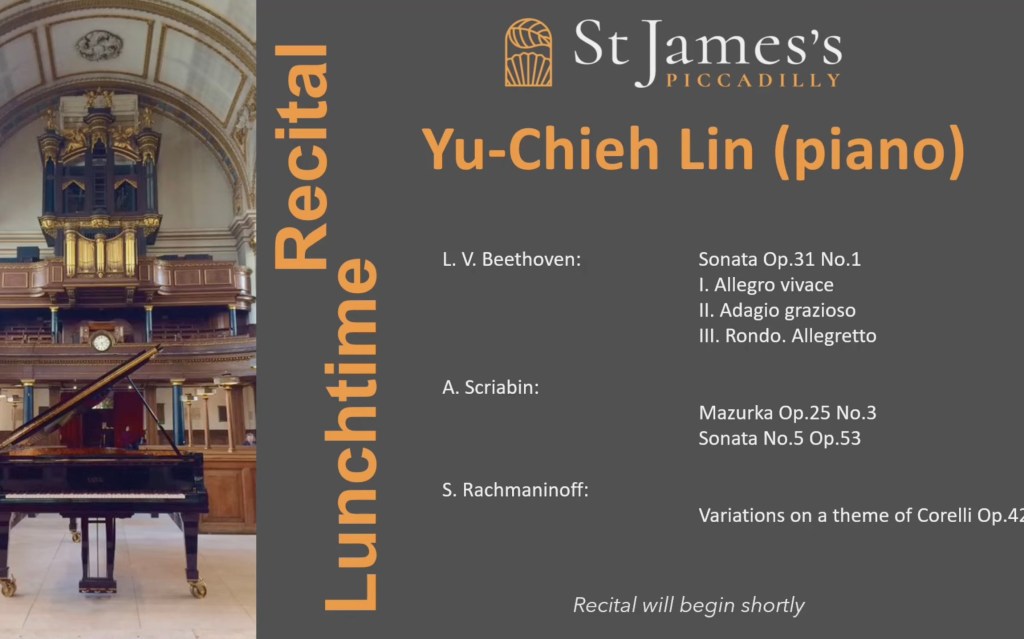
L. V. Beethoven: Sonata Op.31 No.1 I. Allegro vivace II. Adagio grazioso III. Rondo. Allegretto
A. Scriabin:
Mazurka Op.25 No.3 Sonata No.5 Op.53
S. Rachmaninoff: Variations on a theme of Corelli Op.42
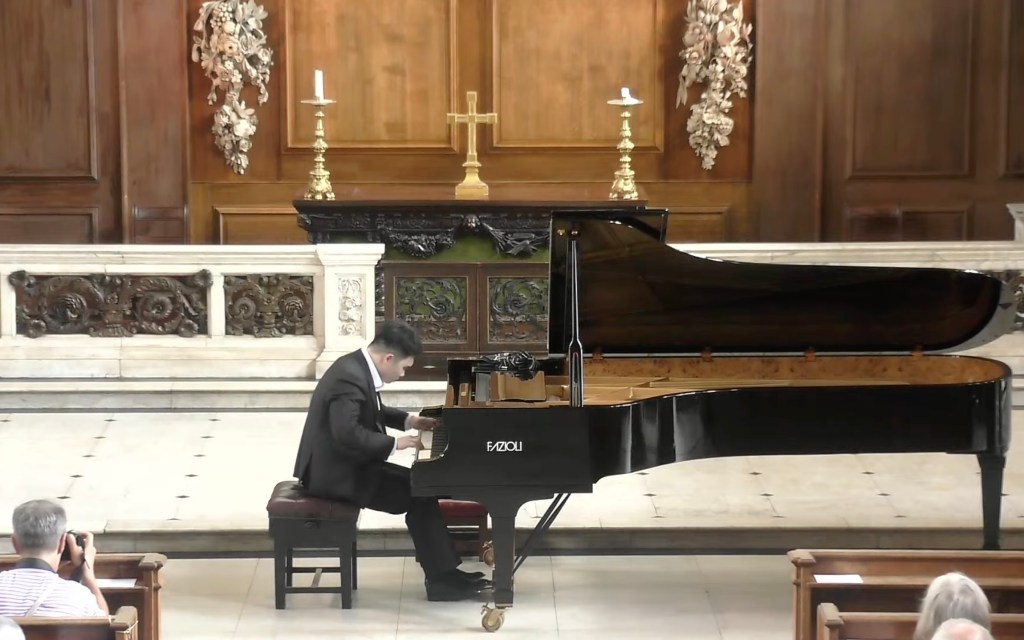
The first of Beethoven’s set of three sonatas op 31 opened the recital today. Three Sonatas each of great character and pointing the way to the ‘Waldstein’ and ‘Appassionata’ that are to follow . The ‘Tempest’ and The ‘Hunt’ are the names given to last two, but the first does not fit into any set pattern. A slow movement that owes more to Bellini than Haydn and a first movement that in many ways anticipates the rhythmic impatience of the ‘Appassionata’.
There is a great harmonic sense to all that Lin plays and it was noticeable from the first notes of this G major Sonata with Beethoven’s quixotic rhythmic character always anchored from the bass. A luminosity and brilliance but above all a scrupulous attention to Beethoven’s dynamic markings and a dynamic drive of intoxicating rhythmic elan. The second subject sprang to life with its pastoral freshness as it passed to the bass with more intensity. Remarkable playing of great clarity and a refined palette of colour as Beethoven prepares us for the surprise return of the opening, this time fortissimo. The coda too with its unexpected ending was just thrown off with ease.
It was the ‘Adagio grazioso’ that showed Lin’s masterly control of sound and touch. I have never heard this movement played with such beauty and strength. A bel canto on a relentless staccato left hand accompaniment and a bass voice that enters with radiant beauty answered by the embellishments of the soprano in a true operatic duet, never allowing the tempo sag or drag. The music seemed to ride on waves of continual motion, on wings of song indeed! The Rondo was played with a sense of improvised fantasy of brilliance and exhilaration as the music unwound with grace and charm in a whirlwind of ebullience. The coda that took us by surprise as Lin went into fifth gear where Beethoven’s genial return to the opening quixotic rhythmic playfulness was matched by Lin’s precision and scrupulous attention to Beethoven’s capricious dynamics.
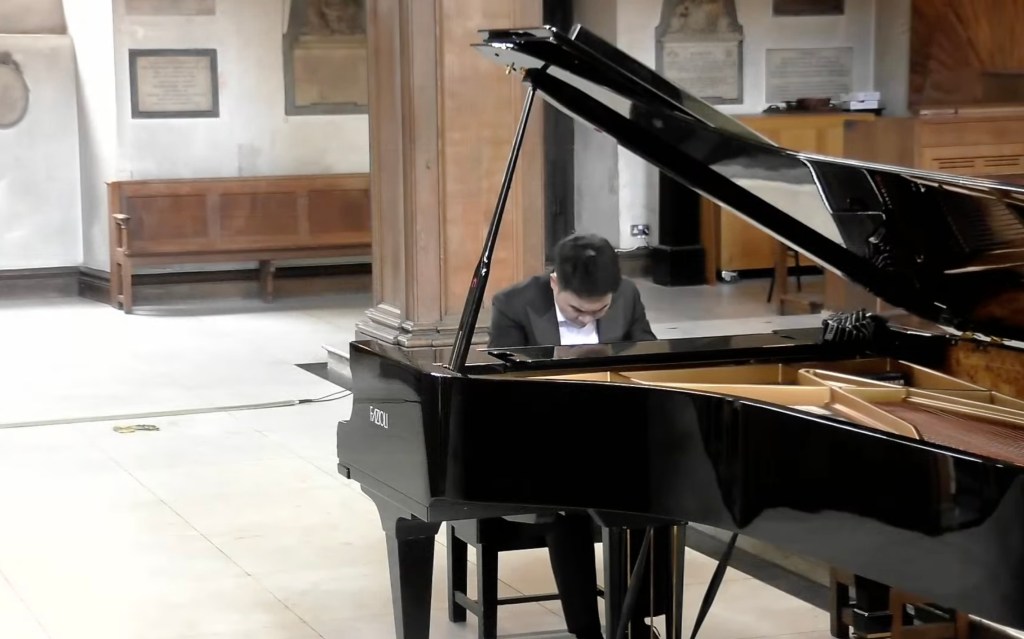
A complete change to the mysterious world of Scriabin with his kaleidoscope of colours and shapes as he reaches for the ‘star’. An early Mazurka op 25 obviously influenced by Chopin but already a unique world of sensual perfumed sounds of fluidity and radiance. Lin playing with magical sounds but always allowing the musical line to show us the way forward.
The Fifth Sonata is prefaced by the Poem of Ecstasy :’I summon you to life , secret yearnings!You who have been drowned in dark depths ,Of the creative spirit, you timorous ,Embryos of life , its is to you that I bring daring’ .A score filled with the markings of a composer on a mission : Impetuoso, con stravaganza, Accarezzevole, Allegro fantastico, giocoso, leggierissimo volando, and finally con luminosità, vertiginoso con furia and estatico! Lin played with masterly control with these continual changes of character from the furious wash of sound over the entire keyboard that opens and closes the Sonata to the radiant whispered beauty before regaining flight. A remarkable technical mastery with his playing always anchored in the bass allowed him to give an architectural shape to this sonata in one movement. Lasting barely twelve minutes but spanning a range of emotions with chameleonic changes of character that Lin was able to combine under one great roof.
The final work on Lin’s programme was the Corelli Variations by Rachmaninov. Twenty variations on the theme ‘La Folia’ attributed mistakenly to Corelli. Rachmaninov dedicated the work to his friend the violinist Fritz Kreisler who was in fact renowned for discovering baroque pieces that were actually his own compositions! Writing to another friend, the composer Nikolai Medtner , on 21 December 1931,the year it was completed:
‘I’ve played the Variations about fifteen times, but of these fifteen performances only one was good. The others were sloppy. I can’t play my own compositions! And it’s so boring! Not once have I played these all in continuity. I was guided by the coughing of the audience. Whenever the coughing would increase, I would skip the next variation. Whenever there was no coughing, I would play them in proper order. In one concert, I don’t remember where – some small town – the coughing was so violent that I played only ten variations (out of 20). My best record was set in New York, where I played 18 variations. However, I hope that you will play all of them, and won’t “cough”.’
Lin played all of them today with crystalline beauty of purity and radiance. Sumptuous sounds helped by the deep bass anchor that marks all Lin’s playing for its masterly intelligent musicianship. The simplicity of the theme taken up by the flowing variations of knotty twine before the rather serious ‘Tempo di Menuetto’.It was played with capricious good humour before the sublime sounds of the ‘Andante’ where the theme is stated with etherial comments. A dynamic drive interrupting this moment of tranquility with playing of technical brilliance and sumptuous full sounds. I am not sure why Lin had to split the left hand chords in the ninth variation that distracted from the ponderous seriousness of the rich elaboration of the theme. Springing to life with the scintillating ‘Allegro Scherzando’ where a crescendo led up into the ‘Allegro vivace’, eleventh variation.This winding scale is marked piano in the score and the unasked for crescendo took away the surprise of the driving forte of the following variation. He brought great character to the twelfth ‘molto marcato’ that he played with pompous authority before the driving intensity of the thirteenth leading to the improvised character of the ‘Intermezzo’, Great beauty to the theme in D flat major was echoed by the glowing fantasy of the ‘dolcissimo’ fifteenth variation . Taking wing with the ‘Allegro vivace’, sixteenth variation (that always reminds me of an orchestra tuning up) and it led to the tumultuous build up to the mighty octave declamation of the twentieth.The pedal note deep in the bass creating the cloud of ‘D’ on which Lin could float the magical return of ‘La Folia.’
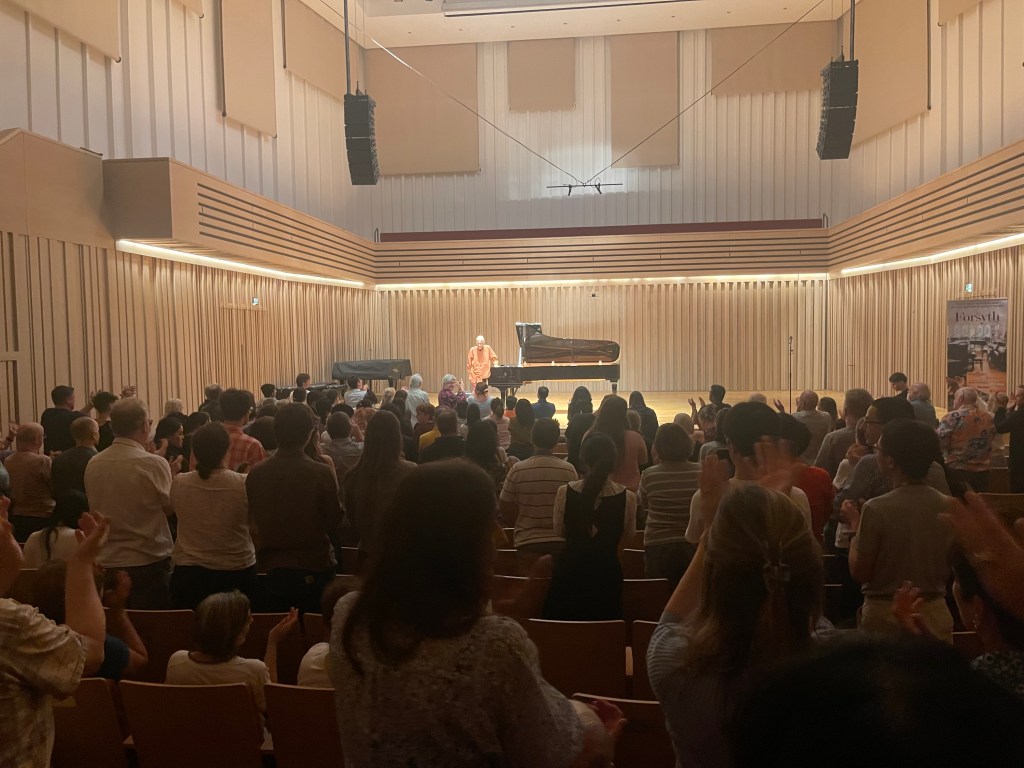
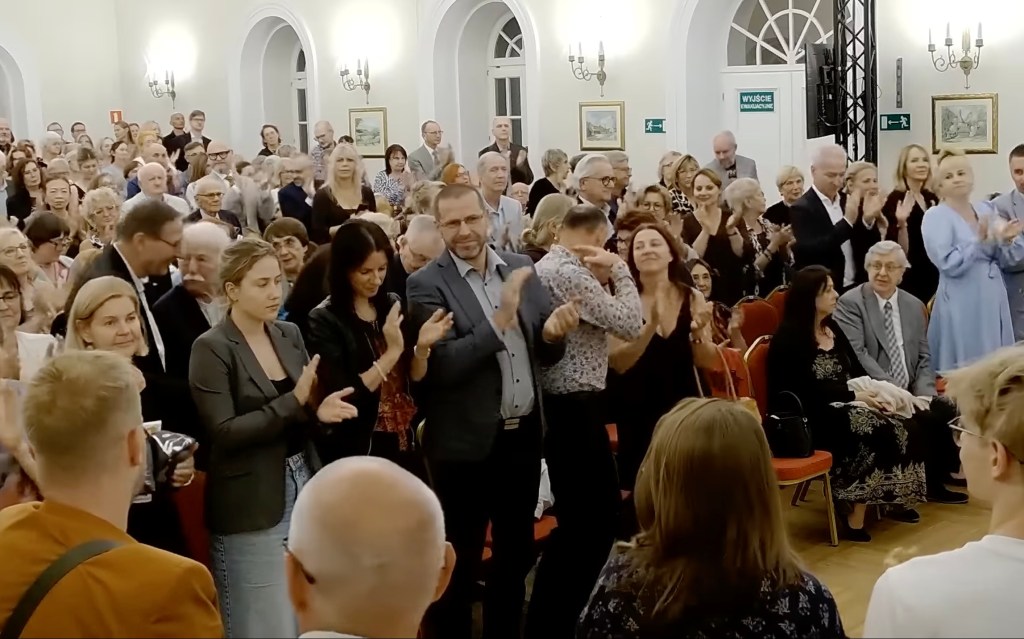
An audience on their feet at the end of this remarkable recital but they would have to get their skates on to hear more just down the road less than an hour later at Regent Hall!
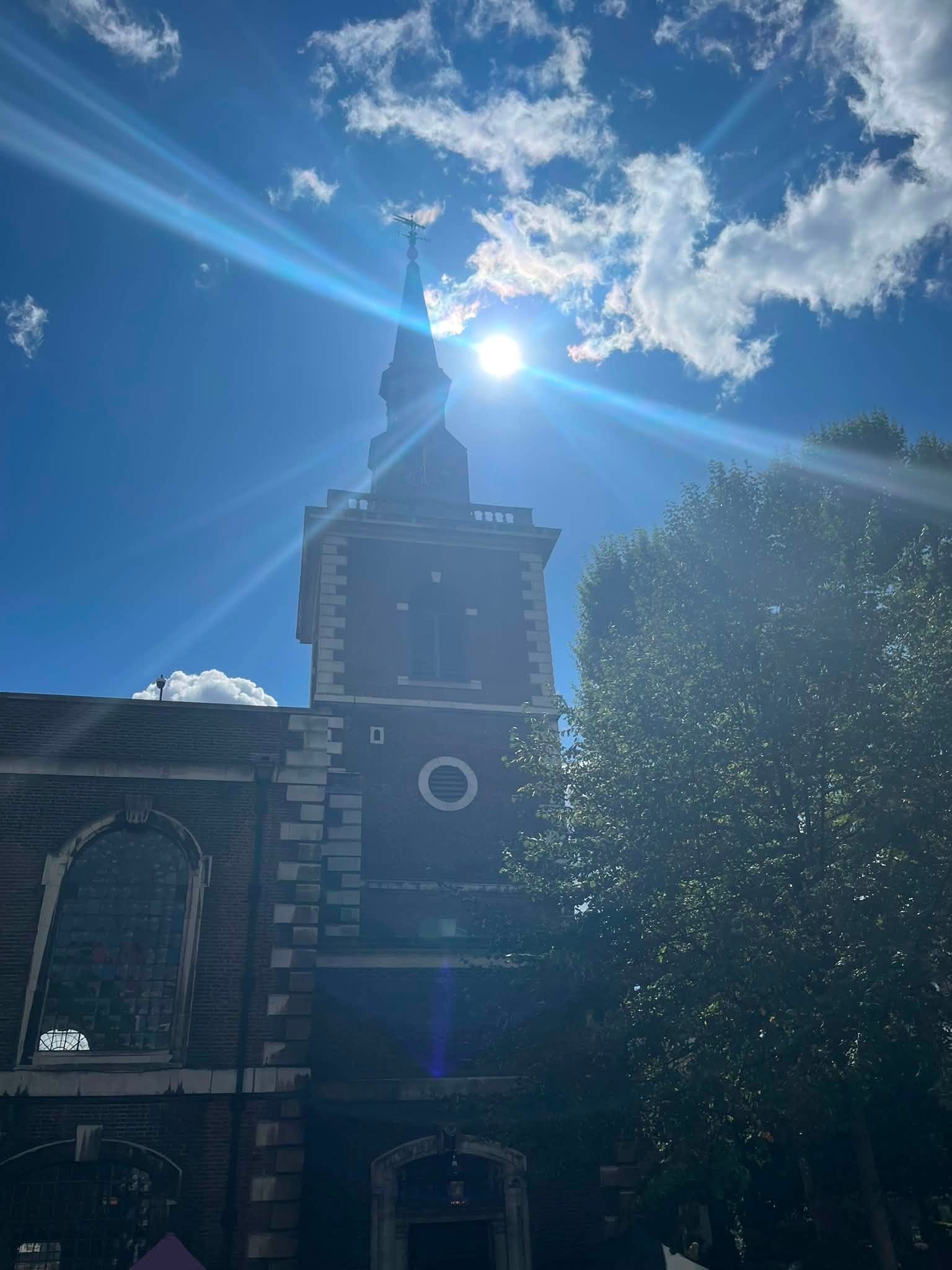
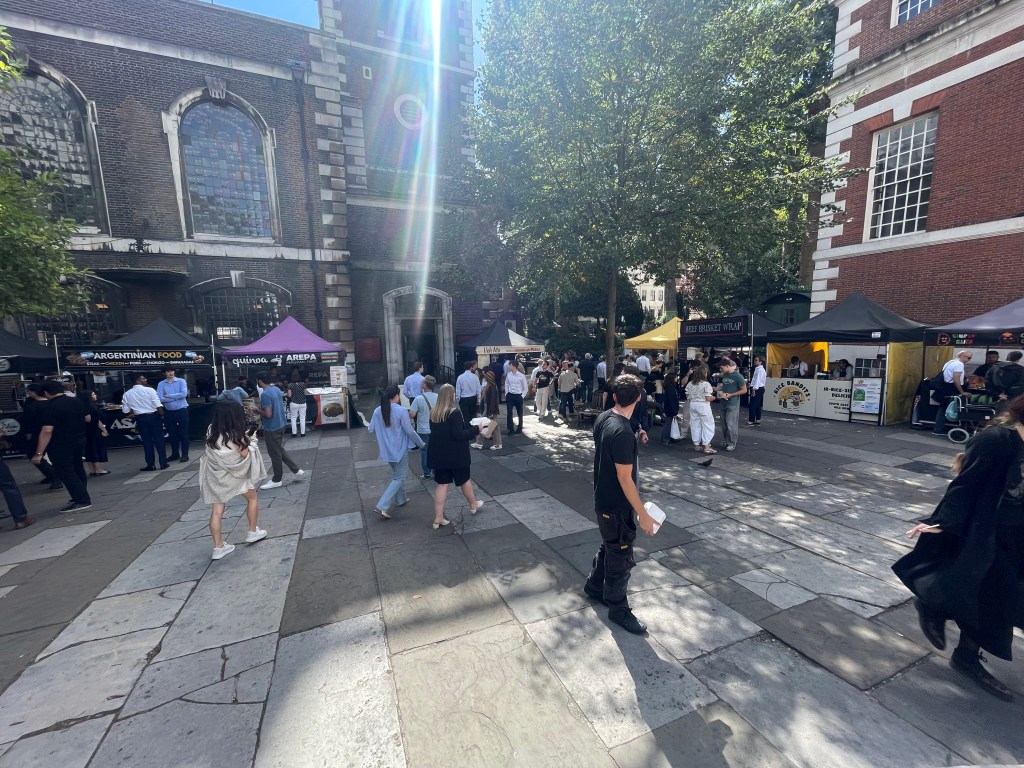
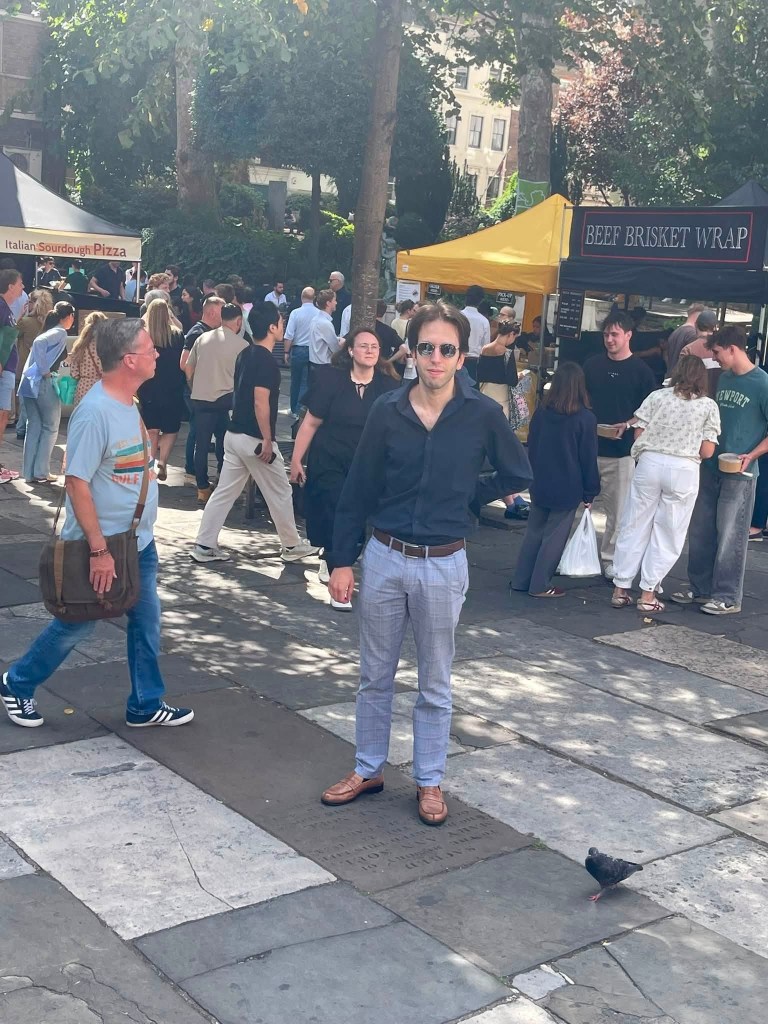
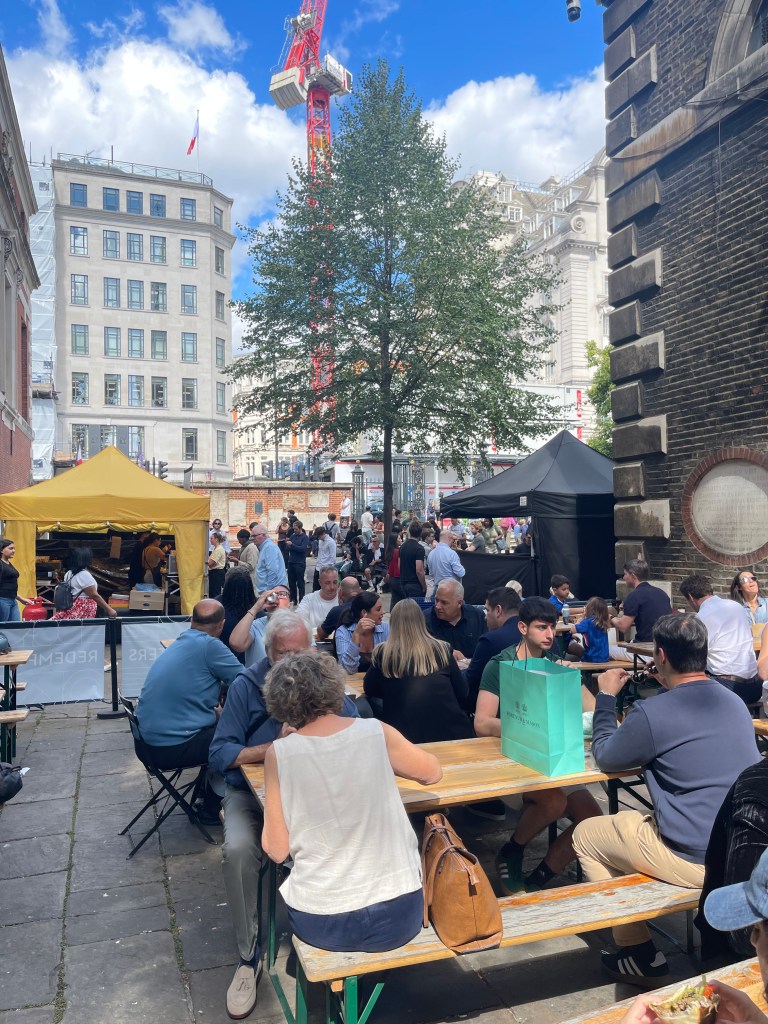
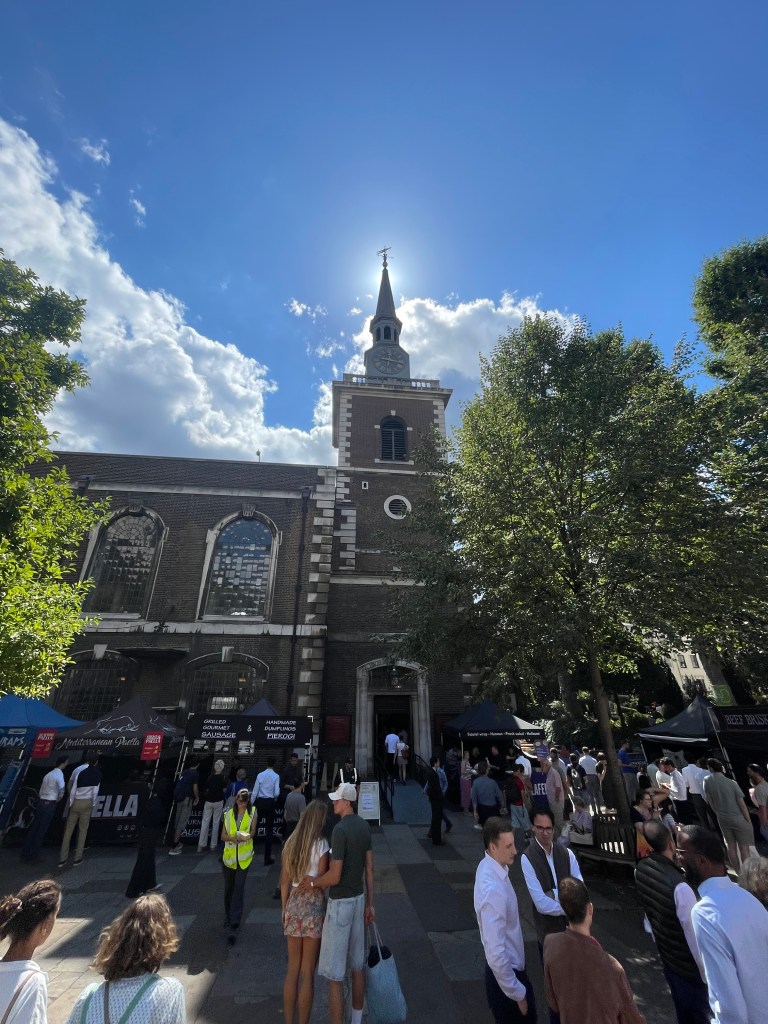
party time with fast food at lunchtime in the courtyard of St James’s
Artist Bio
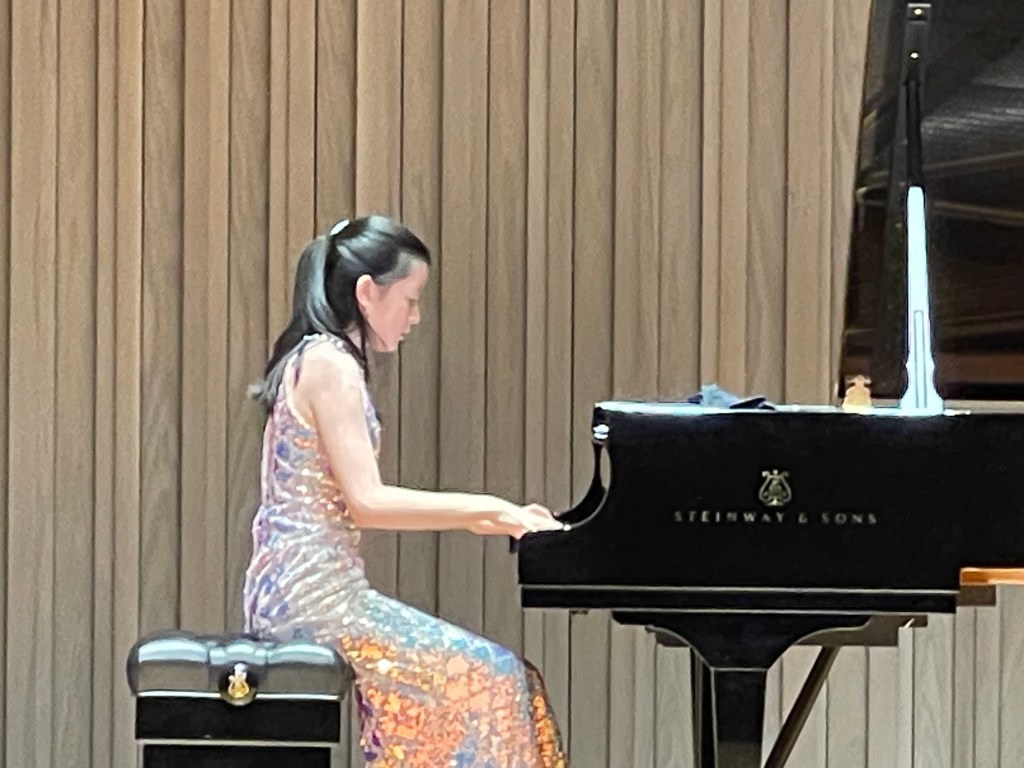
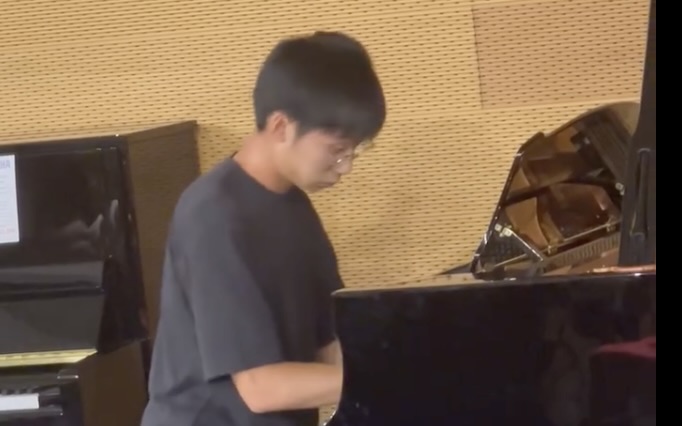
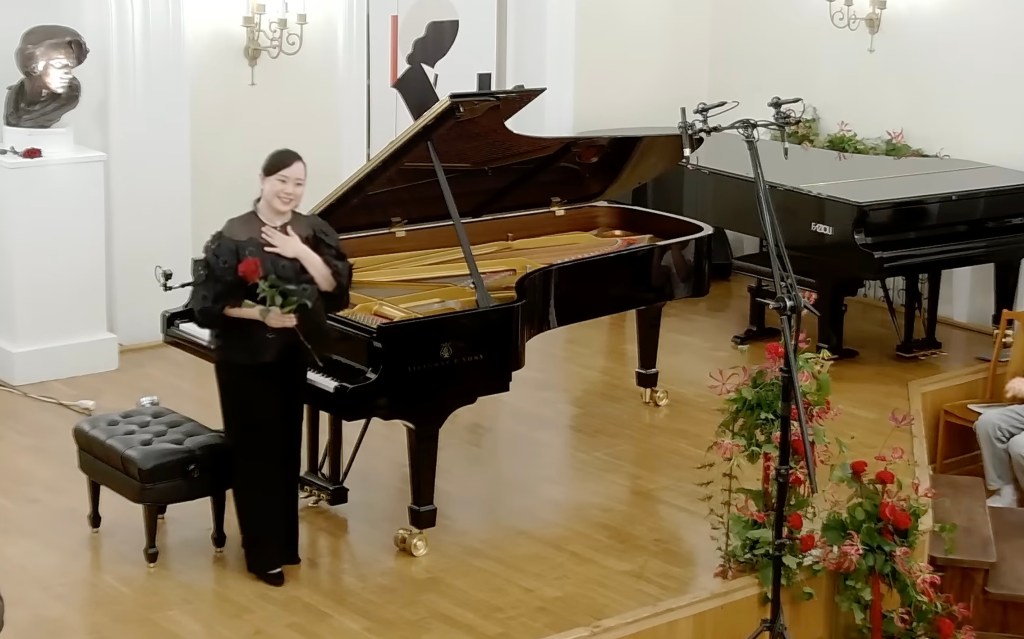
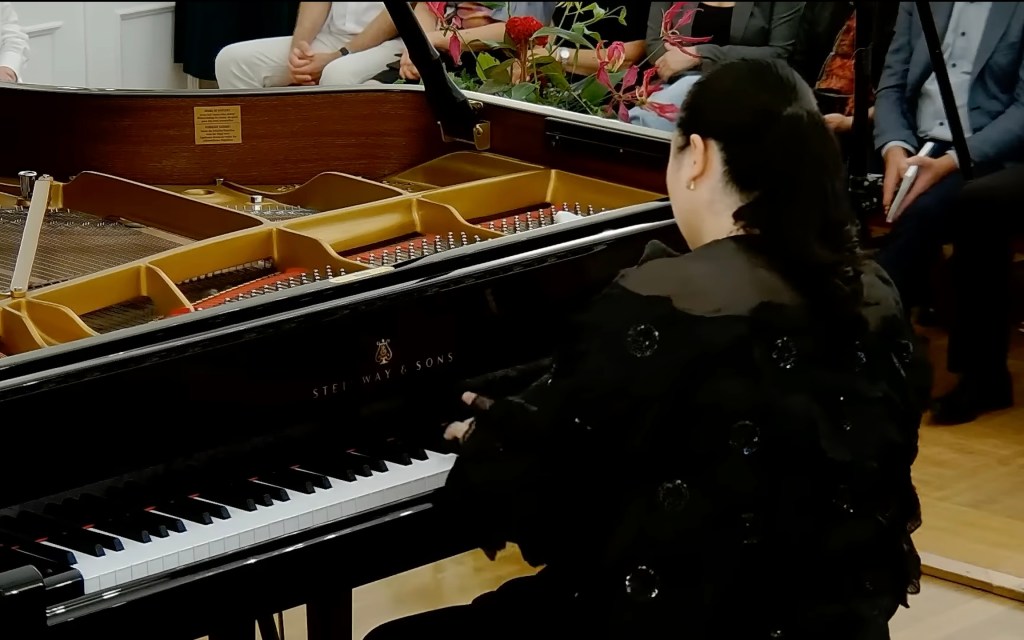
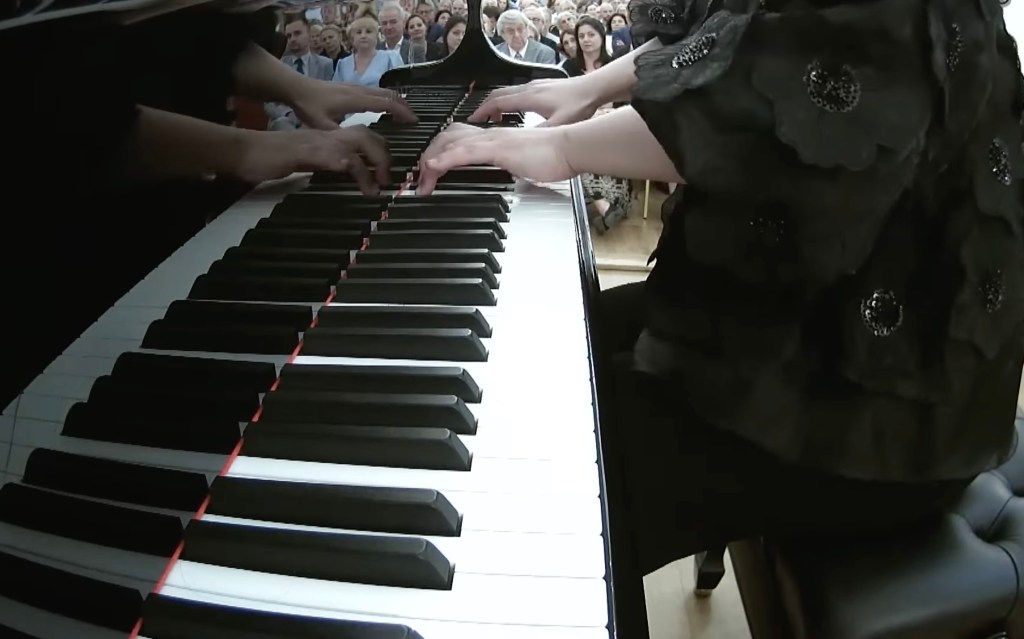
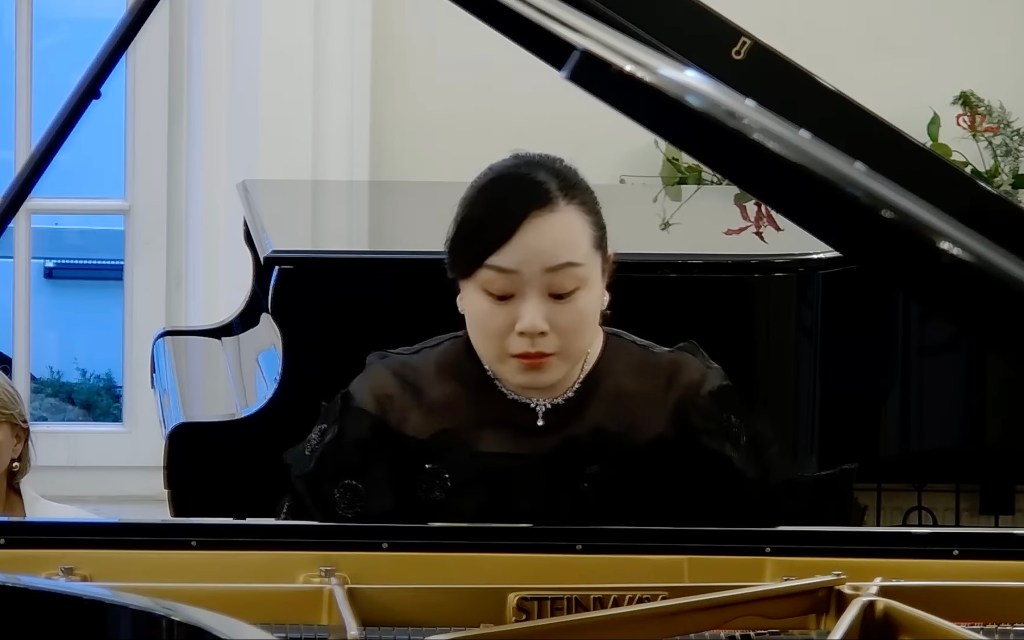
Taiwanese pianist Yu-Chieh Lin has won top prizes at numerous international competitions, including the 9th International Competition of Slavic Music (Moscow), the 5th Wanda Landowska International Harpsichord Competition (Italy), the Moscow Scriabin Scholar Competition (2016), and Third Prize at the 7th Riga International Piano Competition.
He has competed in several prestigious World Federation of International Music Competitions (WFIMC), including the Maria Canals International Piano Competition in Barcelona (2022 & 2023), the Jaén International Piano Competition in Spain (2024), the Las Rozas International Piano Competition in Madrid (2022), and the Viotti International Piano Competition in Italy (2023). He was also a semi-finalist in the Birmingham International Piano Competition (2024) and was awarded Second Prize at the Bromsgrove International Musicians Competition (UK, 2023).
At the age of ten, Yu-Chieh decided to pursue a professional musical career and moved to Russia to study with Mikhail Khokhlov at the Gnessin Special School of Music in Moscow, where he studied from 2009 to 2017.
He graduated from the Royal College of Music, London, with a Bachelor of Music degree in 2021, studying with Norma Fisher. He then completed a Master’s degree with Distinction at the Guildhall School of Music & Drama in 2023 and has since completed the Artist Diploma, studying with Ronan O’Hora, Noriko Ogawa, and Charles Owen.
Yu-Chieh is generously supported by the Franby Scholarship, the Guildhall School Trust, and The Longbao Co., Ltd. (Taiwan).
Since the age of twelve, he has performed extensively across Spain, Germany, Austria, Poland, Latvia, Italy, the United Kingdom, Taiwan, Russia, and China. His appearances have taken him to renowned venues including Palau de la Música Catalana (Barcelona), Rachmaninoff Hall at the Moscow Conservatory, Mozarteum Solitär Hall (Salzburg), Milton Court Concert Hall, Bechstein Hall, Steinway Hall (London), and Teatro Civico in Vercelli, Italy.
He has performed as a soloist with the Academy of Ancient Music (UK), Royal Tunbridge Wells Symphony Orchestra (UK), RCM Symphony Orchestra (UK), and the Gnessin School Symphony Orchestra (Russia), collaborating with conductors including Mikhail Khokhlov, Neil Thomson, Leo Duarte, Michael Rosewell, Jac van Steen, and Natalia Luis-Bassa.
In February 2026, Yu-Chieh was invited to perform with the Harbin Conservatory of Music China–Russia Symphony Orchestra in China, presenting both Rachmaninoff’s Piano Concerto No. 3 and Schumann’s Piano Concerto in the same evening.
Following his recital at Milton Court Concert Hall in May 2025, British music critic Christopher Axworthy described him as “an artist with refined keyboard control and deeply cultivated musicianship.”
Yu-Chieh has received invaluable artistic guidance from distinguished pianists including Norma Fisher, Ronan O’Hora, Noriko Ogawa, Charles Owen, Mikhail Khokhlov, and Sofya Gulyak, and has worked with internationally renowned artists such as Dmitri Alexeev, Michel Béroff, Alexander Romanovsky, Vanessa Latarche, Milana Chernyavska, Dina Parakhina, Gabriel Kwok, and Kyoko Hashimoto.
He has also been invited to participate in leading international music festivals, including the London Masterclasses (2016 & 2017), the International Summer Academy of the Mozarteum University Salzburg (2018), the International Music Academy in Liechtenstein (2024), and the 15th International Chamber Music Festival of the Central Conservatory of Music in Beijing.
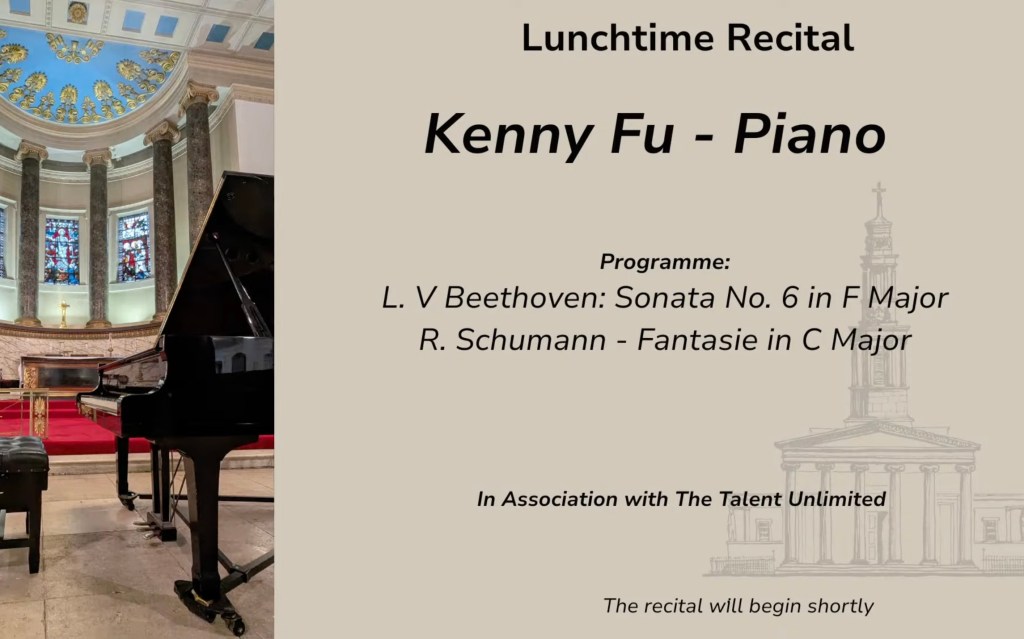
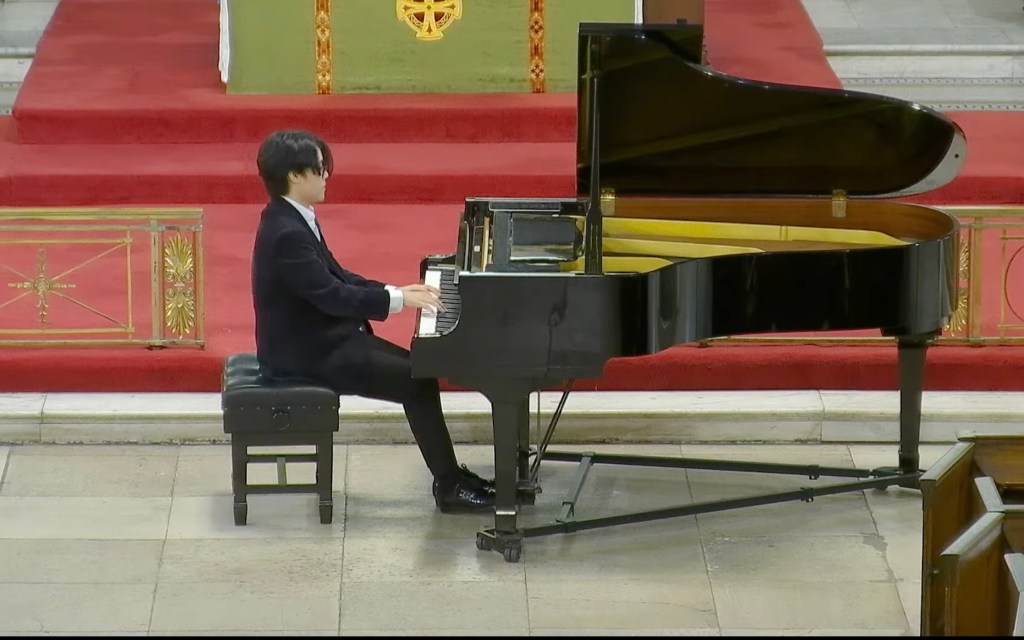
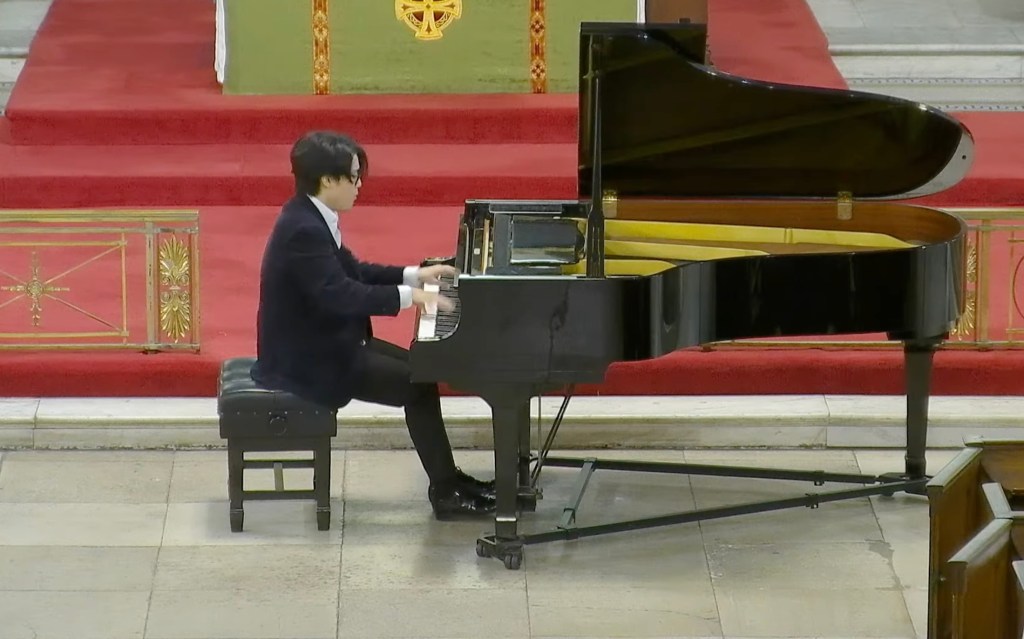
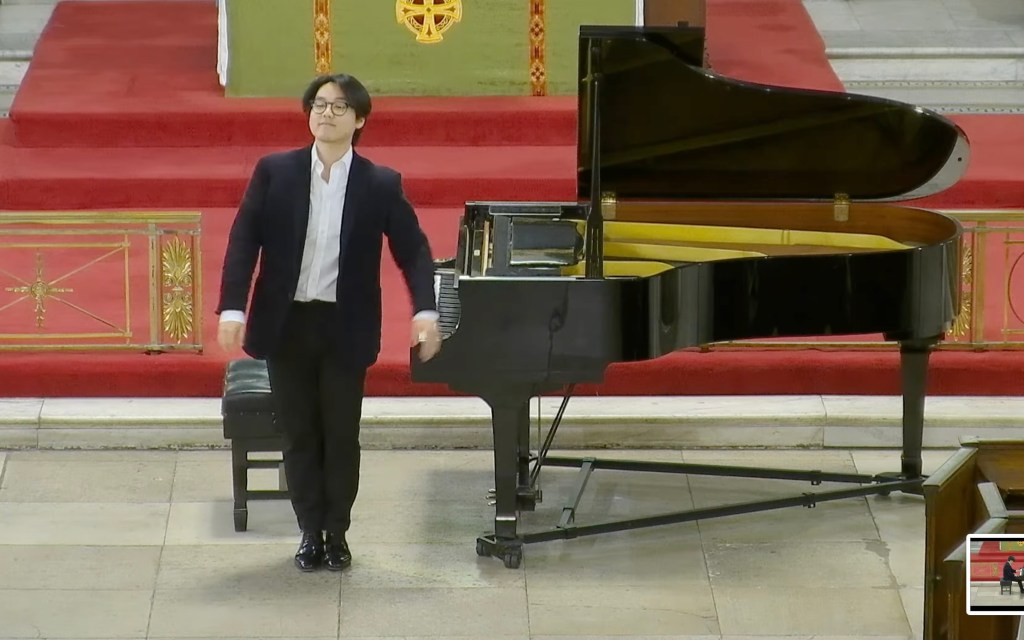
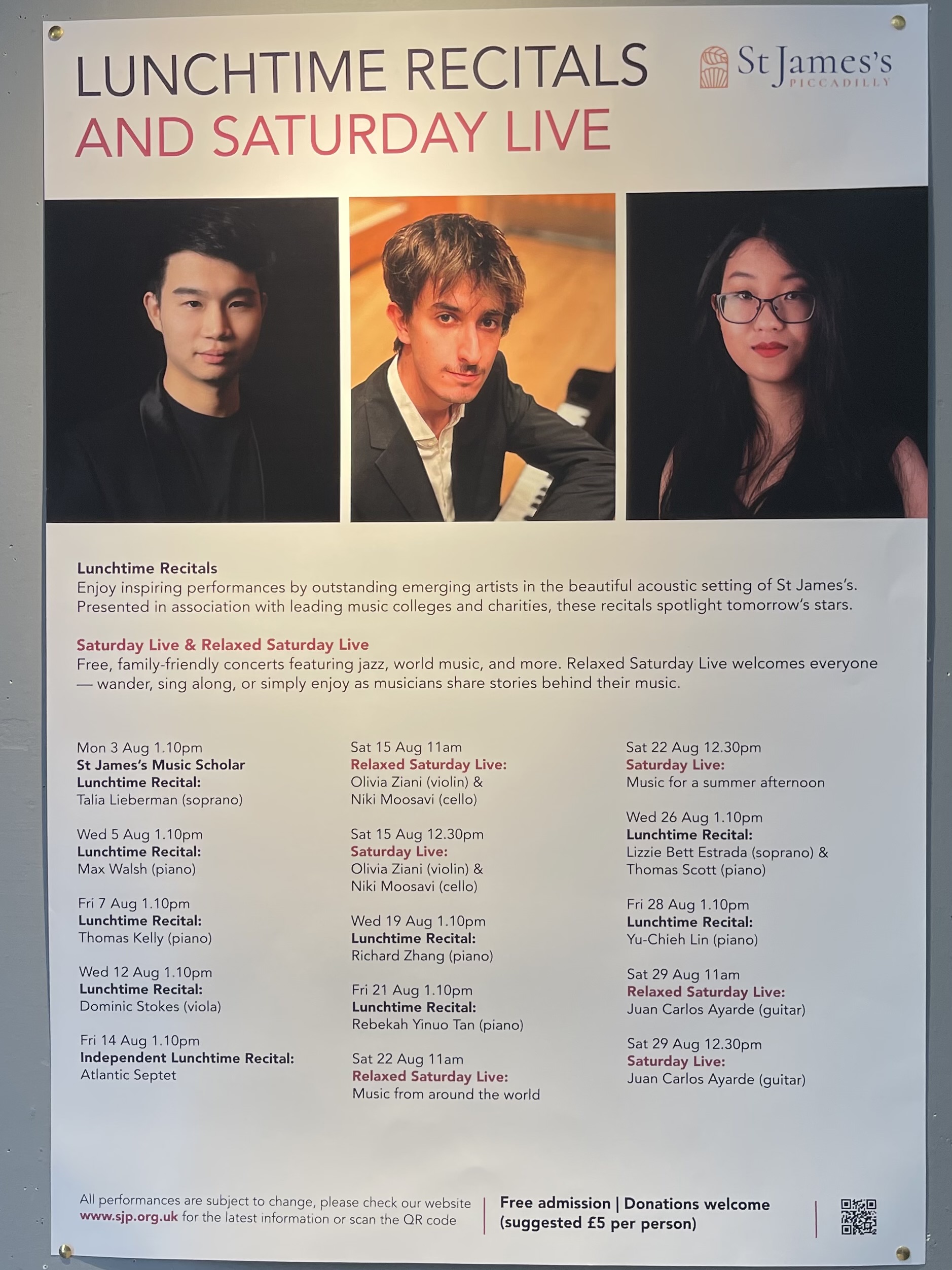
Just two works on Kenny Fu’s programme by Beethoven and Schumann that were enough to demonstrate the mastery and intelligence of this young musician. An early Sonata by Beethoven in three movements that was championed by Glenn Gould and was one of three op 10 where Beethoven is breaking away from his mentor Haydn and taking the sonata model to new heights. The Fantasie op 17 by Schumann is one of the pinnacles of the romantic piano repertoire and was dedicated by the composer to Liszt, where the rights were his contribution to Liszt’s efforts to build a monument to Beethoven in his birthplace of Bonn.
Beethoven op 10 n. 2 in three movements, the second an Allegretto and Trio where one would normally expect a slow movement like in op 10 n. 1. The following Sonata op 10 n. 3 already has four movements of which the slow movement becomes of unusually poignant significance and intensity.This Sonata op 10. n. 2 is full of vitality and drive where Beethoven’s contrast in dynamics are of such fundamental importance. Kenny playing with remarkable clarity tended to play down these indications of Beethoven as he started the sonata ‘forte’ where it is marked ‘piano’ and ended ‘mezzo forte’ where it is marked ‘fortissimo!’ Although playing of brilliance and beauty it was this even out of dynamics that robbed the music of its Beethovenian irascibility. The ‘Allegretto’ was played with grace but would have flowed more in one rather than three.It was the Trio that Kenny played in one that flowed so magically with the comments that Beethoven adds to this lilting dance. It was in the ‘Presto’ finale that Kenny played with dynamic drive and a sense of bucolic character even playing both repeats as he was swept on by the brilliance of his playing. Some musicianly playing of intelligence and style but a better look at Beethoven’s very precise instructions would add even more character to the clarity and brilliance of his playing.
The Schumann Fantasie op 17 is an outpouring of love for his future wife and mother of their eight children : ‘The first movement may well be the most passionate I have ever composed – a deep lament for you.’ They still had many tribulations to suffer before they finally married four years later. The first movement is also prefaced by a quote from the poet Schlegel ‘Resounding through all the notes, In the earth’s colourful dream , There sounds a faint long-drawn note ,For the one who listens in secret.’ The end of this first movement has a direct quote from Beethoven’s ‘An die ferne Geliebte’ – ‘To the distant beloved -‘ Accept then these songs beloved, which I sang for you alone‘. A work in three movements with originally the titles of ‘Ruins, Triumphal Arch, and Constellation’ which were removed altogether before Breitkopf & Härtel eventually issued the Fantasie in May 1839. It was here that Kenny’s scrupulous attention to Schumann’s instructions allied to his technical mastery and intelligent musicianship gave an architectural shape to a work that in lesser hands can sound very fragmented. Opening with playing of great sweep and of passionate intensity but also of intimate beauty. An alternation of character that Kenny played with sumptuous full sounds contrasting with whispered glowing beauty. A superb sense of balance that could allow the melodic line to be revealed floating over a sumptuous harmonic accompaniment. The central episode of the first movement :’Im Legendenton’ was played with expansive beauty allied to a passionate intensity . Always scrupulously controlled there was an aristocratic weight to his playing of extraordinary maturity. The ending of the first movement was played with great beauty and subtlety but never loosing sight of the overall musical line. There was a dynamic drive to the second movement played with control and shape and sense of musical line. Always moving forward even in the ‘etwas langsamer’ with the ‘scherzando’ passage played with gossamer lightness . The coda was a tour de force of mastery and control as he shaped the music with precision and nobility. A beautiful flowing tempo to the last movement allowed the music to flow with beauty combined with strength. Some playing of ravishing beauty as he played with an inner sentiment but never sentimentally, allowing the music to unfold so naturally. A very fine performance of a very complex work to hold together as one unified whole.
From his early solo debut at the Wigmore Hall to his attainment of the prestigious Sir Elton John Scholarship, Kenny Fu holds much potential and promise for a bright future. He has given concerts on three continents and has already performed extensively throughout UK’s distinguished halls including St Martin-in-the-Fields, Kings Place, Worthing’s Assembly Hall, St James’s Sussex Gardens. He regularly appears in London, Oxford, Brighton and the South of England for more private concert engagements.
His repertoire choices gravitate toward the late Classical and Romantic Eras where he brings an intense and captivating temperament to the works of Beethoven, Brahms and Rachmaninov.
Recently, Kenny has been awarded First Prize at the Norah Sande International Awards, Second Prize in the Croatian Piano Loop Competition and Third prize at the Fifth Vigo International Piano Competition where Martha Argerich, Nelson Freire and Cyprien Katsaris were on the panel of judges. During his earlier years, he was the winner of the Solihull Young Musician of the Year, Silver medalist at the Cyprus International Piano Competition, semi finalist at the Sussex International Piano competition and a quarter finalist at the BBC young musician of the year.
He has received guidance from numerous esteemed musicians such as Dimitri Alexeev, Evgeny Sudbin, Natalia Trull, Pascal Devoyon, Richard Goode, Tim Horton, Imogen Cooper and Angela Hewitt during his studies at the Purcell School of Music and the Royal Academy of Music.
Kenny was born in Leamington Spa and is currently in the Advanced Diploma program at the Royal Academy of Music under the tutelage of Prof. Tatiana Sarkissova and Ian Fountain. He is generously sponsored by the Countess of Munster Trust, Warwick Arts Fund ,Keyboard Trust and Talent Unlimited.
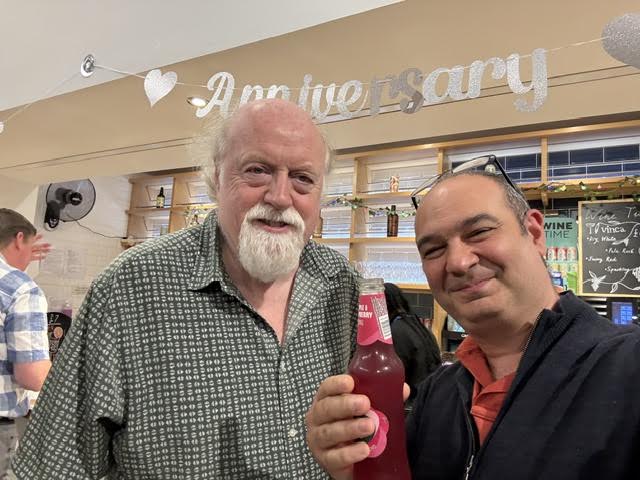
25th Anniversary for the founders Murray and Kathryn Mc Lachlan
Day 1 at Chethams for the second week in their silver jubilee year with Jeremy Menuhin and Mookie Lee-Menuhin showing us that two concert pianos can speak with one voice. An accumulation of whispered sounds of glowing radiance and beauty. Two musicians at the helm of two powerful instruments listening to each other and seducing rather than overwhelming with works by Menuhin, Schubert and Brahms
Jeremy I remember playing on the television with his uncle Louis Kentner and also playing with his father at the helm of Mozart Triple concerto with his aunt Yalta and brother in law Fou Ts’ong.
Now playing with his wife his own compositions made from a love for music that has always been at the heart of the Menuhin legacy.
A suite in Baroque Manner that would have done Kreisler proud and a transformation of Schubert’s Death and the Maiden that was the sweetest parting one could imagine.
‘If music be the food of love ‘ and it was this love that today with the Menuhins and immediately afterwards with Stephen Kovacevich, that enveloped us with ravishing sounds pregnant with meaning where so few words could mean so much. Even Brahms’ Haydn Variations were played with a glorious glowing beauty of nobility and ravishment
As the heavens opened and rain came tumbling down we were protected by this blissful haven of timeless beauty as pastures once more would return to their desired colour.
And did those feet in ancient time
Walk upon England’s mountains green?
And was the holy Lamb of God
On England’s pleasent pastures seen?
Nor shall my sword sleep in my hand
Till we have built Jerusalem
In England’s green and pleasant land.
A legend speaks, Stephen Kovacevich takes Chethams by storm with music making of rare beauty and sensibility . A performance of Schubert’s last Sonata that will go down in history for the poignant intimacy that drew the audience in to overhear such a wondrous tale. Three pieces by Brahms that the composer described as ‘lullabies of grief’ created the scene for Schubert’s final statement written in the year of his death at the age of 31.
Stephen now in his Indian Summer could show us the secrets hidden in this song of eternal beauty in a career that has been distilled over a lifetime of service to the great composers.
Opening with the Intermezzo in E op 116 n. 4 with it’s gasping sighs of nostalgia and longing, passing to the A major Intermezzo op 118 n.2 all radiance and light and finally the harrowing tone poem of op 118 n. 6 in E flat minor.
All recreated with glowing whispered beauty of radiance and extraordinary intimacy. And what a way to prepare our souls and ears for the song of destiny that opens the Schubert B flat. An opening, like Beethoven op 109 that has already begun in the stratosphere and just touches earth for a few moments to remind us of what wonders await those with the ears attuned to receive such intimate confessions from afar
Day 2 from exercise to exertion
Murray warming up at 8.15 to Stephen at 9.30 hotting it up with the ‘Hammerklavier’
Three couples in life as on stage for the faculty concert on the 2nd day of the second week . Belén Navarro and Juan Lago playing Schubert with refined beauty and style whereas Mayumi Lida and Colin Stone let rip with a scintillating performance of Poulenc’s tongue in cheek Sonata.
But that was nothing compared to the world première of Judith Bingham’s ‘From Whale to Worm’, a sort of modern day Carnaval of the Animals. Played with extravagant fluidity and naughty antics by Pippa Harrison and James Willshire, as they brought this extraordinary addition to the four hand repertoire vividly to life .
Philip Fowke , on this occasion the lone ranger, played three charming pieces by Stephen Hough and then stole the show with a performance of the black key study of such insinuating charm and mastery that makes one long to be a retired gentleman as he claims to be
Always a voyage of discovery with Margaret Fingerhut but this year in more ways than one. Chopin’s greatest masterpiece the ‘Barcarolle’ was prefaced by the three Mazurkas op 59 written in the same year of 1845, just three years before his untimely death at the age of 39. The final mazurka in the unusual key of F sharp minor which of course links perfectly with the Barcarolle in F sharp major. It is curious that the original manuscript is actually in G minor and Chopin obviously decided to unite these last works in one long song, culminating with the ‘Barcarolle’ op 60. It is a song from the beginning to end where percussiveness has no place and the piano has truly become a bel canto instrument speaking like the human voice that so much inspired all of Chopin and Schubert’s music. It is interesting to know that Margaret had studied this work with Vlado Perlemuter in Rue Ampère in Paris that many of us know well, where he would demonstrate what it meant to play with weight. The weight like an organist that would never leave the keys but would lean into the notes changing fingers to create the perfect legato and avoiding the vertical hitting of the keys that can remind us that the piano is a percussion instrument where hammers hit strings. It is allusion, called artistry, that can persuade us that the piano is an instrument that can appear to sing as a Bel Canto singer for those that have mastered the ‘tricks of the trade’ ( as my teacher Sidney Harrison would say). All that to say that Margaret allowed the music to unfold with sumptuous beauty from the three Mazurkas to the deep bass C sharp of the ‘Barcarolle’ that just opens up the sounds that unfold in ten minutes of radiance and beauty. An artistry that is allied also to a curiosity as not only can she illuminate well known scores with simple refined taste but she can discover works that have lain hidden for too long on the dusty shelves of the archives. One such work today was the ‘Glanes de Woronince’ which, as she says, may not be amongst Liszt’s greatest works but it deserves an occasional outing from the dusty shelves. ‘Gleanings from Woronińce,’ or Harvest at Woronińce, S. 249, is a suite of three piano pieces , written in 1847 at Woronińce, now Voronivtsi, the Ukrainian estate of Princess Carolyne zu Sayn-Wittgenstein.
Liszt had first met the Princess when he played in Kyiv on 14 February of that year. She was recently separated from her husband, and she invited Liszt to spend some time on her estate in Podolia. He stayed for 10 days, then left for a concert tour, promising to return in the autumn. He came back around 18 September, and stayed till early January 1848. It was during these three months that Liszt’s and Sayn-Wittgenstein’s relationship developed to the stage that she planned to petition the Tsar, Alexander II of Russia, for divorce, and marry Liszt. During this time, Liszt also completed much of his ‘Harmonies poétiques et religieuses’.
The three pieces of Glanes de Woronince are:
Ballade d’Ukraine, a dumka based on Ikhav Kozak za Dunaj;
Mélodies polonaises, two Polish folk songs, the second of which was previously composed by Frédéric Chopin “A Maiden’s Wish” (“Życzenie”), Op. posth. 74/1, written in 1829;
Complainte, another dumka.
They were dedicated to Princess Carolyne’s daughter, Princess Marie von Sayn-Wittgenstein.
Margaret played them with radiance and beauty giving a fascinating revisitation of works that have lain in oblivion too long. But are we sure that they were truly written by Liszt was questioned by a distinguished musician present today ? I can only quote the Liszt expert Leslie Howard : ‘The jury is still out on the question of whether the influence of the Princess Carolyne zu Sayn-Wittgenstein upon Liszt was, as Sellars and Yeatman would put it, a ‘Good or a Bad Thing’. She was, at any rate, the dominant woman in the last forty years of Liszt’s life, and, whilst being responsible for almost all his social and domestic difficulties over that time, was also the one who won him to permanent and serious composition from the life of the travelling virtuoso who composed as best and as often as he was able. Liszt met Carolyne in Kiev in February 1847, and in the October of that year stayed with her at her estate in the Ukraine, Woronince. His Glanes de Woronince (‘Gleanings from Woronince’) is frequently described as some kind of preservation of local folk melodies which Liszt heard on this estate for the first time. Since we know that the second piece is supposedly Polish and that there is a good chance that the melodies in it were not new to Liszt, and since we know that Liszt heard the melody of the third piece sung by a blind girl busking with her grandfather in Kiev, much of this argument falls away. It seems much more likely that it was the very piano pieces which were gleaned from the stay at Woronince, in the case of the third the recollection of a public improvisation already given in Kiev, and the second piece is surely a specific homage to the Polish nationality of the princess.
The original Ukrainian song behind the first piece is a complicated tale of jealousy and revenge. Paraphrasing Roman Sawycky’s 1984 article on the song in the second volume of his Liszt biography, Alan Walker gives its title as ‘Hyrts, do not go to the party tonight’ and describes the warning of a woman who refuses to share her lover with another, and the four days entailed in her preparations to murder him with poisoned herbs, gathered on Sunday, prepared on Monday, administered on Tuesday, with the desired effect on the Wednesday. Liszt’s beautiful setting of the tune distances itself from any sense of violence or outrage—probably because he was not conversant with the text. The second piece contains two melodies, one familiar from Chopin’s song Z.yczenie—usually known as Mädchens Wünsch (‘The Maiden’s Wish’)—well known in Liszt’s piano transcription (recorded in Vol 5 of the present series), and the other present in a separate unpublished Liszt piano piece and in the Liszt Duo-Sonata for violin and piano. It simply cannot be established that Liszt first heard either of these tunes at Woronince—and it seems unlikely that the local Ukrainian peasants would be singing foreign folksongs. (Alan Walker’s claim that the early violin and piano sonata must post-date the Glanes because Liszt could not have known one of its melodies before 1847 is a bit thin.) With the variations which comprise the third piece (which is no more a dumka than the first is) it seems again that Liszt did not know the actual text of the song, which transpires to have been a composed and published work (by one Ivan Kotliarevsky (1769–1838), according to Walker) rather than a folksong. Whatever their ethnic origins, the melodies are woven into one of Liszt’s most charming and unaccountably neglected collections.’
Food for thought and reflection as are all Margaret Fingerhut’s fascinating programmes. Played with intelligent musicianship and mastery it opens a door to discussing repertoire that has long been neglected if not completely ignored.
The most enticing of these discoveries was the last piece on her programme by Widor with his ‘Kermesse carillonnante’ op 71 n. 3. The Widor Toccata of course is known to us all as one of the most popular pieces in the organ repertoire together with Bach’s Toccata and Fuge in D minor . The piano works of Widor ,though, show aspects of Widor’s art, less present in his cycle of ten Organ Symphonies, which bear the weight of his considerable intellect and erudition.
Writing for piano Widor seems able to explore other, more fanciful aspects of his nature. He was among the regulars of the Parisian salons, and judging by the bevy of nobly-titled dedicatees on his scores—a Chevalier, Marquise, Baron, Baroness, Count, Countess, Princess, and even a Queen—many of his works were clearly composed for salon consumption with suites of character pieces variously containing a nocturne, waltz, mazurka, sicilienne, rêverie, sérénade, or the like. Many of Widor’s contemporaries—pianists such as Francis Planté, Louis Diémer, and Isidor Philipp—often performed his music. Planté described Widor as “an exquisite pianist of the most limpid purity,” and his writing for piano is elegantly idiomatic.
Margaret showed us music of Lisztian showmanship with playing of quite extraordinary brilliance and technical mastery. His op 71 n 3 is one of five pieces written in 1894 when the composer was fifty years old having another 43 years to live ! It is a showpiece in the style of Saint-Saëns more than Liszt with final pages of a pianist who is dead but will not lie down such is the long drawn out ending obviously of popular appeal. Played with fearless abandon by Margaret, that like the Ukrainian repertoire she brought to us last year it is music that is worth looking at and sorting the one or two gems amongst the many baubles! https://christopheraxworthymusiccommentary.com/…/marga…/
The remarkable Peter Donohoe standing in at the last minute for an indisposed Alexander Kobrin. This will be one of two recitals by the distinguished pianist Peter Donohoe this week with his programmed closing final recital announced for this CIPPS Jubilee year on Friday.
Maintaining the Schubert and Schumann of the original recital only substituting Kreisleriana op 16 for op 17 the Fantaisie in C major.
Playing of great weight and authority with a sense of balance that gave distinctive poetic character to the six Moments Musicaux of Schubert. This was Schubert played with simplicity and poignant meaning with a poetic intensity that created six miniature tone poems of radiance and beauty. It was not the veiled beauty that we were to hear later on from Peter’s colleague Steven Osborne but this was a beauty of more immediacy and directness where the music was allowed to speak for itself with masterly musicianship and directness. The opening ‘Moderato’ with its pastoral echo effect of poetic beauty was followed by the beautiful flowing tempo of the ‘Andantino’ where Peter’s masterly shaping of the phrases was of glowing sensibility. The ‘Allegro moderato’ of the third piece was played quite simply without the beguiling Curzon lilt but with a refreshing simplicity and directness. A delicate weaving in the ‘Moderato’ that follows, showed Peter’s remarkable control of sound as the whispered undulating web of notes was played with beguiling insinuation. The fearless dynamic drive of the ‘Allegro vivace’ was tempered by the sumptuous full sounds that belonged to the overall architectural shape that Peter had given to these six ‘moments’ played as a whole sumptuous group living under the same roof. A beseeching flow to the final ‘Allegretto’ was played with disarming poignancy and searching intensity.
The Fantaisie op 17, probably one of the greatest of Schumann’s works for piano, was dedicated to Liszt as the composer’s contribution to the Beethoven monument that Liszt had undertaken to dedicate to his teacher in Bonn.
And it was a performance of Beethovenian stature where the passionate outpouring of love for Schumann’s future wife Clara was wrapped up in a Beethovenian character of dynamic drive and burning intensity. Not the irascible impatient Beethoven but the imposing monumental musical architect. It was a performance that made one rethink this work so often played with a freedom and fantasy that looses much of it’s internal strength. There may have been moments when Peter drove the music too hard but they were contrasted with lyrical passages of great architectural shape and inner intensity. Even the final magical chords of the opening Fantasia were played as one unified whole after the continual echo of Beethoven’s ‘A die Ferne Geliebte’ that Schumann quotes at the end of the movement. Schumann wrote to Clara: ‘The first movement may well be the most passionate I have ever composed – a deep lament for you.’
The second movement was played with a rhythmic drive that Peter had likened to the second movement of the Beethoven Sonata op 101. Even the ‘etwas langsamer’ had an inner intensity and there was a glorious final declamation with deep added notes that just added grandeur to this noble movement before the notorious final page, which Peter played withy fearless abandon and mastery .
The last movement entered after a long pause and is one of the most beautiful movements of all the romantic piano repertoire. Guido Agosti a disciple of Busoni ,a pupil of Liszt ,wrote in my score ‘Cl…….ra’ over the opening sighing phrase, as this is more than any other of the movements where the quote from the poet Schlegel is most apparent :”Resounding through all the notes
In the earth’s colourful dream
There sounds a faint long-drawn note
For the one who listens in secret.”
Peter had likened the melody to that used by Franz Lehar in the Merry Widow and he played it with great inner feeling of sensitivity and beauty with sentiment but never sentimental. If the burning climaxes were rather overpoweringly Beethovenian, the architectural shape was of a musician wishing to show us the whole overall shape of this remarkable work.
Peter knows most of the piano repertoire and he challenged the audience to guess who the composer was of his encore . A drink at the bar was vaunted but in vain as no-one could have guessed that it was a little Albumblatt by Wagner written as a thank you to Mathilde Wesendonk in 1861.
I stand corrected because Peter told me that there had been an enlightened audience member who did receive the promised drink.
Neysun Rouhani is the father of a remarkable young pianist,Deedeh, a student of Norma Fisher who has been playing in the masterclasses of Stephen Kovacevich and Piers Lane.
Neysun also runs a music society that hold concerts in Mill Hill Library on Sunday afternoons. Many congratulations!
A remarkable recital by a true thinking musician and master pianist.
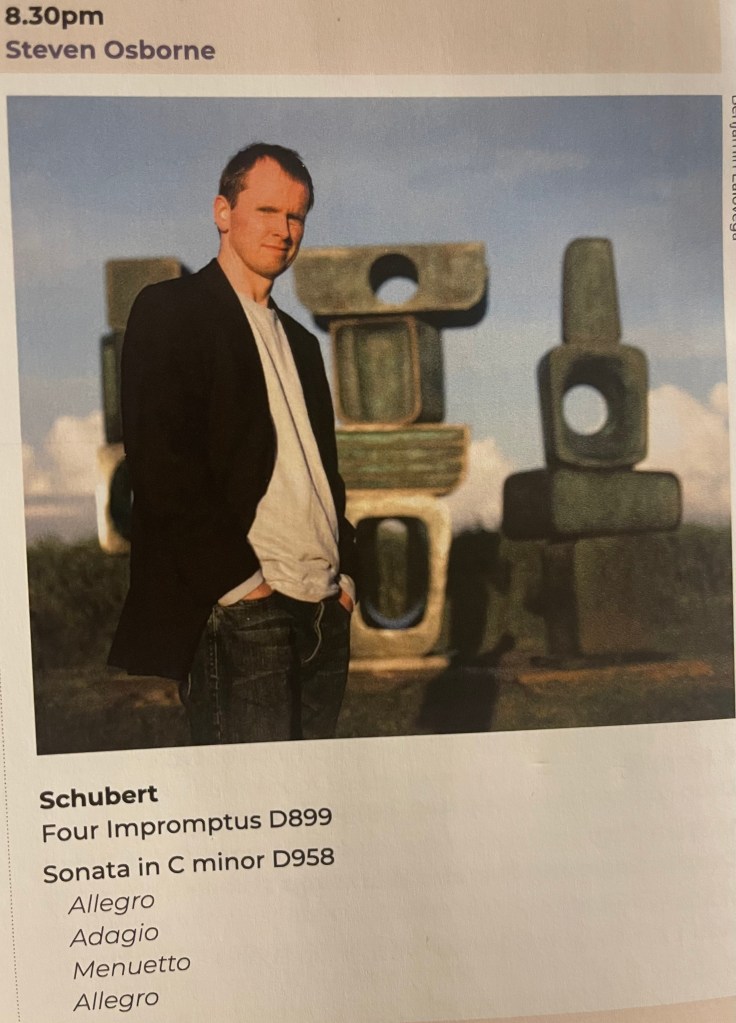
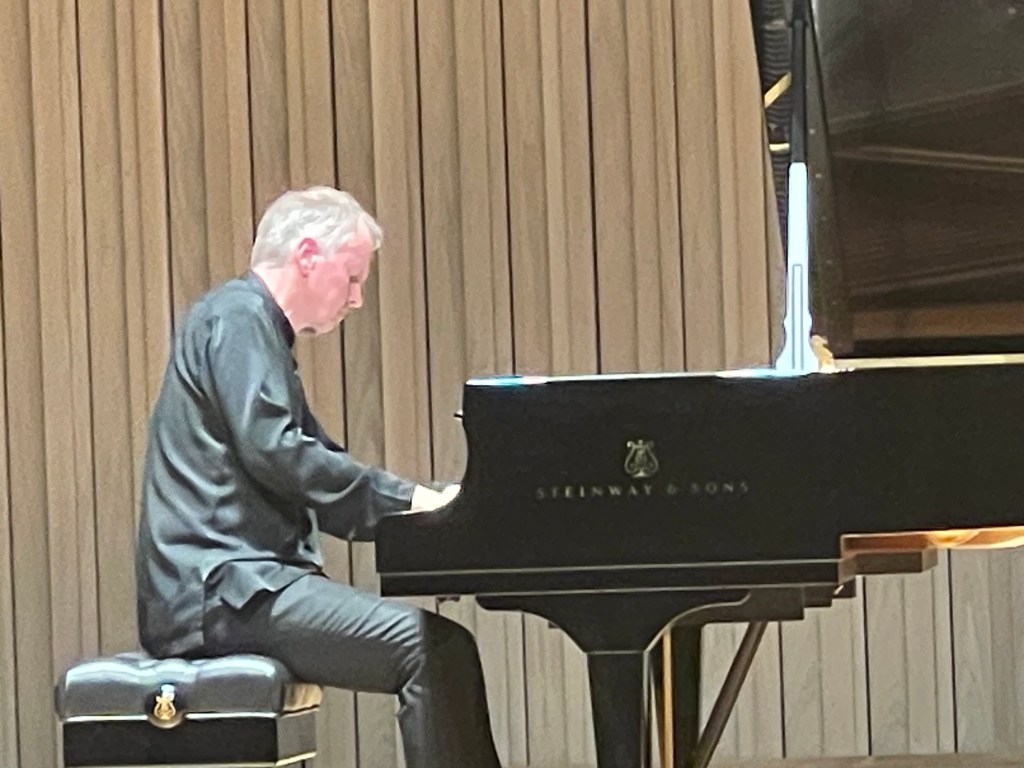
Another remarkable recital this time by Steven Osborne following closely on from Peter Donohoe in this quick fire series of Master recitals that marks the Silver Jubilee at Chethams Summer School this year.
Two recitals by master pianists that could be likened to the characters of Florestan and Eusebius. Peter all radiance and light and Steven all mystery and dark dreams.
Opening with the Four early Impromptus D 899 op 90 and the late Sonata in C minor D 958, having decided to add a short piece by James Mac Millan in-between to clear the air, like a sorbet between sumptuous dishes.
The first Impromptu with its piecing opening note was followed by etherial sounds of whispered beauty. This was contrasted with a passionate intensity of menace where Steven suddenly took on another character of vibrancy and disturbing drive. The second Impromptu was played with fleeting washes of sound of fluidity and pastoral calm only to be interrupted by a driving march of almost military intensity. It was this exhilarating episode that closed the Impromptu in such a dramatic way. The third Impromptu in G flat was played with a whispered radiance and a perfect sense of balance that allowed the melodic line to float on a wave of etherial sounds. The final impromptu was played with a remarkable fluidity out of which emerged a pulsating episode of passionate intensity where a tenor melody of wondrous mellifluous invention emerged.
The unworldly pure sounds of MacMillan just cleared the air before the burning intensity of the most Beethovenian of all of Schubert’s Sonatas.
Opening with a call to arms before dissolving into an undercurrent of sounds that drove the music on with extraordinary intensity. The opening menacing rhythm always present as etherial unworldly streams of sound prepared us for the return of the opening. An ‘Adagio’ of extraordinary poise with episodes of burning drive was contrasted with a Scherzo and trio of simplicity and grace. The tarantella last movement took wing with a dynamic rhythmic energy which Steven imbued with a passionate unrelenting drive of quite extraordinary intensity.
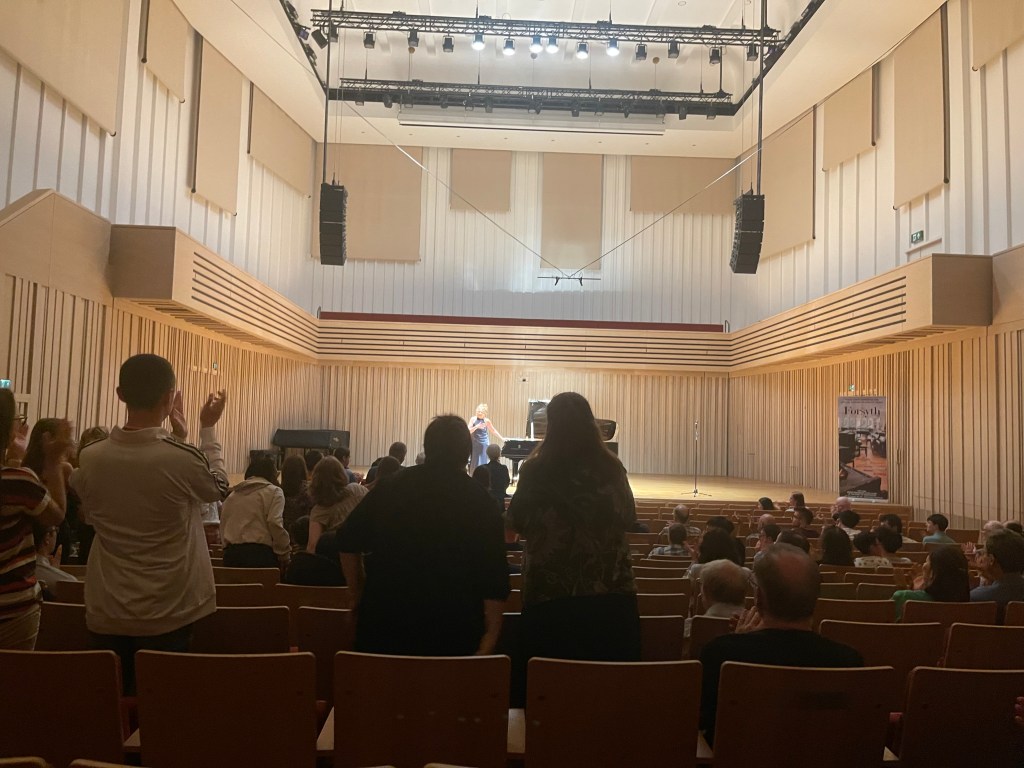
A memorable performance where words cannot describe the magnificent playing that unfolded before a knowing audience who rose to their feet as the final chords were played.
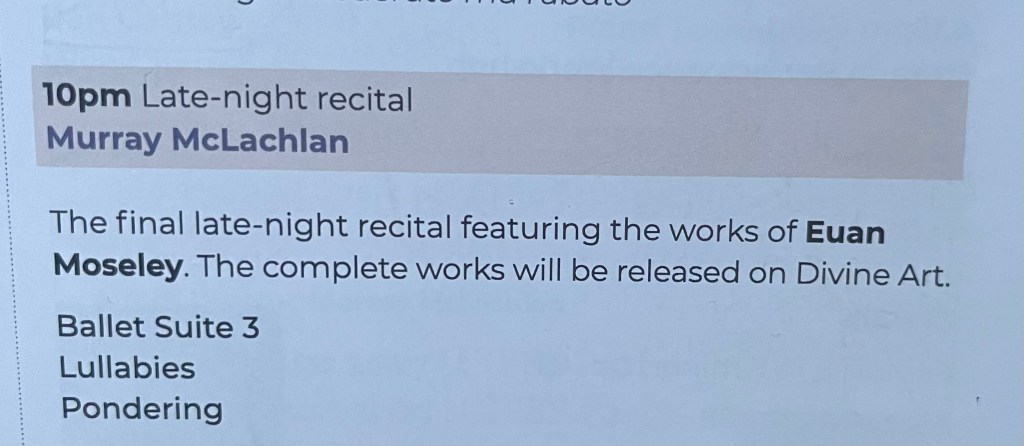
An improvised piece, similar to the MacMillan, cleared the air after such burning intensity and brought the fourth concert today to a triumphant ending before the fifth and final recital given by the indefatigable Murray Mc Lachlan with music by Euan Moseley
The fifth concert in a very long day that for Murray Mc Lachlan had begun 8.15 with an early morning warm up!
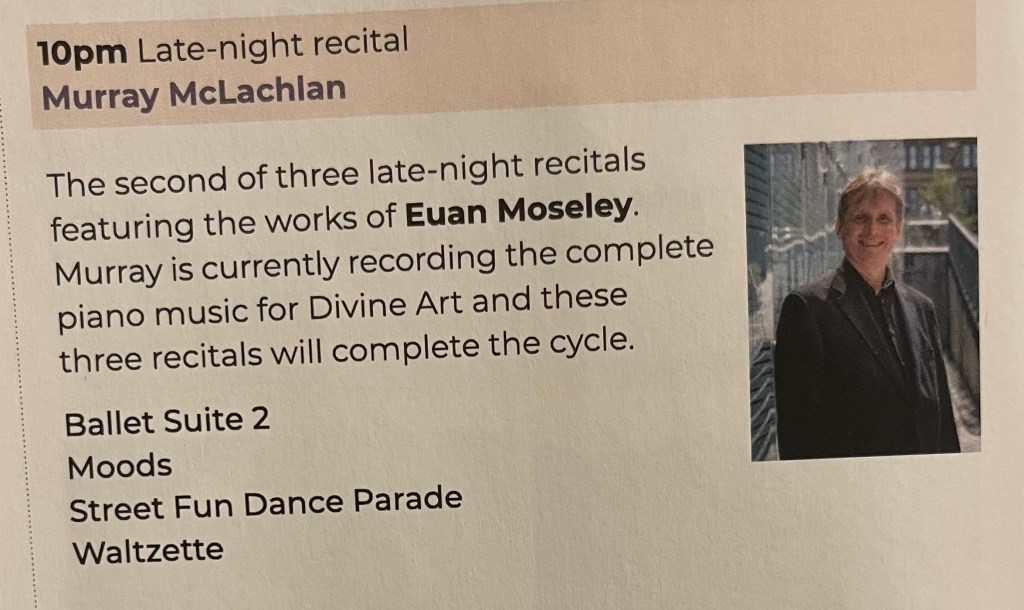
Now fully warmed up , at 10 in the evening he sat down to play the second of three recitals of the complete works of Euan Moseley which are being recorded for Divine Art.
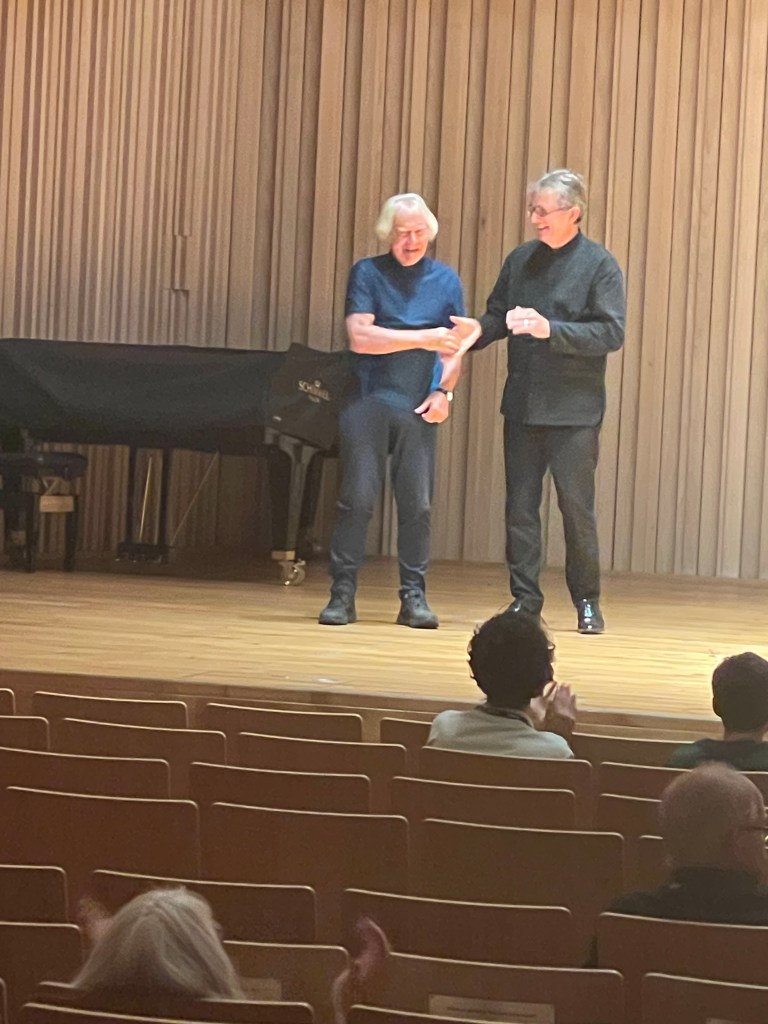
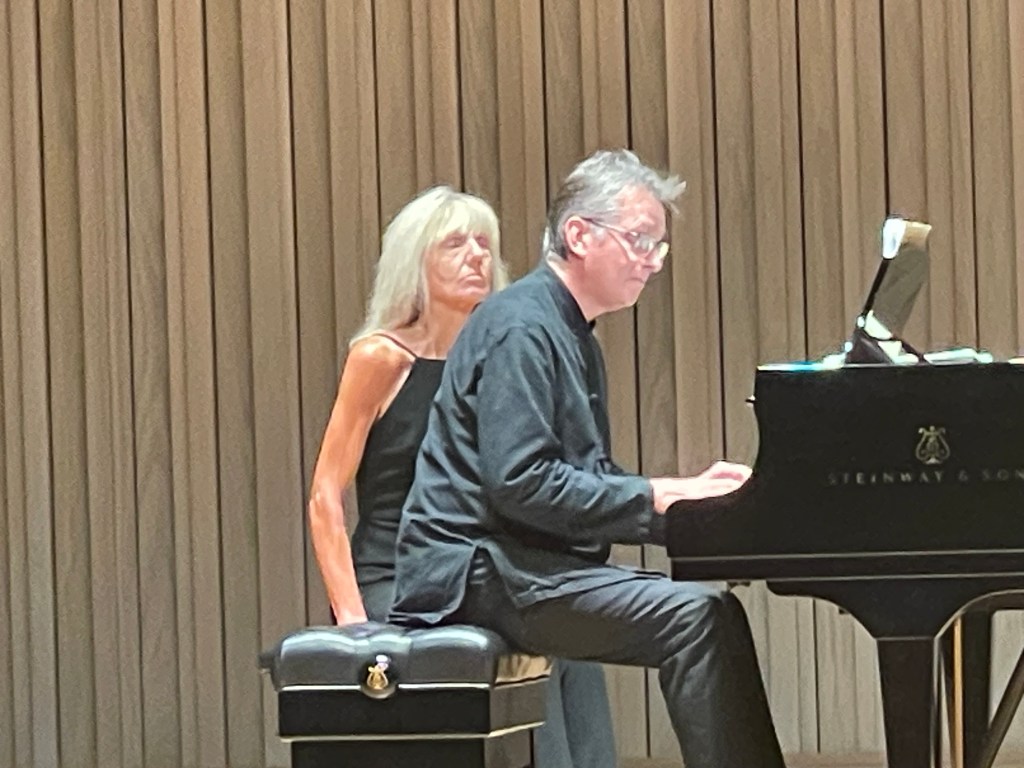
The composer seated on stage as Murray proceeded to play his music with extraordinary clarity, precision and beauty. Bringing great character to the pieces which he played like gems that were polished with brilliance and mastery.
Day 3
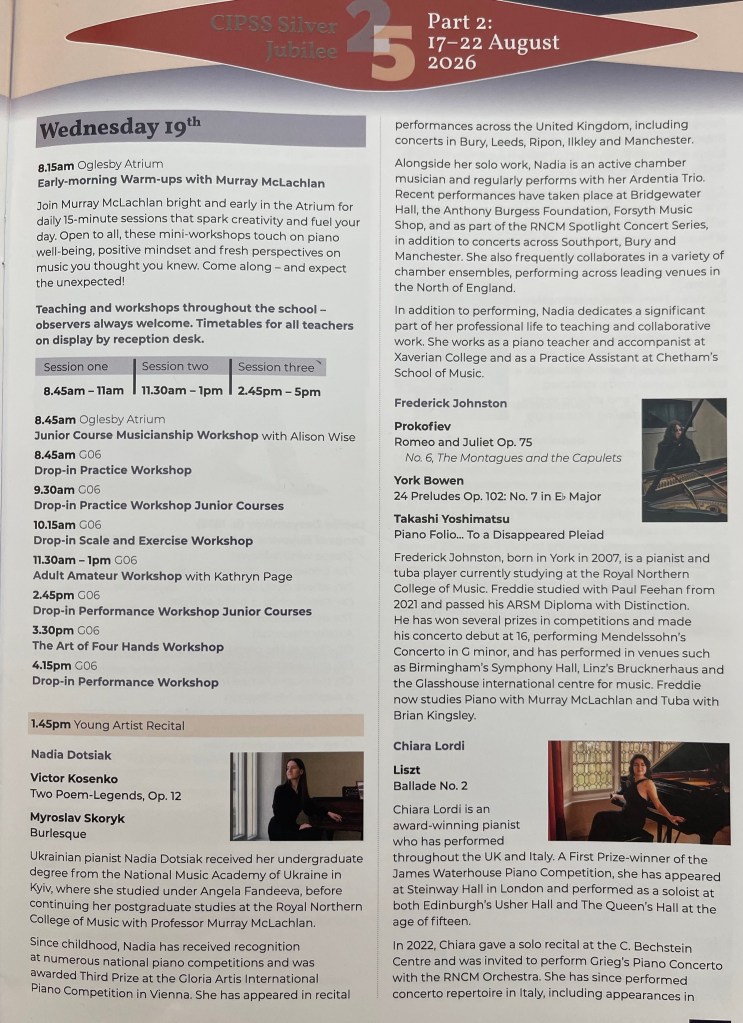
Young artists recital with Nadia Dotsiak Frederick Johnston and Chiara Lordi
Nadia Dotsiak, Ukrainian pianist playing music by her compatriots : Viktor Stepanovych Kosenko 1896- 1938 composer, pianist, and educator regarded by his contemporaries as a master of lyricism and Viktor Kosenko.Myroslav Mykhailovych Skoryk 13 July 1938 – 1 June 2020 composer and teacher whose music is contemporary in style and contains stylistic traits from Ukrainian folk music traditions. He was awarded the titles People’s Artist of Ukraine and Hero of Ukraine.
Some very fine playing of authority and mastery with Two Poem Legends op 12 that were a romantic outpouring of beguiling beauty more in the style of Scriabin or Medtner than the sweet lyricism of Rachmaninov. Played with beautifully rich bass notes that gave great depth and glowing beauty to her playing. The Burlesque by Skoryk, was played with a dynamic drive and masterly control sharing a palette of sounds of radiant beauty.
Frederick Johnston had changed the order of his programme but the authority and conviction he brought to Prokofiev’s Montagues and Capulets left no doubt where his affinity lay. Bold and commanding and if he lost the line in the slower more lyrical central episode he soon regained the pulse with the heros return. The other pieces I can only assume were by York Bowen which he played with a mellifluous outpouring of glowing sounds of questioning beauty.
Chiara Lordi played Liszt’s harrowing tone poem of Hero and Leander, with the piece’s chromatic ostinati representing the sea and in Claudio Arrau’s words : “You really can perceive how the journey turns more and more difficult each time. In the fourth night he drowns. Next, the last pages are a transfiguration”. Some beautiful playing that missed the weight and drive in the more tempestuous passages but her playing of the slower parts showed a freedom and glowing purity of poetic beauty and understanding.
Some fine playing from all three and as they gain more confidence and experience of playing in public they will take more time before and after their performance to greet and thank their audience.
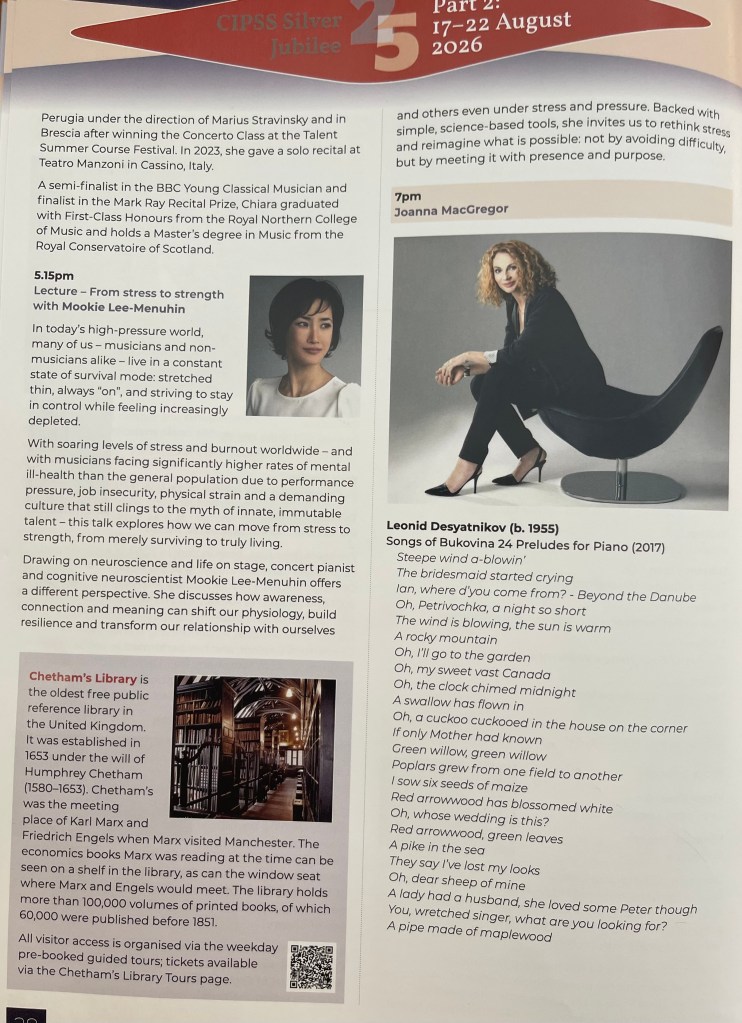
The eclectic Joanna MacGregor brought the ‘Songs of Bukovina’ to Manchester with Leonid Desyatnikov’s 24 Preludes of 2017. She had been introduced to these works by two of her students and was so overcome by them that she wanted to share with us her discovery.
What better place than at Chethams, surrounded by pianist great and small, to show us all 24. Of course as Piers Lane was to tell us shortly afterwards on introducing Chopin’s 24 Preludes, the composer never played more than four together in recital and all 24 were only played twenty five years after the composers death in 1876 by the Russian pianist Anna Yespova followed by complete recordings by Busoni in 1915 and Cortot in 1926.
We live in an age where quantity rather than quality is the name of the game and it is rare to hear just one piece from a collection without the entire set.
But today what better place to allow us to hear all 24 and as Joanna said, then we can make a choice and hopefully add one or two to future concert programmes.
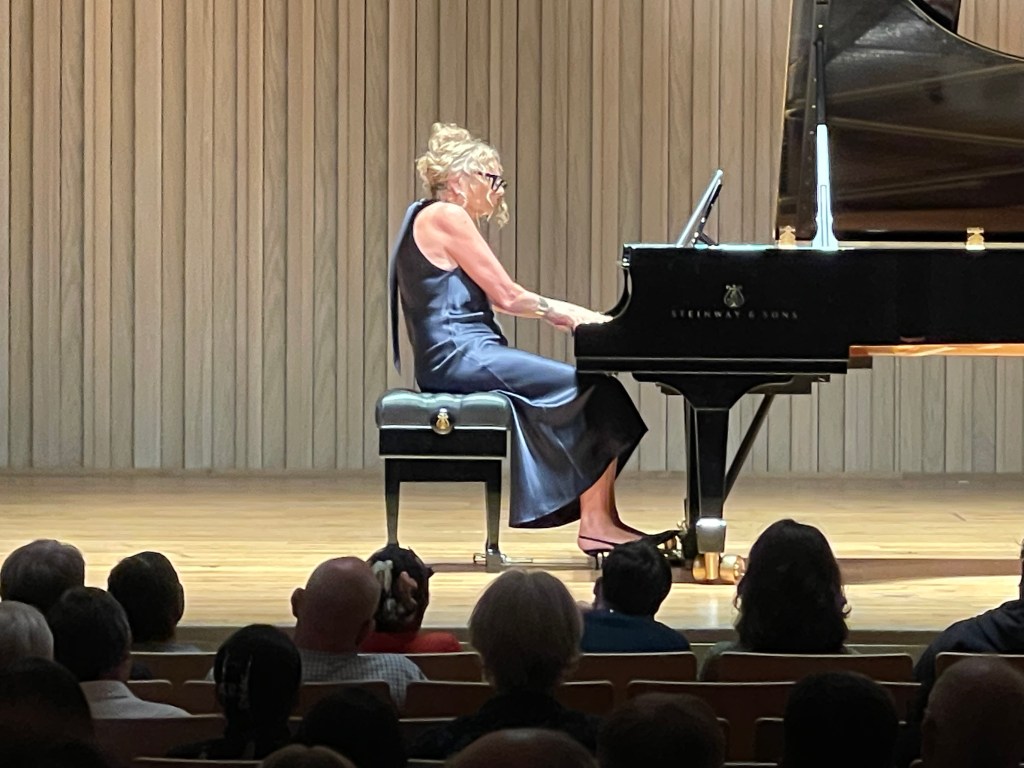
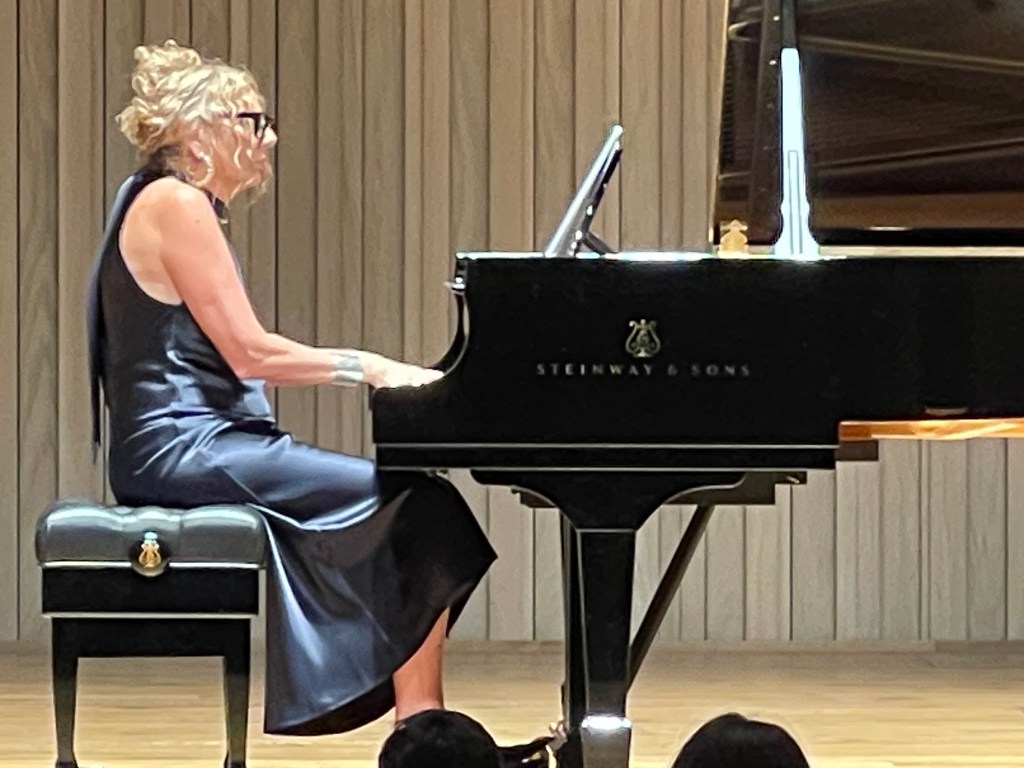
Joanna is a very strong pianist with real muscle as she demonstrated throughout many of the preludes but even more in the encore which was a crescendo of decibel breaking proportions. But Joanna not only has the muscle but also a remarkable control of sound and with clarity, refined sense of colour, character and glowing whispered beauty she brought to these 24 morsels, revealing an artist of commanding authority and sensibility.
The sign of a great pianist who really knows how to produce sound that is not percussive but full and sonorous is demonstrated by the condition of the piano after the performance. The piano tuner in just ten minutes was able to retouch a few notes for Piers Lane whose concert was just forty minutes after Joanna’s astonishing mind boggling exhibition. Joanna like Claudio Arrau knows the real secret of using the body to produce sound naturally without force. Of course more than anything it is the ear that is the gauge of all music making allied to the sensitivity and intelligence of a great artist.
I quote Stacy Olive Jarvis
Department of Musicology, The University of Manchester, Manchester, UK:
‘The Songs of Bukovina by Leonid Desyatnikov, composed in 2017 and inspired by folk tunes, continue the tradition of piano prelude cycles, which originated in the Romantic era and were actively developed thereafter. 1. Folklore Basis of the Chamber Opus Songs of Bukovina
The Songs of Bukovina by Ukrainian composer Leonid Desyatnikov, a native of Kharkiv, are inspired by Ukrainian folklore, drawn from the collection Bukovinian Folk Songs. The composer turned to Ukrainian folklore because it is close to him, as he was born and raised in Ukraine, and he emphasises that the years spent there were happy for him.
According to Desyatnikov, the songs of Bukovina are “Ukrainian music, but traces of migrations are distinctly audible in them. There are melodies with augmented seconds, clearly of Jewish origin, Romanian, Moldavian, Balkan influences, even something reminiscent of Tyrolean yodels”. The composer has a special relationship with time—in his cycle Songs of Bukovina, there is no past or future, but the chronotype is present here and now. Memory in Desyatnikov’s music is almost tangible, as if there is a trace beneath every layer.
The folklore culture of Bukovina was shaped by its historical belonging to various foreign states: the Principality of Moldavia, Turkey, Austria-Hungary, and Romania. Today, this region includes Romanian villages whose folklore undoubtedly influenced and continues to influence traditional Bukovinian customs and art. In the imagery of ritual and ceremonial actions, in decorative and applied arts, in painting and architecture, and in folk songs, the residents of Bukovina asserted their distinctiveness, high talent, and national unity with the entire Ukrainian people (Kotsur, 2020) .
Desyatnikov handles the material—Moldavian, Jewish, Ukrainian, Romanian—with care, extending its scope, creating a universal sound world where the local becomes part of the global. The music of the Bukovinian cycle combines the intonation sharpness of Western Ukrainian modes with techniques from the arsenal of contemporary compositional methods. The predominance of the minor mode is evident in the Songs of Bukovina, with very few major preludes in the cycle.
An integral part of the calendar rituals of Ukrainians and Moldovans in Bukovina was the veneration of ancestors, ritual rounds, entertainment, and songs. Holidays and rituals served as levers for satisfying spiritual and aesthetic needs, and expressing people’s beliefs and emotions. In Desyatnikov’s works, folklore retains its cognitive, ethical, and aesthetic value. Bukovina is a region where Ukrainian, Bessarabian, Hutsul, Moldovan, and Romanian cultural traditions converge; dance music (kolomyika) of Bukovina and Hungarian shepherd songs are identical. Great attention is devoted to the romantic idea of synthesis: The Songs of Bukovina are characterised by a combination of the incongruous, an organic fusion of dissimilar and diverse elements. According to the composer, the main source of inspiration was Bukovinian folklore: “Each of the 24 preludes is based on a genuine folk melody. Sometimes highly prepared, and sometimes sounding almost pure”.
The music of the final prelude of the Songs of Bukovina leaves an effect of bewilderment: it resembles open postmodernist endings that can be interpreted from different perspectives. This prelude, perhaps, is the least tonally defined in the entire cycle, the most discreet and fragmentary. It is not an answer but an endless question, in essence, the question itself, hanging in the air. This fragment is a significant ellipsis, giving freedom of choice. For this prelude, Desyatnikov chose the melody of a Bukovinian folk song called Sopilochka Yavorova.
Sopilochka is a flute that becomes a recognisable symbol not due to its external qualities but because of the function it performs in the general context of the plot (see Figure 1). The flute, while emphasising realities, reveals the true meaning of the artistic image. Musical instruments that both Ukrainians and Romanians consider traditional due to their use, not their creation, include tilinka, flute, and violin. The largest group in this area consists of wind instruments, among which the trembita occupies a special place (Cherkaskyi, 2003) . The image created by Desyatnikov in the final prelude is fragile and vulnerable: instead of a flute, he uses a swirly. This episode captivates with its poignant tragedy.’
Leonid Desyatnikov was born on October 16, 1955 in Kharkiv, Ukraine. He studied composition and instrumentation at the Leningrad Conservatory in St. Petersburg.
He has written four operas, several cantatas and numerous vocal and instrumental compositions. His principal compositions include: The Children of Rosenthal (an opera in two acts; libretto, Vladimir Sorokin), commissioned by the Bolshoi Theatre; Poor Liza (a chamber opera in one act; with libretto by the composer, after the novel by Nikolai Karamzin); Gift (a cantata based on the verses of Gavrila Derzhavin); The Leaden Echo (a work for voice(s) and instruments based on the poem by Gerard Manley Hopkins); and The Rite of Winter 1949 (a symphony for chorus, soloists and orchestra).
Desyatnikov has been collaborating with Gidon Kremer since 1996 as a composer (Wie der Alte Leiermann…; the chamber version of Sketches to Sunset; Russian Seasons) as well as arranging the works of Astor Piazzolla, including the tango-operita María de Buenos Aires and the tango suite Cuatro estaciones porteñas. Desyatnikov wrote the scores for the films Sunset (1990), Lost in Siberia (1991), Hammer and Sickle (1994), Moscow Nights (Katya Izmailova) (1994), Giselle’s Mania (1995), Prisoner of the Mountains (1996), All That Is Tender (1996), Moscow (2000), His Wife’s Diary (2000) and The Target (2010),[1] “Trompe-loeil” for piano four hands, Aldeburgh (2023, June), “Reflections on the Folk Song” for 19 strings and viola obbligata, Stockholm (2024, August), “Saint Petersburg, Florida”, barcarola for two pianos, Padova (2024, September).
Leonid Desyatnikov left St. Petersburg in March 2022 after the Russian invasion of Ukraine. At the present time, he lives in Haifa, Israel.
It is always refreshing to hear Piers Lane with his refined tone palette and simple unaffected musicianship.
Flying in from a long American tour it was with courage that Piers appeared in Manchester where the change of time and climate is always a shock to the system.
Every day this week since I arrived we have had rain that in London we have been praying for, for months .
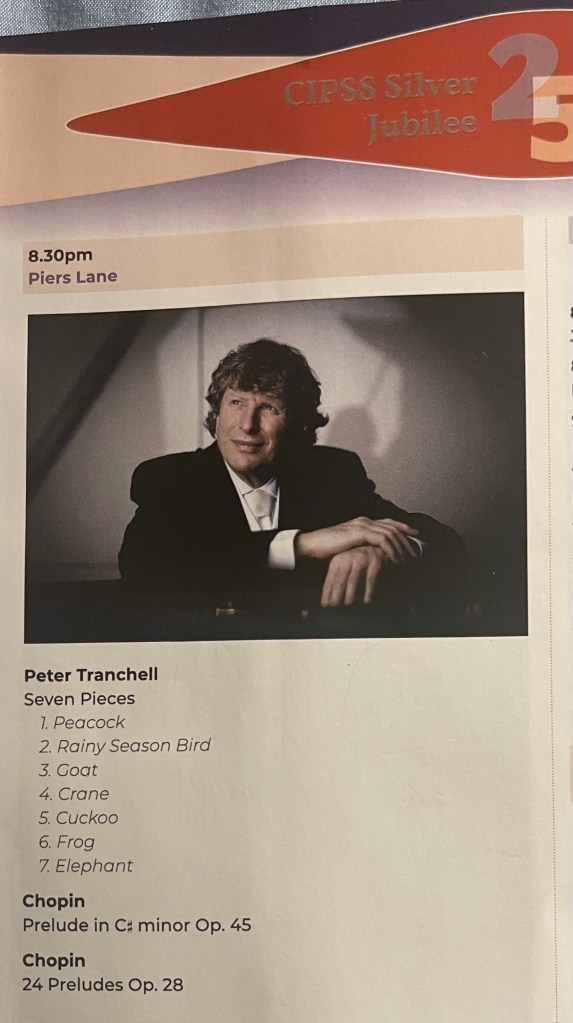
A small change of programme allowed Piers to relax and enjoy sharing his repertoire with us that he has lived with for a lifetime. The promised work by Peter Tranchell on this occasion was substituted by the Toccata in C minor by Bach followed by the promised Chopin Preludes. Not only the 24 op 28 but also the Prelude in C sharp minor op 45.
It was with this single Prelude that Piers opened the programme with its delicate washes of modulating waves of sound played by Piers with timeless beauty and delicacy. An overall architectural line that led to the ravishingly beautiful cadenza tarred with a brush of such whispered delicacy that it seemed to dissolve into the final bars that Piers played with aristocratic poise and knowing beauty.
The Toccata in C minor BWV 911 was an alternation of fluidity of sounds of improvised freedom and poetic invention. An ‘Adagio’ played with serene poignant beauty alternating with a resonant fugato before bursting into the hypnotic knotty twine of the Toccata. An infectious ‘joie de vivre’ and sense of masterly invention gave a glowing drive to this, the most popular of Bach’s seven early Toccatas. I remember Martha Argerich playing this many years ago with the same freshness and beauty as she coupled it with the Liszt Sonata. Piers today playing with the same masterly sense of discovery coupled it with Chopin’s 24 Preludes op 28.
Fou Ts’ong used to describe the Preludes as 24 problems because each one is so different from the other with their chameleonic technical and musical challenges of a Poet of the Piano. Each prelude was a miniature tone poem that Piers conveyed with poetic beauty and technical mastery. From the simplicity of the opening flourishes of undulating sounds to the sombre menace of the second prelude where the brooding bass was only calmed by the radiant beauty of the long melodic line that rode on such troubled waters. The third flowed like water and is similar in many ways to the twenty third prelude for its pastoral freshness where here Piers helped the waters with a few useful splashes from the right hand too ! A poignant beauty to the fourth but with a heart beating a little erratically as it reached out to the gentle undulating beauty of the fifth. The sixth was rather slow but gloriously radiant played with a whispered beauty, Piers divulging secrets of poignant significance. The seventh is the shortest of all the preludes and was played by Piers with a whispered radiance of timeless sounds. The eighth is the first almost étude type prelude that Piers allowed to enter surreptitiously as waves of passionate sounds invaded the keyboard with palpitating intensity. He brought commanding authority to the ‘Largo’ with its imposing dotted rhythms given such weight. And was followed by the gossamer ‘feux follets’ of his jeu perlé played with silver lightness as it traced a musical line of capricious enticement. It contrasted too with the continuous ravishing undulating legato of the ‘vivace’ eleventh prelude. The dynamic drive of the G sharp minor prelude was clothed in velvet sounds of sumptuous rich excitement. The thirteenth is surely one of Chopin’s most beautiful bel canto melodic outpourings and it was played by Piers with hypnotic radiance and beauty, rather slowly as we could savour a sense of balance that allowed even the accompaniment to have a voice of equal significance. The fourteenth was just a wind passing over the keys before the radiant glowing beauty of the ‘Raindrop’ Prelude. Piers played it with supreme delicacy and if the beating rain became a little erratic it was because we were in Manchester and the deep bass duet between the voices needed time to breath with wonder and a little menace before the clouds pass and a ray of radiant sunshine was allowed to fill the keys with wondrous delicacy and beauty. The ‘presto con fuoco’ of the sixteenth was fearlessly played as Piers shaped the music with a poetic intensity that was not made of only notes but of undulating sounds of exhilaration and excitement. The seventeenth too entered on a whispered single breath and was allowed to flow naturally in long phrases of arched beauty. Even the deep bass A flat so often played like a gong was played by Piers with a magical whispered glow in which the melodic line was played ‘avec un sentiment de regret’ of breathless beauty. The cadenza like character of the eighteenth Prelude was with great freedom and passionate intensity before the glowing beauty of the nineteenth, one of the most difficult technically. It is where the melodic line is like an Aeolian Harp with a continuous outpouring of notes with quite large stretches for a small hand. Piers played it with glowing beauty and a sense of legato that gave no indication of the technical difficulties involved. Piers’ playing of the twentieth prelude in C minor was magic indeed and betrayed a masterly sense of control as the three alternating layers of sound became ever more distant. Piers knows that this particular Prelude was the theme of the variations by Busoni and Rachmaninov both of which are in Piers’ repertoire and is where so few notes can mean so much. The beautiful cantabile of the B flat prelude I found a little too misty but it was played with disarming poetic intensity as the octaves of the twenty second entered from the bass, overtaking the entire keyboard with masterly passionate intensity. There was magic in the air as Piers played the twenty third with a pastoral fluidity of radiance before bursting into the passionate outpouring of the twenty fourth. Playing of brilliance and sumptuous sound as he brought these twenty four ‘problems’ to a brilliant conclusion, finally resolved with the three ‘D’s ‘ deep in the bass played like a true artist with the resonance of a troubled soul .
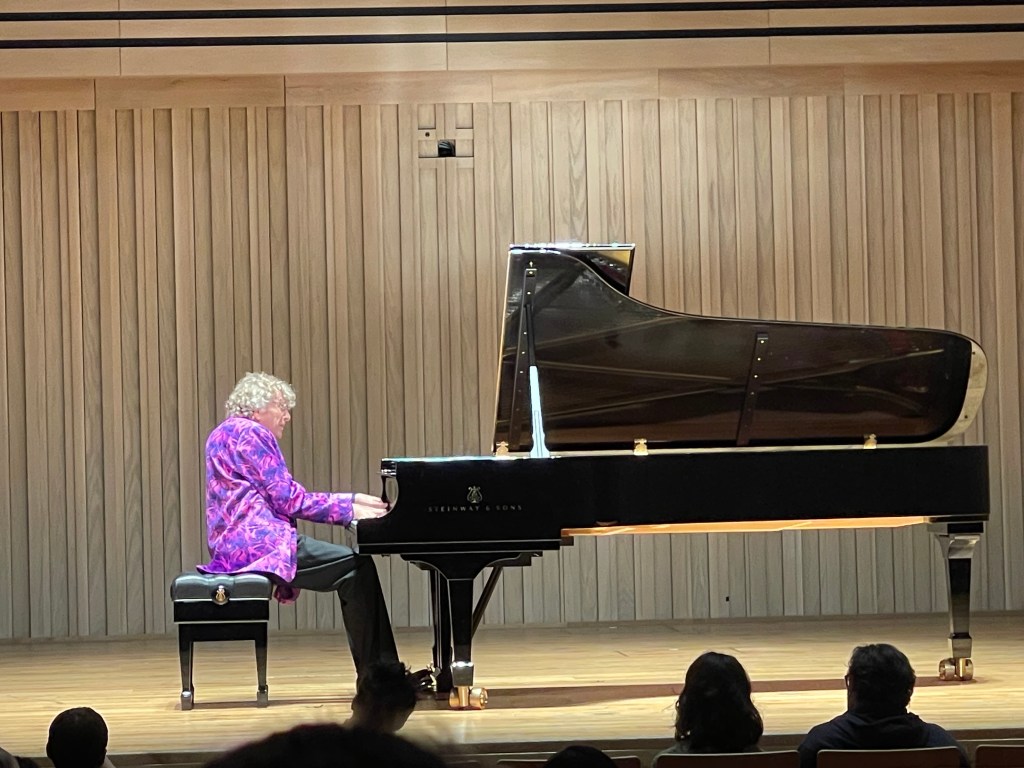
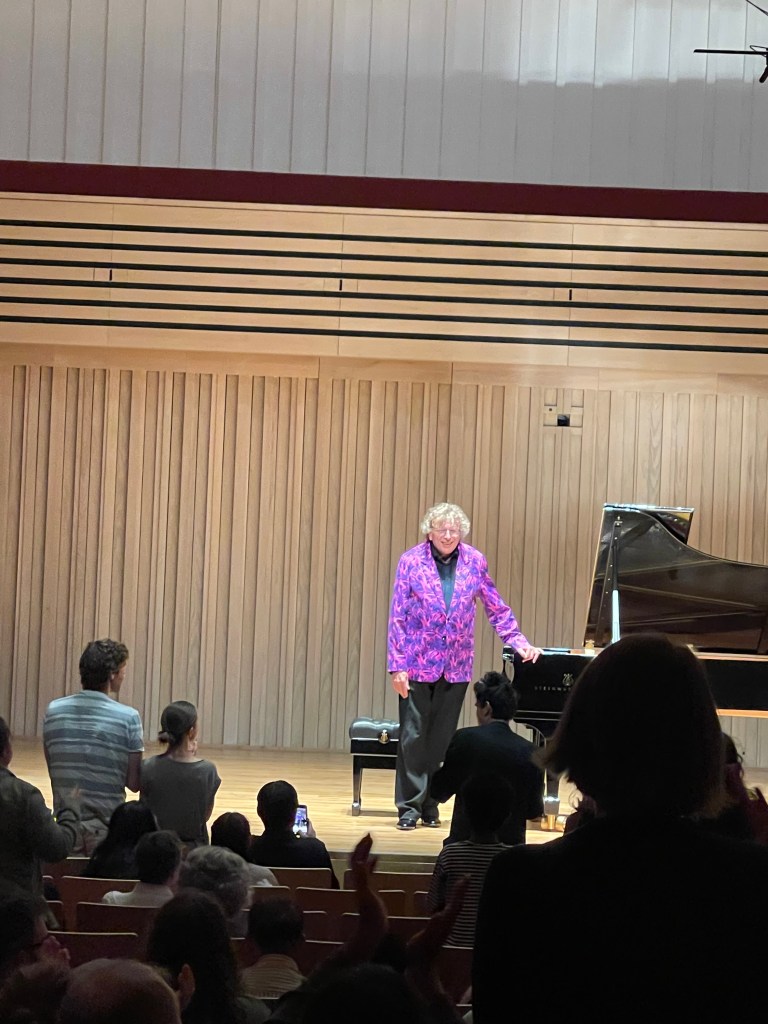
A standing ovation for Piers in his princely illuminated jacket, turquoise this year, blue last time, of signed manufacture. And a performance of Clare de lune that was of such blinding beauty it must have been a super uneclipsed moon indeed. Whispered ravishing sounds of which only Steven Osborne and Piers seem to have the key that can draw the audience in, to overhear such wondrous confessions.
Day 4 Young Artist Recital with Sammi Zhong and Harmony and Melody Zhang
Some ravishing playing from all three pianists, all students at Chethams . Playing not only of beauty but also of style and intelligence
Sammi Zhang played Liszt’s Liebestraum with refined good taste and the more notes she had to play the more fluid her playing became without loosing any of the glowing beauty or sensitivity. Passionate intensity and quite considerable mastery in the climax of Liszt but most notably in the virtuosistic central episode of Chaminade’s Automne. The opening of Chaminade’s refined salon piece was played with heart rending delicacy and beauty .
Harmony Zhang opened with the slow movement of Haydn’s F major sonata with playing of delicacy and sensitivity . The same that she brought, together with clarity and a remarkable sense of line to Ravel’s Sonatine where the Menuet was given a special round of unexpected applause .
Her sister Melody, a few year older, played with the same sensitivity but also the musical maturity that she could bring to the first two movements of Beethoven’s Sonata op 109.
Opening with a ravishing performance of Balakirev’s transcription of Glinka’s ‘The Lark’ that she played with great style and a kaleidoscope of subtle colour. Both sisters play with such natural musicality and beauty of sound but it is the world of Eusebius with Florestan just looking on and awaiting his turn to add a bit more weight and contrast to their beautiful playing
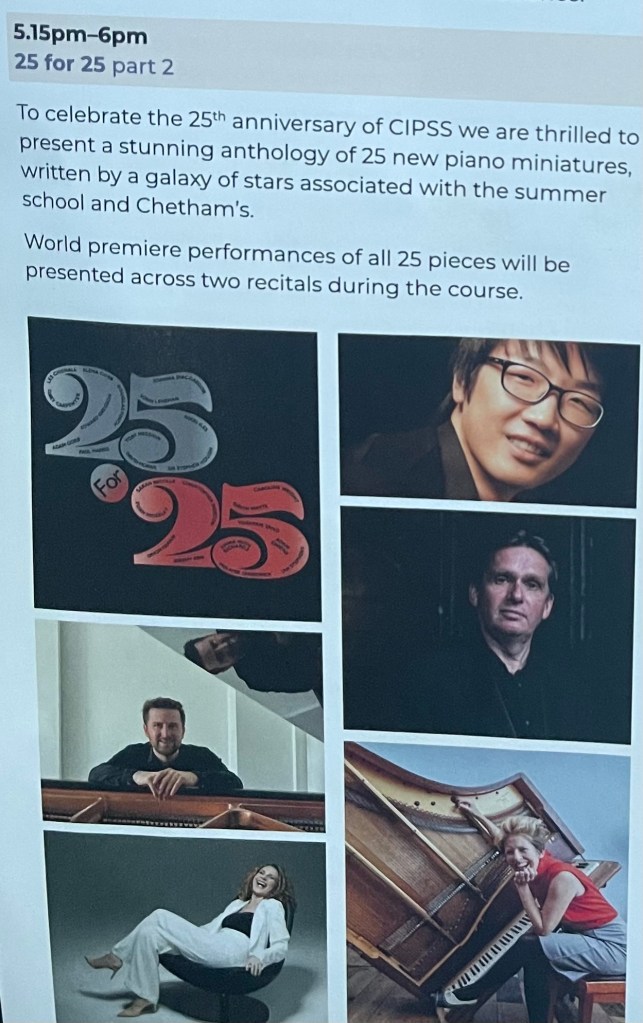
Twenty five composers for twenty five years ………….what a line up !
The Four Pieces for Piano op 119 were published in 1892 and 1893 along with three other collections of smaller piano pieces: Seven Fantasias Op. 116, Three Intermezzi Op. 117, and Six Pieces for Piano Op. 118 .The collection op 119 is the last composition for solo piano by Brahms and together with the six pieces from Op. 118 was premiered in London in January 1894.
A fascinating recital by Noriko Ogawa of the final three collections of pieces that Brahms was to compose for the piano.
Brahms had written to Clara Schumann describing the first Intermezzo from 119: ‘The little piece is exceptionally melancholic and ‘to be played very slowly’ is not an understatement. Every bar and every note must sound like a ritard[ando], as if one wanted to suck melancholy out of each and every one, lustily and with pleasure out of these very dissonances! Good Lord, this description will surely awaken your desire!’. The Intermezzi op 117 Brahms had described as ‘lullabies of my grief’.
It was the quiet intensity and concentration of Noriko Ogama that held us transfixed from the very first notes of the Intermezzo op 117 prefaced in the score by two lines from an anonymous Scottish ballad, “Lady Anne Bothwell’s Lament”, translated to German by Johann Gottfried Herder:
‘Schlaf sanft mein Kind, schlaf sanft und schön!
Mich dauert’s sehr, dich weinen sehn.’
‘Baloo, my babe, lie still and sleep;
It grieves me sore to see thee weep.’
With her head down in total concentration as she brought the music to life with a scrupulous attention to Brahms’s very precise instructions. Ravishing sounds of poetic intensity as she opened op 117 with an extraordinary sense of legato and if it was rather slow, just missing the natural flow, it was because Noriko had brought a much deeper intensity to this seemingly simple E flat major intermezzo that she was to contrast later with the final Intermezzo from op 118 in E flat minor. This too was a miniature tone poem of luminosity but with washes of sound of ominous portent before its extraordinary reawakening. Two completely different worlds but both containing the intensity of these extraordinary last thoughts of a tormented soul. The Intermezzo in B flat minor op 117 was all radiance and light and it was here that Noriko allowed the music to flow with beguiling insinuation followed by the final intermezzo in C sharp minor of mysterious oriental flavour.
Op 118 opened with a passionate outpouring of sumptuous rich sounds and contrasted with the respectful beauty of the Intermezzo in A major. It was here that Noriko allowed Brahms’s unexpected passionate outburst to engulf us before the return of the sublime simplicity of the opening. The Ballade in G minor was given full orchestral sounds of sumptuous richness out which floated a beautiful mellifluous outpouring.
It was these contrasts between the deeply introspective and passionately intense that Noriko could show us with playing that was never percussive but always with sounds that she found deep within the keys with a limpet touch of horizontal flowing natural movements. A concentration that held us spellbound in a magic web of sounds that were of great beauty but above all with an architectural sense that gave great strength to such poignant sentiments. Etherial washes of sound in the Intermezzo jn F minor were contrasted with the quasi religious chorale of the Romance in F major with its magical pastoral central episode played with glowing beauty. The final intermezzo in E flat minor I have already mentioned, but it is one of the most imposing of all these Intermezzi where Brahms creates a tone poem of a harrowing tale revealed with a kaleidoscope of colour and chameleonic changes of character.
The final pieces op 119 opened with radiance and light with a purity of sound of burning inner intensity. A radiance and simplicity to the two Intermezzi in E minor and C major before the dynamic drive and passionate, sumptuously rich orchestral sounds of the final Rhapsody in E flat. It brought this cycle of thirteen miniature masterpieces to a glorious end.
It was an extraordinary recital from a master musician who searches deeply into the score with a scrupulous attention to the composers intentions with playing of mastery and poetic beauty.
An eclectic musician who as an encore treated us to another composer’s final work for piano that of Tōru Takemitsu (1930-1996.
Rain Tree Sketch II was written in 1992 in memory of Olivier Messiaen (1908-1992), the French composer who had a strong influence on Takemitsu. The work was composed for a concert “Hommage à Olivier Messiaen” at Les Semaines Musicales Internationales d’Orléans, France, and was premiered by Alain Neveux on 24 October 1992. The name of the work was probably inspired by a quotation from a novel by Kenzaburō Ōe about the miraculous rain tree, whose tiny leaves store up moisture and continue to let fall raindrops long after the rain has ceased. The work is also a dreamy meditation on the flow of life, and was the last piano piece by Takemitsu (his first Rain Tree Sketch was written in 1982).
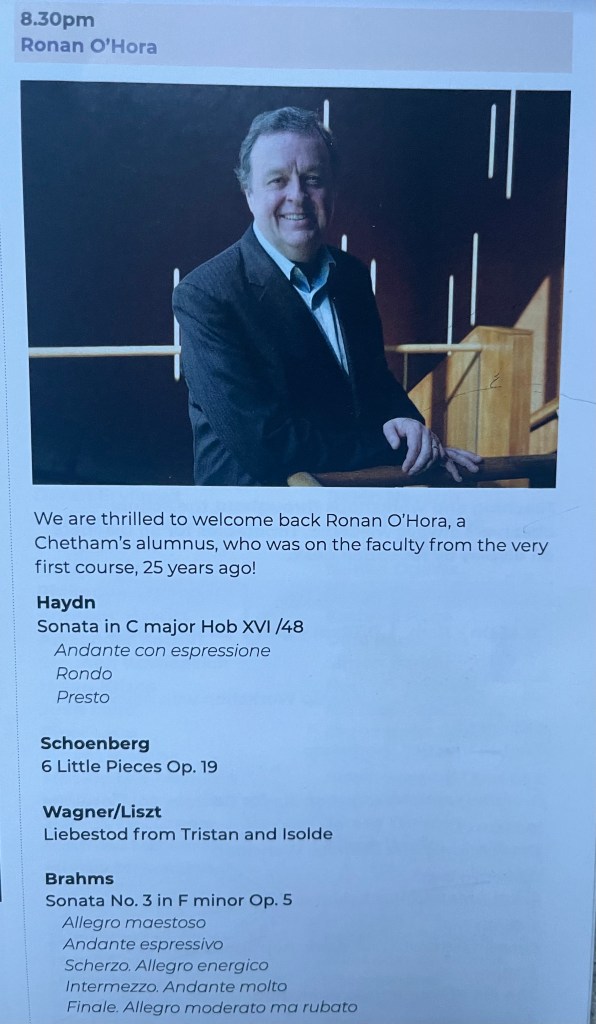
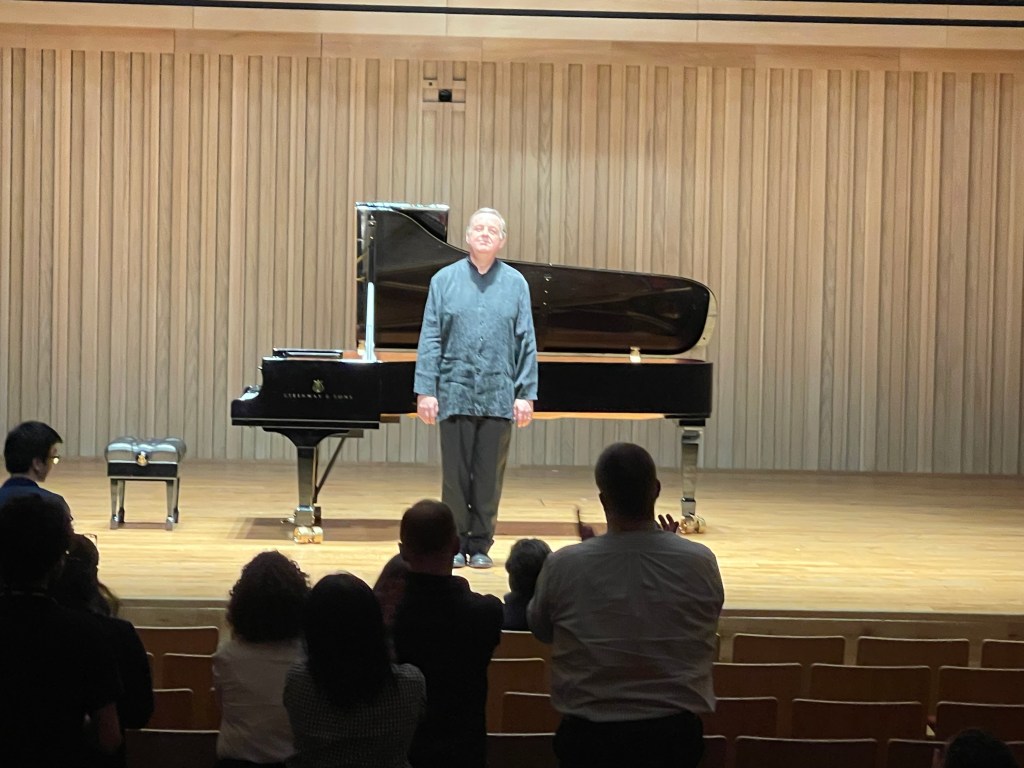
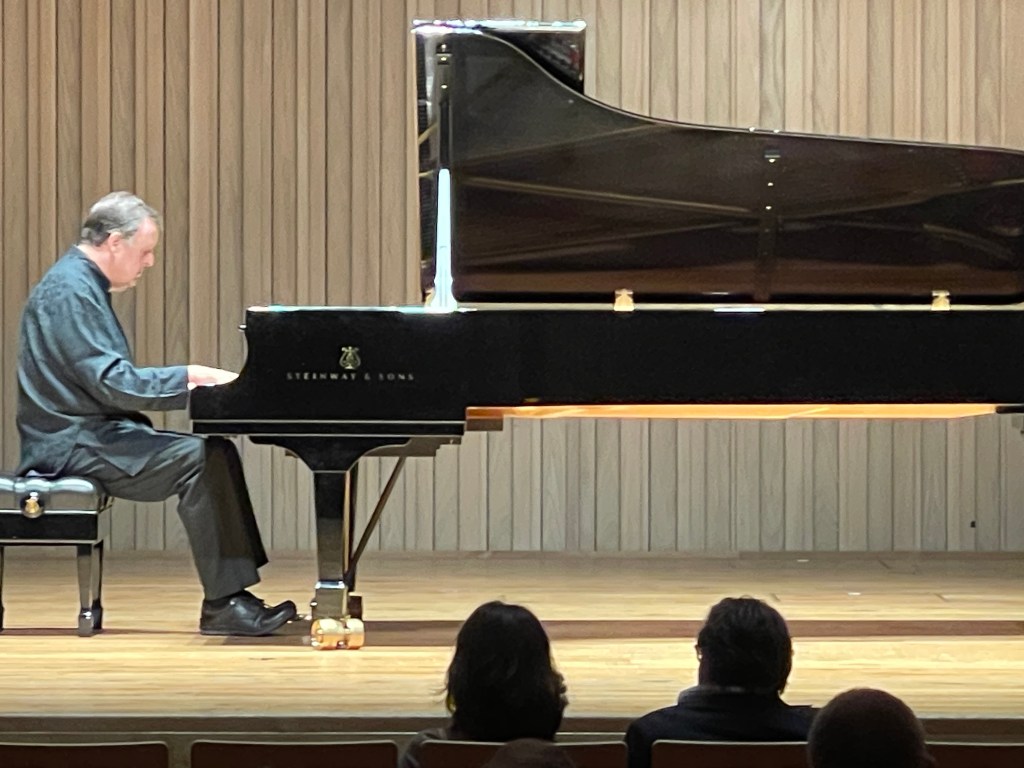
Ronan O ‘Hora never ceases to amaze me with playing of impeccable style and musicianship, whilst heading the piano faculty at the Guildhall in London and sitting on many International Piano Juries . He tells me too that he has just returned from Italy where he played in a celebration of Antonio Lysy, a wonderful cellist whose life was prematurely cut short, the son of Alberto Lysy and grandson of the great Dame Iris Origo.https://youtu.be/VhXM65BaQQA?si=BgCaWiiMqpyLMroF
I heard Ronan a few years ago playing Beethoven Sonatas absolutely impeccably and he told me that he was performing the entire cycle of 32 that he had prepared in the lock down !
Today the main work on the programme was the Sonata in F minor by Brahms prefaced by the Haydn two movement sonata in C Hob XVI /48, Schoenberg’s Six Little Pieces op 19 and Wagner’s Liebestod. What was not mentioned was the encore of Schumann’s Abschied – Farewell from the suite of Waldszenen – Forest scenes op 82.
An encore that summed up all that we had experienced in his programme of sumptuous ravishing sounds and poetic intensity.
The Haydn Sonata with its opening ‘Andante con espressione’ was played with an expansive quasi improvised freedom that Ronan imbued with a refined sense of colour and extraordinary character. The music was allowed to speak with simplicity and subtlety together with an architectural shape that managed to control all the characters in a quasi operatic outpouring. There was an impish brilliance to the Rondo that although marked Presto, at times sounded a little breathless because Ronan was intent on bringing a ‘joie de vivre’ of exhilaration to this scintillating movement.
How refreshing to hear Schoenberg’s six little pieces in the concert hall where so few notes can express so much. Ronan imbued each one with extraordinary differing character and a kaleidoscope of chameleonic sounds of rare sensitivity.
Liszt’s transcription of Wagner’s Liebestod from Tristan was played not with the usual rhetoric but with a more harmonic approach allowing the music to speak for itself. The opening rather subdued and not the usual call to arms but something that drew us in to listen to the quite extraordinary harmonies. Strands of counterpoints woven together to produce a sumptuous whole that exploded with passionate intensity only to die down to a whisper that was of poignant significance. This was a performance of a master musician rather than showman and revealed a work of much more refinement than from lesser more impatient hands.
The Sonata in F minor op 5 the last of three ‘veiled symphonies’ unusually in five movements. Ronan brought a masterly architectural shape to this monumental work imbuing the first movement with aristocratic nobility and heartrending intensity. Allowing the music to speak with simplicity and poetic beauty with a symphonic sense of orchestral colouring.
Brahms prefaces the Andante with a poem by Otto Inkermann, writing under the pseudonym C.O. Sternau:
Der Abend dämmert, das Mondlicht scheint,
da sind zwei Herzen in Liebe vereint
und halten sich selig umfangen
Through evening’s shade, the pale moon gleams
While rapt in love’s ecstatic dreams
Two hearts are fondly beating.
Ronan played with glowing radiance and beauty and the coda was with whispered intensity growing in weight before exploding into a passionate outburst only to dissolve to a whisper. Claudio Arrau had described this movement as ‘the greatest love music after Tristan, and the most erotic — if you really let go, without any embarrassment.’
The Scherzo was played with fearless abandon and it was followed by the Intermezzo marked ‘Rückblick – Rembrance’ which is really an introduction to the Finale . A last movement that Nelson Goerner has said “The music is extremely difficult, but lots of the difficulties don’t get noticed. It’s not a spectacular virtuosity; the virtuosity is there but it’s not about showing off and when we reach the coda, the pianist needs to take risks. It needs to feel as if the music is nearly but not quite coming off the rails, otherwise the meaning is lost.” It was exactly the fearless abandon of Ronan that brought this Sonata vividly to life with passionate intensity and nobility that explained so perfectly Schumann’s description of a ‘veiled symphony.’
What better way to conclude such a feast of music than with Schumann on a cloud of poetic beauty.
And yet another concert by the indefatigable Murray McLachlan playing the third recital in the series of the piano works of Euan Moseley. It was nice to see the McLachlan clan out in force and a numerous public at what was the fifth concert of the day ! Some magnificent playing from Murray of crystalline clarity and beauty and quite considerable technical mastery of this capricious composers’ complicated scores.
Day 5
Tiantian Gao winner of the 2026 EPTA UK Piano Competion playing in the final concert in the Young Artists Series .
An all Chopin programme that would strike fear into any pianist but not so this twelve year student of Murray McLachlan and Christopher Elton.
Playing the Chopin Fantaisie op 49 with poetic beauty and radiance. Technical difficulties were absorbed into a musical understanding of refined musicianship with the octave passages played with disarming ease. Playing of extraordinary authority and mastery to which she will now add more weight as her sensitive fingers grow stronger and delve deeper into the keys to find even more ravishing sounds.
A performance of one of Chopin’s longest single movement works played with an authority that belied her twelve years .
The three late Mazurkas op 59 too were played with poetic fantasy and style .
But the main work on this short programme was the ‘Variations on La ci darem la mano ‘op 2 which was the work with which Chopin himself astonished Schumann on his arrival in Vienna and who exclaimed ‘Hats off a genius’
Extraordinary mastery and sense of style with quite considerable technical skill allied to an inborn musicality. Variations unfolded with ever more technical challenges that Chopin would have astonished his public with just as Tiantian Gao did today.
It is good to know that she is being guided by Murray McLachlan and Christopher Elton and that her considerable artistry will grow in stature as she too matures as an artist
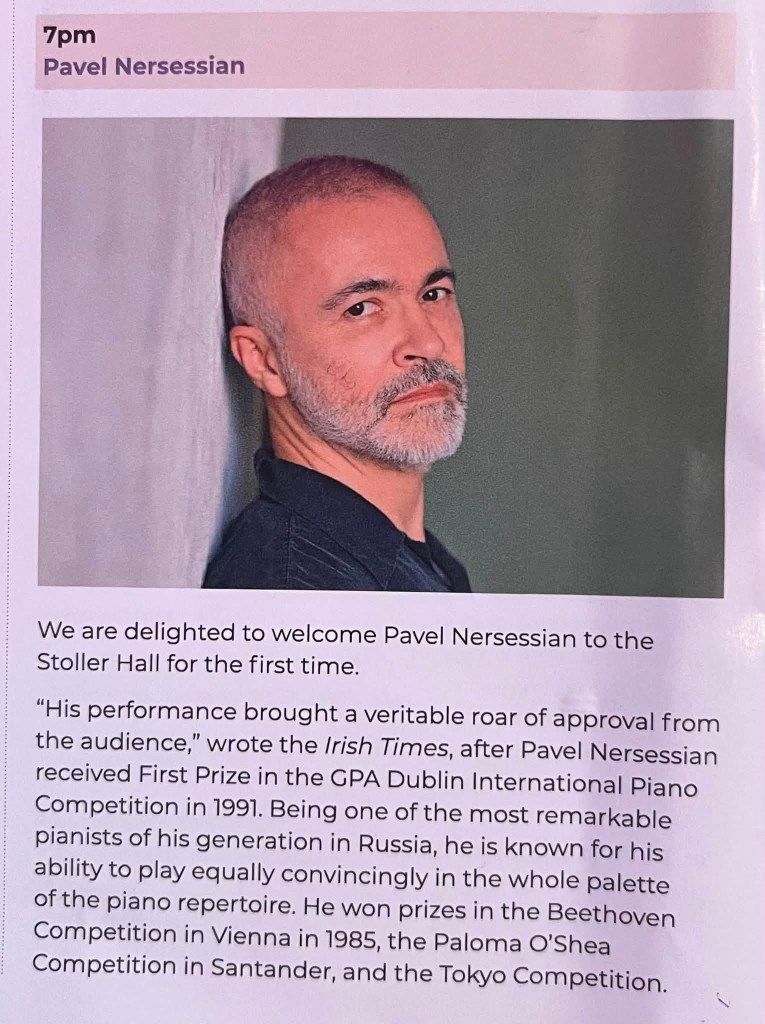
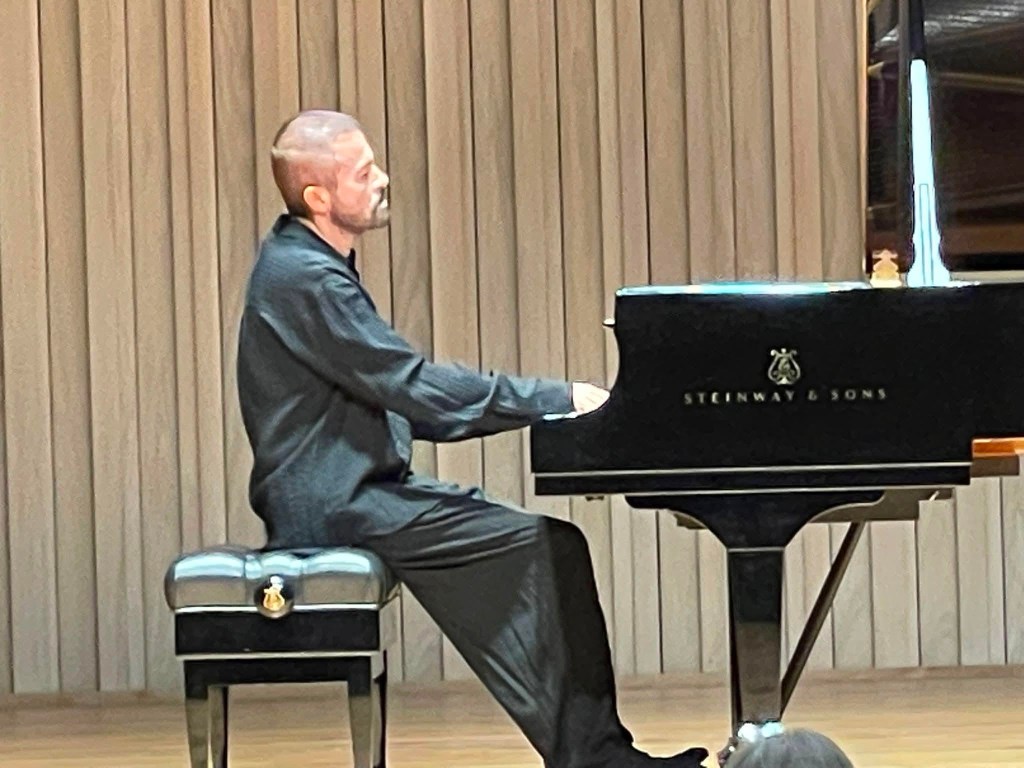
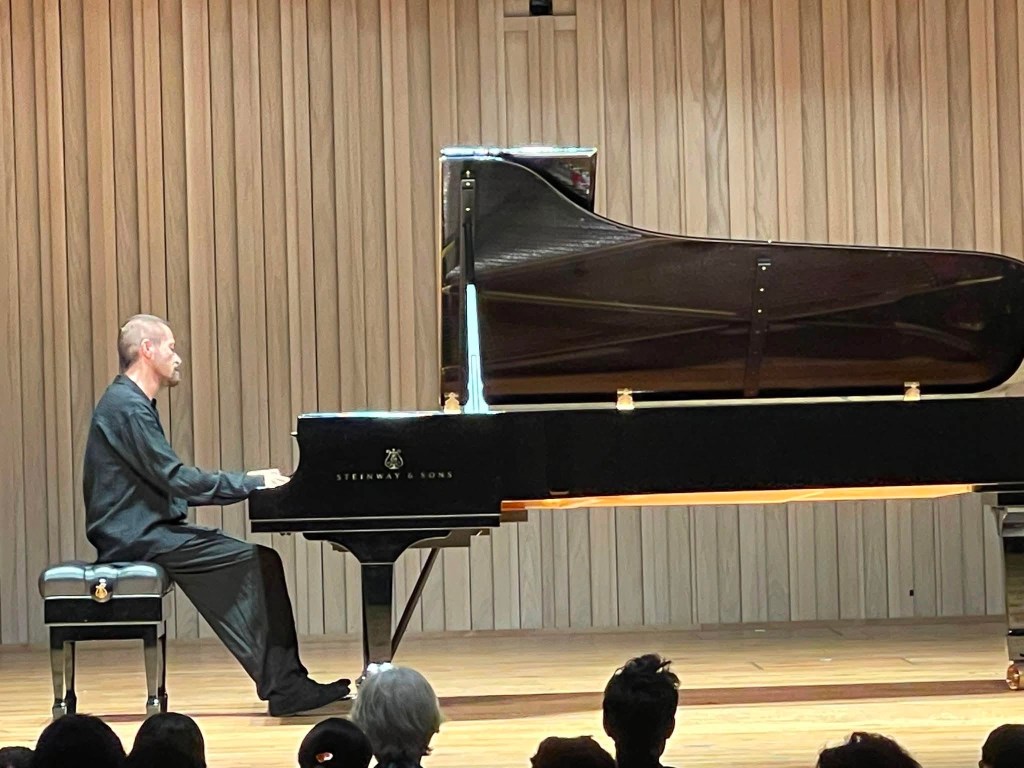
A voyage of discovery for Pavel Nersessian as he took us into his magical world of fantasmagorical colours and dreams
Many distinguished artists came to thank Pavel at the end of his recital and as I exclaimed most artists have their feet on the ground but Pavel is flying high as free as the wind.
Sometimes distracted with his love to linger and admire and momentarily loosing his way but always sharing his love of radiance and beauty as he discovers and invents sounds rarely heard from this big black box of hammers and strings.
An authority with all he plays where there is no doubt of his intentions and his need to communicate and share such refined beauty. Notes just disappear as sounds resound with an extraordinary sense of balance and a kaleidoscopic sense of colour. A piano that becomes a jewel box where prismatic light shines and ignites the air with the glowing magic of feux follets.
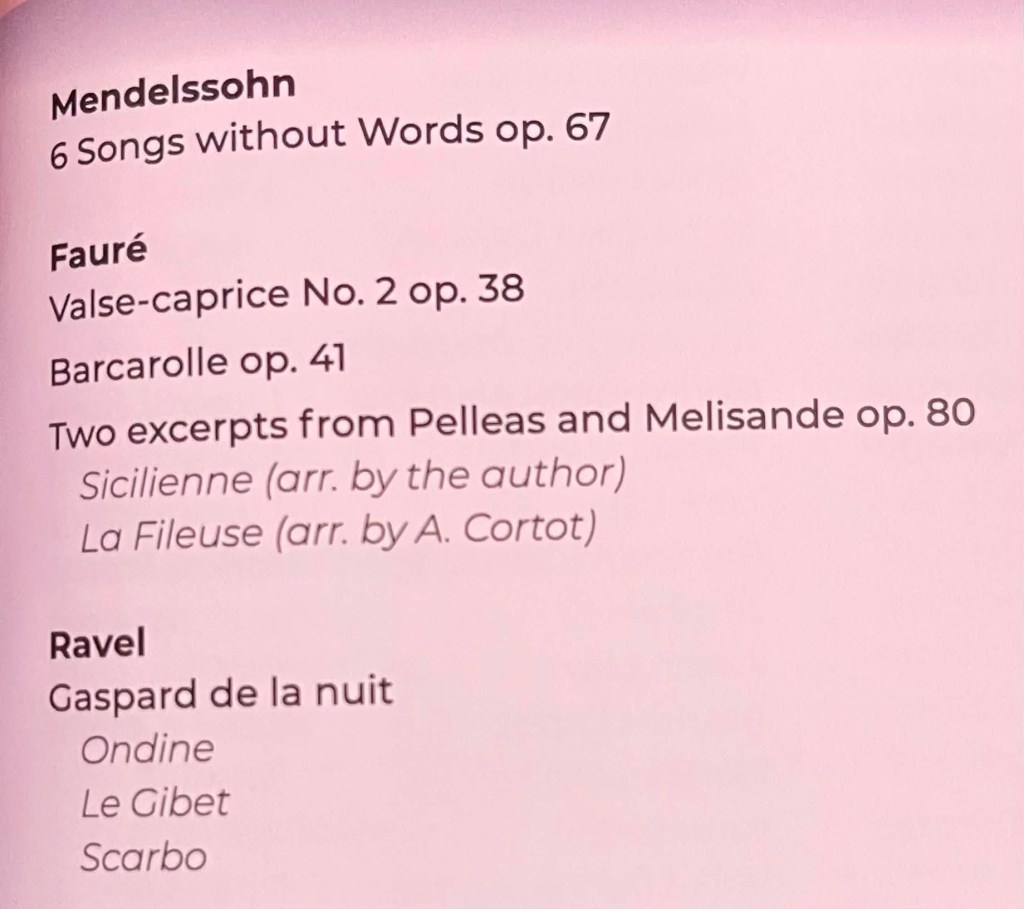
Pavel had created a recital of songs without words of pieces that had a message to share and were tone poems of poetic significance. Beginning with Mendelssohn whose Songs without Words are a rarity in the concert hall. With Gilels and Horowitz they became bewitching songs of ravishing beauty and beguiling insinuation. Gilels would play them simply with his golden sound reminiscent of Rubinstein (who had in fact discovered a fourteen year red headed boy on one of his tours to Russia. He exclaimed that when this boy comes to the west he may as well pack his bags and leave! ) Horowitz on the other hand would imbue them with beguiling beauty of half lights and seductive insinuation .
Pavel showed us a combination of the two characters of both Florestan and Eusebius happy to inhabit Pavel’s wondrous sound world.
There is another Pavel too that shares a similar wondrous vocabulary, and I was not surprised to learn that Pavel Kolesnikov had worked with him before coming to the west. Nersessian now based in Boston and Kolesnikov in London sharing their extraordinary range of sounds with us in the west as Richter did on his first appearance in the west in the 60’s. It was not his demonic temperament and mastery that astonished so much as a sound world that we never knew existed !
Six songs without words by Mendelssohn were enough to transfer us to another planet. Played simply with refined good taste but with the brush strokes of Leonardo not Picasso .
A spinning song shorne of all its rhetorical hiccups but played with genuine charm and a question and answer, added to this continual buzz, that was quite hypnotic. Bel canto melodies played with the same inflections as a Caballé. Followed by some enticing salon works by the even more neglected Fauré. He may have been director of the Paris Conservatoire but he was also a master like Saint -Saēns of a continuation of piano pieces of charm and jeu perlé brilliance . These particular pieces were unknown to me but Pavel is such a persuasive advocate that I will delve deeper rather than stopping at the Nocturnes, Variations Symphonique and Theme and variations !
‘Gaspard de La Nuit’ has long been a vehicle for virtuosi not always aware of the clockwork precision that the composer notated in his score. Similar to the absolute precision of Debussy and of course the miracle that a totally deaf Beethoven could bequeathe to posterity with such precision . I remember Vlado Perlemuter telling me of the demo he was sent by D G of an infamous divo who had recorded this very work. Hoping for some words of praise from a disciple of the composer , Vlado had simply and without any malice asked :’qu’est-ce que c’est que ça?’
Pavel’s was in many ways a remarkable recreation where many of Ravel’s very precise indications had been interpreted in a very personal way creating quite magical effects but loosing the story line . Sounds in Scarbo that sent a chill down the spine and his rather capricious taking time before allowing the chords to vibrate brought a poetic sense of character but was a little exaggerated and maybe just a fraction far from the original score! Le Gibet was barely audible and the tolling bell completely lost in the mist that Pavel was creating and whilst the idea was of a musical genius, the actual effect did not reach us in the hall as I am sure this great thinking artist might have imagined. I have never heard Ondine played so quietly and it was a transcendental tour de force of touch and articulation ( luckily the Stoller Hall has a wonderful instrument and a master piano technician! ) These barely whispered murmurings were interrupted by washes of sound of breathtaking beauty .
Pavel like the other Pavel is a great thinking artist ready to risk and dare in his search for the true poetic meaning behind the notes .
The standing ovation he received was really so well deserved from such a discerning public of musicians and music lovers .
Two encores were Pavel’s gift to an audience that transmitted such love and admiration to a genuinely humble master craftsman.
The first was all radiance and glowing beauty and I remember that other magician of the keys, Shura Cherkassky, playing it as an encore some years ago.
The Schumann Arabesque was the second encore and was where Pavel’s poetic fantasy and palette of sounds could allow Schumann’s seemingly repetitive gem to glow and grow as a singer might have done.
A programme on wings of song indeed !
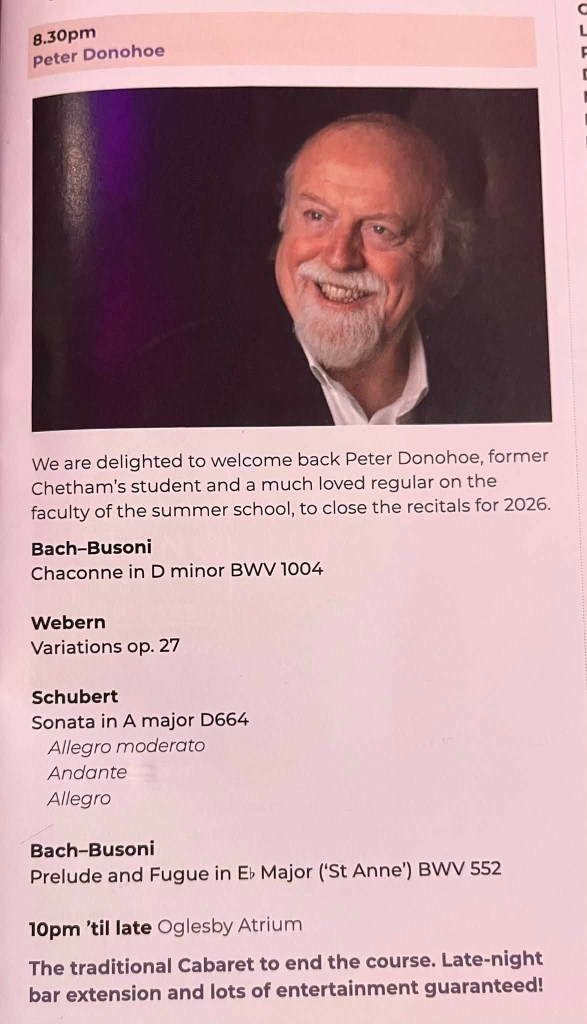
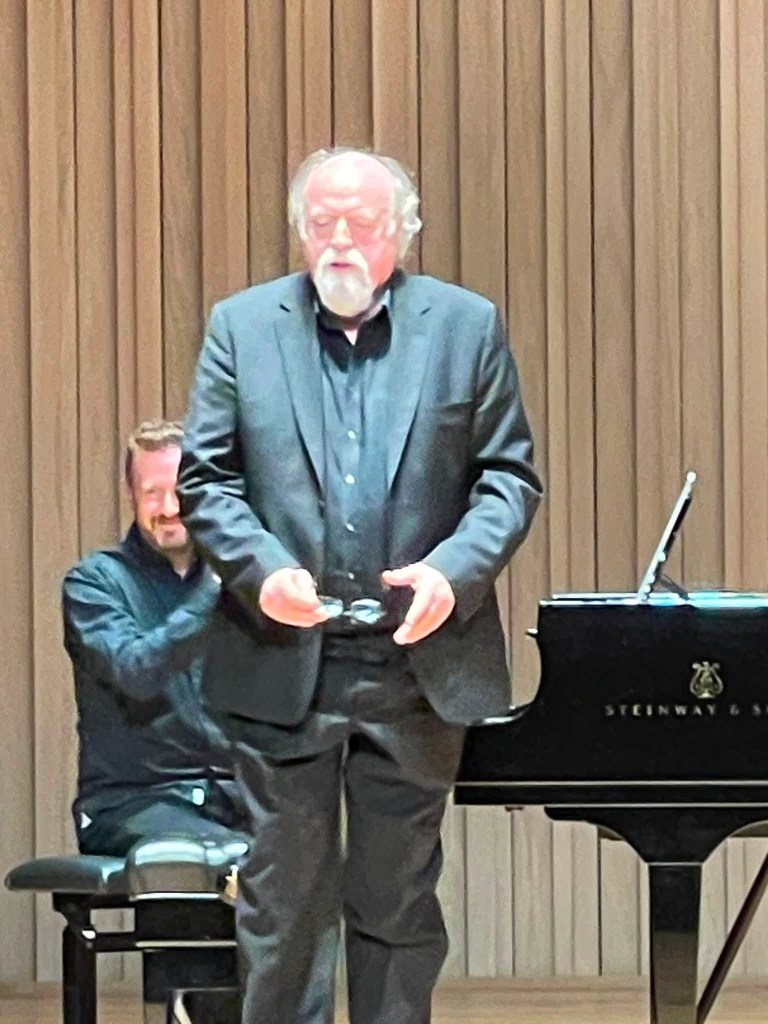
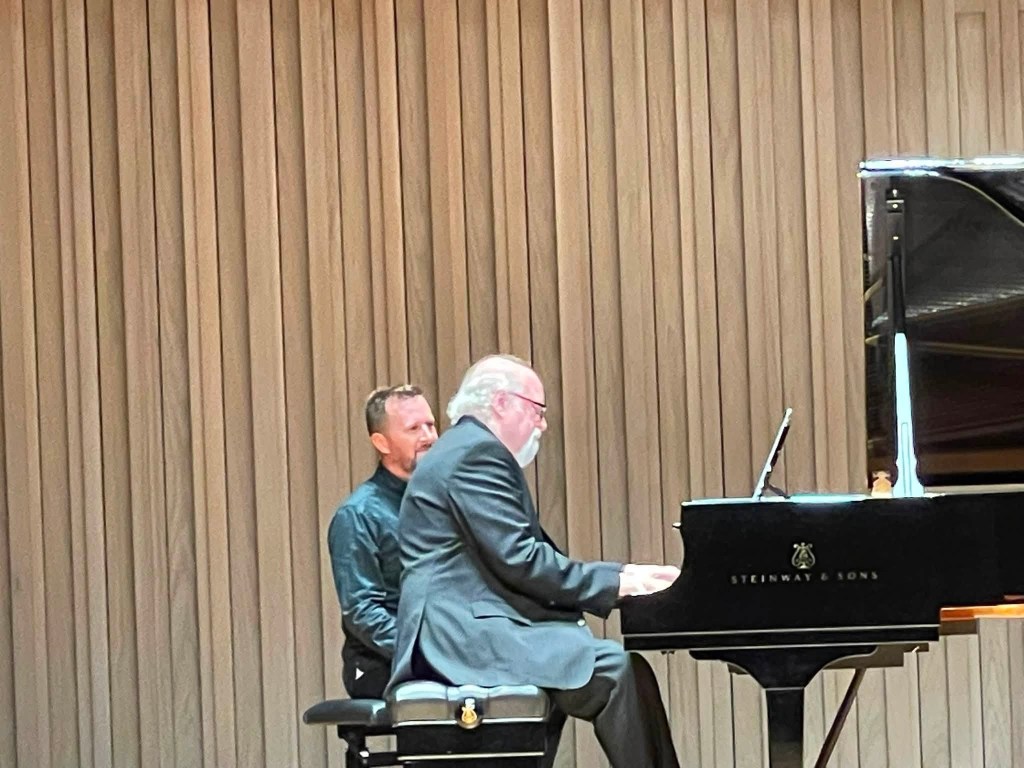
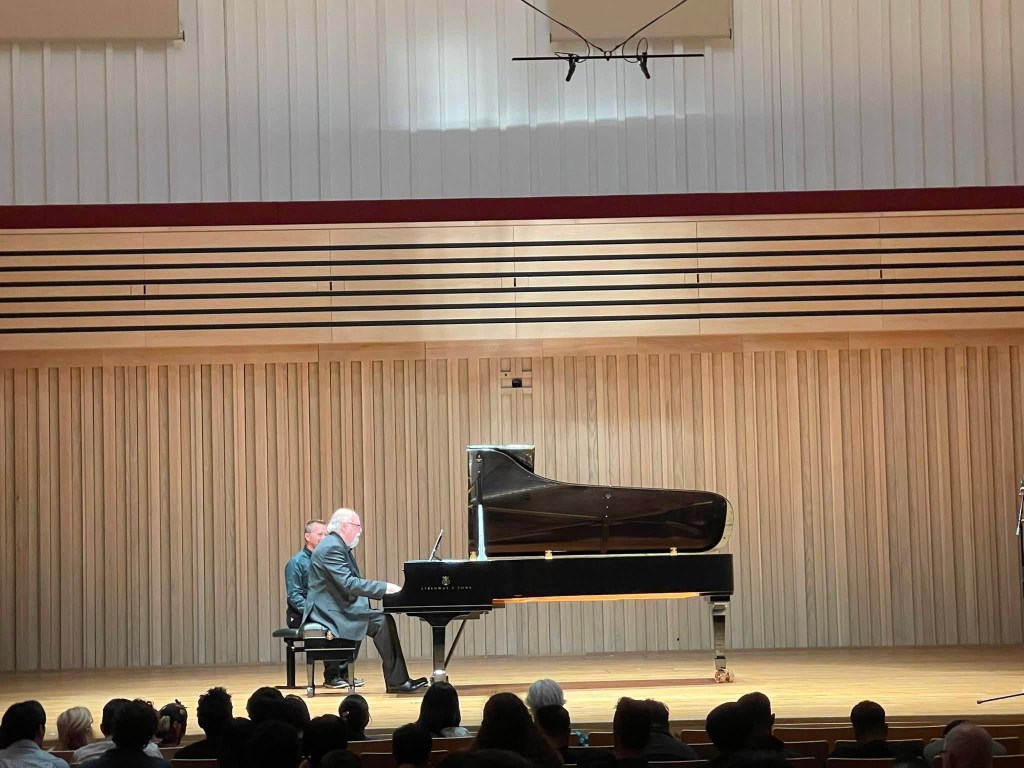
The second recital this week for Peter Donohoe, closing today, this twenty fifth Silver Jubilee season with two of Busoni’s most noble recreations of Bach on the modern day piano. And sandwiched between Busoni’s fourth sonatina and the Webern variation s op 27, Schubert’s most perfect jewel of a Sonata – the so called ‘Little’ A major .
Peter has an extraordinary appetite for discovering rarely played scores and for his encore he chose the slow movement of Chopin’s Concerto op 11 in the magical transcription by Balakirev.
Opening with the greatest work ever written for solo violin, the Chaconne from the Fourth Partita for solo violin by J.S. Bach . This is a true recreation for solo piano by Busoni and is a monumental work richly adapted for the solo piano. Peter played it with great architectural shape not dwelling on details but shaping the music with an inner strength and drive. Sometimes anticipating the dynamics as in the entry of the left hand octaves played with extraordinary assurance and brilliance but marked in the score ‘piano’ and is only the build up to the mighty cadenza marked fortissimo which was thrown off with ease, rather than being the culmination of what had come before. The ‘dolce espressivo’ that follows though was played with great beauty and indeed ‘dolente’ as Busoni marks . A ‘con fuoco animato’ was played with extraordinary brilliance as the violin figurations were imitated with shape and relentless drive. Peter bringing great excitement to the climax but allowing the speed to accelerate instead of becoming more stately and majestic . Peter’s transcendental mastery allowed him to play with such precision whilst playing with breathtaking exhilaration but it did loose some of its grandeur and nobility. Building to a climax of exhilarating excitement as the theme was played with the sumptuous rich sounds of Busoni’s marking ‘Largamente maestoso’. If the deep bass notes were not marked sforzando it was added by Peter for even more exhilaration to this most noble of climaxes .
Webern Variations op 27 was his only work for solo piano and although dedicated to Eduard Steuermann it was premiered, (after months of coaching from Webern) by Peter Stadlen on 26 October 1937. It is in three very short movements Sehr mäßig (Very moderate), Sehr schnell (Very fast), Ruhig fließend (Calmly flowing), where Peter was able to unentangle the knotty twine with directness and crystalline clarity.Moments ominous clouds would appear only to disappear in a puff of smoke.
A refreshing change of mood and cleansing of the air before Schubert‘s wonderfully mellifluous Sonata in A, D. 664. Completed in July 1819, and dedicated to 18-year-old Josephine von Koller of Steyr in Upper Austria, whom he considered to be “very pretty” and “a good pianist”. The lyrical, buoyant and in parts typically poignant nature of this sonata fits the image of a young Schubert in love, living in a summery Austrian countryside, which he also considered to be “unimaginably lovely”.
The ‘little ‘ A major sonata is straightforward, with a simple melodic opening and was the first of Schubert’s piano sonatas where the sonata form as perfected by his idol, Beethoven, does not seem to be wrestled with; rather, it is a “joyous breakthrough”, a carefree triumph over strict rules of construction. Peter played it with disarming simplicity with a scrupulous attention to Schubert’s markings where even the alternating octaves in the first movement were incorporated into a poetic vision of disarming simplicity . There was a subdued beauty to the Andante with its poignant question and answer played with grace an ease as the simple ‘joie de vivre’ of the ‘Allegro’ was allowed to bubble over with innocence and lightness.
Peter is a remarkable musician with a thirst for fresh material and his discovery of the Sonatina n 4 by Busoni made for a fascinating detour before the joyous outpouring of Bach’s St Anne Prelude and Fugue BWV 552. The Sonatina n. 4 “in diem nativitatis Christi MCMXVII” (BV 274), is an 8-minute solo piano work composed in December 1917 and dedicated to his son, Benvenuto. It features a three-part invention, a chorale, a pastorale, bell-like motifs, and a quiet, mystical ending. A fascinating work played with burning conviction before bursting into the final triumphant work by Bach Busoni.
A monumental and overpowering performance of the St Anne Prelude and Fugue that Peter played with incredible virtuosity and monumental sounds. It brought this final concert of the 25th International Piano Festival to a joyous close
Peter with Steven Osborne the indomitable Leslie selling Peter’s signed CD’s after the concert
The final traditional cabaret finished well after midnight with many surprises where artists could finally let their hair down and a good time was had by all
Wolfgang Amadeus Mozart (1756–1791) Rondo D-dur KV 485 (1786) Johann Sebastian Bach (1685–1750) / Ferruccio Busoni (1866–1924) Chaconne z II Partity d-moll BWV 1004 (1720) Franz Schubert (1797–1828) Fantazja C-dur D 760 „Wandererfantaisie” (1822) Allegro con fuoco ma non troppo Adagio Presto Allegro
The regal presence of Shiori Kuwahara reminded me of Gina Bachauer or Oxana Yablonskaya. Here was an artist who commanded attention with playing of authority and beauty. Every note had its place in a musical conversation that was of timeless wonder.A beauty of sound that was never percussive even when she was playing with passionate intensity contrasting with moments of ravishing beauty. There were never any hurried moments but phrases that were beautifully shaped even in the most strenuous of passages . It was the playing of a great artist for whom the music speaks with refined good taste together with fearless abandon allowing the music to unfold with simplicity and immediacy.
As Rubinstein declared you must play music that speaks to you directly, you must only play music that you love.
There was no doubt today that all Shiori played today was loved, as she was able to transmit this love to a public who dedicated her a spontaneous standing ovation at the end of a long and complex programme. It was for an artist who was able to transmit with extraordinary artistry the aristocratic nobility and refined good taste of what we are more used of hearing from great artists in their Indian summer. We live in an age where quantity takes precedence over quality and it is rare indeed to find an artist barely in her 30’s who can play with seeming simplicity and timeless wonder.
Mozart may be too difficult for adults and too easy for children but when Shiori opened her recital with the D major Rondò it was obvious that here was an artist who could make every note speak with crystalline clarity as she told the tale that Mozart had hidden in so few notes. An operatic feel as she created characters that entered and exited sometimes with refreshing simplicity but also with clouded skies, always with a sense of style and purity as she brought this tone poem vividly to life with an infectious ‘joie de vivre ‘ allowing the ending of whispered beauty to disappear into the depths of the piano.
Busoni’s mighty recreation of Bach’s Chaconne immediate took to the stage with an imposing opening of authority and nobility. Her rhythmic precision was quite exhilarating with the left hand octaves like a wind blowing from afar as her phrasing of the Chaconne theme was shaped with refined finesse. There was an aristocratic beauty to the ‘molto espressivo e legato ‘ as the work took wing with the left hand octaves gradually becoming more and more brilliant. She brought grandeur to the ‘un poco a piacere’ cadenza that dissolved into a quasi improvised meandering ‘dolce espressivo’ of great beauty before the ‘con fuoco animato’. Playing with an extraordinary sense of line as wondrous sounds spun a magical web that mirrors the single string of Bach’s original violin masterpiece for a solo instrument. Noble sounds of deep resounding bass notes were played with dynamic drive and great authority. Trombones of sumptuous beauty were of a refined respectful serenity leading to the ‘Allegro moderato ma deciso e misurato’ that she played with remarkable control. A ‘più sostenuto’ of timeless wonder in layers of sound led to the final triumphant declamation . But even here she stopped in her tracks before placing the sforzando bass D which opened the flood gate to the final noble appearance of the Chaconne theme in all it’s magnificence. This was a performance of absolute fidelity to the score demonstrating a control and mastery that could show us the great architectural shape of one of the greatest and longest works ever written for solo violin.
The Schubert ‘ Wanderer’ Fantasy is one of the key works in the Romantic piano repertoire pointing to a new form where the themes of the traditional Sonata form take on a character in themselves, and like actors in a play are completely free to change shape and form. It was this work that was so admired by Liszt, always looking to the future, and it was the birth of the ‘leit motif’ that was to become the anchor on which Liszt’s son in law Richard Wagner was to inspire his music dramas. Shiori brought a remarkable sense of character to the opening pages of the Fantasy where the rests were always of such importance. A driving rhythmic impulse that did not deny ravishing beauty of the lyrical episodes that she played with simplicity and radiance. She brought a refined beauty to the Adagio that she played with full rich poignant sounds and led to the radiant beauty of the variations where the melodic line was always revealed with glowing beauty that gradually built in energy and passionate intensity. She brought exhilaration and excitement to the ‘Scherzo’ that did not deny its dance origins and contrasted with the calm of the Trio that she played with pastoral ease. The return of the ‘Scherzo was marked by even more brilliance as cascades of notes were played with limpet mastery and brilliance. The Fugato entered quite sedately but gradually grew in intensity as the tension rose with masterly dynamic drive and fearless passionate intensity.
A remarkable performance in which this often abused work was restored to the place it deserves with a performance of nobility, beauty and mastery but above all a scrupulous respect for the composers intentions.
The second half of the programme was dedicated to Chopin and was to be repeated a few days later in the garden of Chopin’s birthplace in Želazowa Wola with the addition of the Third Scherzo op 39.
In Duszniki she began the second half with the work she had played as an encore a few days later. The Nocturne op 9 n. 3 was in many ways freer at the beginning of the Chopin group than at the end. There was a feeling of breathless beauty of subtle phrasing of refined good taste . Like a singer Shiori spoke in long breaths that were possessed of a chameleonic sense of colour. Even the tempestuous central episode was played with a passionate intensity that was tempered in the outer episodes by the same sentiments but of intimate whispered nostalgia.
She brought a timeless pastoral beauty to the Third Ballade op 47 with a sense of phrasing where everything was allowed to flow with such simplicity and immediacy. Magical wafts of sound as the Ballade unfolded with nobility and ravishing beauty. There was a timelessness to her playing where even the embellishments were never hurried, as every note like in Mozart had a meaning and was part of a wondrous tale that was unfolding in the hands of a fellow poet of the keyboard. She brought a remarkable build up of burning subdued intensity and an undercurrent of energy leading to the final glorious climax that exploded with grandeur and nobility. A scale with one noble sweep was greeted by the final chords placed to perfection with a musical arch of perfect proportions.
The Fourth Ballade op 52 is one of Chopin’s greatest and most original works. Shiori opened it with radiance and fleeting beauty as the theme was allowed to unfold with whispered beauty. Variations with a continuous forward movement where each one was given a character of brilliance and poignant beauty with an architectural shape that swept us to the final passionate outpouring on a wave of luxuriant sounds. A glorious outpouring played with extraordinary control allied to a passionate intensity and mastery with the final chords played with absolute precision and meaningful shape. Answered by five calming chords that Shiori played with extraordinary composure before the explosion of the coda that was a tour de force of mastery and passionate commitment.
The final work in this Chopin group in Duszniki was the Polonaise Fantaisie op 61. One of Chopin’s last and most original works where he places the Polonaise within a fantasy world of wondrous sound of quasi improvised beauty, An opening where the imposing chords are allowed to vibrate across the entire keyboard and which Shiori played with one natural arm movement. An ominous bass note adds a poignant comment to this etherial opening as the Polonaise rhythm is heard opening up a passionate melodic outpouring of nostalgia and space. A beautifully shaped central episode was where Chopin reintroduces the opening but this time leading to a final passionate drive to the sumptuous conclusion. A noble outpouring that dies away to a whisper as Shiori placed the final single A flat with extraordinary poise and significance.
A standing ovation for the entire audience that left Maestro Paleczny strangely seated. Having celebrated recently a very important birthday and having presided over these concerts for many years he may prefer just to sit back and enjoy with his public such a sumptuous feast.
Shiori rose to the occasion with a masterly performance of the Polonaise Héroique op 53 just a Rubinstein would have done at the end of his unforgettable performances.
A recital by Bingbing Jiang of refined playing of poetic beauty with a kaleidoscope of sounds that allowed her to create twelve miniature tone poems from the Preludes Book II by Debussy,that were sculptured with intelligence and extraordinary sensibility and imagination .
The concert had begun, though, with Schubert’s Soirée de Vienne n 6 as seen by Liszt and that she played with commanding authority and beguiling insinuation. A tone palette that ranged from quasi orchestral dissolving into the soft tones of the Viennese waltz. Liszt adding a web of interweaving golden threads that Bingbing played with all the style and charm of another age.
This was just an introduction to a masterly performance of Debussy’s Twelve Preludes Book II.
‘Brouilllards’ were mere wisps of sound played with an extraordinary sense of line despite her magical finesse. They were interrupted only by the recitativi where she underlined the bass shadowing as Debussy specifically asks.
In fact Debussy had also been a music editor and knew the importance of every indication left by composers in the score . Bingbing showed scrupulous attention to Debussy’s very specific demands which she incorporated into her playing of chameleonic sensitivity. She brought mystery and radiance with deep resonant bass notes that gave a glowing beauty to all that she floated above. She brought a dynamic drive to ‘La puerta del Vino’ as Debussy evoked the gates of Alhambra in Granada . Insinuating seductive sounds of passionate intensity but finishing with an ending of whispered poetic meaning played by Bingbing with rare control of sound.
I well remember when Richter first appeared in the west with his playing of Debussy Estampes and Preludes, where it was not the animal like intensity that astonished but his control of quiet sounds that we had never heard before .
Bingbing has a vast range of sounds but it is above all her control when she appears to be barely touching the keys that is so remarkable .
‘Le fées’ bursting into quasi Viennese enticement as Debussy is inspired by ChouChou’s book of J M Barrie’s ‘Peter Pan in Kensington Gardens’. ‘Bruyères’ was played with simplicity and a delicacy of whispered glowing radiance. She certainly caught the character of ‘General Lavine excentric’, with its continual changes and interruptions and even beseeching cries and pompous strident melodies.’La terrasse’ and ‘Ondine’ are absolute gems and masterpieces that Bingbing imbued with a web of golden sounds and an extraordinary architectural shape, as she allowed Debussy to tell us such wonderful tales . Rubinstein would bring great character to Ondine projecting out to the audience whereas Binbing played with an intimacy and intensity that drew us in to her magic world. ‘Pickwick’ was played with pompous audacity as she enjoyed the teasing brilliance of the multifaceted character of ‘S Pickwick Esq the Perpetual President Member of the Pickwick Club.’
‘Canope’ she played with poignant simplicity and it is the Prelude that Fou Ts’ong admired so much for a work where so few notes could mean so much. The double third prelude showed Bingbing’s digital mastery that she could combine with poetic fantasy. ‘Feux d’artifice’ was a tour de force of masterly playing of transcendental brilliance allied to an extraordinary sense of imagination.
When Fou Ts’ong was awarded the Mazurka prize in Warsaw there was an outcry. How could a Chinese pianist understand Chopin Mazurkas better than a native of Poland . As Ts’ong pointed out, the soul has no frontiers and there are the same sentiments in Chopin as in Chinese poetry of which Ts’ongs father was an authority
The recital by Bingbing was an encore to the programme of Classical D International Piano Festival 2026
A lunchtime recital by Tyler Hay at the National Liberal Club in a tropical London enjoying a climate change temperature of 35 degrees. It was the scene of Tyler’s first outing with the monumental Sonata in B minor by Liszt .
He chose to preface the work with eight waltzes by Chopin declaring it impossible or at the very least improper to play an encore after the Liszt Sonata as there can be nothing left to add after such a monumental work …….especially on what surely must be the hottest day of the year.
Likening the Chopin waltzes to a ‘bouquet of flowers’ many of which were never intended for publication. As Tyler said there could have been as many as 37 waltzes but at least seven were lost and many others were never intended for posterity. They are in fact among the most charming and melodious miniatures in the entire piano repertoire.
Many were given by Chopin to admirers or pupils and many variants abound as he added to these precious gifts with the generosity of the ‘Poet of the Piano ‘. Chopin wanted many of the manuscripts burnt after his death and little would he have approved of the fact that in October 2024, the curator Robinson McClellan discovered a previously unknown Frédéric Chopin waltz in the Morgan Library and Museum vault in New York. Written on a postcard-sized manuscript in A minor, the 48-measure piece dates back to 1830–1835 and was authenticated by scholars using paper, ink, and handwriting analysis. Of the presumed 37 piano waltzes, only nineteen (along with one unauthenticated waltz) are numbered and only eight were published ( as Op. 18, 34, 42 and 64) before he died. His desire was that any unpublished works should be burned, but his sister Ludwika and Julian Fontana proceeded anyway to publish Waltzes 9–13 (as Op. 69 and 70). Six waltzes composed 1826–1831 and present in Frédéric’s Paris home were at first preserved but then lost in fire in a 1863 in Ludwika’s house. Another six were eventually published as Waltzes 14–19. These Chopin had given to people without keeping a copy of the manuscripts. Waltz 18 was untitled; it is in 3/4 time and bears some characteristics of a waltz but is marked ‘Sostenuto’. Waltz 17 is not accepted as authentic by the Fryderyk Chopin Institute; to the other five in this group it has assigned WN numbers (29, 18, 28, 53 and 63). Waltz 20 is likewise unauthenticated . Separately, the last variation of Chopin’s Variations on a German National Air (Der Schweizerbub), WN 6, is in the form of a waltz.
Infact only the first, fifth and eighth waltzes of the 8 that Tyler chose to play today had been published. It was the ‘Grande valse brillante’ op 18 that opened the concert and I immediately noticed some very discrete embellishments added to the well known score that had also been included as one of the popular pieces of Chopin that made up the ballet by Glazunov: ‘Les Sylphides’. Applause after the first waltz allowed Tyler to explain that in many of the waltzes he would add some of the embellishments that abound and are published in the new Ekier edition of authenticated Chopin pieces . As an urtext, the Chopin National Edition aims to produce a musical text that adheres to the original notation and the composer’s intentions. All extant sources were analyzed and verified for authenticity, mainly autographs, first editions with Chopin’s corrections and pupils’ copies with Chopin’s annotations. Necessary editorial decisions are documented in each volume’s source commentary. Additionally, a separate performance commentary documents cases where Chopin’s notation may be misunderstood by contemporary pianists, such as realizations of ornaments and pedaling.The edition was completed in 2010, in time for the bicentenary of Chopin’s birth.
The Chopin National Edition consists of 36 volumes in two series, for works published during Chopin’s lifetime (Series A), and for works published posthumously (Series B). A 37th volume (titled Supplement) consists of compositions partly by Chopin, for instance his contribution to ‘Hexaméron’.The “WN” numbers in Frédéric Chopin’s catalogue stand for ‘Wydanie Narodowe’ (the Polish National Edition of the Works of Fryderyk Chopin). Edited primarily by Jan Ekier, this system catalogues all of Chopin’s authentic works—including posthumous and early pieces—in strict chronological order of composition, running from WN 1 to WN 65.
Tyler is building quite a reputation for his ‘ virtuosic programmes and for his witty audience interactions ‘ . But there is a Tyler who pays scrupulous attention to the composers markings delving deeply into the world in which the works he plays were created and it marks him out as a remarkable musician who can be trusted and not just a juggler of notes! This was to become even more apparent with his monumental performance of the Liszt Sonata after this unexpected foray into the world of Chopin’s waltzes.
The waltz op 18 was ornamented towards the end with double notes and added embellishments that were done with such stylistic discretion that I began to doubt my ears even though I have known these waltzes for a lifetime. The waltz de ‘L’adieu’ was played with quasi improvised freedom and again with some unexpected harmonies . The waltz in B minor op 69 n. 2 flowed with beguiling insinuation and where it risked becoming repetitive Tyler added double notes and instead of the usual dotted rhythm the top notes were played quite evenly. The G flat waltz op 70 n. 1 was really an uncontaminated Ecossaises of glowing radiance. The famous waltz in C sharp minor op 64 was played with passionate involvement and with some inner counterpoints that I have never been aware of in quite Tyler’s way . Many artists slightly weigh into the inner notes whilst there is a jeu perlé outpouring above but Tyler seemed to find a different solution which will have me looking at the Ekier edition more closely. The D flat waltz op 70 n. 3 had a flowing beauty of nonchalance and ease. And the last two in E minor op posth and in A flat op 34 n. 1 are well known in the concert hall and Tyler played them with refreshing simplicity and sumptuous ease. The E minor in particular was played with very little pedal towards the end which added to the freshness and vigour of this brilliant waltz, and the jeu perlé at the end of the A flat waltz was played with the anchor in the bass which gave a harmonic richness to the sound. I loved the added bass note too at the sumptuous D flat climax of one of the most exhilarating of the waltzes.
Peter Whyte ,chair of Kettner Concerts
The main work on the programme which gave the title to today’s concert was ‘The B Minor Sonata’. The pinnacle of the Romantic Piano Repertoire that like Chopin’s B flat minor sonata, was of such originality that Liszt’s colleagues criticised it. Schumann had described the Chopin Sonata, one of the composers greatest works , as ‘ four of his maddest children under the same roof’ and the last movement ‘ more like a mockery than any sort of music.’ Schumann had dedicated his Fantaisie op 17 to Liszt who contributed the rights to the Beethoven Monument Fund in Bonn. Liszt in return dedicated this B minor Sonata to Schumann and it was delivered to the house after the composer had been committed to an asylum in Eisenach. Clara Schumann received it and described what she found as ‘ Merely a blind noise- no healthy ideas anymore, everything confused, one cannot find one clear harmonic progression- and yet I must thank him for it. It is really too awful.’
However it was Liszt’s son in law Richard Wagner who recognised the genius of a work where the transformation of themes is combined with the rough outline of Sonata form. Liszt had been inspired by Schubert’s Wanderer Fantasy where a new form was forged, transforming the opening themes and creating what was to become Wagner’s leit motif, the very anchor on which his music dramas were created. As Tyler told us it is a work in which grandeur, drama, passion, exuberance and exhilaration are shared with etherial beauty of ravishing appeasement. Tyler from the very opening page immediately showed us his musical credentials realising that the three opening motifs are but an introduction to the real beginning of the Sonata and a declaration of intent to be played only piano and forte with the grandeur of fortissimo only appearing as we enter the real beginning on the second page. Tyler brought great clarity and simple honest musicianship to a work that is so often played with rhetoric and showmanship. He brought a beauty to the melodic line full of glowing fluidity which contrasted with the rather dry orchestral sounds that preceded the ‘Margherita’ theme. Astonishing technical mastery followed, but always very measured and controlled never forgetting the larger architectural shape of this extraordinarily united work. Very interesting inner counterpoints gave great depth to the sound as he approached the ‘Andante sostenuto’ slow movement incorporating a ‘Quasi adagio’ of poignant beauty and simplicity as it built into a vibrating being of passionate intensity. Tyler played with the aristocratic control of Arrau, never allowing the music to command with empty rhetoric , but it was the inner intensity he gave the music that was of profound nobility and naked passion. There was a stillness and beauty to the simple scales played ‘pianississimo’ with vibrant glowing beauty and if he slightly indulged and lost for a moment the architectural line it prepared us for the extraordinary recapitulation and fugato that appears at the end of this trail of wondrous gold and silver coloured sounds. It now became apparent why in the opening motif Tyler had made such a contrast between staccato and legato, because the whispered staccato at this point linked so well with the ‘Allegro energico’ of the fugato. Building in intensity as the whispered chattering of the counterpoints led to the quasi orchestral outpouring that was of enticing exhilaration.It was at this point that Tyler allowed himself full reign, opening the flood gates to the sumptuous rich sounds that were to signal the return of the opening. A technical mastery of exhilaration and excitement with the notorious double octaves played with a musical intent where Tyler’s mastery was always at the service of the music. The final two pages Liszt had originally conceived as finishing in glory but were substituted by the composer with one of the most poignant and original endings in all music. The genius of Liszt had taken precedence over the showman as these final bars summarise the entire sonata and were played with extraordinary beauty and control by Tyler. The final three chords played with whispered perfection and beautifully shaped before the final B deep in the bass brought this remarkable performance to a moving conclusion.
Moments of collective silence were the sign that Tyler had been able to convey the message of the composer with the grandeur, drama, passion, exuberance , exhilaration and etherial beauty of ravishing appeasement that had been promised.
Ben Westlake co artistic director of Kettner Concerts Mark Viner ,distinguished colleague of Tyler
Tyler’s latest CD of works by John Field has just been released .Field born in Dublin is best known as the inventor of the Nocturne, transforming the expressive possibilities of the piano, and opening a door for composers such as Chopin,Liszt and Schumann
Welcome back Hao Yao with your Classical D showcase concerts
Hao Yao
Day 7 Classical D International Piano Festival with Yichen Yu and co artistic director Leslie Howard
Two major works for piano solo sandwiched in between two much more frivolous encore pieces .
Leslie has long been an advocate of Liszt’s Grosses Konzertsolo, the precursor of the B minor Sonata , and he played it with great weight and the authority of a pianist who has recorded all Liszt‘s piano works on 100 cd’s which is the largest solo artist recording project in the history of classical music and has earned him a place in the Guinness Book of World Records as well as many other awards including from the Hungarian President. Leslie Howard writes :
‘ Liszt’s genius for beautiful titles deserted him only once—the Grosses Konzertsolo is a mere stab at a title for a long work which is not yet a sonata, but no longer a character piece. Forerunner of the B minor Sonata it certainly is, however, and the history of the composition shows that Liszt was much preoccupied with it. The piece was written between 1849 and 1850, and dedicated to Adolf Henselt who professed himself unable to play it, even though Liszt had intended it as a competition piece for the Paris Conservatoire. The original is a simple one-movement Allegro, and the piece also exists in an unpublished version for piano and orchestra (not to be confused with the recently discovered ‘third’ concerto). Some time before the publication in 1851, Liszt expanded the work by adding a slow central section whose material he also worked into the later stages of the piece. Later still Liszt arranged the piece for two pianos under the title Concerto Pathétique and at the end of his life supervised his student Eduard Reuss in the production of a new version for piano and orchestra, to which Liszt added several new passages. In any case, this is an extremely interesting work in its own right, and is unaccountably neglected, especially by students who might well benefit from consulting this piece before tackling the Sonata! ‘
Yichen Yu who had seduced us with his uncontaminated mastery in Brahms 2nd Piano Concerto now astonished with his crystalline purity and transcendental technical mastery in Liszt’s notorious paraphrase of Mozart’s Don Juan.
Leslie Howard writes : ‘Much has been written about the uncanny insight into Don Giovanni which Liszt shows by taking the seduction duet (with variations), the drinking song and the music of the statue of the dead commendatore and weaving a commentary upon the moral pith of the original. Even Bernard Shaw (who dismissed a masterpiece like the ‘Dante Symphony’) was obliged to rate the piece very highly, and indeed the Don has withstood the vicissitudes of public taste and has more or less remained in the repertoire. On this record the fullest possible version of the piece is presented, right down to a short cadenza in the first variation, which is to be found on a leaf in the Library of Congress but which was in fact published in the shorter two-piano version of the work, and actually postulated for inclusion in the solo version in the excellent critico-practical edition of Busoni.’
with page turner Xin Yuan Wang pianist of the first concert of Classical D 2026
Joining forces at the beginning for Moskowski’s Spanish salon pieces one of them reminiscent in many ways of Schumann’s Bilder aus Osten op 66 n.4 and ending with a scintillating account of Liszt’s Grand gallop chromatique.
Leslie Howard writes :’ The Grand Galop chromatique figures prominently in Liszt’s own recital programmes, and its enormous popularity probably accounts for the quick publication of the simplified version and the version for piano duet. But Liszt returned to the concert version on several occasions over the years, adding ossia passages and extending the overall structure. The present version represents his fullest extension of the original. The obvious lightness of the work’s character made this piece an instant crowd-pleaser, but the imaginative undercurrent throws in a marvellous sequence of whole-tones and some wickedly unresolved chromatics at the coda.’
Playing from Leslie’s precious first edition they were a formidable team of youthful bravura and consummate artistry
with the charming and expert restauranteuse LaviniaThe many sided Stephen Maw ex concert bassoonist A Classical D group of artists in the from Yichen Yu and Victoria Wong
Just three works on Max Walsh’s programme, all masterpieces written in different periods but that were linked by the common denominator of this young pianist’s authority and fearless mastery of the keyboard. He has just finished at the Junior Birmingham Conservatoire and is about to embark on full time studies with Norma Fisher at the Royal College of Music. A passion for music that I was aware of when I first heard him last year at the Beethoven Society Masterclass with Boris Giltberg .His uncontaminated wish to discover what was behind the notes of Beethoven’s ‘Les Adieux’ Sonata was refreshing as it was illuminating . Now almost a year later he is giving recitals of authority and remarkable mastery and intelligence and his spoken introductions showed his passionate conviction about what he was to play and what it meant to him. Scriabin’s 5th Sonata was the first work on the programme and as he told me later the reverberant acoustic of St James’s made life a little difficult for him as the quick fire changes of colour and character in the music needed time to be absorbed into the atmosphere. We the audience were not aware of the difficulty he was facing as he managed to weave an architectural line in a work where there are so many chameleonic changes of colour and atmospheres. A crystalline clarity and languid beauty when he ‘caressed’ the keys before indulging in what Scriabin describes as ‘Allegro fantastico’ and ‘Presto tumultuoso esaltato’ together with ‘ebbrezza fantastic! ‘A dynamic drive of knotty meanderings of decadence and perfumed elegance all played with an extraordinary sense of balance and imperious architectural sense of direction. The opening and the ending like a wind passing through the hall played with fearless bravado. A remarkable performance of intelligence, passionate conviction and ravishing beauty.
The Bagatelles op 126 were the last piano pieces that Beethoven wrote, and they are six miniature tone poems where so few notes could mean so much. Beethoven had come to terms with a turbulent life and irascible temperament as he peered into his heart with searing conviction. The first bagatelle carries the indication ‘compiacevole’ ( pleasing) and is a mellifluous outpouring of simple beauty with a glowing silf like cadenza that Max played with knowing delicacy. Leading to a passage where Beethoven reaches out on high with whispered hope and which he even asks to be repeated where Max played with poetic understanding. There is a driving energy to the second ‘Allegro’ where Max’s scrupulous attention to Beethoven’s very precise indications avoided the usual accents from lesser hands and drove the music forward with an inner energy that had a vibrant beauty and urgency to it.The third ‘Cantabile e grazioso’ is a chorale of poignant beauty where Max’s full rich tone was of religious fervour. Long arpeggiated chords created the atmosphere for glowing notes of intensity and simplicity dying away to a coda played on wafts of vibrating sounds in one long pedal that Beethoven specifically indicates ,creating an unearthly ending of timeless beauty. The fourth is a dynamic drive with burning energy leading to a long drawn out pedal note on which Beethoven floats wafts of melody that alternated between the present and the past. The fifth was a simple melody of flowing beauty and pastoral relief. The sixth beginning with an irascible outburst that gives way to fragments floated on a long pedal note alternating with a chromatic dance like figure before bursting into the same irascible outpouring as the beginning. These were the last musings of Beethoven that were of serenity and innocent poetic aspirations that Max understood so well playing with aristocratic authority and sensitivity.
The last work on the programme was by Messiaen with the 15th of his ‘Vingt Regards Sur l’Enfant- Jésus’. Surely one of the most beautiful pieces of the sublime introspection of a true believer. Written in the summer of 1944 as the war was coming to its tragic end it is a cry of joy that there must be something more than just destruction and pain. ‘Le Baiser’ I often liken to Chopin’s Berceuse with its serenity and variations of meandering ravishment. Of course it is a completely different sound world but at its heart the soul is the same.As Fou Ts’ong would say :’the soul knows no fontiers’. Max played it with an aristocratic control and mastery that would be hard to find from a pianist twice his age. What it contained too was Max’s youthful love and passion for the piano and his composure before a stream of notes already in F sharp major but where almost every note has an accidental as Messiaen seeks to imbue the music with his passionate belief in God the all forgiving. There was a luminosity and glowing radiance to the sound wafted around this vast edifice, like the halo depicted above the baby Jesus in pictures from the Florentine renaissance. A solemn beauty and a spell only added to by notes like stars falling as broken glass onto such hallowed ground. Coming to a climax as the ‘Thème de Dieu’ was played ‘avec amour’. Messiaen marking the theme with ‘Le Baiser’ until a final flourish that Max played with masterly conviction. Taking a deep breath as he barely touched the keys with ‘l’ombre du baiser’ and an intricate web of golden sounds embellishing the theme. ‘Rall’ and ‘rall molto’ the composer implores the interpreter, with two final detached chords played pianissimo ‘extrêmement lent.’ A masterpiece played by a youthful master.
No encore was possible after that as it took some minutes before the audience broke the spell with mundane but heartfelt applause .
Max Walsh was born in Birmingham, UK, in 2007. He began studying at the Junior Royal Birmingham Conservatoire at the age of eight and is currently under the tutelage of Jan Loeffler (Head of Keyboard Department). He has been awarded a full scholarship to study Piano and Composition at the Royal College of Music, from September 2026.
In 2025, he won first prize in the Liszt Society International Piano Competition and the Junior Wales International Piano Festival, as well as prizes at the New Talent Festival and the Bromsgrove Young Musicians’ Platform. In response to his Liszt performance, Christopher Axworthy wrote: “A youthful burning passion for music and a young man born to play the piano. He and the piano fit so naturally in a way that cannot be taught and at only 18 his potential is enormous and may know no bounds.” Max was also among the five finalists in the 2025 BBC Young Composer competition, receiving the Highly Commended award.
Max is a new artist at both Talent Unlimited and The Weir Trust via The Keyboard Charitable Trust. Max has performed in several masterclasses, most recently with Boris Giltburg at the Reform Club, London and Giorgi Gigashvili at the Symphony Hall, Birmingham. He has attended several summer schools, where he studied with Julian Lloyd Webber, Joanna MacGregor, Katya Apekisheva, Carole Presland, Murray McLachlan, John Thwaites, and Julian Jacobson.
Max has studied jazz piano with Joe Thompson and Iwan VanHetten, and chamber music with Peter Campbell-Kelly. He is scheduled to perform Ravel’s Left-Hand Concerto in the Bradshaw Hall in June 2026, as well as solo recitals at Regent Hall and St. Mary’s Perivale in late 2026.
Presented in association with Talent Unlimited of Canan Maxton
Max Walsh winner of the Liszt Society Competition 2025
The fourth day of the Classical D International Piano Festival. In the splendid Regent Hall ,filled to the rafters by the indomitable Stephen Maw and his team saw on stage the Canadian- American pianist Victoria Wong hailed by Jed Distler of Gramophone , with ‘ pianistic refinement always getting to the heart of whatever repertoire she plays’
the indomitable Stephen Maw
Today was the second of her all Chopin recitals having played a slightly different programme yesterday in St Marylebone Church
Opening with the mysterious Nocturne in C sharp minor op 27 n. 1 with a beautiful sense of colour and playing of remarkable sensibility and poignancy. I felt it was a little too earthbound, though, because even though written in four it feels as though it should flow more horizontally and naturally, as she was to show us later in the programme with her superb performance of the ‘Andante Spianato.’ However Chopin soon put her on the right path as she entered the atmosphere of the ‘più mosso’ with passionate intensity and vibrancy, even bursting into the spritely mazurka rhythm that pervades much of Chopin’s works. A left hand octave cadenza of searing nobility led to the return of the opening where Chopin’s beautiful counterpoints pushed the music forward with veiled poise and magical luminosity.
The Sonata in B flat minor op 35 is one of the great works of Chopin and of such originality that even Schumann described it as ‘four of Chopin’s maddest children under the same roof’ and found the title ‘Sonata’ capricious and slightly presumptuous. He also remarked that the ‘Marche funèbre’ has something repulsive about it, and that ‘an adagio in its place, perhaps in D-flat, would have had a far more beautiful effect’. The finale in particular caused a stir amongst Schumann and his contemporaries, exclaiming that it ‘seemed more like a mockery than any sort of music.’ and when Felix Mendelssohn was asked for an opinion, he dismissed it with : “Oh, I abhor it.’
It has since been recognised as a masterpiece and Victoria played it with masterly musicianship and extraordinary sensitivity. There has been a debate about the repeat in the first movement , as Chopin added it more for convention than for reason, and many great pianists including Victoria choose to ignore it and go straight into the development. A development built on the bass introduction ( hence the debate about the repeat) which Victoria played with nobility and architectural understanding with full rich chords of sumptuous sound. The ‘sostenuto’ of the second subject was played with aristocratic beauty and good taste allowing the tempo to relax, but not be changed. It allowed the very tight construction to be given a forward movement to the final majestic chords that close the movement. A ‘Scherzo’ that had something of the mysterious about it, but bursting into an energetic dance that had Victoria bouncing on the stool with rhythmic elan.The ‘più lento’ was played with a beautiful fluidity of great sensitivity of natural freedom.
A very sombre ‘Marche funèbre’ , almost too slow, was pregnant with solemn meaning. She created a beautiful arch shape to the long phrases, that in lesser hands can sound rather repetitive, but here were played with a poignancy where left hand trills were like a stab to the heart. The ‘Trio’ was played with a beautiful luminosity and flowed so naturally too. There was a mysterious entry to the last movement where streams of sound were ‘wailing above the graves’ and in Victoria’s hands were ethereal and unworldly of masterly poetic understanding.
The last Five Preludes from the collection of Twenty-four op 28 began with the extraordinary Prelude in C minor,n 20, that has been used as the theme for variations by Busoni and Rachmaninov. A simple chordal progression played by Victoria with remarkable drama and imposing authority gradually disappearing to a whisper as her extraordinary control of sound could reveal the endless layers of diminishing sounds.
A beautiful flowing ‘cantabile’ was played with a sumptuous sense of balance with a gently flowing mellifluous outpouring.. The final B flat of this 21st Prelude becoming the opening note of the 22 nd where octaves became washes of sound, single notes disappeared in a continual flow of passionate intensity. She brought exquisite delicacy to the penultimate prelude that was like gentle washes of water lapping so generously in the radiance of a pastoral landscape. The final tumultuous Twenty fourth Prelude showed Victoria’s mastery of sound and balance. However passionate or intense, the melodic line was revealed rather than battling for its rightful place. A dynamic drive but also a masterly control ending at the bottom of the keyboard with three mighty ‘D’s that Victoria played with her fist.
Xin Yuan Wang had done the same the other day in his Schumann recital !. Chopin marks slight accents but they are certainly not sforzandi as they are three resonating notes , each one different from the other , and of great poignant significance.
The last work in this short lunchtime concert was the ‘Andante Spianato and Grande Polonaise Brillante ‘. The ‘Andante’ was played with a fluidity and natural beauty as the Polonaise erupted with dynamic drive and glitter. Some ravishing playing not least for the style and jeu perlé brilliance that she brought to the Polonaise. Such refined playing of aristocratic brilliance and beauty just I am sure like that which Schumann declared ‘Hats off a Genius’ on the first appearance of Chopin in the west.
artistic director of Classical D , Hao Yao
A single Mazurka played with style, good taste and fantasy closed this all too short recital as Jed Distler says :’ with playing of natural poise and communicative immediacy’.
This annual festival continues until the 15th August bringing a breath of Chinese fresh air to the tropical atmosphere of London.