Welcome back Hao Yao with your Classical D showcase concerts
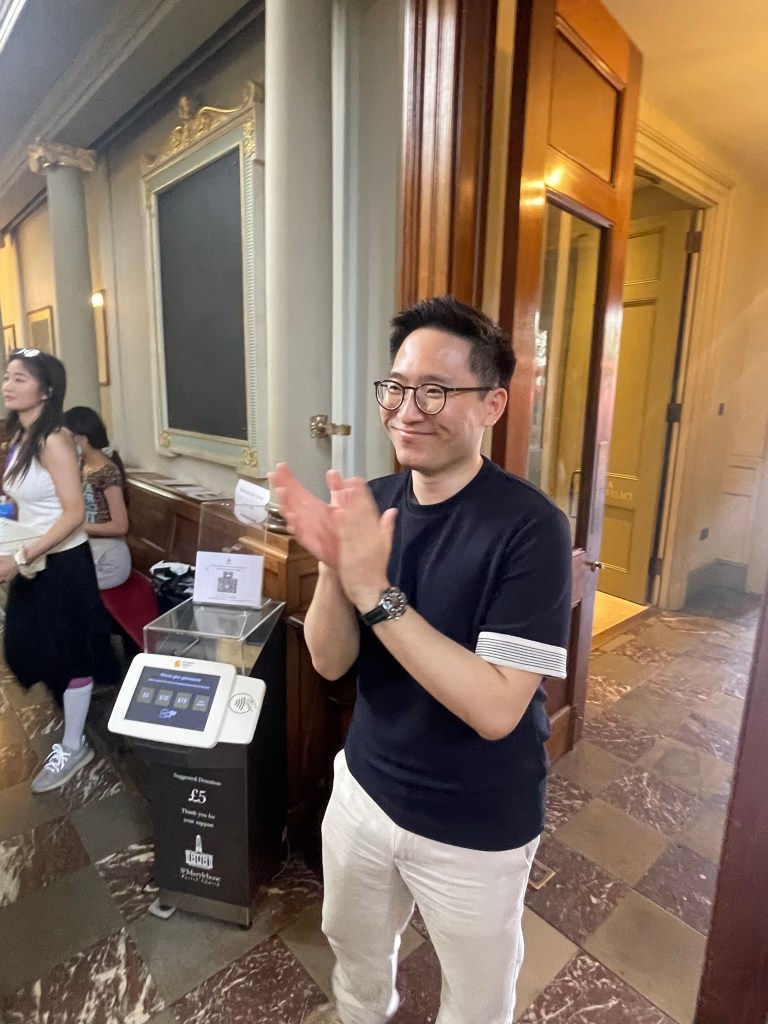
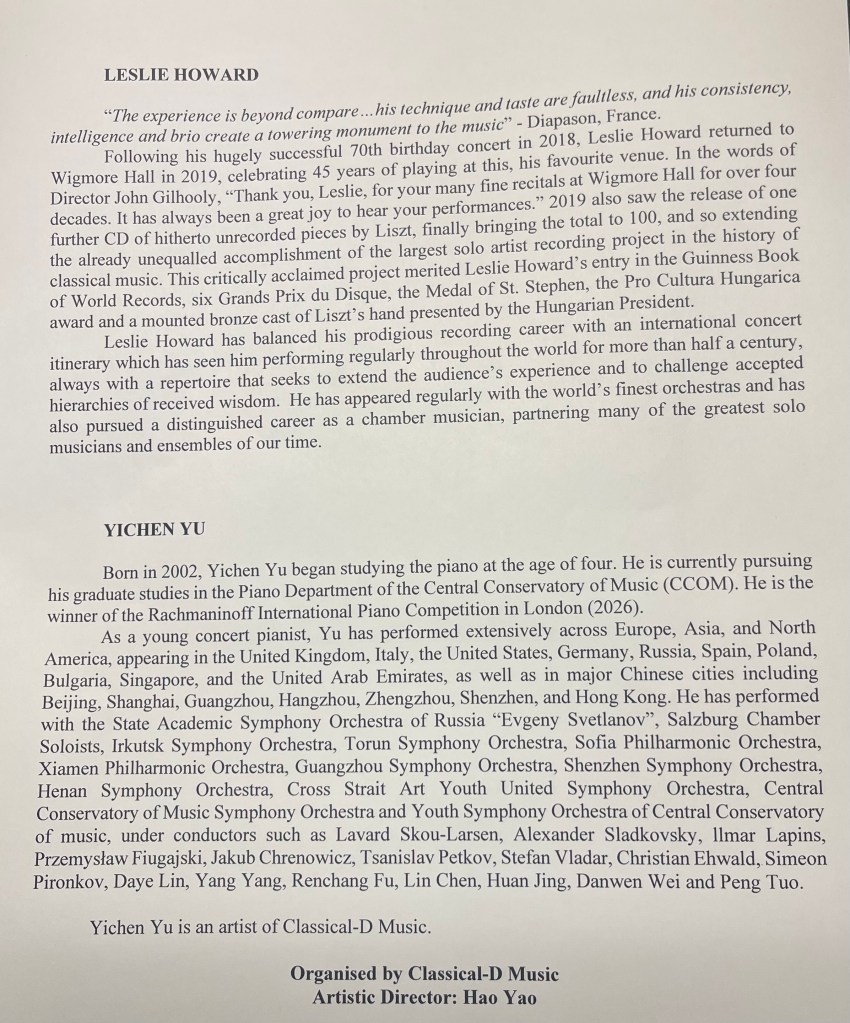
Day 7 Classical D International Piano Festival with Yichen Yu and co artistic director Leslie Howard
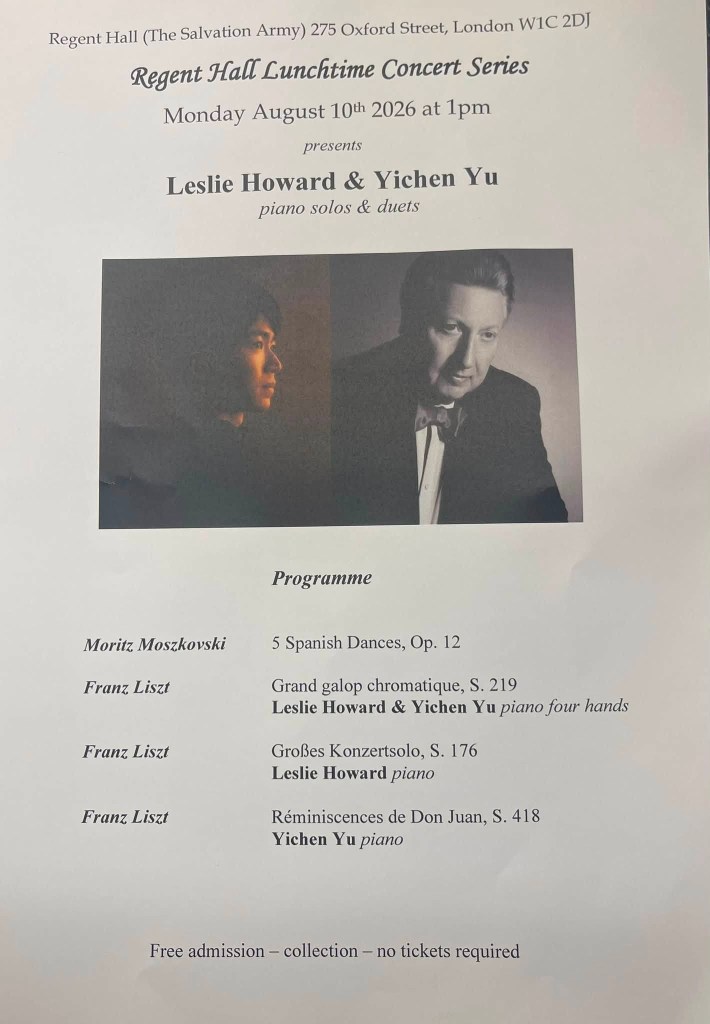
Two major works for piano solo sandwiched in between two much more frivolous encore pieces .

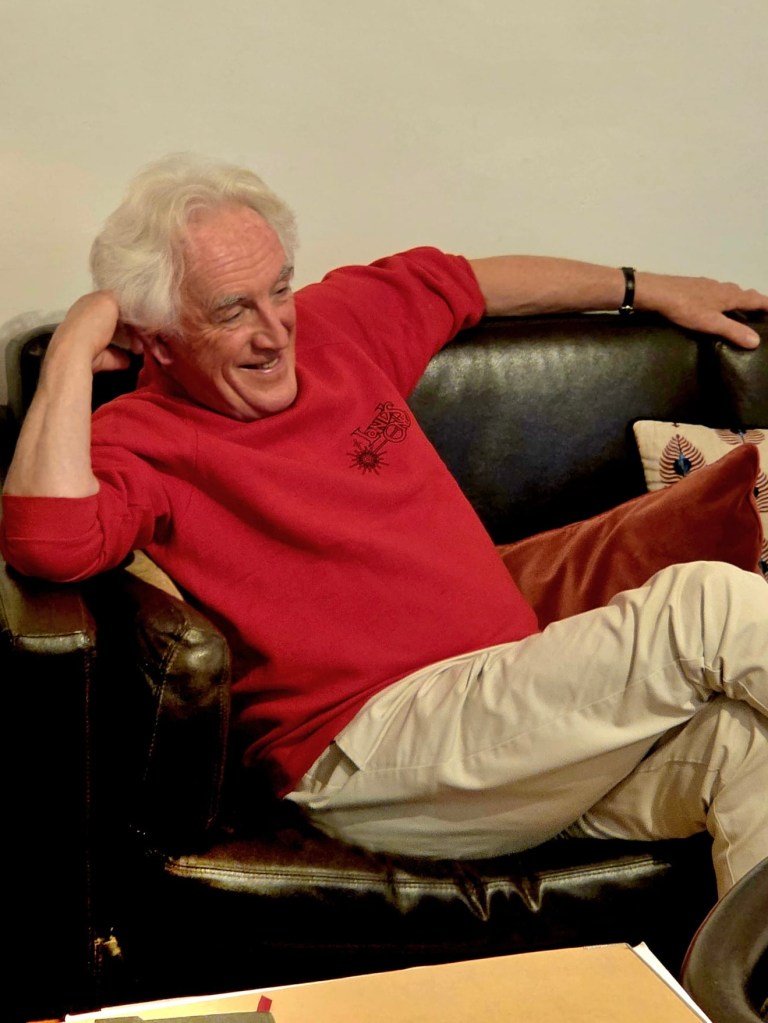
Leslie has long been an advocate of Liszt’s Grosses Konzertsolo, the precursor of the B minor Sonata , and he played it with great weight and the authority of a pianist who has recorded all Liszt‘s piano works on 100 cd’s which is the largest solo artist recording project in the history of classical music and has earned him a place in the Guinness Book of World Records as well as many other awards including from the Hungarian President. Leslie Howard writes :
‘ Liszt’s genius for beautiful titles deserted him only once—the Grosses Konzertsolo is a mere stab at a title for a long work which is not yet a sonata, but no longer a character piece. Forerunner of the B minor Sonata it certainly is, however, and the history of the composition shows that Liszt was much preoccupied with it. The piece was written between 1849 and 1850, and dedicated to Adolf Henselt who professed himself unable to play it, even though Liszt had intended it as a competition piece for the Paris Conservatoire. The original is a simple one-movement Allegro, and the piece also exists in an unpublished version for piano and orchestra (not to be confused with the recently discovered ‘third’ concerto). Some time before the publication in 1851, Liszt expanded the work by adding a slow central section whose material he also worked into the later stages of the piece. Later still Liszt arranged the piece for two pianos under the title Concerto Pathétique and at the end of his life supervised his student Eduard Reuss in the production of a new version for piano and orchestra, to which Liszt added several new passages. In any case, this is an extremely interesting work in its own right, and is unaccountably neglected, especially by students who might well benefit from consulting this piece before tackling the Sonata! ‘

Yichen Yu who had seduced us with his uncontaminated mastery in Brahms 2nd Piano Concerto now astonished with his crystalline purity and transcendental technical mastery in Liszt’s notorious paraphrase of Mozart’s Don Juan.
Leslie Howard writes : ‘Much has been written about the uncanny insight into Don Giovanni which Liszt shows by taking the seduction duet (with variations), the drinking song and the music of the statue of the dead commendatore and weaving a commentary upon the moral pith of the original. Even Bernard Shaw (who dismissed a masterpiece like the ‘Dante Symphony’) was obliged to rate the piece very highly, and indeed the Don has withstood the vicissitudes of public taste and has more or less remained in the repertoire. On this record the fullest possible version of the piece is presented, right down to a short cadenza in the first variation, which is to be found on a leaf in the Library of Congress but which was in fact published in the shorter two-piano version of the work, and actually postulated for inclusion in the solo version in the excellent critico-practical edition of Busoni.’
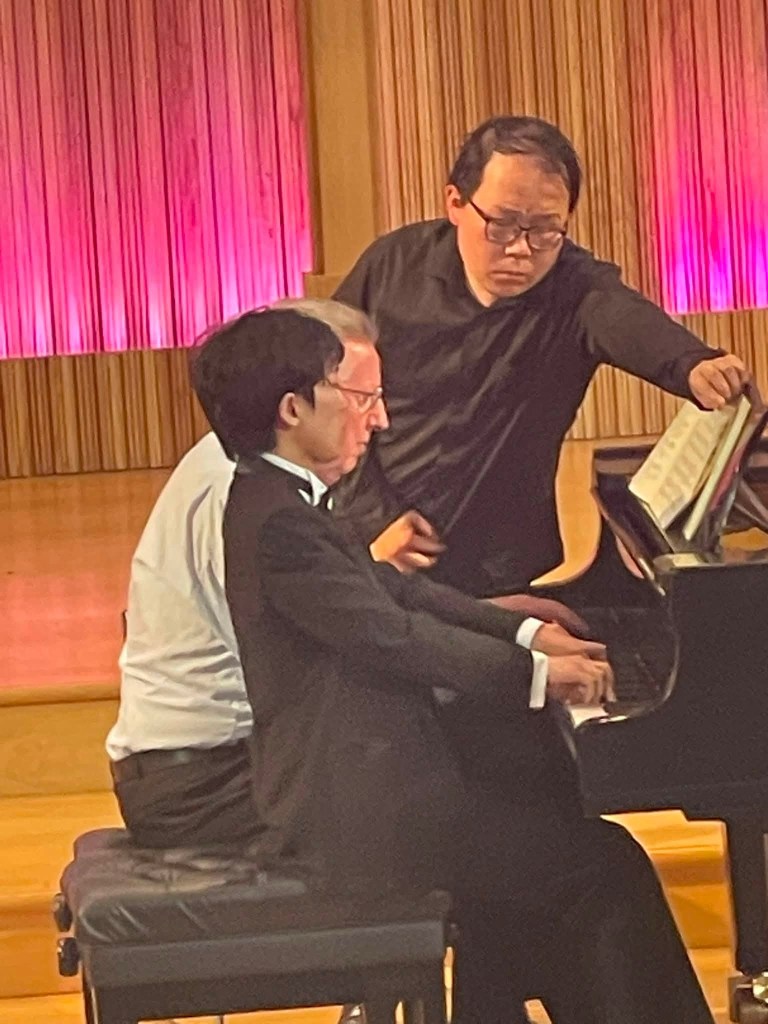
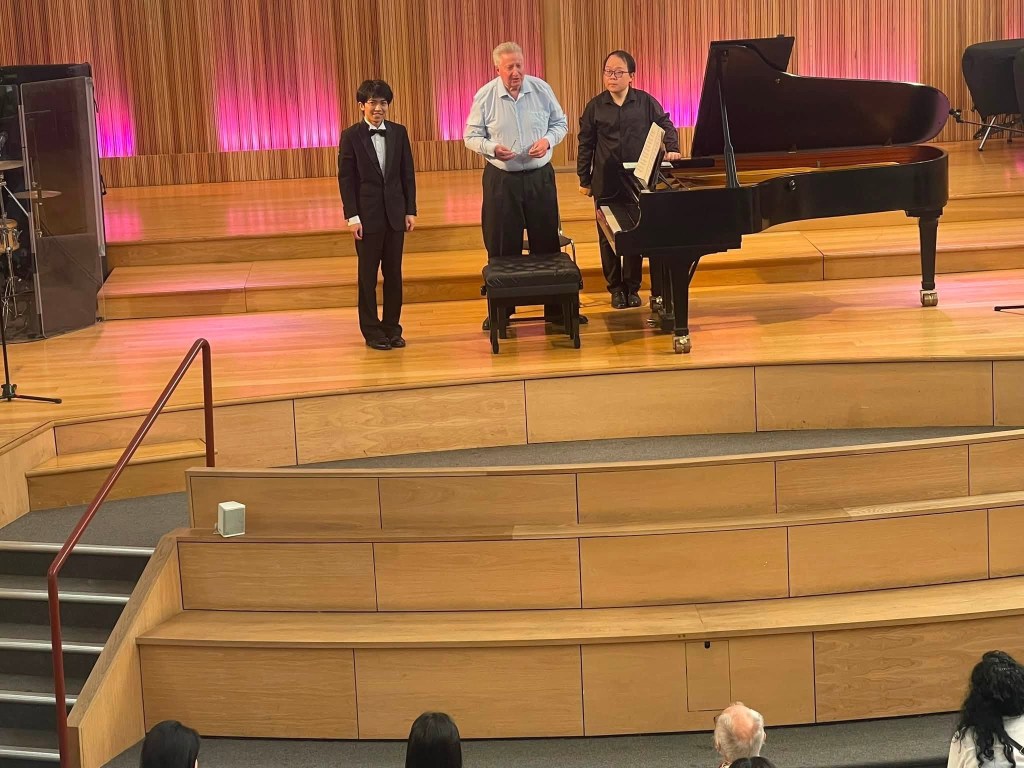
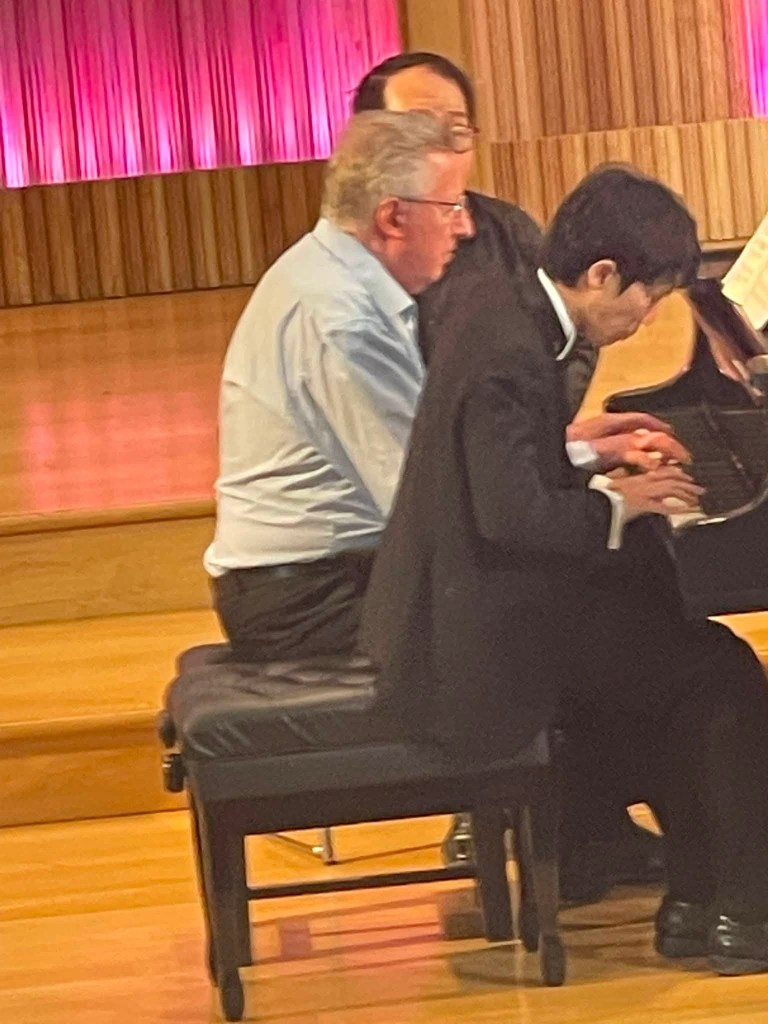
Joining forces at the beginning for Moskowski’s Spanish salon pieces one of them reminiscent in many ways of Schumann’s Bilder aus Osten op 66 n.4 and ending with a scintillating account of Liszt’s Grand gallop chromatique.
Leslie Howard writes :’ The Grand Galop chromatique figures prominently in Liszt’s own recital programmes, and its enormous popularity probably accounts for the quick publication of the simplified version and the version for piano duet. But Liszt returned to the concert version on several occasions over the years, adding ossia passages and extending the overall structure. The present version represents his fullest extension of the original. The obvious lightness of the work’s character made this piece an instant crowd-pleaser, but the imaginative undercurrent throws in a marvellous sequence of whole-tones and some wickedly unresolved chromatics at the coda.’
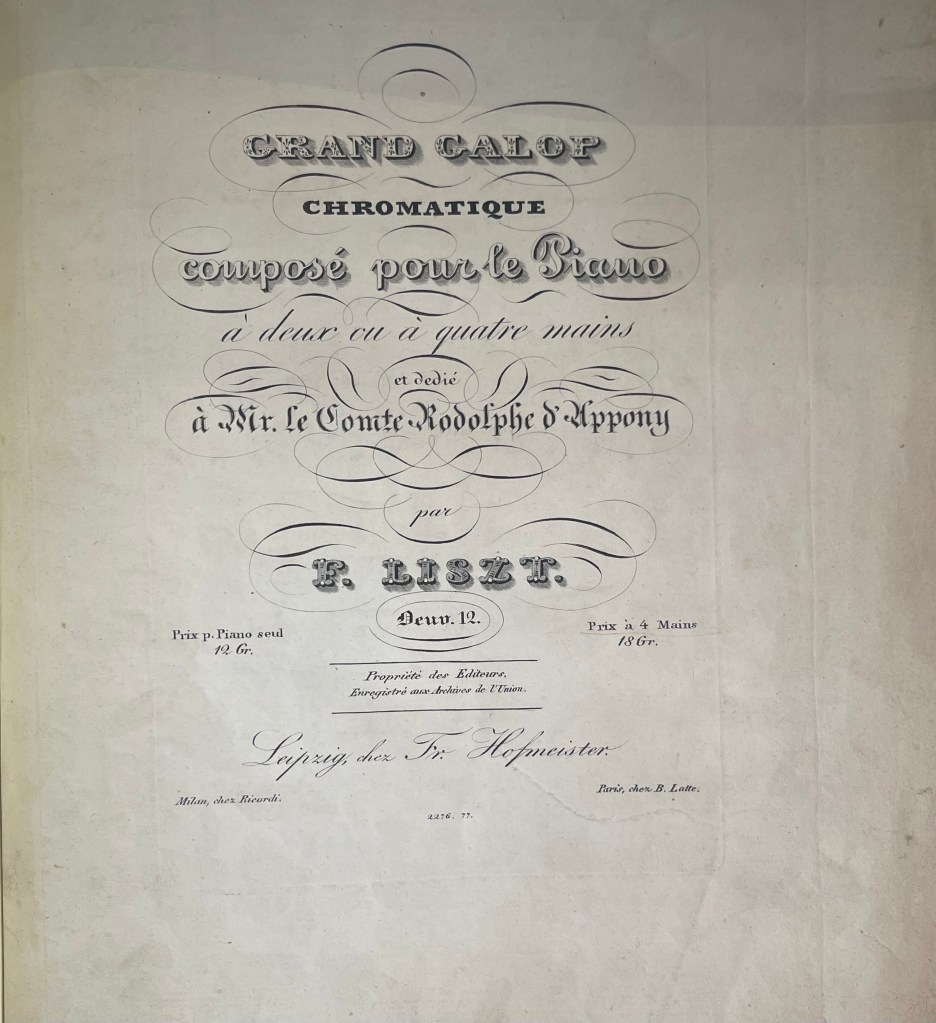
Playing from Leslie’s precious first edition they were a formidable team of youthful bravura and consummate artistry