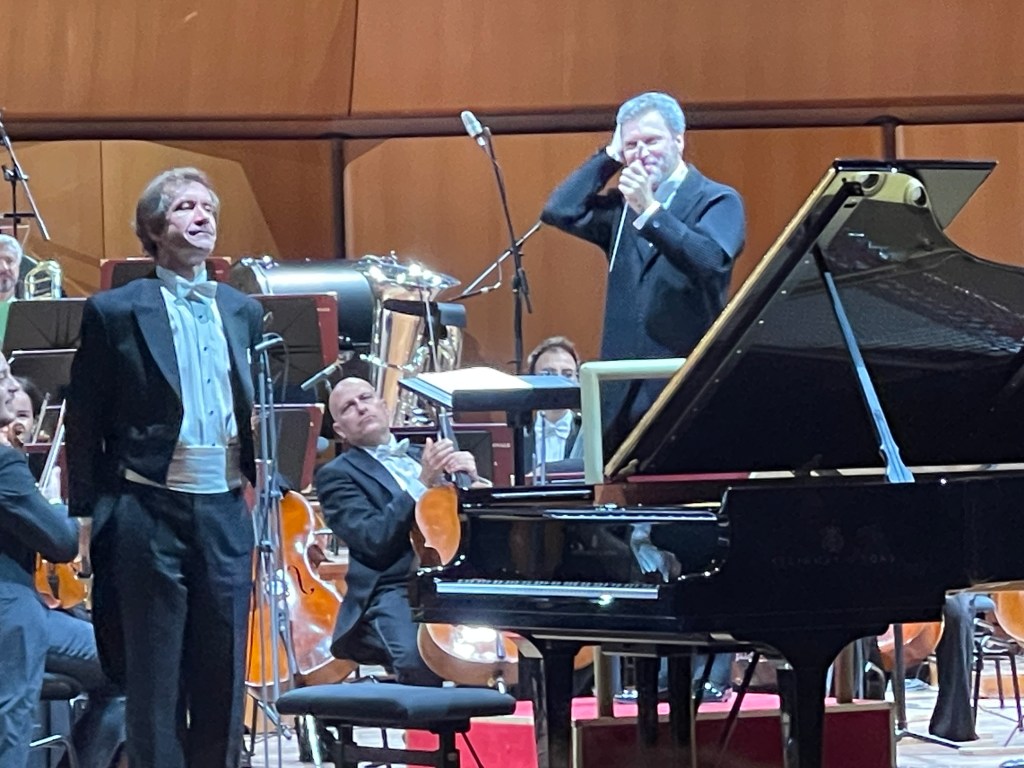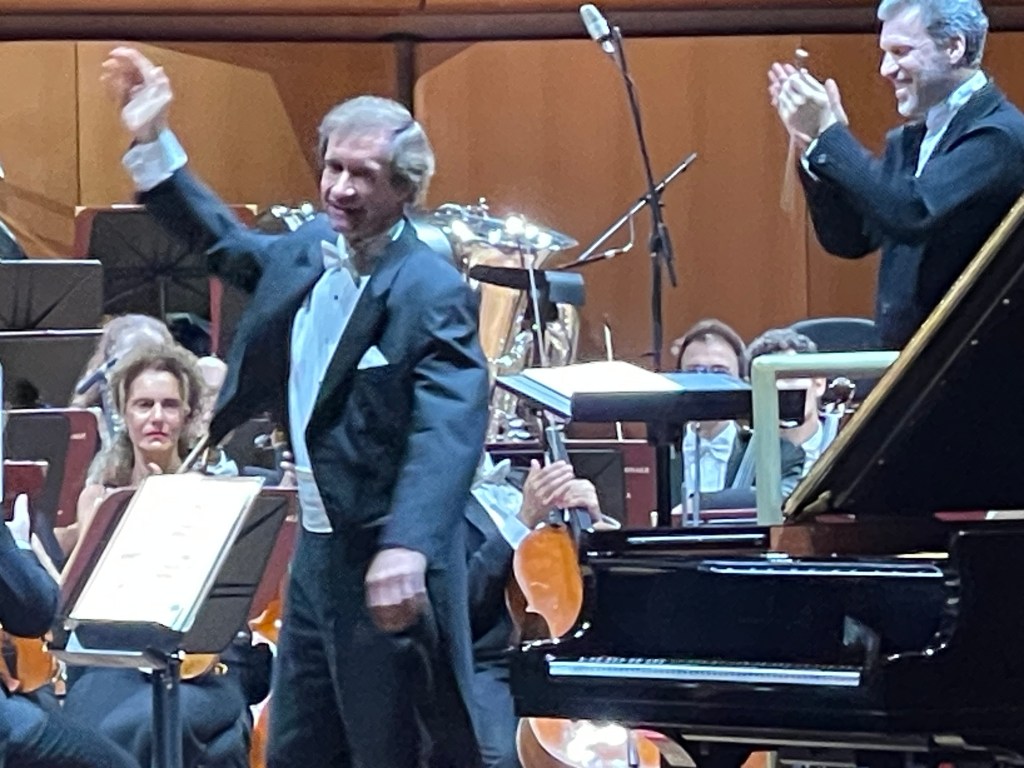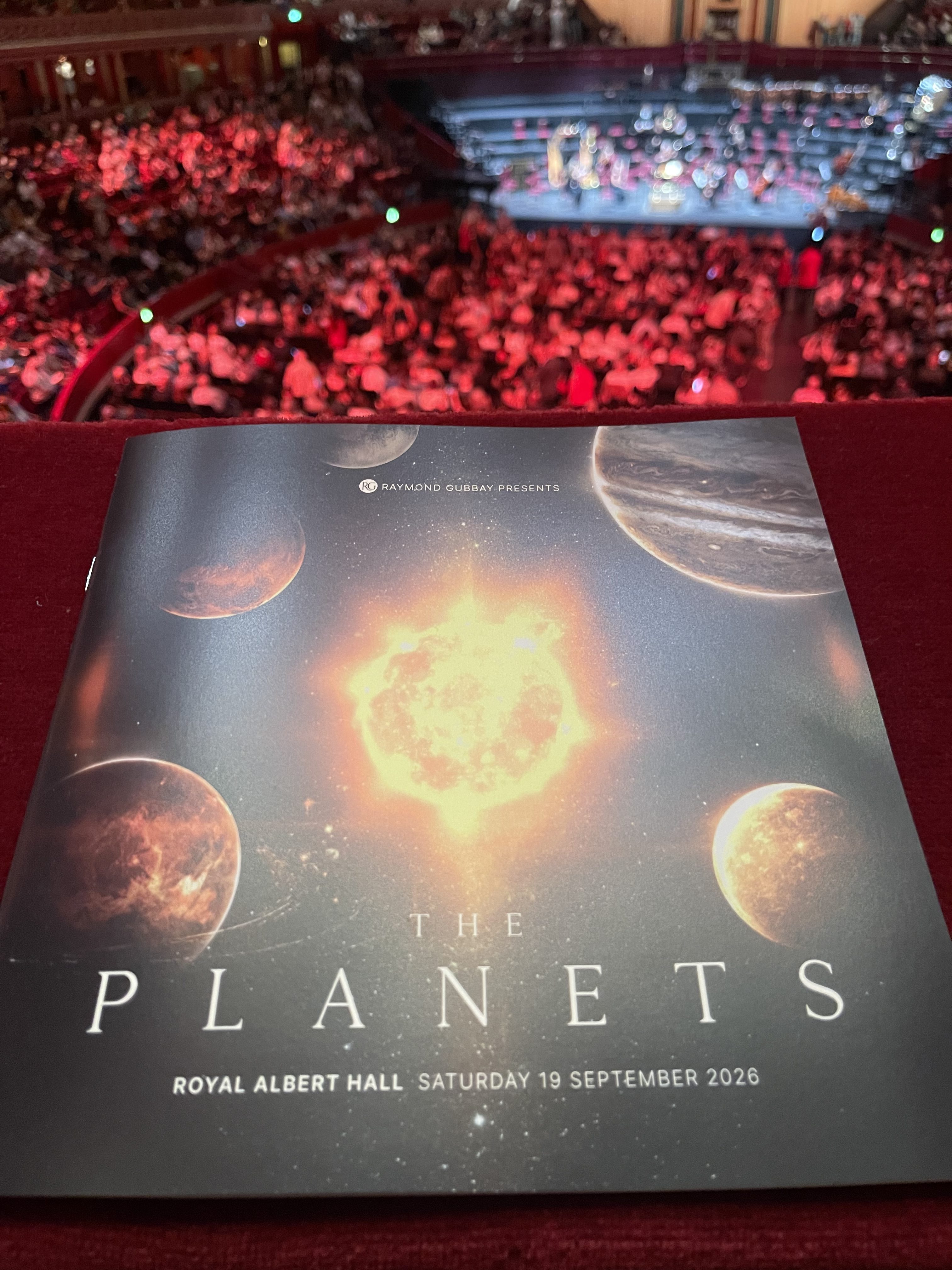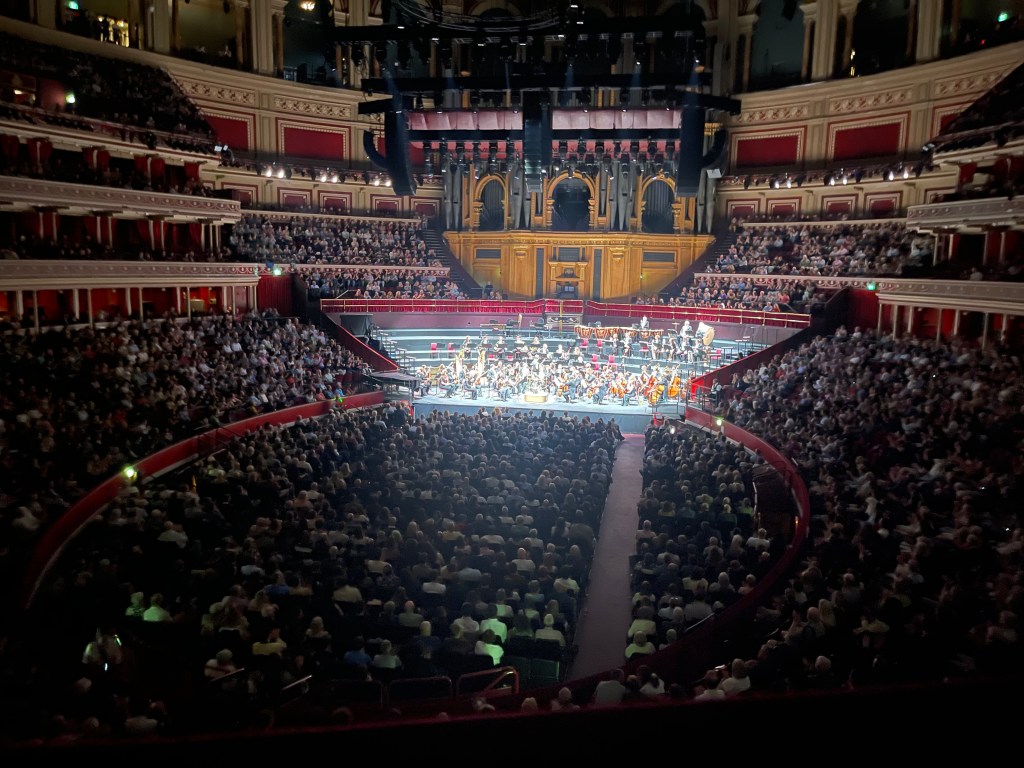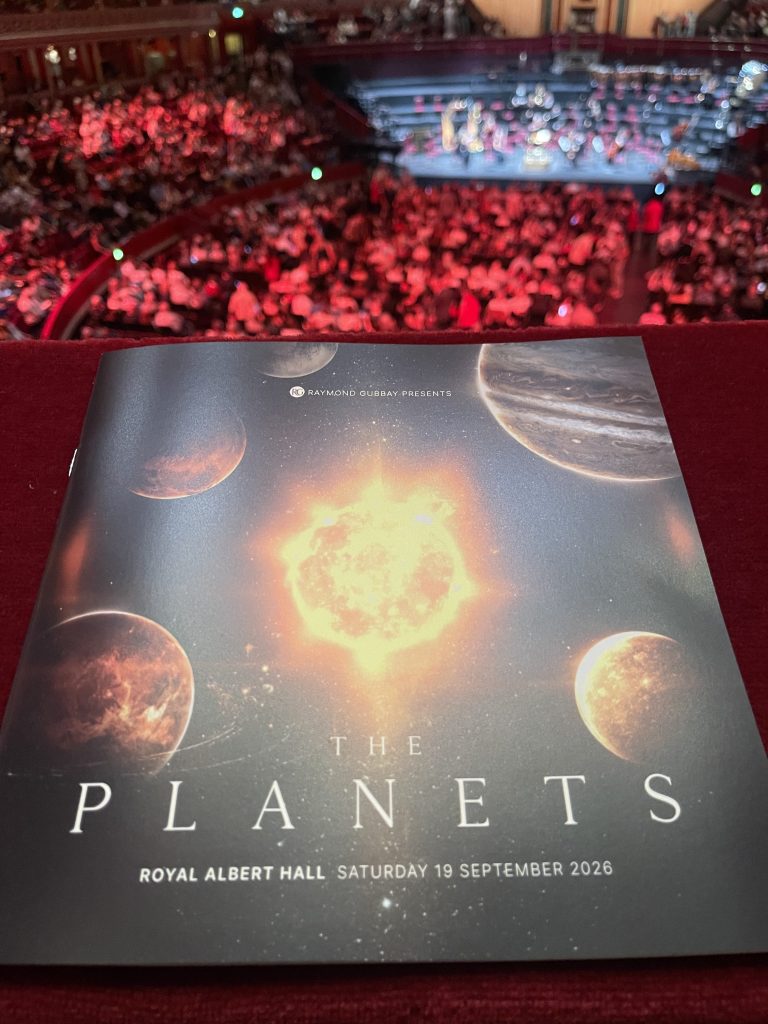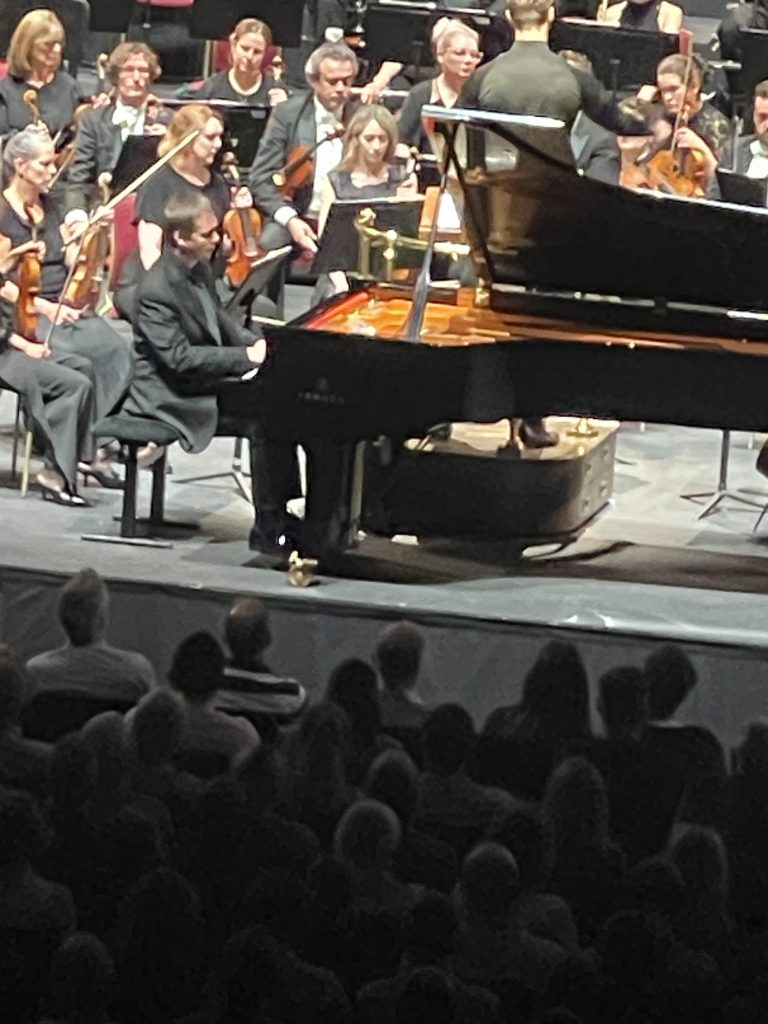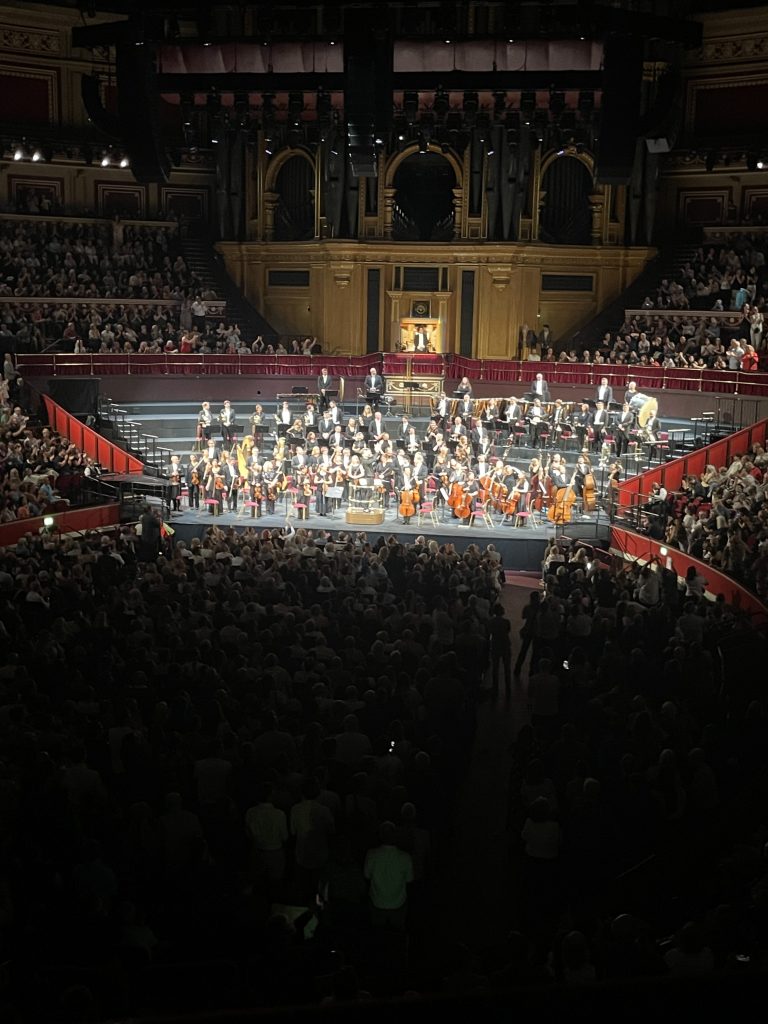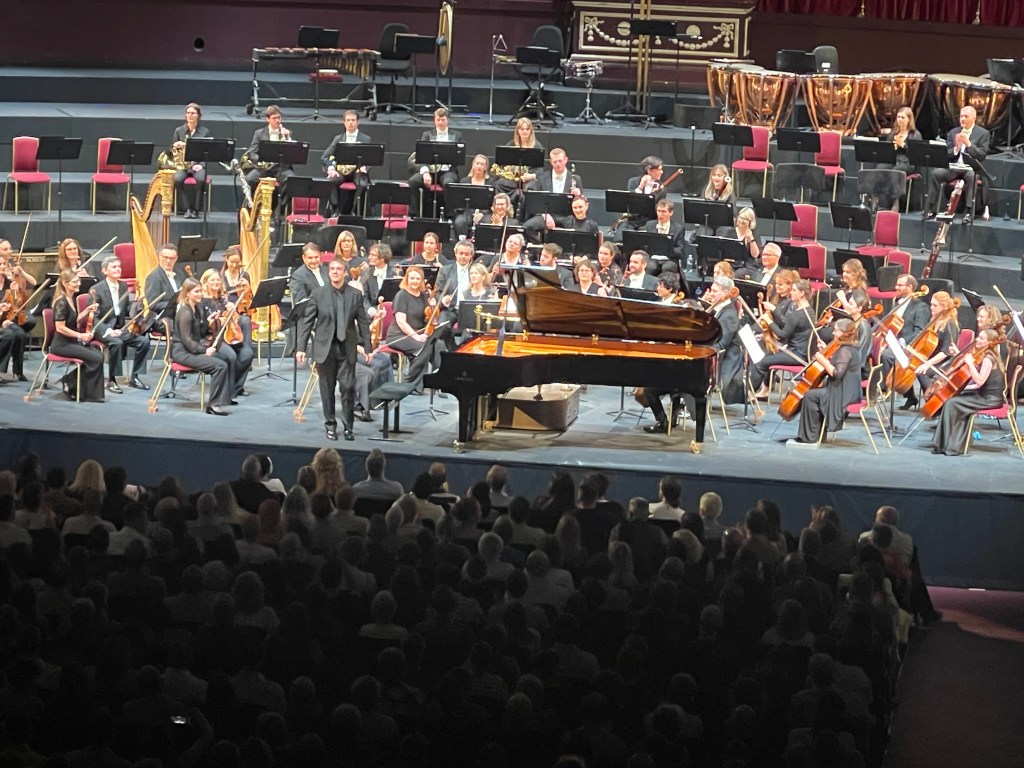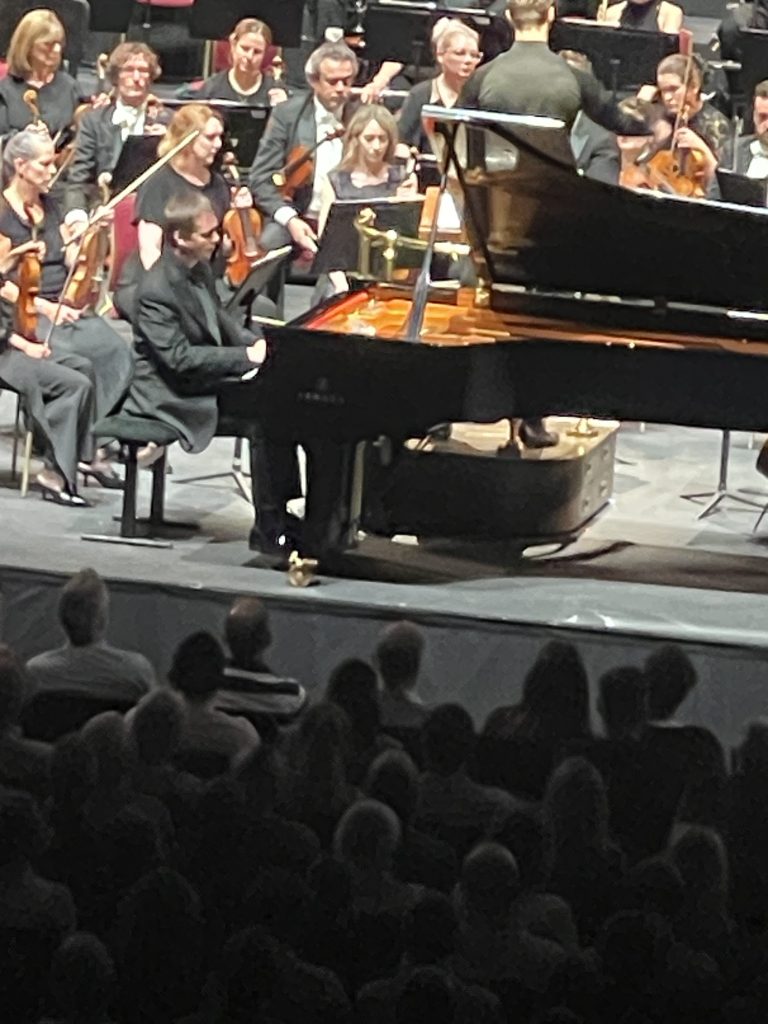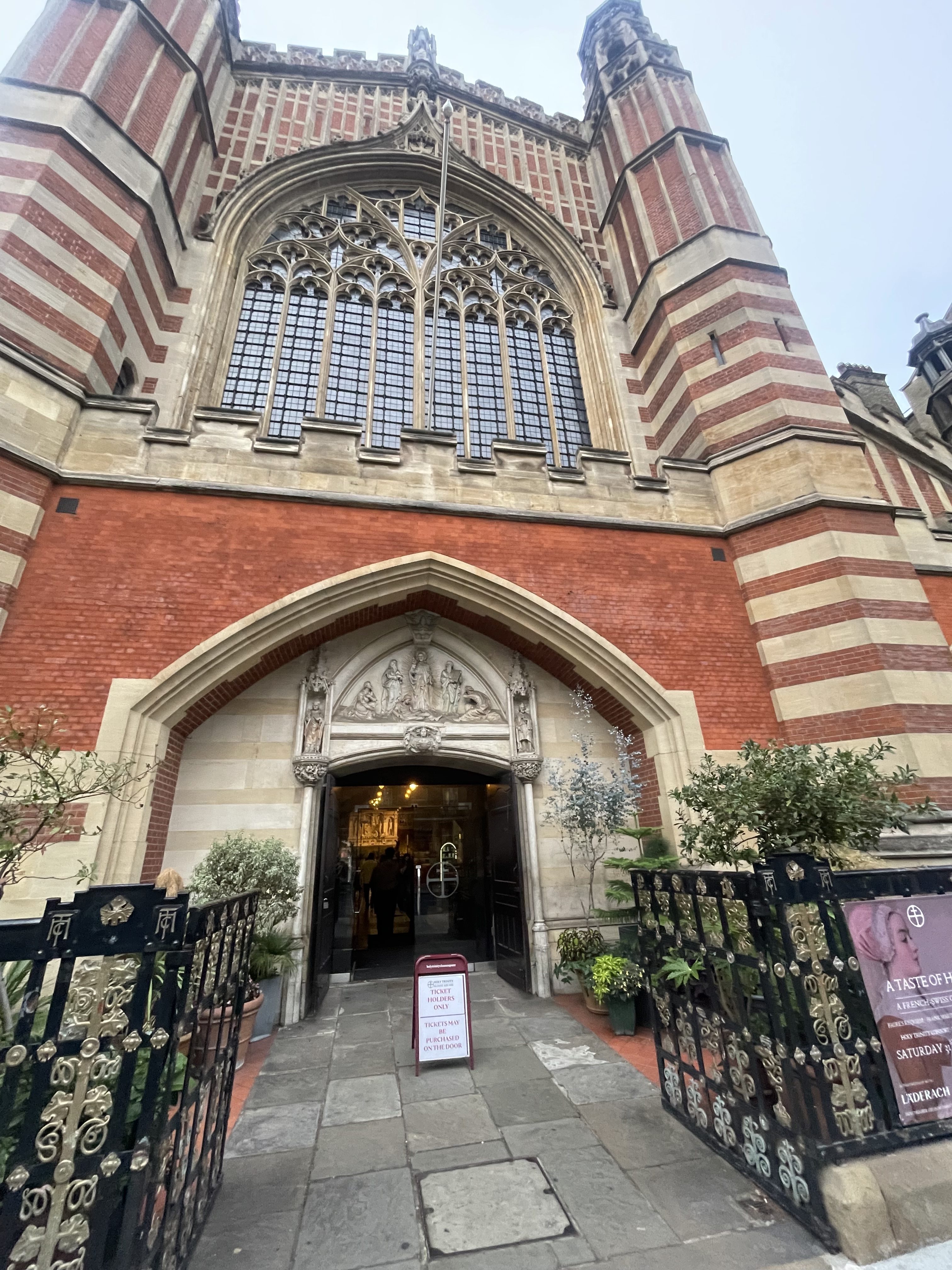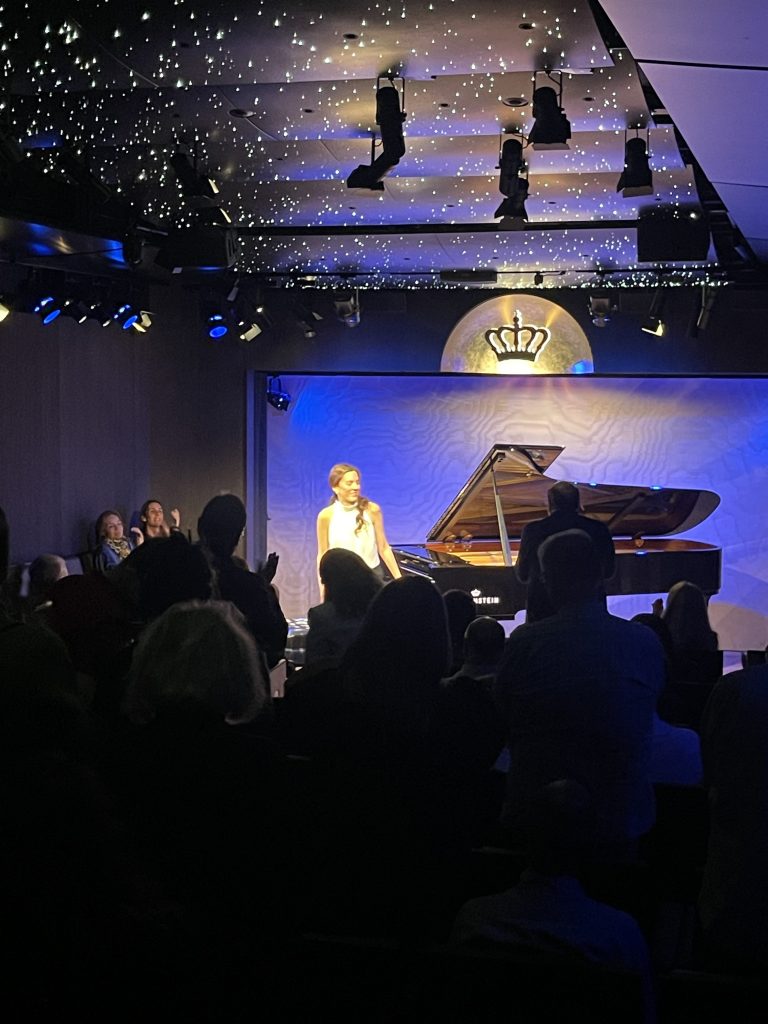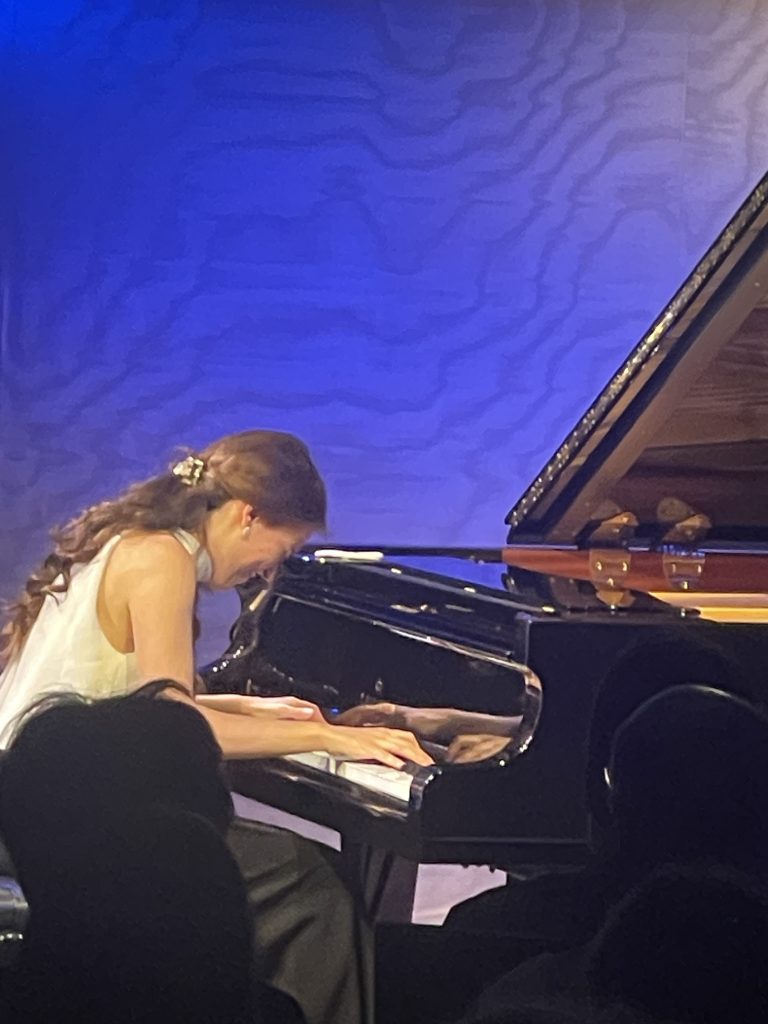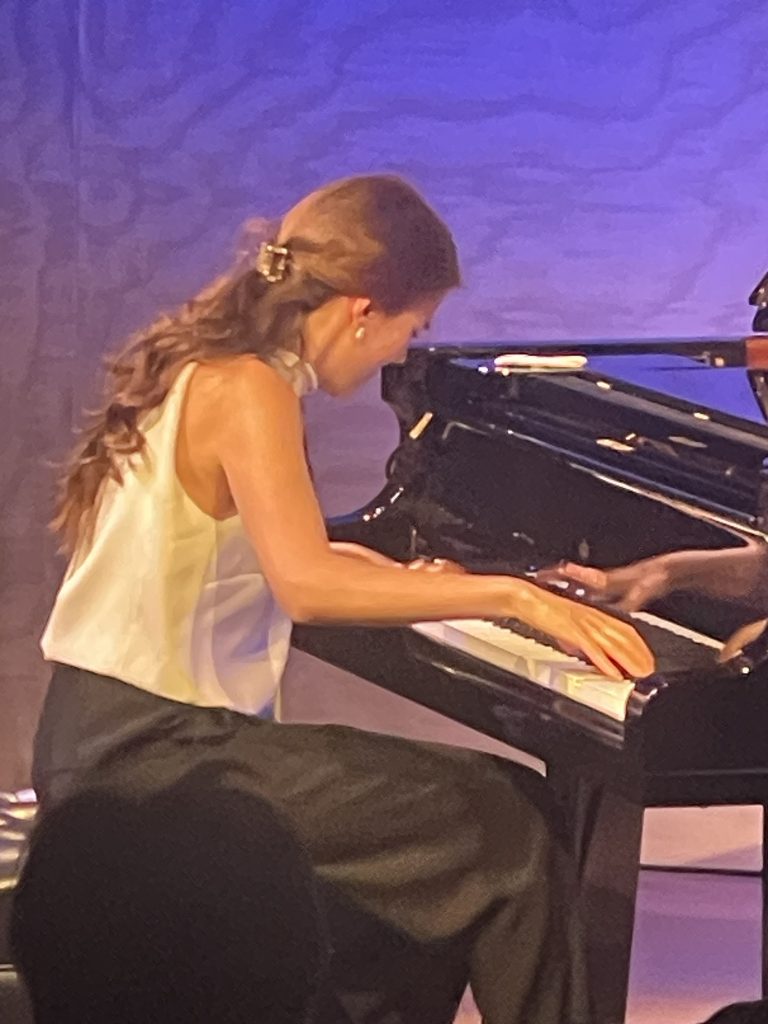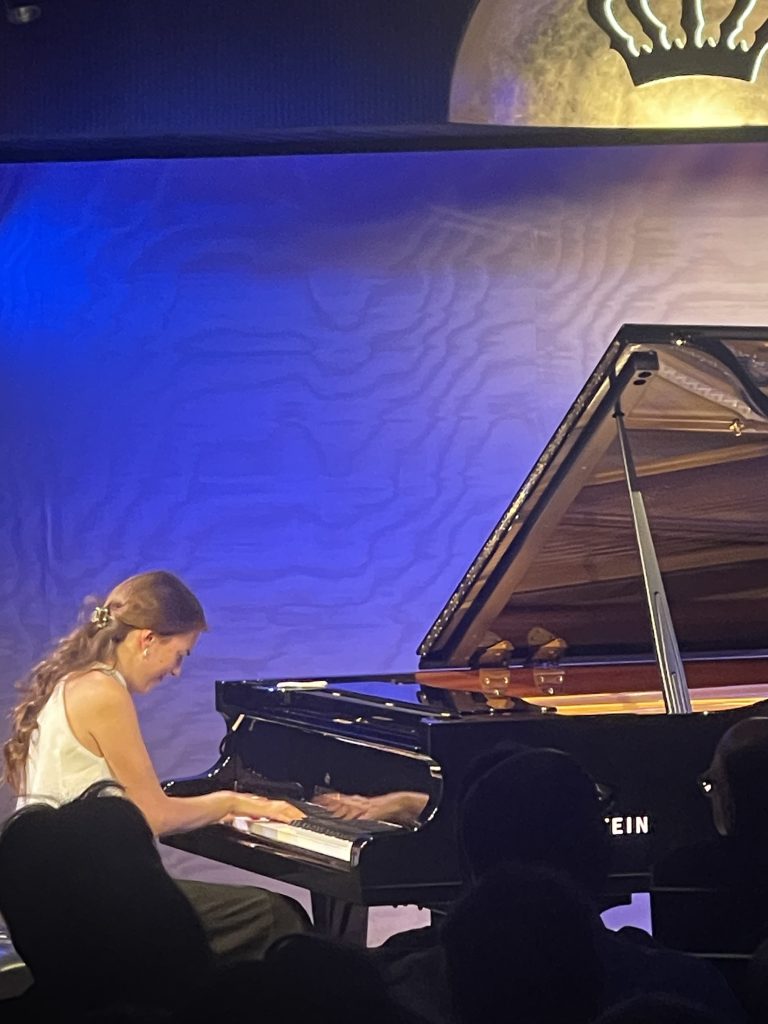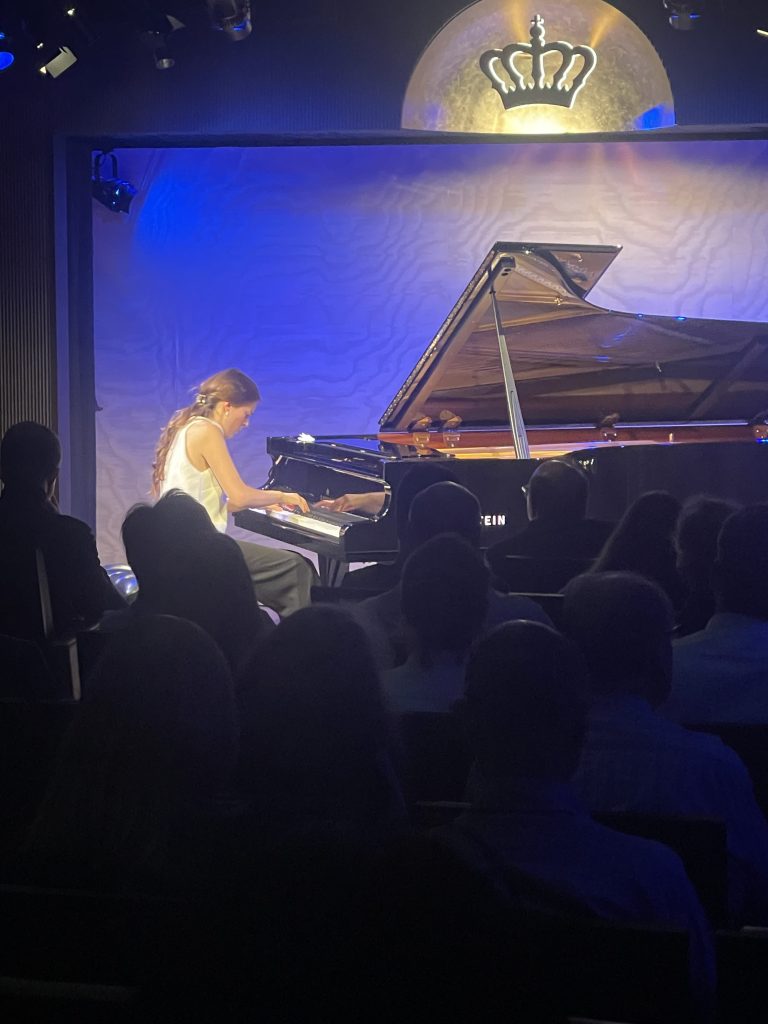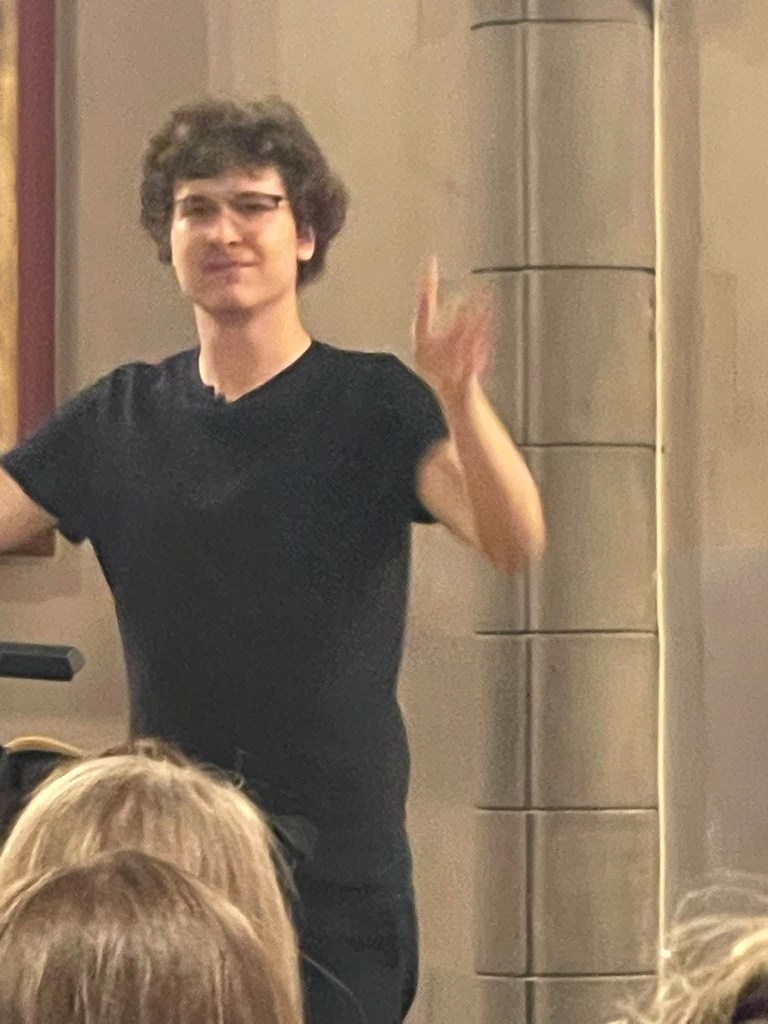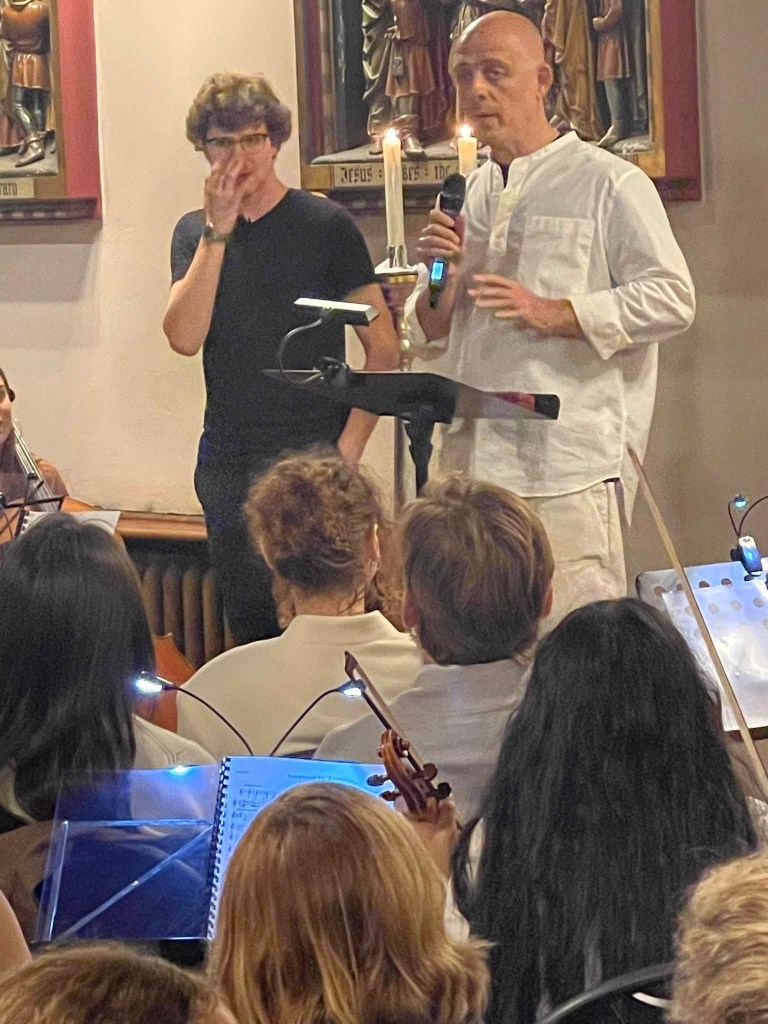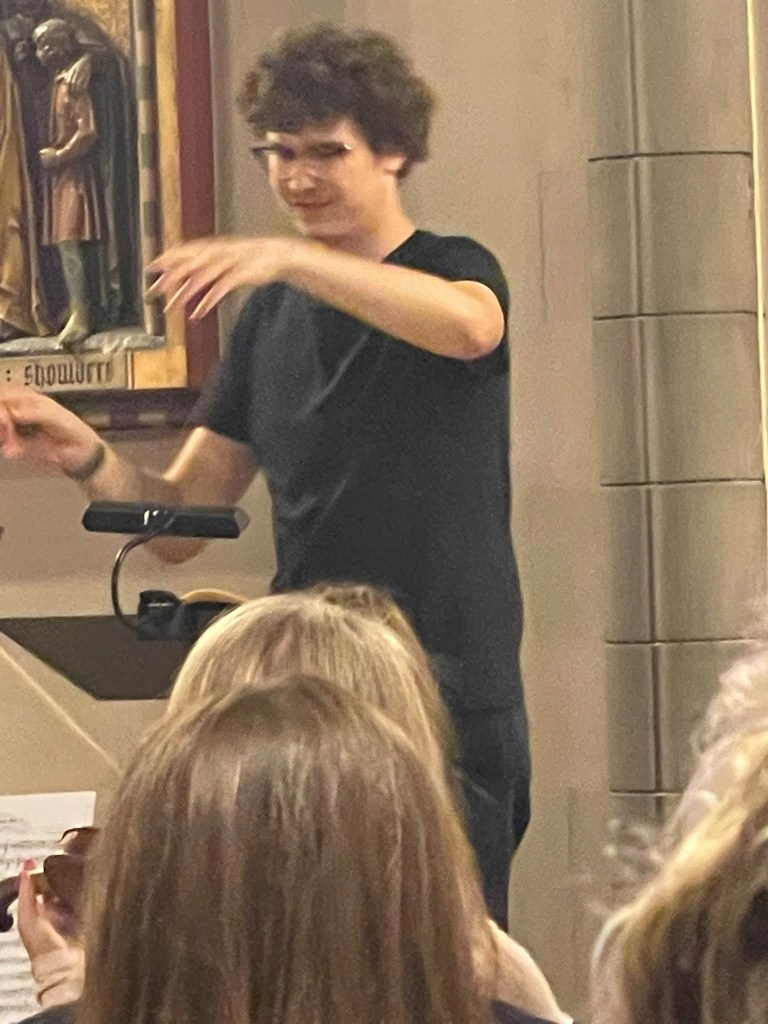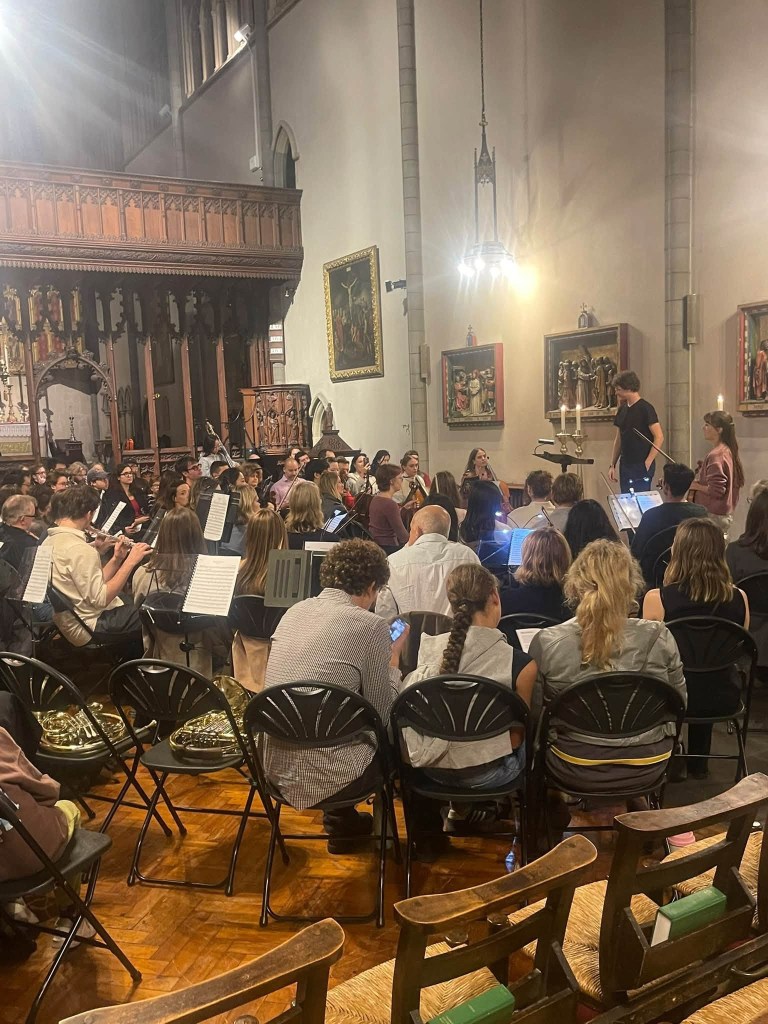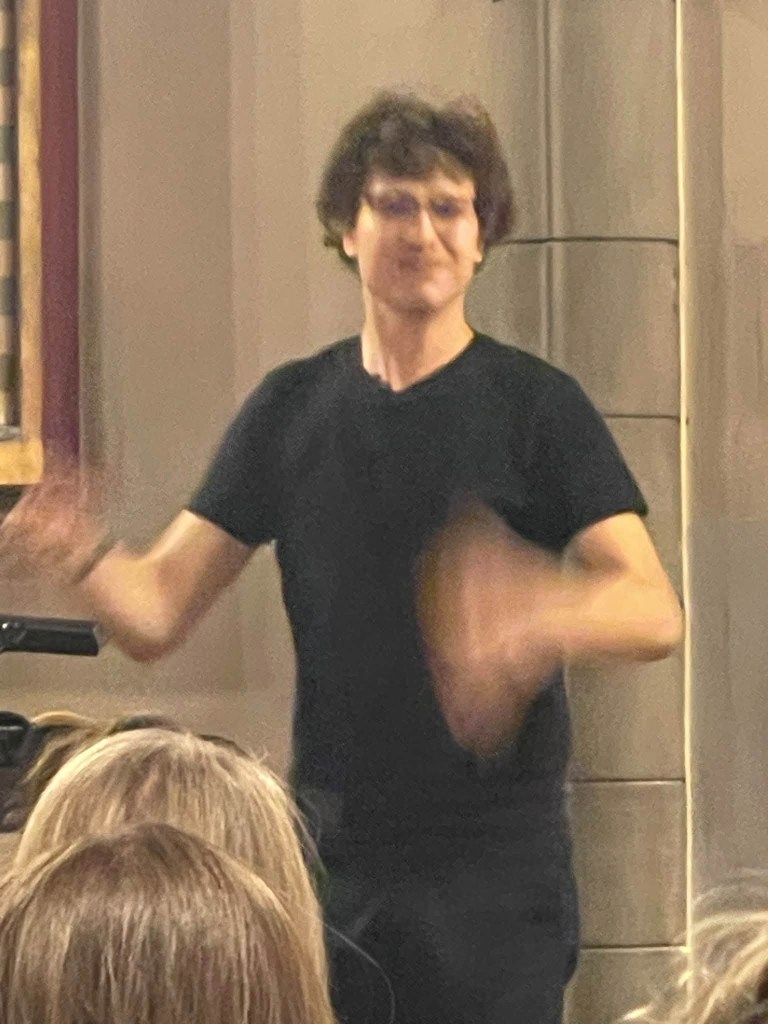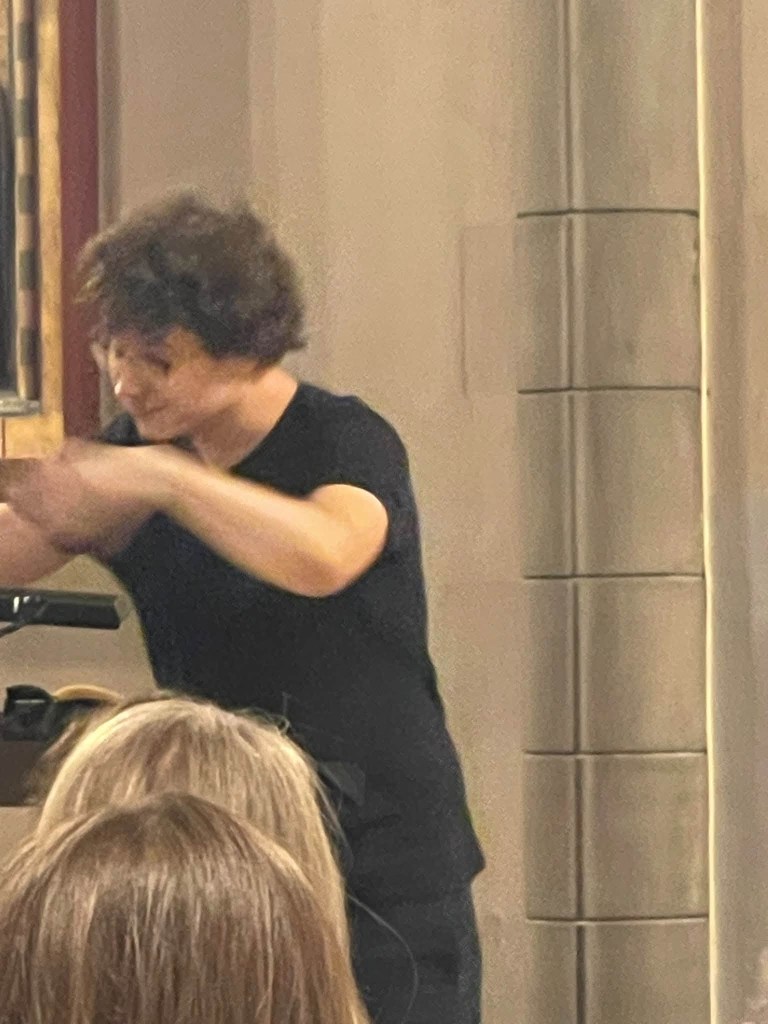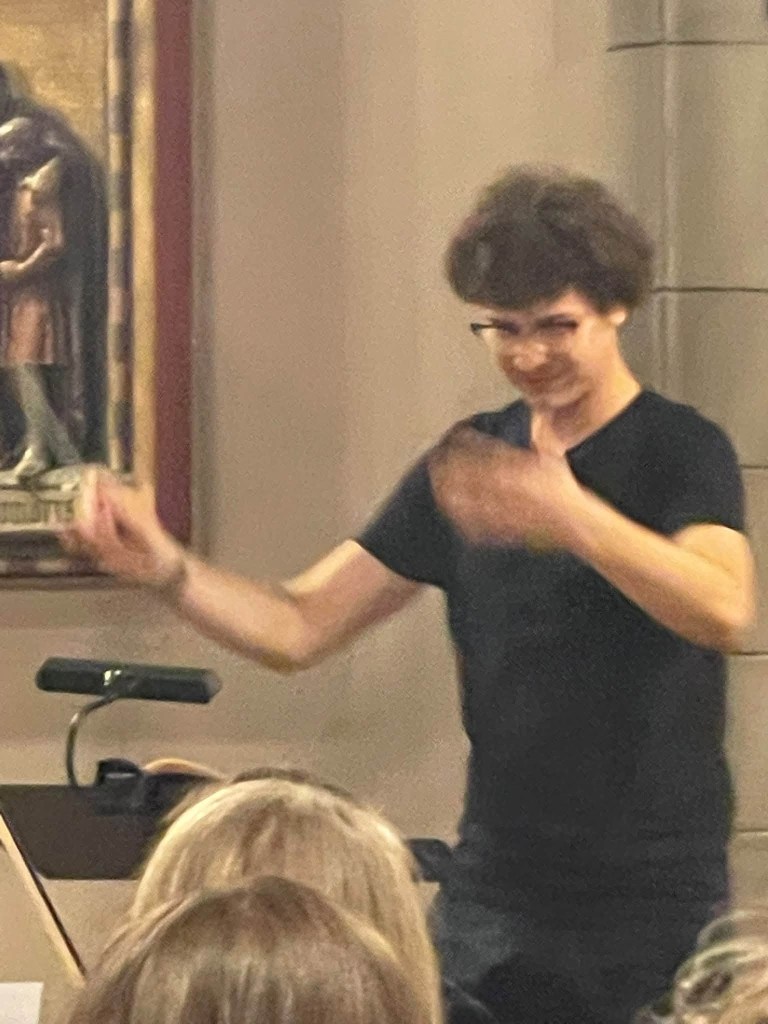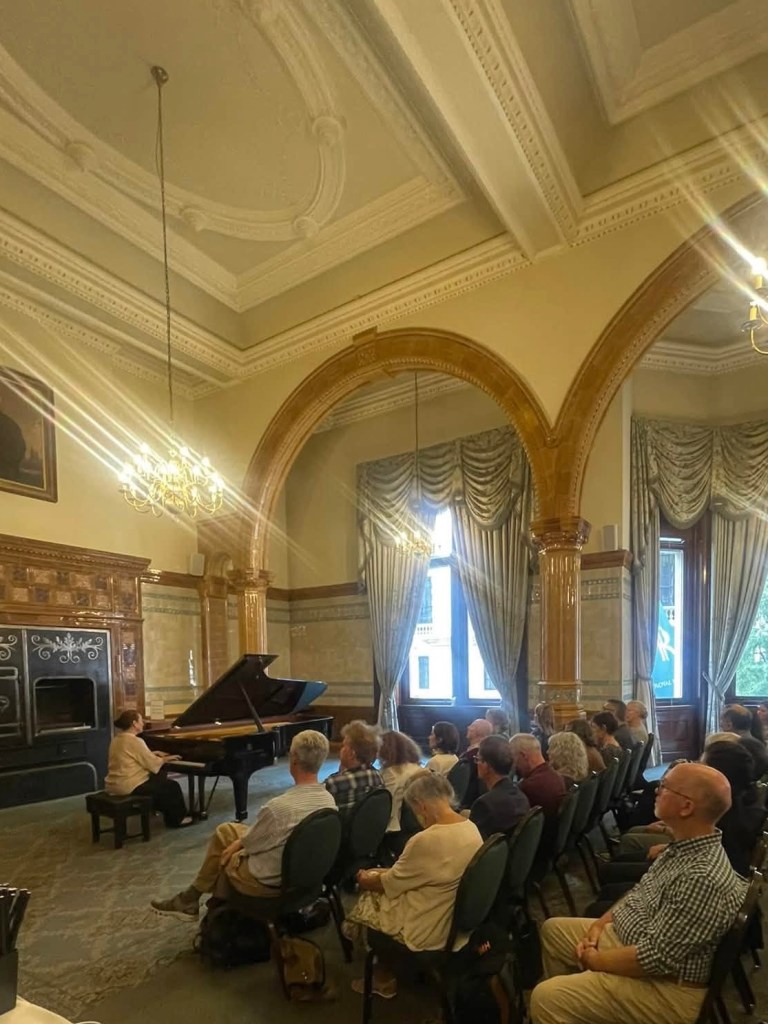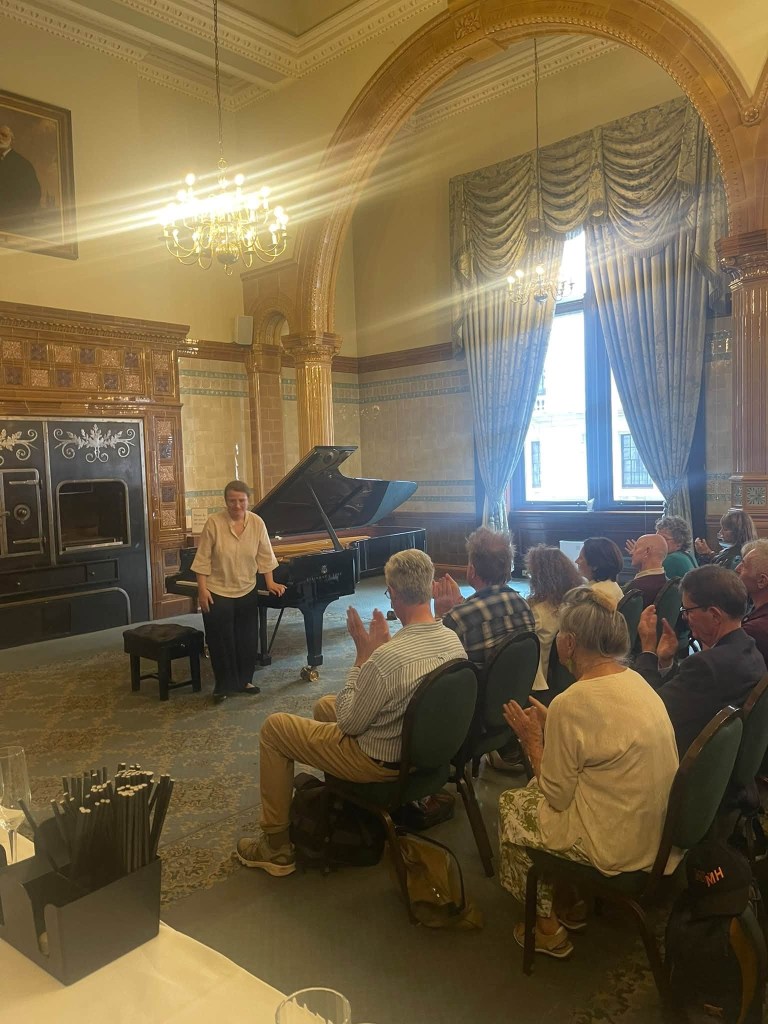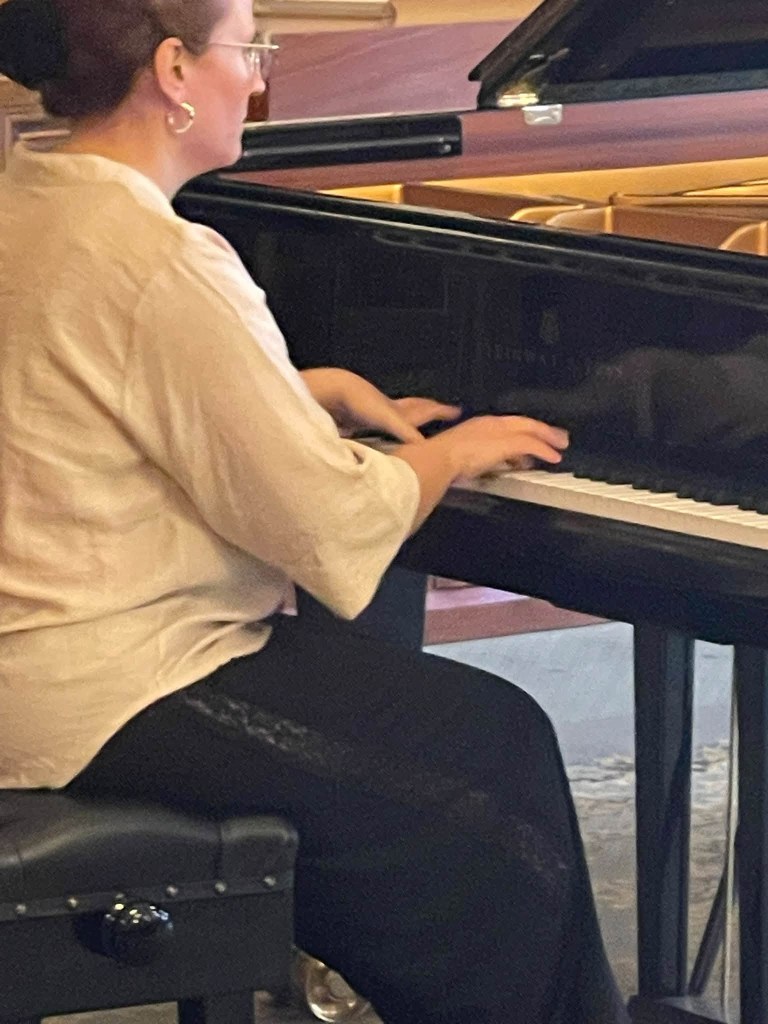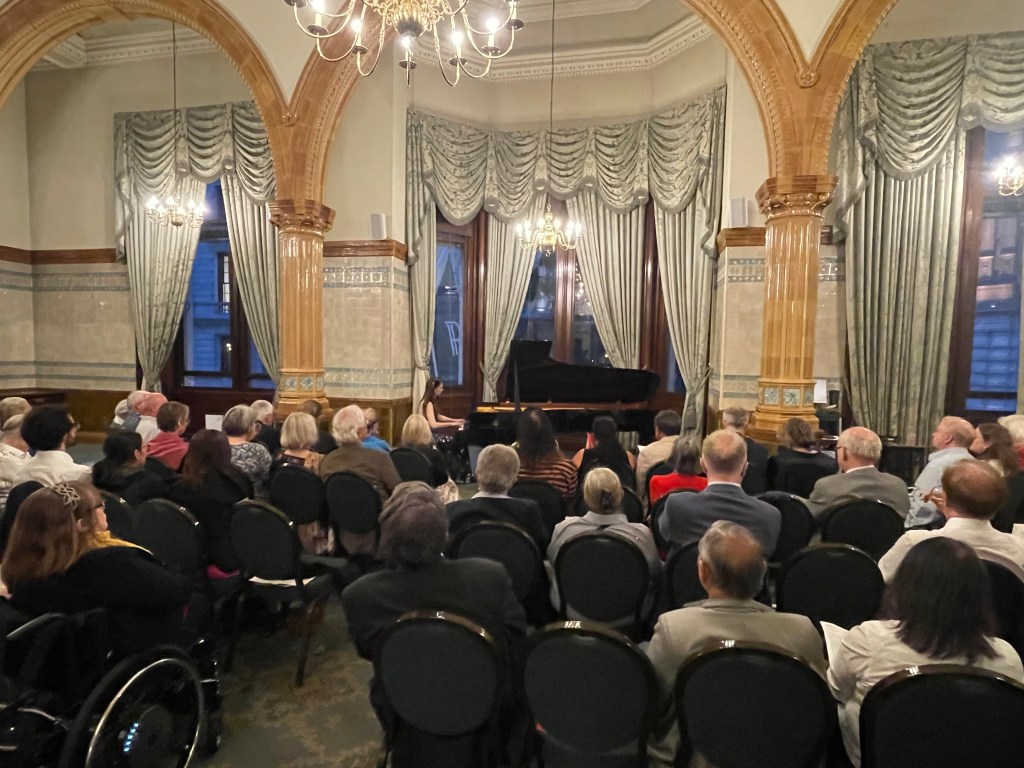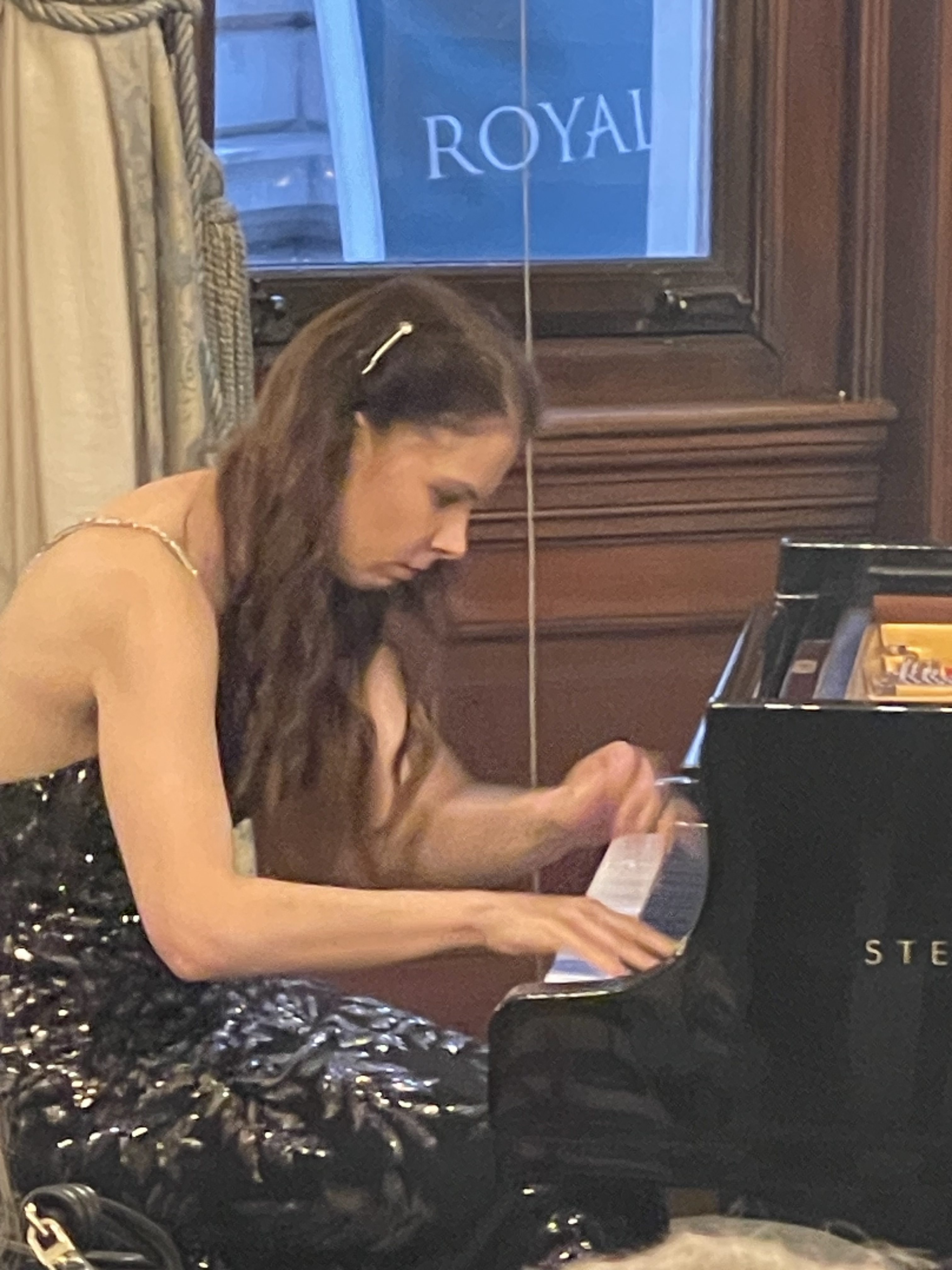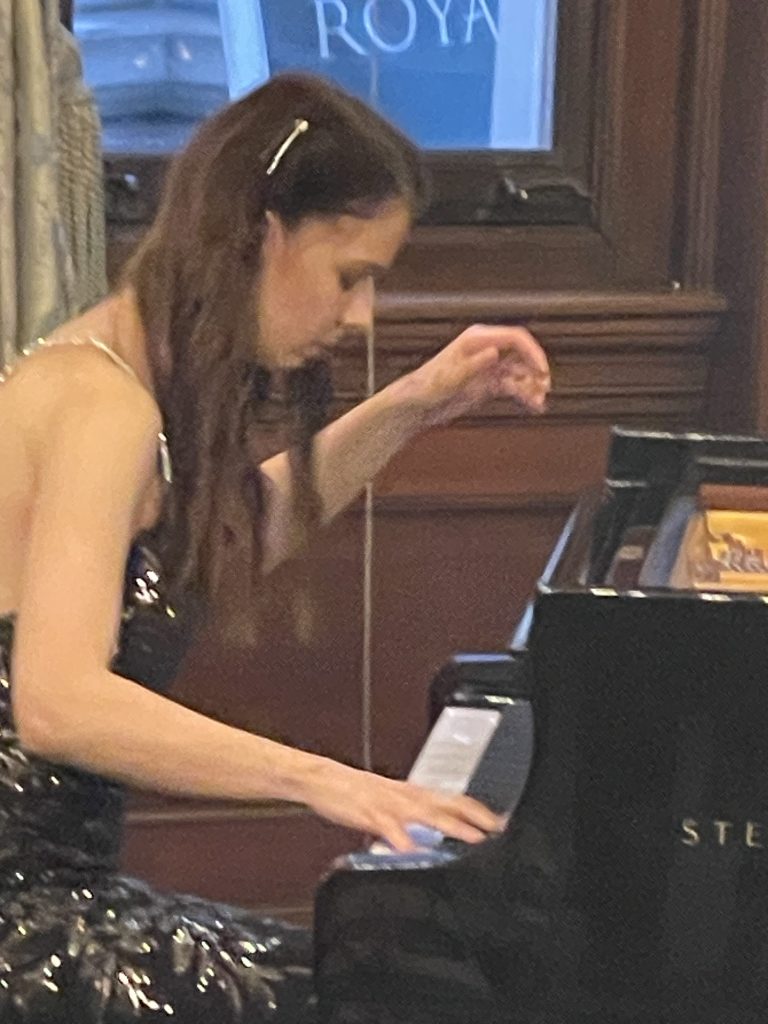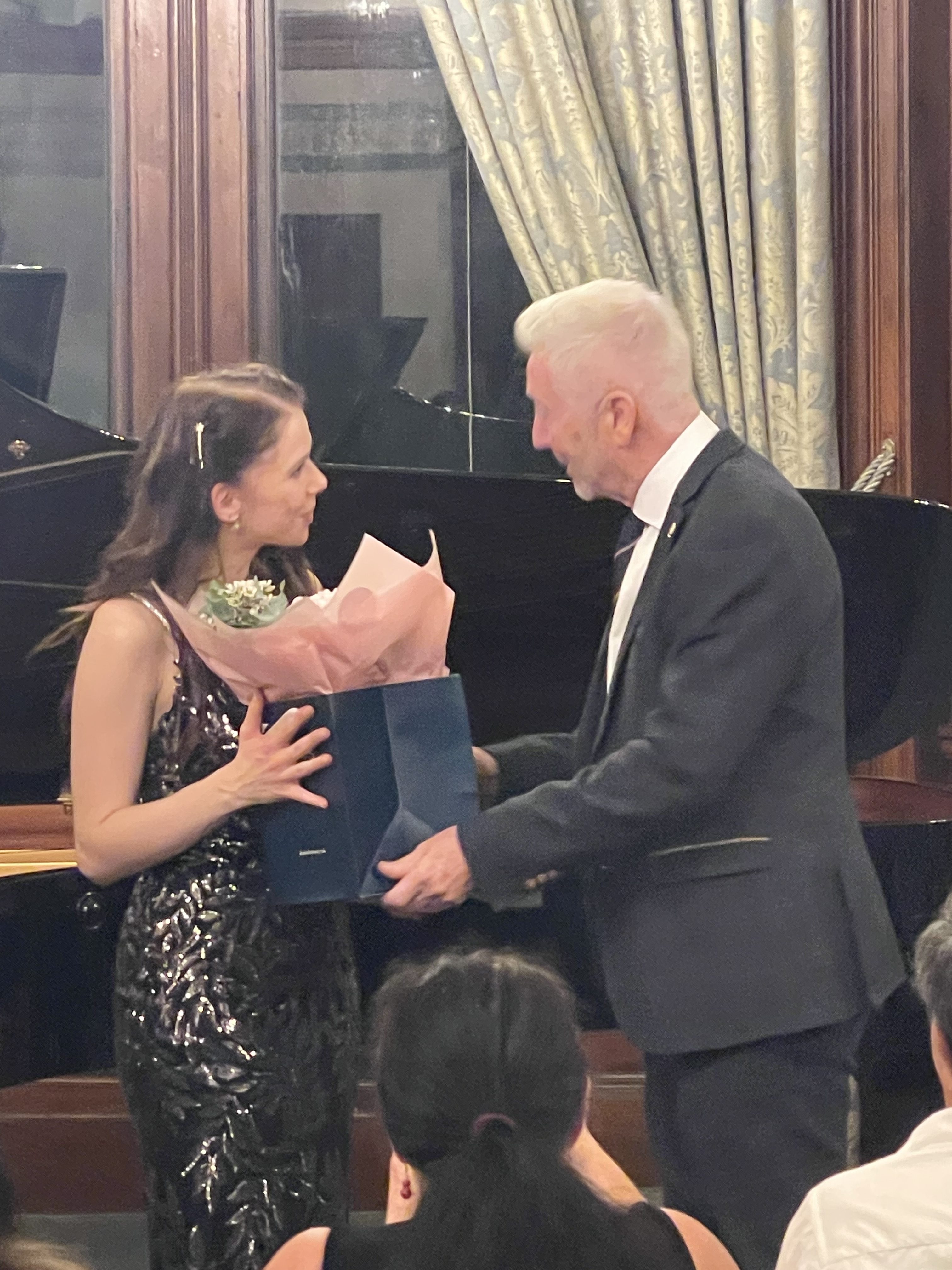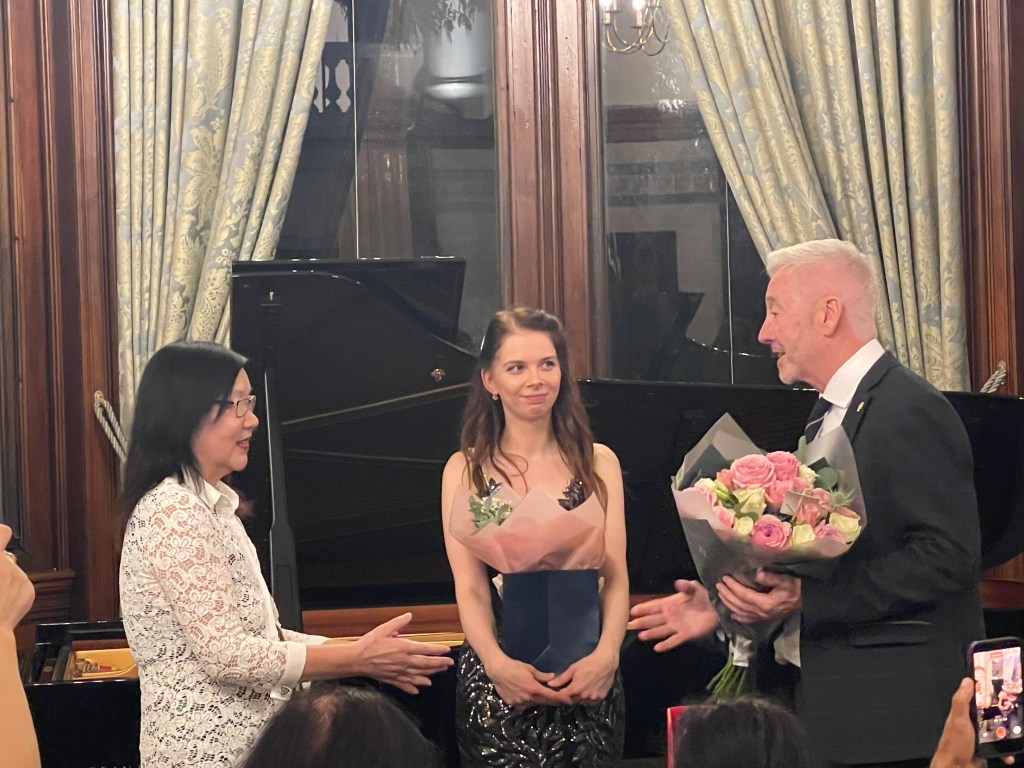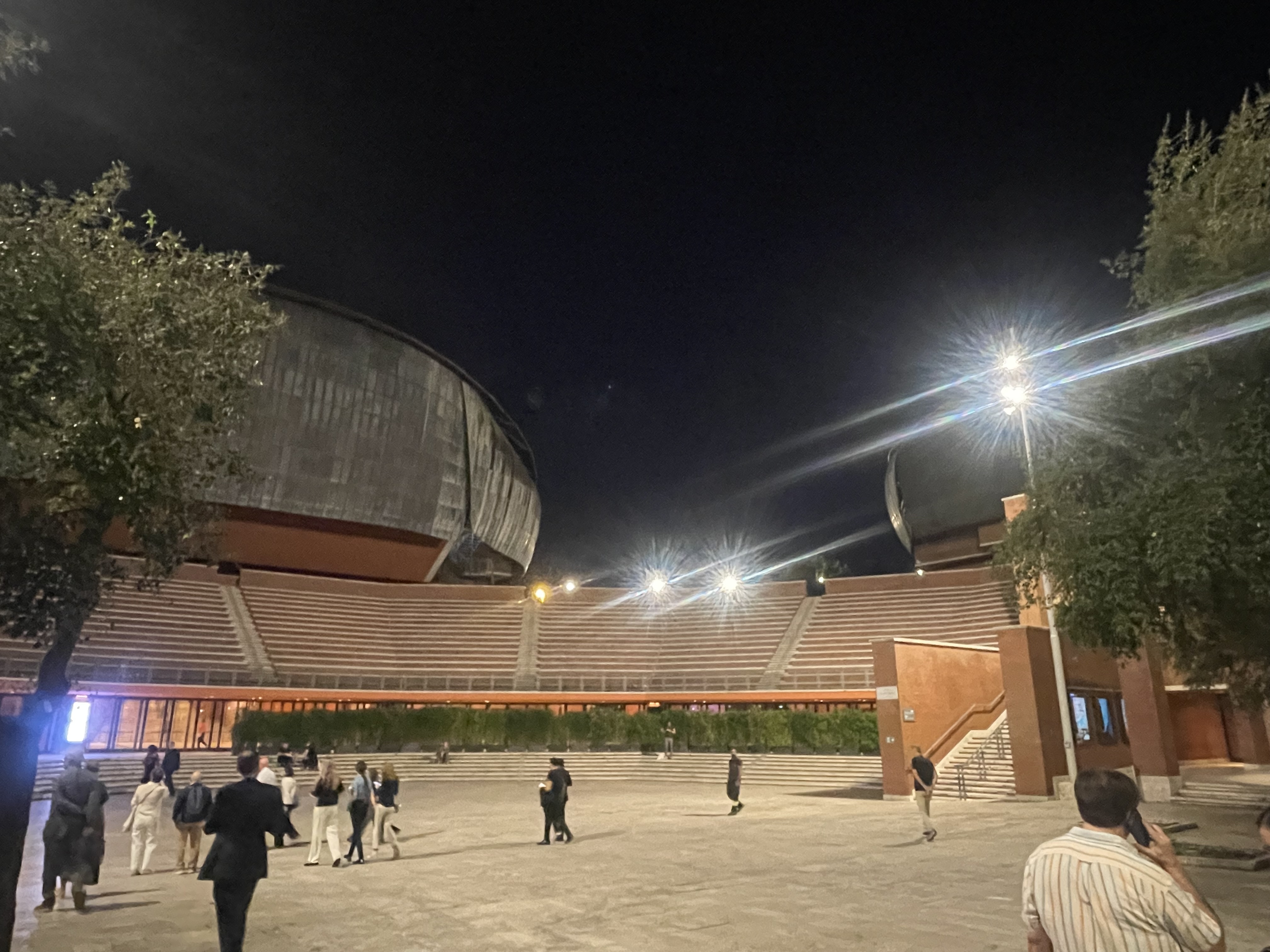
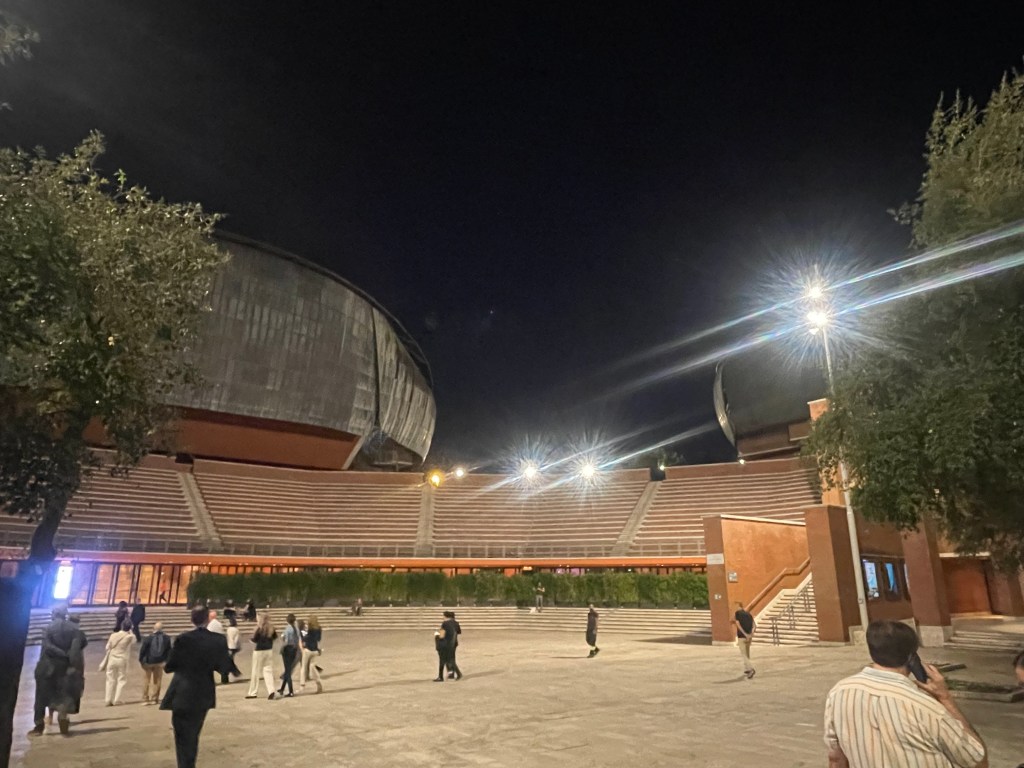
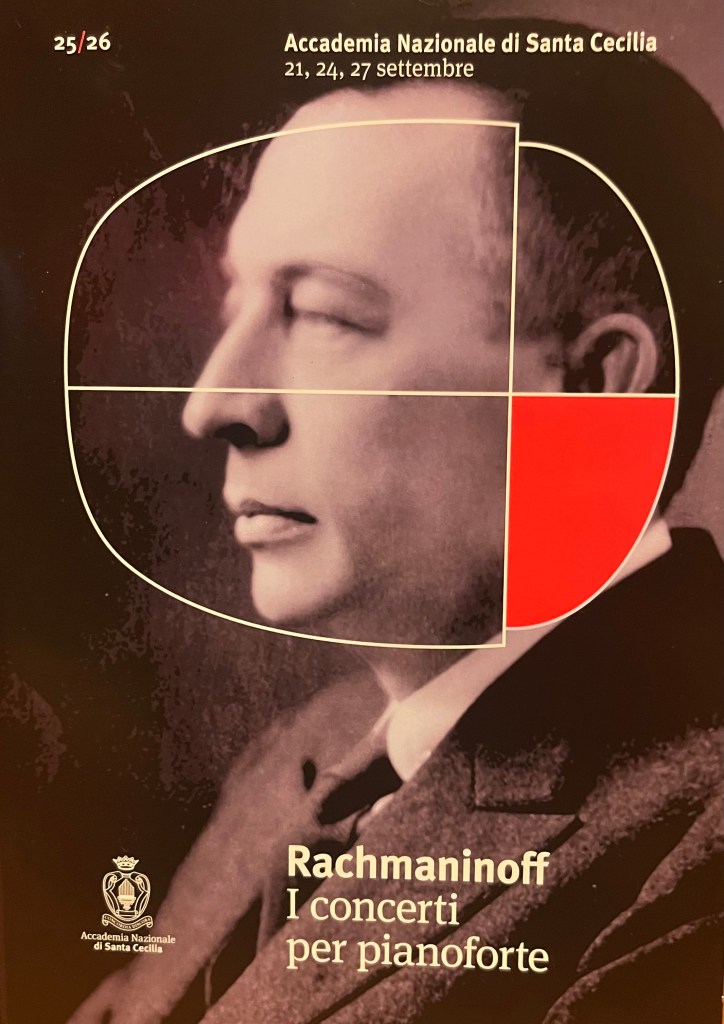
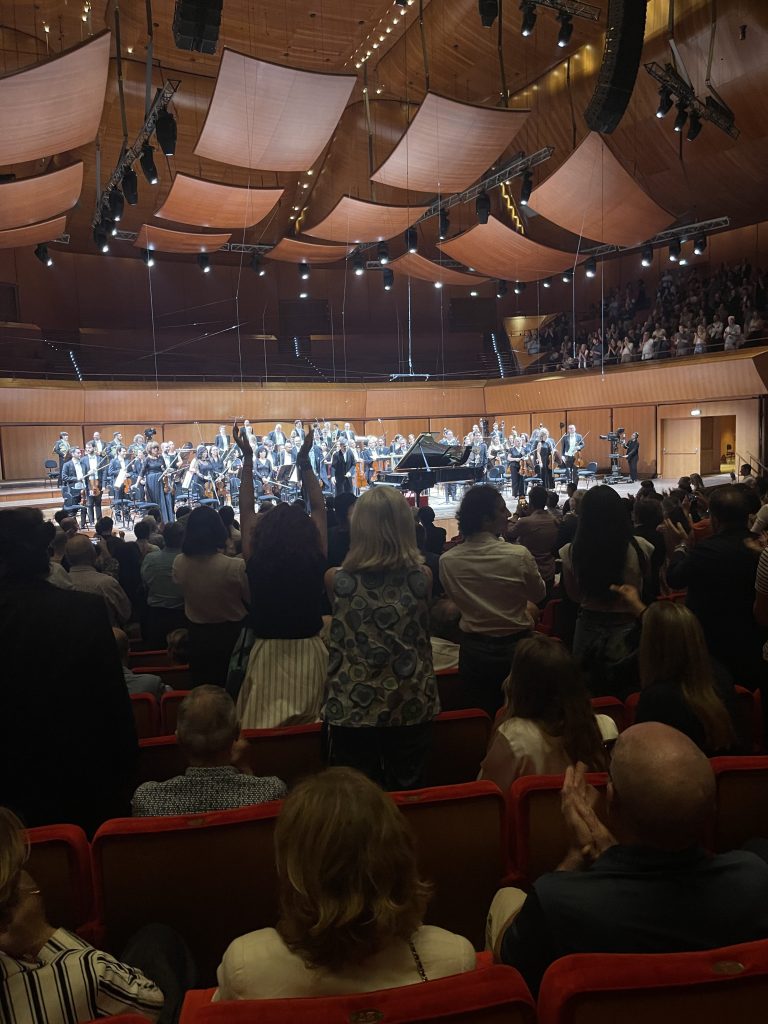
The triumph of Rachmaninov with Lugansky and Kochanovsky in Rome .
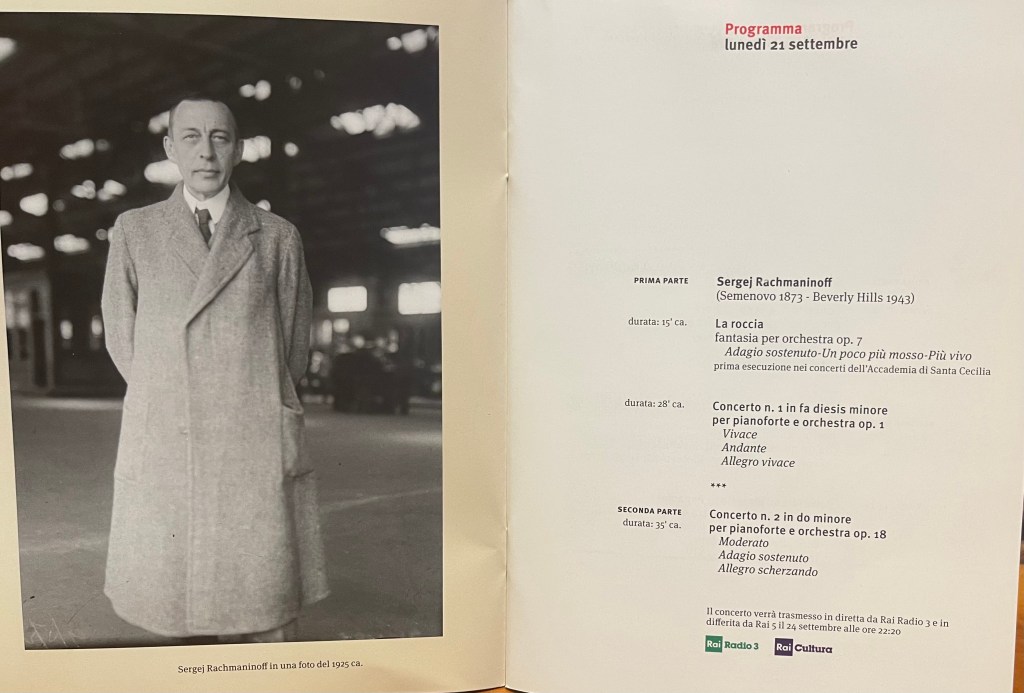
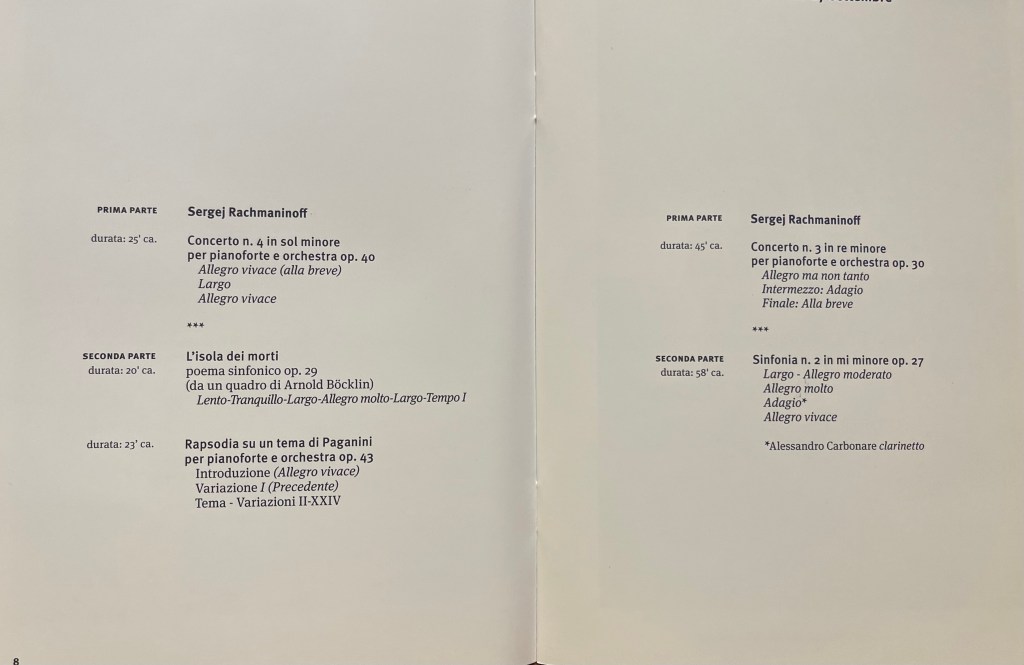
The first concert of the complete concerto cycle
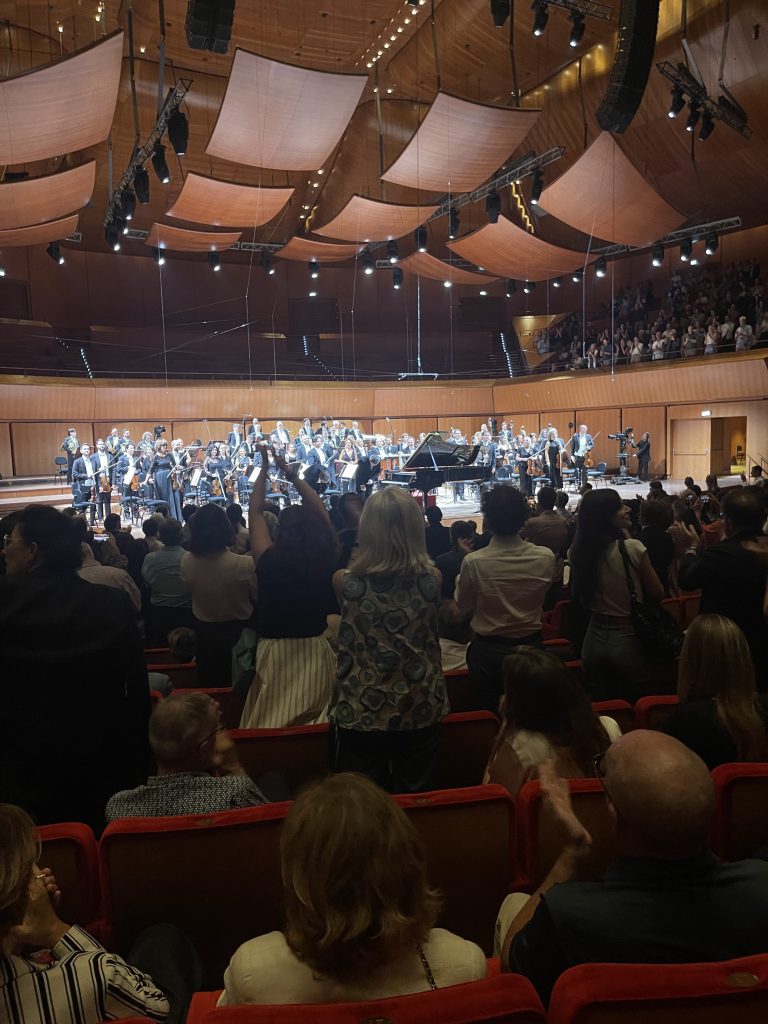
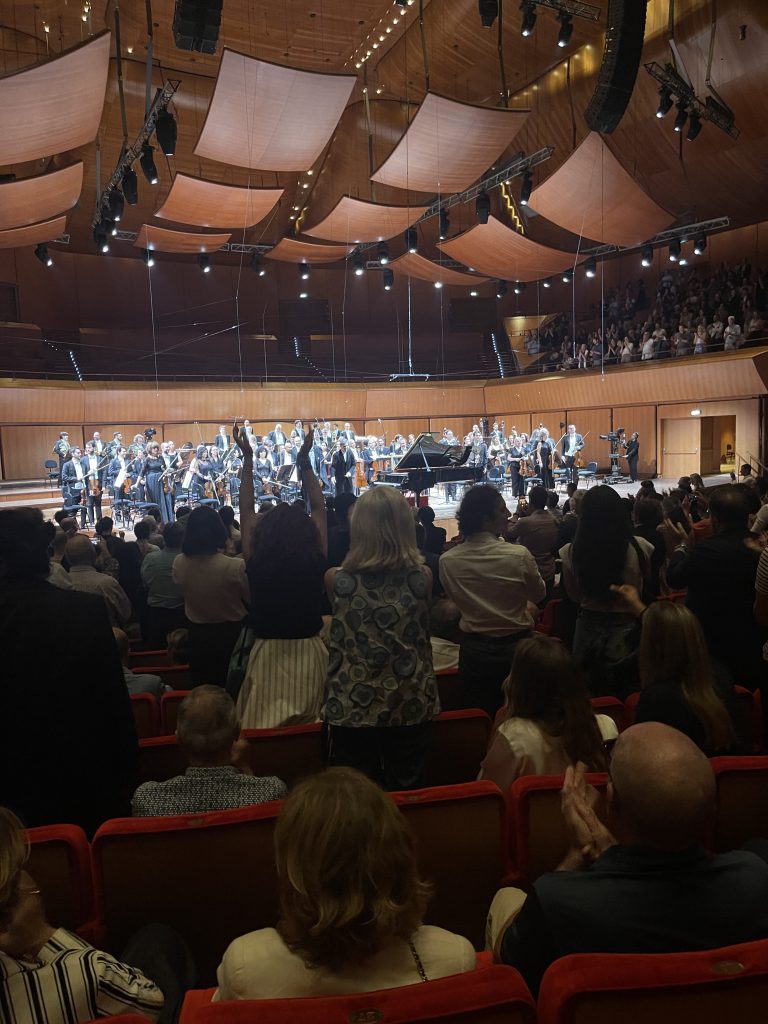
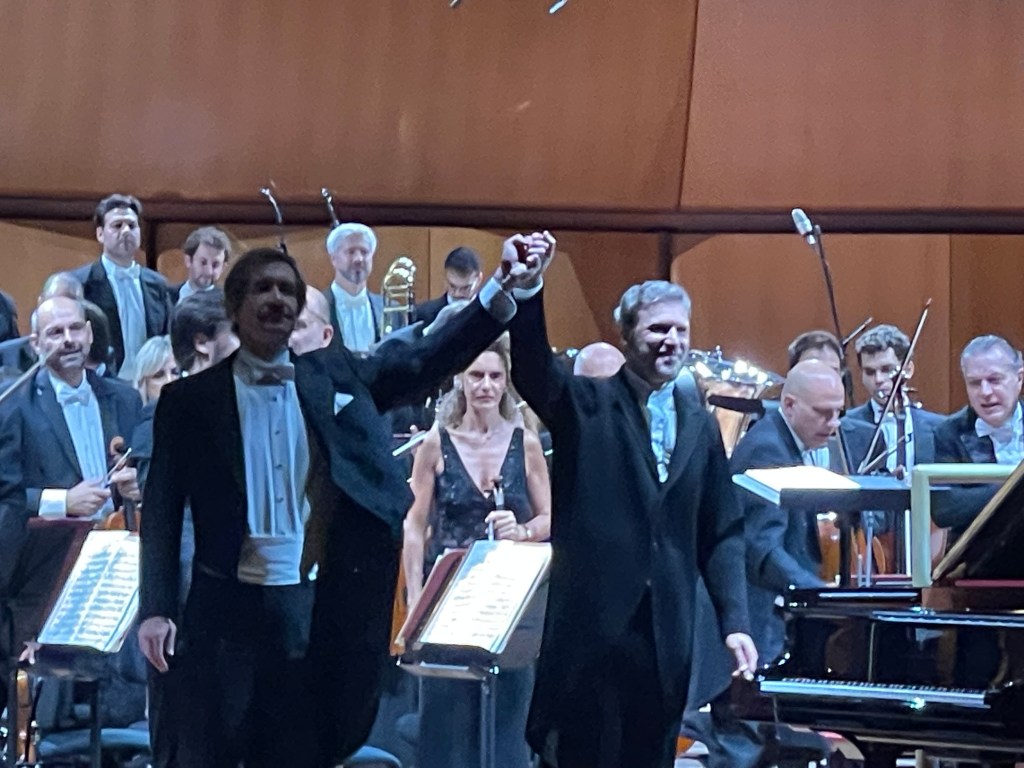
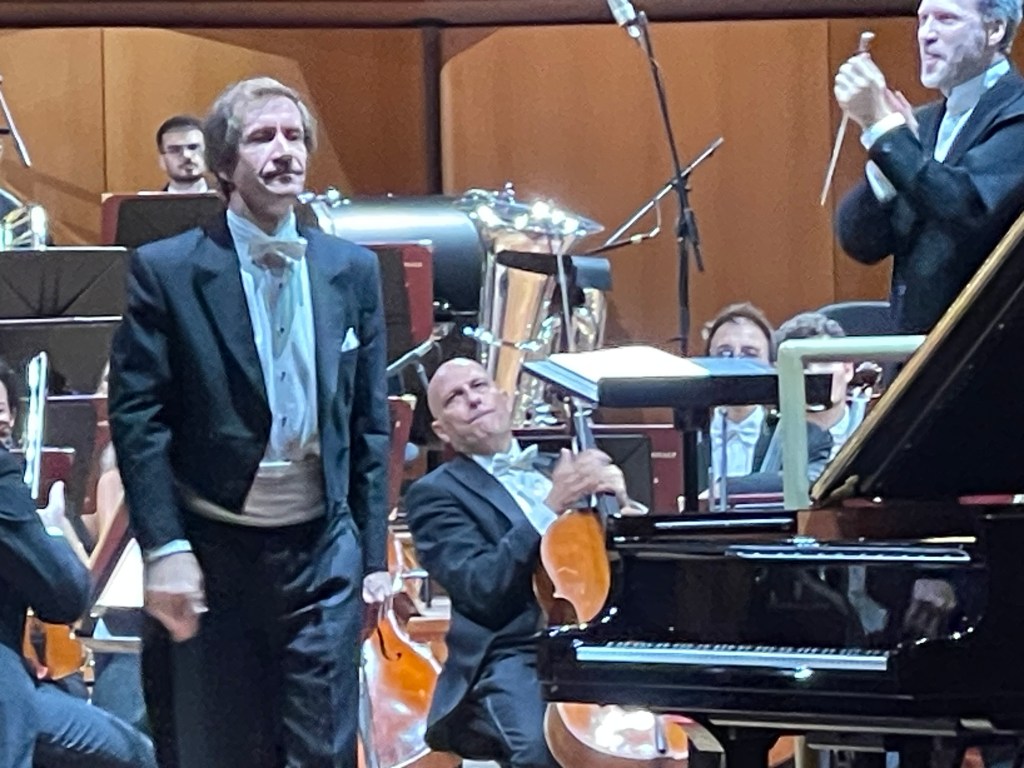
with a standing ovation from a wildly enthusiastic public.
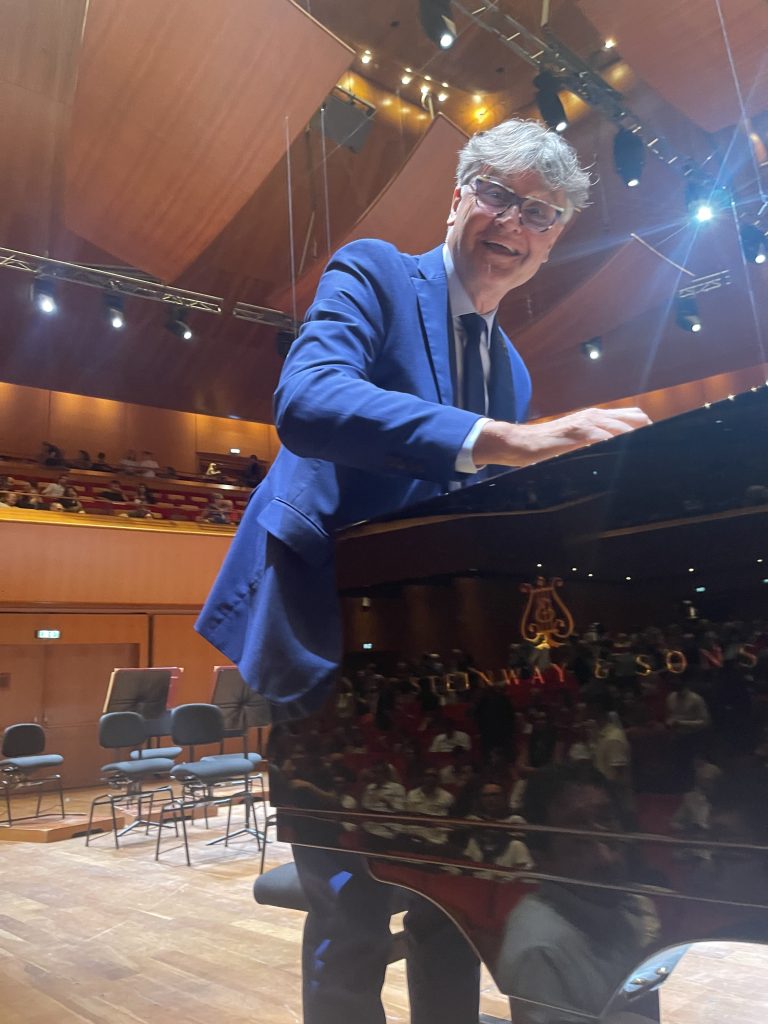
The Prelude in G sharp minor op 32 n 12 played as an encore , revealed in condensed form, the supreme mastery of Lugansky that we had heard all evening in the first two concerti.
https://youtu.be/53i5zrb2kpk?si=23jDFyBY5M08SZIw
The opening of the second , in particular , was astonishing for its seductive range of sound. From barely whispered chords, each one full of subtle colour, to the final enormous sonority with which the magnificent orchestra led by the dynamically charged Andrea Obiso could join the soloist with their sumptuous Philadelphian sounds of romantic ardour directed by an inspired Stanislav Kochanovsky.
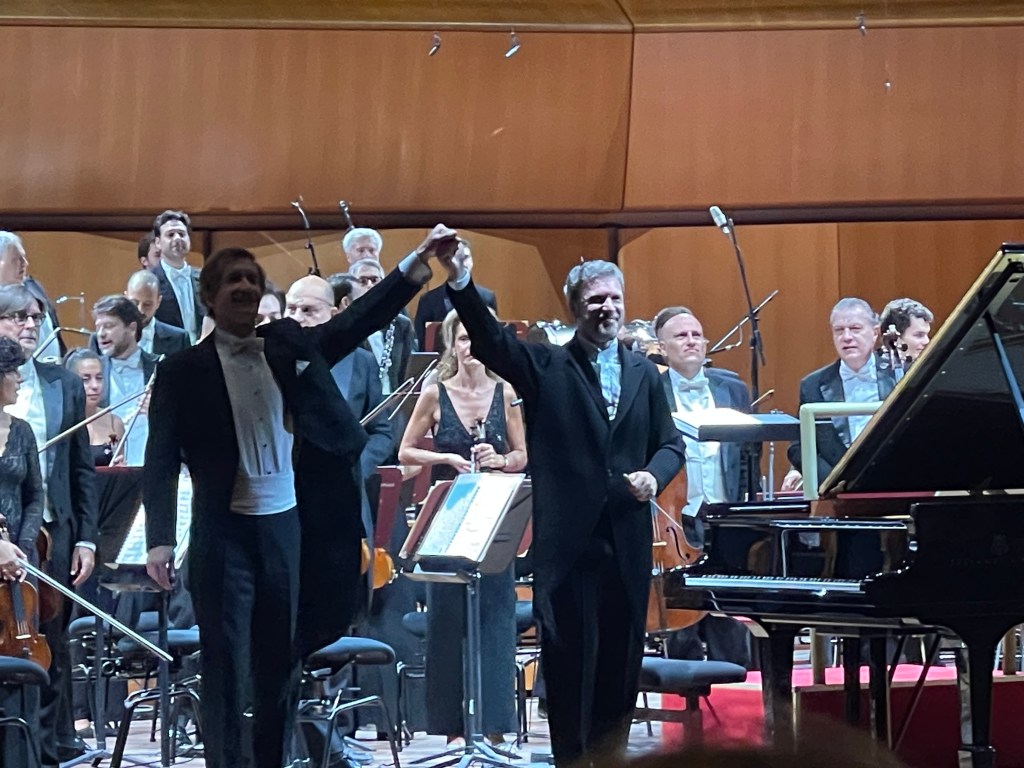
The concert had opened with two early works The Rock written in 1893 and the first Piano Concerto written in 1891.
The Rock, Op. 7 (or The Crag) written in the summer of1893 was dedicated to Nikolai Rimsky- Korsakov . It is prefaced by a poem of Mikhail Lermontov
The golden cloud slept through the night
Upon the breast of the giant-rock
He later admitted, however, to a second musical programme, drawn from a story by Anton Chekov titled “Along the Way”, in which a young girl meets an older man during a stormy, overnight stop at a roadside inn on Christmas Eve. The man shares with her the story of his life, beliefs, and past failures, as a blizzard rages on through the night.
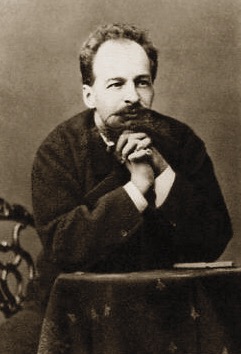
Rachmaninov had great admiration for Tchaikowsky and in a meeting between the two at the home of Rachmaninov’s former teacher Sergei Taneyev the younger composer was given the opportunity to perform his newly completed piece at the piano. The Rock had a positive effect on Tchaikovsky, who had been unhappy with an earlier performance of a four-hand piano arrangement of his sixth symphony by another young composer, Lev Conus The composer Mikhail Ippolitov – Ivanov described the evening
At the close of the evening Rachmaninov acquainted us with the newly completed symphonic poem, The Crag. […] The poem pleased all very much, especially Pyotr Ilyich [Tchaikovsky], who was enthusiastic over its colorfulness. The performance of The Crag and our discussion of it must have diverted Pyotr Ilyich, for his former good-hearted mood came back to him.
Tchaikovsky asked to be allowed to includeThe Rock in the programme of a forthcoming European concert tour. This was never realized, however, as Tchaikovsky committed suicide later that year.
It is a work for full orchestra with lavish sounds and passionate outbursts. A quite imposing brass section but that the conductor incorporated into the overall architectural line with a masterly sense of line. Moments of typical Rachmaninovian passionate intensity that saw Andrea Obiso driving his colleagues on as he sat up in his chair with an intensity that the conductor with few undemonstrative movements could lead with masterly control and subtle attention to balance.
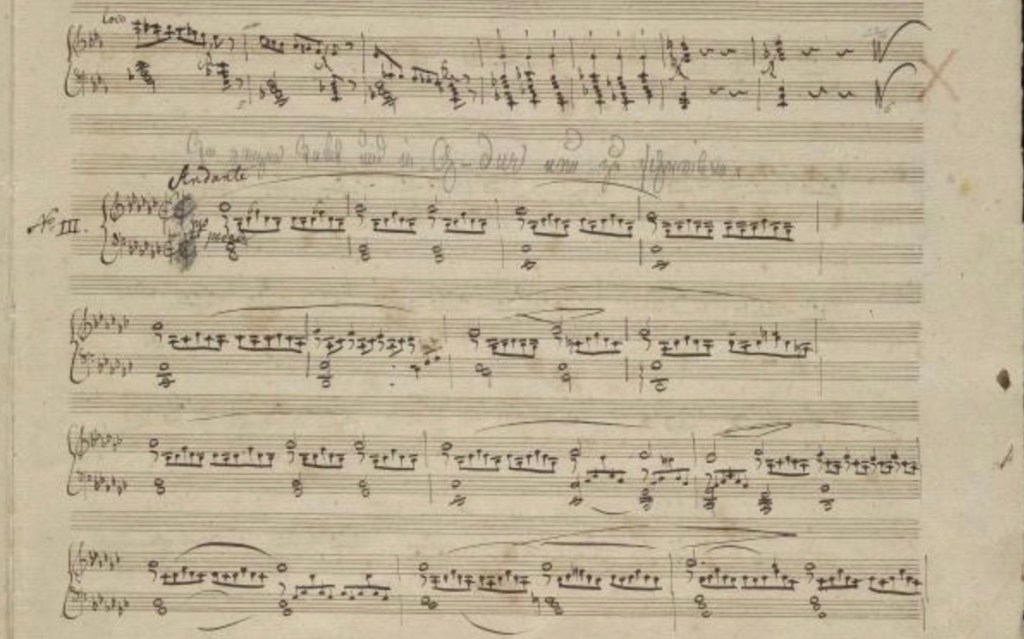
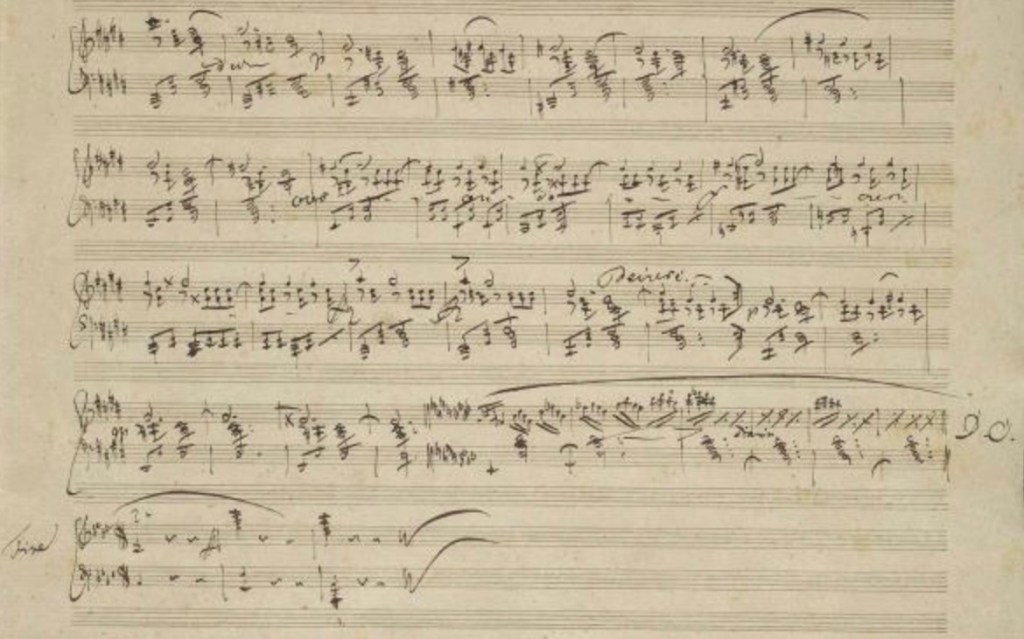
The first concerto is from 1891, when Rachmaninov was only 17–18. The first two movements were completed while he was still only 17; the third and the orchestration shortly after he had turned 18. He dedicated the work to Alexander Siloti but revised it thoroughly in 1917.He wrote Natalya Skalon on 26 March 1891, “I am now composing a piano concerto. Two movements are already written; the last movement is not written, but is composed; I shall probably finish the whole concerto by the summer, and then in the summer orchestrate it.” He finished composing and scoring the piece on 6 July and the first movement was premiered on 17 March 1892 at the Moscow Conservatory with the composer as soloist and Vasily Safonov conducting. The model for the concerto was the Grieg Piano Concerto which was a favourite work of his and one with which he had been familiar from Siloti practicing it during the spring and summer of 1890 for future concerts. Rachmaninov adapted the entire musical structure of the outer movements to the Grieg concerto, literally building his music into it. He completely revised the work in 1917 with the experience gained from his second and third concerti: “I have rewritten my First Concerto; it is really good now. All the youthful freshness is there, and yet it plays itself so much more easily. And nobody pays any attention. When I tell them in America that I will play the First Concerto, they do not protest, but I can see by their faces that they would prefer the Second or Third.”
Lugansky brought great romantic flamboyance to the opening with the octaves played with enormous sonority dissolving into one of those heartrending romantic outpourings of unashamed opulence. Lugansky has a strange way of throwing his hands into the air which could be very distracting if it was not for his superb musicianship and a technical perfection that is always made of beautiful sounds. There are never any hard edged metallic sounds but always sumptuous richness and whispered radiance. Of course the centre piece of the first movement is the cadenza that Lugansky played with excitement and exhilaration and at moments reaching the same volume that we had heard from the orchestra who when they entered brought the movement to a scintillating if rather abrupt stop. The Andante was played with subtle colouring from the orchestra inspiring the soloist as he embellished the poignant melodic line with wafts of magic sounds. The last movement just sprang from Lugansky’s fingers with extraordinary brilliance and dynamic drive. A beautiful central episode of question and answer between the soloist and the orchestra was played with quite extraordinary radiance and beauty before erupting into an ending of astonishing brilliance.
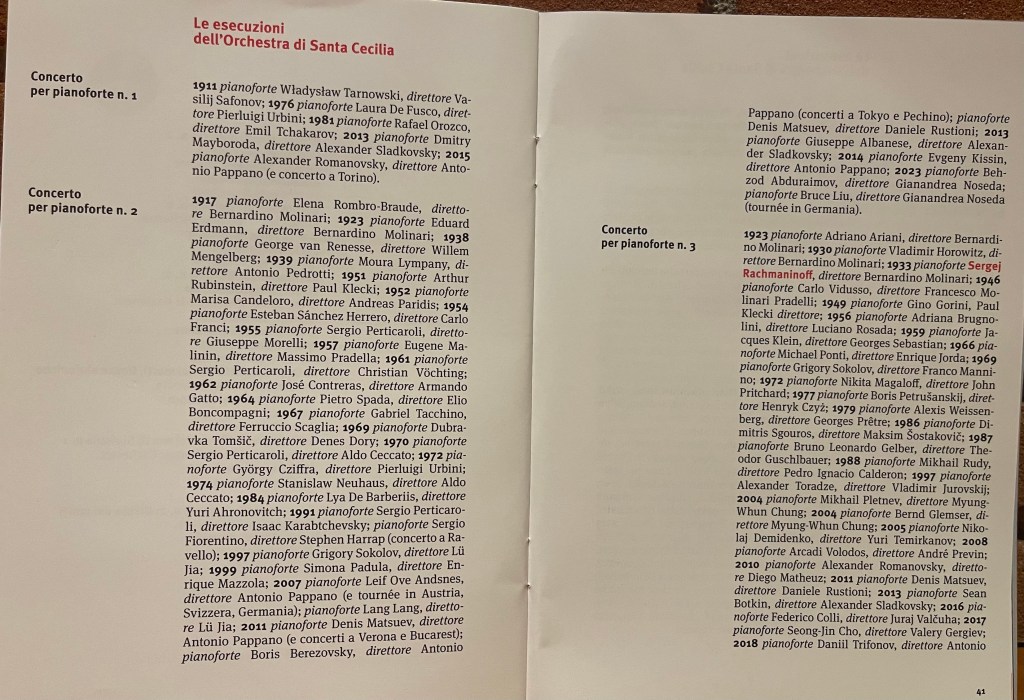
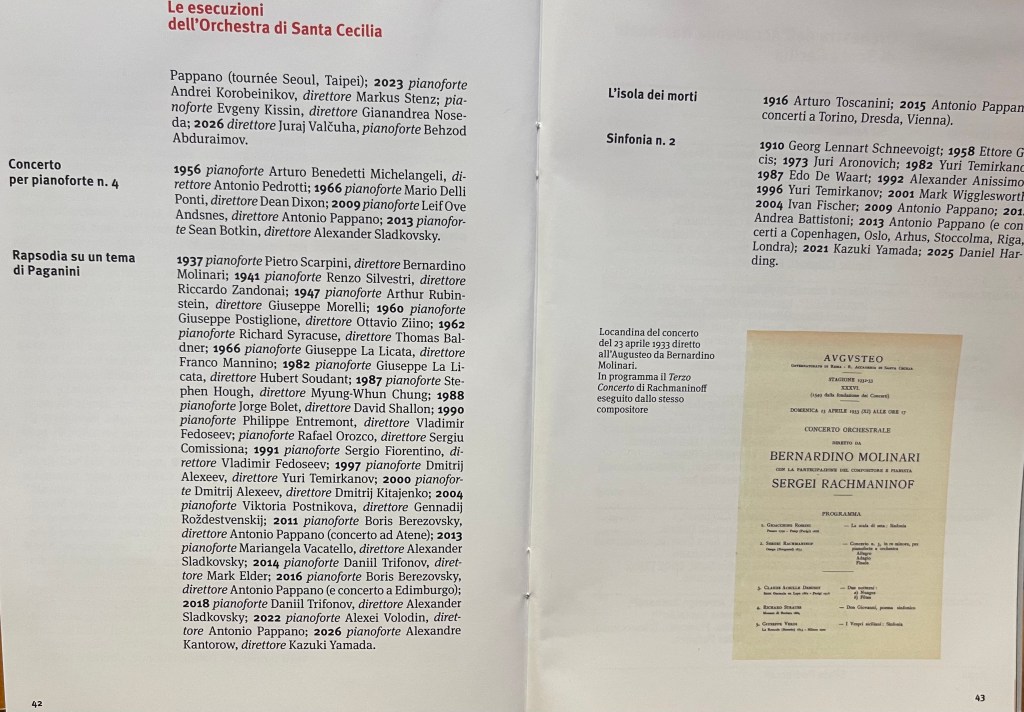
It was interesting to read in the very well prepared programme notes that the first performance had taken place in London in 1899 with Evelyn Stuart playing with Henry Wood conducting. The most famous recordings are those by the composer himself but also remarkable performances by Byron Janis and Sviatloslav Richter. Byron Janis, a pupil of Horowitz, who actually never seemed to play any but the third concerto of his great friend Rachmaninov who exclaimed that Horowitz played him well and they would often play two pianos together ! Looking at the very interesting archive of the Santa Cecilia Orchestra the First and Fourth concerti have in fact received very few performances compared to the 2nd or 3rd and Paganini Rhapsody.
The second concerto Lugansky played with sumptuous sounds and passionate intensity. I have never noticed before his way of throwing his arms into the air and hope it is just a momentary phase due to his unbelievable work load. His performance though was impeccable and played with aristocratic good taste never allowing the wondrous melodies to become sentimental, that can so often happen now, where after a visit to the doctor they flowed from his pen like Tchaikovsky’s before him.Knowing when to hold the tempo very firmly in control with the conductor and orchestra extracting the very life blood from every one of the sumptuous notes that Rachmaninov weaves with such intensity. The Andante was played as chamber music with a heartrending interplay between the soloist and the orchestral soloists before combining in passionate outbursts of wondrous beauty. Astonishing pyrotechnics from Lugansky were played with breathtaking audacity and had the audience on their feet at the end as we had all been involved in a performance that will long be remembered in a hall that has seen some very great artists but rarely reaching such enthusiasm.
Nikolaj Luganskij nasce a Moscow nel 1972 da due ricercatori scientifici. Quando ha cinque anni arrivano, inaspettati, i primi segni di un talento musicale innato. Dice lui stesso «ero semplicemente predestinato ad essere un pianista», riferendosi a un episodio risalente a prima che imparasse anche solo a leggere la musica, quando andò dal vicino, si sedette al pianoforte e suonò una sonata di Beethoven a memoria, imparata solo ascoltandola. Dopodiché inizierà a prendere lezioni dal vicino stesso, Sergej Ipatov, un pianista e compositore.
A sette anni entrerà nella Scuola centrale di musica di Moscow, studiando con Tat’jana Kestner, un’ex allieva di Aleksandr Goldenvejzer. Nel 1985 la Kestner muore, e Luganskij diventa allievo di una sua amica stretta, Tatiana Nikolaeva, con cui studiò per nove anni, durante i quali ascoltarono insieme molta musica. Nel 1988 Nikolaj vinse il primo premio all’All-Union Competition di Tibilisi e la medaglia d’argento all’ottava edizione dell’International Bach Competition di Lipsia.
Nel 1990 vince il secondo premio nella Rachmaninov competition di Mosca. Nel 1992 all’Accademia Estiva Internazionale “Mozarteum” di Salisburgo vince il premio speciale “miglior pianista”. Nell’estate del 1993 subisce, in un incidente, lesioni a un piede e alla schiena, e solo dopo diversi mesi poté continuare la propria attività. Nel novembre dello stesso 1993, Tat’jana Nikolaeva muore durante un recital a San Francisco. Nella sua ultima intervista aveva dichiarato che Luganskij era destinato a essere il prossimo grande pianista russo. È in questo periodo che Luganskij deve decidere se partecipare o no al decimo Concorso Internationale Tchaikowsky, che si sarebbe tenuto nell’estate del 1994, decidendo alla fine di partecipare. Continuò a studiare con Sergei Dorenski, che era stato per qualche tempo l’assistente della Nikolaeva. Nel 1994 vinse il concorso, essendosi però aggiudicato soltanto il secondo premio, mentre il primo non fu assegnato.