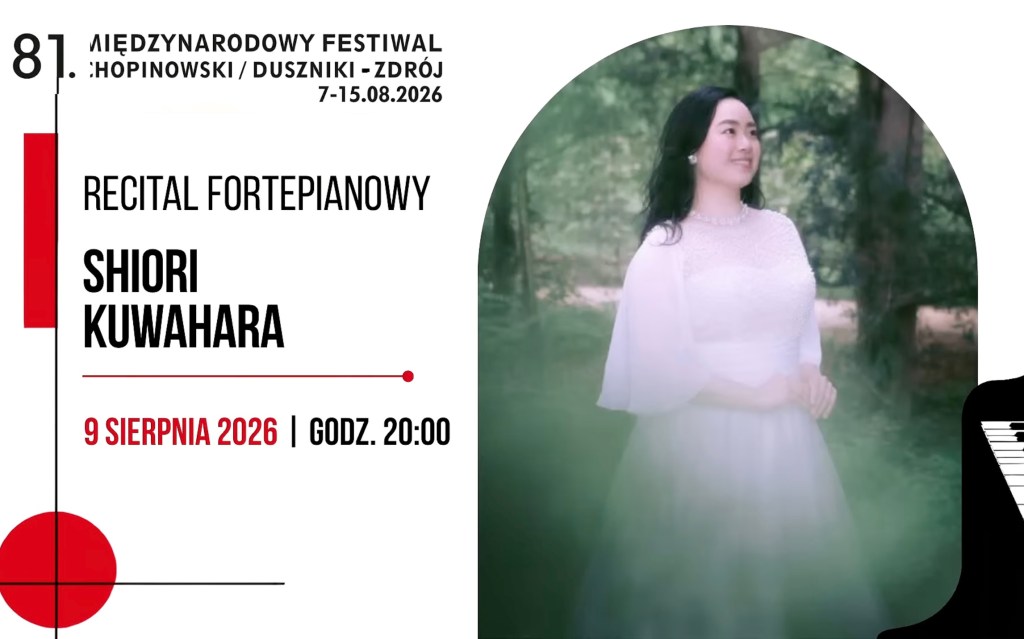
Wolfgang Amadeus Mozart (1756–1791)
Rondo D-dur KV 485 (1786)
Johann Sebastian Bach (1685–1750) / Ferruccio Busoni (1866–1924)
Chaconne z II Partity d-moll BWV 1004 (1720)
Franz Schubert (1797–1828)
Fantazja C-dur D 760 „Wandererfantaisie” (1822)
Allegro con fuoco ma non troppo
Adagio
Presto
Allegro
Fryderyk Chopin (1810–1849)
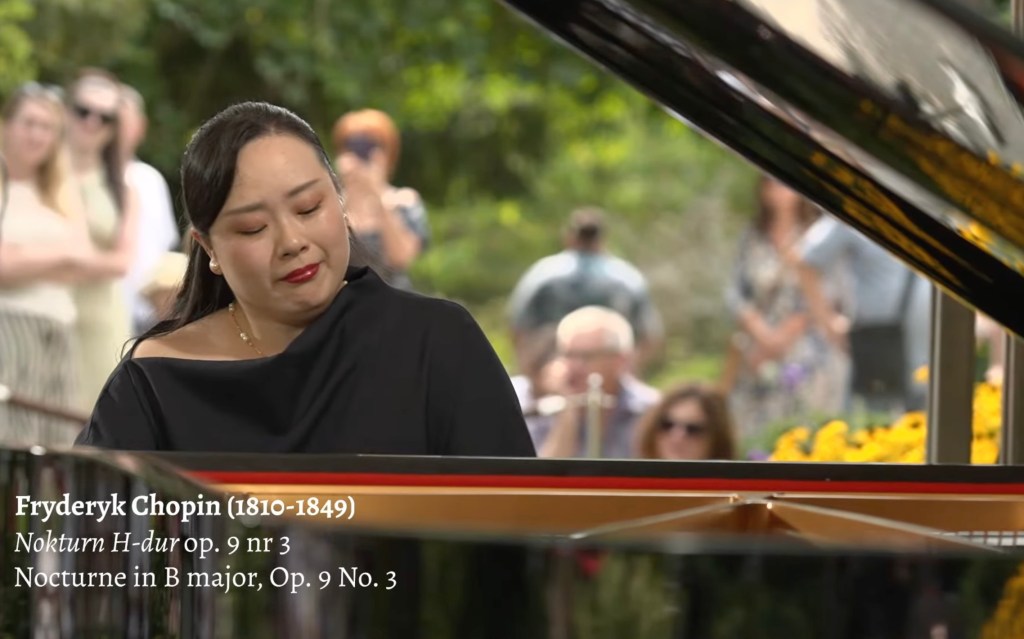
Nokturn H-dur op. 9 nr 3 (1830–1831)
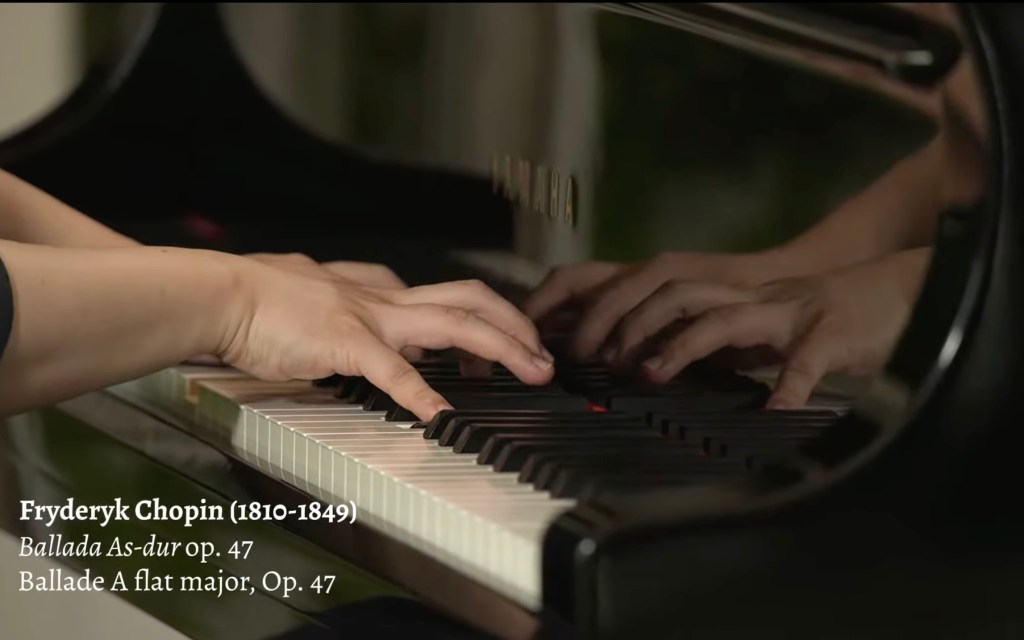
Ballada As-dur op. 47 (1841)
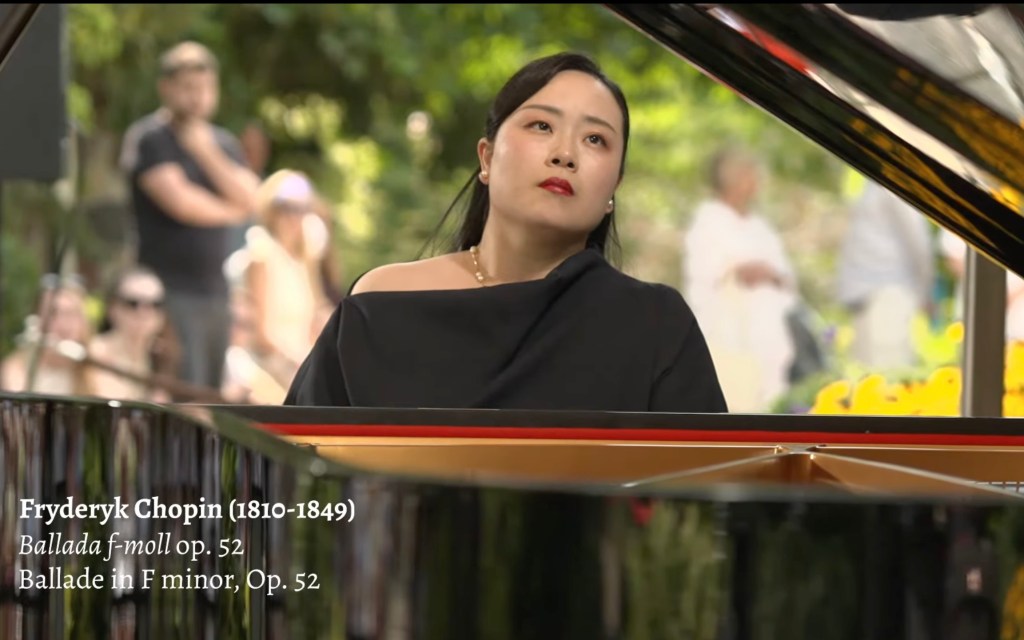
Ballada f-moll op. 52 (1842–1843)
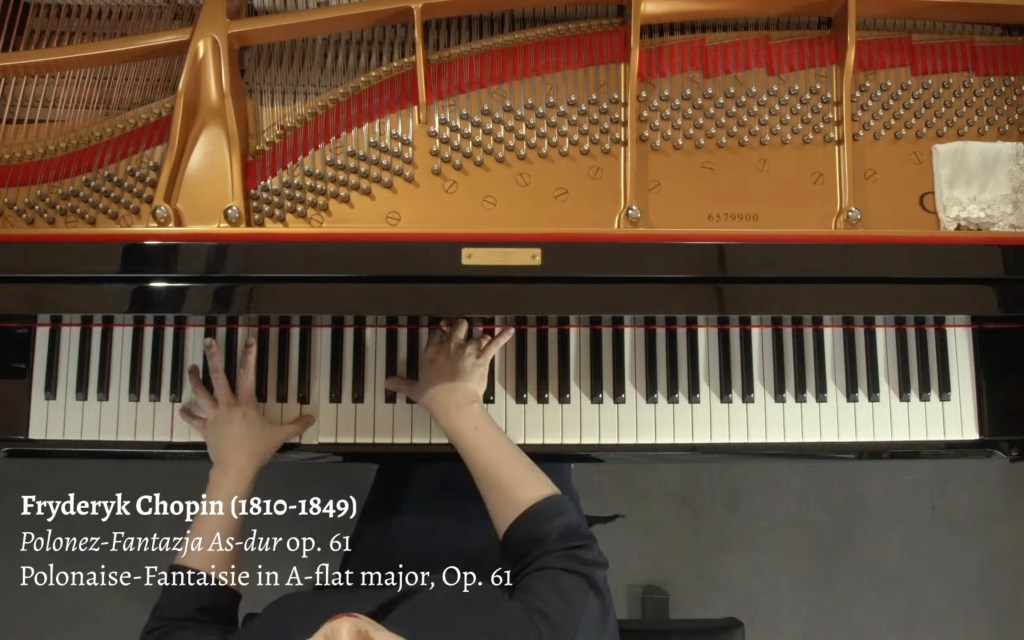
Polonez-Fantazja As-dur op. 61 (1845–1846)
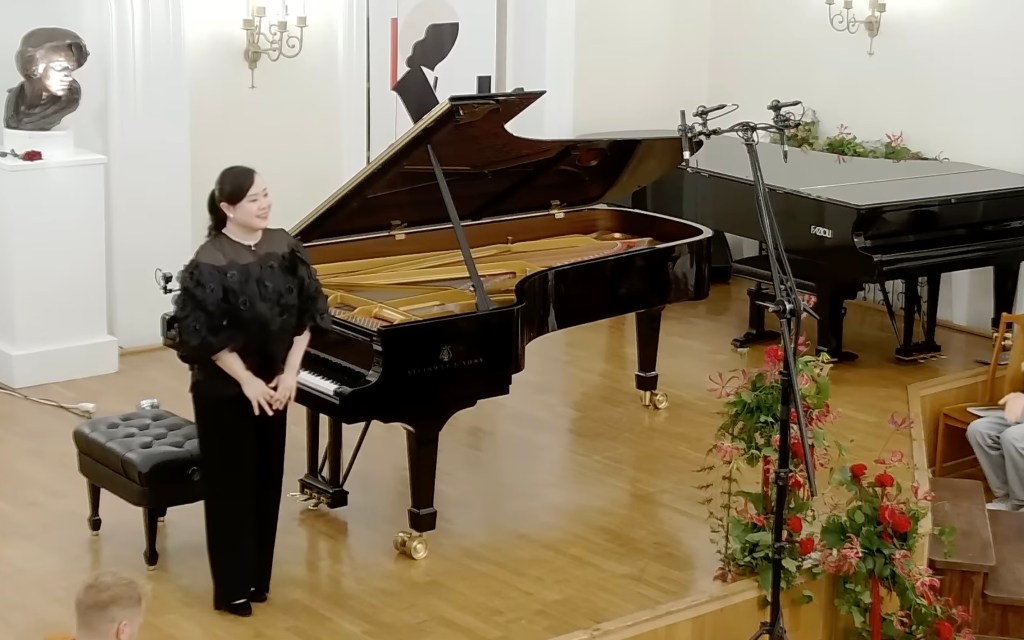
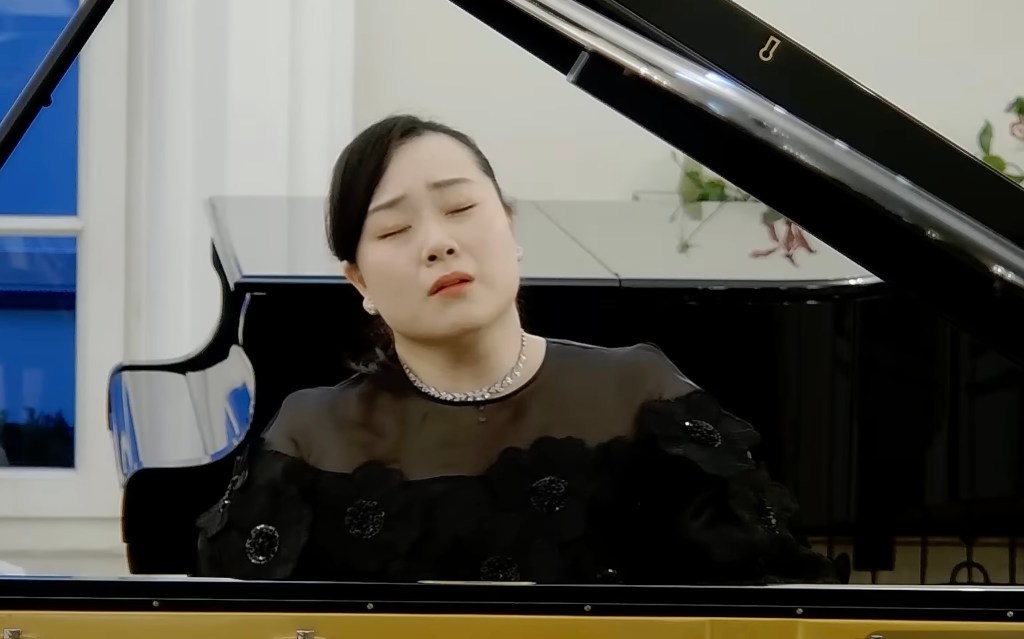
The regal presence of Shiori Kuwahara reminded me of Gina Bachauer or Oxana Yablonskaya. Here was an artist who commanded attention with playing of authority and beauty. Every note had its place in a musical conversation that was of timeless wonder.A beauty of sound that was never percussive even when she was playing with passionate intensity contrasting with moments of ravishing beauty. There were never any hurried moments but phrases that were beautifully shaped even in the most strenuous of passages . It was the playing of a great artist for whom the music speaks with refined good taste together with fearless abandon allowing the music to unfold with simplicity and immediacy.
As Rubinstein declared you must play music that speaks to you directly, you must only play music that you love.
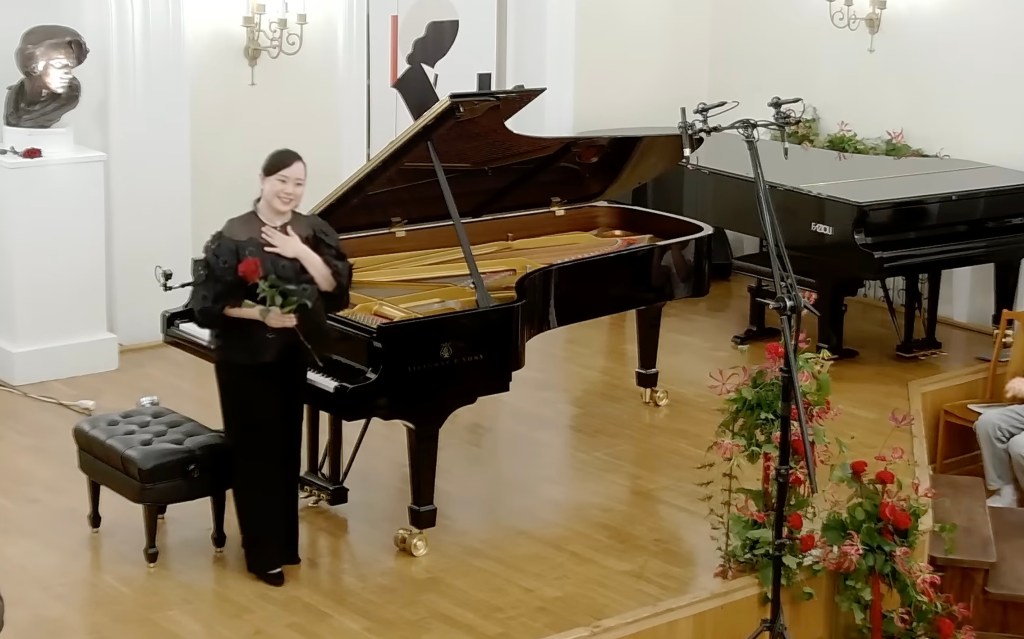
There was no doubt today that all Shiori played today was loved, as she was able to transmit this love to a public who dedicated her a spontaneous standing ovation at the end of a long and complex programme. It was for an artist who was able to transmit with extraordinary artistry the aristocratic nobility and refined good taste of what we are more used of hearing from great artists in their Indian summer. We live in an age where quantity takes precedence over quality and it is rare indeed to find an artist barely in her 30’s who can play with seeming simplicity and timeless wonder.
Mozart may be too difficult for adults and too easy for children but when Shiori opened her recital with the D major Rondò it was obvious that here was an artist who could make every note speak with crystalline clarity as she told the tale that Mozart had hidden in so few notes. An operatic feel as she created characters that entered and exited sometimes with refreshing simplicity but also with clouded skies, always with a sense of style and purity as she brought this tone poem vividly to life with an infectious ‘joie de vivre ‘ allowing the ending of whispered beauty to disappear into the depths of the piano.
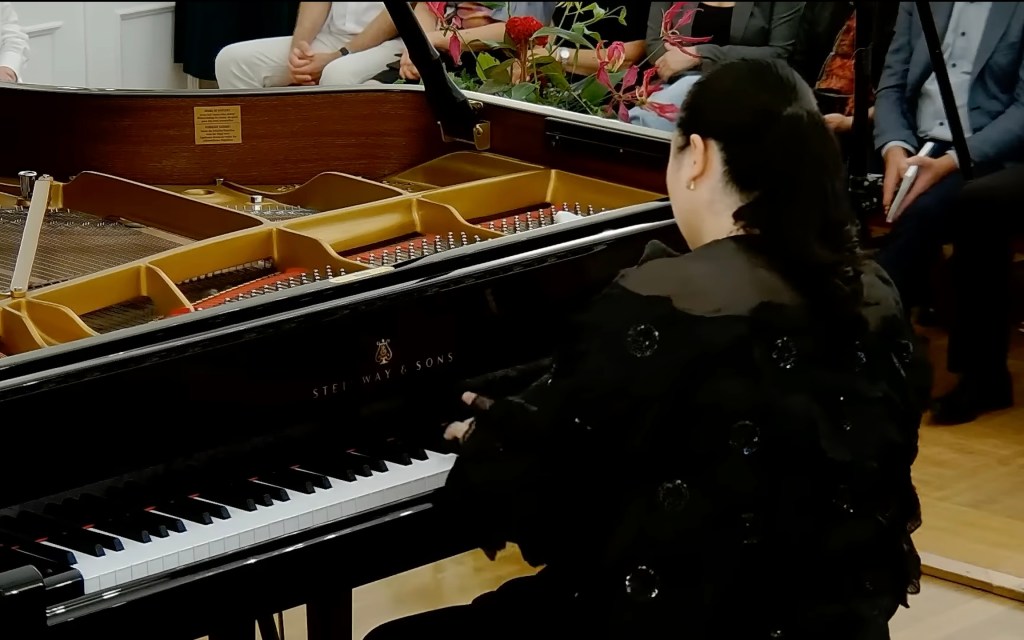
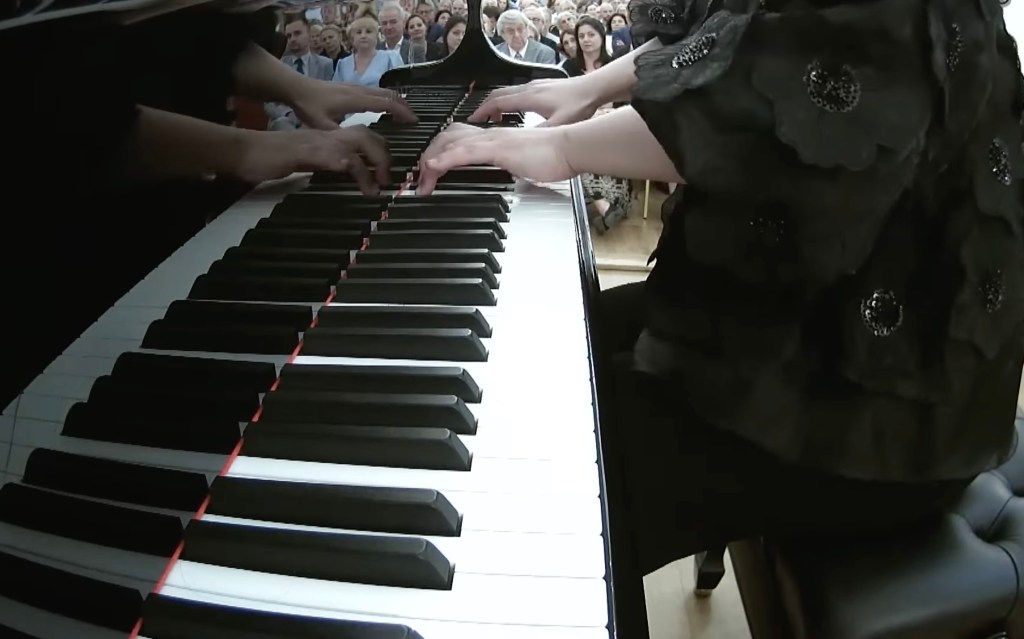
Busoni’s mighty recreation of Bach’s Chaconne immediate took to the stage with an imposing opening of authority and nobility. Her rhythmic precision was quite exhilarating with the left hand octaves like a wind blowing from afar as her phrasing of the Chaconne theme was shaped with refined finesse. There was an aristocratic beauty to the ‘molto espressivo e legato ‘ as the work took wing with the left hand octaves gradually becoming more and more brilliant. She brought grandeur to the ‘un poco a piacere’ cadenza that dissolved into a quasi improvised meandering ‘dolce espressivo’ of great beauty before the ‘con fuoco animato’. Playing with an extraordinary sense of line as wondrous sounds spun a magical web that mirrors the single string of Bach’s original violin masterpiece for a solo instrument. Noble sounds of deep resounding bass notes were played with dynamic drive and great authority. Trombones of sumptuous beauty were of a refined respectful serenity leading to the ‘Allegro moderato ma deciso e misurato’ that she played with remarkable control. A ‘più sostenuto’ of timeless wonder in layers of sound led to the final triumphant declamation . But even here she stopped in her tracks before placing the sforzando bass D which opened the flood gate to the final noble appearance of the Chaconne theme in all it’s magnificence. This was a performance of absolute fidelity to the score demonstrating a control and mastery that could show us the great architectural shape of one of the greatest and longest works ever written for solo violin.
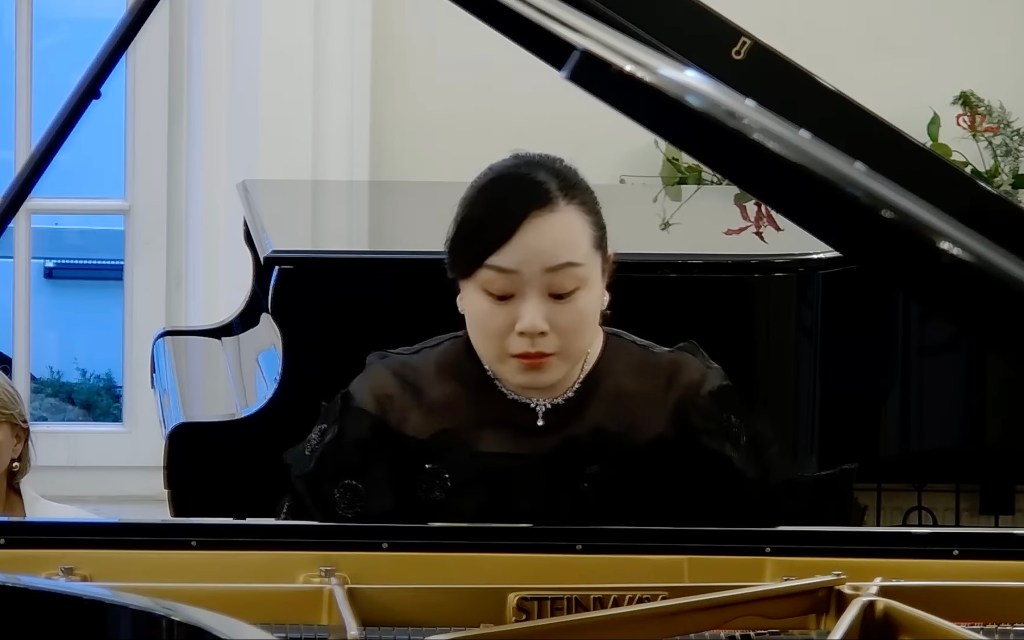
The Schubert ‘ Wanderer’ Fantasy is one of the key works in the Romantic piano repertoire pointing to a new form where the themes of the traditional Sonata form take on a character in themselves, and like actors in a play are completely free to change shape and form. It was this work that was so admired by Liszt, always looking to the future, and it was the birth of the ‘leit motif’ that was to become the anchor on which Liszt’s son in law Richard Wagner was to inspire his music dramas. Shiori brought a remarkable sense of character to the opening pages of the Fantasy where the rests were always of such importance. A driving rhythmic impulse that did not deny ravishing beauty of the lyrical episodes that she played with simplicity and radiance. She brought a refined beauty to the Adagio that she played with full rich poignant sounds and led to the radiant beauty of the variations where the melodic line was always revealed with glowing beauty that gradually built in energy and passionate intensity. She brought exhilaration and excitement to the ‘Scherzo’ that did not deny its dance origins and contrasted with the calm of the Trio that she played with pastoral ease. The return of the ‘Scherzo was marked by even more brilliance as cascades of notes were played with limpet mastery and brilliance. The Fugato entered quite sedately but gradually grew in intensity as the tension rose with masterly dynamic drive and fearless passionate intensity.
A remarkable performance in which this often abused work was restored to the place it deserves with a performance of nobility, beauty and mastery but above all a scrupulous respect for the composers intentions.
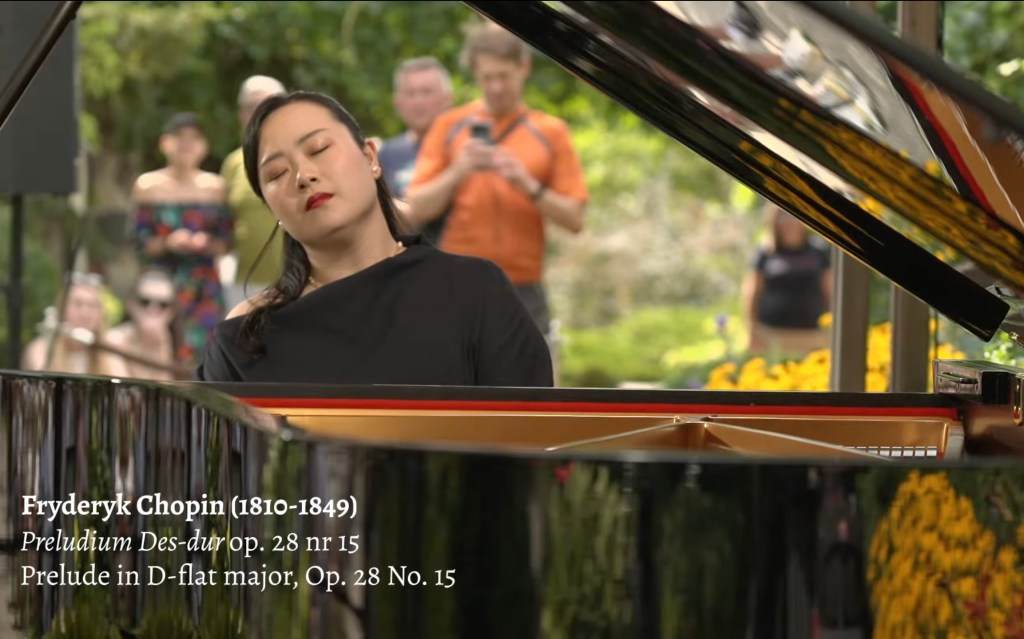
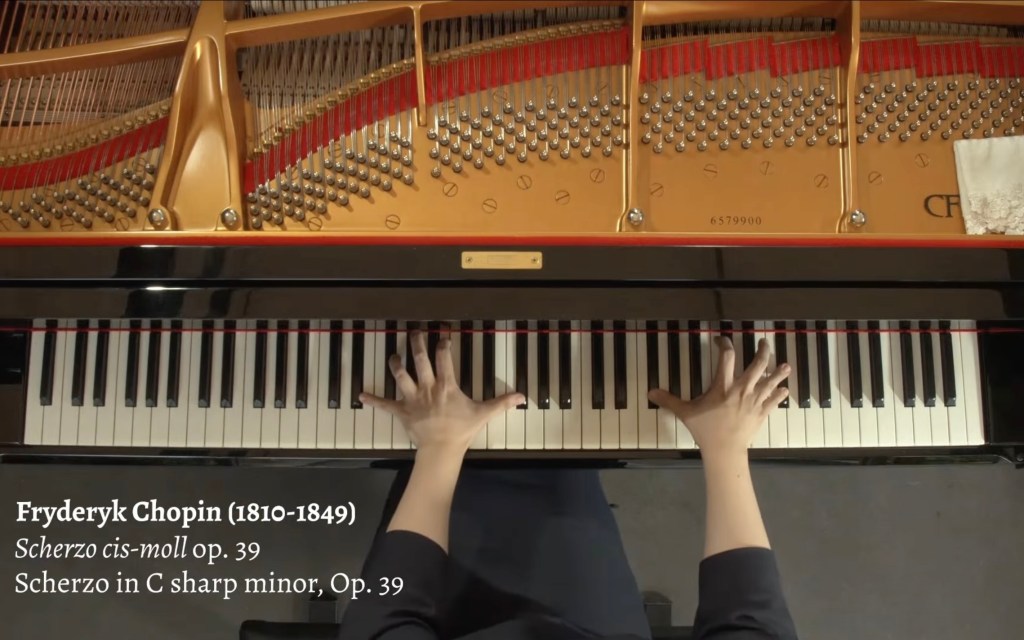
The second half of the programme was dedicated to Chopin and was to be repeated a few days later in the garden of Chopin’s birthplace in Želazowa Wola with the addition of the Third Scherzo op 39.
In Duszniki she began the second half with the work she had played as an encore a few days later. The Nocturne op 9 n. 3 was in many ways freer at the beginning of the Chopin group than at the end. There was a feeling of breathless beauty of subtle phrasing of refined good taste . Like a singer Shiori spoke in long breaths that were possessed of a chameleonic sense of colour. Even the tempestuous central episode was played with a passionate intensity that was tempered in the outer episodes by the same sentiments but of intimate whispered nostalgia.
She brought a timeless pastoral beauty to the Third Ballade op 47 with a sense of phrasing where everything was allowed to flow with such simplicity and immediacy. Magical wafts of sound as the Ballade unfolded with nobility and ravishing beauty. There was a timelessness to her playing where even the embellishments were never hurried, as every note like in Mozart had a meaning and was part of a wondrous tale that was unfolding in the hands of a fellow poet of the keyboard. She brought a remarkable build up of burning subdued intensity and an undercurrent of energy leading to the final glorious climax that exploded with grandeur and nobility. A scale with one noble sweep was greeted by the final chords placed to perfection with a musical arch of perfect proportions.
The Fourth Ballade op 52 is one of Chopin’s greatest and most original works. Shiori opened it with radiance and fleeting beauty as the theme was allowed to unfold with whispered beauty. Variations with a continuous forward movement where each one was given a character of brilliance and poignant beauty with an architectural shape that swept us to the final passionate outpouring on a wave of luxuriant sounds. A glorious outpouring played with extraordinary control allied to a passionate intensity and mastery with the final chords played with absolute precision and meaningful shape. Answered by five calming chords that Shiori played with extraordinary composure before the explosion of the coda that was a tour de force of mastery and passionate commitment.
The final work in this Chopin group in Duszniki was the Polonaise Fantaisie op 61. One of Chopin’s last and most original works where he places the Polonaise within a fantasy world of wondrous sound of quasi improvised beauty, An opening where the imposing chords are allowed to vibrate across the entire keyboard and which Shiori played with one natural arm movement. An ominous bass note adds a poignant comment to this etherial opening as the Polonaise rhythm is heard opening up a passionate melodic outpouring of nostalgia and space. A beautifully shaped central episode was where Chopin reintroduces the opening but this time leading to a final passionate drive to the sumptuous conclusion. A noble outpouring that dies away to a whisper as Shiori placed the final single A flat with extraordinary poise and significance.
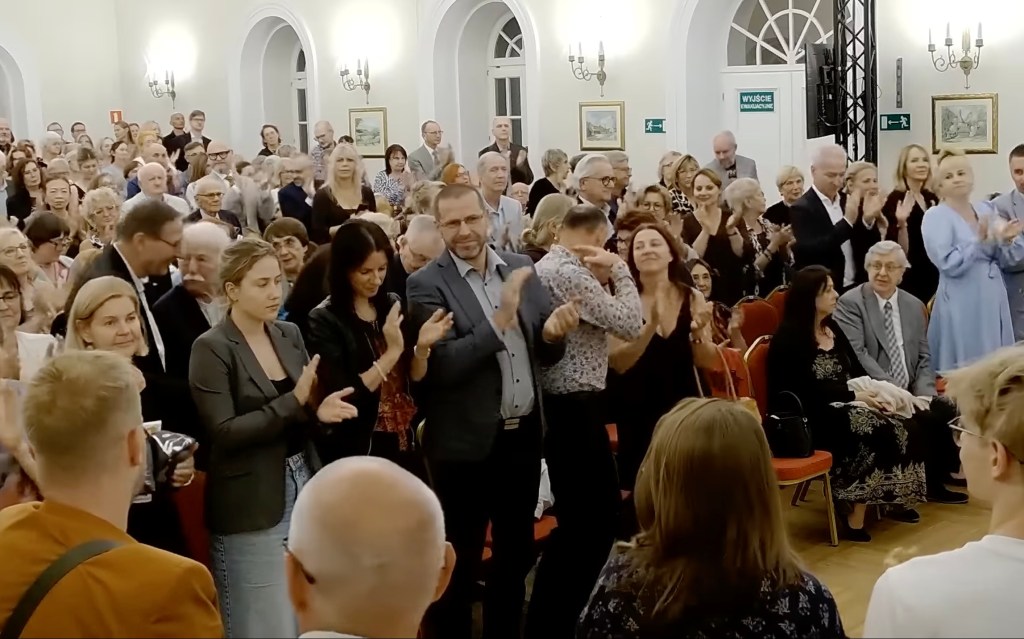
A standing ovation for the entire audience that left Maestro Paleczny strangely seated. Having celebrated recently a very important birthday and having presided over these concerts for many years he may prefer just to sit back and enjoy with his public such a sumptuous feast.
Shiori rose to the occasion with a masterly performance of the Polonaise Héroique op 53 just a Rubinstein would have done at the end of his unforgettable performances.