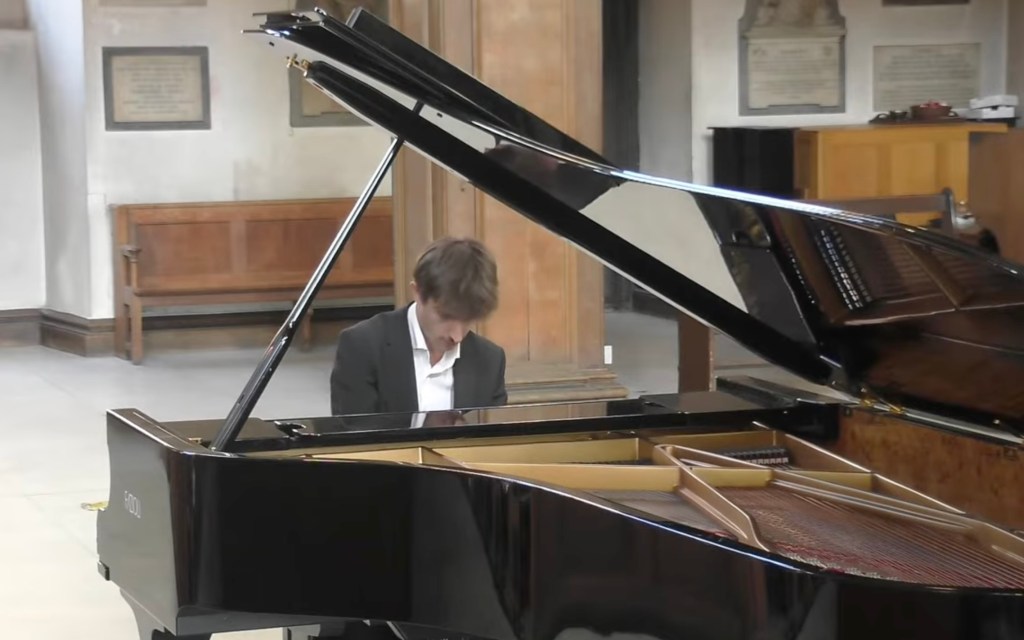
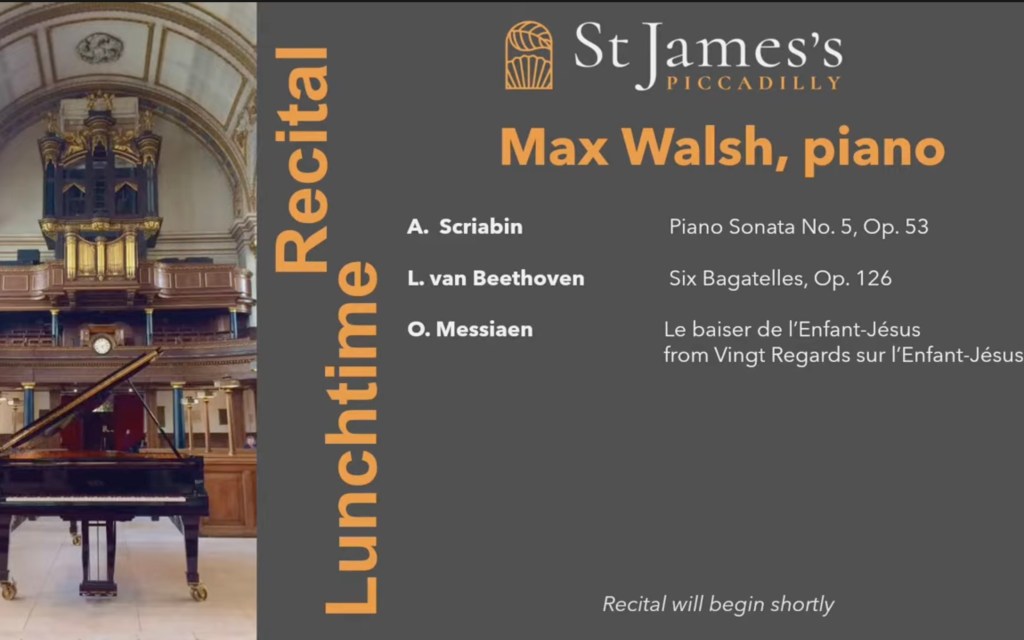
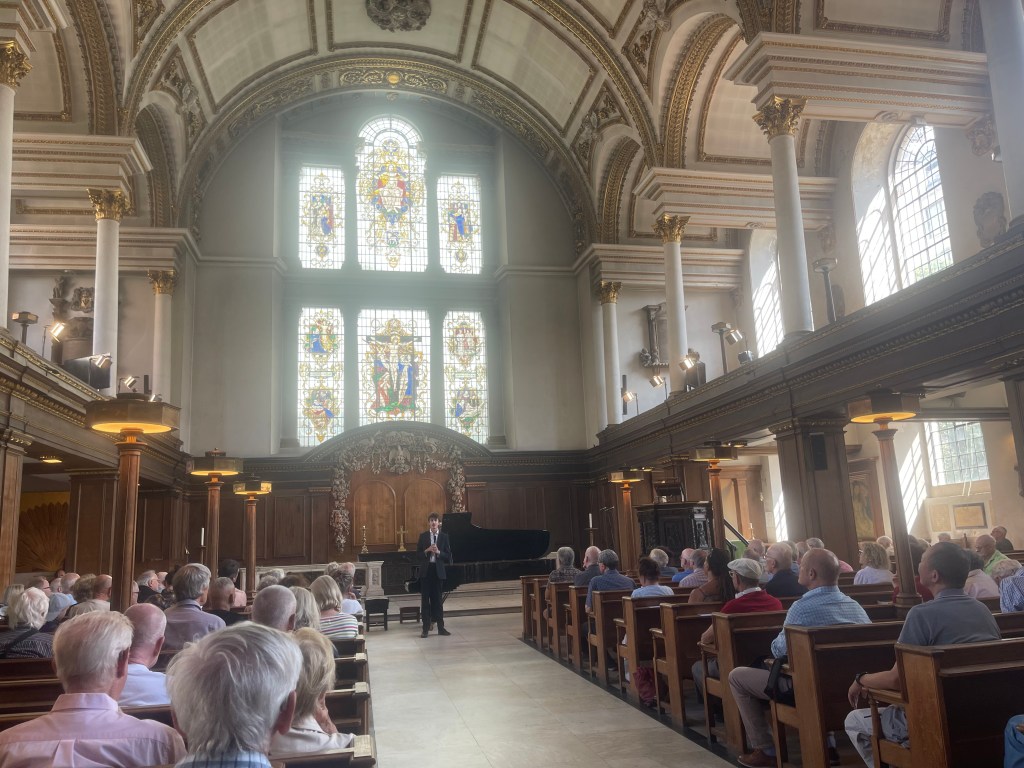
Just three works on Max Walsh’s programme, all masterpieces written in different periods but that were linked by the common denominator of this young pianist’s authority and fearless mastery of the keyboard. He has just finished at the Junior Birmingham Conservatoire and is about to embark on full time studies with Norma Fisher at the Royal College of Music. A passion for music that I was aware of when I first heard him last year at the Beethoven Society Masterclass with Boris Giltberg .His uncontaminated wish to discover what was behind the notes of Beethoven’s ‘Les Adieux’ Sonata was refreshing as it was illuminating . Now almost a year later he is giving recitals of authority and remarkable mastery and intelligence and his spoken introductions showed his passionate conviction about what he was to play and what it meant to him. Scriabin’s 5th Sonata was the first work on the programme and as he told me later the reverberant acoustic of St James’s made life a little difficult for him as the quick fire changes of colour and character in the music needed time to be absorbed into the atmosphere. We the audience were not aware of the difficulty he was facing as he managed to weave an architectural line in a work where there are so many chameleonic changes of colour and atmospheres. A crystalline clarity and languid beauty when he ‘caressed’ the keys before indulging in what Scriabin describes as ‘Allegro fantastico’ and ‘Presto tumultuoso esaltato’ together with ‘ebbrezza fantastic! ‘A dynamic drive of knotty meanderings of decadence and perfumed elegance all played with an extraordinary sense of balance and imperious architectural sense of direction. The opening and the ending like a wind passing through the hall played with fearless bravado. A remarkable performance of intelligence, passionate conviction and ravishing beauty.

The Bagatelles op 126 were the last piano pieces that Beethoven wrote, and they are six miniature tone poems where so few notes could mean so much. Beethoven had come to terms with a turbulent life and irascible temperament as he peered into his heart with searing conviction. The first bagatelle carries the indication ‘compiacevole’ ( pleasing) and is a mellifluous outpouring of simple beauty with a glowing silf like cadenza that Max played with knowing delicacy. Leading to a passage where Beethoven reaches out on high with whispered hope and which he even asks to be repeated where Max played with poetic understanding. There is a driving energy to the second ‘Allegro’ where Max’s scrupulous attention to Beethoven’s very precise indications avoided the usual accents from lesser hands and drove the music forward with an inner energy that had a vibrant beauty and urgency to it.The third ‘Cantabile e grazioso’ is a chorale of poignant beauty where Max’s full rich tone was of religious fervour. Long arpeggiated chords created the atmosphere for glowing notes of intensity and simplicity dying away to a coda played on wafts of vibrating sounds in one long pedal that Beethoven specifically indicates ,creating an unearthly ending of timeless beauty. The fourth is a dynamic drive with burning energy leading to a long drawn out pedal note on which Beethoven floats wafts of melody that alternated between the present and the past. The fifth was a simple melody of flowing beauty and pastoral relief. The sixth beginning with an irascible outburst that gives way to fragments floated on a long pedal note alternating with a chromatic dance like figure before bursting into the same irascible outpouring as the beginning. These were the last musings of Beethoven that were of serenity and innocent poetic aspirations that Max understood so well playing with aristocratic authority and sensitivity.

The last work on the programme was by Messiaen with the 15th of his ‘Vingt Regards Sur l’Enfant- Jésus’. Surely one of the most beautiful pieces of the sublime introspection of a true believer. Written in the summer of 1944 as the war was coming to its tragic end it is a cry of joy that there must be something more than just destruction and pain. ‘Le Baiser’ I often liken to Chopin’s Berceuse with its serenity and variations of meandering ravishment. Of course it is a completely different sound world but at its heart the soul is the same.As Fou Ts’ong would say :’the soul knows no fontiers’. Max played it with an aristocratic control and mastery that would be hard to find from a pianist twice his age. What it contained too was Max’s youthful love and passion for the piano and his composure before a stream of notes already in F sharp major but where almost every note has an accidental as Messiaen seeks to imbue the music with his passionate belief in God the all forgiving. There was a luminosity and glowing radiance to the sound wafted around this vast edifice, like the halo depicted above the baby Jesus in pictures from the Florentine renaissance. A solemn beauty and a spell only added to by notes like stars falling as broken glass onto such hallowed ground. Coming to a climax as the ‘Thème de Dieu’ was played ‘avec amour’. Messiaen marking the theme with ‘Le Baiser’ until a final flourish that Max played with masterly conviction. Taking a deep breath as he barely touched the keys with ‘l’ombre du baiser’ and an intricate web of golden sounds embellishing the theme. ‘Rall’ and ‘rall molto’ the composer implores the interpreter, with two final detached chords played pianissimo ‘extrêmement lent.’ A masterpiece played by a youthful master.
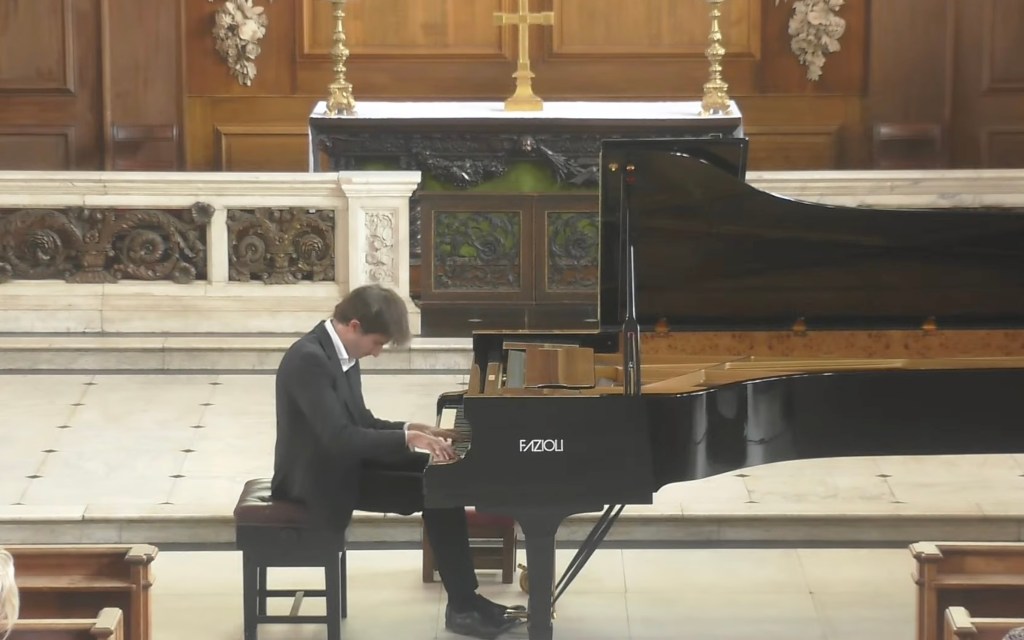
No encore was possible after that as it took some minutes before the audience broke the spell with mundane but heartfelt applause .
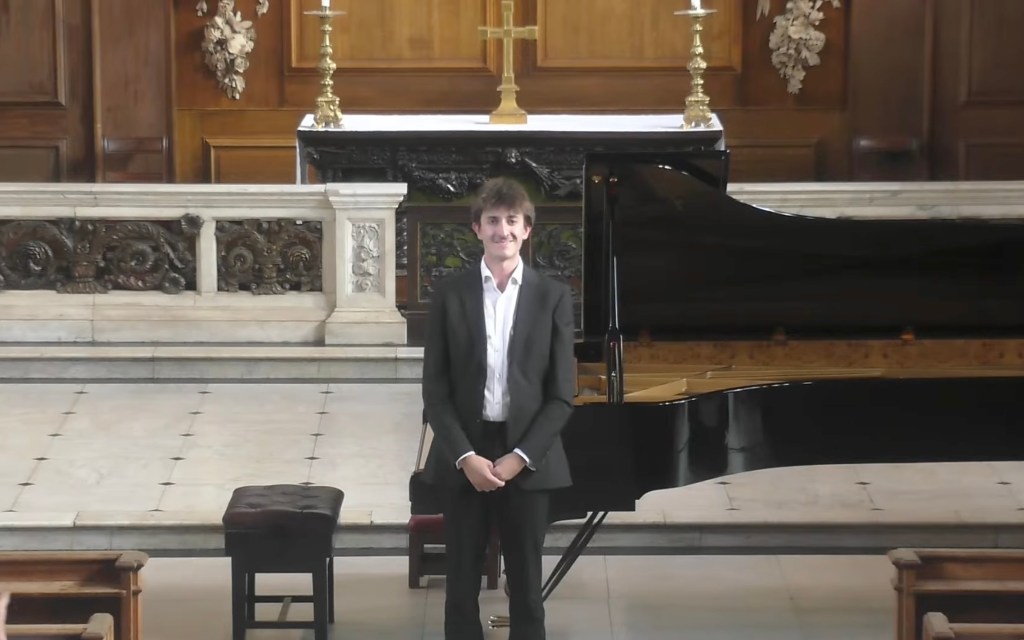
Max Walsh was born in Birmingham, UK, in 2007. He began studying at the Junior Royal Birmingham Conservatoire at the age of eight and is currently under the tutelage of Jan Loeffler (Head of Keyboard Department). He has been awarded a full scholarship to study Piano and Composition at the Royal College of Music, from September 2026.
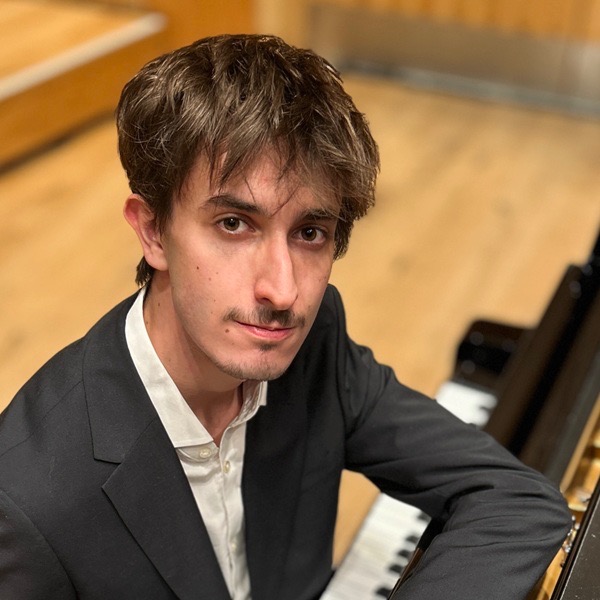
In 2025, he won first prize in the Liszt Society International Piano Competition and the Junior Wales International Piano Festival, as well as prizes at the New Talent Festival and the Bromsgrove Young Musicians’ Platform. In response to his Liszt performance, Christopher Axworthy wrote: “A youthful burning passion for music and a young man born to play the piano. He and the piano fit so naturally in a way that cannot be taught and at only 18 his potential is enormous and may know no bounds.” Max was also among the five finalists in the 2025 BBC Young Composer competition, receiving the Highly Commended award.
Max is a new artist at both Talent Unlimited and The Weir Trust via The Keyboard Charitable Trust. Max has performed in several masterclasses, most recently with Boris Giltburg at the Reform Club, London and Giorgi Gigashvili at the Symphony Hall, Birmingham. He has attended several summer schools, where he studied with Julian Lloyd Webber, Joanna MacGregor, Katya Apekisheva, Carole Presland, Murray McLachlan, John Thwaites, and Julian Jacobson.
Max has studied jazz piano with Joe Thompson and Iwan VanHetten, and chamber music with Peter Campbell-Kelly. He is scheduled to perform Ravel’s Left-Hand Concerto in the Bradshaw Hall in June 2026, as well as solo recitals at Regent Hall and St. Mary’s Perivale in late 2026.
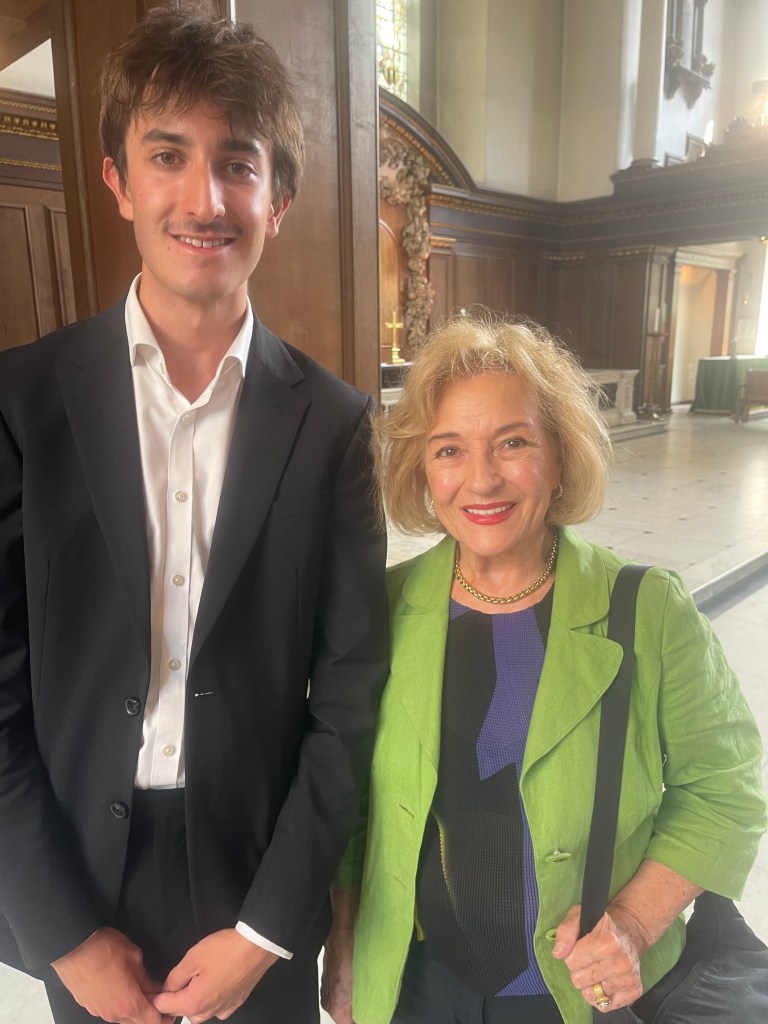
Presented in association with Talent Unlimited of Canan Maxton
Max Walsh winner of the Liszt Society Competition 2025
Participant with Tomos Boyles in the Boris Giltberg Masterclass for the Beethoven Society at the Reform Club.
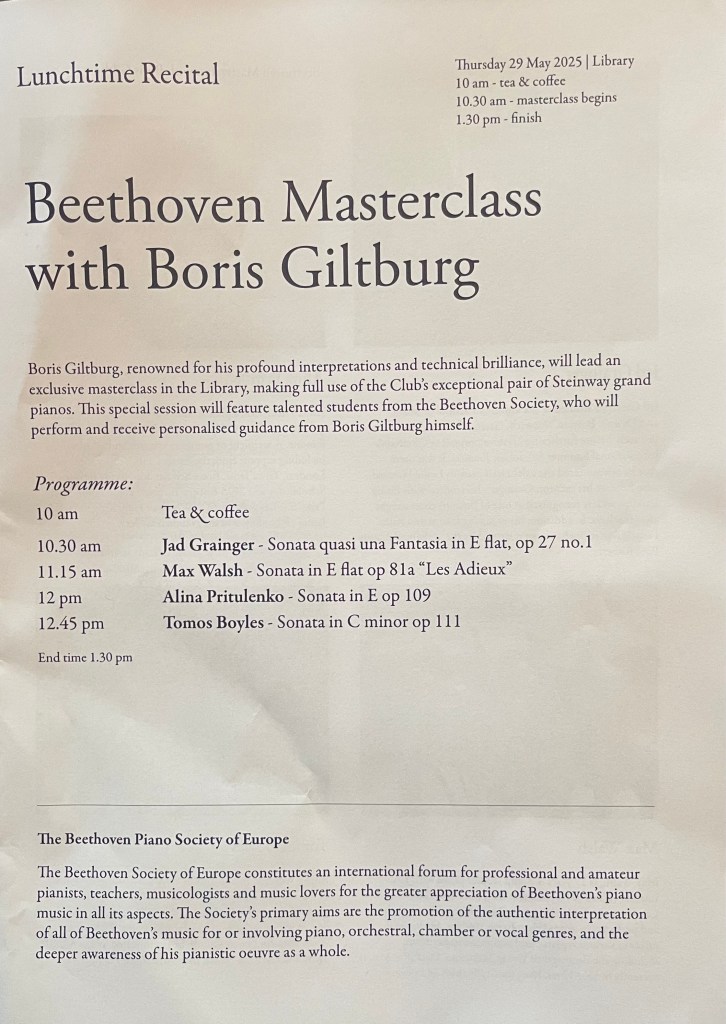


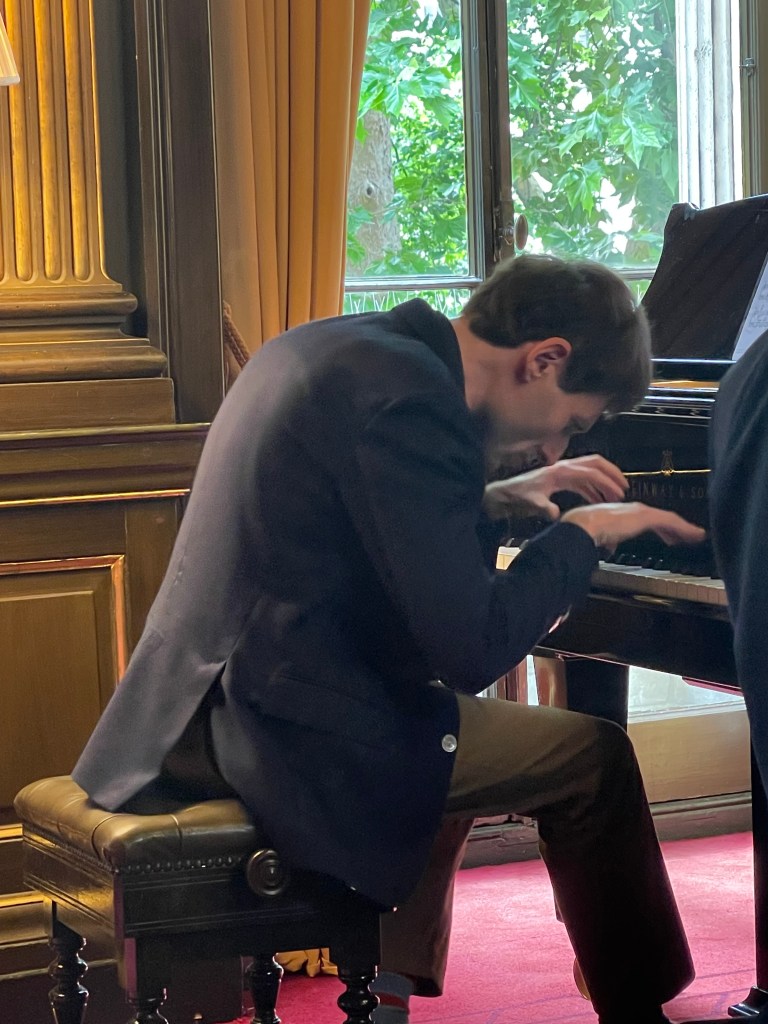

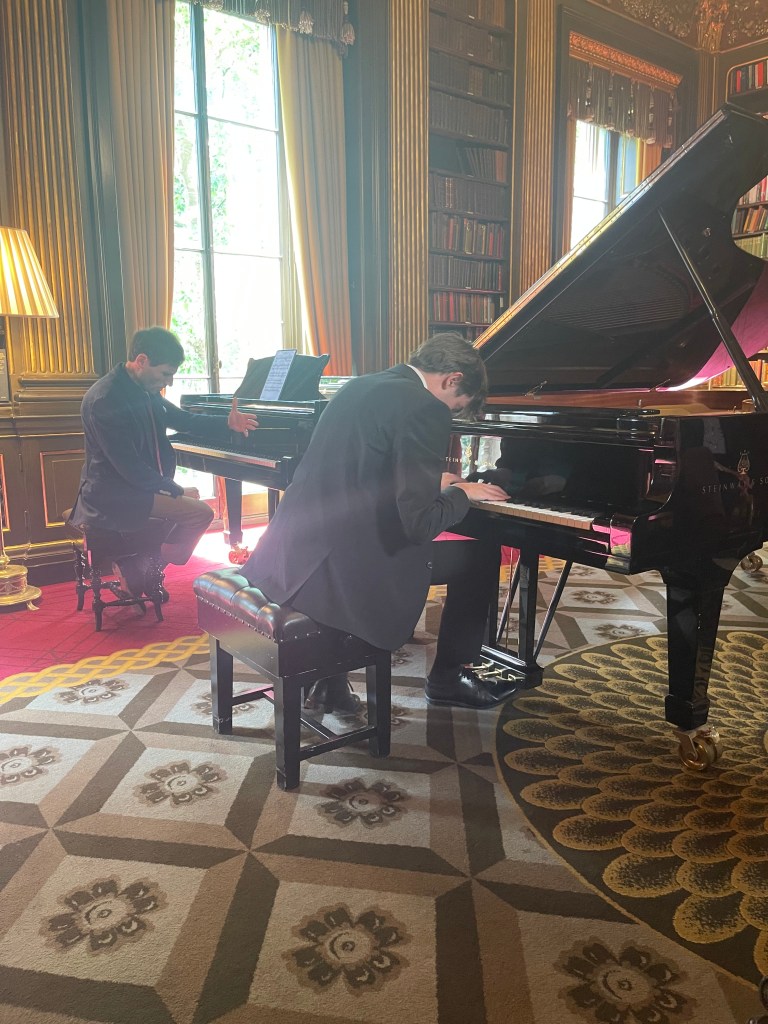
Tomos and Max are both Keyboard Trust Artists.
Next week Max will be playing solo and in duo with Alessio Masi in KT concerts in the ‘En blanc e noir ‘ Festival in central France


Una risposta a "Max Walsh at St James’s Piccadilly with youthful passion, authority and fearless mastery"