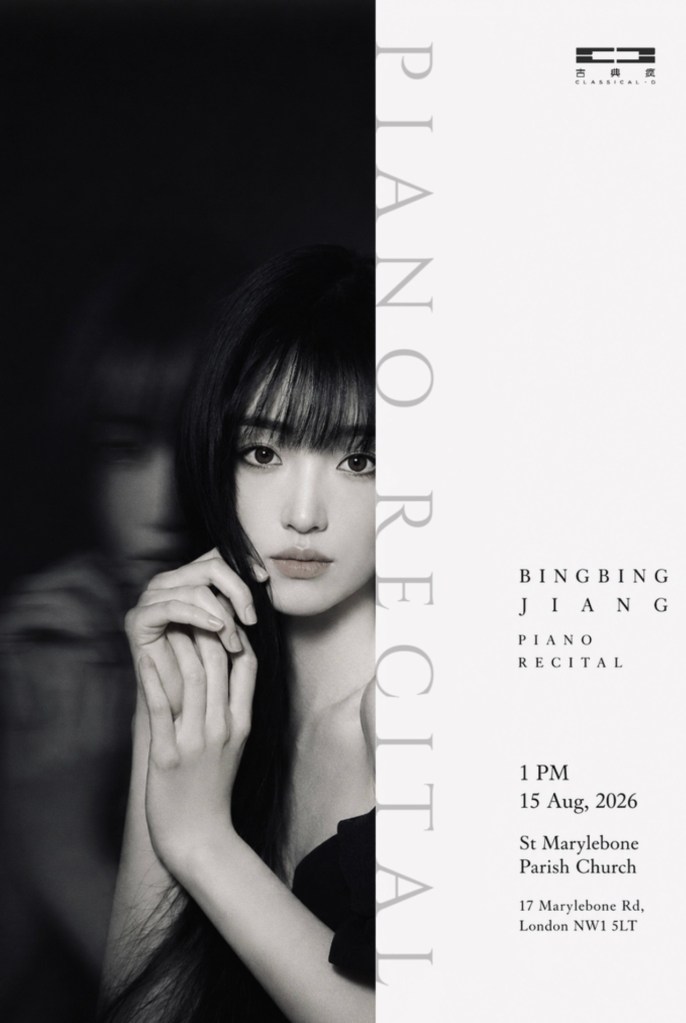
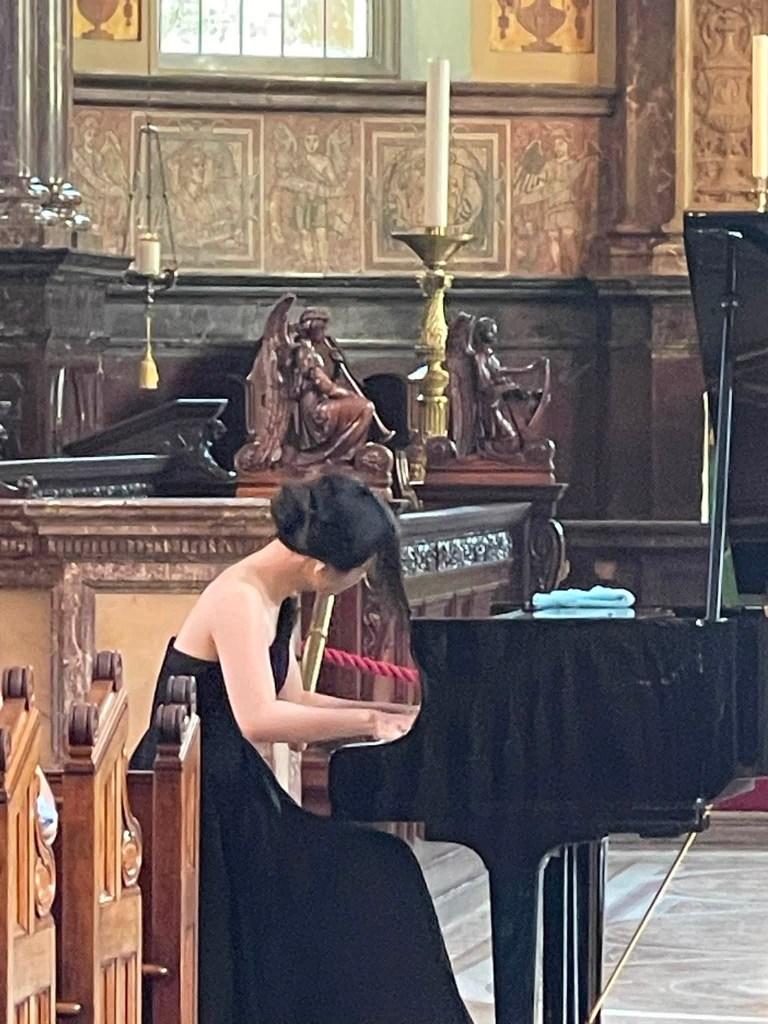
A recital by Bingbing Jiang of refined playing of poetic beauty with a kaleidoscope of sounds that allowed her to create twelve miniature tone poems from the Preludes Book II by Debussy,that were sculptured with intelligence and extraordinary sensibility and imagination .
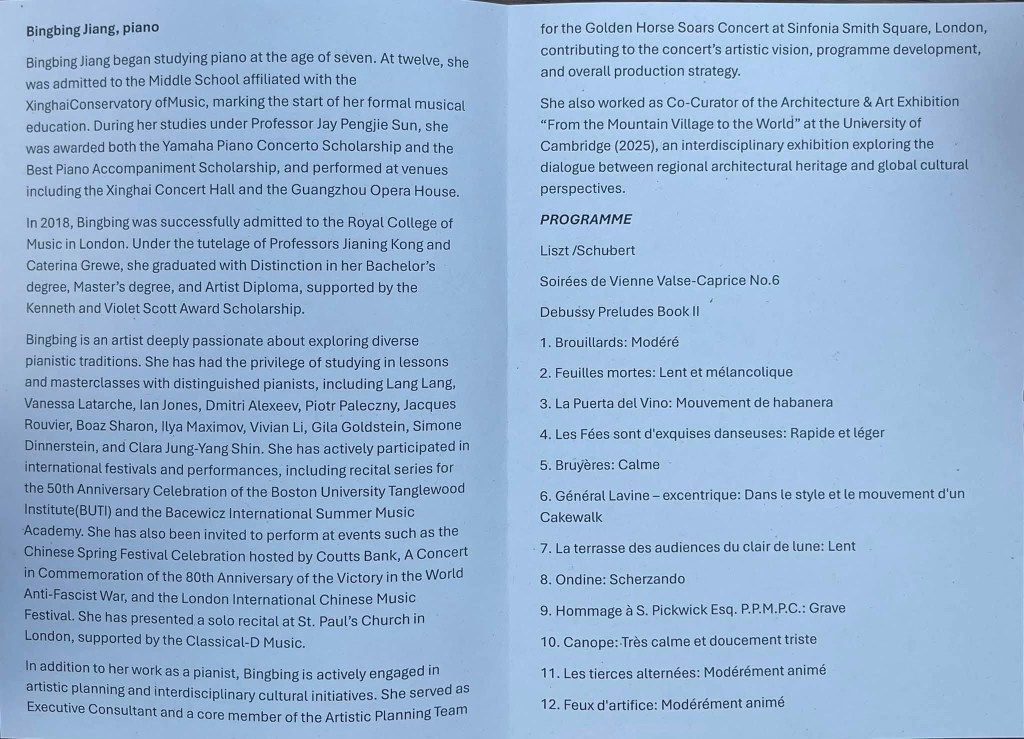
The concert had begun, though, with Schubert’s Soirée de Vienne n 6 as seen by Liszt and that she played with commanding authority and beguiling insinuation. A tone palette that ranged from quasi orchestral dissolving into the soft tones of the Viennese waltz. Liszt adding a web of interweaving golden threads that Bingbing played with all the style and charm of another age.
This was just an introduction to a masterly performance of Debussy’s Twelve Preludes Book II.
‘Brouilllards’ were mere wisps of sound played with an extraordinary sense of line despite her magical finesse. They were interrupted only by the recitativi where she underlined the bass shadowing as Debussy specifically asks.
In fact Debussy had also been a music editor and knew the importance of every indication left by composers in the score . Bingbing showed scrupulous attention to Debussy’s very specific demands which she incorporated into her playing of chameleonic sensitivity. She brought mystery and radiance with deep resonant bass notes that gave a glowing beauty to all that she floated above. She brought a dynamic drive to ‘La puerta del Vino’ as Debussy evoked the gates of Alhambra in Granada . Insinuating seductive sounds of passionate intensity but finishing with an ending of whispered poetic meaning played by Bingbing with rare control of sound.
I well remember when Richter first appeared in the west with his playing of Debussy Estampes and Preludes, where it was not the animal like intensity that astonished but his control of quiet sounds that we had never heard before .
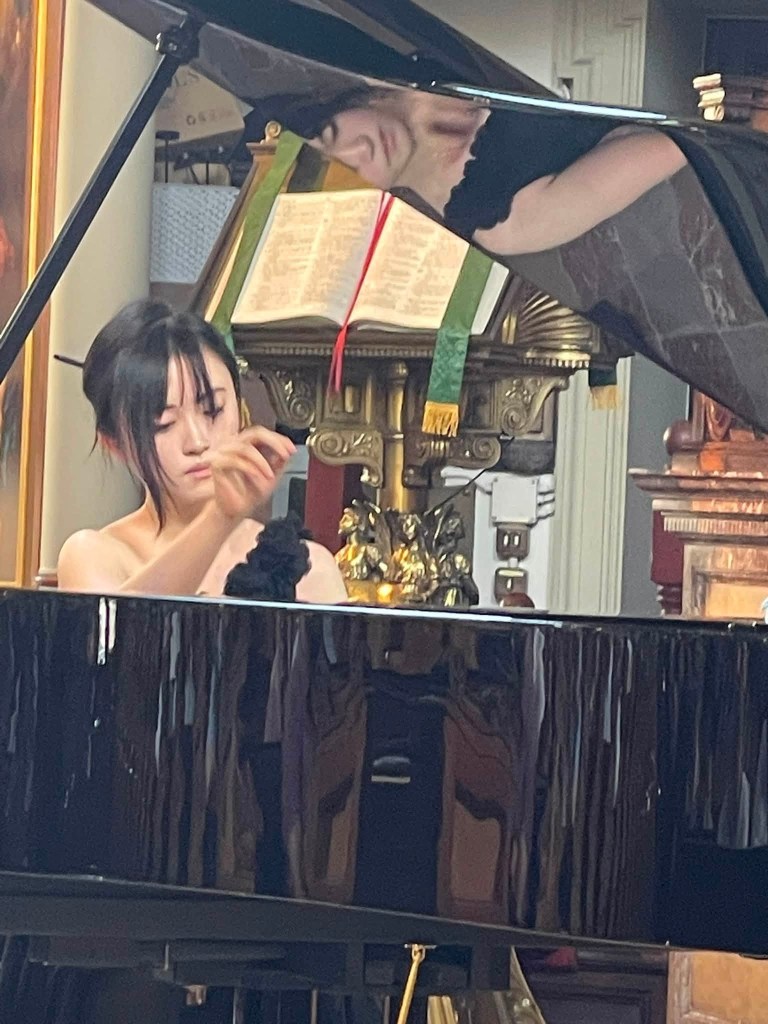
Bingbing has a vast range of sounds but it is above all her control when she appears to be barely touching the keys that is so remarkable .
‘Le fées’ bursting into quasi Viennese enticement as Debussy is inspired by ChouChou’s book of J M Barrie’s ‘Peter Pan in Kensington Gardens’. ‘Bruyères’ was played with simplicity and a delicacy of whispered glowing radiance. She certainly caught the character of ‘General Lavine excentric’, with its continual changes and interruptions and even beseeching cries and pompous strident melodies.’La terrasse’ and ‘Ondine’ are absolute gems and masterpieces that Bingbing imbued with a web of golden sounds and an extraordinary architectural shape, as she allowed Debussy to tell us such wonderful tales . Rubinstein would bring great character to Ondine projecting out to the audience whereas Binbing played with an intimacy and intensity that drew us in to her magic world. ‘Pickwick’ was played with pompous audacity as she enjoyed the teasing brilliance of the multifaceted character of ‘S Pickwick Esq the Perpetual President Member of the Pickwick Club.’

‘Canope’ she played with poignant simplicity and it is the Prelude that Fou Ts’ong admired so much for a work where so few notes could mean so much. The double third prelude showed Bingbing’s digital mastery that she could combine with poetic fantasy. ‘Feux d’artifice’ was a tour de force of masterly playing of transcendental brilliance allied to an extraordinary sense of imagination.

When Fou Ts’ong was awarded the Mazurka prize in Warsaw there was an outcry. How could a Chinese pianist understand Chopin Mazurkas better than a native of Poland . As Ts’ong pointed out, the soul has no frontiers and there are the same sentiments in Chopin as in Chinese poetry of which Ts’ongs father was an authority
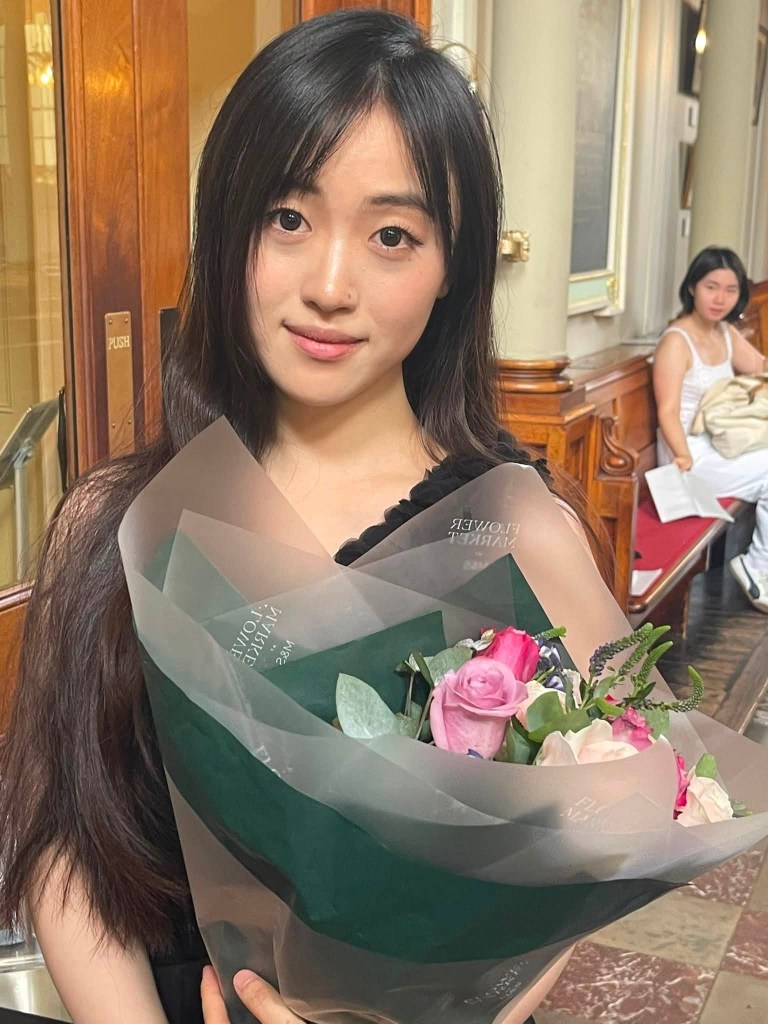
The recital by Bingbing was an encore to the programme of Classical D International Piano Festival 2026


