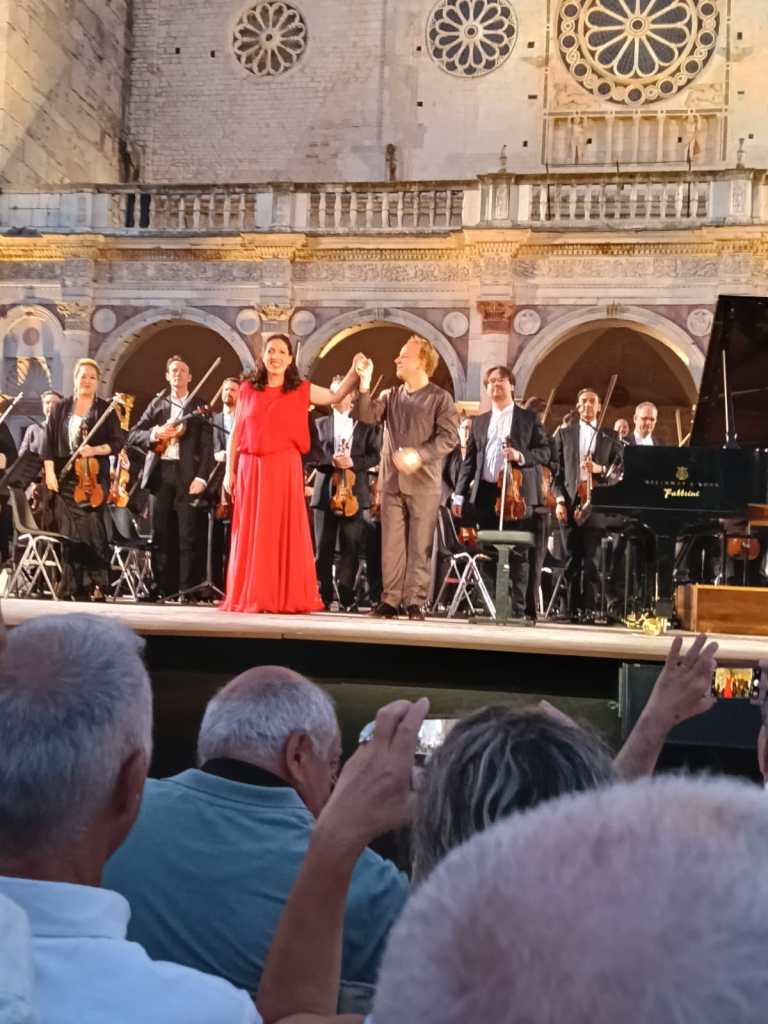
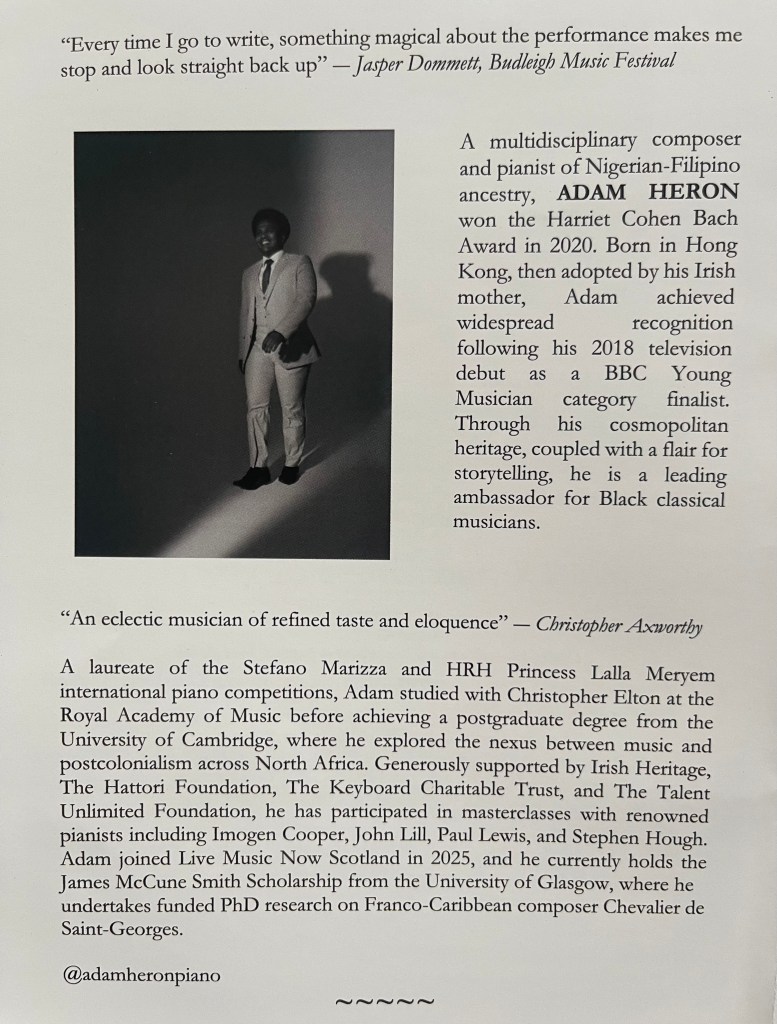
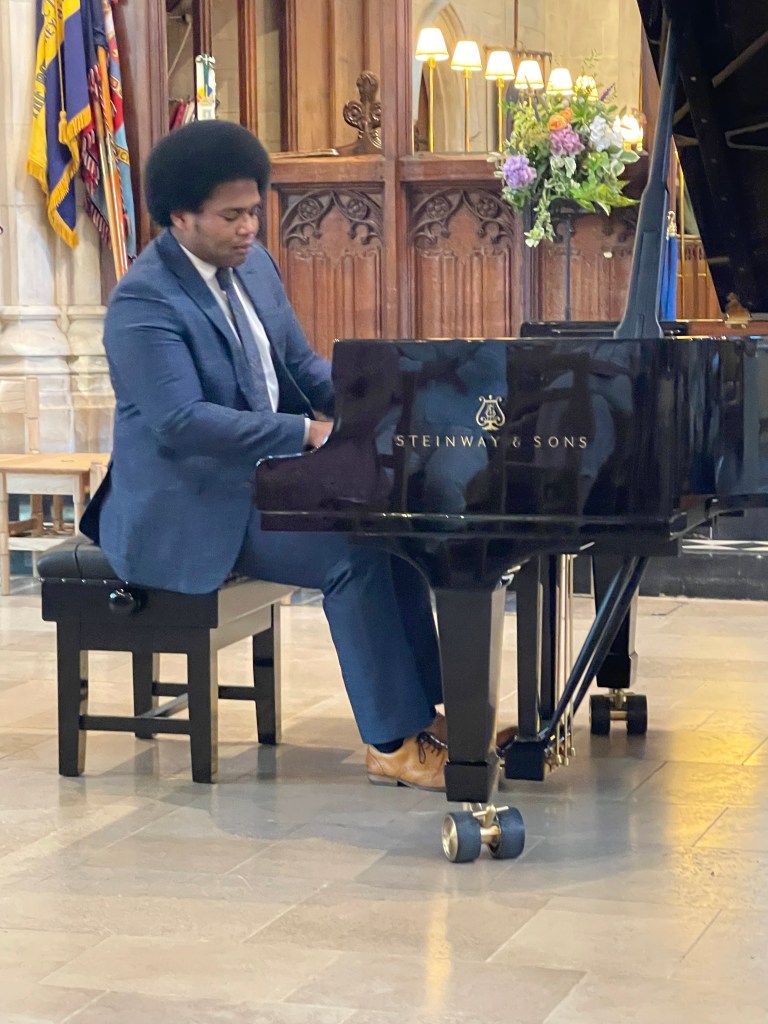
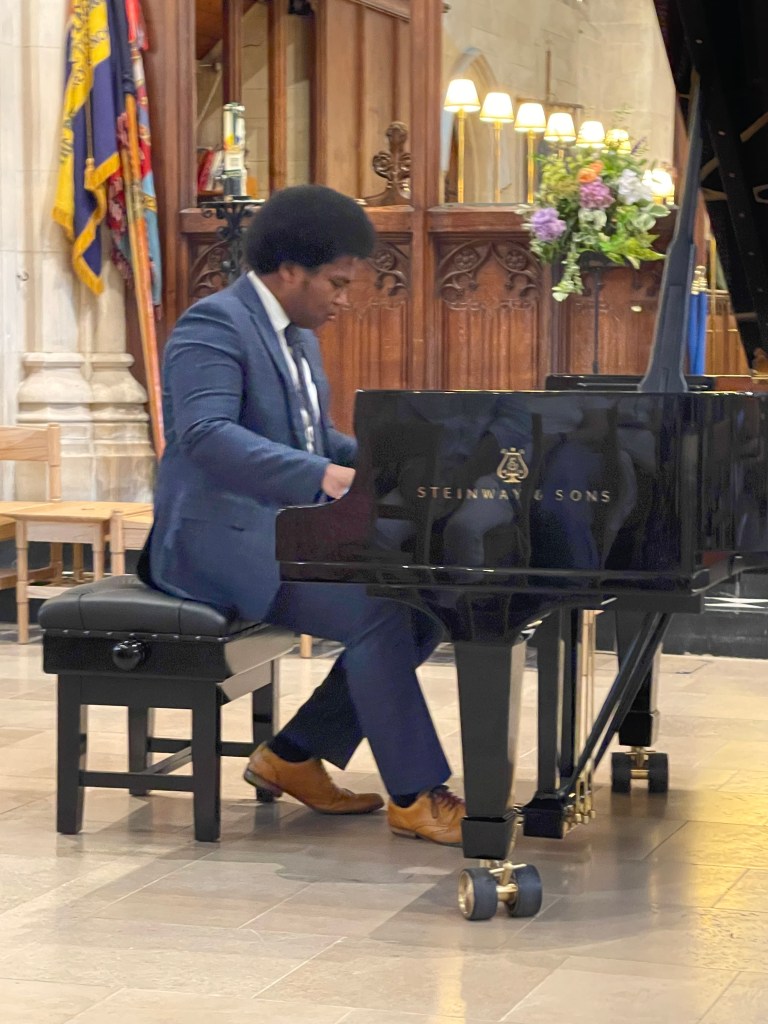
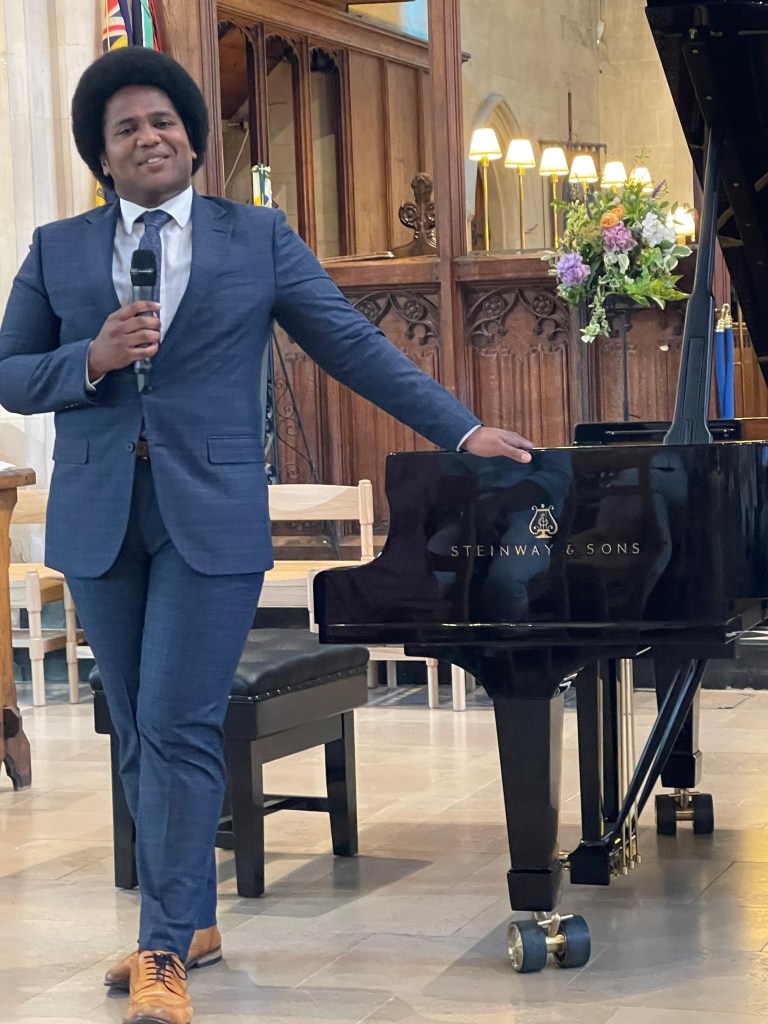
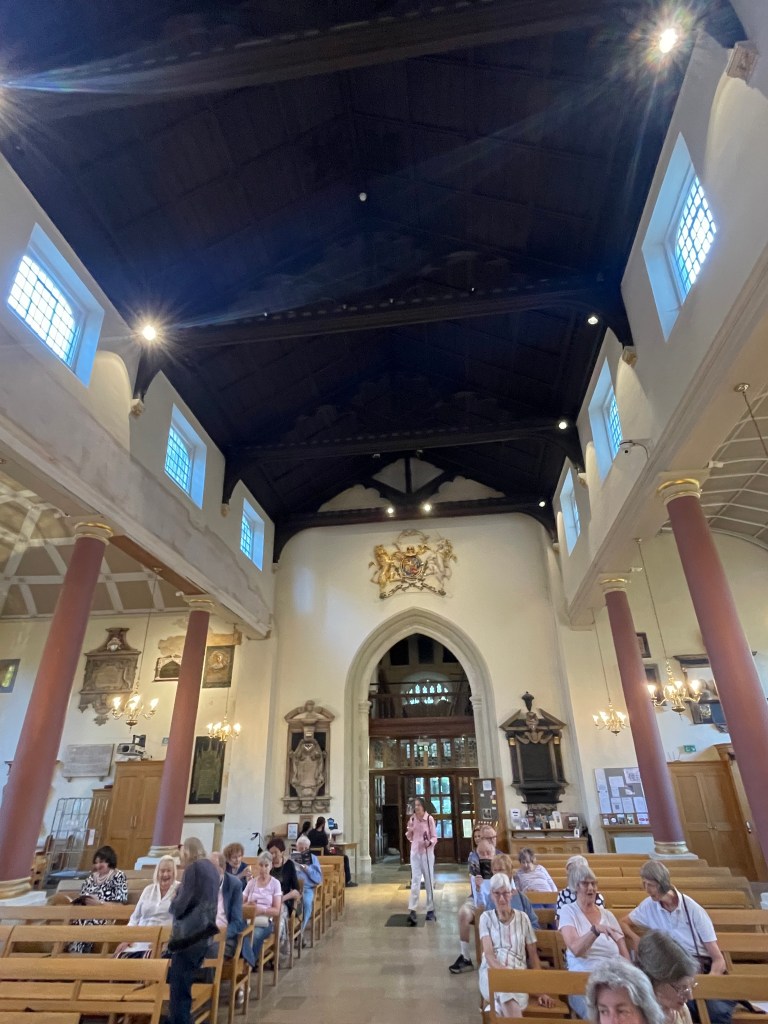
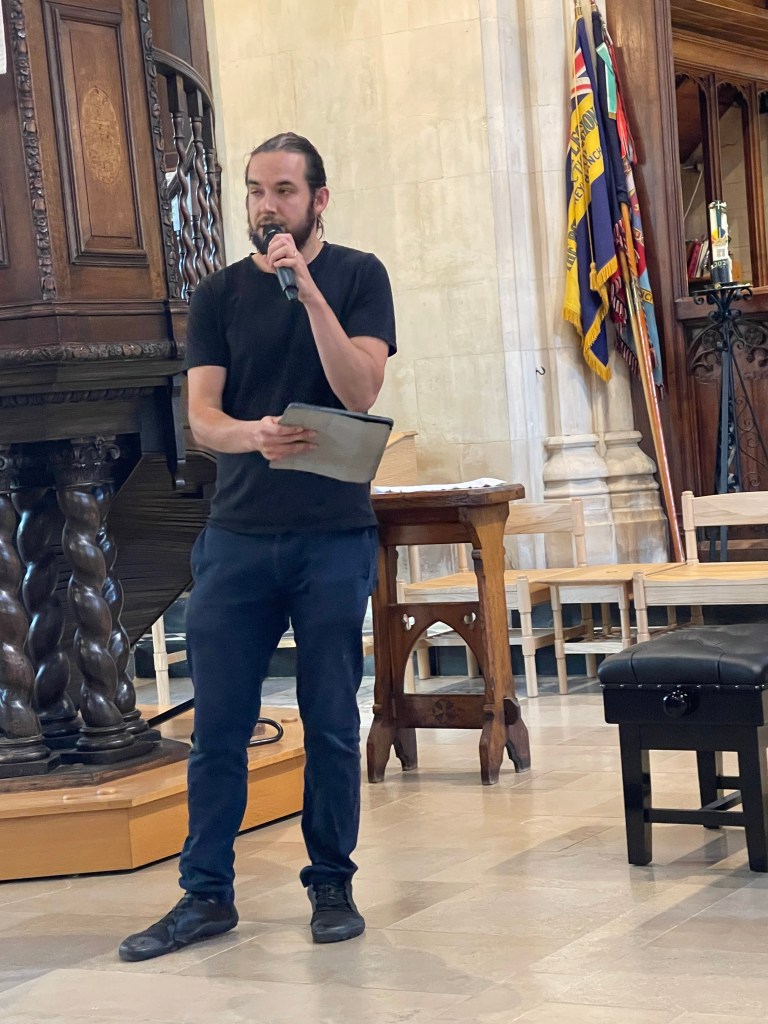
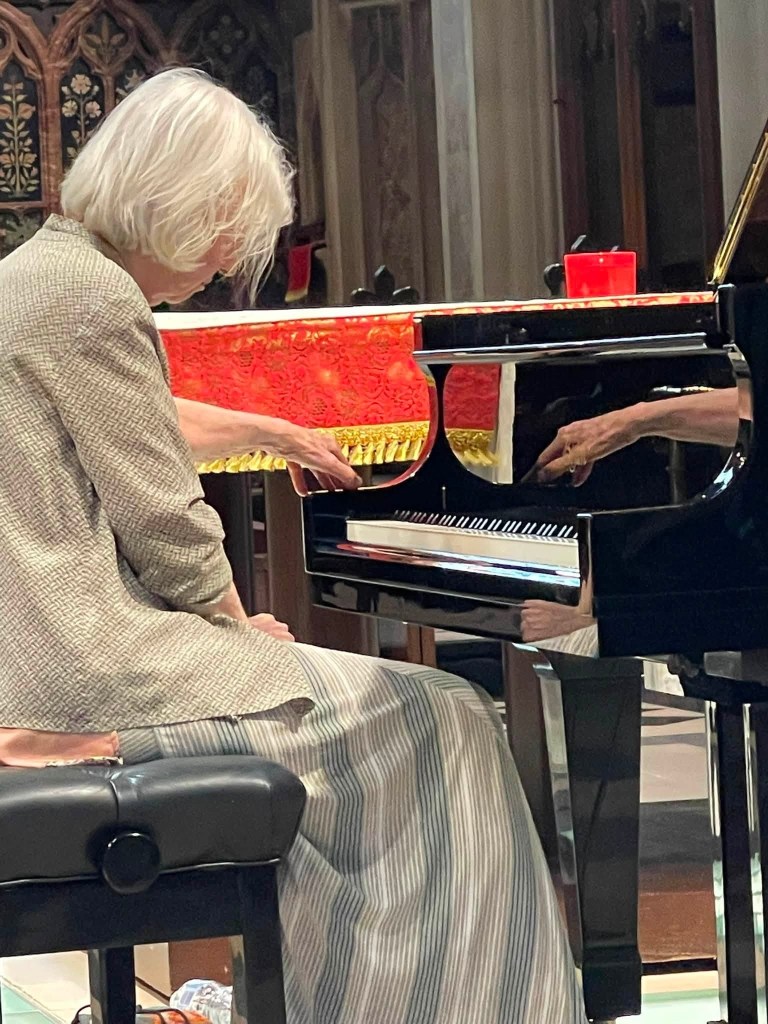
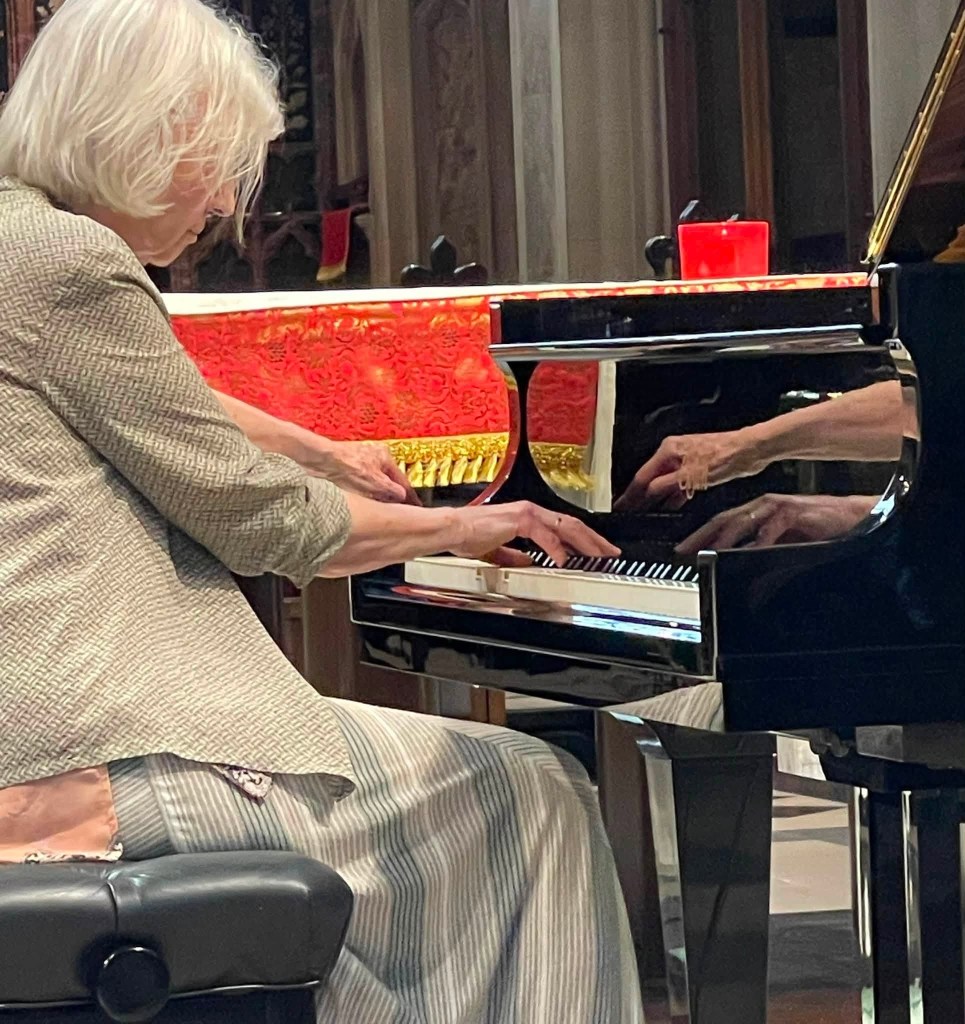
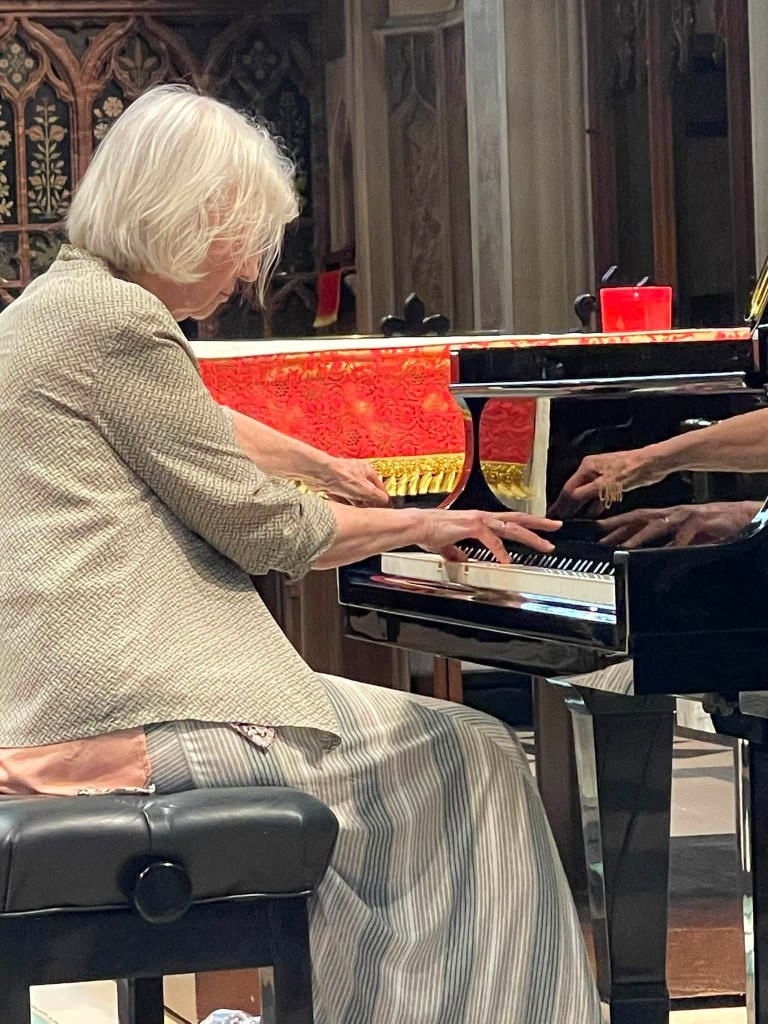
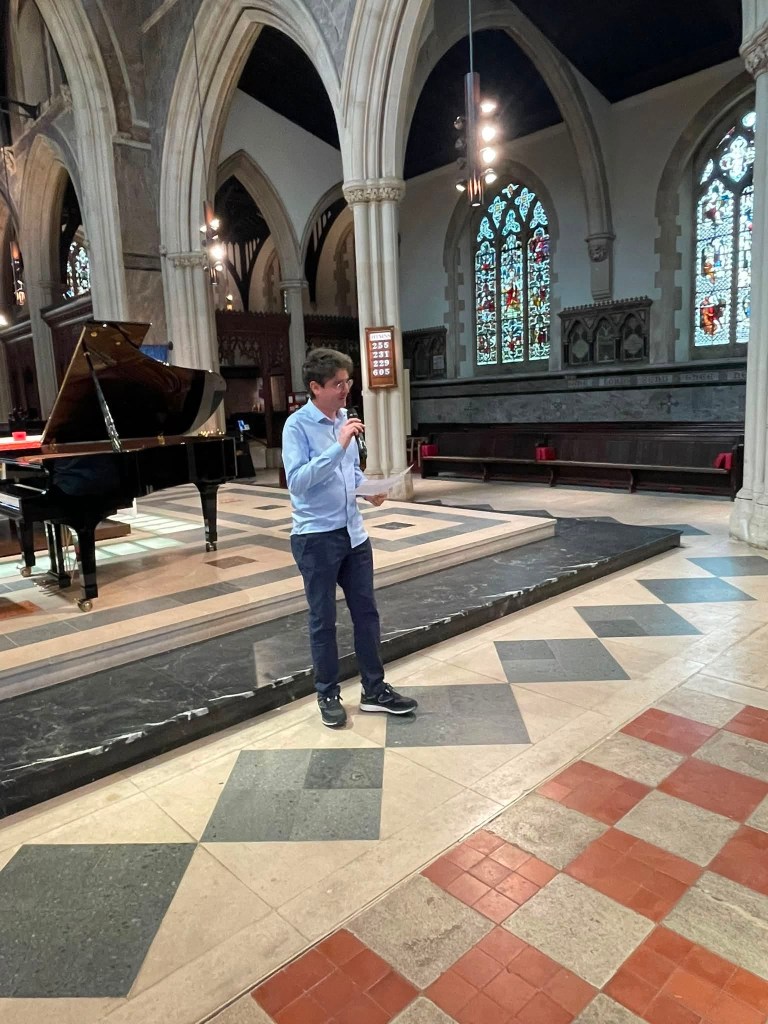
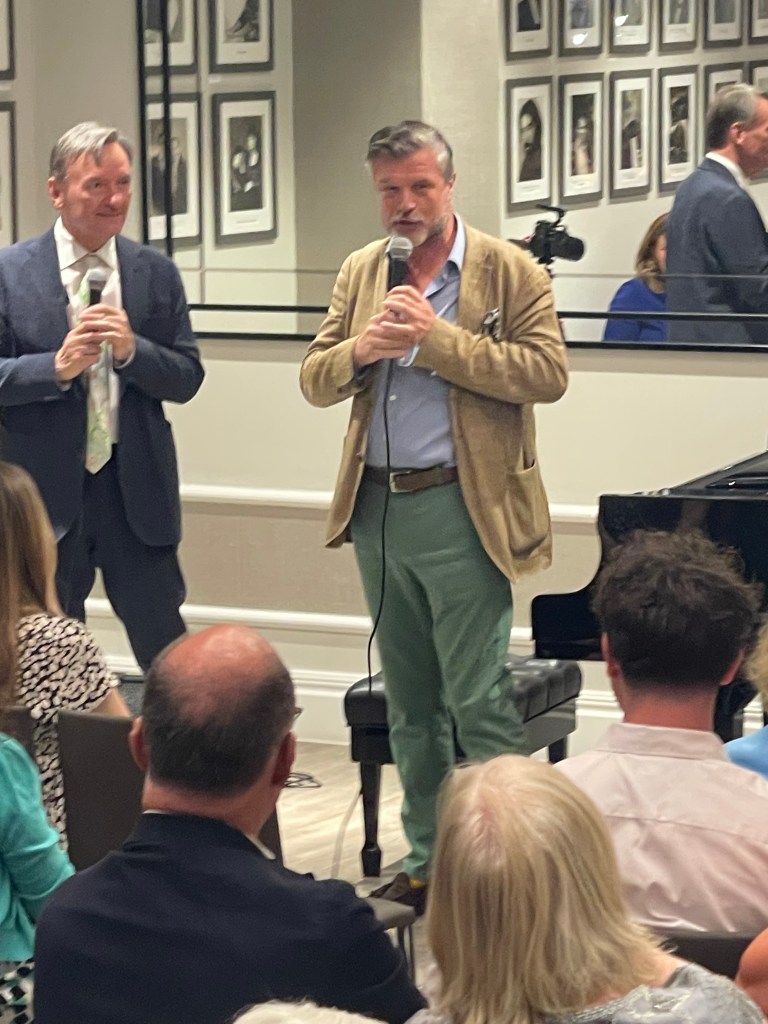
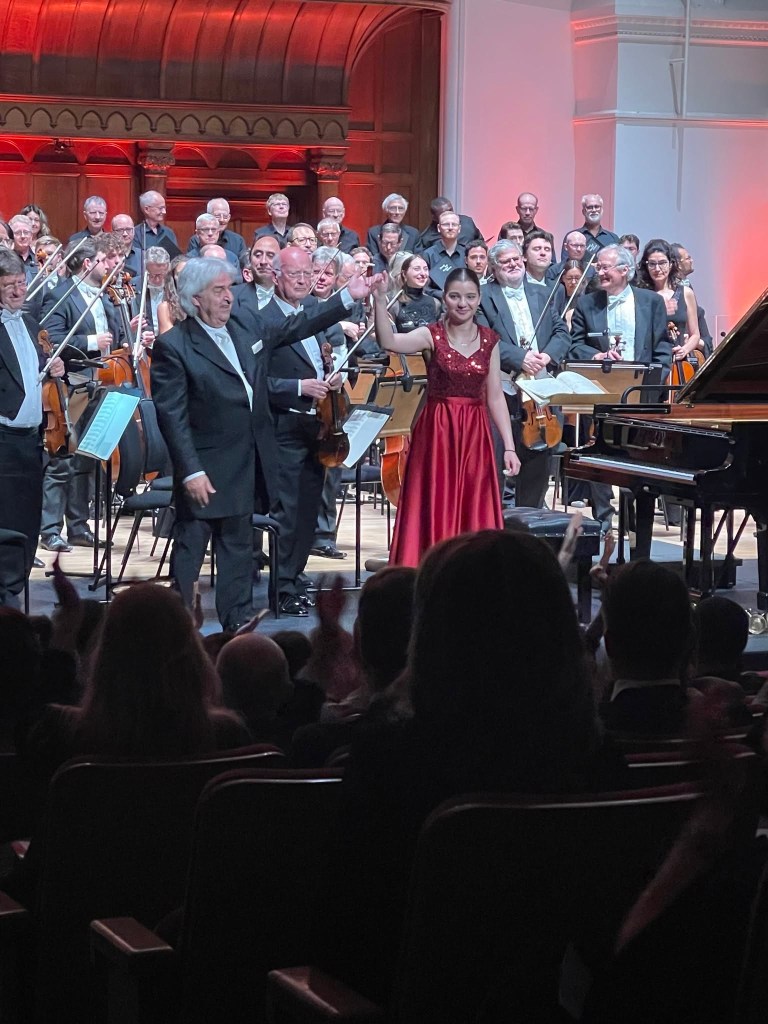
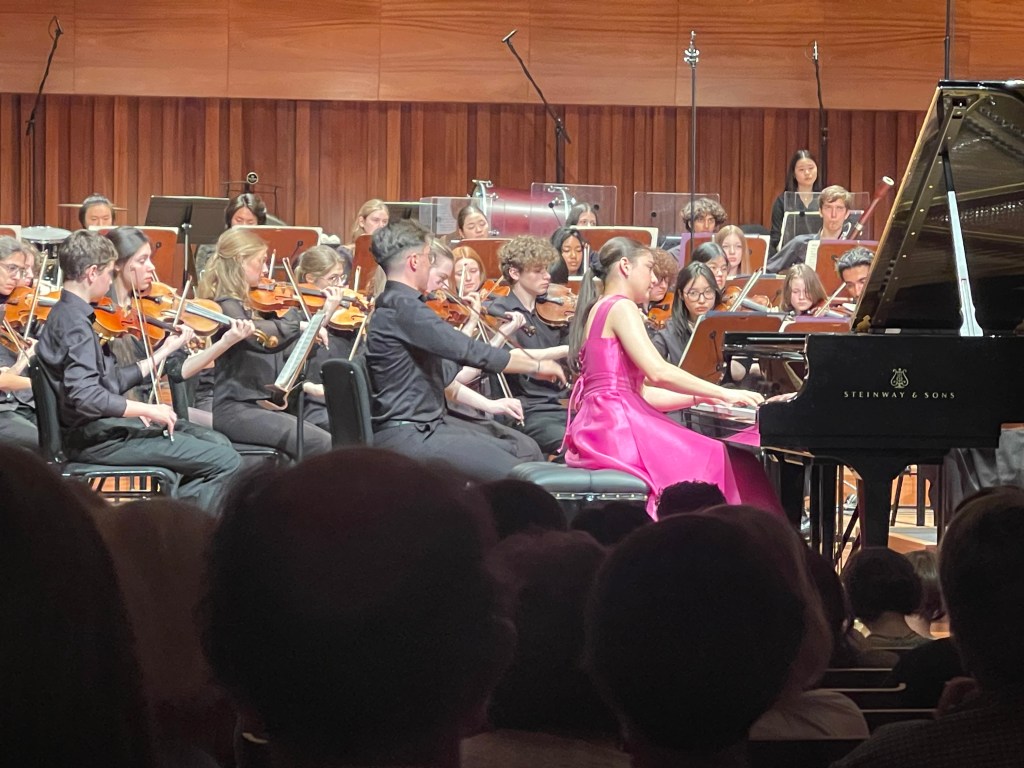
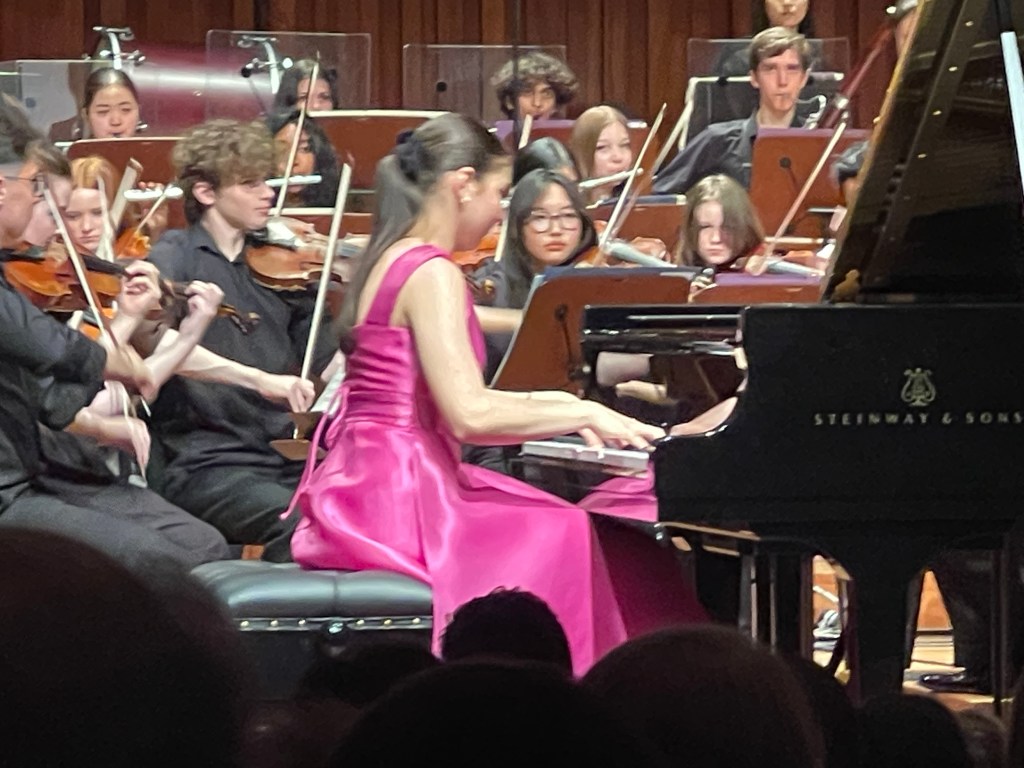
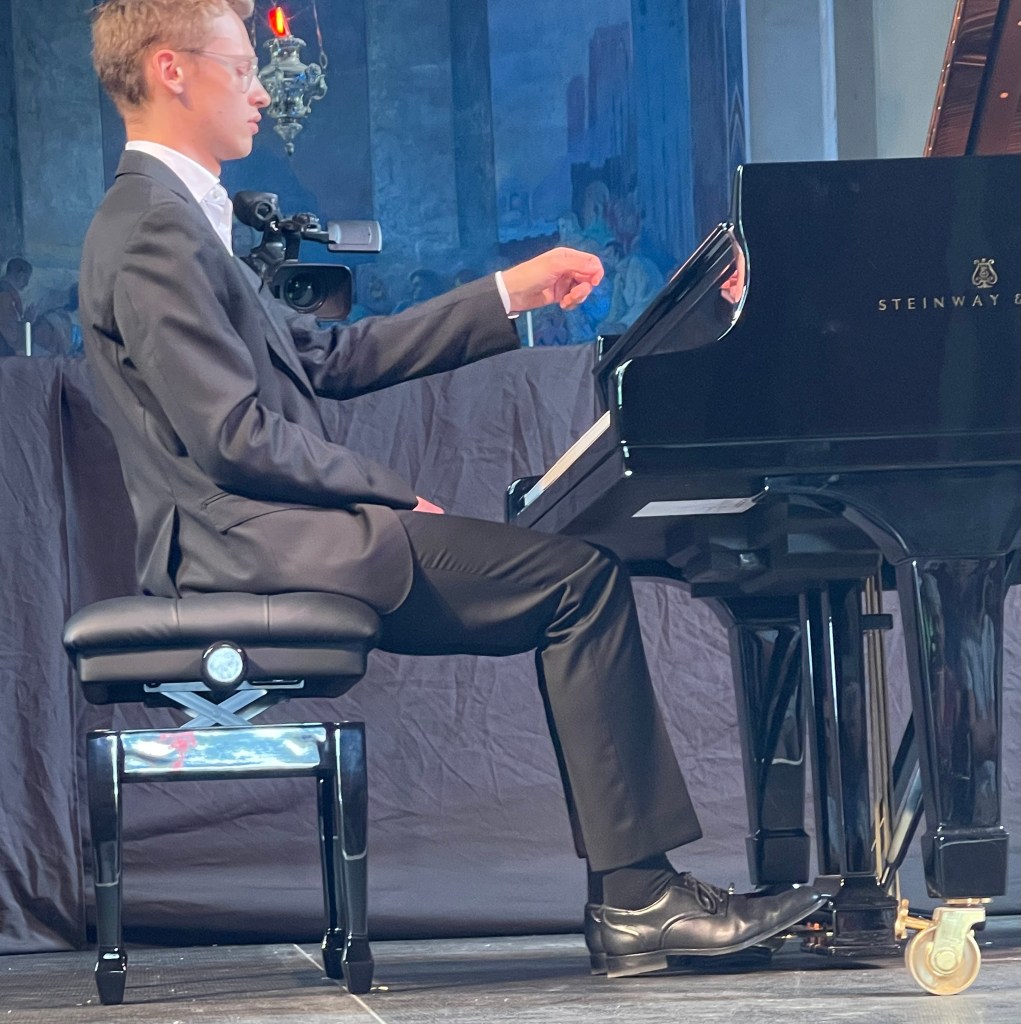
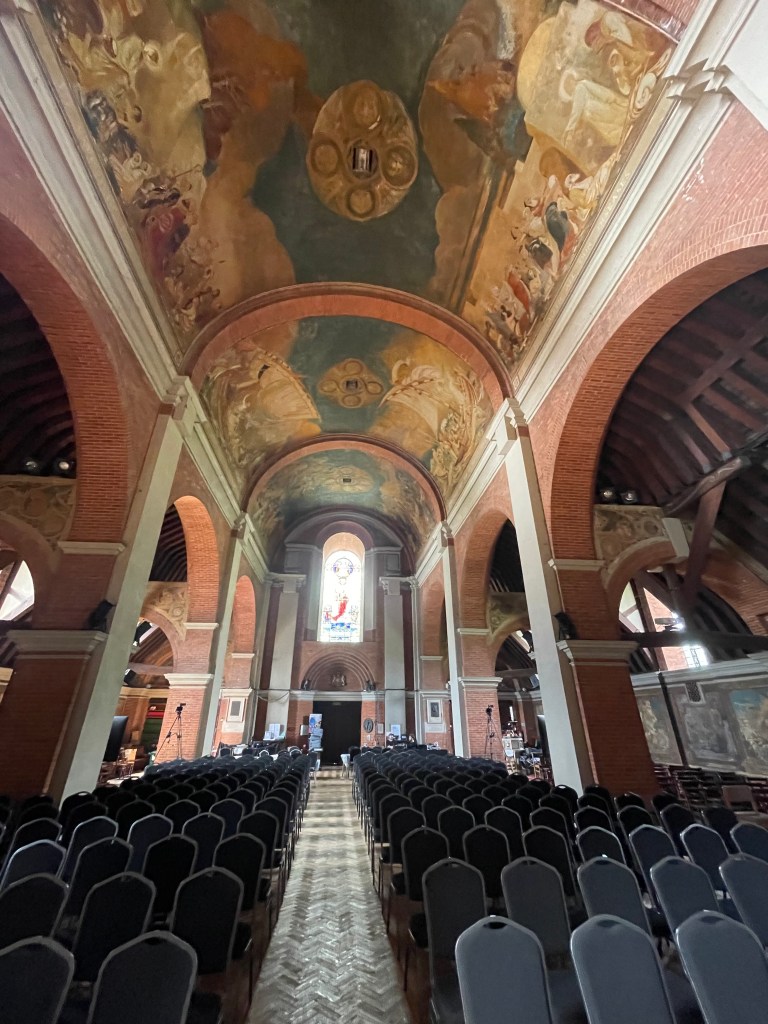
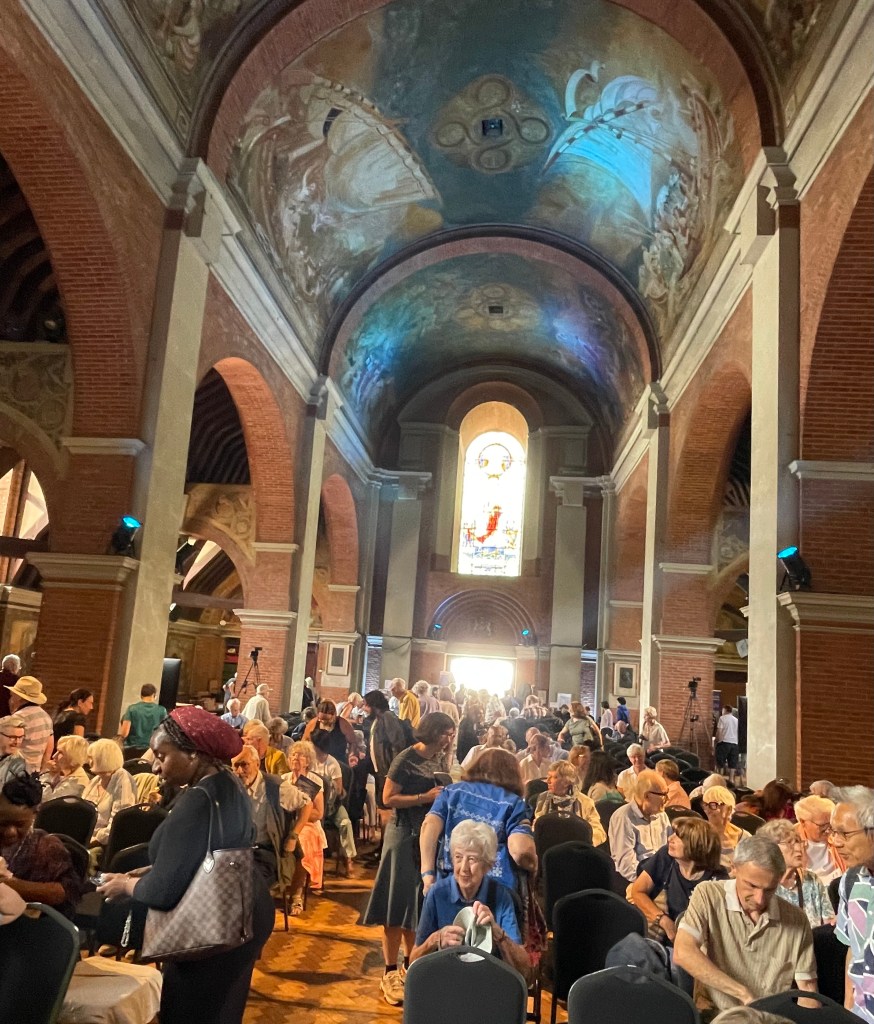
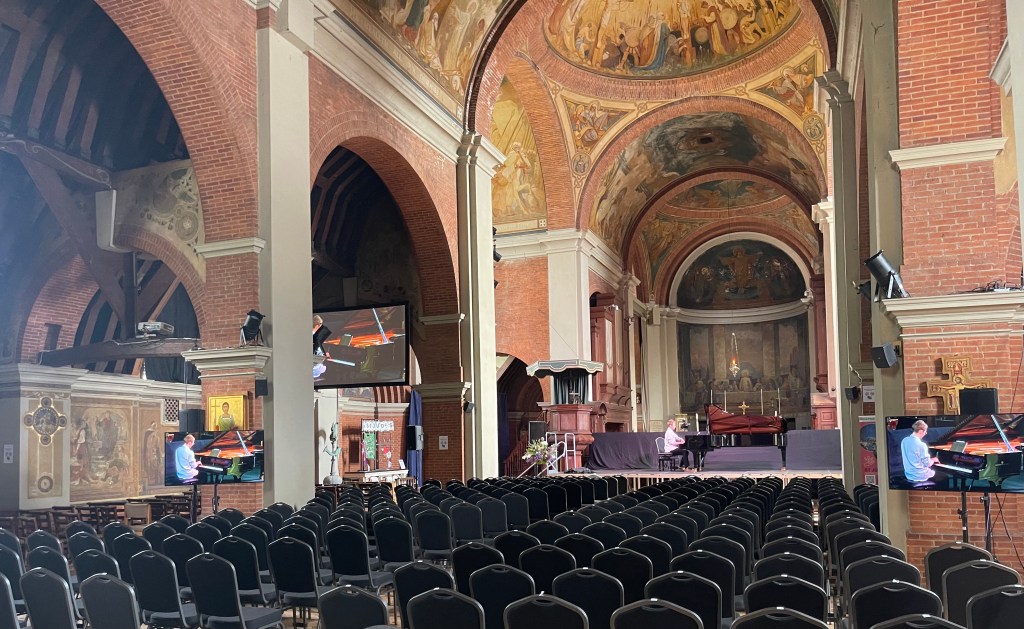
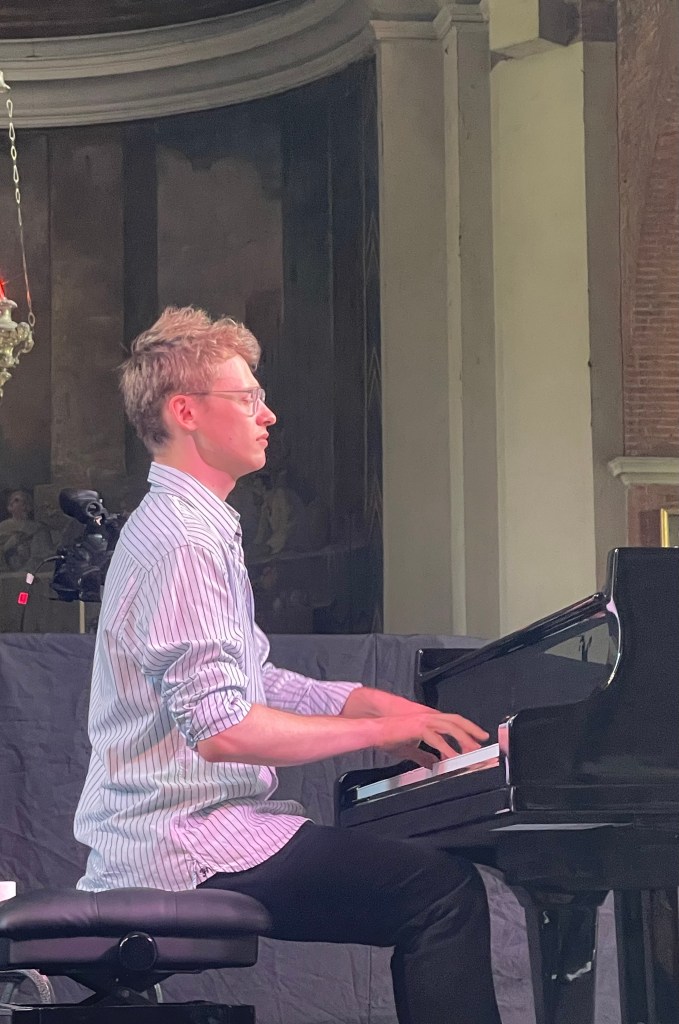
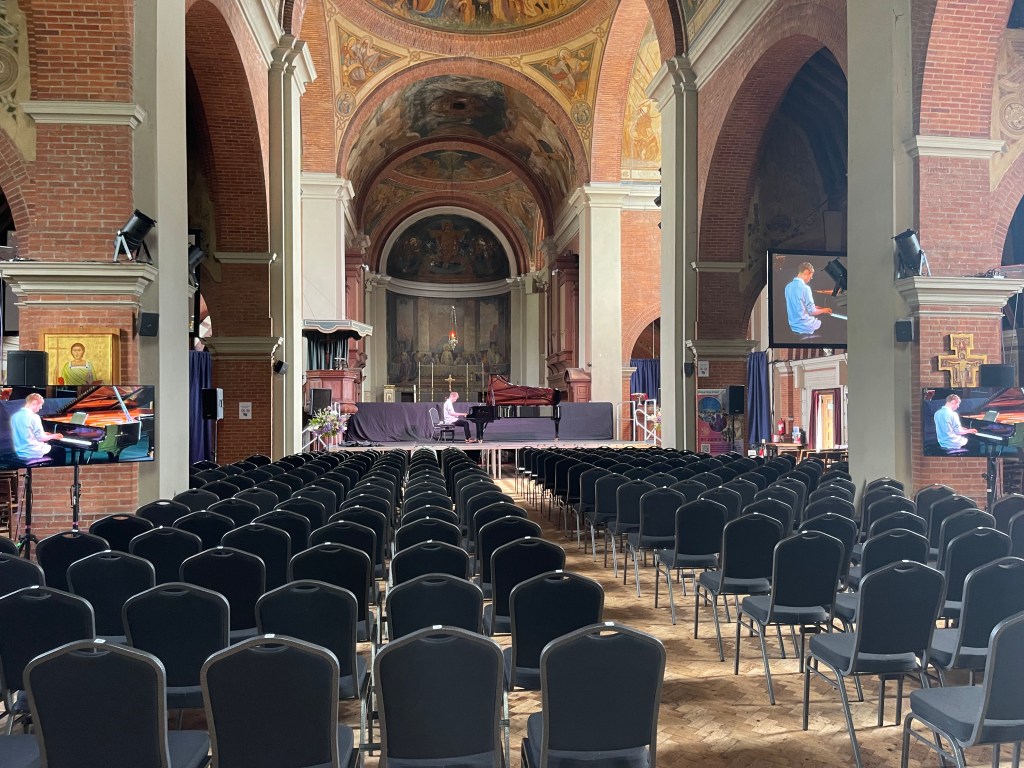
Andrea’s natural Grace serves him very well in the short perfectly pitched comments he made about the music he was to play and is matched by both grace and fire in all his playing. His final comment about being grateful to the audience for letting them hear him play this music for the first time showed rather stylish overall performance skills. Unsurprisingly he sold all CDs available for sale.
One audience member, a well regarded composer in his eighties, was especially impressed by the Waldstein. I teased him gently with an invitation to write a critique of the recital but unsuccessfully. A conversation followed about whether Andrea’s tempo of the Waldstein’s first movement could be sustained. All agreed it could be and was.
The rest of the programme – Bach, Bocedi Brahms and a Scarlatti encore – constructed to leave the audience excited throughout by what they heard – grew pretty well equal exhilarated applause.
Not for nothing did Luke styles open the recital with glowing praise for the Trust but he and others remarked how over the last four years the Trust has provided extraordinary highly talented pianists.
Andrea could not have done better for the Trust, for himself or for the pleasure of the audience of Deal
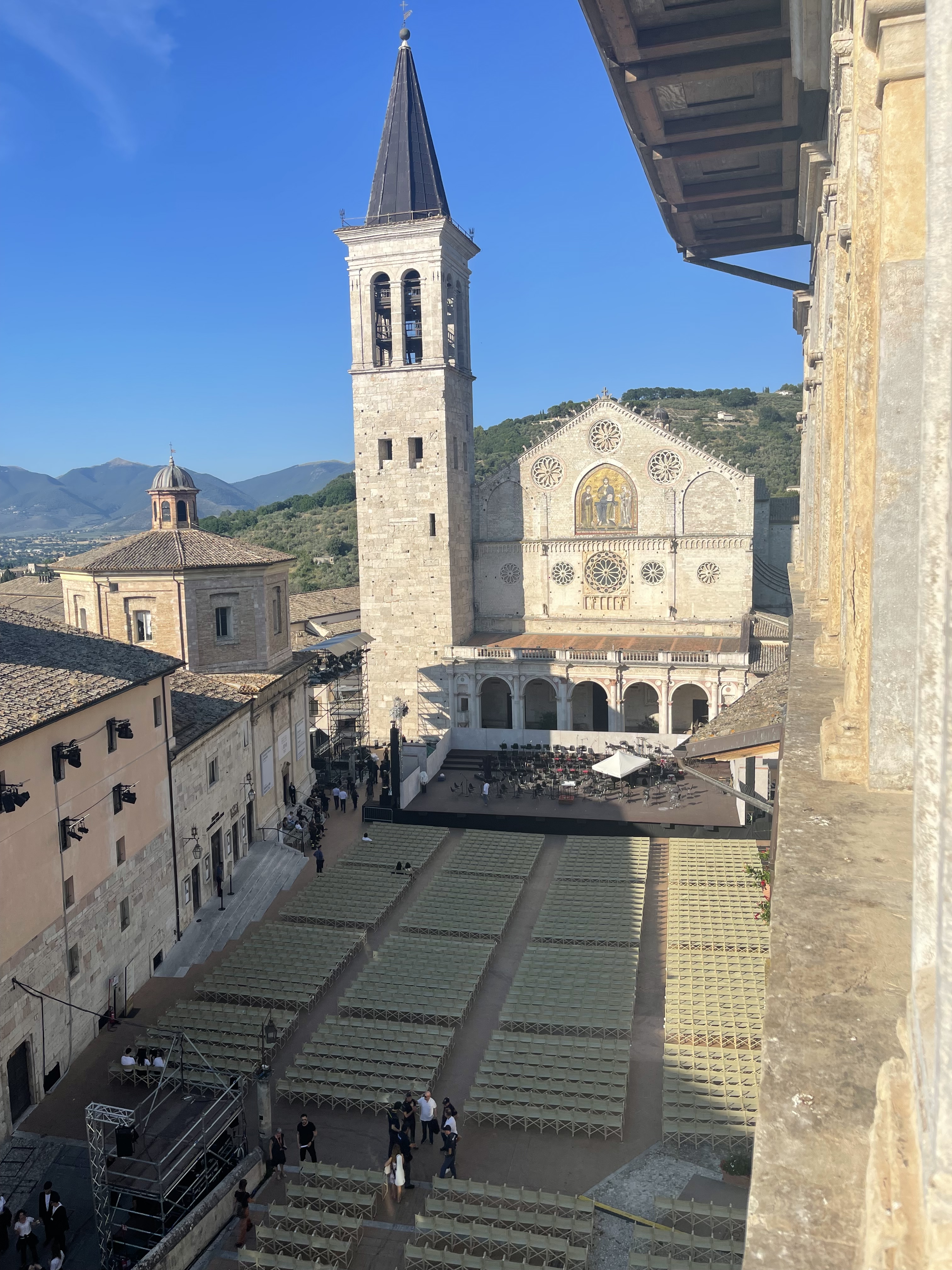
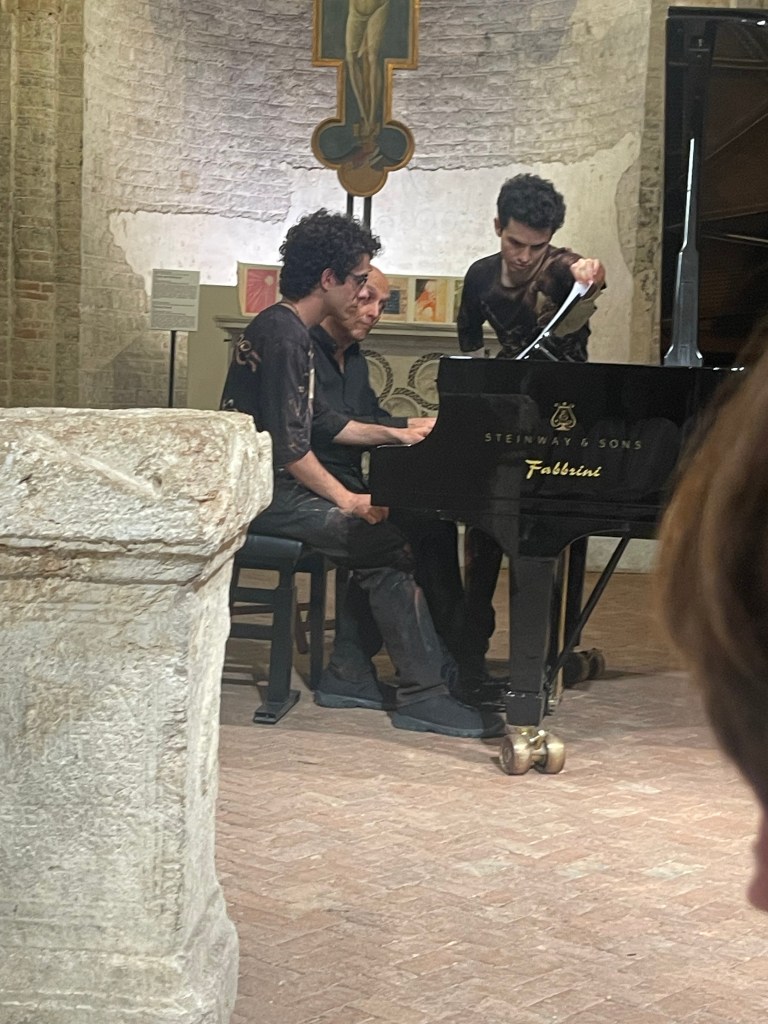
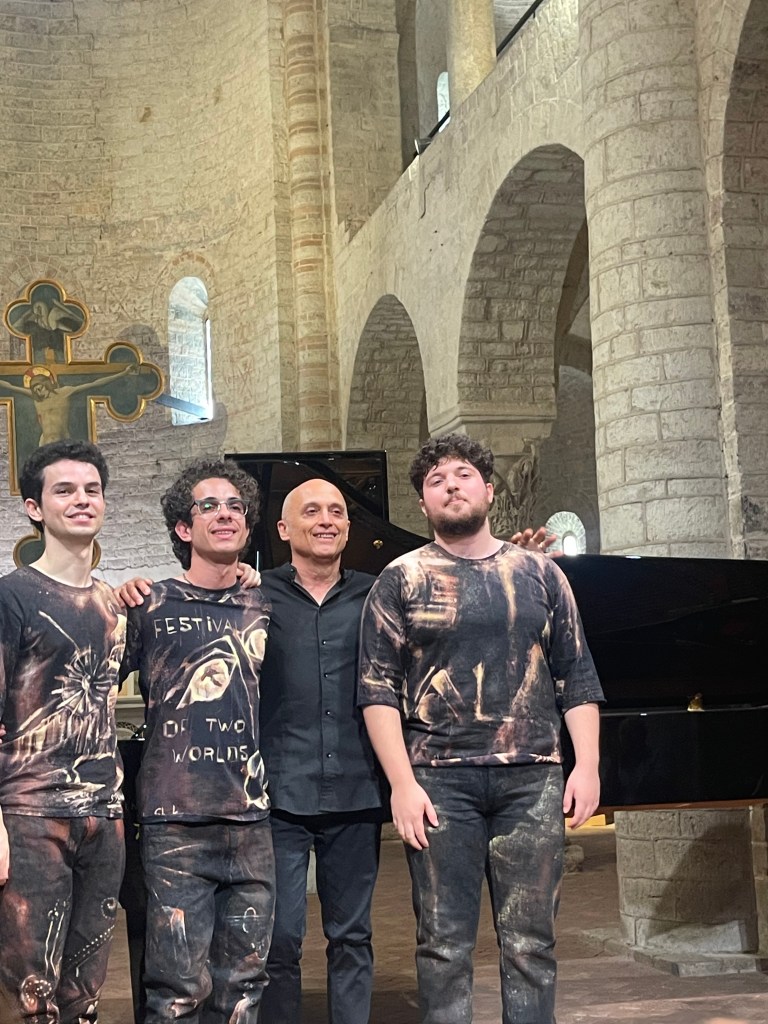
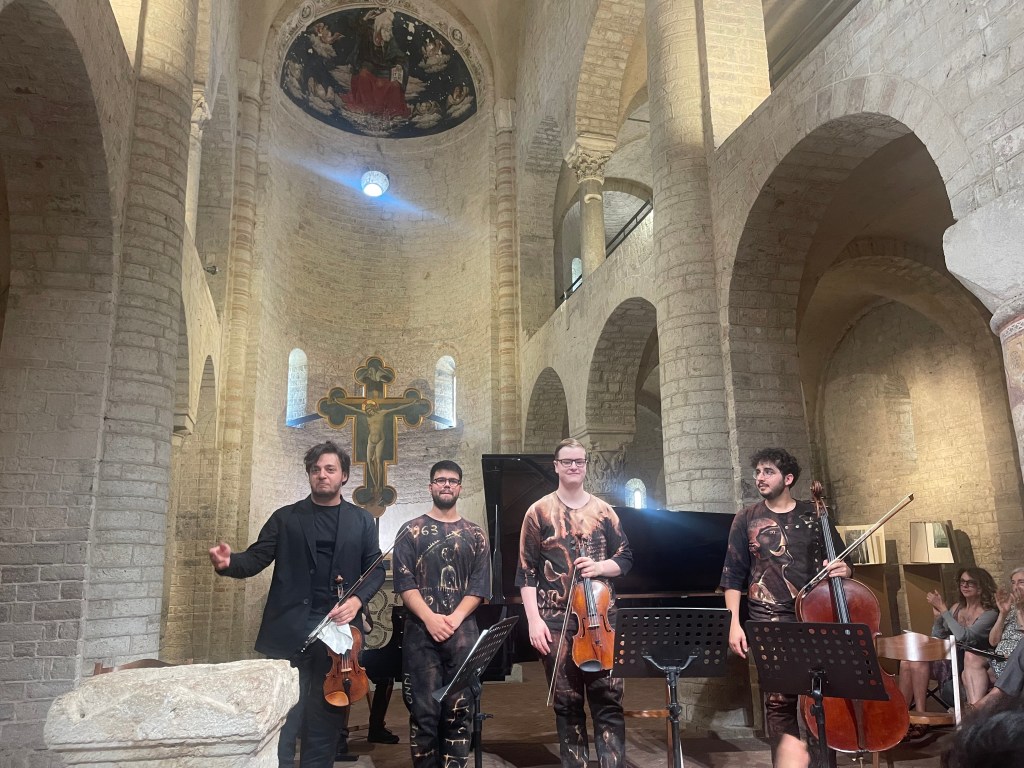
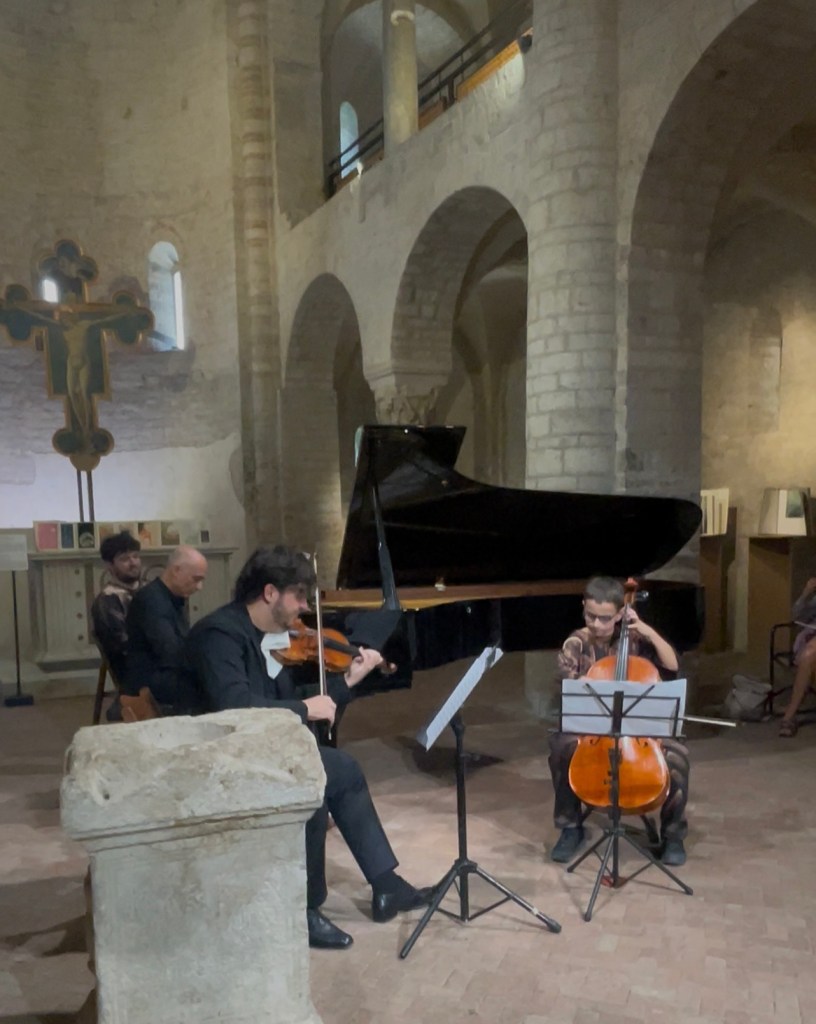
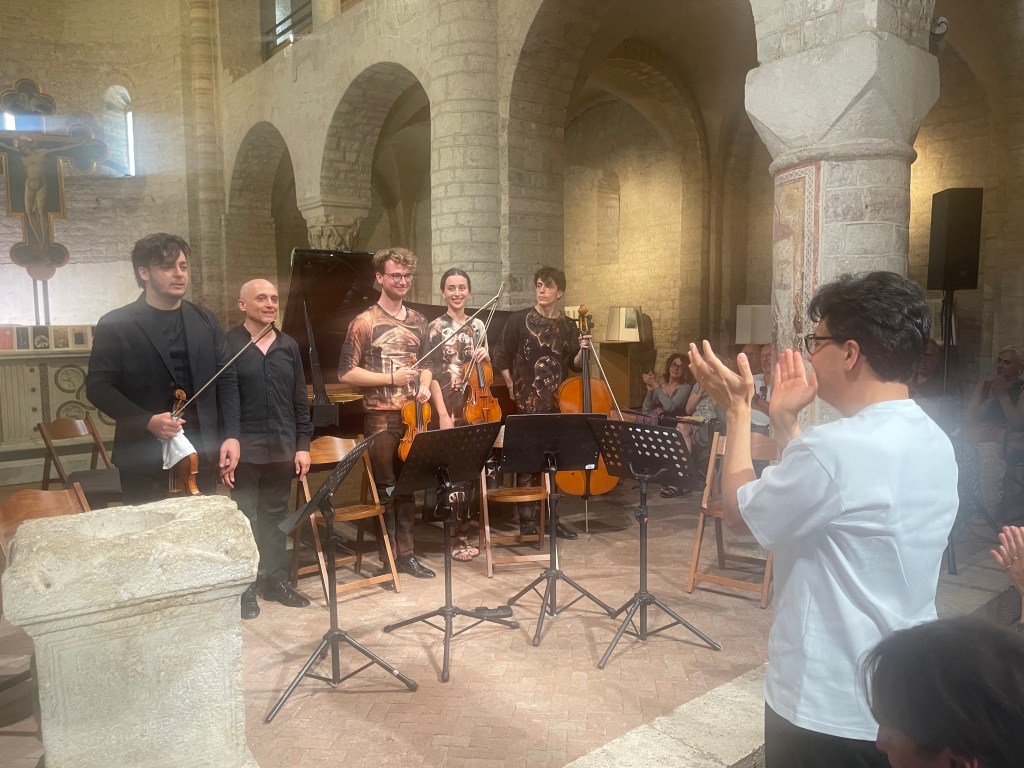
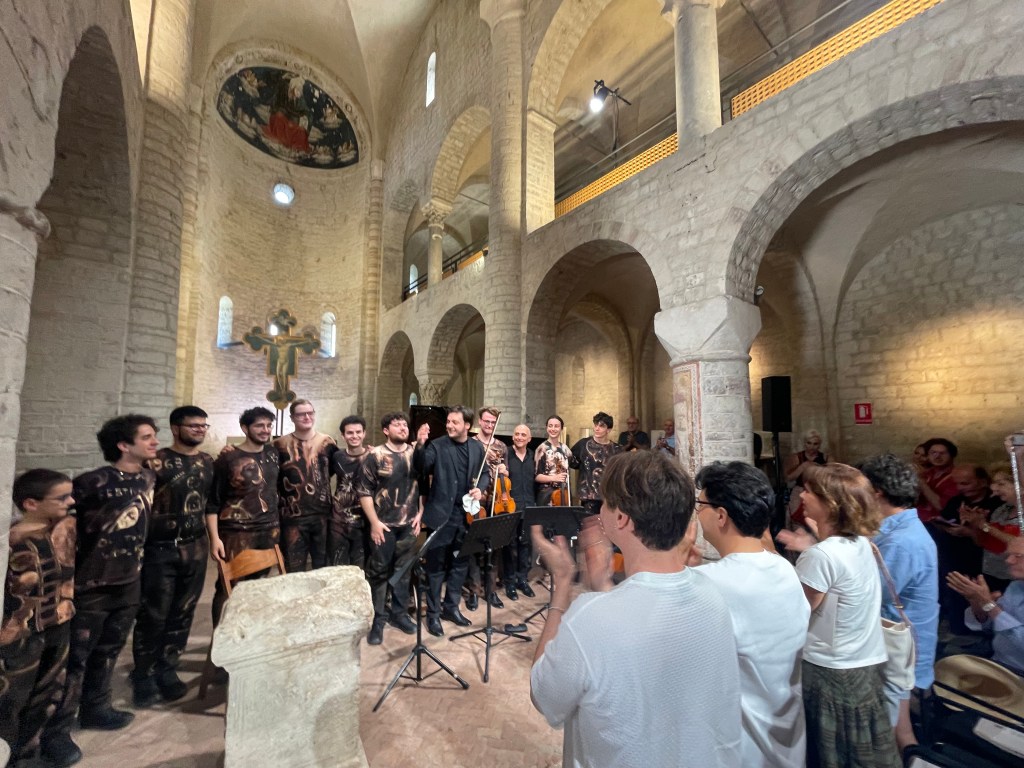
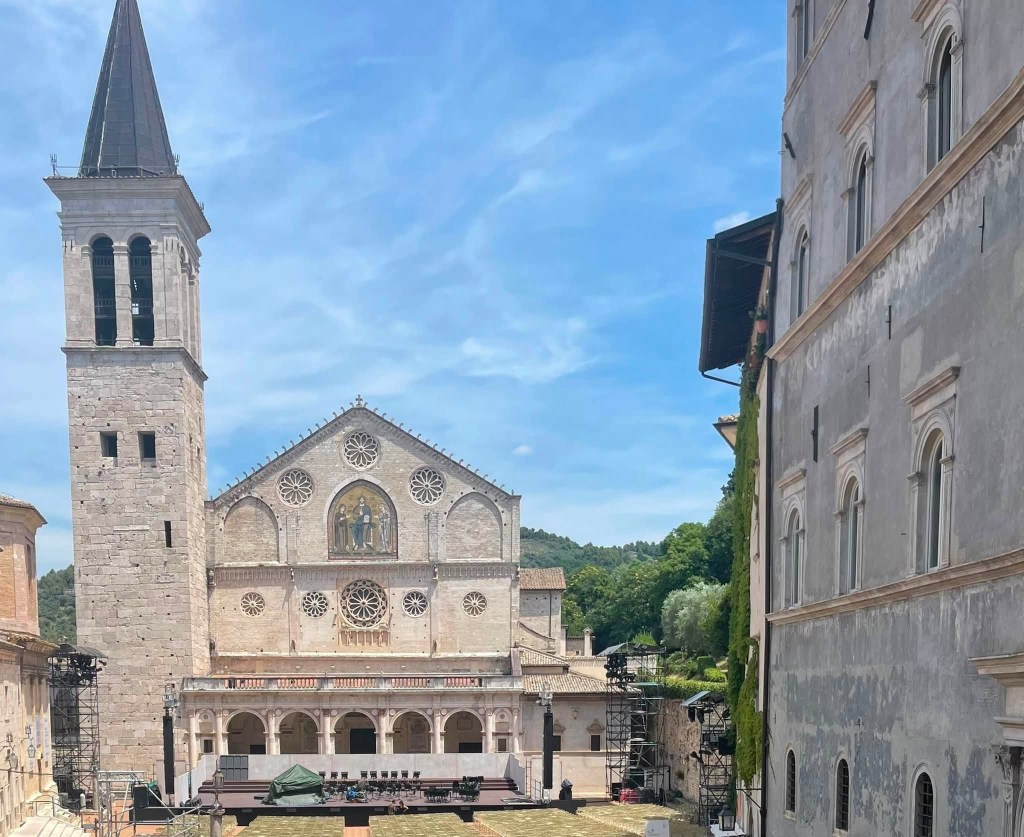
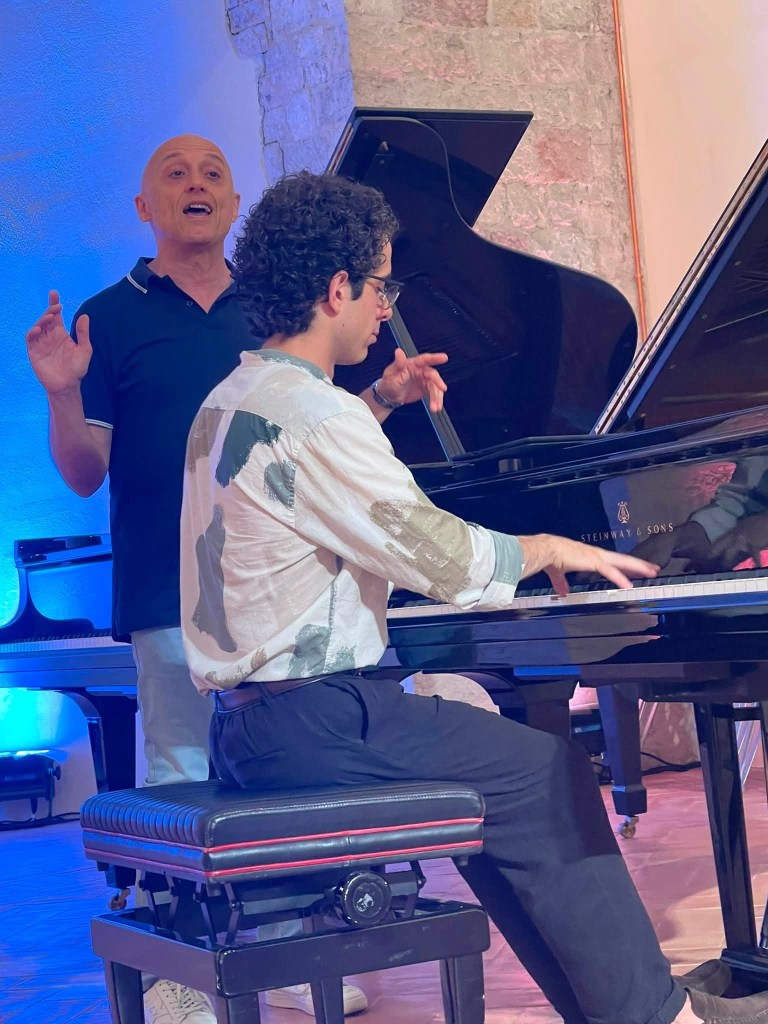
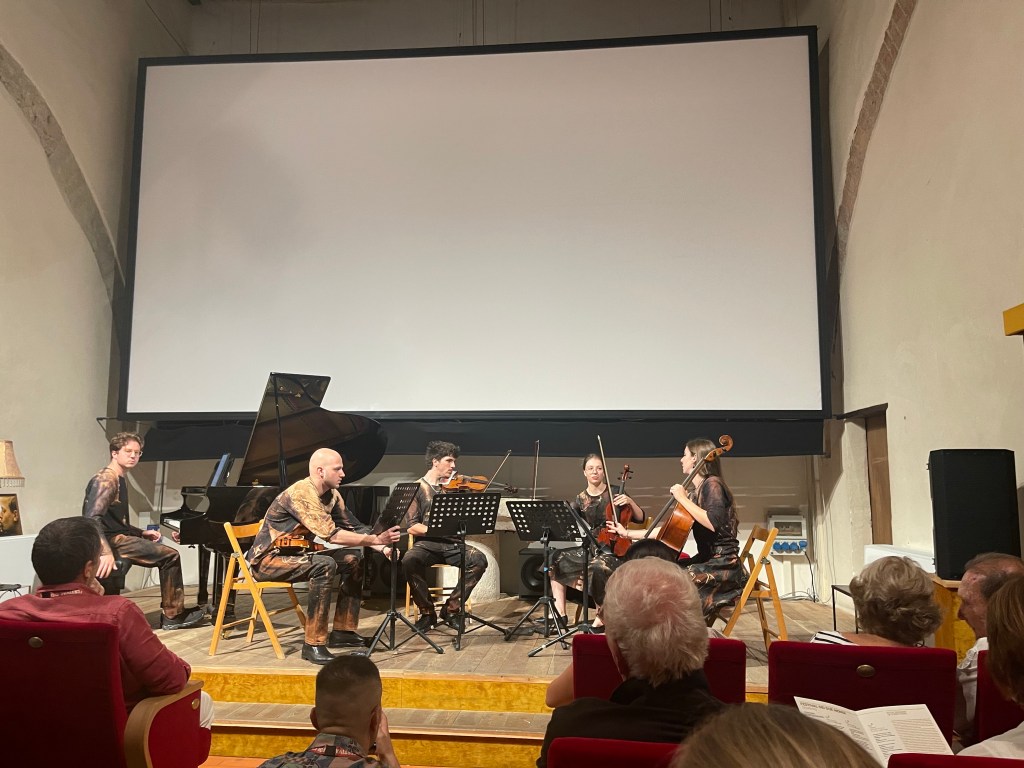
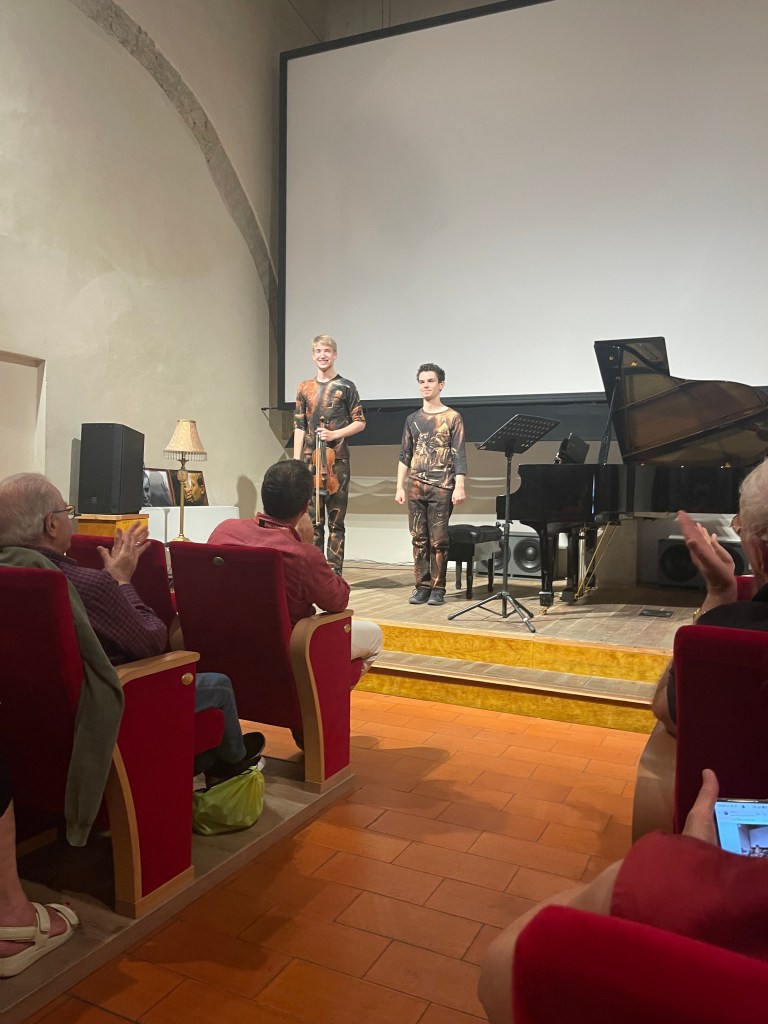
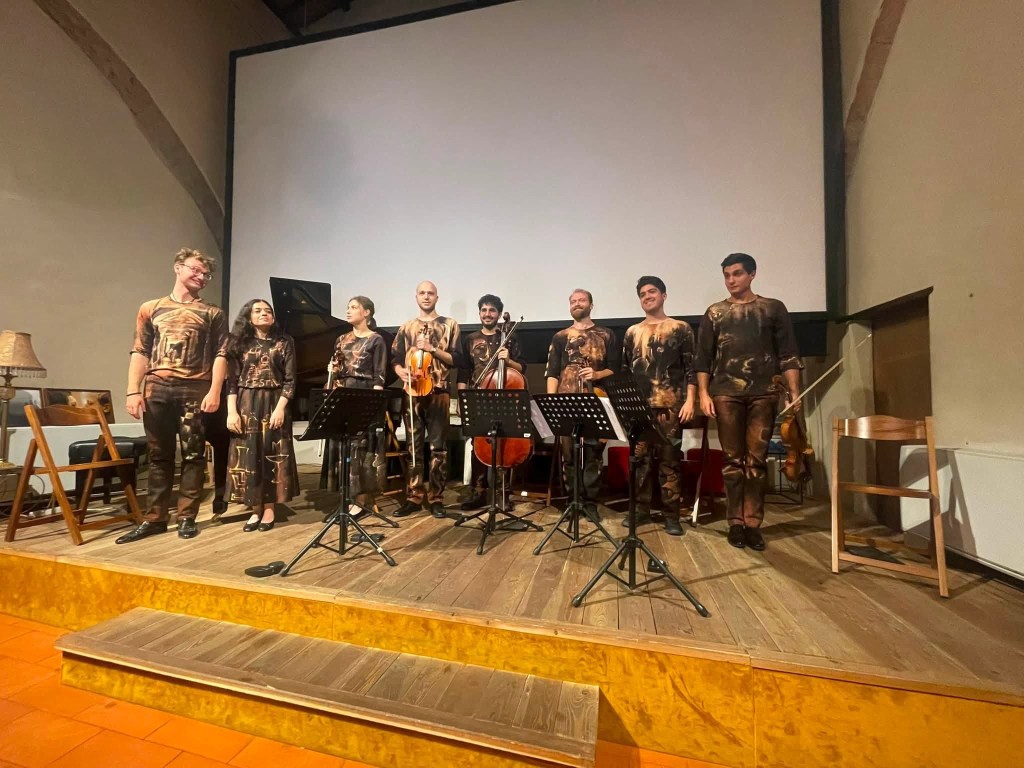
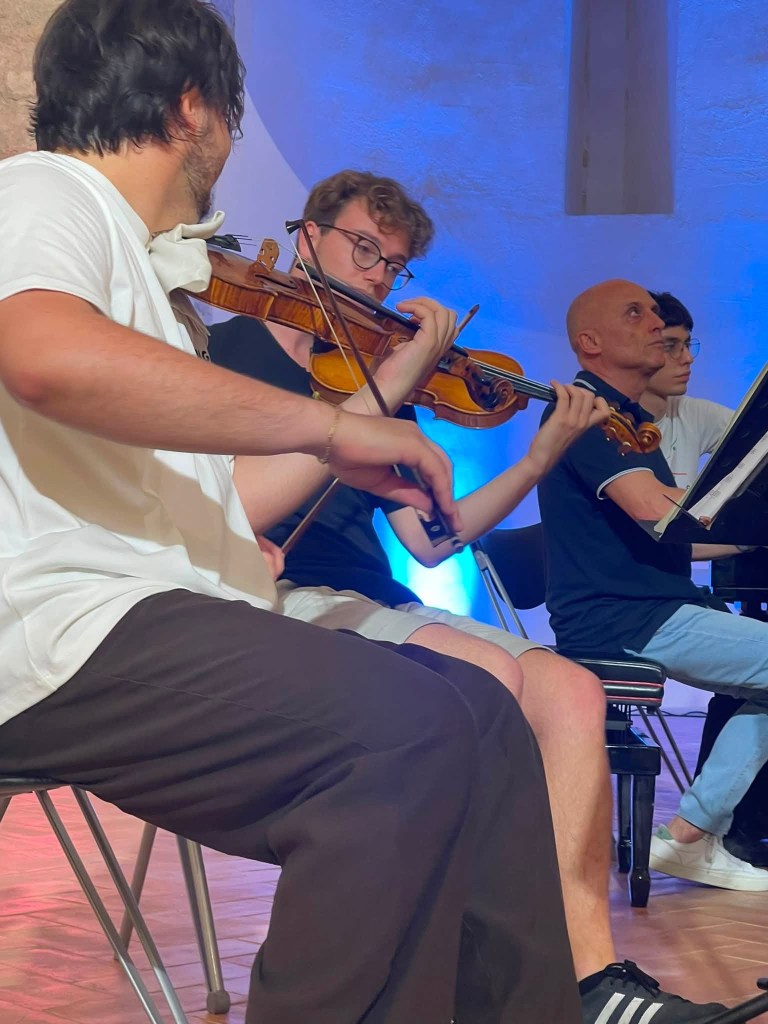
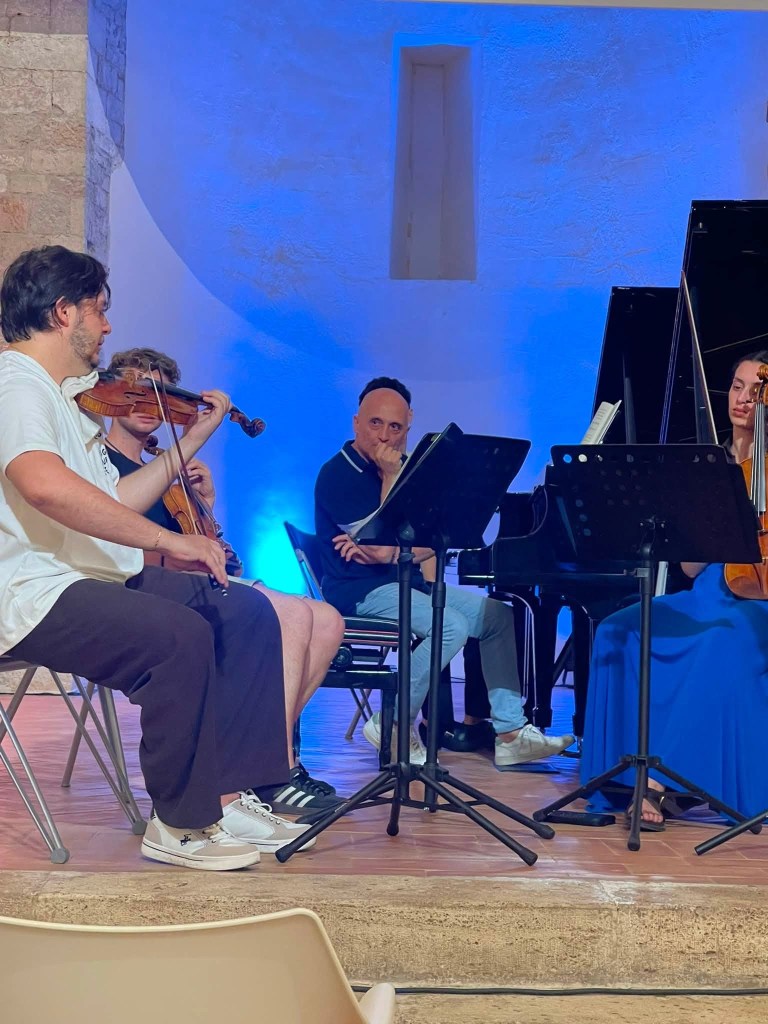
The final concert and the culmination of the Spoleto Academy was in the beautiful church of Sant’Eufemia just a stone’s throw from the Cathedral.
If music be the food of love …please play on .
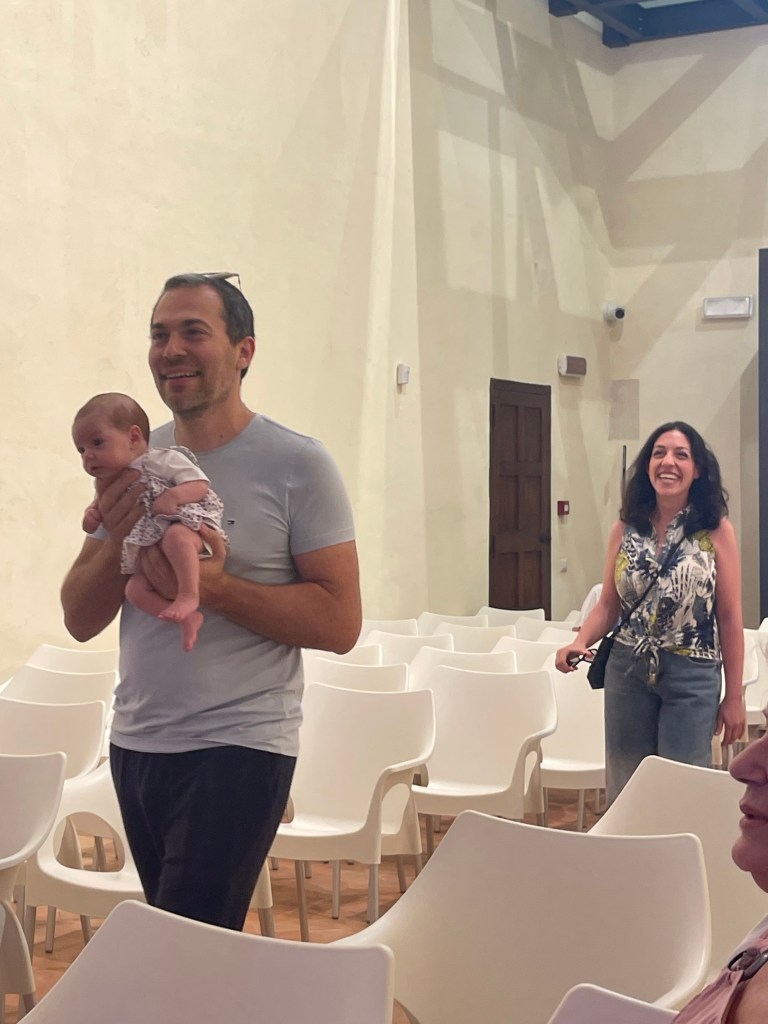
Massimo Spada presenting the final concert of his Academy Massimo and Beatrice pay a visit to Benedetto Lupo’s class with baby Margherita
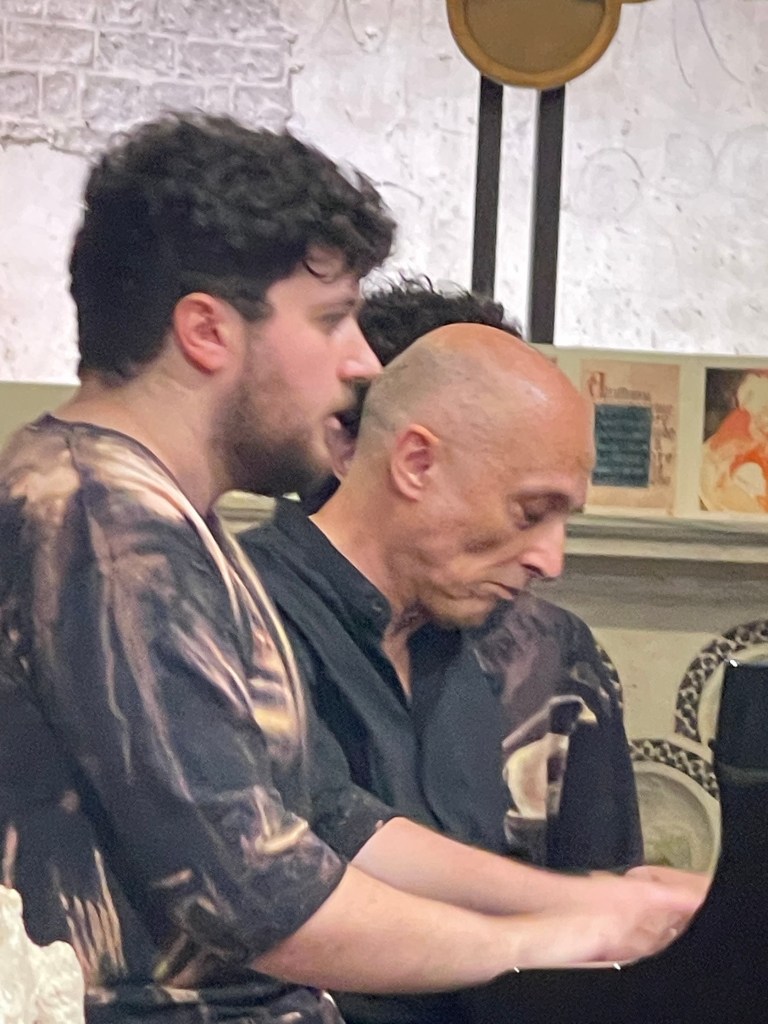
A glorious outpouring of music making of rare sensitivity and passionate intensity. From the refined beauty and sumptuous freedom of Dvořák dances with Benedetto Lupo, the anchor around which revolved three young musicians from his class.
The subtle insinuation of Lupo’s bass, accompanied the refined intensity of Antonin Bonnet, but it was the subtle humour of Lupo that brought a real smile of recognition. Fulvio Nicolosi playing with great delicacy with Lupo again echoing comments of beguiling insinuation before both building in intensity and passion dying away to a music box radiance and glitter. Herman Cerisha brought energy and rhythmic drive to the last of these three dances. A whispered energy from Lupo brought radiant beauty from Herman as he floated Dvořák’s magic melody on a cloud of subtly moving sounds.
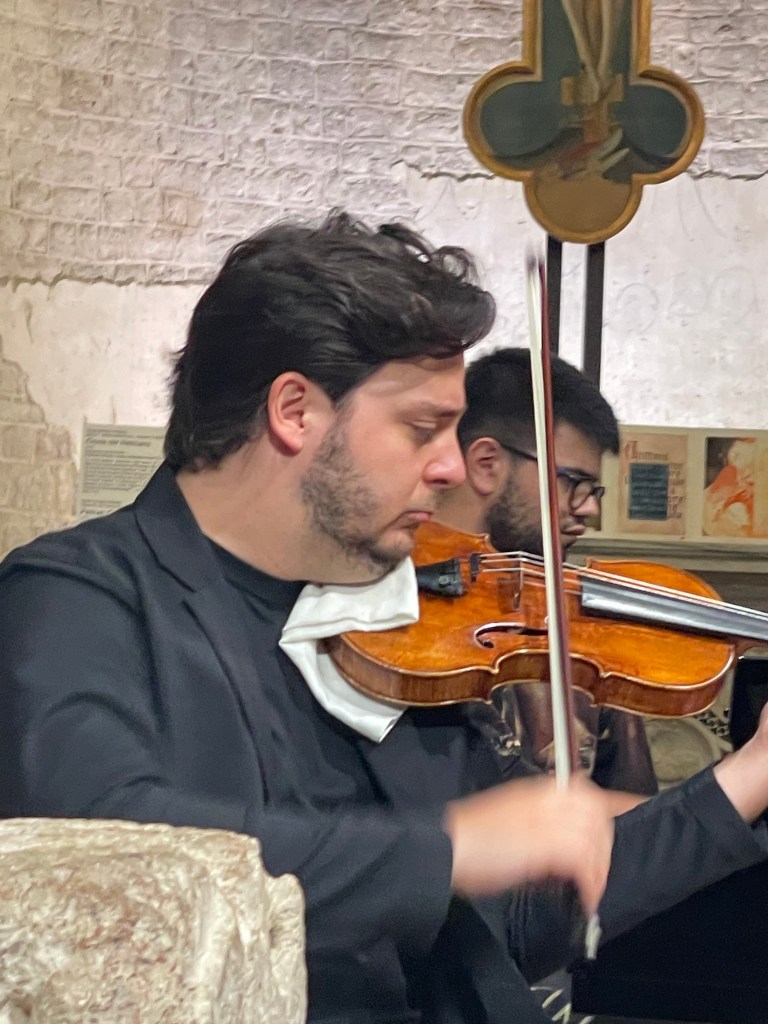
There was the tragic intensity of Mahler’s one movement piano quartet with Andrea Obiso reaching for the heights as he led his young colleagues to places they had never been before. The pulsating menace from Massimiliano Soriente on the piano was the undercurrent that ran through the entire movement with the ‘cello of Francesco Angelico in duo with Andrea Obiso with an unforgettable burning intensity of yearning and liberation. Scott Storey’s viola found a voice of his own as he mirrored the beauty of Andrea’s whispered comments.
The final cry from the Guarneri of Obiso was a solo cadenza that was a blow to the heart indeed. A remarkable performance helped by the magnificent acoustic of Sant’Eufemia which made one realise that Mahler could never have even contemplated adding other movements to what is an ‘Unfinished’ masterpiece.
A refined and scintillating performance of Haydn’s Gypsy Rondo Trio with Benedetto Lupo and Andrea Obiso taking eleven year old Riccardo Laganà with them on a journey of a lifetime. Some very stylish playing from Andrea encouraging Riccardo with a twinkle in his eye as together they added to the radiant simplicity of Benedetto Lupo’s beautiful playing. Lupo just ready to pounce with the Gypsy rondò that leapt from his fingers with a dynamic drive of refined control and enticing brilliance . All three united in a build up of energy of exhilaration and excitement. What a journey they had shared together and what an experience for a young ‘cellist on the crest of a wave and the youngest performer ever at the Spoleto Festival.
Daniele Cipriani enjoying every moment of HIS festival
But the crowning glory was a glorious full throttle performance of Schumann’s wondrous piano quintet. Benedetto playing from memory or should I say from heart . This was a performance to lift up your heart indeed and realise what emotional power music making of this mastery and conviction can exert on a world too ready to accept quantity rather than quality. The passionate opening dissolving into the liquid beauty of Lupo’s playing on a magnificent Steinway Concert Grand with the lid fully open, where he could control the magnificent kaleidoscope of sounds within without ever allowing them to overpower his colleagues. A sumptuous radiance as the cello of Martino Tazzari communed with Andrea’s Guarneri with playing of youthful passion. There was an improvised beauty as the viola and cello joined forces with heartrending beauty. The second movement was played with a whispered intensity of a desperate yearning passing from one instrument to the other until Lupo added his magnificent bass to this pulsating journey of intense beauty. There was a beautiful diminuendo to the ending that seemed to drift into oblivion. Rudely awoken by the scintillating playing of Lupo and the equally energetic playing of Obiso ,two masters with a burning light driving these young musicians to ever greater heights. Heights that ended in a glorious outpouring of nobility and radiance all united with Schumann in a poetic outpouring of sumptuous beauty.
This was the true legacy of Menotti whose presence this year under Daniele Cipriani and friends has never been felt so strongly.
The Spoleto Festival Academy with 22 superb musicians dedicating their youth to art .
What music making, but what fun they are having . Created by Massimo Spada and Beatrice Rana this is the true rebirth of Menotti’s Festival where the concerti di Mezzogiorno saw a youthful Jacqueline Du Pré, Richard Goode Renée Fleming and many others making their first appearance in an Italy that Rostropovich considered ‘The Museum of the World’
With Daniele Cipriani at the helm of his first edition he has created a cultural fervour that will continue to grow in significance.
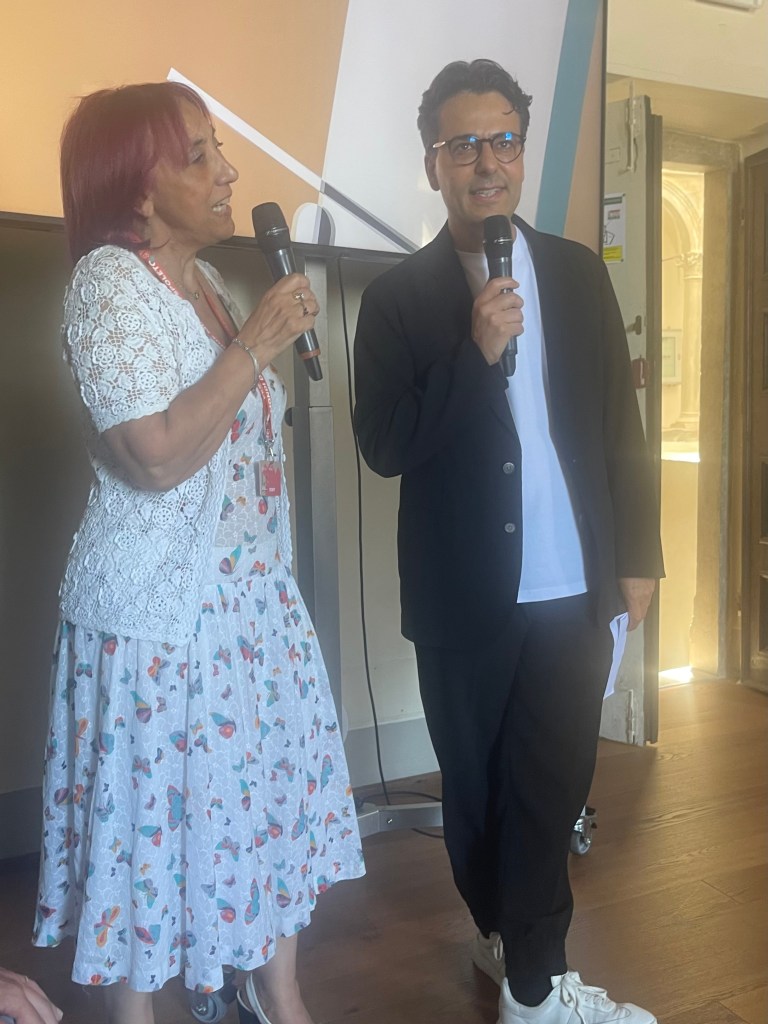
Daniele Cipriani with Simonetta Allder at the press conference
Spoleto has not savoured this for years since Edinburgh and Spoleto were the guiding light in a post war state of shock.
Menotti of course had a castle in Scotland as he also had a house overlooking the Cathedral in Spoleto.
A guiding light that is reignited today
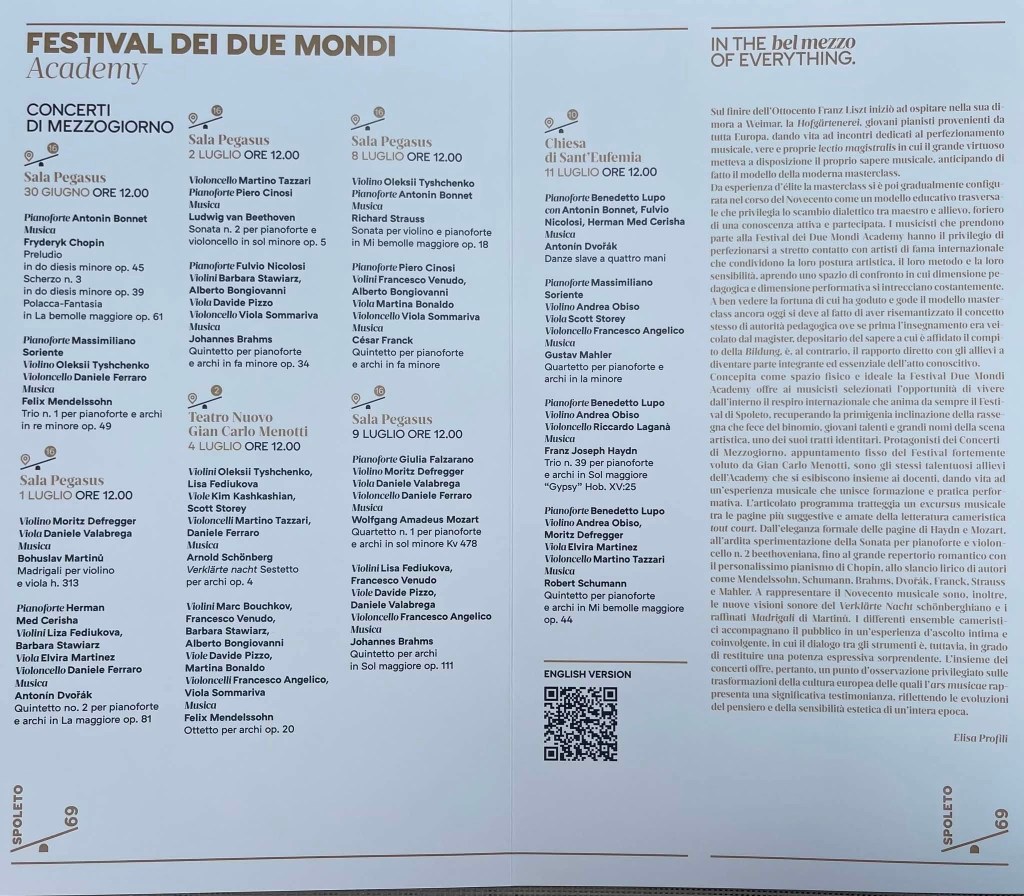
First day in Spoleto with the Festival dei Due Mondi Academy of 22 specially selected musicians taking part in master classes of renowned soloists . Together making music in public concerts at mid-day in the Sala Pegasus whilst all around in every part of the city there is Ballet, Opera, Theatre and Symphonic concerts .
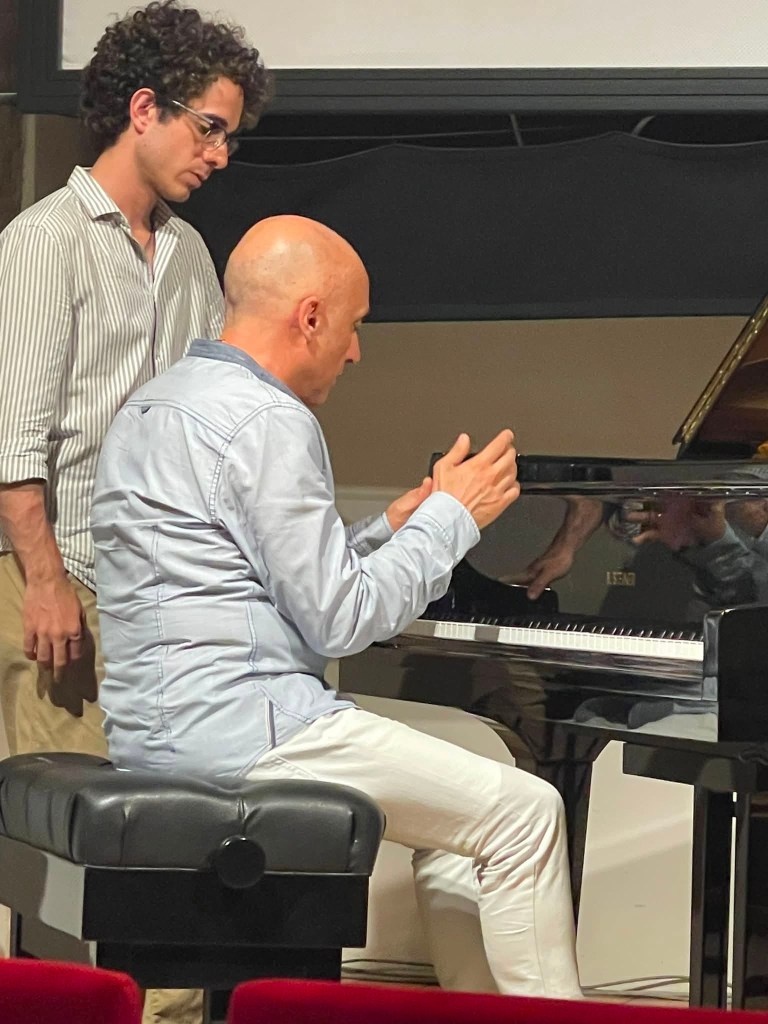
Today I spent with Benedetto Lupo inspiring young musicians to listen more closely and delve even deeper into the scores. As he told Fulvio Nicolosi who gave a very fine performance of Liszt’s transcription of Wagner’s Liebestod – you play it Liszt’s way but I play it Wagner’s! Wheras a later performance of the Dante sonata was truly Liszt at his most theatrical. Lupo pointing out that you need to ration the energy and to sing not run!
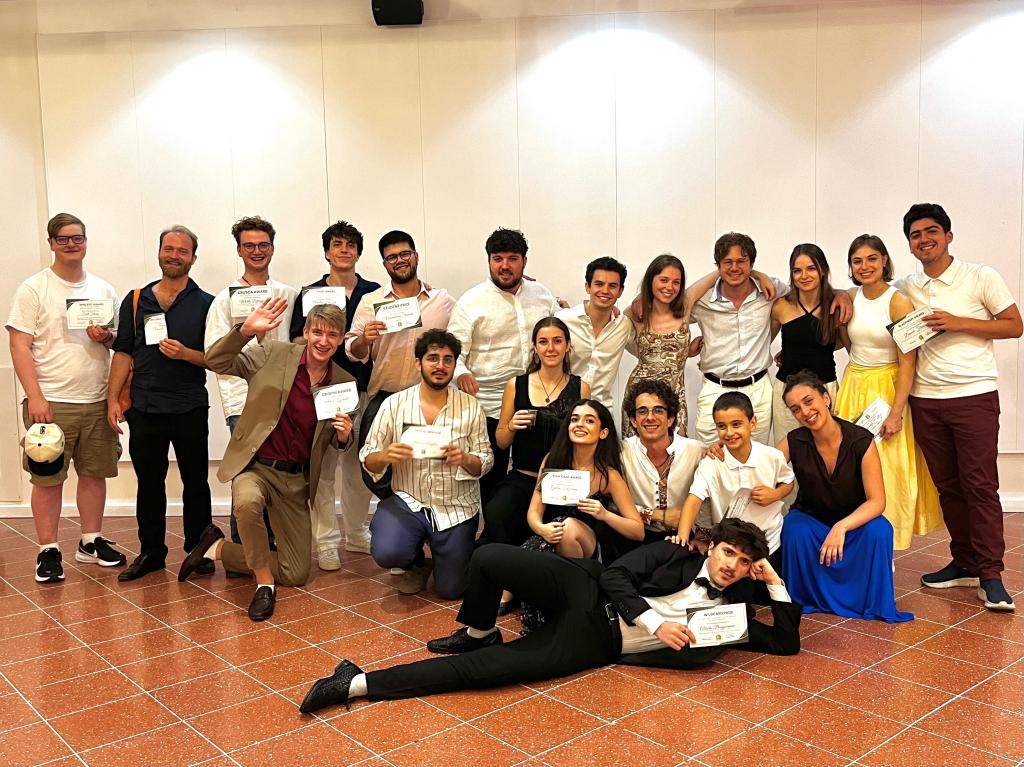
The fifth midday concert was dedicated to the Strauss violin sonata with Oleksii Tyshchenko and Antonin Bonnet and the Franck Quintet with Piero Cinosi Francesco Venudo, Alberto Bongiovanni, Martina Bonaldo and Viola Sommariva. Superb performances playing to a full and very enthusiastic audience. Infact it was to Oleksii and Antonin that Beatrice Rana and Daniele Cipriana awarded a special prize at the end of these two weeks of intense music making. An award that will see them returning in 2027 to perform officially in the festival programme.
Oleksii Tyshchenko and Antonin Bonnet winners of the First Academy Award
Piero Cinosi had played just an hour earlier Chopin’s 4th Ballade to Lupo, and Bonnet an hour after the Strauss ,Chopin’s 2nd Piano Concerto!
I was only able to hear the last three of these midday concerts. The sixth was with the twenty year old Giulia Falzarano playing Mozart’s Piano Quartet in G minor. A very flamboyant player who feels the music intensely and could communicate her burning energy to Moritz Defregger,Daniele Valabrega and Daniele Ferraro in a performance that was of sublime youthful freshness and invention. The other work was in G major and it was Brahms’s later Quintet for strings played with great beauty and depth by Lisa Fediukova,Francesco Venudo, Davide Pizzo,Daniele Valabrega and Francesco Angelico.
Benedetto Lupo rushing off to rehearse Schumann Quintet and Haydn Gypsy Trio that he will play with Andrea Obiso and others on Saturday .
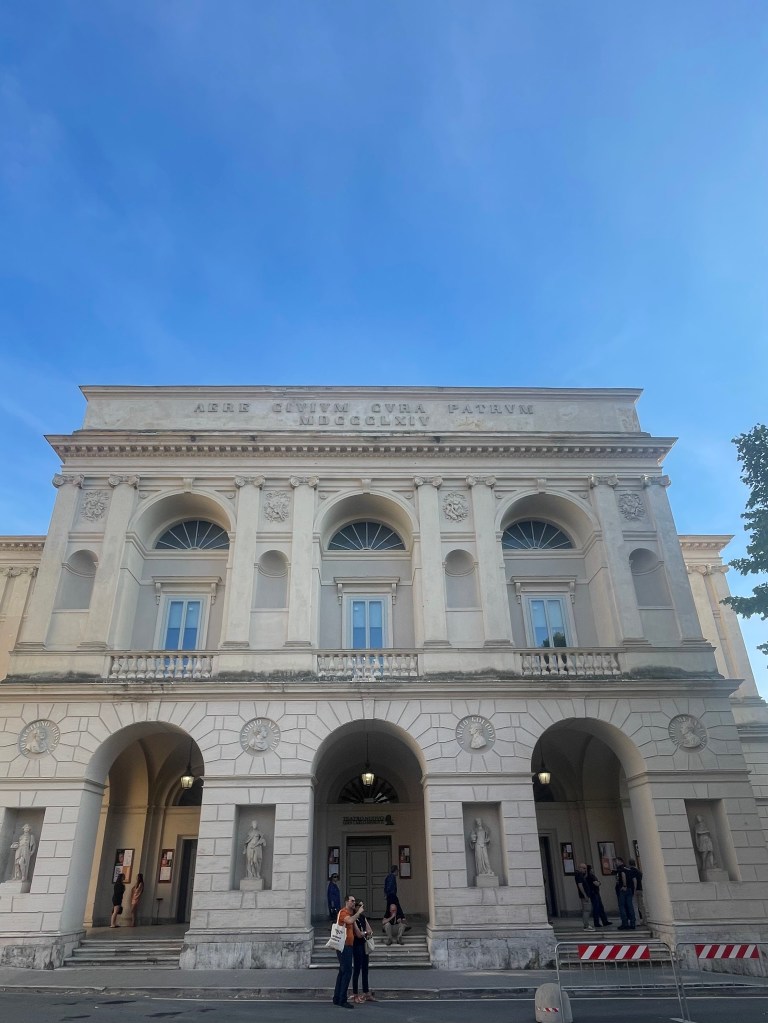
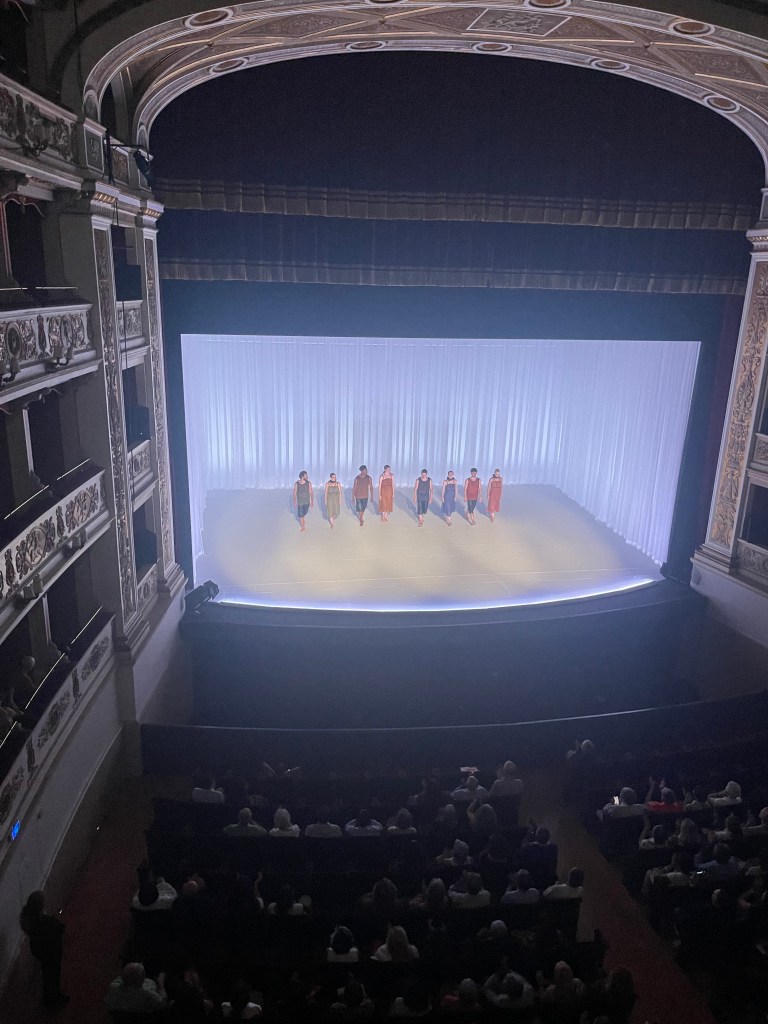
Just time for a bit of dance in the beautiful Teatro Nuovo that is now named after Menotti who very much put Spoleto on the map and would yesterday have been 115 !
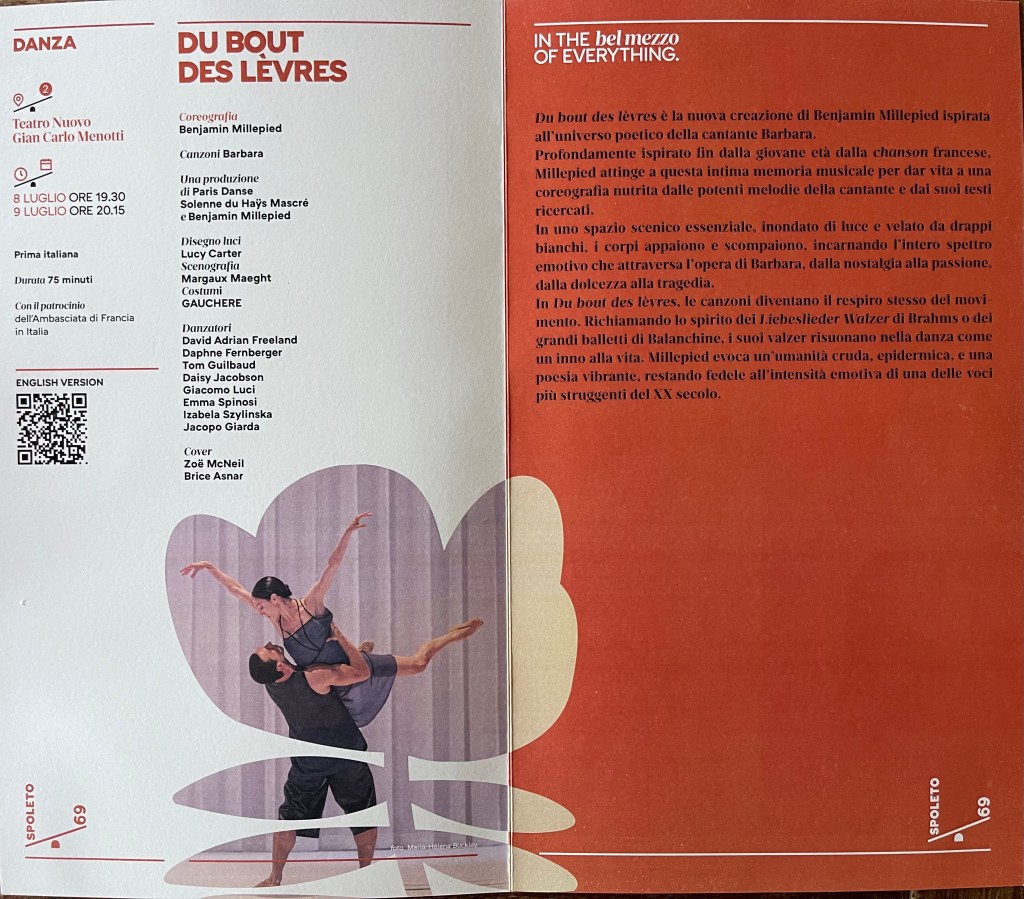
The curtain about to go up on ‘Du Bout des Lèvres’ directed by Benjamin Millepied. What a breath of fresh air this was in a theatre that would do any capital city proud and has been so beautifully restored . Seduced by the beautiful poetic songs of ‘Barbara’ with eight dancers floating in through white etherial drapes as they danced to the music with poetic elegance seeming to float on wings of song.
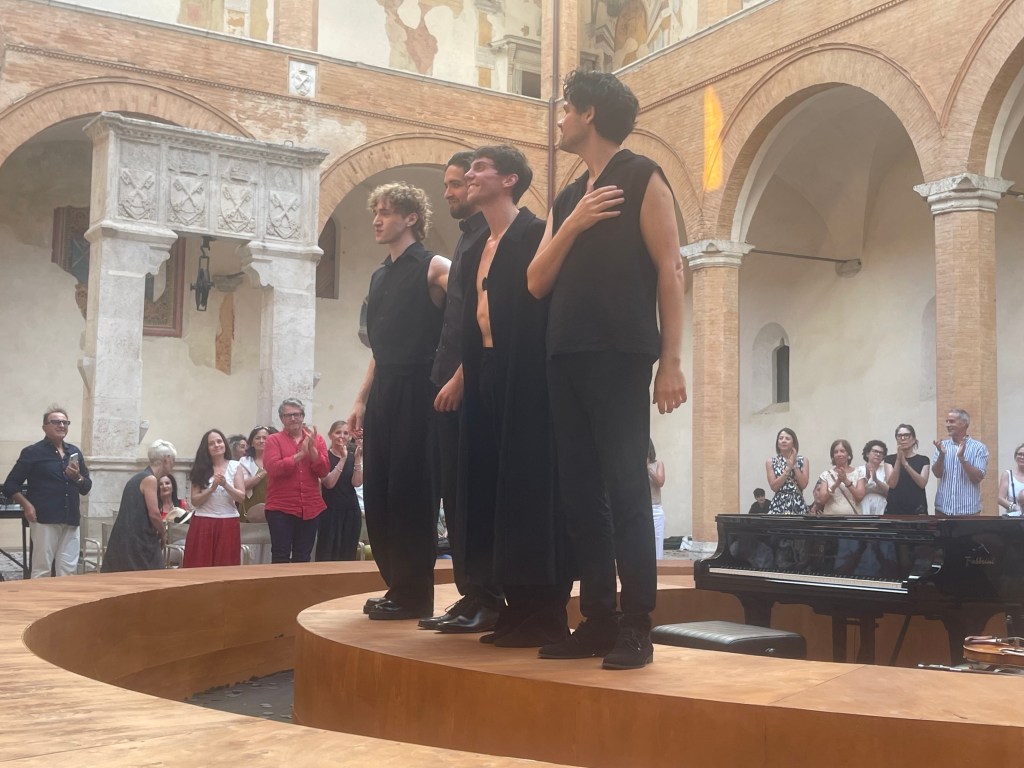
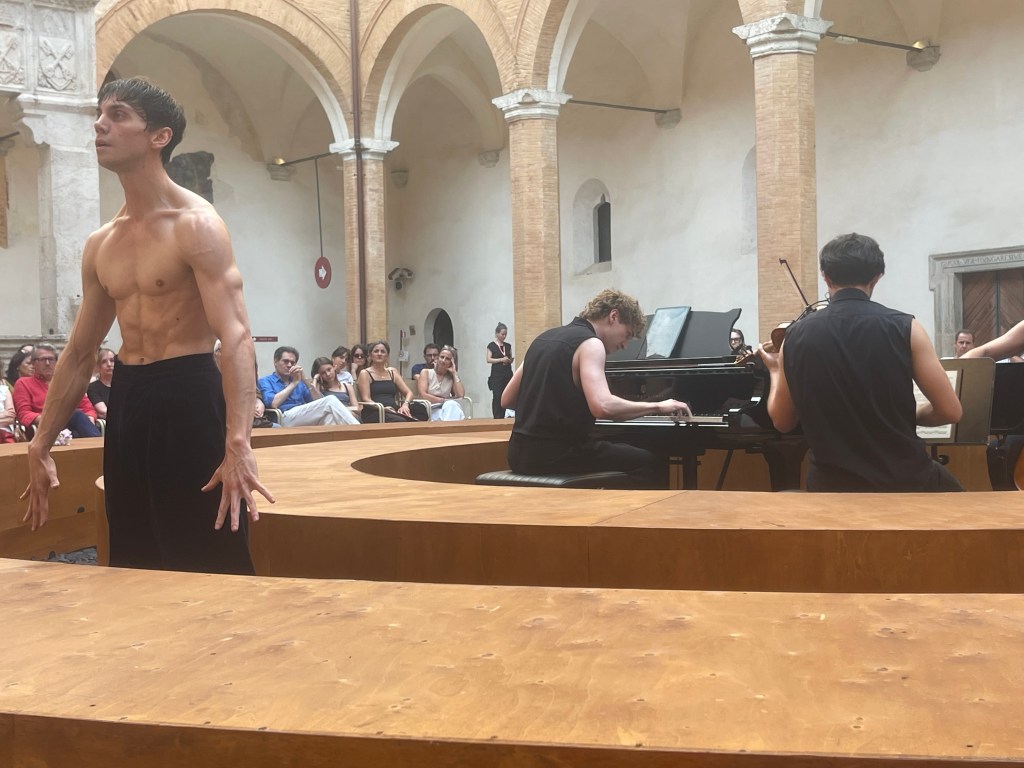
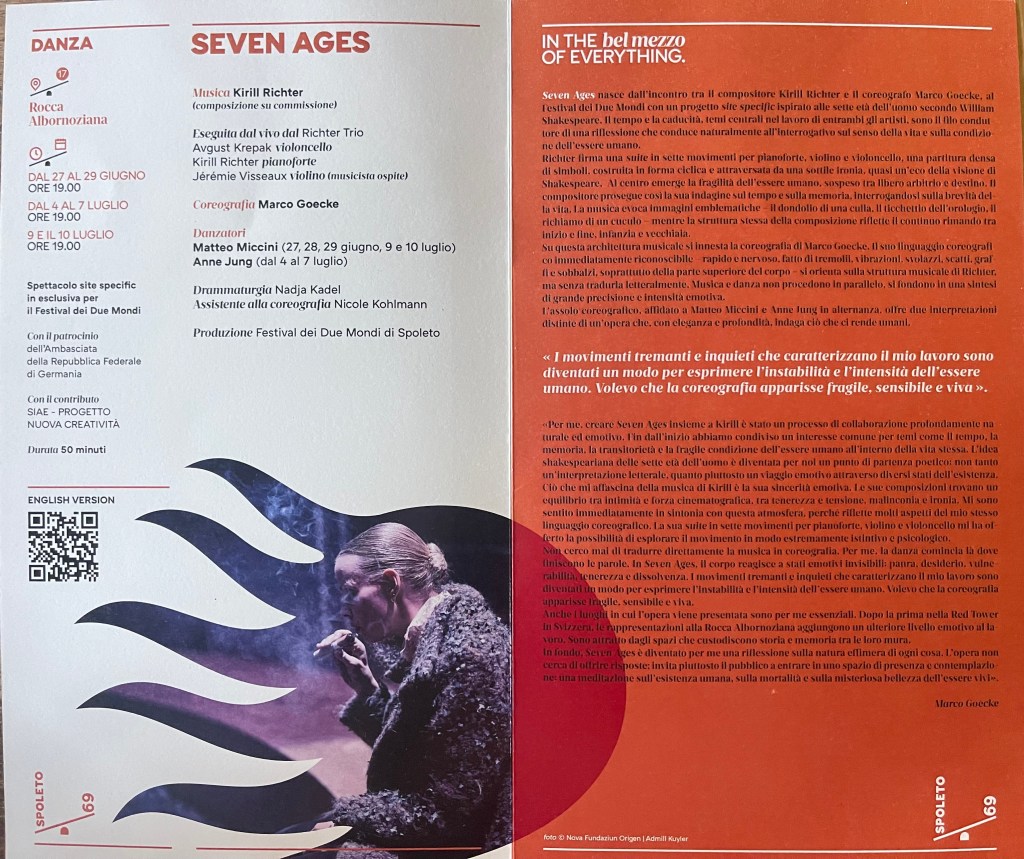
And another performance of dance after a day spent with the class of Benedetto Lupo was with pianist ,Kirill Richter, performing with his trio, his own suite of seven movements, commissioned especially for the ‘Seven Ages’.Russian trained Paris-based composer and pianist is associated with a style often characterised as expressive minimalism and with a dancer that the choreographer Marco Goecke wanted to express the uncertainty and intensity of the human spirit. In the fortress that overlooks Spoleto with the musicians in the middle of a circle and the dancer revolving around them, they were even helped by a violent wind that swept across the fortress with thunder adding even more suggestive sounds to a remarkable score by this young musician.
Miracles in Spoleto as Benedetto Lupo and Andrea Obiso reach for sublime heights with students of the Festival Academy
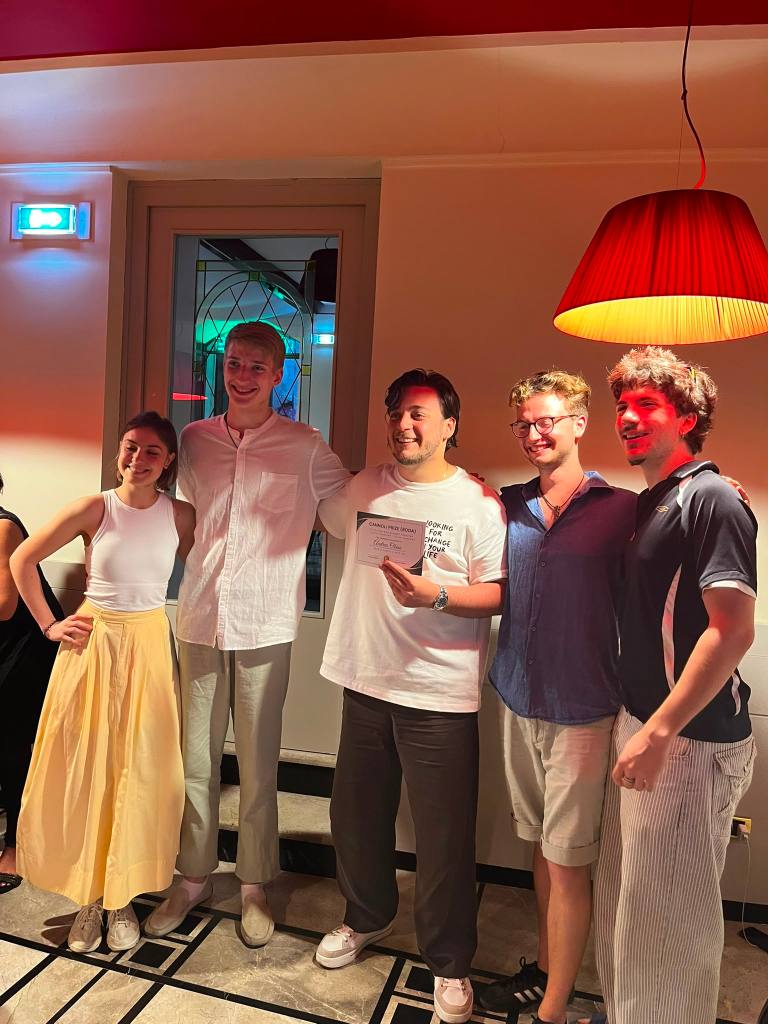
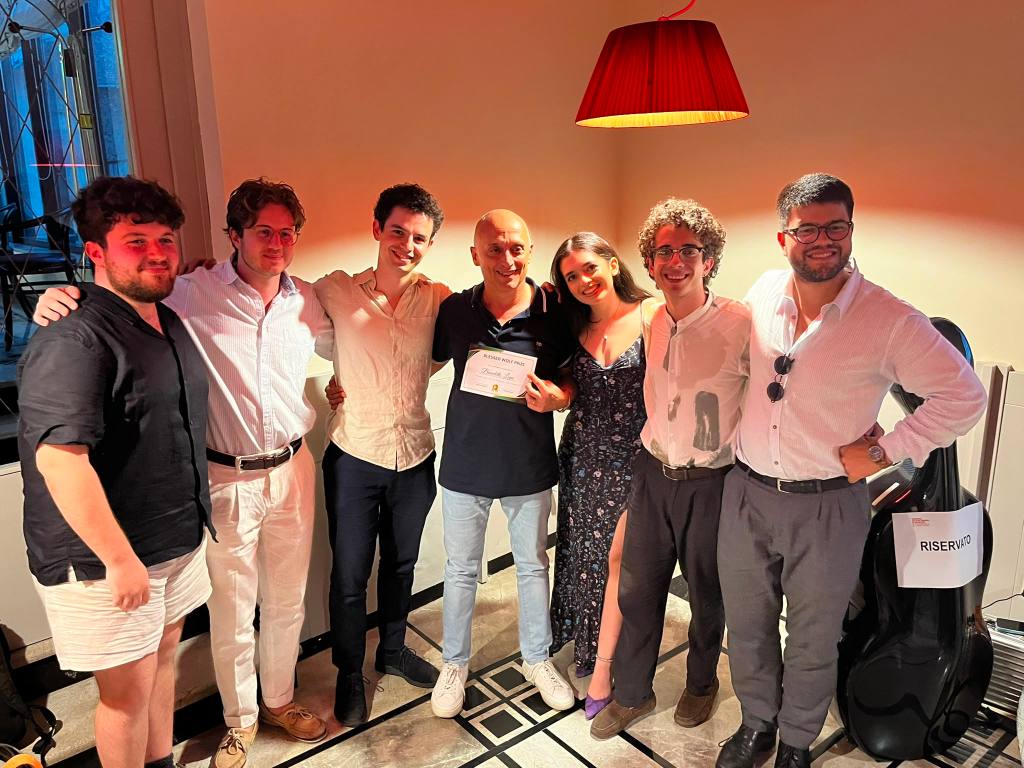
Prize winning ceremony from the students to Benedetto Lupo and Andrea ObisoThe class of Benedetto Lupo
Magic in the air here in Spoleto with Massimo Spada’s Festival Academy where 22 super gifted young musicians are together for three weeks of sublime music making
Beatrice Rana the musical consultant who has risen to the occasion finding superb solutions for last minute problems that can arise in a Festival of such magnitude and importance.
Isabella Rossellini, together with the Artistic Director of Spoleto69 Festival dei Due Mondi, Daniele Cipriani, and Maria Teresa Venturini Fendi, President of the Carla Fendi Foundation, will present the CARLA FENDI STEAM 2026 award to Charles Chemin, as Artistic Director of The Watermill Center, the laboratory for the arts and humanities founded by Robert Wilson. The award includes financial support intended to sustain the Center’s activities, which Wilson wanted to be “a place that offers a global community time, space and freedom to create and inspire.” Residencies, exhibitions, and educational programs also for teenagers and children culminate in the Summer Festival, an event in which artists work collaboratively. Aware that Wilson’s legacy is so vast and protean that it wouldn’t do him justice to only fill the frame that he left us, “because there is only one Robert Wilson”,Chemin states: “We will continue to highlight Robert Wilson’s unique vision, but also the openness that, as he himself wanted from the very beginning, The Watermill Center carries, ensuring that our path to artistic creation remains vibrant.”
FINAL PRESS RELEASE
Spoleto 69: An all-time record for box office takings, cultural programme and excitement. The success of Daniele Cipriani’s first term as Artistic Director paves the way for the 2027 edition which will mark the Festival’s 70th anniversary.
Daniele Cipriani presenting the final concert of his first extraordinarily successful festival
Spoleto, 12 July 2026 – The 69th edition of the Festival dei Due Mondi in Spoleto, the first under the leadership of the new Artistic Director Daniele Cipriani, draws to a close this evening. For 17 days, the Umbrian town has once again been the beating heart of the international arts scene: with debuts, avant-garde productions and others by established masters, t he Festival has rediscovered its most authentic energy, drawing on Gian Carlo Menotti’s precious legacy to relaunch it with renewed international vigour, open to dialogue between music, opera, drama, dance, theatre and the visual arts. This edition has put Spoleto back on the map at the centre of the world, restoring that special atmosphere which, over the years, has made the Festival unique: lively piazzas and streets bustling with people until late night, artists mingling with the inhabitants and the public, bringing theatre onto the streets so that it becomes a collective experience for the whole town. Artistic Director Daniele Cipriani has stated: “It has been a great honour, but also a huge responsibility to direct, for the first time, the Festival that was conceived, created and cherished by Gian Carlo Menotti. I decided to have two outstanding consultants by my side: Beatrice Rana and Leo Muscato. I have worked to place myself at the service of the Festival, to listen to its history, to rediscover its roots and, from those roots, to nurture new branches and new perspectives. The real value-added lies not only in the success of each single event, but in the ability to transform a town into a community united by art. The 70th edition will take place from 25 June to 11 July 2027: following this year’s theme ‘Roots’, next year’s will be ‘Visions’. Because roots only make sense if they continue to shape the future.” A few figures from the 69th edition The 69th edition of the Festival dei Due Mondi, the first directed by Daniele Cipriani, saw over 35,000 tickets sold and record-breaking takings of almost 1 million 100 thousand Euros: the highest financial result ever. Daniele Cipriani further adds: “These are impressive figures, but what makes them truly significant is the way in which they were achieved: by considerably expanding the Festival’s artistic programme, not merely to ‘pad the numbers’, but to offer an even richer and more varied programme – ranging from classical to contemporary dance, from chamber music to major symphonic concerts, right through to pop performances by Arisa and MIKA and to David Szauder’s artificial intelligence research. Our choices stem from the belief that a festival like this should invite everyone to step beyond their own boundaries: those who come for a concert may discover dance, whilst those who come for an opera may be surprised by digital art. Our mission is not to confirm the audience’s tastes, but to broaden them, creating opportunities for curiosity to make new discoveries.” This year, the Festival presented 121 shows and cultural events, totalling 290 performances. 1,057 artists from 28 countries were supported by a team of 354 people, including employees, collaborators, technicians and staff at the various venues. Simonetta Allder
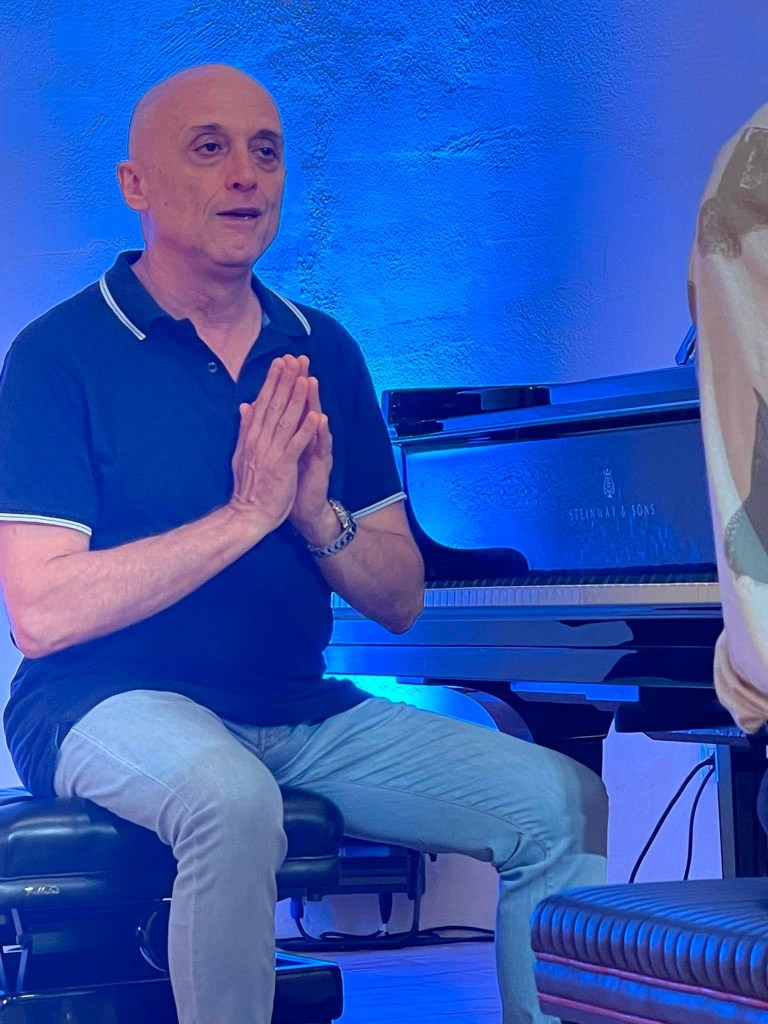
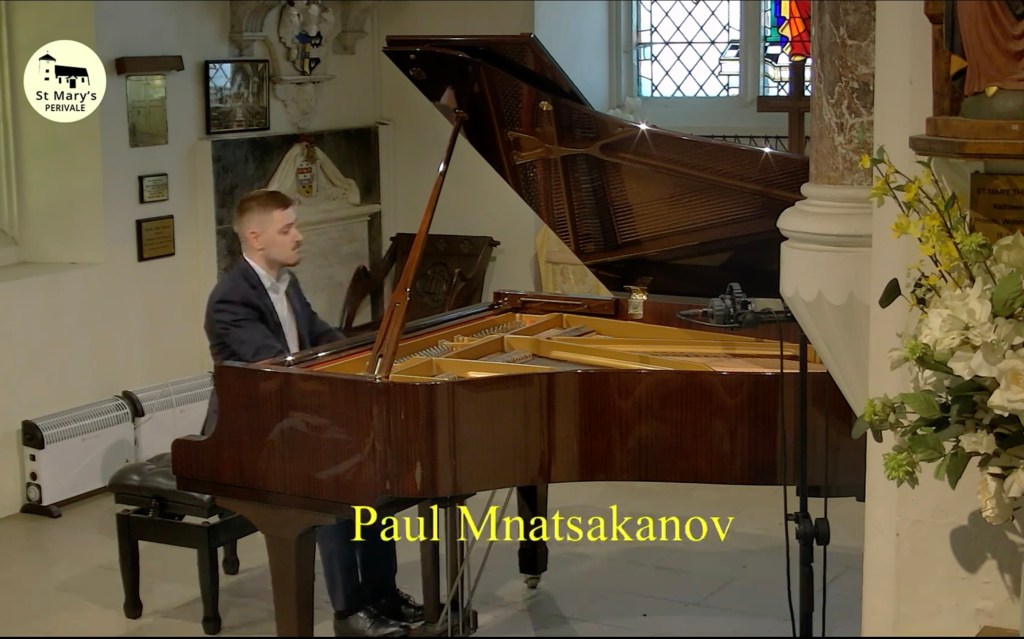
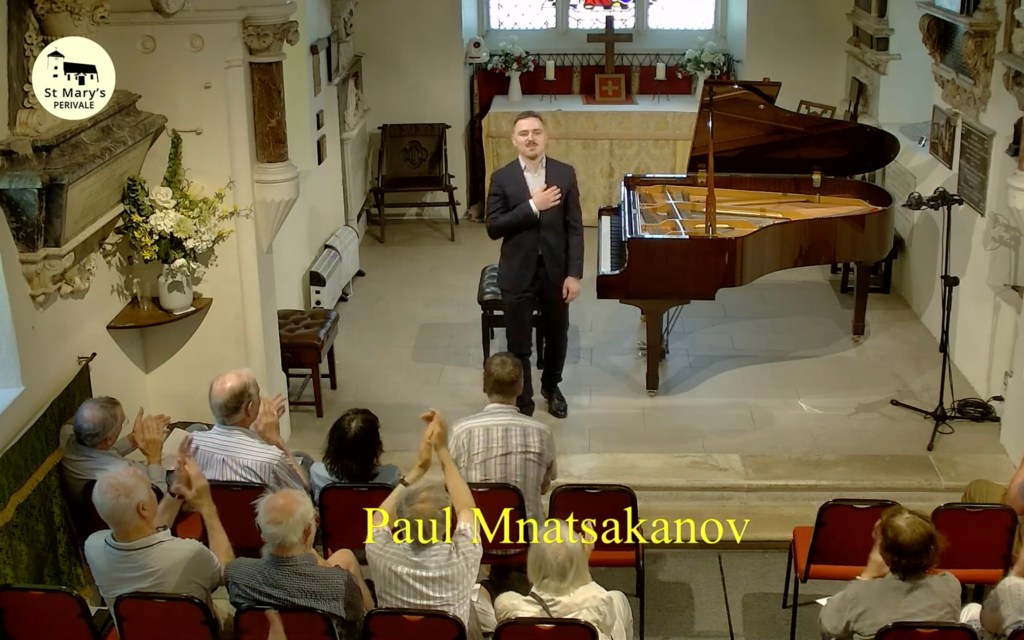
I have heard Paul Mnatsakanov many times over the past few years as he reached for the heights at the Royal College of Music. A complete musician who could fill a vast auditorium with the orchestral sounds of Mussorgsky as he could draw the audience in to overhear the barely audible sounds of the clavichord. Conducting and working with singers has given his playing a sense of architectural shape but above all bringing a sense of character to all he does.
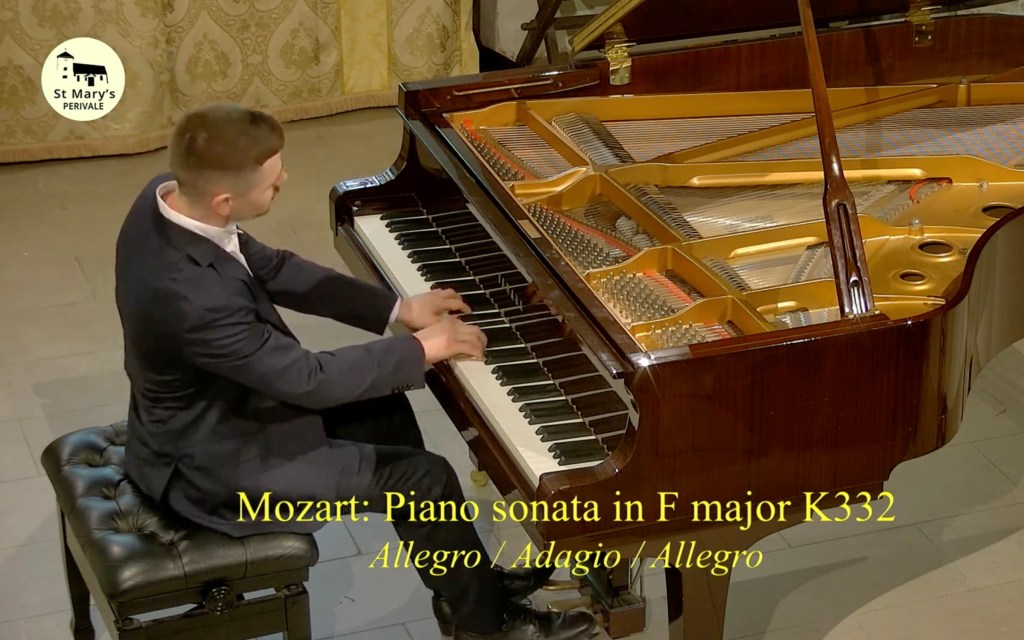
The music is made to speak with the same inflections as the human voice and nowhere is this more evident than in his playing of Mozart. Today he chose to open with the Sonata K 332 which he had played at his graduation recital last year …………..’A Mozart sonata in F K 332 of impeccable style and discreet ornamentation that just highlighted the beauty of the ‘Allegro’ played with refined good taste and character. Not the colours of Horowitz but much more restrained and classically orientated that nevertheless spoke with the same operatic voice. Ravishing beauty of the ‘Adagio’ where his superb sense of balance allowed the bel canto to sing but also the audacious accompaniment to be an equal partner. An ‘Allegro assai’ that just burst onto the scene with scintillating energy and high spirits and where Mozart’s surprise ending was judged to perfection without ever giving the game away.’ A performance that has grown in depth and simplicity where his self identification with the operatic characters as they enter and exit the scene is quite remarkable. The inflections of a human voice that do not disturb the style and absolute clarity of the performance. Playing with controlled passion as he allowed the final ‘Allegro’ to erupt with a burning drive having played the ‘Adagio’ with exquisite radiance. Ornaments in the ‘Adagio’ as in the ritornello of the opening movement just added to the character, not disturbing but enhancing the simplicity and beauty of Mozart’s genial creation.
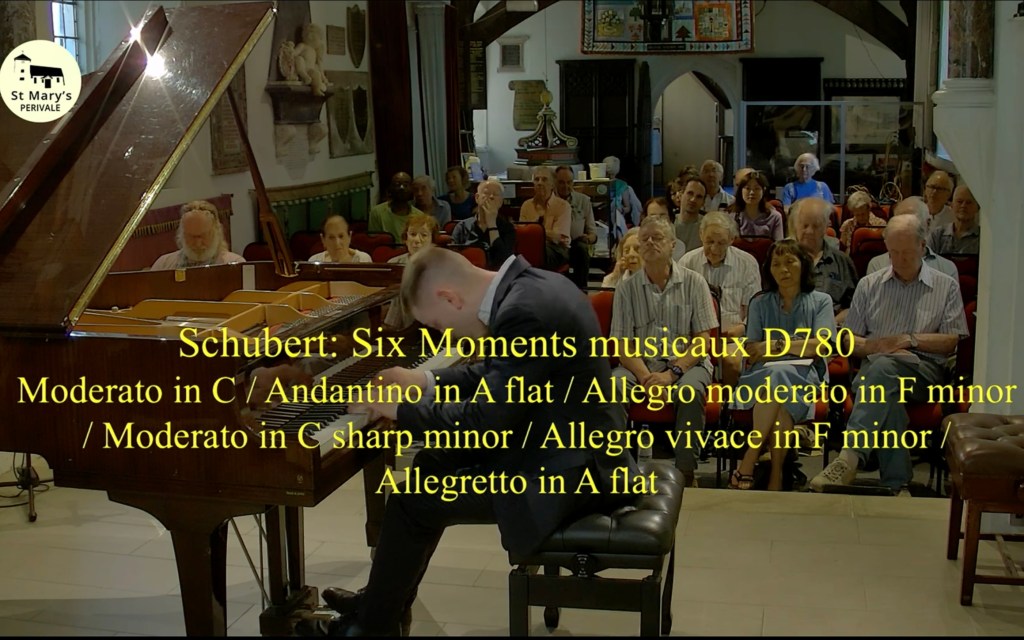
The Schubert Moments Musicaux I have not heard from Paul before, and it was here that he managed to imbue these miniature masterpieces with a sense of recreation that was as spontaneous as it was convincing. Slight inflections, a gentle underlining or underplaying certain passages allowed the music to speak with the same directness as the human voice. The first played with the simplicity of a ‘ländler ‘ of impish good spirts with a beautifully flowing central episode of a question and answer over a gently moving bass. The ‘Andantino’ was played very sensitively where every note spoke with poignant significance. A whispered central episode played with an extraordinary palette of colours of radiant beauty and eloquence. The third in F minor was played like a march of the fairies with refined charm and simplicity and a beguiling sense of character. No one can compare with Curzon here but Paul came pretty close to that controlled elegance mixed with charm. The whispered meanderings of the fourth were played with sublime clarity and the central episode of beautiful self effacing elegance. The return of the meanderings disappearing into the distance that he played with remarkable control of sound. Bursting into the ‘Allegro vivace’ with a burning intensity and remarkable technical mastery. The ‘Allegretto’ was the calm after the storm, played with the same sublime simplicity as all that Paul did ,but here was with a sumptuous full harmonic sound. A sedate central episode was with radiance but tinged with a religious fervour floating on a glorious wave of sound. This was one of the finest performances of these elusive Moments that I have heard from a young musician where selfless musicianship is combined with a unique sensitivity of eloquence and character.
The ‘Appassionata’ was given a performance from a musician who could see the whole architectural shape of this tempestuous outpouring. From the very opening there was a scrupulous attention to detail where the silences are so important and throughout the work there was a continuous flow like being engulfed by a great wave. If there were some rough corners it was of no importance for a musician who could imbue this work with the very temperament that had inspired such an audacious outpouring. Scrupulous attention to Beethovens’ pedalling was at times too literal and became muddled rather than mysterious. Big sweeps of arpeggios that Beethoven marks to be played with one gesture were divided between the hands to avoid mishaps or in Paul’s case to save on practice time in the life of an eclectic musician who has so much to fit in within a short space of time. The important thing was that the intention was so firmly embedded in the interpretation that these technical details became of lesser importance for a musician who could see the vast landscape that Beethoven had set before him. The coda of the first movement, as with the last, was played with passionate intensity and the Beethovenian temperament of irascible impatience. The ‘Andante’ was indeed ‘con moto’ and was a procession of religious intensity. A set of four variations in D flat on a theme remarkable for its melodic simplicity combined with the use of unusually thick voicing and a peculiar counter-melody in the bass. Its sixteen bars (repeated) consist of nothing but common chords, set in a series of four- and two-bar phrases that all end on the tonic that Paul allowed to unwind with well oiled simplicity. The final variation ending with a deceptive cadence containing the dominant 7th chord instead of the tonic that resolves to a soft diminished seventh on B♭ marked pp (pianissimo), followed by a much louder diminished seventh, marked ff (fortissimo), at an octave higher that serves as a transition (without pause) to the finale.A shock wave indeed! The final Allegro was played with controlled drive bursting into moments of inflamed passages that Paul played with technical mastery. Keeping a reserve for the final coda that he played with fearless abandon and driving rhythmic dynamism.
Paul Mnatsakanov is an emerging young American-Russian-Armenian pianist, collaborative pianist/répétiteur, historical keyboardist and conductor. His artistic vision is that music, as a universal language of sound, conveys thoughts, stories, experiences and emotions. Every piece, whether instrumental or vocal, is an expression of what it means to live and be a part of the universe. He attained a first-class degree in his undergraduate studies at the Royal College of Music in London as an RCM scholar and as a Joint Principal Study student with the Head of Piano, Prof. Vanessa Latarche, fortepiano professor, Dr. Geoffrey Govier, and Chair of Historical Keyboard Instruments, Prof. Terence Charlston. Currently, he is in the second year of his postgraduate studies as a collaborative pianist with Prof. Vanessa Latarche, Seb Wybrew and Caroline Dowdle, as well as organ with Charlie Andrews and conducting with Peter Stark. He also studies piano with Philippe Raskin at the Gulda School of Music in Vienna, Austria, and historical keyboards (harpsichord, clavichord and fortepiano) privately with Carole Cerasi.
Paul is a laureate of multiple international competitions including “Kendall Taylor Beethoven Piano Competition” (London, 2024, 1st prize), “Valsesia Musica International Competition” (Varallo, Italy, 2023, 1st prize), “Città di Cantù International Piano and Orchestra Competition” (Cantù, Italy, 2022, 1st prize and special prize for the best performance of a Beethoven piano concerto) amongst others. He has performed in Wigmore Hall, the Elgar Room at the Royal Albert Hall, St George’s Hanover Square, and many other concert venues in England, Wales and abroad. For the 2026-2027 season, he has been offered a place on the National Opera Studio Young Artist course in London.
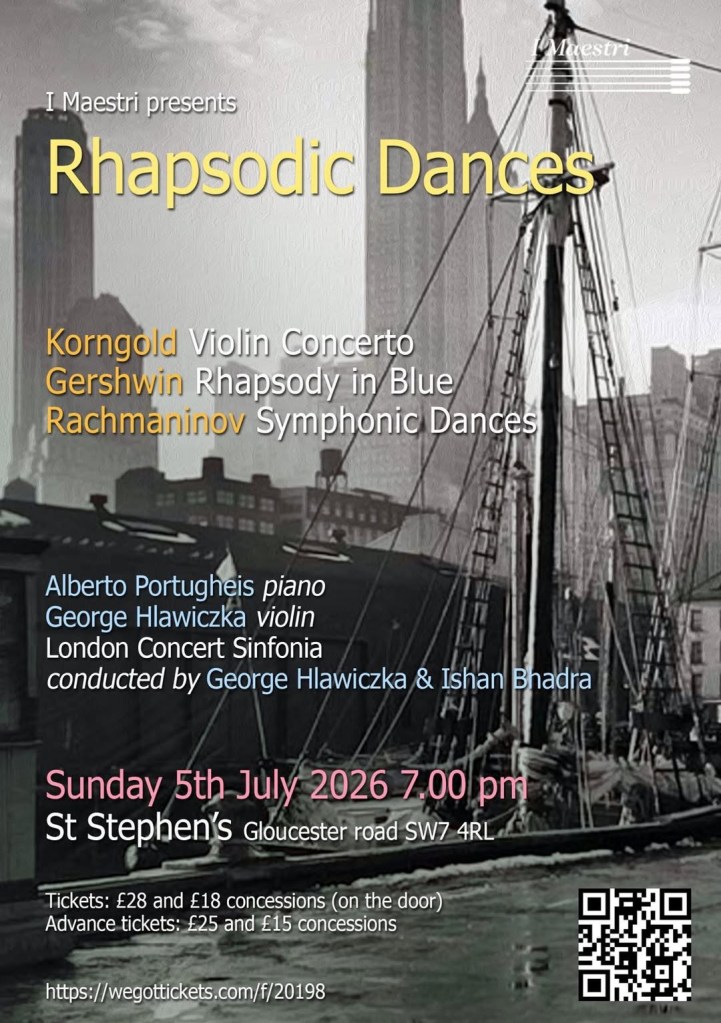
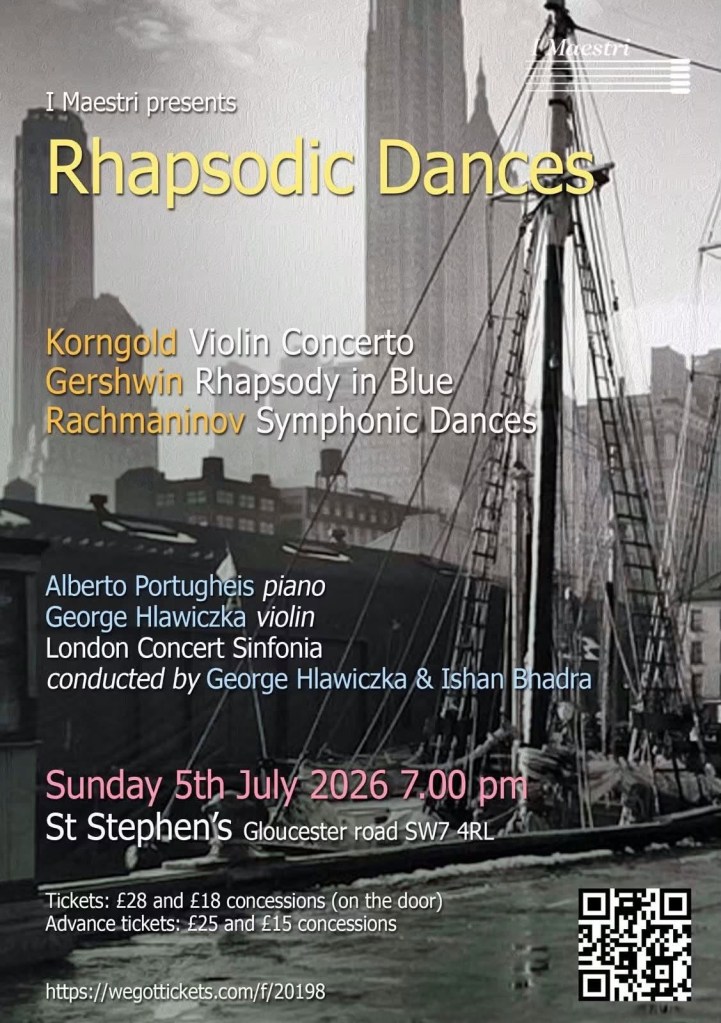
An extraordinary concert in London last night with a violinist who became a conductor and a pianist of 85 years who could jazz it up better than most a quarter of his age.
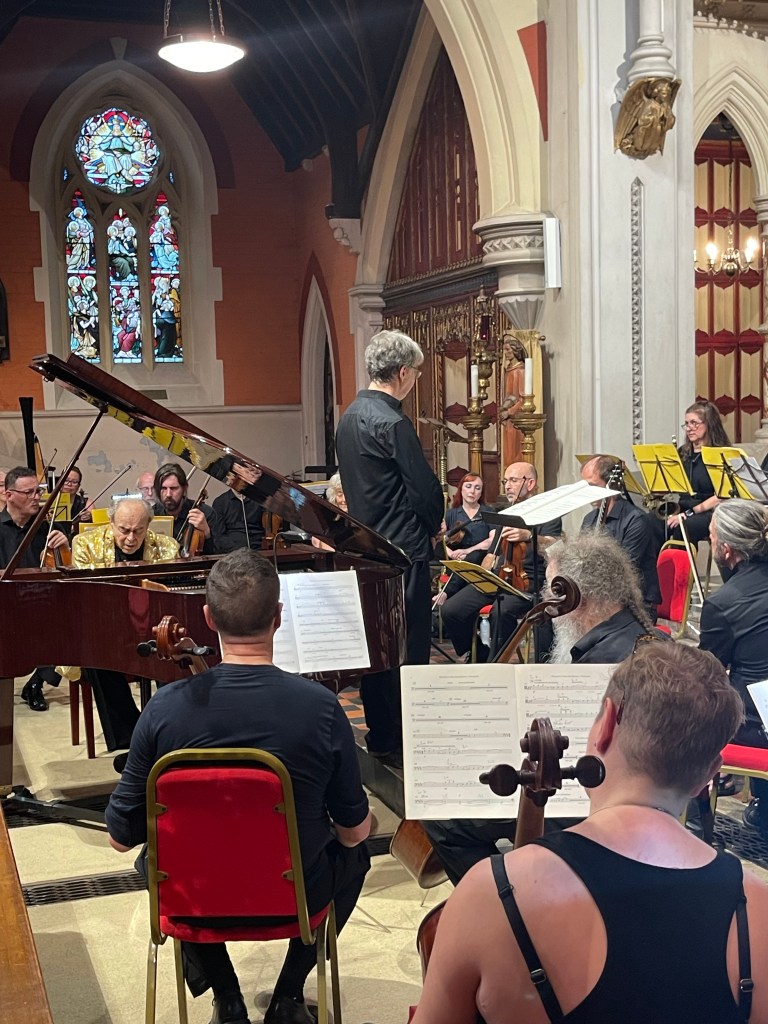
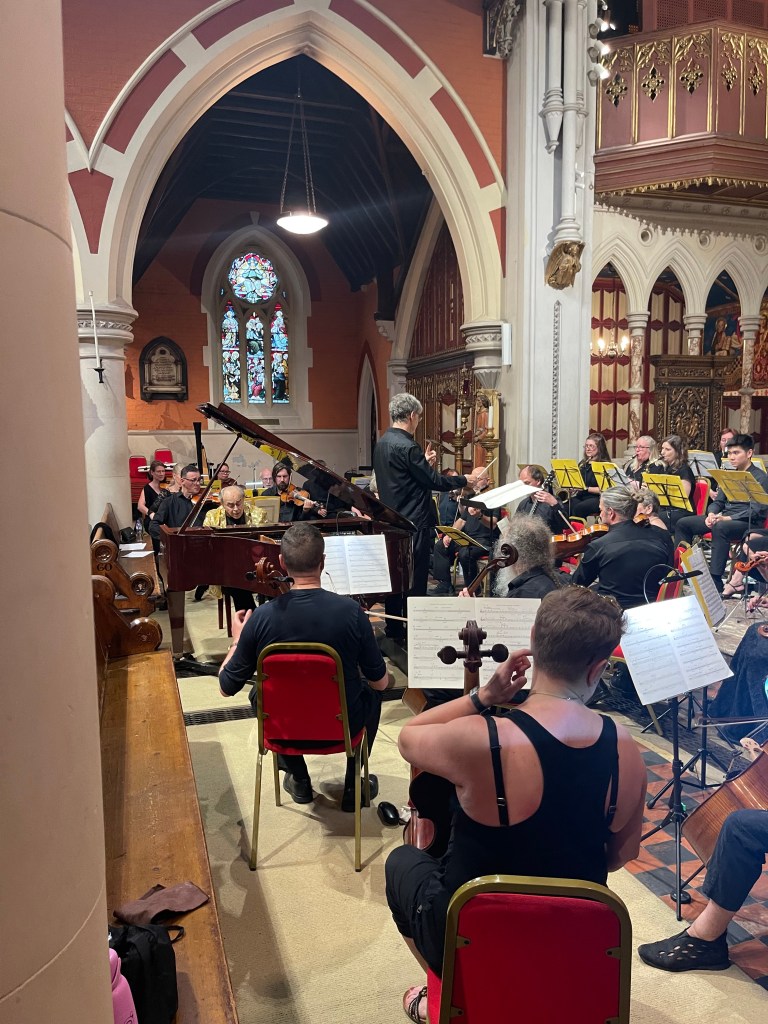
The mellifluous concerto by Korngold was not only played but also partly conducted by the remarkable George Hlawiczka. There were moments in this complicated Hollywoodian score where two conductors were better than one and George came to the assistance of the valiant Rachael Montesino Young . Completed by Korngold in 1945 who vowed he would not compose any ‘serious’ music until the war was over. Heifetz had put it firmly on the map with his sensational first performance in 1947. George Hlawiczka not only played the solo part but also oversaw the orchestra during his very fine performance.
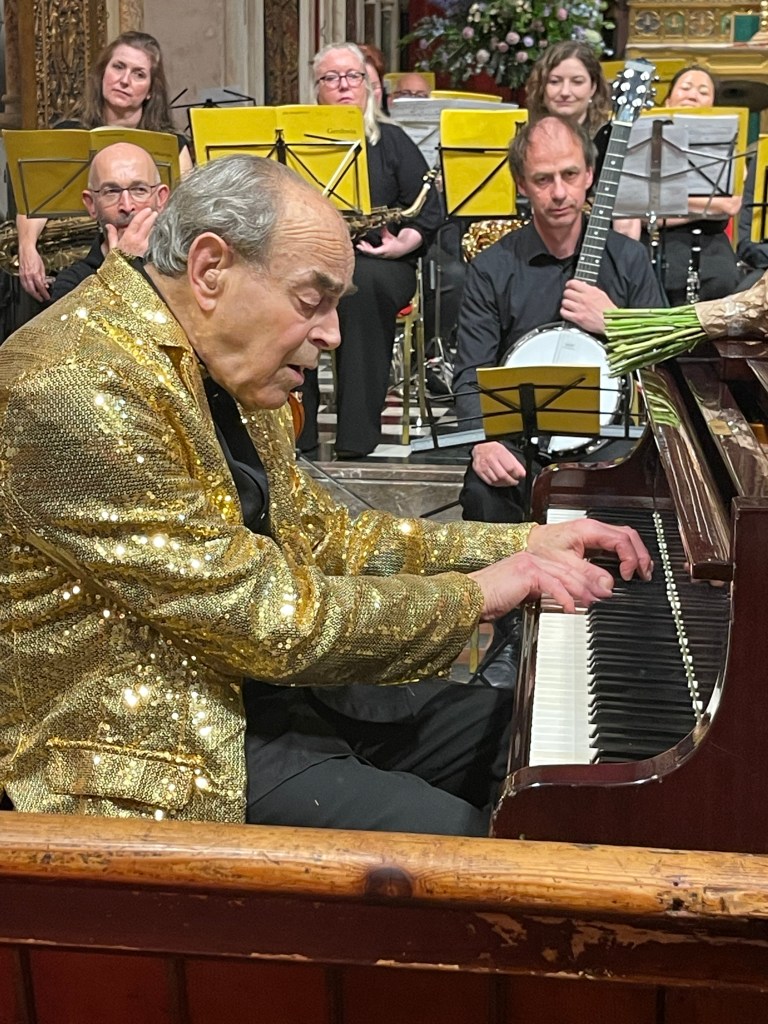
a mysterious audience member who walked up to the pianist during the perfomance to get a better close up photo A Man for all Seasons George Hlawiczka
And was seen supervising the wine in the interval – A man for all seasons indeed!
Rachael Montesino Young at the helm for Korngold Violin Concerto
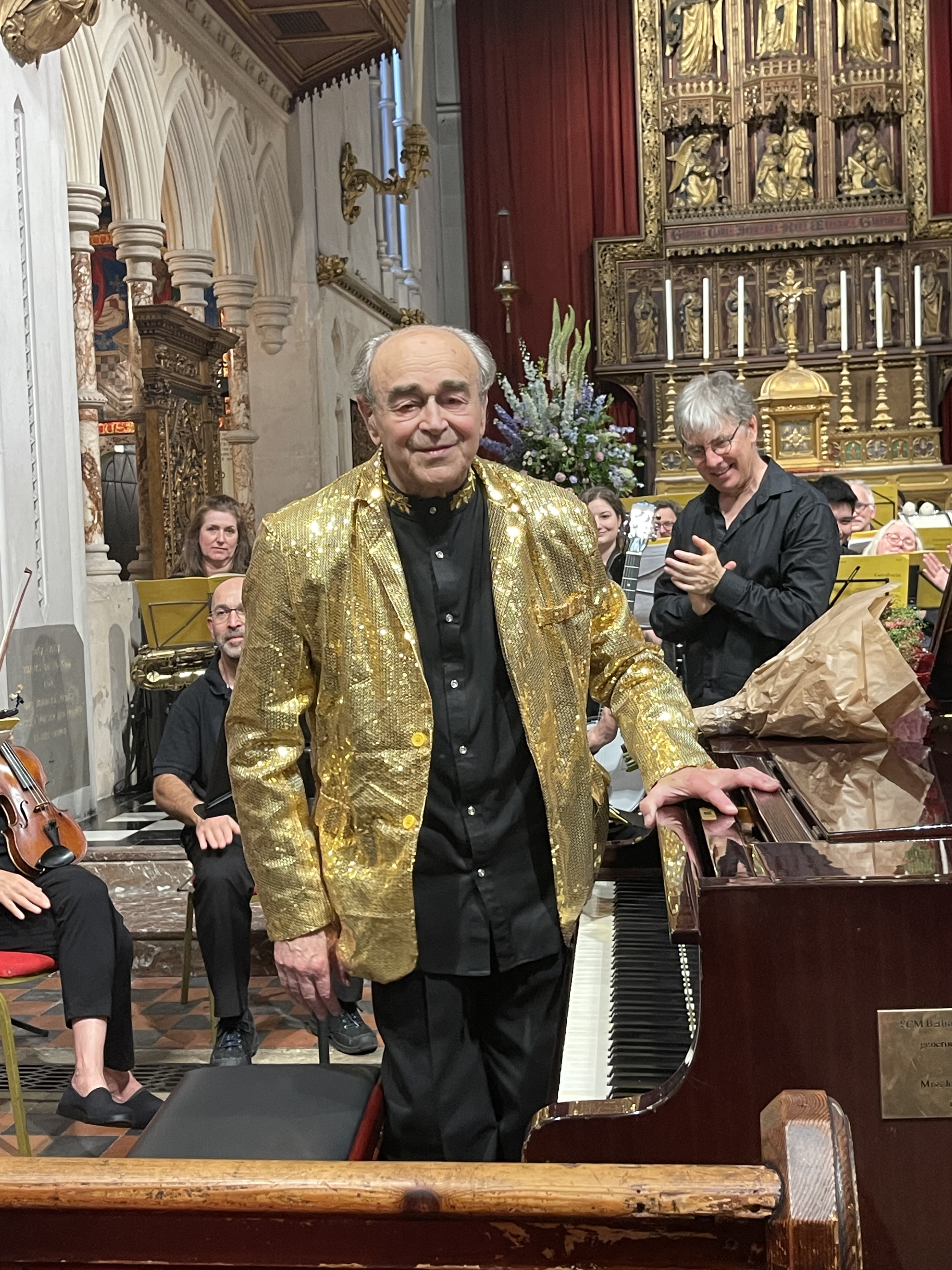
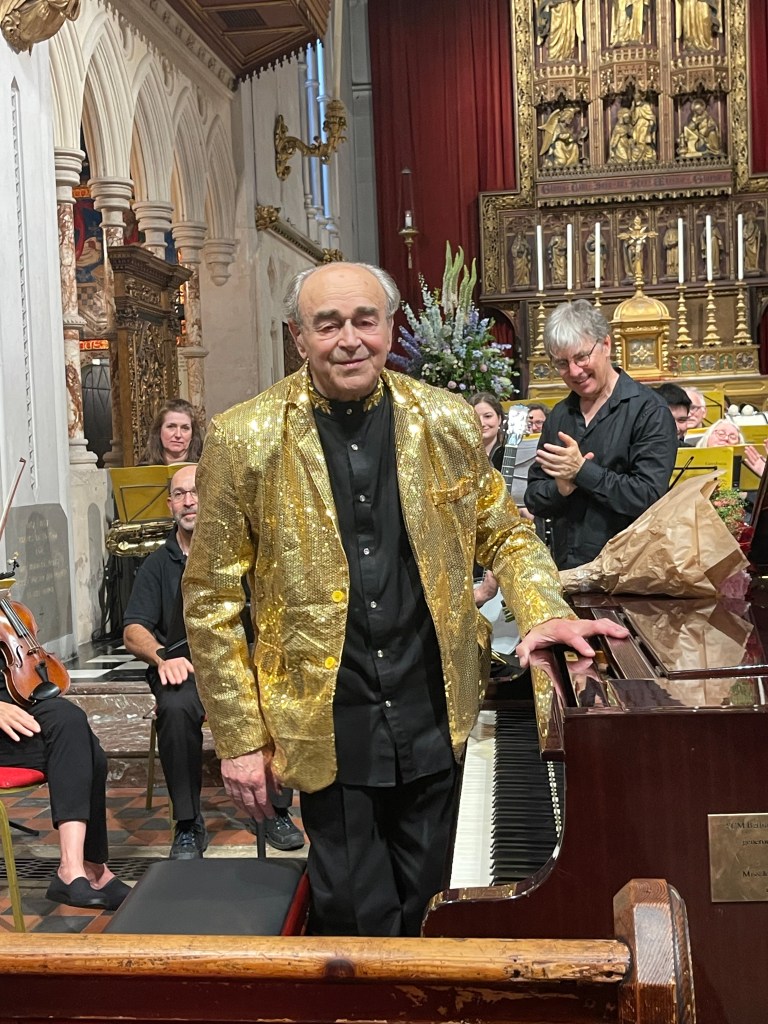
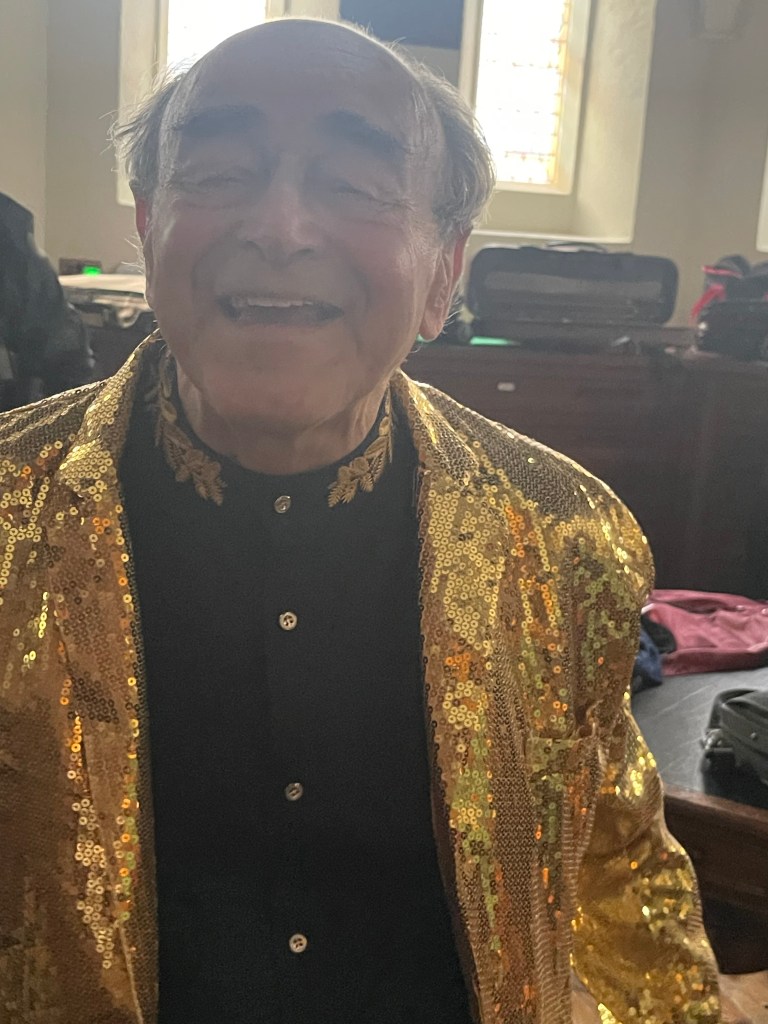
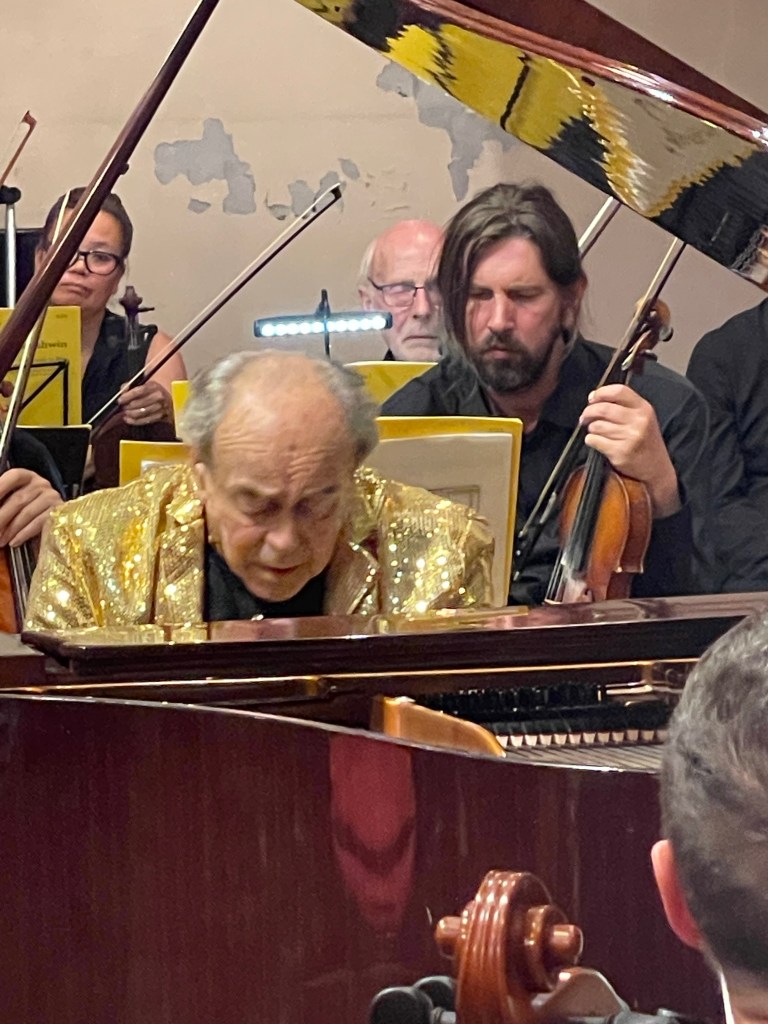
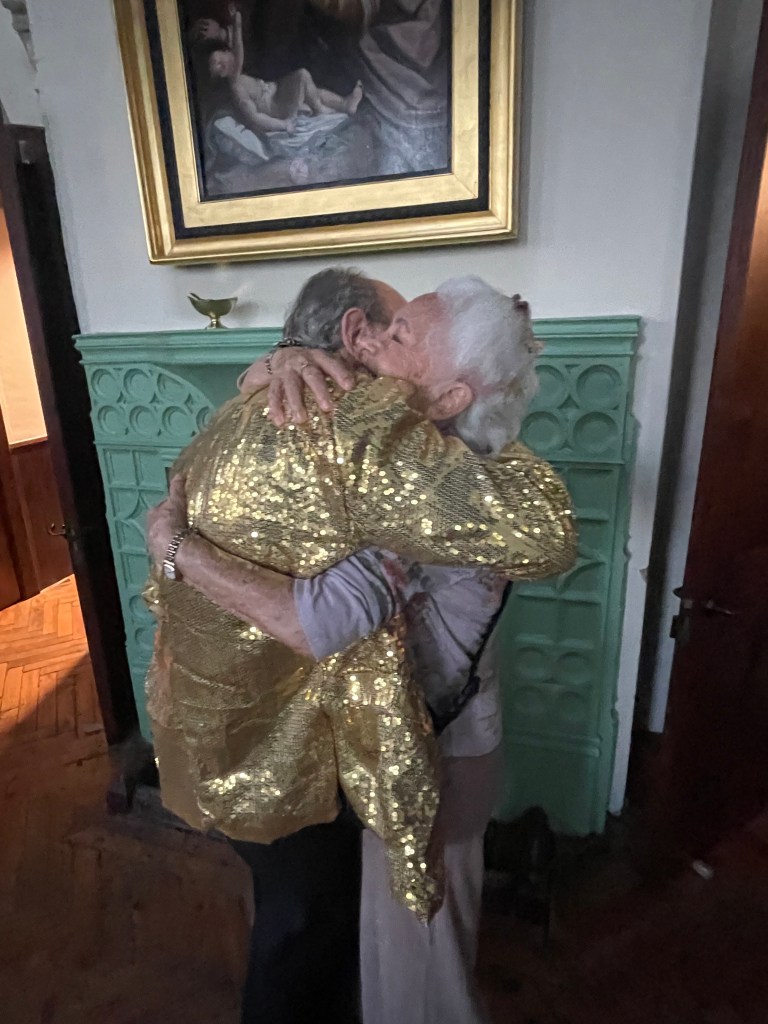
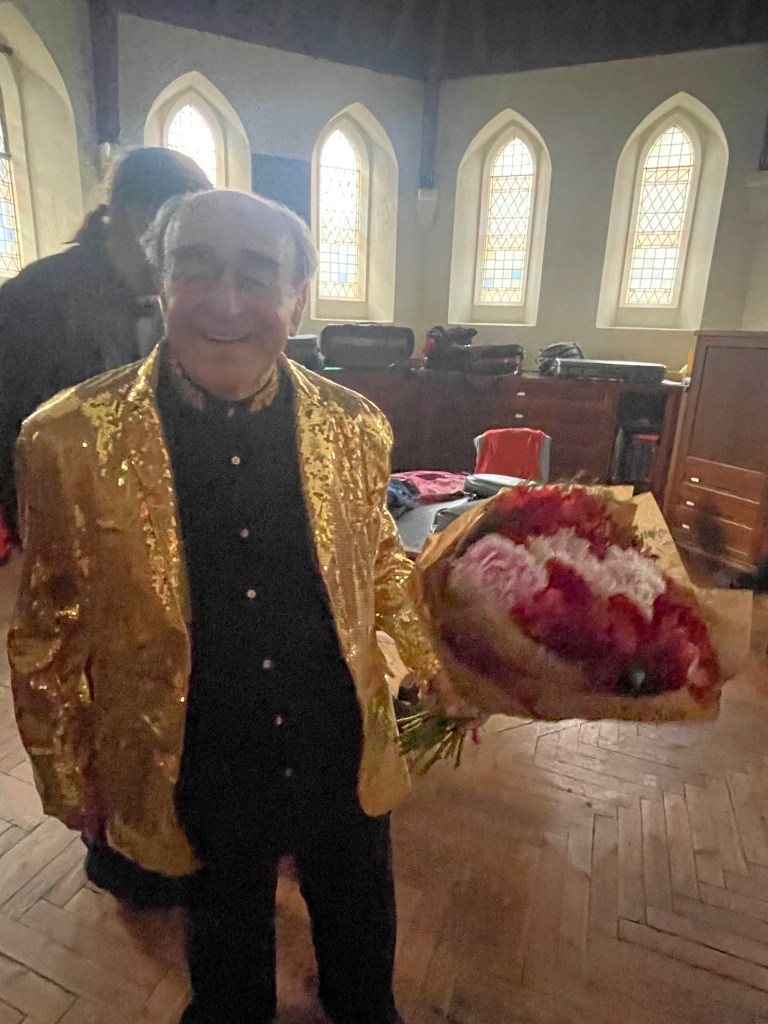
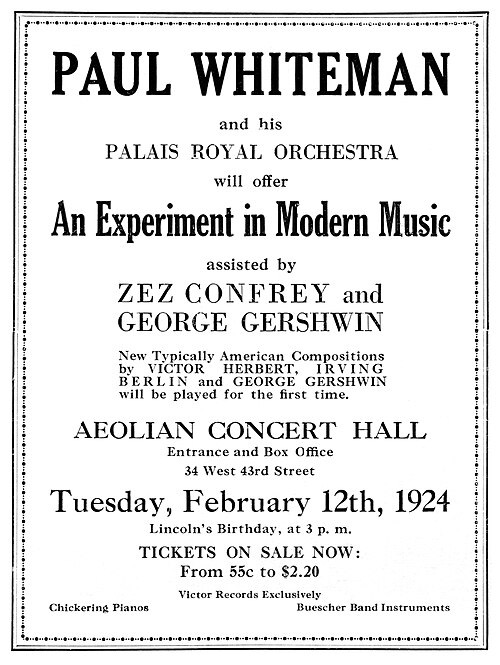
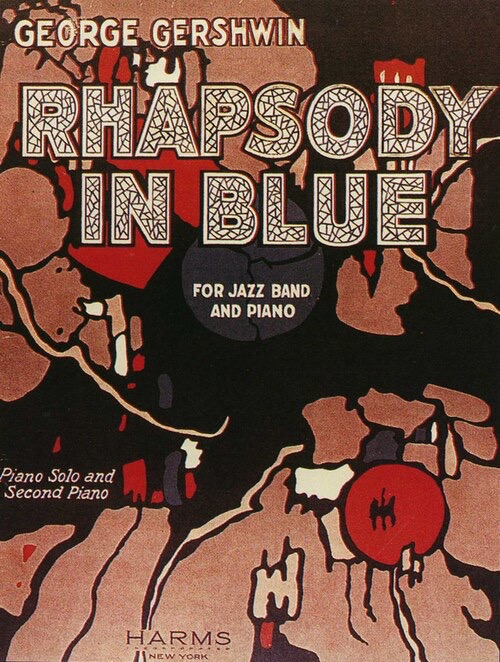
But it was the veteran pianist Alberto Portugheis who stole the show tonight with another work also written in America but ten year earlier. Dressed for the part in a Gold Lamé jacket as both he and the orchestra, directed by George Hlaziczka took the place of Paul Whiteman and George Gershwin with evident joy at being able to let their hair down and intone the most famous melodies of ‘Rhapsody in Blue’.
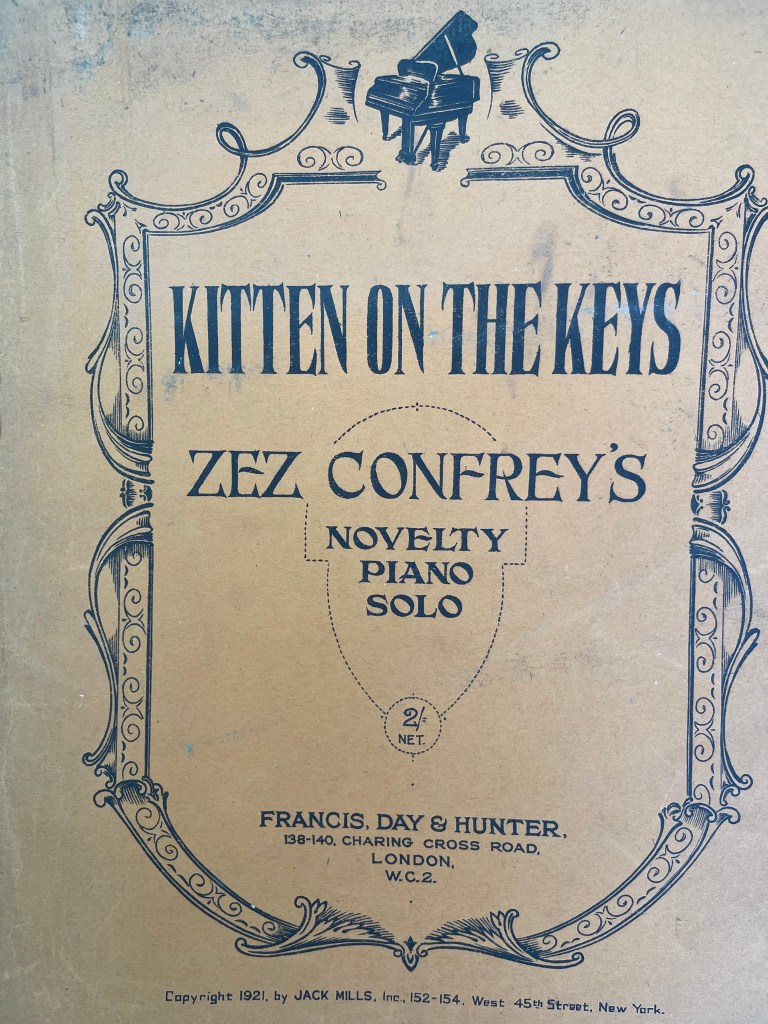
A kitten on the keys indeed as Alberto let rip with passionate intensity and playing without the score as it was obviously so much part of his being that for this evening was a sumptuous feast clad in Gold.
Ravishing sounds of gold indeed from fingers of extraordinary steely pedigree with an arch of the hand that allows veteran pianists to play with such mastery. Alberto, like his life long friend Martha Argerich, has been endowed with superb childhood training in Buenos Aires from the Neapolitan School of Scaramuzza. Both have the same rock solid hand with ten fingers that are just waiting to receive their instruction from mature masterly musicians, ready to go into action with an orchestra in their fingertips.
At the end of a sumptuous all or nothing performance of ‘Rhapsody in Blue’, our valiant pianist was warmed up and ready to play on his own the second of Gershwin’s three preludes. With chiselled beauty he was able to carve out the most jazzy of Preludes with the improvised abandon of a true ‘Kitten on the Keys’.
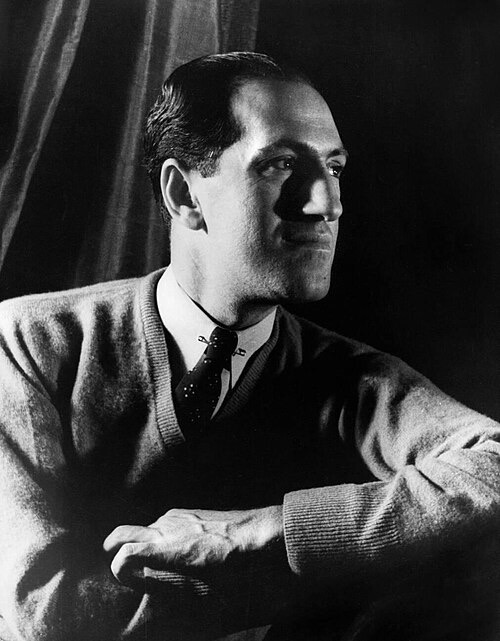
George Gershwin born Jacob Gershwine; September 26, 1898 – July 11, 1937 was an American composer and pianist whose compositions spanned jazz, popular and classical music . Among his best-known works are the songs “Swanee” (1919) and “Fascinating Rhythm ” (1924), the orchestral compositions “Rhapsody in Blue “(1924) and “An American in Paris” (1928), “Embraceable You ” (1928) and “I Got Rhythm‘”1930) and the opera “Porgy and Bess”(1935), which included the hit ‘”Summertime'”.
With only five weeks remaining until the premiere, Gershwin hurriedly set about composing the work. He later claimed that while on a train journey to Boston , the thematic seeds for Rhapsody in Blue began to germinate in his mind. He told biographer Isaac Goldberg in 1931:
It was on the train, with its steely rhythms, its rattle-ty bang, that is so often so stimulating to a composer … I frequently hear music in the very heart of the noise. And there I suddenly heard—and even saw on paper—the complete construction of the rhapsody, from beginning to end. No new themes came to me, but I worked on the thematic material already in my mind and tried to conceive the composition as a whole. I heard it as a sort of musical kaleidoscope of America, of our vast melting pot , of our unduplicated national pep, of our metropolitan madness. By the time I reached Boston, I had a definite plot of the piece, as distinguished from its actual substance.
Gershwin began composing on January 7 as dated on the original manuscript for two pianos. He tentatively entitled the piece as American Rhapsody during its composition. Ira Gershwin suggested the revised title of Rhapsody in Blue after his visit to a gallery exhibition of James Mc Neil Whistler paintings. After a few weeks, Gershwin finished his composition and passed the score, titled A Rhapsody in Blue, to Ferde Grofé, Whiteman’s arranger. Grofé finished orchestrating the piece on February 4—a mere eight days before the premiere.
“This composition shows extraordinary talent, as it shows a young composer with aims that go far beyond those of his ilk, struggling with a form of which he is far from being master … In spite of all this, he has expressed himself in a significant and, on the whole, highly original form … His first theme … is no mere dance-tune … it is an idea, or several ideas, correlated and combined in varying and contrasting rhythms that immediately intrigue the listener. The second theme is more after the manner of some of Mr. Gershwin’s colleagues. Tuttis are too long, cadenzas are too long, the peroration at the end loses a large measure of the wildness and magnificence it could easily have had if it were more broadly prepared, and, for all that, the audience was stirred and many a hardened concertgoer excited with the sensation of a new talent finding its voice.”
— Olin Downes ,The New York Times February 1924
Gershwin asked to study with Ravel. When Ravel heard how much Gershwin earned, Ravel replied with words to the effect of, ‘You should give me lessons.’ He also asked Schoenberg for composition lessons. Schoenberg refused, saying ‘I would only make you a bad Schoenberg, and you’re such a good Gershwin already.’ (This quote is similar to one credited to Ravel during Gershwin’s 1928 visit to France – ‘Why be a second-rate Ravel, when you are a first-rate Gershwin?’ He also visited Boulanger in 1927, asking for lessons in composition. They spoke for half an hour after which Boulanger announced, ‘ I can teach you nothing.’ Taking this as a compliment, Gershwin repeated the story many times
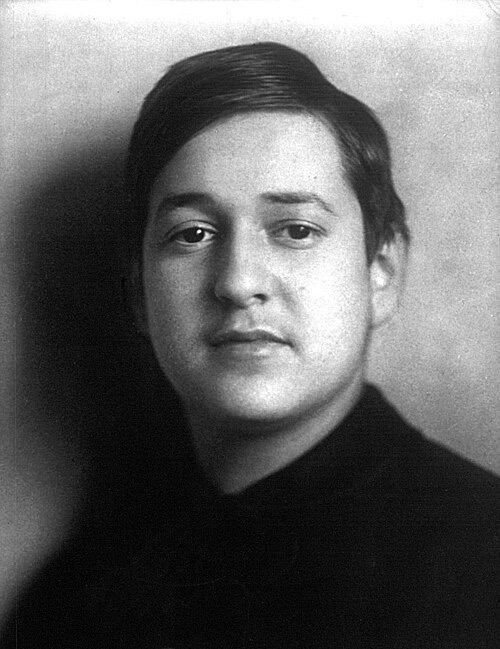
Erich Wolfgang Korngold (May 29, 1897 – November 29, 1957) was an Austrian composer and conductor, who left Europe in the mid-1930s and later adopted US nationality. A child prodigy , he became one of the most important and influential composers in Hollywood history.
Korngold had vowed to give up composing anything other than film music, with which he supported himself and his family, until Hitler had been defeated. With the end of World War II, he retired from films to concentrate on music for the concert hall. The Violin Concerto was the first such work that Korngold wrote, following some initial persuasion from the violinist and fellow émifré Bronislaw Huberman . Korngold had been hurt by the assumption that a successful film composer was one who had sold his integrity to Hollywood, just as earlier he had been hurt by many critics’ assumptions that his works were performed only because he was the son of music critic Julius Korngold. He was thus determined to prove himself with a work that combined vitality and superb craftsmanship.
The concerto was dedicated to Alma Mahler , the widow of Korngold’s childhood mentor Gustav Mahler. It was premiered on 15 February 1947 by Jasha Heifetz and the St. Louis Symphony under conductor Vladimir Golschmann. It received the most enthusiastic ovation in St. Louis concert history. On 30 March 1947, Heifetz played the concerto in Carnegie Hall with the New York Philharmonic conducted by Efrem Kurtz; the broadcast performance was recorded on transcription discs. The composer wrote about Heifetz’s playing of the work:
In spite of the demand for virtuosity in the finale, the work with its many melodic and lyric episodes was contemplated more for a Caruso than for a Paganini . It is needless to say how delighted I am to have my concerto performed by Caruso and Paganini in one person: Jascha Heifetz.
Sergei Vasilyevich Rachmaninov (1 April 1873 Semyonov, Russia – 28 March 1943 Beverly Hills, California ) was a Russian composer, virtuoso pianist , and conductor. Rachmaninov is widely considered one of the finest pianists of his day and, as a composer, one of the last great representatives of Romanticism in Russian classical music
Symphonic Dances, op 45 in three movements was completed in October 1940 . The composer also published a version for two pianos. It is his final major composition, and his only piece written in its entirety while living in the United States.
The work allowed him to indulge in a nostalgia for the Russia he had known, as much as he had done in the Symphony n. 3, as well as to effectively sum up his lifelong fascination with ecclesiastical chants. In the first dance, he quotes the opening theme of his Symphony n. 1, itself derived from motifs characteristic of Russian church music. In the finale he quotes both the Dies irae and the chant “Blessed art thou, Lord” (“Blagosloven yesi, Gospodi”) from his All-Night- Vigil
Rachmaninov composed the Symphonic Dances four years after his third symphony , mostly at the Honeyman estate, “Orchard Point”, in Centerport New York, which overlooked Long Island Sound. Its original name was Fantastic Dances, with movement titles of “Noon”, “Twilight”, and “Midnight”. While the composer had written to conductor Eugene Ormandy in late August 1940 that the piece was finished and needed only to be orchestrated, the manuscript for the full score bears completion dates of September and October 1940. It was premiered by Ormandy and the Philadelphia Orchestra , to whom it is dedicated, on January 3, 1941.
Playing of commanding authority and masterly musicianship where just to look at the programme was to know that something special was about to be heard. An artist is known by his programmes and it was above all Arrau who would demonstrate that, showing us that the music is more important than the performer and the idea of playing a little piece after such noble and suffered statements was completely alien to him. Schnabel whose teacher, Leschetizky, considered a musician not a pianist, merely exclaimed that he was no showman and warned people that the second half of his concerts were as boring as the first.
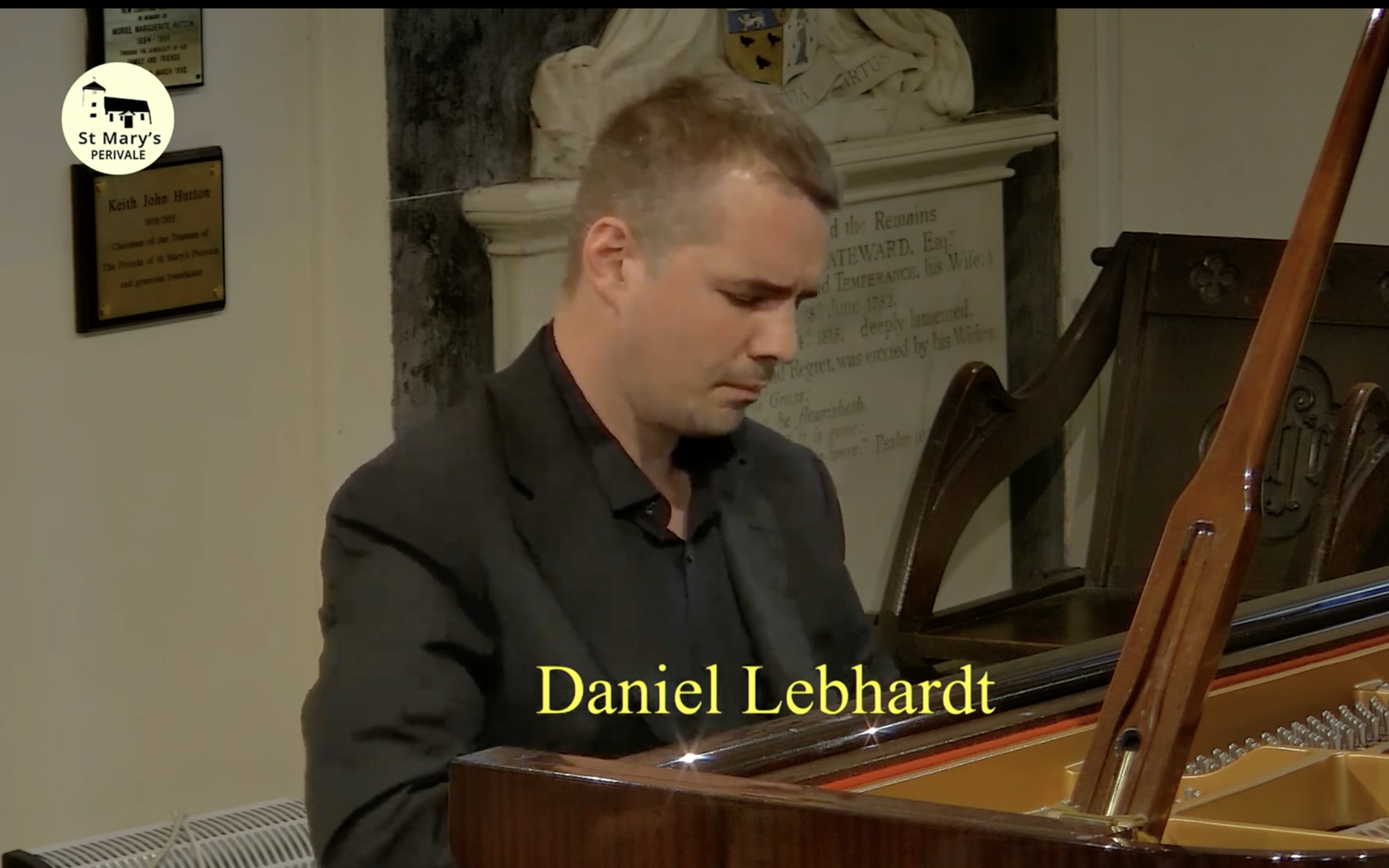
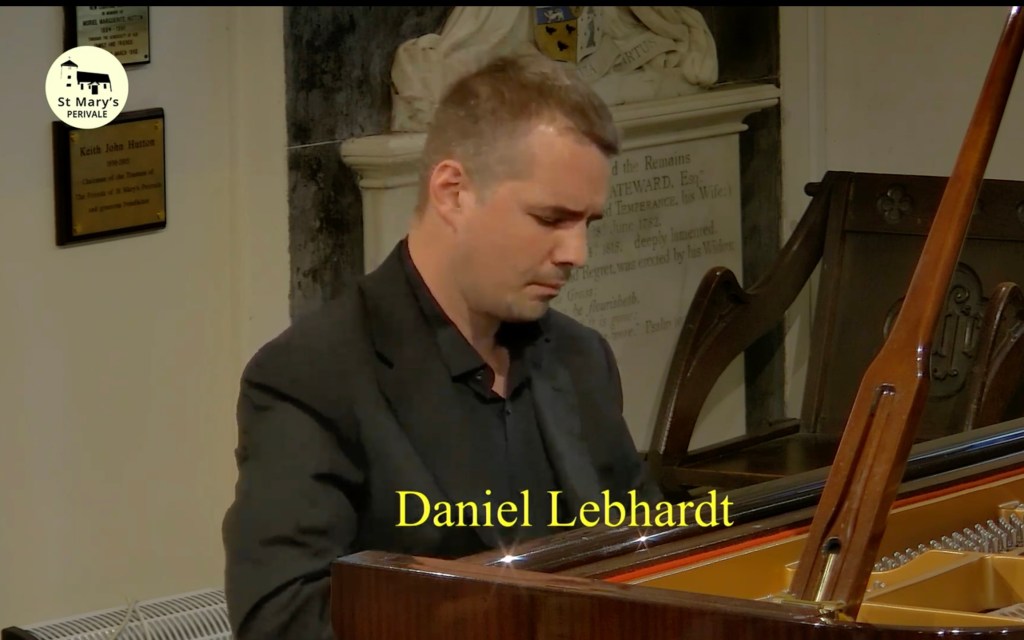
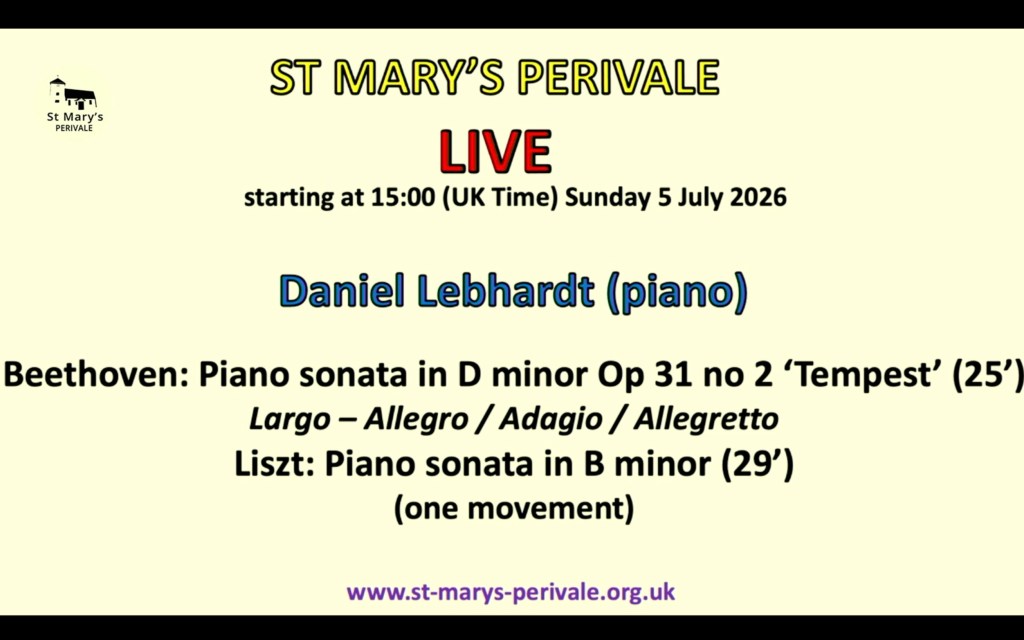
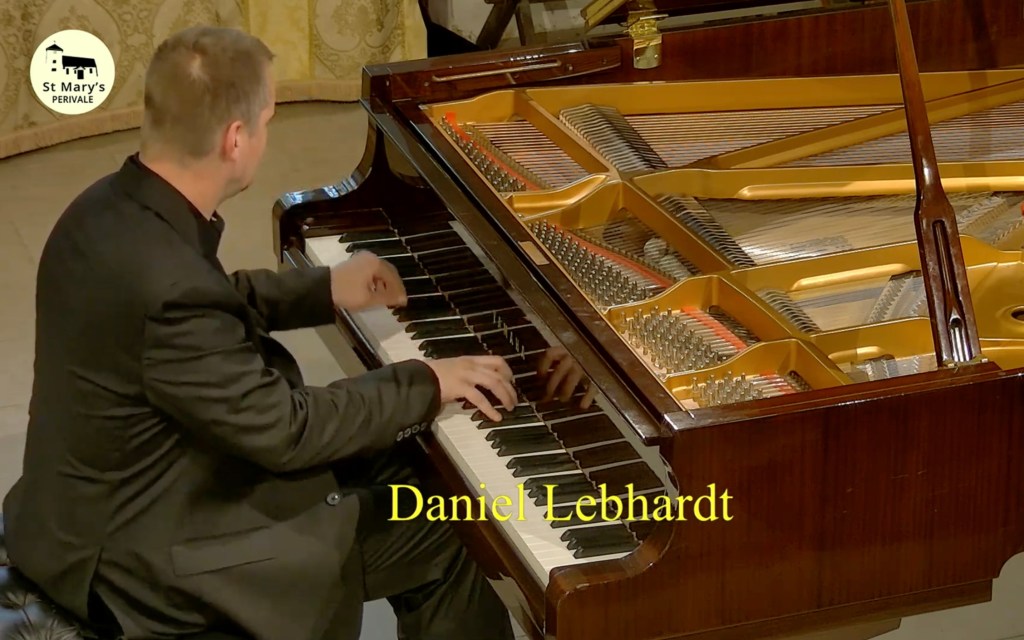
Daniel chose two great works by Beethoven and Liszt, both pinnacles of the Romantic piano repertoire. He was also persuaded to play an encore that was obviously carefully chosen ,though, by an eclectic musician. Brahms’s Intermezzo op 117 n. 1 was a ‘ lullaby of grief ‘ from a composer who had been a close family friend of the Schumann’s and when Robert was taken into an asylum it was he who befriended his wife. Clara apart from being the mother of Robert’s 8 children was the first lady virtuoso pianist. Liszt had dedicated his Sonata to Robert Schumann out of esteem, but also to repay Schumann’s dedication of the Fantasie op 17, it was delivered to the Schumann household when Robert was already in Endenich Sanatorium . Clara refused to played it finding it just a ‘blind noise’!
Daniel’s playing is orchestral in conception, thinking always up from the bass which gives great weight to his performances. Even when there is melody and accompaniment there is a richness to the sonority which is the anchor on which the melody rests.
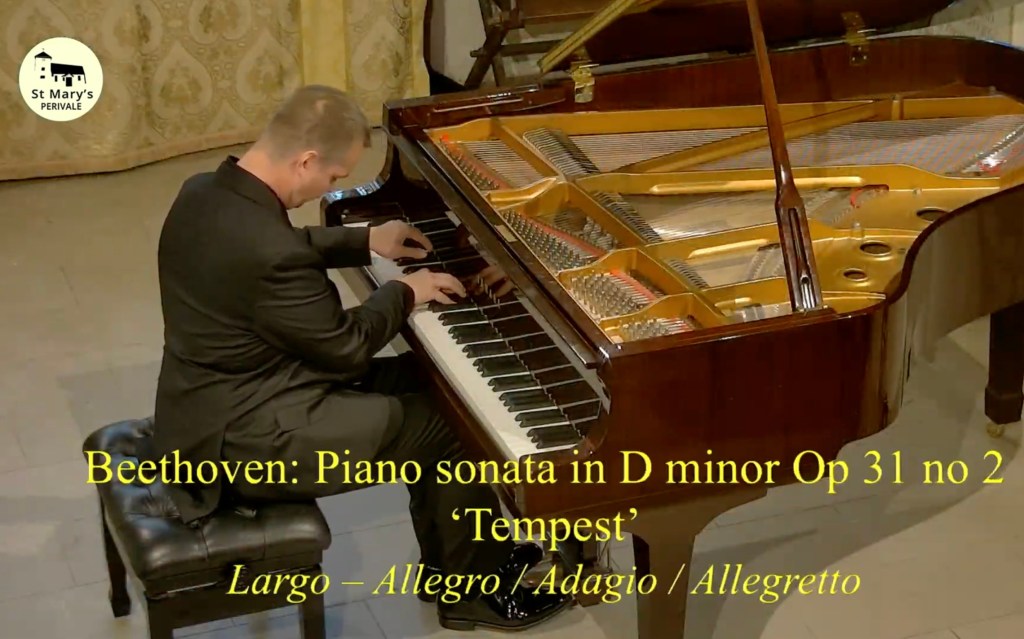
An opening of whispered mystery to Beethoven’s ‘Tempest’ Sonata bursting into the clarity of the ‘Allegro’ where the questioning bass was answered by the tender soprano but all on a burning cauldron of sounds of dynamic drive and tension. Beethoven’s temperament bursting onto the scene with commanding authority only to dissolve into whispered passages passing over the keyboard as the tempest comes momentarily to rest. It is where the mysterious opening Largo is repeated three times before bursting into flames once more with ever more dynamic drive. Dissolving to two recitativi played with Beethoven’s own ghostly pedal effects before working its way through a rhythmic menace and drive , coming to rest on a long drawn out vibrating left hand chord that Daniel played with extraordinary clarity even though Beethoven marks to be played with a long pedal.The effect though was extraordinary as the movement lay exhausted with the glowing radiance of the final two chords contrasting with this barren wind that had blown with such whispered menace. There was a subdued poignant beauty to the ‘Adagio’ with its chorale that proceeds unperturbed by the gentle comments that Beethoven adds all around this quasi religious procession. Playing of extraordinary delicacy but also of commanding authority and emotional weight. An ‘Allegretto’ with a continual pastoral flow of forward movement. Exploding from time to time with tempestuous outbursts played with a clarity and commanding authority that nothing could curtail. Even the odd ornament thrown in was like a highly wound spring. A beautiful music box appearance of the Rondo theme was complimented by hard edged insistent brilliance . A continuous flow of music like riding on a wave of sound where there was no actual full stop as the movement disappeared into the bass of the piano with whispered impishness.
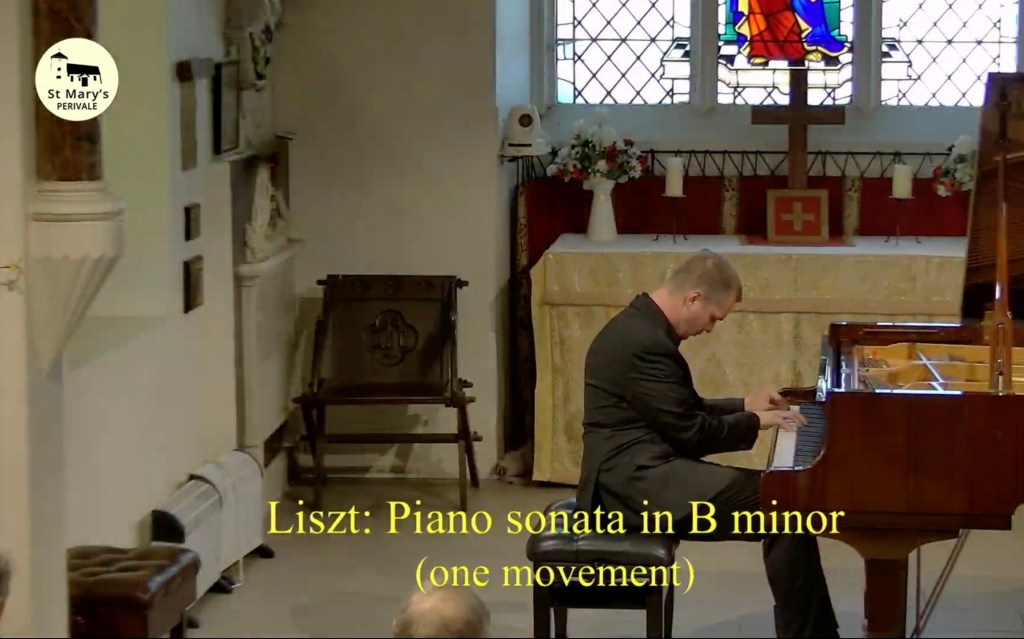
The Liszt Sonata in B minor is the very pinnacle of the Romantic piano repertoire and is a highly original work in one movement even though three sections are recognisable. Inspired by the leit motif of Schubert’s Wanderer Fantasy, where the opening themes are developed like characters in an opera . In fact it was also the inspiration for Richard Wagner, Liszt’s son in law. Daniel presented it with playing of authority and command where the opening three themes were played with measured intensity. Streams of notes played with great control but within the notes there was a mature mastery that could imbue them with burning intensity that never lost control of the overall architectural shape . A sense of balance which was not the usual battlefield of empty showmanship but a symphonic outpouring with a master conductor at the helm. ‘Grandioso’ was indeed just that, with a sumptuous melodic outpouring of fullness but never hardness, dissolving to what some may call the ‘Margherita’ theme, played with refined beauty and aristocratic good taste. Streams of notes turned into washes of golden sounds as we moved inexorably to the first dramatic outbursts of passionate intensity and rhetorical grandeur leading with whispered menace to the ‘Andante sostenuto’. Playing of disarming simplicity and beauty as a Quasi Adagio opened up with playing of subtle whispered sounds of ravishing beauty. A central episode played with burning intensity and extraordinary control reaching the climax from which it dissolves into the recapitulation or third section. A fugato played with simple rhythmic energy but building in intensity to the real recapitulation and dynamic drive taking us to the notorious double octaves of the final climax. Played with a technical mastery where the musical content was uppermost in Daniel’s mind. It was at this point that Liszt had abandoned his original ending in a blaze of glory and substituted it for one of the most prophetic pages of all of Liszt’s vast output . It was here that Daniel’s mastery and maturity could show us the way, following Liszt’s precise indications with scrupulous poetic attention.
A remarkable performance for the masterly musicianship and lack of empty rhetoric or showmanship placing this masterpiece on the pedestal it truly deserves .
Brahms Eflat Intermezzo op 117 was played with simplicity and a palette of colours of a true poet of the keyboard
Hungarian pianist Daniel Lebhardt has been described by the New York Times as playing with ‘…power, poetry and formidable technique’. This season Daniel will perform with the Royal Philharmonic Orchestra at Royal Festival Hall with conductor Neville Creed in Mozart`s Piano Concerto no.21 in C major K.467 , and Rachmaninoff`s 2nd Piano Concerto with conductor Lee Reynolds for his Royal Albert Hall debut in September 2026. After debuting at New Ross Piano Festival, as well as returning to Galway and Drogheda in Ireland he will be giving recitals on the Isle of Wight, at the Holywell Music Room in Oxford, Oxshott & Cobham Music Society, Wigmore Hall, and Nottingham Royal Concert Hall. In the spring and summer Daniel will perform recitals in Germany in Planegg, Fürstenfeldbruck and in Weißenburg.
Since becoming one of the winners at the 2015 Young Classical Artist Trust auditions, Daniel has performed at Luxembourg Philharmonie, the National Philharmonic of Ukraine, Auditorium du Louvre in Paris, Kennedy Center in Washington DC and Merkin Concert Hall in New York City, at the Tallinn, Lucerne, Chorinner Musiksommer, Heidelberger-Frühling International festivals, and in Canada, China, Japan, Colombia, Argentina, Chile and New Zealand. In the UK he performed at Saffron Hall, at the Aldeburgh, Harrogate, Bath International Festivals, and Birmingham International Piano Festival.
Recently Daniel performed Beethoven’s “Emperor Concerto” in Guildford and Mozart’s Concerto in C major K.467 at Royal Festival Hall with the Royal Philharmonic Orchestra. He performed Liszt’s Totentanz with Konzerthausorchester Berlin and made his debut with Bilkent Symphony Orchestra performing Brahms Piano Concerto No. 1. He also performed Beethoven with the Hallé Orchestra in Blackburn, Rachmaninoff’s 3rd Concerto with the National Philharmonic of Ukraine and Mozart with the European Union Chamber Orchestra and debuted at Barbican Hall, and Birmingham Symphony Hall as soloist.
Daniel has won multiple international prizes including 1st Prize at the Young Concert Artists auditions in Paris and New York and in 2016 the Most Promising Pianist prize at the Sydney International Competition. He studied at the Franz Liszt Academy in Budapest with Gyöngyi Keveházi and István Gulyás, and at the Royal Academy of Music and the Royal Birmingham Conservatoire with Pascal Nemirovski. He is based in London.
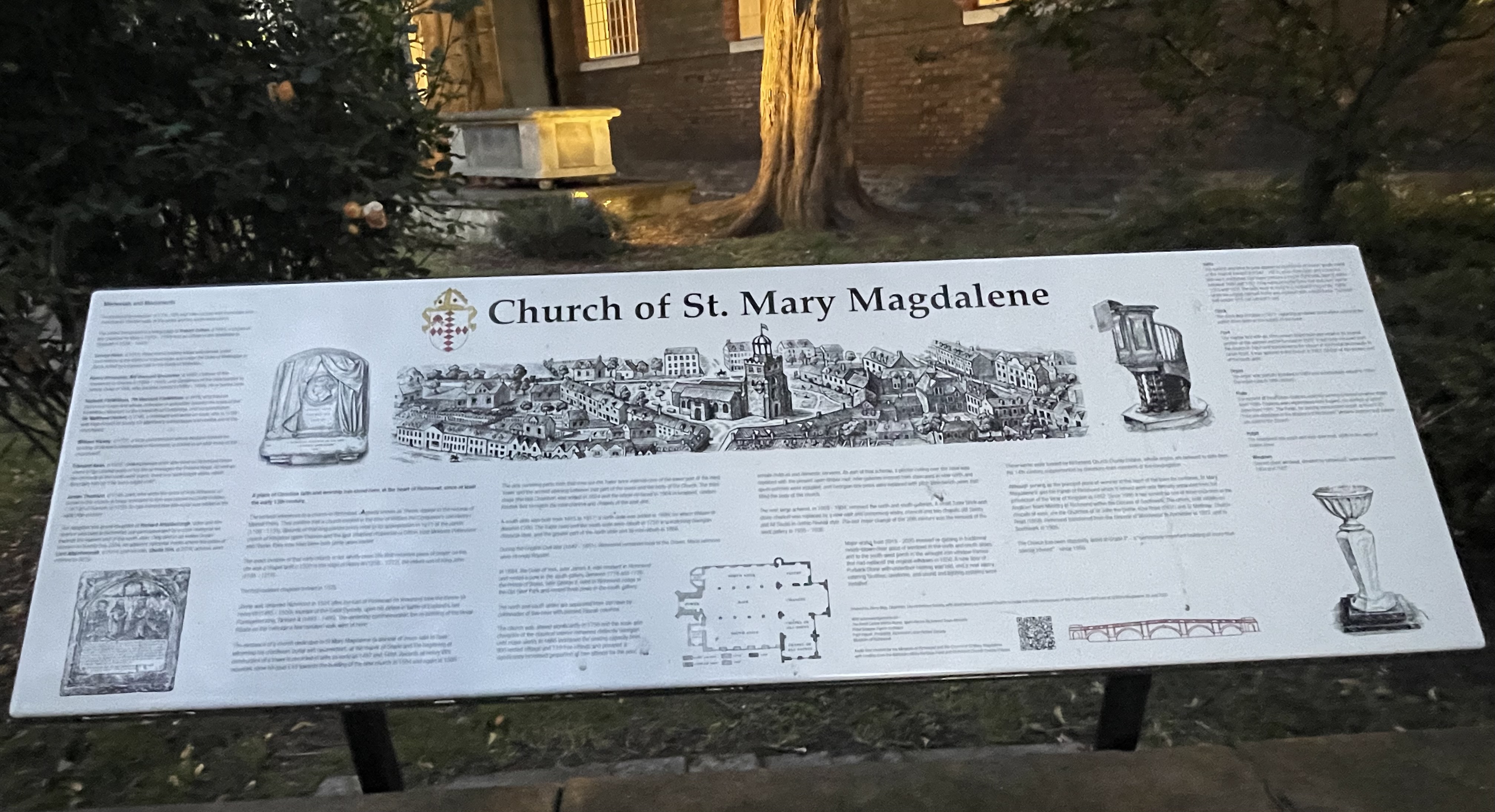
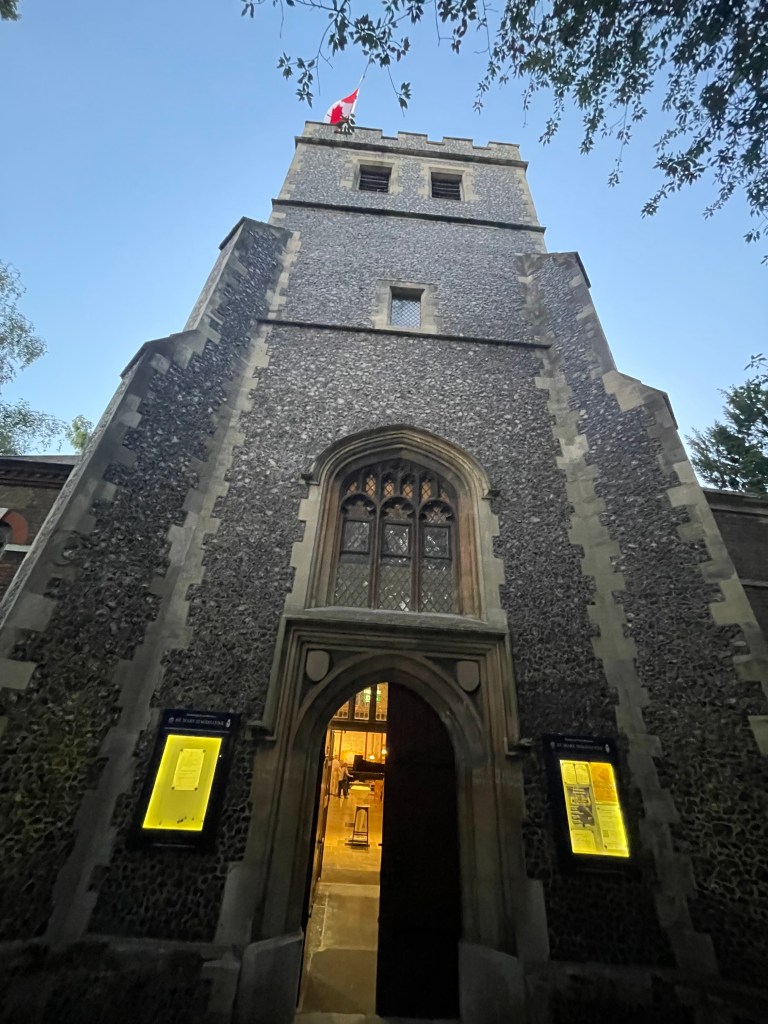
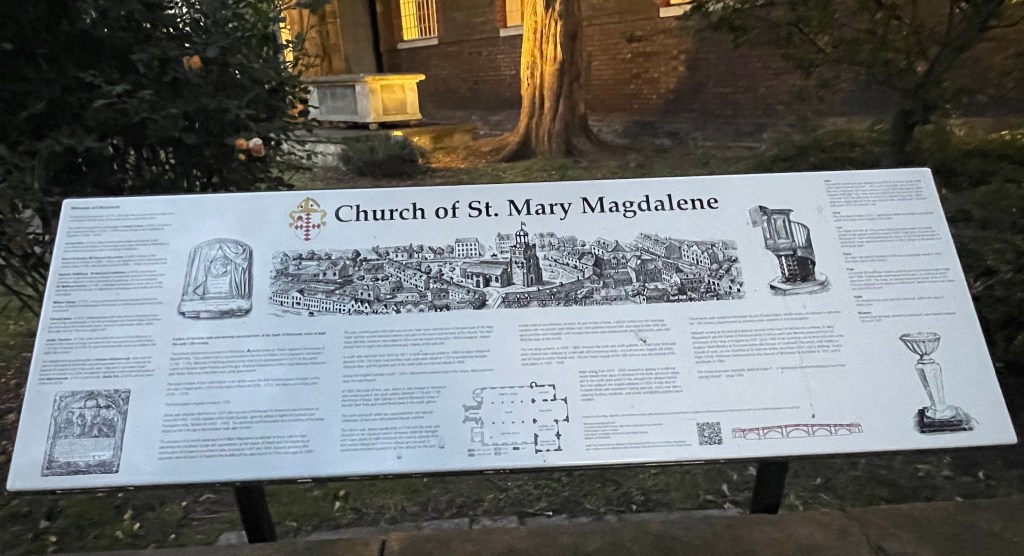
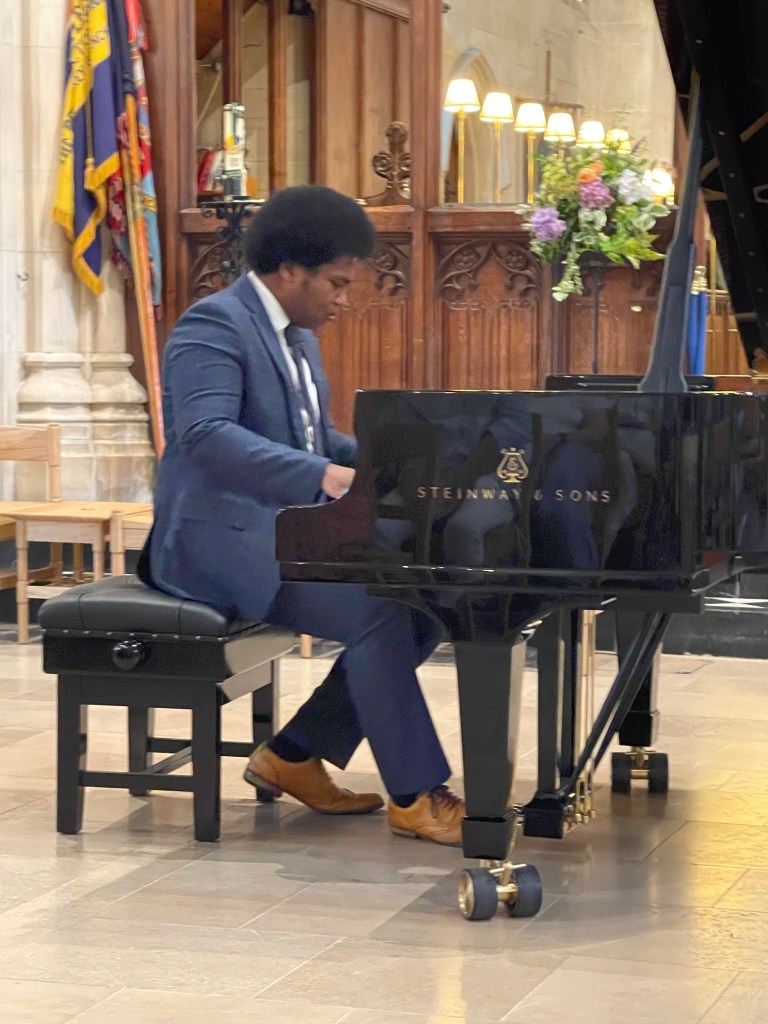
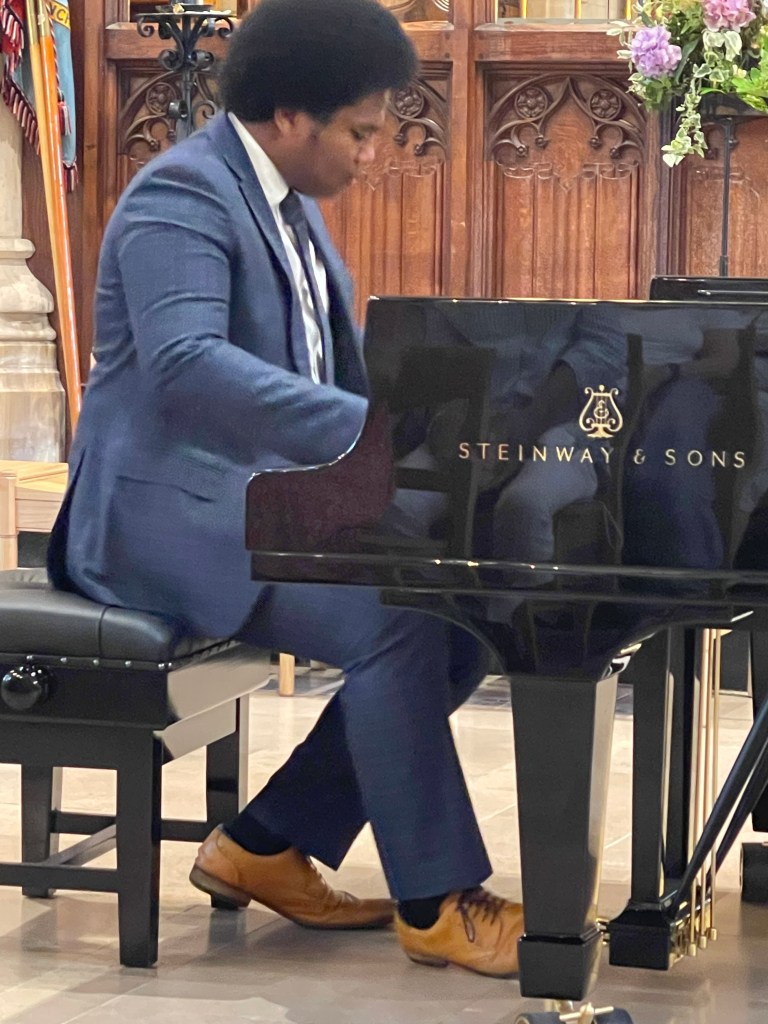
What a surprise to find Adam Heron on my doorstep in the centre of Richmond, in the beautiful church of St Mary Magdalene. I had not heard Adam for three years since a concert at the National Liberal Club promoted by the Keyboard Trust and the Asia Circle at the NLC of Yisha Xue.
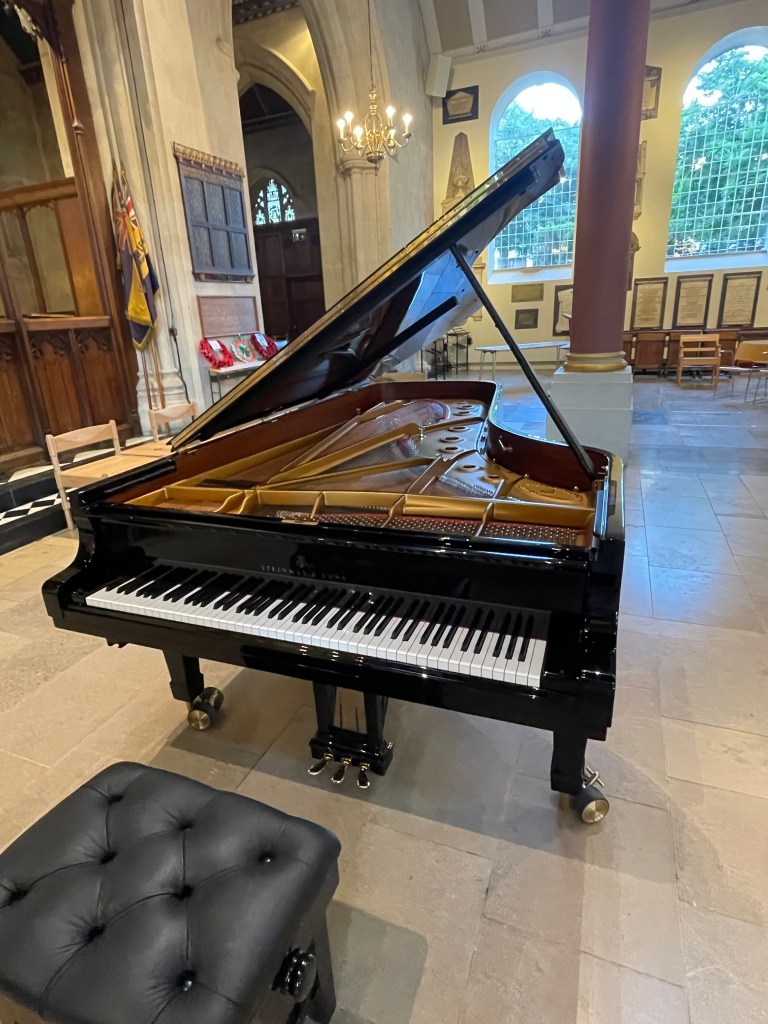
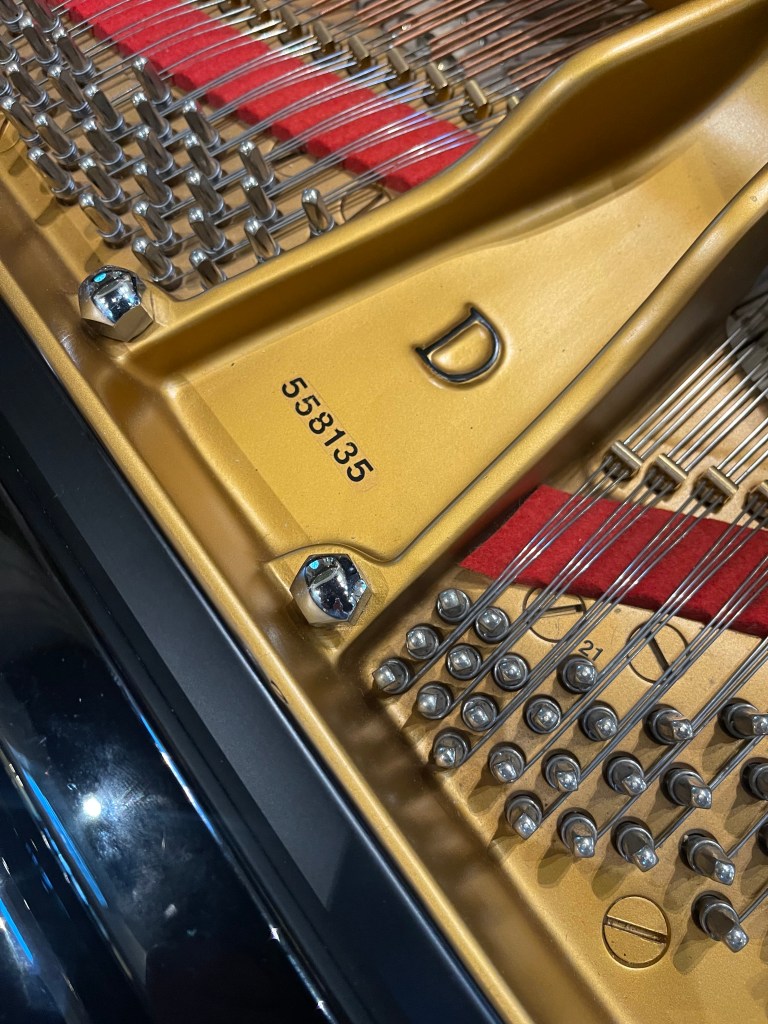
A magnificent Steinway D concert grand stood proudly in this church which was frequented by Richard Attenborough and his family who lived on the Green opposite and who are now permanent residents within its hallowed walls.
A piano that belongs to the church bequeathed by generous sponsors in what is sure to become a major classical musical venue in this beautiful riverside town just twenty minutes from the centre of London and the inevitable hussle and bussle of tourists in a major metropolis.
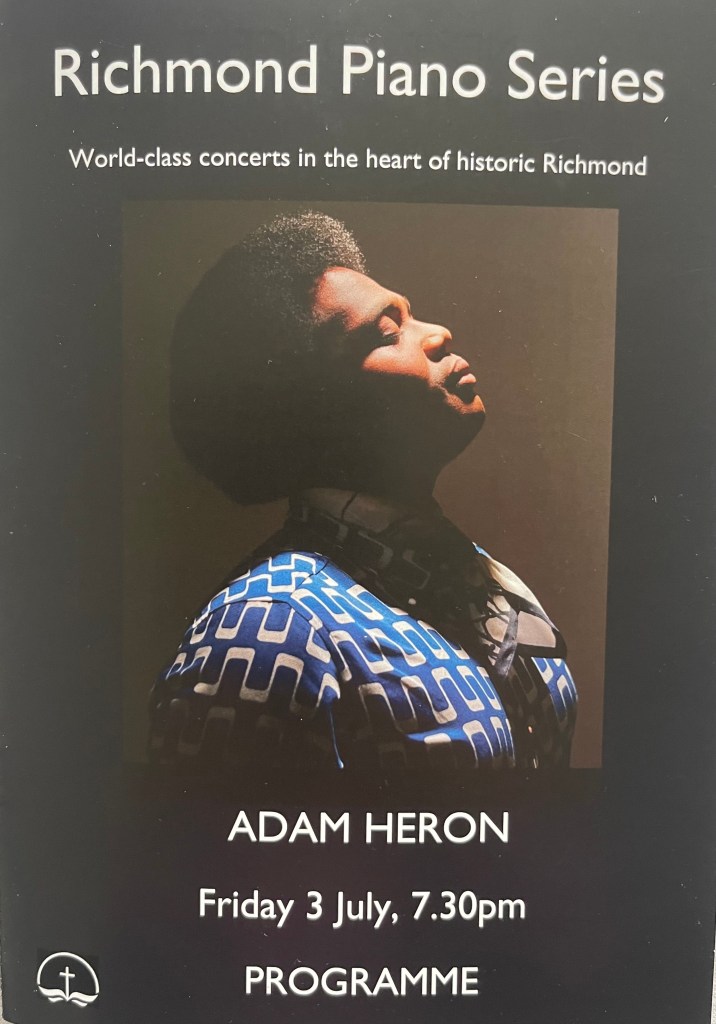
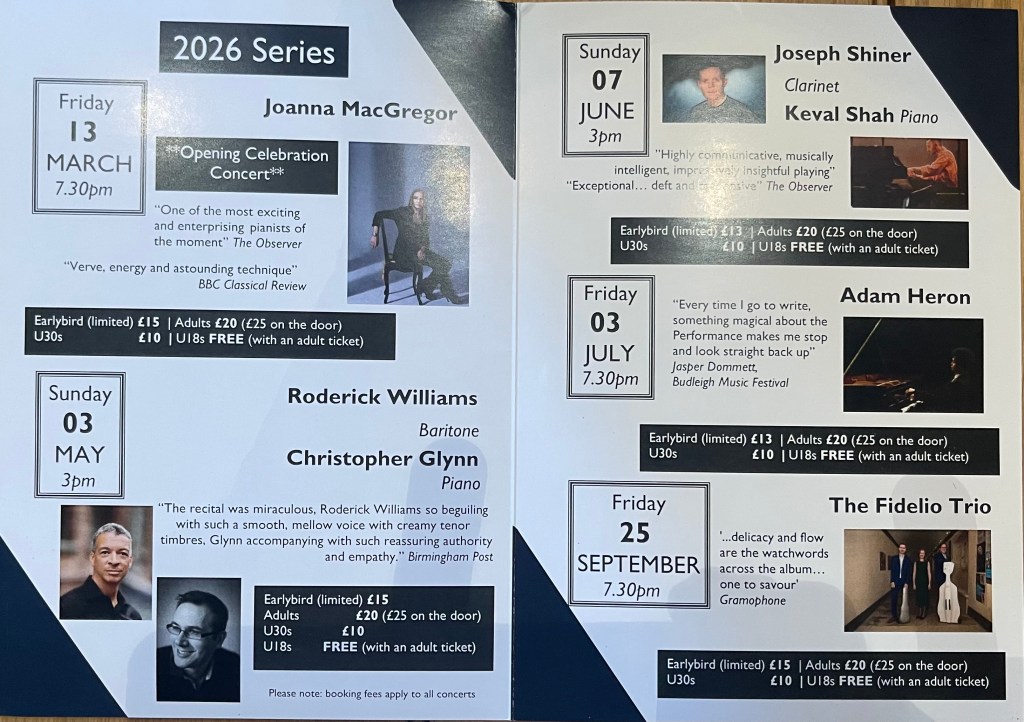
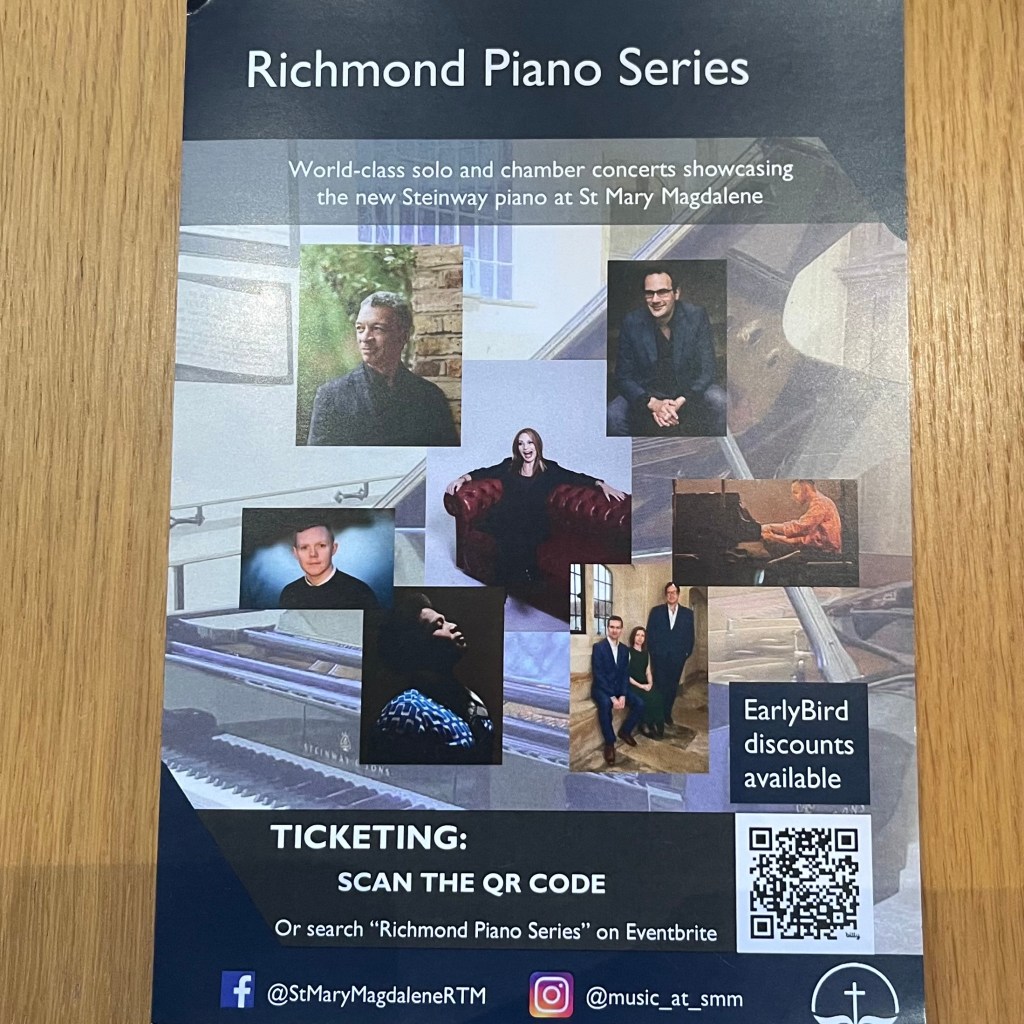
A very imposing poster was a great draw for an enthusiastic audience that was greeted by an even more authoritative Adam Heron.
I had written ‘An eclectic musician of refined taste and eloquence’ quoted in the programme but three years on I would add :’ with a commanding authority and musical curiosity that illuminates his whole being.’
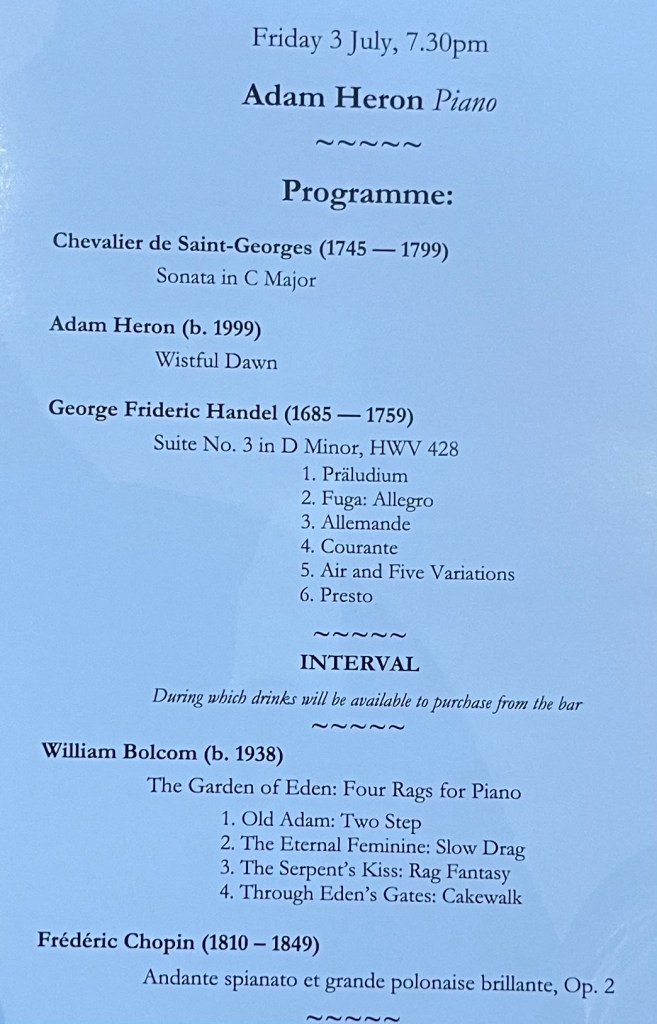
A graduate from the class of Christopher Elton at the Royal Academy with a postgraduate degree from Cambridge University. And now a Ph D research scholarship at Glasgow University to delve into the world of the little known Franco- Caribbean composer Chevalier de Saint-Georges whose Sonata in C was to open his recital today.
A sonata in C that has yet to be published! Playing of brilliance, finesse and rhythmic energy, Adam imbuing the knotty twine with a ‘joie de vivre’ of hypnotic drive. A clarity to his playing, where seated at the piano he immediately established an authority and extraordinary mastery with playing almost without pedal but imbuing the music with style and a great sense of communication. Adam tells me he returns to Glasgow to begin a recording project of some of the chamber works of this composer in the hope that he will once again gain the same recognition with which he was held in the time of Mozart! Certainly this one work was enough to want to hear more works that are in the style of the period but with a unique voice of its own.
Adam’s own composition ‘Wistful Dawn’ revealed many of the sumptuous sounds of this magnificent piano, in an outpouring of Rachmaninov type finesse. Washes of sounds, where single notes were absorbed with masterly pedaling into a radiance and beauty of subtle colours.
Handel’s Suite n 3 in D minor HWV 428 is one of 8 suites that are rarely heard in the concert hall on the piano . But Adam made a very persuasive case with playing of absolute clarity and rhythmic drive, from the continuous outpouring of scales of the ‘Präludium’ to the final decisive ‘Presto.’ A fugue played without pedal with clarity and refined stylistic shape and an Air and variations each played with extraordinary character and sense of architectural shape.
Adam had even more surprises for us after the interval on a voyage of discovery that he introduced with such enticing scholarship. A suite of Four Rags by William Bolcom under the title of ‘The Garden of Eden’ . A composer who must be the Scott Joplin of our time . Four movements played with beguiling character, with the Serpent’s Kiss the most elaborate, incorporating rhythmic knocking on the wood of the piano which Adam did with great respect for this wonderful instrument. Chopin wrote ‘con legno’ in his second piano concerto and you can see violinist tapping very gently and respectfully the strings with the back of the bow. I had the answer ready when Stockhausen asked me if he could use our Steinway D in Rome rather than the piano that had been hired for the occasion . How could one turn down Stockhausen and I agreed so long as he would use it in the traditional manner with two hands and two feet!
An interesting suite of four contrasting pieces but I must say that I would have preferred to have less Balcom and more Saint-Georges.
But it was in Chopin that Adam could show us his sense of style and colour with an ‘Andante Spianato’ of refined good taste, but above all of a radiance and a sense of balance that could allow Chopin’s most beautiful Bel Canto to sing with glowing beauty. Embellishments thrown off with featherlight ease as a gentle Mazurka rhythm took over. An imposing introduction to the Grande Polonaise which Adam played not only with grandeur but also brilliant jeu perlé playing, producing streams of notes that undulated with teasing insinuation before bursting into moments of commanding authority and showmanship. This was one of the early works of Chopin that took the Parisian salons by storm.Not the barnstorming showmanship of Liszt or Thalberg but the innovative genius who could create a new world for an instrument that now had a sustaining pedal. Adam played with commanding authority but above all with musical intelligence and poetic understanding.
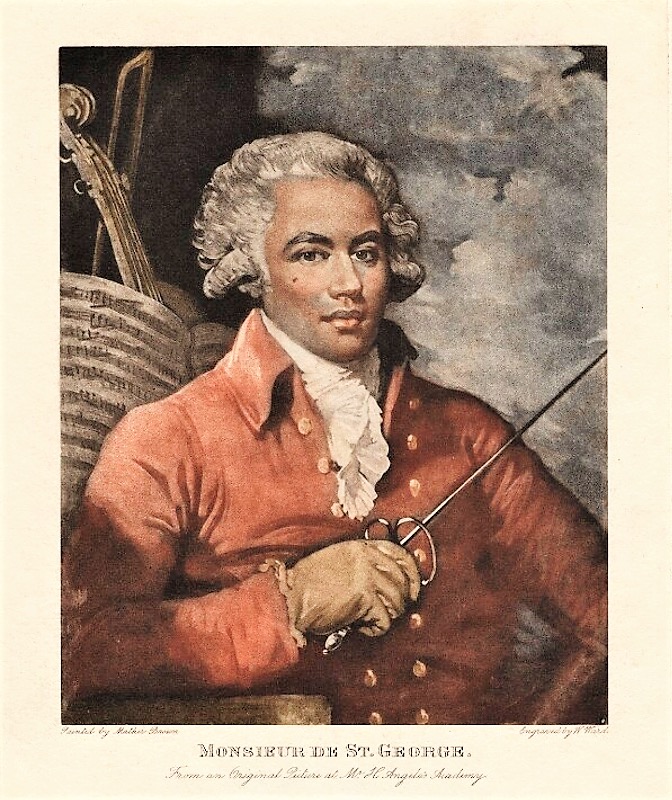
The Artistic director introducing the concertPortrait of Saint-Georges (1788) 25 December 1745 Guadelupe,French West Indies. 9 June 1799 (aged 53) Paris When it comes to composers of the Classical era (c.1730-1820) the names of Mozart, Bach, Schubert, Beethoven and Haydn spring to mind. However, the name of Joseph Bologne, le Chevalier de St-Georges is criminally missing from that list. During his life, the French composer of mixed race was more famous than Mozart and so talented that the young Austrian prodigy even borrowed lines from one of his concertos. So for Chevalier to often be remembered as ‘Le Mozart Noir’ (‘The Black Mozart) is rather unfair and some argue it is Mozart who should be known as ‘The White Chevalier’. Whilst Hollywood has recently looked to address this imbalance by giving Chevalier the limelight in a biopic about his life, few people still know of the man and his many remarkable achievements.
National Medal of Arts, Pulitzer Prize, and Grammy Award-winner William Bolcom (born May 26, 1938) is an American composer of chamber, operatic, vocal, choral, cabaret, ragtime, and symphonic music. He joined the faculty of the University of Michigan’s School of Music in 1973, was named the Ross Lee Finney Distinguished University Professor of Composition in 1994, and retired in 2008 after 35 years. Bolcom won the Pulitzer Prize for music in 1988 for 12 New Etudes for Piano, and his setting of William Blake’s Songs of Innocence and Songs of Experience on the Naxos label won four Grammy Awards in 2005. As a pianist Bolcom has performed and recorded his own work frequently in collaboration with his wife and musical partner, mezzo-soprano Joan Morris . Cabaret songs, show tunes, and American popular songs of the 20th century have been their primary specialties in both concerts and recordings. Their 25th album, “Autumn Leaves,” was released in 2015. In 2018, nine world premieres of Bolcom works commemorated William Bolcom’s 80th birthday.photo credit Dinara Klinton https://christopheraxworthymusiccommentary.com/2024/03/20/christopher-axworthy-dip-ram-aram/
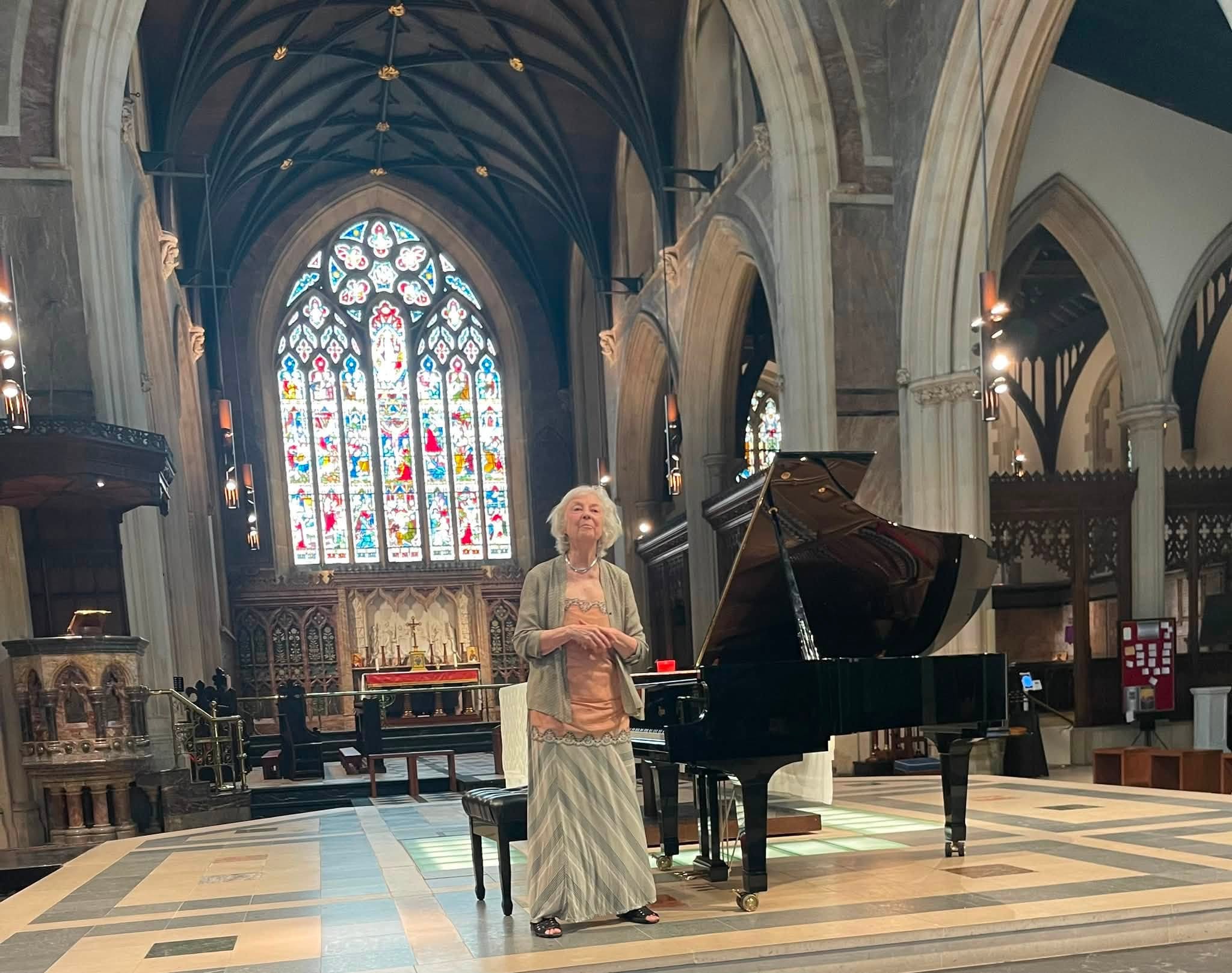
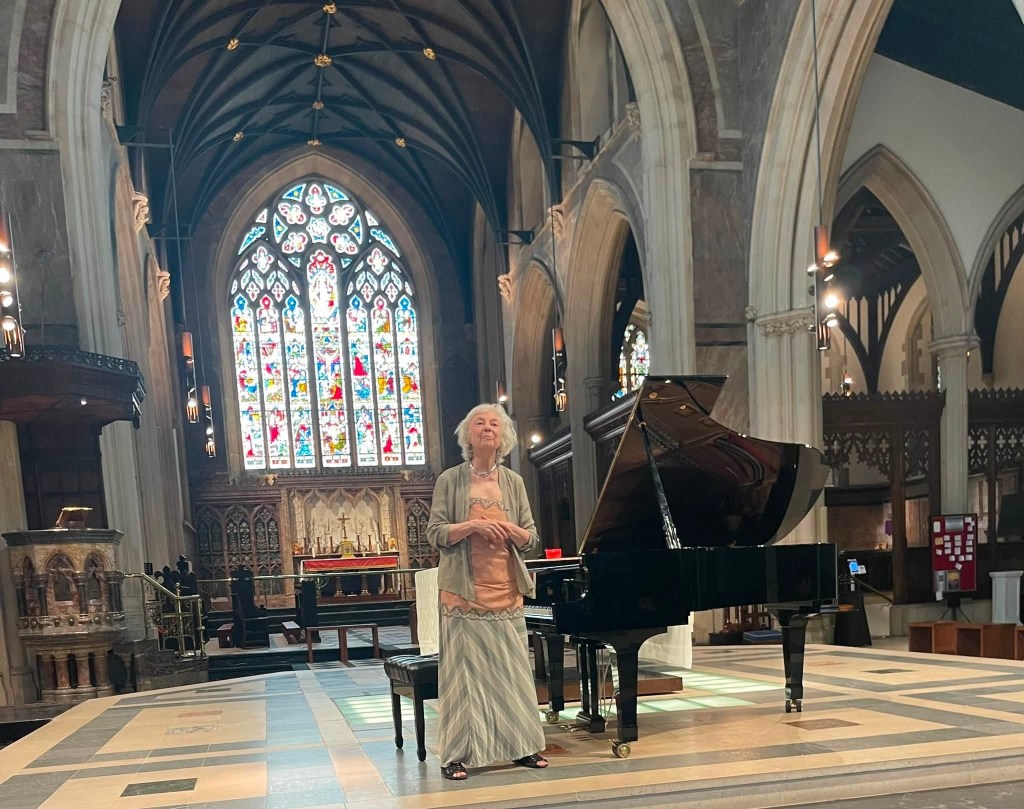
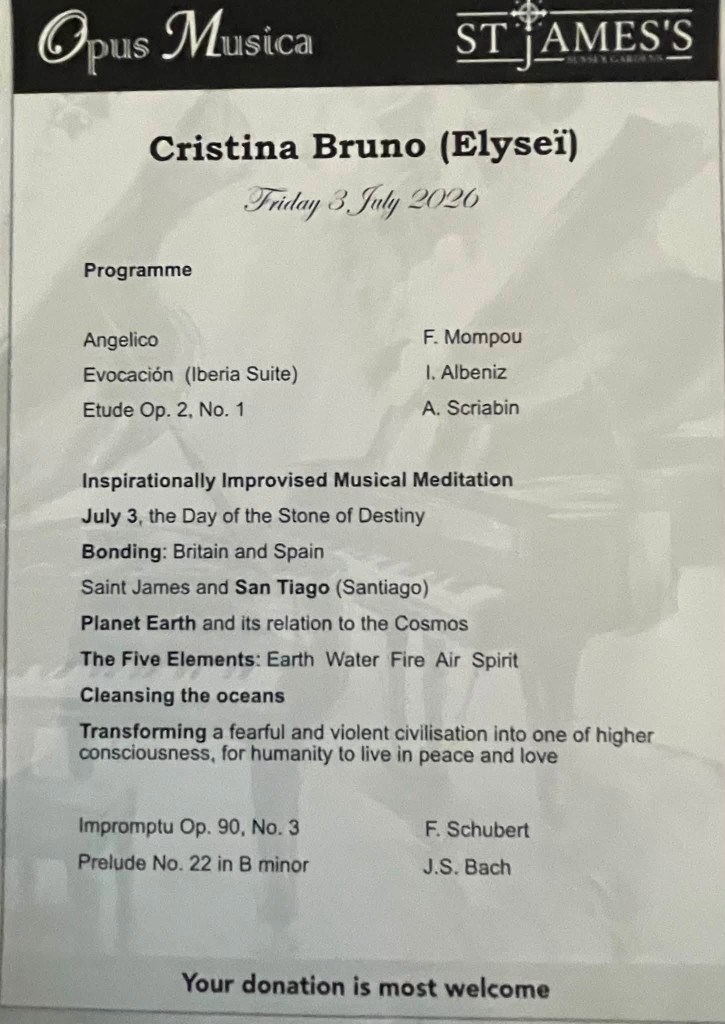
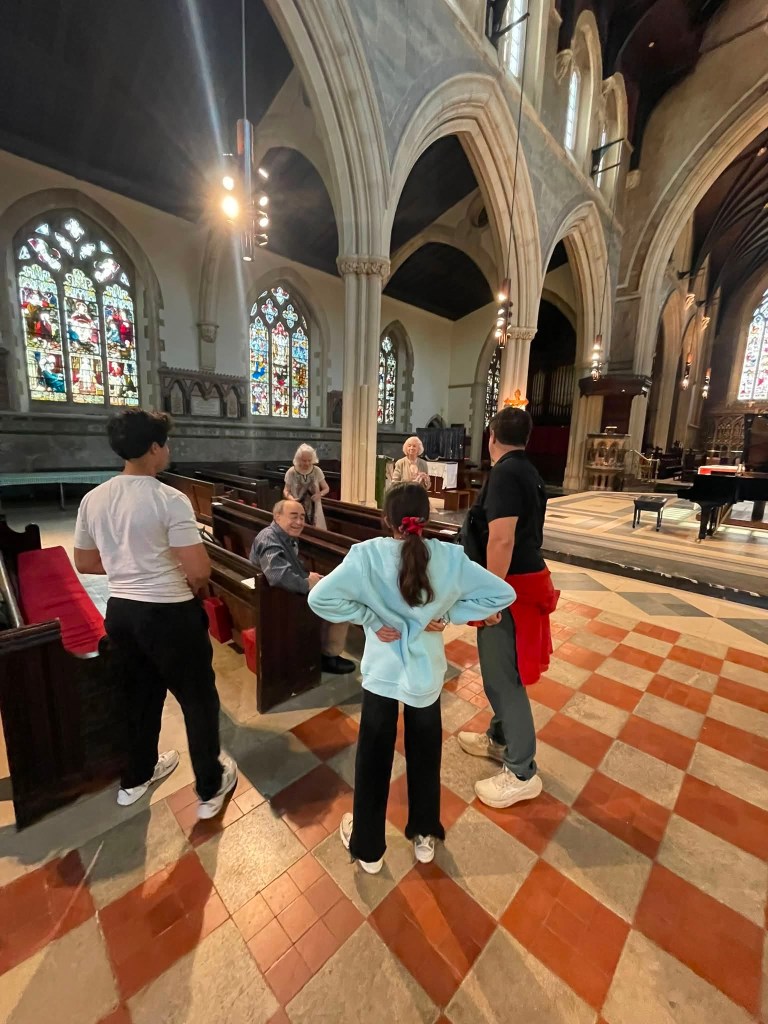
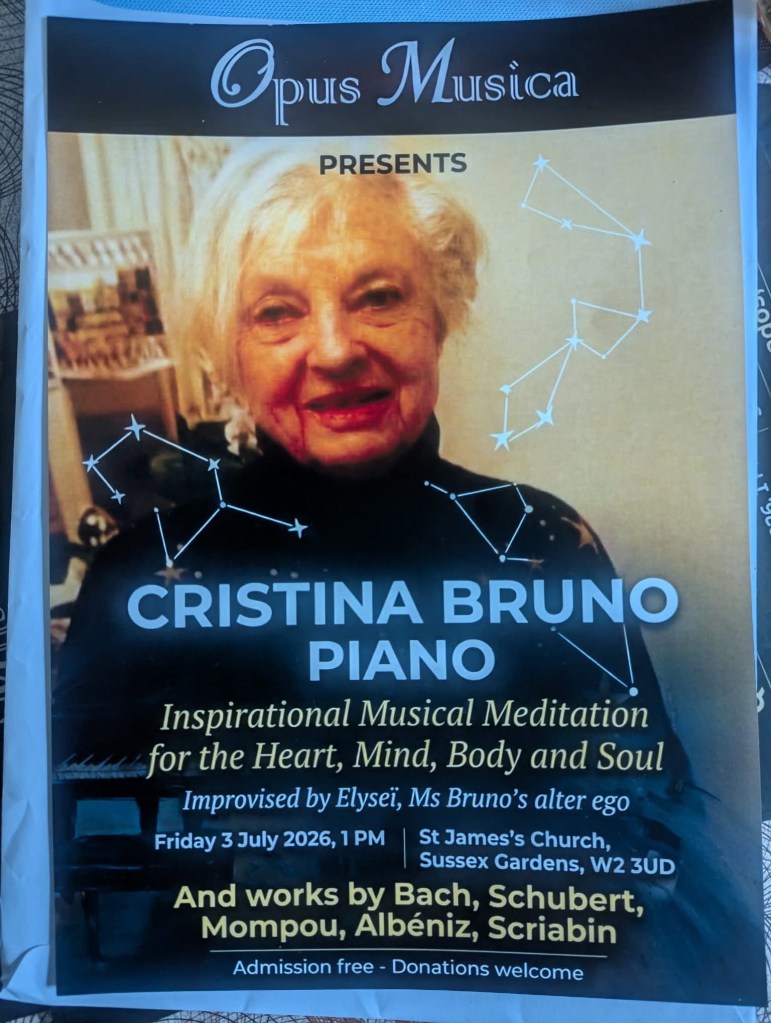
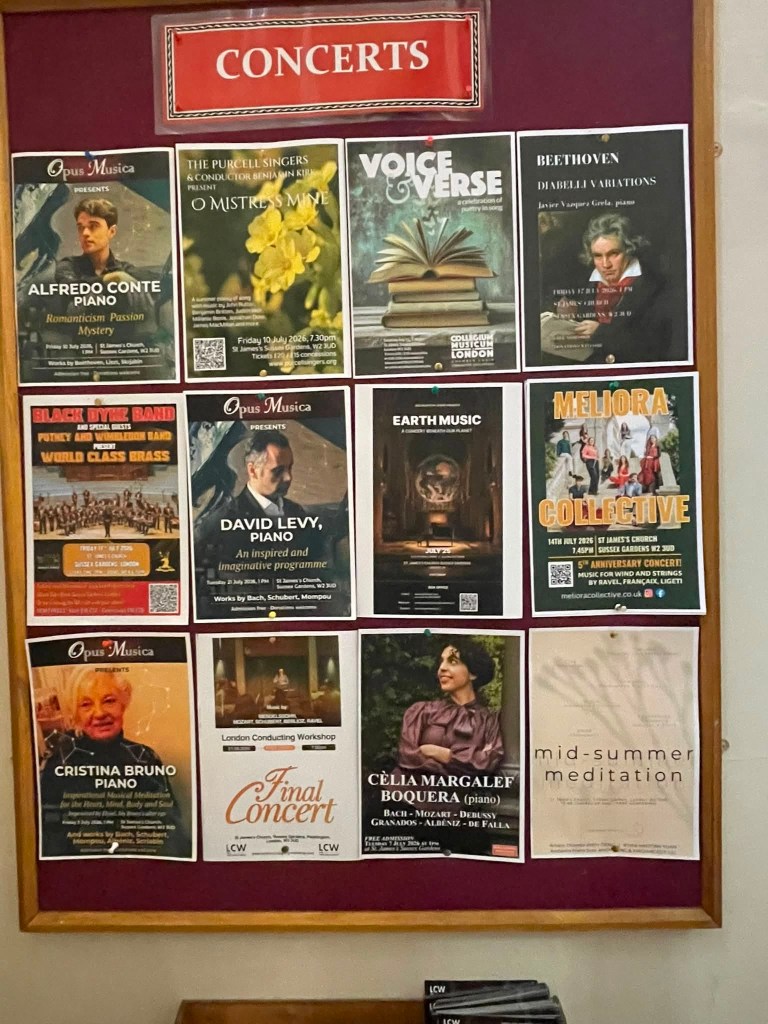
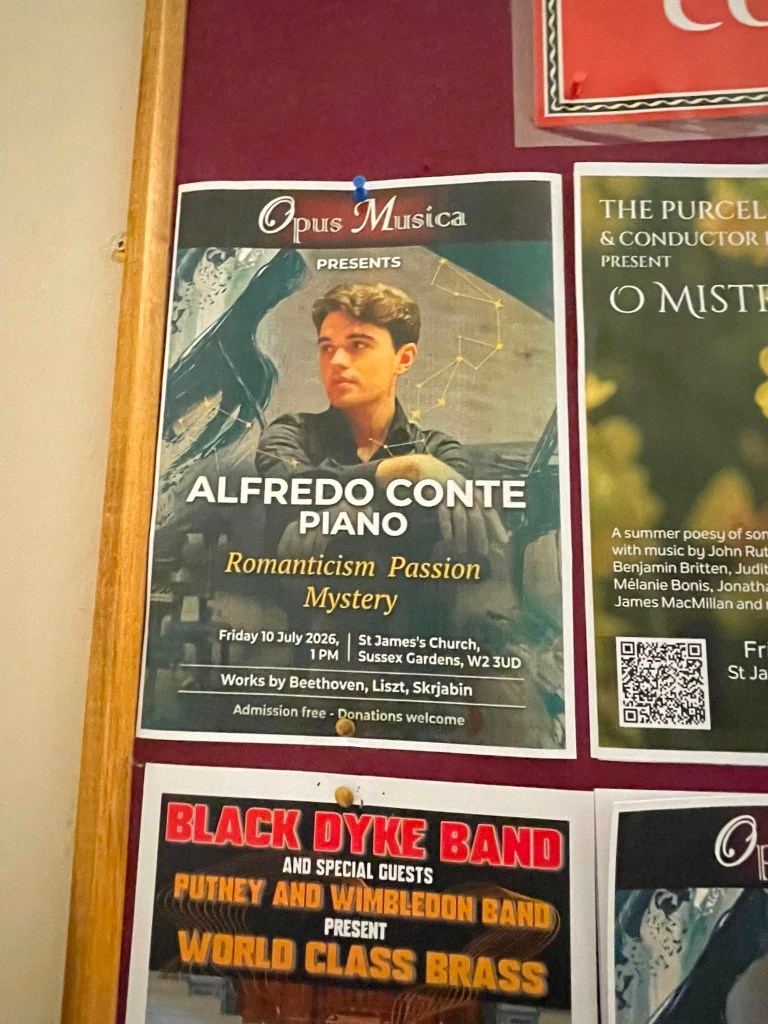
Some extraordinary playing from Cristina Bruno for the first in the series of Opus Musica concerts at St James’s Sussex gardens directed by Alberto Portugheis, the eclectic veteran pianist and Renaissance man par excellence.
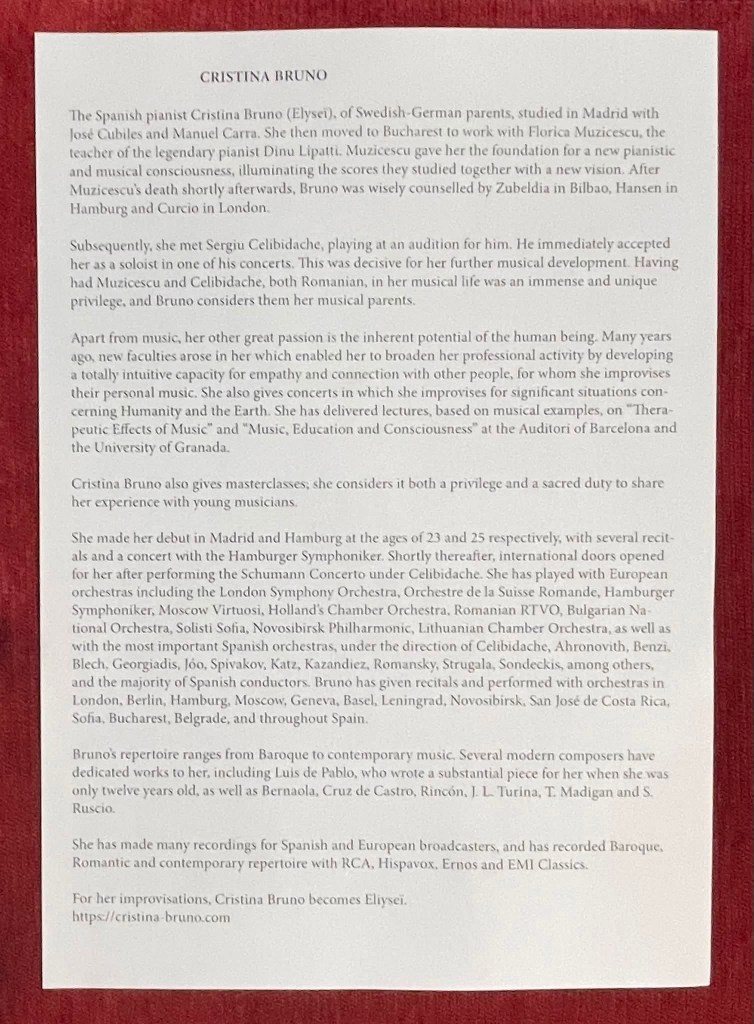
A pianist of Swedish-German descent with a curriculum that would strike fear into any musicians setting out today.
Working with Lipatti’s teacher Florica Muzicescu and later with Maria Curcio in London. A personal invitation from Celibidache to play Schumann opened a career that has spanned many years of playing with some of the finest musicians and orchestras throughout the world .
But she was more interested in the potential of the human being, and new faculties arose in her which enabled her to broaden her professional activity by developing a totally intuitive capacity for empathy and connection with other people, for whom she improvises their personal music.
Improvising too for significant situations concerning Humanity and the Earth.
Although a classical concert pianist she has also been an instrument of therapy or healing since 1991, and as such she improvises inspirationally in individual or group sessions, or concerts for general situations or purposes.
Rosemary Brown springs to mind being visited by composers during the night and dictating to her new works, or Eurythmy conceived in 1911 when a widow brought her young daughter, Lory Smits, who was interested in movement and dance, to Rudolf Steiner.
It also coincides with how the winner of the Busoni competition was introduced to us by the directer of the competition. A young Chinese pianist who had to soak up the atmosphere before starting to improvise arriving eventually at works written by others.
Madame Bruno opened her programme with music bequeathed to us by Mompou, Albeniz and Scriabin and immediately revealed a sound that I have not heard from this piano before. A luminosity and glowing radiance that belied its proud Bostonian pedigree. An arch of the hand that like Argerich or Rubinstein defies age as it can feel every key with an extraordinary sensibility as ten fingers are transformed into an orchestra of infinite colours. Some ravishing playing with passionate outbursts in Albeniz and refined good taste in Scriabin.
So this was the real thing and maybe we should sit up and open our ears to listen to what she has to say.
Since the piano cannot reflect the sounds and vibrations that would mirror the higher spiritual world or the earthy profundities ,Madame Bruno compensates by giving taps, light or strong if necessary, on the wooden part of the instrument; at the right corner for expressing high spiritual sounds ,at the left for deep earthy sounds.
There was not a big audience but such were the vibrations that we gave off that Madame Bruno whose pseudonym is Elyseï overran her improvisations time and as the church clock struck two, orchestral musicians started to appear for the rehearsal for the evening concert in this beautiful church.
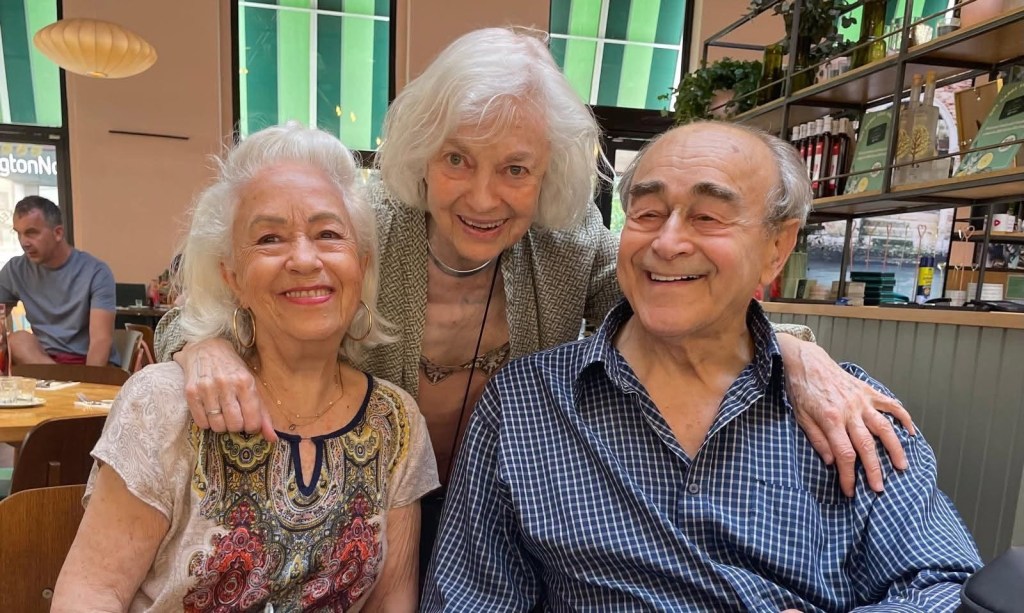
after concert lunch with Alberto Portugheis ,right and Cristina ,centre
So no time for Schubert or Bach but we had been treated to some wondrous sounds of glowing luminosity and beauty from a true artist with a soul and a pianistic mastery of enviable pedigree.
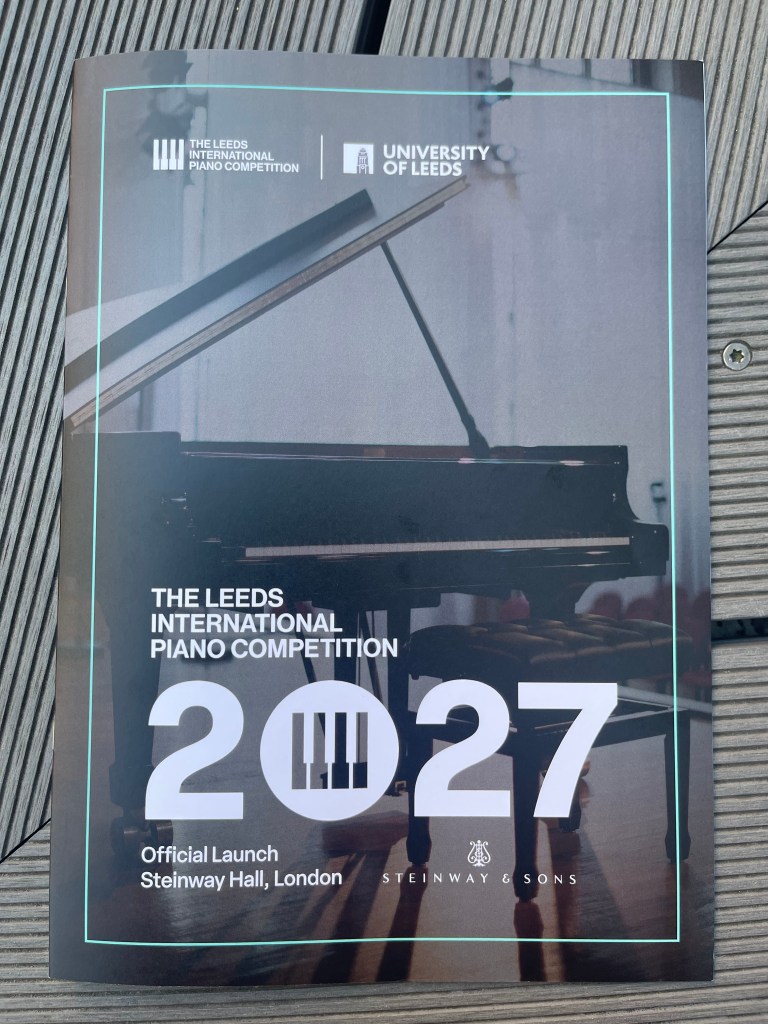
Leeds launch for Fanny Waterman’s brain child that she created in the 60’ s with her own unshakeable force and will power.
Fanny is no longer but her energy remains and is the guiding light for the team that now show us that Leeds still can lead
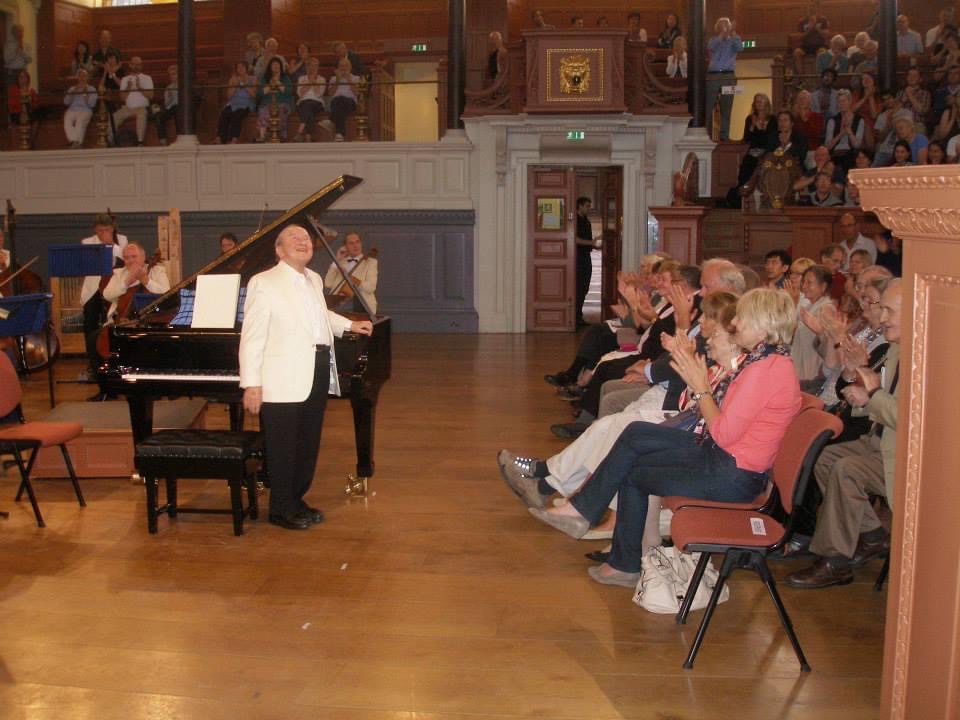
Sir Stephen Hough with Petroc Trelawny
Sir Stephen Hough is now at the helm and by God they got it right.
A local lad who has taken the world by storm just as Fanny had done . Fanny always used to say to me ‘ you are so eloquent Chris ‘ but that is nothing compared to Sir Stephen’s knowing words of wisdom as he outlined the use of a competition.
Fanny at 99 was all ready to return to the helm but little did she expect that Sir Stephen would eventually replace her.
Fanny was unique and irreplaceable but my God I think Sir Stephen has got it right : ‘ It is not to find faults but to find the strengths of young artists on the crest of a wave. If recognised and nurtured instead of being injured and scarred they can grow and become true artists where quality not quantity are the true values in art’
Cherkassky adored Stephen’s playing as he said to me on listening to another star prize winning pianist playing the complete Beethoven cycle ‘ . ‘ I don’t think they listen to themselves ‘ .
Well Sir Stephen certainly listens to himself but also to others and his understanding of the use of International competitions is like a breath of fresh air in a market where top of the class has become the ethos of aspiring young artists who are forced by survival to think more of themselves than the composers they are serving.
Humility must go hand in hand with mastery as Sir Stephen has shown us for years in music and now with his wise words is so eloquently ready to lend his voice too , rightly taking his place by Fanny’s side at the helm of her impossible dream.
Rubinstein got it right ……..talent cannot be taught but it can be ruined if not nurtured with care and with a mutual selfless love of music.
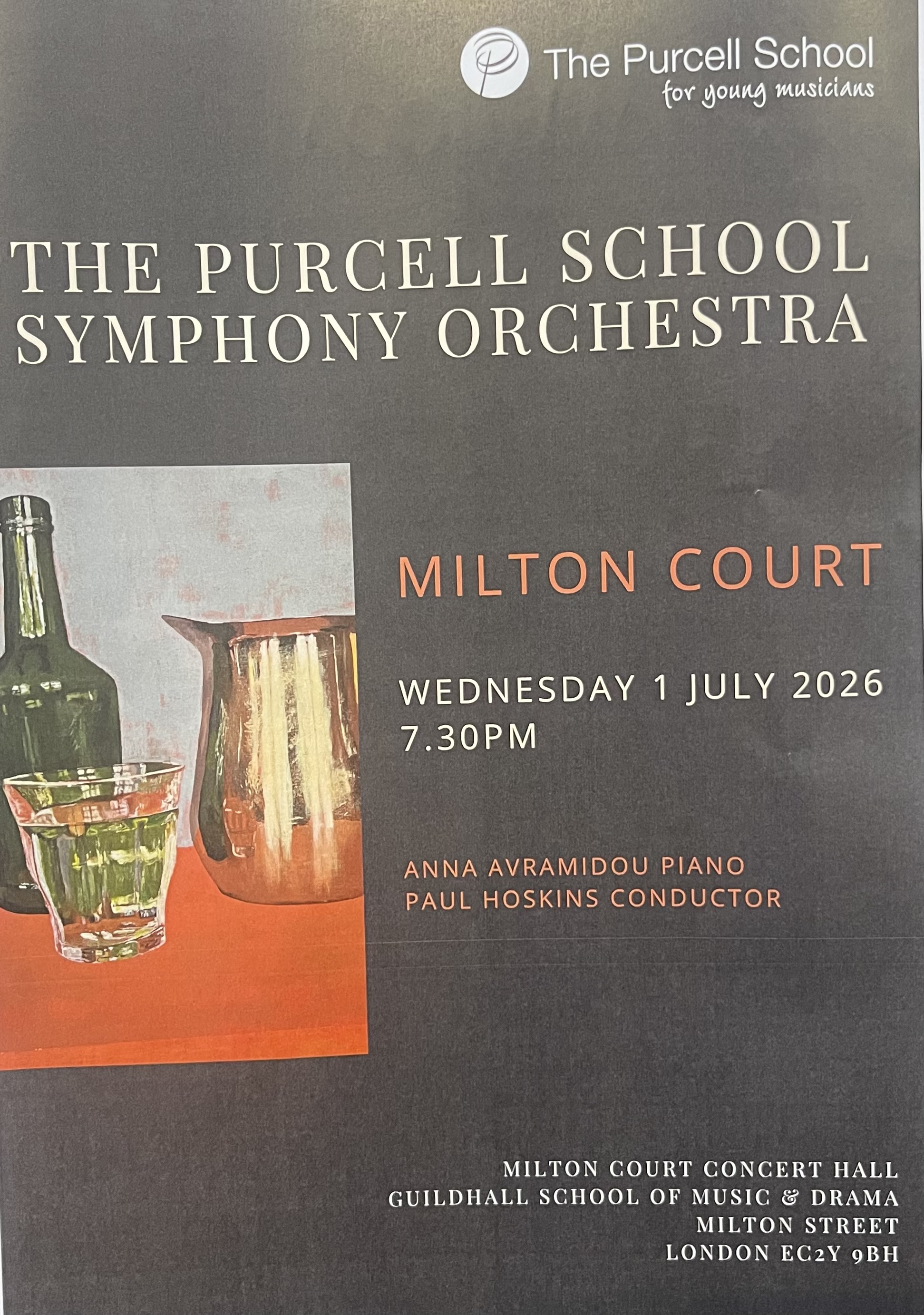
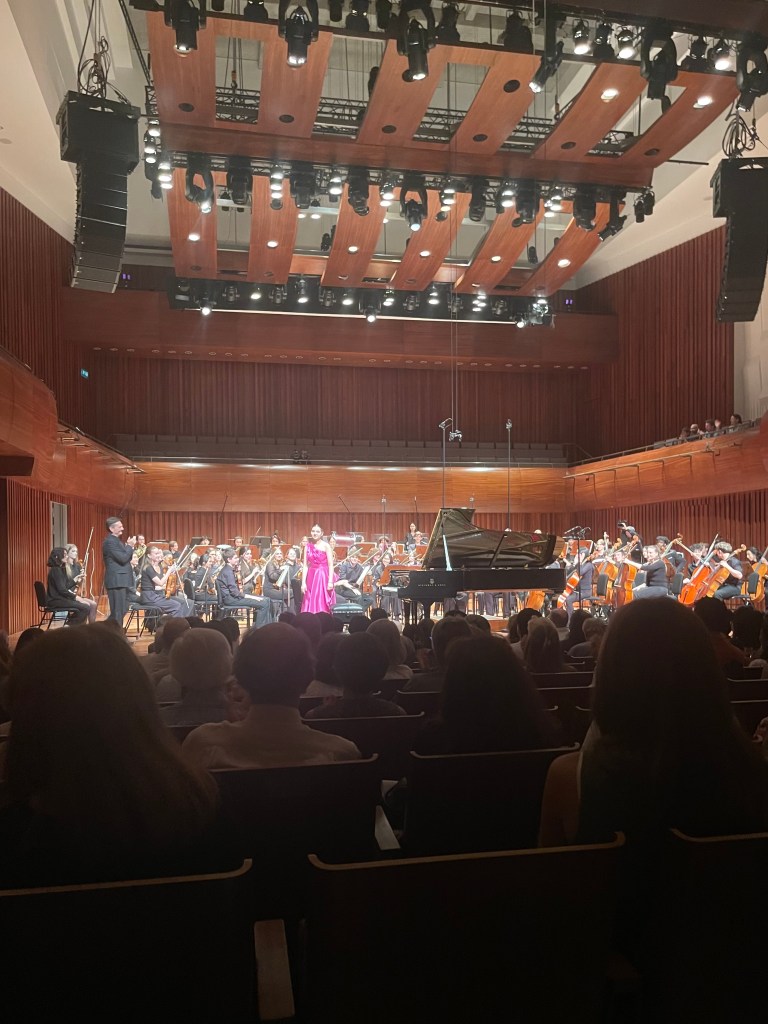
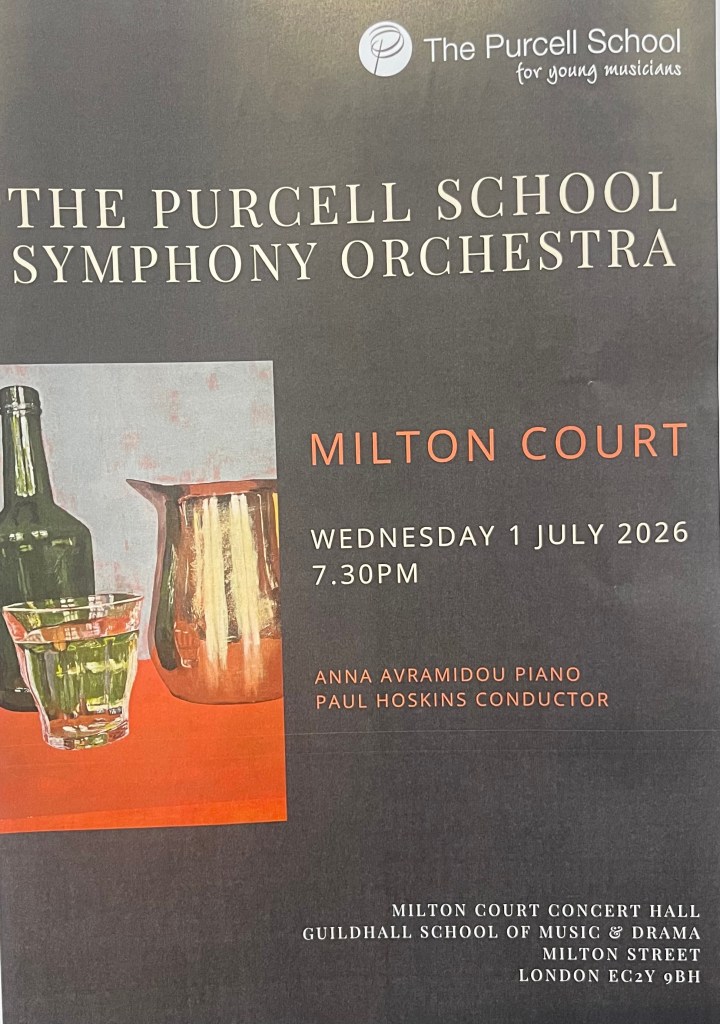
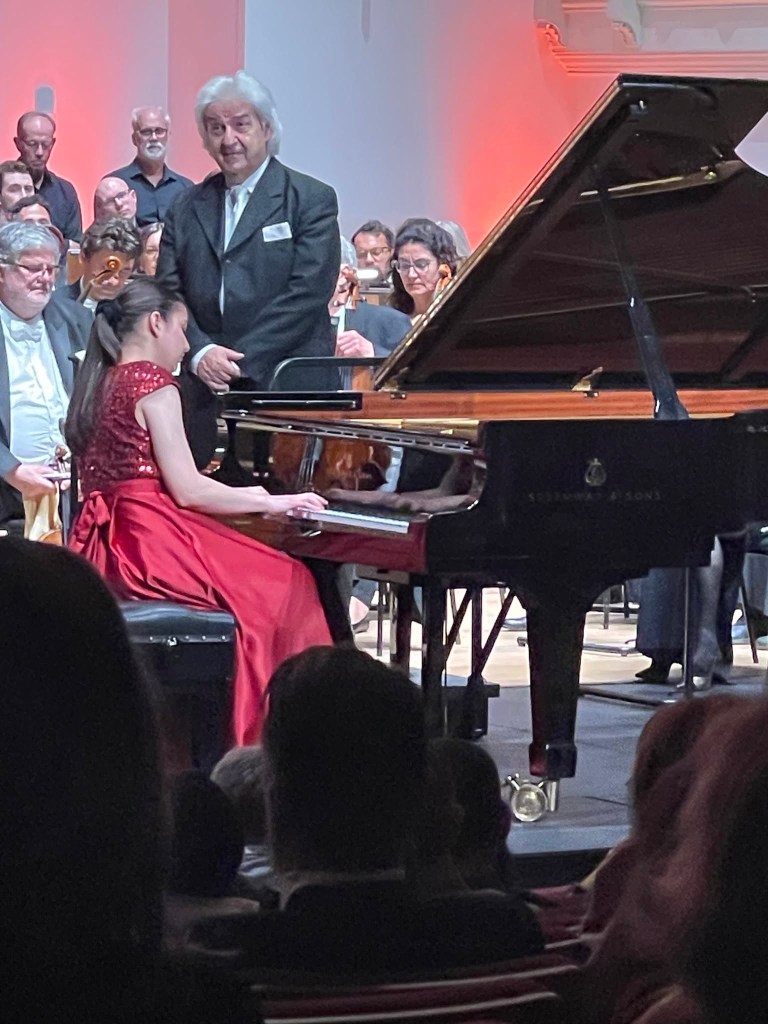
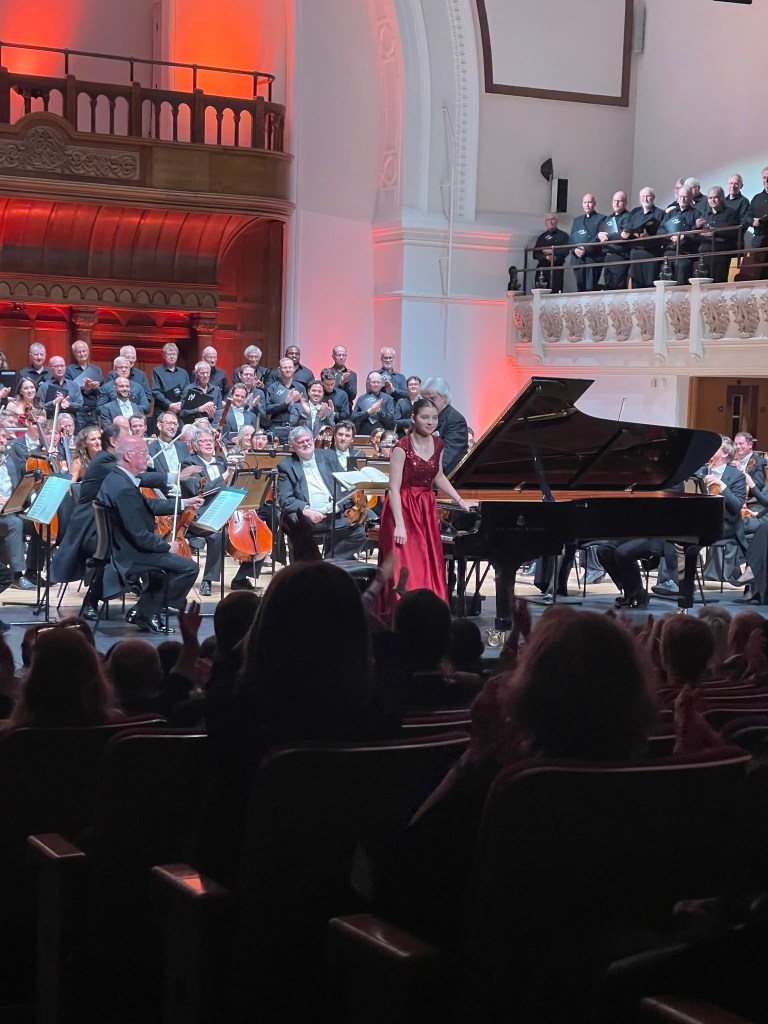
The rising star of Anna Avramidou playing her final concert with the Purcell School Symphony orchestra before moving on to the Royal Academy of Music where she will continue her training with Tessa Nicholson.
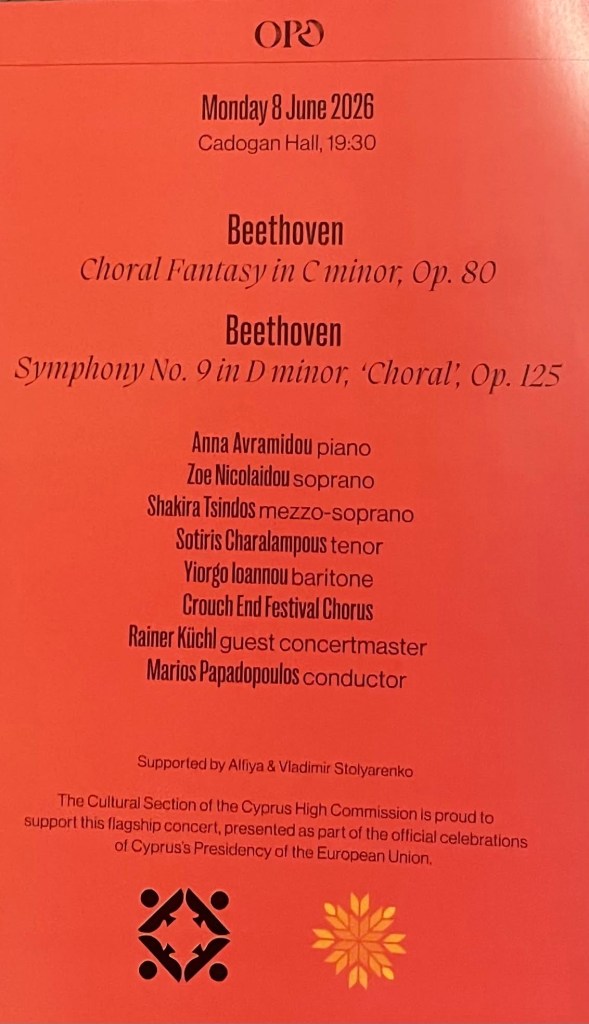
Already a seasoned performer who I heard last month in Cadogan Hall playing Beethoven’s Choral Fantasy with her fellow Cypriot Marios Papadopoulos and his Oxford Philharmonic Orchestra.
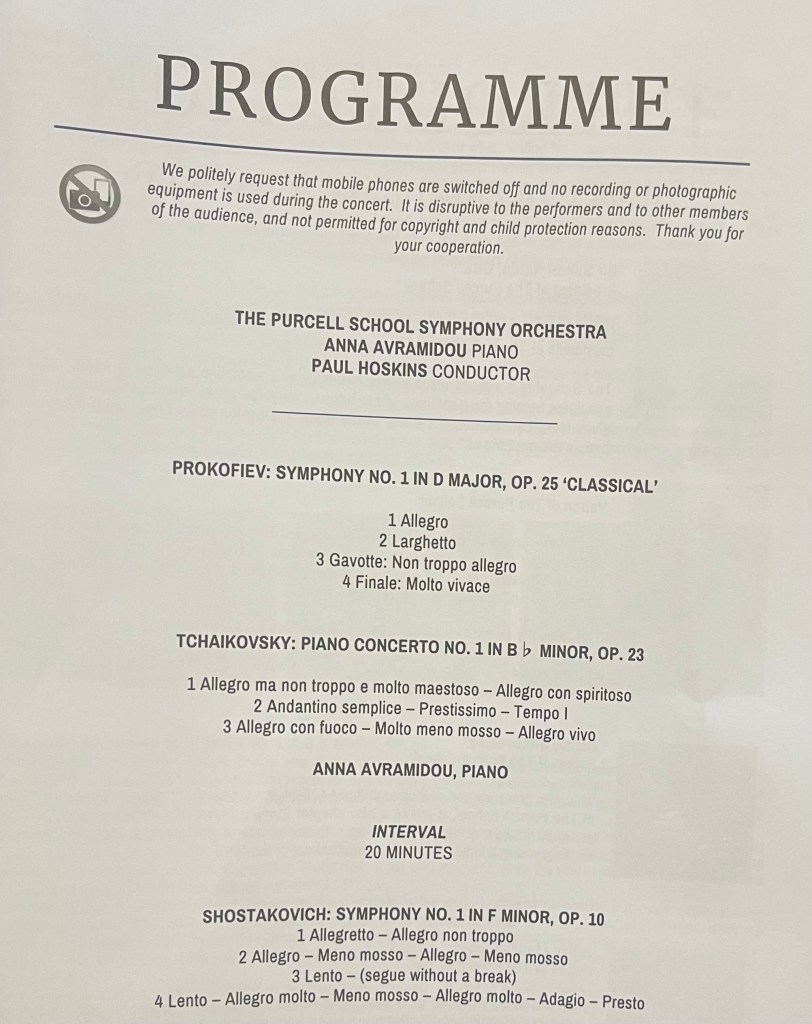
No ordinary performance for an eighteen year old with this genial preparation for the Ninth Symphony, playing by heart because the music is so ingrained within her youthful being. As she demonstrated once again last night in Milton Court with a performance of the Tchaikovsky B flat minor concerto that was played with an authority that belied her anagraphical age. She imbued the music with beauty and radiance as well as technical mastery and aristocratic good taste.
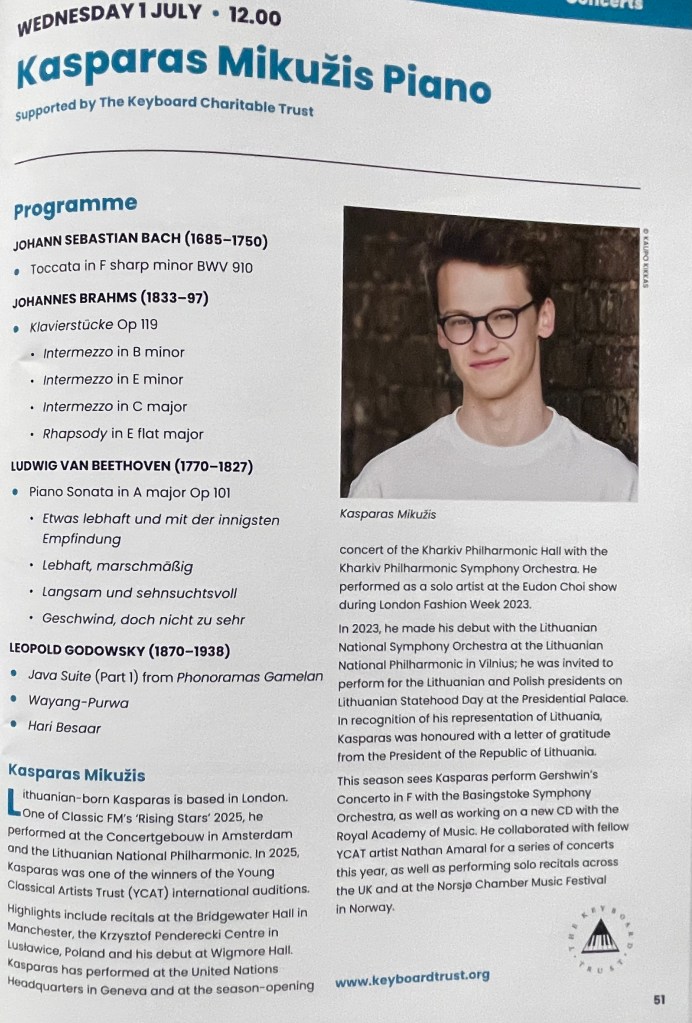
Bach Toccata in G BWV 916 Brahms Klavierstücke op. 119, Beethoven Sonata op 101, Godowsky Java Suite part 1
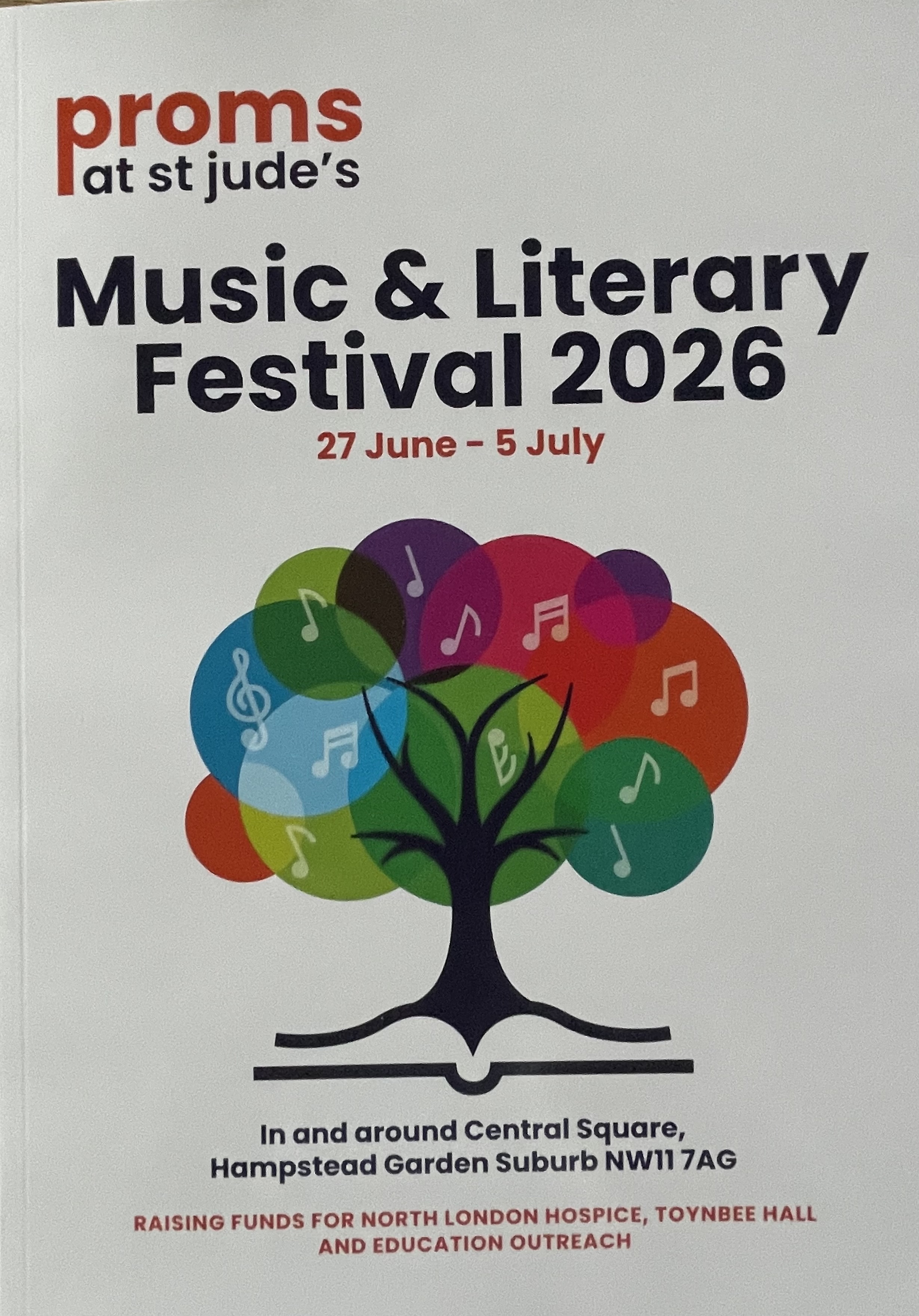
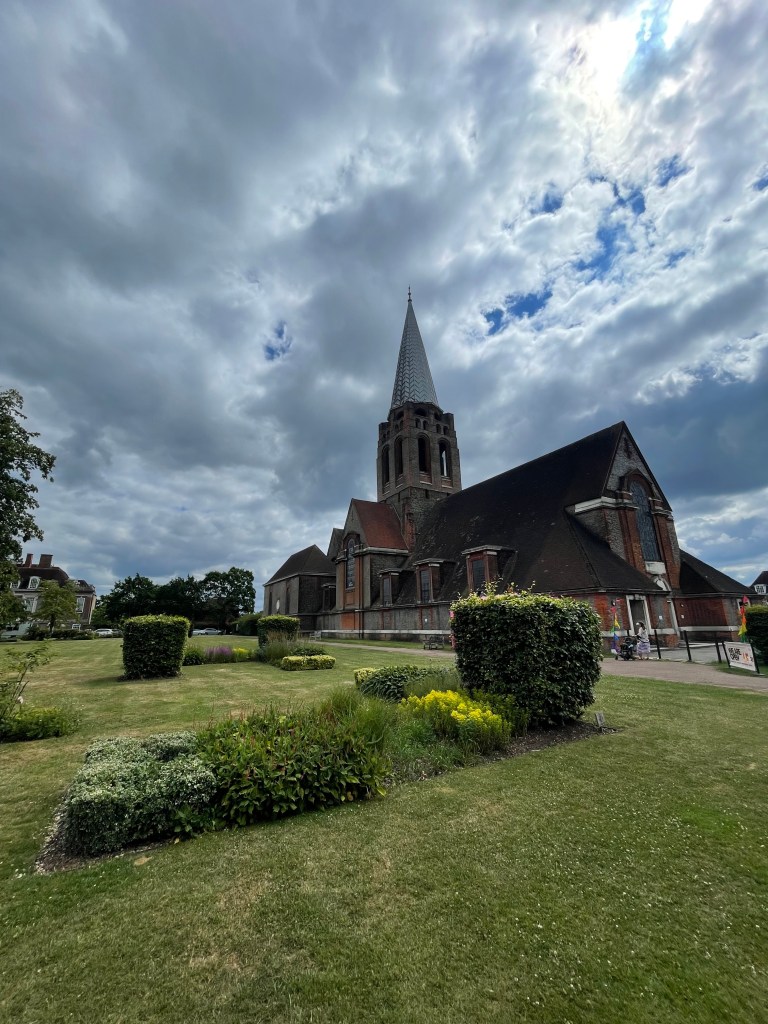
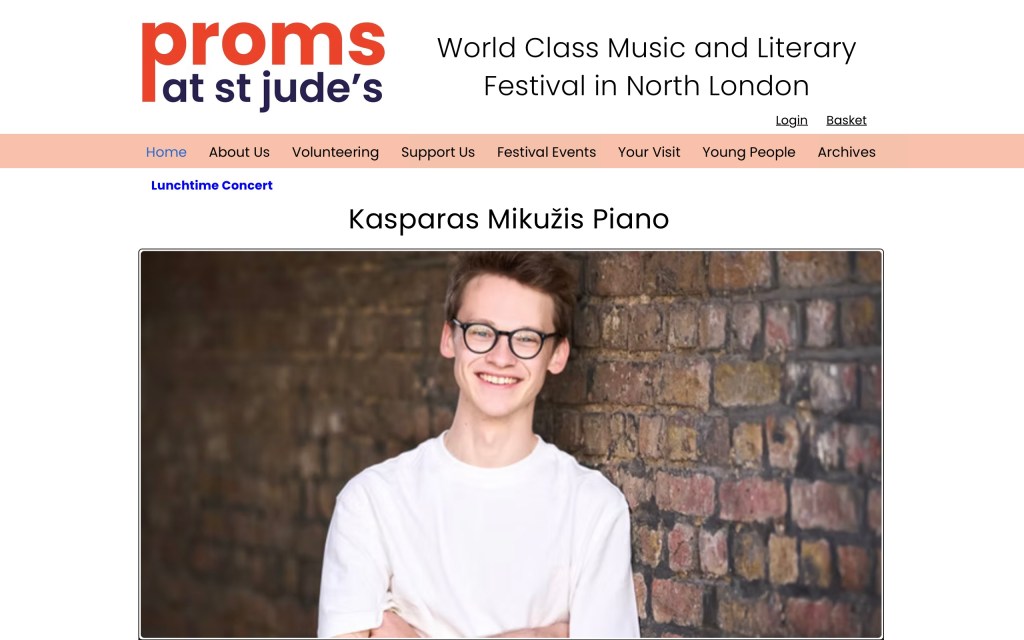
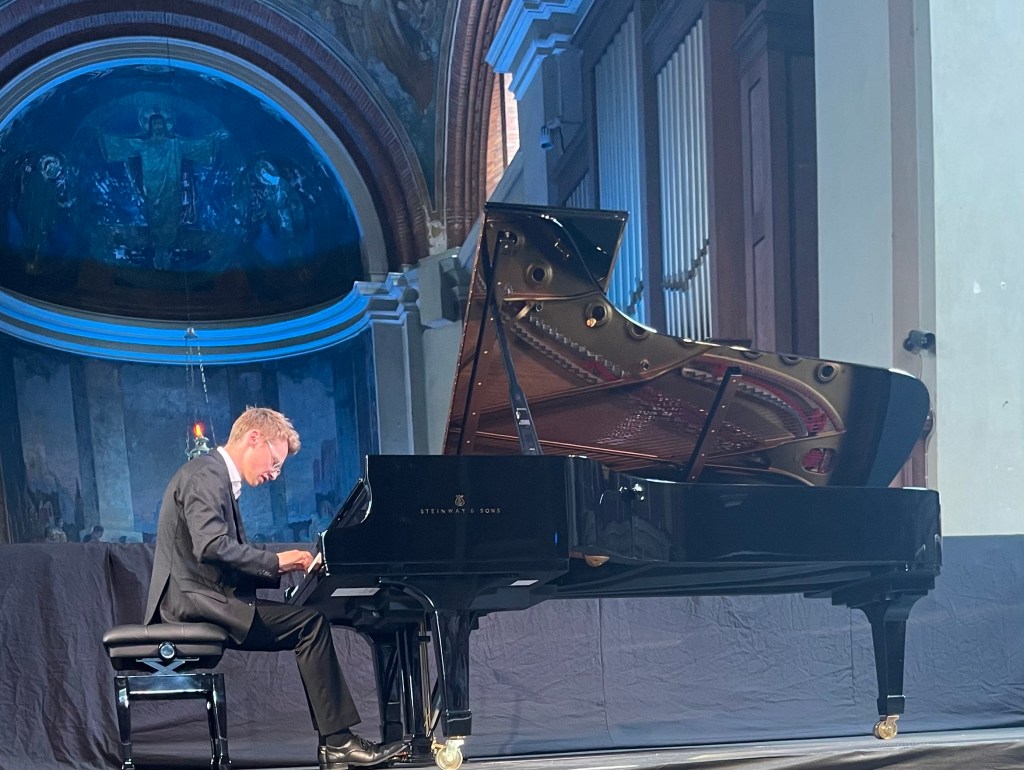
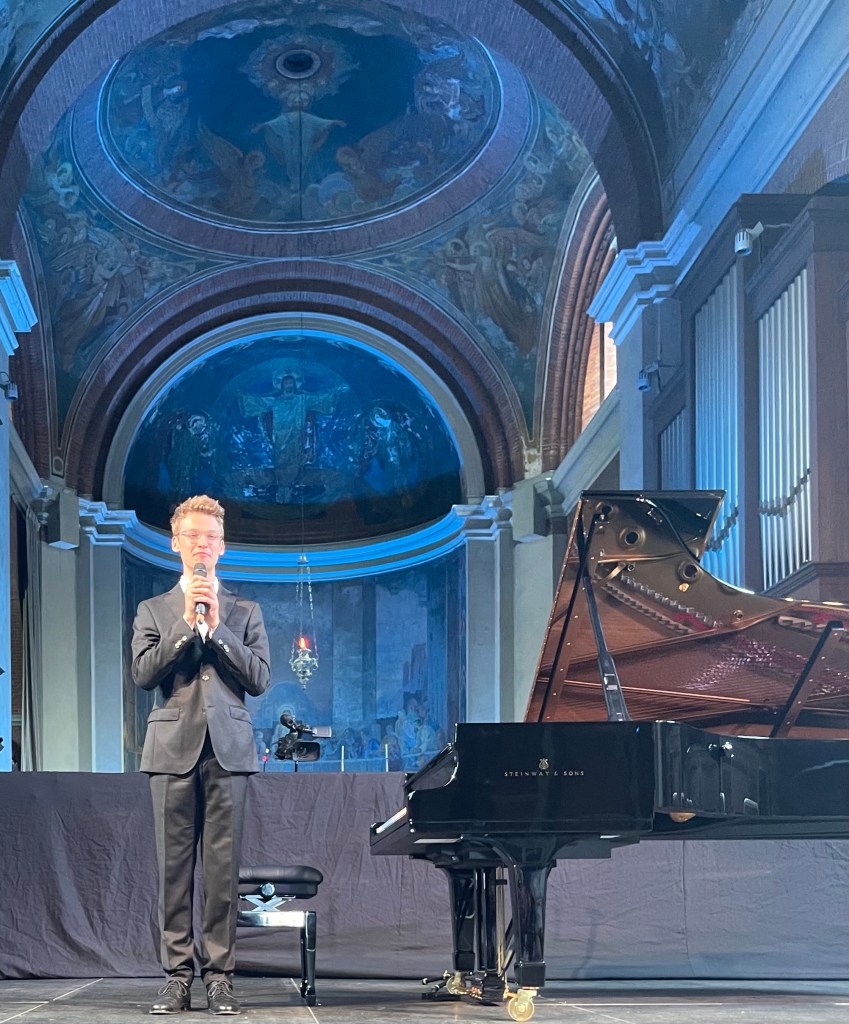
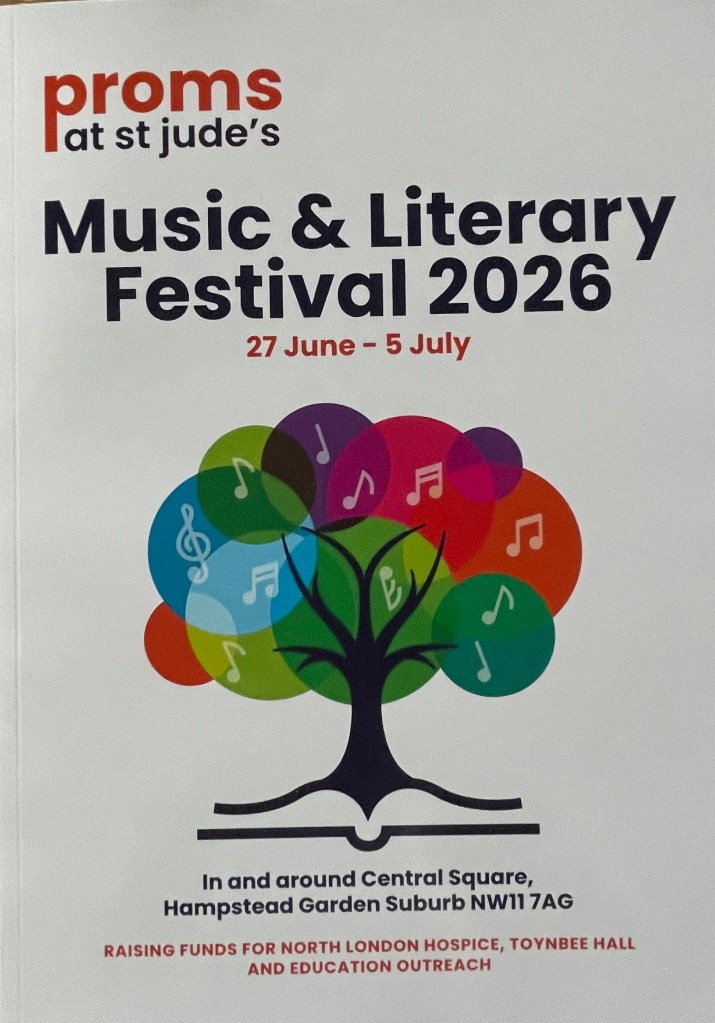
Kasparas Mikužis in Hampstead Garden Suburb for St Jude’s annual cultural feast. Kasparas may be far from home but his Lithuanian heritage ignited the magnificent Steinway D with sounds of glowing crystalline beauty that reminded me of the sound of Géza Anda whose last concert I had heard fifty years ago in nearby Mill Hill School. It is a fluidity of sound created by relaxed natural movements allied of course to well trained fingers . Nowhere is Agosti’s dictum more evident than with the many Lithuanian pianists who are emerging from our Academies. ‘ Fingers of steel but wrists of rubber ‘ which of course was directly passed down from Agosti’s mentor, Busoni who in turn was descended from Liszt.
Kasparas even paid homage to a fellow Lithuanian Leopold Godowsky, whose first book of his Java suite closed this midday concert . It was Rubinstein who famously said that even if he practised for five hundred years he would never be able to play as Godowsky. After leaving Godowsky’s home one night, Josef Hofmann told Abram Chasins: ‘ Never forget what you heard tonight; never lose the memory of that sound. There is nothing like it in the world.’
It is a sound that Kasparas used to illuminate the ‘Gamelan’ with the magic atmosphere that he created from masterly use of the pedals and of his horizontal stroking of the keys . The ‘shadows and reflections’ of Godowsky’s puppet show was where Kasparas could produce mellifluous sounds of French nasal refinement. The final piece in this selection from the Java Suite was ‘a great day’ indeed with not only a refined palette of sounds but a transcendental outpouring requiring a mastery that is of very few.
Kasparas chose to open the recital with Bach’s last of his seven early Toccatas not the first as advertised. Playing with a crystalline clarity and giving a refined shape to the streams of notes that conversed as they chased each other with an invigorating ‘joie de vivre ‘. An Adagio of radiance of glowing timeless beauty reaching out to the Toccata that burst onto the scene with a fugato of voices that entered one by one building into a joyous outpouring of hypnotic rhythmic energy. A sound that was never hard but where each voice flowed with its own lightweight volition joining forces and creating a knotty twine of extraordinary luminosity and clarity.
Brahms’s four pieces op 119 were the last of his works for piano and are ‘lullabies of grief’ but also of exhilaration and nostalgia. In Kasparas’s hands they became a kaleidoscope of conflicting emotions with an extraordinary palette of sounds of chameleonic colours. From the first with a glowing fibral frailty of reticent beauty as the second carves waves of capricious sounds of bewilderment, turning into passing passionately constructed clouds that dissolve with disarming simplicity and profound intimacy. The playful third was with beguiling freedom and fancy free washes of jeu perlé embellishments . The last played with imperious authority and sumptuous Philadelphian sounds dissolving into a wondrous chorale with notes dropping from above with jewel like constancy. The central episode was of music box simplicity before the final extraordinary triumphant ending that Kasparas played with aristocratic control.
The main work on the programme was Beethoven’s Sonata op 101. Kasparas revealed it as Beethoven’s true pastoral sonata with an opening movement of ethereal fantasy played with a glowing whispered fluidity. The March was played with dynamic drive but never of hardness but always of a wonderful clarity and sense of architectural line. A poignant quasi religious intensity to the Adagio was contrasted with the bubbling vivacity of the Allegro . The transcendental difficulties dispatched with pastoral freshness and scintillating brilliance .
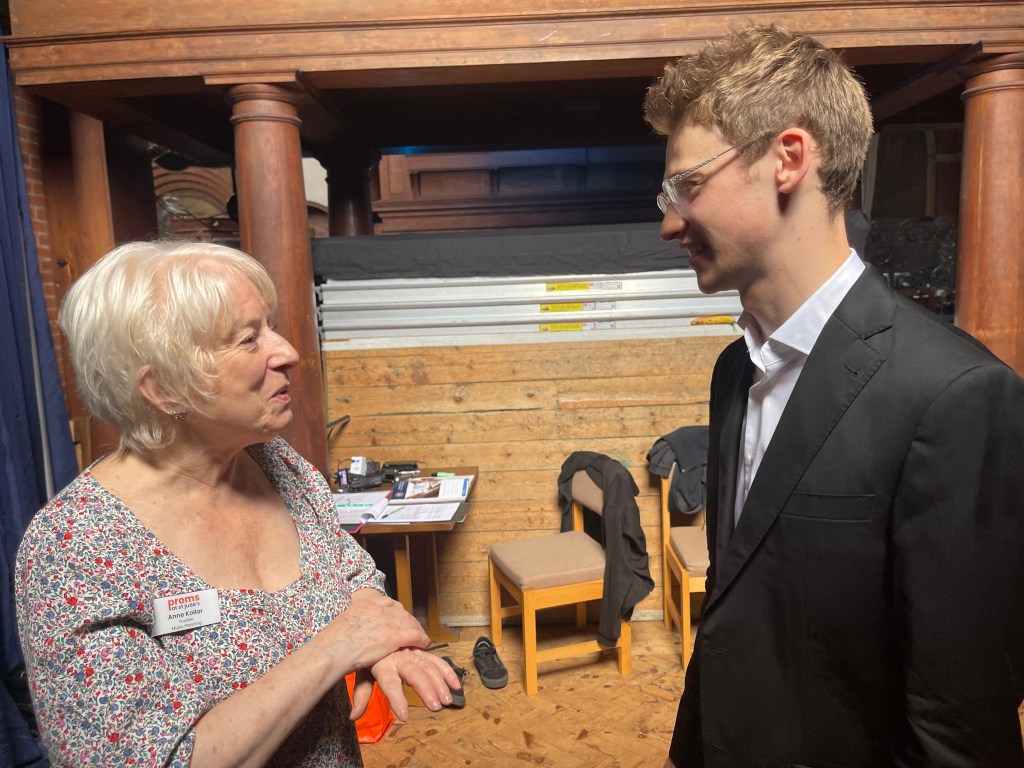
Anne Kollar,Chair of Music Planning comments : “What a lovely story about your neighbour in the audience. I heard nothing but raves about the performance, and I’m sure we’ll be keeping an eye on Kasparas . His playing is outstanding, and his friendly and articulate rapport with the audience is a real jewel .She had heard about the ballet dancer in the wheelchair who ‘had never heard anything like it’ – and who was completely bowled over by his playing. She absolutely adored coming backstage afterwards …Yvonne Baker,Music Planning CommitteeMichael White the distinguished critic see belowAnne Kollar,Chair of Music Planning Sarah Biggs with Tamsyn Hamilton after concert celebrations in nearby Kenwood
Kasparas Mikužis is a Lithuanian-born pianist based in London. Named as one of Classic FM’s ‘Rising Stars’ for 2025, he has taken the stages of various highly respected venues such as the Concertgebouw in Amsterdam and the Lithuanian National Philharmonic. In May 2025, Kasparas was one of the winners of the Young Classical Artists Trust (YCAT) international auditions.
Highlights include recitals at the Bridgewater Hall in Manchester, UK, the Krzysztof Penderecki Centre in Lusławice, Poland and his debut at Wigmore Hall in London. Kasparas has also performed at the United Nations Headquarters in Geneva on multiple occasions. Other notable appearances include performances at the season-opening concert of the Kharkiv Philharmonic Hall with the Kharkiv Philharmonic Symphony Orchestra under conductor Yuri Yanko. He also performed as a solo artist at the Eudon Choi show during London Fashion Week 2023.
In 2023, he made his debut with the Lithuanian National Symphony Orchestra at the Lithuanian Philharmonic in Vilnius. Later that year, he was invited to perform for the Lithuanian and Polish presidents on Lithuanian Statehood Day at the Presidential Palace. In recognition of his representation of Lithuania on the international stage, Kasparas was honoured with a letter of gratitude from the President of the Republic of Lithuania.
The 25/26 season sees Kasparas perform Gershwin’s Concerto in F with the Basingstoke Symphony Orchestra, as well as working on a new CD with the Royal Academy of Music. He will collaborate with fellow YCAT artist Nathan Amaral for a series of concerts in early 2026, as well as performing solo recitals across the UK and at the Norsjø Chamber Music Festival in Norway.
Kasparas completed his undergraduate studies at the Royal Academy of Music with Diana Ketler, and his postgraduate studies under Professor Christopher Elton. Since 2023, he has also worked closely with Gabriela Montero through OAcademy.