Accademia di Santa Cecilia ‘The making of an artist’ Benedetto Lupo points the way for Pier Carmine Garzillo, Jaeden Izik-Dzurko, Federico Manca & Federico Pische
Accademia di Santa Cecilia ‘The making of an artist’ Benedetto Lupo points the way for Pier Carmine Garzillo, Jaeden Izik-Dzurko, Federico Manca & Federico Pische
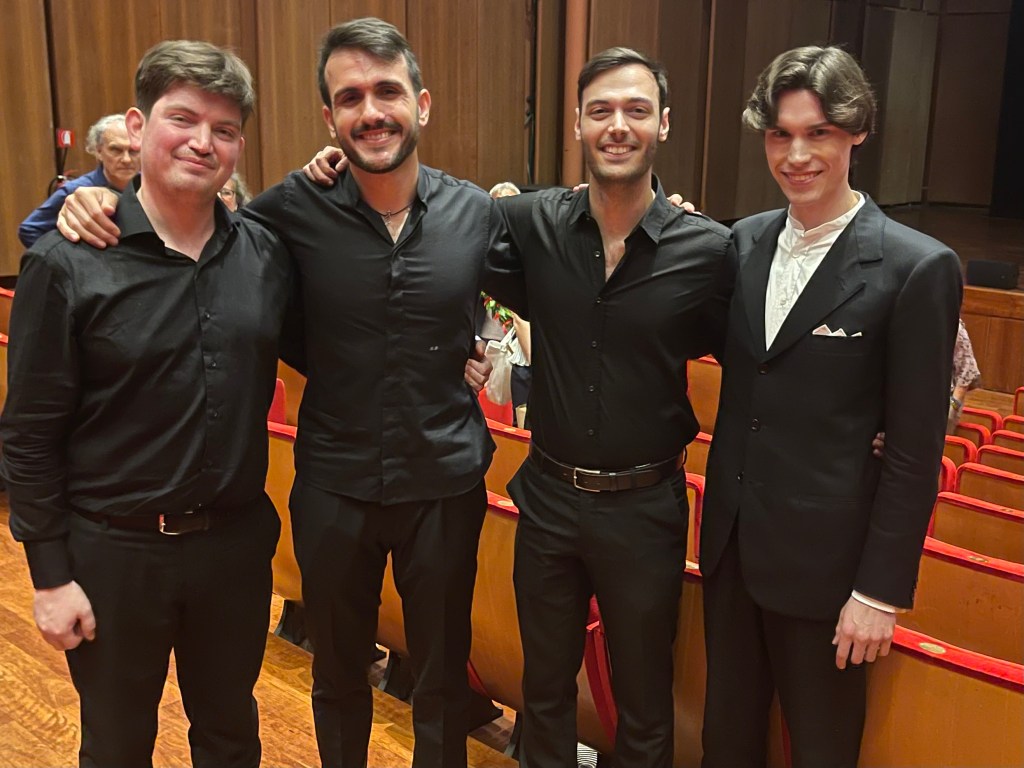
Graduation recital day for four quite considerable artists who receive their final accolade from the historic Accademia di Santa Cecilia in Rome
As their remarkable mentor Benedetto Lupo says ‘ each one must now find his own way ‘ .
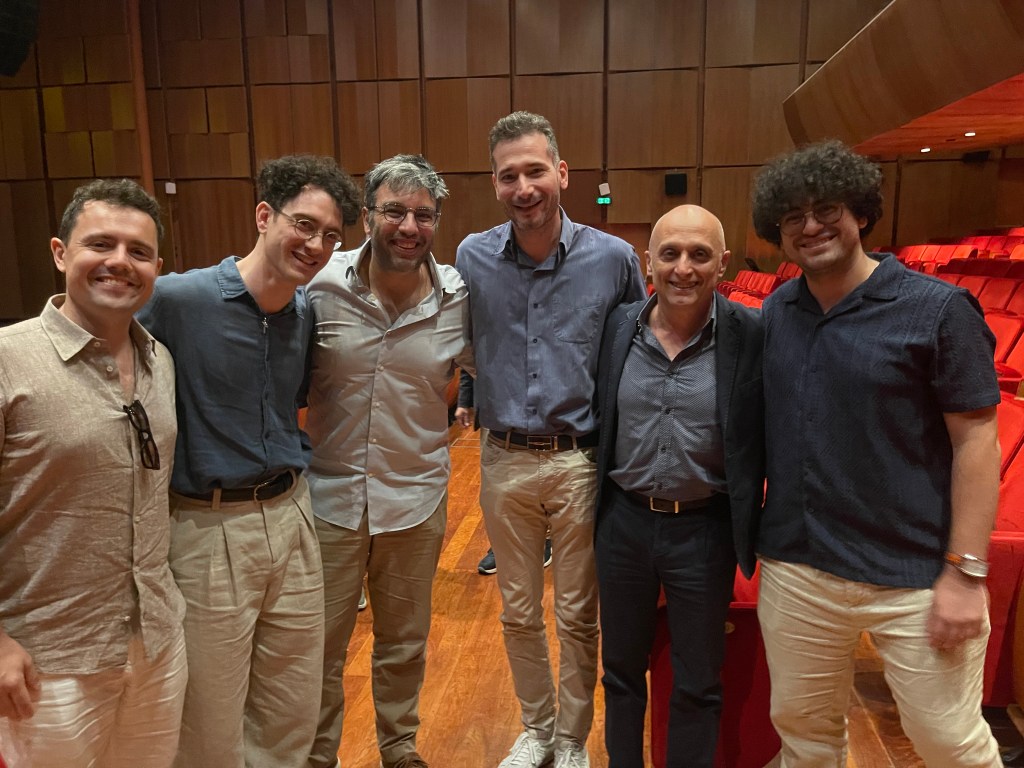
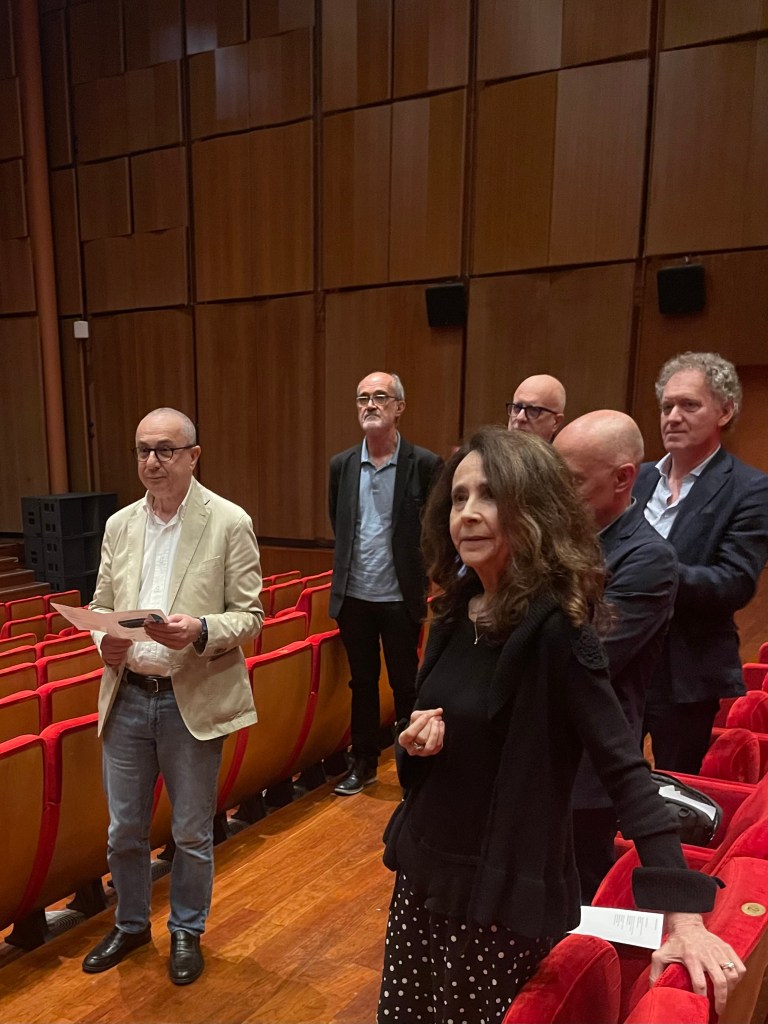
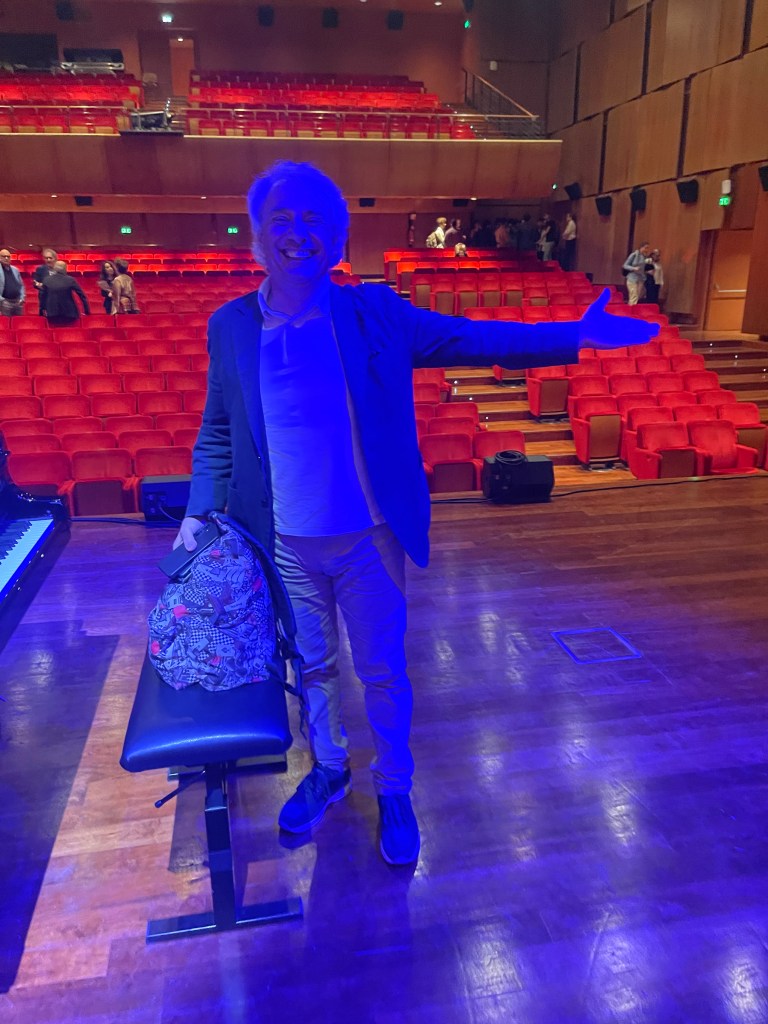
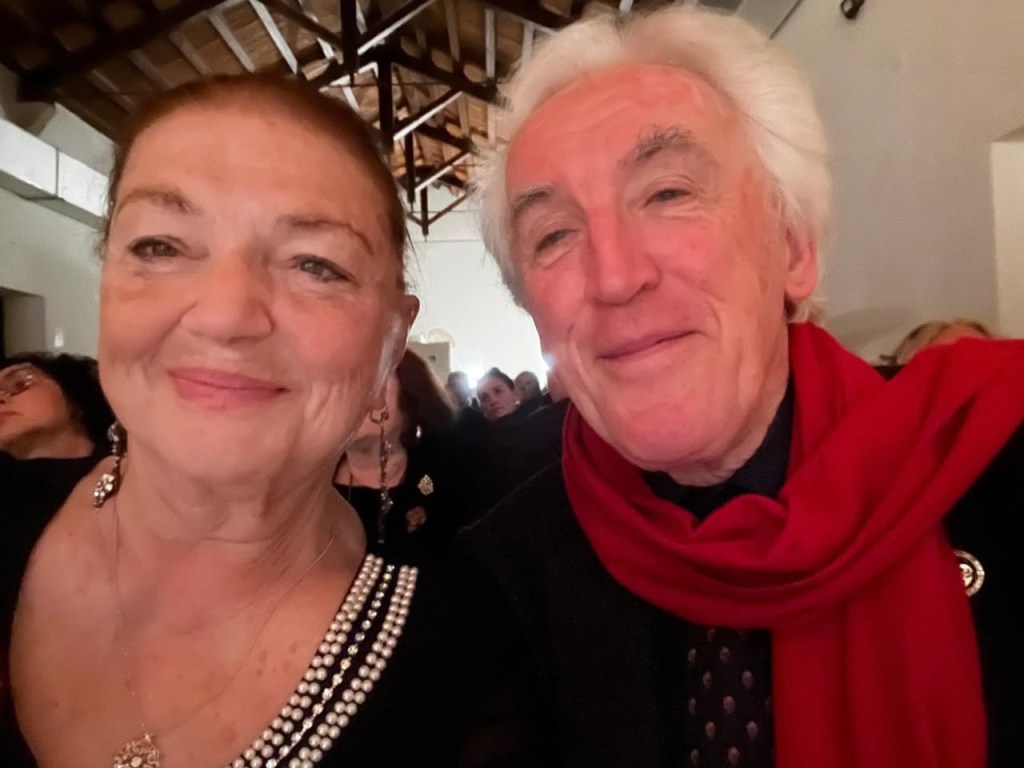
Benedetto Lupo with ex students who never want to let go !
And what better training than from an artist of a rare humanity and sensibility and how lucky they are to have uncovered with him the first steps of a very difficult career in the music profession .
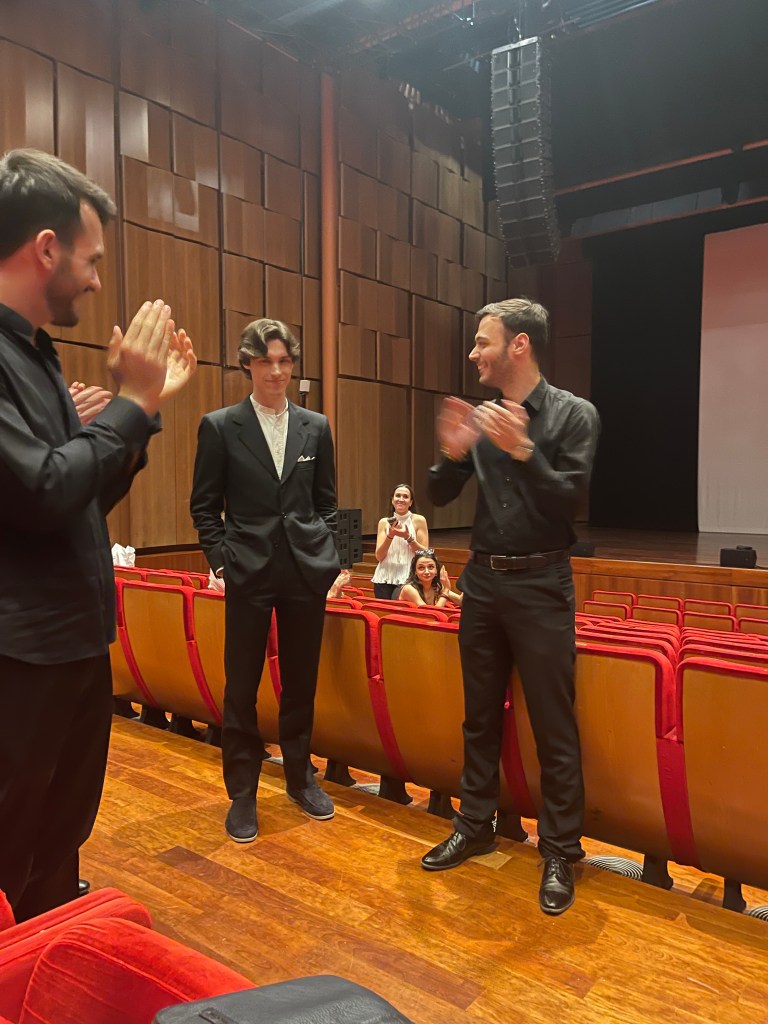
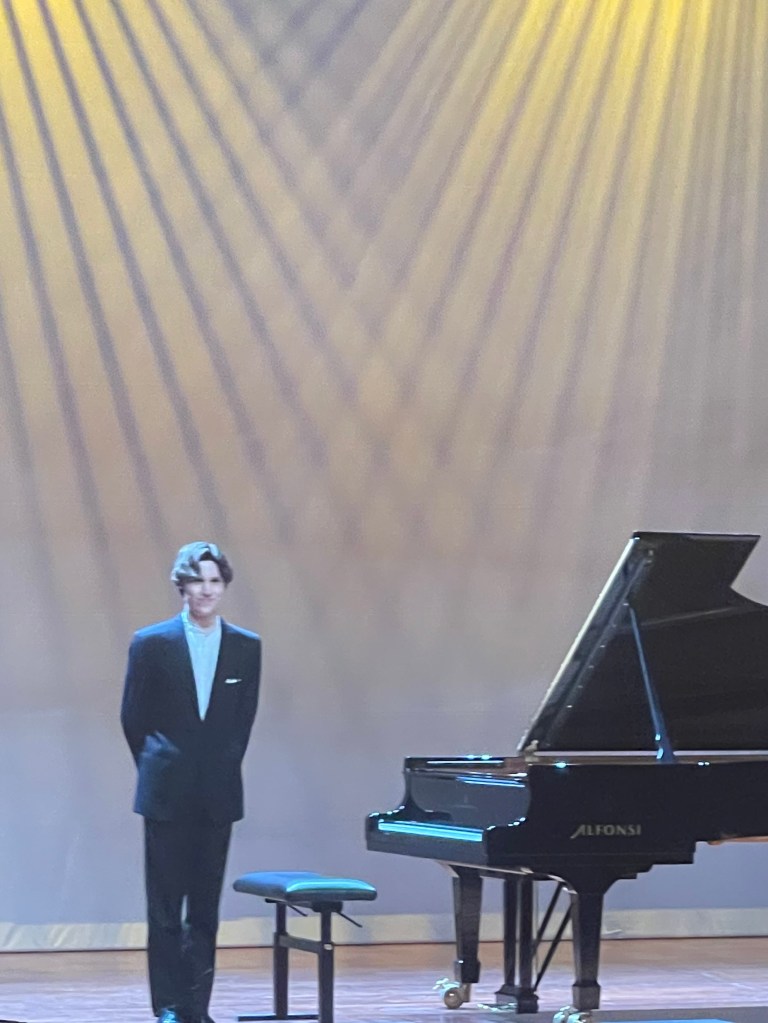
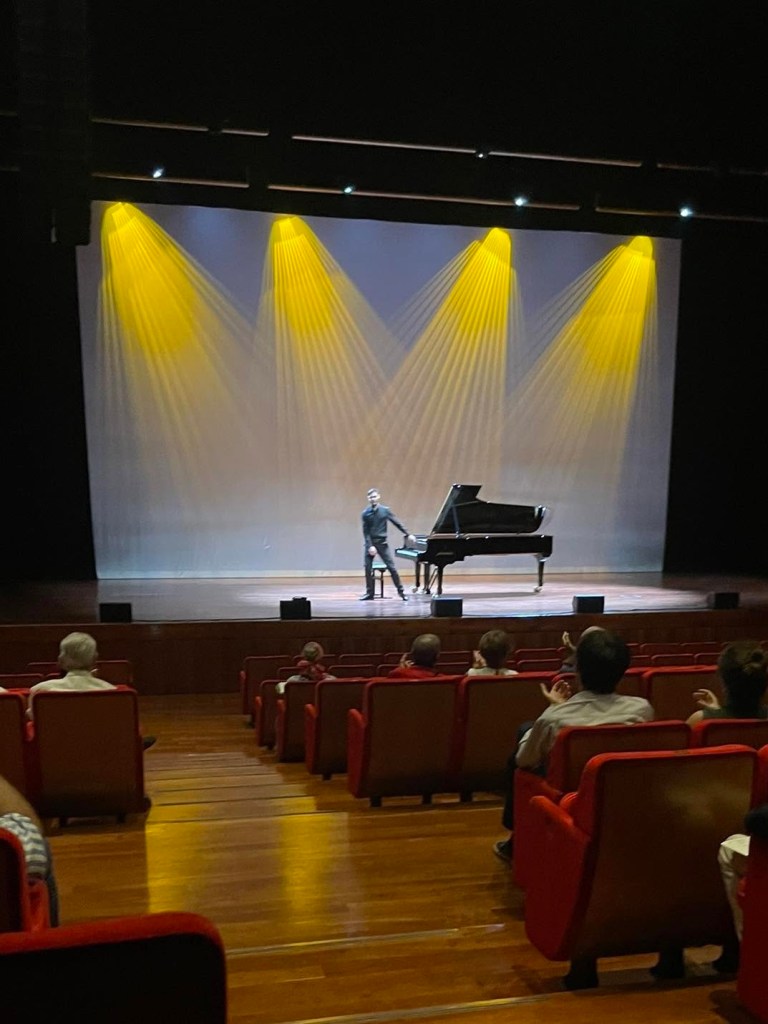
Jaeden applauded by his fellow companions President Massimo Biscardi and the illustrious board announcing the results
Four superb recitals justly all awarded very high marks and one even given full marks and honorary mention.
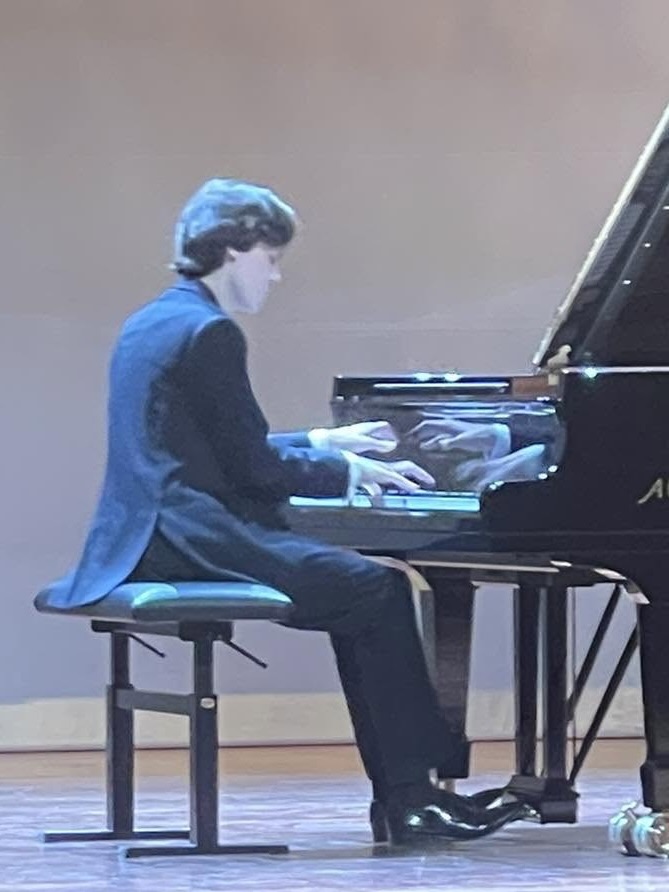
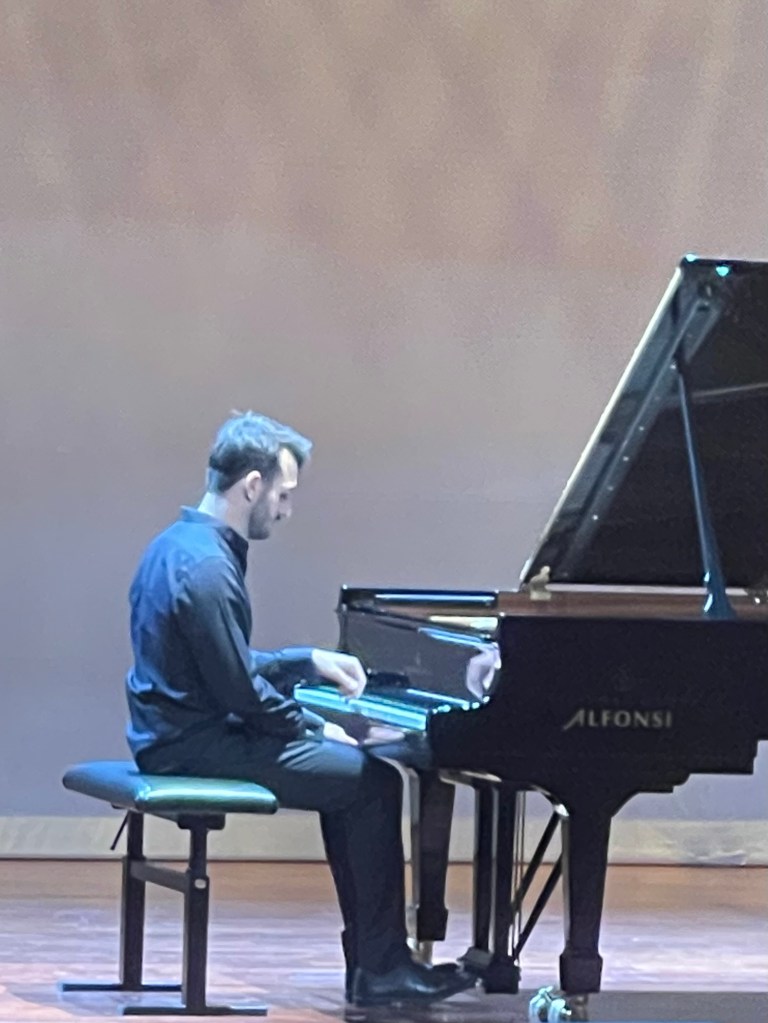
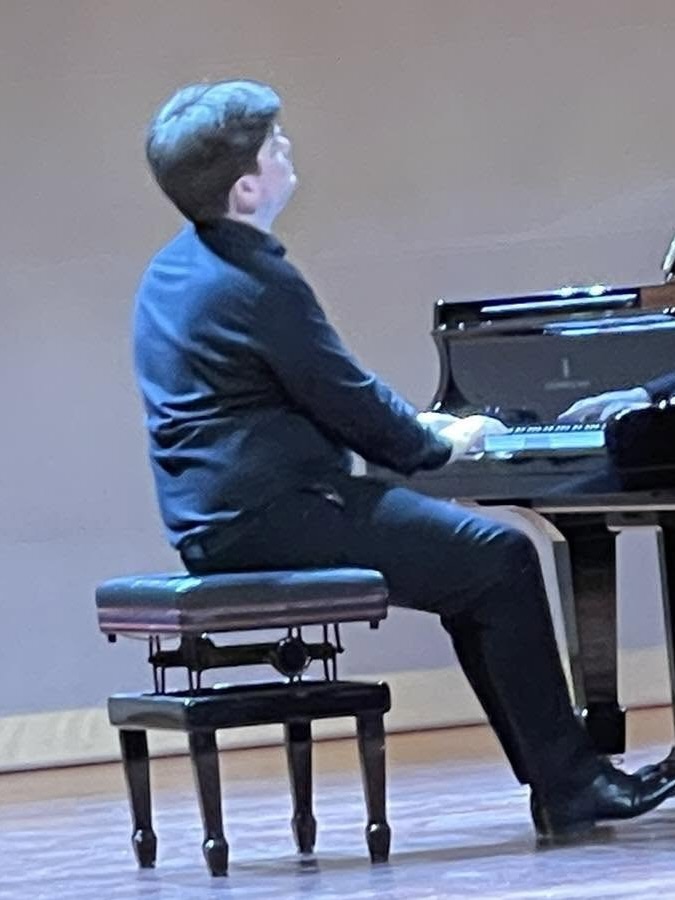
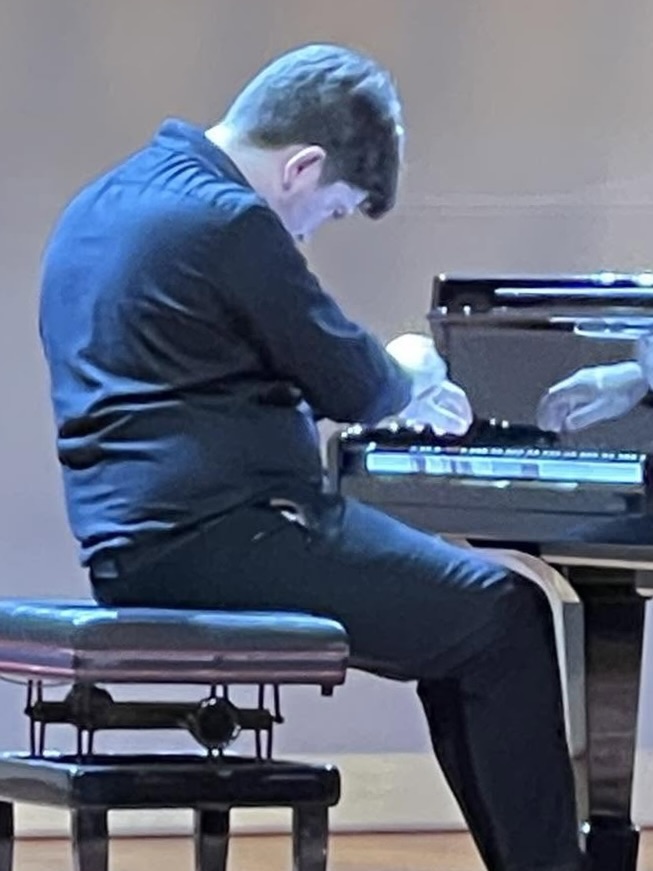
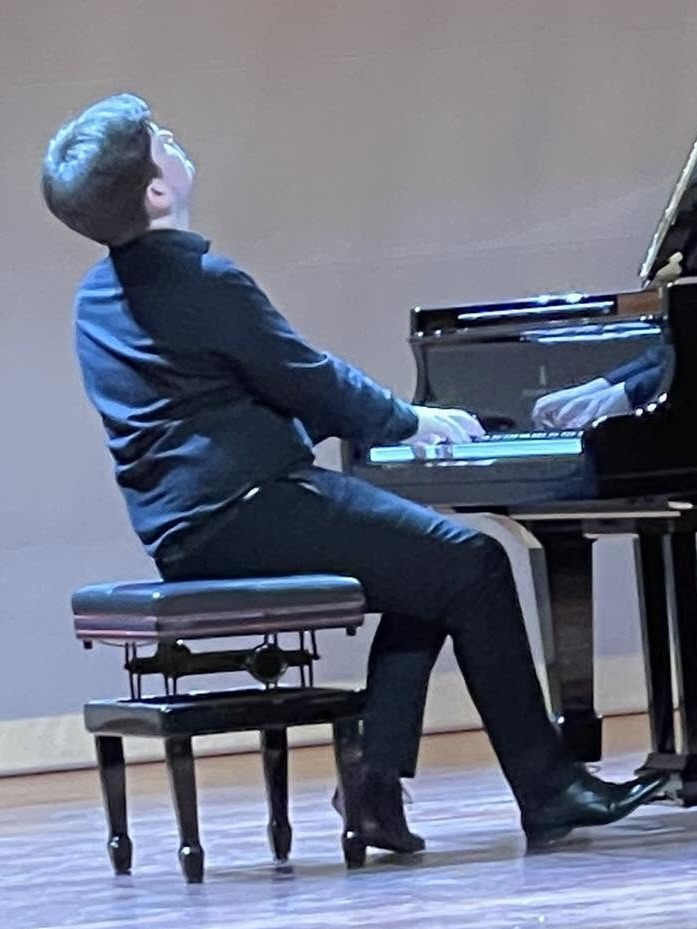
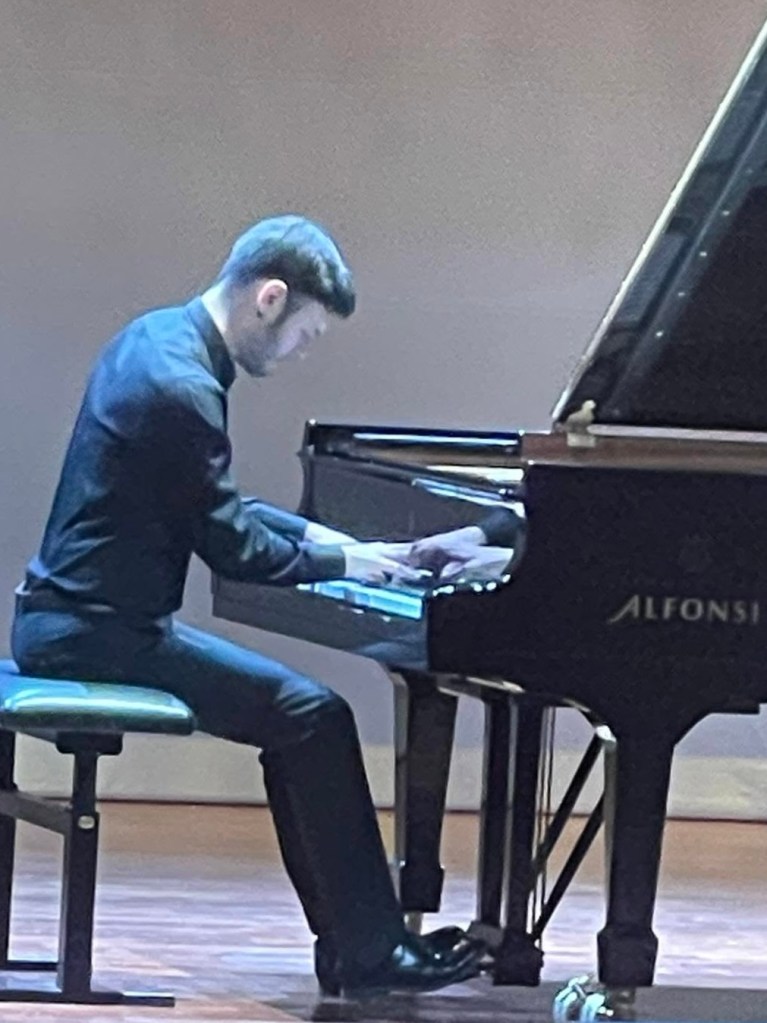
Jaeden opened his recital with the set work by Stojanov which immediately showed his sense of projection with playing of glowing fluidity and weight. There were sumptuous sounds from the bass with a kaleidoscope of colour but always of a clear architectural shape. He brought breathtaking beauty after the sumptuous climax with washes of sound of ravishing enticement. Each of the Six Scriabin Preludes from op 11 were played with subtle character with the ‘Vivace’ played with flowing beauty and a glowing outpouring of colours . The ‘Allegretto’ had a melodic line of disarming beauty anchored to the bass, giving a sense of improvised freedom with an astonishing palette of sounds. The ‘Vivo’ had washes of etherial sounds as the beauty of the tenor melody opened as it duetted with the upper registers. The ‘Andante Cantabile’ had a wistful beauty as it unravelled with whispered intensity. The final ‘Allegro ‘ was played with a burning intensity of sumptuous rich sounds. The Scriabin ‘Fantasy ‘ was a cauldron of wondrous sounds played with passionate intensity and dynamic drive contrasting with moments of sublime beauty of exquisite radiance. Jaeden’s performances of the Rachmaninov First Sonata have gained him recognition from many International Competitions and I last heard him play it in the Wigmore Hall recently as winner of the Leeds International Competition. It is a performance of passionate intensity with a remarkable architectural shape as the opening whispered menacing theme reappears throughout this misunderstood work in many different guises. A theme of throbbing intensity contrasts with the simple radiance of the second theme. In fact this work like the Liszt Sonata is based on three main motifs that reappear throughout and give unity to a work that even Rachmaninov had trouble giving a form to. Jaeden’s masterly musicianship allied to a limitless technical mastery have brought this work back from oblivion into the concert hall. Some masterly playing from Jaeden who hardly moves when playing such is the intensity of listening to himself and shaping the sounds with poetic meaning and quite considerable intensity.
Jaeden Izik-Dzurko already Gold medal winner of Leeds and Montreal decided he wanted to delve deeper in the score and become not just top of the class but an artist that like vintage wine would mature with age. Today I have never seen Jaeden give so much of himself, as did Federico Pische.
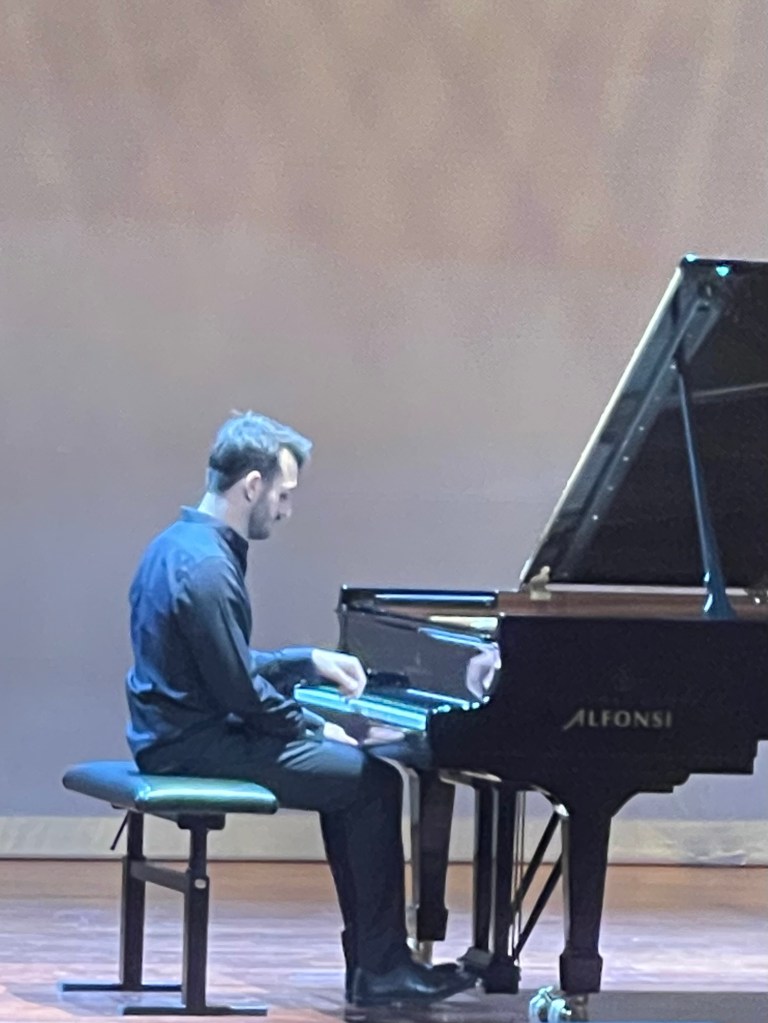
I had heard Federico three years ago and today I heard a true artist who listens to himself and has found his own very original way of swimming horizontally in sound .
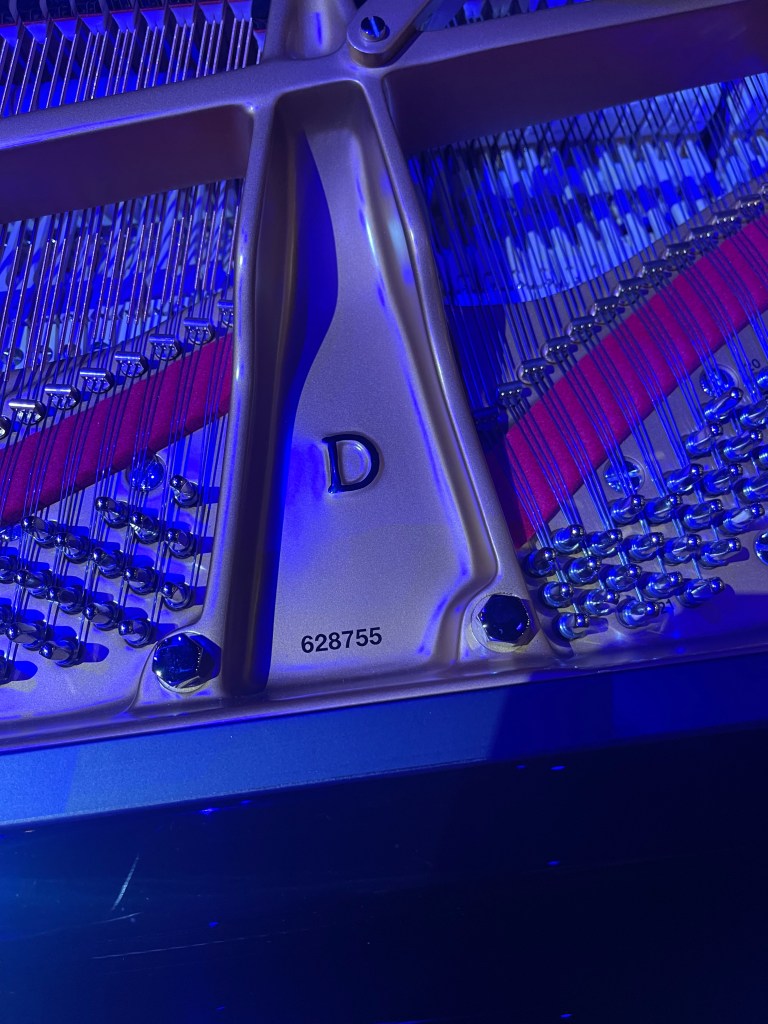
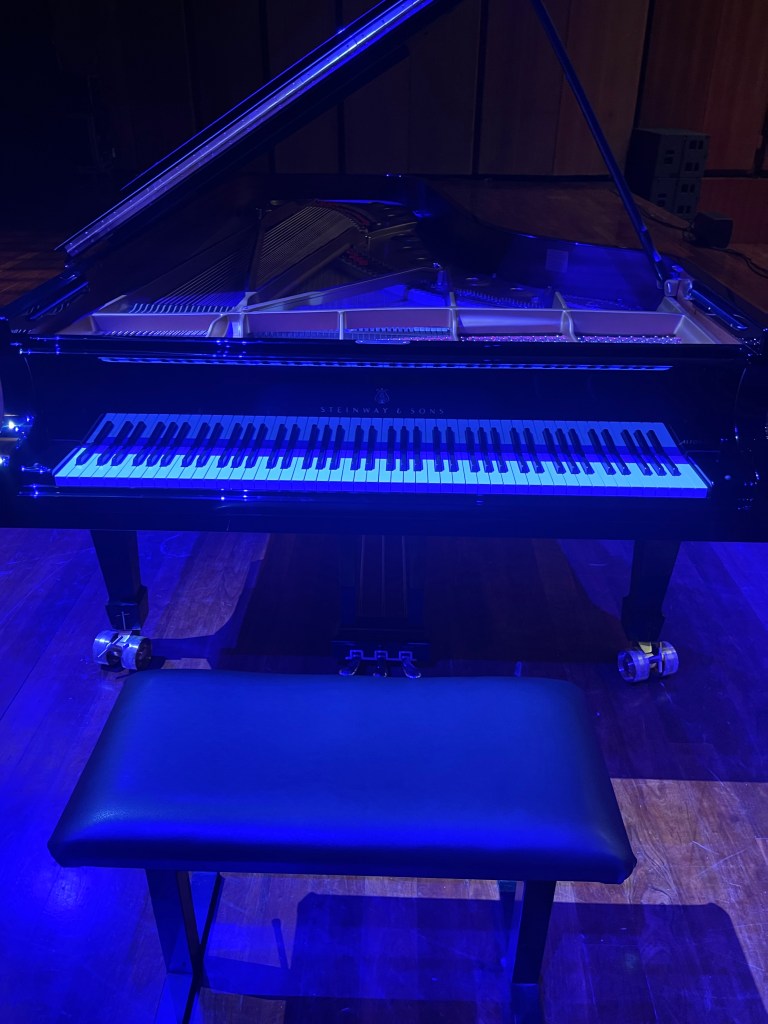
The ‘L.L.’ Steinway ‘D’Mauro Buccitti the magician/technician always ready to assist artists young and old
The sounds he produced in Rameau even had Mauro Buccitti purring as this new Steinway D had proven that the choice of Benedetto Lupo and Andrea Lucchesini really deserved the accolade of the ‘L.L Steinway’ ( the initials of these two remarkable artists )
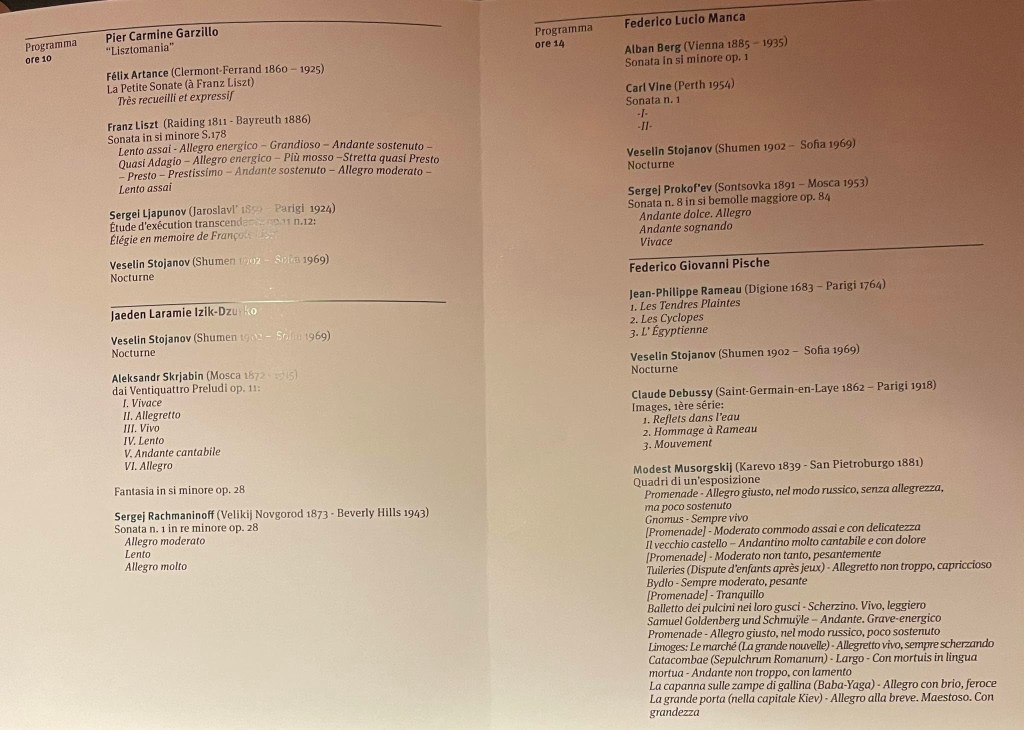
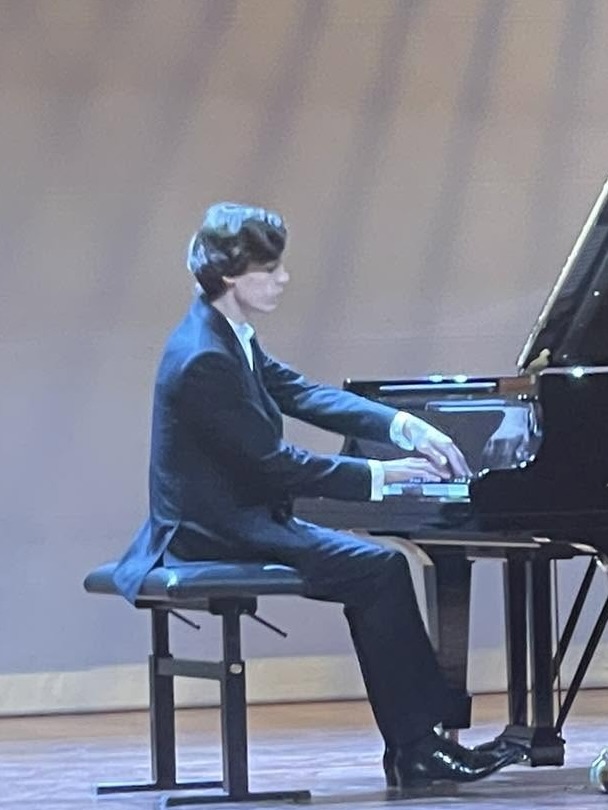
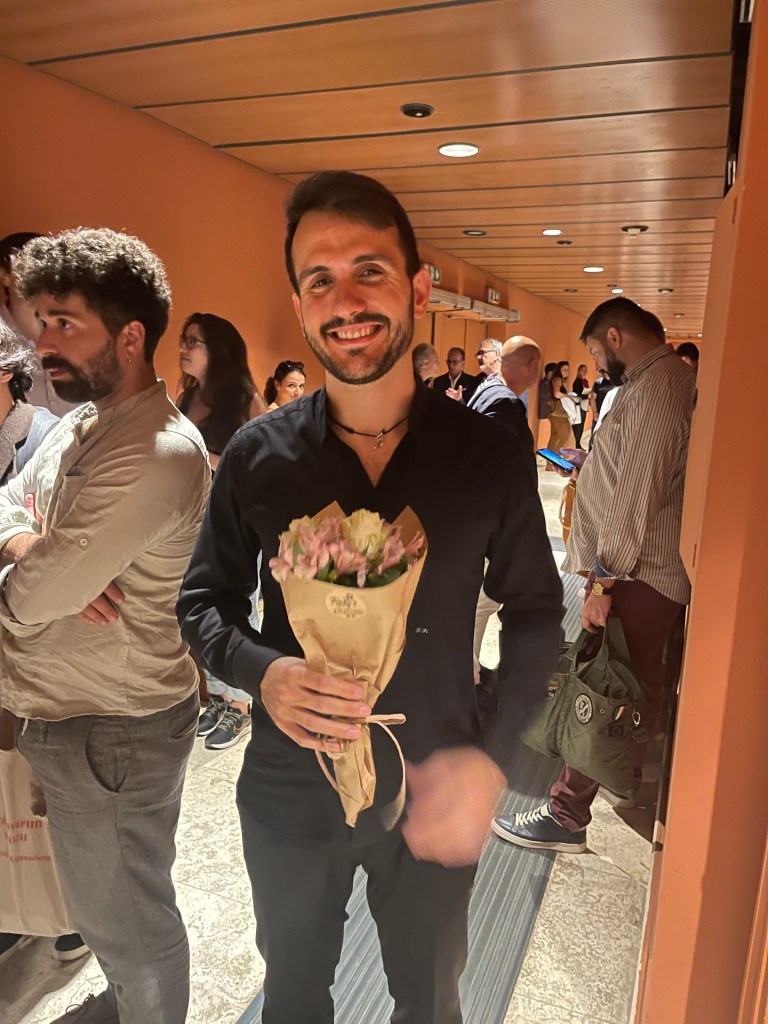
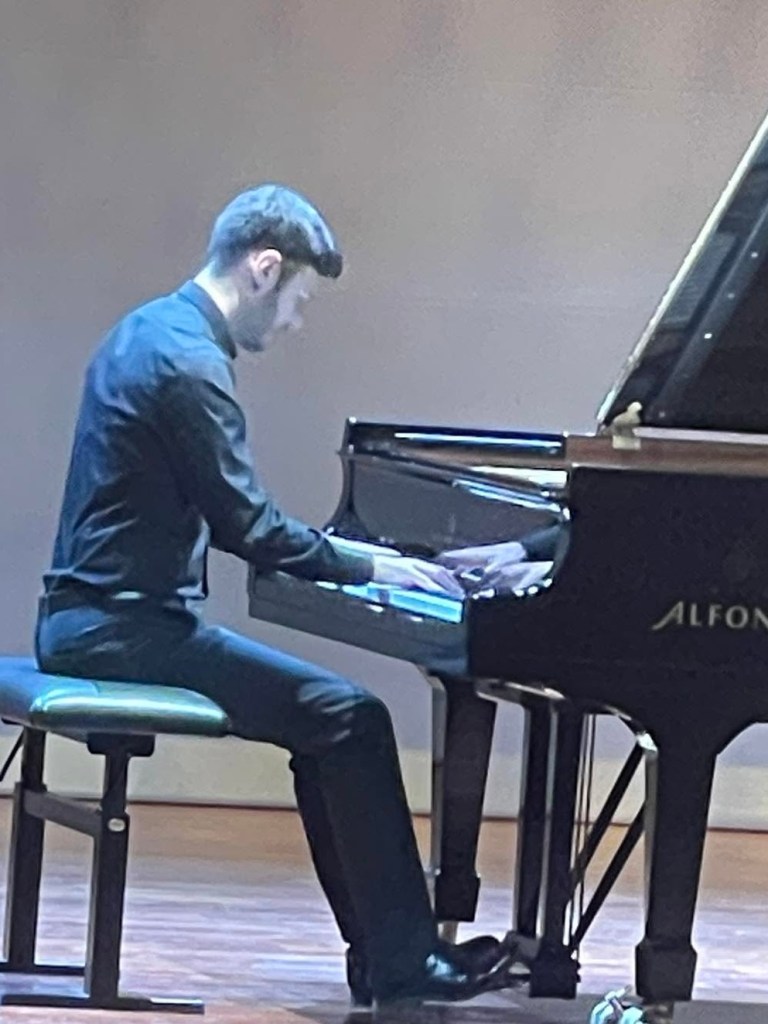
Some playing of exquisite beauty and crystalline clarity from Federico Pische, with three pieces by Rameau played with radiance and delicacy with sounds of great purity. There was a pulsating rhythmic energy to Égyptienne of hypnotic ,tantalising radiance. The Nocturne by Stojanov was played with flowing glistening sounds of refined delicacy. To watch his hands caress the keys as he extracted sounds of exquisite beauty was to watch a painter in front of his canvas and nowhere more was it in evidence than in the whispered sounds of ‘Reflets dans l ‘eau’, where here was a real sculptor in sound. A scrupulous attention to the composers markings but with a palette of colours of great originality as the melodic line was allowed to float on washes of sound that just seemed to gleam from within . The whispered opening of ‘Hommage à Rameau ‘ was so unexpected just as the climax was played with refined colours of a true poet of the keyboard. ‘Movement’ was played with masterly control and extraordinary clarity as it disappeared into the heights of the keyboard like a puff of smoke, still blowing away into the far distance. I have heard Federico’s ‘Pictures’ quite recently in this very hall and I was surprised at how even more poetic was his interpretation today. The opening Promenade usually played with prodding strident movements was here played again with a caressing of the keys that eliminated any percussiveness and took us into Federico’s world ,or should I say Mussorgsky’s , of paintings with a remarkable range of character. ‘Tuileries’ was played with unexpected grace as was the delicate entry of the ‘chick’s’, and ‘Limoges’ was imbued with a jeu perlé of great character. There was a whispered clouded sound to the central episode of ‘Baba-Yaga’ that made the contrast with the outer passages so extraordinary. The ‘Great Gate’ of course was played with sumptuous full sounds of great resonance with an extraordinary sense of balance, as the bells started to peal over the entire keyboard until an avalanche of sounds was launched from the top to the bottom of the keyboard with overwhelming power revealing the vision of the imaginary symbol of the Great Gate, so poignantly significant still today. Pier Carmine Garzillo had a very sensitive sense of balance and a wide palette of sounds, even if in the opening bars he gave too much too soon. Youthful passion and quite considerable nerves on this occasion can play strange tricks, talking of which he had some strange pianistic tricks up his sleeve which surprised me because of his impeccable musicianship and sense of reaching out to the composers wishes. Some fearless playing but always phrased with impeccable good taste ,never forcing the sound but finding the just equilibrium through beautiful phrasing. The central ‘Andante sostenuto’ was played with great sensitivity, if rather static at times ,but the grandiose central episode in D major was played with aristocratic grandeur with some very noble gestures too! A great sense of balance where the sound was always sumptuous and never hard which he allowed to dissolve with a natural flowing beauty . A beautifully controlled Fugato was played with an architectural shape where the final bass entry was the natural climax of some exhilarating and exciting playing. A grandiose bass note was added to great effect after his superb playing of the notorious octave climax and led to the appearance of one of Liszt’s most prophetic outpourings of genial inspiration. Having cancelled with great vehemence his first thoughts of a triumphant ending, Liszt substituted it with one of the most extraordinary two pages of all his enormous output and that Pier Carmine played with whispered beauty. Missing the weight of Arrau but played with extraordinary sensitivity and remarkable composure. Of course he played the final ‘B’ with the right hand as an artist can also be a showman! Liszt after all followed in the footsteps of Paganini ,the greatest showman the world has ever known! The Liapunov Study was played with rhetoric and theatricality with many airborne gestures that became a little predictable. But this was a totally convincing performance of beauty and fluidity allowing us to wallow in the sumptuous sounds of this superb new instrument. A Grandiose ending of extraordinary technical mastery was allied to a superb sense of balance with always his remarkable musicianship.It lead so naturally into the Nocturne by Stojanov that he played with the same ravishing sounds and sense of architectural shape which he had demonstrated throughout his graduation recital today.
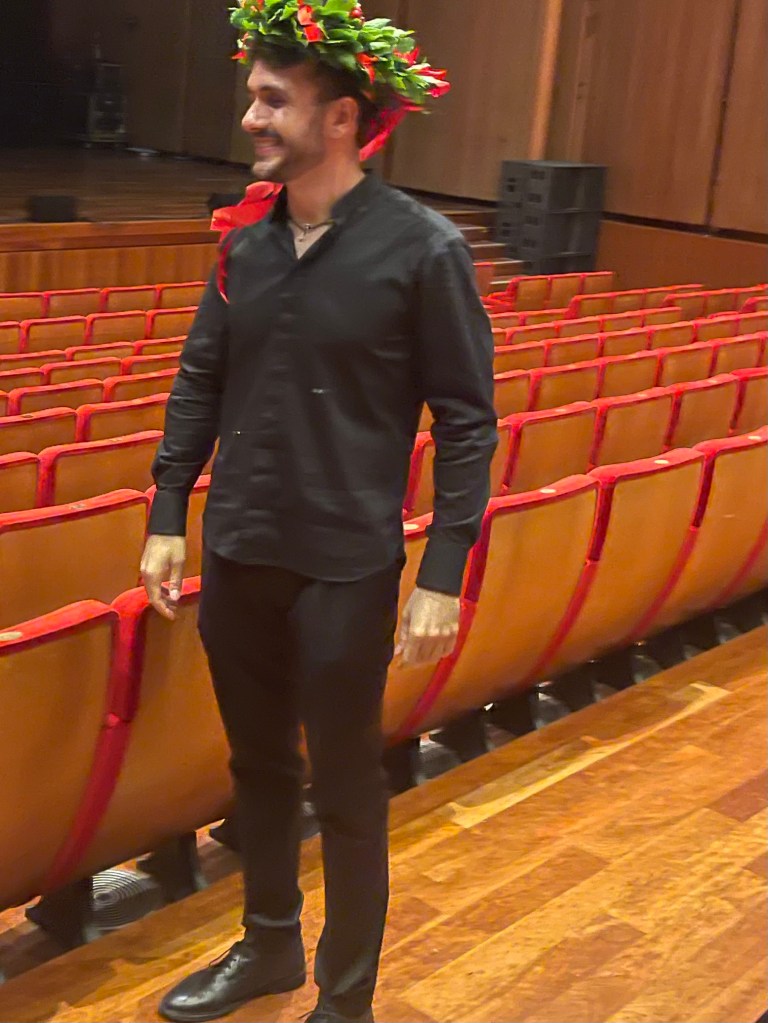
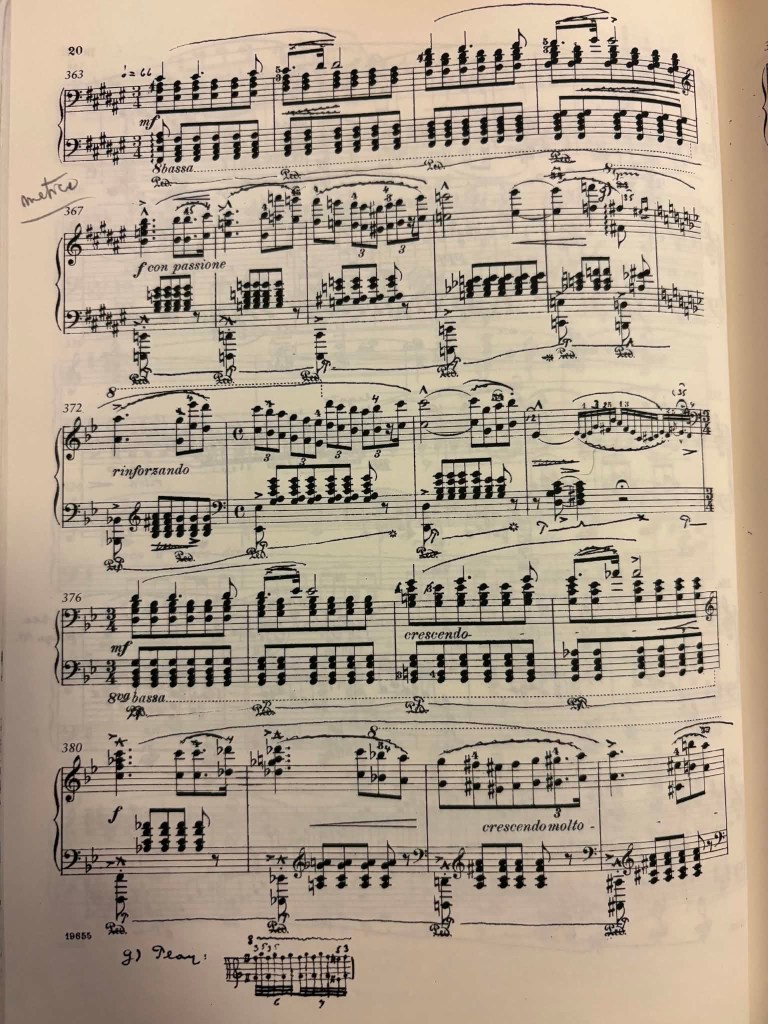
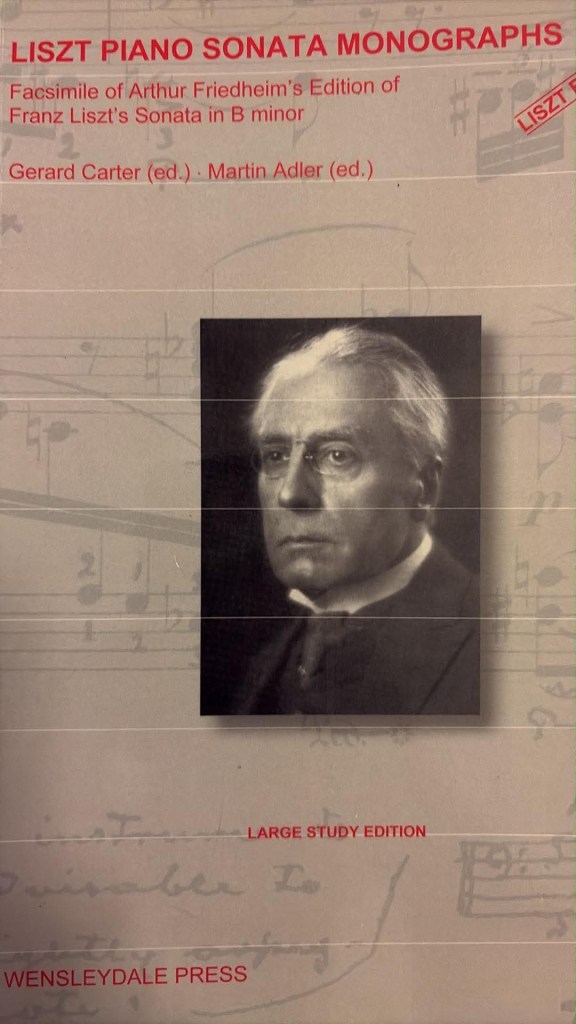
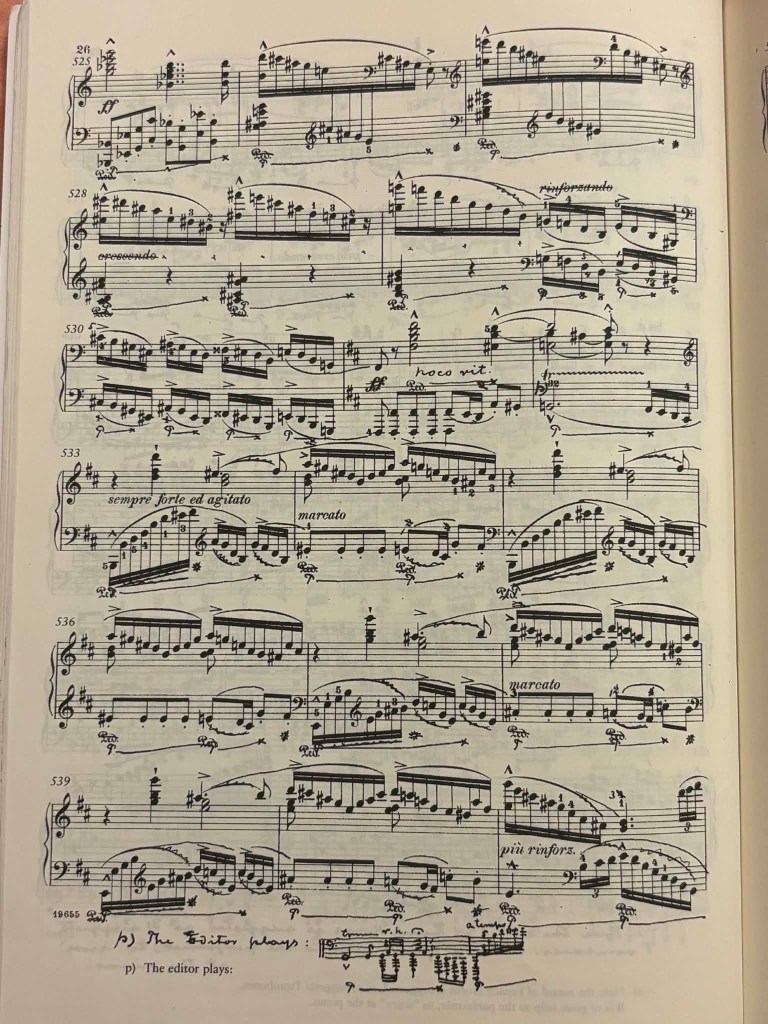
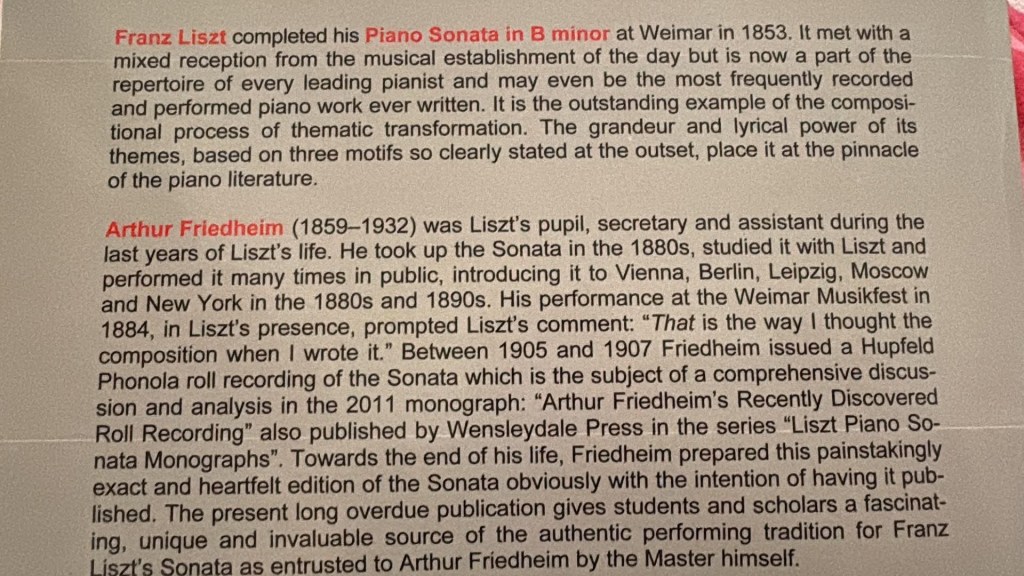
Pier Carmine Garzillo gave an extraordinarily intelligent performance of the Liszt B minor Sonata . Playing of fearless authority but above all of a musician following scrupulously Liszt’s very precise instructions. One or two additions of an odd bass octave or a double handed trill at the recapitulation turned out not to be arbitrary showmanship but as he told me afterwards were the express wishes of the composer as handed down to a pupil.Thanks to Maestro Garzillo from the class of Francesco Nicolosi, for this very interesting documentation.
Leslie Howard replied to my curiosity like this : ‘Horowitz had similar bad taste. These things were not done with any kind of imprimatur from the composer I think we can be quite sure that Bülow didn’t mess with the score, and even Sauer only made a few suggestions that may be safely discarded!’
I had studied the Sonata with Sidney Harrison ( winning the coveted Liszt Scholarship at the Royal Academy as a teenager ) but had also studied it later with Agosti ( Busoni) and Perlemuter ( Cortot) but had not been aware of this edition until today. What a hive of knowledge is shared amongst these very talented young musicians delving ever deeper into the mystery of Genius.
In fact today we not only heard masterly technicians but much more importantly master musicians of integrity and humility in front of the scores handed down to us by genial composers. We live in an age of quantity rather than quality. Of showmanship rather than interpretation. Here at the Accademia there is an air of discovery of delving deeply into the score to discover the real meaning behind the notes as bequeathed to us. Andras Schiff simply exclaims that a lifetime is not enough to discover the real meaning in the repertoire he chooses to dedicate himself to.
Benedetto Lupo points these young artists on the path of a voyage of discovery that will last a lifetime. The principles of humility and integrity of a great interpreter :’ Je sens , je joue, je trasmet ‘ was the title of an interview in Le Monde de la Musique and together with Rubinstein’s famous plea it underlines the principles of a true artist. https://youtu.be/gex0sOR7XZ0.
The world of an artist is unique where music can speak louder than words even if Senancour came close with ‘Obermann’, as Liszt appreciated. But it needs a special key to unlock the fantasy, intelligence and dedication that Benedetto has in his hands ready to share with his young aspiring colleagues.
‘What would I? What am I? What must I ask of Nature?….Every cause is invisible, every aim deceptive; every form changes, all continuance comes to an end….I feel, I exist simply to be the prey of untamable desires, to be besotted by the spell of a fantastic world, and to stand aghast at its dazzling falsity.‘ Senancour.
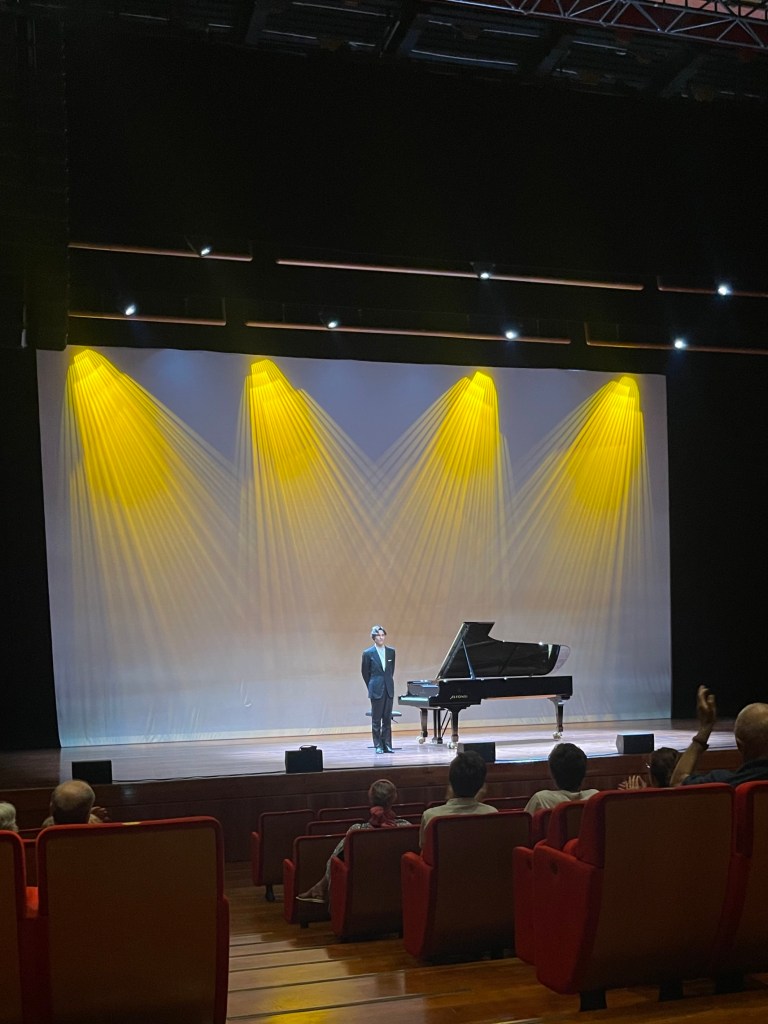
Federico Lucio Manca chose a completely different programme from his colleagues that showed off the intelligence and extraordinary clarity of his playing. The Berg Sonata was played with extraordinary glowing fluidity of great beauty as he could draw together all the counterpoints into one whole of passionate intensity contrasting with a disarming simplicity. Carl Vine’s First sonata of four is from a vast output of works written by this Australian composer. This Sonata dates from 1990 and Federico played it with a dynamic drive , a luxuriant sense of balance and a kaleidoscope of sounds with many pianistic hi-jinx. Including a perpetuum mobile in unison of incredible virtuosity, played with impeccable control and remarkable refined beauty. Schumann may well have described the last movement of Chopin’s prophetic B flat minor Sonata as one of his craziest children, I just wonder what he would have made of this amazingly original sound world that Federico played with such conviction and mastery. Stojanov’s Nocturne was played with the same crystalline clarity as the Berg and Vine where the beauty of sound led so naturally into the unexpectedly desolate outpouring of Prokofiev’s 8th Sonata. An extraordinary performance where the fluidity and extraordinary palette of colours were allied to outbursts of astonishing technical mastery allied always to an architectural understanding that could give such an important shape to this monumental work of desolation and heartrending beauty.
Nowhere more was this evident than in the eclectic choice of Federico Manca with Berg, Vine and Prokofiev Sonatas . Berg’s knotty twine given a path that illuminated and intensified a masterpiece so often allowed to meander instead of showing its real face . The set piece by Stojanov, a Bulgarian composer almost unknown, was a work that lent itself to being a preface to Prokofiev’s Eighth sonata that is a great song to humanity and the last of the War Trilogy of Sonatas .
Veselin Anastasov Stoyanov 20 April 1902 in Shumen (the tenth largest city in Bulgaria )– 29 June 1969 in Sofia) was a Bulgarian composer. In 1937, he began teaching and later became professor of music theory courses at the National Academy of Music (Bulgaria) . Stoyanov raised the level of music theory teaching in Bulgaria. His students included Todor Popov ,Dmitar Petkov,Stefan Remenkov,Alexander Tekeliev ,Ivan Marinov and others His works include Three concertos for piano and orchestra (1942, 1953, 1966); Concerto for Violin and Orchestra; Concerto for Cello and Orchestra; Concertino for violin Two symphonies; symphonic suite grotesque Bai Ganyo; Festival Overture; symphonic poem Song of Blood; Rhapsody for symphony orchestra Operas:Kingdom of Women, Salambo, Sly Peter 1958 Ballet Pope Joanna Cantatas Songs
Veselin Stojanov (1902 – 1969), Bulgarian composer, pianist, conductor, public figure. Veselin Stoyanov is son of Anastas Stoyanov and brother of Andrey Stoyanov. He belongs to the second generation of Bulgarian composers. He was among the founders of the Contemporary Music Society in 1933 (which later became the Union of Bulgarian Composers). He graduated from the State Academy of Music in 1926 majoring in Piano under his brother. The same year he enrolled at the Vienna Hochschule fьr Musik studying Piano with Professor V. Ebenstein and Composition with Professor F. Schmidt. He took private classes of Piano with P. de Kohn and Orchestration with Wunderer. Upon his return to Bulgaria he taught Piano and Theory of Music (1931-37). He performed as a pianist and conductor. In 1937 he joined the staff of the State Academy of Music teaching music theory subjects. In 1945 he was appointed Professor of Composition and Music Forms. He also was elected Dean of the Music Theory Faculty (1952) and Rector of the State Academy of Music (1956-1962). He served as director of the Sofia Opera (1953-54). He composed in a variety of genres with an inclination to instrumental large-scale forces and through-composed forms sustained by leitmotif technique, rich harmony and sumptuous even exotically sounding orchestration. A national stamp to this style was provided by use of modal colouring or irregular time beats characteristic for the Bulgarian traditional music but without quoting. He composed three operas, one ballet; symphony and chamber music; three concertos for piano and orchestra; choral, solo and mass songs; film music, etc. A few of his works won recognition as bright examples of Bulgarian music and were internationally acclaimed. Among them one might mention his grotesque suite Bay Ganyu after Aleko Konstantinov (1941), his Rhapsody (1956) or his Festival Overture (1959); the instrumental concertos, his Piano Sonata and Piano Suite composed in the 1930s, his Sonata for violin and piano, the String Quartets, etc. He wrote and published articles on music aesthetics, music forms and contemporary Bulgarian music. The liric NOCTURNO is middle part from the cycle “Three pieces for piano” (1956). Magnificent, bright music language, near to folk song melodic blilliance, expressive and rich harmony and colorful orchestration. The raised poetic liric is combined with irresistible folk dancing.