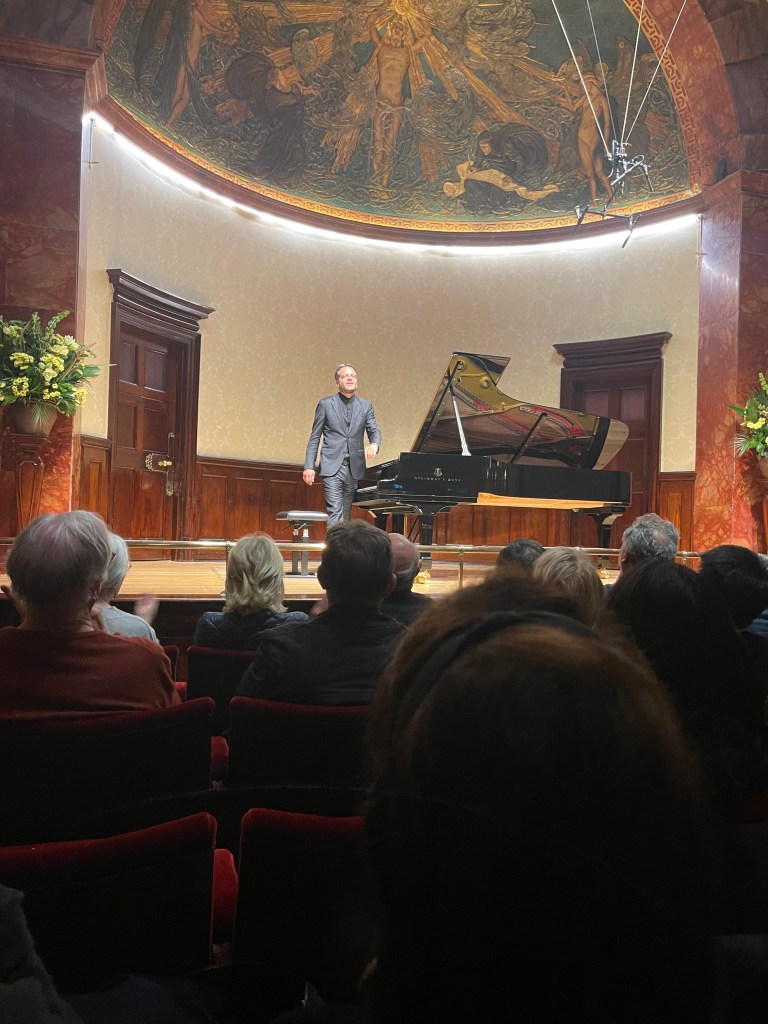
Francesco Piemontesi sharing with us his unique sense of recreation where beauty and imagination take the place of muscle and brawn. Where intelligence and a kaleidoscopic palette of colours are placed at the service of the composer with humility and total dedication. As Bryce Morrison confided you need to have worked so hard to arrive at such pianistic perfection .
But above all you have to listen to yourself and be passionately and blindly in love with music.
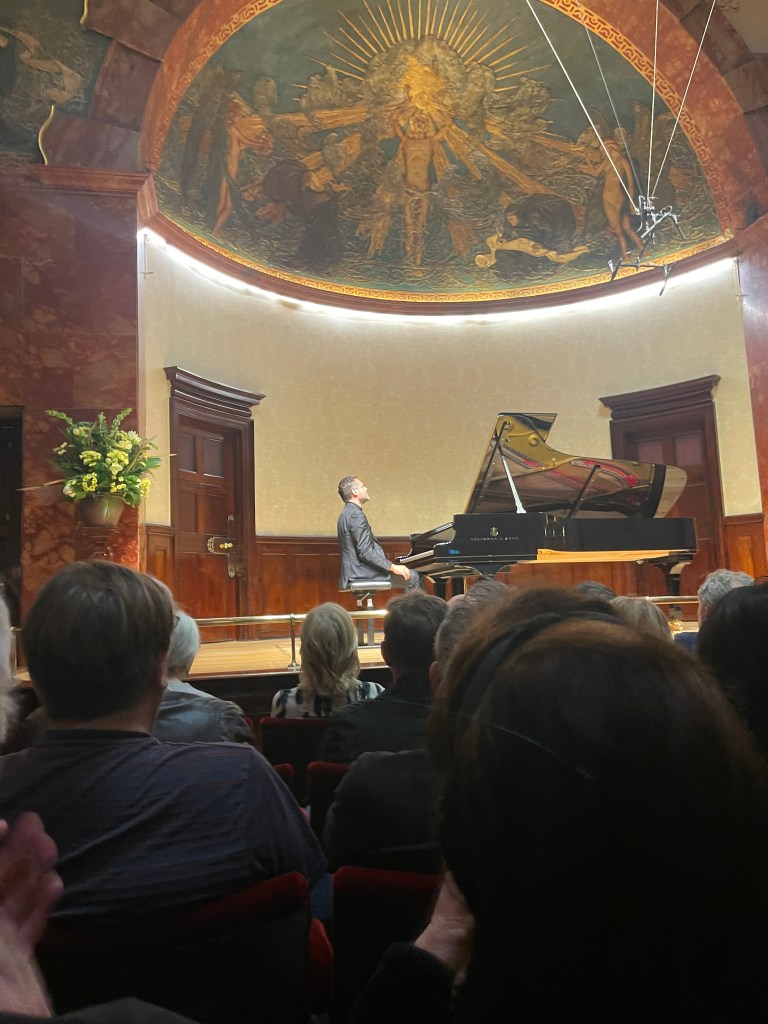
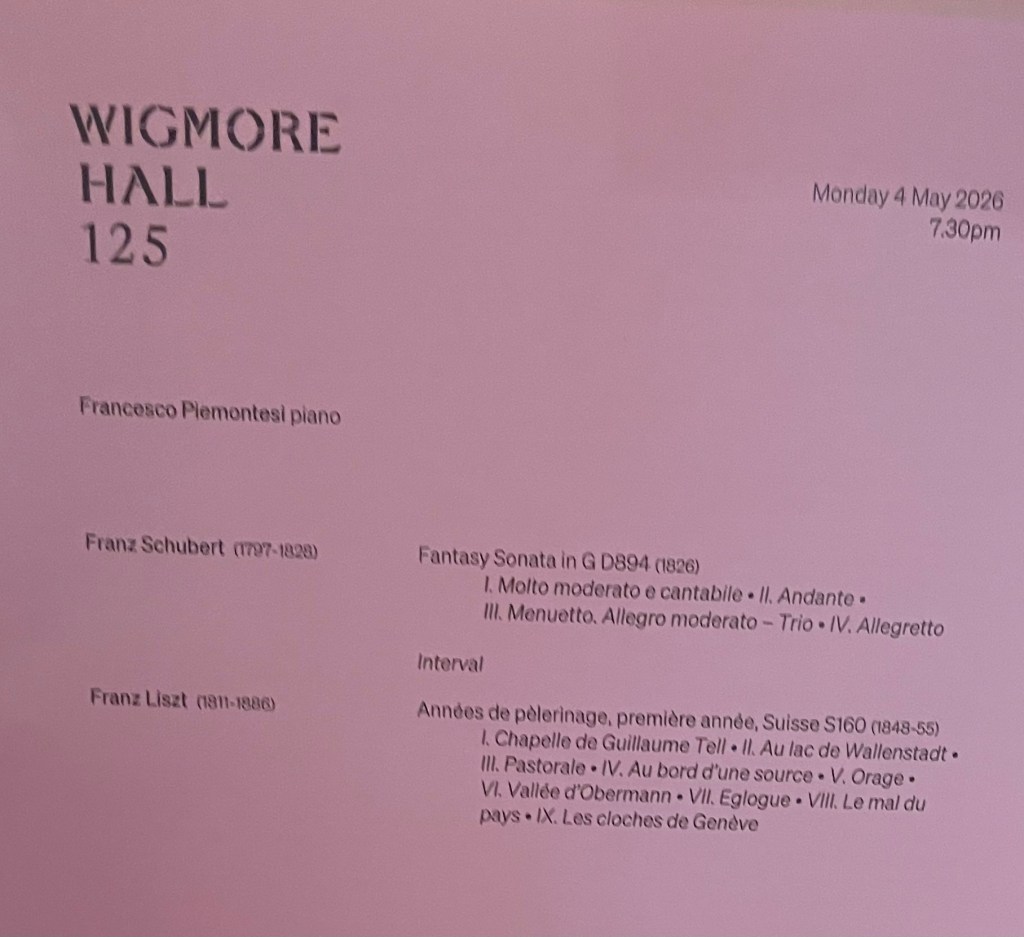
Schubert’s Fantasy Sonata was indeed a fantasy with a kaleidoscope of colours from the very first note. Like the opening of Beethoven 4th concerto the first chord of this sonata sets the scene for all that is to follow. Scrupulous attention to Schubert’s indications that in just the first page range from ‘pp’ to ‘mf’ before moving to ‘ppp’ and ‘pp’ again. An extraordinary palette of colours allowed Piemontesi to illuminate this opening with a luminosity that was to pervade everything he did. A wonderful liquid sound that was never hard, even in the passionate cry of the development. When Schubert was not singing he would burst into dance. After the whispered opening of poignant beauty, Schubert allowed octaves to wear dancing shoes as they became in Piemontesi’s hands a magical voice of elegance tinged with nostalgia. Bursting into streams of notes that were golden sounds that glistened and glowed with refined beauty. Shaped with a delicate lyricism leading so surreptitiously to a dominant voice of authority only to be diffused with gently rocking lyricism and the final whispered farewell of this opening. A development that created a shock wave as the minor key battled with the major in a contest where every note had a reverberating voice of vibrant intensity without any aggressive hardness. The final few bars of this movement were a miracle of tonal control as staccato and legato could live together in whispered harmony disappearing into the distance with poetic abandonment. Piemontesi sitting absolutely motionless hovering over the keys as we all savoured the marvels that had been shared with us. Timing the opening of the ‘Andante’ to perfection as it was played with exquisite beauty. Even the final four chords ‘pp’ and detached were timed and shaped with extraordinary poetic significance. A great change in character that contrasted with the beseeching beauty and fluidity of the answering phrases. Suddenly a left hand accompaniment played without any pedal but with a melody floated above with radiance and was a moment of breathtaking beauty and masterly control. The opening melody returning, ornamented by Schubert, and exquisitely shaped by Piemontesi. There was an aching simplicity to the coda with unbelievably whispered sounds that Schubert marks ‘ppp’ and that Piemontesi played with sublime simplicity. A resonance to the ‘Menuetto’ always with this magical luminosity that could give such shape and colour to all he did. Nothing was ever black and white but full of subtle meaning. The ‘Trio’ was barely whispered as we were to be reminded of in Liszt’s ‘Les cloches de Genève’ that closed the recital. Whispered sounds from afar suddenly taking wing with a chiselled beauty of whispered nostalgia before returning to the ‘Menuetto’ but always on the same wing of resonant song. Contrasts there certainly were but never aggressive or dare I say Beethovenian. Not to shock but to stimulate the senses. Even more miracles were to follow with the ‘Allegretto’, like the return of an old friend. Bursting into dance with whispered glowing steps with a mischievous left hand growing in intensity. Our old friend returning with a tenor voice as the music chatted with beguiling lyricism and charm before taking a turn that turned out to be a dead end. The clouds opened instead, and a glorious ray of light shone upon us with one of those miraculous moments that poured from Schubert’s mellifluous soul. There was magic in the air as radiance and breathtaking beauty poured from Piemontesi’s hands that were to take us to the whispered meanderings of ravishing beauty that lead to the final farewell of our old friend. Miracles indeed as Piemontesi held us in his hands with the final five chords that were truly the vibrations of Schubert’s soul.
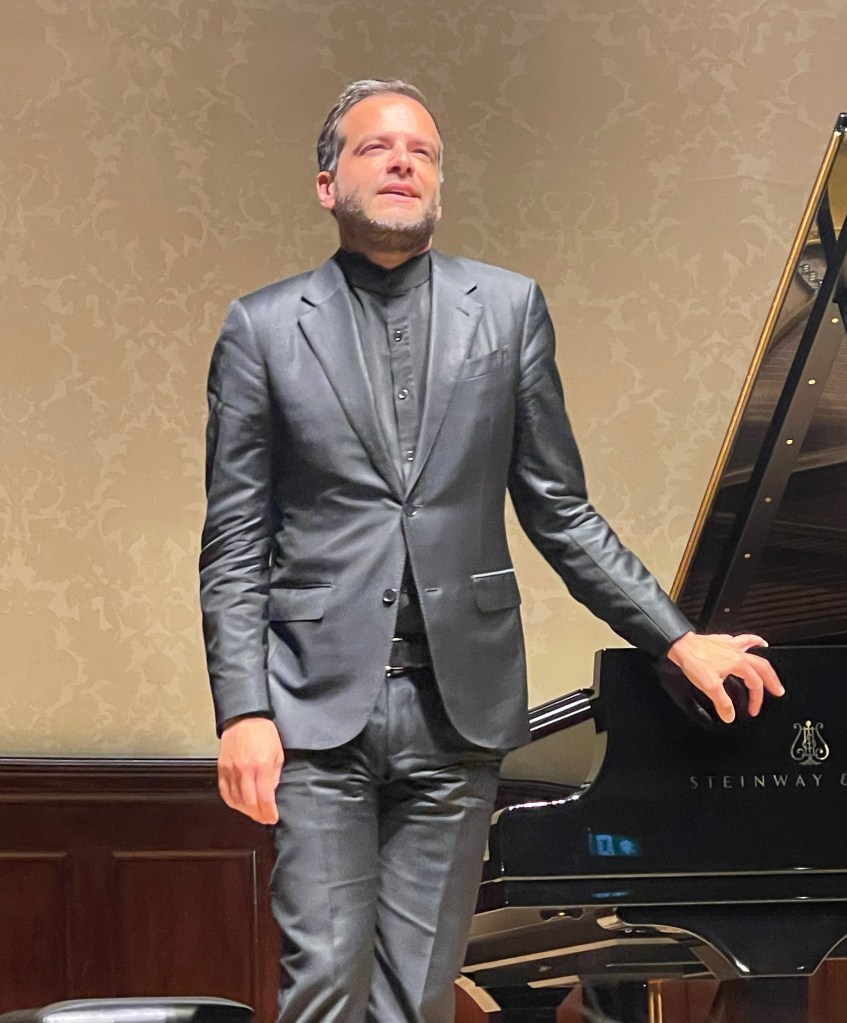
A completely different sound world opened up for the second part of the recital dedicated to Liszt. The Swiss book from his years of Pilgrimage. Who better than a Swiss pianist to recreate these miniature tone poems overlooked by musicians as they are more often brutally abused by showmen. Piemontesi showed us that there may be many octaves and rhetorical cadenzas but they are really expressions of a poetic soul of genial invention. I remember the revelation on hearing Wilhelm Kempff playing Liszt with his recording of the two legends that had something of the miraculous about them. It was the same today with the nobility and aristocratic authority that opened the ‘Chapelle de Guillaume Tell’. A magic mist of sounds with echoing bells resonating, leading to a passionate climax that dissolved to desolate cries on the horizon. The sound of the ‘Lake Wallenstadt’ as the water lapped almost inaudibly as all we could hear was the water as it passed over a stone with bubbling constancy. A melodic line of childlike innocence that was floated on these gently lapping waves with simplicity and radiant beauty. A glowing beauty to the simple dance of the ‘Pastorale’ as it lead straight into the silky featherlight brilliance of ‘Au bord d’une source’. An incredible fluidity and jeu perlé that was less present than Horowitz’s bewitching account, but that had the overall atmosphere of the scintillating clarity of a Swiss alpine stream.’Orage’ of course was played with passionate drive full of octaves and rhetorical outbursts but in Piemontesi’s hands octaves disappeared, as they were vibrations of sound that led to passionate outpourings that were shaped so beautifully and with such an extraordinary sense of line. Piemontesi gave a shape and meaning to this work where his mastery and sense of balance could even make the left hand melody sing so eloquently, as streams of notes flowed over the entire keyboard.’Vallée d’Obermann’ was given an extraordinarily poetic performance. The long opening tenor melody played with poignant meaning as it is replied to by the whispered soprano melody. A blood curdling tremolando in the left hand brought us the dramatic contrasting central episode played with mastery and fearless brilliance, more operatic than orchestral, but overpowering in its impact. The vibrations of sound on which the opening melody returns was quite remarkable as the melodic line was allowed to float with ever more intensity on this wave of sounds. Bursting into a climax again where octaves were streams of notes shaped with passionate intensity leading to a final flourish and the poignant last statement with which it draws to an end. The simple luminosity of ‘Eglogue’ led to the deeply disturbing ‘Le Mal du Pays’ with strange sounds of prophetic searching. Distant sounds of bells heralded the beautiful outpouring of ‘Le cloches de Genève’ with which this suite was drawn to a poetic close.
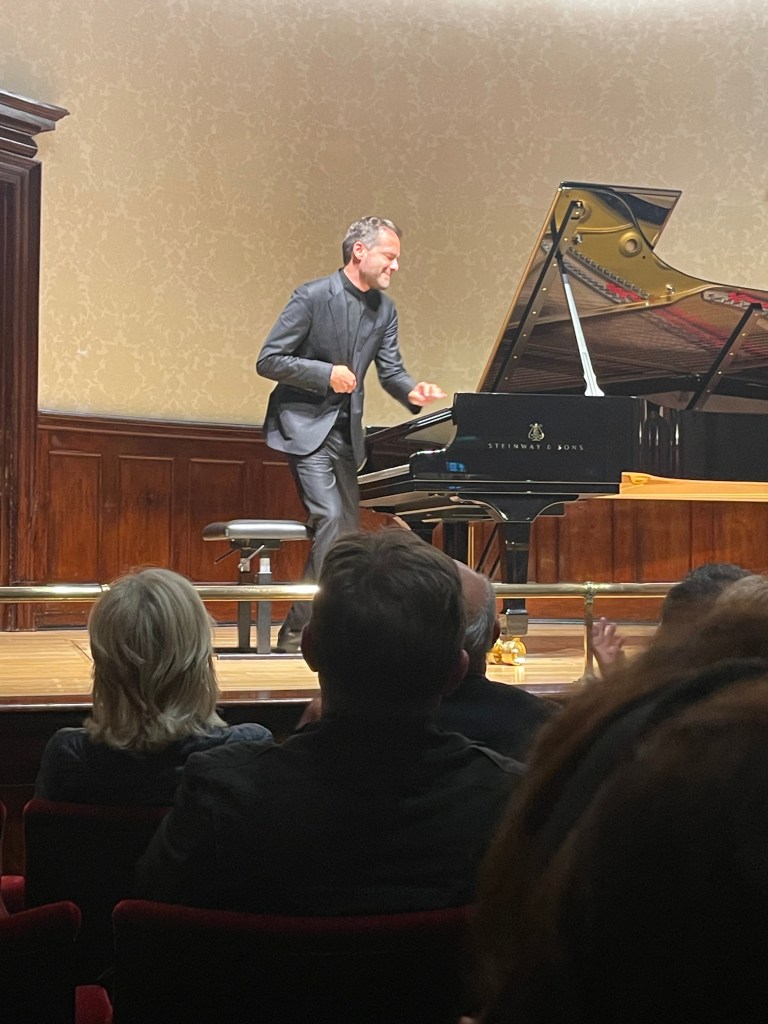
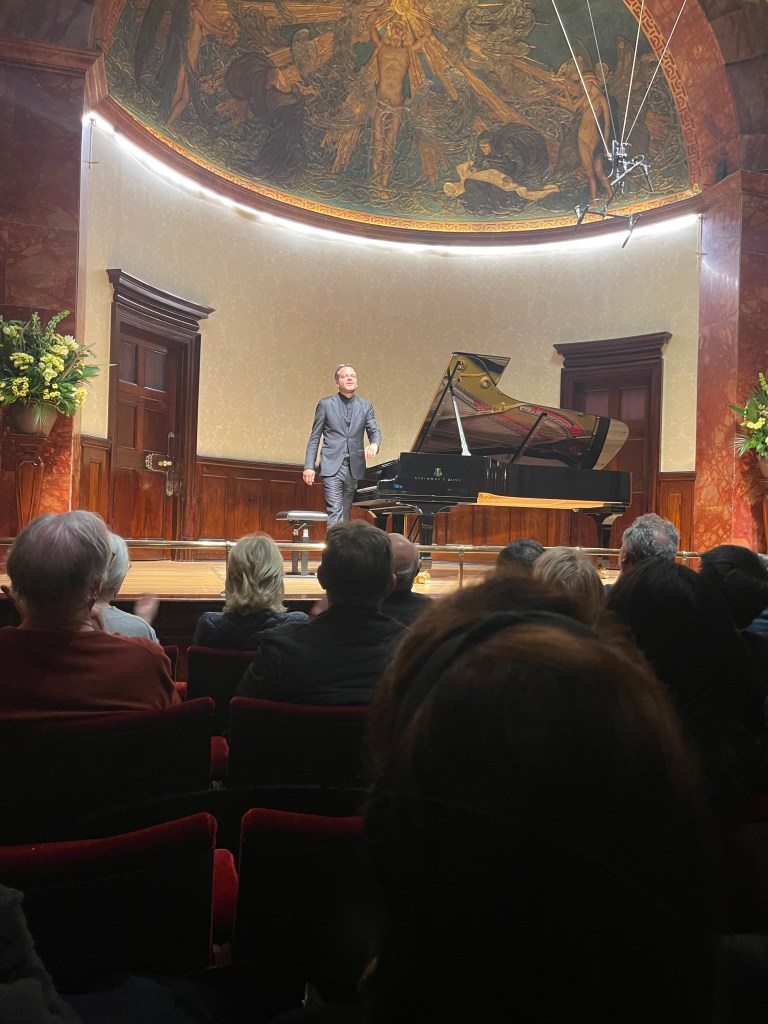
Bach’s ‘Wachet Auf ‘ in the glorious transcription of Wilhelm Kempff was Piemontesi’s brilliant choice as an encore. Finishing with the radiant exhilaration of a true believer. A second encore was the beautifully elusive sound world of Godowsky with a movement from his Java Suite played with the same chameleonic sense of colour as the legendary master himself.