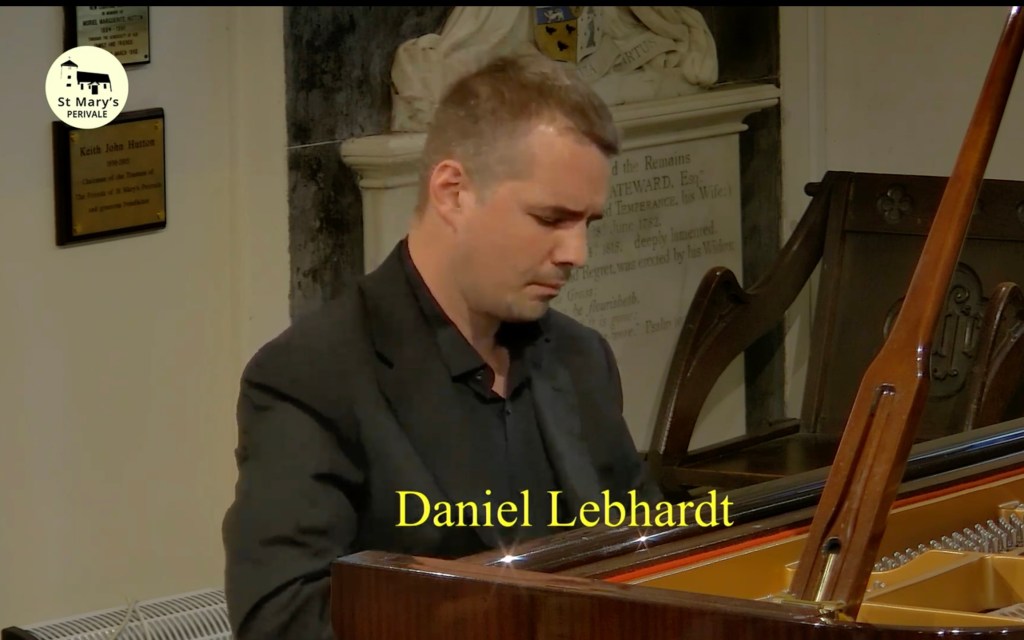
Playing of commanding authority and masterly musicianship where just to look at the programme was to know that something special was about to be heard. An artist is known by his programmes and it was above all Arrau who would demonstrate that, showing us that the music is more important than the performer and the idea of playing a little piece after such noble and suffered statements was completely alien to him. Schnabel whose teacher, Leschetizky, considered a musician not a pianist, merely exclaimed that he was no showman and warned people that the second half of his concerts were as boring as the first.
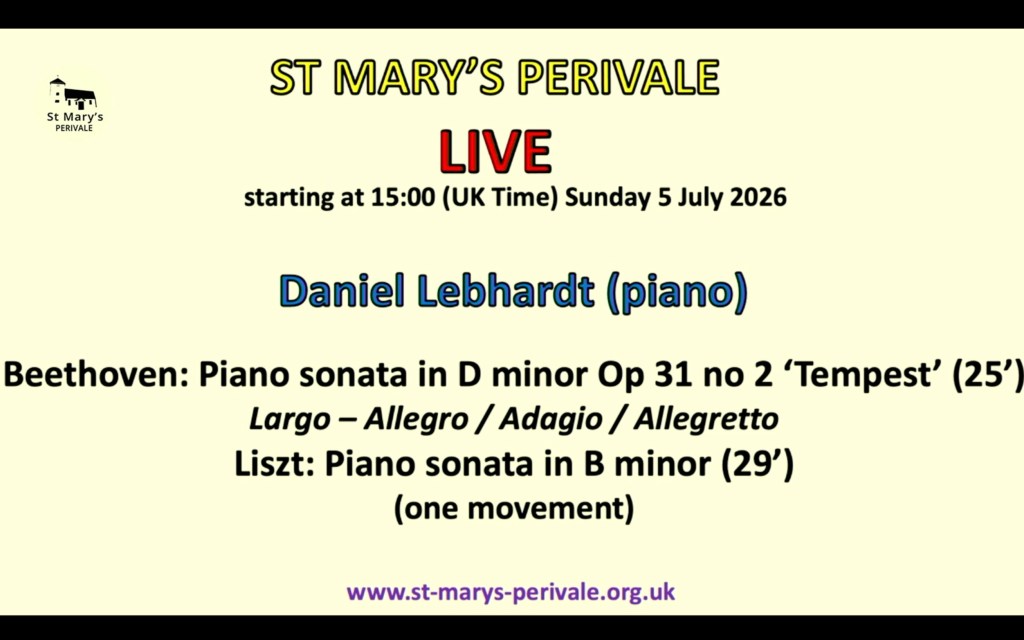
Daniel chose two great works by Beethoven and Liszt, both pinnacles of the Romantic piano repertoire. He was also persuaded to play an encore that was obviously carefully chosen ,though, by an eclectic musician. Brahms’s Intermezzo op 117 n. 1 was a ‘ lullaby of grief ‘ from a composer who had been a close family friend of the Schumann’s and when Robert was taken into an asylum it was he who befriended his wife. Clara apart from being the mother of Robert’s 8 children was the first lady virtuoso pianist. Liszt had dedicated his Sonata to Robert Schumann out of esteem, but also to repay Schumann’s dedication of the Fantasie op 17, it was delivered to the Schumann household when Robert was already in Endenich Sanatorium . Clara refused to played it finding it just a ‘blind noise’!
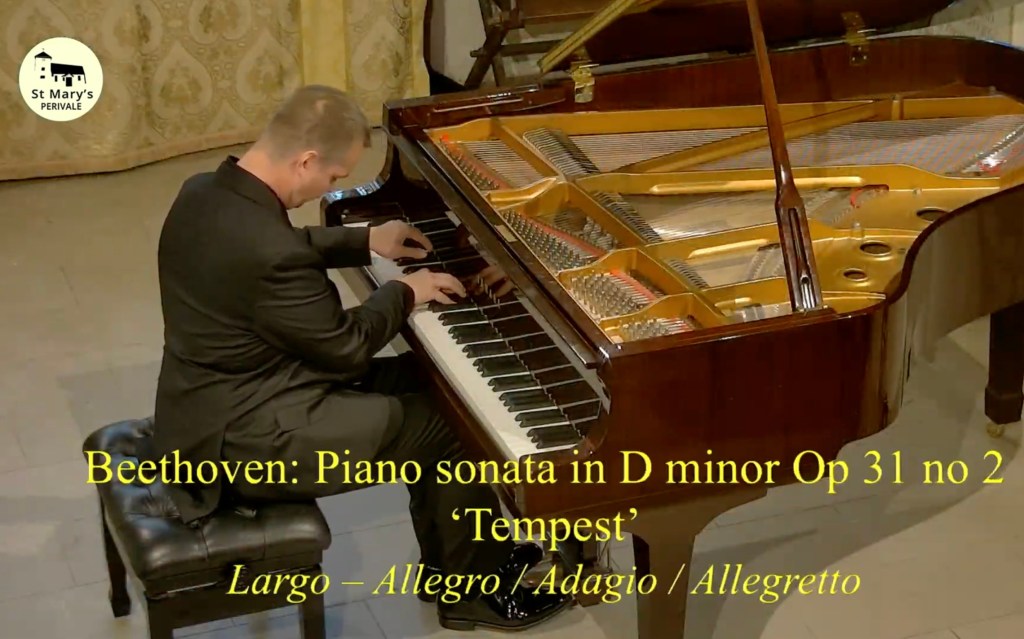
Daniel’s playing is orchestral in conception, thinking always up from the bass which gives great weight to his performances. Even when there is melody and accompaniment there is a richness to the sonority which is the anchor on which the melody rests.
An opening of whispered mystery to Beethoven’s ‘Tempest’ Sonata bursting into the clarity of the ‘Allegro’ where the questioning bass was answered by the tender soprano but all on a burning cauldron of sounds of dynamic drive and tension. Beethoven’s temperament bursting onto the scene with commanding authority only to dissolve into whispered passages passing over the keyboard as the tempest comes momentarily to rest. It is where the mysterious opening Largo is repeated three times before bursting into flames once more with ever more dynamic drive. Dissolving to two recitativi played with Beethoven’s own ghostly pedal effects before working its way through a rhythmic menace and drive , coming to rest on a long drawn out vibrating left hand chord that Daniel played with extraordinary clarity even though Beethoven marks to be played with a long pedal.The effect though was extraordinary as the movement lay exhausted with the glowing radiance of the final two chords contrasting with this barren wind that had blown with such whispered menace. There was a subdued poignant beauty to the ‘Adagio’ with its chorale that proceeds unperturbed by the gentle comments that Beethoven adds all around this quasi religious procession. Playing of extraordinary delicacy but also of commanding authority and emotional weight.
An ‘Allegretto’ with a continual pastoral flow of forward movement. Exploding from time to time with tempestuous outbursts played with a clarity and commanding authority that nothing could curtail. Even the odd ornament thrown in was like a highly wound spring. A beautiful music box appearance of the Rondo theme was complimented by hard edged insistent brilliance . A continuous flow of music like riding on a wave of sound where there was no actual full stop as the movement disappeared into the bass of the piano with whispered impishness.
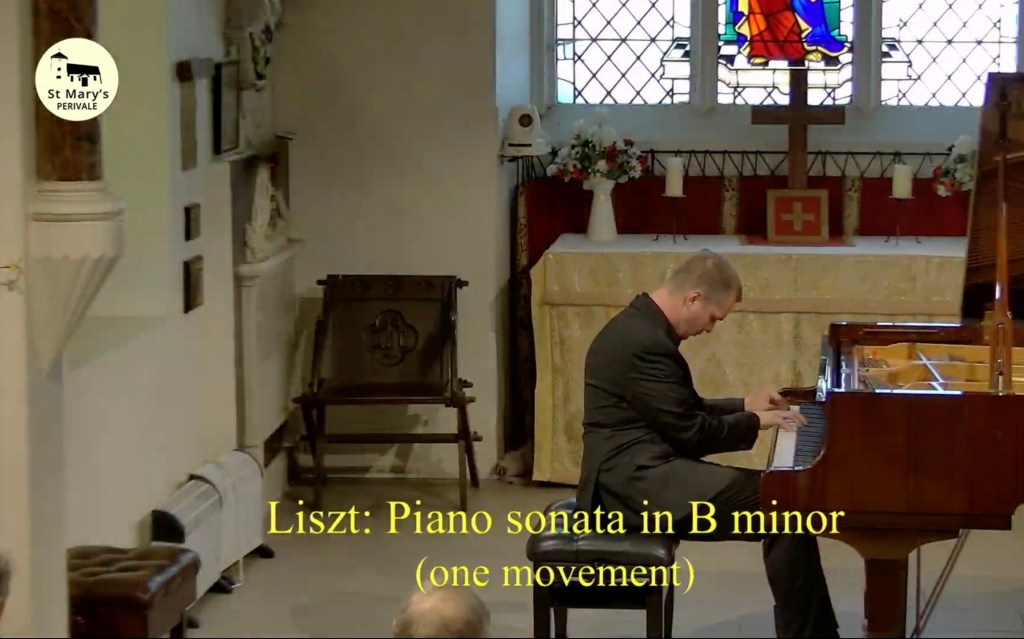
The Liszt Sonata in B minor is the very pinnacle of the Romantic piano repertoire and is a highly original work in one movement even though three sections are recognisable. Inspired by the leit motif of Schubert’s Wanderer Fantasy, where the opening themes are developed like characters in an opera . In fact it was also the inspiration for Richard Wagner, Liszt’s son in law. Daniel presented it with playing of authority and command where the opening three themes were played with measured intensity. Streams of notes played with great control but within the notes there was a mature mastery that could imbue them with burning intensity that never lost control of the overall architectural shape . A sense of balance which was not the usual battlefield of empty showmanship but a symphonic outpouring with a master conductor at the helm. ‘Grandioso’ was indeed just that, with a sumptuous melodic outpouring of fullness but never hardness, dissolving to what some may call the ‘Margherita’ theme, played with refined beauty and aristocratic good taste. Streams of notes turned into washes of golden sounds as we moved inexorably to the first dramatic outbursts of passionate intensity and rhetorical grandeur leading with whispered menace to the ‘Andante sostenuto’. Playing of disarming simplicity and beauty as a Quasi Adagio opened up with playing of subtle whispered sounds of ravishing beauty. A central episode played with burning intensity and extraordinary control reaching the climax from which it dissolves into the recapitulation or third section. A fugato played with simple rhythmic energy but building in intensity to the real recapitulation and dynamic drive taking us to the notorious double octaves of the final climax. Played with a technical mastery where the musical content was uppermost in Daniel’s mind. It was at this point that Liszt had abandoned his original ending in a blaze of glory and substituted it for one of the most prophetic pages of all of Liszt’s vast output . It was here that Daniel’s mastery and maturity could show us the way, following Liszt’s precise indications with scrupulous poetic attention.
A remarkable performance for the masterly musicianship and lack of empty rhetoric or showmanship placing this masterpiece on the pedestal it truly deserves .
Brahms Eflat Intermezzo op 117 was played with simplicity and a palette of colours of a true poet of the keyboard
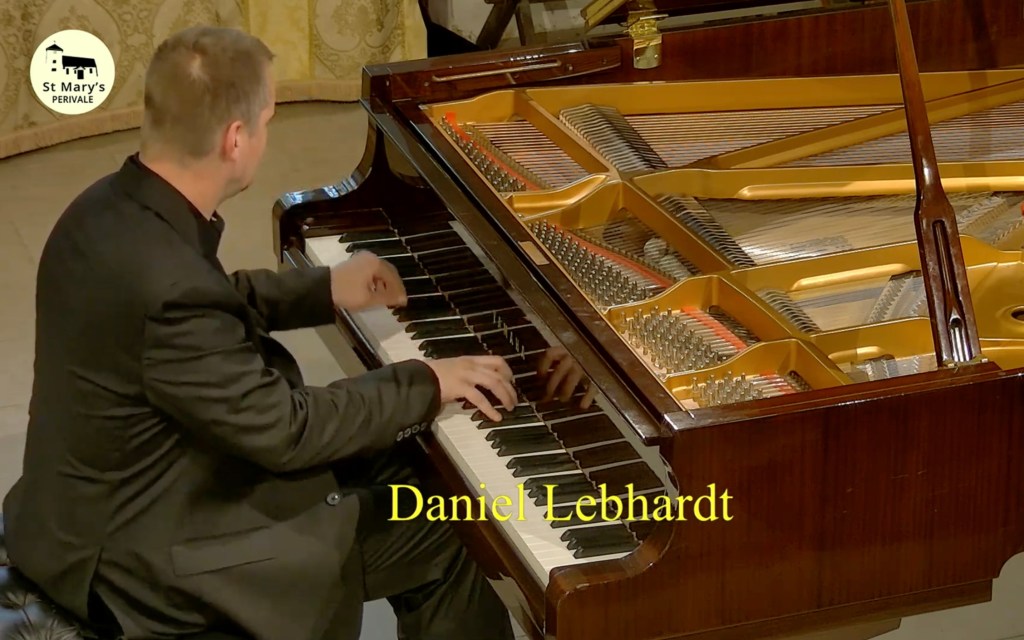
Hungarian pianist Daniel Lebhardt has been described by the New York Times as playing with ‘…power, poetry and formidable technique’. This season Daniel will perform with the Royal Philharmonic Orchestra at Royal Festival Hall with conductor Neville Creed in Mozart`s Piano Concerto no.21 in C major K.467 , and Rachmaninoff`s 2nd Piano Concerto with conductor Lee Reynolds for his Royal Albert Hall debut in September 2026. After debuting at New Ross Piano Festival, as well as returning to Galway and Drogheda in Ireland he will be giving recitals on the Isle of Wight, at the Holywell Music Room in Oxford, Oxshott & Cobham Music Society, Wigmore Hall, and Nottingham Royal Concert Hall. In the spring and summer Daniel will perform recitals in Germany in Planegg, Fürstenfeldbruck and in Weißenburg.
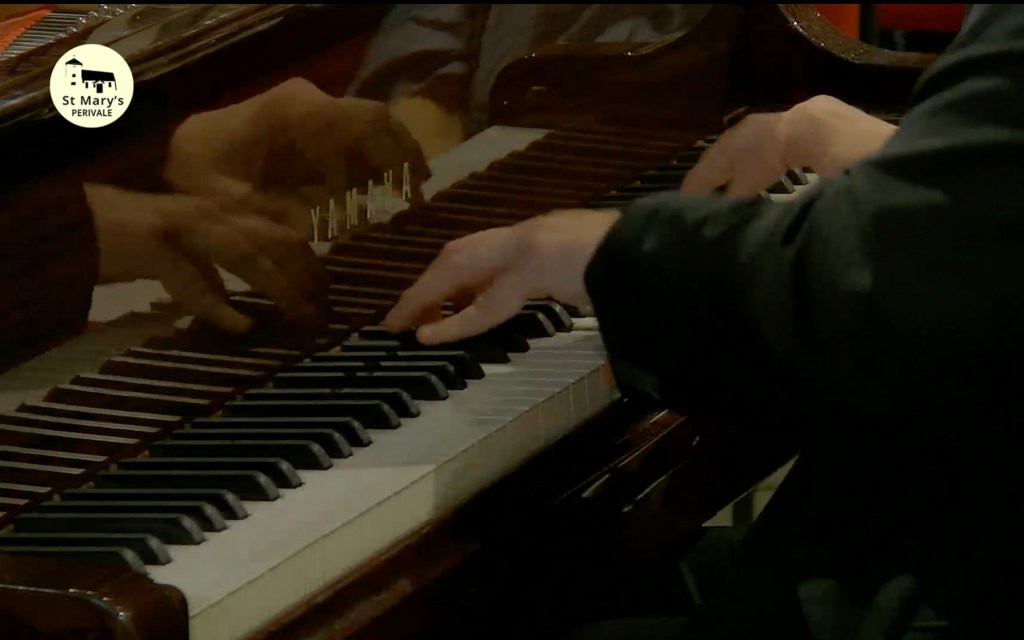
Since becoming one of the winners at the 2015 Young Classical Artist Trust auditions, Daniel has performed at Luxembourg Philharmonie, the National Philharmonic of Ukraine, Auditorium du Louvre in Paris, Kennedy Center in Washington DC and Merkin Concert Hall in New York City, at the Tallinn, Lucerne, Chorinner Musiksommer, Heidelberger-Frühling International festivals, and in Canada, China, Japan, Colombia, Argentina, Chile and New Zealand. In the UK he performed at Saffron Hall, at the Aldeburgh, Harrogate, Bath International Festivals, and Birmingham International Piano Festival.
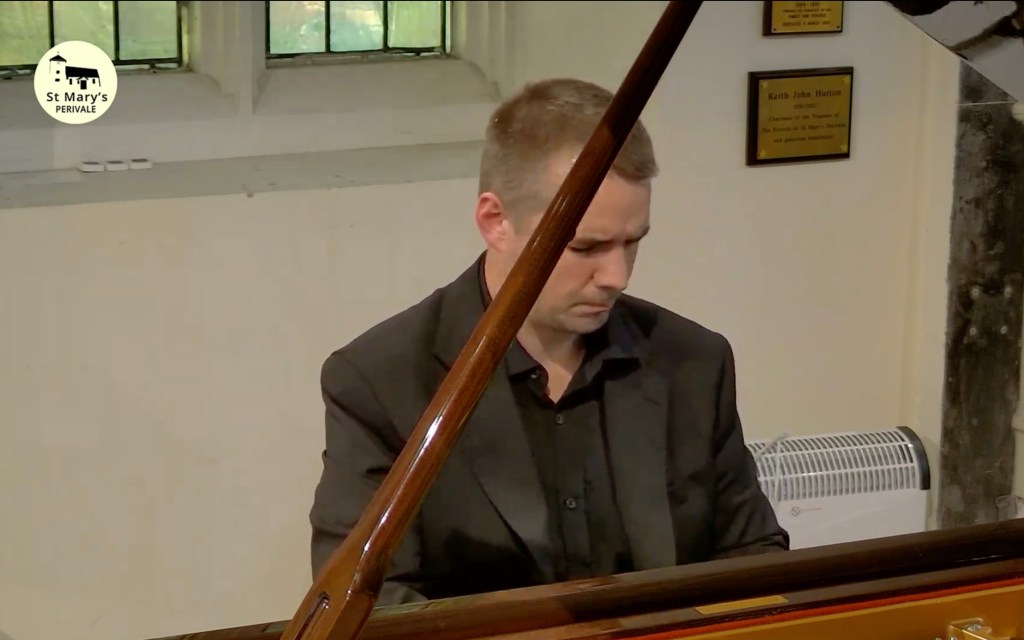
Recently Daniel performed Beethoven’s “Emperor Concerto” in Guildford and Mozart’s Concerto in C major K.467 at Royal Festival Hall with the Royal Philharmonic Orchestra. He performed Liszt’s Totentanz with Konzerthausorchester Berlin and made his debut with Bilkent Symphony Orchestra performing Brahms Piano Concerto No. 1. He also performed Beethoven with the Hallé Orchestra in Blackburn, Rachmaninoff’s 3rd Concerto with the National Philharmonic of Ukraine and Mozart with the European Union Chamber Orchestra and debuted at Barbican Hall, and Birmingham Symphony Hall as soloist.
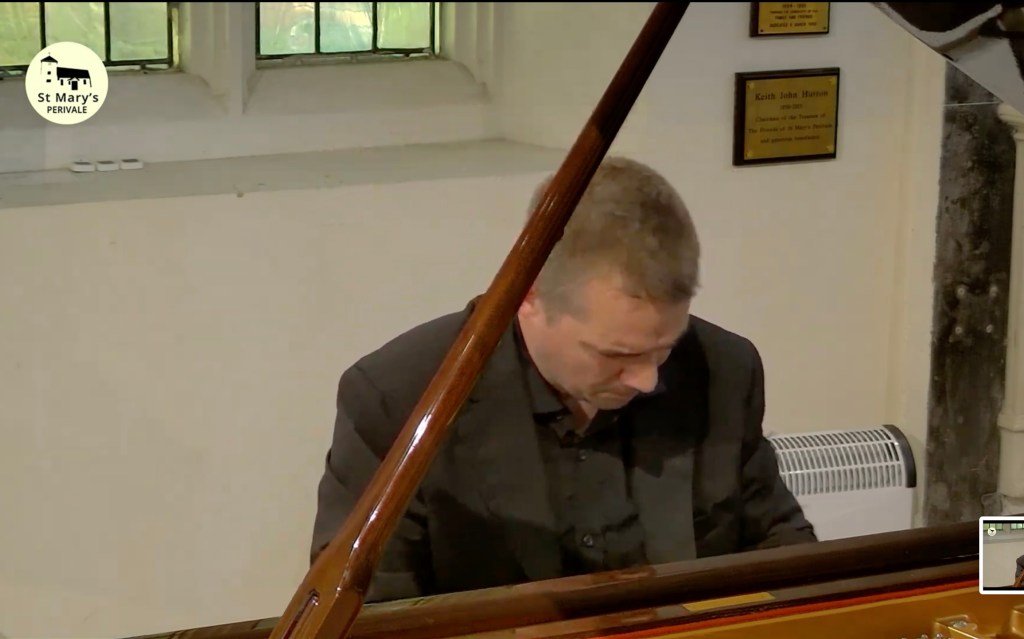
Daniel has won multiple international prizes including 1st Prize at the Young Concert Artists auditions in Paris and New York and in 2016 the Most Promising Pianist prize at the Sydney International Competition. He studied at the Franz Liszt Academy in Budapest with Gyöngyi Keveházi and István Gulyás, and at the Royal Academy of Music and the Royal Birmingham Conservatoire with Pascal Nemirovski. He is based in London.
https://christopheraxworthymusiccommentary.com/2024/03/20/christopher-axworthy-dip-ram-aram/


Una risposta a "Daniel Lebhardt in Perivale ‘Mastery and commanding authority of a musician of class’"