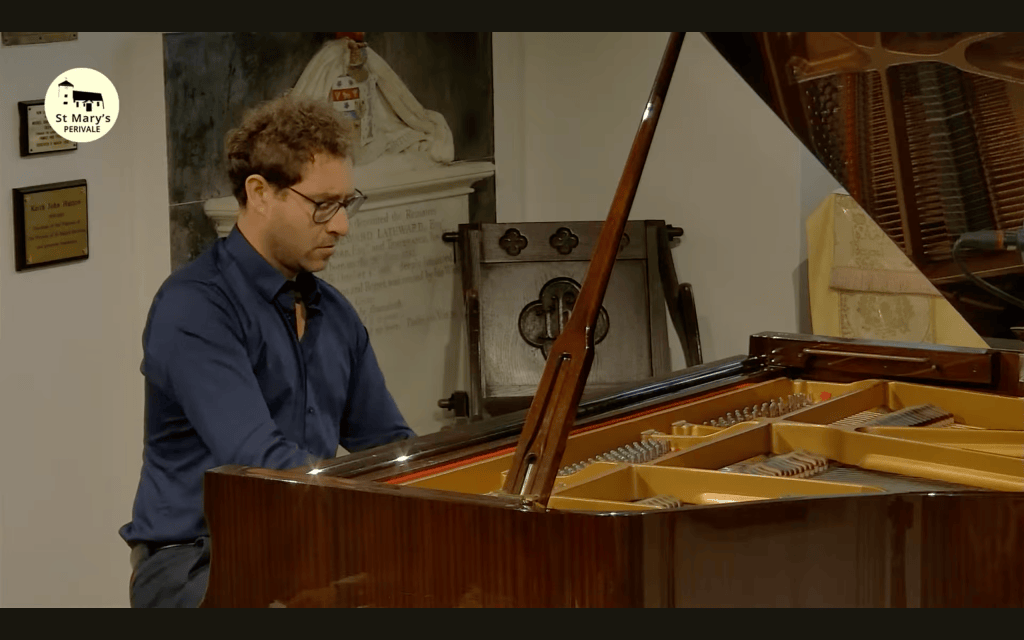
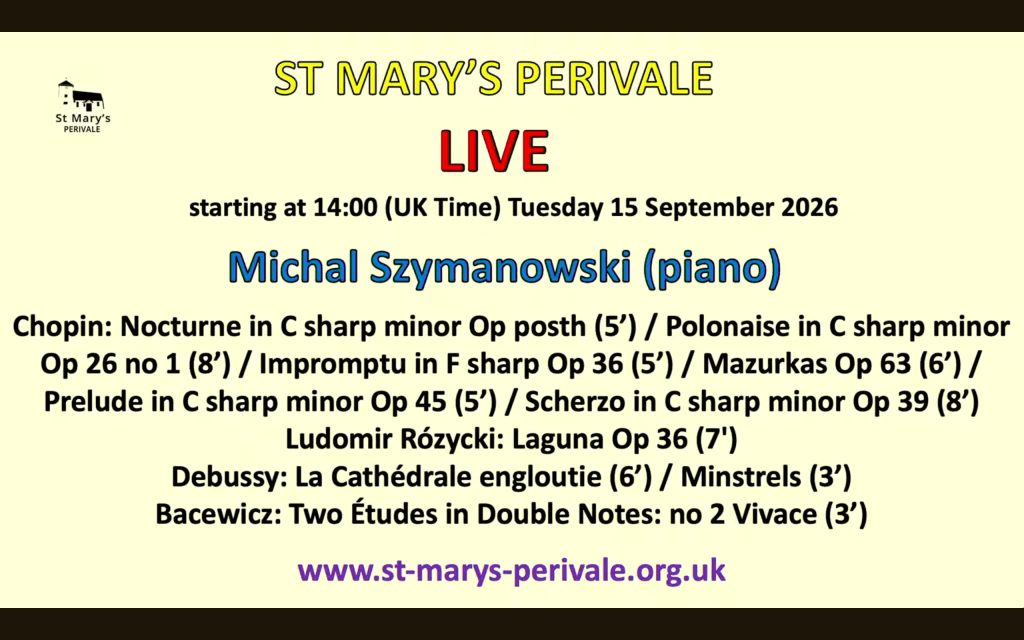
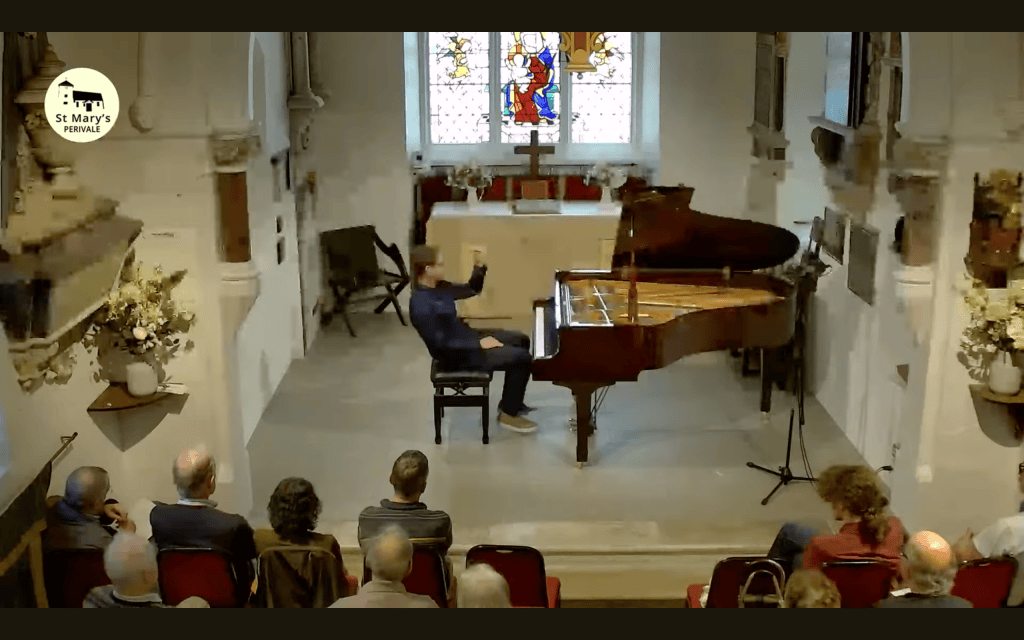
As Dr Mather said after yet another superb recital from Michal :’ You play Chopin as I would like to be able to play it!’ It is playing of intelligence and poetic intensity played with humility and respect for the composer’s written intentions. The so called Chopin tradition where pianists would offer their own personal view of Chopin is fine if played with sincerity and mastery but is not the rock on which other interpretations should be based. The only rock is the one provided by the composer and Chopin did provide his own variants in the many written manuscripts that he gave away to his sponsors and publishers.
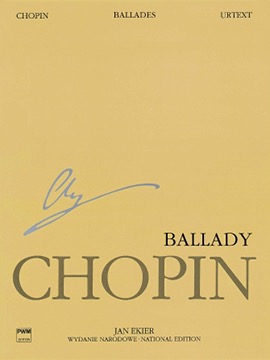
The Chopin National Edition consists of 36 volumes in two series, for works published during Chopin’s lifetime (Series A), and for works published posthumously (Series B). A 37th volume (titled Supplement) consists of compositions partly by Chopin, for instance his contribution to Hexaméron
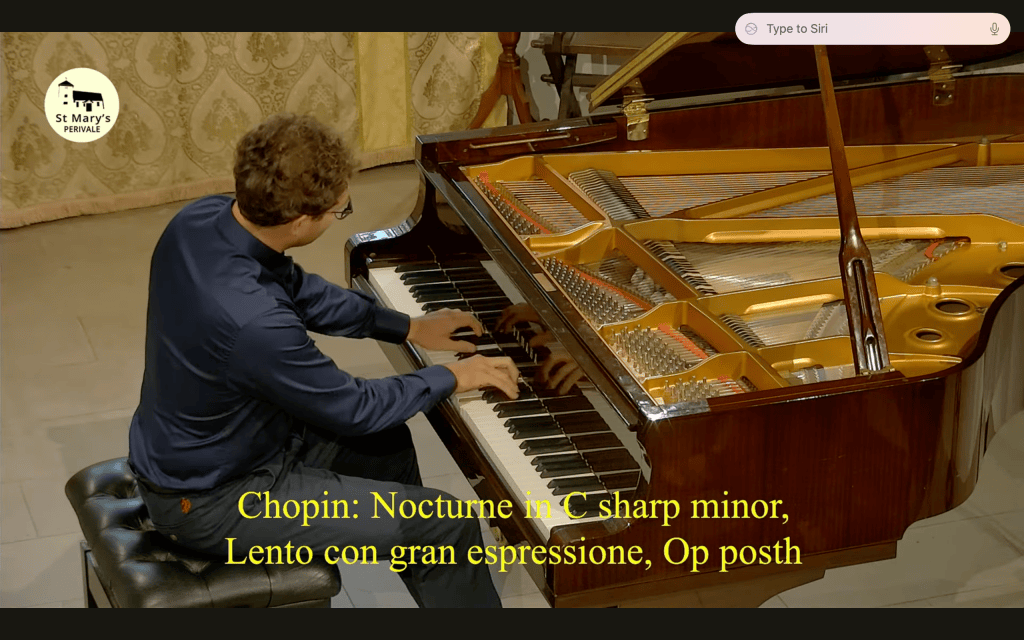
Michal opened with the Nocturne op posth which he played with aristocratic good taste and an extraordinary control of sound. Immediately one could feel the rock on which Chopin constructed his compositions. He always had a copy of the Bach ’48’ on his piano as the supreme example of counterpoint and the fact that music is constructed from the bass upwards. Chopin explained to his pupils that music was like a tree with the roots firmly planted in the ground but with the branches free to move naturally above. This was immediately evident with Michal’s playing and it gave great strength and poetic intensity to all he played. Chopin made many variants of this nocturne and the two’s against three’s have always been hotly debated. Michal played with simplicity and authority allowing the music to flow with radiance and beauty, problems of rhythm were not played out in public but interpreted with intelligence and poetic authority.
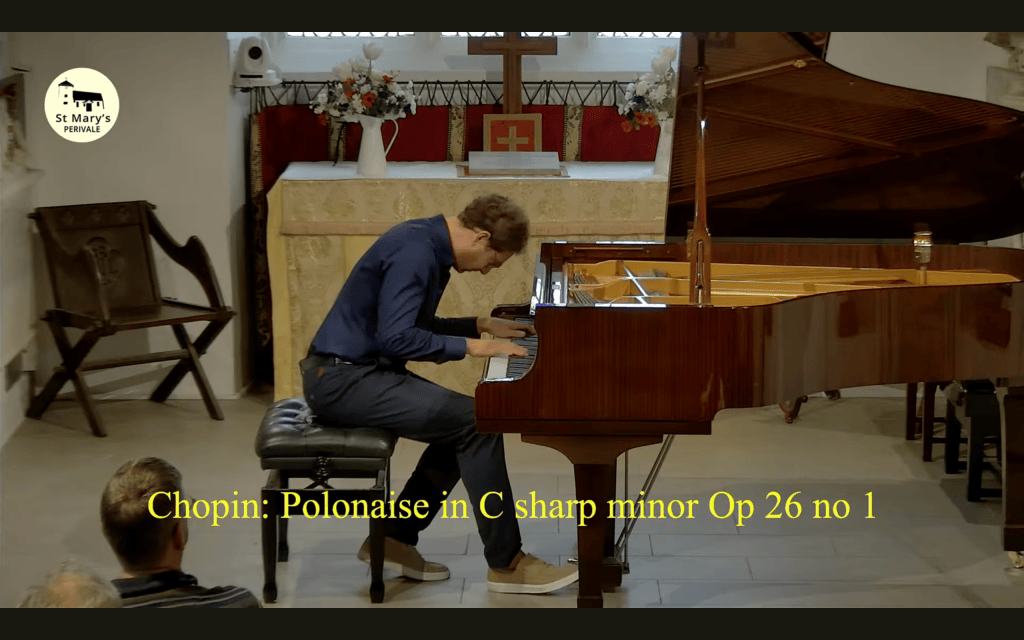
This early Polonaise is one of two and opens with a fiery Allegro appassionato in C sharp minor beginning with authoritative descending octaves like the opening of slow movement of the B minor Sonata. Its partner in E flat minor, on the other hand, is full of mystery and ominous foreboding. Michal played with dynamic drive and passionate intensity which was followed by a melodic outpouring of poise and refined elegance full of nostalgia and beauty. The central episode is in D flat, a key that Chopin used often for his exquisite bel canto melodic outpourings, and it was this that closed the Polonaise with whispered uncertainty.
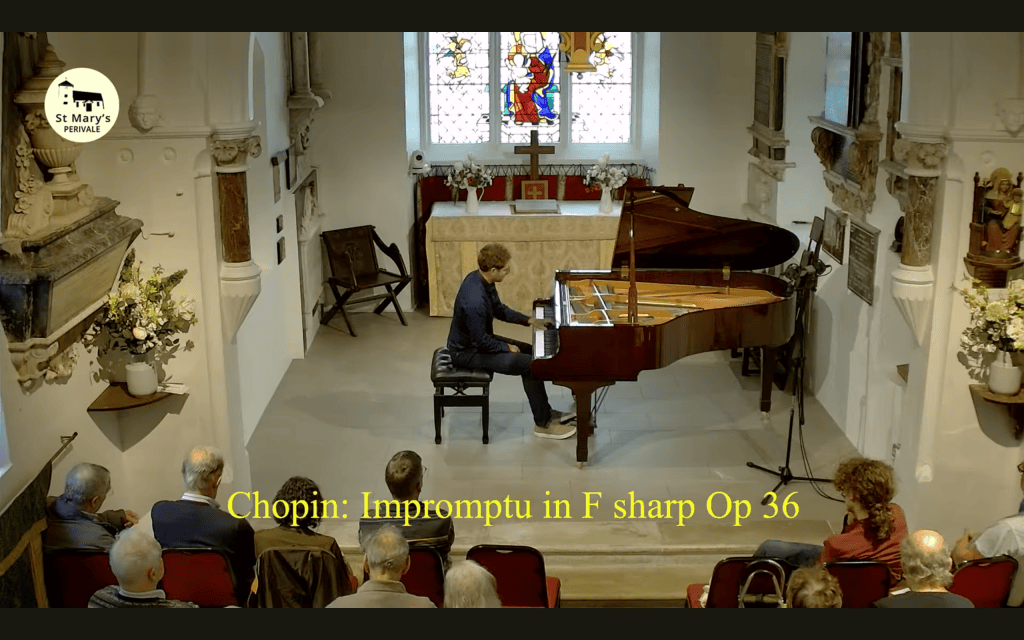
The second Impromptu was also played with a beautiful cantabile and allowed to flow with simplicity and radiance . Building to a passionate climax with an imposing left hand octave accompaniment before it dissolved into a mellifluous outpouring and streams of jeux perlé notes out of which emerged a beautiful tenor melody of subtle beauty. Michal brought a extraordinary architectural shape and sense of line to this miniature tone poem.
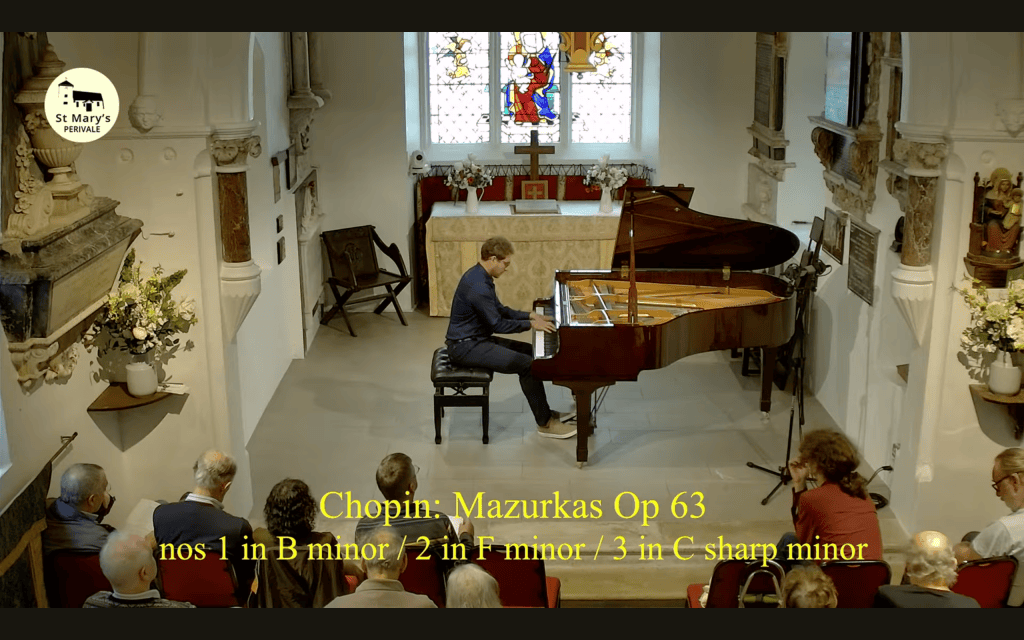
The three Mazurkas op 63 were played with beauty and simplicity, with the beguiling beauty of the second and the nostalgia and yearning beauty of the last complimented by the dance of the first. The Mazurkas of Chopin were described by Schumann as ‘canons covered in flowers’ and it was this poignant meaning that Michal could bring to the music with refined beauty and simplicity.
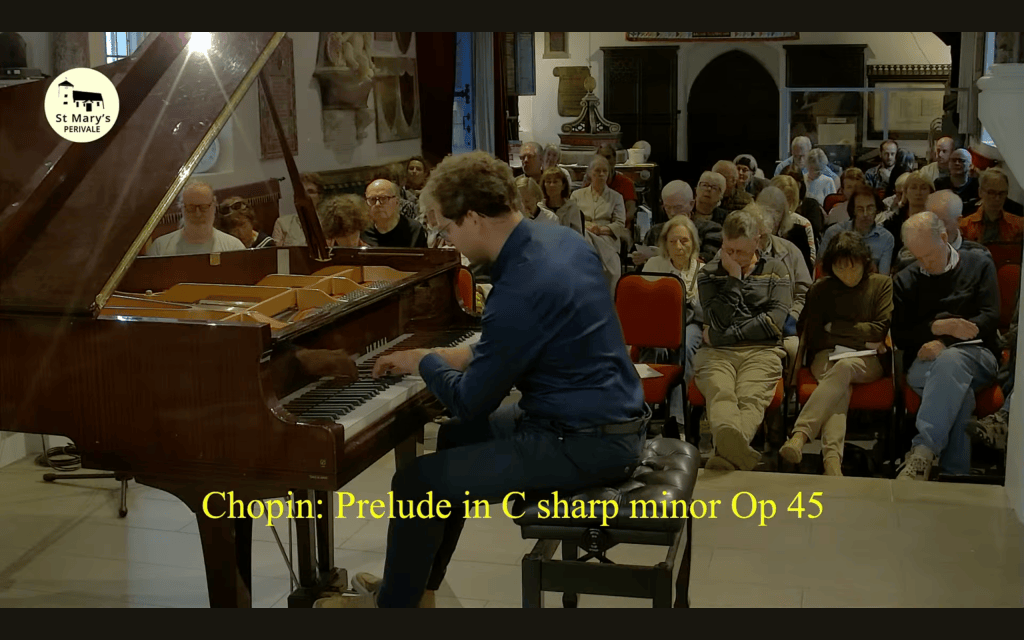
This late Prelude stands on its own and is much longer and contrapuntally more complex than the previous 24 of op 28. A meandering unwinding of magical sounds spread over the keyboard with control and glowing radiance played with a beauty of legato where the notes were but streams of sounds with sumptuous deep bass notes providing the anchor on which they were floated with ethereal beauty. A magical cadenza was played with whispered beauty before the aristocratic nobility of the final chords.
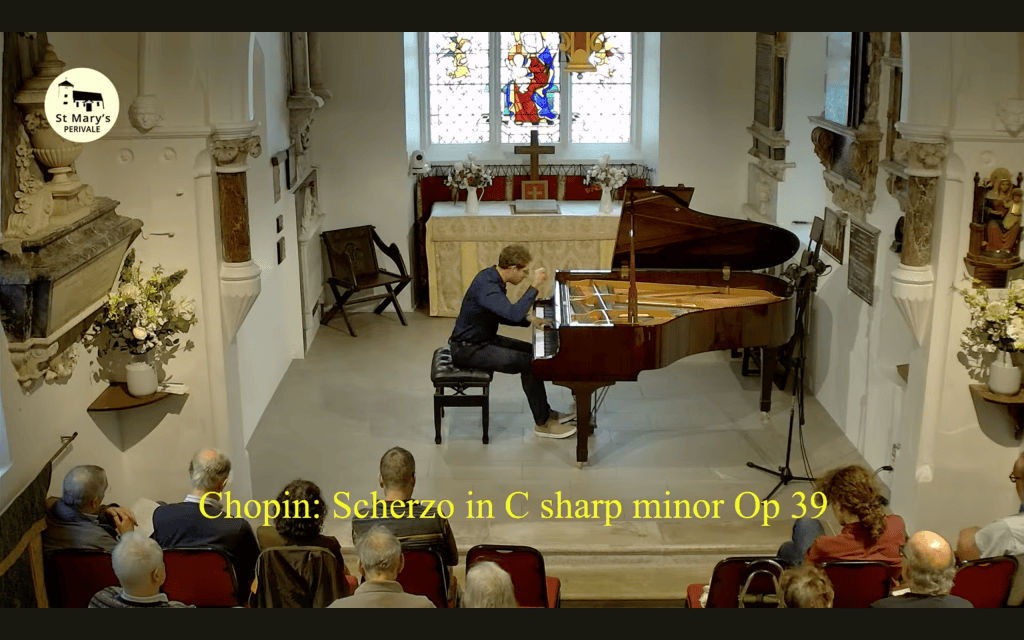
There was an architectural shape that Michal gave to the third Scherzo which did not deny the demanding character of the opening octaves contrasted with the sumptuous chorale with its shimmering accompaniments. Maintaining the long line gave the chorale a strength and sense of direction as the mysterious introduction to the coda was very similar in texture to the mysterious washes of sound of the Debussy ‘Cathédrale’ that was to follow. A coda played with fearless mastery and passionate intensity brought this very fine performance to a scintillating finish. Octaves given a shape and direction were played with horizontal rather than vertical mastery with the mysterious opening in some way being mirrored by the lead up to the coda where there was always a masterly sense of balance and line.
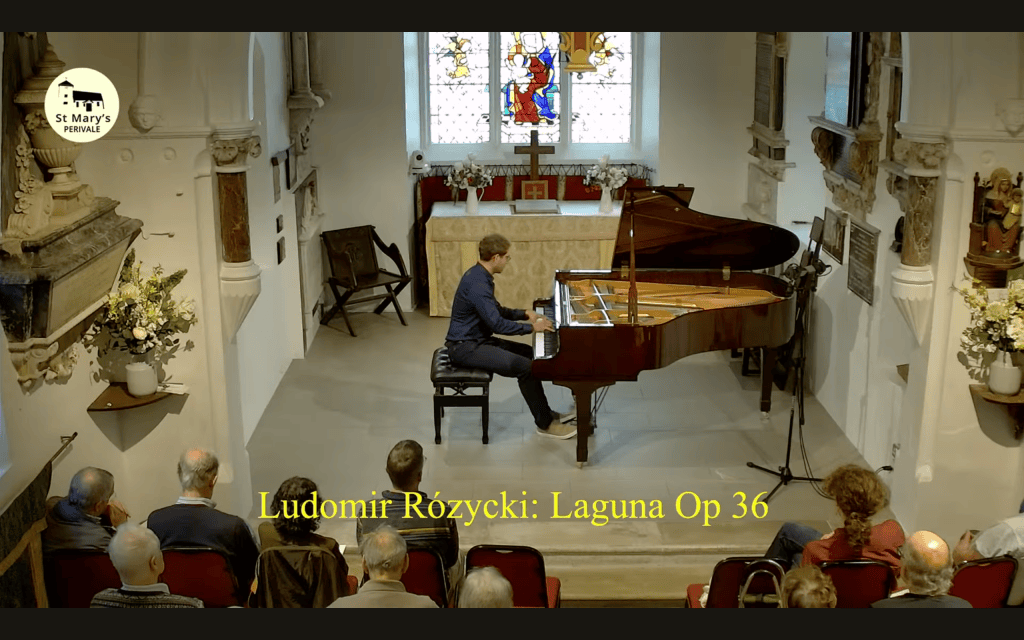
Laguna is beautiful mellifluous outpouring of radiant sounds with streams of notes and a romantic outpouring of passionate intensity and was the perfect link between Chopin and Debussy.
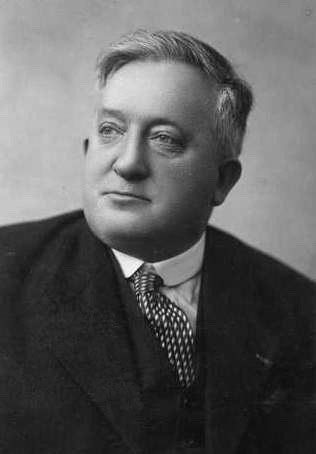
18 September 1883 Warsaw 1 January 1953 Katowice ,Poland T
ogether with Karlowicz, Szymanowski and Fitelberg, he was a member of the group of composers known as Young Poland the intention of which was to invigorate the musical culture of their generation in their mother country.
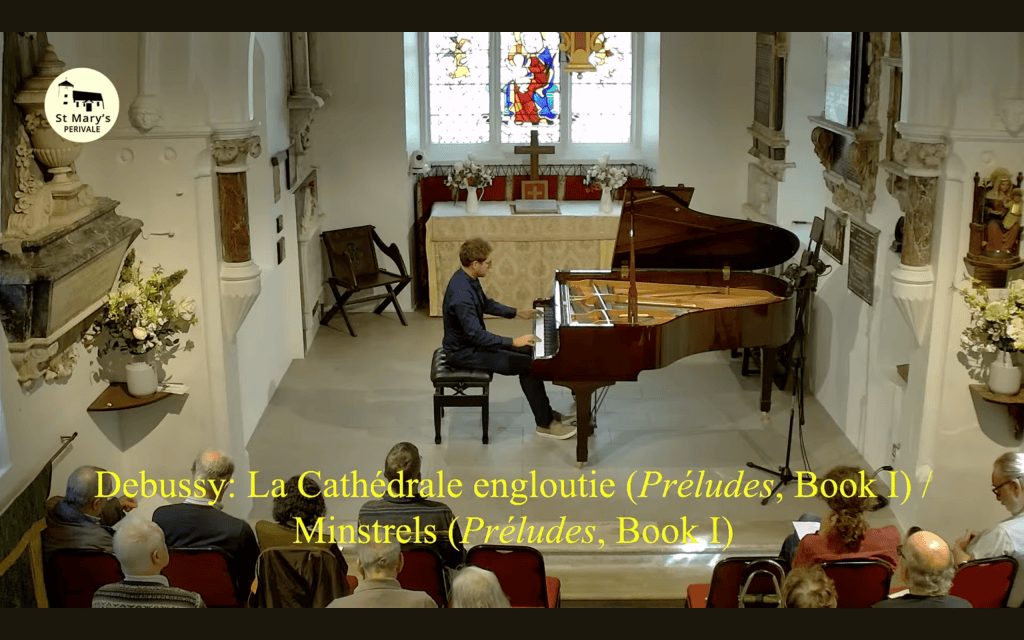
He brought sumptuous rich sounds to Debussy’s ‘Cathédrale’ with a flowing intensity of deep resonating bass notes sometimes struck with the right hand giving a glowing liquid resonance to the sound. There was a stillness and fervent religious atmosphere as the chorale was heard in the distance with a kaleidoscope of poetic sounds reaching an intense climax before disappearing into the distance ,where the melodic line was floated on a magic wave of sonorities.
‘Minstrels’ on the other hand was played with a clarity and capricious good humour bringing with it a sense of character with scintillating brilliance and rhythmic elan.
He brought even more character and masterly control to the second study by Bacewicz which he played with extraordinary style and impish good humour .
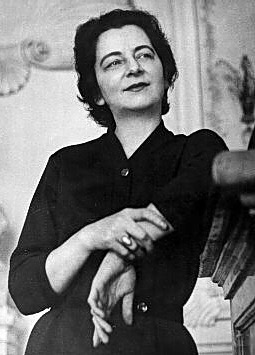
After completing her studies, Bacewicz continued her musical career as both a composer and performer, appearing as a soloist and acting as a jury member for competitions. She served as the concertmaster of the Polish National Radio Symphony Orchestra , directed by Grzegorz Fitelberg from 1936-1938.During this time, the orchestra performed her first violin concerto, as well as her Three Songs for tenor and orchestra. Bacewicz’s reputation grew during the post-war era, despite the general censorship resulting from political realisation of socialist cultural reforms.Despite the ideological control of the arts, Bacewicz continued composing from 1945 to 1955, even though it was difficult to perform many of her compositions. With her rising recognition, as well as growing number of awards and commissions, she began to shift her focus towards composition. Many of her compositions feature the violin. Among them are seven violin concerti , five sonatas for violin with piano, three for violin solo (including an early, unnumbered one from 1929), a Quartet for four violins, seven string quartets , and two piano quintets . Her orchestral works include four numbered symphonies (1945, 1951, 1952, and 1953), a Symphony for Strings (1946), and two early symphonies, now lost. These two studies were written in 1955
An encore by great demand was of course by Chopin. His late nocturne op 62 n. 2 in E major was played with the exquisite delicacy and aristocratic control with which he had held us mesmerised once again here at St Mary’s.
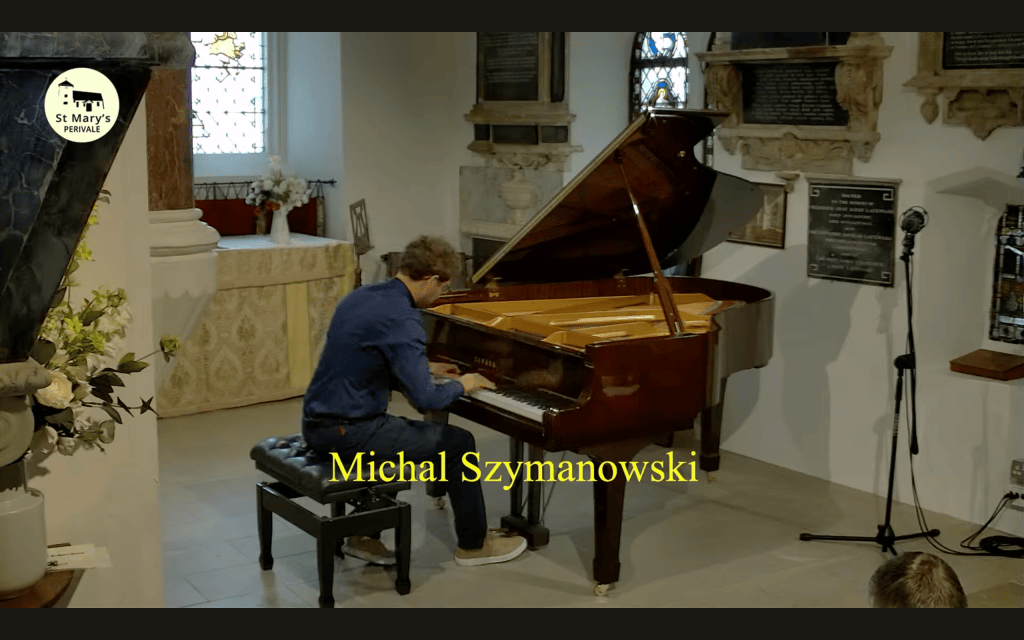
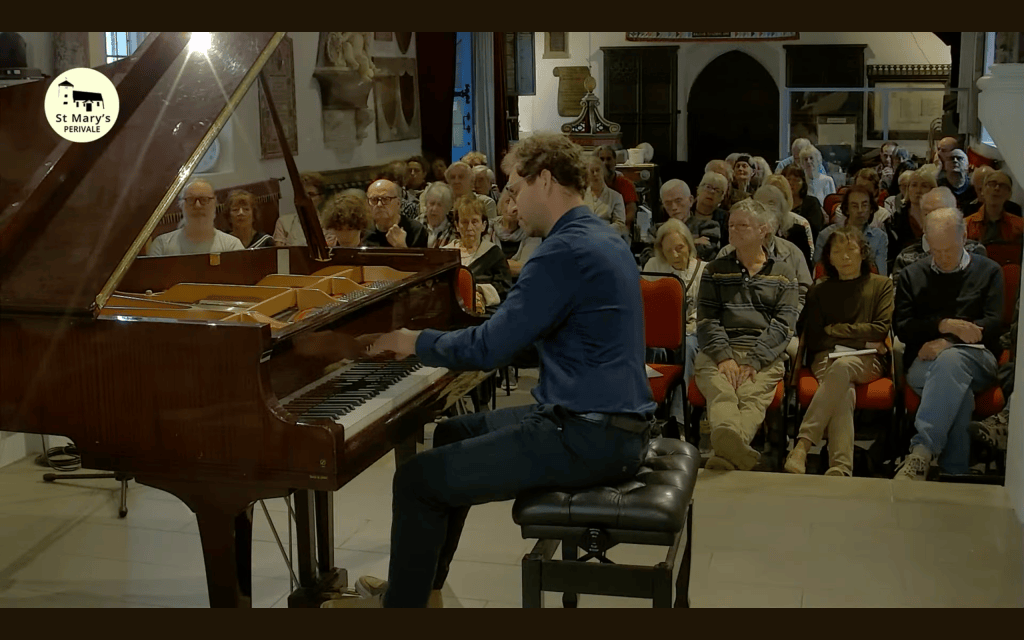
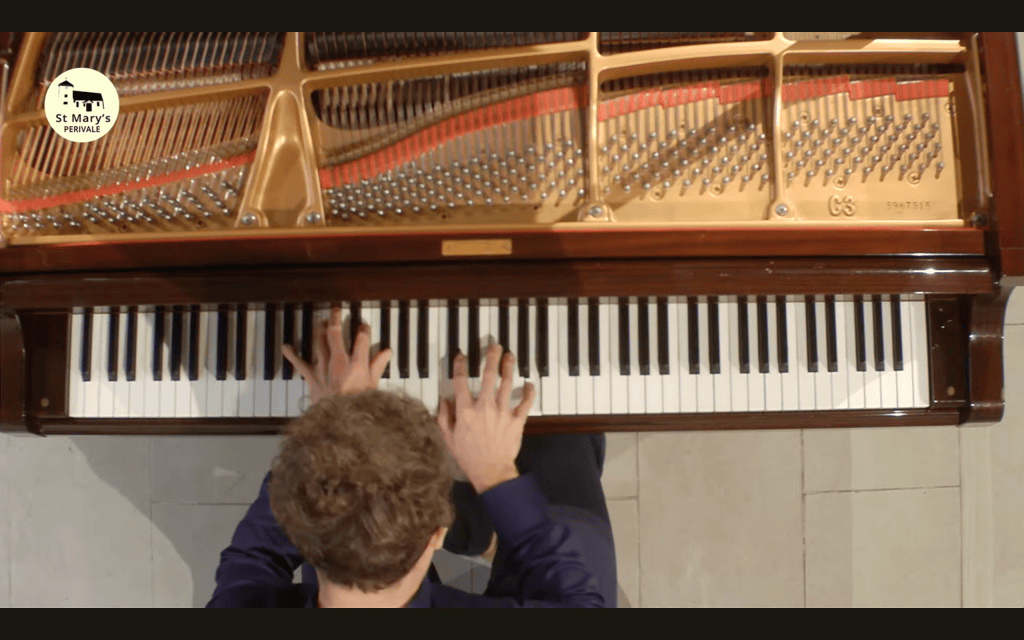
A Polish pianist and conductor, Michal Karol Szymanowski graduated with honours from the Academy of Music in Bydgoszcz, where he studied piano with E. Popowa-Zydron and symphonic-operatic conducting under Z. Rychert. He honed his skills with E. Nebolsin at the Hochschule für Musik Hanns Eisler in Berlin. At present he works as a Professor at his alma mater, teaching the piano. Michal Szymanowski is artistic director of the International I. J. Paderewski Festival in Warsaw.
Michal Szymanowski has won top awards in a number of national and international piano competitions, including: Chopin Piano Competitions in Warsaw, Daegu, Darmstadt, Szafarnia, MozARTè in Aachen, Horowitz in Kiev, Paderewski in Bydgoszcz, Moniuszko in Rzeszów, Zarebski in Warsaw, Yamaha in Katowice. In 2015 he represented Poland at the 17th International Chopin Piano Competition in Warsaw. Michal has performed in many concerts across Europe and throughout the world, including the Palace of Nations in Geneva, in the Vatican City (a concert for Pope Benedict XVI), Warsaw’s Belvedere Palace (for the Polish President), numerous philharmonic halls as well as major festivals in Poland and abroad, among them Oficina de Música de Curitiba, Festival Chopiniana in Buenos Aires, Festival Europeo de Solistas in Caracas, Festival Pianistico di Roma, the Long Lake Festival in Lugano, and the Chopin and his Europe Festival in Warsaw, where he brilliantly performed piano concertos by Paderewski, Wieniawski and Stojowski.
He has released four albums with polish music. Three solo albums for CD Accord (Naxos) and Saggitaria featuring compositions by Chopin, Paderewski, Szymanowski and Wieniawski. The recordings were critically acclaimed. One of the reviews said: “this is heartfelt music-making of the type one associates with such luminaries as Uchida, Schiff and Brendel”. In 2024 Michal Szymanowski has recorded all works for piano and orchestra by I. J. Paderewski, leading the Polish Paderewski Symphony Orchestra (DUX).
https://christopheraxworthymusiccommentary.com/2024/03/20/christopher-axworthy-dip-ram-aram/

