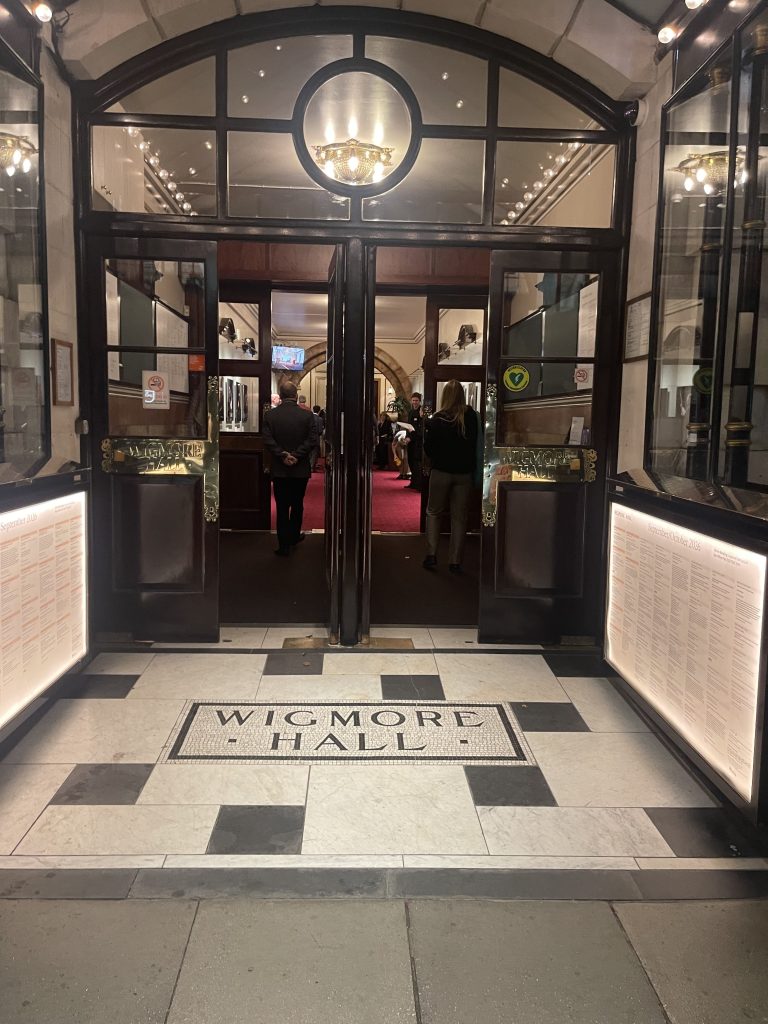
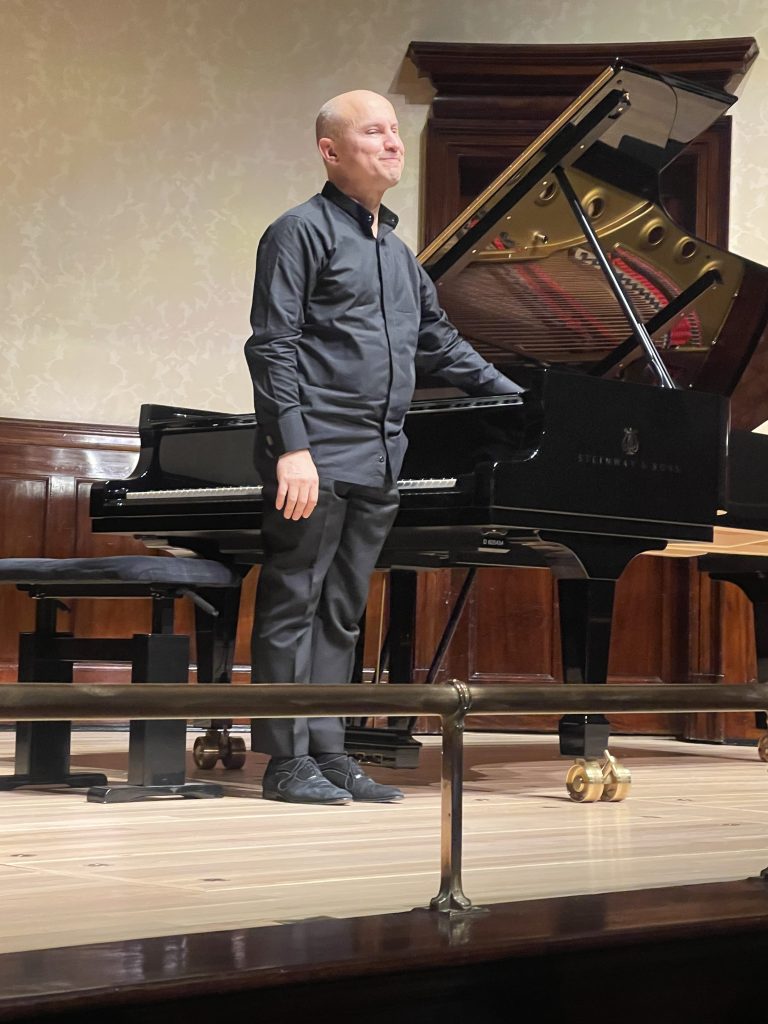
Nelson Goerner returns to the Wigmore Hall with a programme in ‘C’ .Bob Dylan claimed the key of C ‘to be the key of strength, but also the key of regret’.Many masses and settings of the Te Deum in the Classical era were in C major. Mozart and Haydn wrote most of their masses in C major. Gounod stated that “only God composes in C major”. Six of his own masses are written in C.
The Toccata in C minor by Bach, the Schumann Fantasie in C major and finally the Schubert Sonata in C minor and an encore in C sharp minor!
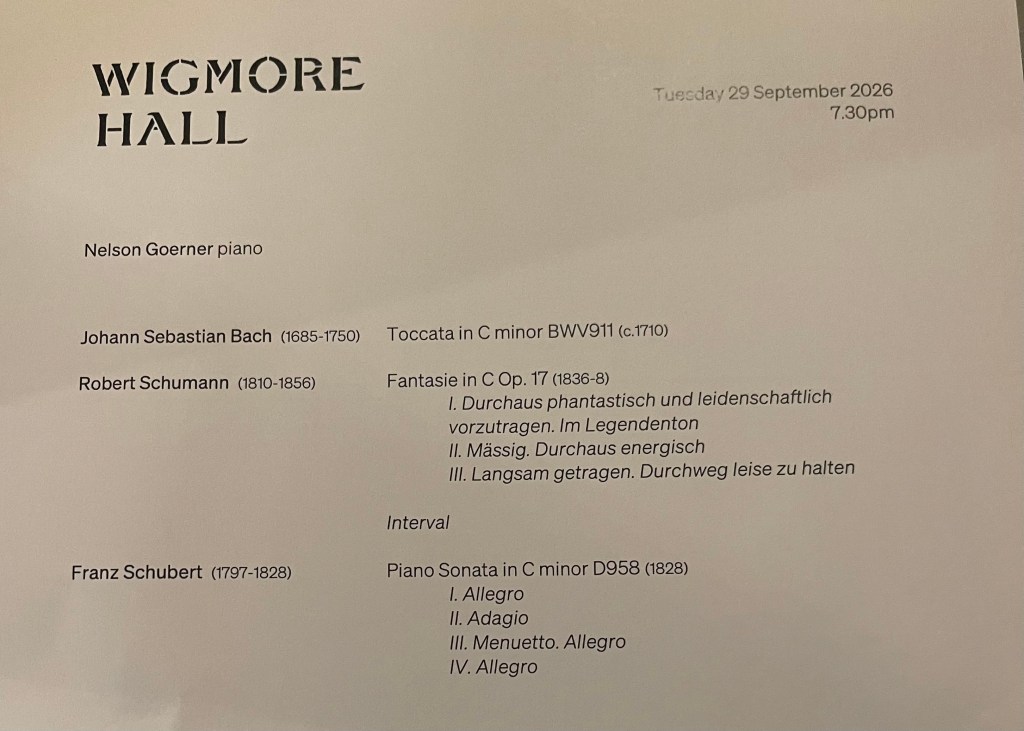
The Toccata in C minor was played with crystalline clarity and driving rhythms with the improvised opening given a shape and direction of great authority and an Adagio of disarming simplicity. The toccata bursting onto the scene with insistence and teasing importance with Nelson allowing the theme to be shadowed with an echo effect of hypnotic forward drive.
The Schumann Fantasie was played with authority with great lines of nobility and grandeur as this was a performance of Beethovenian solidity but just missed the sense of colour and imagination that Schumann describes in his preface by Schlegel.
‘Resounding through all the notes In the earth’s colourful dream There sounds a faint long-drawn note For the one who listens in secret’. Schumann had written to his betrothed Clara ‘The first movement may well be the most passionate I have ever composed – a deep lament for you‘ .He even quotes from Beethoven’s ‘An die ferne Geliebte’ in the coda of the first movement ( and at the end in the first edition ) ‘Accept then these songs beloved, which I sang for you alone.’The faint long drawn out note is the opening G in the bass that creates a wash of sounds on which Schumann can float his heartfelt message with passionate outpourings and whispered asides. Andras Schiff in this very hall had shown us a first movement bathed in pedal for this reason ). Nelson played with an extraordinary sense of balance and aristocratic musicianship but just missed moments to cherish that were to come later with his exquisite playing of a simple Chopin Nocturne also in C ( sharp minor ). Masterly playing from a musician who leaves nothing to chance but plays with quite extraodinary mastery. Even the final note of the Adagio that interrupts the romantic effusions ,in the first movement, that so often is missing at the end of the phrase was timed to perfection and played with whispered sounds but missing a sense of glowing fluidity. Masterly playing of the ‘Im Legendenton’ played with contrast between passionate Beethovenian intensity and whispered floating waves of sound.And the whispered ending played with enviable control but lacking the sense of improvised discovery.
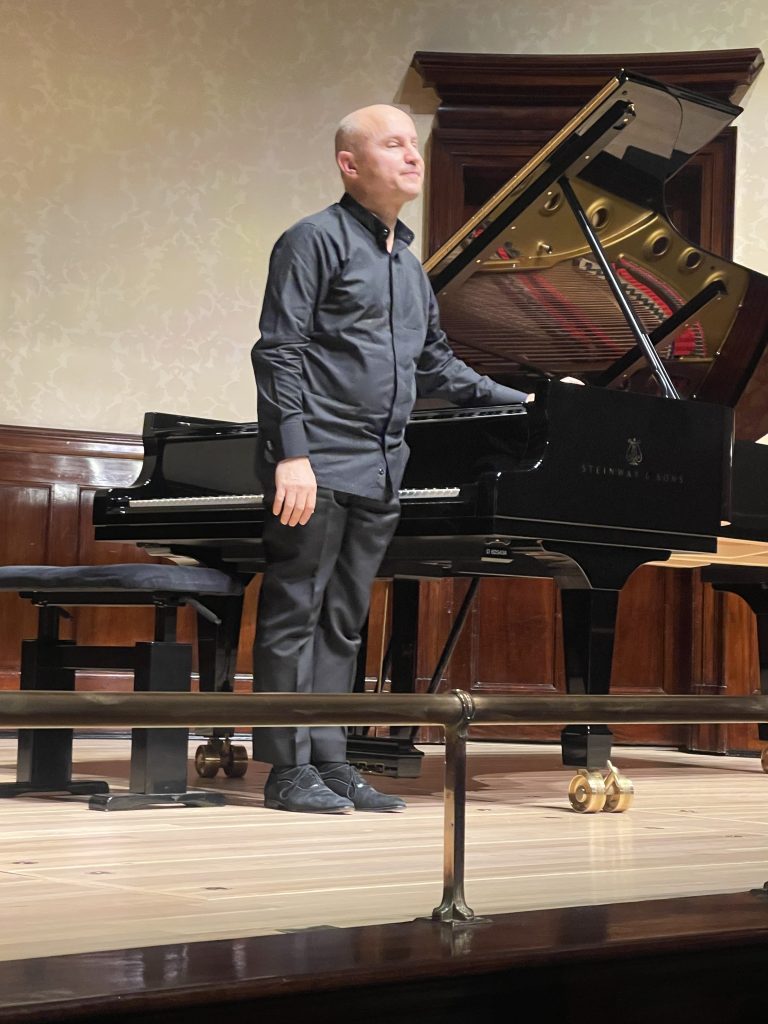
Masterly playing of the second movement with a coda where Nelson relied on the left hand as an anchor to the treacherous leaps that he played with extraordinary accuracy and mastery. A long silence between this movement and the last just allowed us to savour the wonderful change of colours and character as Nelson allowed the music to unwind with poetic beauty but always with an architectural sense of line.
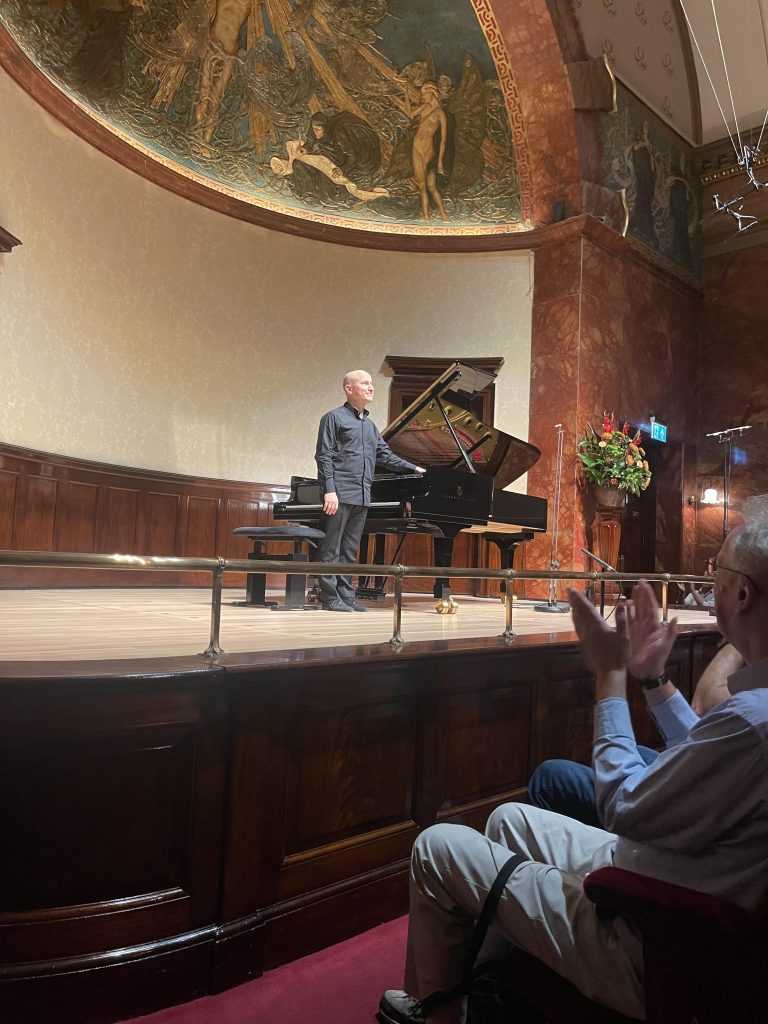
This was a masterly performance of aristocratic musicianship and extraordinary technical refinement but for me missed a sense of magic to cherish. There was enormous admiration for a master, but I felt excluded from this magical world and that I was an observer of a magnificent monument but from the window of a passing train where the atmosphere and the air could not be savoured to the full.
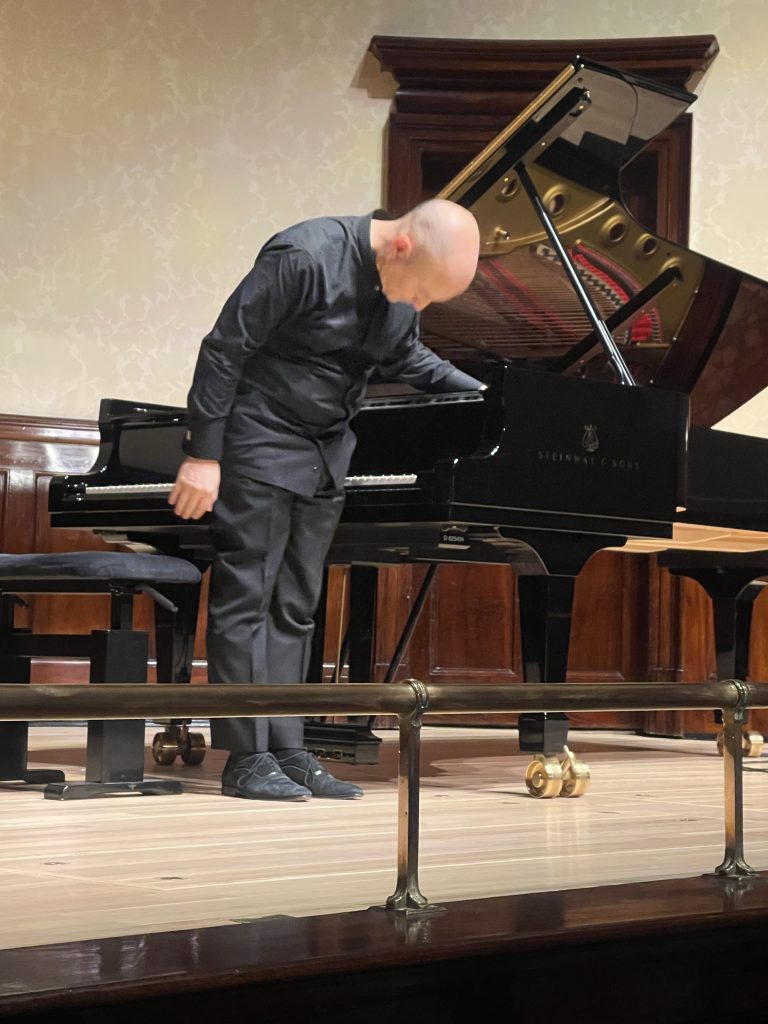
Schubert in C minor is of course Beethoven’s key and this is the most Beethovenian of all Schubert’s sonatas . Opening with burning authority and vehemence followed by an agitated cauldron of sounds with moments of magical mellifluous outpourings that Nelson played with beauty and radiance. His use of the sustaining pedal was masterly and his finger legato exemplary but the magical gossamer sounds like in Schumann were missing for me . Here though was a master, playing with burning conviction and even the mellifluous outpourings were imbued with a sense of urgency and dynamic drive.The development in particular showed an absolute mastery of balance as the ghostly chromatic scales created the atmosphere of fear and trepidation before bursting again into the open. The ‘Adagio’ was played with simple beauty where Nelson allowed the melodic line to unfold with simplicity building to dramatic outbursts with the heart rending return of the theme embellished with beguiling innocence. A ‘Menuetto’ that was played with Beethovenian charm with a Trio played with orchestral colouring. The ‘Allegro’ just burst from his fingers with a menacing buoyancy and irresistible drive. What fun he had with the question and answer of the central episode before the miraculous apparition of one of Schubert’s unexpected magical outpourings a true glimpse of the paradise that was awaiting too soon . A monumental performance from a master musician where the spirit of Beethoven was joined by that of Schubert in a marriage made in heaven.
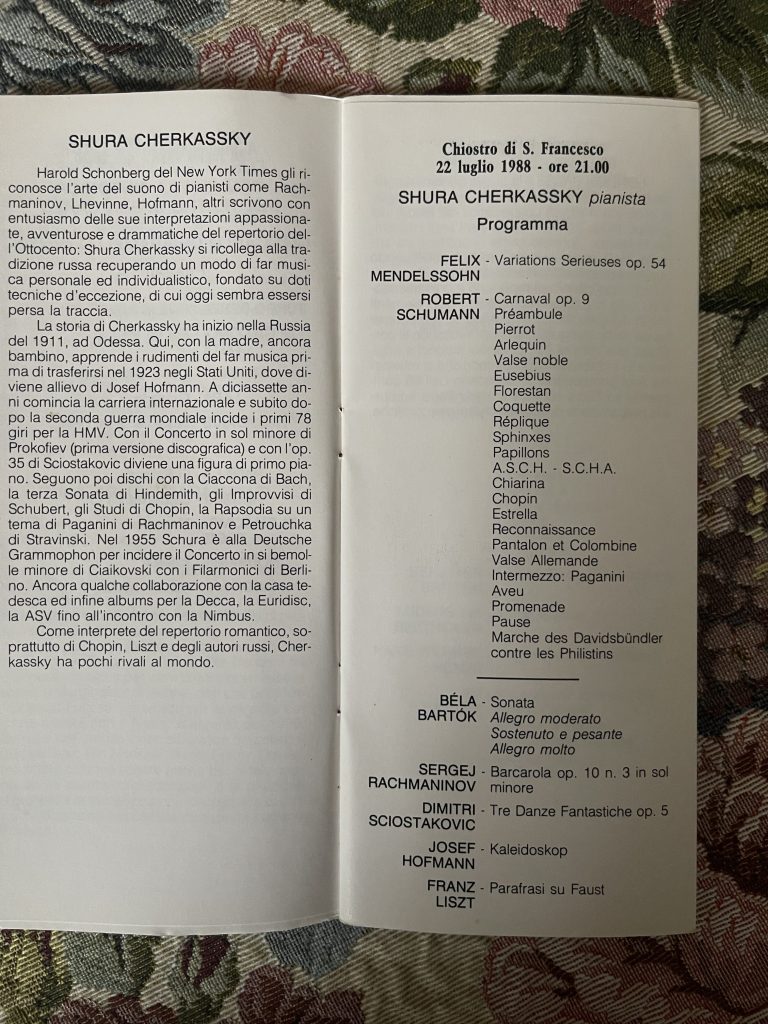
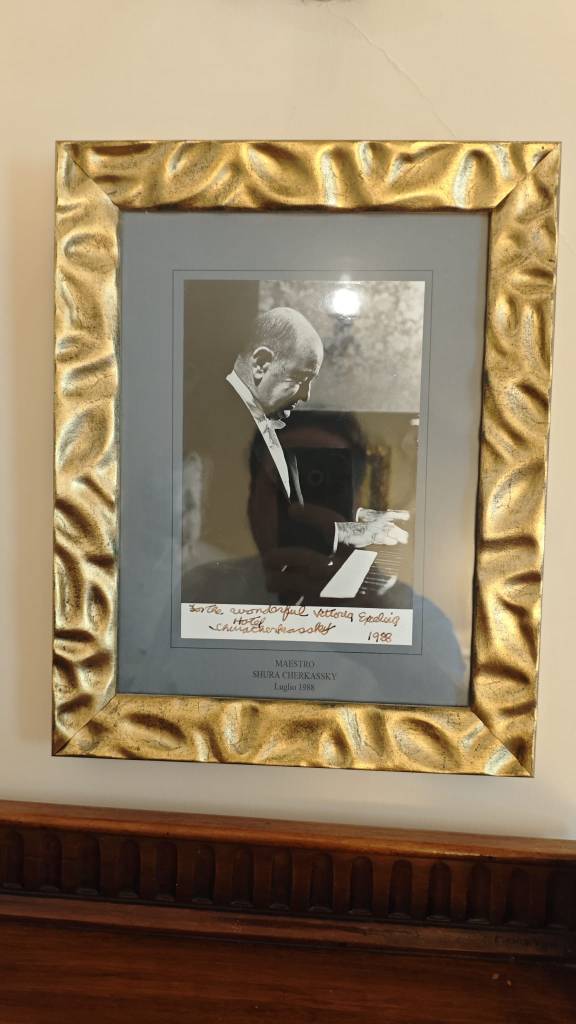
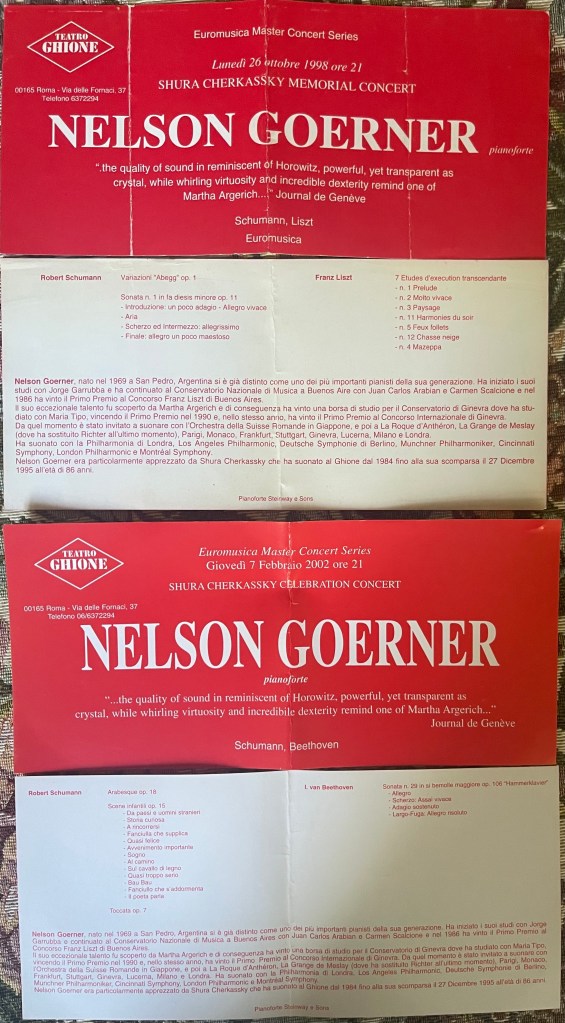
We were now ready to be seduced and ravished as Nelson after many calls back to the stage decided to share a moment of ‘Godliness’ with us. A performance of the C sharp minor Chopin Nocturne that I have only heard similar in this very hall by his look alike Shura Cherkassky. The clouds had passed and the heavens opened as we caught a glimpse of the paradise that has alluded us up until now.
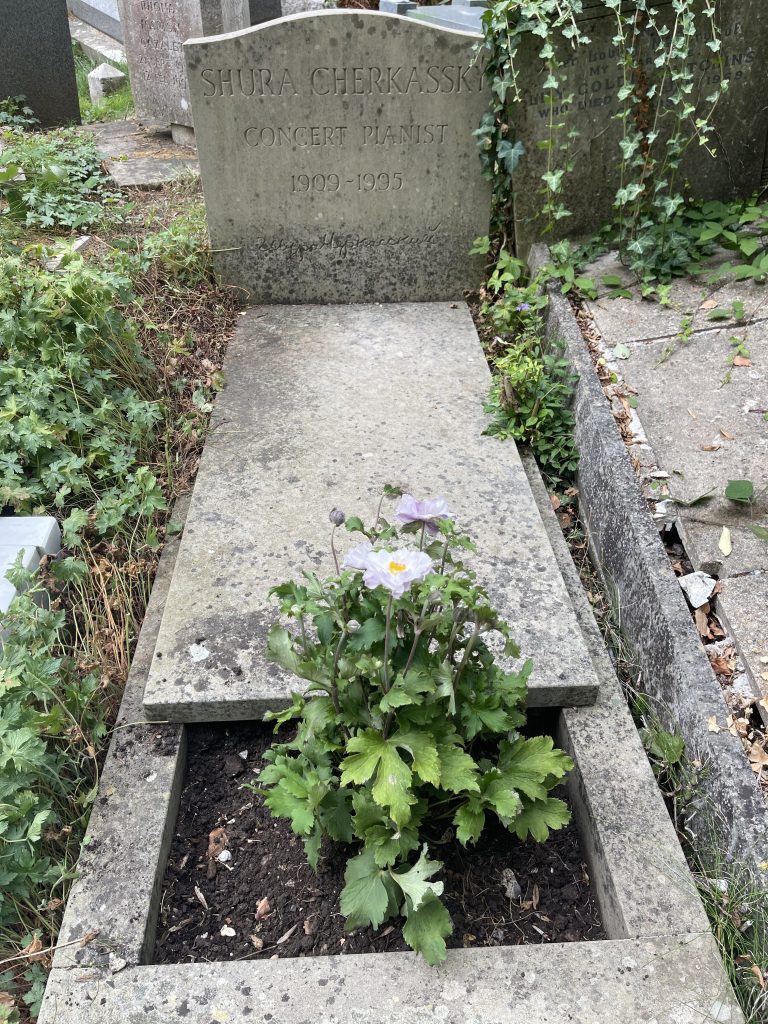
Shura was a great admirer of the young Goerner and they shared the same agent,Christa Phelps, who brought him to us in Rome in 1998 and 2002 when Shura was indeed in Paradise !
https://christopheraxworthymusiccommentary.com/2024/03/20/christopher-axworthy-dip-ram-aram/

