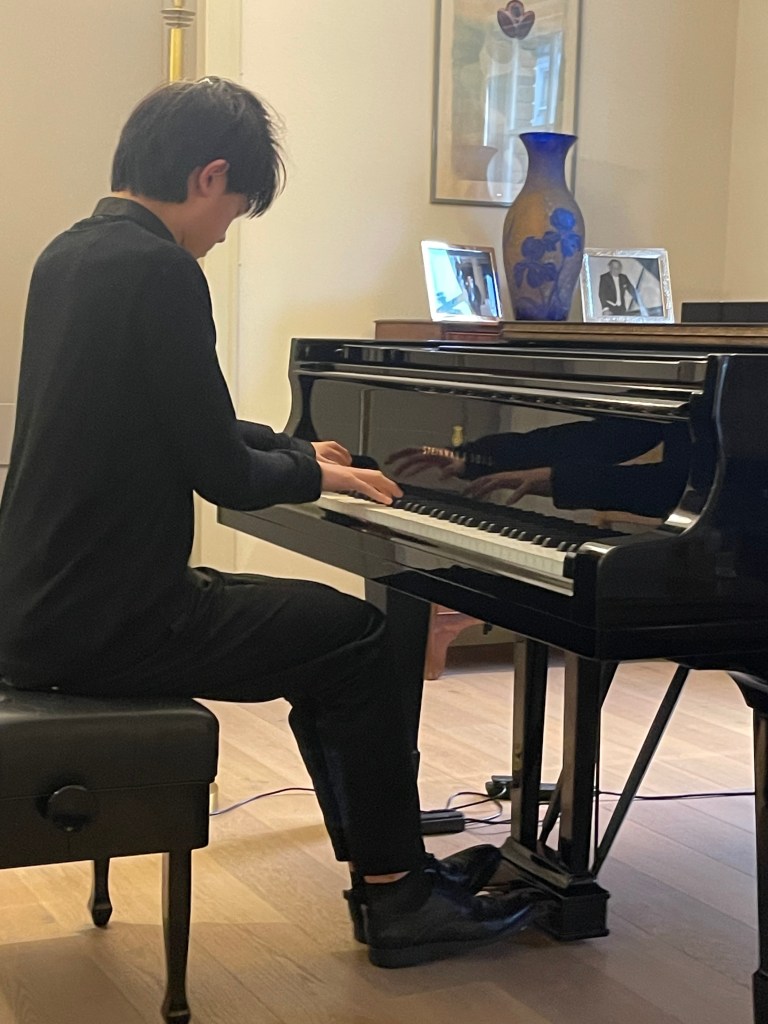
A private fundraising concert for the London International Chopin competition with just forty minutes of Chopin from the winner of the last edition. A young man from Chethams in Manchester studying with Benjamin Powell , a name new to me but judging from the artistry of this young man he must be a remarkable mentor.
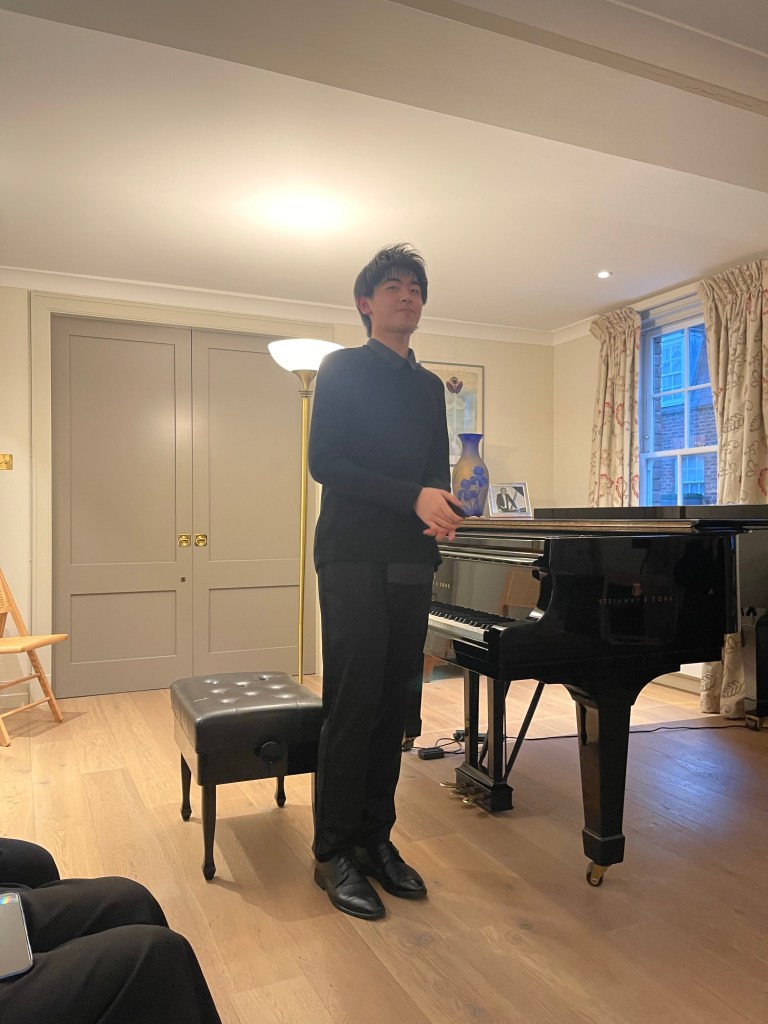
Julian Zhu is the 15 year old winner of the Grand Prize 2026.
One of Chopin’s last performances was in Manchester just a year before his untimely death at the age of thirty nine. Sir Charles Hallé wrote an effusive and exhaustive report of his performance which is one of the few objective accounts of Chopins playing from a fellow musician. His description of the ‘Aeolian Harp’ study op 25 n 1 epitomises the artistry of a unique musician who was the innovator of today’s pianistic technique and also a composer of quite extraordinary originality .
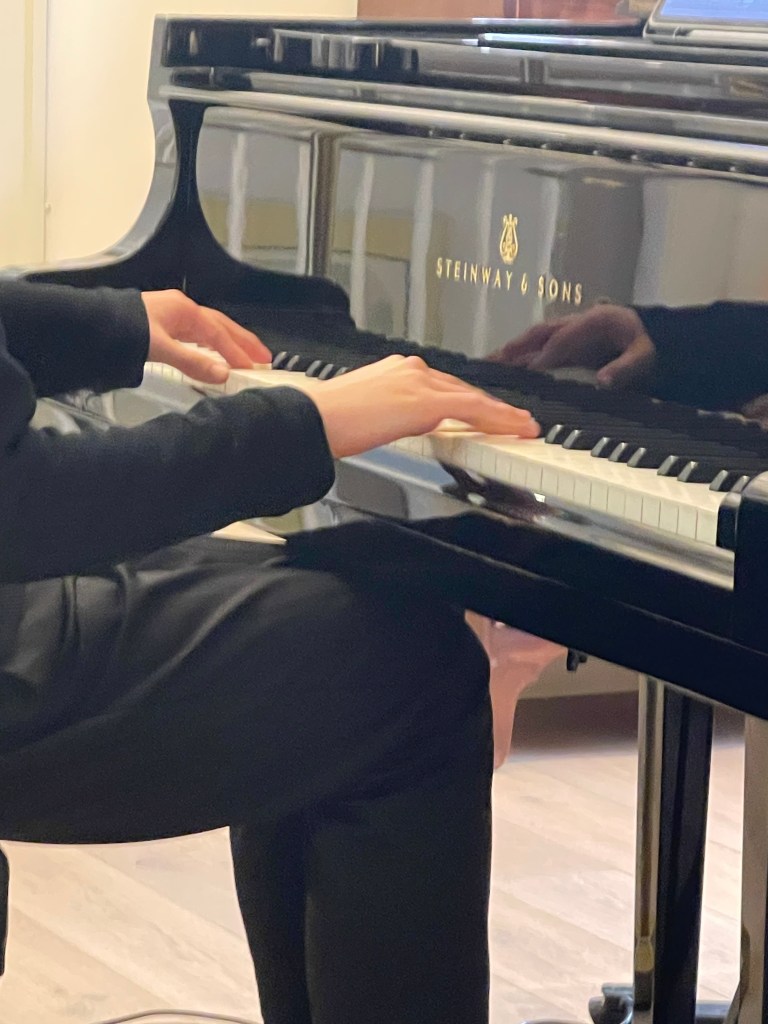
A technique that is like swimming in sounds with natural horizontal movements of which the anchor is like a tree planted in the ground with the branches free to move as freely as they can within a certain radius.
All this to say that this young man has found the same secret that allows Argerich and Rubinstein to continue into their Indian Summer just adding to their mastery a depth and authority together with an intimate knowledge of the scores that allows them to discover new secrets as they share a spontaneity with an audience on a voyage of discovery together.
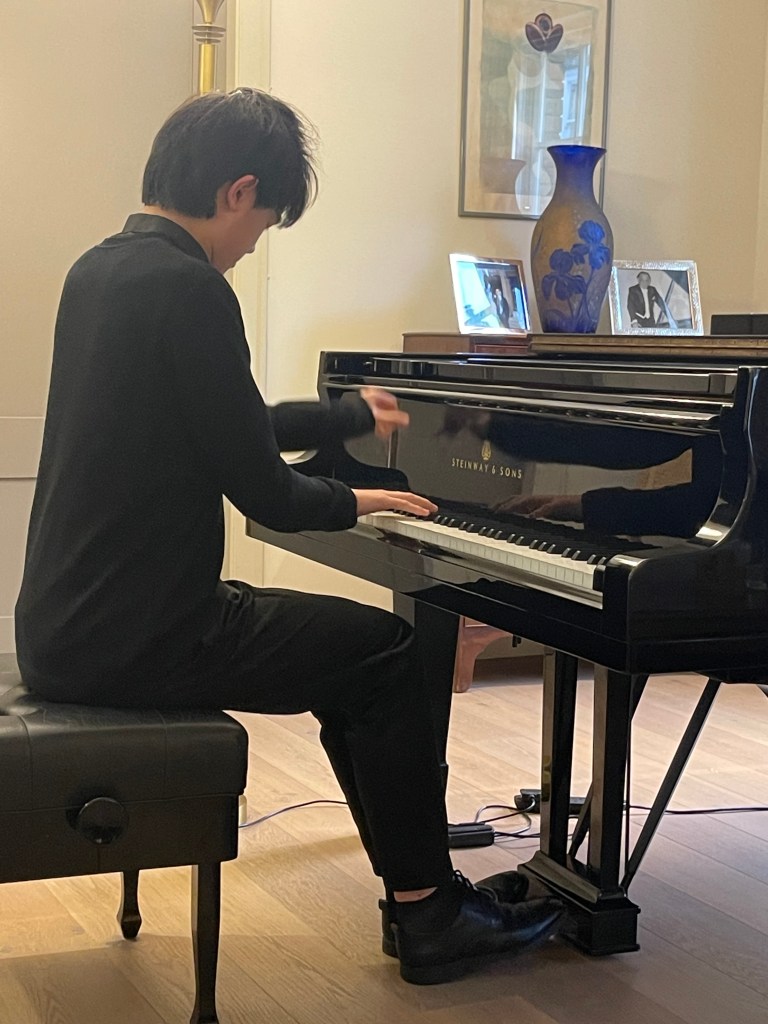
It is immediately apparent listening to this young man that his simple natural musicianship flows from fingers that are anchored in an arch of the hand with fingers often pointed or directed by an arm or wrist movement much like a painter before his canvas . Arcadi Volodos is in my opinion the perfect pianist because the sounds he makes are shaped by the beauty of the way he caresses the keys.
Chopin’s first published Polonaise in C sharp minor op 26 n 1 opened this showcase recital and it was immediately apparent that here was a young man with a very big natural talent. Everything I had noticed at the competition was on display, the only difference was that he could find even more sumptuous colours on this very fine Steinway piano. Playing in this intimate salon which is similar to where the teenage Chopin himself would have astonished his audiences, eliciting from Schumann :’ Hats off ,a Genius’.
It was the totally committed ‘Allegro appassionato’ opening that was immediately arresting, playing of chiselled beauty with fingers sculpting the sounds with pointillist precision and beauty. He brought a rare sensitivity to the ‘meno mosso’ where he could have been even more generous with the beautiful tenor exhortations. But this was a young man who plays with authority and was able to lead us to places of poetic intensity with a simplicity and total commitment of remarkable maturity for a young man barely fifteen years of age. Playing of great temperament with a masterly use of the pedal which did not take away from the crystalline clarity of his playing but just added more colours to his palette of sounds.
Four Mazurkas of op 17 revealed a natural feeling for the Polish idioms as he opened with the ‘vivo e risoluto’ of the first in B flat that he played with fervent passion and crystalline clarity with note picking of masterly relish.The beautiful central episode was played like the drone of a bagpipe with subdued etherial freedom. The E minor, a mellifluous outpouring of masterly flexibility contrasting with the A flat meanderings of extraordinary nostalgia and insinuating rubato with a teasing jeux perlé just thrown off with masterly nonchalance. What aristocratic beauty he brought to the A minor , final Mazurka, as Chopin’s bel canto was allowed to sing with refined beauty. Embellishments that were a magic web of sounds with touches of golden strands adorning this most poignant of Chopin’s early Mazurkas. Schumann described the Mazurkas as ‘canons covered in flowers’ but there were no canons here except for the deep yearning within the notes which this young man could portray with poetic intensity and simplicity.
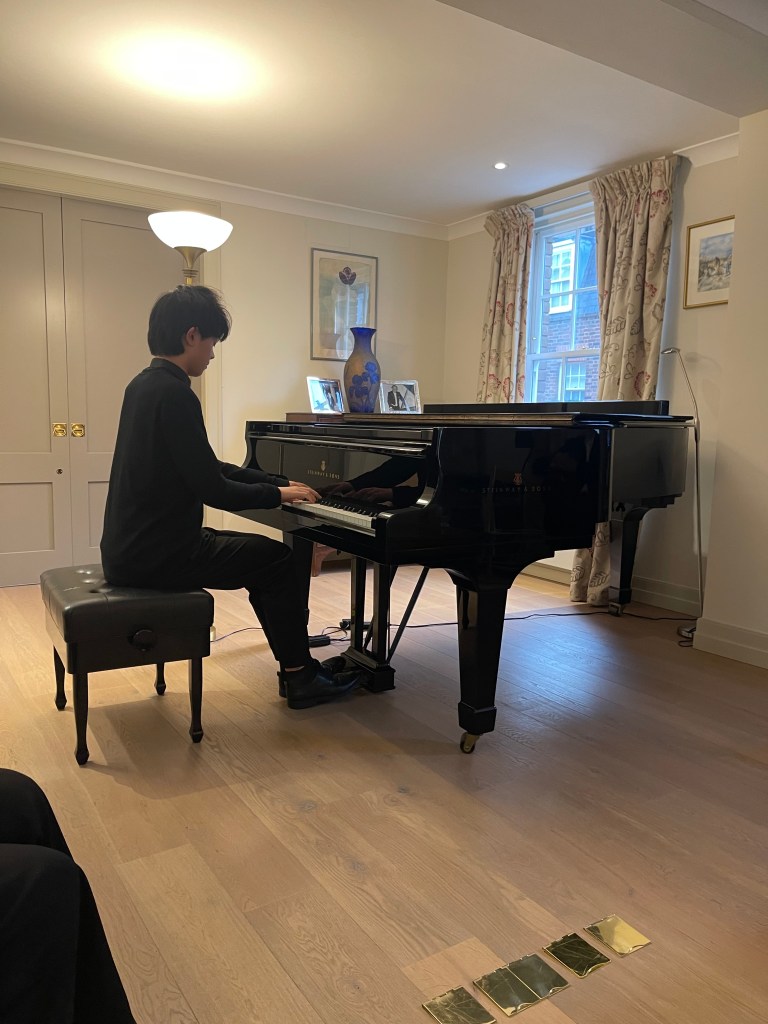
The final work was the one that had won this young man the top award at the Chopin competition with a masterly performance of the ‘Andante spianato and Grande Polonaise Brillante op 22.’ I wonder why he began the accompaniment with two hands because it continued with one with masterly control as the fingers in the right hand played with extraordinary chiselled beauty. Fingers that were noticeably independent brush strokes with a technique that I have only ever noticed so apparently from Alexander Romanovsky. A way of pointing to jewels hidden within the keys with a sensitivity but allowing glowing luminosity that was quite extraordinary. The Polonaise was played with masterly command with a technical perfection that was part of the music and never used to his own advantage. Chordal playing, though, that he played more vertically and that held up the natural flow of his wonderful horizontal vision of the music. His playing is like washes of paint on a canvas with one natural masterly stroke from a pianist who is a musician who listens to himself with poetic intensity.
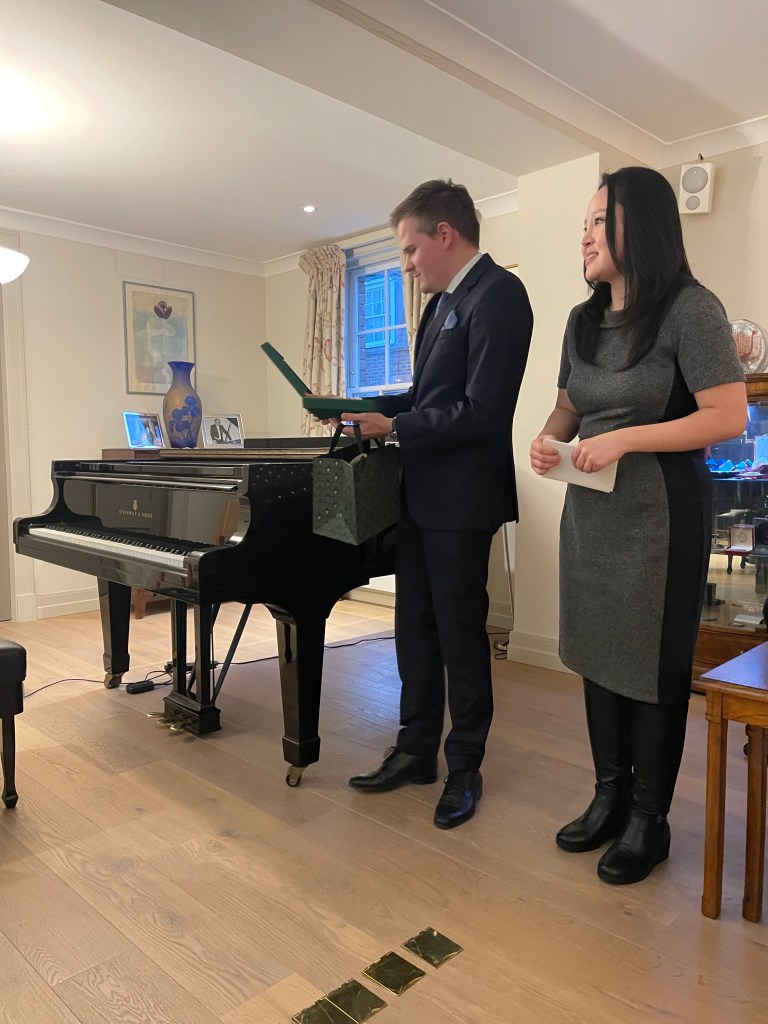
What a discovery similar to when I too discovered Artur Haftman when he first came as a teenager to begin his studies with Alexeev at the Royal College . A lunchtime recital in St James’s Piccadilly that will go down in history for the record number of encores that the public insisted on lasting until it was almost time for tea. Hats off to him and Jenny Lee for providing a platform for the next generation of musicians who have, like him, been blessed by the Gods.
This is what I wrote earlier this year when he ran away with the LICC:
‘Category C , the winner was Julian Zhu , a revelation, as this young English born Chinese student at Chethams, revealed a natural talent that cannot be taught. Breaking all the rules, but creating his own as he had the gift of listening to himself and creating music with quite considerable artistry. The Andante Spianato immediately revealed a wonderful arch to his left hand as flat fingers chiselled out Chopin’s youthful bel canto with the freedom that Chopin himself described to his pupils of a tree firmly planted in the ground but with the branches free to move naturally above. A Grande Polonaise that was truly ‘Grand’. Note picking accuracy is not for him, as he needed to communicate what he found within the notes, the external details which were pretty good, will be easy to perfect as he matures and his playing gains in weight.’