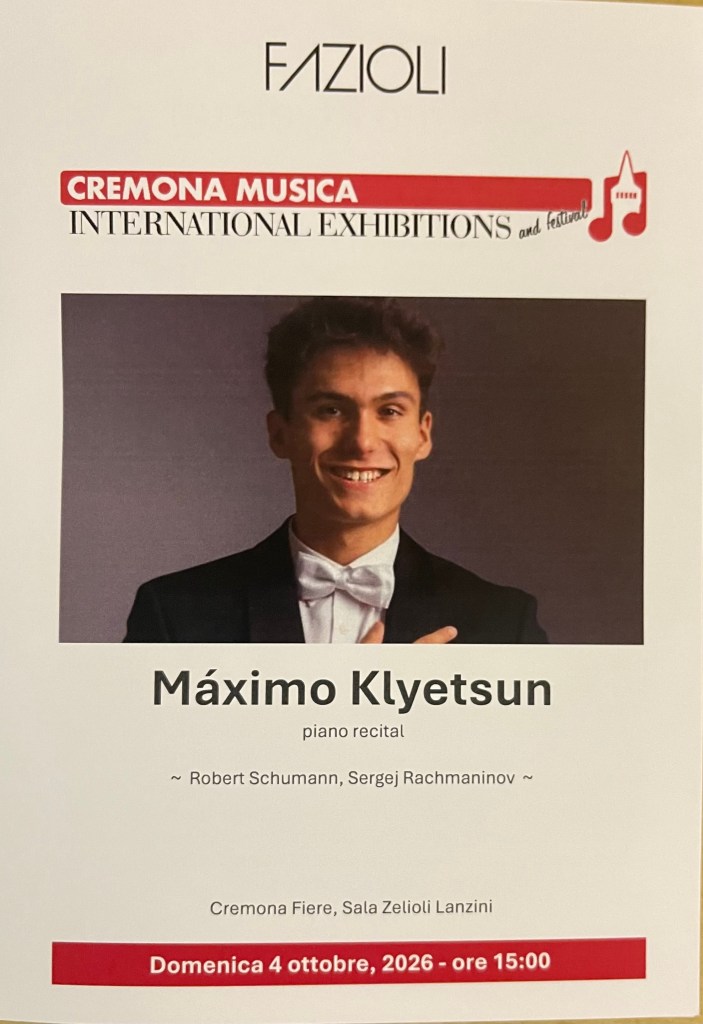
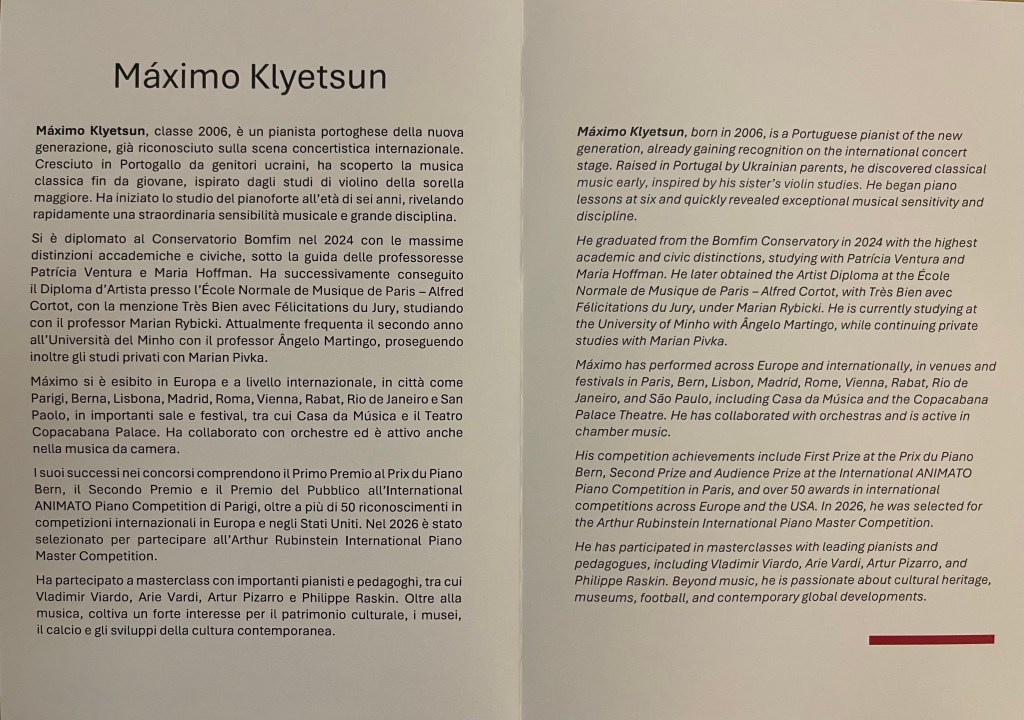
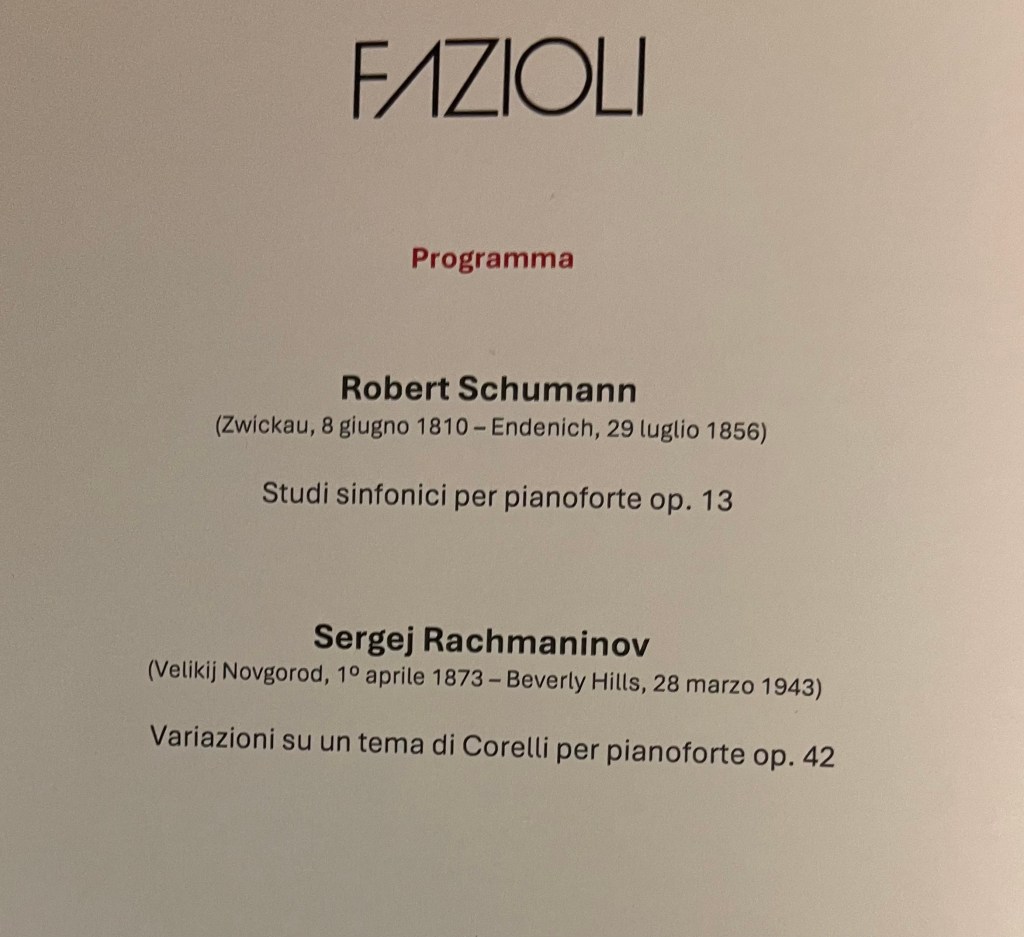
And now a final concert before having to leave for the airport. Fazioli presenting a young Portuguese pianist of Ukrainian descent much lauded recently by Martha Argerich : Máximo Klyetsun. Two sets of variations by Schumann and Rachmaninov. When I suggested to Máximo that he make some cuts because we all had to catch the afternoon bus to our various airports. I may leave out some repeats but I would never cut the posthumous studies as they are the most beautiful of them all. I even suggested that I should cough during the Rachmaninov Corelli Variations, as the composer famously said that when someone coughed in the audience he would leave out one or two variations and had never been able to play all twenty together!
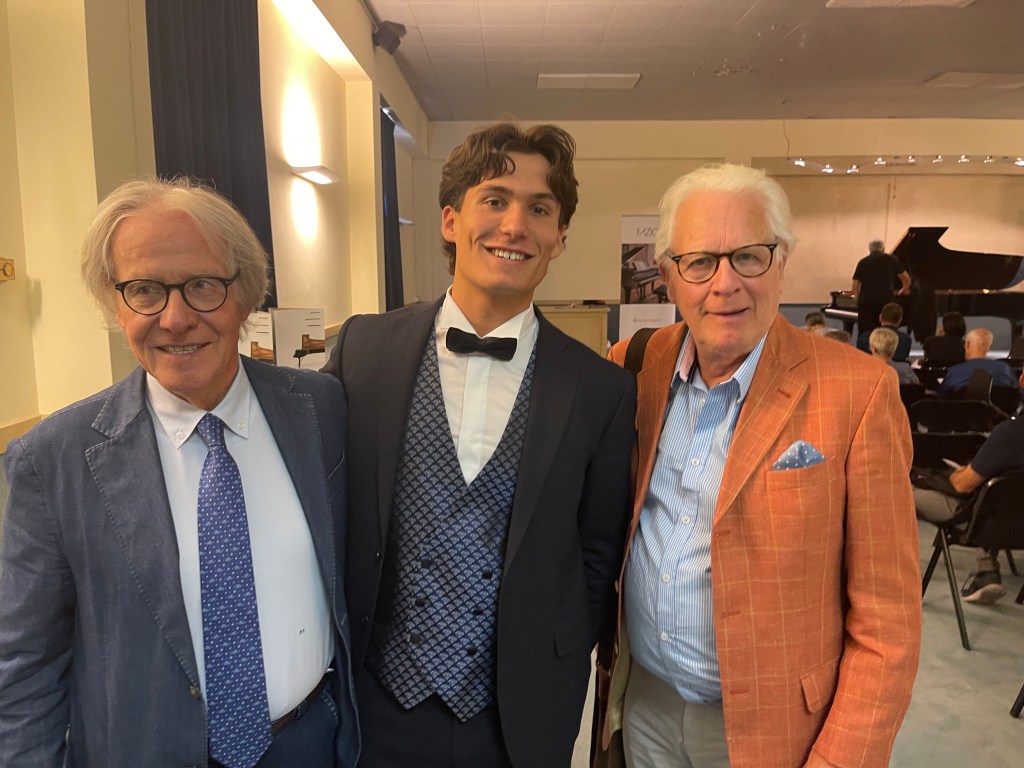
Well this young pianist who recently was praised in the International Competition in Vigo by Martha Argerich proceeded to show us in sound why he would not cut the Schumann Variations. Five posthumous variations that were added after Schumann’s death and are sometimes inserted separately in-between the published variations or in this case all five played after the third (Butterfly ) variation. After his playing of exquisite delicacy and beauty Jeremy Nicholas turned to me and said that this was the most beautiful playing he had heard in Cremona. It was a performance of such strength and delicacy with a technical control and mastery that seemed to known difficulties. But it was the musical shape and sense of colour that was of a mature artist and not of a young man of barely twenty. The opening theme played with aristocratic control with an extraordinary palette of sounds. The first variation played with a whispered rhythmic drive of demonic insinuation on which he floated the legato theme , allowing the staccato and legato to move inexorably forward to the passionate outpouring of the second variation. A sense of balance where the duet between the outer voices was accompanied by pulsating, harmonically vibrating sounds . The so called ‘Butterfly’ study was played with fleeting lightness with the tenor melody of voluptuous refined elegance. The five posthumous studies that followed were played with a poetic fantasy and radiant beauty. A rare sense of imagination that allowed these afterthoughts to reach into realms with golden strands of sounds arriving deep into the soul. The swirling magical sounds of the first .The disarming simplicity of the second that is transformed into a nightmarish moment of anxiety.The majestic third contrasting with the poignant simplicity and glistening beauty of the fourth. But it was the fifth where the heavens truly opened as Máximo played with a chiselled beauty of purity and disarming simplicity.The magic spell broken by the strident chords of the third variation played with impish good humour and remarkable control of sound as the chords took flight with featherlight ease. A passionate intensity and sense of melodic line to the outpouring of the fifth only to be interrupted by the driving movement to the sixth. The seventh that Agosti likened to a Gothic Cathedral for its noble structure, was played with an architectural shape of knowing musicianship. An extraordinary technical mastery in the Mendelssohnian flight of notes in the ninth study with playing of fearless ease and masterly control. Imposing brilliance to the eighth variation was interrupted by the beauty of the ninth of a Chopin like bel canto. It was played with a sense of balance that allowed the melodic line to be revealed floating on a wave of vibrating harmonies. The Finale bursting onto the scene with dynamic drive and pulsating brilliance.Exhilaration and excitement added to moments of glistening beauty as Máximo moved inexorably to the final bars that he played with passionate authority and masterly control.
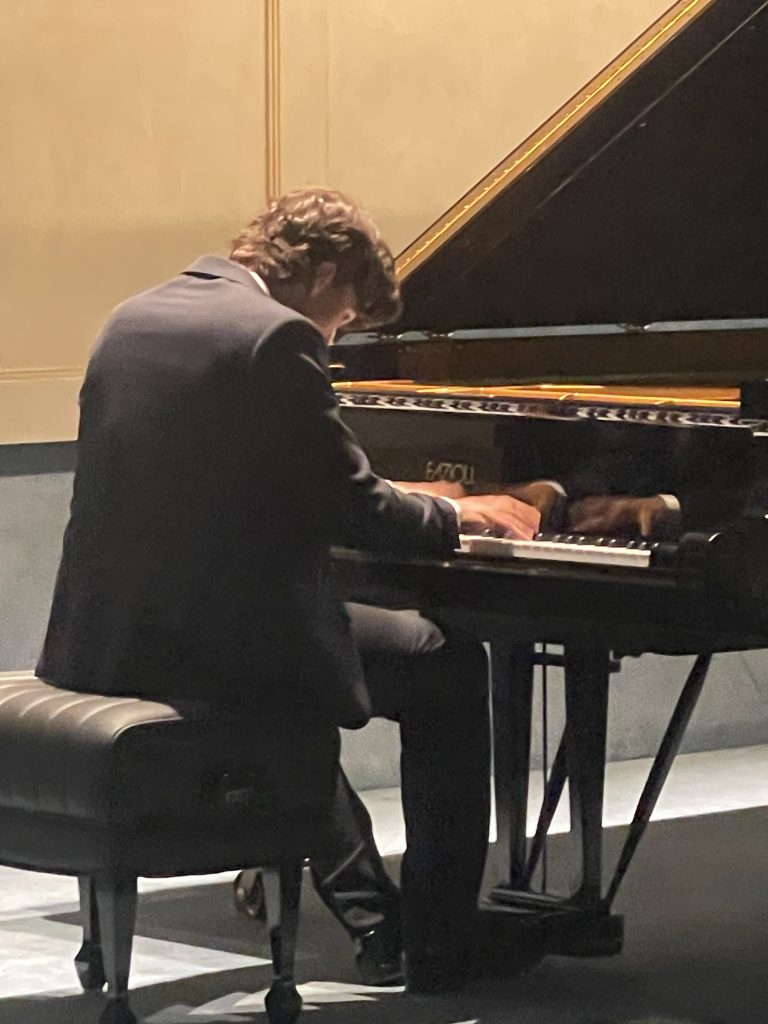
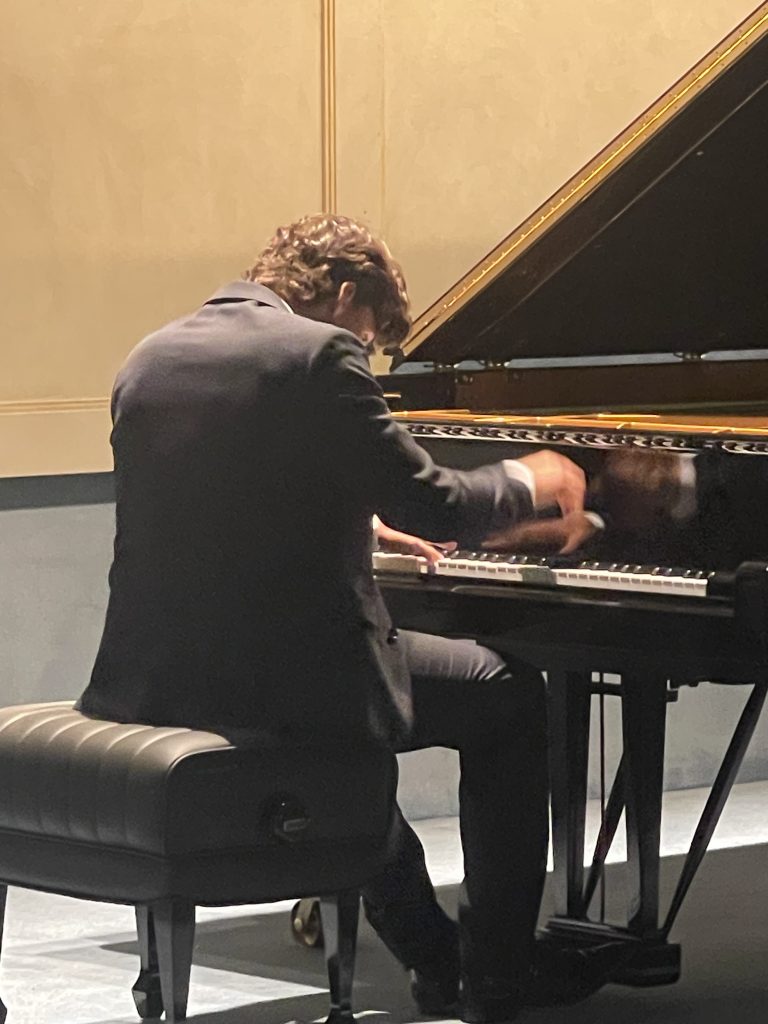
I was just able to hear the Rachmaninov Corelli Variations before running to catch my awaiting chariot to fly me back to reality. A glowing beauty to the theme of ‘La Folia’ ,that Rachmaninov attributed to Corelli, was the basis of variations for his and many other composers. A work where Máximo’s palette of colour and technical mastery combined in a performance that he managed to shape into an extraordinary architectural whole. Perhaps on occasion taking liberties, that he certainly did not allow himself in Schumann, but that still allowed him to convey the architectural shape with a continual forward movement of variations of subtle beauty, technical intricacy and passionate immediacy. But it was the final appearance of the theme after a tumultuous climax that Máximo played with the same disarming simplicity that Bach was to bequeath to us with his Goldberg Variations which are the shining genial example for us all.
As I ran for the door I could hear the thunder and lightening of the encore of Liszt’s Sixth Hungarian Rhapsody. Playing of mastery and power allied to a beguiling style of teasing brilliance. It was this Liszt that obviously brought such glowing praise from the Queen of Pianists, Martha Argerich.

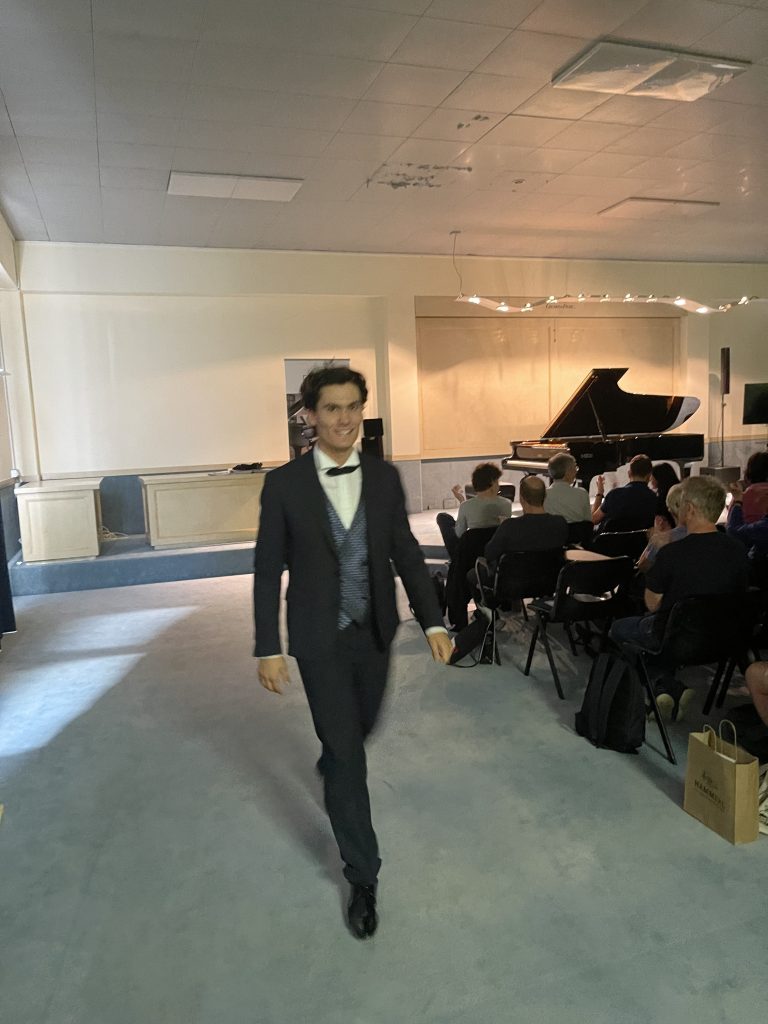
Máximo too now running to the airport in his concert suit and patent shoes – not the usual garb for the customers of Ryan Air !
https://christopheraxworthymusiccommentary.com/2023/12/05/ileana-and-joan-3rd-december-2023/

