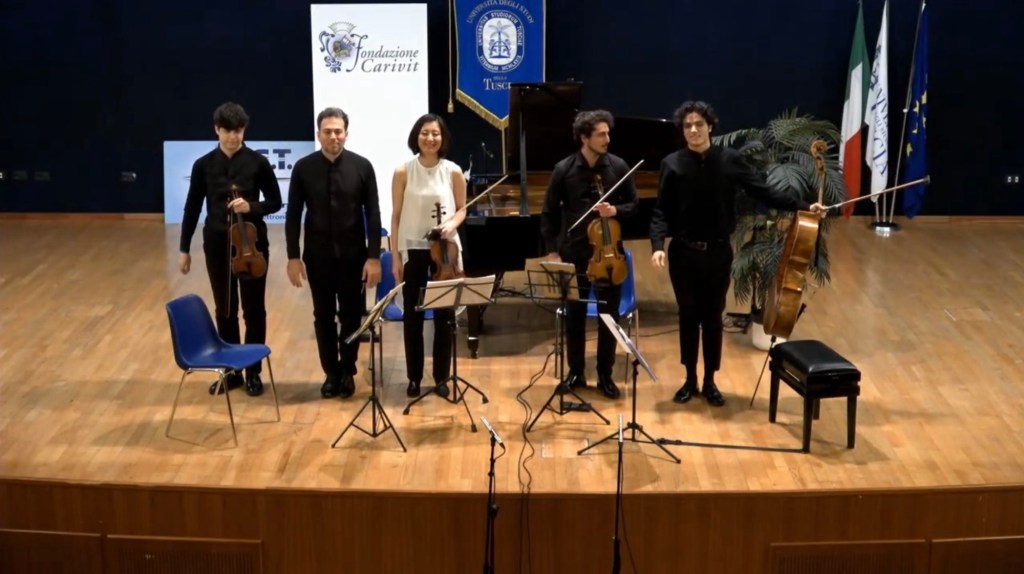
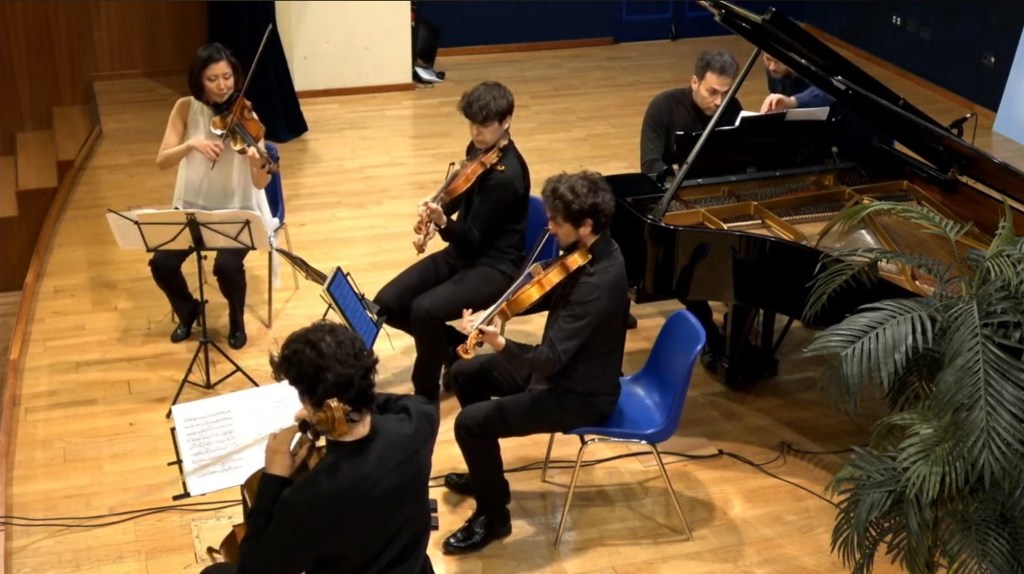
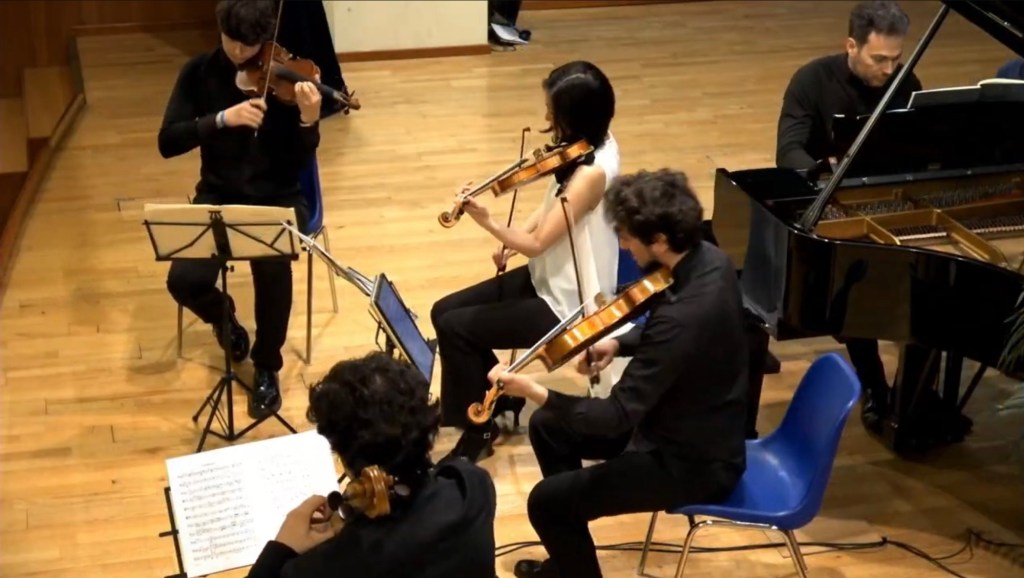
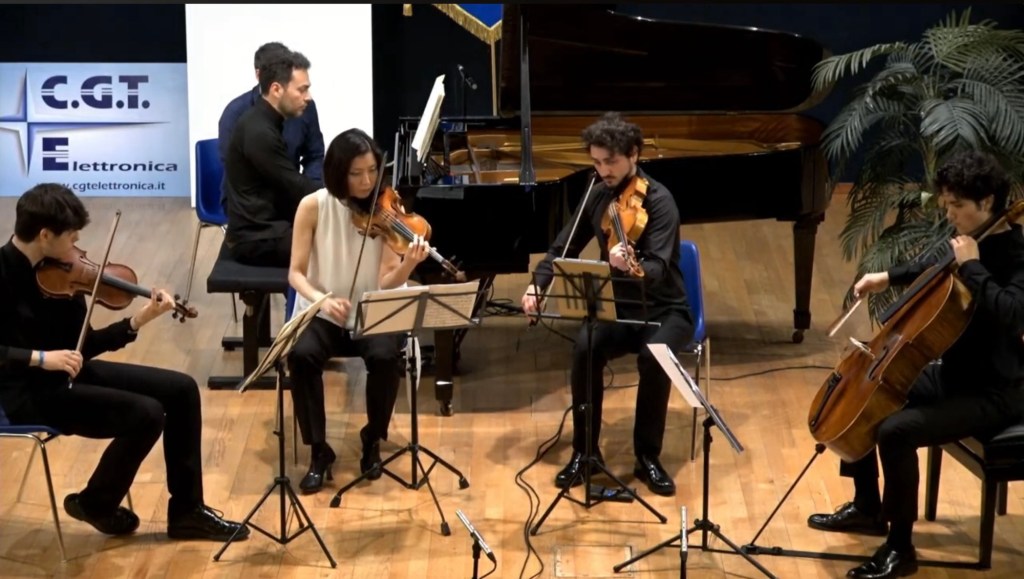
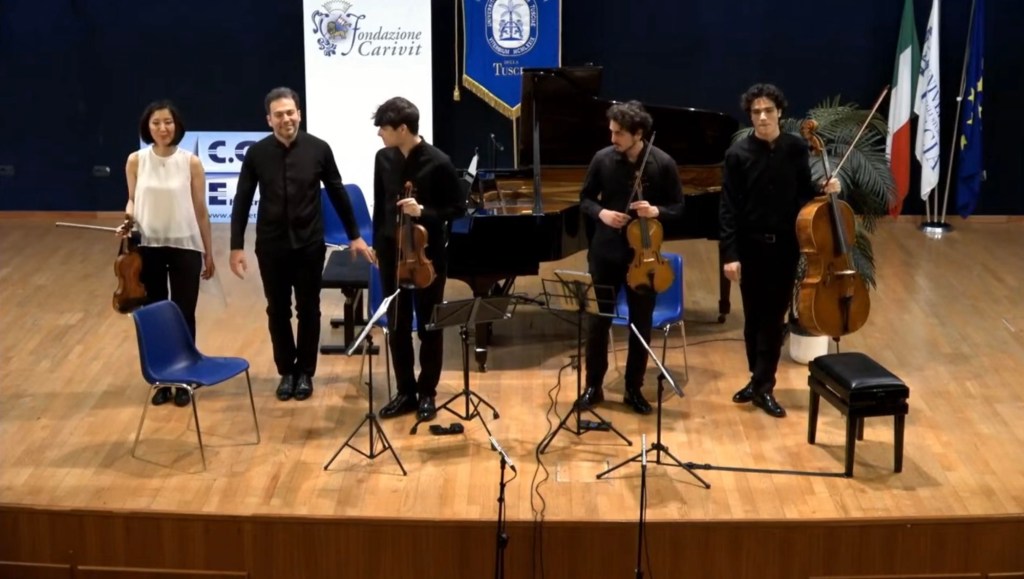
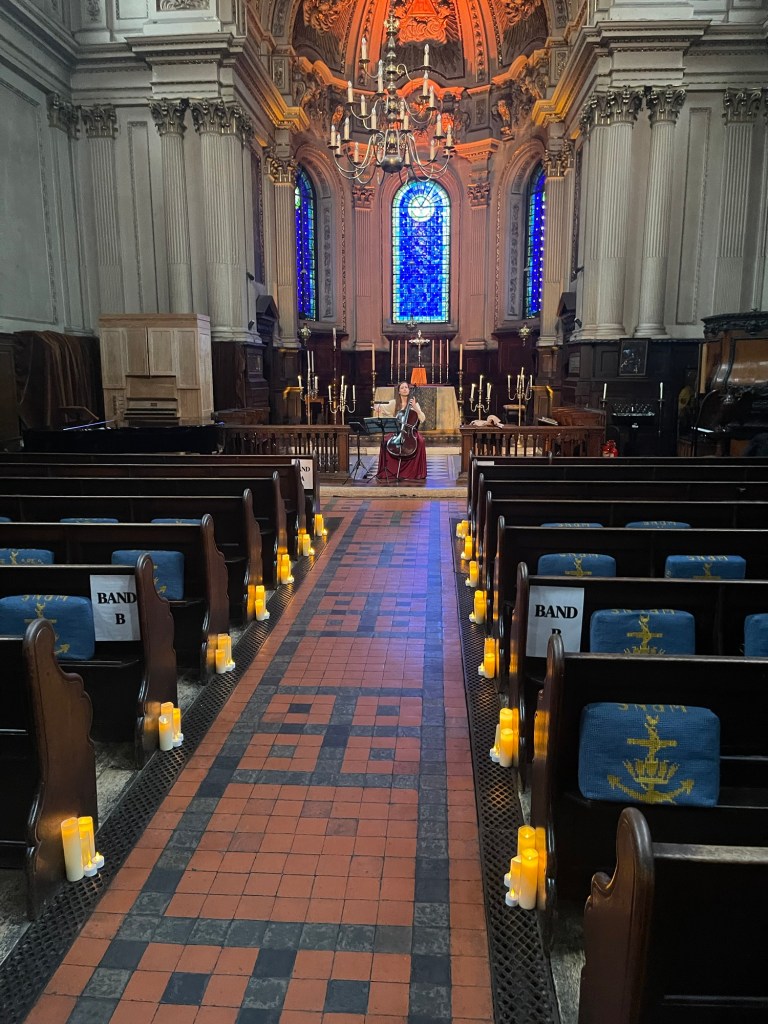
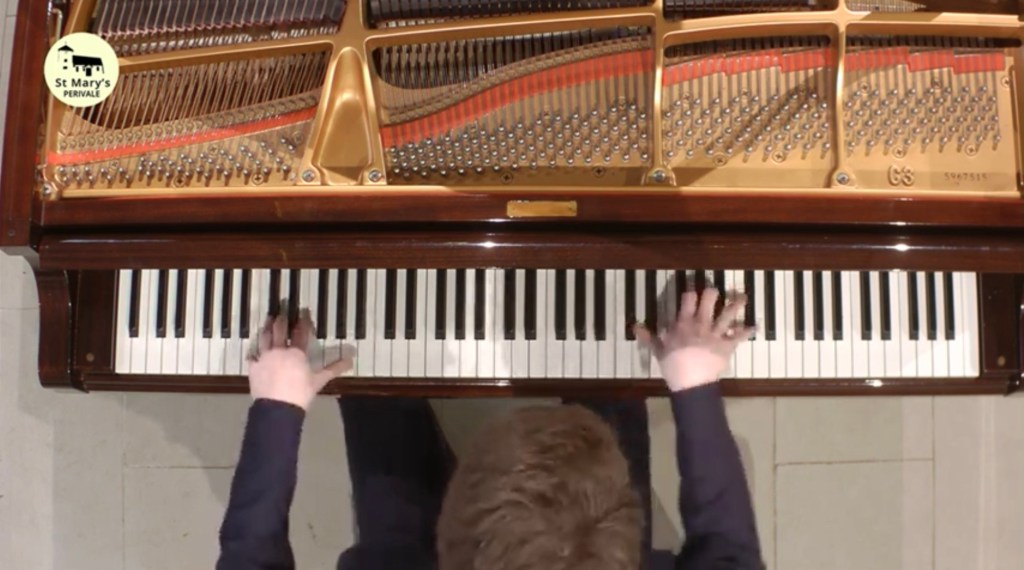
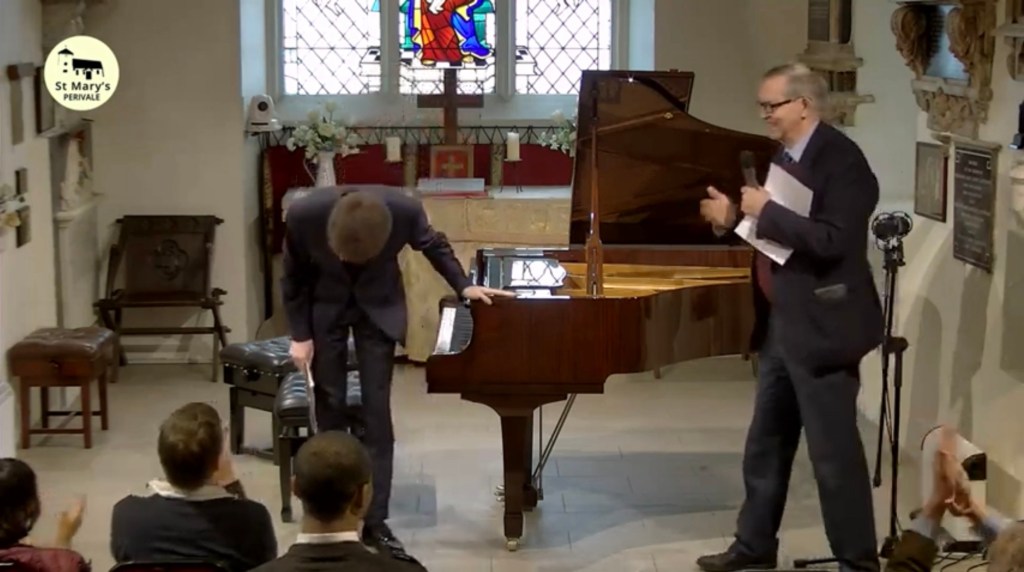
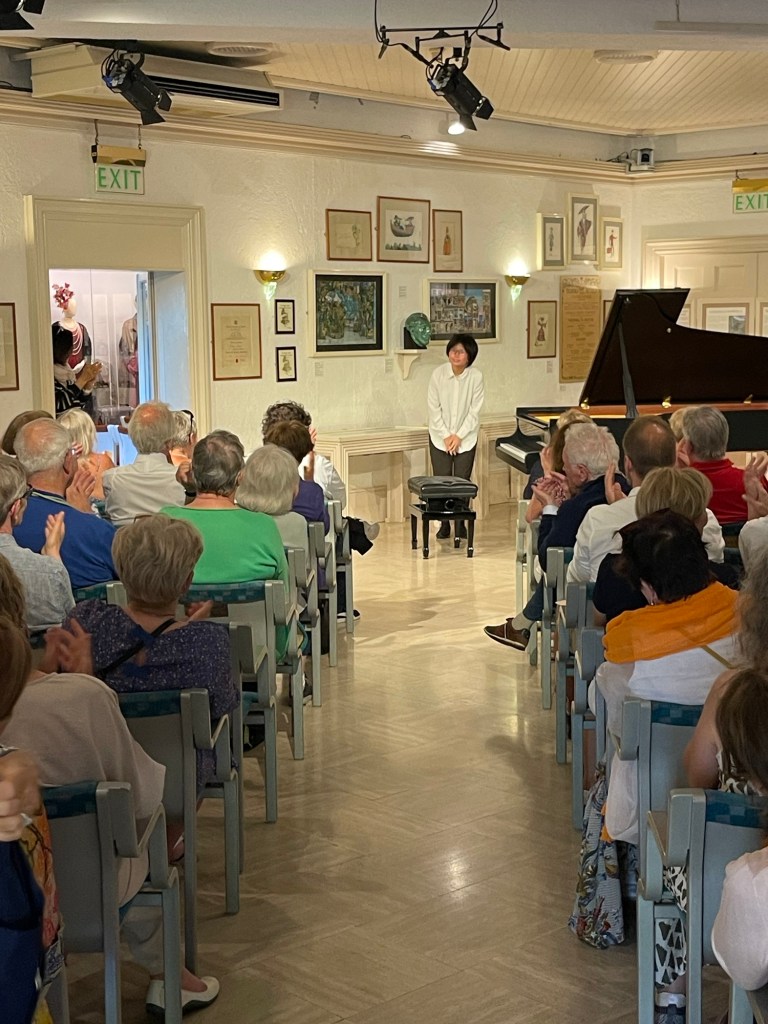
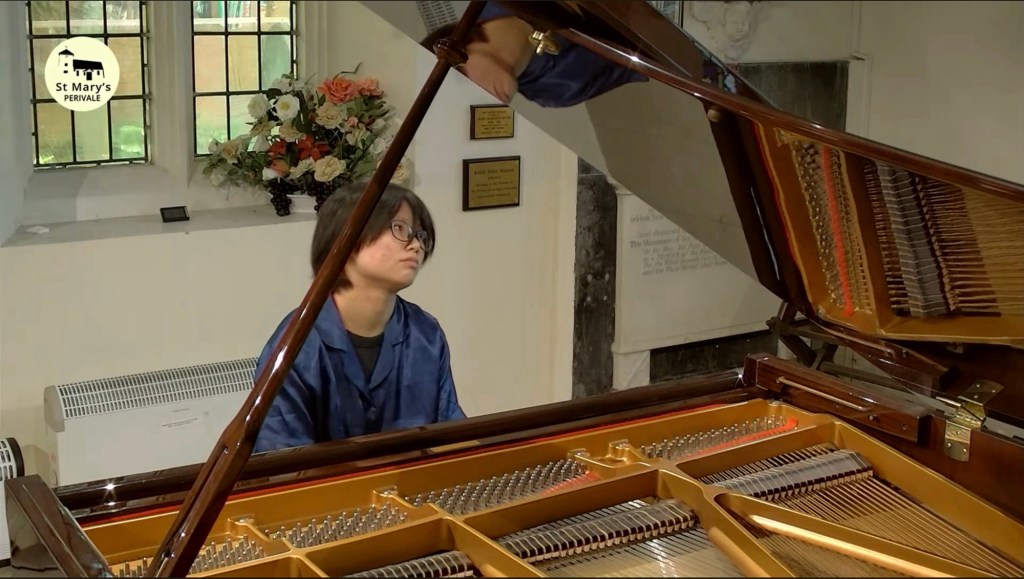
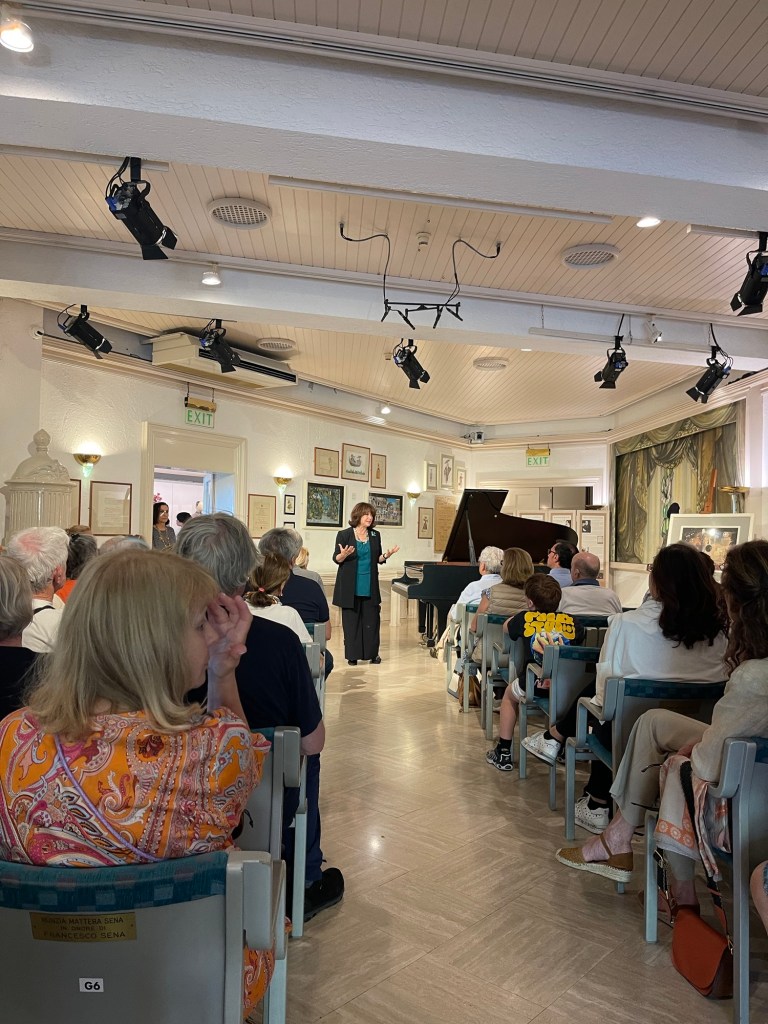
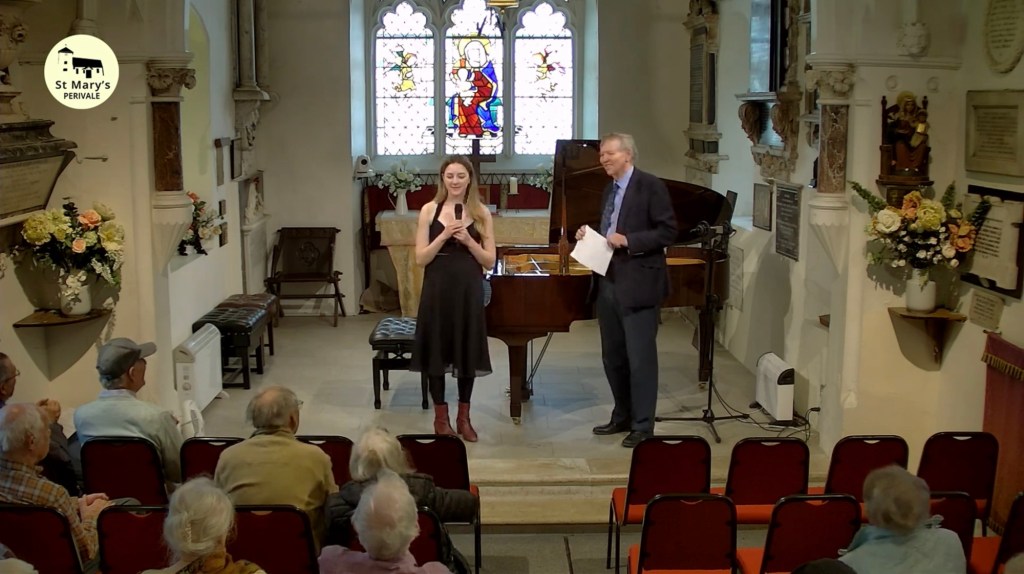
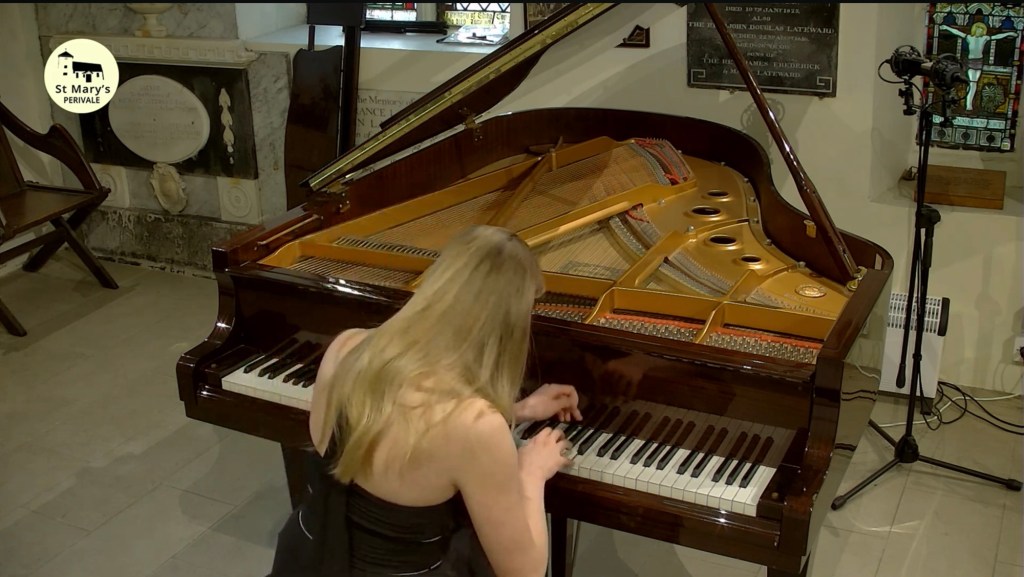
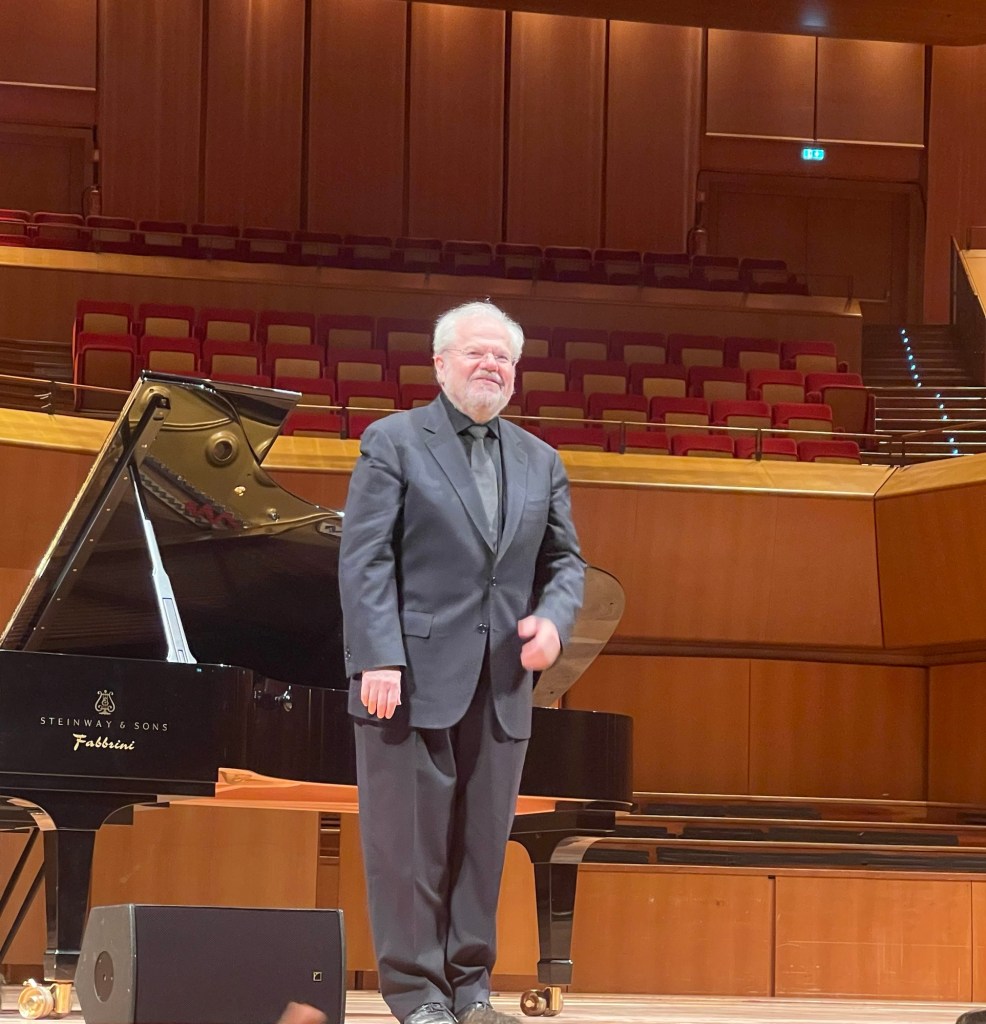
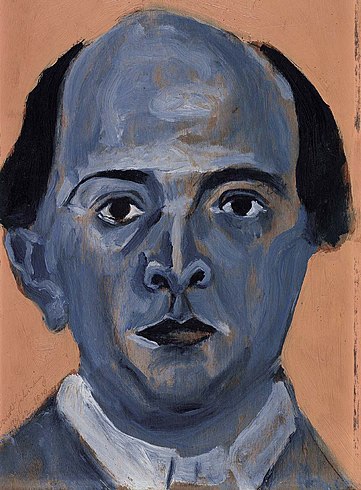
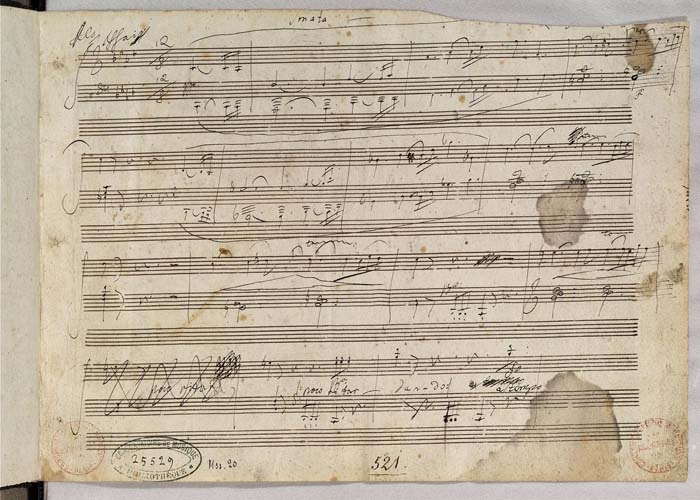
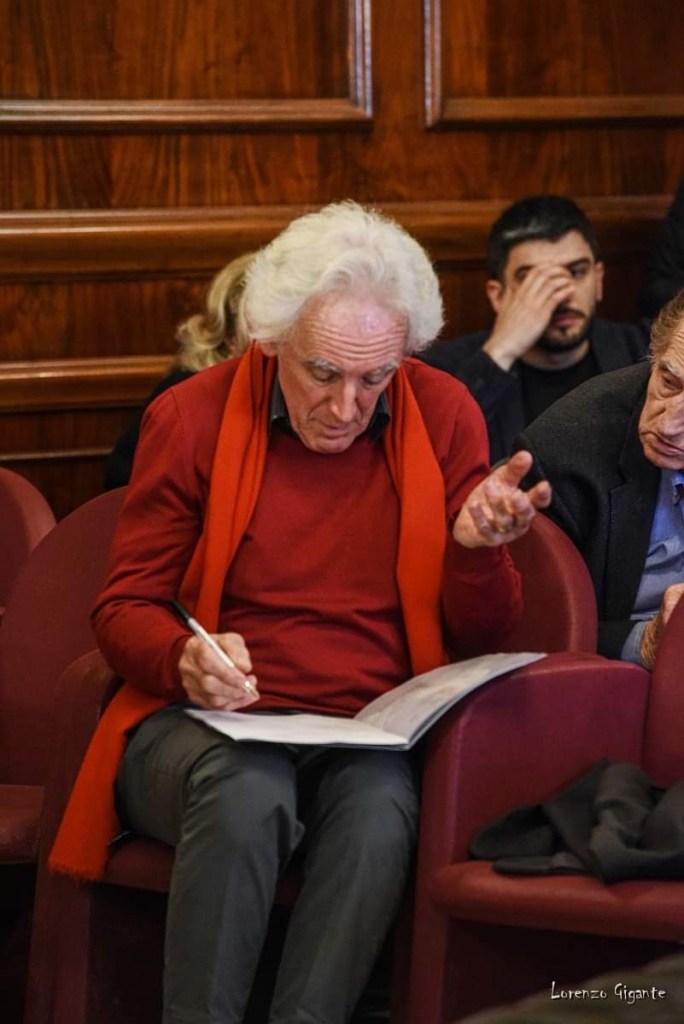
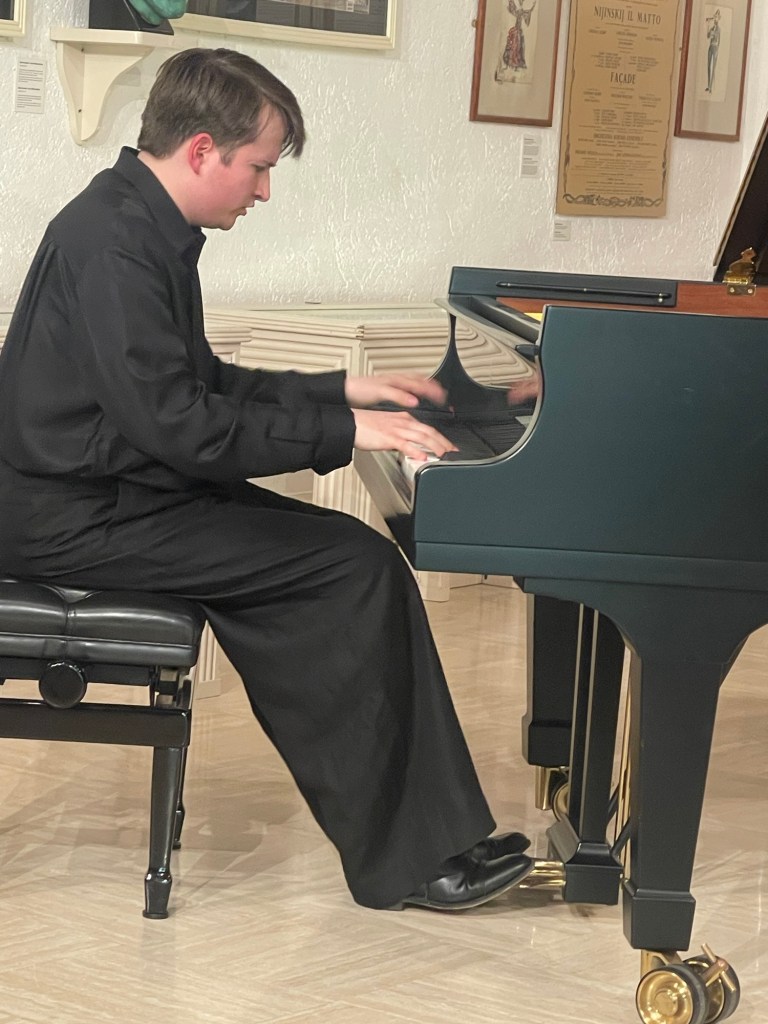
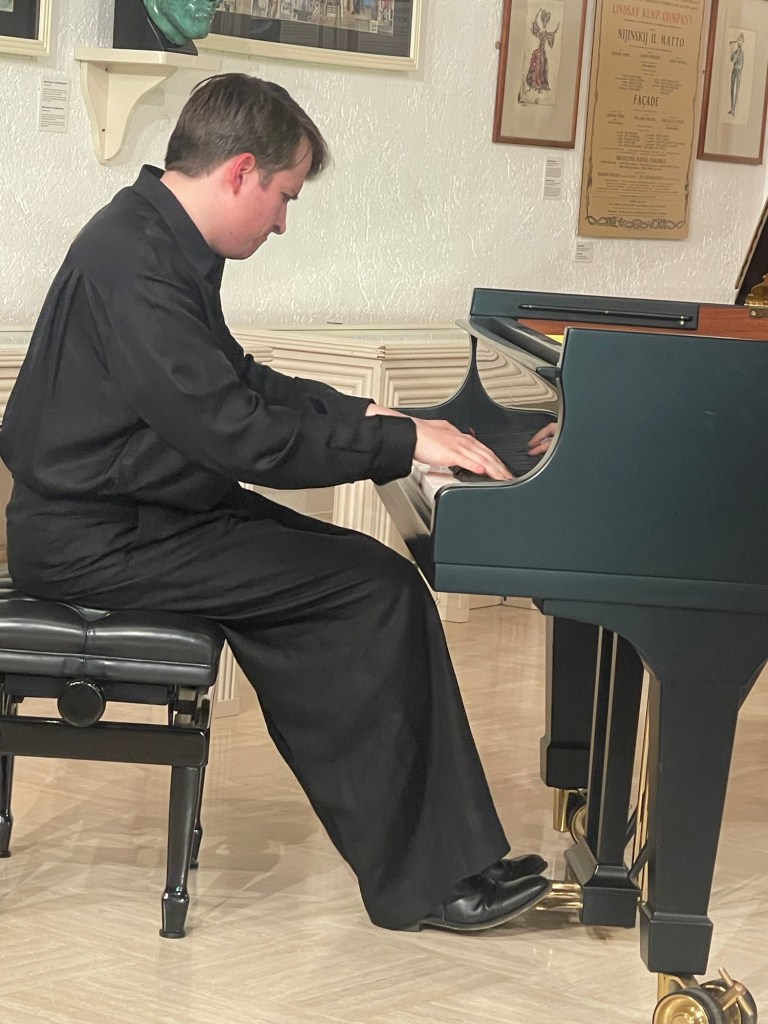
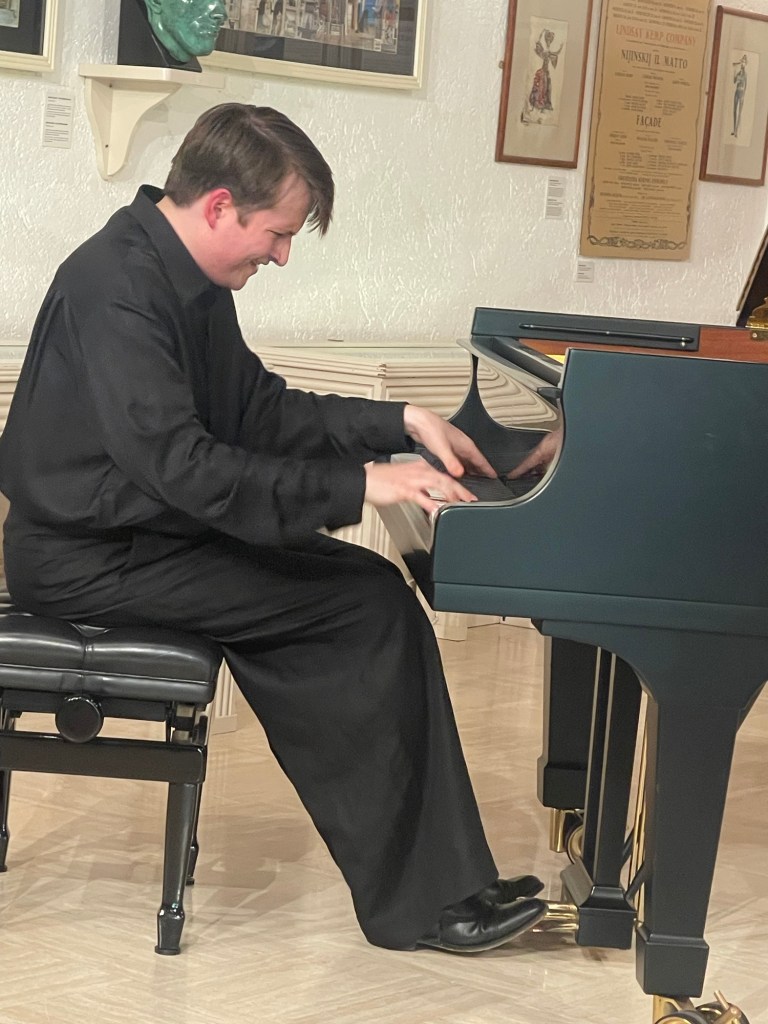
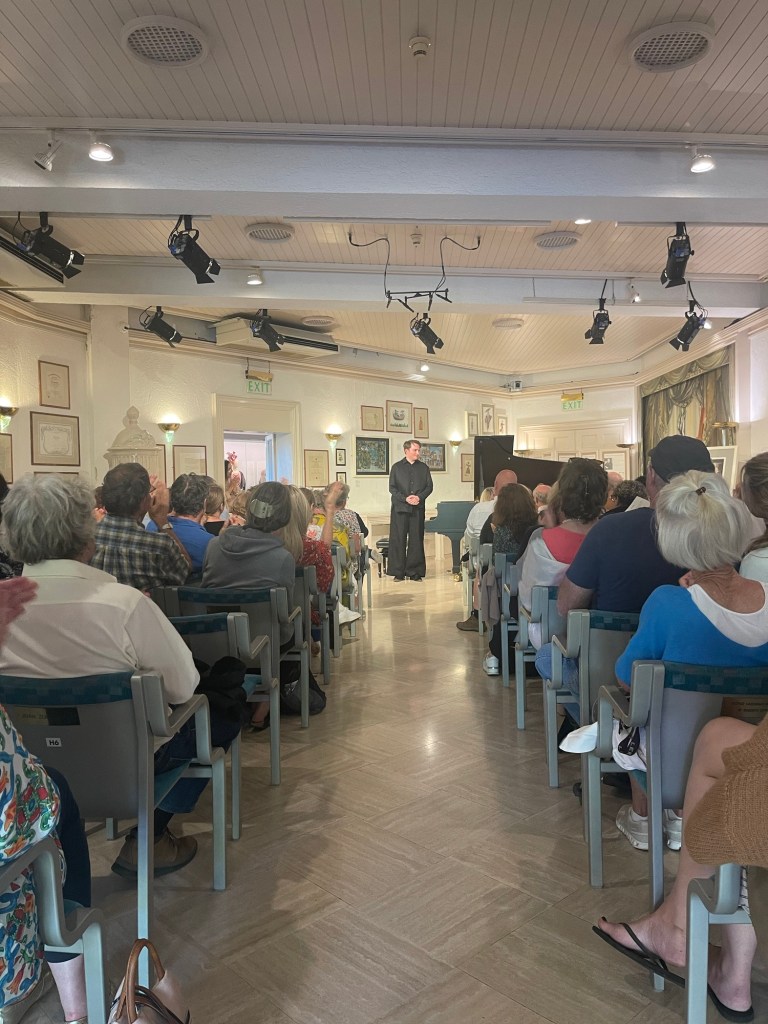
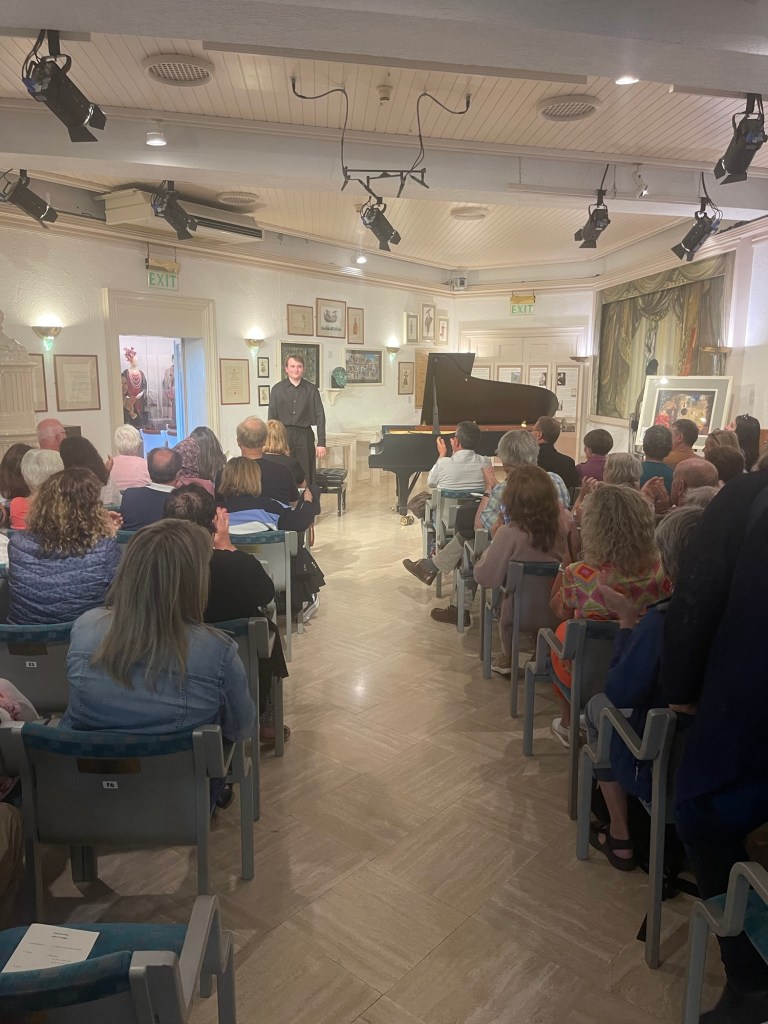
A quintet of players of refined good taste and musicianship.With the piano lid fully opened but never overpowering the quartet of strings as they created together an amalgam of rich beautiful sounds .Massimo Spada was at the helm with some ravishing sounds of delicacy and passion.Glissandi that were streams of colour that just illuminated and added an extra colour to the strings.
Mirei Yamada and Matteo Morbidelli on the violins swapping places for the two quintets. Matteo Introna and Alessandro Sacchetti,viola and cello,having a special voice in the Korngold where they produced a radiance of sound of Philadelphian proportions.This rarely played Quintet by Korngold started with an explosion of sounds with glissandi on the piano and many other effects of Hollywoodian style but always of expert craftsmanship.The slow movement was a meditative outpouring on the viola and cello joined by the violins in a ravishingly beautiful dialogue with gently throbbing unearthly sounds from the piano.There was a dramatic opening to the last movement leaving just a solo violin soon to be joined by her colleagues for a very exciting and quixotic ending.
The Franck Quintet is one of the most notoriously difficult scores for the piano and is a passionate outpouring of ravishing sounds .There were some featherlight sounds from the piano too but it was the ravishing flights of fantasy and passionate abandon of this youthful quintet that showed the difference between the highly crafted quintet of Korngold and the genial invention of this masterpiece by Franck.
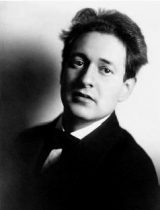
May 29, 1897 Brno,Moravia,Austria – Hungary. November 29, 1957 (aged 60)Los Angeles, California
Rarely if ever has the world encountered a more precocious musical talent than that of Erich Wolfgang Korngold. Compared in his youth to Mozart and Mendelssohn, he enjoyed immensely successful and well-publicized premieres of his work while still in his early teens, being championed by musicians such as Artur Nikisch, Felix von Weingartner, Artur Schnabel, and Richard Strauss.
At age 11, he composed his ballet Der Schneemann (The Snowman), which became a sensation when performed at the Vienna Court Opera in 1910, including a command performance for Emperor Franz Josef. He continued composing with great success throughout his teens.At the age of 12, he composed a piano trio and his Piano Sonata No. 2 in E major, which followed, was played throughout Europe by Artur Schnabel.He wrote his first orchestral score, the Schauspiel-Ouvertüre, when he was 14. His Sinfonietta appeared the following year, and his first two operas, Der Ring des Polykrates and Violanta, in 1914.In 1916, he wrote songs, chamber works, and incidental music, including to Much Ado About Nothing , which ran for some 80 performances in Vienna.
Success followed success, and in 1920, at the age of 23, his masterpiece Die Tote Stadt was premiered in Hamburg and Cologne. The Piano Quintet Op. 15 (SCMS performance July 7) was written a year later.He completed a Concerto for the left Hand for pianist Paul Wittgenstein in 1923 and his fourth opera, Das Wunder der Heliane four years later.
Korngold had his first taste of career disappointment in 1927 with the premiere of his opera Das Wunder der Heliane, at which point the Viennese public showed the first signs of having moved on from his late-romantic musical language. As music became more tonally progressive and experimental, Korngold stayed true to himself, writing music that seemed more from the past than of the present.
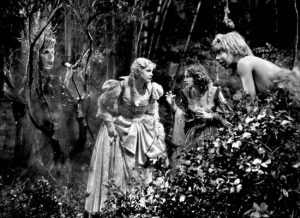
In 1934, Korngold wrote his first film score for Max Reinhardt’s film adaptation of A Midsummer Night’s Dream. Shortly thereafter, he signed an exclusive contract with Warner Brothers, eventually winning two Oscars for his film scores. As a Jew, Korngold’s world was crumbling around him, and in 1938 Korngold and his family moved to the United States. He vowed to write no more concert music until Hitler was removed from power.Korngold was a master film composer and his wonderful melodies, orchestrated in the most gorgeous Richard Strauss-oriented manner, are a joy to hear, even when the films are forgettable. Robin Hood, The Sea Hawk, and Elizabeth and Essex all display Korngold’s musical extravertism, and for some reason, his unmistakable Viennese kind of sentiment helped Errol Flynn be a convincing English hero.
The American Film Institute ranked Korngold’s score for The Adventures of Robin Hood as number 11 on their list of the greatest film scores . His scores for the following films were also nominated for the list:
The Private Lives of Elizabeth and Essex (1939)
The Sea Hawk (1940)
Kings Row (1942)
Deception (1946)
When Korngold returned to Europe in 1949, musical tastes had changed. Despite an initial success with his Symphonic Serenade Op. 39, critics were unmoved and subsequent performances were poorly attended. In his absence, the European musical community had moved on.When he died in Hollywood in 1957 at the age of 60, he believed himself forgotten and for the next 40 years, he was little more than a musical footnote, occasionally remembered through his film scores, a few arias, and the violin concerto.
Erich Wolfgang Korngold’s Piano Quintet in E major dates from the period following perhaps the composer’s greatest work, the opera Die tote Stadt, which had received simultaneous premieres in Hamburg and Cologne in December 1920. The following year, as he shepherded his opera to worldwide success, conducting performances in Dresden, Frankfurt and Vienna, Korngold began work on a pair of chamber-music works: the first of his three string quartets, and this piano quintet. Though the quartet did not receive its premiere until January 1924, the quintet was first performed in Hamburg on 16 February 1923 and in Vienna on 1 March, with Korngold at the piano alongside the Mairecker-Buxbaum Quartet. Perhaps unsurprisingly, the Viennese music critics gave the new work considerable attention, and in a feuilleton in the Neue Freie Presse (the newspaper of which Korngold’s father, Julius, was chief music critic), Josef Reitler waxed lyrical, noting, ‘as soon as the bold main theme begins with enthusiastic gestures, one has the unmistakable feeling: Korngold!’. Reitler made the point that the composer, whose Opus 1 was a piano trio, always returned to chamber music following his dramatic works—pointing to the string sextet that followed his two single-act operas, Violanta and Der Ring des Polykrates—and his fellow critic Heinrich Kralik, in the Neues Wiener Tagblatt, likewise saw the composer’s devotion to instrumental forms as a taking of breath or gathering of forces before the effort of creating new stage characters. As such, Kralik found in the piano quintet the legacy of Die tote Stadt, pointing to that same dramatic theme that had struck Reitler so forcefully and finding in it a ‘spirit akin to that of Marietta’, the main female character of the opera.
Kralik, however, also made his readers aware of the close connection between the quintet and Korngold’s Vier Abschiedslieder of a few years previously. These ‘songs of farewell’ provide the material for a set of free variations that form the quintet’s central movement, in the same way that Korngold used his song ‘Schneeglöckchen’ as the basis for a movement of the Violin Sonata, Op 6. Kralik thus suggested that this was a ‘quintet of farewell … that once more the composer draws to the heart the dear and familiar figures of his past before devoting himself entirely to the new future’. Undoubtedly though, the reference to the Abschiedslieder was about more than a farewell to the past. For Korngold, these songs—and thus the quintet—are intimately tied to his burgeoning romance with Luise von Sonnenthal, or Luzi as she was known. Their long courtship, which Korngold’s parents did everything to frustrate, featured long periods of separation, and Luzi maintained that one of the Abschiedslieder even included a secret message to her that imitated the sound of her voice. The pair finally married on 30 April 1924, a year after the quintet was first performed. Their first summer together was spent at Altaussee—with Korngold’s parents in tow—and it was during this period that Luzi helped correct the score and parts of the quintet for publication, whereupon it was dedicated to the composer’s friend, the sculptor Gustinus Ambrosi.
The three-movement Piano Quintet is a highly charged, virtuosic, and overwhelmingly positive piece.
Mäßiges Zeitmaß, mit schwungvoll blühendem Ausdruck
Adagio. Mit größter Ruhe, stets äußerst gebunden und aus drucksvoll
Finale. Gemessen beinahe pathetisch
The optimistic first movement alternates between extroverted romanticism and the introspective beauty, and revels in its instrumental complexity. The 2nd movement is a glorious set of nine variations on themes from his song cycle of 1920, Songs of Farewell, with the third song, Moon, thou riseth again, being the main inspiration. The finale opens with severe, declamatory cadenza material, before giving way to a jocular rondo theme. The coda brings back material from the beginning of the piece and brings the work to a rousing conclusion.
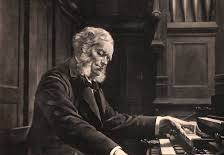
César-Auguste-Jean-Guillaume-Hubert Franck 10 December 1822 Liège,Belgium 8 November 1890 (aged 67) Paris, France
Franck’s Piano Quintet in F minor for 2 violins,viola and cello was composed in 1879 and has been described as one of Franck’s chief achievements alongside his other late works such as Symphony in D minor,the Symphonic Variations,the string Quartet and the Violin Sonata
It was premiered by the Marsick Quartet , with Camille Saint-Saens playing the piano part, which Franck had written out for him with an appended note: “To my good friend Camille Saint-Saëns”. In three movements
Molto moderato quasi lento – Allegro
Lento con molto sentimento
Allegro non troppo ma con fuoco
The music has a cyclical character whereby a motto theme of two four-bar phrases, used 18 times in the first movement, recurs at strategic point later in the work.The work has been described as having a “torrid emotional power”, and Edouard Lalo characterised it as an “explosion”
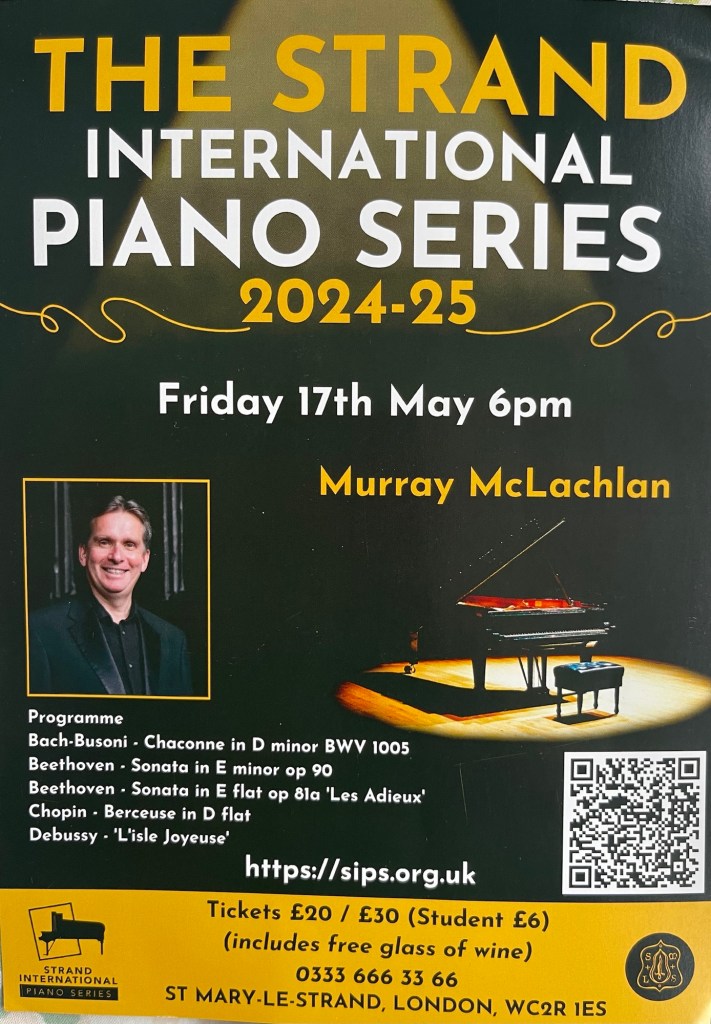
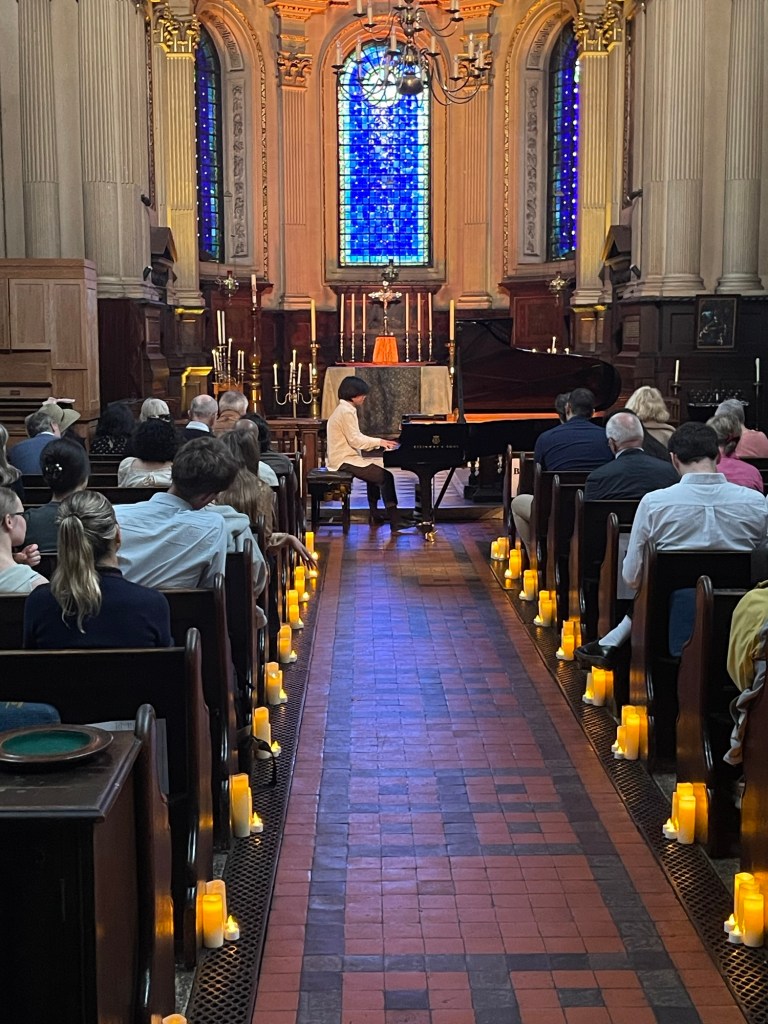
St Mary Le Strand where the candles were shining brightly today illuminated by the piano genius of Magdalene Ho. Standing in at very short notice for an indisposed Murray McLachlan she wallowed in Beethoven,astonished in Fauré and ravished with Schumann only to simply revel in the delectable virtuosistic flights of fantasy in Saint Saens.
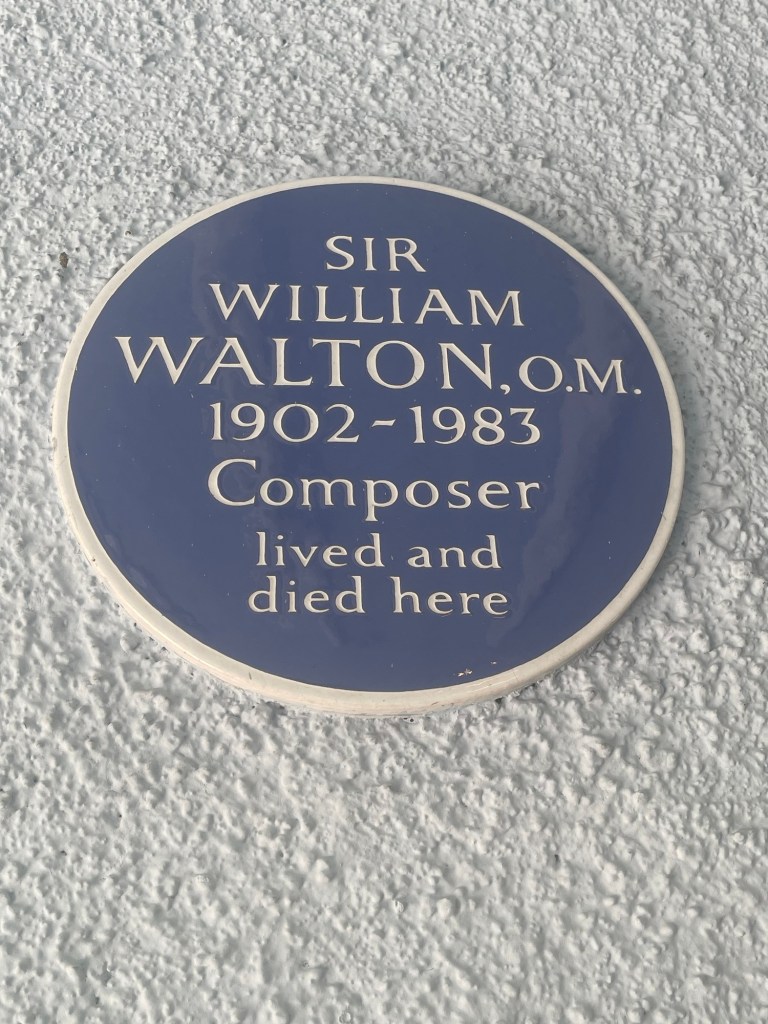
Just back from the Walton Foundation on Ischia,Murray McLachlan called whilst on the train from the airport to ask if Magdalene could substitute for him the next day as a family necessity had meant he could no longer travel from his home in Manchester to London.
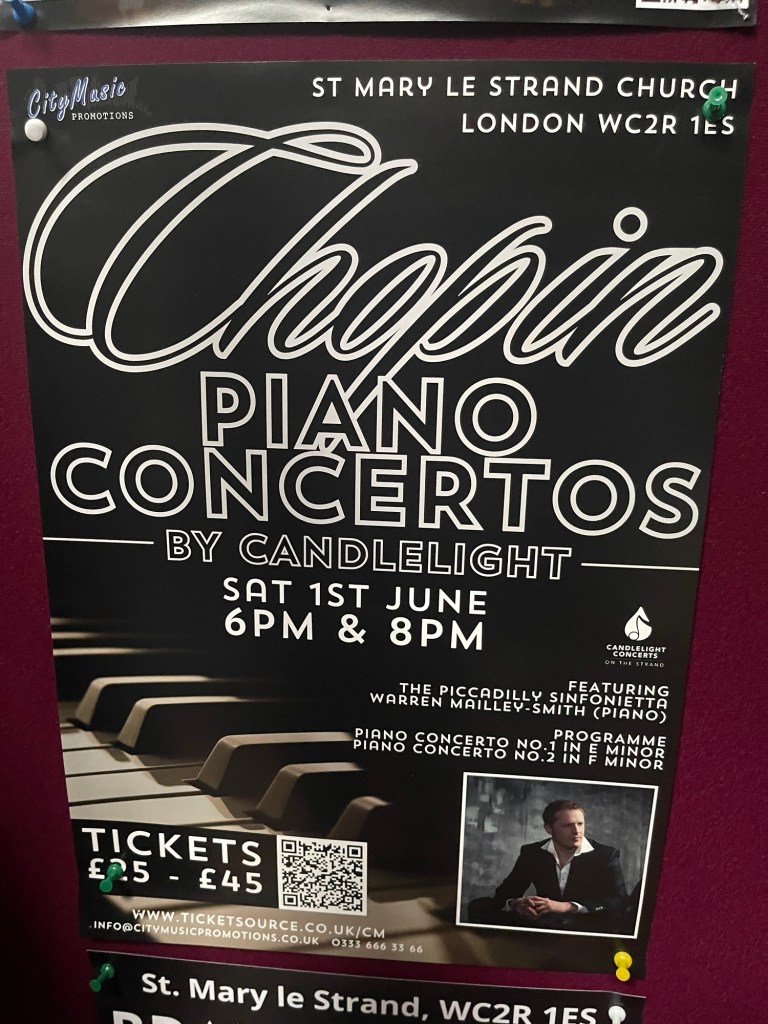
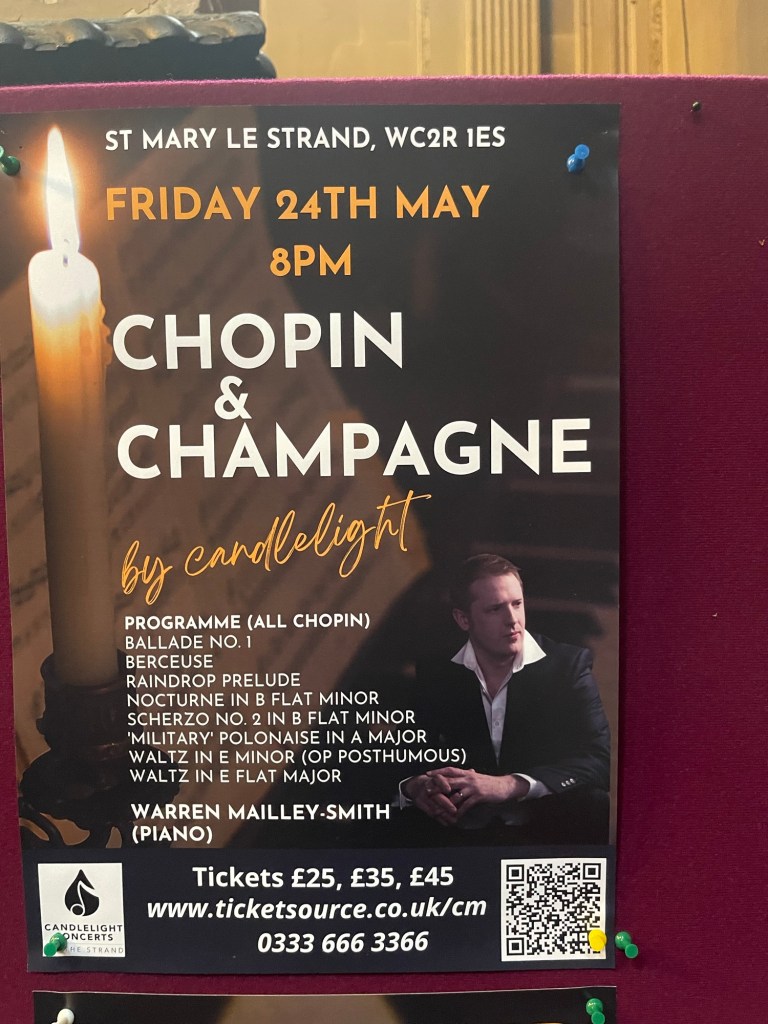
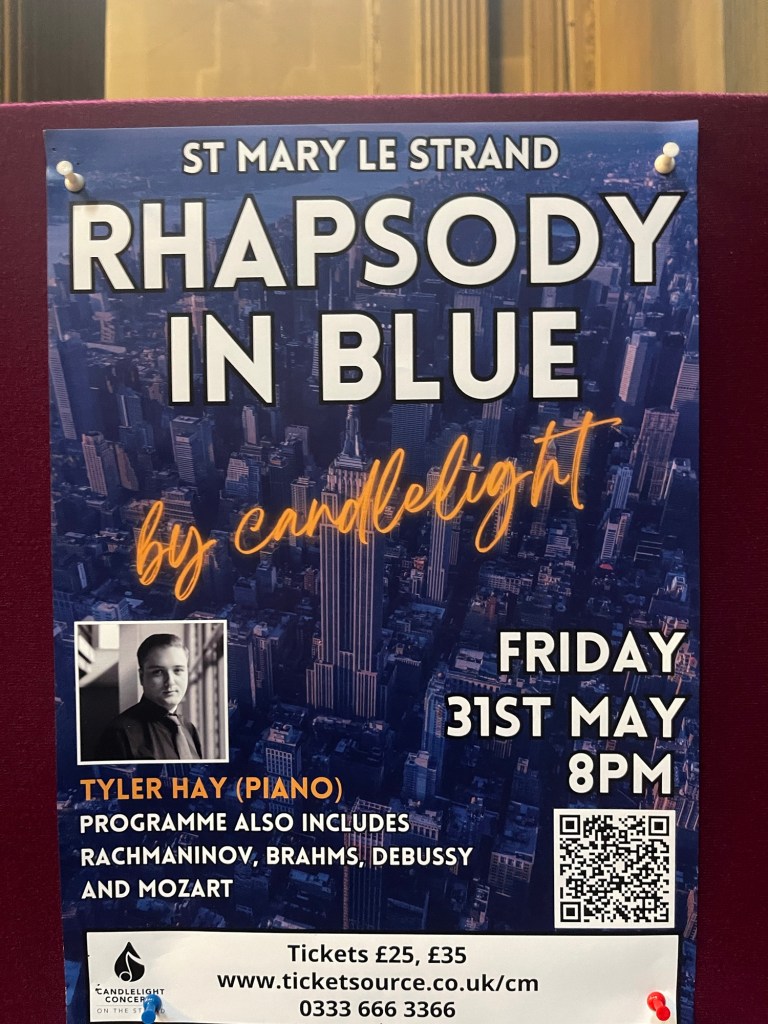
I knew a little about Warren’s activities but was flabbergasted when he told me the extent of the concerts he not only promotes but where he actually plays himself too. Concerts that just this month includes the two Chopin Concertos,three Bach Concertos and Beethoven Concerto n. 2 in a complete series,as well as recitals of an extraordinary amount of piano repertoire.Hats off indeed especially as he also gives work to his colleagues who are desperately in need of venues in the Capital City with a public ready to partecipate with enthusiasm and love.
‘If they don’t want to come,you can’t stop’ em’ , Boris Berman very spiritedly and philosophically exclaimed after a poorly attended recital in my Euromusica series in Rome. A series that in thirty years of activity would occasionally find that a concert date coincided with a football match or the sun would be shining and the so called ‘elite’ of Rome would rather go to the beach than listen to one of the great pianists of our time.A concert by Alicia de Larrocha once coincided with the final of the World Cup!
This is what Warren sent me on my insistence about knowing a little more of his activities :
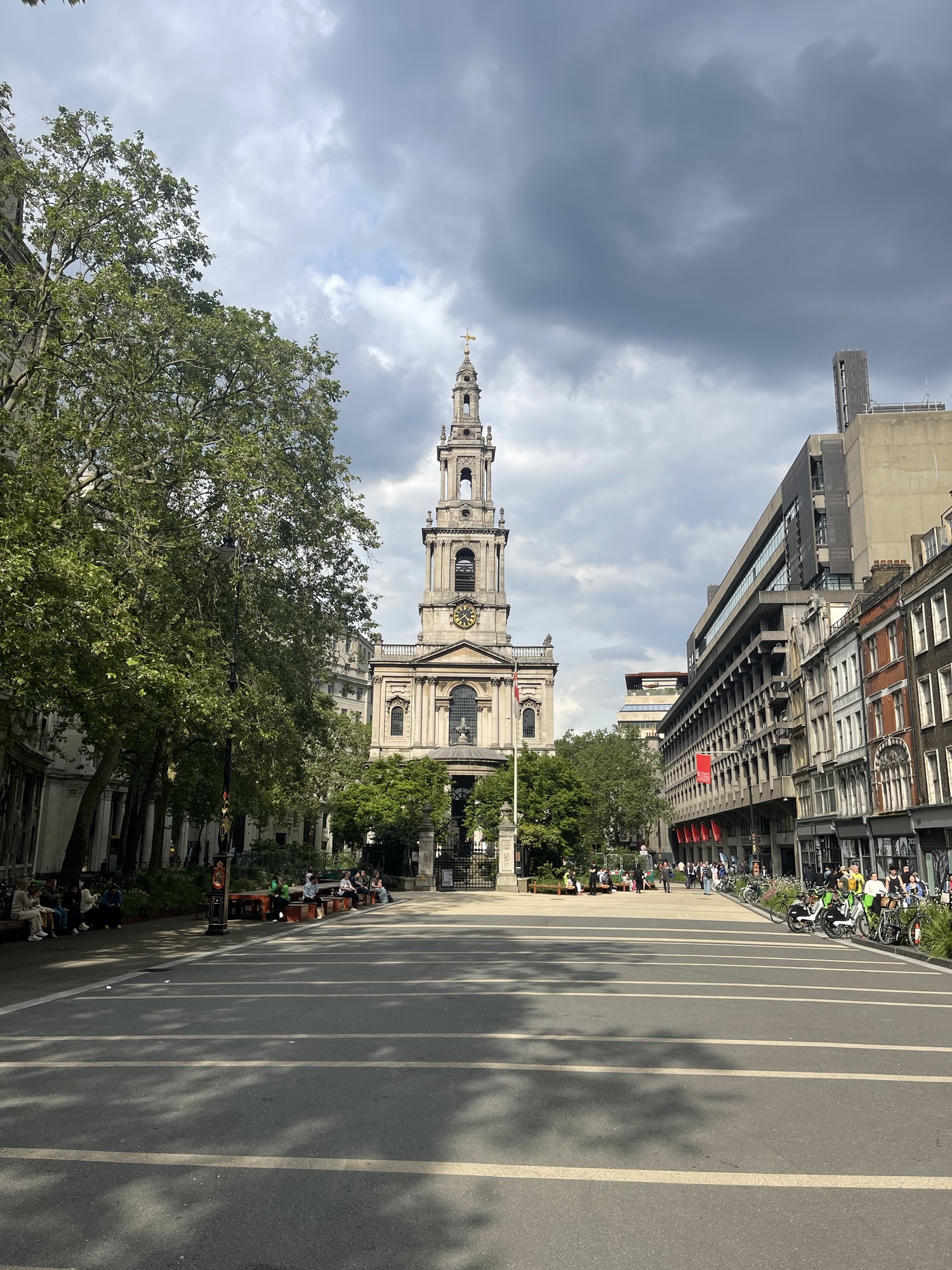
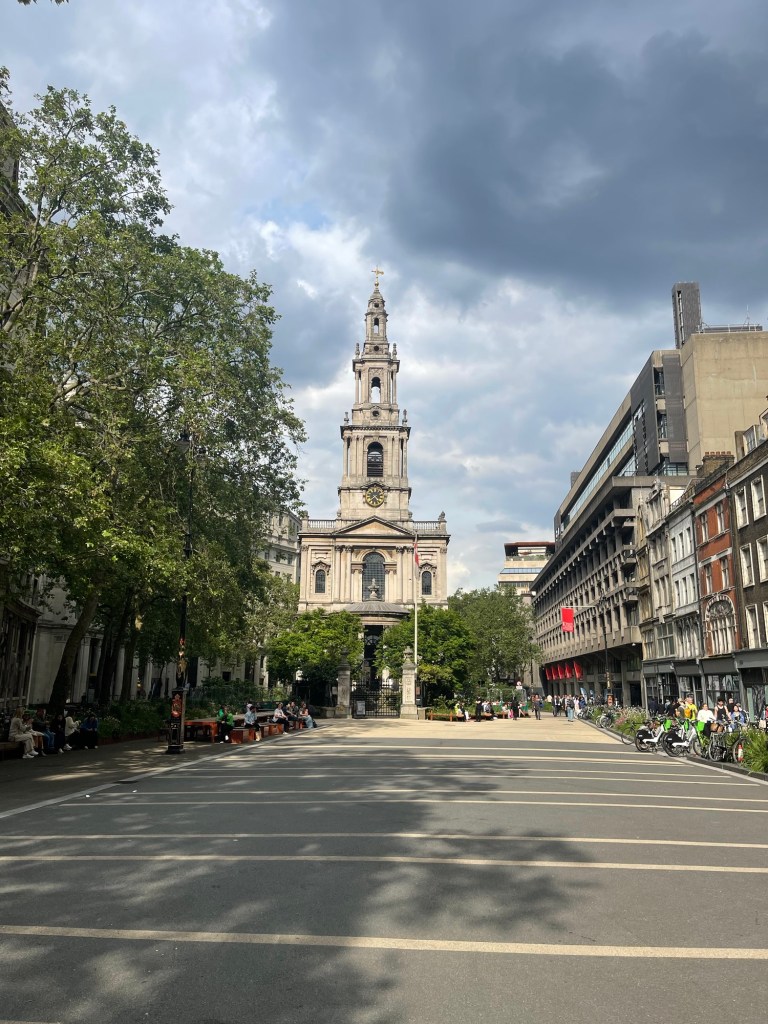
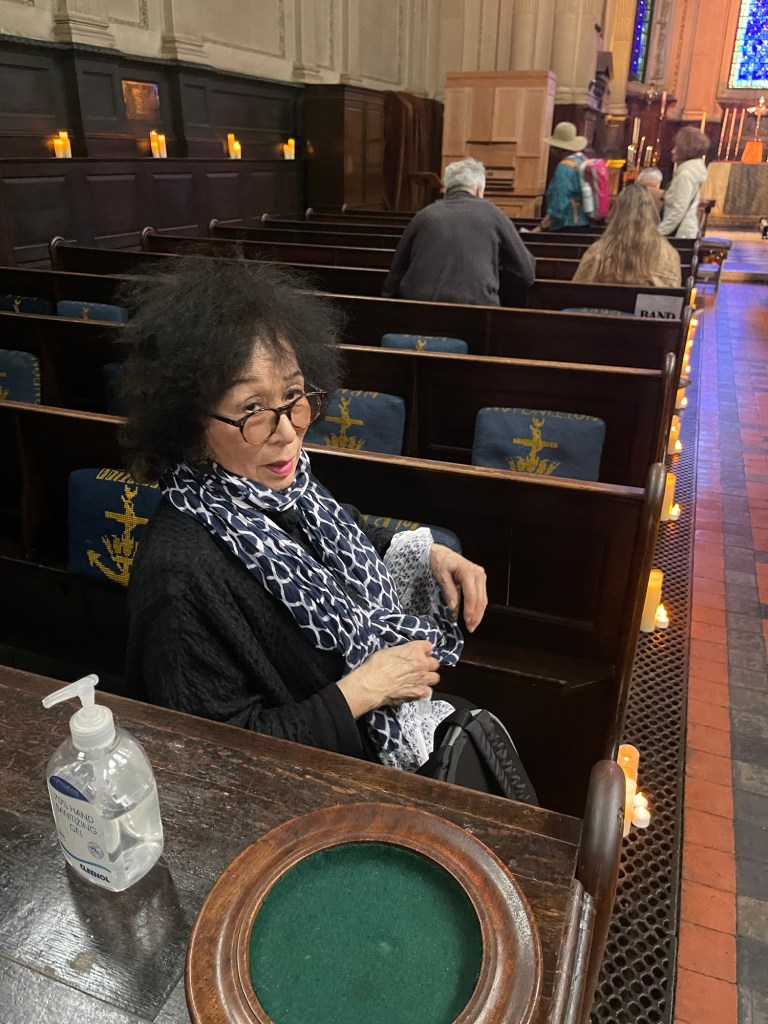
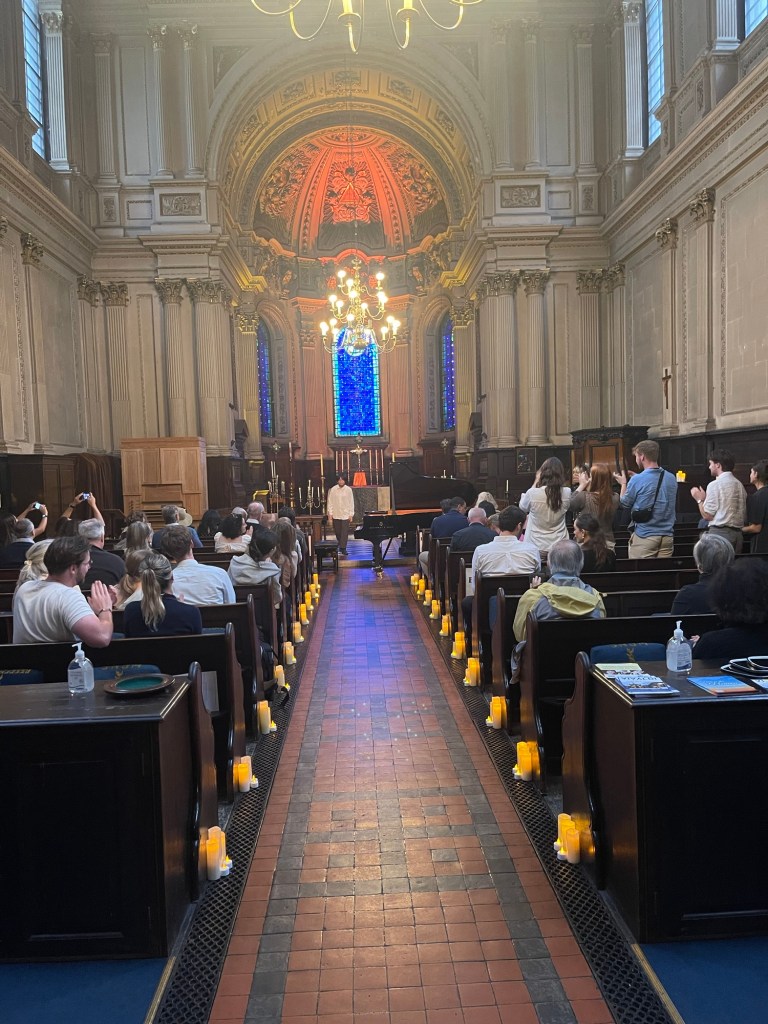
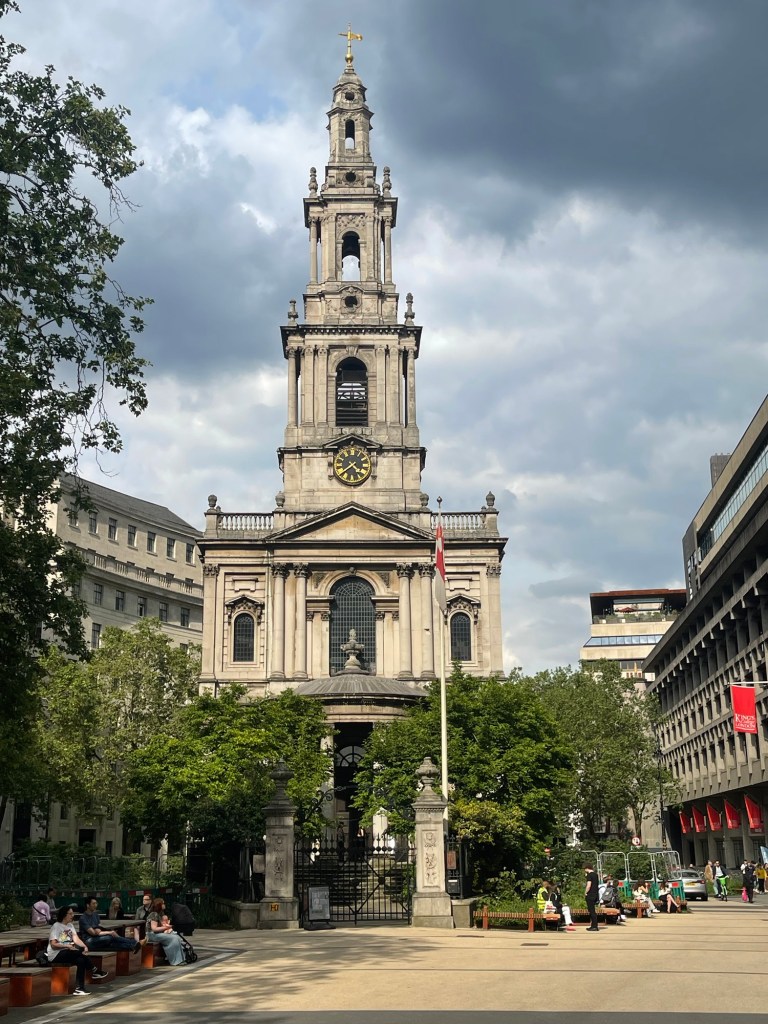
Hats off indeed especially on entering this beautiful church which has become a magical oasis of peace and beauty since the pedestrian precinct has revealed that it is so much more than the central island of a roundabout for London’s busiest traffic .I could appreciate as an ex theatre manager with what attention he was promoting all these activities :
https://christopheraxworthymusiccommentary.com/2022/09/05/julian-trevelyan-at-st-marys-a-voyage-of-discovery-to-astonish-and-uplift/And just an hour after the concert by Magdalene Ho this musical haven was ready for the glory of Bach . A magnificent Forster Cello in the hands of a superb cellist playing the first three of Bach’s six Suites (Born in Cumbria, Forster established his own workshop in London around 1760. He subsequently received the Royal Warrant from the Prince of Wales and was contracted with Haydn to publish his works in England. Forster’s cellos are sought-after, many of which were made on a distinctive shortened Amati model, and supplied to many soloists of the time. Very resonant, bright sound and even projection across the range – registers compliment each other very ) .It also matched the colour of Wallis Power’s beautiful dress and as one of the church trustees commented resembled the famous Augustus John painting of Suggia
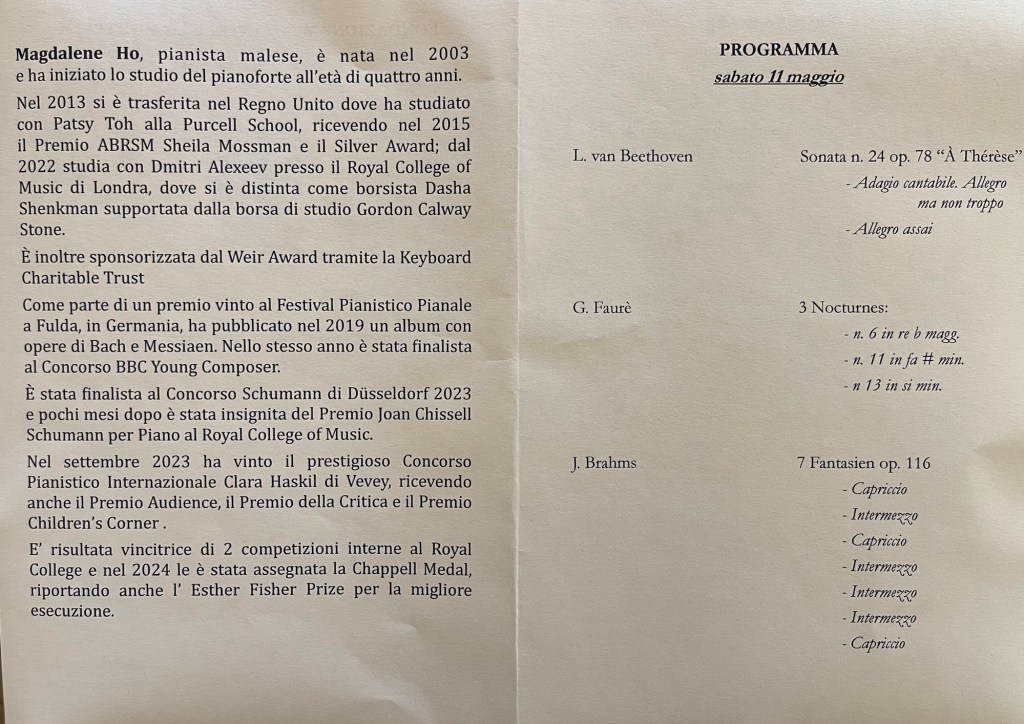
Magdalene played part of the recital she had just performed on Ischia but looking on the web site of Warren’s concerts she very professionally noted that just the day before had been dedicated to piano music by Brahms .So instead of op 116 Fantasies that she had played a few days ago she substituted it for the ‘Davidsbundlertanze’ op 6 by Schumann.
I have heard her play it before and it was one of the works that won her the much vaunted Gold Medal at the Clara Haskil International Piano Competition in Vevey at the age of 19. Now aged 20 I could hear it again! Having heard her play it in Milan and Florence for the keyboard Trust last winter.
An artist of Magdalene’s sensibility means that her performances are never a printed page being repeated but a living breathing thing that takes wing afresh every time she opens that magic sound world that is in her hands.
I have reviewed these works in Florence and Ischia in much more detail but the atmosphere and beauty she transmitted last night demanded me to exorcise the enormous emotions that she had been able to share with us in this noble edifice.
The opening of Beethoven’s two movement Sonata op 78 she played much slower than I remember as she allowed this gloriously profound Adagio to resound around this noble resonant acoustic.It showed us the string quartet quality of Beethoven’s most profound creations as he came to the end of a turbulent life and had resigned himself to only being able to hear such wondrous sounds in his head.The last string quartets and the theme and variations of his final sonatas for piano op 109 and op 111 spring to mind already in this Sonata as this young artist allowed the music to unfold with poignant timeless dignity.
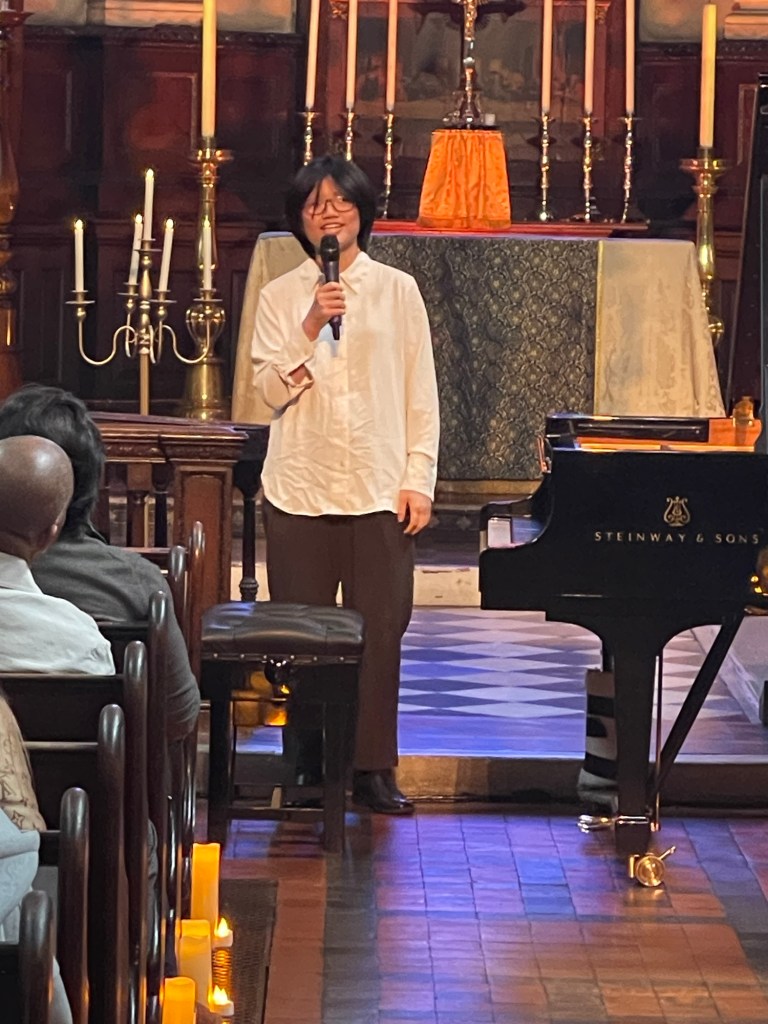
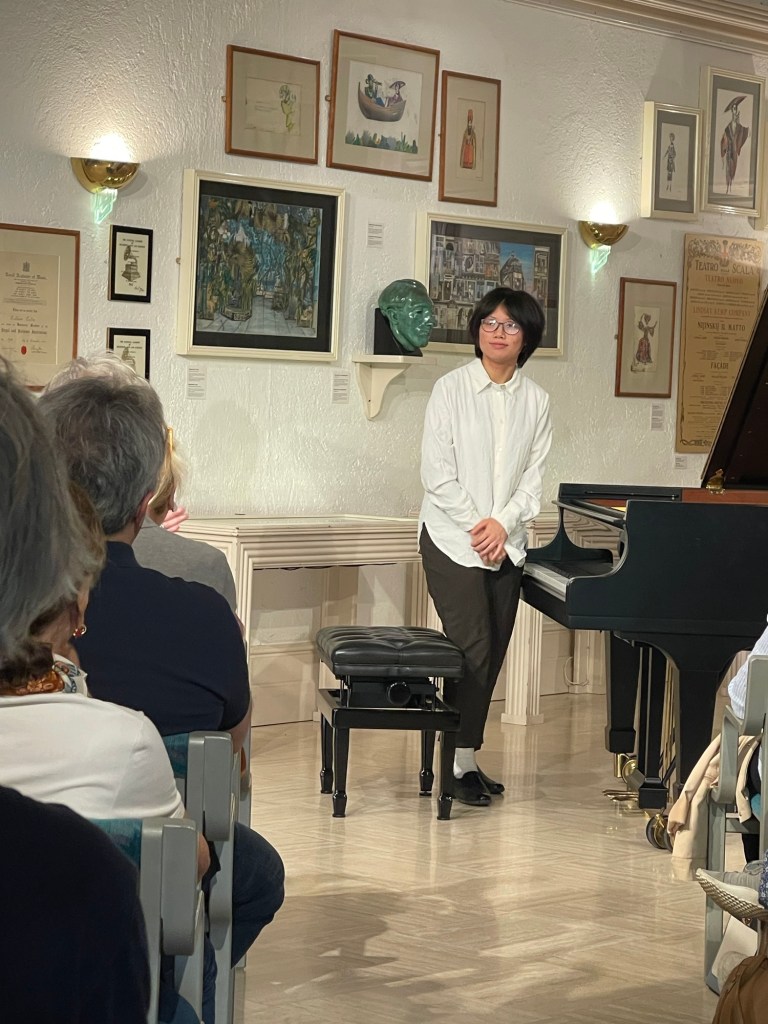
Magdalene presenting the concert
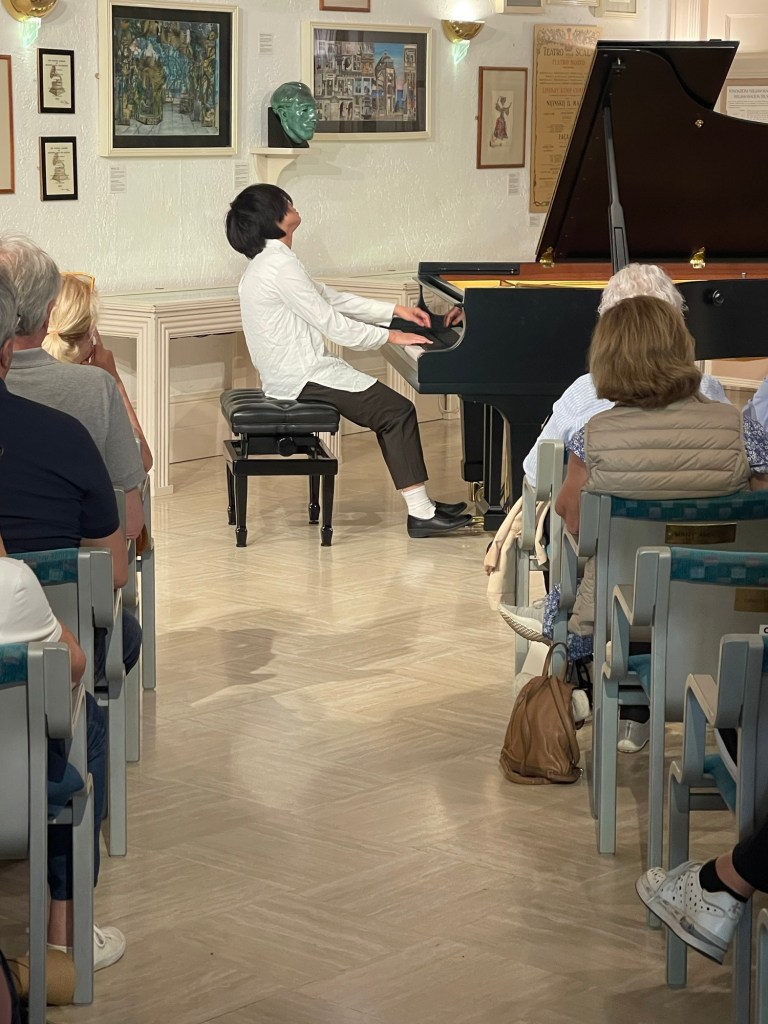
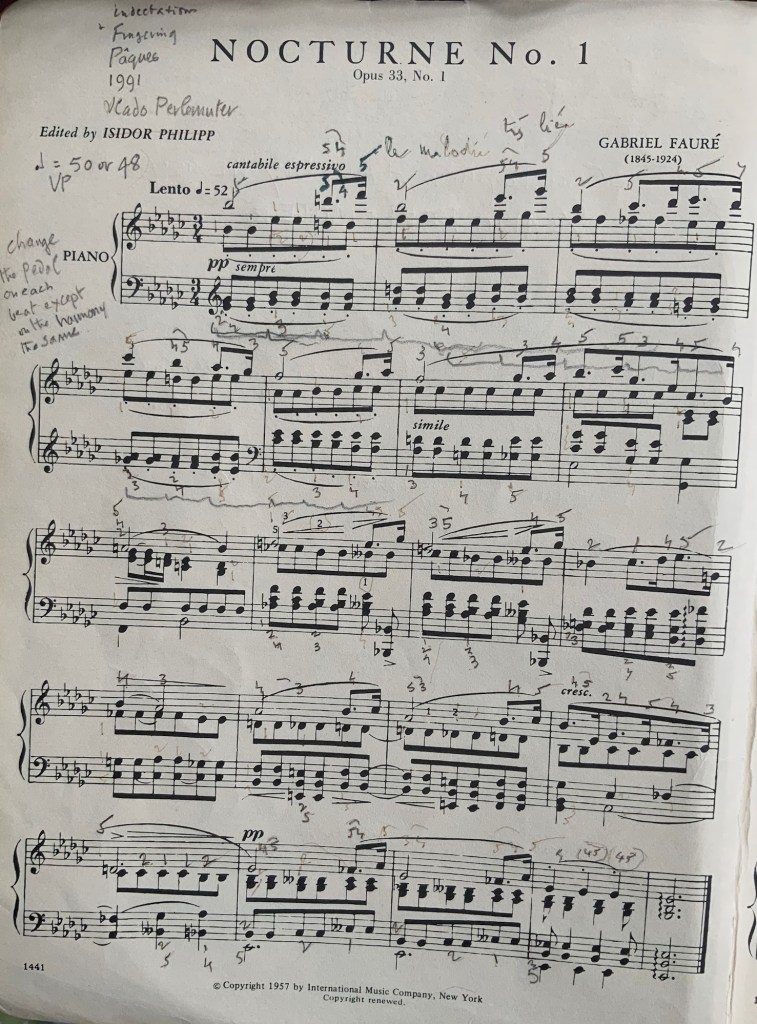
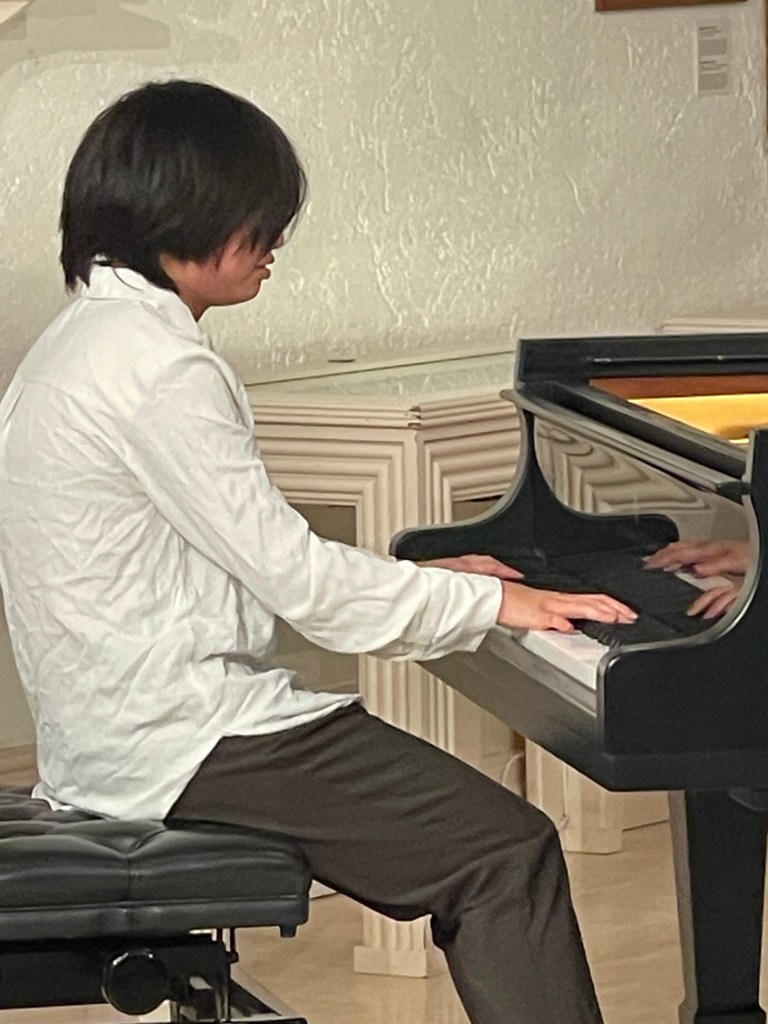
Fauré’s last nocturne resounded around this beautiful edifice with seemless golden strands that were as I imagine the composer must have conceived them.Washes of sound that built up to an aristocratic inner passion inhabiting a strange inconclusive world of sumptuous beauty.The final chords were like palpitations of a world weary heart and demonstrated this young pianists maturity and complete understanding of a world that she had found the key to and could transmit with desolate searing intensity.The Schumann too in this acoustic where streams of sounds and glowing melodic outpourings were enriched by the golden aura that surrounded them.The second of the dances ‘Innig’ was played with a simplicity and golden sound as seen from a distance that she was to reproduce in the seventeenth dance.There was red hot passion too in the fourth dance ‘ungeduldig’ which made the disarming simplicity of the fifth ever more radiant.The precision and clarity she brought to the sixth was quite extraordinary as to how she managed it with this resonant acoustic. Where there is a will there is always a way!
Magdalene’s wish to make the music speak transcends any technical considerations as it does for those few artists truly blessed by the ‘Gods’. The clarity and high spirits she brought to the twelfth ‘Mit Humor’ was nothing short of miraculous and the great chorale of the thirteenth was of breathtaking sumptuous beauty.The fourteenth – one of the most beautiful of all Schumann’s creations – was played with simplicity and a glowing warmth just as the fifteenth was played with passionate romantic abandon that was equally overwhelming.The final two dances as seen ‘from afar’ were the things that dreams are made of and as Schumann himself writes in the score :’Quite superfluously Eusebius added the following; but in so doing, much happiness radiated from his eyes.’
Magdalene had wanted to offer a Brahms Intermezzo as an encore but at my request in order finish on a high note she played the Saint Saens ‘Etude en forme de valse ‘ .In her hands it worked its magic and had the audience on their feet in awe and admiration of a pianism of a past age that of great artistry when musicians were also magicians.
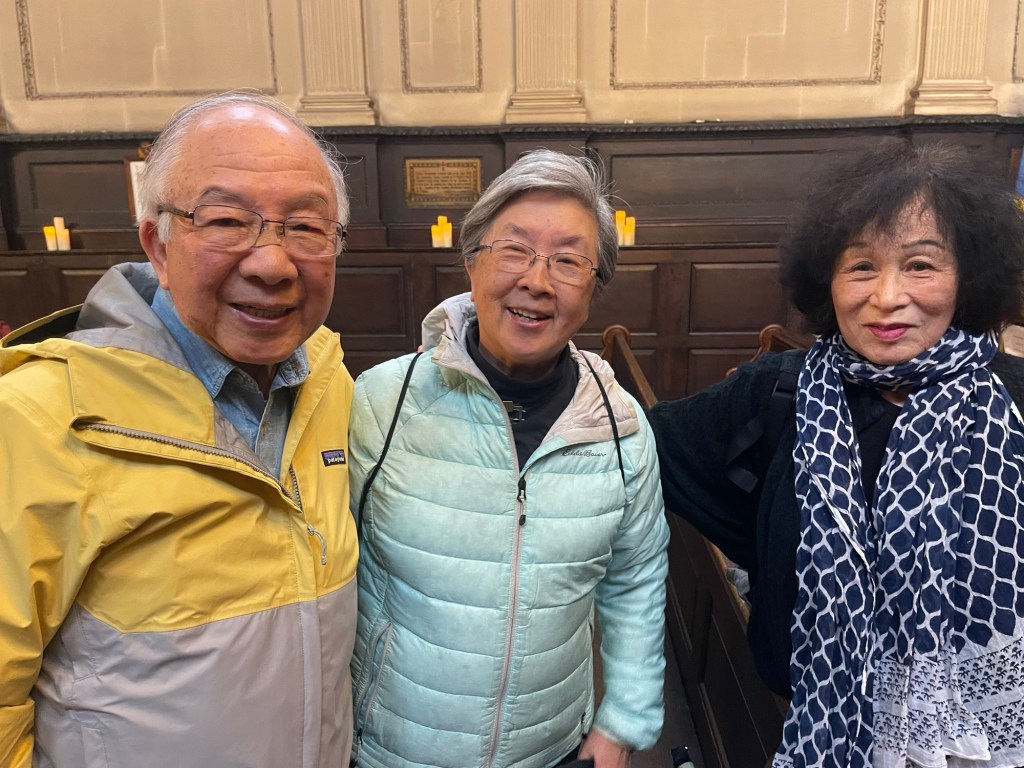
Patsy Fou with the distinguished architect and former Professor at the RAM ,Lee Chung-nung and his wife on a visit from their home in Seattle.A former student of Max Pirani he had decided to become an architect but returned to his first love after retirement and started working with Craig Sheppard in Seattle where he won many prizes in adult piano competitions.
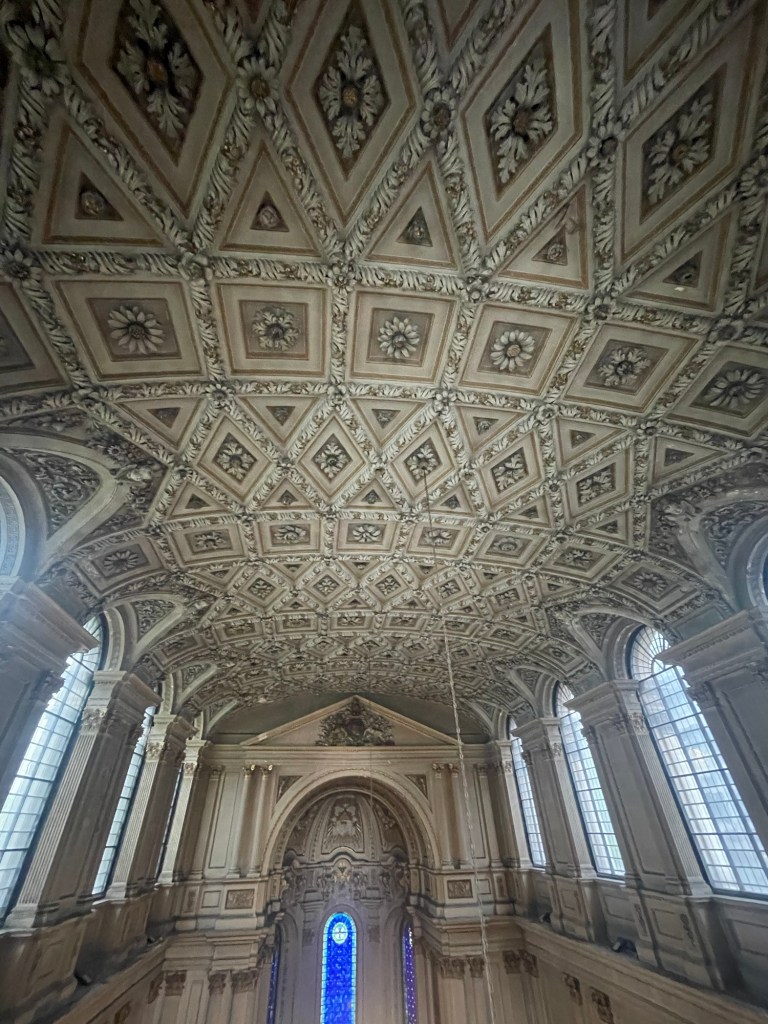
What a privilege to be able to visit this extraordinary historic edifice that has survived fires,wars ……..and even developers!
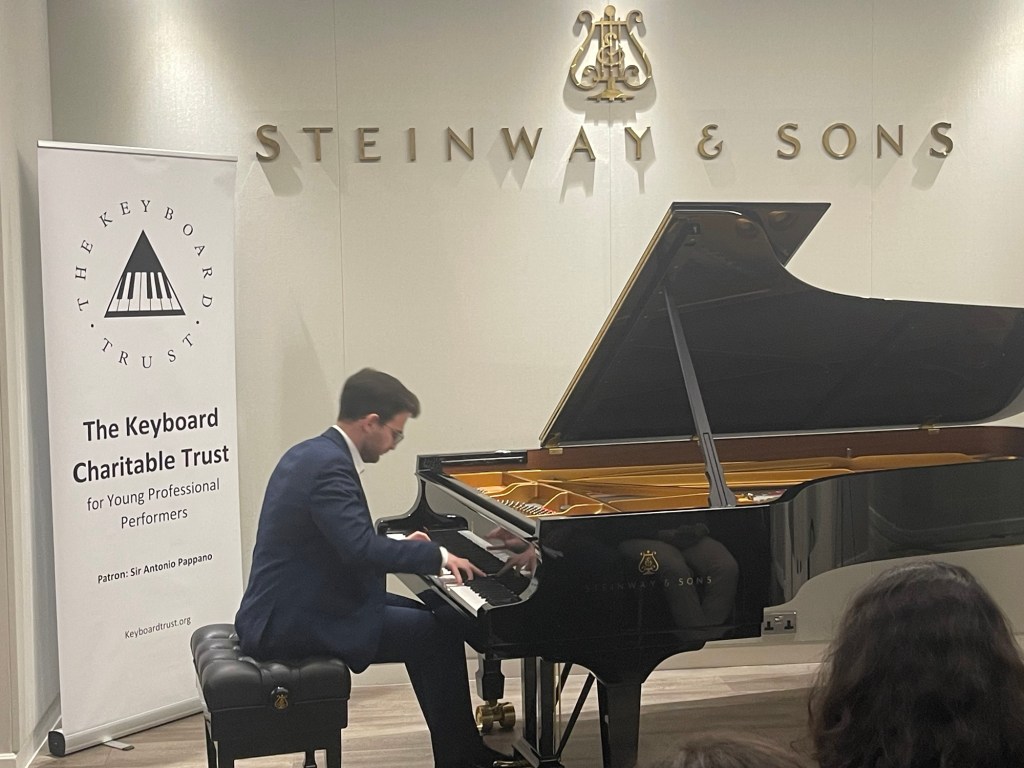
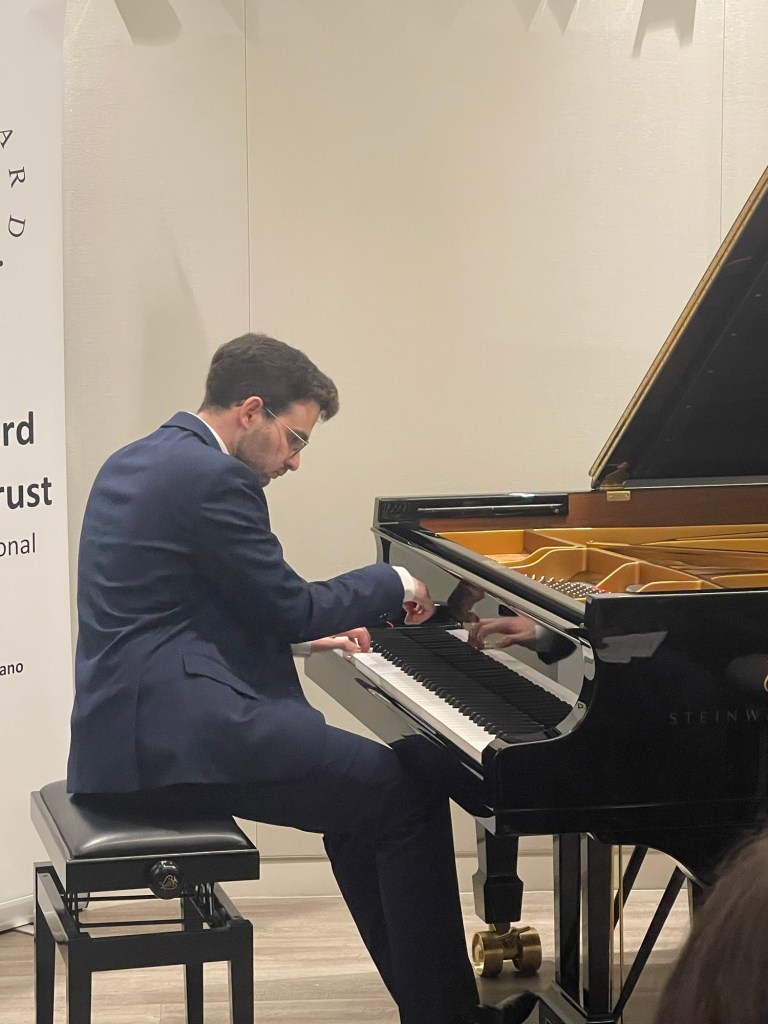
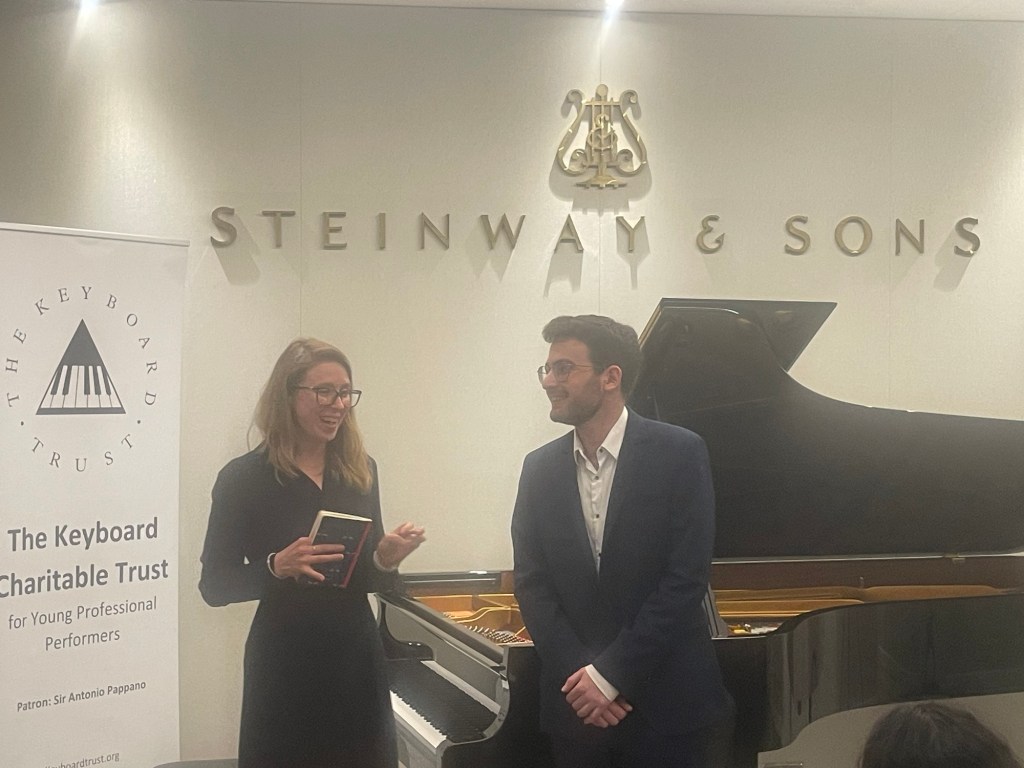
It was enough to see who was in the audience ,at the Keyboard Trust concert of Tom Zalmanov at Steinways last night, to know that we were in for something special. In fact this young Israeli pianist was the first to thank his Professor Ian Fountain (Rubinstein winner in 1989 together with Benjamin Frith – two British pianists winning joint first prize that year!) and a special thanks to Murray Perahia and Lady Weidenfeld who are following his career with helpful interest. Studying for his Masters at the Royal Academy he not only demonstrated his notable pianistic credentials but also his intelligence and eloquence in the short conversation he had with Elena Vorotko,one of the artistic directors of the KT,at the end of his short showcase recital.
A programme based around Schubert’s revolutionary Wanderer Fantasy, the inspiration for the genius of Liszt and Wagner where already Schubert was pointing to a future that he was destined never to see. Tom showed us the strength and tightly knit construction with a sense of architectural drive and shape that held the four movements as one glorified whole. Even the whispered ‘Wanderer’ that the composer quotes in the Adagio was played with a string quartet texture that became part of a symphonic whole. Variations that were woven with beguiling whispered tones with a jeux perlé that flowed with such ease from his well trained fingers.
Not an easy task on this magnificent Steinway D which a hall of two thousand would be proud to have on stage rather than in a room for just forty lucky people. Tom was determined to show us the Beethovenian side to Schubert and threw caution to the wind as he plunged into this mighty work with youthful energy and passion .In a less stressful situation he might have tamed and kept his enormous technical reserves for a hall much bigger than this one. It was Fou Ts’ong who exclaimed that it was much easier to find intimacy in a big hall than in a small one.
But Tom is a refined artist of good taste and aristocratic style and there were many moments to cherish as there were indeed in the contemporary work (written for the Rubinstein competition I believe) Memory and Variations by Tal-Haim Samnon. Here Tom opened his Pandora’s box of jewels that he had kept concealed in Schubert and brought these eight short variations beautifully to life with sounds and different touches that illuminated ‘baubles ‘ and turned them into gleaming gems.
Illustrious guests following Tom’s every move
The three Rachmaninov Preludes were played with a kaleidoscopic range of sounds with the beautiful D major prelude allowed to reverberate with ravishing colours around this beautiful room .The final G minor Prelude too Tom allowed the glorious duet between voices in the central episode to beguile and seduce but again his youthful passion rather overwhelmed in the dynamic excitement of all that enclosed it.
The Busoni Carmen Fantasy opened with the featherlight hustle and bustle that Busoni depicts so precisely with a babble between conflicting octaves .Dissolving into the sumptuous seductive Latin sounds from a French composer who understood the Spanish idiom better than any of the native Spaniards. A Habanera that with Tom’s superb fingers unravelled with spider like precision and delicacy as it led with the addition of Busoni’s genial inventions to the marzial triumph and the heart rending ending of such a tragic tale.
In conversation with Elena Vorotko,co artistic director of the KT
It was played with real fantasy and colour and the same sense of style that had opened this short recital with the three Novellettes by Poulenc. Tom had immediately shown us from the very opening what an intelligent highly professional pianist this young man already is. His choice of programme ,as he so eloquently told us in the after concert conversation ,showed a real thinking musician where music is for him a way of life.
Tom spilling the beans
He had us all baffled by an encore that resembled more Rameau than a movement from a Bach Suite and just showed his inquisitive mind and remarkable musicianship not to mention his teasing sense of humour! Murray Perahia knew he had played it himself which gave us the clue that is was Bach not Rameau. It was Tom,though ,who had to put us out of our misery before joining in the fun and games over a glass of two of Champagne and more intimate conversations with a remarkable artist who has much to reveal on and off the stage.
Lady Weidenfeld greeting Tom’s professor at the RAM .Ian Fountain winner of the Rubinstein competition in 1989
I have known and admired Murray Perahia since the first time I heard him in Rome in 1972/3 substituting for Serkin in a duo recital of the Brahms violin sonatas with Pina Carmirelli. I had much later seen and followed him as he rose to the heights where he truly belongs and I was also touched to see him and Alfred Brendel at Cherkassky’s funeral.Two completely different schools but it was Shura more than any other who could find sounds in the piano that others never knew existed . He confided to me one day after listening to many young musicians covered in international accolades that he thought they just did not listen to themselves. Of course he meant with that inner ear, the one of a true illusionist or magician who can turn a box of hammers and strings into a treasure trove of beauty. Tom is a remarkable young musician but the hunt is on for that ever elusive Pandora’s box that was truly Shuras.
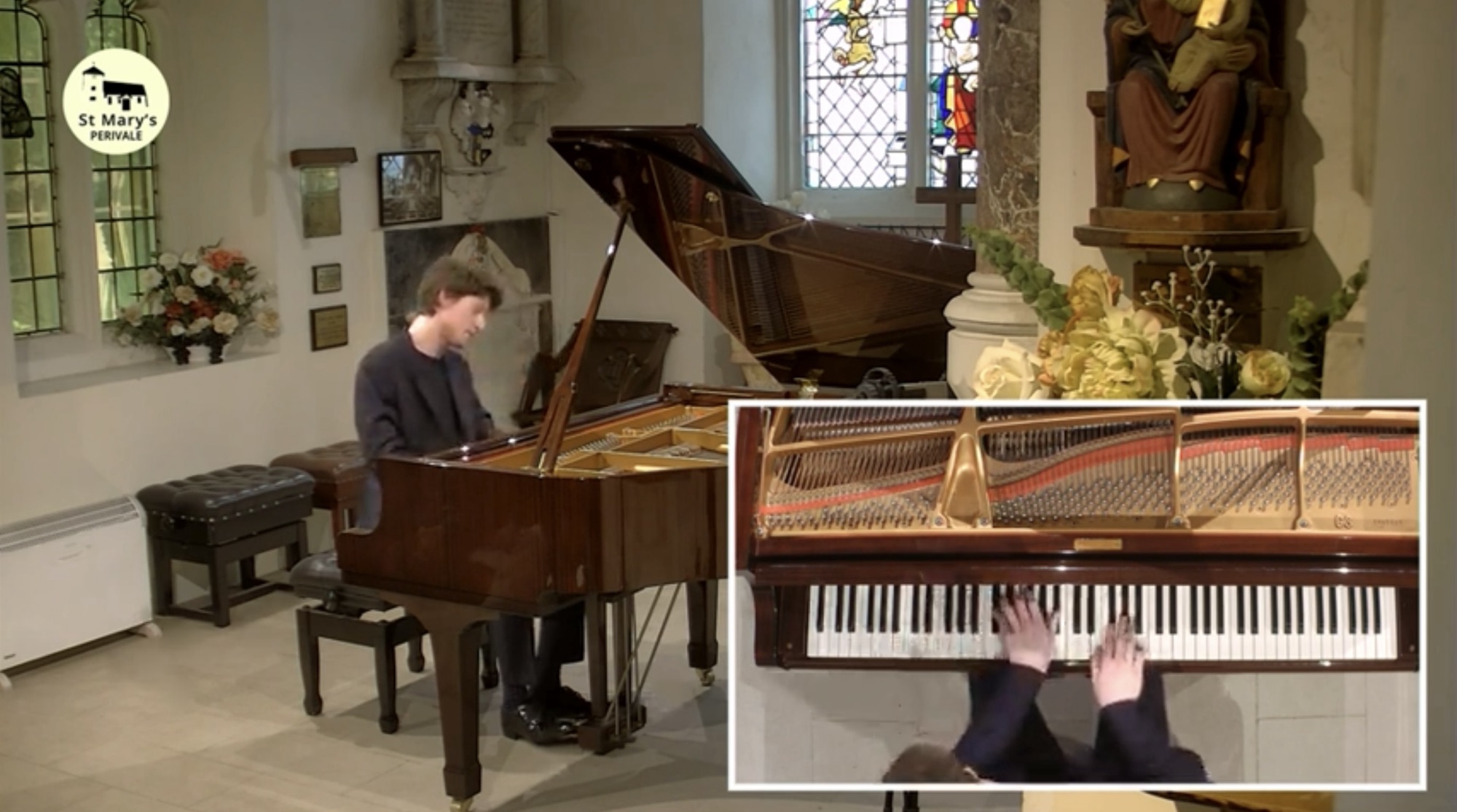
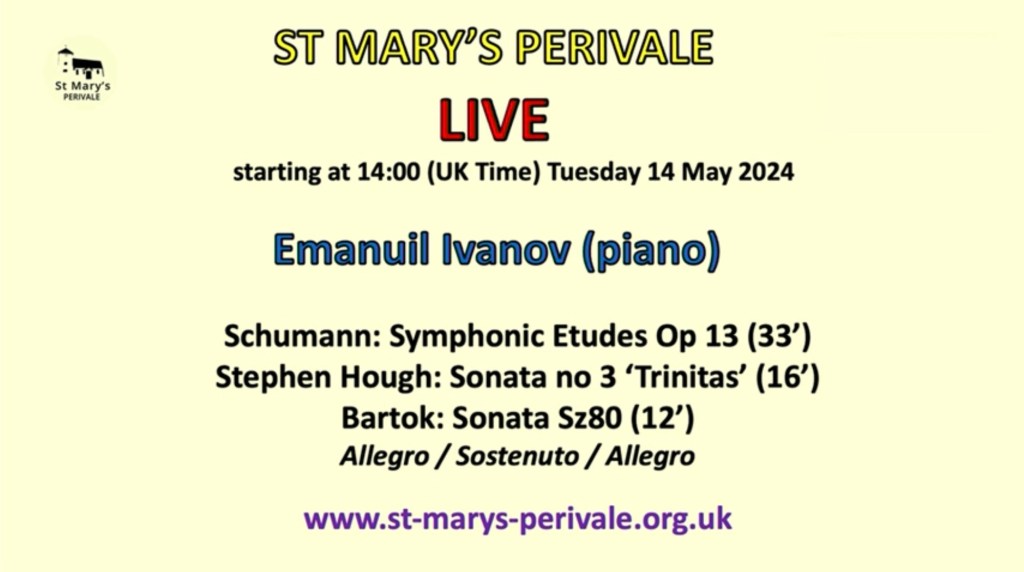
A quite breathtaking recital from one of the finest young pianists of his generation .Not only a pianist but also a composer and it is this that comes across in all that he does. A sense of architectural understanding whether the complex sound world of Hough or the rugged Hungarian dance idiom of Bartok or the ravishing world of Schumann and even the gem of a Mendelssohn Song without words . An eclectic multifaceted pianist who is about to play the Busoni Piano Concerto and has just played Rzewski’s marathon variations in Germany (that awaits London at the Wigmore Hall in October) or playing his own theme and variations written as an engagement present for his future wife. Piano genius I think is not too exaggerated a word in this case …………….Hats off, dear Emanuil ,as Hugh so rightly said the best recital ever at Perivale today
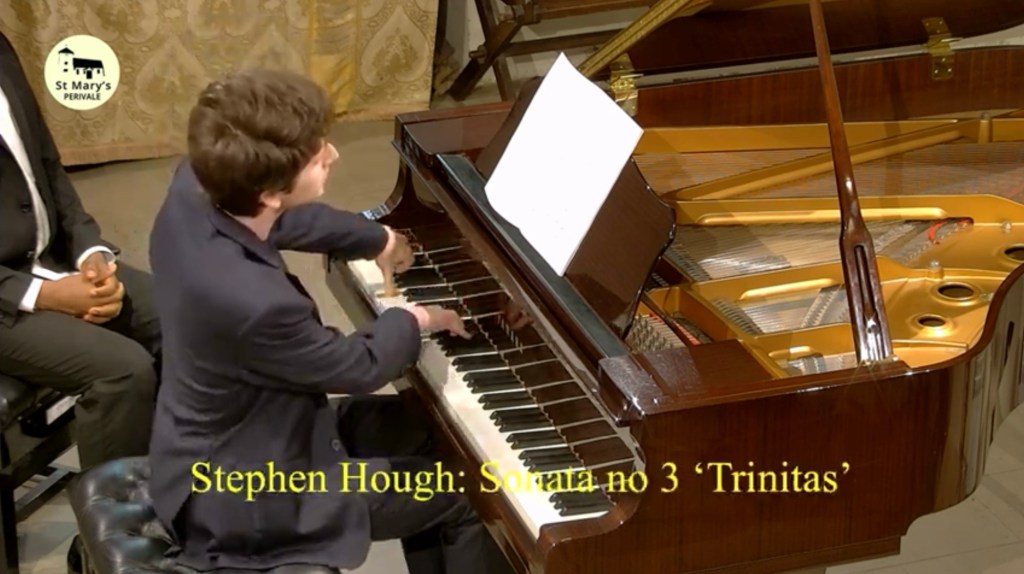
As Emanuil said programming contemporary music is a way of keeping creativity alive and so he chose to open his programme with the sparse sounds of Stephen Hough’s ‘Trinitas’ .Emanuil is not only a great pianist but a complete thinking musician of great humility and sensitivity. Listening to this contemporary work one is given a completely different picture of a pianist well known for his sense of late romantic style of piano playing of a lost age. Stephen has brought back into the concert hall works that were long not considered important enough for the concert stage in these modern times where a rigid adhesion to the score can also kill the very creative impulse of the composer when the ink was still wet on the page.Listening to the sparse sounds of this Sonata just underlines what Emanuil said about recreating music with a freshness and not just painting a picture of times past.This explains of course why Stephen Hough’s performances of such miniatures by Delibes,Chaminade or Mompou are of ravishing beauty that with such refreshing innocence he can turn baubles into gems. Cherkassky too ,who was a great admirer of the young Hough, lived by the motto :’je joue,je sens ,je trasmet.’ Mitsuko Uchida in refusing to allow photos or recordings of her live recitals forcefully exclaimed as only she could ,that a performance should remain in the memory as a thing of beauty and not just end up being something stale on a printed page. Last but certainly not least was Rubinstein who would add the four Mazurkas op.50 written for him by Szymanowski as a sorbet in the midst of a sumptuous feast of Chopin.
And so it was today that everything that Emanuil played was with a spontaneity and freshness that made for a bond of mutual creativity between the audience and the performer.There was the dramatic opening of sparse sounds of stark nakedness as there was also an elegance and fluidity to these sounds that were hypnotic and captivating. Great rhythmic energy in the middle movement that was also played with astonishing clarity and agility.Suddenly distant sounds reminiscent of Messiaen could be heard in the far distance. There was even a recognisable melody in the midst of a continuous flow of dynamic note spinning. Long vibrant sounds with whispered reverberations on high where Chopin’s 3rd Scherzo came to mind as a chorale is heard with such regal purpose. Colourless sounds too of beauty but without a specific voice as they sounded like dead wooden interjections. The work ending with the same sparse sounds as the opening where at last peace is allowed to reign sovereign again.Emanuil created a world of kaleidoscopic sounds but managed to steer us through unknown waters with the simplicity and astonishing clarity of a convinced musician.
There was a startling rhythmic energy and above all a clarity that I have not heard since Andor Foldes or Geza Anda. A great personality that took us by storm alternating with beguiling beseeching sounds but always with a burning hypnotic intensity.A slow movement that was a deep siren of long drawn out sounds, like the slow movements of his concertos, where there is a religious intensity of poignant meaning.The dynamic drive he brought to the Allegro finale was of astonishing virtuosity with a flexibility that was like stretching an elastic band that seemed to have an eel like vitality of it’s own.
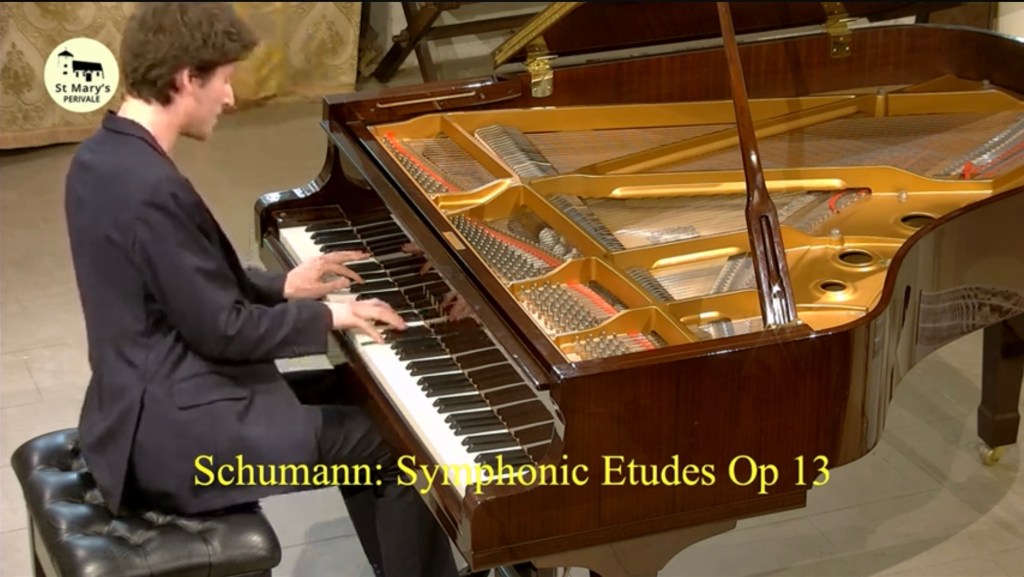
With these Symphonic Studies our eclectic musician had decided to incorporate some of the differences from the first 1837 edition that the composer had excluded from his second in 1852. Principally in the Finale where the repetitive nature of the ‘Allegro brillante’ was relieved by glimpses of melodic oasis’s amidst such a continuously driven stream of notes.There was a beautiful simplicity to the first three variations or studies where the theme was allowed to unfold with unadorned beauty.The variations were allowed to flow so naturally with a scrupulous attention to detail but without ever interrupting the continual evolution as one variations flowed so easily into the next. There was astonishing ‘fingerfertigkeit’ in the fleeting butterfly third study where the melodic line was allowed to emerge rather that being intentionally projected . It was at this point that Emanuil had decided to allow the first three of the five posthumous studies to take part in the proceedings. Some pianist choose not to include these five posthumous studies that were first published by Brahms after Schumann’s untimely death in an asylum. Others add them all after the ‘Gothic cathedral’ (to quote Guido Agosti) variation 7 ( study n. 8) .
Emanuil found just the right place for the swirling dramatic sounds of this first study that contrasted so well with the utter simplicity of the second that gradually works itself into a series of mysterious agitated sounds on which the theme suddenly appears naked on high like a mystical apparition.There was a wonderful sense of balance to the third that only a true musician could have found with such simplicity. At this point Emanuil rejoined the original version with the fourth study or 3rd variation where he shaped the chords with wonderfully crisp but varied sounds subtly phrased as they became transformed into the fleeting lightness of the fifth study or fourth variation.Rarely have I heard this dotted scherzando rhythm played with such clarity and melodic shape. There was a passionate outpouring to the fifth variation without any rhetorical exaggerations as is so often the case in lesser hands, leading to a sixth variation of dynamic drive.The great ‘Gothic Cathedral’ was played with disarming simplicity and with contrasts in phrasing that were breathtaking for their understanding and poignant significance.It was at this point that Emanuil added the fourth and fifth posthumous studies creating a beauty of glowing fluidity with Schumann’s sounds of searing beauty. The spell was broken with the Mendelssohnian chords of fleeting lightness and transcendental difficulty thrown off by this virtuoso with a mastery of aristocratic class where the music was always sovereign.The tenth study ( eighth variation ) erupted with energy and drive but always shaped into phrases with a sense of direction and purpose.The eleventh study was played with disarming simplicity as this Chopinesque nocturne was allowed to flow with a ravishing sense of balance.The ‘Allegro brillante’ finale was played with a driving forward movement and even the glimpses left from the first edition could not quel the accumulation of excitement and aristocratic grandeur of one of the pinnacles of the piano repertoire.
An ovation as rarely seen in Perivale and our host unusually lost for words, was greeted by the Mendelssohn Song without Words in E major op 30 n. 3 .Just one page but there was magic in the air that this young piano genius had created with music making as rarely witnessed before at St Mary’s in over 800 concerts.
Emanuil Ivanov attracted international attention after receiving the First prize at the 2019 Ferruccio Busoni Piano Competition in Italy. This achievement was followed by concert engagements in some of the world’s most prestigious halls including Teatro alla Scala in Milan and Herculessaal in Munich. He was born in 1998 in the town of Pazardzhik, Bulgaria. From an early age he demonstrated a keen interest and love for music. He started piano lessons with Galina Daskalova in his hometown around the age of seven. He later studied in and graduated from the Bertolt Brecht language high school in Pazardzhik. Ivanov studied with renowned bulgarian pianist Atanas Kurtev from 2013 to 2018. He is currently studying on a full scholarship at the Royal Birmingham Conservatoire under the tutelage of Pascal Nemirovski and Anthony Hewitt.
Emanuil Ivanov has won prizes in competitions such as “Alessandro Casagrande”, “Scriabin-Rachmaninoff”, “Liszt-Bartok”, “Young virtuosos” and “Jeunesses International Music Competition Dinu Lipatti”. He was also awarded the honorary Crystal lyre and the Young Musician of the Year Award – some of the most prestigious awards in Bulgaria. In 2022 he received the honorary Silver Medal of the London Musicians’ Company and later in the same year became a recipient of the Carnwath Piano Scholarship.
In February 2021, at the height of the Covid-19 pandemic, Ivanov performed a solo recital in Milan’s famous Teatro alla Scala. The concert was live-streamed online and is a major highlight in the artist’s career. He has performed at many festivals in Bulgaria and has also given solo recitals in Japan, France, Italy, Germany, Austria, Cyprus, South Africa, the United Kingdom and Poland. He has played with leading orchestras in Bulgaria and Italy.
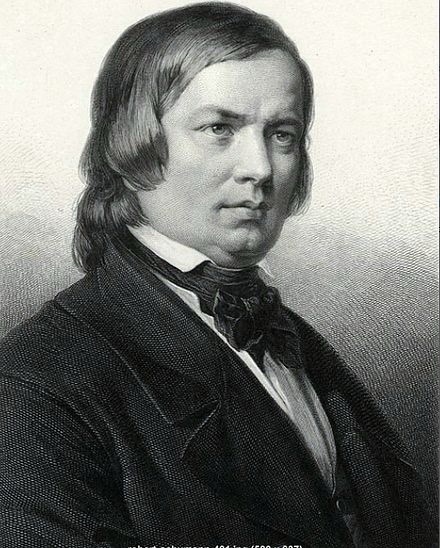
Robert Schumann in 1839 Born 8 June 1810 Zwickau,Saxony Died 29 July 1856 (aged 46) Bonn , Rhine Province, Prussia
The Symphonic Studies Op. 13, began in 1834 as a theme and sixteen variations on a theme by Baron von Fricken, plus a further variation on an entirely different theme by Heinrich Marschner.The first edition in 1837 carried an annotation that the tune was “the composition of an amateur”: this referred to the origin of the theme, which had been sent to Schumann by Baron von Fricken, guardian of Ernestine von Fricken, the Estrella of his Carnaval op. 9. The baron, an amateur musician, had used the melody in a Theme with Variations for flute. Schumann had been engaged to Ernestine in 1834, only to break abruptly with her the year after. An autobiographical element is thus interwoven in the genesis of the Études symphoniques (as in that of many other works of Schumann’s).Of the sixteen variations Schumann composed on Fricken’s theme, only eleven were published by him. (An early version, completed between 1834 and January 1835, contained twelve movements). The final, twelfth, published étude was a variation on the theme from the Romance Du stolzes England freue dich(Proud England, rejoice!), from Heinrich Marschner’s opera Der Templer und die Judin based on Sir Walter Scott’s Ivanhoe (as a tribute to Schumann’s English friend, William Sterndale Bennett to whom it is dedicated )The earlier Fricken theme occasionally appears briefly during this étude. The work was first published in 1837 as XII Études Symphoniques. Only nine of the twelve études were specifically designated as variations. The entire work was dedicated to Schumann’s English friend, the pianist and composer, and Bennett played the piece frequently in England to great acclaim, but Schumann thought it was unsuitable for public performance and advised his wife Clara not to play it.The highly virtuosic demands of the piano writing are frequently aimed not merely at effect but at clarification of the polyphonic complexity and at delving more deeply into keyboard experimentation.
Theme – Andante [C♯ minor]
Etude I (Variation 1) – Un poco più vivo [C♯ minor]
Etude II (Variation 2) – Andante [C♯ minor]
Etude III – Vivace [E Major]
Etude IV (Variation 3) – Allegro marcato [C♯ minor]
Etude V (Variation 4) – Scherzando [C♯ minor]
Etude VI (Variation 5) – Agitato [C♯ minor]
Etude VII (Variation 6) – Allegro molto [E Major]
Etude VIII (Variation 7) – Sempre marcatissimo [C♯ minor]
Etude IX – Presto possibile [C♯ minor]
Etude X (Variation 8) – Allegro con energia [C♯ minor]
Etude XI (Variation 9) – Andante espressivo [G♯ minor]
Etude XII (Finale) – Allegro brillante (based on Marschner’s theme) [D♭ Major]
On republishing the set in 1890, Johannes Brahms restored the five variations that had been cut by Schumann. These are now often played, but in positions within the cycle that vary somewhat with each performance; there are now twelve variations and these five so-called “posthumous” variations which exist as a supplement.
The five posthumously published sections (all based on Fricken’s theme) are:
Variation I – Andante, Tempo del tema
Variation II – Meno mosso
Variation III – Allegro
Variation IV – Allegretto
Variation V – Moderato.
Moderato.
In 1834, Schumann fell in love with Ernestine von Fricken, a piano student of Friedrich Wieck, and for a time they seemed destined to marry. The relationship did not last—Schumann got cold feet after he learned that she had been born out of wedlock—but it inspired some notable music. Carnaval, Op. 9, a set of character pieces for piano, is based on a four-note motive derived from the name of Ernestine’s home town. The Etudes symphoniques, Op. 13, are variations on a theme by Ernestine’s father, Ignaz Ferdinand von Fricken, a nobleman and amateur composer. Of course, Schumann eventually transferred his affections to Clara Wieck, and it was she who gave the first performance of the Etudes symphoniques, in 1837. The piece was published by Haslinger that same year, with a dedication to the English composer William Sterndale Bennett rather than to Ernestine. A revised version appeared in 1852.
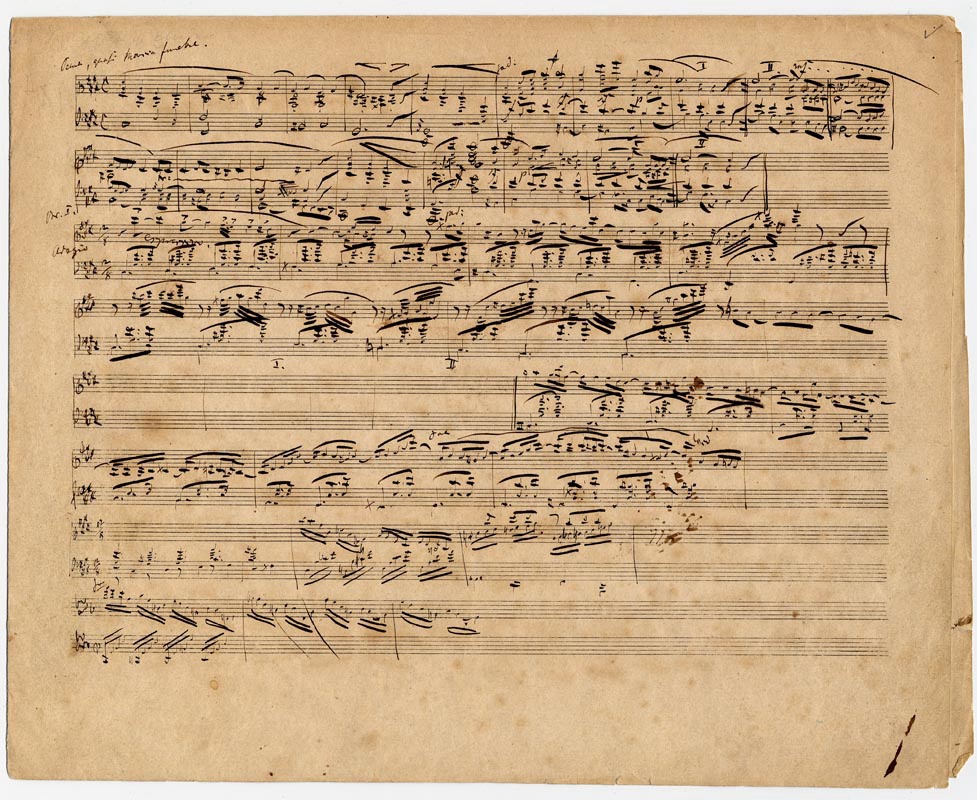
Our manuscript is a sketch that includes the theme and variations 1, 2, 5, 10, 12, as well as five others that were not published until 1873, in an appendix edited by none other than Johannes Brahms. It formerly belonged to Alice Tully (1902–1993), the philanthropist whose name graces a concert hall in Lincoln Center. She gave it to Vladimir Horowitz (who counted Schumann’s music among his many specialties in the piano repertoire), and two years after his death, his widow Wanda Toscanini Horowitz donated it to Yale. The other principal manuscript source for this piece belongs to the library of the Royal Museum of Mariemont, in Belgium.
Hough’s Piano Sonata III, “Trinitas”, commissioned by The Tablet, the second-oldest surviving weekly journal in Britain after The Spectator. The Tablet is a journal which combines loyalty to the Catholic Church with an irrepressible inquisitiveness, and thus its special connection with Stephen Hough seems especially appropriate.
In his new Sonata, Hough explores the 12-note row, the compositional technique of “serialism”. It is a form of musical dogma, and Hough cleverly links this back to The Tablet and Catholicism by scoring the work in three movements and subtitling it “Trinitas”, Latin for “Trinity”, another dogma, the theological ordering of numbers. To guide the listener, each movement is helpfully described (“bold, stark”, “punchy, jazzy” and “majestic, proud”).The middle movement, rhythmically vibrant with its lively syncopations, rapid tinkling notes high in the treble and colourful note clusters, was redolent of Messiaen, another devout Catholic, while its virtuosity referenced Liszt. The final movement, with rich textures and majesty, quotes a familiar hymn tune (Nicea, a setting of the Trinitarian text “Holy, Holy, Holy”) which is disrupted by discordant sounds towards its conclusion. Yet despite the dogma and metaphysics, this work was accessible and at times witty, quirky and playful, and it is exciting to know that such variety and imagination is readily available for other pianists to tackle and enjoy.
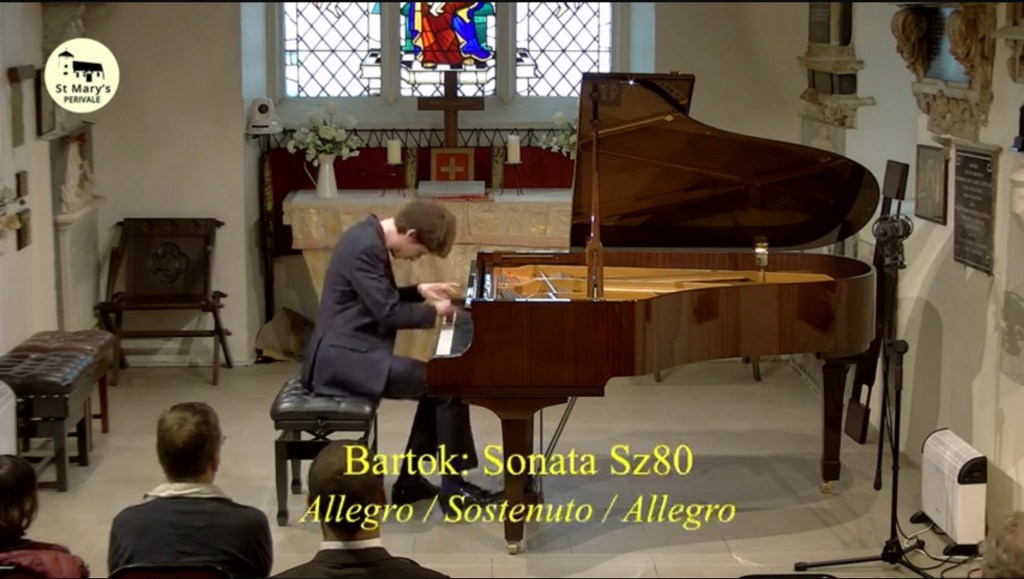
The Piano Sonata, BB 88, Sz. 80, is by Bela Bartok was composed in June 1926. 1926 is known to musicologists as Bartók’s “piano year”, when he underwent a creative shift in part from Beethovenian intensity to a more Bachian craftsmanship
The work is in three movements, with the following tempo indications:
Allegro moderato
Sostenuto e pesante
Allegro molto
It is tonal but highly dissonant (and has no key signature ) using the piano in a percussive fashion with erratic time signatures Underneath clusters of repeated notes, the melody is folklike. Each movement has a classical structure overall, in character with Bartók’s frequent use of classical forms as vehicles for his most advanced thinking. Musicologist Halsey Stevens finds in the work early forms of many stylistic traits that became more fully developed in Bartók’s “golden age”, 1934–1940.
Bartók wrote Dittának, Budapesten, 1926, jun. at the end of the score, dedicating it to Ditta Pasztory- Bartok , his second wife. A performance generally lasts around 15 minutes. Bartók wrote the duration as around 12 minutes and 30 seconds on the score.
Bartok wrote this piece with an Imperial Bosendorfer in mind, which has extra keys in the bass (97 keys in total). The second movement calls for these keys to be used (to play G sharp and F0).
Bartók had previously written a piano sonata in 1896, which is little known.
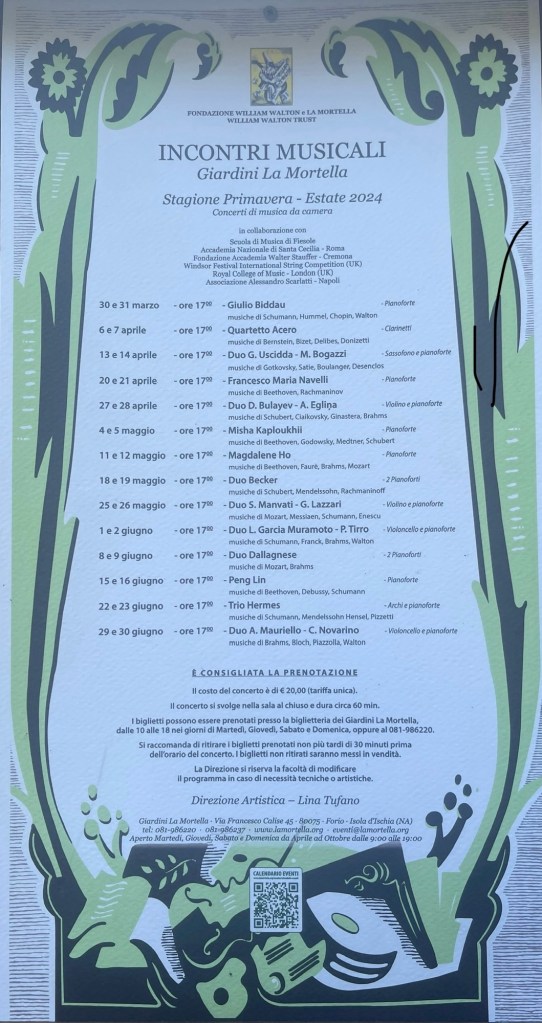
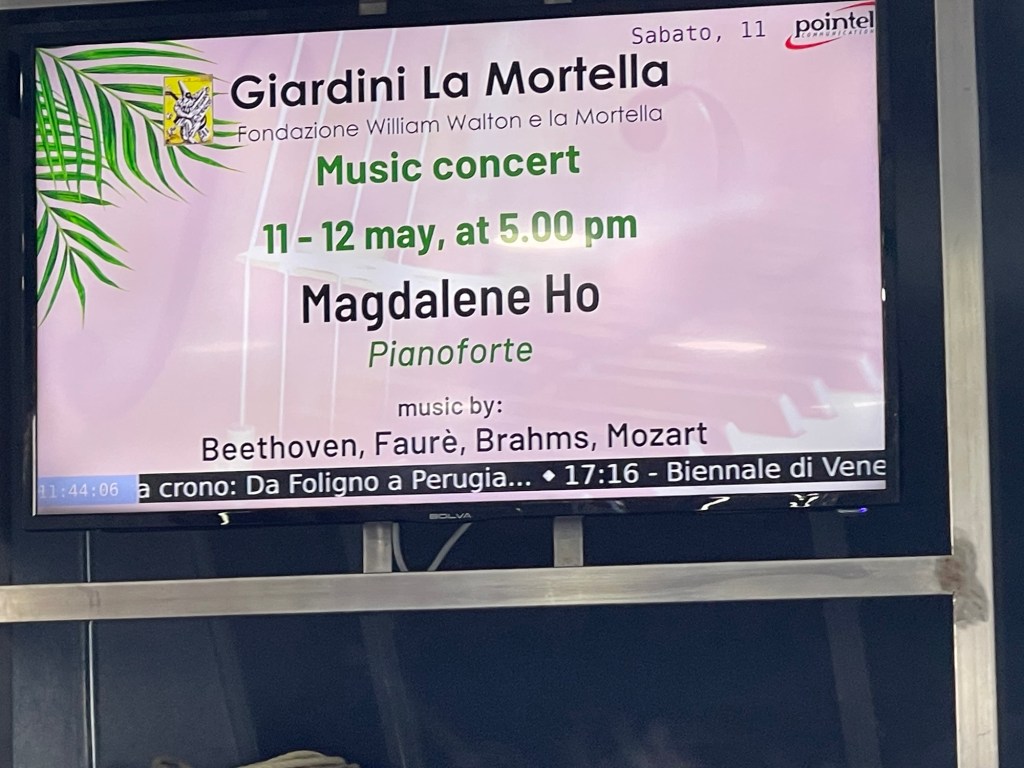
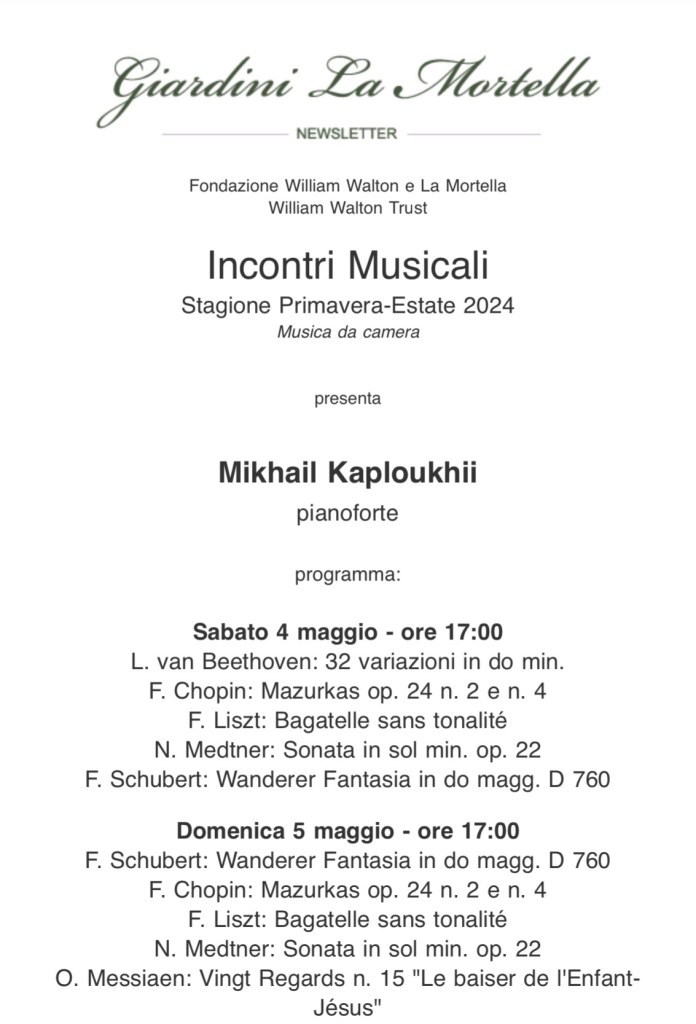
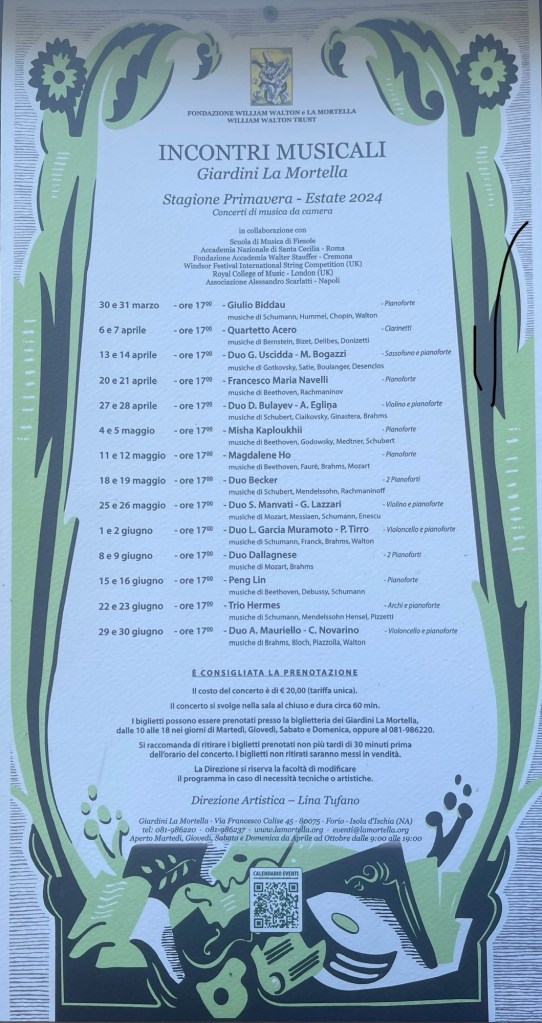
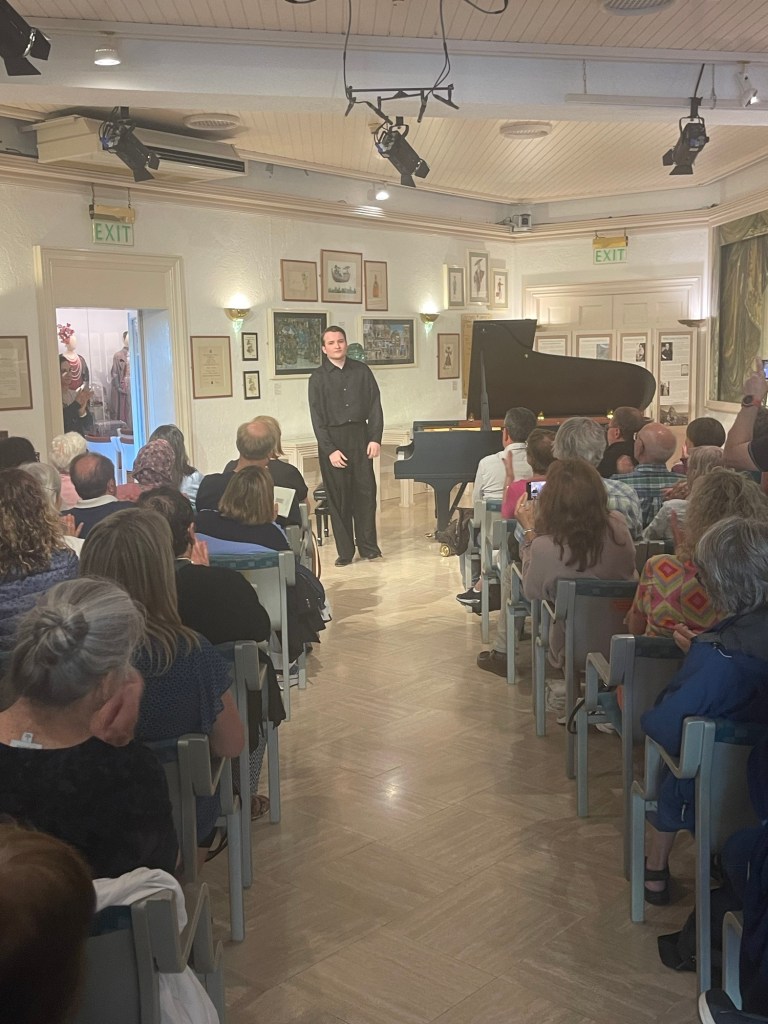
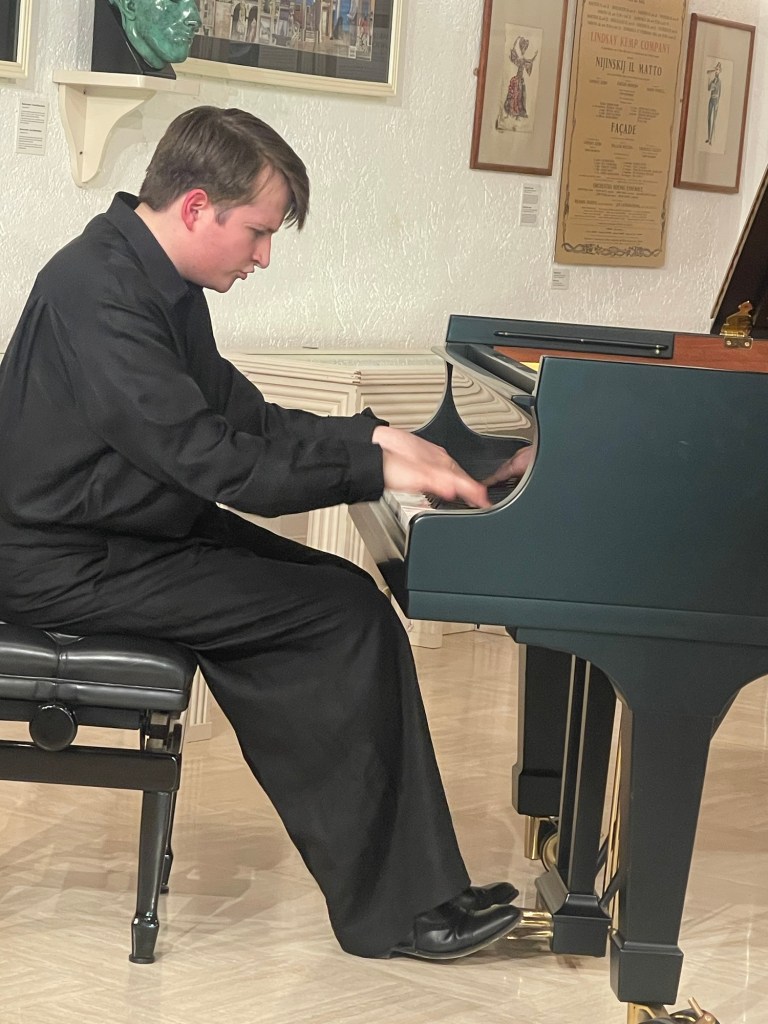
Having recently won one of the two top prizes at the Royal College of Music in London together with Misha Kaploukhii, the artistic director of La Mortella ,Lina Tufano immediately invited them both to play in this paradise of music and nature that was an oasis for the Waltons whose express wish was to give a platform to talented young musicians at the start of their careers.
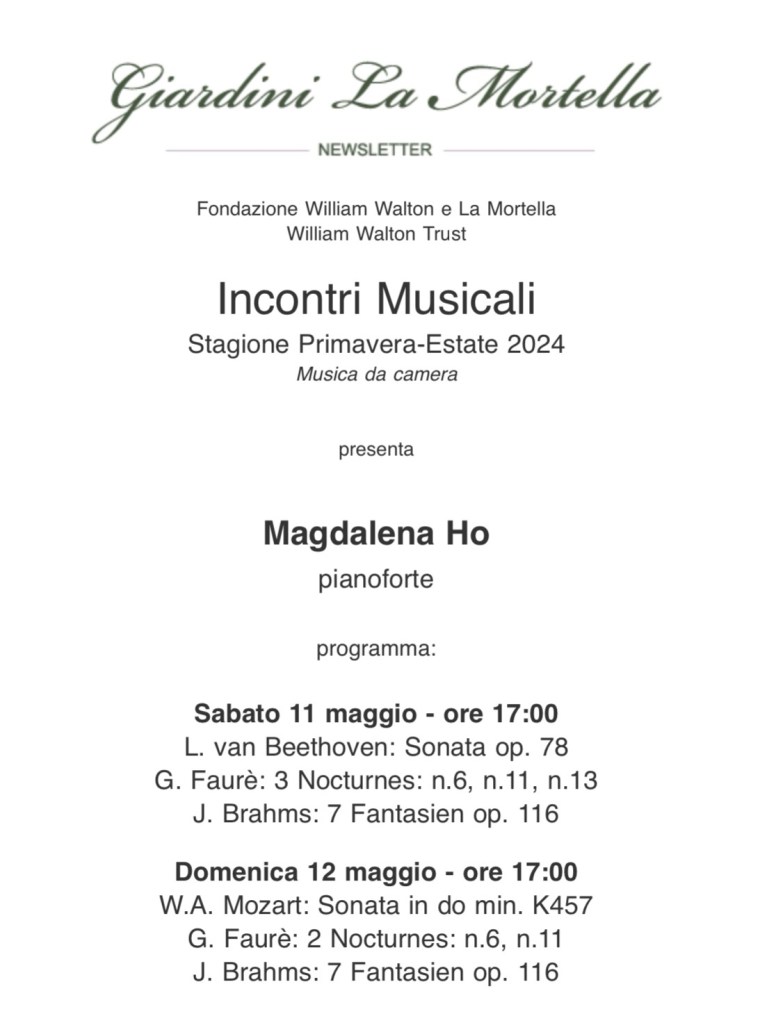
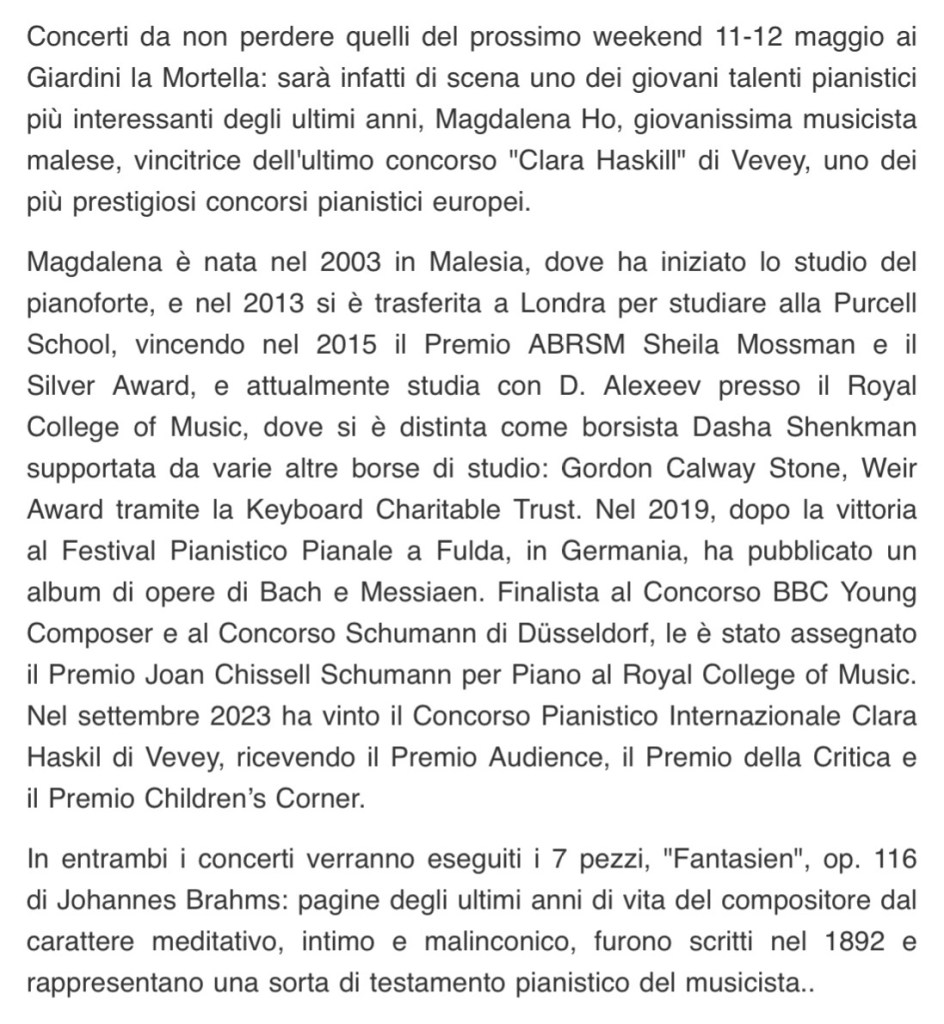
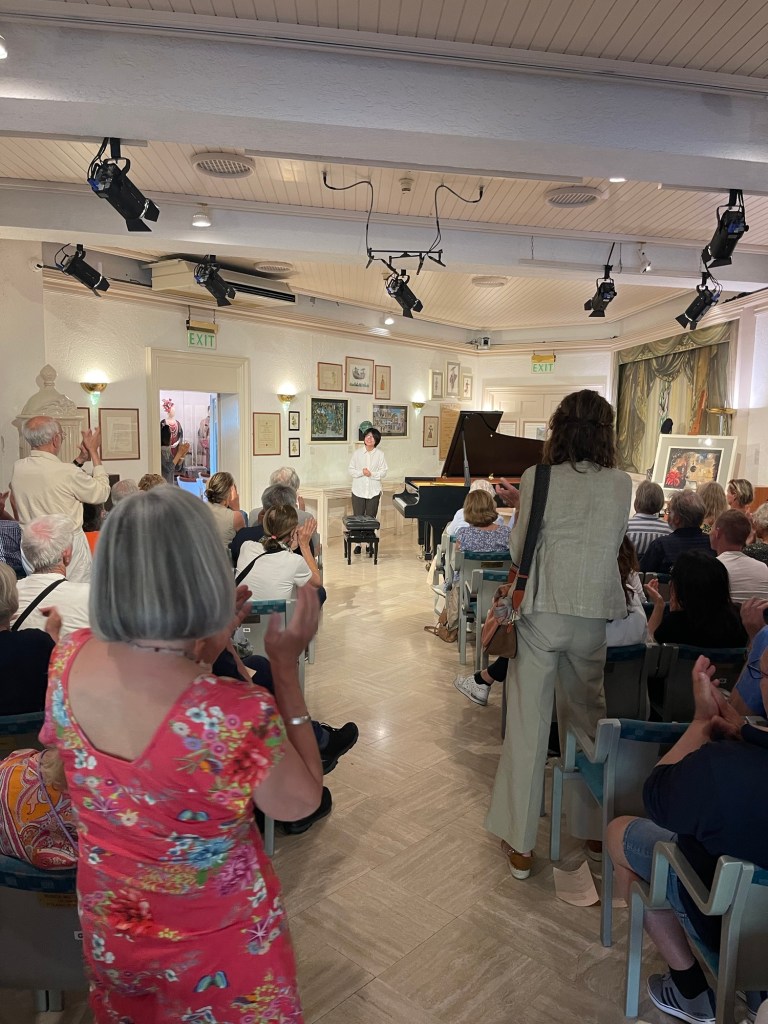
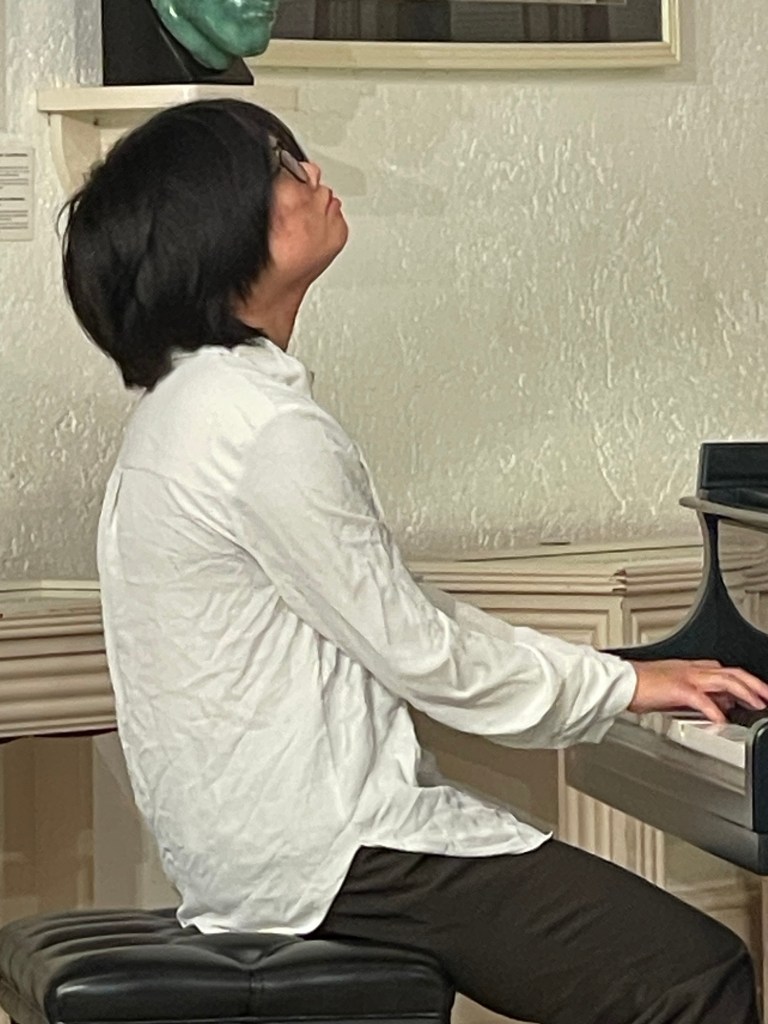
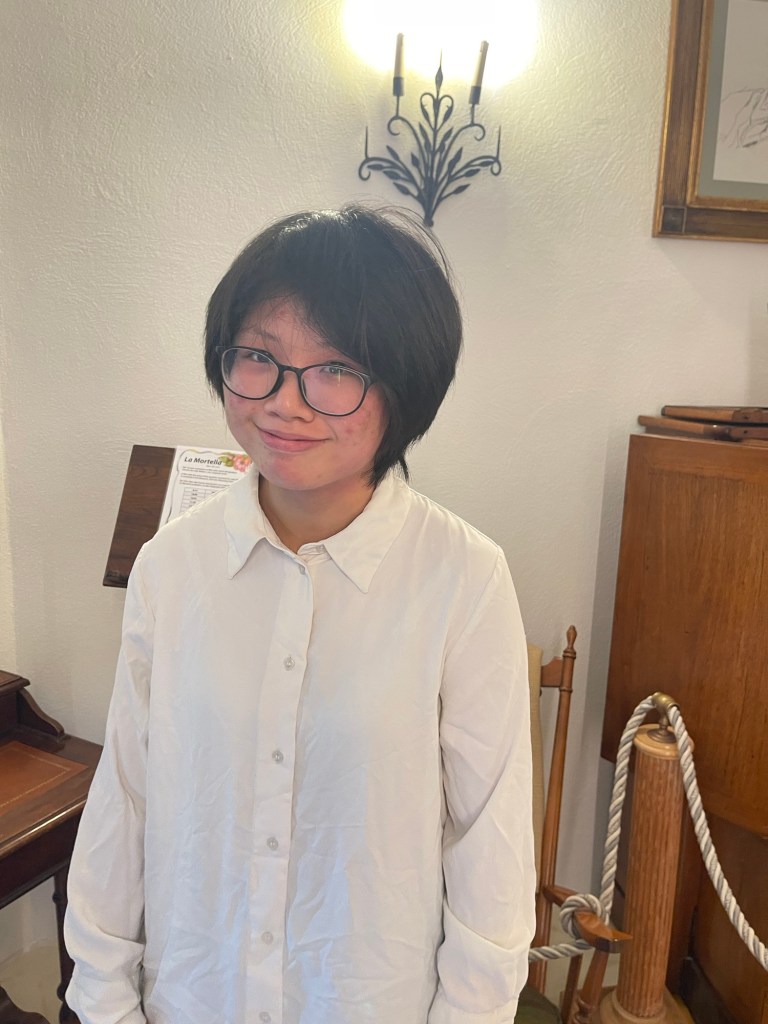
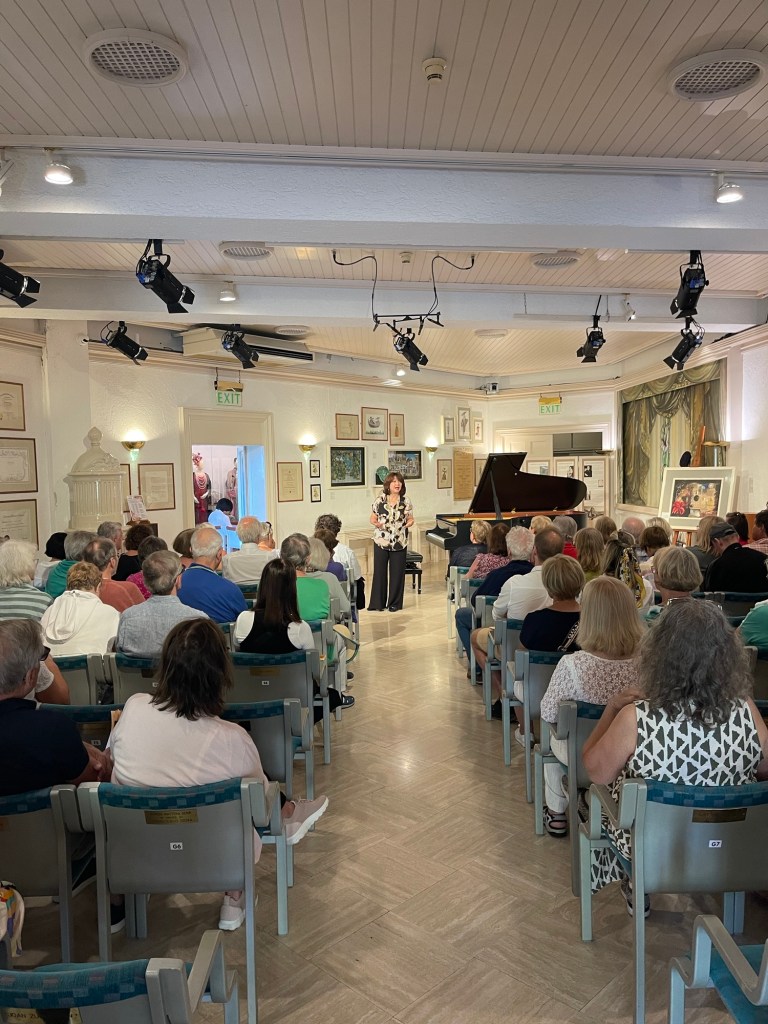
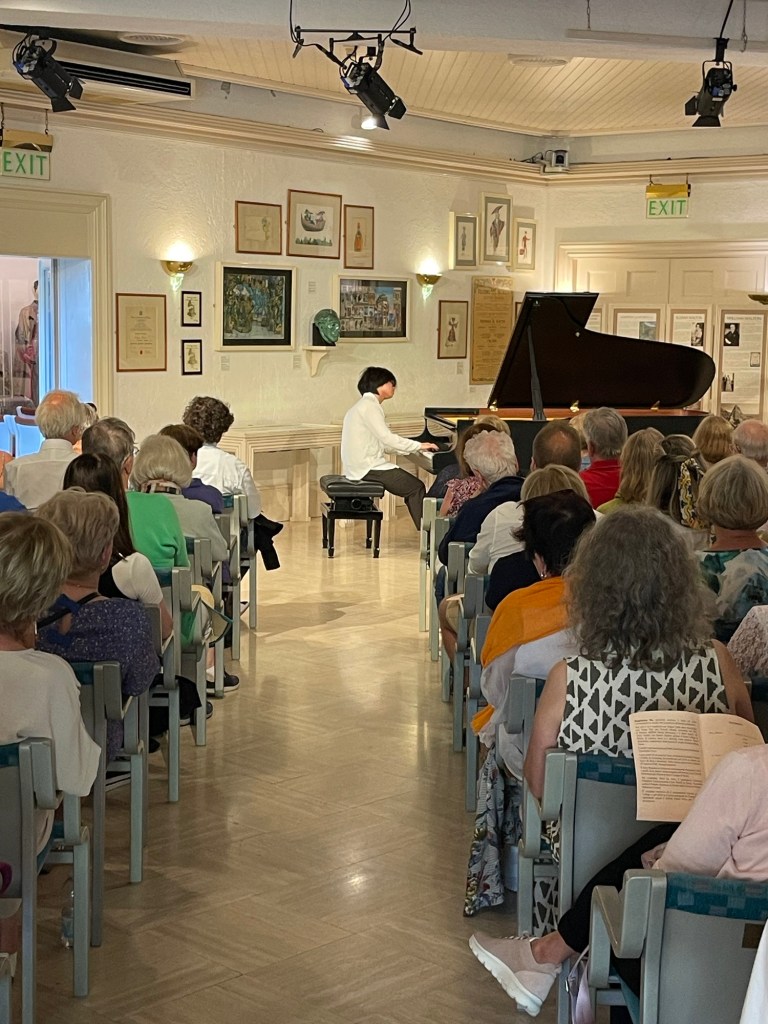
A standing ovation for Magdalene Ho on the Walton’s estate of La Mortella ……..The artistic director Lina Tufano exclaiming that she is one of the greatest talents to have ever graced this paradise . Beethoven’s seemingly innocuous ‘A Thérèse’ sonata in her hands was of Serkin like intensity . Nocturnes by Fauré where the composers somewhat inconclusive final utterings were today given a burning intensity and glowing aristocratic meaning . Brahms’ elusive op 116 were a passionate outpouring of dynamic drive but even more of intimate confessions of sublime beauty. An encore of Liszt’s Tarantella was a breathtaking homage to Naples that had welcomed this genius of the piano with open arms.
A programme that I had heard recently in London and had written an appreciation as well as including the video recording from that other remarkable oasis for young musicians that is St Mary’s.
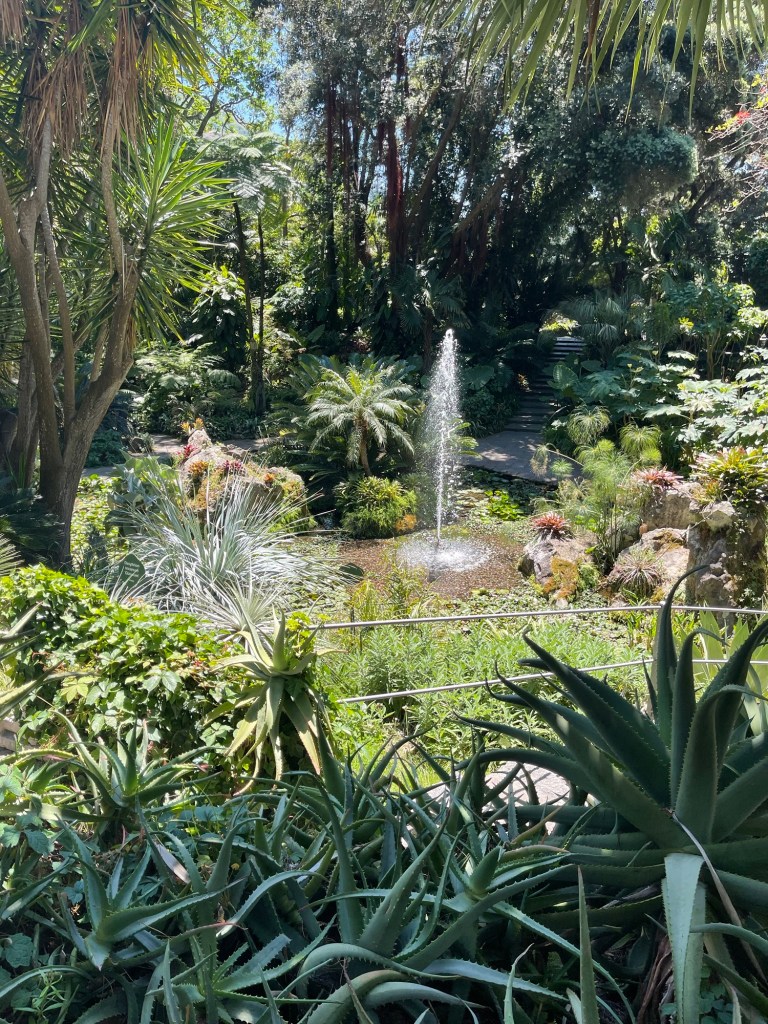
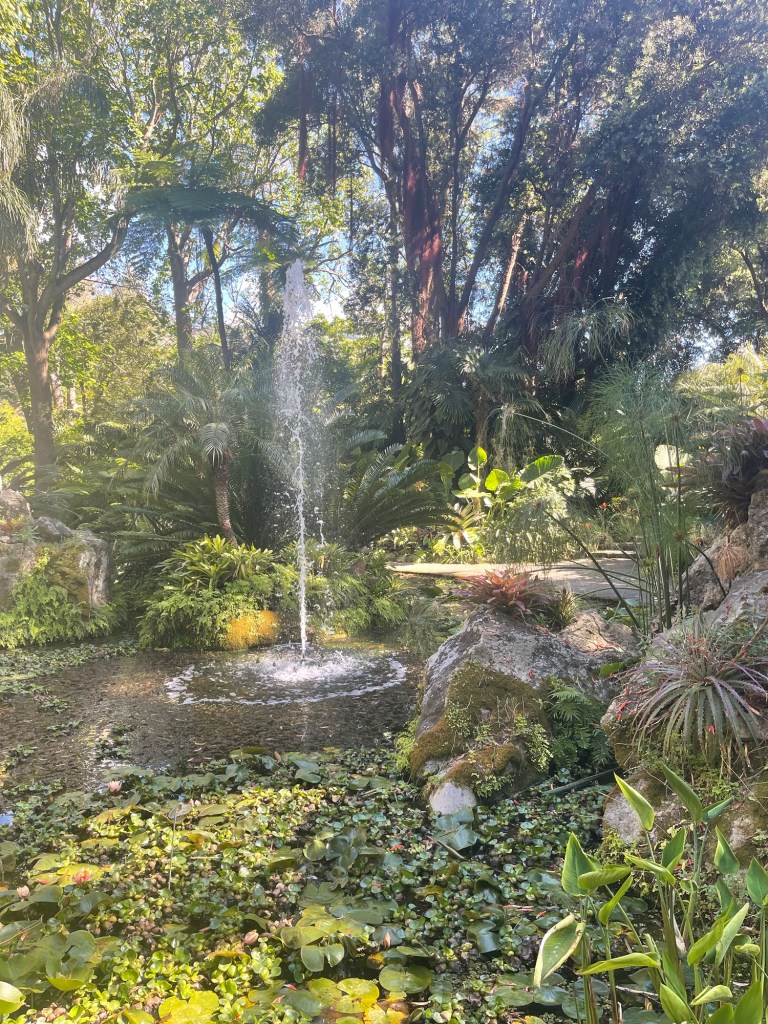
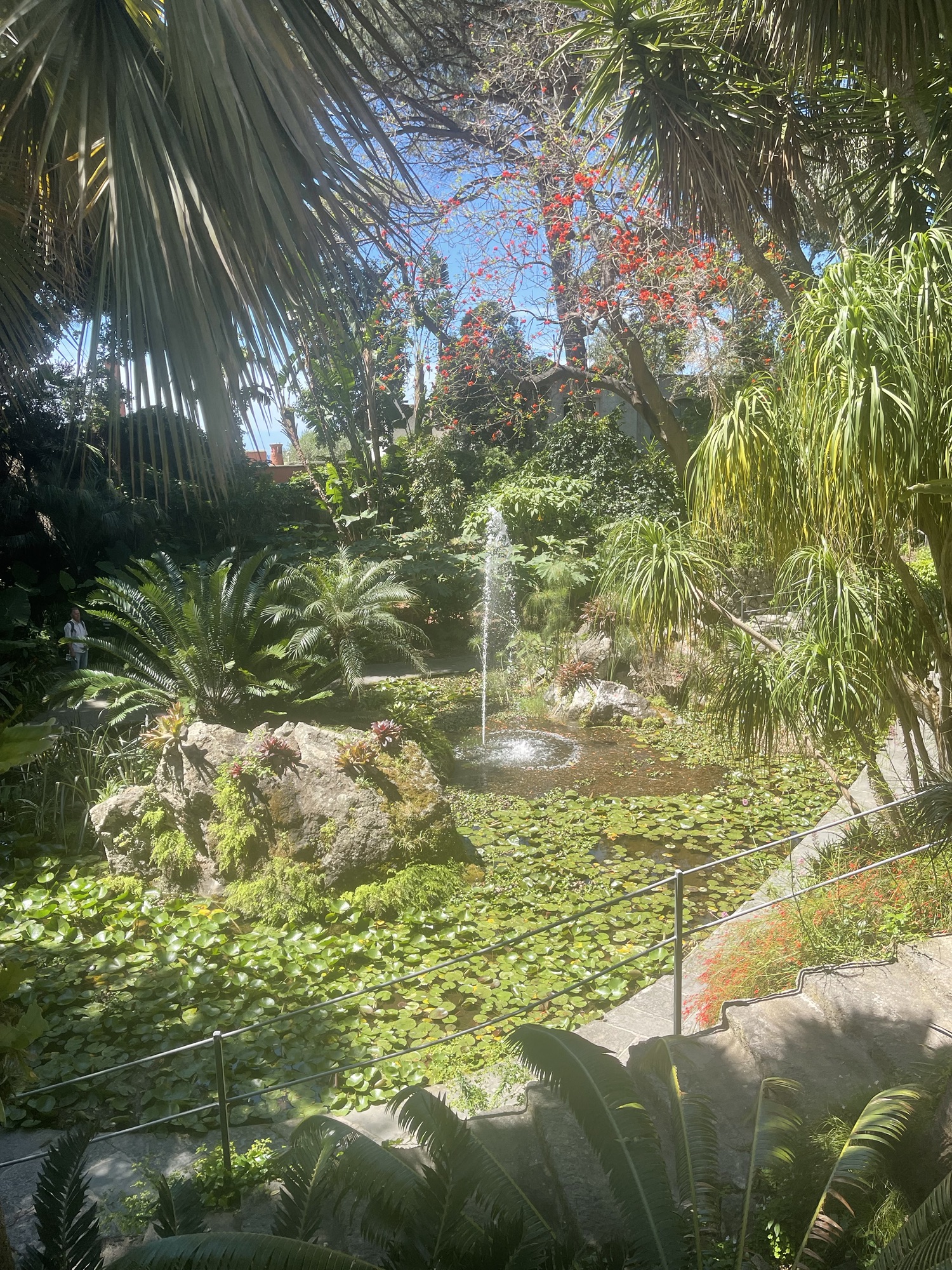
Here at la Mortella is the paradise that the Waltons have bequeathed to a much bruised and abused world to remind us with what simplicity real beauty can be revealed.
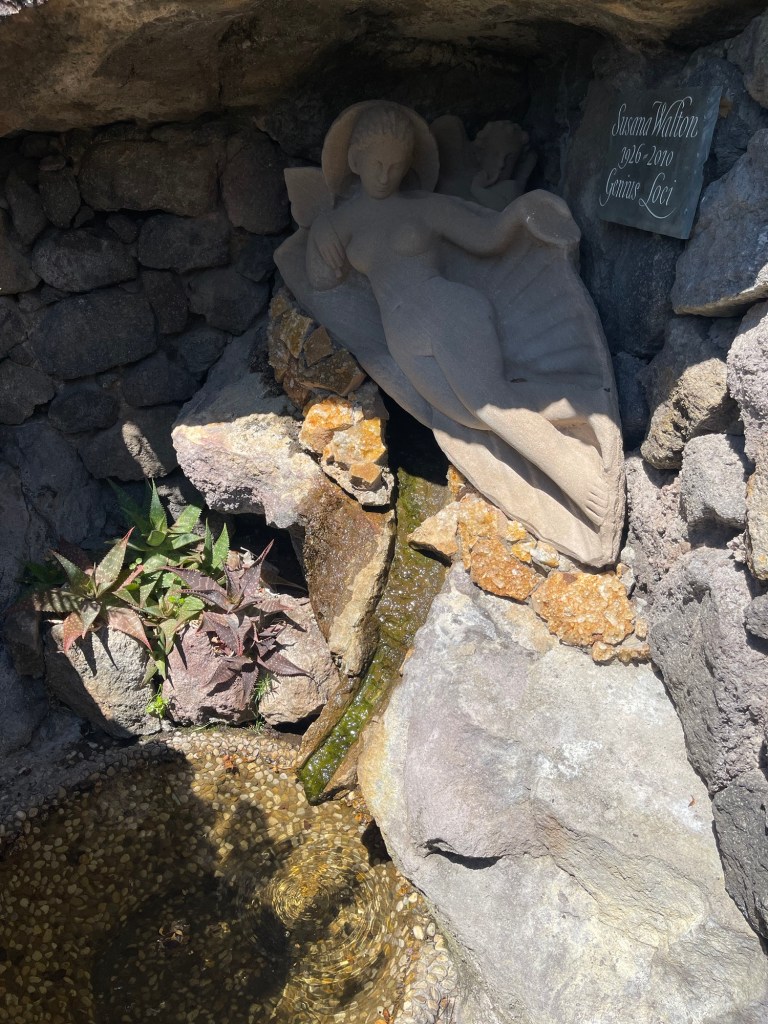
Susana a final resting place near to her husband overlooking the Paradise they had created together
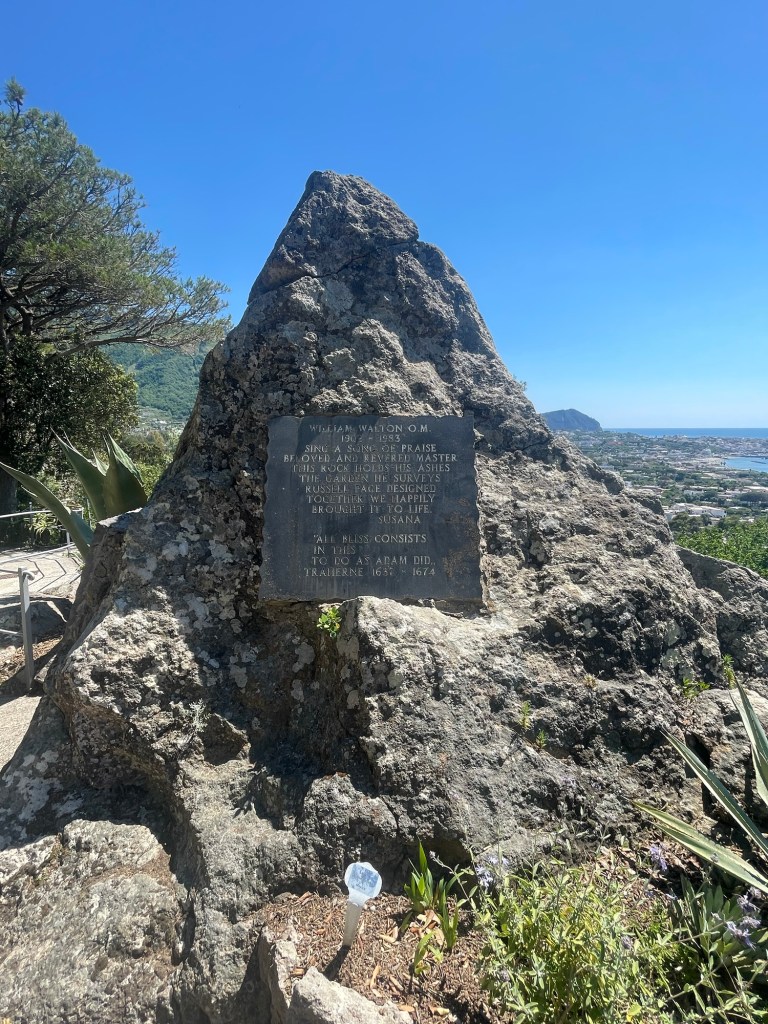
Not only are there the exotic plants in a botanical garden that Susana has created but also the platform that her husband wanted to offer to young musicians who have dedicated their youth to their art and are just in need of a place to share these delicate jewels with a public thirsting for something they have yet to discover. La Mortella is not a Paradise Lost but one where one can find that elusive but ever more important thing that is called a ‘soul’.
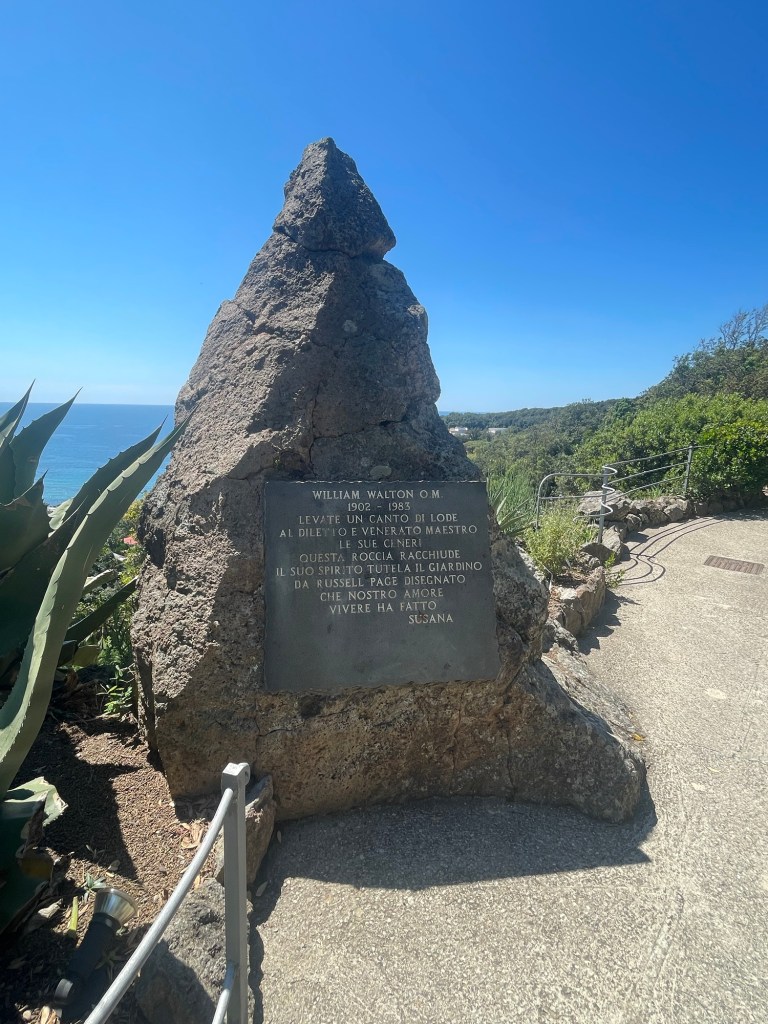
William’s rock that overlooks a Paradise found
And it was Magdalene today who showed us from the very opening notes of one of Beethoven’s favourite Sonatas how a whole world can be opened up and shared.There was an extraordinary clarity and expressiveness to the opening ‘Adagio cantabile’ that Magdalene played with conviction almost as if in a trance.
It was this ‘seance’ that captivated the audience and held them in her spell for the entire concert.Some things cannot be taught but are gifts that are in the genes of a rare few and may reveal themselves in many fields but it is this total dedication and conviction that gives the impression that in that moment this is the most important thing on earth. A hypnotic tension that Magdalene certainly has as she is totally absorbed but also can captivate and cast a spell on all around her . There was a rhythmic flow to the first movement as though riding on a wave of sound that flowed relentlessly forward. A kaleidoscope of sounds that were always noble and full even when she found the most etherial of whispered golden strands. The ‘Allegro ma non troppo’ was hard on the heels of the first movement with a burst of energy and electric drive that I have only ever experienced from Rudolf Serkin. It marked a frenzied drive that swept all before it in a performance of breathtaking exhilaration and liberation.
A scrupulous attention to the precise indications that scatter Beethoven’s scores meant that this was an artist of intelligence and maturity and above all an artist that one can trust! 7Taking the notes off the printed page and returning them to the sounds that the composer had in his head at the moment of creation is the true art of an interpreter. Pollini, who we celebrated in Rome a few days ago, showed us with selfless dedication for so many years what it means to be the servant of a master.
I was brought up with Perlemuter’s performances of Fauré. He insisted that I tell the public in a recital in Rome that the nocturnes by Fauré that he was playing were those that Fauré ,the Director of the Paris Conservatoire,had sent down to him to try out with the ink still wet on the page. Perlemuter could not abide any sickly rubato or weak fussy playing as was so often the case with the so called Chopin tradition still rampant. He, like Magdalene today, presented a Fauré of aristocratic nobility and originality where the sentiments are deeply imbedded within the notes and not just applied on the surface!
Magdalene played three of Fauré’s thirteen Nocturnes starting with the beautifully poetic sixth nocturne where the melodic line is allowed to sing unimpeded by the counterpoints that can obscure the later ones in lesser hands. It was an outpouring of simple aristocratic sounds of poignant poetic meaning. The gentle stream of the morning chorus in the ‘Allegro moderato’ may have been the inspiration for Messiaen a hundred years on and here was a sumptuous stream of sounds on which the melodic line could float so magically.There were sudden washes of sound where notes no longer existed as Magdalene took us into a land that obviously spoke so deeply to her. Rarely have I heard this rather inconclusive sound world of Fauré speak with such eloquence and simplicity. Even the more elusive later Nocturnes were given a musical line and meaning that is very rare indeed. In the eleventh she depicted a desolate landscape of searing intensity and the mysterious final words of Fauré with his thirteenth and last Nocturne opened with whispered tones. Searching for a path that she found with the clouds lifting and sudden rays of bright light allowed to gleam as she played with breathtaking conviction and passionate abandon opening a gate to a masterpiece that is rarely revealed by lesser mortals.
Magdalene Ho ‘kissed by the Gods’
Brahms’s seven fantasies op 116 is a masterwork but not always easy to perform complete in public as it requires extreme concentration not only from the performer but also the audience. Magdalene succeded even more than on the previous occasion I had heard her and the cheers that greeted her final Capriccio just showed how she had been able to takes us on a voyage of discovery holding us in the same trance that she herself was obviously experiencing.There are the three explosions of passionate orchestral sounds in the Capriccios but in the Intermezzi there is an intensity and deeply moving meaning to every note that Magdalene magically transmitted to us as she depicted a world where the music spoke with such touching eloquence.
There was an explosion of passion and delicacy with the first Capriccio in D minor, an outpouring of intensity and exhilaration.The beautiful sweeping left hand octaves were just like a wind blowing across this red hot terrain. A gentle pleading in the A minor intermezzo was with a full string quartet sound that contrasted with the glistening etherial ‘non troppo presto’ that Brahms implores to be played ‘molto piano’ and ‘legato’. Bursting into flames again with the G minor Capriccio with the glorious nobility of ‘un poco meno Allegro’ Trio with its sumptuous abandonment of rich golden sounds. This was truly a full orchestra of Philadelphian richness. Following on with one of Brahms’s most poignant utterings: the Intermezzo in E where so few notes can say so much in Magdalene’s sensitive hands. An ‘una corda’ that was a whispered secret miraculously shared with us as we awaited every note with baited breath, the wafts of sound glistened in this autumnal landscape. ‘Andante – Allegretto con grazia ed intimissimo sentimento’ are Brahms indications for the gentle lilting question mark of the Intermezzo in E minor answered by the sombre brooding in the major of the ‘Andantino teneramente’. Magdalene brought great meaning to this strangely unsettled world with its gloriously flowing central episode that opens the gate for ever more whispered confessions. A transcendental control of sound to the final seemingly infinite arpeggio with a top note that truly pointed to an unearthly world on high . Sumptuous sounds and passionate conviction were thrown off with the ease of a great virtuoso in the final Capriccio in D minor with its meandering search of superfine clarity and whispered drive until the final explosion of sumptuous nobility and brilliance.
Magdalene who in these days has been playing Chopin’s first piano concert in Switzerland and a recital in Trieste had not thought that she might have been asked for an encore. An encore was demanded by an audience who had no intention of letting this young genius go so easily. The Tarantella ,the last of Liszt’s Venezia e Napoli suite of three pieces, was the answer and it was a breathtaking example of virtuosity and style. If the beautiful central Neapolitan song was a little slow it was because she too was enjoying the sunlight that suddenly was shining brightly after Brahms’s deep brooding and introspection. A work that her former teacher Patsy Fou ( the widow of the great Chinese pianist Fou Ts’Ong) told me that she had not played since she was 12 !
Returning to her own world of deep introspection and selfless denial Magdalene played a second encore demanded by an ever more enthusiastic public.The Intermezzo in A op 118 n.2 was played with tenderness and the sumptuous rich intimacy of a pianist who knows what playing with weight really means.
‘Chapeau’ or to quote Schumann :’Hats off Gentlemen,a genius! ‘
Genius knows no limits as it is a continual inspiration for all those caught in their illuminating rays.
‘ Catch a falling star ‘ so the song goes and what a perfect combination of Genius in Paradise – stars to be cherished indeed.
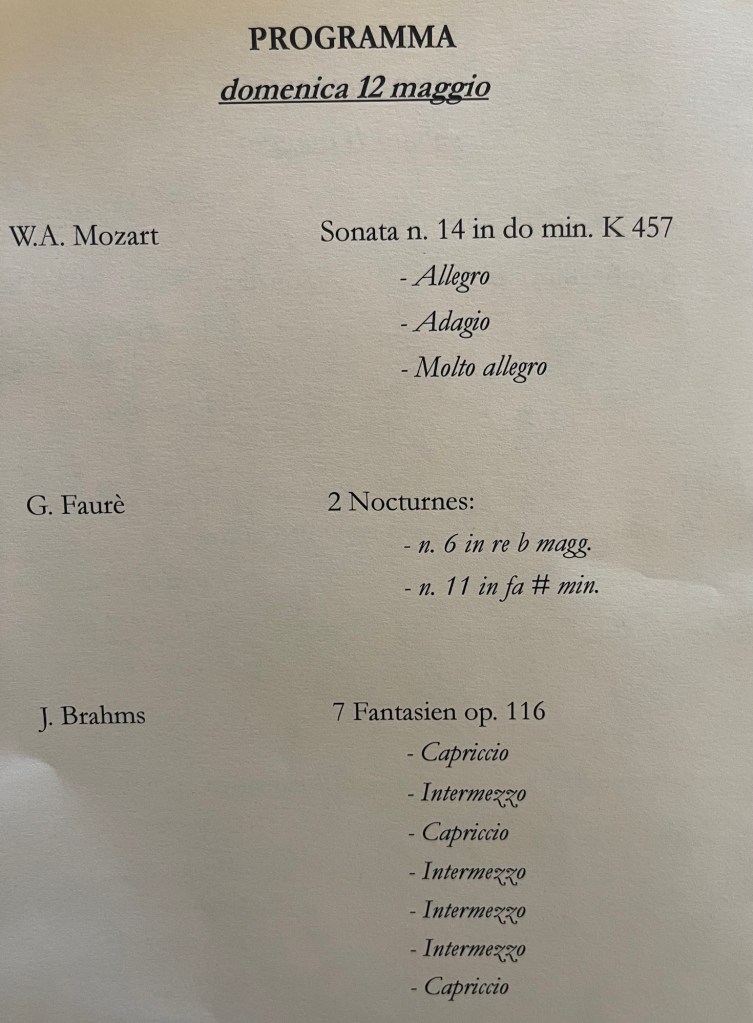
The second concert had included Mozart’s C minor Sonata in place of the last Fauré nocturne.
And today opening with Mozart’s C minor Sonata with a nervous energy and subtle dynamic range that brought this masterpiece vividly to life as I have rarely heard before. Amazingly Magdalene told me afterwards that it was the first time she had performed this work in public! There were incredible subtle inflections of refined artistry that were quite unexpected from a pianist still only twenty years old. A rhythmic drive but of its time with a humanity and sense of civilised passion and a startling range of sounds judged to absolute perfection always with the architectural shape of the whole sonata in view.
An Adagio of disarming simplicity and beauty where the music was allowed to speak with a human voice of the most refined ‘bel canto’.It was pure magic as the poignant understatement of the final chords were like heartbeats pulsating deep in the depths of the keyboard .
Beethovenian irascible changes of character in the ‘Molto allegro’ were followed by Mozart’s unmistakable melodic outpouring of utter simplicity. Magic was in the air as she allowed Fauré’s etherial D flat nocturne to fill this hall that today was full to the rafters unknowingly congregating to celebrate Fauré’s birthday (12th May 1845).
And today Magdalene had a little secret up her sleeve with two encores in the style of the scintillating playing of Lhevine,Hoffman,Godowsky or Rachmaninov .Playing of the Golden Era of Piano Playing when at the end of a recital pianists would allow themselves to indulge in playing of teasingly beguiling half shades and technical wizardry. I had suggested to Magdalene that she could finish on a high with some pianistic acrobatics instead of another tribute to Fauré that she had suggested .Well she locked herself away with a piano for five minutes whilst she brushed up some pianistic lollipops that she had not played for quite sometime.
She gave a ravishing performances of beguiling half colours and a sumptuous sense of balance with Schubert’s ‘Standchen’ in Liszt’s beautiful transcription.And finally letting her hair down with Saint- Saens ‘Etude en forme de valse ‘ played with tantalising, teasing style and subtle virtuosity that was greeted with a standing ovation for a pianist the like of whom this hallowed hall has never seen before.
Malaysian pianist Magdalene Ho was born in 2003 and started learning the piano at the age of four. In 2013, she began studying in the UK with Patsy Toh, at the Purcell School. In 2015, she received the ABRSM Sheila Mossman Prize and Silver Award. As part of a prize won at the PIANALE piano festival in Fulda, Germany, she released an album of Bach and Messiaen works in 2019. She was a finalist at the Düsseldorf Schumann Competition 2023 and was awarded the Joan Chissell Schumann Prize for Piano at the Royal College of Music a few months later. In September 2023, she won the Clara Haskil International Piano Competition in Vevey along with receiving the Audience Prize, Young Critics’ Prize and Children’s Corner Prize. She has been studying with Dmitri Alexeev at the Royal College of Music since September 2022, where she is a Dasha Shenkman Scholar supported by the Gordon Calway Stone Scholarship, and by the Weir Award via the Keyboard Charitable Trust. She recently won the Chappell Gold Medal at the RCM
Alessandra Vinciguerra director of La Mortella introducing the concert as Lady Walton had done for many years – Prof Lina Tufano overseeing the concert from Sir William’s music room and now the artist’s green room
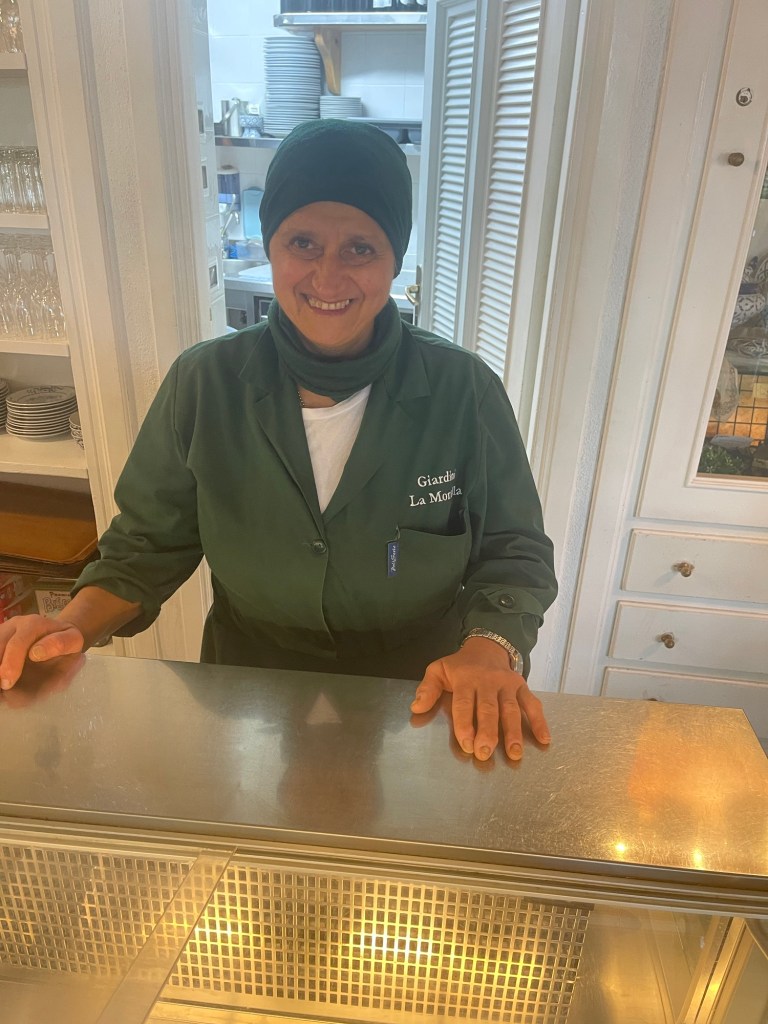
Raffaella the perfect hall manager. The daughter of Reale who was Susana Waltons informally adopted daughter and whose exquisite soufflé was the stuff that legends are made of.Publicity on the boat crossing the Bay of Naples to Ischia
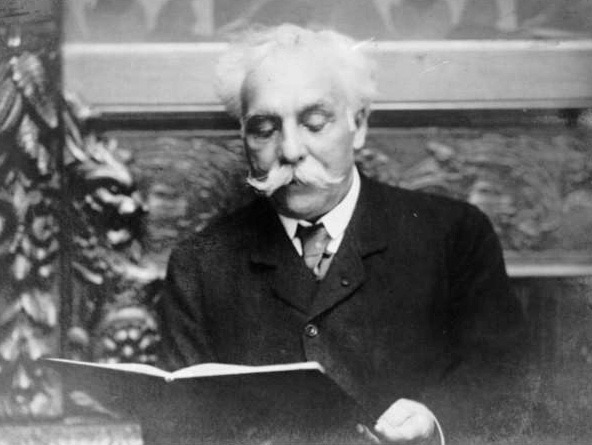
Gabriel Urbain Fauré 12 May 1845, Pamiers ,France – 4 November 1924 ,Paris
Fauré’s major sets of piano works are thirteen nocturnes , thirteen barcarolles , six impromptus , and four valses-caprices. These sets were composed during several decades in his long career, and display the change in his style from uncomplicated youthful charm to a final enigmatic, but sometimes fiery introspection, by way of a turbulent period in his middle years. His other notable piano pieces, including shorter works, or collections composed or published as a set, are Romances sans paroles, Ballade in F♯ major, Mazurka in B♭ major, Thème et variations in C♯ minor, and Huit pièces brèves. For piano duet, Fauré composed the Dolly Suite and, together with his friend and former pupil André Messager , an exuberant parody of Wagner in the short suite Souvenirs de Bayreuth.Fauré’s stylistic evolution can be observed in his works for piano from the elegant and captivating first pieces, which made the composer famous and show the influence of Chopin, Saint-Saëns, and Liszt. The lyricism and complexity of his style in the 1890s are evident in the Nocturnes nos. 6 and 7, the Barcarolle no. 5 and the Thème et variations. Finally, the unadorned ,essential style of the final period of the last nocturnes (nos.10–13), the series of great barcarolles (nos. 8–11) and the astonishing Impromptu no. 5. Fauré scholars are generally agreed that the last nocturne n. 13 in B minor – which was the last work he wrote for the piano – is among the greatest of the set. Nectoux writes that along with the sixth, it is “incontestably the most moving and inspired of the series.”Bricard calls it “the most inspired and beautiful in the series.”For Pinkas, the work “achieves a perfect equilibrium between late-style simplicity and full-textured passionate expression.”The work opens in a “pure, almost rarefied atmosphere” (Nectoux), with a “tone of noble, gentle supplication … imposing gravity and … rich expressive four part writing.”This is followed by an allegro, “a true middle section in a virtuoso manner, ending in a bang” (Pinkas).The repeat of the opening section completes the work.The eleventh nocturne was written in memory of Noémi Lalo; her widower, Pierre Lalo , was a music critic and a friend and supporter of Fauré and its funereal effect of tolling bells may also reflect the composer’s own state of anguish, with deafness encroaching.The melodic line is simple and restrained, and except for a passionate section near the end is generally quiet and elegiac.The sixth nocturne, dedicated to Eugène d’Eichthal, is widely held to be one of the finest of the series. Cortot said, “There are few pages in all music comparable to these.” It is among the most rich and eloquent of all Fauré’s piano works and one of the most passionate and moving works in piano literature. Fauré wrote it after a six-year break from composing for the piano.Copland wrote that it was with this work that Fauré first fully emerged from the shadow of Chopin,
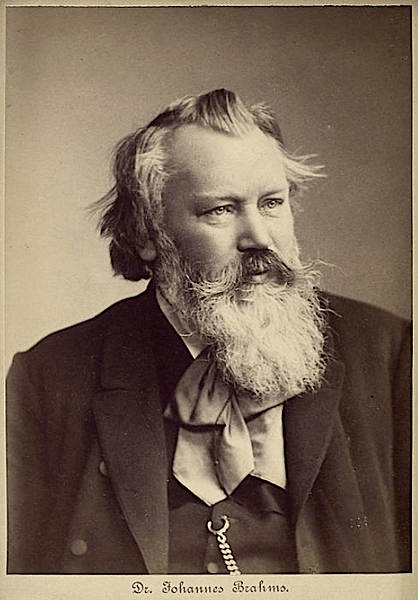
7 May 1833 Hamburg – 3 April 1897 (aged 63) Vienna
Johannes Brahms presumably wrote the Fantasies op. 116 at the same time as the Intermezzi op. 117 in the summer of 1892 in Bad Ischl. His sojourn in the Salzkammergut obviously inspired Brahms to write music for solo piano, as a year later he worked on other cycles when he was there. Amongst these late melancholy piano pieces, op. 116 is in particular characterised by opposites. Four “dreamy” intermezzi according to Clara Schumann are juxtaposed with three “deeply passionate” capricci.
After an early focus on works for solo piano, including the three sonatas that Robert Schumann described as “veiled symphonies,” Brahms tended to employ his chosen instrument, the piano, in collaborative works, producing a variety of duo sonatas (with violin, cello, and clarinet), piano trios, piano quartets, and one piano quintet, as well as two more trios (one with horn and one with clarinet). His final efforts for solo keyboard were published in four sets of shorter works (Op
116-119), which appeared between 1891 and 1893.
These four sets of late solo piano pieces are all in effect abstract instrumental songs, though unfailingly idiomatic. (So much so, that he abandoned his attempt to orchestrate the immediately popular Intermezzo, Op. 117, No. 1.) All are in the A-B-A song form typical of character pieces and are as highly concentrated as his greatest songs.
Only the first of these groups (Op. 116) has a continuity that argues for continuous performance. The probable dedicatee of these works, Clara Schumann , with whom Brahms had a rather complicated relationship, praised them as “a true source of enjoyment, everything, poetry, passion, rapture, intimacy, full of the most marvellous effects”.
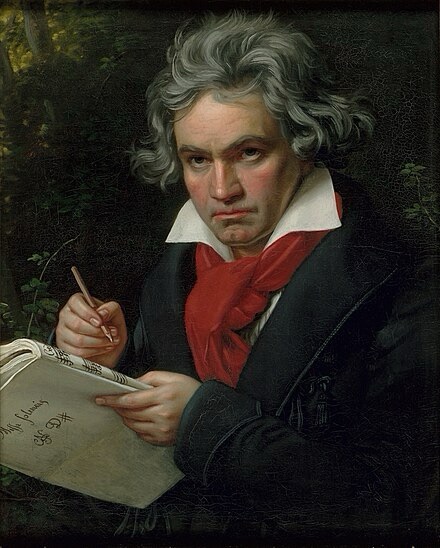
Ludwig van Beethoven 17 December 1770. 26 March 1827 (aged 56). Vienna
The Piano Sonata No. 24 Op. 78, nicknamed “à Thérèse” (because it was written for Countess Thérèse von Brunswick ) was written in 1809.
The second movement is a variation to the ending of the popular patriots song “Rule Brittania!”
According to Carl Czerny, Beethoven himself singled out this sonata and the “Appassionata “ as favourites together with the later ‘Hammerklavier”. After a pause of four years, Beethoven returned to the piano sonata genre in 1809. Unlike its predecessor, the F minor Sonata op. 57 (the “Appassionata”), this work strikes a new and lyrically cantabile tone that must have been the reason for its tradition-breaking two-movement structure; a slow middle movement would not have provided the necessary contrast to the outer ones. Just as unusual as the general character of opus 78 is its four bar Adagio introduction; this does not directly refer to the subsequent motifs and themes, and serves no other purpose than to “conjure up the atmosphere of the entire sonata in our hearts” (Hugo Riemann).
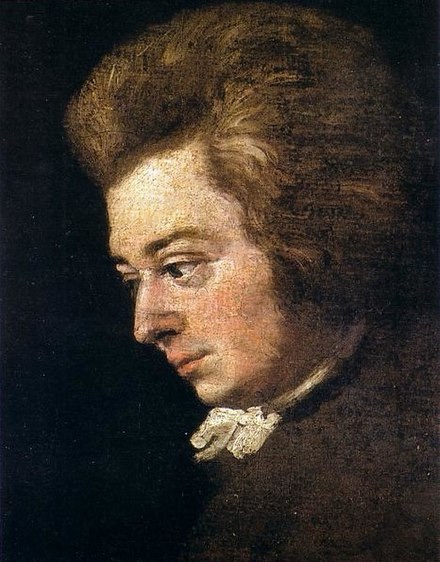
Wolfgang Amadeus Mozart 27 January 1756 – 5 December 1791
The Piano Sonata No. 14 in C minor K.457, was composed and completed in 1784, with the official date of completion recorded as 14 October 1784 in Mozart’s own catalogue of works.It was published in December 1785 together with the Fantasy in C minor K.475 as opus 11 by the publishing firm Artaria ,Mozart’s main Viennese publisher.The sonata is in three movements:
Molto allegro
Adagio
Allegro assai
The title page bore a dedication to Theresia von Trattner (1758–1793), who was one of Mozart’s pupils in Vienna. Her husband, Thomas von Trattner (1717–1798), was an important publisher as well as Mozart’s landlord in 1784. Eventually, the Trattners would become godparents to four of Mozart’s children.
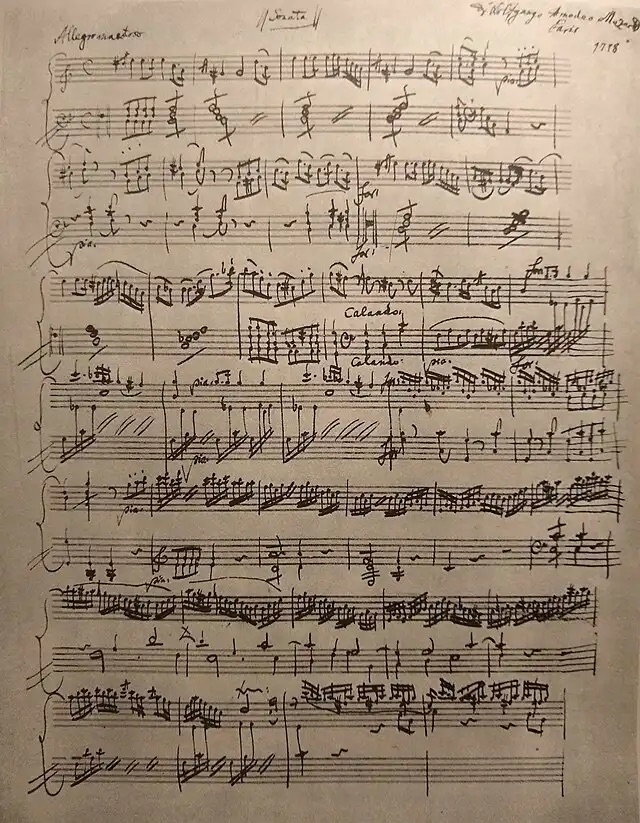
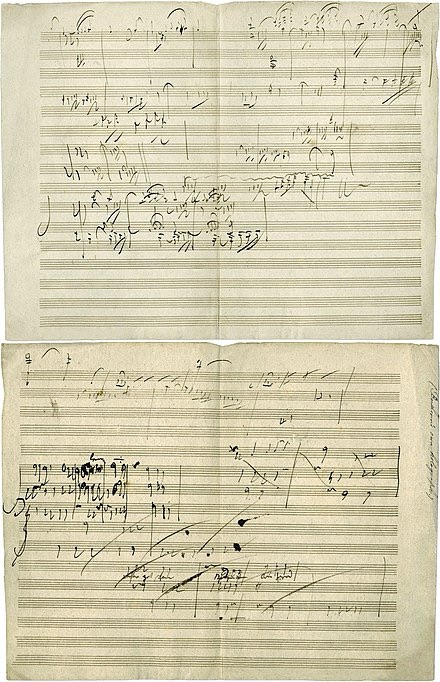
Manuscript Sonata in A minor K 310
It was composed during the approximately 10-year period of Mozart’s life as a freelance artist in Vienna after he removed himself from the patronage of the Archbishop of Salzburg in 1781 and is one of the earliest of only six sonatas composed during the Vienna years.It is only one of two sonatas Mozart wrote in a minor key, the other being the in A minor K 310 , which was written six years earlier, around the time of the death of Mozart’s mother. Mozart was extremely deliberate in choosing tonalities for his compositions; therefore, his choice of C minor for this sonata implies that this piece was perhaps a very personal work.
We had the privilege of experiencing two extraordinary and unforgettable days at the Casals Forum!
It is difficult to put into words the exceptional talent and the stunning performances of the six nominees for the
13th International German Piano Award.
These days were filled with musical beauty and the passion that each artist brought to the stage. My heartfelt congratulations go to all six nominees, who enriched both the jury and the audience with their incredible talent.
However, I would like to extend a very special congratulations to
𝐌𝐀𝐆𝐃𝐀𝐋𝐄𝐍𝐄 𝐇𝐎:
After 11 years, she is the first woman to win the International German Piano Award!
Dear Magdalene, your performance in the Grand Prix with Schumann’s Piano Concerto was nothing short of breathtaking, and your appearances on all previous stages were equally unforgettable. Every note was deliberate and played with gentle precision—a true masterpiece. Congratulations on this outstanding achievement! You are undoubtedly a pianist of great promise.
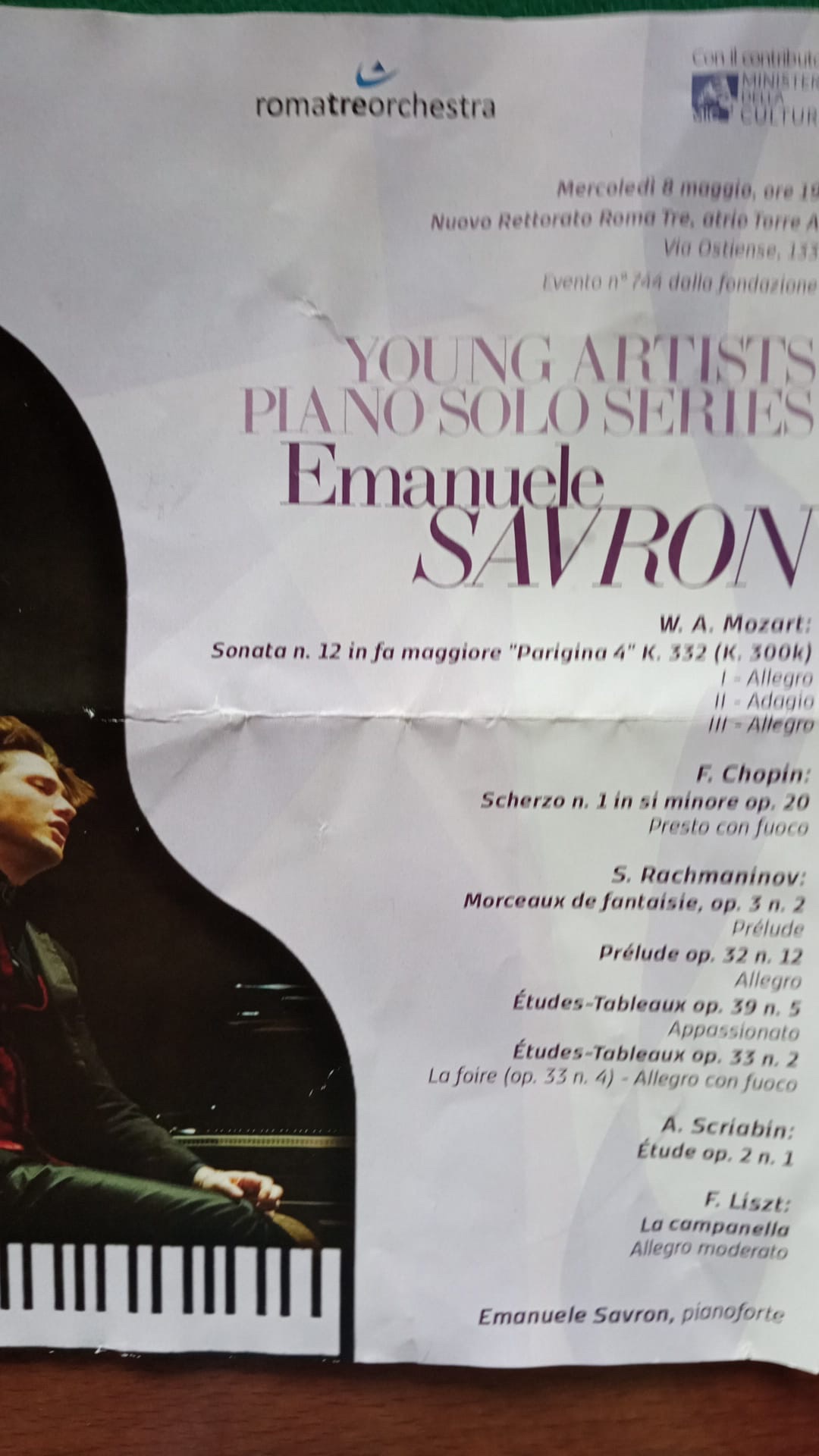
Another affirmation for a young musician who is fast becoming an artist to reckon with. Emanuele Savron has been studying with Marcella Crudeli for some years where I have heard him in her Masterclasses and also playing concertos with orchestra as part her Magisterium class that she holds each year giving guidance to carefully selected young musicians from every part of Italy .
Emanuele has always revealed a natural talent and under Marcella has acquired a refined musical palette ,but he lacked the discipline and hard work needed to become anything other than a talented amateur. Last year I heard him again in recital at the press launch of the International Piano Competition that Marcella Crudeli has been fielding with enviable energy and passion for the past thirty or more years. I was bowled over by the progress he had made .
A teenager had now matured into a young artist of great stature. An artist who has something to say and fast earning the means to say it.It was the great English pianist Clifford Curzon who said for a real artist playing in public requires ninety per cent work and ten per cent talent.The talent Emanuele has, as Marcella patiently acknowledged, but the work was sadly lacking until this extraordinary recital last year. Putting on my Sherlock Holmes hat I discovered that for the past few years Emanuele had come under the influence of Leonid Magarius at the piano academy in Imola.The great Russian school where there are no half measures, or you work all the hours needed or you are shown the door! Magarius is a well known and esteemed trainer of pianists such as Romanovsky or Lifits both winners of the Busoni Competition.http://www.margarius.com/biography.htm.
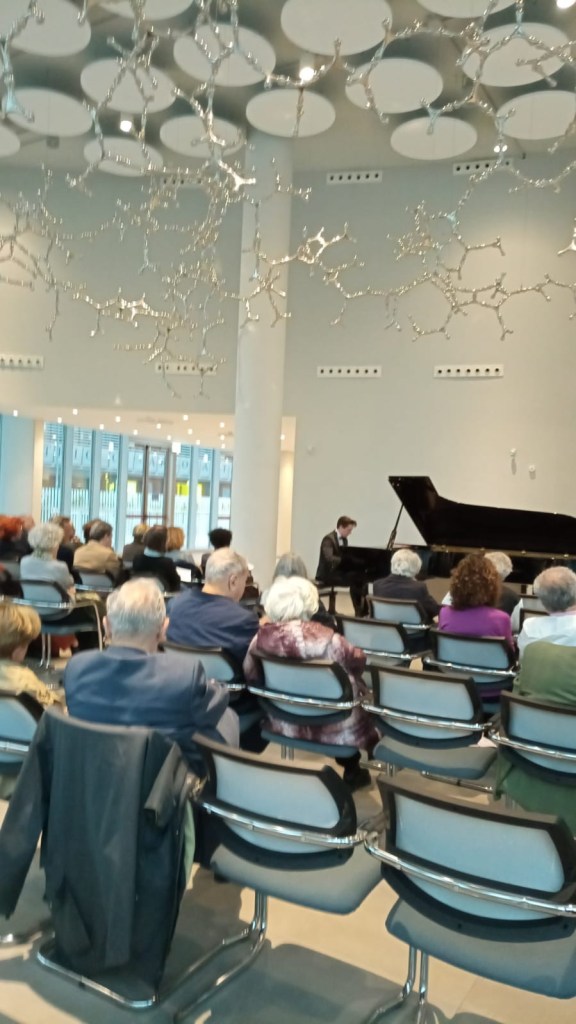
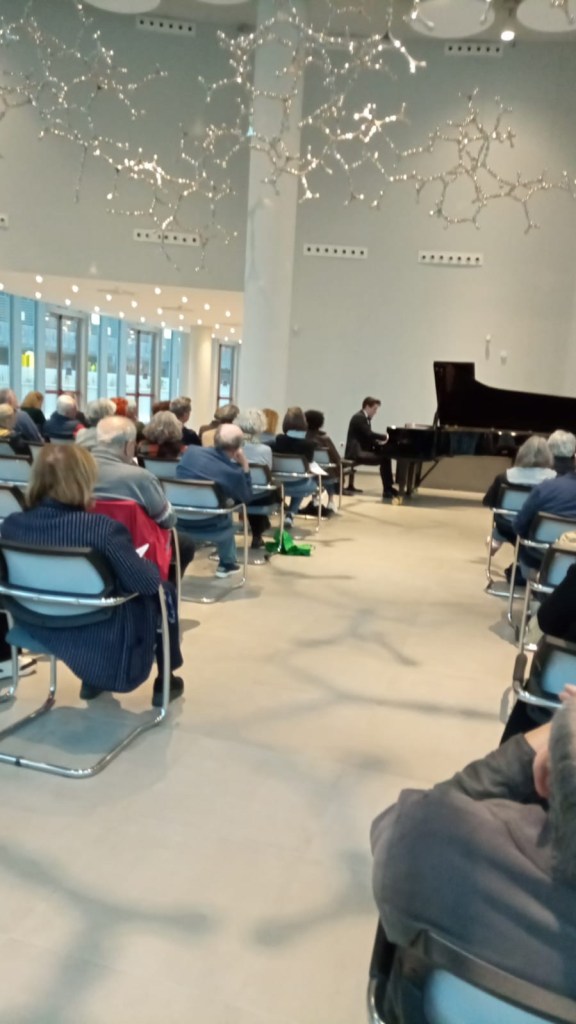
So the secret was out and a lazy teenager had decided it was time to seriously work at a professional career. Roma Tre under Valerio Vicari give important opportunities for young musicians to find an audience and his ‘Young Artist’s Solo Piano Series ‘ is just one of many initiatives that this dedication of Roma Tre University offers .They have also created a full symphony orchestra that gives graduate instrumentalists the chance to gain experience of playing in ensembles as well as in the orchestra. It is fast becoming a recognised reality as it has grown wings and recognition from the powers that be, to leave their nest at the Teatro Palladium and fly to many other important Italian cities.
I was not able to be at Emanuele’s recital but many of my friends were, and told me of his success crowned with three encores.More importantly Emanuele sent me many video recording of his playing of the recital.It took just one short recording of the opening of the Adagio from the Mozart Sonata K 332 to show what an artist this young musician has become.There are subtle inflections and a very individual punctuation that a true artist adds where the piano becomes a human voice and no longer just a box of hammers and strings. It is an illusion and the great artists are the greatest of illusionist. A jeux perlé in the outer movements where the ‘joie de vivre’ and rhythmic energy were combined in an operatic performance of vivid personality. It was Artur Schnabel who famously said the Mozart was too easy for children but too difficult for adults . Curzon would cover his scores with markings as he searched for the hidden meaning behind Mozart’s seemingly sparse scores.
There was the same personality and artistry in his playing of Rachmaninov and the Liszt Campanella was played with the ease and charm of the great pianist from the Golden Era of Piano Playing of Lhevine,Godowsky or Hoffman.
This is not intended to be a review but a celebration and Hosanna to Roma Tre who are allowing so many young musicians the possibility to mature and find their true artistic identities and a place in the professional music world.
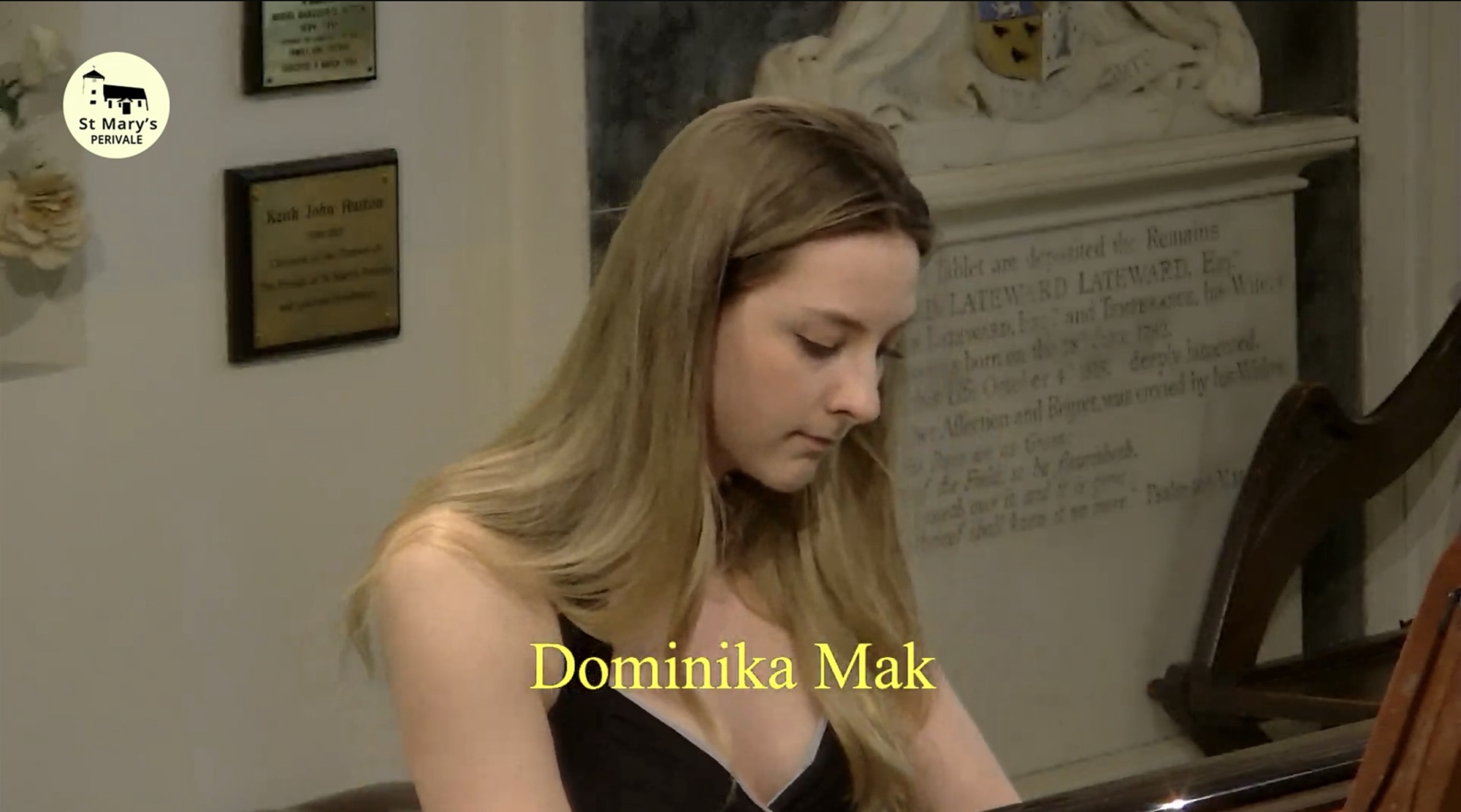
Some beautiful refined playing of great intelligence and simple artistry from Dominika who had come to the rescue at the last minute of an indisposed clarinettist due to play in Hugh Mather’s Young Artists Series in Perivale.
Watching from afar knowing that she was mentored by Christopher Elton
I had not heard her before but when I saw she was studying with Christopher Elton I knew I should not miss her recital. Christopher and I had been part of a group of pianists (that included Stephen Hough,Peter Donohue ,Christian Blackshaw,Peter Uppard,Tessa Uys,Ann Shasby,Philip Fowke,Peter Bithell ……etc ) that was mentored by Gordon Green in the 60’s and 70’s.
The distinguished Professor Christopher Elton
Christopher recently celebrated his 80th birthday and has for many years taken over the golden mantle that our much loved Gordon shared so generously with such kindness and humanity at the Royal Academy ( as well as in Manchester and Liverpool) .There has remained a bond between all those touched by his genius and Christopher is one of the only musicians that finds time to come to his students recitals as he knows how important this human and professional bond is in a young musicians formative years
It was in the encore of a single Scarlatti Sonata K.87 in B minor that all Dominika’s superb qualities were demonstrated in a radiant prism of simple sounds .The same contrapuntal simplicity that she had brought to Chopin or the same clarity and subtle shading of Couperin and even the poignantly poetic beauty that had made her Polish Mazurkas so touchingly nostalgic . All this in just a couple of pages because it takes just two notes to reveal a true artist! She seemed to do nothing but said everything and was not that the secret of Rubinstein the Prince of all pianists? The Mazurkas by Szymanowski were dedicated to his friend Artur Rubinstein .I remember an all Chopin programme for the Polish Air force at the Fairfield Halls in Croydon where like a sorbet halfway through a sumptuous meal Rubinstein played these four Mazurkas ( only three of the four today) that just opened our ears as we strained to understand this subtle new language that carried the same message as Poland’s national hero.I was a schoolboy and I will never forget Rubinstein striking up the Polish and British National Anthems as we all stood out of respect for the values that our two nations had stood for so valiantly, side by side .
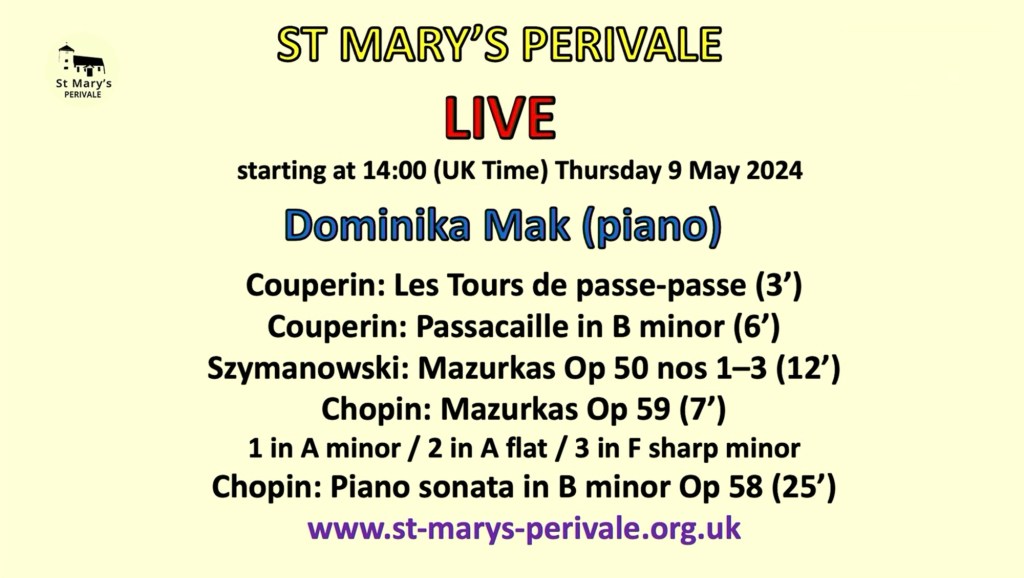
A programme that was dance inspired and began with Couperin ‘Les Tours….’ .Of crystalline clarity with a subtle dynamic range as she played with a style of delicacy and grace.The Passacaglia in B minor was immediately more serious with much denser harmonies but with ornaments that spun from her fingers within a finely spun web of poignant significance as an underlying rhythmic energy carried us forward with intensity and dynamic drive.
There was a pungent beauty to the Szymanowski Mazurkas that owed more to Messiaen than Bellini and which she played with a beautiful cantabile of aristocratic nobility.There was a rhythmic drive to the second with its sumptuous outpouring of Nationalistic joy.The etherial opening of the third reminded me of early Stravinsky but always with the underlying mazurka rhythm in the distance.I can see why she only played three of the four because this last one ended on a note of pure magic.
The three mazurkas by Chopin were written just four years before his untimely death and are a vision of nostalgic beauty,A bel canto that Dominika played with a beguiling rhythmic understanding and counterpoints that she untangled with searing intensity and beauty.The second Mazurka flowed so beautifully with disarming simplicity as the unmistakable voice of Chopin was allowed to express itself with unadorned beauty.There was a wonderful sense of balance as the melodic line was passed from one voice to another until a golden web of sounds brought us to a magical ending.The last was the robust Nationalistic dance that had remained in Chopin’s heart from when he left his homeland as a teenager setting out to seduce the Parisian Salons of the day.this heart was eventually restored to his homeland.
The Chopin B minor Sonata was played with great clarity but the opening was played with simple musicianship not the more usual declaration of intent of showmanship.It was indeed her aristocratic good taste and musicianship that allowed her to maintain the same tempo that gave the second subject such nobility and significance.Ravishingly beautiful but more powerful for not being heart on sleeve sentimentality.Even the final chords of the first movement were played as if this were just the beginning of a wondrous voyage.Scintllating jeux perlé of the Scherzo with a glowing luminosity of will o’ the wisp agitation and with a beautifully flowing central Trio of nobility and actually part of an architectural whole that made such sense when the scherzo returned.Nobility of the perfectly timed entry of the Largo as the bel canto that follows was of subtle simple refined beauty.I have rarely heard the central ‘sostenuto’ played with such a sense of line and flowing beauty as the changing harmonies were illuminated by strands of melody.A magisterial opening to the presto non tanto was played with just the understated sense of importance that allowed the agitato to immediately emerge so naturally.Showers of golden sounds just rained over the keys as the rondo theme became ever more imperious and passionate.Enflamed in a coda a mastery and exhilaration which brought this superb performance to a brilliant end
Dominika Mak is a Polish classical pianist, currently undertaking the Master of Arts course at the Royal Academy of Music under the tutelage of Christopher Elton (Professor Emeritus). While completing her BA and MPhil in Music at Trinity College, Cambridge, Dominika became the Artistic Director of a Trinity College Music Society, a choral soprano in Trinity College Choir, Cambridge under Stephen Layton OBE, a Chopin scholar, an avid accompanist, and a solo pianist. In the past, Dominika has benefited from tuition from professors Pascal Nemirovski at the Royal Birmingham Conservatoire, and Graham Caskie at Chethams’ School of Music.
During her time as an undergraduate, Dominika became a laureate of various competitions, such as the National EPTA Competition, the Edith Leigh Prize, the Arthur Bliss Lieder Scheme with baritone Florian Störtz, the IAS award in Cambridge etc. The ‘liquidity’ of Dominika’s performances of Chopin’s works has been described as ‘perfection.’ Recent performances include Chopin’s Concerto op. 21 in F minor, his Preludes op. 28 etc. Dominika has given performances at St John’s Smith Square, St Martin-in-the-Fields, West Road Concert Hall in Cambridge and other venues. Dominika has benefitted from masterclasses from Yevgeny Subdin, Katya Apekisheva, Stephen Hough, Joseph Middleton and others.
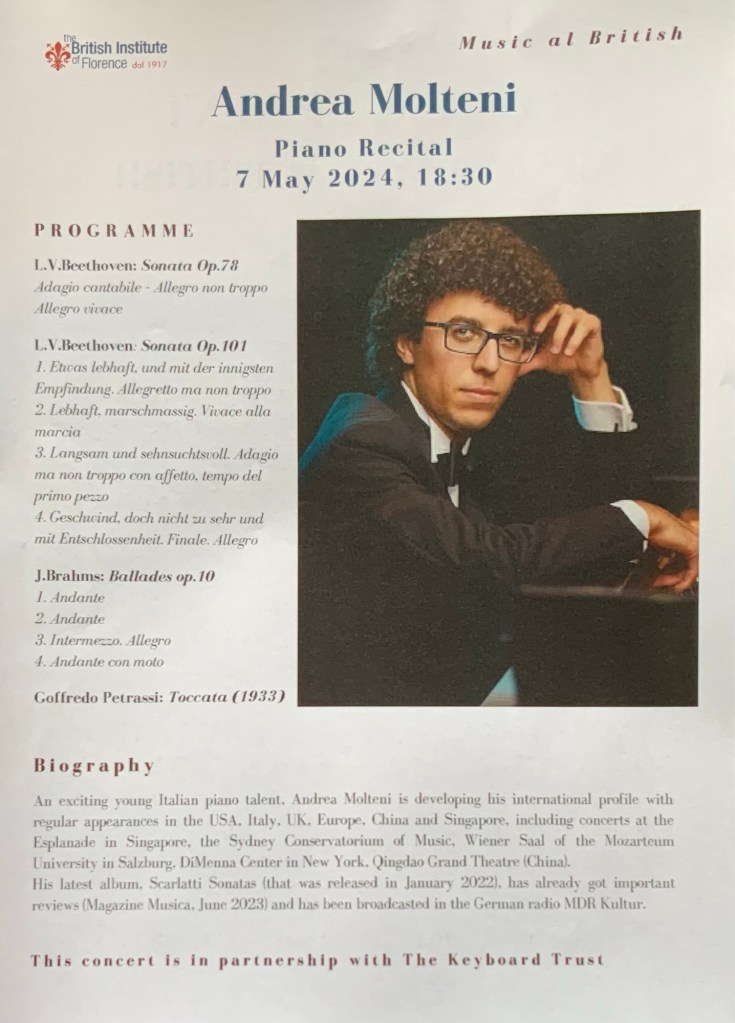
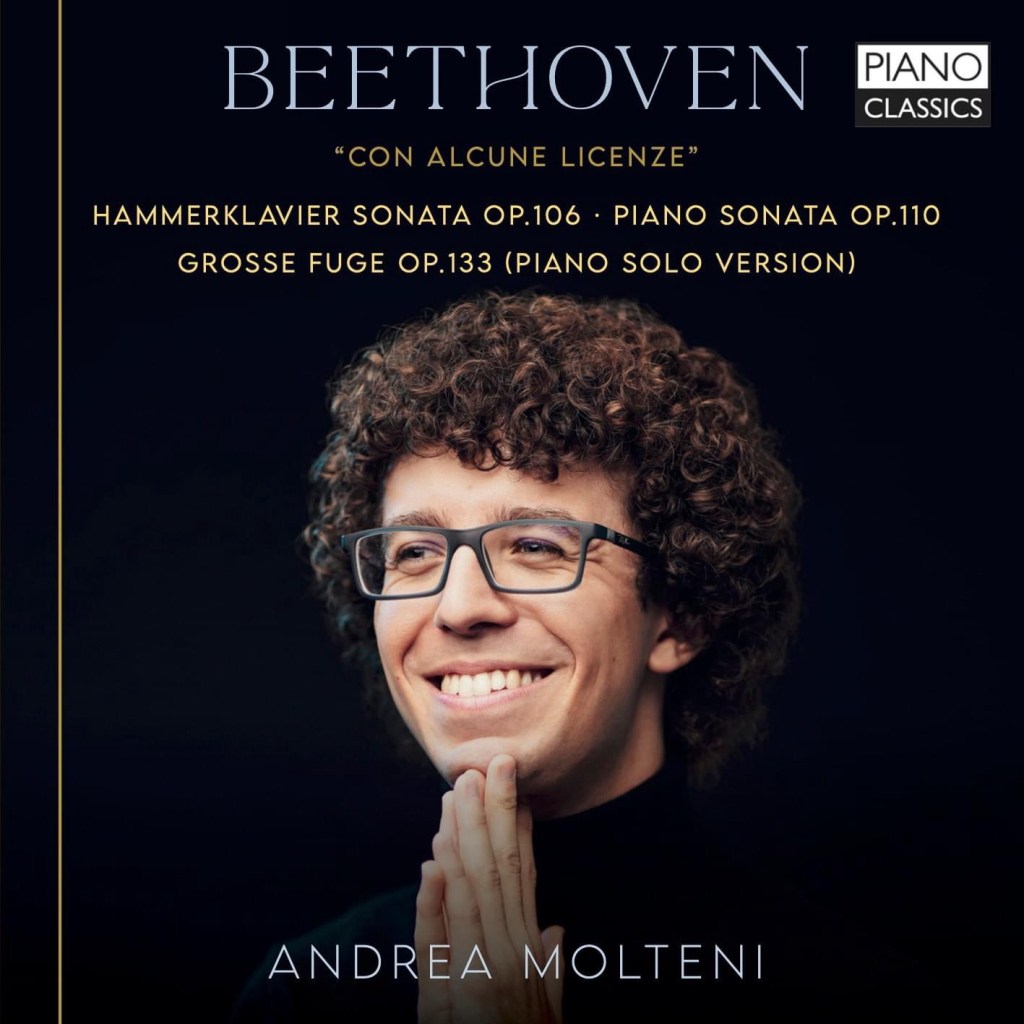
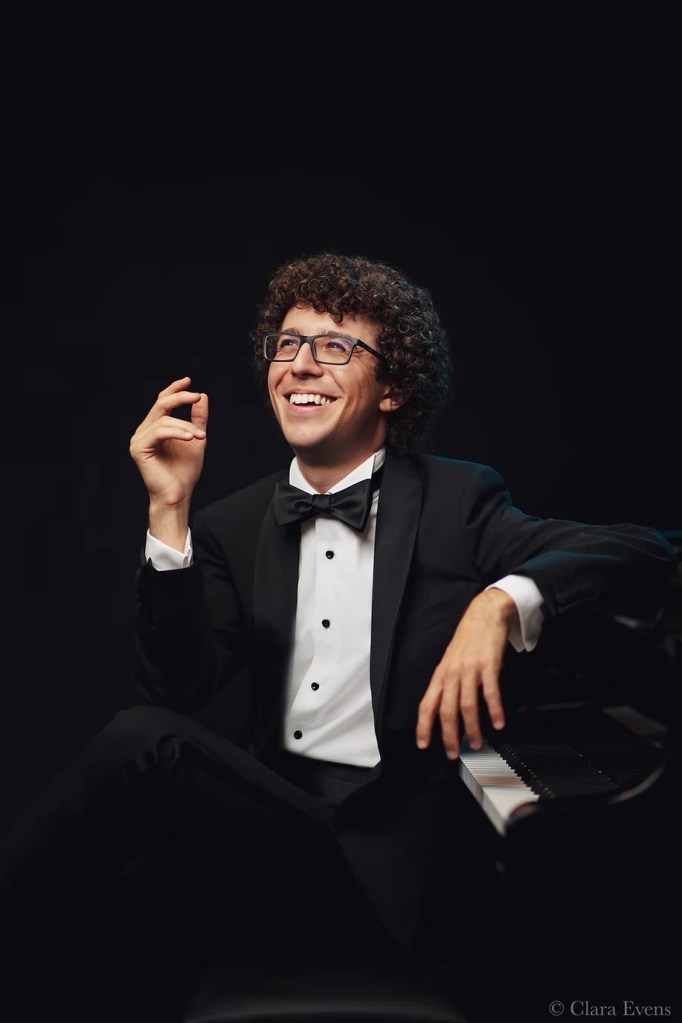
An exciting young Italian piano talent, Andrea Molteni is developing his international profile with regular appearances in the USA, Italy, UK, Europe, China and Singapore, including concerts at the Esplanade in Singapore, the Sydney Conservatorium of Music, Wiener Saal of the Mozarteum University in Salzburg, DiMenna Center in New York, Qingdao Grand Theatre (China).
His latest album, Scarlatti Sonatas (that was released in January 2022), has already got important reviews (Magazine Musica, June 2023) and has been broadcasted in the German radio MDR Kultur.
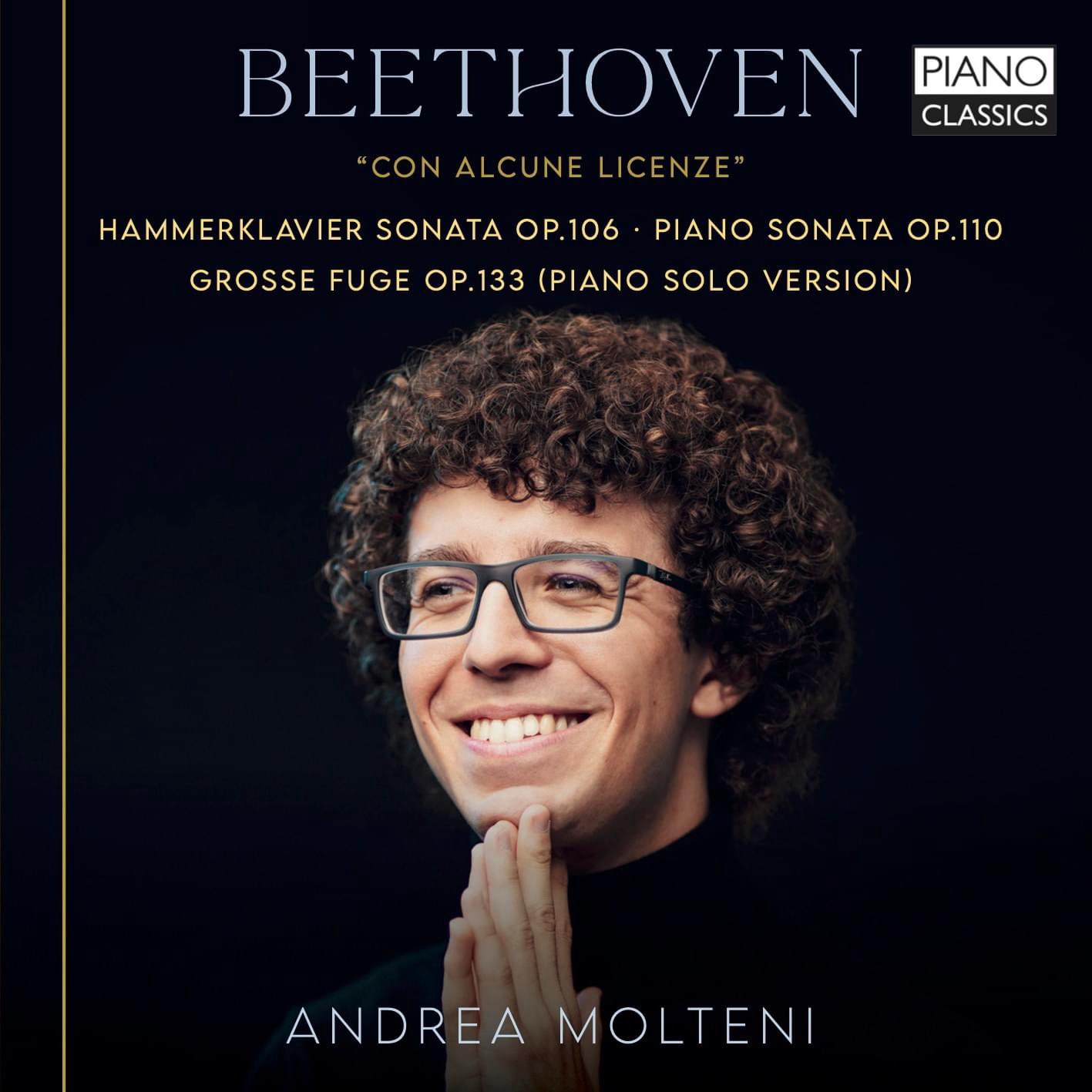
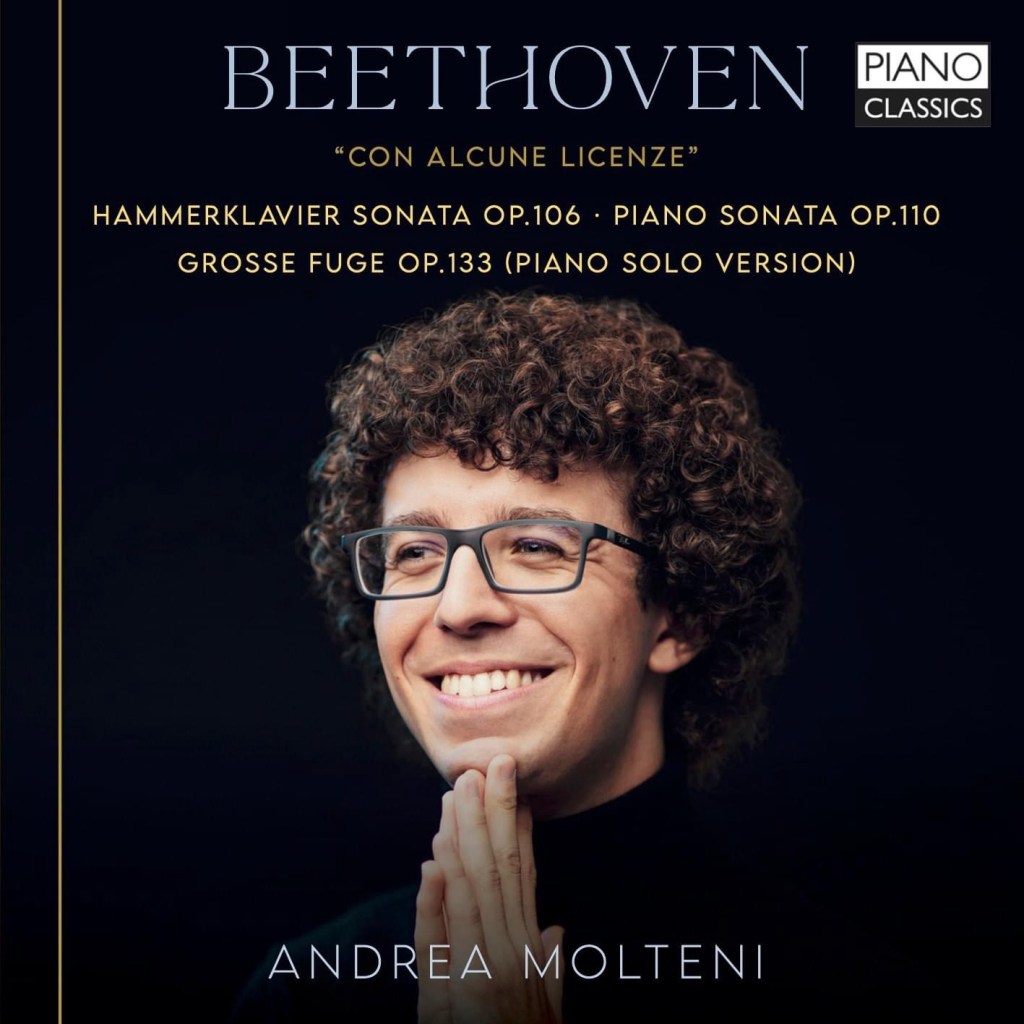
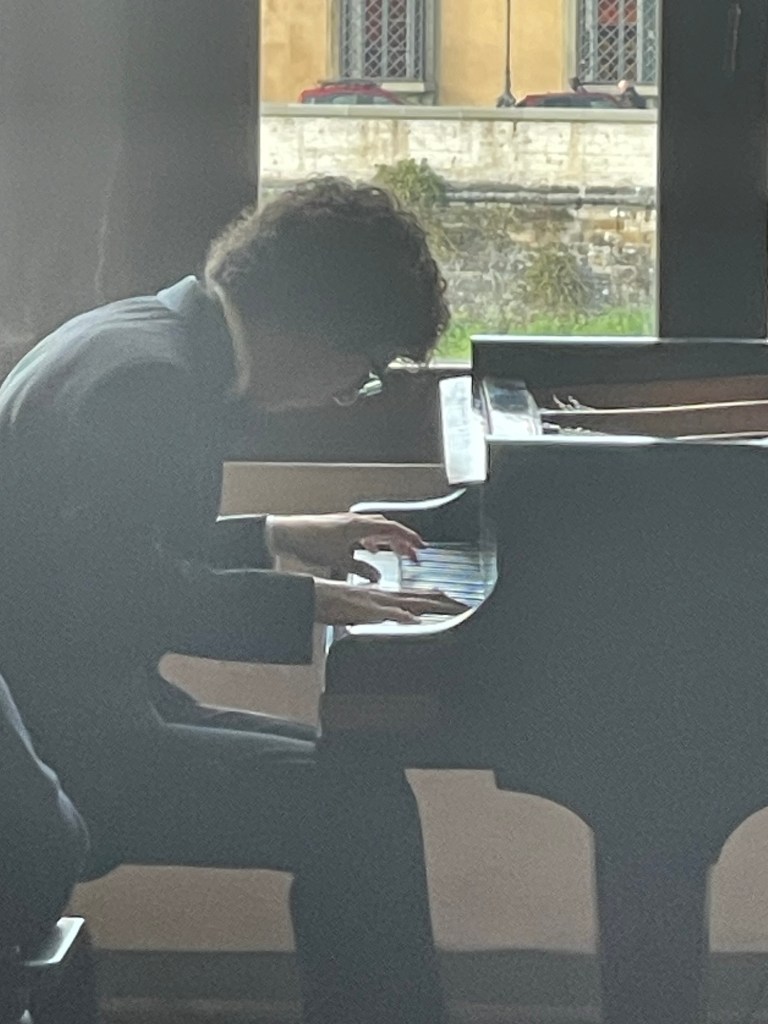
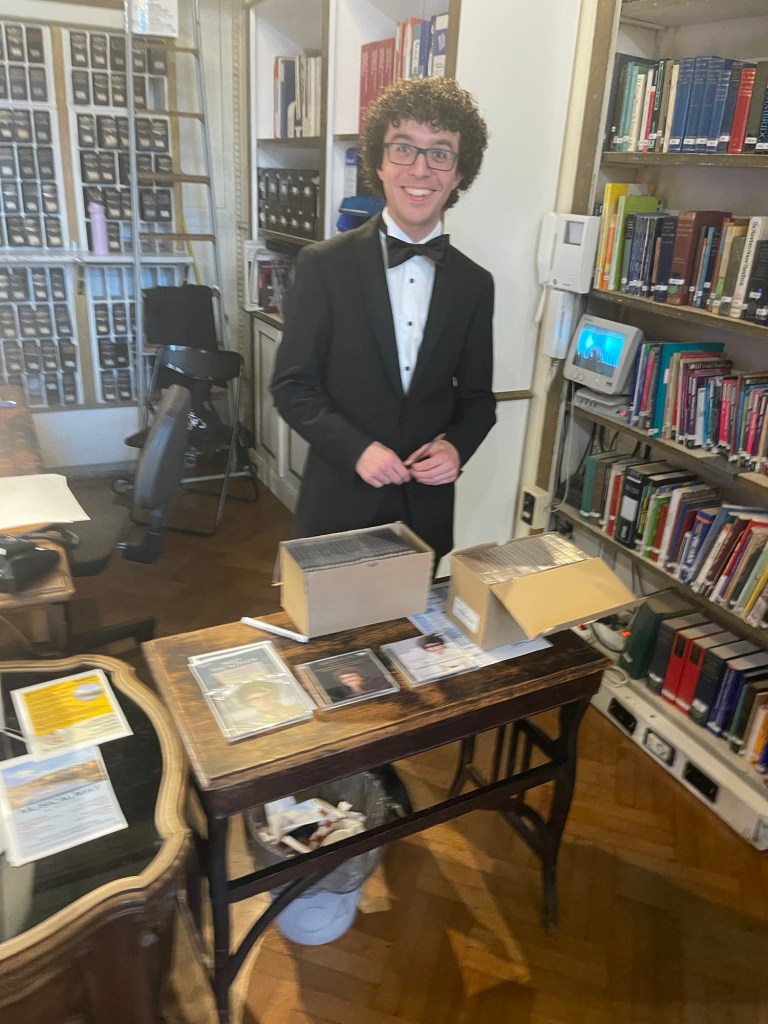
Andrea Molteni arrived in Florence with his latest CD issued just a few days ago. Quite a colossal undertaking for a young musician to present an all Beethoven programme that includes the Sonata ‘Hammerklavier’ op 106 ,the Sonata op 110 and with a fill up of the solo piano version of the mighty Grosse Fuge op 133!
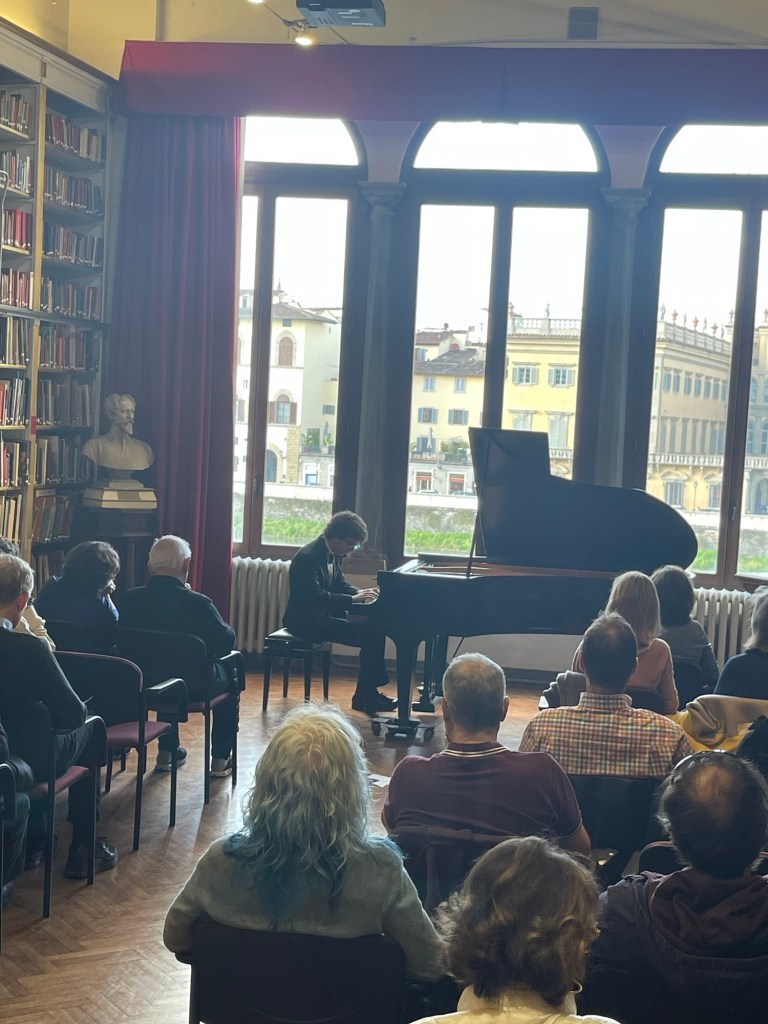
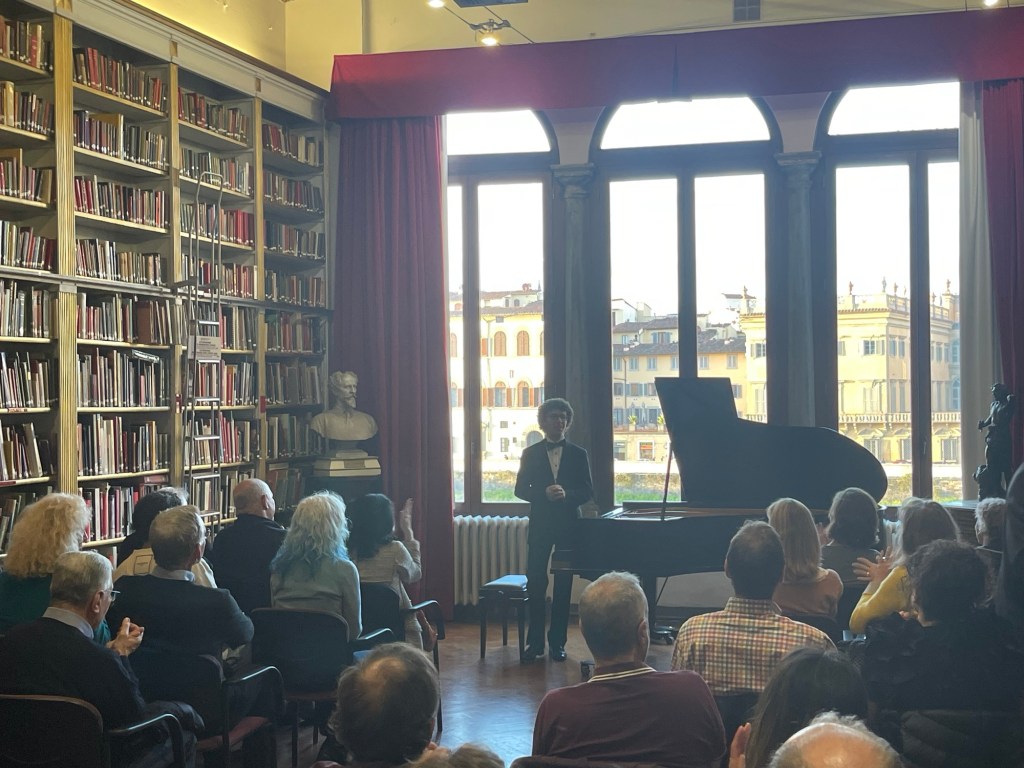
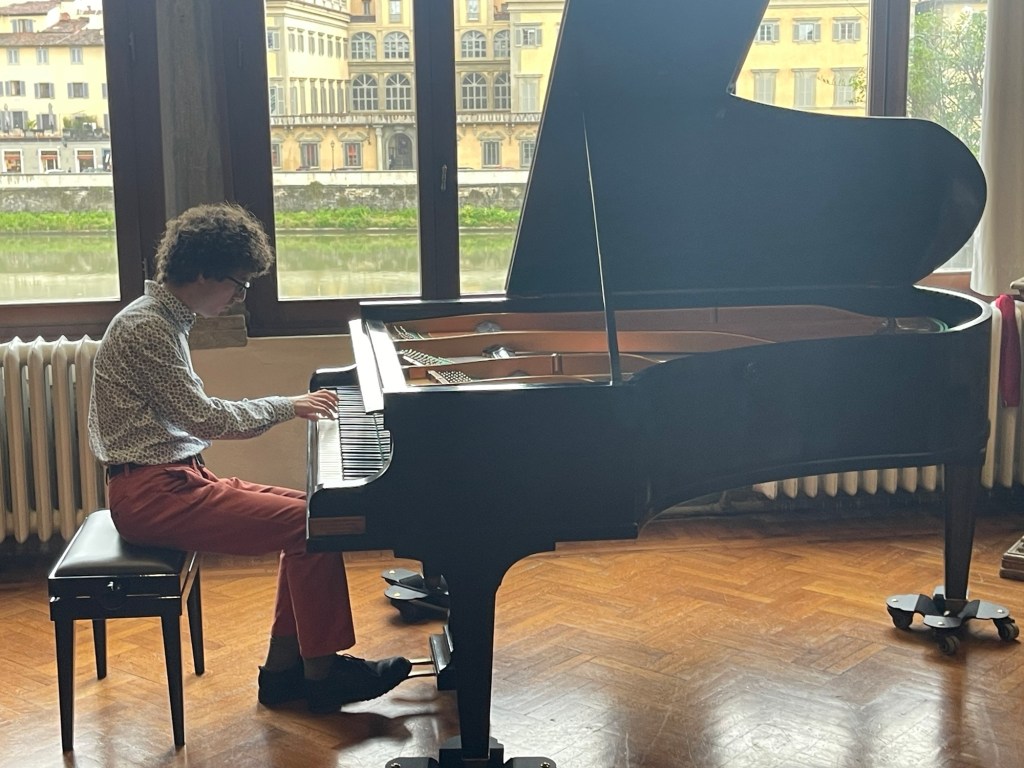
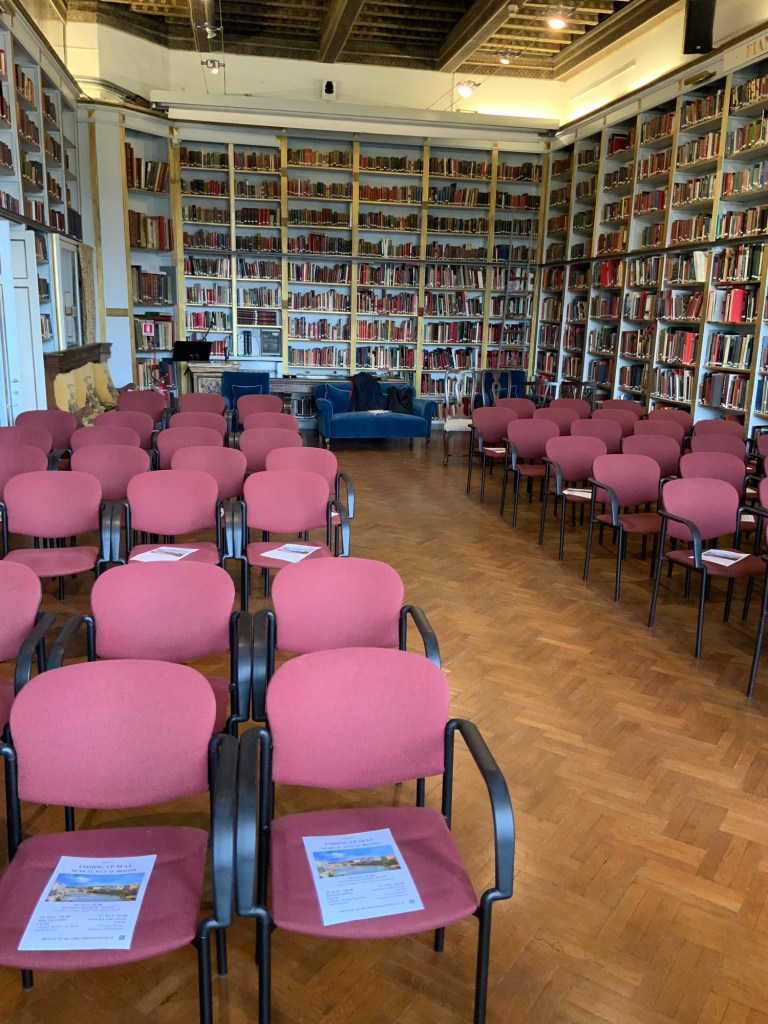
It was even more remarkable that his programme in Florence did not include any of these works but instead the Sonata op 101 which is the first of the five last Sonatas that a totally deaf Beethoven was to pen with visionary precision. He prefaced this with one of Beethoven’s own favourite Sonatas ‘a Thérèse’ op 78. The little two movement sonata ,dedicated to a pupil ,where beauty and simplicity combine with clarity and luminosity in a mellifluous outpouring worthy of Schubert. Andrea played it with aristocratic simplicity allowing the music to unfold on this mellow sounding Bechstein of 1898 that sits so proudly and justly in ‘a room with a view.’ Surrounded by books in the Harold Acton Library that is the seat of the British Institute in Florence, Andrea immediately created a warmth and intimacy with playing of subtle delicacy and refined good taste.
Andrea is quite a live wire as those that encounter him are immediately aware. Eyes that light up with a brilliance and sparkle but that hide the depths that his music making can reveal. It was in the ‘Allegro vivace’ second movement that he suddenly changed the mood from the slow and contemplative to the highly strung brilliance of notes that just spun from his fingers with oiled ease.There is a great intellectual depth too to this musician and in the rehearsal he was keen to show me the discoveries of phrasing and tempi that he had found in the depths of the score which was a new work in his repertoire and a great addition to his voyage of discovery into the world of Beethoven.
It was in fact in the second sonata that his intelligence and musicianship were allied to pianistic mastery and poetic vision. Op 101 after the ‘Hammerklavier’ is considered by many to be an equal technical challenge as the intricacies and rhythmic drive of the second and fourth movement need an architectural understanding that belies the seemingly gentle pastoral opening. It was the same beauty as op 78 that Andrea brought to the seemingly improvised first movement but with an expansiveness creating an atmosphere of pastoral peace and well being. Short lived because this is the world of Beethoven where sudden contrasts and tumultuous outpourings are part of the high’s and lows’ of his rumbustuous life style and character. There was a dynamic drive to the ‘Lebhaft Vivace alla marcia’ of the second movement but Andrea managed to keep it under control and with a technical mastery that was able to transform this march into a lyrical rather than military procession. Following Beethoven’s long pedal indications with poetic understanding he brought a clarity to the central episode before the return of the ‘alla marcia’. The long improvised ‘Adagio ma non troppo’ that Beethoven himself marks to be played ‘con affetto’ was given a poignant sense of fantasy as Beethoven searches for a way through the momentary apparition of the first movement to the irascible entry into the Finale. Knotty twine indeed but with Andrea’s precision and clarity the inconclusive trills and dynamic strands of melody were allowed to erupt with sparkling brilliance and masterly control.
What better way to celebrate Brahms’s birthday ( 7 May 1833) than with his Four Ballades op 10. This was an early Brahms from a passionate and deeply introverted 21 year old. He was already under the spell of his mentor Clara Schumann who was to play such a significant part in his life as the Schumann /Brahms triangle played itself out with selfless passion and genius.The shimmering beauty and passionate pulsating of the heart in these four tone poems are evidence enough of the inspiration for such sublime outpourings. Andrea just a few years older that Brahms when he wrote these magical pieces could understand the intensity and burning message of youthful serenity and hope.It was the glowing fluidity that he brought to the sound as well as a driving military insistence to the contrasting central episode that built to a sumptuous climax of Philadelphian proportions with glorious full golden sounds played with aristocratic nobility. It was the same fluidity and glowing beauty that’s he brought to the second with its ominous rhythmic central episode.There was a youthful call to arms with a dynamic rhythmic drive of the third Ballade which dissolved with such poetic artistry into the beautifully suggestive whispered ending. Opening the gate for a vision of paradise with the searing whispered intensity of the ‘Andante con moto’. Andrea visibly transformed as we were all moved by the throbbing heart beat of sumptuous whispered sounds on which emerges an enigmatic melody of heart rending beauty. It was Michelangeli who made this piece his own and I remember the atmosphere that he created in the Festival Hall in London with his own piano specially prepared with loving care by his great friend Fabbrini, who would follow him on his tours to ensure that the nearest thing to perfection was possible. Andrea today produced sounds on a piano that has a voice of mellow beauty like a faded photograph where beauty is suggested and becomes much more poignant than a sharply defined modern print.He was able to share with us the extraordinarily intense vision of the twenty year old Genius of Brahms with as much intimacy as Michelangeli in a hall of two thousand.
Andrea in rehearsal
Andrea chose a piece of brilliance and subtle colouring to finish his recital.The Toccata by Goffredo Petrassi was written in 1933 and is not only of brilliance but also of a subtle tone palette and sound world that reminds one of the haunting beauty and fantasy of a very particular moment between the wars when composer were searching for a new means of expression but still using the traditional polyphonic sound world of the past. A Toccata that is also a tone poem as it’s hauntingly whispered opening erupts into a true toccata of technical exhilarance and dynamic drive only to dissolve into the opening mystery with which it had begun. Masterly playing and one of the works that this young musician has recorded on his recent CD of the piano works of Petrassi and Dallapiccola.
A sparkling Scarlatti Sonata just spun from his well oiled fingers with delicacy and style and is one of the nine that he has recorded on yet another CD for piano Classics. His second encore of Chopin’s Study op 10 n.4 had the audience on its feet and ready to buy his CD’s to take back home with them to prolong the enjoyment and ‘joie de vivre’ that this young man had brought into their lives.
The Piano Sonata No. 24 in F sharp, Op. 78.
Adagio cantabile — Allegro ma non troppo
Allegro vivace
Nicknamed ‘à Thérèse’ because it was written for his pupil Countess Thérèse von Brunswick who.with her sister Josephine was his pupil. According to her diary Beethoven had stronger feelings than just for her intellect and sisterly tenderness .For sometime it has been thought that the famous letters from Beethoven to his ‘distant beloved’ were indeed to her.Composed in 1809 and consisting of two movements:According to Czerny,Beethoven himself singled out this sonata and the ‘Appassionata’as favourites together later with the ‘Hammerklavier’Wagner found it ‘profoundly personal’ but D’Indy said :’What sort of artist or man could admit that the only work dedicated to the Countess of Brunswick is the insipid Sonata in F sharp,the same recipient of the passionate letters that all the world has read’
The Piano Sonata No. 28 in A major, op 101, was composed in 1816 and published in 1817 and dedicated to the pianist Baroness Dorothea Ertmann née Graumen and is considered the first of the composer’s late piano sonatas
Beethoven’s manuscript sketch for the fourth movement
This sonata marks the beginning of what is generally regarded as Beethoven’s final period, where the forms are more complex, ideas more wide-ranging, textures more polyphonic, and the treatment of the themes and motifs even more sophisticated than before. Op. 101 well exemplified this new style, and Beethoven exploits the newly expanded keyboard compass of the day.As with the previous sonata op 90 it is unclear why Beethoven wrote Op. 101. The earliest known sketches are on leaves that once formed the parts of the Scheide Sketchbook of 1815–16. It shows the first movement already well developed and notated as an extended draft in score, and there are also a few preliminary ideas for the final Allegro Beethoven himself described this sonata, composed in the town of Baden, just south of Vienna during the summer of 1816, as “a series of impressions and reveries.” The more intimate nature of the late sonatas probably has some connection with his deafness, which by this stage was almost total, isolating him from society so completely that his only means of communicating with friends and visitors was via notebooks.
The Sonata Op. 101 is the first of the series of Beethoven’s “Late Period” (although sometimes op.90 is considered the first), when his music moved in a new direction toward a more personal, intimate, sometimes even introspective, realm of freedom and fantasy. In this period he had achieved a complete mastery of form, texture and tonality and was subverting the very conventions he had mastered to create works of remarkable profundity and beauty.It is also characteristic of these late works to incorporate contrapuntal techniques (e.g. canon and fugue)into the sonata form.
This was the only one of his 32 sonatas that Beethoven ever saw played publicly; this was in 1816, and the performer was a bank official and amateur musician.
Brahms in 1889 7 May 1833 Hamburg -3 April 1897 Vienna
The Ballades, Op. 10, were written by Brahms in his youth. They were dated 1854 and were dedicated to his friend Julius Otto Grimm. Their composition coincided with the beginning of the composer’s lifelong affection for the pianist and composer Clara Schumann, who was helping Brahms launch his career. The Scottish ballad “Edward” from J. G. Herders anthology of folk songs “Stimmen der Völker in Liedern” made such a deep impression on Brahms that, as he told a friend, the melodies came to him effortlessly.
Dein Schwert, wie ist’s von Blut so rot? Edward, Edward! Dein Schwert wie ist’s von Blut so rot, und gehst so traurig her? – O! O, ich hab’ geschlagen meinen Geier todt, Mutter, Mutter! O, ich hab’ geschlagen meinen Geier todt, und keinen hab’ ich wie er – O!
Why does your Brand sae drop wi’ blude, Edward, Edward, Why does your Brand sae drop wie blude, and why sae sad gang ye, O? O, I hae kill’d my hawk, sae gude, mither, mither, O, I hae kill’d my hawk, sae gude, and I had nae mehr but he, O
“Edward” provided the motif for the first of four ballade compositions, musical tales of a dramatic romantic nature that were linked with memories of Clara Schumann for Brahms. Julius Grimm, to whom the pieces were dedicated, also said that “the Ballades are really for her”. Robert Schumann was very enthusiastic about his young colleague’s composition. Chopin had written the last of his four Ballades only 12 years earlier, but Brahms approached the genre differently from Chopin, choosing to take its origin in narrative poetry more literally.
They are arranged in two pairs of two, the members of each pair being in parallel keys . The first ballade is one of the best examples of Brahms’s bardic or Ossianic style; its open fifths, octaves, and simple triadic harmonies are supposed to evoke the sense of a mythological past.
D minor. Andante
D major. Andante
B minor. Intermezzo. Allegro
B major. Andante con moto
The tonal center of each ballade conveys an interconnectedness between the four pieces: the first three each include the key signature of the ballade that follows it somewhere as a tonal center, and the fourth ends in the key signature of D major/B minor despite cadencing in B major.
Brahms returned to the wordless ballade form in writing the third of the Six pieces for piano op 118 . His Op. 75 vocal duets titled “Ballads and Romances” include a setting of the poem “Edward”—the same that inspired Op. 10, No. 1.
Goffredo Petrassi 16 July 1904 – 2 March 2003 and is considered one of the most influential Italian composers of the twentieth century. Born at Zagarolo, near Rome at the age of 15 he began to work at a music shop to supply his family’s financial needs, and became fascinated by music. In 1928, he entered the Santa Cecilia Conservatory in Rome to study organ and composition . In 1933, composer Alfredo Casella conducted Petrassi’s Partita for orchestra at the ISCM festival in Amsterdam From 1940 to 1960 Petrassi was professor of composition at Santa Cecilia Conservatory and later, he also became musical director of the opera house La Fenice and from 1960 to 1978 he taught in the master courses in composition at the Accademia di S.Cecilia was also a teacher at the Salzburg Mozarteum. Petrassi had many famous students, including Franco Donatoni,Aldo Clementi,Cornelius Cardew,Ennio Morricone,Peter Maxwell Davis .Kenneth Leighton ,Boris Porena etc etc.Petrassi taken by Ileana Ghione in our garden of Petrassi embracing Mount Circeo Sabaudia LT The strident conviction of Goffredo Petrassi (1904-2003) his seven postwar Concertos for Orchestra could hardly be anticipated from the fluent pastiche of his piano Partita, composed in 1926. The Baroque titles of the four movements introduce a disarming simplicity of expression, whose dominant strains are the Classicism of Mozart and Beethoven. Even the more exploratory harmonies of the Toccata (1933) are couched in an idiom of gentle introspection – a far cry from the contemporary toccatas of Bartok and Prokofiev, for example – and an escapist, playful spirit courses through the seven Inventions of 1944. Extant surveys of Petrassi’s piano music end there, whereas Andrea Molteni adds three further, attractive miniatures: a mischievous Petit Piece of 1950 and then the two movements of Oh Les Beaux Jours! (1976), which rework material from the early 1940s including an unfinished Divertimento Scarlattiano. Unexpected this may be, for all but the most devoted student of Petrassi, but Andrea Molteni brings out the most attractive and witty features of his piano writing.Meeting of great minds Goffredo Petrassi and Elliot Carter Teatro Ghione Rome 24 February 1985[ 𝗥𝗘𝗟𝗘𝗔𝗦𝗘 𝗗𝗔𝗬 ] Really happy to tell you that my new album 𝗕𝗲𝗲𝘁𝗵𝗼𝘃𝗲𝗻: 𝗖𝗼𝗻 𝗮𝗹𝗰𝘂𝗻𝗲 𝗹𝗶𝗰𝗲𝗻𝘇𝗲 is now out (Piano Classics | Brilliant Classics)! Sonata op.106 Hammerklavier Piano Sonata op.110 Grosse Fuge op.133 (piano solo version) Hope you’ll like the album, please tell me which piece is you favourite! 💿 𝗢𝗥𝗗𝗘𝗥 🎧 𝗗𝗢𝗪𝗡𝗟𝗢𝗔𝗗 ➡ https://www.piano-classics.com/articles/b/beethoven-con-alcune-licenze
Mr. Molteni enjoys the artistic guidance of William Grant Naboré and Stanislav Ioudenitch under the auspices of the prestigious International Lake Como Piano Academy. In 2020, he was awarded a master’s degree Magna cum Laude in Advanced Performance Studies by the Conservatorio della Svizzera Italiana in Lugano. After he graduated with top marks, honors and honorable mention with Mario Patuzzi at the Conservatorio G.Verdi in Como, Andrea studied in Milan with Vincenzo Balzani. He also took part in various masterclass with Sir. Andras Schiff, Elisabeth Leonskaja, Arie Vardi, Pavel Gililov, Dang Thai Son, Piotr Paleczny, Vladimir Feltsman, Christopher O’Riley, Aquiles Delle Vigne.
At the age of 15, Mr. Molteni formed a youth orchestra, “L’Orchestra del Lago”, which he conducted and played with. His earliest orchestral collaborations also include Orchestra Antonio Vivaldi, Orchestra Filarmonica Mihail Johra di Bacau in Romania, and Orchestra of the Costa Rica University. The special scholarship of Cercle Wagner Association in France allowed Mr. Molteni to participate at the Bayreuth Festival celebrating the 200th anniversary of Richard Wagner, as well as to perform a series of concerts in Nice, Menton, Cannes, and Monte Carlo. An exciting young Italian piano talent, Andrea Molteni is developing his international profile with regular appearances in the USA, Italy, UK, Europe, China and Singapore. He has played at the Esplanade in Singapore, Verbrugghen Hall of the Sydney Conservatorium of Music in Sydney, Wiener Saal of the Mozarteum University in Salzburg, Scriabin Museum in Moscow, DiMenna Center in New York, Qingdao Grand Theatre in Qingdao (China) and other prestigious venues around the world.His latest album, Scarlatti Sonatas (that was released in January 2022), has already got important reviews (Magazine Musica, June 2023) and has been broadcasted in the German radio MDR Kultur. The album “Petrassi and Dallapiccola Complete Piano Works” (May 2021) has been appreciated by distinct pianistic personalities such as V.Ashkenazy and L.Howard. It received reviews on significant music magazines (Magazine Musica, December 2021; Opus Klassiek, May 2021) and it has been broadcasted on radio programmes (in cuffia, Radio Classica, July 2021 and November 2021; France Musique, September 2021).
Beethoven Sonata n. 8 in do minore op. 13 “Patetica” Schönberg 3 Klavierstücke op. 11 Beethoven Sonata n. 2 in la maggiore op. 2 n. 2 Schönberg 3 Klavierstücke (1894) Schönberg 6 Kleine Klavierstücke op. 19 Beethoven Sonata n. 23 in fa minore op. 57 “Appassionata”
Emanuel Ax in Rome to pay homage to Maurizio Pollini on the day when the much loved pianist should have given his annual recital for the Accademia di Santa Cecilia . The tribute that he put into words at the end of two hours of pure whispered magic was crowned by a performance of one of the nocturnes that were particularly associated with Pollini. Rubinstein made the Chopin Nocturne in D flat op 27 n.2 his own as Pollini did with its twin op 27 n.1 .
Op.27 n.2 is full of luminosity and ravishing Bel Canto with a seemless melodic line floated on a cloud of velvet whereas op 27 n.1 is much more restless and darker with its Debussy like opening creating sounds full of mystery and foreboding. It was here that the wondrous sounds and kaleidoscope of unforced whispered colours created the same atmosphere that Pollini would often do in the half century of performances that Emanuel Ax movingly described later in a short speech in well prepared Italian.The beauty of sound and selfless identification with the music had created a spell from the very first notes of a typical Pollini programme of Beethoven and Schonberg.
The ‘Pathétique’ sonata was as though hearing it for the first time such was the palette of sounds where the notes were not projected out to this vast hall but the audience were drawn in to him.By some magic,called consummate artistry, he managed to play with whispered sounds of luminosity and beauty which arrived in the nearest and farthest seats with the same intensity.A singer with a diaphragm is an art that is rapidly being forgotten as more and more artists rely on acoustically assisted sound to help them in the vast halls that are springing up throughout the world . But the few great artists,one of which is certainly Emanuel Ax ,that still grace the concert halls have cultivated this art as part of their genes with a lifetime of sharing music with audiences worldwide. It is nice to note that Emanuel Ax was much admired at the first Rubinstein competition where the great maestro awarded him his Gold Medal. Much as Rubinstein years earlier had also awarded an 18 year old Pollini the Gold Medal at the Chopin Competition in Warsaw.Rubinstein famously and with his great generosity exclaimed that this young man played better than any of them on the jury!
And so Maurizio Pollini was to demonstrate in a career that was to span over seventy years.Pollini ,like Guido Agosti and Busoni before that treated the score with the reverence that it demanded with a selfless dedication where they became the medium through which the music still wet on the page could be transmitted and shared. Audiences that clamoured to be rid of showmen who in the early part of the last century would take the composer’s notes as a means to show off their virtuosity and in the case of pianists like De Pachmann ,their own personality. I remember a review forty years ago of Cherkassky in Milan where he had been asked to play a programme of scintillating show piece transcriptions :’Juggler of the notes’ was the title of the review in the Corriere della Sera. Cherkassky like Volodos vowed never to deviate from the programmes that they had decided on for the season.
Playing the Schonberg with the help of the I pad ,an aide memoire that Pollini never needed!
It was very much Pollini who had created this new path for performances of absolute fidelity to the score and the composers wishes.Pollini would be an advocate of living composers too such as Nono and Stockhausen.And so tonight ,on the same evening that Pollini should have appeared, there could be no more fitting way to pay homage to his genius than with a programme of the ‘old’ and the ‘new’.
Beethoven alternating with Schonberg ,where one illuminated the other and made one listen afresh to works that we have heard almost too many times. The Beethoven was freshly minted with sounds that truly spoke as they were not percussive but full of subtle colour .The language of Music which allows us to enter a world where words are just not enough!
Beethoven op 13 was played with delicacy and a refined tone palette combined with an architectural shape ,never loosing the extraordinary finesse and subtle phrasing, but within a greater framework.There was an exemplary sense of harmonic structure as rarely heard sounds recreated an old ‘war horse’ as seen through the visionary eyes of a great artist. Even the rests were as pregnant with meaning as the actual sounding notes.The famous slow movement of the ‘Pathétique ‘ is only on a par with the ‘Moonlight’ for fame .Neither titles were given by the composer but designed by the publisher to sell and make popular the rather serious sounding word,’Sonatas’. Well they certainly succeeded as they were the two sonatas to be seen on the music stands of the obligatory piano that stood in most living rooms only to be ousted by the advent of the TV. There was a beautifully flowing seemless outpouring of Belcanto whispered beauty where even the gently hinted deep bass notes took on a new meaning. The Rondo,too,was played with delicacy but also a ‘ joie de vivre’ and rhythmic drive where the interruption with explosions of dynamic sounds took on a new significance.
Even the Sonata op 2 n.2 took on a new life with its tongue in cheek opening played with such insolent eloquence.The music spoke with charm and youthful exhilaration but also the sense of fantasy that was to reveal the true revolutionary genius of Beethoven.The ‘Appassionata’ I have never heard played with such extraordinary whispered lyricism where even the tumultuous explosions became mere blocks of moving harmonies. Whispered it might have been but I have never experienced ,since Pollini , such an overwhelming feeling of a masterpiece being unfolded with burning intensity.I remember Pollini ending his recital in Carnegie Hall with this sonata and being overwhelmed as today by a work that I thought I knew inside out.The true revelation came of course with the works of Schonberg .From the early almost Mendelssohnian /Brahmsian 1894 pieces to the sparse pieces of op 19 where there was a range of sounds of quicksilver fleetness allied to a rhythmic precision that brought these pieces vividly to life .Visions Fugitives Prokofiev called his early miniatures but these were Visions de vie of a world that cannot be described in words but can only be lived and experienced in sound as we did today.
What greater epitaph could there be to the Genius that was undoubtedly Pollini.
London salutes a legend. Maurizio Pollini – The story of a miracle by Antonio Morabito. ’One of the most remarkable descriptions of the humanity and courageous playing of a great artist I have ever read …. required reading for any musician and listener who values untouchable integrity in music and life itself …. an astonishing and creatively constructive piece of assessment …’ Michael Moran (distinguished Australian critic and musicologist in Warsaw)
Ax was born to a Polish-Jewish family to Joachim and Hellen Ax in Lviv, Ukraine , formerly part of the Soviet Union . Both parents were Nazi concentration camp survivors. Ax began to study piano at the age of six; his father was his first piano teacher. When he was seven, the family moved to Warsaw, where he studied piano the at Miodowa school. Two years later, Ax’s family moved to Winnipeg, Canada, where he continued to study music, including as a member of The Junior Musical Club of Winnipeg. In 1961, when Ax was 12 years old, the family moved to New York City, and Ax continued his piano studies under Mieczyslaw Munoz of the Juilliard School until 1976, when Munz left New York to teach in Japan. In 1970, Ax received his B.A. in French at Columbia University and became an American citizen. The same year, he won honorable mention at the VIII International Chopin Competition in Warsaw. In 1971, he won third place at the Vianna da Motta Competition.In 1972, he placed 7th at the Queen Elisabeth Competition in Brussels. He caught the public eye when he won the Arthur Rubinstein Competition in 1974, where he was personally congratulated by Rubinstein , who was a judge for the competition. The New York Times reported on Ax’s win in 1974 and said that in addition to a prize of $5,000, Ax “will receive the Artur Rubenstein Gold Medal engagements with the Israel Philharmonic and the BBC Orchestra ,a recording contract with RCA and an artist‐management contract with Hurok Artists.”Recalling his competition years, Ax said “You tend to forget how really awful the tension was. Here you were, No. 19, trying to play something better than No. 18. Ridiculous.” For Ax, saying which pianist is better is only a subjective judgement at the highest levels, “can anyone really go to piano recital and say Horowitz is better than Rubinstein? The most I can say is that Rubinstein speaks to me with greater voice than this one or that one.” Though he admits that competitions are a necessary means toward success for pianists, Ax hopes to never “sit on a jury and eliminate people”.
When speaking about performance reportoire, Ax said that one should not perform at a concert with pieces they have only learned recently: “People think pianists are lazy because they play the same works again and again, but it’s not that. It’s being afraid of something you haven’t done in public before. A conductor can do what he does very well whether his hands are cold or his baton is trembling. He can still get what he wants. But if I’m afraid, things will suffer. Physical and mental coordination must be perfect.”
Drei Klavierstücke (“Three Piano Pieces”), op .11, was written in 1909. And represent an early example of atonality in the Schoenberg’s work.
The tempo markings of the three pieces are:
Mässige (at a moderate speed)
Mässige (very slowly)
Bewegte (with motion)
The first two pieces, dating from February 1909, are often cited as marking the point at which Schoenberg abandoned the last vestiges of traditional tonality.
The three pieces are given a unity of atonal musical space through the projection of material from the first piece into the other two, including recurring use of motivic material. The first of the three motivic cells of the first piece is used throughout the second, and the first and third cells are found in the third.
The third piece is the most innovative of the three. In its atomisation of the material and its agglomeration of the motivic cells through multiple connections, it isolates its musical parameters (mode of attack, rhythm, texture, register, and agogics) and employs them in a structural though unsystematic manner that foreshadows the integral serialism of the 1950s.
Sechs kleine Klavierstücke, Op. 19 (Six Little Piano Pieces) was published in 1913
After having written large, dense works such as Pelleas und Melisande, up until 1907, Schönberg decided to turn away from this style, beginning with his second string quartet of 1908. The following excerpt, translated from a letter written to Ferruccio Busoni in 1909, well expresses his reaction against the excess of the Romantic period:
‘My goal: complete liberation from form and symbols, cohesion and logic. Away with motivic work! Away with harmony as the cement of my architecture! Harmony is expression and nothing more. Away with pathos! Away with 24 pound protracted scores! My music must be short. Lean! In two notes, not built, but “expressed”. And the result is, I hope, without stylized and sterilized drawn-out sentiment. That is not how man feels; it is impossible to feel only one emotion. Man has many feelings, thousands at a time, and these feelings add up no more than apples and pears add up. Each goes its own way. This multicoloured, polymorphic, illogical nature of our feelings, and their associations, a rush of blood, reactions in our senses, in our nerves; I must have this in my music. It should be an expression of feeling, as if really were the feeling, full of unconscious connections, not some perception of “conscious logic”. Now I have said it, and they may burn me.’
This work was composed at the same time that Schoenberg was working on his orchestration of his massive Gurre- Lieder .While he maintained a lifelong love of Romantic music, the extreme contrast between his Klavierstücke and his more romantic works comes from his modernist desire to find a new means of expression. For him, works like the Gurre-Lieder or Verklarte Nacho fulfilled the tradition he loved, but it was works like these Klavierstücke that attempted to reach beyond it.The first five pieces were written in a single day, February 19, 1911, and were originally intended to comprise the entire piece. Schoenberg penned the sixth piece on June 17, shortly after the death of Mahler .Indeed, it is a, “well circulated claim that Schoenberg conceived op. 19/vi as a to beau to Mahler”.It was first performed on February 4, 1912, in Berlin, by Louis Closson.
The six pieces do not carry individual names, but are often known by their tempo marking:
Leicht, zart (Light, delicate)
Langsam (Slow)
Sehr langsame (Very slow )
Rasch, aber leicht (Brisk, but light)
Etwas rasch (Somewhat brisk)
Sehr langsam (Very slow)
The Three Piano Pieces and Scherzo of 1894
A symphony theme cited by Schoenberg as having been written by him in about 1892 already shows a familiarity with Brahms’s Tragic Overture specifically, and with Brahms’s procedures of thematic evolution more generally (Frisch 1984, 159). Schoenberg’s Three Piano Pieces of 1894 are the first substantial instrumental compositions that survive, show that the twenty-year-old composer had continued to study Brahms intensively—in this case, the short piano works published recently in Brahms’s collections opp. 116, 117, 118, and 119 (1892–93).
3 pieces:
Andantino
Andantino grazioso
Presto
Year/Date of Composition 1894. Publication 1968 Duration7 minutes
Ludwig van Beethoven baptised 17 December 1770 – 26 March 1827
Beethoven’s Piano Sonata No. 8 in C minor, Op. 13, commonly known as Sonata Pathétique, was written in 1798 when the composer was 27 years old, and was published in 1799 and is dedicated to his friend Prince Karl von Lichnowsky.
Although commonly thought to be one of the few works to be named by the composer himself, it was actually named Grande sonate pathétique (to Beethoven’s liking) by the publisher, who was impressed by the sonata’s tragic sonorities.
Grave – Allegro di molto e con brio
Adagio cantabile
Rondo : Allegro
When the pianist and composer Ignaz Moscheles discovered the work in 1804, he was ten years old; unable to afford to buy the music, he copied it out from a library copy. His music teacher, on being told about his discovery, “warned me against playing or studying eccentric productions before I had developed a style based on more respectable models. Without paying heed to his instructions, however, I laid Beethoven’s works on the piano, in the order of their appearance, and found in them such consolation and pleasure as no other composer ever vouchsafed me.”
Anton Schindler ,a musician who was a friend of Beethoven in the composer’s later years, wrote: “What the Sonate Pathétique was in the hands of Beethoven (although he left something to be desired as regards clean playing) was something that one had to have heard, and heard again, in order to be quite certain that it was the same already well-known work. Above all, every single thing became, in his hands, a new creation, wherein his always legato playing, one of the particular characteristics of his execution, formed an important part.”
Beethoven’s Piano Sonata No. 2 in A major op 2 No. 2, was written in 1795 and dedicated to Joseph . It was published simultaneously with his first and third sonatas in 1796.
Allegro vivace,
Largo appassionato,
Scherzo : Allegretto,
Rondo : Grazioso,
Beethoven’s Sonata No. 23 in F minor, op 57 known as the Appassionata was composed during 1804 and 1805, and perhaps 1806, and was dedicated to Count Franz von Brunswick. The first edition was published in February 1807 in Vienna.
Unlike the early Pathetique the Appassionata was not named during the composer’s lifetime, but was so labelled in 1838 by the publisher of a four-hand arrangement of the work. Instead, Beethoven’s autograph manuscript of the sonata has “La Passionata” written on the cover, in Beethoven’s hand.
Playing of extraordinary clarity and mastery on Ischia today from Misha Kaploukhii .From Beethoven to Schubert via Chopin,Liszt,Medtner and Brahms .Whatever he played there was a dynamic drive and authority that was quite overwhelming. https://christopheraxworthymusiccommentary.com/2024/02/17/hats-off-the-chappell-gold-medal-has-uncovered-a-genius/ Having recently won one of the two top prizes at the Royal College of Music in London together with Magdalene Ho , the artistic director of La Mortella ,Lina Tufano immediately invited them both to play in this paradise of music and nature that was an oasis for the Waltons whose express wish was to give a platform to talented young musicians at the start of their careers.
A full house despite a very rough sea to reach this paradise of Ischia that is just off the bay of Naples. And so it was to Beethoven that Misha opened the first of his two afternoon recitals.The 32 Variations in C minor, a key that so often signifies defiance and nobility for Beethoven as it did too for Mozart. It was with a gesture of aristocratic nobility that the theme was allowed to ring out with a call to arms in this concert hall built alongside the music room where Sir William Walton would pen his mighty fanfares.
Those for the Royal occasions and for the famous films of Shakespeare with Lawrence Olivier who would often holiday here with his close friends,the Waltons, seeking peace and anonymity from the Hollywoodian spotlight.
A mighty opening where Beethoven’s duel personality would contrast vehemence with tenderness with very little in between.These are variations that have long been associated with the learning of a classical piano technique as they are 32 variations posing different problems for the pianist more in vein with Brahms than most of Beethoven’s other works. In fact the other two essential works for aspiring young instrumentalists are the Handel Variations by Brahms and the Wanderer Fantasy of Schubert. They are all master works though and it is refreshing to be reminded of this as such masterly performances of the Beethoven and Schubert were allowed to unfold with the clarity and intelligent musicianship of this twenty one year old pianist.Variations that unwound with driving intensity always careful to follow Beethoven’s very precise markings.
The gentle opening of the first five variations from the alternating leggiermente patter,first from the right and then the left hands and finally together, leading to alternating rhythmic patterns before the first Beethovenian outburst of irascible impatience with the sixth variation. Gradually building up the tension and speeded up note values before dissolving quite abruptly to the major.Here Misha produced a sumptuous full string quartet sound as this produced the means for the next four variations .Double thirds played with clarity and etherial lightness and a play on rhythmic diversity before the beautifully mellifluous return to the minor.
Misha reserving the Beethovenian shock tactic for the eighteenth variation with its streams of notes shooting off like rockets leading to the dynamic rhythmic drive of the next four variations. An alternation of dynamism and delicacy brought us to the remarkable last two variations where Beethoven’s genius begins to shine through after a deftly hidden but nevertheless didactic display of musical exercises. A gentle cloud of C minor on which the music gradually builds to boiling point and the inevitable explosion before the gradually diminishing forces and the triumphant final bars that were played with aristocratic nobility before the final tongue in cheek whispered farewell. A remarkable performance where Misha was able to restore a work that even Beethoven did not particularly admire, to the concert hall,as did Emil Gilels and Annie Fischer in a glorious past era.
Two Chopin Mazurkas were played with the beguiling style of hypnotic rhythmic freedom and sense of dance .A haunting beauty of deep nostalgia with beautifully spun ornaments that unwound from his well oiled fingers like glittering springs but always incorporated into an architectural shape of subtle musicianship.
Liszt’s Bagatelle S.216 a was perhaps the unexpected highlight for me of the recital with Misha’s absolute clarity that could spin Liszt’s busy web of sounds with brilliance and teasing virtuosity.A remarkable rhythmic energy and very powerful vision of a work that can seem very ungrateful in lesser hands but today was made to sparkle with tantalising nonchalance and hypnotic insistence.The final remarkable bars just thrown off with masterly ease and was like a breath of fresh air before the sumptuous gloom and brooding intensity of Medtner.
And so on to a masterly performance of Medtner’s G minor Sonata op. 22. It was played with nobility and wild abandon and a kaleidoscope of colours .With its chameleonic changes of moods but, as with most of Medtner’s works, I find it hard to come to terms with his seemingly incoherent sense of line and direction. Misha played it with evident authority and total conviction I just wish I could have found the magic line that could bind these seemless streams of notes together into one architectural whole. I am so glad and grateful to be able to listen twice this weekend on Ischia to this work being performed by such an accomplished young virtuoso and will do my best to dispel my idea of Medtner as Rachmaninov without the tunes! It was the great Emil Gilels who only a year after the composers death began to include this very sonata in his programmes in the Soviet Union.There could be no greater commendation than that!
Alessandra Vinciguerra,director of La Mortella, presenting the concert
There was a dynamic Beethovenian drive to the opening of the ‘Wanderer Fantasy’ where again it was the remarkable clarity of his playing that illuminated the unusual virtuoso demands that Schubert makes of all those that dare play this extraordinarily revolutionary work. Playing of searing intensity where even Schubert’s usually seemless mellifluous outpourings are short lived as the music erupts with tempestuous fury. Extraordinary control and a dynamic range of sounds allowed Misha to sweep all before him as he lay the music exhausted to one side allowing the rhythmic impetus to gradually subside for the ‘Adagio ‘ of ‘Die Sonne dunkt mich hier so kalt’ of the song ‘Der Wanderer’. Beautifully played with full string quartet sound where every note had a poignant meaning as the theme unfolded to a series of variations of fantasy and beauty. Eventually the theme was allowed to float magically on a gently weaving accompaniment as seemless streams of jeux perlé golden sounds poured with exquisite delicacy from Misha’s sensitive fingers.Gradually building to a Beethovenian climax of unbridled dynamic drive before the etherial sounds that Schubert depicts with such genius allowing the music to disappear into the very depths of the keyboard. Masterly playing from this young pianist of vision and imagination.
The eruption of the Scherzo was as surprising as it was breathtaking in its audacity.Streams of notes spread over the entire keyboard that were mere waves of moving colours anchored by an imperious bass before the lyrical beauty, charm and hushed tones of the trio. Erupting again with demonic intensity the return of the Scherzo was played with breathtaking waves of notes of exhilaration and excitement where the silence after the final fortissimo chord was of expectancy and suspense. The opening declaration of the Fugue in the left hand was played with great authority and the whole movement played with a driving intensity and technical prowess that was overwhelming and quite breathtaking in its fearless abandon.A total control even in moments of red hot passion demonstrated Misha’s total mastery allied to impeccable musicianship and sense of style.His playing of Messiaen was masterly with a kaleidoscopic sense of colour that was quite extraordinarily poignant and with a pregnant beauty of searing intensity and heart rending meaning.A transcendental control of sound that was a revelation as indeed Messiaen can be if played with the same passionate intensity of a true believer.
An encore of the deeply moving chorale prelude ‘Herzlich Tut mich verlangen’ by Brahms was written in his last days on this earth with thoughts of death and the hereafter deeply embedded in his soul.Intense poetic playing of great sensibility and ravishing beauty was the only way that this young poet of the keyboard knew how to thank such an attentive audience.
Signora Lucia our guardian angel in Paradise Prof Lina Tufano artistic director (left) enjoying an after concert aperitivo with her guests of the specialty of La Mortella : Spritz with MirtoDame Edith looking on bemused As was Sir OsbertParadise found arrivederci Ludwig van Beethoven 17 December 1770 Bonn – 26 March 1827 Vienna
32 Variations on an Original Theme in C minor, WoO 80 (German: 32 Variationen über ein eigenes Thema), for solo piano by WAS written in 1806.They have have been called “Beethoven’s most overt pianistic homage to the Baroque.” Receiving a favorable review in the Allgemeine musikalische Zeitung (Leipzig) in 1807,it remains popular today especially amongst music students where together with Schubert Wanderer and Brahms Handel Variations is allows aspiring young musicians to acquire a classical technique and understand styles .Nevertheless, Beethoven did not see fit to assign it an opus number . It is said that later in his life he heard a friend practicing it and after listening for some time he said “Whose is that?” “Yours”, was the answer. “Mine? That piece of folly mine?” was his retort; “Oh, Beethoven, what an ass you were in those days!” Beethoven’s most overt pianistic homage to the Baroque, the 32 Variations on an original theme in C minor, WoO80, date from the end of 1806 (the year of the ‘Razumovsky’ quartets, the fourth symphony and the violin concerto) and were published the following year without dedication or opus number. The variations are an elaborate take on the traditional chaconne, a ceremonial triple-time dance over a ground bass that was popularized at the court of Louis XIV. (Bach’s monumental D minor violin ciaconna and Handel’s G major chaconne are famous examples, though it is doubtful that Beethoven would have known either.) Again, the music may have originated in the composer’s famous extemporizations.The poetic heart of the work lies in the five central major-keyed variations, beginning with No 12, closer in outline to the original theme than any of the previous variations.
The Fantasie in C major, Op. 15 ( D.760), popularly known as the Wanderer Fantasy, is a four-movement fantasy for solo piano composed by Schubert in 1822 when only 25 in a life that was tragically cut short by the age of 31.It is widely considered his most technically demanding composition for the piano and Schubert himself said “the devil may play it,” in reference to his own inability to do so properly.The whole work is based on one single basic motif from which all themes are developed. This motif is distilled from the theme of the second movement, which is a sequence of variations on a melody taken from the lied “Der Wanderer”, which Schubert wrote in 1816. It is from this that the work’s popular name is derived.The four movements are played without a break. After the first movement Allegro con fuoco ma non troppo in C major and the second movement Adagio (which begins in C-sharp minor and ends in E major), follow a scherzo presto in A-flat major and the technically transcendental finale, which starts in fugato returning to the key of C major and becomes more and more virtuosic as it moves toward its thunderous conclusion.Liszt was fascinated by the Wanderer Fantasy, transcribing it for piano and orchestra (S.366) and two pianos (S.653). He additionally edited the original score and added some various interpretations in ossia and made a complete rearrangement of the final movement (S.565a).I remember a recent lesson I had listened to of Elisso Virsaladze in which I was struck by the vehemence of the Wanderer Fantasy and the ragged corners that we are more used to in a Beethoven almost twice Schubert’s age .It made me wonder about the maturity of the 25 year old Schubert and could he have had a premonition that his life was to be curtailed only six years later.We are used to the mellifluous Schubert of rounded corners and seemless streams of melodic invention.But surely in the final three sonatas written in the last months of his life the A major and C minor start with a call to arms and only in the last B flat sonata do we arrive at the peace and tranquility that Beethoven was to find too in his last sonata.But the deep rumblings in the bass in Schubert’s last sonata give food for thought that his life was not all sweetness and light.I remember Richter’s long tribulation in the recording studio to put on record as near definitive version as possible of the Wanderer Fantasy with the help of the pianist and musicologist Paul Badura Skoda.
At the heart of ‘Wanderer’ is a song he wrote in 1816 based on a text by Georg Philipp Schmidt von Lübeck (1766 – 1849). In the song, the wander seeks happiness, but cannot find it anywhere – when he sighs ‘where?’ the answer comes back, ‘There, where you are not, is your happiness.’ Schmidt von Lübeck’s original title, Des Fremdlings Abendlied (The Stranger’s Evening Song) places it in greater perspective – this is the question of every stranger looking for something that may not exist where he’s seeking it.
The work as a whole is the product of experimentation on Schubert’s part – he links the entire work in four movements through a set of similar rhythms and in the last movement, wraps the whole structure around to bring in elements of the first movement. The work is a challenge for the pianist, and both its virtuosity and structure fascinated the Romantics (most importantly Liszt)for decades.The Fantasy was commissioned by a wealthy amateur pianist, Emanuel Karl Liebenberg, a pupil of Hummel ( who had been a pupil of Mozart ) Schubert recognized that he had written a work that makes greater technical demands on the performer than did the two piano sonatas he wrote after this piece was completed.
Liszt (1811-1886 ) in March 1886, four months before his death.
Franz Liszt (1811–86)
Bagatelle without tonality, S.261a
At a later stage in his life Liszt experimented with “forbidden” things such as parallel 5ths in the “Csárdás macabre”and atonality in the Bagatelle sans tonality (“Bagatelle without Tonality”). Pieces like the “2nd Mephisto-Waltz” are unconventional because of their numerous repetitions of short motives. Also showing experimental characteristics are the Via crucis of 1878, as well as Unstern!, Nuages Gris and the two works entitled La lugubre gondola of the 1880s.
Bagatelle sans tonalité was written by in 1885. The manuscript bears the title “Fourth Mephisto Waltz”and may have been intended to replace the piece now known as the Fourth Mephisto Waltz when it appeared Liszt would not be able to finish it; the phrase Bagatelle ohne Tonart actually appears as a subtitle on the front page of the manuscript.
While it is not especially dissonant, it is extremely chromatic becoming what Liszt’s contemporary Fétis called “omnitonic”in that it lacks any definite feeling for a tonal center.Like the Fourth Mephisto Waltz, however, it was not published until 1955.Written in waltz form,the Bagatelle remains one of Liszt’s most adventurous experiments in pushing beyond the bounds of tonality, concluding with an upward rush of diminished sevenths .
Nikolai Karlovich Medtner 5 January 1880, Moscow-13 November 1951 (aged 71) Golders Green England
Performed by Prokofiev and Horowitz, recorded by Moiseiwitsch and Gilels, this one-movement work, completed in 1910, is the Medtner sonata which is the best known of his 14 Sonatas ,for its powerful drama strongly appealing to the emotions but also its coherence as a perfect organic whole on a large scale. As Heinrich Neuhaus wrote: ‘The sonata’s trajectory is felt from the first to the last note as one uninterrupted line.’ All the thematic material is integrated and never ceases to grow organically right up to the massive coda, which is a true culmination in both synthesizing and intensifying what has gone before, with two pages of characteristically Medtnerian contrasting rhythms in the right and left hands. The sonata’s daring tonal scheme—a rising sequence of alternately minor and major thirds—is further evidence of Medtner’s originality in his use of traditional musical language and design.
Fryderyk Franciszek Chopin;1 March 1810 – 17 October
Over the years 1825–1849, Chopin wrote at least 59 compositions for piano called Mazurkas referring to one of the traditional Polish dances
58 have been published
45 during Chopin’s lifetime, of which 41 have opus numbers (with the remaining four works being two early mazurkas from 1826 and the famous “Notre Temps” and “Émile Gaillard” mazurkas that were published individually in 1841)
13 posthumously, of which 8 have posthumous opus numbers (specifically, Opp. 67 & 68)
11 further mazurkas are known whose manuscripts are either in private hands (2) or untraced (at least 9).
The serial numbering of the 58 published mazurkas normally goes only up to 51. The remaining 7 are referred to by their key or catalogue number.
Chopin while he used the traditional mazurka as his model, he was able to transform his mazurkas into an entirely new genre, one that became known as a “Chopin genre”.
In 1852, three years after Chopin’s death, Liszt published a piece about Chopin’s mazurkas, saying that Chopin had been directly influenced by Polish national music to compose his mazurkas. Liszt also provided descriptions of specific dance scenes, which were not completely accurate, but were “a way to raise the status of these works [mazurkas].”While Liszt’s claim was inaccurate, the actions of scholars who read his writing proved to be more disastrous. When reading Liszt’s work, scholars interpreted the word “national” as “folk,” creating the “longest standing myth in Chopin criticism—the myth that Chopin’s mazurkas are national works rooted in an authentic Polish-folk music tradition.”In fact, the most likely explanation for Chopin’s influence is the national music he was hearing as a young man in urban areas of Poland, such as Warsaw.
After scholars created this myth, they furthered it through their own writings in different ways. Some picked specific mazurkas that they could apply to a point they were trying to make in support of Chopin’s direct connection with folk music. Others simply made generalizations so that their claims of this connection would make sense. In all cases, since these writers were well-respected and carried weight in the scholarly community, people accepted their suggestions as truth, which allowed the myth to grow. However, in 1921, Béla Bartok published an essay in which he said that Chopin “had not known authentic Polish folk music.”By the time of his death in 1945, Bartók was a very well known and respected composer, as well as a prominent expert on folk music, so his opinion and his writing carried a great deal of weight. Bartók suggested that Chopin instead had been influenced by national, and not folk music.Schumann described Chopin Mazurkas as ‘Canons covered in flowers’.The Op. 24 mazurkas were published in 1836, when the composer was 26
Mazurka in C major, Op. 24 No. 2
The second mazurka marked Allegro non troppo opening with a quiet alternation of C and G major sotto voce chords.
Mazurka in B-flat minor, Op. 24 No. 4
The fourth mazurka of the set is in B flat minor but ends on the dominant note (F) alone
Olivier Eugène Prosper Charles Messiaen 10 December 1908 – 27 April 1992
Olivier Messiaen was born on 10 December 1908 in Avignon into a literary family. His father was an eminent translator of English literature and his mother, Cécile Sauvage, was a published poet. Messiaen displayed a precocious musical talent from an early age, being accepted by the time he was eleven into the Paris Conservatoire where he studied piano, composition and organ. After graduation, he served as organist at the Église de la Sainte-Trinité in Paris from 1931 until his death, and his own contribution to the organ repertoire is arguably greater than that of any other composer since Bach.
In 1932 Messiaen married the violinist Claire Delbos and they had a son five years later. During World War II, he was captured while serving as a medical auxiliary and held as a prisoner of war at Görlitz in Silesia. It was there that he wrote one of his most famous works, the Quatuor pour le fin de temps (Quartet for the End of Time), which was first performed in the camp by four of the prisoners. After his release in 1941, Messiaen returned to Paris and took up a professorship at the Conservatoire. Towards the end of war, Claire developed mental health problems following an operation. Her condition worsened steadily and she was eventually hospitalised until her death in 1959.
Messiaen had been fascinated by birdsong since adolescence; he once described birds as ‘probably the greatest musicians to inhabit our planet’. In 1953 he began travelling around France, meticulously notating different birdsong and using it in his music. By the 1960s as his growing international reputation was taking him further afield (including Japan, Iran, Argentina and Australia), he extended concert trips to further his birdsong research, often accompanied by his second wife, the pianist Yvonne Loriod, whom he had married in 1961.
Messiaen wrote Vingt regards sur l’Enfant-Jésus between March and September 1944. The origins of the work lay in a request from the writer Maurice Toesca for twelve short piano pieces to accompany his poetry on the Nativity in a radio production. However, Messiaen strayed extensively from his brief to produce his largest, most ambitious work to date. Vingt Regards places enormous technical and musical demands on the pianist; it is a work of great contrasts, ranging from the aching tenderness of Regard de la Vierge, through the awesome mystery of L’échange (referring to the divine trade whereby God became man in order that men could become gods) to the primal brutality of Par Lui tout a éte fait. Today, the work is rarely heard in full, though shorter sections or individual movements are often included in recital programmes.
The twenty Regards, variously translated as ‘gazes’, ‘aspects’ or ‘glances’, are twenty contemplations on the Infant Jesus, seen from different perspectives; in other words the Regard duPère represents a contemplation on Jesus by God the Father, Regard de l’étoile by the star, Regard de la Vierge by the Virgin,and so on.Vingt Regards had its première on 26 March 1945 at the Salle Gaveau in Paris with Yvonne Loriod, the work’s dedicatee, who was only twenty-one years old at the time. The event divided critical opinion, with one critic paying homage to ‘a very great musician who proclaims himself triumphantly in the Vingt Regards sur l’Enfant-Jésus’, while another vehemently asserted that the composer was ‘attempting to translate the sublime utterances of the Apocalypse through muddled literature and music, smelling of the hair-shirt, in which it is impossible to detect either any usefulness or pleasure’. Over half a century later, the work has stood the test of time and is regarded today as a keystone in twentieth-century piano repertoire.Le Baiser is the 15th of 20
Olivier Messiaen (1908–1992) Vingt Regards sur l’Enfant-Jésus
Regard du Père (Gaze of the Father)
Regard de l’étoile (Gaze of the Star)
L’échange (The Exchange)
Regard de la Vierge (Gaze of the Virgin)
Regard du Fils sur le Fils (Gaze of the Son upon the Son)
Par Lui tout a été fait (By Him Everything was Created)
Regard de la Croix (Gaze of the Cross)
Regard des hauteurs (Gaze of the Heights)
Regards du Temps (Gaze of Time)
Regard de l’Esprit de joie (Gaze of the Spirit of Joy)
Première communion de la Vierge (First Communion of the Virgin)
La parole toute puissante (The All-Powerful Word)
Noël (Christmas)
Regard des Anges (Gaze of the Angels)
Le baiser de l’Enfant-Jésus (The Kiss of the Infant Jesus)
Regard des prophètes, des bergers et des Mages (Gaze of the Prophets, the Shepherds and the Magi)
Regard du silence (Gaze of Silence)
Regard de l’Onction terrible (Gaze of the Great Anointment)
Je dors, mais mon cœur veille (I Sleep, but my Heart is Awake)
Regard de l’Eglise d’amour (Gaze of the Church of Love)
Brahms in 1889 7 May 1833 Hamburg 3 April 1897 (aged 63) Vienna
Eleven Chorale Preludes, Op. 122, is a collection of works for organ by Johannes Brahms , written in 1896, at the end of the composer’s life, immediately after the death of his beloved friend, Clara Schumann, published posthumously in 1902. They are based on verses of nine Lutheran chorales, two of them set twice, and are relatively short, compact miniatures. They were the last compositions Brahms ever wrote, composed around the time that he became aware of the cancer that would ultimately prove fatal; thus the final piece is, appropriately enough, a second setting of “O Welt, ich muß dich lassen.” Brahms was prepared for death and even longing for it . It is no coincidence that the text to most of the chorales are concerned with death and the hereafter Busoni arranged the six most pianistic for piano in 1897 and they are 4/5/8/9/10/11.
Mein Jesu, der du mich (My Jesus. who [chose] me) in E minor
Herzliebster Jesu,was hastily du verbrochen (O dearest Jesu) in G minor
O Welt, ich muß dich lassen (O world, I must leave you) in F major
Herzlich tut mich erfreuen (My heart is filled) in D major
Scmucke dich,o liebe Seele (Deck yourself, O dear soul) in E major
O wie selig seid ihr doch, ihr Frommen (O how blessed are you pious ones)in D minor
O Gott, du frommer Gott (O God, you faithful God) in A minor
Es ist e in Ros’entsprungen (It is an upspringing rose) in F major
Herzlich tut mich verlagen (I am heartily longing) in A minor
Herzlich tut mich verlangen (second setting) in A minor
O Welt, ich muß dich lassen (second setting) in F major
Misha Kaploukhii was born in 2002 and is an alumnus of the Moscow Gnessin College of Music, where he studied in the piano class of Mikhail Egiazarian. Misha is currently studying at the Royal College of Music; he is an RCM and ABRSM award holder generously supported by Robert Turnbull Piano Foundation and Talent Unlimited charity studying for a Bachelor of Music with Professor Ian Jones. Misha has gained inspiration from lessons and masterclasses with musicians such as Claudio Martínez Mehner, Dmitri Bashkirov, Jerome Lowenthal and Konstantin Lifschitz. He has performed with orchestras around the world including his recent debut in Cadogan Hall with the Rachmaninoff 1st Piano Concerto. How repertoire includes a wide range of solo and chamber music. Recently, Misha has won prizes in the RCM concerto competition (playing Liszt’s 2nd Piano Concerto) and in the International Ettlingen Piano Competition.”
MISHA KAPLOUKHII winner of the Sheepdrove Piano Competition today Many congratulations you can hear him also at Cadogan Hall next February 19th playing Brahms Second Piano Concerto also at the Royal College of Music on Friday 24th at 11.50 for his Graduation Recital ( free entry)
A wonderful opportunity to hear the best international piano students drawn from all the major UK conservatoires – and to cast your vote for the audience prize! Now celebrating its 15th Anniversary, this notable competition, established by the Sheepdrove Trust, is open to candidates aged 26 and under from the eight major UK music colleges, and attracts young pianists of the highest standard from around the world. Today’s competition, which this year has an emphasis on Chopin, features four shortlisted finalists and takes place in the tranquil setting of Sheepdrove on the Lambourn Downs. The overall winner will perform a solo recital in the Corn Exchange on Monday 20 May as part of the Festival’s popular Young Artists Lunchtime Recital Series. Prizes
1st Prize: The Kindersley Prize of £3,000. Misha Kaploukhii 2nd Prize: £1,500 donated by Greenham Trust. Kasparas Mikuzis 3rd Prize: £750 donated by the Friends of NSF. Yuxuan Zhao 4th Prize: £500 donated by an anonymous donor.Max Artemenko Audience Prize: £250 donated by an anonymous donor Misha Kaploukhii The Robert Turnbull Piano Foundation Prize Angeliki Giannopoulow and Xizong Chen Jury
Rupert Christiansen Mark Eynon Mikhail Kazakevich Elena Vorotko David Whelton
Some superb playing if rather unusual attire.One could say the same about Yuja Wang but it is their playing that astonishes and astounds. Misha Kaploukhii’s graduation recital today kissing the Enfant Jesu a breathtaking goodbye as only Messiaen knew how. After an all or nothing performance of Schubert’s Wanderer Fantasy ,a monumental Medtner G minor Sonata and even a Bukovina Prelude it is hardly surprising that last Sunday saw him winner of the coveted Sheepdrove Competition and considered the finest artist from all the eight major conservatories of the land.