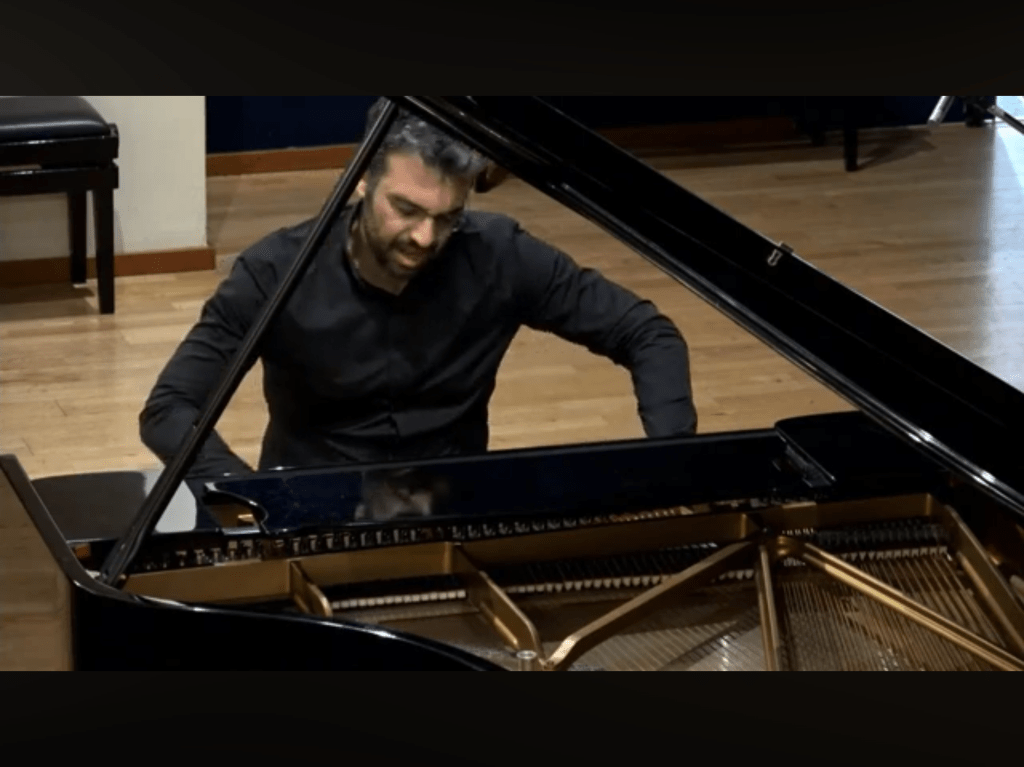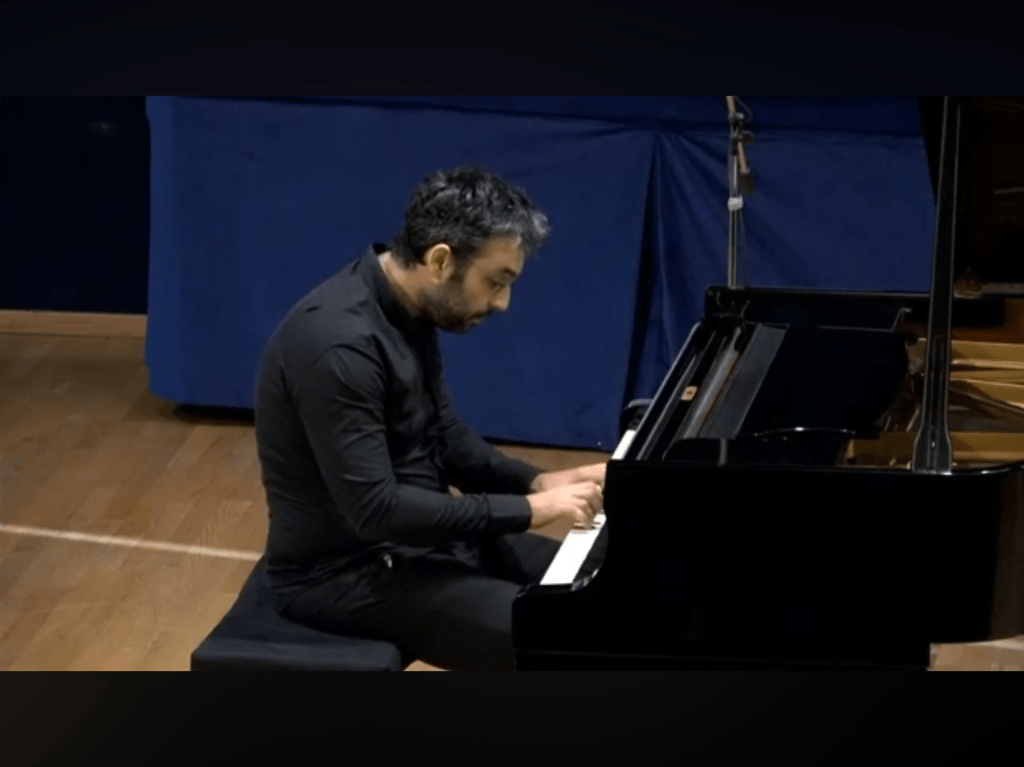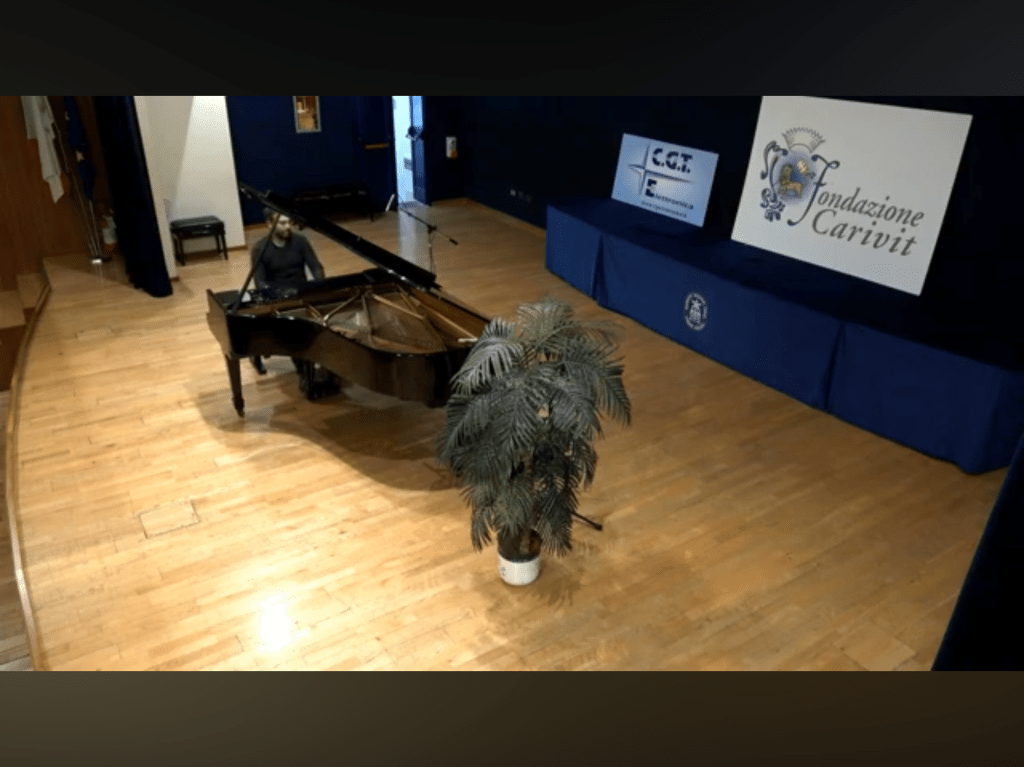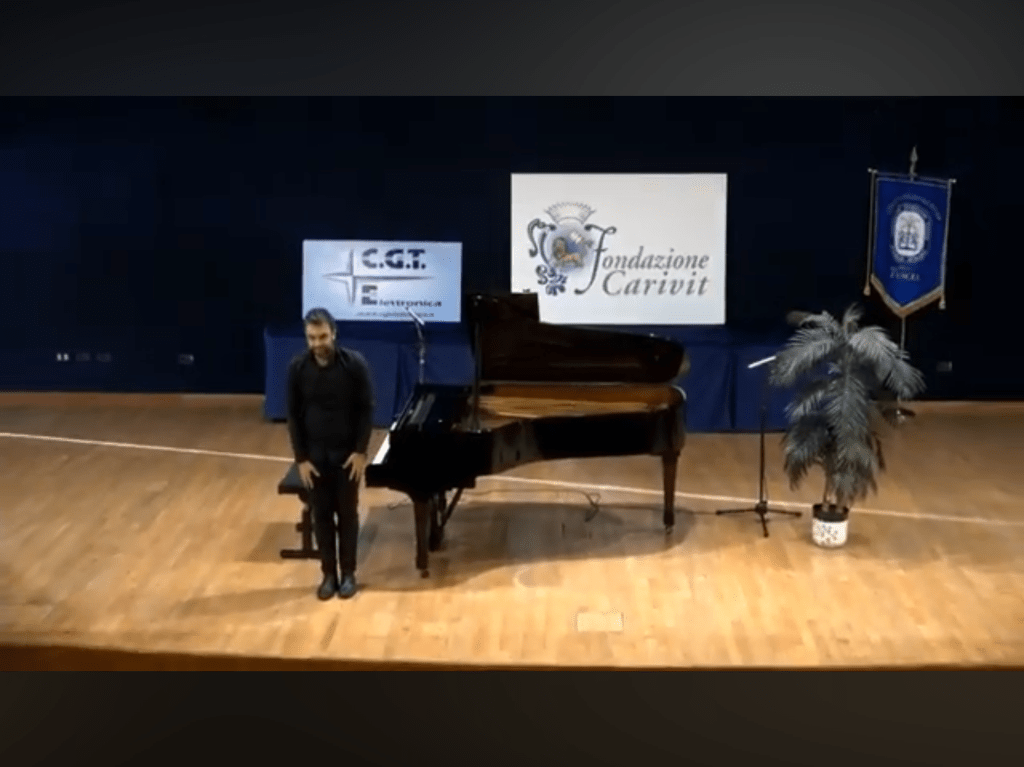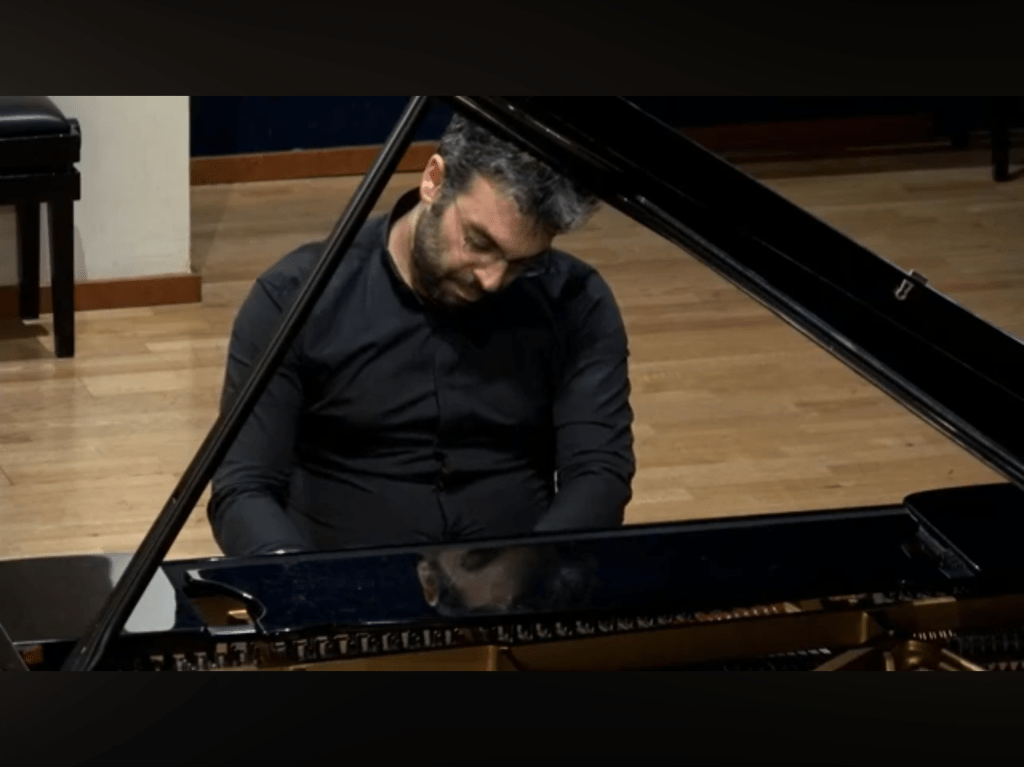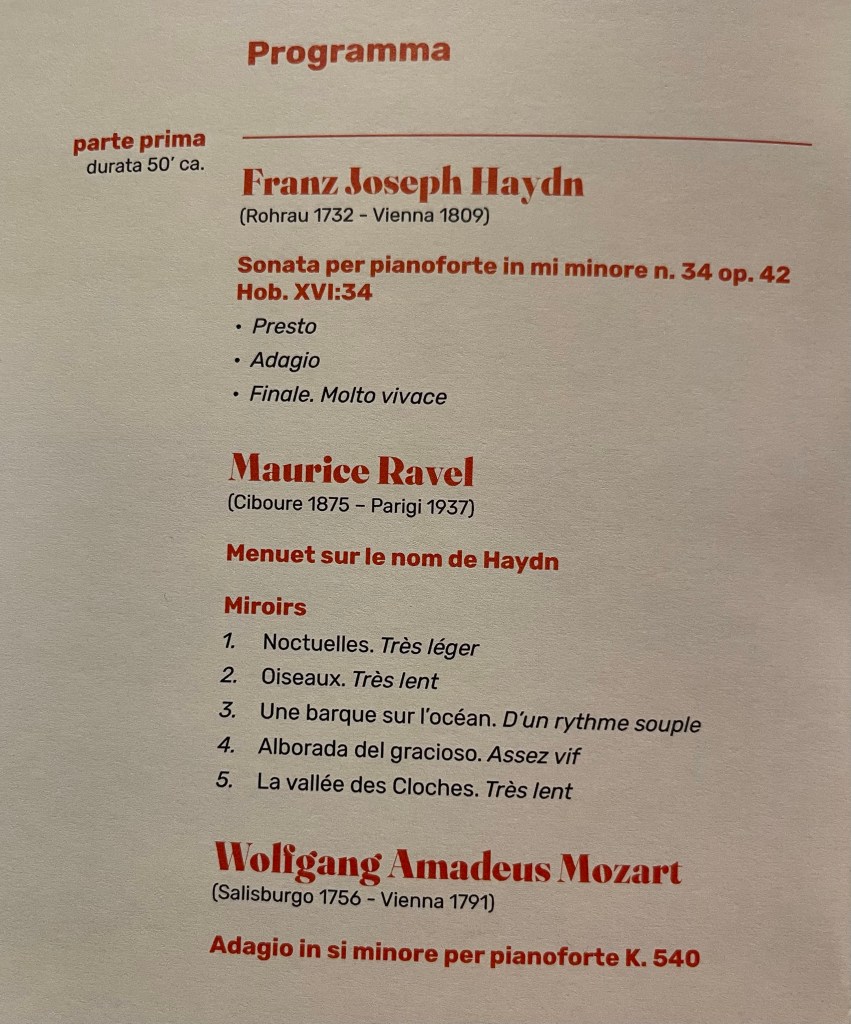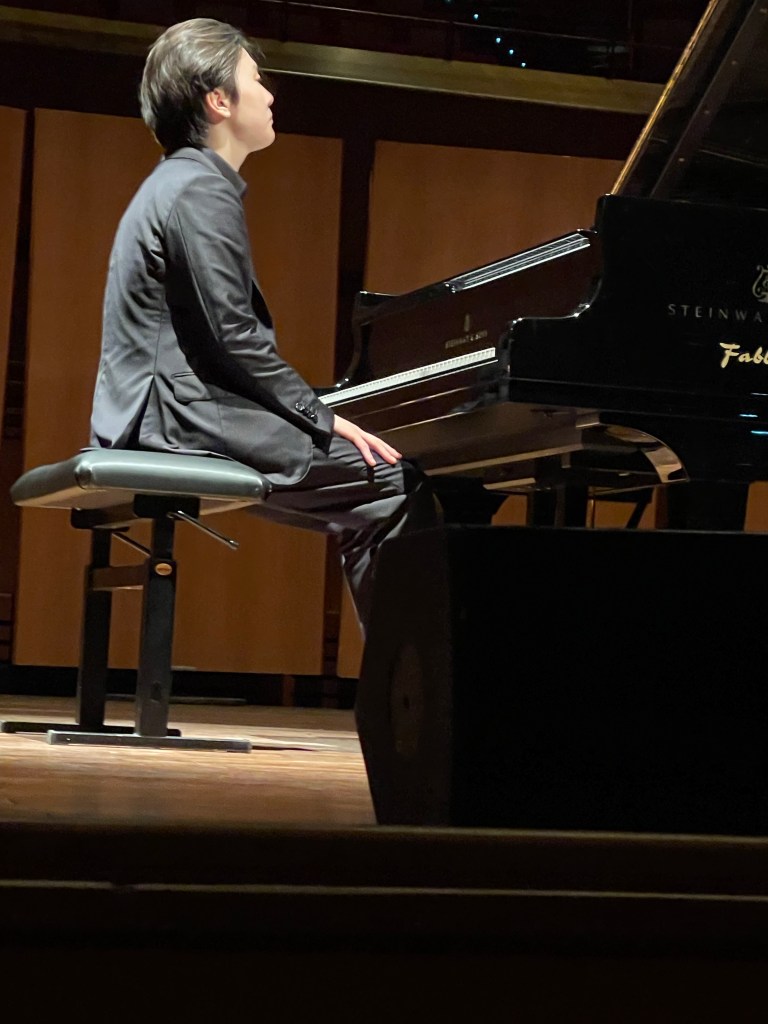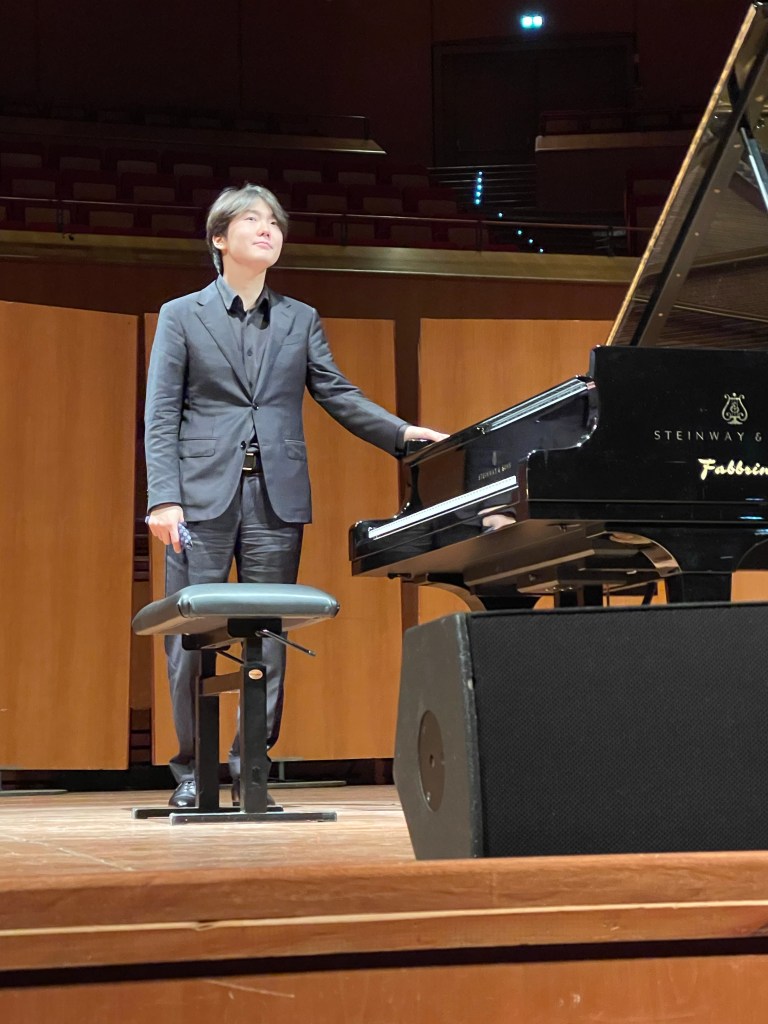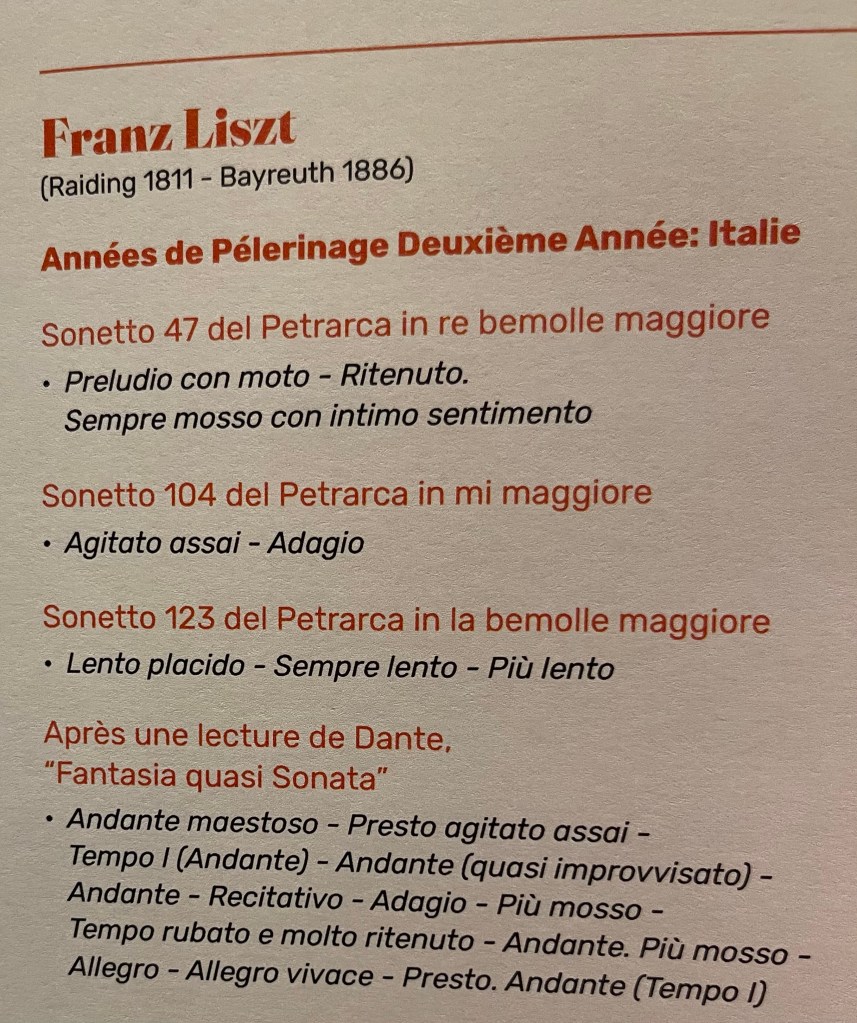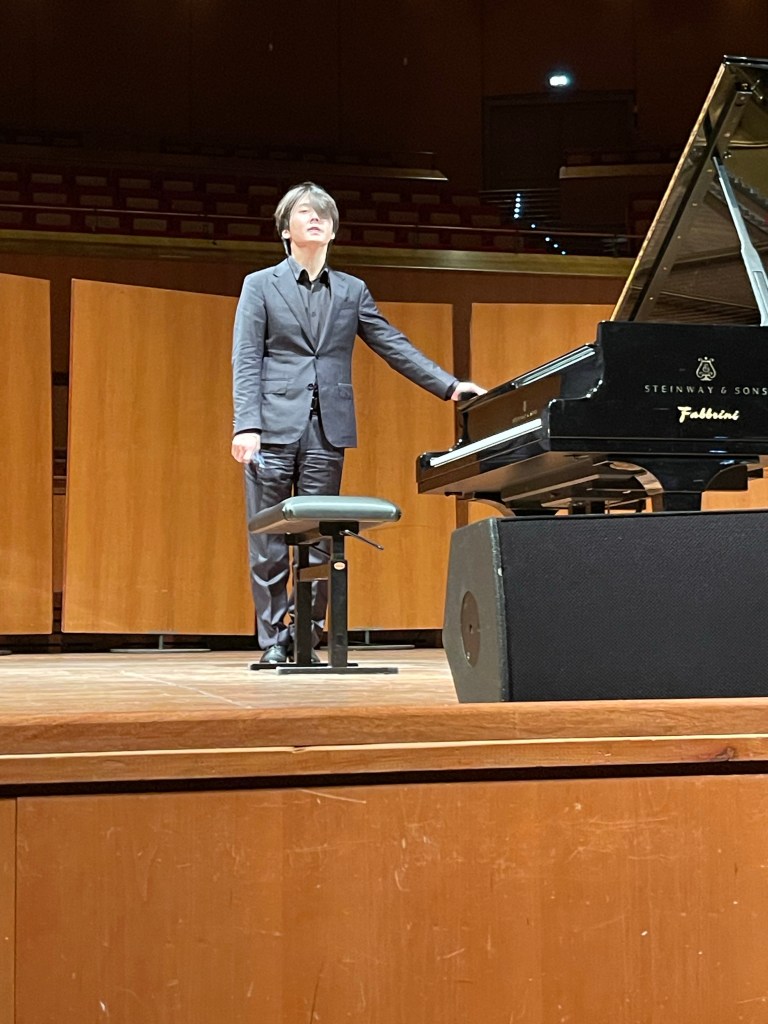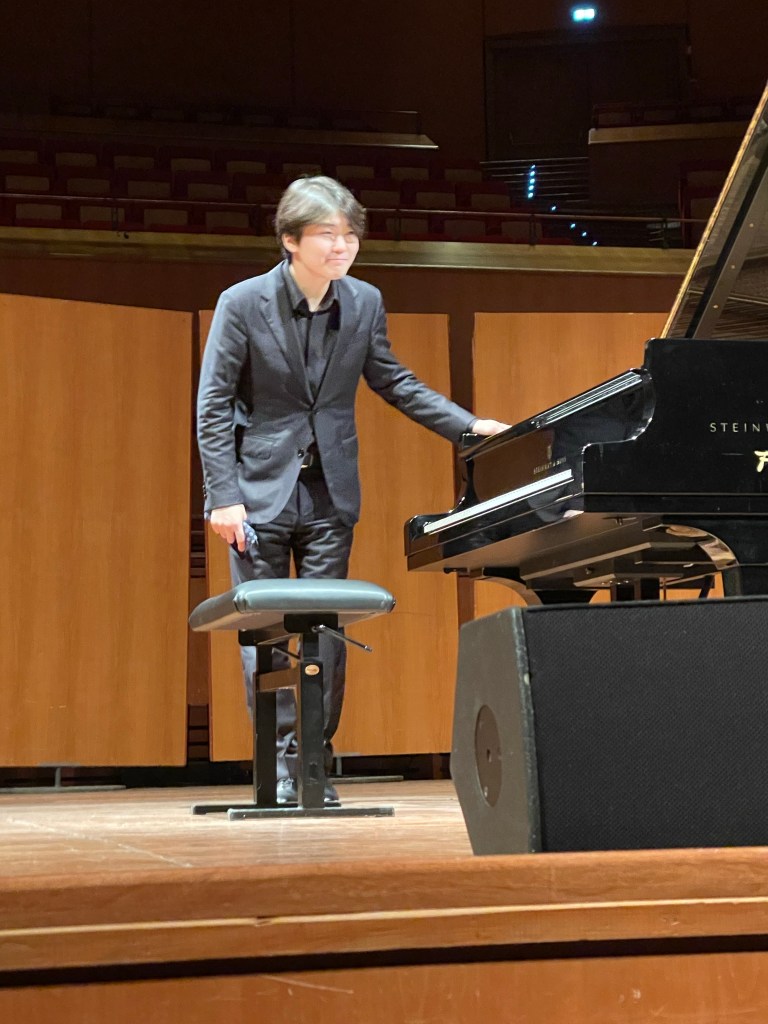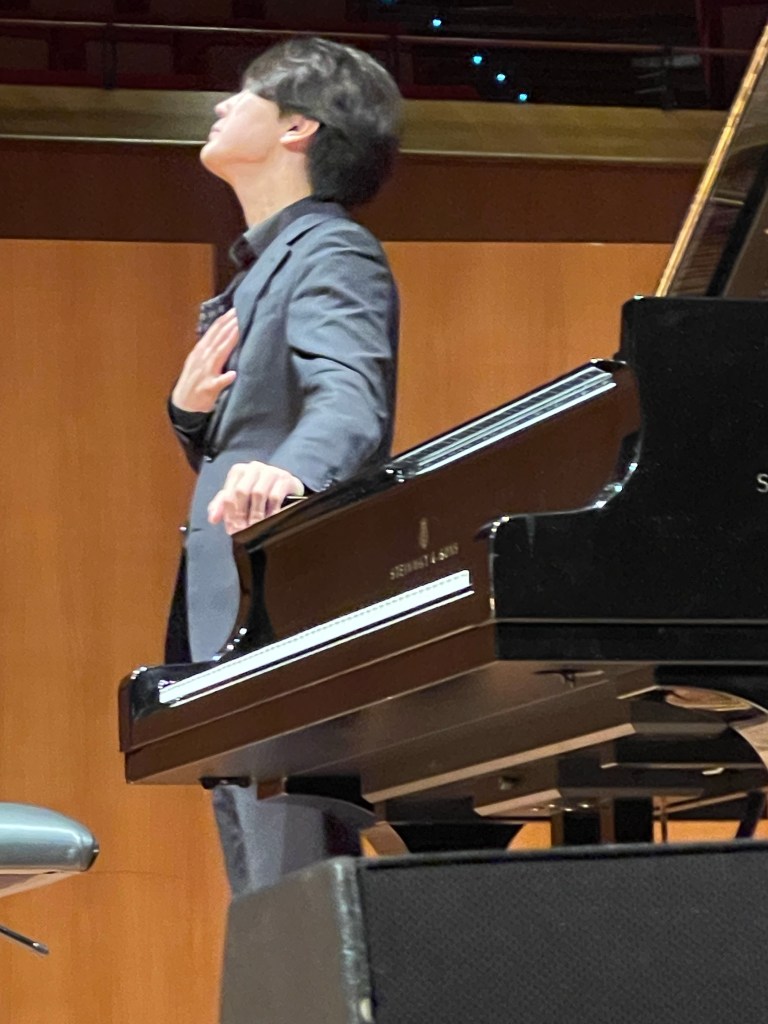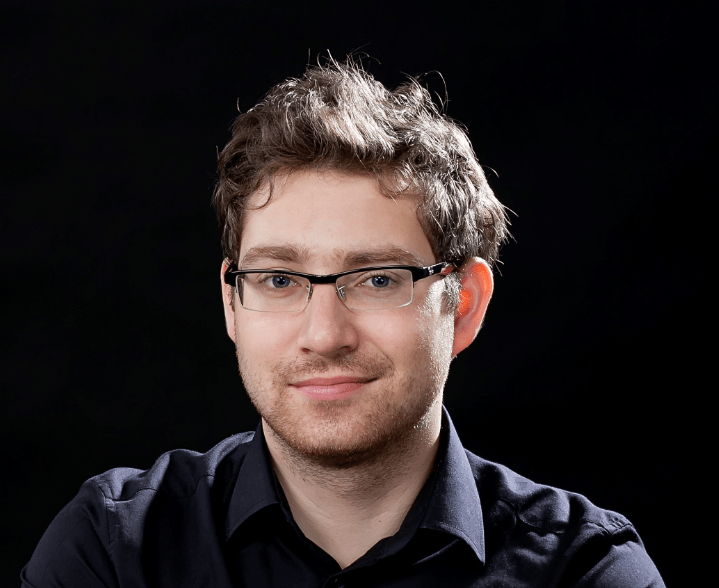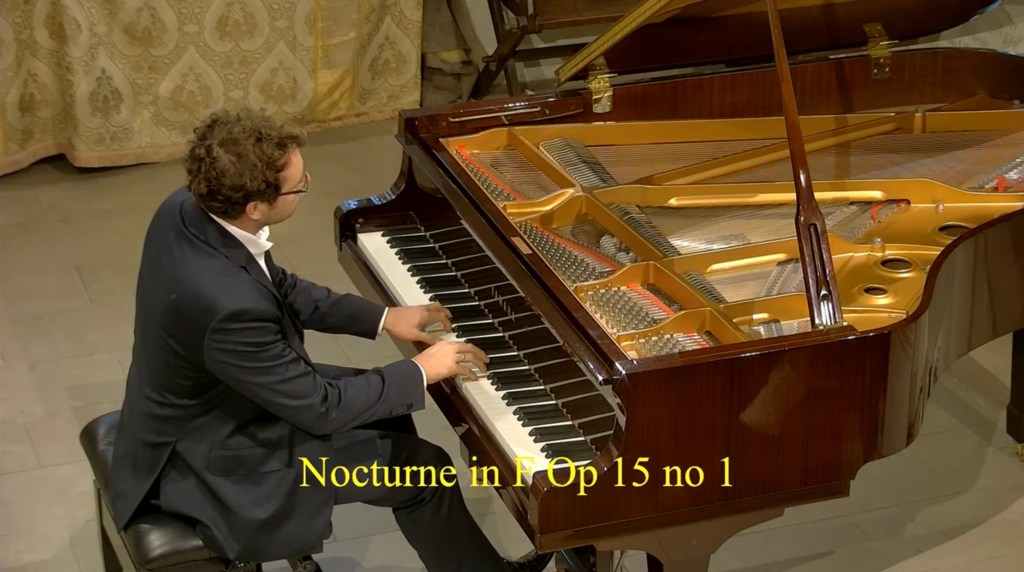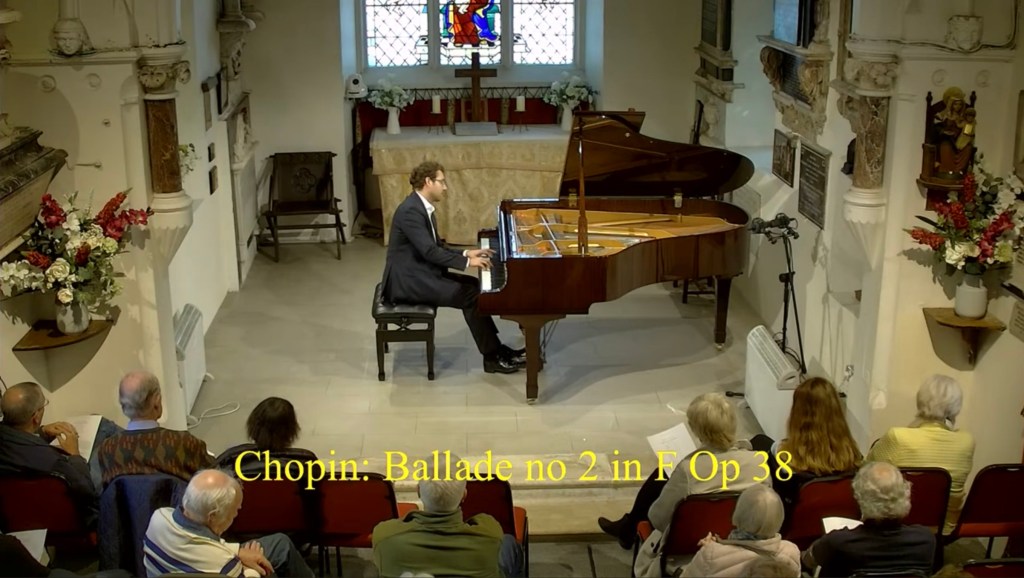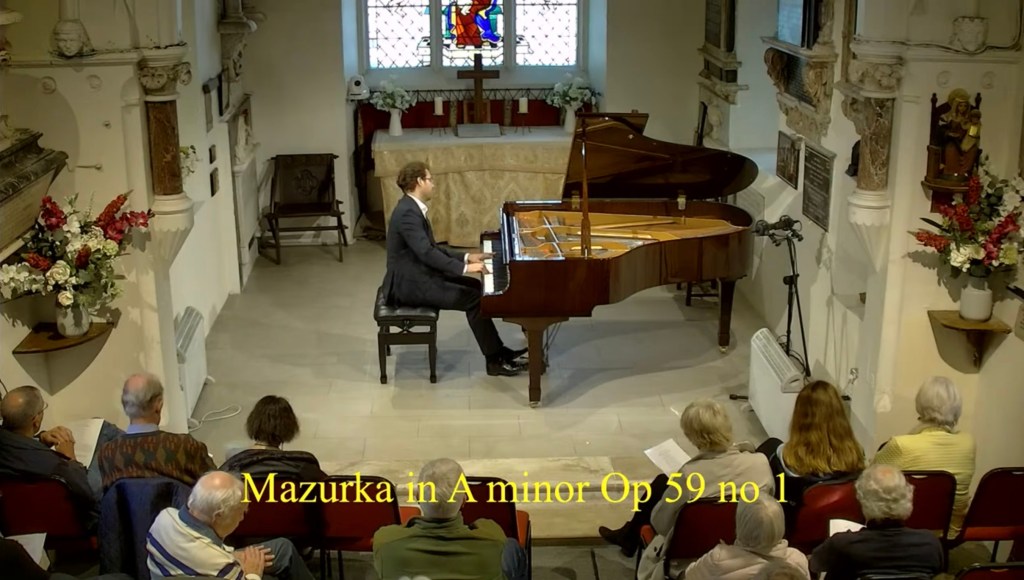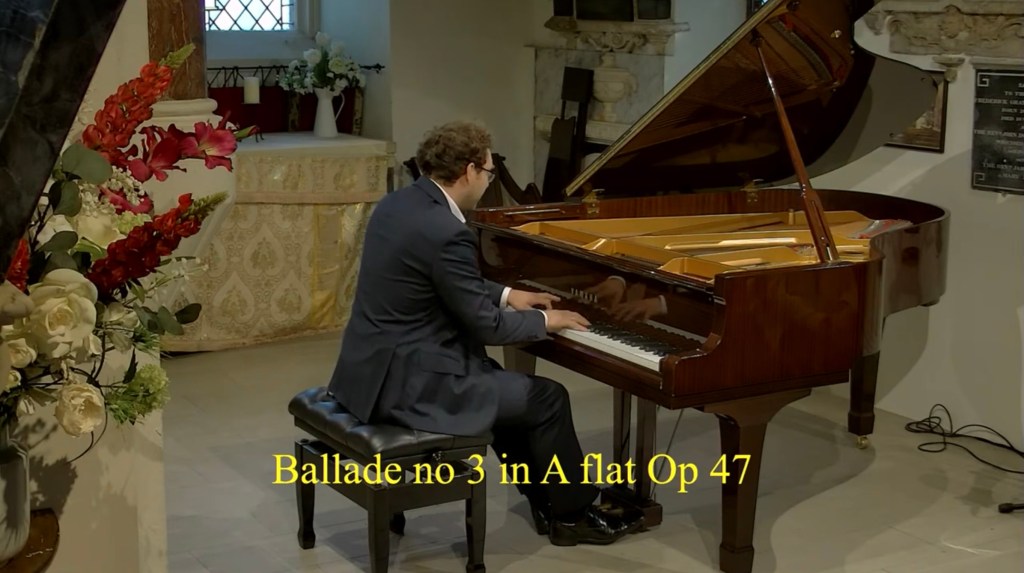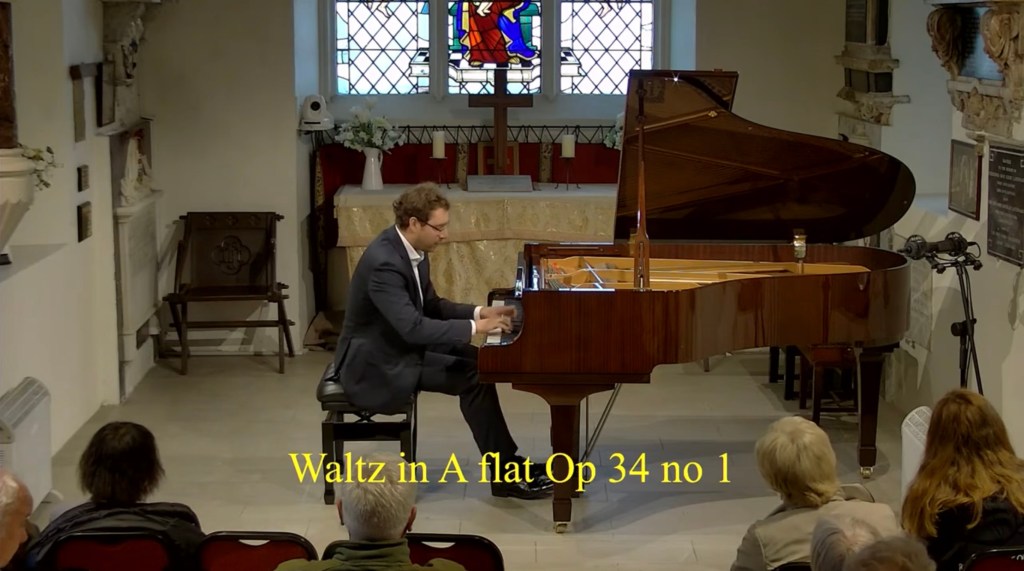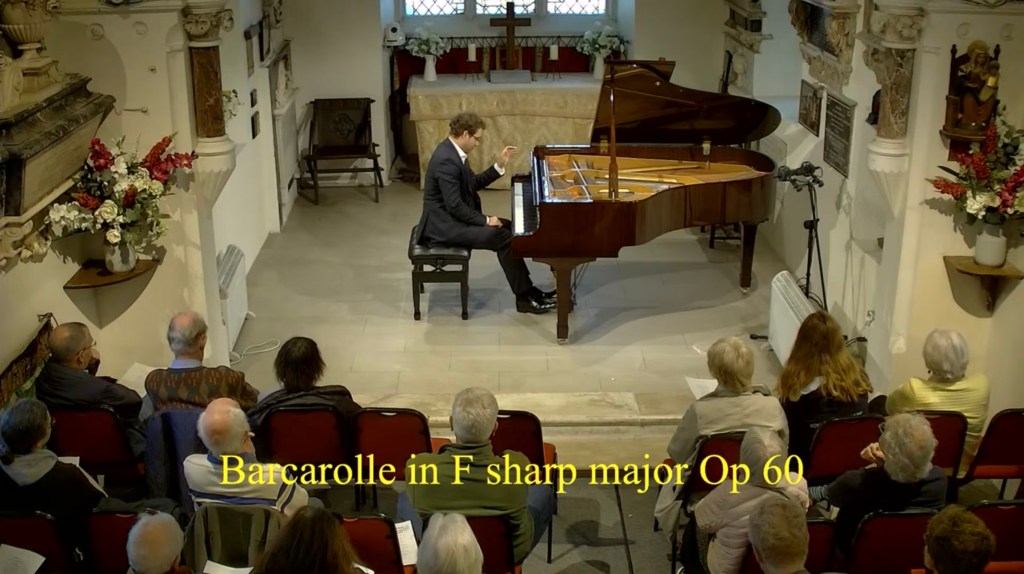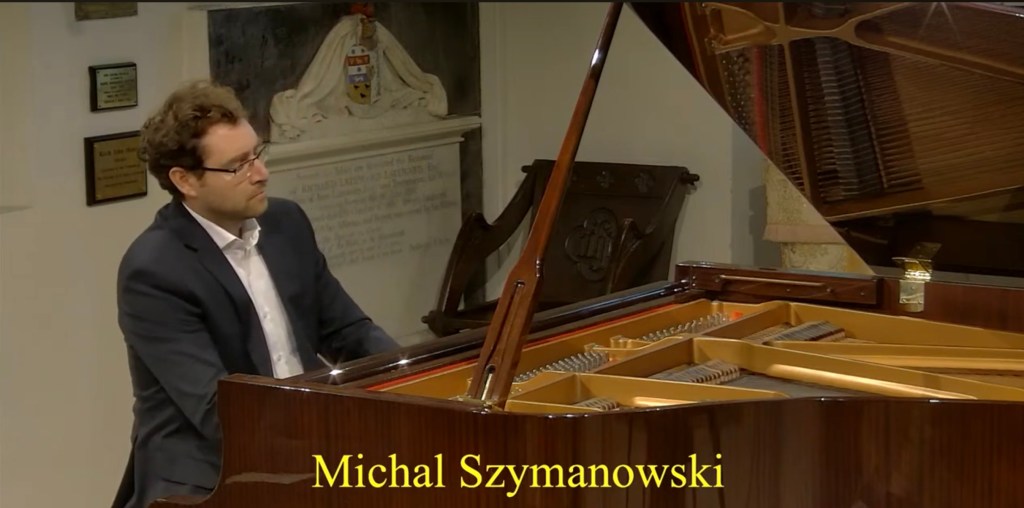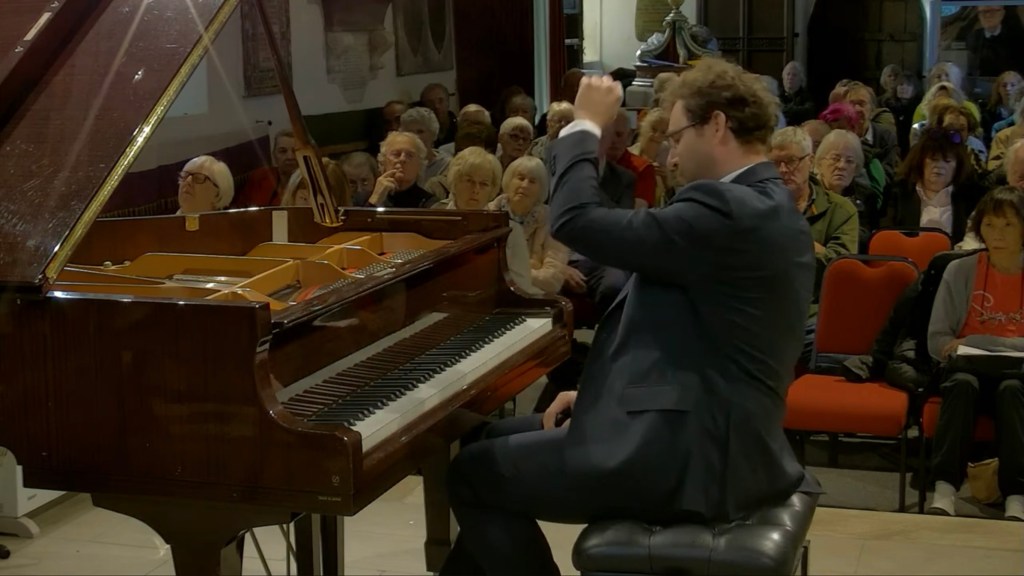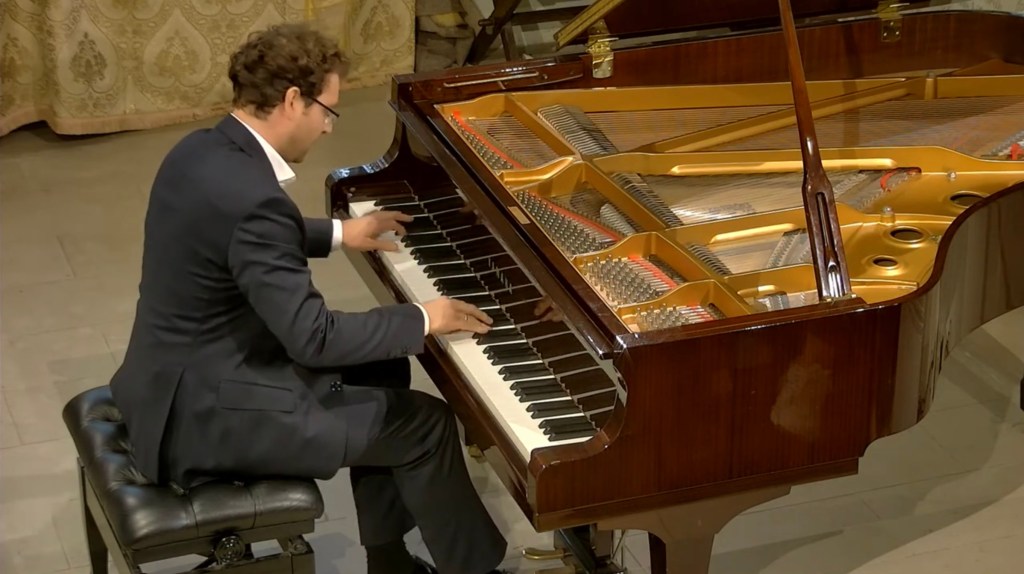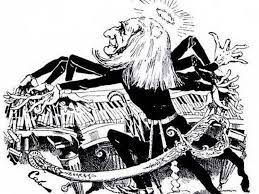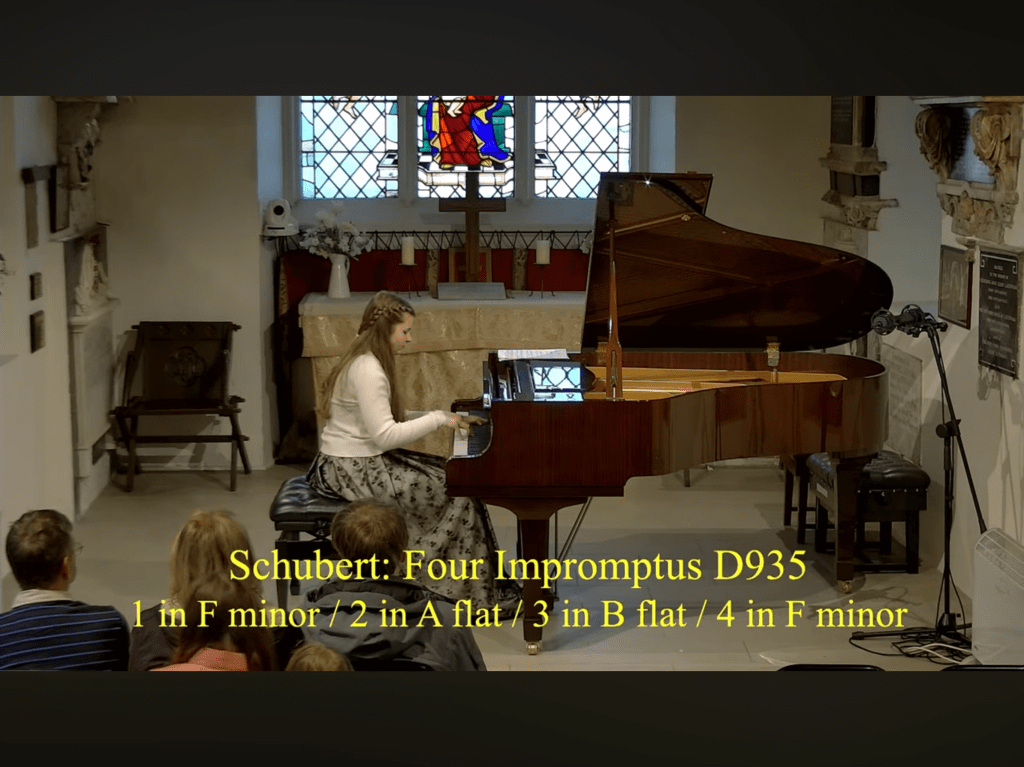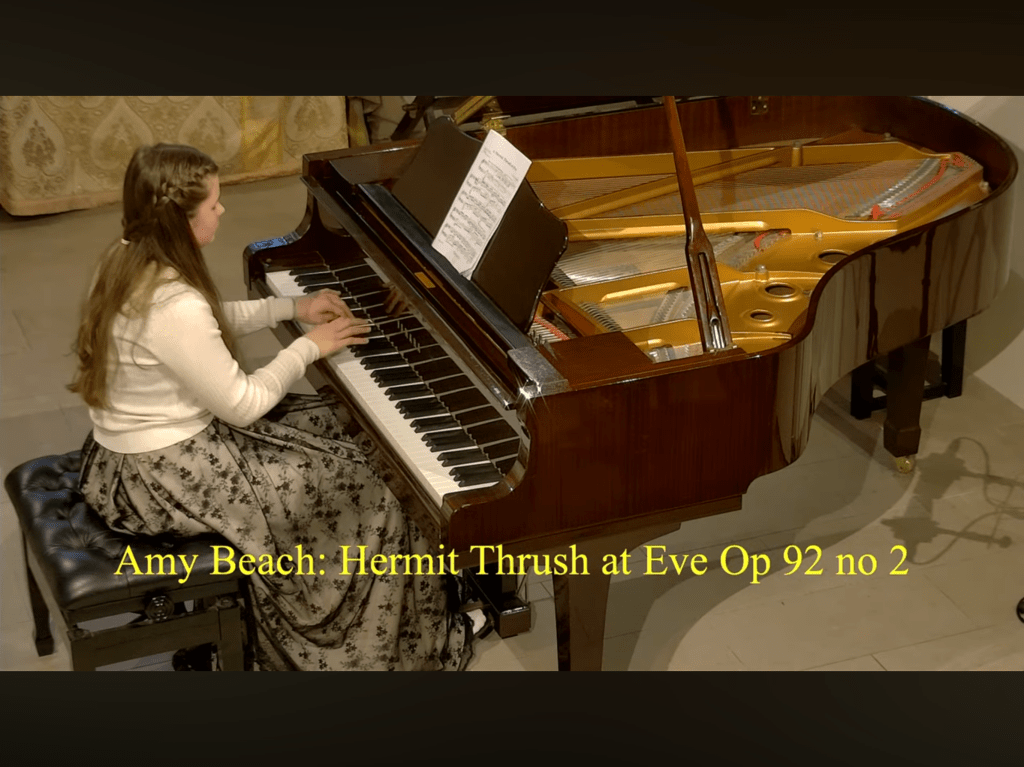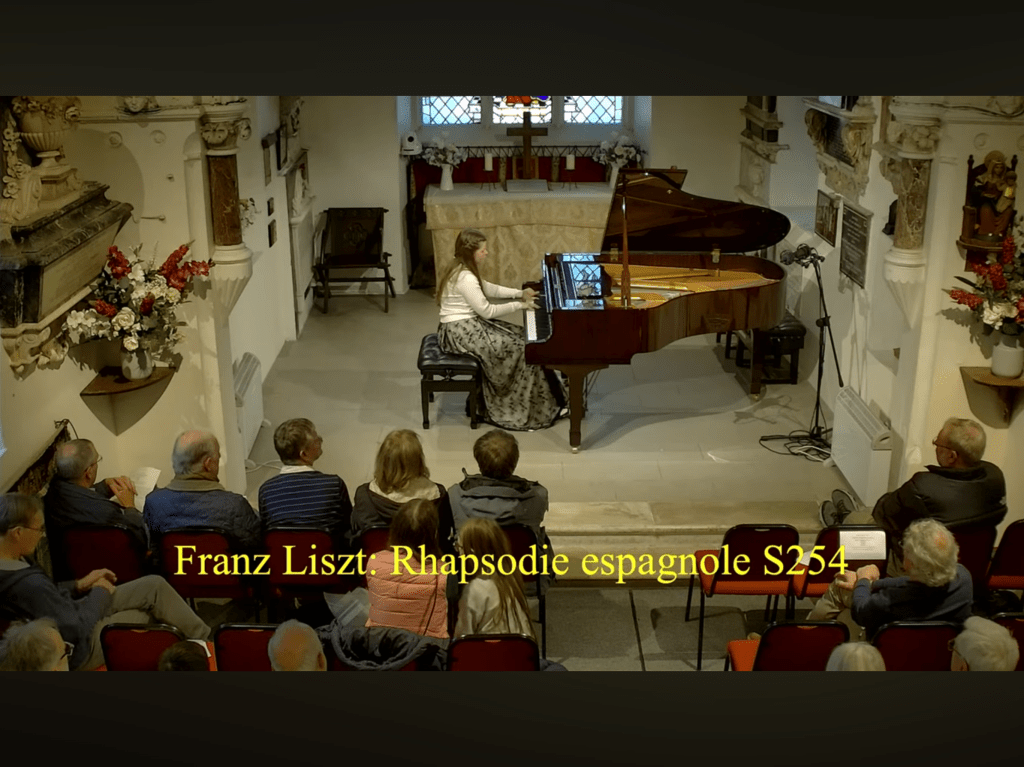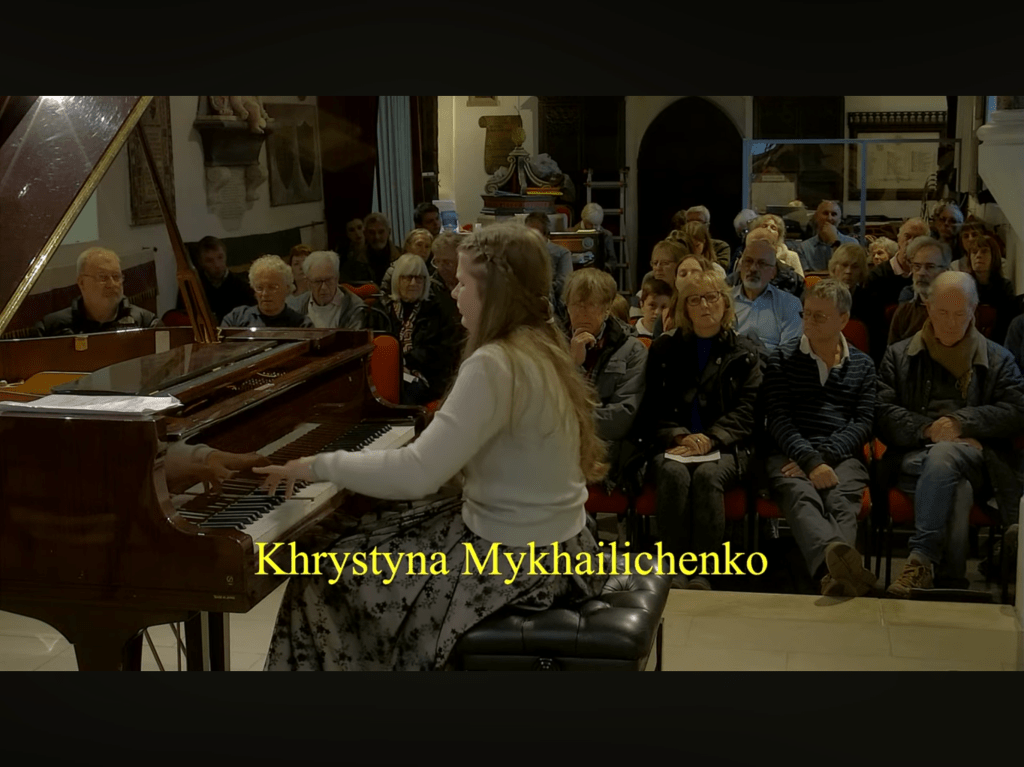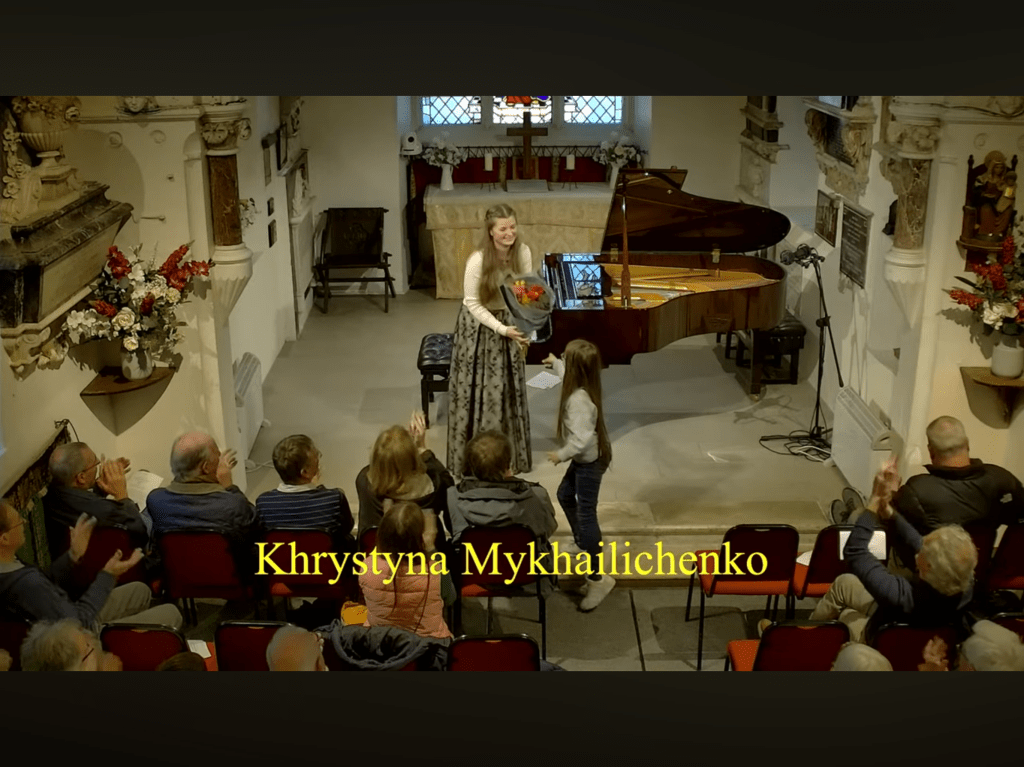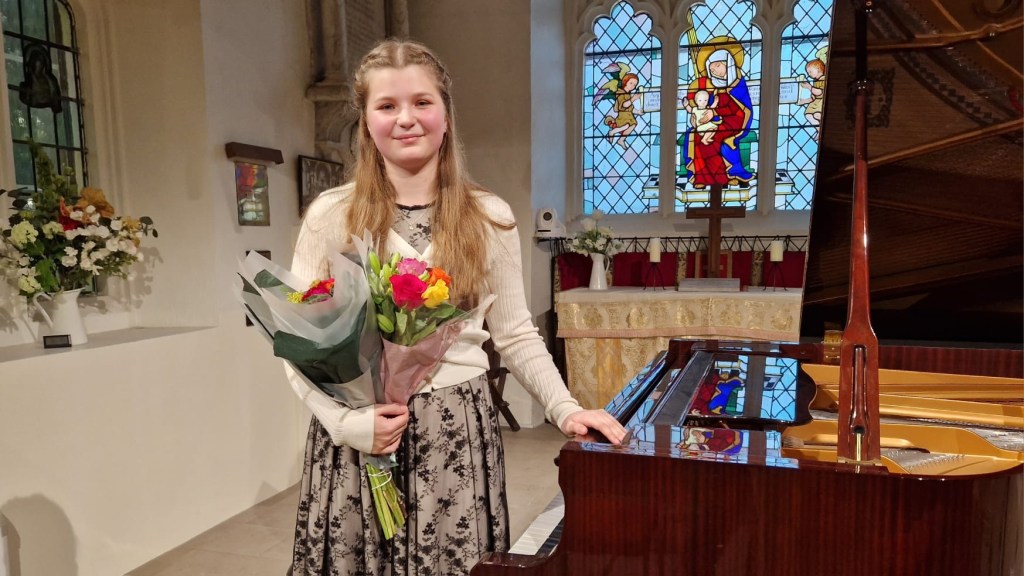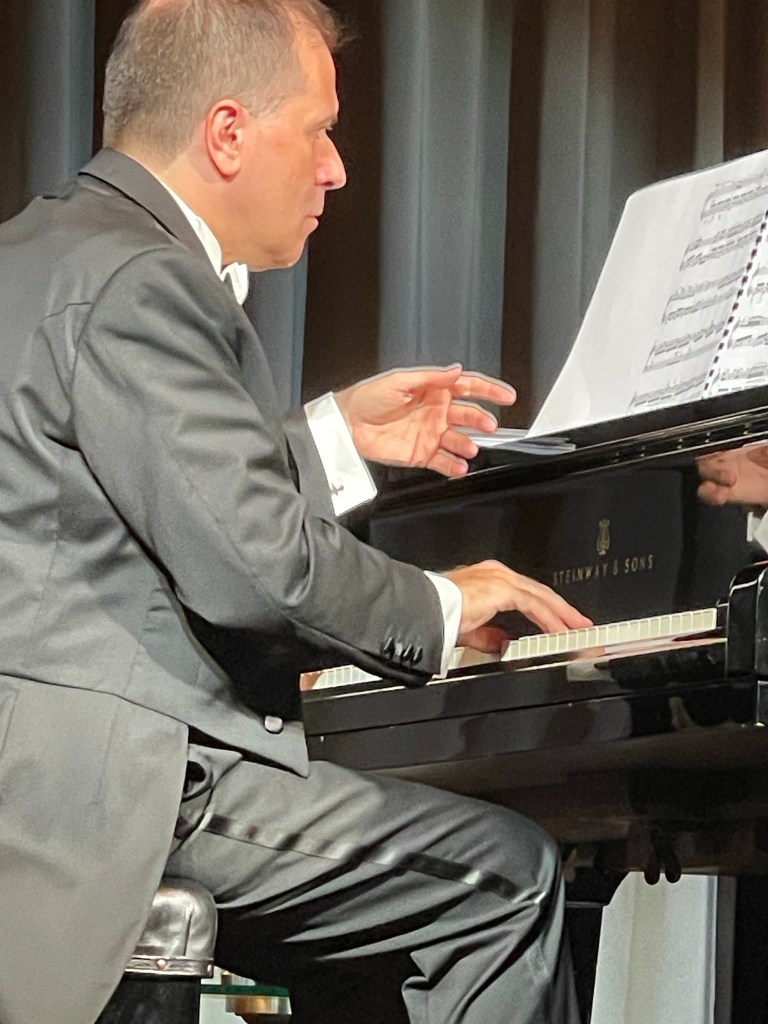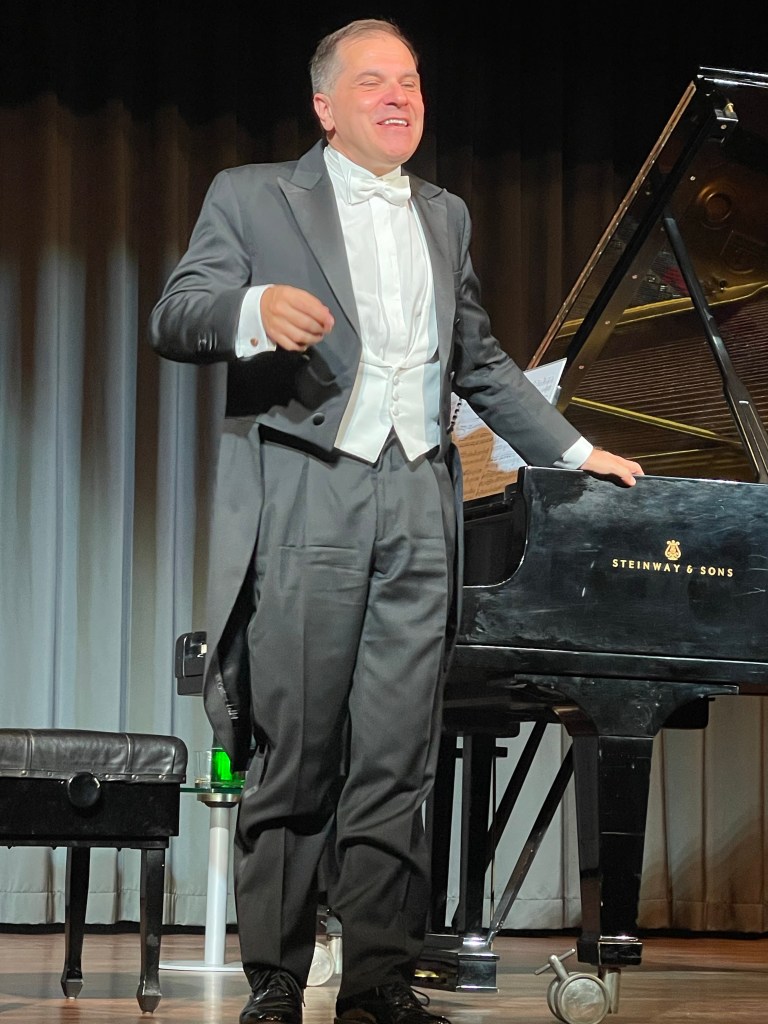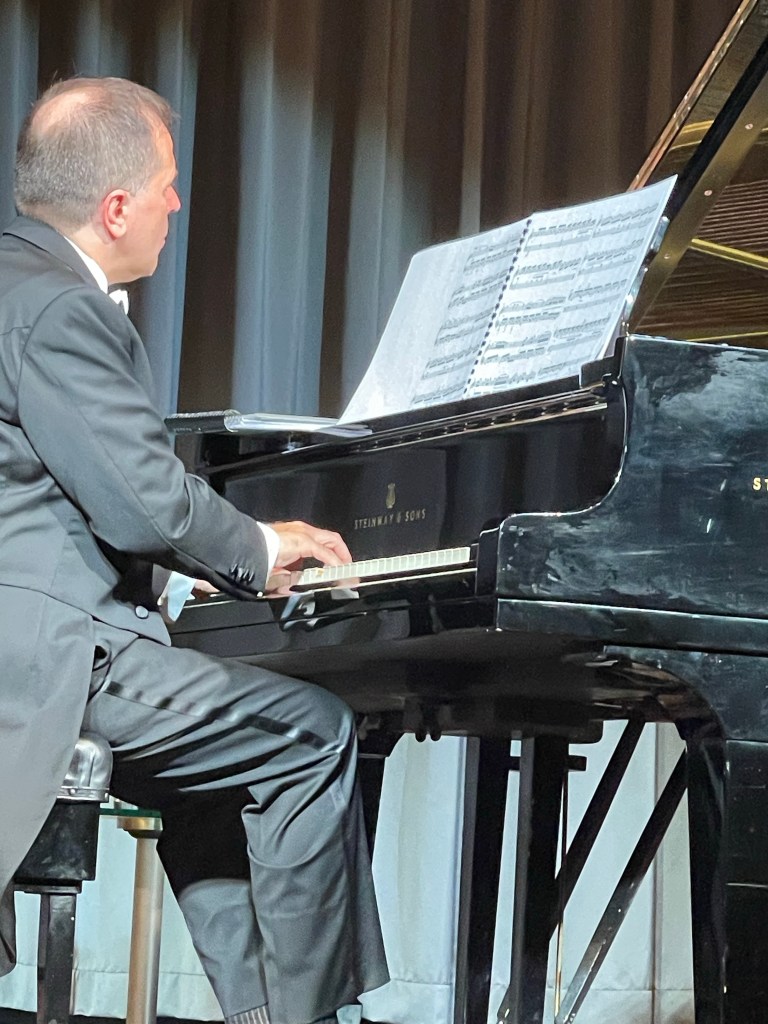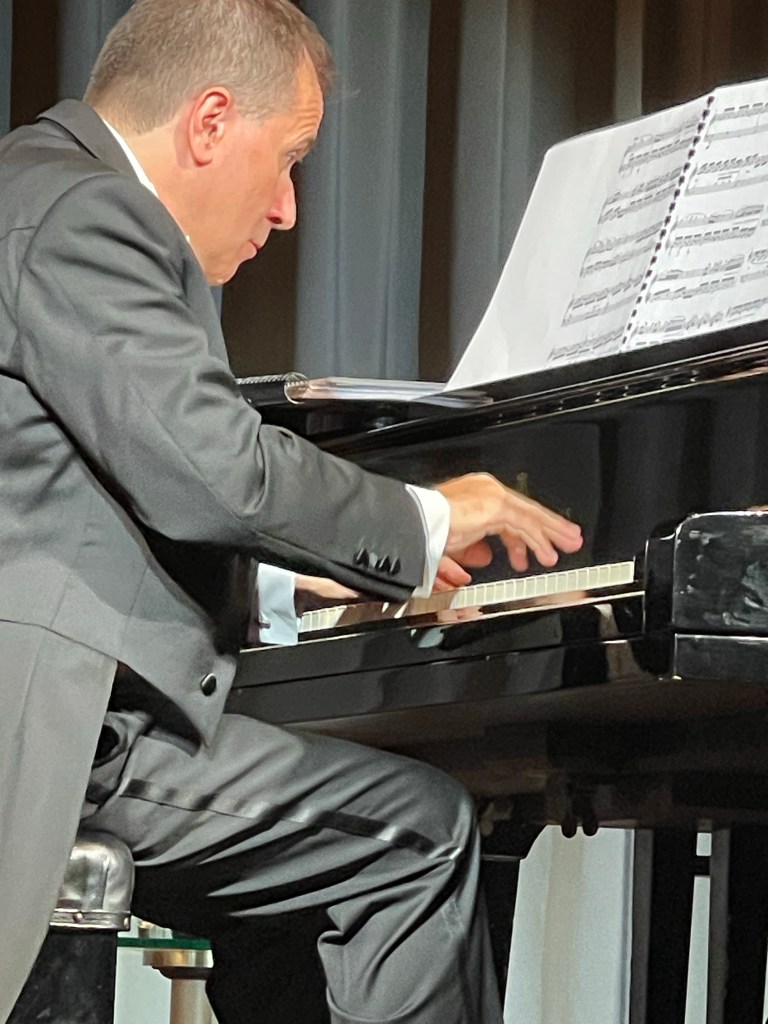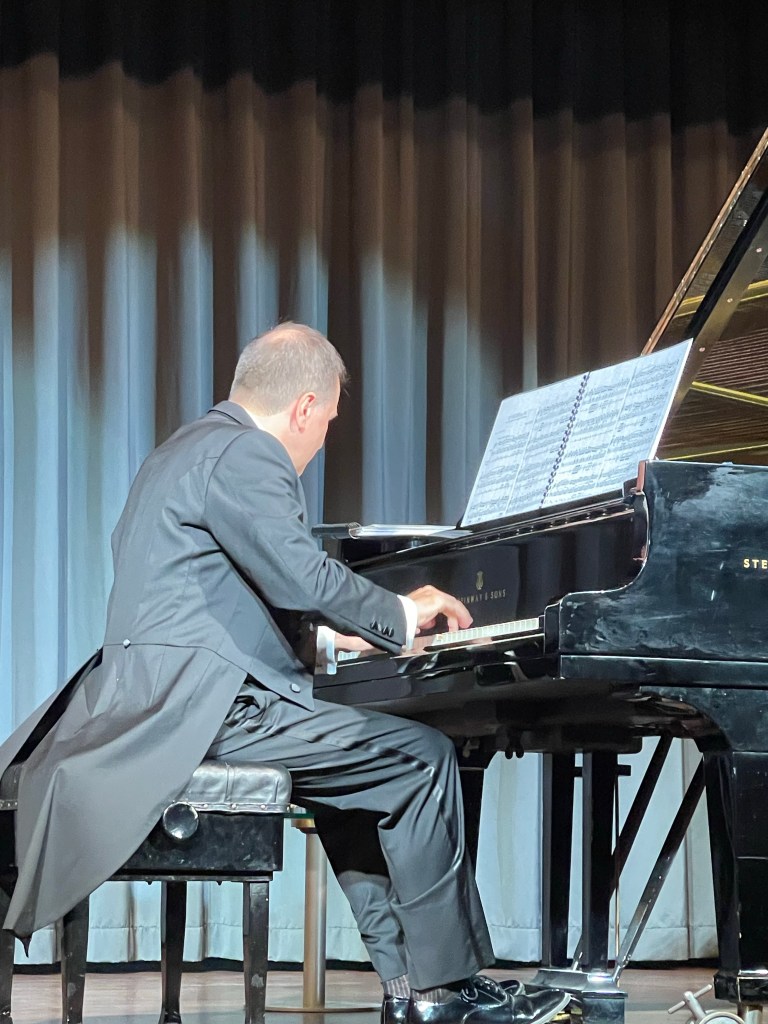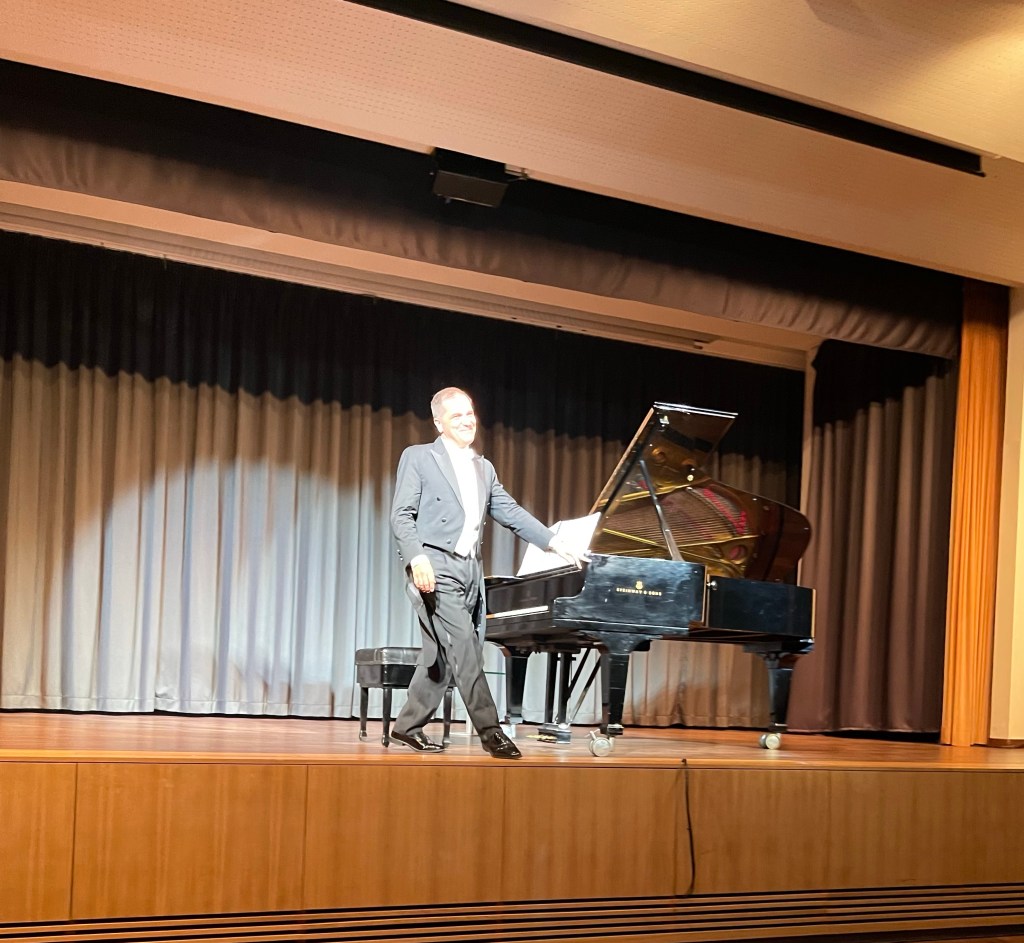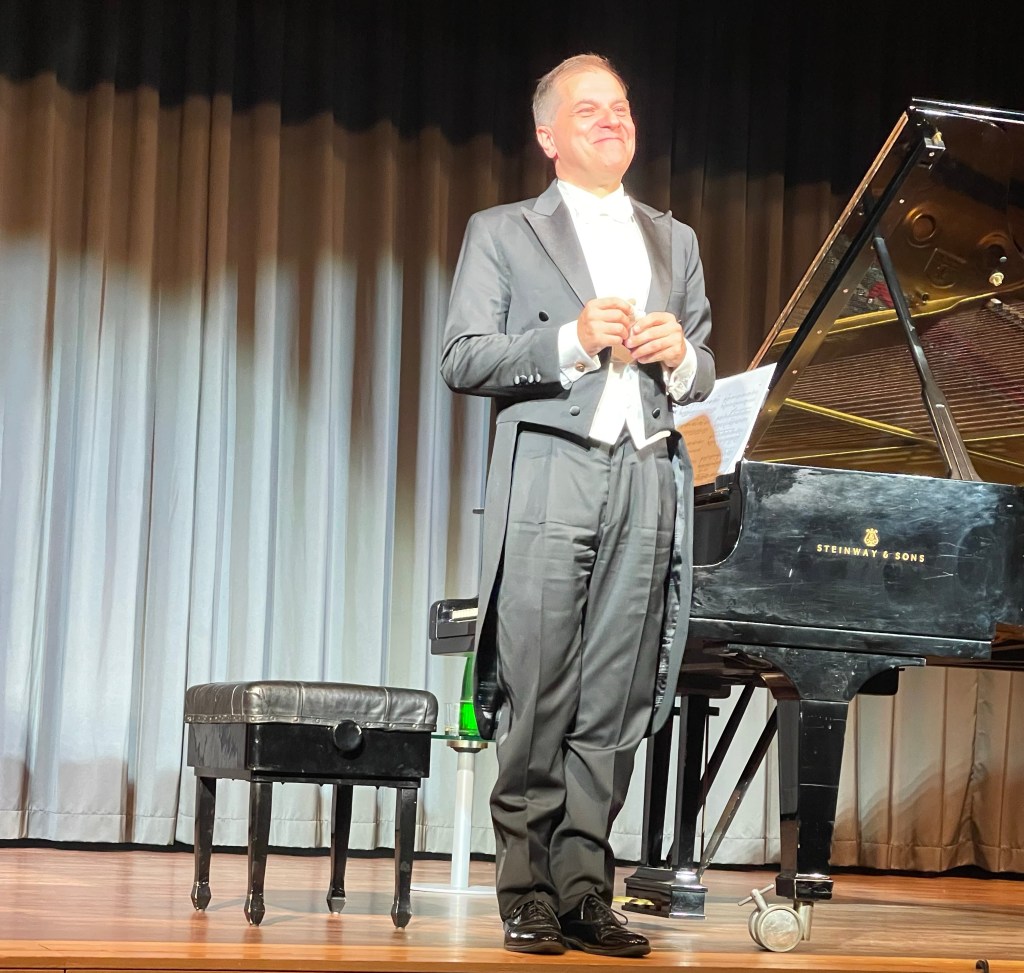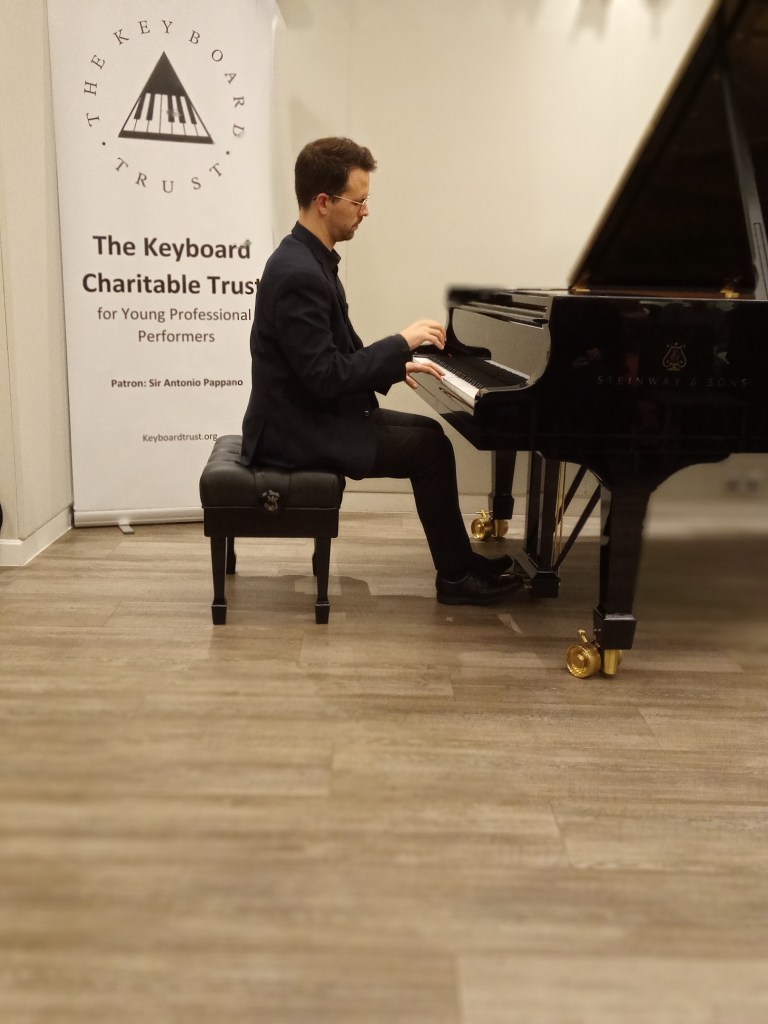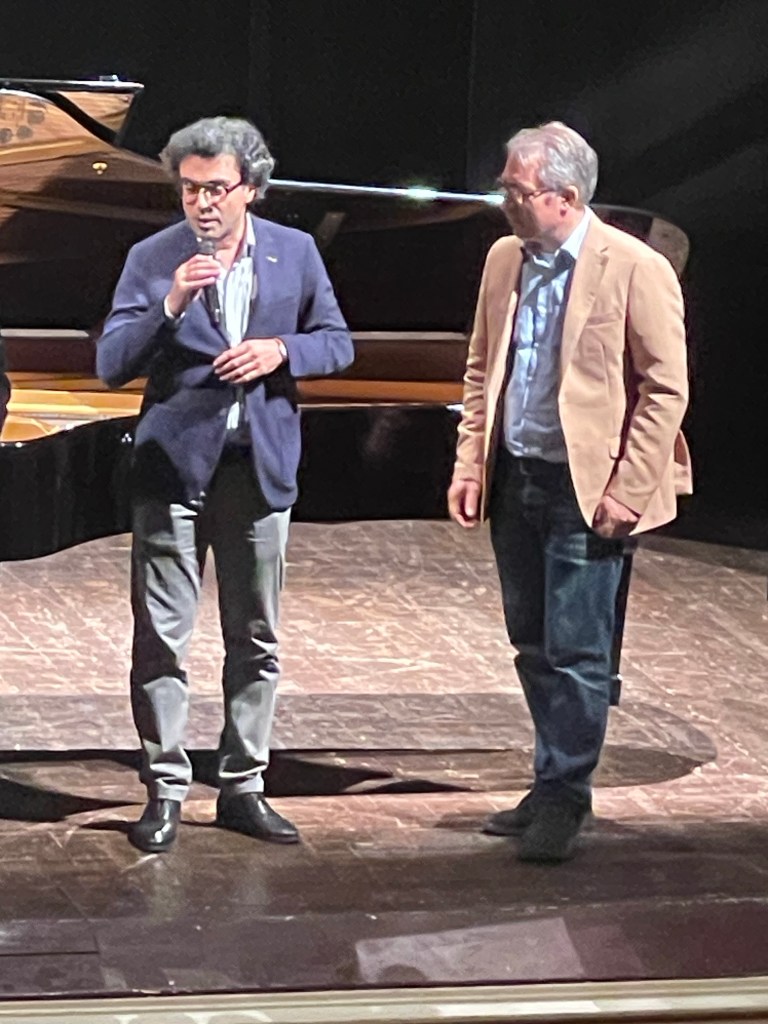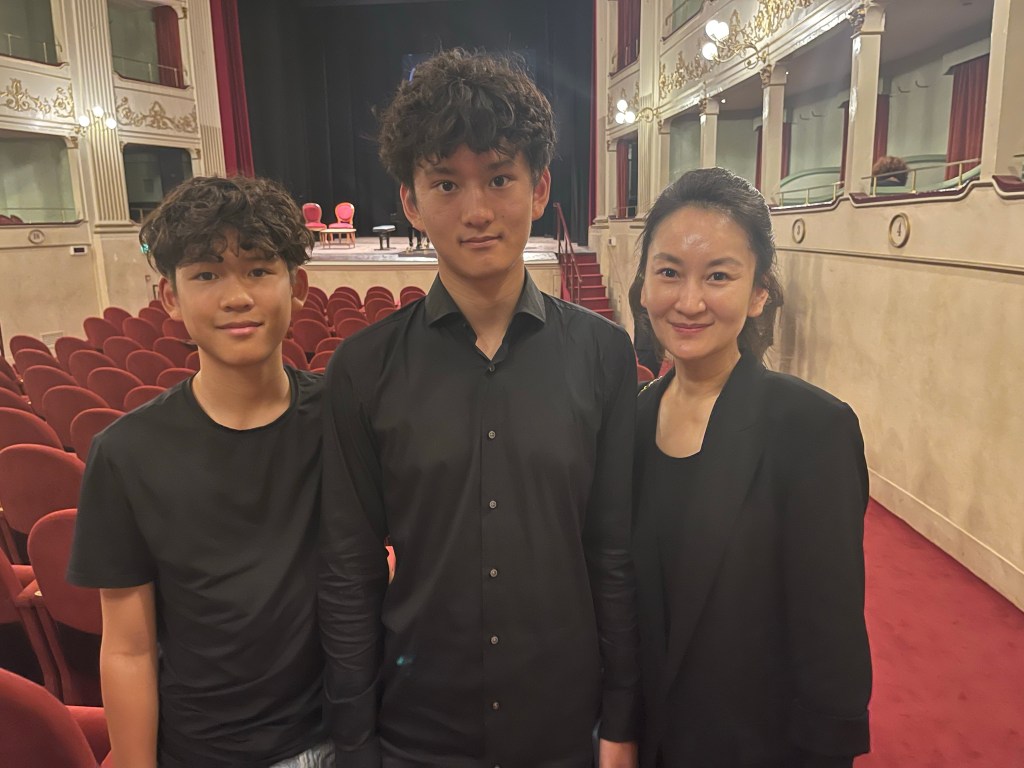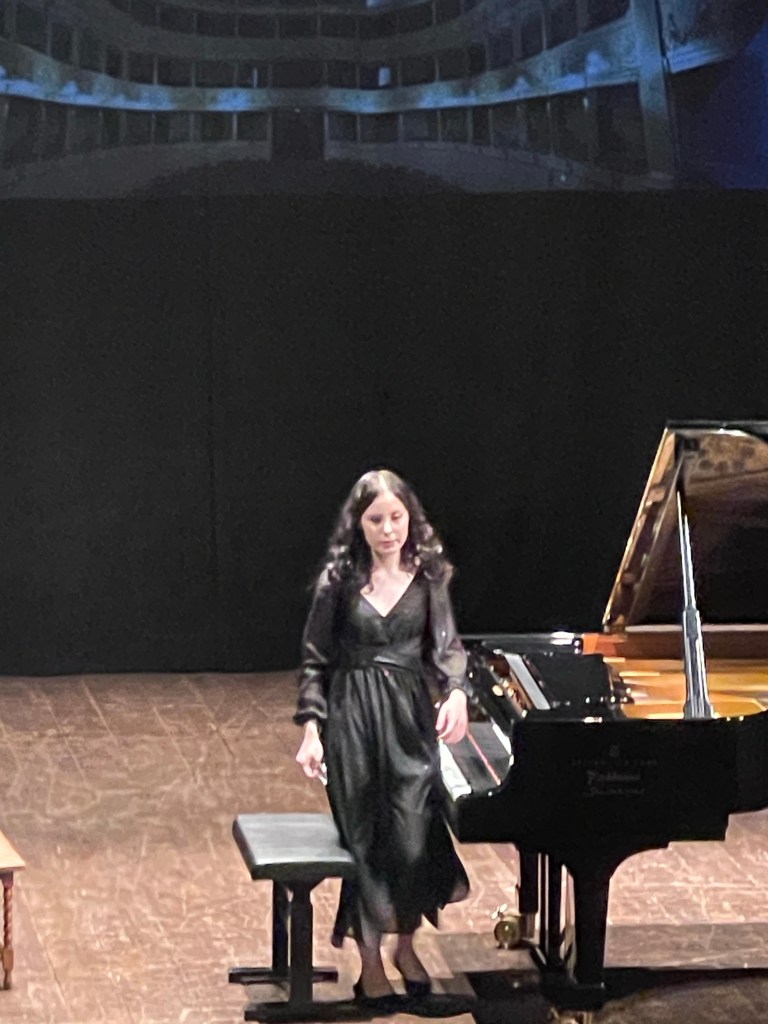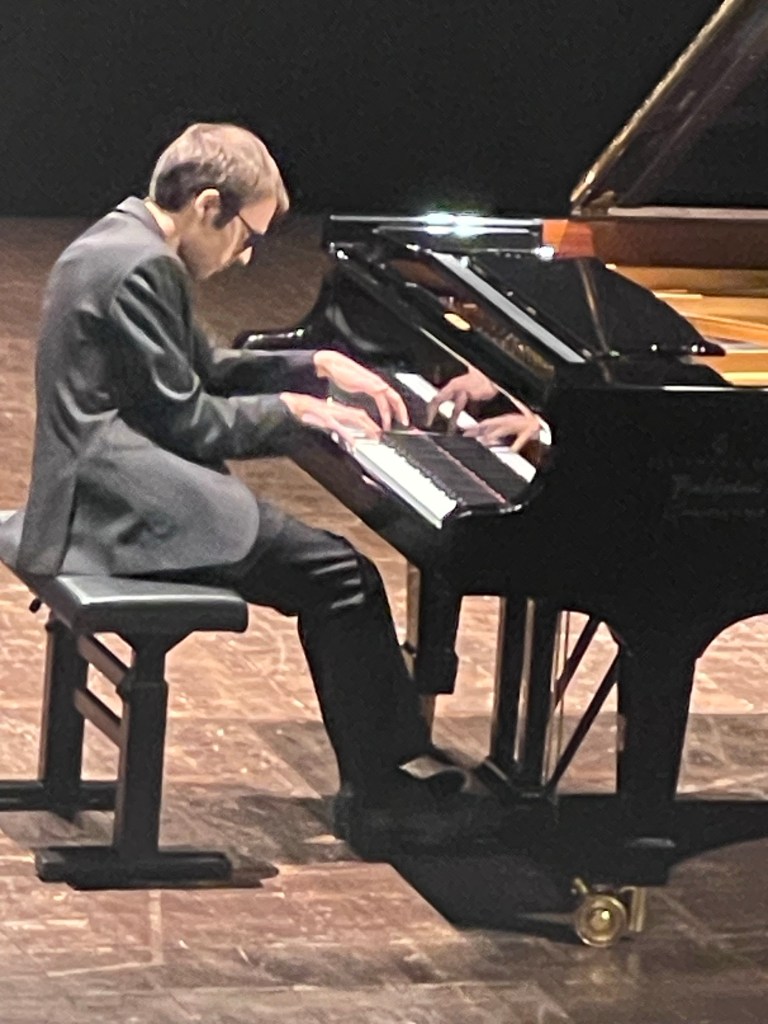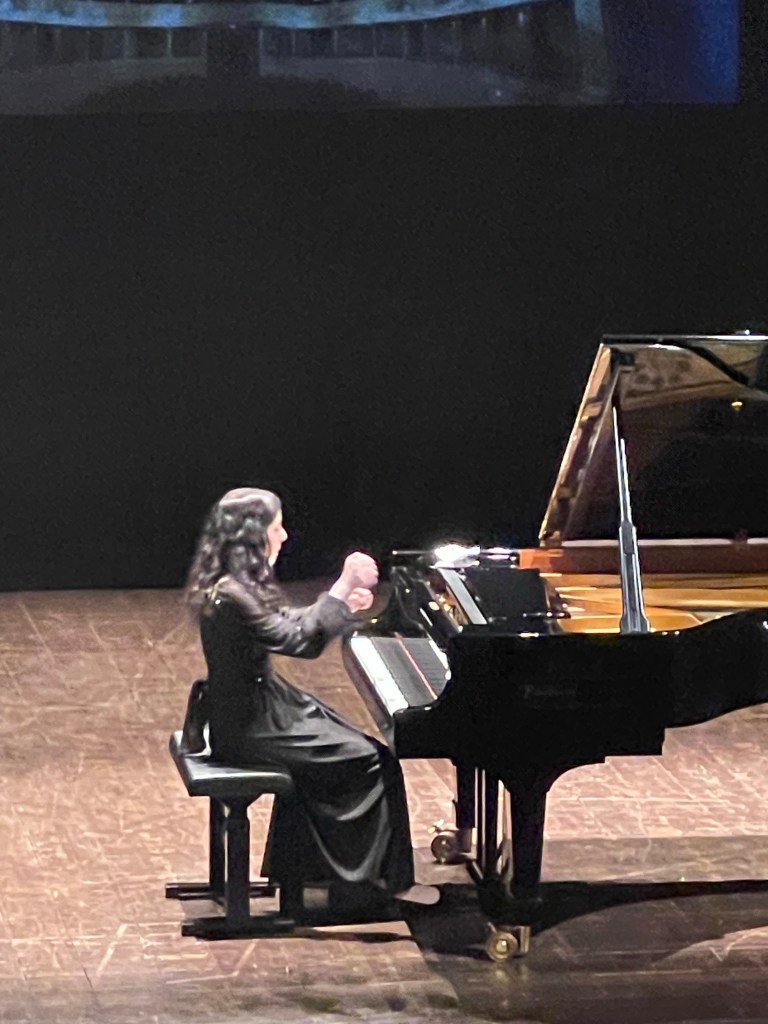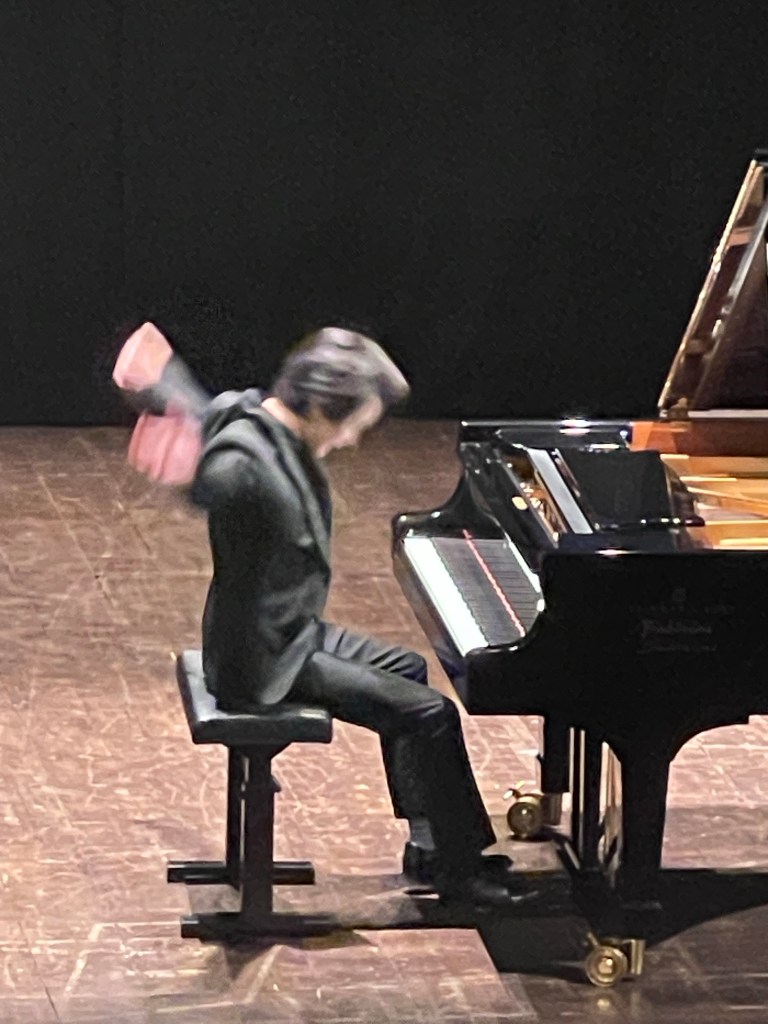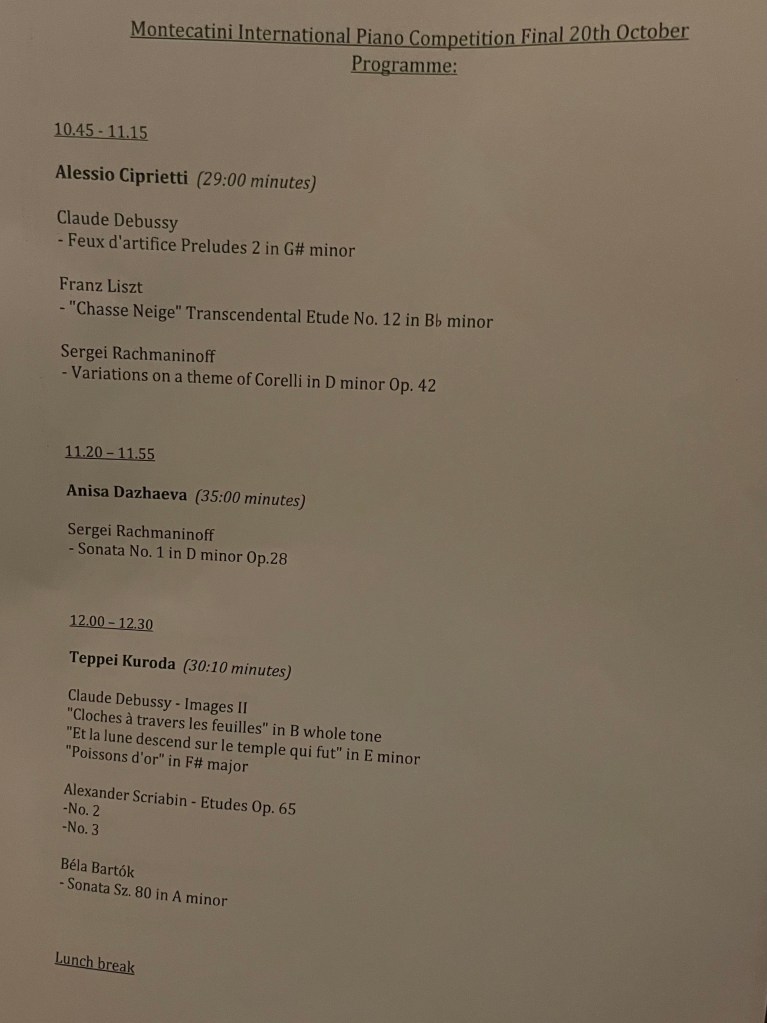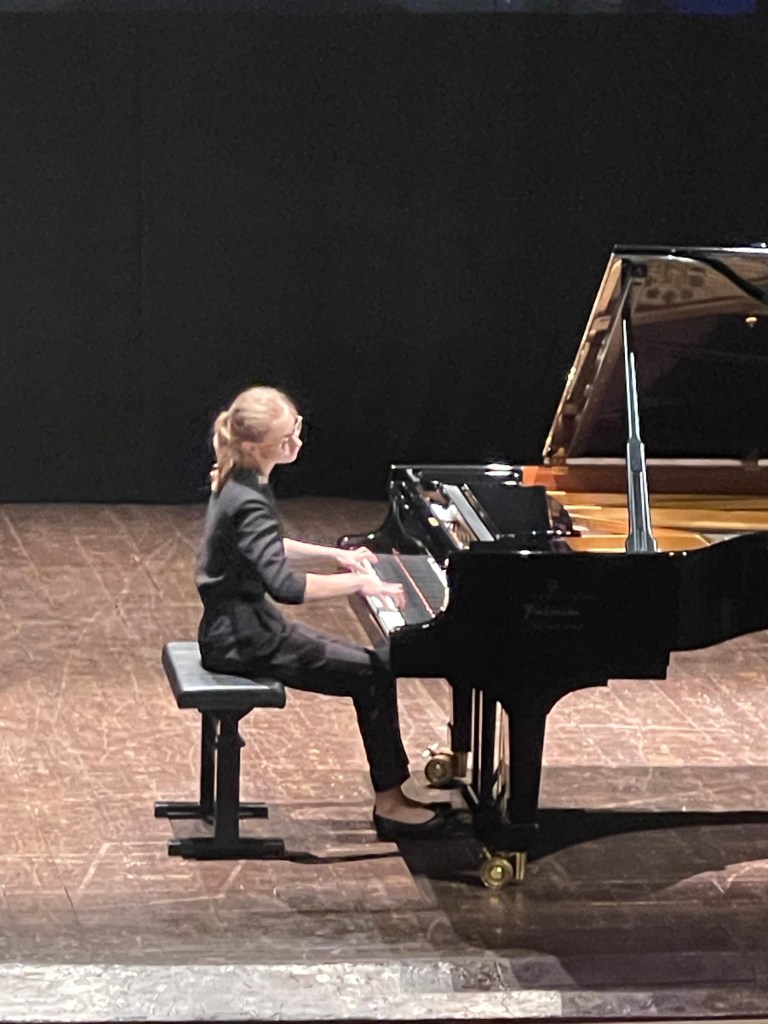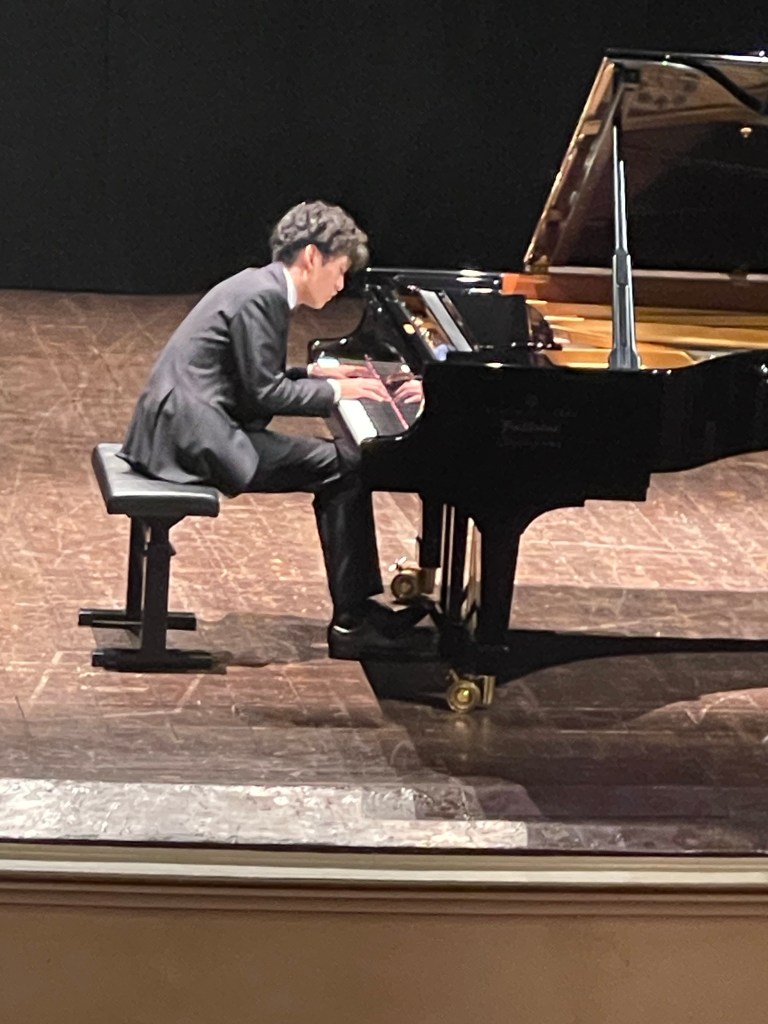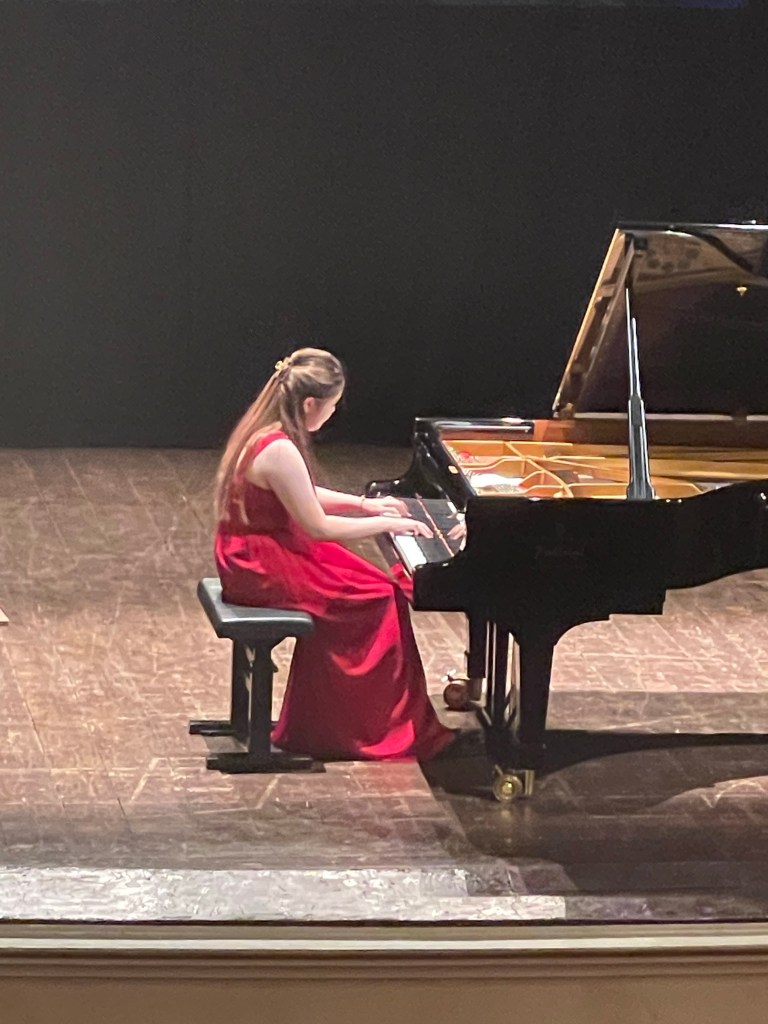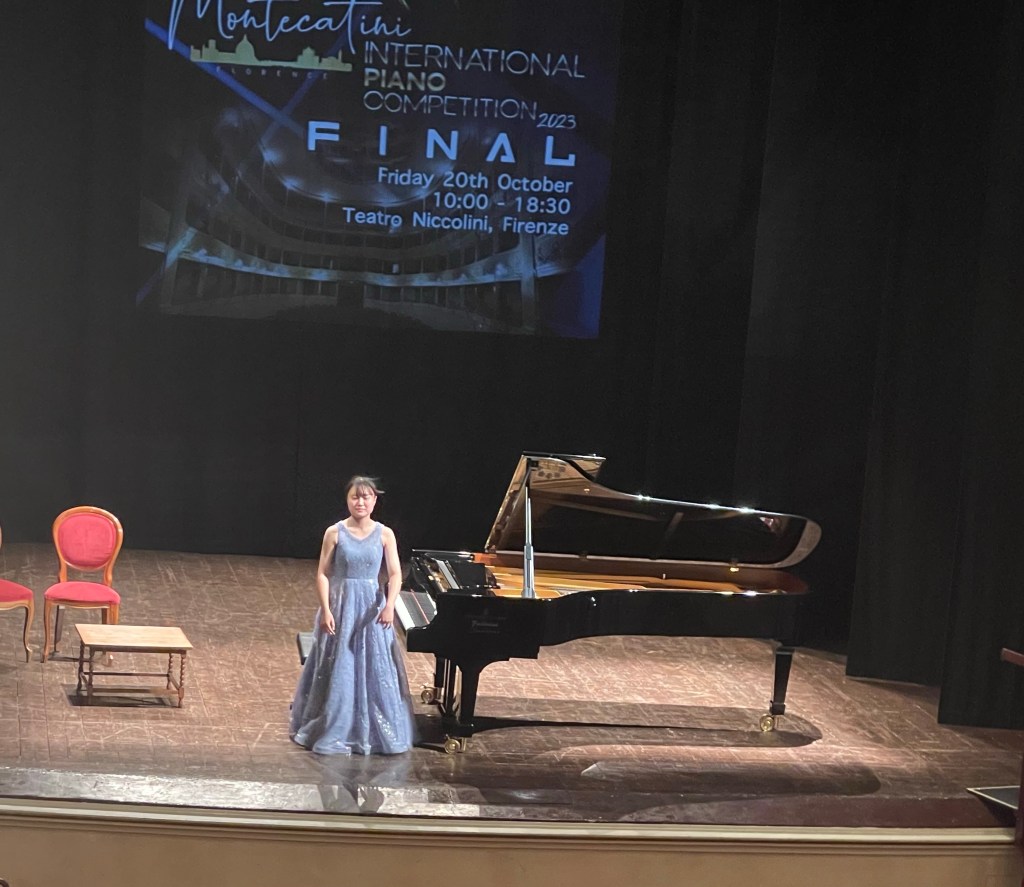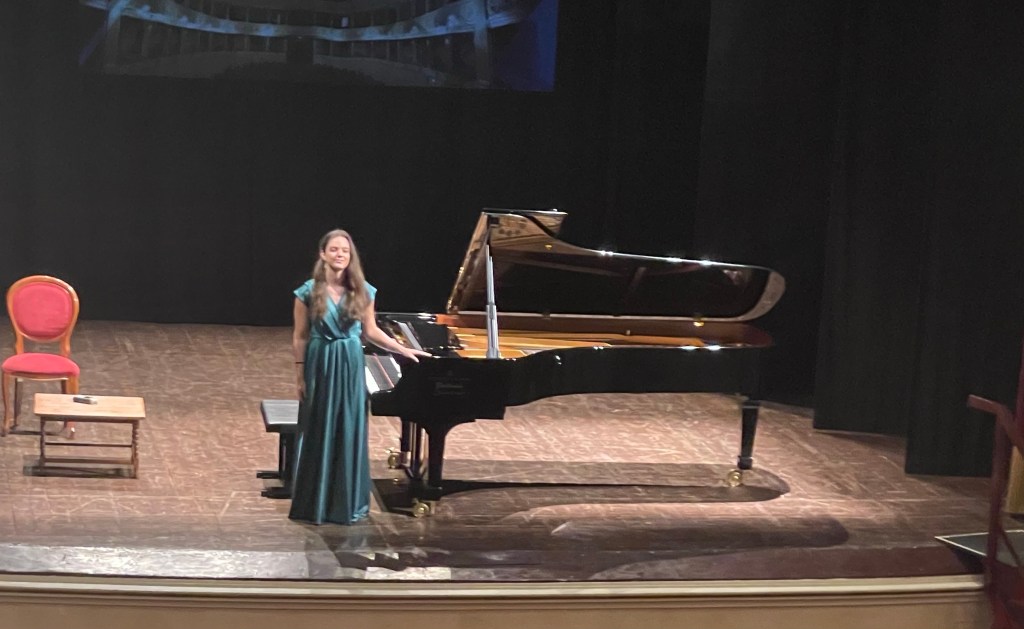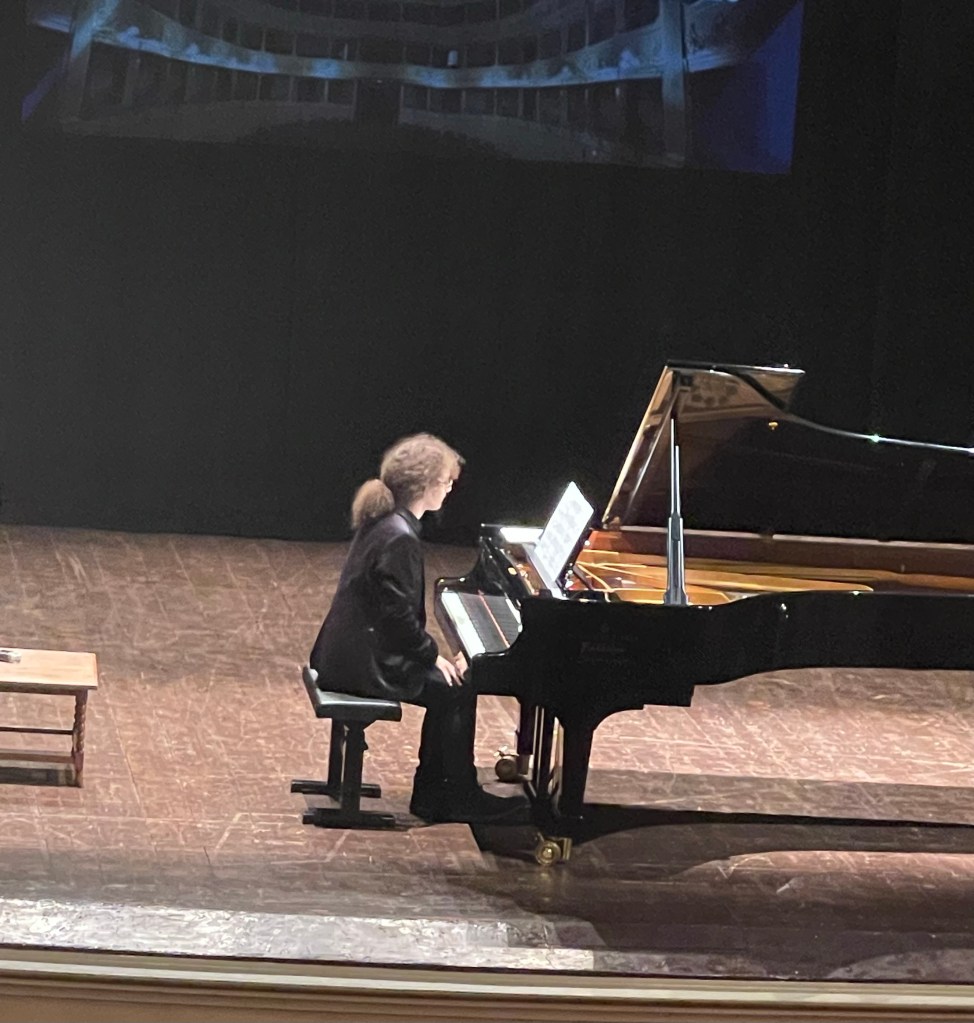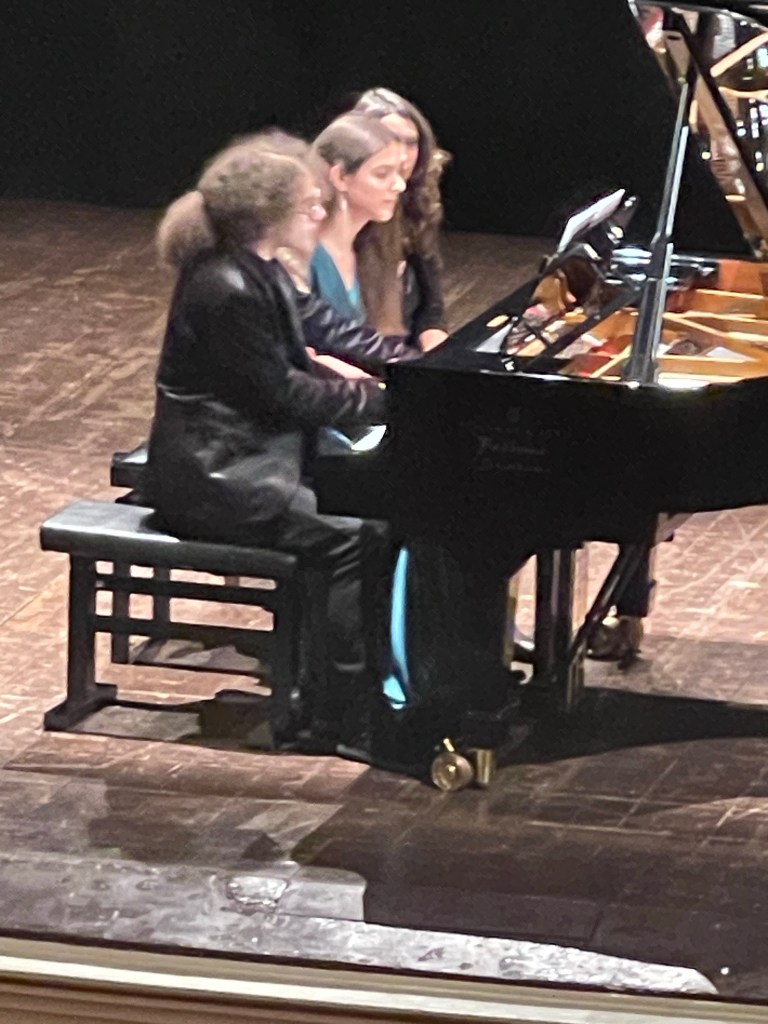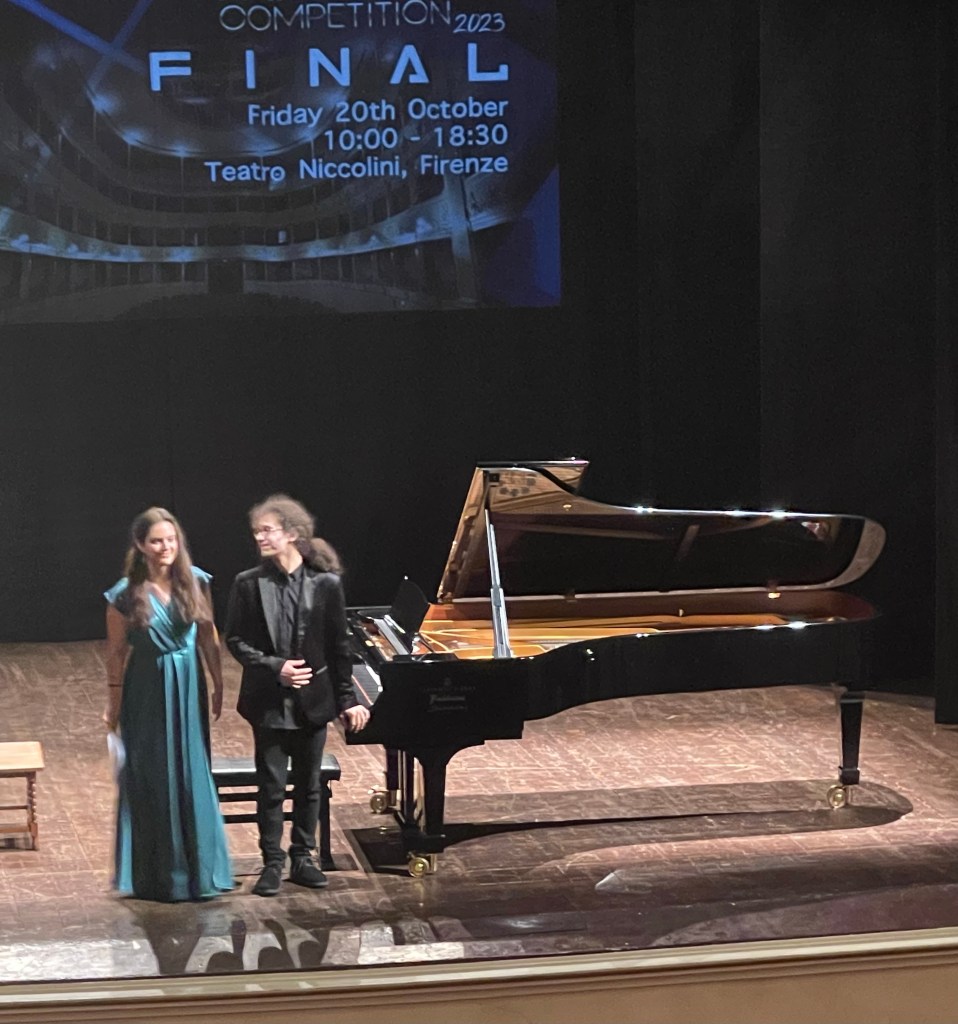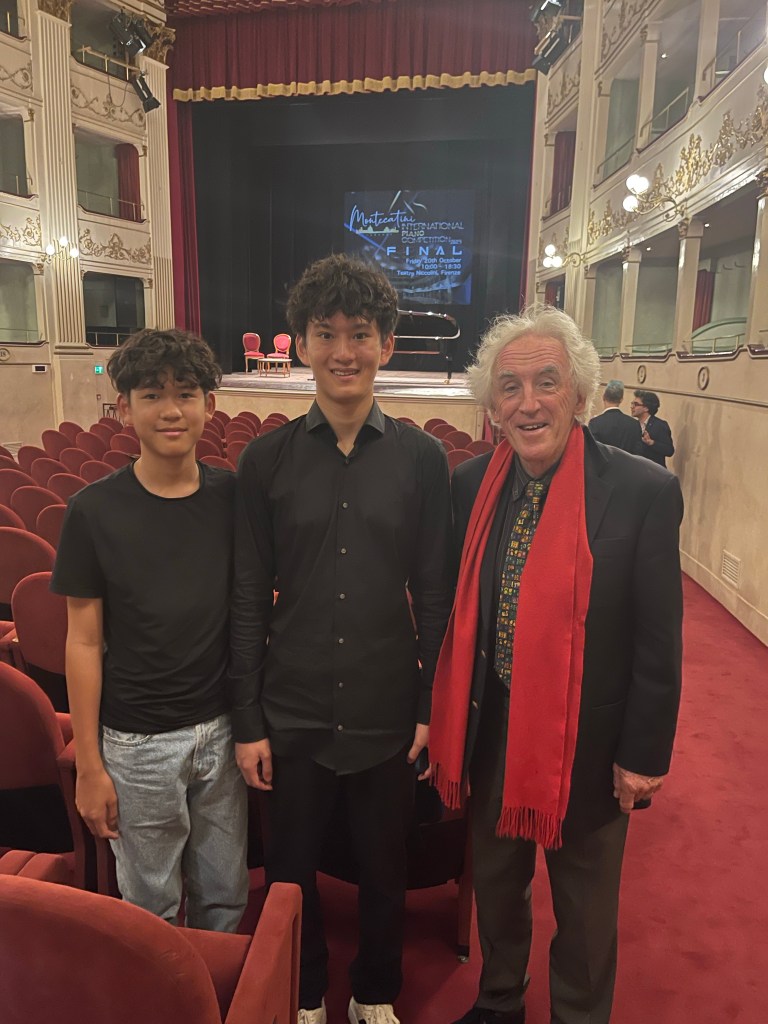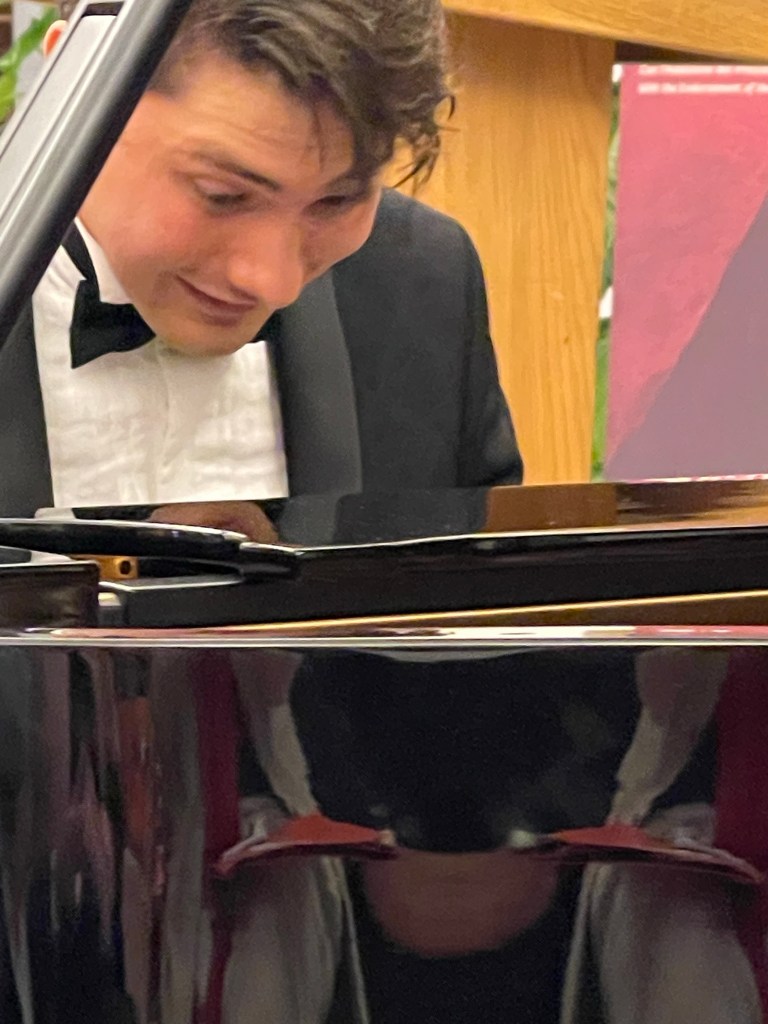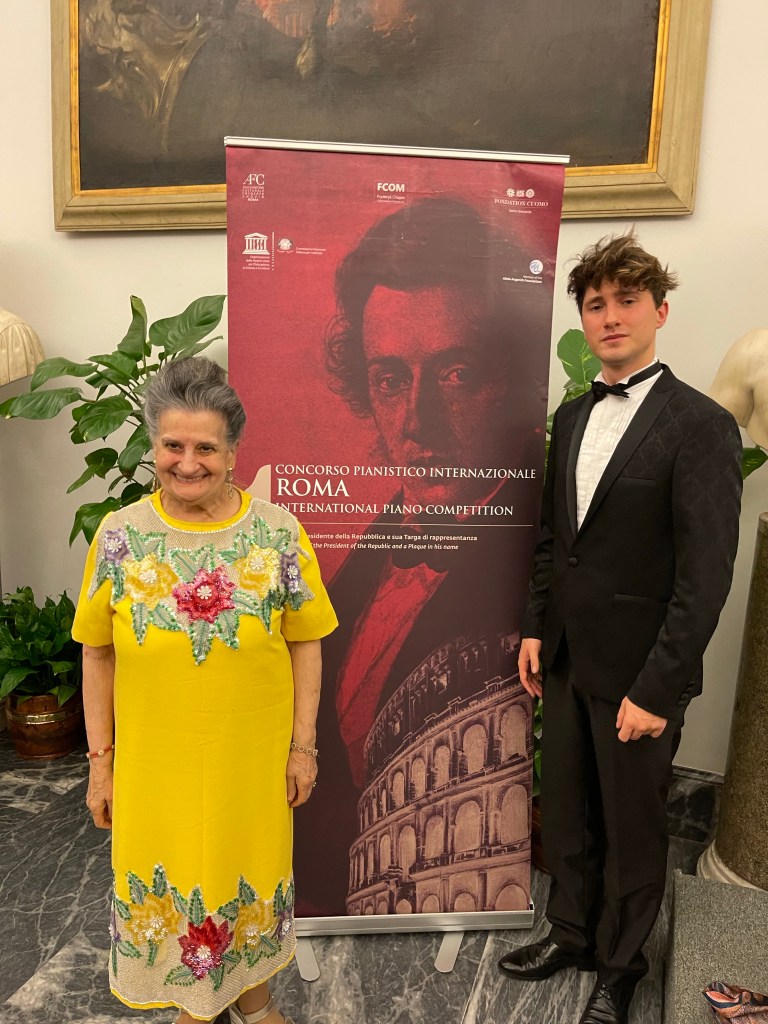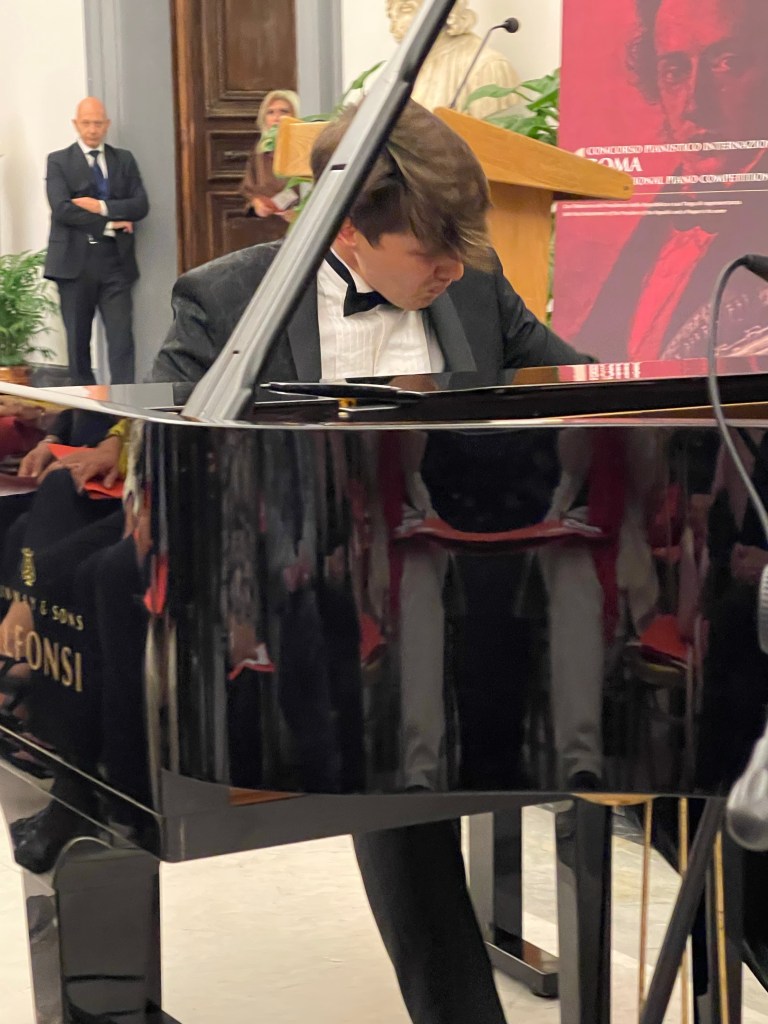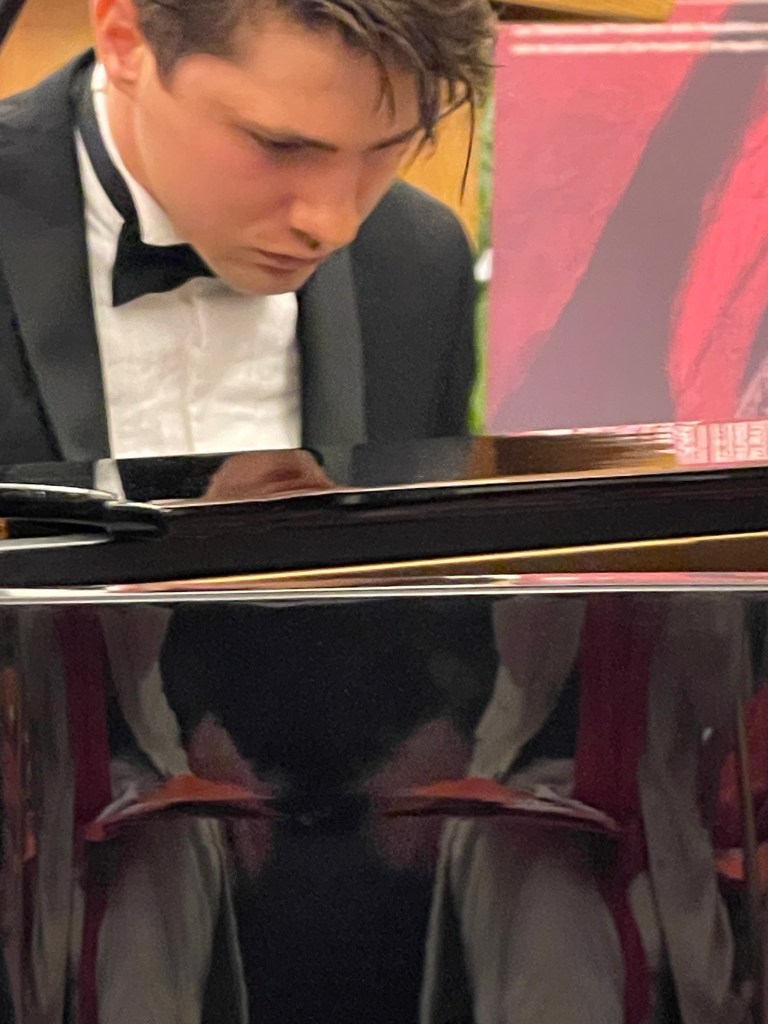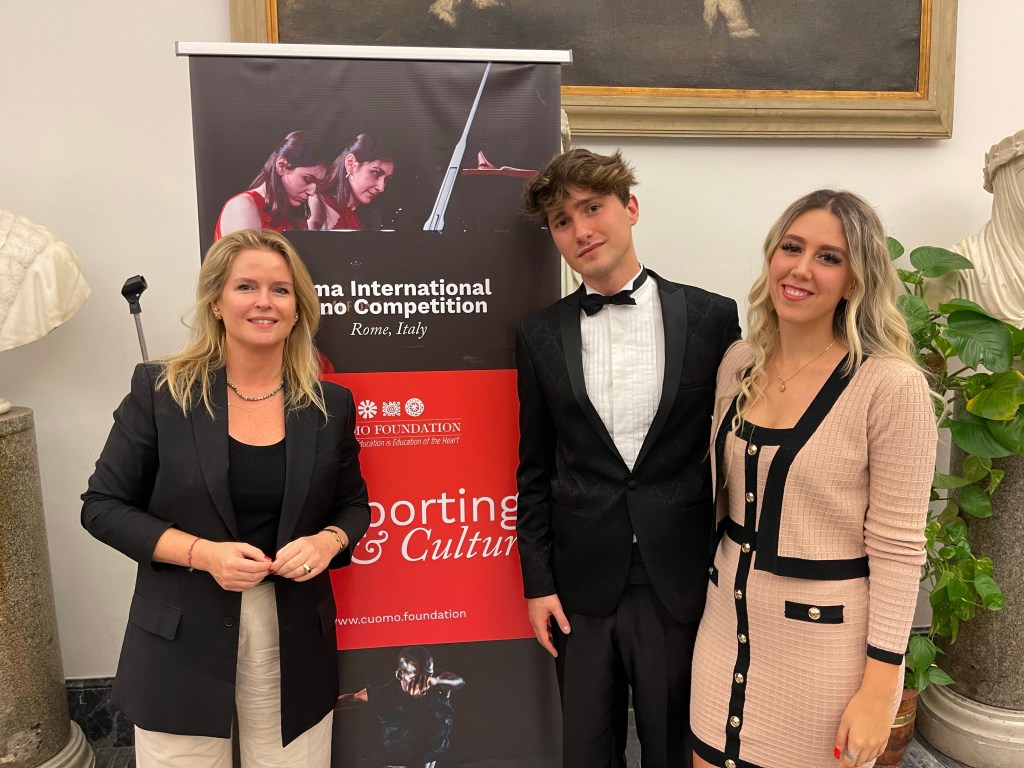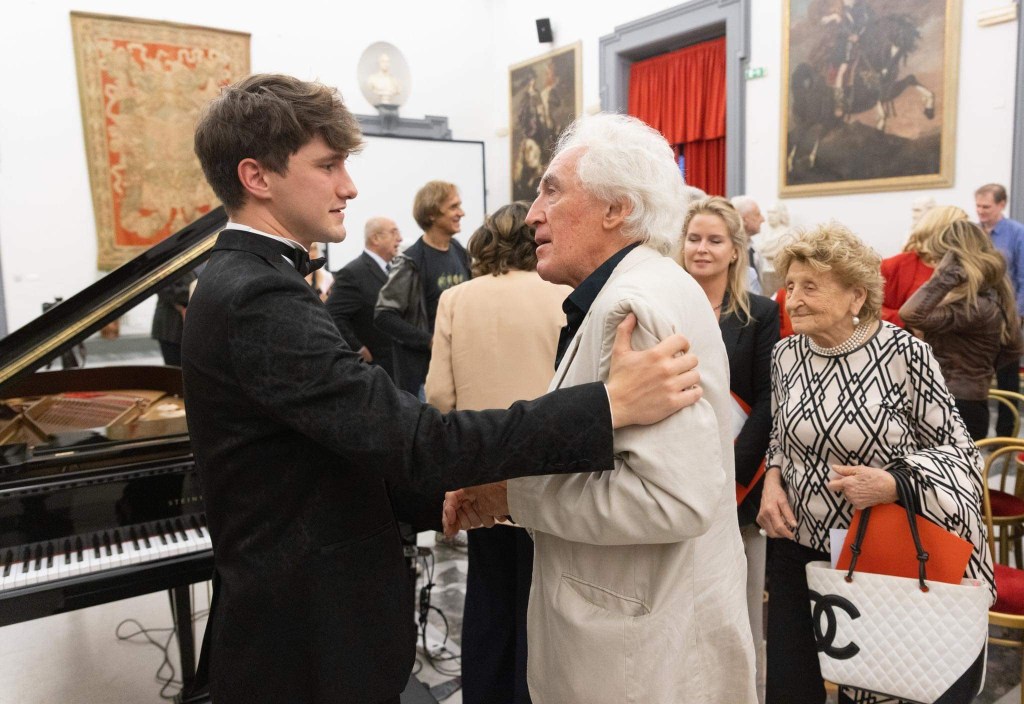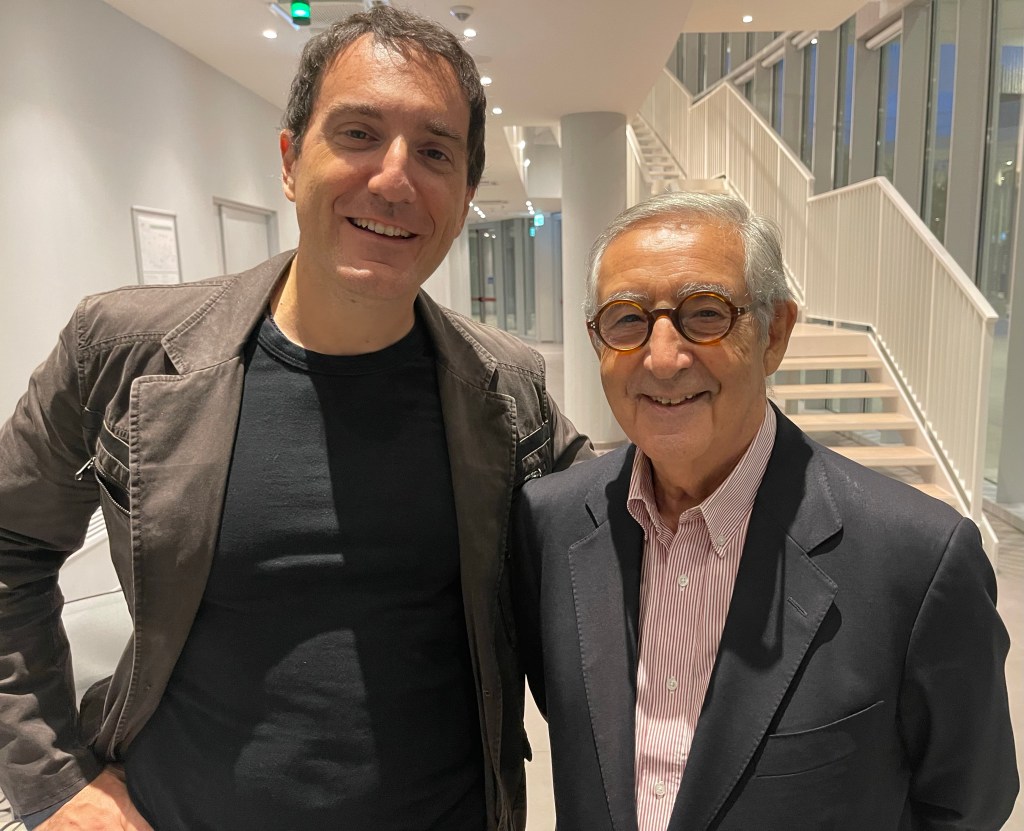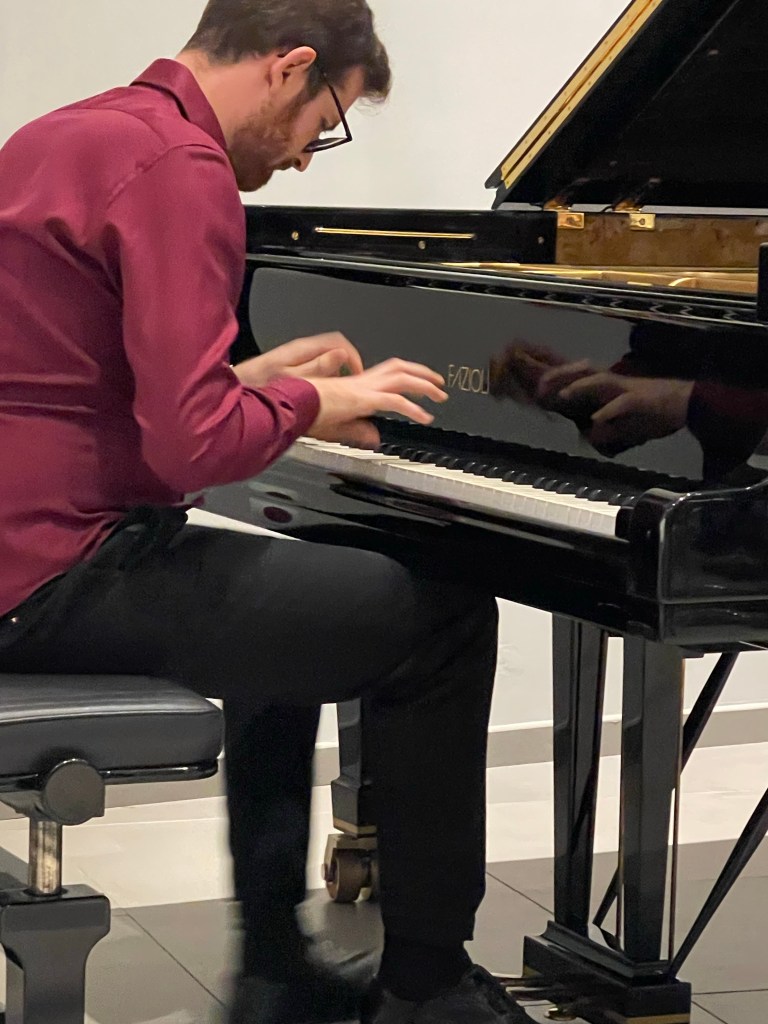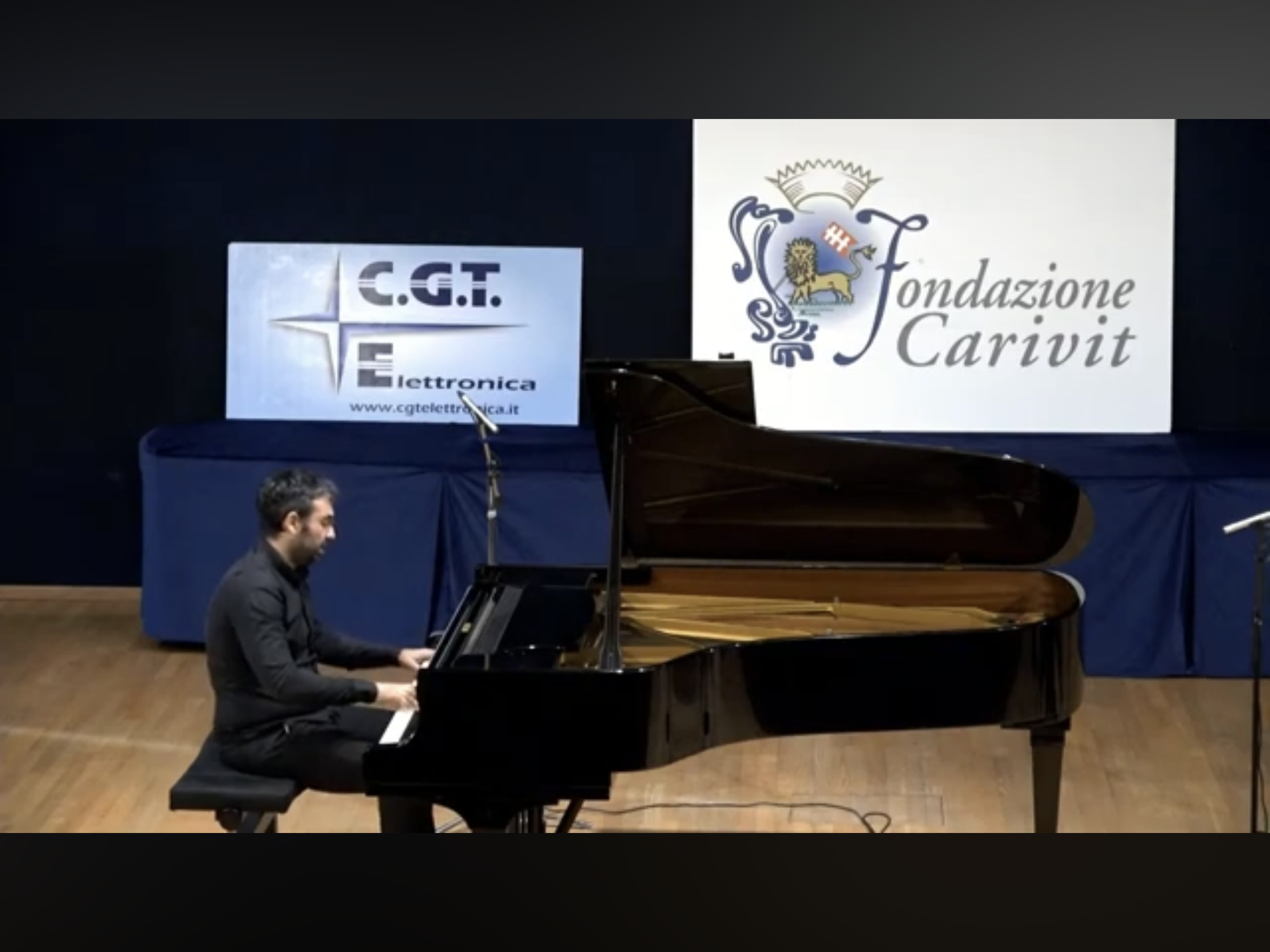
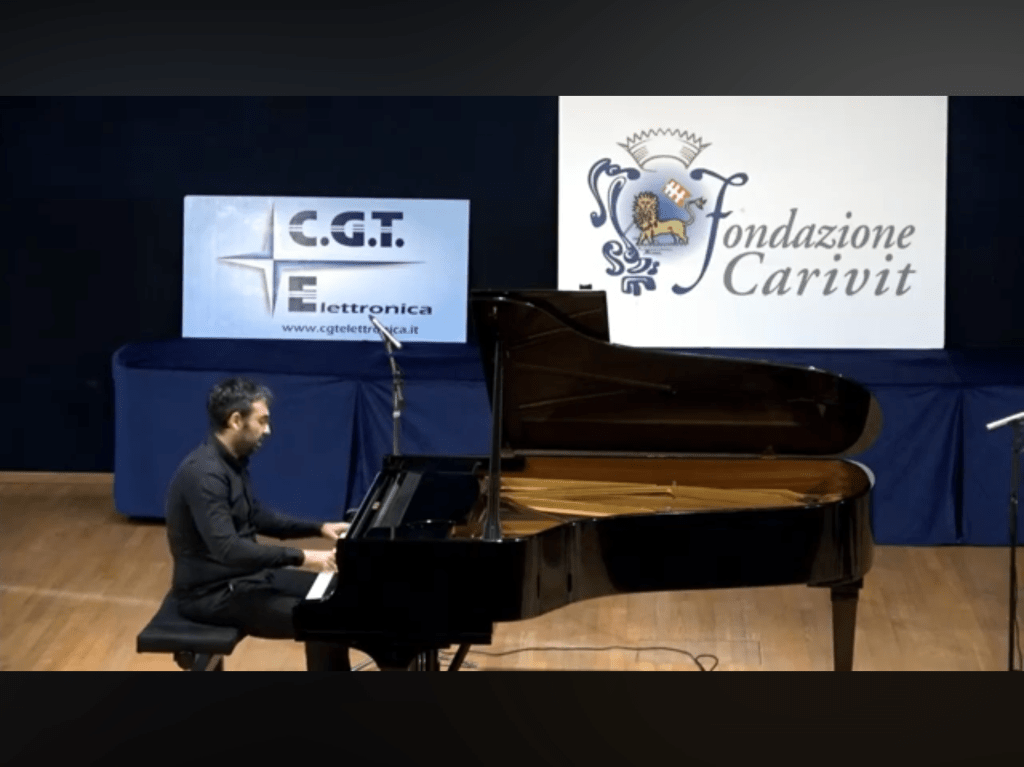
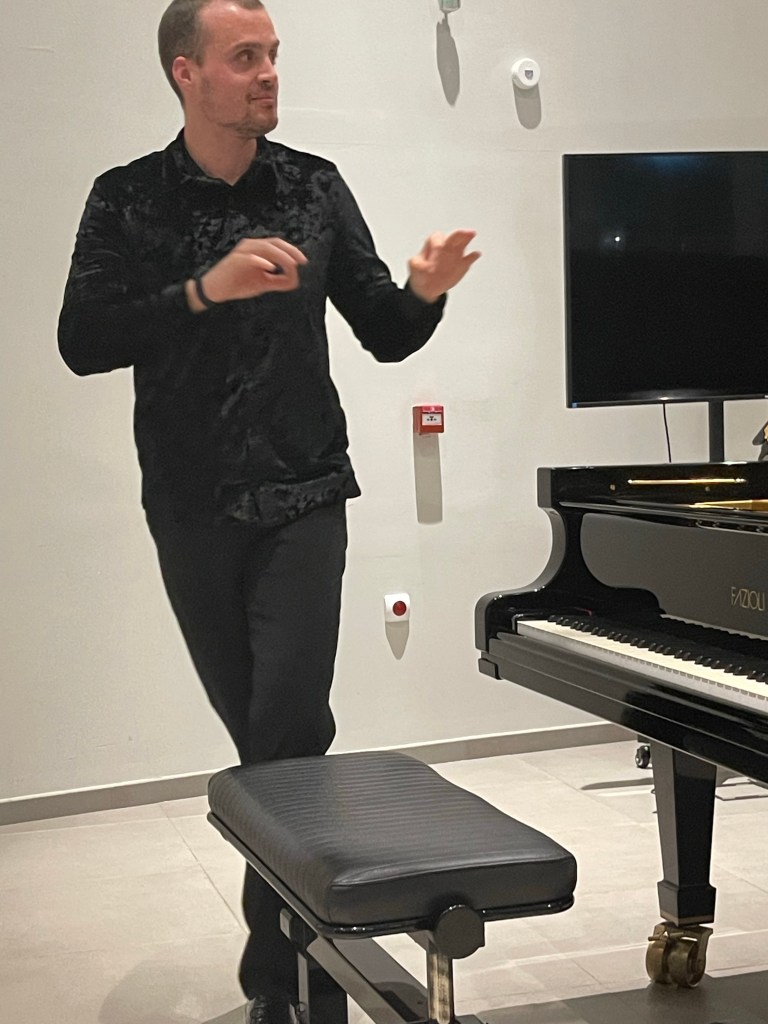
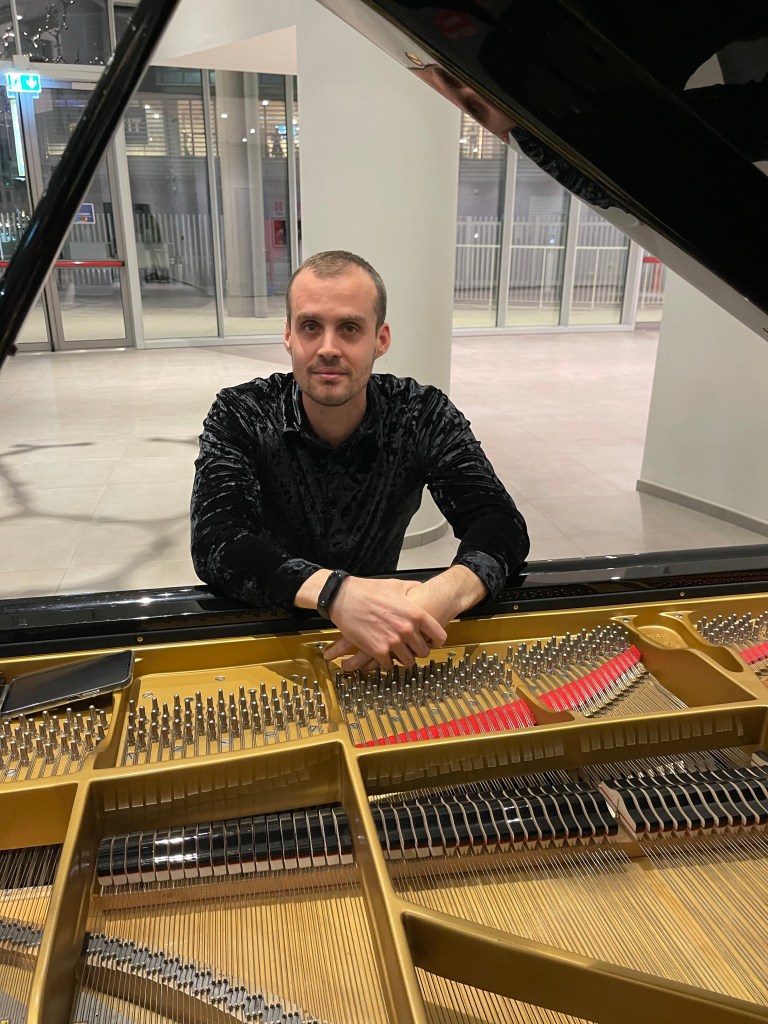
The remarkable KaJeng Wong at St Mary’s baring his sublime Oriental Slavic Soul

Tuesday 23 May 3.00 pm 

https://vimeo.com/828026250

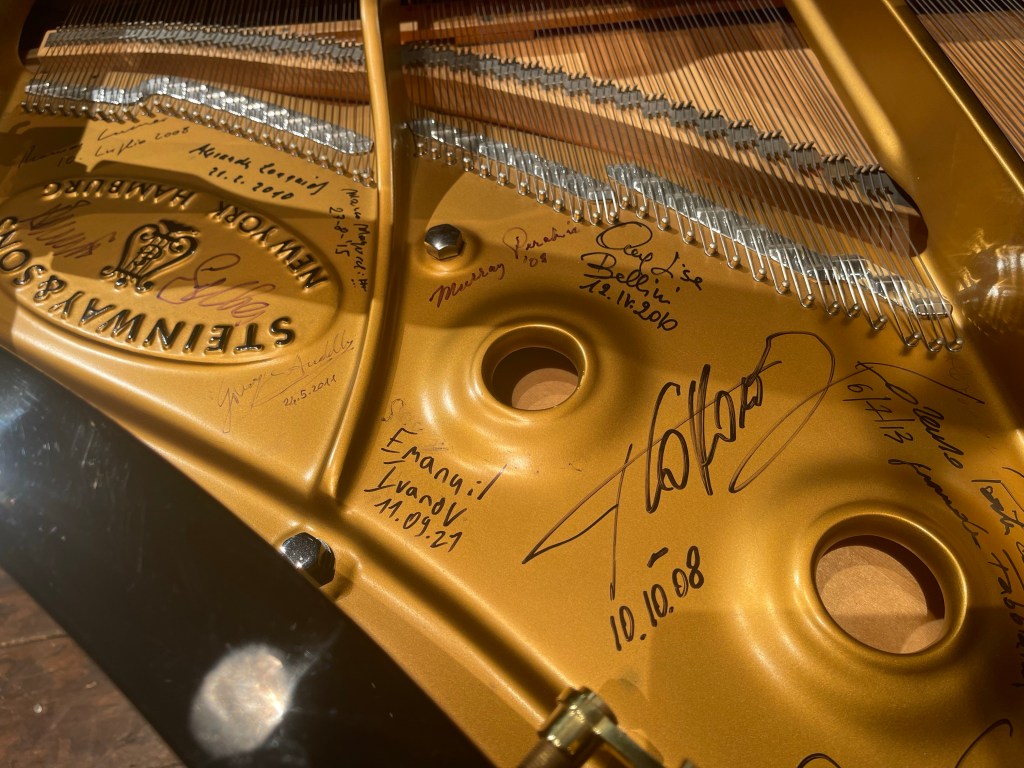
A ravishing kaleidoscope of sounds and as Dr Mather said of the 500 pianists that have played on this piano none has been able to achieve the range of sounds that we heard today from a pianist that has a mastery of the piano that I have only ever heard from Volodos.The young Volodos who I heard in Rome many years ago and thought that this was the greatest pianist alive or dead.A programme with a range of sounds and a series of encores that evoked the Golden era of piano playing of the likes of Rachmaninov,Godowsky,Rosenthal and indeed Horowitz.Volodos has since refined his playing excluding the exhibitionism of a showman of breathtaking transcriptions and is dedicated to great original works for the keyboard.He leaves his transcriptions to be played by younger virtuosi who have still to win their laurels.His playing may not be as exciting as in his youth but the refined beauty of sound and above all how he produces the sound is one of the wonders of our age.The hand movements of Volodos are just as beautiful as Nureyev or Fonteyn’s movements were on stage.The actual shape of his hands is the same shape as the music he can conjure out of the piano.Today with this rather mysterious young man flown in especially from Hong Kong I was reminded of the young Volodos .Not of the much missed lollipops but because of the drive and passion of the young Volodos allied to his kaleidoscope of sounds.

I had heard KJ in Cremona Music Festival where he not only played magnificently on a Petrof piano but also explained his choice of Rachmaninov Preludes and how they were related to each other.He was in Cremona with his mentor Julia Mustonen with whom he was working in Sweden.Aristo Sham from the same Ingesund Piano Centre I had heard in the next room playing wonderfully on a Fazioli piano.But it was KJ that astonished me for his originality and almost demonic appearance at the keyboard. https://christopheraxworthymusiccommentary.com/2021/09/30/the-rebirth-of-a-global-network-in-cremona-if-music-be-the-food-of-love-please-please-play-on/. He invited me to hear his Artist’s Diploma recital a few days later in London.Just the adjudicators and a few friends at ten in the morning to listen to one of the most remarkable performances of the Hammerklavier that I have ever heard. https://christopheraxworthymusiccommentary.com/2021/09/29/kajeng-wong-a-master-at-milton-court/. Today in Perivale for the second time we were treated to ‘Oriental Slavic Soul ‘ recital to compliment his previous ‘God,Pray,Love’ recital https://christopheraxworthymusiccommentary.com/2021/11/04/kajeng-wong-at-st-marys-mastery-and-mystery-of-a-great-artist/

The very first notes were of extreme delicacy with a seductive rubato and magical sounds created by an exquisite sense of balance – it was obvious that this was the beguiling seductive mastery of a true poetic soul
Following immediately on the tail of the Valse Sentimentale with aching nostalgia and sounds the spoke so much louder than words.There were subtle orchestral sounds of delicacy with the wondrous entry of the tenor voice and beseeching bells heard in the distance.An aristocratic sense of timeless beauty immediately changing to a frenzied dance of driving passion and breathtaking virtuosity as he shot streams of scintillating sounds across the keyboard into the heights of the piano.It was a truly epic performance of Hollywoodian grandeur and majesty .Another sudden change to a legato melodic line and pizzicato accompaniment was most unexpected and extremely moving.A dramatic Beethovenian ending heralded the appearance of the G sharp minor Prelude op 32- which must have replaced the advertise Etude Tableau.
The G sharp minor Prelude op 32 was the ideal bridge for the generation gap between Tchaikowsky and Rachmaninov.A gentle rustling of sounds with a melodic line of wondrous luminosity and breadth and an amazing clarity as the tenor voice was answered by the soprano.The music becoming ever more insistent but dying away to bells in the far distance.The G major Prelude too with its beautiful simple melody floating on a breeze of gently undulating sounds.A trill that was a vibration of sounds miraculously changing colour as the melodic line returned with such nostalgic tenderness.The two Moments musicaux op 16 n.4 and 6 were a whirlwind of passionate sounds played with extraordinary dynamic energy.N 4 ,a swirling bass on which passionate exultations became ever more insistent.Sumptuous full sounds never hard as the tension grew ever more fervent with almost unbearable passion.The opening bass chord of the 6th was terrifying as it opened up this magic Pandora’s box of exulted sounds rarely if ever experienced by this instrument.It contrasted with the absolute stillness of the B minor Prelude that Rachmaninov told his friend Moiseiwitch was meant as ‘The return’.The simple luminosity of the bare melodic notes and the deep sighing bass was extraordinarily evocative and expressive.The aristocratic time he took to build up the texture to a sumptuous climax only to dissolve into bird like sounds that flew all over the keyboard was of a true mature master.There were harp like streams of sounds that belied the fact that the piano is made of hammers that hit strings.The final chords like rays of light through distant clouds,brought to a close this miniature tone poem so poetically painted by a true artist.
Subtle beauty of the melodic line as it passed from the tenor to the soprano register sustained by the sumptuous bass that opened up even more colours from this jewel box of ravishing sounds.
Drifting in on the final vibrations of Tchaikowsky dissolving into a luminosity of knotty twine with a sense of desolation and mystery.The serenity of the fugue was played with absolute purity as the notes were allowed to unfold with a poignancy as it built in intensity.The final major chord had a magic auror to it of true revelation .
A transcendental control of sound gave remarkable shape to a Prelude of sublime beauty and grandeur.The Nocturne with a more robust sound was played with a freedom and orchestral sense of colour.What a showman KJ is,too,as the right hand finally joined the left on the final chord.
Aristocratic grandeur brought this final Prelude of Rachmaninov to a culmination of sounds of unbearable intensity .As the hands raced over the entire keyboard the majestic melodic line was etched with demonic clarity and conviction.
An encore of Mozart with the slow movement of the Sonata K.332 that was just the purity and simplicity needed to clear the sultry perfumed air.I have never heard it played more beautifully than today from this young poet’s blessed hands.
He promised to return with Mozart as he rushed for the door to catch his last bus home to Hong Kong.It will surely be solicited at his earliest convenience by the marvellous team that surround Dr Mather in this temple dedicated to helping young artists reach the public their talent and dedication deserve.Pity there was no time to include Agosti’s extraordinary 1928 transcription of the Firebird – I am sure it is sensational as is everything this young man does with his Midas touch and keyboard mastery.
 

Praised for his originality and exceptional musicianship, KaJeng Wong was the winner at the Alaska International Piano E-Competition 2018, and was recently awarded Third Prize at the Maria Canals International Piano Competition 2019. Previously, KaJeng achieved success at Los Angeles IPC and Young Concert Artist Audition in New York. He received a commendation by the Hong Kong government and has been selected to represent Hong Kong at multiple international platforms, performing at Esplanade in Singapore, Shanghai Concert Hall, Palau de la Musica Catalana and participated in festivals such as PianoTexas, Verbier Festival and Hong Kong Arts Festival. The featured documentary about his growth, “KJ: Music & Life”, was awarded Best Documentary at the Golden Horse Awards. Besides his activities as a performer, he is involved in collaborative projects involving modern dance and theatres. Recently serving as Artist-in-residence at Zuni Icosahedron, they forged an ongoing relationship experimenting various productions crossing classical music. He also writes prolifically about music and was featured at the Pianist Magazine. Lately he hosted several TV/online programs promoting music in Asia. In the past 4 years, he has also curated the annual Music Lab Festival. After studies with Nancy Loo and Gabriel Kwok in Hong Kong, KaJeng further his training under Prof. Emile Naoumoff at the Indiana University. He is currently pursuing Artistic Diploma at Guildhall School of Music & Drama under Prof. Ronan O’Hora, and with Prof. Julia Mustonen-Dahlkvist at the Ingesund School of Music.

Cristian Sandrin at the National Liberal Club – A voyage of discovery of nobility and timeless beauty

Cristian Sandrin Visions of Life dedicated to his father Sandu Sandrin .

Cristian Sandrin at the Romanian Cultural Institute.Mastery and musicianship combine in a celebration of Enescu

The National Liberal Club in Whitehall

Frederic Chopin and Franz Liszt, forerunners of the Romantic generation of composers nurtured a very intimate connection with the Italian lands, their people and music: Chopin’s fascination of the bel canto and the operas of Bellini, Liszt’s travels through the country and the creation of Années des Pélérinage. Conversely, we discover a later generation of Italian composers, Sgambati and Martucci, whose music is highly influenced by the works of Chopin and Liszt.

F. Liszt – Two Petrarch Sonnets from Années des Pélérinage: Italie

G. Sgambati: Notturno op. 31

G. Martucci: Notturno op. 70 no. 1

F. Chopin: Ballade no. 3 in A flat major op. 47

F. Chopin: Ballade no. 4 in F minor op. 52

-interval-

F. Chopin: Piano Sonata in B minor op. 58

A voyage to Italy with Cristian Sandrin was full of the radiance and beauty that we associate with the ‘Museum of the World‘ to quote Rostropovich.
He brought an atmosphere of nobility and timeless beauty to a programme that included Liszt but also two rarely heard Italian composers Sgambati and Martucci.It was Chopin,though,who had never set foot in Italy although a great admirer of Belcanto ,that brought out the aristocratic nobility and refined good taste of Cristian that Chopin himself had revealed on his first appearances in the Salons of the aristocracy in Paris.
Chopin’s roots were always with the simple native folk of Poland that was his birthright,but his world was with the refined elegance and perfumed sensibility that was very much of pre revolution Paris.
Années de Pélerinage were not for him and in fact his unfortunate encounters and meanderings with well meaning but assertive and insensitive lady admirers left him shocked and aghast and hastened his delicate consumtive frame to renounce his worldly existence. His first appearances had been greeted by Schumann with ‘Hats off a genius’ and there was no rivalry with Liszt who bowed to the poetic genius of this young Pole.

Liszt was happy to spar with lesser mortals that tried to encroach on his throne.The famous duel between Thalberg and Liszt is well documented as they fought it out in the salon of Princess Belgioso.Thalberg might be a great virtuoso but Liszt was always unique!


It was a similar duel that was to face Rubinstein when his position in Paris was compromised by the arrival of the young Horowitz.He was greeted by Rubinstein’s friends and the Parisian critics as ‘the greatest pianist alive or dead!’
Liszt,of course relished the adventures as one of the greatest showmen the world has ever known and his years of travelling around Italy and Switzerland with noble lady friends are well documented.
It was with two of Liszt’s Petrarch Sonnets n.104 and 123 that Cristian opened the journey he had promised us in his first season of concerts for the Kettner Concert Society.

Hannah-Elizabeth Teoh co artistic director of the Kettner concert Society

He and Hannah Elizabeth Teoh have taken over the reins of this illustrious music society,guest of the NLC for over forty years,and have brought to it their youthful enthusiasm and artistry together with an enthusiastic following of music lovers.

Full house of enthusiastic music lovers for the New Kettner Concert Series


In the hallowed splendour of the National Liberal Club on their superb Steinway D concert grand Cristian proceeded to ravish and seduce us with refined sounds of timeless beauty.He brought such subtle phrasing and a sense of architectural shape to these tone poems where Liszt had put aside his phenomenal virtuosity and had instead revealed the very soul hidden in Petrarch’s sonnets with refined good taste and sumptuous poetry.Cristian understood this as he enticed us into this intimate sound world with subtle colouring and an overall sense of shape that even the most passionate outpourings were a consequence of poetic meaning and significance and never just scintillating displays for effect.I have heard Cristian many times but today even from these very first notes he revealed a maturity and poetic understanding where the music seemingly is allowed to speak for itself.There was time taken without any thought of paying it back!As Chopin himself described to his aristocratic pupils ,tempo should be flexible like the wind in the trees but with roots that are always firmly planted in the ground.Many young musicians feel that have to ‘do’ things to the music rather than allow the expression to come from within the note not superficially placed on top!Cristian has always been a good musician inherited from his distinguished pianist father Sandu Sandrin and later from his superb training at the Royal Academy in London.He is now benefitting from the guidance and mentorship of that great English musician Imogen Cooper.It was his colleague and mentor that he invited to play a few months ago when this great beast was illuminated with superb performances of two of Beethoven’s last Sonatas.Beauty and the beast were united as they ignited their audience as he did today in his opening season for the Kettner Concert Society.

Born in Rome, to an Italian father and an English mother, Giovanni Sgambati (1841-1914), received his early education at Trevi, in Umbria. In his early twenties he met Franz Liszt in Rome, where the great composer resided for a period each year from 1861. The young man immediately became his favourite pupil, a faithful interpreter of his compositions and a precious collaborator for the mission that warmed both their hearts: to spread classical music in the Roman society of the time. Liszt’s Roman school was based in Sgambati’s home, where the master trained the best pianists of the time. Sgambati was the first to conduct his Dante Symphony, as well as Beethoven’s Third Symphony. Liszt took him with him on his travels and introduced him to Richard Wagner, who deeply admired his compositions. His fame grew rapidly, leading him to give concerts all over Europe and in Russia. He received invitations and signs of esteem from the most important musicians of his time: in addition to Liszt and Wagner, he was friends with Brahms, Tchaikovsky, Grieg, Massenet and Busoni.He is remembered today only for his Melodie, a transcription of the Dance of the Blessed Spirits from Gluck’s opera Orfeo ed Euridice.There is a famous recording of Rachmaninov playing it and it was a favourite encore piece for the late Nelson Freire.

A beautiful Nocturne by Sgambati revealed a subtle sense of colour from a composer remembered only for his famous transcriptions of Gluck’s Orfeo.Cristian with his refined palette of subtle sounds revealed a work of great beauty and simplicity from a composer who had something important to say.There is a vast amount of music in the musty archives in Italy to be explored and revealed to a public with a thirst for new music from this Golden period of the piano-virtuosi of the past.Mark Viner and Tyler Hay are tireless promoters of this forgotten age and I am glad to see Cristian seeking out long forgotten gems to bring before his audiences gently adding but not overloading his profound study of recognised masterworks.

Giuseppe Martucci – 6 January 1856, in Capua – 1 June 1909, in Naples was sometimes called “the Italian Brahms” Martucci’s career as an international pianist started with a tour through Germany, France and England in 1875, at the age of 19.He was appointed piano professor at the Naples Conservatory in 1880,and moved to Bologna Conservatory in 1886.In 1902 he returned for the last time to Naples, as director of the Royal Conservatory of Music.It was in 1881 that Martucci made his first conducting appearance. One of the earliest Italian musicians to admire Wagner, Martucci introduced some of Wagner’s output to Italy. He led, for example, the first Italian performance of Tristan in 1888 Martucci began as a composer at the age of 16, with short piano works. He wrote no operas ,which was unusual among Italian composers of his generation, but instead concentrated on instrumental music and songs, producing also an Oratorio Samuel.
He was championed by Toscanini during much of the latter’s career. The NBC Symphony Orchestra performed a number of Martucci’s orchestral works in 1938, 1940, 1941, 1946, and 1953; although the performances were recorded none was approved for commercial release by Toscanini.

Martucci is a very highly esteemed composer for piano teachers in Italy and I remember being very impressed by a Fantasia in G minor op 51 (1880) when I gave classes to Italian piano students in Martina Franca many years ago.A Mendelssohnian type of writing of great effect but in the end lacking genial melodic invention.An exhilarating facility of great effect and music enjoyed by the young pianists at their first moments of being able to master the piano.The Nocturne in G flat op 70 n. 1 is a later work from 1891 and was very interesting to hear but was not as ravishingly beautiful as Sgambati and was for my taste,on first hearing,a little too verbose.These were interesting stops of a voyage that Cristian had chosen to share with us today.It was however the two Ballades and the B minor Sonata by Chopin where Cristian revealed to us his mastery ,creating a spell over an audience immediately overwhelmed by the beauty and authority of his performances.Perhaps it was because this concert signalled the end of an exhausting work load that Cristian had undertaken in the past days with a duo concert in Stockholm only the day before .Today at last he was able to take more time and allow the music to unfold leisurely as though he too was discovering and enjoying the beauty that was pouring so naturally from his hands.

There was also passion and drive when called for as with the coda of the Fourth Ballade or the Finale of the B minor Sonata but with a control and sense of line.Like Rubinstein ,in his later years,who could illuminate a wondrous musical journey with such simplicity but where injections of energy were like electric shocks that left us ,like today,overwhelmed because so unexpected.

The end of the third Ballade

There was a pastoral beauty to the third Ballade where the fluidity of his playing was so natural and with such sophisticated calm that Cristian’s poetic programme notes actually described in words what he could was depicting with such mastery in music.’The opening theme blooming like a flower from a single E flat revealing the emotional essence and the sensuality of what follows’.’could it be the mortal man uttering an invocation,calling out the water spirit?’’One can detect streams of water in this music with ripples produced by falling pebbles…..the music leads to triumphal waves seeping up and down the keyboard that is perhaps after the feelings of persistent uncertainty,a jubilant representation of reciprocated love’.These words remind me of Alfred Cortot and I remember Vlado Perlemuter writing Cortot’s words in my score of the Fourth Ballade ,at the recapitulation of the introduction,’Avec un sentiment de regret’.A poet can say so much with so little ( I remember Arnold Wesker writing to me after my wife had died on stage -‘They never forget you’ – it meant so much with so little) https://youtube.com/watch?v=rNUNNNNj_Qw&feature=share

Frédéric Chopin’s Fourth Ballade, Op. 52. Autograph manuscript, 1842, Bodleian Library,Oxford

The Fourth Ballade is one of the pinnacles of the Romantic piano repertoire.Together with the Liszt Sonata and the Schumann Fantasie they are the pianistic equivalent of the Bach B minor Mass or Beethoven’s Missa solemnis – Michelangelo’s David or Da Vinci’s Mona Lisa .Works that make one marvel at what man is really capable of !!In Cristian’s own words :’all the transformations of the themes reveal in their climax the architectural mastery of the medieval cathedral builder and their solitary yet singular towering spires’.Supposedly inspired by Mickiewicz’s poem the Three Budrys I find it hard to believe in a work where music speaks much more powerfully than words.The music just flowed from Cristians fingers helped by the beauty of the piano in a chain of notes that were entwined in a poetic outpouring of ravishing sounds.Even the notorious coda we were not aware of the transcendental difficulties as there was a musical line that was so engaging and poignantly eloquent played with a driving intensity and passion that was breathtaking as it was unexpected.

Chopin B minor Sonata recapitulation in Chopin’s own hand

The B minor Sonata was indeed ‘maestoso’ and I was glad that he decided to do the repeat that gave such architectural shape to the first movement.The final glorious outpouring of the second subject was played as Chopin clearly marks,but is so often ignored,instead of a sickly nocturne a noble outpouring of aristocratic sentiment.There was some beautiful shading to the jeux perlé Scherzo which evolved so naturally from the contrasting nobility of the central mellifluous episode.

The opening of the Largo third movement of the B minor Sonata

The final exciting chords of the Scherzo leading straight into the declamatory chords that herald the Largo as Chopin had so clearly indicated .It made the appearance of the long Belcanto melody so much more poignant as it floated on a barcarolle of a gently modulated moving accompaniment.The end of the Largo too was linked to the Finale with the opening octave flourishes entering so gradually into the ever more hypnotically exciting Rondo.

With Mary Orr ,on the left ,who is launching a new venue for talented young musicians on behalf of the Matthiessen Foundation .Yisha Xue ,centre,of the Liberal Club and c/o organiser of the new concert series for the Keyboard Charitable Trust with the Robert Turnbull Piano Foundation ,starting in this hallowed hall on the 5th June

An exhilarating evening of real discovery for both the audience and this young poet not only on the keyboard but also in life.The life of an artist is not easy but it is certainly rewarding as were were all aware of today on Cristian’s shared journey

https://youtu.be/p9bWezr2foY.
https://christopheraxworthymusiccommentary.com/2023/05/10/giovanni-bertolazzi-liberal-club-en-blanc-e-noir-5th-june-2023/
Thirtieth Anniversary Celebration at the National Liberal Club.
September 2022

https://youtu.be/9L9Vc0ebt7o.

https://youtu.be/tu92-VR3YdM
https://christopheraxworthymusiccommentary.com/2022/07/15/two-young-giants-cross-swords-in-verbier-giovanni-bertolazzi-and-nikita-lukinov/
Mary Orr an indefatigable supporter of young artists
The third Ballade in Chopin’s own hand

Chopin Four Ballades were composed between 1831 and 1842. The term ballade was used by Chopin in the sense of a balletic interlude or dance-piece, equivalent to the old Italian ballata, but the term may also have connotations of the medieval heroic ballad, a narrative minstrel-song, often of a fantastical character. There are dramatic and dance-like elements in Chopin’s use of the genre, and he may be said to be a pioneer of the ballade as an abstract musical form. The four ballades are said to have been inspired by a friend of Chopin’s, poet Adam Mickiewicz .The exact inspiration for each individual ballade, however, is unclear and disputed.John Ogdon said of the fourth Ballade that it is ‘the most exalted, intense and sublimely powerful of all Chopin’s compositions… It is unbelievable that it lasts only twelve minutes, for it contains the experience of a lifetime.Alfred Cortot claims that the inspiration for this ballade is Mickiewicz’s poem The Three Budrys, which tells of three brothers sent away by their father to seek treasures, and the story of their return with three Polish brides.It is commonly considered one of Chopin’s masterpieces, and one of the masterpieces of 19th-century piano music.

A letter by Mascagni given to me by Licia Mancini a pupil of Guido Agosti that was in turn given to her by Sgambati’s son.It says how sorry Mascagni was with such a brief stop in Rome not to have been able to thank Sgambati for the support he gave that allowed Cavalleria Rusticana to win the prestigious Sonsogno Competition in 1889

Henry Cash at St Marys Perivale march 2023

Henry Cash I have not heard before but his teacher Colin Stone has played many times in Perivale.It was obvious from his musicianly performances that he is receiving advice from a master.Henry is a true musician armed with a very solid technique that seems to know no difficulties .He chose Rachmaninov’s favourite prelude to open his concert.I remember Benno Moiseiwitch playing it to his friend Rachmaninov who was surprised when Benno said it reminded him of ‘the return’.Rachmaninov was taken aback as that is exactly what inspired the piece.Henry played it with great poise and a remarkable clarity,simplicity and great assurance.His musicianship is of great architectural lines and his body movements are like a continual wave from which sounds are discovered with naturalness and ease.There are no half lights or insinuating textures but a direct simple message without any rhetoric or showmanship that could interrupt this continual flow of sounds.

The Brahms Sonata in five movements is a very difficult work to hold together as the intimate details and contrasts can detract from the continual flowing undercurrent that takes us on a forty minute journey .I have rarely heard this sonata played with such assurance both technical and musical as today in the hands of this twenty three year old artist.Because an artist he certainly is and there were many ravishingly beautiful things in his performance as there was also passion,drama and a technical mastery that allowed him to play fearlessly the treacherous octave leaps that Brahms demands.The coda to the last movement was played with a clarity and a speed that I have rarely heard in the concert hall.The scherzo too was played with exhilarating daring and a relentless forward movement.It contrasted with the sublime beauty of the Andante and the intensity of the Intermezzo 

Henry Cash is 23 and from Huddersfield. He began his musical training at Chetham’s School of Music, age 13, before receiving a scholarship in 2017 to study with Rustem Hayroudinoff at the Royal Academy of Music. After graduating with a first class degree from the Royal Academy he received a scholarship to study with Colin Stone at the Royal Northern College of Music. He has given numerous concerts in the UK and abroad including solo recitals in venues such as the Bridgewater Hall, the Stoller Hall and St James’s Piccadilly. He performed Rachmaninov’s Piano Concerto No 1 in 2015 (age 16), accompanied by the Chetham’s Symphony Orchestra and again with the Bristol Classical Players in 2018. Henry won second prize at the 2021 James Mottram International Piano Competition performing the Grieg Piano Concerto with the Royal Liverpool Philharmonic Orchestra in the final round. He is grateful for the generous support he recieves from the Drake-Calleja Trust, the Pendle Young Musicians’ Bursary and the Oglesby Charitable Trust.

Murray McLachlan The recital that never was at the Chopin Society UK

https://christopheraxworthymusiccommentary.com/2021/02/21/murray-mclachlan-at-st-marys/

Saddest of occasions with Murray McLachlan’s wonderful programme we could only imagine,like Beethoven, in our private ear.Family,friends and colleagues all congregating at the Chopin Society yesterday afternoon to celebrate this extraordinarily generous musician .
On the menu Haydn 52,Mozart D K 576 and Beethoven op 111 Sonatas washed down with Chopin’s Four ballades.An encore of Chopin’s E flat nocturne transposed into D flat and imposed on the left hand alone ……..D flat was the scale that Chopin would give his pupils for the natural position of the hand on the keys.Only an eclectic musician like Murray could be so discerning on this occasion.
All postponed until January because an elderly member of the Chopin Society had passed away minutes before being able to savour such delights which he is now doing with the angels.
The hall was closed while necessary arrangements were made by the authorities who had arrived immediately in great numbers but alas there was nothing they could do.
We mortals could only console ourselves with a stiff drink and delectable Italian food for Murray’s emaciated former star students .
Bobby Chen a great friend and colleague also present and who by coincidence is giving a recital next week with Albert Portugheis entitled Four Hands One Heart !

https://christopheraxworthymusiccommentary.com/2023/02/23/alberto-portugheis-a-renaissance-man-goes-posk-to-celebrate-the-213th-birthday-of-fryderyk-franciszek-chopin/


Very moved to see Lady Rose personally greeting her guests with this very unexpected news ……and very sorry to hear the distress of her young assistant in whose arms the 95 year old member of their society had passed away.
‘In the beginning is our end ‘ ……..says T.S.Eliot …..It is,though,what happens on the journey in between that defines who we are.

https://christopheraxworthymusiccommentary.com/2019/05/20/fausto-zadra-the-last-recital/


This week too in Rome we celebrated Fausto Zadra who passed away in my theatre when the emotion of Chopin’s D flat nocturne was too much for his soul.The Angels enticed by such celestial sounds invited him to join them.


Four years later my wife was also struck down as she intoned the terrible words of Hecuba ….’An eye for an eye.A tooth for a tooth when will it ever end!……….’ She believed it so fervently and was called with a celestial fanfare of trumpets to take her place in a better world.

‘Murray McLachlan is a pianist with a virtuoso technique and a sure sense of line. His timing and phrasing are impeccable, and his tone-full but unforced in the powerful passages, gentle and restrained in the more lyrical- is a perpetual delight’ (BBC MUSIC MAGAZINE)Since making his professional debut in 1986 at the age of 21 under the baton of Sir Alexander Gibson, Murray McLachlan has consistently received outstanding critical acclaim. Educated at Chetham’s School of Music and Cambridge University, his mentors included Ronald Stevenson, David Hartigan, Ryszard Bakst, Peter Katin and Norma Fisher. His recording career began in 1988 and immediately attracted international attention. Recordings of contemporary music have won numerous accolades, including full star ratings, as well as ‘rosette’ and ‘key recording’ status in the Penguin Guide to CDs, and ‘Disc of the month’ and ‘Record of the month ‘in ‘Music on the Web’ and ‘The Herald’. McLachlan’s discography now includes over forty commercial recordings, including the complete sonatas of Myaskovsky and Prokofiev, the six concertos of Alexander Tcherepnin, the 24 Preludes and Fugues of Rodion Shchedrin, Ronald Stevenson’s ‘Passacaglia on DSCH’ the major works of Kabalevsky, Khatchaturian and the complete solo piano music of Erik Chisholm. His most recent releases feature British Music: In 2020 he recorded for Naxos the complete piano music of Edward Gregson and in 2019 for SOMM he the Ruth Gipps Piano Concerto with the RLPO. Both issues have received international critical acclaim and been broadcast several times on BBC Radio Three. McLachlan’s repertoire includes over 40 concertos and 25 recital programmes. He has performed the complete Beethoven piano sonata cycle seven times, as well as the complete piano music of Brahms. He has given first performances of works by many composers, including Martin Butler, Ronald Stevenson, Charles Camilleri, Michael Parkin and even Beethoven! He has appeared as soloist with most of the leading UK orchestras. His recognition has been far-reaching, bringing invitations to perform on all five continents. At the same time, he continues to give numerous concerts and master classes in the UK.McLachlan teaches at the Royal Northern College of Music and at Chetham’s School of Music in Manchester where he has been Head of Keyboard since 1997. He is the founder of the Manchester International Concerto competition for young pianists as well as the Founder/Artistic Director of the world famous Chetham’s International Summer school and festival for Pianists, Europe’s largest summer school devoted exclusively to the piano. As a teacher McLachlan continues to be very busy and in demand. Many of his students have won prizes in competitions and continued with their own successful careers as performers.Murray McLachlan is past editor of the two EPTA (European Piano Teachers’ Association) magazines ‘Piano Journal’ and ‘Piano Professional’. Having been chair of EPTA since 2007, in 2021 he was made Vice President. In 2013 the University of Dundee awarded him an honorary doctorate for outstanding services to music. As well as performing and teaching, he is well known internationally for his numerous articles on Piano technique and repertoire. This includes extended columns which have appeared in ‘International Piano’ ‘Pianist’ and ‘Piano’ Magazines. His three books on piano playing ‘Foundations of technique’, ‘Piano Technique in Practice’ and ‘The Psychology of Piano Technique’ have been widely distributed and are published by Faber Music.

Murray McLachlan combines a multifaceted career as pianist, recording artist, writer, lecturer, and music educator. With a repertoire of 25 recital programmes and 40 concertos he has performed to critical acclaim on all five continents and has a discography of over 40 releases. He has written three critically acclaimed books on piano technique (Faber Music) and his quarterly column for International Piano Magazine has been running for over twenty years.

He is Founder/Artistic Director of the world famous Chetham’s International Summer school and festival for Pianists, Europe’s largest summer school devoted exclusively to the piano.

  • Haydn – Sonata in E flat Hob. XVI/52, L. 62
  • Mozart – Sonata in D major K576
  • Beethoven – Sonata in C minor op. 111
  • Chopin – 4 Ballades:
  • No. 1 in G minor Op. 23
  • No. 2 in F major/A minor Op. 38
  • No. 3 in A flat Op. 47
  • No. 4 in F minor Op. 52

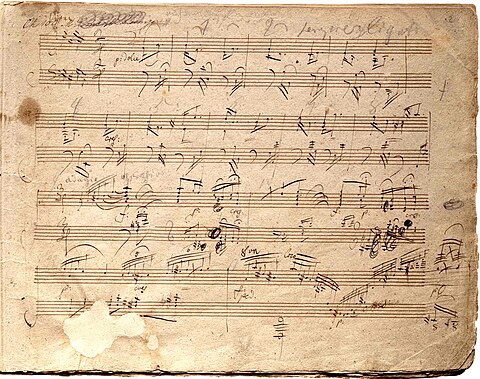
Beethoven conceived of the plan for his final three piano sonatas Op 109,110 and 111b during the summer of 1820, while he worked on his Missa solemnis . Although the work was only seriously outlined by 1819, the famous first theme of the allegro ed appassionato was found in a draft book dating from 1801 to 1802, contemporary to his second Symphony Moreover, the study of these draft books implies that Beethoven initially had plans for a sonata in three movements, quite different from that which we know: it is only thereafter that the initial theme of the first movement became that of the String Quartet n.13 and that what should have been used as the theme with the adagio—a slow melody in A flat – was abandoned. Only the motif planned for the third movement, the famous theme mentioned above, was preserved to become that of the first movement.The Arietta, too, offers a considerable amount of research on its themes; the drafts found for this movement seem to indicate that as the second movement took form, Beethoven gave up the idea of a third movement, the sonata finally appearing to him as ideal.It has ben described as ‘a work of unmatched drama and transcendence … the triumph of order over chaos, of optimism over anguish .Alfred Brendel spoke of the second movement ‘what is to be expressed here is distilled experience and perhaps nowhere else in piano literature does mystical experience feel so immediately close at hand’.

Frédéric Chopin’s Fourth Ballade, Op. 52. Autograph manuscript, 1842, Bodleian Library,Oxford

Chopin Four Ballades were composed between 1831 and 1842. The term ballade was used by Chopin in the sense of a balletic interlude or dance-piece, equivalent to the old Italian ballata, but the term may also have connotations of the medieval heroic ballad, a narrative minstrel-song, often of a fantastical character. There are dramatic and dance-like elements in Chopin’s use of the genre, and he may be said to be a pioneer of the ballade as an abstract musical form. The four ballades are said to have been inspired by a friend of Chopin’s, poet Adam Mickiewicz .The exact inspiration for each individual ballade, however, is unclear and disputed.John Ogdon said of the fourth Ballade that it is ‘the most exalted, intense and sublimely powerful of all Chopin’s compositions… It is unbelievable that it lasts only twelve minutes, for it contains the experience of a lifetime.Alfred Cortot claims that the inspiration for this ballade is Mickiewicz’s poem The Three Budrys, which tells of three brothers sent away by their father to seek treasures, and the story of their return with three Polish brides.It is commonly considered one of Chopin’s masterpieces, and one of the masterpieces of 19th-century piano music.

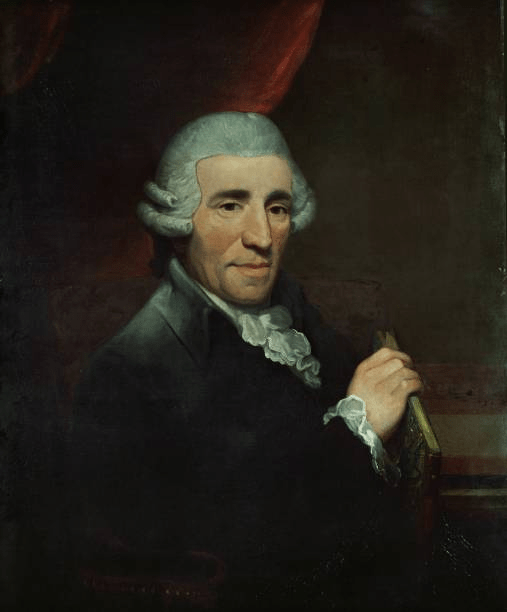
The Piano Sonata in E-flat major, Hob.XVI/52, L. 62, was written in 1794 and is the last of Haydn’s piano sonatas, and is widely considered his greatest.

Haydn wrote the work for Therese Jansen, an outstanding pianist who lived in London at the time of Haydn’s visits there in the 1790s. Haydn served as a witness at her wedding to Gaetano Bartolozzi on 16 May 1795.Haydn also dedicated three demanding piano trios Hob.XV:27–29 nand another two piano sonatas H. XVI:50 and 51 to Jansen.

With regard to the sonata, Jansen was evidently the dedicatee of the autograph (hand-written) score but not the first published version. On the title page of the autograph Haydn wrote in Italian, “Sonata composta per la Celebre Signora Teresa de Janson … di me giuseppe Haydn mpriLond. 794,” which means “Sonata composed for the celebrated Miss Theresa Jansen … by myself Joseph Haydn in my own hand, London 1794.”

The Piano Sonata No. 18 in D major K 576, was composed as part of a set of six for Princess Frederica Louise of Prussia in 1789. It is often nicknamed “The Hunt” or “The Trumpet Sonata”, for the hornlike opening.

Frederica Louis of Prussia c. 1801; painted by Elisabeth Vigée Le Brun
The remarkable Mc Lachlan family

https://christopheraxworthymusiccommentary.com/2022/11/16/matthew-mclachlan-at-st-marys-dark-horses-and-united-families-of-true-artists/
Yuanfan Yang -Sofya Gulyak -Petar Dimov
https://christopheraxworthymusiccommentary.com/2023/05/03/yuanfan-yang-at-latymer-upper-if-music-be-the-food-of-life-play-on/
https://christopheraxworthymusiccommentary.com/2022/04/03/petar-dimov-a-voyage-of-discovery-of-sumptuous-beauty/
Yisha Xue with. Yuanfan Yang
Murray with son Callum far left – Henry Cash- Yuanfan Yang – Soli Nallaseth https://christopheraxworthymusiccommentary.com/2022/03/13/callum-mclachlan-the-troubadour-of-the-piano-at-st-marys/
https://christopheraxworthymusiccommentary.com/2023/05/22/henry-cash-at-st-marys-perivale-march-2023/
Tim Parry editor of international Piano Magazine. – Julian Clef and Russian friend of Yulia Chaplina
Yulia Chaplina with Bobby Chen
https://christopheraxworthymusiccommentary.com/2022/04/28/yulia-chaplina-the-aristocratic-love-and-beauty-of-chopin-at-st-marys/
With Sofya Gulyak who had flown in from a concert in Trieste on Saturday evening .She had given the previous recital at the Chopin Society
https://christopheraxworthymusiccommentary.com/2023/05/01/sofya-gulyak-the-mastery-and-poetic-vision-of-a-great-artist/
The delights of Zizzi
Our concert yesterday had to be cancelled without warning when one of our Members, Peter Roberts, collapsed and died at the Society’s AGM.
Our sympathy goes to Peter’s family and many friends. He had been a member of the Chopin Society for almost 20 years and came to all our concerts. We will miss him very much. Here is a lovely picture of Peter and his wife, Eileen. He was 93, and last year they celebrated their 61st wedding anniversary. It’s very sad. RIP Peter.
People who booked online through WeGotTickets have been given a refund.
Murray McLachlan’s concert has been rescheduled. He will play for us next year. Date to be announced.

Daniel Lebhardt A complete artist descends on St Mary’s with simplicity and grandeur

Tuesday 16 May 3.00 pm 

https://youtube.com/live/LarJCK1Oh98?feature=share

Schnabel famously said that Mozart was too easy for children but too difficult for adults.It was this that passed through my thoughts as I listened to this extraordinary young artist where everything seemed so natural and simple.Playing of clarity,radiance and intelligence bringing the scores to life with an inner fire and conviction that I have not experienced since Serkin.A technical mastery and control that is so complete that it never draws attention to itself .Placed at the service of the composer with integrity and honesty.Last year we were astonished by Daniel’s virtuoso performance of Schumann’s notoriously difficult Toccata op 7.It was placed in between the seemingly innocent Beethoven Sonata op 54 which is in practice one of the most notoriously difficult and it’s twin the ‘Appassionata’ op 57.
https://christopheraxworthymusiccommentary.com/2022/06/23/daniel-lebhardt-the-prince-of-piano-descends-on-st-marys/

Today we were treated to three classical Masterworks by Bach,Mozart and Beethoven where the authority,simplicity and even the sound reminded me of Yefim Bronfman one of the great musicians of our time.It is refreshing too to see a young pianist leaving the much overplayed Russian school and concentrating more on the classical repertoire where it is more quality than quantity that counts.
https://christopheraxworthymusiccommentary.com/2021/07/20/daniel-lebhardt-the-simple-grandeur-of-j-s-bach-at-st-marys/

The Hungarian school of playing inspired by Liszt has in fact produced some of the finest musicians before the public as Daniel made us aware of too today.Perfecting his studies with Pascal Nemirovski in London and Birmingham I remember in a Beethoven Sonata Marathon on this very piano there were many pianists taking part from the remarkable class of Nemirovski.
https://christopheraxworthymusiccommentary.com/2023/01/15/happy-birthday-pascal-nemirovski-the-persuasive-charm-and-instruction-of-a-true-artist/.

A school where the start of an interpretation is with scrupulous attention to the composers wishes as written in the score.Of course style and personality are what make the stale notes on a page come to life.Every pianist sees the notes through his own kaleidoscope formed by a very personal vision of good taste and reasoning from the world that surrounds him.
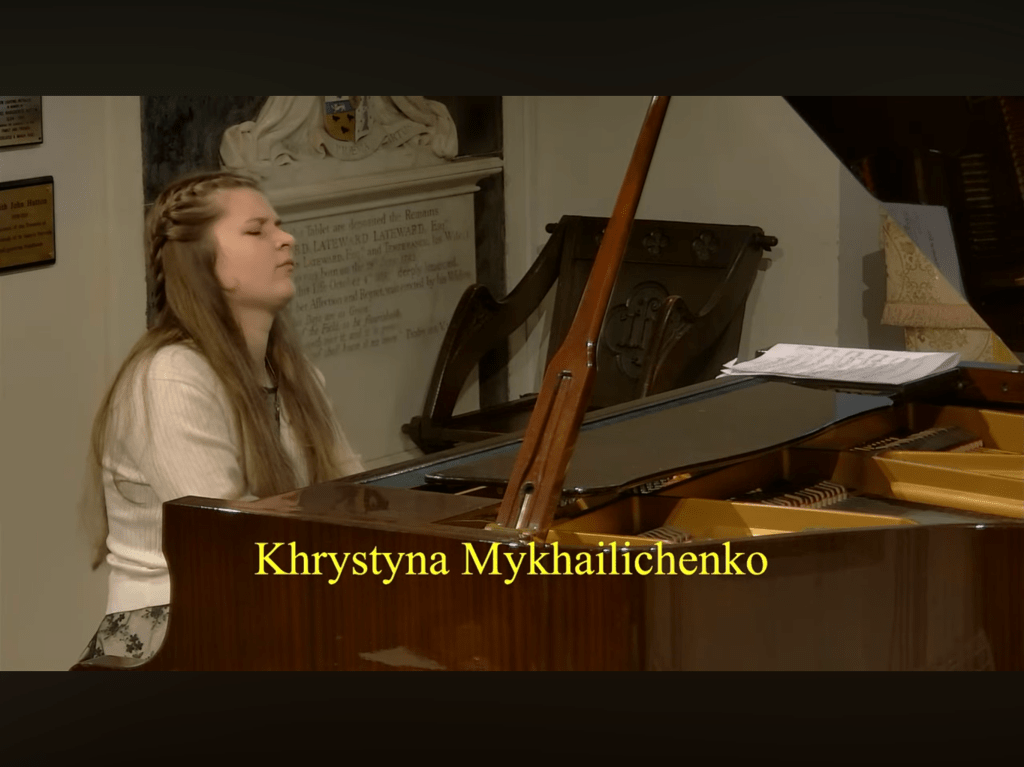
https://christopheraxworthymusiccommentary.com/2021/12/29/daniel-lebhardt-emperor-for-the-night/

The Prelude was of a crystal clarity where the ornaments unwound with a jewel like precision that shone so beautifully in such a continuous outpouring of simplicity and beauty.There was a fluidity to the Allemande with a beauty of line that contrasted with the infectious rhythmic energy of the Courante with the discreetly and graciously placed embellishments.So often these days embellishments are added because it is thought to be authentic but can distort rather than enlighten when played without real scholarship or taste.Daniel knew exactly how to embellish for the glory of the music not the misinformed performer! Ravishing beauty of disarming simplicity crowned the Sarabande with an aristocratic bearing and nobility with the embellishments that added a touch of magic to the ritornello.It was noticeable the beautiful arch of Daniel’s hand that could sculpture so poignantly one of the most wonderful creations of Bach.There was a simple flowing elegance to the Minuet 1 with it’s sneaky ornaments of subtlety and effect.The Musette sound of the Minuet 2 was created totally by his fingers as they knew better than his feet the sound they wanted to imitate.Elegance and light in the Gigue that was played with the same freshness and ‘joie de vivre’ that Rosalyn Tureck used to bring to it ,often played as a favourite encore in her all Bach programmes.

Although each of the Partitas was published separately under the name Clavier – Ubung (Keyboard Practice), they were subsequently collected into a single volume in 1731 with the same name, which Bach himself chose to label his Opus 1.Unlike the earlier sets of suites, Bach originally intended to publish seven Partitas, advertising in the spring of 1730 upon the publication of the fifth Partita that the promised collected volume would contain two more such pieces. The plan was then revised to include a total of eight works: six Partitas in Part I (1731) and two larger works in Part II (1735), the Italian Concerto BWV 971, and the Overture in the French style BWV 831 which is an eleven-movement partita, the largest such keyboard work Bach ever composed, and may in fact be the elusive “seventh partita” mentioned in 1730. The Overture in the French style was originally written in C minor, but was transposed a half step down for publication to complete Bach’s ingenious tonal scheme.

Title page of the first partita, printed in 1726 by Balthasar Schmid of Nuremberg
There was a great sense of proportion to Daniel’s Mozart as he depicted the characters playing their part in the operatic scenario that was unfolding.There was an energy and inner life to all he did.The beautifully flowing opening answered by the gentle reply from the horns as it built in fervour to be greeted by the entry of the soprano.Gradually building in tension with the discreet contrasts and forward movement of forte and piano,adding a delicious scale to take us back to the recapitulation.There was a wonderful sense of balance in the Adagio that allowed the melodic line to sing so naturally and with such poise and style.The absolute fidelity to the score brought the last movement vividly to life with even the very first chord played with the utmost precision.The fleet finger work was shaped with operatic style with a beautiful moment of respite with long held notes and delicate arpeggios giving a great contrast to the return of the main theme in the recapitulation.
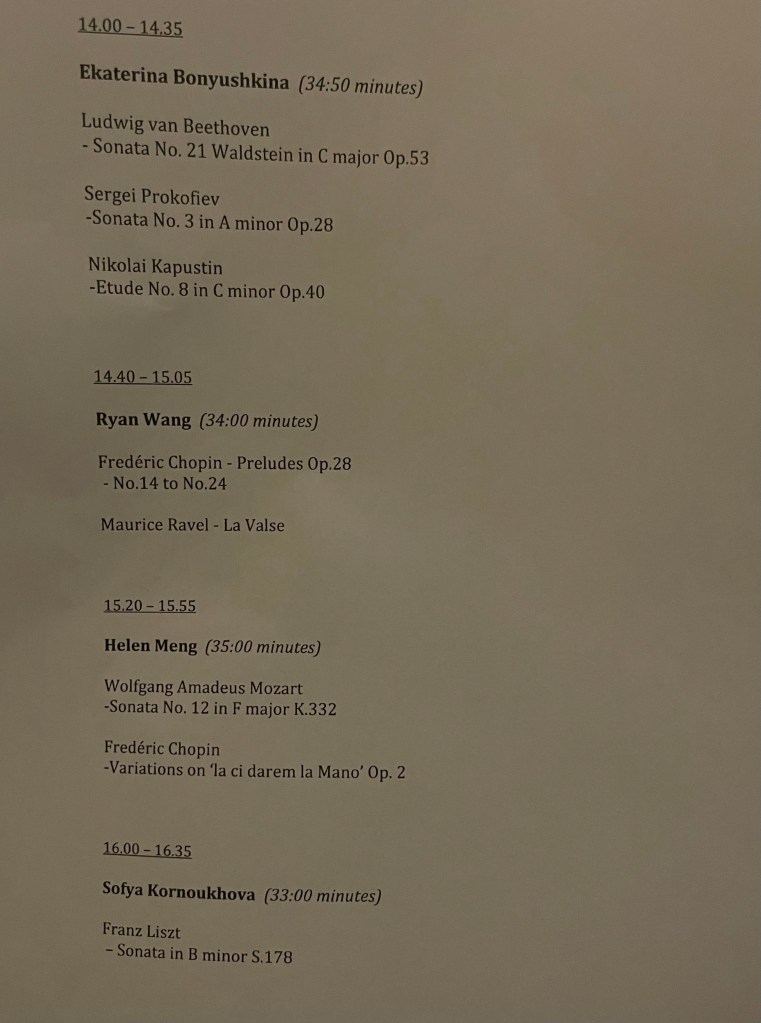
The Piano Sonata No. 12 in F major K.332 was published in 1784 along with the Sonata n.10 in C major K.330 and n.11 K. 331.Mozart wrote these sonatas either while visiting Munich in 1781, or during his first two years in Vienna.Some believe, however that Mozart wrote this and the other sonatas during a summer 1783 visit to Salzburg made for the purpose of introducing his wife, Constanze to his father, Leopold .All three sonatas were published in Vienna in 1784 as Mozart’s Op. 6
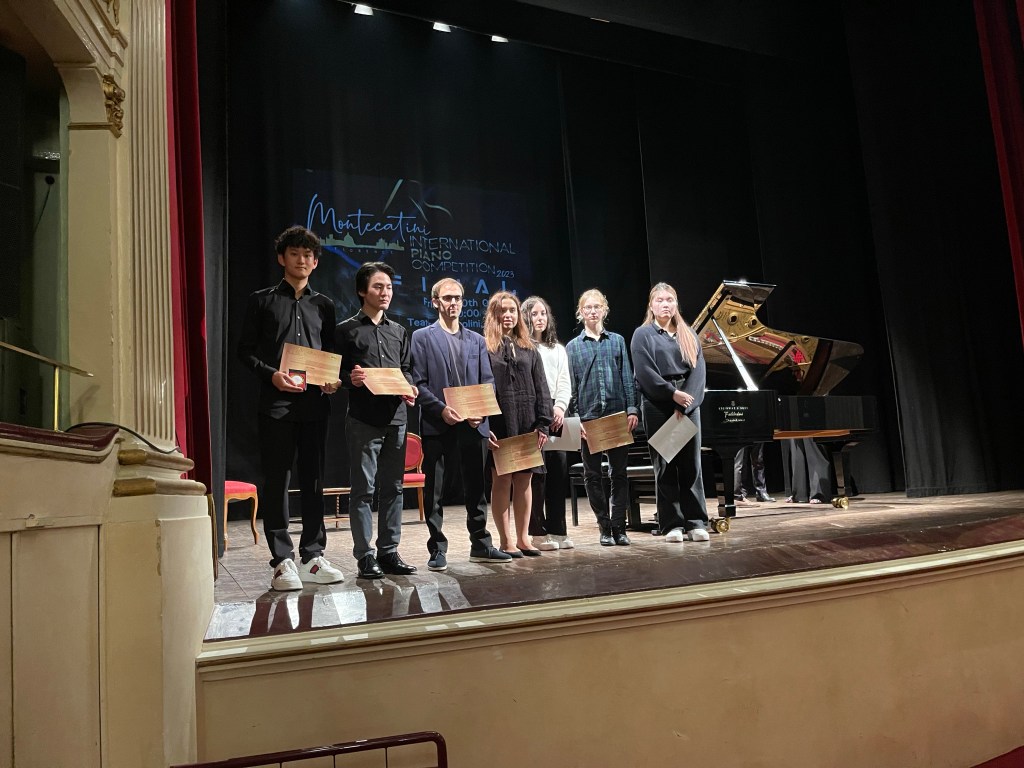
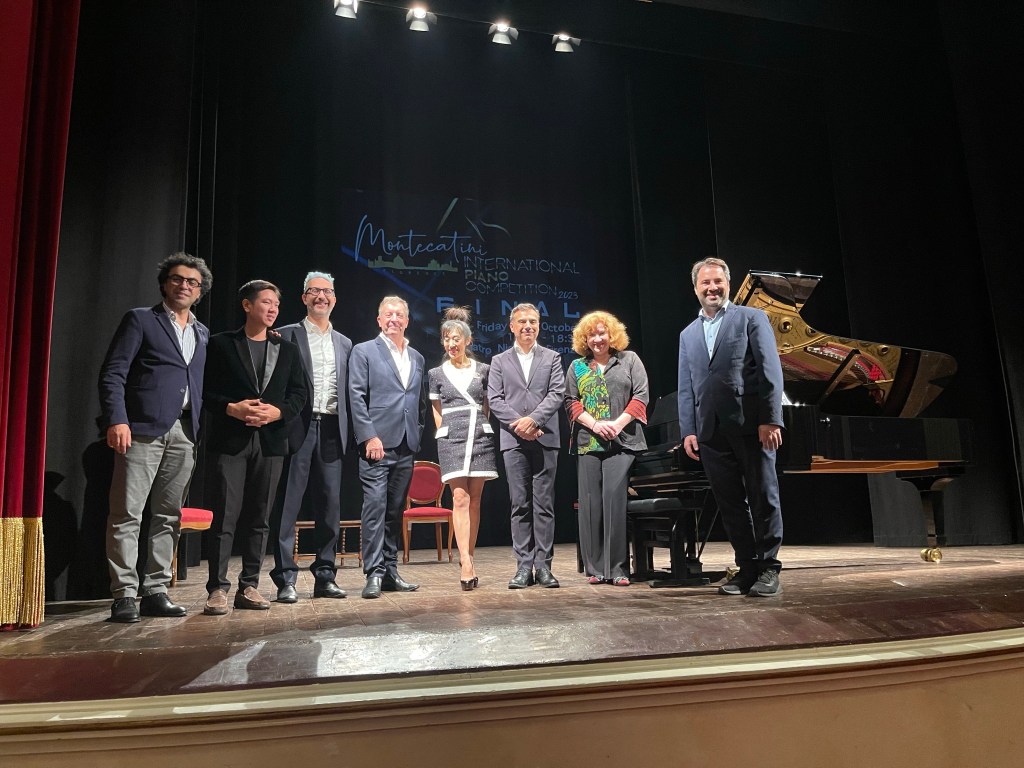
A performance of dynamic drive and energy from the very first whispered chords deep in the bass,to the controlled frenzy of the coda of the final movement.Daniel managed to maintain the tempo in the first movement ,so often played with a slacking of tempo ,for the second subject that can lessen the rhythmic impact and architectural shape of this extraordinarily energetic whirlwind of a movement.Absolute clarity and scrupulous attention to detail were the hallmarks of an exhilarating performance.An austere beauty to the Adagio introduction created an atmosphere out of which shone the top G,An apparition that was brought to life with the gentle undulation of the Rondo.There was playing now of transcendental command and authority but also great delicacy as he noted quite scrupulously Beethoven’s long pedal markings.Always under control but with an inner energy that via the glissando scales (not easy on this piano) we arrived at the long held trills over which Beethoven floats the melody with delicately changing harmonies as it leads to the final drive and the five dramatic chords with which Beethoven slams the door shut in our face.A quite remarkable performance of astonishing clarity and animal drive but with a simplicity and beauty of sound that brought this monumental work vividly to life.

Peace could now reign and Daniel was happy to conjure out of the piano the magic sounds of one of Beethoven’s last works for the piano op 126 n.3 .Sounds that were in his head alone in his last years when deafness had given him the peace and tranquility that he had often been denied during his earlier life.Daniel played it with serene simplicity with the long held pedal notes adding a magic atmosphere of a better world that Beethoven could already envisage.

Piano Sonata No. 21 in C major Op. 53, known as the Waldstein, is one of the three most notable sonatas of Beethoven’s middle period ,the other two being the Appassionata op 57 ,and Les Adieux op 81a.Completed in summer 1804 and surpassing Beethoven’s previous piano sonatas in its scope, the Waldstein is a key early work of Beethoven’s “Heroic” decade (1803–1812).The sonata’s name derives from Beethoven’s dedication to his close friend and patron Count Ferdinand Ernst Gabriel con Waldstein, member of Bohemian noble Waldstein family.It is also known as L’Aurora (The Dawn) in Italian, for the sonority of the opening chords of the third movement, thought to conjure an image of daybreak.

In 2014 Daniel Lebhardt won 1st Prize at the Young Concert Artists International auditions in Paris and New York. A year later he was invited to record music by Bartók for Decca and in 2016 won the “Geoffrey Tozer Most Promising Pianist” prize at the Sydney International Competition. In 2018 he has been signed for commercial management by Askonas Holt. March 2020 saw Daniel make his debut with The Hallé, performing Beethoven’s Piano Concerto No 5 – a work he has also performed at the Barbican, London and Symphony Hall, Birmingham. The last two concert seasons have also witnessed recital debuts in Dublin and Kiev, and at the Lucerne International, Tallinn International and Miami International Piano festivals. He has received reinvitations to Wigmore Hall, London, the Auditorium du Louvre, Paris and Merkin Concert Hall in New York (‘He brought narrative sweep and youthful abandon to [Liszt’s B minor Sonata], along with power, poetry and formidable technique’ – The New York Times). Other recent highlights include a return to Paris for a recital at L’Église Saint-Germain-des-Près, as part of the festival ‘Un week-end à l’Est’; an appearance as soloist in Mozart’s Piano Concerto No 21 at the Royal Festival Hall, London; and tours in China, South America and the USA. ?Born in Hungary, Daniel studied at the Franz Liszt Academy in Budapest with István Gulyás and Gyöngyi Keveházi, then with Pascal Nemirovski at the Royal Academy of Music and Royal Birmingham Conservatoire. He was a prizewinner at the Young Classical Artists Trust auditions in 2015 and currently lives in Birmingham.

Daniel Lebhardt A complete artist descends on St Mary’s with simplicity and grandeur

Tuesday 16 May 3.00 pm 

https://youtube.com/live/LarJCK1Oh98?feature=share

Schnabel famously said that Mozart was too easy for children but too difficult for adults.It was this that passed through my thoughts as I listened to this extraordinary young artist where everything seemed so natural and simple.Playing of clarity,radiance and intelligence bringing the scores to life with an inner fire and conviction that I have not experienced since Serkin.A technical mastery and control that is so complete that it never draws attention to itself .Placed at the service of the composer with integrity and honesty.Last year we were astonished by Daniel’s virtuoso performance of Schumann’s notoriously difficult Toccata op 7.It was placed in between the seemingly innocent Beethoven Sonata op 54 which is in practice one of the most notoriously difficult and it’s twin the ‘Appassionata’ op 57.
https://christopheraxworthymusiccommentary.com/2022/06/23/daniel-lebhardt-the-prince-of-piano-descends-on-st-marys/

Today we were treated to three classical Masterworks by Bach,Mozart and Beethoven where the authority,simplicity and even the sound reminded me of Yefim Bronfman one of the great musicians of our time.It is refreshing too to see a young pianist leaving the much overplayed Russian school and concentrating more on the classical repertoire where it is more quality than quantity that counts.
https://christopheraxworthymusiccommentary.com/2021/07/20/daniel-lebhardt-the-simple-grandeur-of-j-s-bach-at-st-marys/

The Hungarian school of playing inspired by Liszt has in fact produced some of the finest musicians before the public as Daniel made us aware of too today.Perfecting his studies with Pascal Nemirovski in London and Birmingham I remember in a Beethoven Sonata Marathon on this very piano there were many pianists taking part from the remarkable class of Nemirovski.
https://christopheraxworthymusiccommentary.com/2023/01/15/happy-birthday-pascal-nemirovski-the-persuasive-charm-and-instruction-of-a-true-artist/.

A school where the start of an interpretation is with scrupulous attention to the composers wishes as written in the score.Of course style and personality are what make the stale notes on a page come to life.Every pianist sees the notes through his own kaleidoscope formed by a very personal vision of good taste and reasoning from the world that surrounds him.
https://christopheraxworthymusiccommentary.com/2021/12/29/daniel-lebhardt-emperor-for-the-night/

The Prelude was of a crystal clarity where the ornaments unwound with a jewel like precision that shone so beautifully in such a continuous outpouring of simplicity and beauty.There was a fluidity to the Allemande with a beauty of line that contrasted with the infectious rhythmic energy of the Courante with the discreetly and graciously placed embellishments.So often these days embellishments are added because it is thought to be authentic but can distort rather than enlighten when played without real scholarship or taste.Daniel knew exactly how to embellish for the glory of the music not the misinformed performer! Ravishing beauty of disarming simplicity crowned the Sarabande with an aristocratic bearing and nobility with the embellishments that added a touch of magic to the ritornello.It was noticeable the beautiful arch of Daniel’s hand that could sculpture so poignantly one of the most wonderful creations of Bach.There was a simple flowing elegance to the Minuet 1 with it’s sneaky ornaments of subtlety and effect.The Musette sound of the Minuet 2 was created totally by his fingers as they knew better than his feet the sound they wanted to imitate.Elegance and light in the Gigue that was played with the same freshness and ‘joie de vivre’ that Rosalyn Tureck used to bring to it ,often played as a favourite encore in her all Bach programmes.

Although each of the Partitas was published separately under the name Clavier – Ubung (Keyboard Practice), they were subsequently collected into a single volume in 1731 with the same name, which Bach himself chose to label his Opus 1.Unlike the earlier sets of suites, Bach originally intended to publish seven Partitas, advertising in the spring of 1730 upon the publication of the fifth Partita that the promised collected volume would contain two more such pieces. The plan was then revised to include a total of eight works: six Partitas in Part I (1731) and two larger works in Part II (1735), the Italian Concerto BWV 971, and the Overture in the French style BWV 831 which is an eleven-movement partita, the largest such keyboard work Bach ever composed, and may in fact be the elusive “seventh partita” mentioned in 1730. The Overture in the French style was originally written in C minor, but was transposed a half step down for publication to complete Bach’s ingenious tonal scheme.

Title page of the first partita, printed in 1726 by Balthasar Schmid of Nuremberg
There was a great sense of proportion to Daniel’s Mozart as he depicted the characters playing their part in the operatic scenario that was unfolding.There was an energy and inner life to all he did.The beautifully flowing opening answered by the gentle reply from the horns as it built in fervour to be greeted by the entry of the soprano.Gradually building in tension with the discreet contrasts and forward movement of forte and piano,adding a delicious scale to take us back to the recapitulation.There was a wonderful sense of balance in the Adagio that allowed the melodic line to sing so naturally and with such poise and style.The absolute fidelity to the score brought the last movement vividly to life with even the very first chord played with the utmost precision.The fleet finger work was shaped with operatic style with a beautiful moment of respite with long held notes and delicate arpeggios giving a great contrast to the return of the main theme in the recapitulation.

The Piano Sonata No. 12 in F major K.332 was published in 1784 along with the Sonata n.10 in C major K.330 and n.11 K. 331.Mozart wrote these sonatas either while visiting Munich in 1781, or during his first two years in Vienna.Some believe, however that Mozart wrote this and the other sonatas during a summer 1783 visit to Salzburg made for the purpose of introducing his wife, Constanze to his father, Leopold .All three sonatas were published in Vienna in 1784 as Mozart’s Op. 6

A performance of dynamic drive and energy from the very first whispered chords deep in the bass,to the controlled frenzy of the coda of the final movement.Daniel managed to maintain the tempo in the first movement ,so often played with a slacking of tempo ,for the second subject that can lessen the rhythmic impact and architectural shape of this extraordinarily energetic whirlwind of a movement.Absolute clarity and scrupulous attention to detail were the hallmarks of an exhilarating performance.An austere beauty to the Adagio introduction created an atmosphere out of which shone the top G,An apparition that was brought to life with the gentle undulation of the Rondo.There was playing now of transcendental command and authority but also great delicacy as he noted quite scrupulously Beethoven’s long pedal markings.Always under control but with an inner energy that via the glissando scales (not easy on this piano) we arrived at the long held trills over which Beethoven floats the melody with delicately changing harmonies as it leads to the final drive and the five dramatic chords with which Beethoven slams the door shut in our face.A quite remarkable performance of astonishing clarity and animal drive but with a simplicity and beauty of sound that brought this monumental work vividly to life.

Peace could now reign and Daniel was happy to conjure out of the piano the magic sounds of one of Beethoven’s last works for the piano op 126 n.3 .Sounds that were in his head alone in his last years when deafness had given him the peace and tranquility that he had often been denied during his earlier life.Daniel played it with serene simplicity with the long held pedal notes adding a magic atmosphere of a better world that Beethoven could already envisage.

Piano Sonata No. 21 in C major Op. 53, known as the Waldstein, is one of the three most notable sonatas of Beethoven’s middle period ,the other two being the Appassionata op 57 ,and Les Adieux op 81a.Completed in summer 1804 and surpassing Beethoven’s previous piano sonatas in its scope, the Waldstein is a key early work of Beethoven’s “Heroic” decade (1803–1812).The sonata’s name derives from Beethoven’s dedication to his close friend and patron Count Ferdinand Ernst Gabriel con Waldstein, member of Bohemian noble Waldstein family.It is also known as L’Aurora (The Dawn) in Italian, for the sonority of the opening chords of the third movement, thought to conjure an image of daybreak.

In 2014 Daniel Lebhardt won 1st Prize at the Young Concert Artists International auditions in Paris and New York. A year later he was invited to record music by Bartók for Decca and in 2016 won the “Geoffrey Tozer Most Promising Pianist” prize at the Sydney International Competition. In 2018 he has been signed for commercial management by Askonas Holt. March 2020 saw Daniel make his debut with The Hallé, performing Beethoven’s Piano Concerto No 5 – a work he has also performed at the Barbican, London and Symphony Hall, Birmingham. The last two concert seasons have also witnessed recital debuts in Dublin and Kiev, and at the Lucerne International, Tallinn International and Miami International Piano festivals. He has received reinvitations to Wigmore Hall, London, the Auditorium du Louvre, Paris and Merkin Concert Hall in New York (‘He brought narrative sweep and youthful abandon to [Liszt’s B minor Sonata], along with power, poetry and formidable technique’ – The New York Times). Other recent highlights include a return to Paris for a recital at L’Église Saint-Germain-des-Près, as part of the festival ‘Un week-end à l’Est’; an appearance as soloist in Mozart’s Piano Concerto No 21 at the Royal Festival Hall, London; and tours in China, South America and the USA. ?Born in Hungary, Daniel studied at the Franz Liszt Academy in Budapest with István Gulyás and Gyöngyi Keveházi, then with Pascal Nemirovski at the Royal Academy of Music and Royal Birmingham Conservatoire. He was a prizewinner at the Young Classical Artists Trust auditions in 2015 and currently lives in Birmingham.

Nikolai Lugansky Miracles at the Wigmore Hall

Sergey Rachmaninov (1873-1943)
Moments musicaux Op. 16 (1896) Moment musical in B flat minor Moment musical in E flat minor Moment musical in B minor Moment musical in E minor Moment musical in D flat Moment musical in C.
Piano Sonata No. 2 in B flat minor Op. 36 (1913)
I. Allegro agitato • II. Non allegro – Lento • III. Allegro molto
Interval
13 Preludes Op. 32 (1910)
Prelude in C • Prelude in B flat minor • Prelude in E • Prelude in E minor • Prelude in G • Prelude in F minor • Prelude in F • Prelude in A minor • Prelude in A • Prelude in B minor • Prelude in B • Prelude in G sharp minor •

Quite a phenomenal concert by Nikolai Lugansky in his series of complete Rachmaninov.Surely one of the most wondrous displays of piano playing this hall has ever seen. With his film star good looks music just poured out of him in a seemingly effortless mastery of control with a kaleidoscopic sense of colour that was at times truly breathtaking.A searing passion that never lost control of balance and sense of line the like of which I can only remember from Gilels’s performance of Liszt’s Spanish Rhapsody in the Festival Hall fifty years ago.
I have often admired Lugansky for his superb musicianship allied to a strong personality.An artist who had something very individual to say without any distortions or betrayal of what the composer had placed on the printed page.
Tonight with his recreation of the Moments Musicaux op 16 and even more so with the original 1913 version of the Second Sonata I was aware of the gigantic stature of this great artist.The drive and seemingly endless resources of sumptuous sound were like being caught in a tornado that carried us all on a great wave of searing intensity …….and we were only at the interval …….the idea of the Preludes op 32 left me breathless with anticipation ……..Thirteen miniature tone poems each one with a story to tell.From the terrifying Red Riding Hood F minor with playing that sent a shiver down my spine.It followed on from the fluidity and sublime beauty of the Prelude in G major.How could one not be caught up in the growing sonorities of the B minor.’The return’ with a build up of burning intensity that was at the limit of bearable tension before the luminosity of the return of the opening and the sudden wave of an Adieux that dies away with an all so insistent murmur.A quite phenomenal control of sound that led equally miraculously into the famous G sharp minor prelude with its continuous wave of sounds and deep heart rending bass statements in reply to the luminosity and simplicity of the treble.A climax that disappeared into the distance with ringing bells and a final note that was placed with the perfection of a truly supreme stylist.
The grandeur and aristocratic control of the final D flat Prelude I doubt could have been more poignantly played even by Rachmaninov himself,who in Lugansky’s own words was the greatest piano virtuoso of the 2Oth century.
There is no doubt in my mind,after tonight’s performance,who holds that honour in the 21st century.
Great applause from a packed house but missing the standing ovation that was his due.
I think the ‘Wiggies’ accept Rachmaninov with reserve whereas Bach,Beethoven and Mozart are the stable diet of their favourites !!
I like to think that after tonight Rachmaniniv could stand side by side with the greatest of the musical geniuses of any age.
And what greater gift could there be for Rachmaninov’s 150th birthday?
There were two encores from a Lugansky with not a ‘hair out of place’ after a recital that could surely boast a record number of notes played in 90 minutes.
A beautiful nocturne type piece obviously early Rachmaninov and finally bursting into flames with his sumptuous ‘spinning song’ ,the C minor prelude op 23 .
I was brought up on Richter’s performance that I thought unmatchable …until tonight !


I am not sure if there was anyone in the audience who really knew what miracle we had witnessed tonight apart from yours truly.I had also been present at that other miraculous performance of a near blind Rubinstein in 1976 as he said goodbye to the concert stage.In his own words he had started his career in the Wigmore/Bechstein Hall and was happy to end it on the same stage that he hoped would be saved from imminent demolition. You see miracles do happen here!

By the fall of 1896, 23-year old Rachmaninoff’s financial status was precarious, not helped by his being robbed of money on an earlier train trip.Pressed for time, both financially and by those expecting a symphony, he “rushed into production.”On December 7, he wrote to Aleksandr Zatayevich,a Russian composer friend”I hurry in order to get money I need by a certain date … This perpetual financial pressure is, on the one hand, quite beneficial … by the 20th of this month I have to write six piano pieces.”Rachmaninoff completed all six during October and December 1896, and dedicated all to Zatayevich.Each Moment musical reproduces a musical form characteristic of a previous musical era. The forms that appear in Rachmaninoff’s incarnation are the nocturne,song without words, barcarolle,virtuoso etude and theme and variations.Andantino opens the set with a long, reflective melody that develops into a rapid climax.The second piece, Allegretto, is the first of the few in the set that reveal his mastery of piano technique.Andante cantabile is a contrast to its two surrounding pieces, explicitly named “funeral march “and “lament”Presto draws inspiration from several sources, including the Chopin preludes ,to synthesize an explosion of melodic intensity.The fifth, Adagio sostenuto is a respite in barcarolle form, before the finale Maestoso, which closes the set in a thick three-part texture.

Three years after his third piano concerto was finished, Rachmaninoff moved with his family to a house in Rome that Tchaikowsky had used.It was during this time in Rome that Rachmaninoff started working on his second piano sonata.However, because both of his daughters contracted typhoid fever, he was unable to finish the composition in Rome. Instead, Rachmaninoff moved his family on to Berlin in order to consult with doctors.When the girls were well enough, Rachmaninoff traveled with his family back to his Ivanovka country estate, where he finished the second piano sonata.Its premiere took place in Kursk on 18 October 1913 (5 October in the Julian calendar).When Rachmaninoff performed the piece at its premiere in Moscow, it was well received.However, Rachmaninoff himself was not satisfied with the work and felt that too much in the piece was superfluous.Thus, in 1931, he commenced work on a revision. Major cuts were made to the middle sections of the second and third movements and all three sections of the first movement, and some technically difficult passages were simplified.In 1940, with the composer’s consent, Vladimir Horowitz created his own edition which combined elements of both the original and revised versions.His edition used more original material than revised throughout all three movements.

These are the programme notes of Nikolai Lugansky – not only a great pianist : Moments musicaux is the third of Rachmaninov’s relatively small collection of piano pieces. The style belongs to his earlier creative period, when Tchaikovsky’s influence could still be felt.
I think the melodic lines of these ‘musical moments’, at least those in the minor keys, belong to a genre we might call ‘urban romance’. We hear the same language in many of Tchaikovsky’s works: music sung from the heart, from the depths of the soul, among the urban intelligentsia, the minor nobility.
The first Moment is the longest, a three-part piece with a sad, soulful motif. The mood is elegiac, with a small middle section in the major and a vanishing reprise. The second is exquisite, filled with tremulous intonations. The third is an elegy with a funereal rhythm. The fourth is the most popular; the continual turbulent movement of the sixteenths is borrowed from his early fugue in D minor, composed in 1891. There’s a resemblance to Chopin’s ‘Revolutionary’ Etude, but with a heightened dynamic and emotional temperature.
The fifth is a brief moment of happiness. One can hear distant bells, summer heat… It is a rare piece in the composer’s œuvre without drama or conflict, fully contemplative. Time stands still. The sixth is grandiose Rachmaninov, giving a full understanding of this titan of the piano. He uses expressive methods never deployed on such a scale before. Feelings of bubbling joy and triumph here evidence strength and youth, not overshadowed by defeat or loss.
The first version of the Second Sonata was created just before the First World War. It is this great artist’s premonition of the coming human tragedy and, particularly, the tragedy of his motherland.
In the first movement, the monothematicism is very developed; even the contrasting main and secondary themes are based on the same motifs. This chromatic descent becomes the main theme of the sonata – both in the first movement and in the finale.
The original version was written by Rachmaninov The Composer for Rachmaninov The Pianist, without thinking of other performers. The style is large scale, appropriate for the greatest piano virtuoso of the 20th Century. Though Rachmaninov played it often, other pianists were daunted by its technical difficulties. Thus, in 1931, the revised version was made. This edition was very popular in the USSR and was performed more often than the original.
Like most Soviet pianists, I first heard the sonata in its revised form. The original wasn’t performed in the Soviet Union until the 1960s when it was played by Van Cliburn, winner of the Tchaikovsky Competition. I only heard it after I had already played the revised version, but it impressed me a lot. I immediately wanted to play those fragments of beautiful music not included in the second version. There are episodes in the first movement that connect the secondary and final themes which are not only beautiful but carry an important formative load. The second movement consists of free variations on a melody in 12/8, with an improvisatory middle section. In the revised version, Rachmaninov created almost a wholly new middle section where the main motif of the first movement sounds like an idée fixe.
Both central episodes of this slow movement are wonderful in their own way. However, I prefer the original one – especially the movement’s end.
The finale is a kind of perpetuum mobile with a lyrical, sensual second theme which becomes the apotheosis of the sonata in the recapitulation. I believe these reductions of the revision to be the result of age, when Rachmaninov liked verbosity less and less.
The 13 Preludes form Rachmaninov’s most intense and complex cycle of piano miniatures. While preserving his own large-scale textures, there are changes of musical language rooted in the study of Russian chants. This connection with ancient Russian culture becomes very important in Preludes Nos. 4, 10 and 11, and can also be felt in Nos. 8, 9 and 13.
The cycle contains several peaks: the first four preludes can be played in a single block.

No. 1 is a rapid, joyful introduction. No. 2 is filled with a feeling of twilight, anxiety and fear. No. 3 echoes the Etude-tableau in E flat Op. 33 No. 6,
with its imagery of a bustling fair. No. 4 is the first culmination; for me, it conjures the
Battle of Kerzhenets in Rimsky-Korsakov’s opera The Legend of the Invisible City of Kitezh, a dreadful battle in which the entire army is killed. The exposition and reprise are particularly diatonic (especially for a late- Romantic like Rachmaninov) and echo the language of the All-Night Vigil Op. 37.
The next five are on a less heavy scale, and perhaps do not carry such a philosophical load:
The famous No. 5 is an image of a gorgeous sunlit
summer landscape.
No. 6 is a brief description of a terrible, destructive
storm.
No. 7 represents a kind of mystery or paradox.
No. 8 is an endless, anxious movement woven with Dies
irae motifs.
No. 9 is a picture of spring, full of vague, joyful
excitement. Here, nature is not only revived but is also
filled with sensuality.
No. 10 is the longest, a philosophical journey to another
world. The composer allegedly gave it the mysterious title ‘Return’, but I believe the content is more mystical, and if it is a return then it is Orpheus’s, without Eurydice.
The last three leave room for light and joy:
No. 11 is serene; perhaps a naïve idea of a medieval
Russian peasant family, with dancing, church motifs
and hints of bell-ringing.
One of the most popular is No. 12, representing an
image of a troika rushing off with its barely audible bells
jingling.
No. 13 is the conclusion of the cycle (and also the last of
Rachmaninov’s 24 preludes). It is a grandiose piece recalling Easter Night, the most important Orthodox holiday. After a solemn introduction, an image of silence and night appears, but the good news of the resurrection starts to sound ever louder, becoming triumphant jubilation, celebrating victory over defeat . Nikolai Lugansky

Lugansky had won the same Bach Competition in Leipzig that his teacher had won when Shostakovich was on the jury and was so inspired to write his own Preludes and Fugues for her
Ileana Ghione in the Teatro Ghione in Rome with Lugansky’s teacher Tatyana Nikolaeva

https://christopheraxworthymusiccommentary.com/2018/04/13/russia-comes-to-rome/

Giulia Contaldo in London at Steinways for the Keyboard Trust

There was magic in the air at Steinways as Giulia Contaldo filled the air with refined sounds of perfumed succulence as ‘Les sons et les parfums tournent dans l’air de l’après – midi” where ‘Les fées sont d’exquises danseuses’.
A transcription by the English pianist Leonard Borwick,a student of Clara Schumann,whose London debut was on 8 May 1890, at a Royal Philharmonic Society concert with Robert Schumann’s Piano Concerto in A minor. His performance of Brahms D minor was greeted by Shaw,the Basset horn critic,as ‘a hash of bits and scraps with plenty of thickening in the pianoforte part,which Mr Leonard Borwick played with the enthusiasm of youth in a style technically admirable’. Giulia had more problem pronouncing his name than playing his sumptuous transcription full of subtle half colours hinted at through a haze of golden harp like arabesques.


Giulia has lived with this music since childhood as both her parents are professional flautists in her home city of Florence.
A magic ‘faune’unjustly neglected in the solo piano repertoire.
This is not the case of Liszt’s dramatic depiction of Wagner’s Liebestod that closed Giulia Contaldo’s short programme for the Keyboard Trust.
Where Debussy had been all perfume and atmosphere ,Wagner was all passion and seduction.
Both played with authoritative musicianship and transcendental technical command.
She did not quite find the thread weaving its way through the knotty twine of ‘Des Abends’ that opens Robert Schumann’s Fantasiestucke.It was obvious later that it was because she was keeping the simplicity until ‘Warum’which was played with the same aristocratic poise and beauty that I remember from Rubinstein.
She too obviously knew this was the heart of these eight contrasting pictures because she chose to play it again as an encore with even more intensity.
A performance of passion and superlative technical control from a pianist who is an intelligent musician who could not only see the intimate detail of Schumann’s tale but could also see the architectural shape of the whole suite.


Estampes took us once again to Debussy’s magical visions,this time with the gardens in Granada and his imagining of the Pagodas in the Orient .The clarity and technical prowess of her playing in ‘Jardins sous la pluie’ had me running for the umbrella that I had almost left on Ischia this weekend where indeed her depiction of non stop down-pouring rain brought back vivid memories still fresh in my mind as I try to dry out my shoes !
Transcendental technical control of fantasy and musical meaning was Debussy’s answer late in life to Chopin’s own studies. ‘Pour Les agréments’ just underlined Giulia’s masterly playing at the service of music that we had been aware of since the first magic flute notes of her ‘faune’.

A short post concert talk with co-artistic director Elena Vorotko


A short post concert conversation with Elena Vorotoko brought us even closer to this young Florentine pianist.
After obtaining her Masters at Florence Conservatory she went on to obtain her Artist’s Diploma in Imola with Jin Ju and Manchester under Dina Parakhina and Graham Scott.
Now completing her studies in Geneva with Ricardo Castro she flies off tomorrow to teach in Sicily where she is already a distinguished professor at Trapani Conservatory.
All part of the ‘Gradus ad Parnassum’ for young artists whose talent has chosen them ,obliging the gifted few to dedicate their youth to art and beauty.
Refreshing to see and to hear this.

Mario a fervent admirer of the Keyboard Trust and ready to give a helping hand especially to his fellow countrymen and women.


It is thanks to Steinway’s in London and their ebullient concert and artists manager,Wiebke Greinus ,that we could also celebrate with a glass of well earned champagne in the company of a distinguished audience ready to applaud and sustain such audacious behaviour.

Sarah Biggs ,General Manager of the KT,and Phil Davies with Tony Palmer in the centre


The KT were very proud to have the great film director Tony Palmer with us to applaud the courage and artistry of Giulia Contaldo still only in her twenties.The world is her oyster and awaits.

Giulia with Yisha Xue our host at the Liberal Club series that starts on Martha Argerich’s birthday 5th June!
https://christopheraxworthymusiccommentary.com/2023/04/15/giovanni-bertolazzi-at-the-quirinale-a-kaleidoscope-of-ravishing-sounds-that-astonish-and-seduce-for-the-genius-of-liszt/

https://christopheraxworthymusiccommentary.com/2022/07/15/two-young-giants-cross-swords-in-verbier-giovanni-bertolazzi-and-nikita-lukinov/
https://christopheraxworthymusiccommentary.com/2022/12/27/nikita-lukinov-in-berlin-an-appreciation-by-moritz-von-bredow/
https://christopheraxworthymusiccommentary.com/2023/02/12/hhh-concerts-and-the-keyboard-trust-a-winning-combination-of-youthful-dedication-to-art/
Giulia trying one of the many wonderful instruments on display
An informal photo shoot with Giulia’s cousin and photographer husband
Phil Davies with Tony Palmer
After concert fun and games with Paul Davis and Florentine singer friend now studying at the Royal Academy in London
Giulia being enticed to a glass of Champagne by enthusiastic admirers
The distinguished pianist Alberto Portugheis in conversation with Paul Davis
Giulia with her cousin and her photographer husband

Giordano Buondonno at Roma 3 ‘Drops of crystal ‘ of musical intelligence and ravishing beauty

Giordano Buondonno for Roma Tre Orchestra Young Artists Series kept us enthralled with a clarity and luminosity of playing that I have not heard since the Michelangeli sound that was likened to ‘drops of crystal’.
Particularly suited to French music where clarity and atmosphere are united and the cloudy mists that are so often inflicted on this music are cleared,opening a window on a whole new world.
The Chopin Andante Spianato was particularly poignant as jewel like bel canto notes were floated on a sumptuous wave of fluid sounds.
Particularly noticeable was the arch of his hand and the flat fingers drawing the sounds out of each key.
Debussy Images Book one,a great speciality of Michelangeli’s together with Gaspard de la Nuit,where Giordano produced sounds that were not a pale imitation of the great master but highly intelligent interpretations of ravishing beauty.
He even convinced me that Rachmaninov’s highly personal transcription or reinvention of three movements from Bach’s violin suite is a sumptuous feast basking in Rachmaninovian sounds combined with Bach’s absolute genius.Similar to the Busoni transcriptions but with a voice that is unmistakably Rachmaninov.With Giordano’s aristocratic playing ,similar to Weissenberg’s in Rachmaninov,that was a sumptuous romantic feast indeed.

https://christopheraxworthymusiccommentary.com/2022/06/20/giordano-buondonno-crystalline-clarity-and-mastery-at-st-marys/

The Bach/Rachmaninov opened with the Prelude of crystal clear sounds on a magic carpet of bass harmonies.Unmistakably Rachmaninov’s with a sumptuous sense of colour .A ‘knotty twine’ and a glorious outpouring of grandiose sounds never hard but of a Philadelphian richness that illuminated the whole piano.There was a delicious even cheeky charm added to Bach’s already courtly gavotte.The Gigue was a continuous stream of sounds played with wondrous shape and subtle refined dynamic contrasts.

https://christopheraxworthymusiccommentary.com/2022/05/18/giordano-buondonno-at-the-solti-studio-masterly-performances-of-searing-intensity/

A wonderful sense of balance showed us indeed what ‘spianato’ really meant.Giordano delicately chiselling out notes with infinite care of the bel canto melodic line with it’s magical embellishments and gently cascading notes.The mazurka too was played with refined good taste and added a subtle contrast to the magic that spun from his long flat pointed fingers.A very short introduction heralded the Grande Polonaise that was played with dynamic control and brilliance.Some subtle changes of dynamics made us even more aware of the majesty of the Polonaise on it’s return.Jeux perlé that just flowed so naturally and with such elegance and ease from his fingers leading to a brilliant finish as,of course,Chopin intended.
It was written for Chopin’s own performances as he took the Parisian salons of the day by storm.It was one of the early works of Chopin ,the refined virtuoso,that had Schumann declare :’Hats off ,gentlemen,a genius’

Andante spianato et grande polonaise brillante in E flat op 22 was composed between 1830 and 1834. The Grande polonaise brillante in E-flat, set for piano and orchestra, was written first, in 1830-31. In 1834, Chopin wrote an Andante spianato in G, for piano solo, which he added to the start of the piece, and joined the two parts with a fanfare like sequence. The combined work (both orchestrated version and solo piano version) was published in 1836, and was dedicated to Madame d’Este.The Andante spianato (spianato means “even” or “smooth”) for solo piano was composed as an introduction to the polonaise after Chopin received a long-awaited invitation to perform in one of Habeneck’s Conservatoire Concerts in Paris. This was the only time Chopin had ever used the term spianato as a description for any of his works.

There was magic in the air as Giordano brought a kaleidoscope of ravishing colour to ‘Reflets dans l’eau’.The chiselled clarity of sounds gave the contrast needed for the whispered beauty of all that surrounded it.These reflections were of a fluidity created by a subtle use of pedal but above all by a musicianly sense of line.There was aristocratic grandeur in Debussy’s Hommage à Rameau with the flowing tempo of the sarabande as it built to a regal outpouring of majesty and respectful passion.It was in Movement,in particular,that Giordano’s clarity and precision reminded me of Michelangeli’s performances.A continual stream of sounds on which the melodic line was chiselled with such authority and determination .There were sounds from the bass that gave great depth to the central section and allowed Giordano the freedom to float Debussy’s magical strands of melody on a wave of sumptuous sounds.

Images is a suite of six compositions for solo piano by Debussy.They were published in two books/series, each consisting of three pieces. The first book was composed between 1901 and 1905, and the second book was composed in 1907.With respect to the first series of Images, Debussy wrote to his publisher, Jaques Durand :”Without false pride, I feel that these three pieces hold together well, and that they will find their place in the literature of the piano … to the left of Schumann, or to the right of Chopin… “

“Reflets dans l’eau” is one of the many pieces Debussy wrote about water;in particular, light reflecting off its surface. The piece creates an image of water being not quite still, then becoming rapid, then decreasing in motion again. “Reflets dans l’eau” is also an example of the new tone colours Debussy discovered for the piano in this part of his life, and it is considered to be one of his greatest works for the instrument.

“Hommage à Rameau” is more subdued. It is a sarabande honouring the memory of Jean-Philippe Rameau.

“Mouvement” is the most abstract designation of the pieces. It is a perpetuum mobile meaning that it is built around a continuous stream of notes.

Gaspard de la Nuit was one of the most famous interpretations of Michelangeli.It was the only time I actually heard the great master live in concert but not for want of trying .Michelangeli was a notorious perfectionist and an expert also on the mechanical side of the piano ,as he was with sports cars!
Michelangeli would all too regularly cancel performances in London if the instrument was not in perfect shape.
I caught up with him,at last,in Rome in the Sala Nervi ,a concert for the Red Cross in the Vatican City.He had refused to put foot professionally in Italy after the tax scandal accusations that were inflicted on famous Italian artists in that period.Luciano Pavarotti and Sophia Loren had to face false accusations too from the authorities and became scapegoats for those involved in the so called ‘black economy.’
Ondine had a wondrous fluidity to it from the very first notes as he brought a beauty and serenity to Ondine herself that was truly sublime.The gradual build up to the explosive climax was masterly in its control and technical authority.The long held pedal at the end I have rarely heard so beautifully sustained as the water nymph disappeared in a haze of wondrous sounds.
Le Gibet was played with amazing clarity and beauty where the gentle tolling of the bell in the distance brought a poignant significance to the bleak vision of the gallows swinging on the horizon.Again it was the absolute clarity of the opening three notes deep in the bass that sent a shiver down the spine as the devilish Scarbo got up to his diabolical tricks.Amazing technical control and breathtaking risks gave great excitement to a piece that Ravel had written expressly to challenge only the greatest pianist who would dare attempt this transcendental study.
Giordano gave a masterly performance driven by a passion and conviction that was overwhelming and breathtaking in its shape and control.

Gaspard de la nuit (subtitled Trois poèmes pour piano d’après Aloysius Bertrand), was written in 1908. It has three movements each based on a poem or fantaisie from the collection Gaspard de la Nuit – Fantaisies à la manière de Rembrandt et de Callot.and was completed in 1836 by Aloysius Bertrand .The work was premiered in Paris, on January 9, 1909, by Ricardo Vines.The piece is famous for its difficulty, partly because Ravel intended the Scarbo movement to be more difficult than Balakirev’s Islamey.Because of its technical challenges and profound musical structure, Scarbo is considered one of the most difficult solo piano pieces in the standard repertoire.The name Gaspard is derived from its original Persian form, denoting “the man in charge of the royal treasures”: “Gaspard of the Night” or the treasurer of the night thus creates allusions to someone in charge of all that is jewel-like, dark, mysterious, perhaps even morose.Of the work, Ravel himself said: “Gaspard has been a devil in coming, but that is only logical since it was he who is the author of the poems. My ambition is to say with notes what a poet expresses with words.”Aloysius Bertrand author of Gaspard de la Nuit (1842) introduces his collection by attributing them to a mysterious old man met in a park in Dijon who lent him the book. When he goes in search of M. Gaspard to return the volume, he asks, “Tell me where M. Gaspard de la Nuit may be found”.”He is in hell, provided that he isn’t somewhere else”,comes the reply. “Ah! I am beginning to understand! What! Gaspard de la Nuit must be…?” the poet continues. “Ah! Yes… the devil!”his informant responds. ‘Thank you, mon brave!… If Gaspard de la Nuit is in hell, may he roast there. I shall publish his book.”

Nato a La Spezia nel 1995, Giordano Buondonno si diploma al Conservatorio Giacomo Puccini con il massimo dei voti e la lode. Ha studiato con Fabrizio Giovannelli, Vincenzo Audino e Folco Vichi. Nel 2021 ha completato un Master in Music Performance con Distinction presso il Trinity Laban Conservatoire a Londra, seguito da Sergio De Simone e Deniz Gelenbe. Nel 2022 nello stesso istituto completa un Artist Diploma, sempre con il massimo dei voti.
I suoi studi in questi anni sono stati finanziati da numerose borse di studio, tra le quali la Leverhulme Trust Scholarship, Jacqueline Williams Scholarship, Arthur Haynes Scholarship e da Dr. Prince Donatus Von Hohenzollern.
All’età di 19 anni ha vinto il primo premio al concorso Clara Schumann. Ha vinto il primo premio al PianoLink Concerto Competition, suonando il Concerto di Chopin in Mi minore con la PianoLink Philarmonic Orchestra diretta da Massimo Fiocchi Malaspina, nella Palazzina Liberty a Milano.Si è esibito in concerto in importanti sale londinesi come Steinway Hall, Kings Place Concert Hall, Saint James’s Piccadilly,South Hill Park Arts Centre, Polish Heart Club, Old Royal Naval College.
Ha suonato un recital sullo Steinway D “Fabbrini” appartenuto ad A.B Michelangeli, nella residenza londinese di George Solti.
È stato inoltre finalista alla Trinity Laban soloist competition e quarto premio alla Sheepdrove Intercollegiate Piano Competition. Ha rappresentato il Trinity Laban nella finale della Beethoven Intercollegiate Piano Competition.

A happy birthday indeed to Valerio Vicari the enlightened artistic director of Roma 3 Orchestra
The Buondonno’s a happy family group down from La Spezia for this special concert

Andrzej Wiercinski at La Mortella Ischia The William Walton Foundation – Refined artistry and musical intelligence in Paradise

https://www.lamortella.org/images/pdf_incontri_musicali/2023-Concerti_Primavera-Poster.pdf

Andrzej Wiercinski at St Marys A masterly recital of refined sensibility and artistry

The rock where Sir William’s ashes were laid to rest in 1983

Two afternoon recitals by Andrzej Wiercinski took place in the concert room that Susana Walton had built next to her husbands music room.It had been Sir William’s wish to create a space where music could be performed and heard.It was designed by their friend the Architect John O’Connell with special attention to the acoustical properties of all material used.In Sir William’s later years they had discussed the future of La Mortella and agreed that a trust should be formed to preserve La Mortella and to provide help and opportunities for young musicians.Young musicians from some of the major institutions worldwide have since been invited to perform in these wonderfully suggestive surroundings.The hall now boasts two Steinways and the concerts are also recorded for study purposes for the young artists.Not content with having built this 130 seat concert room after her husband’s death even though she had to sell off five holiday houses that surround the principal property to raise the necessary funds.The indomitable Susana has added to this magnificent hall an amphitheatre seating 400 ,where in the summer months Youth Orchestras from around the world can have a platform too.

The Ninfeo housing the ashes of Susana Walton next to William’s rock -both overlooking the bay of Forio -‘Susana che ha amato teneramente,ha lavorato con passione ed ha creduto nell’immortalità’

Susana is buried next to her husband overlooking the garden in the Paradise that they had shared for so many years together and is now a living monument to them both.Andrzej had been invited to perform by the artistic director of the ‘Incontri Musicali’ the distinguished musician Lina Tufano.

Alessandra Vinciguerra

Alessandra Vinciguerra,the director of La Mortella and President of the Foundation had made an opening welcoming speech on behalf of the ‘Walton’s’,as were Susana’s wishes.In her own words Susana stated that ‘I was created to take care of William’ and she continued to do that after his death in March 1983 until her own in March 2010 and their legacy will live on for generations.

In rehearsal

Superb playing from a real artist offering some master works from the piano repertoire in the two afternoon concerts .Visitors to the gardens had been delighted to hear this young man rehearsing the Chopin Second Piano Concerto and were entranced by his ravishing sound and aristocratic style.An artist is always an artist even in the rehearsal studio and many of the visitors to the gardens had thanked him as he had a well earned rest between rehearsal and concert.It was though in the second recital that Andrzej reached the heights that I knew he would.I had told Lina about this remarkable young man and I was very touched that she trusted my opinion and invited him to Ischia.Lina has been organising concerts for over twenty years at La Mortella and knows that it is always the second recital that really takes ‘wing’.Could it be the shadow of Sir William in the green room with his special Bechstein piano where he composed many of his masterworks that intimidates the artists.Willie would be chuckling at that indeed!Andrzej had felt uncomfortable in his first recital but gave a fine recital,missing that magic that only the truly great artists possess.Playing that is like recreation and creates a rapport between the music and the public where the pianist is just a medium that can point out the beauty and detail in a journey that they are sharing together.Je sens,je joue ,je transmets. https://christopheraxworthymusiccommentary.com/2022/01/21/jonathan-ferrucci-in-vicenza-je-joueje-sens-je-transmets-a-timeless-search-in-music/

Smart casual opened the door to Paradise for this supreme stylist

In the second recital Andrzej had decided to wear smart but casual clothes following in the tradition of Igor Levit and Juan Perez Floristan https://christopheraxworthymusiccommentary.com/2023/05/07/levit-and-volodin-the-likely-ladsstrike-gold-with-debussy-and-rachmaninov/. and had freed himself from the straight jacket of more formal clothes. https://christopheraxworthymusiccommentary.com/2022/10/09/juan-perez-floristan-takes-london-by-storm/. ‘Clothes maketh man’ is a very English proverb but on this occasion oh so true!From the very first notes Andrzej created the magic that I knew he was capable of and took us on a sumptuous journey that held us in his spell.An artist who knew he could do what he liked and we would follow every move.It is one of those rare occasions that I would often experience in Rubinstein’s performances.Kantarow and Floristan,of Andrzej’s generation ,are those that can spin a web like the one we were caught up in today.It is the web of great dedicated artists- supreme stylists – of which Andrzej is most certainly one of the few that truly ‘dare’ in public performance.

With the artistic director Lina Tufano

Andrzej Wiercinski in Warsaw Sfera Sacrum Easter Festival

The concerts had begun with a scintillating performance of Bach’s D major Prelude and Fugue BWV 850 Book 1. There was clarity and authority in a performance where the precise finger articulation was part of the dance rhythm sustained in the same way that I remember from Rosalyn Tureck’s performances.The dance movement of the whole body added a grace and elegance to the ‘knotty twine’ that was both exhilarating and refreshing.It contrasted with the nobility of the French overture rhythm of the Fugue.Dotted rhythms played with great precision,non legato,with rests that became an integral part of it’s grandeur and nobility.It was the melting moments of great delicacy,though,that showed the true artistry of a supreme stylist who can shape even Bach’s seemingly mathematical designs into a vivid living musical experience.
Beethoven’s op.110 Sonata is one of the great monuments of the piano repertoire and is the composer’s penultimate thoughts with his 32 Sonatas spread over a lifetime.Beethoven could only envisage the sonata with his inner ear as he had become completely deaf towards the end of his life.His indications in the score are of remarkable precision where every dot or dash has a great significance.It was Andrzej complete adherence to the score that gave such weight and meaning to his playing.From the beauty and clarity of the opening as the trill was allowed to melt into the bel canto of the opening theme.The dialogue between the left hand and right in the development episode was of a clarity and beauty just as Beethoven had so meticulously indicated.The final three bars that can sound so abrupt were given a meaning and significance by Andrzej that I have rarely heard – the solution of a supreme stylist.The scherzo was played with dynamic energy rounding the edges with unusual style and giving an eloquence to a movement usually mercilessly driven.The precision and shape of the notoriously dangerous trio was thrown off with transcendental ease.The final chord melting into the heights and preparing us for the sublime Adagio and Arioso dolente that follow.Ravishing beauty and aristocratic poise gave great meaning to this extraordinary bitter sweet outpouring of emotional impact.The fugue appeared out of the emotional mist as it built to the final passionate outpouring and glorious exultation with Beethoven reaching for the light that he could already envisage.It was played with superb control and exhilarating excitement as the final great arpeggio unwound over the entire keyboard.A masterly performance where some of Beethoven’s rough edges had been elegantly smoothed out by an artist who had understood the real meaning behind the notes.
The legendary Guido Agosti held summer masterclasses in Siena for over thirty years.All the major pianists and musicians of the time would flock to learn from a master,a student of Busoni,where sounds heard in that studio have never been forgotten.He was persuaded by us in 1983 to give a public performance of the last two Beethoven Sonatas.The recording of op 110 from this concert is a testament,and one of the very few CD’s ever made,of this great master.
The facsimile of the manuscript were given to the Ghione theatre by Maestro Agosti.They still adorn the walls of this beautiful theatre ,created by Ileana Ghione and her husband,that became a cultural centre of excellence in the 80’s and 90’s.

In the summer of 1819, Adolf Martin Schlesinger from the Schlesinger firm of music publishers based in Berlin sent his son Maurice to meet Beethoven to form business relations with the composer.The two met in Modling,where Maurice left a favourable impression on the composer.After some negotiation by letter, the elder Schlesinger offered to purchase three piano sonatas for 90 ducats in April 1820, though Beethoven had originally asked for 120 ducats. In May 1820, Beethoven agreed, and he undertook to deliver the sonatas within three months. These three sonatas are the ones now known as Op. 109,110, and 111 the last of Beethoven’s piano sonatas.

Beethoven’s own markings with the ‘bebung‘ or vibrated notes in the Adagio of op.110

The composer was prevented from completing the promised sonatas on schedule by several factors, including his work on the Missa solemnis (Op. 123),rheumatic attacks in the winter of 1820, and a bout of jaundice in the summer of 1821.Op. 110 “did not begin to take shape” until the latter half of 1821.Although Op. 109 was published by Schlesinger in November 1821, correspondence shows that Op. 110 was still not ready by the middle of December 1821. The sonata’s completed autograph score bears the date 25 December 1821, but Beethoven continued to revise the last movement and did not finish until early 1822.The copyist’s score was presumably delivered to Schlesinger around this time, since Beethoven received a payment of 30 ducats for the sonata in January 1822.

There was no doubt with the passionate drive and intensity of the opening of Kreisleriana that this would be a breathtaking journey of sublime beauty.The eight episodes contrasting so vividly with each other as the conflicting personality of Florestan and Eusebius illuminated each picture.After the dynamic opening episode,where Andrzej managed to maintain the same tempo even in the mellifluous central section,there followed a wonderful sense of legato in the second with the duet between the bass and treble so poignantly depicted.The spikey rhythm and romantic sweep of the contrasting sections was enhanced by the sumptuous richness of the bass notes.There was great rhythmic clarity in the third episode contrasting with the beauty and sweep of the long melodic outpouring that follows before the almost hysterical excitement of the ending.The lyrical beauty of the fourth episode with it’s deep bass melody was answered by the golden beauty of the soprano voice.An impish sense of rhythmic delight in the fifth episode out of which Schumann magically conjures strands of melody without interrupting the continuous forward drive of this movement.A nostalgic melodic outpouring in the sixth which Schumann magically brings to life before the sublime notes of the final bars.Dynamic drive of the seventh with the mellifluous central section played strangely detached instead of the usual portamento but it gave great contrast to the driving rhythmic energy that surrounds it.In the second performance ,however,Andrzej played these chords with delicate weight and vibrancy as he truly reached for the heights in his second recital .The simple syncopated last episode was played with ghostlike precision before bursting into the sumptuous outpouring of luxuriant melody.Finally bursting into flames of passion with the dynamic outpouring of the final contrasting section before the ghostly footsteps returned to lead us to the end deep into the bottom of the keyboard.Some remarkable playing of transcendental control with the poetic fantasy of a supreme stylist.Even here an occasional added bass note just illuminated the entire keyboard with a subtlety that only the greatest artists dare in public performance.

Kreisleriana, Op.16, is a composition in eight movements that Schumann claimed to have written in only four days in April 1838 and a revised version appeared in 1850. The work was dedicated to Frederic Chopin but when a copy was sent to him he commented favourably only on the design of the title page.It is a very dramatic work and is viewed by some critics as one of Schumann’s finest compositions.In 1839, soon after publishing it, Schumann called it in a letter “my favourite work,” remarking that “The title conveys nothing to any but Germans. Kreisler is one of E.T.A Hoffmann’s creations, an eccentric, wild, and witty conductor.In a letter to his wife Clara,Schumann reveals that she has figured largely in the composition of Kreisleriana:”I’m overflowing with music and beautiful melodies now – imagine, since my last letter I’ve finished another whole notebook of new pieces. I intend to call it Kreisleriana. You and one of your ideas play the main role in it, and I want to dedicate it to you – yes, to you and nobody else – and then you will smile so sweetly when you discover yourself in it.”

Of course Chopin is very close to Andrzej’s heart and he brings to it the same intelligence and aristocratic understanding like Rubinstein.Breaking with a tradition that would present Chopin’s works with a disregard for what the composer actually wrote.It was a tradition when many great pianists took the notes and turned and twisted them in a rather sentimental show of pianistic trickery.Some say that only Polish pianists can really understand the Chopin Mazurka.But it was in one of the very first Chopin Competitions in Warsaw that a Chinese pianist was awarded the special prize for his interpretation of the Mazurkas.Fou Ts’ong later explained in his masterclasses,that he would hold year after year at the Ghione Theatre in Rome,that the sentiment in Chinese poetry was the same sentiment that was to be found in Chopin.However Andrzej is a Polish pianist and played the three Mazukas op 59 with subtle brilliance and beguiling nostalgia.They were three jewels that glistened and shone with ravishing beauty and crowned his first recital together with the little known Polonaise in B flat minor op.posth that he offered as an encore.There was beguiling rhythm and flexibility in the first Mazurka and the beauty of the simple flowing melodic line of the second.Building to a passionate climax before dissolving into the extreme delicacy of the ending with the final whispered stamping of the feet.It became a miniature tone poem of hidden verse.The rumbustuous dance of the third was full of nostalgia for Chopin’s homeland that he had left as a teenager never to return.A land that had remained in his heart and that was eventually returned to where it truly belonged.
https://www.google.co.uk/url?sa=t&rct=j&q=&esrc=s&source=web&cd=&ved=2ahUKEwiartDS6_b-AhUaQvEDHdlAAGYQFnoECA0QAQ&url=https%3A%2F%2Fwww.thefirstnews.com%2Farticle%2Fhome-is-where-the-heart-lies-the-amazing-story-of-chopins-heart-10636&usg=AOvVaw12ievY6_oE_KLHvU2tPrK4.
Andrzej played two of these Mazukas n.3 and 1 as encores in his second recital after a truly exhilarating performance of the Grande Polonaise Brillante.A performance of the Andante spianato where Andrzej spun a golden web of sounds on which floated the melody that shone like jewels in such authoritative hands.Fingers of steel but with velvet gloves that created a magic that all those present will remember for a long time.The embellishments just unwound from his fingers like a golden web with beguiling rubato but above all the clarity and beauty of sound of a Caballé.The Polonaise was played with all the youthful passion and exhilarating jeux perlé of an artist who was on the crest of the wave and enjoying every moment of the magic of direct communication that had miraculously illuminated everything he touched in this second recital.
A great artist recreating performances that surprised him too – even adding cheekily but discreetly slight additions to Chopin’s embellishments.The occasional deep bass note added that opened up the sound of the piano and is a secret that only the greatest of pianists dare to risk in live performance.A standing ovation from a hall that was full on this rainy day in Ischia.A public that would not let this young man leave as they wanted to enjoy for a few minutes longer the magic that had descended on us all in Paradise on this Sunday afternoon.

Andante spianato et grande polonaise brillante in E flat op 22 was composed between 1830 and 1834. The Grande polonaise brillante in E-flat, set for piano and orchestra, was written first, in 1830-31. In 1834, Chopin wrote an Andante spianato in G, for piano solo, which he added to the start of the piece, and joined the two parts with a fanfare like sequence. The combined work (both orchestrated version and solo piano version) was published in 1836, and was dedicated to Madame d’Este.The Andante spianato (spianato means “even” or “smooth”) for solo piano was composed as an introduction to the polonaise after Chopin received a long-awaited invitation to perform in one of Habeneck’s Conservatoire Concerts in Paris. This was the only time Chopin had ever used the term spianato as a description for any of his works.


Andrzej Wiercinski in Poland from the ridiculous to the sublime


A full hall and standing ovation after performances that will long be remembered by all those present.Luckily it was recorded too but as Mitsuko Uchida told me once it is better the memory of a beautiful occasion rather than a printed picture!How wise she is but it is nice to know it exists in the archive at least.


Edith Sitwell


John Piper design for Facade with the mouth where Edith Sitwell would pronounce the verses via a ‘megaphone’.Both Piper and Walton were guests of the Sitwells at the family home, Renishaw. Walton when interviewed at the end of his life remembered himself as a “scrounger” on their company in the 1920s and 30s and that they used him for his talents as a composer and he used them for access to others, such as Stravinsky, but he admitted, they knew everyone. The Sitwell’s were very keen to have creative people around them (rather like the Morrell’s a generation before). In the nature of friendships, collaborations happened.
For Walton and Sitwell this started with ‘Façade – An Entertainment’; a mixture of poems by Edith Sitwell recited over the music of William Walton. Sitwell penned some of the poems in 1918 and music was put to them in 1922, and a public performance the following year. The poems were recited behind the curtain with a band behind. Using a sangaphone. (A Megaphone made of paper mache to project the voice) Edith spoke out her poems in rhythm to the music and all the audience saw was a sheet, with a face painted on it and a hole for the megaphone.


The theatre designed by Emanuele Luzzati


The house hidden by the sumptuous green forest that surrounds it.


Lina Tufano in euphoric mood after Andrzej’s magnificent recital on this rainy Sunday afternoon in Walton’s Paradise.A special spritz made with mirto that is only to be found on the island