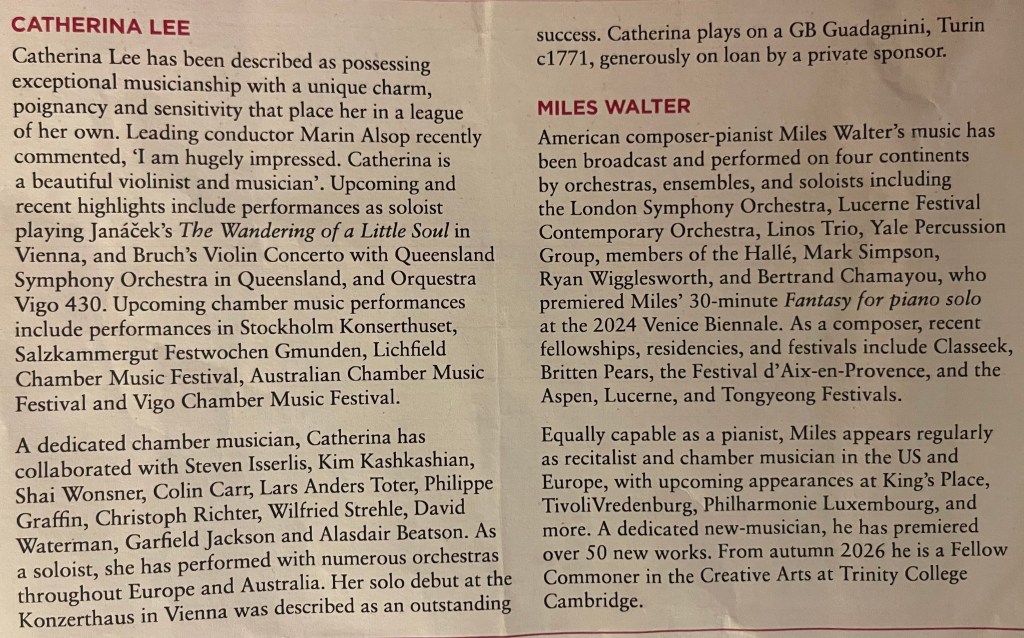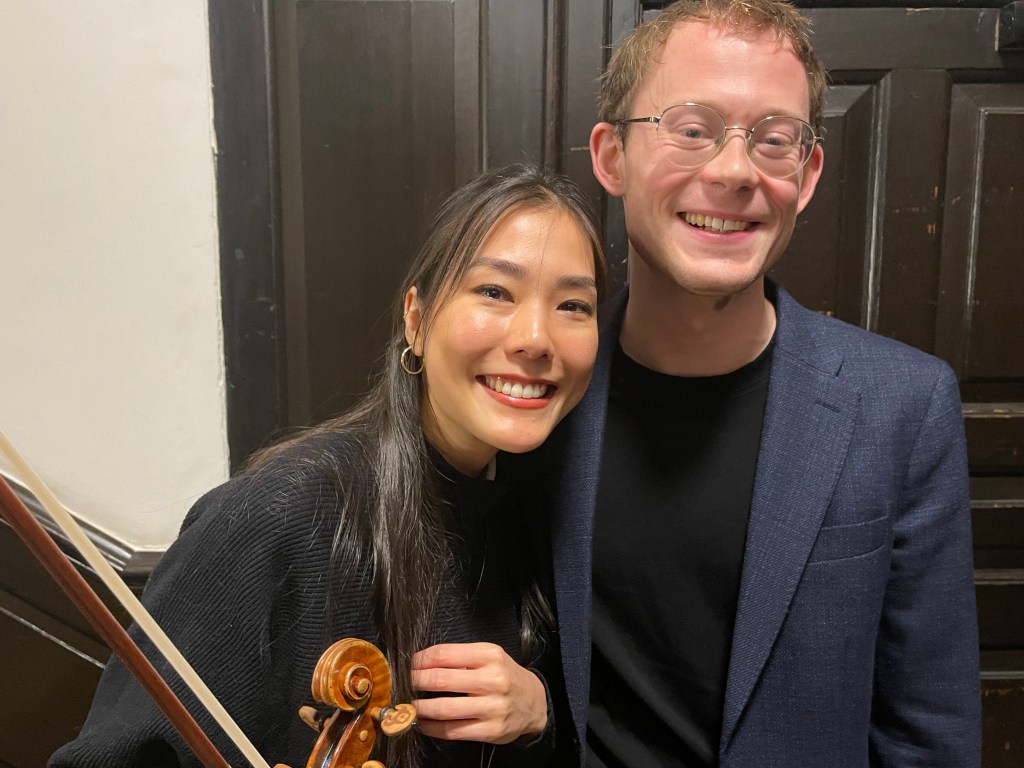
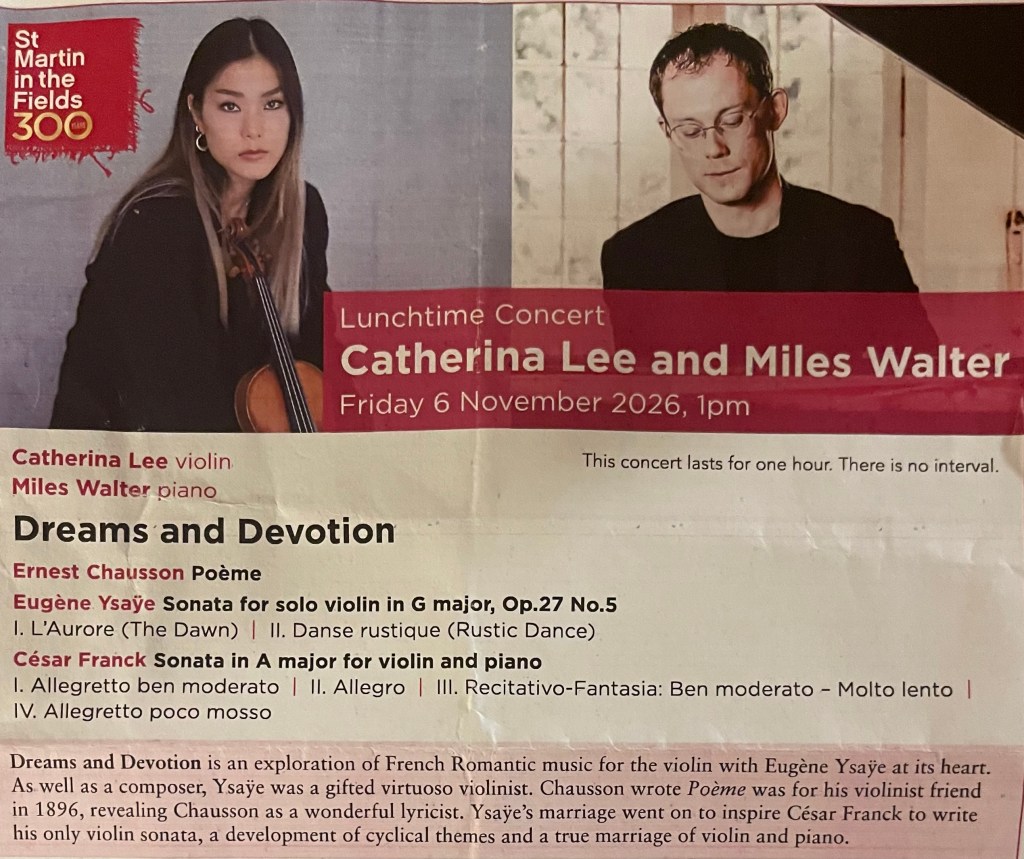
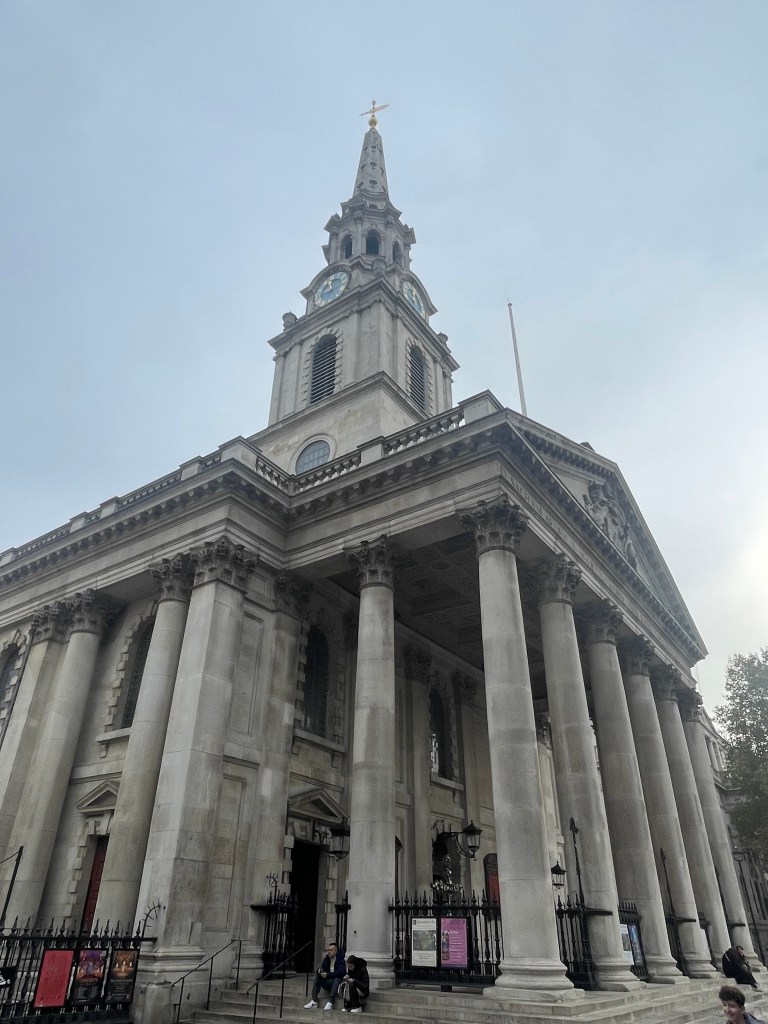
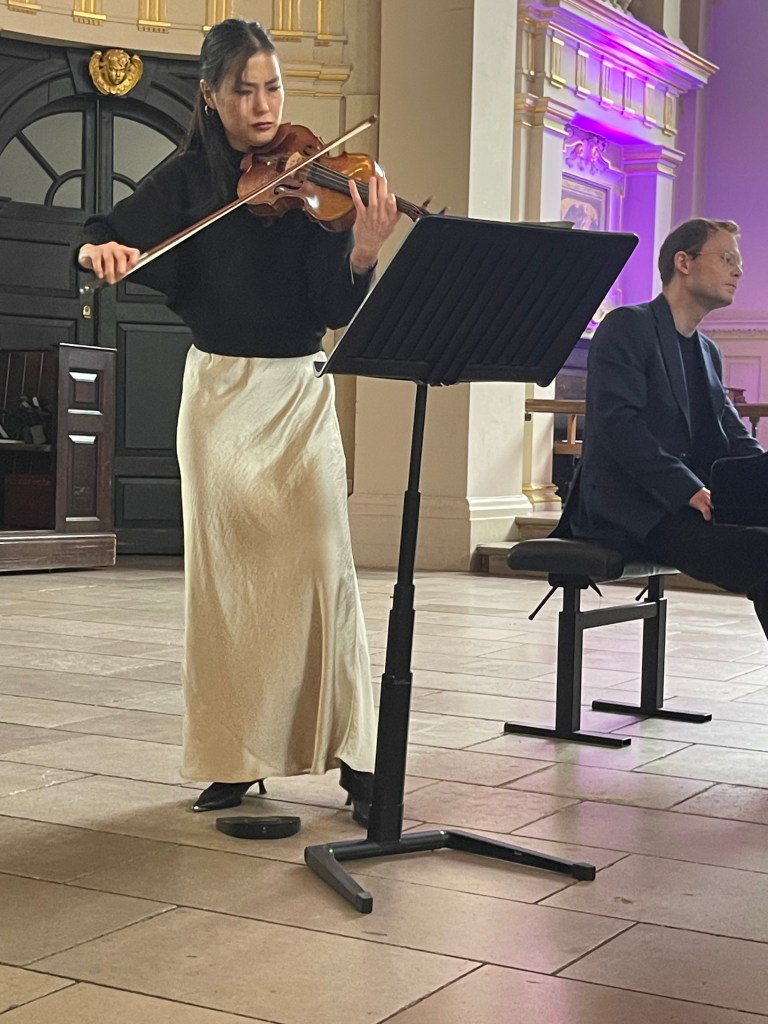
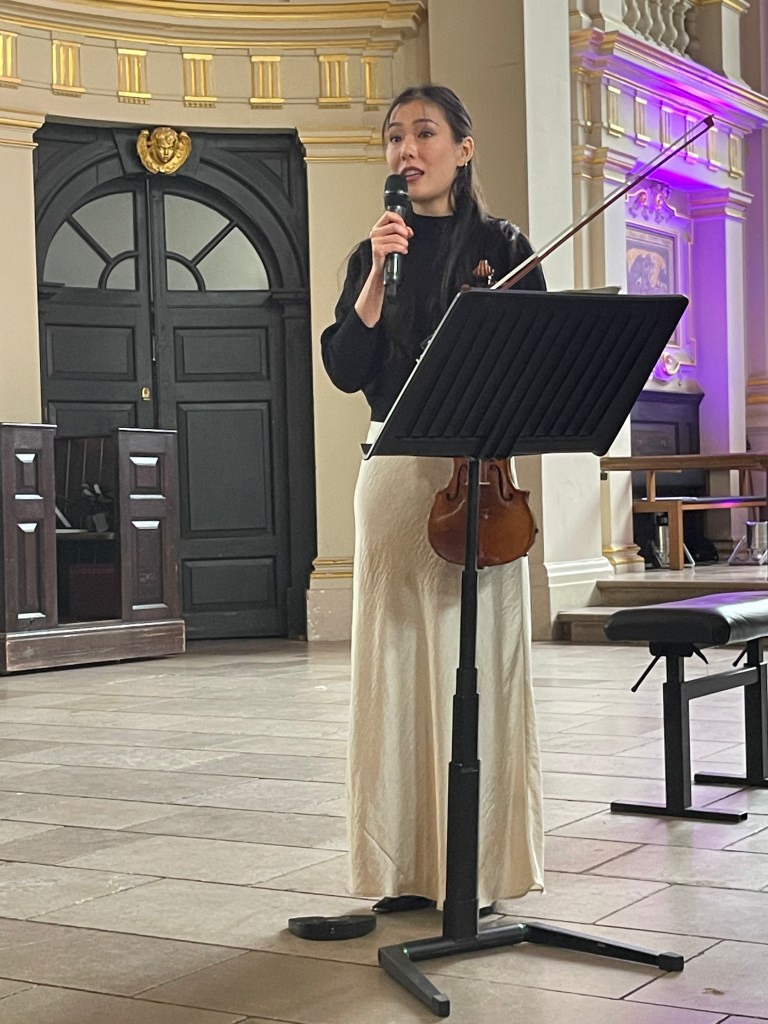
Two Lions were let loose in Trafalgar Square today as Catherina Lee and Miles Walter ignited the atmosphere of St Martin in the Fields with passionate intensity and poetic mastery. Two young artists on the crest of a wave as they were like two animals on the prowl looking at each other to see which way this great wave of music would take them.
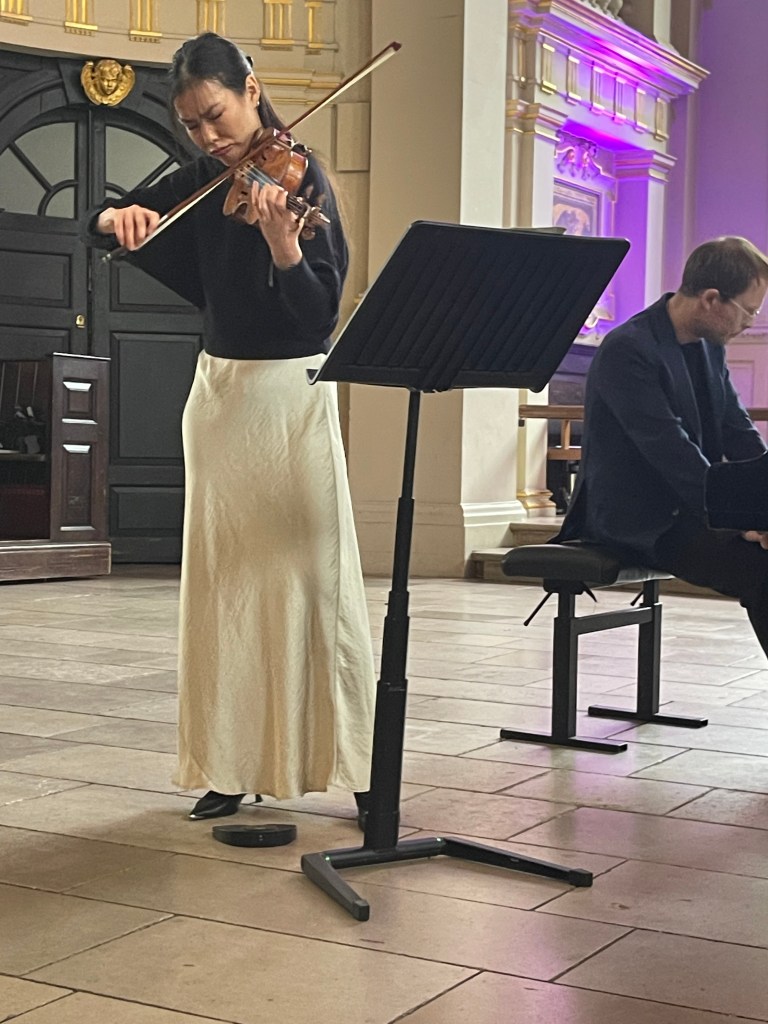
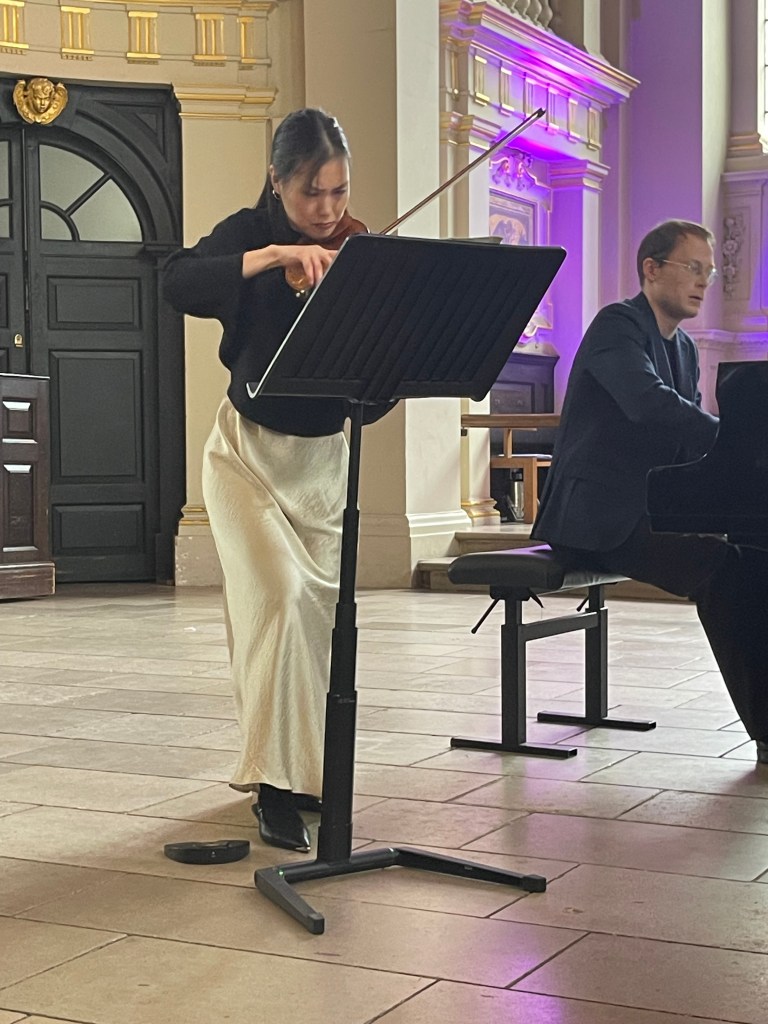
Catherina almost on her bended knees as she seemed to pull the sounds from below taking them to the heights with arched back and noble stance as the searing intensity of the sound filled this noble edifice with sounds that it has rarely heard before.
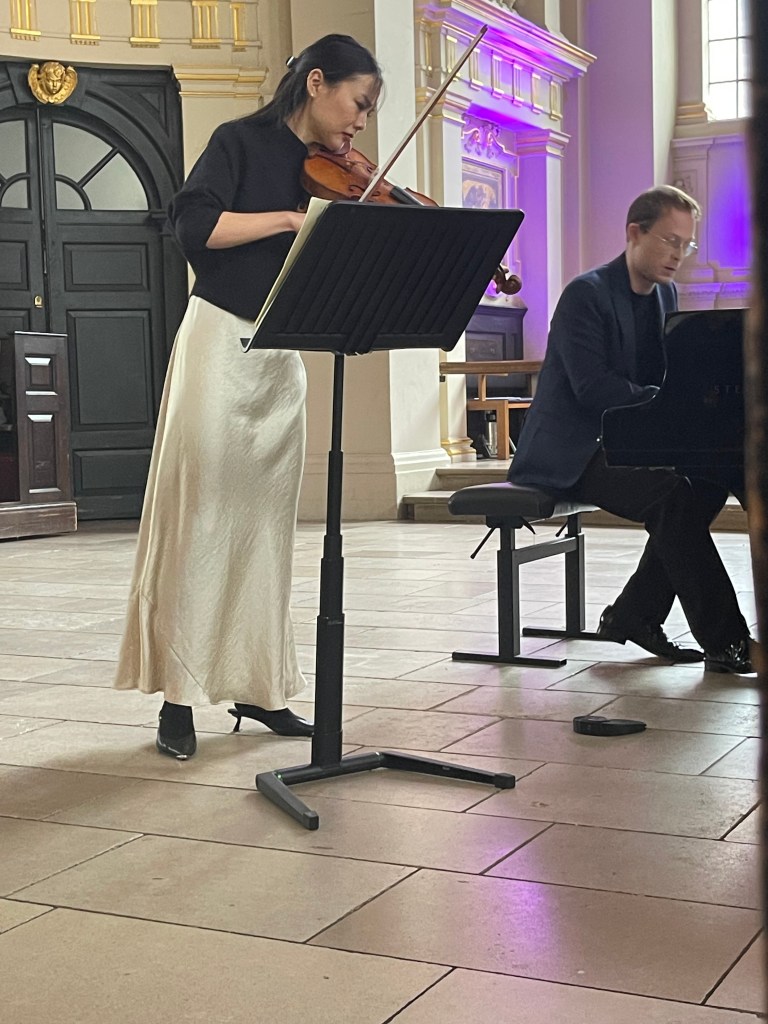
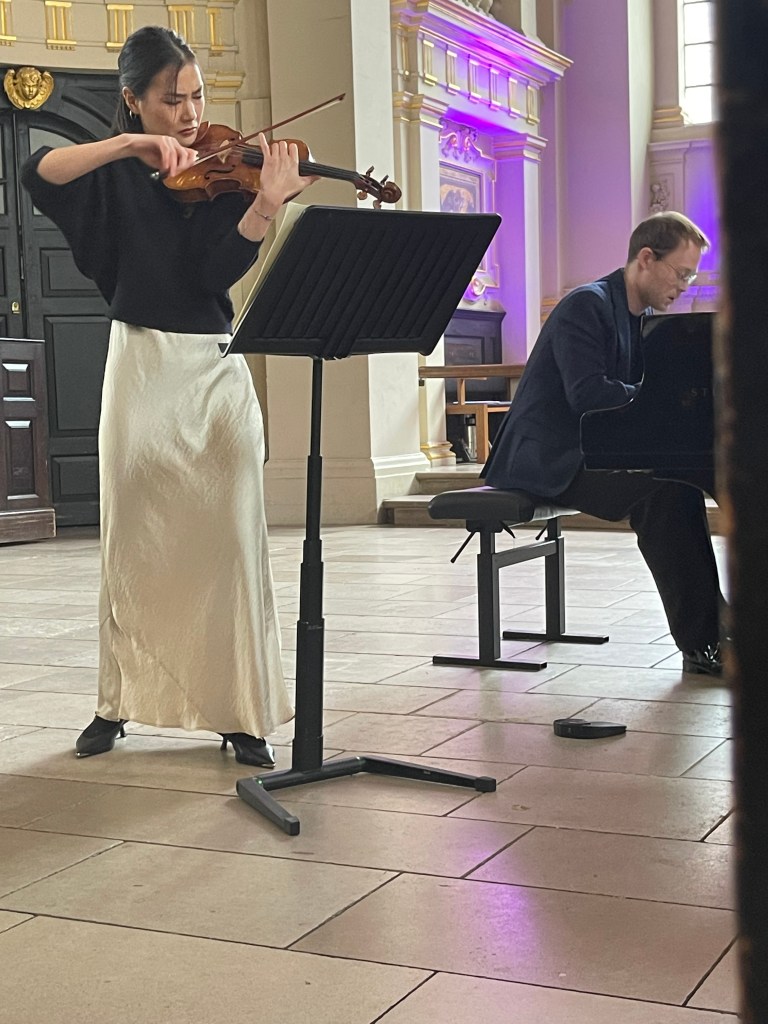
Miles, almost standing up from the piano stool as he too was swimming for his life with sounds that ranged from whispers to sumptuous rich golden sounds. Playing as one with the piano lid fully open, but there was never a moment when this Concert Grand was allowed to overpower the violin. Here were two artists listening to each other and with chameleonic mastery allowing themselves to be led into places neither had been before. The magical opening of the César Franck from Miles was immediately answered by a wave of fluidity from Catherina leading to moments of discovery together, Catherina like the water nymph Ondine relishing such exhilarating waters as she darted from one wave to another.
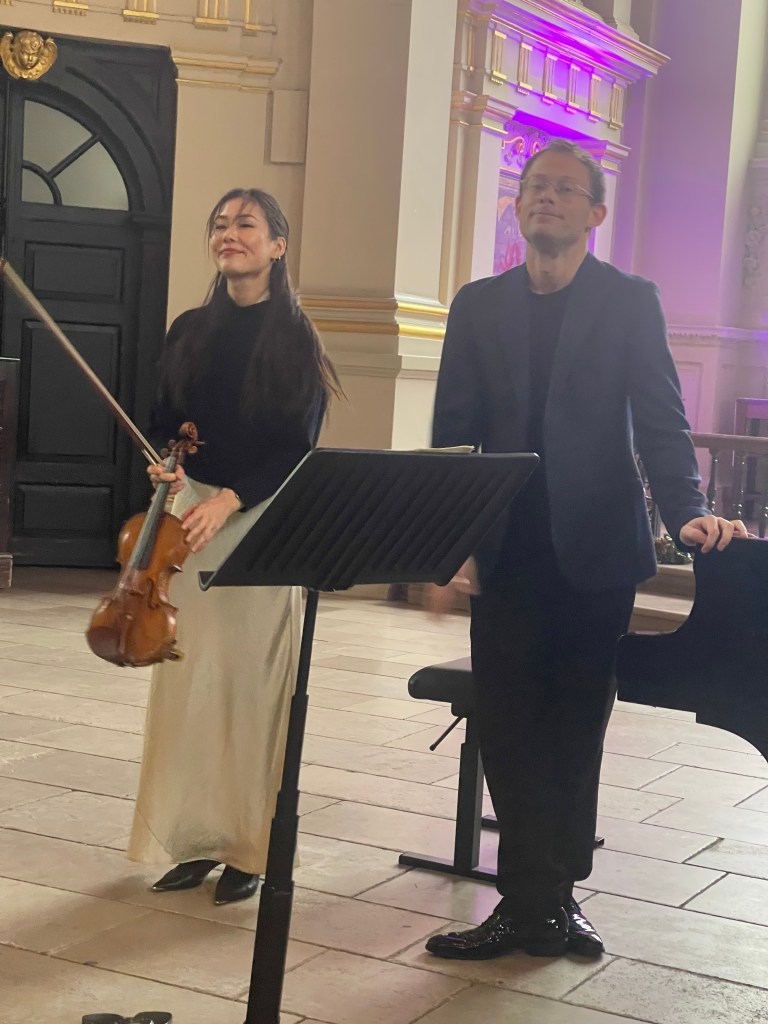
There was fantasy and passionate intensity as Catherina’s violin soared around this noble edifice with searing intensity with a pianist, who is also a composer, living and recreating with her a jewel of sumptuous beauty. Chausson is telling a story with an extraordinary palette of sounds from whispered intimate musings to outburst of passionate commitment.
It brings to mind Schlegel’s poem :Resounding through all the notes. In the earth’s colourful dream . There sounds a faint long-drawn note. For the one who listens in secret.
The whispered opening of the Ysaÿe solo sonata evoking ‘L’Aurore’ (The Dawn) with legato and staccato combined with masterly effect. A formidable technical command that never draws attention to itself but is at the service of the poetic fantasy of a great musician as she also brought sumptuous brilliance and breathtaking command to the awakening.
What better way could there be, under this extraordinary backdrop, of showing us that out of darkness comes light. The ‘Danse rustique’ was played with great clarity even stamping her foot a she relived the bucolic energy on her solo violin.
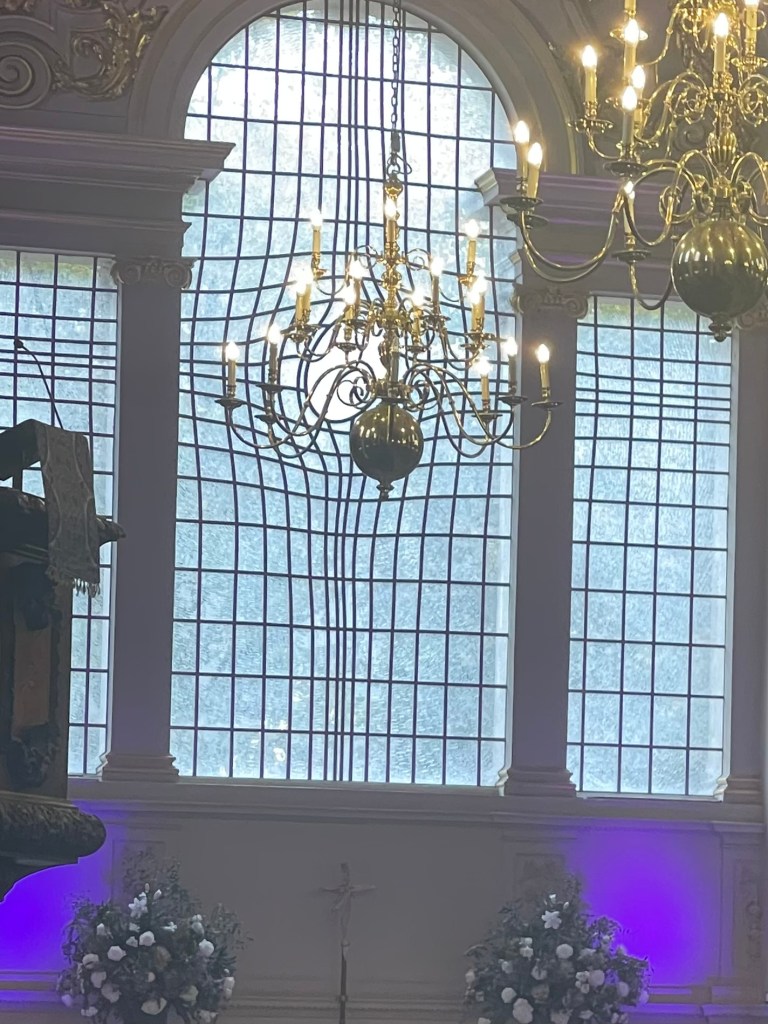
At the beginning of the César Franck Sonata Catherina immediately entered with a flowing tempo where her whole body was involved after an opening with the awakening of a dream from a pianist who is her equal partner. Menuhin commented on the mutual anticipation of the British and it is just this mutual anticipation that united an Australian and an American as they flowed and wove together streams of gold and silver strands erupting into passionate outbursts of overwhelming intensity and yearning. A pianist who could create a cushion on which the violinist could float the whispered musings of what must be the greatest wedding present ever offered from one composer to another. Brilliance and astonishing dynamic drive to the ‘Allegro’ second movement where the pianist was able to weave his way around the keys with masterly chameleonic ease as this duo ignited the atmosphere with playing of breathtaking audacity. And after such ‘sturm und drang’ a smile came to Catherina’s face as she intoned the simple pastoral beauty of the ‘Allegretto’. Shadowed by a pianist who was occasionally allowed to meet up and embrace with the Radiance and Joy of the greatest wedding gift a couple could ever receive.
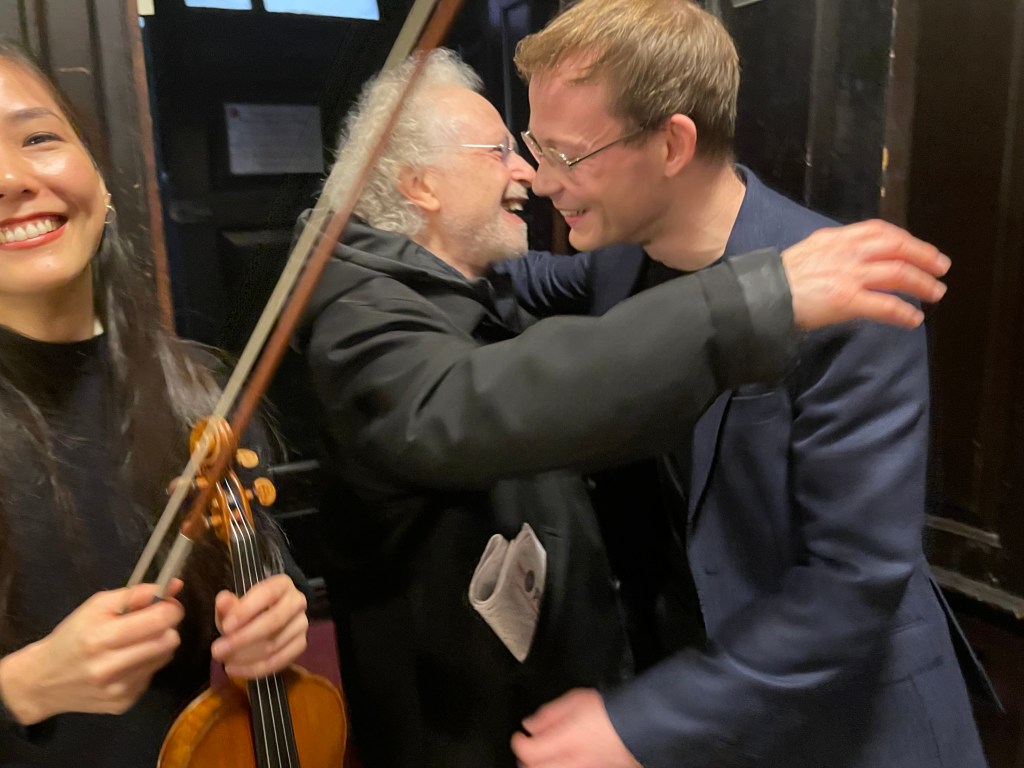
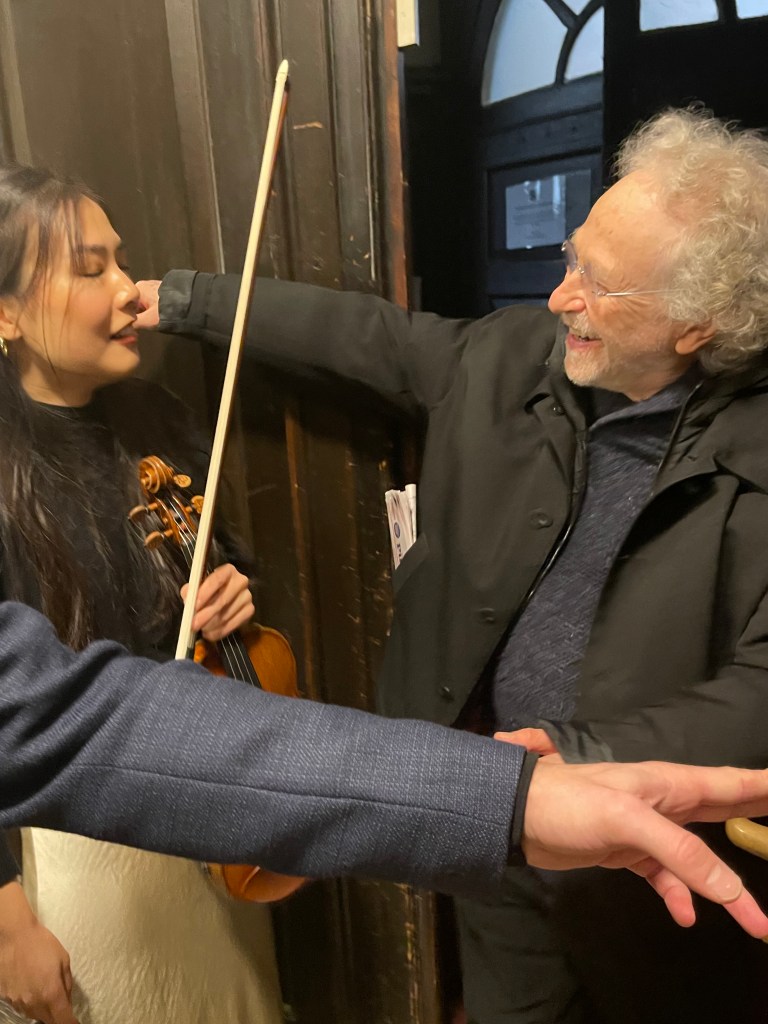
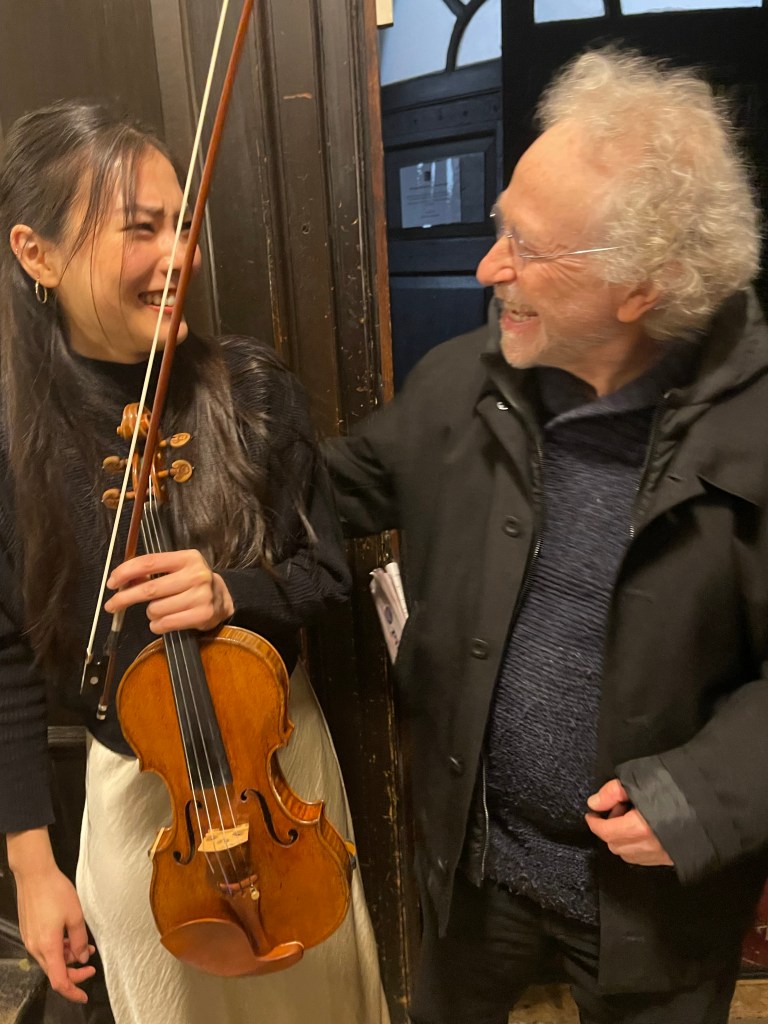
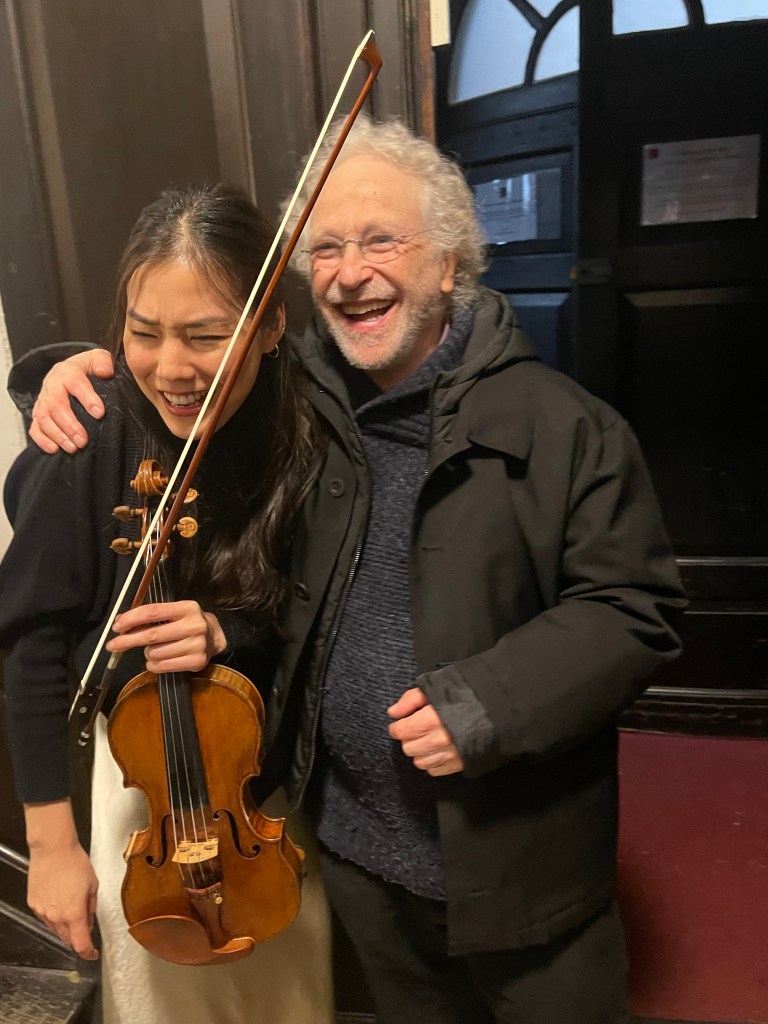
No encore was possible after a musical conversation that was so intense and exhaustive but there was great exhilaration in there presbytery with many surprise visitors visibly moved by such an outpouring of Dreams and Devotion.
A very interesting and even arresting programme of ‘Dreams and Devotion’ in which and entire world was mixed up in poetic and romantic effusions with the great Belgian violinist as the catalyst between Chausson and Franck and even Liszt and Wagner.
Ernest Chausson developed his skill and his talent slowly. At age 25, he turned away from law to pursue music under the tutelage of César Franck, producing a limited number of compositions. The Poème was written for Chausson’s violinist friend Eugène Ysaÿe in 1896, and it reveals the composer as a gifted lyricist, a rhapsodist of impassioned refinement (or refined passion), and a craftsman of security and control. Claude Debussy said, “The Poème contains Chausson’s best qualities. The freedom of its form never hinders harmonious proportion. Nothing touches [us] more…than the end of the Poème, where the music, leaving aside all description and anecdote, becomes the very feeling that inspired the emotion. These are very rare instances of the works of an artist.Poème was written in response to a request from Ysaÿe for a violin concerto . Chausson felt unequal to the task of a concerto, writing to Ysaÿe: “I hardly know where to begin with a concerto, which is a huge undertaking, the devil’s own task. But I can cope with a shorter work. It will be in very free form with several passages in which the violin plays It was commenced in April 1896 and finished on 29 June, while Chausson was holidaying in Florence, Italy.Chausson initially called it Le Chant de l’amour triomphant, then changed it to Poème symphonique, and finally to simply Poème. The first two rejected titles are crossed out on the extant manuscripts.
The original title came from the 1881 romantic novella, Le Chant de l’amour triomphant ‘ ; Песнь торжествующей любви) by the Russian writer Ivan Turgenev , who lived on the estate of the famed mezzo-soprano Pauline Viardot and her husband near Paris; all three were acquaintances of Chausson’s. The Viardots’ daughter Marianne was engaged for some time to Gabriel Fauré, but broke it off and instead married Alphonse Duvernoy . Turgenev’s novella seems to mirror this set of relationships, and it may be that Chausson initially attempted to portray it in music.
Ysaÿe’s set of Six Sonatas for solo violin, Op. 27, was written in July 1923 with each sonata dedicated to one of Ysaÿe’s contemporary violinists. Mathieu Crickboom (1871–1947), dedicatee of the Sonata No 5 in G major, was the second violinist in the Ysaÿe Quartet before forming a quartet of his own in 1897, and was often thought to be Ysaÿe’s favourite pupil. Chausson dedicated his String Quartet to him. Crickboom became a professor first in Liège and then in Brussels, being best known for his teaching method Technique of the violin, containing pieces by the masters as well as some of his own.
César Franck’s Violin Sonata in A was written in 1886, when he was 63, as a wedding present for the 28-year-old violinist Eugène Ysaÿe. Twenty-eight years earlier, in 1858, Franck had promised a violin sonata for Cosima von Bülow,the daughter of Liszt and wife of Hans von Bülow and Richard Wagner This never appeared and whatever work Franck had done on that piece was put aside, and eventually ended up in the sonata he wrote for Ysaÿe in 1886. Franck was not present when Ysaÿe married, but on the morning of the wedding, on 26 September 1886 in Arlon, their mutual friend Charles Bordes presented the work to Ysaÿe and his bride Louise Bourdeau de Courtrai. After a hurried rehearsal, Ysaÿe and Bordes’ sister-in-law, the pianist Marie-Léontine Bordes-Pène played the Sonata to the other wedding guests.