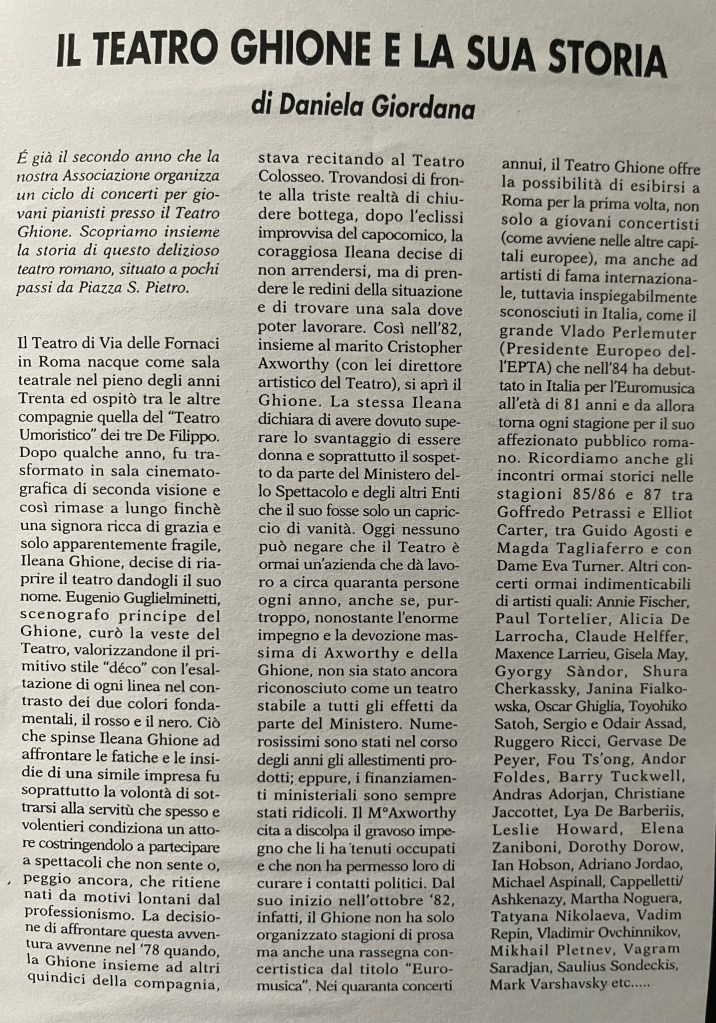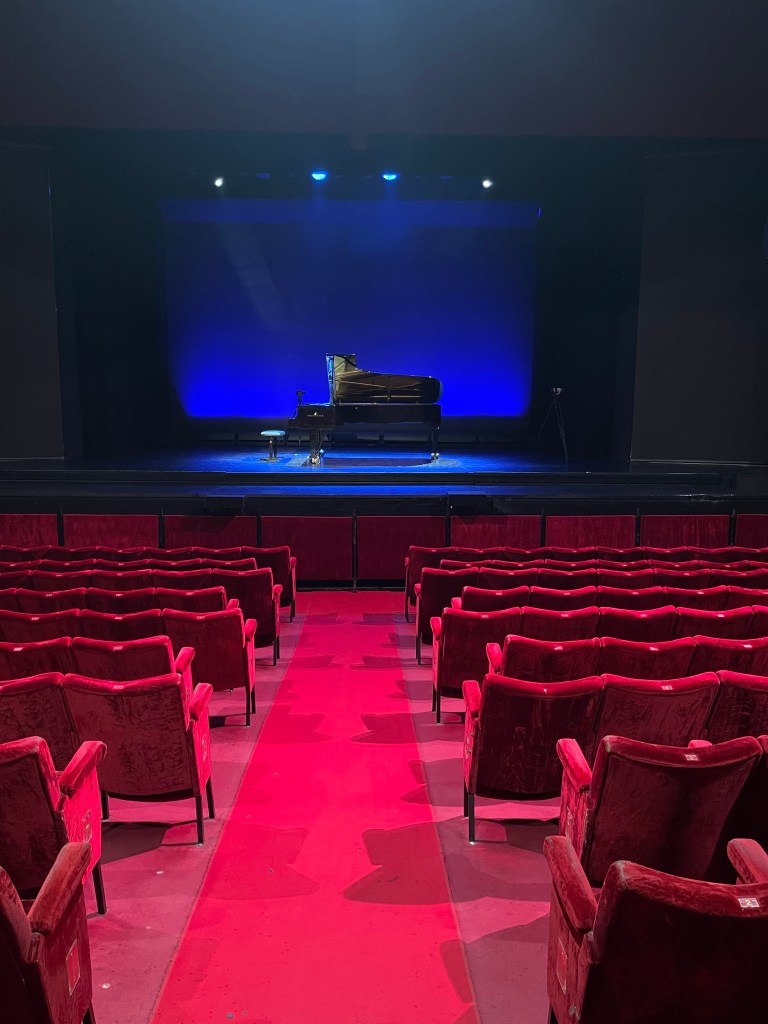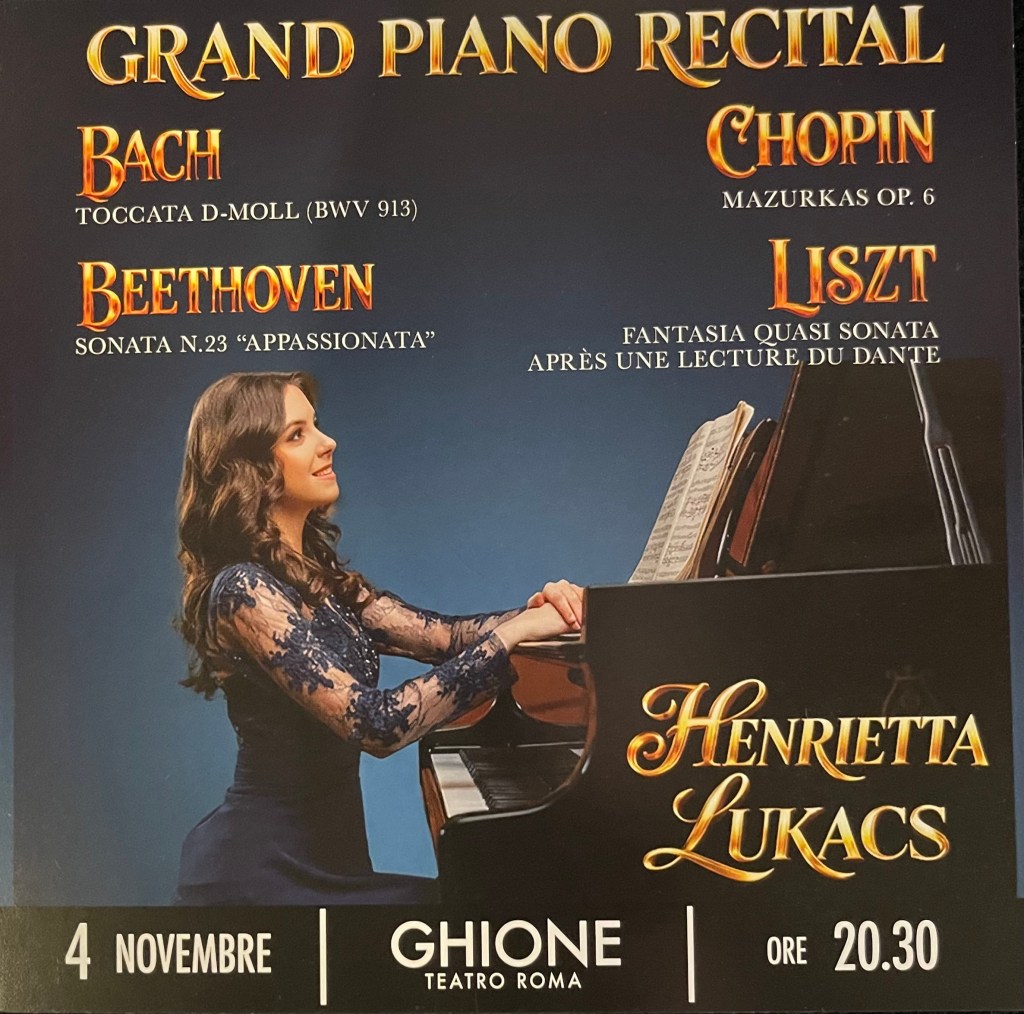
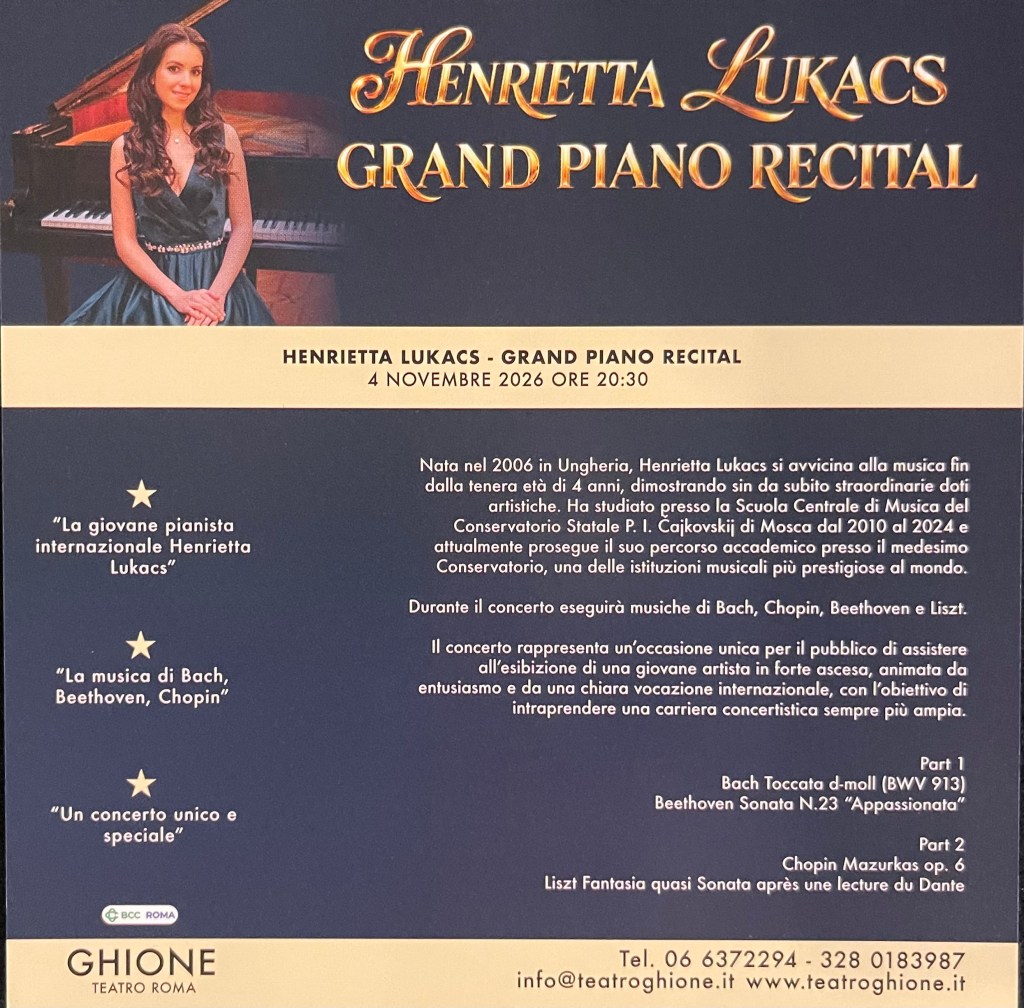
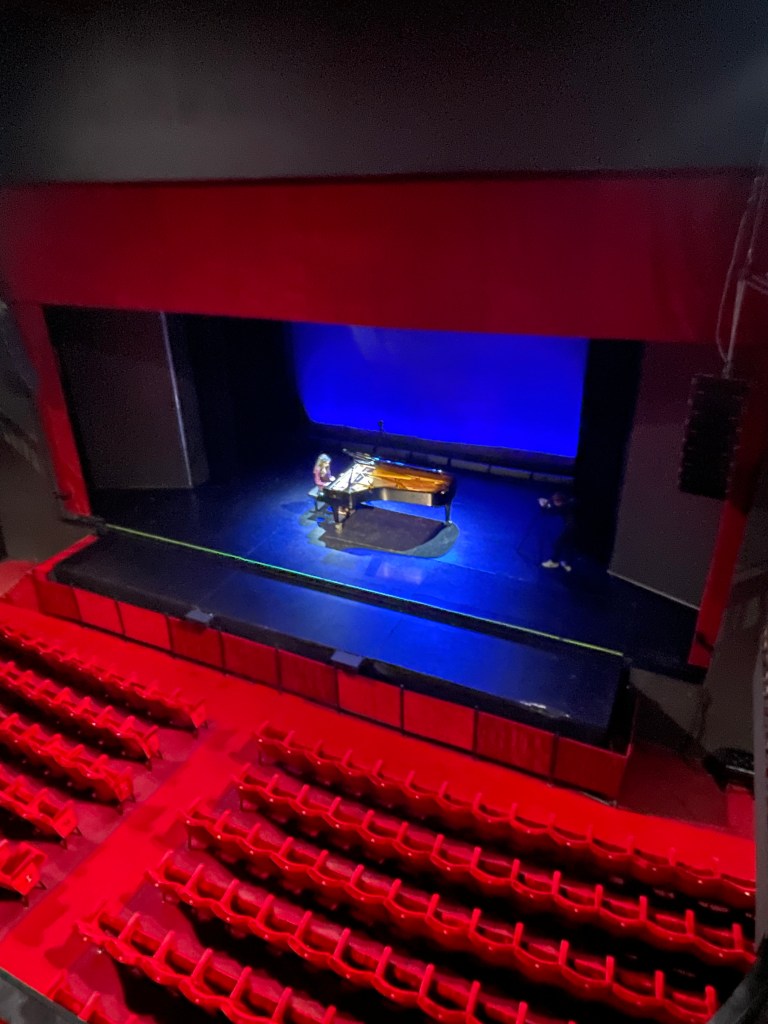
Today great music returned to the Ghione Theatre.
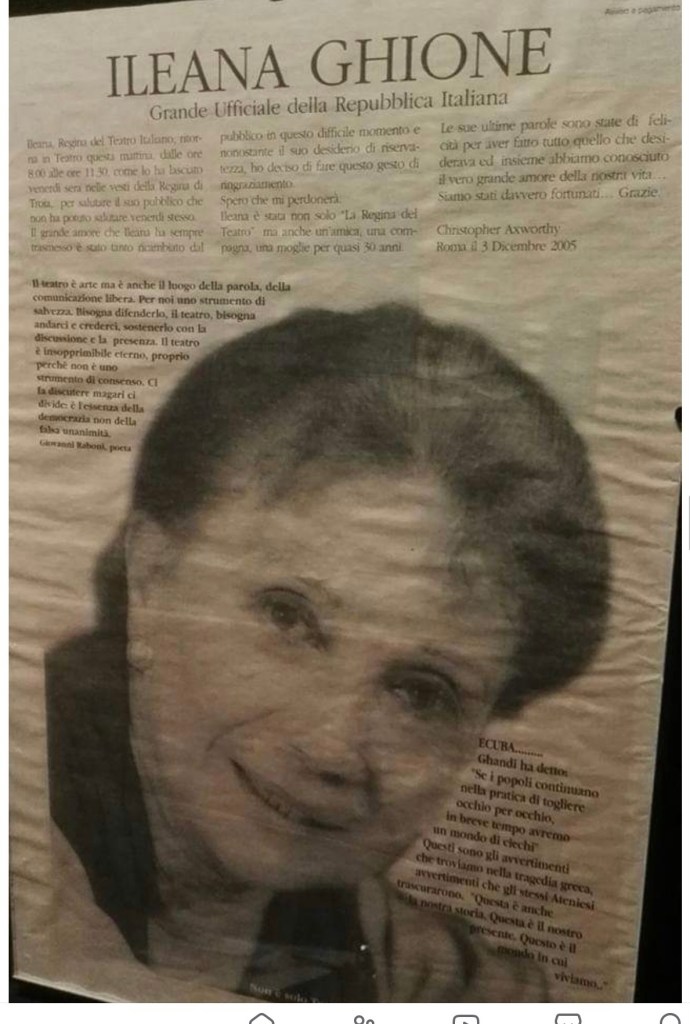
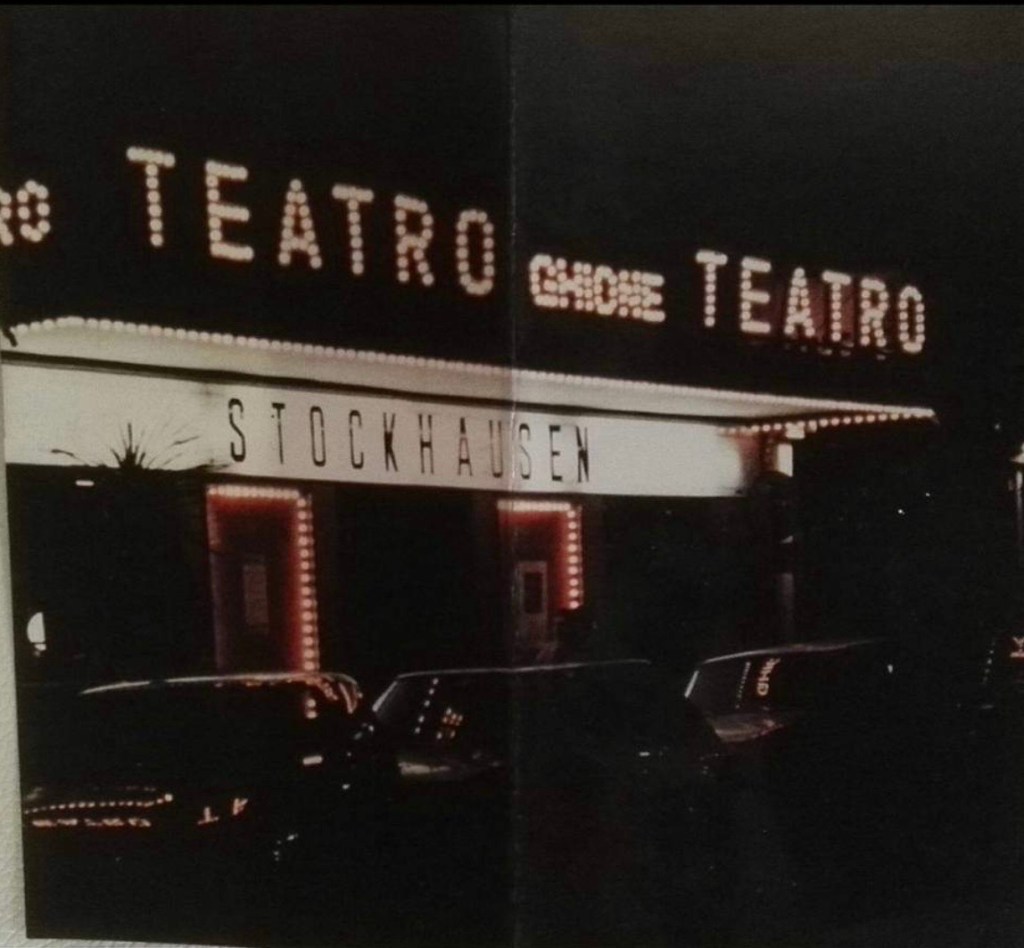
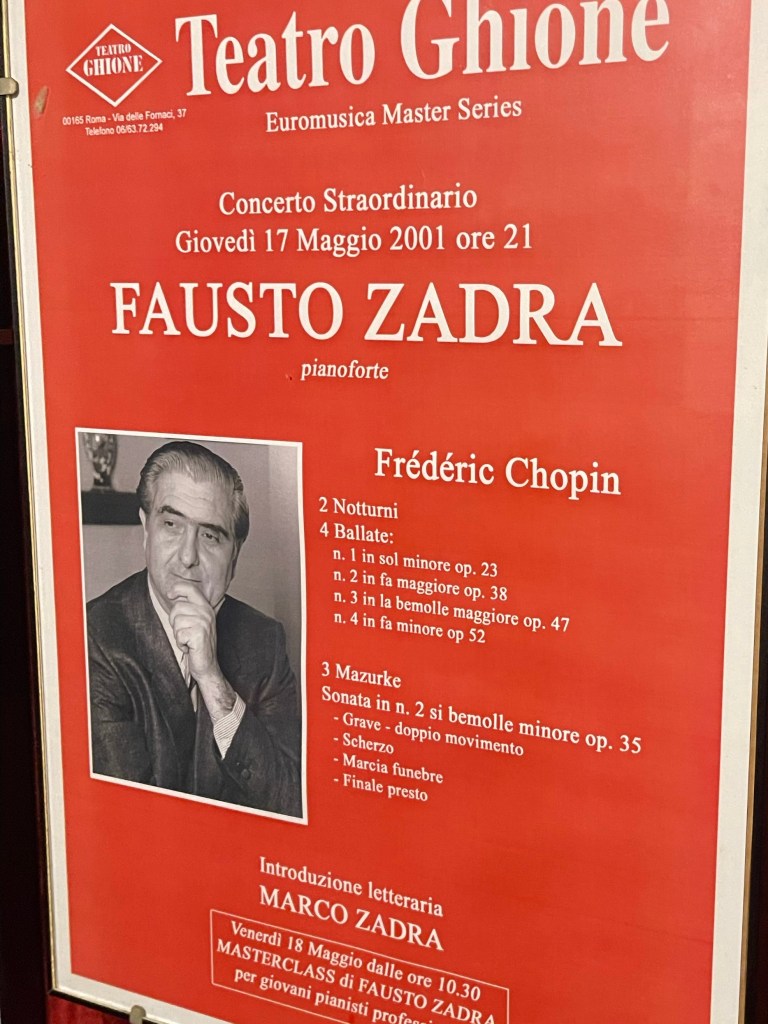
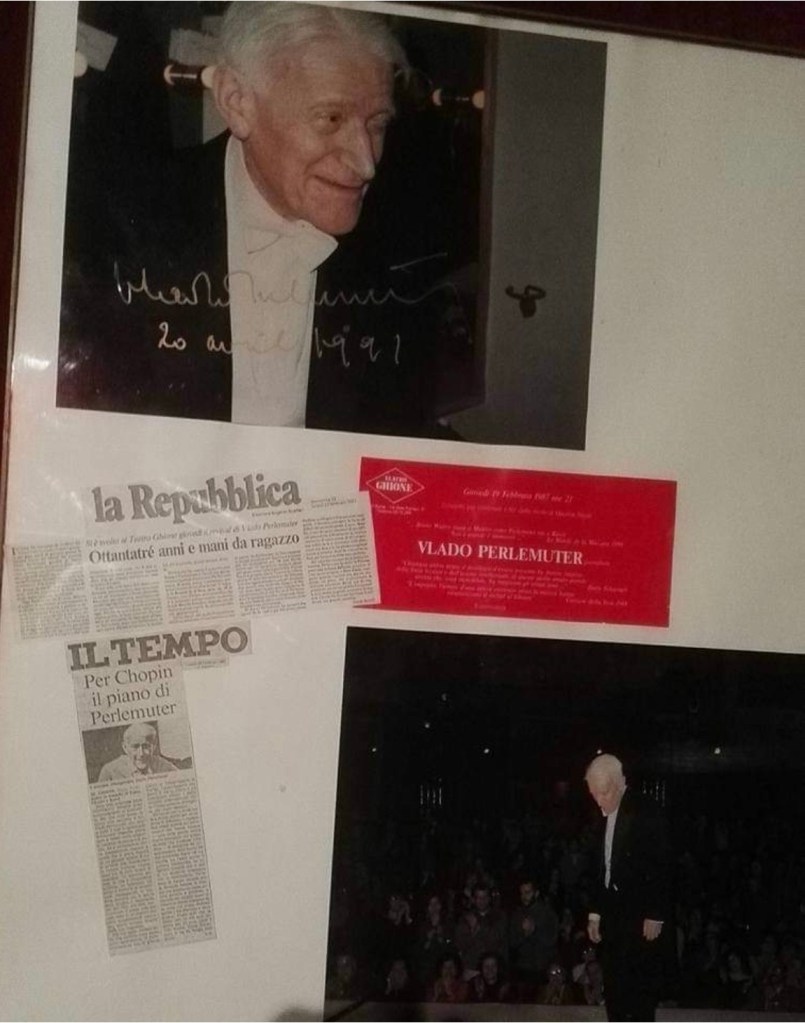
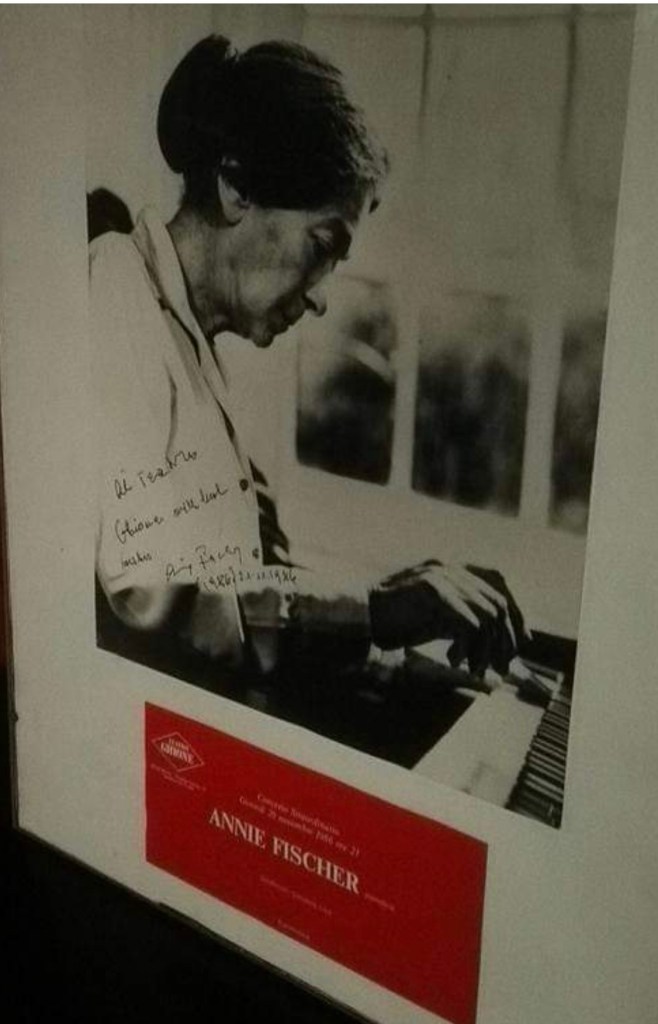
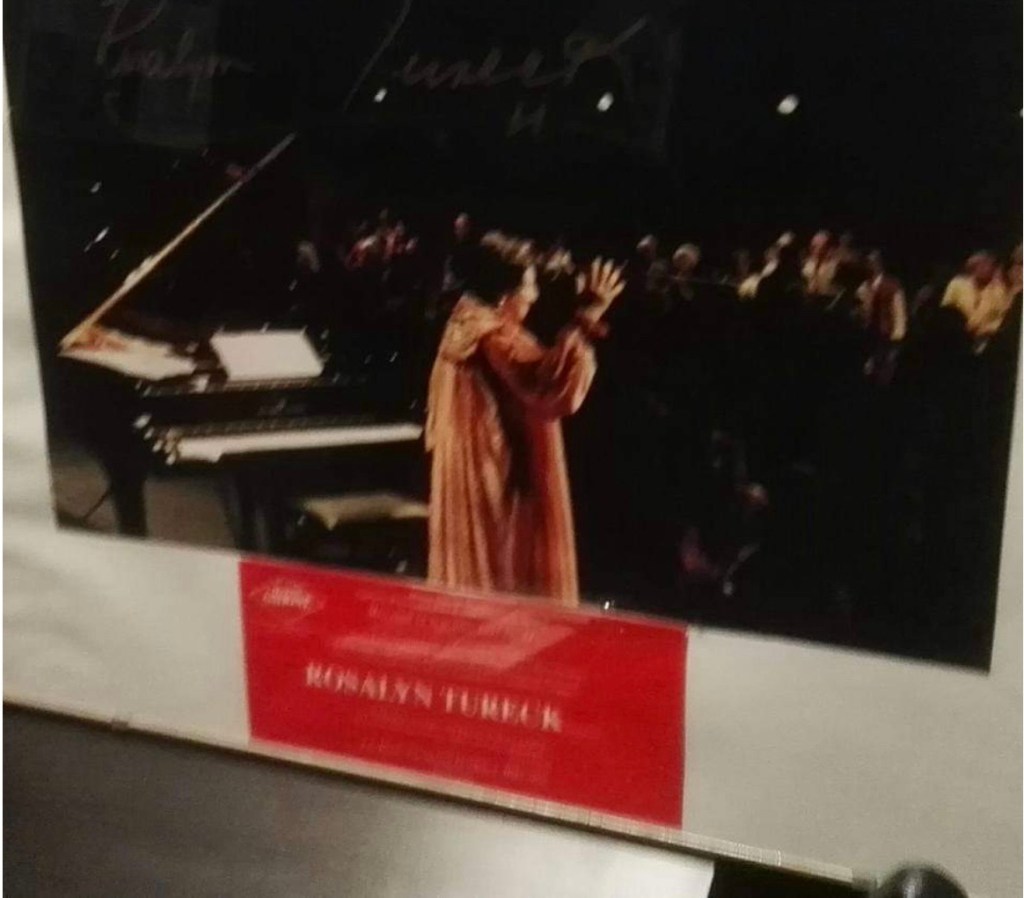
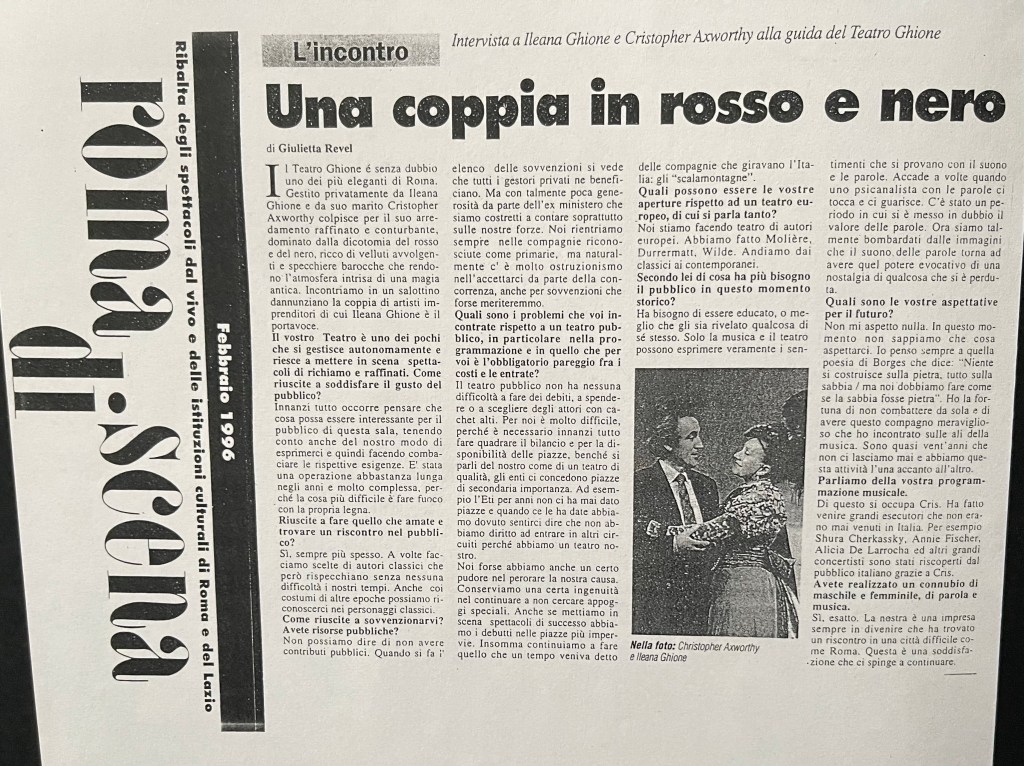
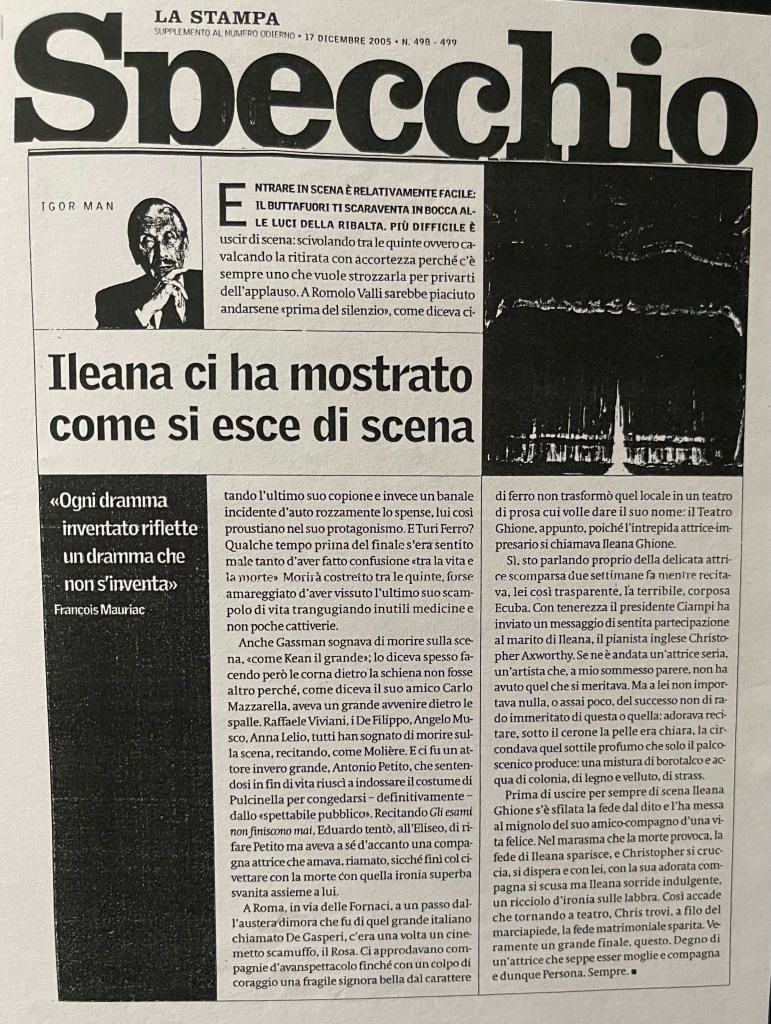
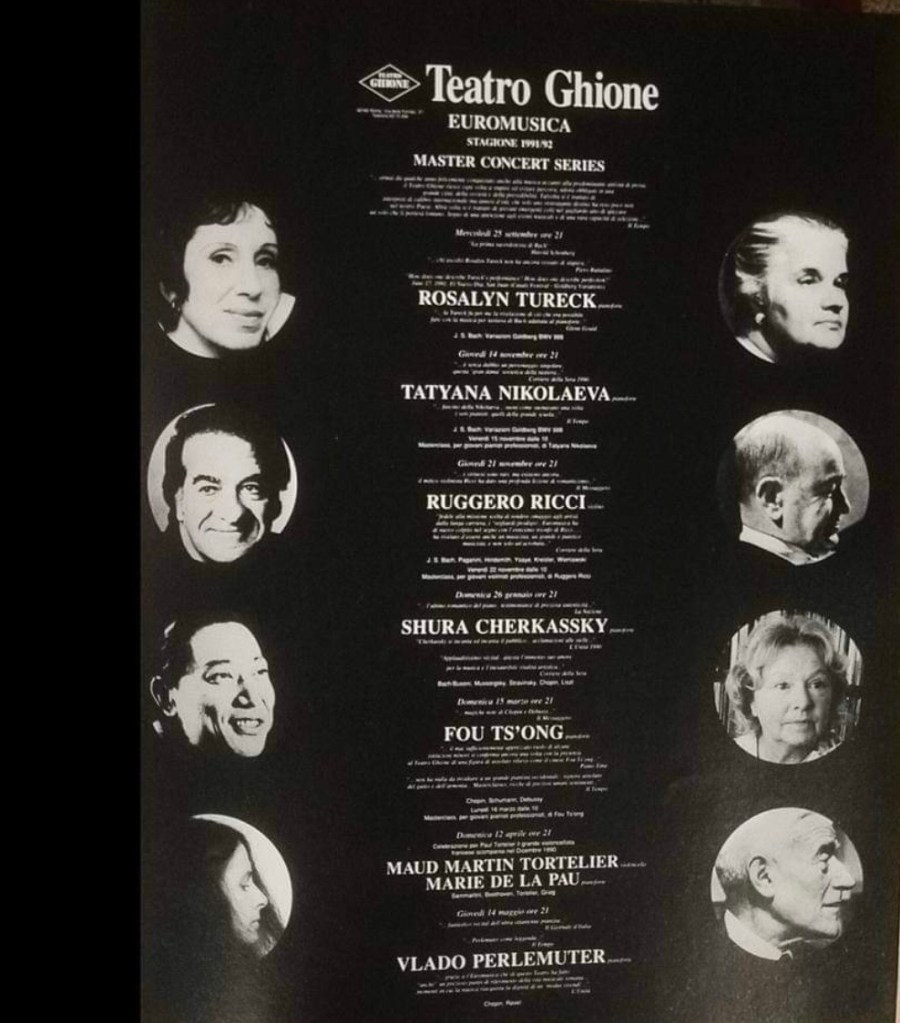
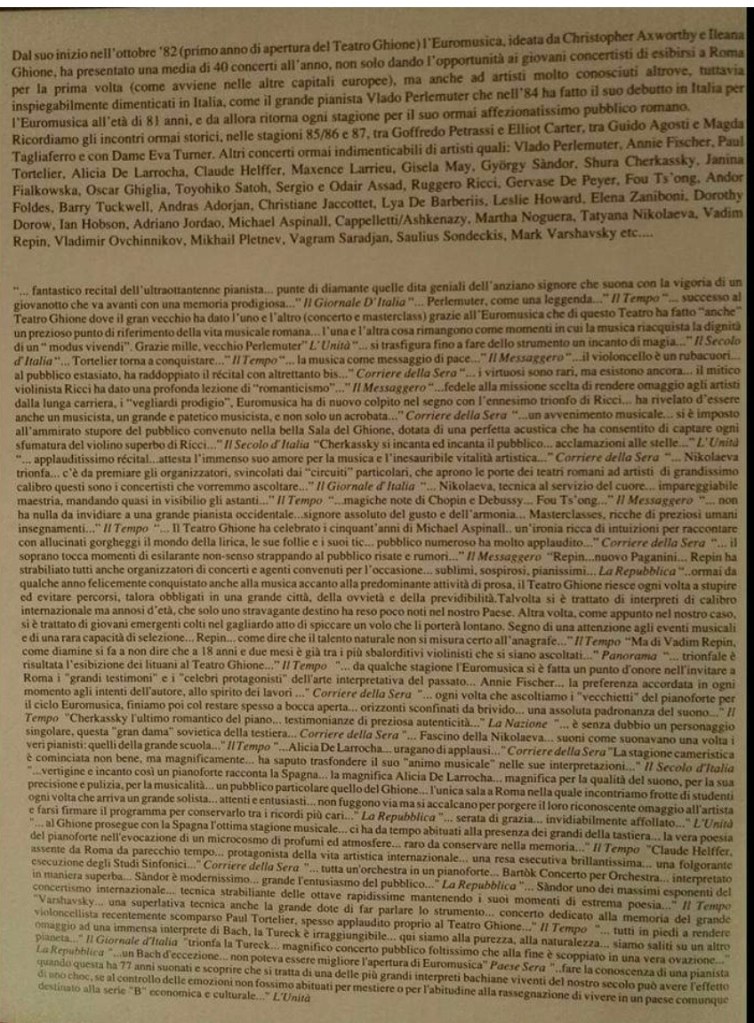
And as this young lady opened with Bach the thought of Tureck and Nikolaeva came to mind, as their shadows are still present on the stage of the theatre that was to claim my wife, Ileana Ghione, as she intoned the terrible exhortations of Hecuba on 2nd December 2005. Fausto Zadra, a few years earlier, making his much awaited return to Rome on17th May 200, was called by the angels as he intoned his Chopin D flat nocturne op 27 n. 2.
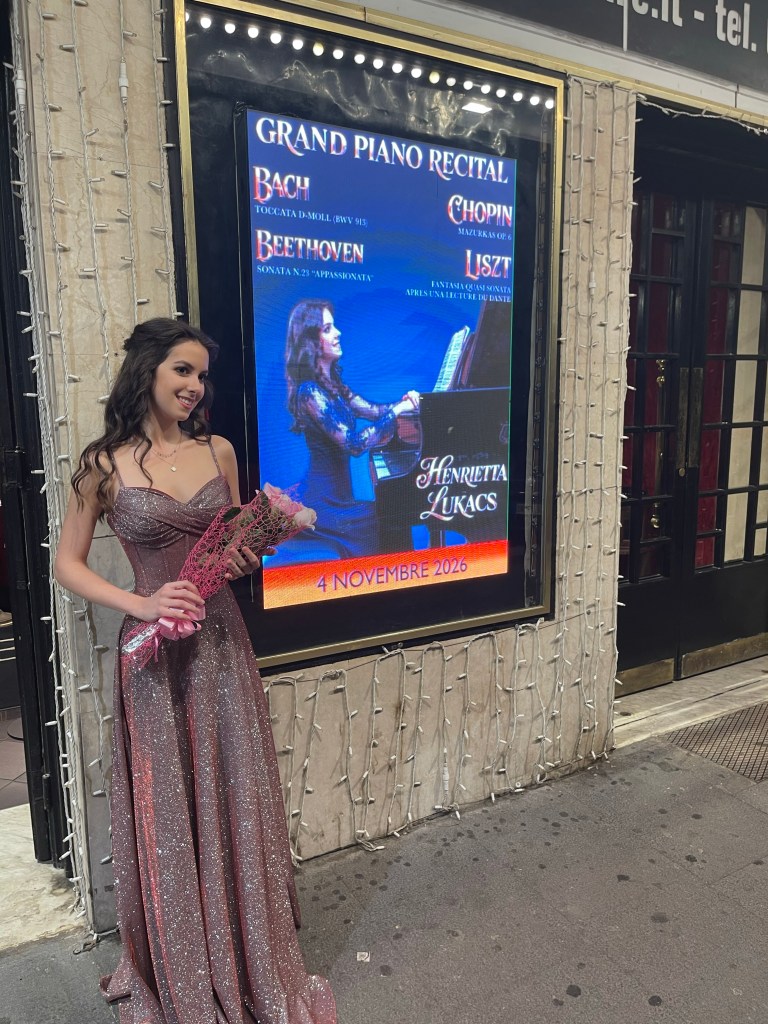
And now a young Russian pianist of Hungarian parentage had come to make her debut at the start of what promises to be a long and productive career in music.
‘ All the world is a stage and the men and women merely players ‘ states the great Poet William Shakespeare. And as the wheel turns the same stage is ready to greet them with open arms ready to share their message of hope, fear, beauty and communication with a world full of rhetoric and politics starved of the poetic fantasy of true story telling.
And it was indeed with the universal genius of Bach that this twenty year old artist began her journey. One that was to include the personal revolution of Beethoven with his ‘Appassionata’ Sonata and the revelation of Dante from the pen of her fellow Hungarian Franz Liszt . All wrapped up in just a few bars with four of Chopin’s ‘canons covered in flowers ‘ as Schumann was to describe the 59 Mazurkas, or miniature tone poems that the innovative genius of the piano was to bequeath the world.
The Toccata in D minor, BWV 913 is a keyboard piece composed by Johann Sebastian Bach around 1708 and was first published in 1801. The seven Toccatas were composed largely during the period when he served at the Weimar court (1708-17), although some may be dated back to the years of Arnstadt or Mühlhausen. Born as a very free form of improvised invention and bravura it gradually took form with and introductory Prelude. a secondary section in the style of an ‘Air’ followed by a first Fugato, then a new improvised recitative episode leading to the virtuosistic Toccata. The idea of inserting an ‘Air’ between the introduction and first episode was probably inspired by Buxtehude and George Muffat; another characteristic is the double fugue (with two united subjects), a form that the composer was no longer to use in his keyboard works.
The Toccata in D minor BWV 913 dates back to the years between 1705 and 1708. It certainly enjoyed considerable prestige within the circle of Bach’s students since it was handed down to us in a number of copies, one of which reported had the honour of being in the first of Bach’s harpsichord-keyboard editions (Hoffmeister und Kühnel, Leipzig 1801).
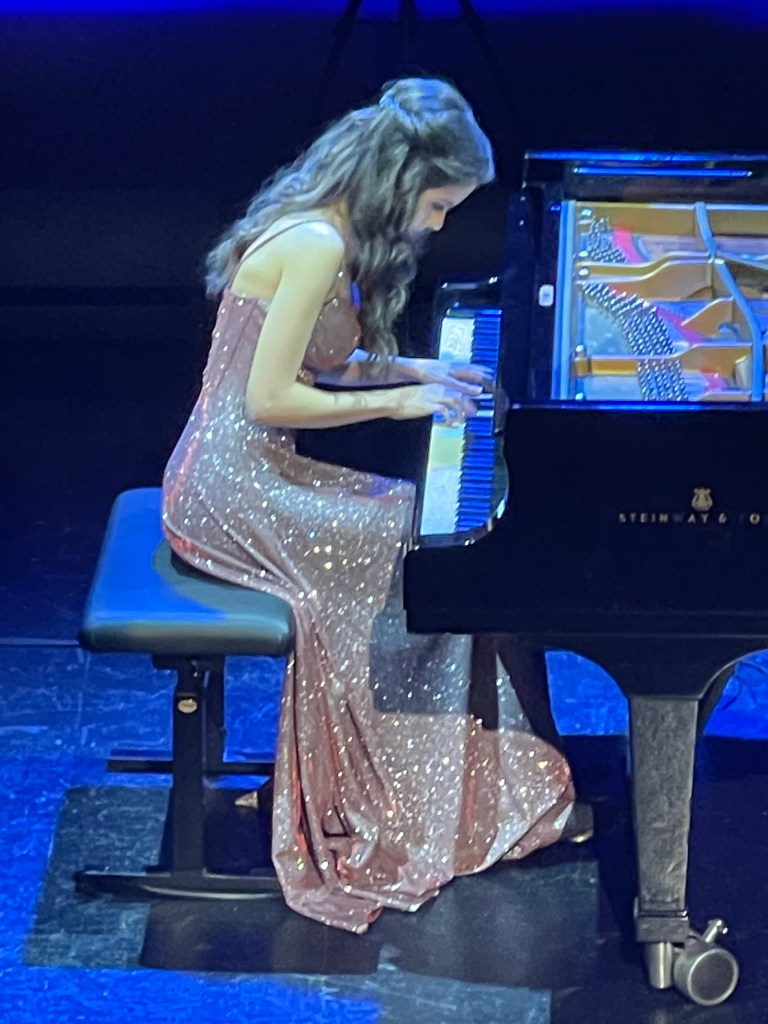
Henrietta immediately demonstrated a rhythmic energy and fantasy with playing of style, intelligence and a refined palette of sounds. Playing of authority and aristocratic good taste as Bach’s fantasy was ignited with mastery and a sense of improvisation on a voyage of discovery always of radiance and beauty. A Toccata that took wing with a dynamic rhythmic drive of remarkable control and clarity as her fingers were able to dig deep into the keys and give an architectural shape to this early work of Bach.
And after Bach ,Beethoven as this young lady demonstrated her remarkable musicianly credential intoning the mysterious and threatening opening notes of Beethoven’s ‘ Appassionata’ Sonata op 57.
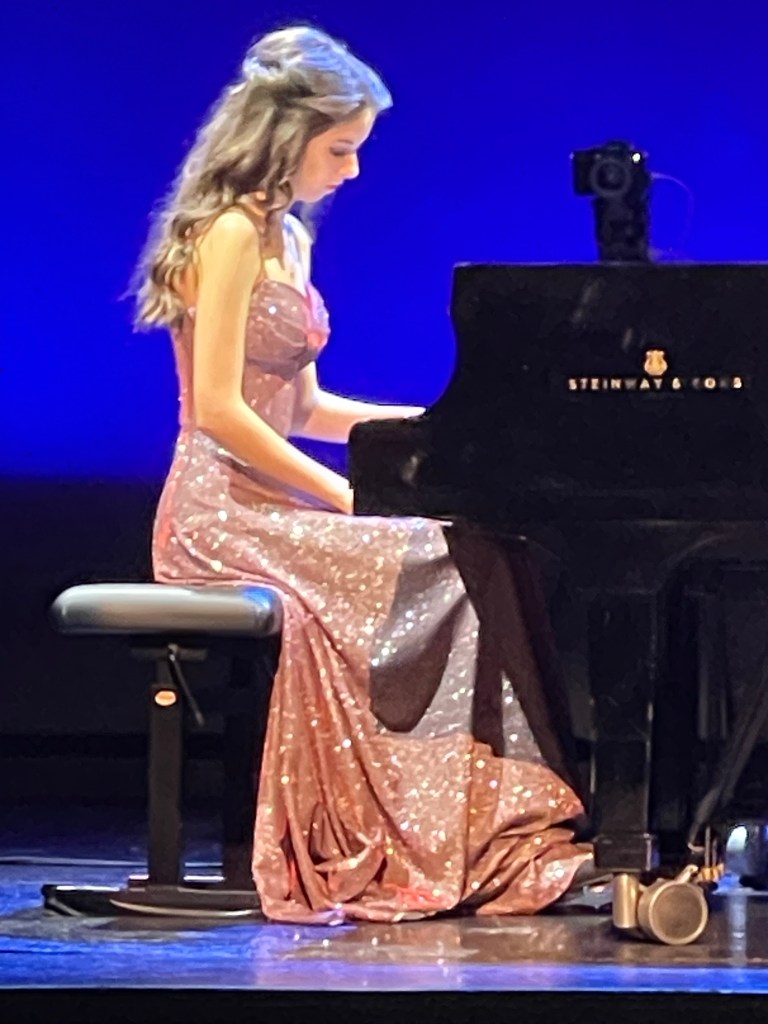
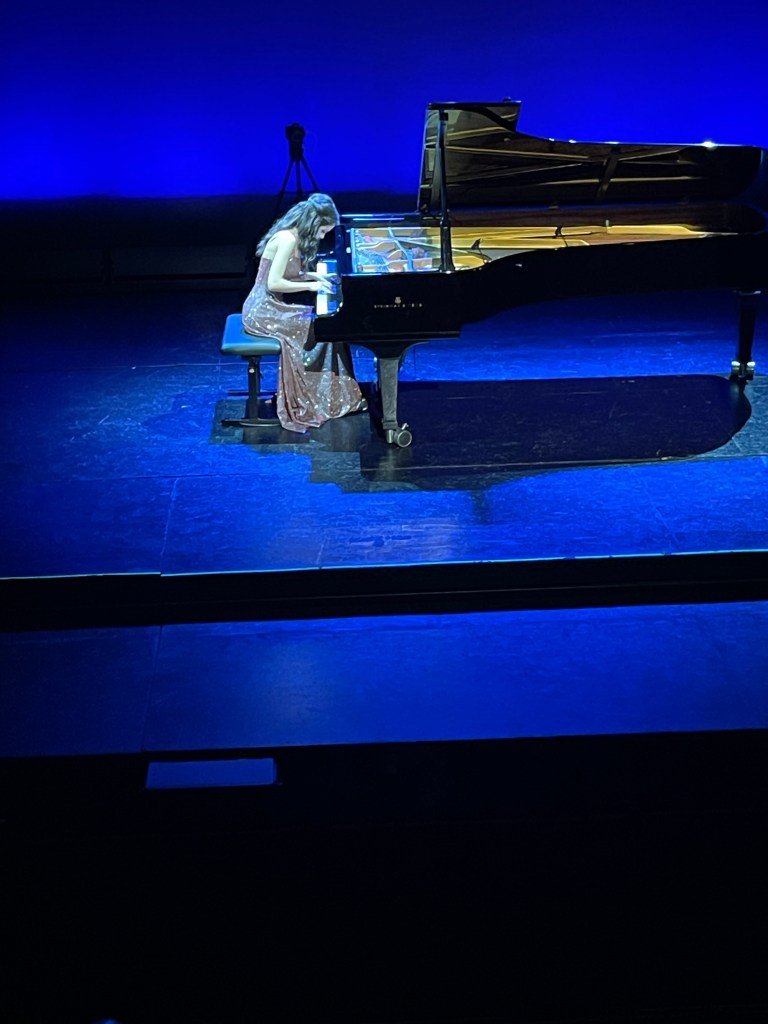
Next to the Moonlight and the Waldstein Sonatas, the Appassionata is no doubt the most celebrated of Beethoven’s piano sonatas and marks a new high point in the composer’s piano oeuvre. Even Lenin said of them that “Such miraculous works can only be made by man.”
Curiously, the nickname Appassionata appeared for the first time in 1838 in a transcription of the sonata for piano four-hands published by the Cranz Verlag in Hamburg and is nowadays inseparably connected with the work.Beethoven’s autograph manuscript of the sonata though has “La Pasionata” written on the cover, in Beethoven’s hand, and it fits splendidly with the dramatic contrasts of the first movement, the solemnity and inwardness of the second and the demonic passion of the third.
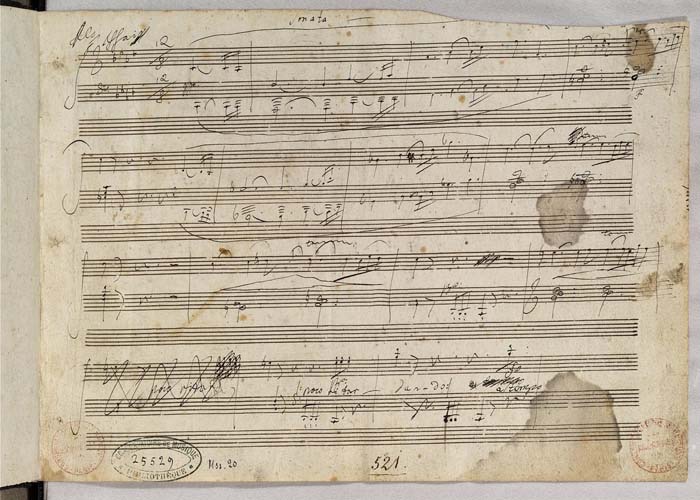
Henrietta opened with a whispered authority and great sense of style ,immediately immersing us in Beethoven’s tempestuous world with fearless abandon and dynamic drive. Henrietta has quite rightly said that ‘music is in the silences between the notes’ and nowhere more is that apparent than in this first movement of Beethoven’s tempestuous ‘Appassionata’. She shaped the opening with great style playing Beethoven’s virtuosistic outburst with one hand as he asks in the score. Beethoven is not play safe music but there is an inherent struggle that is evident from Beethoven’s very precise notation. It was a pity that she tried to round off the trill ending of the opening phrases, because played strictly in time makes the silences even more terrifying. But the movement moved continually forward with the expansive second subject played with sumptuous sounds before bursting into another of Beethoven’s tempestuous rages. Beethoven was also very particular about the pedal having inherited from his mentor Haydn a poetical use of long held pedal effects. It was here that Henrietta preferred a cleaner pedal loosing an effect that makes the return of the four note figure ( like the opening of the fifth symphony) even more menacing. The ‘Andante’ is also marked ‘con moto’ and was a little too slow for the opening of a procession even though played with string quartet fullness. The variations that followed, though, she allowed to flow with fluidity as the deep bass notes of the first variation were given great prominence. It contrasted with the mellifluous beauty of the second and the scintillating outpouring of the third, and she brought great drama to Beethovens’s extraordinary interruption at the end of this movement, as the ‘Allegro ma non troppo’ took wing with dynamic drive and a relentless forward motion. Playing of great architectural shape interrupted only by a whispered stream of notes that Henrietta played with remarkable control before giving great menace to the bass motif ( similar to the opening ), that signalled the tempestuous race to the end. A coda played not only ‘Presto’ but with scintillating passionated intensity brought this revolutionary work to an exhilarating end.
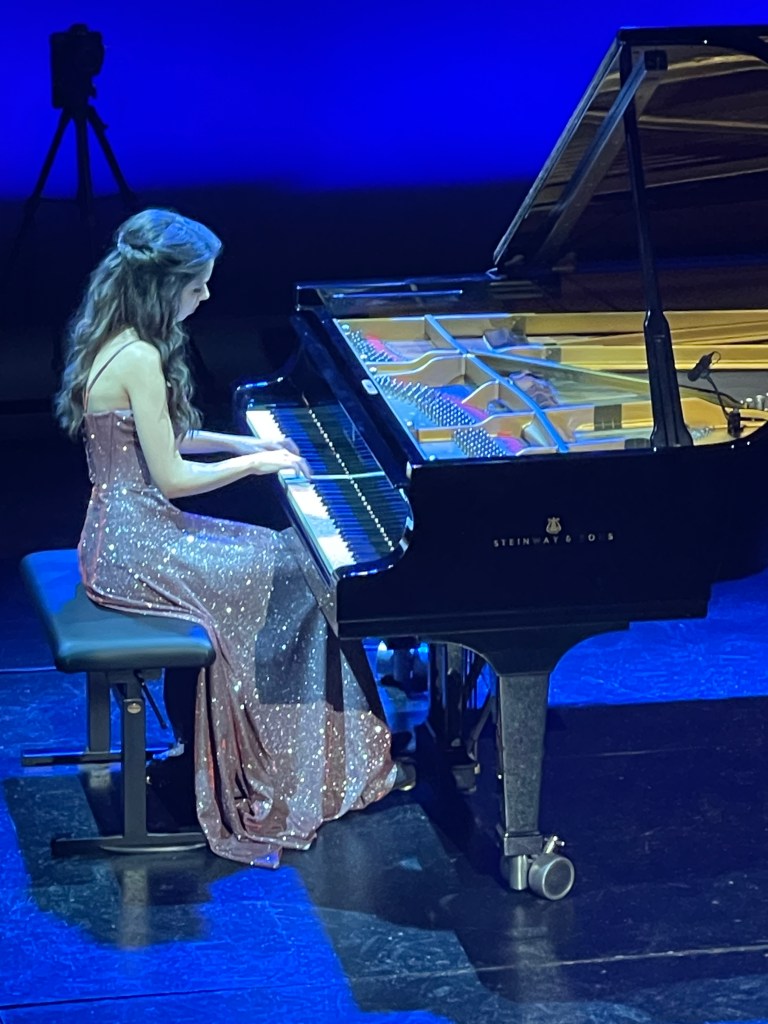
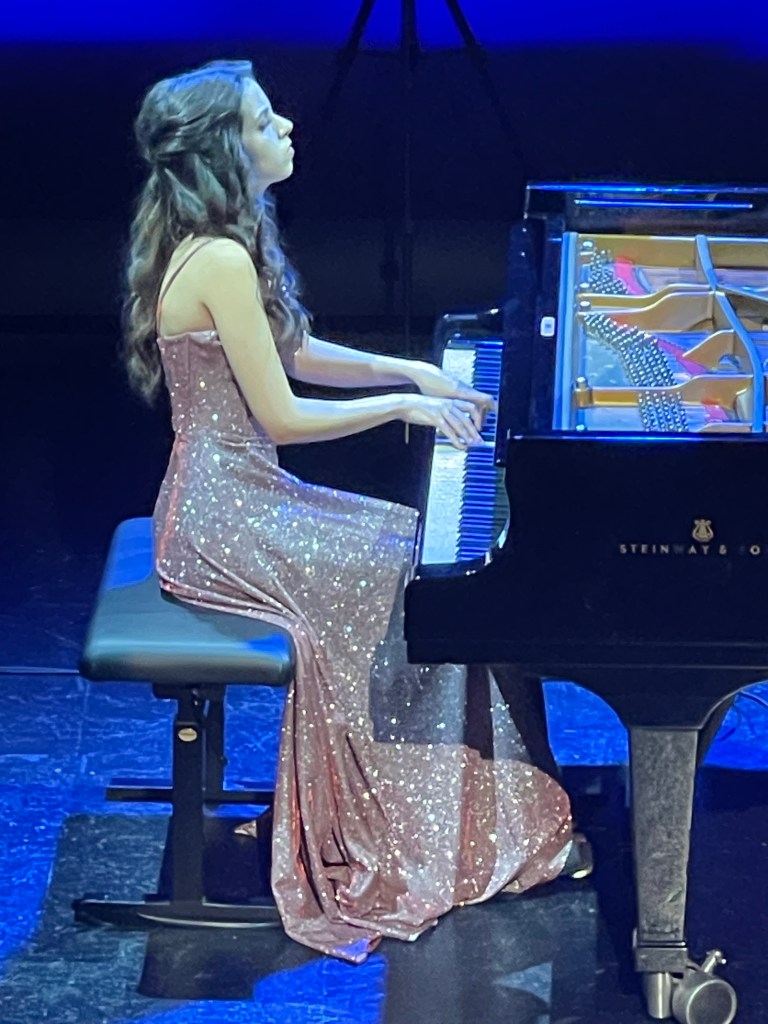
After the interval Henrietta brought us to the world of Chopin and Liszt.
Chopin’s four Mazurkas op 6 were played with great character and sense of style. Four miniature masterpieces that she played with the same freedom that Chopin described to his students. A tree with the roots firmly planted in the ground with the branches free to move naturally above. Bringing a natural sense of character with playing of simplicity and great delicacy alternating with infectious rhythmic dance and mellifluous outpourings of nostalgia and refined beauty.
Now we were ready for Liszt’s tempestuous ‘Dante Sonata’.
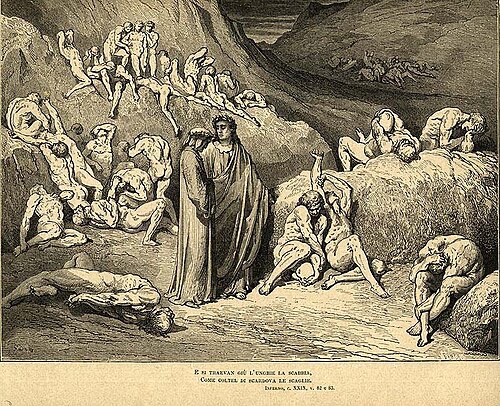
Après une lecture du Dante: Fantasia quasi Sonata is a sonata in one movement , written in 1849. The final version was completed between 1853 and 1856 and first published in 1858 as part of the second volume of his Années de pèlerinage (Years of Pilgrimage) and was inspired by the reading of Victor Hugo’s poem “Après une lecture de Dante” (1836).It composed as a fund-raiser for the Bonn Beethoven monument in 1839, that Liszt had undertaken to bring to fruition. and to which funds Schumann had offered his fantasy op 17 and Mendelssohn his Variations sérieuses. It is a work in there main episodes that depict the wailing of the soul in Hell ( in D minor) and the joy of those in Heaven (in F sharp major ) . With three themes reflecting Satan’s three faces as depicted in Dante’s ‘Inferno’. A remarkable performance where Henrietta could bring such sumptuous beauty and scintillating technical brilliance as she told the story in music of Dante’s great drama that had so ignited Liszt ‘s imagination. Playing with fearless abandon but also a control where the music was given an architectural shape and at times in the central episode a chiselled beauty of glowing radiance. Counterpoints in this sublime outpouring that were allowed to glisten as the music built to passages of breathtaking audacity and brilliance with the treacherous final octave leaps played with masterly technical assurance.
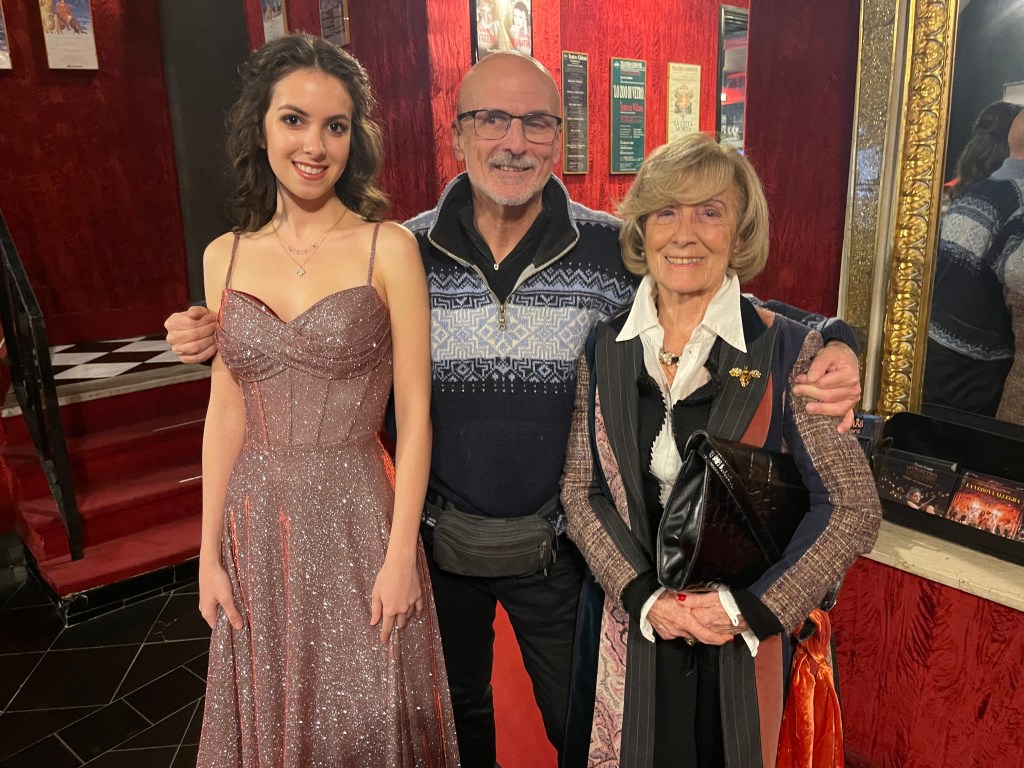
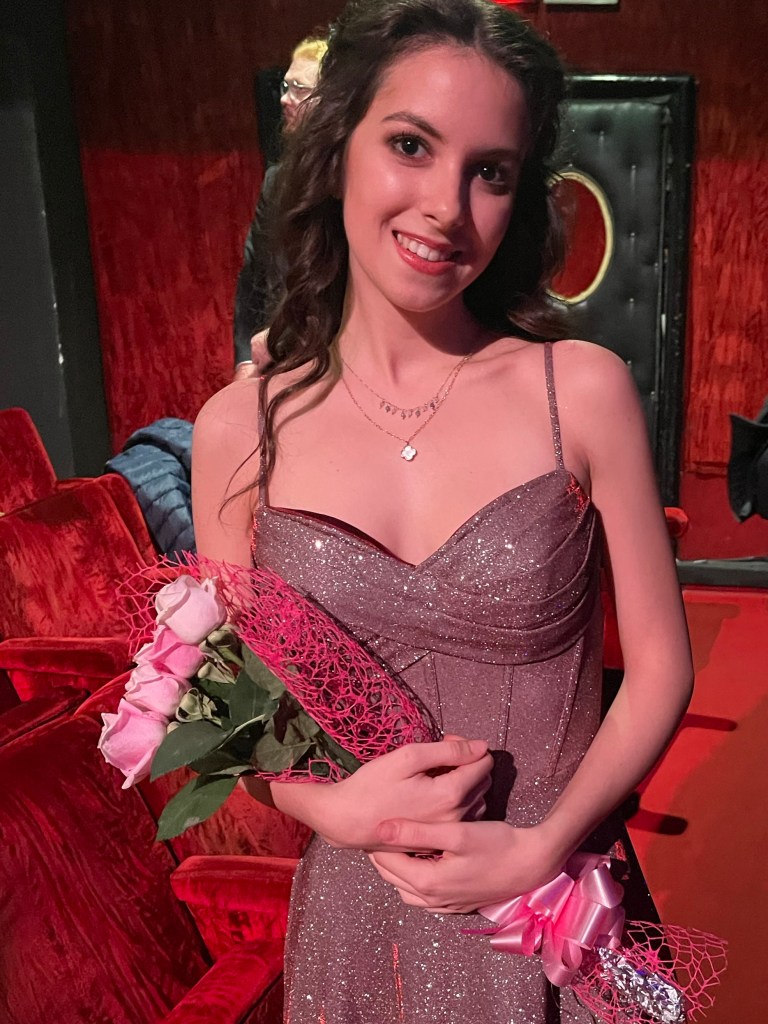
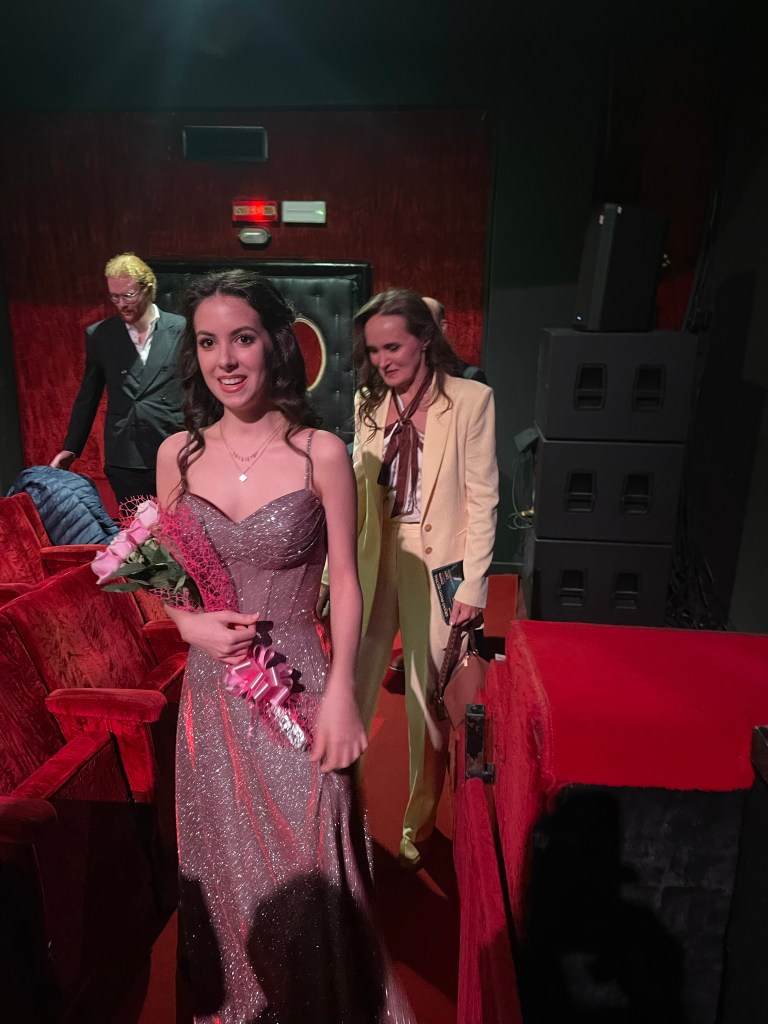
After such a dramatic outpouring it was a good choice to offer as an encore the scintillating brilliance of Scarlatti’s Sonata in D minor K1. Played with crystalline clarity and trills that shone like jewels with the precision of a master craftsman. Closing her programme with the last of Chopin’s studies op 25 n. 12. Sometimes known as the ‘Ocean’ study for the waves of continuous sounds that spread over the entire keyboard. Henrietta played with passionate intensity but also a sense of line as the tenor melody was allowed to ride on wings of song.
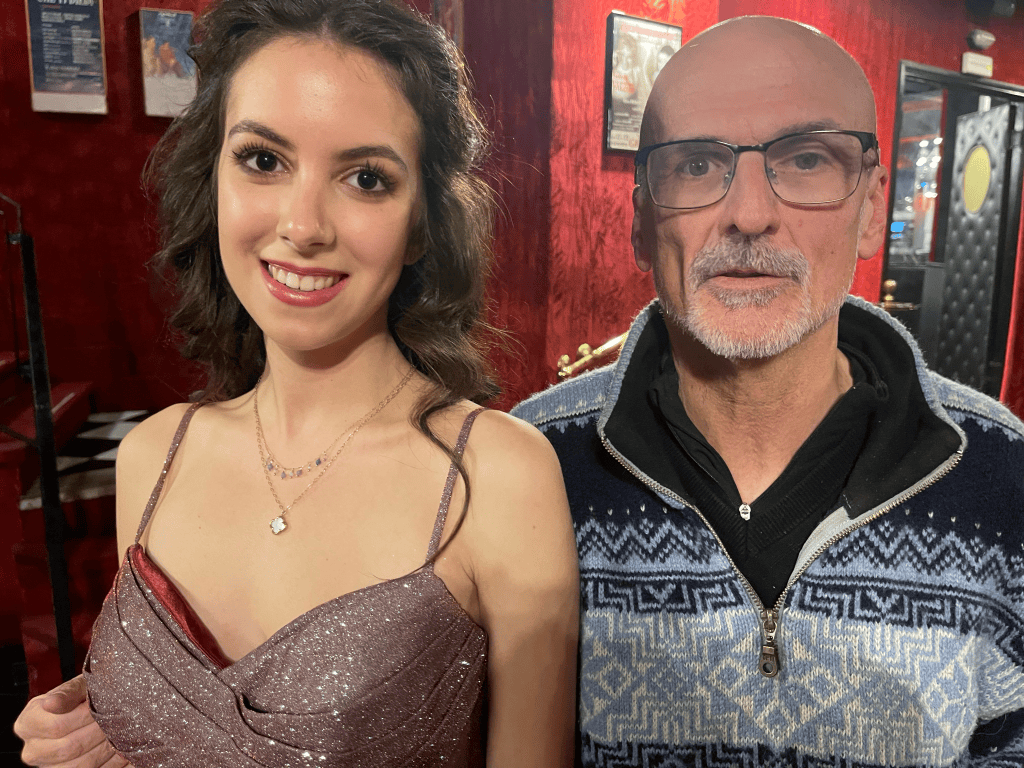
Henrietta Lukacs A life devoted to the piano.

Henrietta Lukacs is a concert pianist whose performances have earned top honors at international competitions across Europe — from London and Milan to the Fryderyk Chopin Competition in Warsaw, Glasgow, Gorizia, and the Feurich Competition for Young Performers in Vienna.
Born in Hungary, she was identified early as a singular talent. She graduated with honors from the Central School of Music at the Moscow Conservatory and is currently continuing her studies at the celebrated Moscow Tchaikovsky Conservatory, refining the deep musical language she now carries to audiences worldwide.
Since 2022, Henrietta has been triumphantly touring with solo concerts in Milan, Rome, Vienna and Budapest. By invitation, she regularly performs as soloist with grand symphony orchestras across the European continent.
Her interpretations are noted for their emotional depth and architectural clarity — qualities equally suited to the searching poetry of Chopin, the tempestuous virtuosity of Liszt, and the spiritual restraint of Bach.
“Music is the silence between the notes —
where the soul speaks.” — HENRIETTA LUKACS