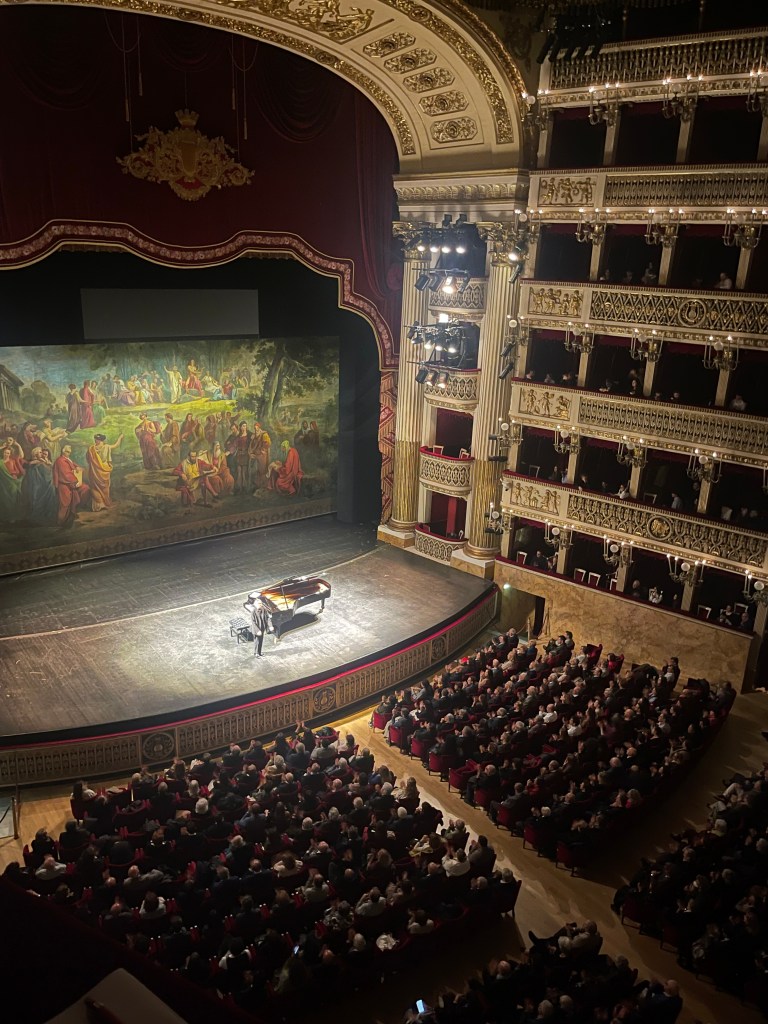
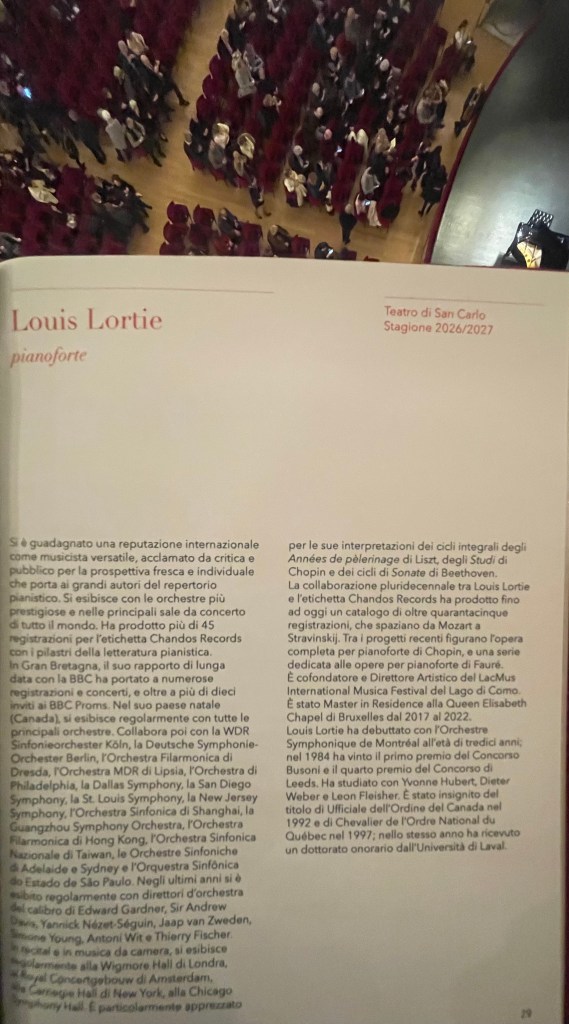
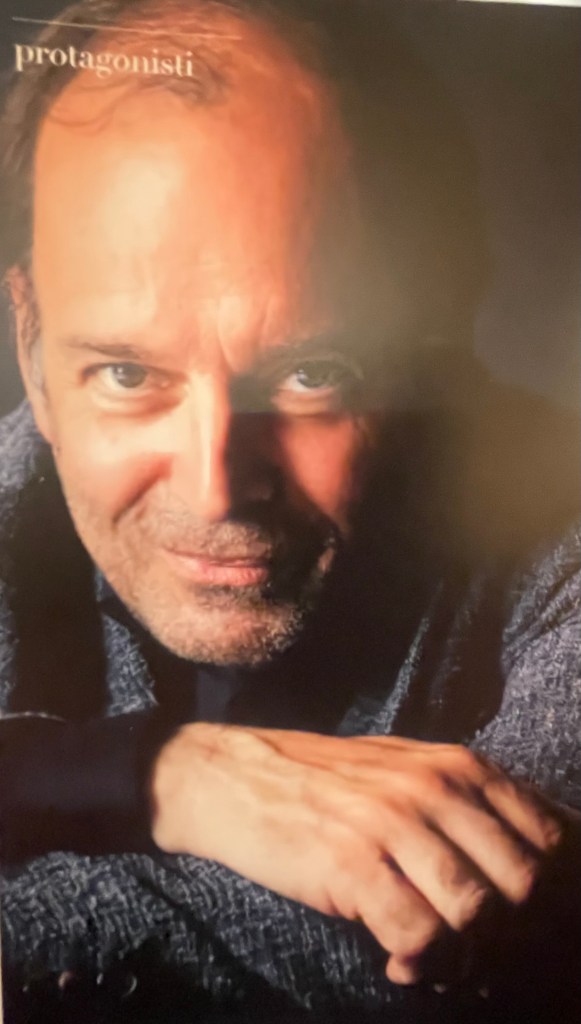
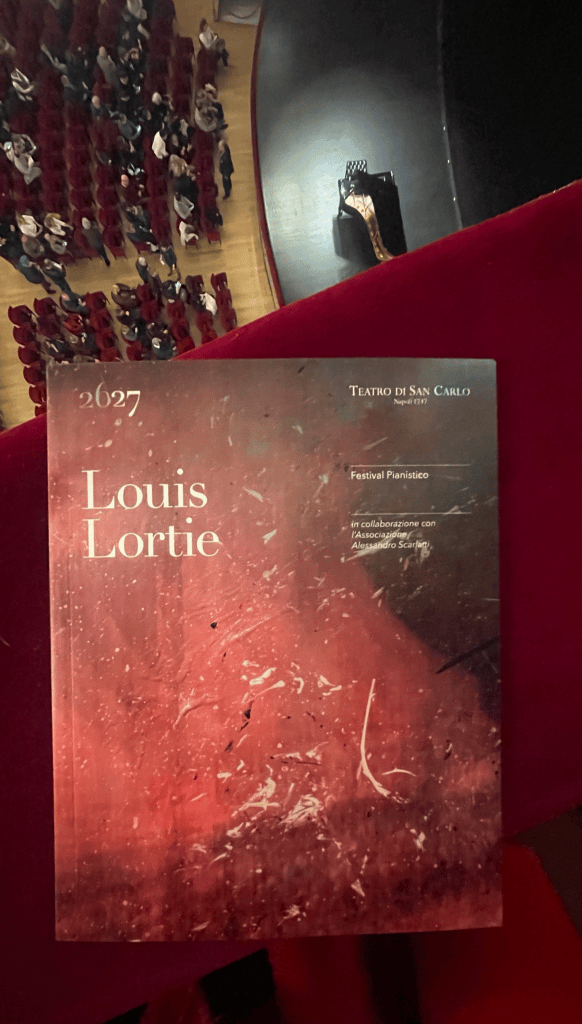
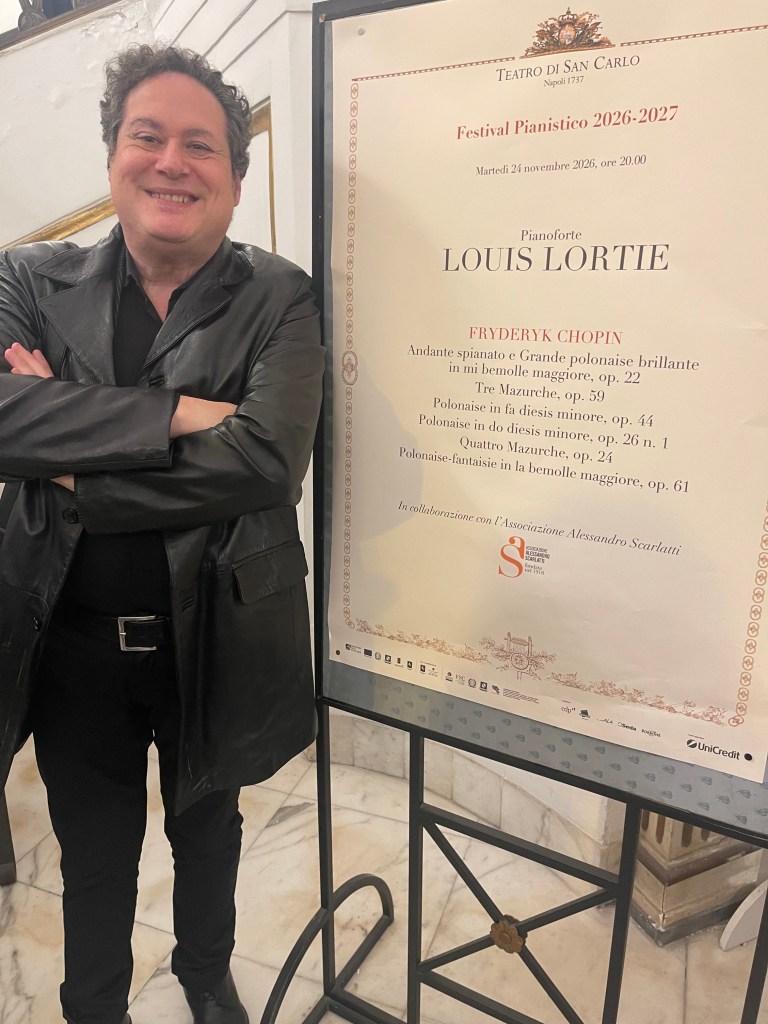
Louis Lortie opened the Piano Festival at San Carlo in Naples with a Chopin recital made up of Polonaises and Mazurkas. An eclectic choice where Chopin’s soul was revealed in these two art forms that the composer created with his beloved Poland always in his heart. Schumann described the Mazukas as ‘canons covered in flowers’ and Louis showed us just what that meant. Performances of seven Mazurkas op 59 and 24 of passionate intensity shorn of all rhetoric but where the real soul of Chopin was revealed with dynamic rhythmic dance rhythms allied to a mellifluous outpouring of fervent intensity. Strangely enough it was in the Polonaises that Louis allowed himself more freedom to express the poetic beauty that is often not so evident.
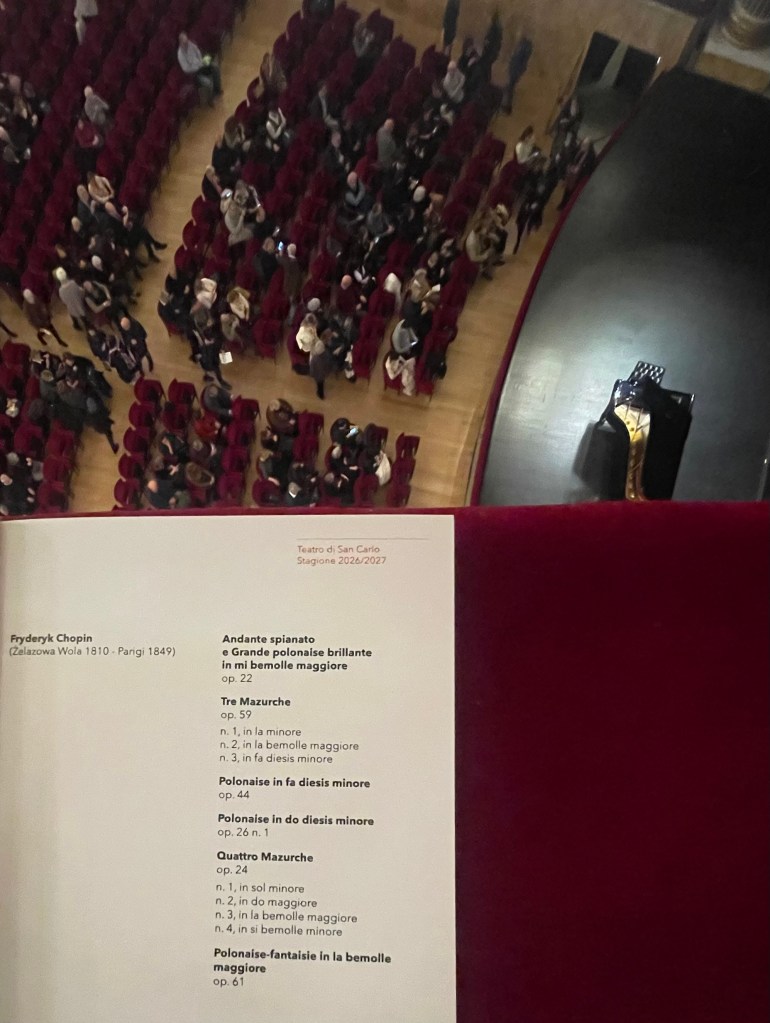
Starting with the Andante Spianato and Grande Polonaise Brillante which most, less searching pianists, would more often finish with. One of the works that Chopin would have seduced his Parisian public with on leaving his homeland never to return. A brilliant Polonaise that Louis played with an aura of golden enchantment with streams of jeu perlé played with rare sensibility and flexibility that created a wondrous cloud of sounds that would open out into moments of exhilaration of commanding authority. Bathed in pedal with the bass and the harmonic body given an equal weight just adding to the sumptuous outpouring, where Chopin’s youthful spirit could shine through with intoxicating beauty.
It was the beauty that had opened the Andante spianato where the accompaniment became an integral part of the disarmingly simple bel canto that was floated in its midst. A left hand that spoke as eloquently as the right, every so often filling a momentary breath of the bel canto with a refined wash of colour.
The three Mazurkas op 59 were given centre stage. A beguiling stylish twist to the A minor was followed by the sumptuous outpouring of refined beauty of A flat, that was also imbued with strength and powerful commitment. A robust dance in F sharp minor opened the door for the heroic power of the Polonaise that followed.
The Polonaise op 44 fuelled from the bass which gave a great anchor to the octaves that were always shaped and coloured with masterly poetic intention. Chopin’s highly original insistence on a single note that Louis played with bell like clarity as the inner voices conversed with dance like intensity. Dissolving into the beautiful central bel canto where once again Louis was more intent on underlining the harmonic implications allowing the melody to sing out with disarming glowing simplicity.
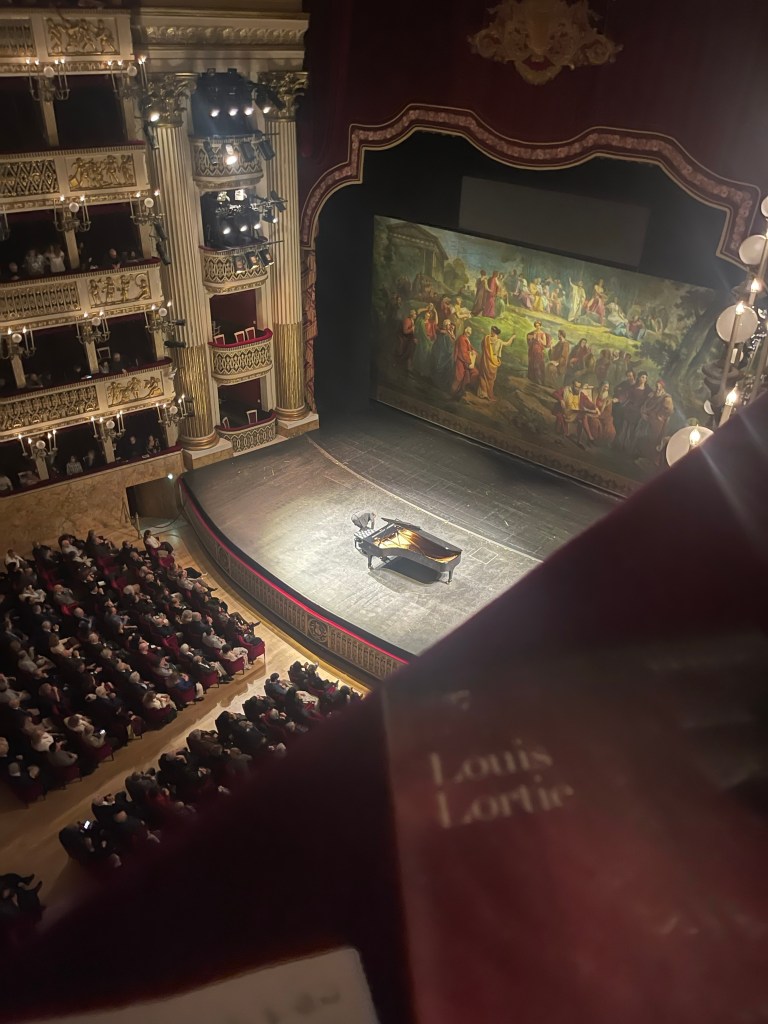
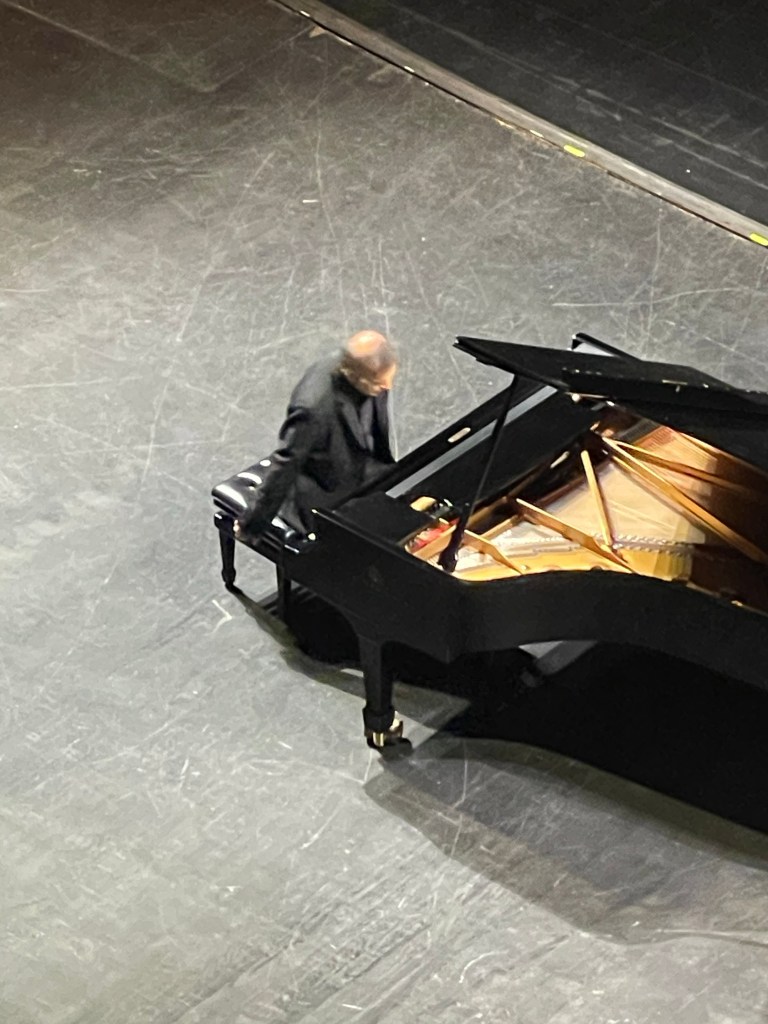
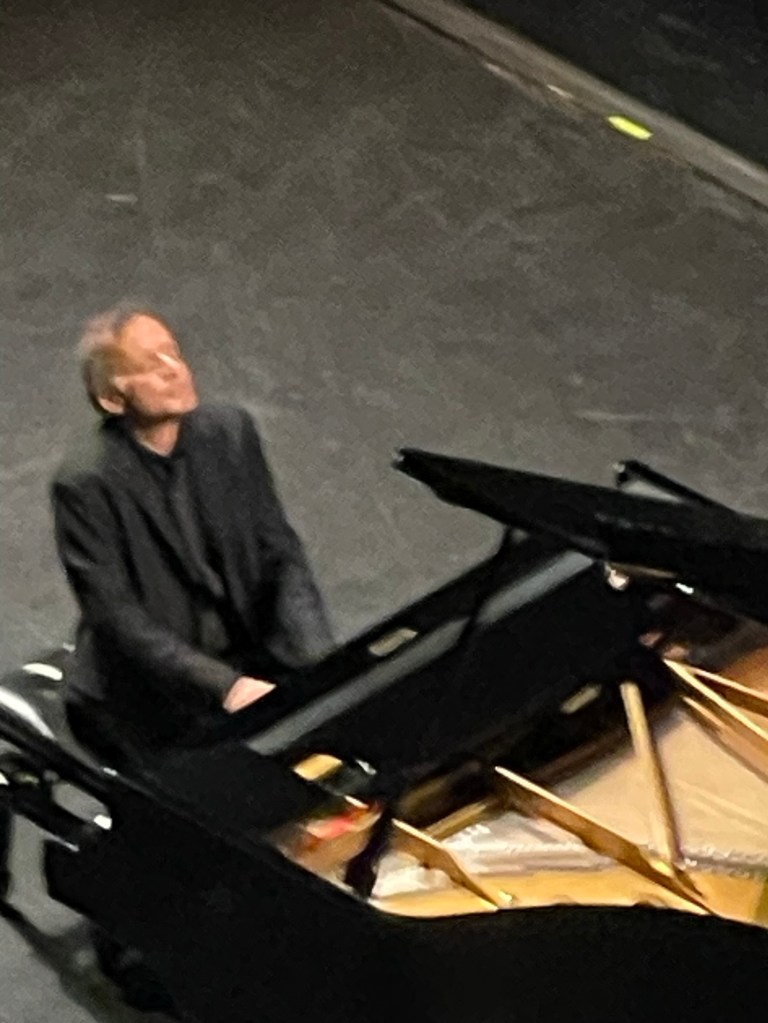
It was a pity that there was no one to retune the piano in the interval but maybe it was a blessing as the tuner, two meters tall had left the piano seat so low that Louis had to battle with a couple of seats on stage before he could begin the concert. Another Canadian Glenn Gould would have much appreciated being seated under the table but Louis certainly does not beg for his supper !
The Polonaises op 26 are rarely heard in concert but Louis chose the first in C sharp minor to open the second half.
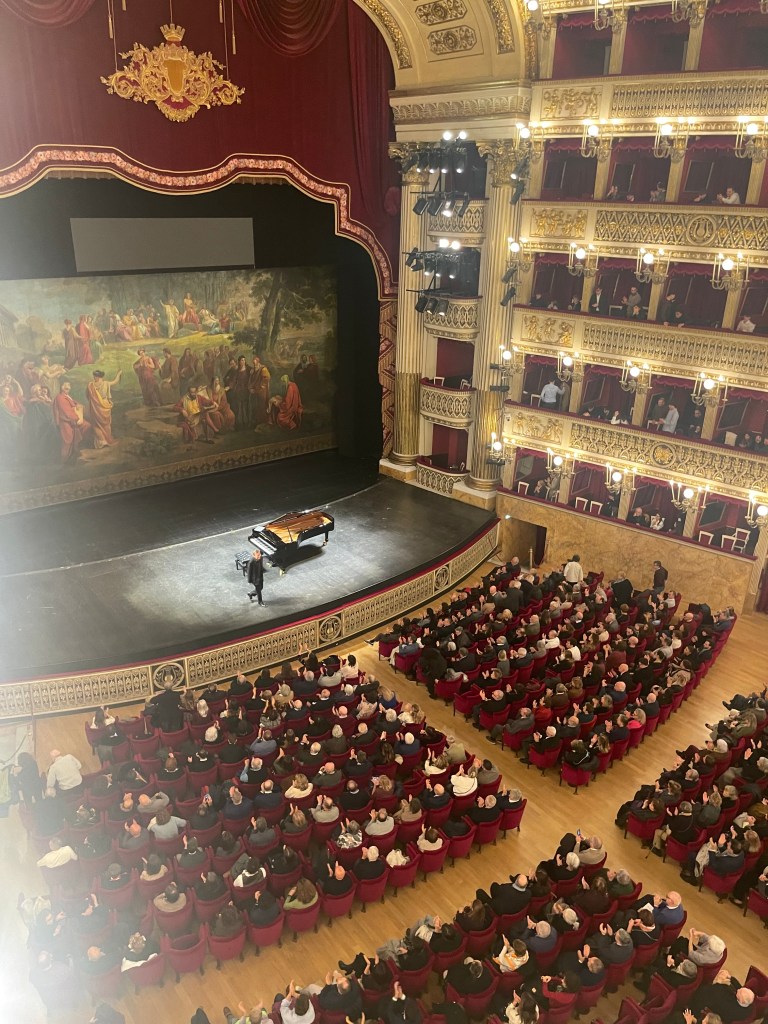
A wake up call indeed after an overlong break . It was here again that Louis showed us the harmonic implications of the opening as it dissolved into a beautiful melody of enticing insinuation, with the ending sounding as though the singer had run out of breath and made an quick but elegantly poetic exit. It is this moment that would also end the Polonaise with a questioning whisper. But not before a sublime interlude in D flat which like in the much later Barcarolle is a miraculous glimpse of paradise, not as unexpected as with Schubert, but none the less a stroke of poetic genius.
The four early Mazurkas were again played with fearless commitment of a genius who could portray in music his homeland that had remained ingrained in his soul.
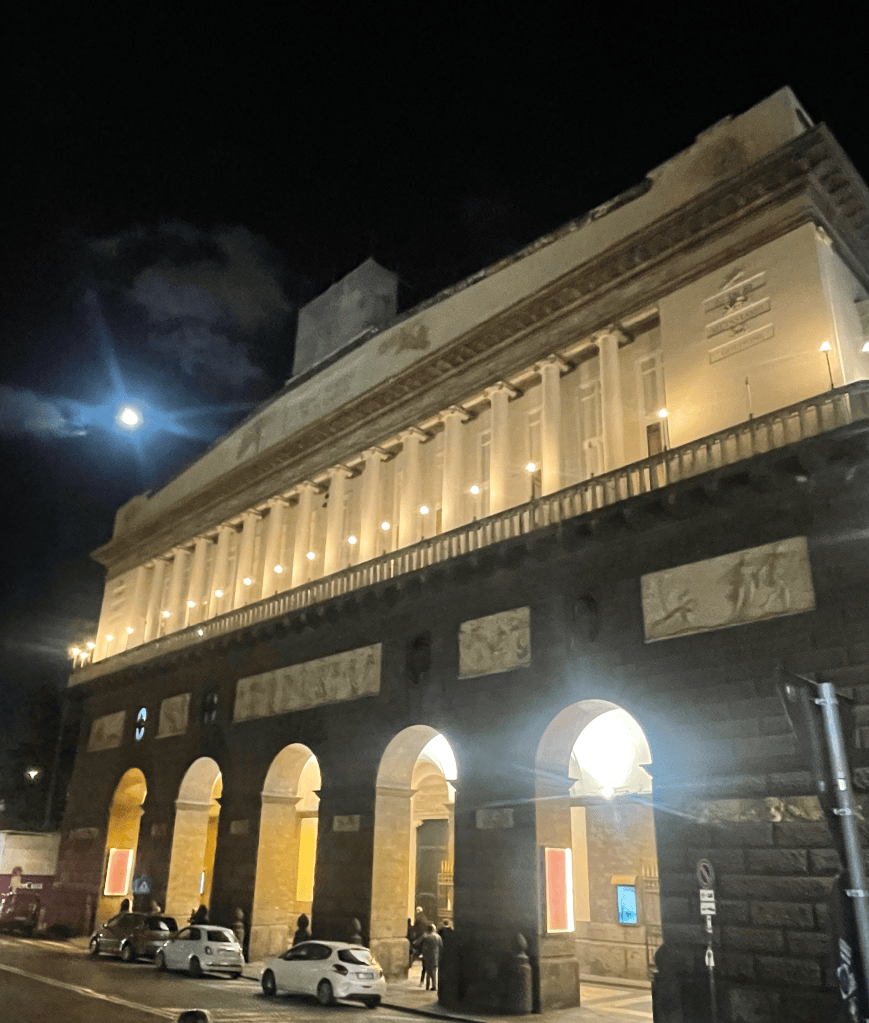
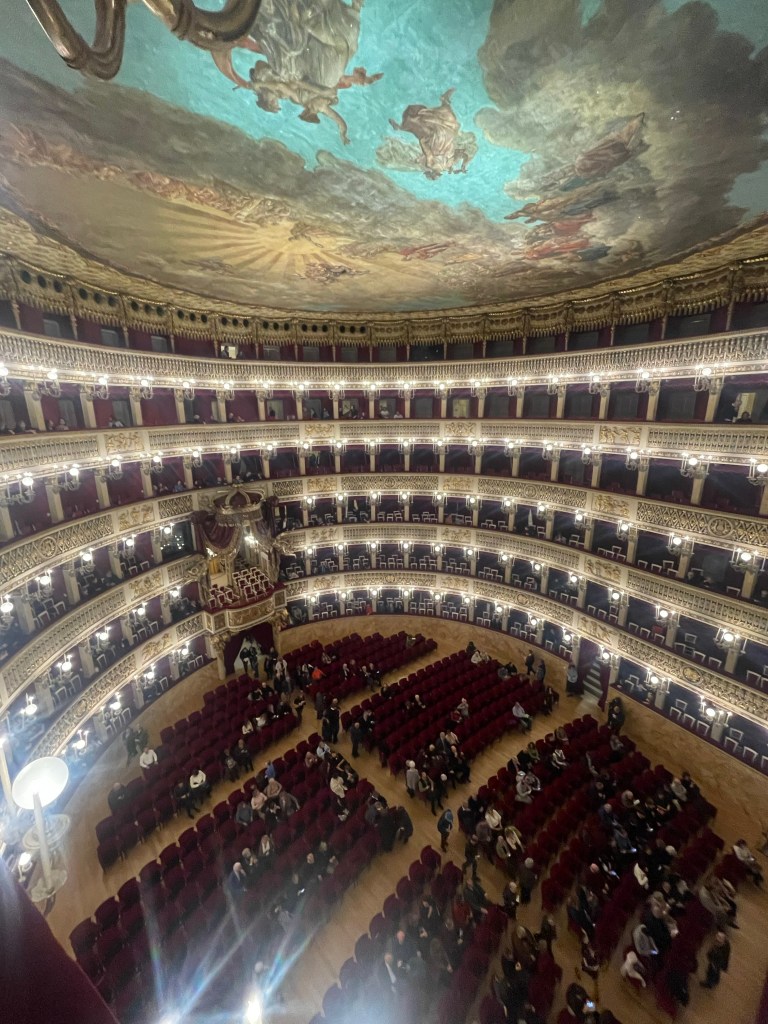
And finally one of Chopin’s last works where the Polonaise had truly evolved with genial invention into a fantasy world of colour and imagination. The Polonaise Fantasie op 61 which Louis opened like an artist with one beautiful stroke of his brush before being inspired to fill the canvas with wondrous poetic invention and a kaleidoscopic palette of colour. Again it was here that with refined aristocratic good taste Louis could fill such beauty with sumptuous rich sounds bathed in pedal which gave a wondrous glow to the Gothic cathedral that was being described with such searing intensity and beauty.
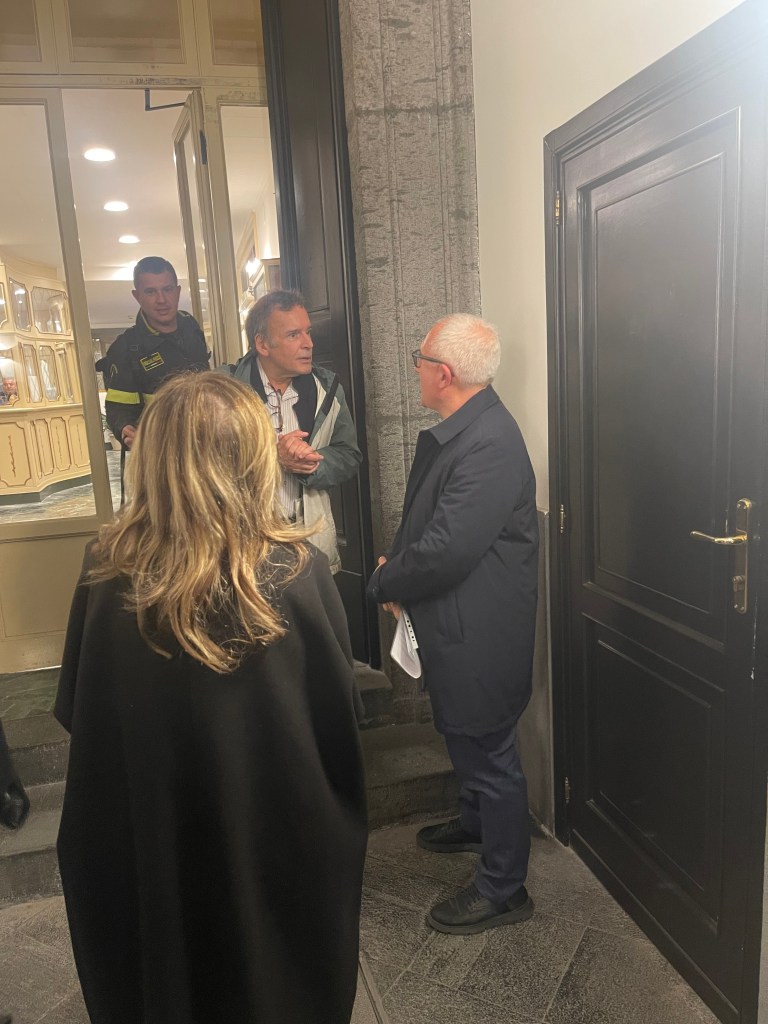
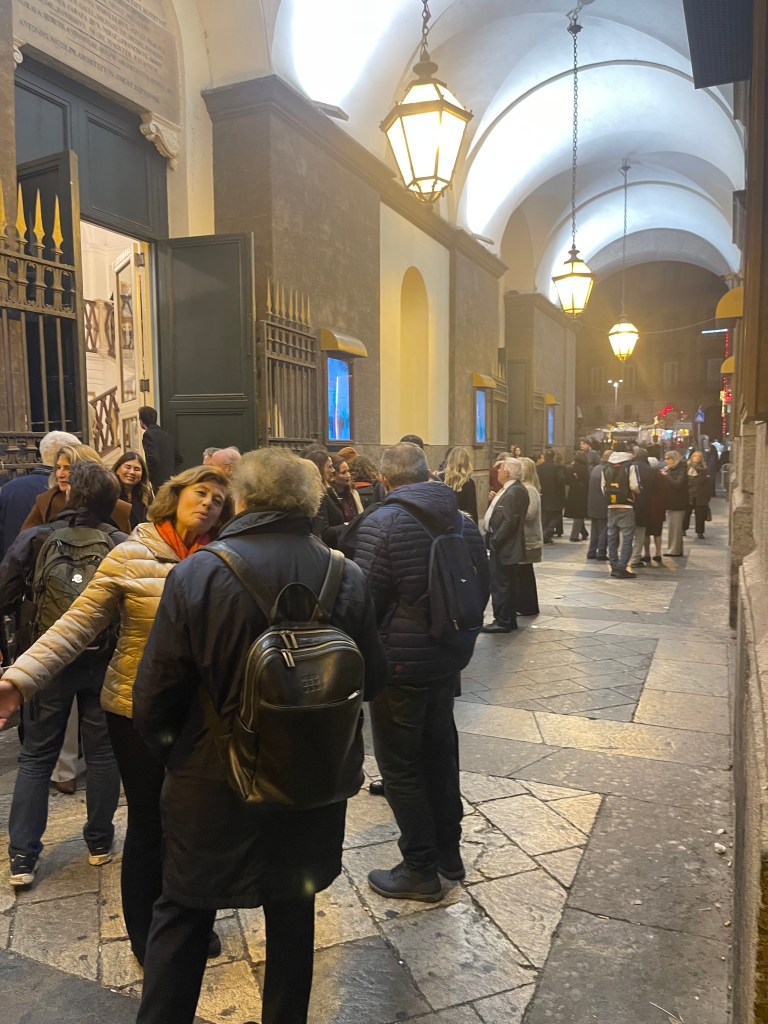
Three encores from a pianist that the knowing public of San Carlo were not going to leave so soon
Two Chopin studies which included the Aeolian harp that had been the inspiration for the entire evening . Op 10 n 4 played with a clarity and astonishing ‘fingerfrtigkeit’ that did not deny poetic invention and fearless passionate brilliance .
It was though the simple whispered voice of Chopin’s D flat Nocturne that stole our hearts and created one of those rare moments when the artist and public are united in a moment of sublime recreation together