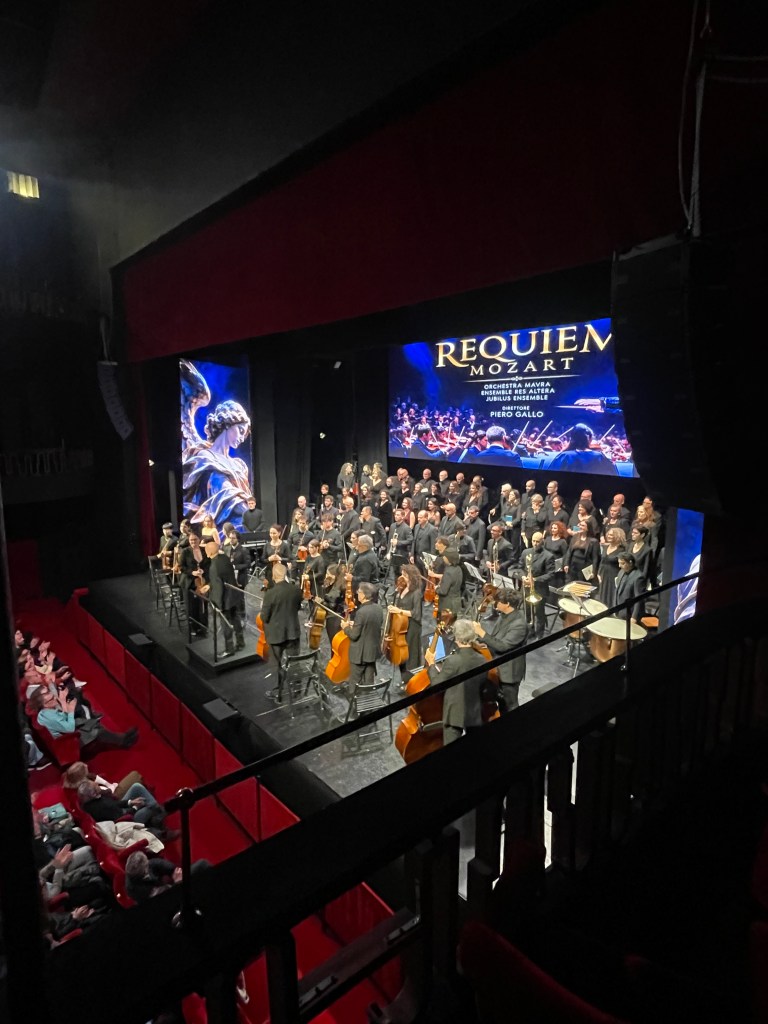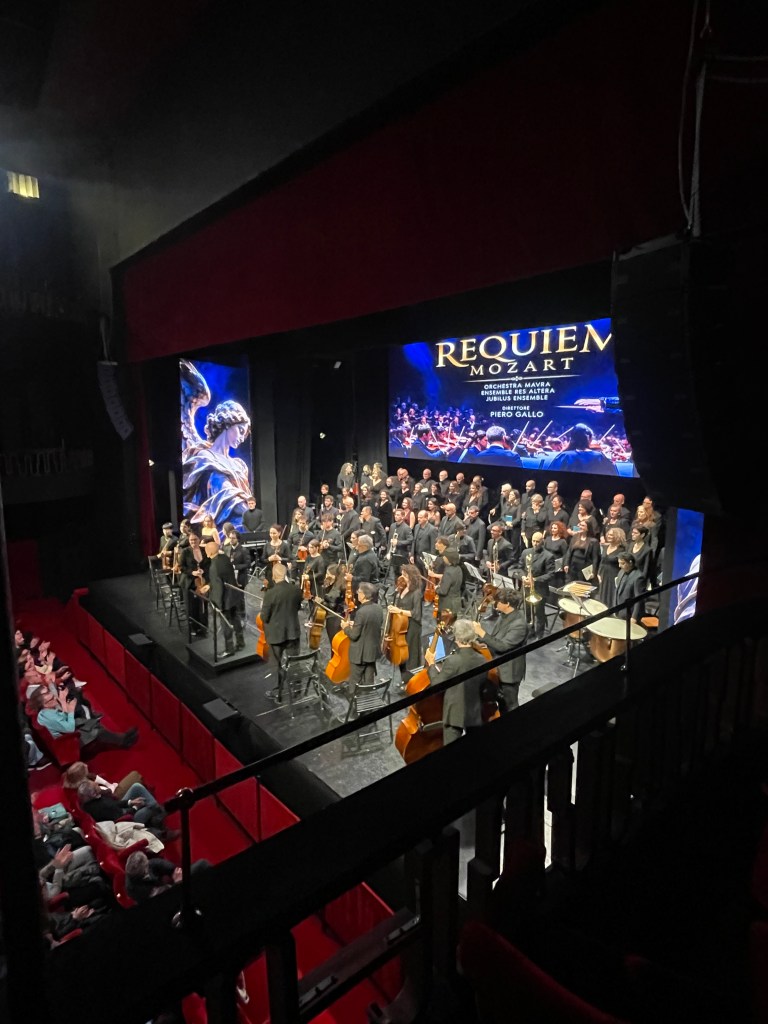
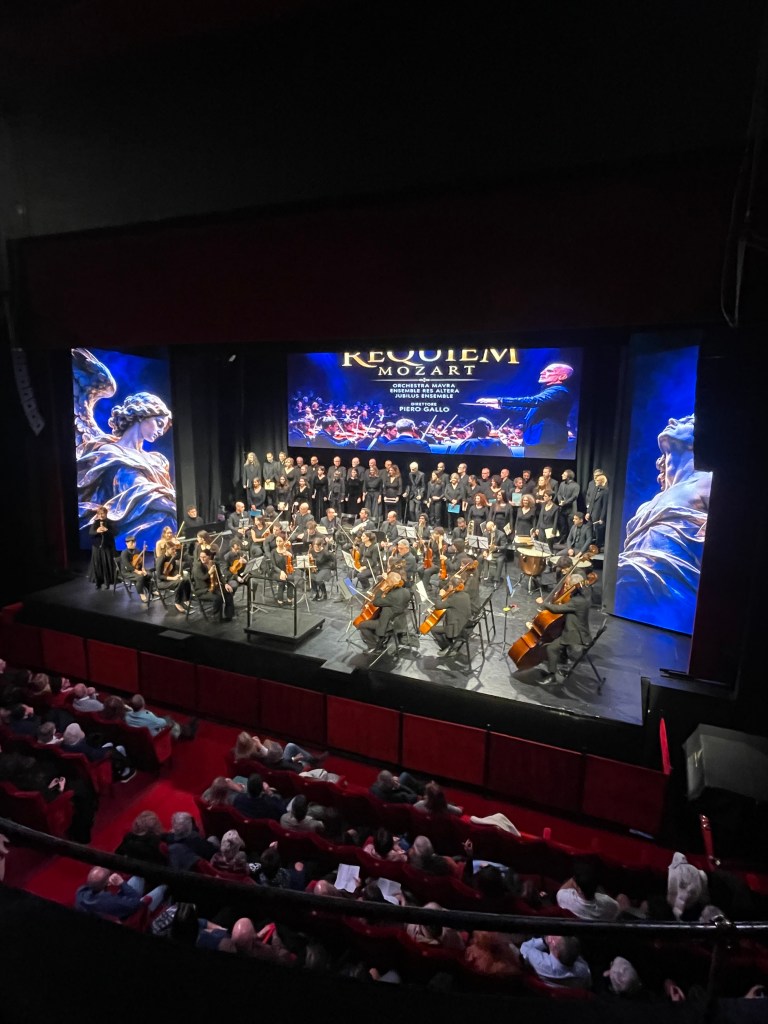
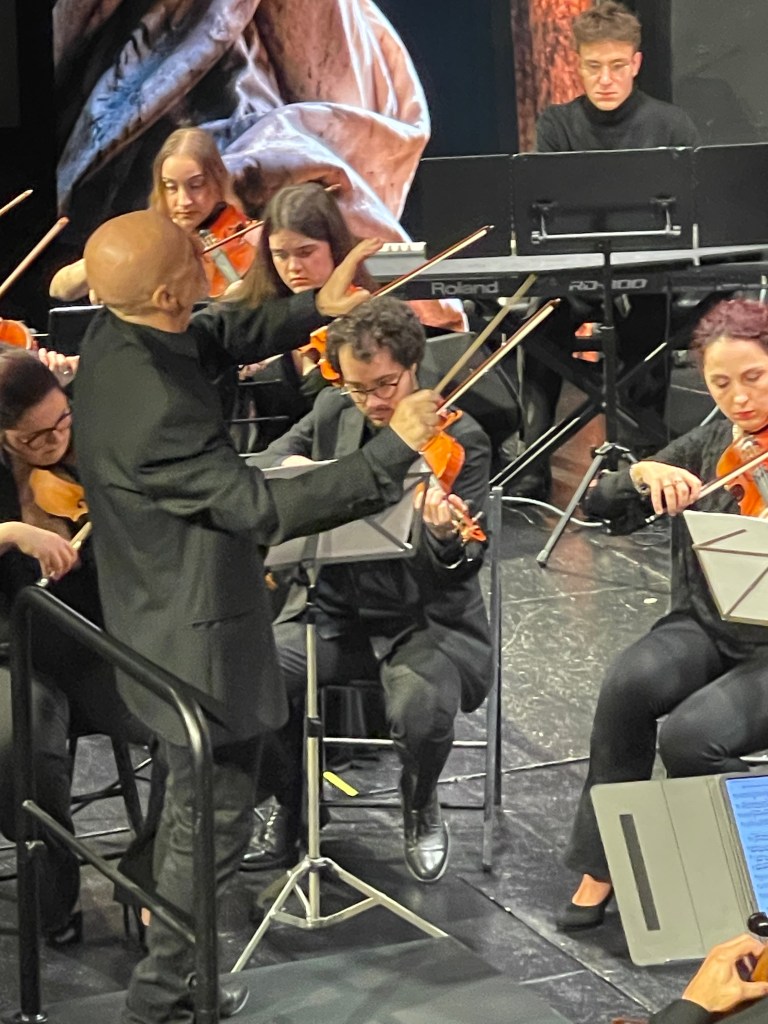
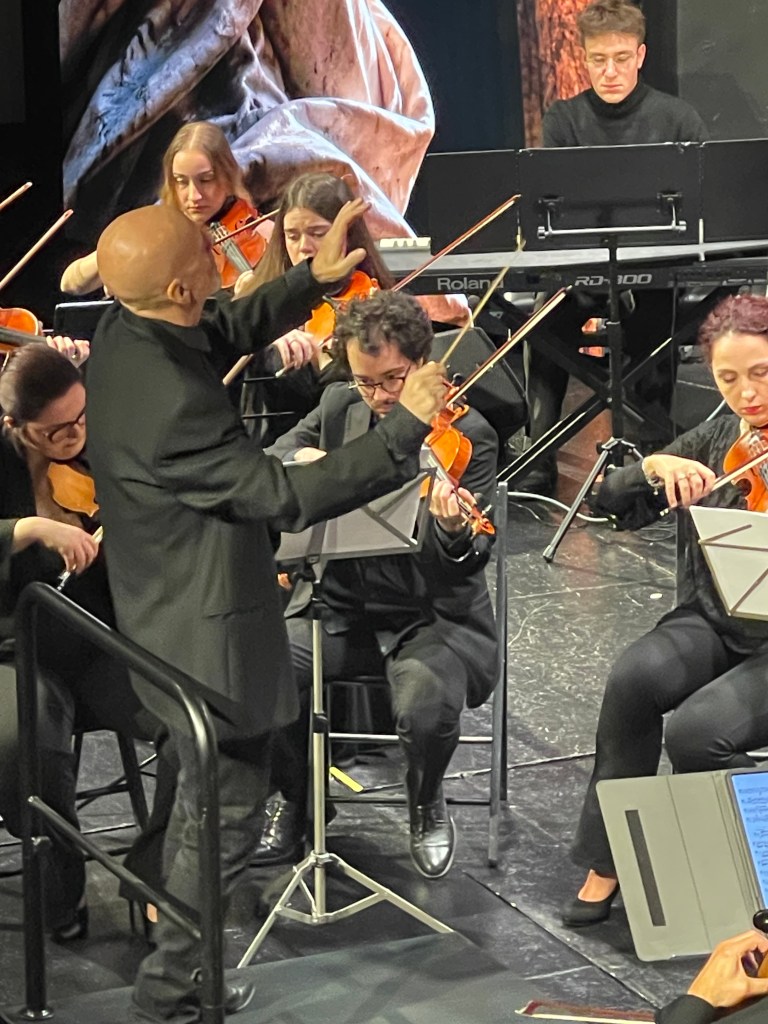
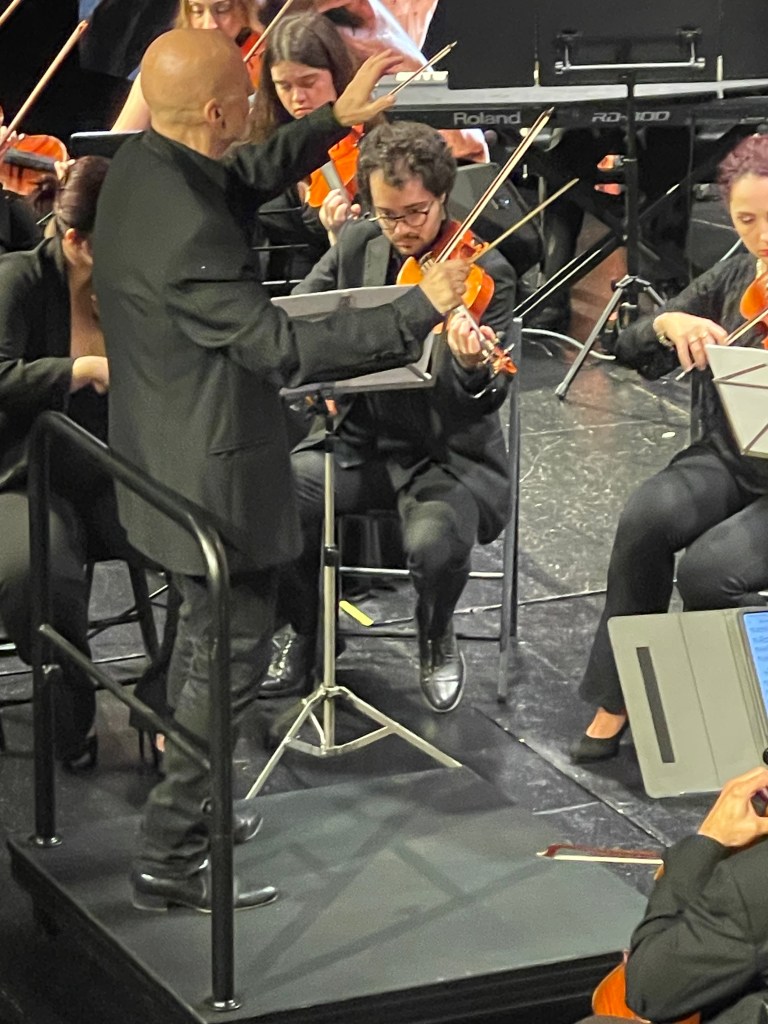
What better way to spend on the day dedicated to Santa Cecilia, the patron saint of music, than with two performances of the Mozart Requiem. Maestro Piero Gallo at the helm of over eighty elements paying homage to the Genius of Mozart with dedication and vibrant intensity.
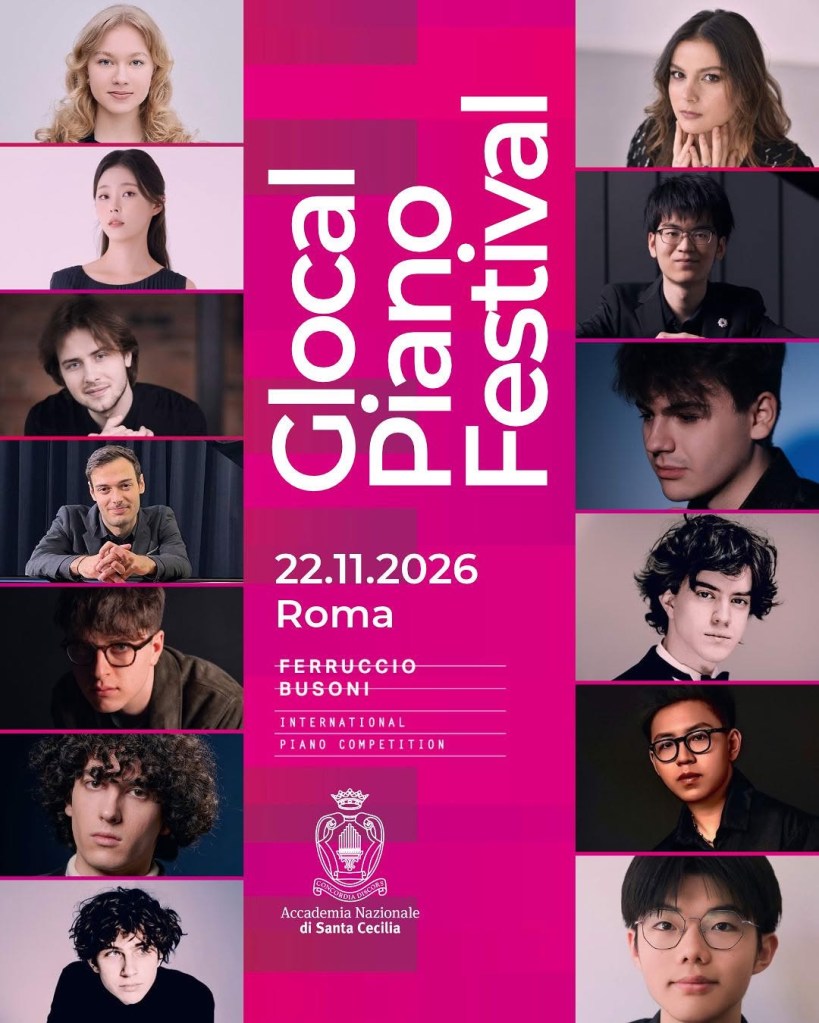
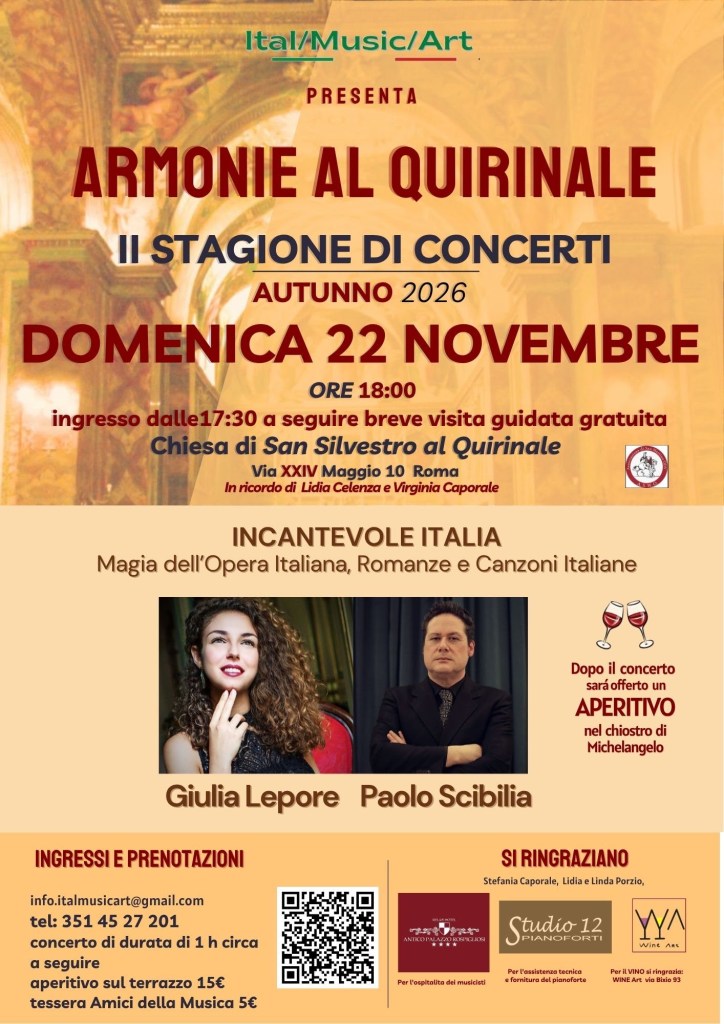
My third concert this day, starting early with the Busoni Competition and finishing later at San Silvestro al Quirinale for il Duo di Napoli .
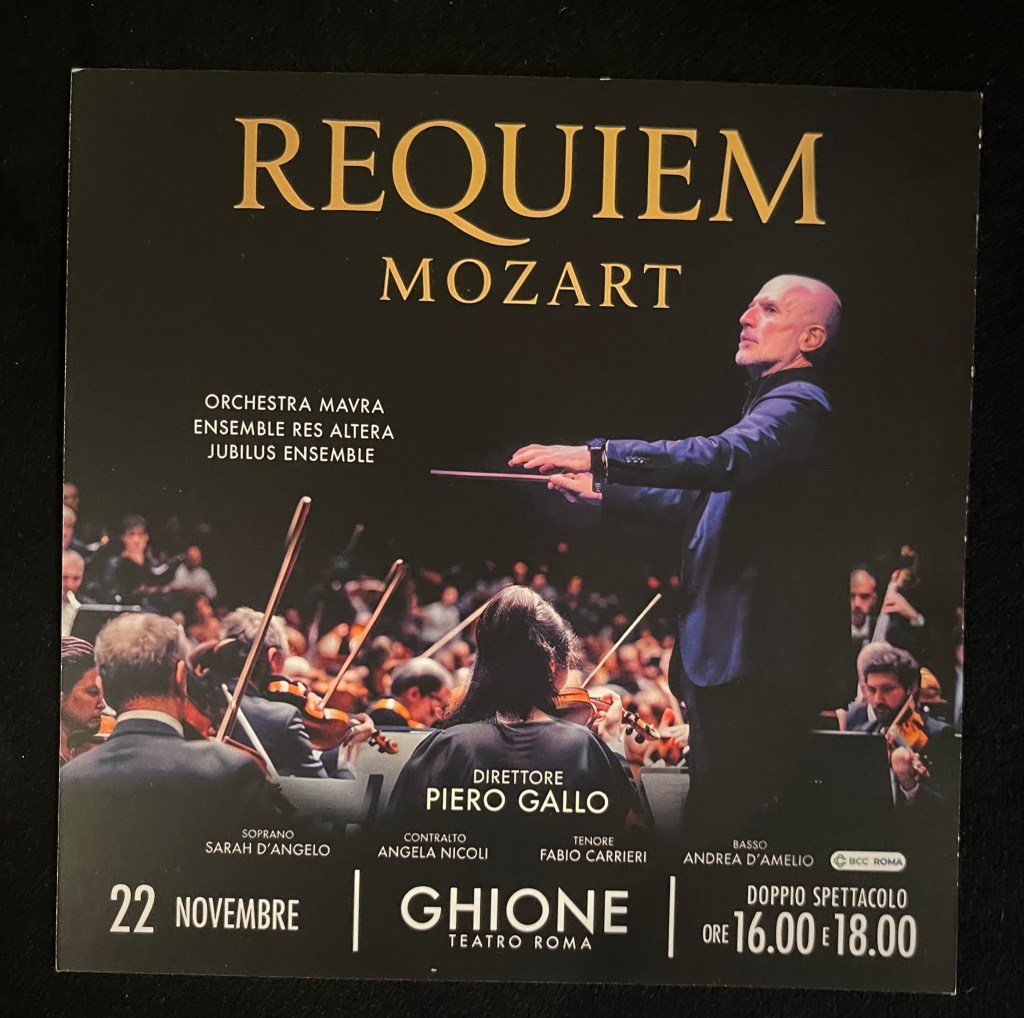
But in between was the first of two performances of the Mozart Requiem . In the theatre named after my wife , Ileana Ghione, which we had created together and opened in 1982. Over the years it has seen a line up of now historic names from the world of classical music.
My wife and I had wanted to create a space where Culture with a capital C could be shared with all, in the Eternal city that lacked adequate space for many who had to be excluded. It became known as the ‘ Salotto di Roma’ and a place where, in particular, young musicians and actors could share their talent and perfect their talent, playing the great works of the classical repertoire whether music, theatre or both!.
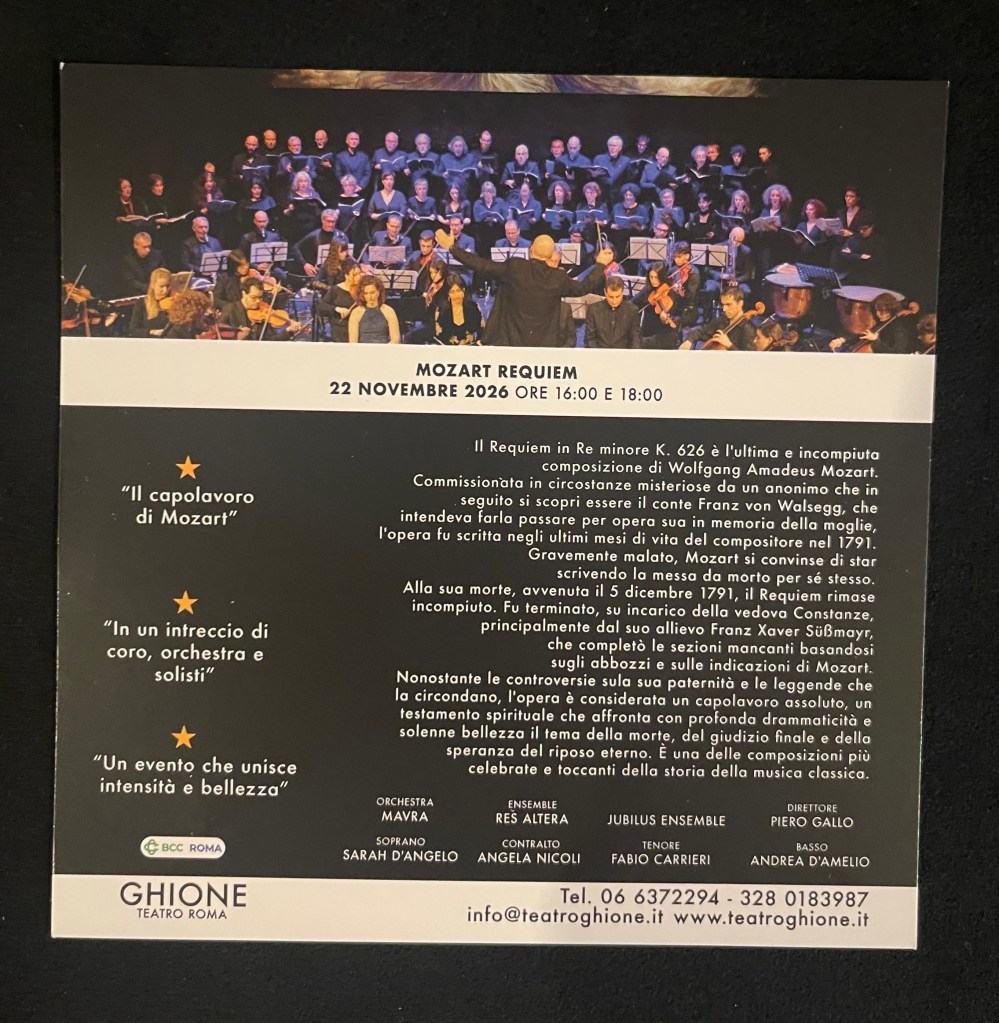
It was a particular pleasure to see an orchestra and choir of such dedication and willingness to follow the encouragement of Piero Gallo. What the performance may have missed in perfection was more than compensated for by the passion and humanity with which everyone of the eighty or more elements brought to the stage with searing passion and quite considerable mastery. Maestro Gallo regularly brings his dedicated musicians to the Ghione theatre where he is greeted by sold out performances from a public with a thirst for music in an intimate atmosphere. We live in an age where quantity takes precedence over quality and it is refreshing to find that this equation is of no importance when there is a real passionate desire to communicate a deep love of music. Paolo Gallo has the same dedication with which this theatre was born and just recently conducting a performance of Liszt Piano Concerto n. 2 with a young Russian virtuoso, Henrietta Lokacs, he immediately invited her to the Ghione theatre to make her much awaited recital debut where she joined such illustrious artists such as Guido Agosti,Vlado Perlemuter,Annie Fischer ,Gyorgy Sandor, Shura Cherkassky etc etc .
Hats off to Maestro Gallo whose passion and selfless love of music are an example to us all.
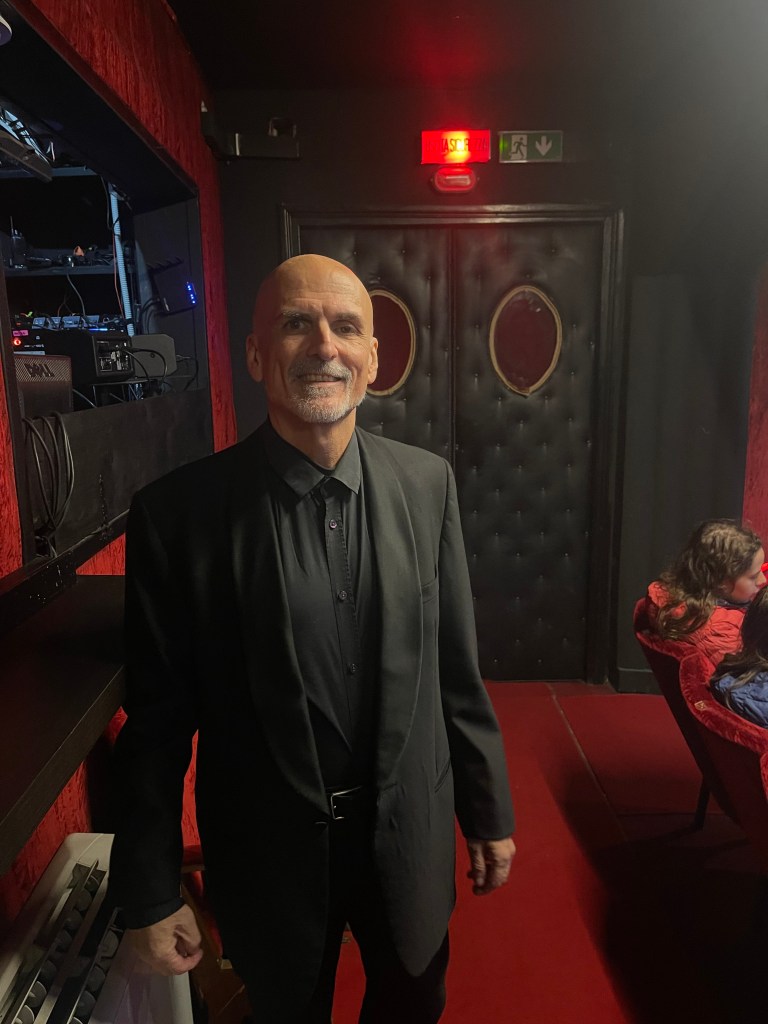
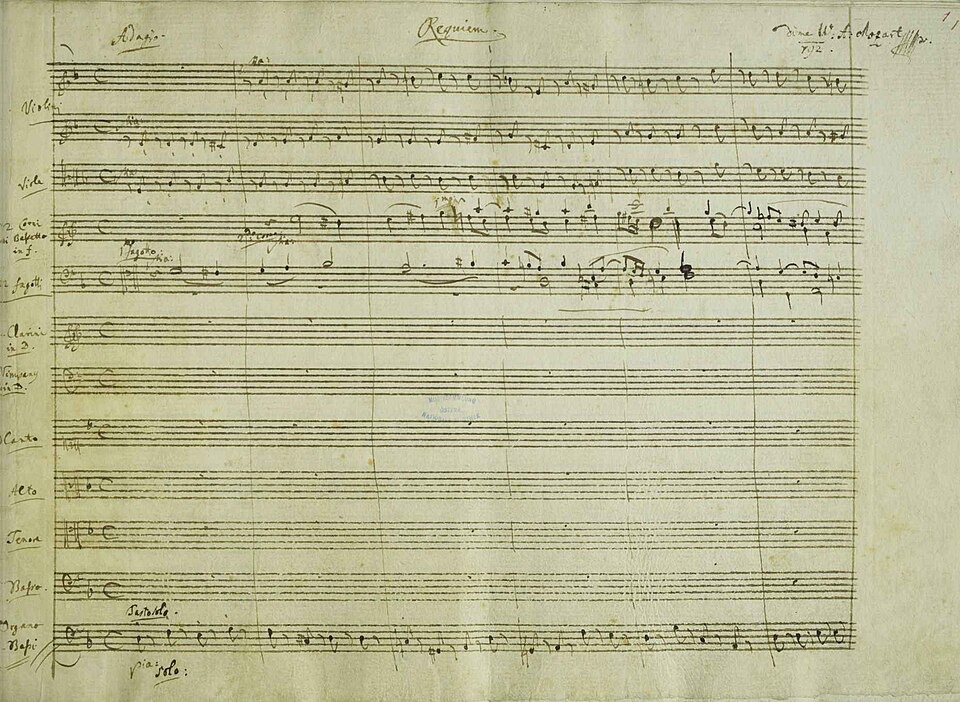
Requiem in D minor K. 626, is a Requiem Mass by Wolfgang Amadeus Mozart Mozart composed part of the Requiem in Vienna in late 1791, but it was unfinished at his death on 5 December the same year. A completed version was delivered to Count Franz von Walsegg , who had commissioned the piece for a requiem service on 14 February 1792 to commemorate the first anniversary of the death of his wife Anna, who had died at the age of 20 on 14 February 1791.
The autograph manuscript shows the finished and orchestrated movement of the Introit in Mozart’s hand, and detailed drafts of the Kyrie, the Sequence (the latter including the first eight bars of the Lacrimosa), and the Offertorium . First Joseph Eybler and then Franz Xaver Süssmayr filled in the rest, composed additional movements, and made a clean copy of the completed parts of the score for delivery to Walsegg, imitating Mozart’s musical handwriting but clumsily dating it “1792.”It cannot be shown to what extent Süssmayr may have depended on now lost “scraps of paper” for the remainder; he later claimed the Sanctus and Benedictus and the Agnus Dei as his own.
Walsegg probably intended to pass the Requiem off as his own composition, as he is known to have done with other works. This plan was frustrated by a public benefit performance for Mozart’s widow Constanze. She was responsible for a number of stories surrounding the composition of the work, including th e claims that Mozart received the commission from a mysterious messenger who did not reveal the commissioner’s identity, and that Mozart came to believe that he was writing the Requiem for his own funeral.
In addition to the Süssmayr version, a number of alternative completions have been developed by composers and musicologists in the 20th and 21st centuries. At least 19 conjectural completions have been made, eleven of which date from after 2005.
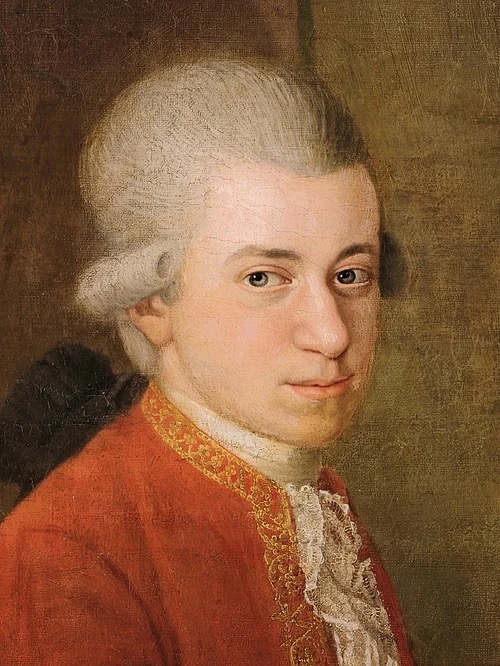
Wolfgang Amadeus Mozart
27 January 1756 Salzburg 5 December 1791 Vienna