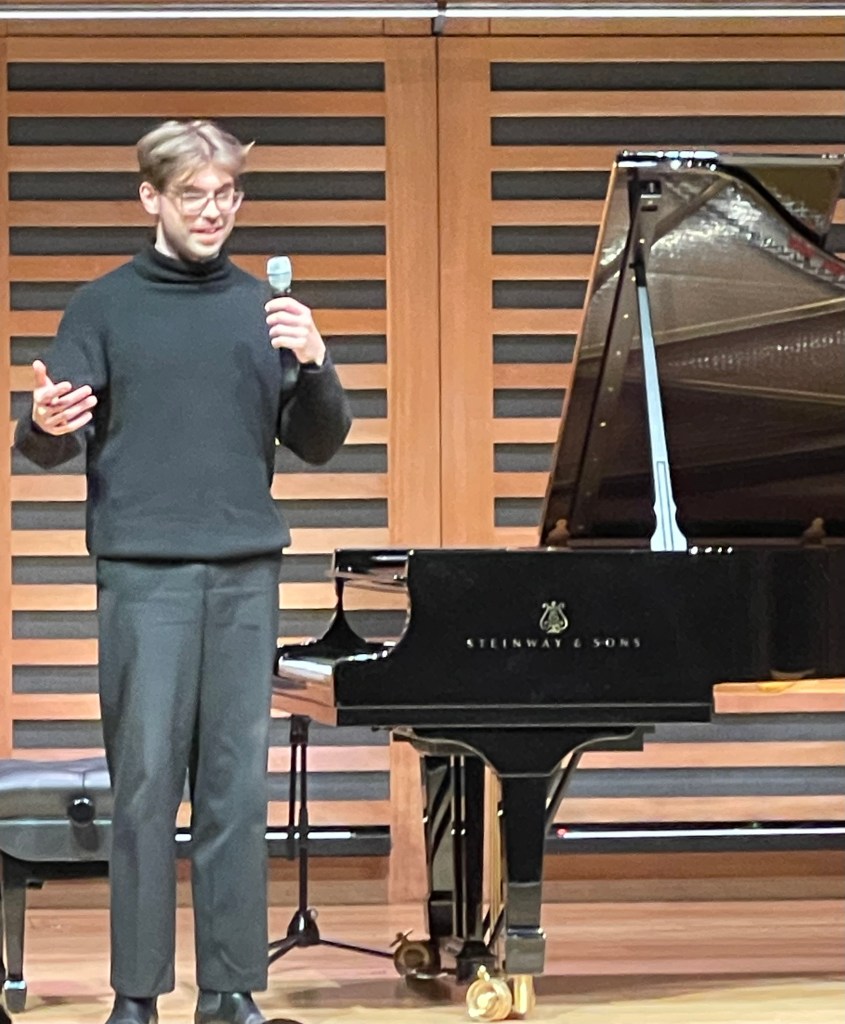
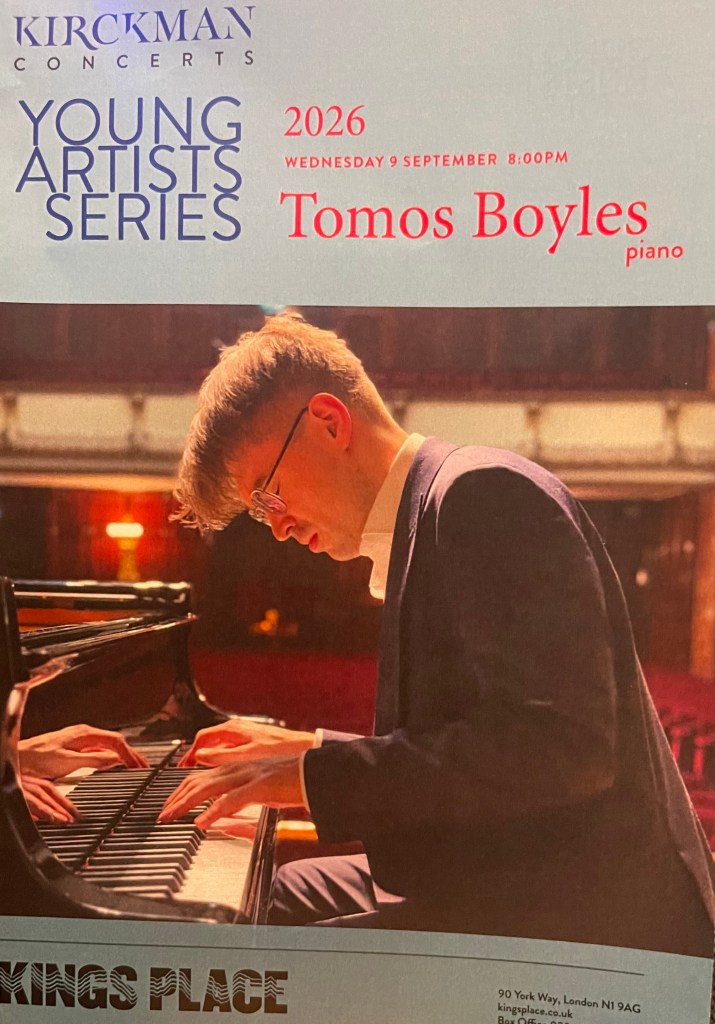
Tomos Boyles is a Welsh pianist supported by Kirckman Concerts. He comes to Kings Place to present a programme centred around memory and dreaming, weaving a psychological thread that connects music spanning two centuries.
The London debut of Tomos Boyles at Kings Place for the Kirckman Young Artists Series. A young artist already an Oxford graduate but now having time to dedicate himself totally to making music where his true poetic soul is revealed with playing of horizontal beauty and radiance. In fact all that he played was a long song with never a hard or ungrateful sound, squeezing the very essence out of each note, producing even in the most demanding passages, a sound that was anchored from the bass opening up this magic box of jewels.
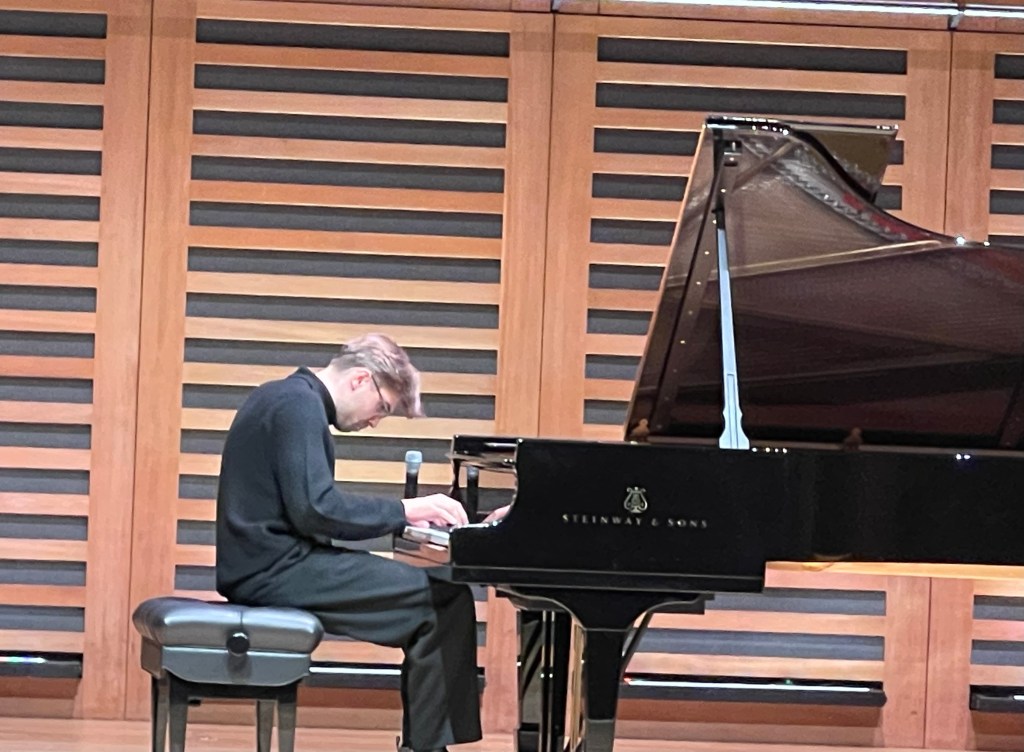
From the opening four Schubert songs transformed by Liszt into miniature tone poems every bit as significant as Schubert’s genial poetic inspiration. To the Schumann Fantasie and the outpouring of love for his future wife and mother of their eight children. The mellifluous beauty of Ravel’s Ondine and the desolation of Le Gibet were overtaken by the impish antics of the devilish Scarbo.
Fun and games with Kurtag in his centenary year were followed by Shostakovich’s monumental 24th Prelude and Fugue.
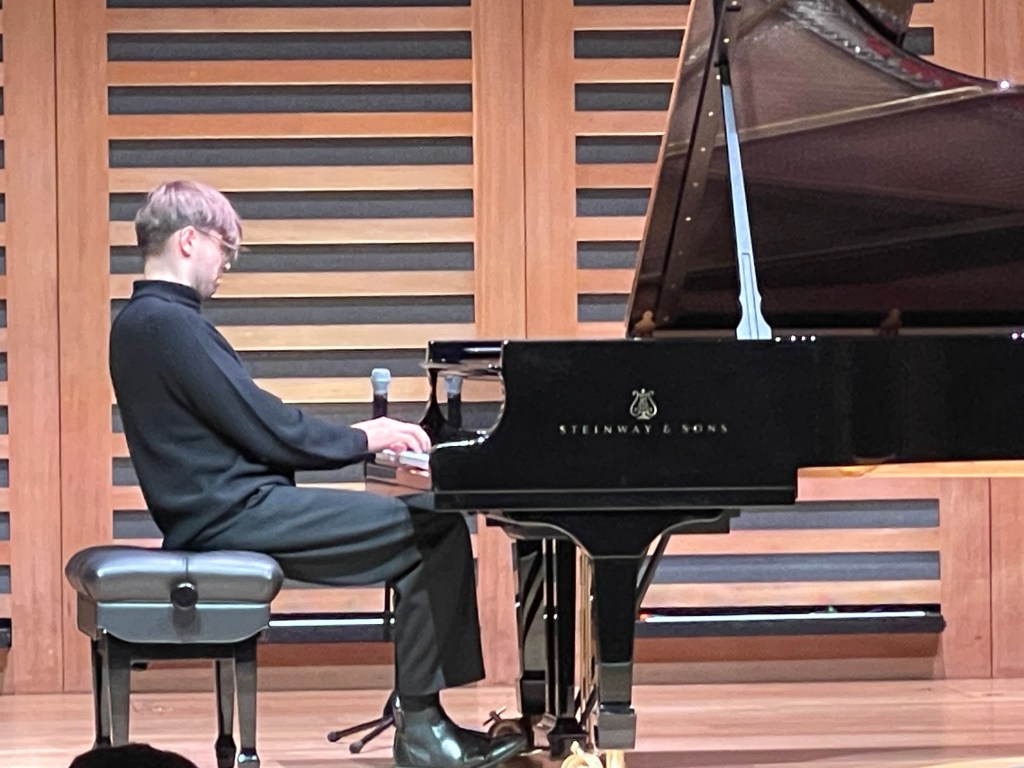
A poet speaks in all that he shared with us with masterly playing of intelligence beauty and poignant intensity. The extraordinary thing about the concert was that it was all under a cloud of poetic beauty. Tomos never overstepped or trespassed outside a sound world that was a musical language of extraordinary eloquence and subtlety with a palette of sounds that mirrored the chameleonic changes of mood and character that were the shadow of a heart beating with intense poetic potency.
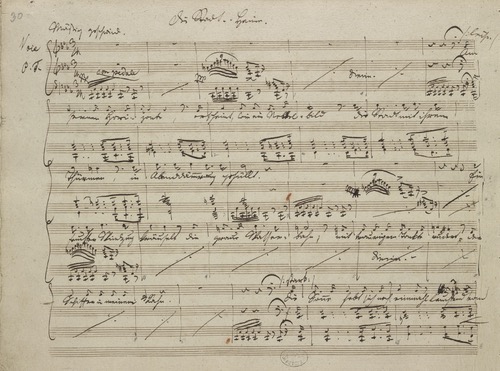
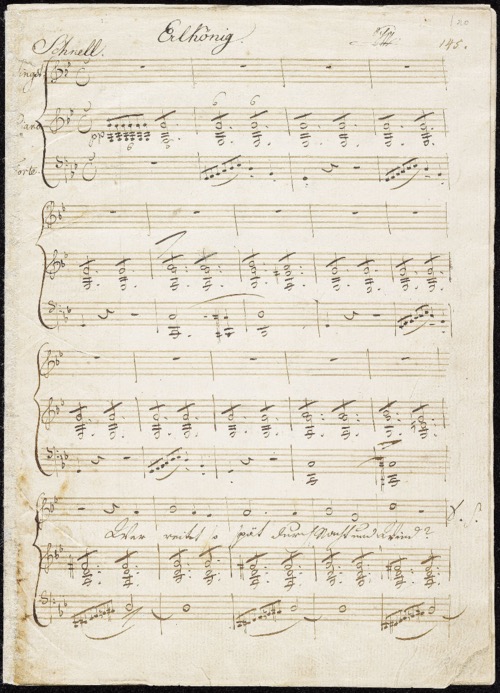
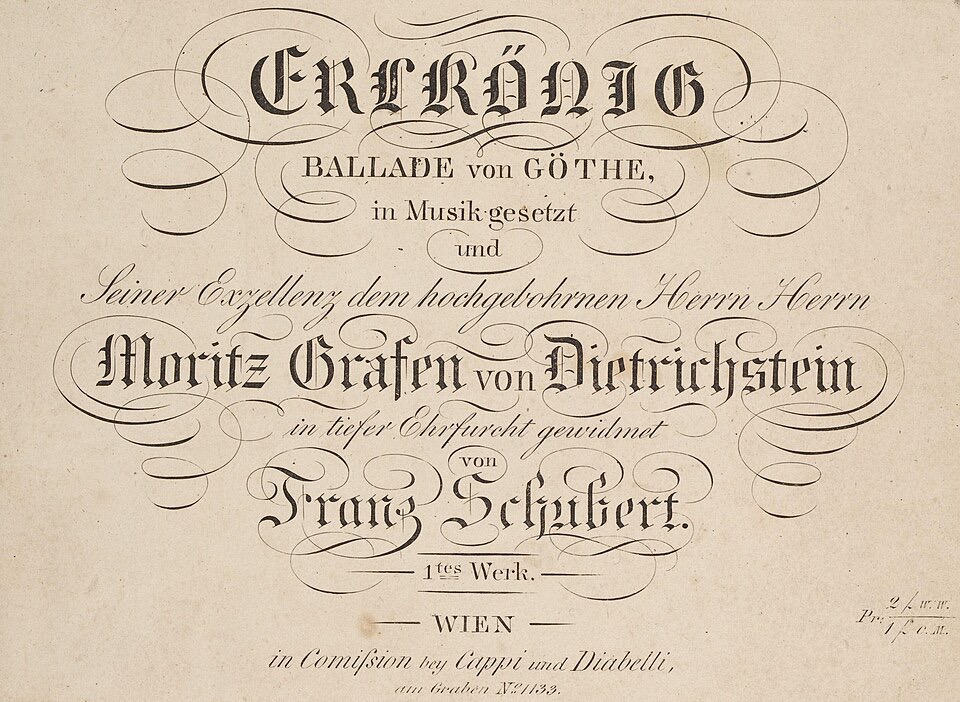
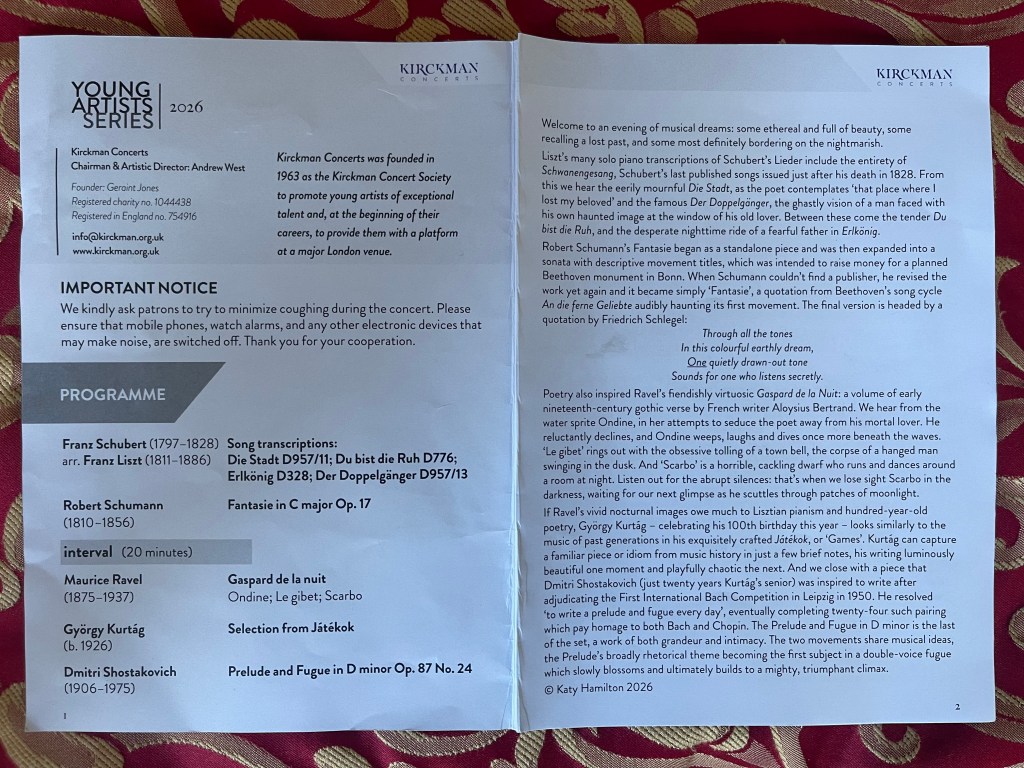
And what better way to begin than with the mysterious intensity of Heine’s ‘Die Stadt’ with an extraordinarily atmospheric rumbling bass and the fearful screams played with an extraordinary range of sounds. The scene was now set as we entered with Tomos a magic world where sounds could speak louder than words. Liszt could transform these songs into moments of harrowing emotions of grief and radiance with a technical mastery not of a showman but of a true magician who could make a black box of hammers and strings sing with more eloquence that the human voice. It is an illusion and one that Tomos fully understands as he transformed these four songs into miniature tone poems. Rückert’s ‘Du bist di Ruh’ was a mellifluous outpouring with the melodic line in the tenor register with the left hand singing with such subtle beauty and delicacy. Heine’s ‘Der Doppelgänger’ was played with sombre whispered beauty and intense weight with great gasping phrases of harrowing recognition. ‘Erlkönig’ from Goethe’s famous poem has long been a show piece for ‘ pianists’ in Liszt’s reworking, with repeated octaves ,as in his his sixth Hungarian rhapsody, that have become a workout for the muscle and resilience of athletic pianists.This was not the case with Tomas as we were not aware of the technical difficulties such was the story that he was telling with sumptuous full sounds that were never hard or ungrateful but full of meaning as each of the four characters was given a voice of startling differing colour.
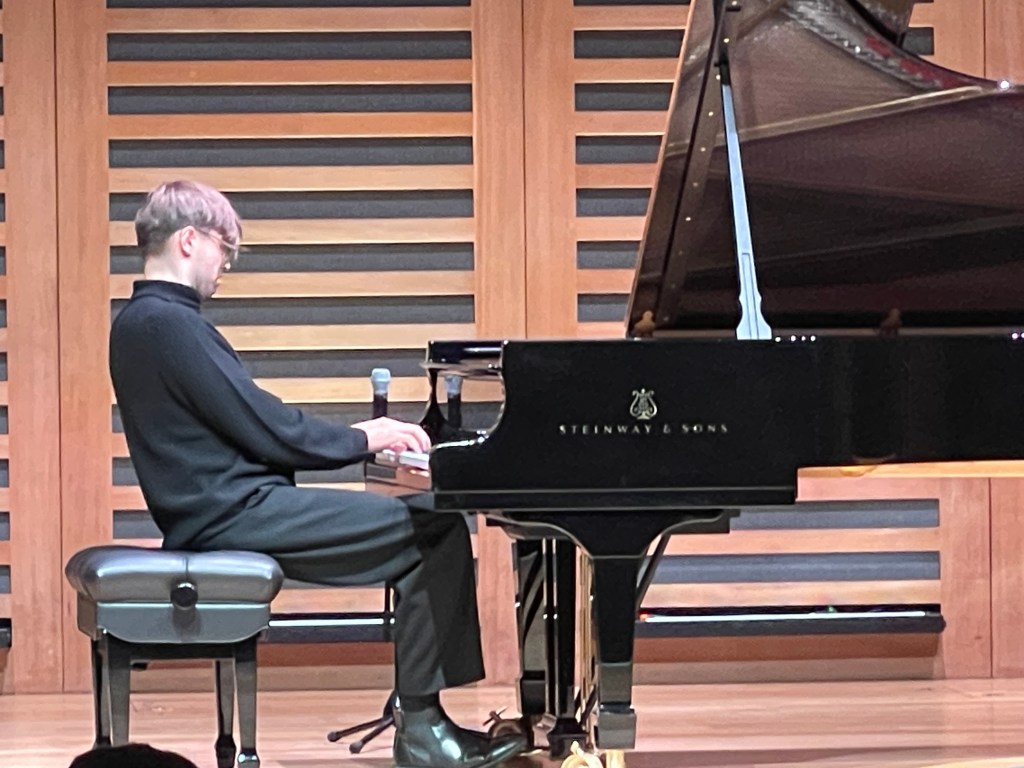
Schumann ‘Fantasie’ as Tomos said is the great love of his life and it was evident that here was a labour of love. The preface by Schlegel sums up the performance from the very first ‘G’ deep in the bass. “Resounding through all the notes In the earth’s colourful dream There sounds a faint long-drawn note For the one who listens in secret.” It was here that Tomos’s kaleidoscopic palette created the world of Schumann with sounds always from the bass, giving the possibility of opening up the colours within the piano for the world of song that this work inhabits. Even quoting Beethoven’s song cycle ‘An die ferne Geliebte ‘ To the distant beloved’ in the coda of the first movement with the lines ‘Accept then these songs beloved, which I sang for you alone‘. Schumann wrote to Clara: The first movement may well be the most passionate I have ever composed – a deep lament for you. Robert and Clara still had to suffer separation before they finally married four years later. All this was beautifully illustrated by Tomos with playing of great sweep but also scrupulous attention to Schumann’s markings and in particular to a sense of balance where the left hand could create waves of sound on which Schumann’s passion could ride. The ‘Adagio’ marking before retaking the tempo was beautifully managed , where in lesser hands one can loose the musical line but Tomos had us straining to hear the resolution before passion overtook once again. There was a luminosity to the ‘Im Legendenton’ which followed from a silence that is not actually in the score but Tomos considered as a deep breath before this sumptuous central episode.Keeping the line too in the final ‘Adagio’ where the Beethoven quote shaped the music with such subtle sounds, each chord played with a different colour but all under the same roof as Schumann had so clearly written to be played in one long pedal.
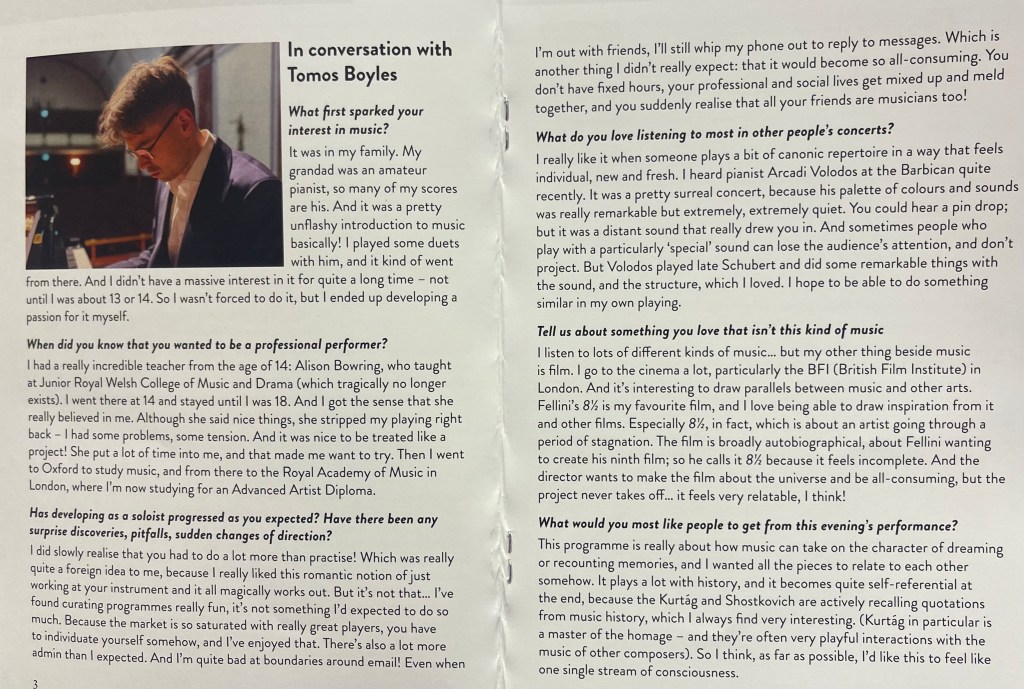
The second movement too was played not in the dry rhythmic way it can seem on the page ( some have likened it to Beethoven’s op 101 sonata which is in many ways purely rhythmic) but Tomos played it under the same cloud of sound and the rather repetitive dotted rhythms became songs without words.It gave an overall architectural shape to this rather jagged writing that became more melodic than rhythmic.Fearlessly playing the treacherous leaps as this first part reaches a climax just showed us that he was thinking more of the music than the technical challenges involved . It makes Tureck’s remark that she does not play wrong notes even more actual as this is always a musical conversation of great poetic portent and not an athletic exercise! The central episode ‘Etwas langsamer’ was played with deep wondrous sounds ( as he had found in ‘Du bis die Ruh’ ) as the music gradually took wing leading to the coda that he had mentioned in his introduction but that he played shaping the music and fearlessly allowing full reign to his heart rather than his mind ! There was magic in the air with the final movement where Agosti had written in my score Cla- ra above the opening long ‘A’ and ‘G’ . Again the deep bass notes added an anchor on which wondrous sounds could open up within the piano with tender intensity and poignant beauty. The melodic line shadowed by the inner voices creating a depth of sound of intense vibrant emotions. Gradually allowing the music to expand without any percussive sounds but sumptuous full meaningful expressions of poetic beauty. Ravishing whispered beauty as the final page opens and the melodic line passes from the soprano to the bass with the music moving inexorably forward as the heart beats faster only to lie exhausted barely able to arrive at the final three chords. Miraculously played in diminuendo leading to a silence that was truly golden as we shared moments of peace together in one of those magic moments where music can unite strangers caught in the spell that only music can create.
‘Gaspard de la nuit’ has long been a show piece for the piano. Ravel deliberately set out to write a piece technically harder than Balakirev’s ‘Islamey’ resulting in the final movement ,’Scarbo’, of transcendental difficulty. But these are poems by Aloysius Bertrand depicting the water nymph ‘Ondine’ and the desolation of the gallows swinging in the distance with ‘Le Gibet’ and finally the devilish antics of ‘Scarbo’. Tomos produced ravishing washes of sounds as ‘Ondine’ was heard with glowing radiance splashing in and out of the water. A miracle of writing for the piano where Tomos could create wonderful sounds with etherial glissandi and thunderous passionate outbursts. A lone ‘ Ondine’ stranded on her own was played with barely whispered sounds before erupting into a cadenza of glowing fluidity. Tomos brought his mastery of sound to ‘Le Gibet’ where the tolling bell was to be heard throughout with chordal atmospheres magically evoked. Ravel marks the melodic line ‘un peu en dehors mais sans expression’ and it was here that the glowing luminosity and ravishing beauty of Tomos’s playing created a truly magical atmosphere. The bare opening notes of ‘Scarbo’ deep in the bass breaking the spell with chords that were vibrant repeated notes.Tomos played, as far as I could see, with one pointed finger and obviously a wrist of rubber which is an amazing tour de force. Bursting into passionate cries of romantic effusions with a dynamic drive of irrepressible energy. There was a moment of reflection with deep bass notes and swirling mysterious sounds until the impish Scarbo appears with even more tricks up his sleeve which Tomos played with masterly control and driving intensity.
Three of Kurtag’s ‘Games’ were played with refreshing brilliance and prepared the scene for Shostakovich’s 24th Prelude and Fugue that Tomos played with fantasy and monumental brilliance.
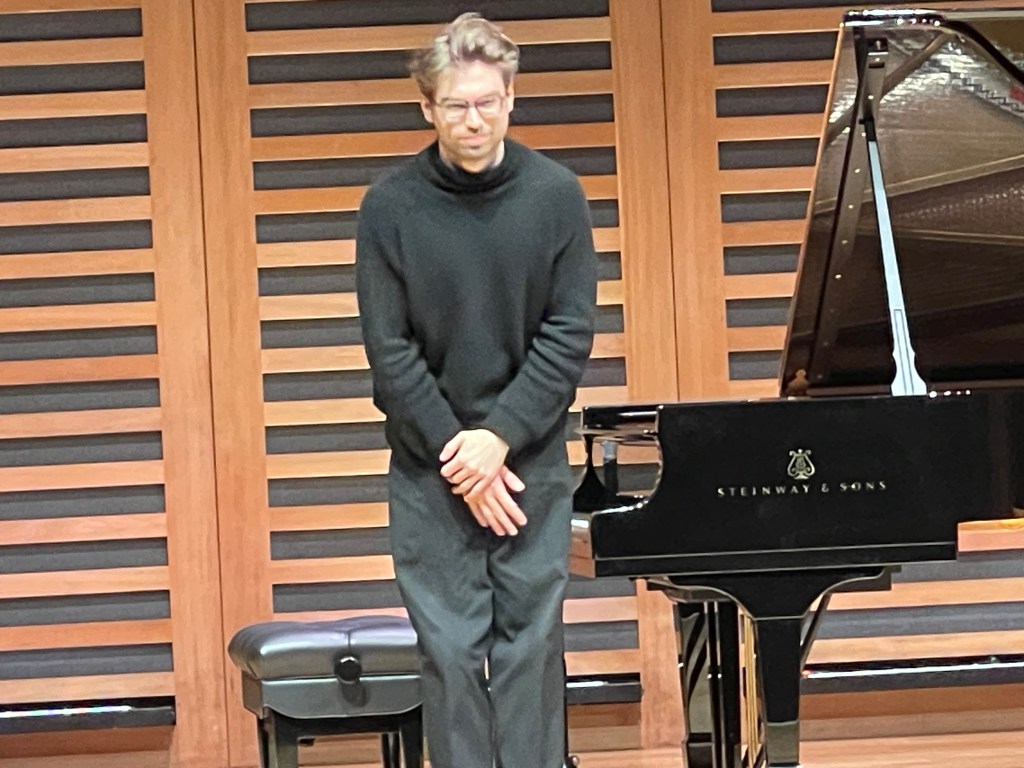
No encores were possible after such a feast of music but I am quite sure that we will be hearing a great deal more of this young Welsh poet of the keyboard in the not too distant future.
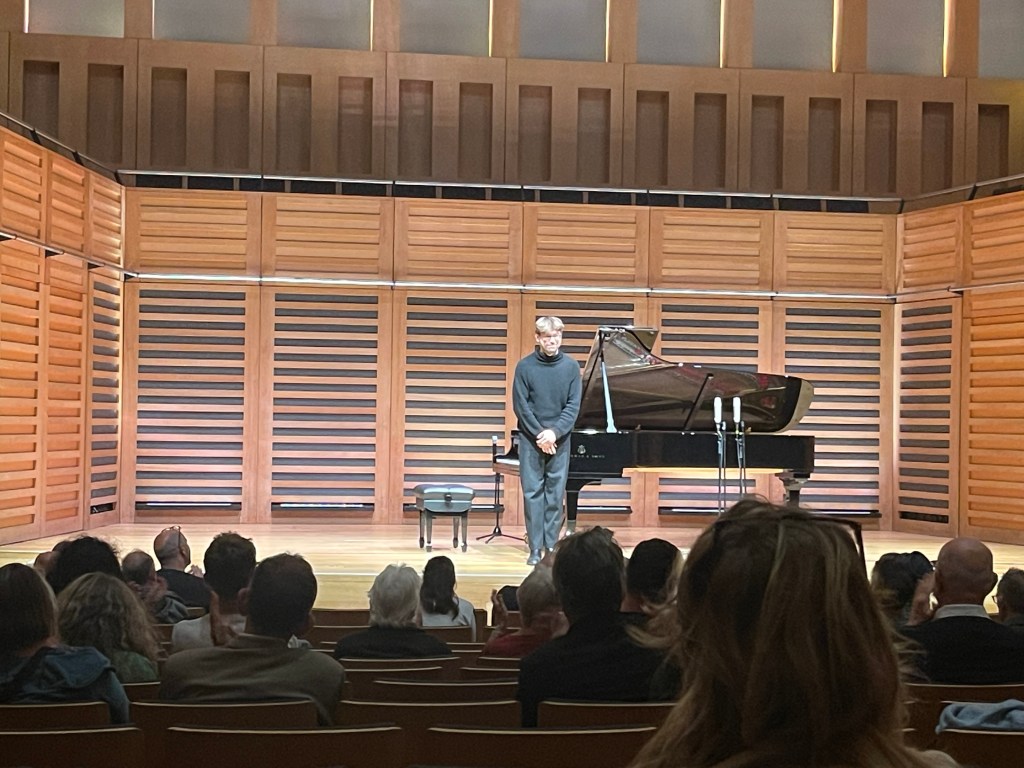
Schubert’s deeply uncanny Der Doppelgänger – where the narrator encounters a ghostly double when visiting the home of his former lover – leads into the romantic dreams of Schumann’s Fantasie. Gaspard de la Nuit explores the more expressionistic, nightmarish side of dreaming, evoking seduction, grotesqueness, and terror. Kürtag’s Játékok playfully engage with memory through homage. Tomos Boyles closes the programme with Shostakovich’s glorious final tribute to the memory of Bach.
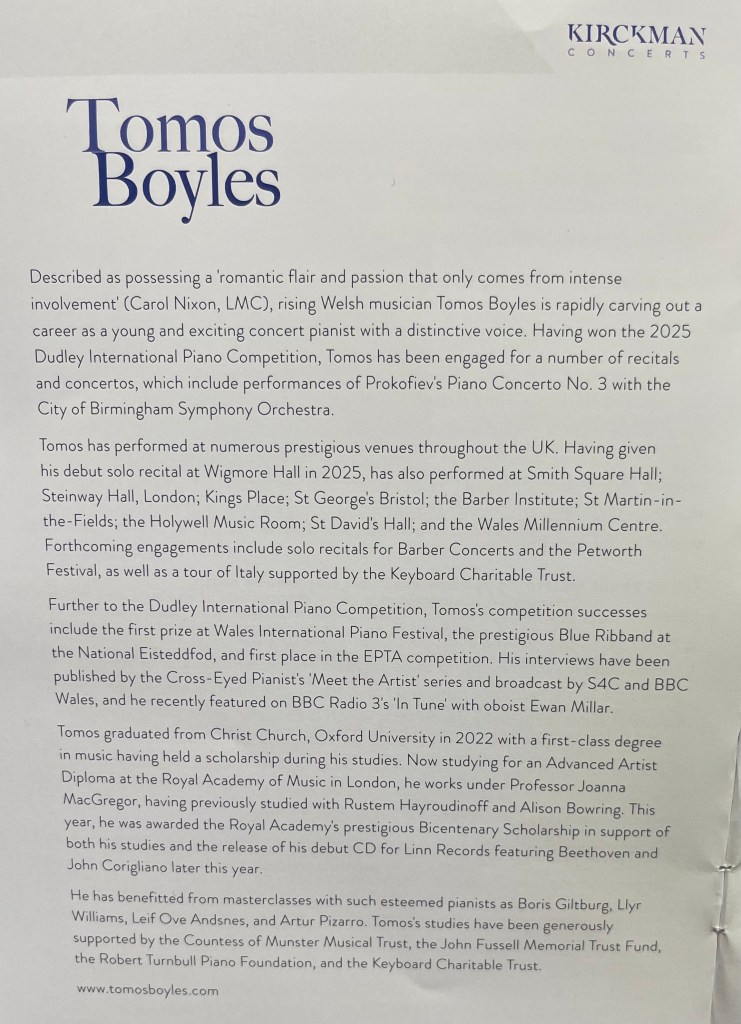
Tomos described as possessing a ‘romantic flair and passion that only comes from intense involvement’ (Carol Nixon, LMC), rising Welsh musician Tomos Boyles is rapidly carving out a career as a young and exciting concert pianist with a distinctive voice. Having won the 2025 Dudley International Piano Competition, Tomos has been engaged for a number of recitals and concertos, which include performances of Prokofiev’s Piano Concerto No. 3 with the City of Birmingham Symphony Orchestra.
Tomos has performed at numerous prestigious venues throughout the UK. Having given his debut solo recital at Wigmore Hall in 2025, has also performed at Smith Square Hall; Steinway Hall, London; Kings Place; St George’s Bristol; the Barber Institute; St Martin-in-the-Fields; the Holywell Music Room; St David’s Hall; and the Wales Millennium Centre. Forthcoming engagements include solo recitals for Barber Concerts and the Petworth Festival, as well as a tour of Italy supported by the Keyboard Charitable Trust.
Further to the Dudley International Piano Competition, Tomos’s competition successes include the first prize at Wales International Piano Festival, the prestigious Blue Ribband at the National Eisteddfod, and first place in the EPTA competition. His interviews have been published by the Cross-Eyed Pianist’s ‘Meet the Artist’ series and broadcast by S4C and BBC Wales, and he recently featured on BBC Radio 3’s ‘In Tune’ with oboist Ewan Millar.
Tomos graduated from Christ Church, Oxford University in 2022 with a first-class degree in music. Now studying for an Advanced Artist Diploma at the Royal Academy of Music in London, he works under Professor Joanna MacGregor, having previously studied with Rustem Hayroudinoff and Alison Bowring. This year, he was awarded the Royal Academy’s prestigious Bicentenary Scholarship in support of both his studies and the release of his debut CD for Linn Records featuring Beethoven and John Corigliano later this year.