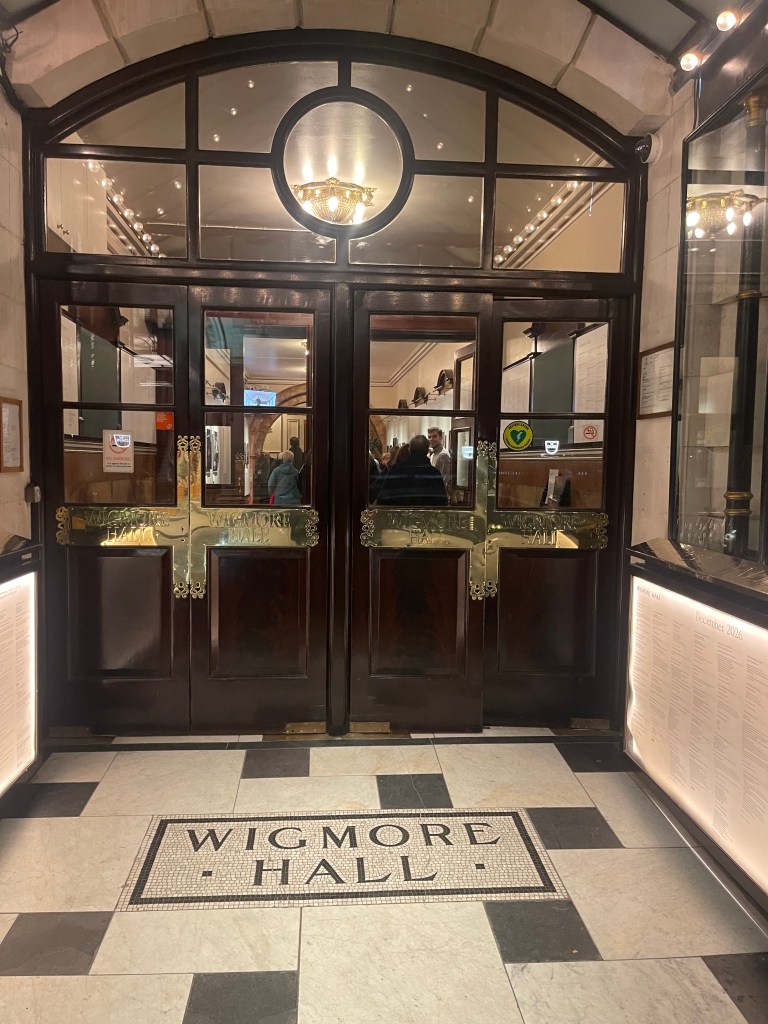
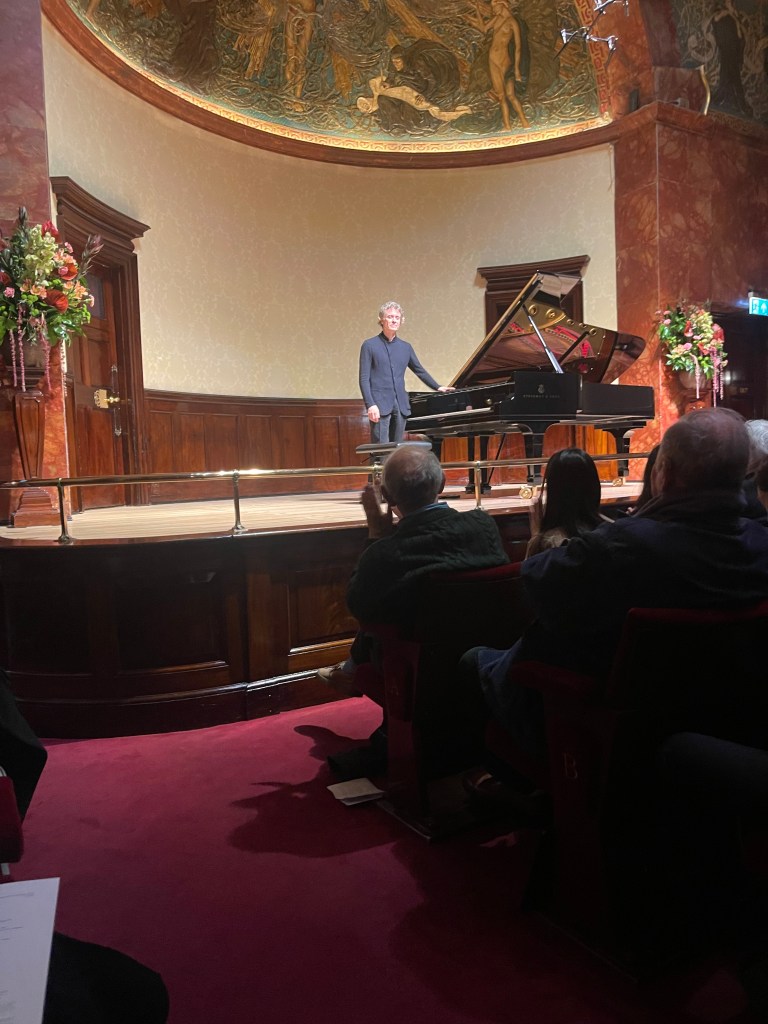
Another eclectic programme from Paul Lewis , the true heir to Alfred Brendel.
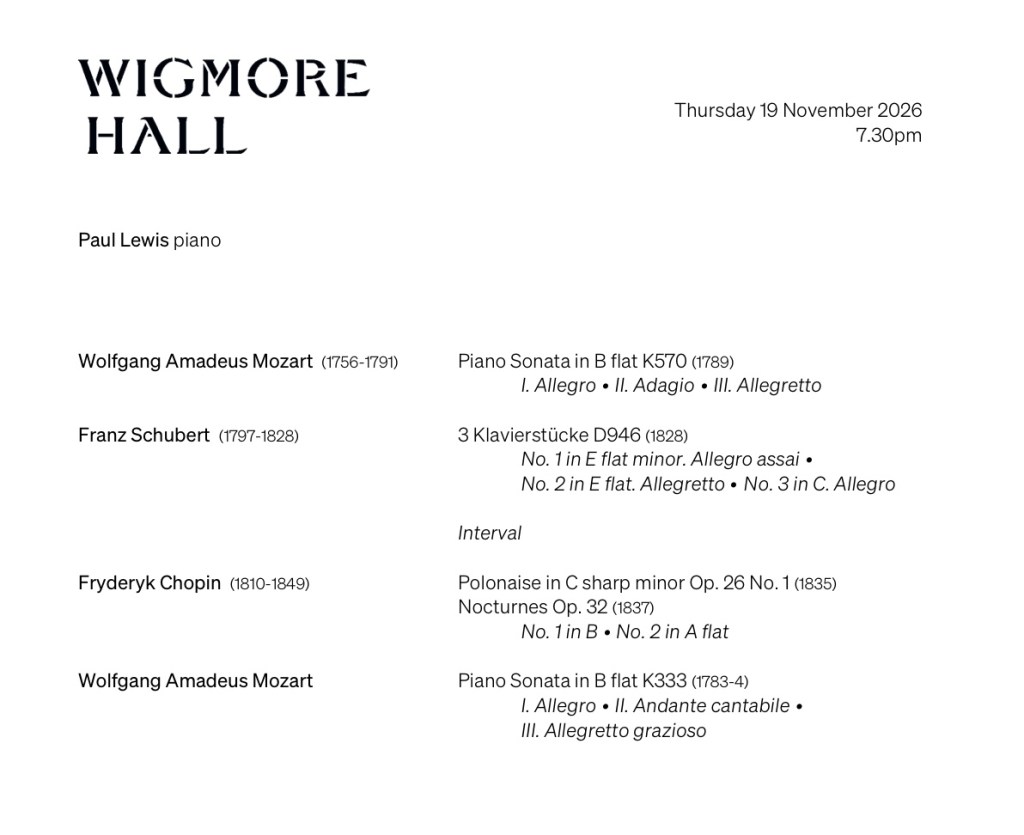
A programme starting and ending with Mozart and sandwiched in between was Schubert and lesser known pieces by Chopin. Hardly box office, but when played by one of the most discerning musicians of our time there were queues at the box office hoping for returns. An improvisation by Poulenc as an encore concluded an evening of pure music making from a pianist that one can trust as being the humble medium between the composer and the listener.
Schnabel used to say that the difference between his programmes and those of his colleagues was that the second half of his programmes were as boring as the first ! We live in an age were entertainer and interpreter are getting confused, as soloists arrive on stage with an I pad instead of allowing the music to enter their souls with in-depth study before sharing with the public . An age where quantity rather than quality reign…….. but not at the Wigmore Hall! It is a rare place where a public of discerning music lovers flock to hear artists who they can trust . Artists who think more of the composer than themselves. It was just such a concert last night that filled this shrine with inspired music making.
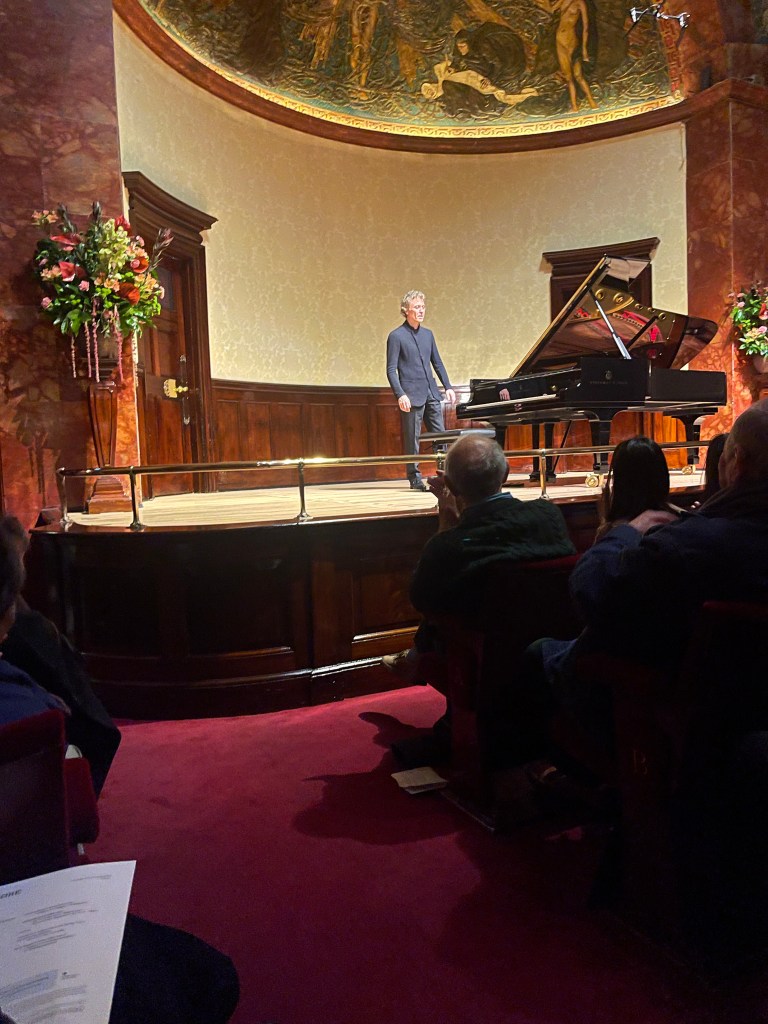
The concert opened with Mozart’s penultimate Sonata from 1789 where elegance and grace was turning into something more dramatic , and febrile and it was exactly this element that Paul underlined. There was a certain elegance as he allowed the long phrases to answer each other before a rather Beethovenian second subject that he played with great drive and impatience as the fast passages were hardly given time to breathe. In fact there was this constant contrast between the operatic and the dramatic that he underlined with an energy that at times sounded breathless. A beautiful bold tone with minimum of pedal allowed the music to speak with a clarity and purity but lacking, from choice, in colour. The ‘Adagio’ flowed beautifully with a yearning of mellifluous fluidity. Although Mozart left no indications for the performer Paul found the ideal changes of mood and character with subtle stylish inflections as the ‘Allegretto’ just flew from his fingers with infectious operatic ‘joie de vivre’, to the final chord thrown off with masterly ease.
In March of his final year,1828, the only public concert in the composer’s lifetime to feature exclusively Schubert’s own music was held in honour of the first anniversary of Beethoven’s death. The financial success of the evening gave the composer a much-needed monetary respite, and an ensuing burst of springtime creativity would leave us with the richest musical legacy of his career. But it would not last long. The ravages of syphilis brought his composing nearly to a halt in August. By the middle of November, Schubert was dead, not yet 32. The Three Piano Pieces of D. 946 were dated May 1828, but left un-titled and were not published until they were collected and edited by Brahms (anonymously) in 1868.it was here that Paul’s playing was suddenly full of colour with passionate intensity and poetic imagination. Forty years on from the Mozart Sonata K 570 the piano had acquired a pedal that Anton Rubinstein declared was the soul of the piano. It was this soul that suddenly illuminated the piano, as Paul played the opening with a palpitating drive and every time it returned giving it a slightly different face. E flat minor turning into B major for the ‘Andante’ of noble eloquence and expansive beauty. Gradually working its way to the major key for a triumphant ending that died away to a whisper for the opening of the ‘Allegretto’. Played with simplicity and generosity as it gradually erupts into a short lived tempest that Paul played with Brendelian drive and pointed engagement, before dissolving into the simple pastoral beauty of the opening. Straying into even further displaced keys where a sublime Schubertian outpouring appears, as the clouds have passed and Schubert shows us the paradise that he can see on the horizon. The last movement just shot from Paul’s hands with the syncopated vibrant energy of the ‘Allegro’ as it has been hinted that these three ‘Impromptus’ make up a complete Sonata. Straying into D flat for one of Schubert’s most heavenly apparitions that Paul played with the disarming simplicity of a ländler before the race to the end and the two final Beethovenian chords.
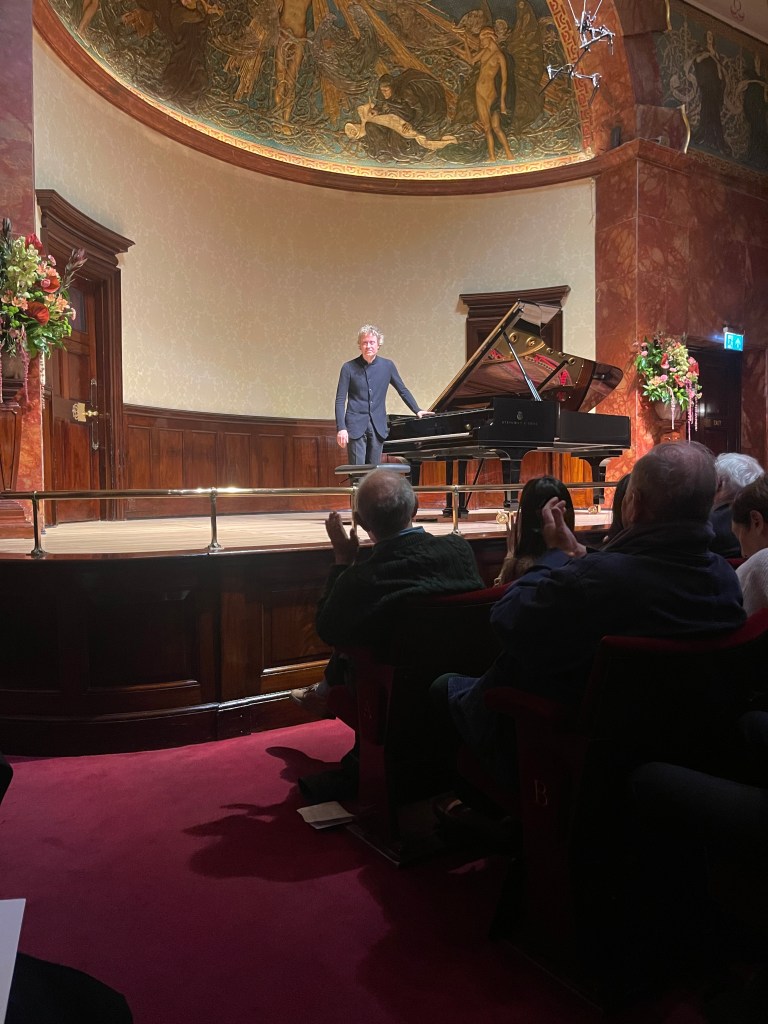
Paul had chosen three works of Chopin that are rarely heard in the concert hall. The Polonaise in C sharp minor op 26 is the first of Chopin’s Polonaises to be published in 1836 and its ‘Allegro Appassionato’ opening soon gives way to a beautiful simple bel canto of disarming beauty. Paul playing with refined good taste and a freedom that was also directed from a bass acting as an anchor for the delicacy and improvisatory character of what was being floated with glowing beauty above. Paul playing with a freedom but always an architectural shape of aristocratic nobility.
The two Nocturnes op 32 are those most rarely heard and they were revealed as being two miniature tone poems of poetic significance. The disarming simplicity of the first nocturne Paul played with refined good taste before arriving at the startling cadenza where Chopin interrupts simple radiance and beauty with dramatic declamations before the final imperious chords. The simplicity of the opening of the second Nocturne belies the agitated central episode that Paul played with a superb sense of balance and passionate conviction. This is the nocturne that was used for the Ballet Les Sylphides orchestrated by Glazunov , and this central episode has an almost orchestral texture to it before returning to the beautiful bel canto which Chopin dismisses this time with two simple arpeggiated chords that Paul threw off with knowing wilfulness.
The concert ended with the other Sonata in B flat K. 333 from 1783 -4. Playing with a grace and style, free of the dynamic drive of the later one with which he opened. An ‘Andante cantabile’ played with subtle colouring and refined sense of balance and the last movement interrupted by a cadenza of freedom and brilliance almost making this a concerto without orchestra of brilliance a genial invention .
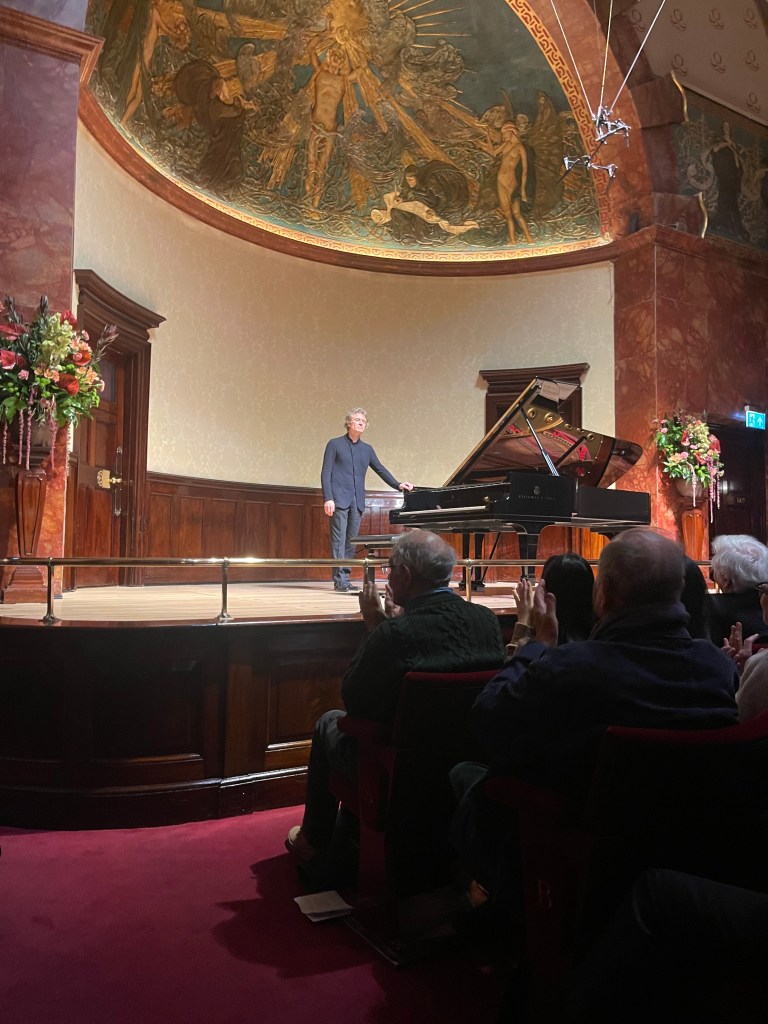
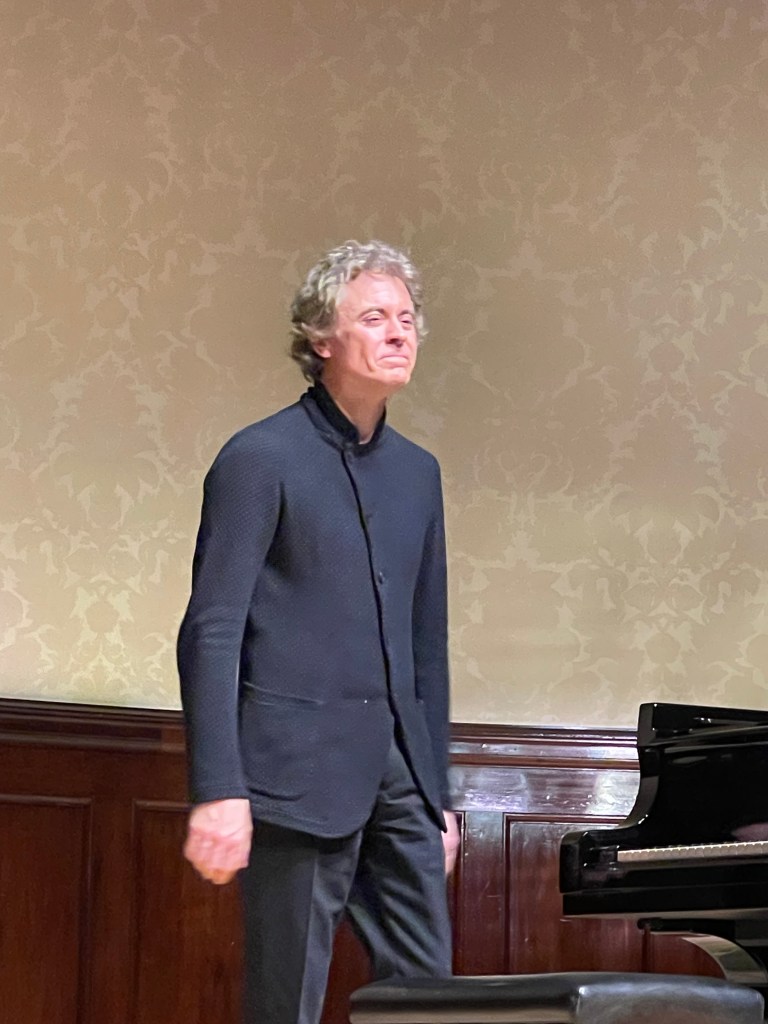
An encore with Poulenc’s beguiling ‘Homage à Edith Piaf’ played with insinuating charm and perfumed seduction, was Paul’s way of thanking his ever faithful audience of discerning music lovers at the Wigmore Hall.
https://christopheraxworthymusiccommentary.com/2024/03/20/christopher-axworthy-dip-ram-aram/

