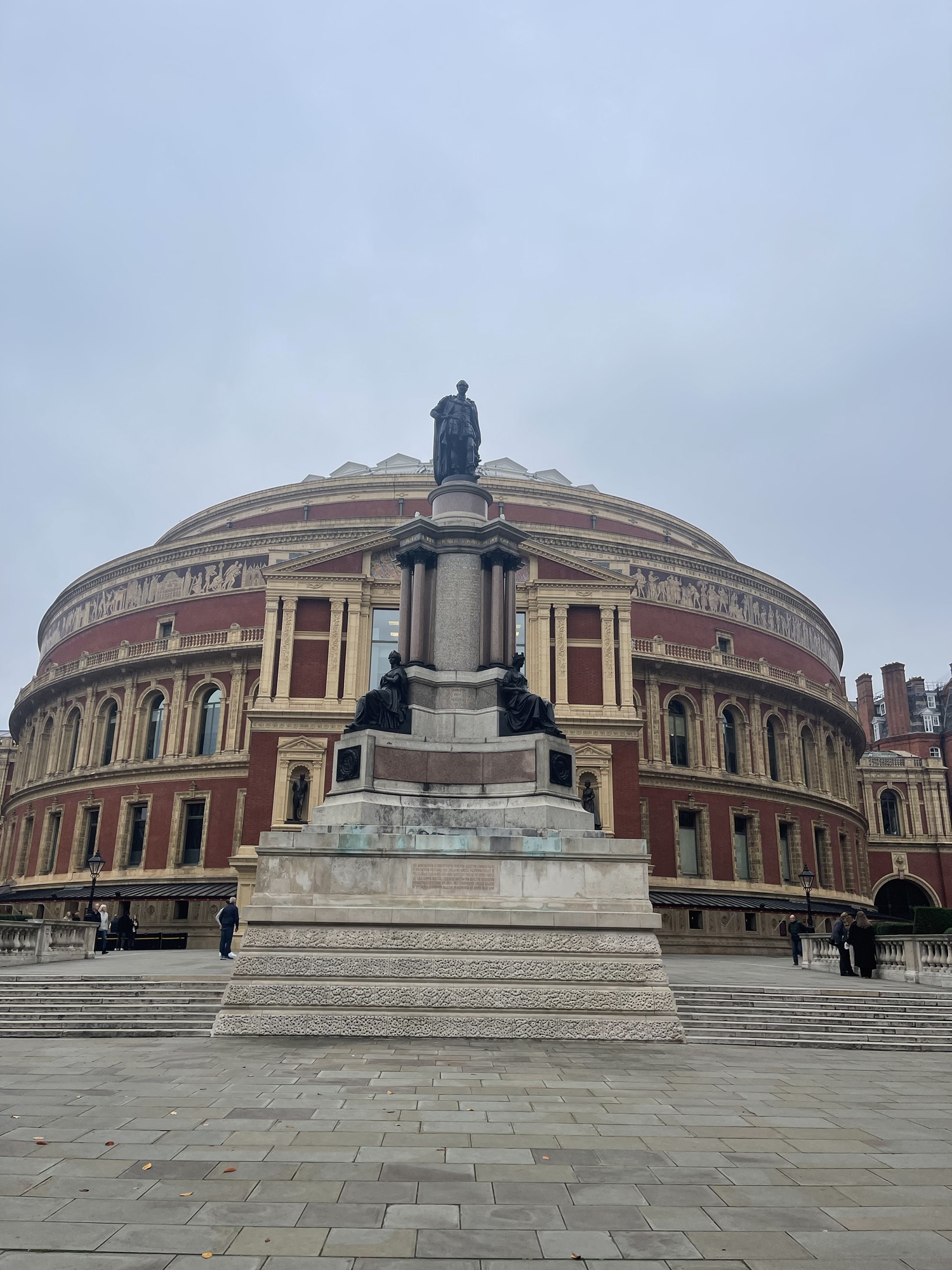
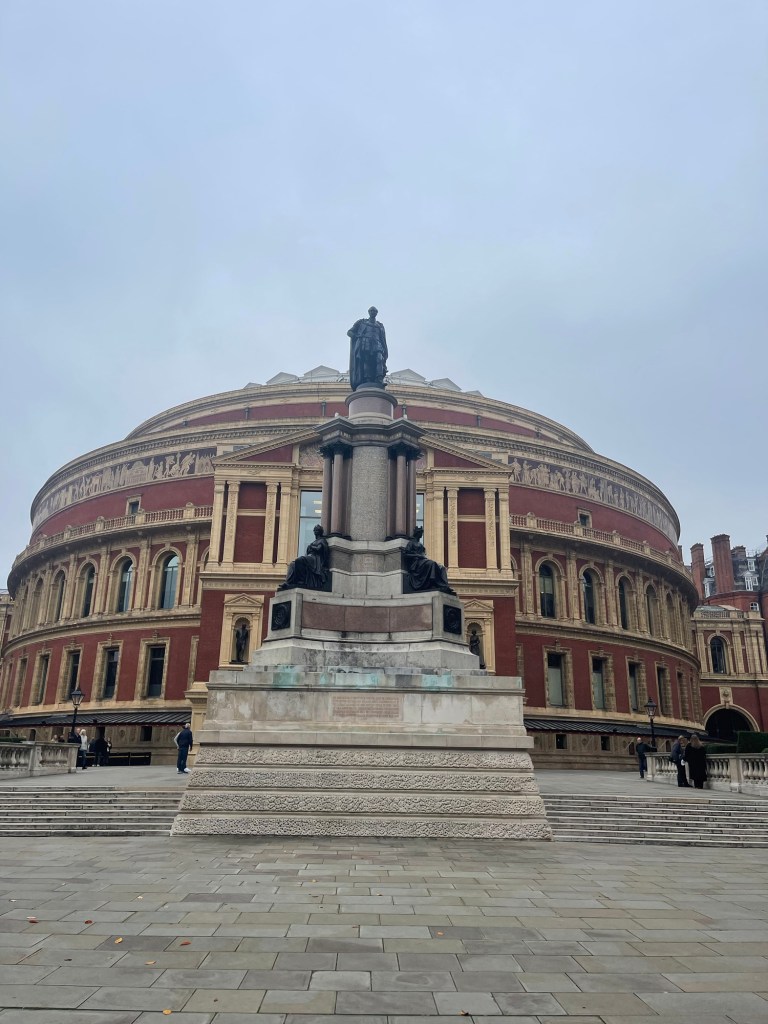
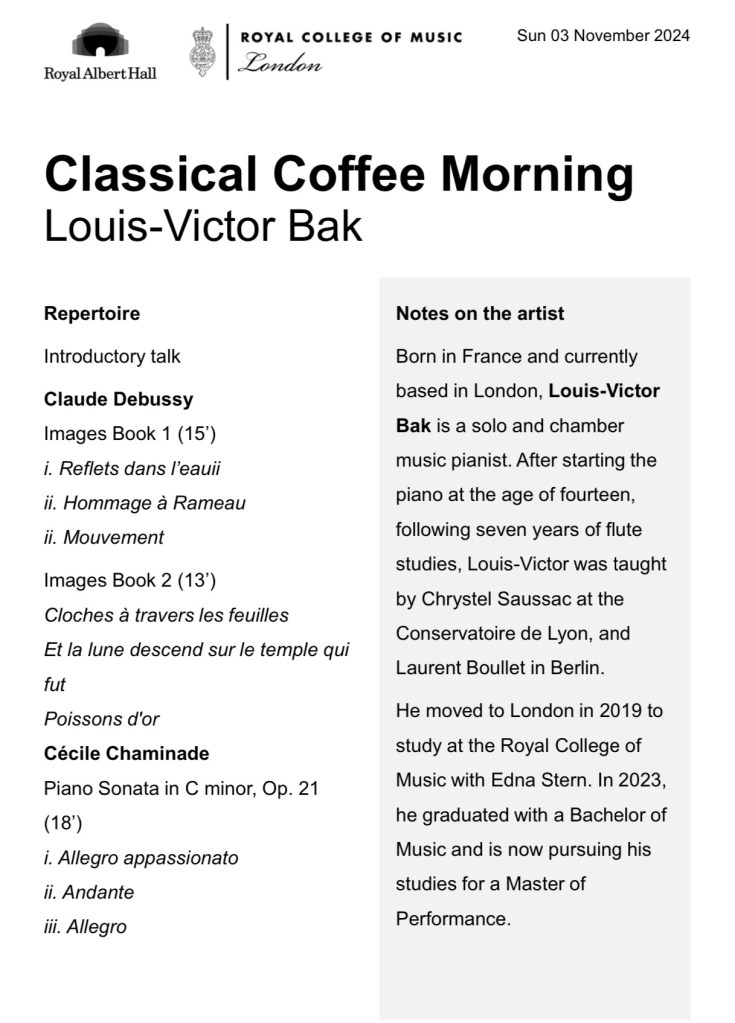
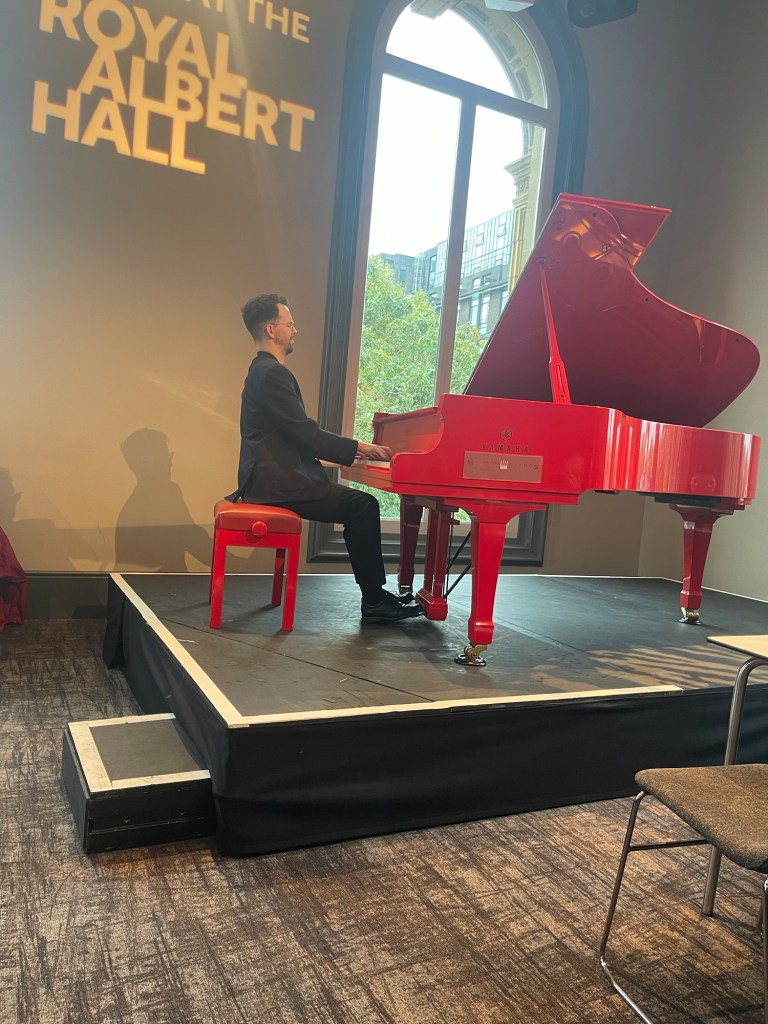
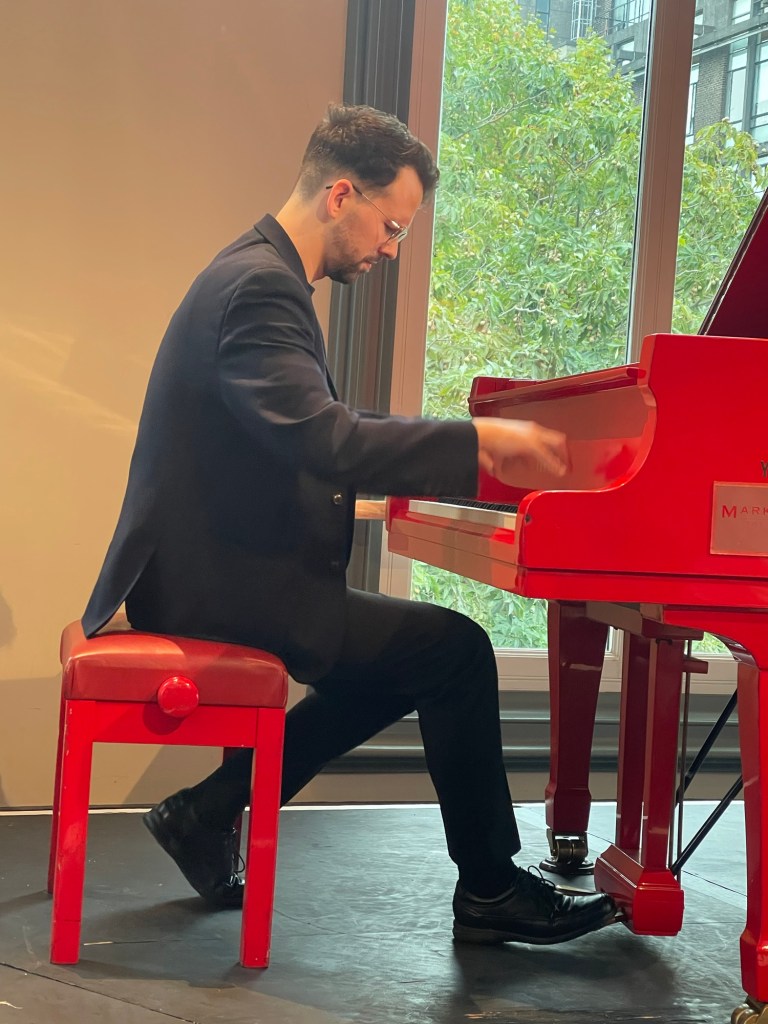
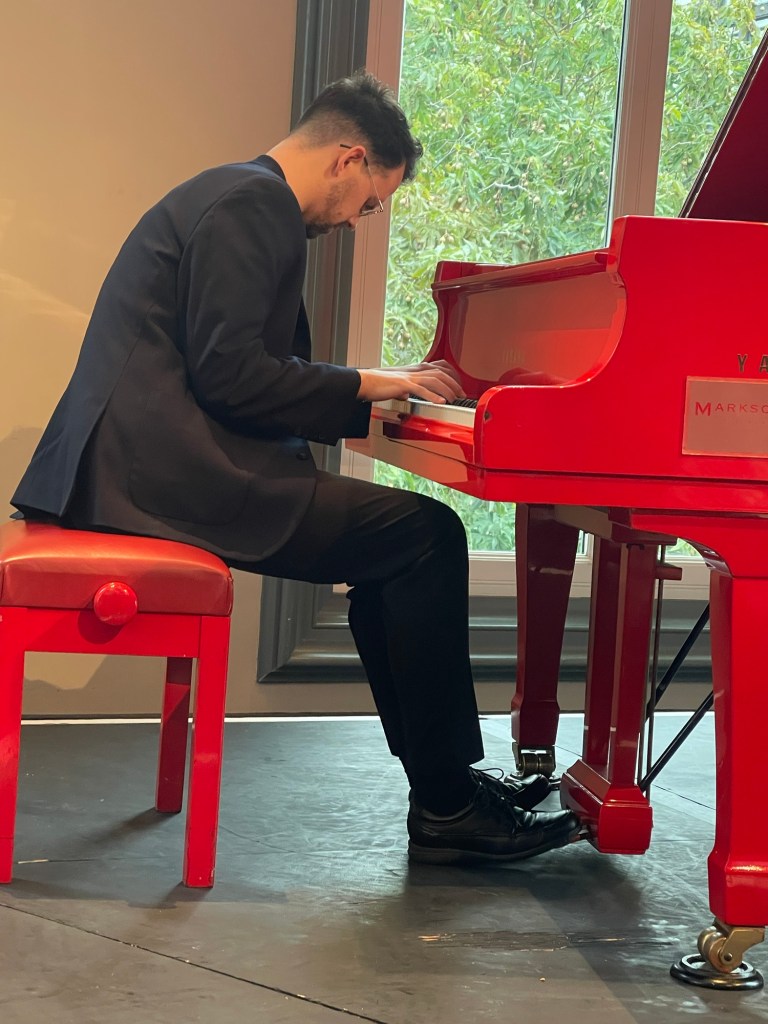
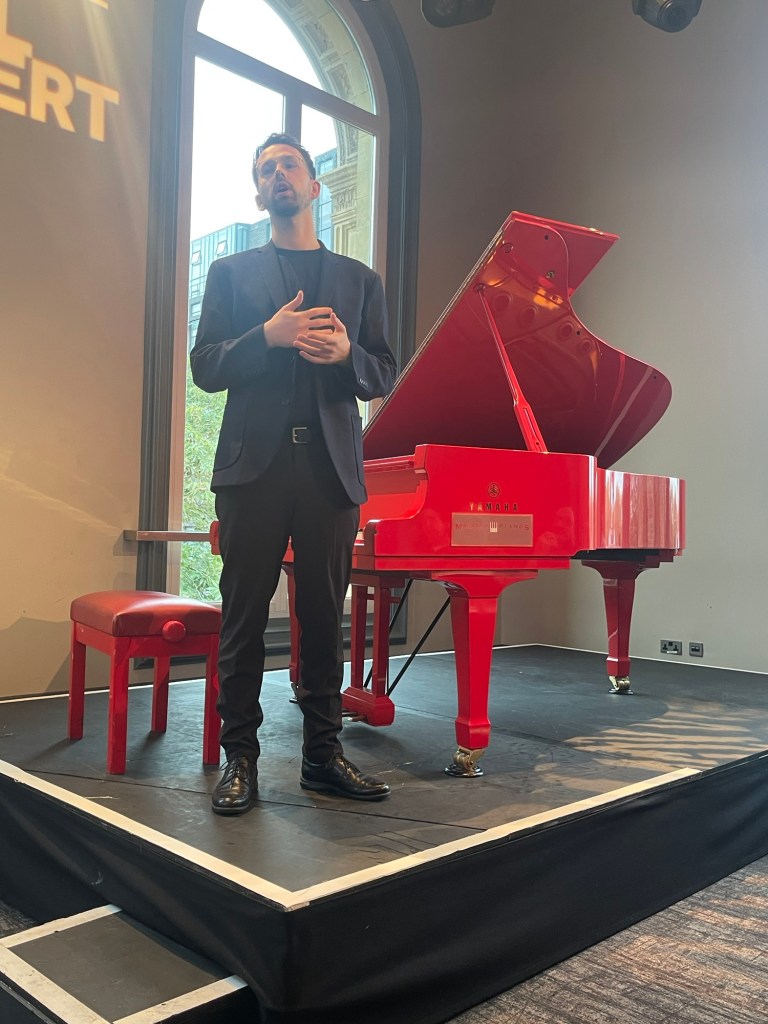
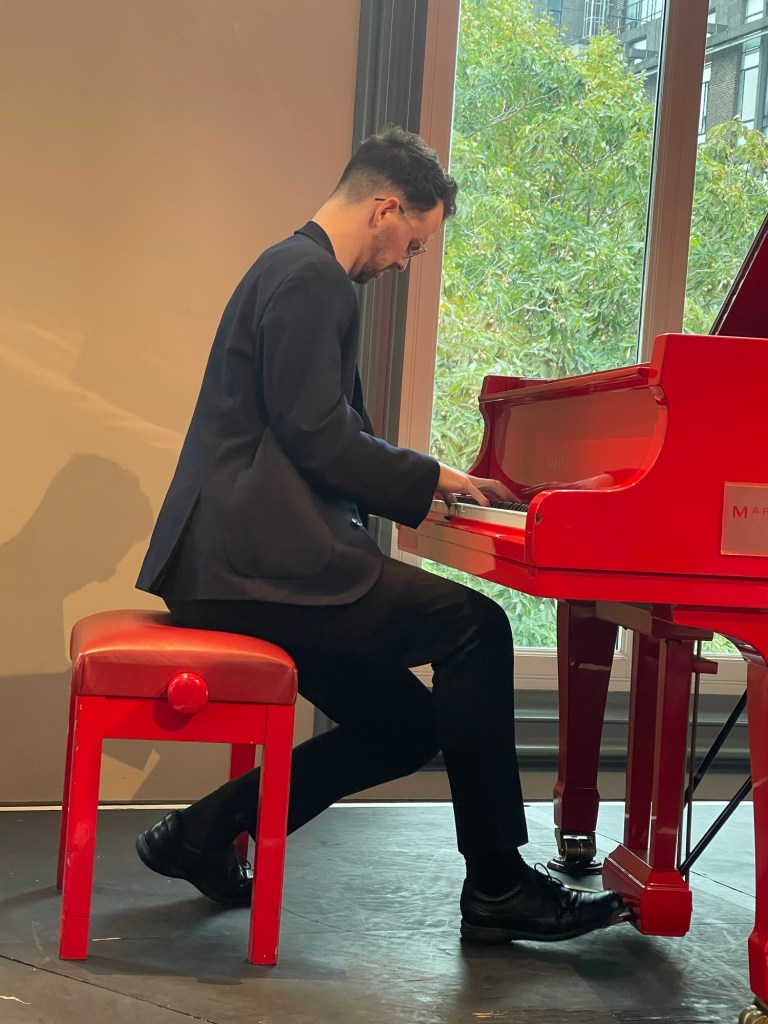
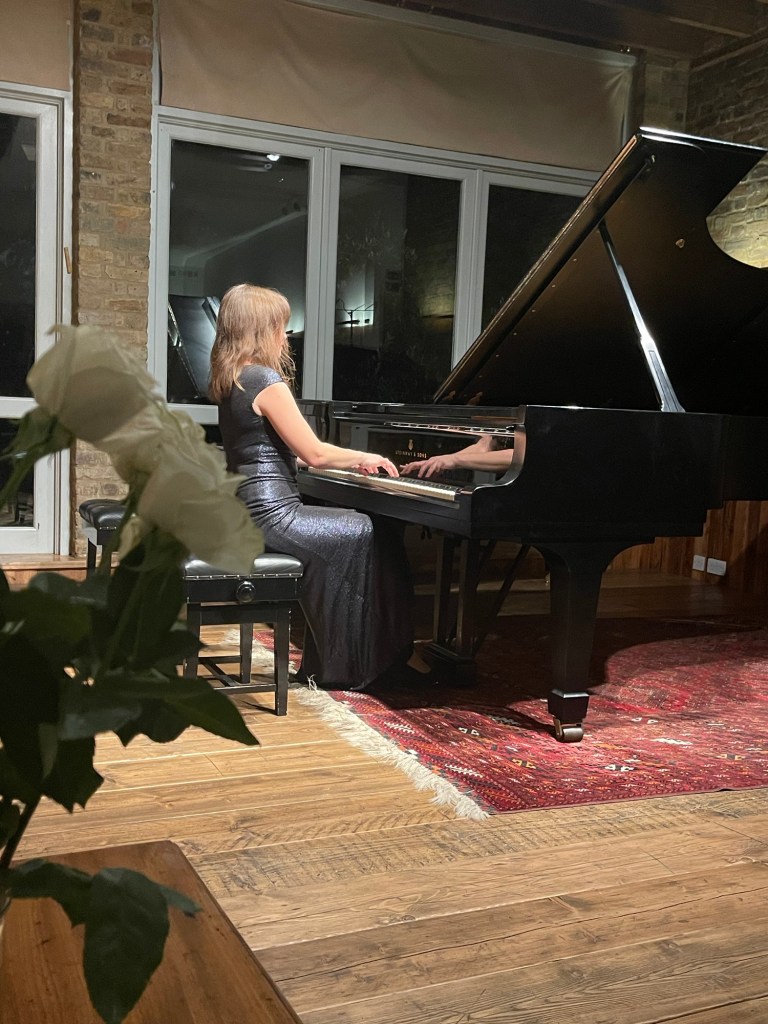
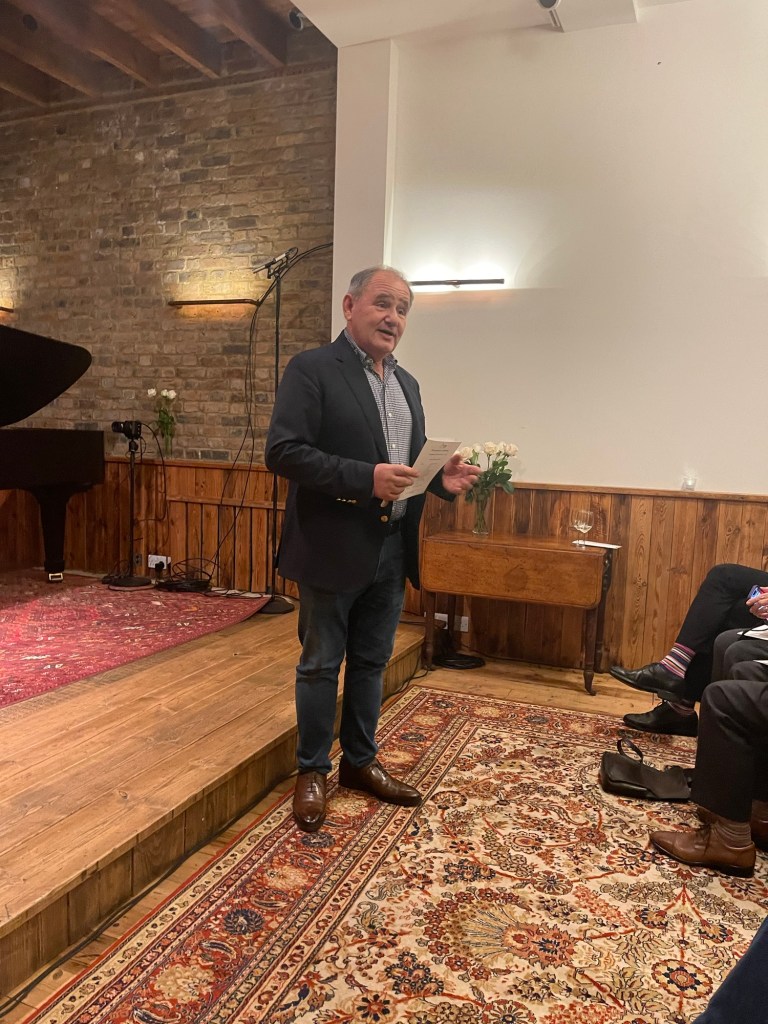
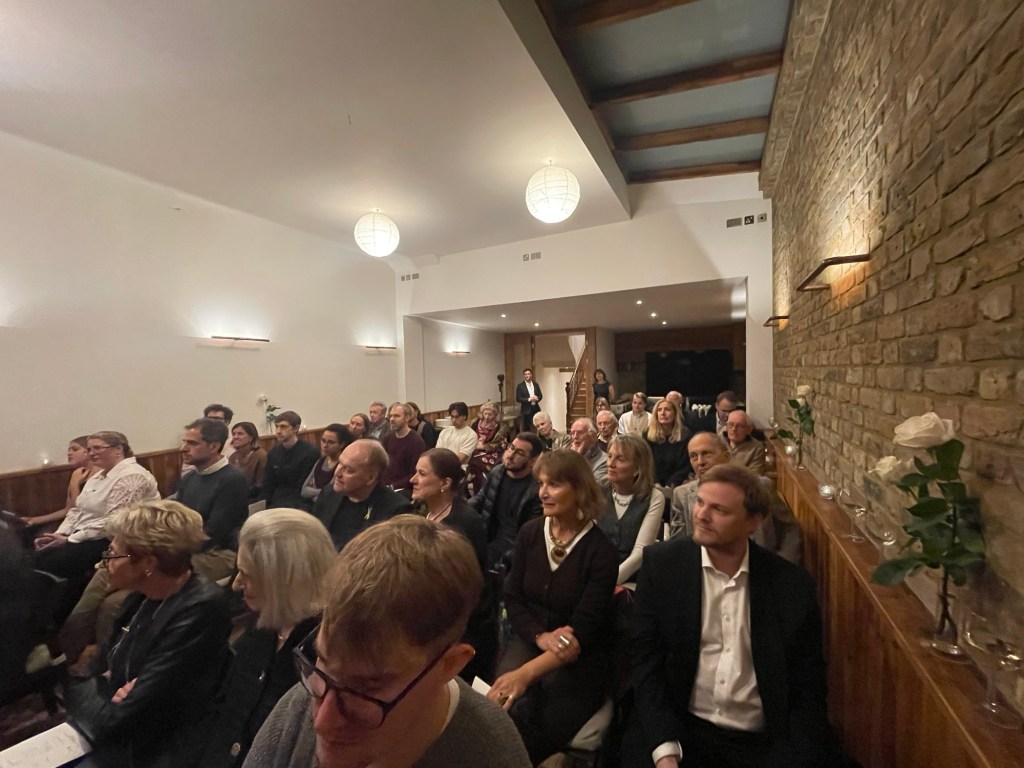
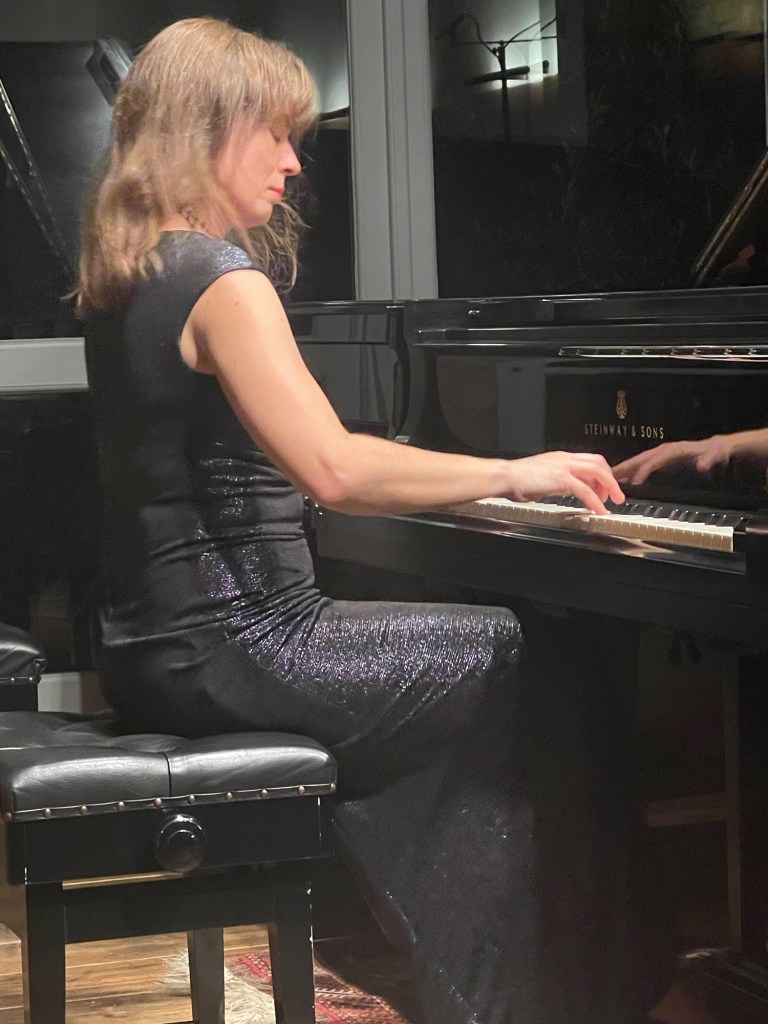
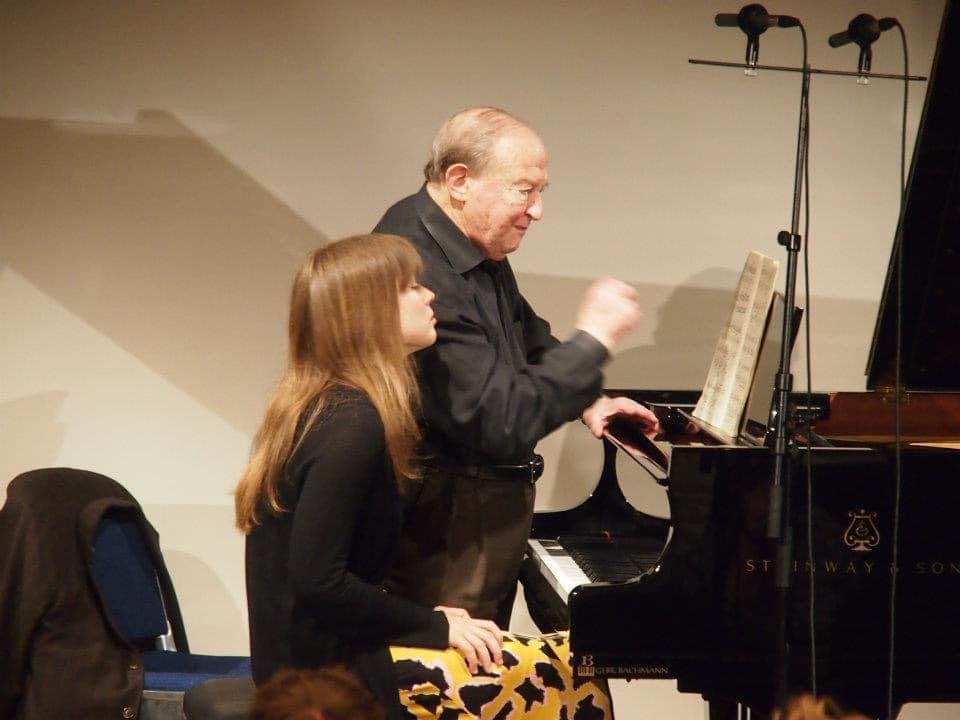
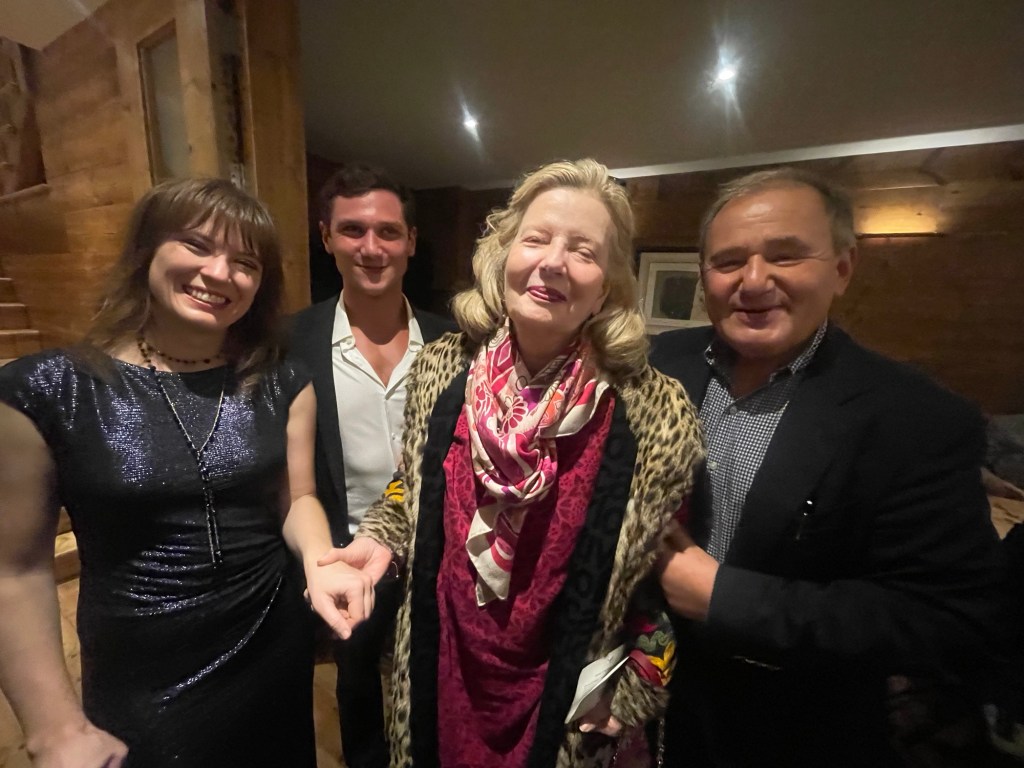
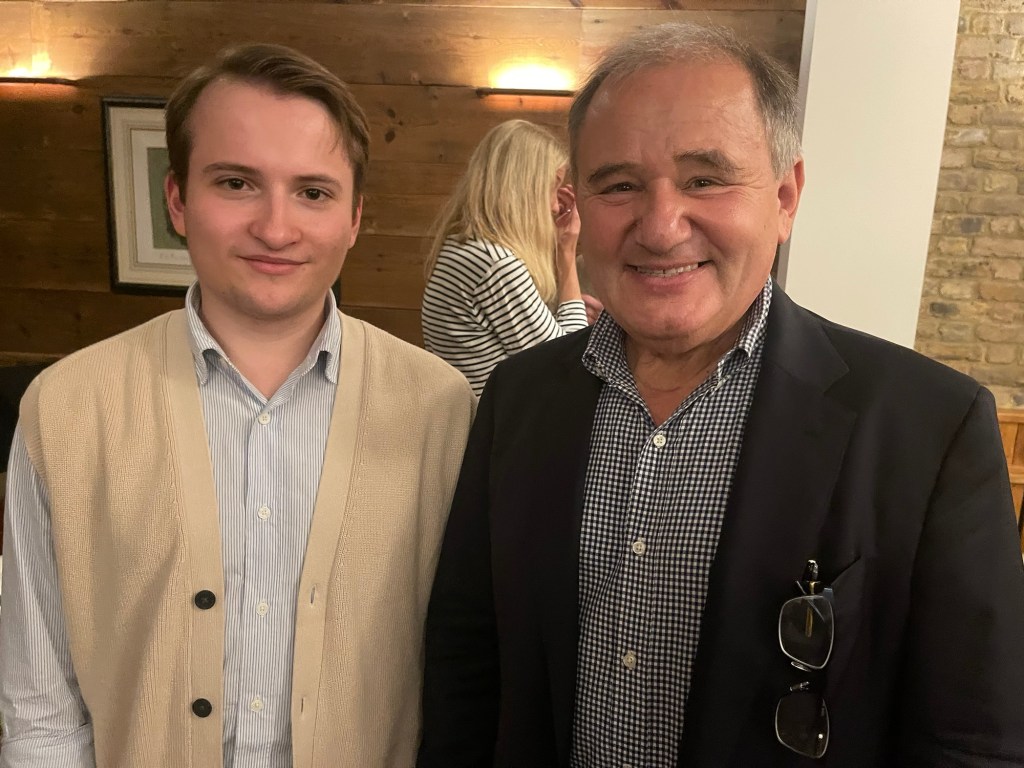
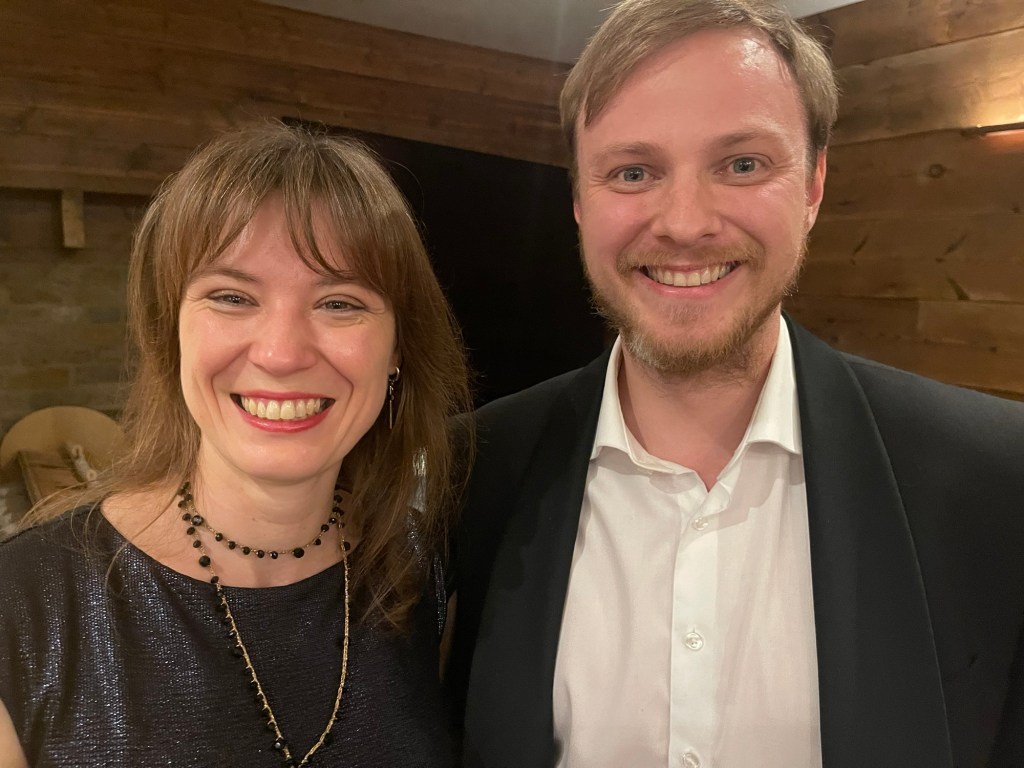
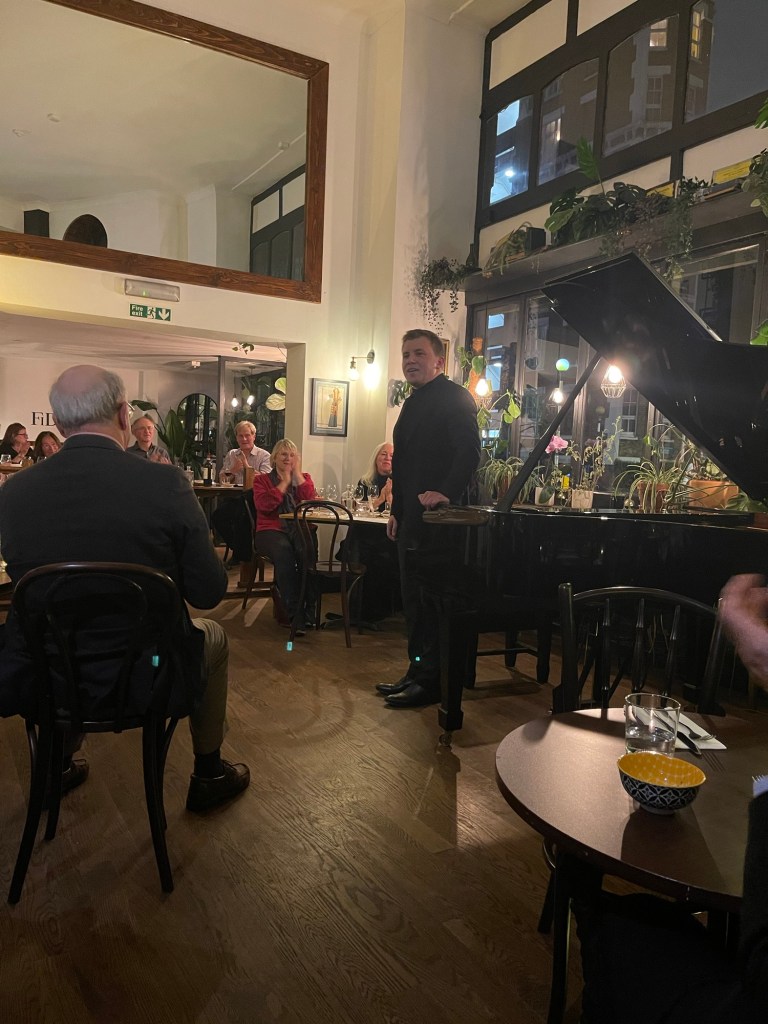
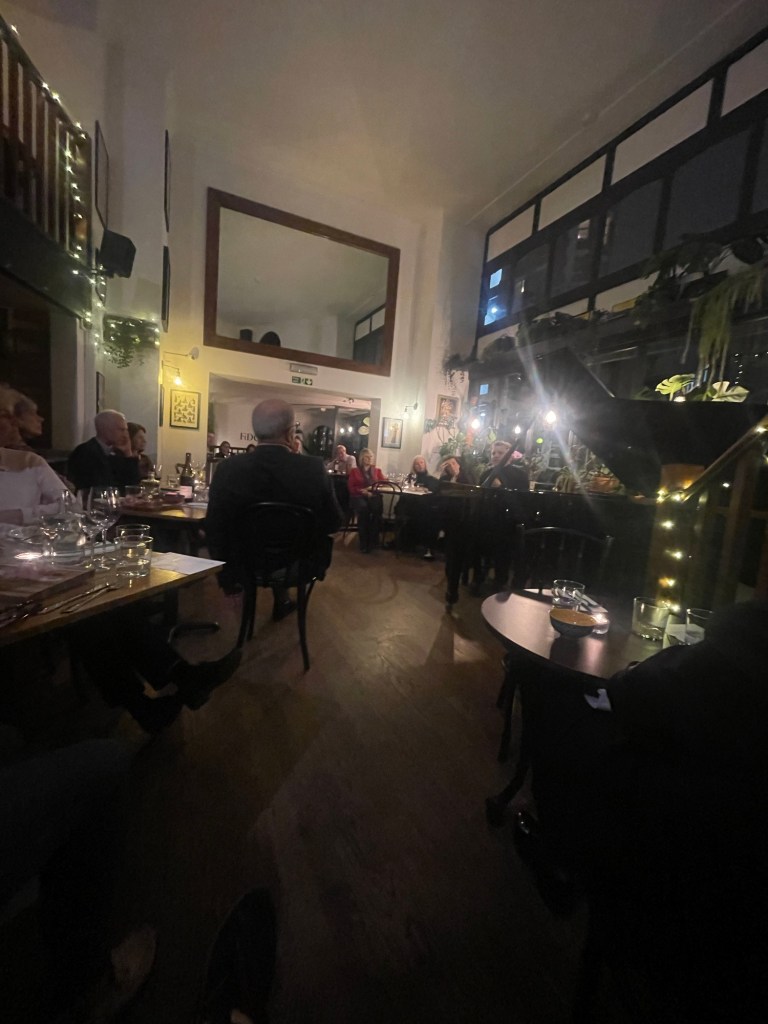
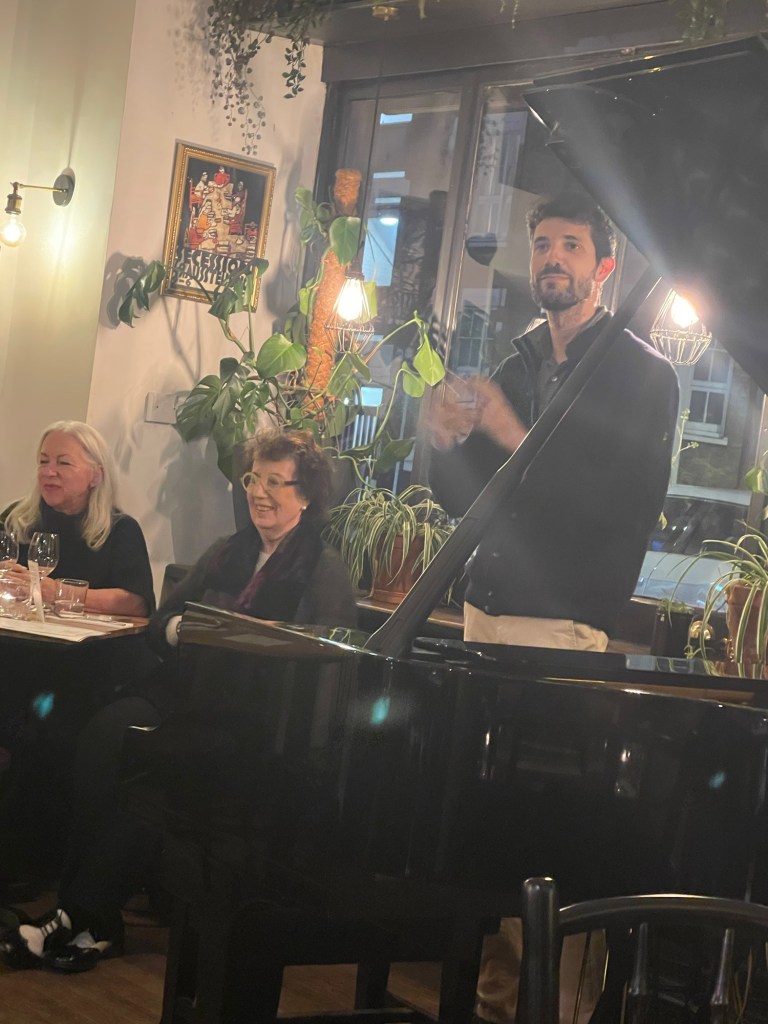
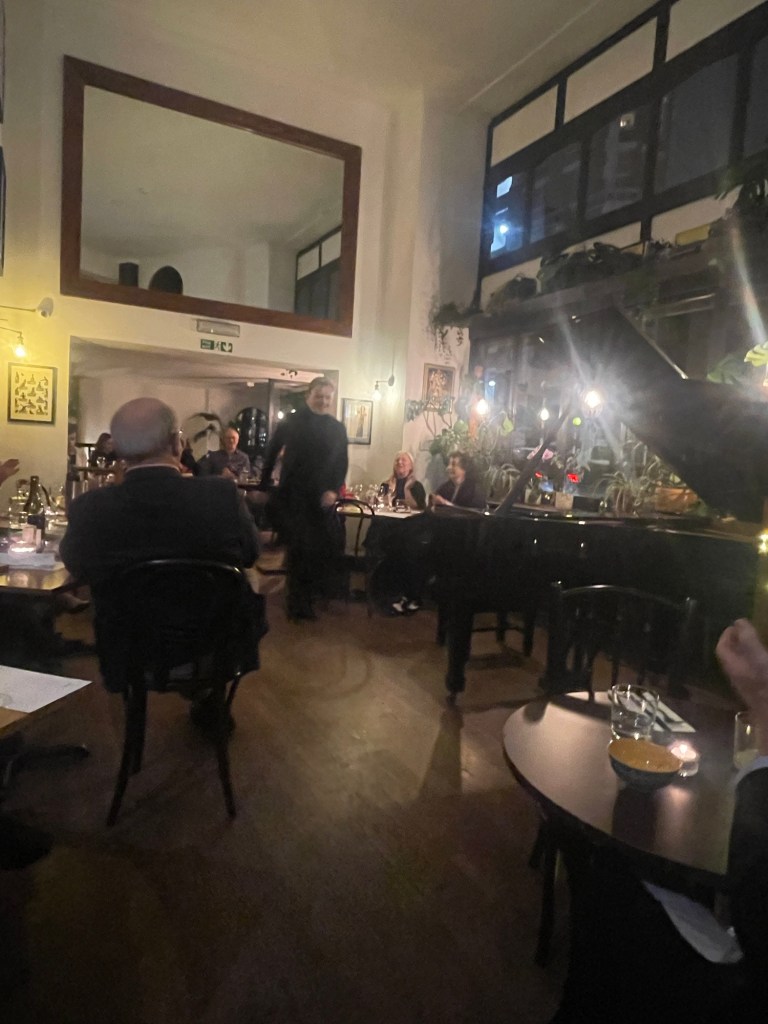
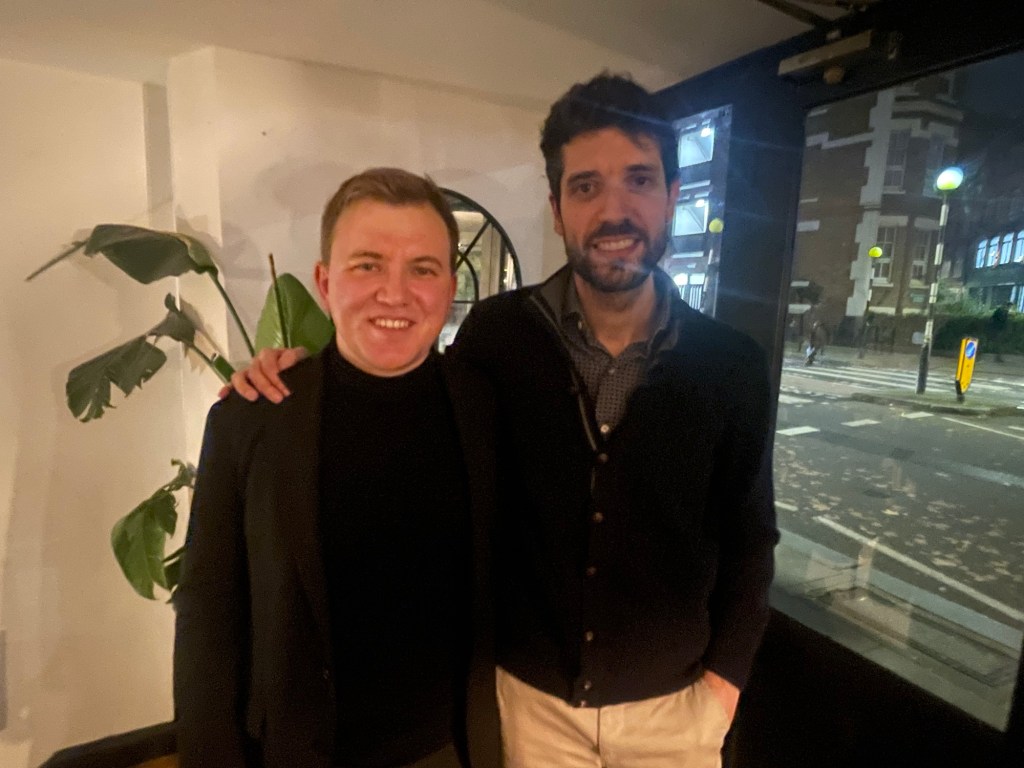
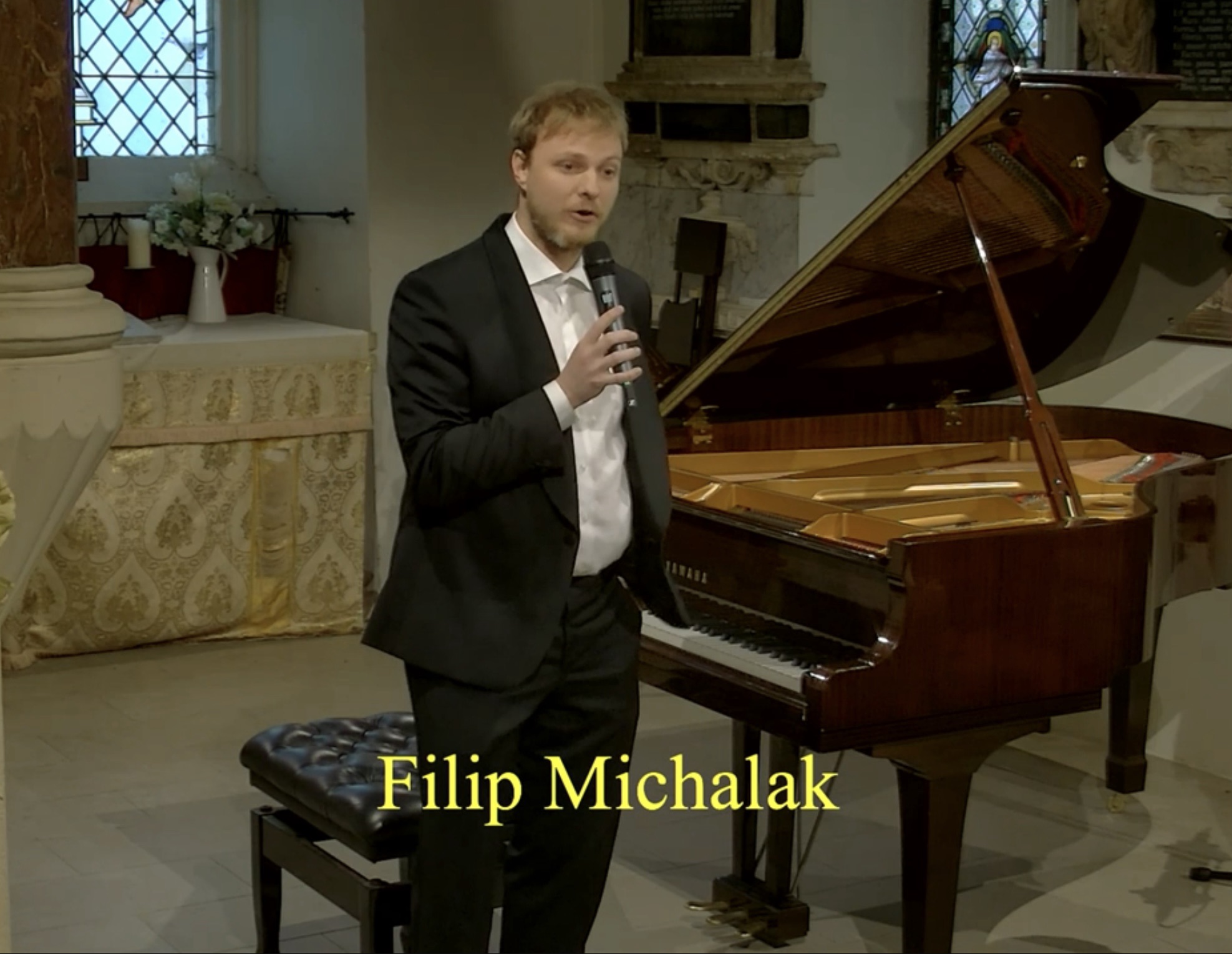
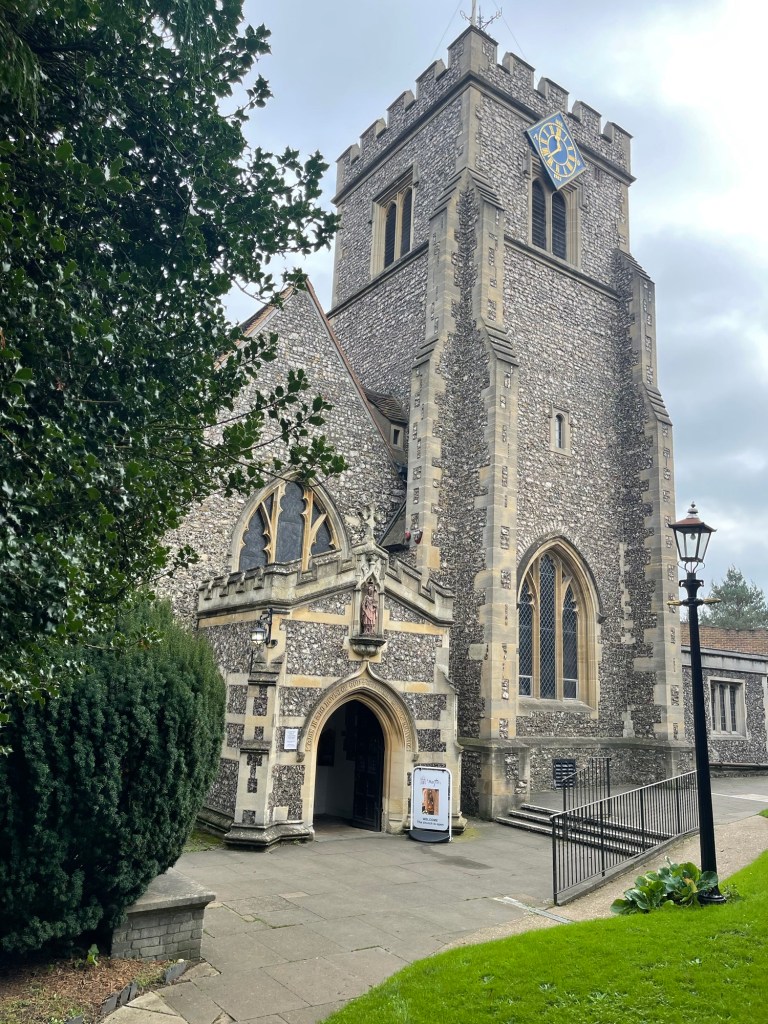
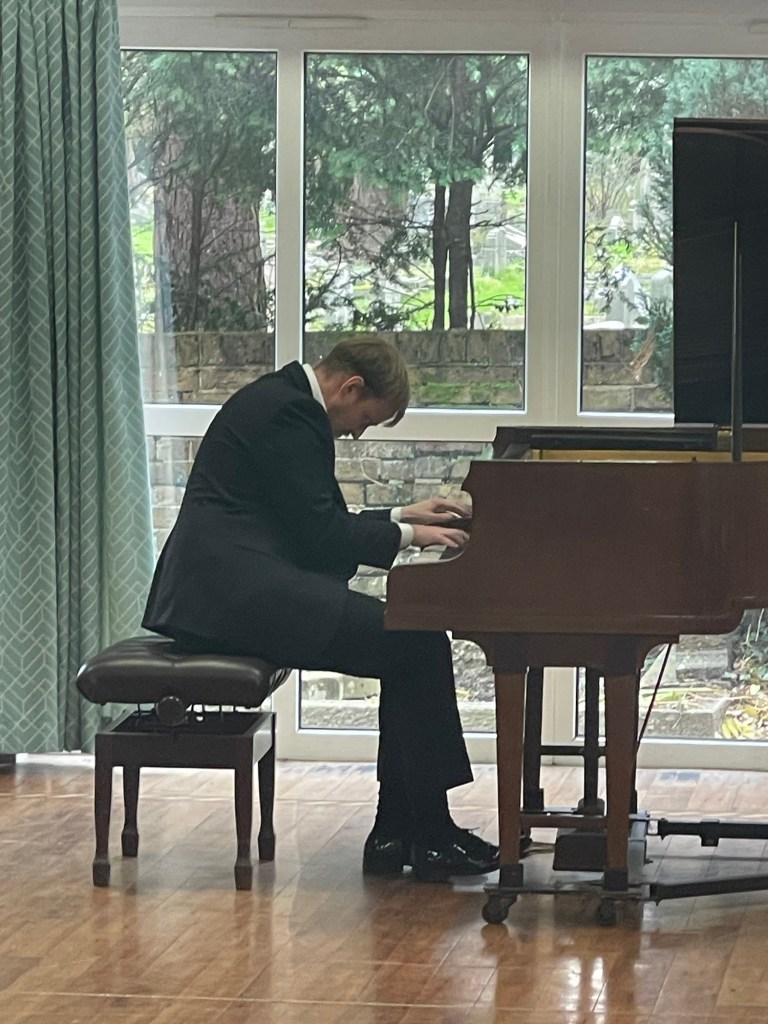
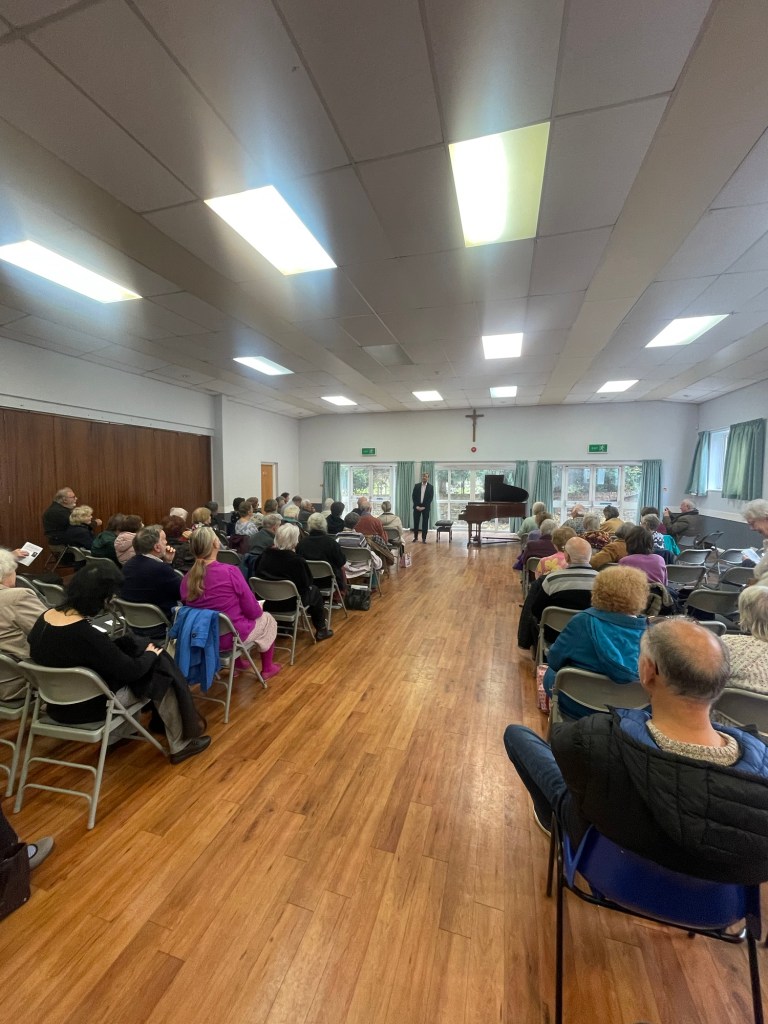
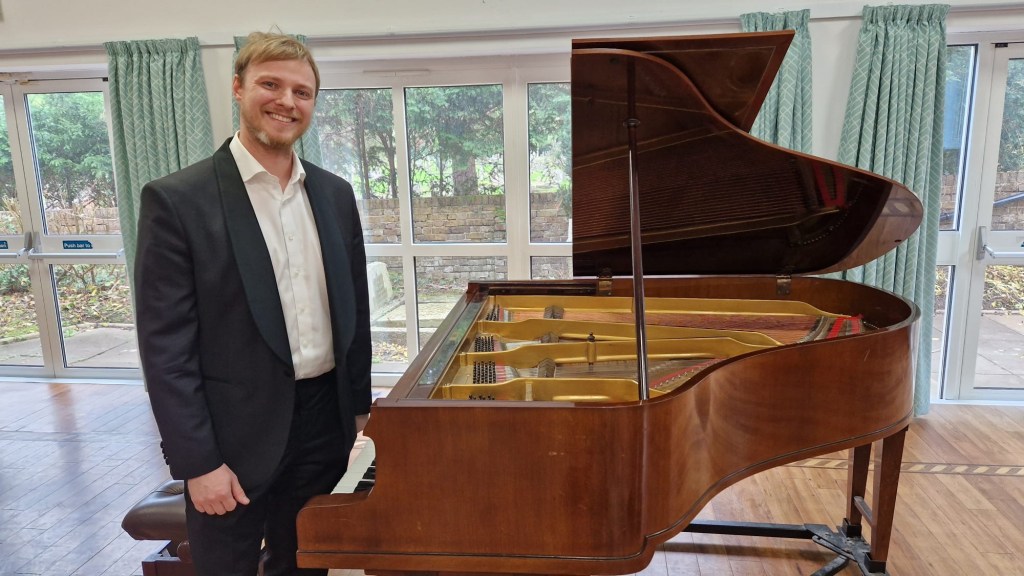
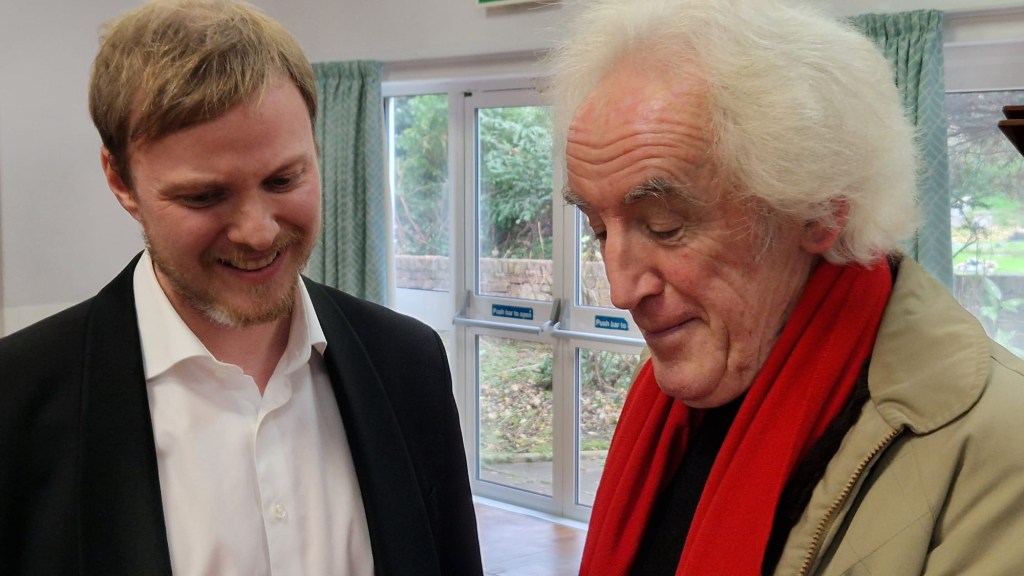
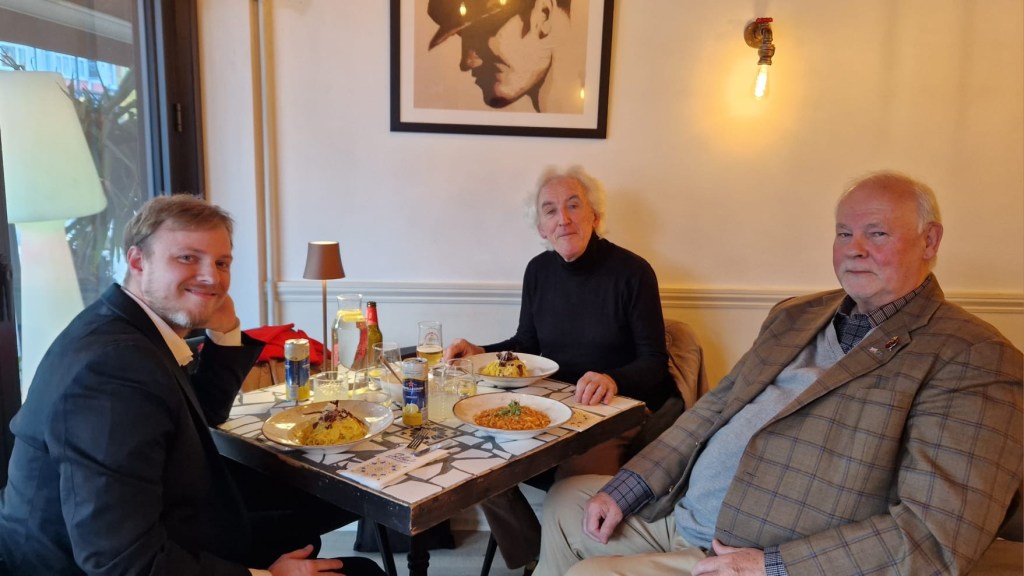
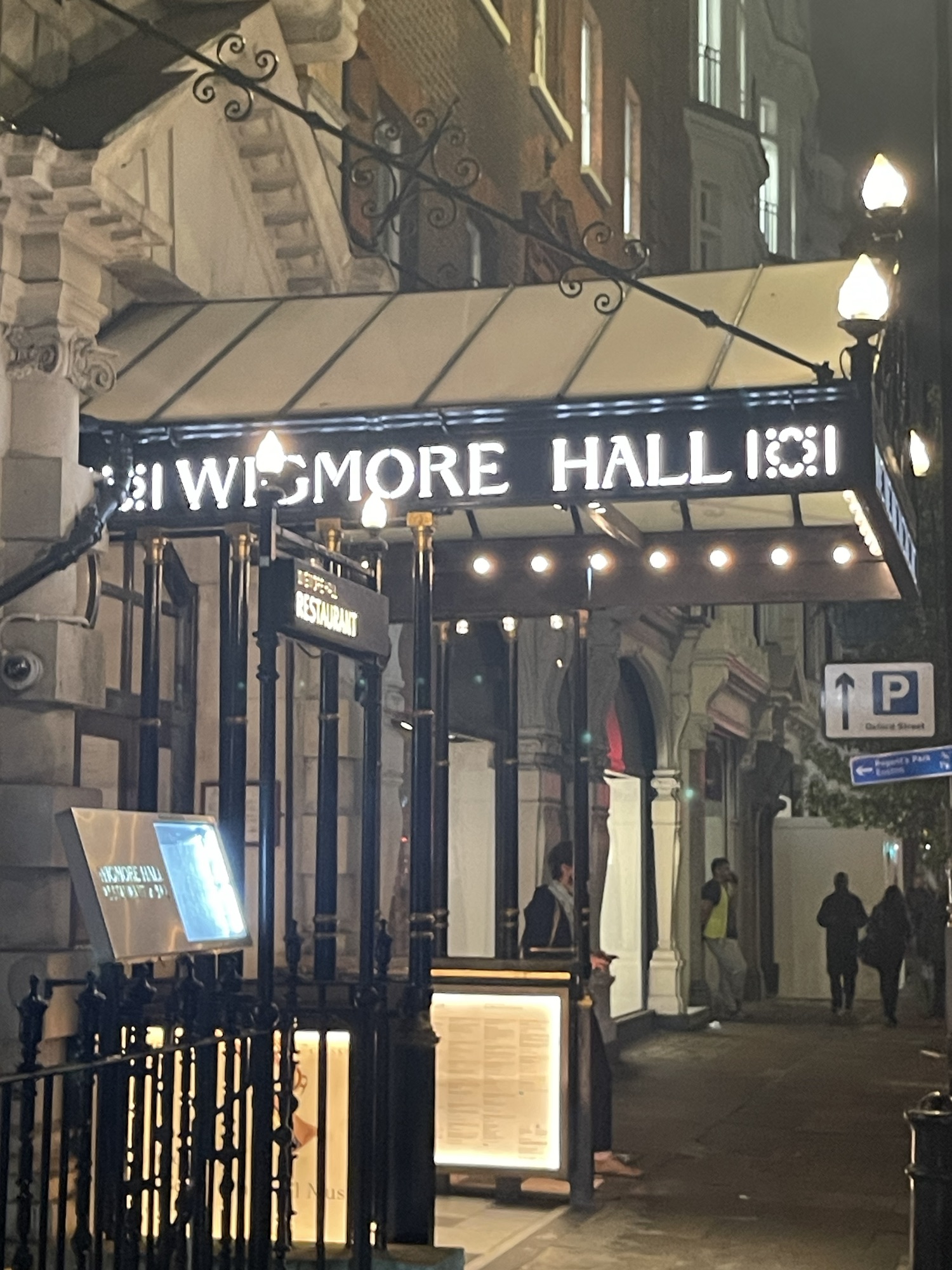
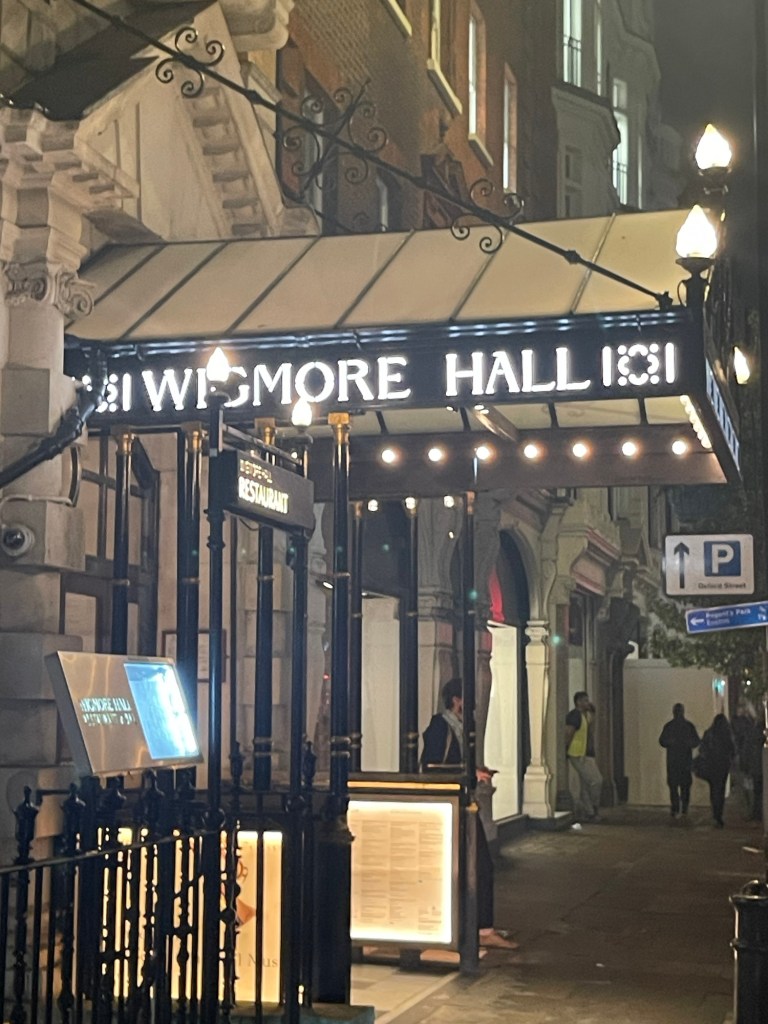
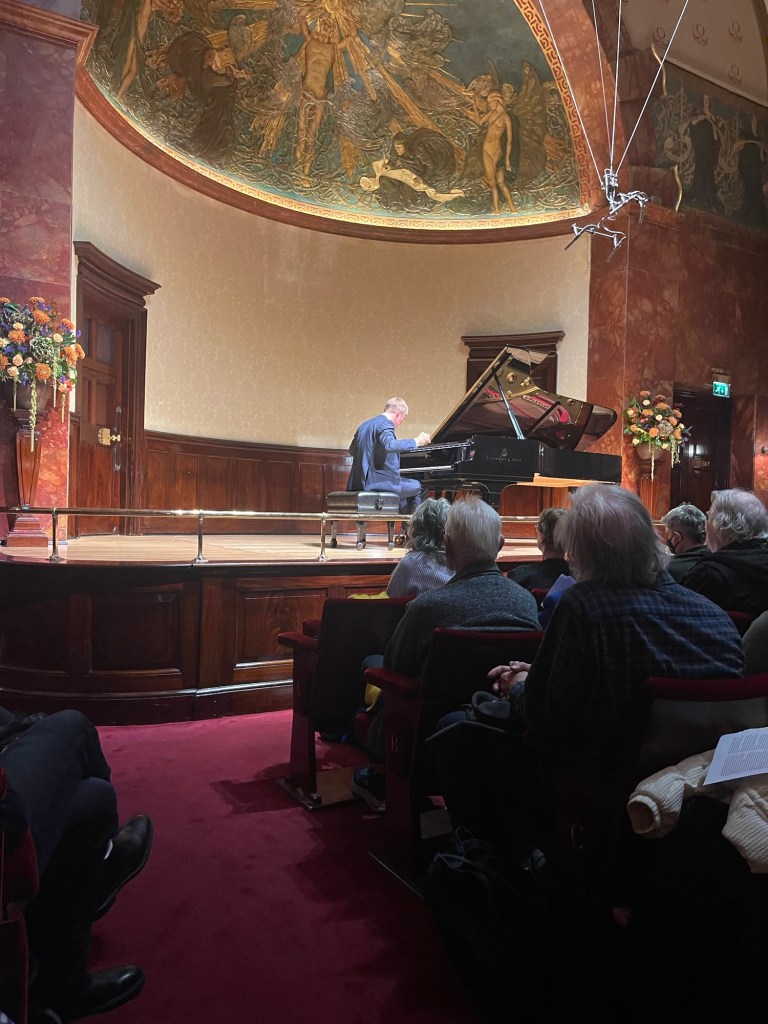
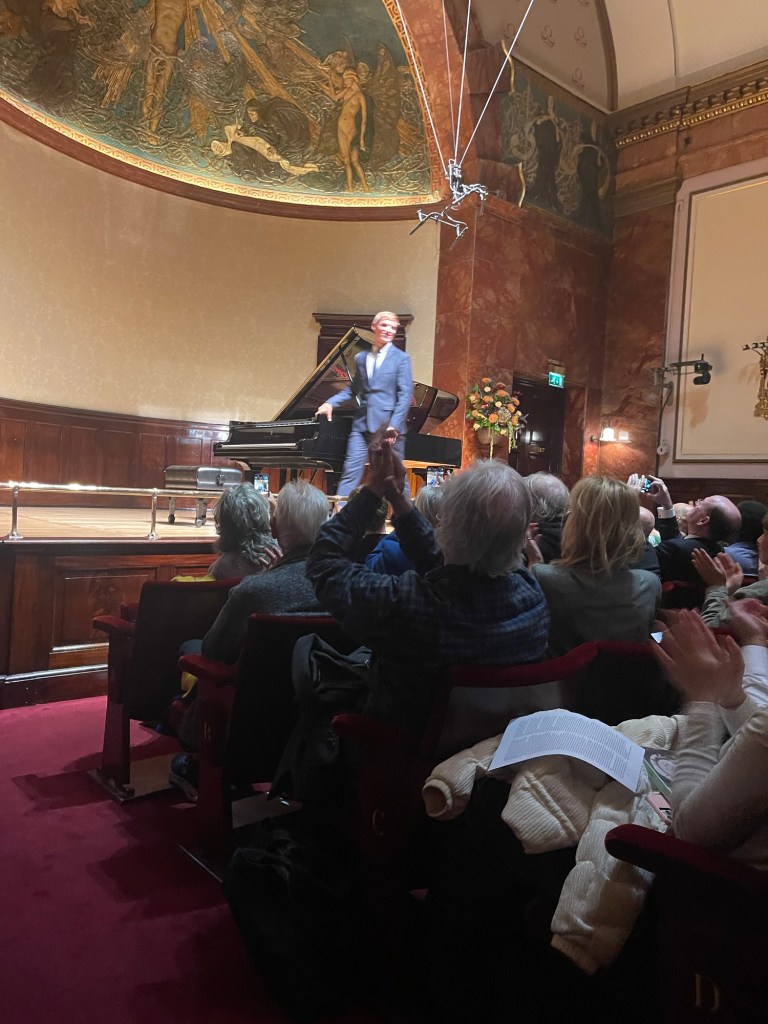
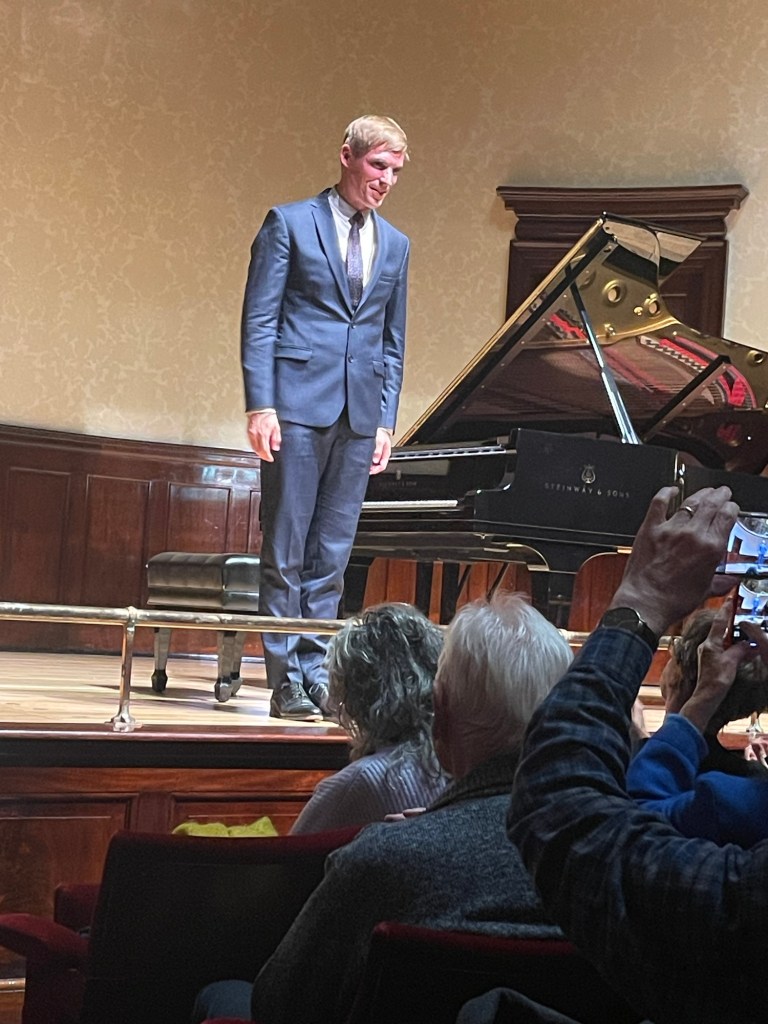
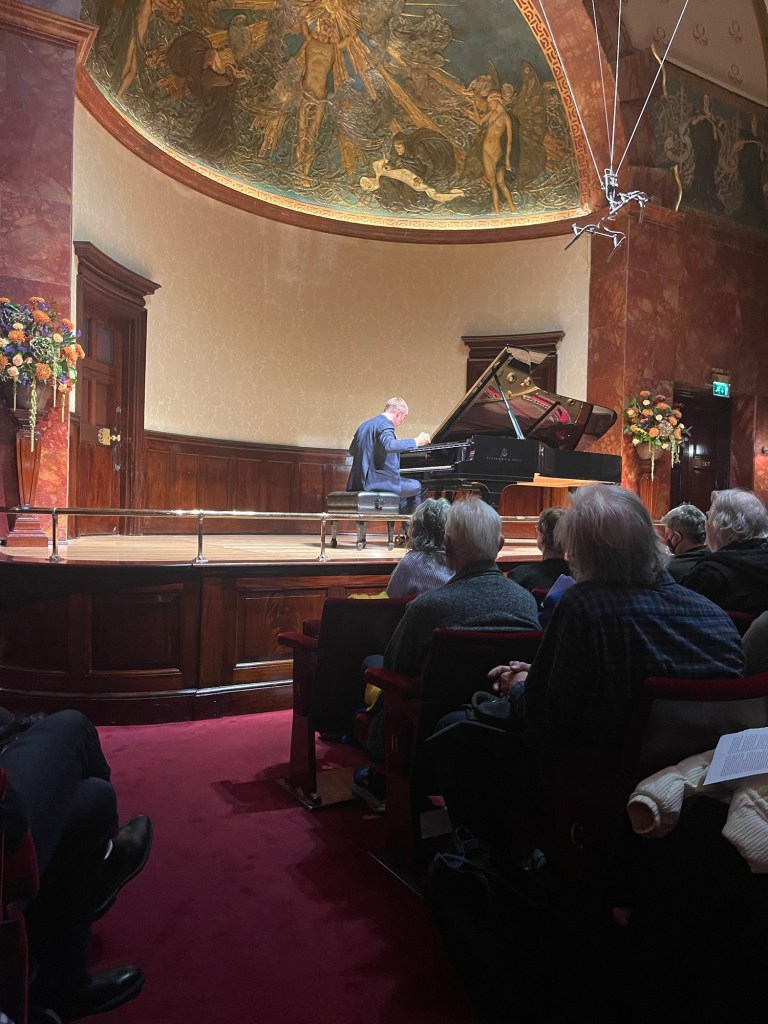
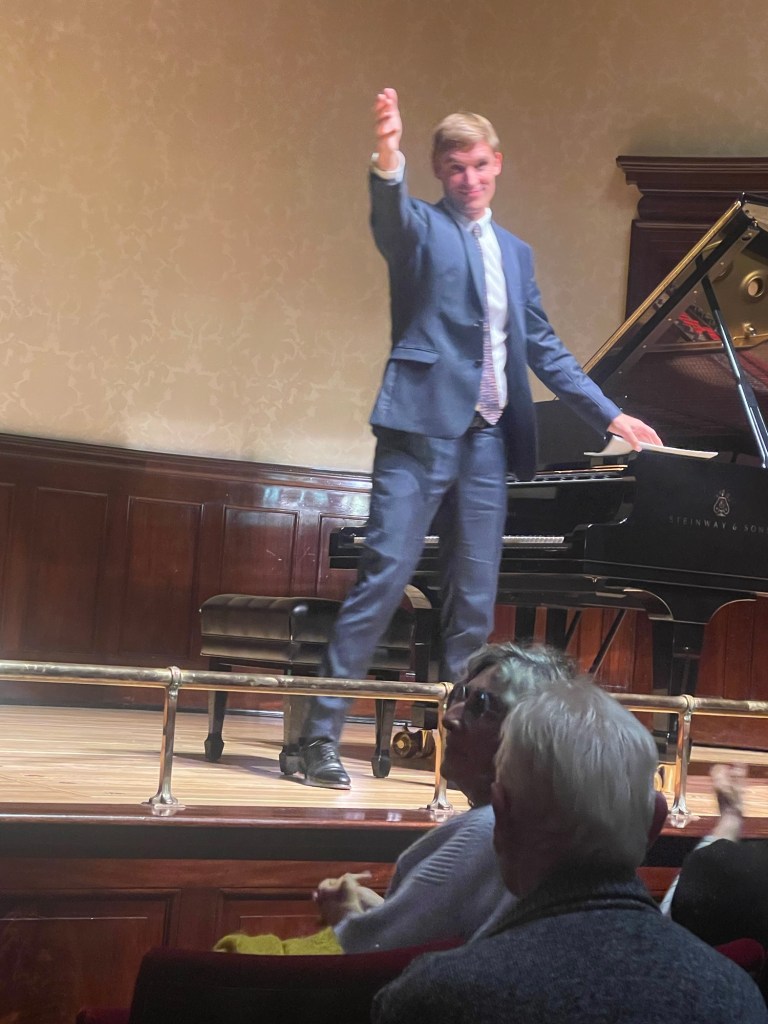
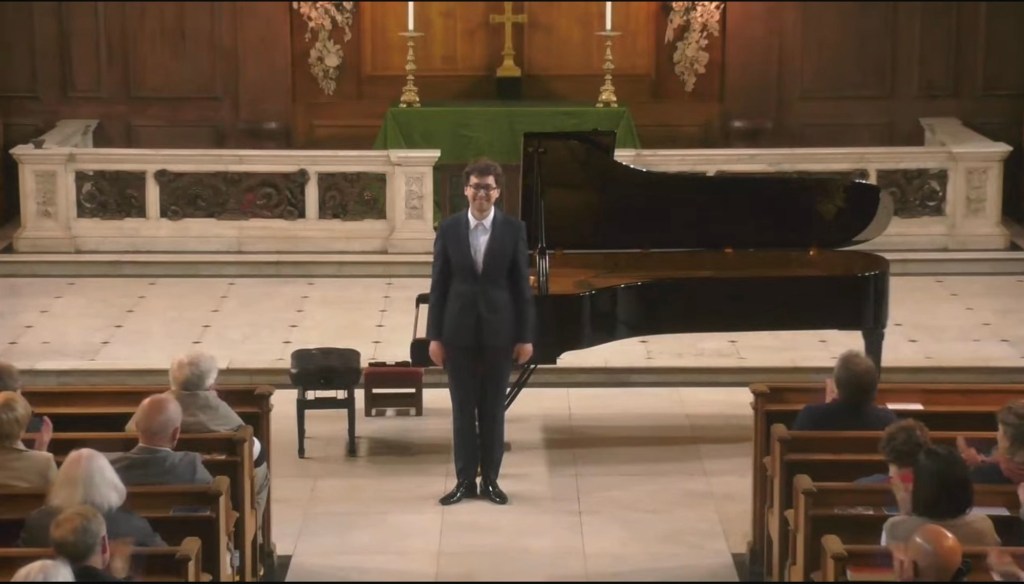
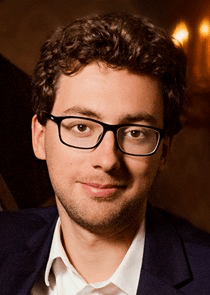
A coffee concert at 10 am due to Harry Potter showing with orchestra at 12. However Louis-Victor Bak filled the Elgar Room with an audience only too pleased to get up at dawn to hear such ravishing playing washed down with a much needed coffee and croissants.
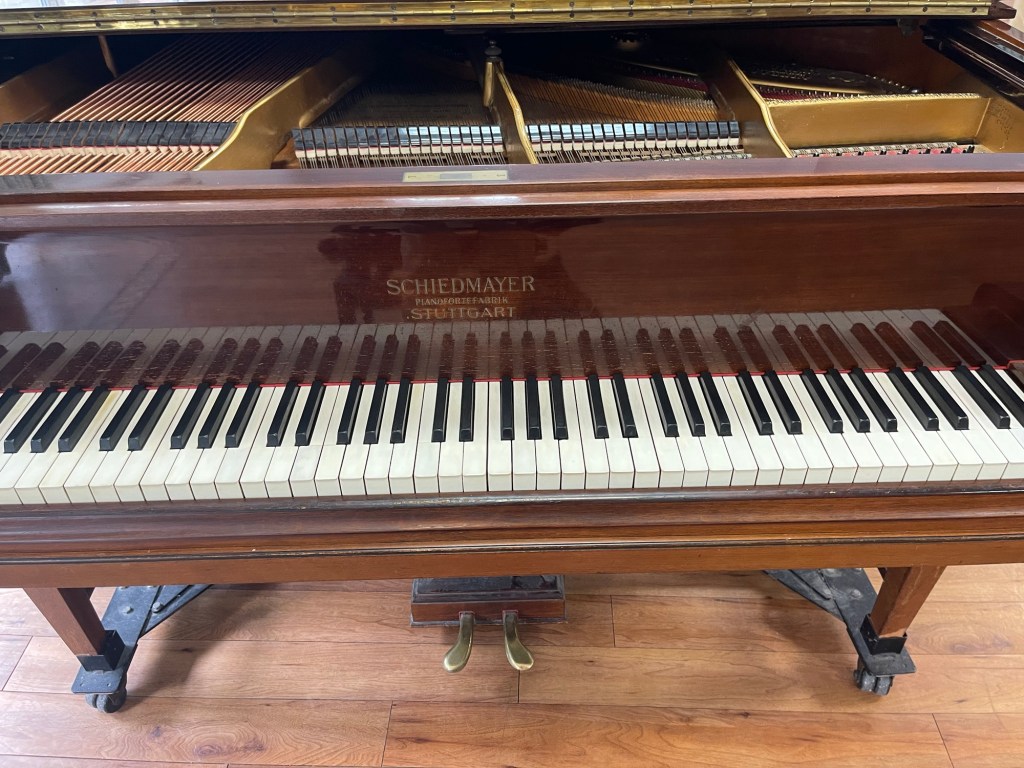
Playing on Elton John’s Red Piano Tour Yamaha , now bequeathed to the Albert Hall for these young musicians concerts from the RCM just a stones throw away.
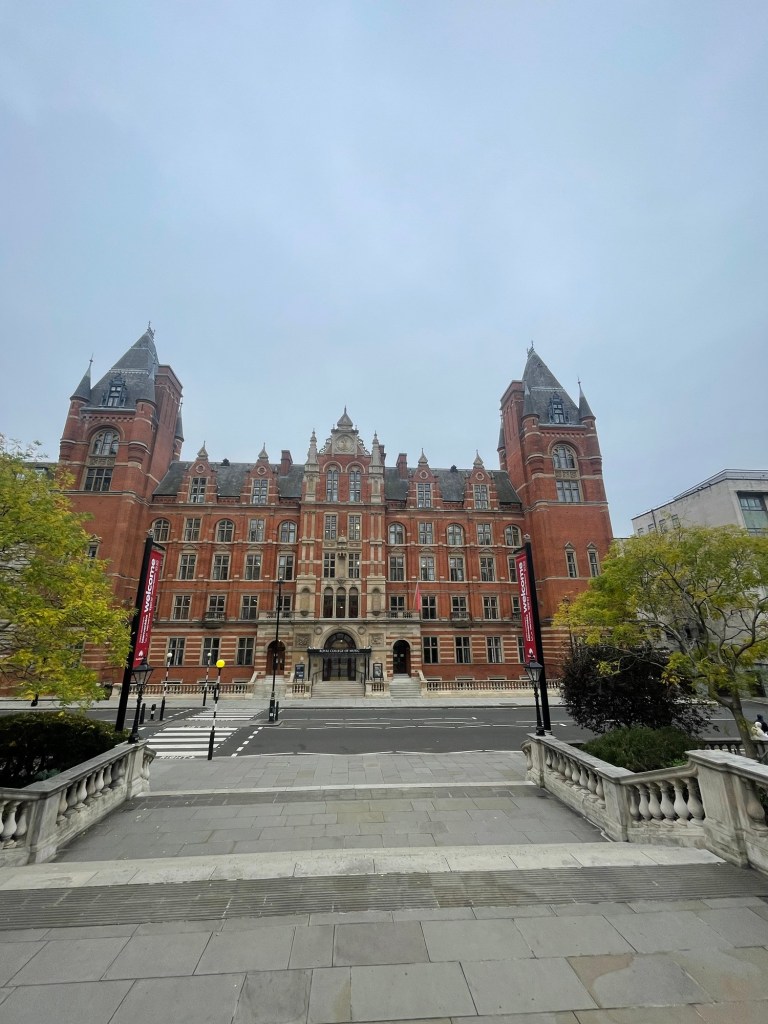
Royal College of Music
Elton John had been a student at the RAM and he has shown great sensibility and generosity towards fellow students who may not follow the golden path that has illuminated his showman’s career.
Bak had chosen a French programme which makes up his new CD and includes the two books of Images by Debussy and the almost unknown Sonata by Cecile Chaminade. The Images showed off Bak’s aristocratic French good taste and a kaleidoscope of refined sounds. The elegiac outpouring of ‘Homage a Rameau’ was played with an elegance as dramatic outpourings were replied by beseeching outcries of subtle ethereal fluidity. A passionate climax with streams of chords spread over the entire keyboard were played with aristocratic nobility. The dynamic drive of ‘Movements ‘ was notable for the shrouded mist of sounds on which sudden outcries float and melodic lines ,unmistakably French, are allowed to bathe in the glorious mists that were pouring from Bak’s highly cultured hands. If the ‘Reflections in the water’ had suffered from rather a languid tempo it may have been for a room that had not yet been heated by such sumptuous sounds and someone to switch the heating on at such an unusual hour !
There was now fluidity and luminosity as the second book of Images opened with a mastery of colour and atmosphere .A glorious outpouring of sounds out of which emerged a solitary melodic line of crystalline poignancy as the bells became ever more insistent . There was the etched melodic line as the noble lines of the ruined temple were bathed in magical moonlit sounds so generously effused in the pedal. I doubt the Goldfish has ever bathed in such sumptuous sound as it flitted around reaching out with a very french elegance within an atmosphere of decadence too.
Chaminade’s much neglected Sonata received a masterly performance of persuasive advocacy. In fact whereas Bak’s Debussy had been exemplary for it’s intellectual and musical understanding ,Chaminade unleashed in Bak a pianist possessed as he moved with so much more freedom allowing the outpouring of Romantic sounds to overcome any intellectual restraint. The first movement opening with a great romantic melody as this French Rachmaninov filled the piano with the sumptuous sounds of someone who was first and foremost a virtuoso pianist. In fact she was one of the first women virtuosi to follow after Clara Schumann. There was the suave elegance of the Andante of romantic effusions of powerful sentiment with long elegant lines of elegiac melody and an unashamedly rhetorical outpouring of great beauty The Allegro unleashed a movement of great virtuosity with sumptuous sounds of dynamic exuberance played with mastery and passion by this young French virtuoso.
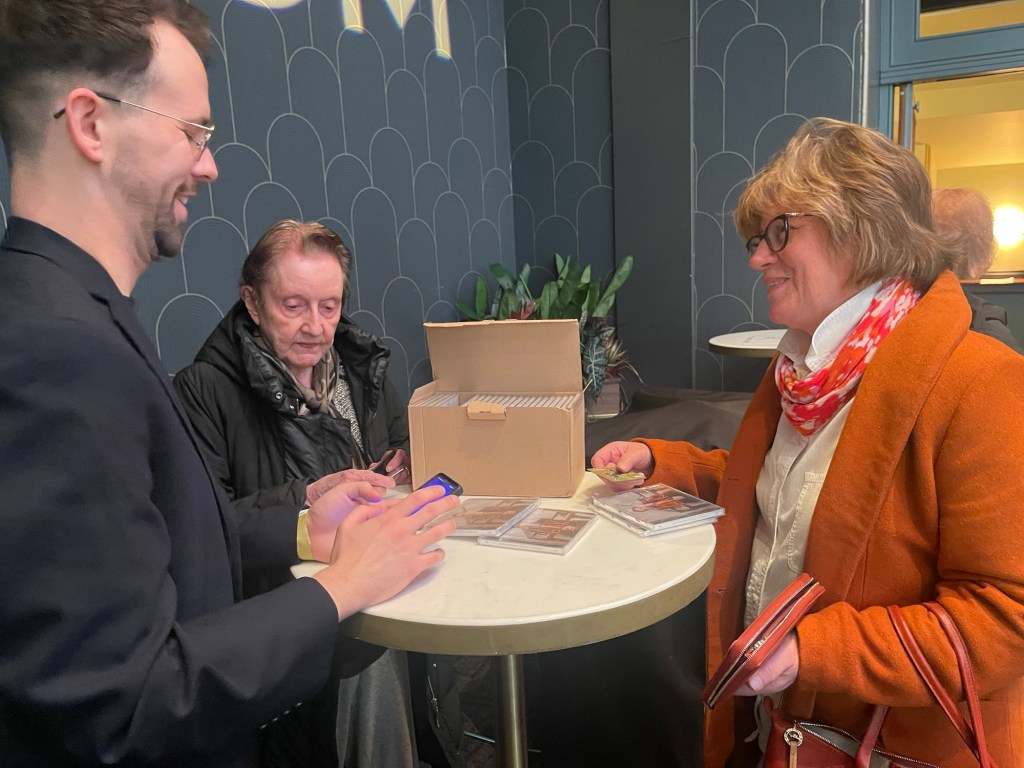
It may have been an early start but by the end of this hour of sumptuous music making there was a queue to acquire Bak’s new CD to take back home to enjoy and digest such discoveries .
A queue from South Kensington station to the RAH had now formed for Harry Potter at noon .Little did they know what they had missed !
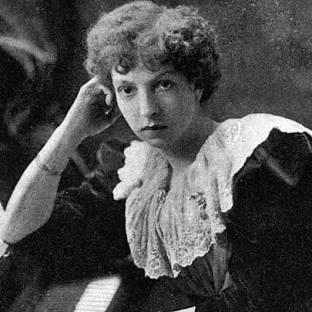
Cécile Louise Stéphanie Chaminade was a French composer and pianist. In 1913, she was awarded the Légion d’Honneur, a first for a female composer. Ambroise Thomas said, “This is not a woman who composes, but a composer who is a woman.” Born: 8 August 1857, Paris – 13 April 1944 (age 86 years), Monte Carlo Monaco
Cécile Chaminade had two things going against her as a composer. The first was that she was a woman in a man’s world; the second that she produced so many works (around 400) that it’s easy to be taken in by her enormous facility and she was also very long-lived – so her music had fallen out of fashion well before her death in 1944. Her only Piano Sonata was written in 1893 and like most of her larger-scale works, a comparatively early production, from the period when she had to make her mark in the sophisticated musical milieu of Paris. and is dedicated to Moritz Moszkowski who was to become her brother in law.
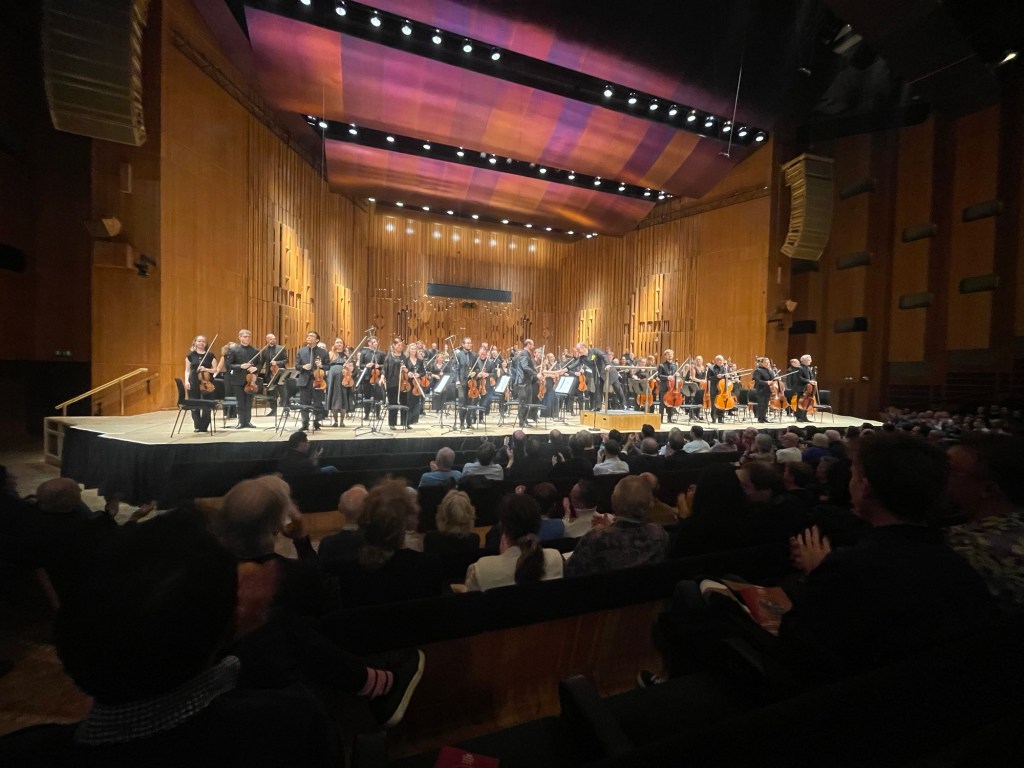
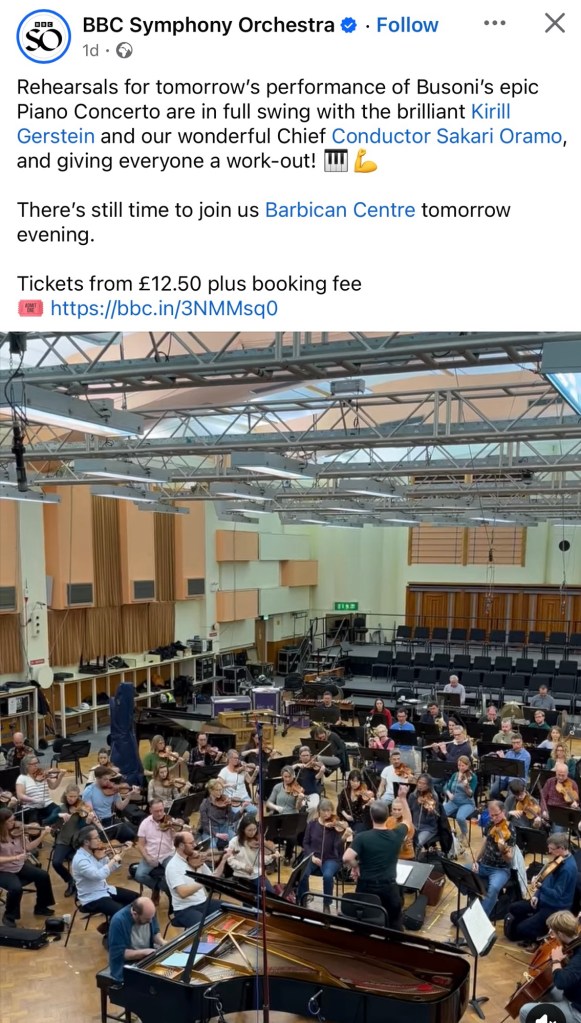
What an amazing place London is with a clash between giants in two different halls tonight Gerstein at the Barbican and Yuja Wang and Vikingur Olafsson at the RFH.
Chances to hear the monumental Busoni concerto are rare because of the forces that are required even in Busoni’s anniversary year. (1/4/1866 – 27/7 1924). A soloist who can weave his way through the intellectual and technical demands of 80 minutes of music ,a full Symphony orchestra and a male voice choir. Benjamin Grosvenor brought it to the proms with great success as Emanuil Ivanov has been playing it to great acclaim in Birmingham and Sofia. I had just heard the same team of Gerstein-Oramo with the Berlin Philharmonic ( Busoni’s original orchestra for the first performance in 1904) just ten days ago and I remember in that same Philharmonic Hall with Levit and Pappano with the Santa Cecilia orchestra on tour both were streamed live.
But tonight there was a dream team and magic in the air. Oramo with his BBC orchestra brought a masterly clarity to the Bacewicz Second Symphony which I had not heard before and found myself thinking why is this not heard more often.
An orchestral masterpiece with an orchestra playing their hearts out as they followed every move of their genial much admired conductor.
The Busoni concerto more an orchestral piece with piano obligato according to Gerstein and he should know because of all the pianists playing today he is the one that has found the key to Busoni’s elusive sound world .
His lecture recital on Busoni and Liszt a while back at the Wigmore Hall was a true revelation. Busoni the continuation of LIszt’s prophetic sound world of his later years when he could foresee the direction that music was taking.
I can now understand the enthusiasm of my old teacher Gordon Green forty years ago who had studied with Egon Petri a student of Busoni passing his passion on to all his disciples including notably Peter Donohoe and Stephen Hough. It is a unique sound world and takes a genial interpreter to be able to find and share the path that makes sense of seemingly plotless sounds. Gerstein tonight with Oramo revealed this monumental concerto to an audience on their feet cheering after 80 minutes of intense music making . The male voice choir illuminating the final movement with a moving contemplation of the words of Oehlenschlager shown with subtitles discretely above the orchestra, the piano barely touching the keys as time stood still until the final outburst of red hot octaves brought the work to a triumphant close.
Ferruccio Dante Michelangiolo Benvenuto Busoni Empoli 1st April 1866 Vienna 27th July 1924 photo of the composer in 1905, soon after completing the concerto in C major BV 247 Based on Aladdin by Adam Oehlenschlager. Composed 1901–04 First performance November 10, 1904: Berlin Published 1906 by Bretikopf & Hartel Duration 70 min in 5 Movements for piano orchestra men’s chorus
The first performance took place in the Beethoven-Saal, Berlin, Germany, on November 10, 1904, at one of Busoni’s own concerts of modern music. Busoni was the soloist, with Karl Muck conducting the Berlin Philharmonic and the choir of the Kaiser Wilhelm Memorial Church .The reviews were mixed, some expressing hostility or derision.A year later, the work was played in Amsterdam by the Concertgebouw , conducted by Busoni, with Egon Petri as soloist. The century following has seen relatively few performances, owing to the large orchestration, complex texture, need for a male chorus, and the staggeringly demanding solo part.
Apart from the immense demands required of the soloist and the large forces needed, there is a further difficulty that can affect performances of this work: the role of the soloist.
As Busoni himself wrote, piano concertos tended to be modelled after either Mozart or Beethoven.In Mozart’s case, the concerto centres around the spotlit virtuoso composer-performer, who appears to spontaneously create the work before us, on-stage. The orchestra mostly provides a background accompaniment. But with Beethoven, the work is often conceived in symphonic terms; the piano takes the secondary role, reflecting on or responding to ideas that have already been introduced by the orchestra (excepting the fourth piano concerto)
Busoni combined both these precedents in the Piano Concerto, Op. 39, creating a huge work of symphonic proportions which was originally accused of having only a piano obbligato .The work presents exceptional challenges for the soloist, who is often nevertheless required to incorporate a glittering cascade of notes into the overall orchestral sound. This self-abasement of the familiar 19th-century heroic soloist’s role thus requires careful consideration of balance in performance. But as Edward Dent comments:
‘Despite the incredible difficulty of the solo part, Busoni’s concerto at no point offers a display of virtuosity. Even its cadenzas are subsidiary episodes. At the same time the pianoforte hardly ever presents a single theme in its most immediate and commanding shape. It is nearly always the orchestra which seems to be possessed of the composer’s most prophetic inspiration. Busoni sits at the pianoforte, listens, comments, decorates, and dreams.’
Adam Oehlenschläger as a young man
Adam Oehlenschlager’s verse drama Aladdin , or the Magic Lamp was first published in Danish in 1805.The play has a number of parallels with the works and ideas of Goethe such as the Faust figure of the wicked magician Noureddin who takes advantage of Aladdin’s youth and inexperience to get hold of the wonderful lamp;Goethe was also much preoccupied with Plato’s philosophy, including his theory of Forms and the allegory of the Cave
During his travels in Germany in 1805–6, Oehlenschläger spent several months in Weimar in the company of Goethe and his closest circle of friends. He used the opportunity of his daily visits to read out Aladdin to Goethe, freely translating from the Danish.At the time, Goethe was in the process of completing the final version of Faust Part 1.
Subsequently, Oehlenschläger prepared a German edition of Aladdin, translating and revising the work himself and adding an explanatory introduction for his intended German readers. This edition was published in 1808 in Amsterdam.The new version included a special dedicatory poem To Goethe and was split into two parts, intended to be given on two successive evenings. More especially, this version had a new finale differing considerably from the original Danish edition by having various magical scenic transformations.Busoni was quite taken with this early German version of Aladdin and planned to adapt it as a one-evening work. In a letter to his wife, dated London, February 10, 1902, Busoni wrote:
‘I have thought it out and decided not to use Oehlenschläger’s Aladdin for an opera, but to write a composition in which drama music, dancing and magic are combined – cut down for one evening’s performance if possible …………I have planned 6 works for the summer, the principal one being the pianoforte Concerto. How beautiful!’ Busoni never completed his adaptation of Aladdin,[22] although he did compose music for the final chorus in the magic cave; this soon made its way into the Piano Concerto.
Oehlenschläger’s stage direction “Deep and quiet, the pillars of rock begin to sound:” is printed above the score where the chorus enters. Busoni follows the text exactly, only omitting a few verses which were not appropriate.According to Dent:
‘The actual meaning of the words hardly matters. The chorus is directed to be invisible; it sings in plain chords, like a body of soft trombones added to the orchestra. The effect which Busoni desired was stated by him once in a letter to a friend who had mistakenly suggested to him that it might be better to re-write the chorus for mixed voices; he replied that he had no desire to convert his Concerto into an oratorio; he insisted that the chorus should be invisible, and said that its function was ‘to add a new register to the sonorities which precede it’.’
Deep and quiet, the pillars of rock begin to sound:
Lift up your hearts to the power eternal, Feel Allah’s presence, behold all his works! Joy and pain interweave in the light of the world; The world’s [mighty] pillars stand peacefully here. Thousands and thousands and once again thousands Of years – serene in their power as now – Flash by purely with glory and strength, They display the indestructible.
Hearts glowed [so brightly], hearts became colder. Playfully interchanged life and death. But in a peaceful awaiting they stretch out, Gorgeous, powerfully, early and late. Lift up your hearts to the power eternal, Feel Allah’s presence, behold all his works! Thus the dead world comes completely to life. Praising divinity, the poem falls quiet!
Grażyna Bacewicz before World War II 5 February 1909 Lodz,Poland – 17 January 1969 (aged 59) Warsaw
In 1928 she began studying at the Warsaw Conservatory where she studied violin with Józef Jarzębski and piano with Jozef Turczynski , and composition with Kazimierz Sikorski graduating in 1932 as a violinist and composer.She continued her education in Paris having been granted a stipend by Paderewski to attend the Ecole Normale and studied there in 1932–33 with Nadia Boulanger (composition) and André Touret (violin). She returned briefly to Poland to teach in Łódź, but returned to Paris in 1934 in order to study with the Hungarian violinist Carl Flesch.After completing her studies, Bacewicz took part in numerous events as a soloist, composer, and jury member. From 1936 to 1938 she was the principal violinist of the Polish National Radio Orchestra , directed by Grzegorz Fitelberg .This position gave her the chance to hear much of her own music. During World War II, Grażyna Bacewicz lived in Warsaw . She continued to compose and gave secret underground concerts, where she premiered her Suite for Two Violins.
Bacewicz also dedicated time to family life. She was married in 1936, and in 1942 gave birth to a daughter, Alina Biernacka who became a recognized painter.Following the Warsaw uprising they escaped the destroyed city and temporarily settled in Lublin.After the war, she took up the position of professor at the State Conservatoire in Łódź . At this time she was shifting her musical activity towards composition, drawn by her many awards and commissions. Composition finally became her only occupation from 1954, the year in which she suffered serious injuries in a car accident.She died of a heart attack in 1969 in Warsaw.
Her musical legacy includes 4 symphony’s ,5 violin concertos,2 cello concertos.a concerto for one and two pianos and much else besides .
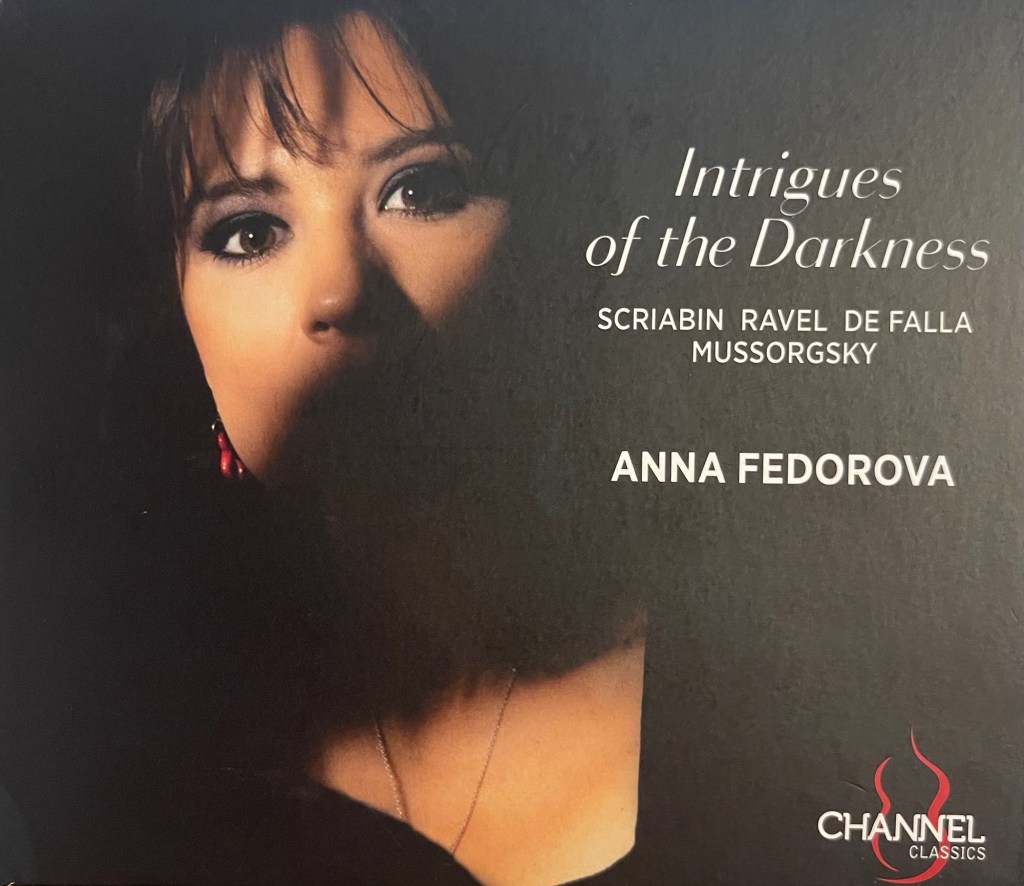
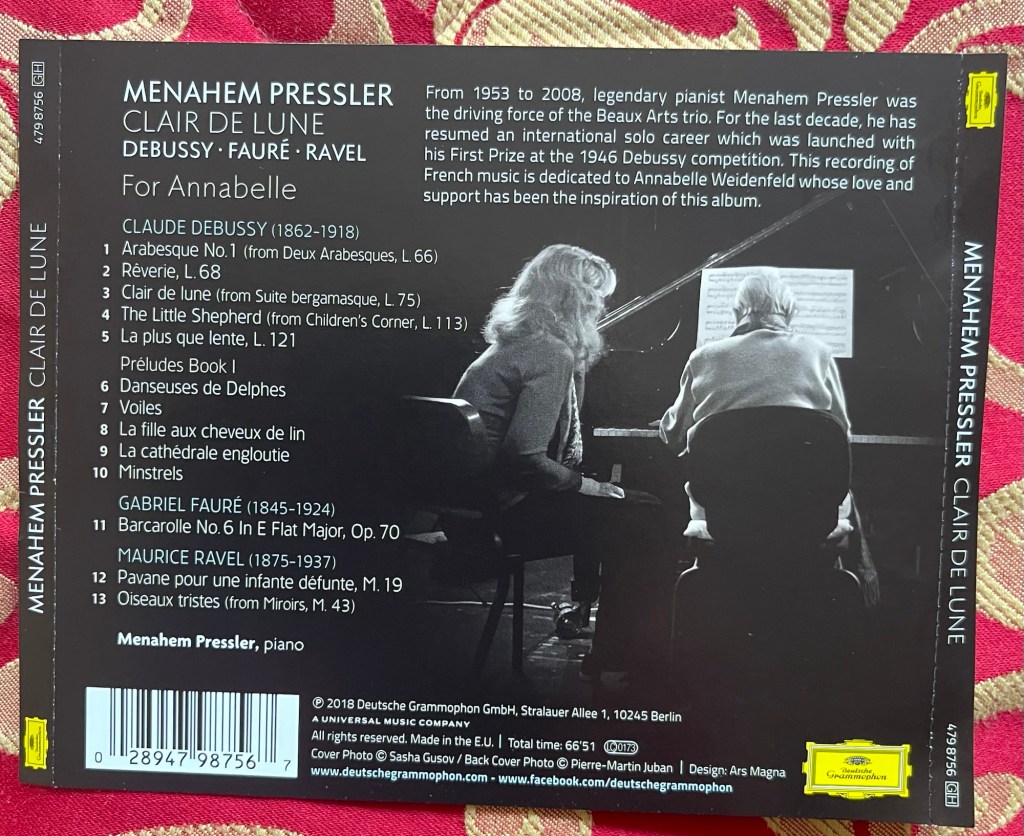
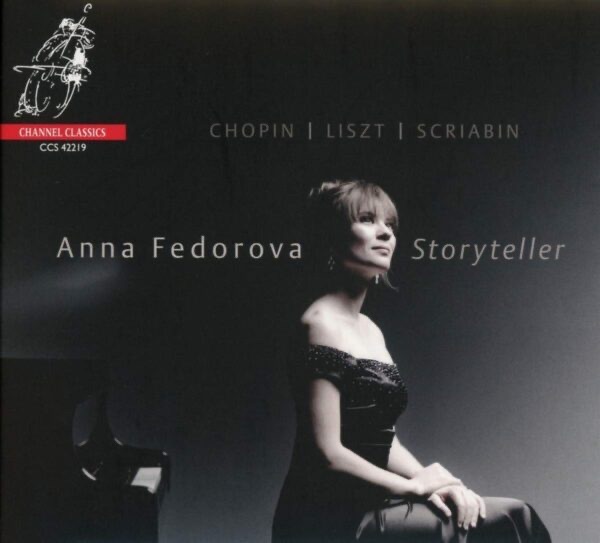
‘Anna Fedorova’s beautiful sound and natural freedom in making music with total technical security makes for one of the finest Chopin performances I have heard in a long,long time’- Menahem Pressler September 2022
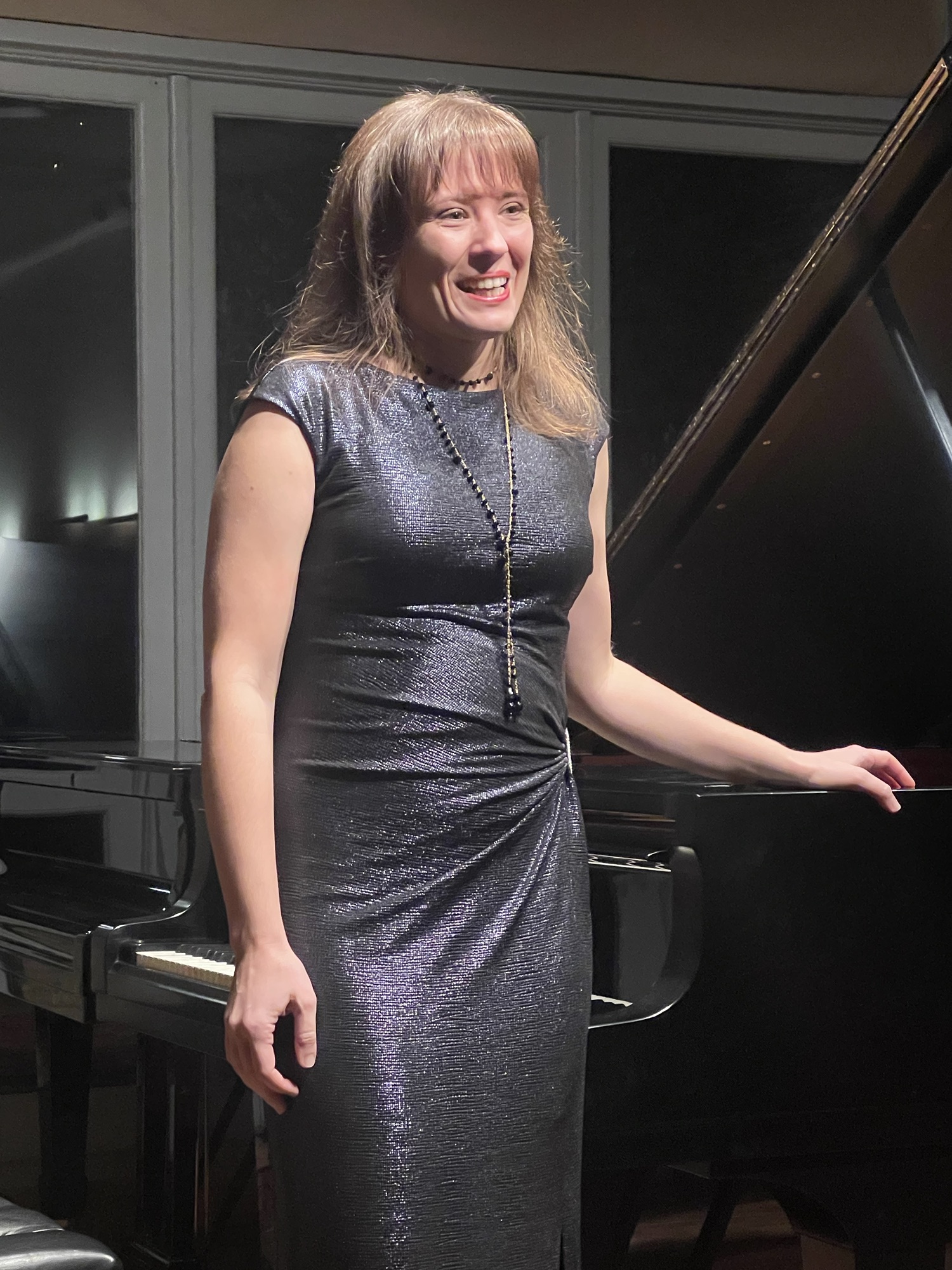
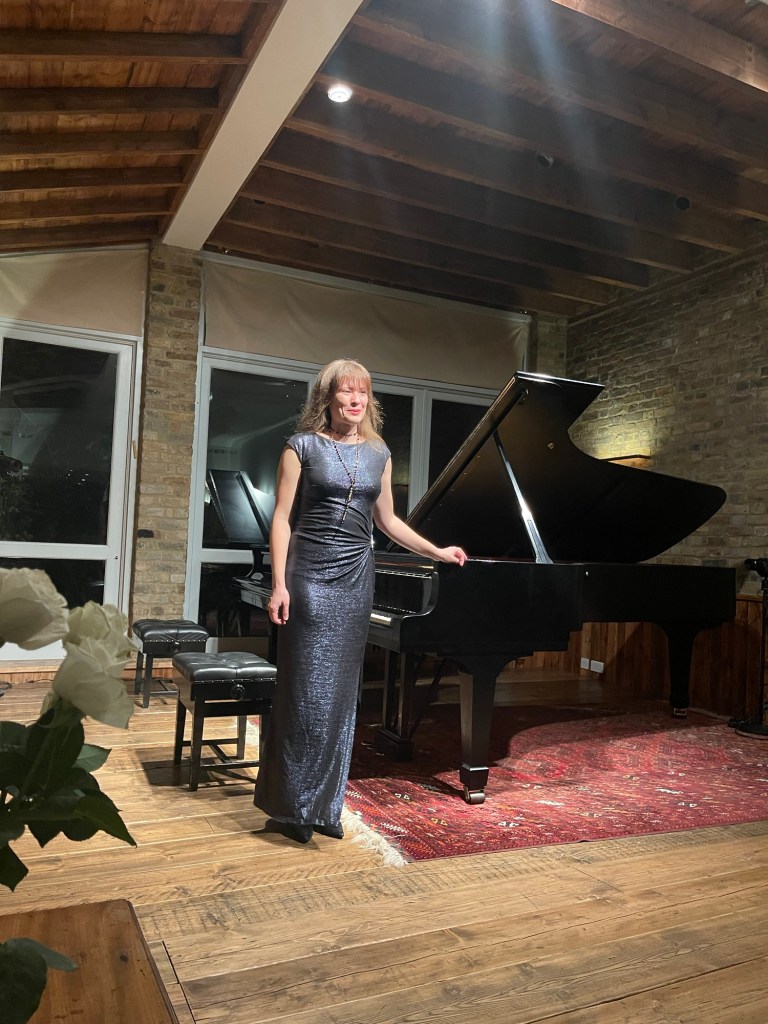
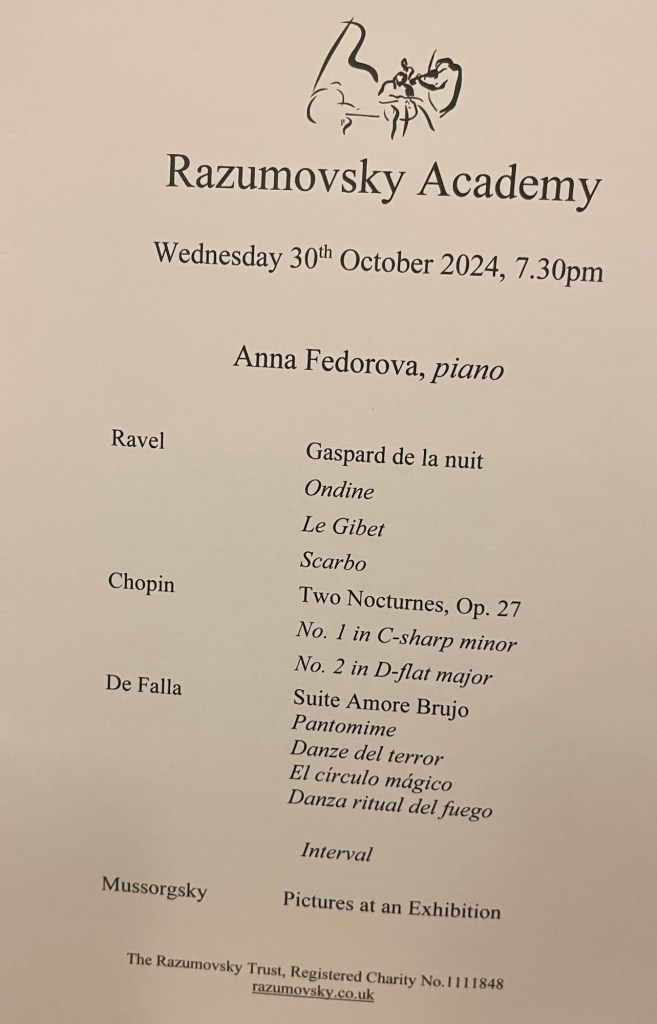
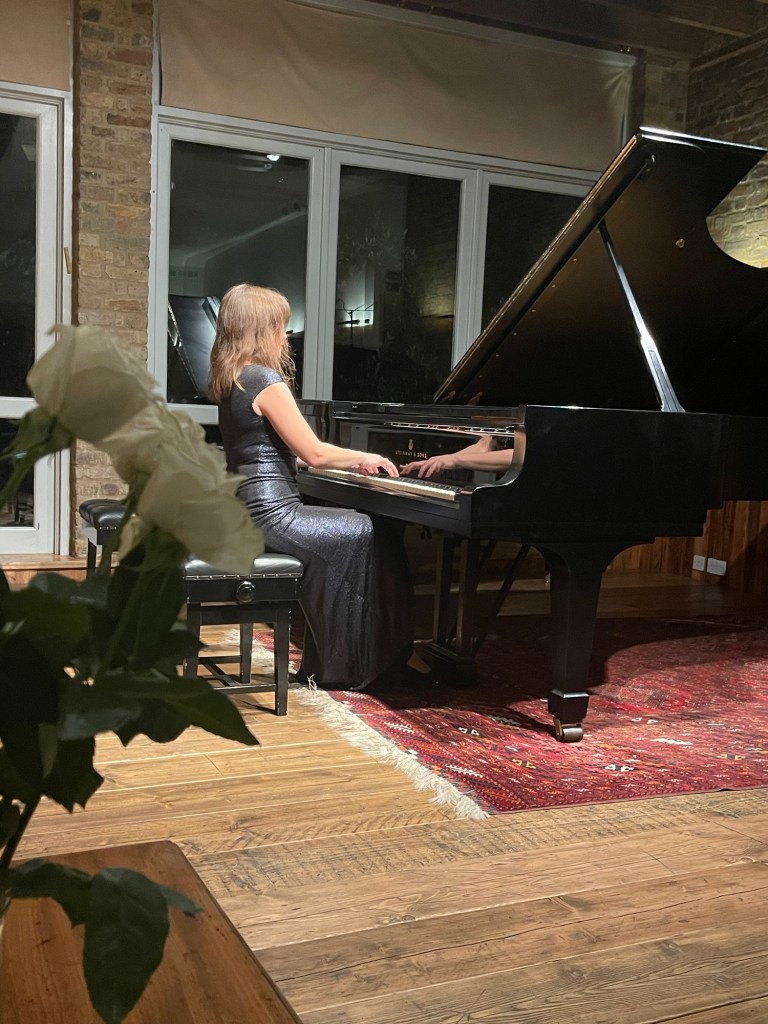
Halloween comes early at the Razumovsky Academy especially when Anna Fedorova is presenting her new CD ‘Intrigues of Darkness’.
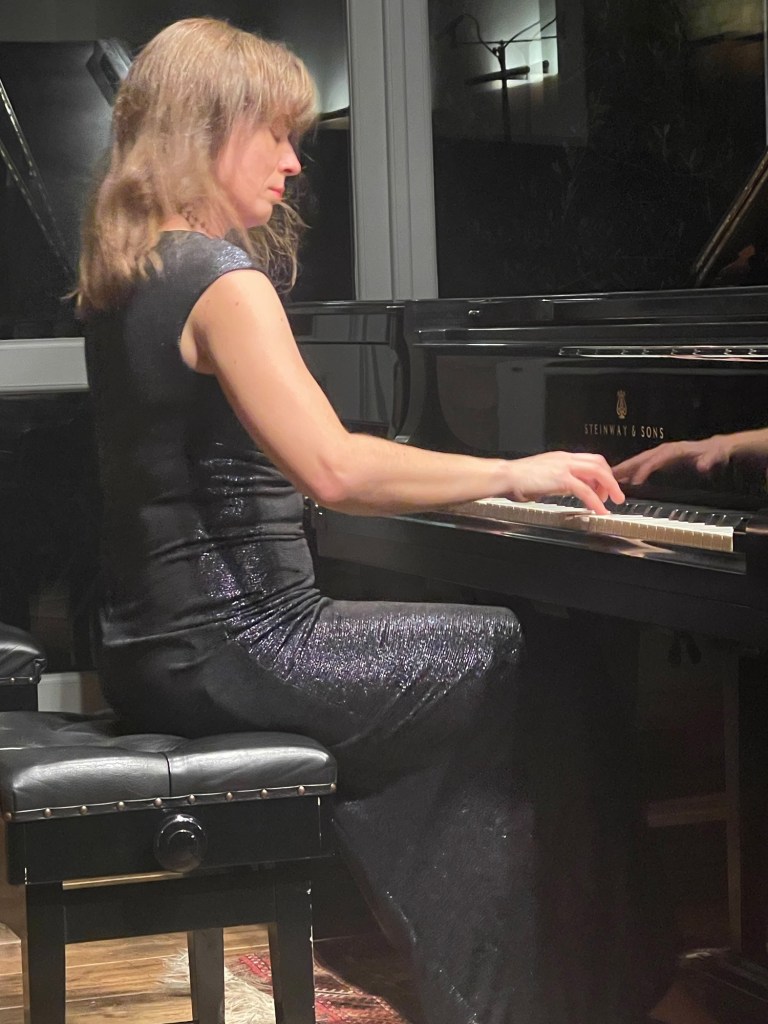
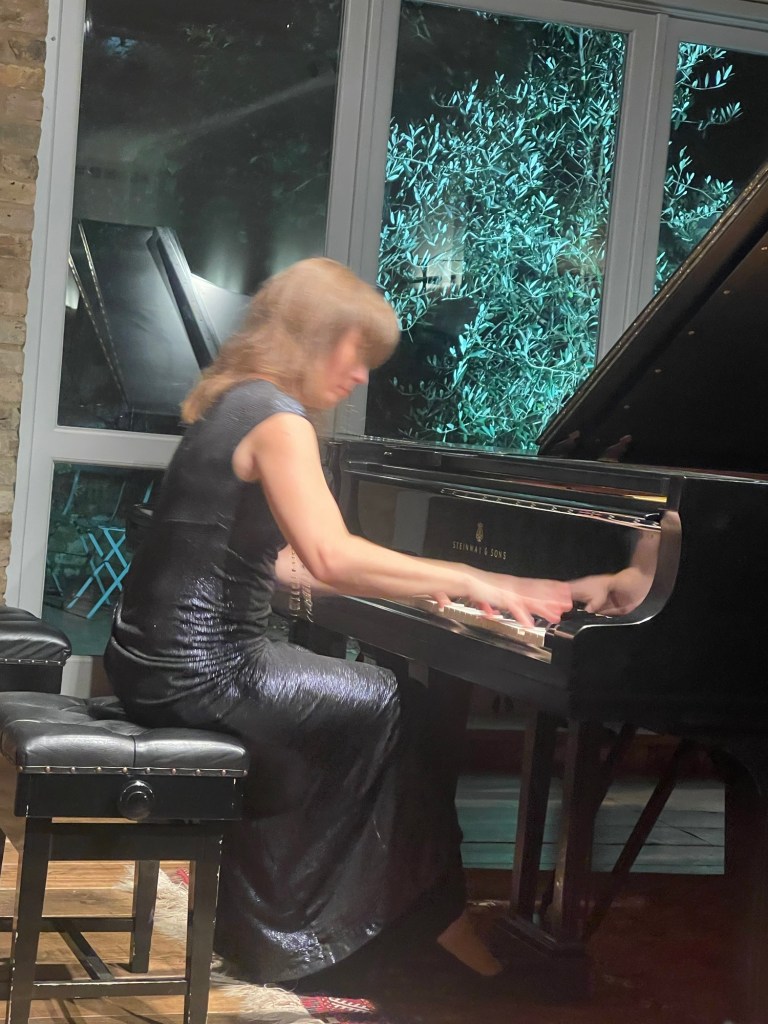
A hall full of warmth and joy as Anna played her heart out on Fou Ts’ong’s Steinway D that now sits so proudly in this extraordinary Salon of the Kogan’s.
Oleg Kogan introducing Anna and welcoming his guests
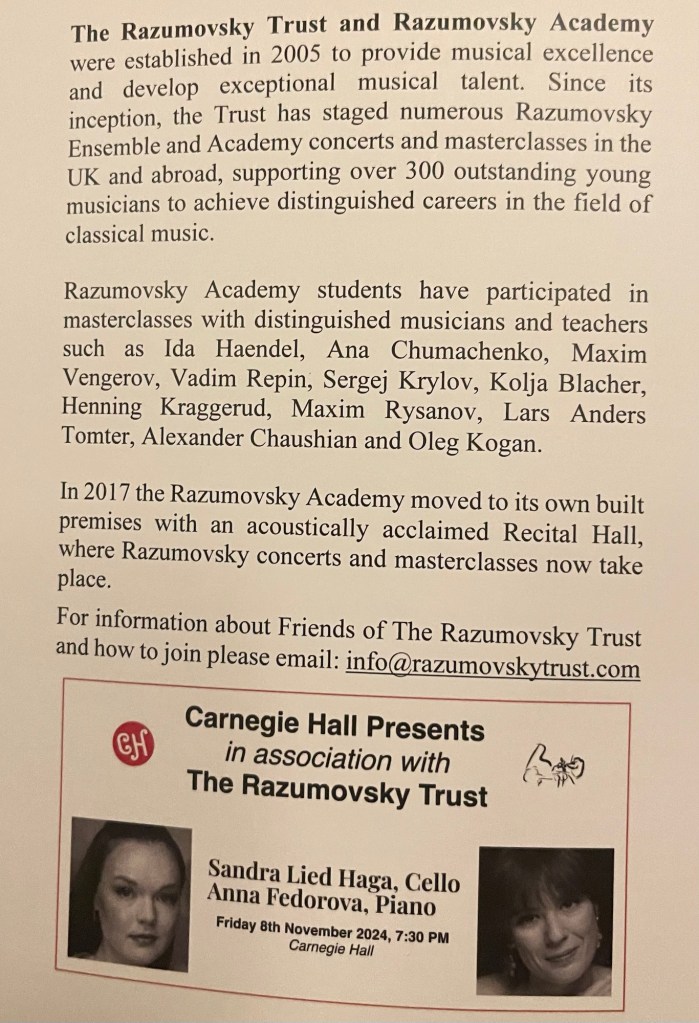
There is a warmth that’s envelopes you the moment you step into this cove of culture built by Oleg’s own hands and now filled with sumptuous music but also cordon bleu after concert treats, prepared by this great ‘cellist’s loving hands.
A capacity audience in this wonderfully welcoming hall
I have rarely heard Ts’ong’s piano sound so beautiful as in Anna’s hands.It just underlined Menahem Pressler’s words on listening to her a few years ago in which he extolled ‘the beautiful sound and natural freedom in making music with total technical security made for the finest Chopin performances he had heard in a long,long time’. It was indeed the Chopin encore that stole our hearts with the most beautiful performance of the Minute waltz I have ever heard. A whispered trill that was just a reverberation of notes that became a web of golden sounds played with a ‘joie de vivre’ and subtle rubato that was truly breathtaking.
But Anna had taken us into the depths of Darkness with a performance of Gaspard de la Nuit that was both ravishing and astonishing. The chiselled beauty of Ondine as she flitted in and out of the undulating water until with a big splash she disappeared only to leave us with the desolate vision of Le Gibet and the impish devilment of Scarbo.
The most sublime of all Chopin’s Nocturnes op 27 n. 1 and 2 showed the same beauty with strength that was to win Fou Ts’ong a major prize in Warsaw much to the surprise of the Polish contestants who thought only they could understand and enter the soul of their National hero. Four pieces by De Falla from his Suite El Amor Brujo had us clicking our heels and stamping out feet as we cheered Anna’s truly explosive Ritual Fire Dance.
Mussorgsky’s Pictures was played with remarkable character and beauty as this was a musician listening to herself and with a supreme sense of balance bringing to life without excessive exaggerations the great bells of Kiev that I have never heard played with such sumptuous beauty and heartfelt nostalgia for her homeland.
There was a chiselled beauty to the very opening notes of Gaspard De La Nuit. Notoriously difficult to control the gentle murmuring of the stream which is inhabited by the water nymph, Ondine. Anna created immediately the shimmering beauty of this luxuriant pool as Ondine darted in and out of the waves with a clarity of line and beauty no matter the cascades of notes that surrounded this etherial being. Building with transcendental difficulty to a great climax where Anna threw herself with passionate abandon, arms flying and body rotating around the sumptuous sounds that she created helped by an added bass note that gave even more splendour to her breathtaking daring.Great final splashes of sound as the water nymph was able to look at us from afar with a single strand of melody played with a pedal effect of clouded mystery before a tumultuous wave took her off into the far distance. The desolate landscape of ‘Le Gibet’, that Anna depicted in sound with the ever present tolling bell in the distance. It was played with a flowing tempo where the architectural shape was always foremost in her mind , the hypnotic sultry harmonies just creating even more atmosphere. There was a simplicity and purity to the strand of melody that emerges but still the tolling bell continues, played with masterly whispered insistence. The dramatic appearance of ‘Scarbo’ deep in the bass was made even more terrifying by the silence before the sharply vibrating chords. Bursting into demonic passionate outbursts leading to the driving forward movement on which the demonic goblin comments and rides so gleefully. This was a work written specifically by Ravel to rival Balakirev’s Islamey as one of the most transcendentally difficult showpieces for piano. It was masterly the way that Anna ignored the technical hurdles in her quest to give character to the devilish impatience and delight of this little menace. A remarkable performance of architectural shape and colour where technical hurdles were transformed into a tone poem of scintillating exhilaration and excitement .Two nocturnes of op 27 are completely different one from the other. To the first Anna created a beautiful sonorous wave of harmonies on which floated a desolate melody of unrequited longing. Building to an almost polonaise like climax but stopped in its tracks by an aristocratic left hand recitativo before the heart rending beauty of the long final sighing adieu. The second is one of the most beautiful bel canto melodies that Chopin ever wrote. In the warm key of D flat the melodic line glows with ravishing beauty especially when played with the subtle naturalness that carried Anna so magically through all the bel canto embellishments and even through the heartrending question and answer between the hands. This was a favourite encore of Rubinstein and Anna had found the same timeless beauty that was Rubinstein’s in his Indian Summer.It was Rubinstein who made the Ritual Fire Dance his own throwing his hands up and down in the central episode as the melodic line rang out on this wave of animal like energy. I cannot recall ever hearing the Suite El Amor Brujo in public before today .The Ballet of 13 pieces first appeared in 1914 but De Falla made this suite from four of the movements in 1922 and it is this that Anna played. There was a beguilingly hypnotic beauty to ‘Pantomime’ with its insinuating rhythmic drive. ‘The Dance of Terror’ was played with fiery repeated notes and streams of delicate glissandi and there was an etherial beauty to the ‘Magical Circle’ before the opening fanfare to the ‘Ritual Fire Dance’ that Anna played with commanding authority and hysterical insistence. All through these four short pieces there had been a feeling of theatrical showmanship where Anna was telling a story of compelling Spanish earthy participation. It made for a great ending of a first half of her programme and as Rubinstein always said: ‘ you must send them to the bar on a high!’ Here is the great master himself doing just that : https://fb.watch/vzkiyex7PC/?I am never happy to see Mussorgsky Pictures on piano recital programmes as it is so often a vehicle to show of technical accomplishments and forceful amounts of sound. There are occasions though when in the hands of a true musician these ten pictures can be turned in gems of startling originality and seemingly more pianistic than they can appear on the page. Tonight was just such an occasion of a pianist who thinks more of the composer than herself.Of course there is an element of showmanship which just adds a frisson of excitement to what might be an intellectual exercise. Anna has this sense of showmanship buy also of aristocratic good taste who knows the bounds of respect and decency for the works she is interpreting. I am always quoting :Je sens.je joue je transmets that is the secret of a true interpreter at the service of the composer. The sense of character and chameleonic colour she brought to each picture was remarkable as were the promenade interludes each one different as it approached the pictures in Hartmann’s gallery of paintings. The opening promenade at an unusually fast gait as in fact the composers asks ( and rarely gets!) ‘Allegro giusto,nel modo rustico,senza allegrezza, ma poco sostenuto’. ‘Gnomus’ was depicted with terrifying outbursts.Slitherting trills vying for their rightful place before shooting off to the top of the piano with fearless abandon.’The Old Castle’ moving so sedately with the ever present pulsating undercurrent and a final luminous light in the sky before the heavy steps to the next picture. The ‘Tuileries’ was played with remarkable technical mastery with notes thrown off with nonchalant ease and charm as they raced up to the top of the keyboard with Anna’s technical assurance of a perfect arrival.The lumbering ‘Bydlo’ was played with sumptuous full sound with Ts’ong’s magnificent piano gleaming as never before. A whispered promenade on tip toe took us to the impish good humour of the unhatched chicks.The slithering chicks trillingly shaped with unusual musical meaning without ever leaving the confusing caos of the chicks! What grandeur she brought to ‘Goldenberg’ and what a contrast to the beseeching cries of ‘Schmuyle’ with his vibrating notes magically played by Anna with transcendental technical mastery. It was the same frightening mastery that she brought to the ‘Market Place at Limoges’ that I have rarely heard played at such a pace and amazingly with such character. Scaling the heights with long held pedals before being seized by reverence ,awe and fear at the sight of the Catacombs. Sounds allowed to reverberate around the hall with remarkable daring as the ‘Cum mortuis in lingua mortua’ wafted in on high with it’s magical harmonic changes and timelessness. What fearless drive Anna gave to ‘Baba Yaga’ as she threw herself at the piano like a woman possessed . A Queen Boadicea indeed! Exhilaration,excitement of orchestral sounds suddenly taken from under our feet by fleeting vibrations in the right hand with isolated , non legato ( sic) comments deep in the bass. Baba Yaga on the prowl again built to a tumultuous climax only to have the sight of the legendary Gate of Kiev revealed in all its glory. It was played with remarkable technical control but above all of balance and sound that seemed to have endless possibilities without ever getting hard or ungrateful. Bells ringing all over the keyboard and particularly significant for Anna and her family forced to flee from their homeland and assist their compatriots by raising funds for the cause from afar. A particular warmth from the tenor bell that was indeed of the warm heart of a people so badly mistreated by a selfish dictator! A remarkable ending to a beautiful evening of glorious music making amongst friends in the warmest atmosphere imaginable in a concert hall, as in the Kogan’s Razumovsky Academy. The ‘Minute’ waltz played as an encore was of such beauty I could have danced all night! .The opening trill a bare whisper of reverberating sounds was a revelation that in all these years I have never heard played with such delicate style and beguiling charm. Just a minute ! This beautiful young artist is a supreme stylist and a quite extraordinary human being .
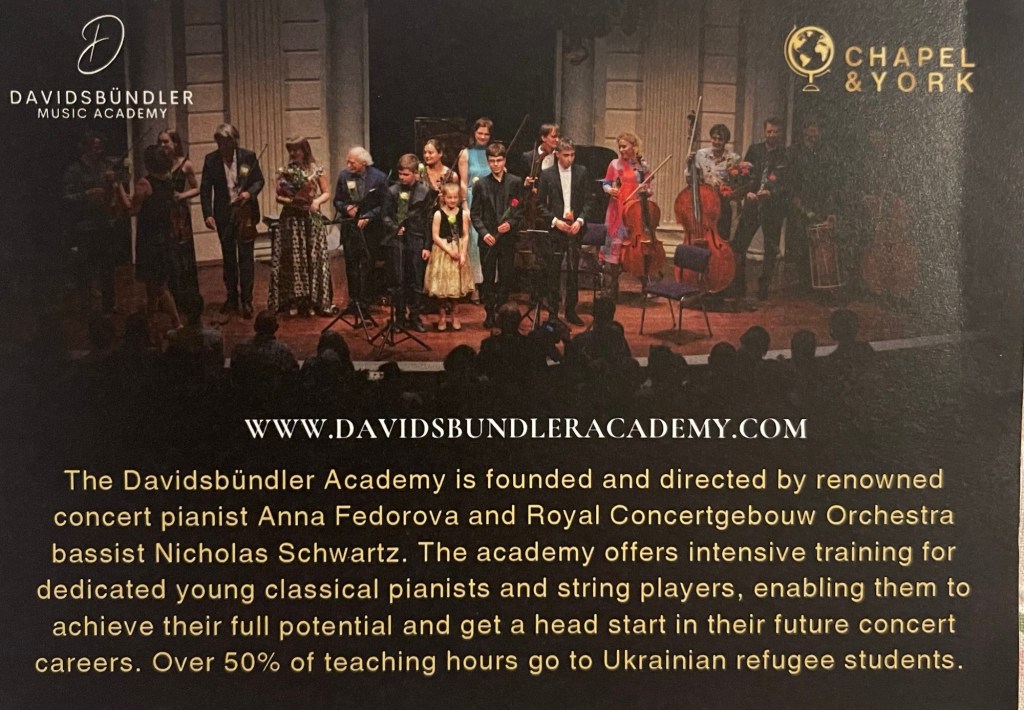
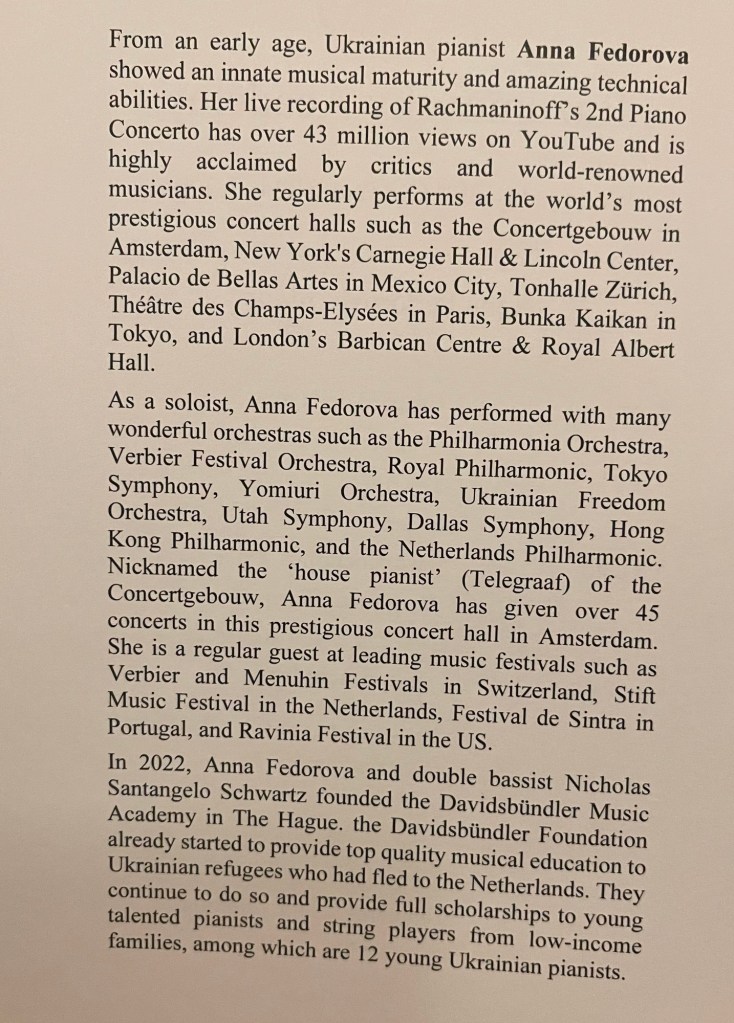
Anna has created her own Davidsbundler Academy ,in The Haig ,together with her parents and husband Nicholas Schwartz where over 50% of teaching hours goes to Ukrainian refugee students.
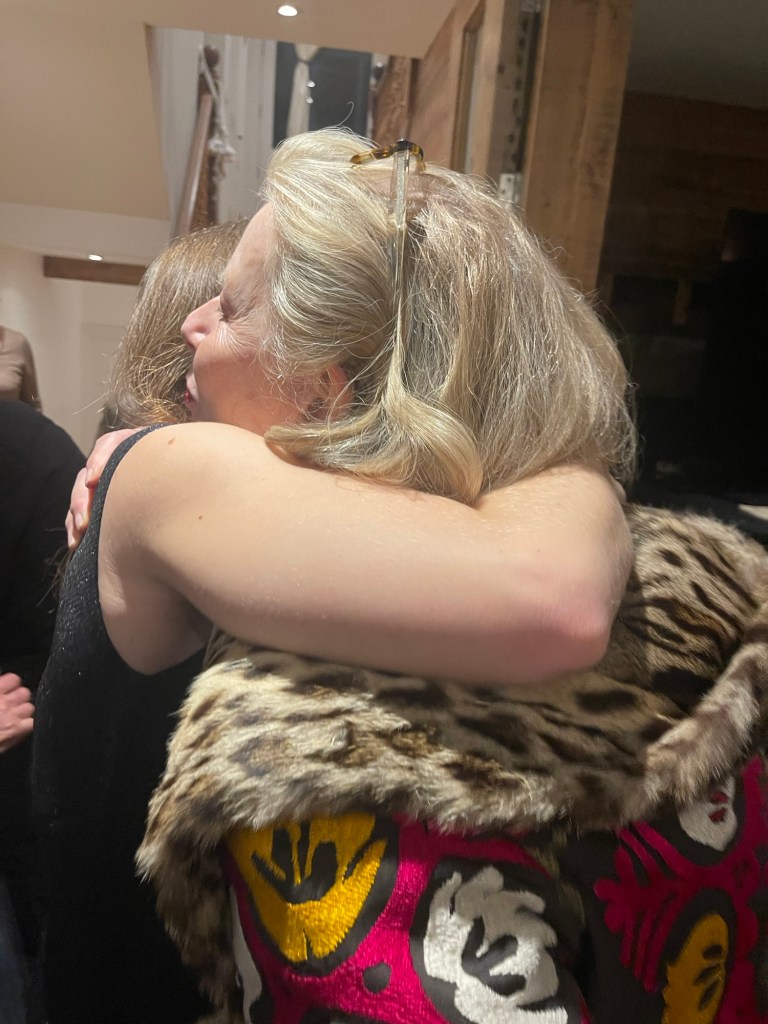
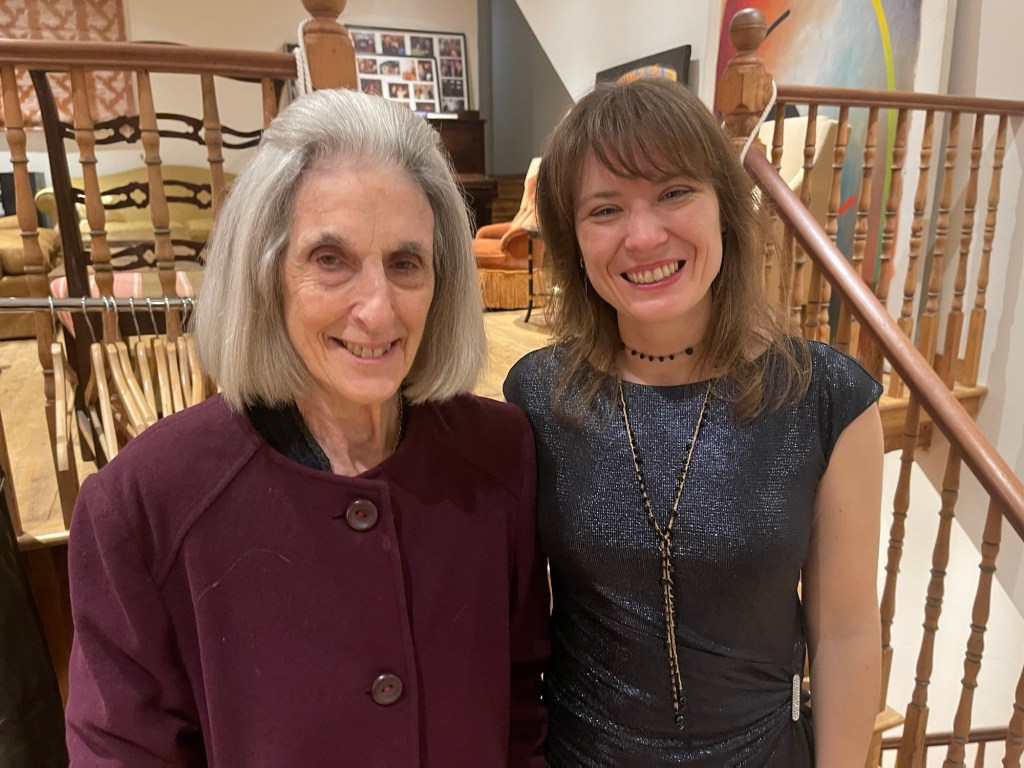
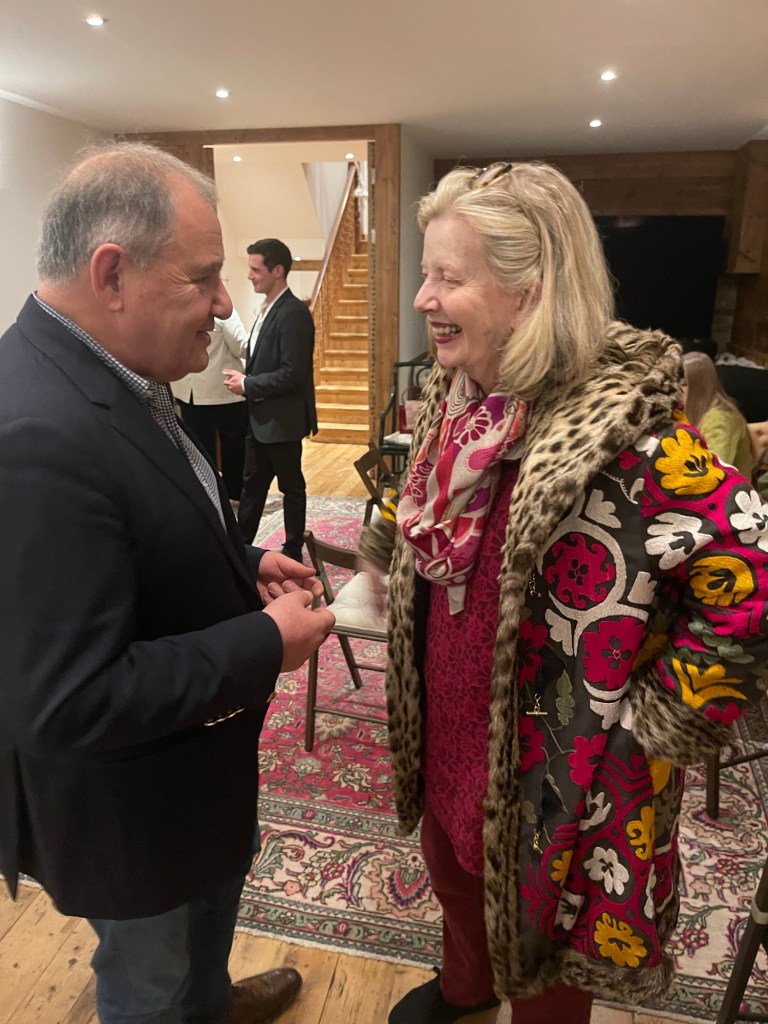
A special greeting from Annabelle Lady Weidenfeld Anna wrote on hearing of the saddest of news : ‘Beyond sad to learn the news that legendary, irreplaceable Menahem Pressler has left us. He seemed timeless, forever young with endless fascination and love for music, always radiating light and warmth, inspiring and motivating everyone around him. I was so fortunate to meet and play for him at Verbier festival in 2012, I will forever remember our lesson on Chopin Piano sonata N3, when we traveled to the different universe of magic and got lost in wonders of harmonies and colours of sound. This lesson was a turning point of my life and Menahem has become one of the strongest musical influences. I will also forever remember the magical performance he gave same year at Verbier of Schubert’s Winterreise with Christoph Pregardien. The last time I heard Menahem perform was at the Concertgebouw at the age of 95 with Franck Piano Quintet – incredibly demanding work which he has never played before but insisted on learning – fascinating! Completely packed hall gave him standing ovations the moment he appeared on stage and then we were all treated with a great dose of magic. Menahem’s spirit will stay with us forever and he will continue living and sharing his magic through his legacy, his music.’Anna ,Ilya and Oleg Kogan with Lady Annabelle WeidenfeldAnna with the world’s most renowned page turner Mike OldhamOleg with Misha Kaploukhii who played here earlier this month https://christopheraxworthymusiccommentary.com/2024/10/22/misha-kaploukhii-at-the-razumovsky-academy-with-technical-mastery-and-poetic-sensitivity/With Filip Michalak who had come straight from a lunchtime recital still in concert dress https://christopheraxworthymusiccommentary.com/2024/10/29/filip-michalak-at-st-marys-radiance-and-beauty-of-great-artistry/With honorary patron Lady LipworthOld friends are always the best. Anna and Nicky on their wedding day
Words are not enough to describe a work of such universal genius as the Diabelli variations and it’s interpreter today,Filippo Gorini, touched by genius was able to guide us through this maze of emotions with selfless mastery visibly still moved by a work he has been playing and living with for well over a decade.
Raffaello Morales his friend from their early teen student days together,surely, is also touched by genius as he has created an oasis of culture in a metropolis where quantity rather than quality reigns.
A distinguished audience including Dame Imogen Cooper whose performances of the Diabelli are legendary like her and Filippo’s mentor Alfred Brendel.
Wonderful cooking smells wafted around this very suggestive haven with a cordon bleu menu to follow Beethoven. I personally after a performance like we heard today need to seek solice and silence to savour the earth shattering experience we had just been through together . I really cannot imagine anyone able to digest anything after having digested Beethoven whole in his most dramatic and enigmatic mood and expect there might be many left overs tonight!
Goldberg ,Hammerklavier, Rzewski whatever it might be I certainly will not miss one of the most eclectic and masterly musicians of our day. Filippo has a twinkle in his eye and is sure to come up trumps to have the joy of sharing his musical discoveries in such a magically intimate space.
As stimulating introduction playing extracts from the theme and variations ,without any sign of the score, that was securely fastened within him. Crucial parts of this seemingly insignificant theme that Beethoven uses to transform into a totally new world with the innocuous opening turn transformed into a beautiful waltz or a dynamic rhythmic puzzle of frantic force. Even the accompaniment of just repeated notes Beethoven transforms into a Fugue of incredible force and power.The 22nd variation where Diabelli’s little waltz is parodied with Mozart’s ‘Notte e giorno faticar’ which was a little nudge from Beethoven to his publisher who was impatient to see the finished work. As Filippo pointed out the German title ‘Veränderungen’ translates as change, alteration, modification, transformation, change, shift, variation. Showing us the deeply meditative Andante of the 20th variation transformed with its almost unrecognisable ponderous long chords.
This was Beethoven’s penultimate work for an instrument that had followed the compositional career of a Genius , only the ‘trifles’ of op 126 were to follow. And like in his late sonatas op 109 and op 111 Beethoven at the end of each of these masterworks reaches out to the paradise that only he can envisage in his private ear.The miracle is that even totally deaf he could write down these sounds for posterity. It is with the charm and beauty of a Tempo di Menuetto that closes this monumental work.But even here it is not just a minuet but a gradual unwinding of etherial sounds reaching on high and just a very insignificant final chord played without force or rhetoric. This was not just an ending of a journey but the start of a journey that was to take him from us at the age of only 57.
I was not expecting a complete performance as it was billed as a lecture recital but Filippo after showing us many of the key moments, at 7 o’clock he started his long journey of a theme and the thirty three transformations of the Genius of Bonn. A theme that was played as a waltz with Beethoven’s dynamic marks noted but not yet distorting the natural flow as is the case in so many performances. It was Serkin too who was literally to bounce on the seat as he played with the same infectious lilt as Filippo today. What wondrous full rich sounds Filippo brought immediately to the pomposity of the first variations or the music box clockwork perfection of the second.Beauty and freedom to the third with the startlingly whispered left hand just a poignant interruption to the flow. This pastoral episode exploding into the 6th ‘Allegro man non troppo e serioso’ firing off notes as Serkin would do with injections of startling drive and energy. Trills shrilly upward moving with one hand answered by the other and a real wake up call , typical of the duel personality of Beethoven where serenity is interrupted by irascible impatience. Filippo’s playing of the 7th I have never heard played with such overpowering bass notes and it was quite an overwhelming even exhilaratingly exhausting experience. What energy he brought to Diabelli’s innocent little turn punched out with demanding vigour as it burst into a ‘presto’ of unrelenting forward movement played with a drive where the energy not the notes were Filippo’s prime concern , but which he played with exemplary precision despite Beethoven’s impossible demands. Diabelli’s little turn was transformed into such beguiling beauty in Filippo’s sensitive hands with the ‘Allegretto’ of the 11th. I noticed Dame Imogen looking over his shoulder for the secret of his wonderful legato meanderings in the 12th! The 13th was remarkable for the rests that separated pompous outbursts with whispered impish answers. I have never heard the ‘Grave e maestoso’ played with such veiled majesty and it contrasted with the ‘presto scherzando’ that just shot from Filippo’s fingers with crystalline whispered sounds of clockwork precision.The drive of the 16th and 17th I never thought I would hear the like since Serkin’s performance, but Filippo was like a man possessed and took us and himself by storm with dynamic drive and transcendental virtuosity. The ‘poco moderato’ of the 18th was given all the time to breathe and was a ravishing pastoral oasis after experiencing such a battleground.The long drawn out chords that Filippo’s had demonstrated in his talk brought this first half to a deeply felt close ( as in the 15th of the Goldberg variations) where a second of meditative silence brought a moment of peace before the final 13 variations still to come in this monumental work.
Trills abounding from one end of the keyboard to another with extraordinary energy signalled the second half and took us to the quote from Mozart that Filippo had explained earlier was a wake up call for Beethoven’s impatient publisher. I was surprised that the gasps of the ‘Adagio ma non troppo’ of the 29th were not made more apparent as Beethoven had gone to the trouble to mark them meticulously. A small detail compared to the extraordinary character Filippo gave to these last variations.The very heart of this work is the 31st variation that Filippo played with weight delving deep into the notes where Beethoven’s ‘ bel canto’ was so much more intense and poignant than that of Bellini. Beethoven had taken these embellishments as inner palpitations of meaningful significance and not the egoistic enhancement of the popular operas of the day.The 32nd variation was a fugue every bit as breathtaking as Serkin with wild hysterical abandon that Filippo like Serkin kept under strict architectural control bursting into streams of notes and a final impatient cadenza. The following six bars are in my opinion the most startlingly original and poignantly significant in the whole work.This is real Genius where six bars can mean so much with so little.The final variation , a minuet, as I have already mentioned, reaching into the distance that Beethoven could already perceive and that he was to join in only a few years after the finish of this monumental work.
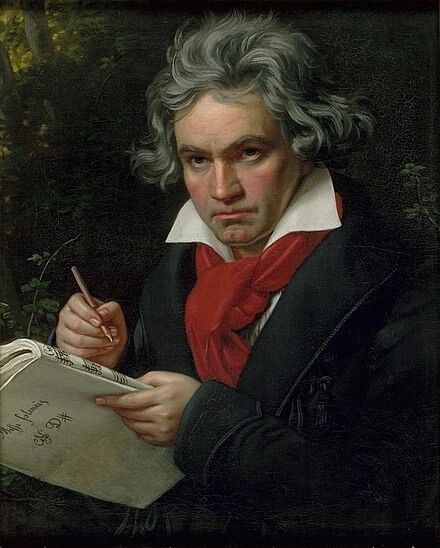
Ludwig van Beethoven 17 December 1770 Bonn 26 March 1827 (aged 56) Vienna
The 33 Variations on a waltz by Anton Diabelli, op 120, was written between 1819 and 1823 by Beethoven on a waltz by Anton Diabelli .It forms the first part of Diabelli’s publication Vaterlandischer Kunstlerverein , the second part consisting of 50 variations by 50 other composers including Carl Czerny,Franz Schubert ,Hummel,Moscheles,Kalkbrenner,a twelve year old Franz Liszt and a host of lesser-known names including Franz Xaver Mozart and others now largely forgotten.It is often considered to be one of the greatest sets of variations for keyboard along with Bach’s Goldberg Variations.Tovey called it “the greatest set of variations ever written”and pianist Alfred Brendel has described it as “the greatest of all piano works”.It also comprises, in the words of Hans von Bulow “a microcosm of Beethoven’s art”. Alfred Brendel wrote, “The theme has ceased to reign over its unruly offspring. Rather, the variations decide what the theme may have to offer them. Instead of being confirmed, adorned and glorified, it is improved, parodied, ridiculed, disclaimed, transfigured, mourned, stamped out and finally uplifted”.Maynard Solomon in The Late Beethoven: Music, Thought, Imagination expresses this idea symbolically, as a journey from the everyday world (“Diabelli’s theme conveys ideas, not only of the national, the commonplace, the humble, the rustic, the comic, but of the mother tongue, the earthly, the sensuous, and, ultimately, perhaps, of every waltzing couple under the sun”Of great significance, according to Kinderman, is the discovery that a few crucial variations were added in the final stage of composition, 1822–23 and inserted at important turning-points in the series. A careful study of these late additions reveals that they stand out from the others by having in common a return to, and special emphasis on, the melodic outline of Diabelli’s waltz, in the mode of parody.
Title page of the Vienna 1823 edition with Beethoven’s autograph dedication with Veranderungen which means not just simple variations change, alteration, modification, transformation, change, shift, variation, Autograph Beethoven-Haus Bonn, NE 294
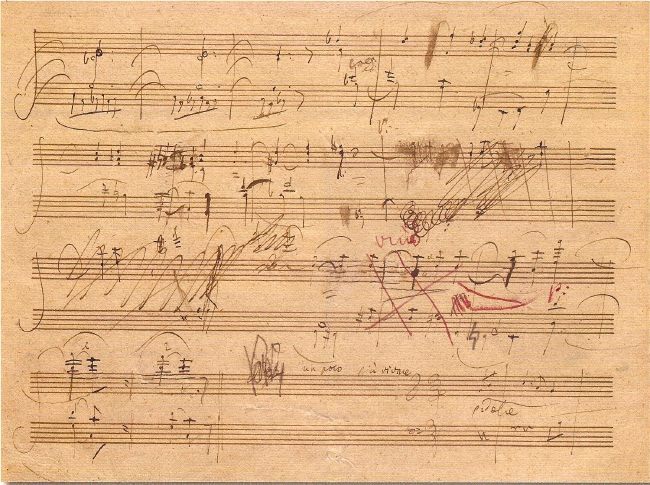
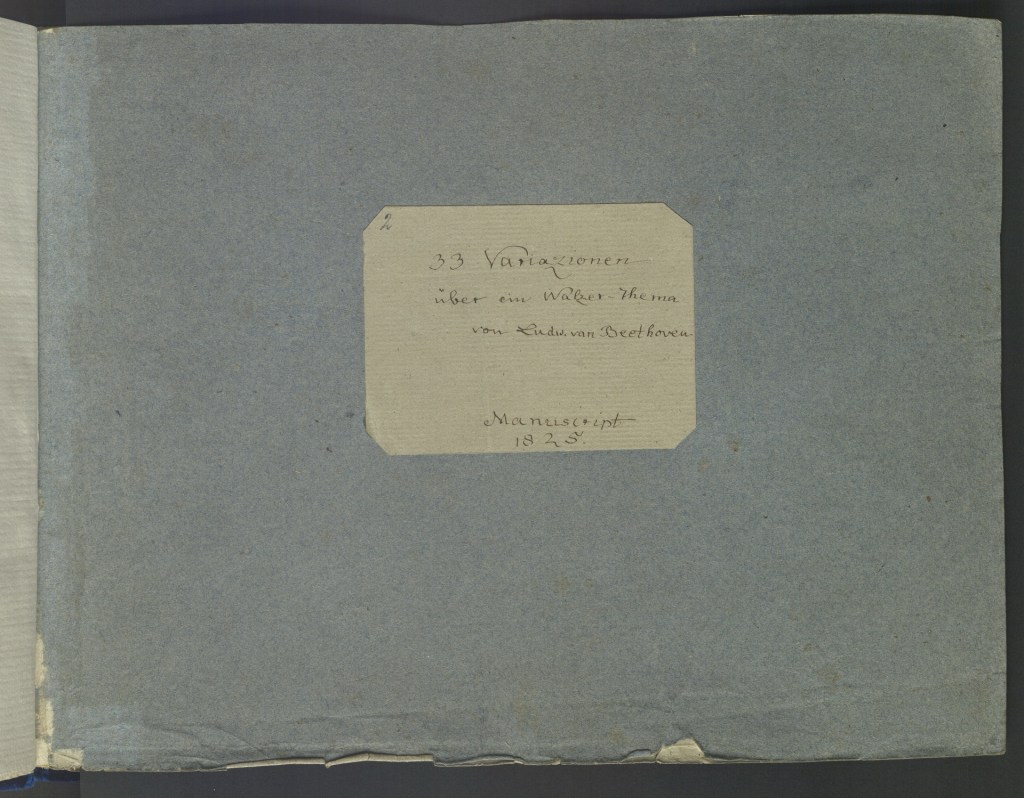
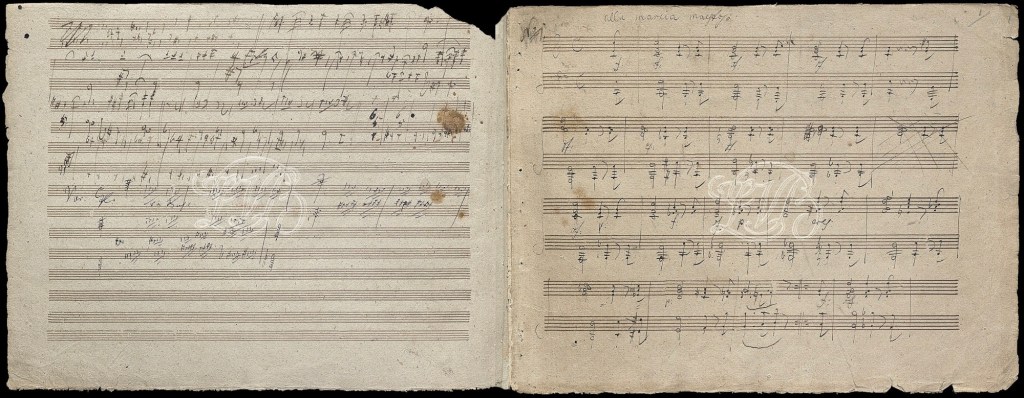
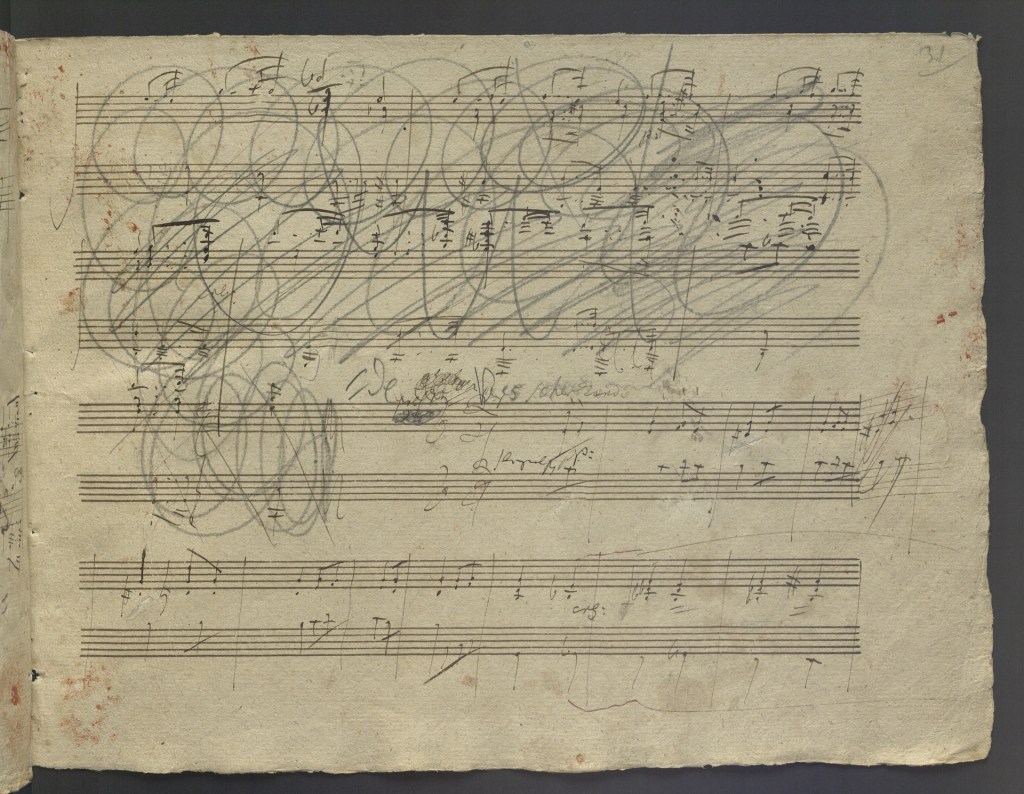
The autograph of the Diabelli variations gives a detailed insight into Beethoven’s working routine. It nicely illustrates how the composer worked, how he strove for a perfect final version by adding, crossing out and pasting over notes, by inserting sheets and so on. Beethoven’s handwriting gives evidence of the conflict between producing a well-readable copy and giving way to spontaneity and unrestrained expression. His way of writing says much about his musical intentions, and the manuscript also mirrors his complex personality.
His handwriting had always been quite attracting. Anton Diabelli, who ordered the variation cycle, wanted to own the autograph by all means and claimed that he as the publisher needed it as proof of ownership. And indeed, he managed to obtain it. Later, it came into the possession of two well-known autograph collectors: Heinrich Steger from Vienna and Louis Koch from Frankfurt. Thereafter, the manuscript remained in private possession for many years. Thanks to the contribution of many supporters, among them the public authorities, public and private foundations as well as music aficionados from all over the world, the manuscript could be acquired in 2009 and be added to the collection of the Beethoven-Haus. Last but not least this important achievement is owing to the efforts of outstanding Beethoven interpreters who gave charity concerts. Thanks to this common commitment artists and laymen can now enjoy this unusual master composition.
At only 29 years of age, Filippo Gorini’s musicianship has drawn unanimous acclaim in recitals in venues such as Milan’s Teatro alla Scala, Amsterdam Concertgebouw, Berlin Konzerthaus, Vienna Konzerthaus, Hamburg Elbphilharmonie, London Wigmore Hall, Louis Vuitton Foundation Paris, Zurich Tonhalle, Van Cliburn Foundation, Vancouver Recital Society, as well as with orchestras such as the Santa Cecilia Orchestra in Rome, the Salzburg Mozarteum Orchester, the Nagoya Philharmonic, the Flanders Symphony Orchestra, the Gyeonggi Philharmonic in Seoul, the Opera Nacional de Chile.Filippo’s highlights from 2023-24 include his recital debuts in Teatro alla Scala di Milano and at Cal Performances in Berkeley, and concertos with the Orchestra del Maggio Musicale Fiorentino conducted by Daniele Gatti, Shenzhen Phillharmonic and Musikalische Akademie Mannheim, as well as a chamber music tour in New York’s Carnegie Hall, Boston, Philadelphia, Washington DC for the Marlboro Music Festival.Filippo’s multi-year project “The Art of Fugue Explored” has shown his vision and creativity to go further than just his performing abilities: with the support of the Borletti-Buitoni Trust, he has released the work on Alpha Classics in 2021, performed it internationally over 30 times, and has released on RAI5 and RaiPlay a series of filmed conversations on Bach’s music involving personalities such as Peter Sellars, Frank Gehry, Sasha Waltz, Alexander Sokurov, Alexander Polzin, Alfred Brendel, George Benjamin, and many more. Produced by Unitel, they will soon be published internationally.His upcoming project “Sonata for 7 cities”, due for 2025-26, aims to show a new, responsible and ethical approach to concert life with monthly residencies in Vienna, Cape Town, Hong Kong, Tokyo, Portland, Milan and more, centred around performances, outreach, teaching, and philanthropy. During this project he will also perform seven newly commissioned piano pieces by composers such as Beat Furrer, Stefano Gervasoni, Yukiko Watanabe, Michelle Agnes Magalhaes, Federico Gardella, Oscar Jockel.Filippo has received the “Premio Abbiati”, the most prestigious musical recognition in Italy, in 2022, as well as the Borletti-Buitoni Trust Award 2020 and First Prize at the Telekom-Beethoven Competition 2015. His three albums featuring Beethoven and Bach late works, released on Alpha Classics, have garnered critical acclaim, including a Diapason d’Or Award and 5-star reviews on The Guardian, BBC Music Magazine, Le Monde.Alongside his solo career, Filippo has performed chamber music with musicians such as Marc Bouchkov, Itamar Zorman, Pablo Ferrandez, Brannon Cho and Erica Piccotti, in renowned festivals such as the Marlboro Music Festival, the Prussia Cove Chamber Music Seminars, as well as “Chamber Music Connects the World” in Kronberg with Steven Isserlis. He has taught masterclasses at the Liechtenstein Musikakademie, the University of British Columbia, the Royal Welsh College of Music, and the conservatories in Bergamo and Siena. He follows actively the world of contemporary composition, and has played works by composers such as Stockhausen, Kurtág, Boulez and Lachenmann as well as commissioning new pieces.After graduating with honours from the Donizetti Conservatory in Bergamo and the Mozarteum University in Salzburg, Filippo’s artistic development is now supported by the mentorship of Maria Grazia Bellocchio, Pavel Gililov, Alfred Brendel and Mitsuko Uchida.
“There is no doubt: a star has risen, perhaps of the brightest kind” ★★★★★, Diapason D’Or
Premier prix du concours Telekom-Beethoven à Bonn en 2015, soutenu par Alfred Brendel avec qui il étudie, Filippo Gorini débute sa carrière discographique à vingt-deux ans par un défi, les Variations Diabelli (1823). Les avoir souvent jouées au concert lui permet d’animer avec un timing impeccable le cycle gigantesque, conscient des continuités d’une variation à l’autre, des ruptures de surface et des ruptures profondes. Sans surjouer le caractère de chacune, il fait naître un tout véritable de la diversité arrogante que Beethoven a organisée et bousculée dans ce cahier. Gorini, en technicien déjà consommé, offre une vision limpide et tonique. Ses phrasés sont personnels et parfois immenses, la polyphonie richissime. Le jeune interprète dépasse le détail ciselé au bénéfice d’un discours plus ample, les pages d’intériorité abyssale ne l’effraient pas.
Comme chez son maître Brendel, le lyrisme de l’expression et la transparence de la sonorité semblent primordiaux, soutenus par un élan vigoureux. L’intelligence pianistique a de quoi impressionner : chaque trait est précisément pensé. L’exubérance frôle quelquefois la nervosité (Variations XXI, XXIII, XXVII, XXVIII, XXXII), mais n’y succombe jamais. La touche de parodie, si chère à Brendel quand il analyse ou joue cette oeuvre, et les regards moqueurs sur la valse banale de Diabelli font merveille. Le parcours exploratoire de la main gauche, le poids exquis de la main droite, la force légère d’accent captivent. Les phases abruptes ou fulgurantes (premier groupe de variations « telluriques » se refermant avec la Variation X), les inflexions plus hautaines (Variations XIV, XV, XXIV) ou quasi désespérées (XXIX, XXX et XXXI) se répondent avec une extrême intensité. Cela ne fait guère de doute : une étoile se lève, peut-être de première grandeur. L’art si individuel de Filippo Gorini, qui paraît réconcilier des éléments incompatibles, correspond à la souveraine liberté de pensée de Beethoven : les proportions sont distendues, mais les rapports restent justes.
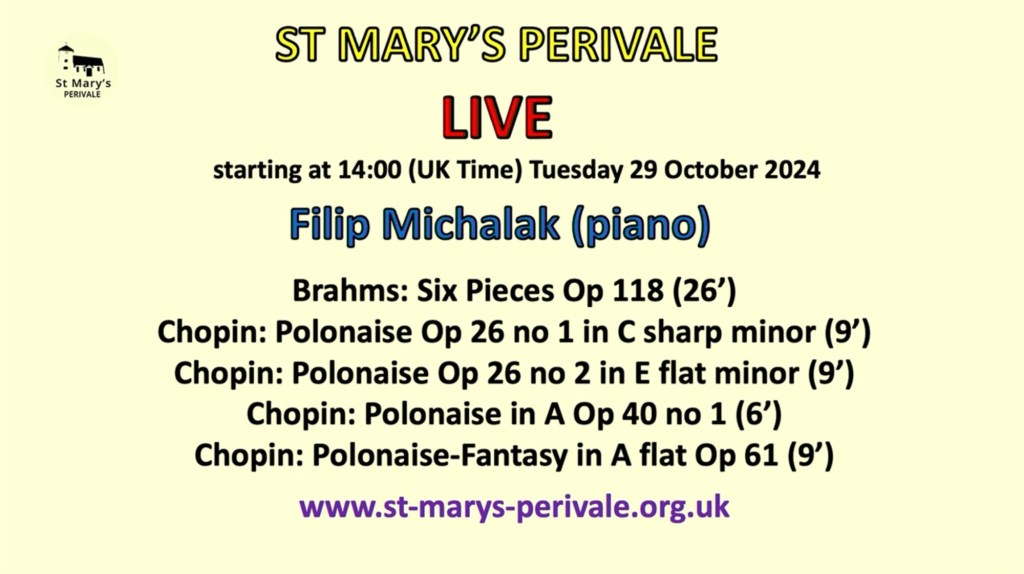
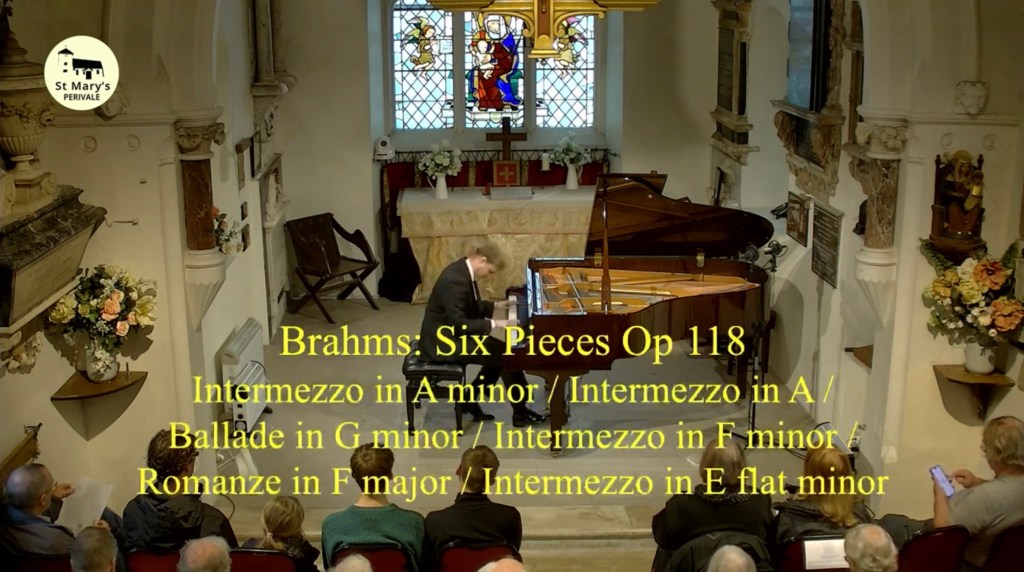
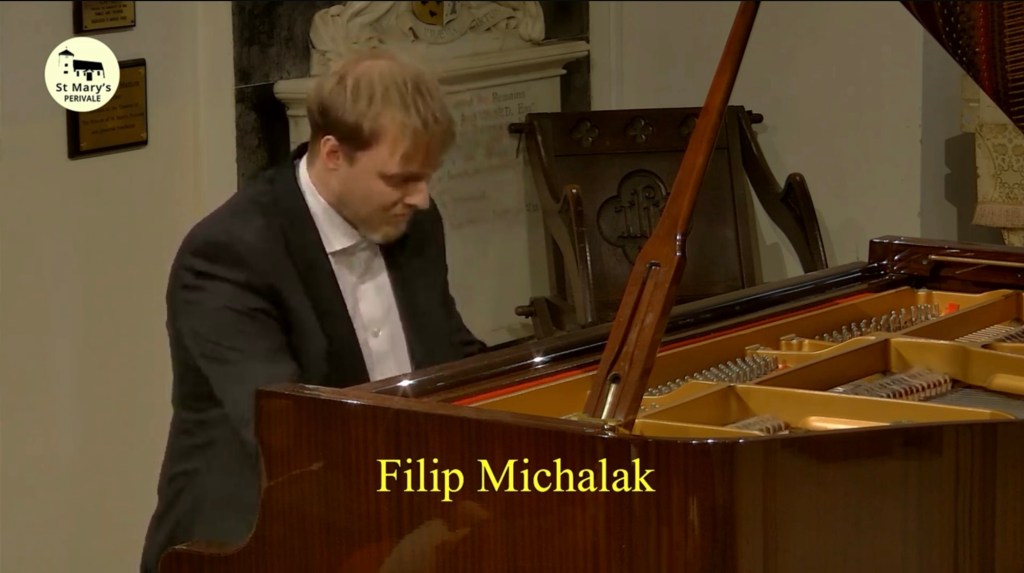
Some remarkable playing of aristocratic maturity and simple beauty. I cannot remember ever listening with such satisfaction to these six pieces op 118 as today .They were played with sumptuous rich sound and scrupulous attention to Brahms’ markings. I do not mean just attention to the dots and dashes on the page but the true meaning behind a notation which is the nearest a composer can get to describing the sounds in his head. A full rich sound ,never hard, but with a glowing luminosity that rarely I have heard on an instrument that I have listen to for many a year. It reminded me of the richness of sound of Bruno Leonardo Gelber who had acquired a rich sound through being bedridden as a child with poliomyelitis and only having a keyboard on his bed to practice on. No pedal of course so there was the chameleonic legato , like an organist, never leaving the keys , playing with weight in the horizontal not vertical sense. It is the school of Scaramuzza of course where so many great pianists were created in Argentina.I read that Filip had been mentored by Gabriela Montero and expect this has been a great influence allowing him to search out this wonderful golden sound that gave such body and strength to all he did today.
The six Klavierstucke op 118 are the penultimate works written by Brahms for piano and are miniature tone poems of poignant intimacy and passionate declarations. Filip broke straight in with the passionate sweep of the A minor Intermezzo with fingers like limpets sucking out the beauty of each note that was given it’s just weight and poignancy. Followed by the simple beauty of the Intermezzo in A of crystalline beauty of great significance with its duet between the voices of fluidity as each voice outdoing the other for succulence. Dynamic drive and passion of the Ballade in G minor was soon dispelled by the mellifluous outpouring of searing Brahmsian simplicity.The final notes are marked without pedal and the final note just a quaver barely whispered that had me searching for the score to find if this was indeed Brahms’s rarely noticed intention! Busy weaving of the Intermezzo in F minor unexpectedly interrupted by a long sustained chorale of clouded beauty which Filip shaped with masterly architectural musicianship.The final chords were again played with ravishing beauty of ever more diminishing wondrous sounds.The Romanze in F was a revelation as Filip gave precedence to the legato line in the treble ,that is indeed marked by Brahms. So often we hear the espressivo inner parts and loose the emotional strength of a work where it is so easy to get lost in Brahms’s wonderful meandering counterpoints. What refreshing pastoral beauty he brought to the ‘Allegretto grazioso’ that just flowed like a bubbling brook from his sensitive hands. The Intermezzo in E flat minor is an epic tone poem that Filip played with an echoing radiance as the story unfolded with the orchestral colours and contours that were independent but part of a sumptuous whole. Gradually springing to life as this was now an orchestra ringing out with passion and sumptuous full sounds.Dying away to a mere whisper with the left hand weaving a web of clarity as the right intoned the melodic line with a glowing fluidity to the final sumptuous lento of a chord spread out with such aristocratic grandeur at the end of an epic tale.
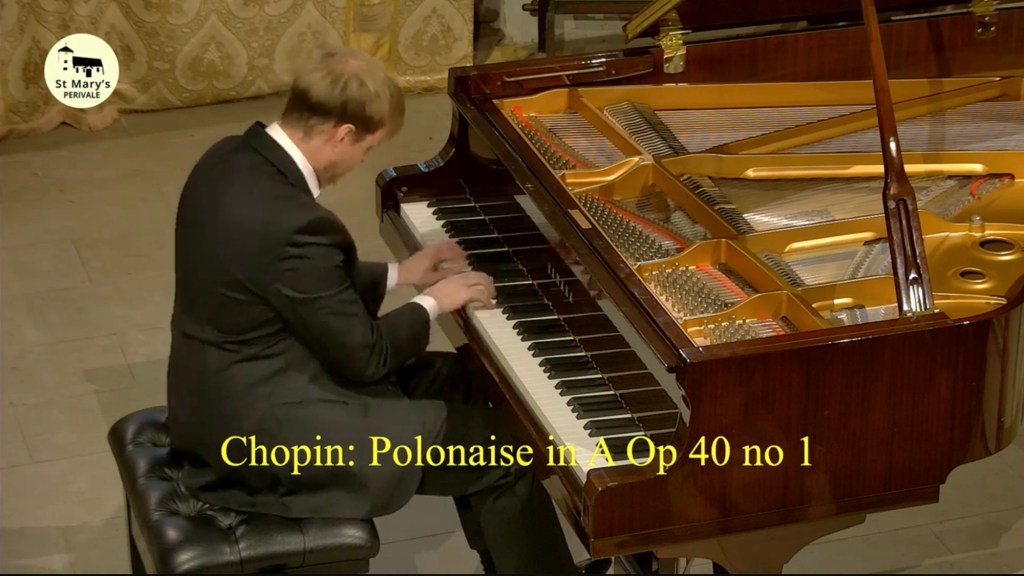
It is quite rare these days to hear these early Polonaises by Chopin in concert. We often hear the later one’s ,in particular the Polonaise Héroique of 53 , but rarely these days to we hear the equally heroic Polonaise op 40 n. 1 that used to be almost obligatory in recitals of pianist in the age of Paderewski.
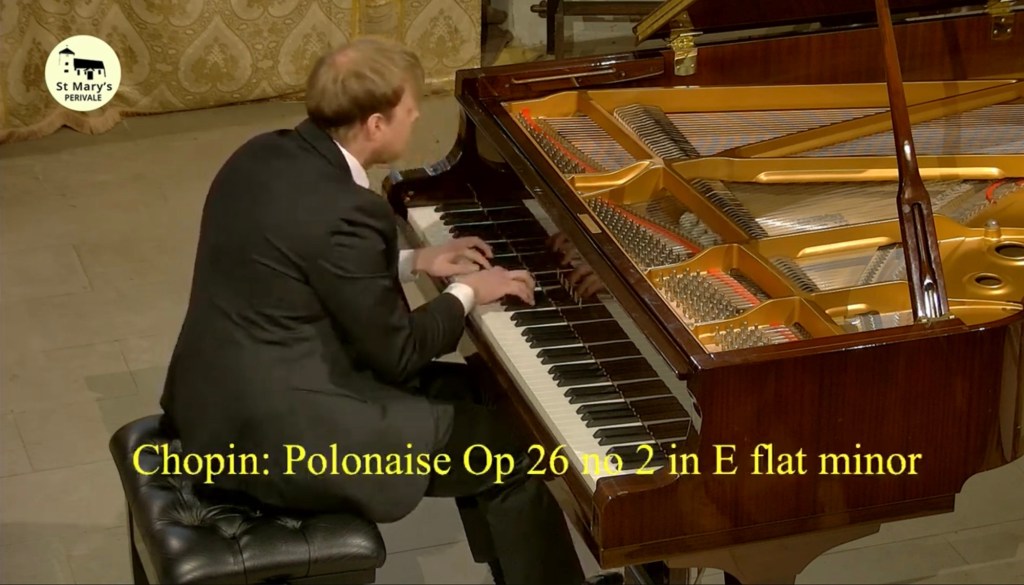
There was grandeur of the Polonaise in C sharp minor with the radiant beauty of the central episode always moving forward with a wonderful flowing lyrical cantabile.There was a sudden call to arms as the opening Polonaise returned. It’s twin in E flat minor opening with a deep brooding mystery bursting into life with its mazurka central episode contrasting with the Polonaise of driving intensity.
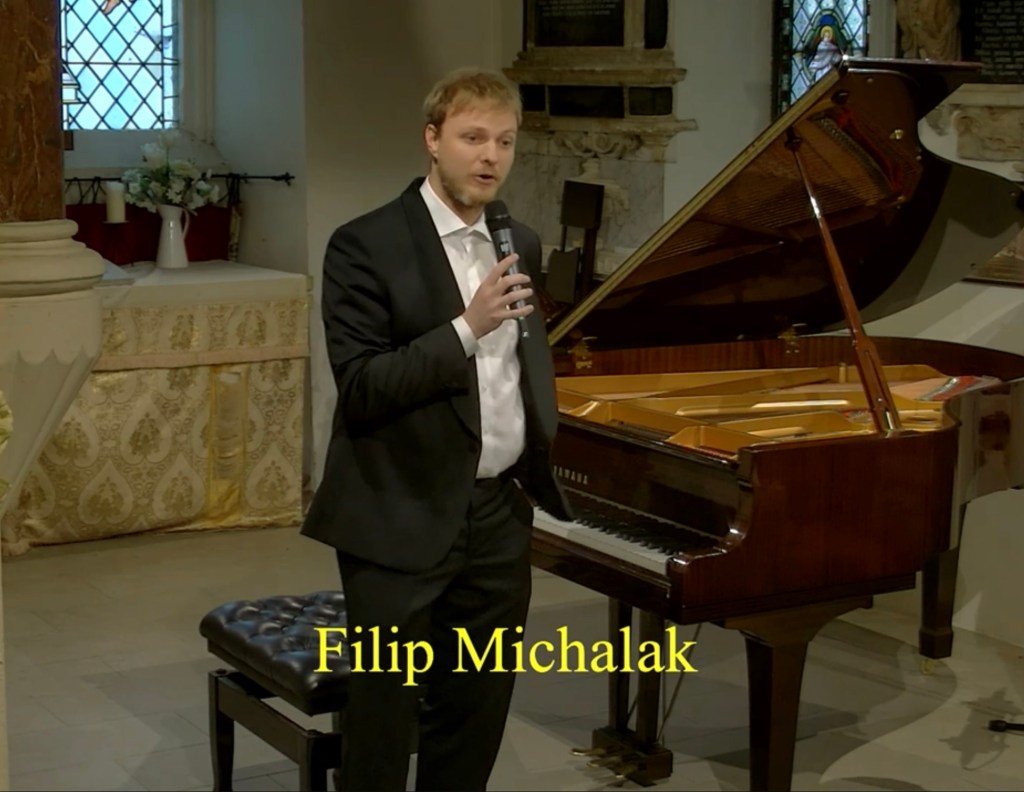
The Polonaise op 40 n.1 is, like Liszt’s second rhapsody one of the most instantly recognisable works for piano. Filip whose parents are both Polish,transferred to Denmark , has this music in his blood and it flowed with an aristocratic nobility and inevitability that was mesmerising Even gently placing a deep bass note to add just that extra sumptuous sound to such a noble outpouring.
The Polonaise Fantasie is one of the last works of Chopin where the composer is breaking away from traditional forms and like Liszt and Schubert using them as a basis for a form where themes could be transformed like characters in an opera. Chopin opens this masterpiece with fanfares of great declarations where the final reverberations are spread over the entire keyboard. From the very opening Filip’s masterly playing illuminated a work that can in lesser hands seem more a collection of episodes than the great monument that it really is.The whispered return of the opening melodic line followed a long drawn out central episode of languid beauty. Whispered because it was just like a memory of the past which was gradually to be caught up in a whirlwind of exhilaration and excitement and a climax that was allowed to fill the piano with sumptuous rich sounds before dying away on the rhythm of a polonaise to the simple gentle final chord of A flat.
What Chopin recital could it be without an encore of his most recognisable of waltzes .The Waltz op 64 n.2 in C sharp minor that Rubinstein would inevitably include in his memorable recitals. It was played with charm and delicacy with some unusual inner counterpoints of great beauty. A beguiling beauty and ravishing jeux perlé and a wonderful way to end such a masterly recital.
Filip Michalak, a distinguished Danish-Polish classical pianist, has become a prominent figure in the Scandinavian music scene, earning accolades across Europe, the United States, and the Middle East. He has garnered numerous prestigious awards, including the “Stars at Tenerife” competition in Spain and top prizes in Denmark’s “Nordjyllands Talentkonkurrence” and the “Steinway Festival.”
In 2017, Michalak’s talent shone brightly as a finalist in the “8th Nordic Piano Competition” and semi-finalist in France’s “St. Priest International Piano Competition.” He won the “Chopin Prize Competition” at the Royal Northern College of Music (RNCM), where he was also a finalist in the Gold Medal Competition. His international acclaim grew with his participation in the Leeds International Piano Competition and a 2021 nomination for the Vendome Prize in New York. Through The Keyboard Charitable Trust in London, Michalak has performed in renowned venues in London, Frankfurt, Florence, and Rome. As a soloist, he has captivated audiences with Beethoven’s 5th and Chopin’s 2nd Piano Concertos. His USA tour in March 2024 featured solo recitals and a performance of Brahms’ 1st Piano Concerto with the Manchester Symphony Orchestra. Michalak has enchanted festival audiences, including at the Duszniki International Chopin Festival in Poland and the Helsingborg Piano Festival in Sweden. Recent highlights included Mozart’s Piano Concerto No. 12 and Brahms’ Piano Quintet at the Elmore Chamber Music Festival in August 2024. As an Artistic Director, he has significantly influenced the Södertälje Chamber Music Festival and spearheaded the inaugural Aalborg Chamber Music Festival in September 2024. His education includes studies at The Royal Danish Academy of Music in Copenhagen, Ingesund Musikhögskolan in Sweden, and the Royal Northern College of Music in Manchester. Participation in the “Gabriela Montero Piano Lab” has further enriched his artistry. Now a thriving freelance artist, Michalak continues to mesmerize global audiences with his dynamic performances and unwavering passion for music.
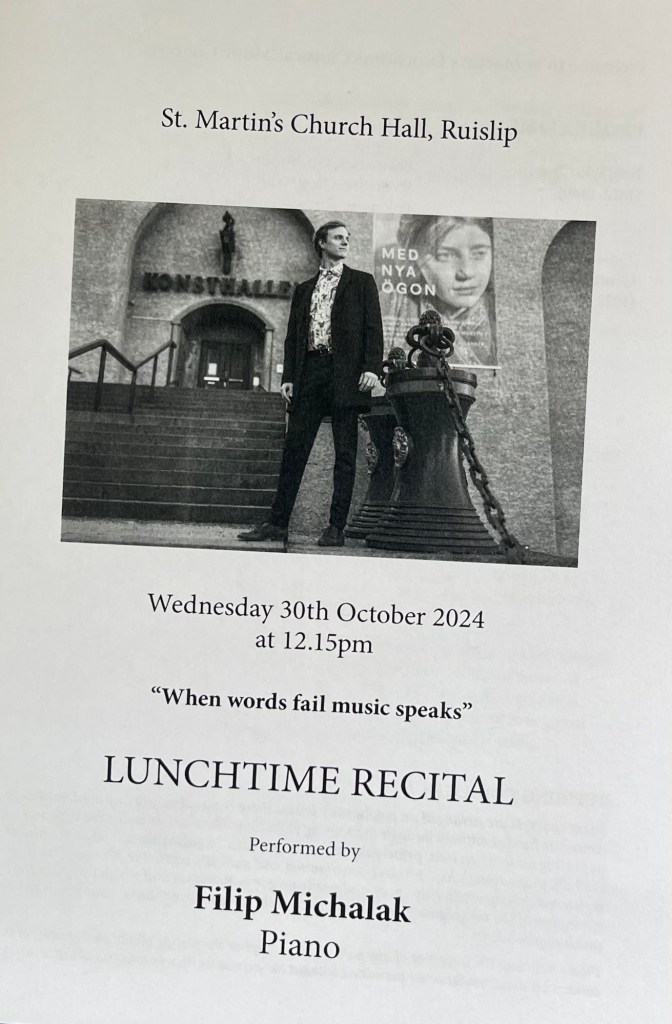
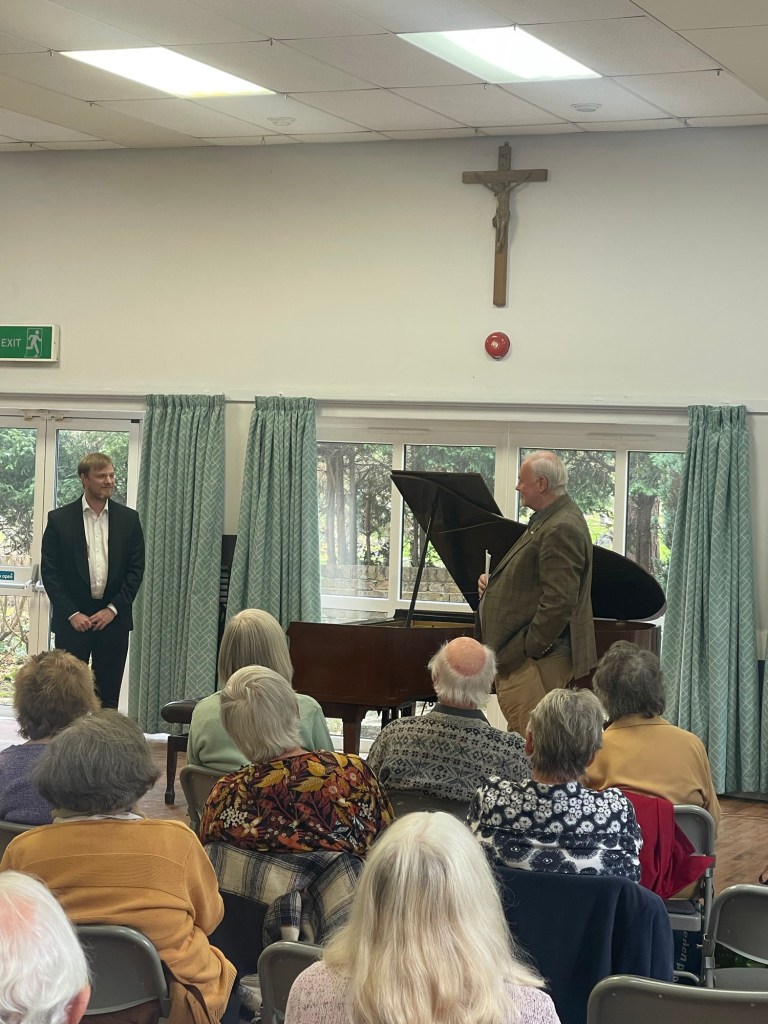
The concert was repeated in the St Martin’s series in Ruislip Roger Nellist thanking Filip for his extraordinary concert .St Martin’s Ruislip An old but a piano with a pedigreeA capacity audience in the Church Hall of St Martin’s Photo by Roger Nellist After concert lunch Filip ,Roger Nellist and CA
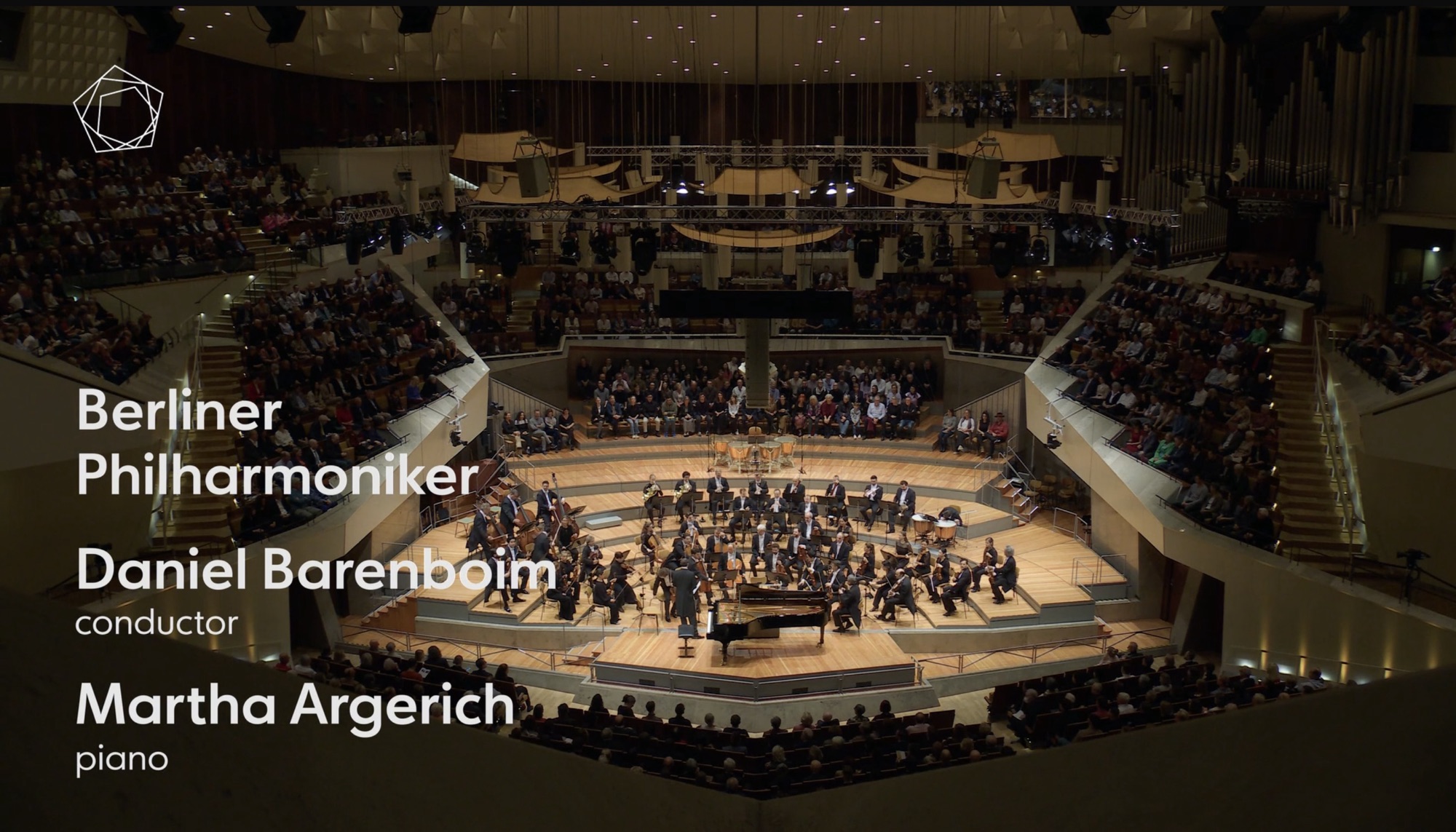
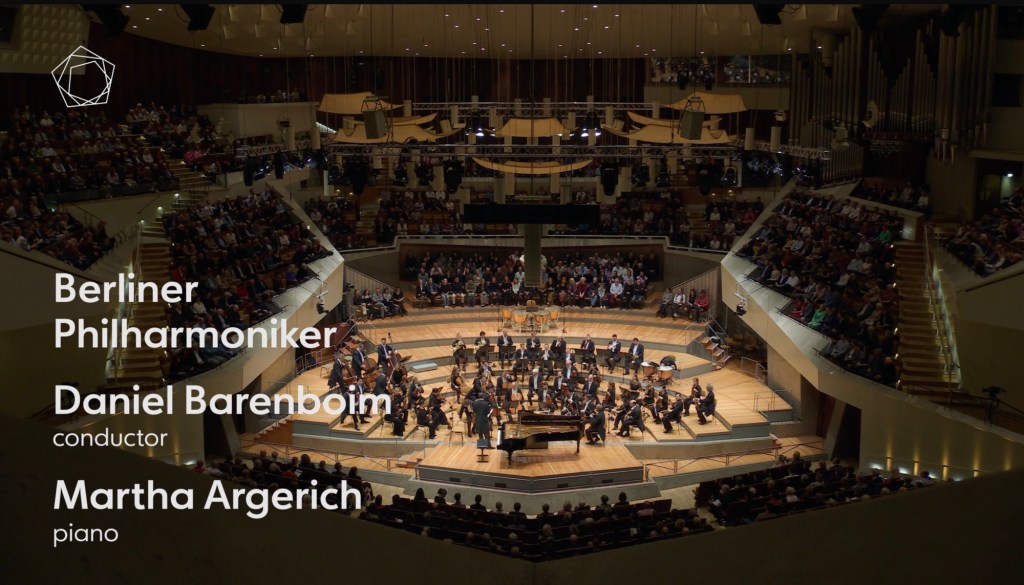
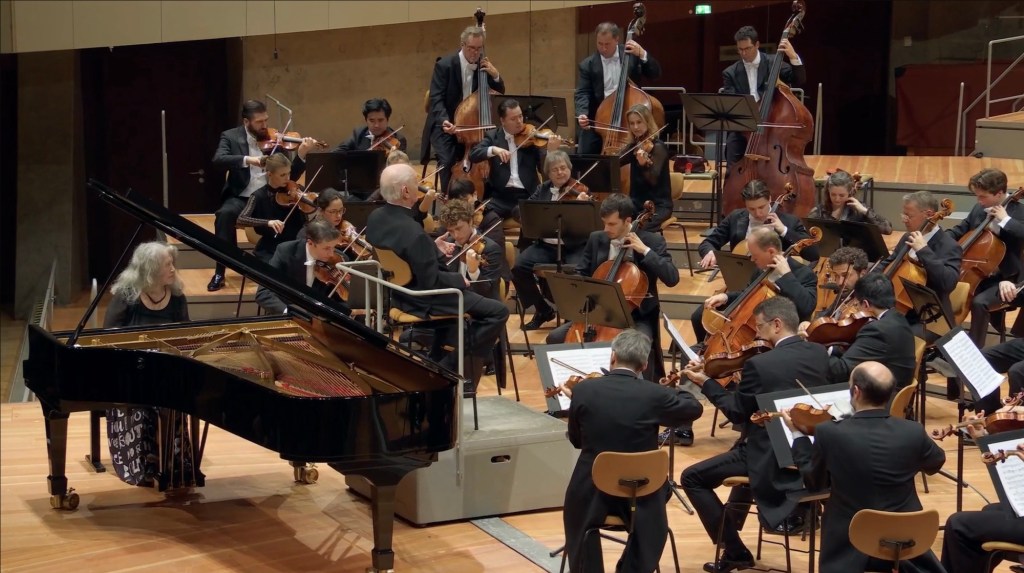
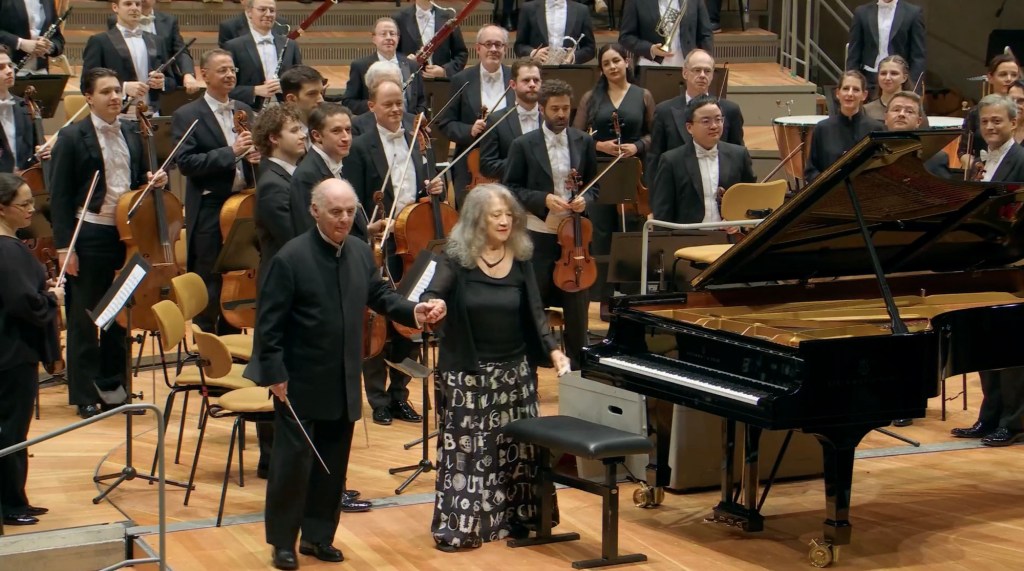
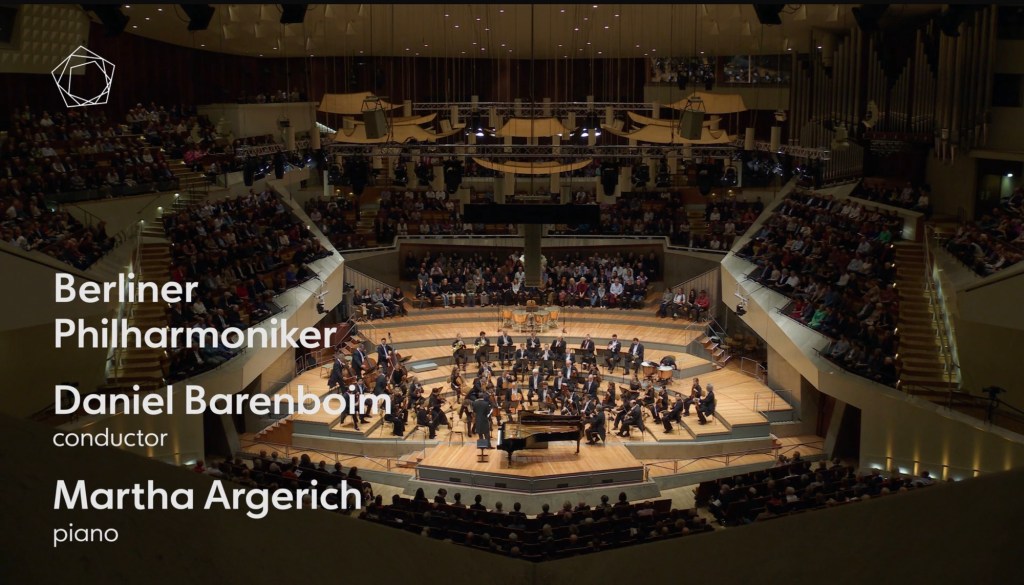
They are two world stars who have known and admired each other since their childhood in Argentina – but Martha Argerich and Daniel Barenboim have only been performing together with the Berliner Philharmoniker for a few years. This season, they demonstrate their special bond in Ludwig van Beethoven’s youthful and spirited First Piano Concerto. Daniel Barenboim – honorary conductor of the orchestra – also presents Johannes Brahms’s Fourth Symphony.With this concert and the performance of Brahms’s Fourth Symphony, a short cycle comes to a close, as Daniel Barenboim has performed the composer’s first three symphonies with the Philharmoniker since 2021. Whether Brahms knew at the time of composition that his Fourth Symphony would be his last is unknown. The first theme, at least, is unmistakably melancholy and comes to a dramatic head in the course of the movement. In the finale, Brahms looks back to the Baroque era through the form of the passacaglia. To achieve an almost tragic conclusion to the work, the composer, as musicologist Egon Voss argues, unusually designed the third movement “like an exuberant old-style finale”. The symphonist Brahms’s impressive final word is an original appropriation of historical forms and techniques expressed in his own personal idiom.
Ludwig van Beethoven’s First Piano Concerto, on the other hand, is a work of new beginnings. It is possible that the composer played it at his first public appearance in Vienna in 1795, thereby establishing himself as one of the most brilliant pianists of his time. The concerto bursts with ingenious ideas and features a contemplative slow movement before the jazz-like swinging rondo finale. The work is one of Martha Argerich’s signature pieces.
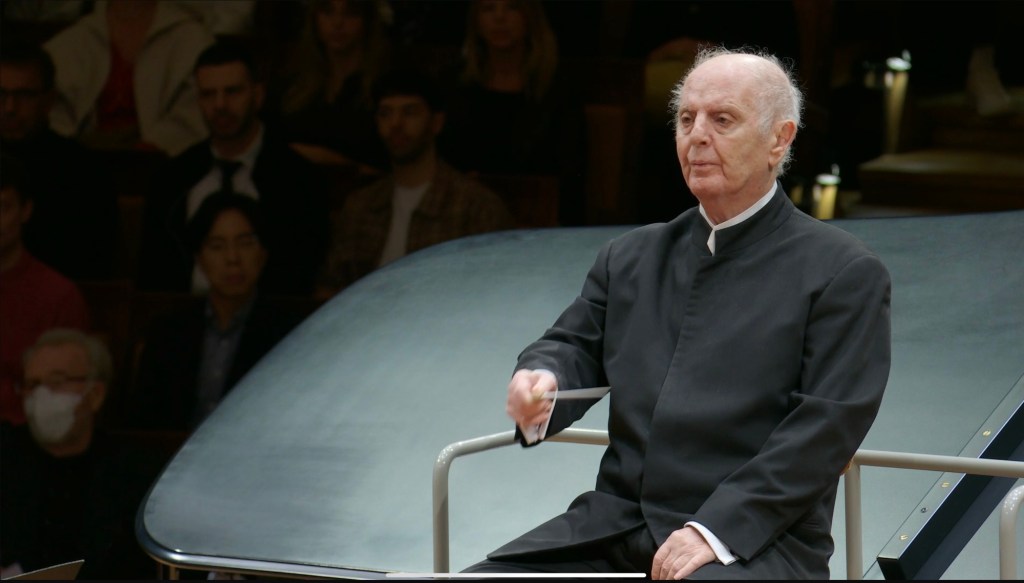
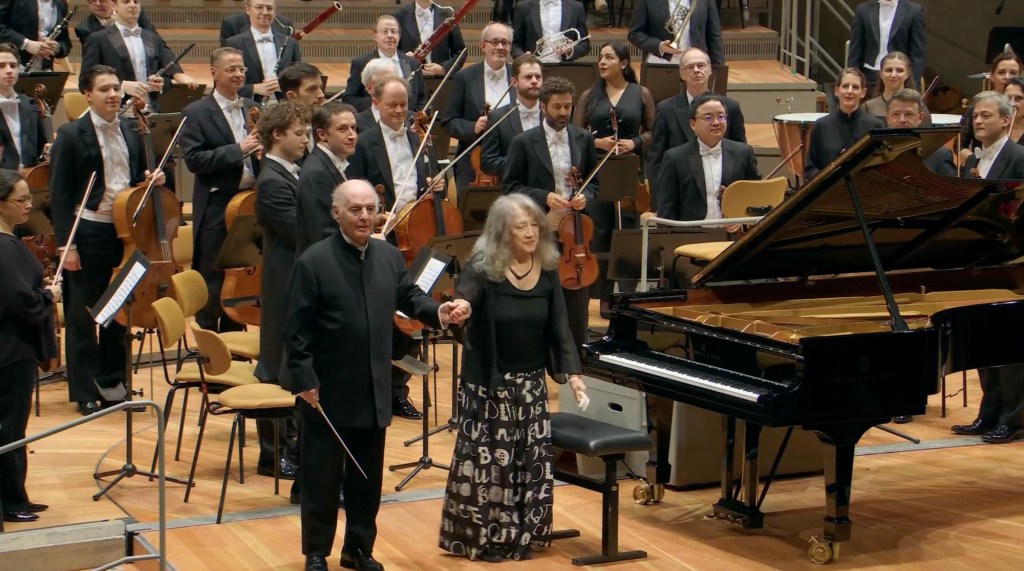
It is strange to see the ever dynamic Daniel Barenboim moving so carefully seemingly a shadow of his former self. A long difficult illness has obviously slowed him down physically but his inner energy and inspiration will never diminish as he showed yesterday in Berlin. I was reminded of the time when I saw Klemperer conduct in London and he had to be helped onto the platform and did not seem to move an inch but one glance from him was enough to create the magic bond of a living legend whose whole life was music. I will never forget the two performances of the Bach B minor mass in the Royal Festival Hall with the magisterial voice of Janet Baker in perfect harmony with this legendary figure. Ashkenazy playing Brahms second piano concerto with a last movement that was so slow as Klemperer wanted to show the very life blood within the notes rather than racing through it with the speed of a virtuoso.His Fidelio at Covent Garden was memorable too and as I had access as a student to a rehearsal I was witness to the great master seemingly loosing control as the chorus was not with the orchestra.This giant of a man immediately found the strength to stand and beat the time with enormous strokes on his music desk. I remember too Claudio Abbado with a long drawn out illness being a shadow of his former self delving into the very heart of the music with performances that will go down in legend.
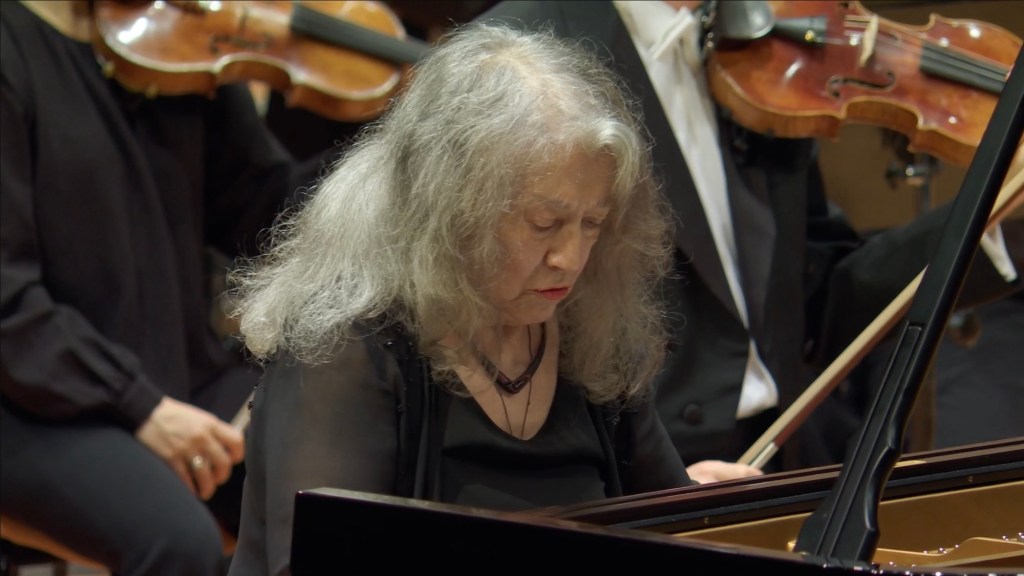
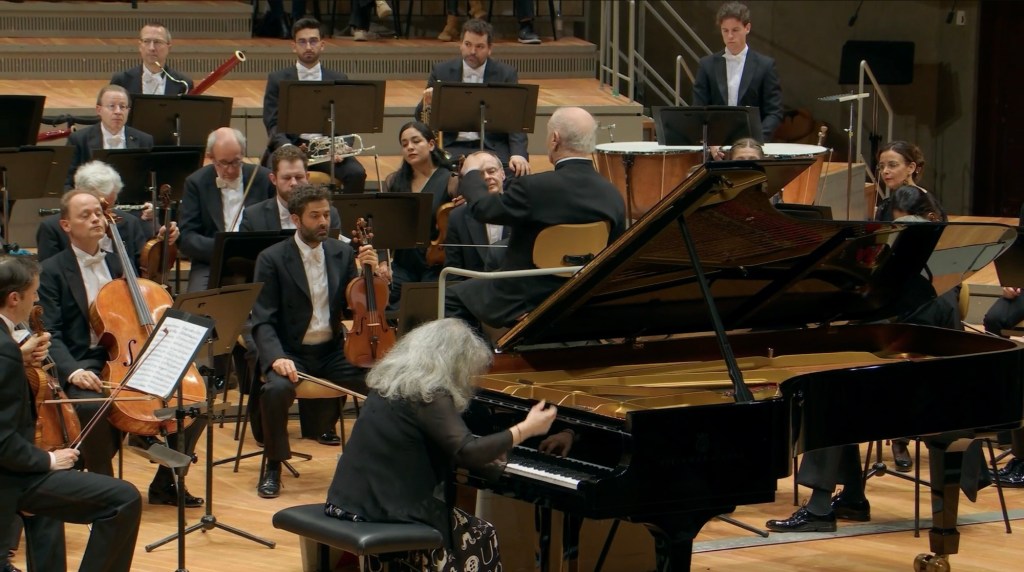
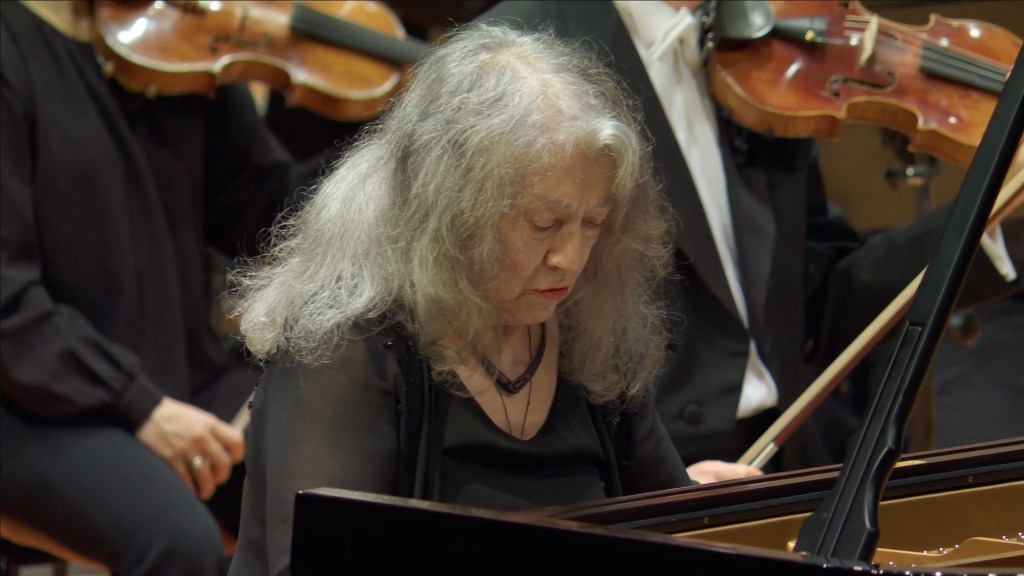
Barenboim too has arrived at his Indian summer and long may it last if the performances of the past few days are to be judged . Seated at the podium with his great friend at the piano just below he seemed hardly to move but the look in his eye and a sudden twitch of his baton was enough for the players to know exactly what he wanted them to do.The whispered opening of the concerto beautifully phrased as was the timeless beauty of the opening of Brahms Fourth Symphony. His friend Martha who has played this concert endless times played with imperceptible inflections and slight hesitations as she made the music speak bringing it to life as never before. It was Rubinstein their great friend and mentor who when he played the slow movement of the Emperor in rehearsal the orchestra just stopped and cheered such was the knowing simplicity of a great master.
An Art that conceals Art and Barenboim and Argerich through their seventy or more years of public performances have distilled the very essence of the music as they recreate it with a sense of discovery of which both they and the audience are complices.One is the lifeblood of the other in a play of : Je sense , Je joue , Je transmets.
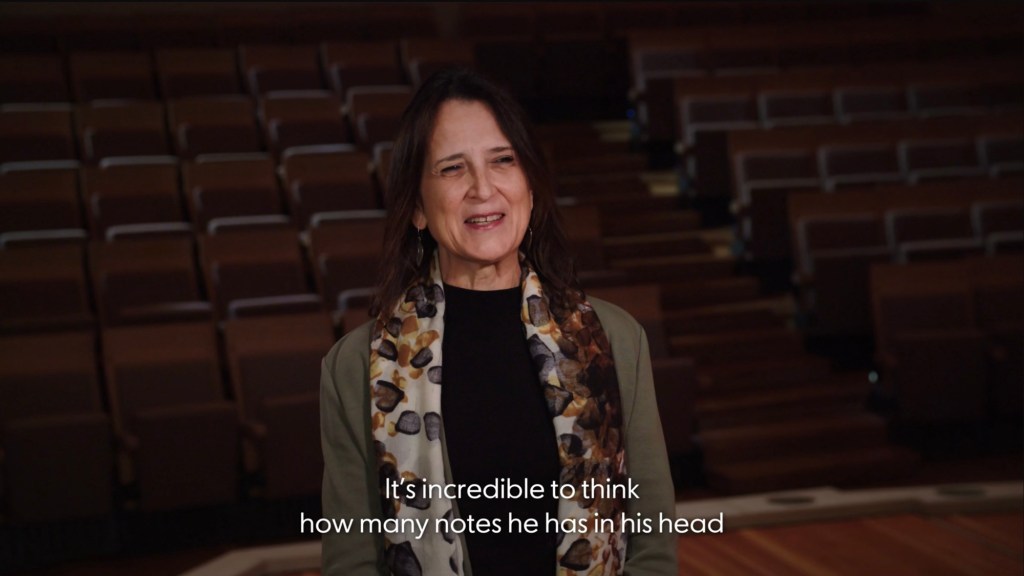
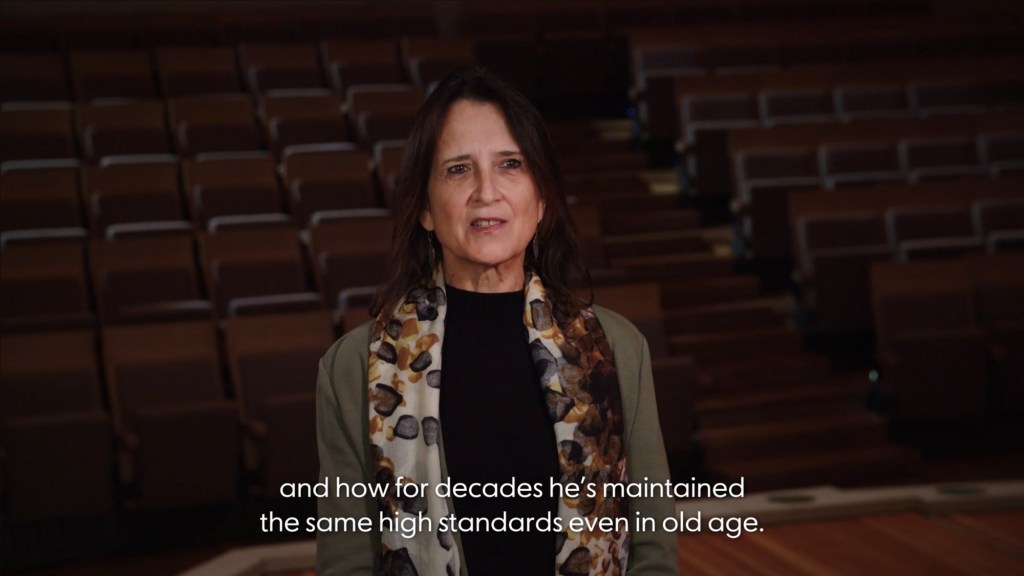
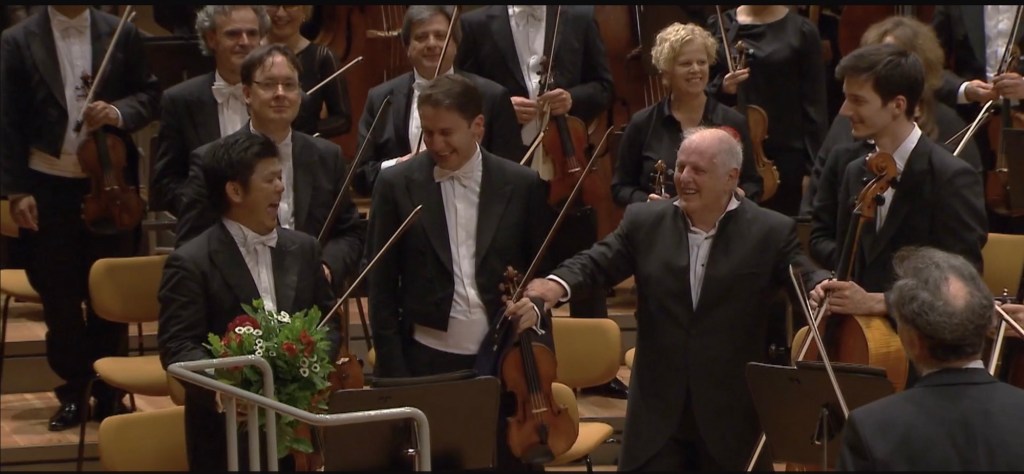
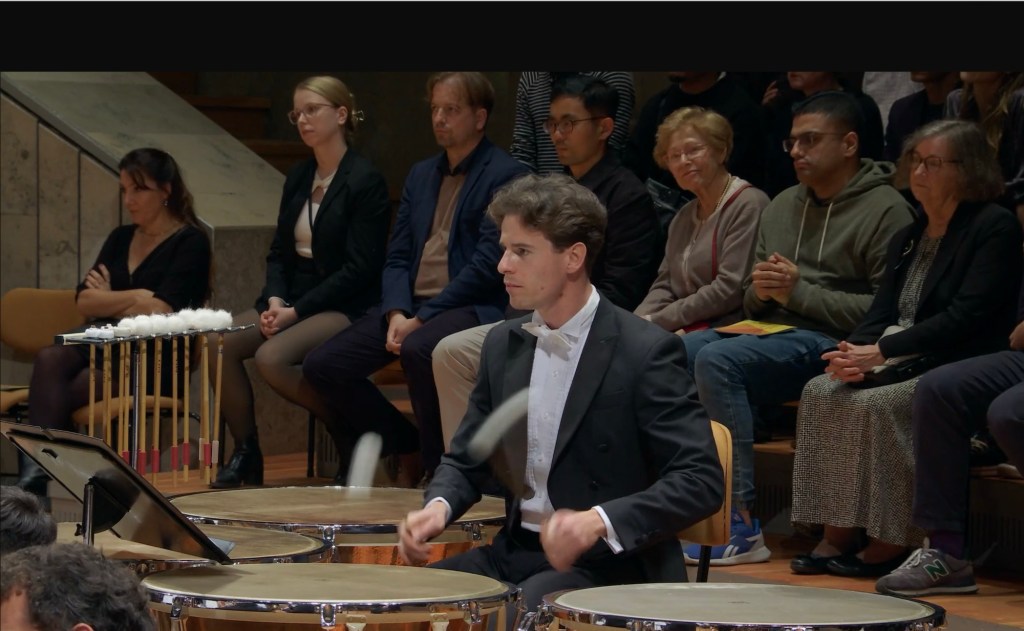
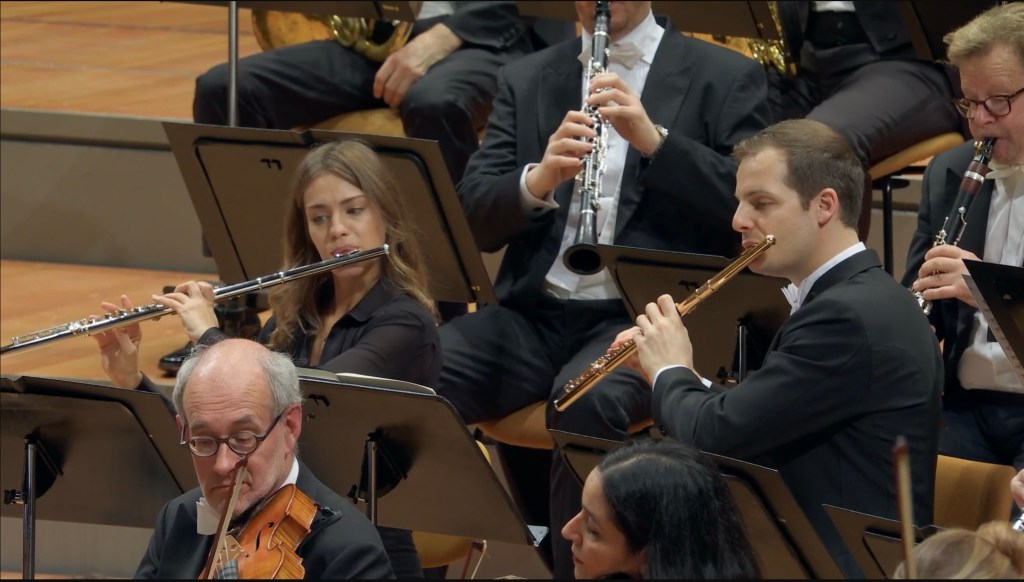
The players of the Berlin Philharmonic filled the interval with stories and the reverence that they hold for Barenboim and one even exclaimed that she had no idea how he could keeps so many notes in his head! Another found it unbelievable that as an eleven year old boy Barenboim was being mentored by Furtwangler.
Lets not forget that Barenboim also recorded all the Beethoven Concertos with Klemperer conducting as he conducted Rubinstein’s last complete recording too when Horowitz famously quizzed him to know how many wrong notes his old rival had let slip !.
Genius knows no bounds and I well remember the arrival of the ‘Golden Couple ‘ in London in the 60’s with Jacqueline in awe of her husband’s genius as they played their hearts out together as it turned out for a cruelly short time.
It was in the poignant beauty of the slow movement of the Beethoven concerto that one could appreciate the timeless wonder of their music making.Martha barely touching the keys with Daniel just following her every move with a knowing glance and appreciation of the great beauty they were creating together.
Particular thanks for sharing this, Christopher: my two biggest musical hero’s. I had heard a rumour last year that Barenboim had officially retired so to read of this this performance only yesterday, with this particular work (I performed it only this Saturday) and your profound words, I found very moving. 🙏🙏 I last saw them perform the Liszt 1 together at the Proms about 6 years ago…and it was moving then….especially when they played the Schubert Fantasy piano duet together as an encore…two friends sitting side by side making music: a beautiful thing to witness. Between the two of them they contain an unfathomable amount of knowledge, experience and, without exaggeration, the pinacle of classical music performance… How wonderful to have been there. Best. Warren Mailley Smith
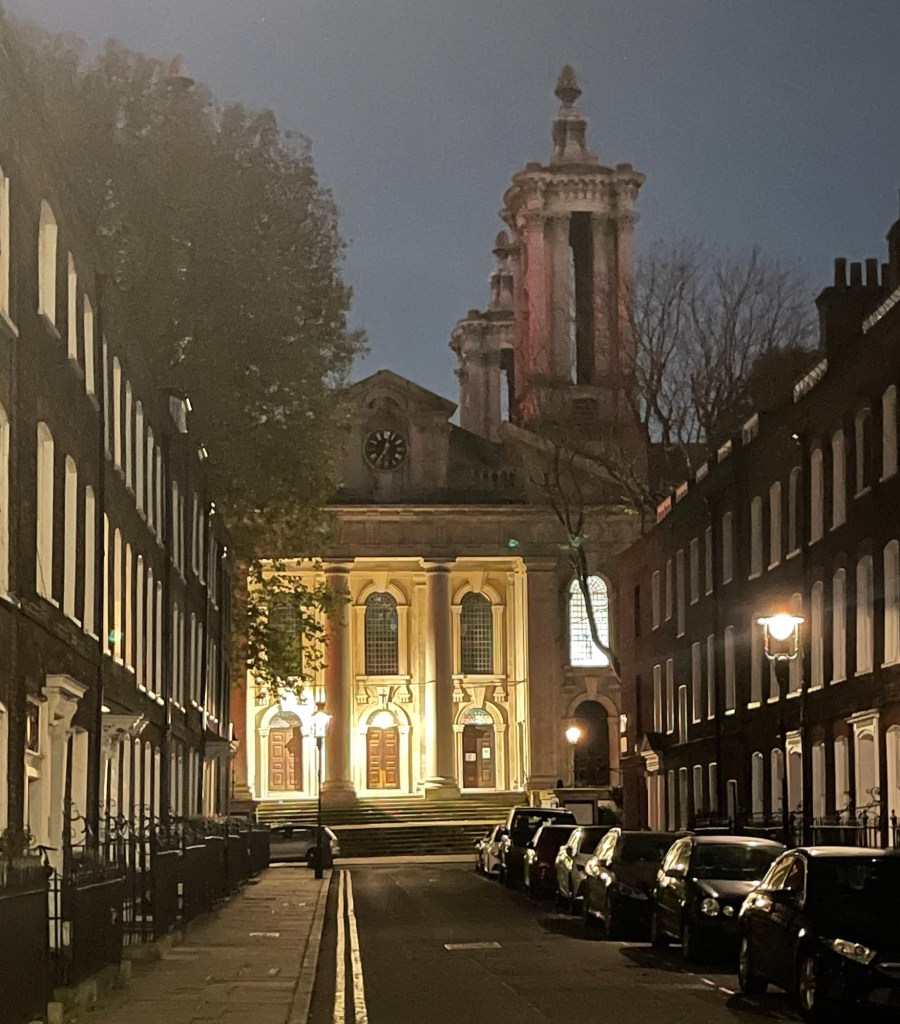
There were certainly miracles in Berlin this morning but there were also wonders in St John’s Smith Square tonight.
Martha Argerich with Daniel Barenboim reminded me of Klemperer with Janet Baker for the simple magnificence of musicians for which music is life and life is music and of course the Berlin Philharmonic ready to watch for the slightest movement from such legendary musicians that could open a gate that only these great friends from childhood have the key to.
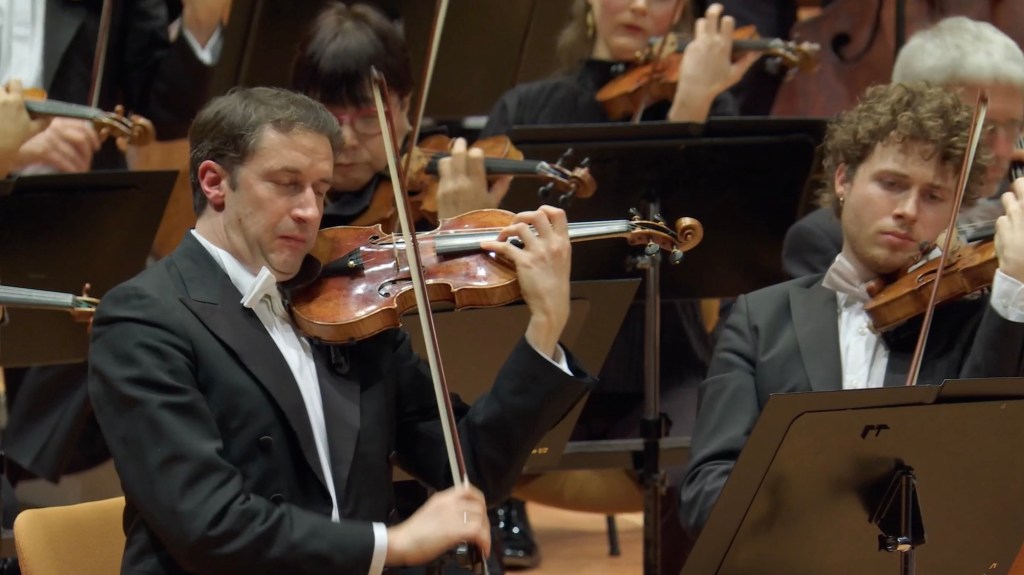
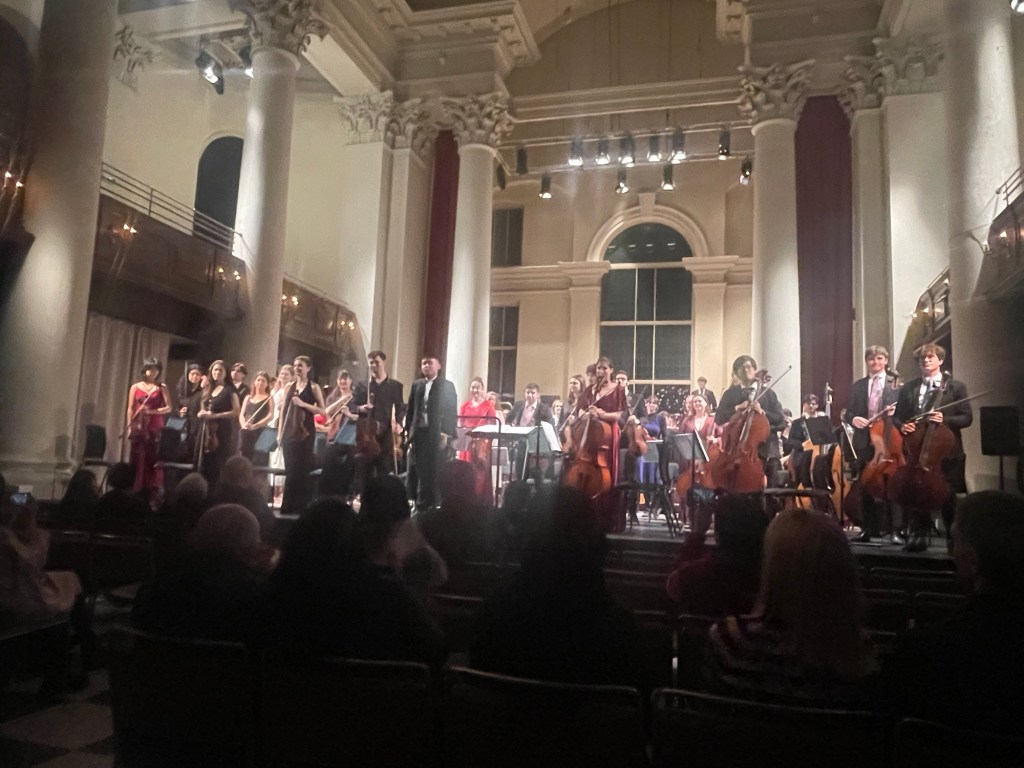
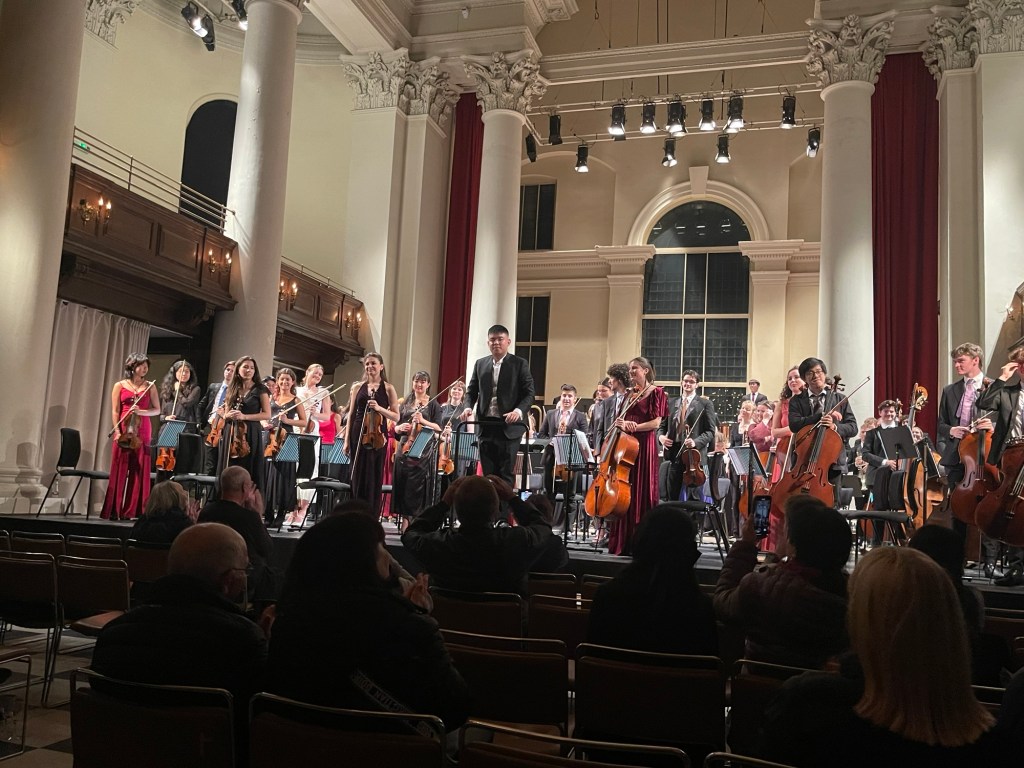
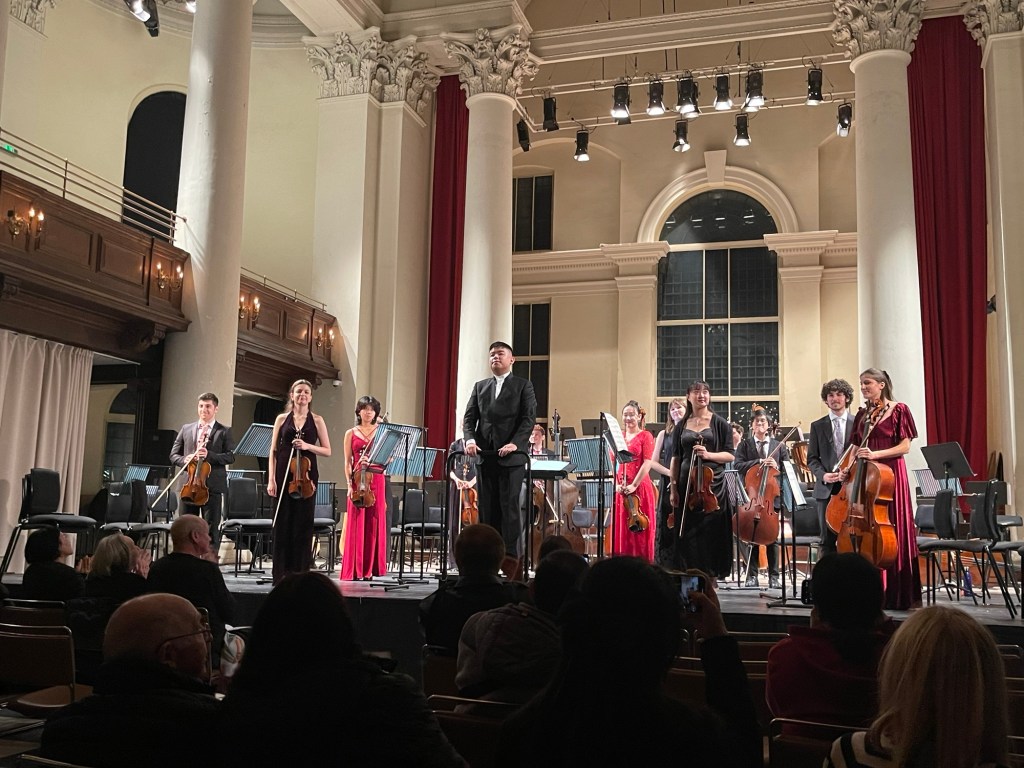
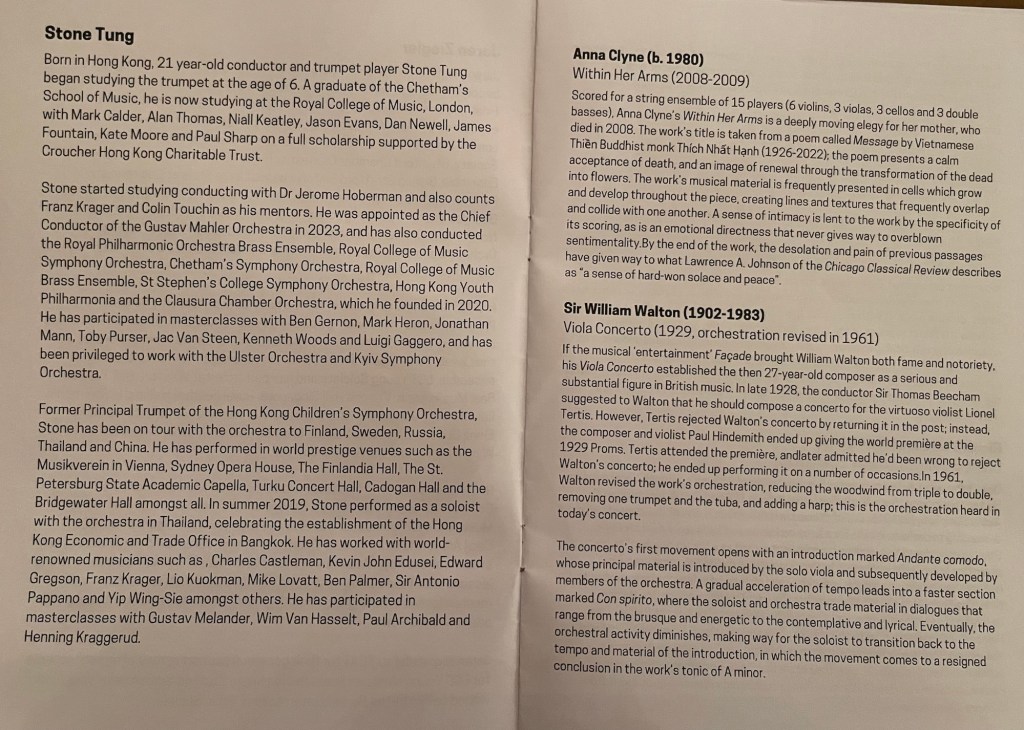
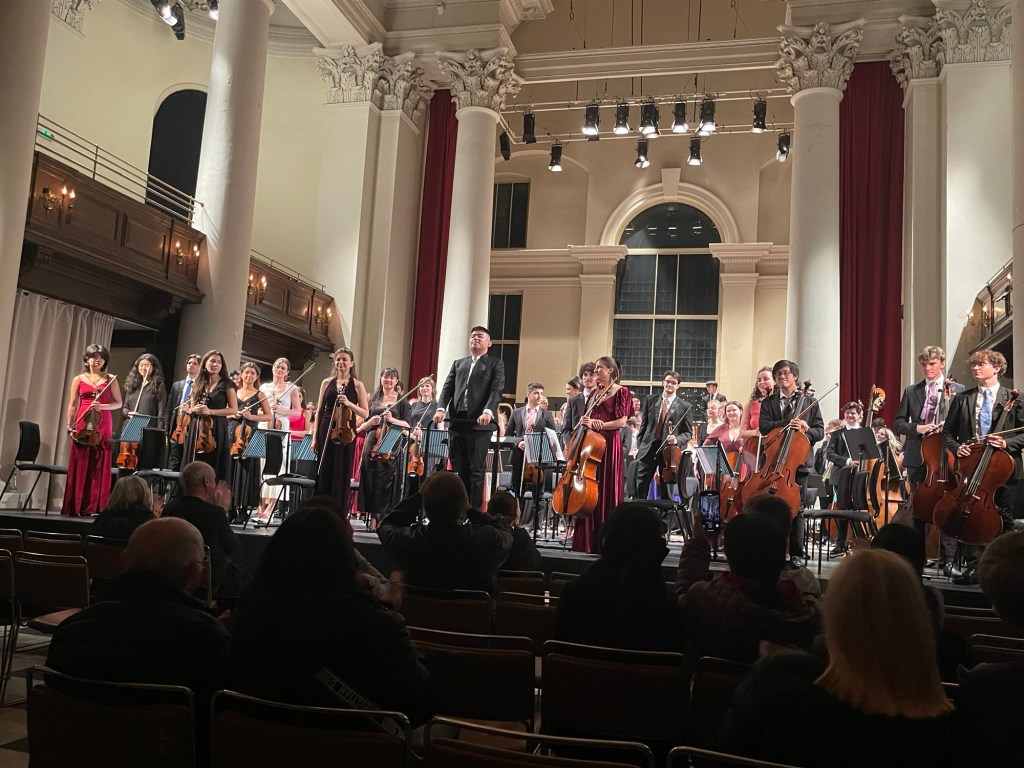
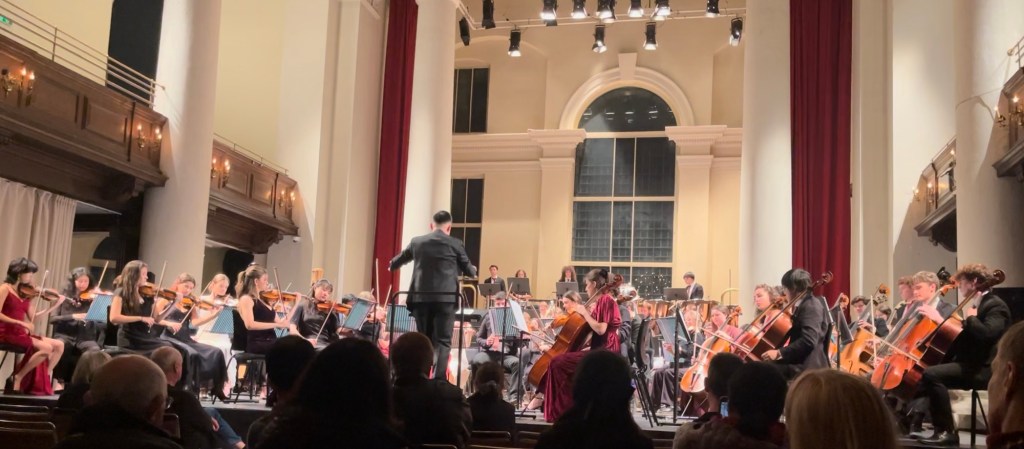
Tonight in London an orchestra created by twenty one year old Stone Tung with an ensemble formed of young musicians who played their hearts out with mastery and sumptuous beauty in a performance of Ein Heldenleben that would have put most other orchestras to shame for it’s total commitment and passionate participation .
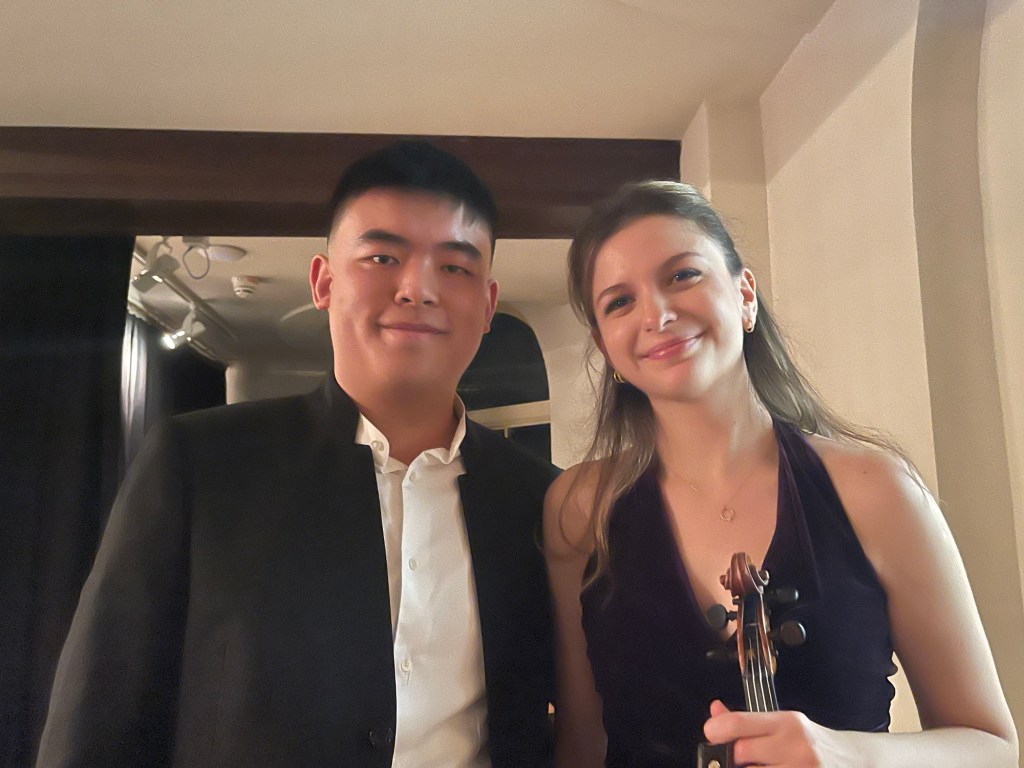
Stone Tung and Elif Cansever
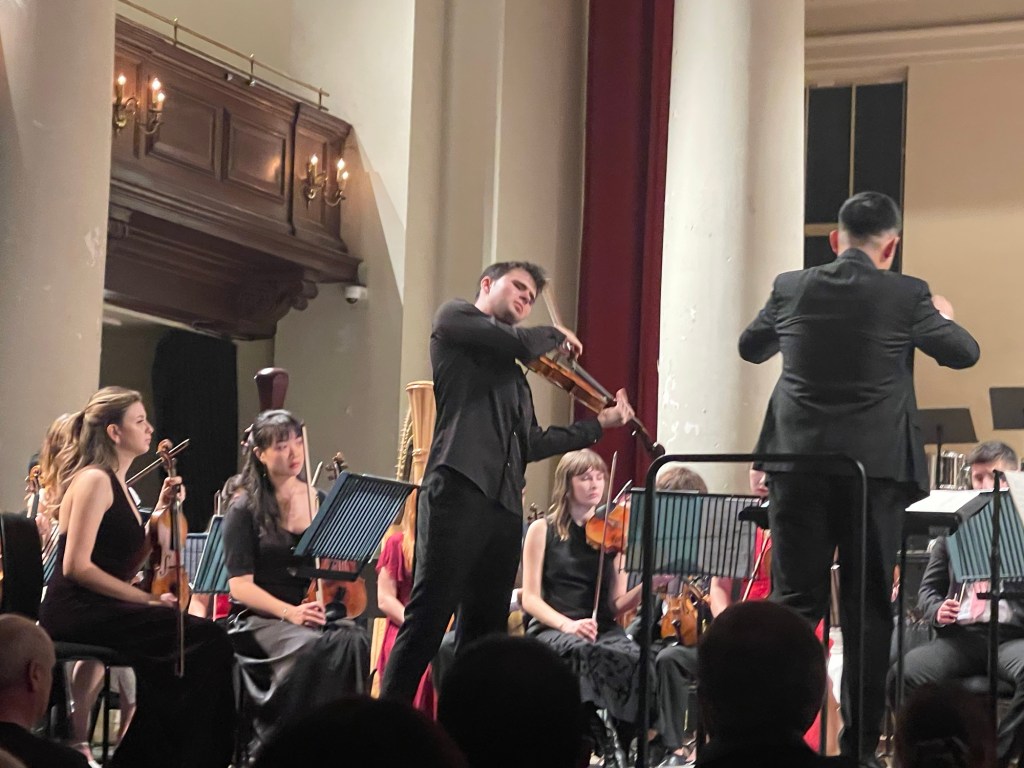
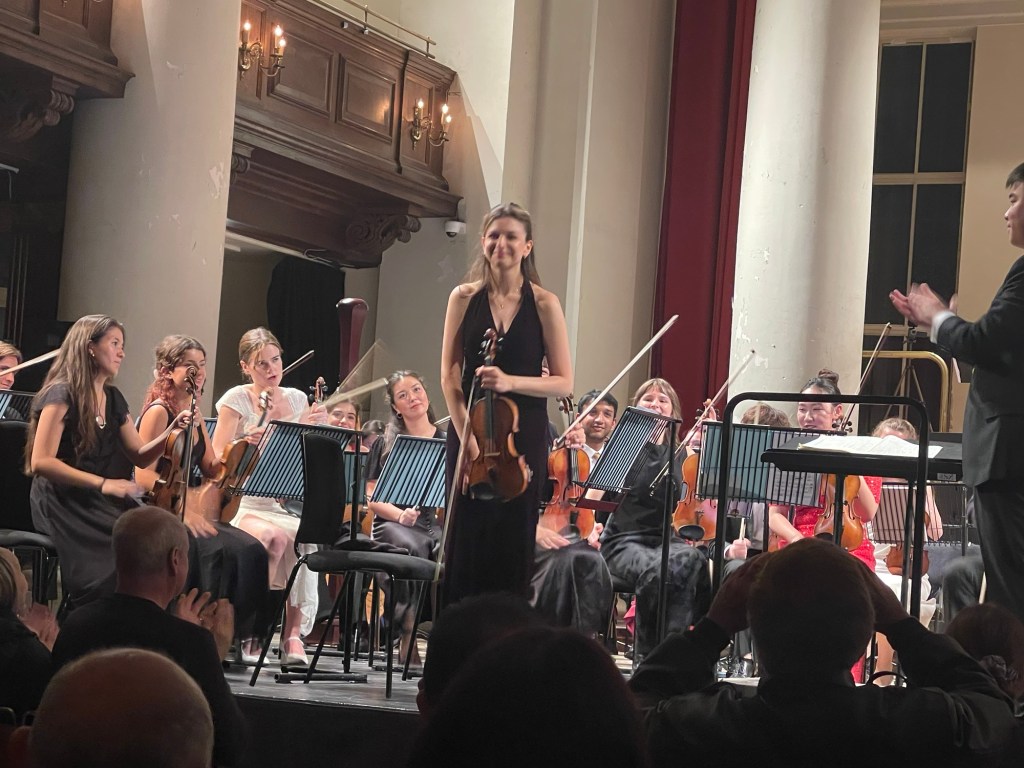
A conductor with a fluidity of movement who could hold this masterpiece together in one architectural whole. Of course the violin of Elif Cansever and the horn of Henry Ward were true stars as were the sumptuous cellos and ravishing violins.
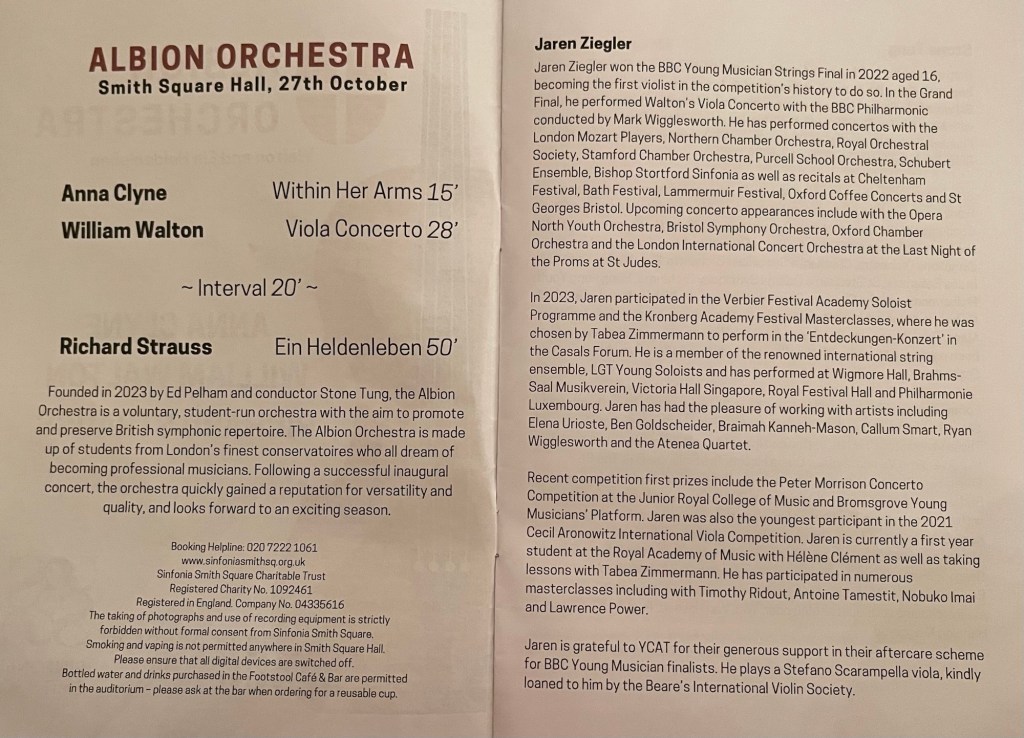
A breathtaking performance that had followed a very touching work by Anna Clyde dedicated to her mother :’Within Her Arms’ for reduced forces respectfully standing for a deeply moving acceptance of death and the renewal through transformation into flowers.
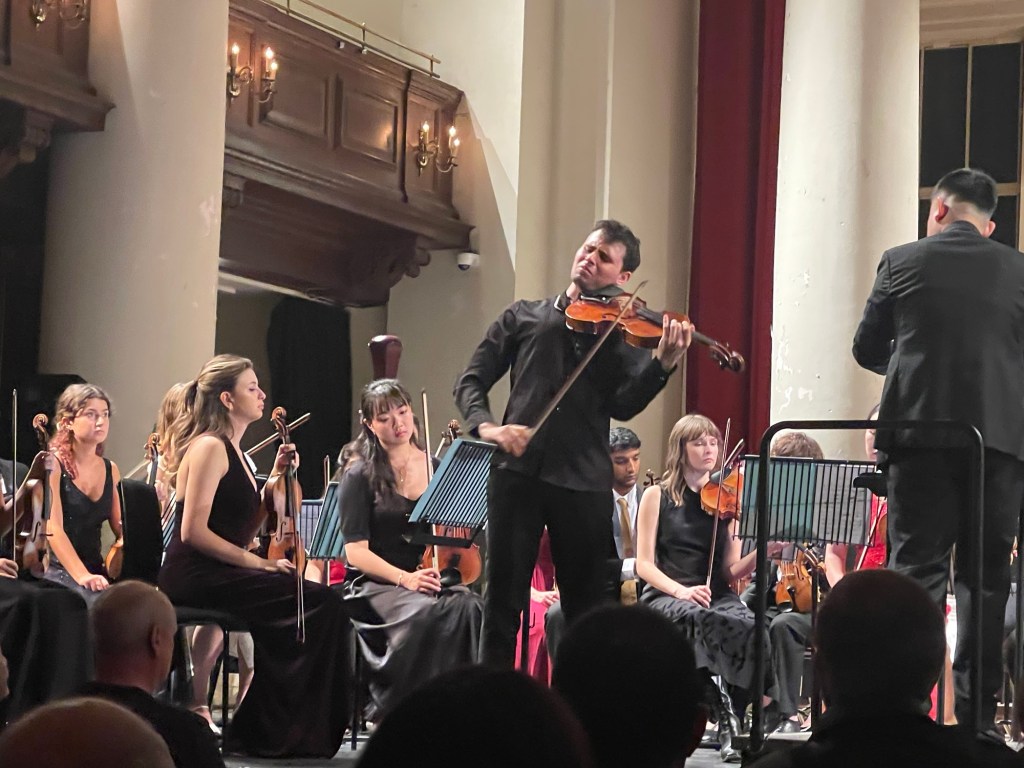
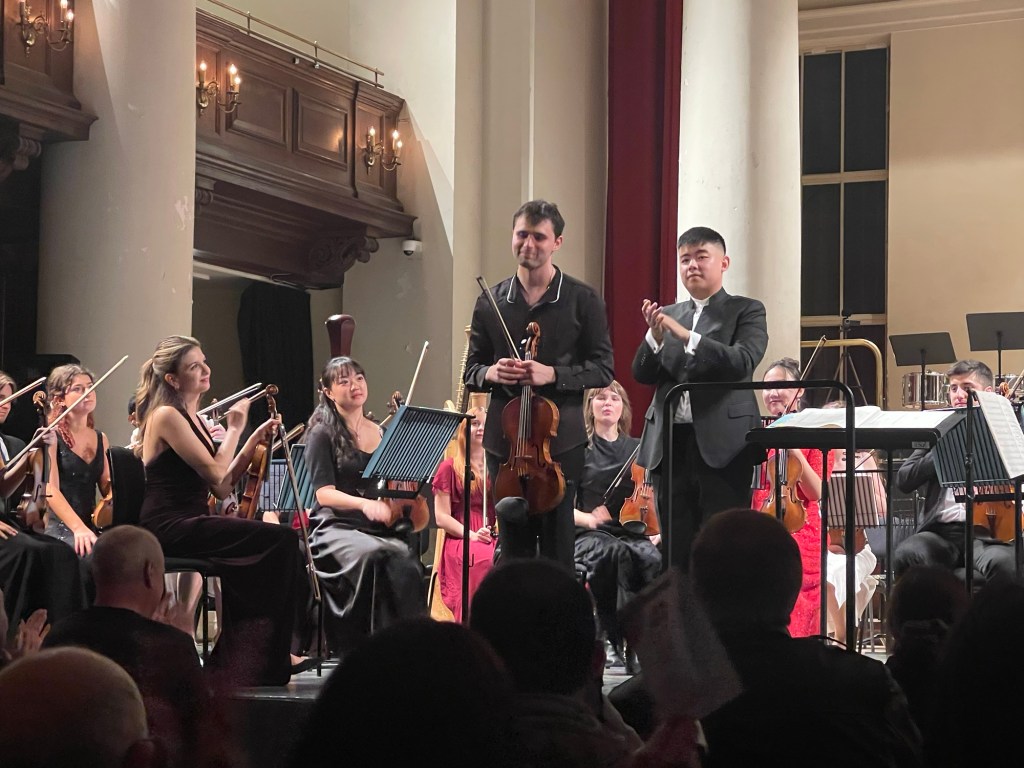
And flowers there were indeed for the superb viola of Jaren Ziegler in a magnificent performance of Walton’s complex viola concerto.Written for Lionel Tertis but after his refusal to play it, Hindemith stepped in having appreciated the intricate mastery of another composer’s score . Jaren amazingly a ‘fresher’ at the Royal Academy is a star to watch after a masterly performance of such remarkable musicianship that could show us the way through this maze of knotty twine.
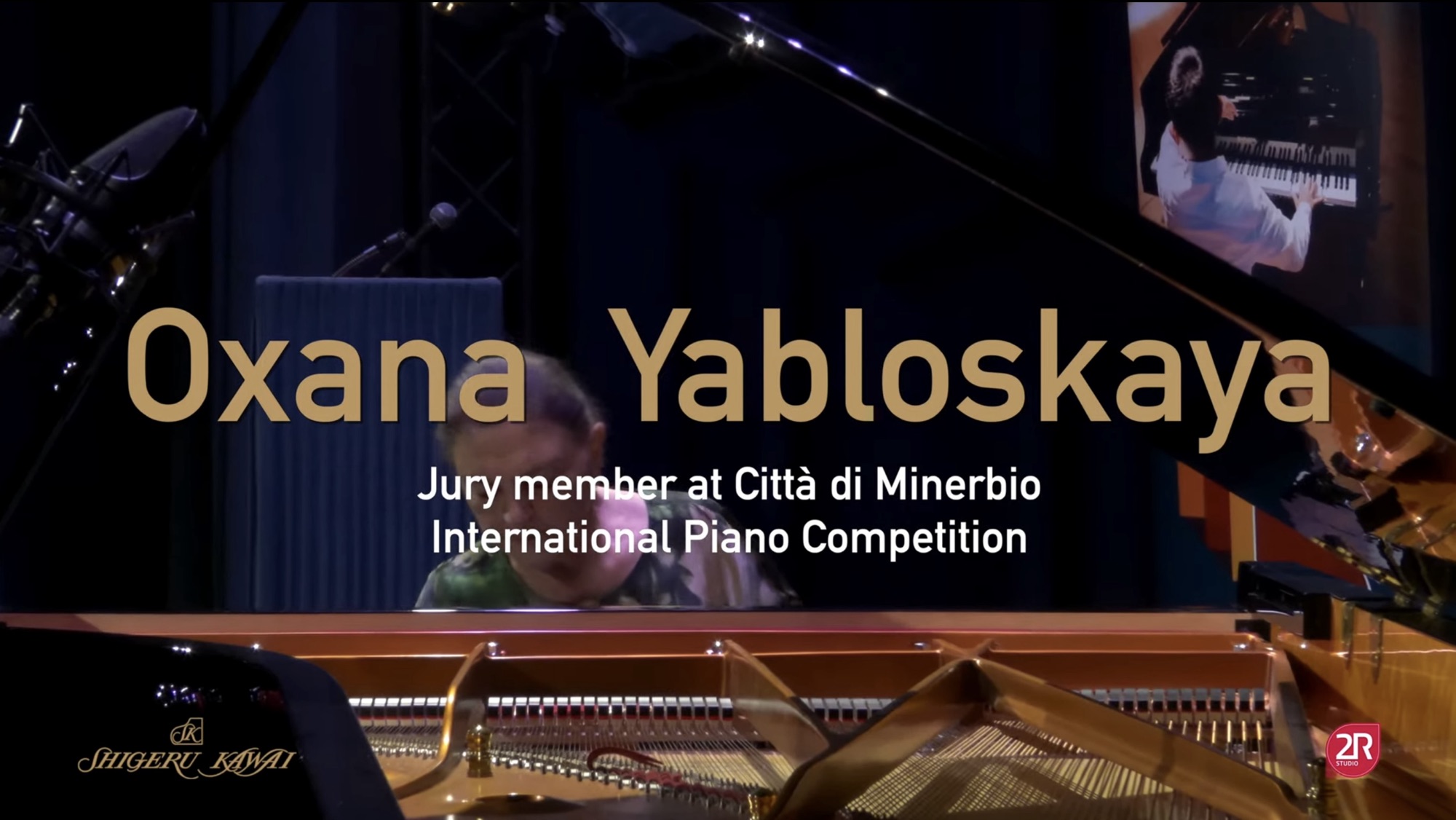
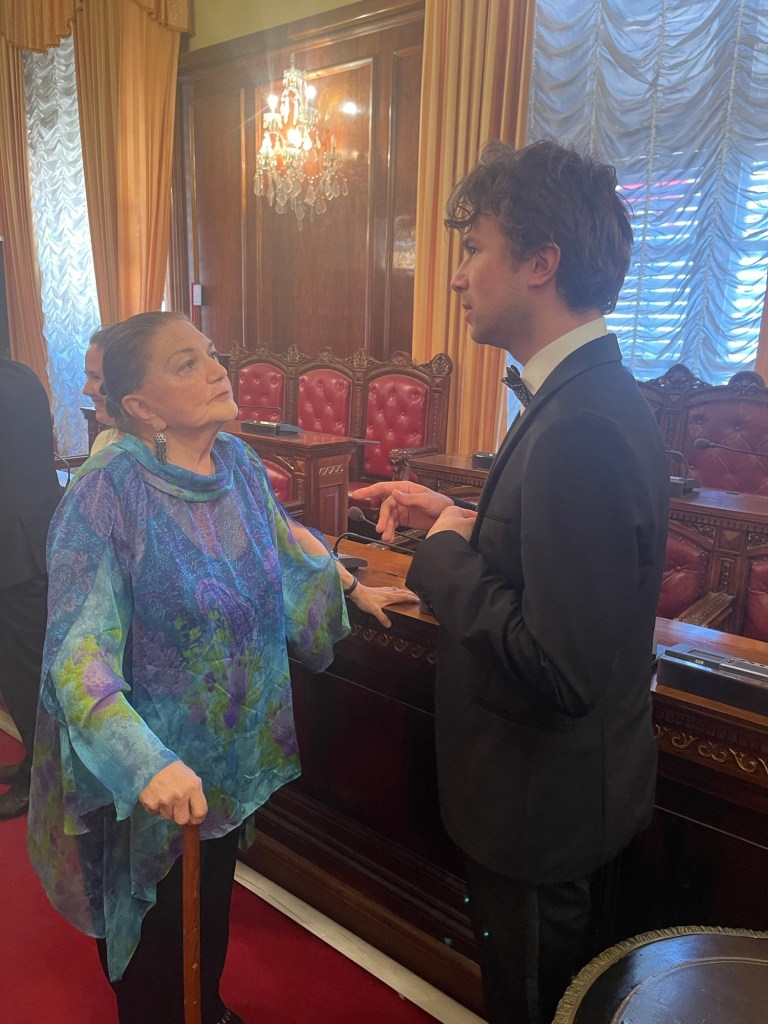
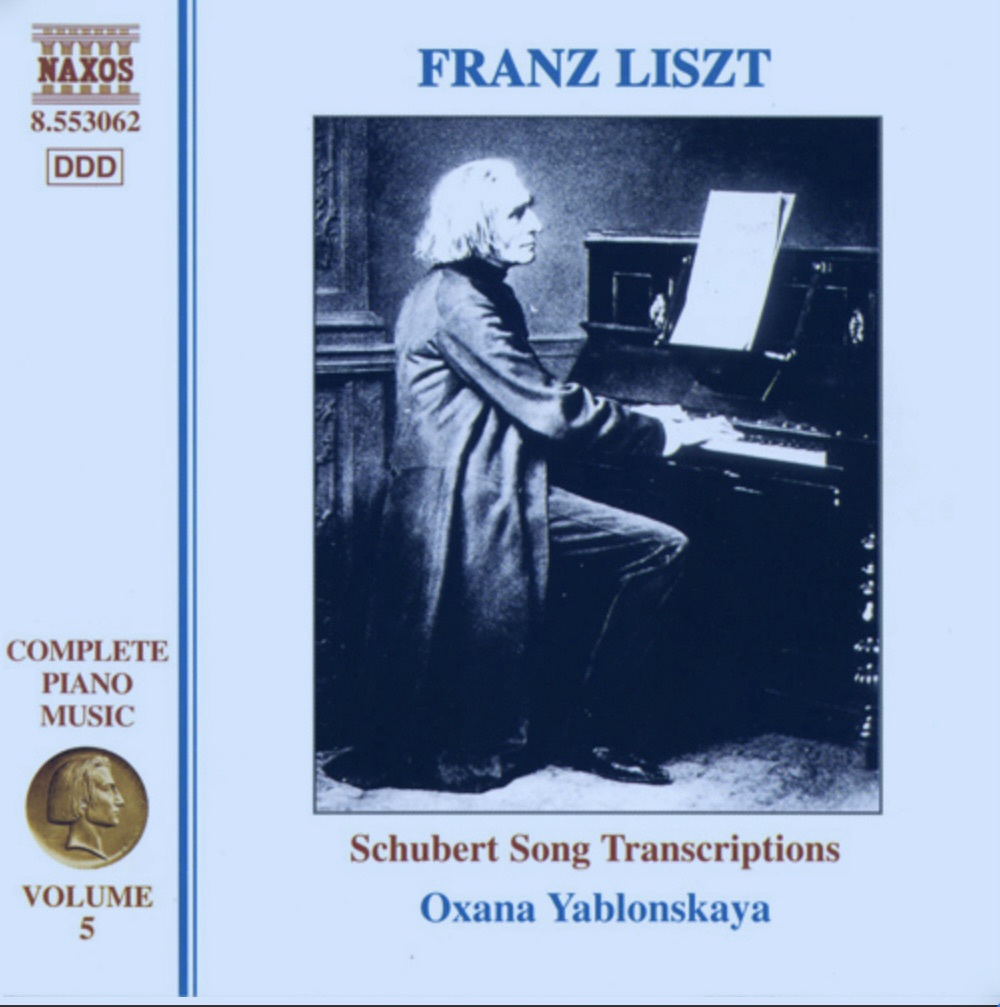
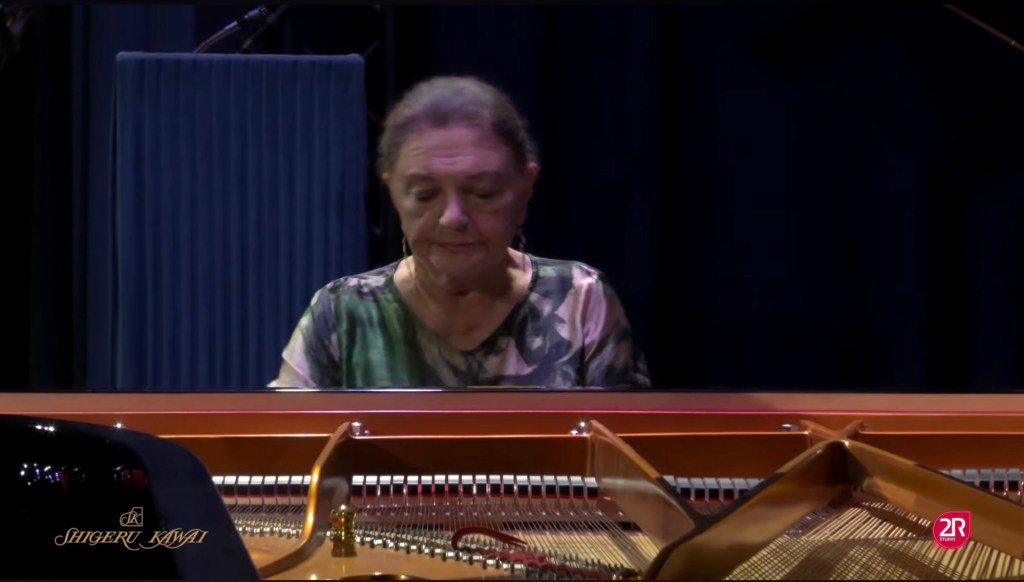
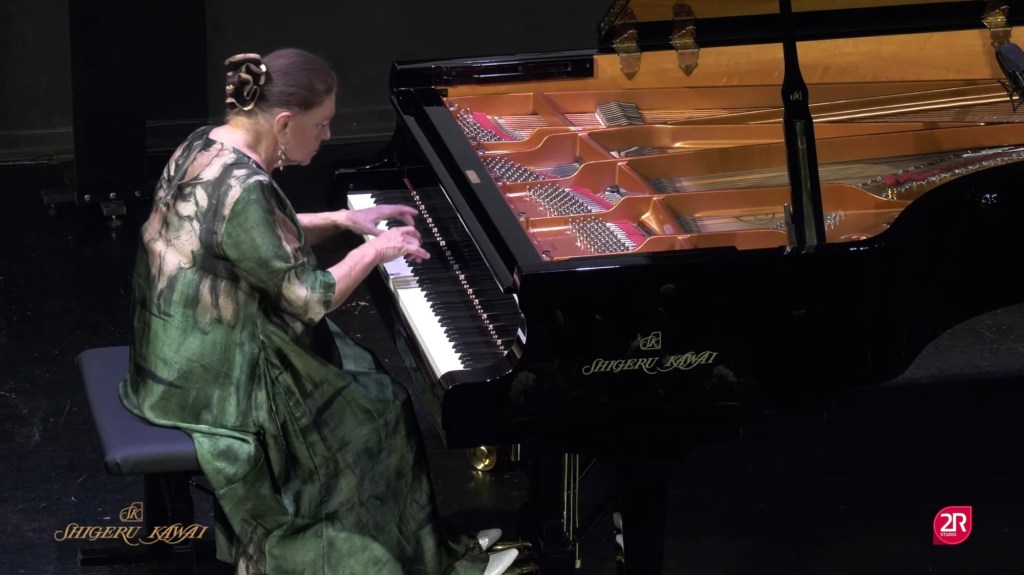
Oxana Yablonskaja in her Indian summer is one of the great pianist of our day. A timeless aristocratic bearing with music that she has lived with for a lifetime and can share so effortlessly. The music is deep within her like it was with her mentor Tatyana Nikolaeva.
Oxana travels without her scores because the music is so deeply embedded in her that every detail on the page has been transformed into sounds which have penetrated her soul. After all, the dots and dashes on the score are only an indication of what the composer wants to convey in sound. Beethoven when totally deaf could miraculously notate with precision the sounds that only he could hear in his head.
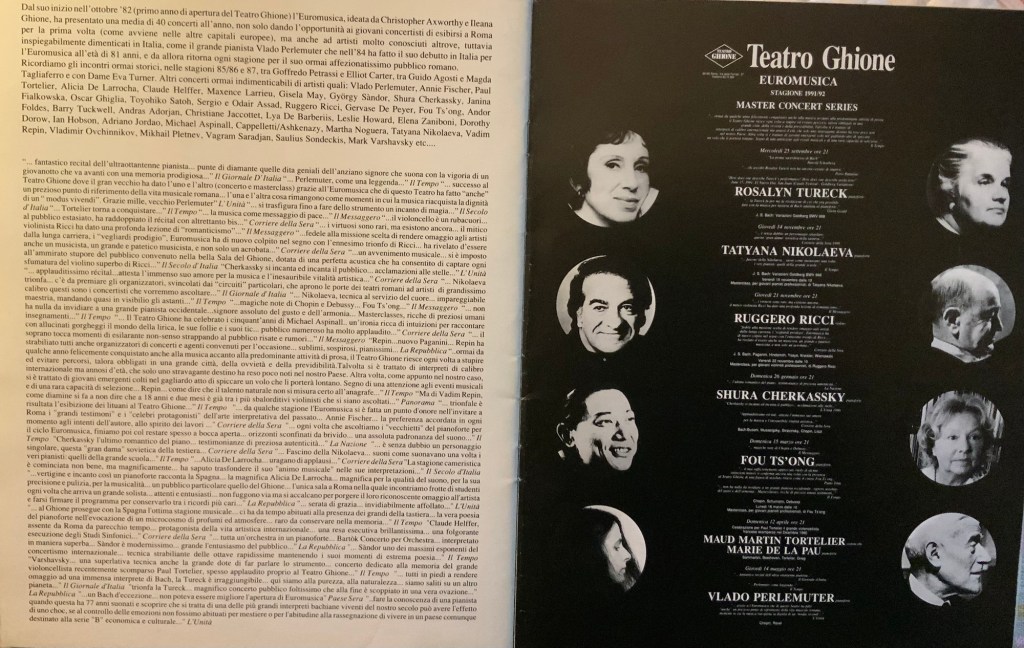
Nikolaeva in her Indian Summer played for us in Rome, the Bach Goldberg Variations and the Art of the Fugue without any ‘aide memoire’ just as she also played Mussorgsky Pictures and Tchaikowsky’s grandest of sonatas. In London she was playing the ‘48 and the 32 Beethoven Sonatas having been discovered by the discerning William Lyne at the Wigmore Hall.
Oxana had given a recital in Rome for us in the 80’s that included a performance of Prokofiev’s third sonata that I have never forgotten. Many years later she was invited by Francesco La Vecchia’s Orchestra (sponsored by the Cassa di Risparmio Bank ) in which some of the greatest soloists were heard in Rome for the first time not having been included in the limited programming possibilities of the two traditional music societies. Oxana played Rachmaninov 3rd Concerto with a very distinguished Turkish conductor who got so emotionally involved at the final great climax that he lost control. No problem for Oxana who took over completely and directed from a keyboard which she was already inseminating with the sumptuous sounds of a million notes. These are musicians from the great Russian school (like Eliso Virsaladze ) who are masters of their instrument but more importantly kapellmeisters with music deeply embedded in their soul.
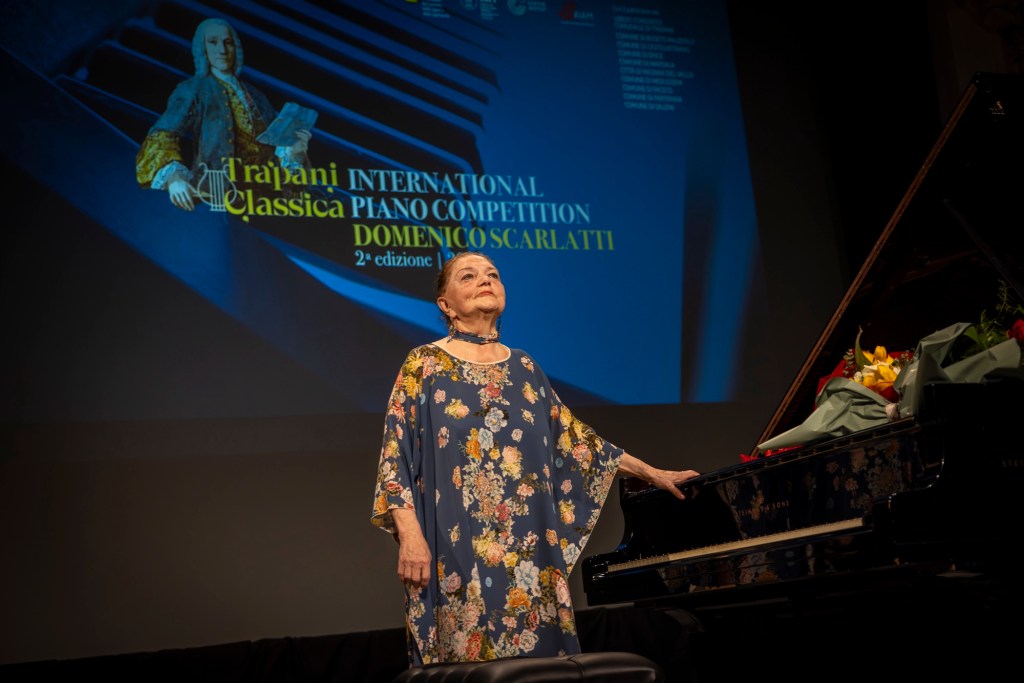
Last spring I had been invited to the second edition of the International Piano Competition in Trapani,Sicily .After many years Oxana recognised me and as soon as I walked in the door she very spiritedly said :’I will now have to practice !‘
Amazingly the day of her concert she had sat on the jury all day listening carefully to each competitor with equal concentration. At the end of a long day with the prospect of a solo recital only a few hours later she decided to join the other members of the jury for tea and a moments relaxation before donning her regal concert attire and astonishing us all with performances of aristocratic mastery.
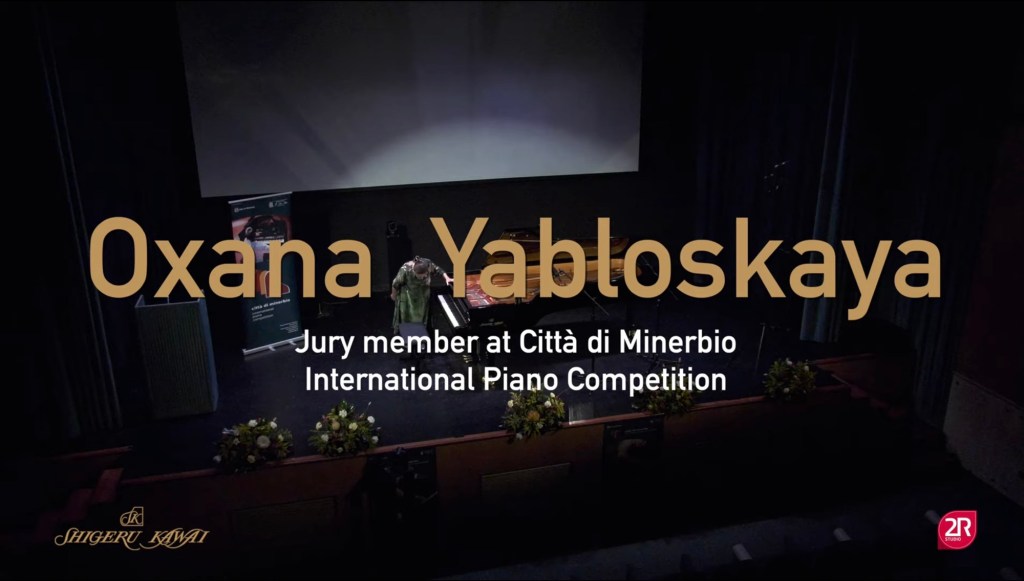
Now I have been sent a recital from the Competition in Minerbio where not only was she again generously helping young musicians but she also gave a recital which included Beethoven, but this time the ‘Tempest’ Sonata op 31 n. 2. Living and teaching in Jerusalem she is a tireless champion of so many young pianists who are all indebted to her for the help and guidance she is still happy to offer.
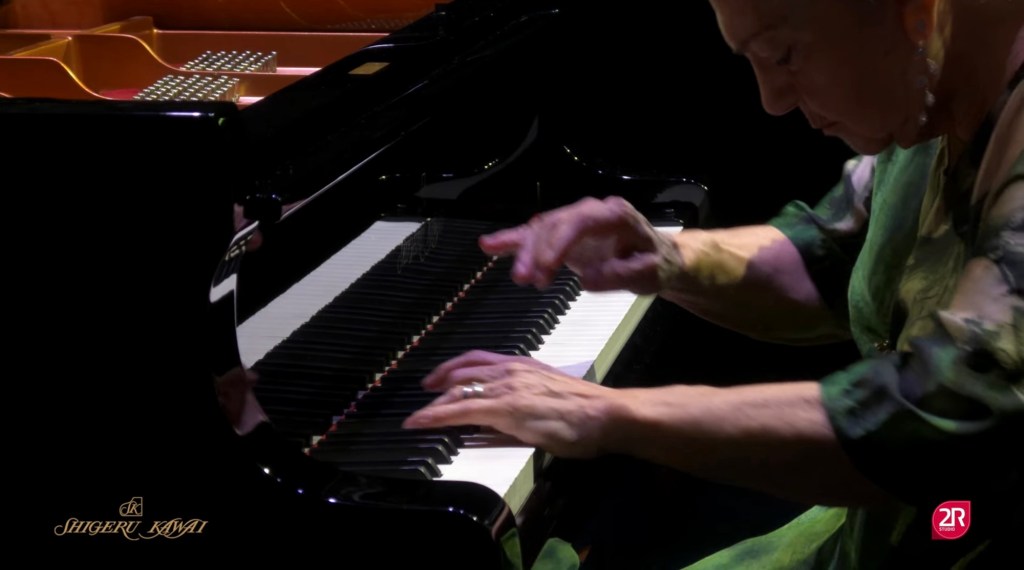
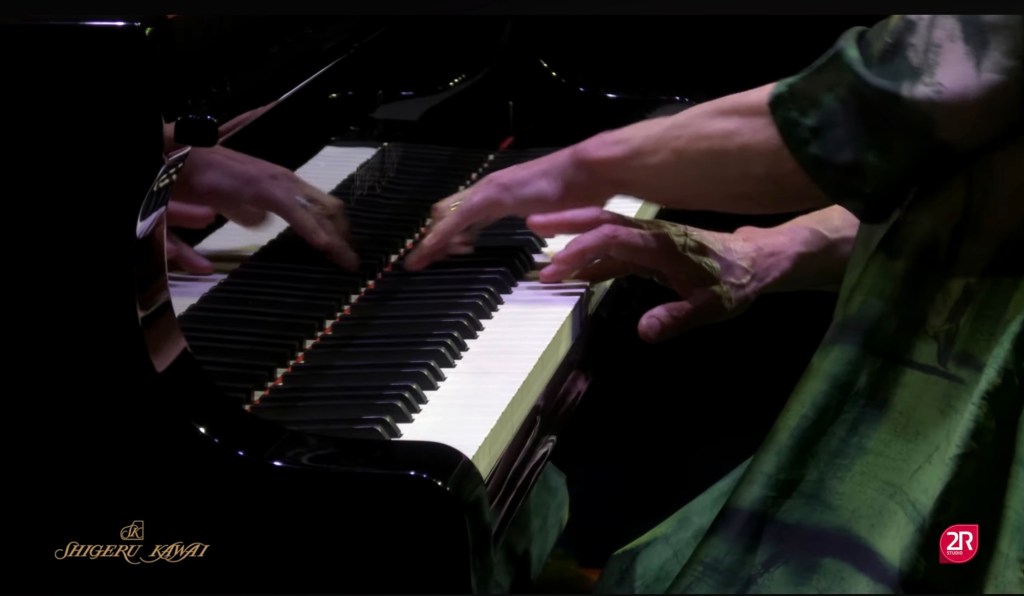
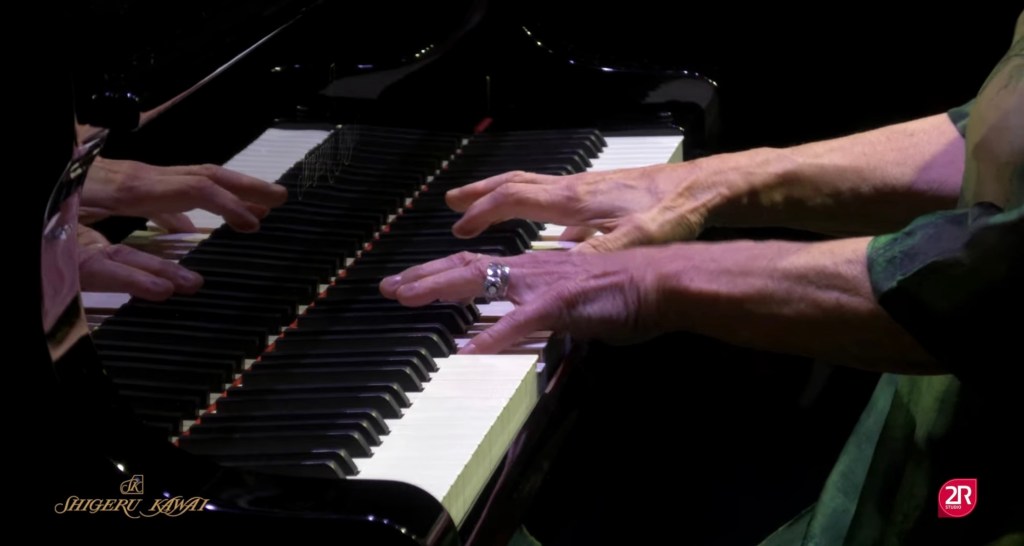
The concert had begun with the Melody from Gluck’s ‘Orfeo ed Euridice’ in the transcription of Sgambati. It was played with exquisite timeless beauty with hands that can still sculpture chiselled sounds allied to a ravishing sense of beauty. In fact to look at the arch of her hand is to look at the hand of Rubinstein or Argerich who can play with real weight as they search for beauty in every sound they make.There was a way of caressing the keys with subtle strokes that created sounds of natural beauty as she brought a breathtaking poignant delicacy to the beseeching gasps of supplication of Eurodice. Allowing the music to flow on a wave of sound to the last gasp as this great song of wonderment and beauty unfolded from her sensitive hands.
Beethoven’s ‘Tempest’ Sonata opened on the same magical wave as the Gluck, and the Allegro that followed was played with amazing clarity and control where the duplets were played with deliberate placing not the usual scramble of too many pianists! There was a beautiful etherial recitativo with just the right amount of pedal,as Beethoven has indicated, and it gave an echo effect of great potency only to be interrupted by the whispered devilish chords that struck fear as the momentum picked up again. The clarity to the rumbling bass in the coda, although Beethoven marks with a long pedal the whispered clarity of Oxana’s well oiled fingers was extremely convincing.
There was a beautiful poise to the opening of the Adagio with timeless poignancy and a richness to the chorale like central episode of Brahmsian beauty accompanied by the gasps of a heart beating with tireless insistence. Cascades of crystalline notes flowed over the entire keyboard as the melodic line was woven into this magic web of sounds with a glowing fluidity that in no way impeded the clarity of the accompaniment ( a tour de force of control ). The sudden ‘pianos’ that Beethoven seminates were incorporated into a timeless beauty and the final sigh on high I have rarely heard played with such significance as she barely touch the final B flat full stop in the bass . It was not really a full stop either because the ‘Allegretto’ just wafted in on a gently blowing breeze of grace and beauty. An aristocratic control of a movement that can so often loose all its character due to the breathless perpetuum mobile that is so often prospected. A scrupulous attention to Beethoven’s markings allowed the music box that is unexpectedly opened to contrast with the more emphatic return of the rondo theme before it disappears into the bass with the same whispered sounds with which its had opened.
Liszt’s transcriptions of three songs by Schubert were prefaced by what I assume was one of his ländler , played with clarity, beguiling charm and a kaleidoscope of sounds of glowing beauty and fluidity.
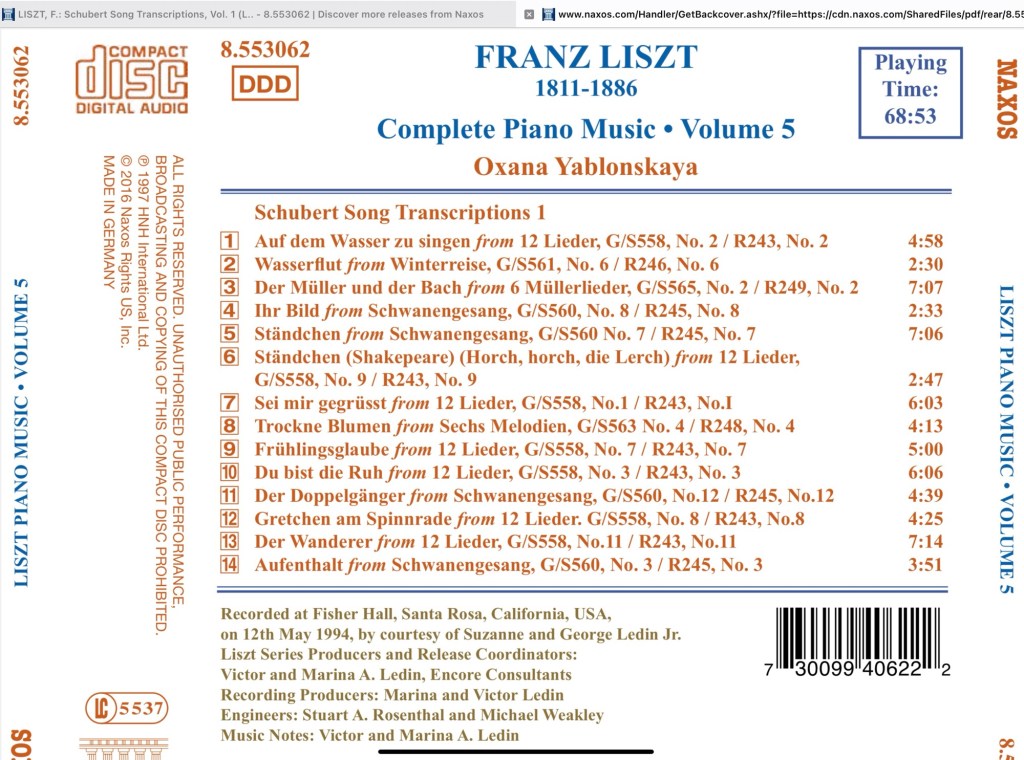
Liszt’s transcriptions of the Schubert songs have long been in the repertoire of the great Russian pianists from Sofronitsky to Bashkirov and Oxana has herself has recorded many of them .
She chose to play three of them in this recital : ’Standchen ’,’Auf dem Wasser zu singen’ and ‘Gretchen am Spinnrade’ with a distilled beauty of aristocratic control and poise .A sumptuous richness of the cello in ‘Standchen’ was answered by the whispered beseeching of the violins. as the gentle shadowing of the melody was played out with ravishing beauty and delicacy. There was a flexibility to ‘Auf dem wasser’ with heartrending rubato and a masterly sense of timing and grandeur in the style of the great pianists of another age.A sudden change of gear towards the end was with gasps of unexpected relief. A glorious outpouring of song in ‘Gretchen’ where the whispered continuous weaving built to a sumptuous passionate climax and the end of a recital that was indeed a great lesson for all those present . A great pianist showing what it means to play with simplicity and weight at the service of the composer.
‘ Je sens,Je joue ,Je transmets’.
It can seem so simple after a lifetime’s dedication to music as Oxana Yablonskaja has shown us in a masterful way.
Christopher, Oxana is a great lady whom I had the pleasure of meeting after a concert I gave in Jerusalem a couple of years ago. She is a great artist, and your poetic description of her recital, and of others, is unequalled in the profession. Your words are such that we are transported to the venue without having been there! Thank you, and all the best! Craig Sheppard
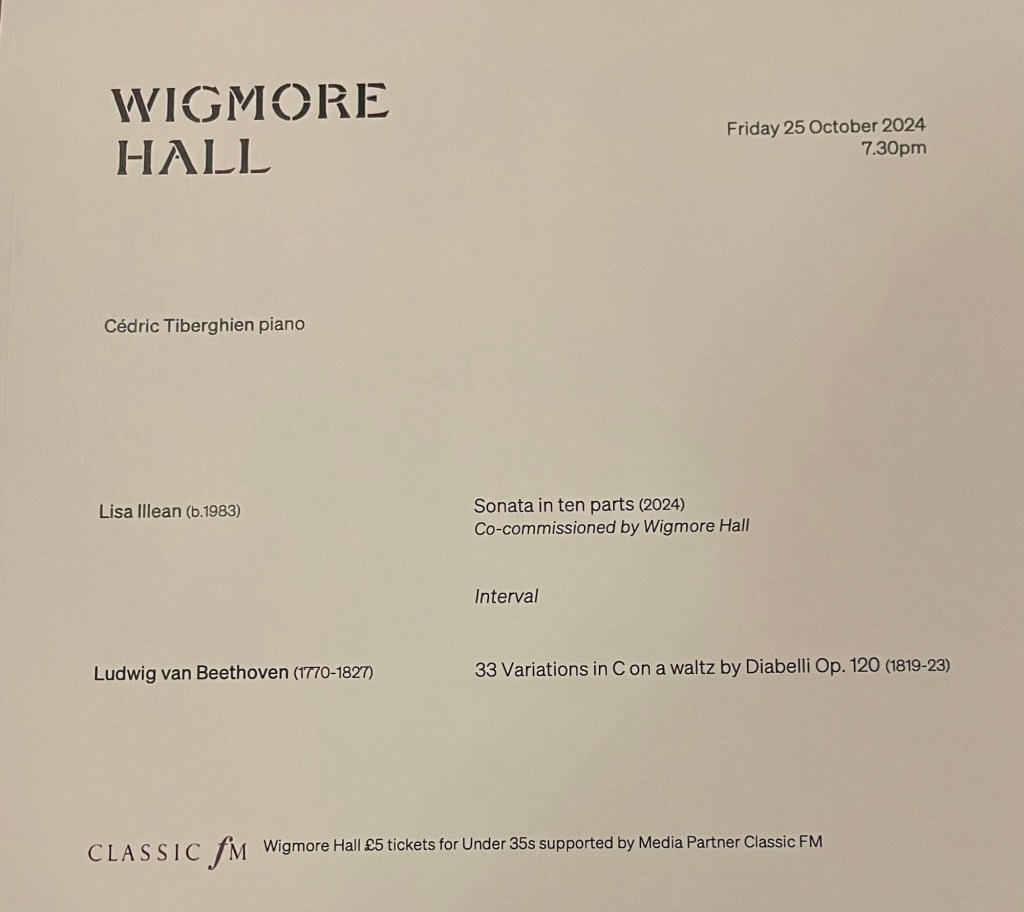
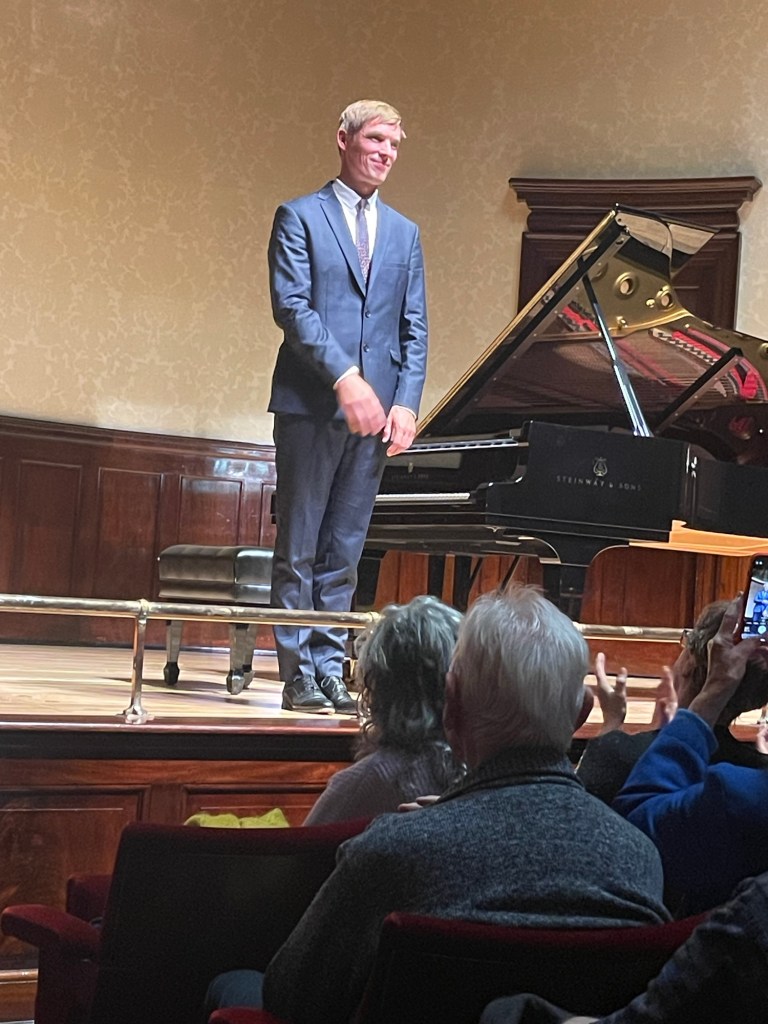
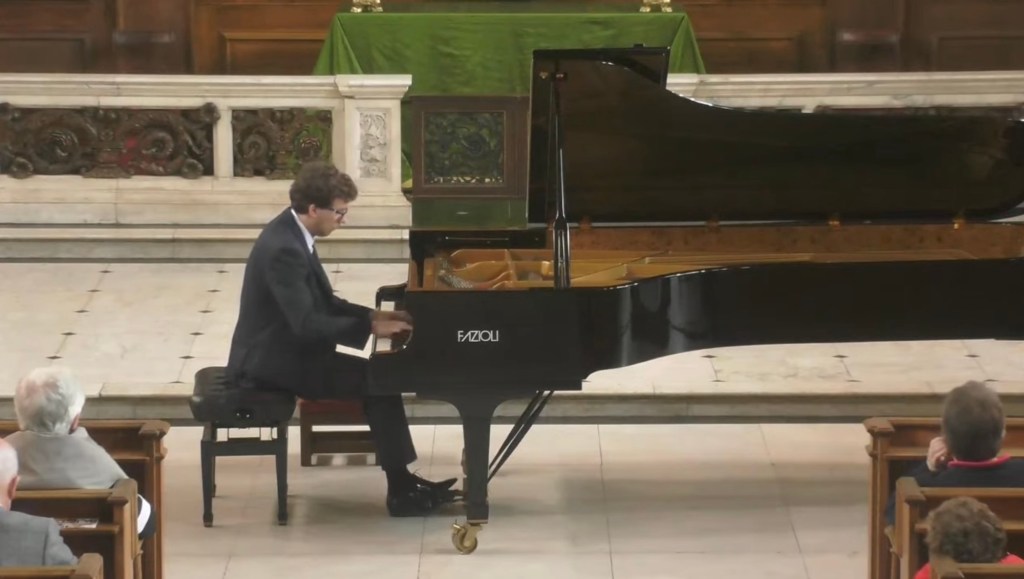
A tour de force from Cédric Tiberghien with a memorable performance of the Diabelli variations No I pad or other extraneous aide memoires as this was a man possessed by the spirit of Beethoven living every moment with total dedication and devotion
It was a very French Diabelli of the school of Sancon or Boulez with absolute rhythmic precision and scrupulous attention to the composers indications with sharp clean sounds of knife edge precision. This is not the school of Cortot or Perlemuter with the weight and depth of sound of fingers like limpets sucking the sounds deeply out of the keys with a rich full warmth.
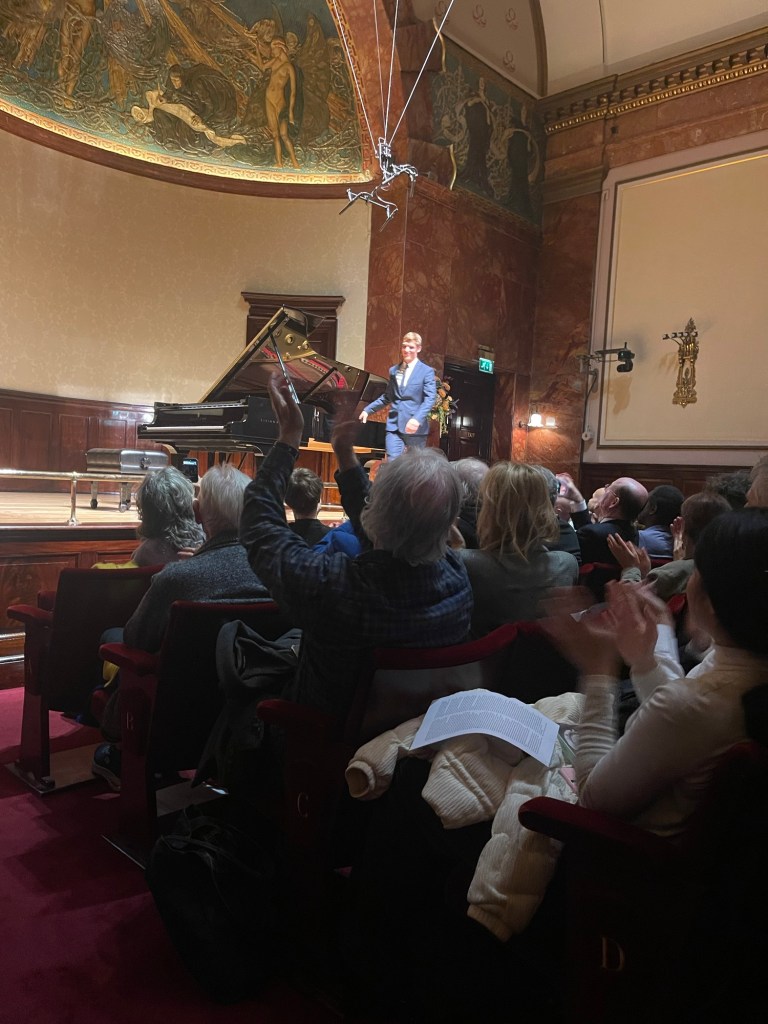
There was no warmth today but instead the cold precision that allowed Beethoven to appear in a Boulezian guise .It was ‘music absolute’ shorn of any niceties or traditional vices .It was Beethoven naked infront of us and it was what kept us enthralled and riveted to our seats as rarely before. Serkinian hysterisms of Brendelian mannerisms were all forgotten as Beethoven stood before us shorn of all excess and extraneous interventions A standing ovation was the minimum that we could offer such a giant of daring commitment and artistry.
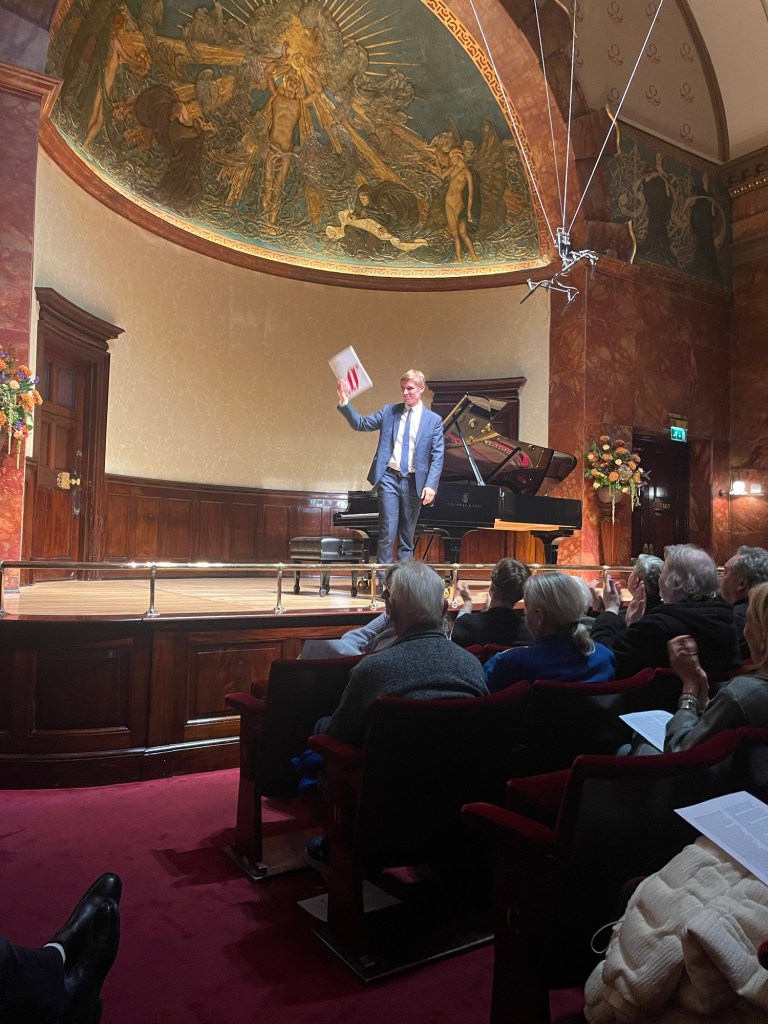
Holding up the score of the other Diabelli by Lisa Illean
There was a dynamic drive from the very opening where the theme was played with very dramatic contrasts with Beethoven’s indications taken quite literally with ‘p’ ,’ sforzando’,’forte’ all within one bar where Tiberghien’s pin pointing was quite remarkable but it did loose something of the essential waltz ingredient – hardly a waltz any more but a declaration of intent. The taking of Beethoven’s markings with scientific punctiliousness worked wonderfully well with the first variation ‘Alla Marcia maestoso’ where the sudden changes in dynamics and Tiberghien’s intelligent musicianship gave extraordinary shape to an often rather violent ‘kick off’. His crystalline clarity was ideally suited to the whispered scampering of the second whereas the third and fourth whilst being lyrical and clear were also brittle and without the all embracing warmth that Beethoven envelopes us in.
The rhythmic surprises of the fifth were played with just the Boulezian precision pointing right left and centre in quick succession.The sixth too was played with Serkin like rhythmic frenzy as the upward surges were answered with great insistence between the hands allowing the seventh to suddenly take wing.There was quite exquisite beauty in the eighth where the beautiful legato melody floats on barely whispered harp like sounds with remarkably clean whispered undulations.The ‘Allegro pesante e risoluto’ was played like a man possessed and was with startling effect as was the Presto of the tenth remarkable for its relentless forward movement despite the quite transcendental hurdles that the composer places before the performer.
Again it was the ‘Allegretto’ and un ‘ poco piu moto’ of the eleventh and twelfth that suffered from the lack of all embracing warmth and depth of touch.In particular the meanderings of the eleventh seemed quite pointless and rather without any architectural shape or direction.Not so the thirteenth that I have never heard played with such character and even sense of humour.The scrupulous attention to ‘f’ and ‘p’ but above all the rests was quite breathtaking and was like opening a window on a completely new world.There was great beauty too to the ‘Grave e maestoso’ bathed in pedal but with a rhythmic precision of poignant intensity.Beethoven may be having fun but he was also nearing the end of his tormented life with so much left to express of suppressed deep inner feelings.
Mendelssohnian lightness to the fifteenth with the alternating staccato e legato contrasts was played with non stop rhythmic elan.If Serkin brought more overwhelming sound to the sixteenth and seventeenth the near hysterical overdrive was the same and was quite overwhelming in it’s impact. But the beauty of the ‘poco moderato’ eluded Tiberghien where the intellectual should meet the stylistic on open ground of sumptuous operatic beauty allowing the music to breathe and expand at last as it weaves it’s way through the nineteenth to the long slow ‘Andante’ . Again the warmth and beauty of a full string orchestra were replaced by the tempered coolness of the winds.Taking off with enviable energy as the ‘Allegro con brio’ took flight with dynamic drive just as the operatic humour he brought to the twenty second was remarkable for the scrupulous precision and respect for Beethoven’s markings brought such character to what was becoming almost too serious!
The lilting waltz of the twenty fifth was quite delectably ravishing as he played with clarity and delicacy but never forsaking the clockwork jewel like precision . I felt that the twenty sixth marked ‘piacevole’ could have had more time to unfold naturally and beautifully 9 like in op 109) before the electric precision of the twenty seventh and the driving sledgehammer accents of the twenty eighth. The gasps of the ‘twenty ninth ‘ Adagio ma non troppo’ I have never forgotten André Tchaikowsky’s performance where he miraculously incorporated the warm rich sotto voce sound with the rests that Beethoven marks very meticulously. I was expecting Tiberghien with his pin point precision to be supreme here and although it was very beautiful it was not what Beethoven had notated!
The thirtieth and thirty first were played with bel canto beauty but where the lack of real weight did not allow us to savour one of Beethoven’s most profound statements sharing a deep inner soul that is to be found only in the poignancy of the late quartets.The thirty second is a fugue every bit as ‘animalesco’ as I remember Serkin and Brendel but whilst it was extraordinarily clearly played it lacked the full orchestra sound that was so obviously in Beethoven’s secret ear. But the clarity of the sudden rush of quavers was done to absolute perfection and the cadenza flourishes were truly breathtaking.
Tiberghien’s crystalline clarity and precision were ideally suited to the magical unravelling of the last variation and the way he just threw off the last chord showed what humility and respect he had shown throughout ,but here in particular with the final outpourings of the Genius from Bonn.
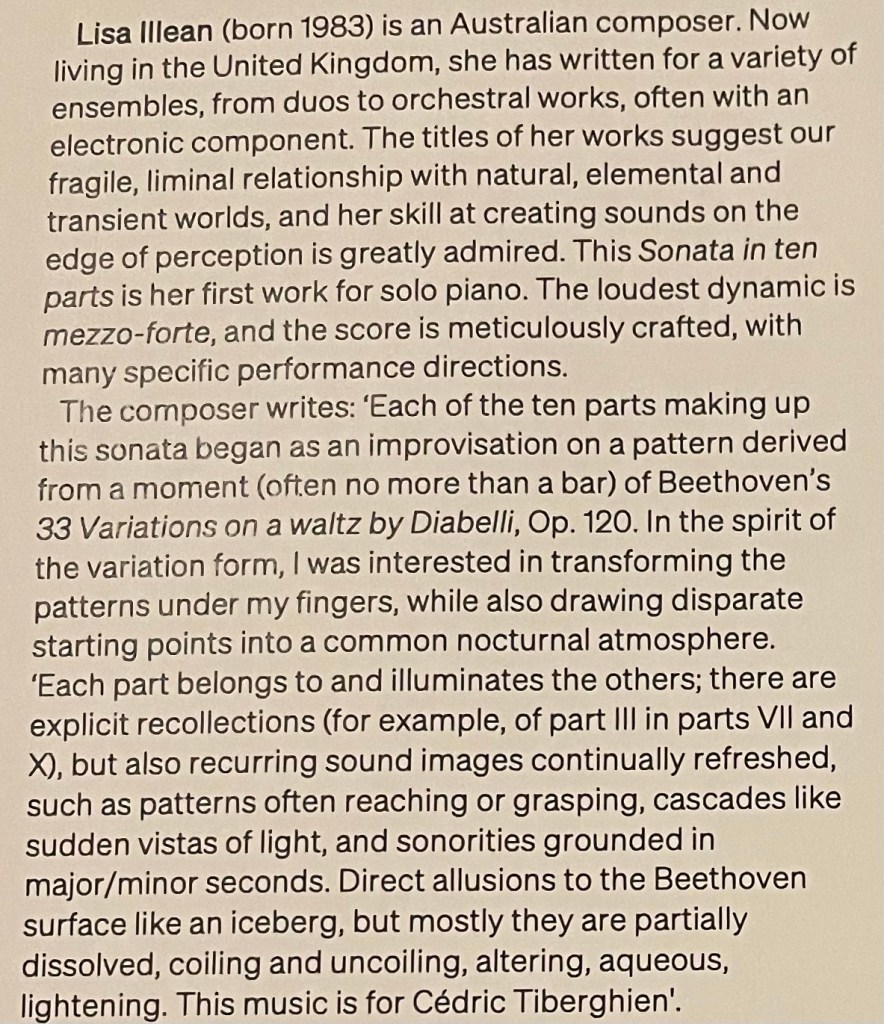
A dream of Diabelli had been a Wigmore co commission with a Sonata in ten parts by the Australian composer Lisa Illean.A work that never rose above mezzo forte but was a series of magical sounds that found the perfect interpreter in Tiberghien with his pure precision like the icicles of Michelangelian touch.A remarkable feat of touch and hammer like precision with glowing purity but never with any clouded pedal sounds .
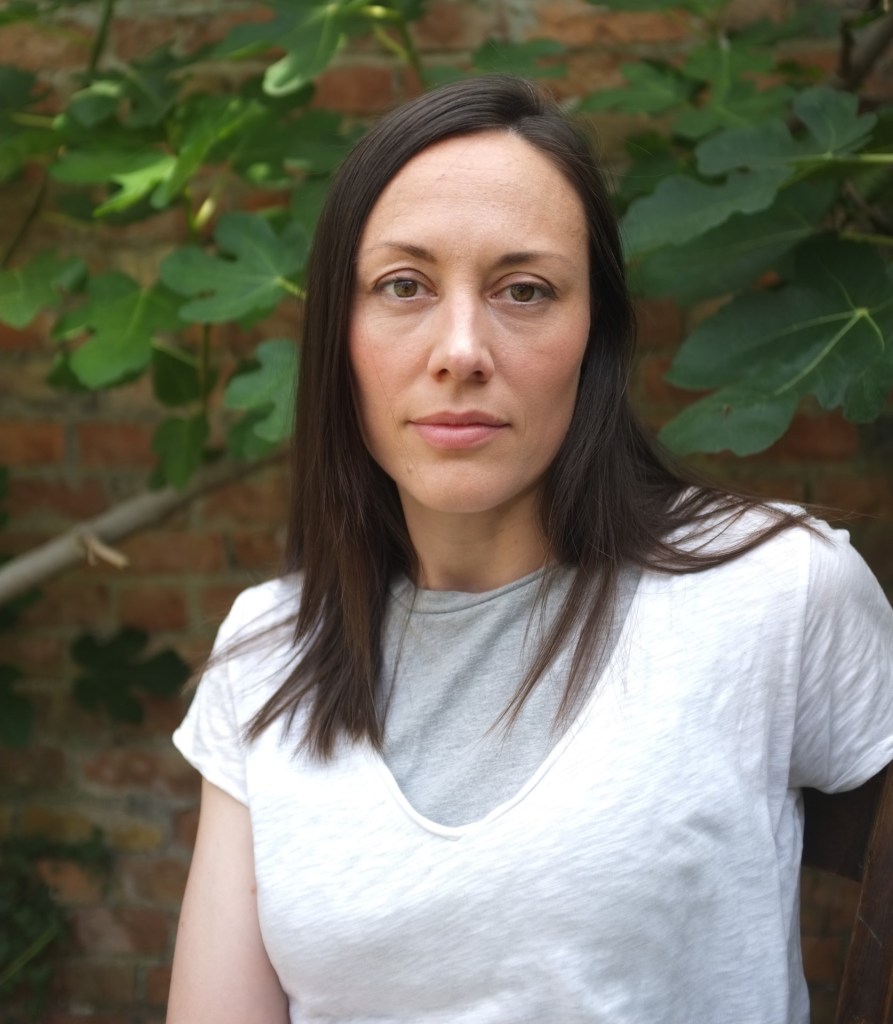
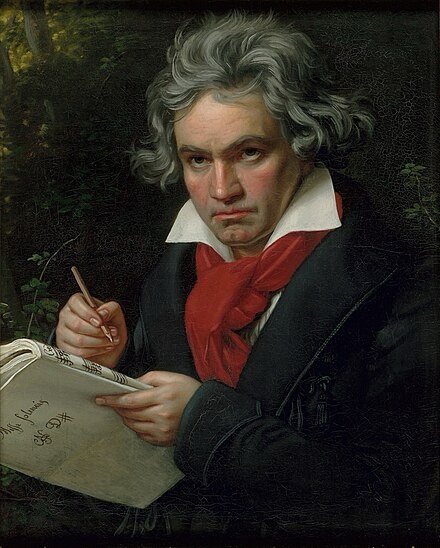
Born in Australia and now based in the UK, Lisa Illean composes ‘music that seeps into your consciousness’ (ABC Classic FM). Reflective and compelling, her ‘exquisitely quiet shadows’ (The Sydney Morning Herald) invite contemplation, often exploring unconventional tunings and the phenomena that arise through the interaction of quiet layers. Much of her work combines live and pre-recorded instrumental sound in performance to create ‘a soundscape unlike any other’ (Limelight). Her debut portrait album arcing, stilling, bending, gathering — described as ‘extraordinary stuff’ (The Arts Desk)— has been released on NMC recordings. Ludwig van Beethoven 17 December 1770 Bonn 26 March 1827 (aged 56) Vienna
The 33 Variations on a waltz by Anton Diabelli, op 120, was written between 1819 and 1823 by Beethoven on a waltz by Anton Diabelli .It forms the first part of Diabelli’s publication Vaterlandischer Kunstlerverein , the second part consisting of 50 variations by 50 other composers including Carl Czerny,Franz Schubert ,Hummel,Moscheles,Kalkbrenner,a twelve year old Franz Liszt and a host of lesser-known names including Franz Xaver Mozart and others now largely forgotten.It is often considered to be one of the greatest sets of variations for keyboard along with Bach’s Goldberg Variations.Tovey called it “the greatest set of variations ever written”and pianist Alfred Brendel has described it as “the greatest of all piano works”.It also comprises, in the words of Hans von Bulow “a microcosm of Beethoven’s art”. Alfred Brendel wrote, “The theme has ceased to reign over its unruly offspring. Rather, the variations decide what the theme may have to offer them. Instead of being confirmed, adorned and glorified, it is improved, parodied, ridiculed, disclaimed, transfigured, mourned, stamped out and finally uplifted”.Maynard Solomon in The Late Beethoven: Music, Thought, Imagination expresses this idea symbolically, as a journey from the everyday world (“Diabelli’s theme conveys ideas, not only of the national, the commonplace, the humble, the rustic, the comic, but of the mother tongue, the earthly, the sensuous, and, ultimately, perhaps, of every waltzing couple under the sun”Of great significance, according to Kinderman, is the discovery that a few crucial variations were added in the final stage of composition, 1822–23 and inserted at important turning-points in the series. A careful study of these late additions reveals that they stand out from the others by having in common a return to, and special emphasis on, the melodic outline of Diabelli’s waltz, in the mode of parody.
Title page of the Vienna 1823 edition with Beethoven’s autograph dedicationAutograph Beethoven-Haus Bonn, NE 294
The autograph of the Diabelli variations gives a detailed insight into Beethoven’s working routine. It nicely illustrates how the composer worked, how he strove for a perfect final version by adding, crossing out and pasting over notes, by inserting sheets and so on. Beethoven’s handwriting gives evidence of the conflict between producing a well-readable copy and giving way to spontaneity and unrestrained expression. His way of writing says much about his musical intentions, and the manuscript also mirrors his complex personality.
His handwriting had always been quite attracting. Anton Diabelli, who ordered the variation cycle, wanted to own the autograph by all means and claimed that he as the publisher needed it as proof of ownership. And indeed, he managed to obtain it. Later, it came into the possession of two well-known autograph collectors: Heinrich Steger from Vienna and Louis Koch from Frankfurt. Thereafter, the manuscript remained in private possession for many years. Thanks to the contribution of many supporters, among them the public authorities, public and private foundations as well as music aficionados from all over the world, the manuscript could be acquired in 2009 and be added to the collection of the Beethoven-Haus. Last but not least this important achievement is owing to the efforts of outstanding Beethoven interpreters who gave charity concerts. Thanks to this common commitment artists and laymen can now enjoy this unusual master composition.
Some very accomplished playing from this young Polish pianist with a very poised and beautiful account of what Fou Ts’ong used to call 24 problems.An entire lunchtime recital dedicated to the complete 24 preludes and played with a great sense of style and consummate musicianship .
From the very first prelude we were obviously in the hands of a pianist who could play with poise and a timeless sense of style that could allow the music to breathe so naturally without ever loosing track of the overall shape and direction. There was the poignancy of the second prelude too with its brooding undercurrent accompanying the long drawn out melodic line. A fleeting lightness to the third which accompanied the gentle rubato of the upper melodic line. Never missing a note but with the sensibility of an accompanist who can listen and follow with such care. The agonising melodic line of the fourth was played with disarming simplicity as the left hand was the palpitating heartbeat of this cry in the dark.The fifth was played with a fleetness but also with a certain weight that allowed it to be shaped with emotional souplesse.A profound depth to the sixth that was played with the beauty and flexibility of a ‘cello with the gentle sighing drops in the right hand merely an onlooker.
The 7th and shortest of all the preludes was played with the beauty and simplicity that it deserves before the passionate outpouring of the 8th with its searing passionate abandon that was almost too much emotion for this young man’s noble soul. Majesty and nobility accompanied the 9th even adding a deep bass note to give more depth without hardness to the sound at a crucial moment in it’s percorse.The capricious mazurka style of the 10th was beautifully shaped with playing of lightness but also of architectural shape. The ‘vivace’ of the 11th whilst beautifully sung could have been even simpler allowing Chopin to lead the way with mellifluous beauty.The 12th was played with remarkable control and technical finesse allowing the relentless forward movement to arrive at it’s final inevitable goal.The 13th is one of the most beautiful of all the preludes and was played with radiance and beauty the ‘più lento’ reaching moments of sublime beauty. A remarkable sense of balance that allowed the melodic line to sing as it was revealed without interruption from the continuous bass harmonies.The agitation of the 14th was played with clarity , simplicity and dryness allowing us to appreciate the radiant beauty of the first ‘raindrop’ that fell onto the keys with glowing beauty and aristocratic good taste.If the central episodecould have flowed with more horizontal shape and movement it would have made even more impact before the poignant beauty of the return of subtle raindrops just dying to a whisper as a storm was about to break.
The 16th is a ‘tour de force’ of technical command and resiliance.It is one of those works that one must practice blindfold because there is no way that any pianist can look at the left hand leaps whilst the right hand is playing a non stop stream of notes. I remember Perlemuter demonstrating this very prelude in a master class at the Royal Academy in London during the Heath period of continual strikes.The great master was demonstrating this prelude when the lights suddenly went off ,but well into his 80’s he carried on fearlessly and spotlessly to the end! It was played today with great mastery but to see this young man’s head looking to the right and then to the left took away from the musical undulations that this prelude represents.There was beauty and simplicity in the 17th with its sweeping melodic line and continual forward movement and if Chopin does mark the deep A flats in the coda with a forzando, I feel that this is only like a long pedal of A flat on which floats as in a dream the memory of such beauty. In Schumann it can mean the striking of the midnight hour but here I feel it should be more etherial and less of this world. It contrasts with the cadenza type prelude that is very much of the real world with its passionate outpourings and dramatic Lisztian comments.The 19th like op 10 n 10 is the most technically difficult of all the preludes as it requires a continual swimming like movement to allow the melodic line to sing above a continuous stream of sounds.Today it was played remarkable beauty and with poetic shape of delicacy. The C minor prelude often used by composers as the theme for variations was played with nobility and dignity as it disappeared into the distance with a masterly control of sound. A beautifully mellifluous melodic line with a flowing accompaniment reached a poignant climax of sumptuous sounds in the 21st before two final chords heralded the entry of the bass tearing away ‘molto agitato ‘ with dynamic drive. Our pianist seemed more concerned with the right hand chords than the searing melodic line in the left that could have been much more sustained and legato.A simplicity like streams of water in the 23rd heralded the heroic opening of the 24th that was played with great command ,a remarkable sense of line and an architectural shape taking us to the three final D’s in the bass that were played with respectful solemnity of differing voices.
The beautiful C sharp minor notturne op posth was offered as an encore for a large and very appreciative audience.It was played with a glowing fluidity and subtle rubato and like all he did today superb musicianship and masterly control.
Equally passionate about solo and collaborative performance, Krzysztof has performed as a soloist and chamber musician at many prestigious venues including Barbican Hall, Wigmore Hall, St Martin-in-the-Fields, Milton Court Concert Hall, Birmingham Town Hall, Palacio de Festivales de Santander, Casa da Musica in Porto, Witold Lutosławski Concert Studio in Warsaw, as well as in Germany, France, The Netherlands, Japan and United States. He has appeared as soloist with the Opole Philharmonic Orchestra, Radom Chamber Orchestra, Frederic Chopin State School Symphony Orchestra, and the Hornton Chamber Orchestra. Krzysztof has been invited to many international music festivals and piano courses worldwide. In 2015 he attended the Aspen Music Festival and School in Colorado. He worked with Maestro Thomas Adès at the International Musicians Seminar in Prussia Cove and Christian Blackshaw at the Hellensmusic Festival. In 2017 he was invited to perform both solo and chamber music at the 17th Encuentro de Música y Academia de Santander. Recently, he appeared at the London Master Classes and The International Holland Music Sessions. Moreover he has received masterclasses from highly distinguished musicians including Richard Goode, Angela Hewitt, Robert Levin, Norma Fisher, Jonathan Biss, Kevin Kenner and Anne Queffélec; he also gained valuable insight from his work with Graham Johnson and Carole Presland. Krzysztof began learning piano at the age of seven with Renata Lasocka; during his musical studies in Poland, he won prizes in major national piano competitions and performed as a soloist, chamber musician, and with orchestra. In 2011, he completed with highest distinction the Frederic Chopin State School of Music in Warsaw, studying with Joanna Kurpiowska. His subsequent move to London allowed for further development of his pianism. In 2017, he completed his Master Degree in Piano Performance with first class honours at the Guildhall School of Music & Drama, studying with Ronan O’Hora. Subsequently, he was offered a prestigious Guildhall Artist Fellowship in 2017/2018. A prizewinner at several international piano competitions, including the International Brant Piano Competition in Birmingham, the Christopher Duke International Piano Recital Competition in London, and the Piano Competition of Ludwik Stefanski Plock in Poland, which led to a concert tour in Japan, In 2016 he became an artist of the Talent Unlimited Trust. Krzysztof was also awarded the Derek Butler Award from Countess of Munster Musical Trust and the James Gibb Scholarship Award. Moreover, Krzysztof had been graciously supported during his studies by the Guildhall School Trust and Sinfonia Varsovia Foundation.