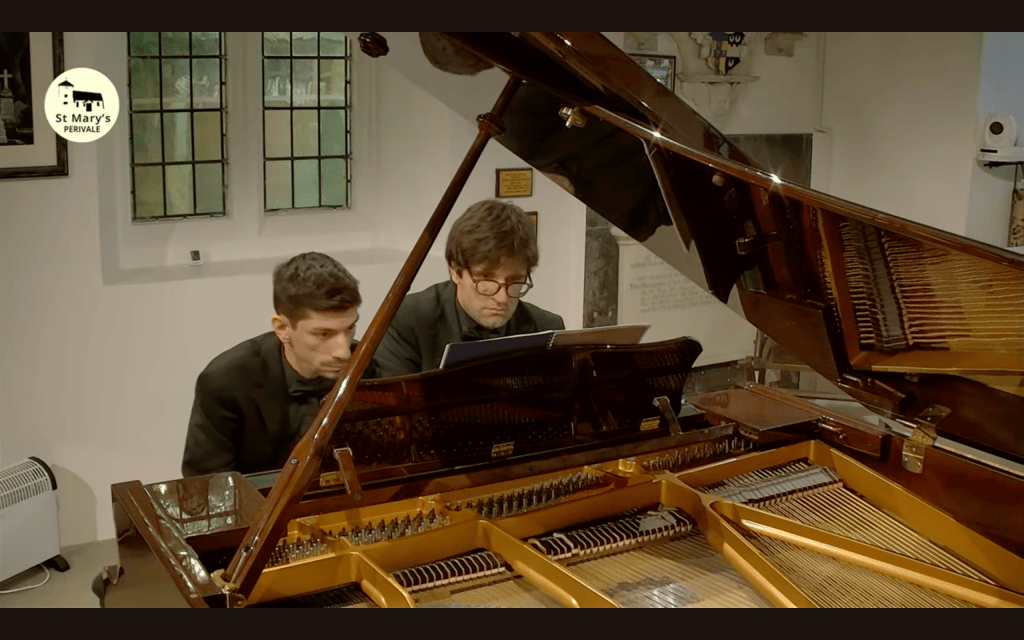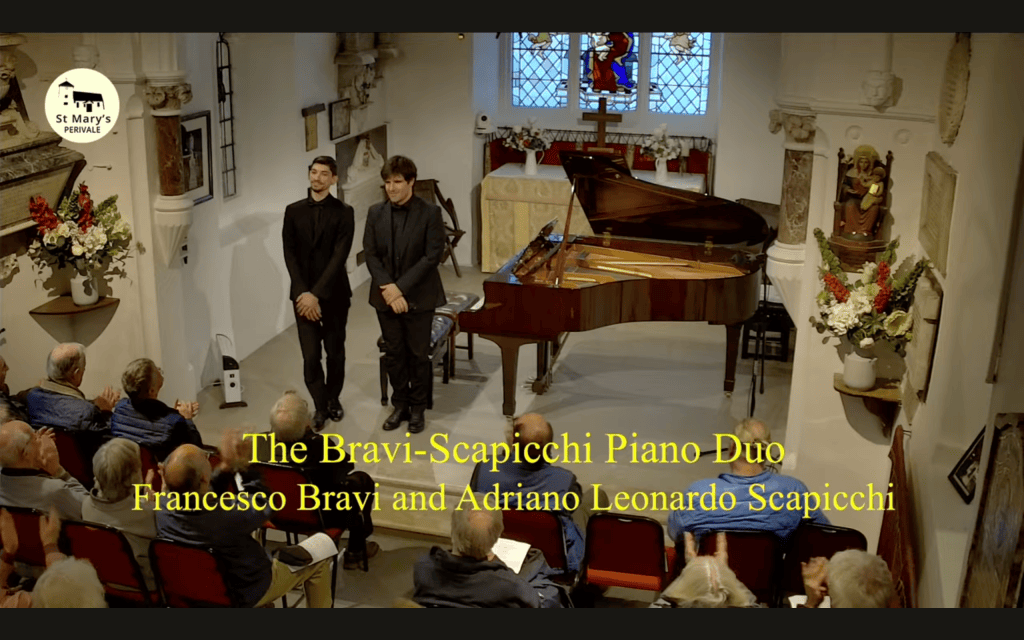
It seems incredible that six years have passed since first listening to this piano duo during the pandemic in 2020. Concerts streamed from the stage of the Teatro Palladium in Rome which were the life blood for many musicians and also a public hungry for live music making in a very bleak period of recent history. Roma 3 University have been promoting young musicians through thick and thin for many years with Valerio Vicari at the helm together with his professor Roberto Pujia. They have even created an orchestra of musicians graduated from music academies and needing only experience of playing in chamber groups of various sizes from simple duo to a full symphony orchestra.
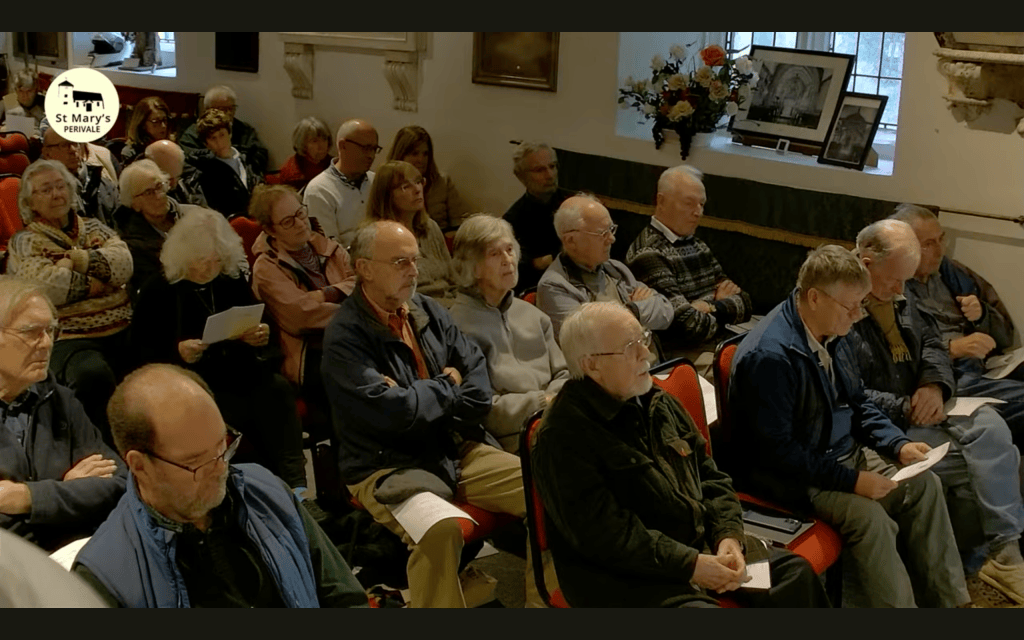
Hugh Mather and his team have been heroically promoting young musicians too in the beautiful redundant church of St Mary’s in Perivale. Dr Mather has received official recognition from the Royal College and Royal Academy for his regular three weekly concerts for young musicians. Also streamed worldwide even after the pandemic , allowing young musicians to receive the recognition and audiences that their talent demands. This is the third appearance of this piano duo in London and on each appearance they play ever more with one mind and one poetic soul.
Today a French programme but with an Italian twist in the tail with an encore of one of Resighi’s beguiling tone pictures from his suite ‘The Pines of Rome.’
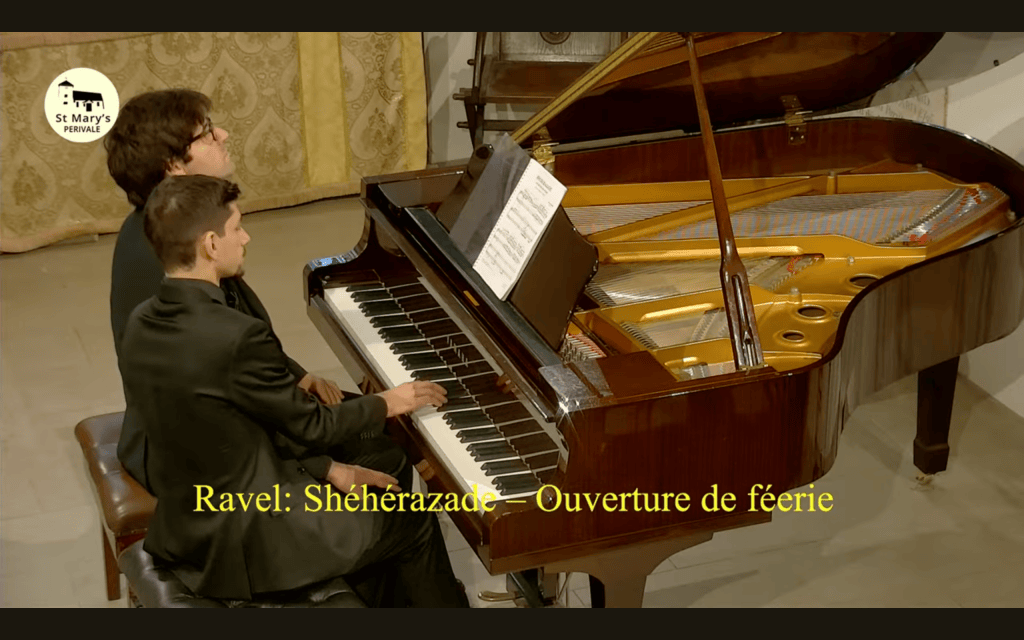
Shéhérazade, ouverture de féerie, was written in 1898 but unpublished during the composer’s lifetime (it was only published in 1975), is a work for orchestra planned as the overture for an opera of the same name.
It was first performed at a concert of the Société Nationale de Musique on 27 May 1899, conducted by the composer. It had a mixed reception, with boos mingling with applause from the audience, and unflattering reviews from the critics. One described the piece as ‘a jolting debut: a clumsy plagiarism of the Russian School’ and called Ravel a ‘mediocrely gifted debutant who will perhaps become something if not someone in about ten years, if he works hard.’ This critic was “Willy”, Henri Gauthier-Villars, who later became an admirer of Ravel. The composer assimilated Willy’s criticism, describing the overture as ‘a clumsy botch-up’, and recognising that it was ‘quite heavily dominated by the influence of Russian music’ (assez fortement dominé par l’influence de la musique russe). Another critic, Pierre Lalo , thought that Ravel showed talent, but was too indebted to Debussy and should instead emulate Beethoven.
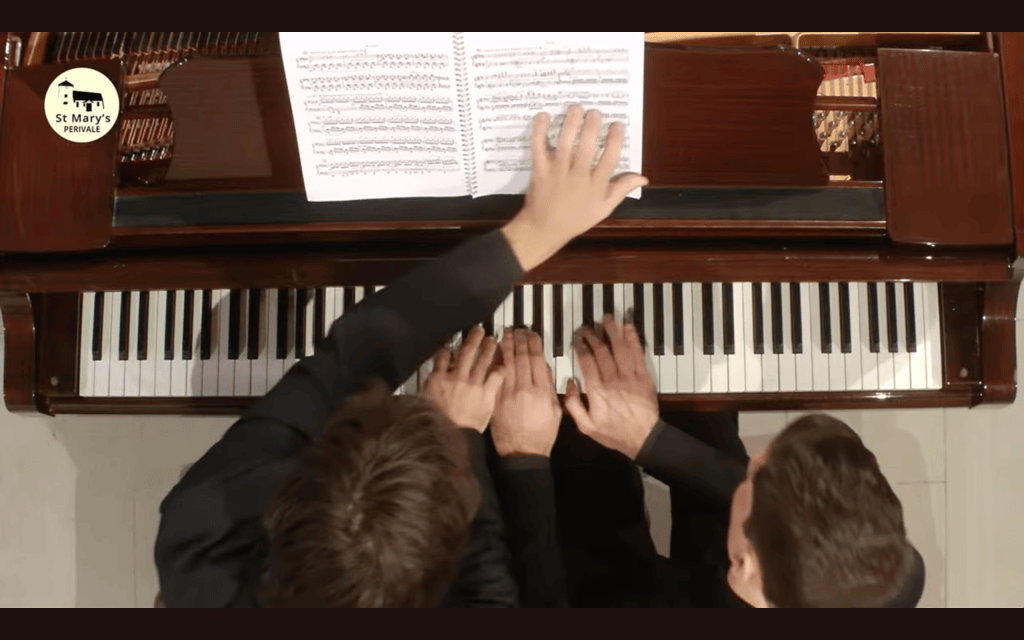
This is Ravel’s original transcription of the Overture to an opera that he never completed. Shéhérazade is full of the perfumes and colours that Ravel could portray even on a single piano. A palette of sounds from this duo with the luminosity of Francesco’s crystalline playing with Adriano adding gradually meandering counterpoints like a cordon bleu chef adding more and more exotic ingredients to a sumptuous dish. Sounds that glowed and glittered like a light passing through a prism as the great architectural shape and musical line was always so clear with continual flowing movements and a chameleonic palette of colour. There were the driving insistent rhythms from Adriano with fragments being added by Francesco with a fascinating range of colours, as the music grew in intensity only to lie spent with barely whispered sounds of glowing luminosity and opaque poignancy.
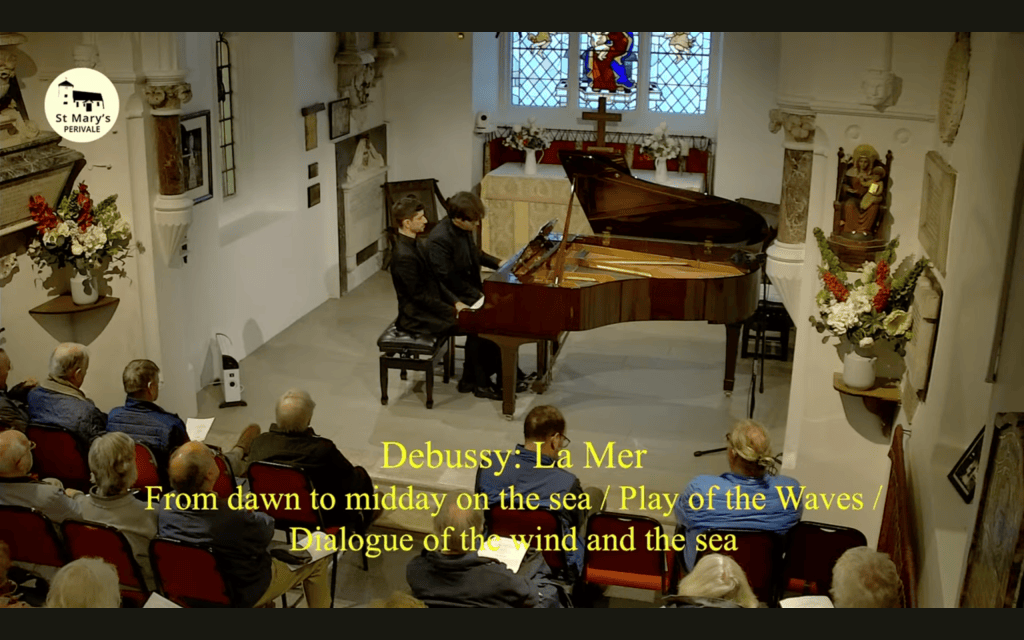
Debussy completed La mer on 5 March 1905 and took the proofs to correct on holiday at the Grand Hotel in Eastbourne on the English Channel coast when he went there on 23 July 1905; he described Eastbourne to his publisher, Durand , as “a charming peaceful spot: the sea unfurls itself with an utterly British correctness”.He arranged the piece for piano four hands in 1905 and in 1909, Durand published a second edition of La mer with the composer’s revisions.
There was a radiance and an atmospheric sense of awakening to the opening with a calm and serenity of whispered sounds of vibrating intensity. They created shimmering sounds of glowing luminosity with a sumptuous rich bass on which was placed a melodic line of piercing purity. Swirling washes of sound were played with remarkable unity of intent with the shrill sounds of agitation created by an extraordinary sense of balance in which the architectural line was always so clearly etched. Suddenly there was a nervous energy of surging intensity which brought this extraordinary work to a brilliant conclusion.
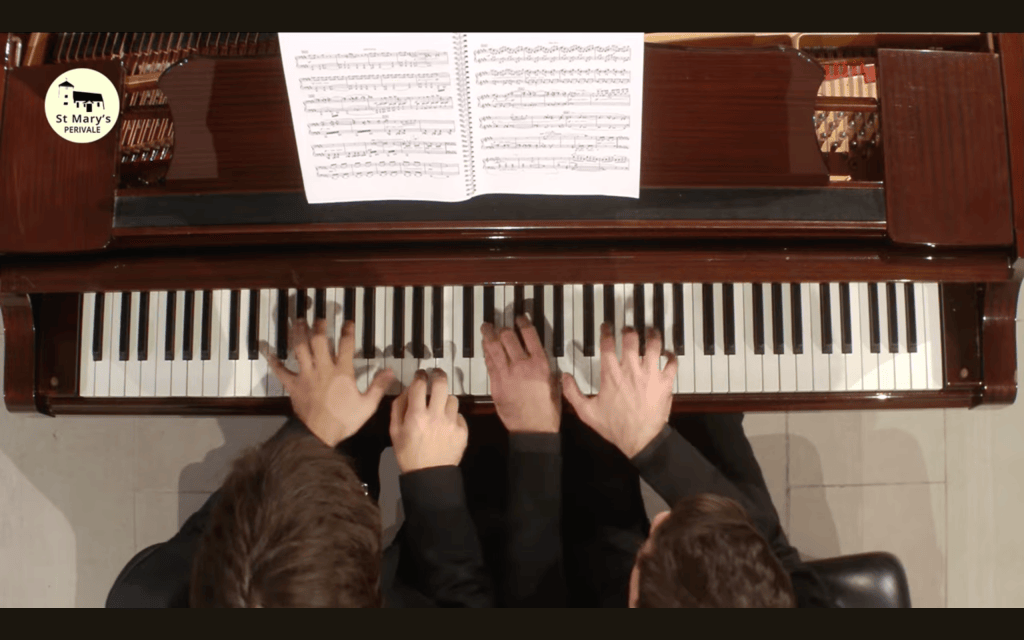
The Sorcerer’s Apprentice is a symphonic poem by the French composer Paul Dukas , completed in 1897. Subtitled ‘Scherzo after a ballad by Goethe”, the piece is based on Goethe’s 1797 poem ‘Der Zauberlehrling’ . By far the most performed and recorded of Dukas’ works, its notable appearance in the Walt Disney 1940 animated film Fantasia has led to the piece becoming widely known to audiences outside the classical concert hall. It was first published in 1897 by A. Durand & Fils and the premiere was given in Paris on May 18, 1897 by the Société Nationale de Musique with the composer himself conducting.
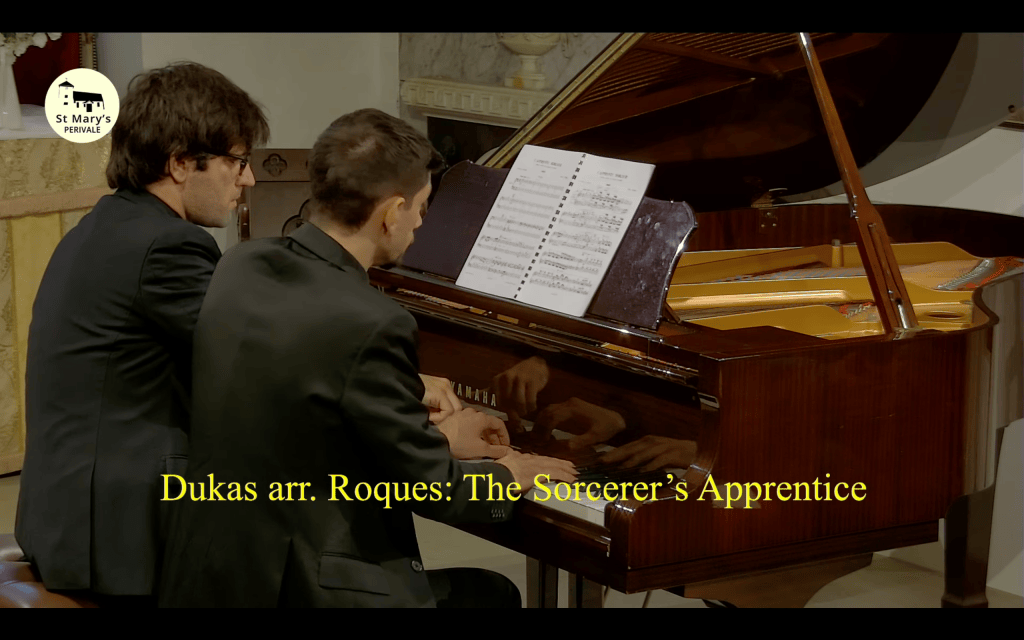
There was a whispered opening out of which the famous melody makes itself felt, evolving with a nervous rhythmic energy and a scintillating amount of notes played with astonishing mastery as the music moved relentlessly forward with exhilaration and animal excitement. A ‘tour de force’ of fantasy and intensity played with a poetic significance that brought this poem vividly to life.
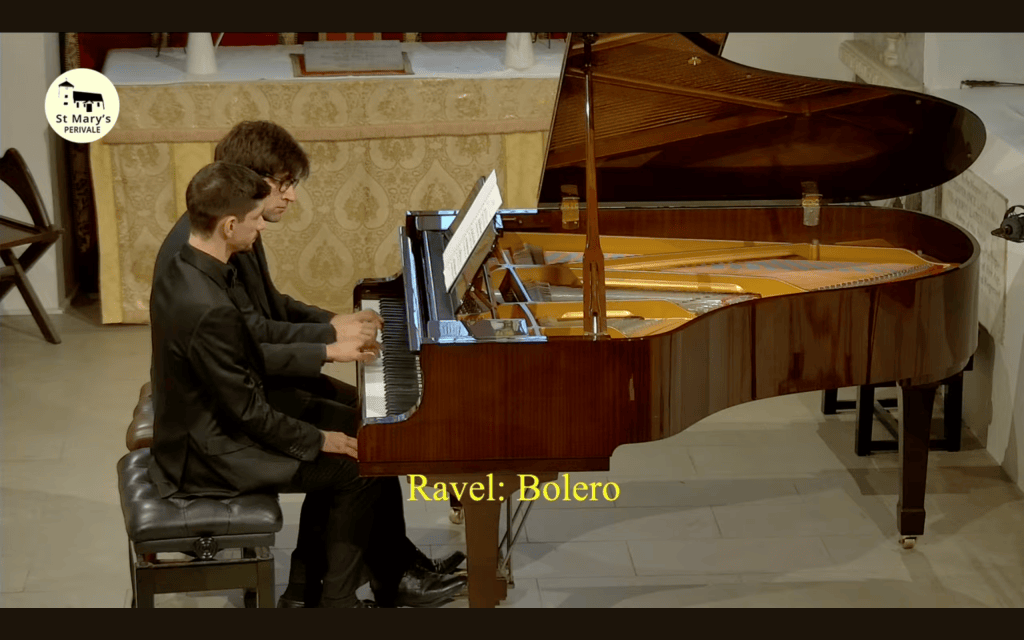
Boléro is a 1928 work for large orchestra by Ravel and is one of his last works completed before illness diminished his ability to write music. It became Ravel’s most famous composition, much to the surprise of the composer, who had predicted that most orchestras would refuse to play it . Toscanini gave the American premiere with the New York Philharmonic on 14 November 1929. The performance was a great success, bringing shouts and cheers from the audience. On 4 May 1930, Toscanini performed the work with the New York Philharmonic at the Paris Opéra as part of that orchestra’s European tour. His tempo was significantly faster than Ravel preferred who showed his disapproval by refusing to respond to Toscanini’s gesture during the audience ovation. An exchange took place between the two men backstage after the concert and according to one account, Ravel said, ‘It’s too fast’, to which Toscanini responded, ‘You don’t know anything about your own music. It’s the only way to save the work’. According to another report, Ravel said, ‘That’s not my tempo’. Toscanini replied, ‘When I play it at your tempo, it is not effective’, to which Ravel retorted, ‘Then do not play it’.
Adriano chose just the right tempo which he maintained heroically throughout the fifteen minutes of hypnotic repetition. Francesco entered with the famous melody of whispered insinuation with the volume and excitement gradually building up with masterly control and burning insistence. A sense of chameleonic colour with Francesco adding a different instrument as the melody moved towards its conclusion with Adriano never faltering as the music moved inexorably to its almost unbearable climax. An extraordinary performance of quite masterly rhythmic control and of a palette of sounds of insinuating decadent radiance.
An encore of one of Respighi’s ‘Pines of Rome’ began with the rumbling bass from Leonardo and gradually building up in volume with overwhelming brilliance and exhilaration.
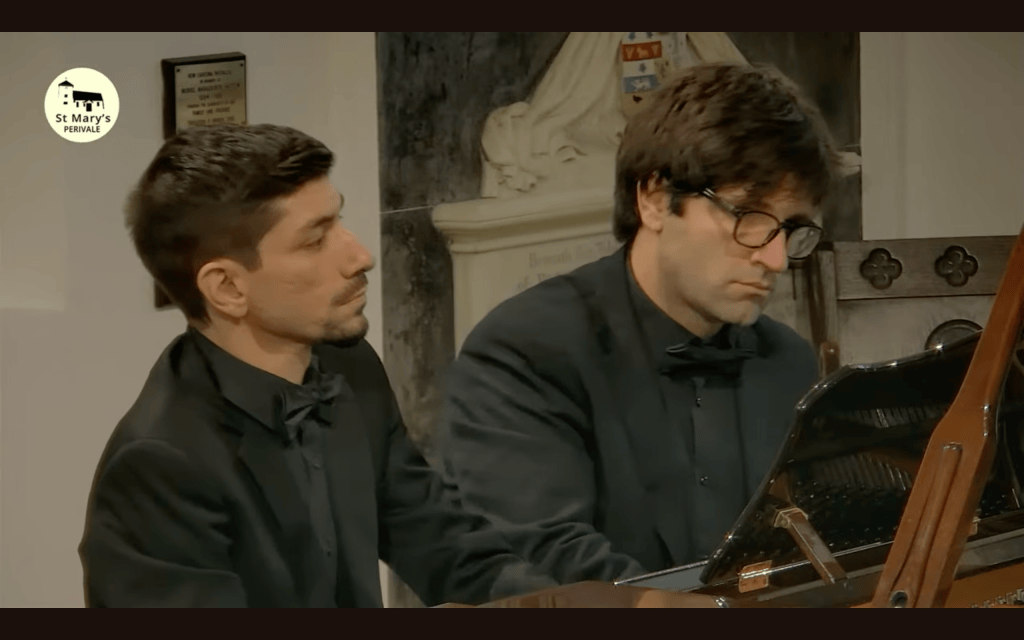
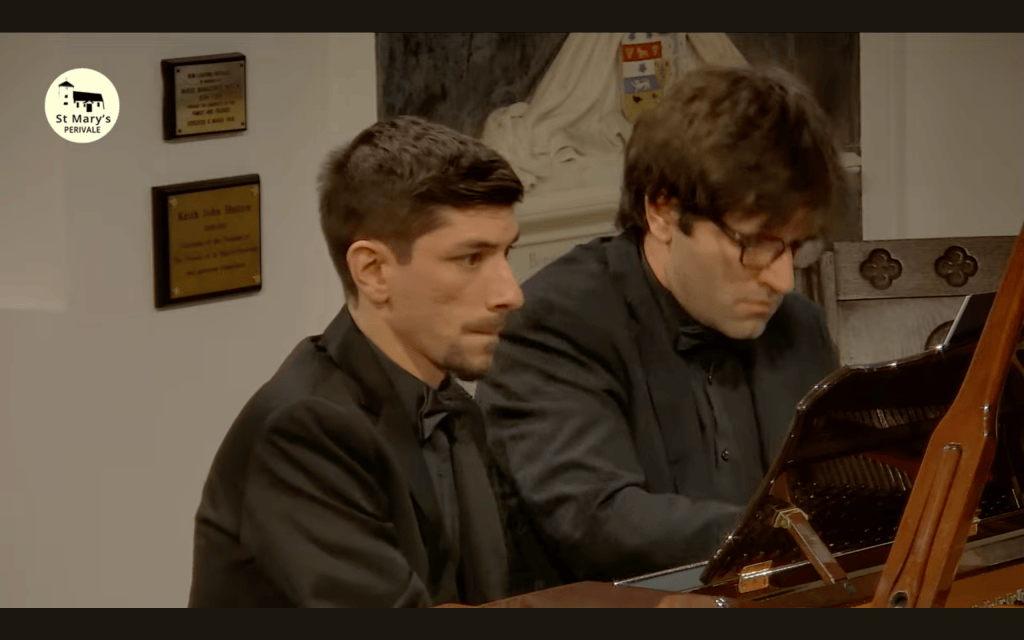
Francesco Bravi and Adriano Leonardo Scapicchi formed their duo in 2019. In 2020 they performed Stravinsky’s Rite of Spring at Teatro Palladium in Rome. The success following their concert, described by Christopher Axworthy as “a formidable knotty twine of great precision and rhythmic pulse”, brought them to be invited to several international music festivals and venues. In 2023 they were awarded the Outstanding Musicians Prize and a special mention for their interpretation of Debussy at the International Music Competition Ibla Grand Prize. As winners of the competition, in 2024 they took part in a tour in the USA, performing in Virginia, Arkansas, Texas, and New York, including the Weill Recital Hall of the Carnegie Hall. In 2024 they have played at the Pauline Chapel of the Quirinal Palace, live streamed by RAI Radio 3, at St. Mary’s Perivale in London, MusiQuart festival in Valencia (Spain), IUC-La Sapienza, Accademia Filarmonica Romana, and I Tramonti di Tinia, where they played Bartók’s Sonata for two pianos and percussions. In 2025 they have been invited to perform concerts in Austria, Hungary, South Korea, United Kingdom, and Italy, including the 102° edition of Micat in Vertice in Siena, where they have played Brahms’s Liebeslieder-Walzer with choir. Keen on promoting new repertoire, they often programme works by contemporary authors, such as Salvatore Sciarrino, Fazil Say, Fabio Massimo Capogrosso, and Paolo Catenaccio, who wrote Visions from a Dream for the duo. For the Chigiana International Festival 2025 they will also take part to the world premiere of Matteo D’Amico’s Hérodiade. They attend the Chamber Music Course at the International School of Music Avos Project in Rome, the Advanced Course at the Academy of the Società dei Concerti di Parma, and the Piano Course at the Accademia Musicale