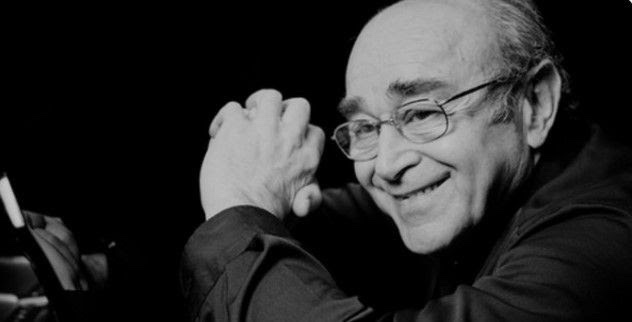
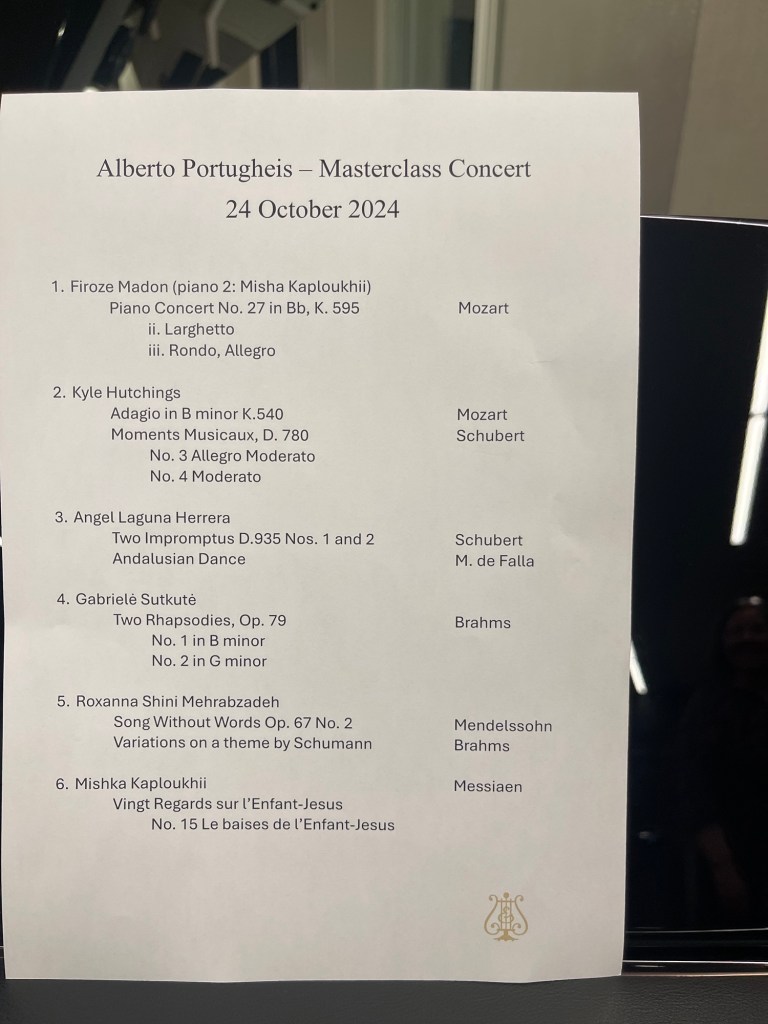
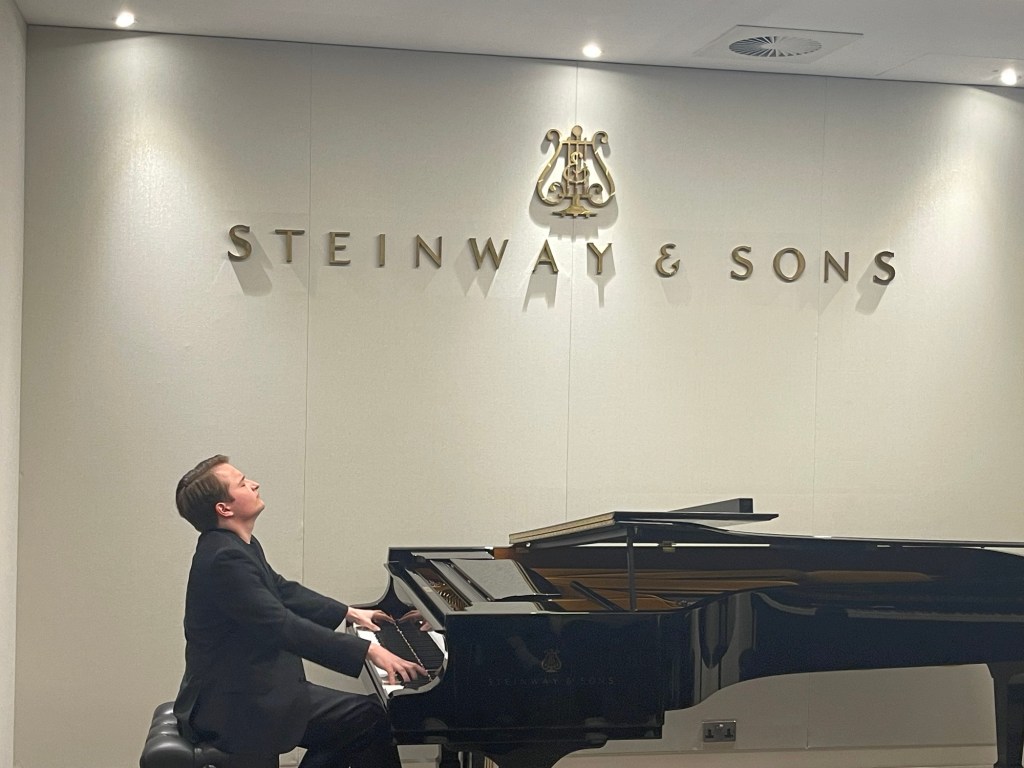
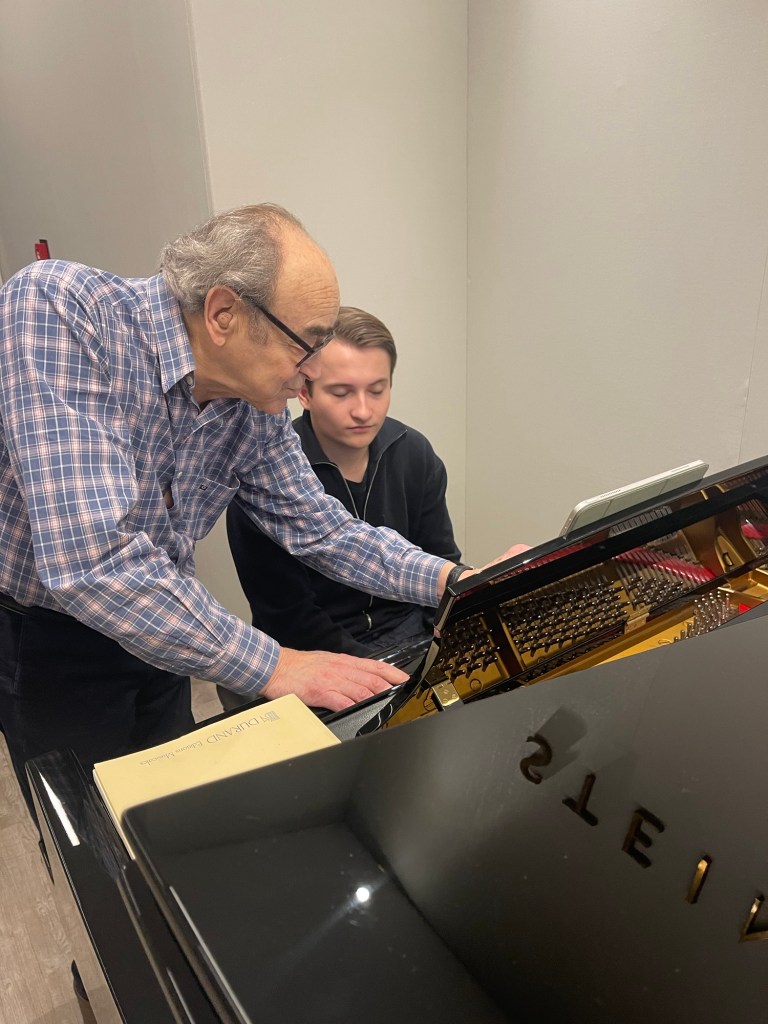
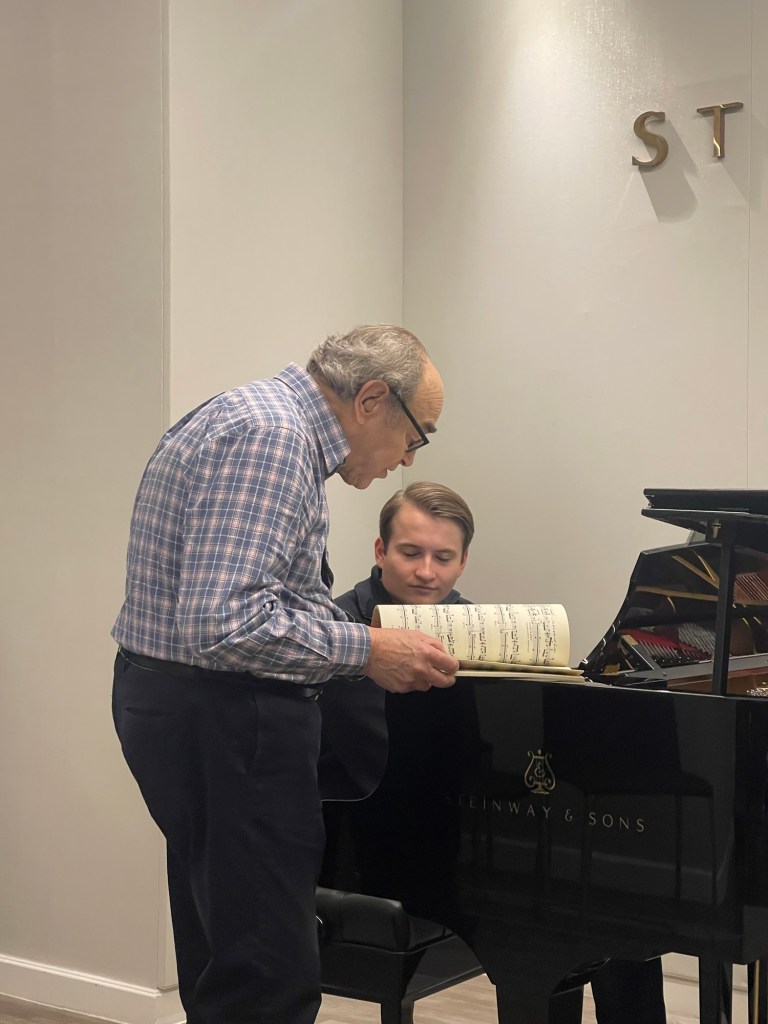
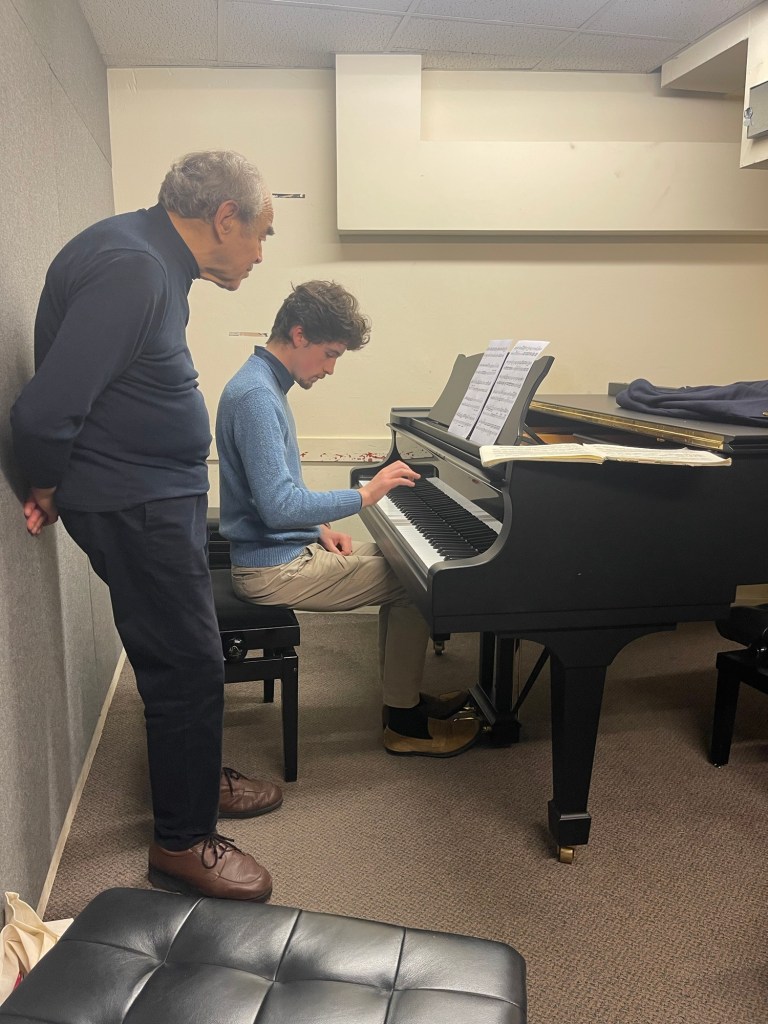
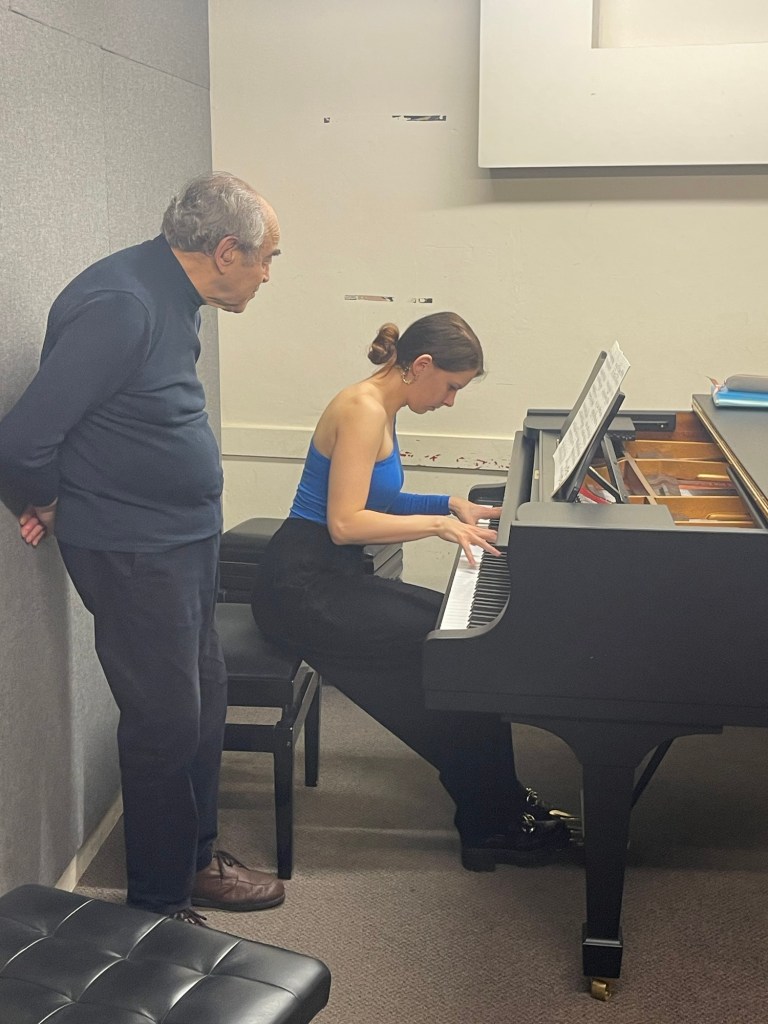
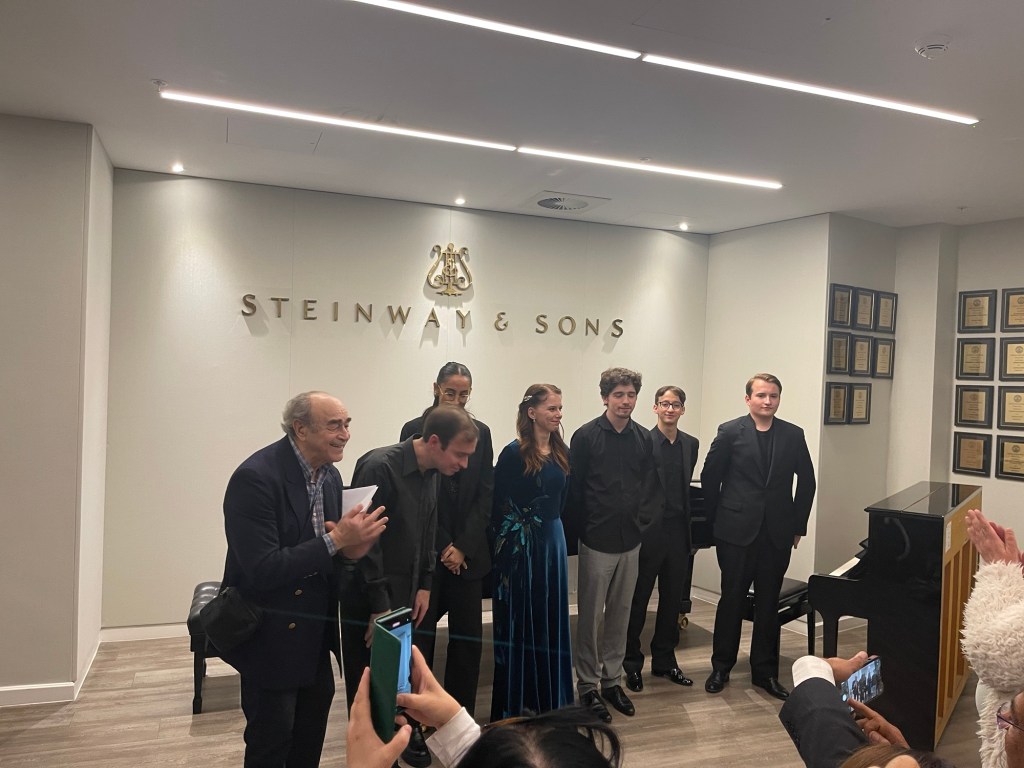
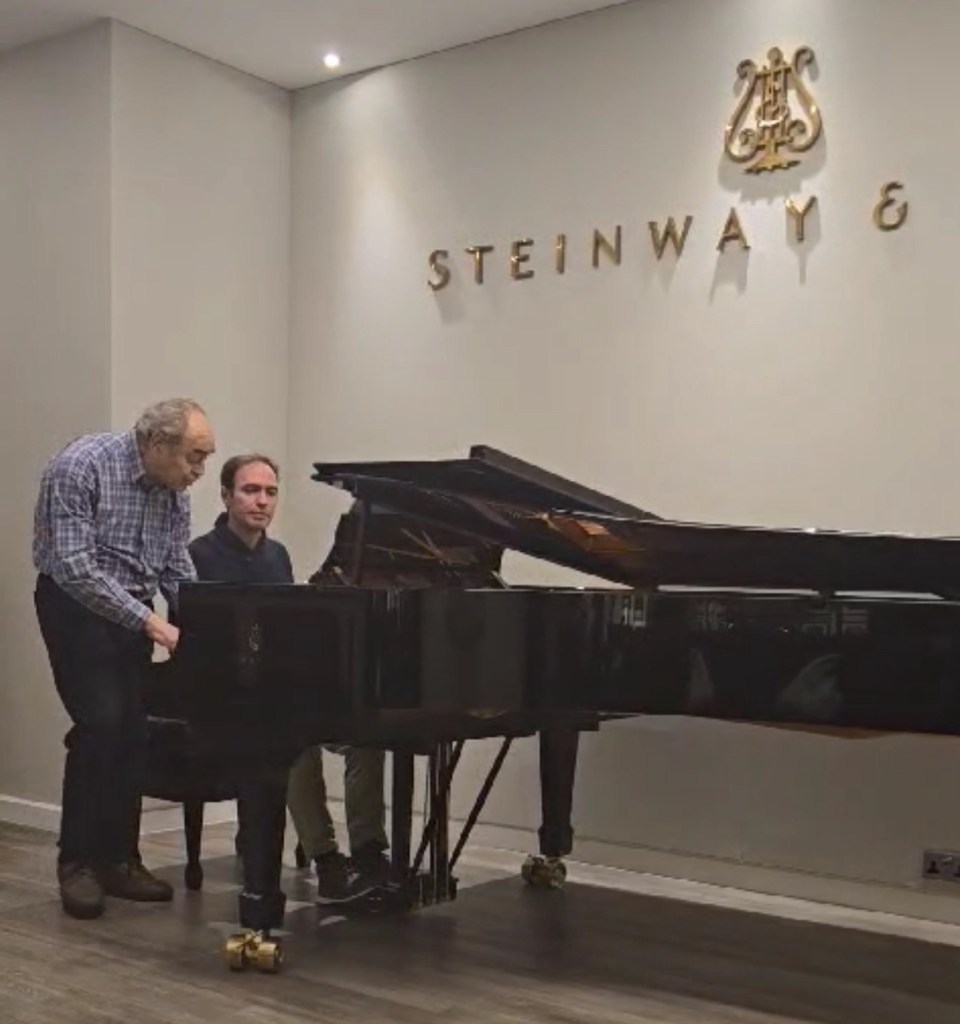
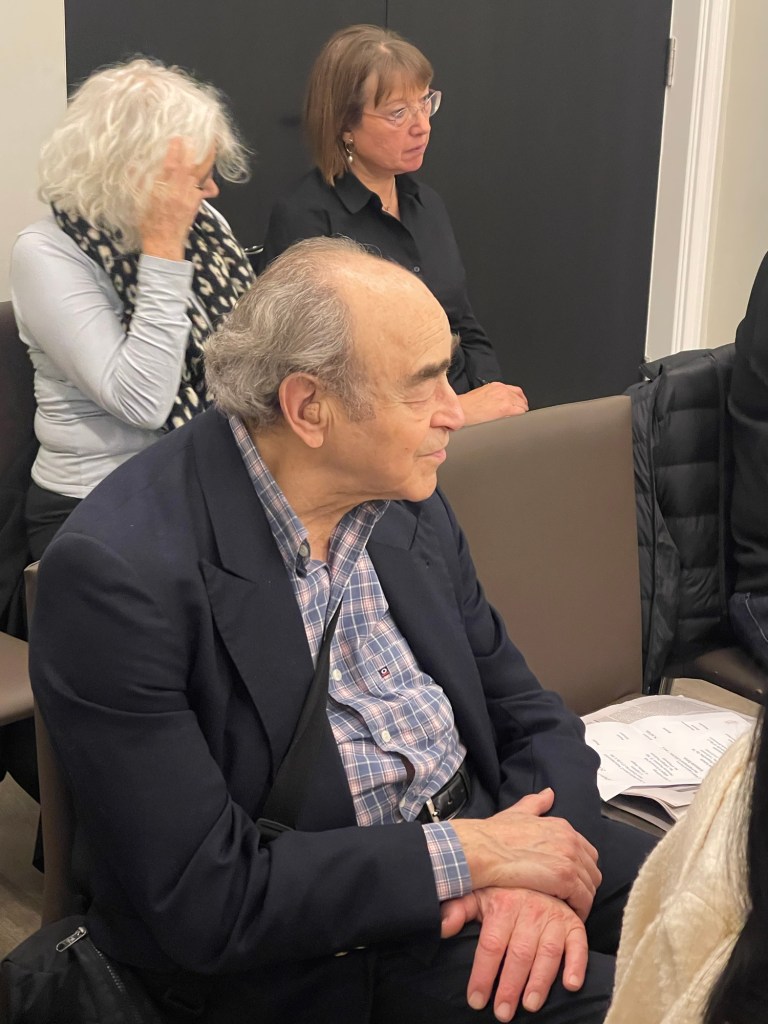
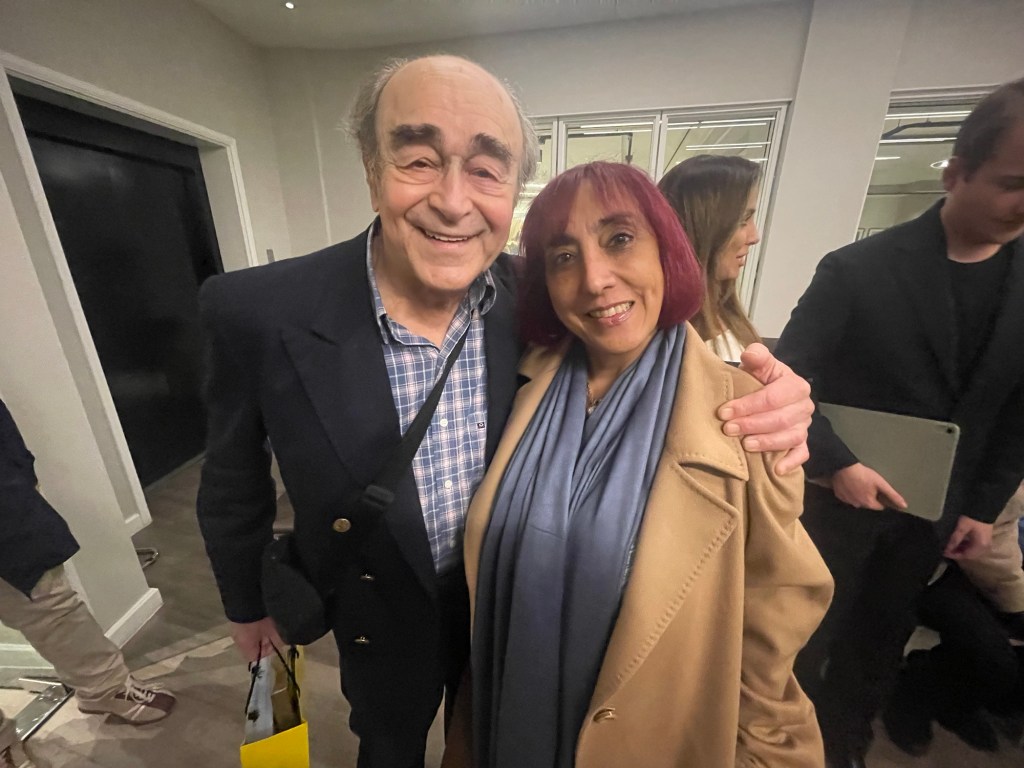
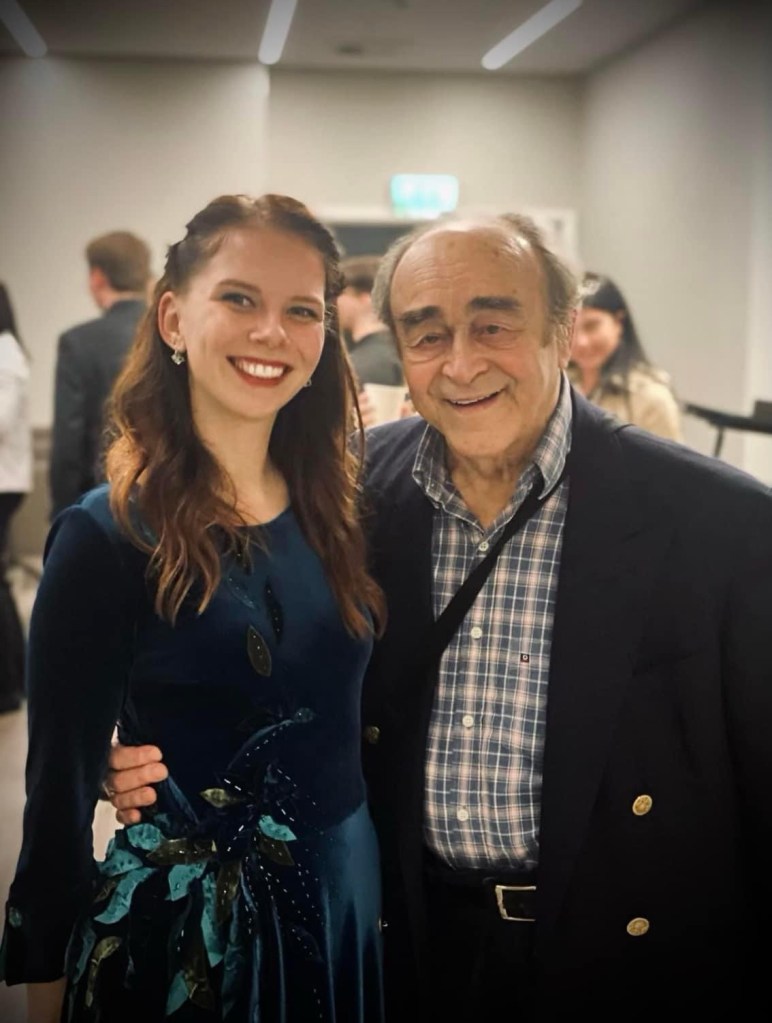
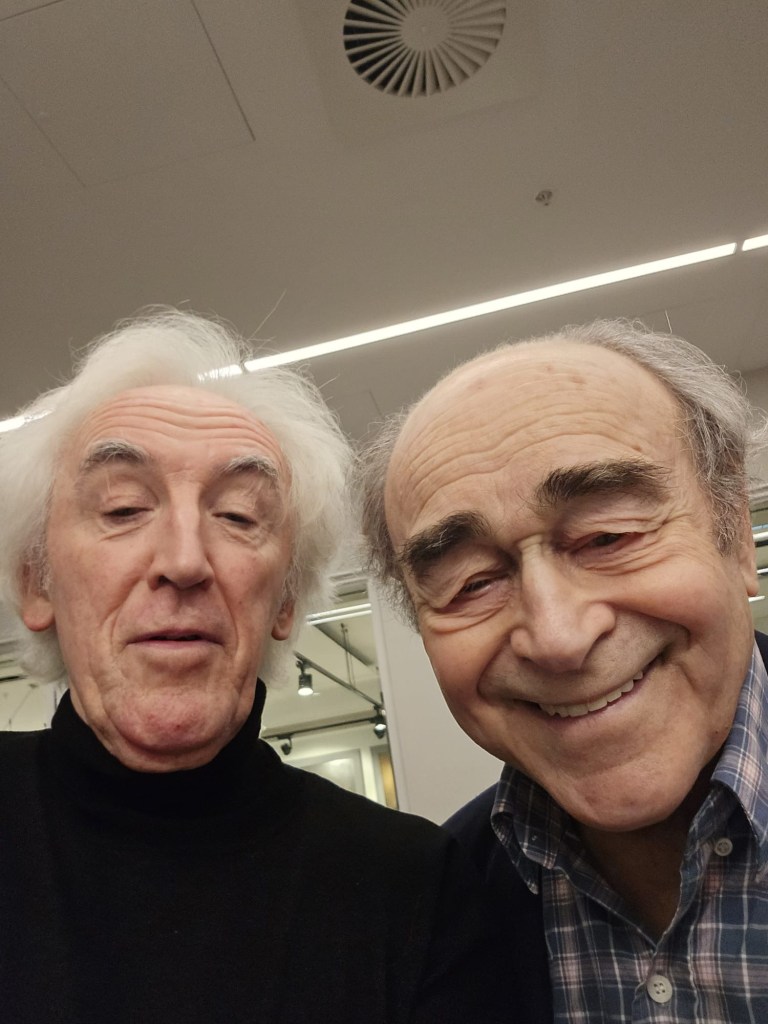
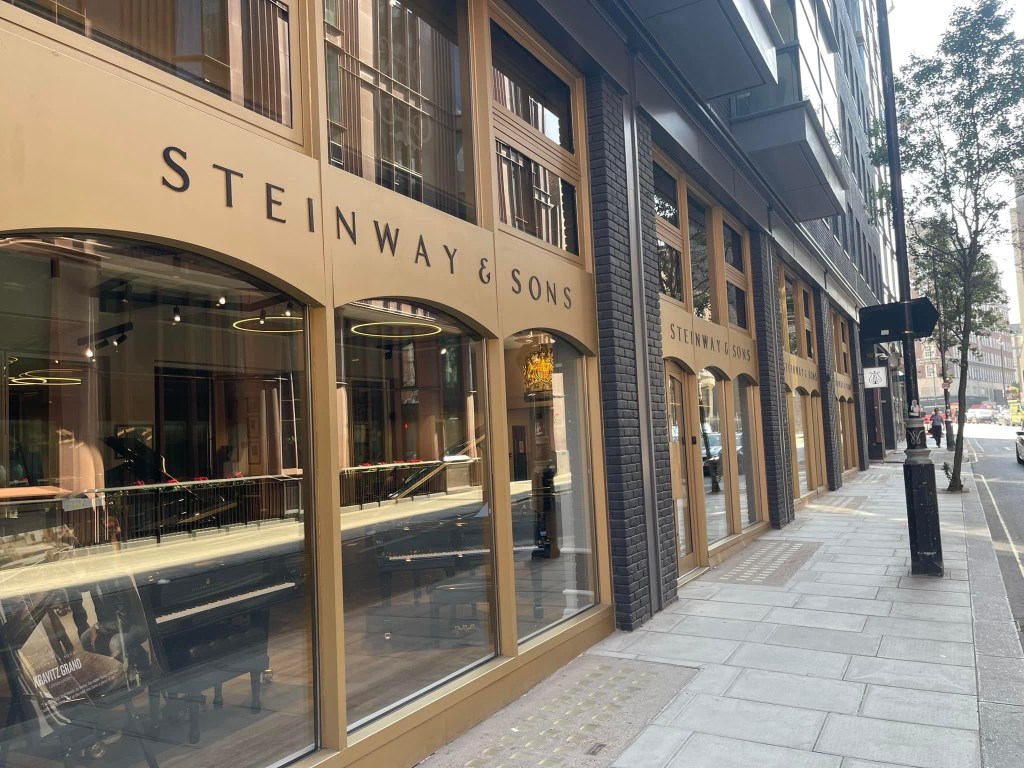
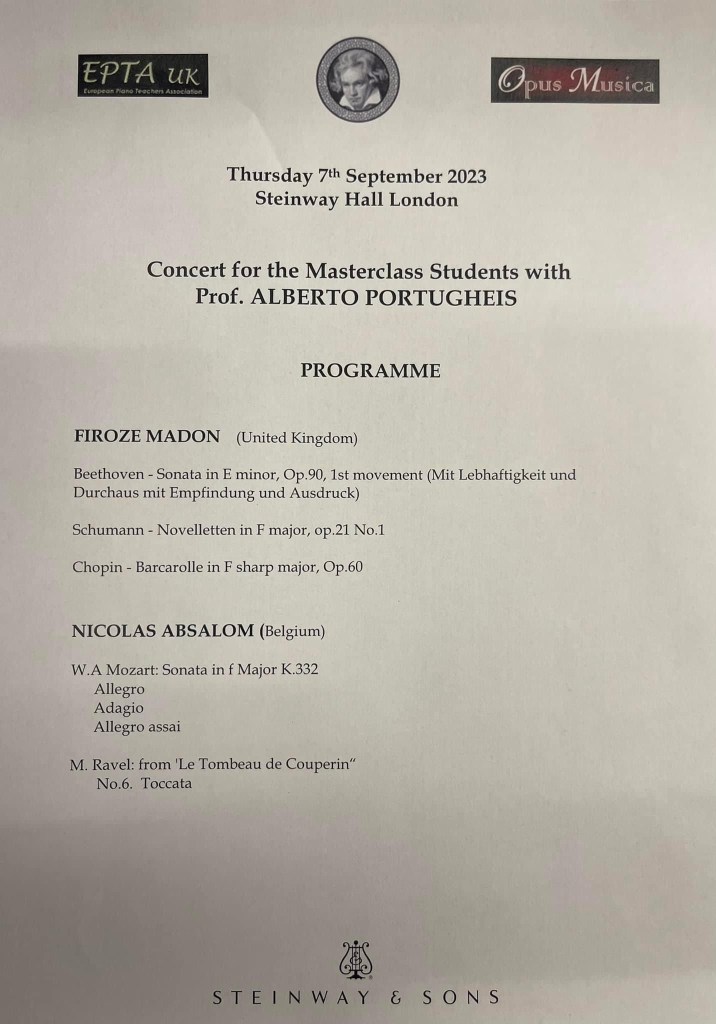
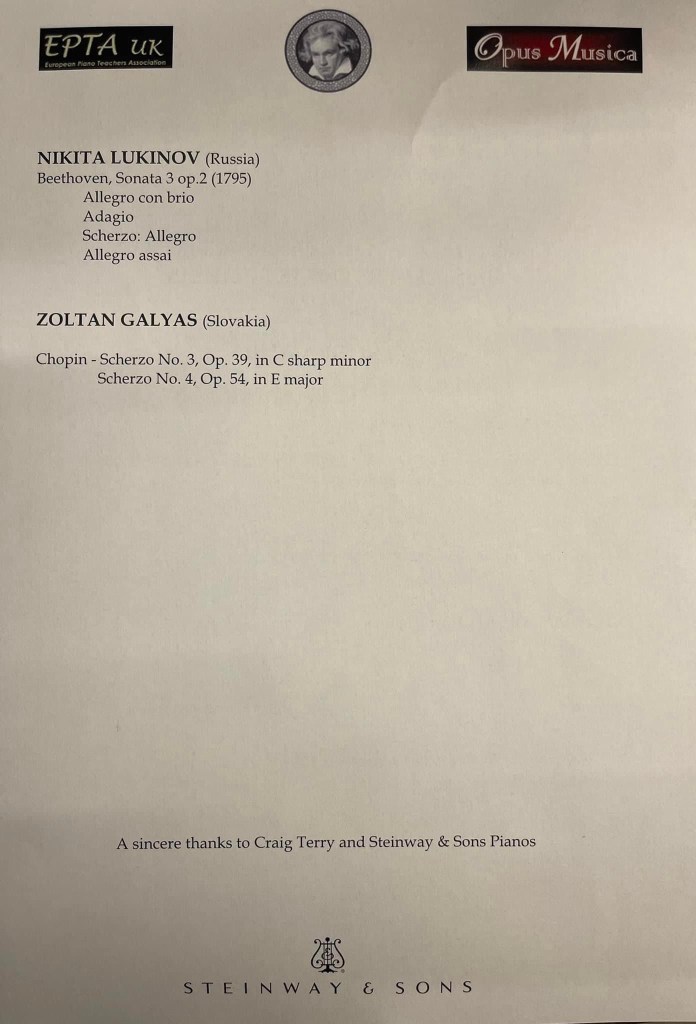
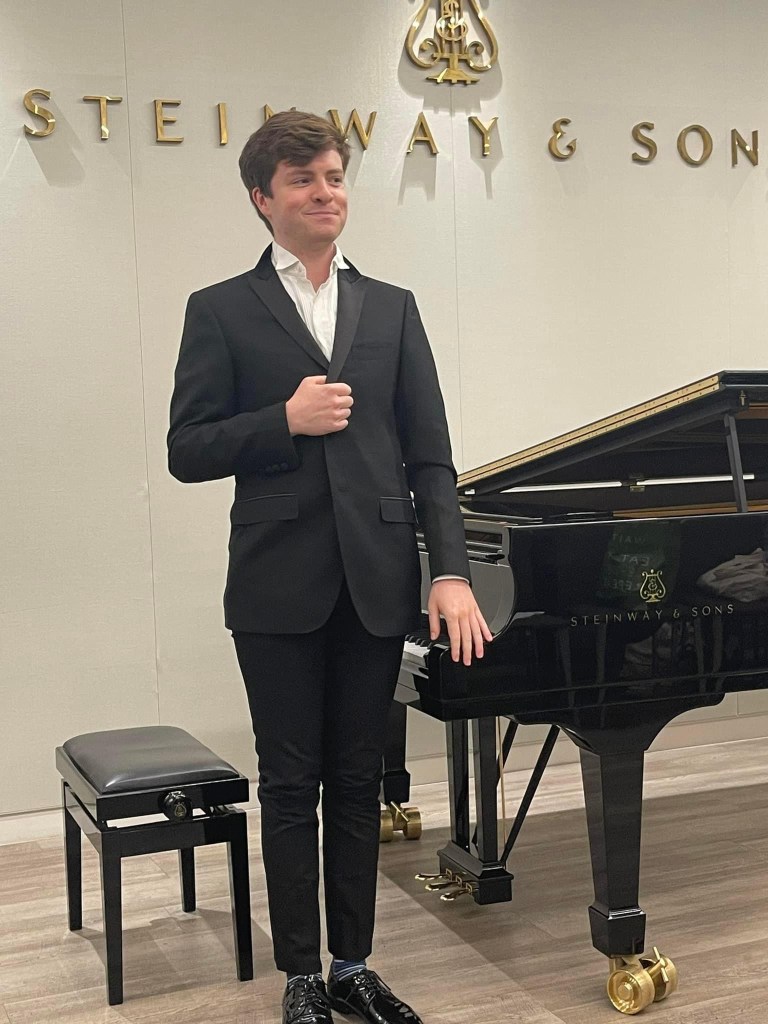
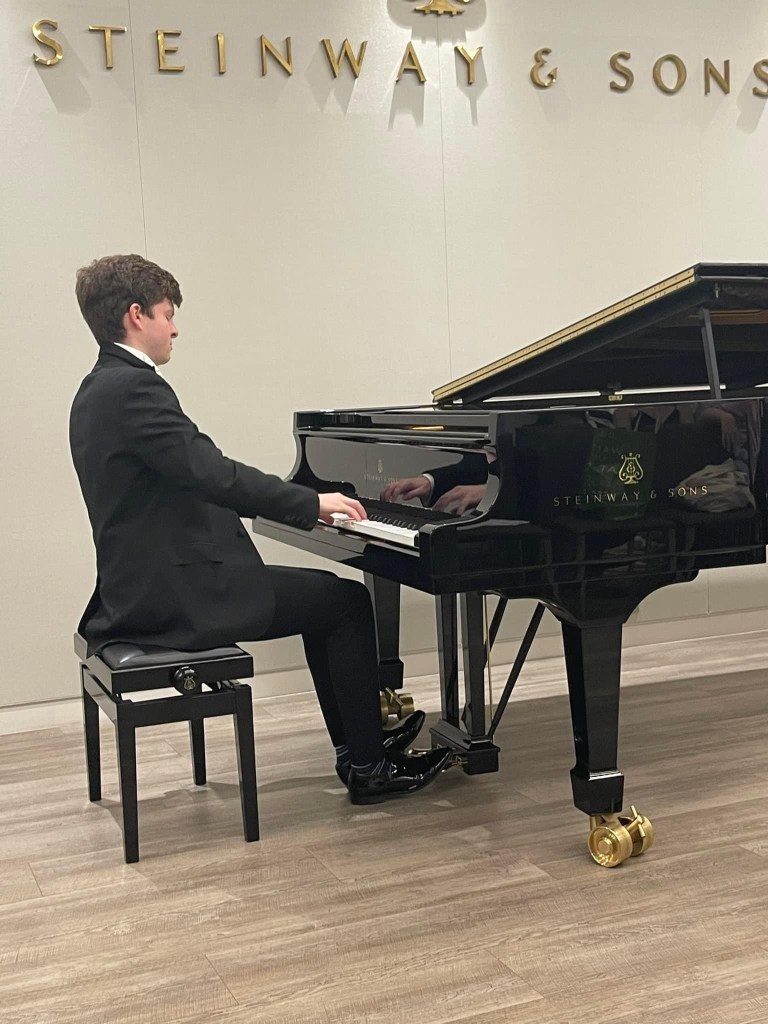
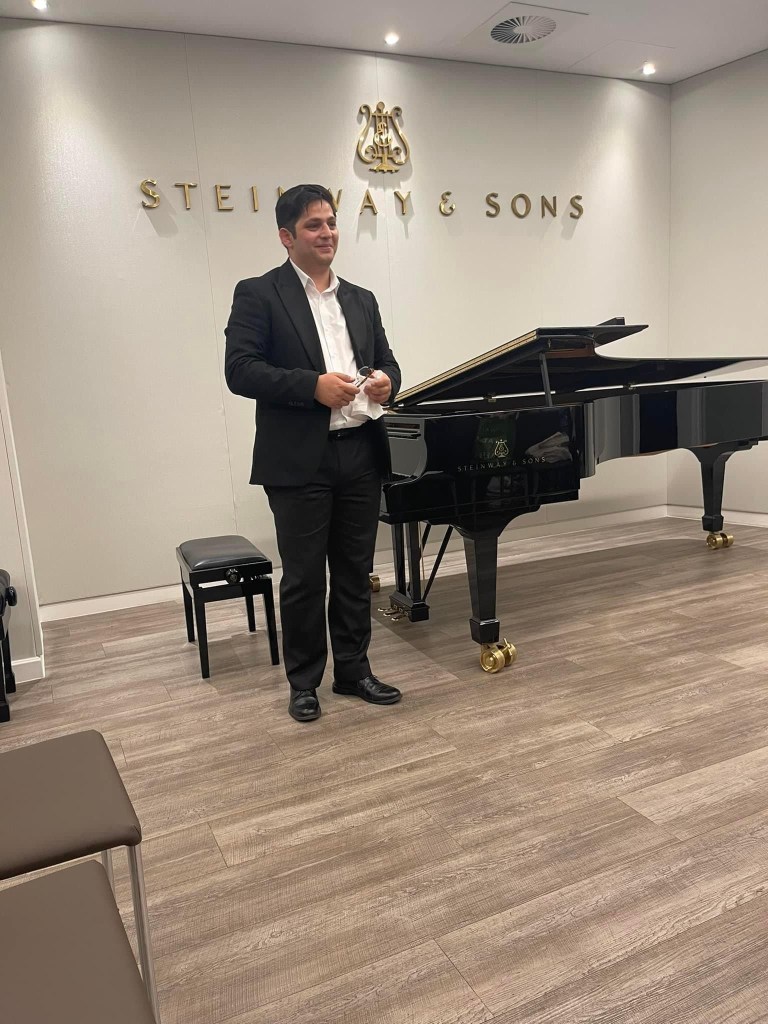
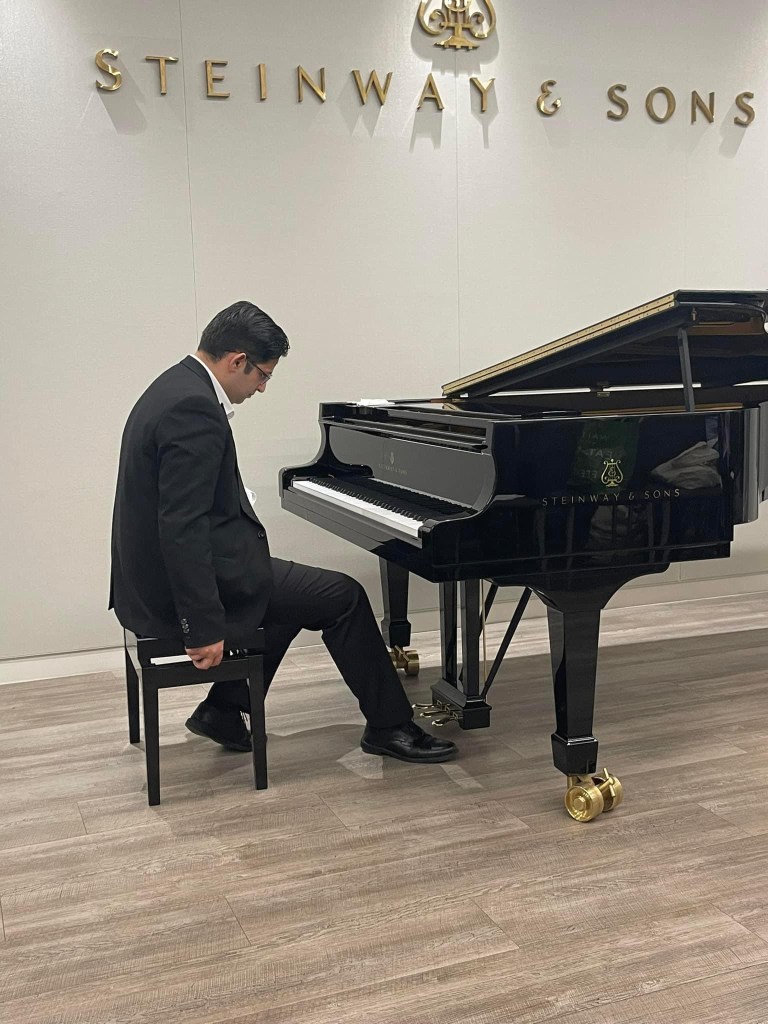
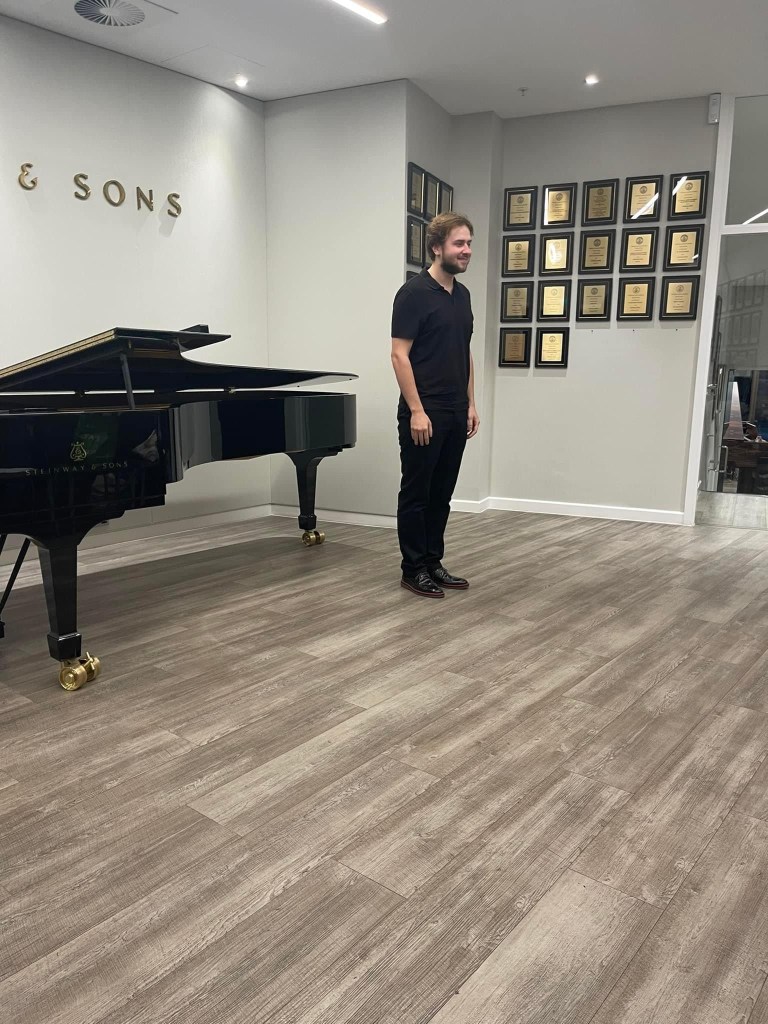
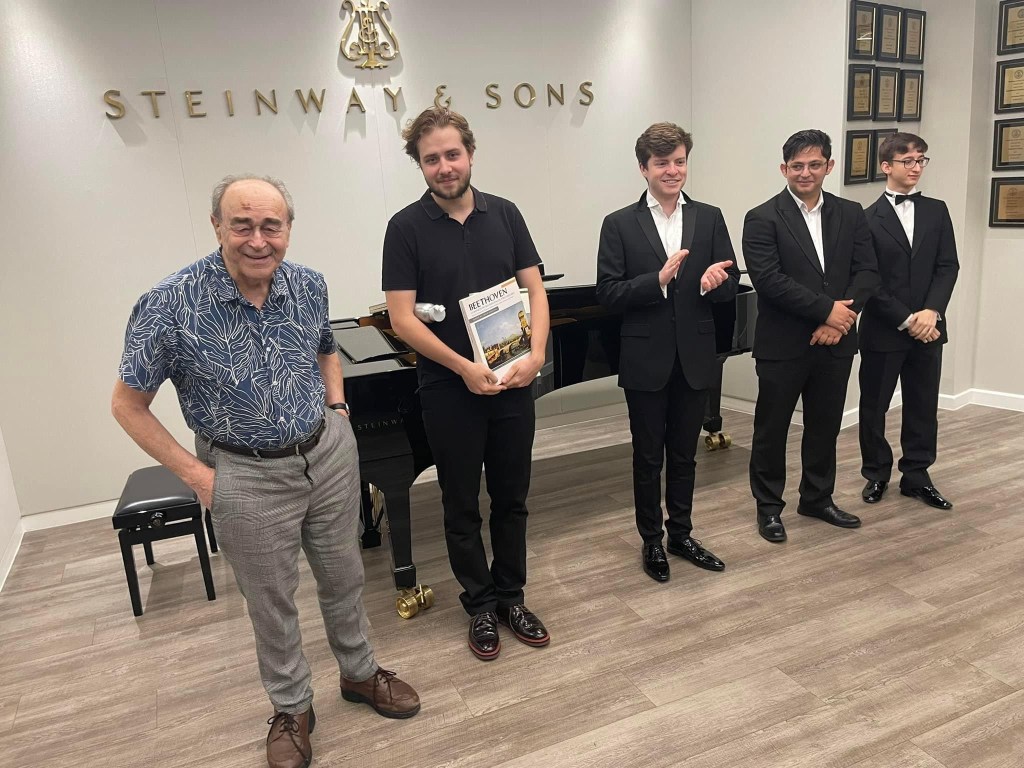
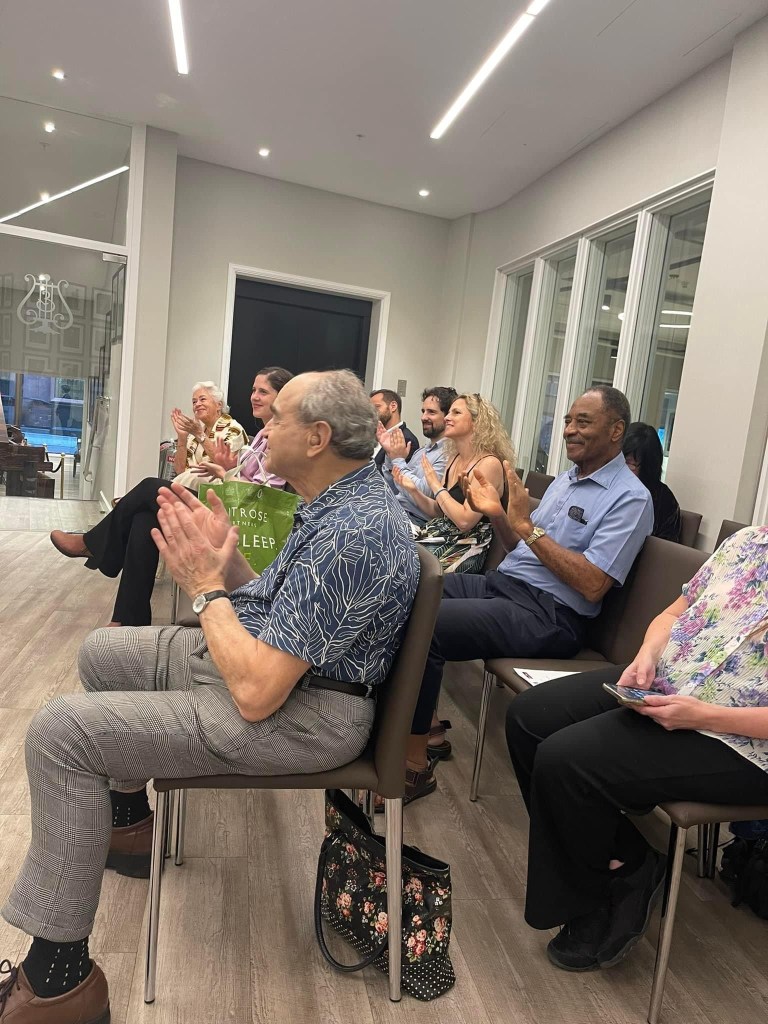
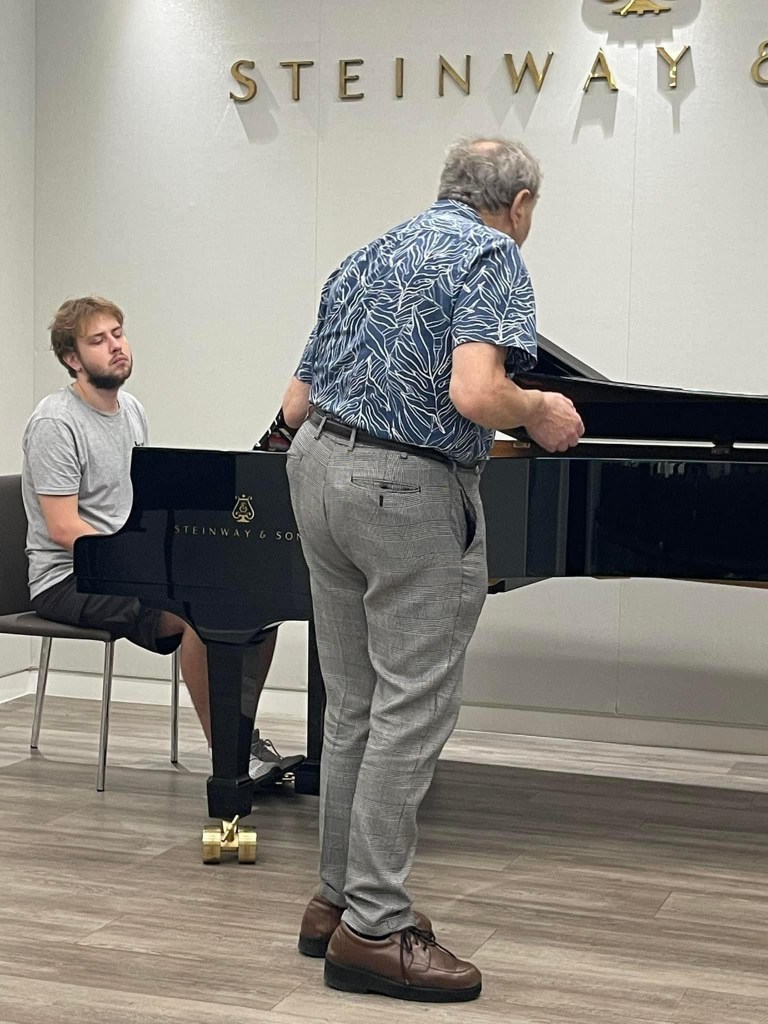
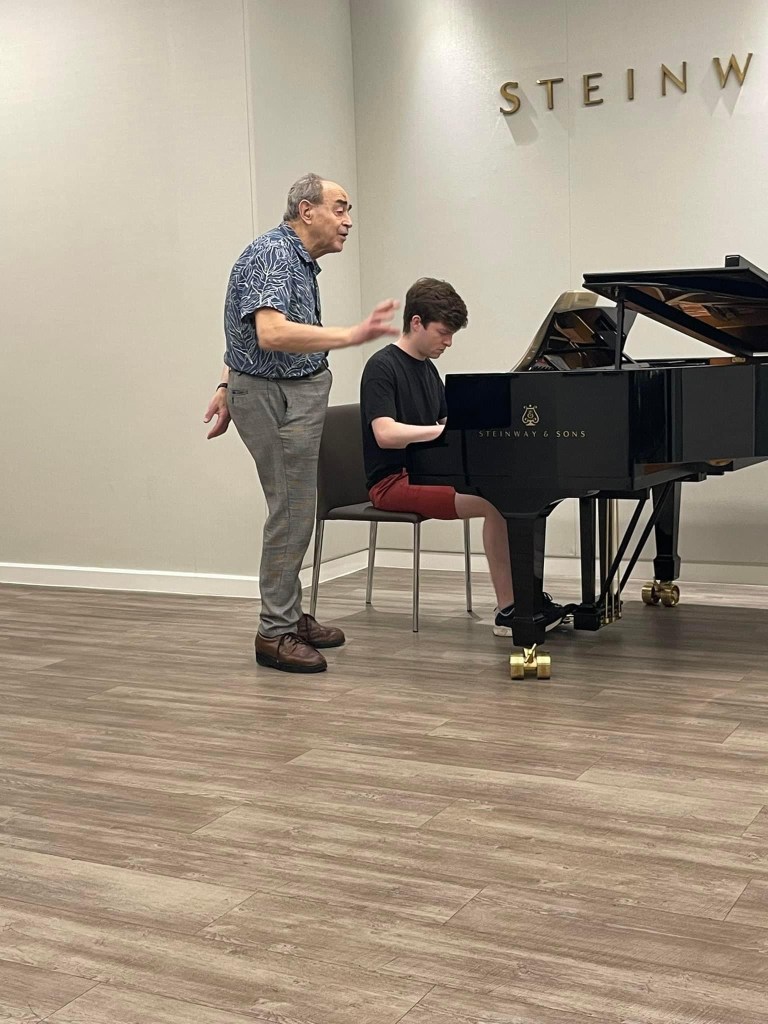
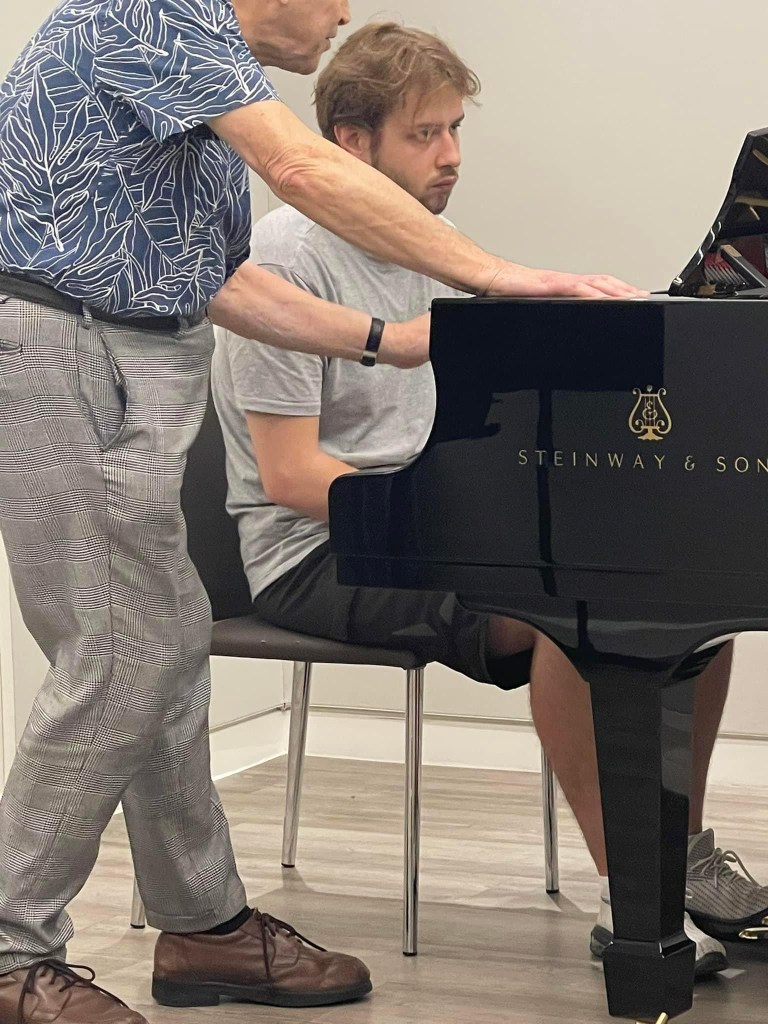
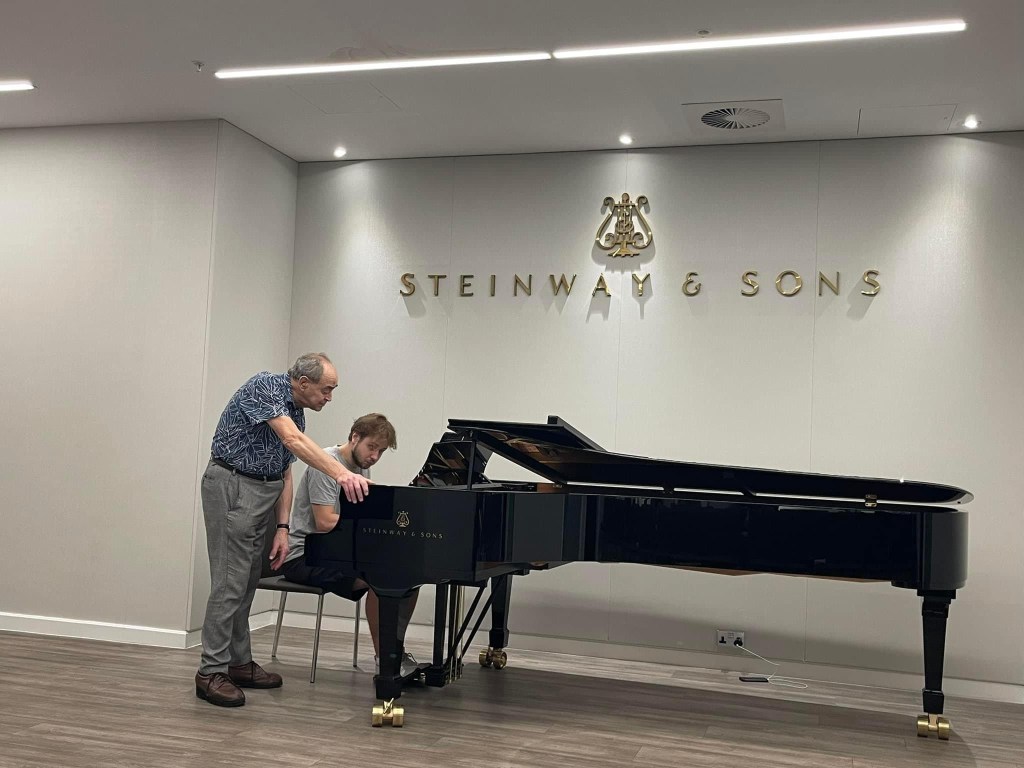
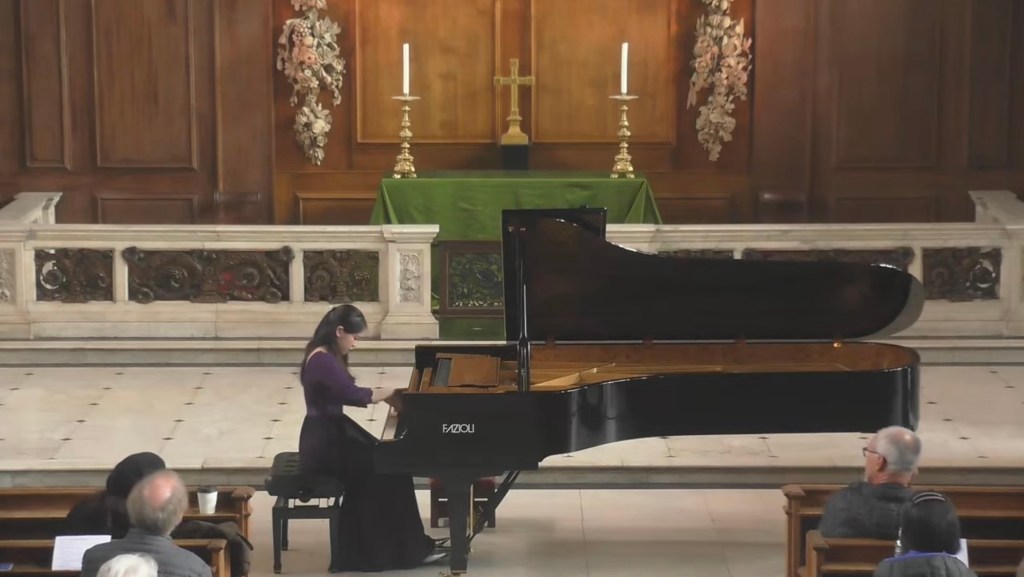
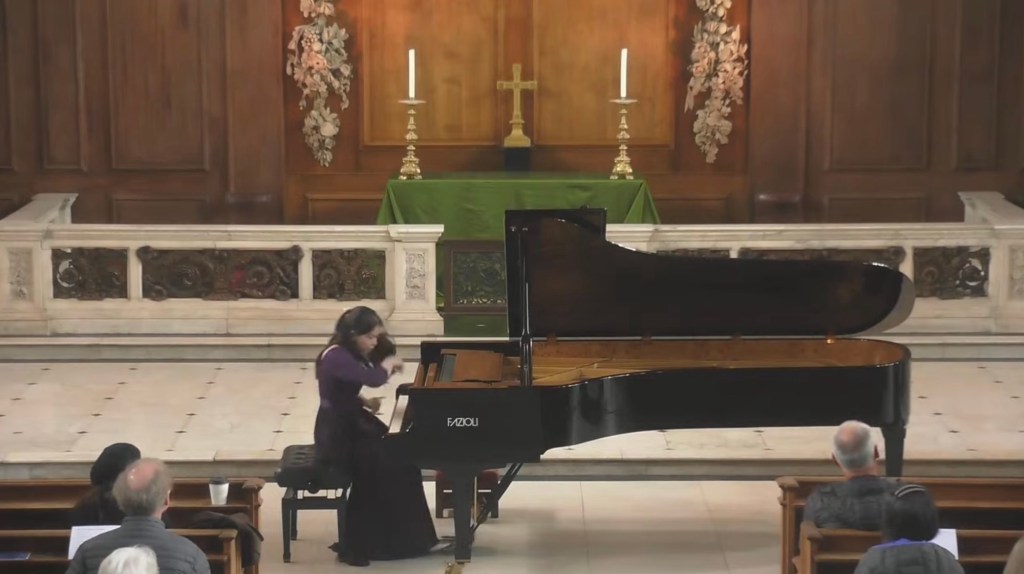
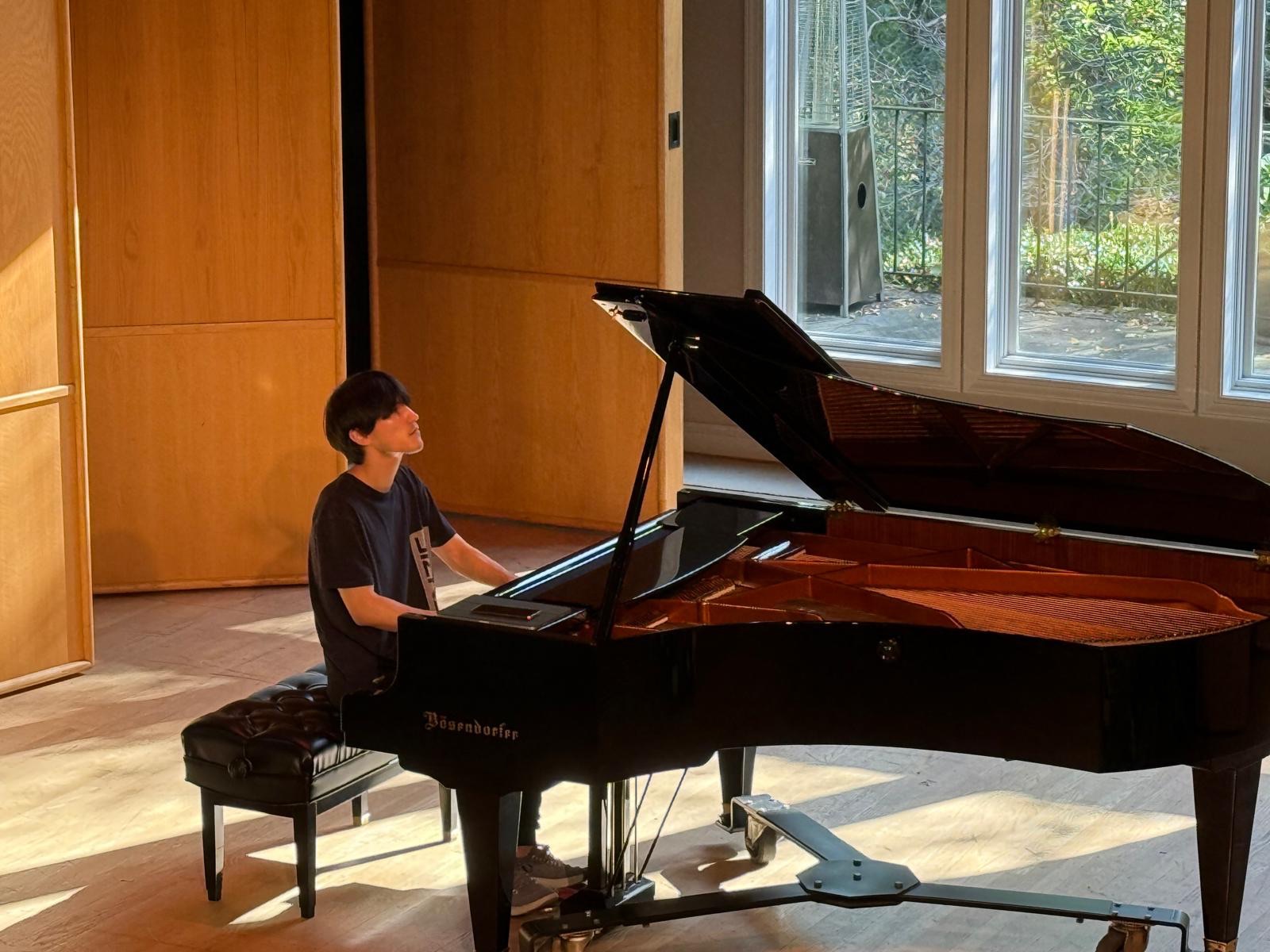
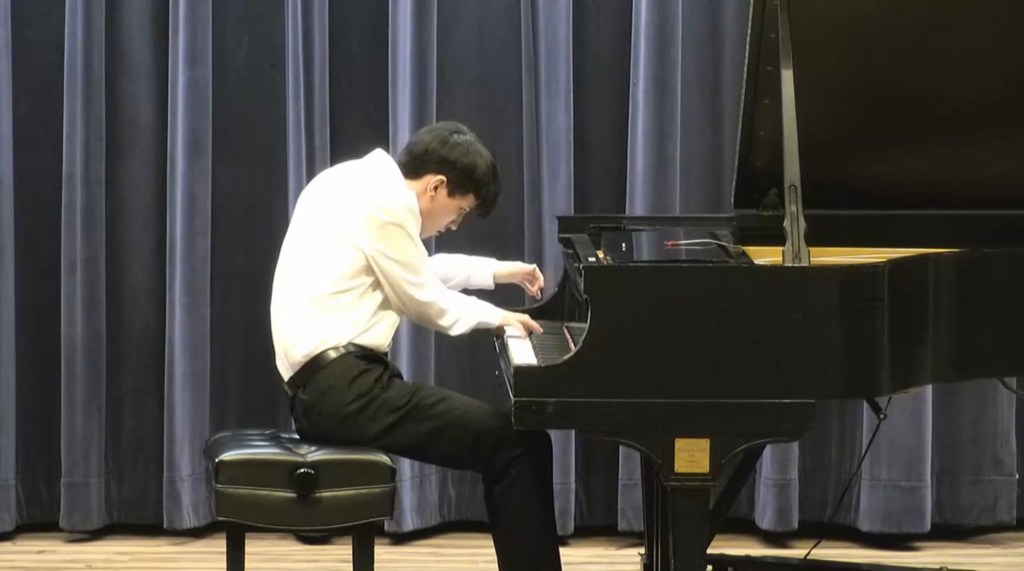
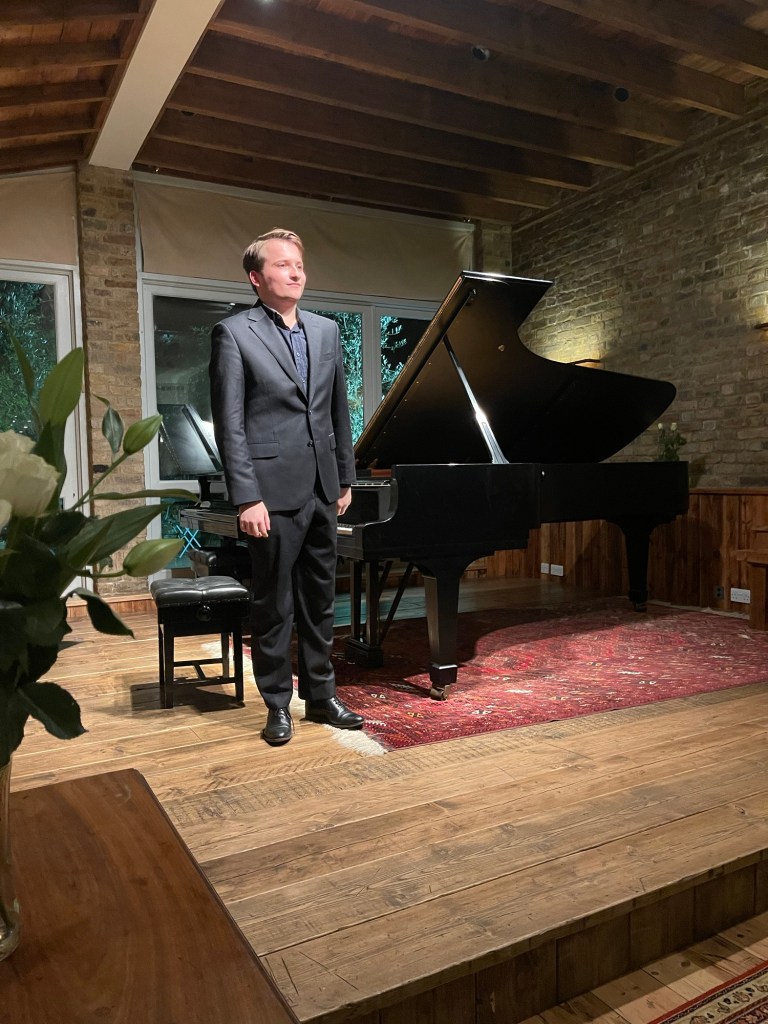
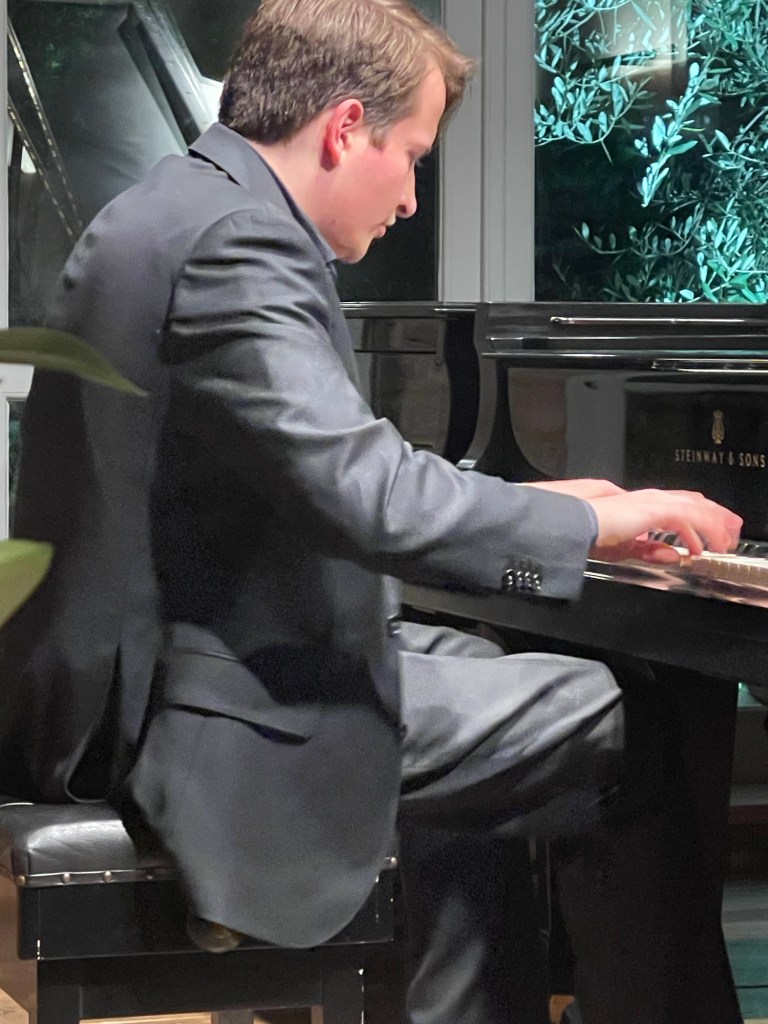
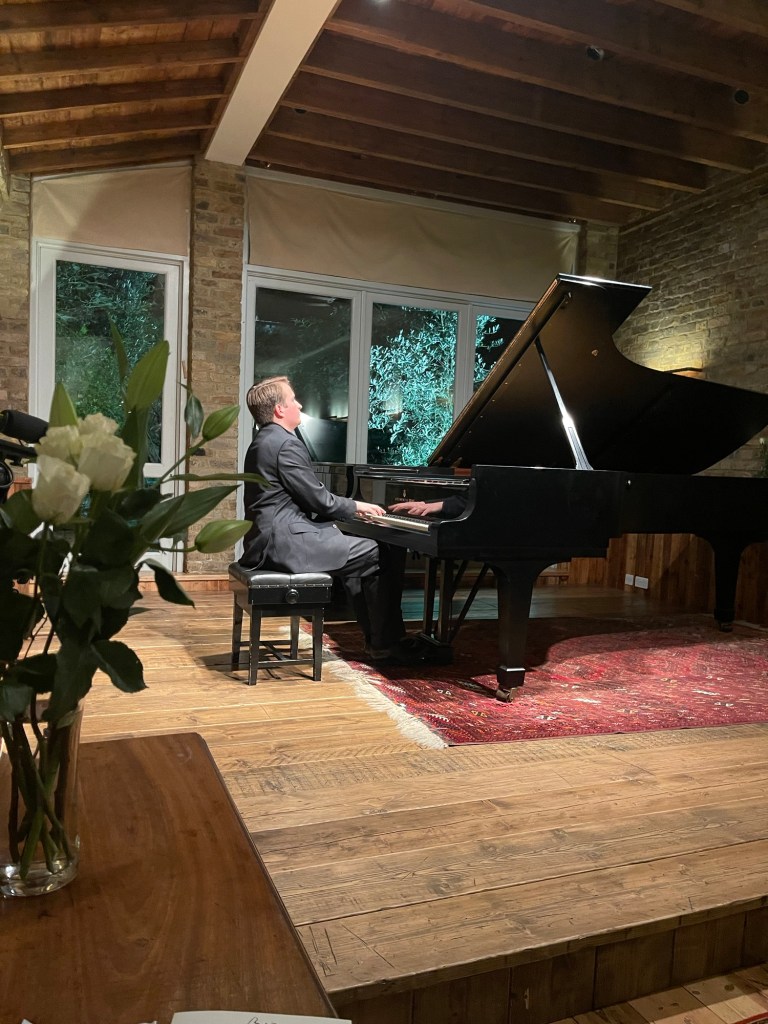
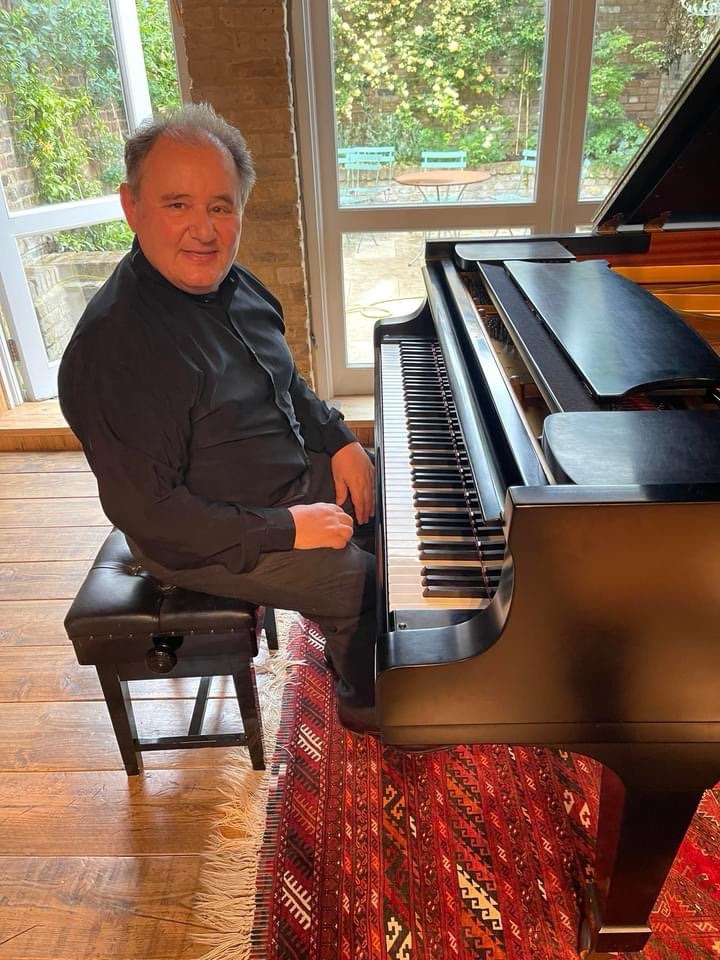
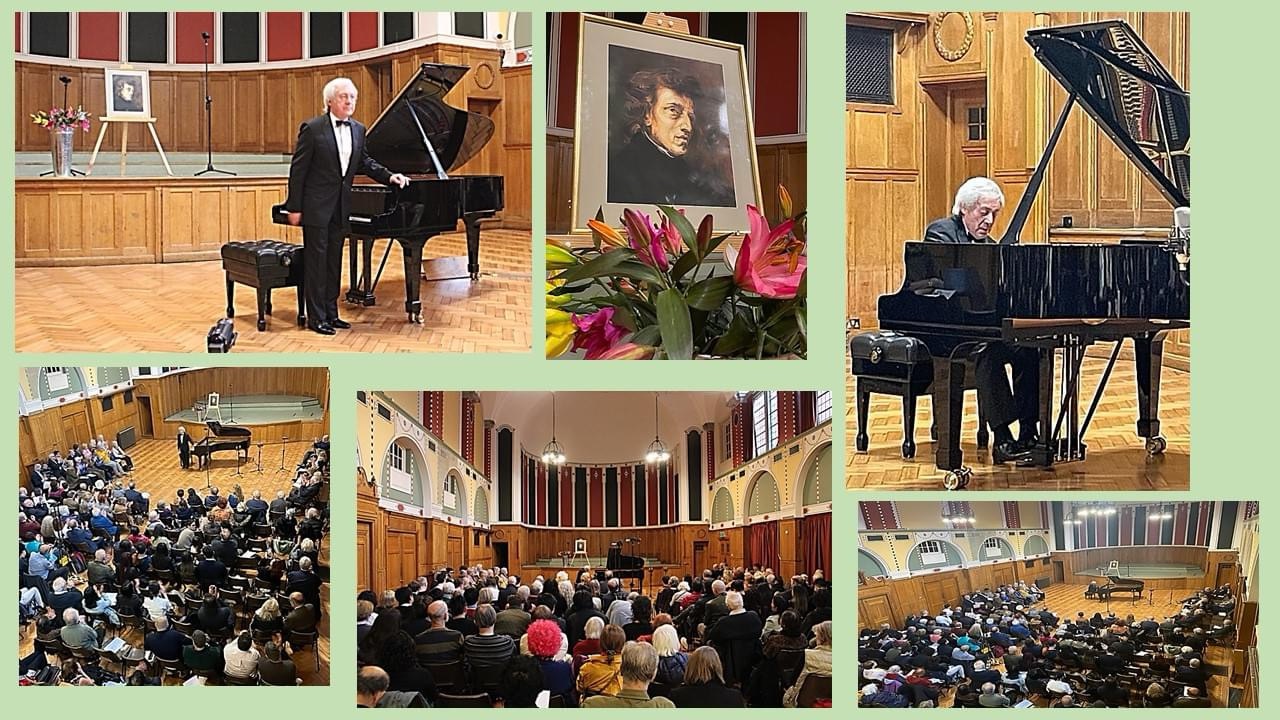
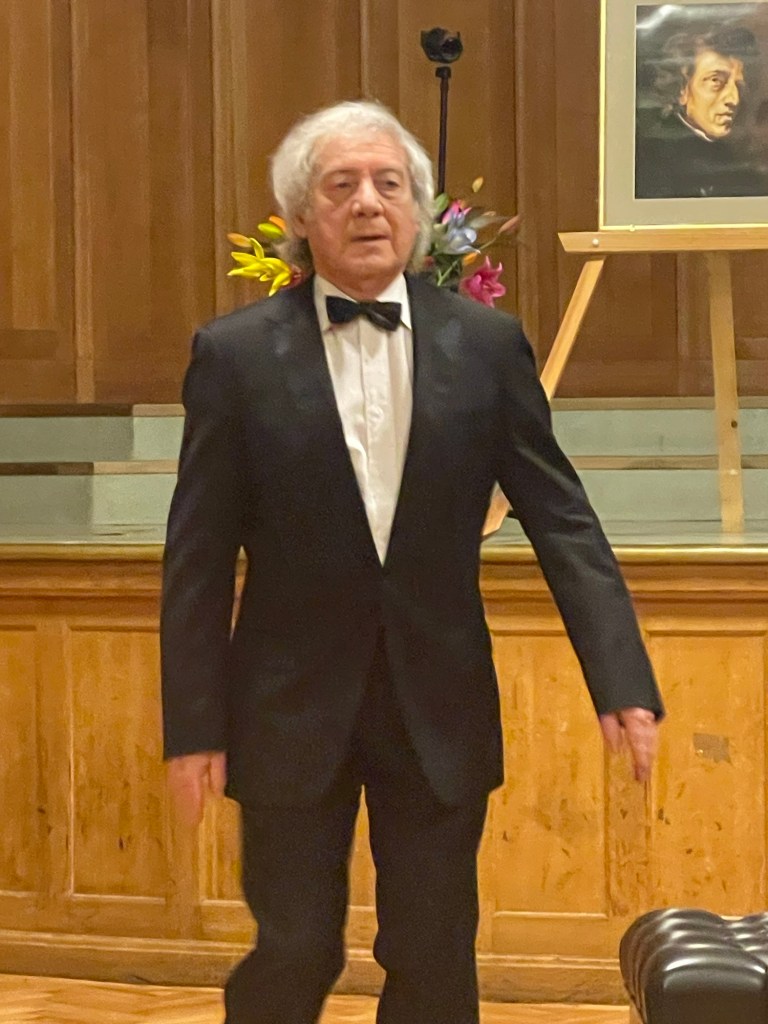
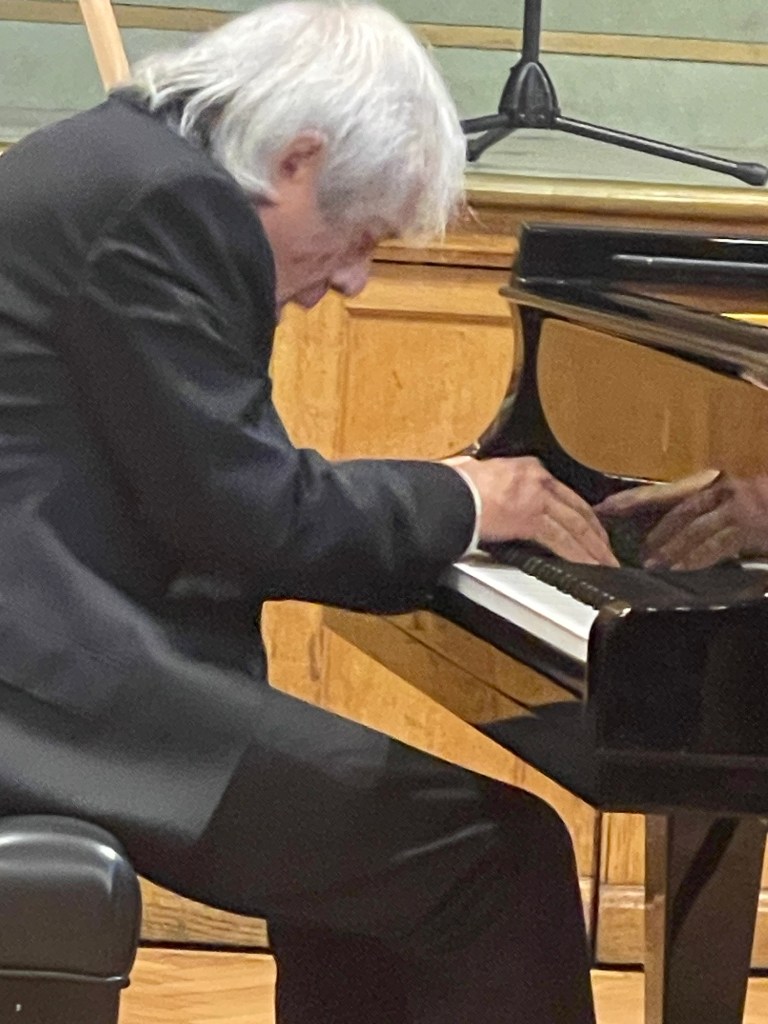
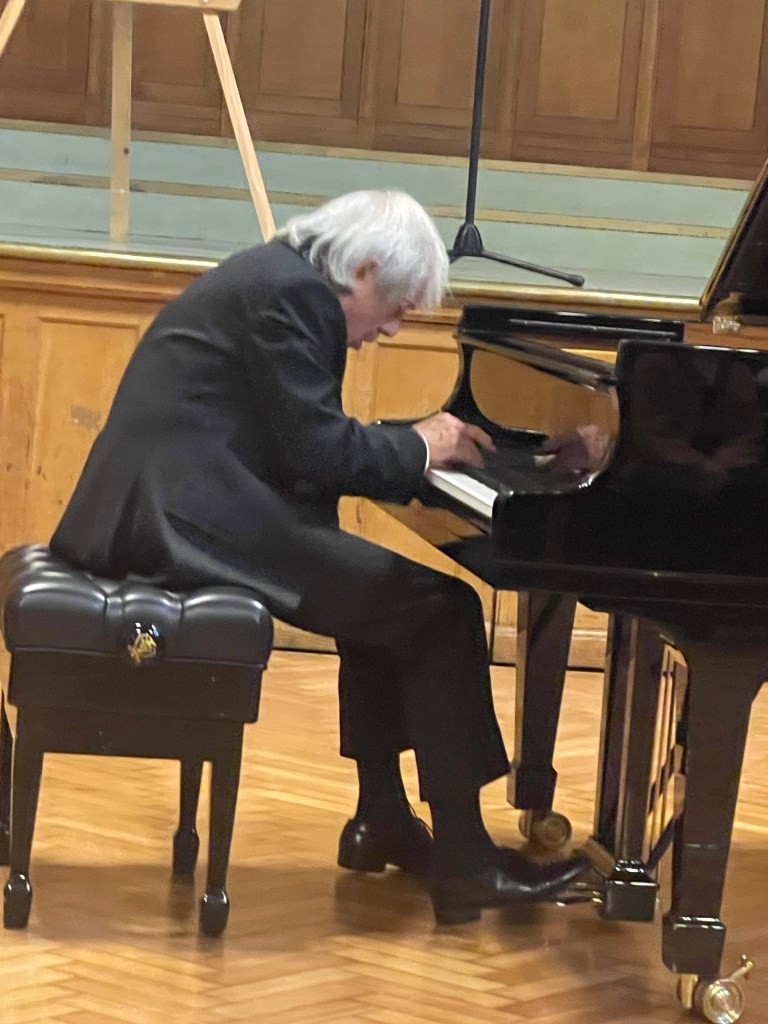
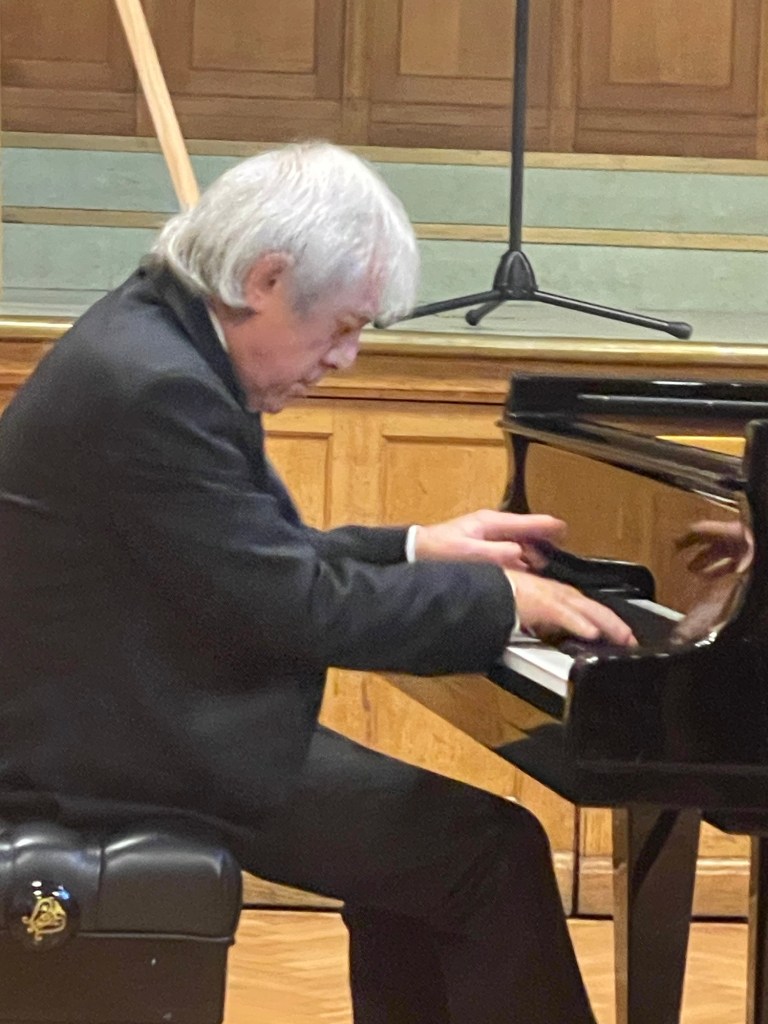
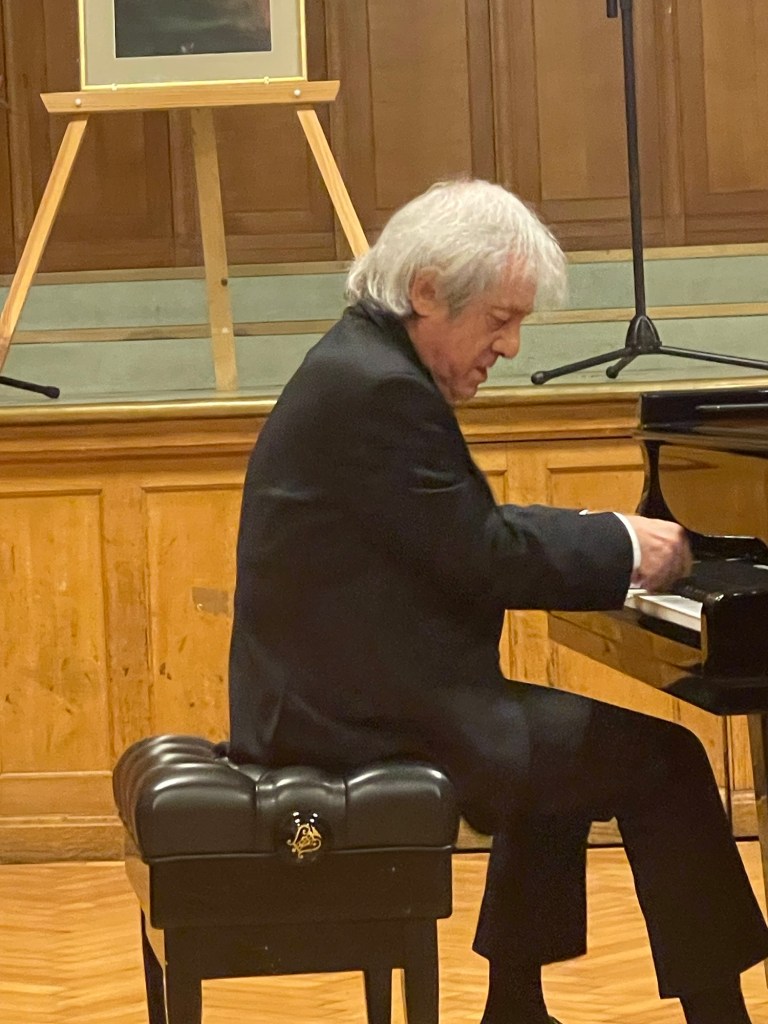
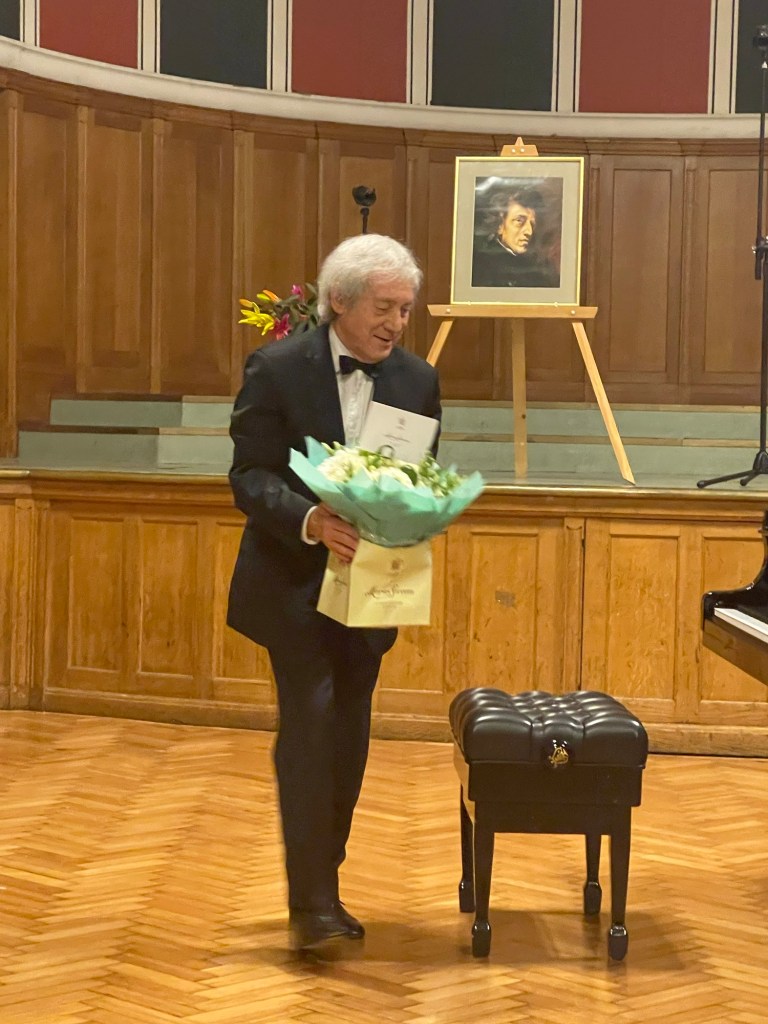
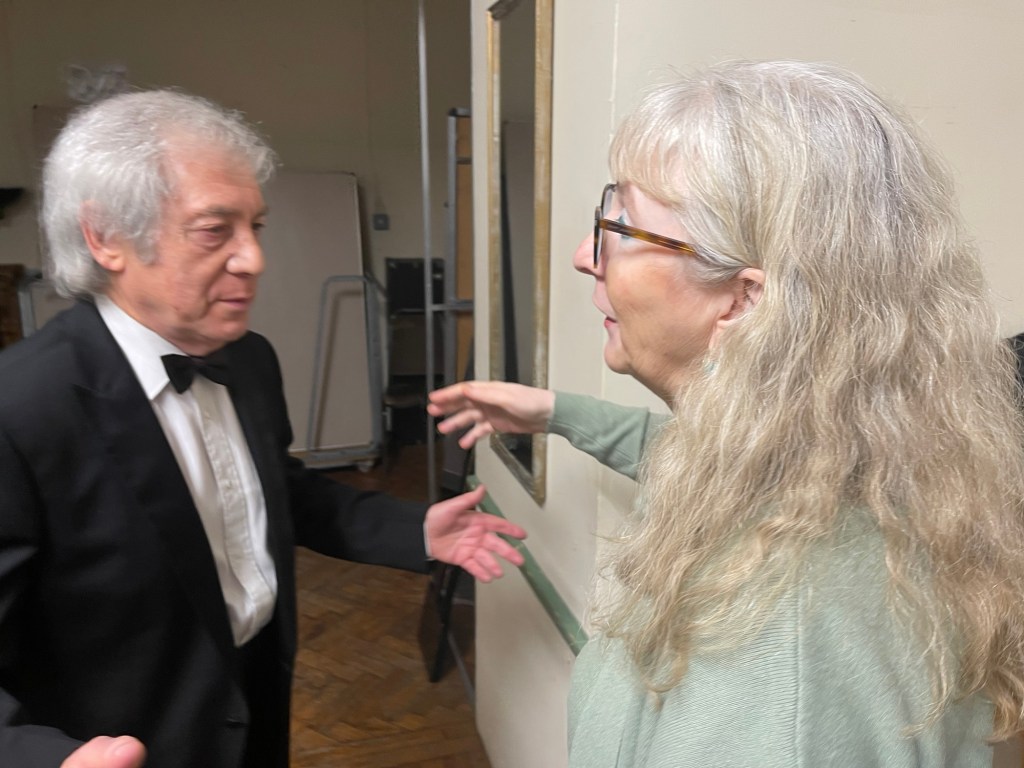
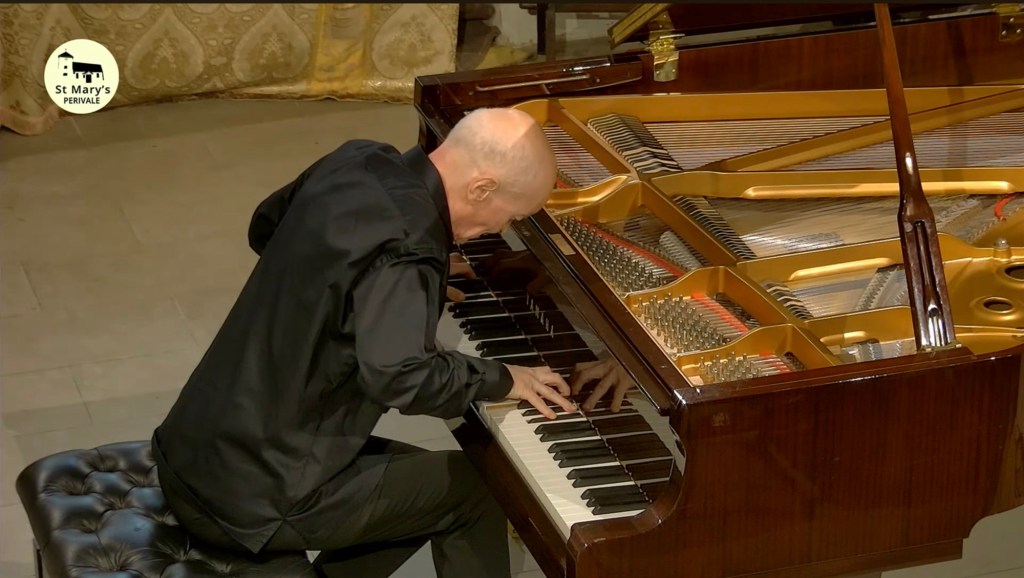
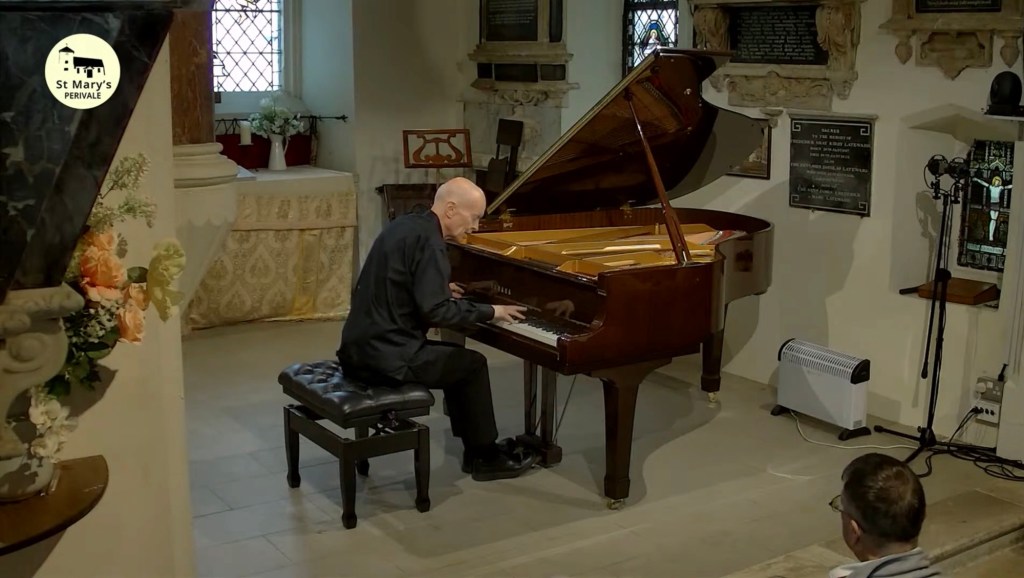
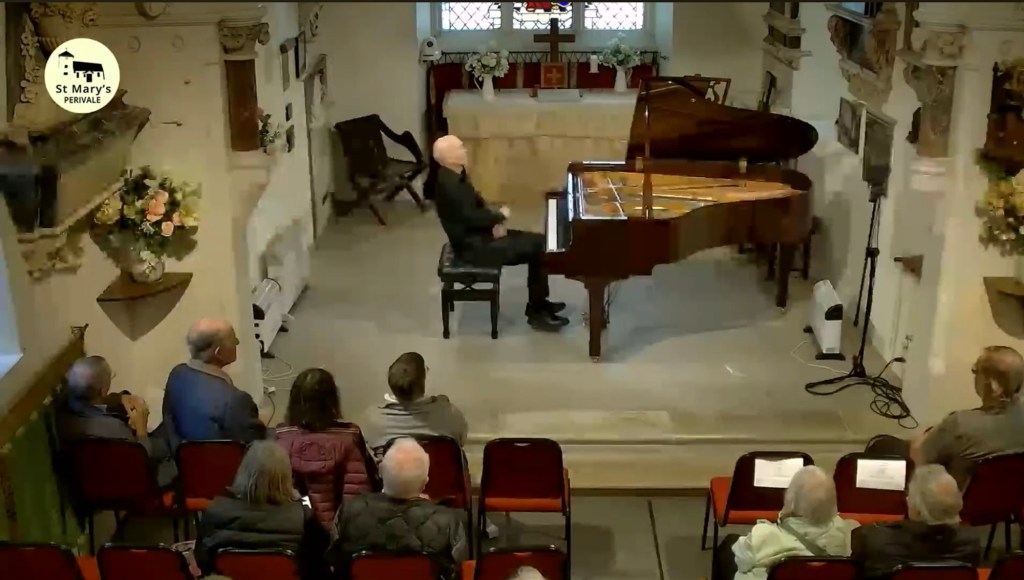
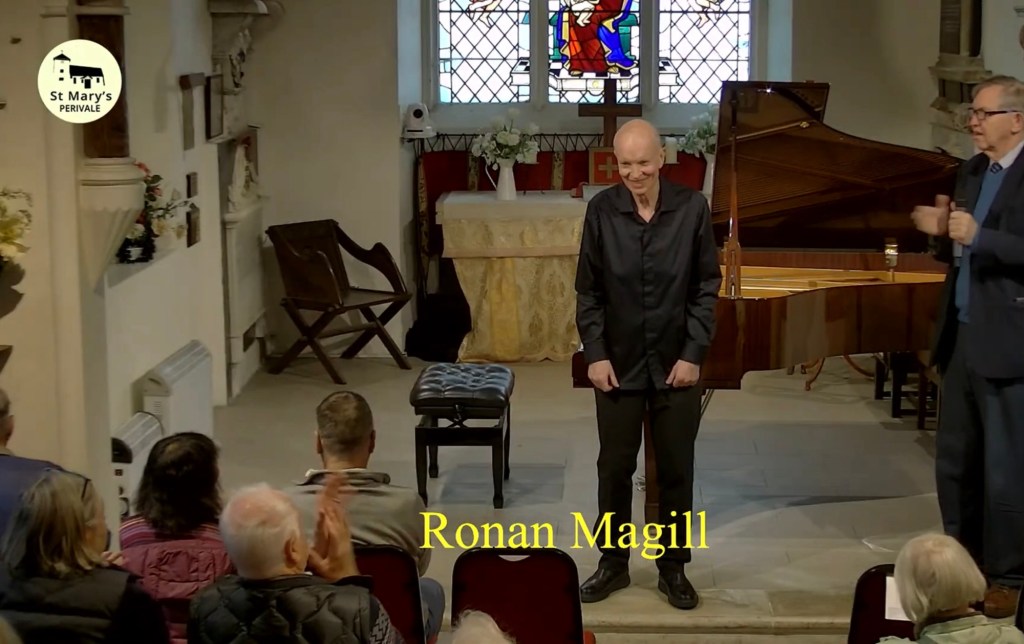
Masterclasses where the composers wishes are paramount as Maestro Portugheis with humility and respect shares his thoughts with young musicians in annual masterclasses that he holds in many different cities throughout the world.
A total respect for the composers wishes is the start of an interpretation to turn dots and dashes into the same sounds that the composer could imagine in his head.Nowhere is that more apparent than with the elderly Beethoven – totally deaf as he wrote down his final Sonatas with indications on performance that were sounds only in his head .He was able to transform his wishes precisely onto the printed page to share with posterity.A miracle indeed and there are one or two performers who can perform miracles as they translate these wishes into sound with mastery and artistry.
A lifetime voyage of discovery that Alberto Portugheis shares with talented young musicians with determination,severity but above all love.
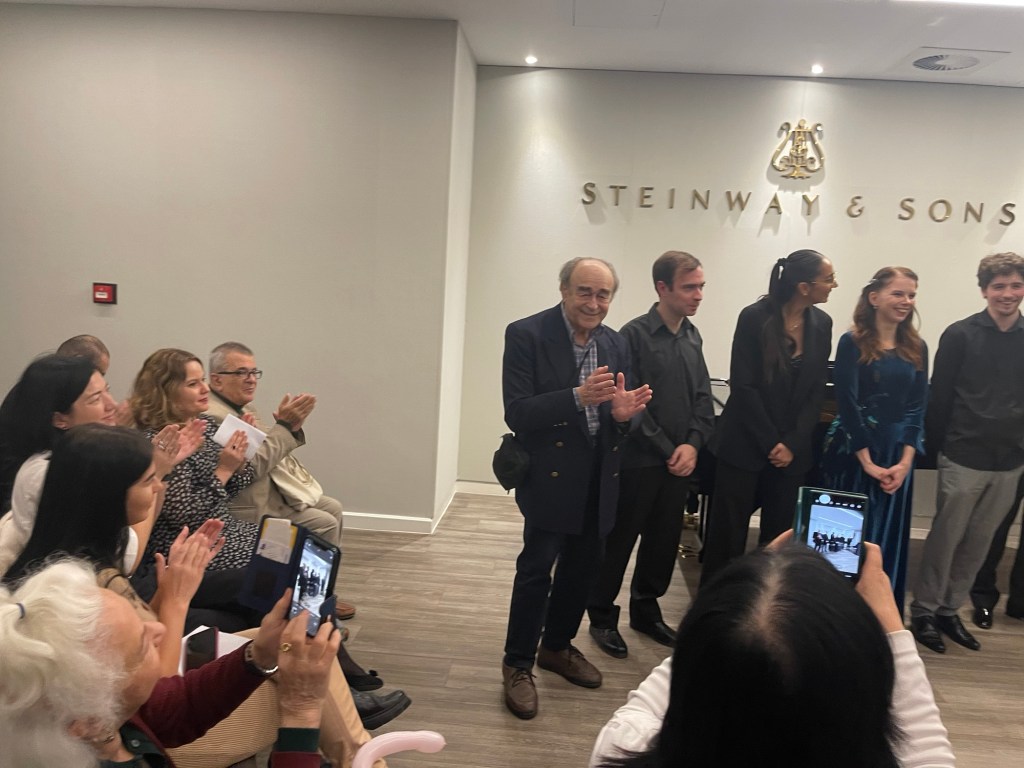
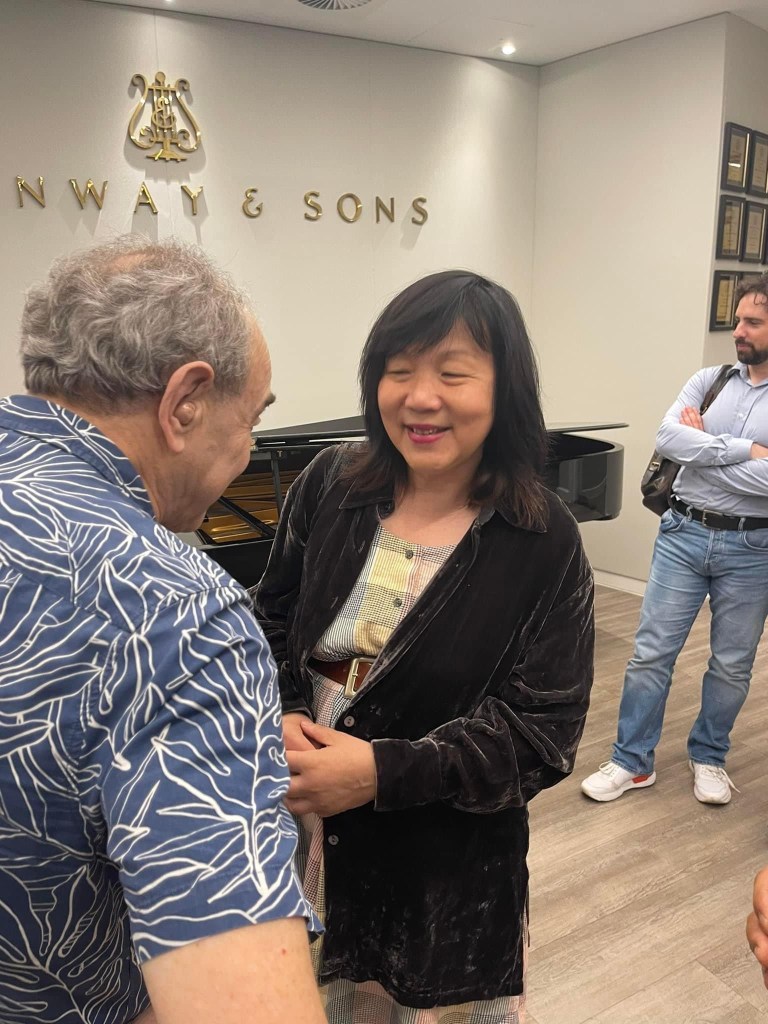
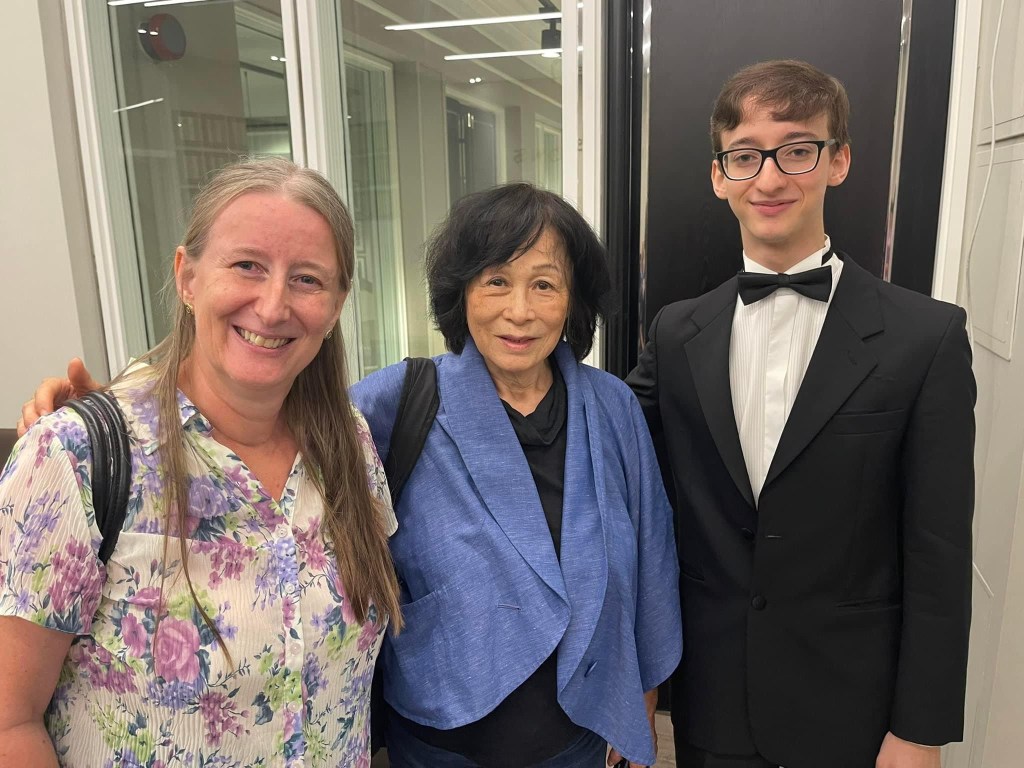
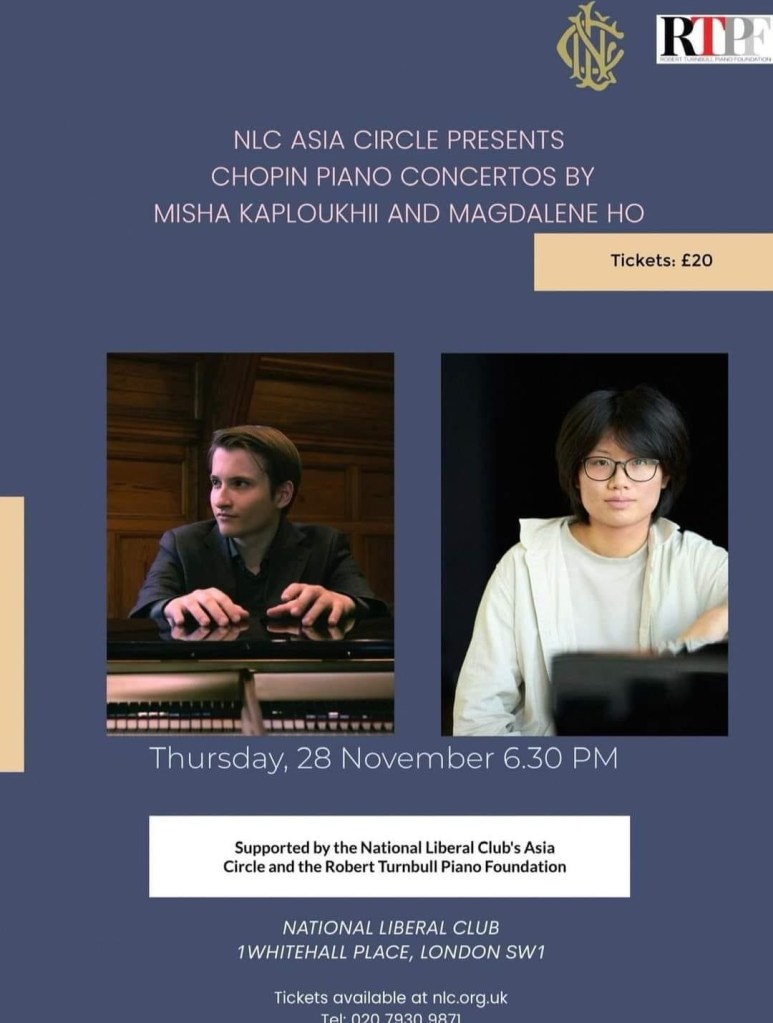
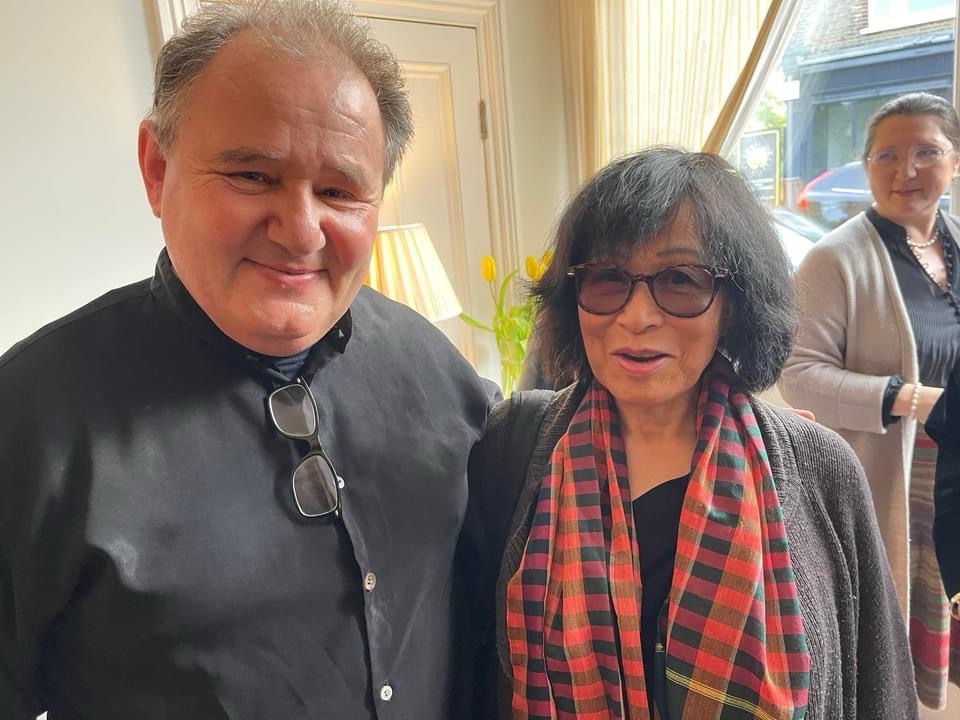
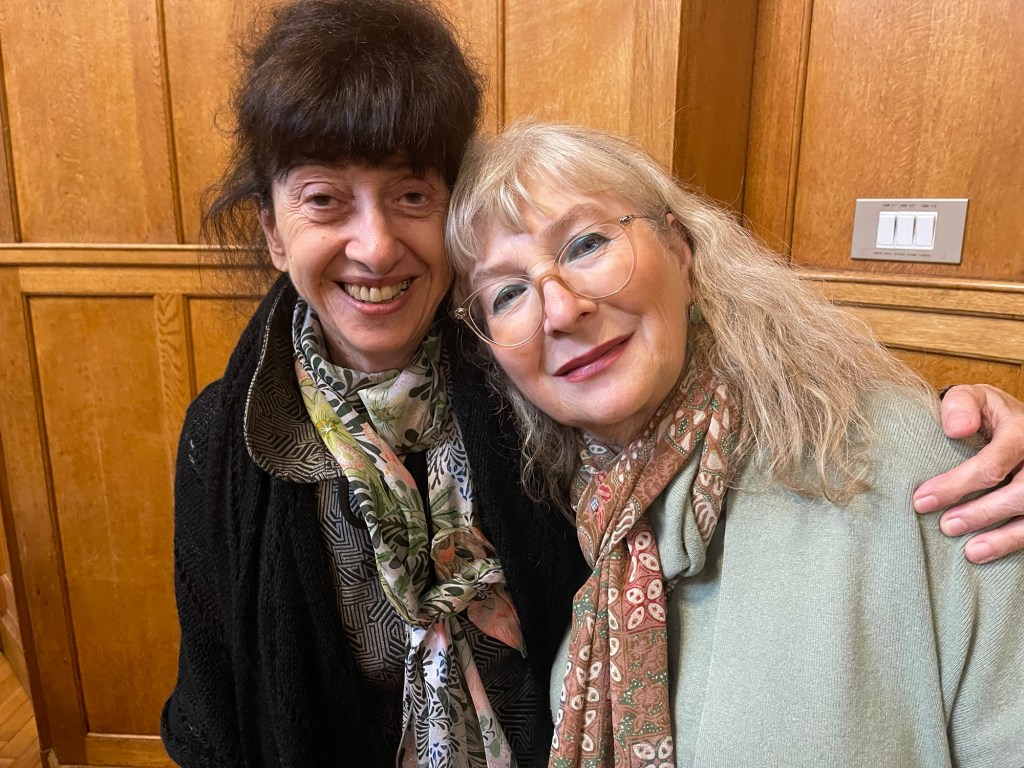
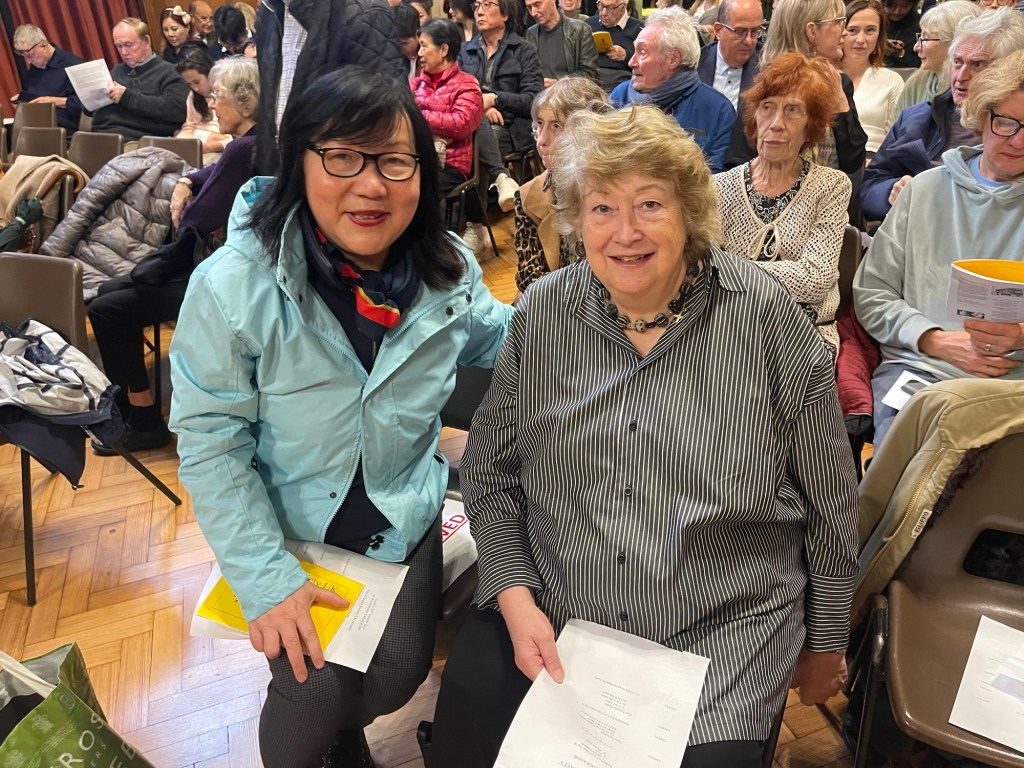
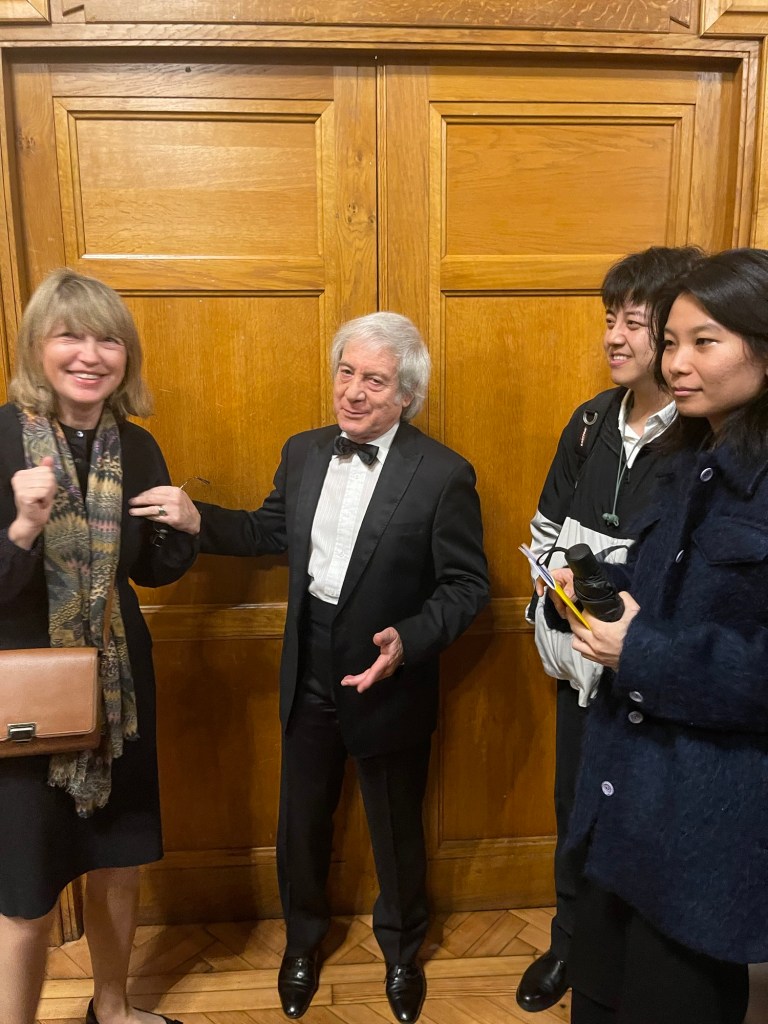
Patsy Toh (Mrs Fou Ts’ong- https://christopheraxworthymusiccommentary.com/2021/01/13/roberto-prosseda-pays-tribute-to-the-genius-of-chopin-and-the-inspirational-figure-of-fou-tsong/) teacher at the Purcell School of Firoze Madon and also Magdalene Ho ,both now in the class of Dmitri Alexeev at the RCM .Magdalene (19) was the winner last weekend of the Clara Haskil Competition Maestro Portugheis with his ‘boys’Nicolas Absalom. https://christopheraxworthymusiccommentary.com/2019/08/15/the-thomas-harris-international-piano-foundation-part-12/ https://christopheraxworthymusiccommentary.com/2019/11/10/viva-alberto-portugheis-and-the-thomas-harris-international-piano-foundation/I have heard Nicolas many times over the past five years in the various competitions and masterclasses held in collaborazione with the late Mrs Harris and the foundation created by her to celebrate the memory of her son who had also been mentored by Maestro Portugheis . Nicolas has matured ,via his studies in Weimar and Berlin into an artist of stature.One can gauge the maturity and musicianship of an artist in performances of the genius of Mozart that Schnabel famously decreed was too difficult for adults but too easy for children.Nicolas is now a mature young man and his Mozart was of great clarity and purity and technically impeccable showing great style. Of course the Ravel Toccata showed of his technical preparation but above all showed his musical intelligence choosing a tempo in which Ravel’s enchanted sound world could ravish and seduce as well as astonish!Zoltan GalyasZoltan Galyas I have not heard before and was intrigued to hear that he had to take his two children to school before joining the class at 10 am in Steinways.Talking to him afterwards too I was full of admiration for a born pianist ,as he so clearly demonstrated ,who was fully employed playing in Hotels and clubs in order to survive with a young family ( similar of course to the ‘menial’ tasks that Bach and Mozart had to undertake for their ‘masters’ in order to survive ).A pianist who has hands like limpets that are made to cling to the keys ,never hitting but digging deep into each key where his fingers are so obviously at home. A Chopin third Scherzo ,despite the odd blemishes,that was played by a true musician who could shape the majestic octaves horizontally into a musical line that led so naturally into the magical chorale that is heralded with such majesty.A coda of lightening speed but with fingers that knew where they were going but a driver that just needed to be less in a hurry! As Zoltan had explained he had started studying the Fourth Scherzo and was working now backwards and has arrived at the doorstep of the First .The fourth is a work close to his heart as was obvious from the warmth and control he could coax out of this wonderful black beast that Steinways so graciously allow real pianists to perform on in their beautiful new streamlined show room.Firoze Madon https://christopheraxworthymusiccommentary.com/2023/05/06/thibaudet-inspires-at-the-rcm-in-london/I had forgotten that I had heard Firoze play in a masterclass at the RCM of Thibaudet and I remember how impressed I was with his inborn musicality and sensitivity to sound.He had great respect for the Beethoven op 90 Sonata where the rests above all were so precise but also the rhythmic energy and sense of architectural shape.The Schumann Novelette was played with great contrasts between the opening strident chords and the romantic sweep of the composers poetic soul.’Marcato e con forza’ but in Firoze’s hands it was never allowed to become hard or ungrateful but full and expansive as he allowed the music to pour from his youthful hands with the same spirit with which the composer had obviously penned them.From the opening bass C sharp Firoze created a panorama of beauty and continuous mellifluous flights of invention in Chopin’s miraculous outpouring of song that is his Barcarolle.A performance of great authority and aristocratic musicianship that could dig deep into the soul of Chopin without any superficiality or excess.Nikita Lukinov https://christopheraxworthymusiccommentary.com/2023/06/05/nikita-lukinov-at-st-marys/I think all of us present today were aware that we were in the presence of a young master. A control and authority where delicacy and rhythmic energy combined in an Allegro con brio that was played with ravishing style and colour allied to dynamic rhythmic energy.The famous double thirds he organised to give the utmost precision without the terror of having to start a sonata already on a slippery slope .A bit like op 111 or op 106 should we play it like a master pianist or a master musician ?Nikita is both as he demonstrated with his masterly musicianship throughout.Not sure Arrau or Serkin would have forgiven him his pianistic trickery though!An Adagio that was barely whispered as it flowed on a continuous current of grandeur and beauty .Scintillating clarity to the scherzo with a trio that was just great washes of sound .The Beethovenian elegance of the Allego assai was played with transcendental control where the composer already transforms the inherited Sonata form into a new style of elegance with genial surprises and weight. The Schnabel Edition of the the 32 Sonatas was a just prize for a young musician headed for the heights Maestro Portugheis presenting the Schnabel Beethoven Edition to Nikita in recognition of his masterly performance of the longest and most important of the early Sonatas.Work behind the scenes with scrupulous attention to the composers indications – transforming them into sounds with humility respect and artistry Following the score during the performance – this is where an interpretation is born and the starting point for an artist to bring the composers wishes to life.Yisha Xue of the National Liberal Club where Nikita will perform on the 6th November in the KT series En Blanc e Noir
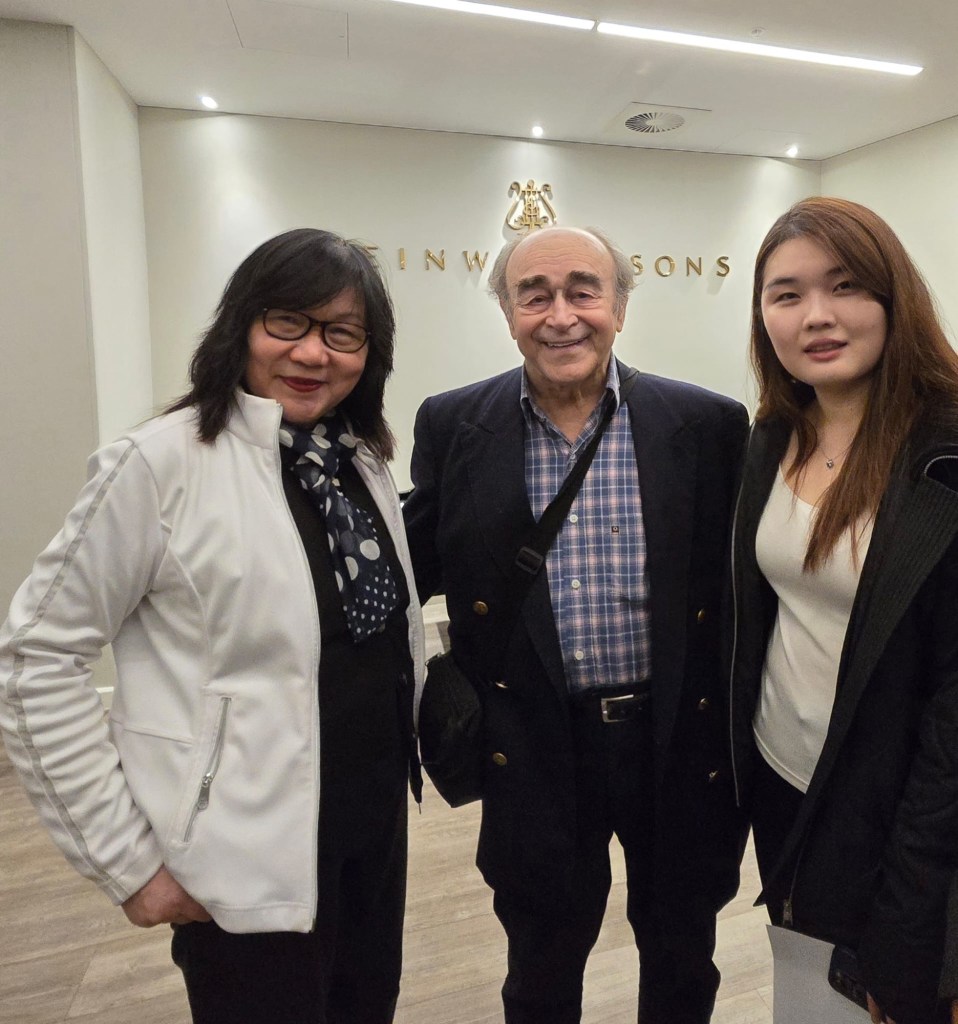
Patsy Toh (centre) with Firoze Madon and his mother
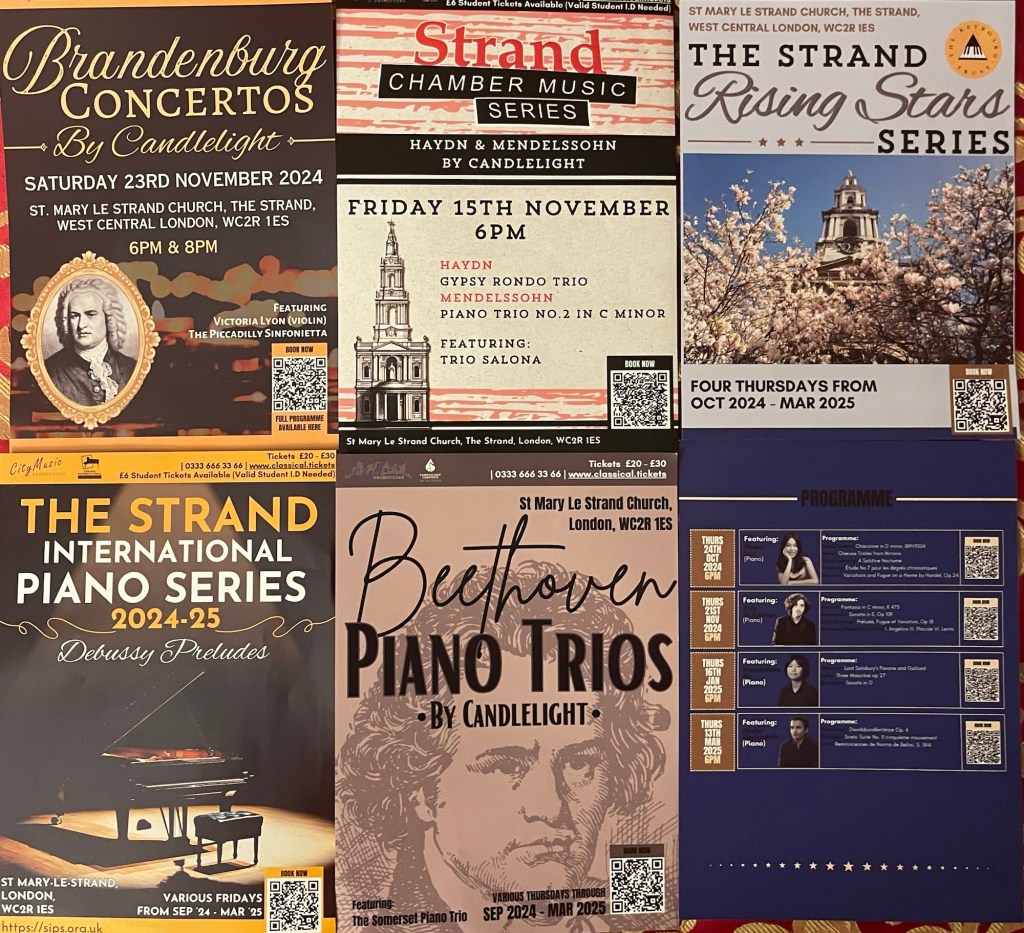
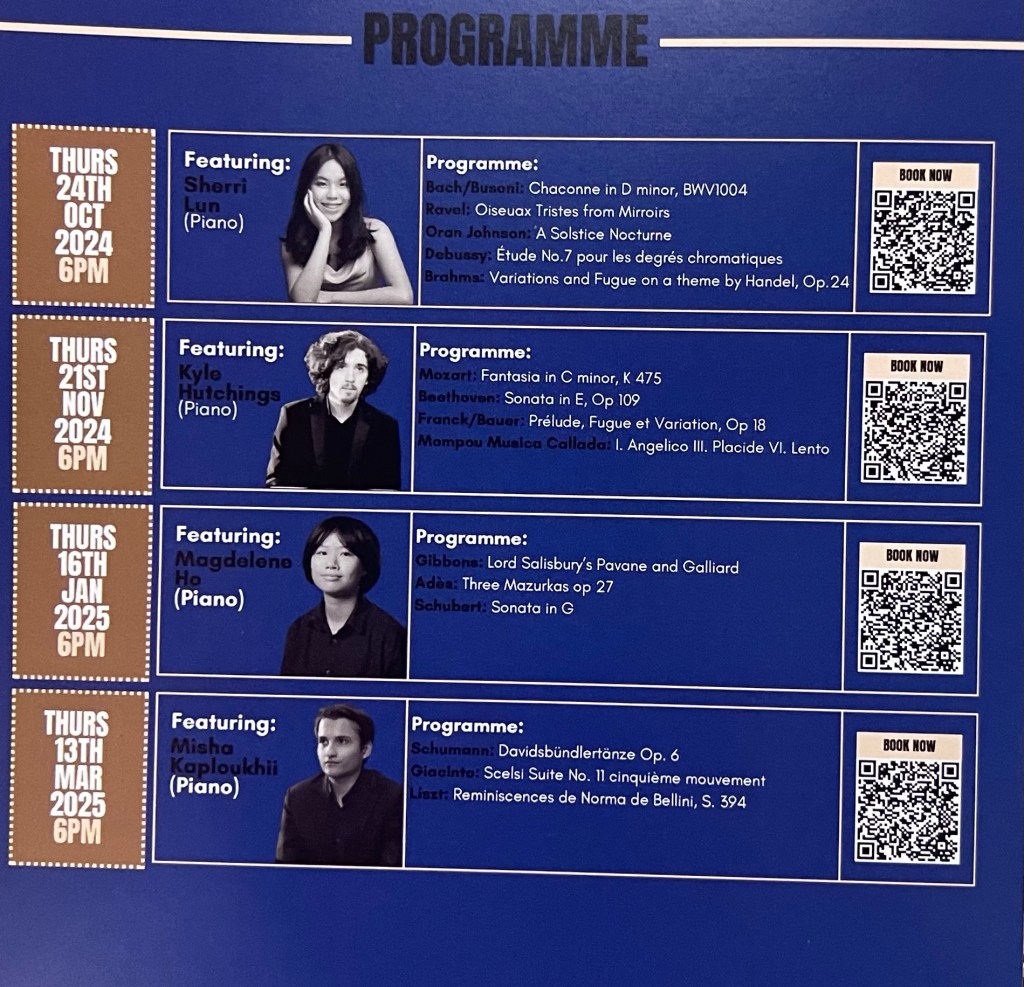
As part of the exciting new Strand Rising Stars Series, in association with The Keyboard Trust, enjoy an exceptional recital at the beautiful candlelit venue of St Mary le Strand. A unique opportunity to hear new some of the brightest new stars of the piano world.
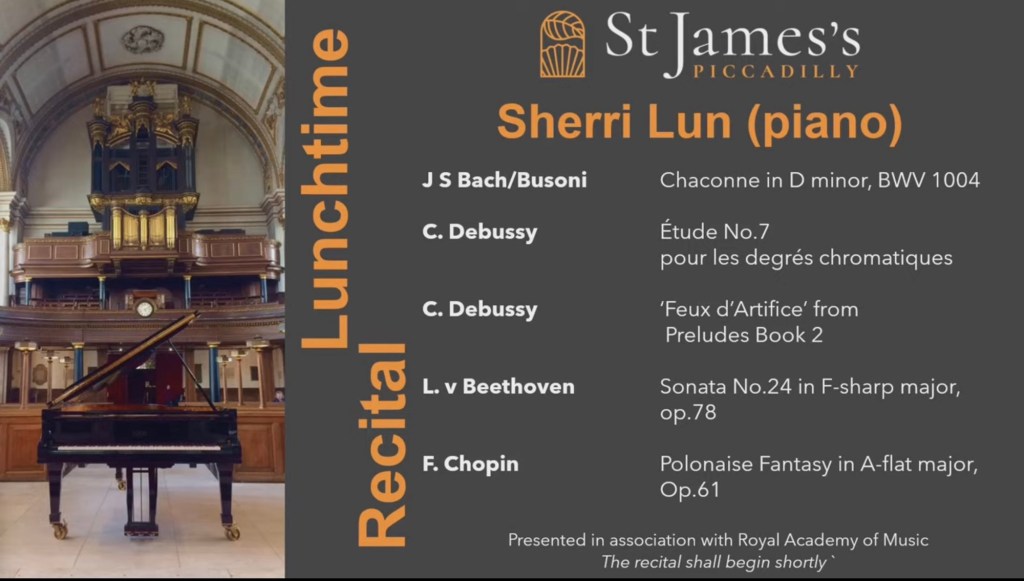
Bach/Busoni – Chaconne in D minor, BWV1004
Debussy – Étude No.7 pour les degrés chromatiques
Oran Johnson – A Solstice Nocturne
Ravel -Oiseaux Tristes from Mirroirs
Brahms – Variations and Fugue on a theme by Handel, Op.24
A new series for Warren Mailley- Smith to add to the 300 that his City Music promotes every season not only in London but also Manchester and Edinburgh. Many of the concerts he plays himself with a wide ranging repertoire from Chopin to Gershwin and he even donates his beautiful Steinway to the series he promotes in St Mary Le Strand.
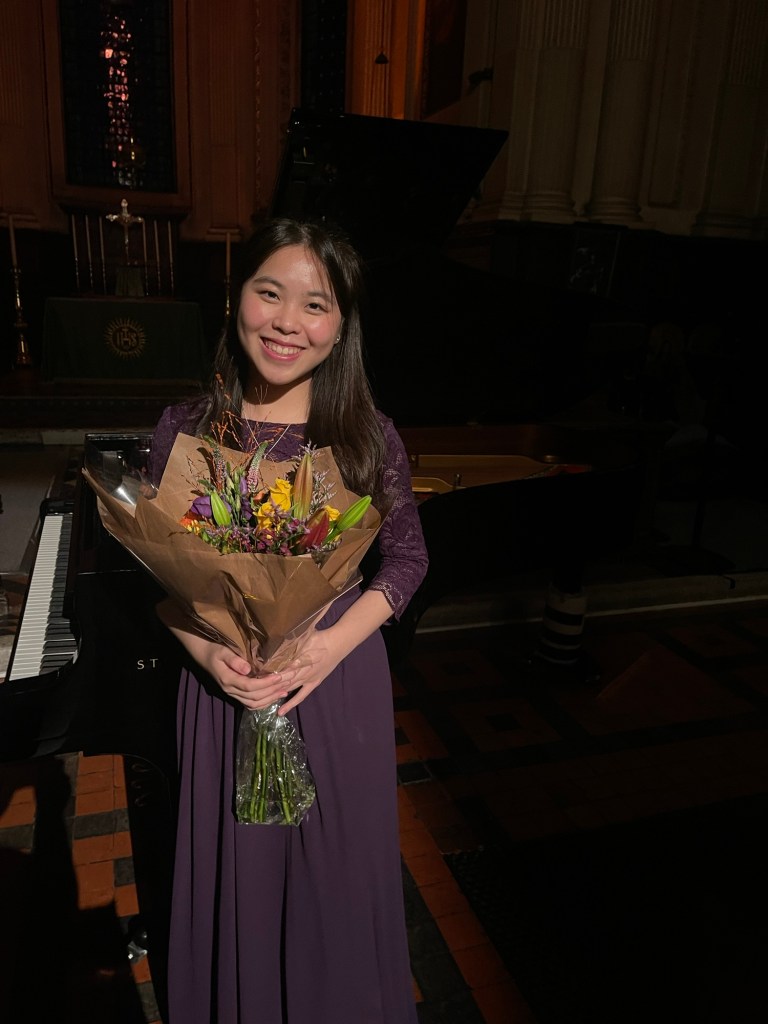
With an eye to the up and coming new generation a new series has been formed in collaboration with the Keyboard Trust and a first series began yesterday with Sherri Lun whose star was certainly shining brightly yesterday.
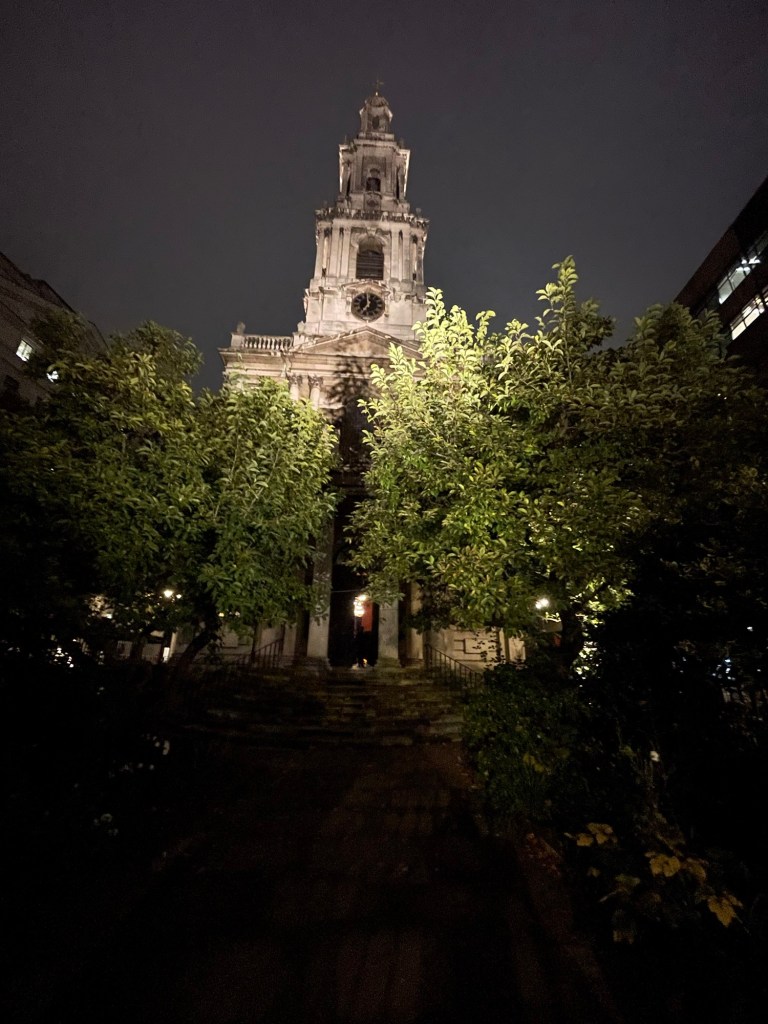
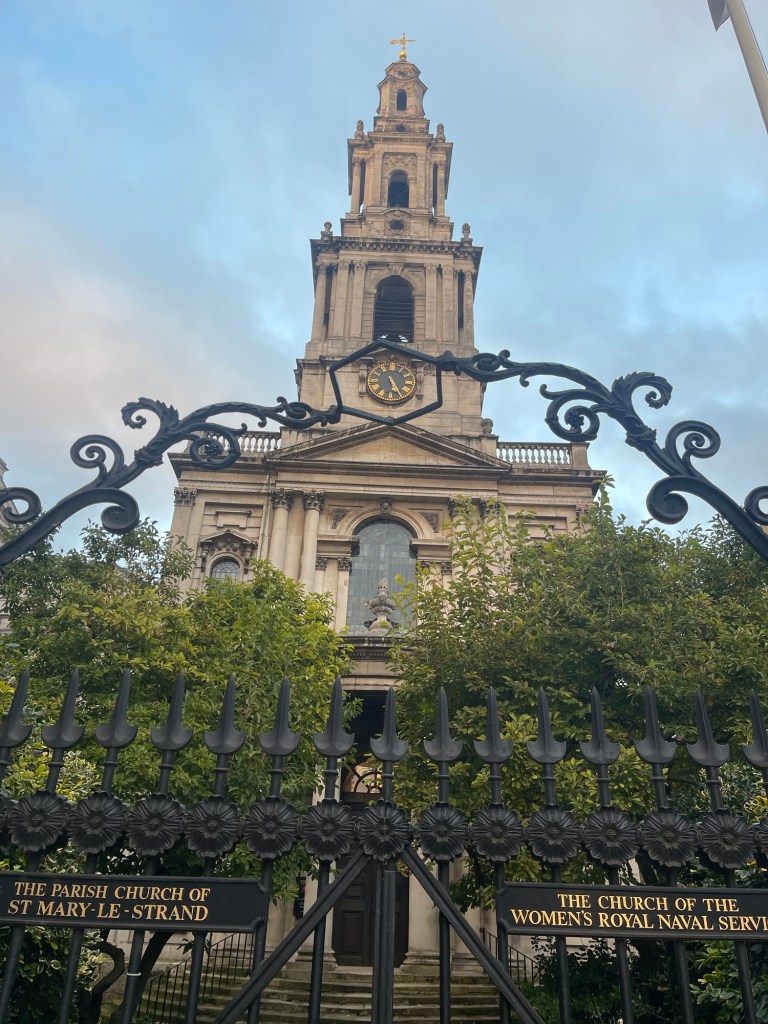
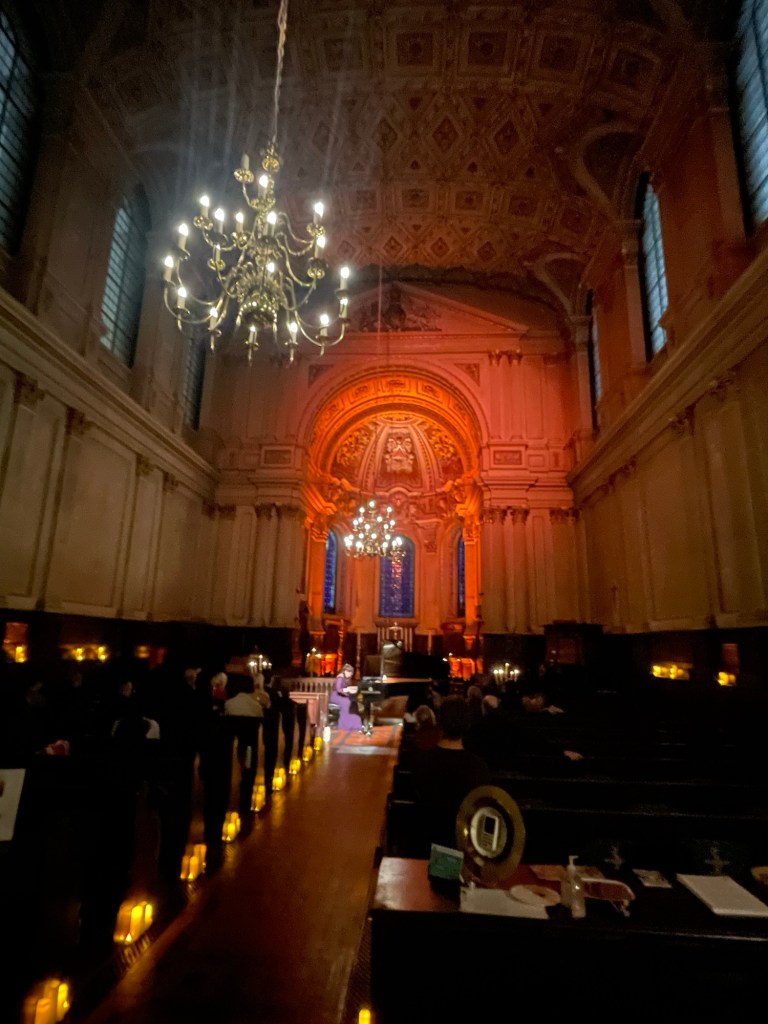
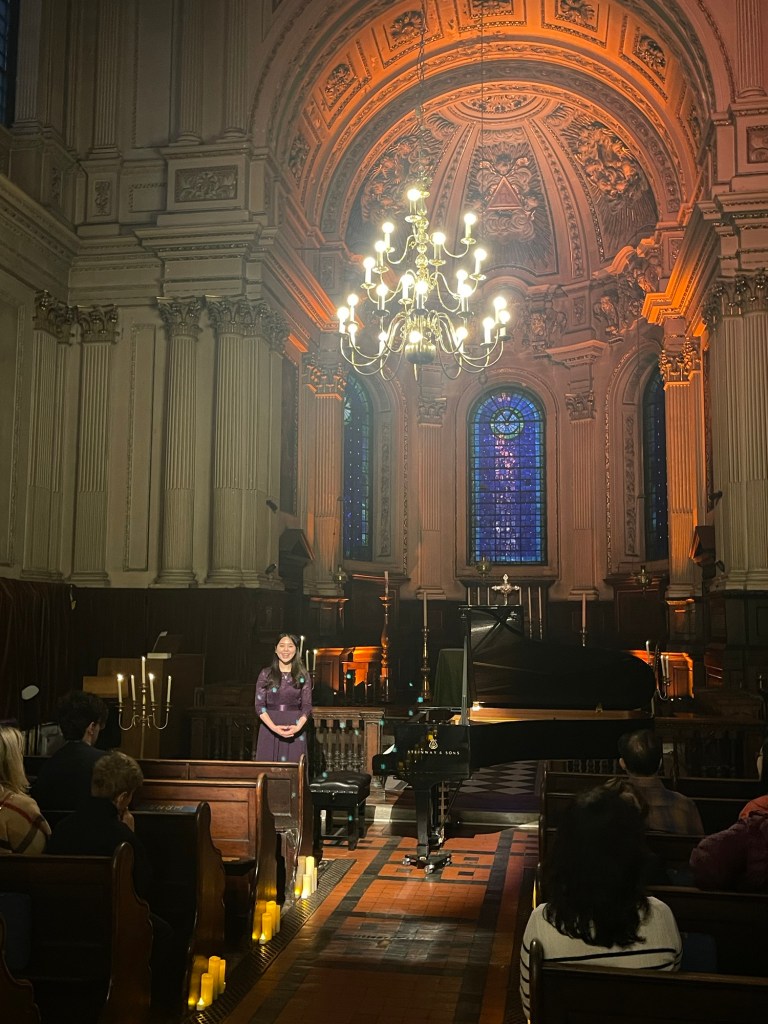
A church that is an oasis in a city bustling with life and that rises so magnificently in the centre of the Strand in a newly created pedestrian precinct that includes the Courtauld Gallery.
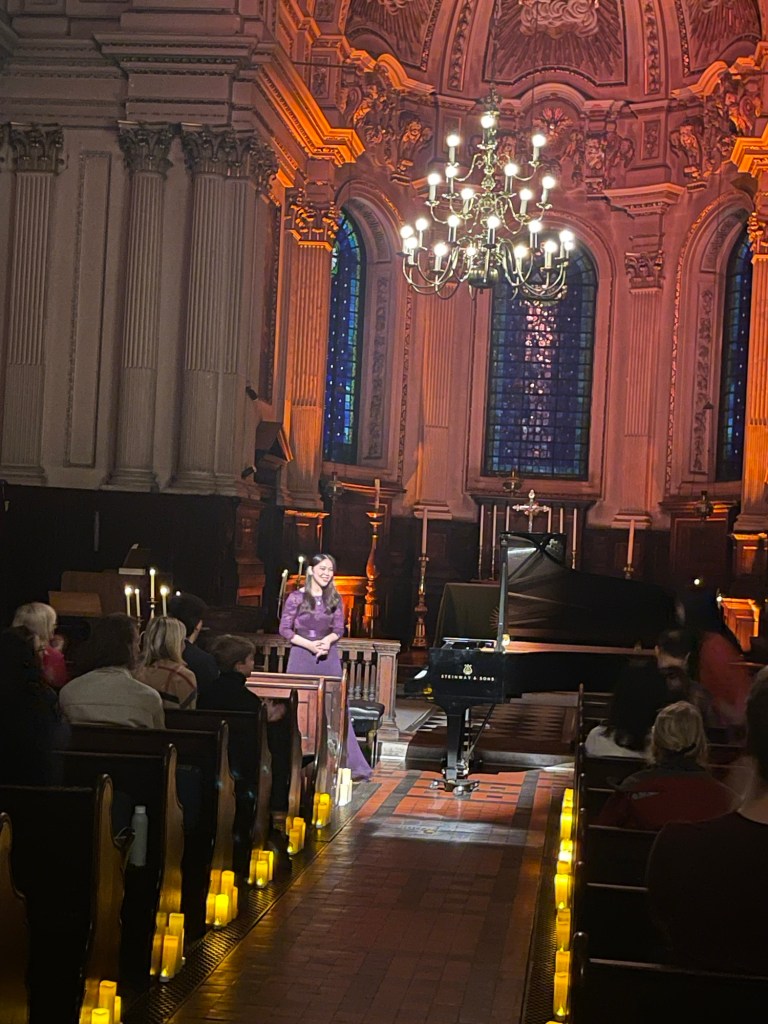
There was a radiance to the sound from a resonance that was perfect for the beautiful music that arose from this artists hands like an eagle rising over the setting sun .A beautiful church of the just dimensions for chamber concerts that lit by candlelight that gave the warm glow of being enveloped in a magical velvet web. Nowhere more was this evident than in the central part of Sherri’s programme which was a group of very atmospheric works by Debussy and Ravel.A tris of works whose centre was a beautiful Nocturne by Oran Johnson ,who was present at the concert to hear his music transformed into a magic spell by this very sensitive artist.
Oran Johnson
‘Pour les degrés chromatiques’ is a study in chromatic scales but here it was a web of magic sounds out of which arose an apparition of ravishing beauty ( similar to Ravel’s Barque sur l’océan). It is one of those moments of breathtaking beauty that seduce the senses far more than any words could ever do. Of course there was the technical perfection that this study demands but there was much more besides – a soul arising in the beauty of an edifice that was the ideal preparation for Oran Johnson’s ‘Solstice’.There was magic in the air as the beautiful golden sounds filled the glorious candlelit atmosphere and we were transformed for a moment in time ,where the bustle that surrounds St Mary’s was of another age.Out of this atmospheric haze emerged Ravel’s saddest of birds where I have never been so moved to hear in such a contest as today’s. Usually played as part of the complete Miroirs following on from busy moths and turbulant seas, here it was simply a vision of the serene paradise that Ravel had allowed his birds to escape to.
The concert had opened with the greatest of all works ever written for a solo instrument :Bach’s mighty Chaconne transformed by Busoni into a work that might very well have been written for the keyboard of Busoni’s age rather than for a solo violin a century earlier. A powerful performance as it had been in St James’s Piccadilly but here today it was played with fleeting brilliance and sumptuous delicacy as this young artist was able to savour the sounds that were arising from her hands and wafting on high with the extraordinary potency of poetic beauty and aristocratic power.
It was the same effect for Brahms’s 25 variations and Fugue on Handel’s disarmingly simple theme from his harpsichord Suite n. 1 in B flat HWV 484. A work normally given to advanced students together with the Wanderer Fantasy and the 32 Variations in C minor to acquire a technical perfection allied to musical values. Rarely is the work heard as a long poem of subtle beauty with streams of glorious sounds of horizontal not vertical beauty. From the very opening theme the ornaments were like bird calls not just tightly spun springs.The variations too spread over the keys and filled the air with wondrous poetic sounds that is rare indeed compared to other less poetic interpretations where hurdles are mounted with athletic glee rather than artistic sensibility. Electric excitement lead to the glorious triumphant transformation of Handel’s innocent little melody.
But Sherri and her mentor Christopher Elton realise that this is not the climax of the piece but just an opening to the heroic fugue where the true climax lies with the tolling bells that ring out in the right and then the left hand as the fugue goes unimpeded forward illuminated by sumptuous Philadelphian sounds of full orchestra.
A triumph for this young artist who is indeed a rising star and on her way in the next few days to Japan to match her artistry with others in Hamamatsu where has been especially selected to compete. Artistry of this calibre is not really the fodder for Circus entertainment but the International Competition Circuit is just one way of sharing a young person’s artistry with millions of followers worldwide via the excellence of streaming. Time was against us as Warren Mailley -Smith just an hour later would be playing Trios by Beethoven and Mendelssohn in an ambience warmed by Sherri’s succulent music making.
But Sherri had one more piece she wanted to share with us and here really was a star shining brightest tonight. Her own sumptuous transcription of the Elegy from Shostakovich’s Ballet Suite.We are so used to the percussive music of Prokofiev and Shostakovich but in a sensitive artists hands they can reach the true soul of these much misrepresented composers and show us a world of radiance and beauty as Sherri demonstrated today .
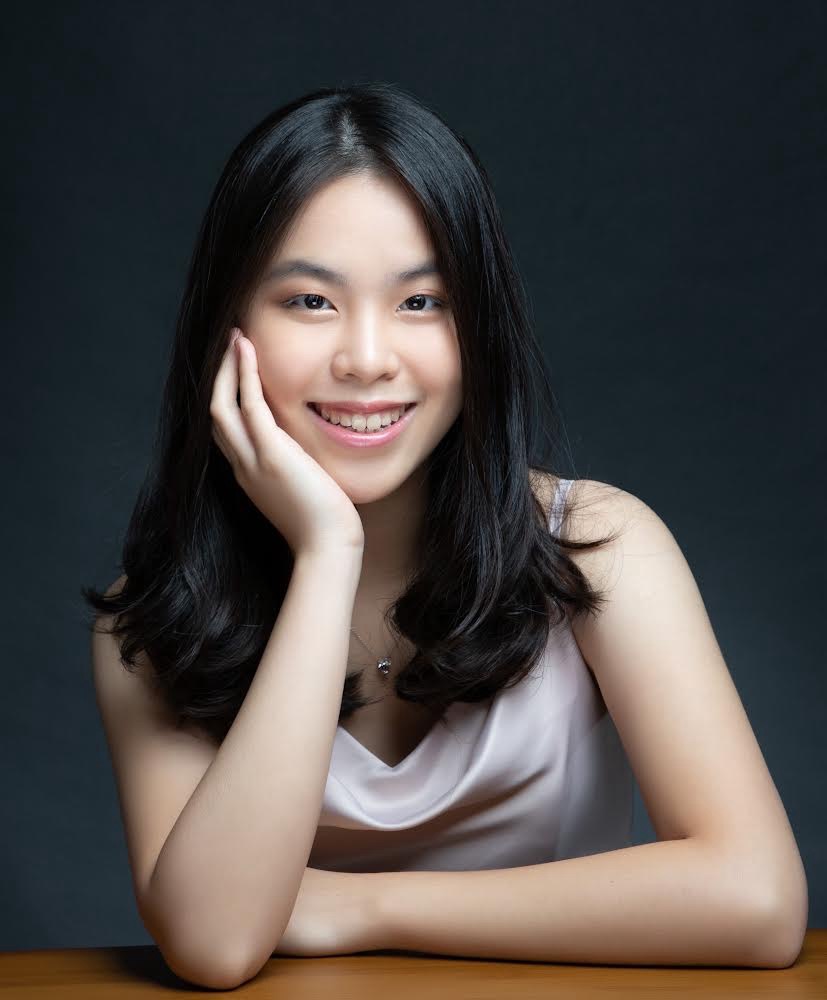
Sherri Lun (2024 Winner Birmingham international Piano Competition) Named ‘2020 Performing Artist of the Year’ by the South China Morning Post, Sherri Lun majored in piano and viola as a junior student of the Hong Kong Academy for Performing Arts. She is currently studying with Prof. Christopher Elton at the Royal Academy of Music with a full scholarship supported by the Academy and the Hong Kong Scholarship for Excellence Scheme. In 2013, Sherri was selected as a Young Scholar of the Lang Lang International Music Foundation. After her concerto debut with the Midwest Young Artists at the Ravinia Festival at age 11, she was invited to perform again at Ravinia the following year, as well as in Millennium Park (Chicago) and at the Fondation Louis Vuitton (Paris), followed by collaborations with the Salzburg Chamber Soloists, Hong Kong Youth Orchestra, and the Kölner Kammerorchester.
Some very assured playing from the opening notes of the Bach Chaconne played with great authority with wonderful layers of sound.There was a luminosity and fluidity to her playing of great clarity and precision where there was both poetry and passion ,power and grandeur. A wonderful range of sounds but always within the style of one of the greatest works ever written for a solo instrument.
There was a delicacy to her chromatic study by Debussy that was played with a crystalline clarity and great beauty as the melodic line was intoned in the bass with the insinuating chromatic jeux perlé whispered above.Debussy’s ‘fireworks’ were just that, beginning with just a scintillating spark of extraordinary clarity and precision as it gradually built from a glimmer to a glowing outpouring of quite transcendental mastery only to die away as the Marseillaise was heard in the distance.Some ravishingly atmospheric playing as we listened to the barely whispered anthem before the last spark was extinguished.
There was a classical nobility to the Sonata op 78 that together with the ‘Appassionata’ were the favourites of the composer’s output of his thirty two steps that mirrored his lifetime in music. It lead to the simple beauty of the Allegro with the beauty and delicacy of the embellishments contrasting between the exuberance and the sweetly calm of a Sonata dedicated to a lady of whom Beethoven was evidently very fond.The Allegto vivace saw the return of the irascible Beethoven of dramatic contrasts with Sherri’s crystalline fingers able to bring such subtle clarity and contrasts to this scintillating final movement.The coda was beautifully shaped as the knotty twine just unraveled so eloquently before being swept away on a wave of exuberance.
Chopin’s Polonaise Fantasie was played with nobility and refined beauty with a sense of architectural shape that held this seemingly fragmented work together revealing the masterpiece of a new form that the genius of Chopin had discovered towards the end of his life .A beauty to the central episode of great strength and poignant meaning.The opening vibrating chords were played with a ravishing sense of colour as they gently expanded over the entire keyboard to be rudely awakened by the strident Polonaise rhythm.The build up to the final aristocratic climax was masterful as it was a gradual exhilaration, culminating in the ecstatic final triumphant outpouring before dying away to a mere whisper .
Chopin’s Revolutionary Study played as an encore demonstrated Sherri’s superb technical mastery allied to a scrupulous attention to detail and sense of architectural shape. It was obvious that she had been tutored by Christopher Elton whose many famous students like those of his mentor Gordon Green are magnificently prepared pianists but first and foremost superb and respectful musicians – servants to the masters they are interpreting.
“- tackling the bruising finale with pinpoint clarity and convincing bravura, while the lighter moments danced with an impish joy that brought the audience to their feet after the final bars.” – Chicago Tribune
Born in 2003, Sherri Lun started her first piano lesson at the age of 4. At 7 years old, she was admitted to the Junior Music Program of Hong Kong Academy for Performing Arts with a double major in piano and viola under the tutelages of Ms. Hui Ling (piano) and Ms. Cass Ho (viola). After graduating from Diocesan Girls’ School, she continued her music studies with Prof. Christopher Elton at the Royal Academy of Music in London, where she receives a full-tuition scholarship supported by the Academy and the Hong Kong Scholarship for Excellence Scheme. She is also a KNS Classical and Keyboard Charitable Trust artist.A Young Scholar of the Lang Lang International Music Foundation, Sherri made her concerto debut at the Ravinia Festival with the Midwest Young Artists at just 10 years old. Since then, she has performed in prestigious venues including Wigmore Hall in London, Fondation Louis Vuitton in Paris, and Millennium Park in Chicago. Her international appearances span the UK, US, France, Germany, Austria, Italy, Spain, Malaysia, and China. Sherri has also collaborated with esteemed ensembles such as the Salzburg Chamber Soloists, Hong Kong Youth Orchestra, and Kölner Kammerorchester. In December 2023, she released her debut album with KNS Classical, featuring works by Robert Schumann and César Franck.Highlights of her 2023/24 season include solo recitals in Steinway Hall London, Drapers’ Hall, Hammerklavier International Piano Series in Girona, as well as a 4-concert tour in Malaysia. Performances in the upcoming season include the Leeds & Bradford Piano Trail Festival as part of the Leeds International Piano Competition, the Festival Musicale delle Nazioni in Rome, and an Italian concert tour in 2025 organized by the Keyboard Charitable Trust.
Including live stream of concerts in Cokesbury and New York
CASTLETON THEATRE , VIRGINIA
Elias played magnificently yesterday at Castleton! The program was the longest on his tour — it was like a double marathon.
The subtlety of his playing and his intelligent phrasing is astounding – both powerful and deeply refined.Standing ovations from our (elderly and connoisseur…) audience! They leapt to their feet and couldn’t even wait for the last note to finish!And what a sweet, appreciative house guest he was… we miss him already!
Thank you, Sarah, for sending us this jewel. Enjoy the time with him, everyone.
Warmest regards,
Dietlinde
I was able to talk with the architect of the theater who was so enthusiastic and kind in Castleton Aw, I’m so touched – the atmosphere was very electric- the beautiful nature surroundings that was on my left side while I played the Schumann and the wonderful focused audience on my right – it felt so special in its own way. All the audience were so so appreciative and thrilling – Elias
Washington Arts Club
ARTS CLUB OF WASHINGTON
The atmosphere felt like a nice salon kind of vibe! I particularly liked the piano – it had such a warm sound to it – perfect for the Schumann and it cushioned the potentially harsh sounds that can arise from the Liszt too! It overall went well! I was able to talk to a few people and have dinner with Gloria and her husband. It was such a wonderful time. I would love to return to both Castelton and DC 😂) – Elias
Elias was brilliant, as you would expect. He arrived at the club at noon and was shown to his room and the piano. His recital was indeed well received, standing ovation, and a curtain call.
Mike took some pictures of him playing our brand new, simply gorgeous Steinway piano (Elias too fell in love with her. She is a gorgeous creature). He is only the 3rd pianist to play “Elisa Doolittle, Our Fair Lady”(I’ve baptized her with that moniker😍.With gratitude for all you do, Gloria
COKESBURY VILLAGE ,DELAWARE
Elias was fabulous! In Cokesbury You would have loved tonight’s concert! Spirited! Greeted with a standing ovation! My husband was standing in the back as people exited and reports rave reviews!
We had Elias come back to our cottage afterwards along with the daughters of Barbara Miller Clark, Great conversation! Elias is a dear, really special!
Attached are some of the many photos I took with my cell phone. Our residents were still raving today about his performance. And I am still marveling about what a nice/darling young man he is! He was a gift!
Fondly, Helen Foss.
COUNTRY HOUSE , PHILADELPHIA
Elias was more than I imagined. So kind, sweet and the performance, above and beyond!! Elias played for almost 90 minutes and received a standing ovation. The residents are still sending me e:mails about his performance.
Although it took some work to get him here, so worth it. I wish him so much success. A wonderful young man.
Jaime
Jamie L. Treese
Life Engagement Director
Country House Wilmington
Jamie- I do not know how you booked Elias Ackerley but he was FANTASTIC
A standing ovation from the residence- and quite a good crowd attended.
We all appreciate the culture that you bring to us.i am sorry you weren’t here to watch and listen…
We spoke after the concert. He really is a genius!
Judy took a few pictures to share with you
❤️❤️❤️Phyllis and Buddy
CONCERT IN A PRIVATE HOUSE FOR YOUNG MUSICIANS MUSICALES, PHILADELPHIA
Joe Paulits Review
Founded in 1933, Young Musicians Musicales’ mission is to provide performance opportunities to top young classical instrumental and vocal performers by presenting daytime concerts in exceptional private homes in Northwest Philadelphia and its nearby suburban communities.
Young Musicians Musicales opened its 91st season on October 16, 2024, on a spectacular autumn afternoon in Philadelphia with abundant and colorful fall foliage.
The concert was held in the beautiful and art-filled residence of one of the group’s members in Merion Station, just outside of Philadelphia. The residence features fabulous acoustics for chamber music. The home previously served as the library and offices of the Barnes Foundation, which is now located in Center City Philadelphia and houses one of the world’s greatest collections of impressionist and post-impressionist art.
Our guest performer on the host’s finely tuned Steinway was the fantastic young pianist, Elias Ackerley. Elias is a recent graduate of the renowned Curtis Institute of Music in Philadelphia, and is currently enrolled in the Master’s program at the Julliard School in New York. His performance with us was courtesy of our partnership with the London-based Keyboard Charitable Trust. The Trust identifies and assists in the development of top piano talent by providing performance opportunities around the globe. For our concert, Elias was clearly communing with the spirit of Beethoven in a rapturous performance of the composer’s penultimate piano sonata, the opus 110. He then beautifully explored the many moods of Schumann’s Kreisleriana, and showed his pyrotechnic “chops” with a fiery, passionate reading of Liszt’s Spanish Rhapsody. Our enthralled and truly appreciative audience of Young Musicians Musicales members and their guests exclaimed praise for Elias’ poise, emotional range, and masterful technique in this challenging repertoire. We can only hope that Elias will continue to visit Philadelphia as he achieves ever more well-deserved acclaim in the Unites States and abroad. We are so grateful to the Keyboard Charitable Trust for sharing Elias and many other outstanding young performers with our organization.
KLAVIERHAUS, NEW YORK
Thank you for your kind note! Elias is a truly gifted pianist and musician, and a lovely and easy person to work with as well. I’m glad you were able to catch it.It was a most gratifying recital, and I’m very proud that we were able to present it.With all my best wishes,
Jed Distler Artistic Director Klavierhaus New York.
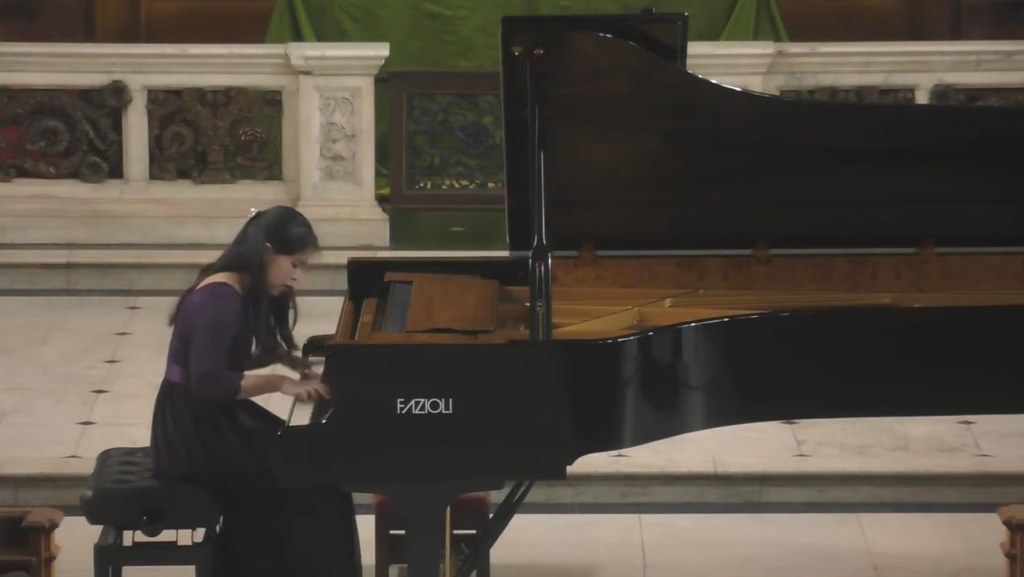
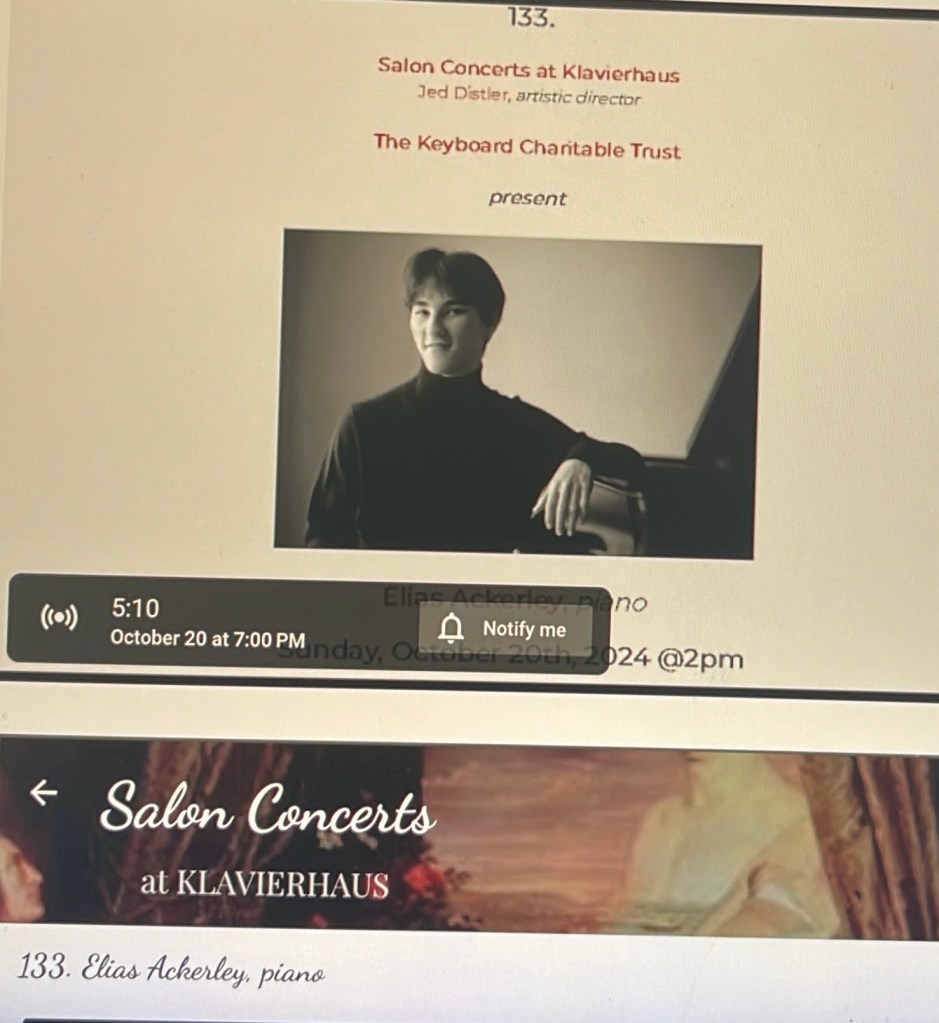
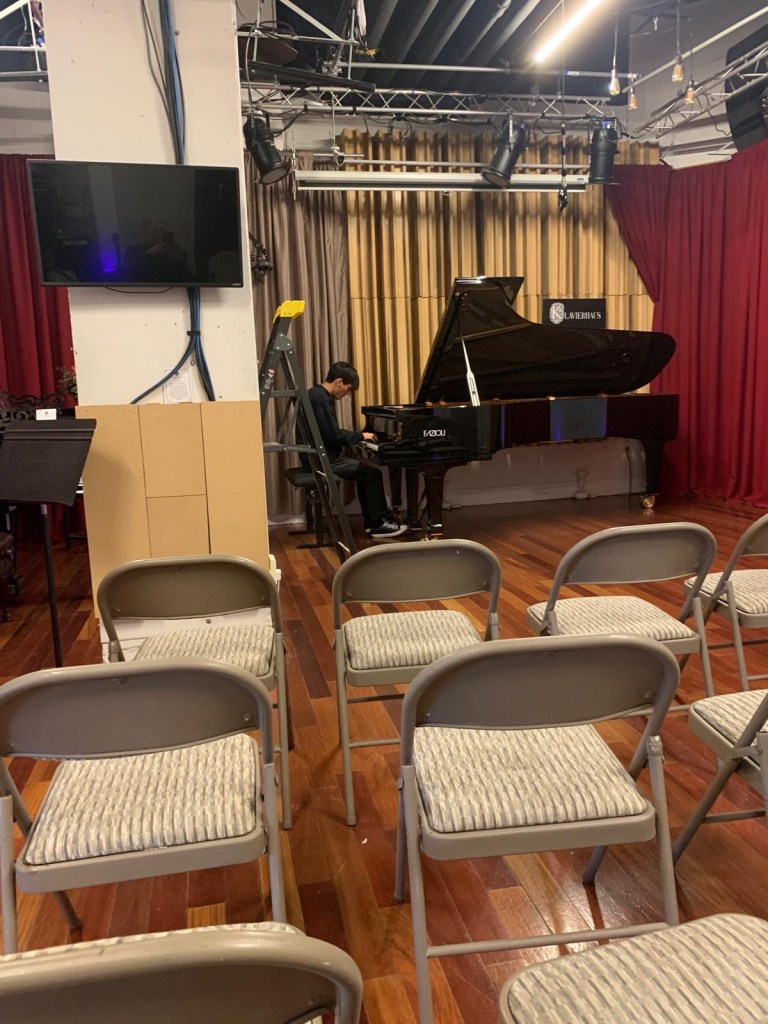
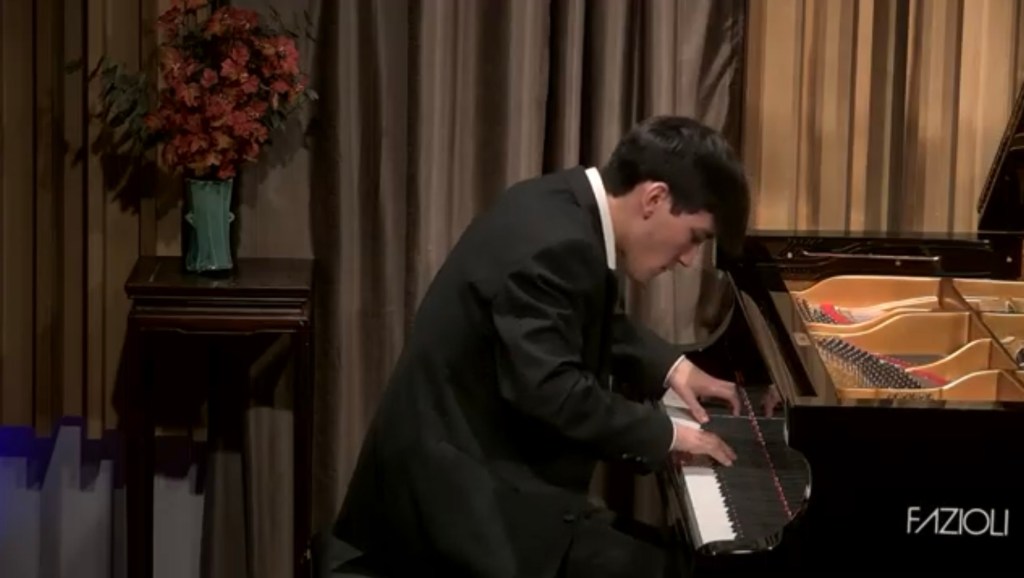
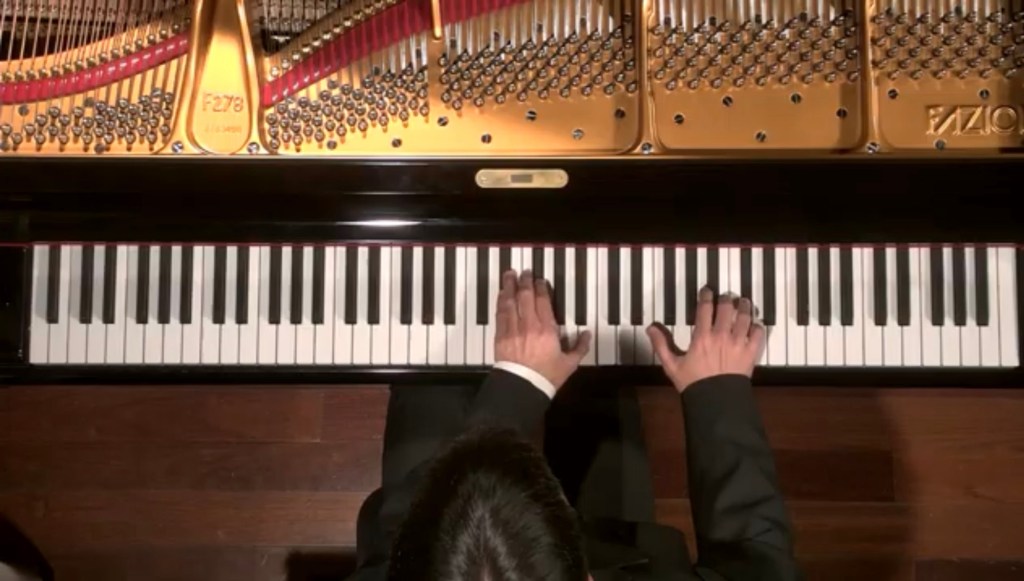
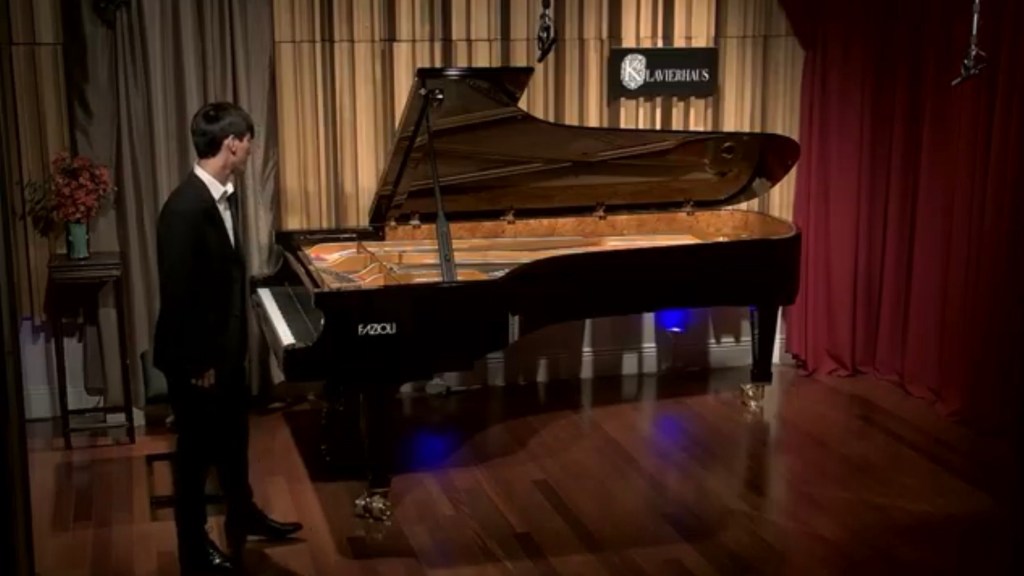
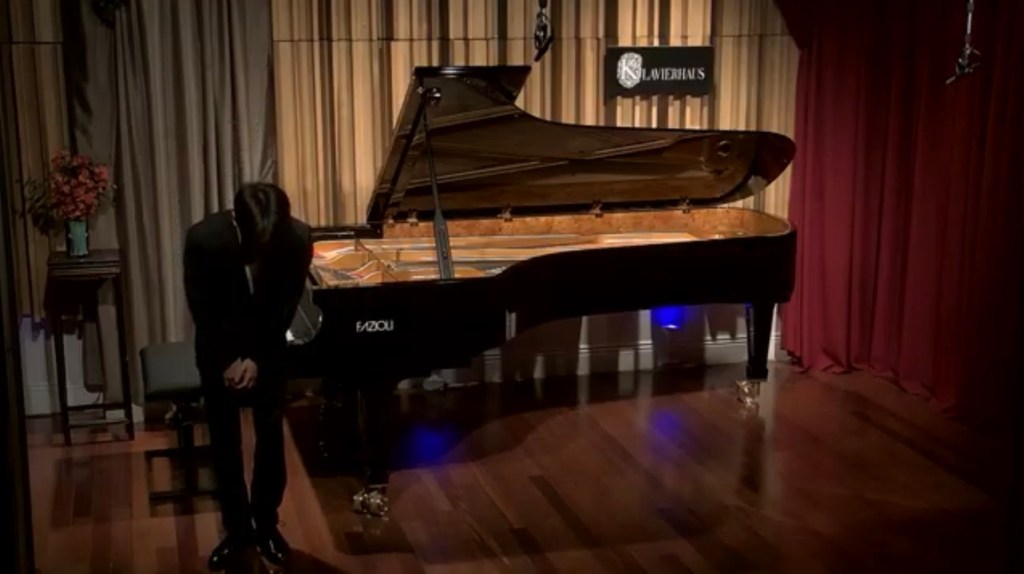
Elias writes : “I loved the piano so so much. The Fazioli pianos are some of my favorites to play especially when they’re kept well.”
p.s. An interesting note from James of Mumeneer Studio recordings : while Elias chose the Fazioli, our other house piano, the Hamburg Steinway D, was in the city of Hull during the second World War . So both you and us were in the company of survivors of the war. The legacy of human resilience lives on in all of us, especially through music
John Leech in his hundredth year ,founder with his wife Noretta Conci of the Keyboard Trust ,watching the live stream from New York Dan Danieli writes : I very much enjoyed Elias, who presented a most compelling program of Beethoven, Schumann and Liszt! He’s a charming young chap as well, and someone we shall continue to follow with interest.
ELIAS ACKERLEY – USA TOUR: 12-20 OCTOBER 2024
PROGRAMMES
CASTLETON, VIRGINIA (90 mins – with interval)
Bach-Busoni – Chaconne in D minor BWV 1004 (15’)
Schumann – Kreisleriana Op. 16 (30’)
INTERVAL
Beethoven – Piano Sonata No. 31 in A flat major, Op.110 (19’)
Liszt – Spanish Rhapsody (14’)
EVERYWHERE ELSE (60 mins – no interval)
Beethoven – Piano Sonata No. 31 in A flat major, Op.110 (19’)
Schumann – Kreisleriana Op. 16 (30’)
Liszt – Spanish Rhapsody (14’)
Elias writes : Aww I’m so touched by all the messages – it really means so much to me ! I’m so glad they all enjoyed the performance!
For the Castleton concert on the 13th, I was welcomed so warmly by Dietlinde and Tony, although quite tired from the journey, I was so grateful to havebeen able to use their sauna which helped me relax before the lengthy recital the next day. The concert was received so enthusiastically. The Theatre was beautiful, and the piano was quite nice (the top register sometimes did have a metallic tone) but in general it was a great hall the sun beaming gently with the trees on to the stage
For the performance at DC, I was also warmly welcomed by Gloria and her husband and the Arts Club. It was actually a highlight for me. The piano was so gorgeous with a lovely Germanic middle register that suited the Schumann. The audience were so enthusiastic and I was able to connect with a few.
The YMM concert in Philadelphia was a lovely time. The piano was an old Steinway, with the original “Steinway” (no & sons). It had an old soul to it which I loved. I was very much welcomed by both Chris Huber as well as Suzanne Root. The audience were so excited and the performance went very well.The time afterwards with Chris and her husband at the Union Club was one of the highlights.I was so grateful!
At Cokesbury, i had the most warm welcome, Helen and Robert were such sweethearts. The venue and the piano was great, the performance was good for the most part, with slight difficulty at the end as the piano did go out of tune.
Country House was also a wonderful but short time. I loved Jamie who was always checking in on me and provided me with snacks and anything else I needed. The new Steinway was in need of more playing – it had a great warm tone but because it was so new, it was still developing the bigger sound that normally is expected with Steinways. The performance went very well. And the audience turnout was quite big and they were very enthusiastic.
Finally at Klavierhaus, the Fazioli was a wonderful instrument, I was so happy to have met Caroline and her friends as well, my personal friends also came which was lovely. The performance was quite good, I think the fatigue eventually did get the better at times but overall I felt quite good with the performance.
I just want to personally thank you. You really helped me in every possible way – I really really appreciate it! This tour wouldn’t have gone the way it did without your continuing help. Thank you so much! 🙏
ELIAS ACKERLEY
Elias Ackerley was born in England in 2001. His family emigrated to South Korea in 2002. He began piano lessons at the age of five and, after making rapid progress, at the age of eight, he started taking lessons with Russian pianist, Oleg Shitin.At the age of eleven (after his family moved back to the UK), Elias gave his debut recital in Chester. Since then, he has performed regularly in concerts throughout the UK, including as a concerto soloist with a number of orchestras. Between 2014 and 2019 Elias was a student at Chetham’sSchool of Music in the UK, where he was a pupil of Dr Murray McLachlan. In 2015, Elias became the youngest-ever winner of the Manchester Beethoven Competition.During this period Elias also won First Prize at the Scottish International Youth Piano Competition (2017), the Blue Ribbon at the National Eisteddfod (2017) and the Epta UK Piano Competition (2018). In 2018, he was also a keyboard finalist in the ‘BBC Young Musician of the Year’ Competition – and won Second Prize in the Rome International Piano Competition. In 2019, Elias was offered a place to study at the Curtis Institute of Music in Philadelphia, where he studied with Professors Gary Graffman and Meng-Chieh Liu. He also had lessons with Yefim Bronfman. During his time at the Curtis Institute, Elias enjoyed successes in international competitions such as being a prize winner in the 2023 Aarhus International Piano Competition in Denmark, as well as being a finalist in the 2024 Montreal International Piano Competition. After his graduation from the Curtis Institute of Music, Elias was accepted at the Juilliard School in New York, where he is currently studying for a Master’s Degree with Professor Robert McDonald. In 2022, Elias was accepted onto the Kumho Young Artist concert programme in South Korea where he gave a debut recital in the Kumho Arts Centre in Seoul. He has also recently performed in other South Korean cities, such as in Seoul, Daejon, as well as in the F1963 venue in Busan. Elias has also given concerts across the United States including in Washington DC, New York and Philadelphia. Elias has participated in masterclasses with Sir Andras Schiff, Stephen Hough and Richard Goode, and has also received tuition from Leslie Howard, Boris Berman and Robert McDonald. From 2019 until 2023, Elias was a recipient of the Dr K.R. WeirLegacy Award, which generously supported him through the Keyboard Charitable Trust, London.
__________________________________________
I think you may still be able to catch Elias’s graduation recital on the Curtis’s website – and, possibly, his recital for the Final of the Montreal Piano Competition.
Christopher Axworthy, one of the Trust’s Artistic Directors, commented that Elias’s Beethoven in the Montreal was the highlight of the competition …. There’s more about him here: https://concoursmontreal.ca/en/competitors/elias-ackerley/ .
THE KEYBOARD CHARITABLE TRUST
for Young Professional Performers
Patron: SIR ANTONIO PAPPANO
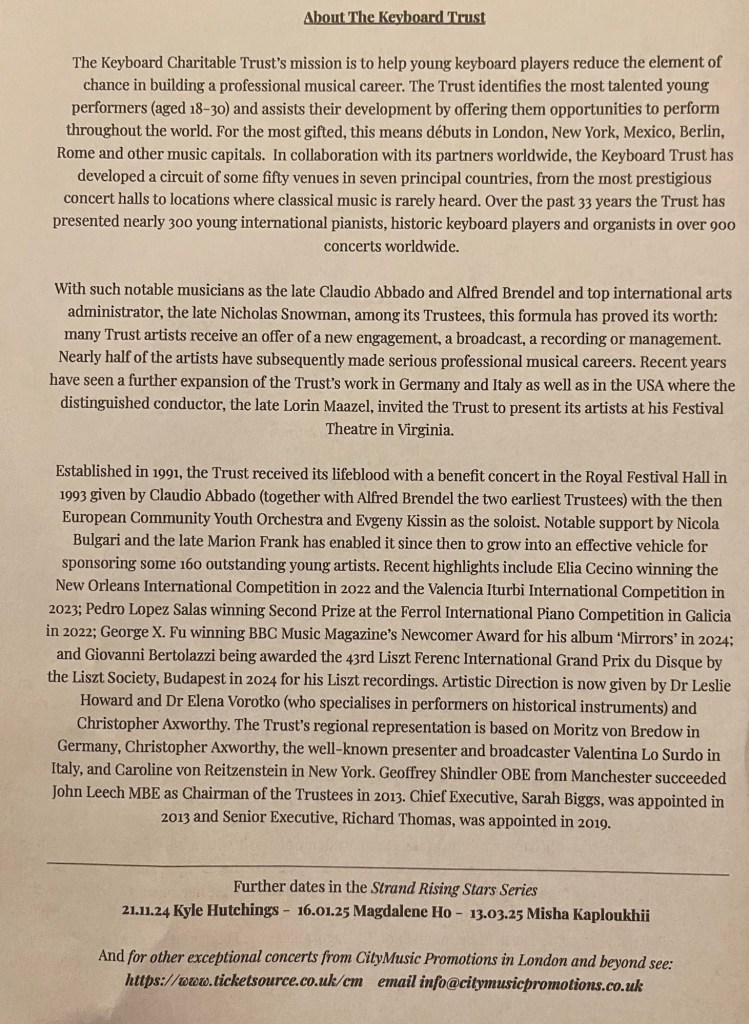
Founded in 1991, the Keyboard Charitable Trust’s mission is to help young keyboard players reduce the element of chance in building a professional musical career. The Trust identifies the most talented young performers (aged 18-30) and assists their development by offering them opportunities to perform throughout the world. For the most gifted, this means débuts in London, New York, Mexico, Berlin, Rome and other music capitals.
In collaboration with its partners worldwide, the Keyboard Trust has developed a circuit of some fifty venues in seven principal countries, from the most prestigious concert halls to locations where classical music is rarely heard. Over the past thirty-three years, the Trust has presented over 300 young international pianists, historic keyboard players and organists (aged 18-30) in over 900 concerts worldwide.
With such notable musicians as the late Claudio Abbado, Alfred Brendel and Evgeny Kissin among its Trustees, this formula has proved its worth: many Trust artists receive an offer of a new engagement, a broadcast, a recording or management. Nearly half of the artists have subsequently made serious professional musical careers.
Recent years have seen a further expansion of the Trust’s work in Germany, Italy and Russia as well as in the USA where the distinguished conductor, the late Lorin Maazel, invited the Trust to present its artists at his Festival Theatre in Virginia.
Recent highlights include Elia Cecino winning the New Orleans International Competition in 2022 and the Valencia Iturbi International Competition in 2023; Pedro Lopez Salas winning Second Prize at the Ferrol International Piano Competition in Galicia in 2022; and George X. Fu winning BBC Music Magazine’s Newcomer Award for his album ‘Mirrors’ in 2024.
The Keyboard Charitable Trust is funded entirely by voluntary donations. Detailed information about the Trust, how to become a Friend, join the One Thousand Club or to provide corporate support, may be found on our website.
TRUSTEES
Nicola Bulgari (Hon. President) Geoffrey Shindler OBE (Chairman)
John Leech MBE (Co-Founder) Noretta Conci-Leech MBE (Co-Founder & Artistic Director 1990-2013)
Alfred Brendel KBE Evgeny Kissin Christopher Axworthy Moritz von Bredow Sasha Grynyuk
Dr Leslie Howard Sir Geoffrey Nice QC Dr Elena Vorotko
Claudio Abbado † (1991-2014) Nicholas Snowman OBE† (1991-2023)
ARTISTIC DIRECTORS
Dr Leslie Howard Dr Elena Vorotko Christopher Axworthy
COUNTRY REPRESENTATIVES
Moritz von Bredow (Germany) Christopher Axworthy (Italy) Caroline von Reitzenstein (USA)
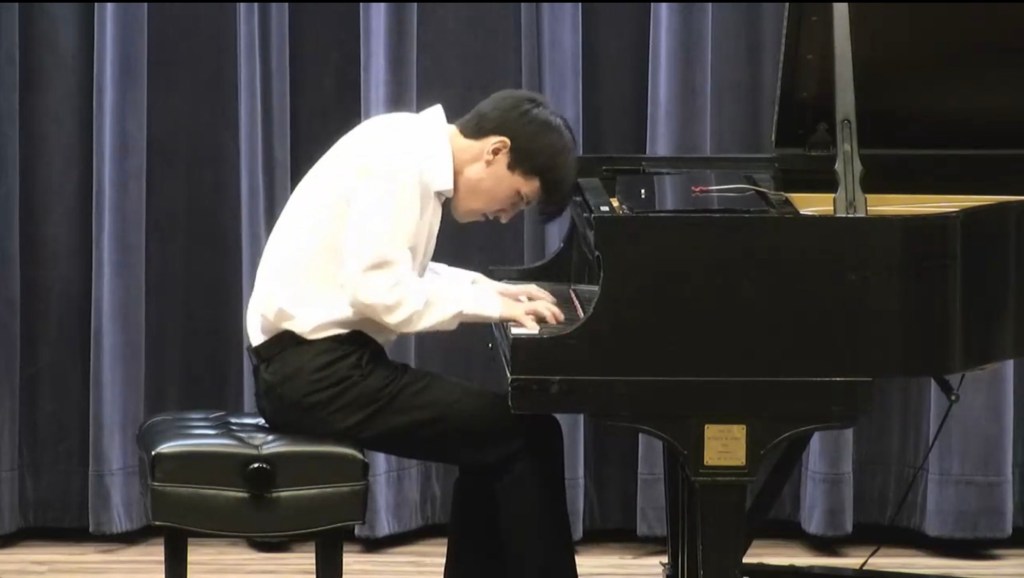
A quite remarkable recital and beautifully recorded for all to enjoy as the audience in Cokesbury Village obviously did with a spontaneous standing ovation after a Spanish Rhapsody the like of which I have not heard since Gilels. Elias under the guidance of the legendary Gary Graffman has become a supreme stylist where everything he plays makes such complete sense.There was not a moment in the entire recital where notes were just thrown off ( as Nadia Boulanger would quote from Shakespeare :Words without thought no more to heaven go).
Even in the Spanish Rhapsody that in Liszt’s day would have had the refined ladies of court screaming like wild animals and trying to to grab any souvenir of their idol to take home,perchance to dream. In Elias’s hands there was just such showmanship but played with a refined intelligence and musical understanding together with an astonishing technical mastery not just playing to please anyone, but to please the composer to whom he was but a faithful servant.
Beethoven that I remember from his performance in Montreal was of quite extraordinary beauty as the opening trill was given all the time necessary to unwind into one of Beethoven’s most poignant outpourings.There was time taken too to savour the E flat that so miraculously changes to D flat for the development.Allowing the music to unravel with such clarity that the glowing melodic line was duetting with a bass of undulating sounds. Here was an intelligence combined with a timeless style that could allow the music to breathe and take on a life of it’s own in a quite magical way. A coda that just drew all the strands together in a quite miraculous manner.
The Allegto molto was played with dynamic drive and a rhythmic precision of impeccable musicianship.The precipitous Trio was played with musical coherence that the treacherous leaps were not even a consideration as it was the music not the note picking accuracy that guided this young man’s blessed hands.There was magic as the Scherzo dissolved into a carefully placed left hand wave of sounds that linked this movement to the etherial world of the Adagio. Beautifully poised in a cloud of heavenly murmurings brought to such a poignant ending before the palpitating heartbeat took us into the paradise that Beethoven could already see before him . A wondrous sense of balance allowed the melody to sing as a true Arioso dolente and again what a joy to see the full stop so gently and fearlessly placed on the last A flat.A fugue ‘ spianato ‘ on a wave of gentle sounds where every strand had a voice of its own as it gently moved forward to the mighty E flat that again miraculously becomes D natural as we enter deep into the composers heart.’Perdendo le forse’ yes but also breathing in gasps where Beethoven’s notation of little rests became miraculously clear in this young poets hands. A whispered mirror of the fugue like a distant shadow but that gradually comes nearer and nearer as Beethoven’s ultimate exhilaration turns to the joy of eternal life. A quite remarkable performance that was deeply appreciated by the discerning audience at Cokesbury.
Schumann’s Eight Fantasies op 16 that make up Kreisleriana were made up of miniature tone poems of remarkable beauty and style .There was a dynamic drive to the first played with a wondrous fluidity of undulating sounds of passionate intensity. Keeping the same tempo but changing character for the central episode that was a long glorious outpouring of song .There was a beautiful natural sweep to the second with its long legato octave melodic line played with a wondrous legato that was a combination of fingers like limpets and a masterly use of the pedal .A natural rubato like just running over a gentle slope in the car!A complete change of character for the two intermezzi interludes but miraculously were architecturally held under the same roof without disturbing the musical line of the longest of the fantasies. And what a wondrous goodbye too with the final four bars barely whispered like the end of a great lied , the piano reaching places where words are just not enough. A glorious stream of melody in the central episode of the third where the melodic line overlapped with passionate intensity .It contrasted with the very rhythmic outer sections until the final explosion of power and drive with double octaves being mirrored as the tension rose to boiling pitch.
A deeply felt ‘Sehr langsam’ came as a blissful relief played with disarming simplicity and the ‘bewegter’ like a breath of pure air .Elias’s eyes were glued to the keys for the fifth trying to keep track of Schumann’s capricious wilfulness which every so often would burst into song and build to a passionate climax before burning itself out at the bottom of the keyboard. The deeply melancholic outpouring of the sixth was played with a wondrous sensibility and even the ‘demisemiquavers’ became part of this deep lament .The genius of Schumann followed on like in Davidsbundler op 6 where a gentle ripple can miraculously take wing and take us into a sumptuous moment of secret longing. A hysterical outburst of technical mastery from Elias in the seventh fantasy where even the notes in the left hand ,usually shared , were fearlessly played as the composer had written them.The final calming chords were played non legato but with a glowing melodic line that took us to the final whispered ending where all energy was finally spent. It was here that the first notes of the eighth were played with unusual clarity which gave great character to this most elusive and enigmatic movements . This is the Schumann of split personality which Elias understood to perfection as the quixotic turned into neurotic at the click of a semiquaver! Even the final passionate outburst was played with a supreme sense of balance and architectural shape .So often hammered out it was here almost whispered in places to devastating emotional effect.Another superb performance from this poetof the keyboard.
Liszt’s variations on La Folia were played by a true master.Elias had all the emotional and technical reserves that could create moments of deep almost operatic beauty but then lead to a Tom and Gerry type build up of breathtaking exhilaration and excitement .I never thought I would hear a performance to match that of Gilels in London in the sixties, until today from this extraordinarily modest young man with a volcano hidden away in his midst!
A standing ovation for a remarkable recital of Beethoven op 110,Schumann op 16 and Liszt Spanish Rhapsody
Murray Mclachlan writes : ‘Terrific to reunite with class of 2019 @Chethams pianist Elias Ackerley outside @julliardschool where he is on a scholarship for Masters. Fresh from substantial US tour arranged by @KeyboardTrust’
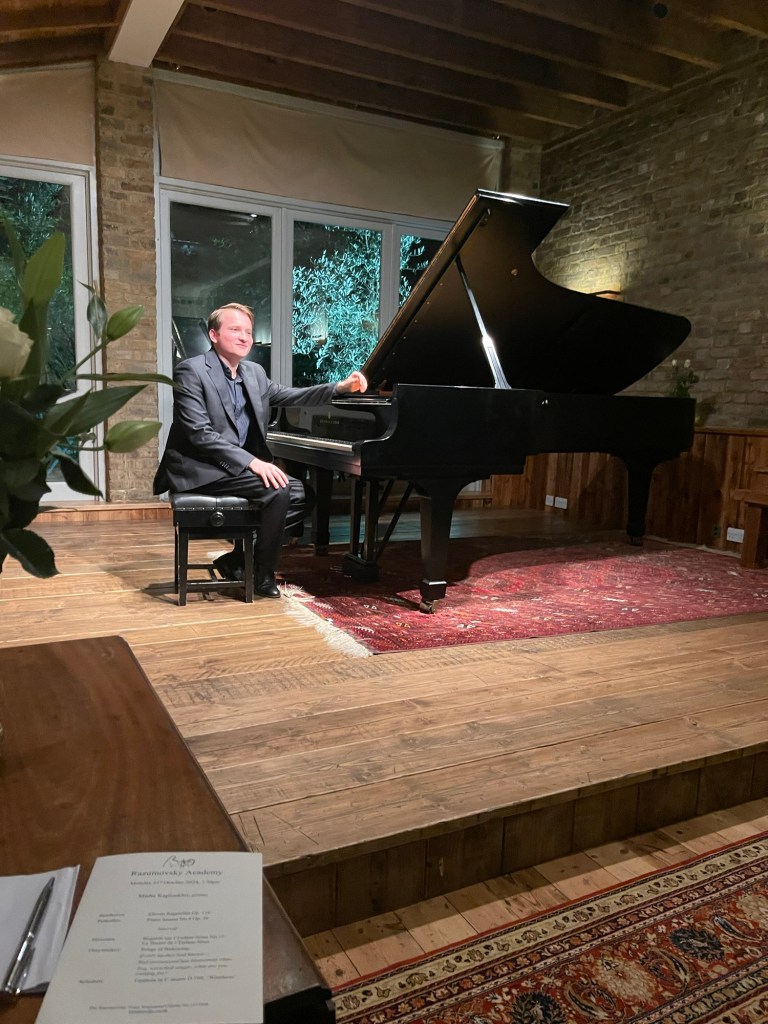
Oleg Kogan proud to present this young star and to invite him into his beautiful Razumovsky Academy that he has shaped with his own hands.
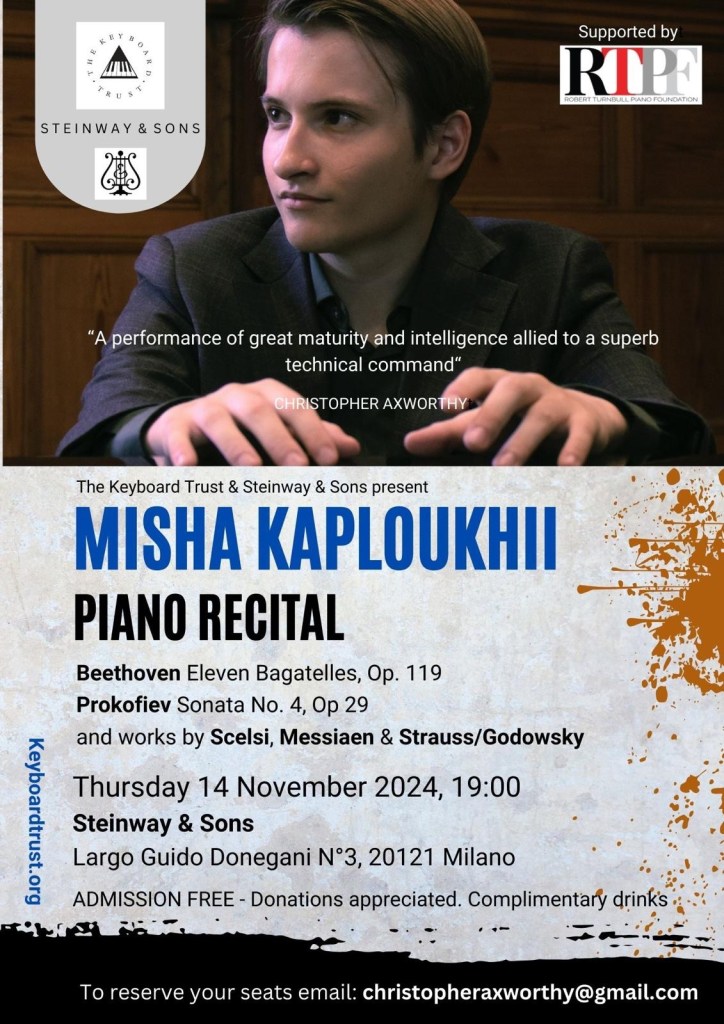
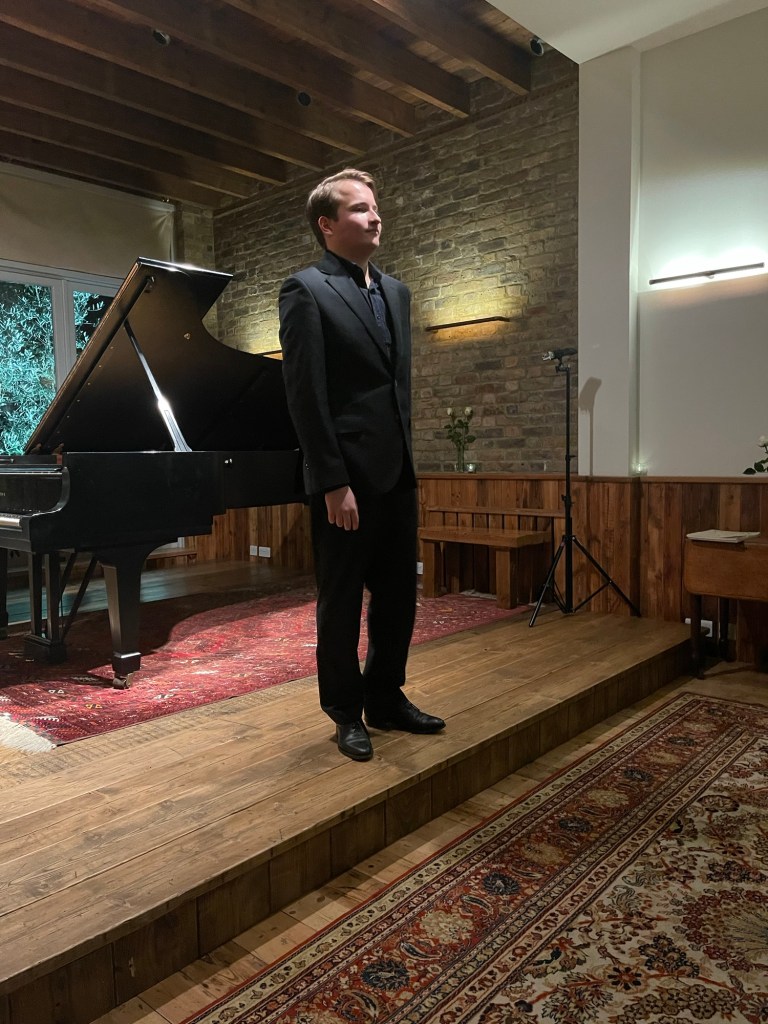
And it is on Fou Ts”ong’s magnificent Steinway D that Misha Kaploukhii kept us enraptured with playing of astonishing assurance , technical mastery and poetic sensitivity. It was in Messian ,though , that one could feel the presence of Ts’ong as this young man played the pungent heart rending dissonances with a kaleidoscope of colours.This was a kiss blessed by the Gods as the disarming simplicity of the opening was elaborated with sounds that I doubt have been heard on this piano since the most eclectic of poetic masters left us during the Covid epidemic.
One could almost imagine the presence of Ts’ong as this young man played with a poetic intelligence and mastery as the minutes of aching silence at the end were testimony, savoured but inevitably interrupted by the reaction of a public visibly moved. I can imagine Ts’ong playing Beethoven’s Eleven Bagatelles op 119 with the same chameleonic change of character but strangely enough it was Brendel and Serkin that could imbue these ‘trifles’ with a kaleidoscope of colours and luminosity as they were intellectual stylists and realised that Beethoven also had a great sense of humour.
Misha gave a masterly performance but as I implored him afterwards why did he not use the same palette of sounds as in the second half. ‘But this is Beethoven not Messian ‘ he quite correctly retorted .A different language ,of course , but an artist must use the palette of colour that are on his brush .Picasso is instantly recognisable in all his very different periods!
Prokofiev of course was given a masterly performance much praised by Gabriel Prokofiev who was present in the audience.A slow movement of pungent austere beauty and a final movement that was played with scintillating charm and mastery that just flew with such ease from this young master’s well oiled fingers.
I cannot remember Ts’ong ever playing the Schubert Wanderer Fantasy but know he would have approved of the refined artistry of Misha’s Wanderer, the movement from which this revolutionary work was to take it’s name . The Wanderer and its variations were played with great poise and refined good taste , bathed in enough pedal to allow the piano to sing with ravishing beauty.A stream of golden magical sounds that poured from this young artists sensitive fingers.A Scherzo too that was played with dynamic drive but also with enough respectful charm that made the washes of sound in the Trio such a breathtaking contrast. The call to arms of the first movement was played with great style as he shaped the contrasting episodes with intelligence and sensitivity. The final movement was a ‘tour de force’ of brilliance and exhilaration and also miraculously kept at a constant tempo with a relentless drive.
Three songs of Bukovina with very enticing titles, that were not mirrored in their content, but that were thankfully short. Played with great conviction and maybe too seriously if one is to believe their titles. I just wish that Misha could have enlightened us with an introduction as he had so charmingly done with Beethoven and Prokofiev! I will have to do some homework now ! We even got an extra one as an encore ! But not before Busoni’s Greensleeves (Frauengemach Elegie n 4 ) which revealed Misha’s mastery of jeux perle with the charm and colour of another age .It demonstrated the extraordinary mastery that marks this young man as very special indeed and a name to watch out for in the not too distant future.
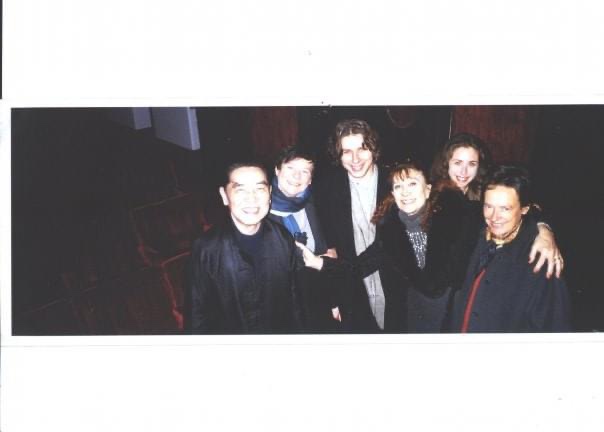
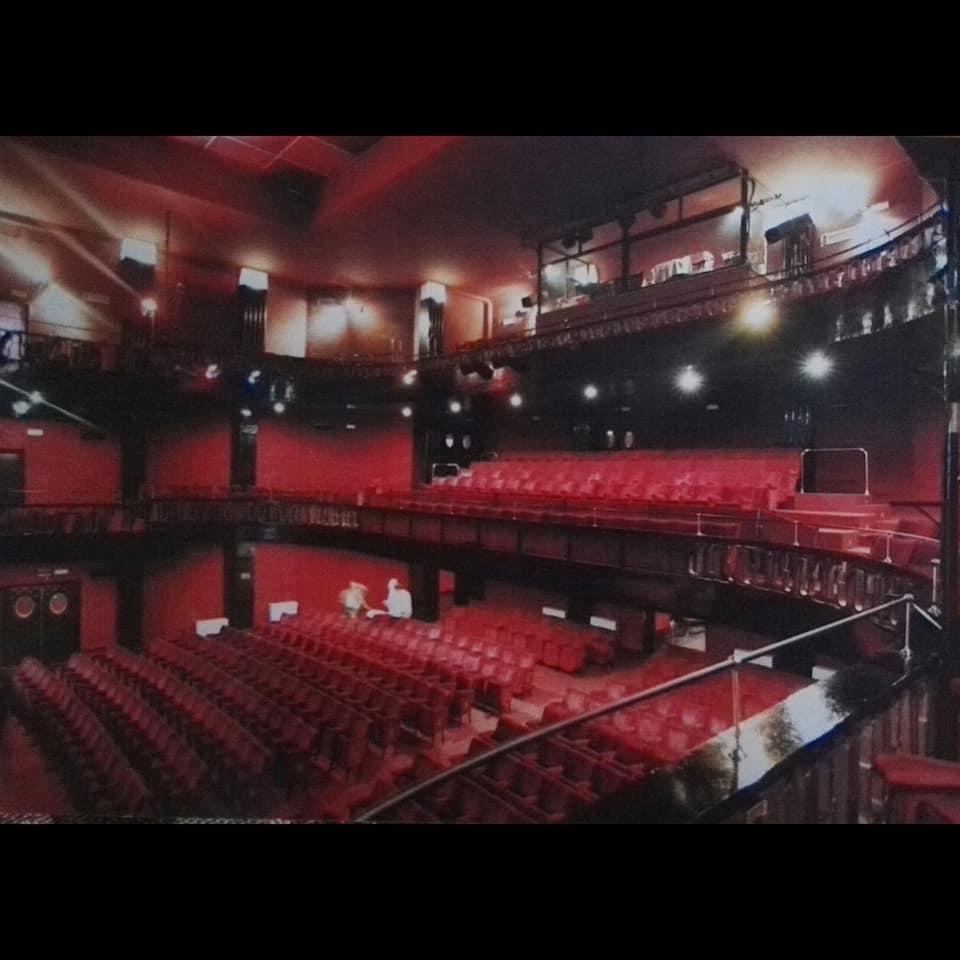
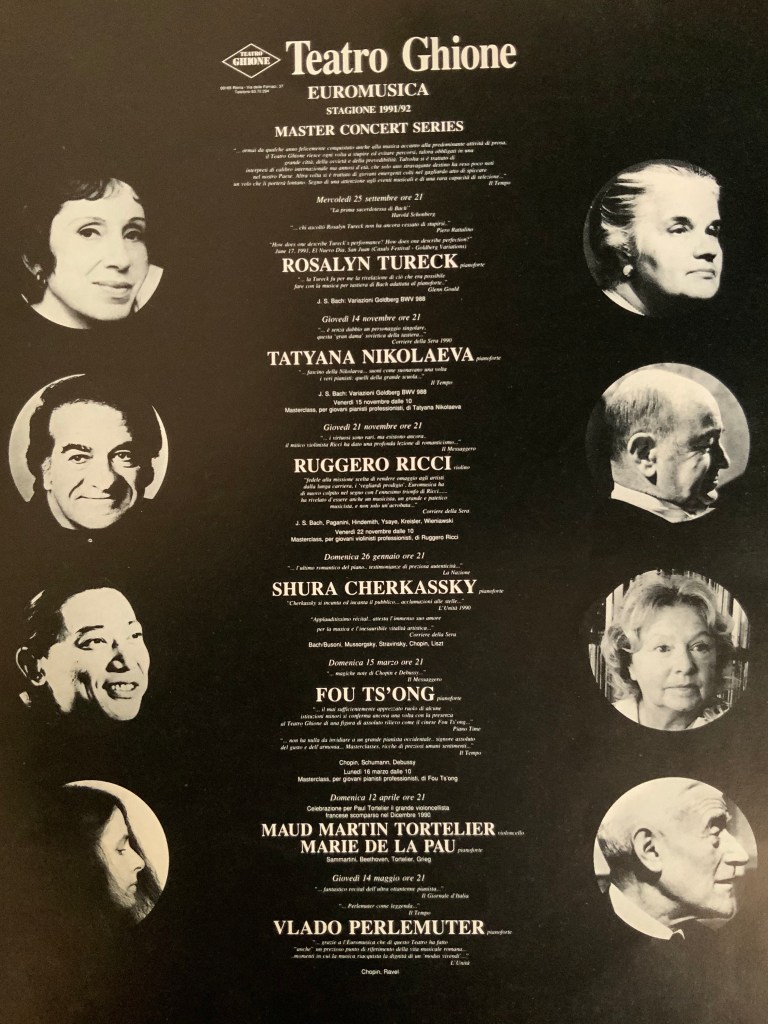
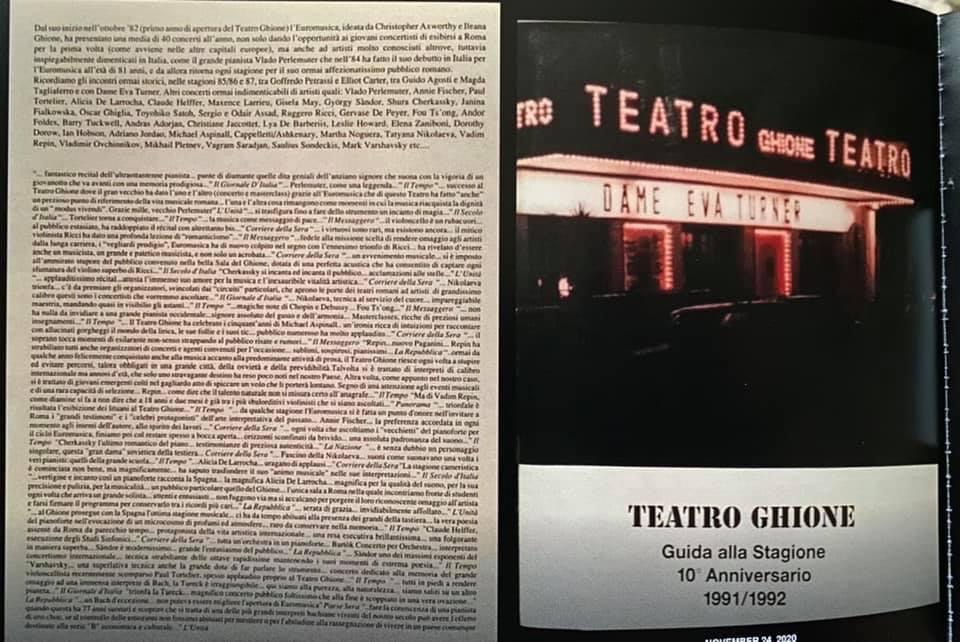
Fou Ts’ong was one of our regular visitors to the Ghione Theatre and came year after year to play and give masterclasses.The theatre had opened in 1982 initially to provide a space for my wife ,the distinguished actress Ileana Ghione ,to produce the plays that she particularly wanted to perform with directors and set designers of great quality.She did not see the point in touring poorer productions and so set up home in an old derelict theatre next to S.Peters Square.Together we transformed it into one of the most intimate and beautiful theatres in Europe.It did not take long for musicians to ask if they could perform there too.My two teachers Guido Agosti and Vlado Perlemuter were the first and then followed a long line of distinguished musicians that through some strange twist of fate had never or rarely been invited to Rome.One of our favourite artists was Fou Ts’ong who would come year after year ,so much so that his wife ,the distinguished pianist Patsy Toh,thanked me for being so faithful.Well it is we that should thank him judging by the number of students who came under his spell and have gone on to distinguished careers.
One of these in particular is Roberto Prosedda who a week after Ts’ong’s death dedicated a Chopin recital in Pisa to him (included in an attachment here) and is now producing a book about Ts’ong’s remarkable genius.
Paradoxically the book is being financed by the Chinese government for a PHD student of Roberto .Fou Ts’ong’s parents had committed suicide rather than compromise their principles in the cultural revolution.Fou Ts’ong many years later was persuaded to return to China was reverred as a God and it is why now there is need for a book about his life,background and musical ideals.William Grant Naboré a disciple of Carlo Zecchi in Rome was given the possibility to start his International Piano Academy in Lake Como in 1993 and he asked me if some of our distinguished musicians would like to spend a week together with super talented young musicians to share their experiences and musical ideas in masterclasses.Fou Ts’ong was one of the first to accept the invitation and it was a love affaire that lasted over 20 years .Francois Dumont was one of the lucky students to come under the influence of Fou Ts’ong in Como.Fou Ts’ong after his masterclass in Rome with Danuta Aloisi(Duda),Ileana Ghione and Linda Alberti The Ghione Theatre – S.Pietro Rome
Sergei Prokofiev’s Piano Sonata No. 4 in C minor, Op. 29, subtitled D’après des vieux cahiers, or After Old Notebooks, was composed in 1917 and premiered on April 17 the next year by the composer himself in Petrograd The work was dedicated to Prokofiev’s late friend Maximilian Schmidthof, whose suicide in 1913 had shocked and saddened the composer.
Allegro molto sostenuto
Andante assai
Allegro con brio,ma non leggiero
In his notes accompanying the full set of recordings of Prokofiev’s sonatas by Boris Berman David Fanning states the following:
Whether the restrained, even brooding quality of much of the Fourth Sonata relates in any direct way to Schmidthof’s death is uncertain, but it is certainly striking that the first two movements both start gloomily in the piano’s low register. Allegro molto sostenuto is the intriguing and apt marking for the first, in which a hesitant and uncertain mood prevails – the reverse of Prokofiev’s usual self-confidence. The Andante assai second movement alternates between progressively more elaborate statements of the opening theme and a nostalgic lyrical episode reminiscent of a Rachmaninov Etude-tableau; finally the two themes are heard in combination. With the rumbustious finale Prokofiev seems to be feeling himself again. But for all the gymnastics with which the main theme is varied there is less showiness in this essentially rather introvert work than in any of the other piano sonatas.
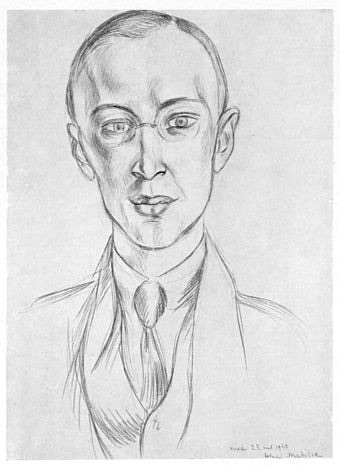
Prokofiev, as drawn by Matisse for the premiere of Chout (1921) 27 April 1891 Sontsovka Russian Empire now Ukraine 5 March 1953 (aged 61)Moscow, Soviet UnionLeonid Arkadievich Desyatnikov is a Russian composer who first made a reputation with a number of film scores, then achieving greater fame when his controversial opera The Children of Rosenthal was premiered at the Bolshoi Theatre in Moscow. https://en.wikipedia.org/wiki/Leonid_Desyatnikov
Another great lesson from a Master. Alexeev’s long awaited return to The Chopin Society UK with the second half of his programme dedicated to Chopin with a very eclectic choice of shorter works many of which are rarely heard these days.
But it was the first half with a daring choice of Rachmaninov’s first sonata.that revealed the true greatness of one on the finest pianists of our time. A modesty and dedication to others that has been a rock for so many aspiring young musicians. Dmitri and Tatiana like the Craxtons in my day creating an oasis that is a workshop for pianists prepared to dedicate their youth to their art.
But put Maestro Alexeev on stage with just him and eighty eight keys and a tornado is unleashed of such overwhelming power of communication. A conviction of ravishing beauty that after all the wonderful pianists I listen to this is the only one that I felt myself having to hold back a tear as his message penetrated so directly and deeply into my being .
He can create a cocoon of sound which envelopes all those in range and there is no escape for us or for him. A great roof of sound in which anything is possible. It was the seemingly impossible that we heard with sumptuous sounds of Philadelphian proportions that would dissolve leaving just a plaintive voice emerging like a jewel from this magic land. Of course Dmitri has lived with this music for a lifetime and this usually fragmented and much misunderstood masterpiece suddenly came together with overwhelming power and beauty
A work that had even left Rachmaninov and his colleagues with doubts as he like Schubert or Liszt had broken away from convention in trying to create a new form made up of leit motives that permeated the entire structure creating a unified whole of devastating emotional effect. It was Kantorov who recently showed us the way with extraordinary effect and many students are changing their choice from n.2 (Horowitz inspired ) to n 1 . But it took the mature mastery of Alexeev to show us such a clear path where words are superfluous as it is MUSIC that can and should arrive in places where words cannot reach. In retrospect Inferno and Paradiso come to mind but unlike Liszt , Rachmaninov’s morose Russian soul chooses to finish with a final glimpse of Inferno.(Liszt having changed his mind and substituted his original blazing ending for one of the most sublime inspired pages in the piano literature.
All this sprang to mind unconsciously as the menacing opening to the sonata hit us in the solar plexus with unexpected vehemence such was Alexeev’s identification with Rachmaninov’s world. Paradise with a chorale of purity and beauty but permeated with nostalgia .A throbbing monotone of unimagined emotional power whether whispered or passionately intoned linked these two worlds.
The second half was all Chopin with three nocturnes, those less frequently heard, with op 48 n 2 not n 1, or op 27 n 1 not it’s famous twin n 2 both linked by one of Chopins last works op 62 n 2. Alexeev showed us what it means to play with weight that like Cortot or Perlemuter are fingers that are like limpets never leaving the key but sucking the life blood from the depths within each one. Horizontal playing in which ungrateful ugly sounds are just not part of the equation that is of poignant significance and deep meaning. The F sharp minor op 48 was played with radiance and beauty with a beguiling central episode of subtle insinuation. The deep bass notes of the E major op 62 allowed a glow to the bel canto with the knotty twine of counterpoints just adding to the profound meaning but never overpowering the sublime musical line. There was a chiselled beauty to the C sharp minor op 27 on it’s magic cloud of changing harmonies taking us unawares to a passionate climax before dissolving to the consilitary coda of calming beauty and a great wave of sounds taking us to barely whispered chords.
A link to the three Nouvelle Etudes was provided by the most elegant and French of all Chopin’s works, the G flat Impromptu .Of course Rubinstein had this French elegance but Alexeev showed us an equally ravishing world of beguiling charm wrapped in velvet , where the beauty of the central outpouring in the bass reached the sublime. The three Nouvelle Etudes were for Chopin part of his treatise with Fetis that was unfinished on his death and was bequeathed to his friend Alkan to complete. They are three studies published after his death that are designed to incorporate a juxtaposition of rhythms and also legato and staccato touch. I think these may also be described as ‘canons covered in flowers’ as the ravishing beauty of flowing sounds filled the air with intoxicating freshness. No thought of three against four was even conceivable or for that matter two against three .The charm and delight of the third belied the difficulty of playing legato and staccato with the same hand at the same time. Such was the beguiling charm and beauty of Alexeev’s playing where communication took precedence over any mundane technical considerations . Five Polish songs by Chopin in Liszt’s wonderful transcriptions where as for those of Schubert become art works in their own right. I have heard only one of them in public often played as an encore by the older generation of pianists who alas are no more.
A glorious outpouring of songs with a sumptuous sense of balance from the sublime to the ridiculous with the final song gliding across the keys with the refined ease of a Master
Three encores two of Chopin : the op posth nocturne in C minor and a Mazurka op 7 n. 3 in F minor and a final glimpse of early Rachmaninov again with his sumptuous Melodie op 3 https://youtu.be/yNUvAGXwj08?feature=shared So we had come full circle in a recital that thank God was recorded for posterity and will go down in history .Mitsuko Uchida does not approve of her live performances being recorded because she says a performance should remain in the memory as a thing of beauty and not a printed photo that with time will fade .
All those present will not forget the privilege to be part of such music making and it is thanks to three remarkable ladies: Lady Rose C ,Gillian Newman and Lisa Peacock who are able to persuade one of the greatest musicians of our age to leave his studio and share his music with a public starved for too long.
with Dina Parakhina
We live in an age where quantity rather than quality is the norm .It was Gilels who likened live music to the difference between fresh or canned food . Too often we hear performances of note picking perfection rather than the risk of discovery where the public is an integral part of a voyage in music and true communication. Horowitz complained that the younger generation are frightened of showing their feelings and Cherkassky simply said he did not think they listened to themselves. Horowitz after the death of Bolet said :”We are the last two left” . They both would be relieved to know that these two pianists from the great school in Odessa at last have a true heir in Dmitri Alexeev . .
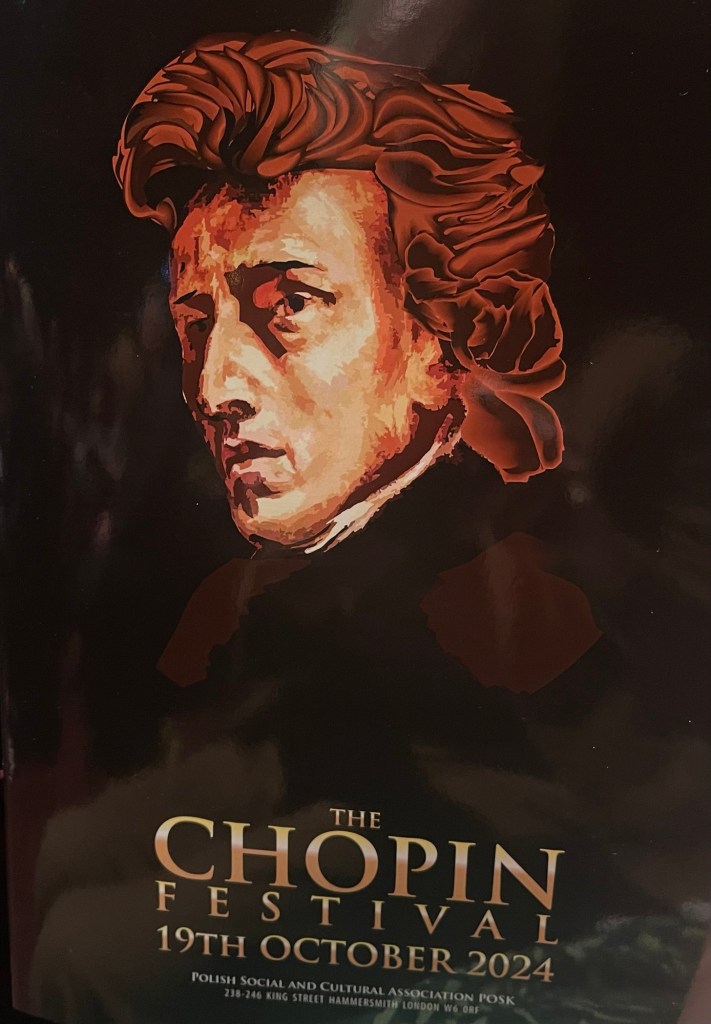
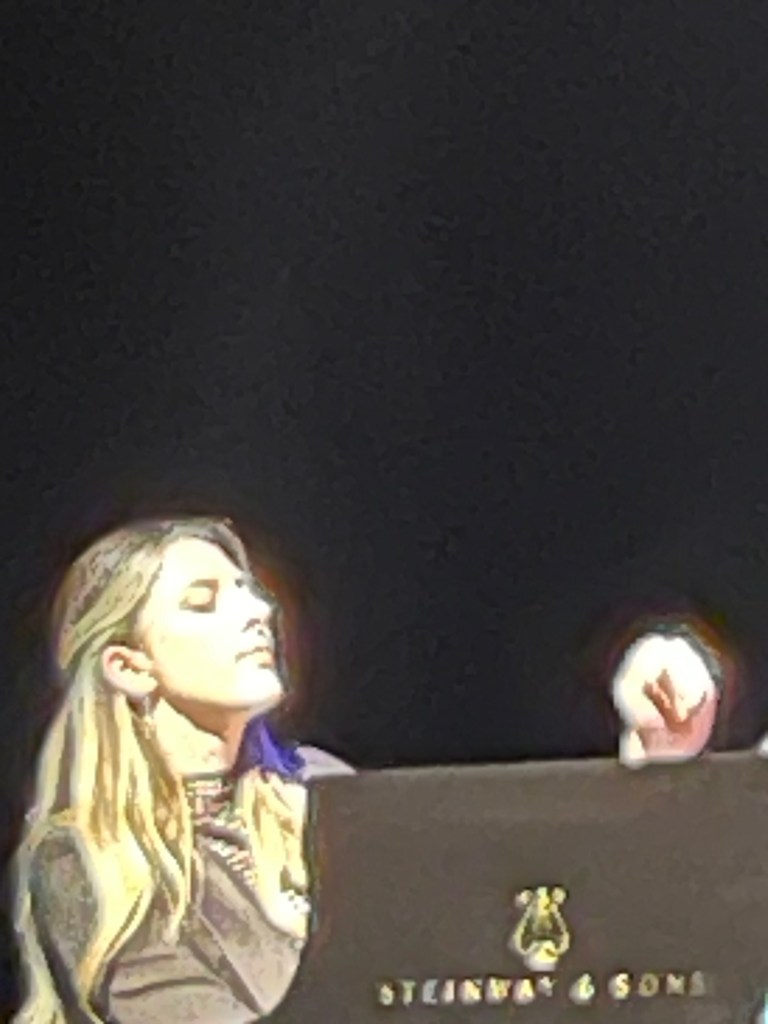
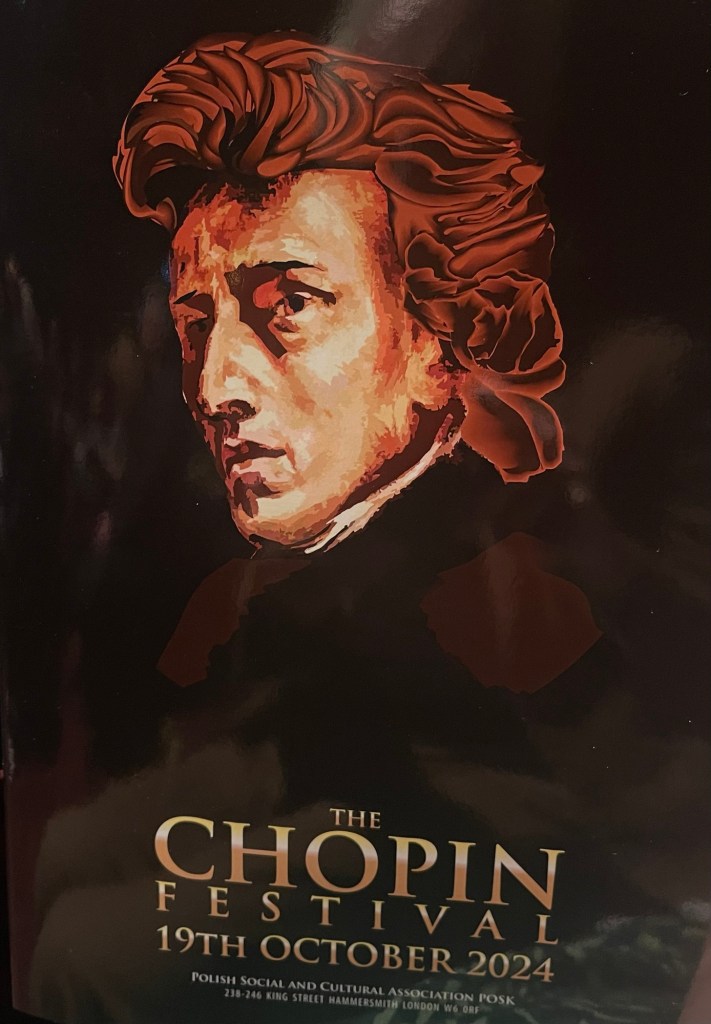
The 2024 Chopin Festival produced by Janusz Sikora Sikorski. A sumptuous six hour feast where the wonderful smells from the POSK restaurant were nothing compared to the refined perfumed sounds from a new Steinway piano that now sits so proudly on the stage of their theatre and last night was brought magnificently to life by four superb pianists .
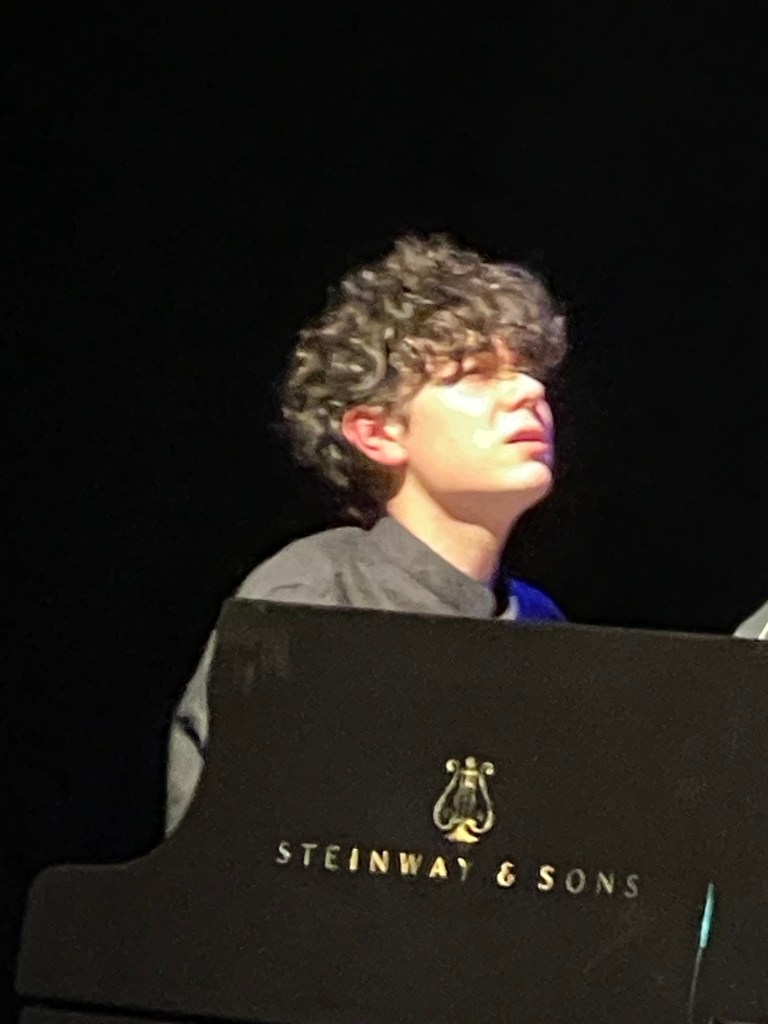
Dominika Mak where intelligence and beauty combined with refined artistry. Nowhere more than in the coda of the Ballade where the knotty twine was untangled and so beautifully shaped that the transcendental hurdles she had to face became irrelevant and insignificant . Her constant flowing tempo allowed Chopin’s genius to flower without any fussy interventions as she allowed the music to pour with passionate conviction from her masterly hands.It was the same refined good taste that she brought to what is considered by meany to be Chopin’s most perfect work. The opening waves of the Barcarolle like Visconti’s Mahler Fifth were judged to perfection and it was on this gentle wave that Chopin’s greatest outpouring of song was allowed to flower.Ravishing playing of exquisite finesse in the ‘sfogato’ but then the gradual build up to aristocratic passion dissolved into the beguiling sounds that Ravel was to try to imitate for his water nymph. But the real revelation were the three Mazurkas played with a miracle of fleeting fantasy and a kaleidoscope of refined sounds.The ending of the A minor just thrown off with the delicacy of the precious jewel that it is, as the ending of the A flat Mazurka was truly miraculous.Flamboyance too with the F sharp minor where one could see the influence of Bach on Chopin that Prof Rink had underlined earlier and was here unraveled in masterly fashion by this young poetess of the piano guided by the indomitable Christopher Elton at the RAM ,my old Alma Mater
The refined intelligence and sumptuous beauty of Dominika Mak in two of Chopin’s greatest works : the Fourth Ballade and Barcarolle were even overshadowed by her miraculous performance of the Mazurkas op 59 . There was a wonderfully produced programme with fascinating articles by Alan Walker and Norman Davies but no actual programme of the concert.
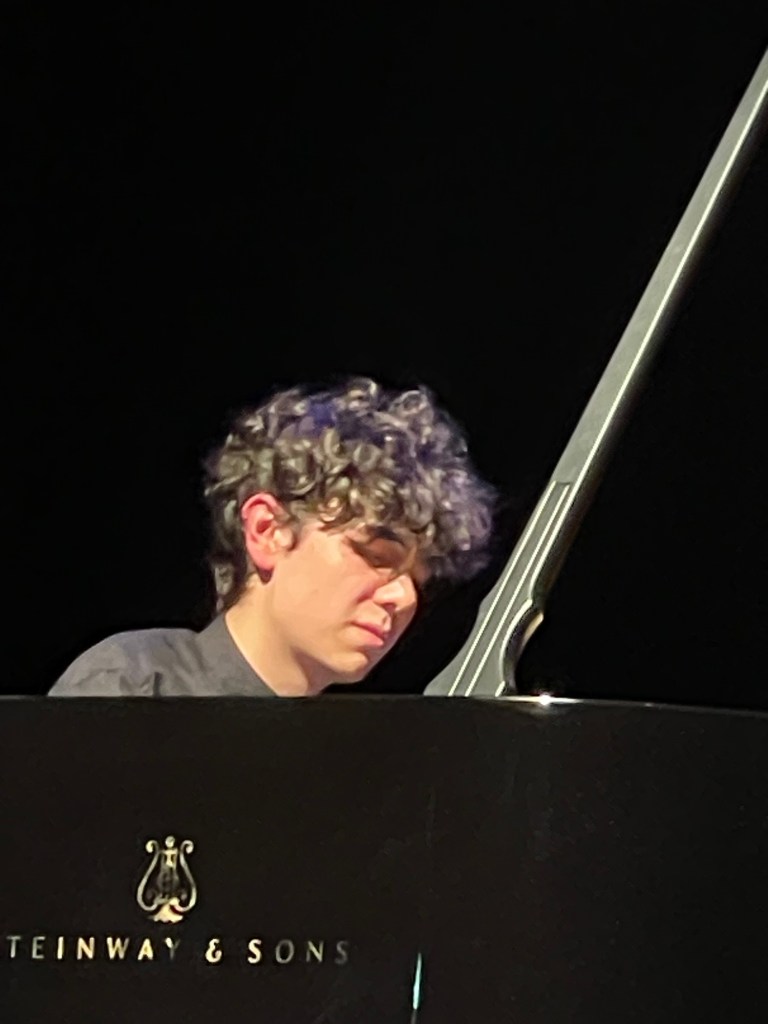
Mateusz Dubiel a very young looking artist but artist he certainly is ( see below for biography – born in 2004) . Great fluidity and refined rubato in Chopin’s most passionate of all Nocturnes. A cry of joy and ecstasy that this young man played with crystalline clarity where the intricate counterpoints were strands of sounds or voices each one answering the other with a remarkable technical mastery of sound. I was alarmed at hearing the opening of the B minor Sonata in a concert of four pianist of whom Mateusz was only the second! But alarm turned to deep enjoyment of a young man who could bring such architectural strength to this Maestoso opening movement.Unbounded admiration for the crystalline clarity of his fingers in the fleeting Scherzo and his mastery of line in the sumptuous Trio. Linking the end of the Scherzo to the opening dramatic opening of the Largo is a master stroke that only the most sensitive of artists can understand.The Presto non tanto although his youthful passion did not allow for the crescendo on the opening introductory flourish his musicianship and architectural understand immediately after added such excitement to the rondo as it returned ever more insistently until boiling over into a coda that was truly masterly.
A magical mystery tour it was indeed with a very youthful looking Mateusz Dubiel singing his heart out with one of Chopin’s most passionate of Nocturnes op 55 n.2 before plunging into a masterly account of the B minor Sonata op 58. An interval was needed at this point like in a sumptuous feast where a sorbet is essential before continuing with such delicacies.
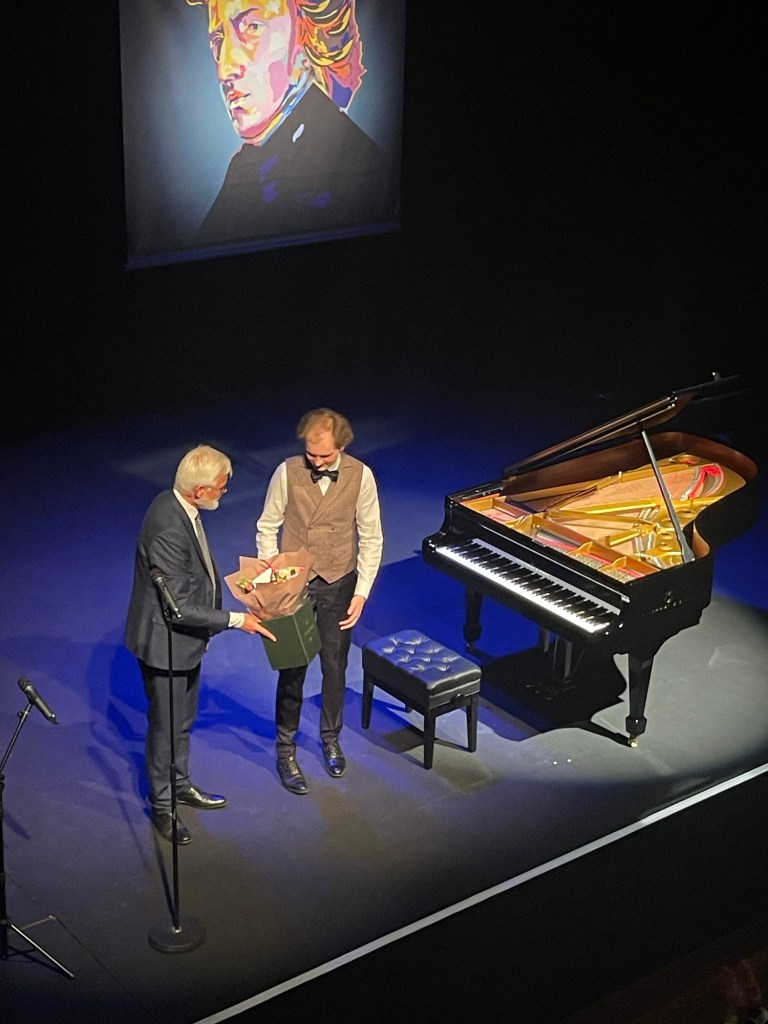
Piotr Pawlak explained to the public the tradition in the 18th and 19th century of linking works together by improvised passages that would prepare the ear for the key changes and create an overall homogeneous structure. And so it was a magical introduction to the B minor Scherzo that he then played with dynamic drive and superb control .There was beauty and simplicity that he brought to the Polish Christmas song that Chopin quotes, played with ravishing beauty. It was though a rather exaggerated change of colour in the outer passages that was too divorced from the architectural whole that all three Scherzi need. It was interesting to see his bass trill played with double octaves and I was fully expecting them to shoot up to the top of the keyboard alla Horowitz.But Piotr is a master musician and all that he did was only to express his intelligent interpretation of the composers wishes and was not for a moment without a deep respect for the composer.There was a great sense of character in the B flat minor Scherzo where again I found the contrasts rather too much for my taste but it was played with real conviction of beauty and passionate drive.A quixotic improvisation linked the B flat minor to C sharp minor with genial invention .There was great exhilaration and excitement to the most virtuosistic of the four Scherzi but there was also the ravishing beauty of the central chorale that was played with a superb sense of line even if the bell like comments were a rather too whispered to maintain the rhythmic drive. A beautiful coda with the deep whispered tolling bass notes as Cortot describes them to be like the Cathédrale engloutie gradually building in power to a climax of extraordinary animal excitement .
Piotr Pawlak on his very first appearance in London astonished us all with not only masterly accounts of the first three Scherzi but joined them into a unified whole by improvising transitional passages that could take us on a magic carpet from B minor to B flat minor to even the distant land of C sharp minor .A tradition that has been lost where pianists are no longer kapellmeisters but merely servants to their instrument.
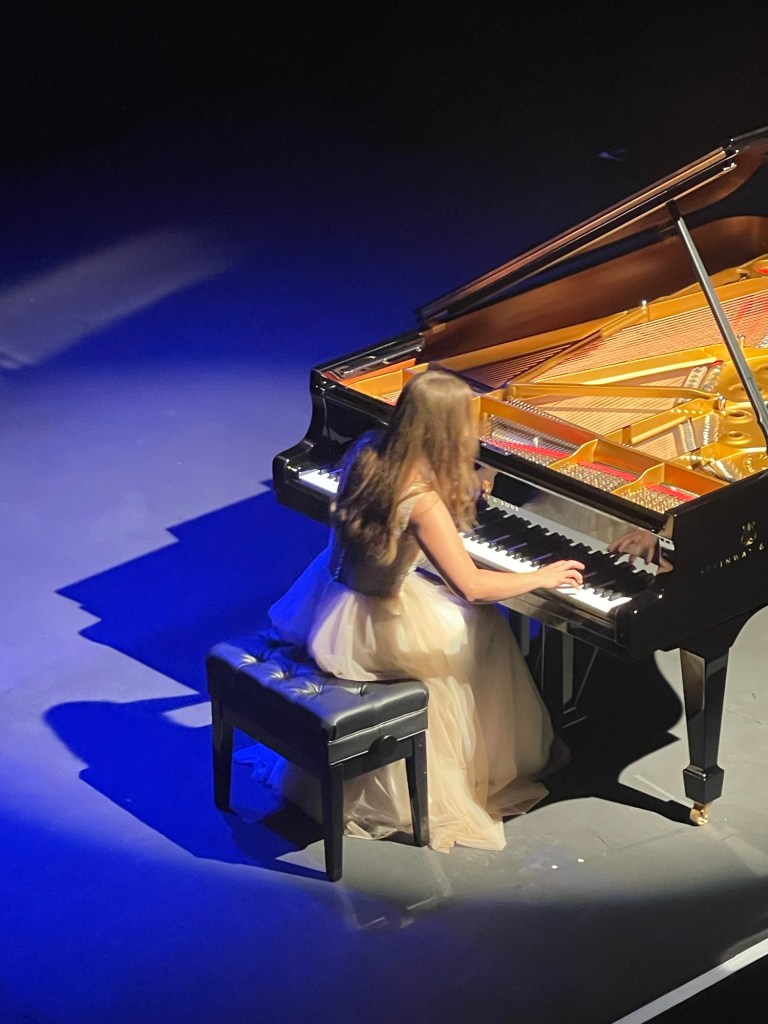
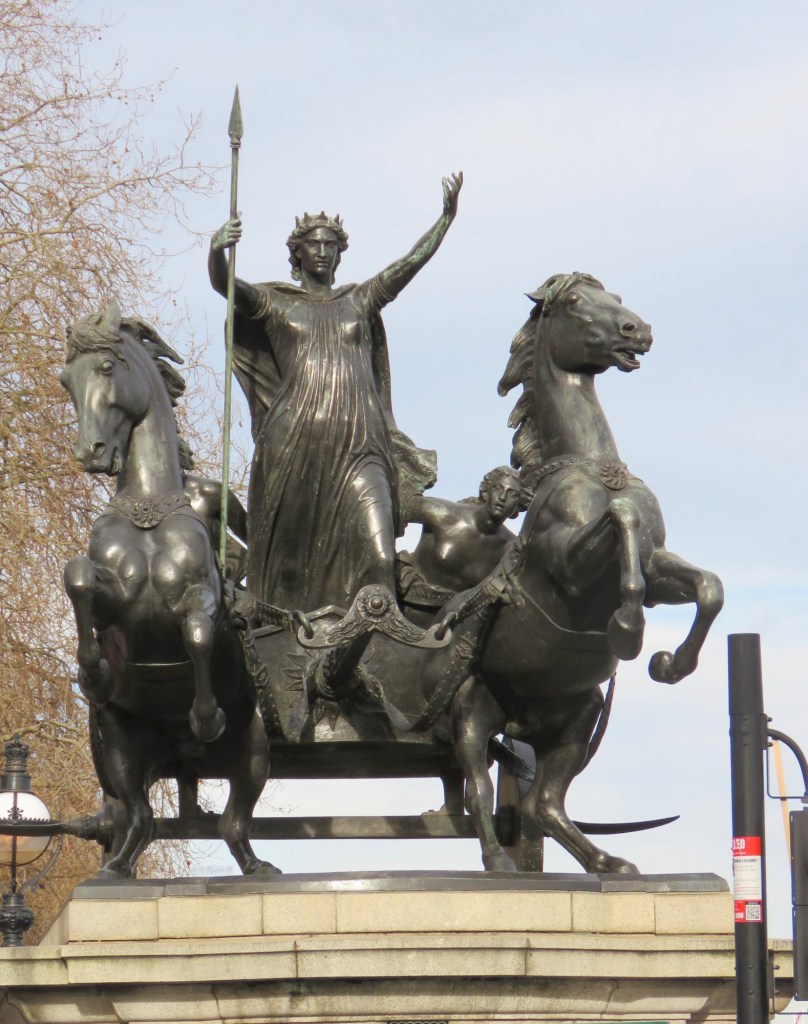
What to say of Alessandra coming toward the end of a marathon.She was like a breath of fresh air or the much needed sorbet.From the very first notes of the Andante spianato she drew us in to her wonderland where we had to work too as she played with the delicate beauty of a great artist.The great orchestral introduction came as even more of a shock played by one pointed finger as she added enormous sonorities and passionate dynamic drive. This was a true Queen Boadicea leading us into a land of quicksilver jeux perlé and overpowering sumptuous octave climaxes .But this was just a preparation for the extraordinary introduction that Prof. Rink had prepared us for earlier. This was Chopin ‘the greatest virtuoso alive or dead’ who could take the Parisian Salons by storm not with the barnstorming of a Liszt or Thalberg but by refined technical mastery and genial musical invention.Extraordinary technical agility was played in a masterly way by Alessandra with thesame delicacy of an art that conceals art. But when necessary she could also count on her muscles to make the piano roar as I doubt Chopin could ever have done . Chapeau to Alessandra say I! ‘Boadicea’ on her flaming chariot rides again .Queen Boadicea on Westminster Bridge
Last was the ‘ Boadicea’ of the keyboard Aleksandra Świgut opening with an Andante spianato of such whispered ravishing beauty that the simplicity of the appearance of a mazurka in its midst came as a liberation from jewels that were strewn with such artistry over the keys . We had heard some wonderful performances but this was the one that most shadowed Prof John Rink’s vivid description of Chopin’s own playing .
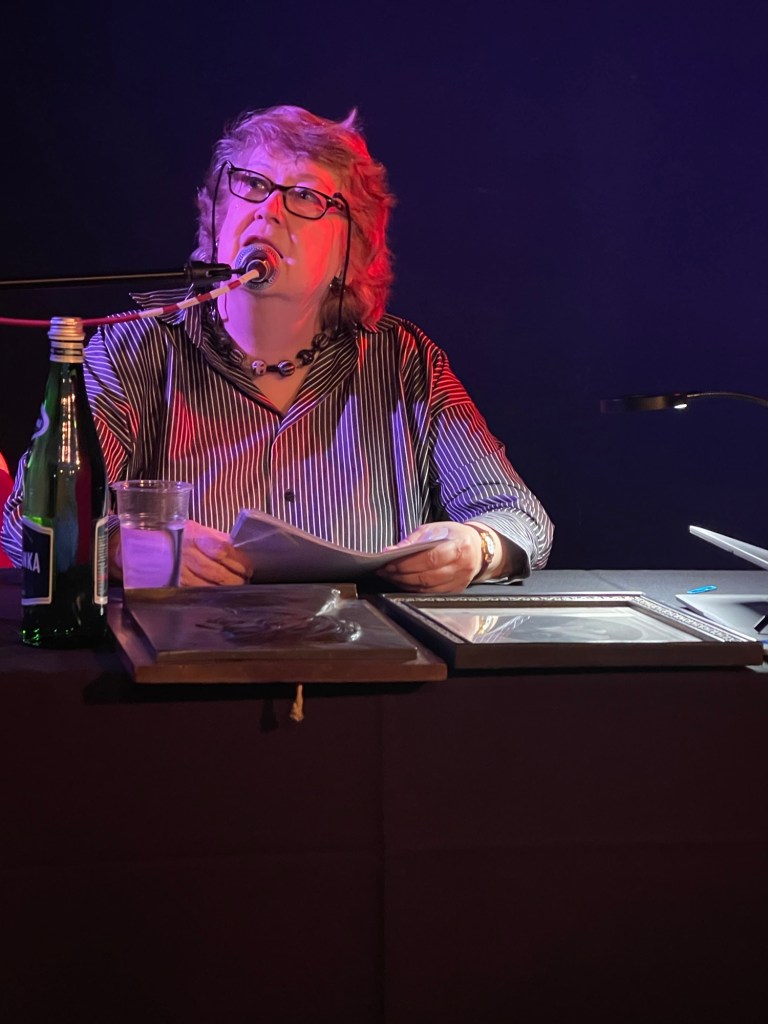
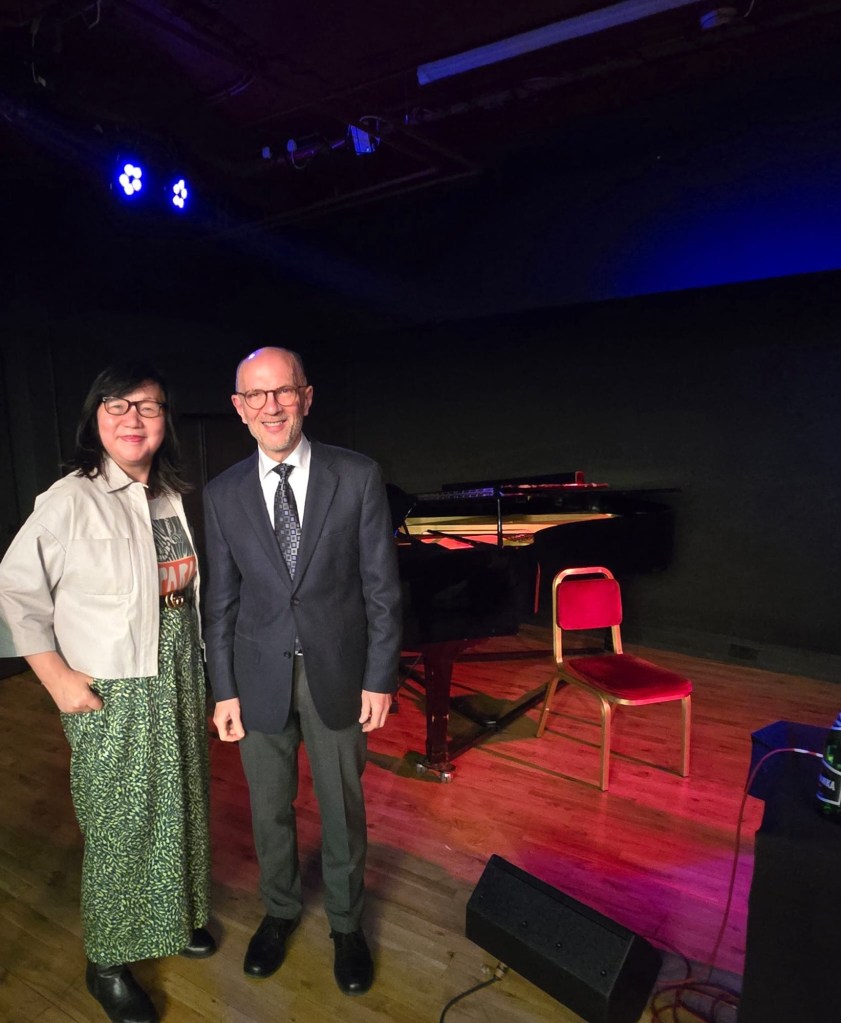
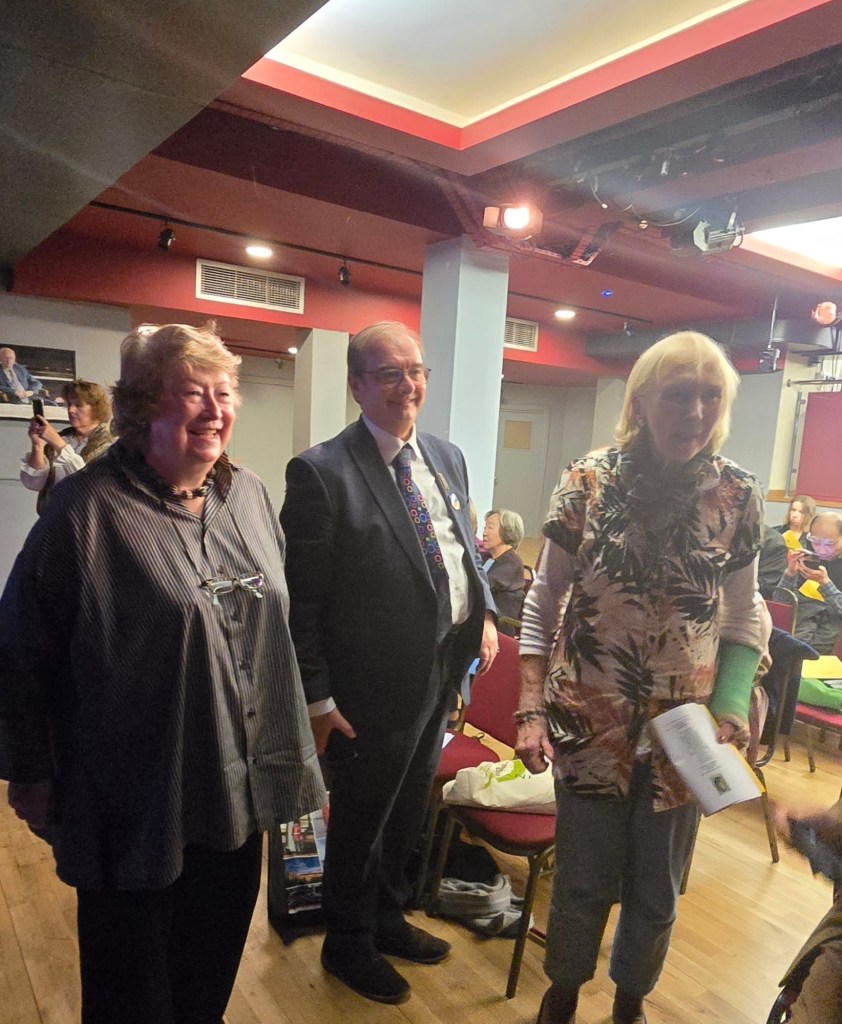
All these wonderful performances followed on from two illustrated talks ;the first of which was Lady Rose Cholmondeley’s fascinating and magnificently presented tale describing the ‘Mysteries surrounding Chopin ‘ . Slipped disc could take a leaf out of Lady Rose’s learned and almost forgotten BBC professionalism as she recounted many secrets that she had discovered about Chopin the man and was prepared to divulge to us today.
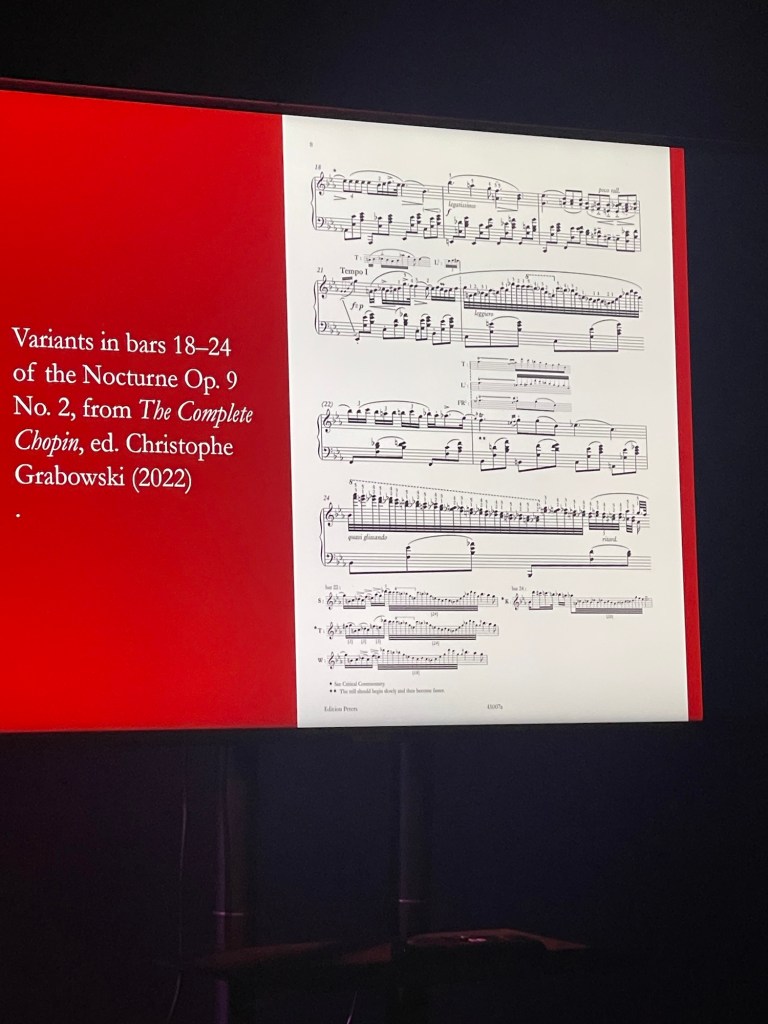
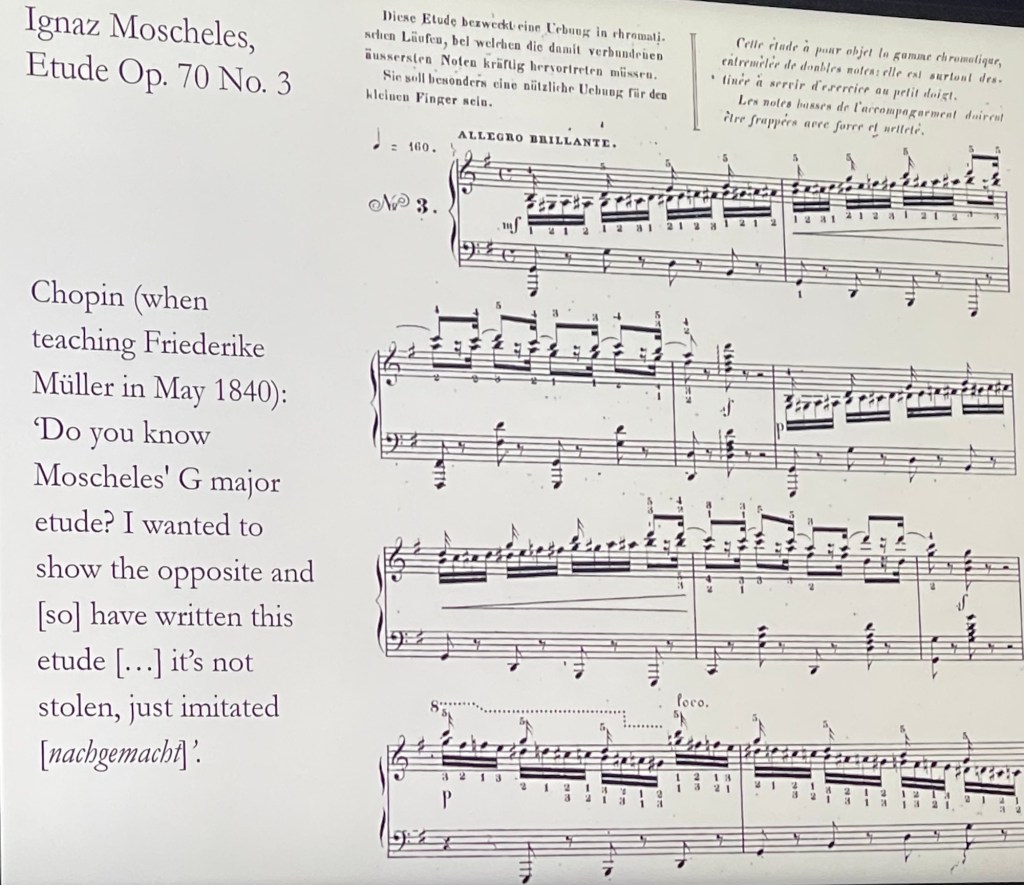
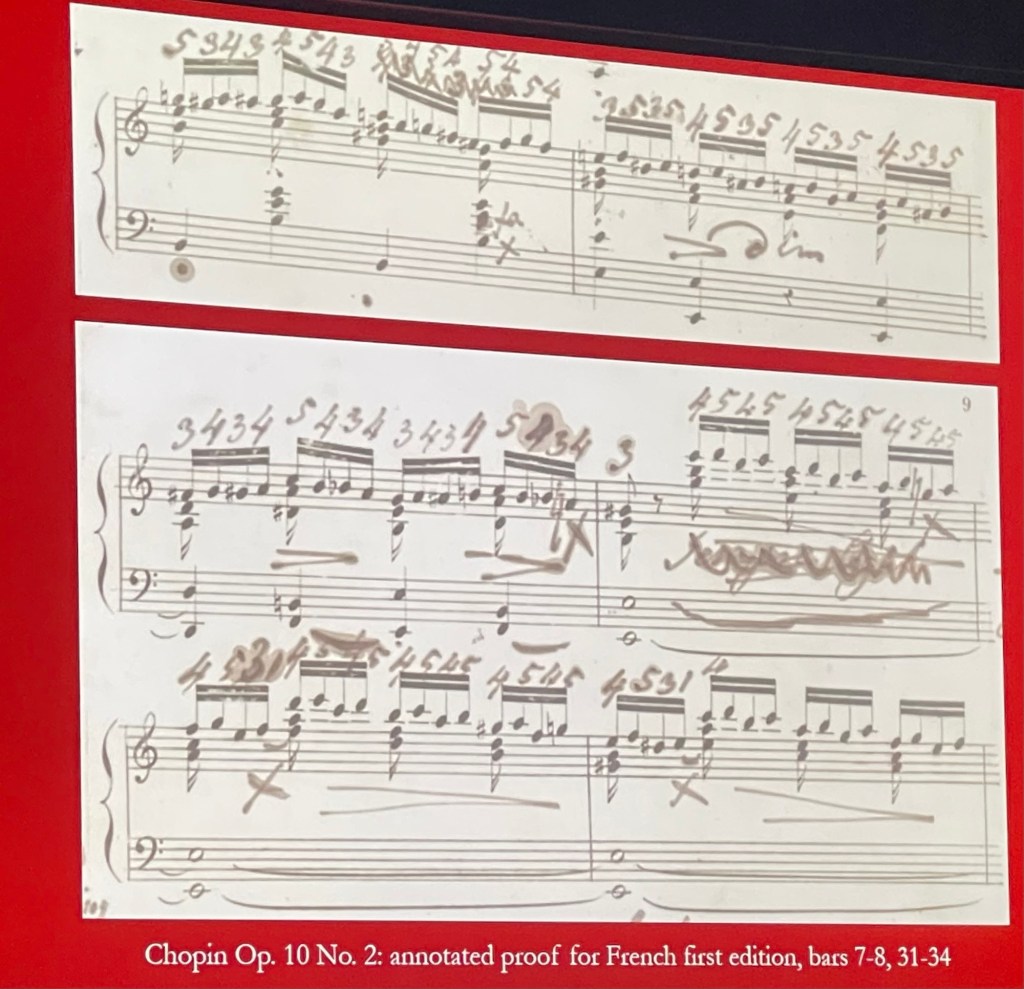
Yisha Xue of the National Liberal club with Prof . Rink Some of the fascinating examples from Prof Rink’s learned description of Chopin’s early works
Prof Rink a much respected Chopin Scholar, Cambridge Professor and International Jury member ,took us on a tour of four of Chopin’s most significant early works , not only demonstrating at the piano but also with performances by Nelson Goerner of the introductions of op 2,13 and 14 .Also of Kochalski playing with great freedom the famous Nocturne op 9 n 2 .Nelson is a great friend of mine as was that other Nelson :Freire whose 80th birthday it would have been this week but for a cruel fateful destiny three years ago left us too early. https://christopheraxworthymusiccommentary.com/2021/11/02/nelson-freire-rip/
Prof Rink, Janusz Sikora Sikorski and Lady Rose
I did find the Krakowiak in Nelsons interpretation rather slow for the Andantino quasi Allegretto indication and am used to hearing the much forgotten Stefan Askenase. There is also a wonderfully aristocratic timelessness to Rubinstein’s performance of op13 with Ormandy and the Philadelphia. Time was against us to discuss further which I would dearly have loved to do with such a renowned and dedicated expert. So many mysteries to unravel in Chopin’s scores apart from his times and heritage so expertly dealt with by Lady Rose
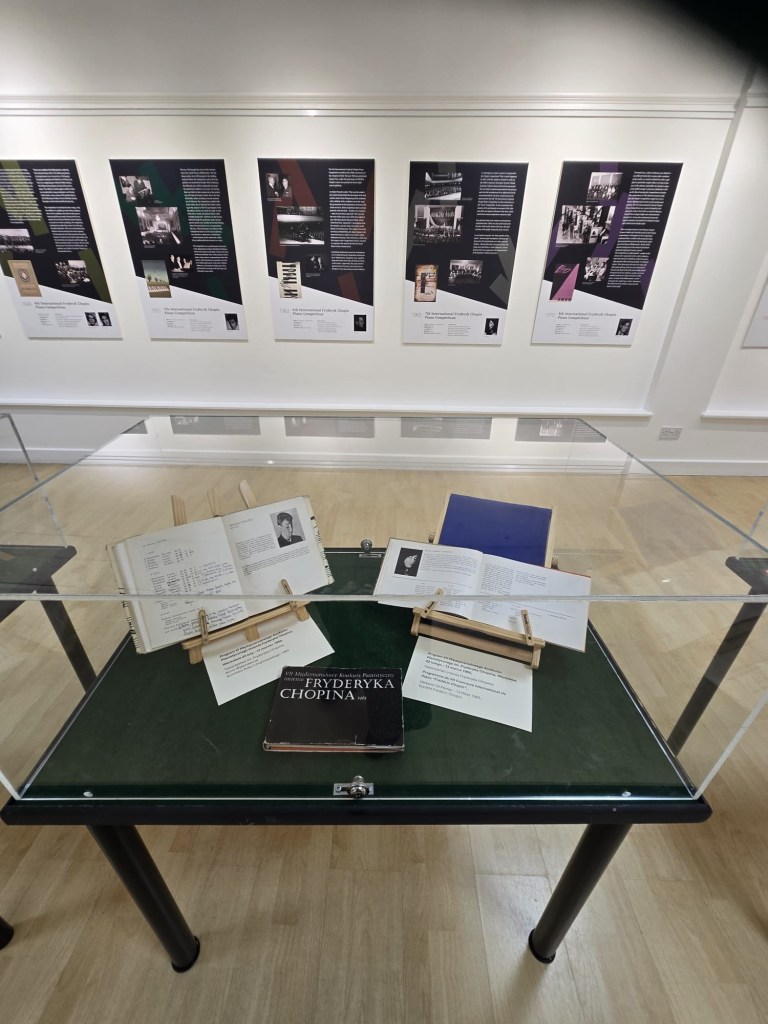
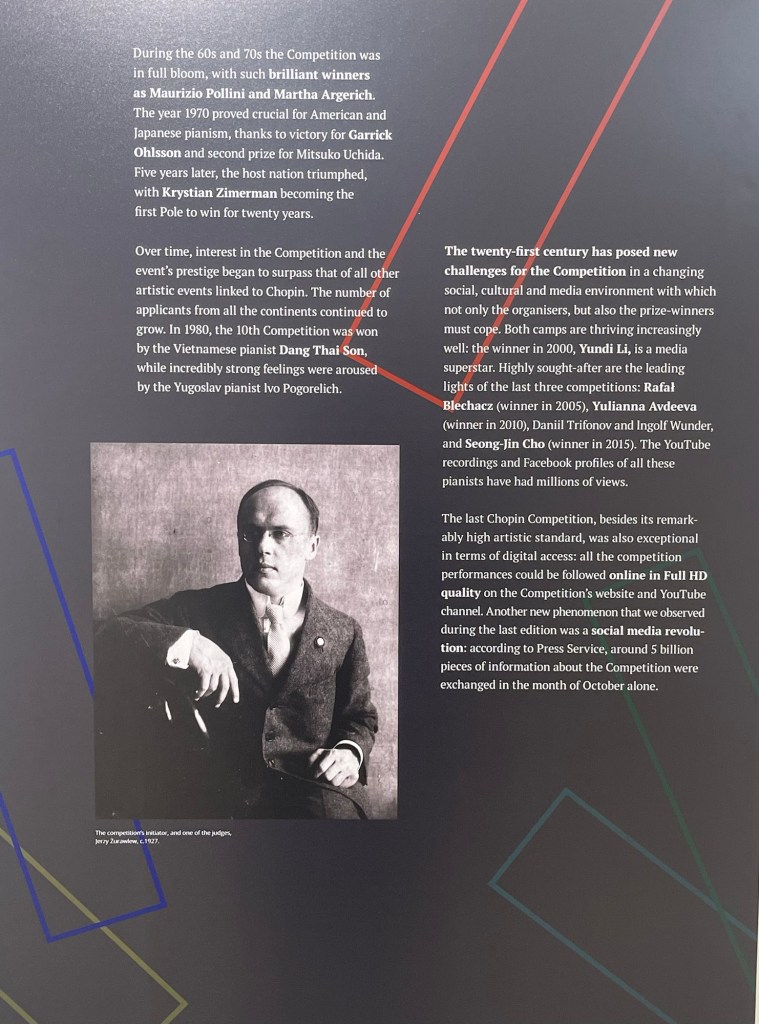
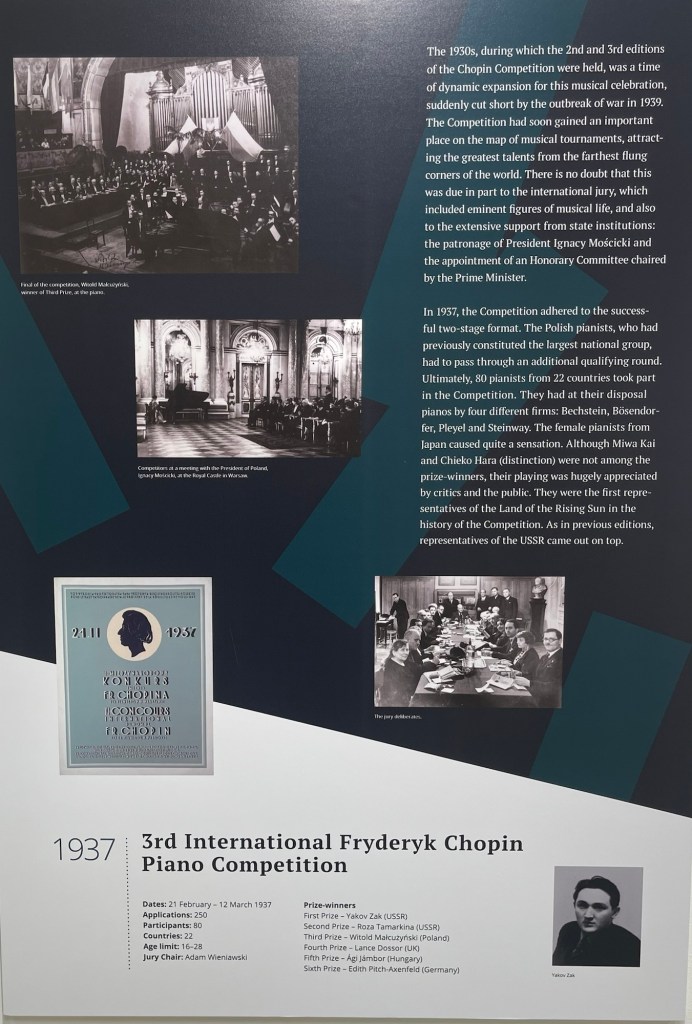
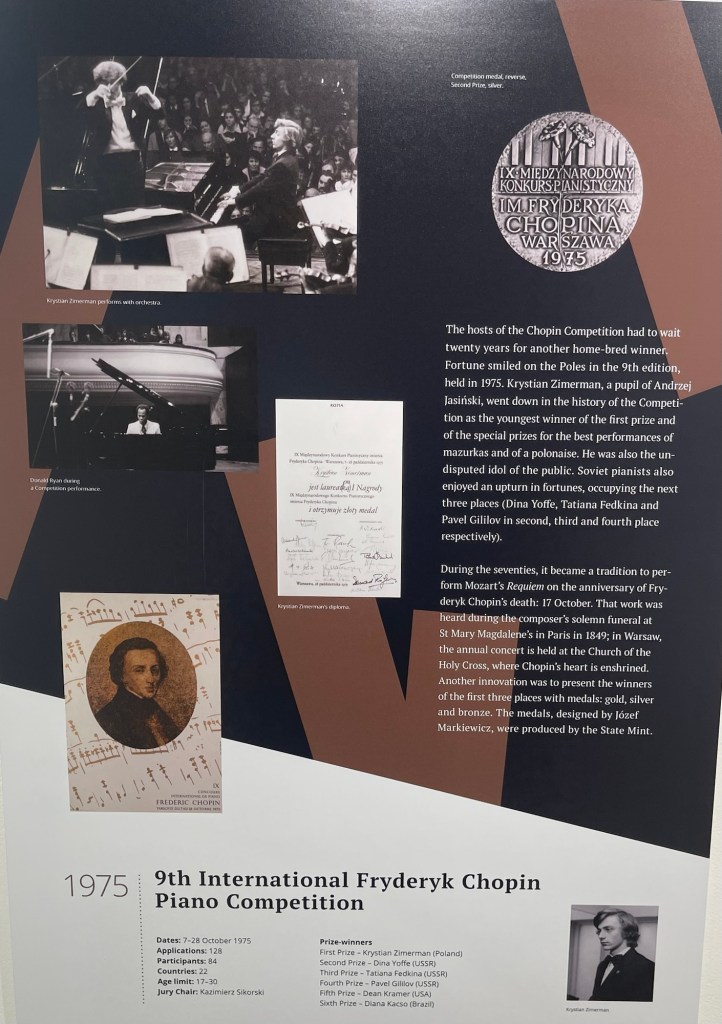
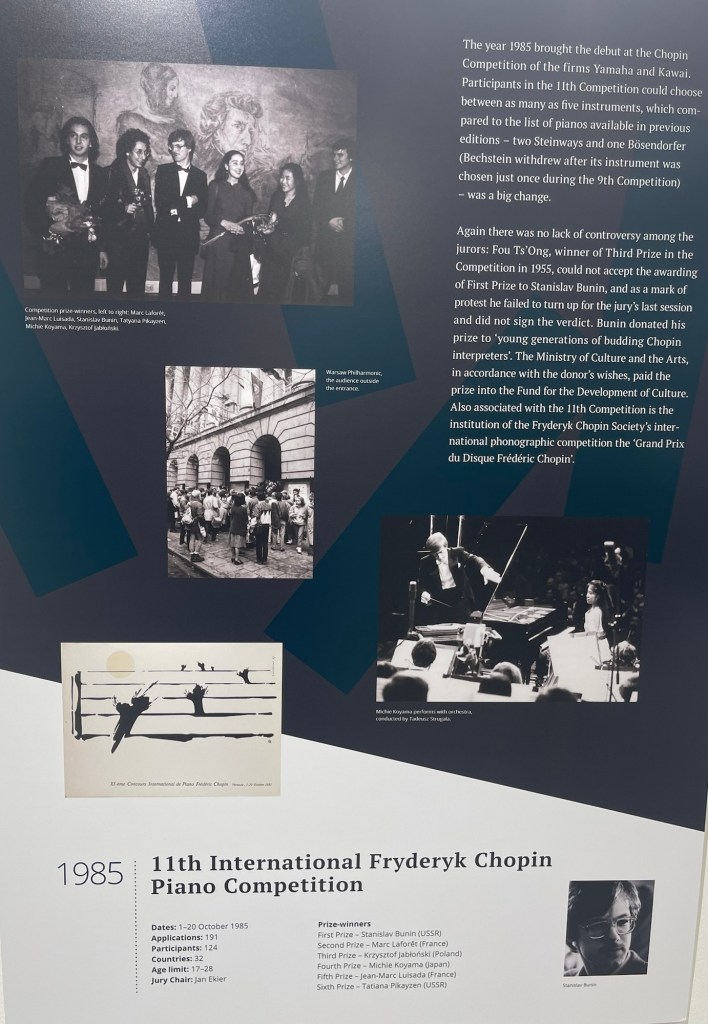
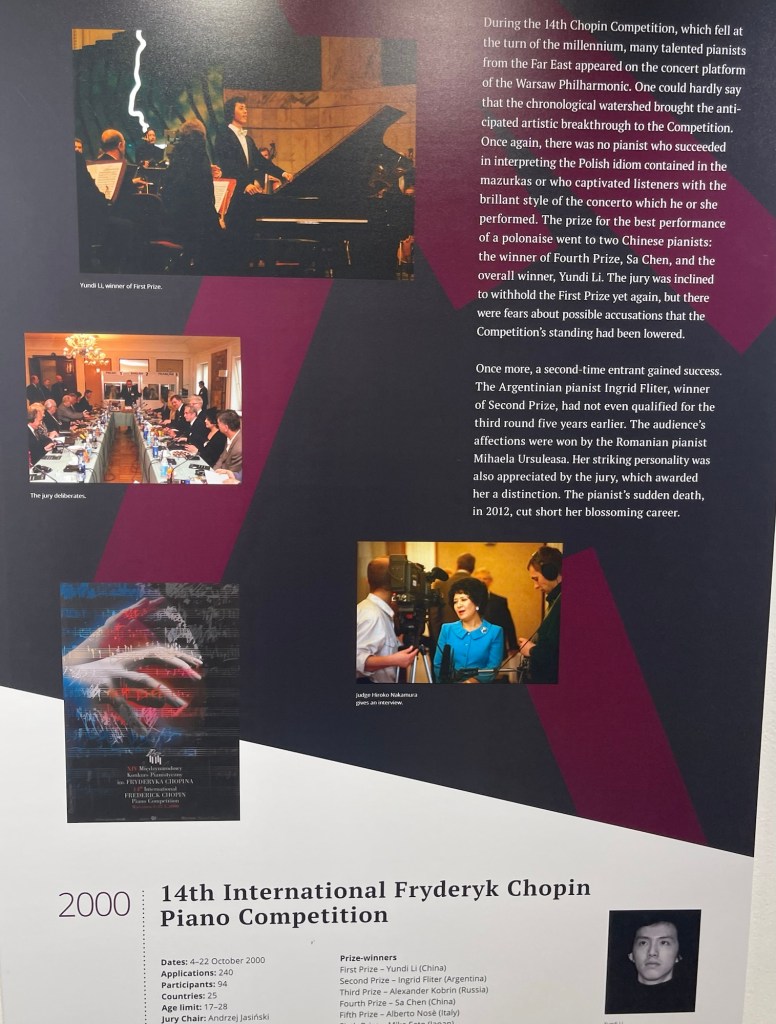
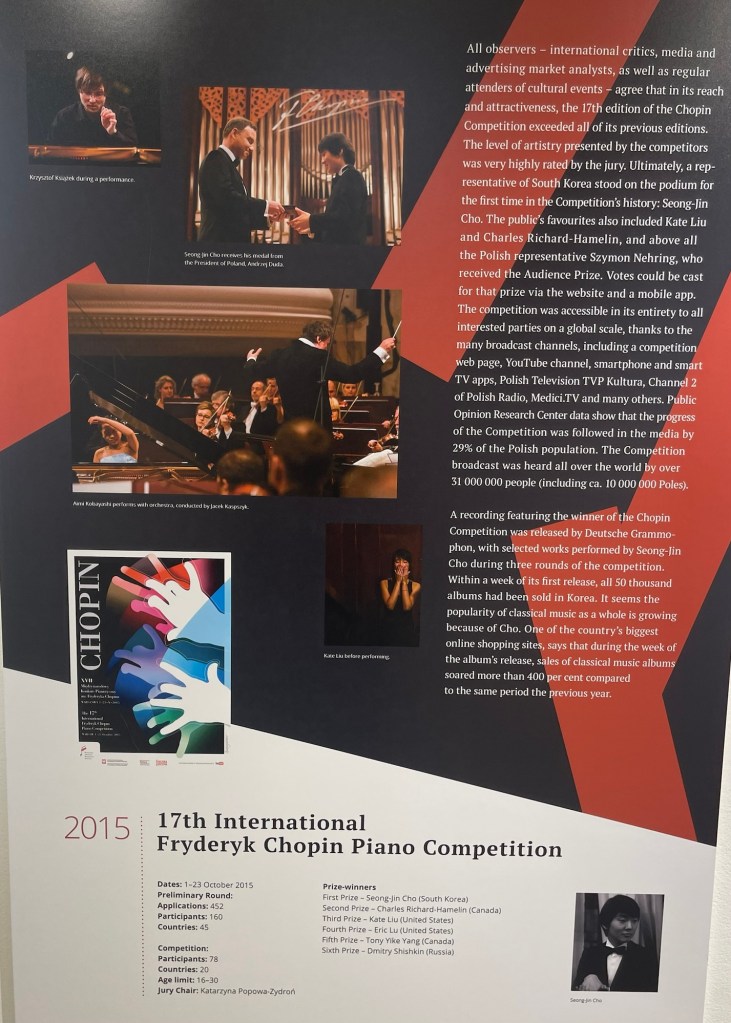
As if this was not enough there was the opening of an exhibition of the Chopin Competition in Warsaw from its first edition in 1927 where even Shostakovich had competed but Lev Oborin won ( his pupil Vladimir Ashkenazy was to win second prize at the 5th edition in 1955 -Fou Ts’ong third together with the Mazurka prize much to the astonishment of the Polish people who thought it was only they that could understand Chopin’s ‘canons covered in flowers’ !). https://christopheraxworthymusiccommentary.com/2021/01/13/roberto-prosseda-pays-tribute-to-the-genius-of-chopin-and-the-inspirational-figure-of-fou-tsong/ 1960 saw an 18 year old Pollini at the helm and an even younger Martha Argerich in 1965 and leading in chronological order to the present day with the charismatic mastery of Buce Liu who was immediately recognised by the critic Jed Distler in the very early stages as playing the Variations on ‘La ci darem la mano’ with the same beguiling sensitivity and mastery as Prof Rink described Chopins own performance when Schumann pronounced ‘Hats off gentlemen,a genius’
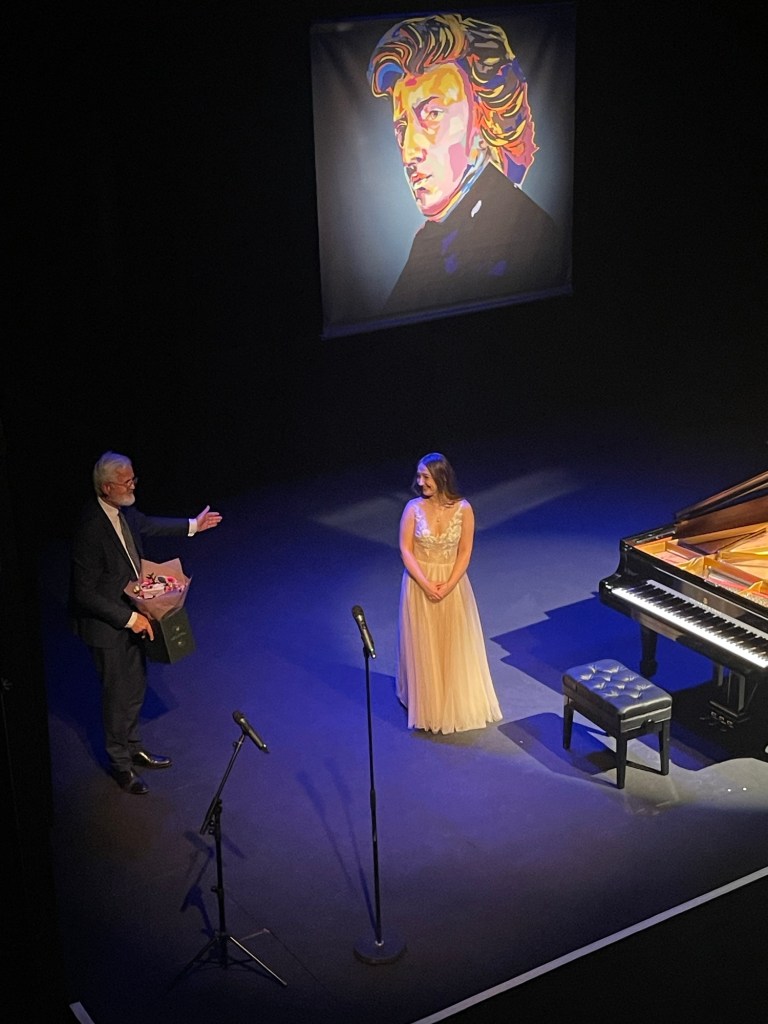
It was a nice touch to finish the Gala performances after such a glorious full immersion of Chopin with Aleksandar Swiguts all or nothing masterly account of these very variations that had put Chopin on the map on his arrival as a teenager in Paris and Vienna
Mateusz Dubiel was born in Bielsko-Biała (Poland) in 2004. He graduated from the Stanisław Moniuszko Music School in his hometown, having studied with Anna Skarbowska. He has been a Prize-winner in competitions both in nationwide venues in Poland, such as the First Prize at the 51st Fryderyk Chopin General Competition in Warsaw (2022), and in international venues, such as Second Prize in the Third International Piano Competition “Jeune Chopin” in Lugano, Switzerland-sponsored by Martha Argerich (2023), and II Prize in 5th Baltic International Piano Competition in Gdańsk. He won First Prize and four specialty prizes in the 27th International Fryderyk Chopin Competition for Children and Youths in Szarfarnia (Poland). In 2021 he placed sixth in the 12th “Arthur Rubinstein in memoriam” International Competition for Young Pianists in Bydgoszcz. He has participated in classes with such noted pedagogues as Andrzej Jasiński, Kevin Kenner, Piotr Paleczny, Arie Vardi and Katarzyna Popowa-Zydron. He has performed actively across Poland and abroad, including appearances in the Royal Castle in Warsaw, Chopin’s birth-house in Żelazowa Wola, the Krzysztof Penderecki European Music Center in Lusławice, the Academy of Music in Bydgoszcz, the Pomeranian Philharmonic, Cavatina Hall in Bielsko-Biała, and abroad in the Festsaal of the Amtshaus Hietzing in Vienna, the Orangerie du Parc de Bagaelle in Paris, and also in Budapest, Mallorca, Hamburg, Köln, and Vilnius (among others). In May of 2023 he played solo recitals in Tokyo, in the “Chopin in Omotesando” festival, and in Osaka, Kobe, and Hamamatsu (Japan).
Mateusz Dubiel appeared in music festivals such as, among others, Chopin Festival in Duszniki-Zdrój (Poland), Paderewski Festival in Raleigh, and Chopin à Paris. He won scholarships in numerous other competitions: Bielsko-Biała Mayoralty Prize, the National Fund for Young People in Music, the Teresa Sahakian Fund for the Royal Castle in Warsaw, the Ministry of NationalHeritage and Sport (for each of the last three years), and the Fund for “Young Poland” in 2021.
He is presently studying at the Music Academy in Kraków with prof. Mirosław Herbowski.
Piotr Pawlak was born on 20 February 1998. He is a student of Waldemar Wojtal at Gdańsk Music Academy. Piotr Pawlak is one of the most versatile Polish pianist of the young generation. Winner of many international competitions, among others V Maj Lind International Piano Competition in Helsinki (2022) and XI International Chopin Piano Competition in Darmstadt (2017), laureate of Chopin Competitions in Beijing (2016), Budapest (2018) and Cracow (2019), International Competition of Polish Music in Rzeszów (2019), International Paderewski Competition in Bydgoszcz (2022) and International Chopin Competition on Period Instruments in Warsaw (2023). After winning the competition in Helsinki, he regularly gives concerts in Finland. This year he made his debut with many Finnish orchestras, including Jyväskylä, Vassa and Kuopio, performing piano concertos of Mozart, Schumann, Brahms and Rachmaninoff. He played recitals in Helsinki, Tampere and Turku and is invited to the most prestigious Finnish piano festivals, e.g. Mänttä Music Festival and PianoEspoo Festival. Piotr also performs frequently in Poland. This artistic season he cooperated with Polish Chamber Orchestra Sopot, Philharmonic Orchestra of Zielona Góra and Toruń Symphony Orchestra with Chopin and Grieg piano concertos. In previous years he performed at numerous musical events in Germany, France, Spain, Italy, Hungary, Belgium, Switzerland, Georgia, Russia and United States. As a soloist, he has played with the Warsaw National Symphony Orchestra, Lower Silesia Philharmonic Orchestra, Holy Cross Philharmonic Orchestra, West Bohemian Symphony Orchestra, Ningbo Symphony Orchestra, Baltic Philharmonic Orchestra, Finnish Radio Symphony Orchestra and others. He performed on such stages as Sankt Petersburg Philharmonic, Berliner Philharmonic, Sala Verdi in Milano, Teatro alla Scala and at such festivals as „Kissinger Sommer” in Bad Kissingen or „Chopin and his Europe” in Warsaw. In 2019 he embarked on a concert tour of China. Next season he will return several times to Finland, e.g. for concerts with Kymi Sinfonietta and Joensuu City Orchestra, he will also give a series of recitals in Japan. He began his musical education on the piano at the age of six in Feliks Nowowiejski Music School in Gdansk with Ewa Włodarczyk, and then he continued to study with Waldemar Wojtal until the end of his studies in 2021. He also graduated music school finishing in organ studies, under the tutorship of Hanna Dys, and now he studies conducting in The Stanislaw Moniuszko Music Academy in Gdansk with Zygmunt Rychert. He attended masterclasses with, among others, Kevin Kenner, Dang Thai Son, Dmitrii Alexeev, Eugen Indijc, Phillippe Giusano, Katarzyna Popowa-Zydroń, Wojciech Świtała and Janusz Olejniczak. Piotr Pawlak tries to bring back improvisation to the classical music world. He is inspired by historically informed performances, for example playing improvised cadenzas in Mozart’s piano concertos. In the Chopin Competition in Darmstadt, besides the 1st prize, he also received a prize for the best improvisation on the themes from Der Freischütz. In 2020 he was awarded 2nd prize on the „Transatlantyk Instant Composition Contest” at the International Film Festival in Katowice. In addition to his pianistic career, Piotr has been a laureate of organ competitions and of national and international olympiads in mathematics, informatics and other sciences. After finishing his Master’s degree in Mathematics at the University of Gdansk in 2020, he is preparing a PhD dissertation about mapping class groups of non-orientable surfaces.He has won prizes in many international piano competitions, including first prize and the improvisation prize in the 11th Darmstadt International Chopin Competition, second prize in the 1st Beijing International Chopin Competition for Young Pianists and second prize in the 1st Stanisław Moniuszko International Polish Music Competition in Rzeszów. He is a recipient of scholarships from numerous Polish institutions: the National Children’s Fund, Ministry of Culture and National Heritage, Ministry of National Education, Marshal of Pomerania Voivodeship and Mayor of Gdańsk. He has performed extensively in Europe, as well as in the US and China.
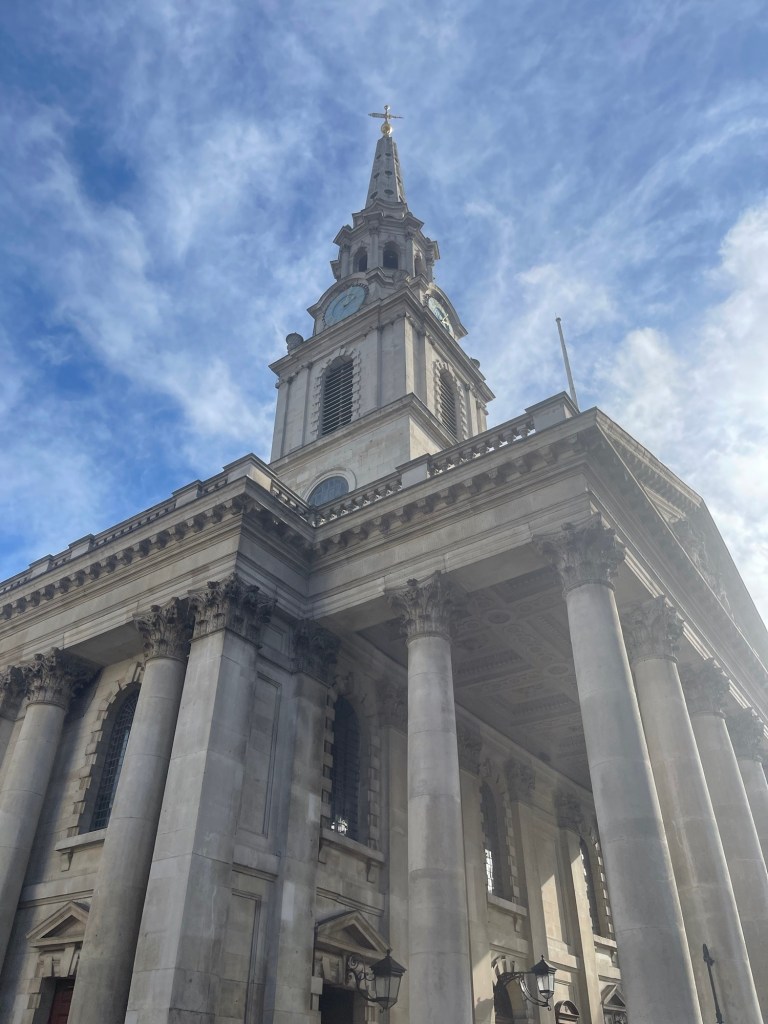
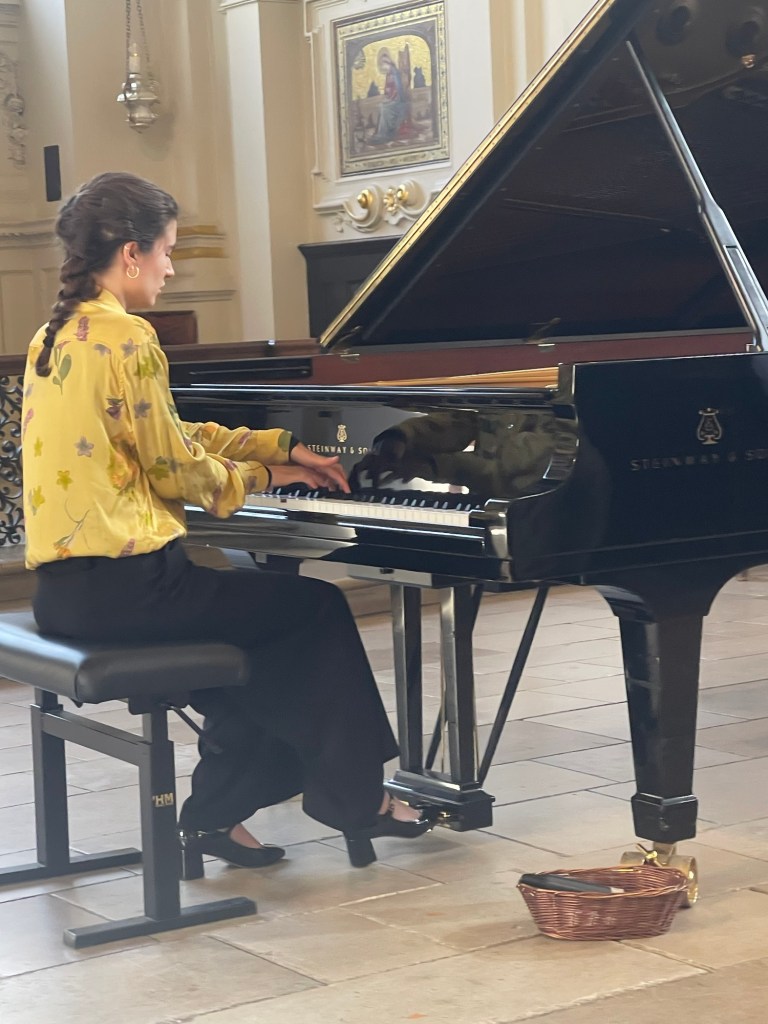
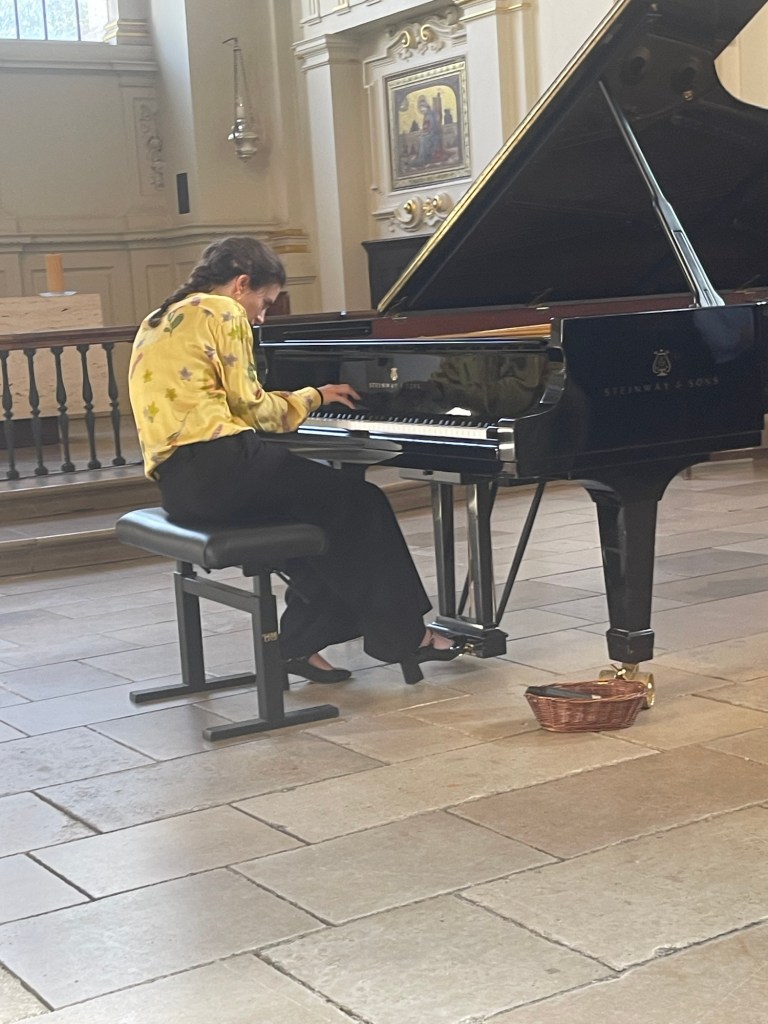
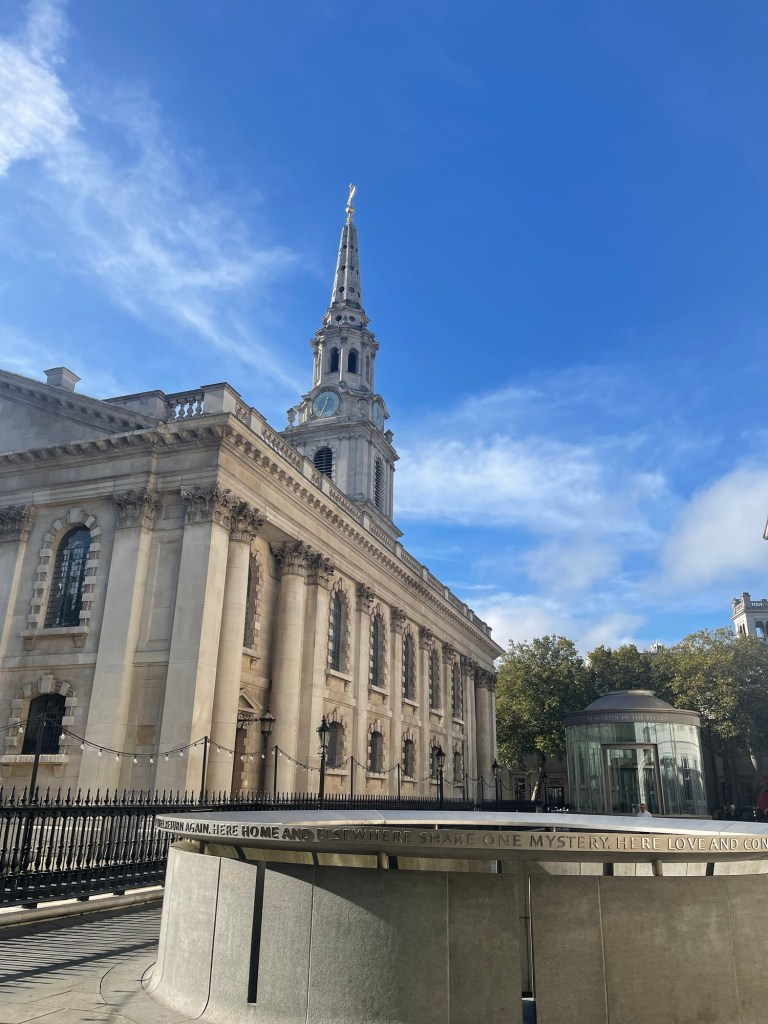
‘Un sacco vuoto non sta in piedi’ is a well know Italian saying which certainly does not apply here to this superb young Italian pianist. An intelligence and sensitive artistry combined with a technical mastery that held us spellbound at St Martin’s today.
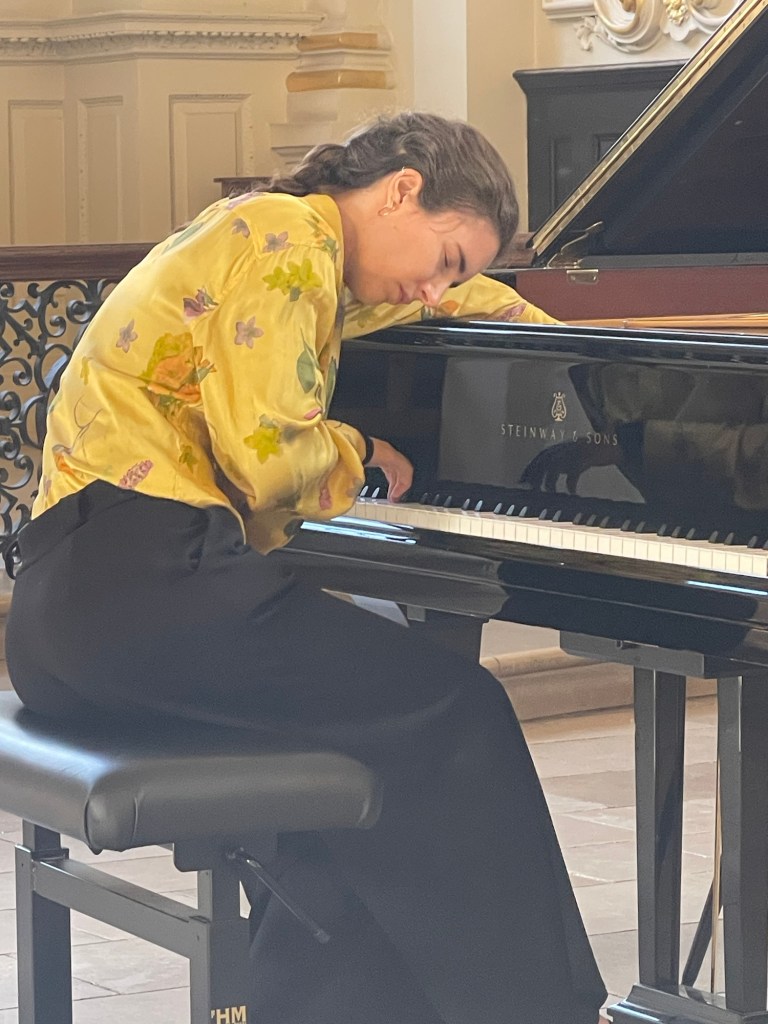
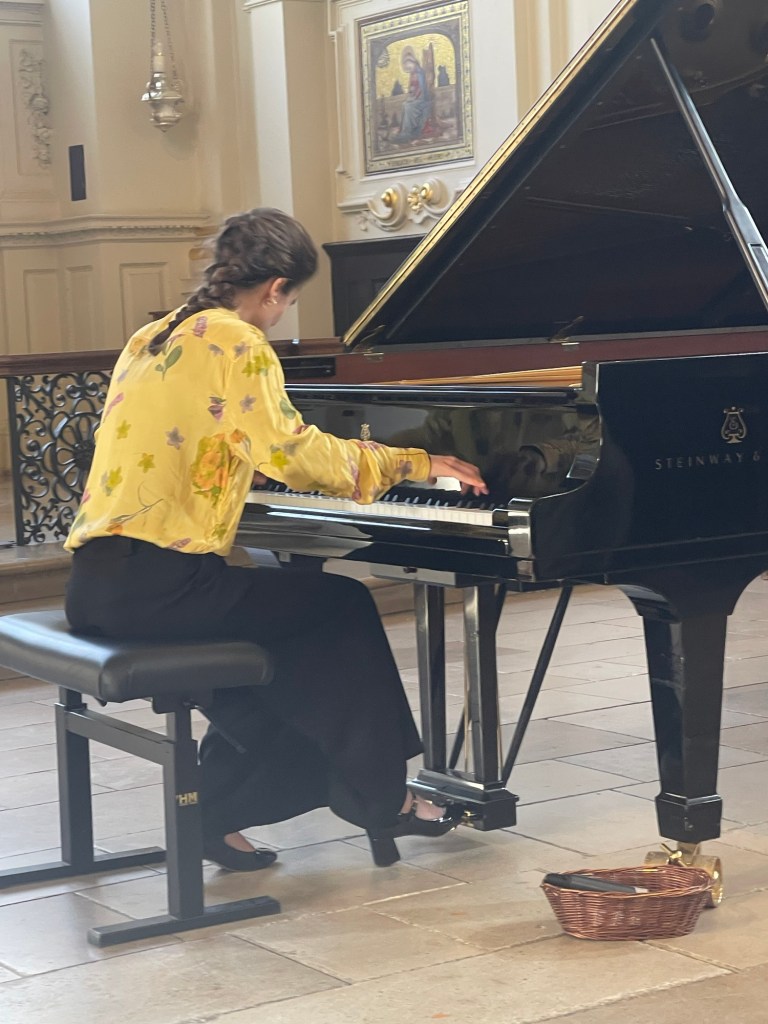
With a Masters and Fellowship from the Royal Academy she also holds a degree in Physics from Padua , one of the oldest universities in Italy. It was not surprising then that everything she played made such musical sense but it was allied to a beauty of execution where she looked as though she was swimming in the sumptuous sounds that were pouring from her movements.
She was like an artist in front of his canvas. Except of course in the Turkish piece by Fazil Say where she is required to make the sound of the ‘Ud’ by dampening a string with her palm whilst the strings are then struck percussively but muted as with a leather covering. She created the most atmospheric sounds of insinuating colour and subtle inflections as the insistent haunting chant continued unabaited . It reminded me of the extraordinary effect that Bartok creates in his ‘Out of doors suite.’
The only difference being the explosive central episode where our Sacco really let rip in jazz style alla Gulda or should I say Say ! Of course Bartok too created the sounds that he found in the countryside of his homeland as indeed Say does. Only Fazil Say has paid dearly for his honesty on behalf of the simple people of his country !
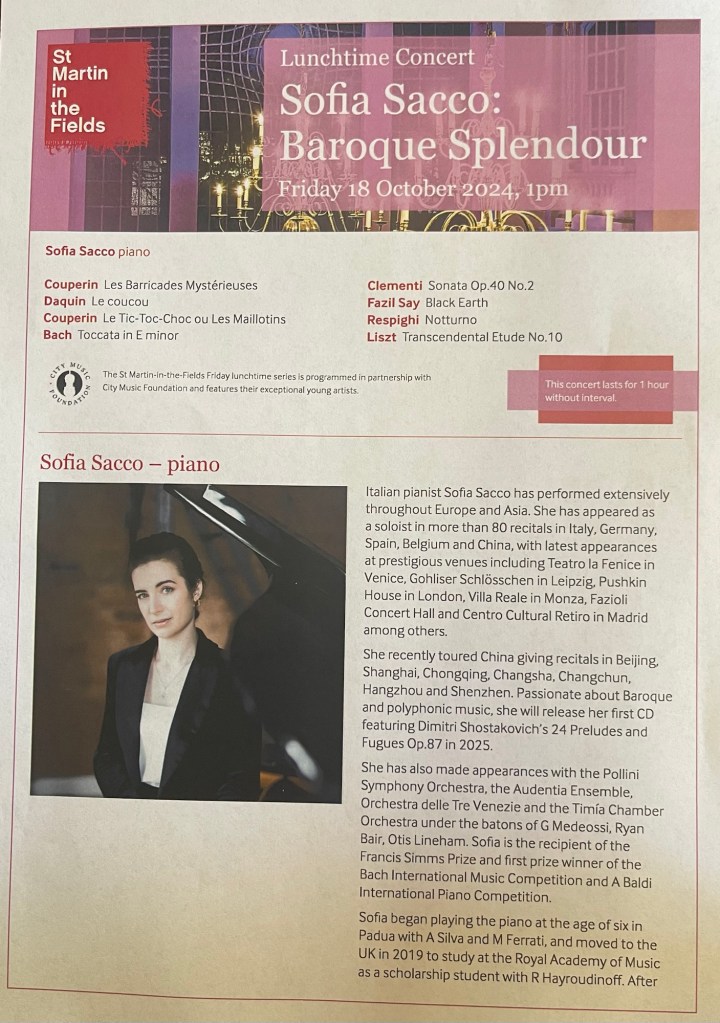
Sofia had started with ‘Baroque Splendour’ ( viva the PR boys that can invent titles that can entice an innocent public into titivation and temptation. If only Mozart or Schubert had known about them they would not have died paupers !) What was programmed were three of the most famous pieces for harpsichord by Couperin and Daquin together with a Bach Toccata. ‘Les Barricades Mysterieuses’ immediately showed how the fluidity of Sofia’s playing could mould these simple harmonies into a beguiling magical amalgam of sounds. The famous ‘Cou cou ‘ was allowed to sing her heart out with ravishing piecing beauty as she jumped from branch to branch of this beautiful tree, blissfully happy to be in such a landscape full of streams of gold and silver murmurings. But Sofia also gave an architectural shape to this disarmingly simple piece with a kaleidoscope of sounds and a subtle range of dynamics . A rhythmic drive to ‘Le Tic Toc Choc’ with a beauty and delicacy that rarely we hear from others. Single notes that were spun as blocks of shifting harmonies played with an exhilaration and ‘joie de vivre’ that created a tone poem of delight (not Turkish as that came later in the untitled part !)
Bach of course was monumental with its opening so nobly stated by Sofia with a delicate fugato of extraordinary beauty and clarity followed by a deeply expressive recitativo before the Toccata where our Sacco was like a woman possessed of hysterical relentless energy. An untitled second half opened with a Clementi sonata of dynamic drive and a passionate outpouring of streams of notes from one of the first virtuosi of the keyboard. A chiselled beauty of the Andante with long expressive lines played with poignant significance even if they were more of a craftsman than a genius.There was scintillating energy and technical assurance with the knotty twine of the final Presto played with breathtaking brilliance .
Say’s ‘Black Earth’ followed and I was so pleased that it was linked probably unintentionally, through lack of applause, to Respighi’s beautiful Nottorno. In this way it seemed to inhabit the same magic world of wondrous sounds and delicate atmospheres . Playing of ravishing beauty and an extraordinarily poetic sense of balance . No applause again allowed Liszt’s F minor transcendental study to enter in a whisper as it built to a tumultuous climax and romantic fervour. Intelligence too as the rests gave magnificent phrasing to a melodic line that too often is played with passion at the expense of intelligence and control. Of course spontaneous applause after the animal excitement that our beautiful Sacco had generated and two encores one Baroque as per title and a Shostakovich Prelude as without.
A triumph that this ‘bag’ was not empty and could happily stand triumphantly in front of this capacity audience.
Italian pianist Sofia Sacco has performed extensively throughout Europe and Asia. She appeared as soloist in more than 80 recitals in Italy, Germany, Spain, Belgium, and China with latest appearances at prestigious venues including Teatro la Fenice in Venice, Gohliser Schlösschen in Leipzig, Pushkin House in London, Villa Reale in Monza, Fazioli Concert Hall and Centro Cultural Retiro in Madrid among others.She recently toured China giving recitals in Beijing, Shanghai, Chongqing, Changsha, Changchun, Hangzhou and Shenzhen. Passionate about Baroque and polyphonic music, she will release her first CD featuring Dimitri Shostakovich’s 24 Preludes and Fugues Op.87 in 2025.She has also made appearances with the Pollini Symphony Orchestra, the Audentia Ensemble, Orchestra delle Tre Venezie and the Timía Chamber Orchestra under the batons of G. Medeossi, Ryan Bair, Otis Lineham. Sofia is the recipient of the Francis Simms Prize and first prize winner of the Bach International Music Competition and A. Baldi International Piano Competition.Sofia began playing the piano at the age of 6 in Padua with A. Silva and M. Ferrati, and moved to the UK in 2019 to study at the Royal Academy of Music as a scholarship student with R. Hayroudinoff. After completing her Master of Arts and Professional Diploma, Sofia was appointed Hodgson Fellow of the Royal Academy of Music for two consecutive years, and has recently been awarded the Aud Jebsen Fellowship for 2024/2025.Inquisitive and widely curious, she is also a Physics graduate from the University of Padua. Alongside her performing career, Sofia is an enthusiastic teacher, and she currently holds a teaching position at Trinity Music School and Queen’s College in London as well as teaching at the Royal Academy of Music as part of her fellowship.
The enigmatic maestro Magill astonishes and informs us again, this time with simple grand Beethoven. The last thoughts on the piano with his six bagatelles op 126 and then the longest and most complex of all his 32 Sonatas ,the ‘Hammerklavier’ op 106. Beethoven of course from one extreme to another as his lifelong journey as depicted in 32 steps comes to an end and the paradise that awaits is in sight after a long and turbulent life .It is this contrast between turbulence and serenity that Ronan Magill brought out with astonishing clarity not only of playing but above all of thought.
Six Bagatelles that were six tone poems where the few simple notes had such a significant and poignant meaning as the Andante unfolded with a ravishing sense of balance that gave a radiance to the serene calm that Beethoven was able to depict. Ronan built it gradually to a fleeting climax that gave great architectural shape before dissolving into the calm whispered ending.Ready to burst into a turbulent irascible outburst but this time with Beethoven bursting into a lyrical outpouring which rode on this turbulent undercurrent that was sure to explode again.Ronan was living every moment of these quasi theatrical scenes as you could see him throw his arms up in surprise as he waited for the calm to be so miraculously restored. In fact all through Ronan’s world of Beethoven there was a theatricality added of course to an intellect that made Beethoven’s surprises so actual as they took us all unawares.The beautifully etched Andante in E flat with long melodic lines of prayer like intensity was with a beautifully judged pedal effect at the end.The extraordinary thing is that Ronan had understood the intention of Beethoven but translated onto a modern instrument with intelligent sensibility. Great rhythmic drive to the fourth played with such clarity that even the drone bagpipe effect had a great architectural shape and the dramatic contrasts were even more overpowering.Ronan brought a simple pastoral beauty to the Allegretto before the explosion of the last Bagatelle that dissolves into just fragments floating in the visionary paradise that Beethoven could envisage and that awaited him before long.A great sense of drama ,surprise and poignant meaning all played with a simple mastery where it was enough to allow these last words to the genius of Beethoven.
What to say of Ronan’s Hammerklavier with a performance of such clarity and overwhelming theatricality allied to moments of deeply moving intensity and poignant significance .Beethoven’s fantasy too was revealed rather than stated by a pianist who was truly living every moment of such a monumental statement. Even after the final mighty chord Ronan was an anxious to talk about his discoveries and thoughts .But time was against us and in the end anyone who had ears to listen carefully will have found that Ronan’s playing spoke far more clearly than any words ever could. There used to be an advertisement for Heineken beer in which it said Heineken refreshes parts you did not know you had!
It may be sacrilege to talk about beer and Hammerklavier in the same breath but the effect of both is very similar! I will never forget Serkin playing it in the Royal Festival Hall and even holding the final chord having created such tension that he was literally shaking and in a hysterical state as we were too in the audience.
A famous critic once remarked that he had gone to hear a remarkable pianist play the Beethoven Trilogy at the end of a complete cycle of the 32 Sonatas .There was such a request for tickets that the concert was repeated live a couple of hours later.I had heard the broadcast of the first performance and had the score beside me and a glass of wine as I sat in my garden ready for the worst from the latest ‘wizz kid’. I was overwhelmed by the authority and fidelity as well as beauty and mastery .I asked the critic if the second performance was as good.’Oh yes’ said he ,’but you know Christopher when I went to hear Arrau play the same trilogy live ,not only he was completely drained and exhausted but so was the audience.He could never have just had a quick cup of tea and gone out to do it all over again!’ I think this is very significant for the meaning of live performance as recorded or as Gilels used to say the difference between fresh meat and canned !
It is interesting to note that she like Ronan approach the opening declaration in the same way. Great discussions always about playing with one hand or splitting with two or should it be A or A sharp later on in the bass.All details because it is the intention that is so important as Richter so often showed us ( his Hammerklavier was memorable but as he was not happy with the way he played the fugue knowing it was being recorded he played it all over again !) Annie Fischer has gone down in history as standing in at the last minute for Louis Kentner in the Festival Hall when she played the fugue as an encore !
It was indeed the intention behind the notes in Ronan’s performance that was so arresting .For him and for us it was as though we were listening to a work where the ink was still wet on the page. The theatricality of the Allegro was followed by the fleeting precise rhythmic drive of the scherzo with its crazy hysterical interruption before going gently on it’s way .Taking us on a path and into a world that only in the last quartets was Beethoven able to express so much with so little. There was the improvised transition to the fugue that was quite remarkable for the way that Ronan seemed to be discovering the way, just as Beethoven surely would have improvised on the piano. Ronan played the impossible fugue with dynamic drive and fearless abandon just as Richter had done ….this is not play safe music but music brought to the limit and beyond of what is humanly possible on one instrument. This is in fact music to test human endurance and intellectual understanding whilst entering an inner territory that some call ‘soul’.
I t is for a chosen few and today we were privileged to hear such a performance.
The pianist and composer RONAN MAGILL (born Sheffield 1954) was, as a nine year old, chosen to be one of the founder pupils of the Yehudi Menuhin School. Later after a period at Ampleforth College, and on the advice of Benjamin Britten, he went to the Royal College of Music working with David Parkhouse and later John Barstow, and winning all the major prizes for piano and composition. After his Wigmore and South Bank debuts (Brahms 2 nd Concerto) in 1974, and again on Britten’s advice, he moved to Paris to study with Yvonne Lefebure at the Conservatoire, and then remained in Paris for a number of years, performing regularly both in concert and on TV and radio, and also receiving advice from Pierre Sancan, and Nikita Magaloff and Arturo Benedetti Michelangeli in Switzerland. In 1985 Magill won ist Prize in the 1 st “Milosz Magin” International Competition for Polish Music, followed by a European tour, and then after returning to the UK , he won the 3rd British Contemporary Piano Competition which a UK tour and concerts on BBC Radio 3. In recent years Magill has been performing in the UK, USA (Rachmaninoff 3 rd Concerto) and most recently in Japan where he has been living since 2013 performing in many cities. He returned to the UK in April 2021 and has given three memorable recitals at St Mary’s Perival