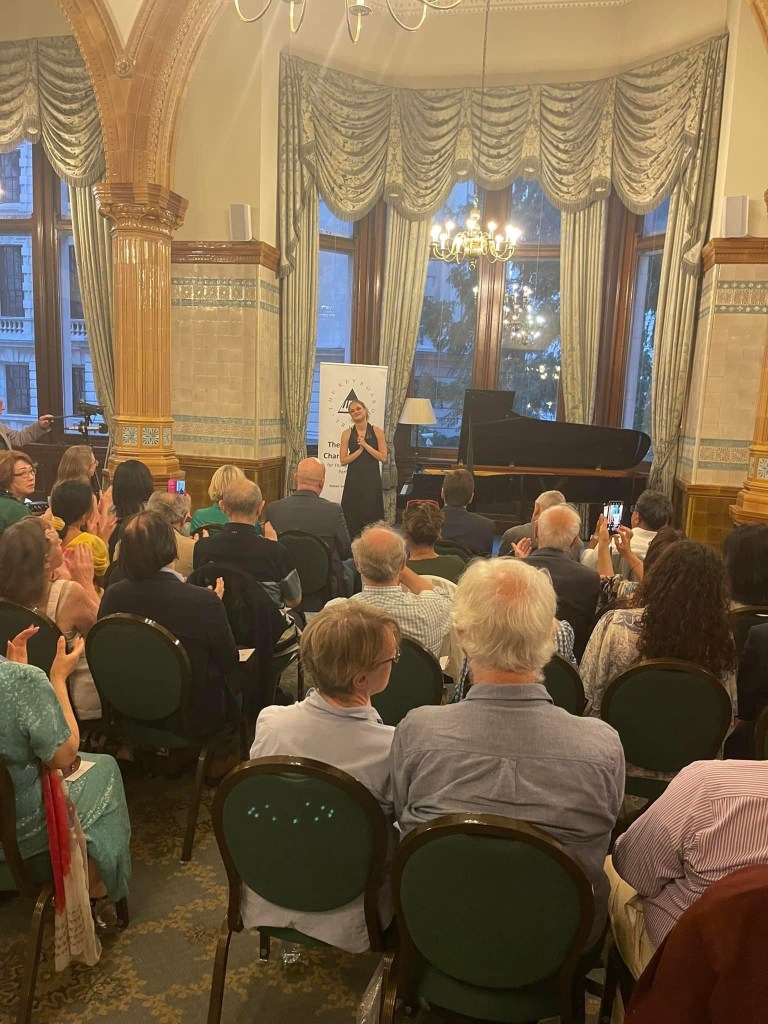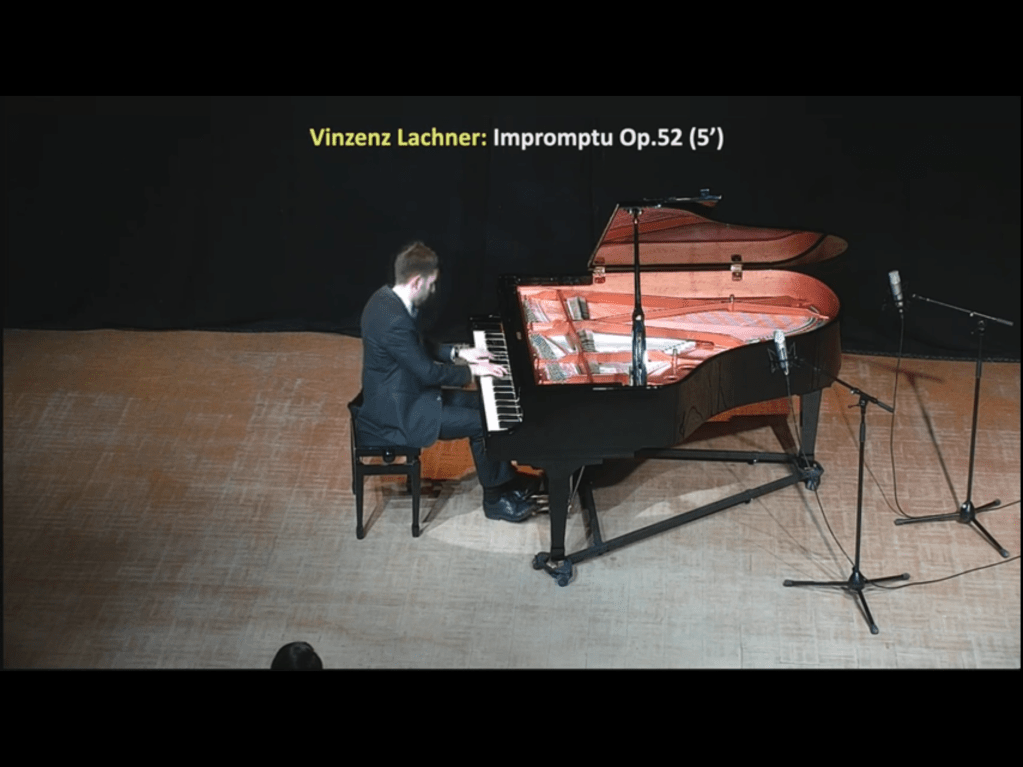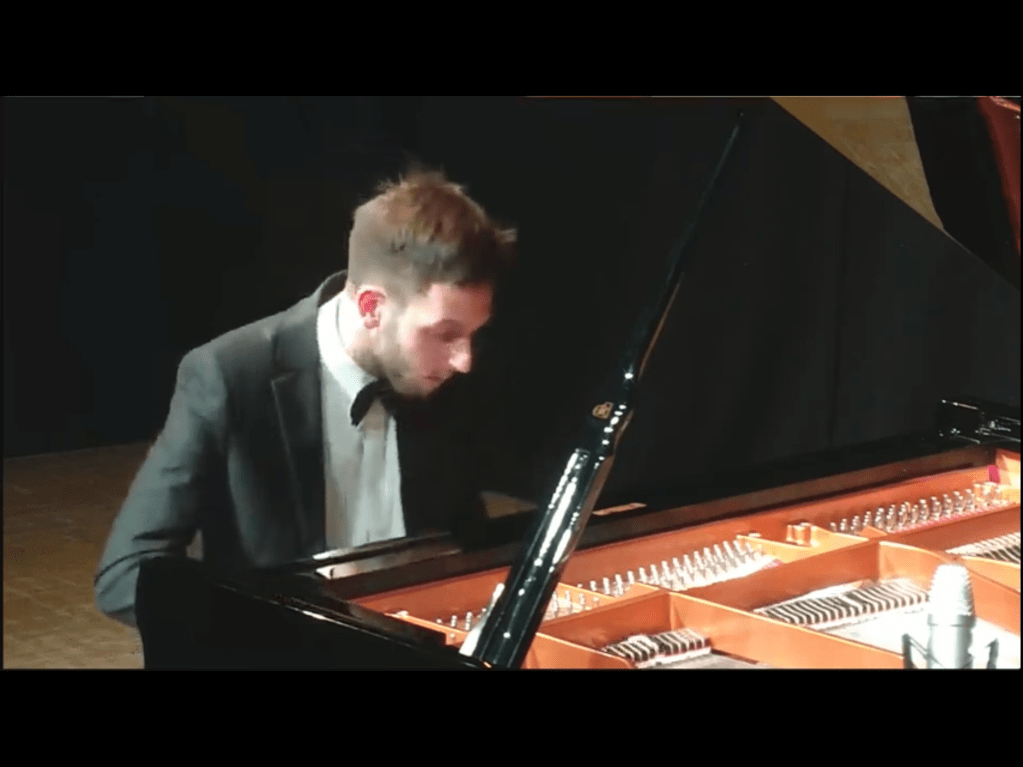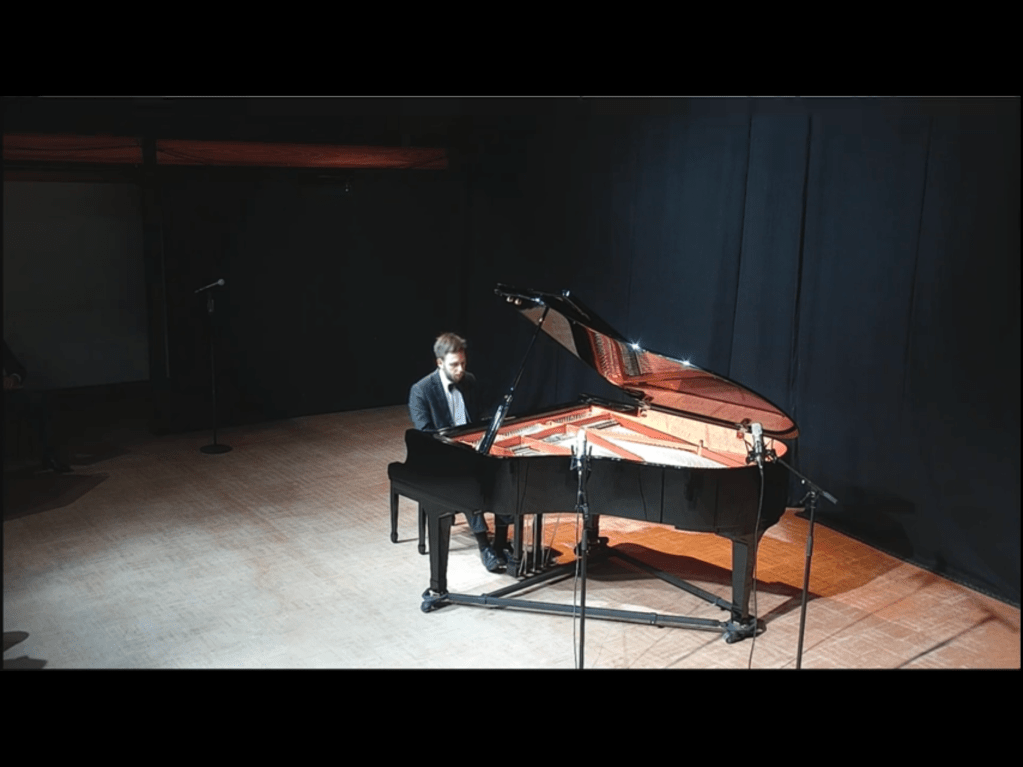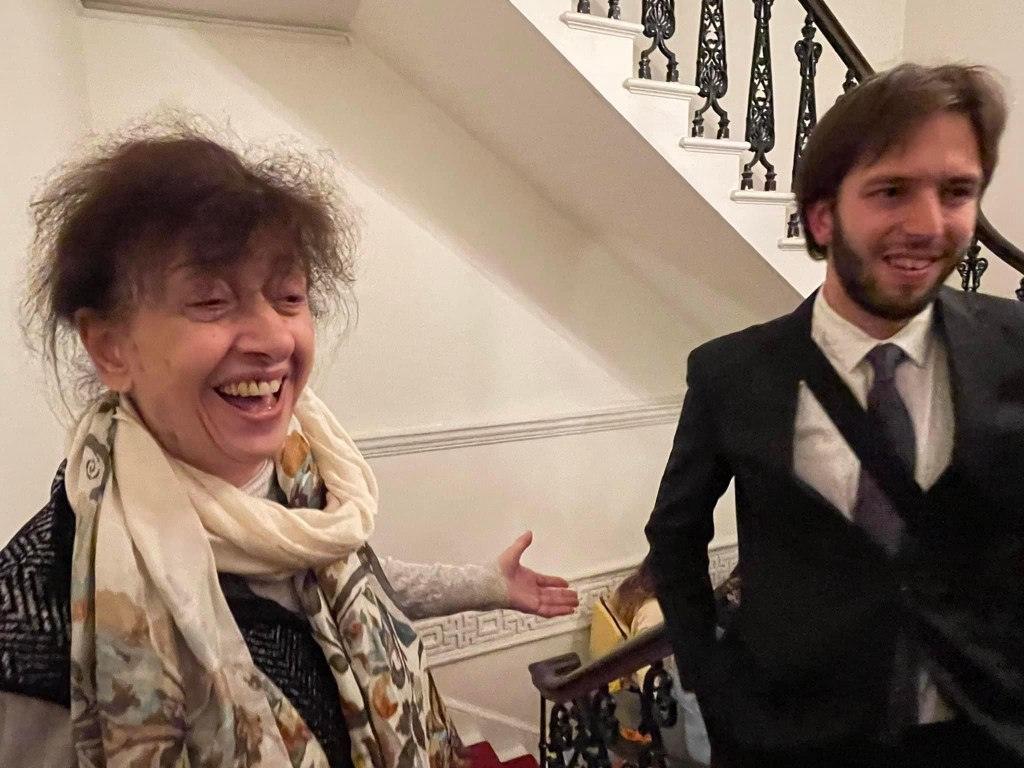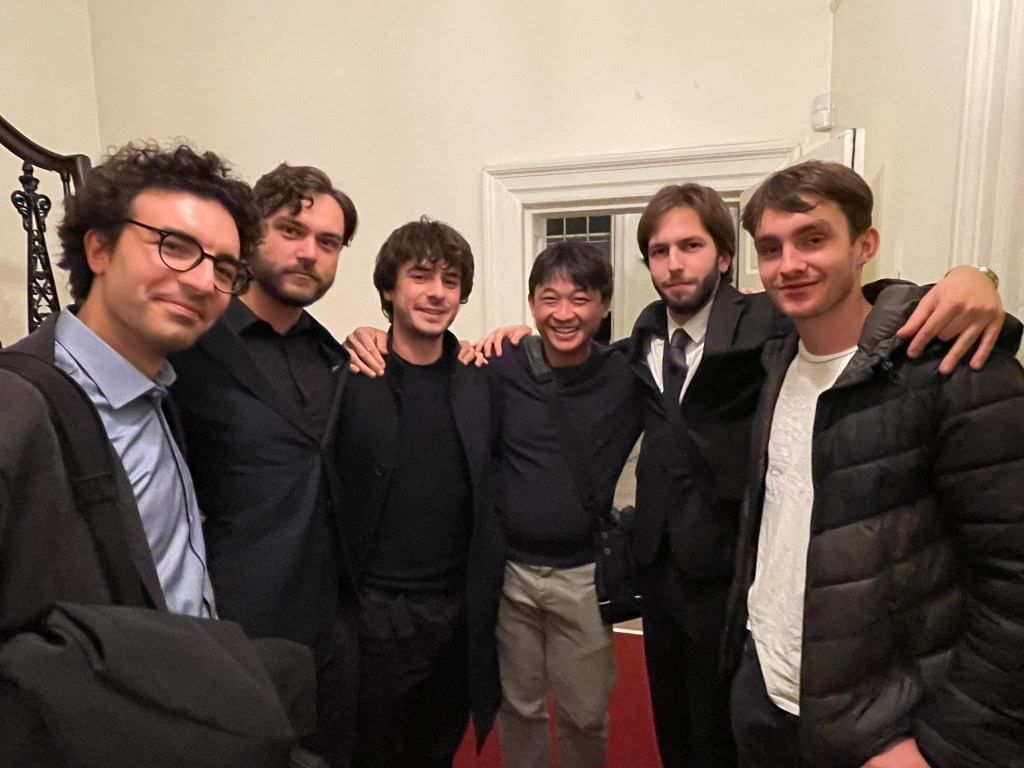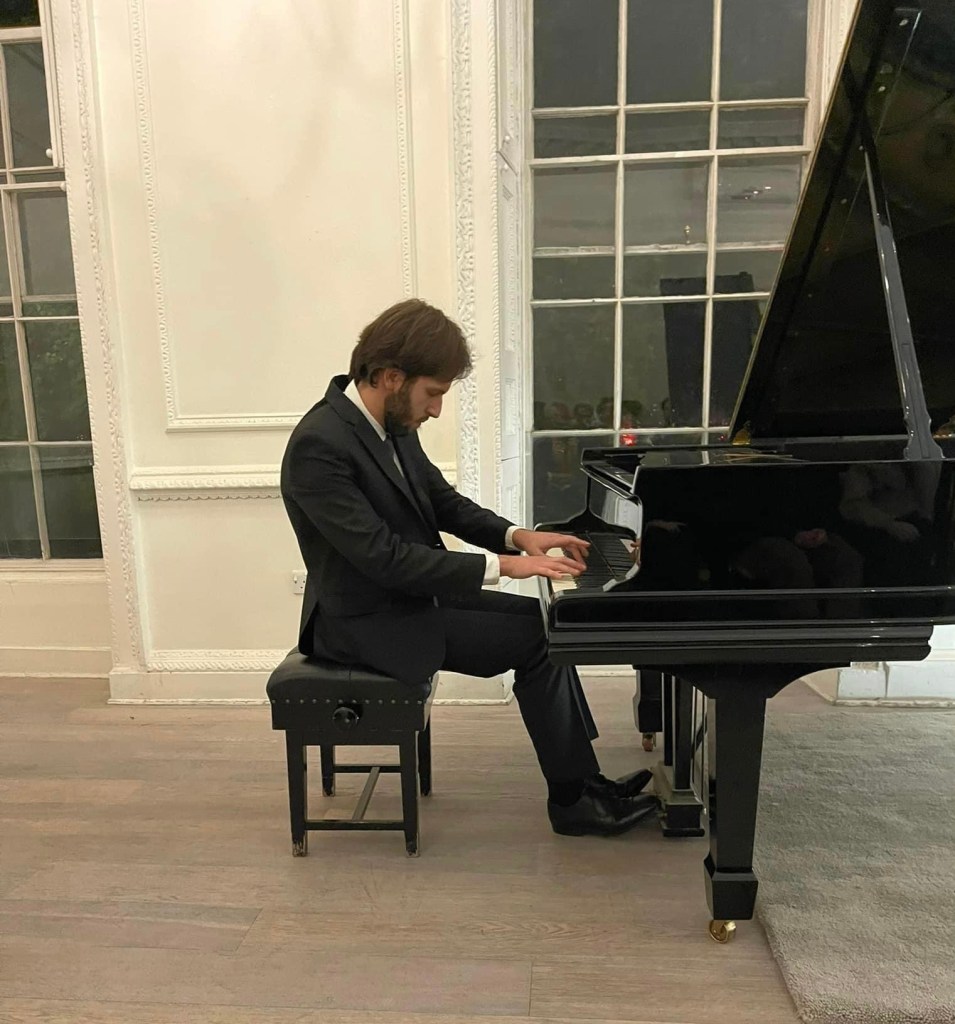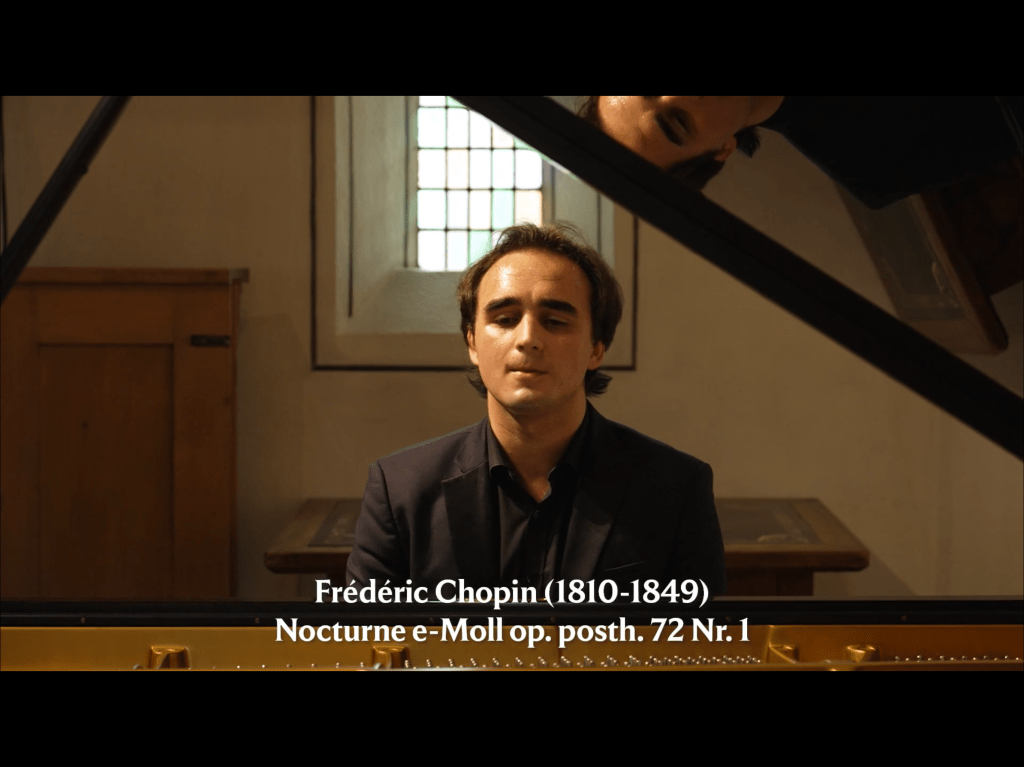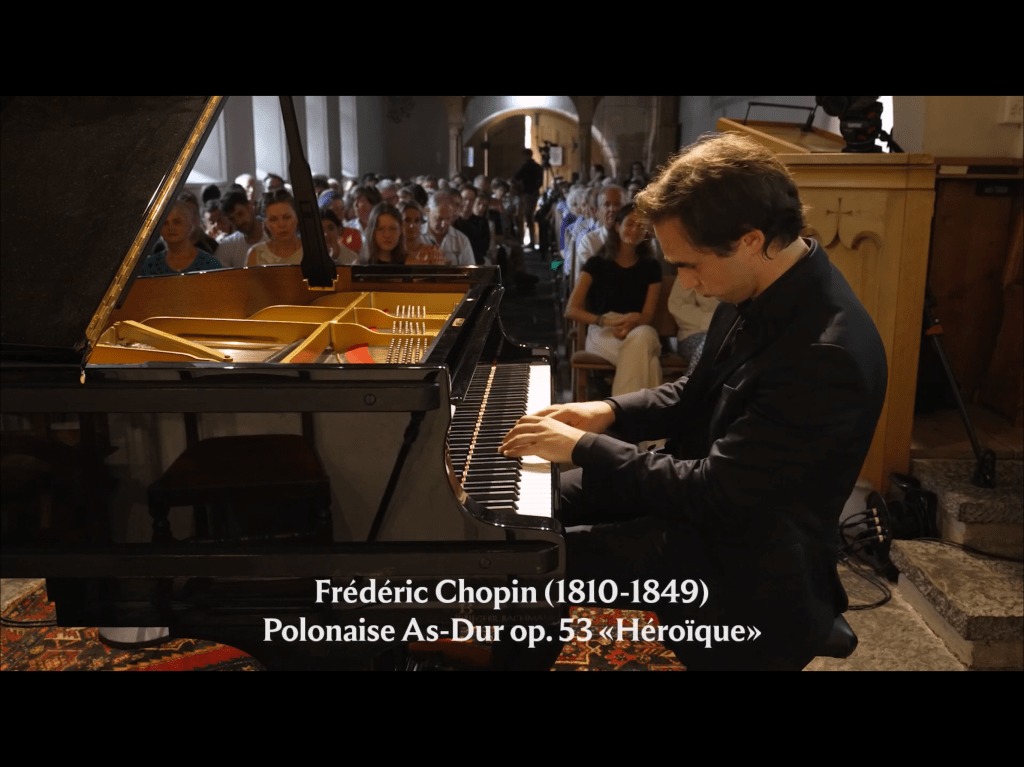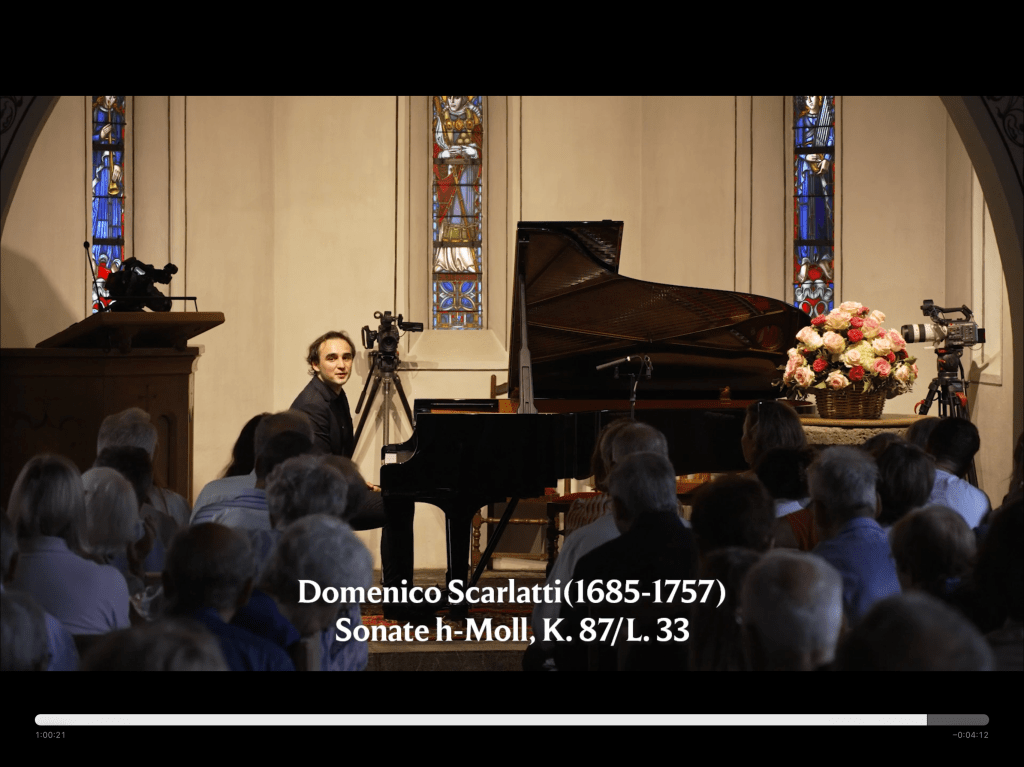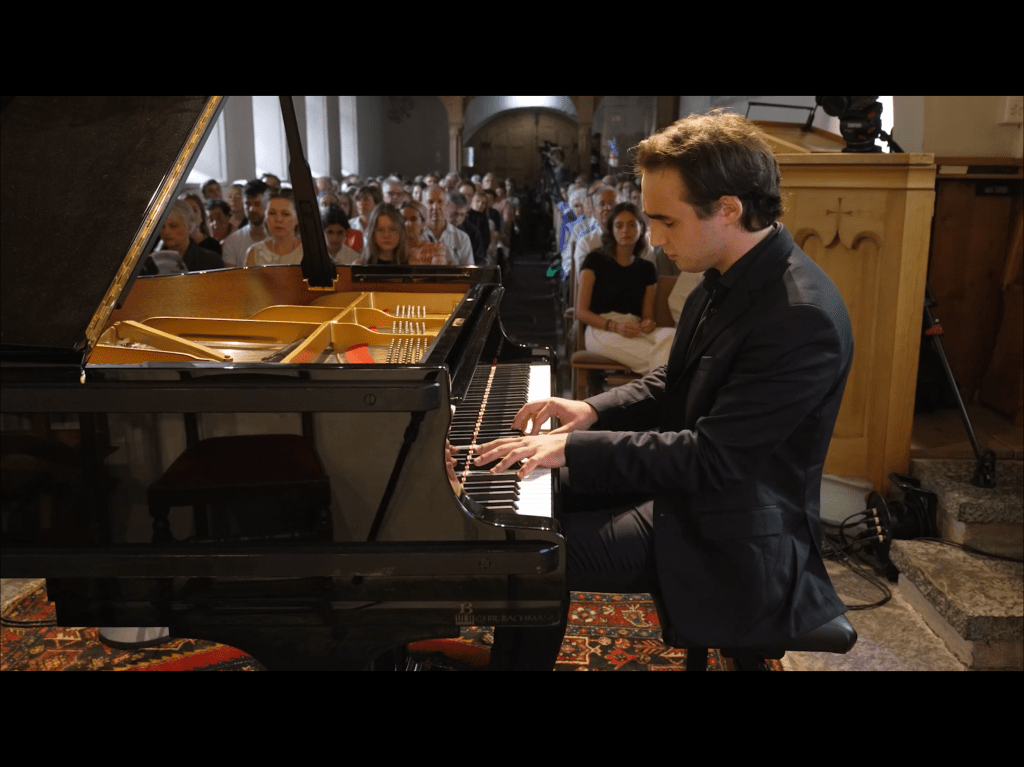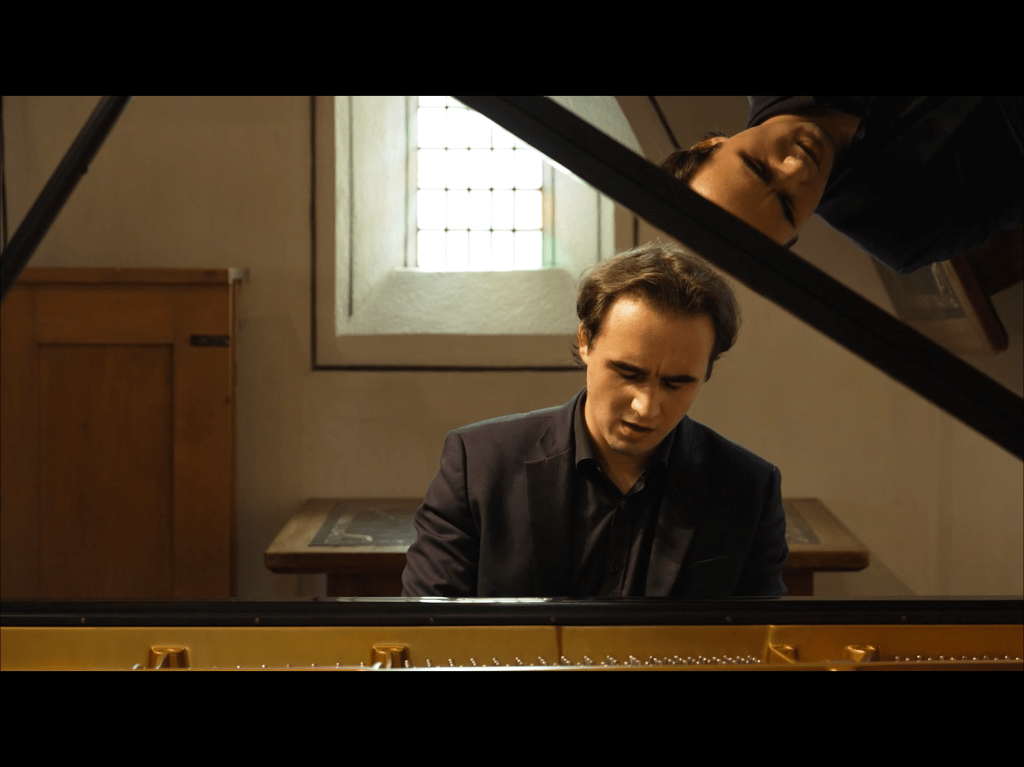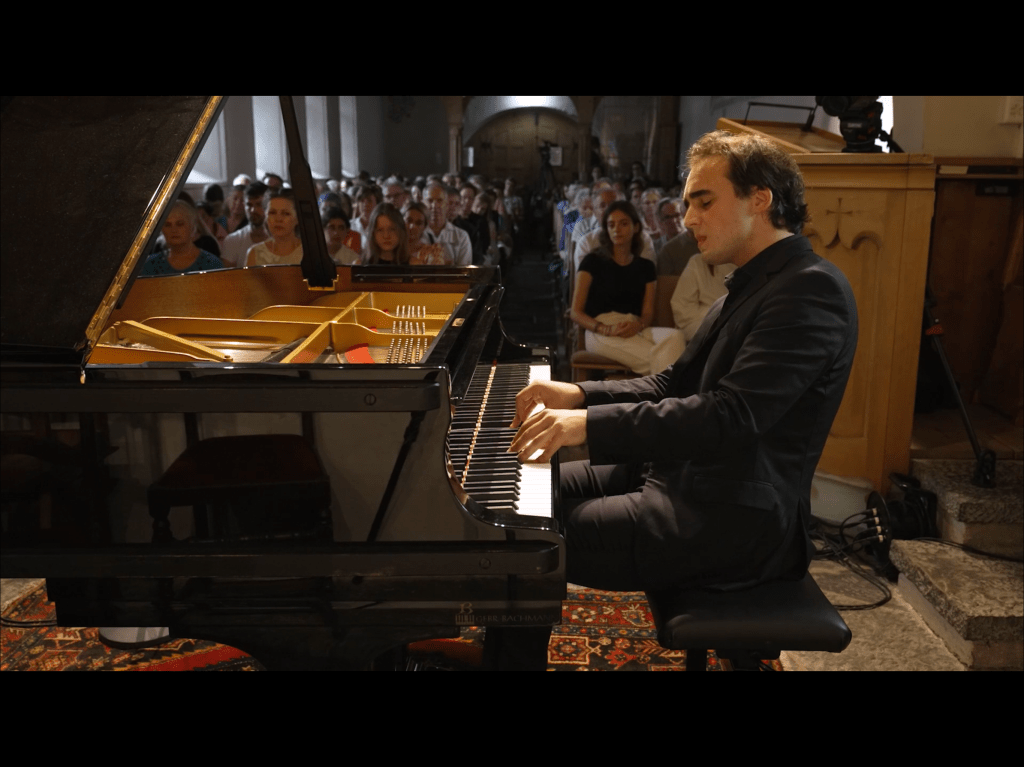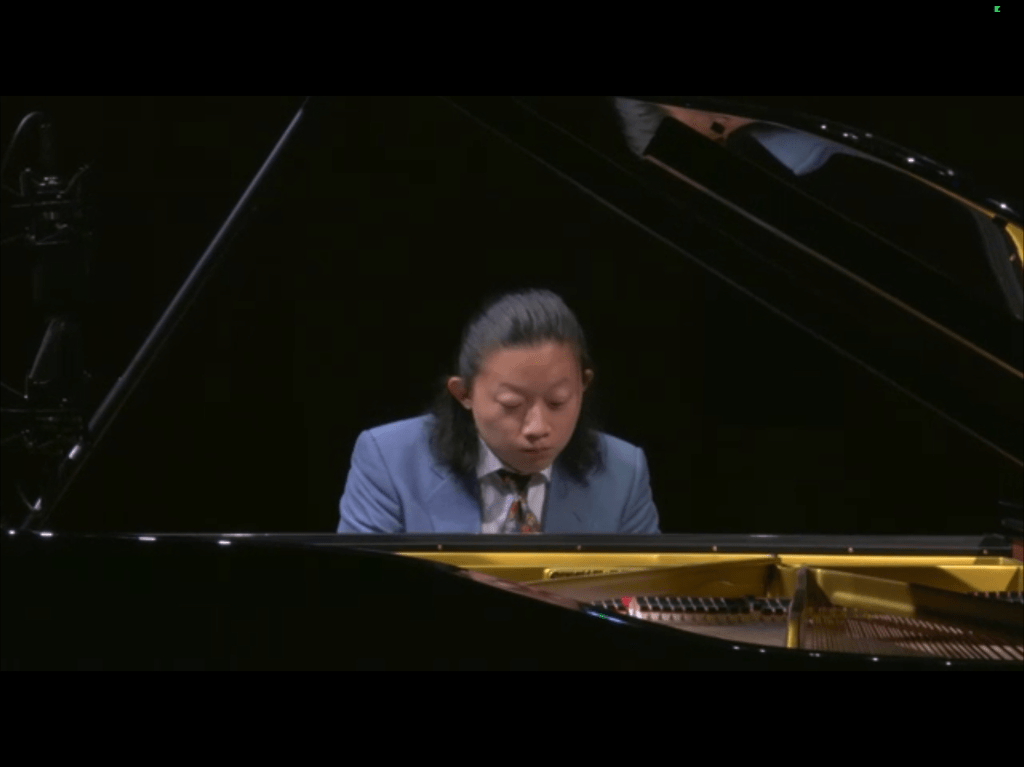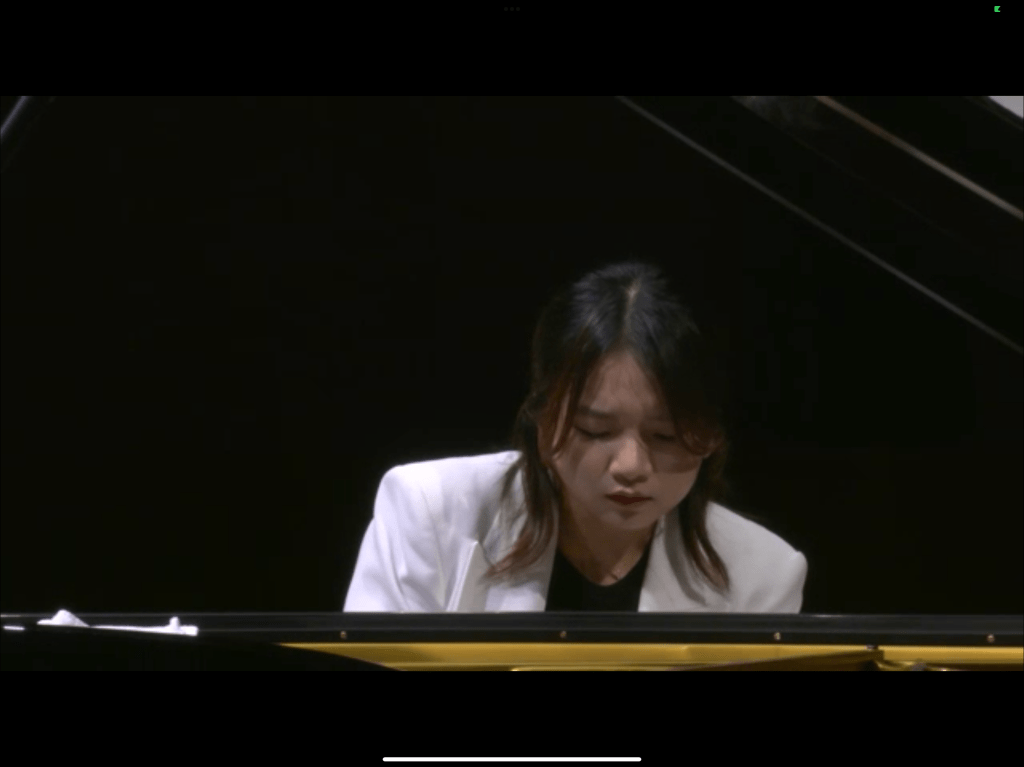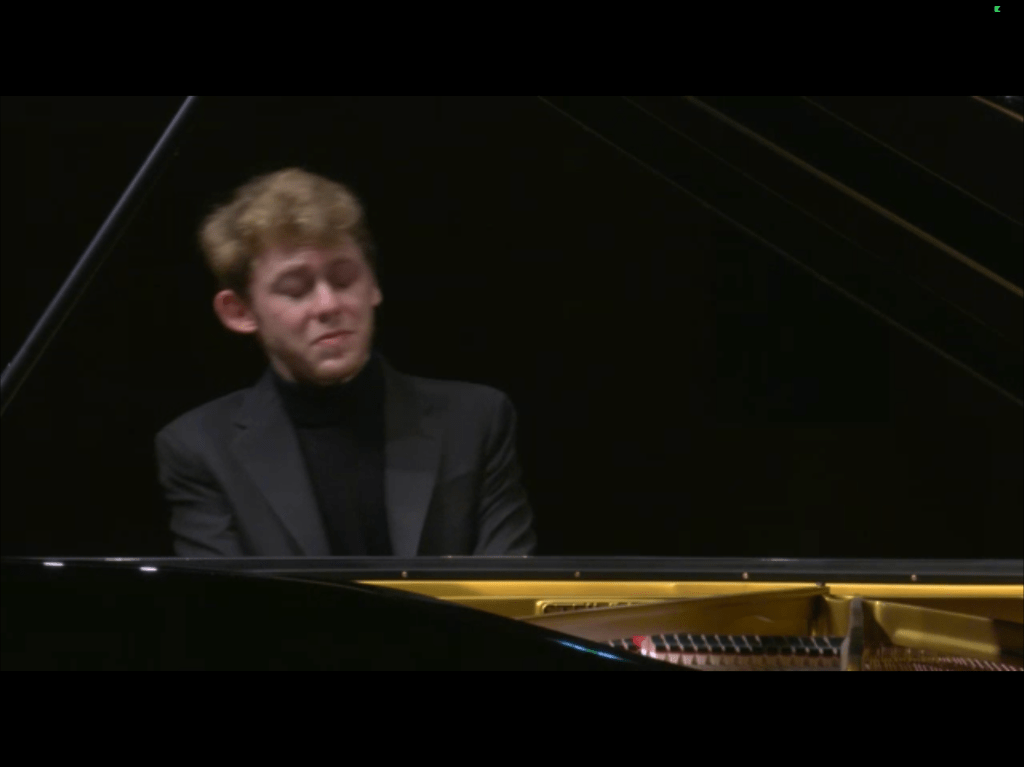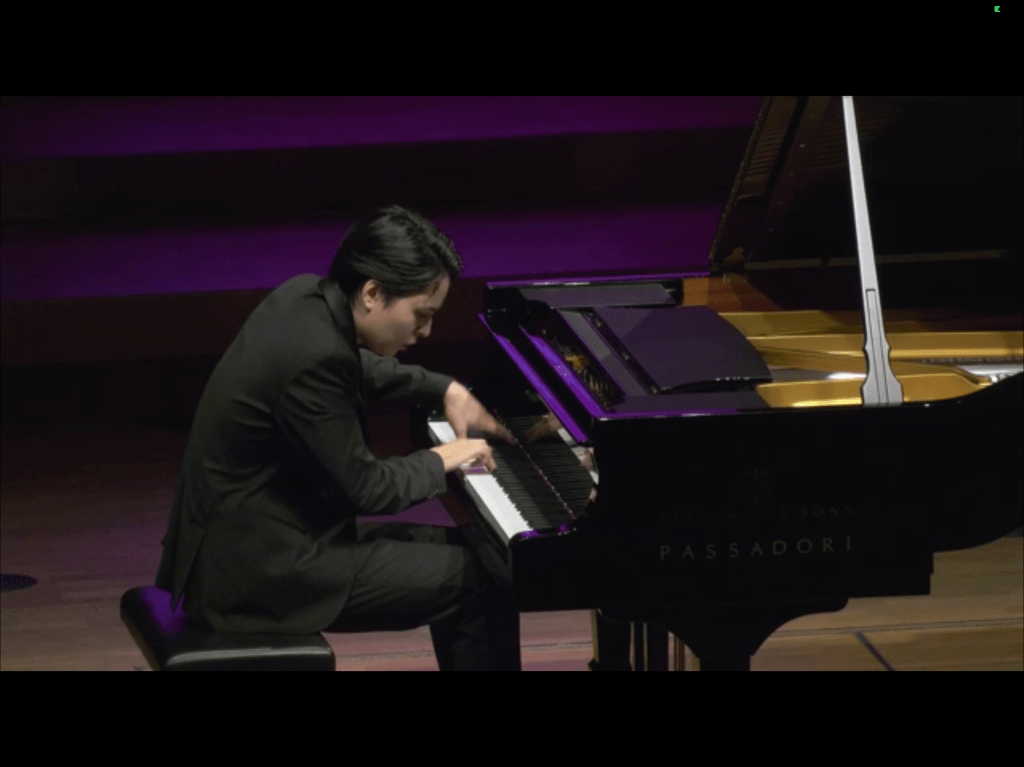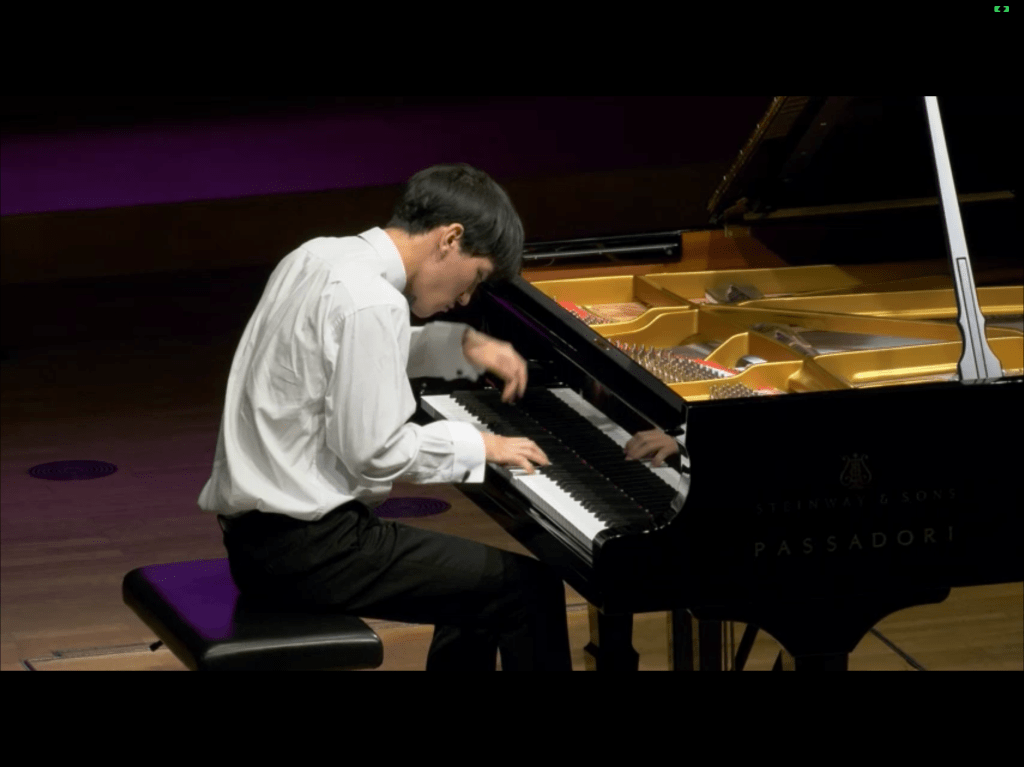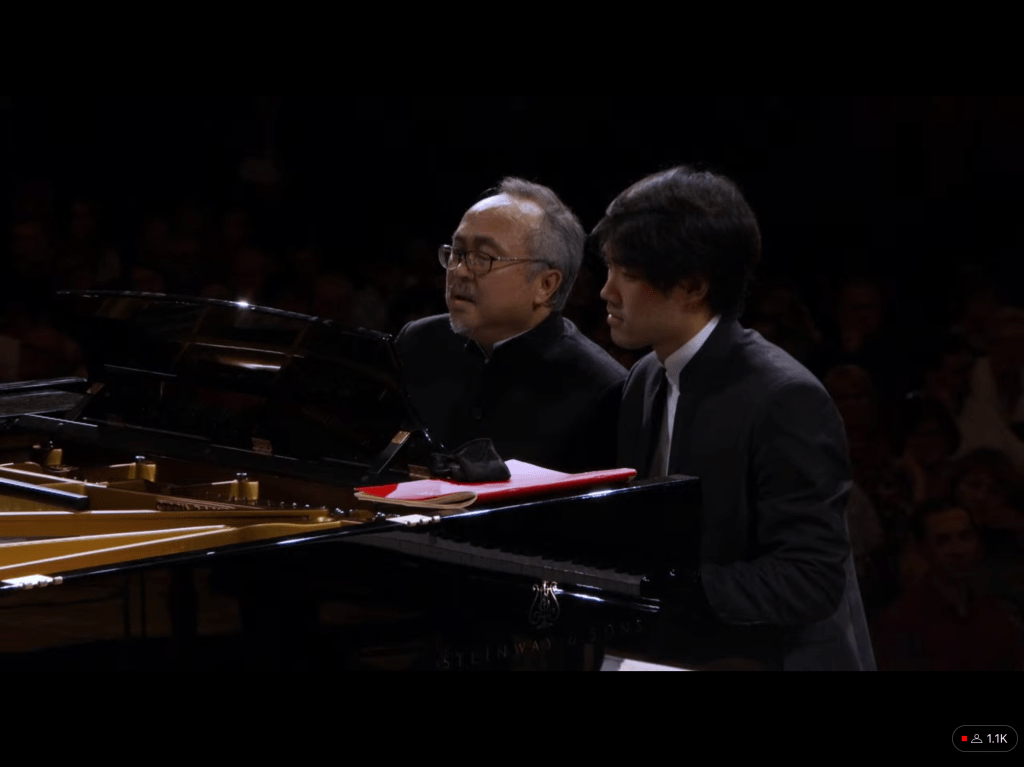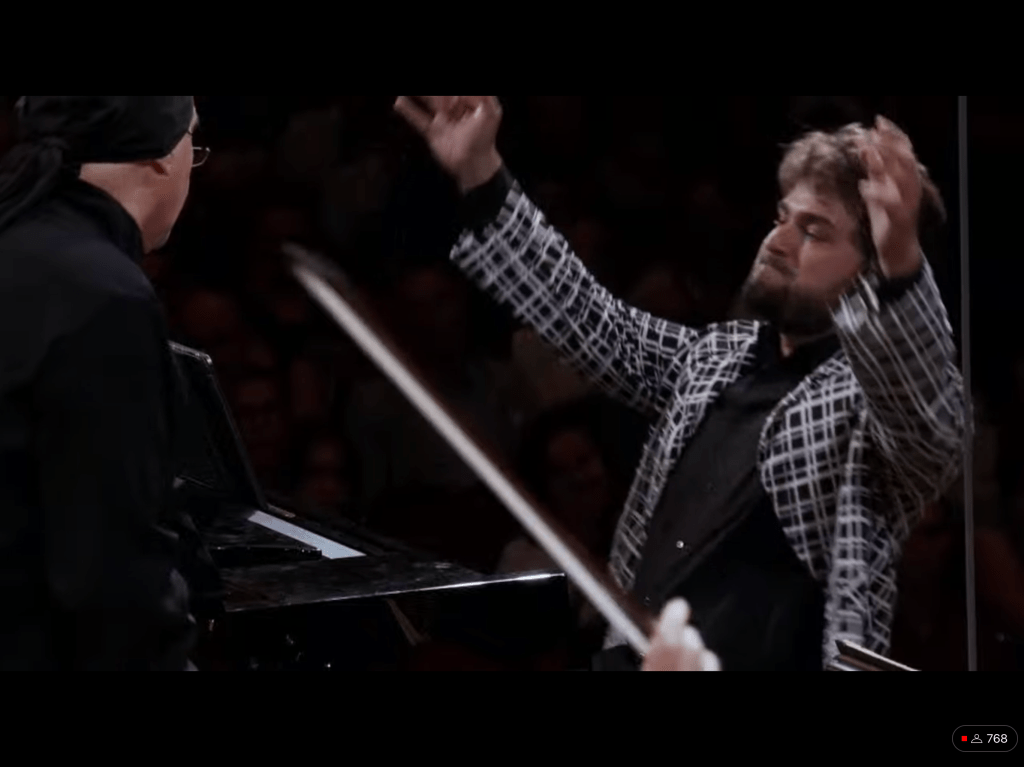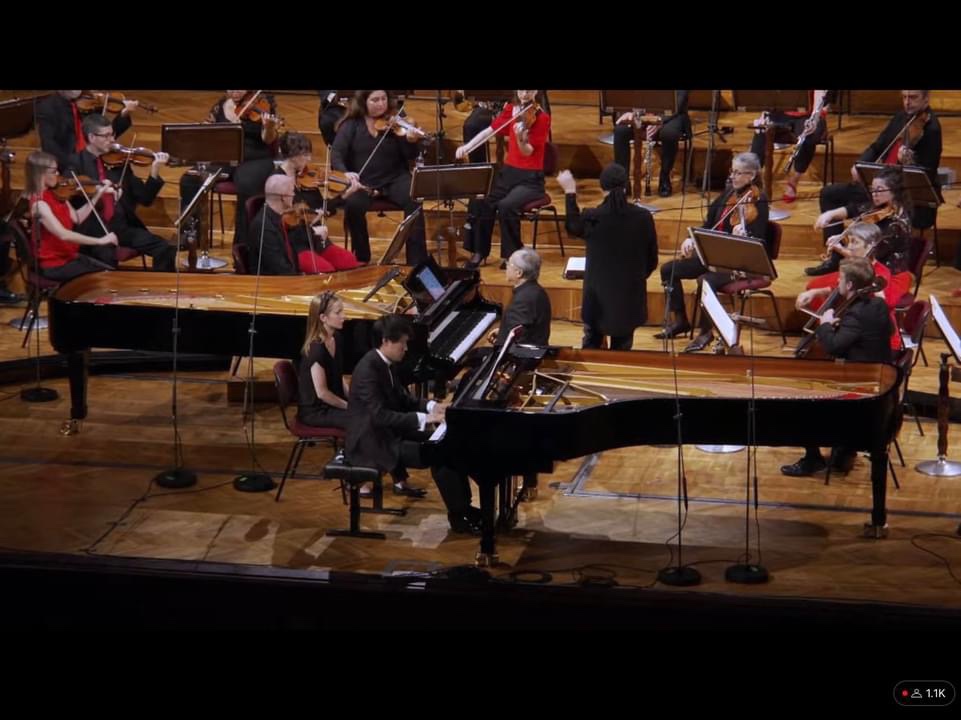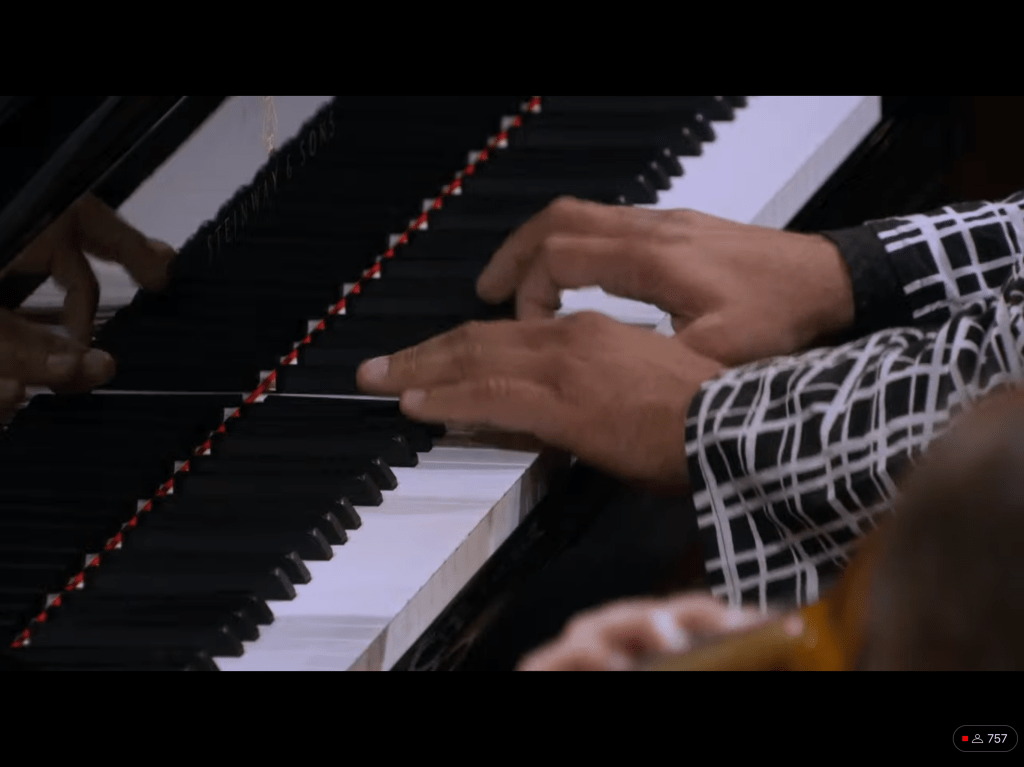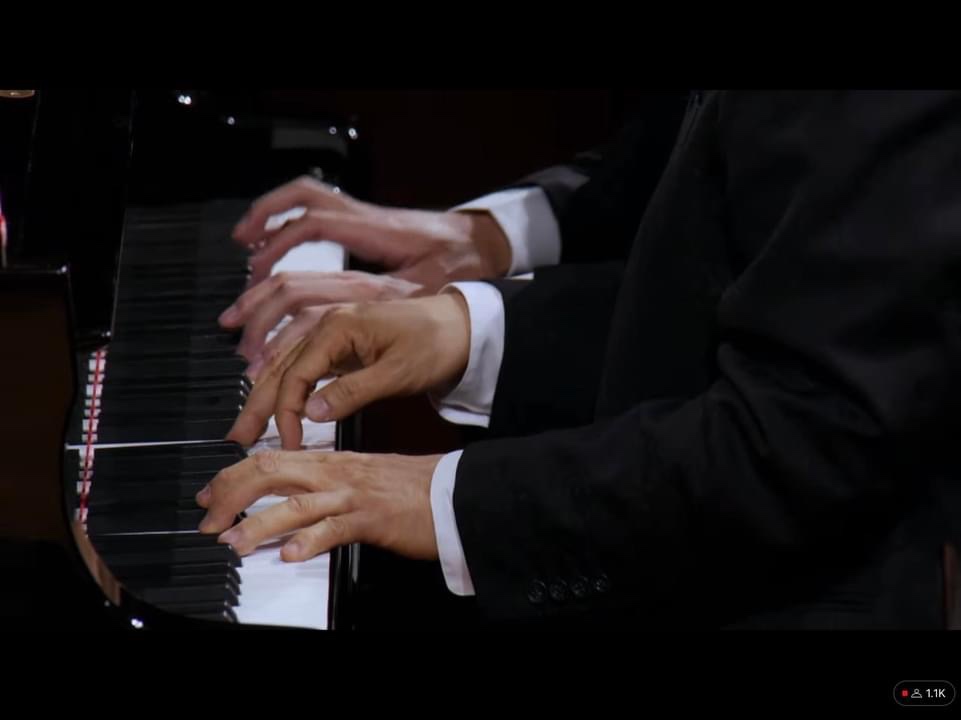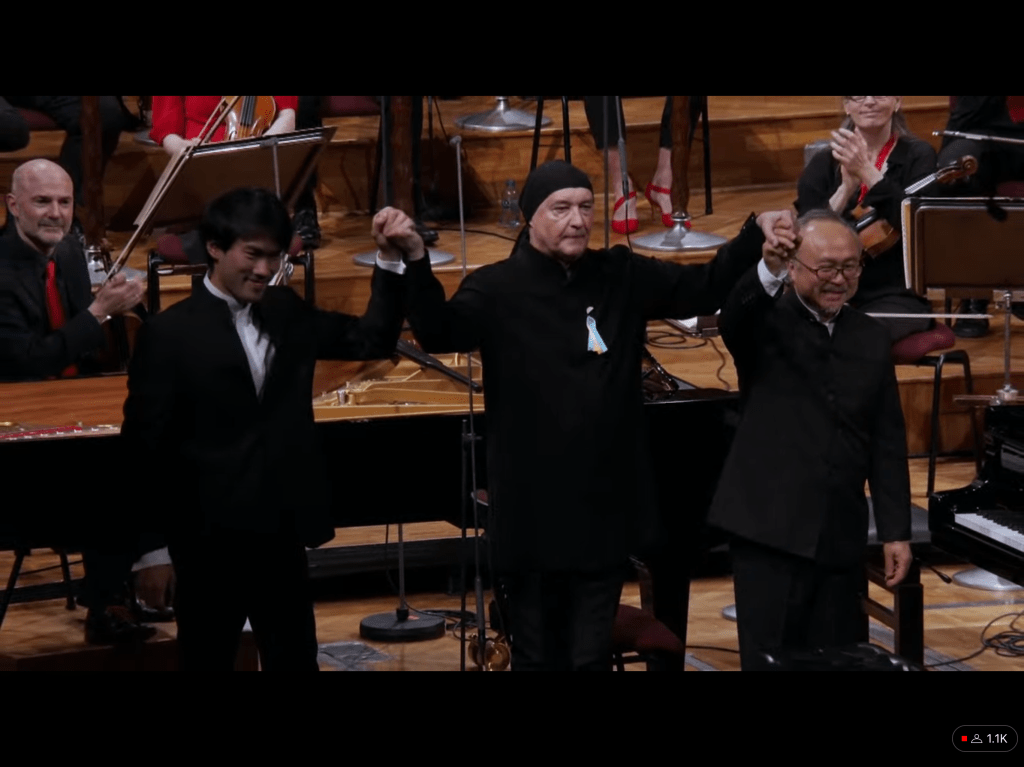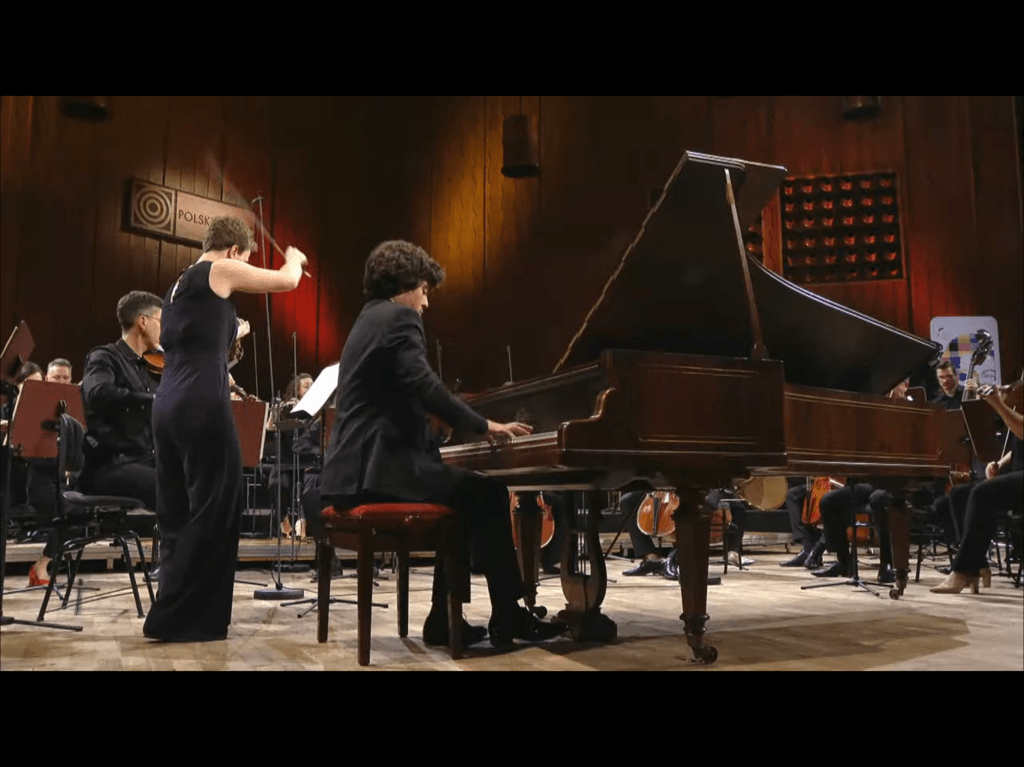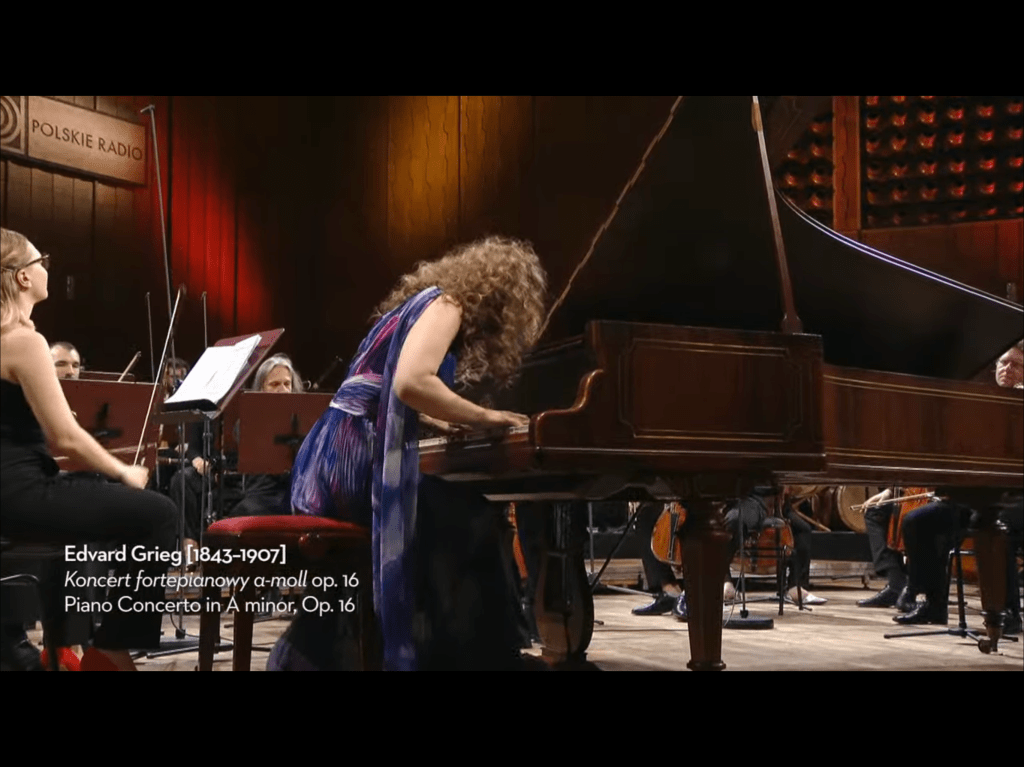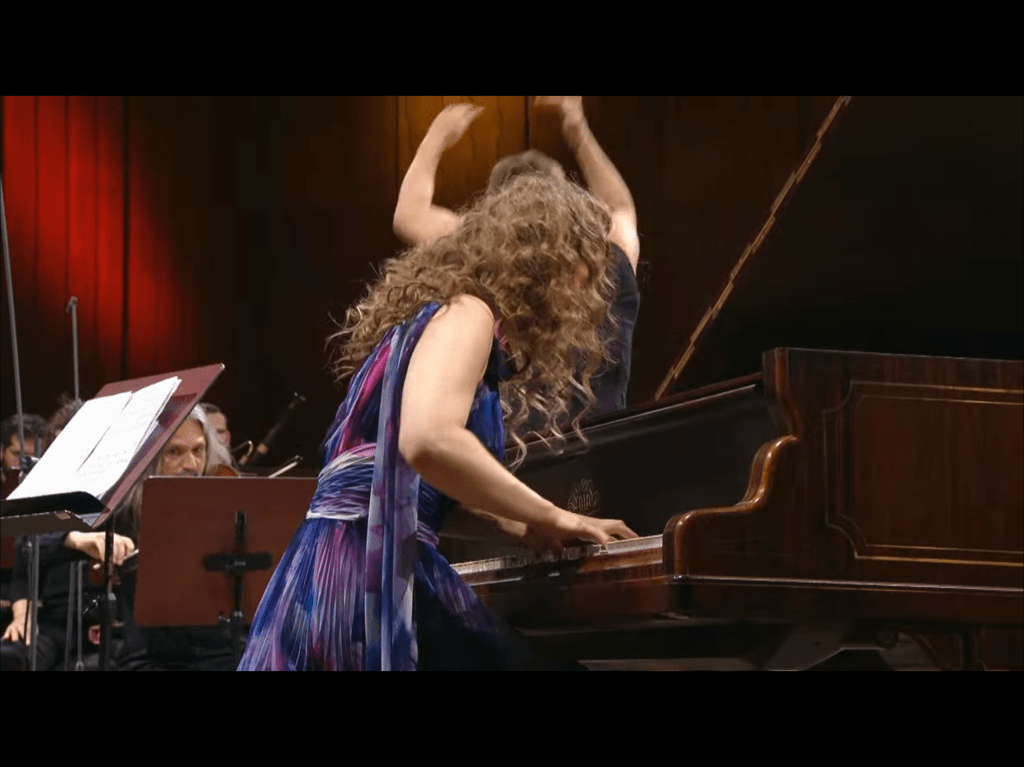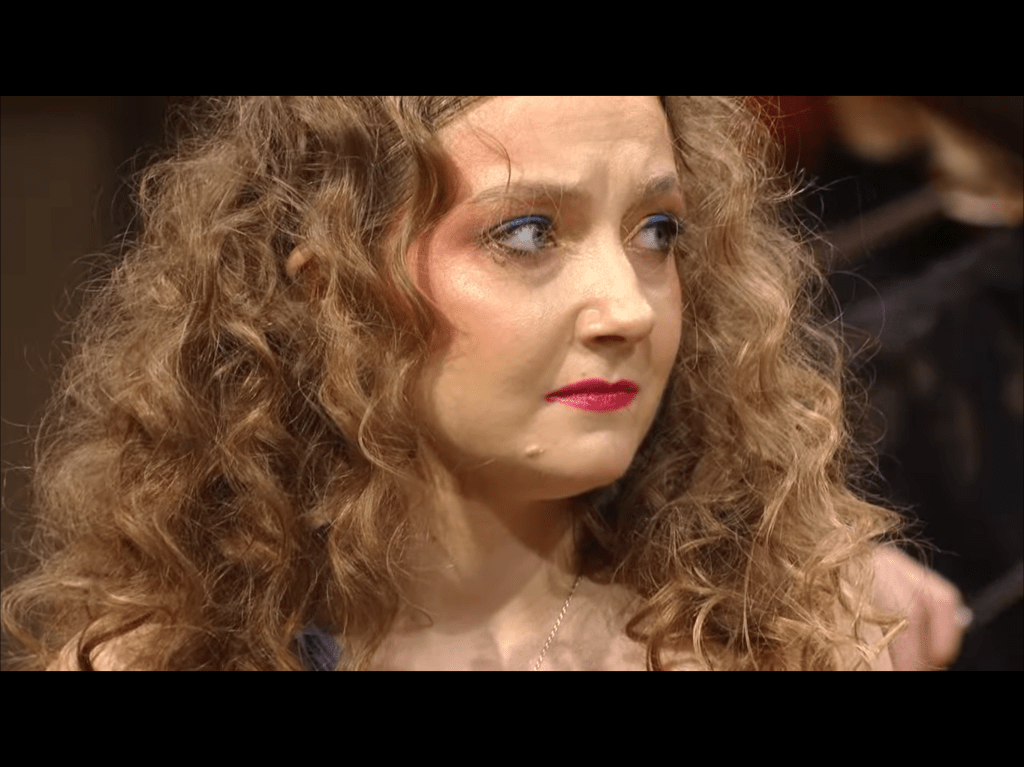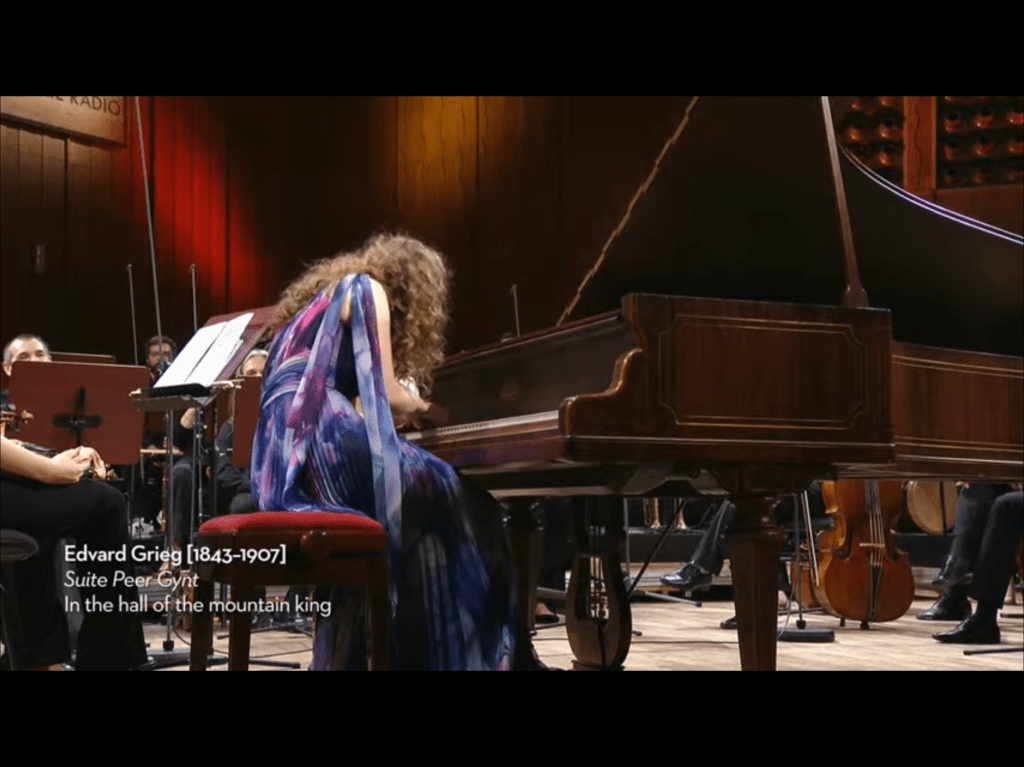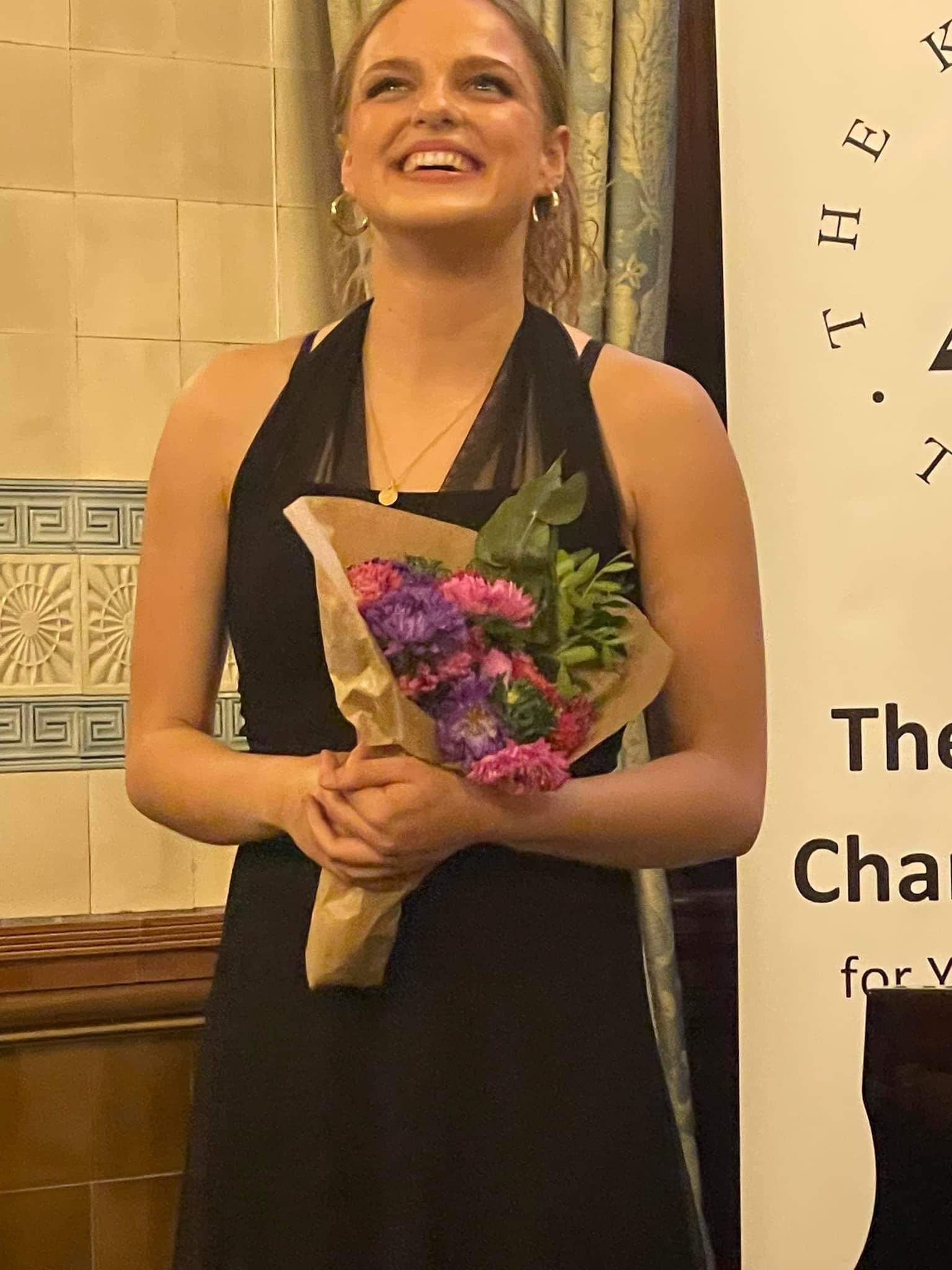
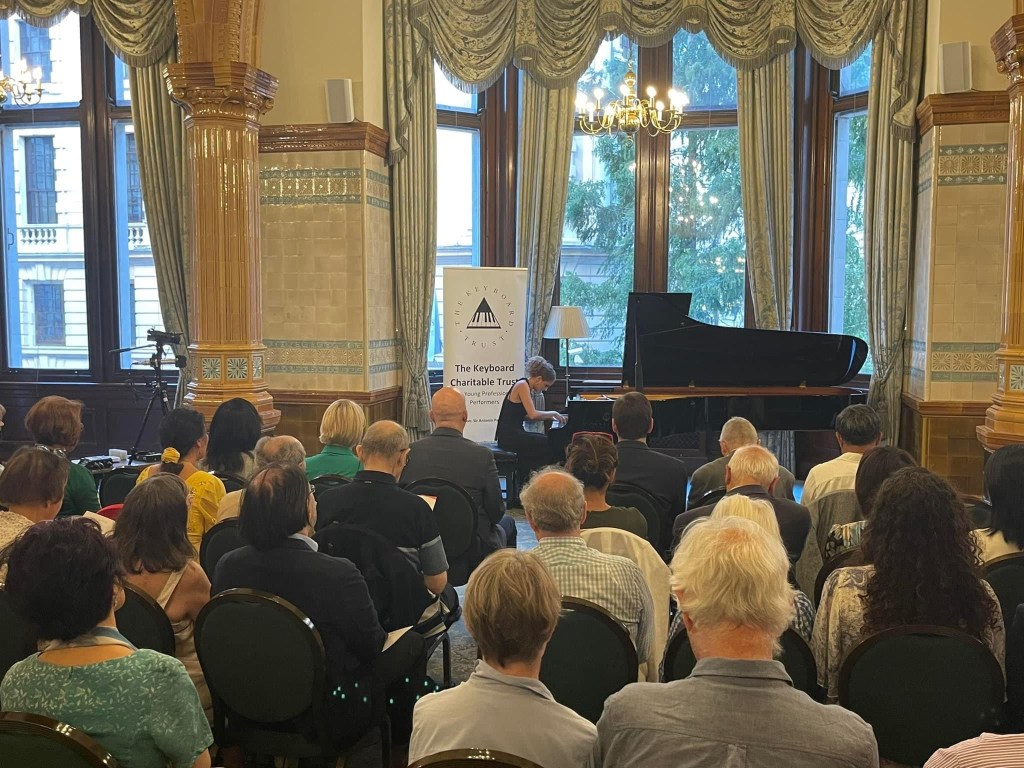
Ivelina Krasteva – A recital to cherish ‘ playing of honesty and naturalness’

Tuesday 4 April 3.00 pm 


‘Stumbled on it by chance and stayed to the end! Terrific recital, playing of great honesty and naturalness.’ Julian Jacobson

https://youtube.com/live/pg9rHpIMnxs?feature=share

Musicianly playing of great drive and assurance.The rhythmic precision and scrupulous attention to Beethoven’s indications gave great structural strength to this remarkable sonata.The beauty of the Adagio where her impeccable sense of balance allowed the melodic line to float on a gently throbbing accompaniment.The Presto had a mellifluous pastoral flow that was to be mirrored in the Sonata op 28 that was to follow just a year later.
I have written about her performance of the Beethoven Sonata just a few months ago but it has now matured and gained in weight as she allowed the music to flow through her so naturally. https://christopheraxworthymusiccommentary.com/2023/01/16/ivelina-krasteva-at-st-jamessussex-gardens-intelligence-and-mastery-at-the-service-of-music/

‘Beethoven in particular showed her great sense of architectural shape as she not only imbued each movement with subtle detail and character but managed to combine all four movements into a unified whole of great significance.
Such refined detail in the first movement ‘Allegro con brio’ where the seemingly innocent opening motif is transformed in so many genial ways ,a similar opening to his even earlier Sonata op 2 n 3.
But now Beethoven has realised the great significance of the bass as he leaves his Haydnesque early world and strikes out into unexplored territory.
A journey that will pervade his complete musical evolution (or revolution) through the thirty two sonatas that span his total existence on earth .
The final sonatas pointing already to a celestial world away from the sturm und drang of his earthly existence.
Ivelina realised this and it was the bass that she gave such weight to in the first movement.The melodic line in the development was allowed to murmur in the bass so magically where above were mere vibrations of sound.An Adagio where the bass notes were hardly audible as she stroked and caressed them providing a carpet of sound on which Beethoven’s mellifluous outpouring could unwind with such beauty and aristocratic shape.Magic sounds where the left hand that was a mere heartbeat on which ever more expressive appoggiaturas could float with poignant significance.There was purity and simplicity as Ivelina allowed this extraordinary movement to unfold with simplicity and subtle projection.
I remember being baffled by a critic writing about Richter’s performance in London on one of his first visits to the west.I did not understand at the time what he meant with ‘the Adagio was inexistant’.We had only just begun to understand the extraordinary sound world of the Russian school untainted by tradition as it was in the hands of this gigantic pianistic genius.
Ivelina too today looked afresh at a Sonata that we have lived with for a lifetime.
She imbued it with a clarity and intelligence that took us by surprise as it must have done when the ink was still fresh on the page.
There was a simple mellifluous flow to the Minuetto followed by vibrations of sound answered by the distant strains of a march.A trio played with great control as the weaving strands in the left hand were allowed to flow with ease.A Rondo of pastoral grace and charm interrupted by ever more dramatic insistent episodes of febrile energy.A fugato where the dynamic pieces were gradually calmed ,burning themselves out as they found their way back to the Rondo that was now embellished with great style and charm.’


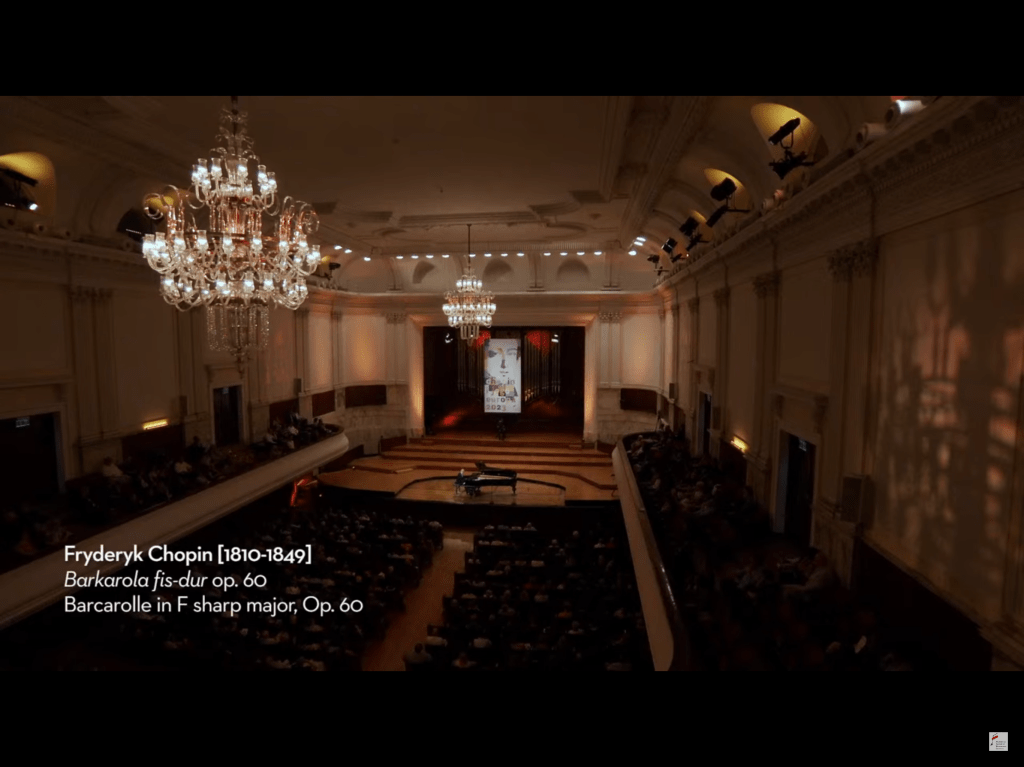
The Barcarolle in F sharp major op.60 was composed between autumn of 1845 and summer 1846, three years before his death.It is one of the pieces where Chopin’s affinity to the bel canto operatic style is most apparent, as the double notes in the right hand along with spare arpeggiated accompaniment in the left hand explicitly imitates the style of the great arias from the bel canto operatic repertoire. The writing for the right hand becomes increasingly florid as multiple lines spin filigree and ornamentation around each other.
This is one of Chopin’s last major compositions, along with his Polonaise – Fantasie op 61.


Her performance of the Barcarolle was new to me and the great song that flowed from Chopin’s soul towards the end of his life found an ideal interpreter where everything she played sang with such luminosity and beauty.The gentle flow created at the opening continued undisturbed with an ever more intense melodic line.It dissolved into the pure magic of the central expansive embellishment of bel canto.It was obviously a glimpse of the paradise that was to await the already tragically weakened composer after his desperate and exasperating visit to Majorca with his companion Georges Sand.The build up to the final exultation was played with aristocratic authority always singing as it built to a passionate climax only to die away to whispered murmurings with a gentle melody just hinted at in the tenor register,that was to be so admired by Ravel ,before the final four strokes of adieux.

The Sonata No 3, Op 23 (1897/8), was finished in the summer of 1898 on a country estate at Maidanovov, shortly before the beginning of Scriabin’s few years as piano professor at the Moscow Conservatoire. Teaching was by no means the central passion his existence: a later appointment at the St Catherine’s Institute for girls ended in scandal with the seduction of a teenage pupil!Scriabin took up the Conservatoire appointment as a means towards financial security in his newly married status.Pupils’ awareness of sound quality was constantly challenged: ‘This chord should sound like a joyous cry of victory, not a wardrobe toppling over!’
The Third Sonata is a large-scale, four-movement work. Within three years Scriabin was to complete his first two symphonies, and this Sonata is symphonic in its polyphony, long-sighted formal construction and thematic development, breadth of phrase and heroic, epic manner.

Several years later a ‘programme’ was issued that some have suggested that the writer was not Scriabin but his second wife, Tatyana Schloezer:

States of Being
a) The free, untamed soul passionately throws itself into pain and struggle
b) The soul has found some kind of momentary, illusory peace; tired of suffering, it wishes to forget, to sing and blossom—despite everything. But the light rhythm and fragrant harmonies are but a veil, through which the uneasy, wounded soul shimmers
c) The soul floats on a sea of gentle emotion and melancholy: love, sorrow, indefinite wishes, indefinable thoughts of fragile, vague allure
d) In the uproar of the unfettered elements the soul struggles as if intoxicated. From the depths of Existence arises the mighty voice of the demigod, whose song of victory echoes triumphantly! But, too weak as yet, it fails, before reaching the summit, into the abyss of nothingness.

The thematic structure of the Third Sonata is particularly closely bound together, both in the relation of themes from all four movements to one another and in their ‘cyclic’ treatment, which harks back to Liszt and César Franck.


I remember well Ivelina’s performance of the Fantasie by Scriabin :
https://christopheraxworthymusiccommentary.com/2022/05/30/ivelina-krasteva-for-the-keyboard-trust-simplicity-and-beauty-of-a-thinking-artist/ It was the same architectural shape that she brought to his third Sonata.
Passion and drama allied to a beauty of sound and a sense of line that held the sonata together as the menacing opening motif returns toward the end to give great coherence to the form of a Sonata that is gradually leading to the vision of the ‘star’ that is to be the guiding light for his life and the later prophetic ninth and tenth Sonatas.
Some remarkable performances of three great works played with authority,consummate musicianship and poetic vision.

Bulgarian born classical pianist Ivelina Krasteva is an internationally active solo and chamber musician. Currently based in London, she splits her time between performing, teaching and pursuing a masters degree at the Guildhall School of Music and Drama, under the tutelage of Ronan O’Hora and Katya Apekisheva. In addition to her studies, she has benefitted from playing in masterclasses led by internationally acclaimed musicians, such as Richard Goode, Imogen Cooper, Jonathan Biss, Itamar Golan, Boris Petrushansky, among others. Ivelina has won prizes in international competitions and has performed in venues across Bulgaria, Turkey, Austria, Romania, Italy and the UK. Highlights include performances of Ravel’s Concerto in G with the Worthing Philharmonic Orchestra, Prokofiev’s First Piano Concerto with the Plovdiv Philharmonic Orchestra and Mozart’s 24 th Piano Concerto with the Vratsa State Orchestra, Bulgaria. She is passionate about the standard piano repertoire as well as exploring contemporary music, working with composers and performing works by female composers. Throughout her education, she has been supported with scholarships from the Bulgarian Ministry of Culture, Prof. Lyuba Encheva Foundation, Henry Wood Accommodation Trust, The Worshipful Company of Pewterers and the Guildhall School of Music and Drama.

https://christopheraxworthymusiccommentary.com/2021/04/26/ivelina-krasteva-beauty-and-simplicity-at-st-marys-all-the-worlds-a-stage/

Roger Nellist our genial host today at St Mary’s .He is usually hidden away in the recording booth but today was substituting Dr Hugh Mather in his welcome for today’s world wide audience.

Sokolov casts his spell over the Eternal City

A star was shining brightly tonight over the Parco della Musica in Rome

Sokolov even when the programme announces Purcell and Mozart is an event to cherish.
Who would have thought that anyone could hold an audience in their hand for an entire first half of Purcell on the piano and lasting over forty minutes!?


The beauty of sound and the architectural control are of a truly great artist where every note has a meaning in a chain of sounds that is a living musical conversation.We were treated to a conversation in music of such character and elegance and of course the Sokolov ornaments and trills are something of a legend.That anyone can play them like springs unwinding but with such variety of colour is quite phenomenal but even more so when on a magnificent Fabbrini Steinway D as we witnessed tonight.Sokolov made us believe that this music was infact written for the modern day piano.
Three suites,two of which finishing in a sarabande allowed him to find the necessary variety by inserting ‘A New Irish Tune’ and the ‘Round O’ in D minor (best known as the theme of Britten’s Young Persons Guide to the orchestra).
A noble ground in Gamut opened the concert in great style and Sokolov chose a Chacone in G minor to close this first half.
I think this was the first time I have ever sat through forty minutes of Purcell on the piano but I would gladly have listened to an entire concert of it from the inspired hands and mind of one of the great interpreters of our age.


But there was Mozart in the second half of the programme……
There was such velvet beauty to the sound that I wonder if that master magician,Fabbrini,had done some special work on the piano today.Maybe it was tuned lower than is the norm these days as Curzon was used to do,insisting on having a richer warmer less brilliant sound.
It seemed as though there was a limit to the range of sound – a sort of ‘baroque barrier’ that allowed Sokolov to contain his architecture within the walls of the temple of yore.
Maybe it was just the mastery of Sokolov which has never been in doubt with whatever he sets his sights on year after year …………Mozart and six encores I will describe later …….perchance to dream…..

And dream we certainly did.Who could ever forget the sumptuous luxury of Brahms B flat minor intermezzo?A creamy rich sound and another world from that which we had been treated to in the programme so far.Rich sounds in which the musical line was tender but never sentimental and shone like jewels above an accompaniment that was miraculously fluid.The chorale like contrasting episode was played with the sumptuous rich sound of Philadelphian proportions which had a string quartet quality such was the richness of sound.An overwhelming climax -the first of the evening- dying away into the stratosphere of a world to which only Sokolov seems to have the key.A final note that shone brightly in the distance like a star.


And stars there were too in delicate Chopin Mazurkas that alternated with unusually deliberate performances of Rachmaninov.
The great B flat Prelude op 23 n 2 that rather than the usual scramble was played with aristocratic control.The duet between the tenor and soprano voices in the central episode I have never heard so clearly played as the ‘Hollywoodian’ sounds were cleansed of any unnecessary sonorities and given it’s own aristocratic imploring importance.
The build up to the final great climax I have never heard played with the phrasing that the composer himself indicates but so rarely is ever heard in the more usual scramble to the finish.The ravishing beauty of the D major Prelude op 23 n 4 was indeed the thing that dreams are made of.A gentle almost inaudible undulating bass on which the melodic line seemed to float on thin air.The embellishments etched out with crystalline purity but never interfering with the imploring beauty of the melodic line.A transcendental control with a kaleidoscopic sense of colour that had something of truly miraculous.But then this is why we all flock to hear Sokolov year after year as only he can cast a magic spell on everything he touches.


Of course the Prelude in B minor by Bach transcribed (or even composed !?) by Rachmaninov’s teacher,Siloti,was the final gift to us this year from a unique master magician.

His austere appearance shields a heart of gold that is released the moment his hands caress the keys.


What can one say of his Mozart?It was restored to its simple greatness.Not a note out of place as an operatic performance was played out with the style and control of the genius that Mozart is.A spell was cast from the very first notes and the story that was being played out was of a clarity and sumptuous beauty but all within ‘the baroque boundaries ‘ that had been set even before Sokolov stepped on stage.No one dared interrupt this continuous mellifluous flow as the childlike charm of the Allegretto grazioso built to its final gloriously contained climax only to dissolve into one of Mozart’s most profound utterings.The Adagio in B minor.
It had two thousand people living and breathing with Sokolov as Mozart himself was allowed to speak, miraculously reborn from the hands of this gentle giant.

The Lady in the Van ……….rings a bell so long as you don’t awaken her dog https://youtube.com/watch?v=OA8tMziteZM&feature=share

https://christopheraxworthymusiccommentary.wordpress.com/2020/02/17/sokolov-in-todi-the-greatest-pianist-alive-or-dead/

https://christopheraxworthymusiccommentary.com/2018/03/15/the-sublime-perfection-of-sokolov/

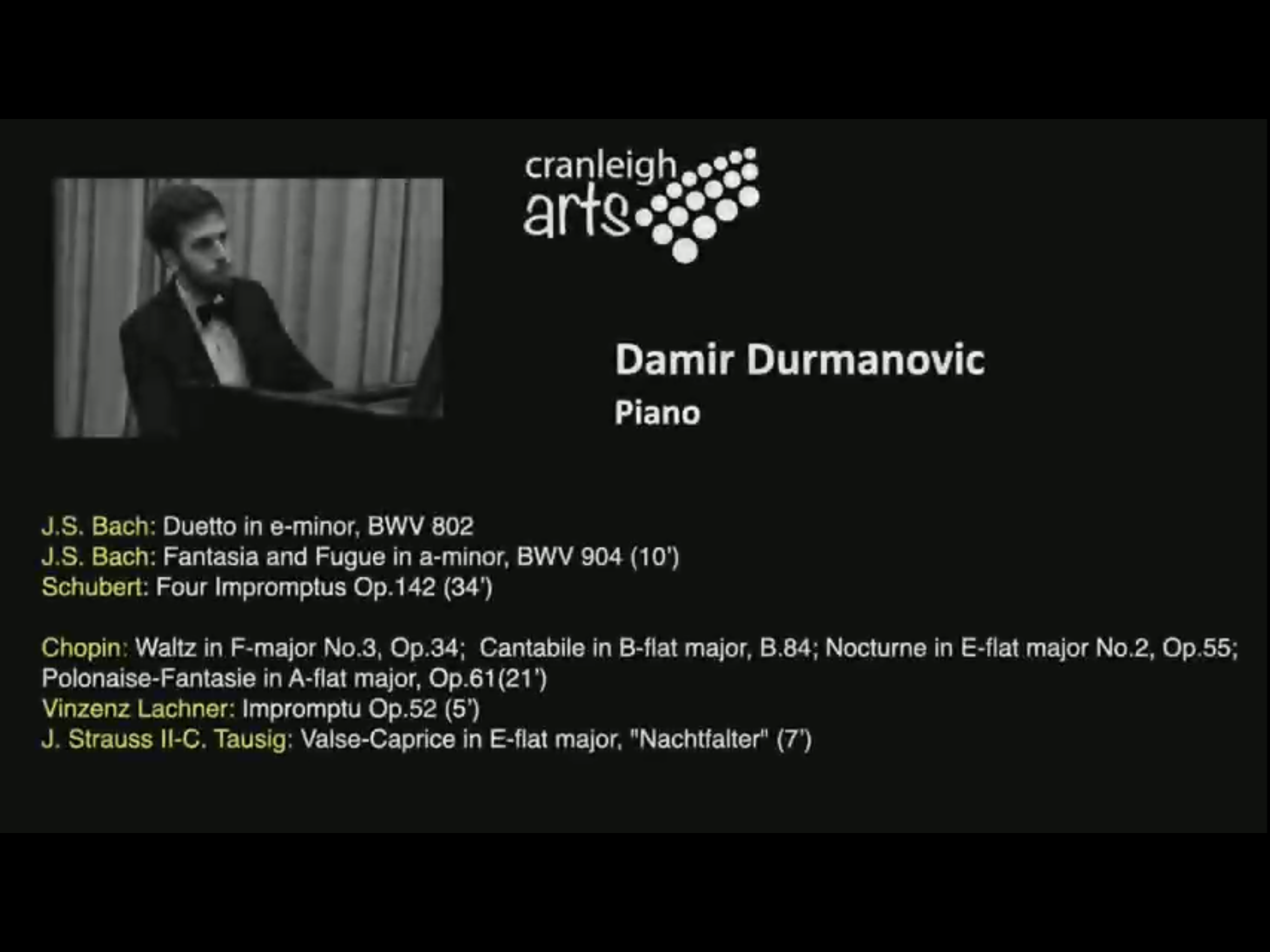
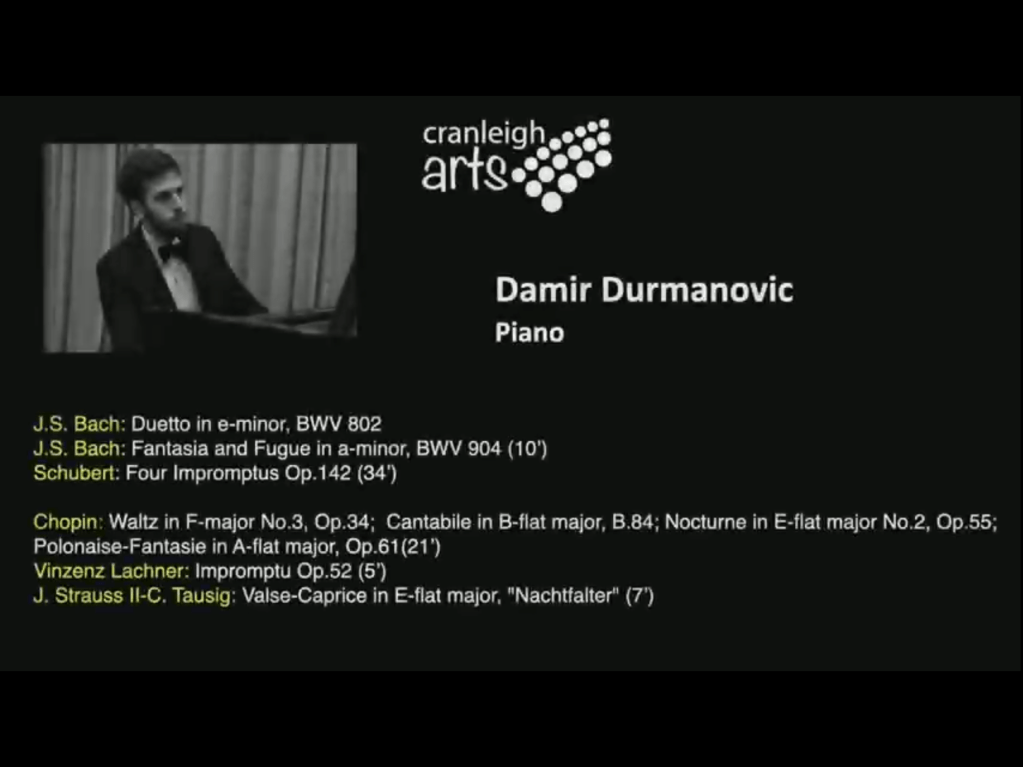
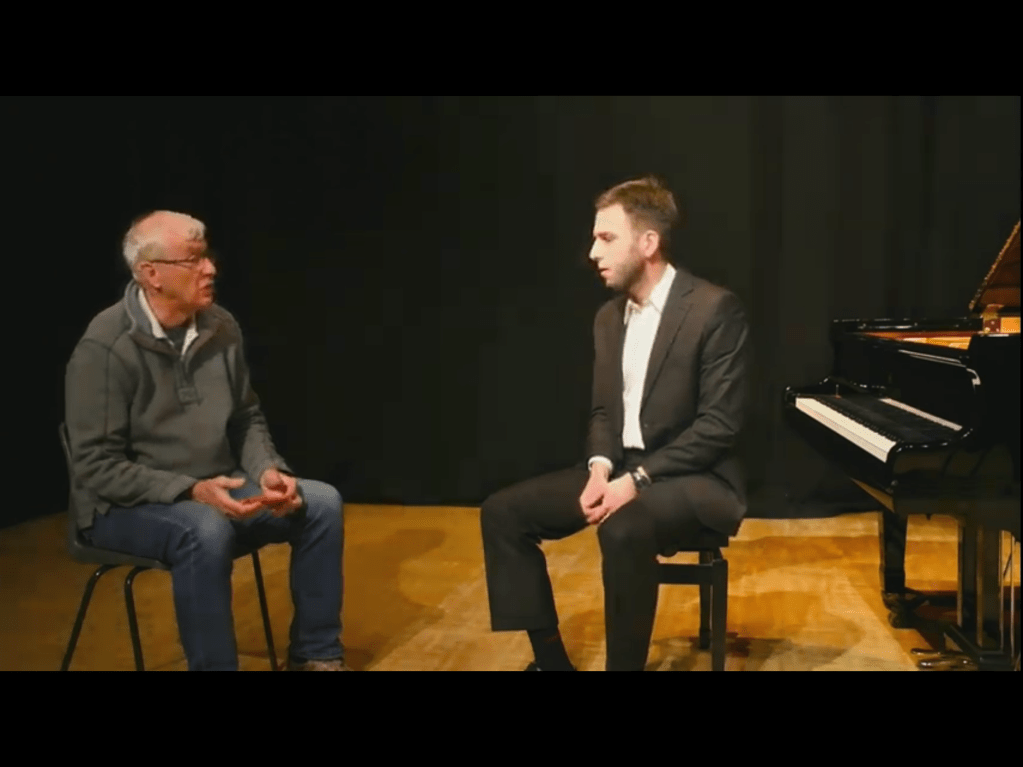
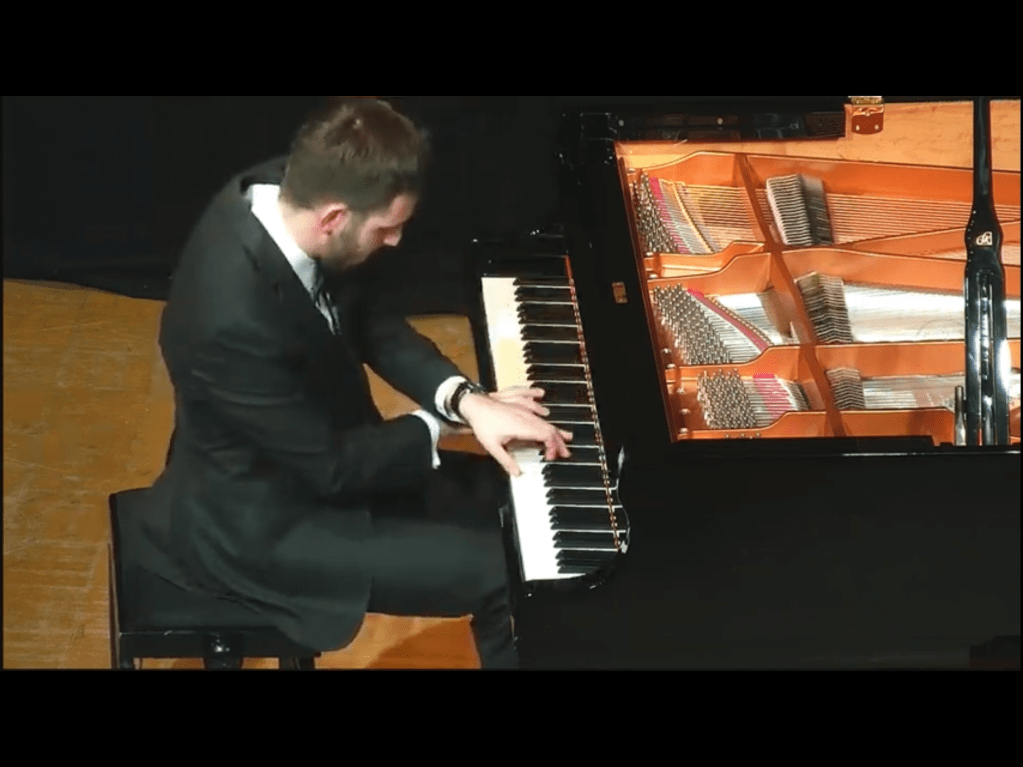
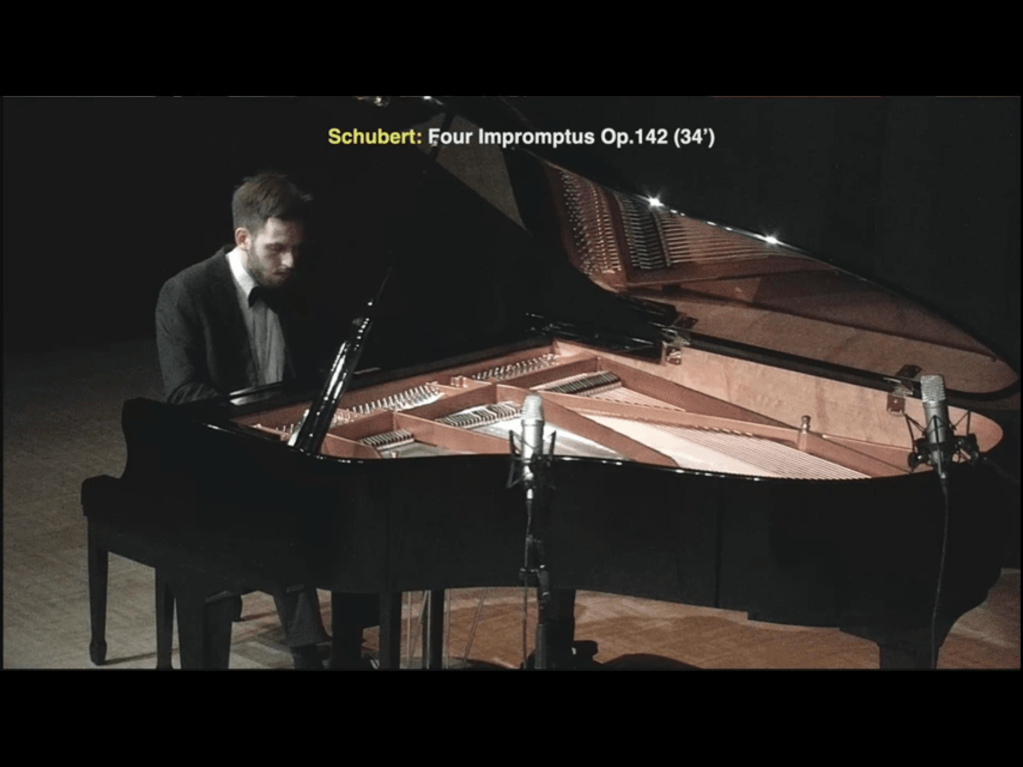
Damir Durmanovic in Cyprus

Damir is a great pianist, but also an exceptional musician. He demonstrated excellent professionalism and commendable decisiveness in his collaboration with Guido. Naturally, Guido garnered more attention during the publicity phase owing to his recent win at Kreisler, but by the end of the concert, Damir captured equal attention. Notably, both artists played the entire recital by heart (a rarity for pianists in chamber music), and the chemistry between the two was exceptional, it was hard to believe they only had one day to rehearse. Damir’s virtuosity shined through at all times, without sacrificing the collaborative aspect of the performance, and in his solo he received a storm of applause from the audience. He is indeed a special pianist, I dare to say one of the best you’ve suggested, and we would love to host him again in the future, either in solo recital or in chamber music. 

Once again, we extend our appreciation to the Keyboard Charitable Trust for their collaboration and to you, Sarah, for your invaluable assistance throughout.Warmest wishes,Yvonne Yvonne Georgiadou

🔸 “Last night was an unforgettable magic!” a member of the audience exclaimed, and we couldn’t agree more. The recital featuring the phenomenal violinist Guido Felipe Sant Anna and the terrific pianist Damir Durmanovic was nothing short of FASCINATING. The two musicians, who had only met a couple of days before, performed a highly-virtuosic programme entirely from memory, demonstrating perfect coherence between them and unmatched artistry. Their performance left us spellbound, and we are confident that both of these exceptional young musicians (17 and 24 years of age respectively) are destined for glorious careers. Don’t just take our word for it though – check out this short excerpt from their performance last night! Thank you all for being there, and thanks to The Keyboard Charitable Trust for their support.

Violin & Piano Recital: GUIDO SANT’ANNA violin & DAMIR DURMANOVIC piano

Good morning dear Chris. Damir is very special, we should not let him go wasted.
Damir told me he lives in your house, and we had a laugh, because I did not know you were giving shelter to all these musicians, it felt like ‘Chris is hiding all these fugitives in his house’. You are so kind dear Chris, nurturing and supporting true talents.😉 He is brilliant!

https://christopheraxworthymusiccommentary.com/2022/06/29/damir-durmanovic-at-st-marys-stars-shining-brightly-in-perivale-today/

https://christopheraxworthymusiccommentary.com/2021/06/16/damir-durmanovic-a-musical-genius-at-work/

https://christopheraxworthymusiccommentary.com/2022/04/18/damir-duramovic-at-cranleigh-arts-a-musician-speaks-with-simplicity-and-poetry/

https://christopheraxworthymusiccommentary.com/2022/09/07/the-adamas-ensemble-at-st-jamess-piccadilly-wu-lin-durmanovic-trio/

https://christopheraxworthymusiccommentary.com/2023/02/19/carnaval-jest-in-twickenham-a-sumptuous-feast-of-music-mozart-and-faure-quartets-akiko-ono-anna-dunne-sequi-nina-kiva-damir-durmanovic/

https://christopheraxworthymusiccommentary.com/2022/11/18/can-arisoy-elfida-su-turan-damir-durmanovic-at-st-jamess-talent-unlimited-presents-music-making-at-its-most-refined/

https://christopheraxworthymusiccommentary.com/2022/03/29/brazil-200-and-keyboard-trust-30-a-collaboration-born-on-wings-of-brazilian-song/

Clara,Robert & Co with Alessandra Pompili in Velletri for Giancarlo Tammaro :”Il ‘Suono di Liszt “ Concert Series

A fascinating concert in the series in Velletri on Ing Tammaro’s 1879 Erard .Alessandra Pompili a voice from the past for me as I remembered her performance as a teenager at the Ghione Theatre in our young artist’s series .Her mother was in administration and knew Electra Moro.We were fortunate to have la ‘Signora Moro’ as administrator as she had formerly been the administrator of the Teatro degli Arti under the historic theatrical impresario Tolomei.Alessandra’s mother had spoken about her talented daughter,a student of Marcella Crudeli and Sergio Calligaris and so we were delighted to allow her to be heard in Rome in our concert series. https://christopheraxworthymusiccommentary.com/2021/07/31/sorrento-crowns-marcella-crudeli-a-lifetime-in-music/

Clara Wieck Schumann was very much in evidence in Alessandra’s programme.Starting with works written later in life during her years married to Robert Schumann.
She was finally united in marriage with Robert in 1840 and this beautiful Larghetto was written in 1845. It was played with mellifluous beauty and delicacy and is a Nocturne of exquisite beauty and simplicity.Including also an early work from before her marriage written in 1835/6 :’Danza delle streghe’ from four characteristic pieces op 5.A work of great effect that she would have used in her recitals as a child prodigy.Alessandra’s ten year old daughter on listening to her mother practice this piece was sure that she was playing wrong notes but this is all part of the salon type character of the work that Alessandra played with great relish!
A curiosity was the Variations on a Theme of Robert Schumann op 20 .A work from around 1854 and one of the few of her own compositions that she would love to play in her recitals.It is based on the theme from Schumann’s ‘Bunte Blatter’ op 99 n 4.
It was dedicated to her husband and was one of the very few compositions that she wrote before Robert was committed to an asylum where he died .Leaving Clara to bring up alone their eight children when in order survive financially she had to maintain her concert activity to the exclusion of composition.
Robert Schumann suffered from a mental disorder that first was manifested in 1833 as severe depression recurring several times alternating with phases of “exaltation” and increasingly also delusional ideas of being poisoned .After a suicide attempt in 1854, Schumann was admitted at his own request to a mental asylum in Endenich (now Bonn ).Diagnosed with psychotic melancholia he died of pneumonia two years later at the age of 46, without recovering from his mental illness.
The Variations on a theme of Schumann op 20 were dedicated to her already sick husband and were completed just in time for his 43 birthday with a dedication :’For my dear husband a renewed and weak attempt to compose from your dear old Clara ‘.It was infact completed just in time as in 1854 Robert attempted suicide and was admitted to an asylum.
The theme is from Robert’s own ‘Bunte Blatter’ and it is the same theme that Brahms ,a close family friend ,was to use for his own Variations on a Theme of Schumann op 9.Seven variations from Clara where Brahms had written sixteen that he had dedicated to Clara.
There was a great fluidity to Clara’s variations which suited the sweet sound of this Erard piano of 1879.There was the chordal simplicity of the second alternating with the slow harmonically varied third.Alessandra found sumptuous beauty in the fourth with the theme in the tenor register surrounded by embellishments played so delicately.There was great drama in the octave variation with the pompous chordal declamation of the theme.It dissolved so beautifully into the delicately shadowed mellifluous theme.A delicate ending of arpeggiando chords was spread over the keyboard with great delicacy.
It was fascinating to hear this rarely performed work especially from the delicate hands of Alessandra with the sweet tone of this Erard piano.
It might have been very similar to the one the greatest woman virtuoso of her day would have beguiled her audiences with in a intimate conversation with her beloved but prematurely departed Robert.Alessandra write :’ apparently Brahms studied Clara’s unpublished score and on his own manuscript he wrote, “Little variations on a theme by him dedicated to her”.
Yesterday I also tried to explain another little curiosity of the composition: in the last variation she quoted – in an inner voice – a theme from her Romance variee. On that work Robert based his own Impromptu on a romance by Clara Wieck. Fabulous connections!’
The rest of the programme was made up of Robert Schumann ,Brahms,Mendelssohn and Chopin.A noble Brahms Rhapsody op 79 n.2 was played with the passion that Brahms had asked for,but also with the delicacy and calm of the central episode.As Alessandra explained Brahms had changed his indications several times as he obviously wanted the work to be played with passion but with orchestral sounds rather than pianistic virtuosity.It was exactly this that Alessandra managed to portray with her aristocratic sense of tempo.Alessandra had added a ‘Sorbet’ of Mendelssohn between the passionate outpourings of Schumann’s own ‘In der Nacht’ and ‘Aufschwung’.Both were played with dynamic rhythmic energy but allowing the beautiful mellifluous contrasting episodes the time needed to relax before entering the fury of Robert’s passionate ‘Florestan’ temperament.It was the beautiful Mendelssohn Barcarolle op 30 that created the calm of the lapping Venetian waters that Robert Schumann had so admired as such a gift from a noble spirit.
Chopin’s beautifully gentle Ballade n. 3 op 47 closed her programme .It was played with searching beauty obviously influenced by Chopin’s own reference to the water maiden Ondine inspired by the poetry of Mickiewicz.
Choosing very slow tempi that allowed the music to unfold so naturally on this gentlest of instruments.
A fascinating encore that paid homage to Mozart who had stayed overnight in Velletri in 1770.
Passing from Rome to Naples he and his father had stopped over on the 9th May during the four day journey.No one is sure where but their presence is obviously an historically important one.Mozart had come from Rome where he had heard a performance of the Miserere by Allegri in the Sistine Chapel stored held in the secret library of the Vatican.The prodigy Mozart after listening to it twice was able to write it down note perfect!
It was this together with the Ave Verum Corpus by Mozart that Liszt had incorporated in a work that Alessandra now offered as an encore.The last part of the ‘Évocation à la Chapelle Sixtine, S658’ by Liszt .A fascinating finish to a stimulating recital of informed beauty.
A history lesson to cherish indeed !
‘A great insight into the Schumanns can be found in the memoirs of one of their children, Eugenie. It is a bit of a disjointed reading, but revelatory of the inner dynamics within the family. It seems I cannot sit down and learn a piece without doing some research, it is the historian in me!’
Composed around 1638, Allegri’s setting of the Miserere was amongst the ‘falsobordone’ settings used by the choir of the Sistine Chapel during Holy Week liturgy, a practice dating to at least 1514.From the same supposed secrecy stems a popular story, backed by a letter written by Leopold Mozart to his wife on April 14 1770, that at fourteen years of age, while visiting Rome,his son Wolfgang Amadeus first heard the piece during the Wednesday service, and later that day, wrote it down entirely from memory.

Évocation à la Chapelle Sixtine, S658 by Liszt
The music falls into four sections which metamorphose alternately the Miserere of Allegri and the motet Ave verum corpus by Mozart, both of which were in the repertoire of the Sistine Chapel Choir. The first and third sections, taking merely the essence of the Allegri, work it up into ever more tortured and searing climaxes and represent, in the composer’s words, ‘the misery and anguish of mankind’. This is contrasted with the second and fourth sections where, through the medium of Mozart’s exquisite motet ‘the infinite mercy and grace of God’ reveals itself in song.

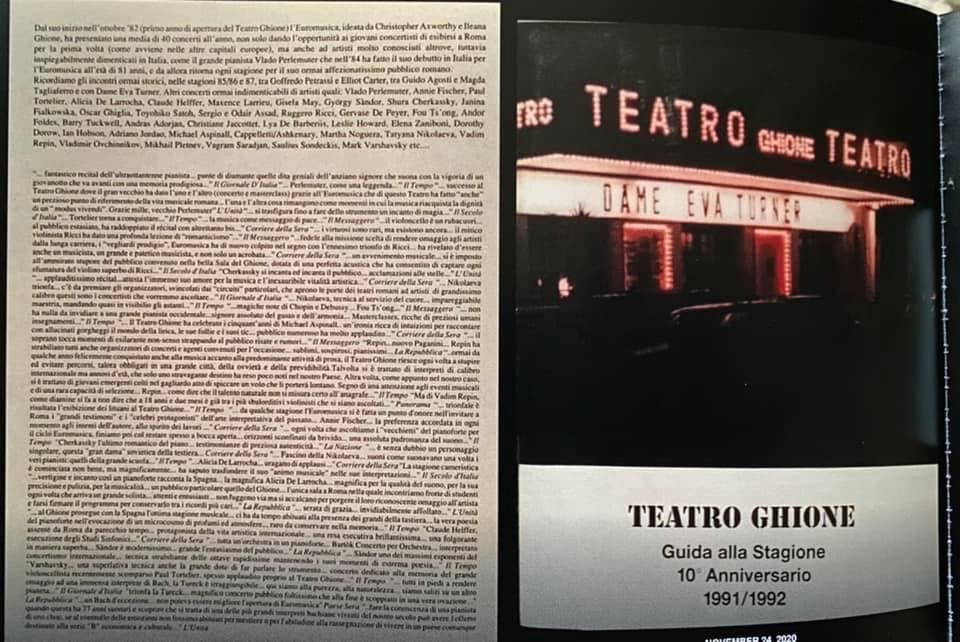
Euromusica created in 1982 the year we opened the theatre with the idea of giving a platform to all the young and distinguished old artists who were excluded from Rome for lack of venues suitable for concerts.The 80’s and 90’’s were golden years for music at the Ghione Theatre before the opening of the three wonderful new halls of Renzo Piano at the Parco della Musica.Unique halls for music that had been missing for too long from the Eternal City.

Alessandra is now a distinguished artist with a family in Manchester and added to her concert activity is her dedication to humanitarian causes and for music in hospitals.An activity that together with the American pianist and philanthropist Martin Berkovsky has raised millions of dollars for good causes.

Ing Tammaro thanking Alessandra for returning to play for him after many years absence.She now resides with her husband and daughter in Hayle,Manchester
Portrait by Franz von Lenbach, 1838
Born
Clara Josephine Wieck

13 September 1819
Leipzig
Died
20 May 1896 (aged 76)
Frankfurt
Occupation
Pianist
Composer
Piano teacher
Organization
Dr Hoch’s Konservatorium
Spouse
Robert Schumann


(m. 1840; died 1856)
Children
8, including Eugenie
Parents
Friedrich Wieck (father)
Mariane Bargiel (mother)

Clara Wieck was an accomplished concert pianist, trained by her father Friedrich Wieck.She was already making international tours at age eleven and composed piano pieces for her recitals.Regarded as one of the most distinguished pianists of the Romantic era, she exerted her influence over the course of a 61-year concert career, changing the format and repertoire of the piano recital by lessening the importance of purely virtuosic works She started receiving basic piano instruction from her mother at the age of four but after her mother moved out, she began taking daily one-hour lessons from her father. They included subjects such as piano, violin, singing, theory, harmony, composition, and counterpoint.She then had to practice for two hours every day. Her father followed the methods in his own book, Wiecks pianistische Erziehung zum schönen Anschlag und zum singenden Ton (“Wieck’s Piano Education for a Delicate Touch and a Singing Sound.”)Clara Wieck made her official debut on 28 October 1828 at the Gewandhaus in Leipzig, aged nine.The same year, she performed at the Leipzig home of Ernst Carus, director of the mental hospital at Colditz Castle.There, she met another gifted young pianist who had been invited to the musical evening, Robert Schumann , who was nine years older. Schumann admired Clara’s playing so much that he asked permission from his mother to stop studying law, which had never interested him much, and take music lessons with Clara’s father. While taking lessons, he rented a room in the Wieck household and stayed about a year.From December 1837 to April 1838, at the age of 18, Wieck performed a series of recitals in Vienna She performed to sell-out crowds to great critical acclaim; Chopin described her playing to Franz Liszt and a music critic, describing her Vienna recitals, said: “The appearance of this artist can be regarded as epoch-making… In her creative hands, the most ordinary passage, the most routine motive acquires a significant meaning, a colour, which only those with the most consummate artistry can give.” Clara Schumann first toured England in April 1856, while her husband was still living but unable to travel. She was invited to play in a London Philharmonic Society concert by conductor William Sterndale Bennett, a good friend of Robert’s to whom he had dedicated the Etudes Symphoniques op 13.In May 1856, she played Schumann’s Piano Concerto with the New Philharmonic Society conducted by Dr Wylde, who as she said had “led a dreadful rehearsal” and “could not grasp the rhythm of the last movement”.Still, she returned to London the following year and continued to perform in Britain for the next 15 years.It was in January 1833, at age 13, she began composing a Piano Concerto in , completing it in November a single-movement Konzertsatz that she orchestrated herself. In February 1834, her future husband Robert revised the orchestration,and the 14-year-old prodigy then performed it in several concerts.She then expanded the work by adding two more movements, using the Konzertsatz as the finale. The new first movement was completed in June 1834, and the slow second movement “Romance” with its extended cello solo was finished the following year. She again orchestrated the work herself, including undoing Robert’s revisions of the original Konzertsatz, completing her new three-movement Piano Concerto on 1 September 1835, twelve days before her 16th birthday.Clara premiered the full concerto on 9 November 1835 as soloist with the Leipzig Gewandhaus Orchestra, conducted by Mendelssohn

Robert and Clara Schumann’s children (photo taken in 1853 or 1854); from left to right: Ludwig, Marie, Felix, Elise, Ferdinand and Eugenie

Her life was punctuated by tragedy Not only did her husband predecease her, but so did four of their children.Their first son, Emil, died in 1847, aged only 1.Their daughter Julie died in 1872, leaving two small children aged only 2 and 7, then raised by their grandmother.In 1879, their son Felix died aged 24.In 1891, their son Ferdinand died at the age of 41, leaving his children to her care.In 1878, she was appointed the first piano teacher of the new Dr Hoch’s Knservatorium in Frankfurt.Among her 68 known students who made a musical career were Natalia Janotha,Fanny Davies,Nanette Falk,Amina Goodwin,Carl Friedberg,Leonard Borwick,Ilona Eibenschutz,Adelina de Lara,Marie Olson and Mary Wurm .She played her last public concert in Frankfurt on 12 March 1891. The last work she played was Brahms’s Haydn Variations , in a version for two pianos, with James Kwast.

Clara and Robert Schumann had eight children:

  • Marie (1841–1929)
  • Elise (1843–1928)
  • Julie (1845–1872)
  • Emil (1846–1847)
  • Ludwig (1848–1899)
  • Ferdinand (1849–1891)
  • Eugenie (1851–1938)
  • Felix (1854–1879).
Alessandra with the superb piano technician
With Linda Giorgi Alberti from Manchester to nearby Frascati where she lives.Alessandra from Velletri to Manchester where she now lives.Small world on the Hills around Rome.

https://christopheraxworthymusiccommentary.com/2023/02/24/michelle-candotti-a-lioness-let-loose-in-velletri-ignites-liszts-piano/

https://christopheraxworthymusiccommentary.com/2023/03/06/filippo-tenisci-exults-the-genius-of-wagner-and-liszt-in-velletri/

https://christopheraxworthymusiccommentary.com/2022/05/29/axel-trolese-illuminates-liszts-erard-with-supreme-artistry-and-passion-in-velletris-convento-del-carmine/

Cristiana Pegoraro at Tuscia University -The little girl who became a star

The fourteen year old schoolgirl who played in Perlemuter’s class at the Ghione Theatre in 1984 has grown up and is a woman with a story to tell.A woman with the means to tell it so beautifully in poetry and music .

https://christopheraxworthymusiccommentary.com/2022/12/21/ithaka-of-cristiana-pegoraro-a-star-shining-brightly-in-latina-for-christmas/

§https://youtube.com/live/lPCjj-EDzoI?feature=share
14 year old Cristiana at the piano with Vlado Perlemuter
https://christopheraxworthymusiccommentary.com/2017/12/19/in-praise-of-joan-2/

Cristiana Pegoraro, Pianist and Composer

Cristiana Pegoraro graduated in piano at the age of sixteen at the Conservatory of Terni, her hometown, with full marks, honors and honorable mention under Elio Maestosi.She continued her studies with Jörg Demus in Vienna and Hans Leygraf at the Mozarteum in Salzburg and at the Hochschule der Künste in Berlin. Later she studied with Nina Svetlanova at the Manhattan School of Music in New York.Her pianism demonstrates great technical and interpretative skills, as evidenced by the first prizes in numerous international competitions. In Prague she was awarded the Best of the Year prize for Classical Music “for natural talent, great personality, masterful phrasing and expressive maturity”. The New York Times calls her “an artist of the highest caliber” upon her debut at New York’s Lincoln Center in 1996.

From a very young age, Cristiana has performed for some of the most important associations and concert halls in Europe, the United States, South America, the Middle East, Asia and Australia (Lincoln Center, Carnegie Hall, United Nations, Guggenheim Museum – New York, Opera House – Sydney, Festspielhaus – Salzburg, Musikverein – Vienna, Royal College of Music – London, Centro Cultural de Belem – Lisbon, Teatro Ghione ,Auditorium Parco della Musica, Casa del Jazz – Rome, Friends of the Loggione del Teatro alla Scala, Sala Verdi – Milan, Theater Municipal Theater – São Paulo, Municipal Theater – Rio de Janeiro, Opera House – Manaus, Budapest Spring Festival, Umbria Jazz, Umbria Jazz Winter, Sorrento Jazz Festival, St. Petersburg Festival, Edinburgh Festival, Klavierfestival Ruhr – Germany, Shabyt Festival of Astana – Kazakhstan,2005 Aichi World Expo – Japan and 2008 Zaragoza World Expo – Spain).She plays as soloist with prestigious international orchestras such as: Salzburger Kammervirtuosen, Hungarian National Philharmonic, MAV Symphony Orchestra (Hungary), Hannover Kammerorkester, Boston Youth Symphony Orchestra, Garland Symphony Orchestra TX, Symphony Arlington TX, Las Colinas Symphony Orchestra TX, Chamber Ensemble of Rome , COS Youth Symphonic Ensemble, Drzhava Philarmonia Shumen (Bulgaria), Georgian National Orchestra, Philharmonic Orchestra of Bogotá, Orquesta Sinfonica de Cuyo (Peru), Orquesta Sinfonica Pro Lirica (Peru), I Musici di Parma, Symphonic Institution of Rome, Orchestra of strings of the Rome Philharmonic, Chamber Orchestra of Kazakhstan, Chamber Orchestra of Umbria, State Chamber Orchestra of the Musical Academy of Astana (Kazakhstan), City of Rome Philharmonic Orchestra, Civitavecchia Philharmonic Orchestra,Oradea Philharmonic Orchestra (Romania), Rome Philharmonic Orchestra, Umbrian Philharmonic Orchestra, Venetian Philharmonic Orchestra, Narnia Festival Orchestra, Estro Tanguero Ensemble, Pescara Music Academy Symphony Orchestra, Carlo Coccia Symphony Orchestra of Novara, Rome Chamber Ensemble.She collaborates as a soloist with the Central Band of the Navy and the Band of the Carabinieri, performing in concerts at the Auditorium Parco della Musica in Rome in front of 3,000 spectators. Of great importance was the concert in New York with the Navy Band on board the Intrepid for the celebrations of Columbus Day in the presence of the Mayor of New York Michael Bloomberg.


With her tours in the Gulf countries, she is the first Italian woman to give classical music concerts in Bahrain, Yemen and Oman. She is also the first Italian woman to have performed the complete 32 Piano Sonatas by Ludwig van Beethoven in concert and among the few pianists in the world to have performed the 5 Piano Concertos by Ludwig van Beethoven in a single day .
Recognized by international critics as one of the best interpreters of Cuban and South American music, she has premiered works by South American composers such as Astor Piazzolla, Joaquin Nin and Ernesto Lecuona for the European public. You have transcribed for piano the most beautiful tangos by Astor Piazzolla and composed a Fantasia on Cuban dances by Ernesto Lecuona.She has created theatrical/musical shows with actors such as Maria Rosaria Omaggio, Sebastiano Somma, Enzo De Caro, Giulio Scarpati, Tiziana Foschi, Sergio Basile, Debora Caprioglio, and with the journalist Corrado Augias. In December 2021 you played at the opening of the Canova exhibition at the Mart in Rovereto alongside the art critic Vittorio Sgarbi.
His extensive discography includes 30 CDs recorded for Decision Products, Nuova Era, Dynamic, Diva Productions, Eden Editori, Da Vinci Publishing, ProMu and CPP. His album “Astor Piazzolla Tangos”, released in 2016, won the gold medal at the prestigious Global Music Awards in two categories: best album and best instrumental. Recently released his latest recording works “Rebirth – Music to Heal the Soul”, conceived during the pandemic, with famous music to accompany the soul on a path of rebirth, and “Colors of Love”, with his original compositions dedicated to ‘Love.Her TV and radio recordings include RAI, Mediaset, Vatican Radio, State Disco, BBC (Scotland), ARD (Germany), RTP (Portugal), WQXR New York (USA), Nine Network (Australia) and CBC (Japan) . He includes participations in the television programs of RAI 1 “Porta a Porta” with Bruno Vespa and “Sottovoce” with Gigi Marzullo, and of Rete 4 “Vivere Meglio” with Fabrizio Trecca. He conceived and created for Oltretutto Radio, and conducted together with Anna Crecco, the program “The magic of the piano” with biographies of the great composers and his performances on the piano.

Cristiana performs for the highest institutional and diplomatic offices. He played in the presence of the President of the Republic Carlo Azeglio Ciampi, the President of the United Nations General Assembly, the Governor of the State of New York, the Mayor of New York, Her Royal Highness the Grand Duchess Maria Teresa of Luxembourg, the Italian Minister of Economic Development, the Governor of British Columbia, Canada and the President of the Austrian Senate.
In 2008, she, the only European representative in the context of the Spring Festival, gave a concert in the United Nations General Assembly Hall in New York in front of ambassadors and diplomats from 192 countries.
She is regularly invited by the Ministry of Foreign Affairs, in collaboration with Embassies and Cultural Institutes, to represent Italy and to promote Italian music around the world.She supports various global organizations including Unicef (of which he is a testimonial), Amnesty International, World Food Programme, Emergency, Lions Clubs International and Rotary International in their humanitarian campaigns.Since 2021 Cristiana Pegoraro has been collaborating with Gemelli Art and with the Romanini Association on the Art4ART project, which offers patients undergoing cancer treatments thematic artistic content to help them face and manage debilitating emotions, stress and fears and to encourage conscious participation to therapies, in order to achieve the best clinical results.To date, Cristiana Pegoraro has received over 40 international awards.
Just to name a few:
– World Peace Award from the Italian Cultural Circle of the United Nations in New York
– Golden Apple Bellisario Award from the Marisa Bellisario Foundation with ceremony live on RAI1 and private visit by the President of the Republic Sergio Mattarella.
– Melvin Jones Fellow Award of the Lions Clubs International Foundation “for dedicated humanitarian services”
– Simpatia Award, conferred on her in the Campidoglio by the Mayor of Rome and by the jury composed of Carlo Verdone, Christian De Sica, Pippo Baudo and Gigi Proietti. Cristiana shared the prize in the Music section with Riccardo Cocciante and Mogol.
– Donna ILICA 2010 from the Italian Language Inter-cultural Alliance of New York.
– “Fabrizio Frizzi” Award from the Gigi Ghirotti Onlus National Foundation as “Ambassador of Italian culture and music in the world”
– Ambassador Award of Terni, Umbria and San Valentino in the world from the Municipality of Terni.

Cristiana Pegoraro has long been combining her piano activity with that of composer. She has released 6 albums with her original compositions: “A Musical Journey”, “Ithaka”, “La mia Umbria”, “Volo di note”, “Piano di volo” and “Colors of Love”. Among his compositions, already used for films and documentaries, it should be mentioned the soundtrack for the video “For whom the siren sounds” produced by the Office of the Special Representative of the United Nations for children and armed conflicts and presented at the UN September 11, 2004 in memory of the victims of the terrorist attack. You also composed the soundtrack for the documentary film “La casa dell’ Orologio” by Gianni Torres.On March 22, 2021, his video clip RAIN with original music was released as a world premiere on the occasion of the World Water Day organized by the United Nations. The video has received the patronage of the United Nations and has been included in the official gallery of the UN. The video clip is visible, along with a large variety of video recordings, on her YouTube channel.Cristiana recorded the soundtrack composed by the award-winning Marco Werba for the historical film “Goffredo e l’Italia chiamò”, directed by Angelo Antonucci. The film stars Emanuele Macone, Stefania Sandrelli, Vincent Riotta and Maria Grazia Cucinotta.She is the author of the book of poems “Ithaka” (winner of the first prize in the national Logo D’Oro competition) and of a series of fairy tales for children drawn from Italian operas. Her poems were included in the Anthology “Contemporary Umbrian Poets” published by Il Formichiere and in the 2020 edition of “Il Corniolano” for the World Poetry Day organized by UNESCO.She is frequently invited to give masterclasses at the Juilliard School in New York and at various universities and colleges in the United States, Europe, the Middle East, Asia and Australia.
During the year she carries out teaching activities at her private studios in Rome and New York. In the summer you are a teacher at the Narnia Festival – International Campus of High Artistic Improvement in Narni (TR).
For years, in the schools of various countries, Cristiana has been carrying out programs for approaching classical music and programs on history and musical aesthetics for all age groups.Alongside his concert and teaching activity, he carries out an intense activity of artistic and organizational direction of important national and international institutions and musical events.Since 2011 he has been President of the Narnia Arts Academy ( www.narniaartsacademy.com ) and Artistic Director of the Narnia Festival ( www.narniafestival.com ), awarded seven times with the President of the Republic medal for artistic merits.She is testimonial for the Umbria tourism campaign in the world.

Victor Maslov at Cranleigh Arts – A great artist illuminates and enriches our lives


“I was totally mesmerised by a performance from an artist that listens so carefully to every sound with a sense of balance and complete mastery that allowed him to give a towering performance of Pictures from an Exhibition.” CHRISTOPHER AXWORTHY (Jan 2021).

https://www.youtube.com/live/tiSdLpr9WUI?feature=share

This concert is fundraising for Cranleigh Arts

Russian pianist Victor Maslov was praised as “one of those
people who is close to all-round mastery of his repertoire” by the New York Concert Review, following his performance at Weill Recital Hall (Carnegie Hall), New York.

Programme

L. Janacek – “On an overgrown path”

Stravinsky – Agosti – “Firebird”

Interval

A fascinating interval conversation for those watching on line revealed Victor’s extraordinary sensibility and intelligence.What makes a great artist is not just studying from an early age and having the opportunity to study with some of the great musical minds of our time.Victor was brought up to believe that music was like living in a cocoon and that anything outside of that was of no relevance.
He now believes that the true artist cannot ignore what is going on around him and that if more people were aware and reacted to their condition war could be avoided as the way to solve conflicting ideals.
Art cannot and should not be the excuse for not seeing and feeling what is happening all around you.
I have followed Victor’s career for many years now and it has been a joy to watch an exceptionally gifted young pianist mature into a great artist.I believe that it is these very wise words that have had a great influence on maturing his musicianship as he has evolved his own ideals about the world he lives in.
He left Russian in 2014 having studied at the Gnessin School in Moscow for exceptionally gifted young musicians.His teacher was his mother.He came to London to study with one of the great pianists of our time at the Royal College of Music -Dmitri Alexeev .So he was steeped in the Russian tradition – but as he so astutely says,the world is now connected as it has never been before so the idea of a tradition is no longer tenable.
He was fortunate to study also with Vanessa Latarche ,Head of keyboard at the RCM and so also learnt about the so called ‘English’ tradition.
Asked if he felt he was now an exile he replied that he could go back to Russia whenever he chose.He chooses not to go back until it changes its present course.
Behind every great artist is a great man of course how could it be otherwise?Fascinating and Hats off to Cranleigh for allowing us to enter the very soul of an artist.

M. Mussorgsky – Pictures at an Exhibition

Promenade l 

The Gnomes

Promenade ll 

The Old Castle 

Promenade lll 

The Tuileries: Children’s dispute
after play 

Bydlo 

Promenade IV

Ballet of the unhatched chicks 

Two Polish Jews: Rich and poor 

Promenade V 

The market at Limoges 

Roman Catacombs – With the dead
in a dead language 

Baba Yaga: The Witch 

The Heroes Gate at Kiev

Plus and exquisite Scriabin encore .

Victor chose six pieces from the Janacek cycle of ‘On an Overgrown Path’.A work rarely heard in the concert hall but one of very touching simplicity missing an overall architectural shape but creating an atmosphere with a hauntingly mellifluous traditional outpouring.’Our Evenings’ was played with absolute delicacy and simplicity and it led to ‘A blown- away leaf’ with all the gentle fluidity and luminosity of the fairytale it is.There was the playful halting rhythm of this short quixotic story ‘Come with us’ indeed!Followed by a deep brooding opening to ‘The Madonna of Frydek’ with its magical music box musings leading to an imperious outpouring of great lament that just bursts into intimate song.Declamations of striking atmosphere in ‘They Chattered Like Swallows’ and finally the echoing vibrations of desolation in ‘The Barn Owl Has Not Flown Away!’.A remarkable oasis of serenity and peace between the turbulence of the two Russian works on the programme

On an Overgrown Path is a cycle of fifteen piano pieces written by Leos Janacek and organized into two volumes.Janáček composed all his most important works for solo piano between 1900 and 1912.He probably began preparing his first series of Moravian folk melodies in 1900.At this time, the cycle had only six pieces, intended for harmonium : Our eveningsA blown-away leafThe Frýdek MadonnaGood night!The barn owl has not flown away! and a Piu mosso published after Janáček’s death.These melodies provided the basis for the first volume of On an Overgrown Path. Three of these compositions were first published in 1901 with the fifth volume of harmonium pieces, Slavic melodies, under the title On an overgrown path – three short compositions.By 1908 the cycle had grown to nine pieces, and was by then intended for piano instead of harmonium. The definitive version of the first book was published in 1911.On 30 September 1911, Janáček published the first piece of the second series in the Lidove novinynewspapers. The new series was created, in its entirety, around 1911.The complete second book was printed by the Hudební matice in 1942. The première of the work took place on 6 January 1905 at the “Besední dům” Hall in Brno.

Leos Janacek

The Nostalgia and Pain of Memory: Janáček’s On an Overgrown PathThe nationalism that hit the 19th century and carried through to the 20th century had a profound effect on music. Music that had been ignored for its folk-like character, or its non-urban nature, became the basis for new works that not only celebrated the folk sources but also the country itself.In Czech music history, three composers defined the nation: Smetena (1824-1884), =Dvorak (1841-1904), and Janacek (1854-1928). Janáček took inspiration from Moravian and other Slavic folk music to create his works, supported by his own research into the folklore and music of his country. Achieving international fame in his 60s with his opera Jenůfa, Janáček joined Smetana and Dvořák in symbolising Czech music.A piano cycle created starting around 1900, On an Overgrown Path, had a complicated birth. Seven pieces were originally written for harmonium, and five were published as Slavonic Melodies in 1901 and 1902. The remaining two pieces were set aside. In 1908, Janáček revised the work and wrote 3 more pieces, and made the 8 pieces into a cycle for piano. Two more pieces were added in 1911. That formed series I. Series II, which started with two new pieces, grew with the addition of the two pieces that had been set aside in 1902, forming nos. 1, 2, 3, 5 of Series II. No. 4 is just an ink sketch with some pencil revisions. Series II was published in 1942 after Janáček’s death and the 5 pieces do not have characteristic titles but only tempo indications.The title for the work, On an Overgrown Path, had been settled by 1901, but the titles of the individual movements changed before the publication of Series I in 1911. For example, No. 2, started out as ‘A Declaration of Love,’ was then changed to ‘A Love Song’ and finally became a much more mysterious title of ‘A Blown-Away Leaf’.Janáček described the work as having a double trajectory of ‘distant reminiscences’ of his childhood and reflection on the death of his 20-year-old daughter Olga in 1903.The first five parts of the cycle refer to his childhood: No. 1. Our Evenings, for evenings by the fireside; No. 3. Come with us!, for children’s games; and no. 4. The Madonna of Frydek, for a religious procession near his home village.As we get into the second part, emotion, rather than memory, has a place: no. 6. Words fail!, No. 8. Unutterable Anguish, and No. 9. In Tears.No. 7, Good Night!, was a metaphor for Olga’s death, while the last movement, No. 10. The Barn Owl Has Not Flown Away!, refers to the owl’s status as a foreteller of doom.Janáček’s change in the work from childhood memories to the tragedies of the grownup parent make this a unique statement of the human condition.

A transcendental performance of Agosti’s famous 1928 transcription of the ‘Firebird’.Victor threw himself into they fray from the very opening notes with breathtaking drive and scintillating virtuosity-a truly Infernal Dance! There were beautiful sounds of orchestral colour in the Berceuse with a kaleidoscope of colours appearing over the entire keyboard.But it was the ravishing beauty of the appearance of the Firebird in the finale that was truly breathtaking.The build up to the tumultuous final bars was astonishing as the excitement mounted to a frenzy of unbelievable virtuosity and exhilaration.

Stravinsky’s score for The Firebird was written for Sergei Diaghilev’s Ballets Russes dance company, which premiered the work in Paris in 1910. Based on ancient Russian folk tales, it tells the story of the young Prince Ivan’s quest to find a legendary magic bird with fiery multi-coloured plumage. In the course of his adventures, he falls in love with a beautiful princess but has to fight off the evil sorcerer Katschei to eventually marry her. The suite presents the culminating scenes of the ballet in a piano transcription by the Italian pianist and pedagogue Guido Agosti (1901-1989), who studied with Ferruccio Busoni.

The Danse infernale depicts the brutal swarming and capture of Prince Ivan by Katschei’s monstrous underlings until Prince Ivan uses the magic feather given to him by the Firebird to cast a spell on his captors, making them dance until they drop from exhaustion. The Berceuse is a lullaby depicting the eerie scene of the slumbering assailants, leading to the Finale, a wedding celebration for Prince Ivan and his princess bride.Agosti’s piano transcription, completed in 1928, is a daunting technical challenge for the pianist. Most of the piano writing is laid out on on three staves in order to cover the multi-octave range of the keyboard that the pianist must patrol. The piano comes into its own in this transcription as a percussion instrument, to be played with the wild abandon with which a betrayed lover throws her ex-partner’s possessions off the balcony onto the street below.Judging from the shocking 7-octave-wide chord crash that opens the Dance infernale, Agosti captures well the bruising pace of the action, with off-beat rhythmic jabs standing out from a succession of punchy left-hand ostinati constantly nipping at the heels of the melody line. The accelerating pace as the sorcerer’s ghouls are made to dance ever more frantically is a major aerobic test for the pianist.

Relief comes in the Berceuse, which presents its own pianistic challenges, mainly those of finely sifting the overtones of vast chord structures surrounding the lonely tune singing out from the middle of the keyboard.The wedding celebration depicted in the Finale presents Stravinsky’s trademark habit of cycling hypnotically round the pitches enclosed within the interval of a perfect 5th. Just such a melody, swaddled in hushed tremolos, opens this final movement. It is a major challenge for the pianist to imitate the shimmering timbre of the orchestra’s brightest instruments as this theme is given its apotheosis to end the suite in a blaze of sonority that extends across the entire range of the keyboard.

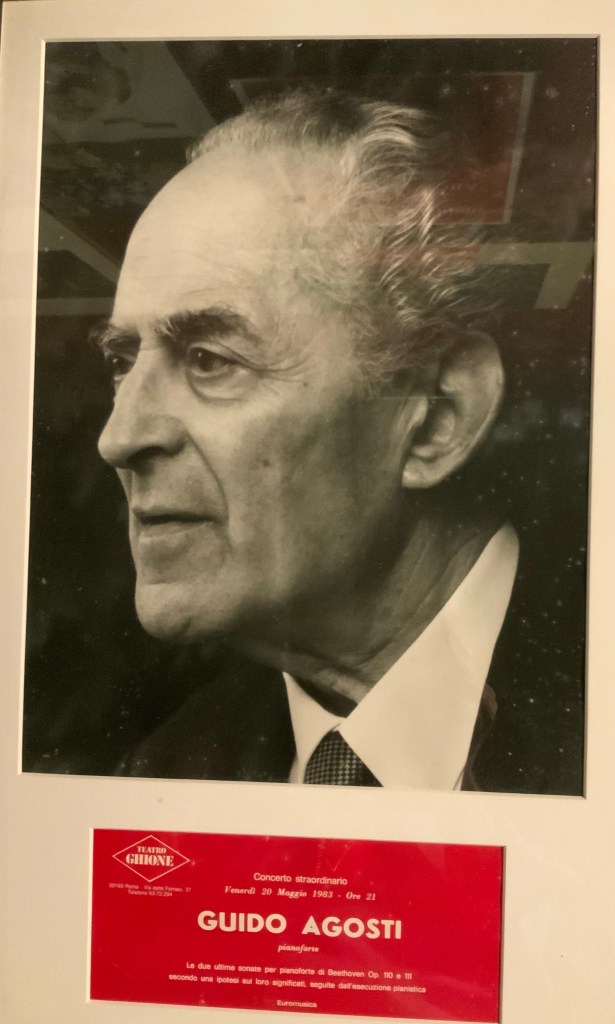
Guido Agosti (11 August 1901 – 2 June 1989) was an Italian pianist and renowned for his yearly summer course in Siena frequented by all the major musicians of the age.It was on the express wish of Alfredo Casella that Agosti took over his class which he did for the next thirty years.Sounds heard in his studio have never been forgotten.

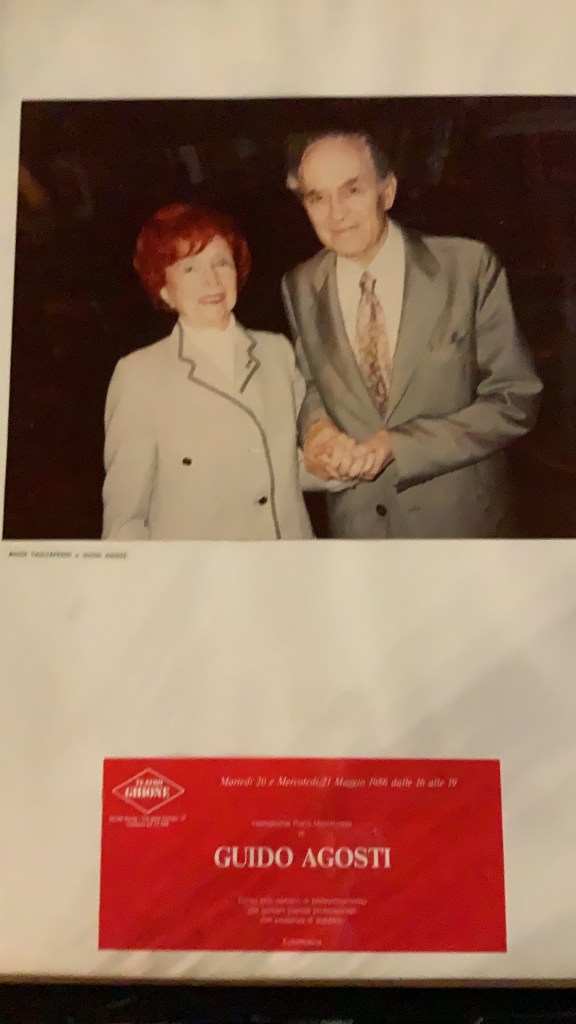
Guido Agosti being thanked by Ileana Ghione after a memorable concert and masterclasses in the theatre my wife and I had created together in Rome.

Agosti was born in Forli 1901. He studied piano with Ferruccio Busoni Bruno Mugellini and Filippo Ivaldiand earning his diploma at age 13. He studied counterpoint under Benvenuti and literature at Bologna University. He commenced his professional career as a pianist in 1921. Although he never entirely abandoned concert-giving, nerves made it difficult for him to appear on stage,and he concentrated on teaching. He taught piano at the Venice Conservatoire and at the Santa Cecilia Academy in Rome.In 1947 he was appointed Professor of piano at the Accademia Chigiana Siena .He also taught at Weimar and the Sibelius Academy in Helsinki.

In the Ghione Theatre in the early 80’s with Ileana Ghione,’Connie’Channon Douglass Marinsanti ,Lydia Agosti ,Cesare Marinsanti,Guido Agosti.A closely knit family .

His notable students include Maria Tipo,Yonty Solomon Leslie Howard,Hamish Milne,Martin Jones,Ian Munro,Dag Achat,Raymond Lewenthal,Ursula Oppens,Kun- Woo Paik,Peter Bithell.He made very few recordings; there is a recording of op 110 from the Ghione theatre in Rome together with his recording on his 80th birthday concert in Siena of Debussy preludes .

Pictures at an Exhibition is a suite of ten pieces (plus a recurring, varied Promenade) for piano by Modest Mussorgsky written in 1874.The suite is Mussorgsky’s most-famous piano composition, and has become a showpiece for virtuoso pianists based on pictures by the artist, architect, and designer Viktor Hartmann.It was probably in 1868 that Mussorgsky first met Hartmann, not long after the latter’s return to Russia from abroad. Both men were devoted to the cause of an intrinsically Russian art and quickly became friends. They likely met in the home of the influential critic Vladimir Stasov, who followed both of their careers with interest.Hartmann’s sudden death on 4 August 1873 from an aneurysm shook Mussorgsky along with others in Russia’s art world. The loss of the artist, aged only 39, plunged the composer into deep despair and Stasov helped to organize a memorial exhibition of over 400 Hartmann works in the Imperial Academy of Arts in St. Petersburg in February and March 1874. Mussorgsky lent the exhibition the two pictures Hartmann had given him, and viewed the show in person. Later in June he was inspired to compose Pictures at an Exhibition, quickly completing the score in three weeks (2–22 June 1874).The work did not appear in print until 1886, five years after the composer’s death, when a not very reliable edition by the composer’s friend and colleague Nikolai Rimsky-Korsakov was published. It was only in 1931, marking the 50th anniversary of the composer’s death, that it was published in a scholarly edition in agreement with his manuscript.

Victor gave a very impressive performance of a work that all too often is misused as a vehicle for empty virtuosity.That was not the case today as with scrupulous attention to detail Victor brought this work back into the realms of the great works of the piano repertoire as Richter had done in the 60’s,and Horowitz had done with his own inimitable rearrangements in the 40’s.The simple statement of the opening promenade led straight to the grotesque outburst of Gnomus depicting a little gnome, clumsily running with crooked legs.There were beautiful legato octaves in the meno mosso with a very impressive crescendo.The left hand trills were mere vibrations of sound leading to the final cry and transcendental outburst of a final scale passage played by Victor exactly as the composer asks ‘velocissimo con tutta forza.’A mysterious ethereal promenade leads to ‘The old castle’ played so delicately but with a rich sound palette with magical counterpoints and a gradual disappearance.A more decisive promenade leads to the Tuileries,an avenue in the garden near the Louvre, with a swarm of children and nurses.Played with an infectious lilt and playful asides thrown in with great nonchalance.Bydlo is obviously hanging next to it and depicts a Polish cart on enormous wheels, drawn by oxen.Never slackening its constant pace but building in volume to a very impressive climax as it comes into full view.Played with overpowering weight but never any hardening of tone only to die away to barely a whisper.I had never been aware until today in Victor’s knowledgeable hands of the two staccato notes in the melodic line that gave great character to this lumbering old cart.After such fatigue a promenade made in heaven led so peacefully to the audacious chatterings of the ‘Ballet of unhatched chicks’ which is based on Hartmann’s design for the ballet Trilby where the famous variation by Petipa for the male dancer in the Le Corsair from Gerber’s score shows a painting of dancers from the ballet in costume (as fledglings emerging from the shell).In Victors hands there was such a playful sense of fun that contrasted with the beautiful bass counterpoints,that he played so pointedly,in the middle section.The grandiloquent Samuel Goldenberg burst on to the scene with the gloriously reverberant beseeching of Schmuyle.The last Promenade was played this time with much vehemence as it led to the featherlight chatterings of the market place in Limoges depicting French women quarrelling violently in the market.A tour de force of repeated notes thrown off with great ease by Victor as it led to a startling climax interrupted by the mighty entry to the catacombs.Mussorgsky’s manuscript of “Catacombs” displays two pencilled notes, in Russian: “NB – Latin text: With the dead in a dead language” and, along the right margin, “Well may it be in Latin! The creative spirit of the dead Hartmann leads me towards the skulls, invokes them; the skulls begin to glow softly.”In fact it was just this magic glow that Victor was able to illuminate with such vibrating sounds of great delicacy with long held pedal notes of real beauty.Only to be interrupted by the ferocious Baba -Yaga where even Victor was taken aback as he threw himself into the whirlwind sounds of the chase.Only finding an oasis of peace in the middle section with a serene bass melody over a constant wave of vibrant sounds,the spell being broken ,though,by the cries of the witches flight.A tumultuous build up of double octaves suddenly was abruptly abated by the vision of the Great Gate of Kiev in all its majesty. Hartmann’s sketch was his design for city gates at Kiev in the ancient Russian massive style with a cupola shaped like a slavonic helmet.The beautiful colours of the plain chant were interrupted by the constant joyous pealing of bells.The build up to the last glorious outpouring was indeed very impressive .Victor perfectly judged the gradual build up with a tension that finally exploded with a cascade of scales leading to the sheer orchestral outpouring of glorious sounds with which he brought this ‘towering’ performance to a shattering end.A memorable performance that I ,for one,would be quite happy to listen to again.

Victor has been a prizewinner in several international
competitions. After winning the AntwerPiano International Competition in 2020, he was invited to take part in the 2021 Classic Piano International Competition in Dubai. Victor performed two solo rounds and three piano concertos for the jury comprising Vladimir Ovchinnikov, Michel Beroff, Pavel Gililov, Jan Jiracek
von Arnim, Ewa Poblocka and others, and received the Second Prize.Further successes include winning the First Prize at the 2nd
International Rachmaninoff Piano Competition (Moscow 2020), being Overall Prize Winner of the 47th Concertino Praga International Radio Competition for Young Musicians (2013), two-time winner of Concerto Competition (Royal College of Music, 2015, 2018), winning the First Prize at the Musicale dell’Adriatico piano competition (Ancona 2007), and the First Prize at the Nikolai Rubinstein International Piano Competition (Paris 2004).In 2021, Victor graduated from the Royal College of Music,London, having completed his Artist Diploma as a Carne Trust Junior Fellow, and previously having received his Masters of Performance with Distinction and his Bachelor of Music with a First class grade.

At the RCM, Victor studied piano with Professor Dmitri Alexeev and Head of Keyboard Professor Vanessa Latarche,and conducting with Toby Purser, Head of Conducting. Upon his graduation, Victor was announced as the recipient of the Queen Elizabeth the Queen Mother Rose Bowl for his achievements at the RCM, which was awarded to him by HRH Charles, The Prince of Wales in May 2022. Throughout his studies, Victor has been grateful for the support of the Ruth West Scholarship, the Eileen Rowe Musical Trust Award, the Future of Russia Scholarship, the Munster Trust Award, and the Talent Unlimited. Victor is the Keyboard Charitable Trust Artist, andthe Countess of Munster Trust Recital Scheme Artist.Victor began his studies at the Gnessin Moscow Special School of Music, where he was taught by his mother Olga Maslova. He later became a scholar of the Vladimir Spivakov International Charity Foundation. Victor also has received masterclasses from Sir András Schiff, Dmitry Bashkirov, Peter
Donohoe, Marios Papadopoulos, Tatiana Zelikman, and Leslie Howard.

Additional prizes include Fourth Prize at the Vladimir
Horowitz International Competition for Young Pianists (Kiev 2012), Second Prize at the Astana Piano Passion (Astana 2015), Second prize at Joan Chissell Schumann Prize (London 2019), Third prize at the 6th Umanitaria Societa Competition (Milan 2019), and the Second prize at the Kendall Taylor Beethoven Piano Competition 2021 (London 2021). He gave his concerto debut at the age of nine with the State Symphony Orchestra of Moscow and has since performed with
orchestras such as RCM Symphony, RCM Philharmonic, Symphonic Orchestra of Czech Radio, Astana Opera Symphonic Orchestra, Kostroma Symphonic Orchestra, Penza State Symphonic Orchestra, and the State Orchestra “New Russia”. Victor has given solo performances at international music festivals across the UK, Germany, France, Italy, Denmark, Slovakia, Czech Republic, Turkey, Switzerland,Russia, Israel, and the USA. Venues have included Royal Festival Hall, Queen
Elizabeth Hall, Weill Recital Hall at Carnegie Hall, Elgar Room at the Royal Albert Hall, Cadogan Hall, Great Hall of Moscow Conservatoire, Smetana Hall and Rudolfinum.

Victor in discussion after a recent concert with Dmitri Alexeev and Tatyana Sarkissova
‘Victor was phenomenal, powerful yet sensitive, with a rich spectrum and colour.A thrilling performance.’ Garo Keheyan Pharos Arts Foundation 

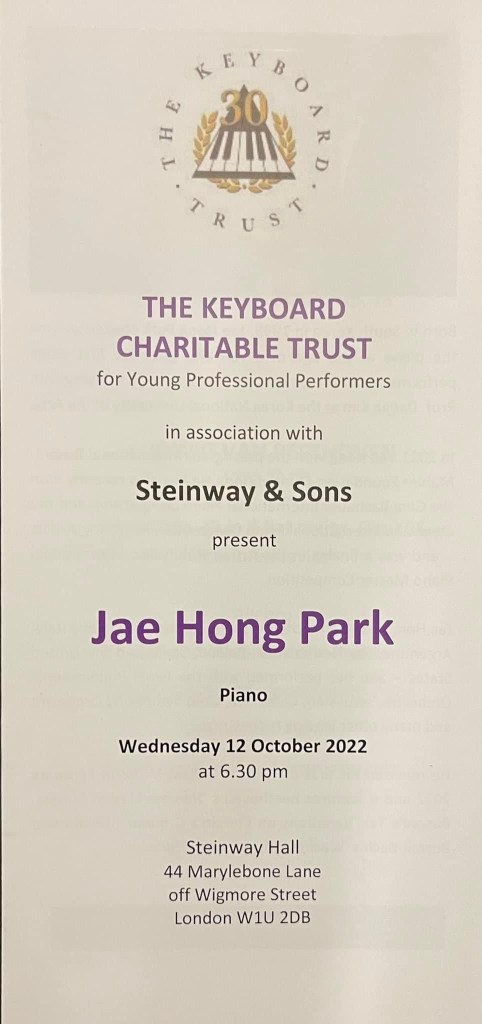
THE KEYBOARD CHARITABLE TRUST for Young Professional
Performers
. Patron: SIR ANTONIO PAPPANO

https://christopheraxworthymusiccommentary.com/2022/09/14/the-gift-of-life-the-keyboard-trust-at-30/

The Keyboard Charitable Trust’s mission is to help young
keyboard players reduce the element of chance in building a professional musical career. The Trust identifies the most talented young performers (aged 18-30) and assists their development by offering them opportunities to perform throughout the world. For the most gifted, this means débuts in London, New York, Mexico, Berlin, Rome and other music capitals.In collaboration with its partners worldwide, the Keyboard Trust has developed a circuit of some fifty venues in seven principal countries, from the most prestigious concert halls to locations where classical music is rarely heard. Over the past thirty years, the Trust has presented nearly 300 young international pianists, historic keyboard players and organists (aged 18-30) in over 900 concerts worldwide.

With such notable musicians as the late Claudio Abbado,
Alfred Brendel and Evgeny Kissin among its trustees, this formula has proved its worth: many Trust artists receive an offer of a new engagement, a broadcast, a recording or management. Nearly half of the artists have subsequently made serious professional musical careers.Recent years have seen a further expansion of the Trust’s
work in Germany, Italy and Russia as well as in the USA where the distinguished conductor, the late Lorin Maazel, invited the Trust to present its artists at his Festival Theatre in Virginia. In the UK, we have an ongoing collaboration with Manchester Camerata which provides concert performances in major Manchester venues each year.

Recent highlights include Alexander Gadjiev being made a
‘BBC New Generation Artist’ for 2019-2021 and winning the Sydney International Piano Competition 2021; Edward Leung being awarded the Philharmonia Orchestra’s 2021–2022 MMSF Piano Fellowship Thomas Kelly being selected as a finalist in the 2021 Leeds Piano Competition; and Yuanfan Yang winning First Prize in then 2022 Casagrande International Piano Competition.

The Keyboard Charitable Trust is funded entirely by
voluntary donations. Detailed information about the Trust, how to become a Friend, join the One Thousand Club or to provide corporate support, may be found on our website.

https://christopheraxworthymusiccommentary.com/2021/06/05/victor-maslov-the-virtuous-virtuoso-virtually-at-st-jamess-piccadilly-4th-june-2021/

https://christopheraxworthymusiccommentary.com/2019/06/24/victor-maslov-at-the-royal-albert-hall/

https://christopheraxworthymusiccommentary.com/2017/03/29/victor-maslov-at-st-marys/

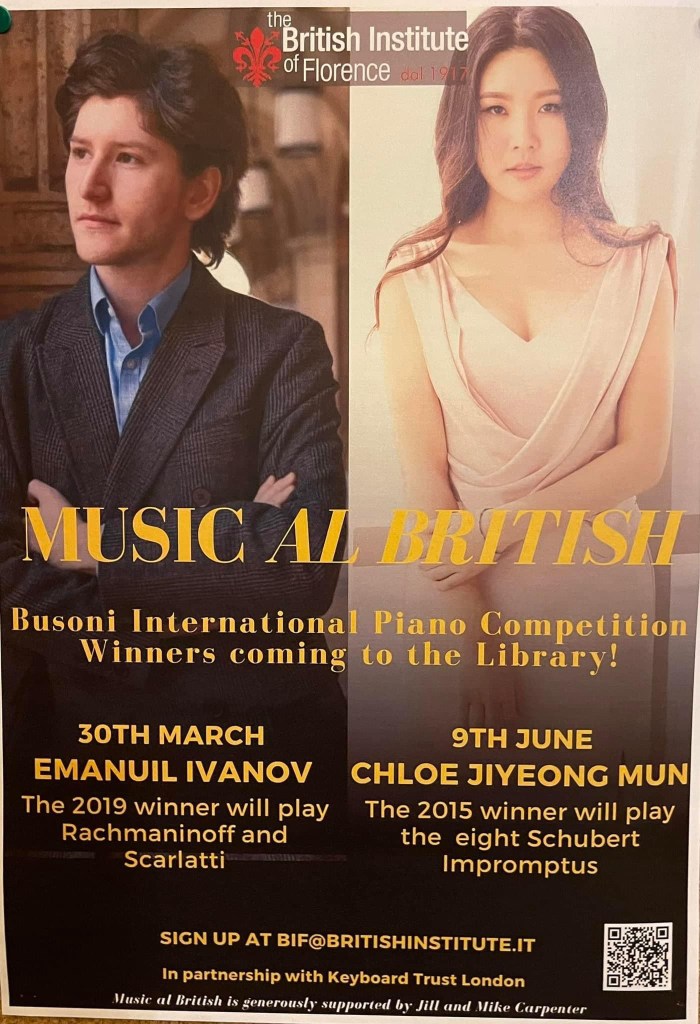
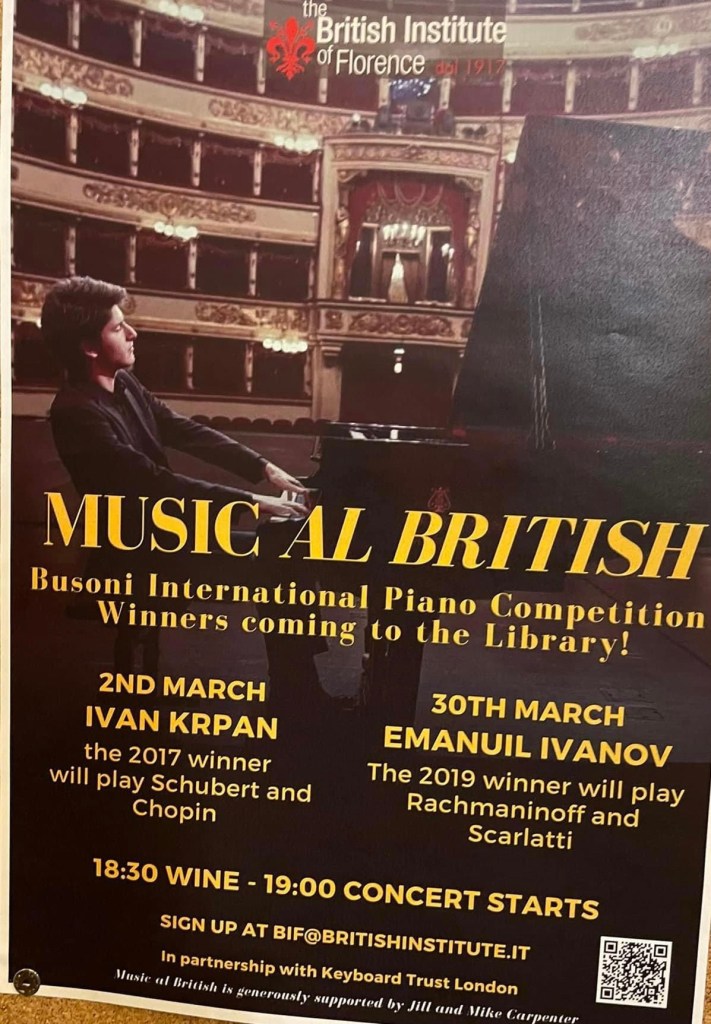
Emanuil Ivanov premio Busoni 2019 Al British in the Harold Acton Library A room with a view of ravishing beauty and seduction

Emanuil Ivanov in Florence last night for the series of Busoni winners in the Harold Acton Library at the British Institute of Florence.
In partnership with the Keyboard Trust he astonished in Scarlatti and seduced and overwhelmed with Rachmaninov.(a detailed review of his performances are reproduced here from month ago in London:https://christopheraxworthymusiccommentary.com/2023/02/15/emanuil-ivanov-sensational-recital-of-technical-assurance-and-refined-intelligence/)


But it was his own theme and variations inspired and dedicated to his fiancé with ‘sincerity and loving expression’ that moved and thrilled us even more.
Even his encore of Trenet’s ‘April in Paris’ in the transcription of his fellow Bulgarian Alexis Weissenberg could not move us to tears as the delicacy and ravishing beauty of his own piece.


His first encore was ‘My Joys’ the song by Chopin in the all too rarely played transcription by Liszt and what rays of joy he beguiled us with.A pianism of another age,the Golden age of subtlety and supreme artistry so rare to experience in these times of immediacy and clockwork precision.A make believe world of innuendo and ravishing jeux perlé- perchance to dream!
Love was in the air -wedding bells are already ringing.
It was a revelation to see a Busoni winner from four years ago who has turned from a superbly trained young pianist into an artist of great stature.


Spring is in the air in Florence and as Rostropovich rightly said it is the museum of the world.A room with a view indeed!

https://christopheraxworthymusiccommentary.com/2023/03/01/ivan-krpan-busoni-2017-in-florence-mastery-and-simplicity-at-the-service-of-music/

https://christopheraxworthymusiccommentary.com/2022/08/12/chloe-mun-at-the-duszniki-chopin-festival-refined-perfection-and-aristocratic-simplicity/

The view from the Harold Acton Library
Raising a glass to celebrate the virtuoso performance.
A sumptuous after concert dinner hosted by Sir David and Fiorenza Scholey
Distinguished admirers at the post concert wine tasting
A young admirer of classical music at every concert
Our ever vigilant composer/piano technician Michele Padovano supervising the Emanuil’s needs in rehearsal

Ilaria Cavalleri – Roma Tre Young Artists Piano Solo Series – War and Peace with integrity and artistry

Ilaria Cavalleri gave a recital in the Young Artists Piano Series where Roma Tre Orchestra opens its doors to young musicians in that difficult period at the start of a career in music.
Young musicians who have dedicated their youth to perfecting their art and are just looking for a public to share it with and in sharing be able to delve deeper into the mysteries of interpretation.
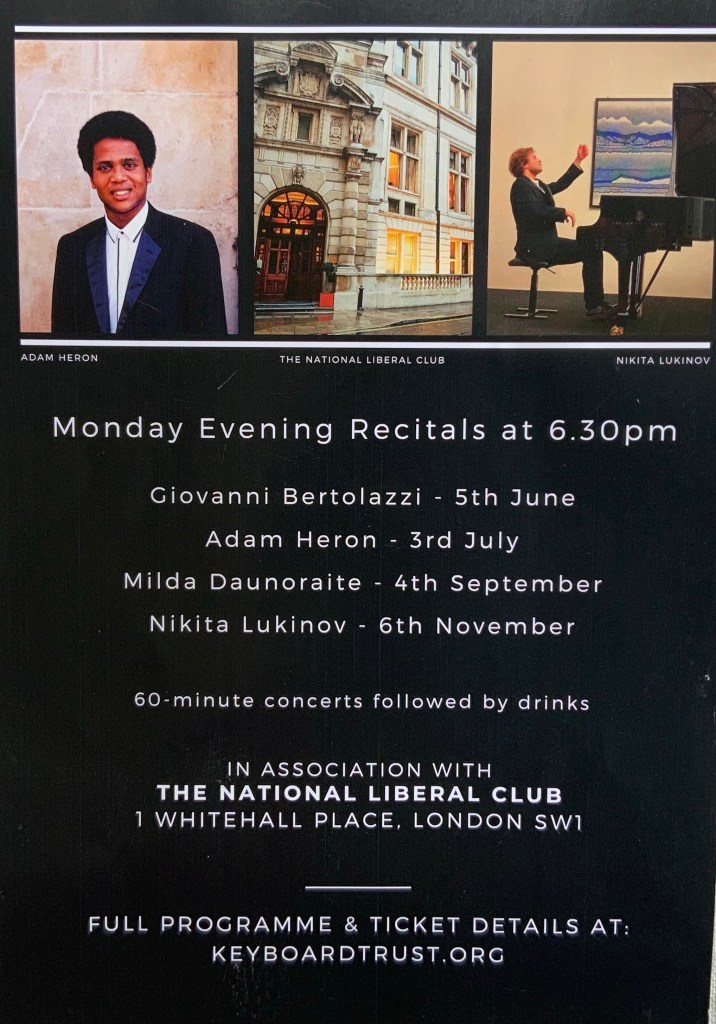
Ilaria from the school of Maurizio Baglini and Davide Cabassi has already been selected to play for the Keyboard Trust in London and from this first happy experience will be performing for them in France this Summer.

Her ‘Hunt’ was brilliant and rhythmic but already in furious mood as the normally ‘pastoral’ opening was given a drive and energy that denied the usual grace and charm of the Viennese countryside where Beethoven was wont to calm his turbulent character.The ending was thrown off ,though,with the nonchalant grace that Beethoven prescribes in the score and it was in the scherzo that followed ,that Ilaria had come to terms with this very imposing instrument.The Scherzo was played with lightness like a breath of fresh air as she played with dynamic control and scrupulous attention to Beethoven’s very precise markings.The almost Schubertian outpouring of song in the Menuetto made a beautiful contrast as her sense of balance allowed the melodic line to sing so naturally.It was only disturbed by some rather unwanted pointing of counterpoints that although made for variety was an intrusion to the simplicity that she had revealed.The seemingly innocent Trio that Saint Saens had taken as the theme for his variations for two pianos could have been much less serious with the same frivolity that Saint Saens had obviously discovered and pilfered!An ending calando not ritardando as Beethoven implores but very often ignored by lesser hands.The last movement ‘presto con fuoco’ was like a red rag to the bull and Ilaria played it with drive and superb technical control.All Beethoven’s markings were scrupulously noted that was not easy at this velocity .I was missing ‘bucolic’ and the pastoral feel of a bubbling brook that obviously Ilaria had seen in a different light,probably encouraged by the ‘Rolls Royce’ placed before her hands today.I look forward to hearing her performance again on a period instrument.An instrument similar to Liszt’s own Erard .Liszt was a pupil of Czerny who in turn had been a pupil of Beethoven.Beethoven had famously kissed the child Liszt on the forehead after listening to the prodigy play. Ilaria will play a concert in Velletri on the 16th April in the series ‘Liszt non solo’ of Ing.Giancarlo Tammaro


A slender young lady who would grace any dance floor unleashed an unexpected attack on the piano.
War and Peace indeed as she played an important programme with dynamic rhythmic drive and total concentration.
Allowing the music to unfold with intelligence and a musical integrity that never allowed any indulgence or crowd pleasing niceties.
This was an artist who had absorbed the message that was hidden behind the notes which was especially noticeable in the mighty Chaconne by Gubaidulina and above all in the first of Prokofiev’s ’War’ Sonatas.A force and energy like a tempest passing through this mighty rationalist hall aided and abetted by the magnificent Fazioli concert grand seated at last on a magic carpet!

The magnificent Fazioli at home on this magic carpet


Ilaria was indeed in furious mood as she imbued Beethoven’s usually pastoral Sonata op 31 n 3 with driving rhythmic energy and dynamic contrasts.
This was indeed a ‘Hunt’ to be reckoned with as she even split driving rhythmic elements between the hands to give more impulse to her fiery temperament.
A Berceuse by Filidei allowed her a moment of calm as she allowed chiselled icicles to evaporate over the gentle vibrations from deep in the piano with a kaleidoscopic sense of colour


After some towering performances she even had enough energy left to offer her very enthusiastic audience an encore of Chopin’s mighty C minor study op 25 n.12 sometimes known as the ‘Ocean’.

Prokofiev’s mighty sixth sonata was played with dramatic rhythmic drive dissolving to an atmospheric melodic line clouded in the smoky and steamy atmosphere of the pedal.A towering melodic line screaming to get out from the centre of the piano with shots being fired all over the keyboard in a transcendental display of balance and colour.There was a beguiling sense of dance in the Allegretto and a strangely static ‘tempo di valzer’.A sumptuous string sound gave a respite from the full orchestra of the outer movements where brass and violence were acted out with deadly precision.The perpetuum mobile of the vivace showed a total command of the keyboard.A wild dance played with furious abandon but with great contrasts of dynamics and some magical quasi Bartokian sounds in the quieter contrasting passages.


These were indeed tumultuous waves played with sumptuous sound and driving energy.Even a slight wrong turning was immediately put on the right track as her professionality was as impeccable as her artistry.A programme that left the public drained but uplifted by such prodigious talent. I have a feeling ,though,that Ilaria could easily have sat down and repeated it all over again.
Appearances can be deceptive but true artistry and personality will always shine through .

Nata nel 2001, Ilaria Cavalleri è una giovane pianista bresciana. Nel 2021 consegue la laurea di I livello in pianoforte presso il Conservatorio “L.Marenzio” di Brescia con votazione
110 e lode. Attualmente frequenta il Conservatorio “G.Verdi” di Milano nella classe del M°Davide Cabassi e studia anche con il M°Maurizio Baglini.
Nel 2019 ha ricevuto da Ubi Banca il premio Giovane Talento dell’anno, istituito dalla banca stessa e assegnato dal Conservatorio di Brescia nell’ambito del 56° Festival Pianistico di Brescia e Bergamo.
Si è esibita per The Keyboard Charitable Trust a Londra, presso il DAI di Heidelberg, per la Società dei Concerti di Milano, presso Bank Austria Salon e Steinway Haus in Vienna, per il Festival Pianistico di Brescia e Bergamo nelle serate dedicate ai giovani talenti del Conservatorio; per il Teatro Verdi di Pordenone; per Piano City Milano, presso l’Università della musica di Varsavia, per il Teatro Grande di Brescia; per la società Filodrammatica
Cremonese; per RomaTreOrchestra presso il Teatro Palladium, il Museo Napoleonico e il Teatro Torlonia.
Nell’estate 2022 è stata selezionata per partecipare alla Vienna Piano Summer School 2022, organizzata da International Piano Foundation Theo and Petra Lieven of Hamburg, che le ha permesso di studiare con importanti Maestri quali Tatiana Zelikman, Arie Vardi e Ronald Brautigam. Ha frequentato masterclass pianistiche con i M° Riccardo Risaliti, Agnieszka Przemyk-Bryla, Federico Colli, Tatiana Larionova e masterclass di musica da camera con M° Enrica Ciccarelli e Silvia Chiesa.

Ilaria Cavalleri in London

Lovely Ilaria with CA co artistic director of the Keyboard Trust
Music is also fun at Roma 3

Francesco Filidei (Pisa 1973 ) è un compositore e organista italiano Allievo di Salvatore Sciarrino ,dopo essersi diplomato in organo al Conservatorio di Firenze si è specializzato in composizione al Conservatoire de Paris È stato membro dell’IRCAM della Casa de Velazqueze dell’Academia Schloss Solitude a Stoccarda.Le sue opere, edite da Rai Trade e Ars Publica, sono state eseguite da diverse orchestre come l’Itinéraire, Alter Ego, Cairn, L’Instant donné, le Nouvel Ensemble Modern, Court-Circuit, l’Ensemble intercontemporain, le Percussions de Strasbourg, il Klangforum Wien.Alcune sue composizioni sono state trasmesse da Rai 3 e Radio France .Filidei cerca con le sue opere, come ha affermato Sciarrino ,di immaginare una musica privata dell’elemento sonoro, facendo rimanere solo lo scheletro, un suono leggero ma ricco.Come organista è conosciuto come interprete di Franz Liszt di cui ha interpretato la produzione integrale per tale strumento. Ha suonato come solista alla Filarmonica di Berlino al Festival d’Automne a Parigi ,al Festival Archipel a Ginevra,Ginevra, alla Biennalle di Venezia et a l’Ircam

Francesco Filidei

Francesco Filidei (born 1973)is an Italian concert organist and composer. A student of Salvatore Sciarrino he has performed internationally. As a composer, he has collaborated with singer-songwriter Claire Diterzi and written operas premiered in Porto and Paris. His music has been performed by notable contemporary music ensembles. His Japanese wife, Noriko Baba is also a composer.He performs in concert, playing works by Franz Liszt ,Cesar Franck as well as his own compositions and much contemporary music for organ and piano, in Italy and abroad. In 1998, he was awarded the S. Taddei Annual Scholarship and in 2004 the Meyer Prize and in 2007 the Takefu International Composition Award.In his compositions, Filidei tries – as Sciarrino says – “to imagine a music that has lost the sound element”.

Sofia Asgatovna Gubaidulina born 24 October 1931) is a Soviet Russian composer and an established international figure. Major orchestras around the world have commissioned and performed her works.She is considered one of the foremost Russian composers of the second half of the 20th century.She studied composition and piano at the Kazan Conservatory, graduating in 1954. During her early conservatory years, Western contemporary music was banned nearly entirely from study, an unusual exception being Bartok. Raids even took place in the dormitory halls, where searches were conducted for banned scores, Stravinsky being the most infamous and sought after. Gubaidulina and her peers procured and studied modern Western scores nonetheless. “We knew Ives,Cage ,we actually knew everything on the sly.”In Moscow she undertook further studies at the Conservatory until 1963. She was awarded a Stalin fellowship.Her music was deemed “irresponsible” during her studies in Soviet Russia, due to its exploration of alternative tunings.She was supported, however, by Dmitri Shostakovich who in evaluating her final examination encouraged her to continue down her path despite others calling it “mistaken”.For Gubaidulina, music was an escape from the socio-political atmosphere of Soviet Russia.

Gubaidulina in 1981

For this reason, she associated music with human transcendence and mystical spiritualism, which manifests itself as a longing inside the soul of humanity to locate its true being, a longing she continually tries to capture in her works.These abstract religious and mystical associations are concretized in Gubaidulina’s compositions in various ways.An influence of improvisation techniques can be found in her fascination with percussion instruments. She associates the indeterminate nature of percussive timbres with the mystical longing and the potential freedom of human transcendence :’… percussion has an acoustic cloud around it, a cloud that cannot be analyzed. These instruments are at the boundary between palpable reality and the subconscious, because they have these acoustics. Their purely physical characteristics, of the timpani and membranophones and so on, when the skin vibrates, or the wood is touched, respond. They enter into that layer of our consciousness which is not logical, they are at the boundary between the conscious and the subconscious.Gubaidulina’s entire piano output belongs to her earlier compositional period and consists of the following works: Chaconne (1962), Piano Sonata (1965), Musical Toys (1968), Toccata-Troncata (1971), Invention (1974) and Piano Concerto “Introitus” (1978). Some of the titles reveal her interest in baroque genres and the influence of J.S.Bach.Gubaidulina notes that the two composers to whom she experiences a constant devotion are J.S. Bach and Anton Webern.The Steinway grand piano she has in her home was a gift from Rostropovich.She has been married three times.

Sergei Prokofiev with Mira Mendelson.

Sergei Prokofiev’s Piano Sonata No. 6 in A major, Op. 82 (1940) is the first of the Three War Sonatas it was first performed on 8 April 1940, in Moscow with the composer at the piano. The Piano Sonata No. 7 in B♭ major, Op. 83 (1942) (occasionally called the “Stalingrad”) is the second (and most famous) of the three “War Sonatas” ,it was first performed by Sviatoslav Richter on 18 January 1943 in Moscow .The Piano Sonata No. 8 in B♭ major, op. 84 is the third and longest of the three ‘war Sonatas’. He completed it in 1944 and dedicated it to his partner Mira Mendelson who later became his second wife and was first performed on 30 December 1944, in Moscow by Emil Gilels

Simone Tavoni at Livorno Classica flying high with poetic reasoning and with Dinosaurs overhead

A quite extraordinary concert venue in Livorno in Carlo Palese’s per PIANO series .A new partnership with the Keyboard Trust brought Simone Tavoni to give a recital under the wings of flying dinosaurs – ‘on wings of song’ one might say!The beasts fished locally in the sand and now suspended from the ceiling for all to see in the splendid Museum of the Mediterranean.


A recital of Beethoven,Clementi,Schubert and Brahms but with encores that included an improvisation based on the local waves followed by a Mendelssohn song without words- the beautifully simple 33rd.
Simone swore that he could hear some movement above his head as he played but fortunately it only seemed to add to the poetic performances that were being enticed out of the magnificent concert grand placed at their feet!


Beethoven’s early variations on an original theme were played with all the chameleonic character that created such turmoil in Beethoven’s turbulent early life.
From the beauty and simplicity of the theme through the rhythmic energy and characterisation of the variations and the brilliance and virtuosity of the ending before the gentle return to the opening beauty and simplicity.Played by Simone with great authority and technical command together with a poetic sensibility that brought these neglected variations vividly to life.
There was great drama and weight to the opening of Clementi’s Sonata op 50 n.1 .An important work of Beethovenian proportions but with a digital brilliance for which Clementi was a renowned advocate,as every pianist knows from his collection of studies ‘Gradus as Parnassum’.It was played with brilliance and virtuosity but also an architectural shape that made one wonder why it is not more often heard in the concert hall.
A slow movement with the deeply profound long sustained melodic lines played with a chiselled cantabile of great beauty.The last movement had a dance like rhythmic drive and buoyancy and was played with passionate commitment.


A short break allowed Carlo Palese to give a brief historic guide to the Schubert and Brahms that was to follow.
It was in the Schubert and Brahms that the resonance of the hall gave great weight and poignancy to the long melodic lines and orchestral sounds that were allowed to vibrate around this cavernous animal farm.
The dramatic Beethovenian opening of the first impromptu op 142 contrasted so well as it dissolved into the sublime beauty of the central episode.The question and answer over a gently moving accompaniment was beautifully realised with Simone giving all the time necessary for the music to speak with such moving eloquence.
The second Impromptu was allowed to unfold even more generously with simplicity and luminosity.The waves of sound in the central episode were greatly helped by the resonance of the hall.
Brahms Intermezzo op 118 n 2 was played with an aristocratic simplicity that allowed the music to unfold so naturally.
The Two Rhapsodies op 79 were given performances of great orchestral colour dissolving into melodic lines of sumptuous beauty.Helped by the resonant accoustic Simone produced rich sounds of great fluidity and heroic drive.

They brought this short recital to a brilliant conclusion to which Simone created his own waves and ‘wings of song’ where words were superfluous when his playing could speak so much more eloquently and poetically under the dinosaurs wings.

The three Sonatas of Op 50 by Clementi are dedicated to his fellow Italian who had made a splendid career in Paris, Luigi Cherubini.There is good reason to believe, however, that Clementi had composed much of this music years earlier, and had intended it as the second instalment of Op 40. Perhaps some unfavourable reviews of his music around 1800 contributed to a certain caution about publishing his work; a notice in a Leipzig journal from 1807 refers to several major new compositions of his which Clementi ‘is determined not to release to the public until he has satisfied himself that they are perfect’.

The first sonata of Op 50, in A major, has an opening movement with something of the transparent texture and lyrical melody that Clementi seemed to associate with this key, as in his Sonata Op 33 No 1, and even as far back as Op 2 No 4. For a slow movement Clementi writes a rather leisurely two-voice canon flanked by two statements of a lugubrious, harmonically potent Adagio sostenuto e patetico that anticipates the subject of the canon in its middle section. The finale, a spritely Allegro vivace, mixes traditional harmonies with the distinctly nineteenth-century sound of the expanded upper range of the piano.

Schubert’s Impromptus are a series of eight pieces for solo piano composed in 1827. They were published in two sets of four : the first two pieces in the first set were published in the composer’s lifetime as Op. 90; the second set was published posthumously as Op. 142 in 1839 (with a dedication added by the publisher to Franz Liszt)

The Six Pieces for Piano, Op. 118, are some of the most beloved compositions that Brahms 8wrote for solo piano. Completed in 1893 and dedicated to Clara Schumann,the collection is the penultimate composition published during Brahms’ lifetime. It is also his penultimate work composed for piano solo. Consistent with Brahms’s other late keyboard works, Op. 118 is more introspective than his earlier piano pieces, which tend to be more virtuosic in character.

The Rhapsodies, Op. 79, for piano were written by Brahms in 1879 during his summer stay in Portschach,when he had reached the maturity of his career. They were inscribed to his friend, the musician and composer Elisabeth von Herzogenberg.At the suggestion of the dedicatee, Brahms reluctantly renamed the sophisticated compositions from “Klavierstücke” (piano pieces) to “rhapsodies “

Dr Tavoni Maestro Carlo Palese and Simone Tavoni
Doctors Tavoni ,CA ,Simone Tavoni ,Carlo Palese
I was sorry to miss Michelle a student of Carlo Palese since the age of eleven and now flying high under Dmitri Alexeev .This is a review of a similar concert that she gave last month in Velletri https://christopheraxworthymusiccommentary.com/2023/02/24/michelle-candotti-a-lioness-let-loose-in-velletri-ignites-liszts-piano/
A living breathing and very beautiful animal roaming around the botanical garden that surrounds the museum
This one frozen for posterity
The story behind finding the fossil in the sand locally
Even the train station in Livorno is of another age
Looking ever more like a set for a Walt Disney film …….just hope Lang Lang doesn’t find out about this one!

https://christopheraxworthymusiccommentary.com/2023/01/28/simone-tavoni-in-viterbo-a-recital-of-poetic-sensitivity-and-intelligence/

Shunta Morimoto takes London by storm ‘I have a dream’ a poet speaks through music

Shunta Morimoto – A colossus bestrides Villa Aldobrandini as it had when Liszt was in residence – complete review with Tokyo link to Schumann op 13

Shunta Morimoto made his London orchestral debut with the Royal Philharmonic Orchestra as his prize for winning the Hastings International Piano Competition.A competition that has grown in stature in it’s fifty year or so existence that thanks to Vanessa Latarche and her team have turned a bauble into a gem.A competition that draws great young talent worldwide to compete for a chance to play with the historic Royal Philharmonic Orchestra.

Last year a seventeen year old Japanese boy swept the board winning a unanimous vote from the audience and jury even though competing against prodigiously talented young colleagues.One of the jury members ,Stanislav Ioudenitch,winner of the Van Cliburn Competition in 2001,exclaimed that Shunta was the most talented young musician he had ever come across.Shunta’s appearance at the 2019 young Cliburn competition was noted when his you tube performances at such a young age went viral on internet platforms.His you tube performance of Rachmaninov Third Piano Concerto in Tokyo at the age of 15 created a similar sensation.Luckily this now teenage prodigy encountered William Grant Naboré who was giving classes in Japan and he agreed to take Shunta under his wing.He has been supervising his prodigious talent at his home in Rome where Shunta is also enrolled at the S.Cecilia Conservatory.

William Naboré and Shunta with Vanessa Latarche and Sofya Gulyak

William Grant Naboré thoughts and afterthoughts of a great teacher

Naboré,founder of the International Piano Academy in Lake Como insists that a young musician should learn as much repertoire as possible at a very early age.Repertoire that should consist mainly of the great classics of the piano repertoire in order to expand horizons and goals.It would have been so easy for Shunta to do the rounds playing Rachmaninov Third Concerto and Liszt Venezia e Napoli and to be feted by a world hungry to see a note spinning wizz kid.It was Rachmaninov who told the child prodigy Shura Cherkassky that he would only consider teaching him if he gave up all public performances in order to study calmly and in depth without a public deadline looming up on the horizon.Hoffman on the other hand was very happy to teach the young Shura and allow him to be exploited as a ‘wunderkind’as he himself had been.Of course Shura’s parents would have been aghast at the thought of not being able to promote this child as a prodigy – Shura had even discovered at the end of his life on his return home to Odessa when he was in his eighties ,that they had taken two years off his birth date.

William Naboré with Vanessa Latarche the artistic director of the Hastings and Sofya Gulyak winner of the 2009 Leeds

It was on Naboré’s insistence the reason that Shunta won the first prize in Hastings not playing Rachmaninov or Liszt but presenting the Schumann Piano Concerto.A concerto full of poetry and beauty where a real understanding of the deep inner meaning within the notes and a sense of style and architectural shape are fundamental to a meaningful interpretation.It was this the reasoning, too,behind making his orchestral debut with Beethoven’s most poetic and pastoral Fourth concerto rather than the imperious and more spectacular Emperor.Shunta will though be playing Liszt’s First Concerto with the RPO in May.So all work and no play ……..as the saying goes and Shunta certainly knows how to play.In the meantime he has acquired a maturity way above his eighteen years.Added to a technical mastery and an inquisitive searching musicality it led to one of the most extraordinary performances of Beethoven’s most poetic concerto that I have heard.

From the opening chords it was obvious that we were going to hear something very special.Five bars in which one can immediately appreciate the musicianship and the ability to control sound and colour and which show the pedigree of a true interpreter.It was indeed a trial of fire for a young pianist making his much vaunted debut with a world famous orchestra that was just waiting to reply to his opening golden gauntlet.Shunta chose the ideal tempo that was to colour the whole movement but also a subtlety of phrasing that managed to capture the spirit of improvisation that was obviously Beethoven’s intent.The magical dovetailing of the final three notes were thrown off with the same aristocratic ease that I remember of Rubinstein.

Many of the photos were taken during the rehearsal

The tempo was immediately picked up by the twenty six year old Adam Hickox whose fluidity and beauty of movements were mirrored by Shunta’s natural ease and intense concentration.Infact throughout the performance it was a joy to see them looking at each other as in a real chamber music ensemble with one inspiring the other on a musical voyage of discovery of which we were privileged eavesdroppers.Shunta’s seemless runs were like streaks of silver blossoming into trills that were mere vibrations of ravishing beauty.Dynamic drive was contrasted with the same artistocratic timeless melodic outpouring which Beethoven surprisingly marks pianissimo and espressivo.But this was a pianissimo of real weight that carried the golden sounds above the orchestra to the back of the hall.A magic trick of balance and relaxed weight.It is like an actor that has a diaphragm that can project the words “I love you’ with the same intensity to those in the front row of the theatre as those in the ‘Gods’.It is a technical mastery allied to the supreme artistry of only the greatest of interpreters.There was such playfulness as he accompanied the duet between the bassoon and the clarinet commenting with glistening cascades of notes gently tumbling downwards only to be regenerated.There was magic in the air as he accompanied the orchestra leading to the violence of sforzandi that Shunta was not afraid to chisel with brilliance and dynamic rhythmic energy.Leading to the long held trills that dissolved into a moment of sublime inspiration that Beethoven marks dolce e con espressione.Beethoven’s sublime inspiration was also Shunta’s in a moment where time seemed to stand still.Playing the long cadenza of the two that Beethoven had written out – they were most probably improvised by the composer and written down only afterwards.Shunta managed to convey this improvisary maze searching for a way out.The great bass octaves of the opening rhythmic pattern were given a desolate beseeching cry that led to a long golden belcanto embellishment that Shunta played with improvised freedom.Unwinding into the trill where the orchestra enters in what must be the most magical unwinding of a cadenza of all time.A moment of pure magic- Beethoven’s but aided by Shunta and Adam and the superb musicians of the RPO.

Talking to Shunta after the performance he could not understand why he did not feel he had found the same inspiration as in the dress rehearsal in the Andante con moto second movement.It was certainly not evident to the public or the orchestral musicians as Shunta barely stroked the keys in reply to their insistent rhythmic assertions.He held us all in his spell until the tumultuous long trill over which there is a questioning and answering of unexpected violence.It was this passage that Martha Argerich remembered from her childhood ,of hearing a performance by Arrau of such towering authority that she never attempted to play this concerto herself.Shunta played it with force and dynamism,never harsh or ungrateful but of overpowering energy and effect.It dissolved into the final whispered cadence where Shunta’s perfect ability to project the most delicate of sounds created an atmosphere that only the whispered energy of the Rondo could interrupt.A final note that Shunta was able to allow to shine like the jewel in the crown it truly is .A Rondo of great freedom and charm with Beethoven’s startling bursts of energy magnificently realised by Shunta and the orchestra.Interrupted by the ‘short’ cadenza that Beethoven himself penned that was played with a dry rhythmic drive that opened the gates to the final bars of this masterpiece.Final bars played with delicacy and eloquence mixed with driving rhythmic fury.
By great demand Shunta was invited by the orchestra and conductor to play an encore.No lollipops or teasing crowd pleasers but a deeply meditative Intermezzo op 116 by Brahms that surprisingly for us all turned into a scintillating Sarabande by Rameau.An ornamentation of well oiled springs that would have made even Sokolov proud.

Two for the price of one and is typical of this voyage of continual discovery .The exhilaration of sharing his euphoric discovery and love of music with us.It is a sign of the joy he will continue to share so generously with a world that awaits in a long and prosperous career.

Beethoven’s fourth piano Concerto op 58 was composed in 1805–1806 and was premiered in March 1807 at a private concert of the home of Prince Franz Joseph von Lobkowitz.The Coriolan Overture and the Fourth Symphony were premiered in that same concert.However, the public premiere was not until a concert on the 22 December 1808 at Vienna’s Theater an der Wien .Beethoven again took the stage as soloist. The marathon concert saw Beethoven’s last appearance as a soloist with orchestra, as well as the premieres of the Choral Fantasy and the Fifth and Sixth symphonies.Beethoven dedicated the concerto to his friend, student, and patron, the Archduke Rudolph
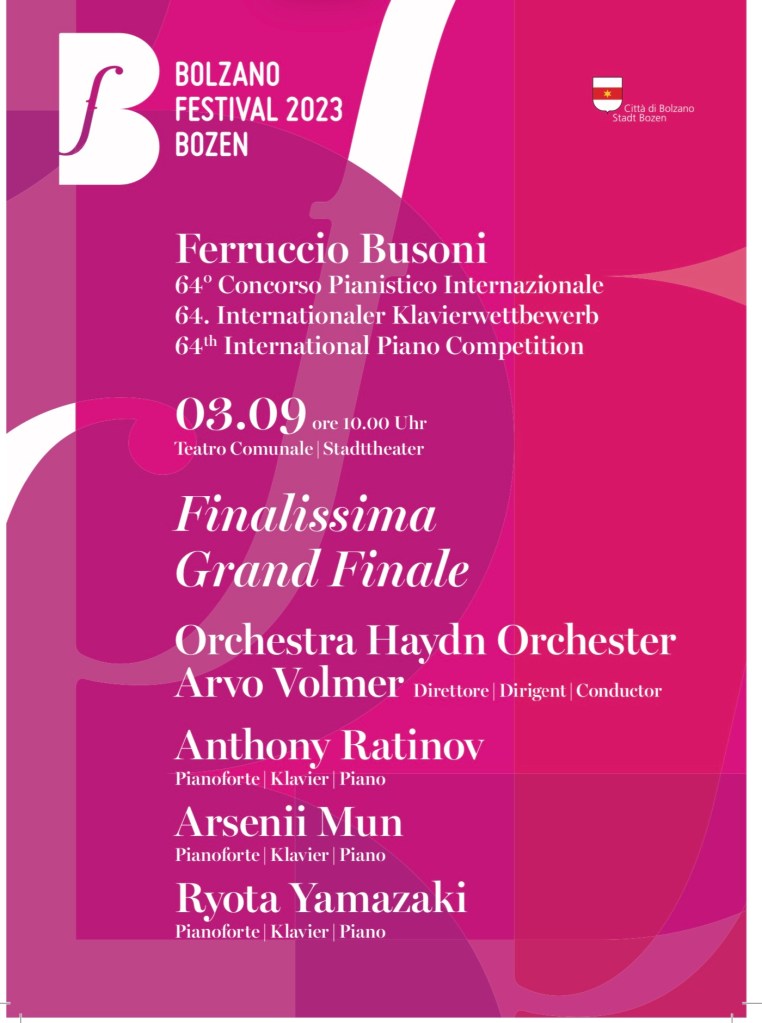
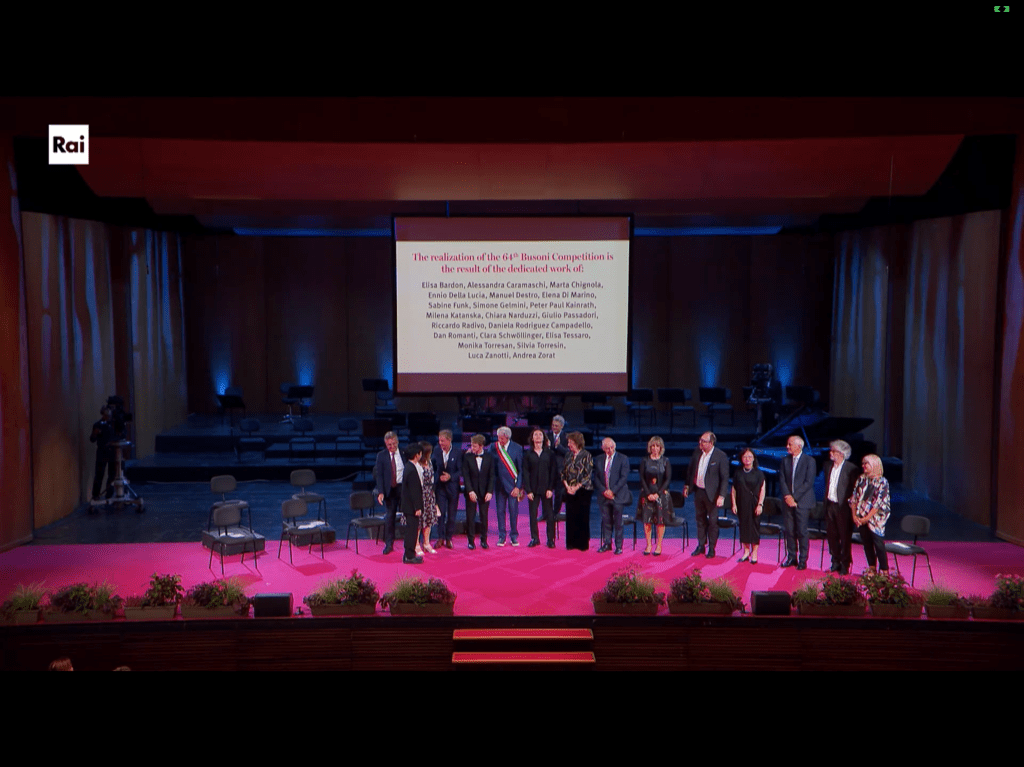
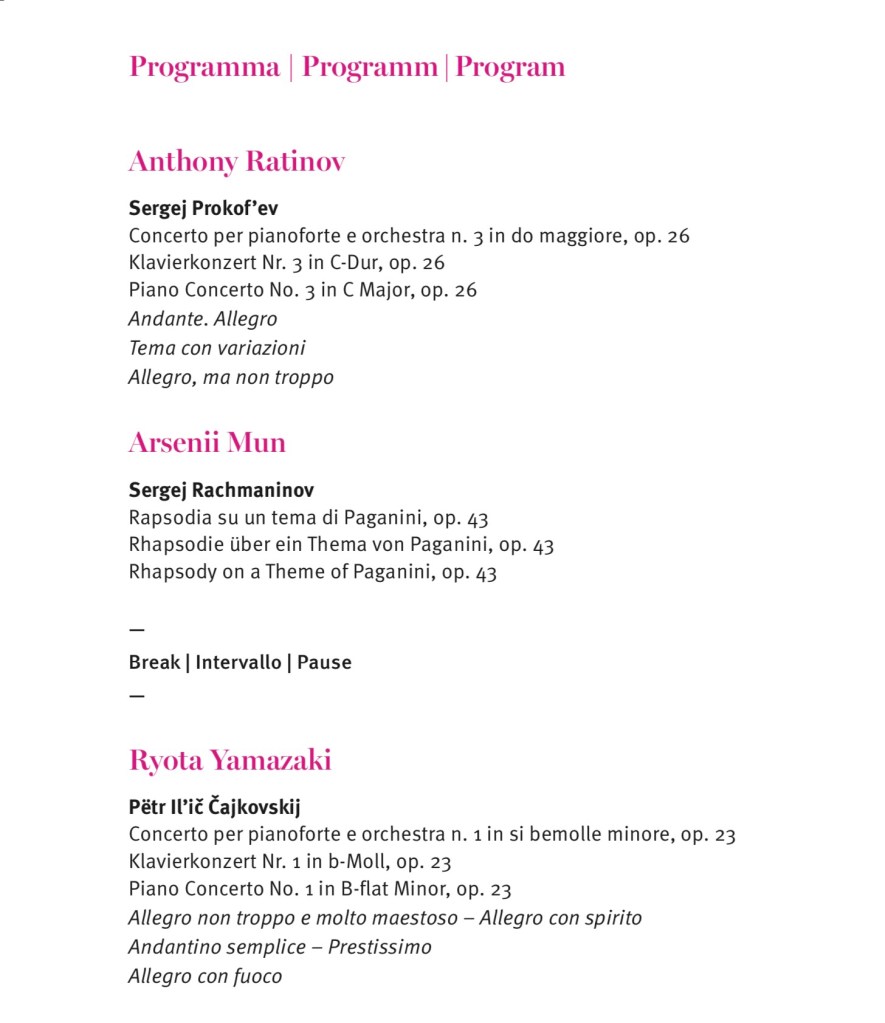
A review in the May 1809 edition of the Allgemeine musikalische Zeitung states that ” this concerto is the most admirable, singular, artistic and complex Beethoven concerto ever”.However, after its first performance, the piece was neglected until 1836, when it was revived by Felix Mendelssohn.
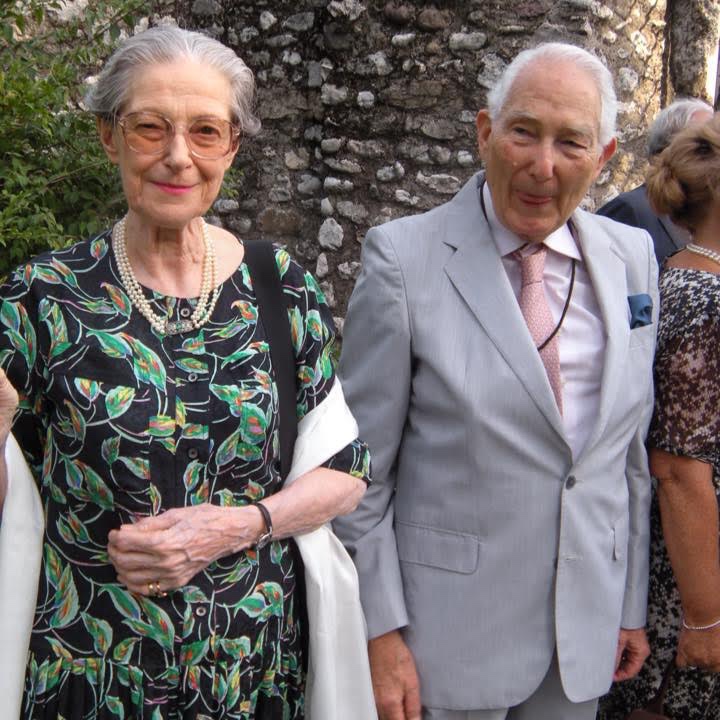
Shunta Morimoto a star shining brightly
Shunta with Sofya Gulyak and Gabriele Strata who had played in this hall a few moths ago as star student of the Guildhall. https://christopheraxworthymusiccommentary.com/2023/03/02/gabriele-strata-in-siena-micat-in-vertice-100-a-poet-speaks/