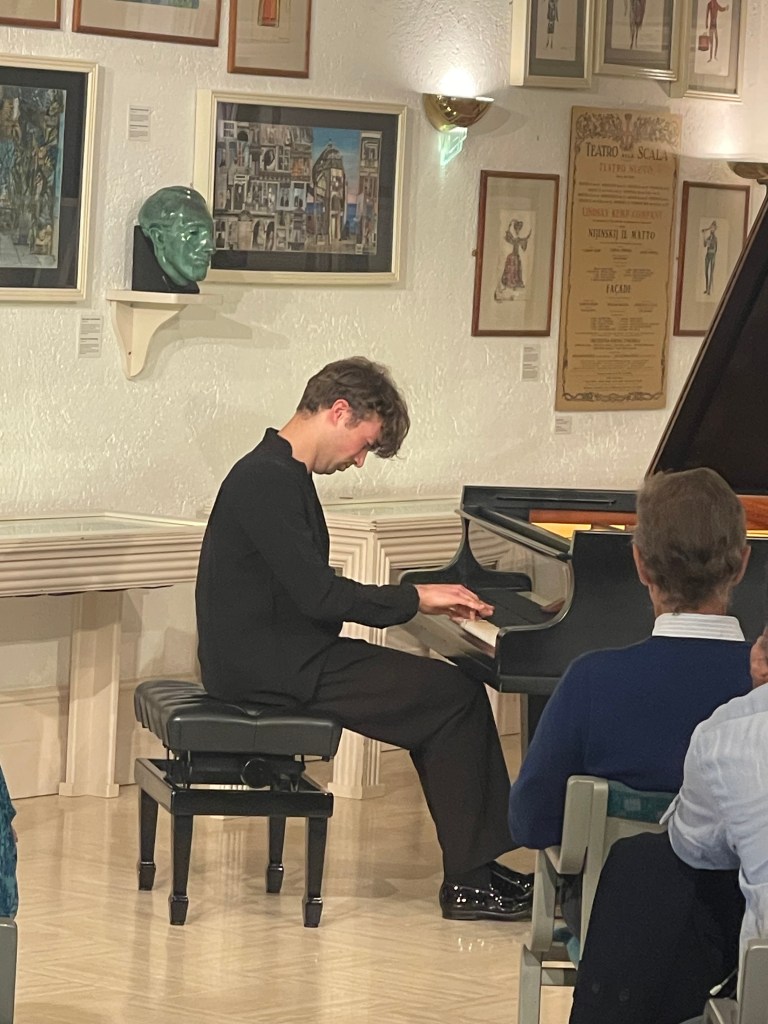
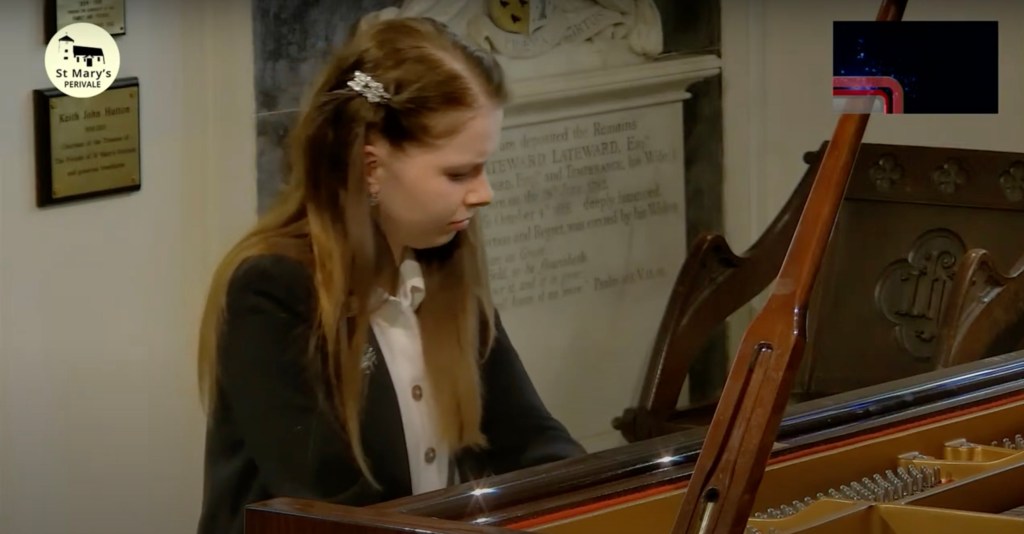
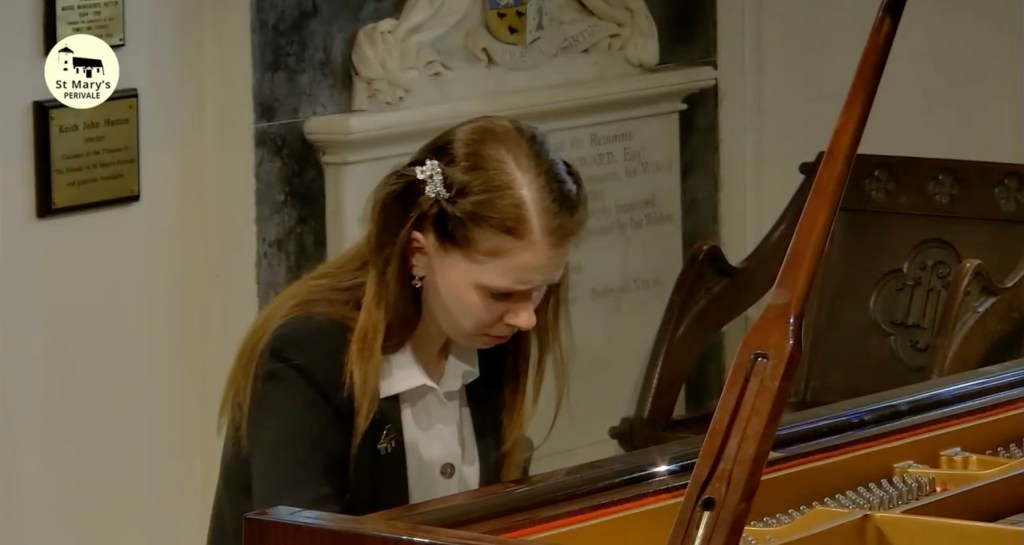
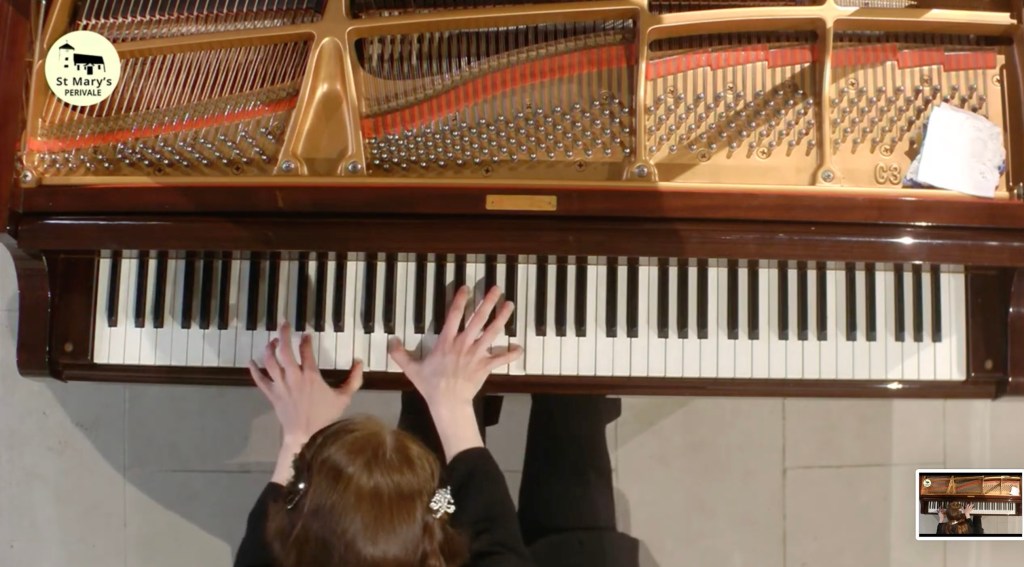
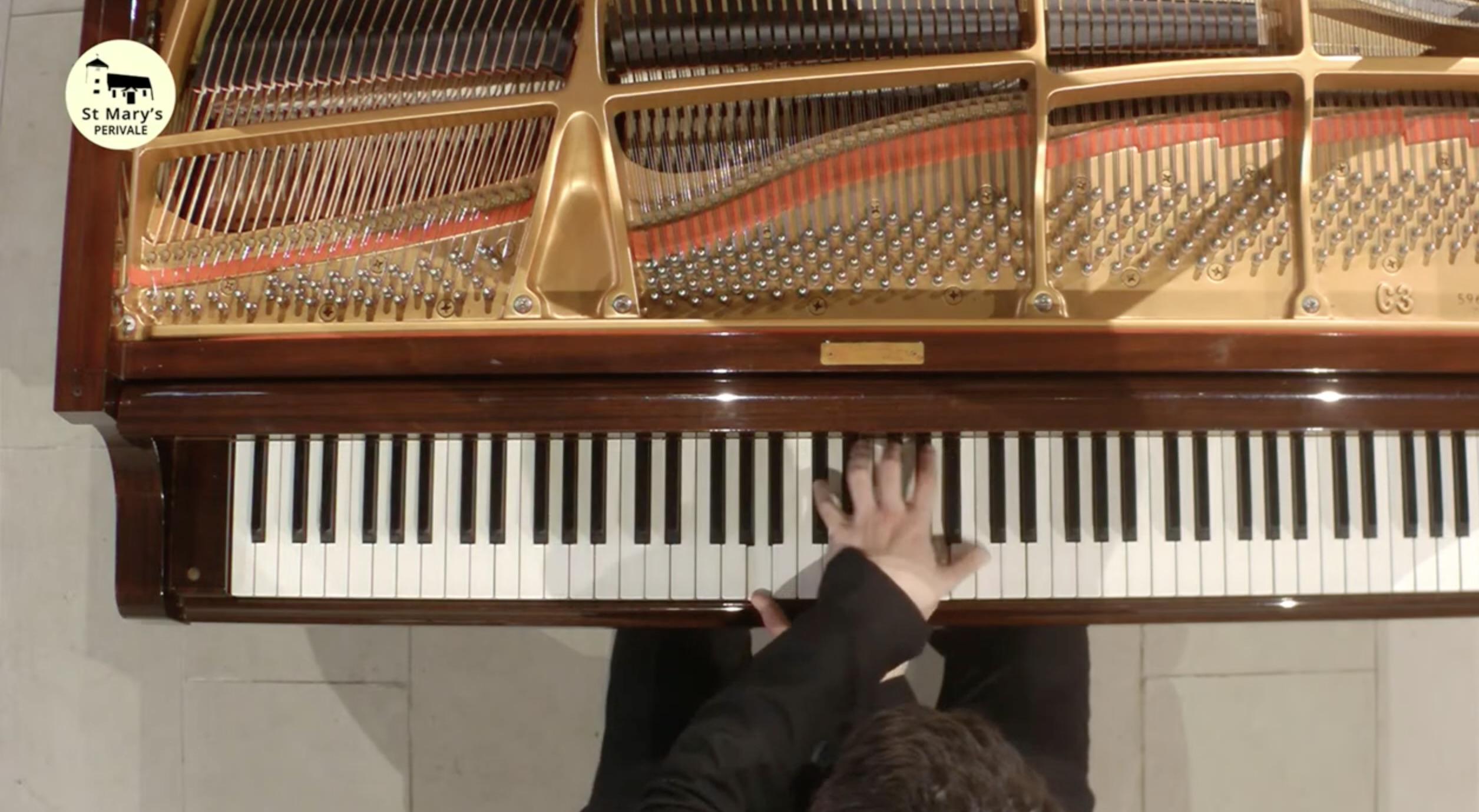
Clair de lune from Suite bergamasque (c.1890, rev. 1905)
Gabriel Dupont (1878-1914)
Après-midi de dimanche from Les heures dolentes (1905)
(1905) From Le rossignol é perdu (1902-10)
Reynaldo Hahn (1874-1947) fron Le rossignol é perdu (1902-10)
Hivernale • Le banc songeur
Charles Koechlin (1867-1950)
Chant de pêcheurs from Paysages et marines Op. 63
(1915-6)
Florent Schmitt (1870-1958)
Glas from Musiques intimes, Book 2 Op. 29 (1989-1904)
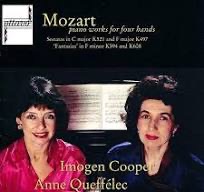
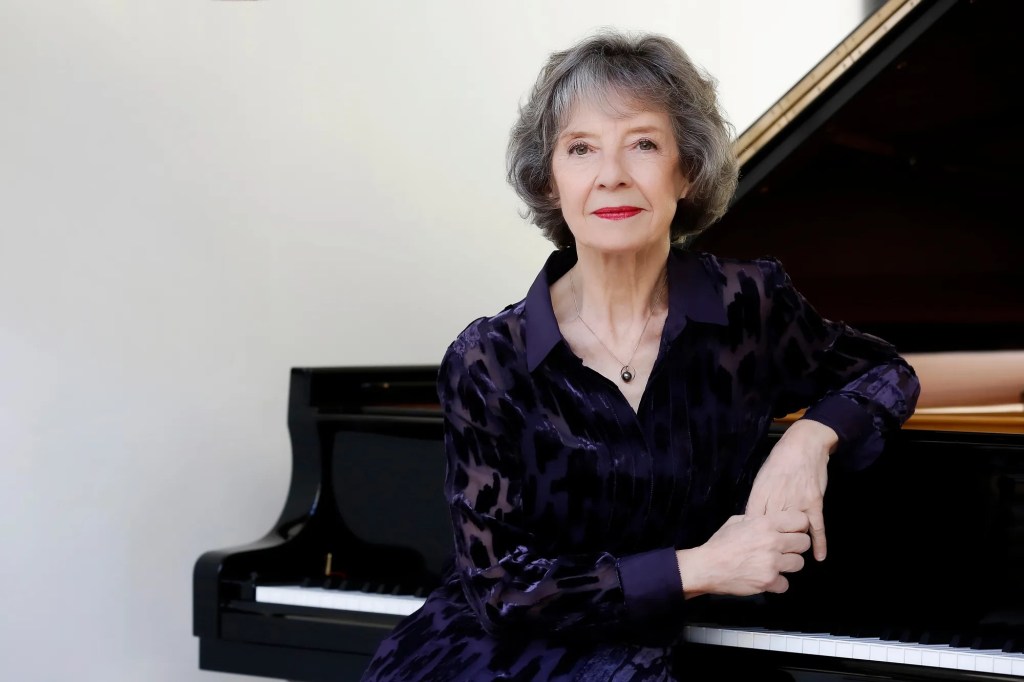
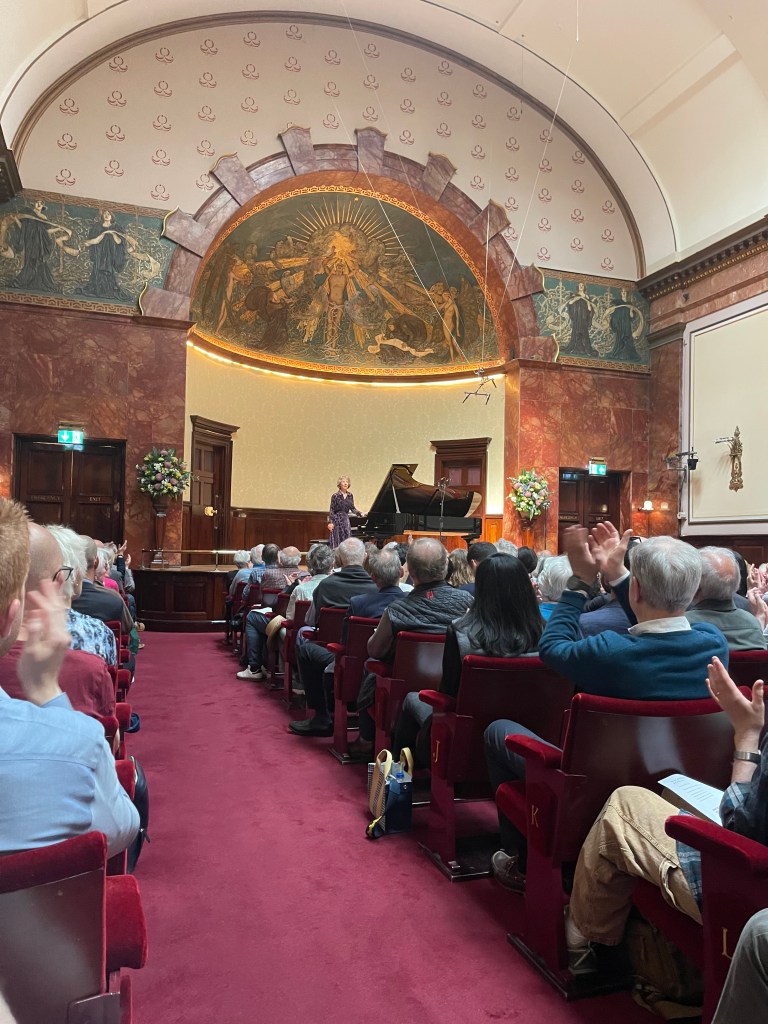
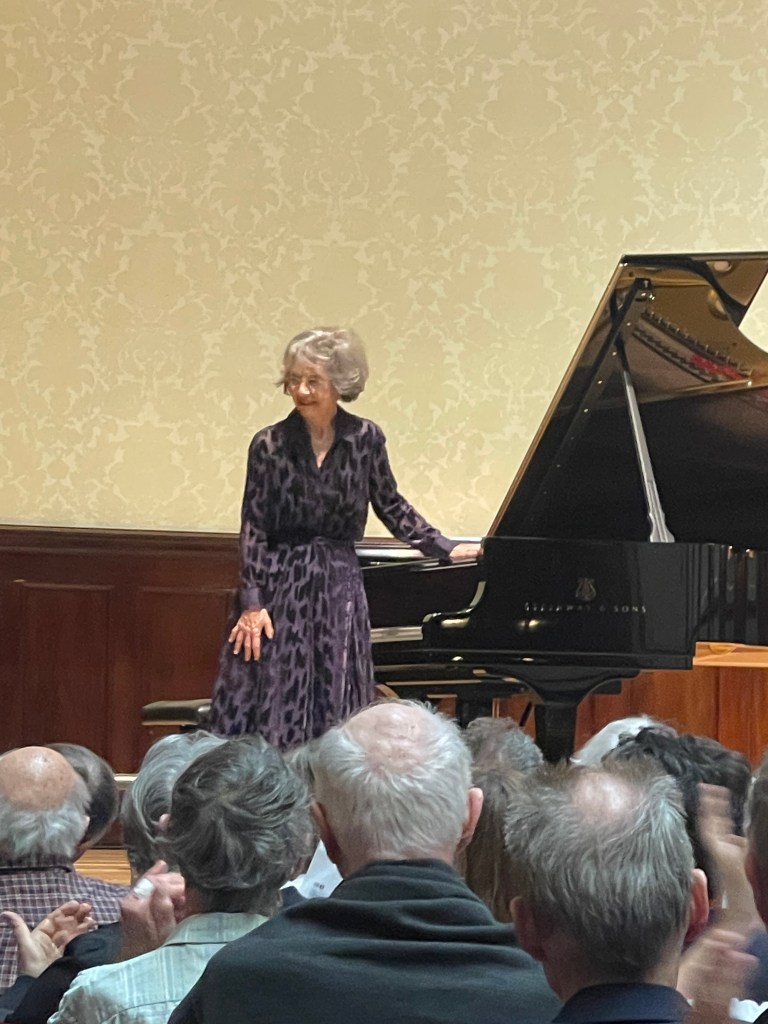
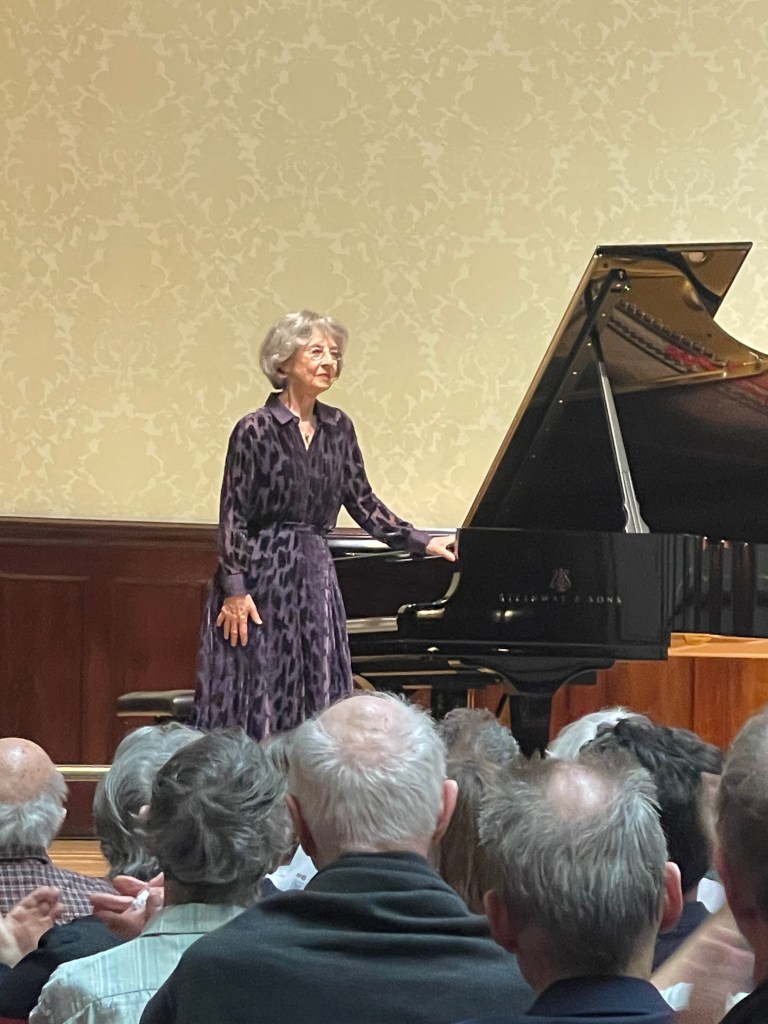
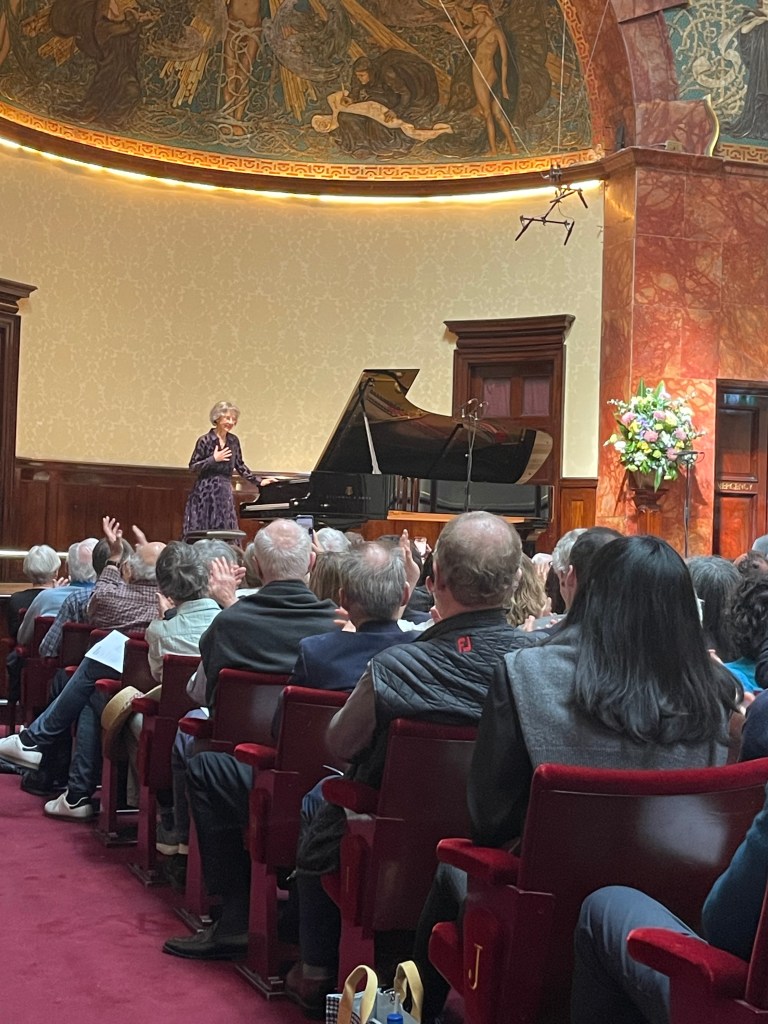
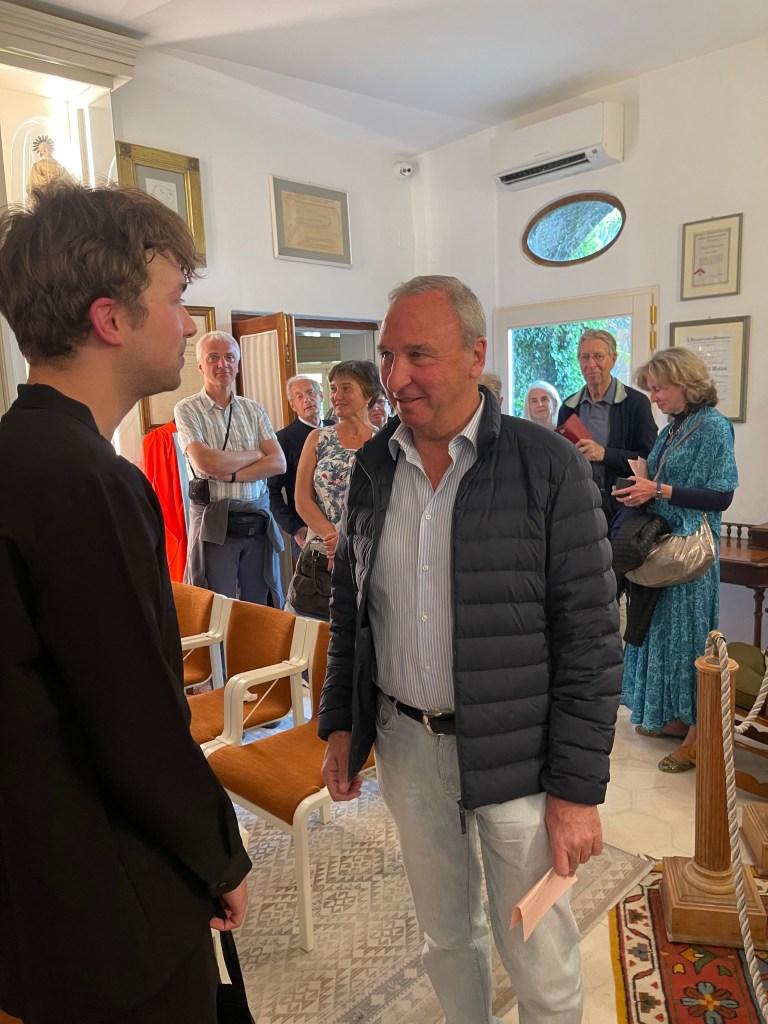
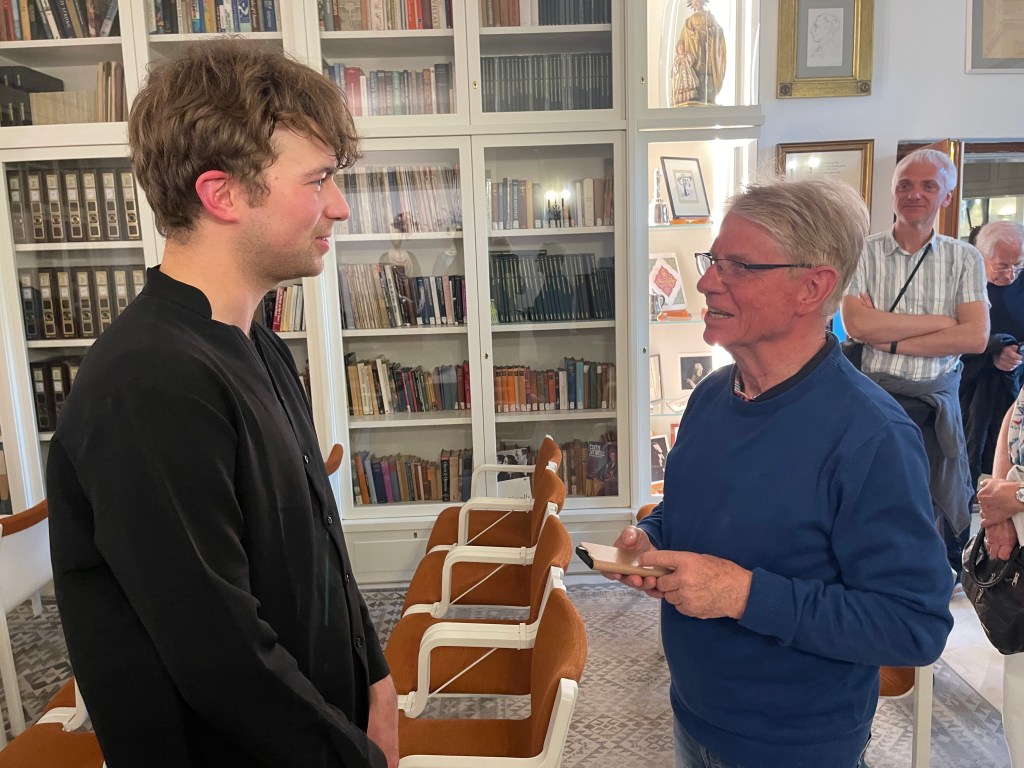
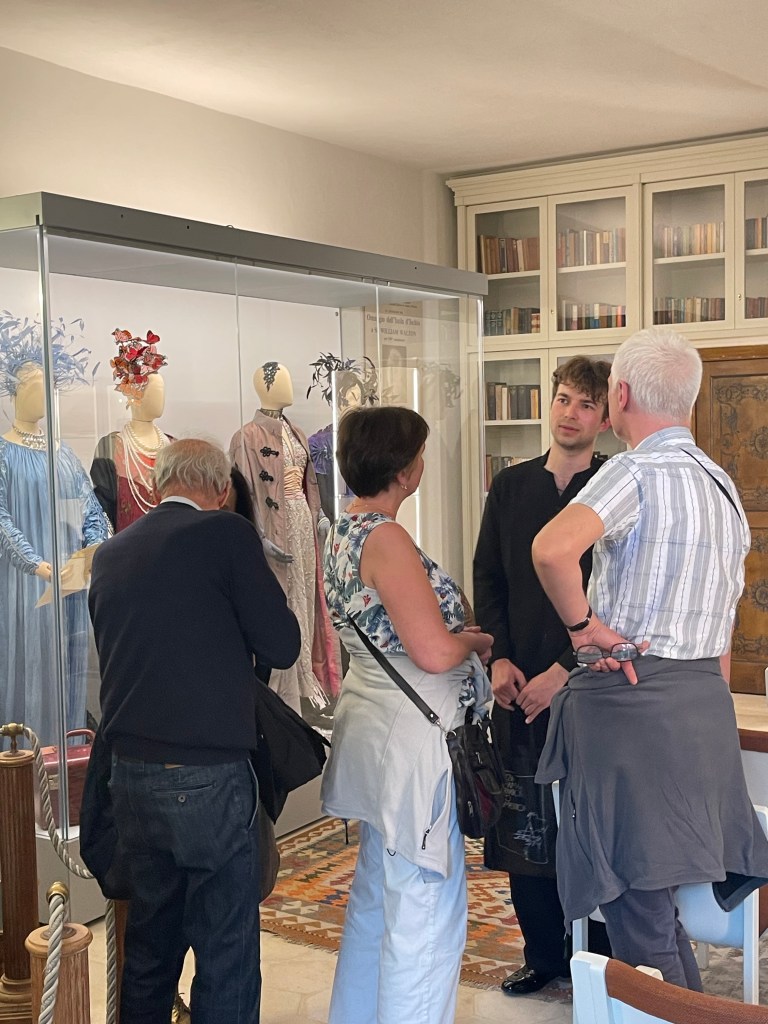
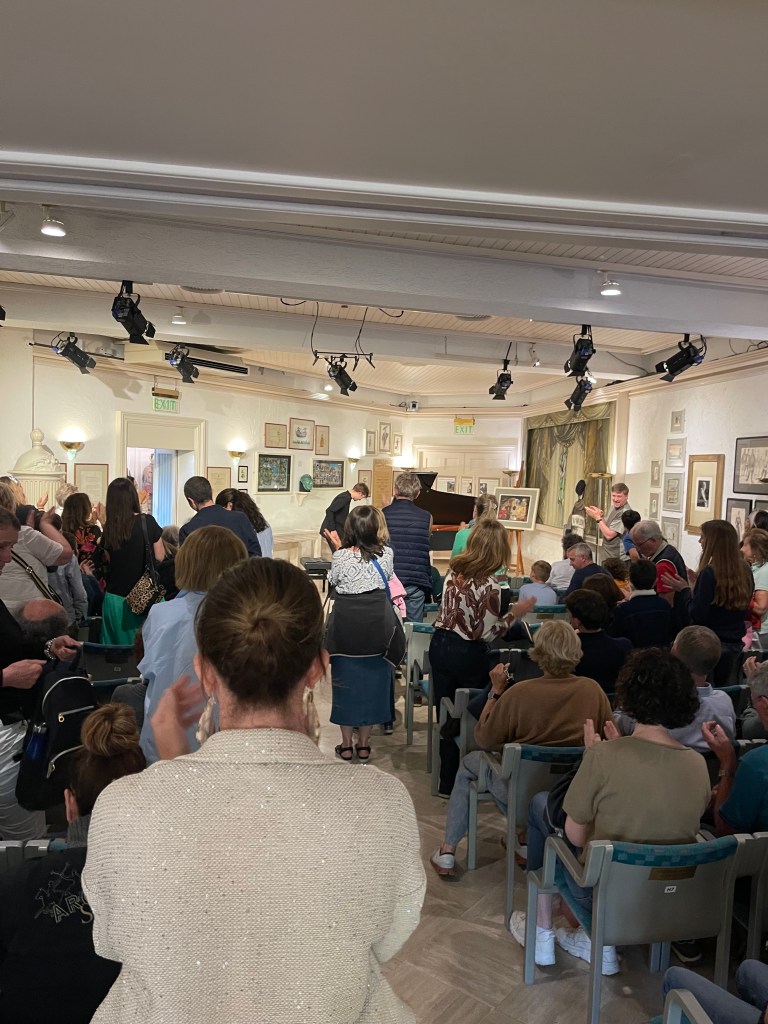
A return to the Wigmore Hall for Anne Quéffélec who I remember from the first Leeds competition, who together with Imogen Cooper were two remarkable musicians amongst a world of virtuosi seeking fame and fortune with the multitude of notes that they could spin in record time .Two remarkable French trained musicians ( with a much criticised Martin Cooper for sending his daughter abroad to study)
But later both coming under the spell of the musical genius of Alfred Brendel .
Never compromising their art they have created a following of a discerning public too often deprived of the humility and dedication of servants to their creator. Deprived and not depraved they flock to their concerts to have their souls uplifted and their spirits enriched.
Not for them the note spinning brilliance of the Russian School but a search for truth ,where quality is more important than quantity.
Imogen and Anne formed a piano duo together with many refined performances of Schubert,Schumann and Mozart.
The years have flown by and fifty years on the note spinners are long gone, and it is now they that can bring us the message of a lifetime’s search for the hidden meaning in the scores of the great masters.
It was just this that came across today as Anne’s playing rarely rose above mezzo forte but her sense of architectural balance and ravishing palette of sounds brought us a whole world with refined good taste, and where the art of conversation is still alive, as she allows the music to speak better than words ever could.
Mozart Sonata K.333 was played with a luminosity and beauty of sound ,one phrase answering the other, in a civilised conversation of the age of enlightenment. A ‘Sturm und Drang’ of its time with a perfect sense of equilibrium and balance, of an age when feelings were contained in a restrained courtly manner ,but within the notes, there was just as much passion and excitement as was to be shortly demonstrated, as Beethoven took over the reigns from his teacher Haydn. Exquisite playing, but not like a porcelain doll, but of the operatic characters that Mozart could so vividly describe on stage.This was a stage as the curtain opened and Anne allowed Mozart’s characters to relive in her ten sensitive fingers.
After barely whispered and ravishing playing of French music from the well known ‘Reflets dans l’eau’ and ‘Claire de lune’ by Debussy to the more eclectic names such as Dupont,Hayn,Koechlin,Schmitt she gave the final word to God.
The Siciliano from the Flute Sonata n. 2 BWV 1031 by Bach in the transcription of Wilhelm Kempff. Peace and beauty returned to a world in turmoil in a magical seance where Anne just closed the piano lid at the end of the Bach – In the beginning is our end – Q.E.D.
Anne Quéffélec, one of the most remarkable pianists of our time, enjoys international fame as well as an exceptional influence over musical life. Widely acclaimed in Europe, Japan, Hong-Kong, Canada, the United States… she has been invited by the most prestigious orchestras – the London Symphony, London Philharmonic, Philharmonia Orchestra, BBC Symphony, Academy of St. Martin in the Fields, Zurich Tonhalle, Orchestre de chambre de Lausanne, Tokyo NHK Orchestra, Ensemble Kanazawa, Hong-Kong Philharmonic, Orchestre National de France, Orchestre Philharmonique de Radio France, Strasbourg, Lille, Prague Philharmonia, Kremerata Baltica, Sinfonia Varsovia… – and performed under the batons of illustrious conductors such as Boulez, Gardiner, Jordan, Zinman, Eschenbach, Conlon, Langrée, Belohlavek, Skrowacewsky, Casadesus, Lombard, Guschlbauer, Zecchi, Foster, Holliger, Janowski, etc.
Named “Best performer of the year” at the 1990 French Classical Music Awards (Victoires de la Musique), Anne Queffélec has played repeatedly at the Proms in London, at the Bath, Swansea, King’s Lynn, Cheltenham festivals and Händel-Festspiele Göttingen; she also regularly appears in French festivals such as La Chaise-Dieu, Radio France Montpellier, Besançon, Bordeaux, Dijon, La Grange de Meslay, La Folle Journée de Nantes, La Roque d’Anthéron where she performed, among others, the complete piano sonatas by Mozart over six recitals broadcasted live by France Musique, confirming her deep affinity for the Mozartian world. In the 1980s, Anne Queffélec has participated in the recording of the soundtrack for the film of Amadeus, under the baton of Sir Neville Marriner. On stage and in recordings as well, Anne Queffélec displays an eclectic repertoire. This is reflected by a variegated discography: she has more than forty records to her credit, dedicated to Scarlatti, Schubert, Liszt, Chopin, Bach, Debussy, Fauré, Mendelssohn, Satie, including the complete works by Ravel, Dutilleux, Mozart, Beethoven, Haendel and Haydn. Those recordings were released by Erato, Virgin Classics and Mirare respectively.
Among her more recent releases features the album « Satie & Compagnie » (Mirare – 2013) which was awarded the “Diapason d’Or” of the year. Next come a double CD entitled “Ravel, Debussy, Fauré” (Erato – 2014), “Ombre et Lumière” (“Light and Shade”) dedicated to Domenico Scarlatti (Mirare – 2015), both receiving the “Diapason d’Or” award, including “Entrez dans la danse” (“Join in the dance”) (Mirare – 2017). In 2016 the BBC Magazine celebrated Anne Queffélec by releasing several live recordings and the Diapason magazine picked her version of Ravel’s Concerto in g major to feature it in the section “Les Indispensables”. In January 2019, Warner/Erato released a 21-CDs series dedicated to works recorded by Anne Queffélec for this label. “Anne Queffélec: the discovery of a true self” Münchener Zeitung
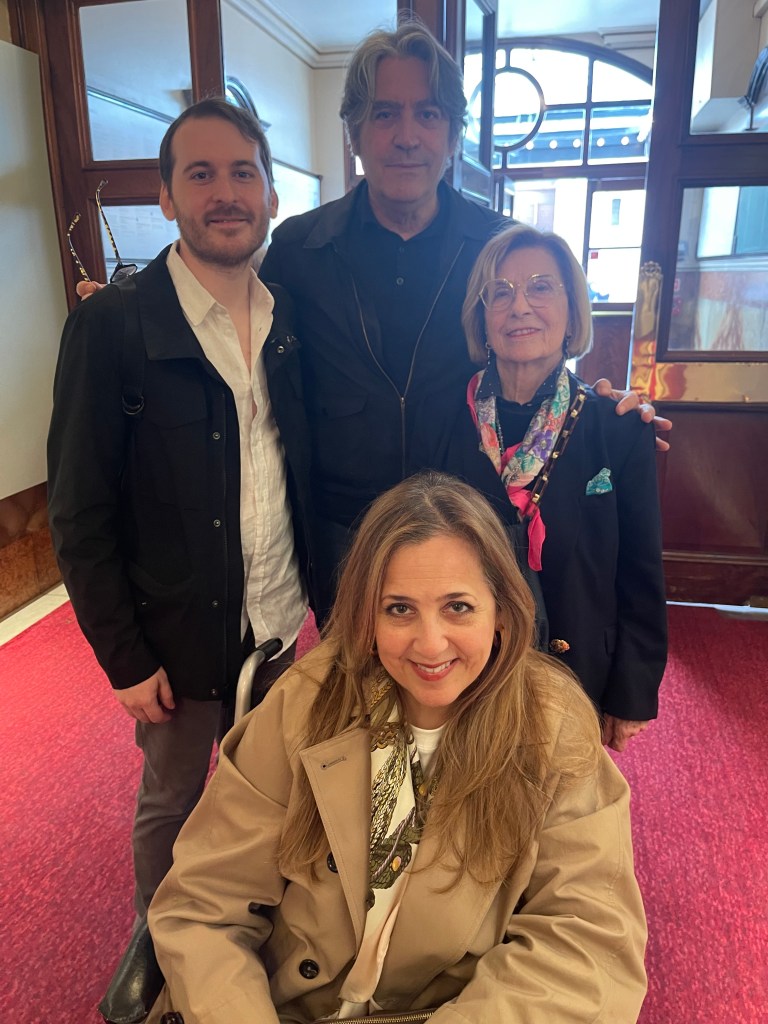
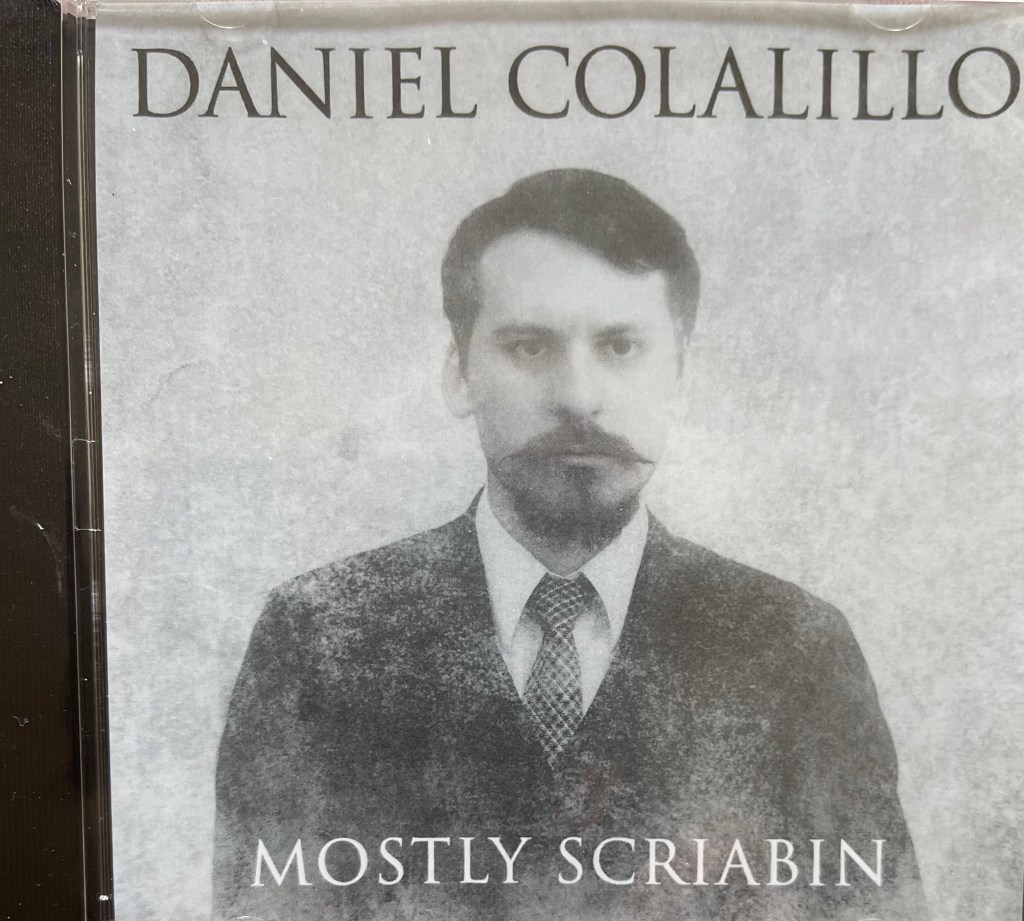
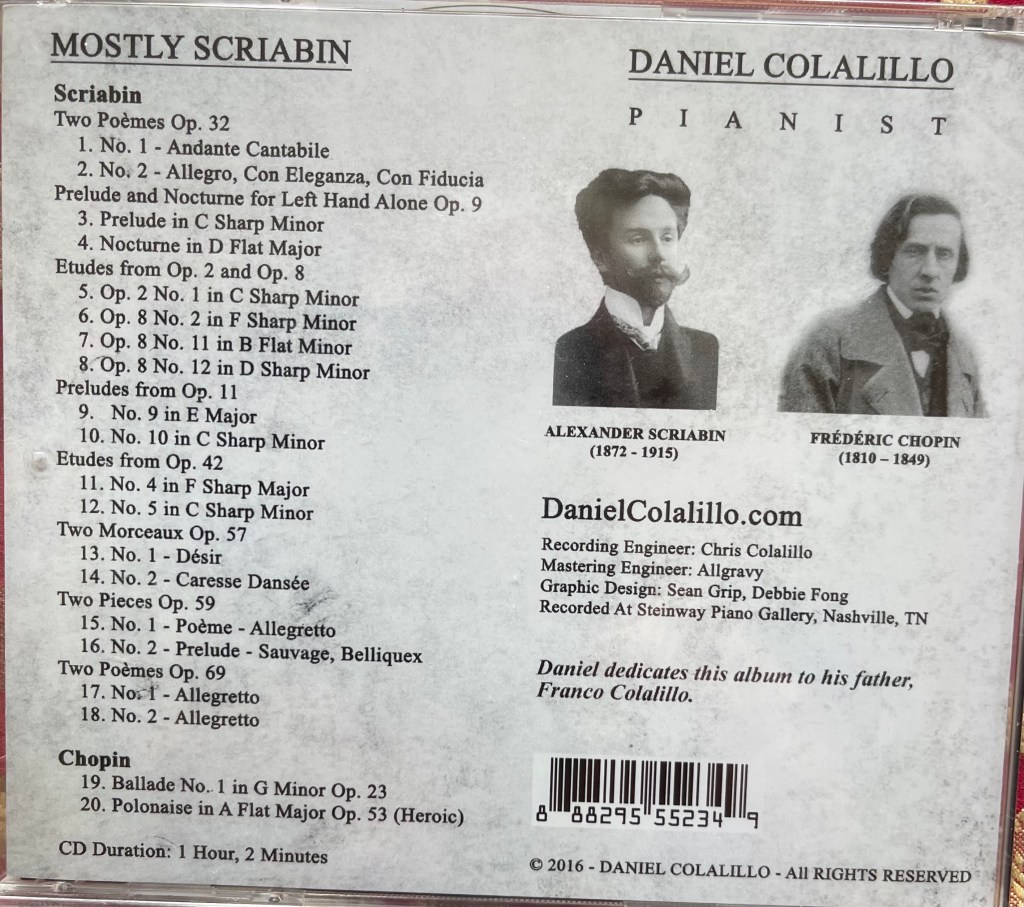
Daniel Colalillo. Davide Sagliocca Joelle Partner Graziella Cicognani discerning public for today’s BBC recital relayed live on Radio 3Daniel Colalillo
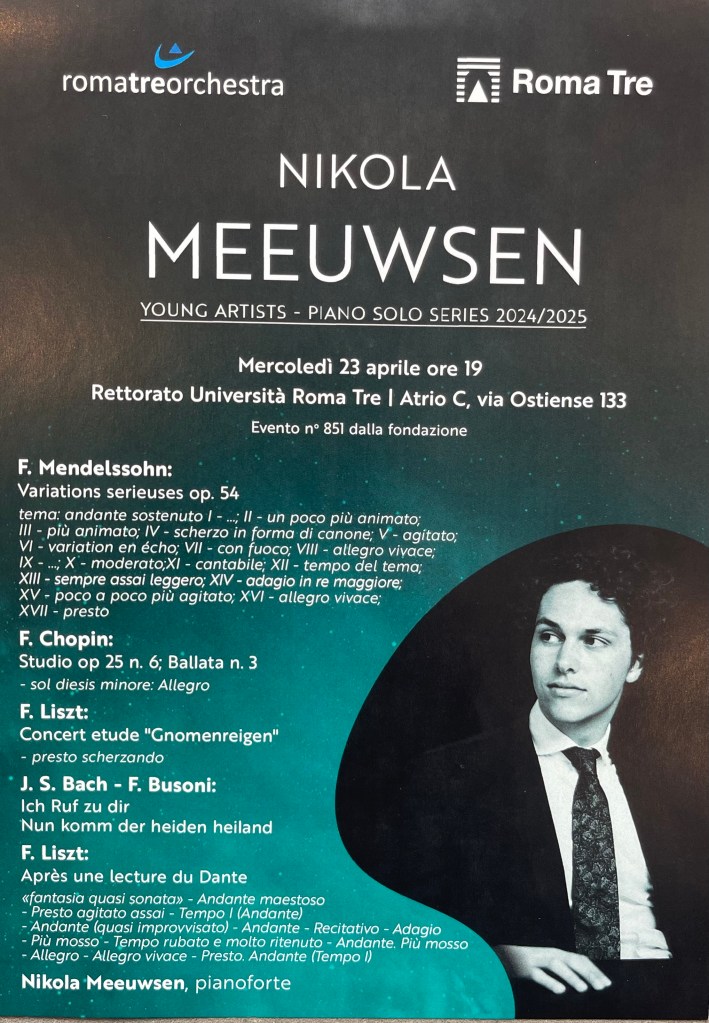
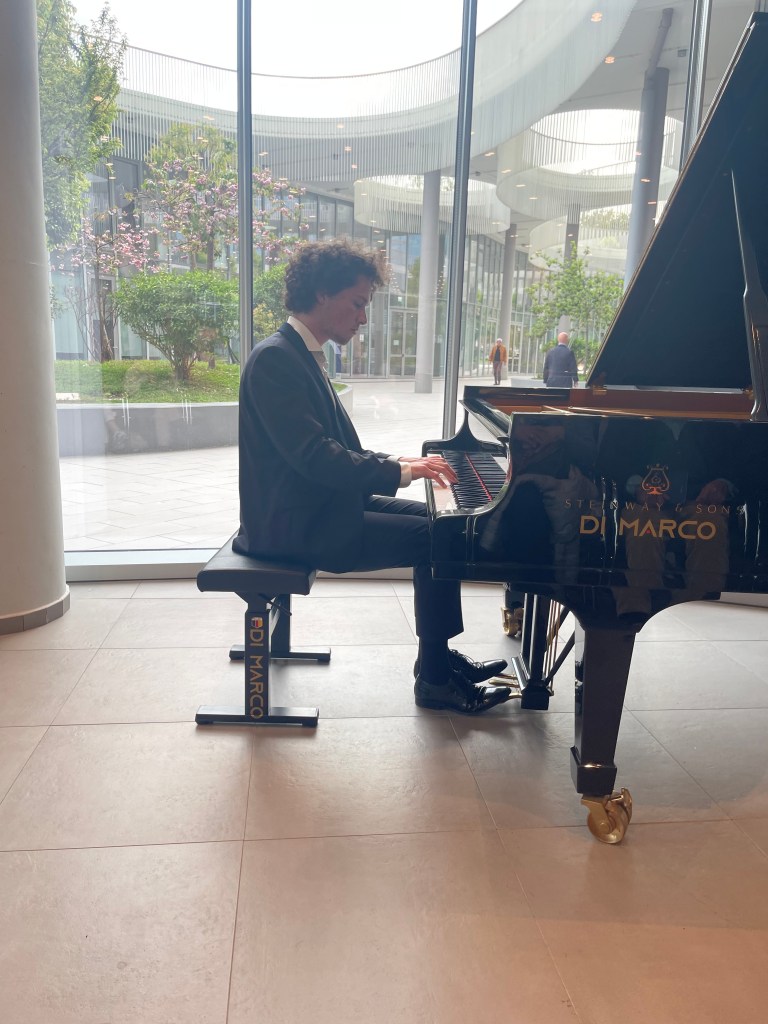
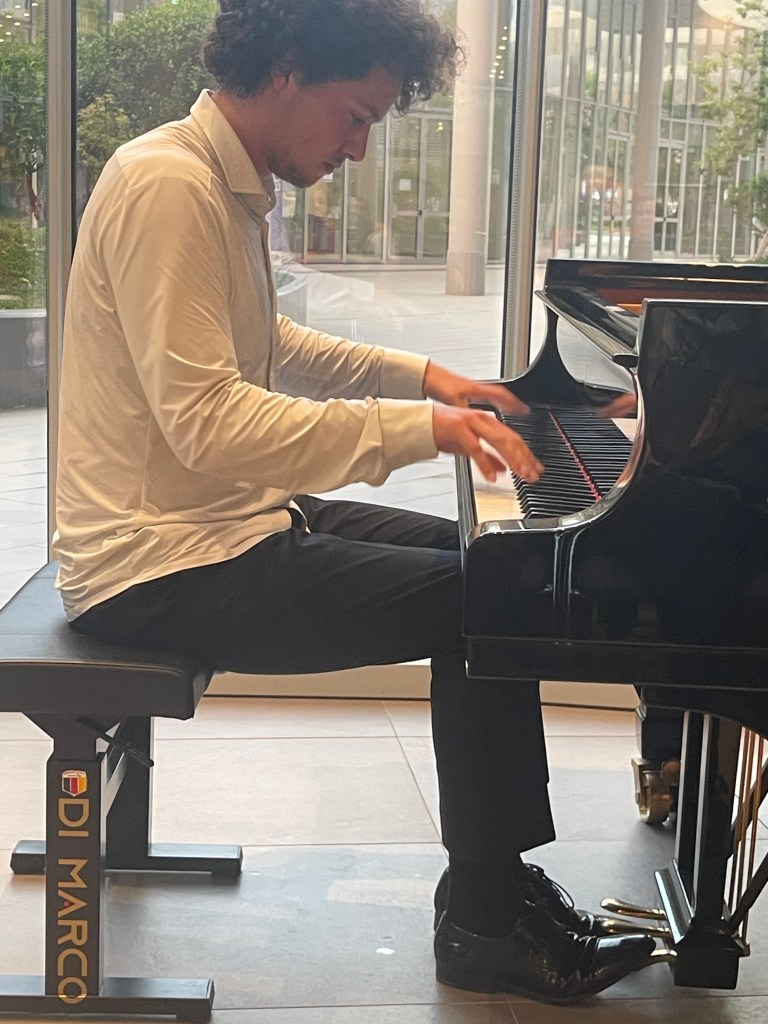
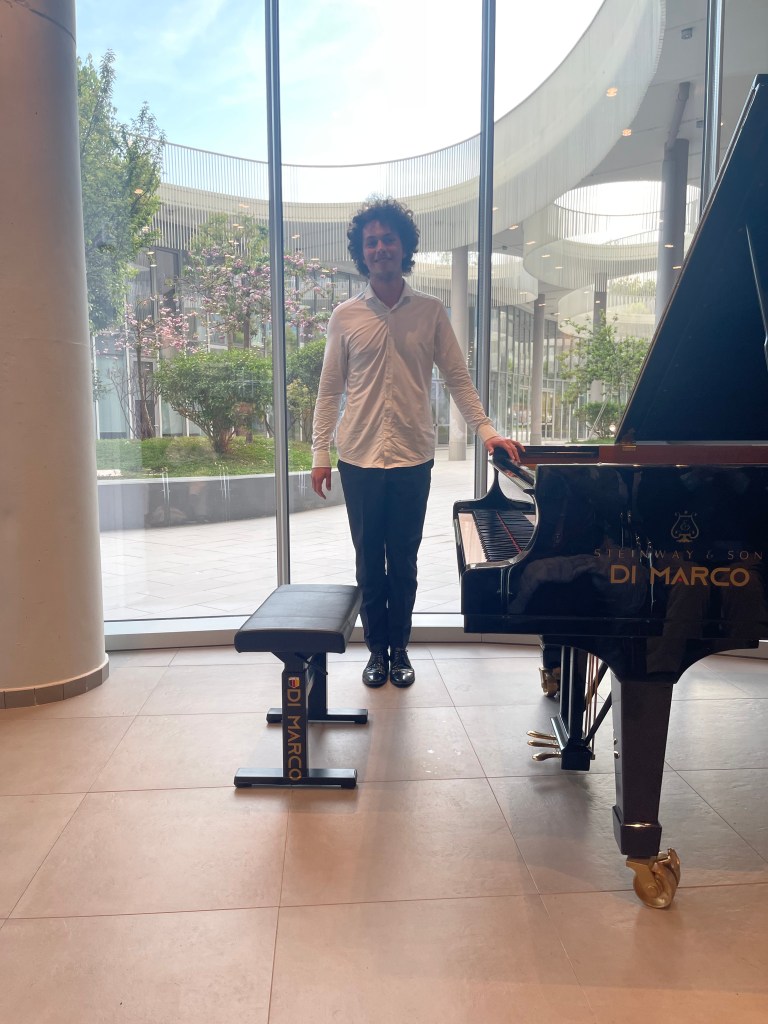
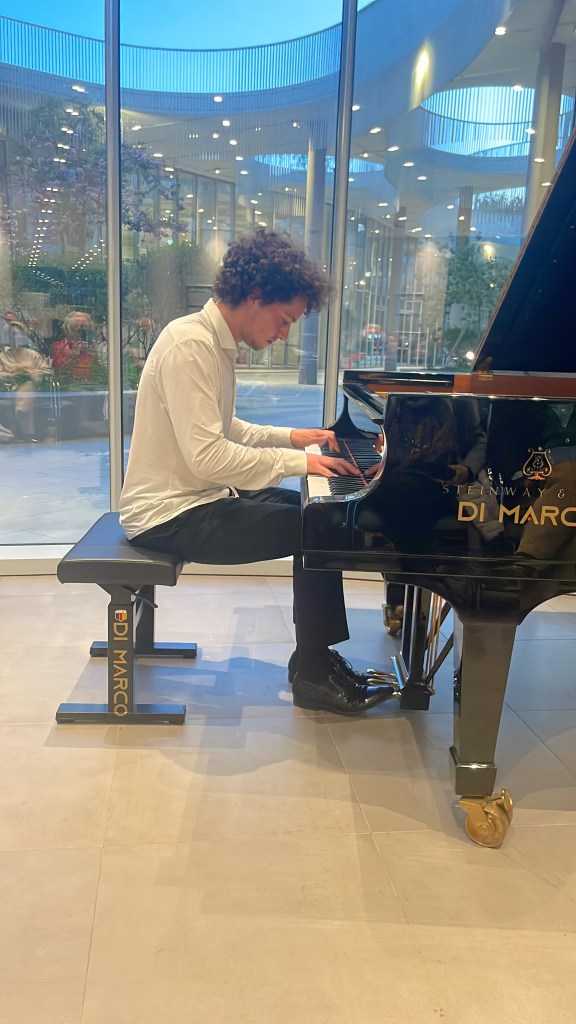
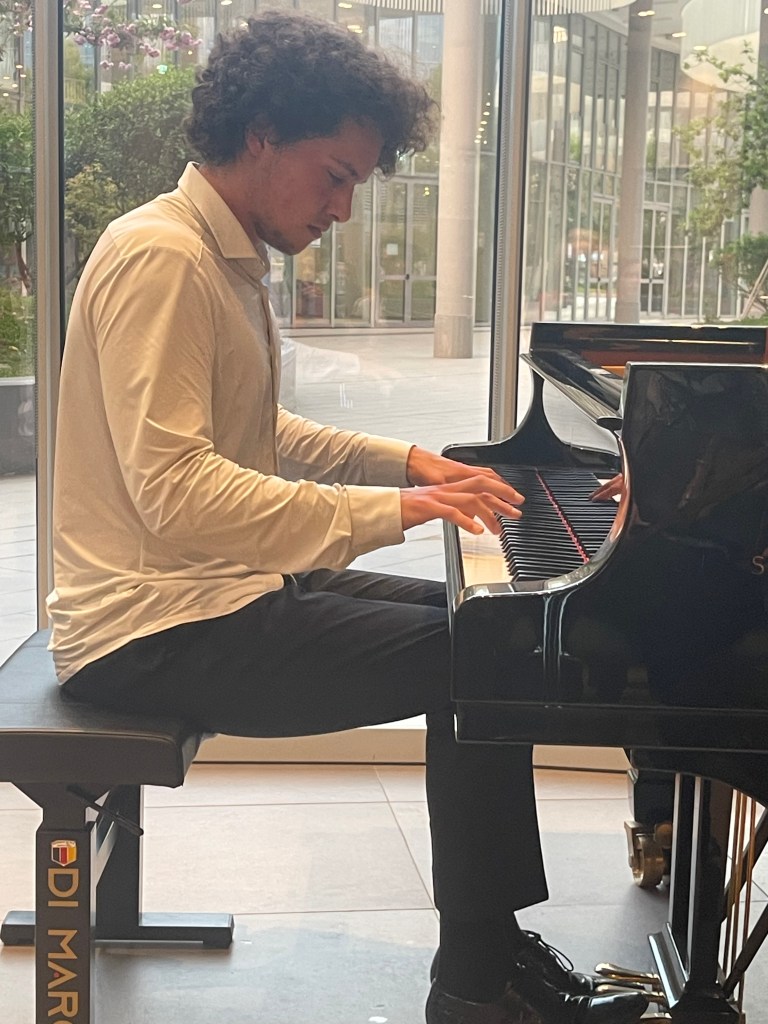
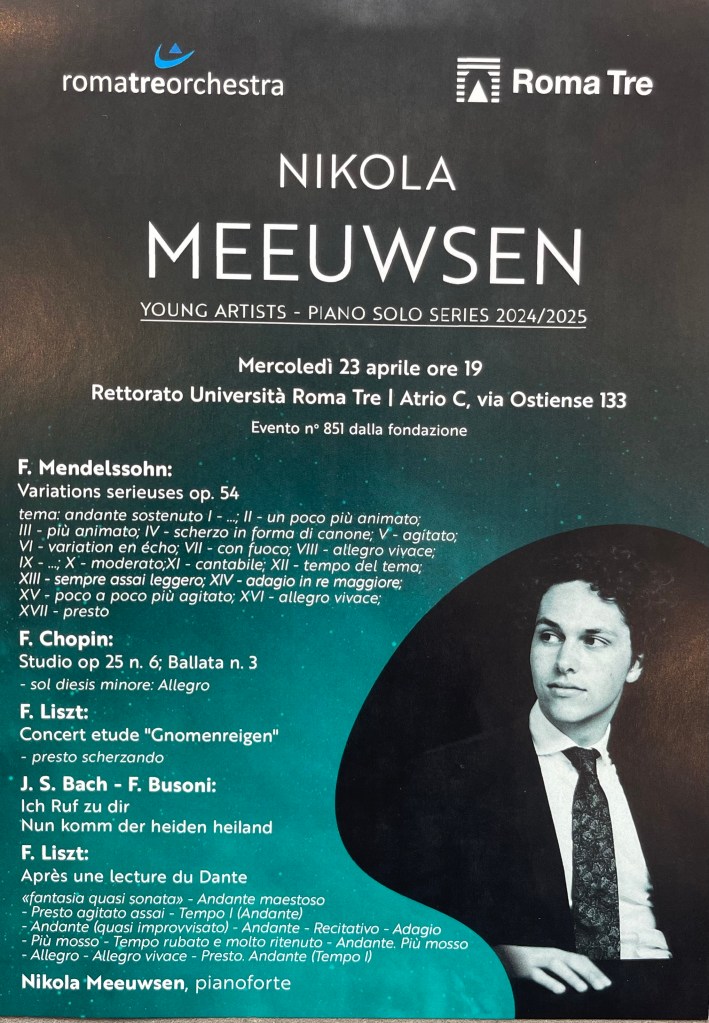
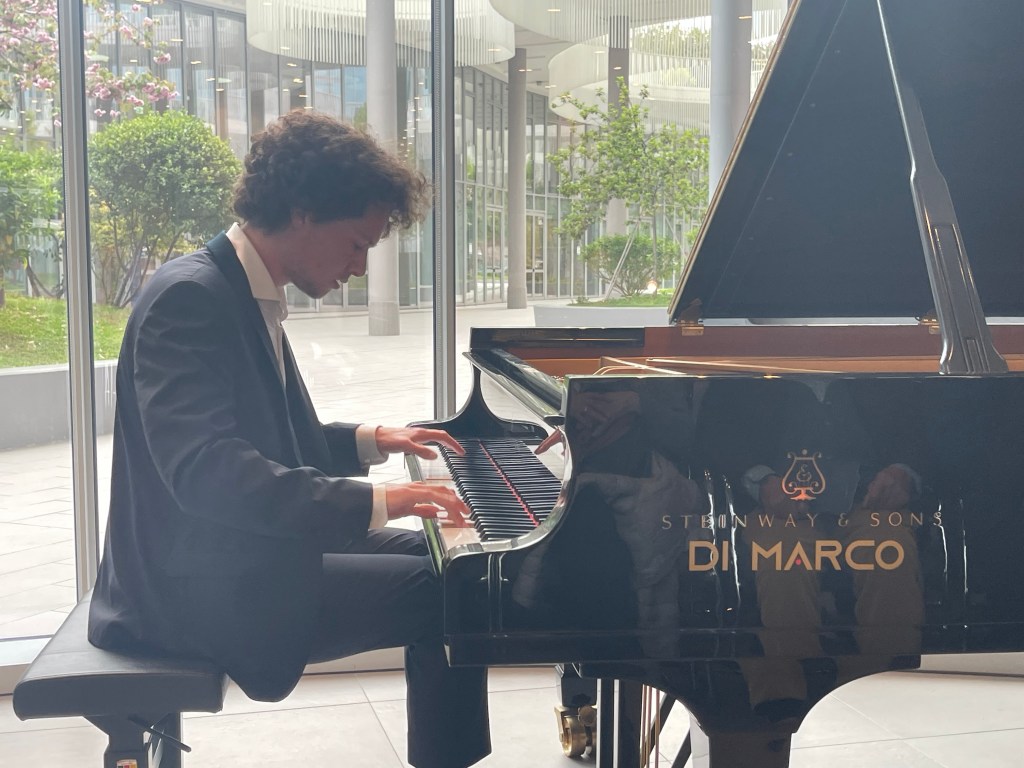
It is nice to be back for another in the Roma 3 Young Artists Series. A concert series that Valerio Vicari has created to give a platform to the enormously talented Italian pianists who are ever more numerous and headed for important careers. Today there was, exceptionally, a Dutch pianist but who had received his important training in Italy with Enrico Pace at the Imola Academy. Nikola Meeuwsen is now completing his studies with Frank Braley at La Chapelle in Brussels but always under the eagle eye of Enrico Pace
Frank Braley had made his Rome debut at the Ghione theatre some thirty years ago when he had just won the prestigious Queen Elisabeth Competition ( Gilels won first prize in 1939 when Michelangeli won 7th. and it was Gilels who provided the dance music at parties for the other contestants that included Moura Lympany who came in second )
I remember Fou Ts’ong , a jury member, being thrilled but not a little surprised that such an eclectic musician as Braley could win a competition renowned for choosing great virtuosi from the Russian school !
It was this musicianship that shone through all that Nikola played today. Even the notorious double third study by Chopin was played not only with agile well trained fingers in the right hand, but it was the simple left hand melodic line that was given precedence. It is a work, like Liszt’s ‘Feux Follets’ that in the hands of real musicians can turn an athletic bauble into the gem of a tone poem of ravishing beauty and beguiling half lit grace and charm.
Nikola did just that today
But before that he had begun the recital with Mendelssohn’s spectacularly genial ‘Variations serieuses’. An athletic performance that demonstrated his fearless technical mastery but also the passion and seduction of a young man on the crest of a wave.There was exhilaration and excitement contrasted with delicacy and whispered asides of ravishing beauty. Mendelssohn’s heart on sleeve sentiments of the Victorian era ( he was the favourite at the court of Queen Victoria) were played with sentiment but without sentimentality as Nikola expressed the feelings of their age with intensity and aristocratic good taste. He brought an architectural shape to these variations as they unraveled with well oiled mastery and ease. Played with the Romantic fervour of a young man in love with the piano and who has acquired a poetic mastery of insinuating exhilaration and beauty. A quite extraordinary sense of balance that allowed the musical line to shine with beauty no matter how many notes it was wrapped up in. His playing of the melodic line in the tenor register accompanied by pizzicato notes of ingenious counterpoints, without ever releasing the tension of a tightly wound spring, was exhilarating and liberating. Contrasting with moments of peaceful reflection played with disarming simplicity of barely whispered breathless comments .
After such a performance of pianistic gymnastics Nikola left the stage for a moment and returned jacket less to continue the rest of the recital in this beautiful space that has been created for youthful music making at Roma 3 .
A slight change of order meant that Nikola got his breath back with the poignant outpouring of Bach’s ‘Nun komm der heiden heiland’ in the masterly transcription by Busoni of six of the organ preludes .
Nikola endowed it with poignant beauty and sumptuous sound as Bach’s genius was allowed to envelope us all, calming the scintillating exhilaration of Mendelssohn with the weight of respectful solemnity. It should be remembered that it was Mendelssohn who discovered the universal genius of Bach in the nineteenth century and brought many of his master works to the public’s attention.
We were now ready for the veiled virtuosity of Chopin’s study op 25 n. 6 as I have described above. It was the sign of a real musician that out of the final whispered chords Nikola allowed the first notes of Chopin’s third ballade to be born.
A performance of poetic beauty and mastery as Chopin’s gentlest, most pastoral of ballades was allowed to unfold on a flowing wave of radiance and simplicity. Timeless beauty as the music unfolded with gentle persuasion, where even the trills were merely part of the ornamentation leading to a left hand melody of rare beauty, barely suggested, as it was accompanied by the radiance of a magical stream of notes, like a golden halo illuminating such heartrending beauty. The Ballade gradually taking wing on undulating sounds with gentle bursts of passionate outpourings where even the ‘fiortiori’ were merely part of a great wave that was moving inexorably forward. Left hand counterpoints usually played like a transcendental study, in Nikola’s poetic hands were just the gentle accommodating accompaniment for the melodic line. Onward Christian soldiers with menacing clouds brewing, as with masterly control Nikola built up to the final glorious explosion of noble exuberance and glory. A scintillating stream of notes from on high, deep into the bass, that brought this miniature masterpiece to a radiant close with four simply placed chords.
Liszt’s ‘Gnomenreigen’ suited Nikola’s crystalline ‘fingerfertigkeit’ and was played with that same sense of old world style that Rachmaninov bequeathed to us on disc. A jeux perlé of another era when musicians were magicians who could stimulate the senses of their doting public. Like Liszt or Paganini turning sedate ladies of the aristocratic salons into wild animals wanting to grab a souvenir from the devil that had so stimulated senses that they knew not existed within them!
We live in a different age, of course, so we behaved ourselves accordingly, but there were some brave souls who shouted bravo and applauded more vehemently !
Rewarded with another consoling reminder of celestial beauty with Bach’s ‘Ich Ruf zu dir’ which is undoubtedly the most moving of all the transcriptions that Busoni made for piano. Aristocratic glowing beauty sustained by a richly sonorous bass of Philadelphian ravishment, this was the favourite encore of the much missed Nelson Freire.
It is good to see an aspiring young virtuoso as much in love with the beauty of the piano that has been bequeathed to us by masters of the past. It allows us to forgive and forget the new generation of ‘virtuosi’ with their transatlantic metallic sound trying to break the sound barrier ( pianos are more resilient these days!)
The final work in this very strenuous recital, which must hold the Guinness book of records for the quantity of notes within an hour’s time span,Liszt’s dramatic and spectacular Dante Sonata. A great declamation of intent from the very first imperious octaves played with unusual resonance and a very measured timespan. This was the opening of a great story that was about to open up and be told by a young man with passionate conviction and enormous technical reserves. Bathed in pedal as the opening took wing on a mysterious cloud gradually clearing to reveal a demonic drive with cascades of octaves that were played with fearless abandon. But there was much more than that, as the whispered confessions of ravishing beauty revealed a true poet of the keyboard and were overheard with their poignant beauty. Playing of great intensity and passionate conviction that can sometimes overpower, where such burning intensity can lead to forte, fortissimo and mezzo forte all having the same colour. When Richter arrived in the West for the first time ( Gilels had warned the world , who were astonished by his mastery, simply stating ‘Just wait until you see who comes after me!) The most astonishing thing about Richter was not how loud or fast he could play – he was no ‘Lazar beam (!)’ It was how quietly and with what control he could play -sustaining barely whispered notes so full of pregnant meaning that they could cross the footlights and reveal the same sounds in the first row of a vast hall that could, by magic, arrive in the very last seats in the lofty gallery ( known as the ‘Gods’ in England or ‘Paradiso’ in Latin countries) .
Gods indeed – Richter like Arrau were Gods, where their maturity could control their massive temperament and where above all they were listening to themselves with the discerning ears of dedicated genius.
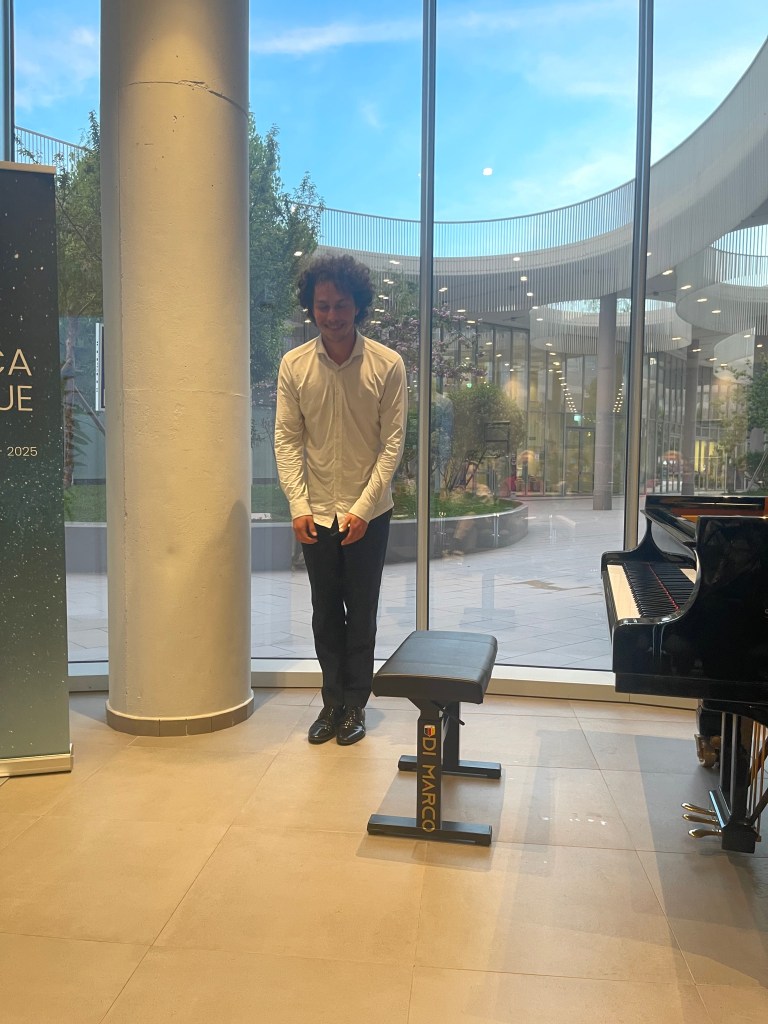
An ovation for Nikola today from an audience astonished and moved by such playing and demanding more !
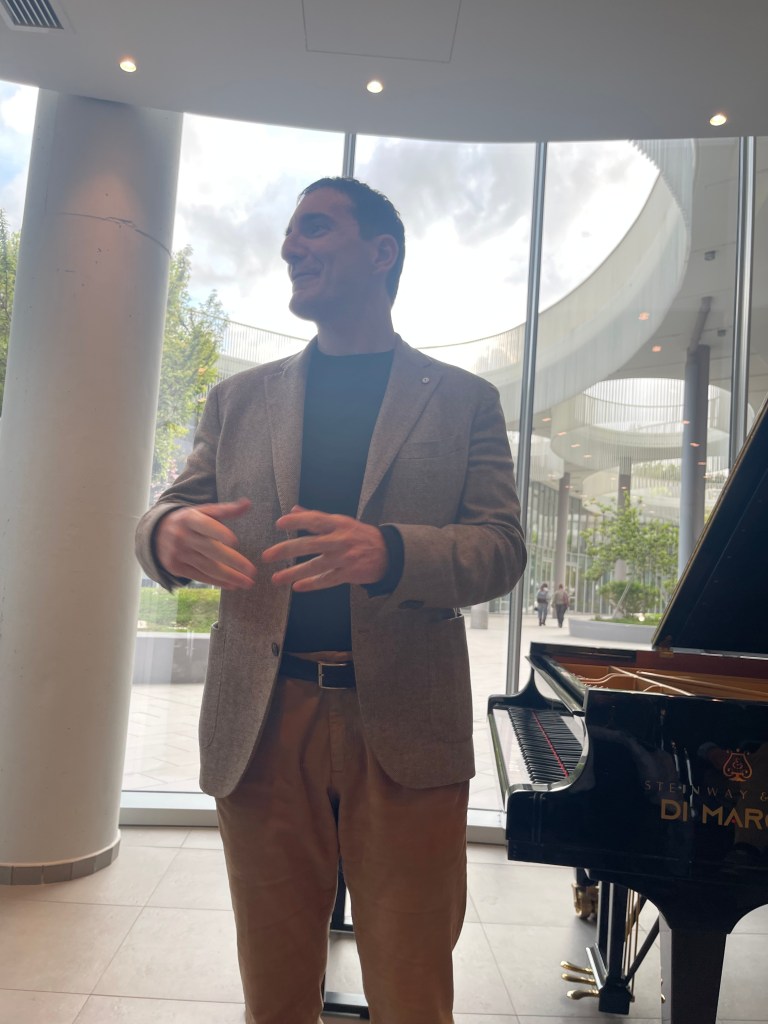
Artistic director of Roma 3 Valerio Vicari
Beethoven was the only solution with his early op 2 n.2 Sonata that I imagine must be a favourite of Nikola’s present mentor, Frank Braley. It was played with the characterisation of a true musician ( Schiffty one might say).
Rachmaninov’s heroic outpouring of passion and nostalgia in the Etude Tableau op 39 n. 5 in E flat minor was a second encore, played with a kaleidoscope of colour and insinuating harmonies of passionate intensity.
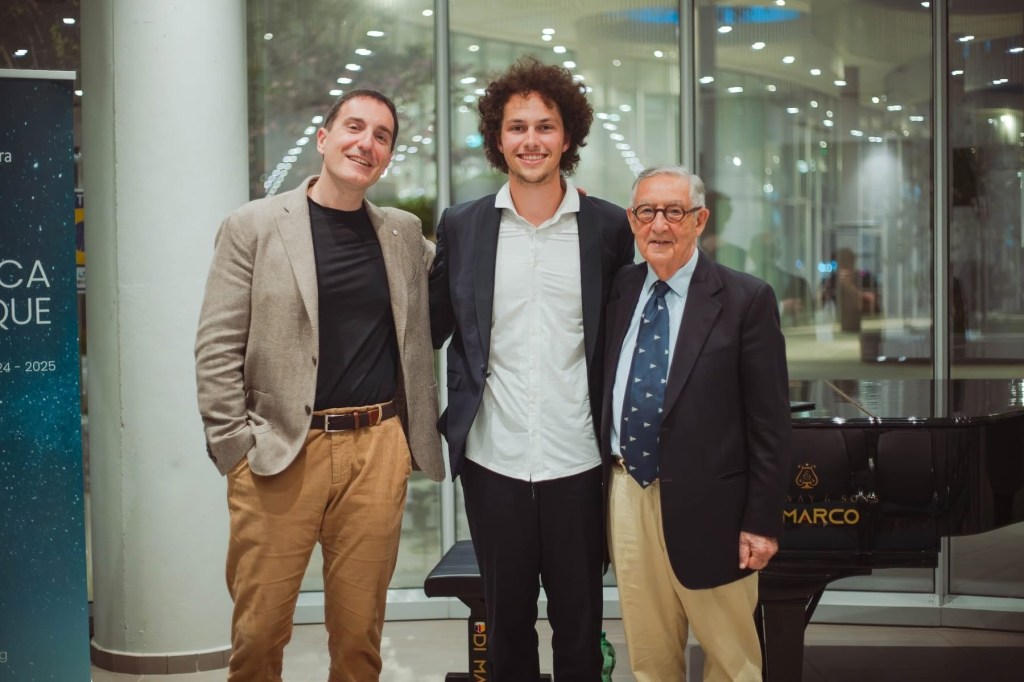
Valerio Vicari, Artistic director and Prof Roberto Pujia, President of Roma 3, with Nikola
Looking at Valerio,the Artistic director, to see if he too would like a third encore ,before taking us to the magical sound world of Ligeti with his Arcobaleno Study ( Book 1 n. 5 Arc-en-ciel). Ligeti is the only composer who you feel the piano is just not long enough, as he crawls up to the extreme top of the keyboard and there curls up and awaits the invention of even more keys! It was played with a purity and simplicity as you felt he might have carried on crawling around the piano as Dudley Moore or Victor Borge would have done! https://youtu.be/ujei43f2qkU. https://fb.watch/za2R3jMt82/
A remarkable debut recital from an artist who is well on the ladder of the very steep path in his search for perfection. ‘L’escalier diabolique’ as Ligeti would have described it.
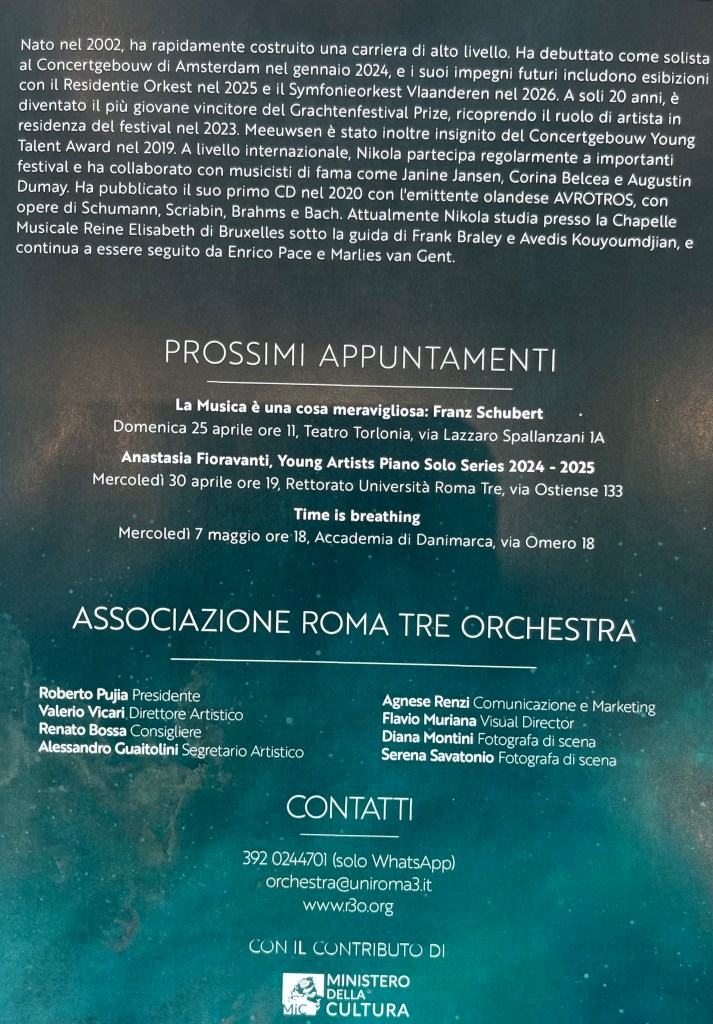
Nikola Meeuwsen (b. 2002) has already established a remarkably mature international career as a pianist of the younger generation. He made his full-length solo debut at the Royal Concertgebouw on January 19, 2024, performing works by Schubert, Beethoven, Brahms, and Schumann. In January 2025, he appeared for the third time as soloist with The Hague’s Residentie Orchestra, performing Chopin’s First Piano Concerto. 2025 will also see the release of his debut solo album on the prestigious Channel Classics label. He performs at festivals and concert halls throughout Europe and records for radio stations including Bayerischer Rundfunk.
At age 20, Nikola became the youngest musician ever to receive the Grachtenfestival Prize and served as artist in residence at this Amsterdam festival in 2023. In 2019, he was awarded the Concertgebouw Young Talent Award. In 2014 he was the first prize winner of Concertgebouw Concours and in 2012 he won the Steinway Concours.
Nikola’s international career continues to flourish. He has performed Grieg’s Piano Concerto with the North Czech Philharmonic Orchestra in Prague’s renowned Dvořák Hall at the Rudolfinum, and
Beethoven’s Fifth Piano Concerto with the Lithuanian National Orchestra in Dortmund. In Brussels, he joined forces with pianist Avedis Kouyoumdjian and Sinfonia Varsovia under Augustin Dumay for Mozart’s Concerto for Two Pianos. In February 2025, he performed Prokofiev’s Second Piano Concerto with the Belgian National Orchestra. His concerto repertoire also includes Rachmaninoff’s Second, Tchaikovsky’s First, Clara Schumann’s Piano Concerto, and Beethoven’s First and Third Piano Concertos. He has given multiple performances with the Netherlands Philharmonic Orchestra, Folkwang Kammerorchester Essen, and the Netherlands Chamber Orchestra.
Following his performance of Scriabin’s Fourth Sonata at the Concertgebouw, artistic director and pianist Julius Drake invited Nikola to give a solo recital at the 2022 Machynlleth Festival in Wales. His June 2023 concert in Scotland earned a five-star review from The Times: “Meeuwsen’s suave technique tapped right into the delicacy and beauty of everything he played, and the evanescent seemliness of the sound in Ravel’s Tombeau de Couperin was enormously moving.”
Nikola regularly collaborates with leading young musicians including Noa Wildschut, Benjamin Kruithof, SongHa Choi, Leonhard Baumgartner, and Alexander Warenberg. He also performs with his teacher and mentor Enrico Pace; their interpretation of Liszt’s transcription for two pianos of Beethoven’s Ninth Symphony was a highlight of the 2019 Beethoven Festival at Amare. New concerts with Pace are planned for 2026.
Nikola’s exceptional talent was recognized early on. He won the Steinway Competition at age nine in 2012 and the Royal Concertgebouw Competition in 2014. He has given solo recitals throughout the Netherlands and in Milan, Bologna, Trieste, Faro, and Imola. A welcome guest at festivals, he has performed at the Storioni Festival, Schiermonnikoog Chamber Music Festival, and Classical NOW! At the 2023 St. Magnus Festival in the Orkney Islands, he gave both a solo recital and performed with the Ragazze Quartet. He has collaborated with renowned musicians including Alexander Kerr, Augustin Dumay, Corina Belcea, Vladimir Mendelssohn, Nobuko Imai, and recently with Janine Jansen at the Sion Festival and Utrecht International Chamber Music Festival. He has also performed as a piano duo with pianists such as Denis Kozhukhin and Enrico Pace.
This summer, he will tour in Italy with the Netherlands Youth Orchestra performing Rachmaninoff’s Paganini Rhapsody, and in September 2025, he will perform Brahms’ Second Piano Concerto with the Orchestra del Teatro Comunale di Bologna under Martijn Dendievel.
Nikola has studied with Marlies van Gent since 2010 and with Enrico Pace at the Accademia Pianistica in Imola since 2014. He is currently also a student at the Queen Elisabeth Chapel in Brussels, studying with Frank Braley and Avedis Kouyoumdjian.
At his home in The Hague, Nikola practices on a Bösendorfer grand piano, on loan from the National Musical Instruments Foundation (NMF).
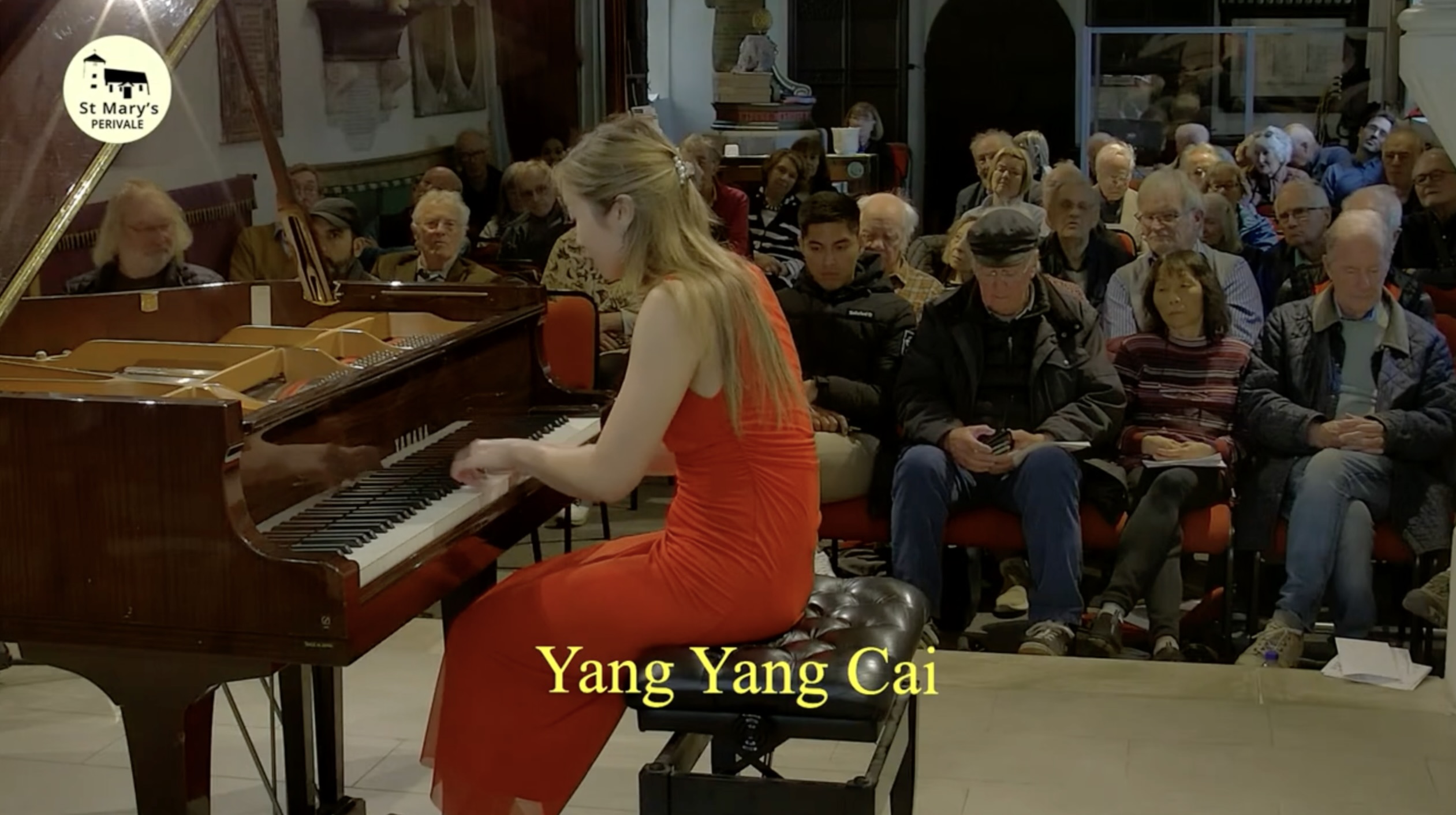
Some very fine musicianly playing of refined beauty and above all clarity. A musicianship anchored in the bass as you would expect from the class of Norma Fisher where simplicity and intelligence combine to produce performances of authority and good taste.
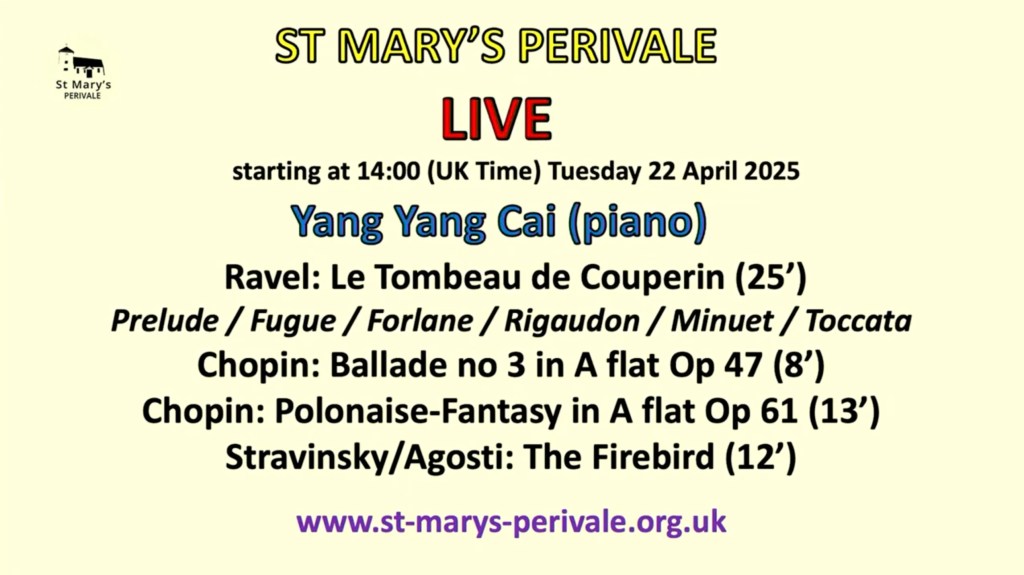
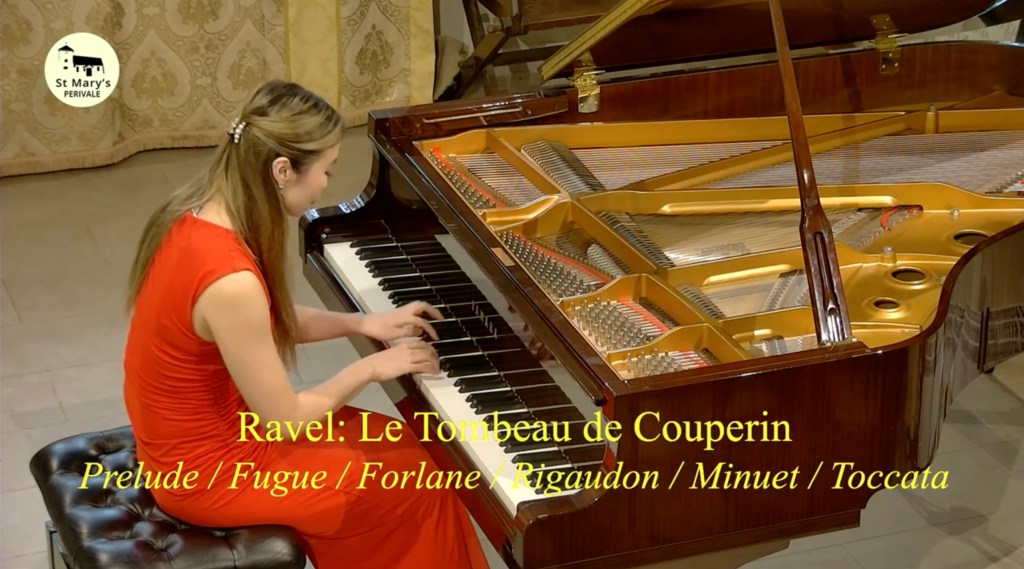
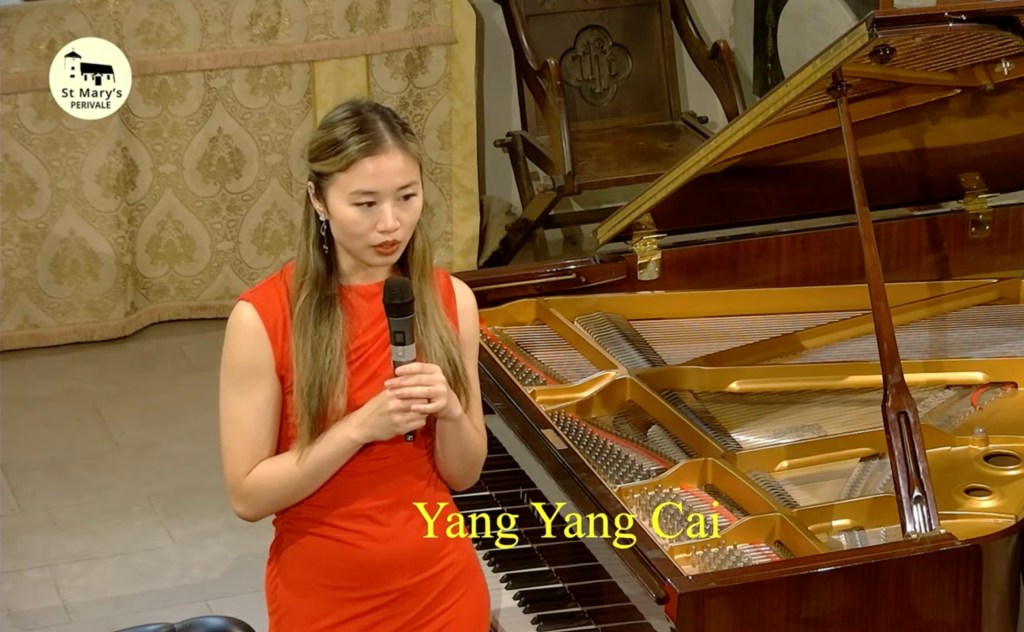
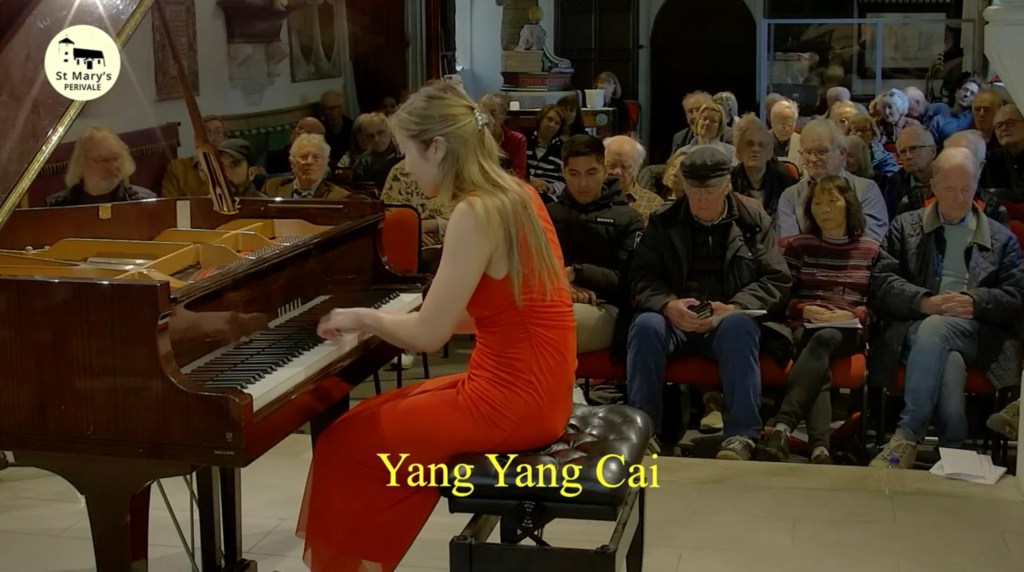
It was in the Ravel that opened the programme that showed Yang Yang’s enviable clarity and radiance of sound.There was a ‘joie de vivre’ with her sparkling clarity where she knitted Ravels’ knotty twine together with a masterly use of the pedal to produce ravishing effects of harmonic beauty. The Fugue was of a purity and radiant beauty as the simple subject was played with the particularly poignant yearning that Ravel weaves into each of the six pieces dedicated to friends who sacrificed their lives so senselessly in the first world world war. Ravel was an ambulance driver and saw at first hand the horror of a war where a generation of young men were sent to the slaughter. His choice of title, returning to the baroque, where the restrained civilised passions are wrapped up in the simple lines of its age. It was this that Yang Yang showed us today with her masterly pedalling, that was used so sparingly to add colour but not blur the purity and simplicity that Ravel could convey with such poignancy. There was sentiment without sentimentality, a statement without rhetoric.Beauty and measure together as the ‘Forlane’ unwound with a radiant mellifluous melodic line, the delicacy of the cascades of whispered notes just added to the poignant nostalgia without any turbulence or rage. There was a rhythmic drive to the ‘Rigaudon’ played with scintillating sparkling energy as it descended into a ravishing melody, floated with beguiling beauty on dance rhythms of civilised elegance. A restrained dignity and sense of measure to the ‘Minuet’ with ornaments just adding to the emotional melancholy before the glorious outburst of the ‘Toccata’. Played with remarkable mastery and a crystalline clarity even in the most strenuous passages , bursting into melody with a radiance like the sun shining and giving hope for the future. Extraordinary mastery where the relentless drive and musical shape she was able to maintain right to the exhilarating final pages.
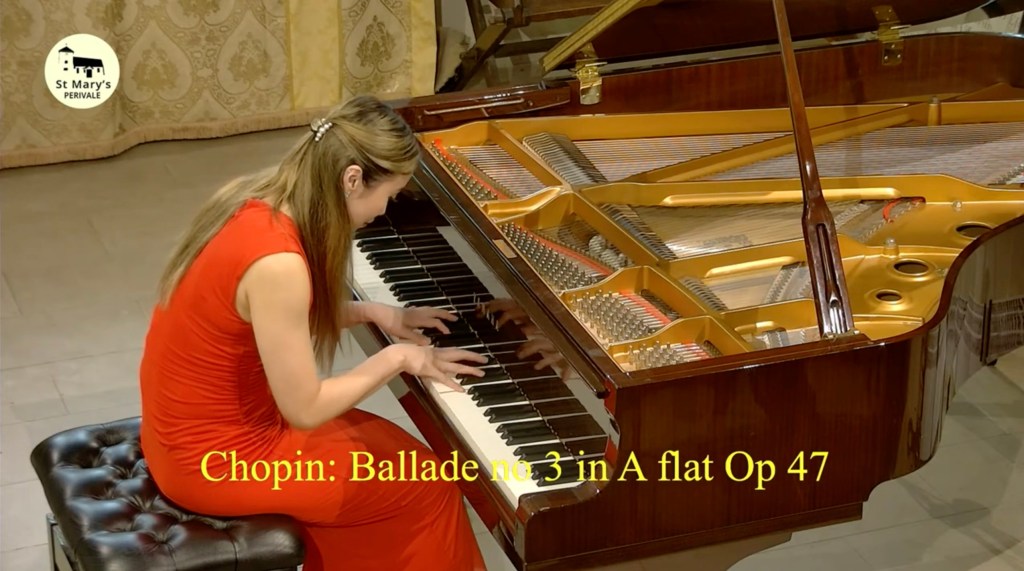
The Chopin 3rd Ballade was played with remarkable musicianship but a rather slow tempo did not allow her to move forward with a flowing undercurrent that like riding on a wave is always present. Yang Yang played with remarkable beauty but the rather slow tempo did not allow her to show us the overall architectural shape.There was restrained beauty to the pastoral opening of the gentlest of Chopin’s four ballades with its simple lapping waves gradually leading us, without stopping, to the glorious final outburst of emotional exuberance and exhilaration, before the final cascade of notes across the entire keyboard, to the four final sedate chords.
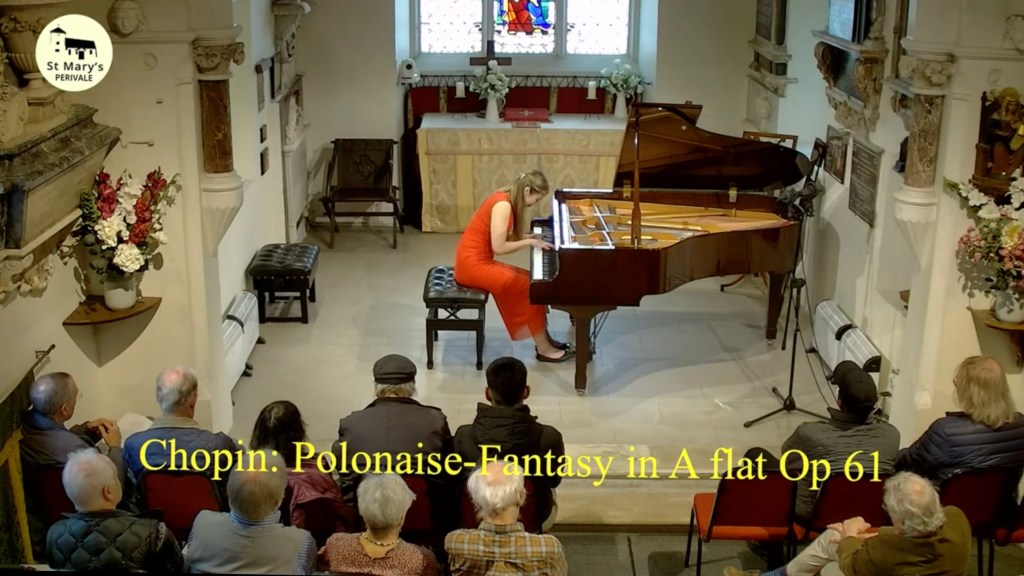
Yang Yang’s Chopin is full of beauty and refined good taste but also in the Polonaise – Fantasie rather slow tempi did not allow her to see the wood from the trees. A ravishingly beautiful central episode but where the opening split chords already impeded the natural flow of the music. Her masterly control and sumptuous sound, of course ,brought this work to a magnificent ending, but Chopin’s revolutionary sense of structure was interrupted too often by an artist who loves the music so much that it becomes rather episodic.
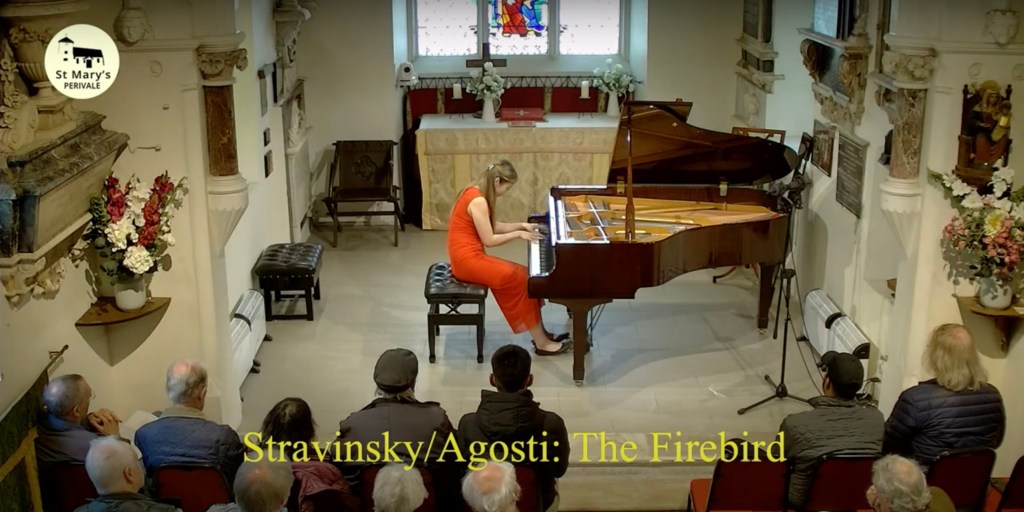
Agosti’s magnificent transcription of Stravinsky’s ‘Firebird’ has long been a pianistic showpiece together with Ravel’s ‘La Valse’ . A work only for the fearless, who have a technical mastery not only of the enormous amount of notes, but above all of colour and relentless reserves of energy. Yang Yang played with remarkable mastery, above all a sense of colour and mastery of the pedal that no matter how many notes she played there was always the clarity and sense of line of a true musician. The magical entry of the ‘Firebird’ was played with sumptuous beauty and restraint as she built up the sonorities with masterly control and sumptuous sounds to the exhilarating final bars.If the opening could have been played with more reckless abandon this was not part of Yang Yang’s personality. It was ,though, the colour and imagination she brought to Agosti’s transcription of 1928, that was much admired by the composer, that was exactly that which I remember so well from listening to Agosti in his studio in Siena where the whole musical world would flock to hear sounds that have never been forgotten.
Yang Yang Cai (b. 1998) began piano studies at five with Noor Relijk and later studied under Professor Jan Wijn. She graduated with highest distinction from the Conservatory of Amsterdam 2019. In 2023, she earned her diploma from the Accademia Pianistica di Imola under Enrico Pace and completed her Master’s degree at the Conservatory of Amsterdam with Frank van de Laar. Currently, she is pursuing an Artist Diploma at the Royal College of Music in London with Norma Fisher. Yang Yang has participated in masterclasses with esteemed teachers such as Ronald Brautigam, Boris Berman, Matti Raekallio, Jacques Rouvier, Klaus Hellwig, Alexander Gavrylyuk, and Arie Vardi. In 2019, she refined her musicality through a workshop at Maria João Pires’ Belgais Center for Arts. Her performing career began at nine, leading to appearances in major Dutch concert halls, including the Concertgebouw Amsterdam and Muziekgebouw aan ‘t IJ. Internationally, she has performed at Hamburg’s Laeiszhalle, earning critical acclaim. Yang Yang is committed to sincere musical interpretation, aiming to connect with audiences beyond words.
At nine, Yang Yang represented the Netherlands at the International Steinway Festival in Hamburg. In 2015, she performed in Taipei by invitation of the Dutch Trade and Investment Office. She has participated in festivals such as the Delft Chamber Music Festival, Grachtenfestival Amsterdam, and Aspen Music School and Festival. Her awards include first prizes at the Steinway Piano Competition (Netherlands) in 2008 and 2012, and winning the Junior Final of the Young Pianist Foundation Competition in 2013, performing Mozart’s 14th Piano Concerto with the Yehudi Menuhin School Orchestra. In 2019, she won the Grand Prix Youri Egorov at the Young Pianist Foundation Piano Competition, performing Chopin’s Second Piano Concerto with the Conservatory of Amsterdam Symphony Orchestra.
Yang Yang is grateful for the support she has received from numerous organizations, including the VandenEnde Foundation, Nationaal Muziekinstrumenten Fonds, Ars Donandi, NL Talentenfonds, Muziekfonds Stringendo, Fundatie van Renswoude The Hague, VSBfonds, Dr. Hendrik Muller Fonds, and Cultuurfonds. She also has the privilege of playing a Steinway & Sons D-274, generously provided by the Voorlinden Foundation.
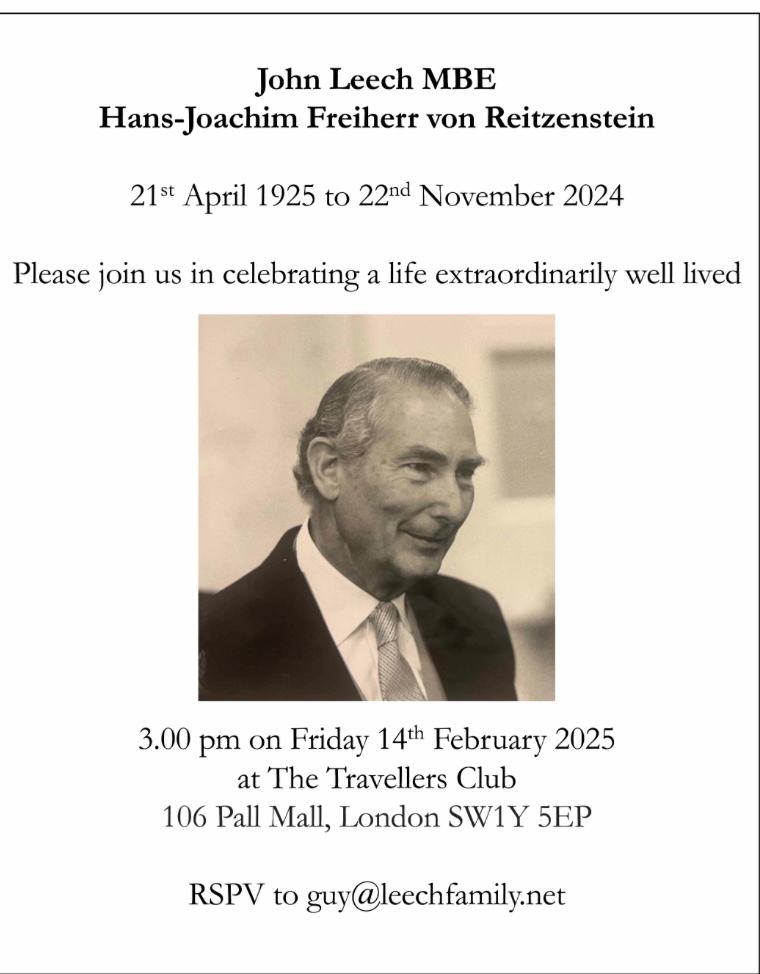
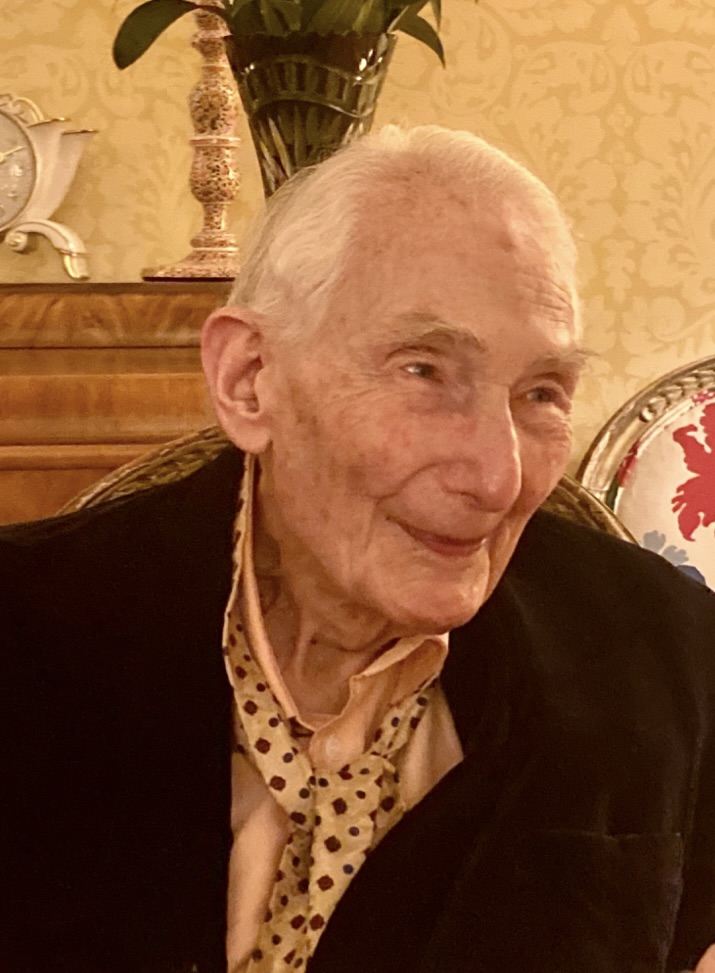
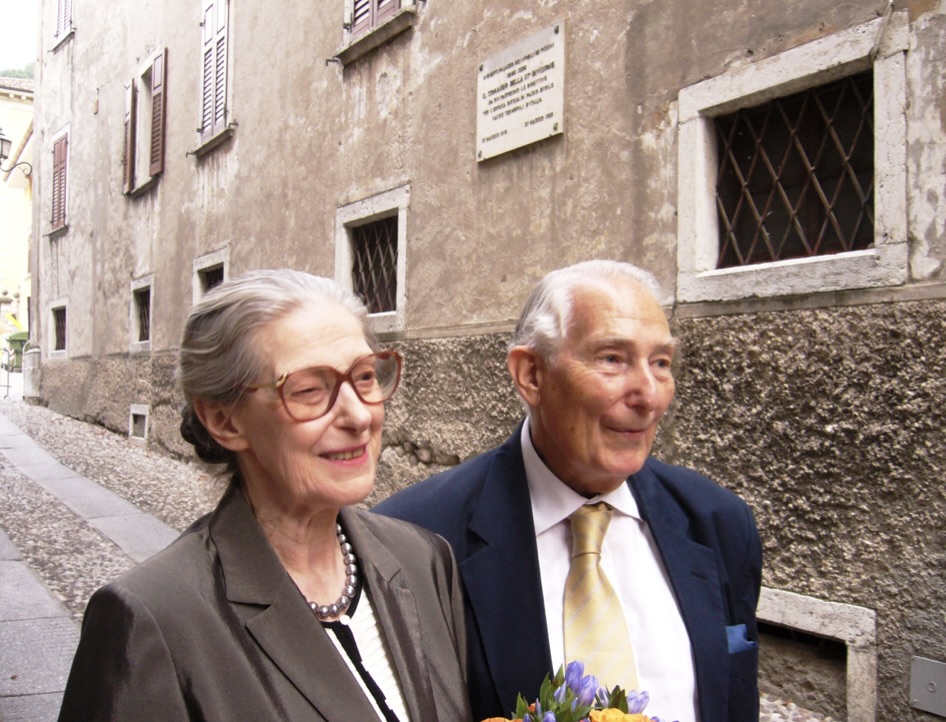
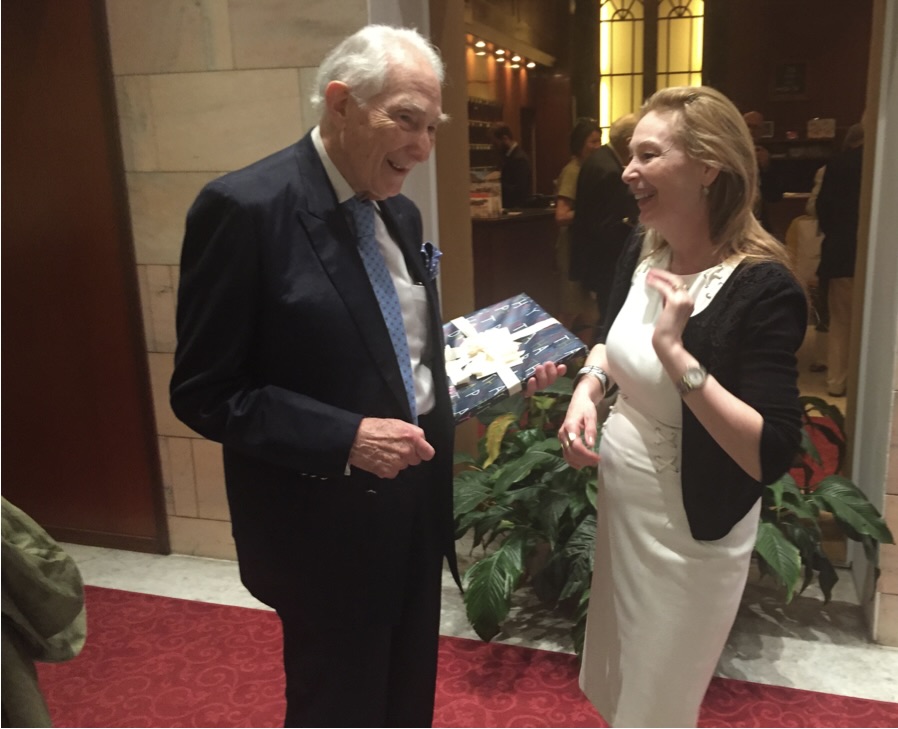
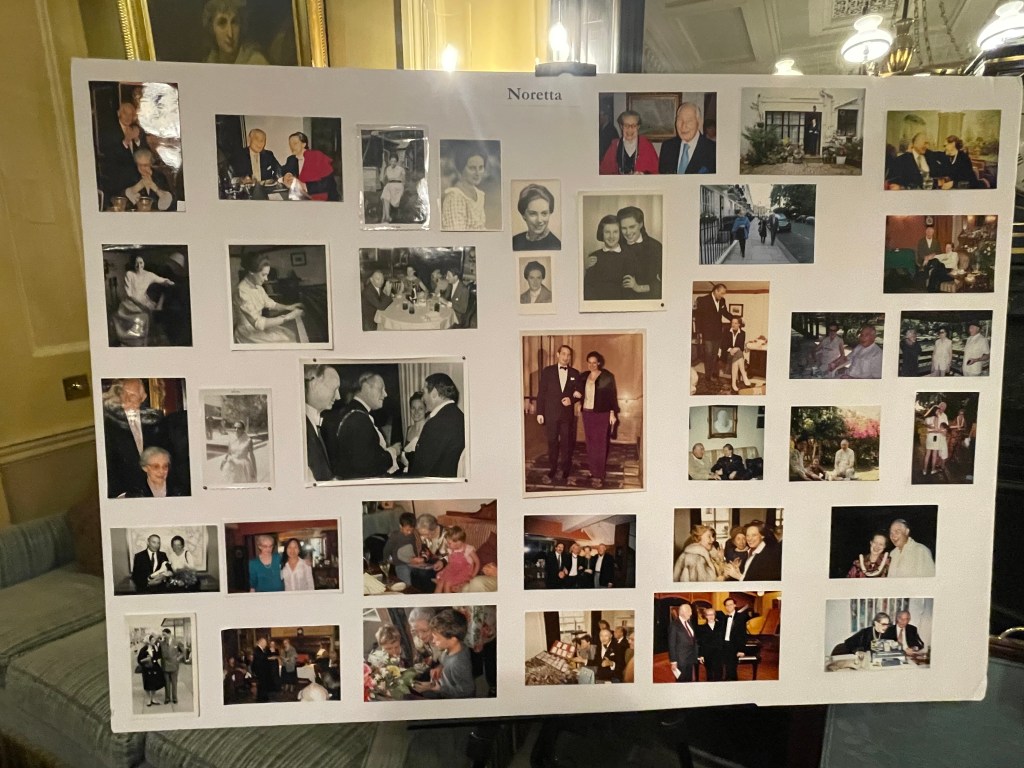
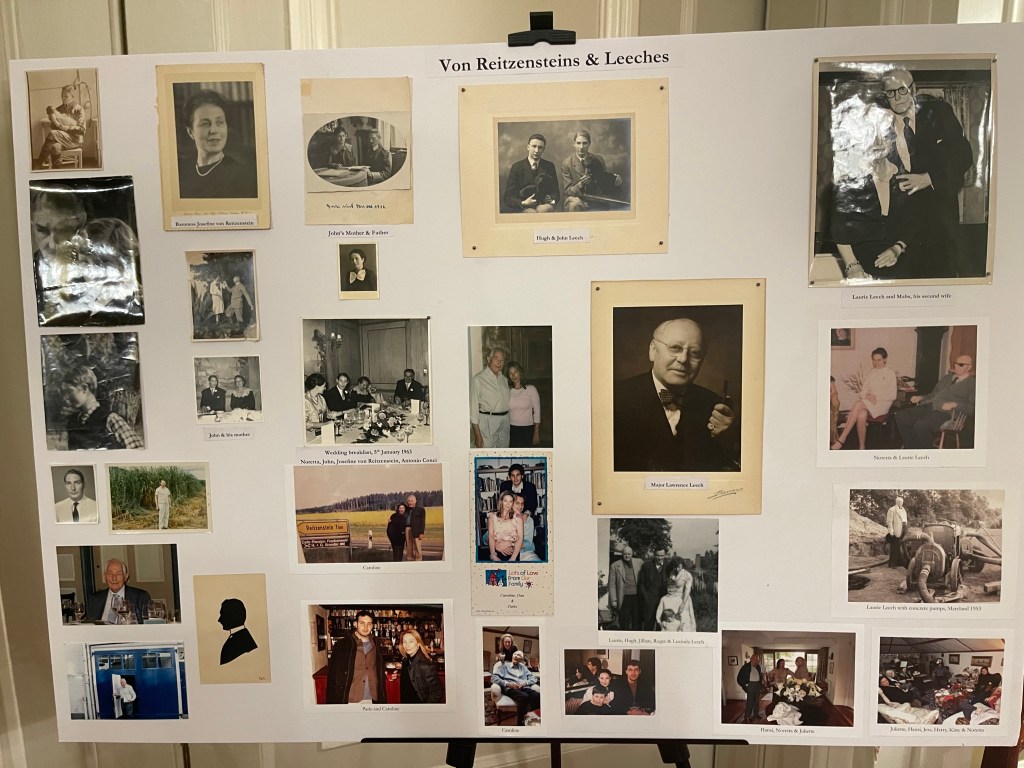
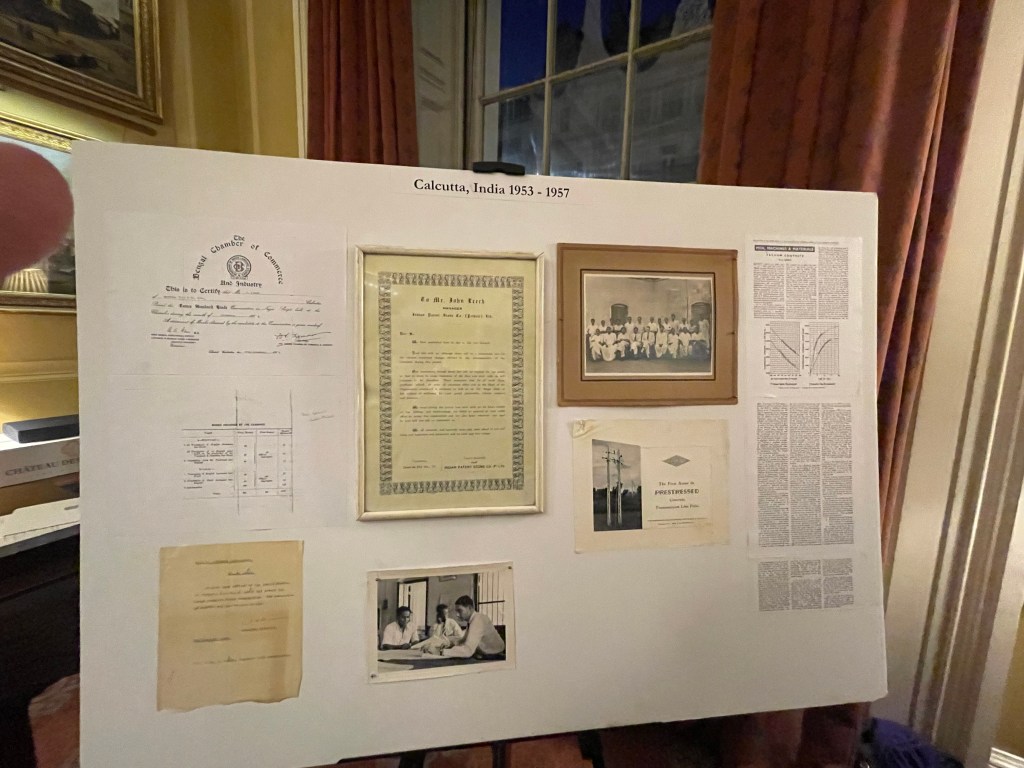
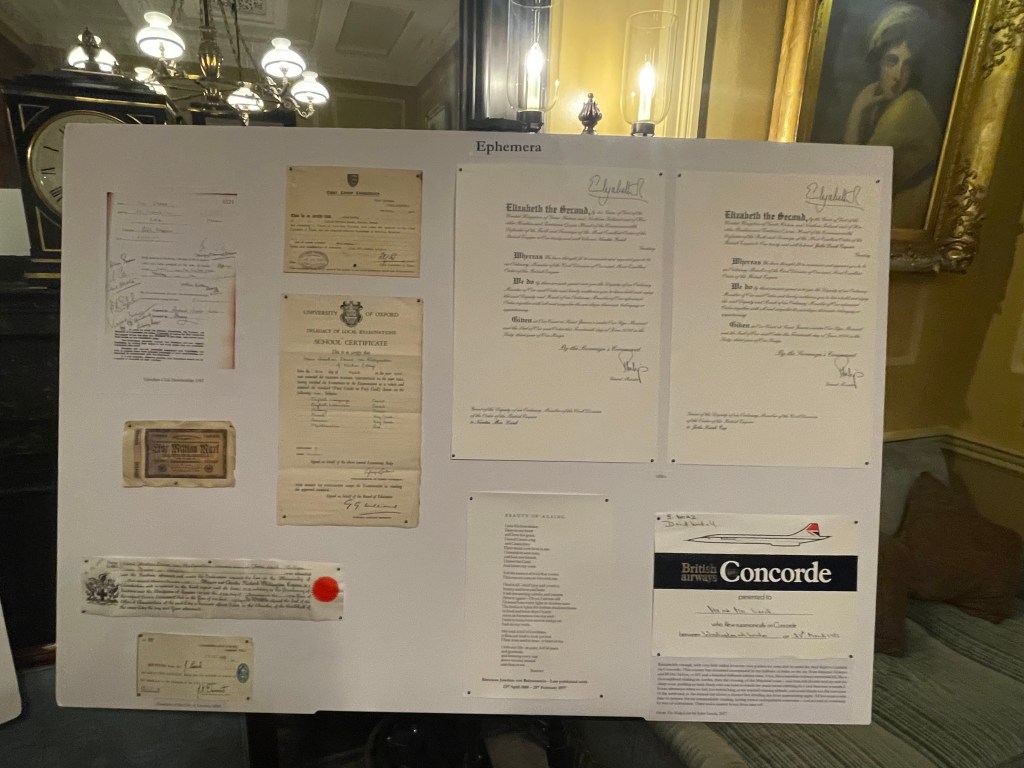
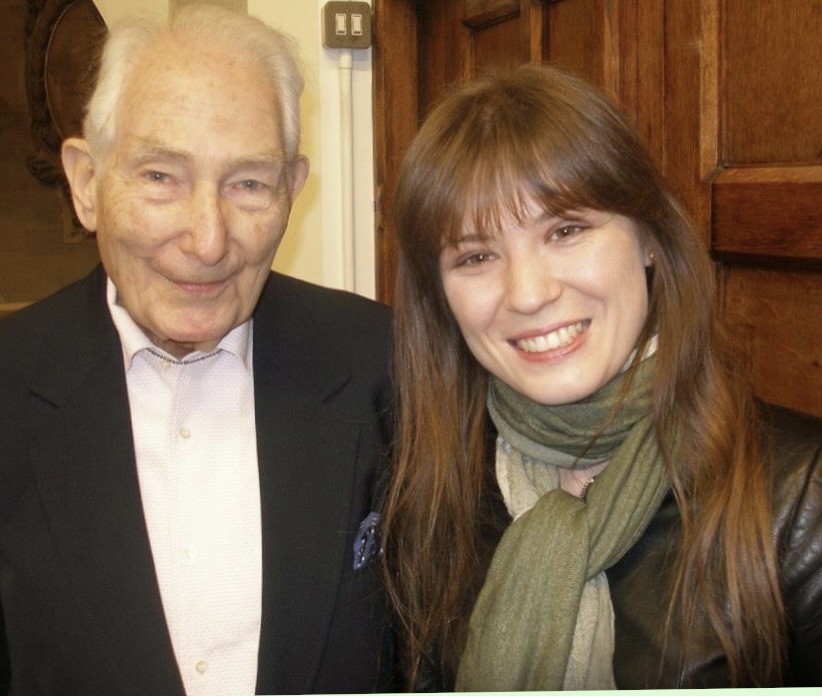
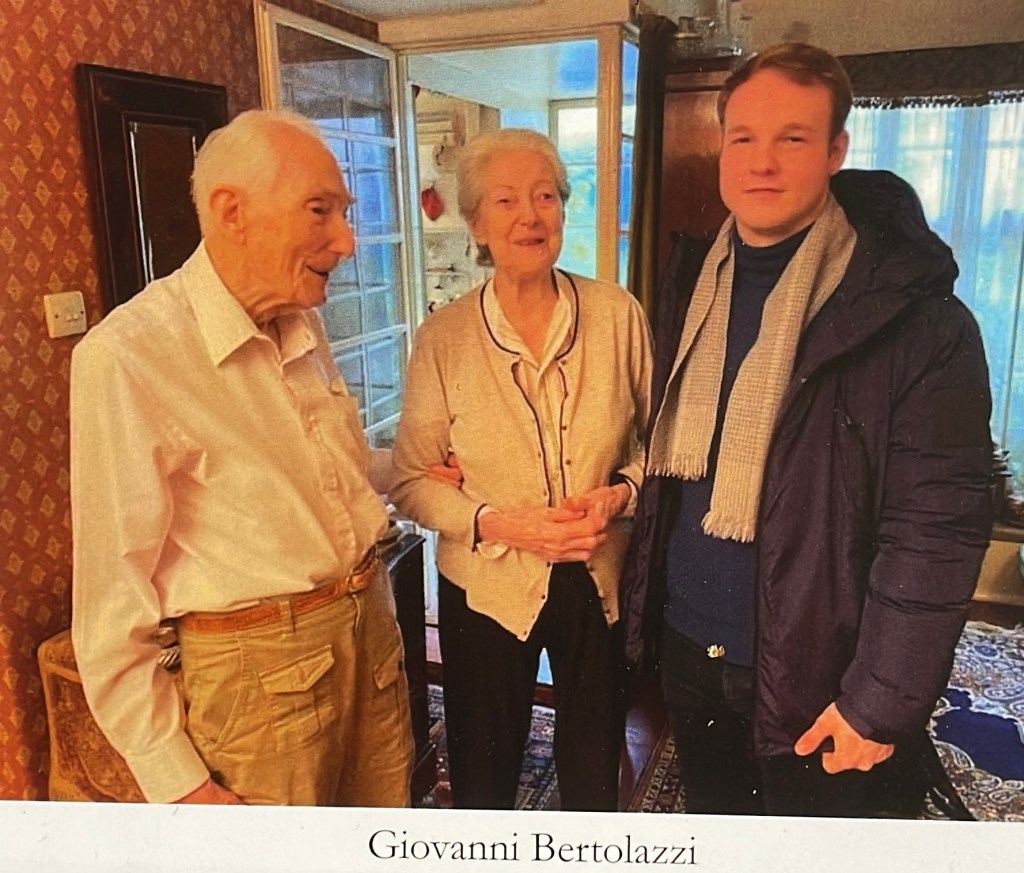
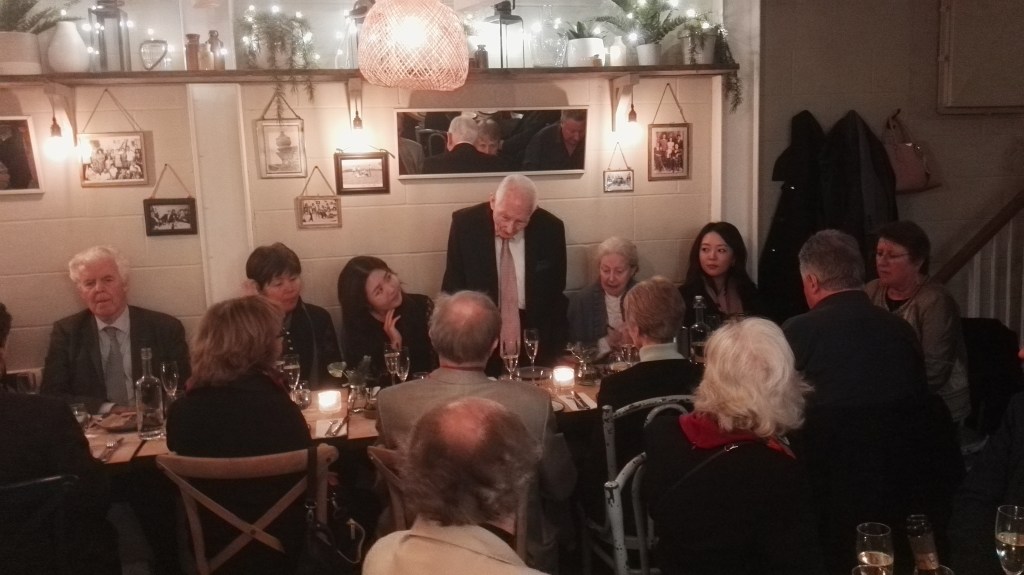
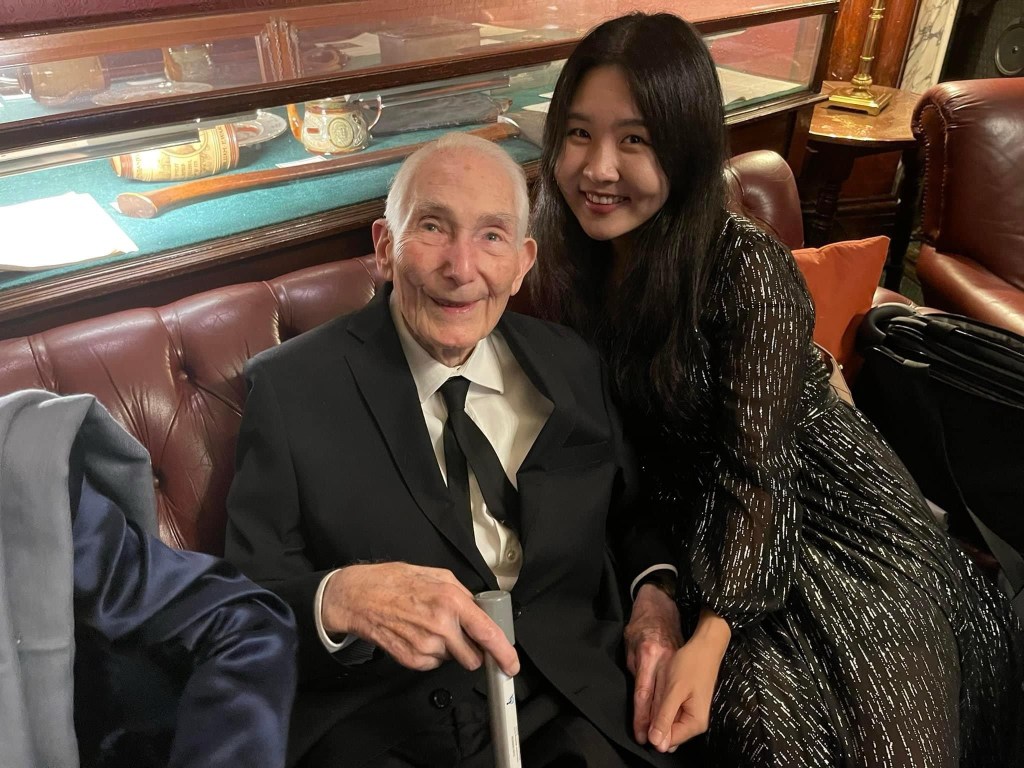
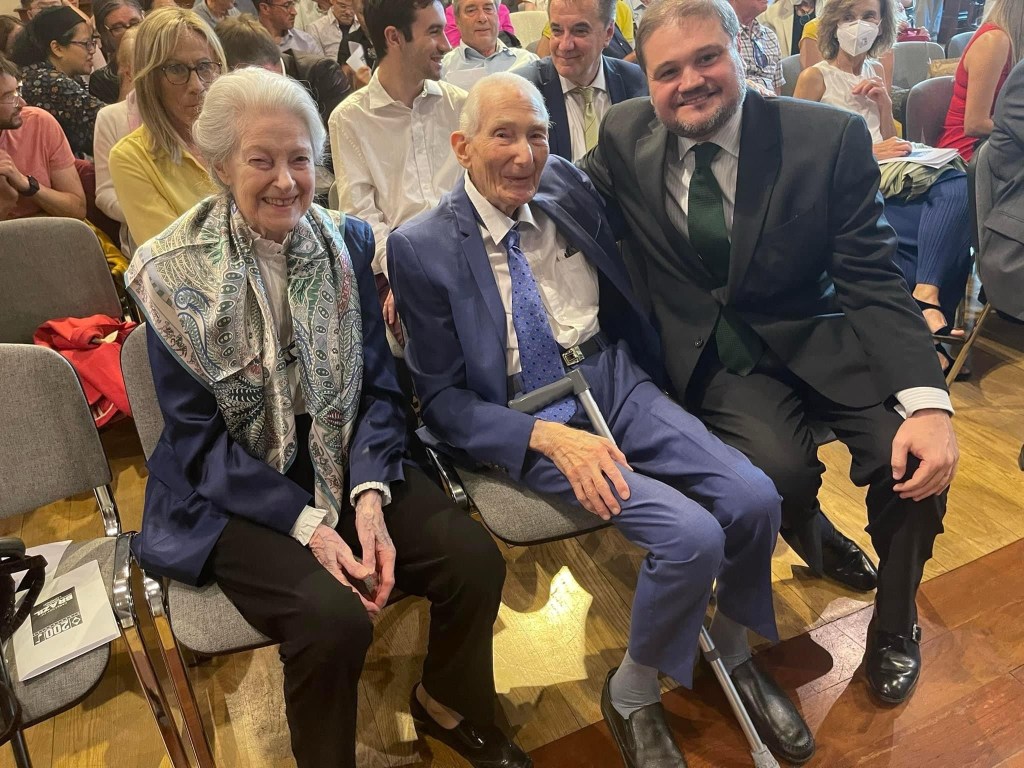
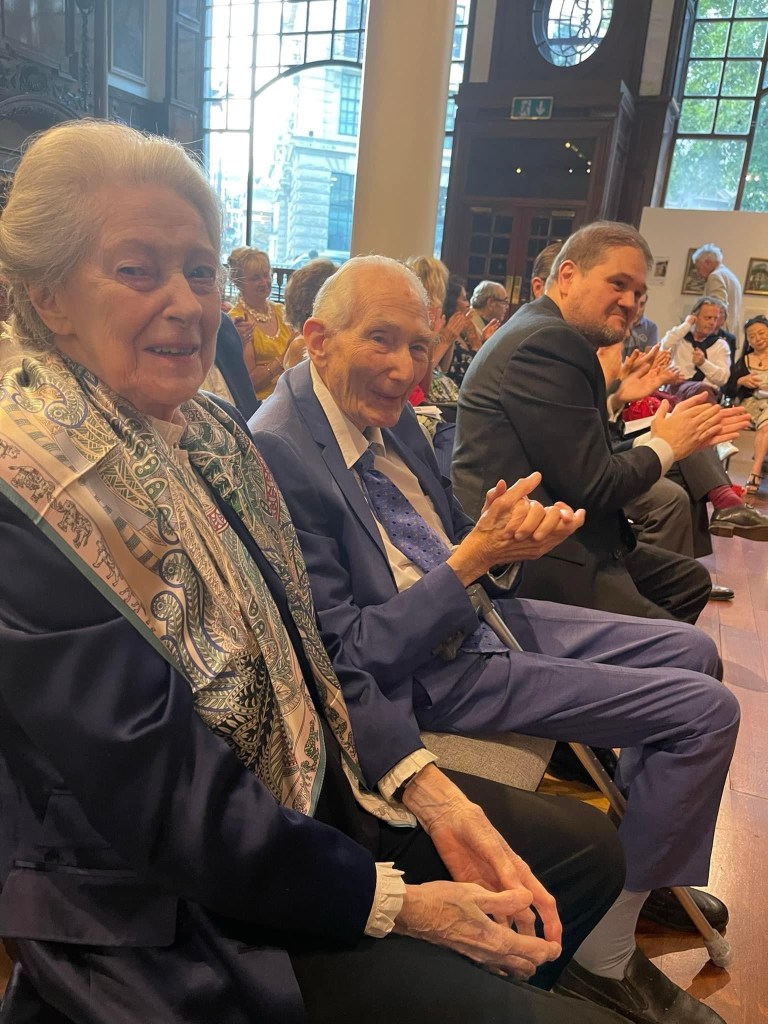
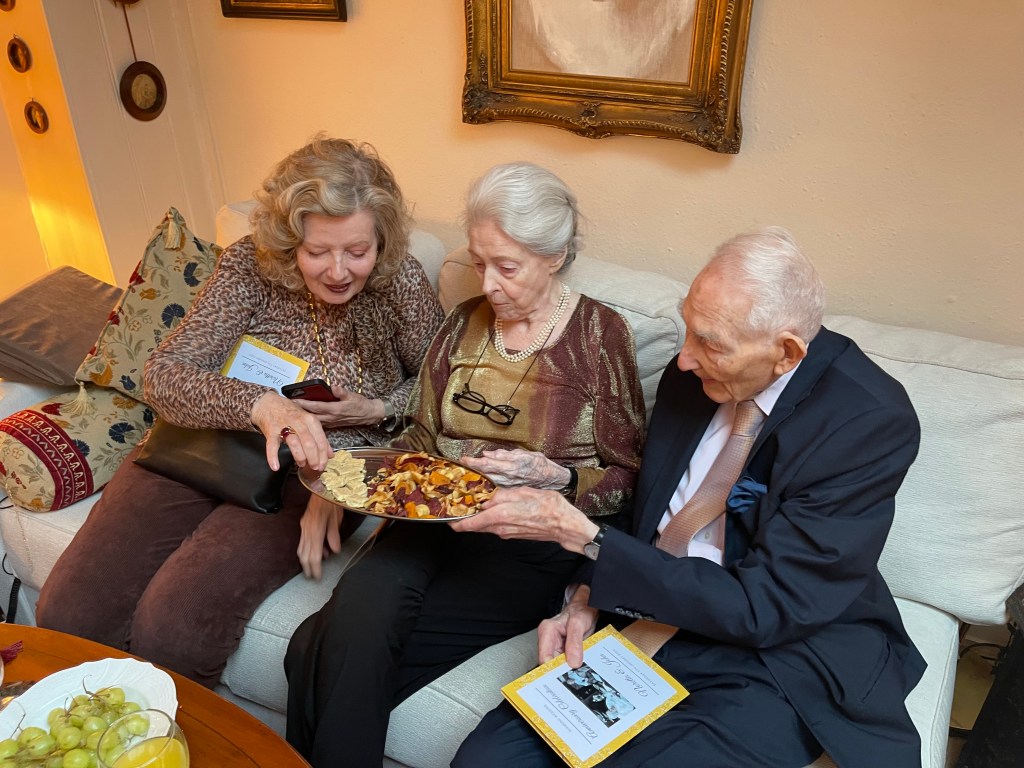
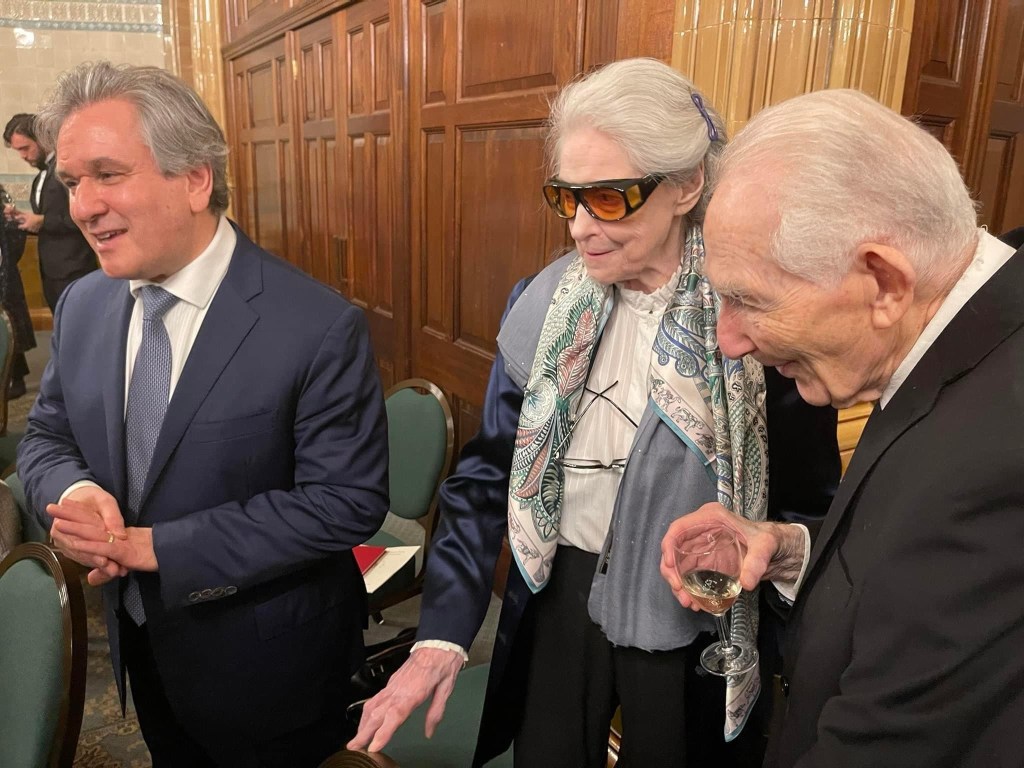
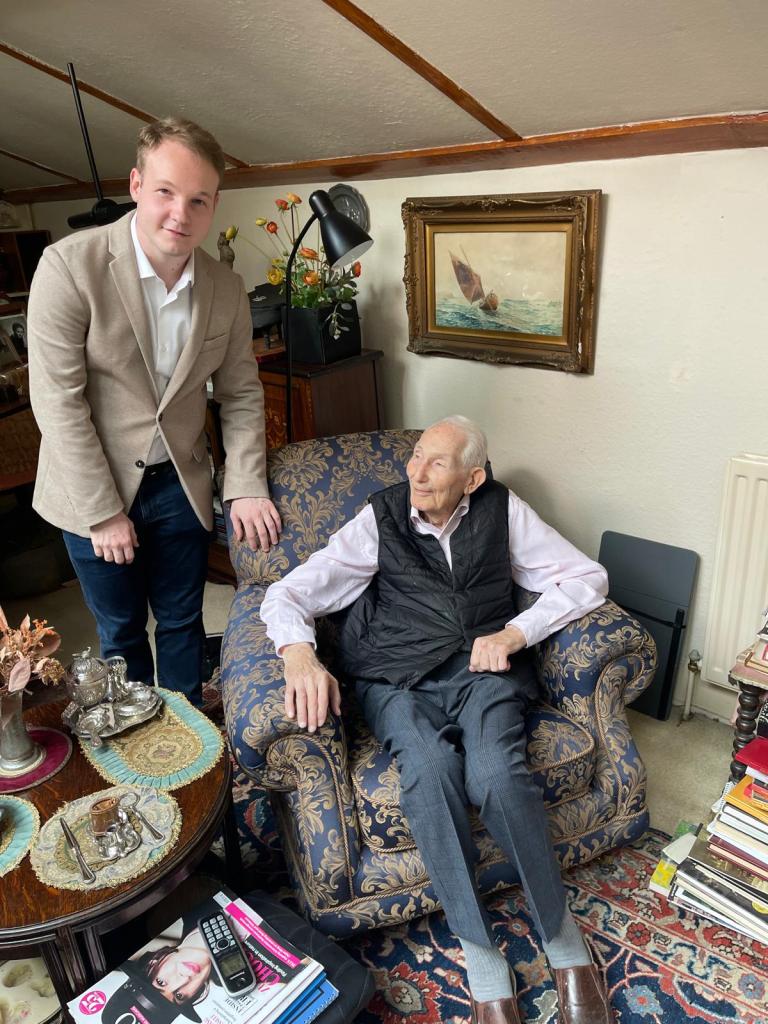
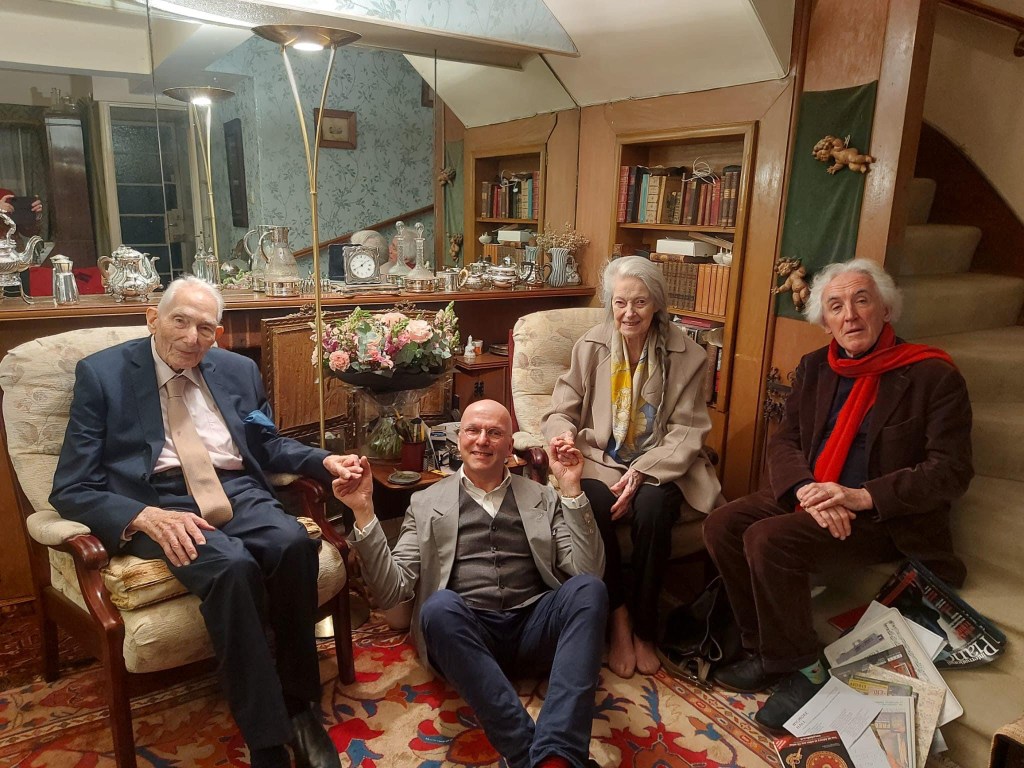
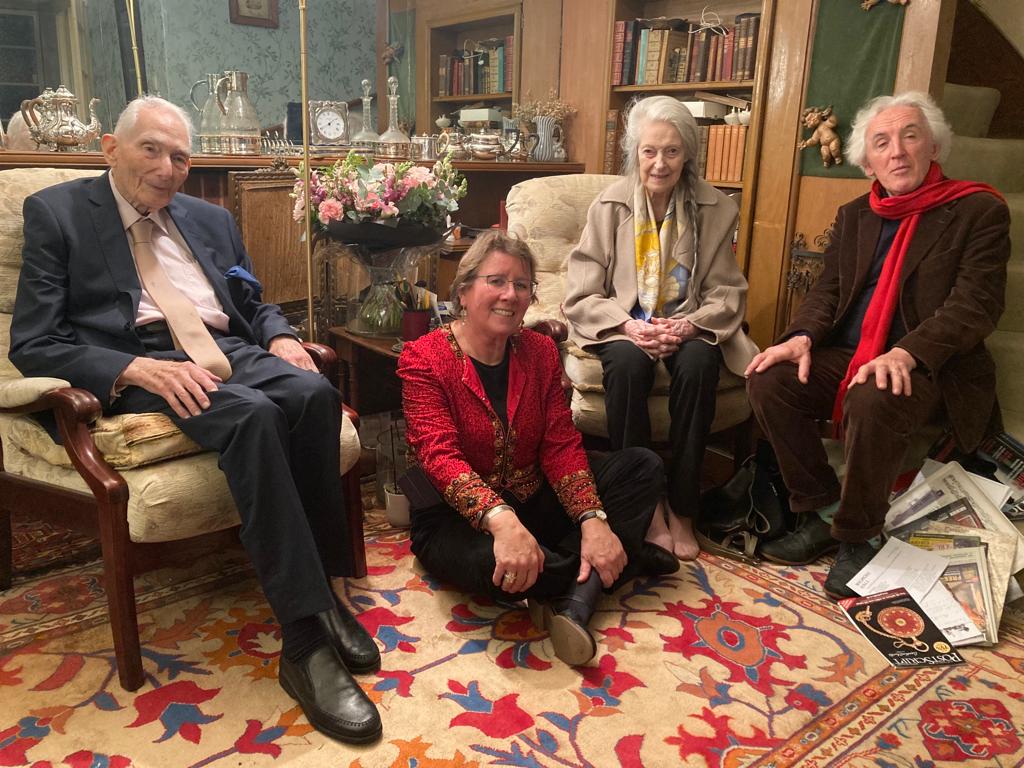
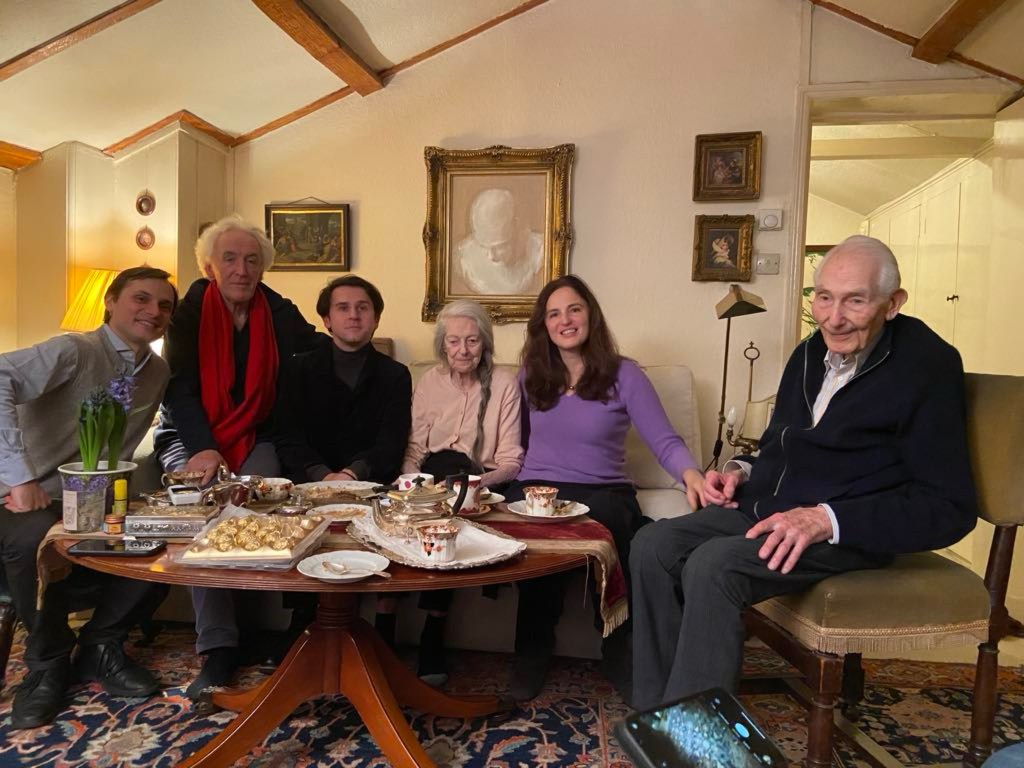
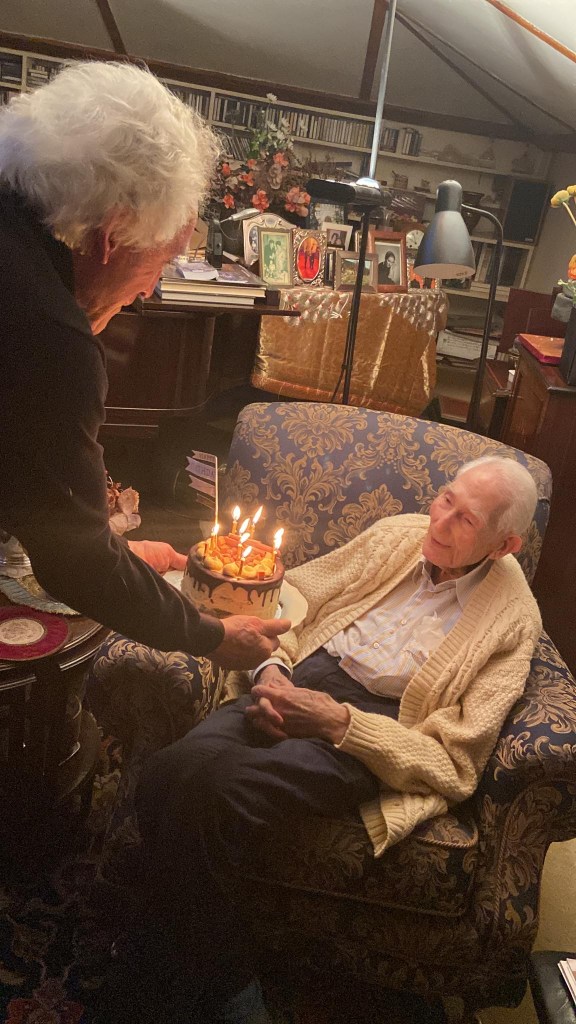
John Leech, MBE, was born Hans Joachim David Baron von Reitzenstein in Potsdam on April 21, 1925. We are remembering him, celebrating his 100th birthday today. My dear, revered friend John represented for me in every respect the ideal synthesis of a nobleman guided by Prussian virtues and a true English gentleman. Coming from ancient Franconian nobility on his father’s side (his father died when John was just 10 years old), and from a Jewish family on his mother’s side (his mother was later able to flee to England), he never forgot his origins and yet fully integrated himself into his new life after his escape to the UK in 1939. John’s life of nearly a hundred years was undoubtedly based on his Christian faith which he shared with Noretta Conci, a student of Michelangenli’s, his beloved wife of over 60 years – how unforgettable was their Diamond Wedding celebration in January 2023! Their faith guided both of them throughout until John’s very end on November 22, 2024.
A great and unwavering support for Noretta and John as well as for the Keyboard Trust’s work in the United States comes through John’s daughter from his first marriage, Caroline von Reitzenstein. She and her son Paris Ionescu, whom we dearly remember after his untimely death, were an integral part of Noretta’s and John’s family life.
The virtues that distinguished John were above all his unwavering human integrity and strength of character, his modesty and kindness, his great sense of justice, his self-discipline, his conscientiousness, his personal restraint and his never-ending philanthropy. John, the gentleman, was an extraordinary personality of the highest humanistic and political education, fluent in several languages, extremely polite and always full of the desire to do good.
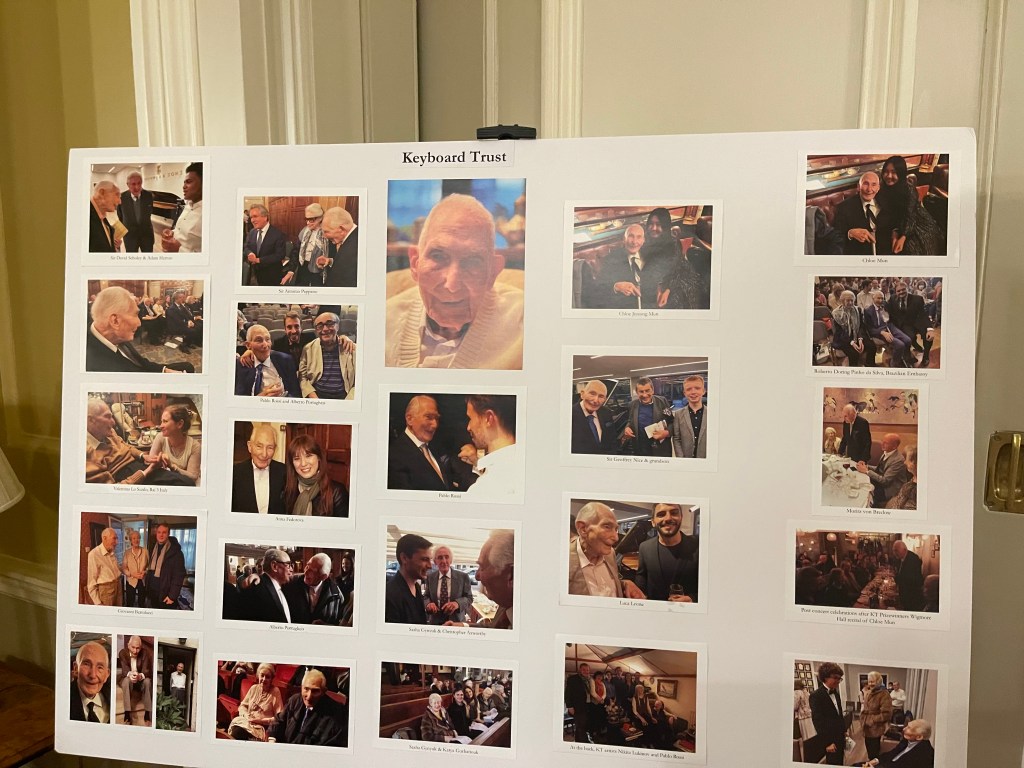
The latter runs like a thread through John’s life – doing good, be it professionally in his decades- long work for the Commonwealth Development Corporation, or later as founder and spiritus rector of the international piano foundation The Keyboard Charitable Trust, his gift to Noretta on the occasion of her 60th birthday in 1991. Noretta and John, the living souls of the Keyboard Trust, were able to combine their love of music and their love of humanity with the conviction of wanting to promote young pianists in a wonderful, selfless and highly successful way. In this way, both of them became not only my closest friends, but also great, obliging role models – my gratitude cannot be expressed in words
It is precisely in the deep connection between Noretta and John that the power of true, lived love, which extends far beyond death, becomes clear: If music be the food of love, play on; Give me excess of it. […] O Spirit of love! How quick and fresh art thou! […]. (Shakespeare, Twelfth Night I, 1)
We are standing before you, dearest John, bowing our heads in gratitude, love, and with fondest memories. May your legacy live, and may you be listening with joy to all the young pianists’ astonishing gift of music. And may your love for Noretta, as hers for you, always shine.
Happy, happy 100th birthday, dearest John! And all our love to you, dearest Noretta! (Moritz von Bredow, Hamburg, April 21, 2025)
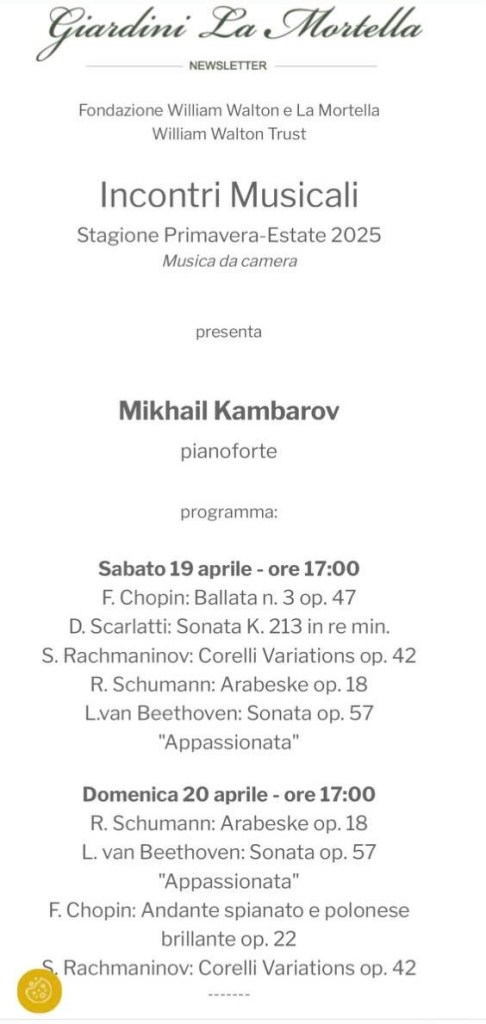
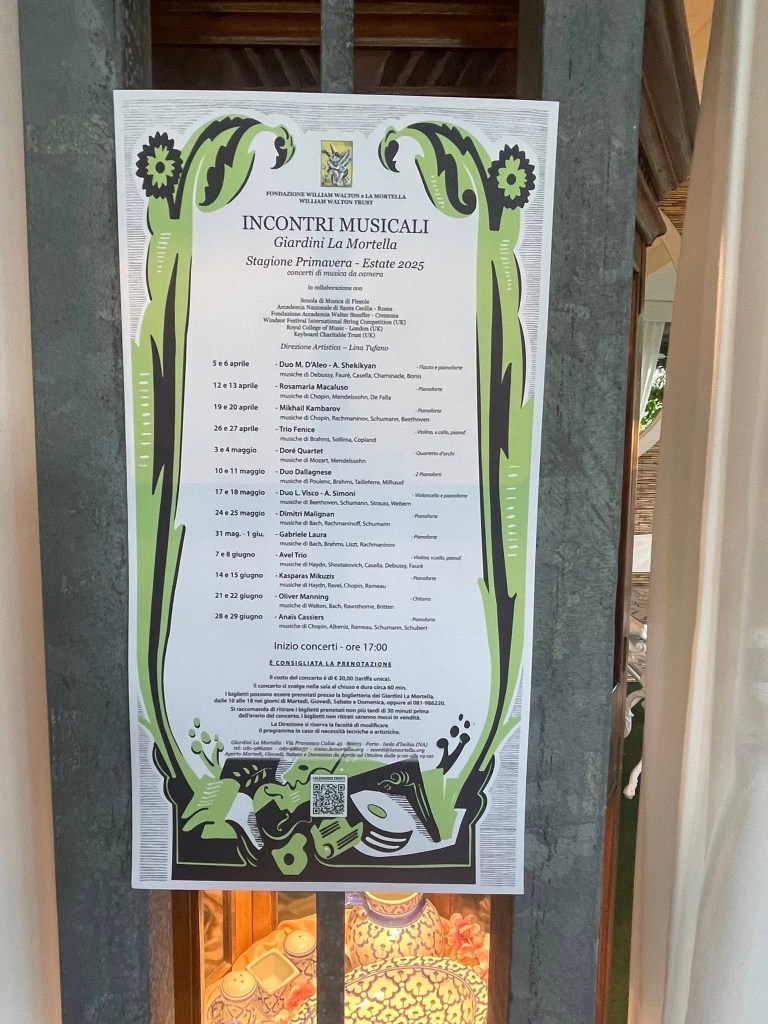
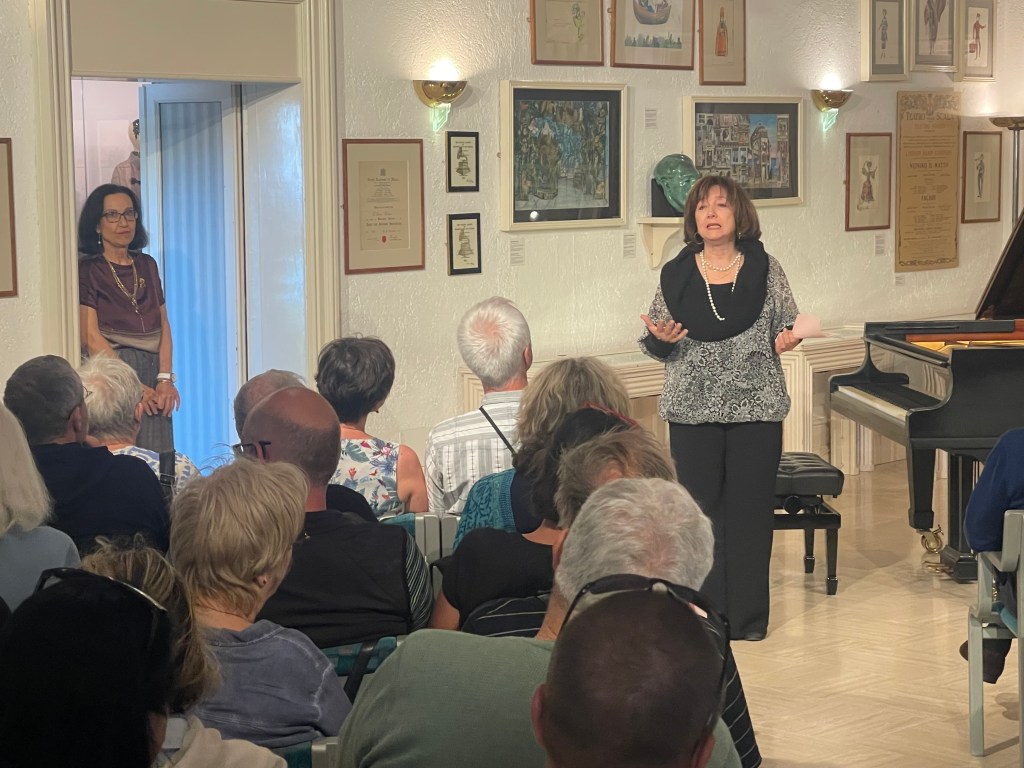
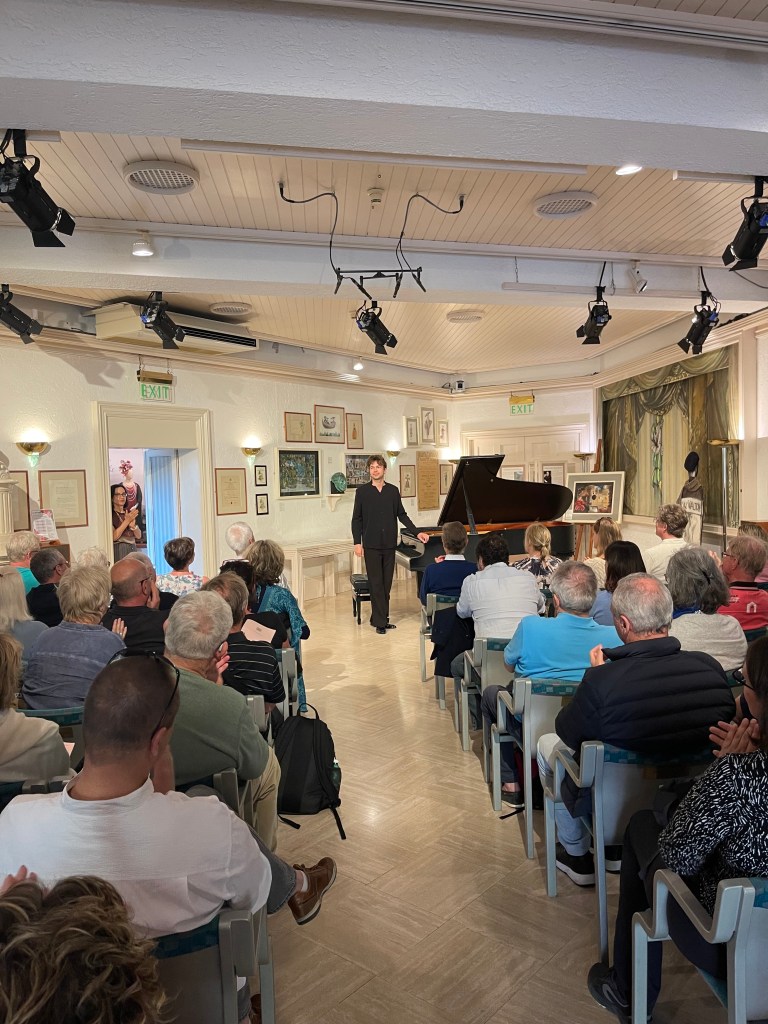
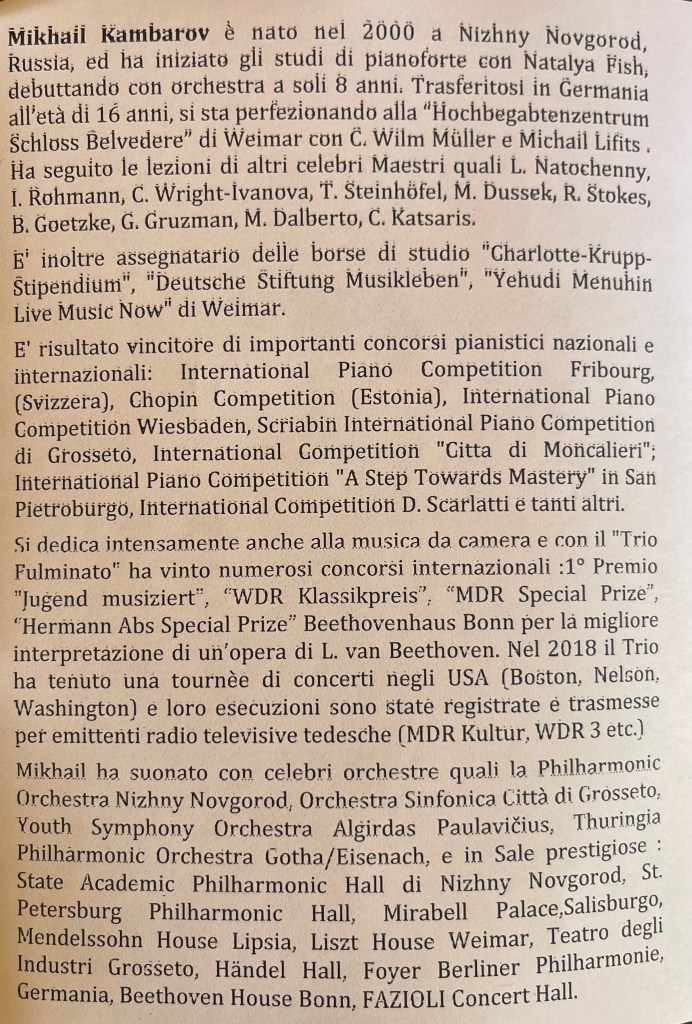
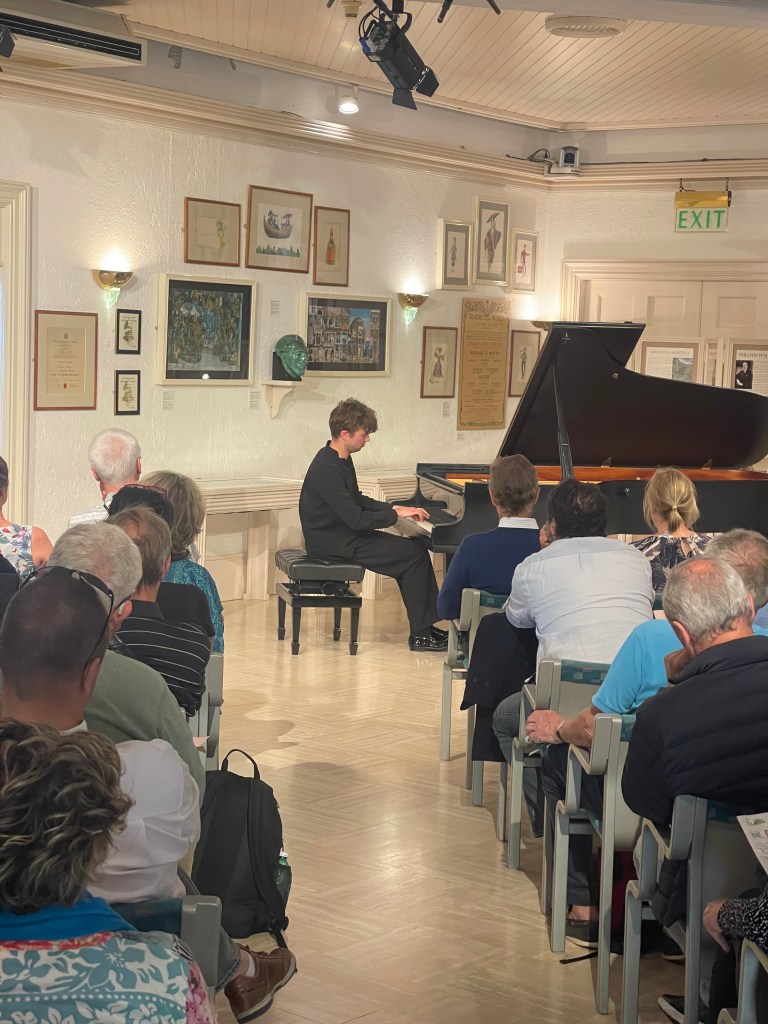
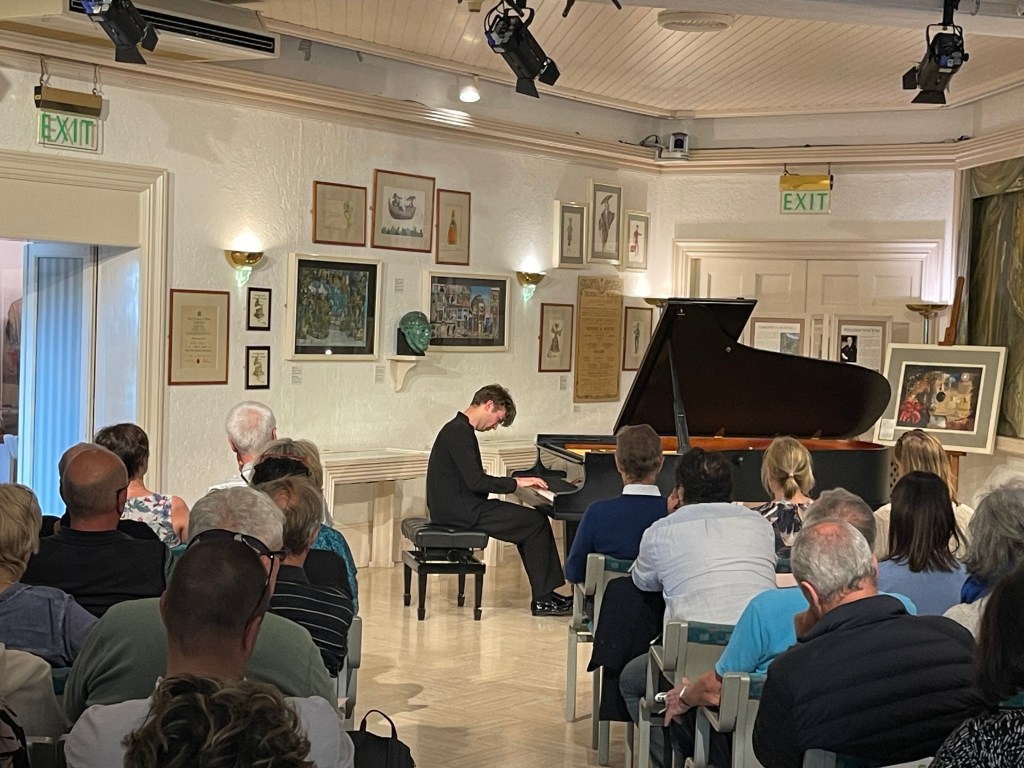
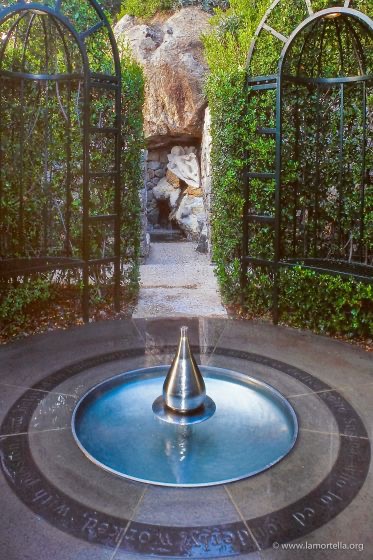
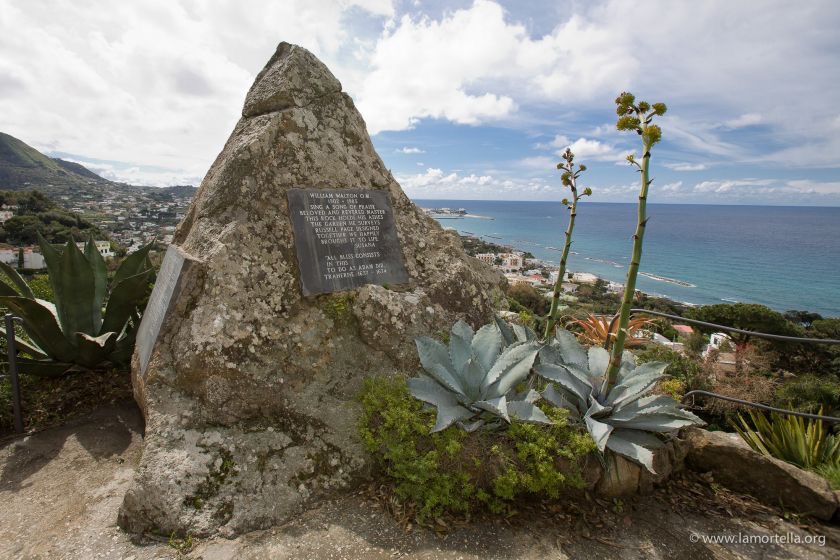
Playing of beauty and intelligence from Mikhail Kambarov in Ischia at the Walton Estate of La Mortella. A sense of style like pianists from another age, when the piano became a multicoloured box of jewels in the hands of musicians that were above all magicians.
There are very few of the younger generation who are prepared to climb onto the high wire and risk falling off or even worse falling into habits of crowd pleasing juggling of notes.
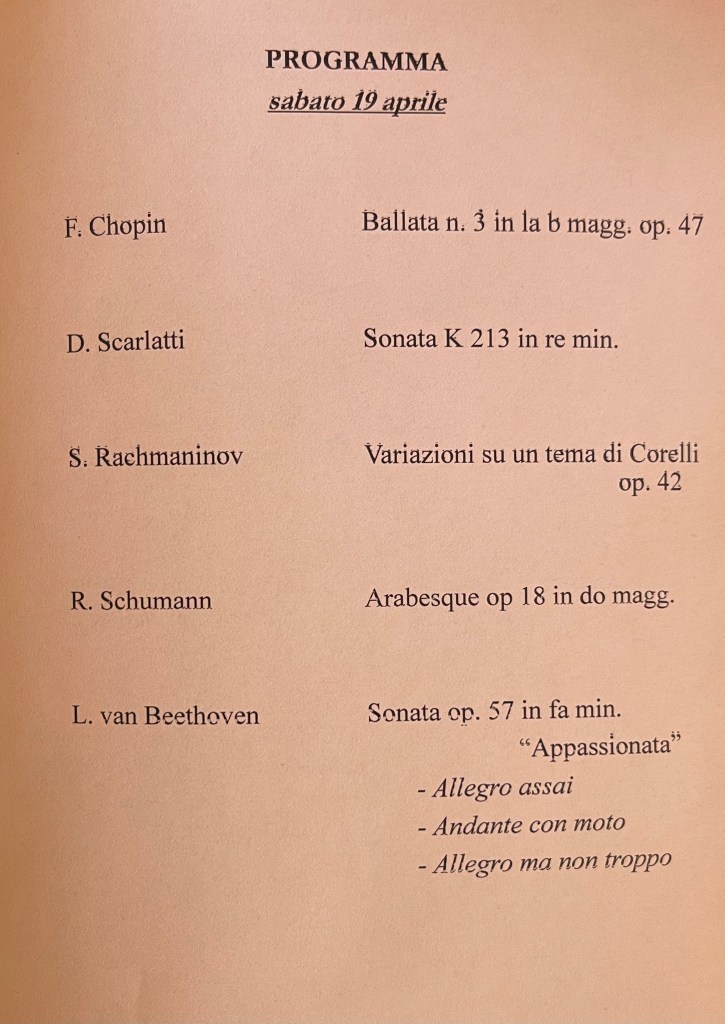
It was evident from the very first notes of Chopin 3rd Ballade that here was a pianist who had something to say. With respect and humility for the composer he added his own sense of imagination and a wondrous palette of colour that brought a radiance and subtle beauty to all he played. There was a disarming simplicity to his Chopin that from the pastoral opening, plaintiff whispered gasps gently entered the scene as almost imperceptibly they were allowed to grow on an ever more passionate wave of sounds. Momentarily interrupted by scenes of ravishing fioritura or dynamic pulsating energy but nothing could interrupt this continual flow of beauty riding on a wave of radiance and at times even menace. Bursting into a glorious outpouring of joyous exhilaration before plunging from on high to the final chords that were played quite sedately. They were after all merely the conclusion of a miniature tone poem with an architectural shape of poetic musicianship.
There was exquisite fluidity and disarming poignancy to the whispered intimate secrets that he shared with us in Scarlatti’s D minor sonata. Magic, as we had to strain to listen to the central episode such was this young man’s ability to draw us in to his world of intimate secrets rather than projecting out with more usual stylistic correctness. We were astonished by the genial poetic invention of Scarlatti who not only created over 500 sonatas of the brilliant jeux perlé perfection of his age, but also added many, demonstrating that Scarlatti had a heart and soul that dared speak to all those with the same poetic sensibility with which they were born. Mikhail’s discerning intelligent musicianship, too,was clear from a programme where the D minor of Scarlatti was but a preparation for the world of ‘La Folia’ ( also in D minor), in the hands of a composer born into a world two centuries on.
Rachmaninov’s ‘Corelli’ variations are dedicated to Fritz Kreisler and it was in fact Kreisler that mislead his doting public with compositions that he claimed were found in the archives of baroque music but admitted later that they had been penned by him in the style of ……!
‘La Folia’ too was not actually composed by Corelli but a popular melody that was used by many composers as a basis for variations, Liszt being the prime example with his Spanish Rhapsody.
However a Rose is always a Rose, whoever its creator really was (or as Kreisler said ‘ the name changes but the value remains!’ ), and it was Mikhail’s genial idea to combine Scarlatti with ‘La Folia’, alas foiled by a public enthused by his sublime playing of Scarlatti and wanting to show their appreciation!
Later in the second half, where Mikhail again wanted to preface Beethoven’s ‘Appassionata’ with Schumann’s ‘Arabesque’, this time he was ready and waiting to pounce before the public could!
Mikhail brought purity and beauty to the theme of ‘La Folia’ ready for the variations to evolve as an almost continuous outpouring of emotions inspired by this ravishing melody. The first variation opened with beguiling subtlety, with pointed comments added of syncopated dryness.The second took wing with a perpetuum mobile of insinuating propulsion, leading to the presumptuous question and beseeching answer of the third. The variations were revealed with a fantasy of sumptuous sounds and a dynamic drive of subtle mastery. There was a poignant cry of liquid sounds of extraordinary potency as the midway cadenza took wing descending with poetic improvised freedom and revealing ‘La Folia’ in all its naked major costume. Dynamic drive and technical mastery in the last three variations found rest on the pedal note of ‘D’ on which a wondrous melody was floated of bewitching, unmistakably Rachmaninovian harmonies of brooding nostalgia, before ‘La Folia’ returned ,in whispered tones, to complete this remarkably concise and poetic work.
It is only now that many of the lesser known works of Rachmaninov are being heard in the concert hall, and a composer known mostly for his Hollywood style romanticism encased in a blinding amount of knotty twine is now being appreciated as a master of his craft with variations not only on a theme of Paganini but also on Chopin’s equally disarmingly simple Prelude in C minor.
Mikhail gave a remarkable performance that was justly received with an ovation and a well earned pause before the equally taxing second half of the programme.
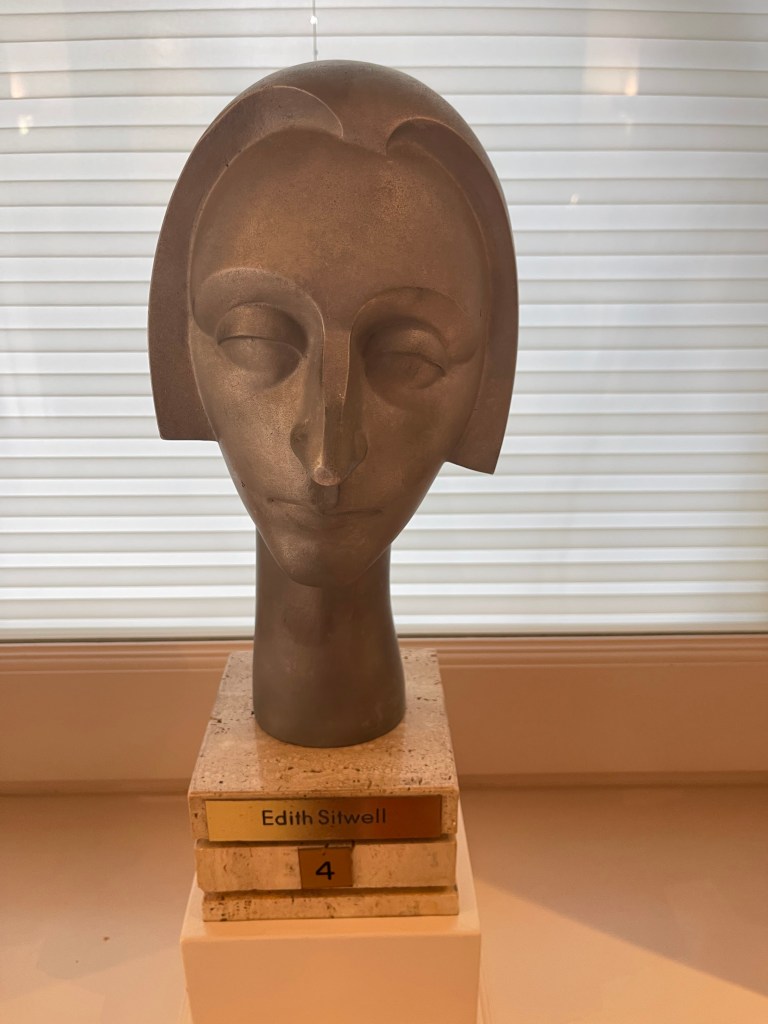
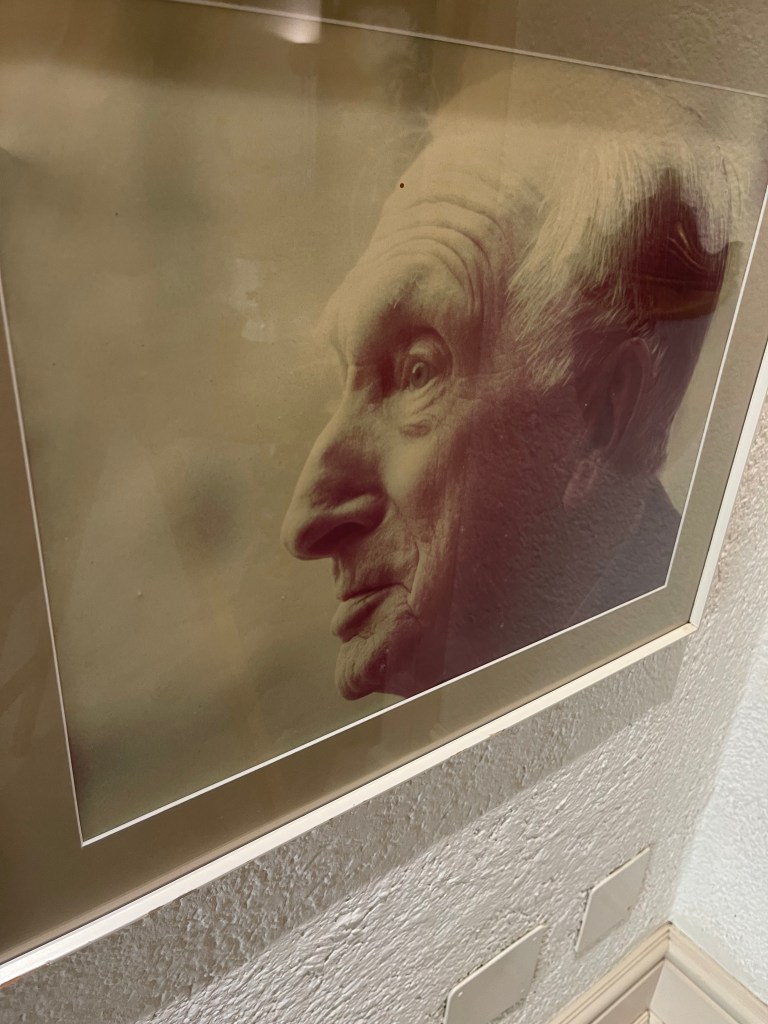
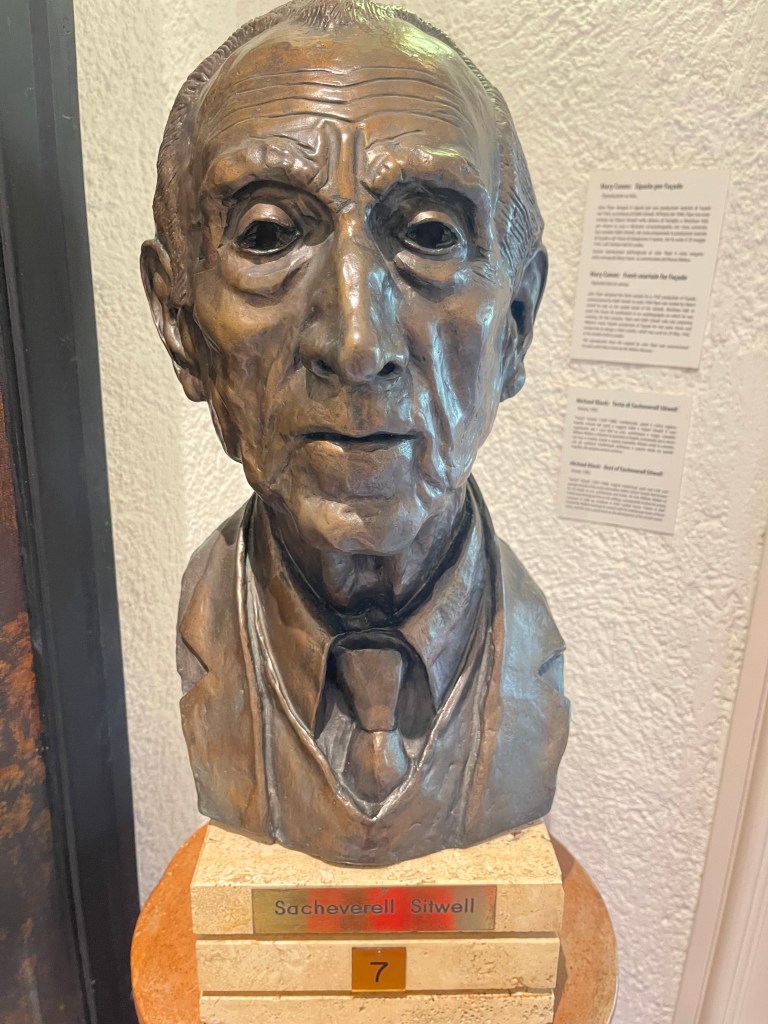
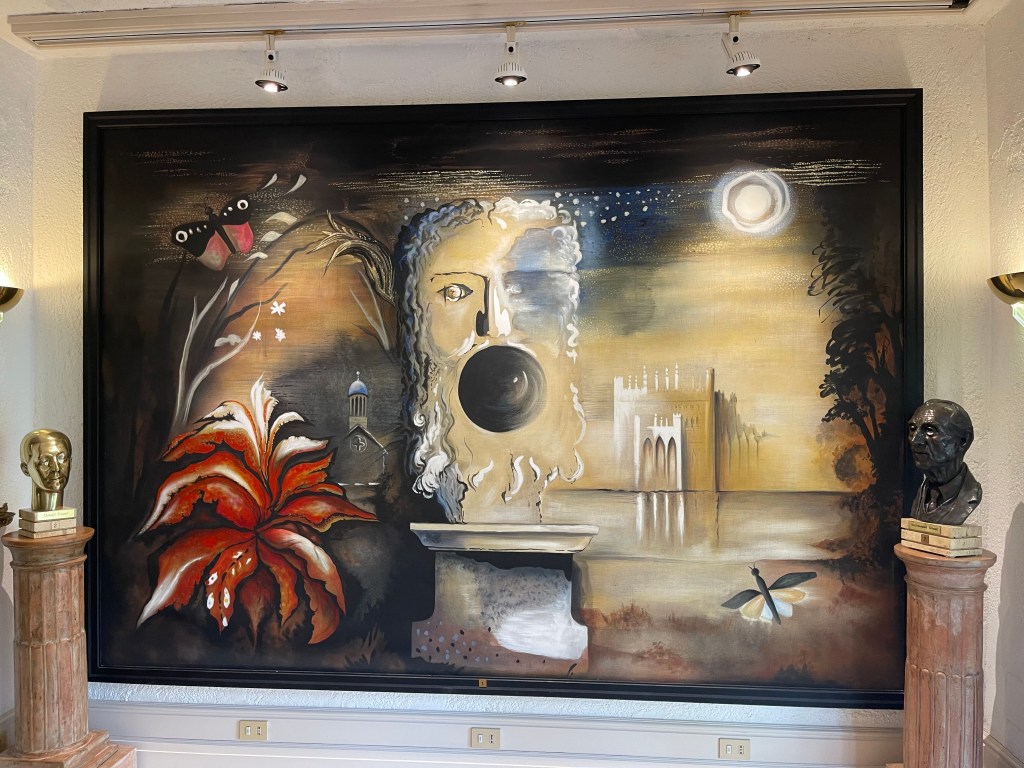
Edith Sitwell with her restrained, quasi religious elegance and Willy always with a sparkle in his eye Osbert Sitwell looking on rather seriously
Schumann’s ‘Arabesque’ was played with a wondrous flexibility, allowing the music to unfold and speak so naturally. There were beautiful inner doublings that just underlined the melodic line with the refined good taste of a poet giving more richness to the sound , as the passion rose for an outpouring of noble beauty. An architectural shape to a work that in lesser hands can seem sweetly repetitive, but in a true poet’s hands returns to the original inspiration, as when the music was still wet on the page. Yearning, passionate with disarming simplicity as Mikhail brought his fantasy and colour to bear, turning a bauble into a gem,( as indeed Horowitz was to do with it’s twin: ‘Blumenstück’ op 19 which immediately followed this ‘Arabesque’ op 18). A coda of the same magic as ‘Dichterliebe’ (op. 48, the song cycle by Schumann), music reaching places where words are just not enough. A glowing radiance and beauty to the final page with a fluidity and the glowing sounds of purity with the deep significance of a poet of the piano. https://youtu.be/Ka5x167wNt8
Leaving his hand on the final note, which he miraculously transformed into the whispered opening of Beethoven’s ‘Appassionata’. There was an extraordinary dynamic range and sense of drama that kept us on the edge of our seats. A scrupulous attention to Beethoven’s very precise indications meant that seemingly impossible explosions of notes were played with the struggle that Beethoven implied, not simplifying the execution by sharing between the hands. This is not play safe music but only for the fearless that dare open the door to a revolutionary work of its day. Performances that even today should still have that same astonishing struggle that Beethoven was to bequeath to the world. The music like a tightly spun spring unfolding with breathtaking drive and intensity. Even the return of the theme was over a bubbling cauldron of sounds boiling over at 100 degrees. Beethoven’s revolutionary and poetic effects were interpreted with remarkable authentic intuition and the final pedal effect of the coda came after an astonishingly violent chord out of which a whole world was allowed to dissolve and disappear into the distance, where we were to envisage a funeral procession of sumptuous beauty. An ‘Andante con moto’ played with sumptuous rich sounds of string quartet quality, where every strand has a meaning and poignant significance. The variations unfolded with beauty, the deep legato bass of the first with chords interjecting unusually promptly above, which contrasted with the golden beauty of the second mellifluous variation. Gradually building in agitation until the astonishing unsettling chords of the diminished 7th, firstly barely suggested and then thrown at us with Beethovenian vehemence. The continual drive of the ‘Allegro ma non troppo’ , Mikhail played with relentless forward movement of turbulent control. Exhilaration and excitement of the coda brought this recital to a astonishing end and an ovation from a Saturday afternoon audience who had come to admire the beauty of Susana’s Ischian Paradise and were not expecting to be astonished by the presumption of Beethoven.
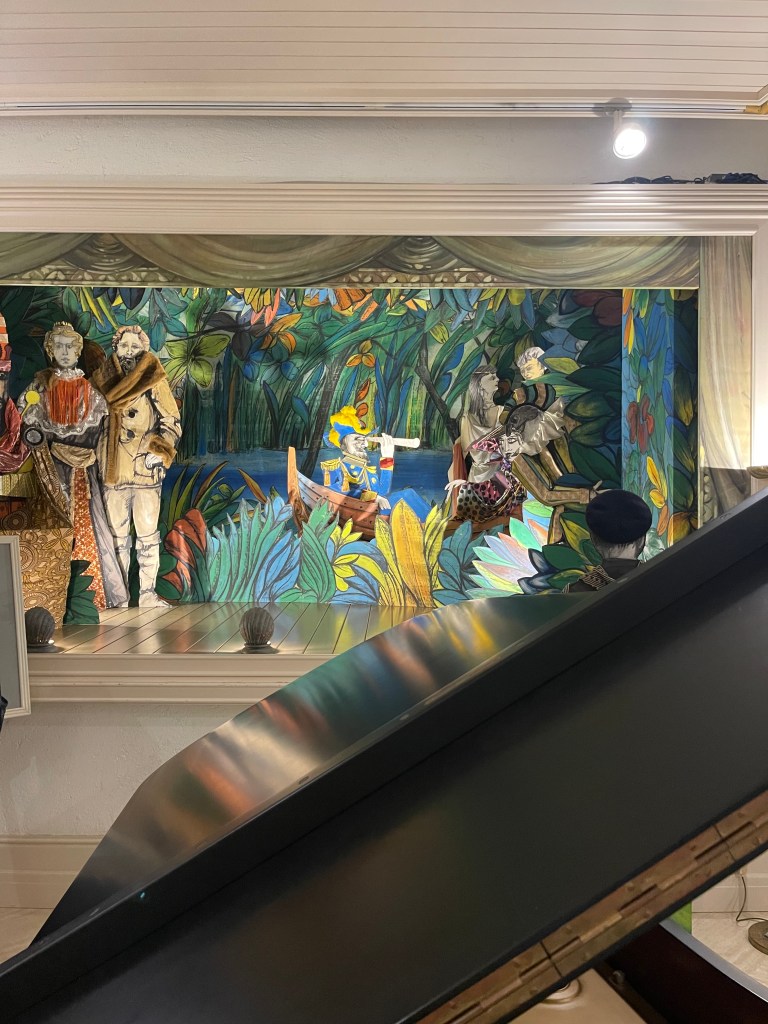
John Piper, front curtain for the 1942 production of Facade
It was now that Mikhail could let his hair down and show us his admiration for the sound world of pianists ‘old style’ from the Golden age. Artists like De Pachmann, Rosenthal, Lhevine or Friedman, when a black box of hammers and strings could be turned into a box of gleaming jewels.
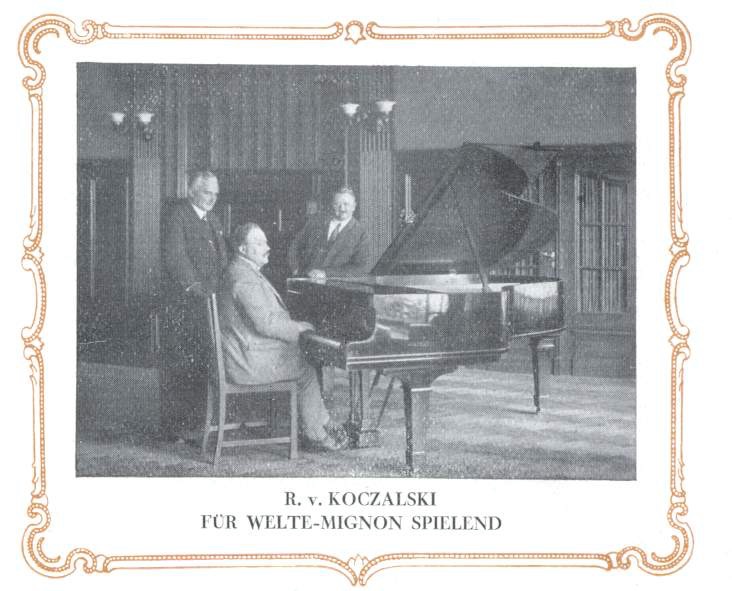
A truly fascinating historical piano recording is this June 28, 1938 recording of Chopin’s famous Nocturne in E-Flat Major Op.9 No.2 ‘with authentic variants’ played by Raoul Koczalski, who studied with Chopin’s pupil Karol Mikuli.
As a young child, Koczalski famously had lessons with Chopin’s pupil Karol Mikuli over the course of four consecutive summers from 1892 to 1895, but he had trained with a number of teachers: Julian Gadomski, Ludwig Marek, and Henryk Jarecki. Some have sought to minimize the extent to which he studied with Mikuli but Koczalski detailed the extent of their work together, noting that “it was no mere trifle: each lesson lasted two full hours and these were daily lessons. I was never permitted to work alone…Nothing was neglected: posture at the piano, fingertips, use of the pedal, legato playing, staccato, portato, octave passages, fiorituras, phrase structure, the singing tone of a musical line, dynamic contrasts, rhythm, and above all the care for authenticity with which Chopin’s works must be approached. Here there is no camouflage, no cheap rubato, and no languishing or useless contortions.”
Chopin’s Nocturne in E flat op 9 n. 2 was played by Mikhail with whispered beauty and barely suggested asides with embellishments that were in fact described in the most recent authentic edition of Chopin.
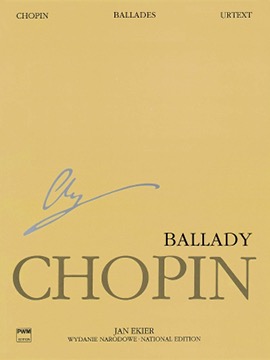
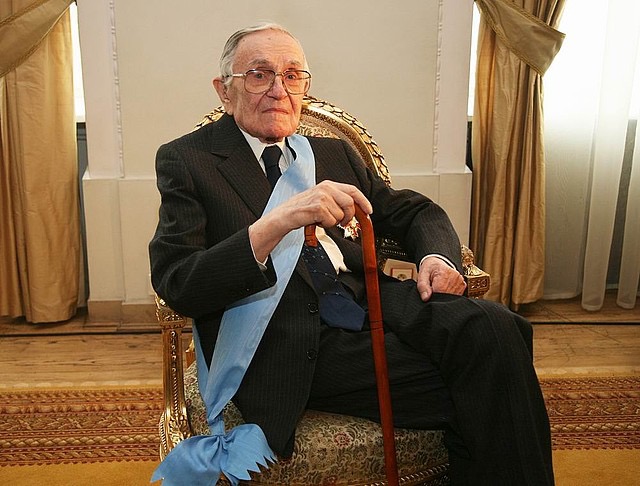
The Jan Ekier edition takes into account the pages of manuscripts that Chopin would give to his noble women students in Paris and also letters of the time describing Chopin’s own performances. The edition was completed in 2010, in time for the bicentenary of Chopin’s birth and as an urtext, the Chopin National Edition aims to produce a musical text that adheres to the original notation and the composer’s intentions. All extant sources were analyzed and verified for authenticity, mainly autographs, first editions with Chopin’s corrections and pupils’ copies with Chopin’s annotations. Necessary editorial decisions are documented in each volume’s source commentary. Additionally, a separate performance commentary documents cases where Chopin’s notation may be misunderstood by contemporary pianists, such as realizations of ornaments and pedaling. In Ekier’s own words : ‘We owe Chopin a debt… His music allowed us to survive the worst moments, and in the periods of hope extols Polish culture all over the world. We owe it to the author to publish his work in the form he intended. This is the goal of the National Edition: to pay off a Nation’s debt to Chopin.’
Jan Stanisław Ekier (29 August 1913 – 15 August 2014) was a Polish pianist and composer
The Chopin National Edition consists of 36 volumes in two series, for works published during Chopin’s lifetime (Series A), and for works published posthumously (Series B). A 37th volume (titled Supplement) consists of compositions partly by Chopin, for instance his contribution to Hexameron.
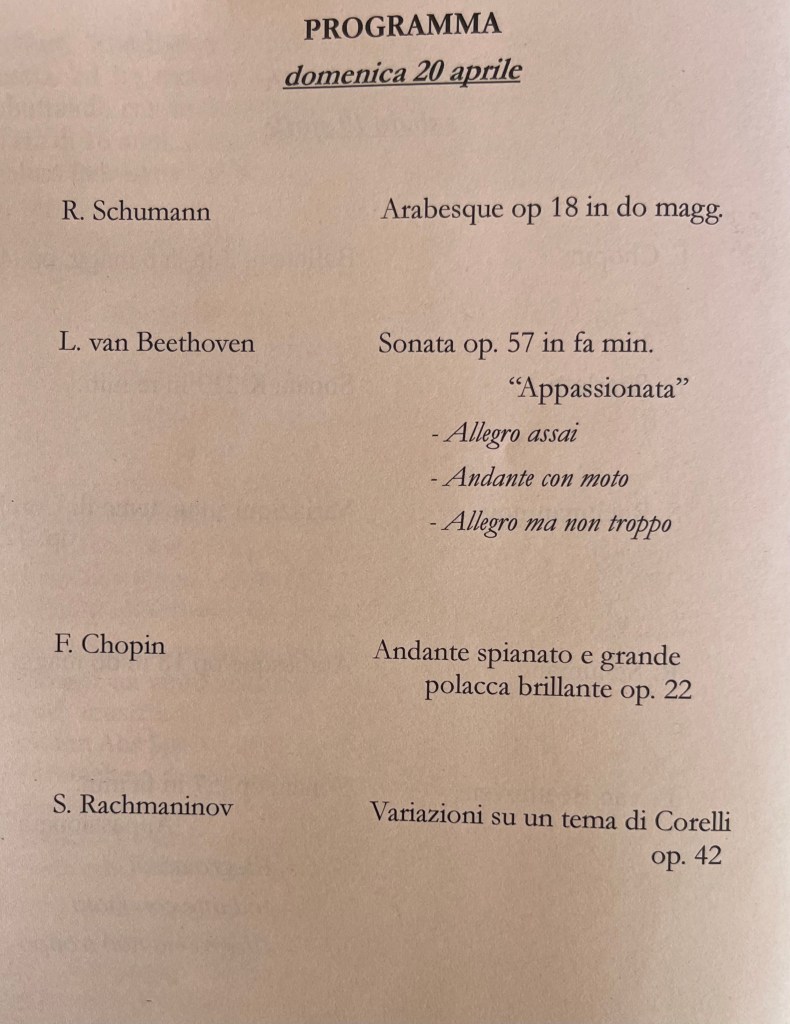
The second concert in Ischia there was another work by Chopin: the ‘Andante Spianato and Grande Polonaise’ op 22 in place of the ‘Third Ballade’. And what a performance this was ,truly worthy of the great pianists of the past, with a ‘jeux perlé’ at the end of the Polonaise that I have never heard played with such refined elegance and supreme golden sounds of ravishing beauty. An ‘Andante Spianato’ of exquisite beauty and subtle phrasing, always supported by sumptuous bass harmonies of luxuriant velvet clad intoxicating beauty. Interrupted by the orchestral introduction to the Polonaise where the pizzicato notes I have never heard played with such a delicate diminuendo as they lead the way to the Polonaise, that was played with suave elegance. A ‘joie de vivre’ of refined playfulness with an extraordinary sense of measure and balance. Even the octave declarations were played with a mellifluous beauty and not the more usual hard hitting showmanship.There was also a subtle beauty as light was shed on certain inner notes, like a will o’ the wisp lighting up the night sky with their magic wand. A quite extraordinary performance where I am not sure if it was he or us that was having such self indulgent enjoyment .
Chopin’s own performances sprang to mind as it must have been like this that the young Chopin took the Parisian Salons by storm, with poetic genius and refined brilliance.
‘Hats off, a Genius’ , declared Schumann and tonight we could understand why !
A standing ovation and two encores ( the Scarlatti Sonata from yesterday and the Chopin Nocturne op 9 n. 2 ) in an afternoon of absolute magic that rarely has been experienced in this Paradise .
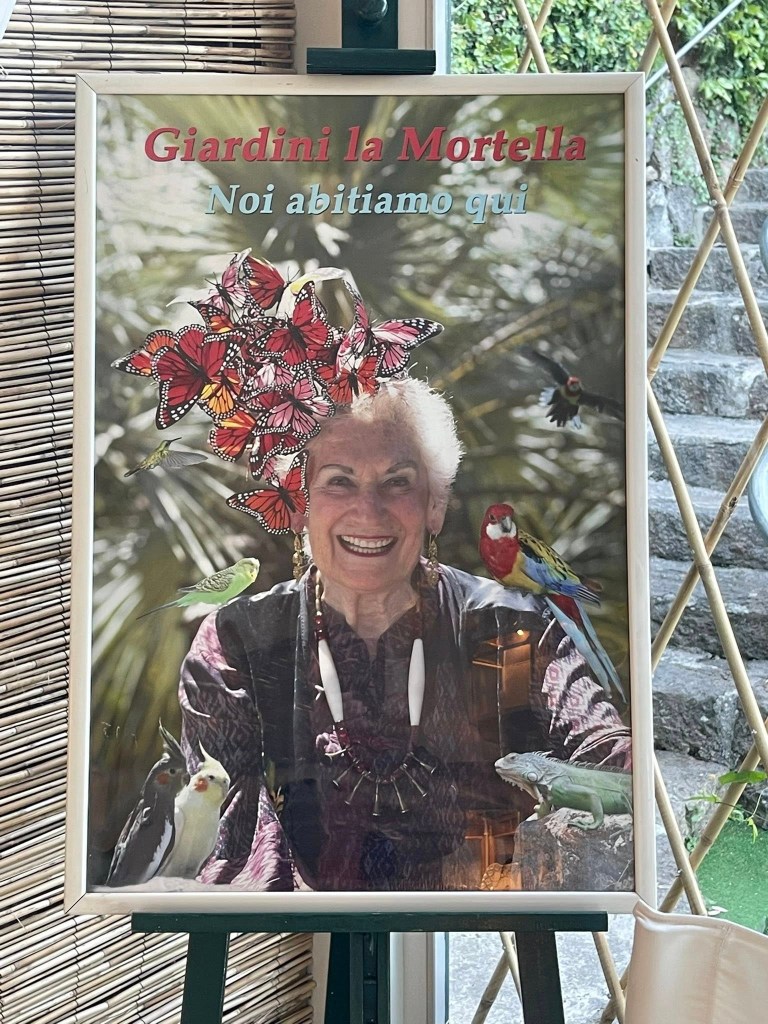
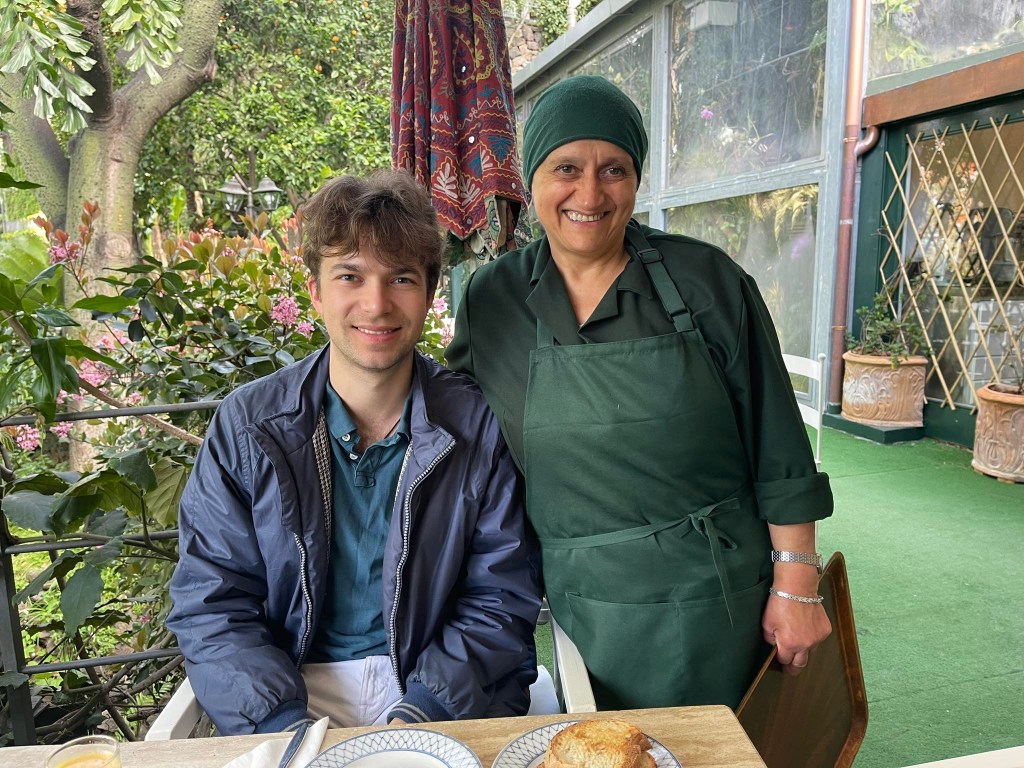
A well earned after concert dinner on the beach at Sig.ra Anna’s La Rondinella with Prof.ssa Lina Tufano in the restaurant, which Susana would often come to in the evening.
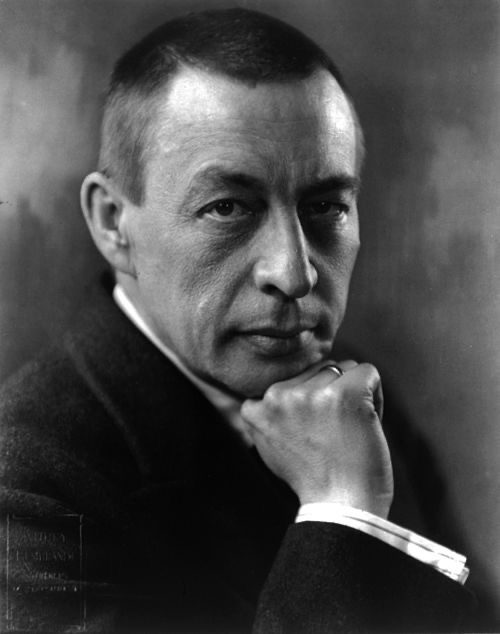
Sergei Rachmaninov 1 April 1873 Semyonovo, Staraya Russa. 28 March 1943 (aged 69) Beverly Hills , California, U.S.
Variations on a Theme of Corelli op. 42, is a set of variations for solo piano, written in 1931 by the Russian composer Sergei Rachmaninov . He composed the variations at his holiday home in Switzerland.
The theme is La Folia, which was not in fact composed by Arcangelo Corelli , but was used by him in 1700 as the basis for 23 variations in his Sonata for violin and continuo (violone and/or harpsichord) in D minor, Op. 5, No. 12. La Folia was popular as a basis for variations in Baroque music. Franz Liszt used the same theme in his Rhapsodie espagnole S. 254 (1863).Rachmaninoff dedicated the work to his friend the violinist Fritz Kreisler with whom he often played in recitals together. He wrote to another friend, the composer Nikolai Medtner, on 21 December 1931:
I’ve played the Variations about fifteen times, but of these fifteen performances only one was good. The others were sloppy. I can’t play my own compositions! And it’s so boring! Not once have I played these all in continuity. I was guided by the coughing of the audience. Whenever the coughing would increase, I would skip the next variation. Whenever there was no coughing, I would play them in proper order. In one concert, I don’t remember where – some small town – the coughing was so violent that I played only ten variations (out of 20). My best record was set in New York, where I played 18 variations. However, I hope that you will play all of them, and won’t “cough”.
Rachmaninoff recorded many of his own works, but this piece wasn’t one of them.
The Theme is followed by 20 variations, an Intermezzo between variations 13 and 14, and a Coda to finish. All variations are in D minor except where noted.
Theme. Andante
Variation 1. Poco piu mosso
Variation 2. L’istesso tempo
Variation 3. Tempo di Minuetto
Variation 4. Andante
Variation 5. Allegro (ma non tanto)
Variation 6. L’istesso tempo
Variation 7. Vivace
Variation 8. Adagio misterioso
Variation 9. Un poco piu mosso
Variation 10. Allegro scherzando
Variation 11. Allegro vivace
Variation 12. L’istesso tempo
Variation 13. Agitato
Intermezzo
Variation 14. Andante (come prima) (D♭ major)
Variation 15. L’istesso tempo (D♭ major)
Variation 16. Allegro vivace
Variation 17. Meno mosso
Variation 18. Allegro con brio
Variation 19. Piu mosso. Agitato
Variation 20. Piu mosso
Coda. Andante
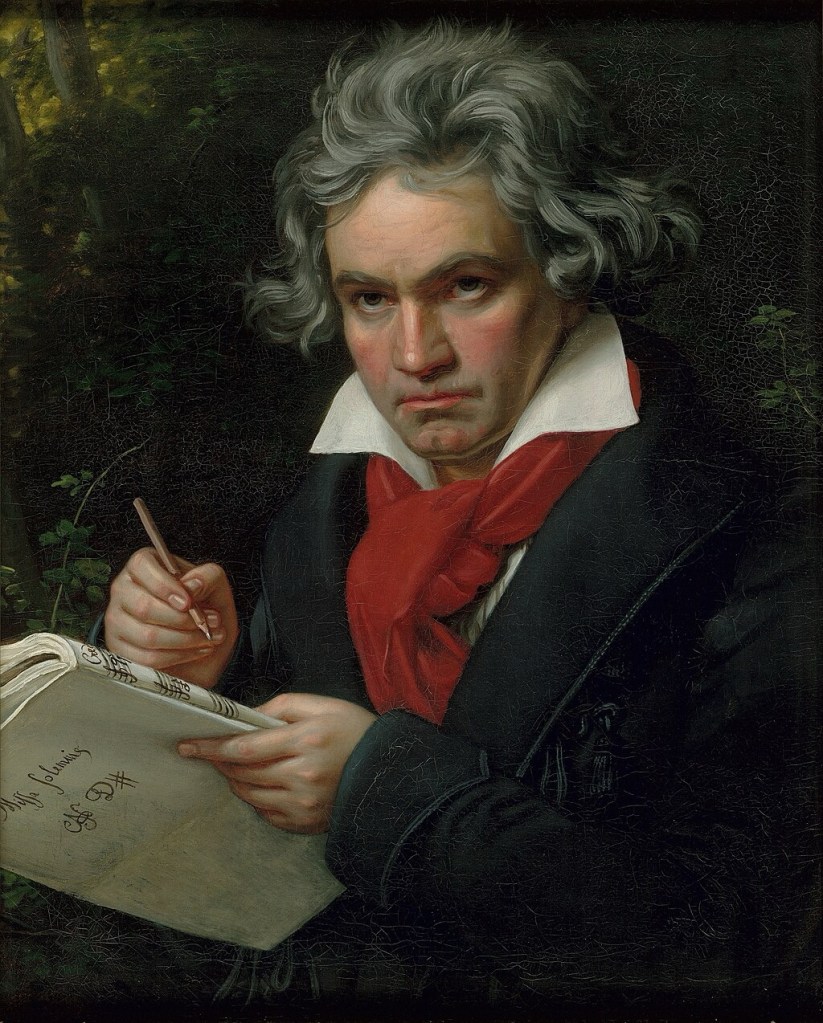
Ludwig van Beethoven Bonn Baptised. 17 December 1770 26 March 1827 Vienna
One of his greatest and most technically challenging sonatas , the Appassionata was considered by Beethoven to be his most tempestuous piano sonata until the Hammerklavier1803 was the year Beethoven came to grips with the irreversibility of his progressive hearing loss. It was composed during 1804 and 1805, and perhaps 1806, and Beethoven dedicated it to cellist and his friend, Count Franz Brunswick. The first edition was published in February 1807 in Vienna.
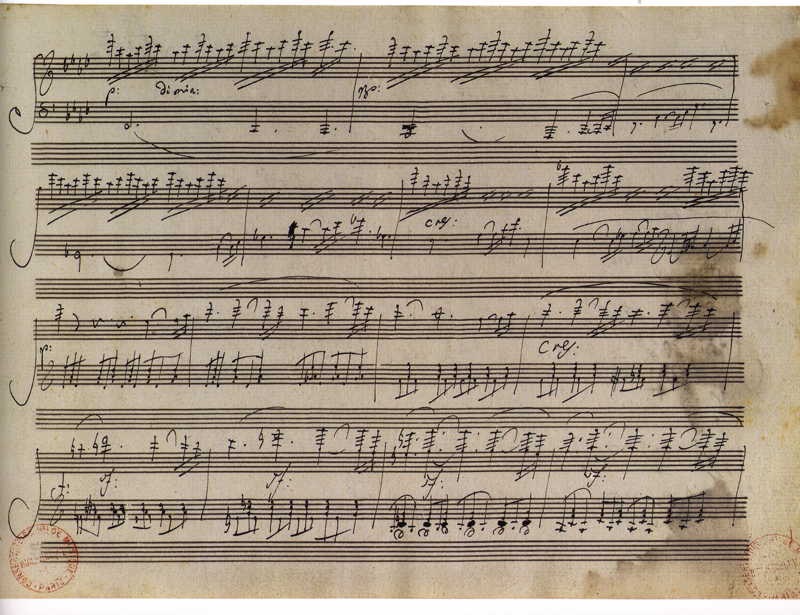
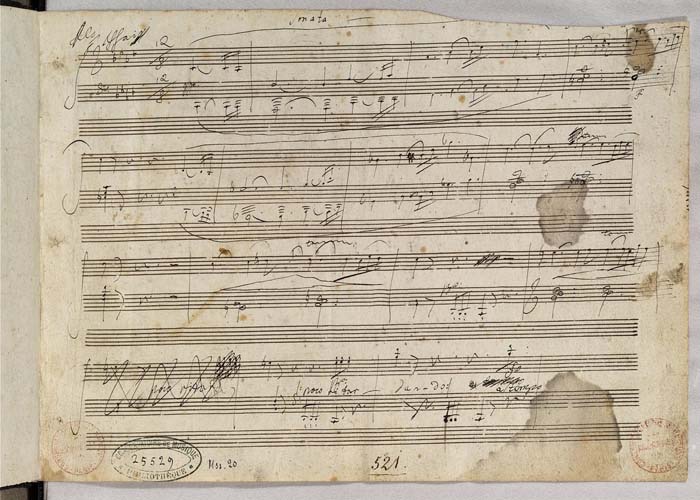
Unlike the early Pathétique , the Appassionata was not named during the composer’s lifetime, but was so labelled in 1838 by the publisher of a four-hand arrangement of the work. Instead, Beethoven’s autograph manuscript of the sonata has “La Pasionata” written on the cover, in Beethoven’s hand.The sonata consists of three movements:
Allegro assai Andante con moto. Allegro ma non troppo – Presto
Beethoven started writing the Sonata n. 23 in the summer of 1804. After the first two movements were outlined, the composer had difficulty finding the right idea for the final movement. Ferdinand Ries (1784–1838) described the moment of inspiration. The two of them had been walking in the woods when the inspiration hit: We went so far lost that we didn’t get back… to where Beethoven lived, until almost eight o’clock. All the way he hummed, or even howled to himself, up and down, up and down. down without singing any definite notes. When I asked him what this was, he replied: I have thought of a theme for the last movement of the sonata. When we entered the room, he ran to the piano without removing his hat. I took a seat in the corner and he soon forgot about me. He burst in for at least an hour with the new ending to the sonata, which is so beautiful. He finally got up, was surprised to see that I was still there, and told me: I can’t teach you a lesson today. I still have work to do.
During this time, Josephine Deym (née Brunsvik, 1779–1821) resumed lessons with Beethoven after her husband’s death. As the months passed, Beethoven’s earlier attraction to her was rekindled. He wrote the song An die Hoffnung, Op. 32, for her, as well as thirteen cards that became more and more loving. There is evidence that the composer proposed to him. It is believed that she returned his love, but she could not marry below her position for the protection of her four children, for if she did, she would lose both her noble title and her security. After rejecting the composer, she remarried in 1810, forging an unsuccessful union with Baron Christoph Von Stackelberg (1777-1841). The couple separated in 1813. It was once thought that Josephine might be the subject of Beethoven’s famous love letter to the Immortal Beloved, but recent evidence has refuted that possibility.
Friedrich “Fritz” Kreisler (February 2, 1875 – January 29, 1962) was an Austrian-born American violinist and composer. One of the most noted violin masters of his day, he was known for his sweet tone and expressive phrasing, with marked portamento and rubato. Like many great violinists of his generation, he produced a characteristic sound which was immediately recognizable as his own. Although it derived in many respects from the Franco-Belgian school, his style is nonetheless reminiscent of the gemütlich (cozy) lifestyle of pre-war Vienna.Kreisler wrote a number of pieces for the violin, including solos for encores, such as “Liebesleid” and “Liebesfreud”. Some of Kreisler’s compositions were pastiches ostensibly in the style of other composers. They were originally ascribed to earlier composers, such as Pugnani,Tartini and Vivaldi and then, in 1935, Kreisler revealed that it was he who wrote the pieces. When critics complained, Kreisler replied that they had already deemed the compositions worthy: “The name changes, the value remains”, he said.
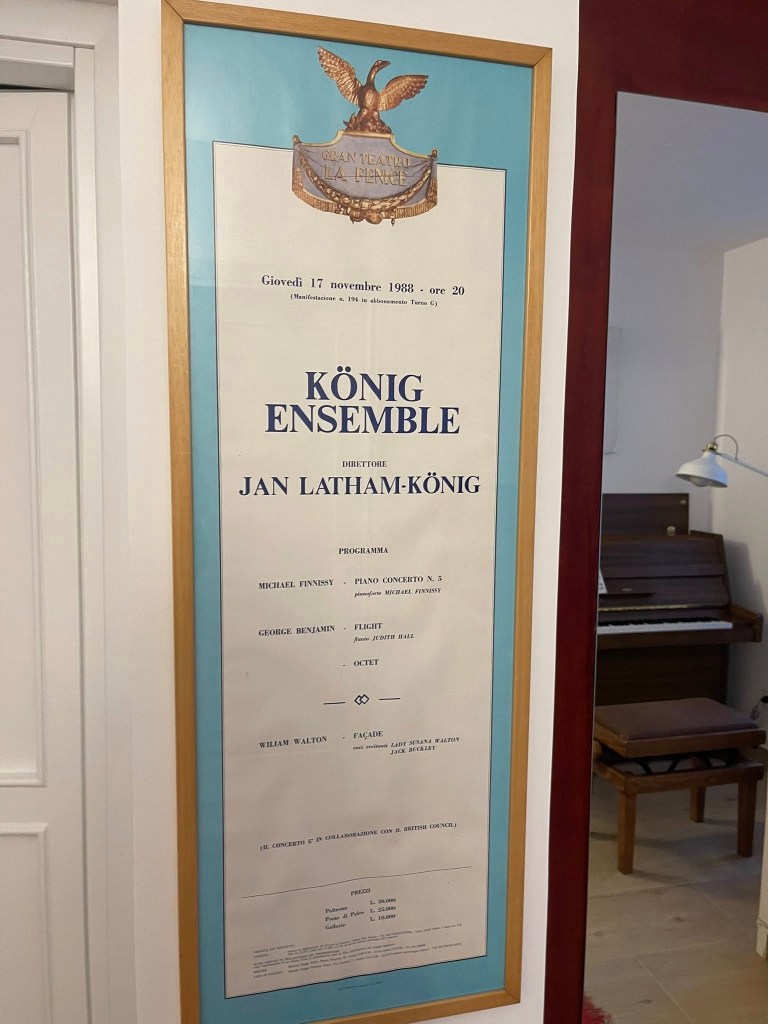
This is my 8th visit to the Walton Foundation bringing wonderful young musicians to breathe the rarified air that was the intent of William and Susana Walton.Their wishes are being respected with dedication and warmth, the founders looking on from their perch where they can view the world inside and out of La Mortella .
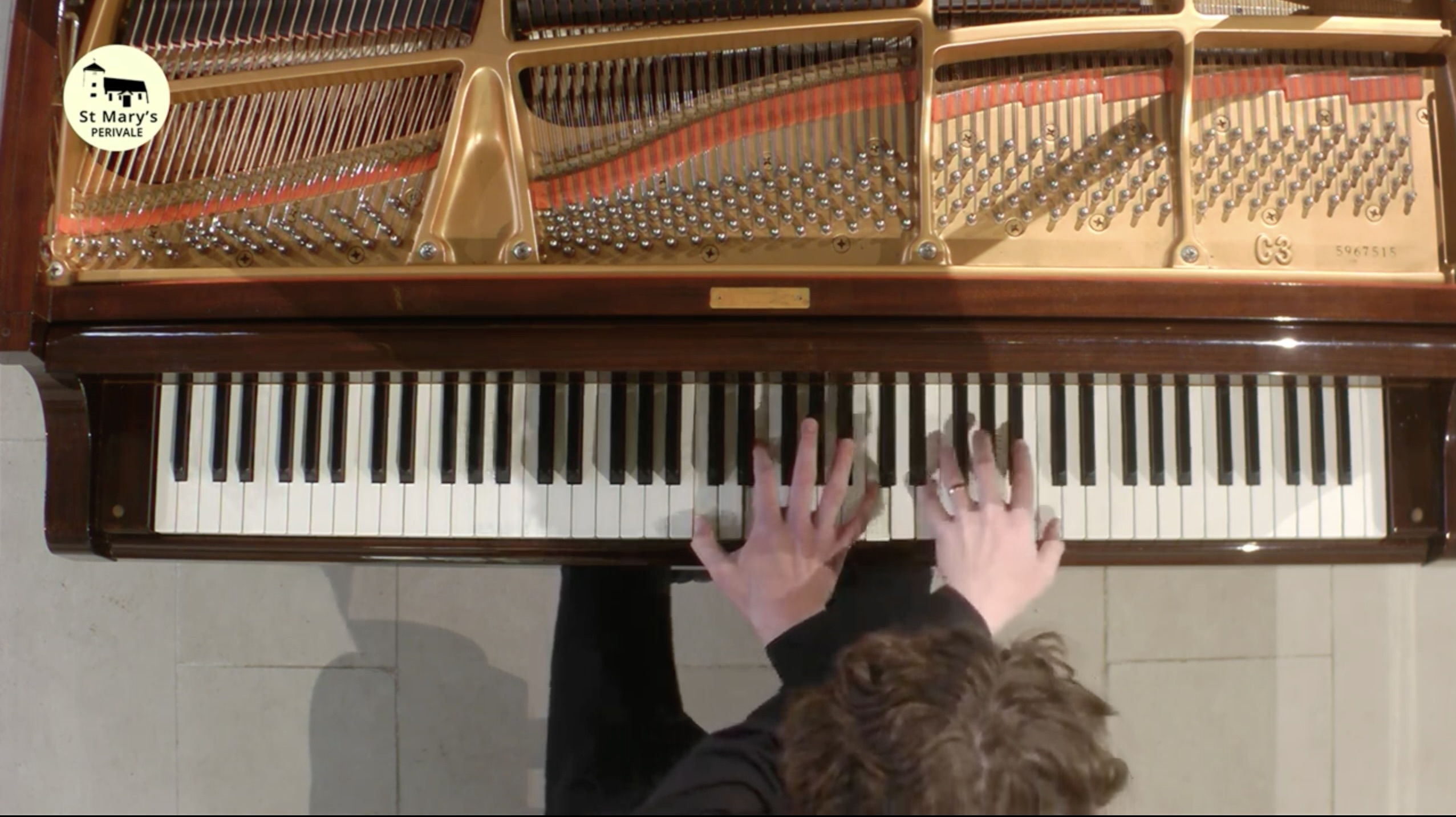
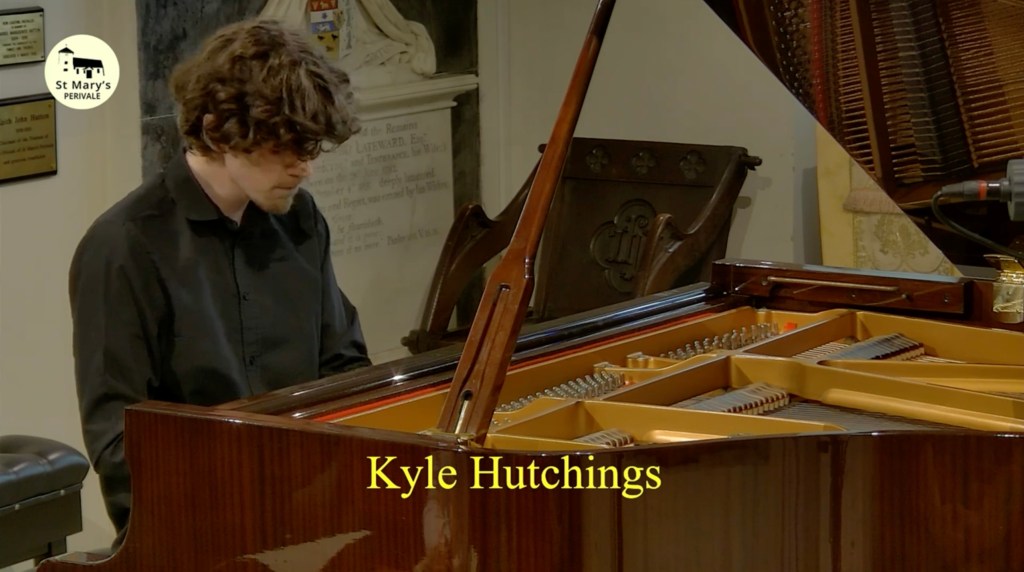
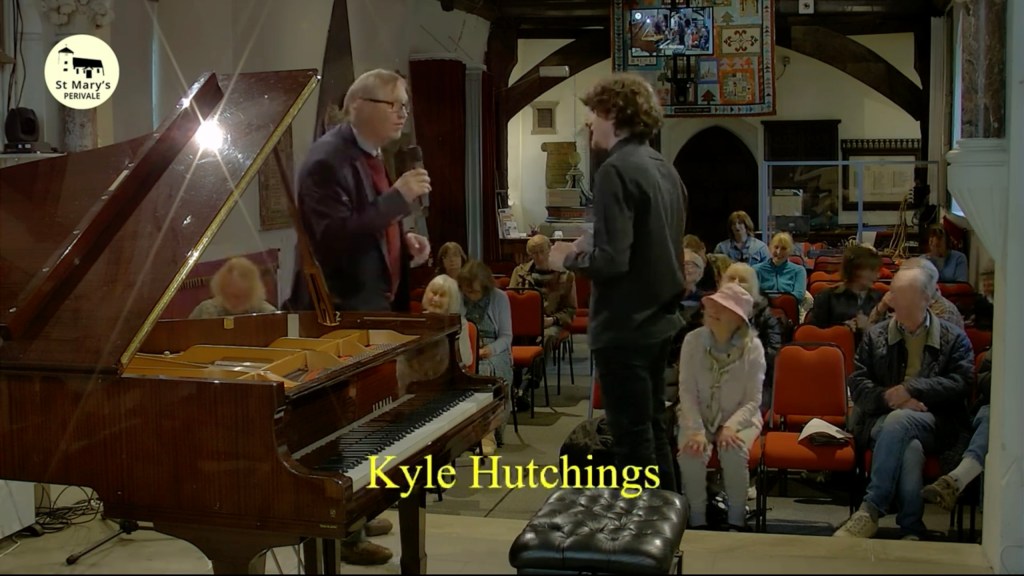
I have heard Kyle play quite a few times and each time I remain struck by his selfless humility and total concentration as music just pours from his almost stationary fingers without any showmanship or physical exertion. More Eusebius than Florestan, that is for sure, but there is a hypnotic sense of communication to the secret world of sounds that he chooses to share with all those that allow themselves to come under the same spell as him. The Pied Piper of the piano indeed or as I have so often said before the poetic troubadour of the piano.
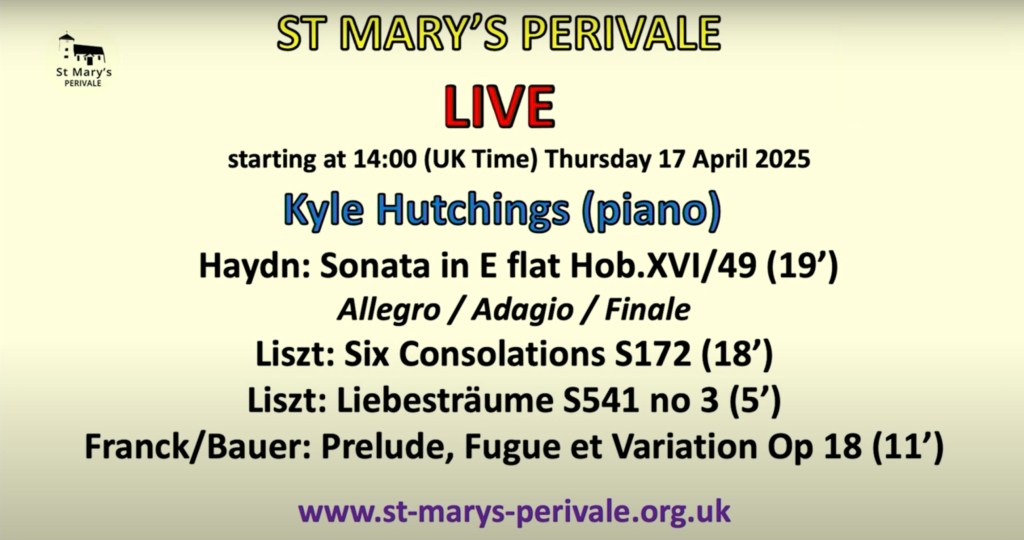
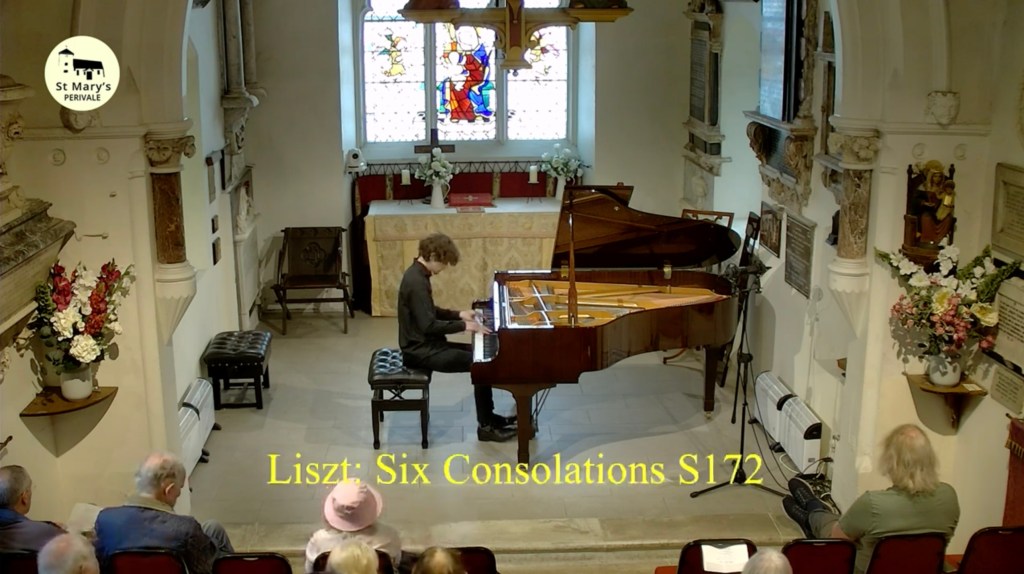
A choice of programme that immediately shows that we are to hear pure poetry, not rhetorical declamations. I have rarely heard the six consolations by Liszt in the concert hall and was quite surprised to hear the famous D flat in their midst today, as I am so used to hearing it as an encore! Liebestraum and Mendelssohn’s Spring Song used to sit on every piano stand when the piano not the television took pride of place in the living room, but in the concert hall these days is a rarity. I can still remember the first time I heard the hauntingly beautiful César Franck Prelude, Fugue and Variation and not being able to rid it from my head for days afterwards!
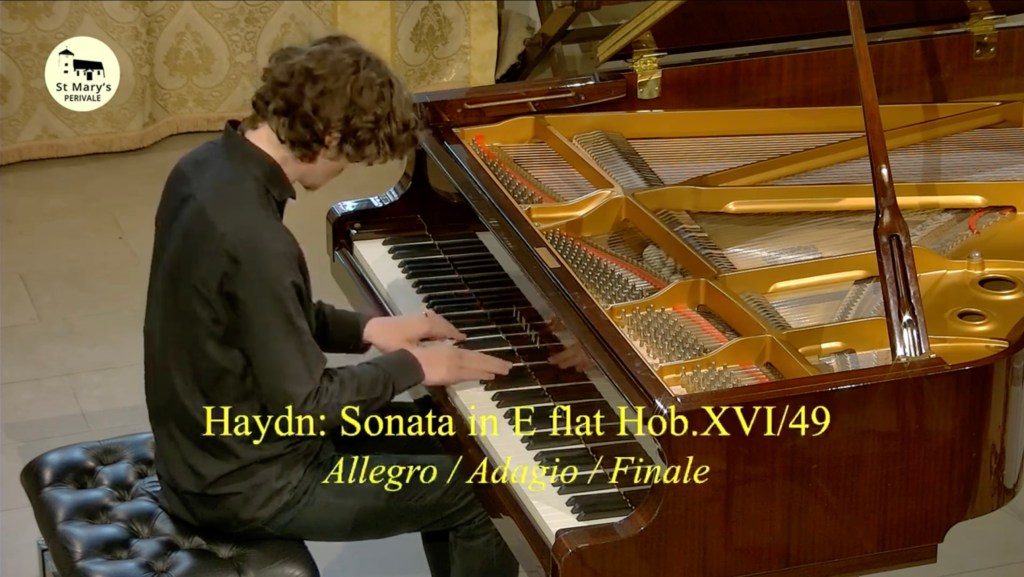
Kyle opened too with the E flat Sonata of Haydn but not the flamboyant imperious E flat n. 52 but the little, charmingly simple one, that virtuosi never bother with! An eclectic choice of programme that describes so well the artist before he even steps into the limelight. Entering and leaving the stage like the later Richter who was merely the medium between the music and the listener and not the star of a show. Kyle’s talent is really quite unique in it’s self effacing simplicity and radiant beauty where the music really speaks but never shouts and often whispers but carries a quite compelling message.
There was a beauty and measure to the opening Allegro of the Haydn with a refined sense of style.The Adagio played with poignant and exquisite simplicity where the music just evolved with radiance and beauty. A finale of purity and fluidity, what it lacked in dynamic drive and ebullient ‘joie de vivre’ it gained with it’s compelling simplicity.
Liszt ‘s six consolations were played with a yearning and beauty of simple fluidity. Only in the last one did Kyle play over mezzo forte such was the refined elegance of a dream world of consolation.
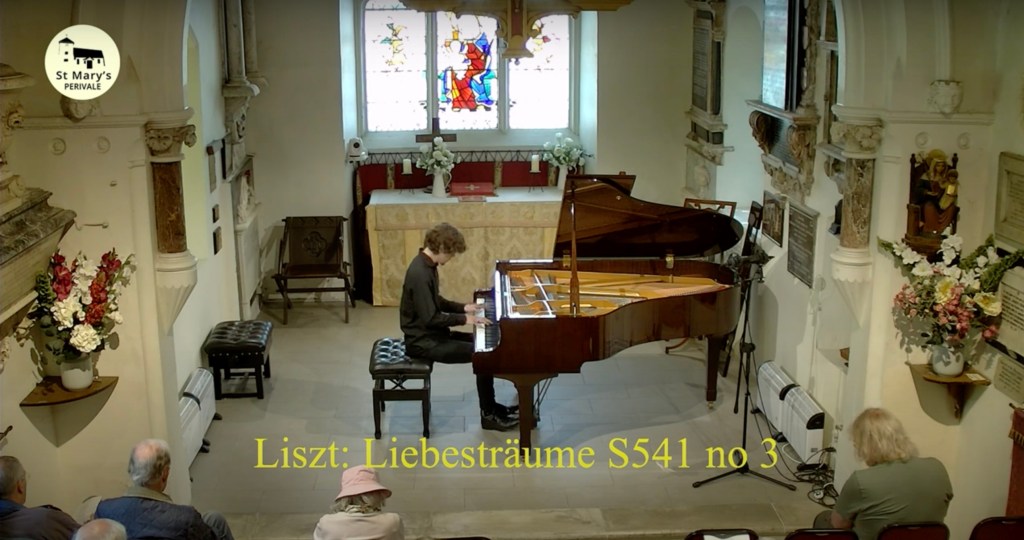
A great preparation for Liebestraum n. 3 that seemed rather restrained but was perfectly shaped and even the ornaments were those of a coloratura singer rather than a virtuoso pianist .It was all part of Kyle’s extreme introverted sound world that he inhabits with almost religious restraint and sensitive gentleness.
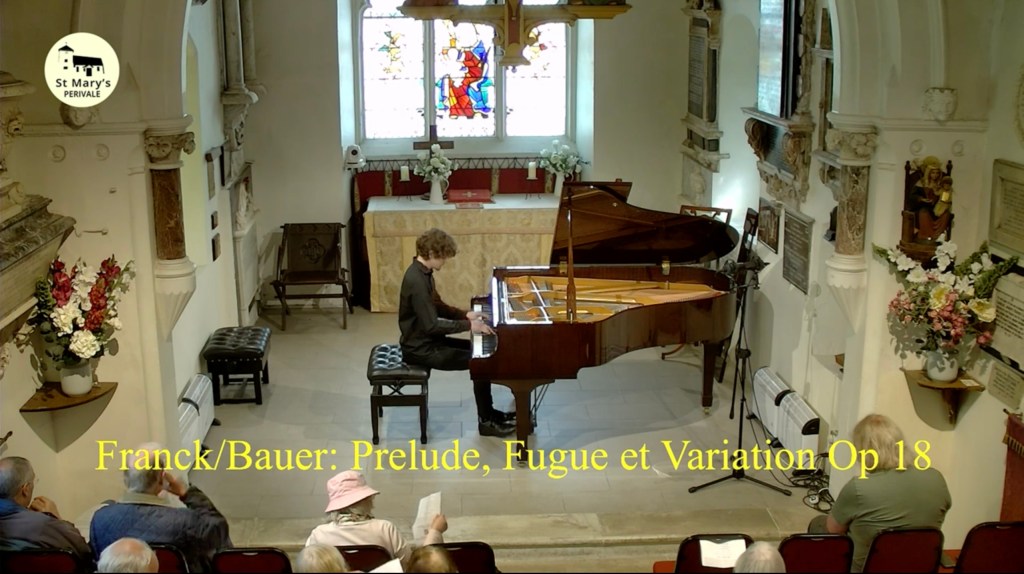
The Franck Bauer I have heard Kyle play before and the haunting beauty he brings to the opening theme as it reappears at crucial moments is one of wondrous things of this often neglected work. There was some quite considerable playing too but passed without any showmanship as Kyle was only concerned to show us so clearly the architectural line in a work of sometimes knotty respectfulness.
After a moments thought Kyle decided to pull out all the stops and play as an encore a Rachmaninov song of quite considerable robust sounds and passion which came as a surprise after an afternoon of such intimate music making.
Kyle Hutchings is a British pianist who, after just twelve months of self-taught playing, won a scholarship to study in London with internationally acclaimed pianist Richard Meyrick on the Pianoman Scholarships Scheme, supported by Sir and Lady Harvey McGrath. Subsequently, he made his London debut with the Arch Sinfonia, playing Beethoven’s Second Piano Concerto. Critically acclaimed by International Piano Magazine as “a poet of the piano”, he has performed in venues such as London’s prestigious St. John’s Smith Square, Kings Place, St. James’s Piccadilly, St. Mary’s Perivale, London’s BT Tower, The Lansdowne Club in Mayfair, as part of the Blüthner Recital Series, and many others up and down the country. In addition to this, he is in high demand internationally, having received accolades throughout Europe. During his studies at Trinity Laban, supported by a scholarship from Trinity College London, he was a recipient of the Conservatoire’s most important prizes, including the Nancy Thomas Prize for Piano as well as the Director’s Prize for Excellence; he was also nominated for the Conservatoire’s coveted Gold Medal. Kyle is supported by The Keyboard Charitable Trust and has received support from the Robert Turnbull Piano Foundation as well as the Zetland Foundation. He looks forward to giving performances throughout Europe and making his American debut in the 2024–2025 season.
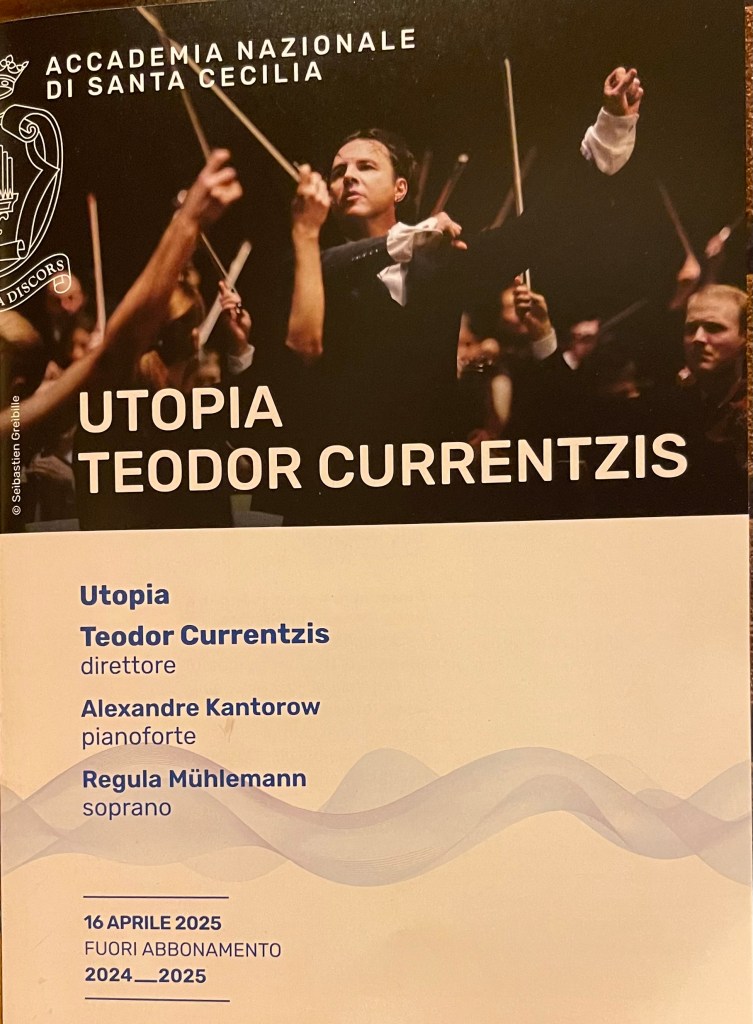
Brahms Concerto per pianoforte n. 2 Mahler Sinfonia n. 4
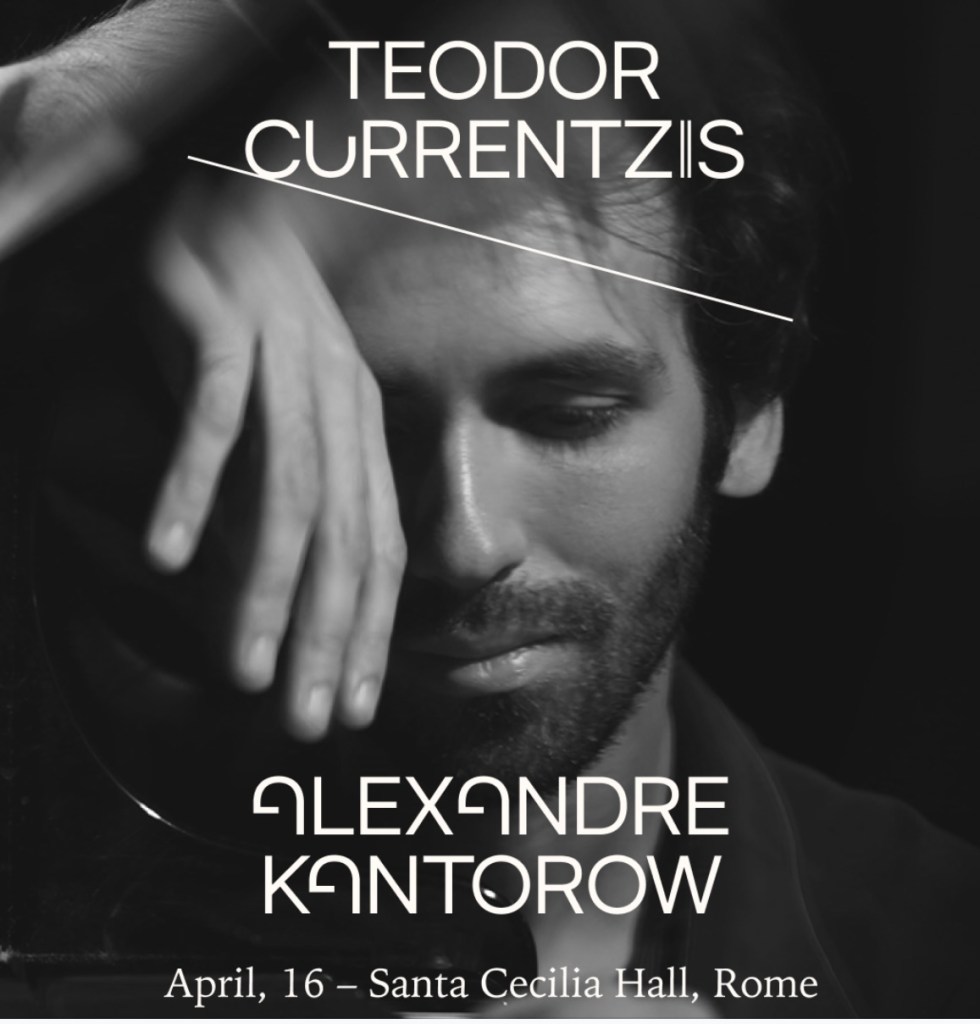
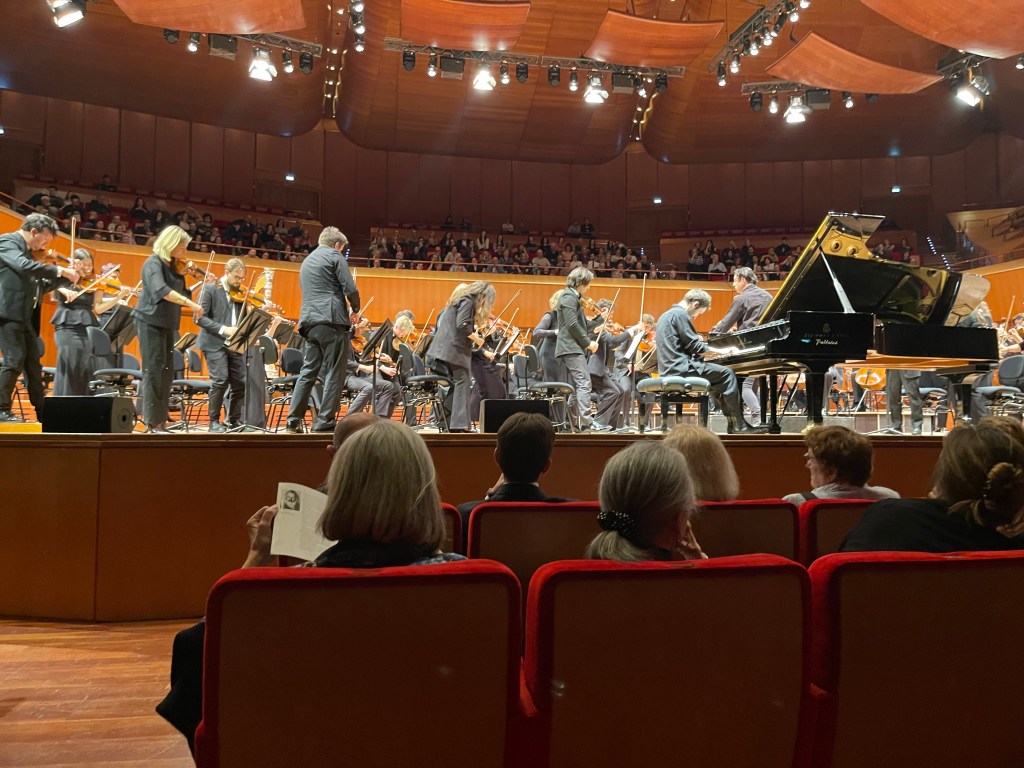
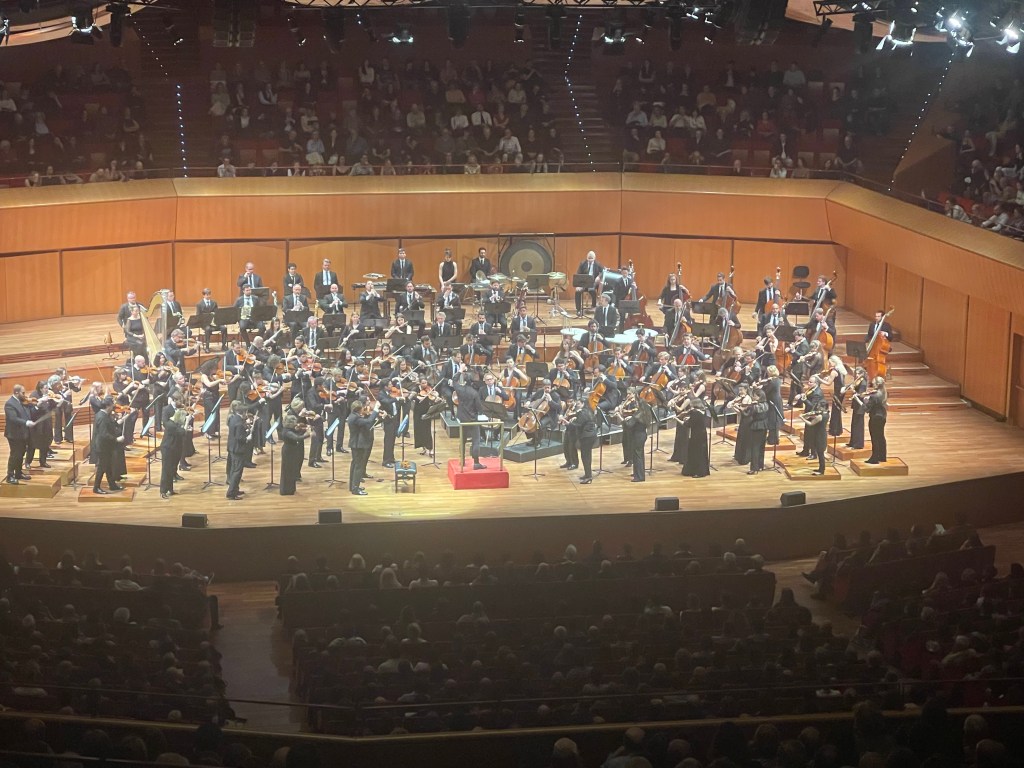
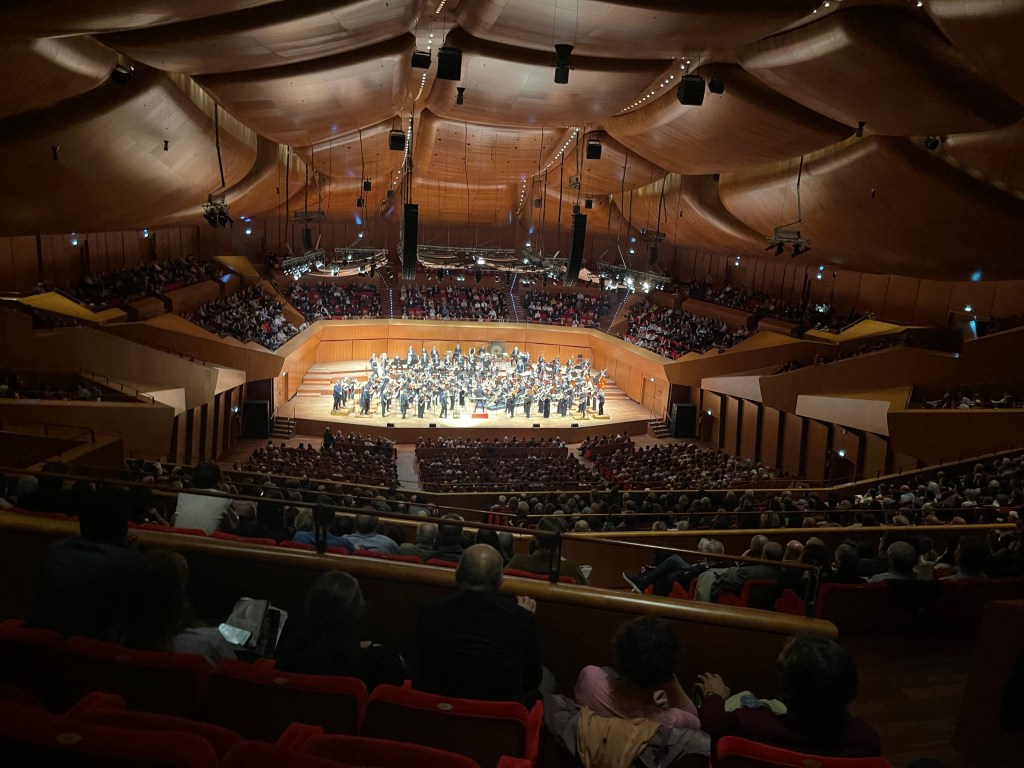
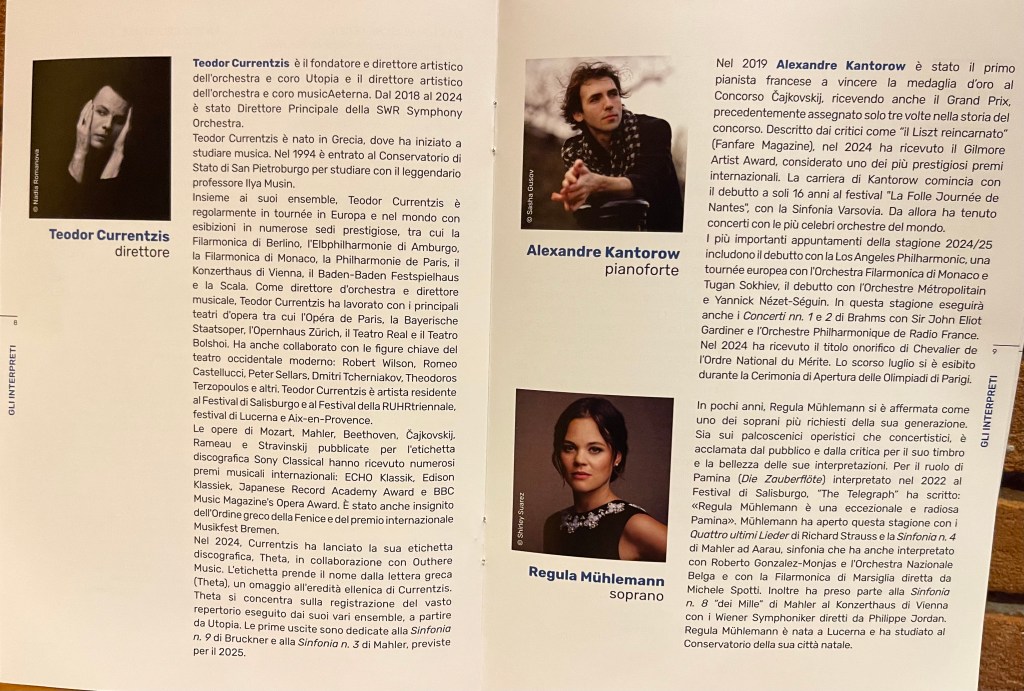
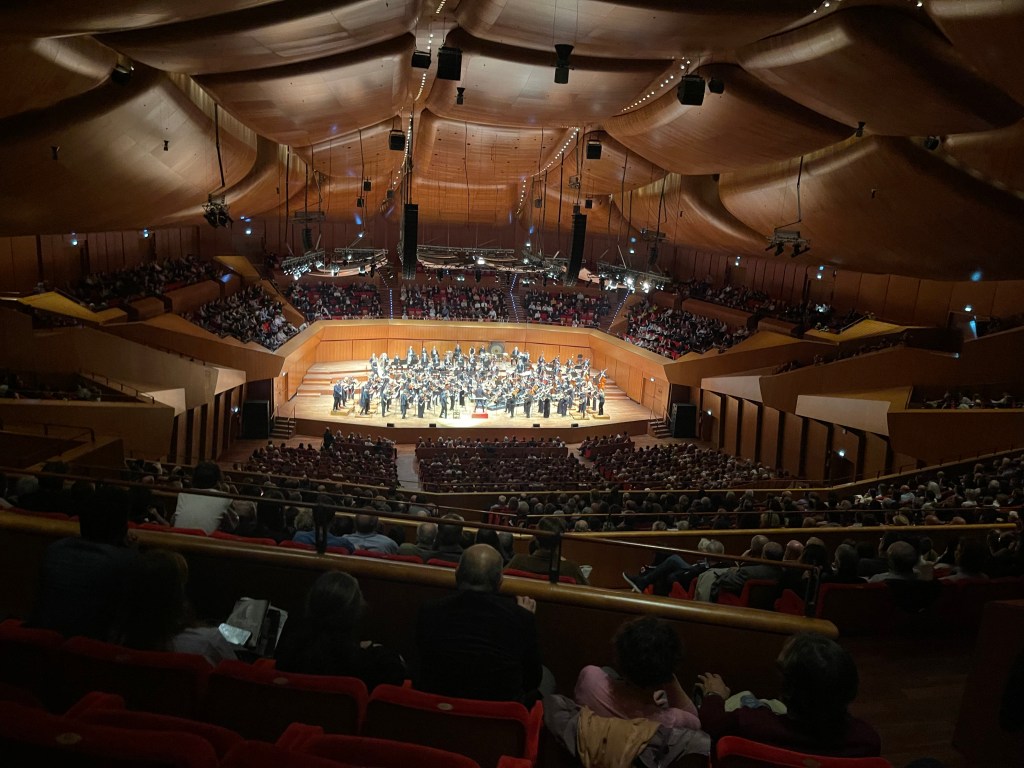
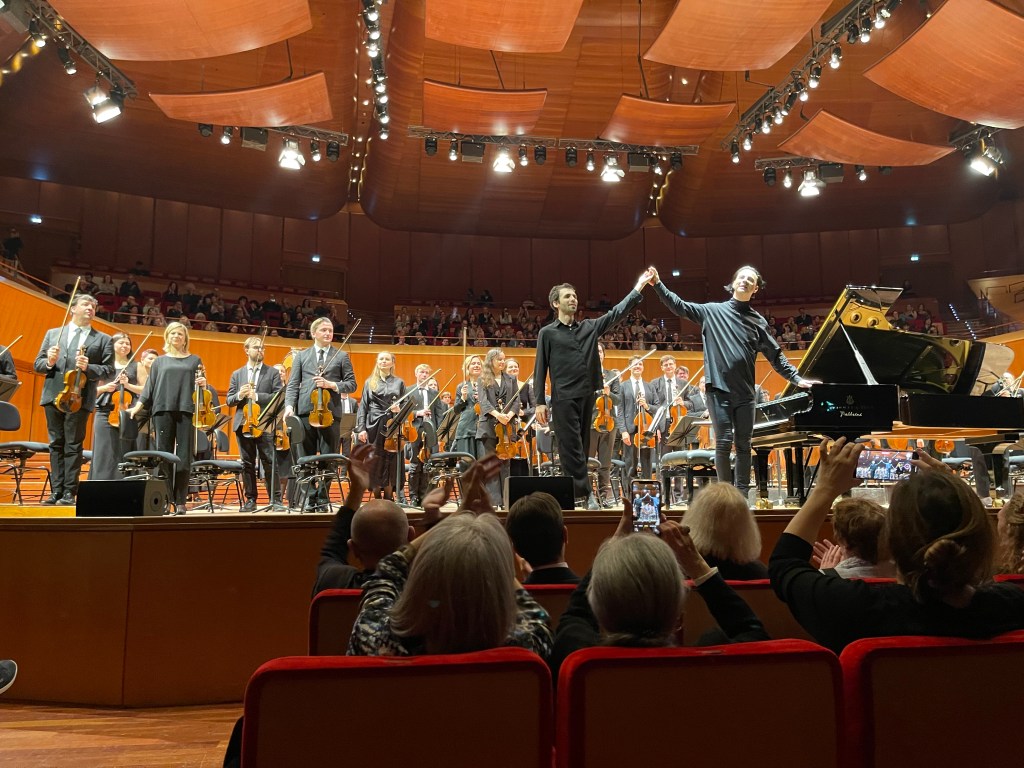
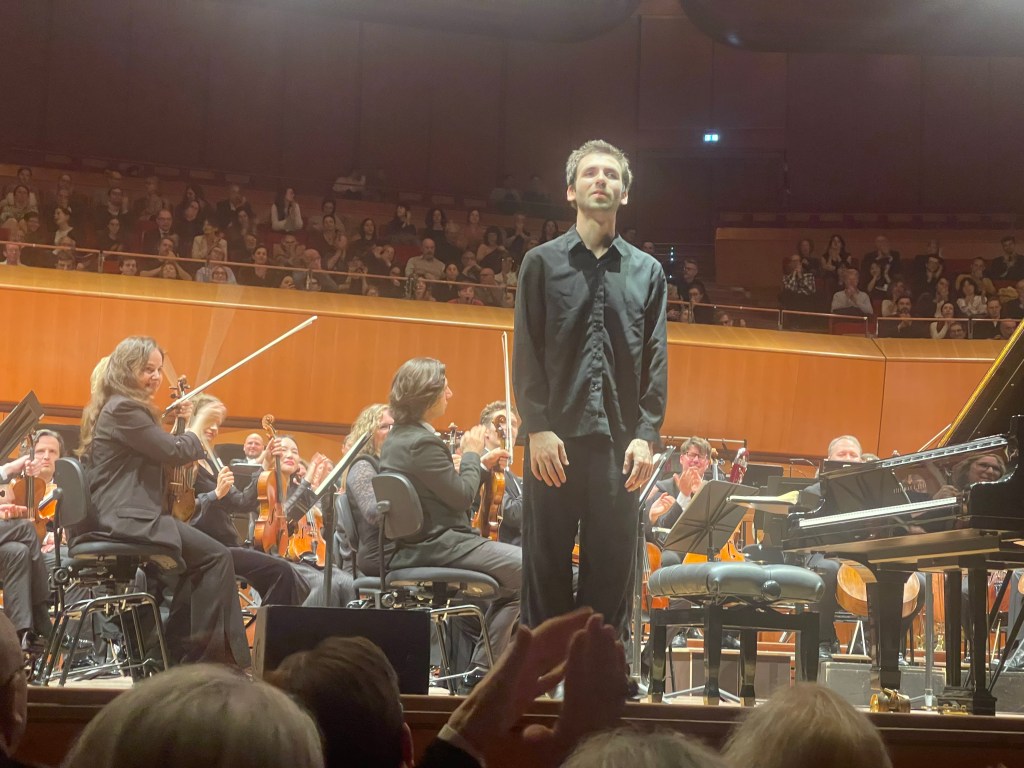
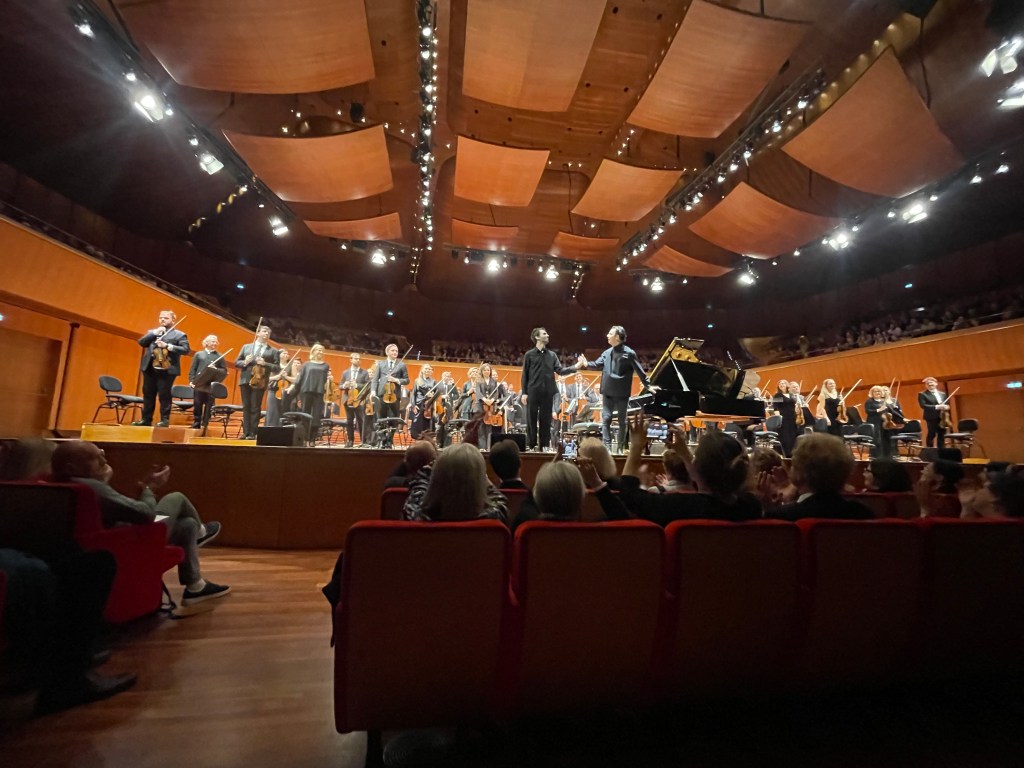
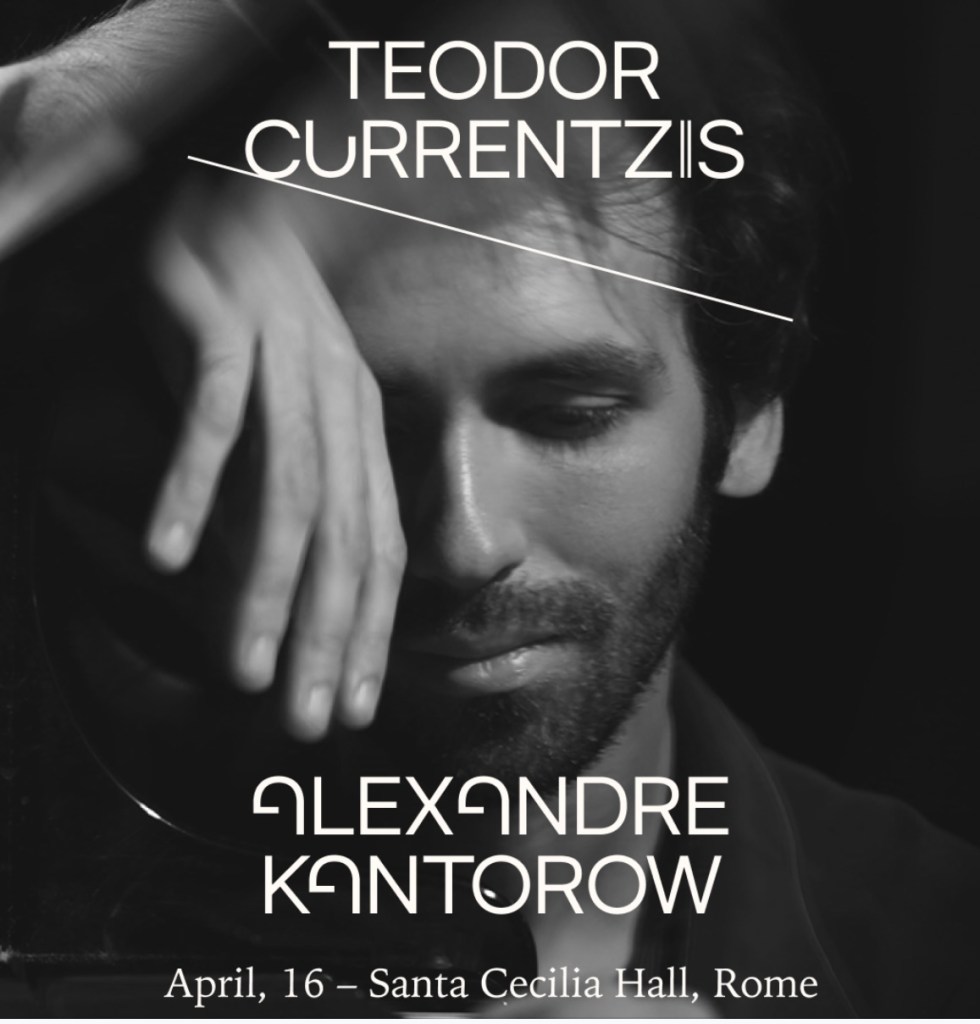
Utopia conquers Rome with Alexandre Kantorow and Teodor Currentzis. Sparks were flying of Poetry and Passionate involvement as the entire ensemble moved on a great wave of sound in a continuous flowing movement that reminded me of Stokowski and ‘his’ Philadelphia.
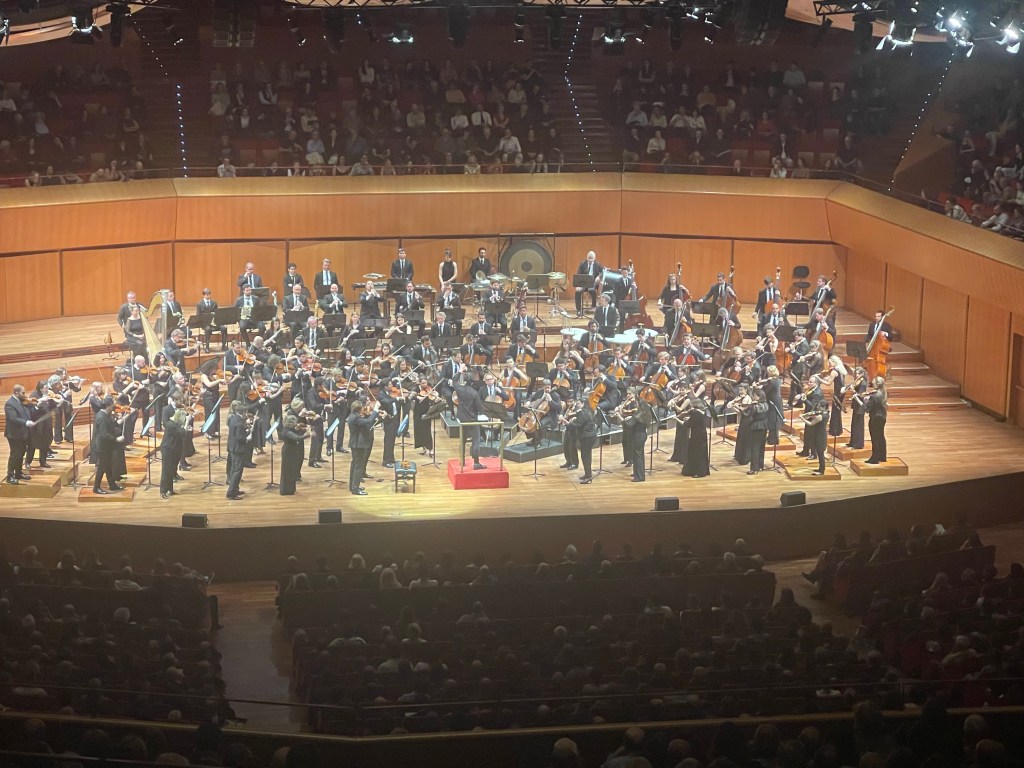
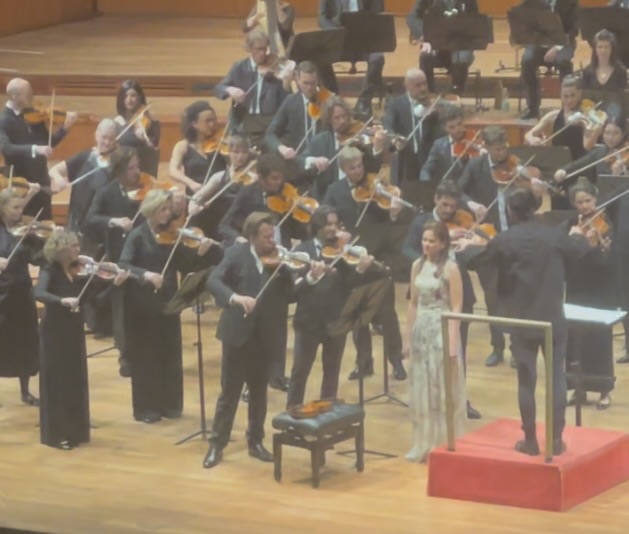
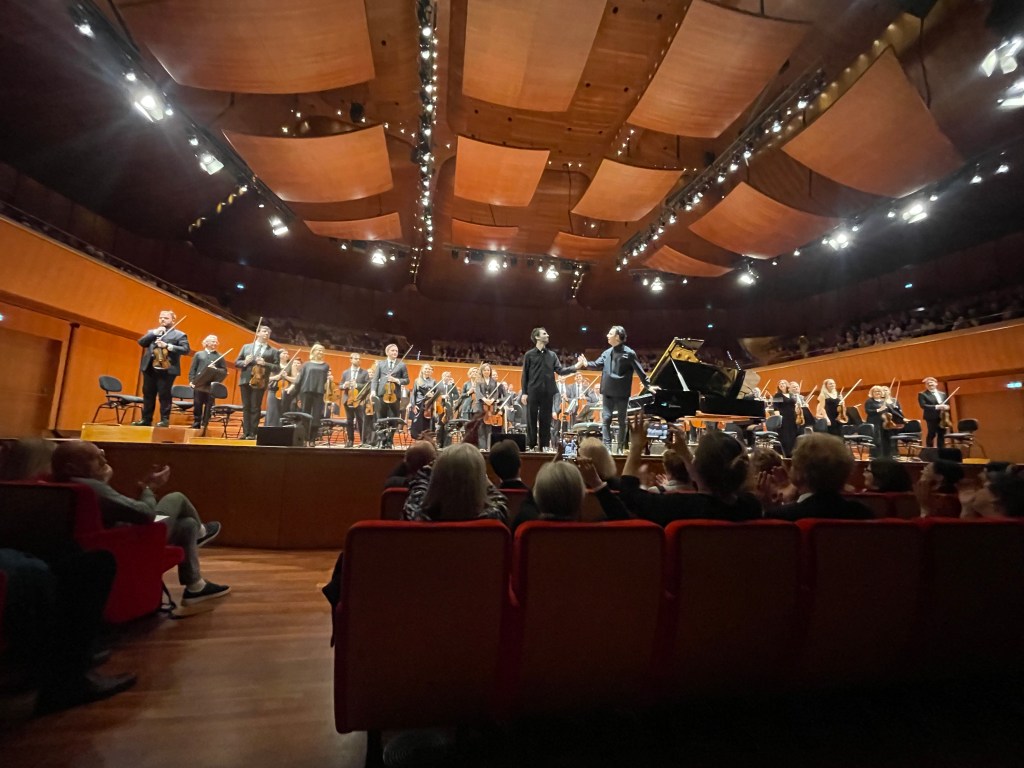
In fact the strings were on their feet as they swayed to Brahms’ Viennese waltz tempi in the final movement of the concerto .
For Mahler the seats were put safely away as the strings were all on their feet with only the cellos on a platform that entered this formation like a boat approaching port.
Creating celestial sounds of Utopian beauty and heart rending nostalgia as they swayed in time to the music just like the chorus of Peter Grimes that become one moving, swaying mass of extraordinary emotional power.
Chopin’s words come to mind as he likened rubato to being a tree with the roots firmly planted in the ground but with the branches free to move in the wind .
That inexplicable but universal word ‘soul’ springs to mind where music making on this level can reach places where words could never arrive.
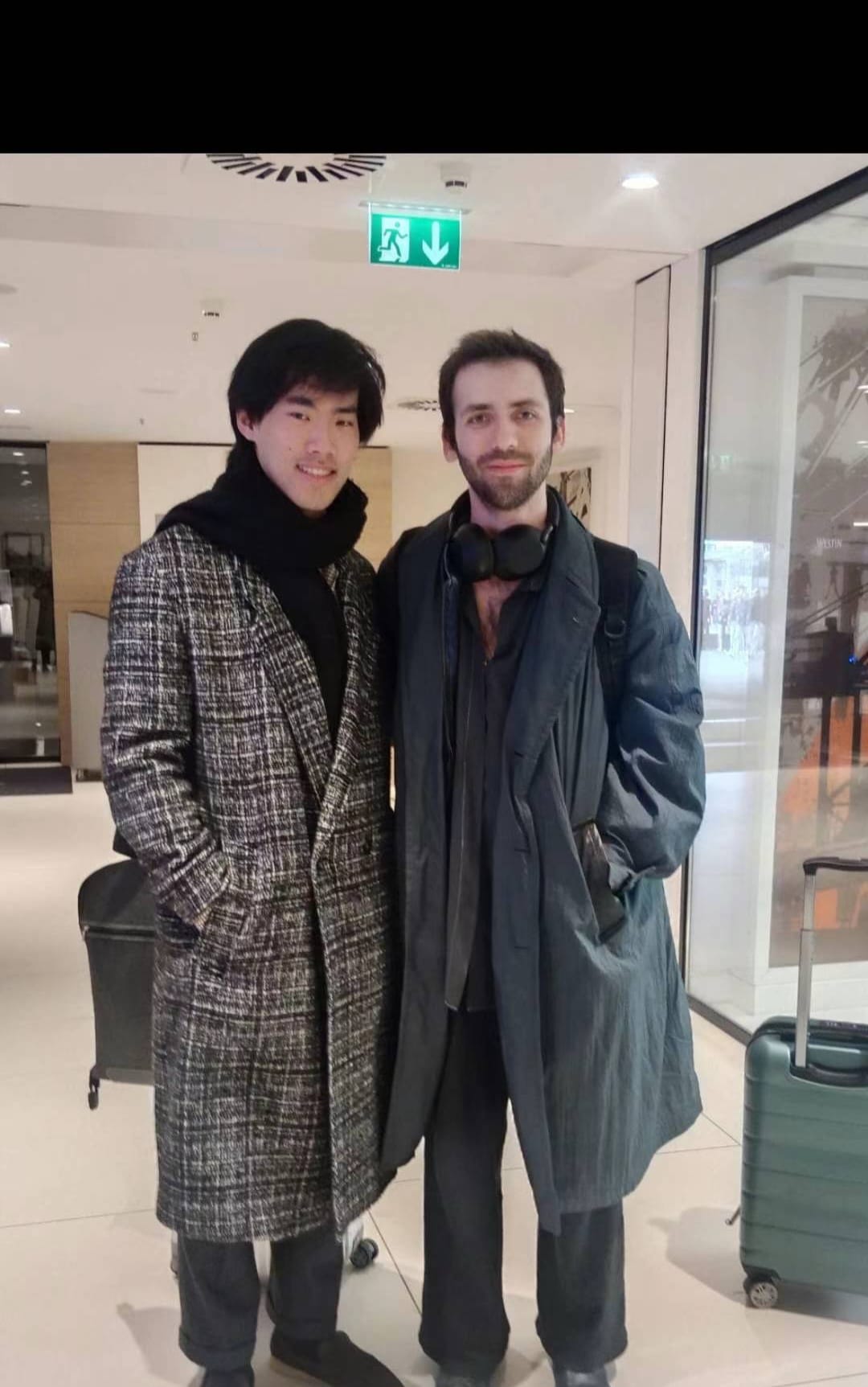
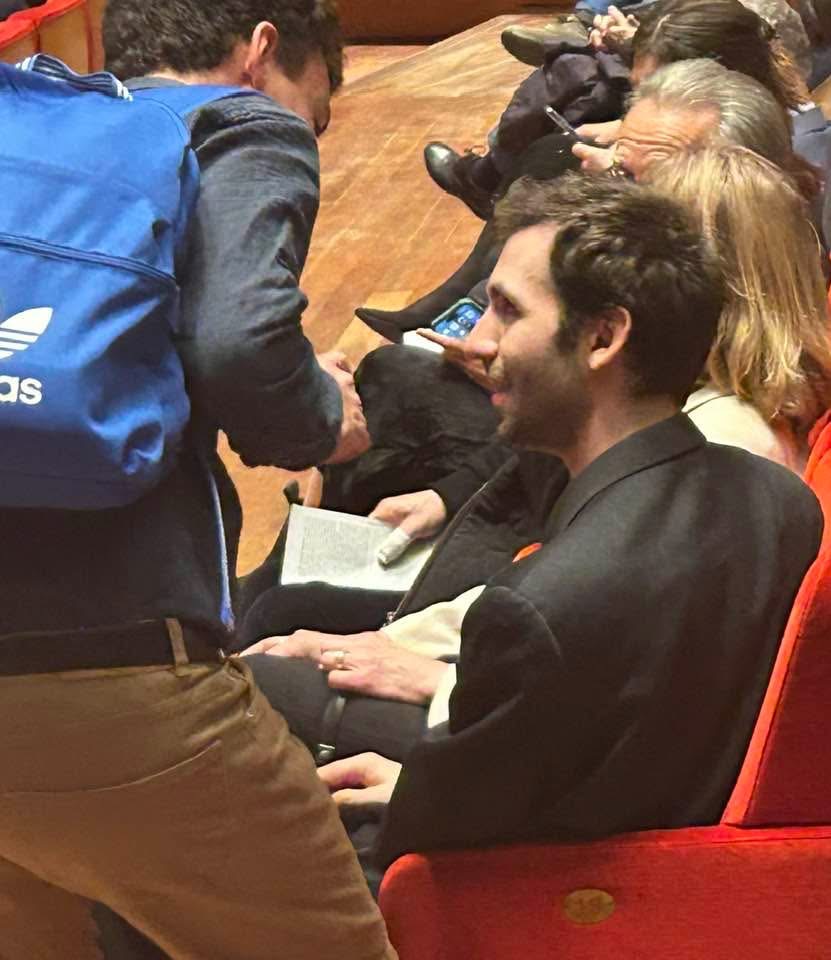
Photo of Alexandre Kantorow in my seat, taken by Francesco Zito ,the distinguished set designer
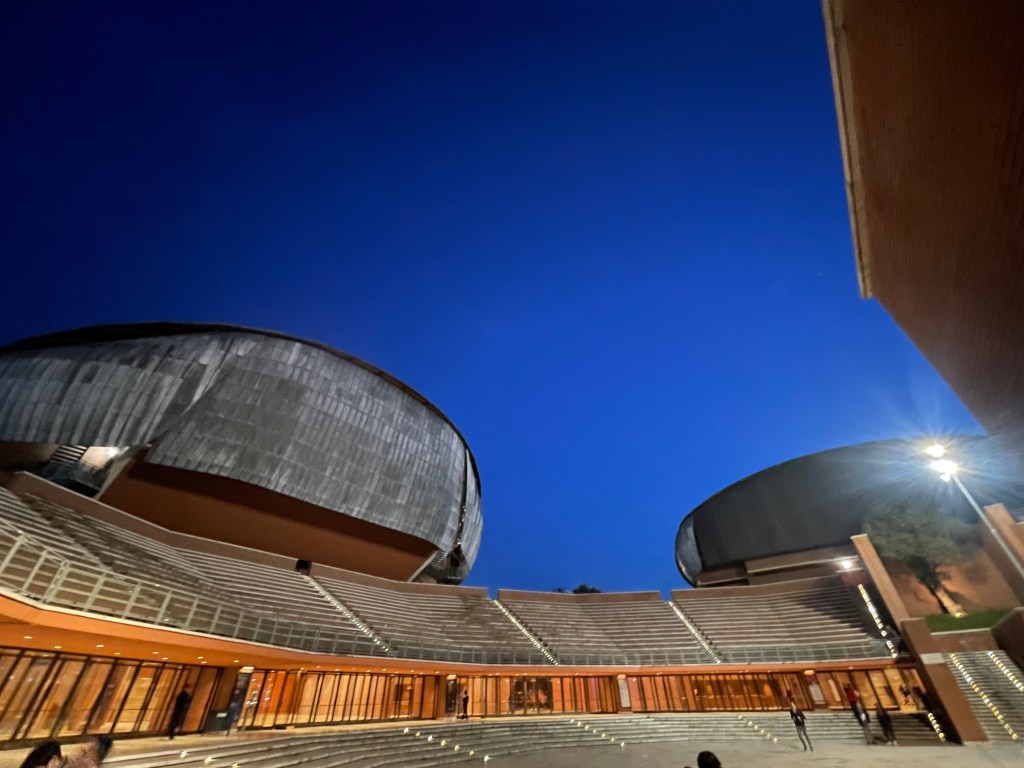
I am glad that Kantorow took my seat for the Symphony as I had moved to ‘paradise’ to be able to watch as well as listen to the amalgam of sounds that moved as it indeed moved me with sounds being created as the shapes of the music miraculously unfolded in the beauty of Renzo Piano’s violin ‘belly’ auditorium . ( Anyone who has been to the auditorium of the violin museum in Cremona will understand what I mean ).
One miracle followed another.
I have never heard the opening duo between horn and piano at the opening of Brahms 2 recreated with such intimate whispered beauty.
A conductor living every moment as he swayed with the music looking Kantorow in the eyes with glances of burning intensity that could have stopped the world.
A magnificent performance of music making of rare unified intent. A freedom that only comes when the heart beats at the same rate as your companions who are listening to each other with chamber music intensity .
This surely is one of the finest performances that I have heard with playing of the same unforgettable emotions as with Gilels , Rubinstein or Curzon .
But when Kantorow whispered the entry of Agosti’s Firebird even the orchestra listened with baited breath as this young man , like Agosti who lived just around the corner in via Civinini, created sounds in his studio in Siena, that like tonight will never be forgotten .
The piano became a full orchestra, but not of piano bashing insensitivity, but with the colours and sense of balance of a magician of sound where percussiveness just does not exist. Sounds created with the horizontal beauty of poetic genius like a painter with his canvas
Another miracle was created , at the whispered end of Mahler 4, when after seemingly endless ovations and an orchestra that reached out to every corner of the hall in thanksgiving .
Suddenly the plaintive voice of a solo violin was heard intoning a melody that was so familiar and yet so enticing .
‘Morgen’ by Richard Strauss was the miracle that unfolded and just confirmed that we had truly been transported to a Celestial Paradise in this rather bleak ‘Settimana Santa’ in the Eternal City.
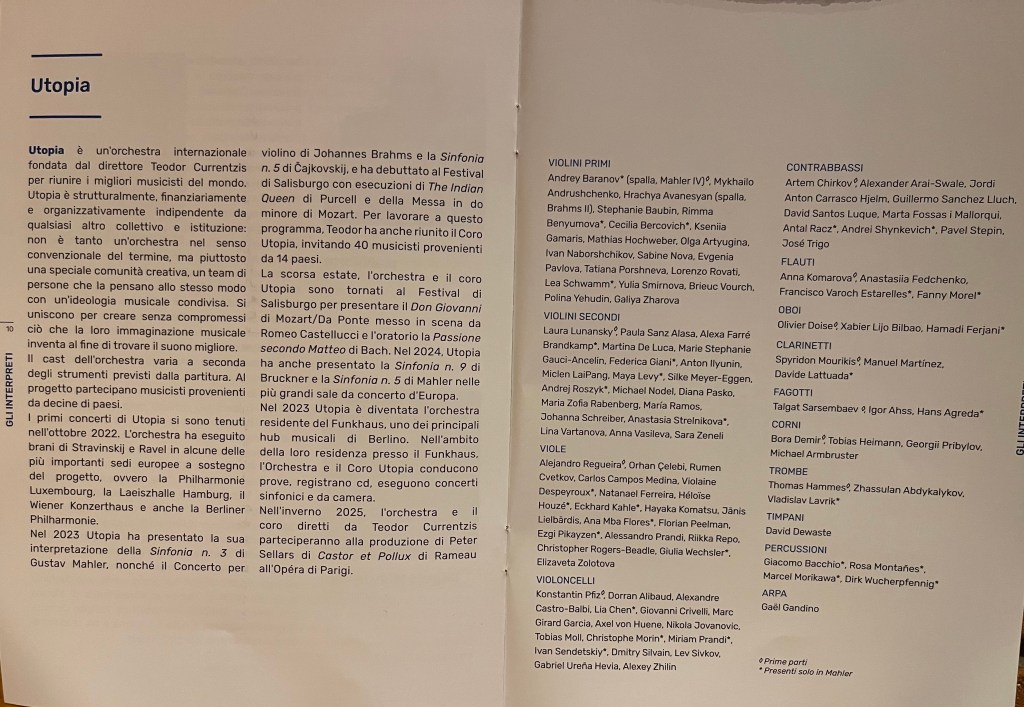
Utopia Orchestra
Founder and Music Director of musicAeterna Orchestra and Choir
Chief conductor of the SWR Symphony Orchestra from 2018 to 2024
Teodor Currentzis was born in Greece, where he began studying music. In 1994, he entered St. Petersburg State Conservatory to study under the legendary professor Ilya Musin.
Together with his ensembles, Teodor Currentzis regularly tours Europe and the world with performances in numerous prestigious venues including Vienna Konzerthaus, Berlin Philharmonic, Elbphilharmonie Hamburg, Munich Philharmonic, Philharmonie de Paris, Kölner Philharmonie, Auditorio Nacional, Baden-Baden Festspielhaus, and La Scala. As a stage conductor and musical director, Teodor Currentzis has worked with the leading opera theatres including Opéra de Paris, Bayerische Staatsoper, Opernhaus Zürich, Teatro Real, and the Bolshoi Theatre.
He has also collaborated with the key figures in modern Western theatre: Robert Wilson, Romeo Castellucci, Peter Sellars, Dmitri Tcherniakov, Theodoros Terzopoulos, and others. Teodor Currentzis is a Resident Artist at the Salzburg Festival as well as at the RUHRtriennale Festival, festivals in Lucerne and Aix-en-Provence.
Works by Mozart, Mahler, Beethoven, Tchaikovsky, Rameau, and Stravinsky released by Teodor Currentzis on Sony Classical record label have received numerous international music awards: ECHO Klassik, Edison Klassiek, Japanese Record Academy Award, and BBC Music Magazine’s Opera Award.Teodor Currentzis has received the Toepfer Foundation’s prestigious KAIROS Award. He has also been awarded the Greek Order of the Phoenix and the international Musikfest Bremen
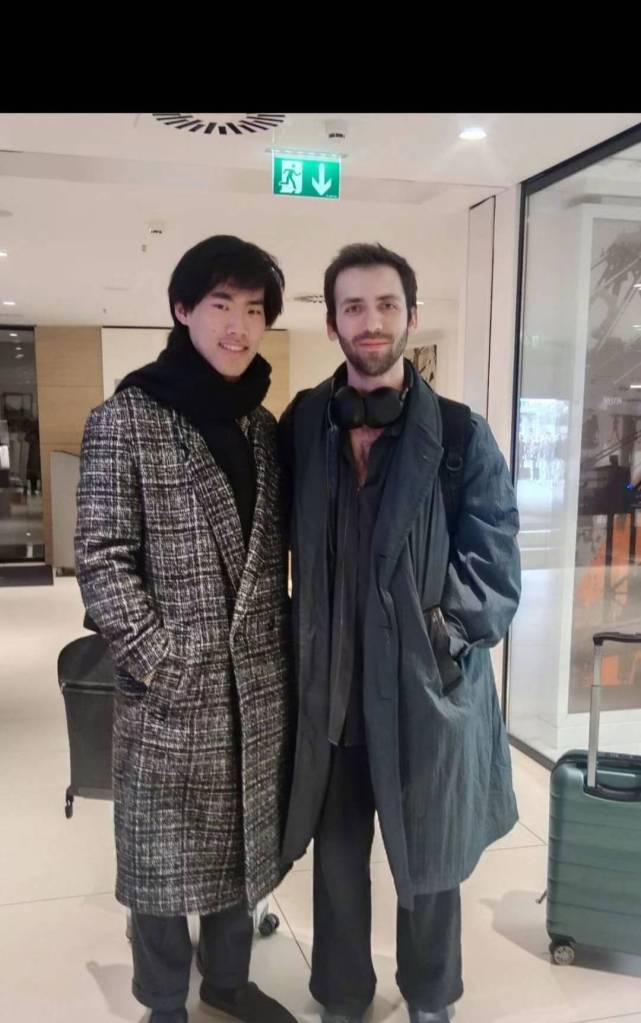
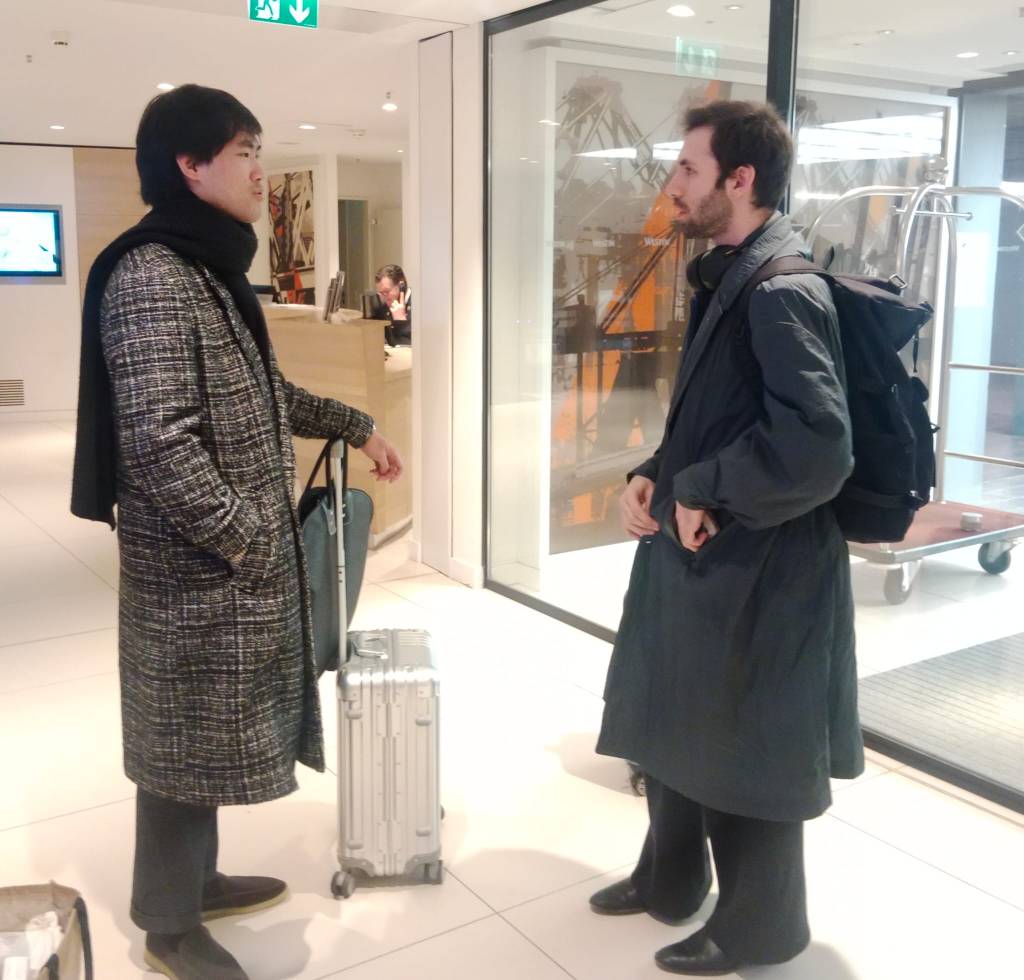
Two stars shining brightly and both performing in the same month in this very hall in Rome …….Bruce Liu and Alexandre Kantorow together recently at the Elbphilharmonie in Hamburg where they were both giving recitals on alternate days.
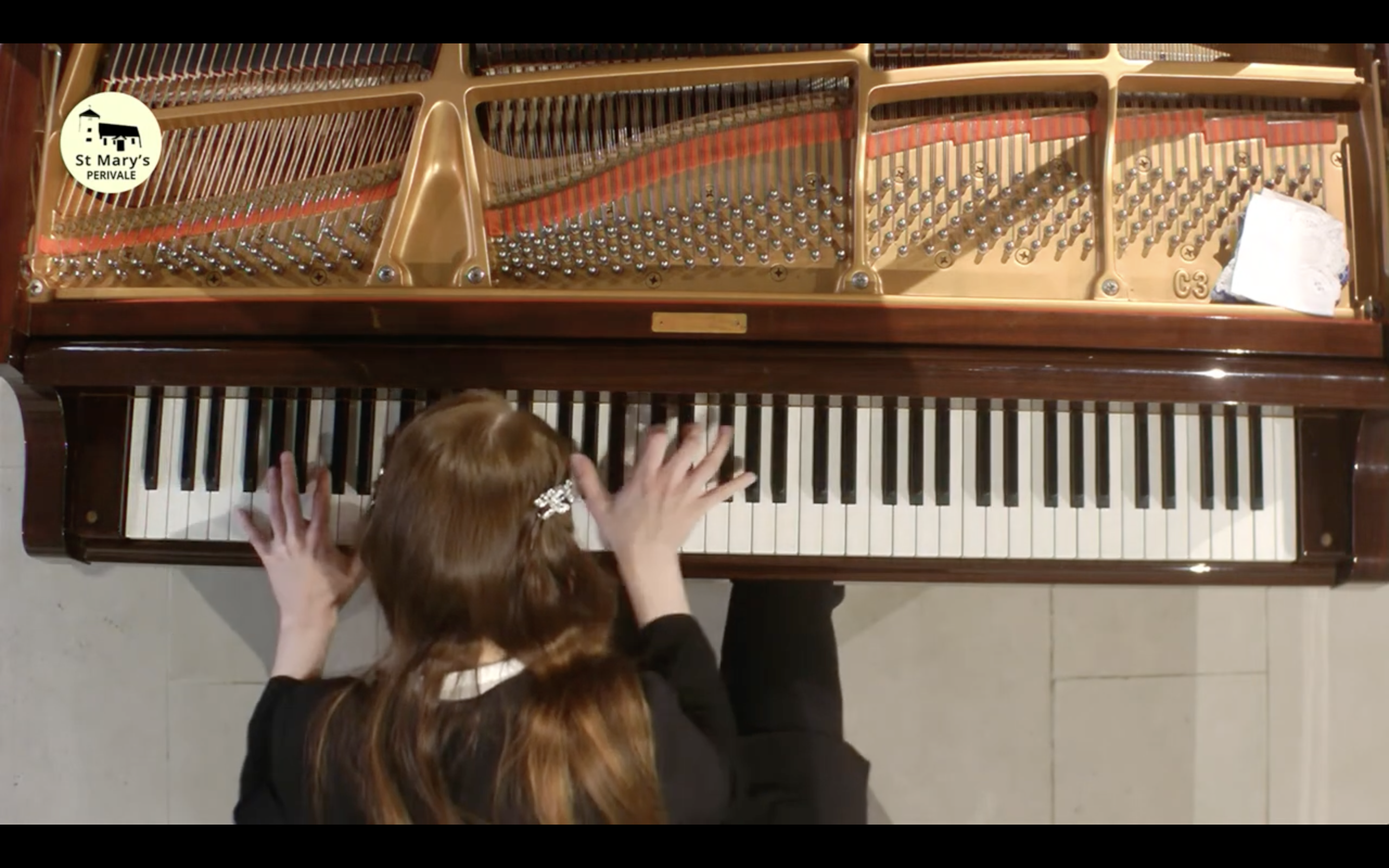
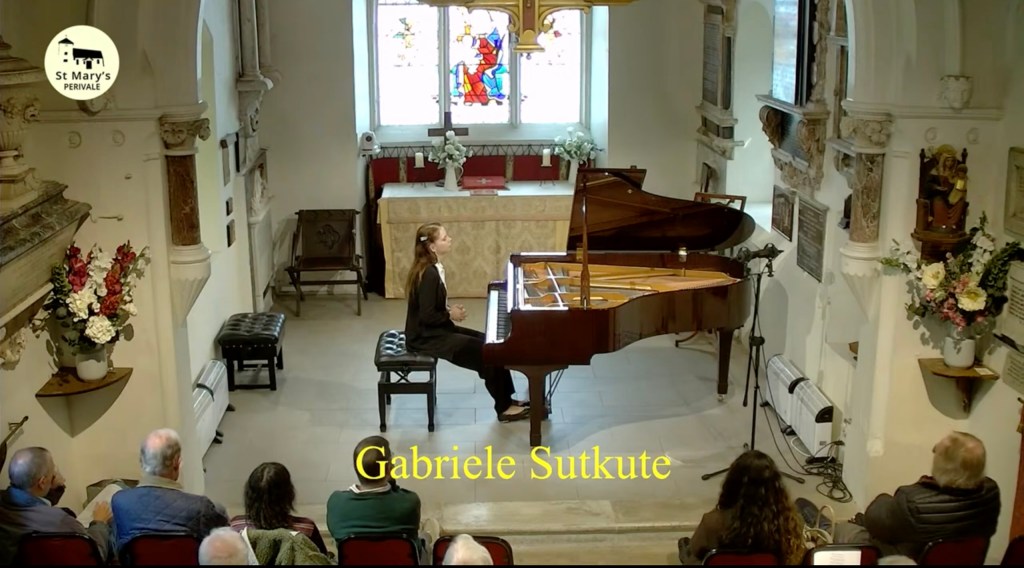
I have heard Gabrielé play this repertoire in recent recitals and have written about her beautiful playing ( included below)
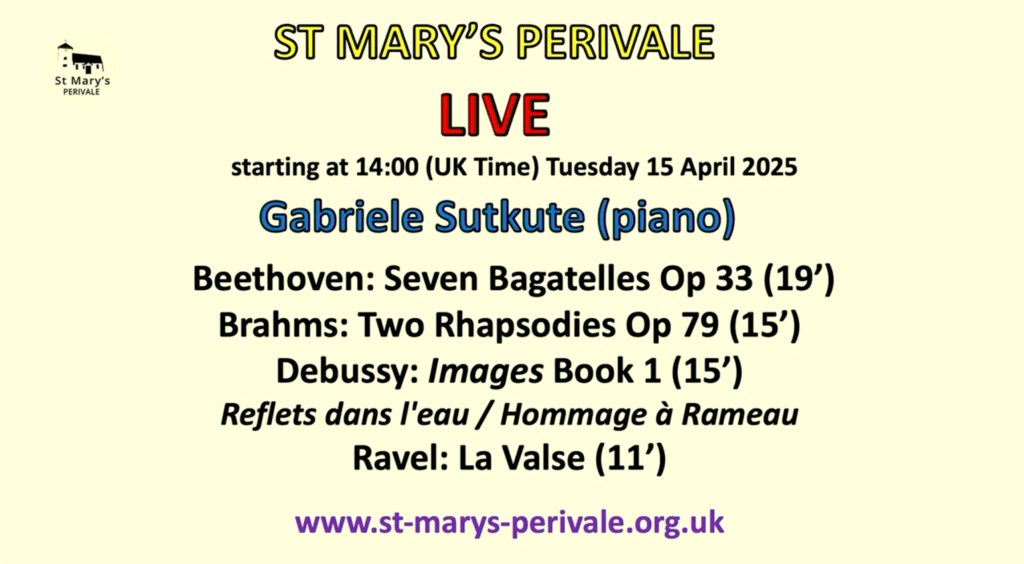
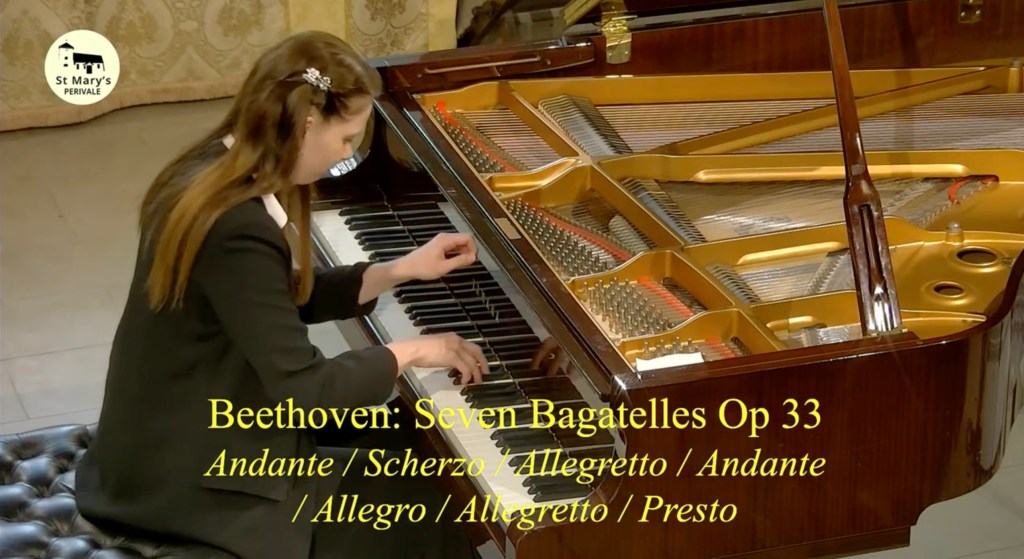
Beethoven full of extraordinary self identification . Sumptuous passionate Brahms. A kaleidoscope of colours in Debussy and an astonishing technical mastery of Ravel’s La Valse to make your hair stand on end. Rameau of crystalline clarity with ornaments like finely wound springs bursting with jewel like beauty. It was nice to be reminded again of such remarkable performances today as she prepares to take Dublin by storm.
Lithuanian pianist Gabrielé Sutkuté has been praised for her “acute musical intuition, impeccable sense of style and genuine charisma”. She has performed in prestigious venues throughout Europe, including Wigmore Hall, Cadogan Hall, Steinway Hall UK, the Musikhuset Aarhus, and Lithuanian National Philharmonic.In addition to being a soloist, Gabriele frequently performs with chamber ensembles and symphony orchestras. This year, she performed Grieg’s Piano Concerto with the Grammy-nominated Kaunas Symphony Orchestra, conducted by Markus Huber. In 2023, Gabrielé performed this Concerto with the YMSO at the Cadogan Hall, conducted by James Blair. She was also invited to play with the renowned Kaunas String Quartet in Lithuania twice.
Gabriele is a winner of twenty international piano competitions where she also received numerous special awards. She was awarded the 1st Prize at the Chappell Medal Piano Competition 2023 and won the 2nd Prize and the Audience Prize at the Birmingham International Piano Competition 2022. She was also the recipient of the prestigious Mills Williams Junior Fellowship 2022/23. For her musical achievements, Gabrielé received Lithuanian Republic Presidents’ certificates of appreciation six times.
From 2016-22, Gabrielé had been studying with Professor Christopher Elton and received her Bachelor of Music Degree (First Class Honours) and Master of Arts Degree with Distinction from the Royal Academy of Music. In 2023, she graduated from the Artist Diploma course at the Royal College of Music, where she had been studying with Professors Vanessa Latarche and Sofya Gulyak. This year, Gabriele started her Artist Diploma studies with Gabriela Montero at the Academy.
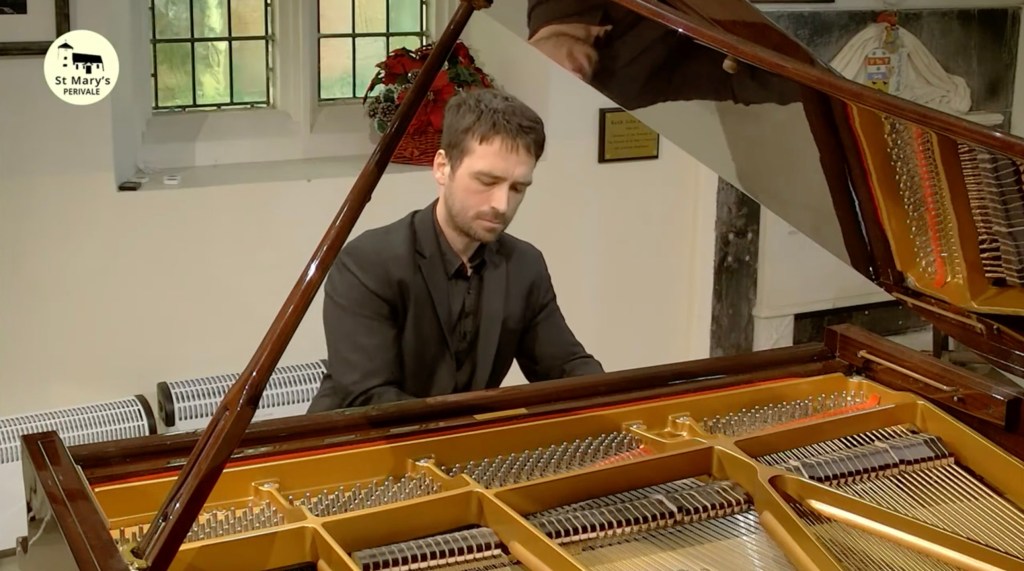
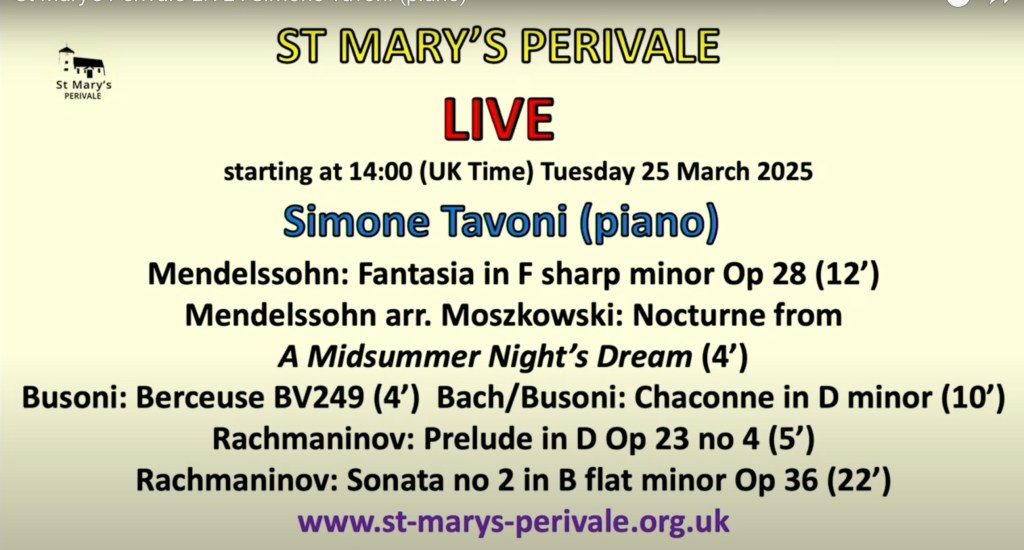
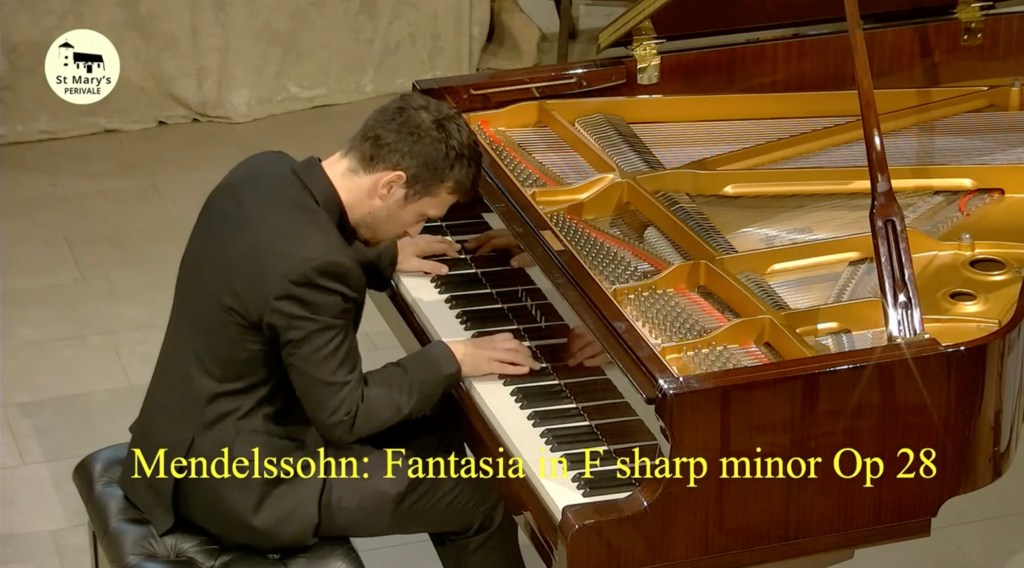
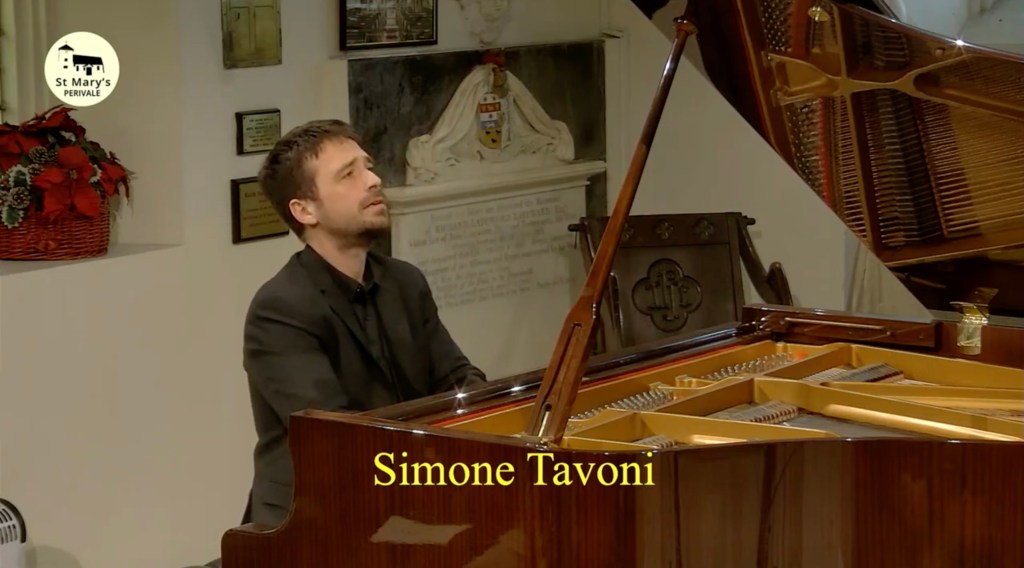
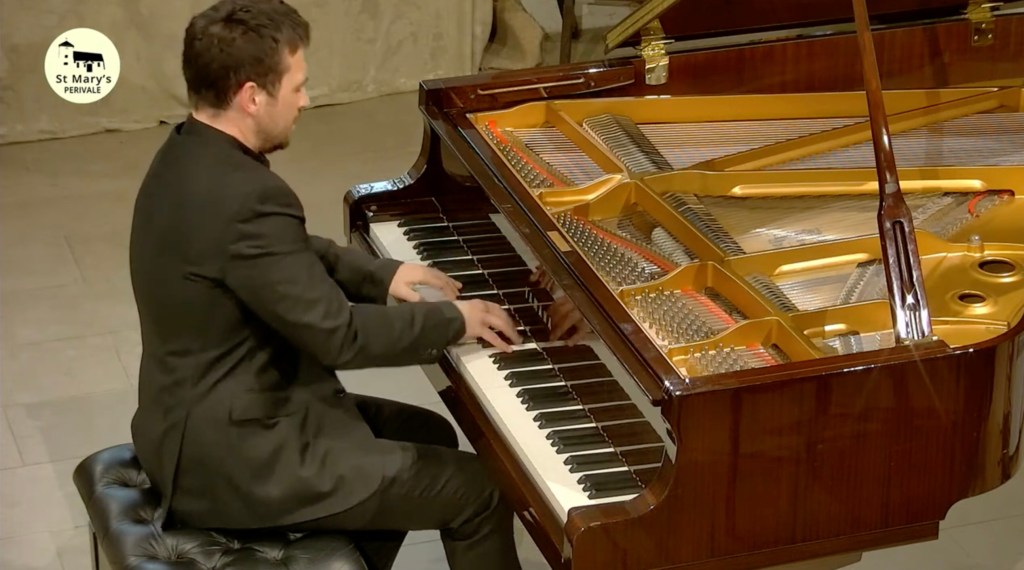
A fascinating and varied programme of ‘something old and something new’. The works of Mendelssohn have been unjustly neglected these days and I remember Murray Perahia playing the Sonata op 106 as part of the programme that brought him to victory and world wide recognition in one of the first Leeds Piano Competitions. Rudolf Serkin too used to regularly include the Preludes and Fugues in his programmes. So it was refreshing to be able to hear the Fantasy in F sharp minor that the 25 year old Mendelssohn penned obviously for his own concerts. It is a work of scintillating brilliance contrasted with a mellifluous outpouring of the sentiment of its time and one that made Mendelssohn a favourite at the court of Queen Victoria. A work in one movement, sometimes known as ‘Sonata Écossaise’, but divided into three episodes like a sonata .The central episode was of a simplicity and charm and the last with a dynamic drive and noble brilliance of beauty and exhilaration. Simone played it with delicacy and subtlety with a jeux perlé of sparkling exuberance and ‘joie se vivre’ as he delved deep into the heartstrings for the melancholic outpourings of Mendelssohn’s genial melodic invention.
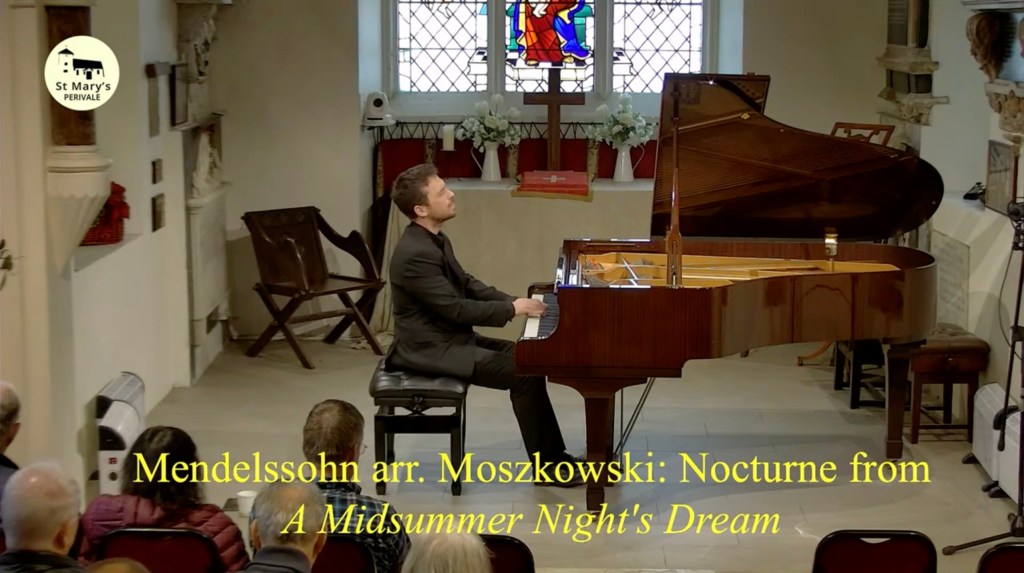
The transcription by Moszkowski of the Nocturne from Mendelssohn’s Midsummer night’s dream is a rarity in the concert hall where the Rachmaninov scherzo is more often heard. A beautiful work played by Simone with a chiselled beauty of sumptuous richness and poignant meaning.
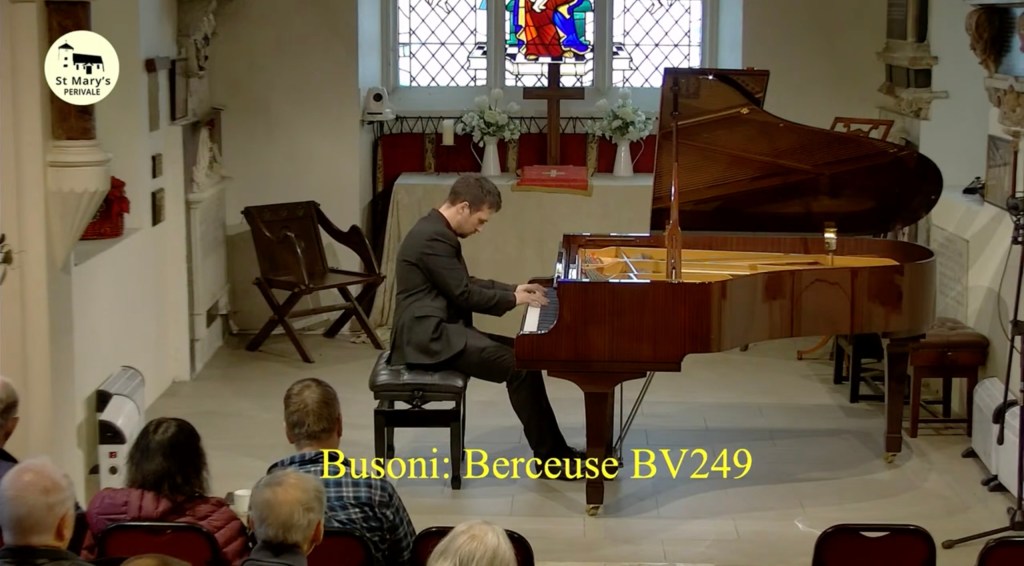
The Busoni ‘Berceuse’ I have only heard in the concert hall played by Serkin who combined it with the Toccata. It is a deeply brooding piece with the very particular sound world of Busoni seemingly without any tonal centre and leaving us suspended in an air of uncertainty. I did play it once in Empoli, where Busoni was born, as it was particularly requested by the organisers, and it was very interesting after all these years to hear it again played so beautifully. Simone played it with refined beauty and an architectural line that was very impressive.
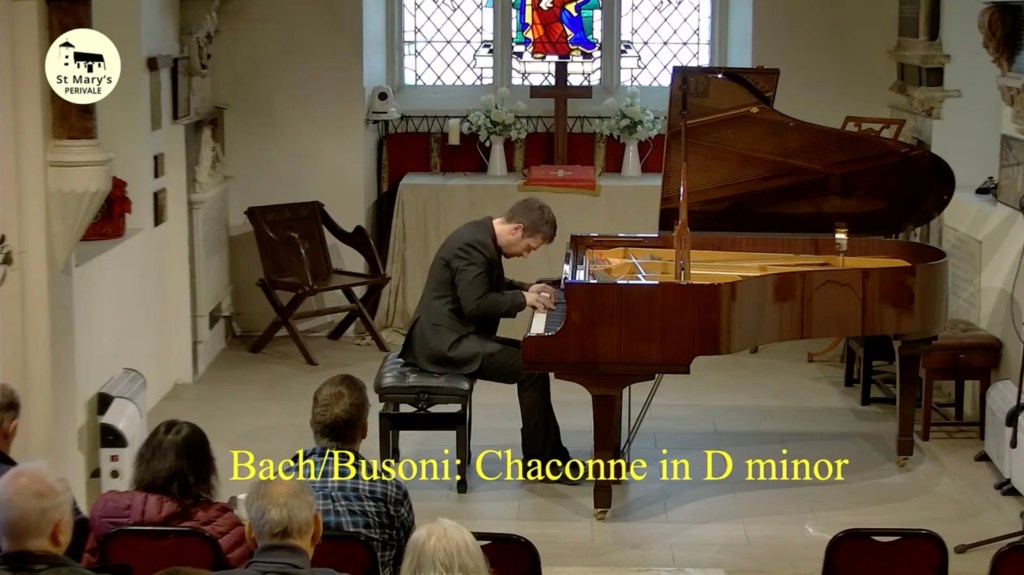
It was linked with Busoni’s famous reworking of the Bach ‘Chaconne’. Simone began with a good flowing tempo but allowed the tempo to fluctuate too often and the chords and octaves were played rather without the weight necessary for such a monumental work.Substituting monumental for brilliance in a rather romantic revisitation that in many ways was very beautiful but lacked the overall architectural shape of one of the most important and ingenious works ever written by J.S. Bach.
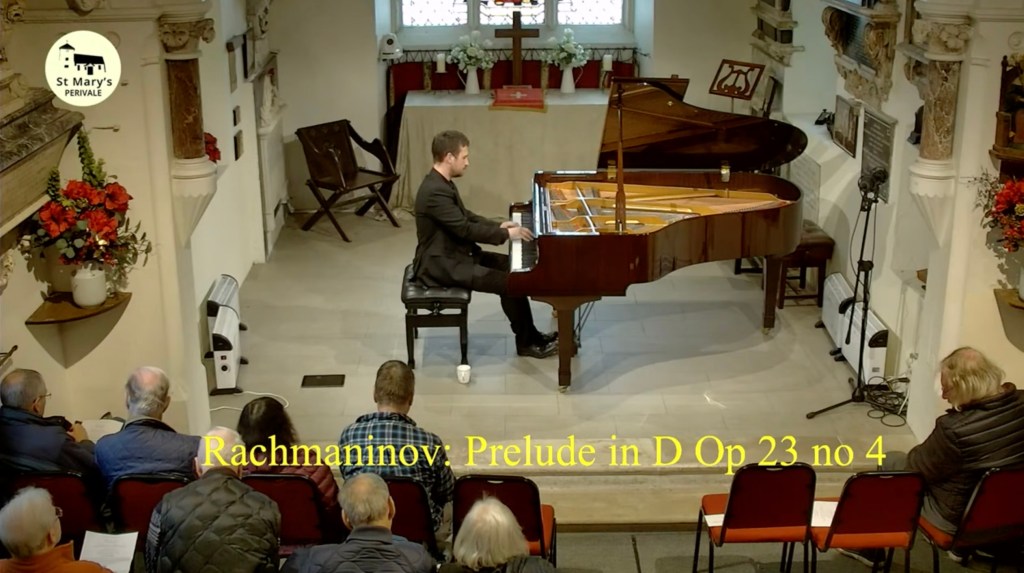
Rachmaninov’s beautiful D major prelude op 23 was coupled with the monumental Second Sonata in B flat minor op 36.The world of Rachmaninov suited Simone’s sumptuous sound world and romantic temperament.The prelude was enriched with the sonorous accompaniment on which the melody emerged with strength and beauty in a performance of flowing simplicity.
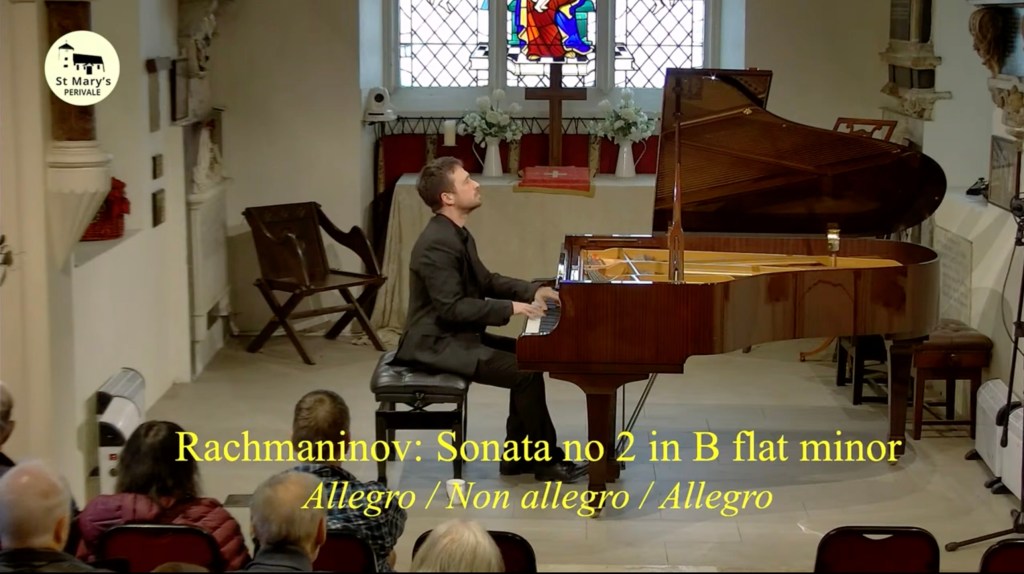
There was passion and a kaleidoscope of colour in the sonata with an architectural shape that linked all three movements into one unified whole of radiant beauty. There were sumptuous rich sounds with an outpouring of notes of exhilaration and excitement. Simone brought his musicianship to bear in a performance that if it did not have the reserves of more animalistic virtuosi it did have the aristocratic musicianship of intelligence and passionate involvement.
Simone Alessandro Tavoni has given recitals internationally across Europe and U.S in venue such the Purcell room, Wigmore Hall, Royal Festival Hall, St Martin in the Fields St.John’s Smith Square, Steinway Hall, St.Mary Perivale in London, Liszt Museum in Budapest, Palau de la Musica Catalana in Barcelona, the Aarhus concert hall, The Tallin Philarmonia ( Estonia ) and the Florence Conservatory hall. In 2019, Simone has been selected as a Parklane Group Artist, as Keyboard Charitable Trust Artist and received the Luciano and Giancarla Berti full-ride scholarship to attend the Aspen Music Festival and School studying with renowned professor Fabio Bidini. Graduated at Royal College of Music with professor Andrew Ball, and Simone has recently attained an Artist Diploma at Trinity Laban Conservatoire with professors Deniz Gelenbe and Peter Tuite. He began his musical education in Italy with professor Marco Podesta’ and pursue his studies at the Liszt Academy of Budapest with Dr.Kecskes Balazs and in Germany at the Hochschule fur Musik un Darstellende of Stuttgart with Dr,Peter Nagy. In 2016 was selected for the BBC pathway scheme and he is a fellow at the Aspen Music Festival and School. He is generously assisted by HSH Dr.Donatus Prince of Hohenzollern.
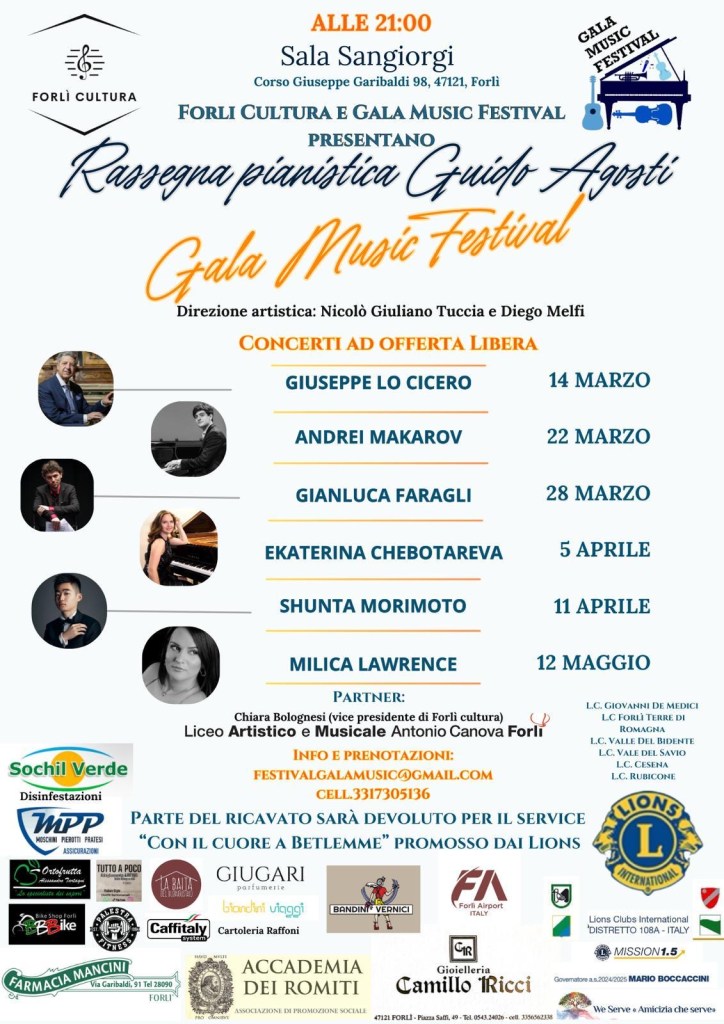
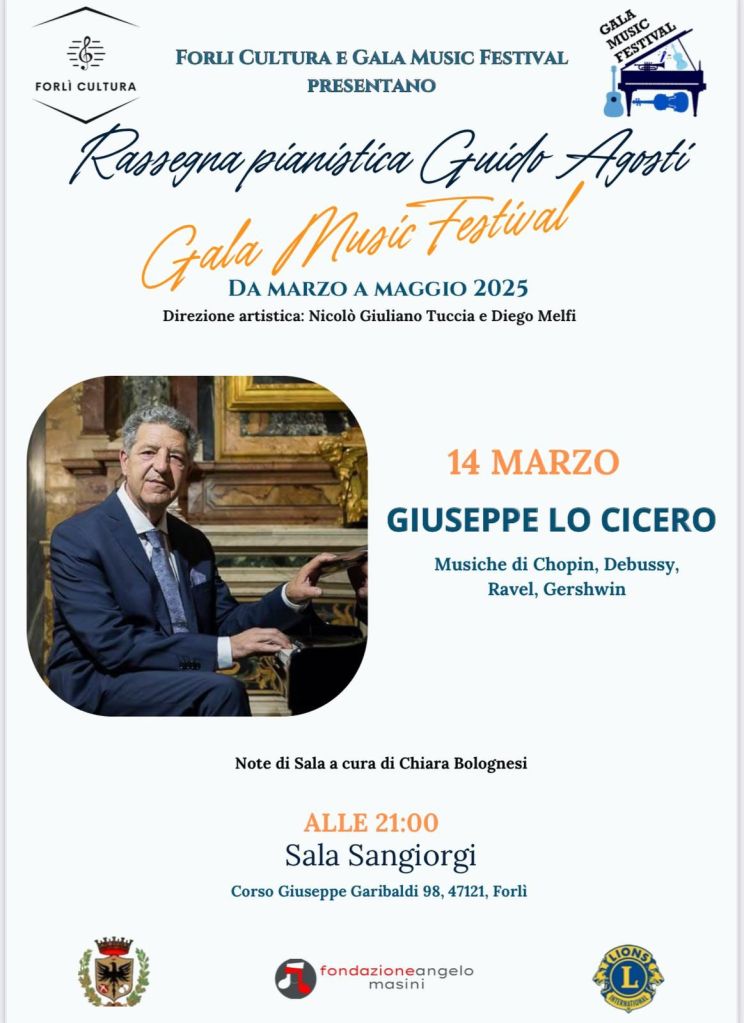
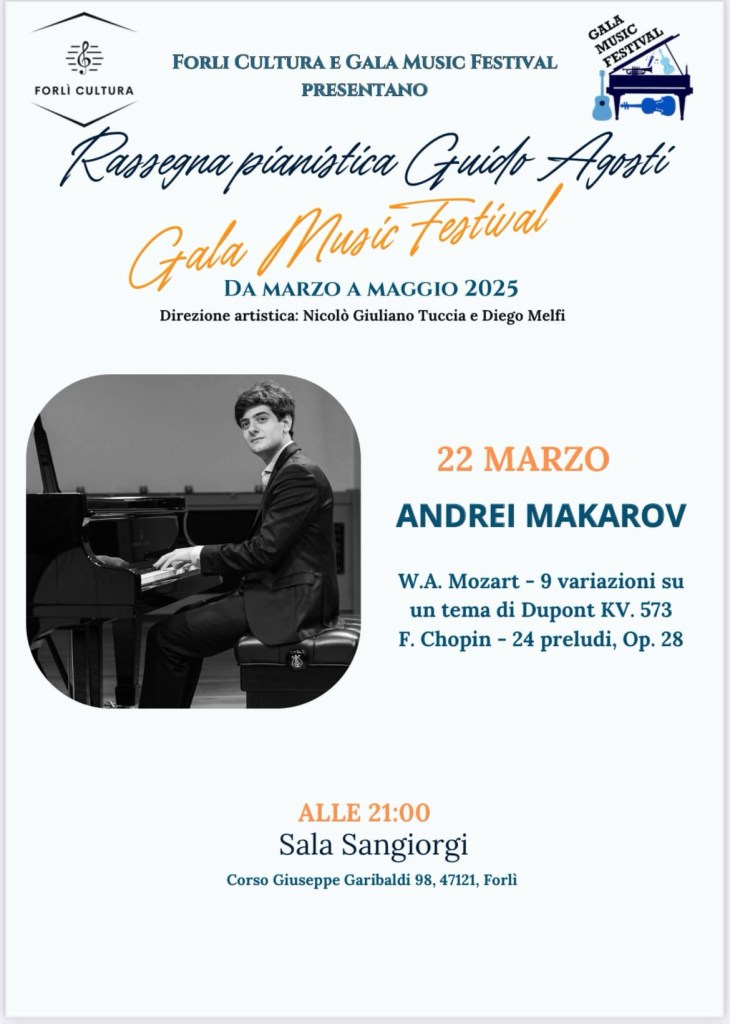
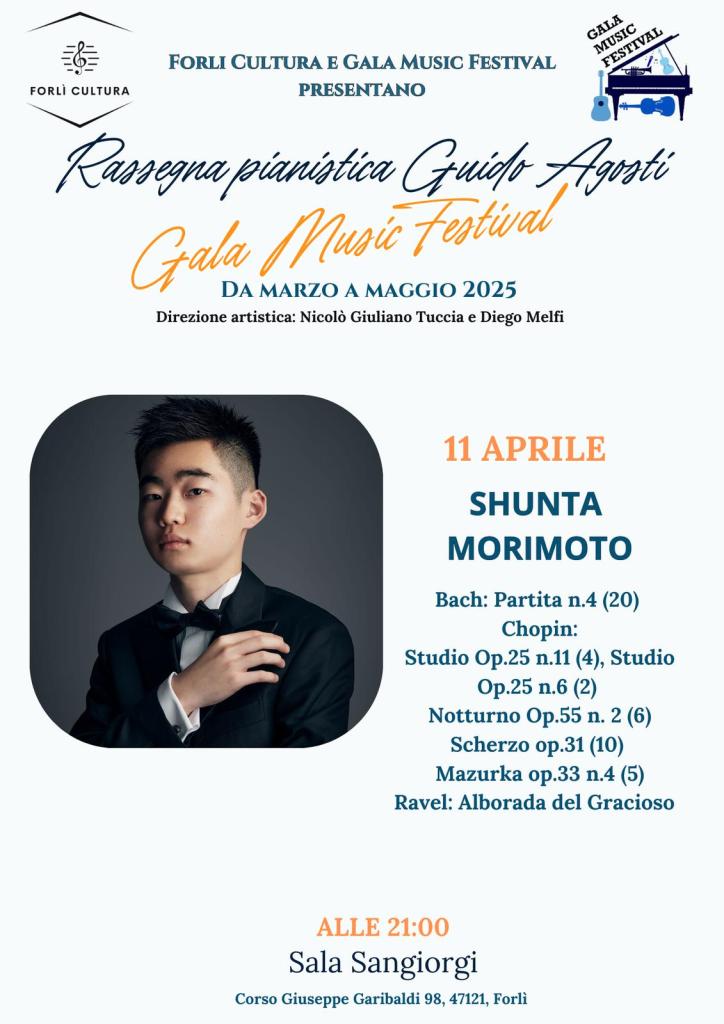
‘The Guido Agosti Piano Series was born from the desire to honour the piano as a poetic, narrative, and profoundly human instrument in collaboration with the Gala Music Festival, chairman Diego Melfi. This concert series brought exceptional performers to the stage of Sala Sangiorgi in Forlì, in an intimate atmosphere full of charm.
Promoted by the association Forlì Cultura – chaired by Nicolò Giuliano Tuccia – and enriched by the vision of Vice President Chiara Bolognesi, who brought her deep sensitivity to education and the arts, this project shines with passion, youth, and musical poetry.
Each concert has been a small artistic miracle, awakening deep emotions in the hearts of the audience.
Giuseppe Lo Cicero enchanted with a brilliant and varied programme: Chopin’s Polonaise brillante with bold energy, the jazzy elegance of Gershwin, the painted delicacy of Debussy’s Ballade, and the dreamy elegance of Ravel’s Valses nobles et sentimentales. A recital that merged virtuosity and charm with natural grace.
Andrei Makarov won the hearts of the audience with his profound and authentic interpretation of Mozart and Chopin. The clarity of his touch and the maturity of his phrasing turned apparent simplicity into pure poetry. A noble pianist with a direct connection to the soul.
Gianluca Faragli tackled a challenging and majestic programme: Ries, Beethoven Op. 22, Chopin’s Scherzo No.1, and the monumental Chaconne by Bach-Busoni. A performance of great dramatic depth and architectural vision, marked by expressive power and commanding presence.
Ekaterina Chebotareva delivered a whirlwind of color and emotion. The fiery spirit of Stravinsky’s Firebird in Agosti’s iconic transcription, the depth of Rachmaninov’s Sonata No.2, the dreamy Estampes by Debussy, and the noble elegance of Beethoven’s Sonata Op.90. An unforgettable evening of passion and sound.
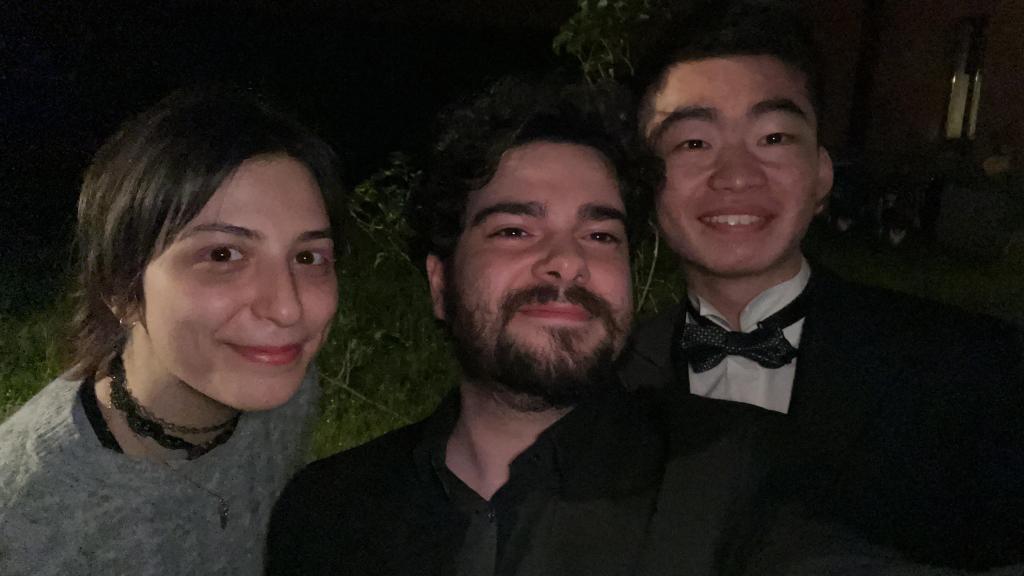
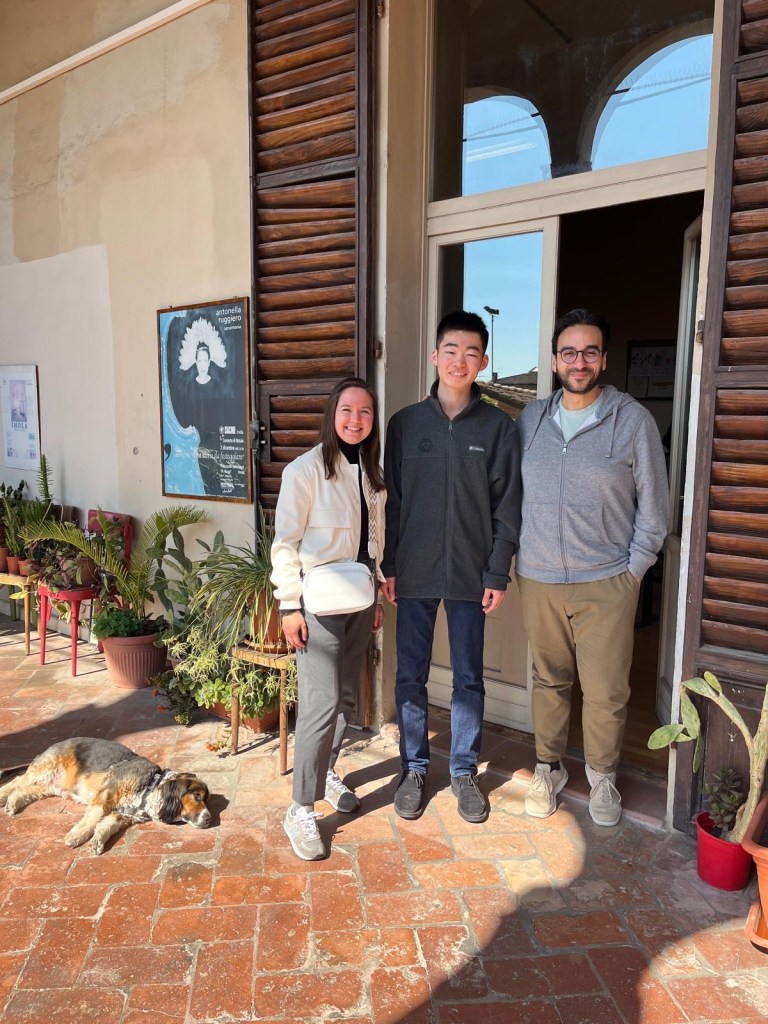
Chiara Bolognesi, Nicolò Giuliano Tuccia e Shunta Morimoto Shunta ad Imola with André Gallo ed Ekaterina ad Imola International Piano Academy
Shunta Morimoto gave us one of the most captivating performances of the series with a high-level program: Bach’s Partita No.4, Schumann’s Symphonic Etudes, and Chopin’s Polonaise-Fantaisie. Impeccable technique, tonal imagination, and a rare narrative sense enchanted the entire audience.
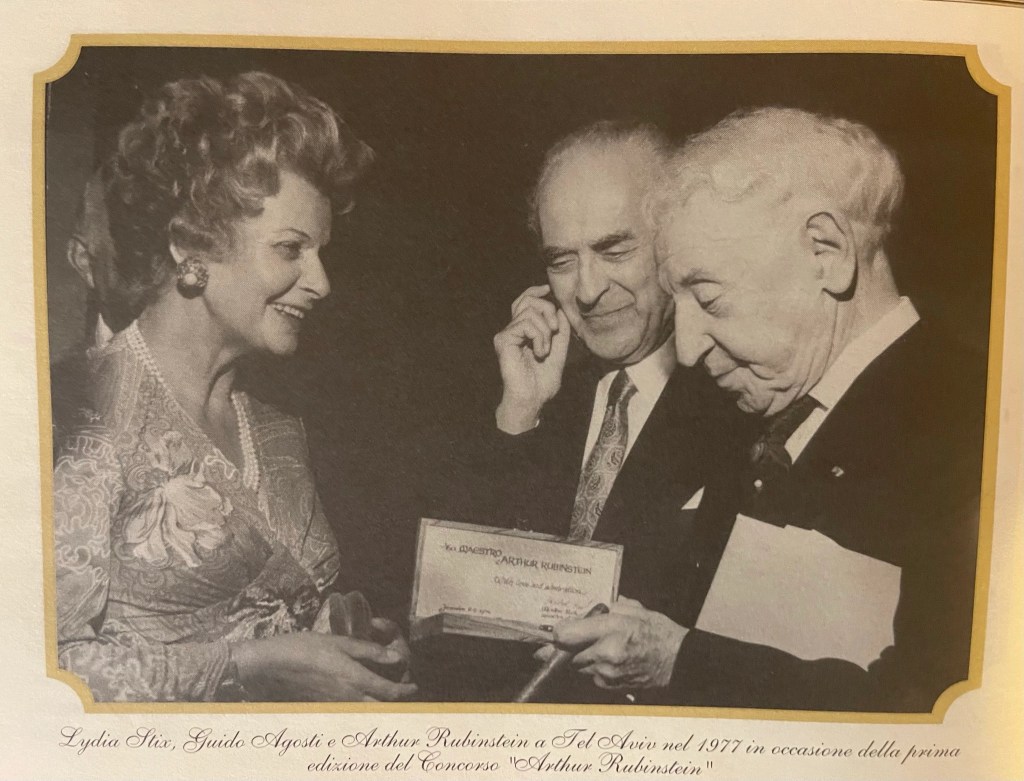
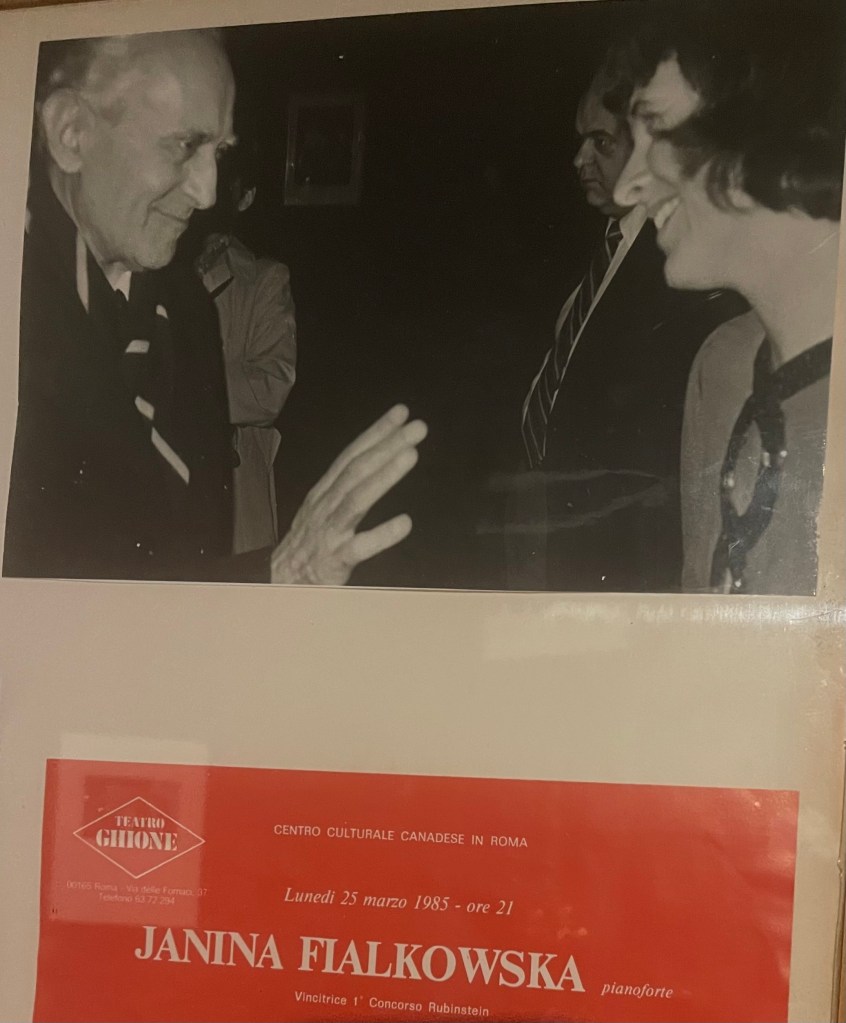
with Janina Fialkowska on her debut in Rome after her top prize in the first Rubinstein Competition in Tel Aviv
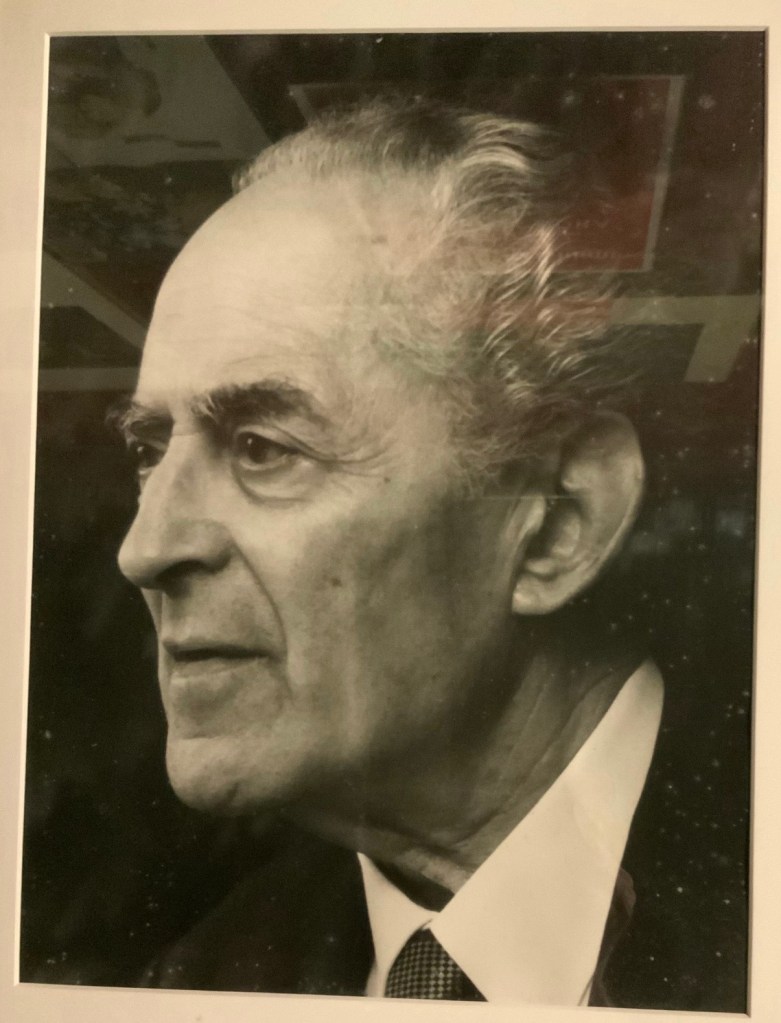
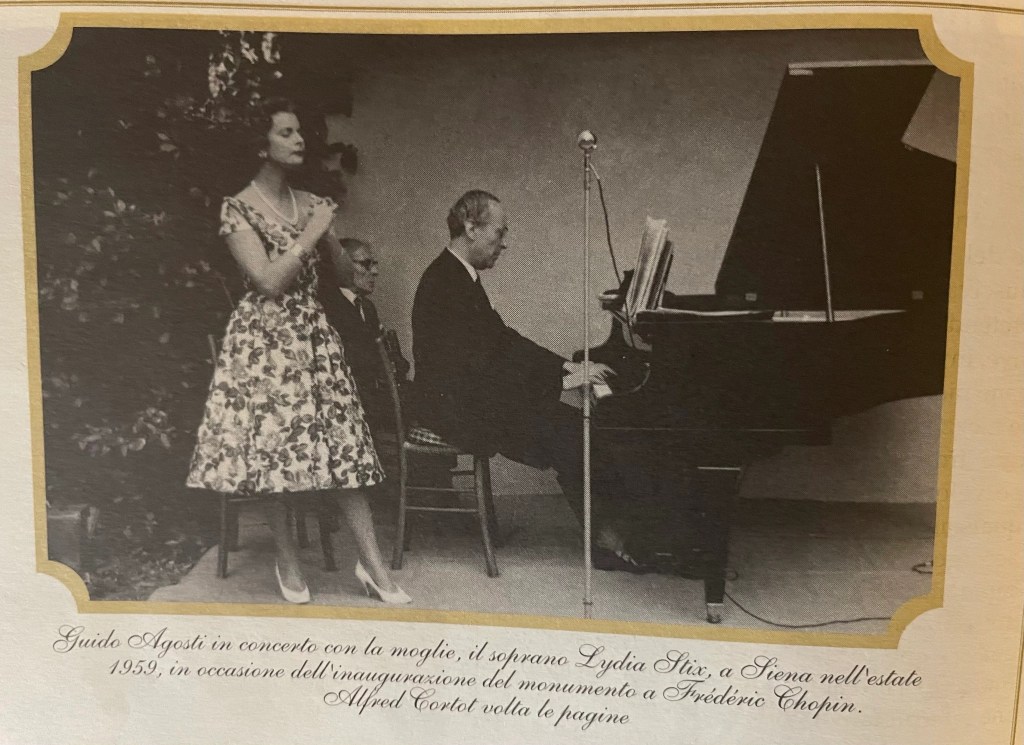
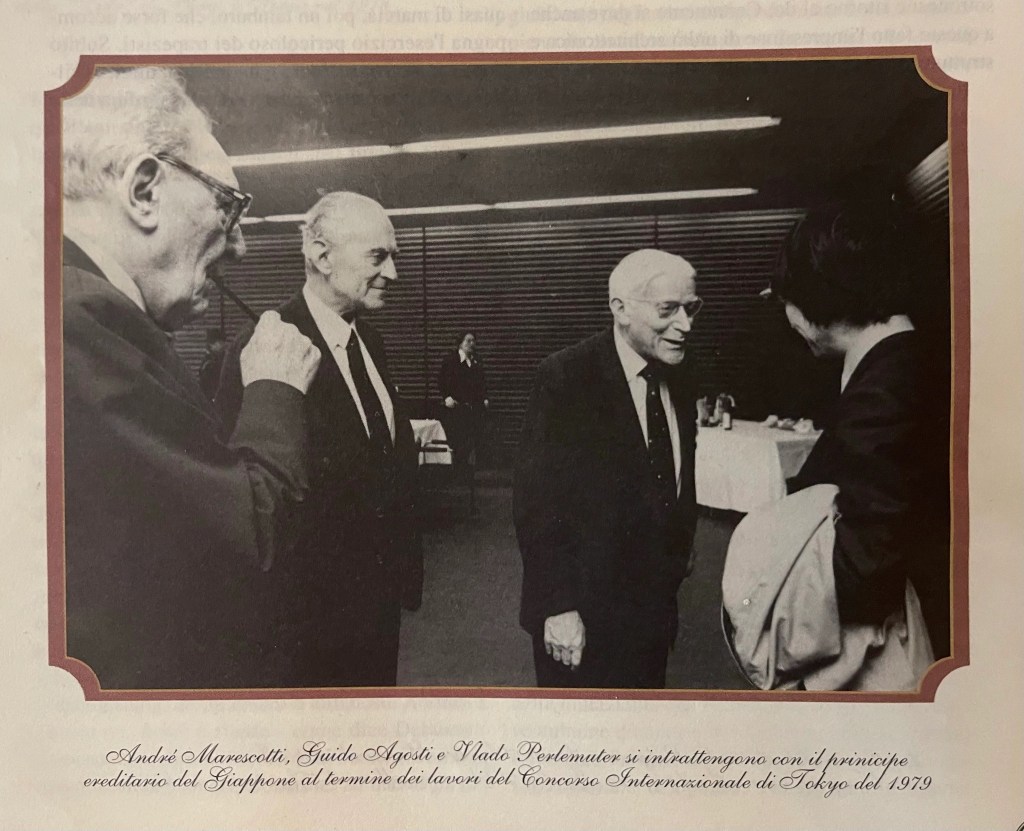
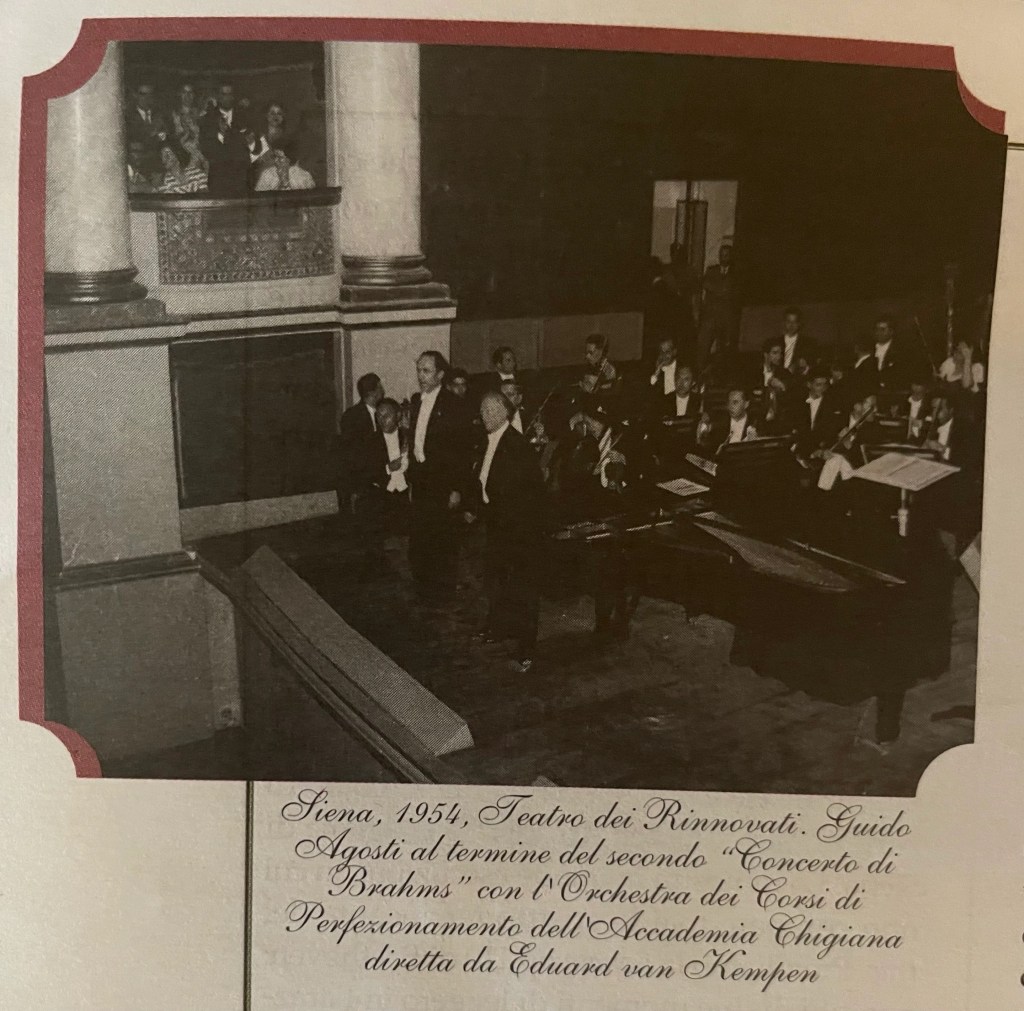
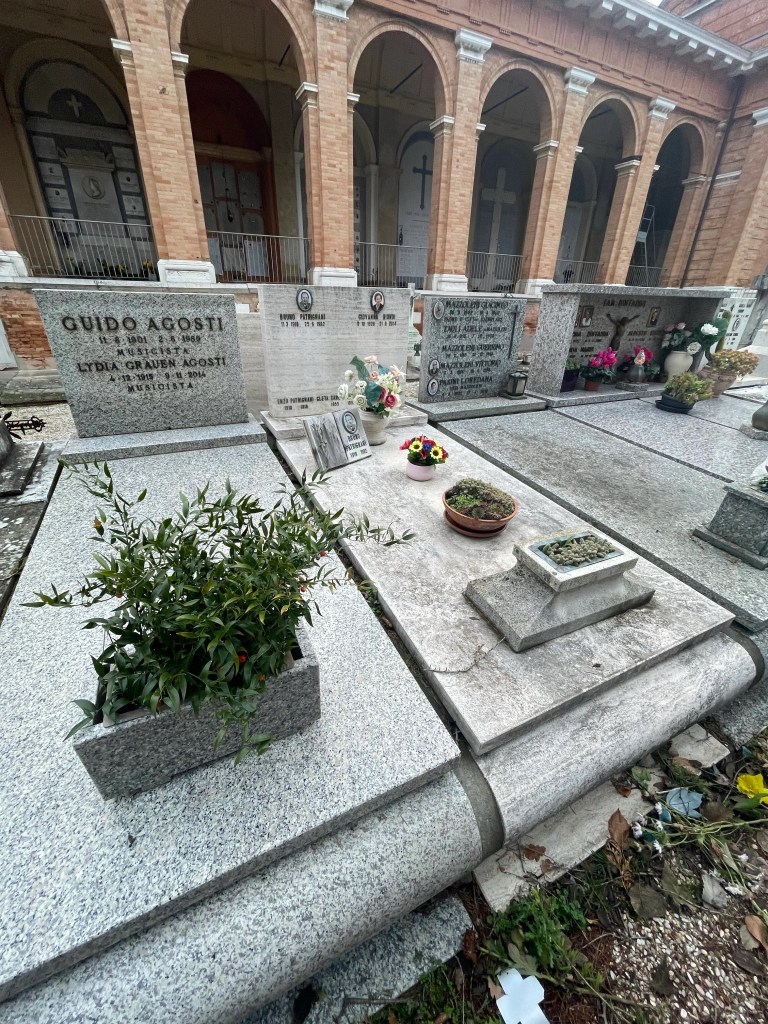
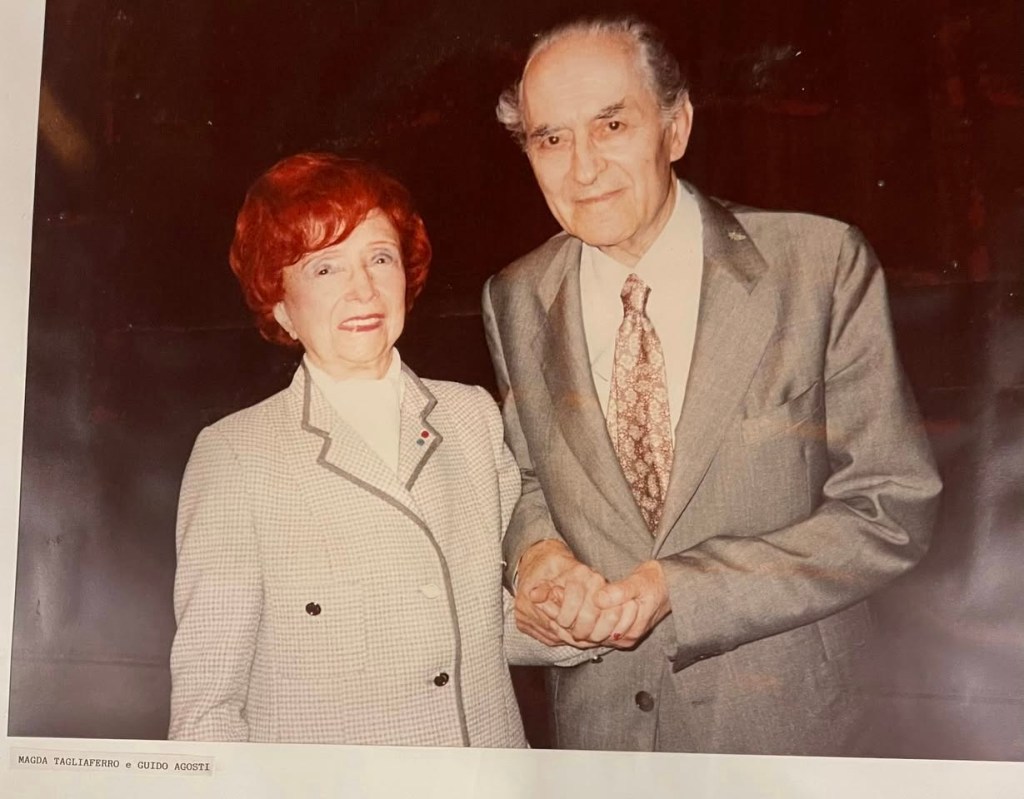
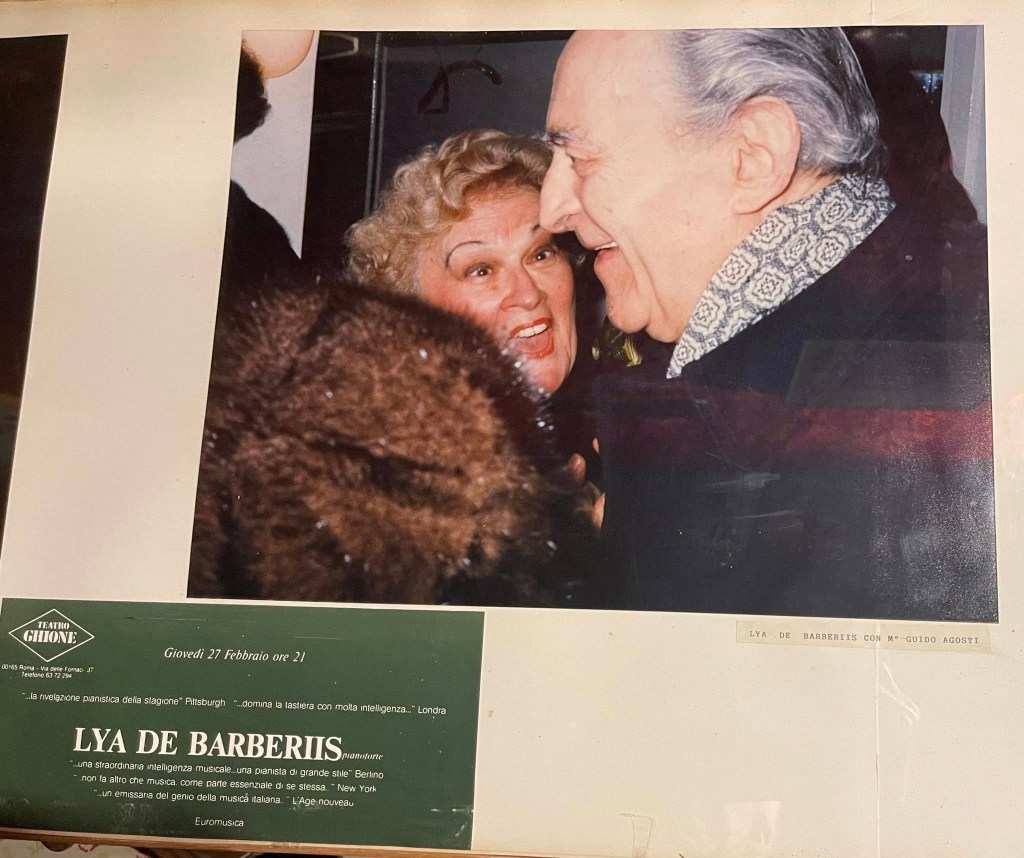
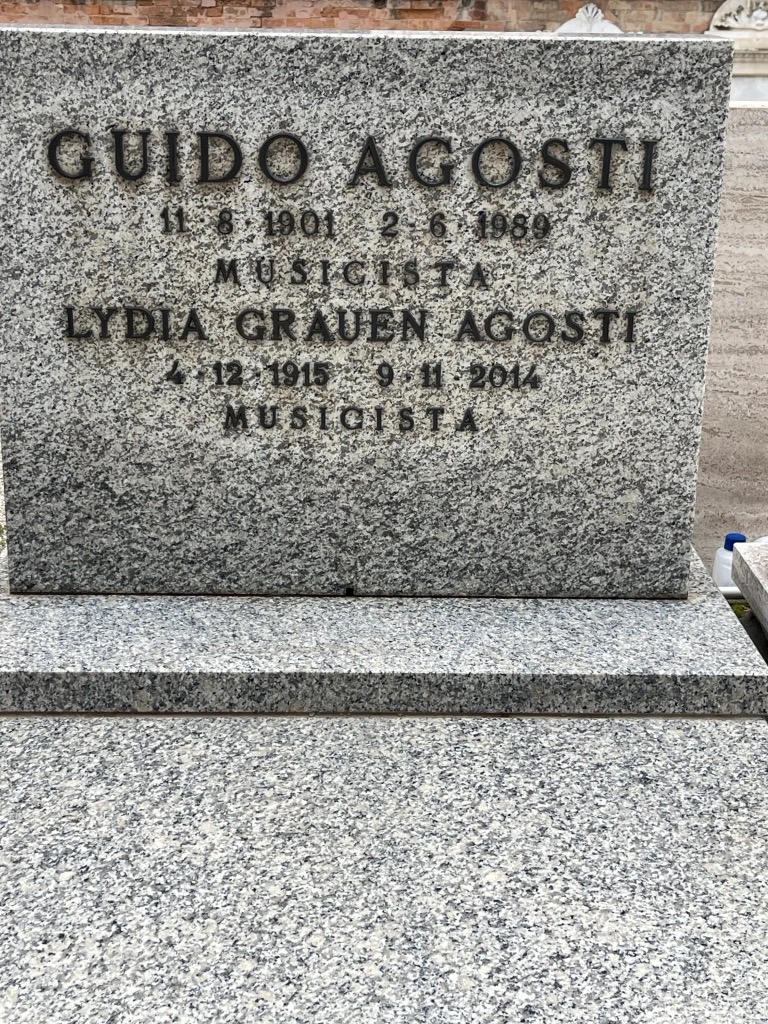
Guido Agosti (11 August 1901 – 2 June 1989) was an Italian pianist and renowned for his yearly summer course in Siena frequented by all the major musicians of the age.It was on the express wish of Alfredo Casella that Agosti took over his class which he did for the next thirty years.Sounds heard in his studio have never been forgotten.Agosti was born in Forli 1901. He studied piano with Ferruccio Busoni Bruno Mugellini and Filippo Ivaldi and earning his diploma at age 13. He studied counterpoint under Benvenuti and literature at Bologna University. He commenced his professional career as a pianist in 1921. Although he never entirely abandoned concert-giving, nerves made it difficult for him to appear on stage,and he concentrated on teaching. He taught piano at the Venice Conservatoire and at the Santa Cecilia Academy in Rome.In 1947 he was appointed Professor of piano at the Accademia Chigiana Siena .He also taught at Weimar and the Sibelius Academy in Helsinki.
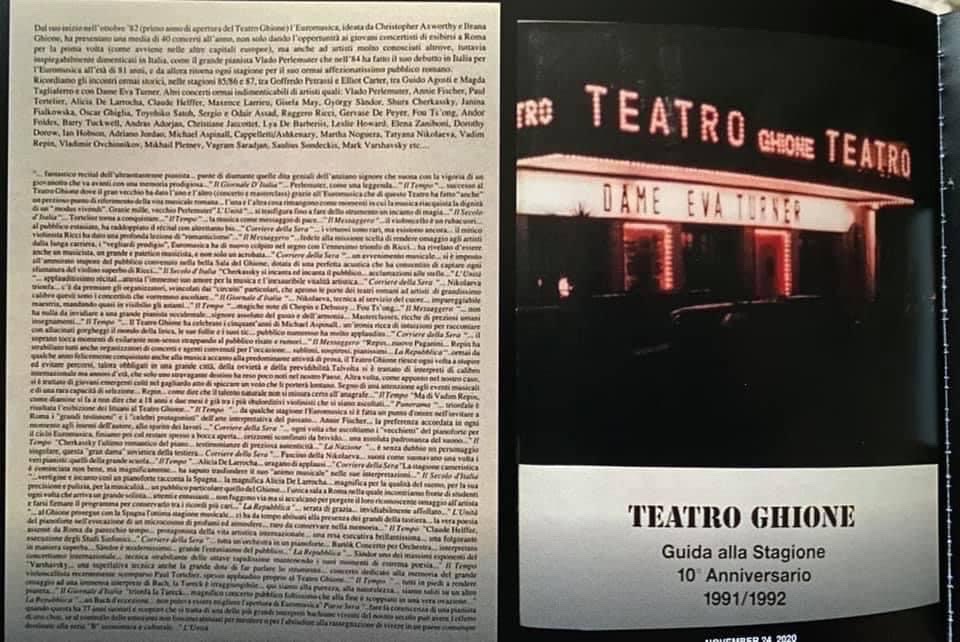
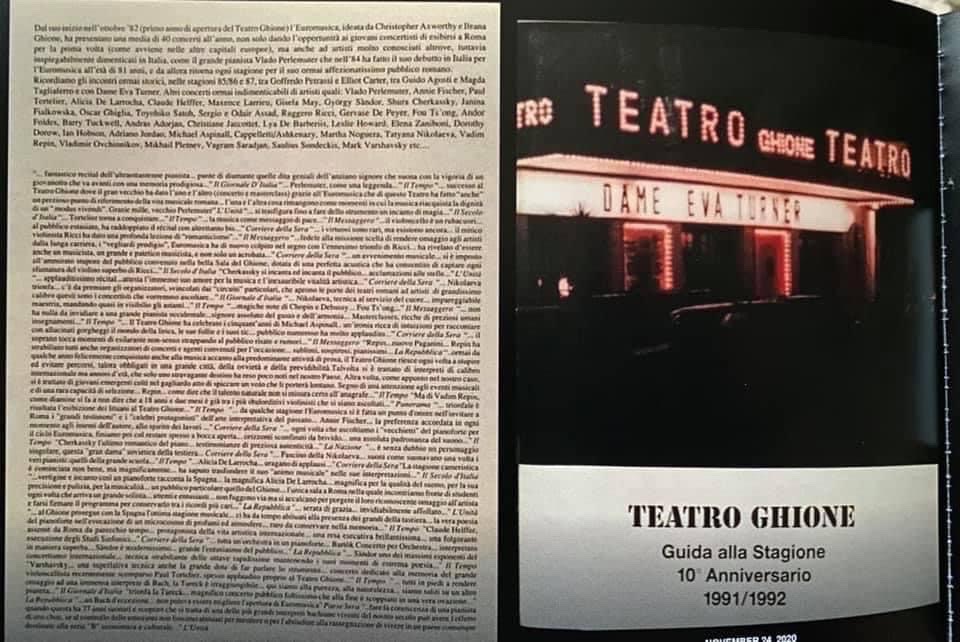
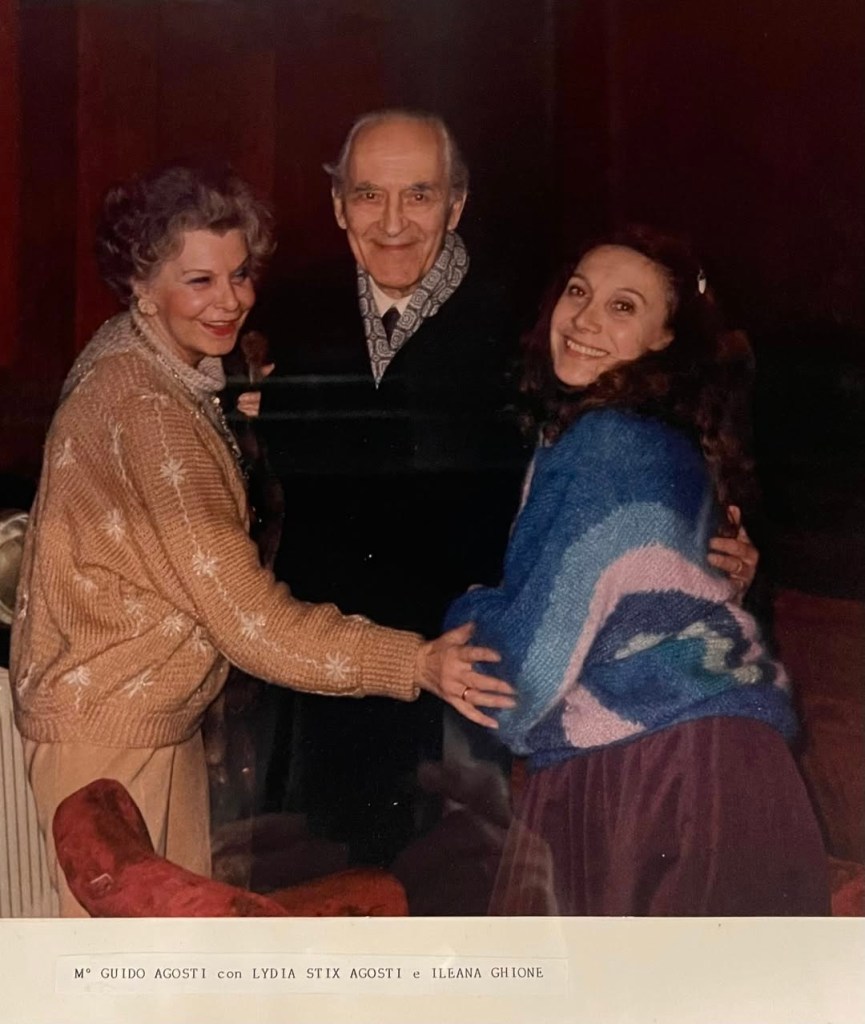
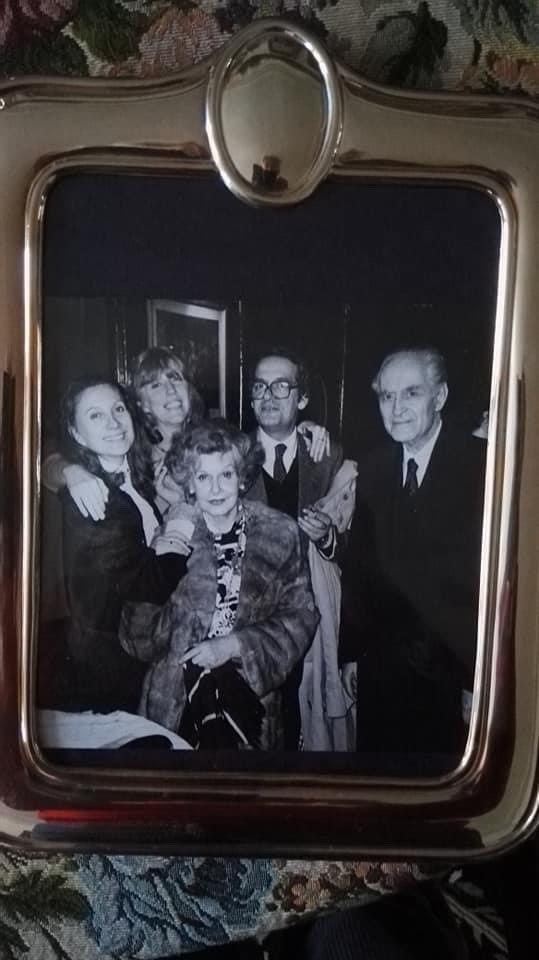
In the Ghione Theatre in the early 80’s with Ileana Ghione,’Connie’Channon Douglass Marinsanti ,Lydia Agosti ,Cesare Marinsanti,Guido Agosti. A closely knit family
His notable students include Maria Tipo,Yonty Solomon, Leslie Howard,Hamish Milne,Martin Jones,Ian Munro,Dag Achatz,Raymond Lewenthal,Ursula Oppens,Kun- Woo Paik,Peter Bithell. He made very few recordings; there is a recording of op 110 from the Ghione theatre in Rome together with his recording on his 80th birthday concert in Siena of Debussy preludes .