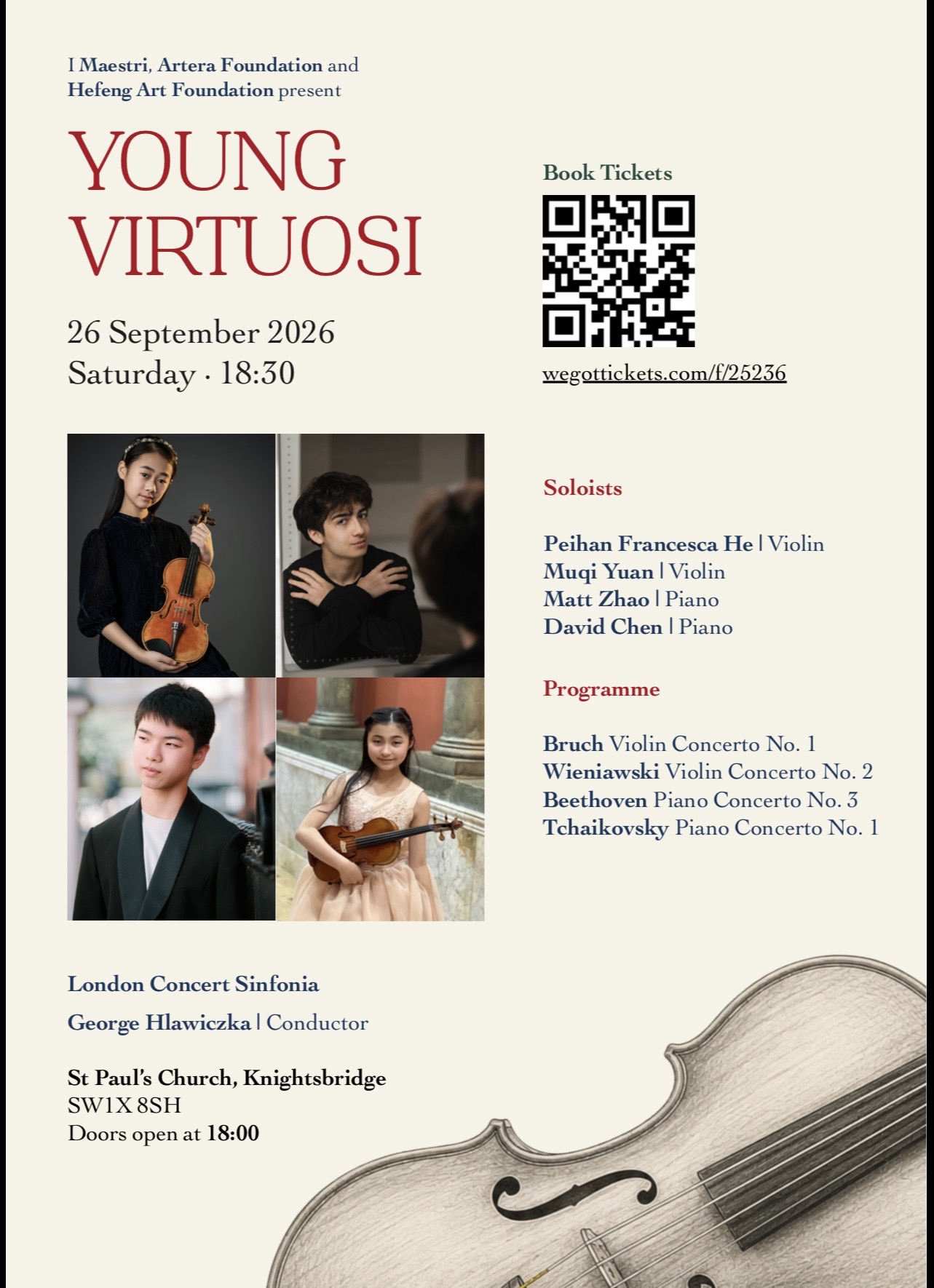
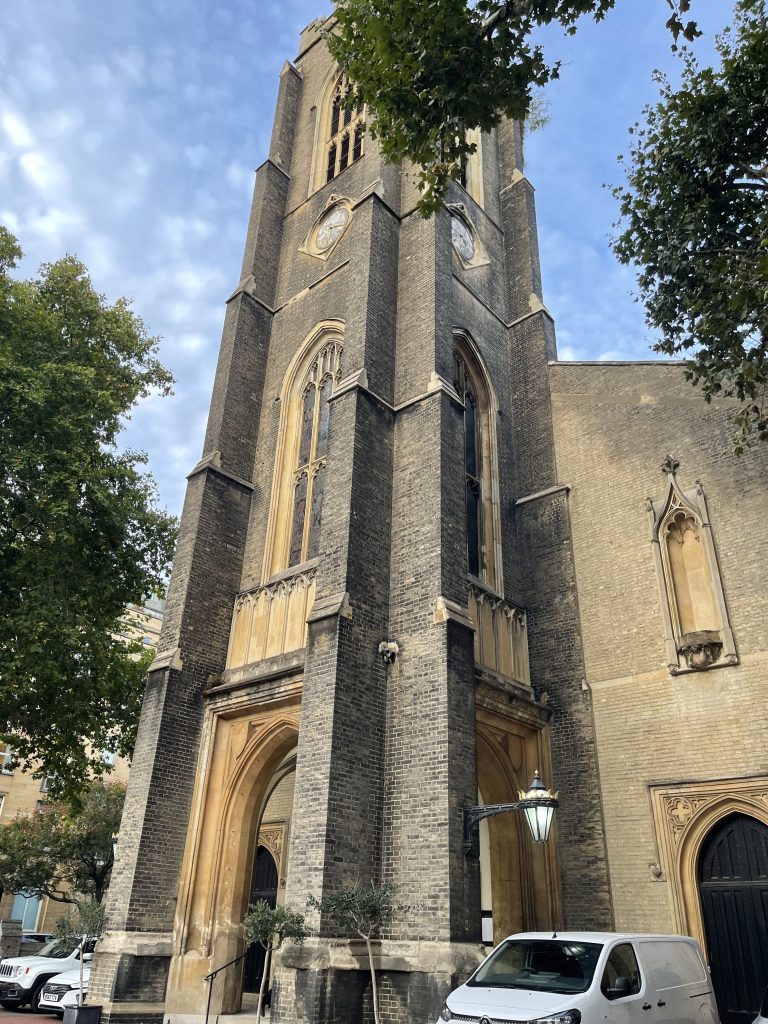
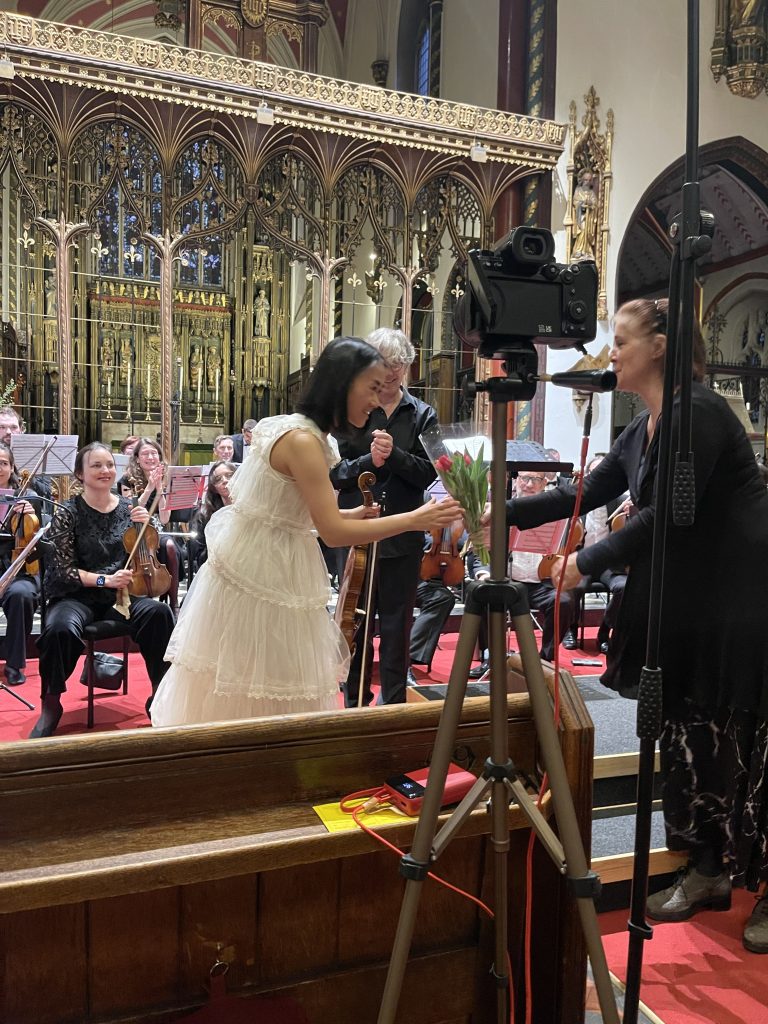
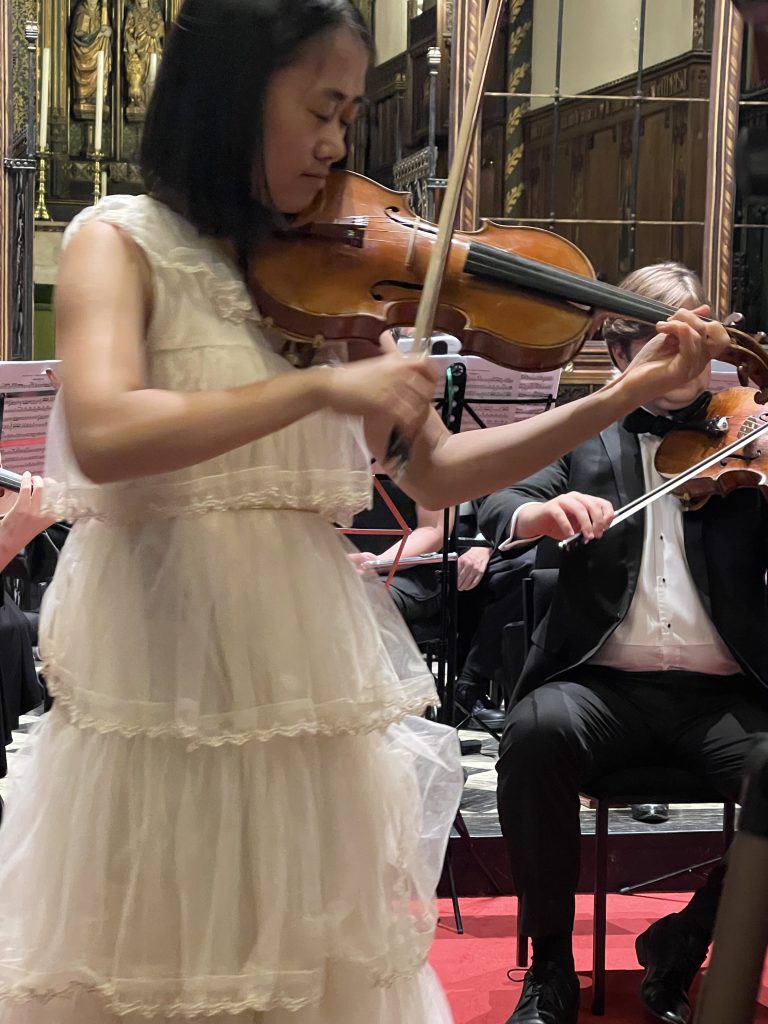
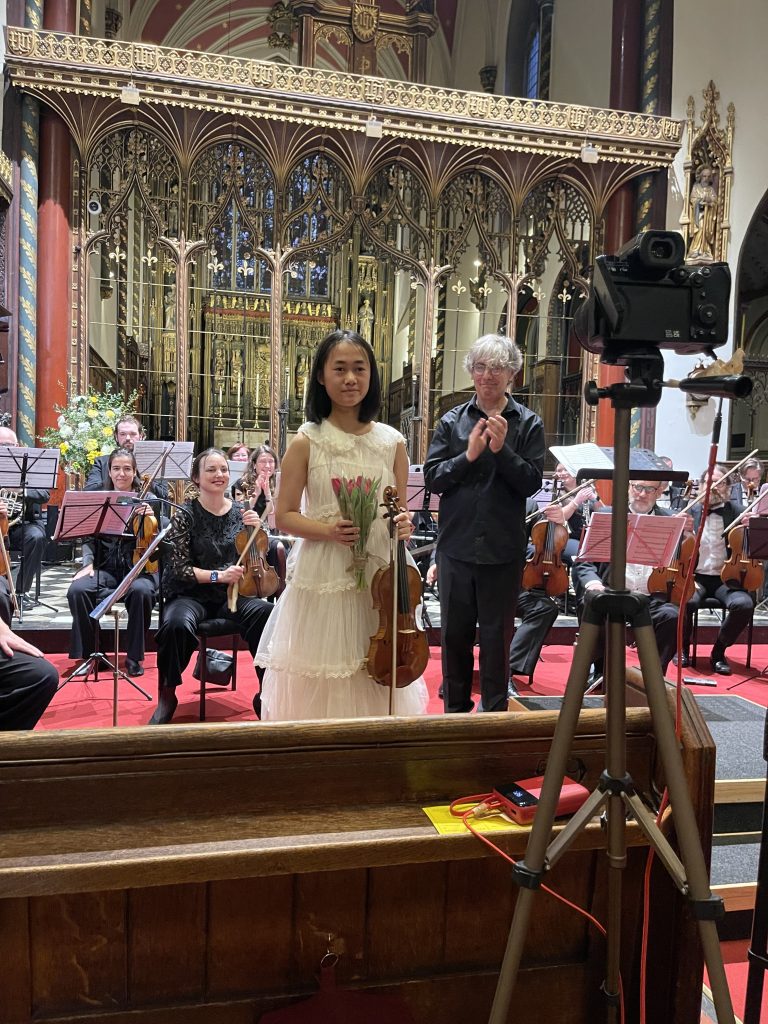
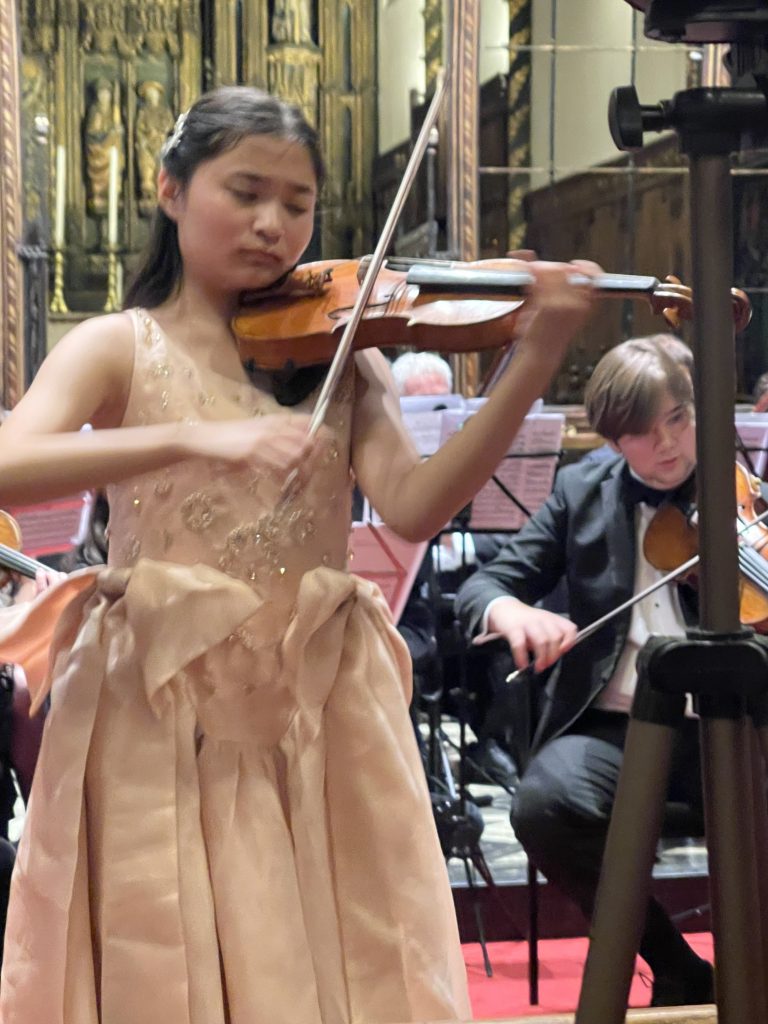
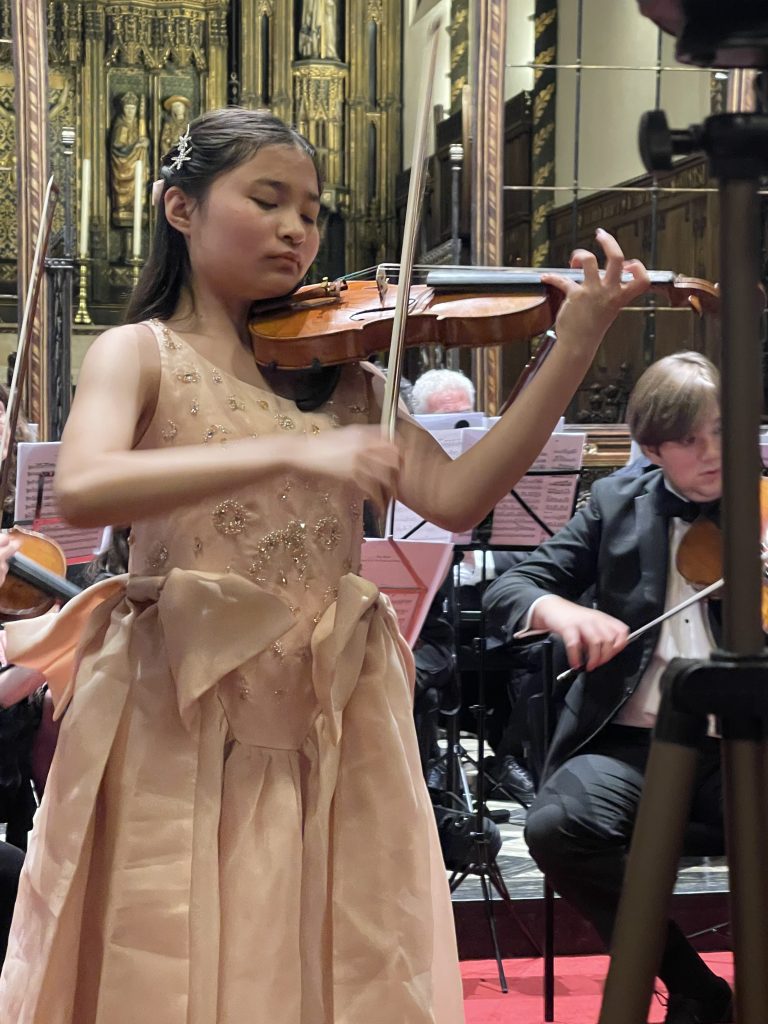
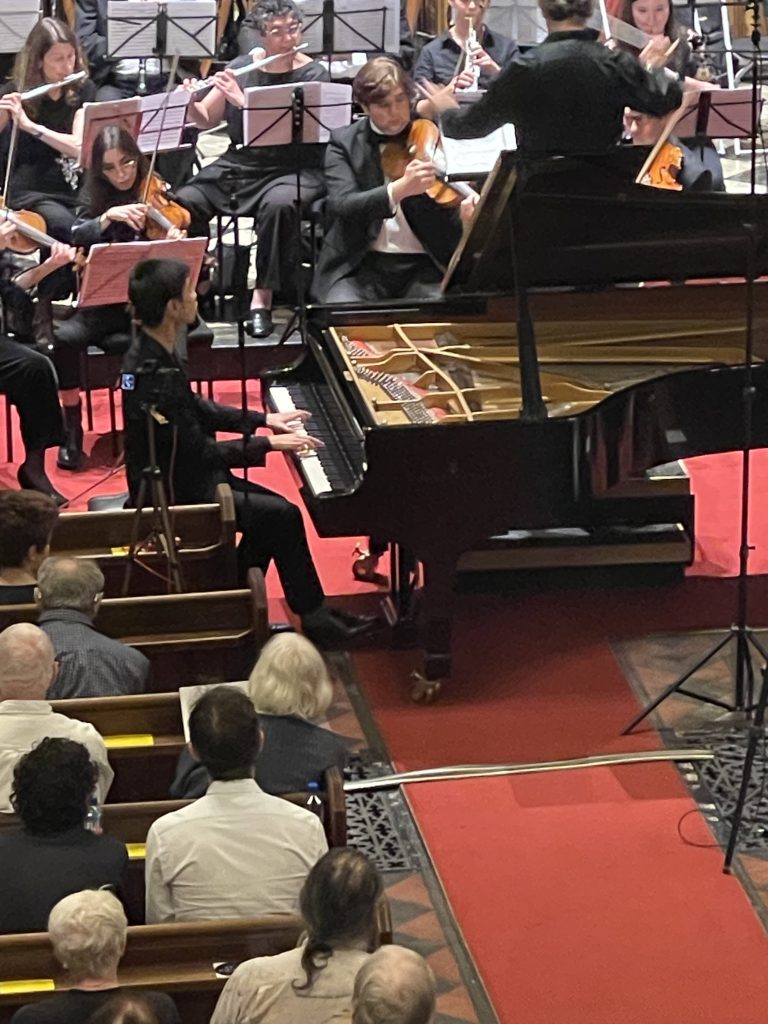
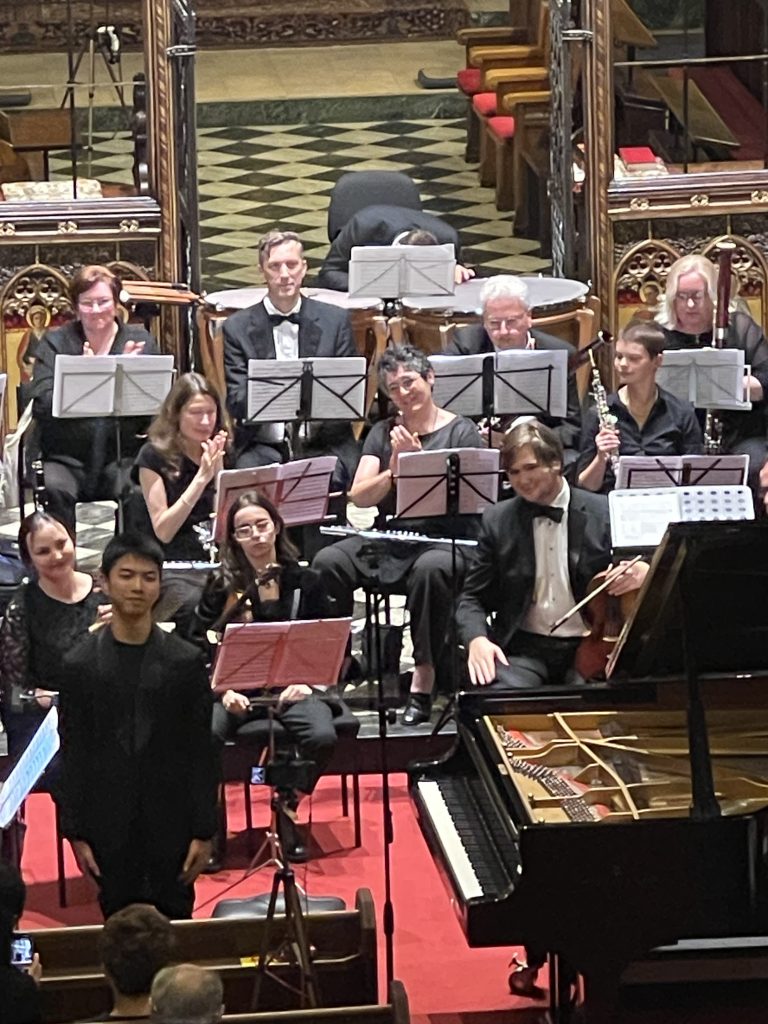
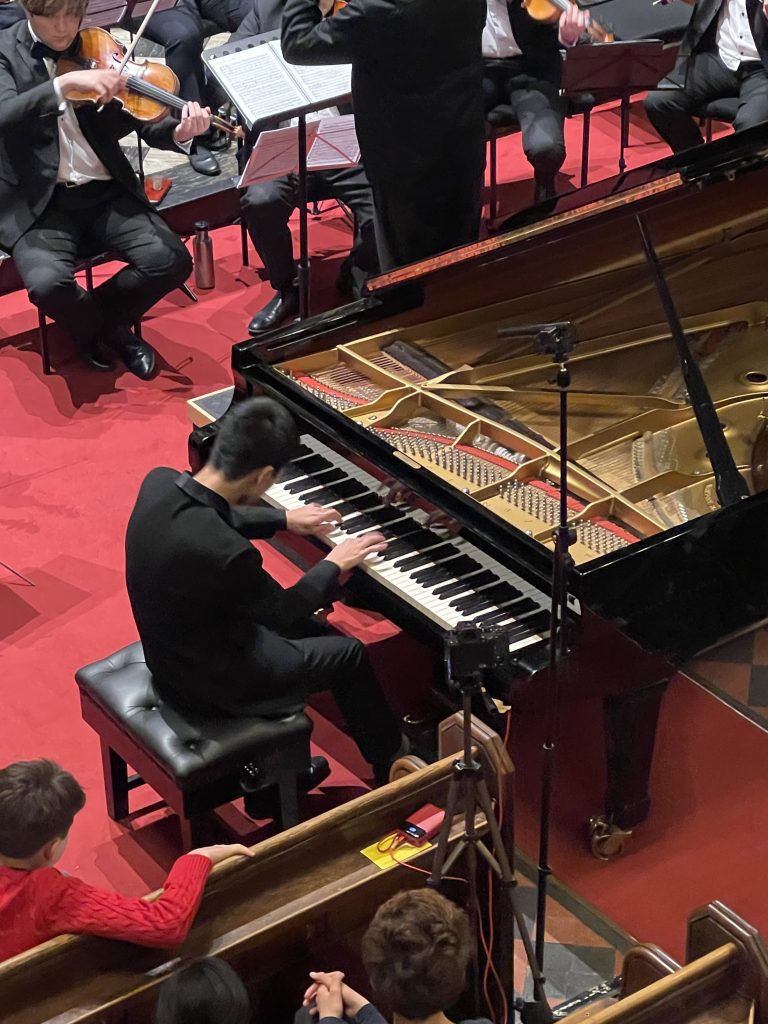
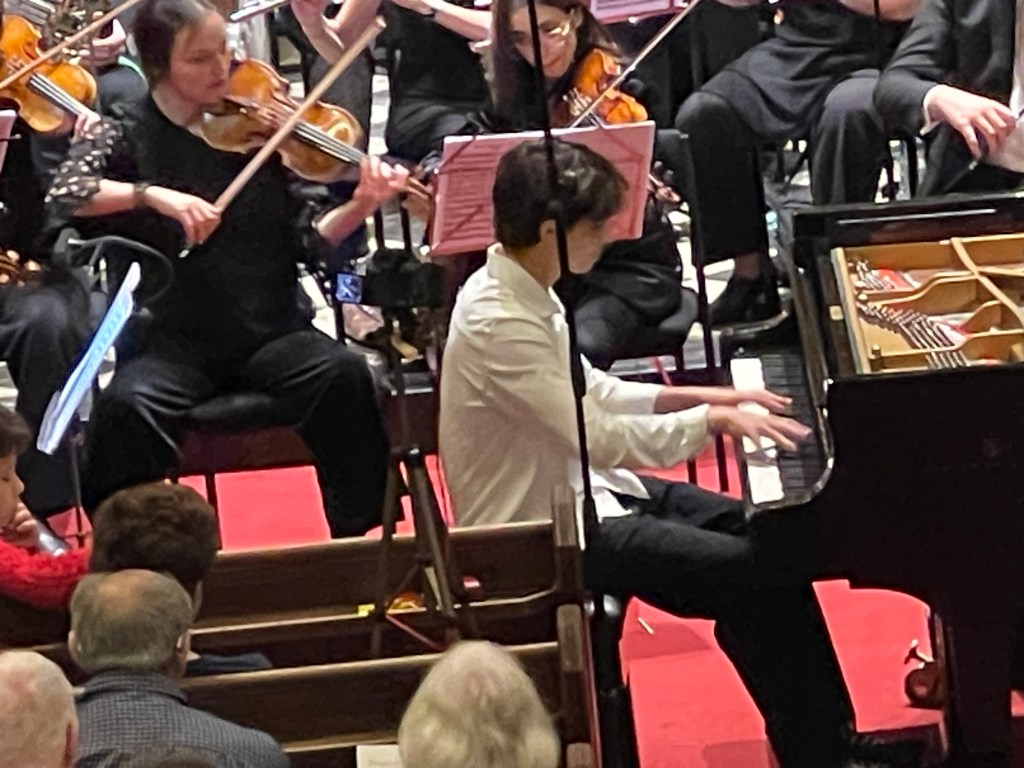
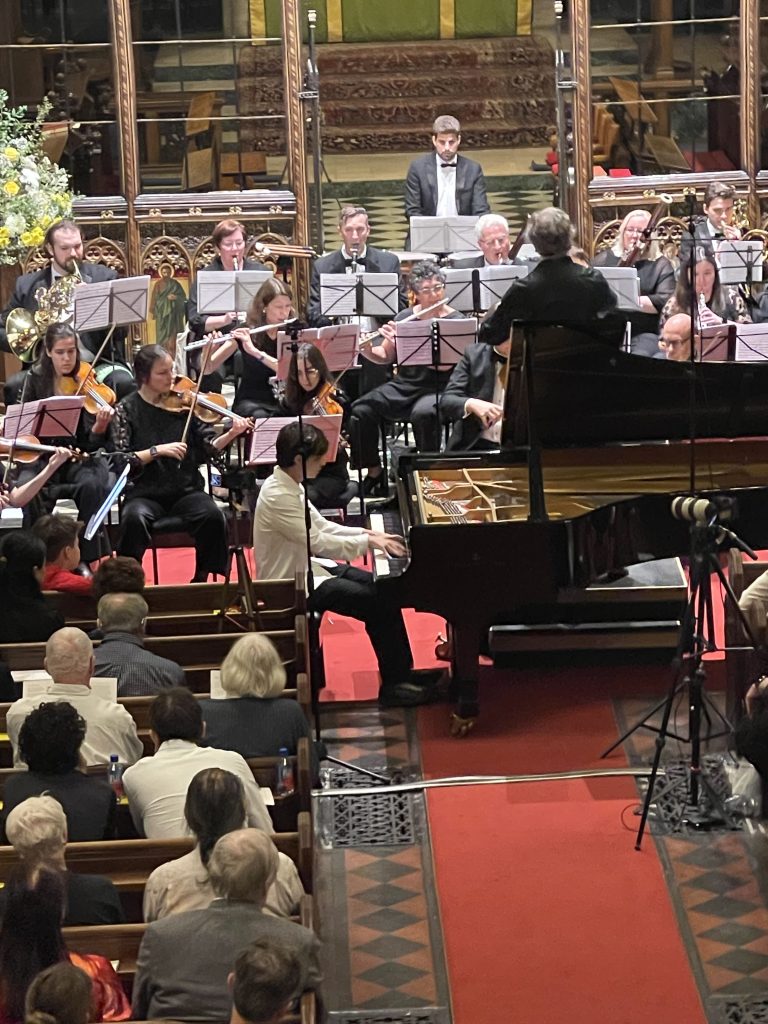
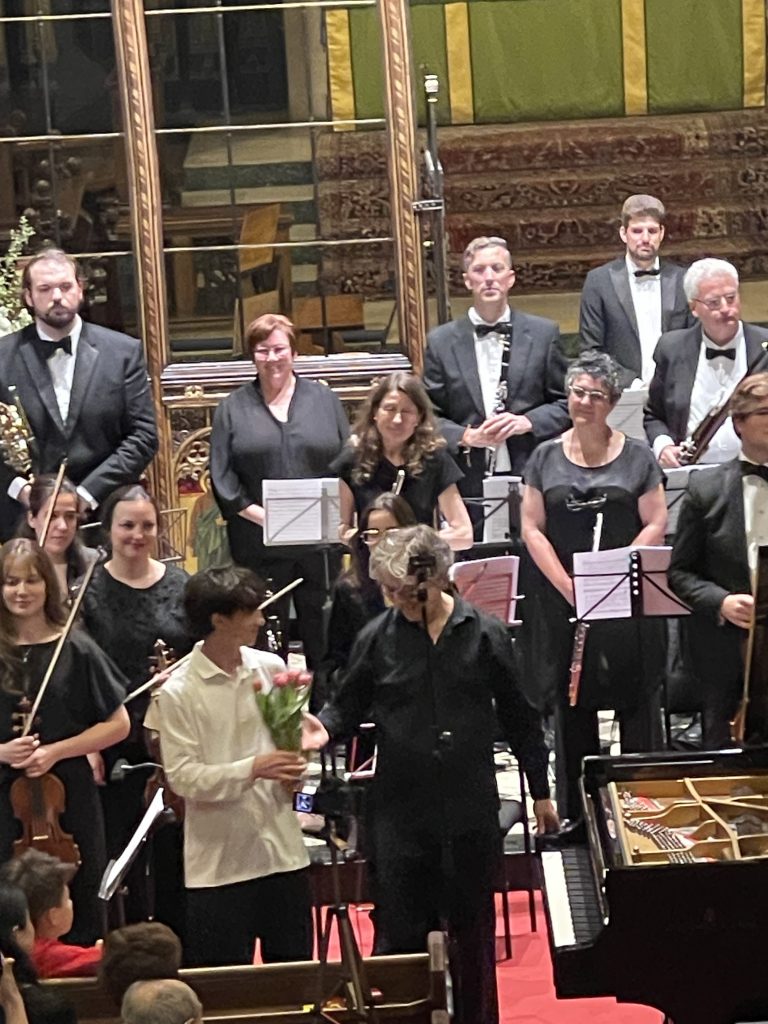
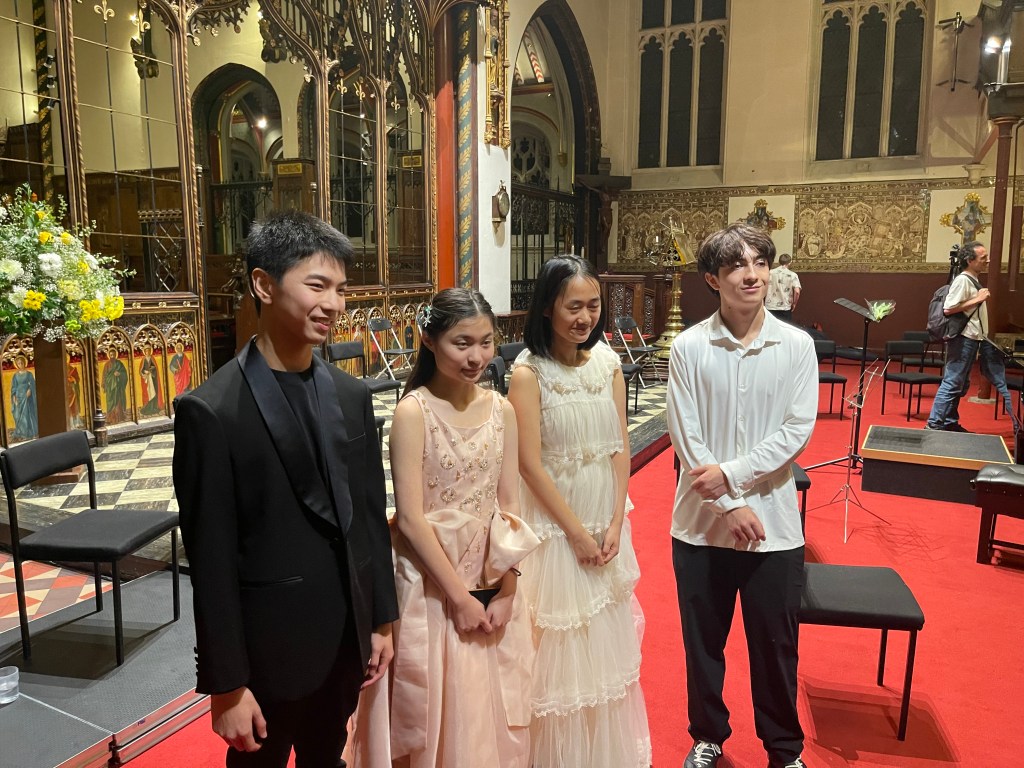
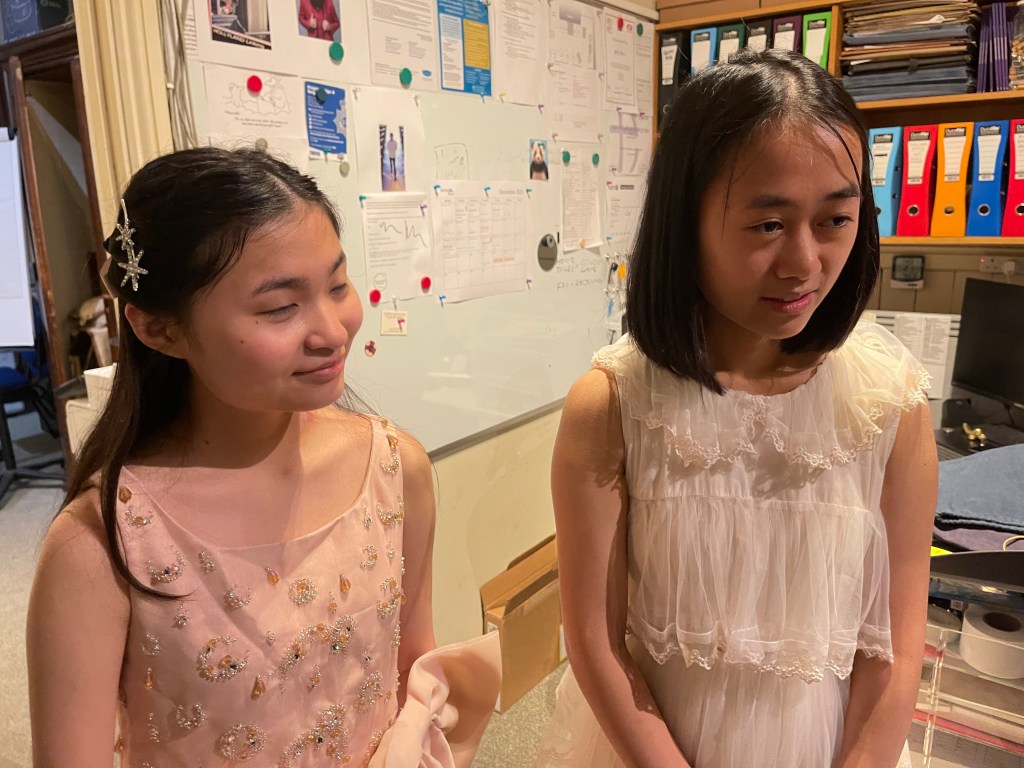
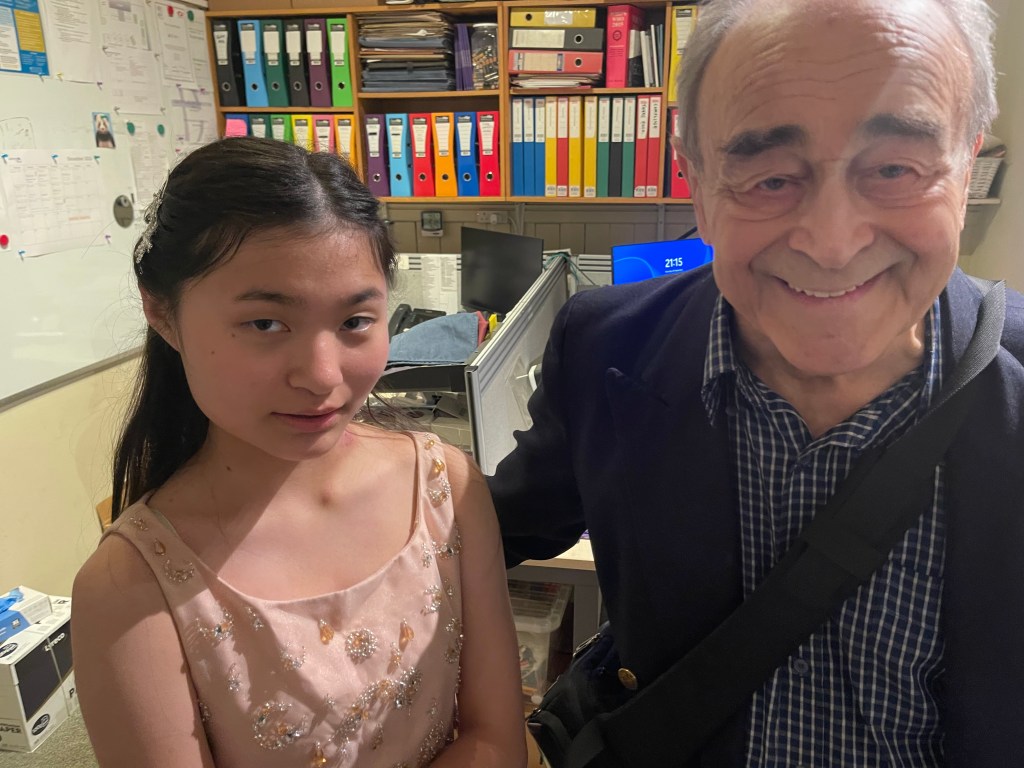
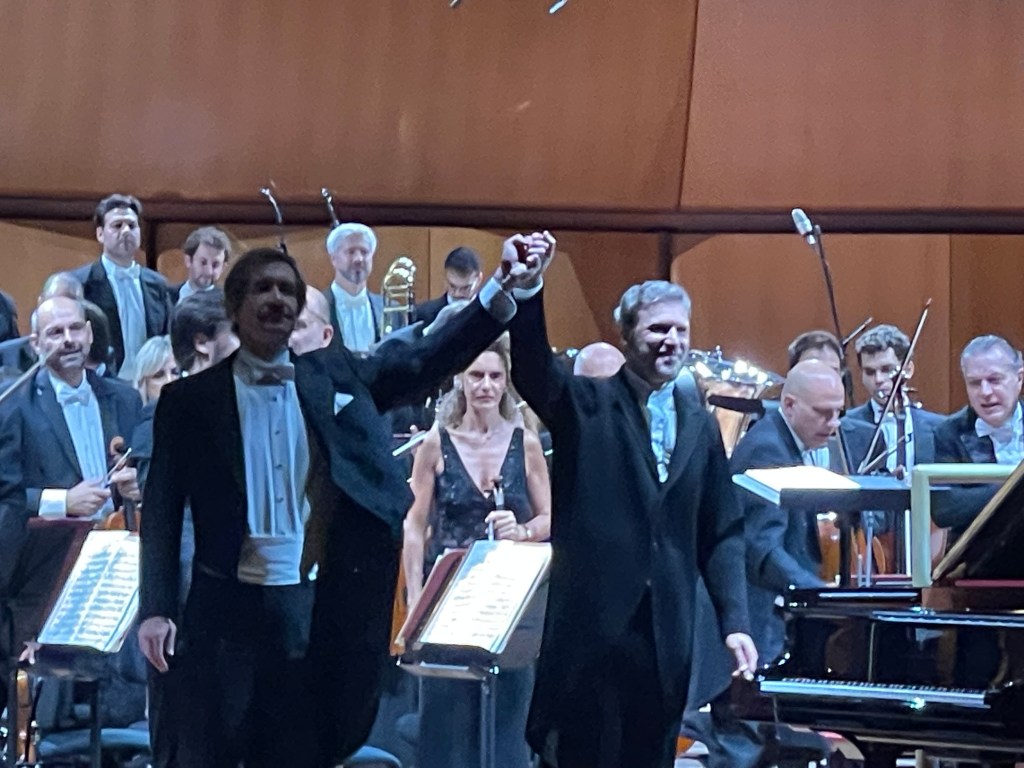
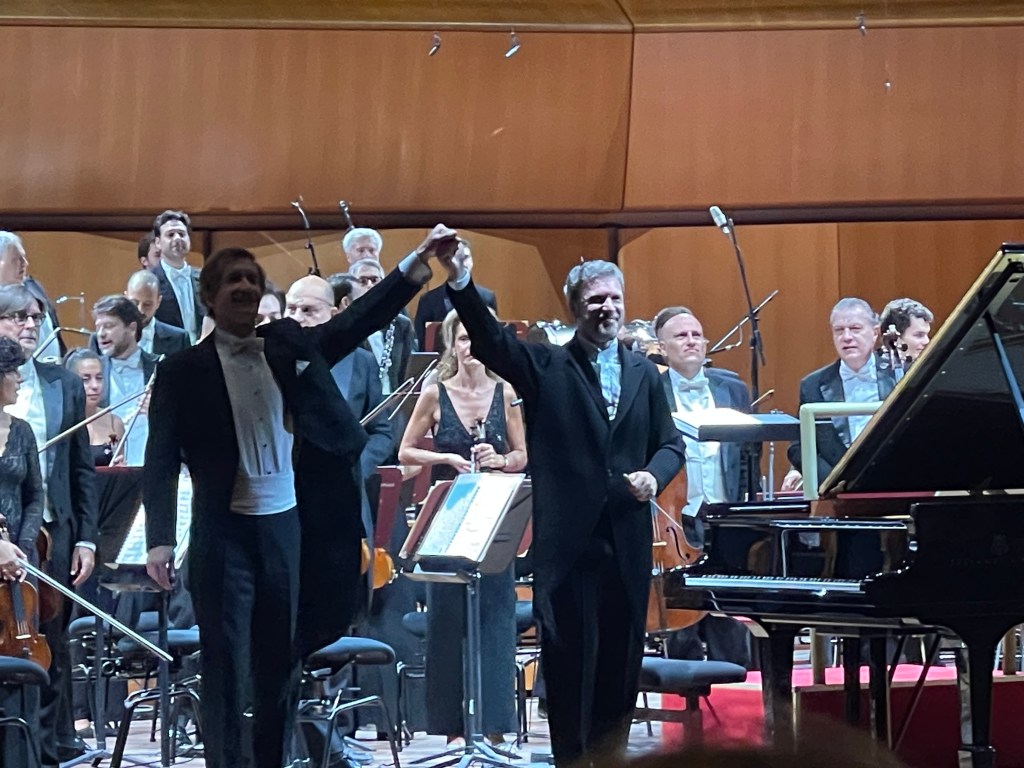
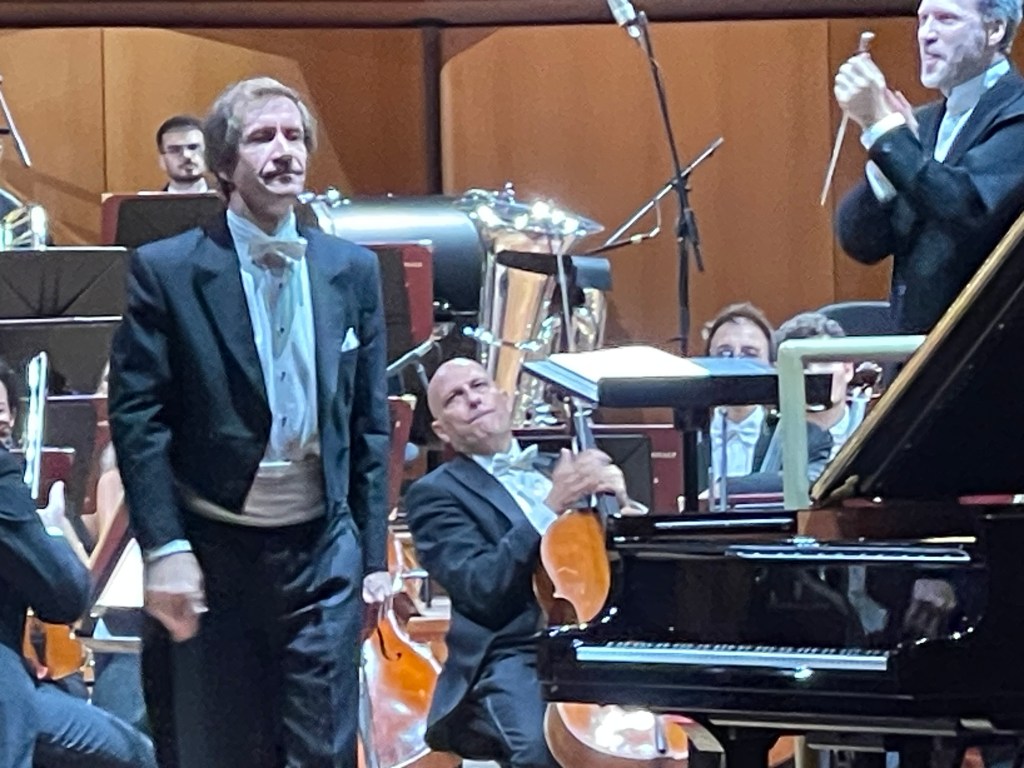
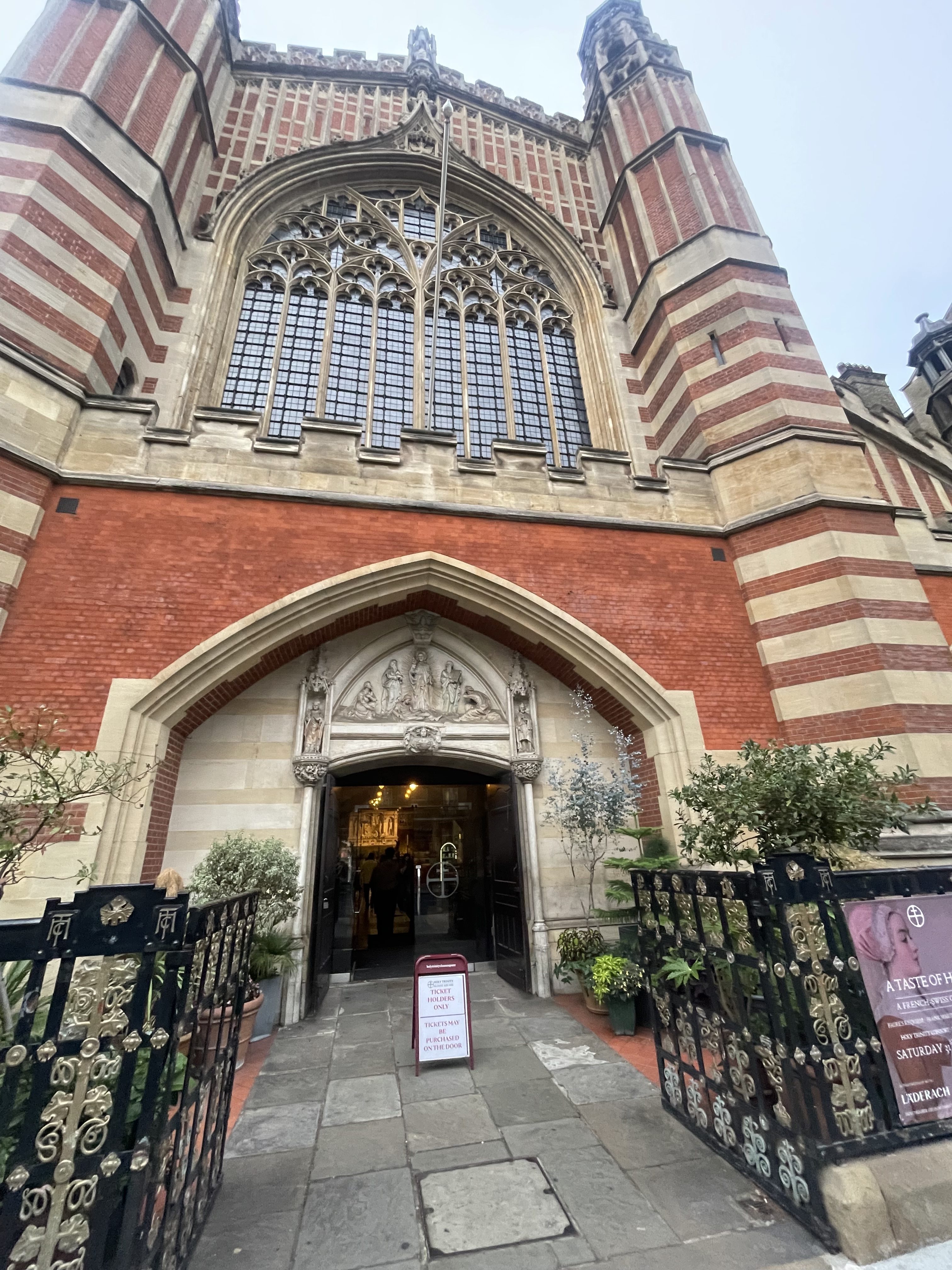
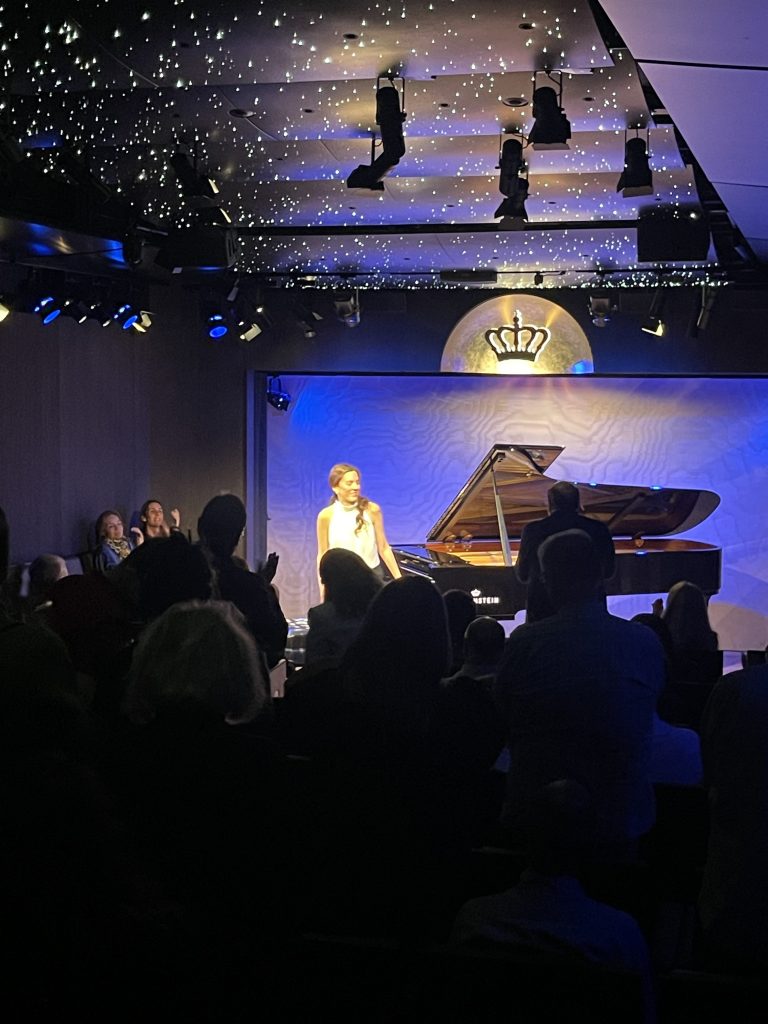
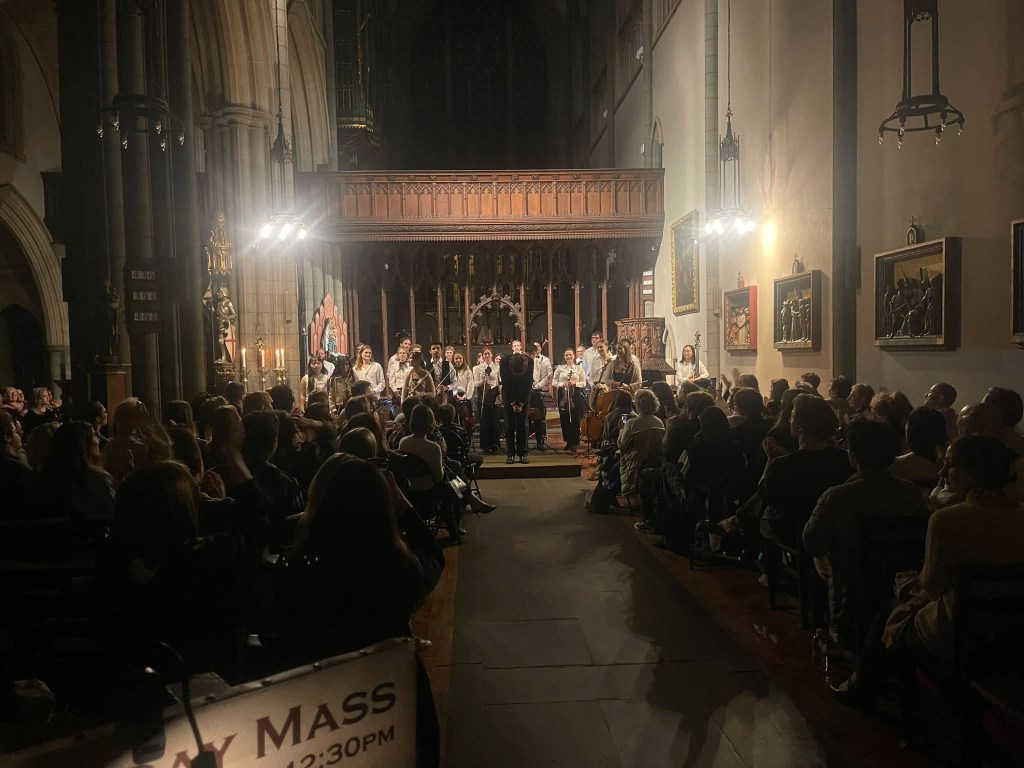
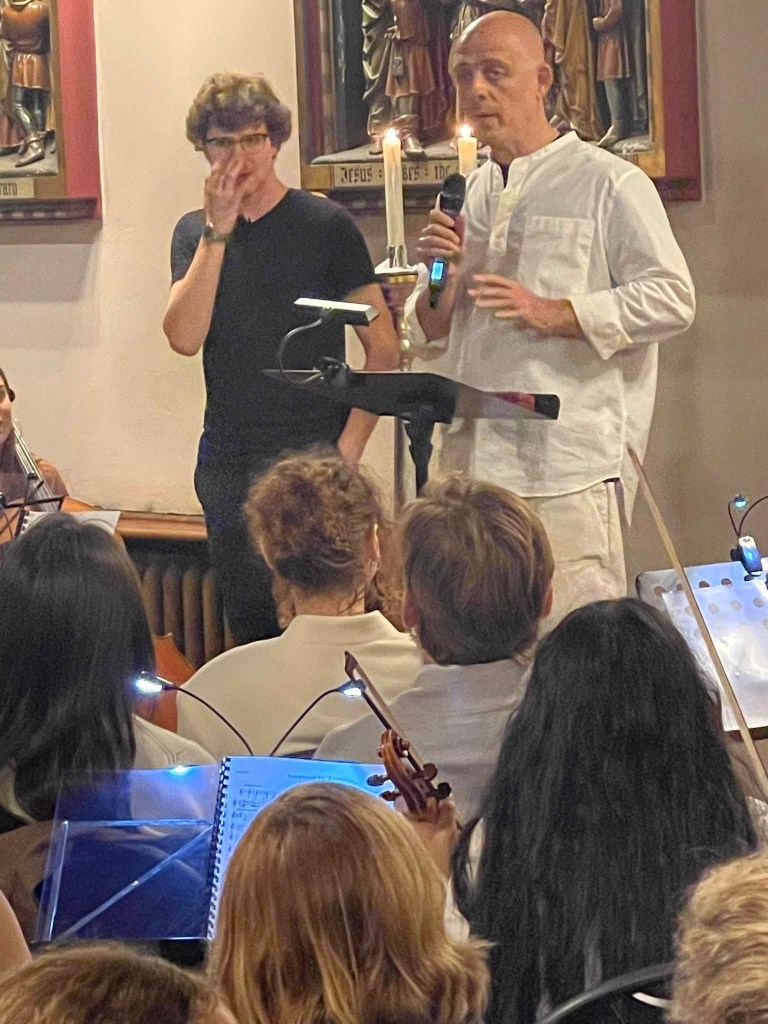
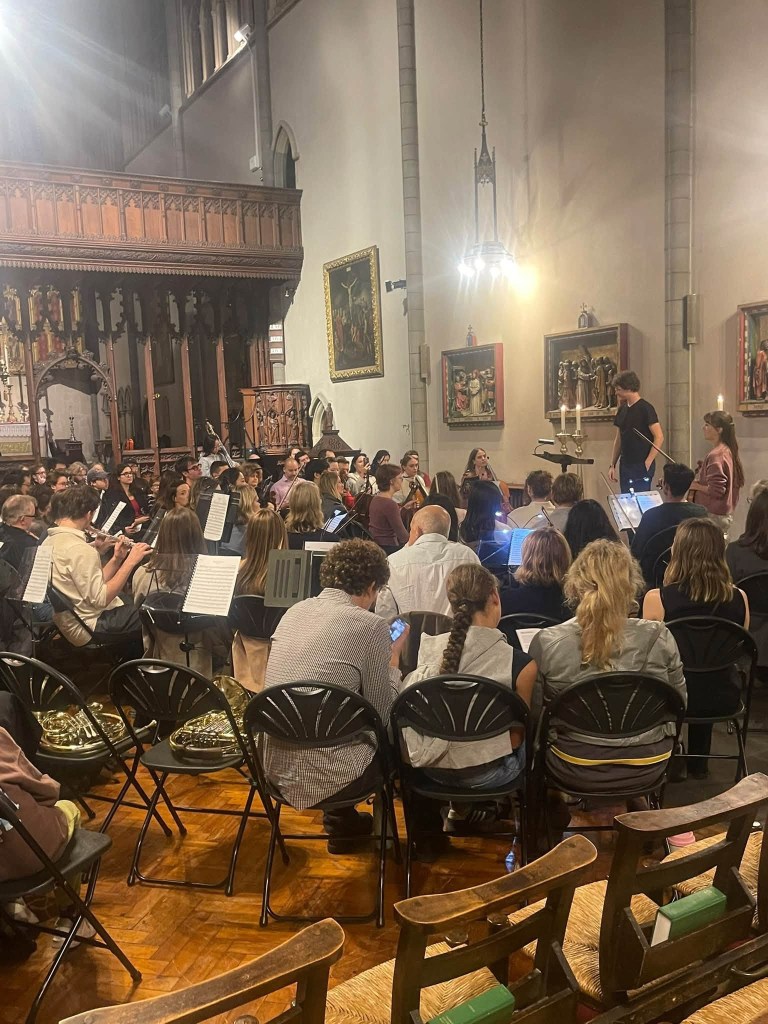
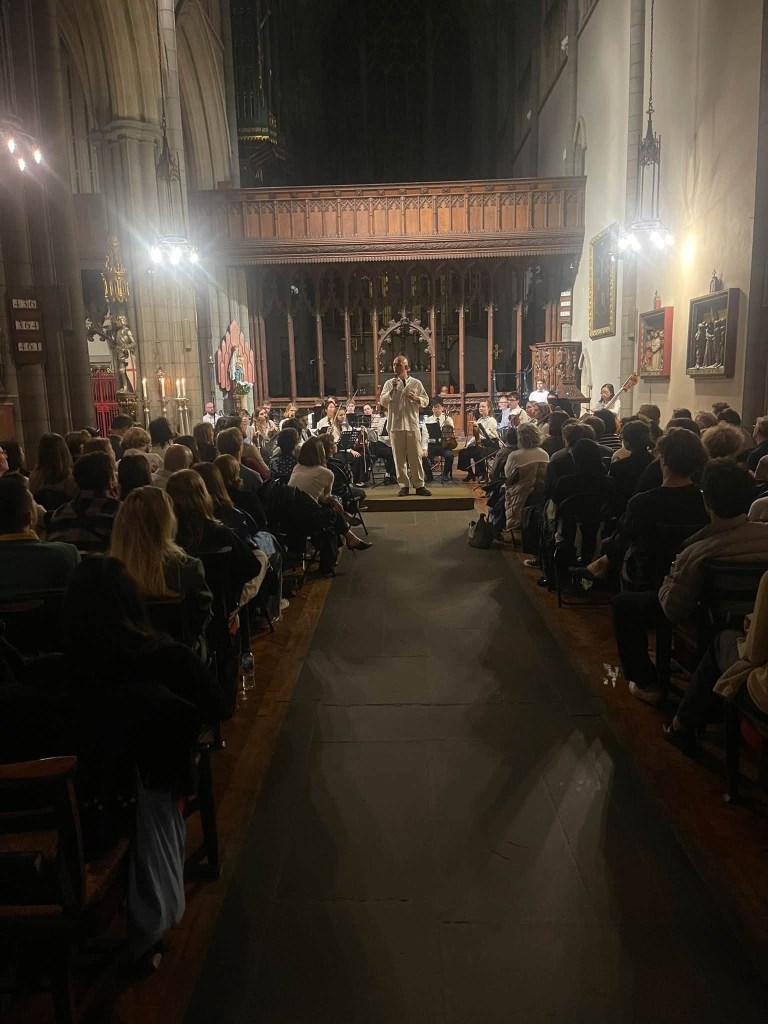
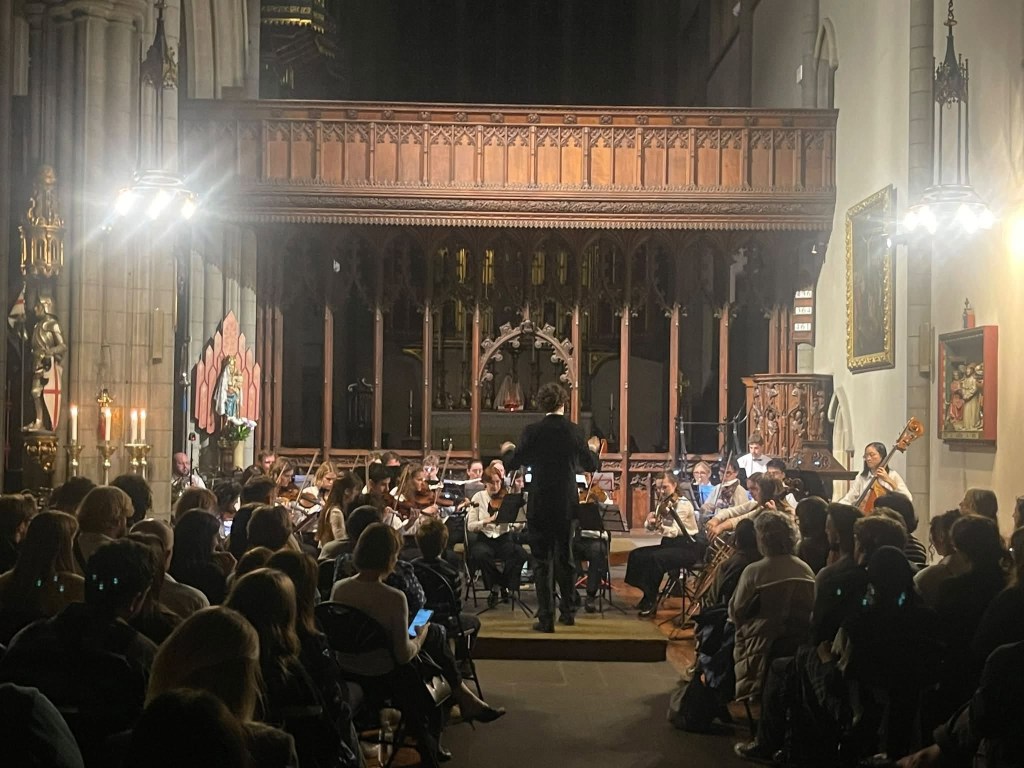
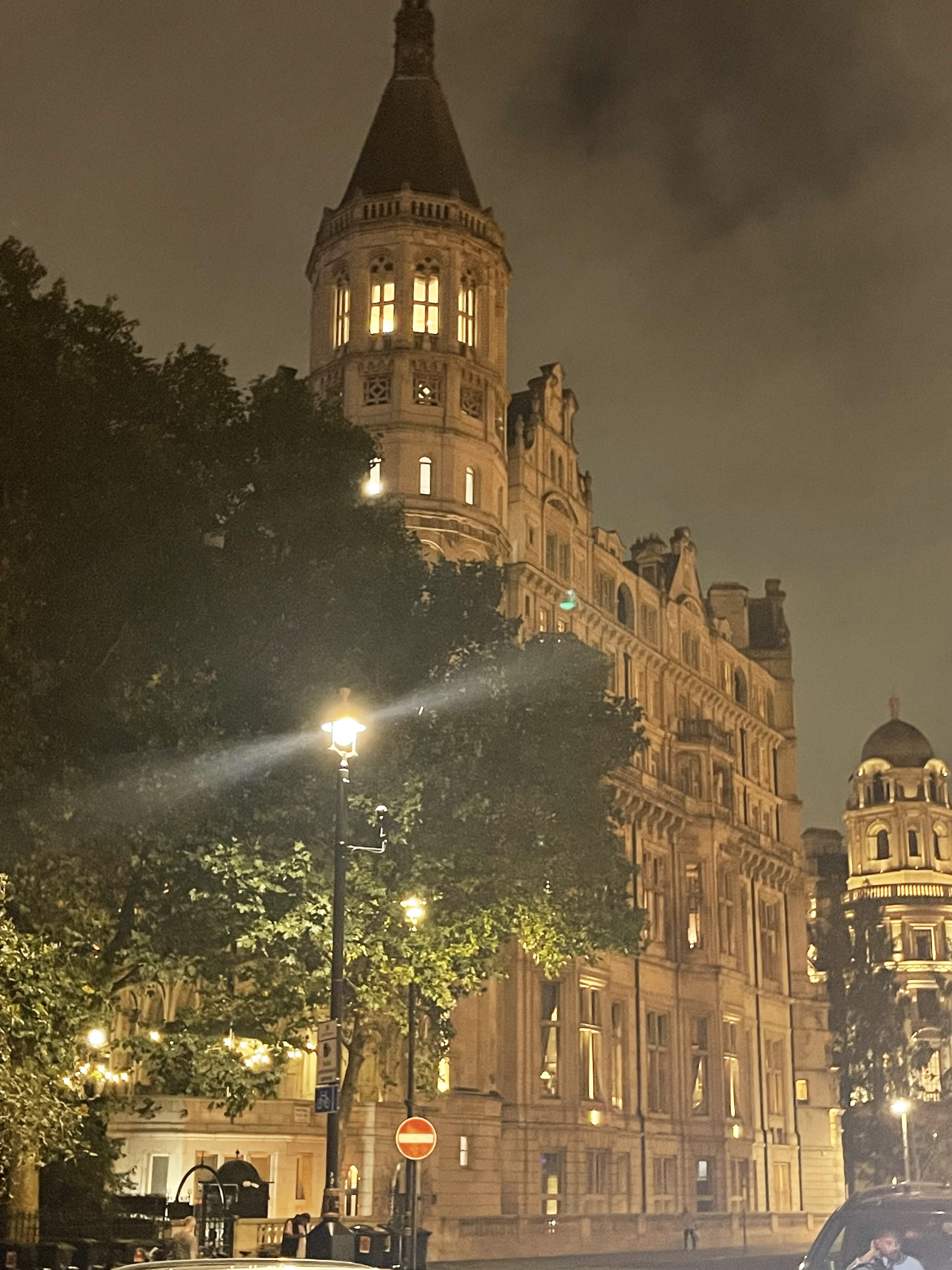
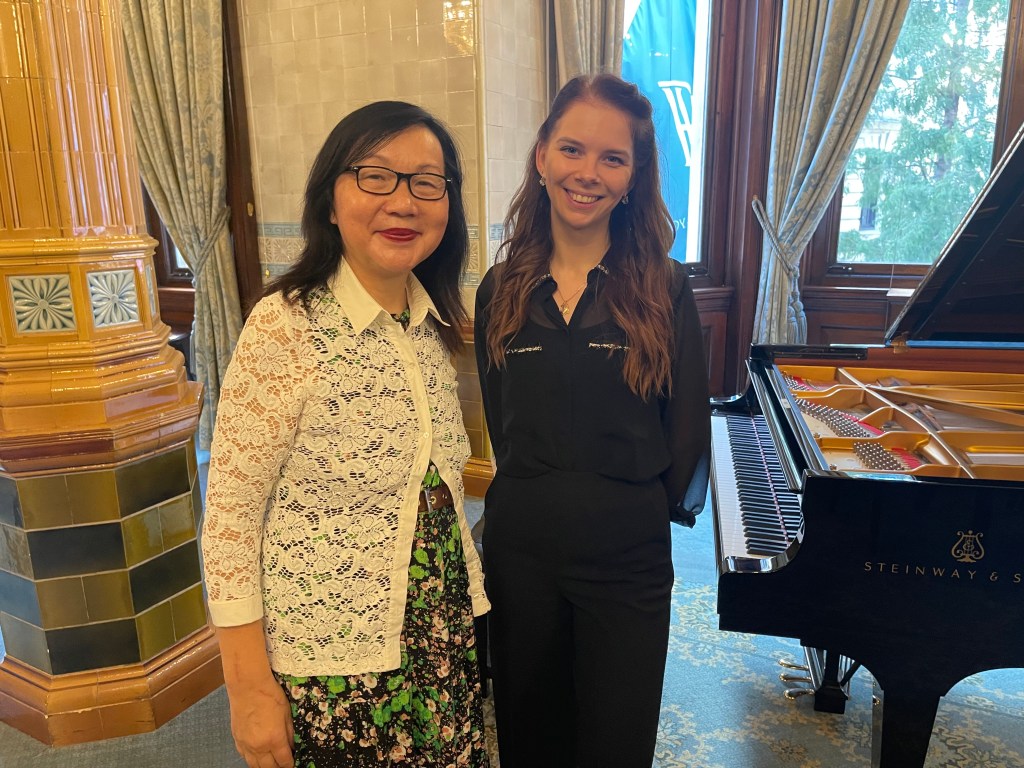
Four young masters ranging in age from 13 to 17 astonished the public in Belgravia where many outside in the restaurants and cocktail bars that abound in these parts , were intent on enjoying this Indian Summer . But those who wanted to replenish their souls and admire the dedication and talent of four teenagers had sought refuge in the beautiful edifice of St Paul’s in Wilton Place The words of Artur Rubinstein are much better than any others to describe talent .
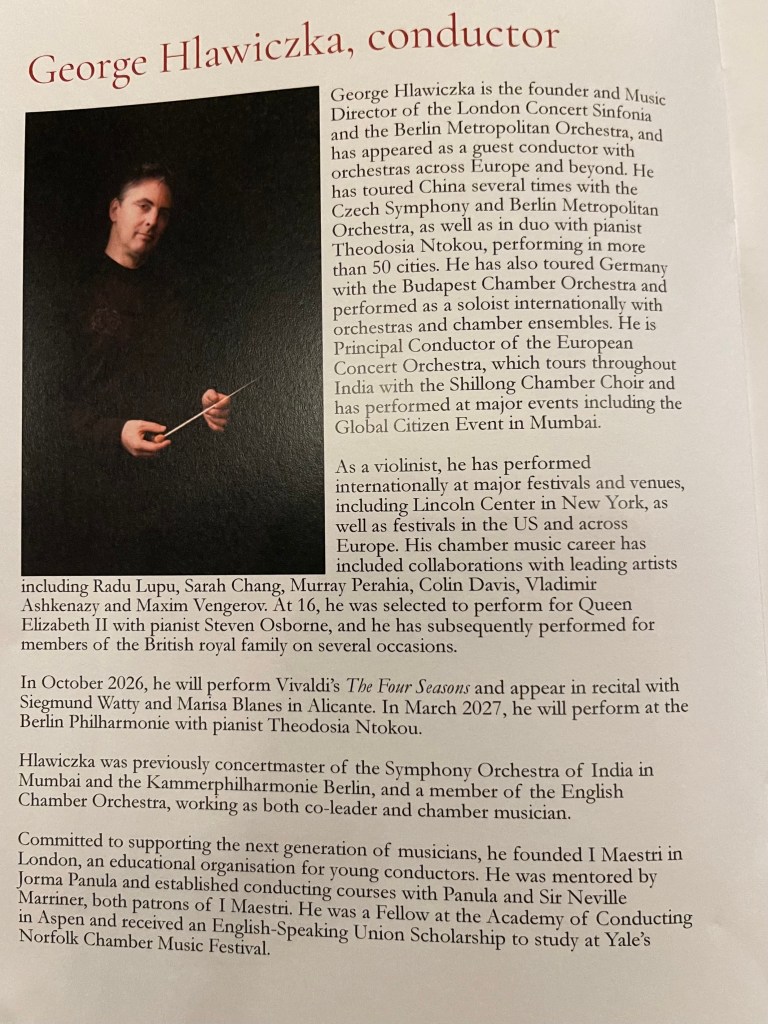
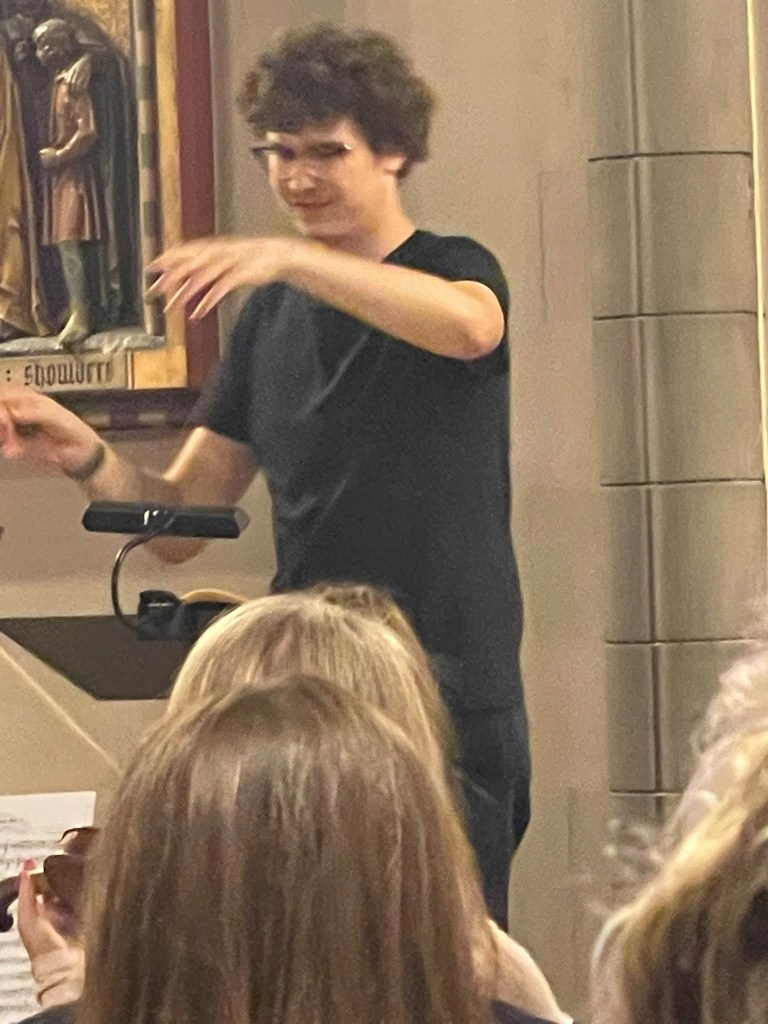
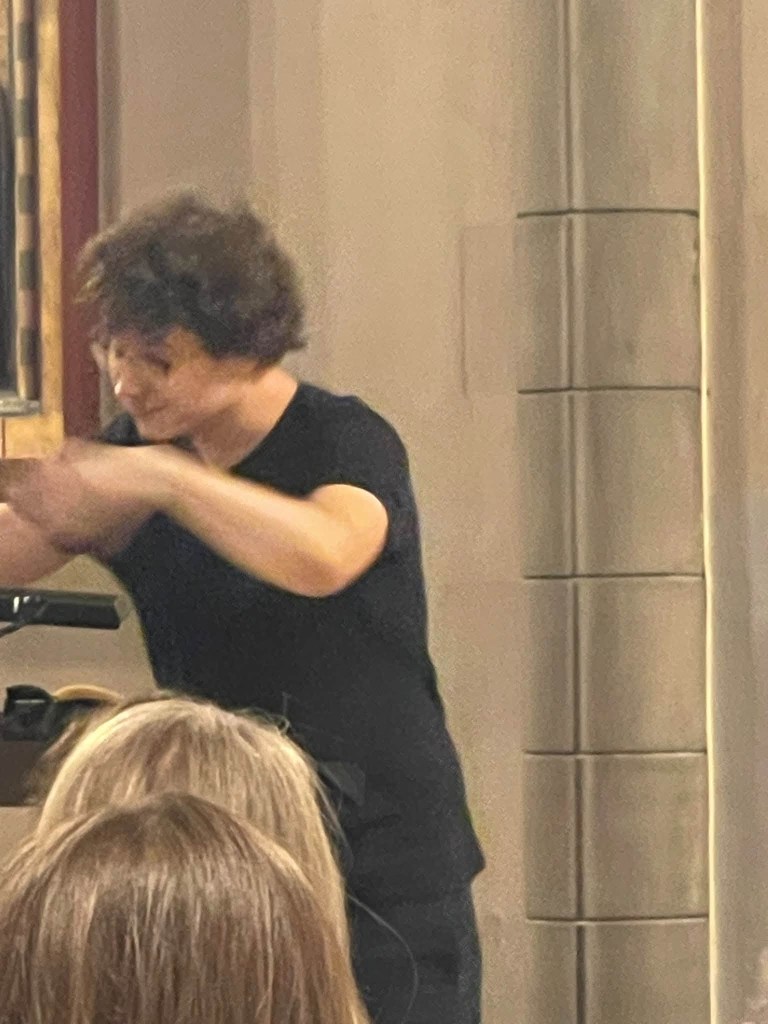
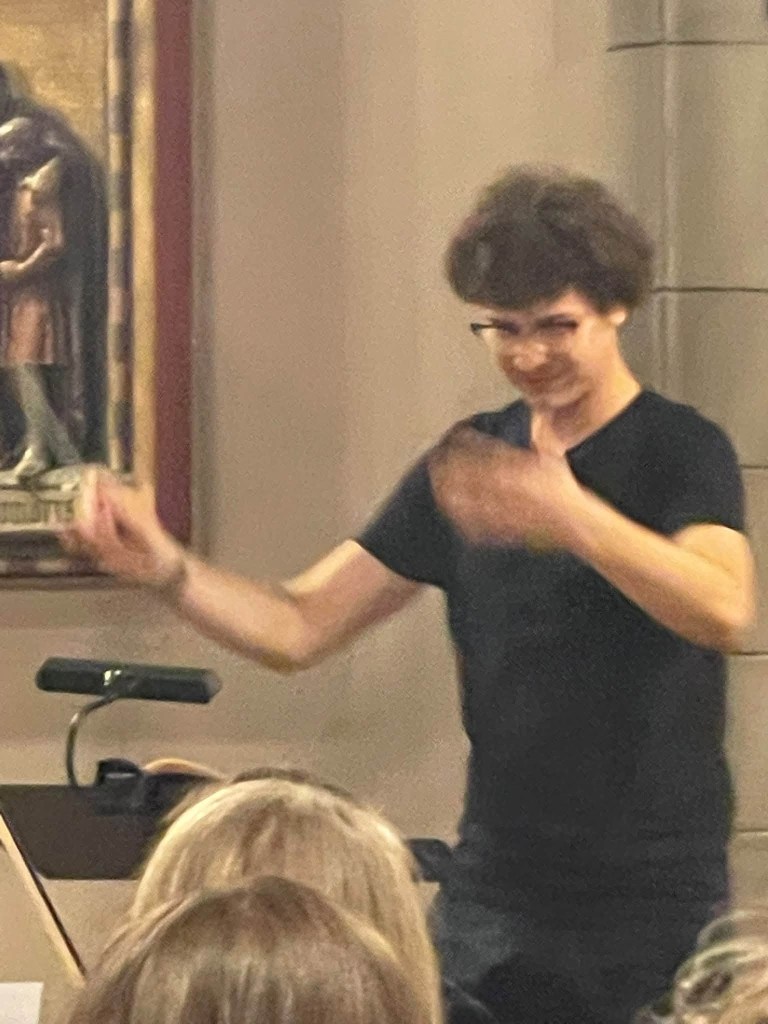
Congregated under the baton of the eclectic George Hlawiczka and his very fine youthful orchestra that includes many recently graduated top musicians, as we watched astonished as he who greeted us at the door and was seen behind the bar and even moving the piano, stood in front of his orchestra with masterly authority and humanity as he followed each of these young masters with cat like intensity and encouraging warmth .
George is himself also a wonderful violinist so it was no surprise that he conducted his two violin soloists with inside knowledge of subtlety and burning intensity.
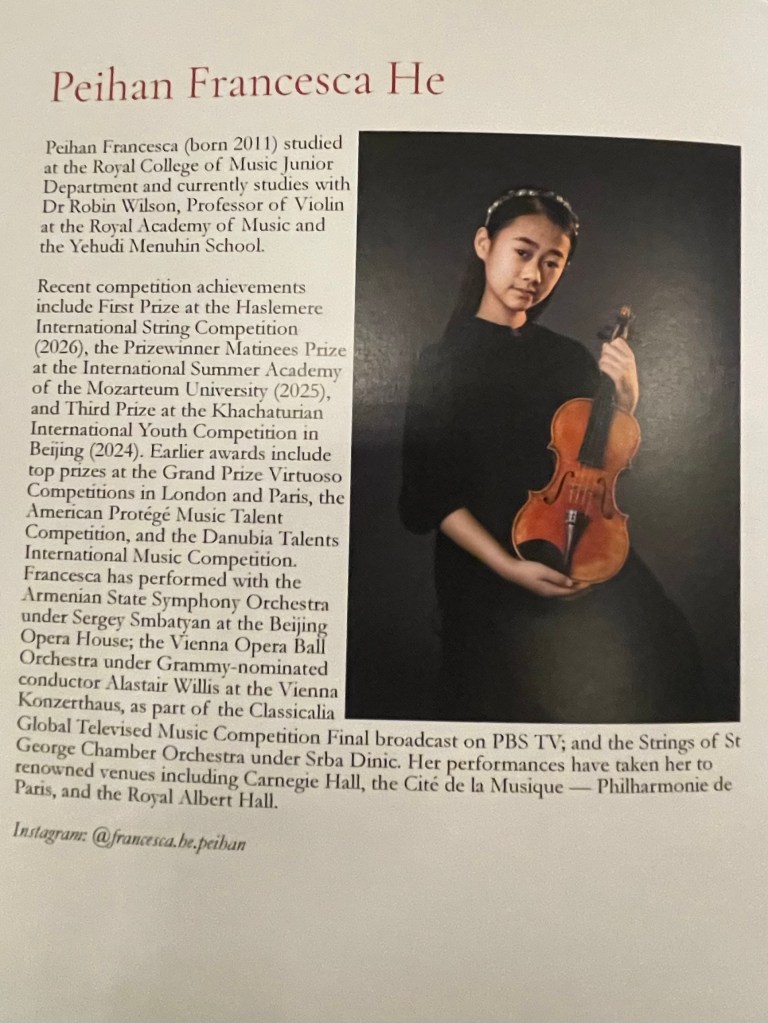
Fifteen year old Piehan Francesca He, mentored by Dr Robin Wilson of the Royal Academy and Menuhin School . Menuhin of course was a child prodigy playing with Elgar his own violin concerto as a teenager with the composer anxious only to get to the race course in time, as the young Menuhin in breeches took the world by storm under the baton of conductors such as Bruno Walter and Arturo Toscanini.
Francesca played the Bruch concerto with searing intensity and mastery where every note was played with the weight of an artist of a maturity well over her actual age .
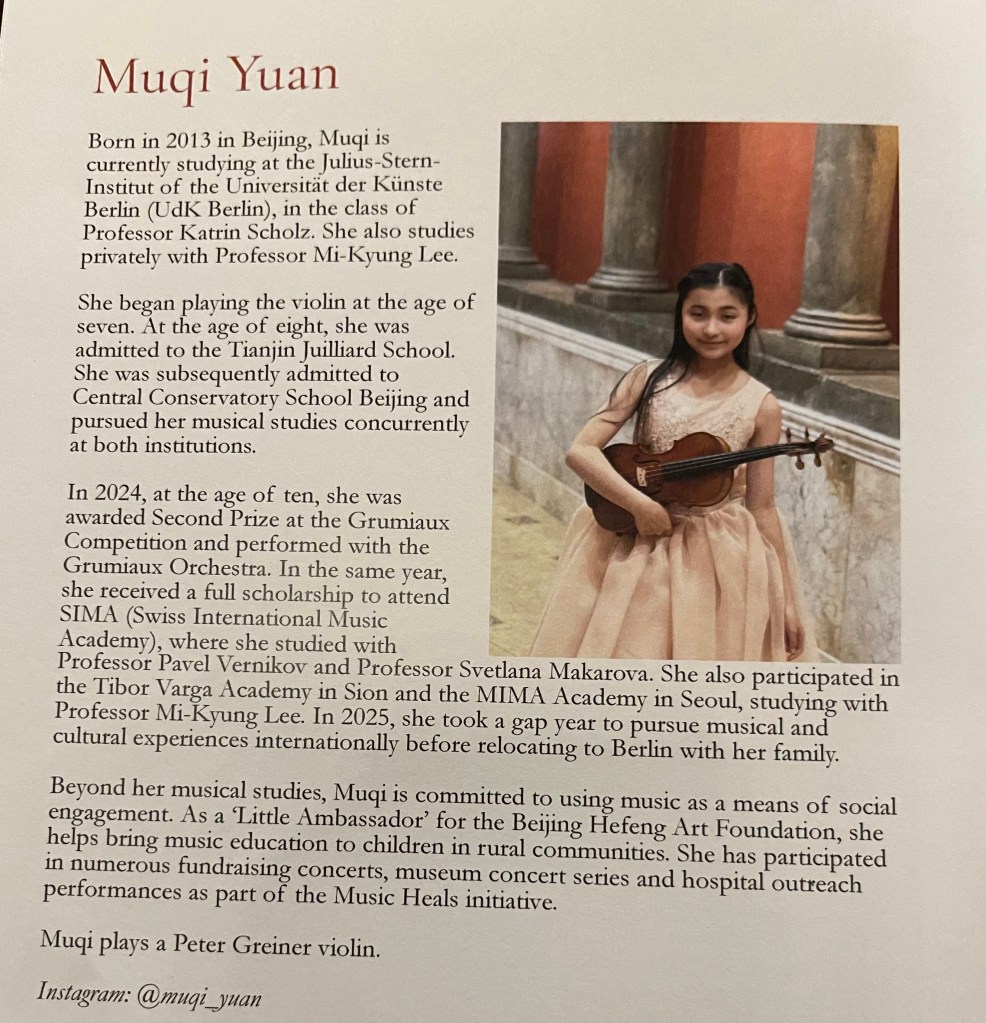
If one thought this was a performance to cherish we were astounded by the thirteen year old Muqi Yuan who played with such assurance and authority that had one closed ones eyes they would have thought this might be a youthful Menuhin or Perlman. Wieniawski’s second concerto , like that of Bruch, is a brilliant showpiece full of romantic ardour and astonishing virtuosity. I was not surprised to discover later in the Green room that she is left handed and as every violinist knows it is the left hand that calls the tune. I remember Ruggiero Ricci playing many times for us in Rome and Uto Ughi would be in the gallery to marvel at the left hand mastery of a violinist who had been a child prodigy at the time of Yehudi Menuhin and Ida Haendel. This was truly an astonishing performance and the jewel in a crown already shining brightly .
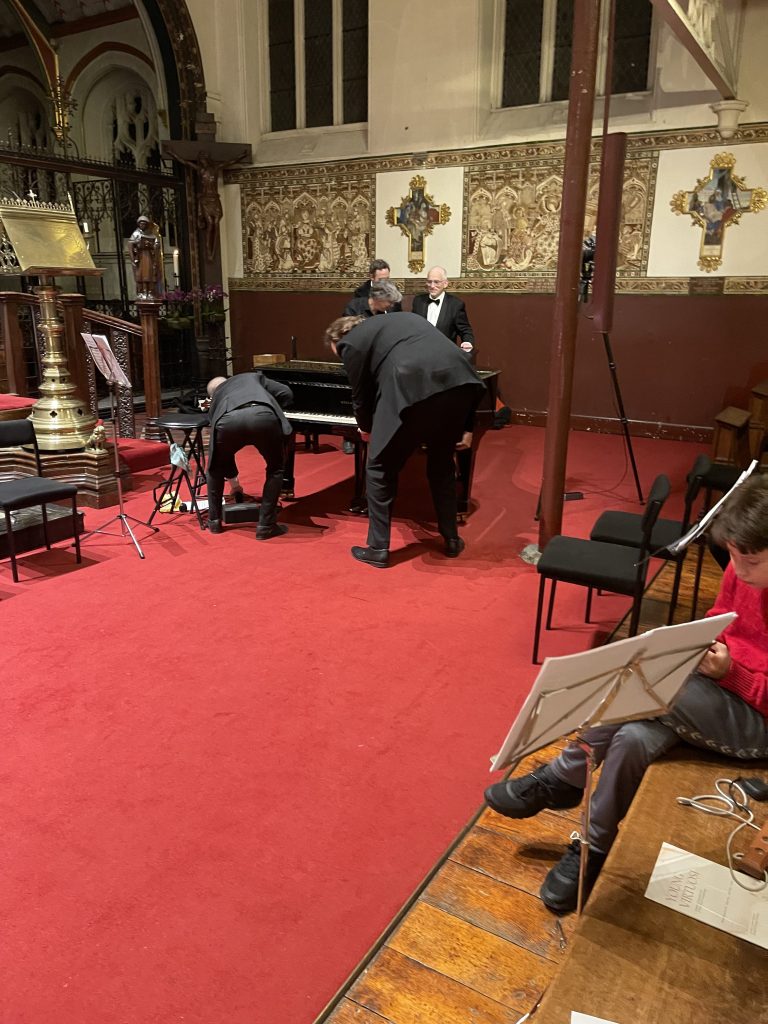
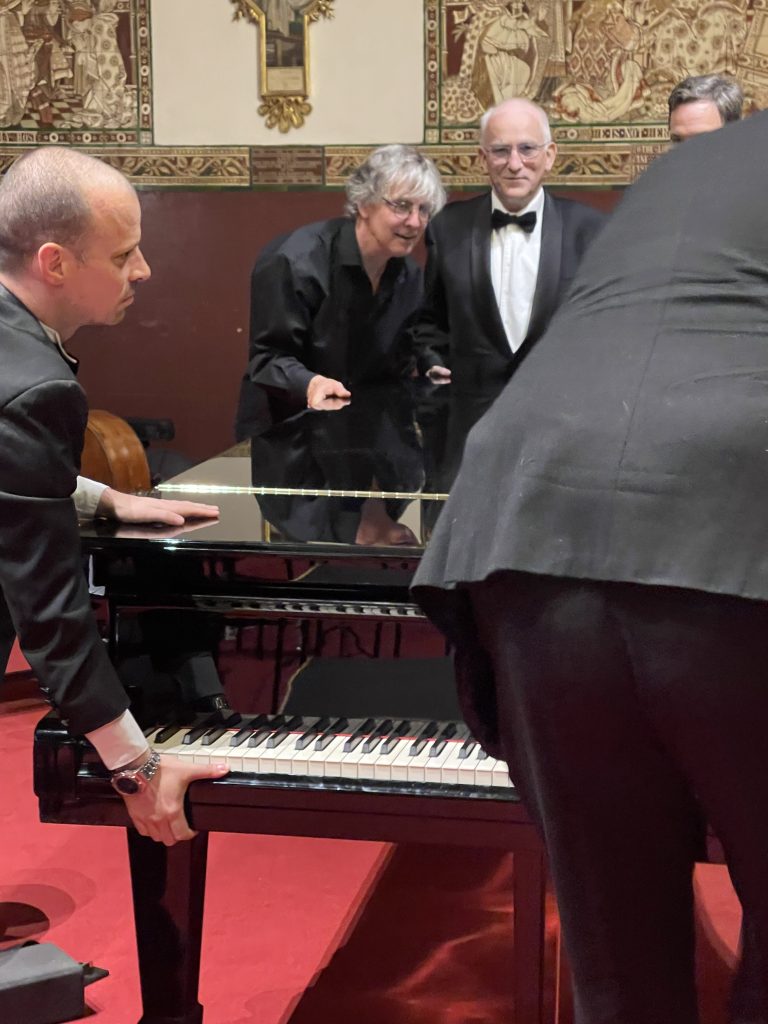
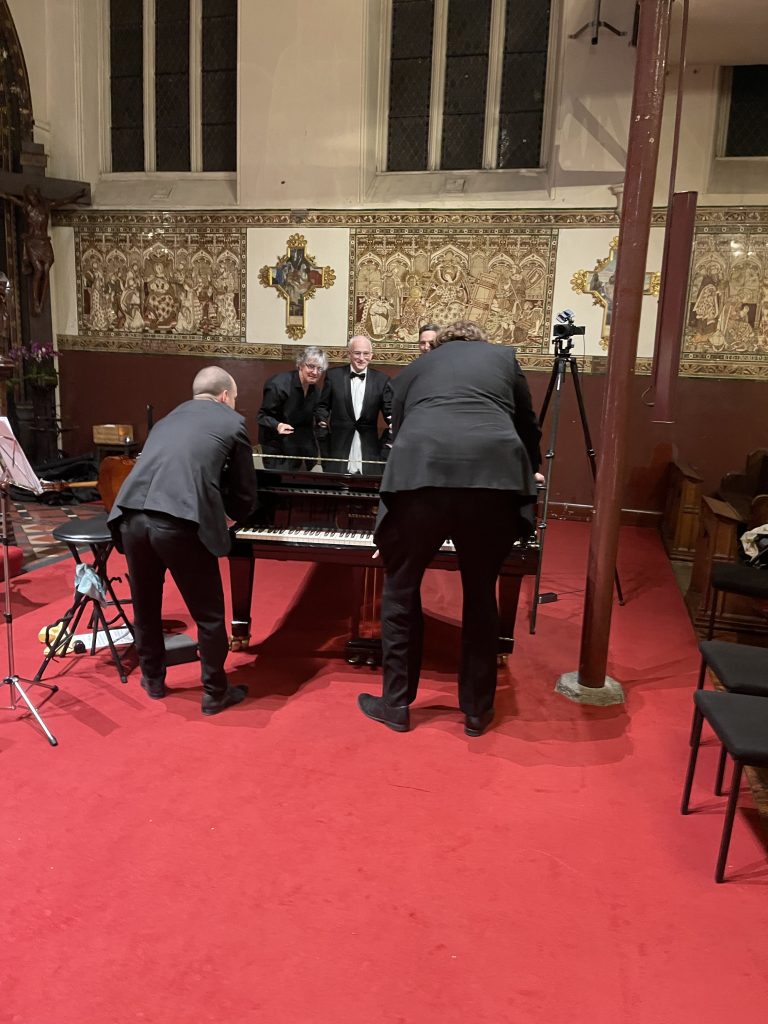
After the interval it was the turn of the piano and St Paul’s can boast a king of pianos with a Steinway D, that our valiant conductor moved into position with a little help from his more endowed colleagues, ready for concertos of Beethoven and Tchaikovsky .
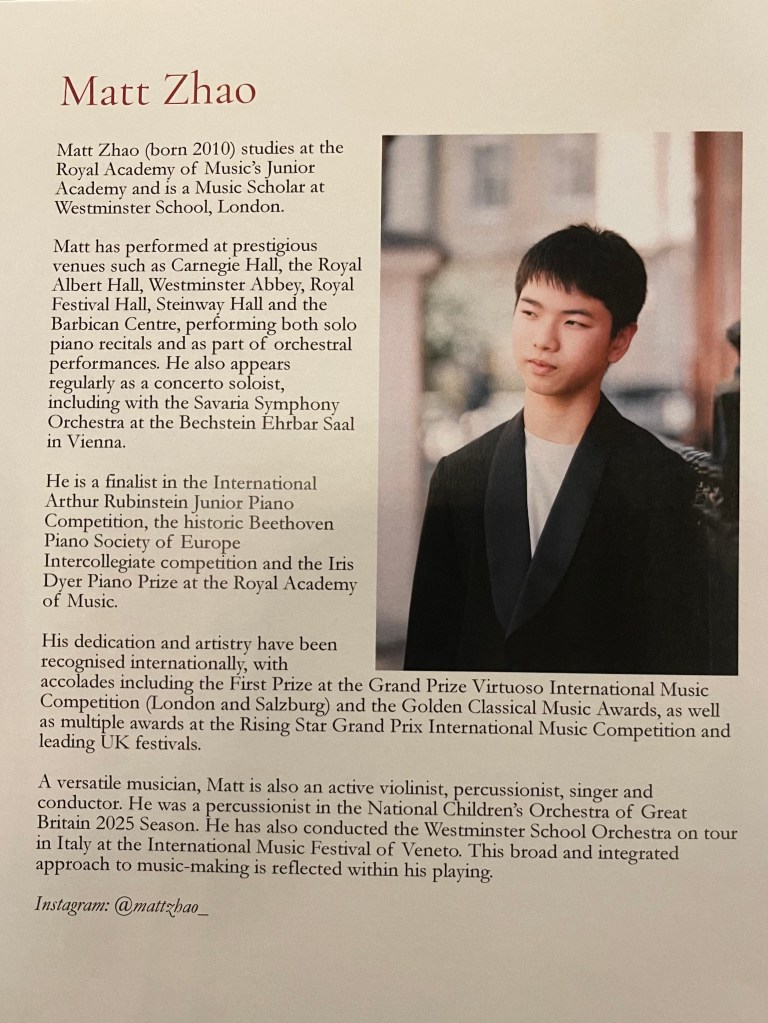
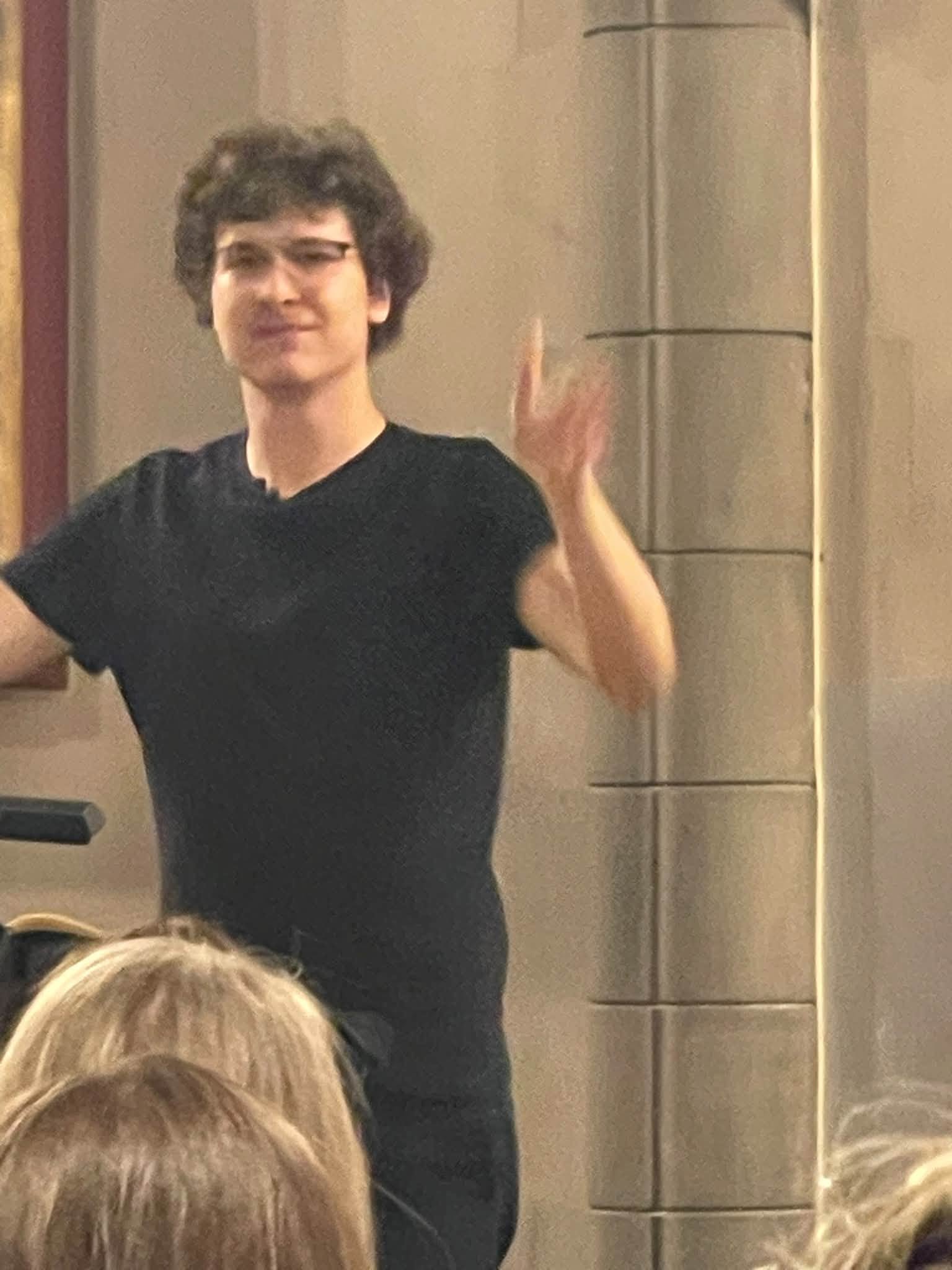
Fifteen year old Matt Zhao, a scholar of Westminster School and the Junior Royal Academy, gave a musicianly account of Beethoven’s Third Concerto . A beautifully shaped Largo encompassed by an authoritative Allegro con brio with its brilliant and the dynamic cadenza by the composer himself where Matt was able to transmit the improvised character of an irascible composer . The Rondo third movement was played with infectious ‘joie de vivre’ with a young man who was now evidently enjoying Beethoven’s ebullient virtuosity .
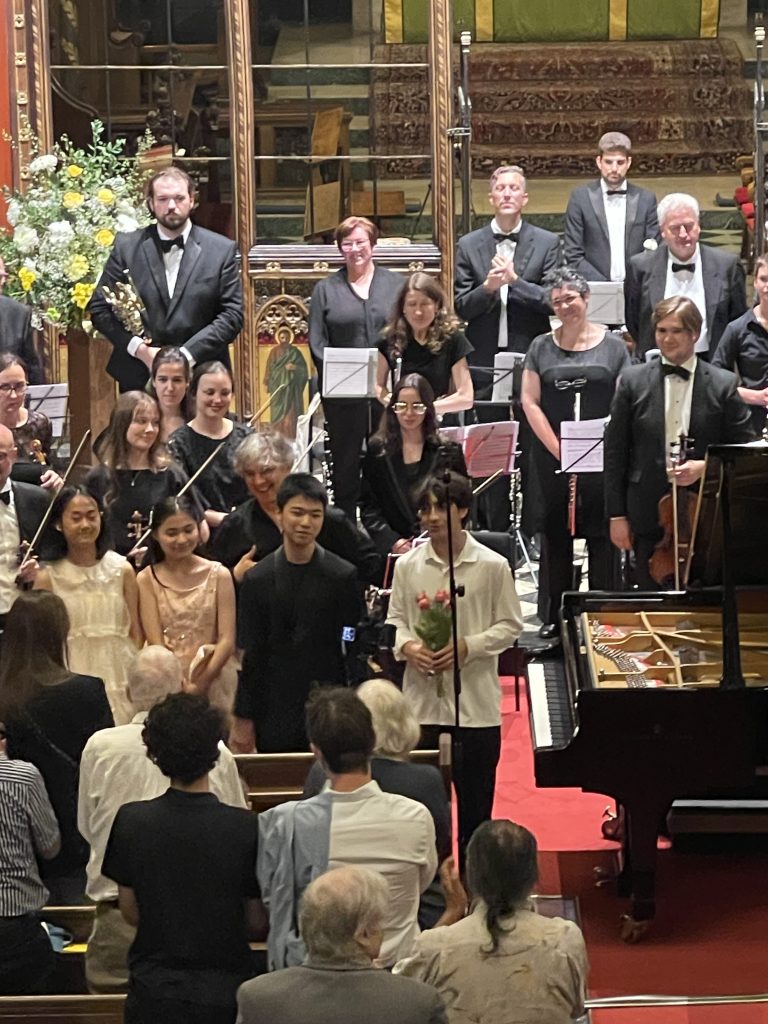
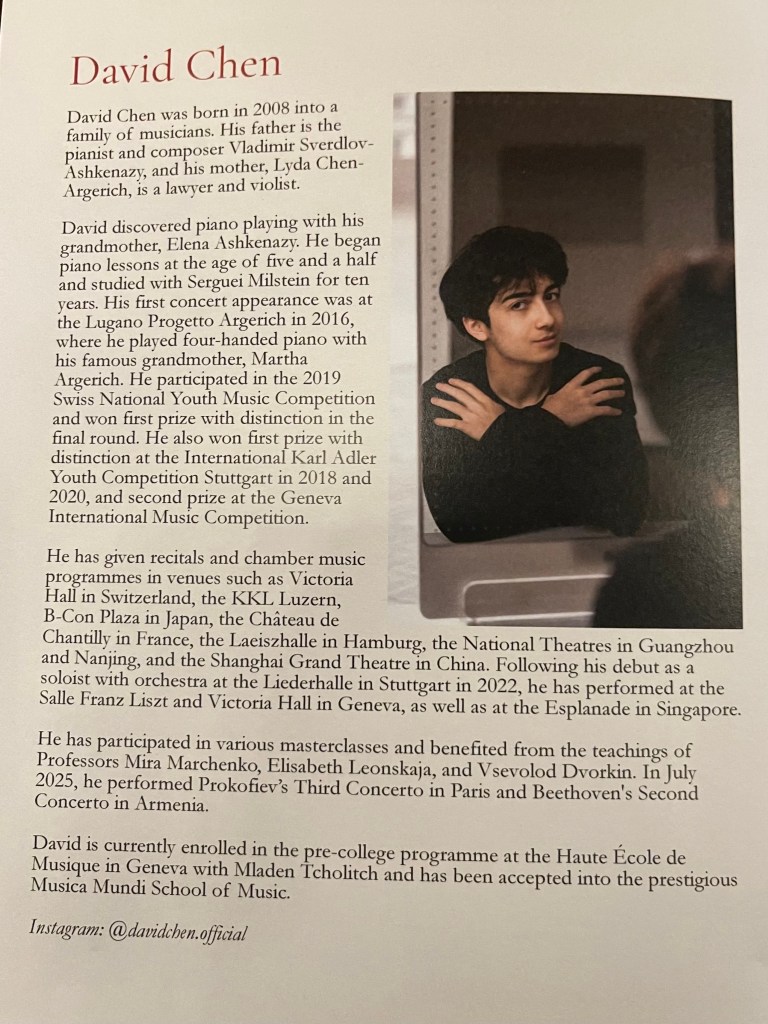
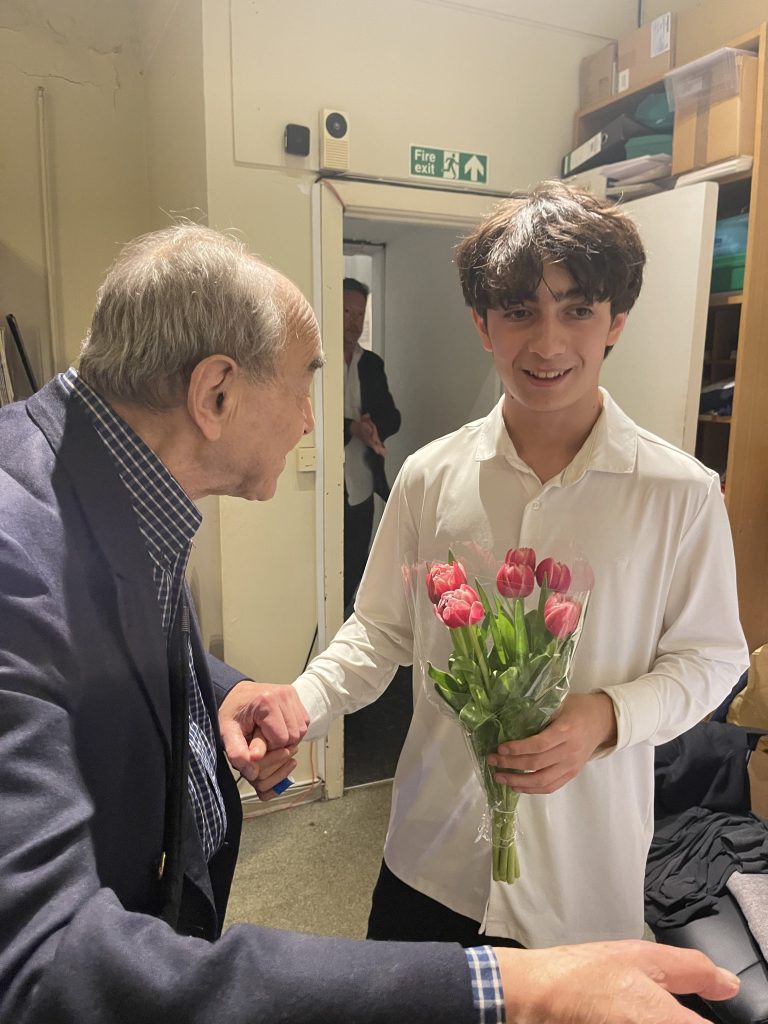
But the evening was crowned by a seventeen year old pianist who had not even been able to rehearse because of a finger injury . Playing of impetuous fluidity and personality with great temperament allied to fearless bravura and poetic beauty that are the same hallmark of his famous grandmother Martha Argerich !
Throwing off Tchaikowsky’s octaves, that Nikolai Rubinstein had declared unplayable , with a velocity and fluidity that would strike fear into most pianists but that David Chen relished with the simple natural mastery that obviously is in his genes. Ravishing beauty too with whispered playing of great projection and glowing beauty .
It was not surprising the ovation that greeted his astonishing final assault on the keyboard.
It reminded me of Sir Thomas Beecham admonishing a young Horowitz saying his orchestral players just could not keep pace with such Lisztian antics.
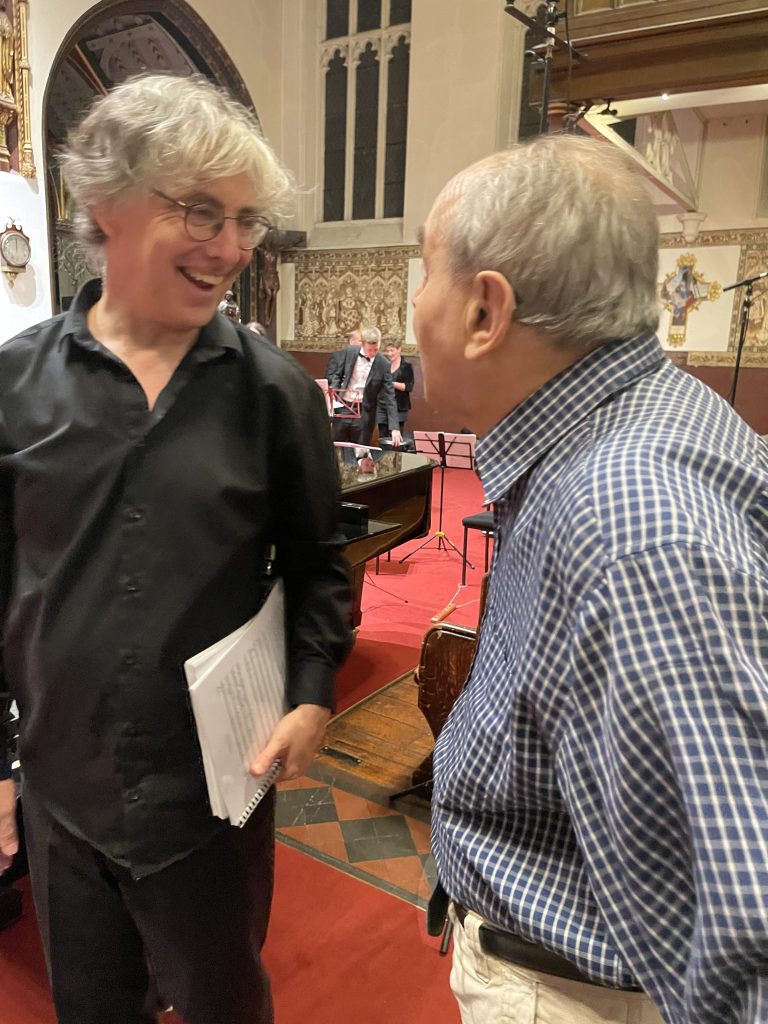
Well this orchestra did keep up under the eagle eye of the ever attentive George Hlawiczka , concert violinist, , conductor, impresario, barman, cashier, piano remover and general stage manager.
Hats off to a Renaissance man who, to quote Menuhin, with ‘mutual anticipation ‘ can give a platform to such astonishing young talent.
Victor Borge comes to mind on encountering a teenage Evgeny Kissin in a New York restaurant. ‘I saw your reviews from Carnegie Hall Mr Kissin. They make me sick ! ‘
Genius is not always easy to live with !
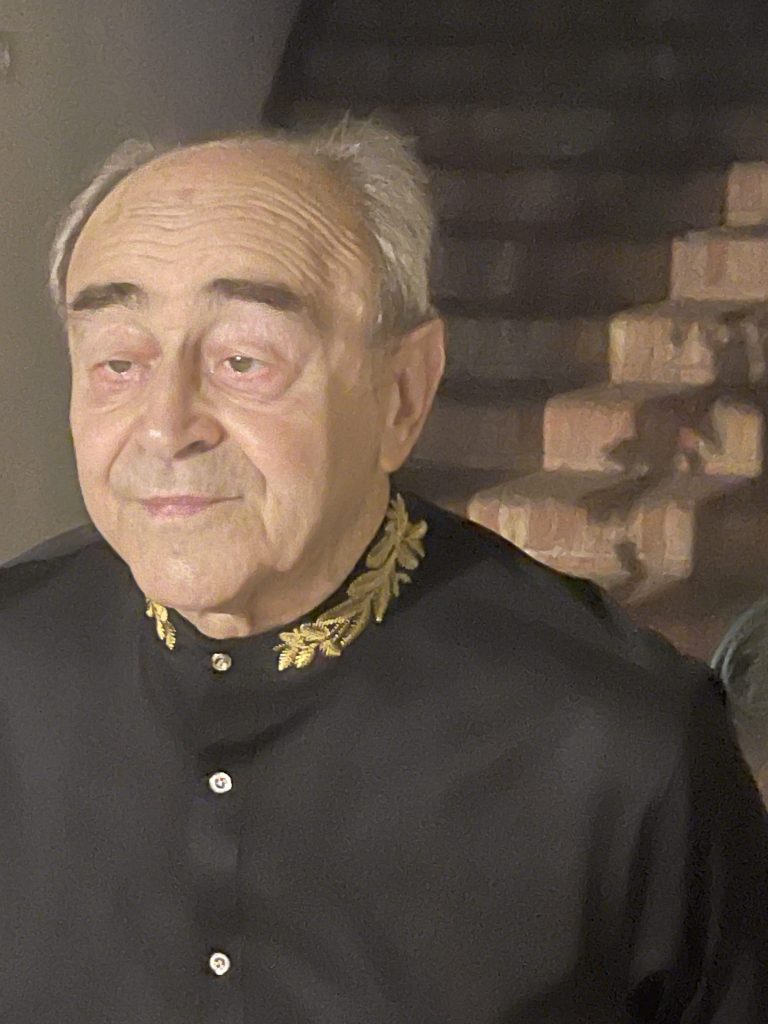
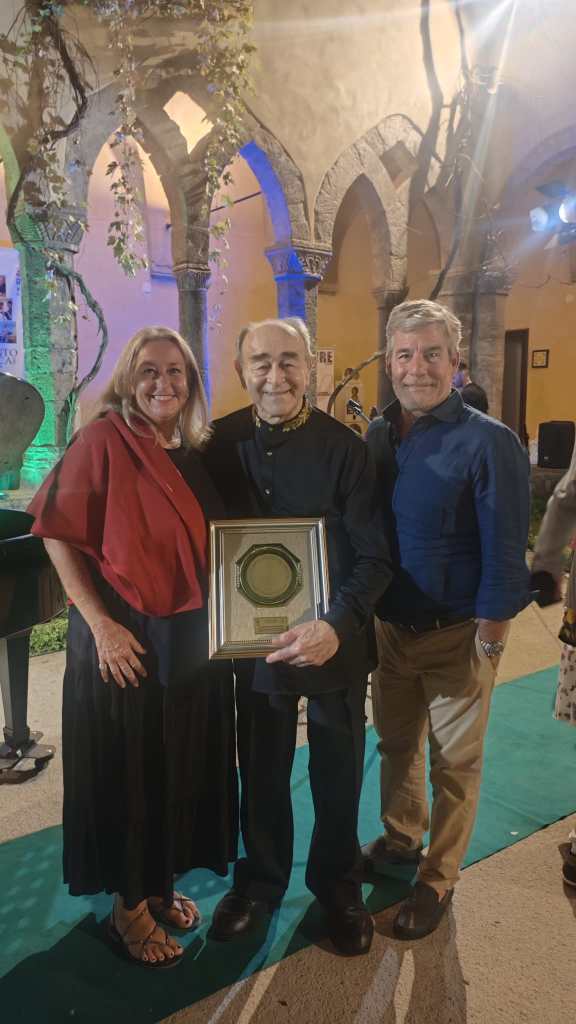
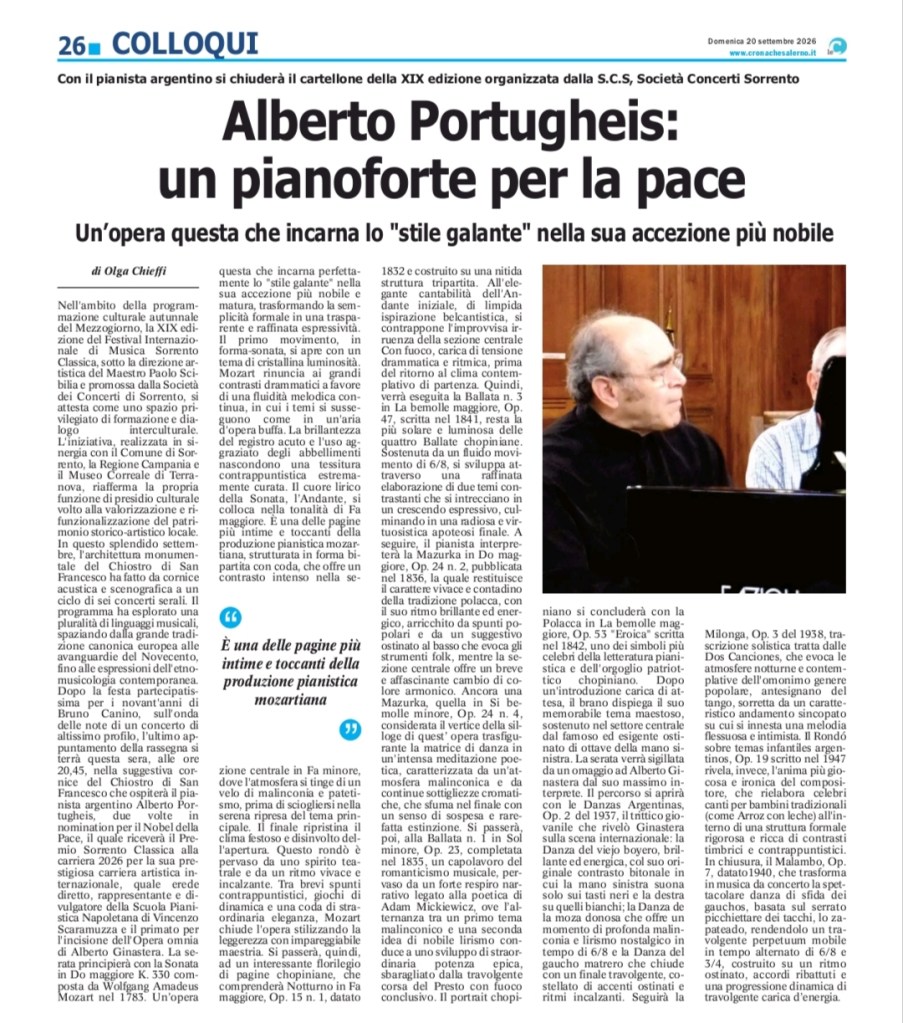
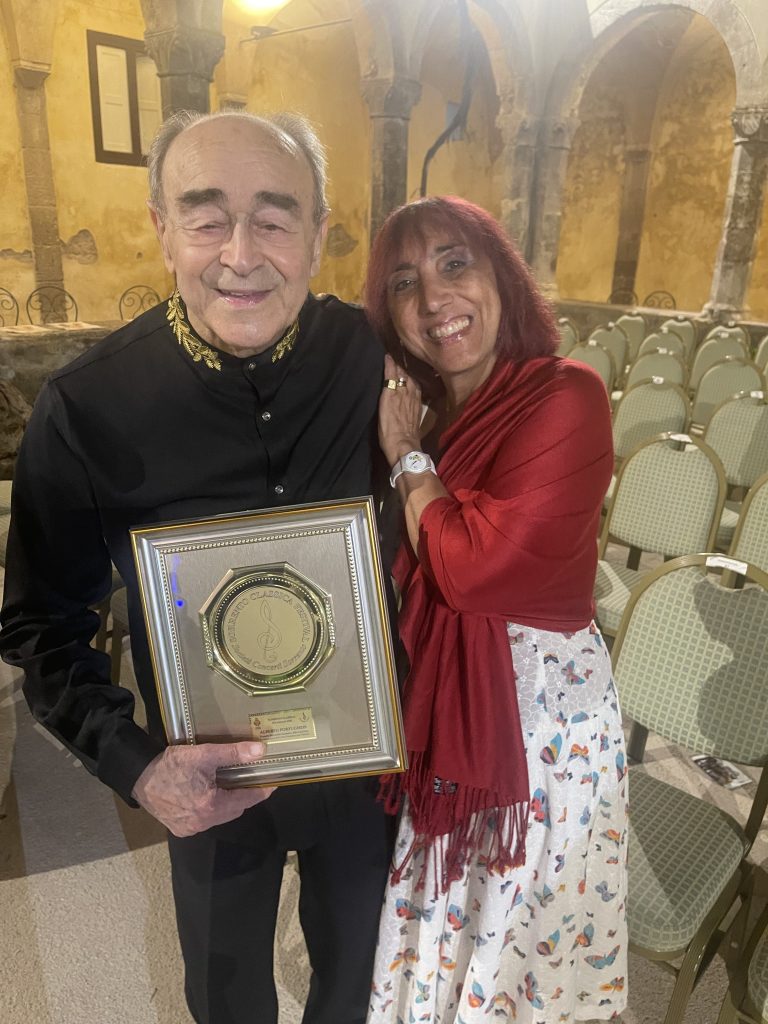
Alberto Portugheis fresh from being honoured in Sorrento for his work of uniting Music and Peace
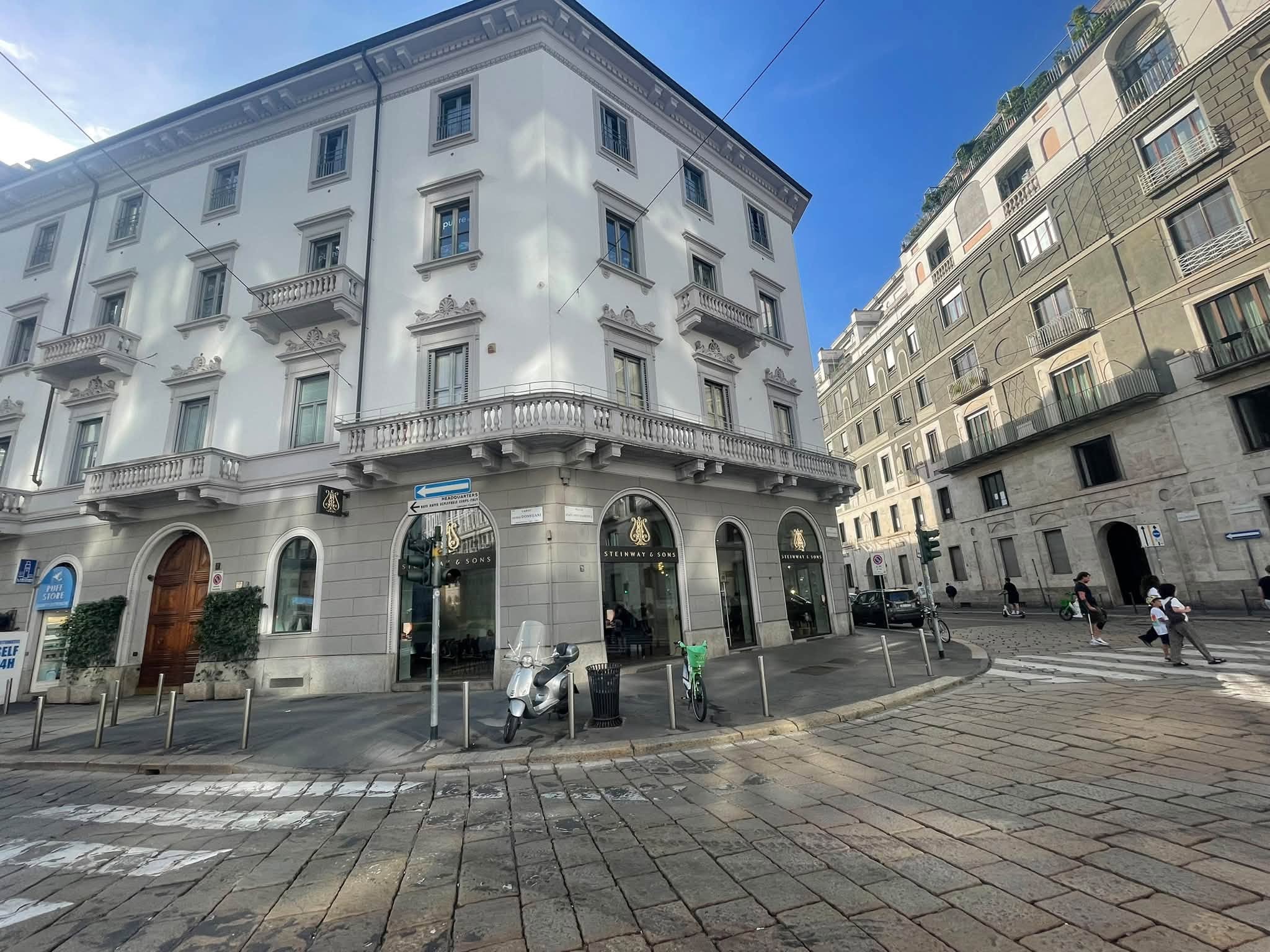
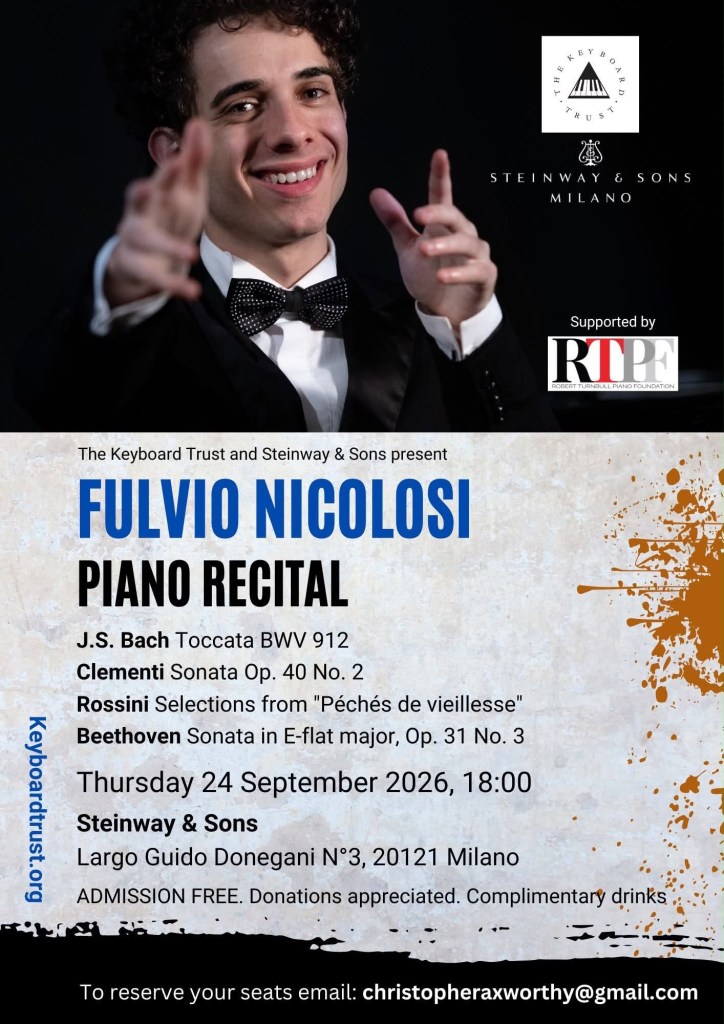
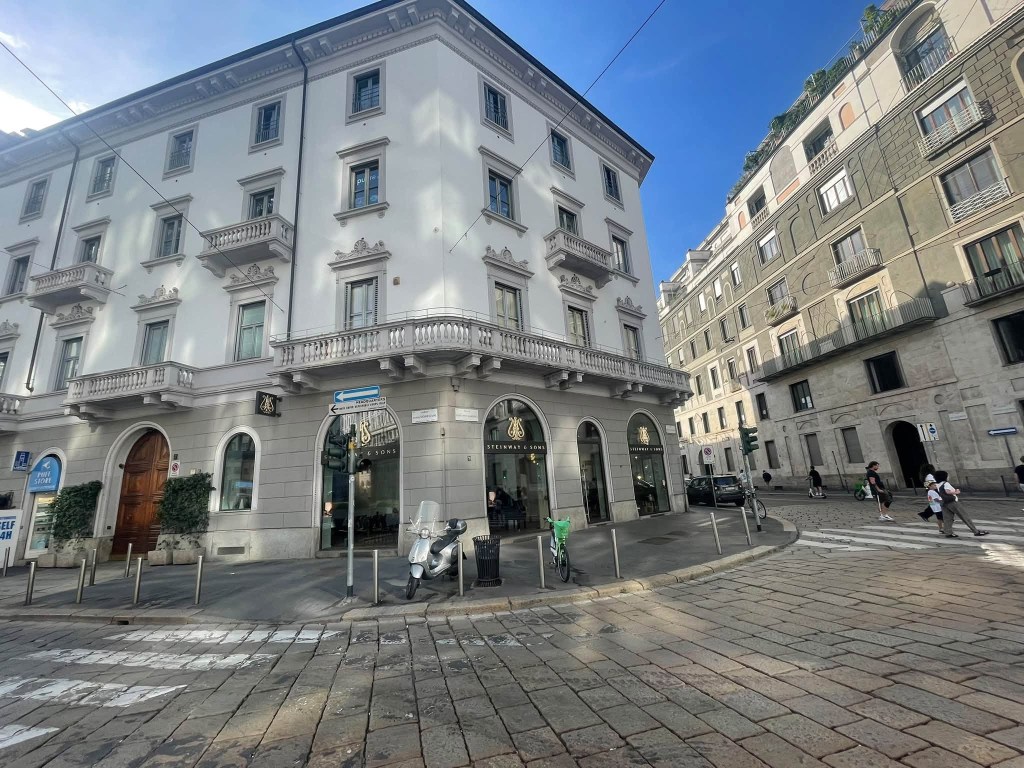
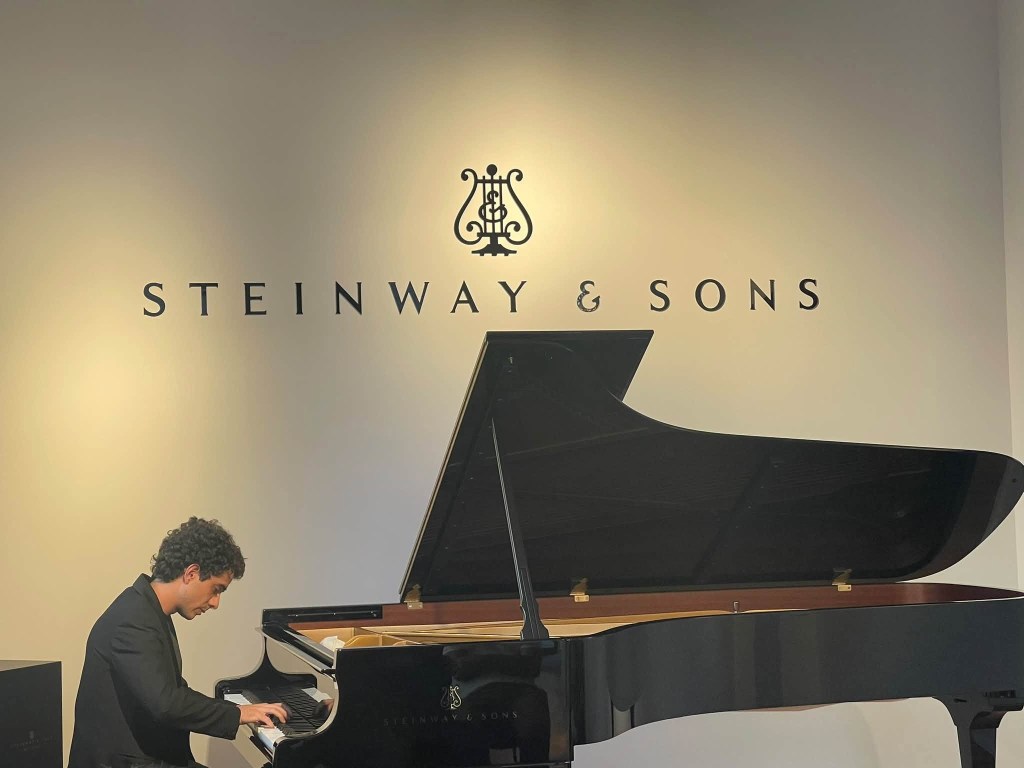
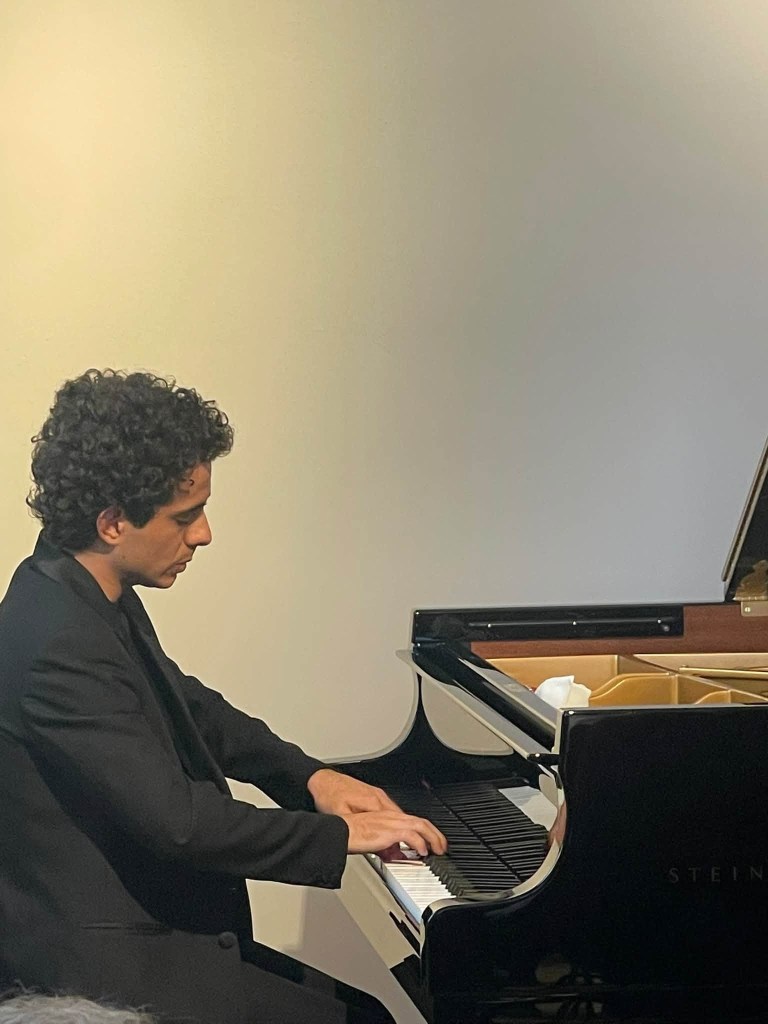
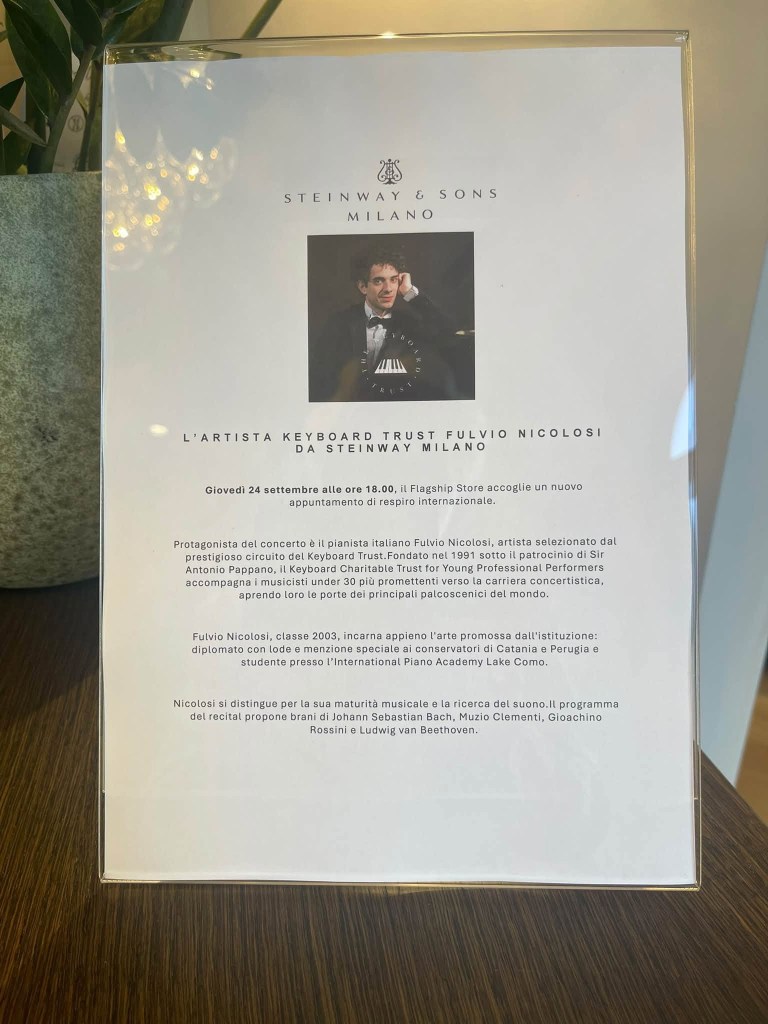
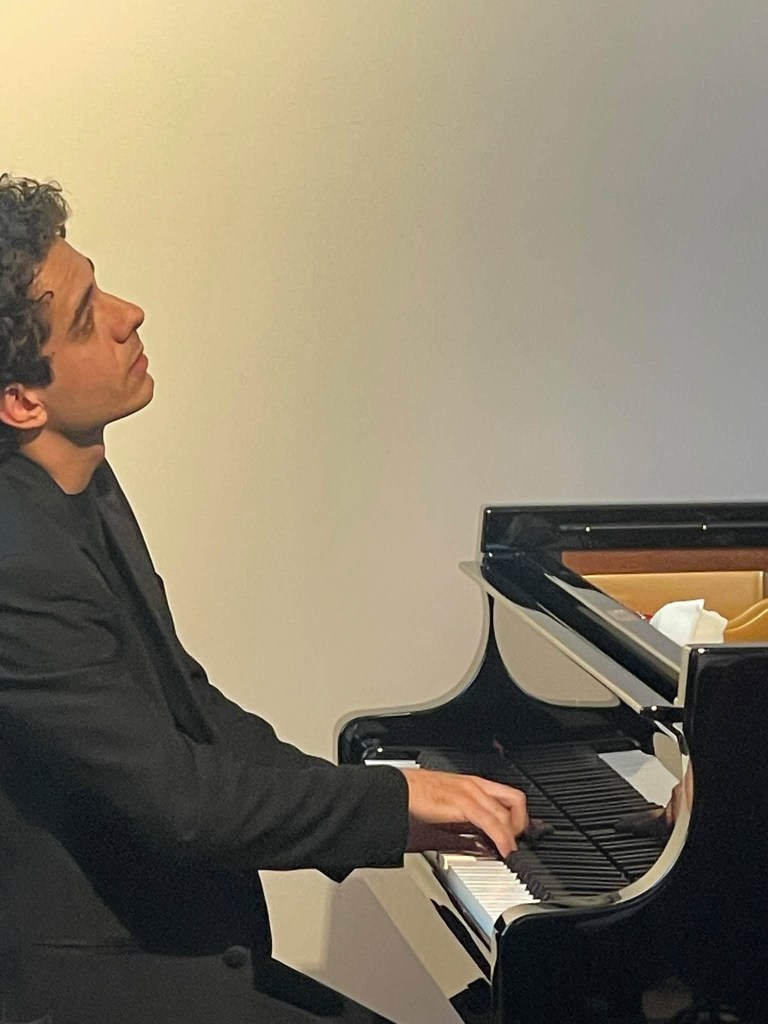
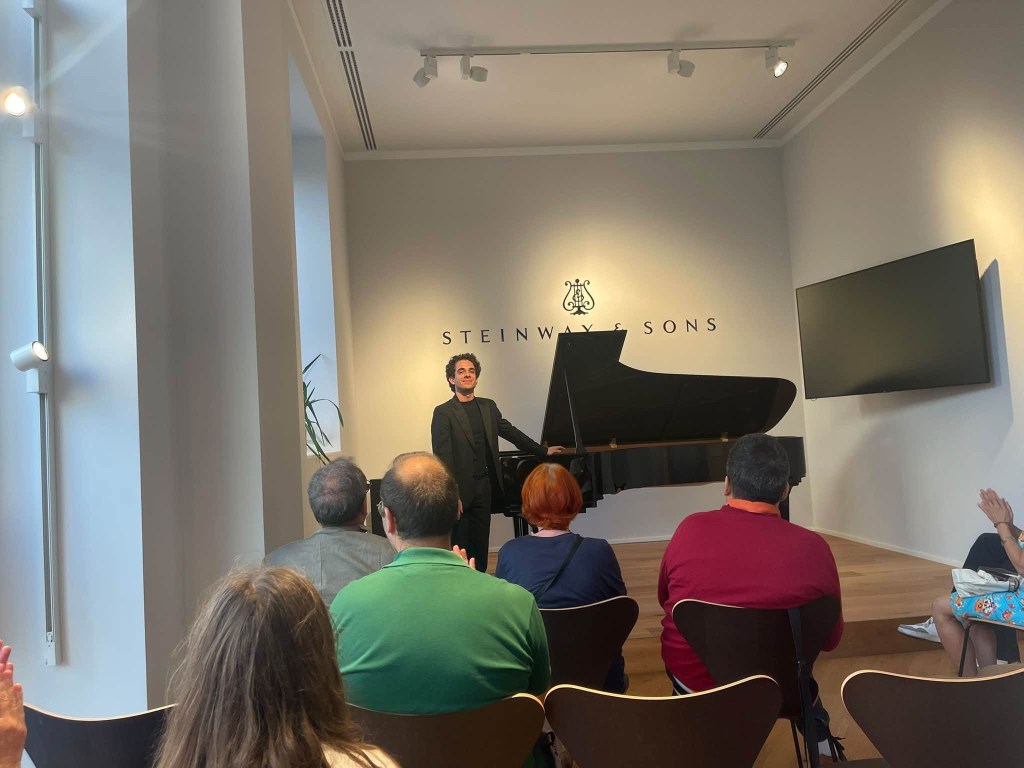
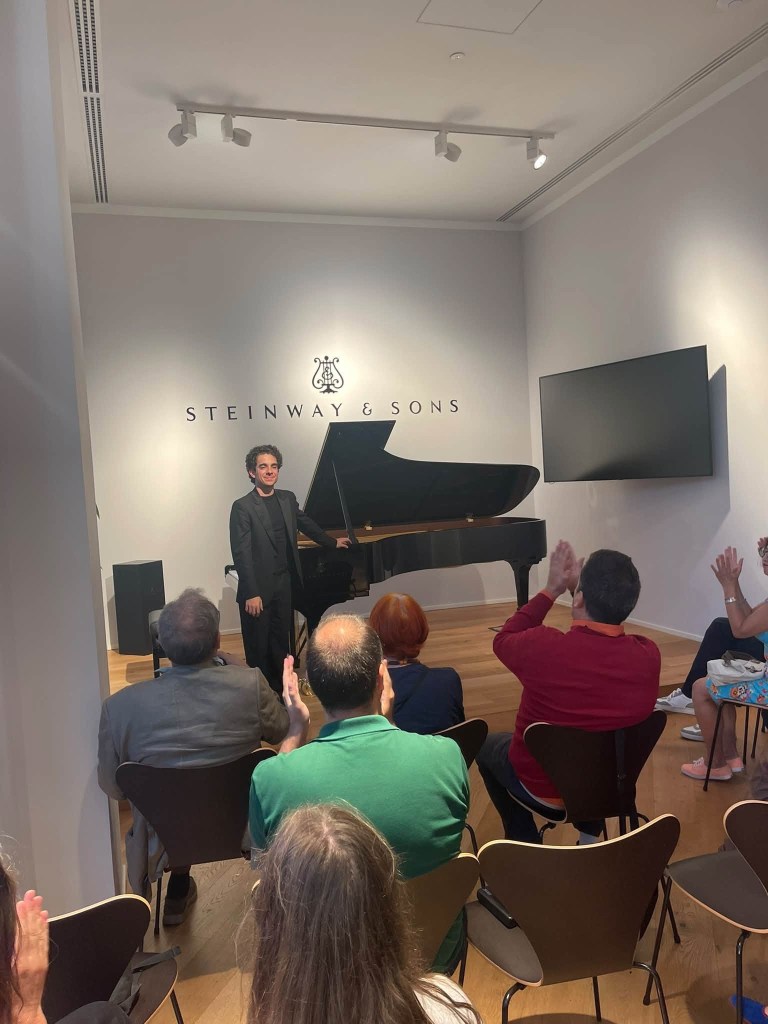
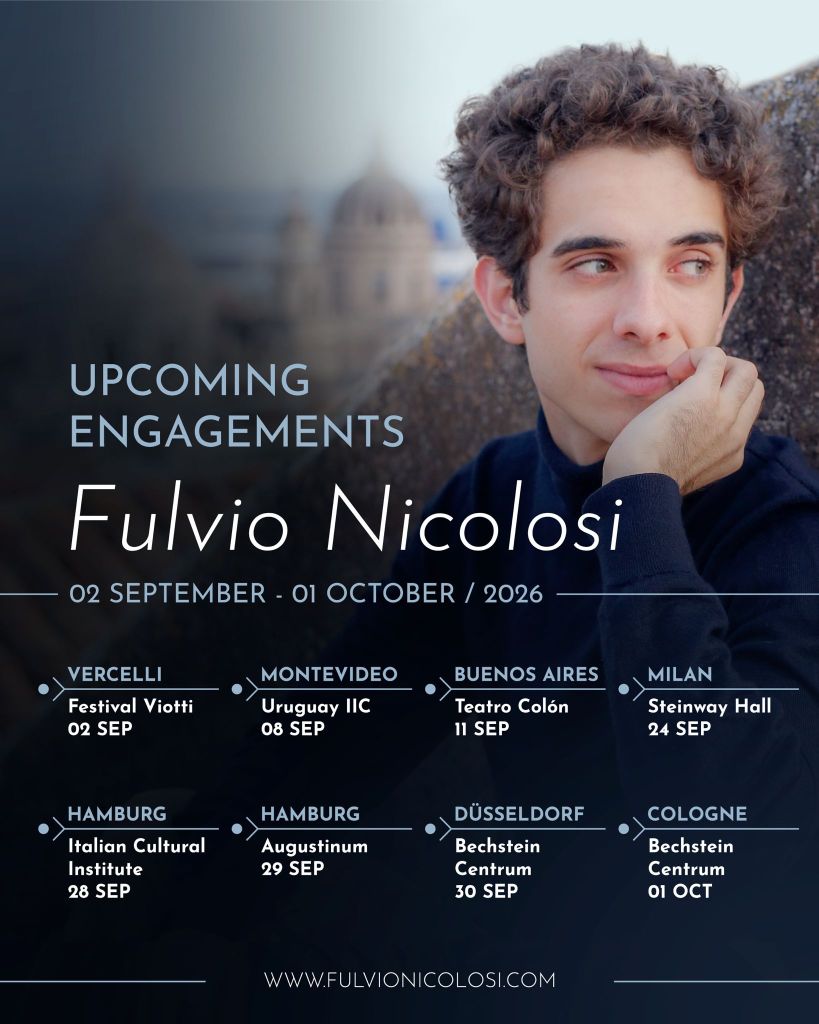
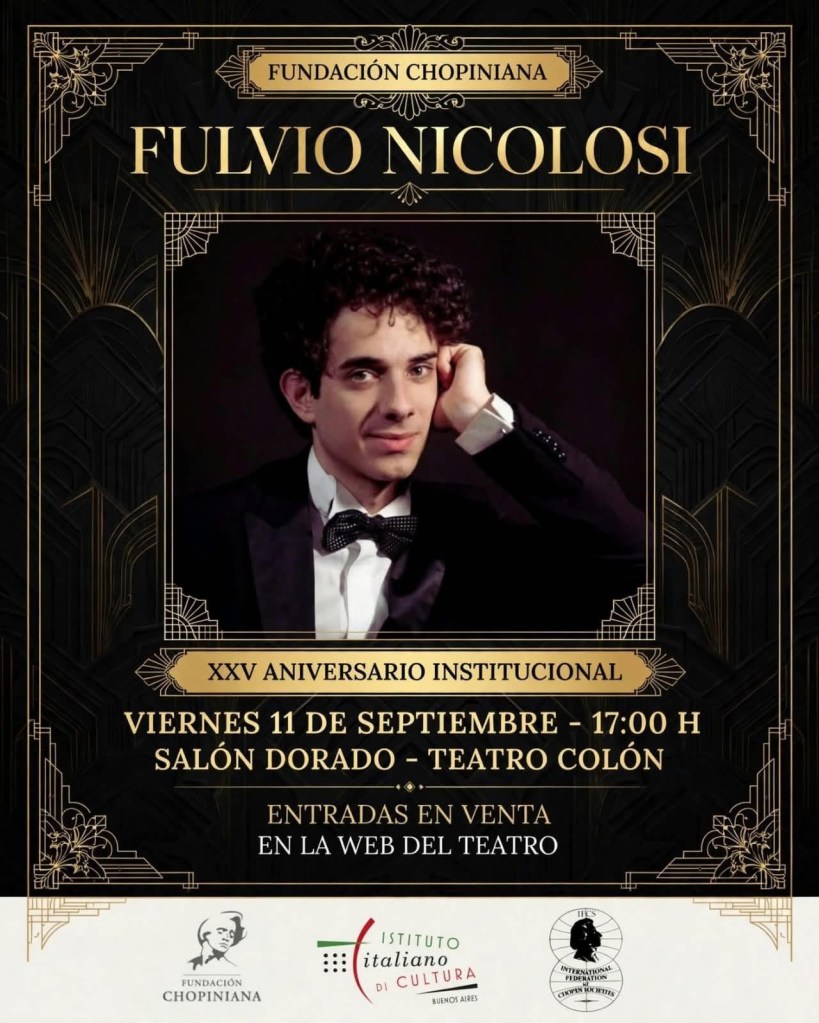
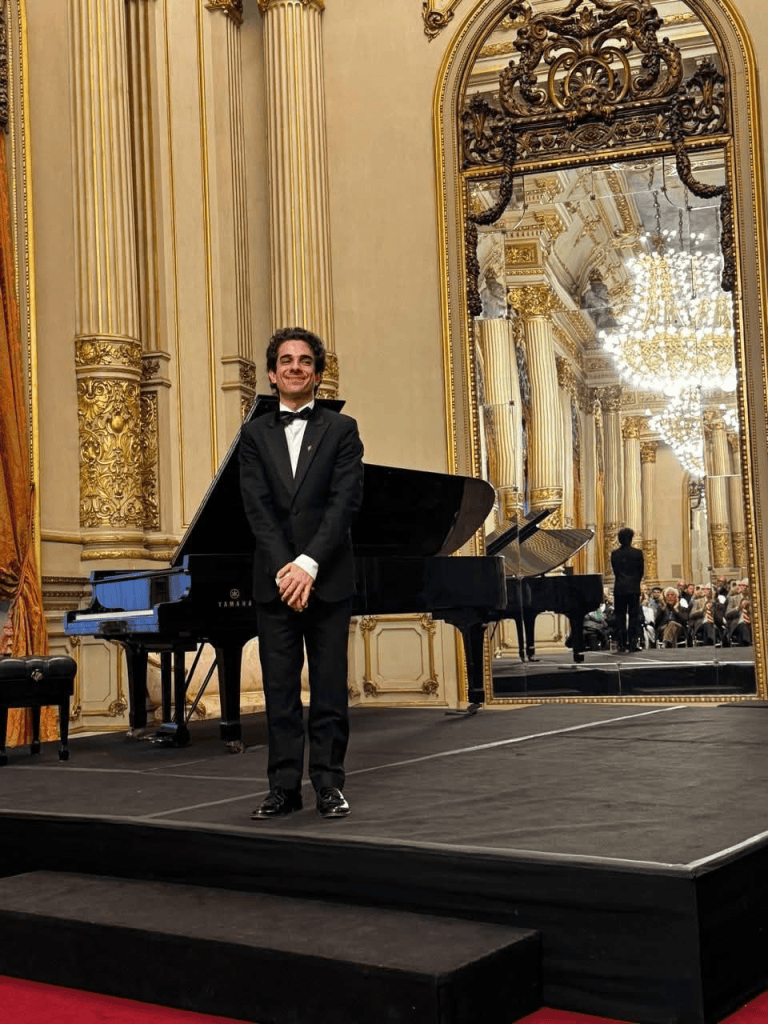
Fulvio Nicolosi flying high in Milan at the Steinway Flagship where he gave a recital of Bach, Clementi, Rossini and Beethoven as part of a long-standing collaboration between Steinway & Sons and the Keyboard Trust.
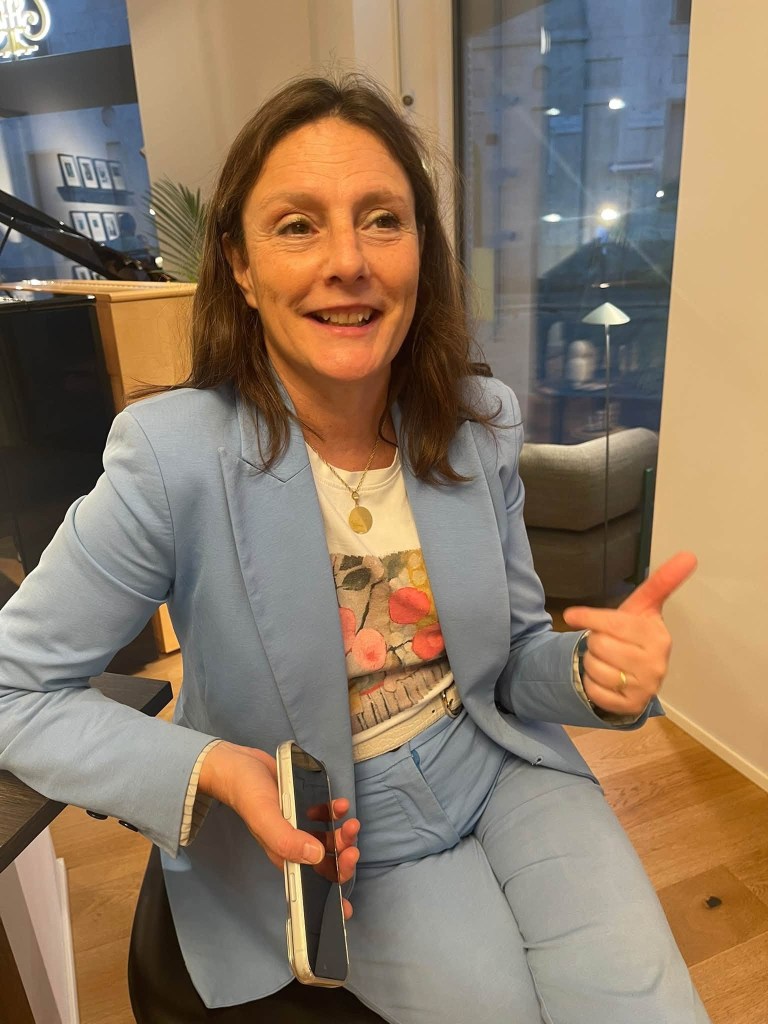
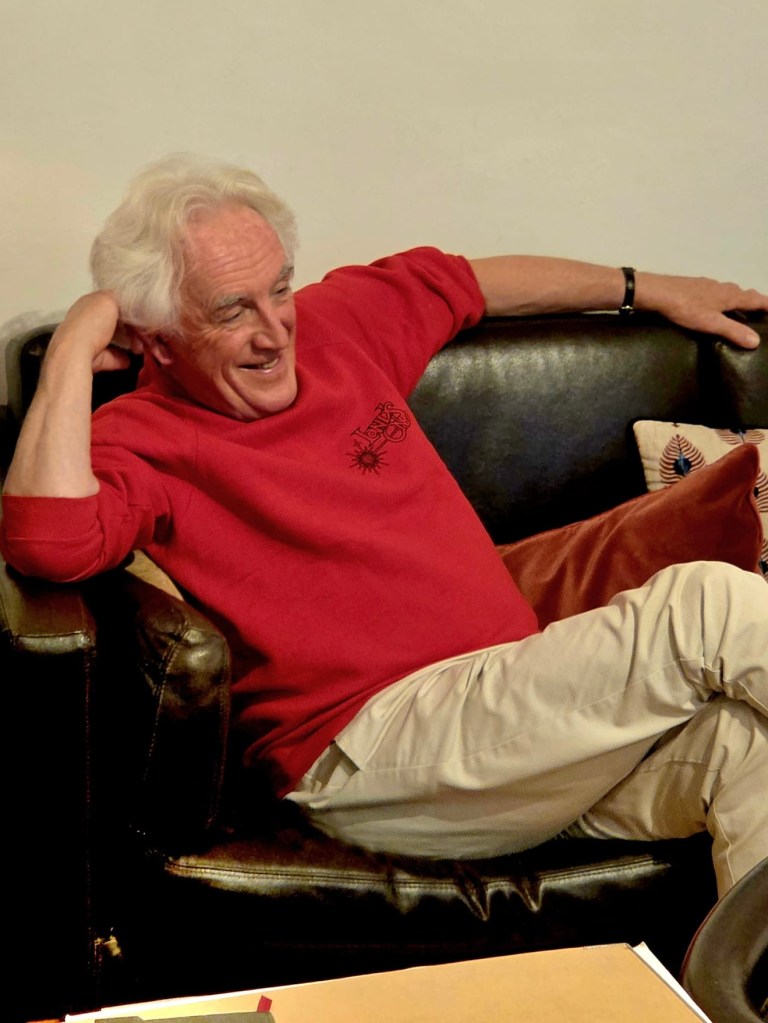
Maura Romano long standing friend of the founders of the KT, John Leech and Noretta Conci
Just returned from concerts in South America and heading tomorrow for Hamburg where he will embark on a five day tour for the Keyboard Trust.
From the scintillating brilliance of Clementi played with a clarity and a remarkable sense of character and contrast. An imposing authority and a palette of colour that enriched one of the composers over a hundred neglected sonatas . A ‘Largo’ of disarming simplicity bursting into life with an ‘Allegro’ of passionate intensity and a ‘Presto’ of scintillating jeux perlé.
To the improvised mastery of Bach’s D major Toccata where the fleeting changing moods were played with extraordinary depth of detail and an ornamentation that did not disturb but enhanced the flowing drive until the poignant beauty of the fugato leading to the exhilaration and hypnotic insistence of the Toccata . Showing a great sense of style in four of Rossini’s ‘Péchés de vieillesse’, from the salon charm of the ‘Sicilienne ‘ to the hesitant lightweight beguiling insistence of the ‘Marche Slave’ and the beautiful mellifluous outpouring of ‘Les petits pois’. And ending this group of salon pieces with the scintillating ‘Danse Sibérienne.’
Fulvio’s recital ended with Beethoven’s last of his trilogy of op 31. The so called ‘Hunt’ because of the exuberance and excitement of the last movement.
It had opened with the pastoral simplicity of the ‘Allegro’ that just flew from Fulvio’s well oiled fingers with refreshing simplicity and ‘joie de vivre’ . Clarity and sparkling brilliance brought this opening picturesquely to life. A ‘Scherzo’ played with a rhythmic insistence of great character with its cheeky ending thrown off with knowing nonchalance. It was followed by the noble beauty of the ‘Minuet’ which seemed rather fast for its ‘moderato’ marking but contrasted with the ‘Trio’ that Fulvio shaped with grace and beauty. In fact it was to be the theme that Saint-Saëns chose for his Beethoven Variations.
The hunt was on in the last movement ‘Presto con fuoco ‘ that Fulvio played with burning dynamic drive.
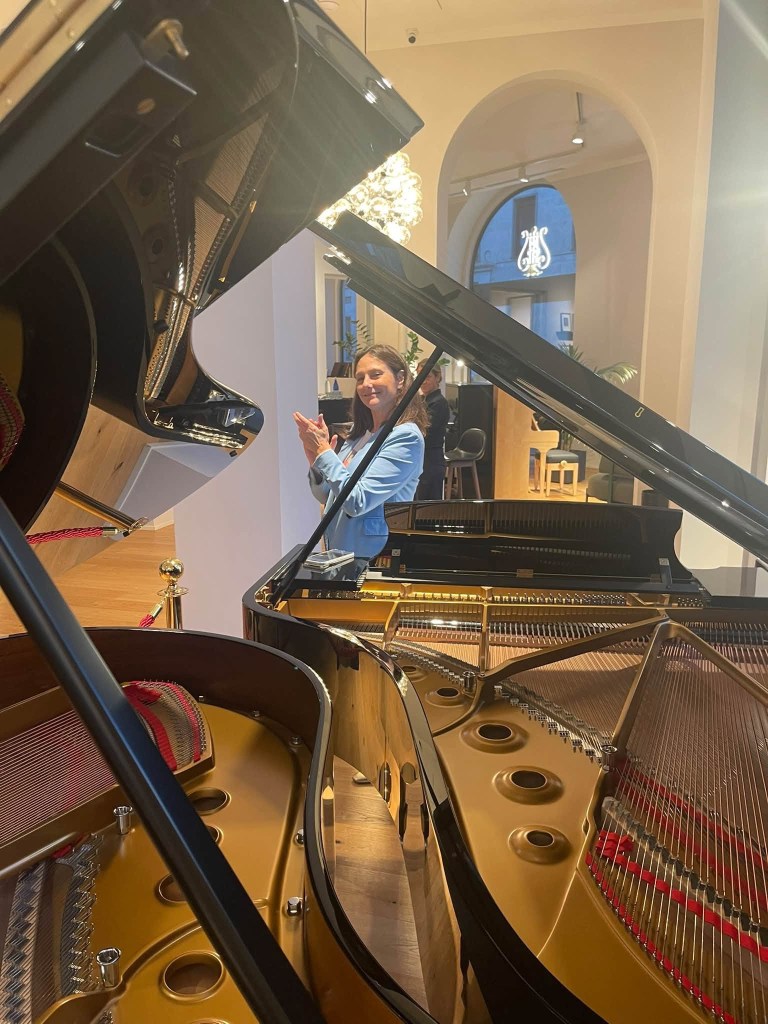
Maura Romano at the helm of the flagship Steinway & Sons transforming it into a centre of cultural excellence
The finest performance, though , was kept to last , with a sumptuous encore of Charles Trenet’s ‘April in Paris ‘ in Weissenberg’s beguiling transformation into a piano piece of extraordinarily enticing beauty that Fulvio played with style and simple mastery.
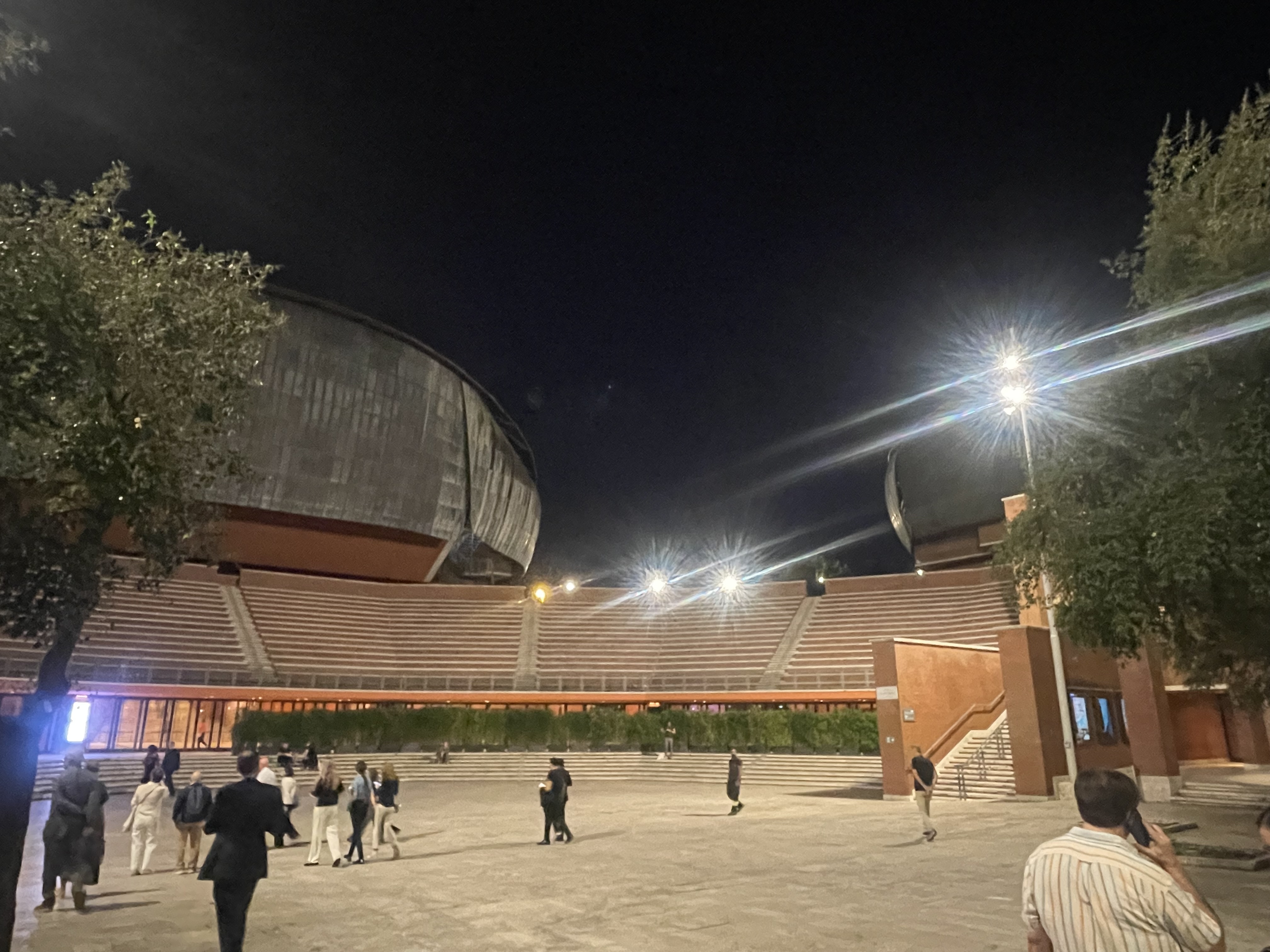
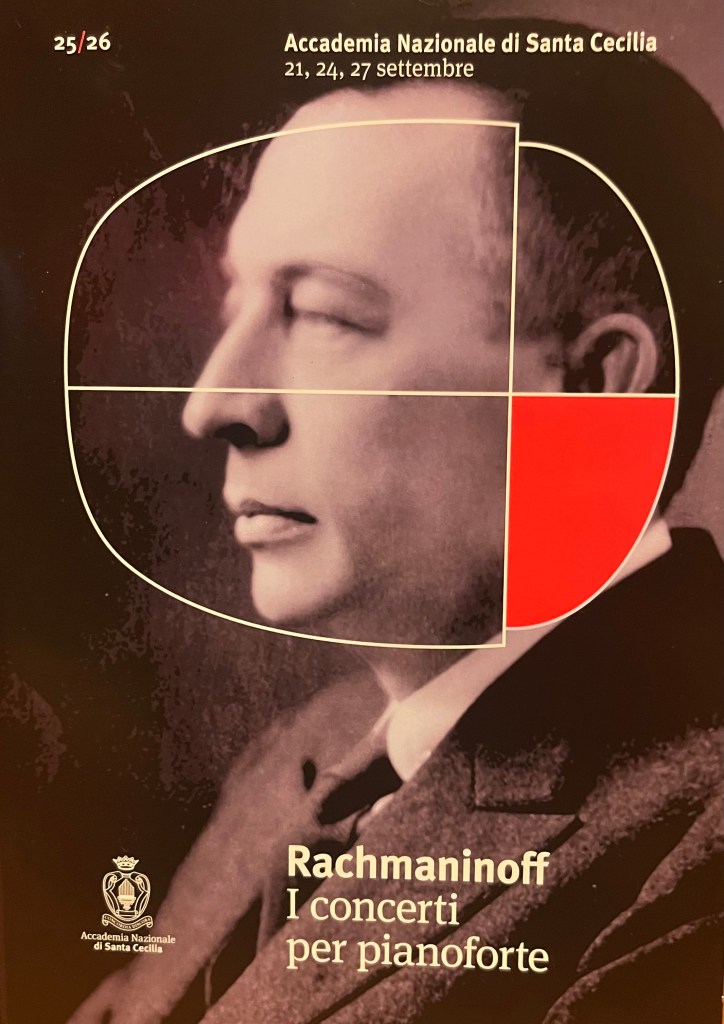
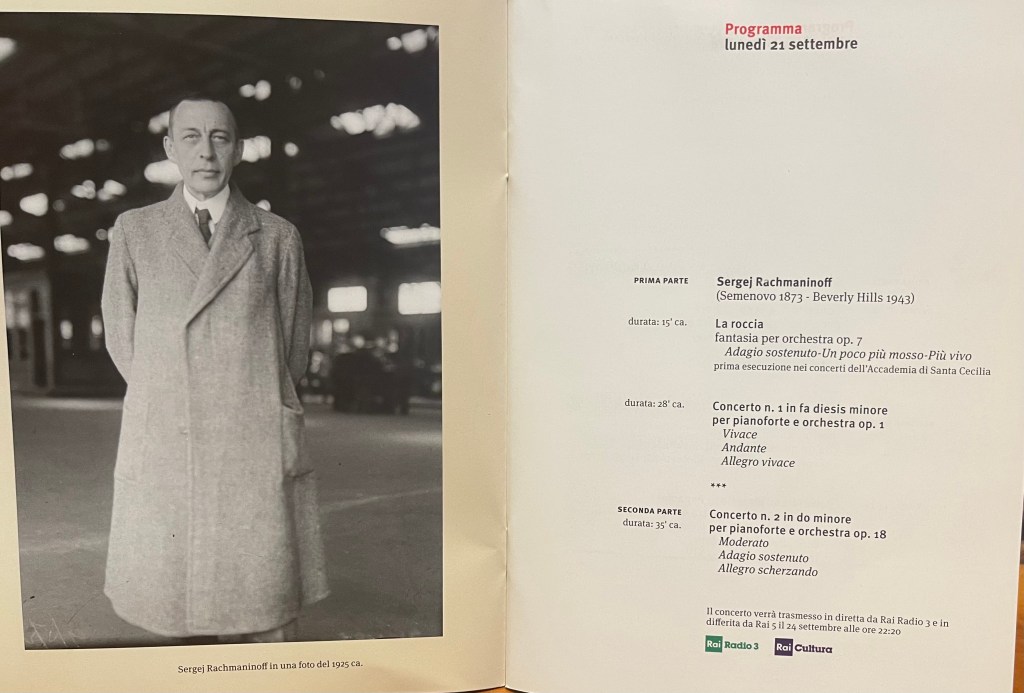
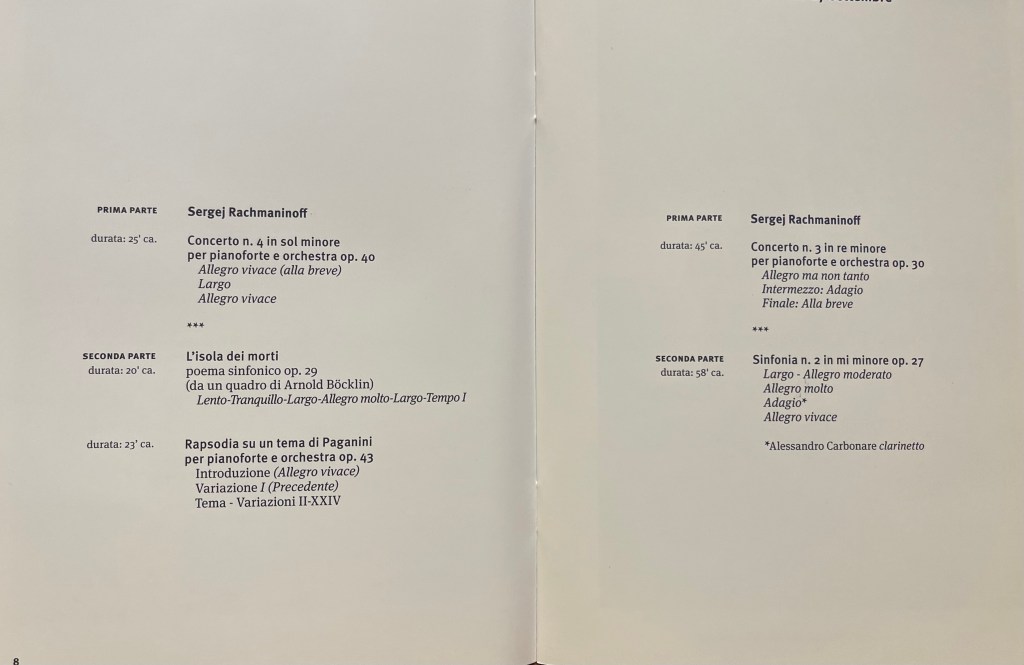
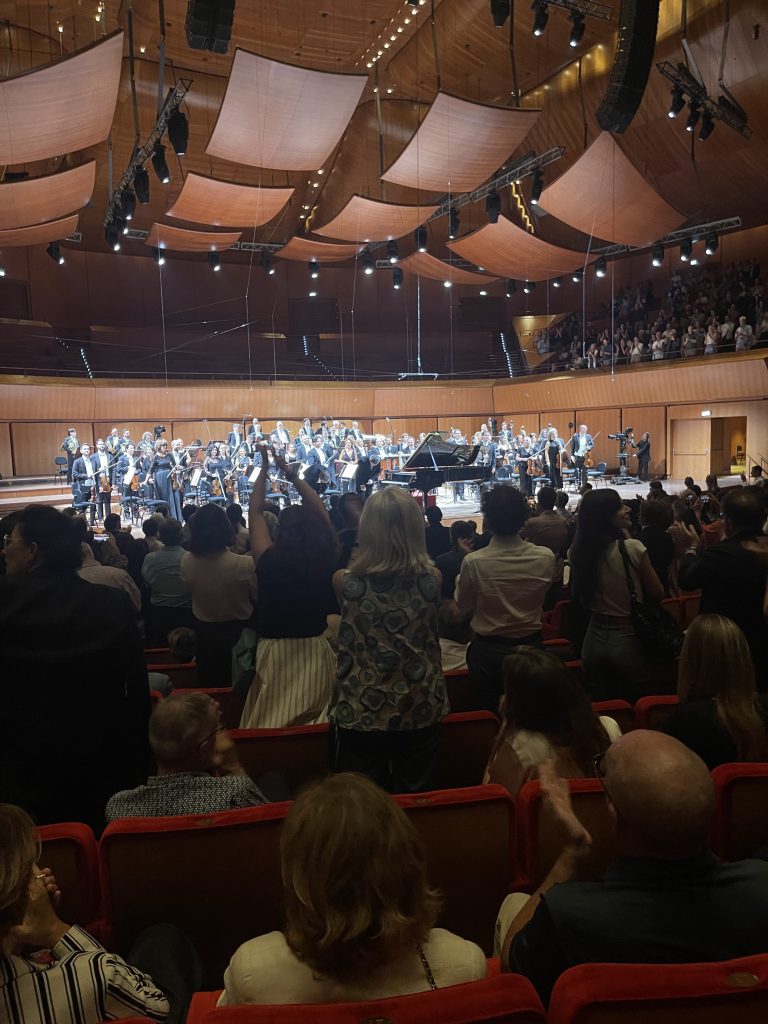
The triumph of Rachmaninov with Lugansky and Kochanovsky in Rome .
The first concert of the complete concerto cycle
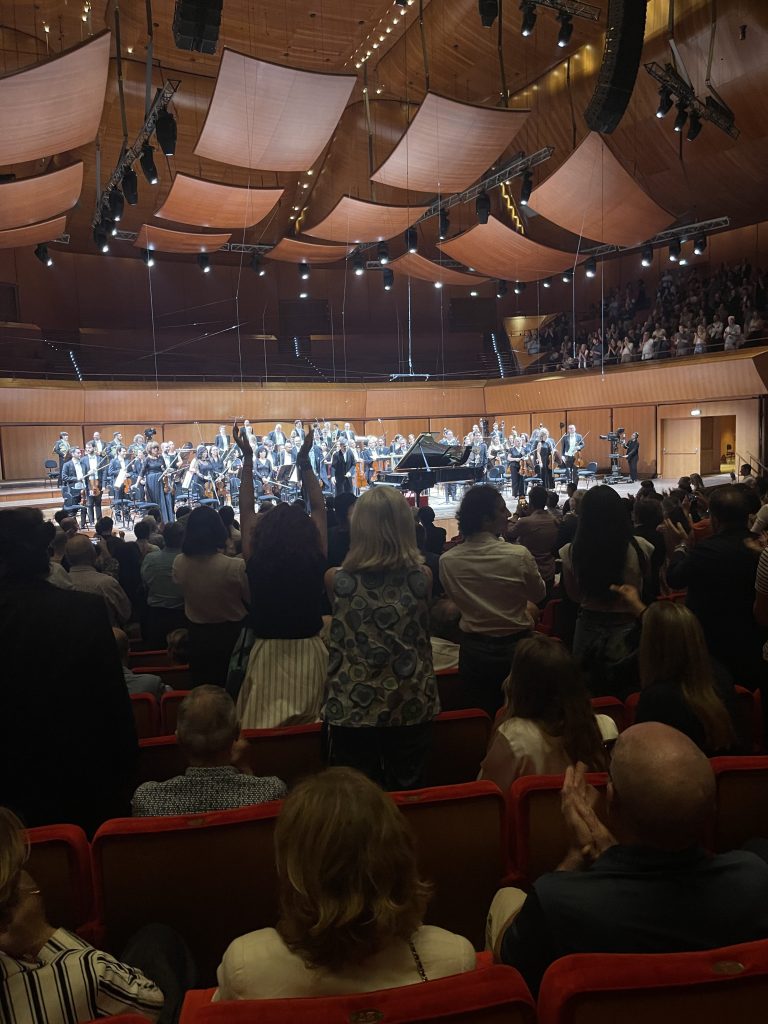
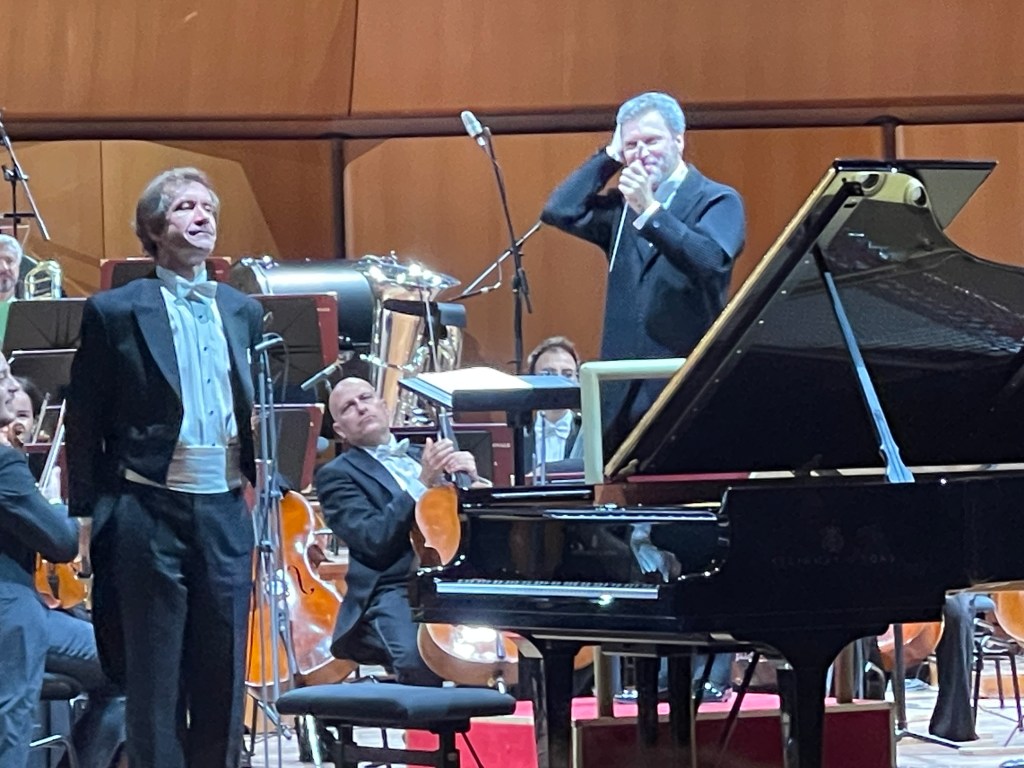
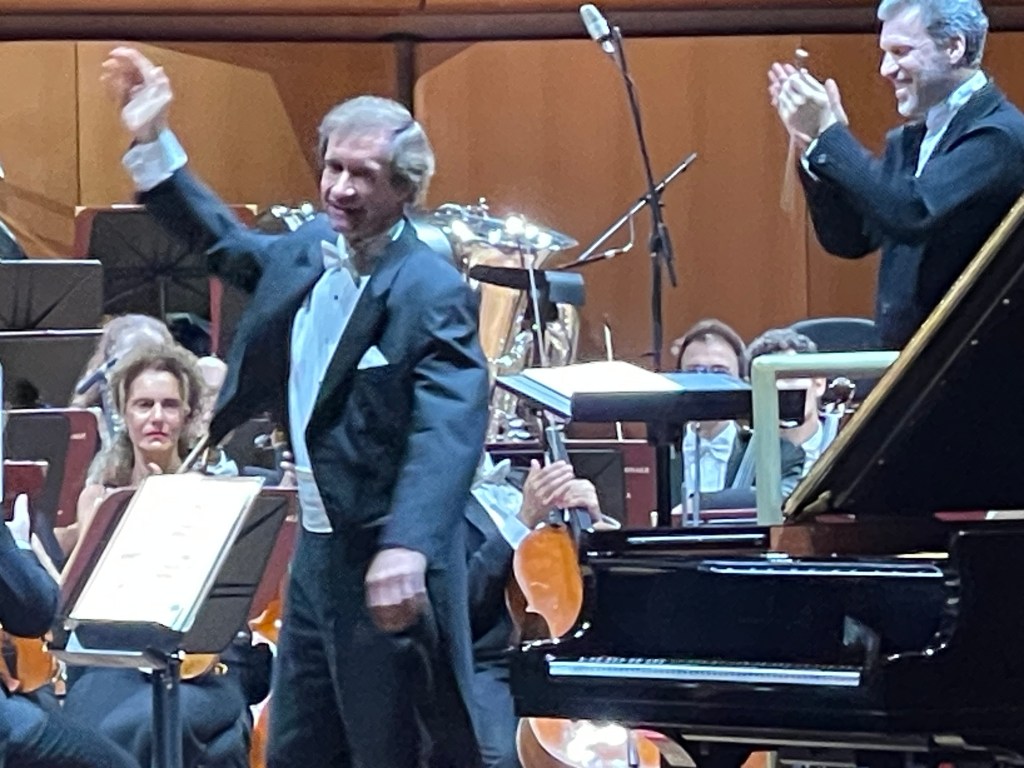
with a standing ovation from a wildly enthusiastic public.
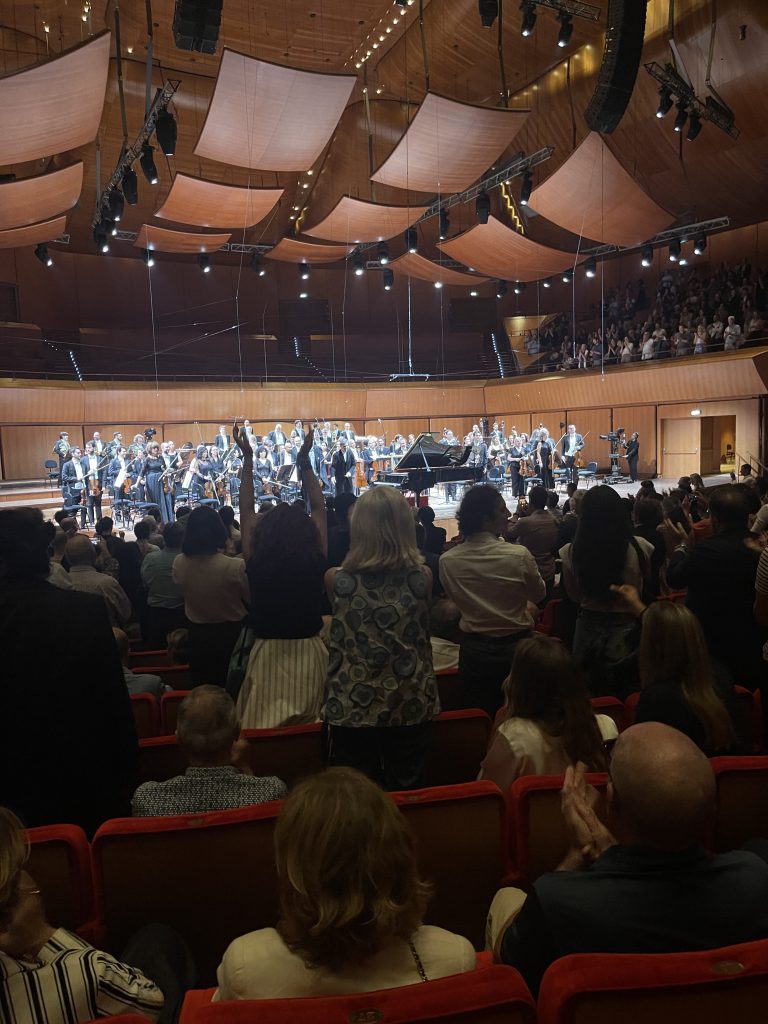
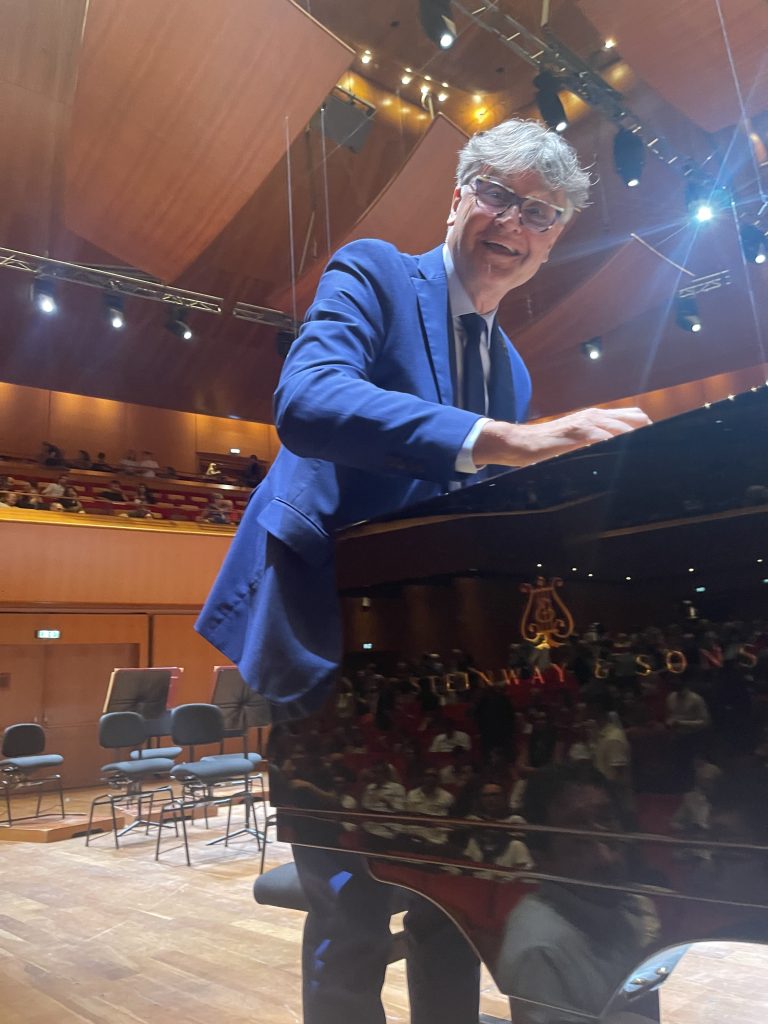
Roberto Valli superb piano technician
The Prelude in G sharp minor op 32 n 12 played as an encore , revealed in condensed form, the supreme mastery of Lugansky that we had heard all evening in the first two concerti.
The opening of the second , in particular , was astonishing for its seductive range of sound. From barely whispered chords, each one full of subtle colour, to the final enormous sonority with which the magnificent orchestra led by the dynamically charged Andrea Obiso could join the soloist with their sumptuous Philadelphian sounds of romantic ardour directed by an inspired Stanislav Kochanovsky.
The concert had opened with two early works The Rock written in 1893 and the first Piano Concerto written in 1891.
The Rock, Op. 7 (or The Crag) written in the summer of1893 was dedicated to Nikolai Rimsky- Korsakov . It is prefaced by a poem of Mikhail Lermontov
The golden cloud slept through the night Upon the breast of the giant-rock
He later admitted, however, to a second musical programme, drawn from a story by Anton Chekov titled “Along the Way”, in which a young girl meets an older man during a stormy, overnight stop at a roadside inn on Christmas Eve. The man shares with her the story of his life, beliefs, and past failures, as a blizzard rages on through the night.
Rachmaninov had great admiration for Tchaikowsky and in a meeting between the two at the home of Rachmaninov’s former teacher Sergei Taneyev the younger composer was given the opportunity to perform his newly completed piece at the piano. The Rock had a positive effect on Tchaikovsky, who had been unhappy with an earlier performance of a four-hand piano arrangement of his sixth symphony by another young composer, Lev Conus The composer Mikhail Ippolitov – Ivanov described the evening
At the close of the evening Rachmaninov acquainted us with the newly completed symphonic poem, The Crag. […] The poem pleased all very much, especially Pyotr Ilyich [Tchaikovsky], who was enthusiastic over its colorfulness. The performance of The Crag and our discussion of it must have diverted Pyotr Ilyich, for his former good-hearted mood came back to him.
Tchaikovsky asked to be allowed to includeThe Rock in the programme of a forthcoming European concert tour. This was never realized, however, as Tchaikovsky committed suicide later that year.
It is a work for full orchestra with lavish sounds and passionate outbursts. A quite imposing brass section but that the conductor incorporated into the overall architectural line with a masterly sense of line. Moments of typical Rachmaninovian passionate intensity that saw Andrea Obiso driving his colleagues on as he sat up in his chair with an intensity that the conductor with few undemonstrative movements could lead with masterly control and subtle attention to balance.
The first concerto is from 1891, when Rachmaninov was only 17–18. The first two movements were completed while he was still only 17; the third and the orchestration shortly after he had turned 18. He dedicated the work to Alexander Siloti but revised it thoroughly in 1917.He wrote Natalya Skalon on 26 March 1891, “I am now composing a piano concerto. Two movements are already written; the last movement is not written, but is composed; I shall probably finish the whole concerto by the summer, and then in the summer orchestrate it.” He finished composing and scoring the piece on 6 July and the first movement was premiered on 17 March 1892 at the Moscow Conservatory with the composer as soloist and Vasily Safonov conducting. The model for the concerto was the Grieg Piano Concerto which was a favourite work of his and one with which he had been familiar from Siloti practicing it during the spring and summer of 1890 for future concerts. Rachmaninov adapted the entire musical structure of the outer movements to the Grieg concerto, literally building his music into it. He completely revised the work in 1917 with the experience gained from his second and third concerti: “I have rewritten my First Concerto; it is really good now. All the youthful freshness is there, and yet it plays itself so much more easily. And nobody pays any attention. When I tell them in America that I will play the First Concerto, they do not protest, but I can see by their faces that they would prefer the Second or Third.”
Lugansky brought great romantic flamboyance to the opening with the octaves played with enormous sonority dissolving into one of those heartrending romantic outpourings of unashamed opulence. Lugansky has a strange way of throwing his hands into the air which could be very distracting if it was not for his superb musicianship and a technical perfection that is always made of beautiful sounds. There are never any hard edged metallic sounds but always sumptuous richness and whispered radiance. Of course the centre piece of the first movement is the cadenza that Lugansky played with excitement and exhilaration and at moments reaching the same volume that we had heard from the orchestra who when they entered brought the movement to a scintillating if rather abrupt stop. The Andante was played with subtle colouring from the orchestra inspiring the soloist as he embellished the poignant melodic line with wafts of magic sounds. The last movement just sprang from Lugansky’s fingers with extraordinary brilliance and dynamic drive. A beautiful central episode of question and answer between the soloist and the orchestra was played with quite extraordinary radiance and beauty before erupting into an ending of astonishing brilliance.
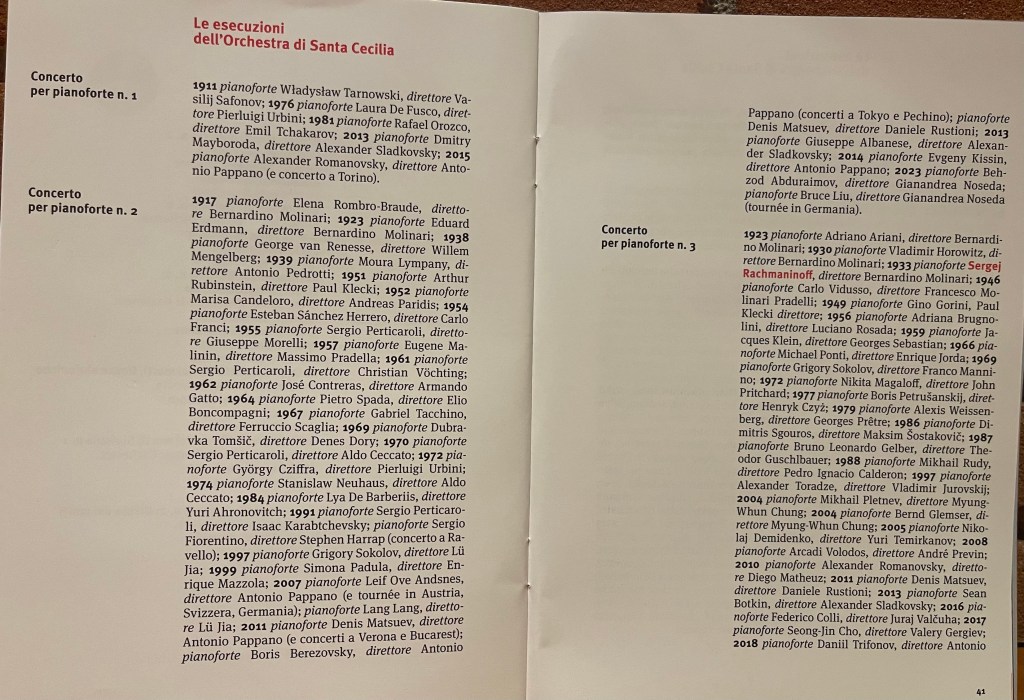
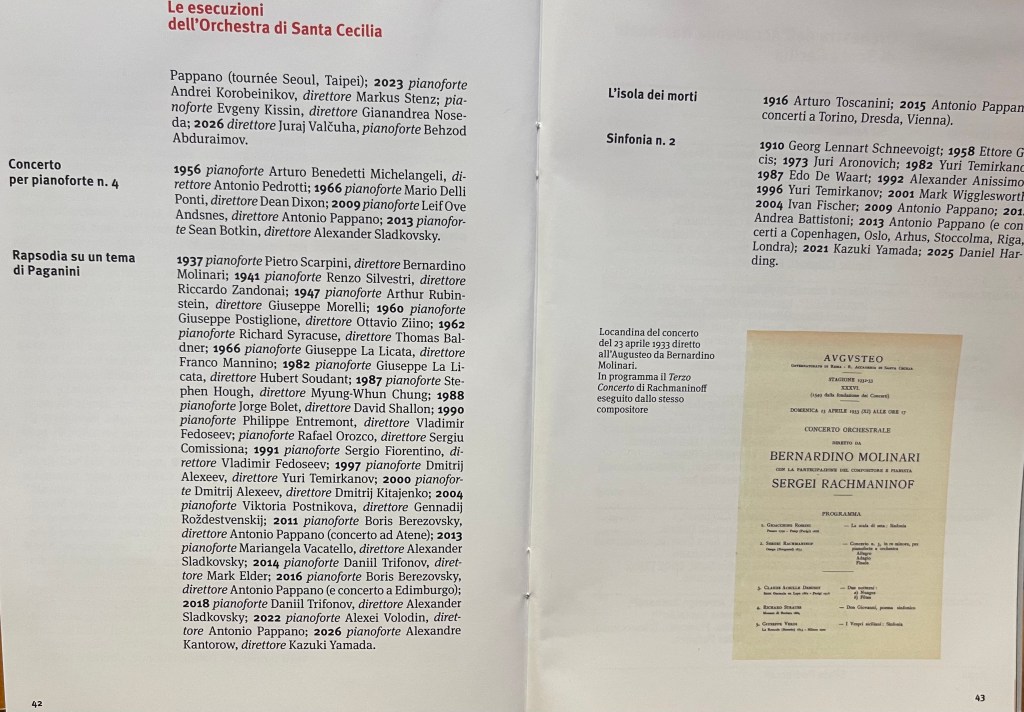
It was interesting to read in the very well prepared programme notes that the first performance had taken place in London in 1899 with Evelyn Stuart playing with Henry Wood conducting. The most famous recordings are those by the composer himself but also remarkable performances by Byron Janis and Sviatloslav Richter. Byron Janis, a pupil of Horowitz, who actually never seemed to play any but the third concerto of his great friend Rachmaninov who exclaimed that Horowitz played him well and they would often play two pianos together ! Looking at the very interesting archive of the Santa Cecilia Orchestra the First and Fourth concerti have in fact received very few performances compared to the 2nd or 3rd and Paganini Rhapsody.
The second concerto Lugansky played with sumptuous sounds and passionate intensity. I have never noticed before his way of throwing his arms into the air and hope it is just a momentary phase due to his unbelievable work load. His performance though was impeccable and played with aristocratic good taste never allowing the wondrous melodies to become sentimental, that can so often happen now, where after a visit to the doctor they flowed from his pen like Tchaikovsky’s before him.Knowing when to hold the tempo very firmly in control with the conductor and orchestra extracting the very life blood from every one of the sumptuous notes that Rachmaninov weaves with such intensity. The Andante was played as chamber music with a heartrending interplay between the soloist and the orchestral soloists before combining in passionate outbursts of wondrous beauty. Astonishing pyrotechnics from Lugansky were played with breathtaking audacity and had the audience on their feet at the end as we had all been involved in a performance that will long be remembered in a hall that has seen some very great artists but rarely reaching such enthusiasm.
Nikolaj Luganskij nasce a Moscow nel 1972 da due ricercatori scientifici. Quando ha cinque anni arrivano, inaspettati, i primi segni di un talento musicale innato. Dice lui stesso «ero semplicemente predestinato ad essere un pianista», riferendosi a un episodio risalente a prima che imparasse anche solo a leggere la musica, quando andò dal vicino, si sedette al pianoforte e suonò una sonata di Beethoven a memoria, imparata solo ascoltandola. Dopodiché inizierà a prendere lezioni dal vicino stesso, Sergej Ipatov, un pianista e compositore.
A sette anni entrerà nella Scuola centrale di musica di Moscow, studiando con Tat’jana Kestner, un’ex allieva di Aleksandr Goldenvejzer. Nel 1985 la Kestner muore, e Luganskij diventa allievo di una sua amica stretta, Tatiana Nikolaeva, con cui studiò per nove anni, durante i quali ascoltarono insieme molta musica. Nel 1988 Nikolaj vinse il primo premio all’All-Union Competition di Tibilisi e la medaglia d’argento all’ottava edizione dell’International Bach Competition di Lipsia.
Nel 1990 vince il secondo premio nella Rachmaninov competition di Mosca. Nel 1992 all’Accademia Estiva Internazionale “Mozarteum” di Salisburgo vince il premio speciale “miglior pianista”. Nell’estate del 1993 subisce, in un incidente, lesioni a un piede e alla schiena, e solo dopo diversi mesi poté continuare la propria attività. Nel novembre dello stesso 1993, Tat’jana Nikolaeva muore durante un recital a San Francisco. Nella sua ultima intervista aveva dichiarato che Luganskij era destinato a essere il prossimo grande pianista russo. È in questo periodo che Luganskij deve decidere se partecipare o no al decimo Concorso Internationale Tchaikowsky, che si sarebbe tenuto nell’estate del 1994, decidendo alla fine di partecipare. Continuò a studiare con Sergei Dorenski, che era stato per qualche tempo l’assistente della Nikolaeva. Nel 1994 vinse il concorso, essendosi però aggiudicato soltanto il secondo premio, mentre il primo non fu assegnato.
Maestro Paolo Scibilia and Assessore all’Ambiente Vincenzo Ercolano
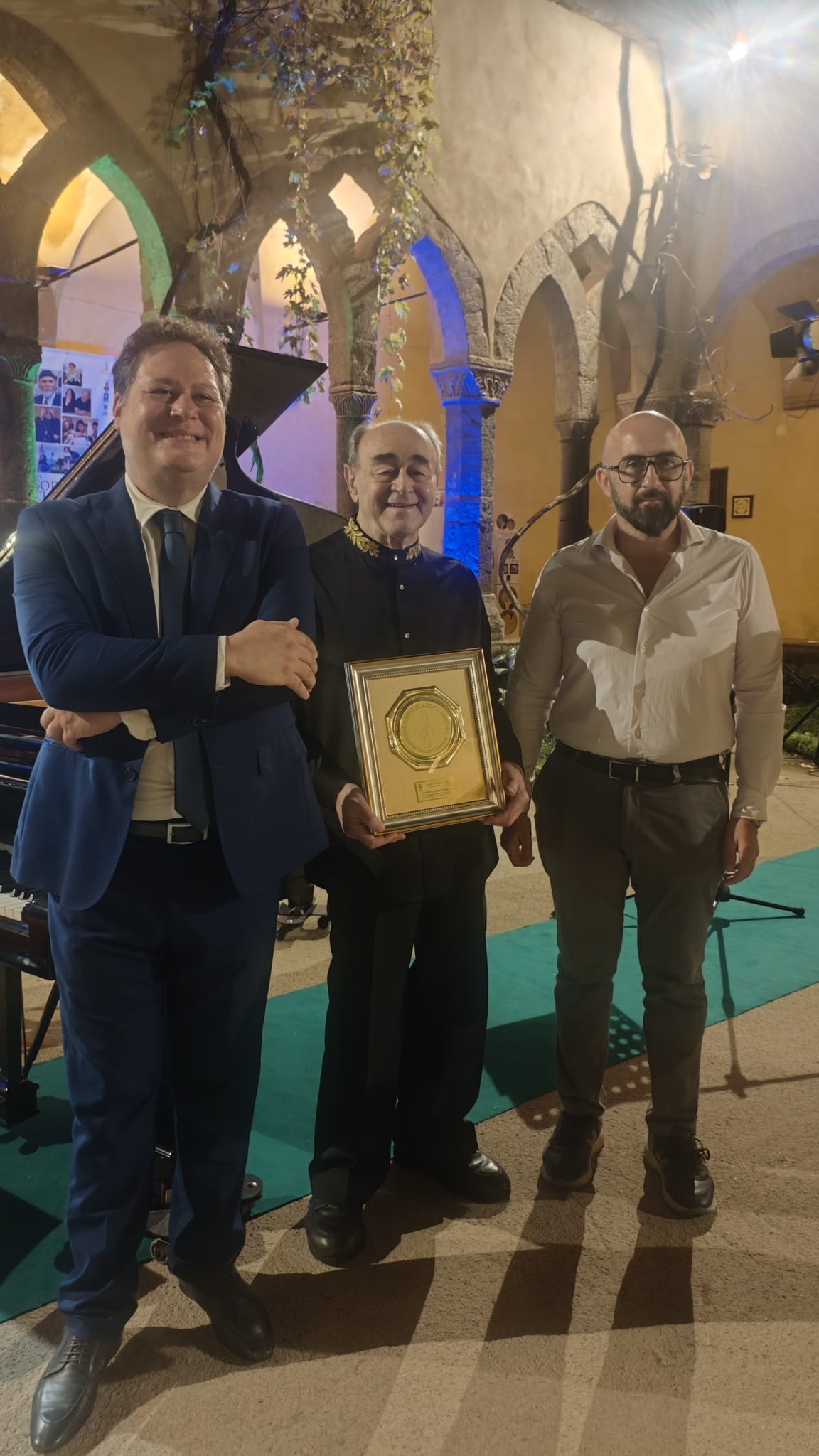
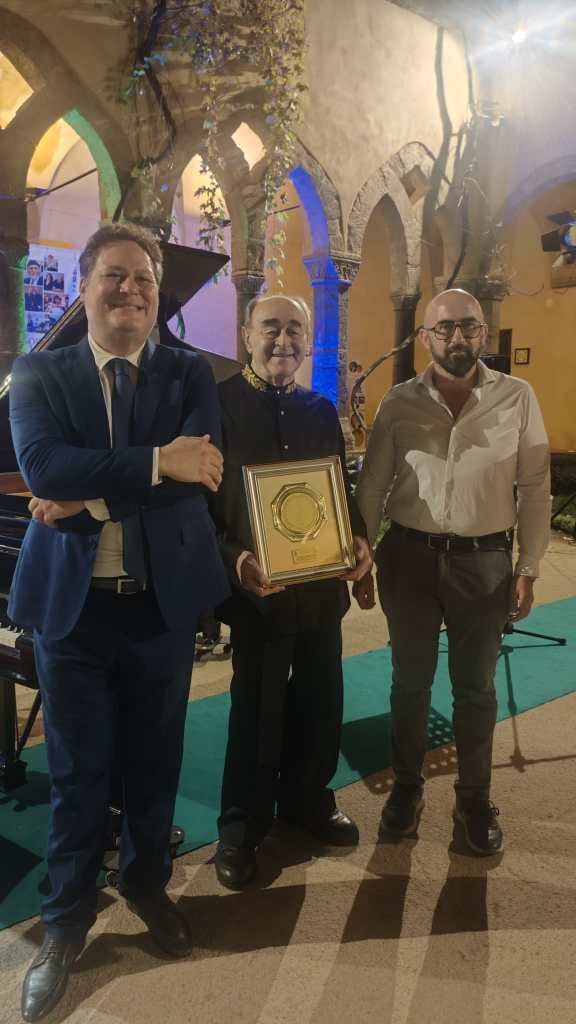
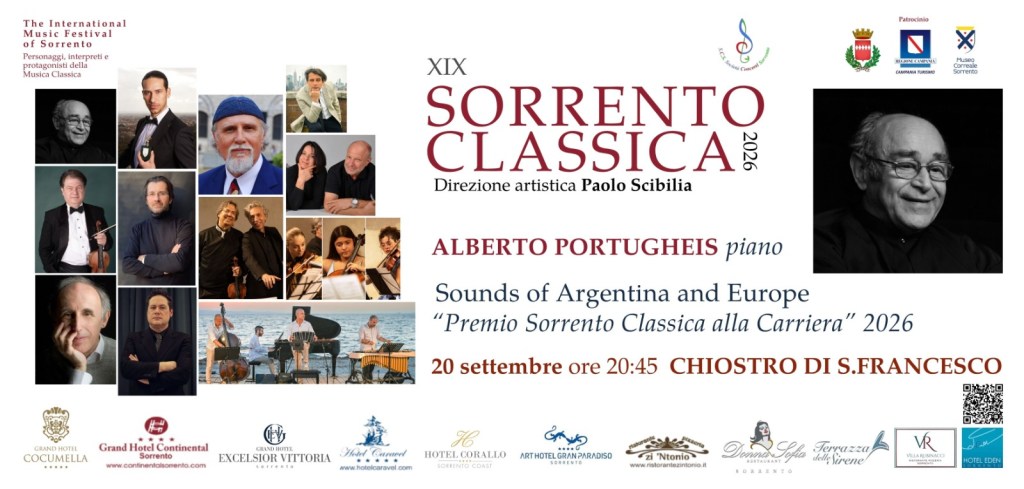
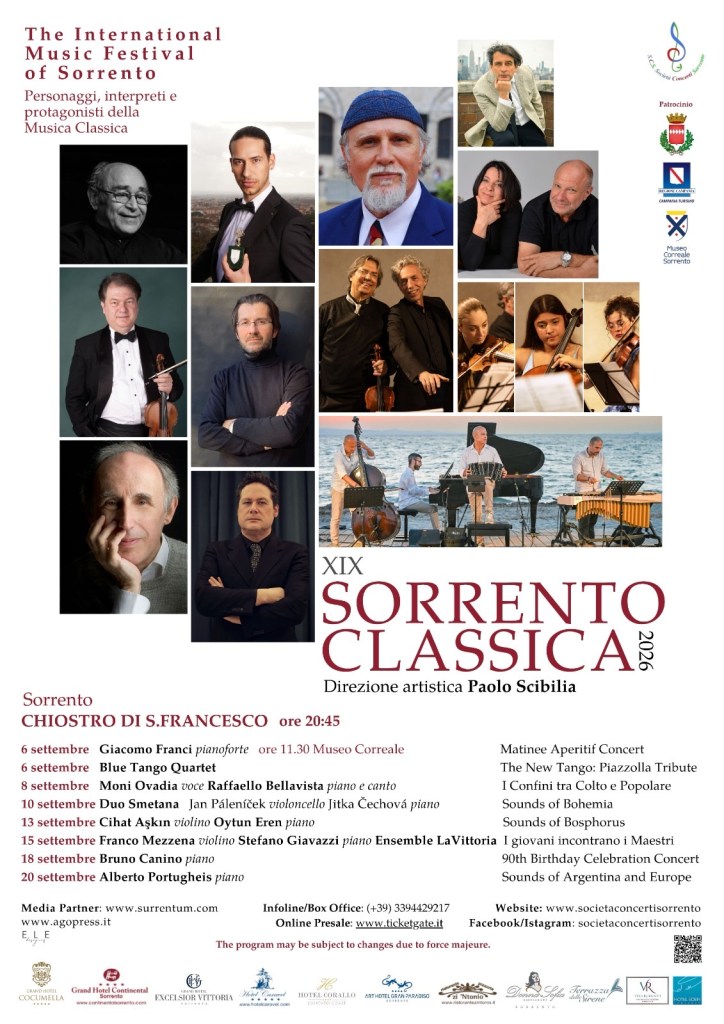
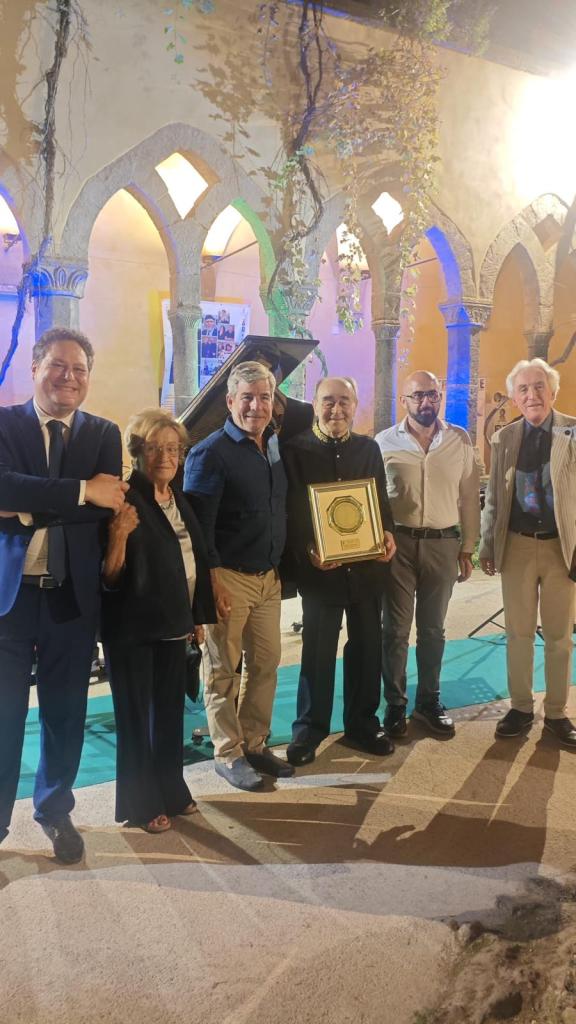
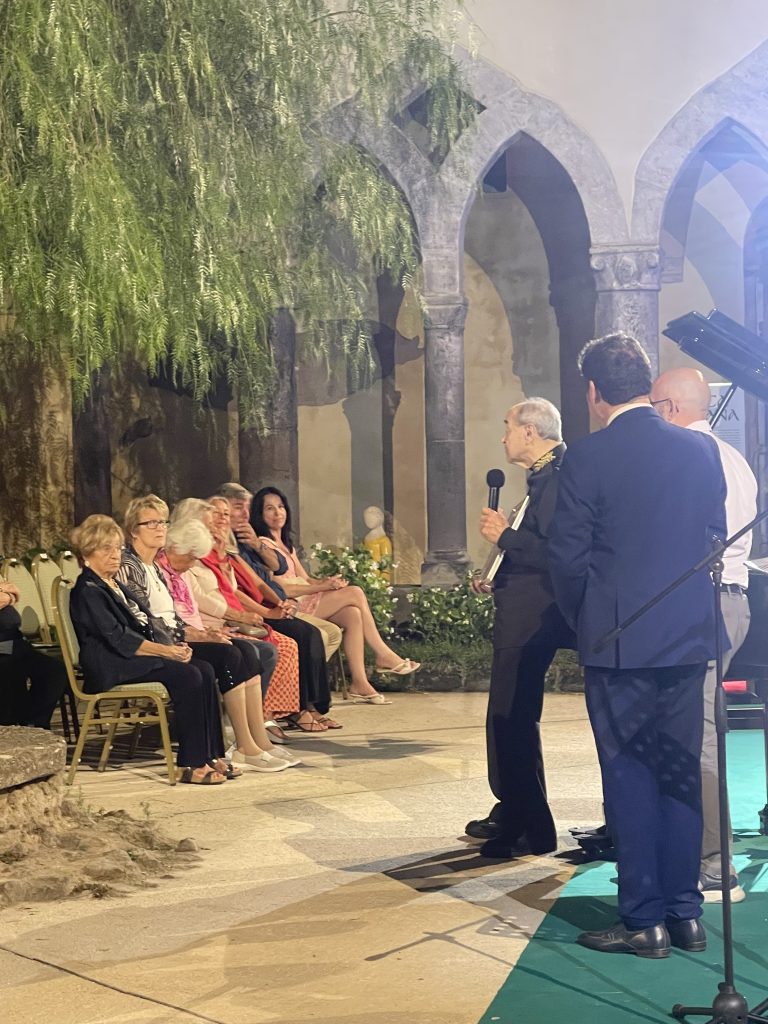
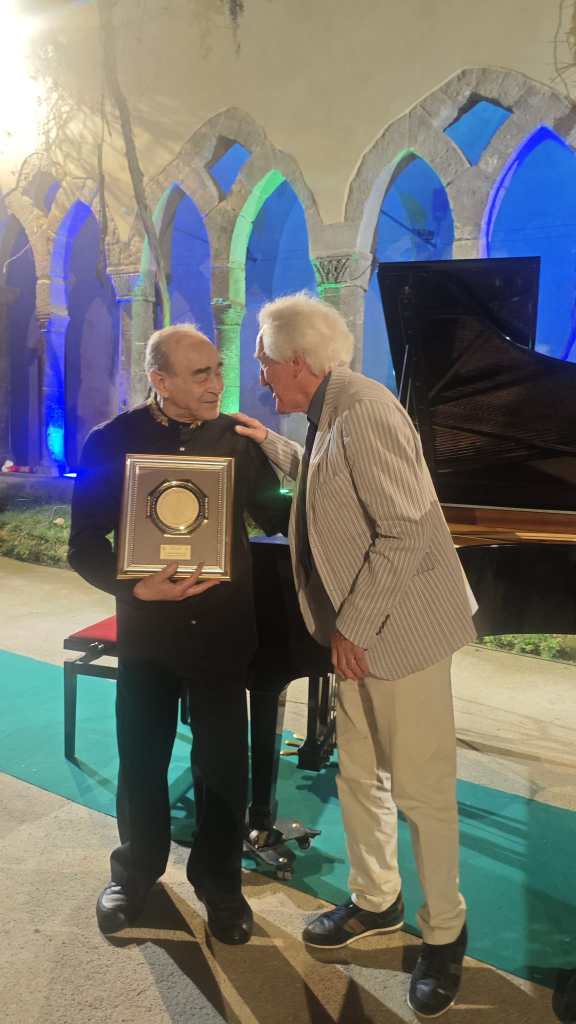
Alberto Portugheis honoured to receive the lifetime achievement award of Sorrento Classica last night for his tireless work for Music and Peace thanks must go to Maestro Paolo Scibilia President and Artistic Director of the Società dei Concert di Sorrento who for years has brought cultural excellence to Sorrento.
Maestro Paolo Scibilia bringing cultural excellence to Sorrento
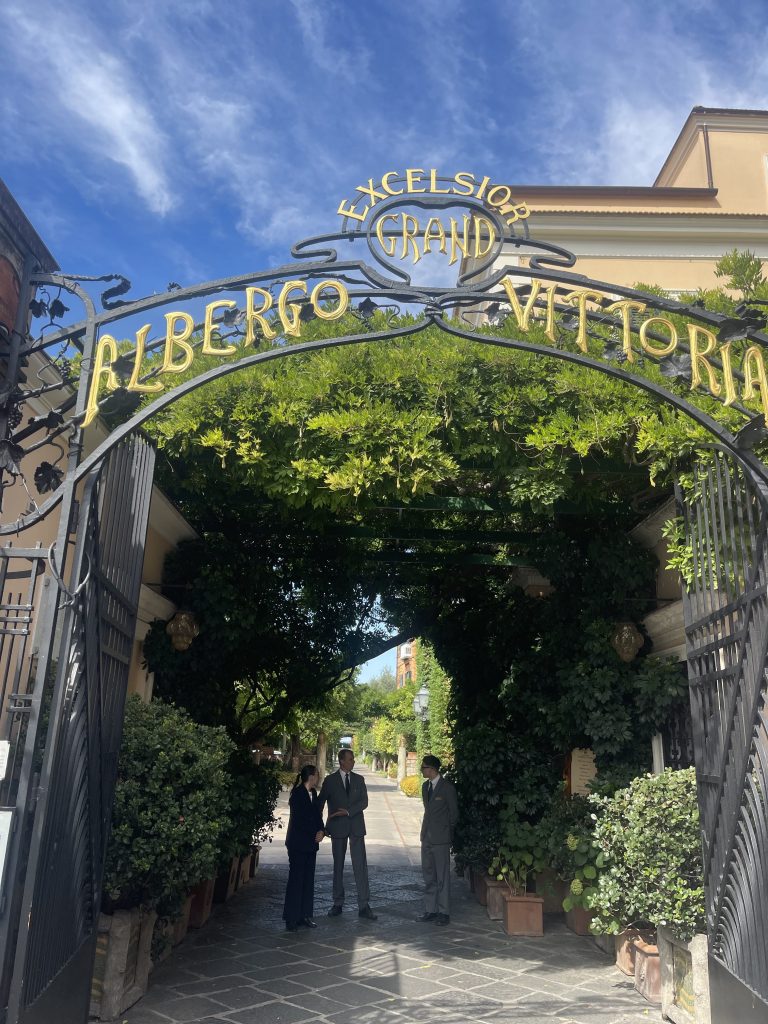
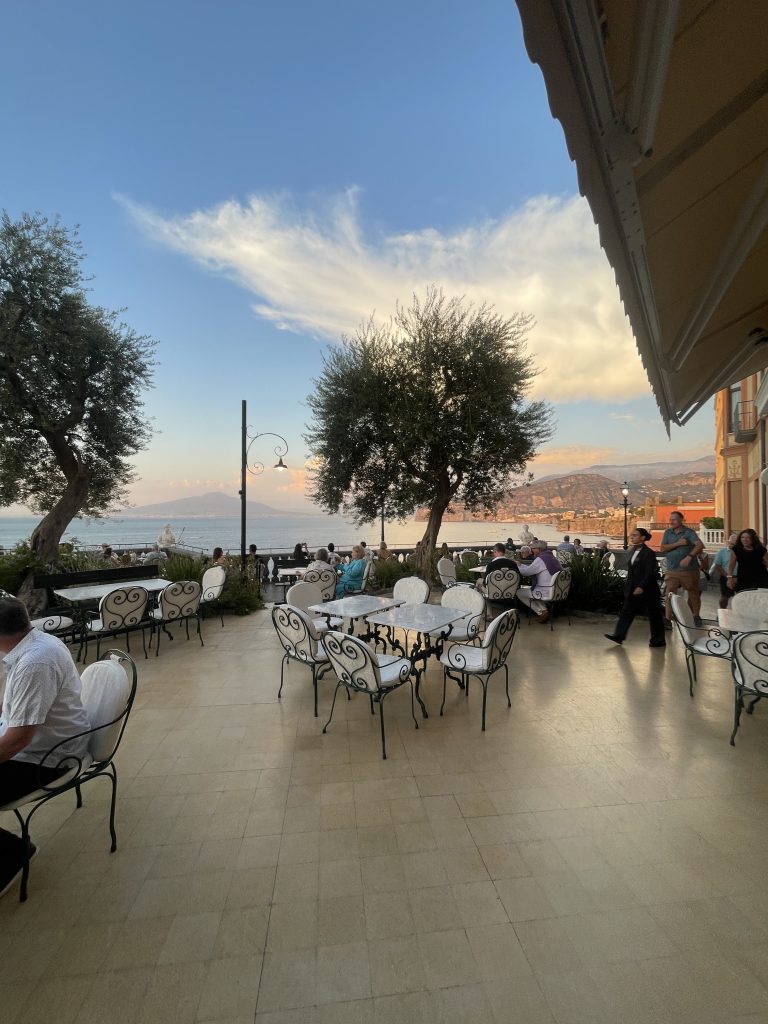
A special thanks must go to the Fiorentino family owners of the Grand Hotel Excelsior Vittoria who for years have invited artists to stay in their wonderful Hotel overlooking the Gulf of Napoli and in the very centre of Sorrento
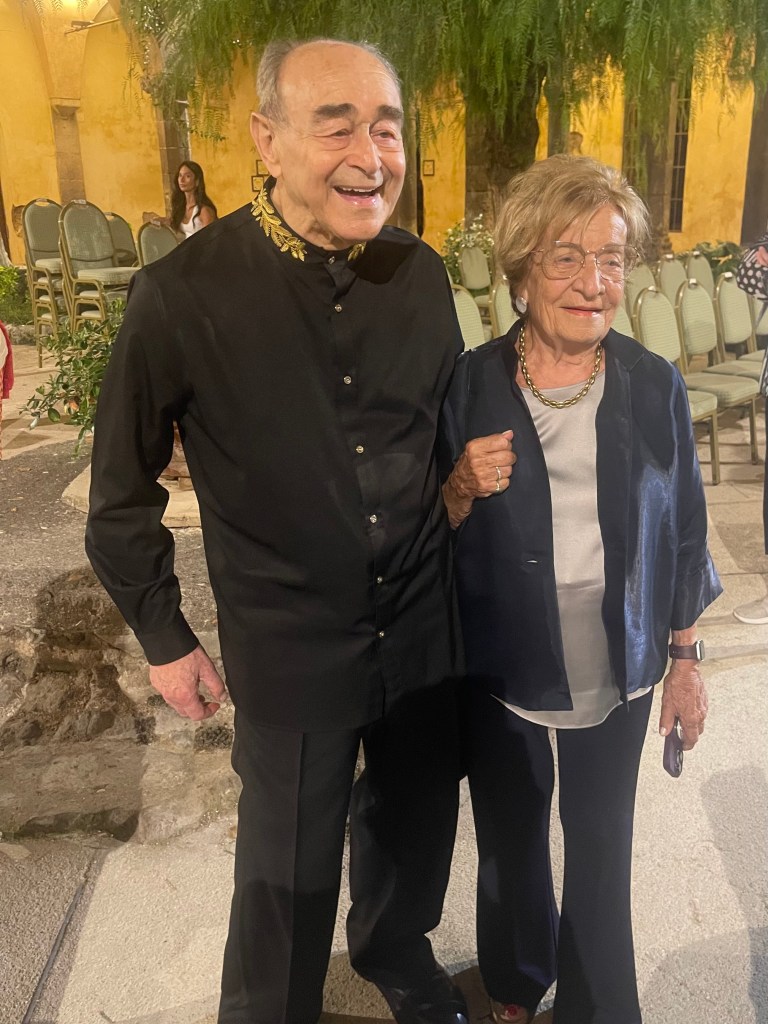
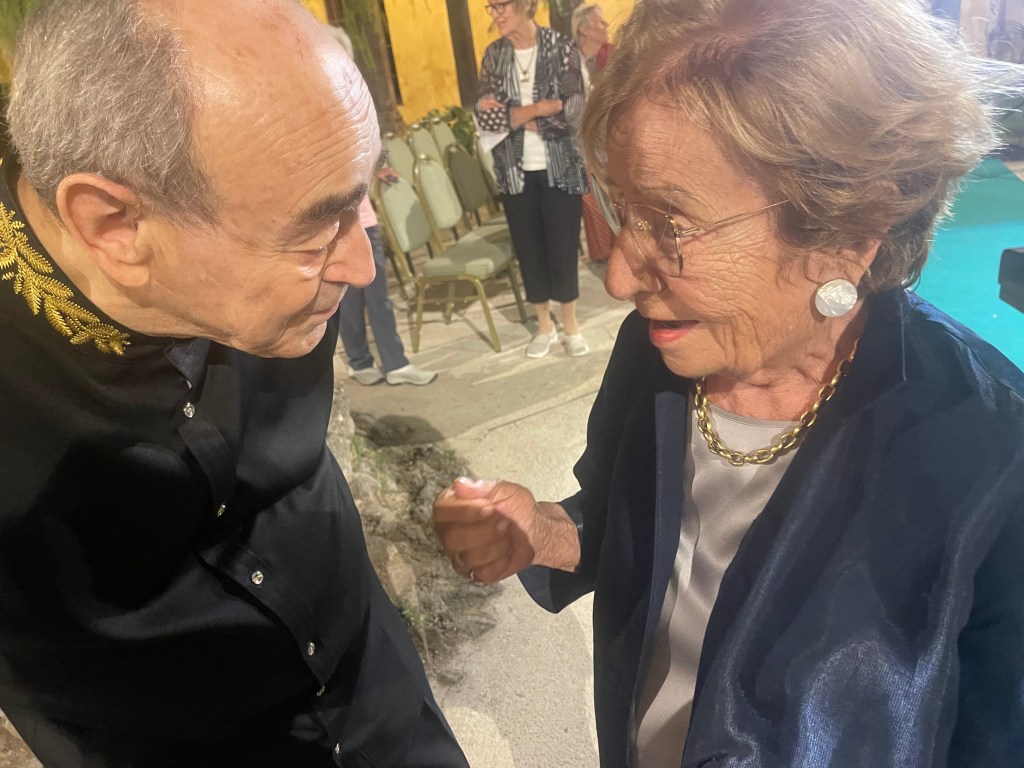
Maestro Alberto Portugheis with Sigra Lidia Fiorentino who not only invites the artists to stay in her sumptuous family hotel but also personally enjoys and supports their music . Alberto Portugheis with Cav Guido Fiorentino and his consort Ornella Scognamiglio
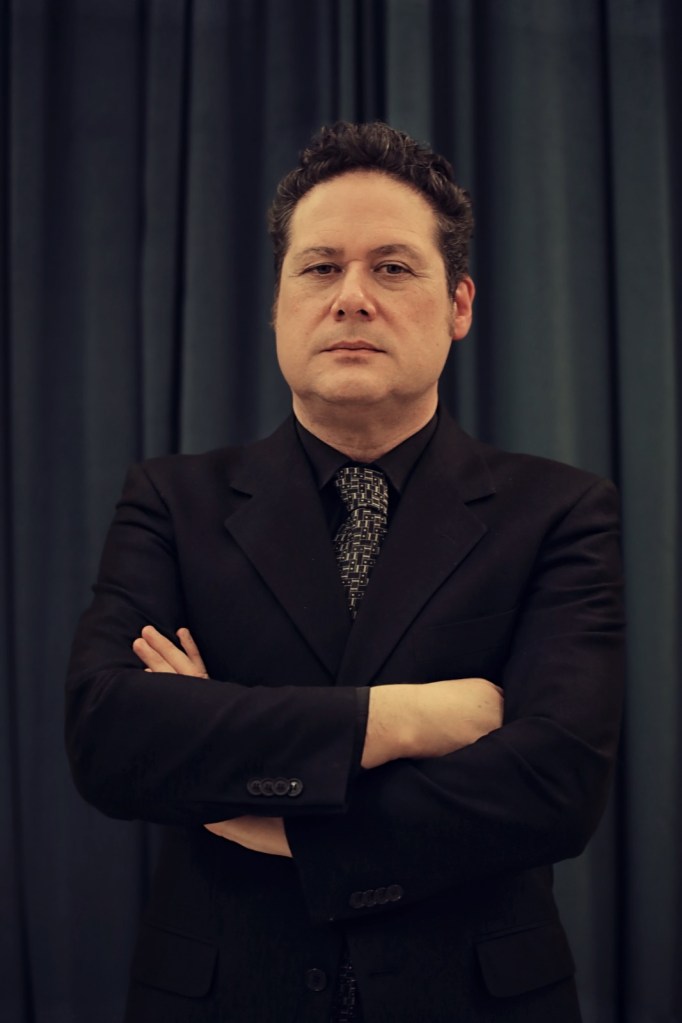
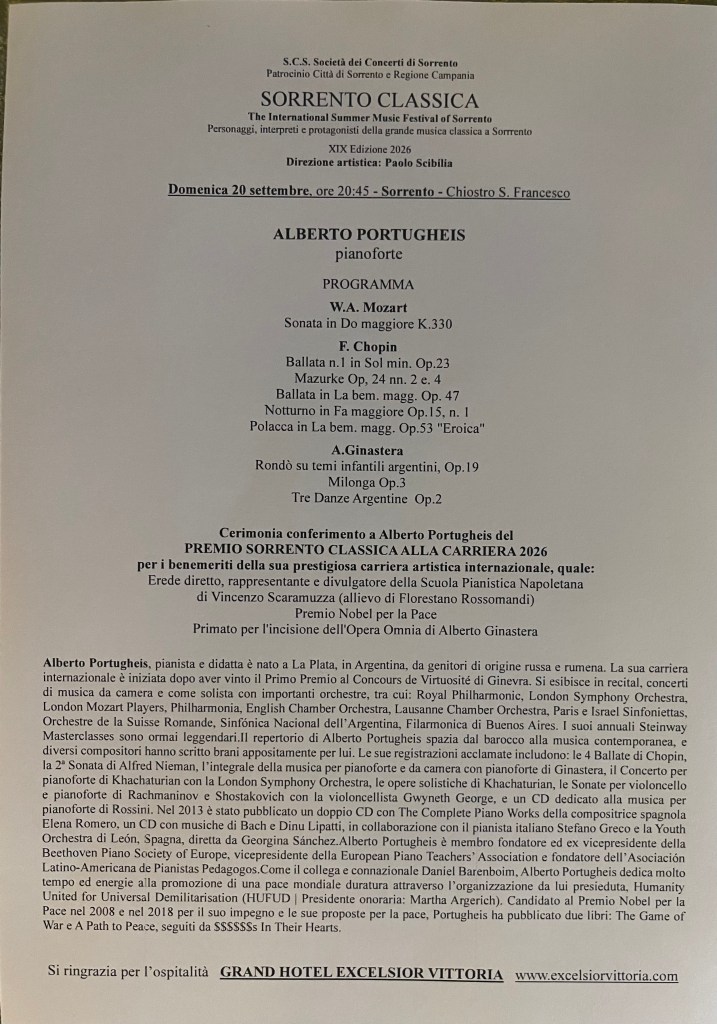
Twice nominated for the Nobel Peace Prize he is one of the last rappresentatives of the Neapolitan school of piano playing . His childhood training in Buenos Aires , together with his lifelong friend Martha Argerich, was of the school of Vincenzo Scaramuzza. Scaramuzza was born in Crotone on June 19, 1885 and died in Buenos Aires in 1968. He studied at the Academy of Music of San Pietro a Maiella in Naples with Florestano Rossomandi, Alessandro Longo and Beniamino Cesi. Disappointed and annoyed by the excessive bureaucratic rules of the Italian educational system that in his opinion hampered the freedom of expression of a teacher, after only two months teaching in Naples, Scaramuzza decided to leave Italy.In 1907 he moved to Argentina where he really started his career as a teacher at the Santa Cecilia Academy of Music, in Buenos Aires. Then, after marrying one of his students, Sara Bagnati, he founded the “Scaramuzza Academy of Music” in 1912. He devoted himself only to teaching from 1923 onwards. His students include Martha Argerich,Bruno Leonardo Gelber Fausto Zadra,Alberto Portugheis ,Martha Noguera and Enrique Barenboim father of Daniel.
Alberto Portugheis has been sharing his knowledge and music with others for over 75 years with a firm belief that war can and should be avoided and that Music can provide Light over Darkness.
The nomination also mentioned his close association and benchmark recordings of the works of Alberto Ginastera.
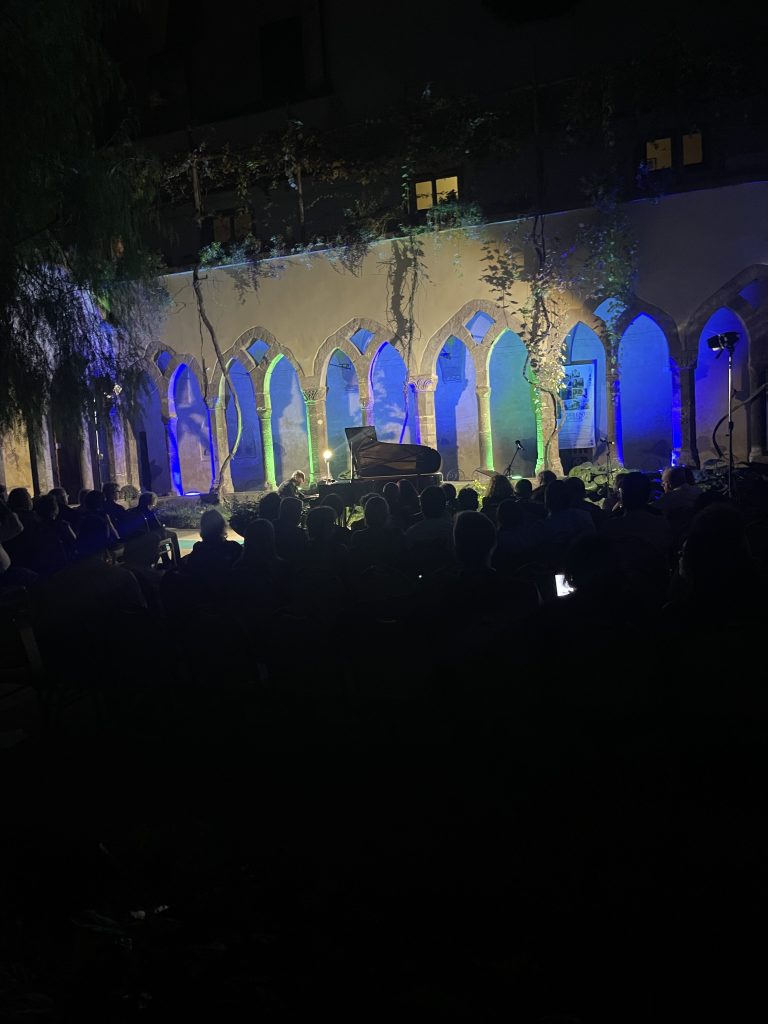
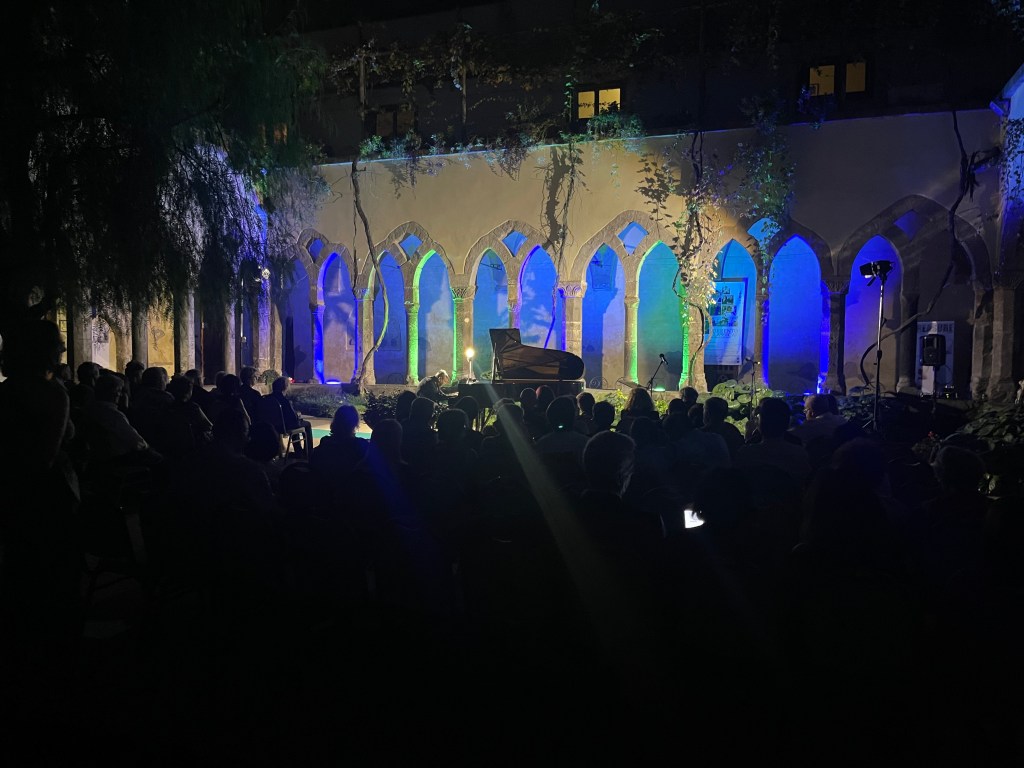
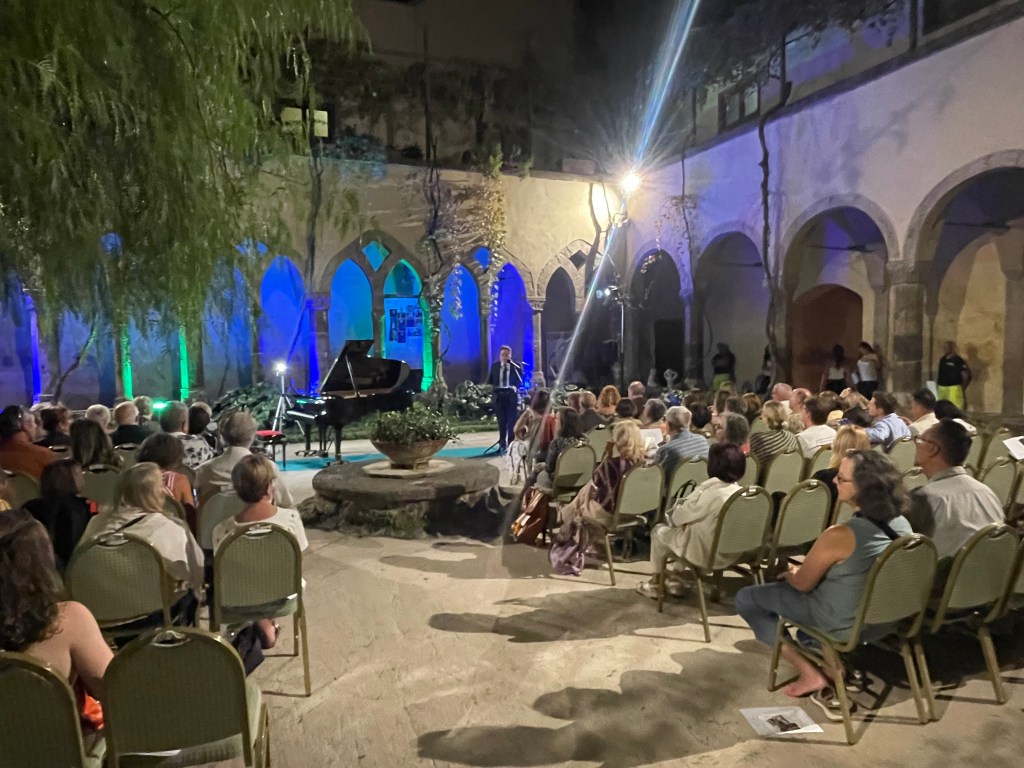
It was with Ginastera that he chose to end his recital in the Chiostro di San Francesco before receiving the award from the hands of the artistic director Maestro Paolo Scibilia and Assessore Vincenzo Ercolano. A recital that had heard a crystalline account of Mozart’s Sonata K 330 and passionately involved performances of some of the best loved works of Chopin. But it was Ginastera that stole the show with a scintillating performance of his Three Argentine Dances op 2. Adding by great request his Milonga op 3 . Had there been more time I know he had his arrangement of ‘O Sole Mio’ up his sleeve as a homage to Naples and in particular Sorrento.
Cherkassky warming up in the Green Room
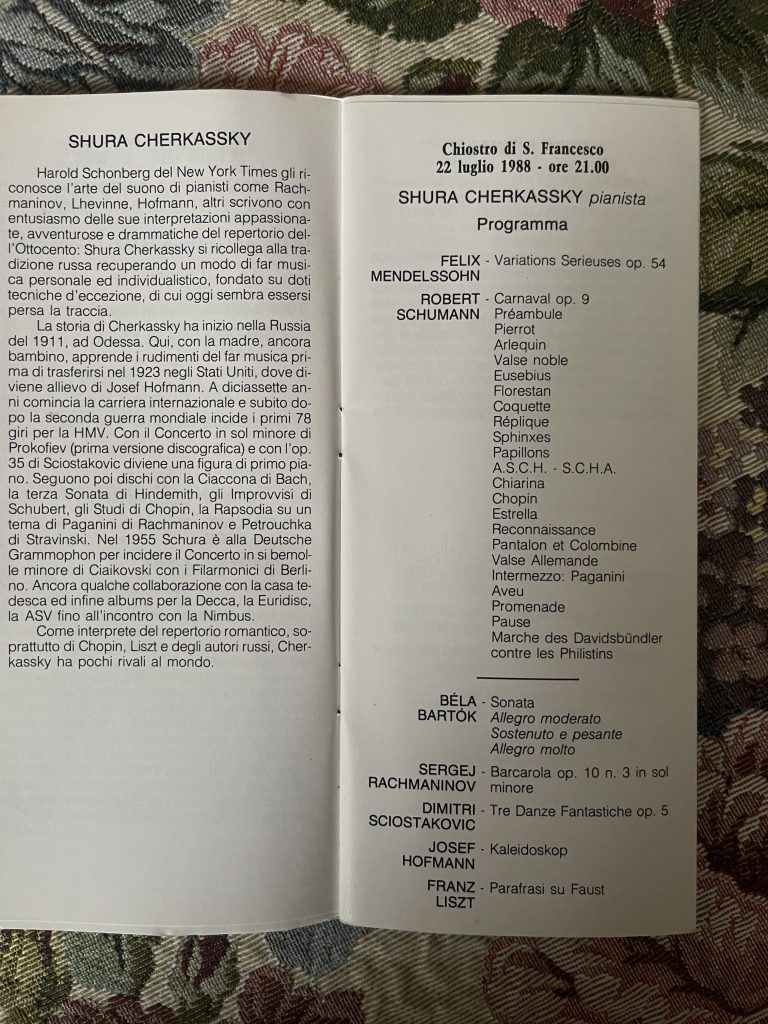
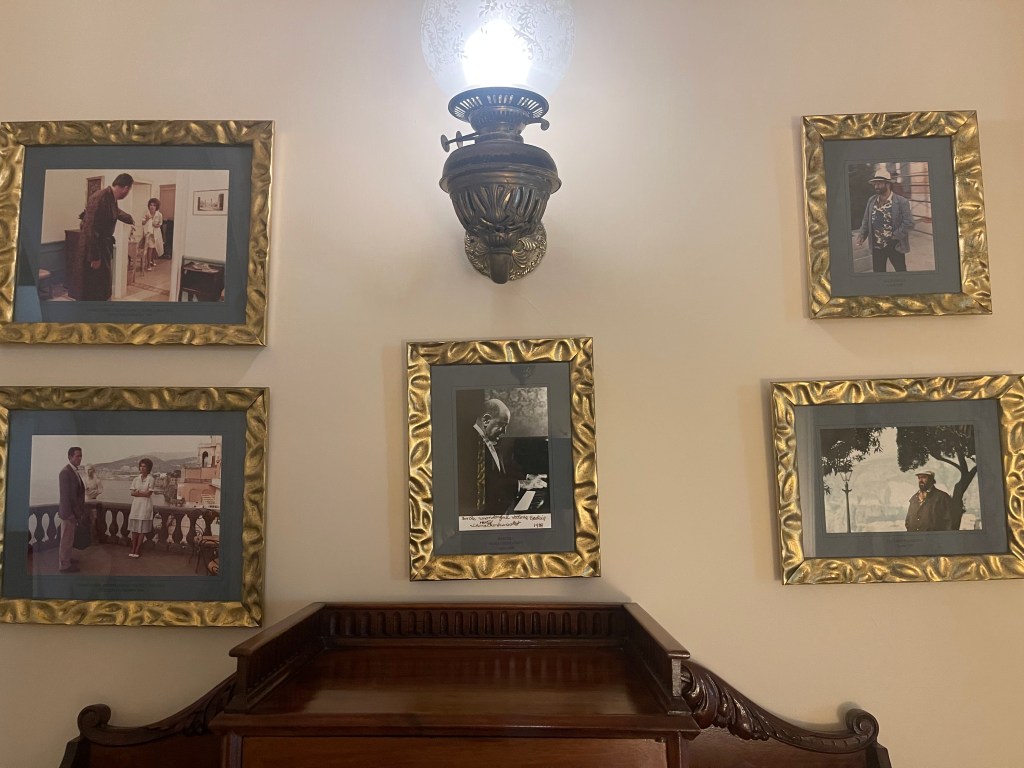
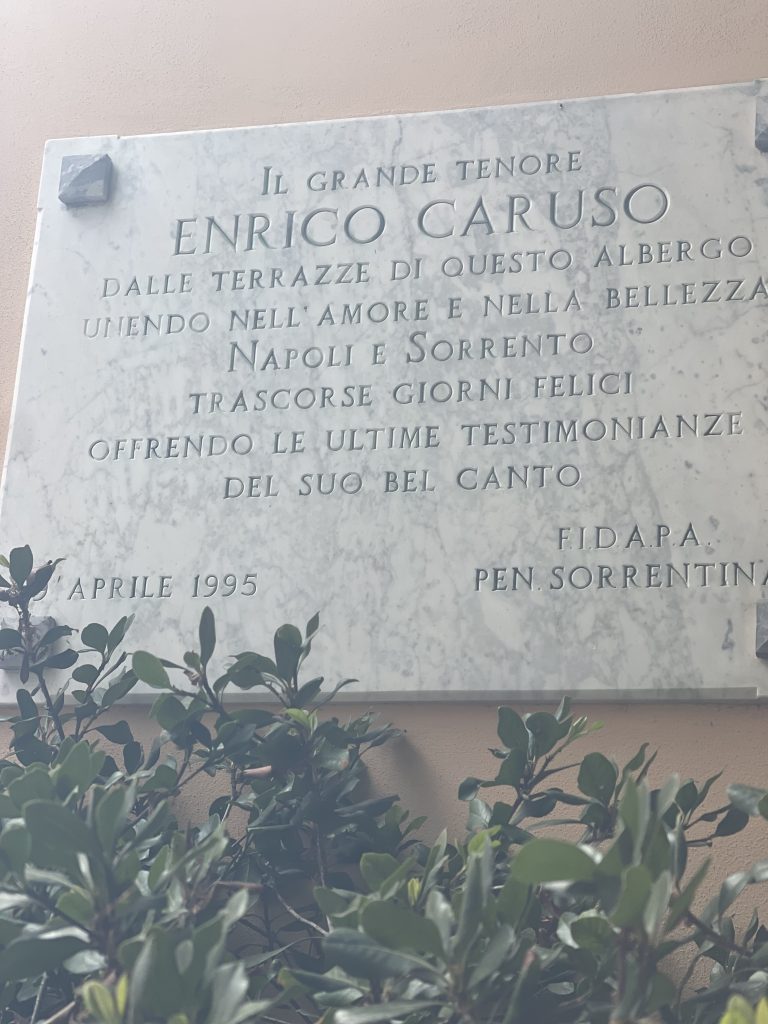
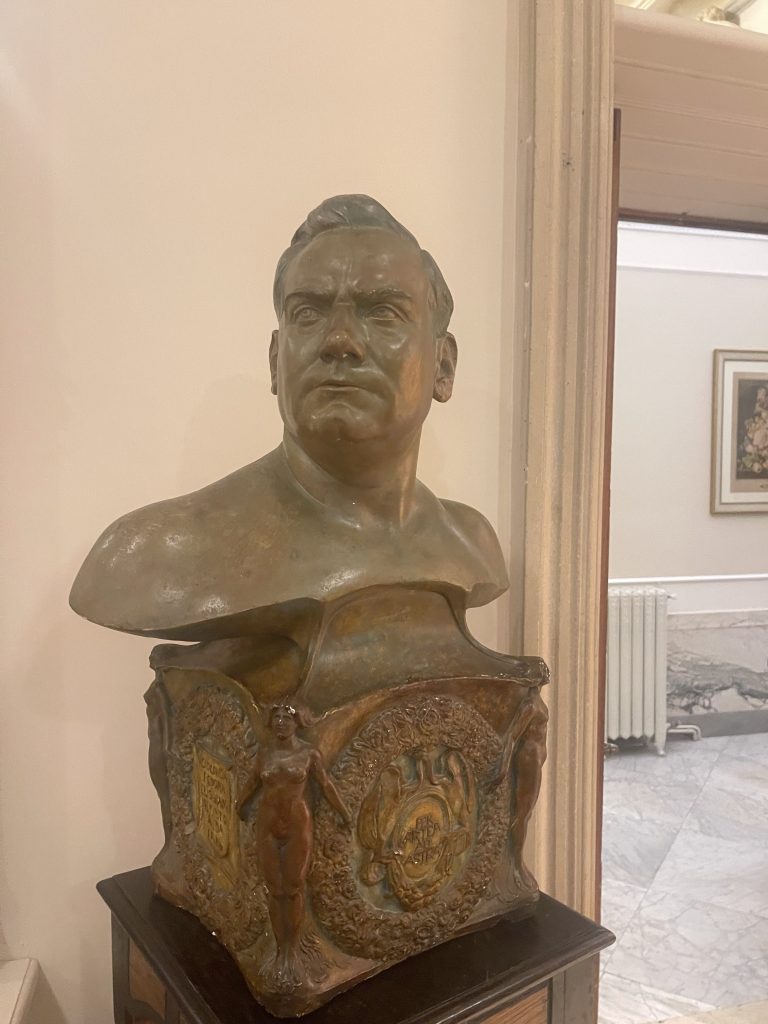
A cloister that has seen many great musicians in the past and where I had brought Shura Cherkassky in 1988, a close friend of Alberto, whose photo sits proudly on the wall of fame of the Grand Hotel Excelsior Vittoria, where Alberto was a guest. Shura Cherkassky together with Enrico Caruso, Luciano Pavarotti and Sophia Loren. Other pianists who have played in this magical Cloister include Tatyana Nikolaeva, Rosalyn Tureck, Byron Janis and also a very young Martha Argerich. In the past years Maestro Scibilia has crowned such artists as Oxana Yablonskaya, Marcella Crudeli, Bruno Canino and Leslie Howard.
Wall of fame in the Grand Hotel Excelsior Vittoria of the Florentino family
with distinguished ballet critic Simonetta Allder Christopher Axworthy ‘a true Angel of Music’
Simonetta Allder writes : ‘ Today is International Peace Day. After giving a memorable concert last night, delecting us with Mozart, Chopin and Ginastera, in the beautiful Chiostro di San Francesco, Sorrento, renowned pianist Alberto Portugheis receives the prestigious “Sorrento Classica alla Carriera” Award in recognition of a long and brilliant career and delivers an appeal calling for universal peace. Thank you, dearest Alberto: you are a fearless tiger at the piano and a gentle dove of peace. Thank you for spreading harmony, the harmony of music and the harmony of a universal brother/sisterhood which is your highest mission in life. With infinite gratitude also to Christopher Axworthy , a true Angel of Music who tirelessly and generously makes these wonderful moments possible’.
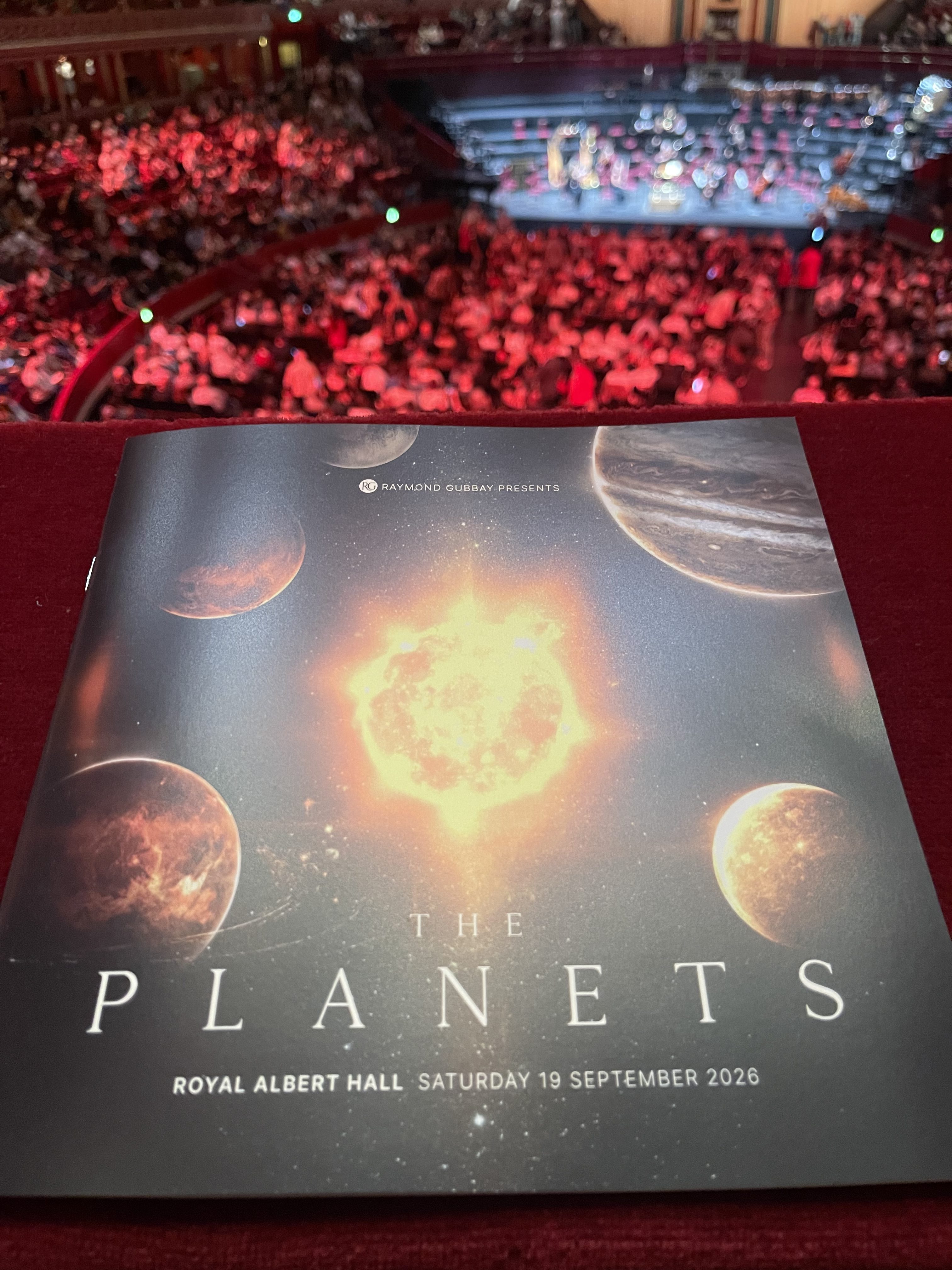
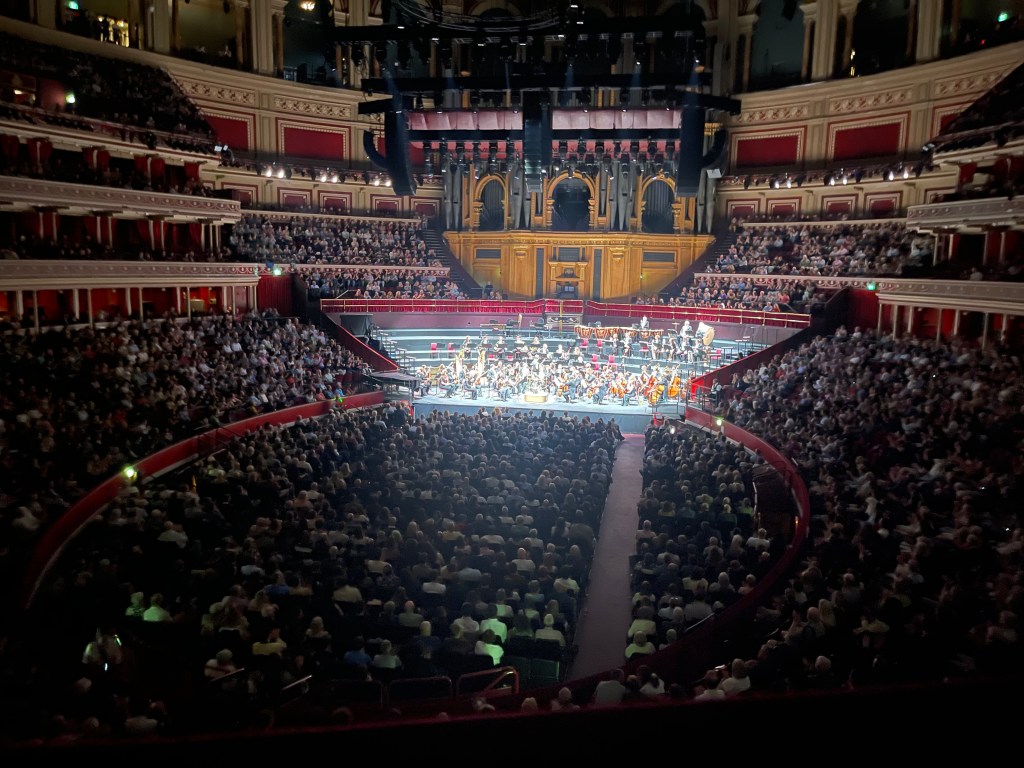
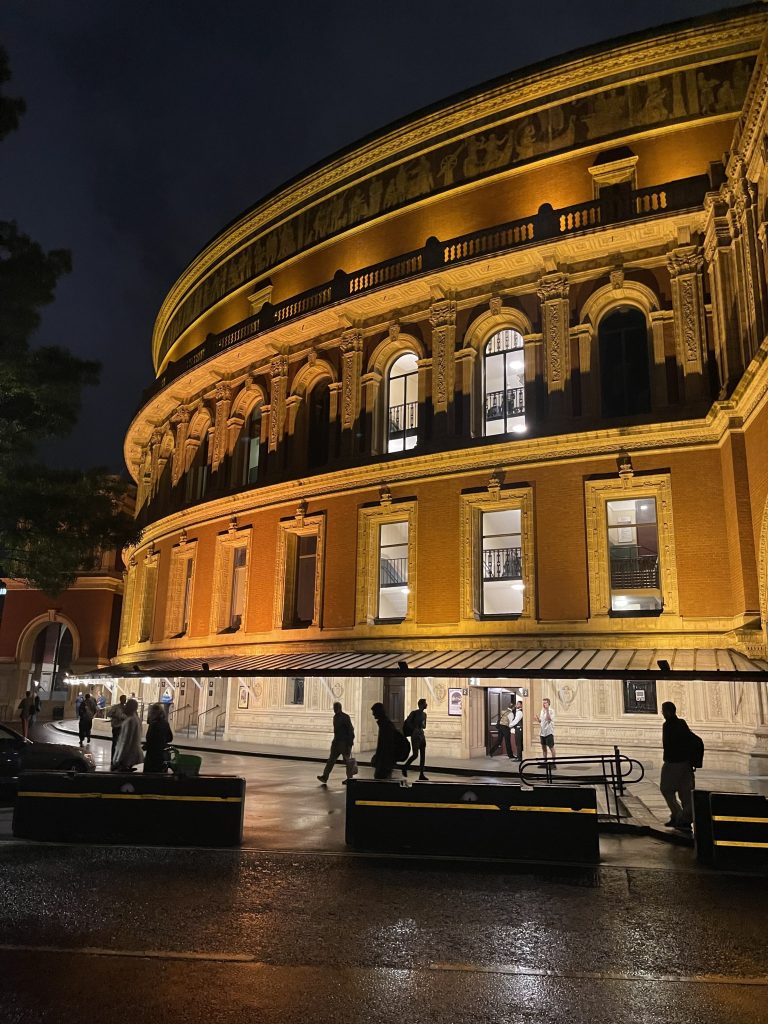
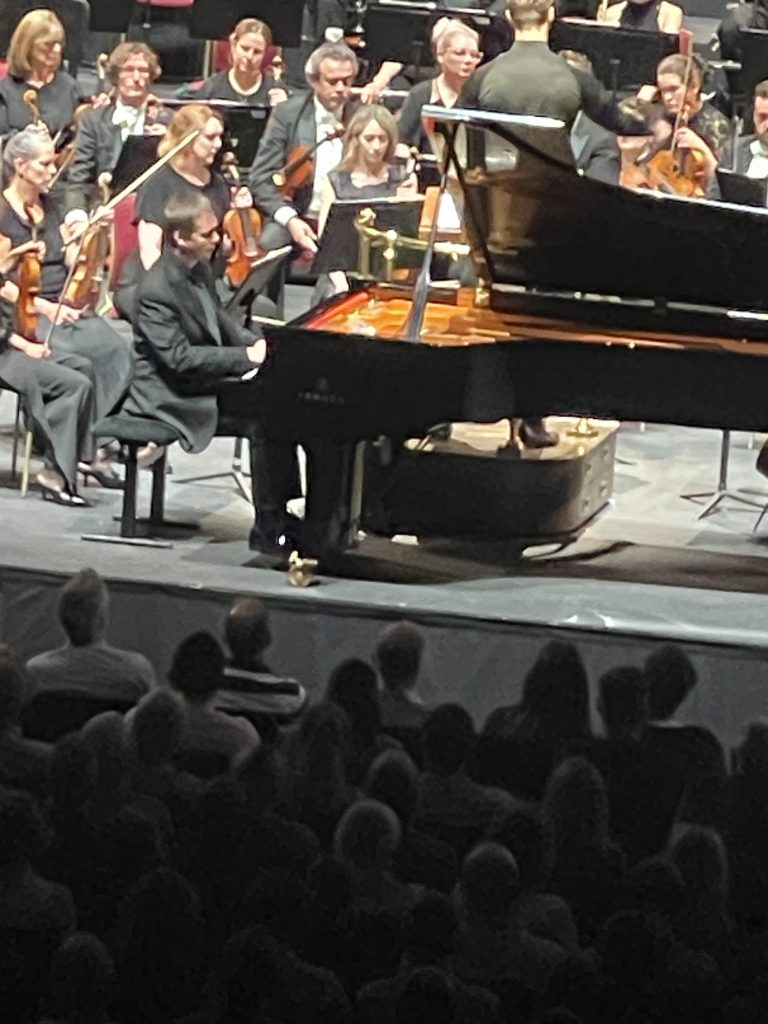
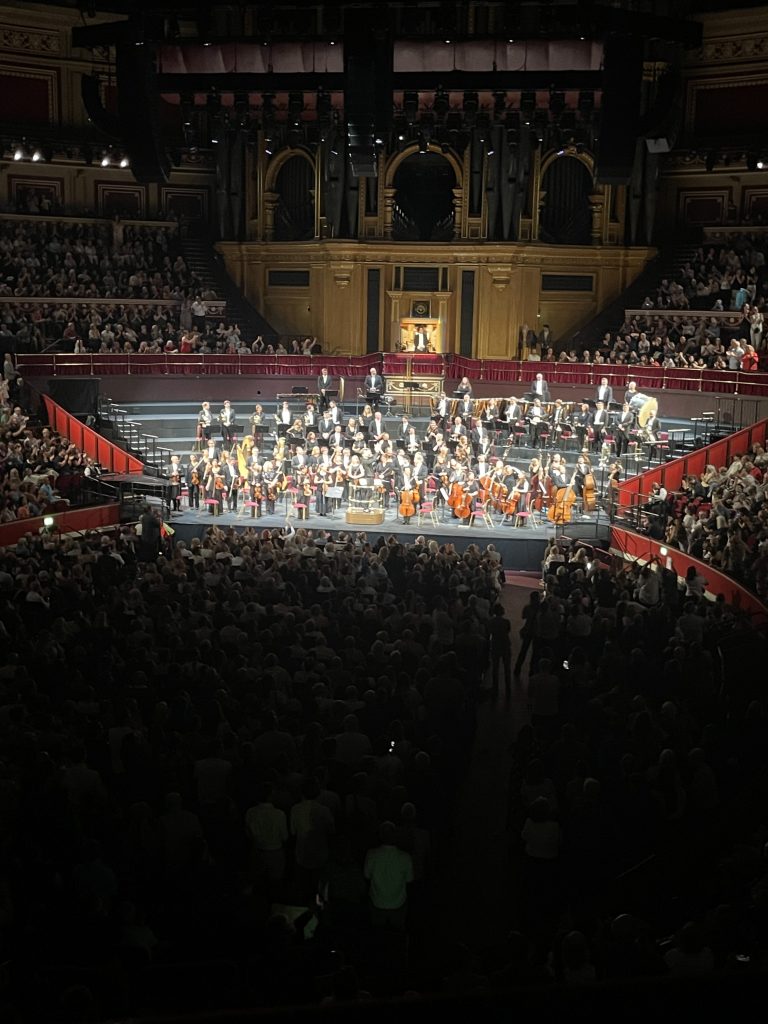
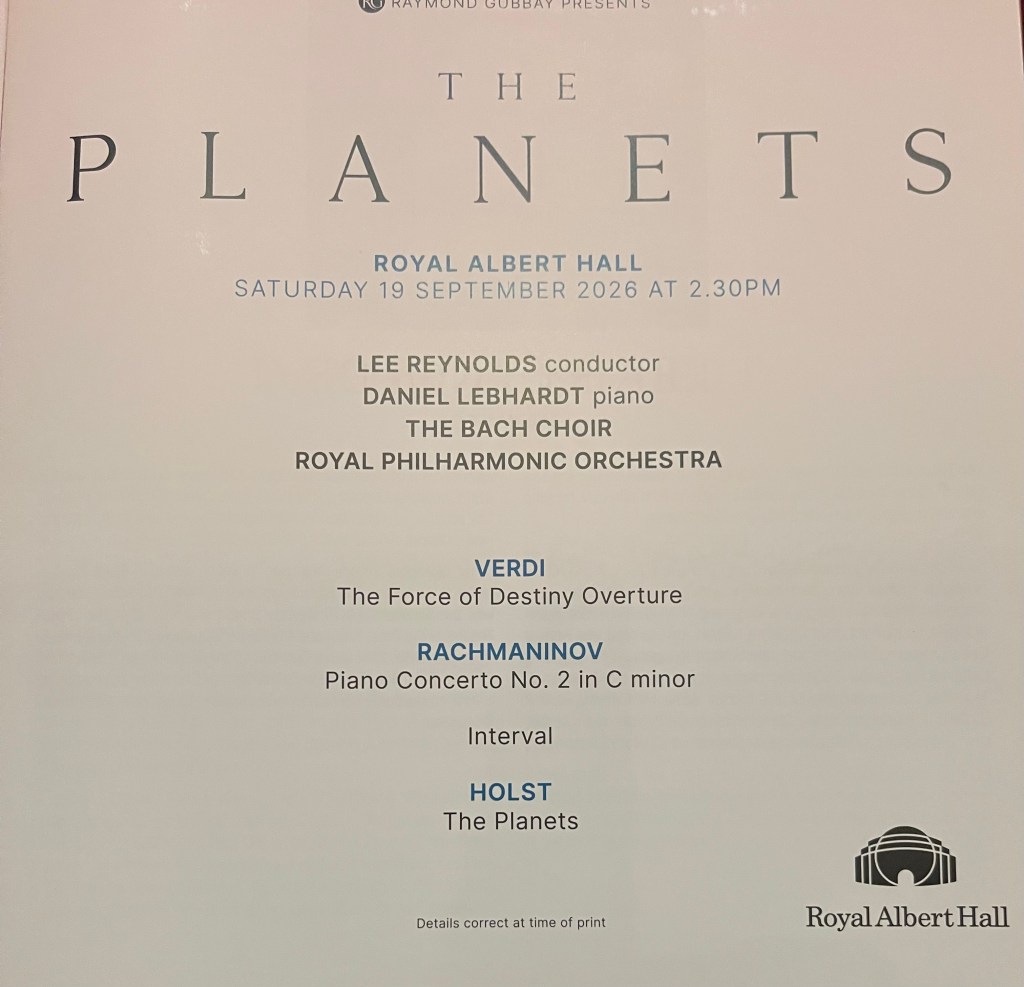
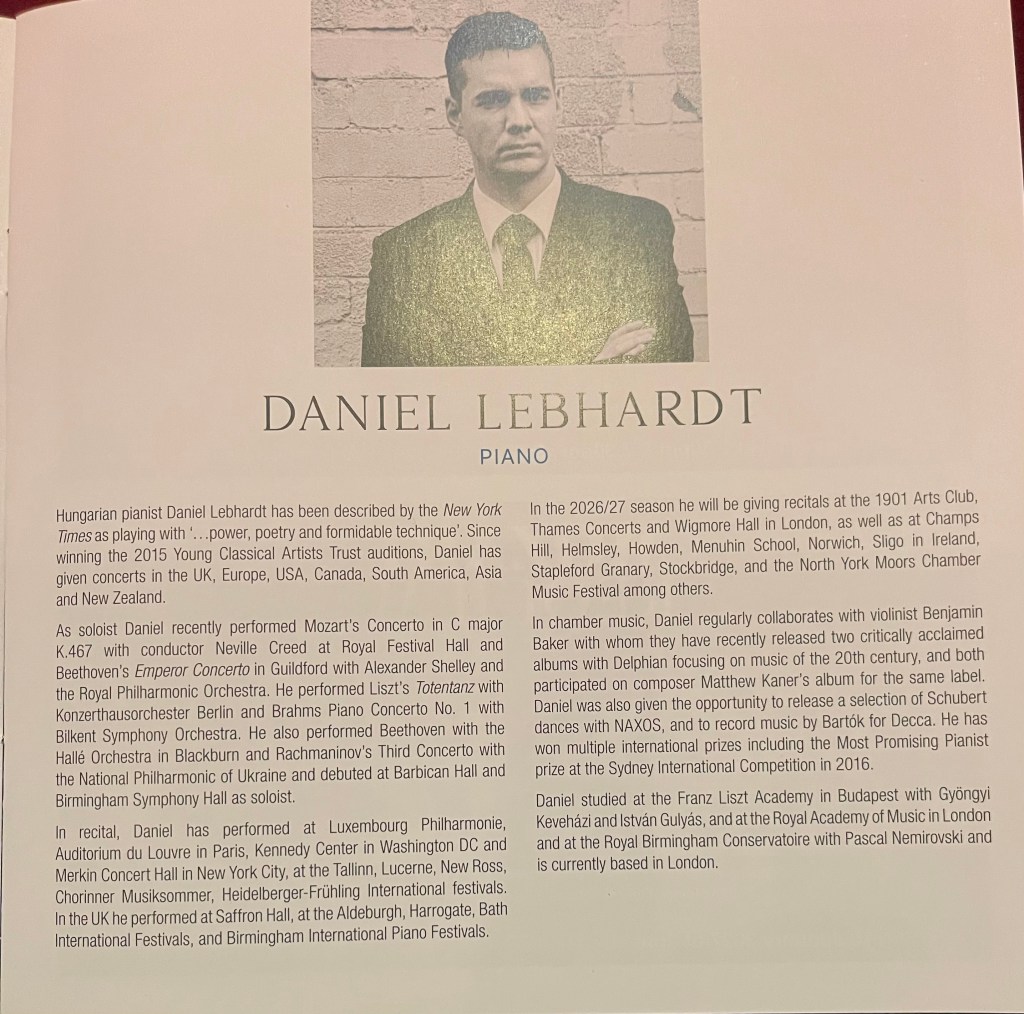
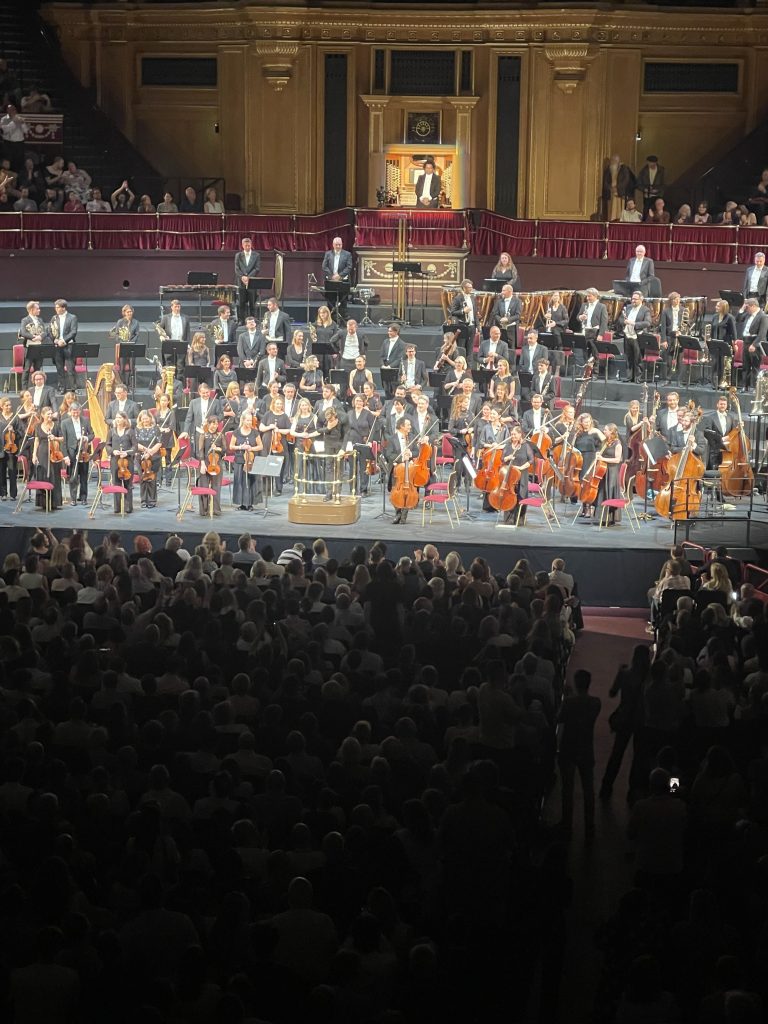
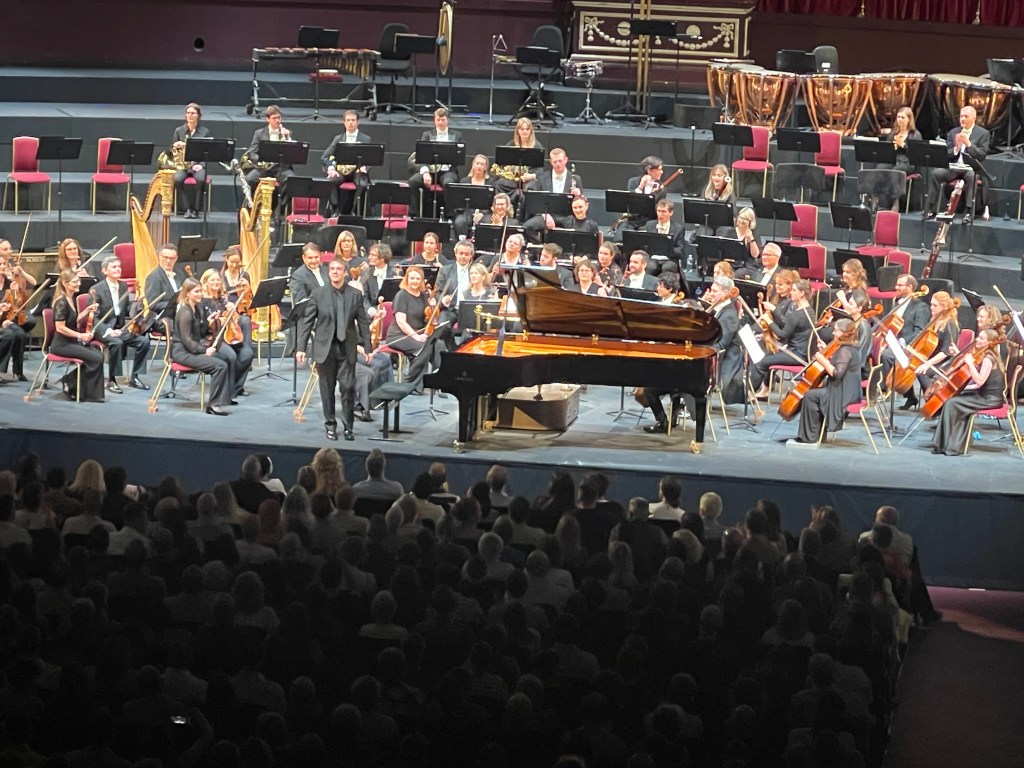
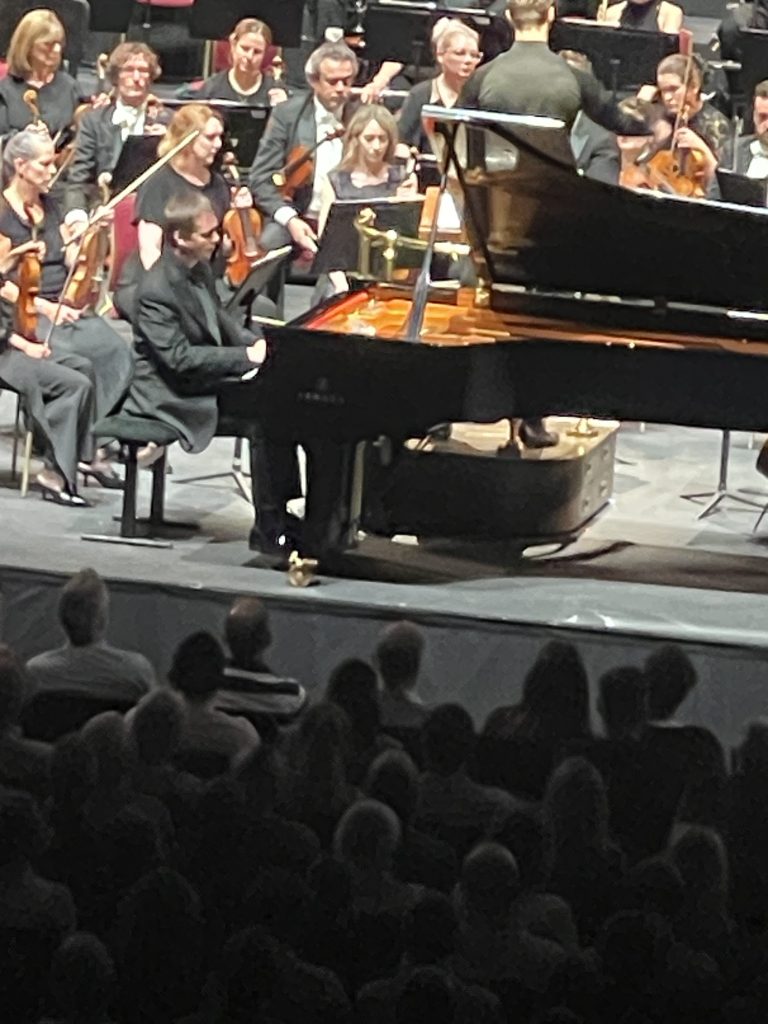
Daniel Lebhardt a star shining brightly amidst the Planets at the Royal Albert Hall today . What a genial impresario Raymond Gubbay is to give the chance to young artists of playing with major orchestras and to 6000 people all blissfully happy to applaud these young rising stars.
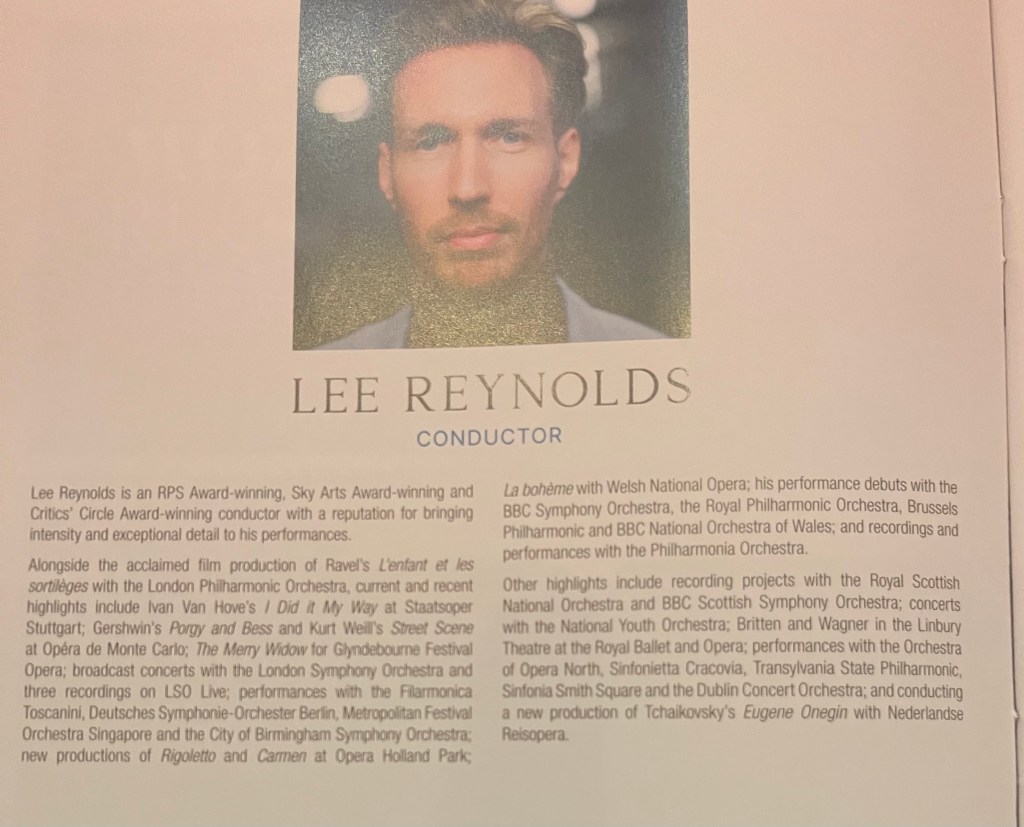
Great authority from a pianist raised in the Hungarian School that is based above all on musical values .A technical preparation that is of the natural use of the body and creates beautiful flowing sounds that are never hard or ungrateful. It is this early training that has given Daniel an authority and fluidity that is based on a musical imagination gained from years of study mentored by Pascal Nemirovski. He has become a true interpreter delving deeply into the scores to find the inspiration behind the`well annotated notes. Nowhere was this more evident than in the ‘Adagio sostenuto’ that was played with glowing simplicity as Daniel conversed with the superb players of the Royal Philharmonic. Fearless virtuosity too in the ‘Allegro scherzando’ where Daniel in collaboration with the very fine young conductor, Lee Reynold, could drive the music forward with passionate intensity. A sumptuous ending of aristocratic grandeur and Hollywood style effusions. There had been refined beauty to the opening as Daniel allowed the solo chords to build in intensity until joined by the orchestra in a sumptuous outpouring of sumptuous romantic sounds..
A collaboration between musicians as was later demonstrated by a performance of Holst’s Planets that was a kaleidoscope of chameleonic character and colour. The final notes intoned from the ‘Gods’ by the Bach Choir was a beautiful way to end an afternoon of sumptuous music making from two young musicians on the crest of a wave . I remember Victor Hochauser’s Tchaikovsky nights on Sunday evenings in this hall where the two concerti for violin and piano were to be heard with artist such as Peter Katin, Jerome Rose and Manoug Parikian but from the gallery cannons were fired off at the end of the 1812 overture that today were replaced by a celestial choir.
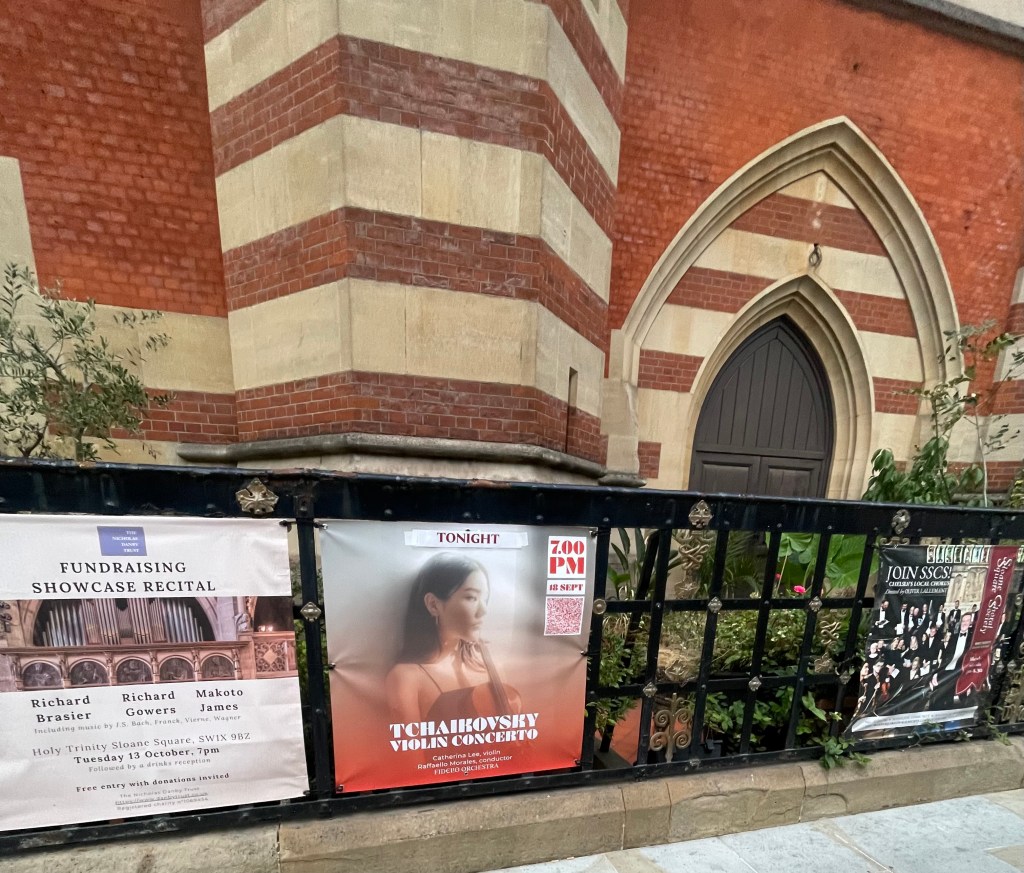
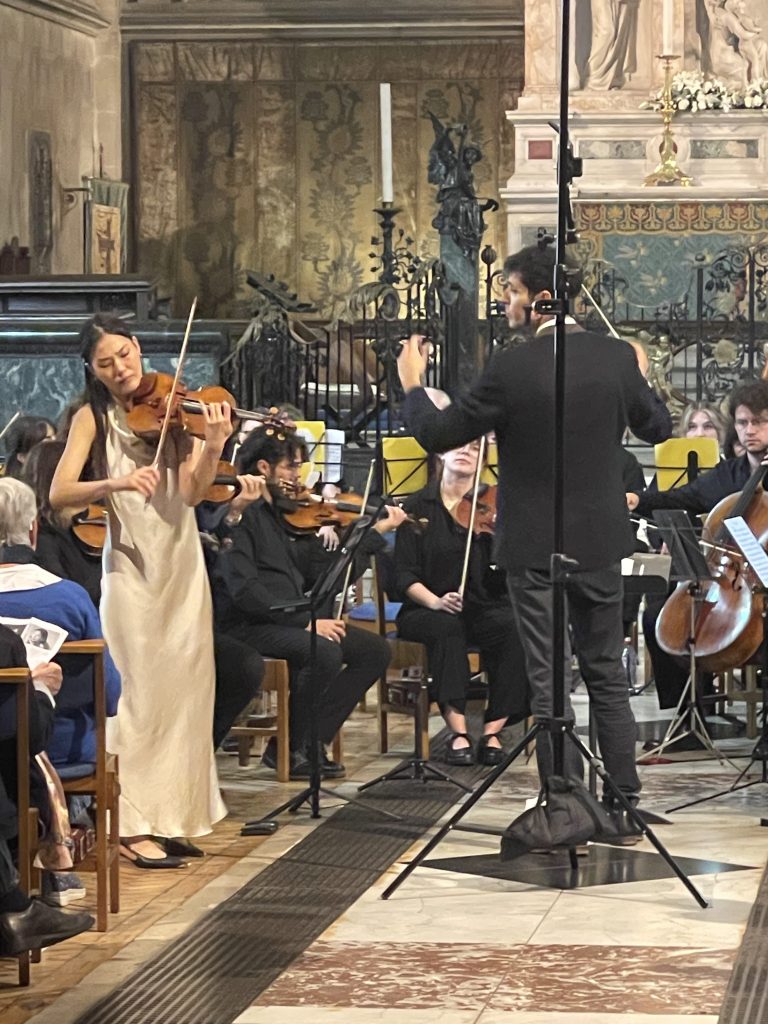
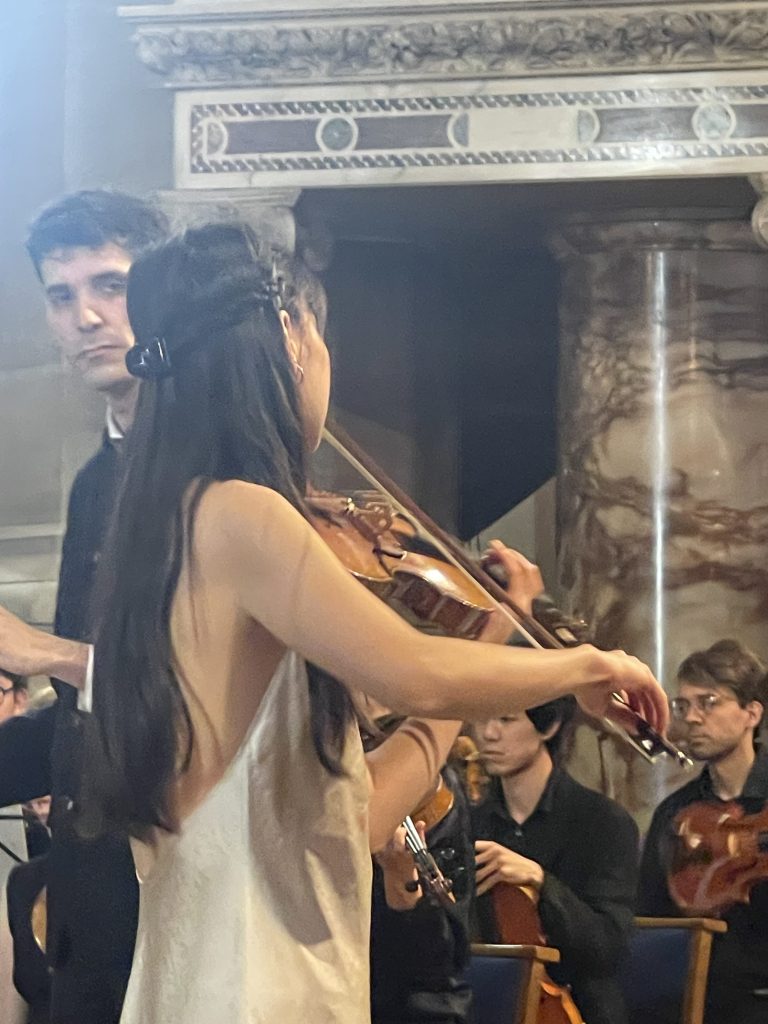
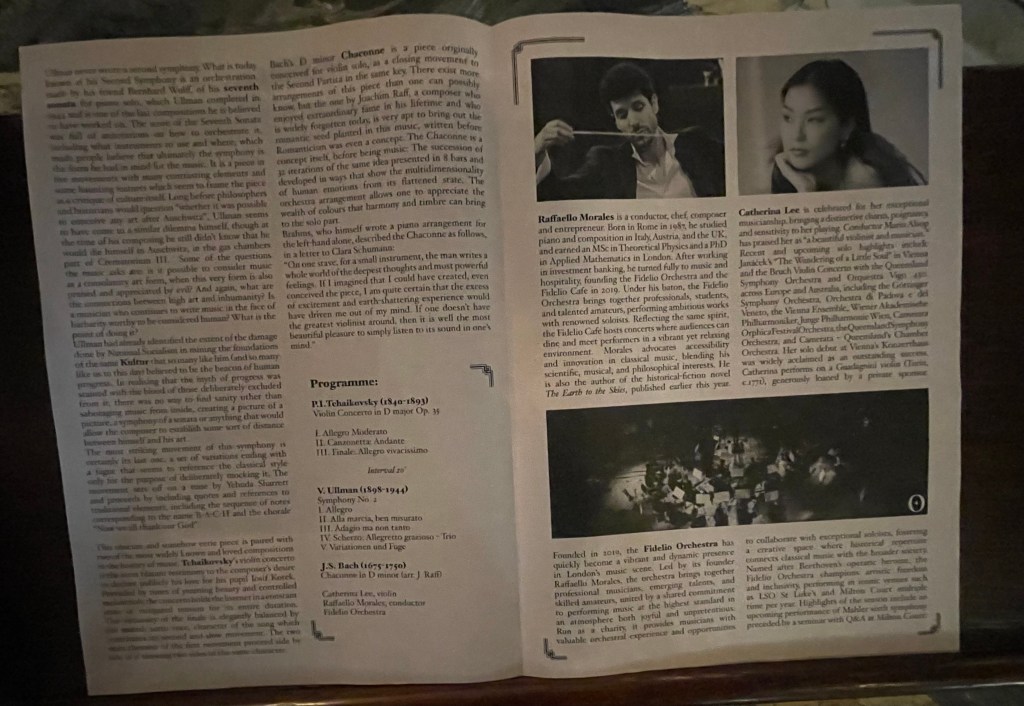
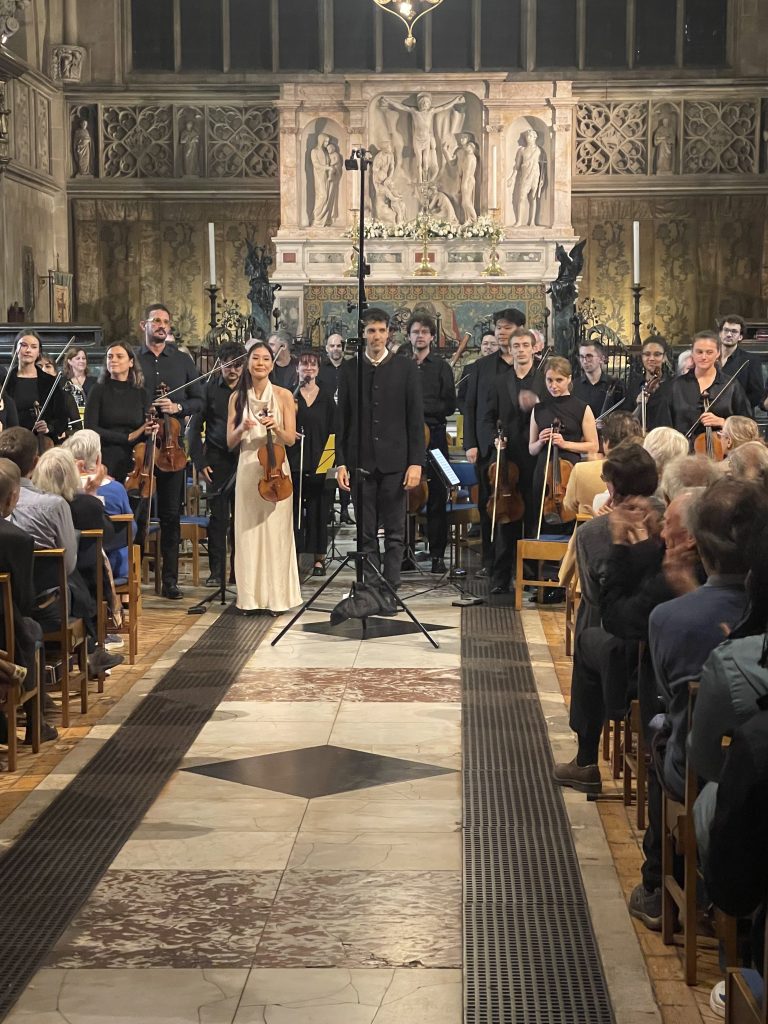
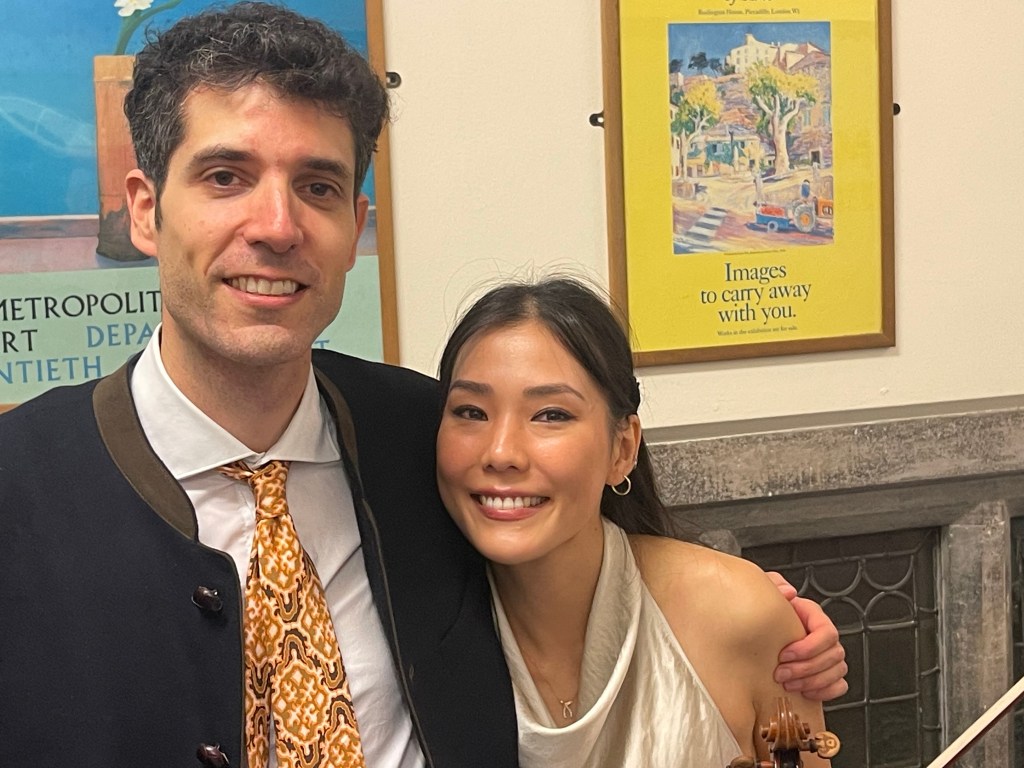
Catherina Lee ignites the Fidelio Orchestra under a reborn Raffaello Morales who followed every move of the Tchaikowsky Violin Concerto with a cat and mouse attention to the sublime beauty of the most sumptuously mellifluous of all concertos. Swanning it on a lake of sublime beauty as Catherina moved with the same subtle movements of an ‘Étoile’ as in the unsurpassed ballet scores of this theatrical genius.
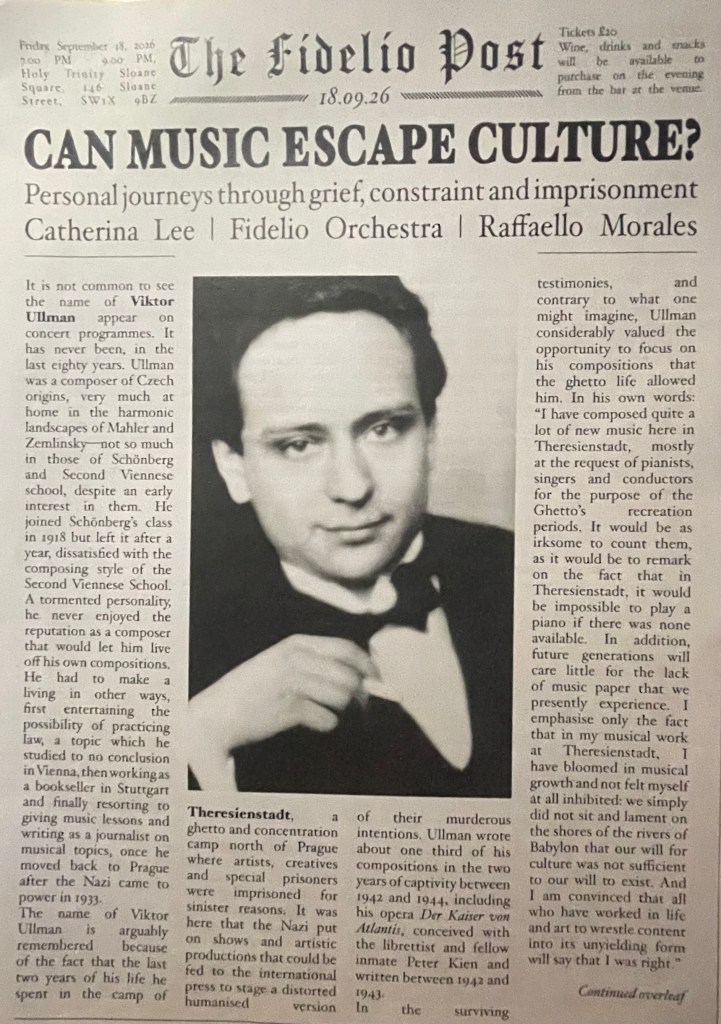
But it was The Fidelio Post that moved written by that Renaissance man Raffaello Morales.
At the time of his composing Ullman still did not know that he would die himself in Auschwitz, in the gas chambers part of Crematorium III. Tonight the Fidelio played his Second Symphony which he never wrote. An orchestration made by his friend Bernard Wulff of his seventh sonata for piano, which Ullman completed in 1944. It was left full of annotations on how to orchestrate it, including which instruments to use and is in five movements.
As Ullman state : ‘ I have bloomed in musical growth and not felt myself at all inhibited:we simply did not sit and lament on the shores of the rivers of Babylon that our will for culture was not sufficient to our will to exist.‘
Raffaello has gathered some very fine musicians around him and it was fitting that the concert should start with violin in Ballet shoes to allow an unsuspecting audience to share the harrowing message of Ullman or the Glory and justification of Art with Bach’s greatest work for solo violin.
In Brahm’s words : ‘ On one stave , for a small instrument, the man writes a whole world of the deepest thoughts and most powerful feelings’
Catherina Lee is one of the most gifted and promising violinists to have emerged from Queensland, Australia. She is described as possessing exceptional musicianship with a unique charm, poignancy, and sensitivity that place her in a league of her own. Leading conductor Marin Alsop recently commented, “I am hugely impressed. Catherina is a beautiful violinist and musician.”
Catherina gave her first public recital at 9, debuting with the Queensland Symphony Orchestra at 13, performing Tchaikovsky’s Violin Concerto. At 15, she was accepted into the class of renowned violinist and teacher Gerhard Schulz, a former member of the famed Alban Berg Quartet at the University of Music and Performing Arts in Vienna. Catherina was the first candidate to pass the gruelling requirements of the ‘Solo Profile’ for her master’s degree, graduating with distinction. Subsequently, she was selected to be mentored by Internationally renowned soloist Janine Jansen in Sion, Switzerland.
In 2023, Catherina plans engagements as a soloist and chamber musician at the Oberösterreichische Stiftskonzerte, Beethoven Triple Concerto with the Junge Philharmonie Wien, and Mendelssohn Violin Concerto with Camerata – Queensland’s Chamber Orchestra. Following Steven Isserlis’s recommendation, Catherina was invited to be a Fellow at the Lunenburg Academy of Music Performance in Nova Scotia, where she will spend several weeks working and performing with artists Gidon Kremer, Kim Kashkashian and Steven Isserlis.
A commanding and sensitive chamber musician, Catherina has appeared with Steven Isserlis, Kim Kashkashian, Philippe Graffin, Wilfried Strehle, Justus Grimm, Rick Stotijn, David Waterman, Garfield Jackson and Hyungki Joo. Her 2020 collaboration with composer Thomas Larcher on his piece ‘Madhares’ followed with its performance at the Ernen Festival.
As a soloist, she has performed with numerous orchestras throughout Europe and Australia, including Göttinger Symphony Orchestra, Orchestra di Padova e del Veneto, Queensland Symphony, Camerata – Queensland’s Chamber Orchestra, the Vienna Ensemble, Wiener Akademische Philharmoniker, Junge Philharmonie Wien, and Camerata Orphica Festival Orchestra. Her recent solo debut at the Konzerthaus in Vienna was described as an outstanding success.
Her work is supported by masterclasses from several leading musicians, including Steven Isserlis, Serguei Azizian, Ivry Gitlis, Boris Brovtsyn, Ivan Straus, Johannes Meissl, Nikolaj Szeps- Znaider, Michael Frischenschlager, Jean Jacques Kantorow, Ilya Gringolts, Johannes Meissl, Pavel Vernikov, Jennifer Stumm, Reka Szilvay, and Erich Gruenberg.
Catherina plays on a GB Guadagnini, Turin c1771, generously on loan by a private sponsor.
SCRIABIN: Piano Sonata No. 9, Op. 68, “Black Mass”
LISZT: Bénédiction de Dieu dans la solitude, S. 173 No. 3
Intermission 30 minutes
MUSSORGSKY: Pictures at an Exhibition
Promenade
Gnomus
Promenade
Il vecchio castello
Promenade
Tuileries (Dispute d’enfants après jeux)
Bydło
Promenade
Ballet of the Unhatched Chicks
Samuel Goldenberg and Schmuÿle
Promenade
Limoges. Le marché (La grande nouvelle)
Catacombae (Sepulcrum romanum) – Cum mortuis in lingua mortua
The Hut on Fowl’s Legs (Baba-Yaga)
The Great Gate of Kiev
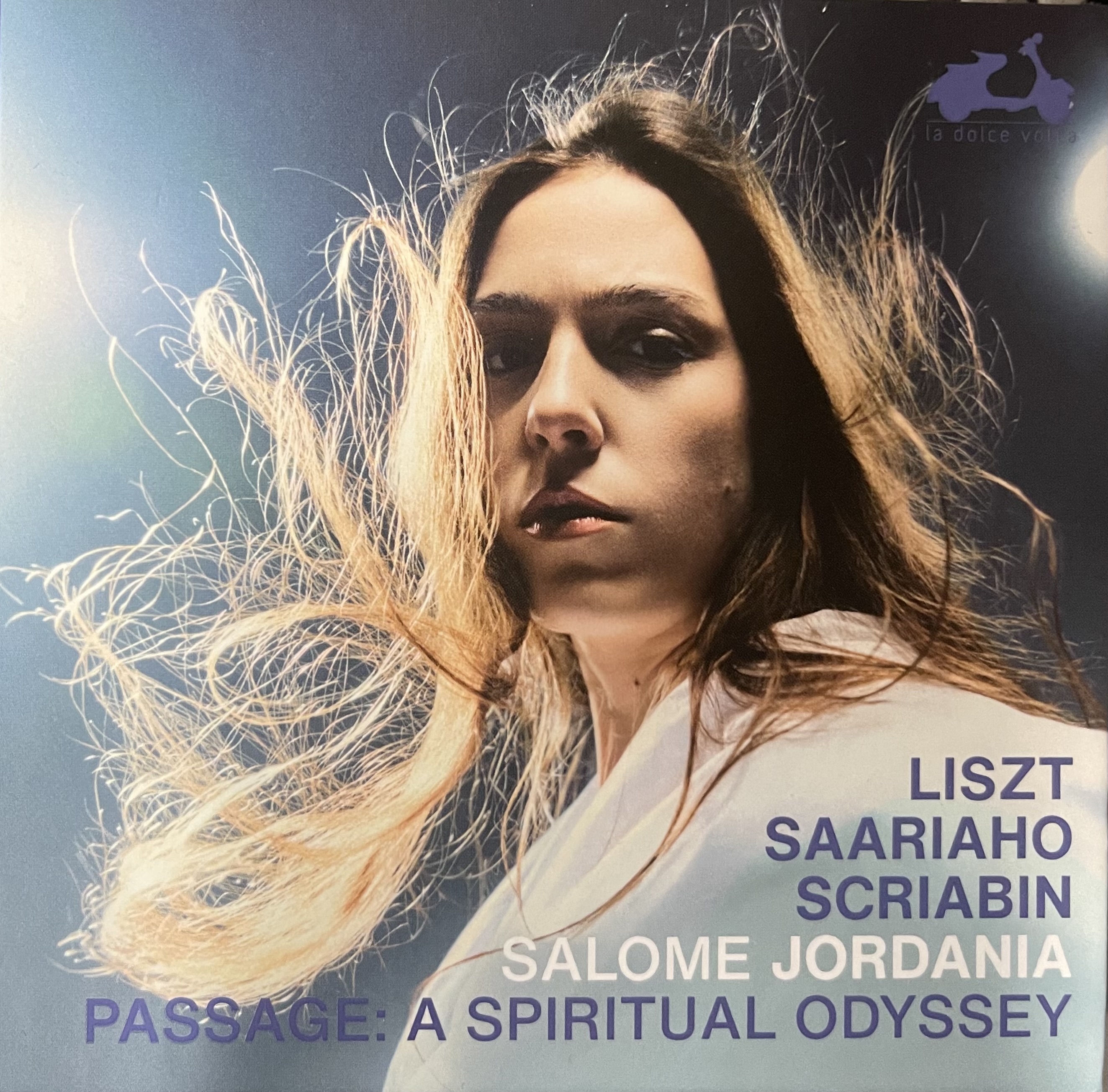
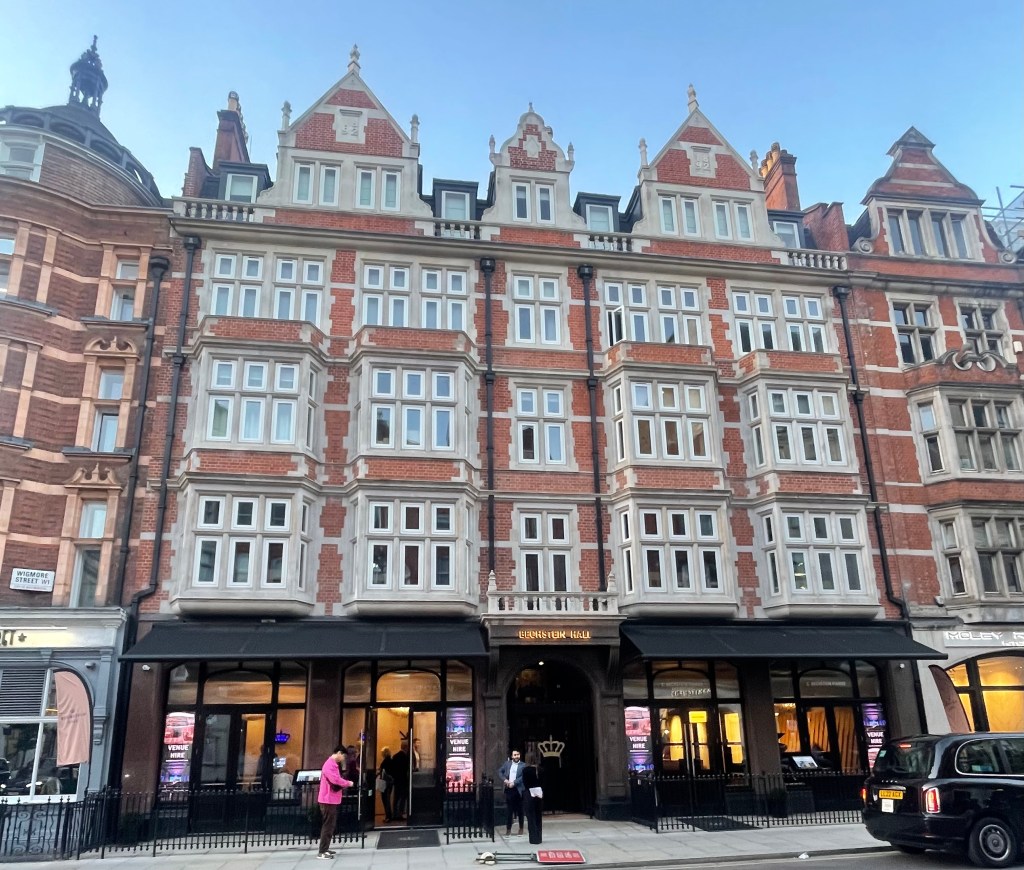
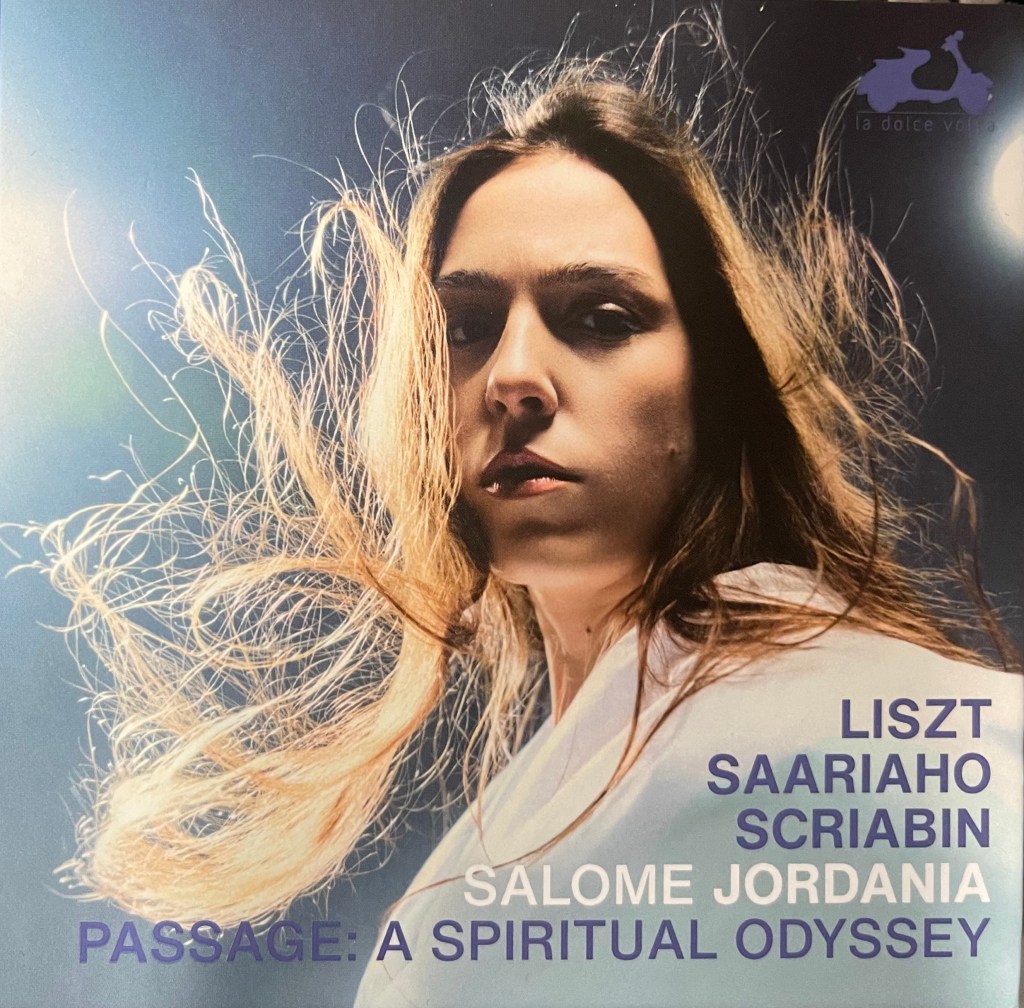
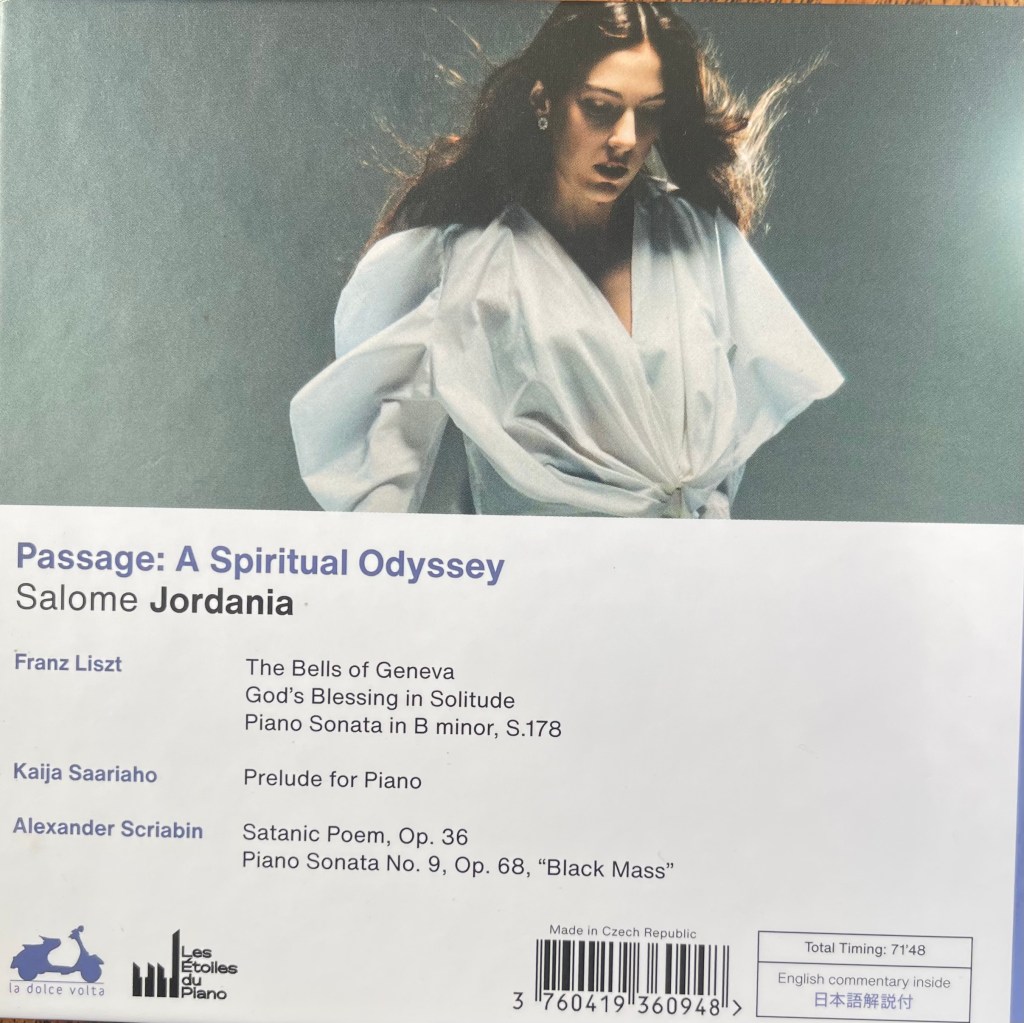
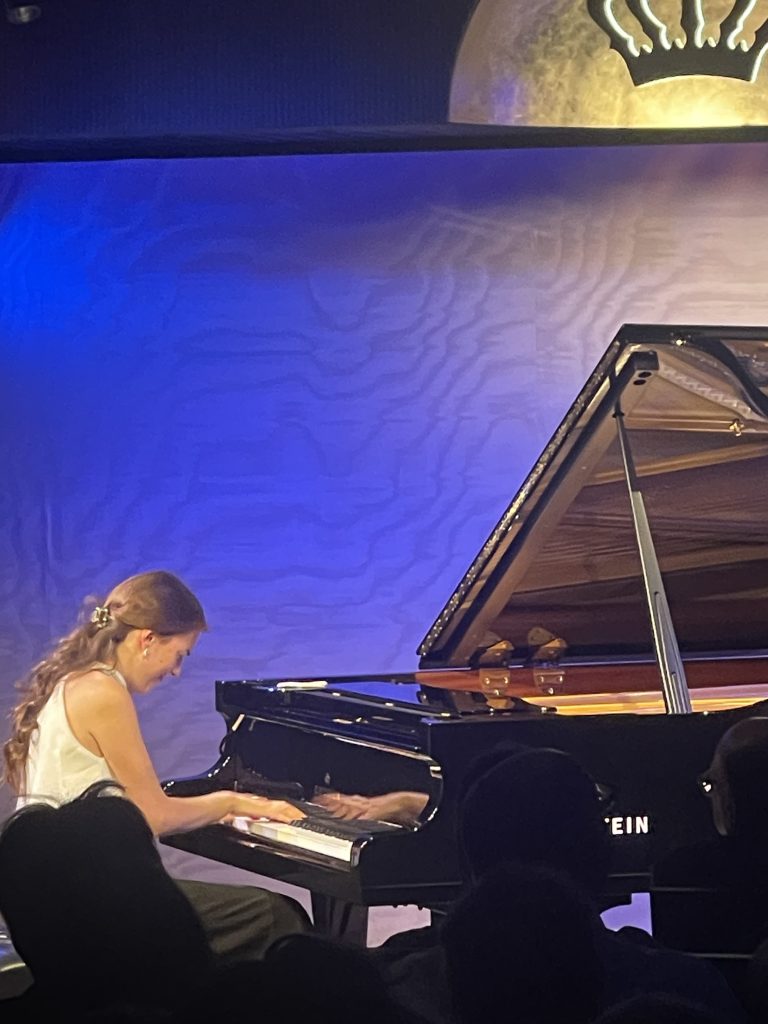
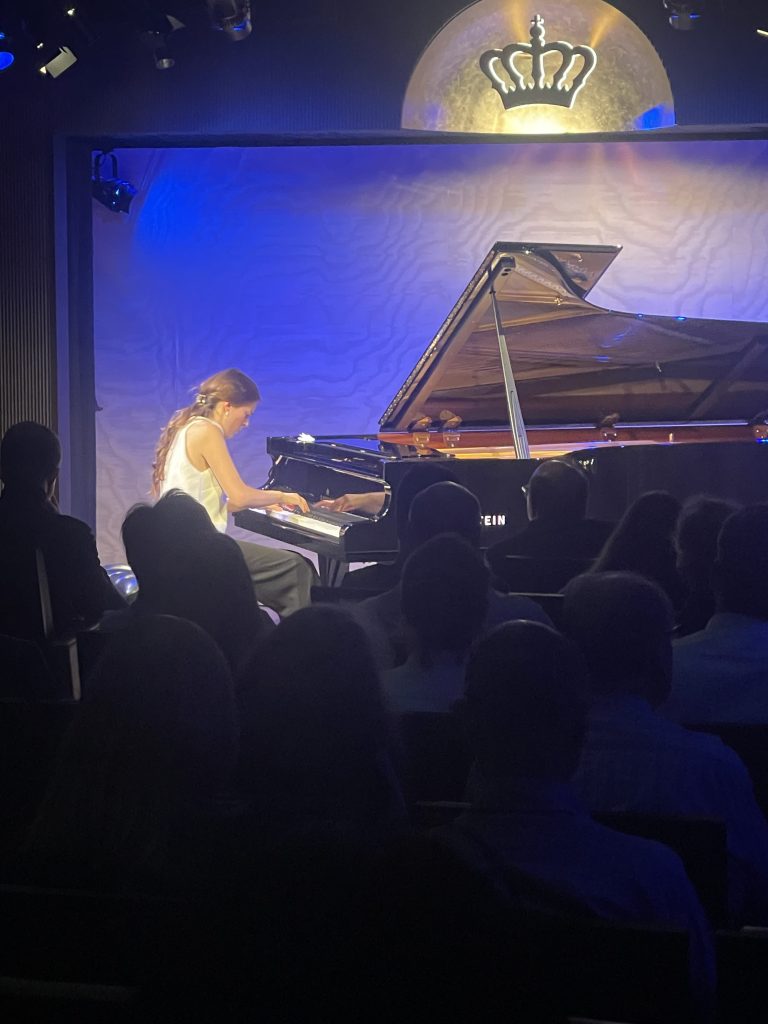
Salome Jordania reigniting the Bechstein Hall as a star is born playing works from her debut recording of ‘Passage: A spiritual odyssey’. Works that speak of solitude, faith, spirituality and mysticism with a balance between light and darkness , exploring the two extremes of love and fear that govern our lives.
Masterly performances as she recreated her ‘credo’ into sound with a kaleidoscope of chameleonic colours and emotions and a transcendental mastery that passed unnoticed as it was a message that went straight to our hearts bypassing the brain where her music making became stronger than words.
The PR boys have been to work on her presentation photos that shows her as a temptress of diabolical enticement.
The true Salome does not exist as such, as hers is a total dedication and immersion to the composer she is serving. She is but the medium between them and us. – “Je joue, je sens, je trasmet’’
There is no room for extravagant showmanship but here is a master craftsman with humility and dedication showing us the wondrous world bequeathed to us with dots and dashes on a manuscript already risking to turn brown at the edges.
Scriabin was a cauldron of diabolical sounds waiting to erupt as the composer could envisage reaching his ‘star’. The Benediction of Liszt of refined enlightenment and Salome’s supernatural understanding of the lines of Lamartine that had inspired it.
It was a pity she did not continue this journey with the Liszt Sonata which is the key to her recording, but she chose a second half dedicated to Mussorgsky’s tribute to his painter friend Hartmann
It was a series of paintings restored to their original beauty. A refreshing look with the same eyes as the composer marvelling at his belated friend’s depiction of the shortened life that had formed him and was left on empty canvas. The imagined vision of ‘A Great Gate of Kyiv’ was where Salome allowed the bells of love and fear to resound as never before in this reborn Bechstein Hall.
After such intense emotions Chopin’s Waltz in A flat op 34 was a calming balm of refined elegance and scintillating brilliance.
An audience now on their feet to show their vociferous appreciation was awarded more jewels in an already glittering crown, with Scriabin’s early Nocturne for the left hand, a timeless mastery of whispered glowing beauty that just demonstrated the poetic soul of great artistry that had held us spell bound at this magic hour
Georgian pianist Salome Jordania has established herself as one of the leading artists of her generation, appearing as a soloist and chamber musician throughout Europe, Asia and the Americas. She has performed at prestigious festivals and concert series including Piano aux Jacobins, Les Grands Interprètes, Palazzetto Bru Zane, Yamaha Rising Stars, IKIF Rising Stars, the Grachtenfestival, L’Esprit du Piano, the Texas International Piano Festival, the Chipping Campden Music Festival, the Great Comp Music Festival and the Festival de Musique de Menton. Last season marked several important milestones in her career: she was named a winner of Forbes 30 Under 30 Georgia and made debut recitals at London’s Wigmore Hall and Cadogan Hall, as well as Amsterdam’s Concertgebouw.
As a concerto soloist, Jordania has collaborated with orchestras including the Georgian Philharmonic Orchestra, Orquesta de Valencia, SLO Symphony Orchestra, Wisconsin Chamber Orchestra, Potsdam Philharmonic, Orchestra Giuseppe Verdi, Kharkiv Philharmonic Orchestra and Moscow Virtuosi. In 2023, she made her debut at the Berlin Philharmonie as a winner of the New York Concert Artists Worldwide Competition. A passionate advocate for contemporary music, her first CD, released by Naxos, features works by Argentine composer Martin Matalon. She has worked closely with leading composers including John Corigliano, Jennifer Higdon and Gabriela Lena Frank, and has received more than thirty international awards, among them the Georges Cziffra Award and top prizes at the Étoiles du Piano International Competition and the José Iturbi International Piano Competition.
Jordania studied at The Juilliard School, Yale School of Music and the Guildhall School of Music & Drama. Her performances have been featured on ARTE and the Dutch television programme Podium Klassiek. Upcoming highlights include performances across the United Kingdom, her debut recital at Salle Cortot in Paris, and the release of her debut solo album on the French label La Dolce Volta on 18 September.
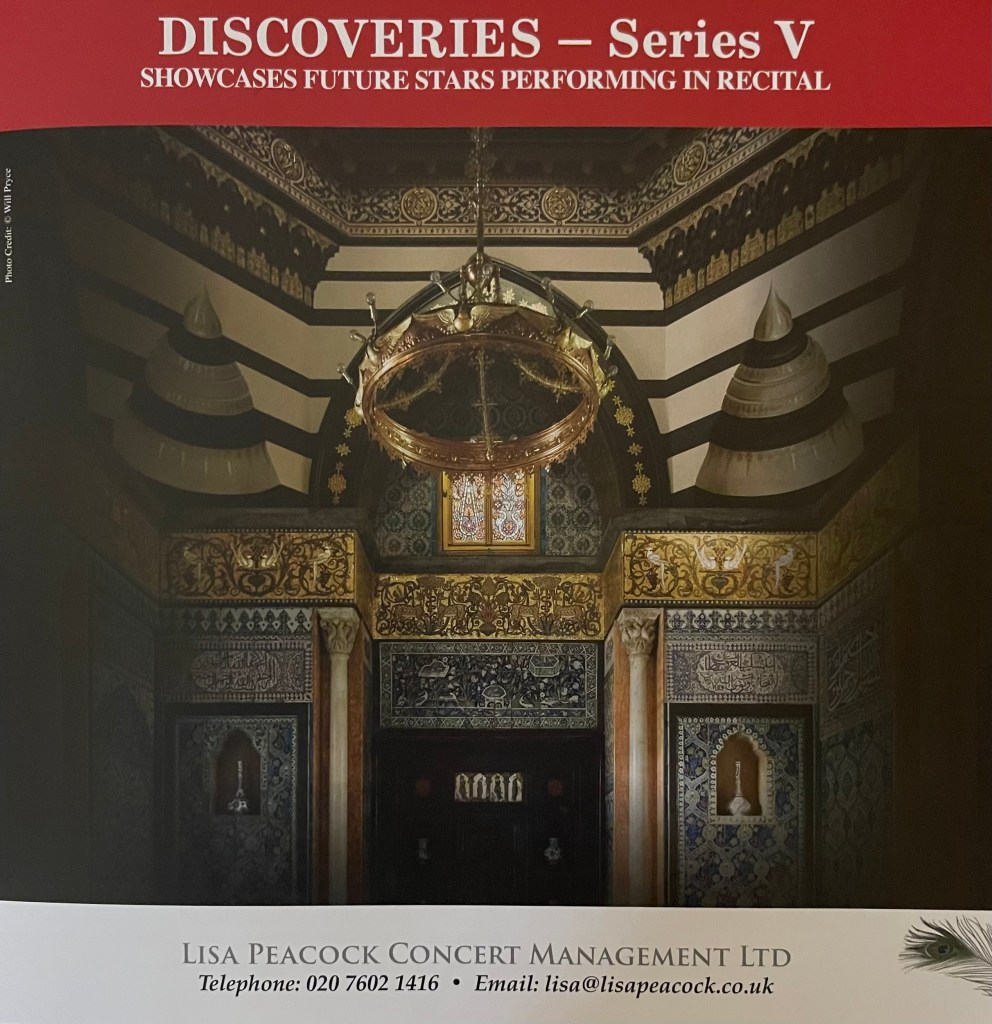
Salome can be heard again in London on Tuesday 13th October in Lisa Peacock’s fifth Discovery Season at Leighton House concert at 7 .
P.S. The words above about Salome’s performance seemed quite sufficient especially when edited by such an expert as Mary Orr ,recent founder of Promote our Pianists Trust. However ………….
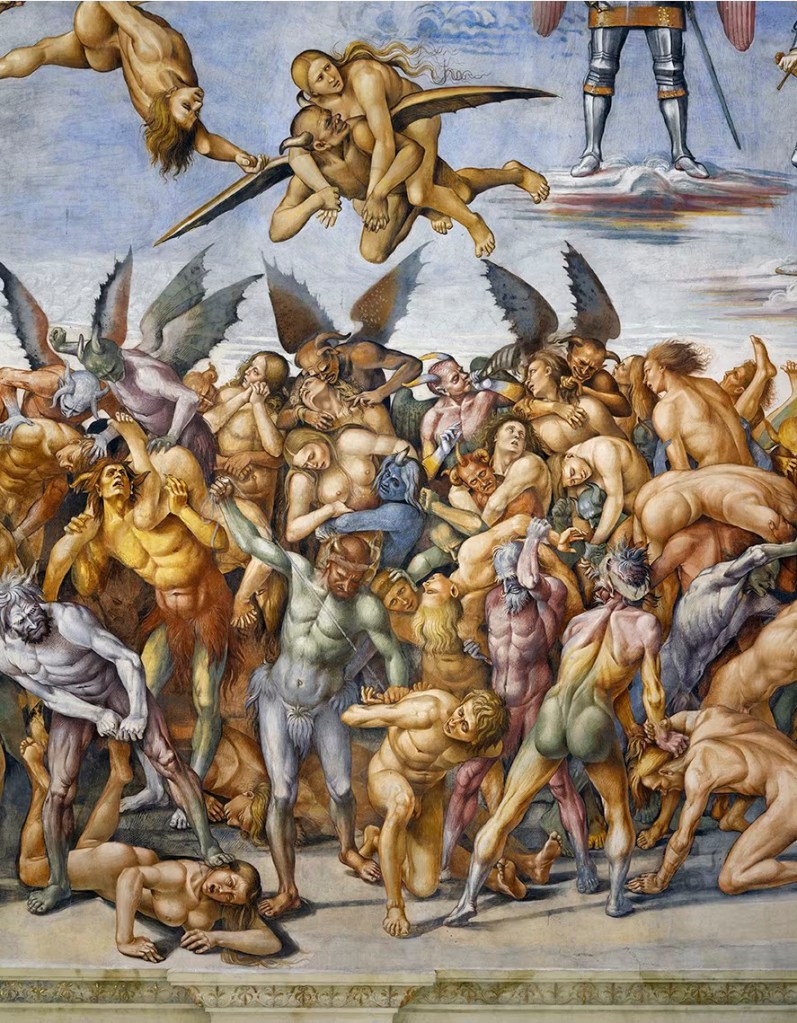
Depiction of the Damned in Hell from Signorelli’s fresco cycle. When they first were revealed, the frescoes in the San Brizio Chapel of the majestic cathedral in Orvieto, Italy , both awed visitors and shocked them. The realistic scenes (1499-1504), portraying the end of the world and inspired by the Book of Revelation, were terrifying enough on their own. Added to that was the lifelike portrayal of dozens of nude bodies—in a church! They were vivid, dynamic and monumental in size, painted by Luca Signorelli from nearby Cortona, a respected artist who had studied with Piero della Francesca but was not considered a great one.
The Scriabin 9th Sonata was included by Horowitz in his historic return to the concert platform after 12 years absence on May 9th 1965. From that moment it became part of the standard pianistic repertoire as the 10th was to become in a later recital during Horowitz’s Indian Summer. Horowitz was described on his appearance in Paris in the 30’s as the ‘Greatest Pianist Alive or Dead’ – Rubinstein who up until then was the Parisian public’s favourite was not amused! We are reminded of the famous duel between Liszt and Thalberg with a recital match in the salon of the Princess Belgiojoso. Liszt performed his “Reminiscences de Roberts le Diable” by Meyerbeer, and Thalberg countered with his “Fantasy” Op. 33, based on Rossini’s “Moise.” This remarkable evening came to a close with the Countess Belgiojoso pronouncing : “Thalberg is the first pianist in the world — Liszt is unique”. In his press release the following day, Jules Janin interpreted the somewhat ambiguous words of the Countess in the following way: “Never was Liszt more controlled, more thoughtful, more energetic, more passionate; never has Thalberg played with greater verve and tenderness. Each of them prudently stayed within his harmonic domain, but each used every one of his resources. It was an admirable joust. The most profound silence fell over that noble arena. And finally Liszt and Thalberg were both proclaimed victors by this glittering and intelligent assembly. Thus two victors and no vanquished …” Horowitz like Liszt was not all showmanship and although not a composer like Liszt he was a deep thinking musician who would delve deeply into the archives and ponder over many neglected works. His playing of Rachmaninov’s Second Sonata put it on the map for pianists, as was his playing of many other works including Schumann’s Concerto without Orchestra – Sonata op 14 and Blumenstück op 19 or the Liszt Vallée d’ Obermann and Clementi Sonatas. His Scriabin playing though had the same nevrotic hysterical electrical impulses that Horowitz could inject into music with breathtaking effect. It was exactly this dark unfathomable world that Salome was to describe with her performance of two works by Scriabin. A world like the decadent Ravel La Valse that is a spotlight on evil unchartered murky waters.There was a fluidity and control from the first notes of the Poème satanique and hats off to Salome for choosing a work that is of such rarity . I think it is the first time I have heard it in concert and it was certainly the ideal partner for the ‘Black Mass’
The Sonatas, especially the last two , 9 and 10, can seem very fragmented on the page and it takes a great musical mind to be able to steer a clear musical line through a maze of trills and washes of sound. Salome showed us the great architectural line with remarkable clarity but allied to a palette of sounds and pedal effects that was magical as well as mystical. The eery glowing simplicity of the opening revealed a crack in the door allowing us to feel the burning cauldron where the heat was being felt more and more. Salome throwing the door open in desperation as the composer in march style reaches his star with streaks of brilliant sounds spread across the entire keyboard.Returning to the mystery of the opening with relief and exhaustion before the final whispered F deep in the bass ( similar to the final deep B of the Liszt Sonata ). Indications in the score that are like paint on canvas : ‘legendaire ,mysterieusement murmuré, avec une langueur naissante,avec une douceur de plus en plus caressante et empoisonnée.’
Passing from darkness to light with one of Liszt’s most neglected masterpieces : ‘Bénédiction de Dieu dans la solitude’. It closely corresponds to Lamartine’s poem in its content and form, showing the composer’s indebtedness to French Romanticism. In the key of F sharp which gives it a very warm sound as with Chopin’s Barcarolle, as this too is a great song of ravishing beauty. Salome played the opening tenderly, with a noble tenor voice with washes of undulating sounds in the right hand. A remarkable control of balance with subtle shading as the music built to a climax with aristocratic poise and she placed the great bass notes with breathtakingly daring authority. A deep meditative silence before the opening of a window to hear the simple pastoral beauty of the ‘Andante. It was transformed into the radiance of ‘più sostenuto quasi Preludio’ leading to the main theme on waves of sounds that Salome played with masterly control and refined beauty. Building to the final great climax which opened a box of jewels that were spread with whispered gossamer beauty over the entire keyboard and where the tenor voice, once again, intoned Liszt’s magical melody. Gasps of sounds were interrupted by a deep prayer of solace ‘Andante semplice espressivo’ that was reverently intoned as the Andante theme appeared on high as a distant memory, before the final chords that Salome played with the refined finesse that only comes from listening intently to the very soul that is being bared in that moment. One of the finest accounts that I have ever heard of this remarkable work with an ending played with the same whispered intensity and concentration as the visionary last bars of the B minor Sonata. https://christopheraxworthymusiccommentary.com/2021/02/11/ivan-krapan-premio-busoni-2017-presents-liszt-harmonies-poetiques-et-religieuses/
It is the third of Liszt’s ten Harmonies Poètiques et Religieuses.
Viktor Hartmann 1834 – 1873
Pictures at an Exhibition is based on pictures by the artist, architect, and designer Viktor Hartmann It was probably in 1868 that Mussorgsky first met Hartmann, not long after the latter’s return to Russia from abroad. Both men were devoted to the cause of an intrinsically Russian art and quickly became friends.
Hartmann’s sudden death on 4 August 1873 from an aneurysm shook Mussorgsky along with others in Russia’s art world. The loss of the artist, aged only 39, plunged the composer into deep despair. Stasov helped to organize a memorial exhibition of over 400 Hartmann works in the Imperial Academy of Arts in Saint Petersburg in February and March 1874. Mussorgsky lent to the exhibition the two pictures Hartmann had given him, and viewed the show in person. Later in June, two-thirds of the way through composing his song cycle Sunless . Mussorgsky was inspired to compose Pictures at an Exhibition, quickly completing the score in three weeks (2–22 June 1874).In a letter to Stasov (see photo), probably written on 12 June 1874, he describes his progress:
Mussorgsky’s letter to Stasov, written while composing Pictures
My dear généralissime, Hartmann is boiling as Borisboiled—sounds and ideas hung in the air, I am gulping and overeating, and can barely manage to scribble them on paper. I am writing the 4th No.—the transitions are good (on the ‘promenade’). I want to work more quickly and steadily. My physiognomy can be seen in the interludes. So far I think it’s well turned …
The music depicts his tour of the exhibition, with each of the ten numbers of the suite serving as a musical illustration of an individual work by Hartmann.
Salome brought a refreshing simplicity to a score that was originally written for the piano and that was eventually orchestrated by Ravel and others. Also transcribed by Horowitz for his performances with demonic playing as powerful as any orchestra and is one of those unique performances that have been captured on disc. Salome played it as the composer had written for the piano bringing a refreshing brilliance and sense of colour to each of the paintings with the composers varying moods as he approached each canvas. ‘Gnomus’ was played with electric precision and diabolical contrasts and her fearless final flourish was enviable indeed! A whispered beauty to the ‘Old Castle’ where she played with simplicity and a continual forward movement as the castle came into view and then disappeared into the distance like Debussy’s ‘Cathédrale engloutie’. A quicksilver clarity to the children quarrelling in the ‘Tuileries’ was followed by the remarkable ‘Bydlo’ that lumbered onto the scene with awkward movements and again disappeared with barely audible sounds, where Salome seemed to be hardly touching the keys. More brilliance with the chicks hatching with some remarkable fingerfertigkeit of trills that were like well oiled springs shooting from one to the other. The extraordinary characterisation of ‘Goldenberg and Schmuyle’ was followed by the transcendental brilliance of the ‘Market Place in Limoges’ where the fleeting lightness of her playing was played with a relentless forward movement never showing sign of fatigue or hardness. ‘Catacombae” and con mortis in lingua mortua’ was pure magic before ‘Baba Yaga’ that she strangely underplayed at the beginning . A piece that can sound oppressive for its percussive insistence Salome turned into a piece of dynamic drive but with a palette of sound that could be shaped and given an architectural meaning .’The Great Gate’ was where Salome’s extraordinary sensibility of balance and overall shape showed her musical maturity with playing off sumptuous fullness but never overwhelming, except in the final declamation which was so much more powerful because saved as the culmination of all that had gone before.
The Chopin waltz op 34 n 1 I have heard Rubinstein play with inimitable style many times, but today we heard a performance from an artist who also has much to say and a beguiling musical personality that brought this work magically to life. If one had closed one’s eyes and heard her Scriabin Nocturne for the left hand I doubt one would have ever believed that it was possible to play with such a sumptuous palette of sounds and a magical sense of balance that we heard today. A timeless beauty where she allowed the music to breathe as a singer without ever loosing the golden thread that held it so miraculously together.
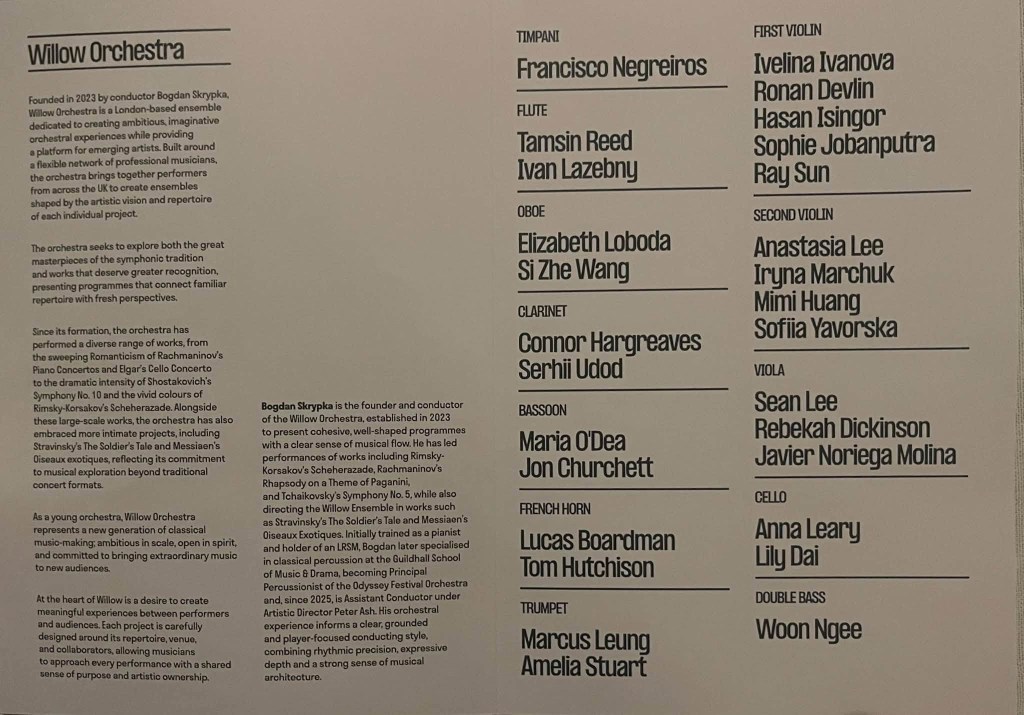
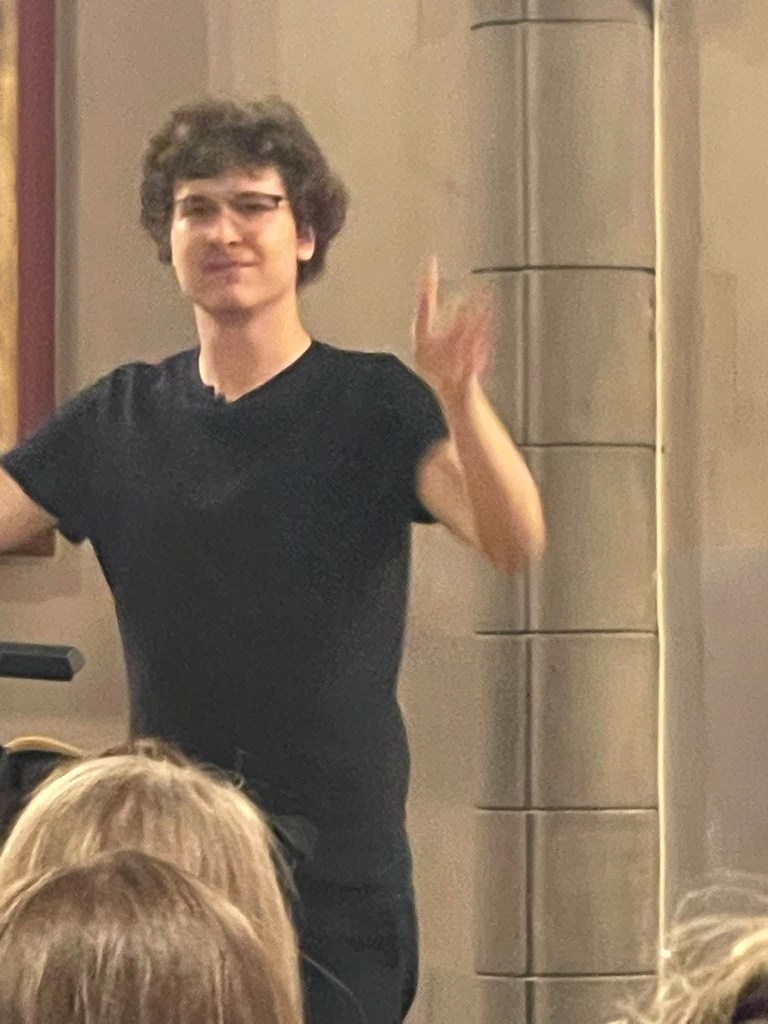
Some superb music making not least the infectious enthusiasm and professionalism of the conductor and founder Bogdan Skrypka .With a few well chosen words could give life to an orchestra created exactly for that. A ‘joie de vivre’ and a wish to express in music what words could never do. A memorable evening in which the spirit of Beethoven was the guiding light in this moment of darkness. A cavern of a church just a stone’s throw from Marble Arch, miraculously blessed with a superb acoustic. You see miracles can happen!
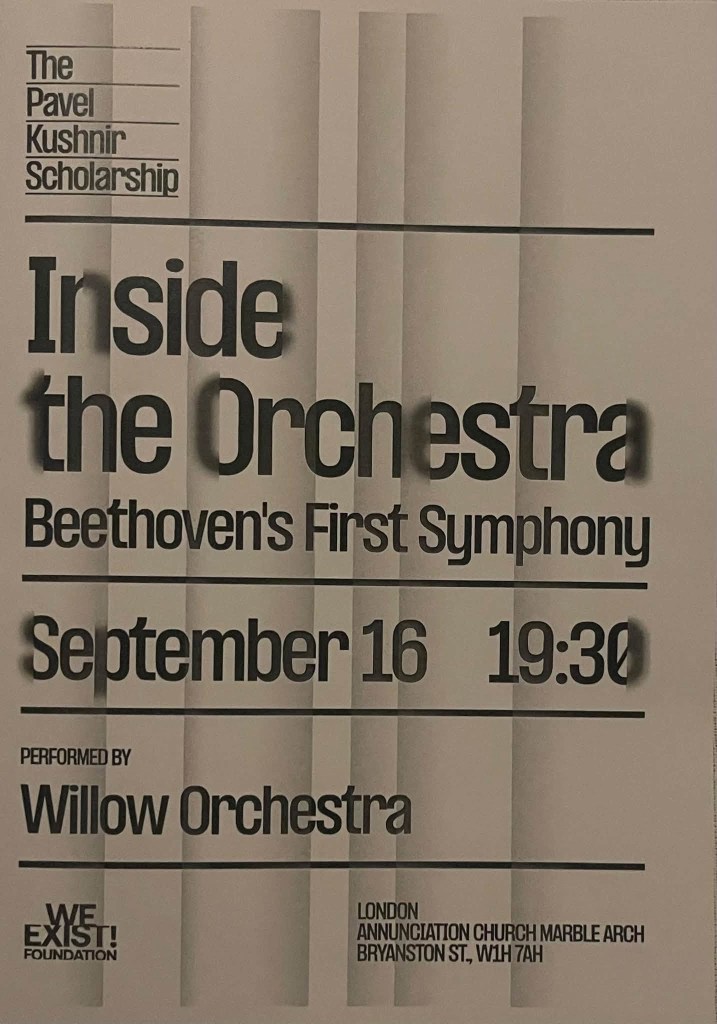
INSIDE THE ORCHESTRA: Beethoven’s First Symphony
Organised by the Pavel Kushnir Scholarship
‘The Pavel Kushnir Scholarship Programme was the ultimate subject of the event. Pavel Kushnir was a pianist, a graduate of the Moscow Conservatory, and a music educator. He worked in Kursk, Kurgan, and later Birobidzhan, where he performed and hosted a program titled “Mazurkas on Wednesdays.” In May 2024, he was detained over anti-war videos posted on YouTube; two months later, the 39-year-old musician died in a pre-trial detention center following a prolonged hunger strike.
Liberov did not know Kushnir personally. Yet, it was the story of this man—virtually unknown to the general public during his lifetime—that prompted him to consider how to transform the act of remembrance from a one-off memorial gesture into a long-term, active programme.
The scholarship now funds 25 young musicians who had to escape Russia’s war on Ukraine.’
Wednesday 16 September 2026, 7:30pm at Annunciation Church, Marble Arch
What does an orchestra sound like when you are sitting inside it?
On Wednesday 16 September, INSIDE THE ORCHESTRA will offer audiences an opportunity to experience Beethoven’s First Symphony from an entirely new perspective.
For the first part of the evening, audience members will be invited to sit inside the Willow Orchestra, among the musicians, as conductor Bogdan Skrypka leads a live rehearsal of Beethoven’s Symphony No. 1.
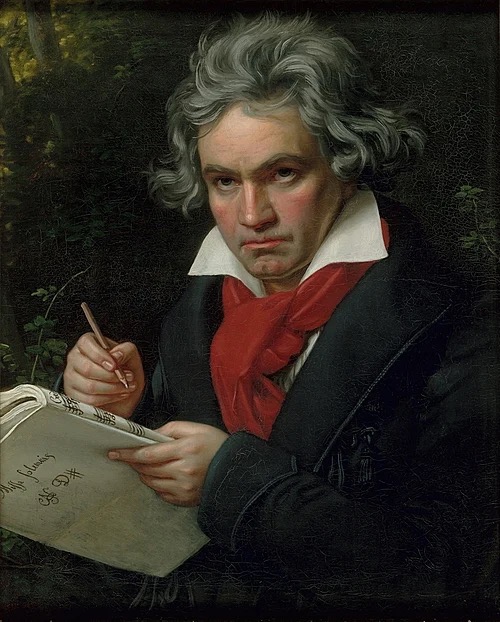
The First Symphony is clearly indebted to Beethoven’s predecessors, particularly his teacher Joseph Haydn as well as Wolfgang Amadeus Mozart but nonetheless has characteristics that mark it uniquely as Beethoven’s work, notably the frequent use of sforzandi as well as sudden shifts in tonal centers that were uncommon for traditional symphonic form (particularly in the 3rd movement ), and the prominent, more independent use of wind instruments. Sketches for the finale are found among the exercises Beethoven wrote while studying counterpoint under Johann Georg Albrechtsberger in the spring of 1797. Beethoven originally intended to dedicate the symphony to Elector Maximilian Franz, who had been forced from Bonn by the armies of revolutionary France and was staying in Hetendorf, just outside Vienna at the time. Beethoven had left the Elector’s employ in somewhat acrimonious circumstances in March 1794 and the dedication may have been intended as a peace offering. However, Maximilian Franz died 26 July 1801 and the dedication subsequently went to Baron van Swieten . The premiere took place on 2 April 1800 at the K.. Hoftheater nächst Der Burg in Vienna, conducted by Giacomo Conti (not by Beethoven himself). Most sources agree that the concert program also included Beethoven’s Septet as well as a symphony by Mozart, but there is some disagreement as to whether the remainder of the program included excerpts from Haydn’s oratorio The Creation or from The Seasons and whether Beethoven’s own Piano Concerto n. 1 or 2was performed.This concert effectively served to announce Beethoven’s talents to Vienna. Holy Roman Emperor Francis II is reported to have attended the premiere and reacted by saying, ”There is something revolutionary in that music!”
Rather than hearing the orchestra from the conventional distance of a concert hall seat, the audience will experience the rehearsal from within the ensemble – surrounded by strings, winds, brass and timpani, and able to observe at close range how an orchestral performance is created.
The rehearsal is deliberately presented as a working process rather than a polished performance. From inside the orchestra, the balance of sound may be unusual or imperfect, allowing the audience to experience what musicians themselves hear while rehearsing.
After the interval, the audience will return to traditional seating and hear the complete Beethoven’s Symphony No. 1, experiencing the finished performance from the outside after having witnessed its creation from within.
The project aims to bring audiences closer to the process of orchestral music-making and to offer an experience that goes beyond the traditional relationship between performer and listener.
For any additional materials, please contact info@pavelkushnirscholarship.org
On July 27, 2024, Pavel Kushnir — a pianist and educator — died in a detention center in Birobidzhan. By the age of thirty-nine, Pavel had graduated from the Tambov Music College and the Moscow Conservatory, performed as a soloist in the philharmonics of Yekaterinburg, Kursk, and Kurgan, and in 2023, he became a soloist at the Birobidzhan Regional Philharmonic. Pavel Kushnir authored the novels Russian Cut-up and Noël, analyzed all of Chopin’s mazurkas in the radio series Mazurkas on Wednesdays, recorded a cycle of Rachmaninoff’s preludes, and started a YouTube channel filled with despair, where he presented four literary videos condemning Russia’s invasion of Ukraine and Russian war crimes. For the statements on this channel with only five subscribers, Pavel Kushnir was arrested, tortured, and killed. This must not be forgotten — just as is impossible to accept such a death.
The Pavel Kushnir Scholarship was established in London in memory of a brilliant pianist and educator. Arrested for speaking out loud against the Russian invasion of Ukraine on his YouTube channel with only five subscribers, Pavel Kushnir died in a Russian detention centre.
The scholarship is aiming to help students from Ukraine, Russia and Belarus to begin or continue their music studies across the UK, Europe or the US.
Pavel Kushnir was a virtuoso pianist, a writer, and a courageous man whom the world discovered only too late. He died on July 27, 2024, in a Birobidzhan detention center following a dry hunger strike. The formal pretext for his arrest was a series of anti-war videos posted on a YouTube channel that had only 5 subscribers.
This film is an attempt to understand the man who played Rachmaninoff until his fingers bled, who dreamed of flying to Mars, who idolized Kurt Cobain, and who called the war by its true name while living in complete isolation.
We have gathered archival footage, previously unknown recordings of Pavel, fragments of his poignant cut-up novel, and memories from close friends and colleagues, including Clean Bandit soloist Grace Chatto, music expert Mikhail Kazinik, and publisher Dmitry Volchek. This is a story not just about a death in prison, but about an extraordinary life that became an act of art and resistance.
In this video:
Unique footage of Kushnir’s performances and artistic actions.
The story of an unmade avant-garde film and friendships with global stars.
The Birobidzhan Diary: a chronicle of loneliness and the fight against fascism.
Why a brilliant musician went unnoticed by the cultural establishment, but not by the prison system.
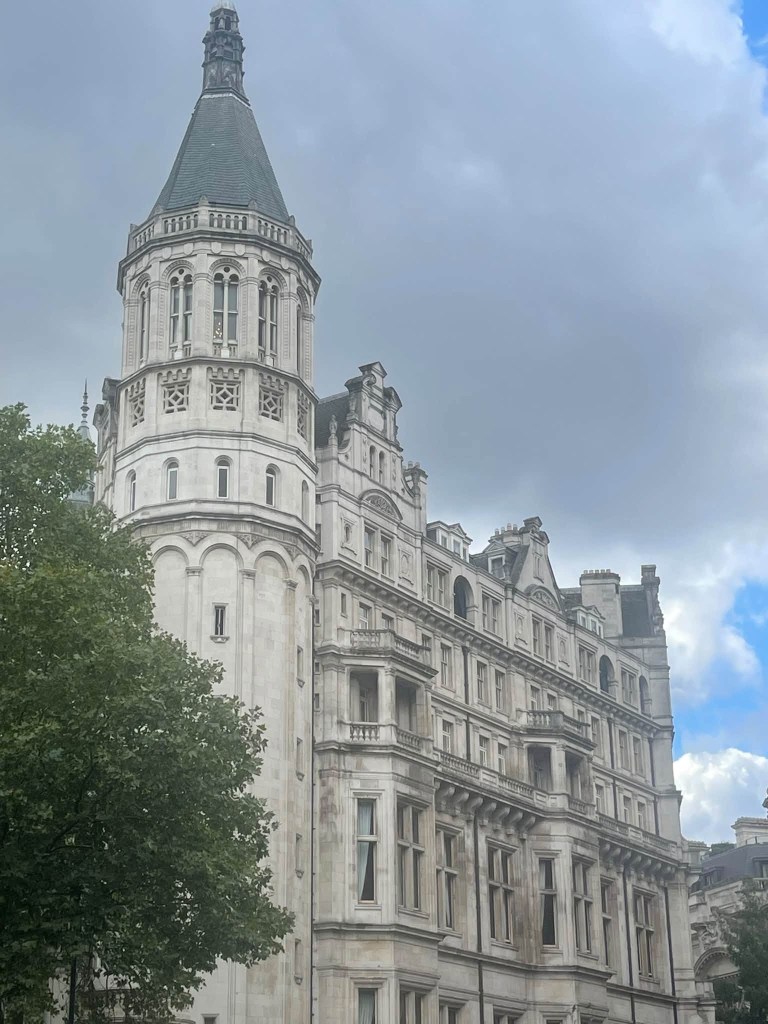
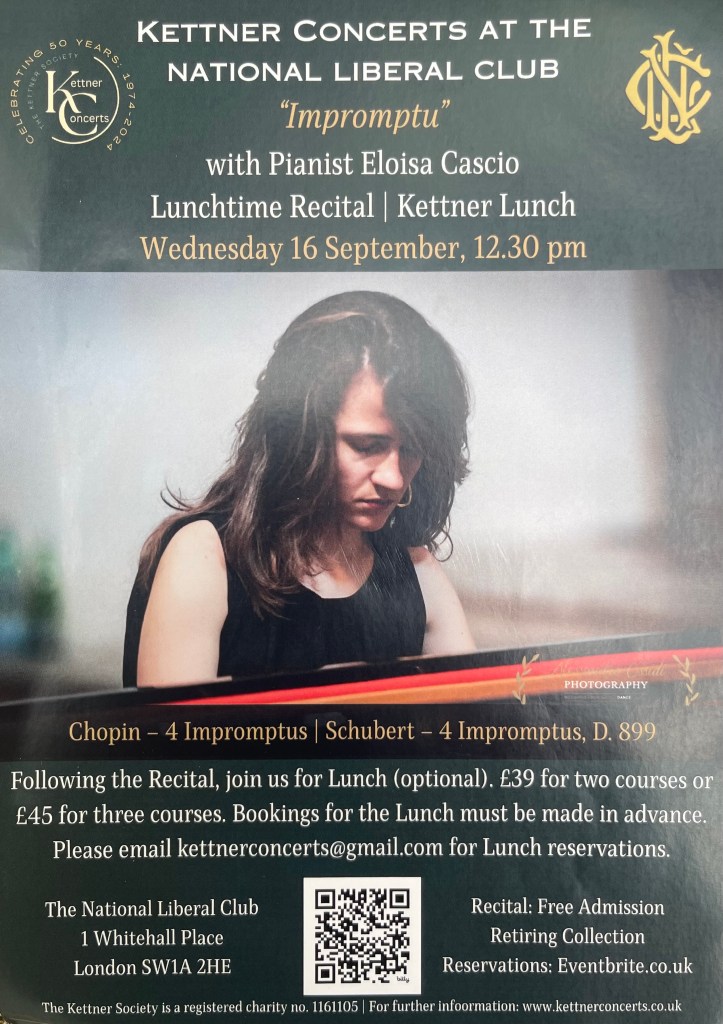
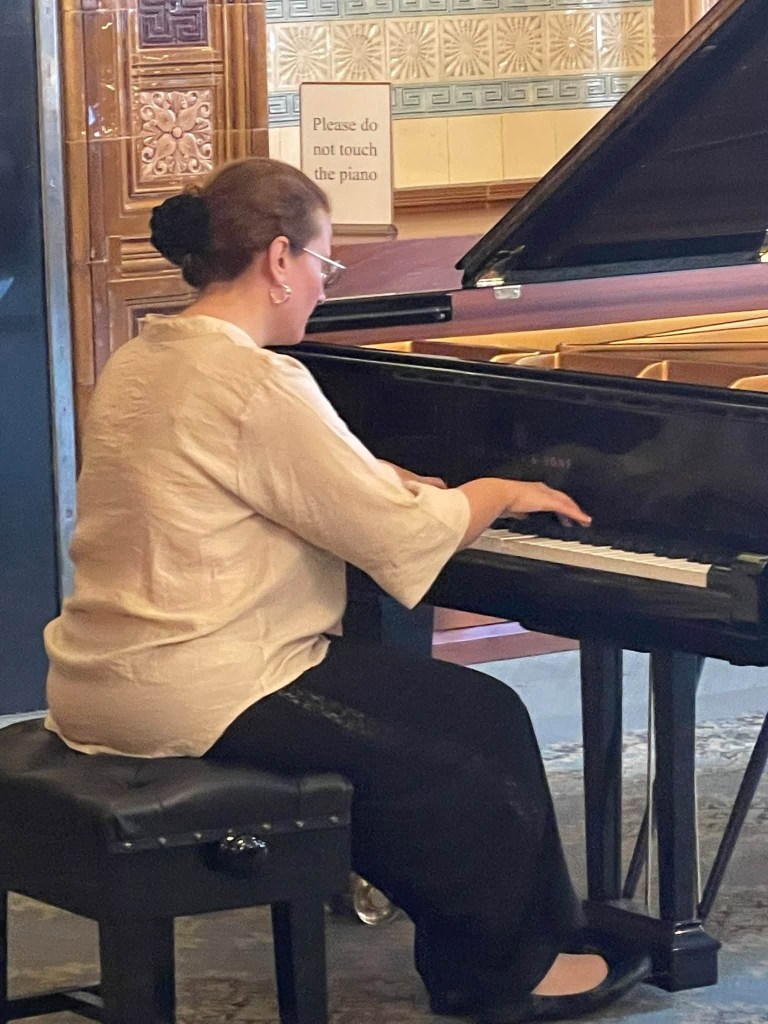
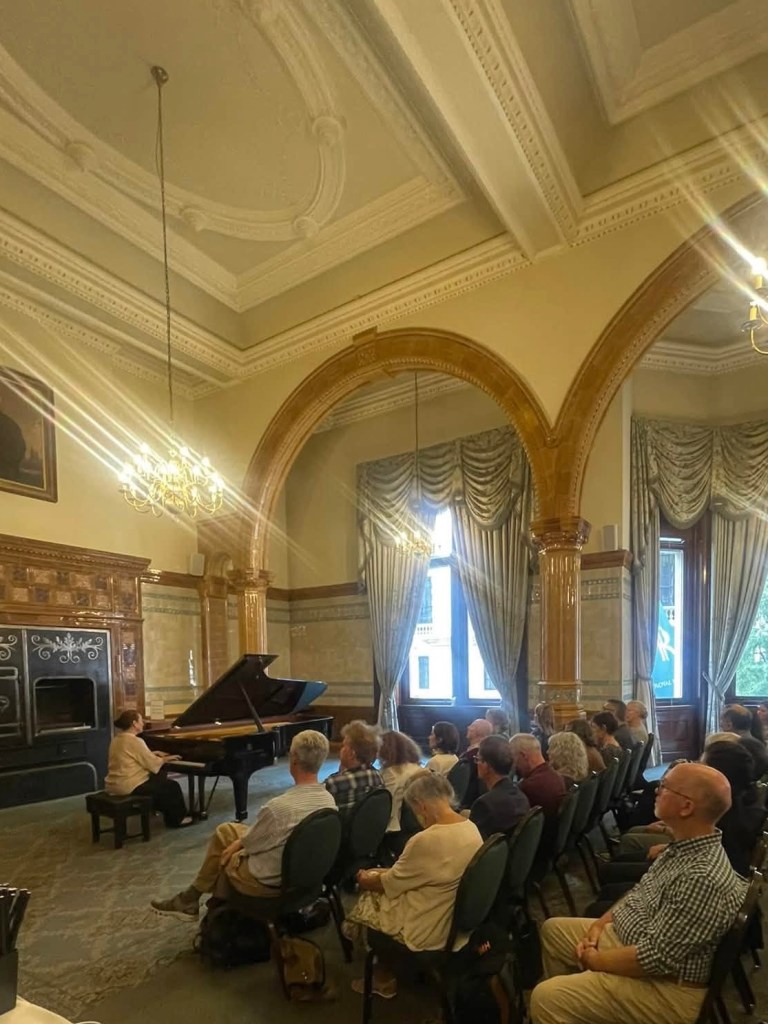
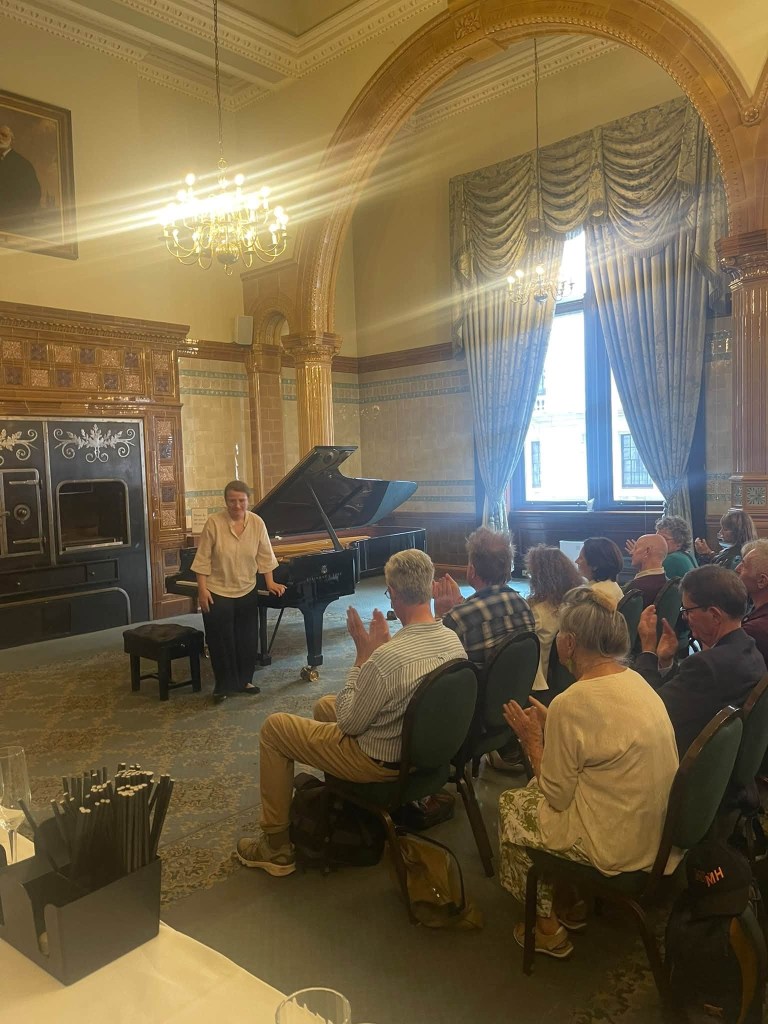
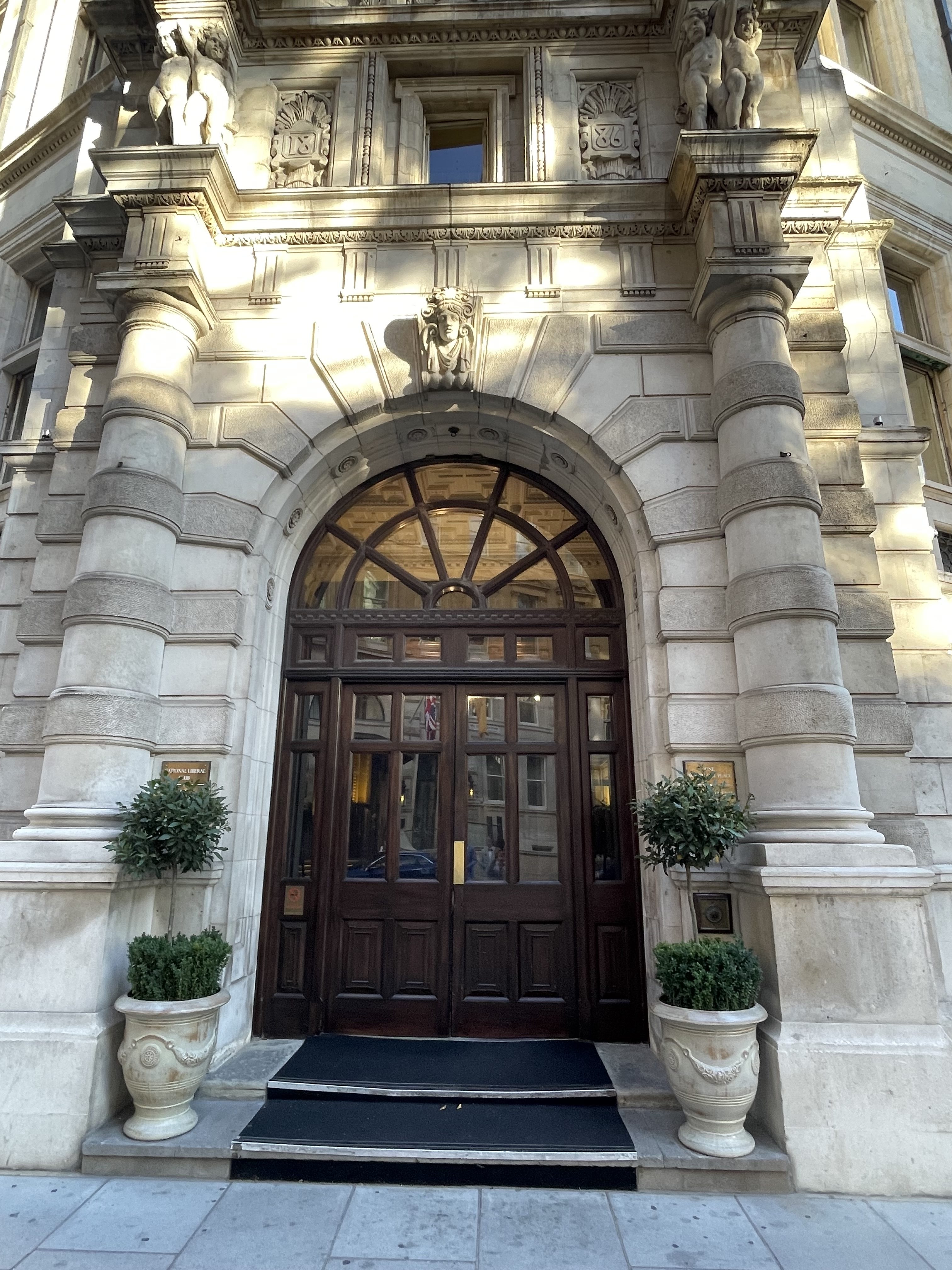
A concert yesterday in the Anthony Burgess Hall in Manchester and now in the National Liberal Club in London with the pianist Eloisa Cascio, as the Kettner under its enlighten artistic directors Cristian Sandrin and Ben Westlake is spreading it’s wings with sumptuous music being shared far and wide.
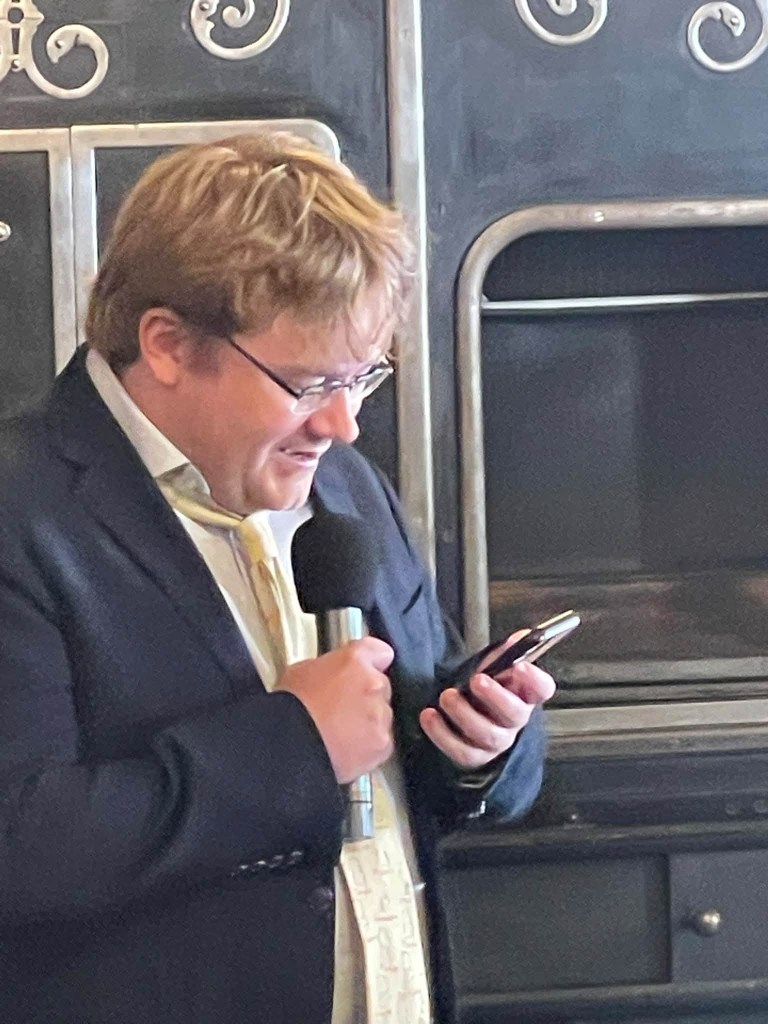
Ben Westlake presenting the programme Peter Whyte ,Chair of the historic Kettner at the NLC
A programme that immediately showed the musicianly pedigree of an accomplished pianist and Professor at the Benevento Conservatory. A programme of Impromptus with the four by Chopin paired with the first set of four by Schubert.
A pianist trained in the Neapolitan school where precision and clarity are to the fore, and where head rather than heart takes precedence over showmanship and sentimentality.
It was exactly this poise and aristocratic control that allowed Eloisa to shape the music with radiance and beauty where every note had an importance in an architectural design of intelligent musicianship.
Chopin opened the programme with the first impromptu op 29 beautifully shaped. The usual nonchalant jeux perlé was transformed into a much more classical poise with every note shaped with beauty and radiance. Although the central episode is marked ‘sostenuto’ I would not have slowed the tempo as it risked becoming ponderous rather than a mellifluous outpouring contrasting with the fleeting charm and brilliance of the outer passages. The second Impromptu in F sharp major op 36 is a key that was rarely used by Chopin but was also that of the Barcarolle op 60, one of his finest most lyrical of works. This impromptu is a tone poem of beauty and brilliance where the opening was played with great poise but the central march like episode was rather laboured in the left hand but luckily soon dissolved into a stream of notes or jeux perlé lightness that just accompanied the dignity of the left hand melody played with aristocratic sensibility.The Impromptu in G flat op 51 is a work of charm and beauty that Eloisa played with classical poise but missed the improvised freedom and fluidity that gives the work its beguiling charm and grace. The beautiful central episode, though, was allowed to unfold in the tenor register with ravishing sumptuous beauty. The Fantaisie -Impromptu was the first to be written but the last to be published, which happened only after the composer’s death. Here was where Eloisa’s beautifully measured playing, almost Schubertian, gave great poise and beauty to a work so often thrown off as if a transcendental étude. She brought a ravishing beauty to the central episode that was allowed to sing with glowing fluidity. If she lacked the passionate intensity of the coda she did bring a refreshing nobility to a work that in the hands of a musician like Eloisa was revealed to be a tone poem of poetic beauty.
It was in the four Impromptus by Schubert that Eloisa’s restrained poise and refined musicianship came to the fore, allowing the impromptus to unfold with simplicity and beauty. The first Impromptu with a scrupulous attention to the composers very precise Indications illuminated a work of haunting beauty and mystery. If her left hand was rather heavy in the intense build up to the climax it was contrasted with the ethereal beauty of the opening. The second Impromptu was played with measured brilliance as the flowing wave of sounds was shaped with musicianly poetic beauty. Missing the ‘sturm und drang’ of the contrasting central episode she did give it a more refined shape of sumptuous beauty. The G flat impromptu was played with exquisite poise and poetic shape and was the highlight of the concert. Her aristocratic poise and control gave a great inner strength to one of Schubert’s most beautiful creations. The last Impromptu was played with great clarity and a sense of balance that allowed the central episode to sing without force but with an architectural shape of poignant beauty.
A recital of beauty, poise and poetic musicianship from a pianist who thinks more of the music than herself and it bodes well for a partnership born on wings of song.
Eloisa Cascio, after the classical studies completed the master and specialist degrees – with first class honours and special mention – in Piano, as a student of Tina Babuscio (Conservatory of Benevento) Harpsichord (Conservatory of Campobasso) Chamber Music and Choral Music and Choir Direction (Conservatory of Avellino) and Piano Chamber Music (Conservatory of Napoli). Afhter Eloisa studied with Pietro De Maria in the School of Music of Fiesole when in June 2014 obtained the Piano Interpretation Diploma: She study piano also with Massimo Bertucci in Napoli (private course) and classical praxis with Emilia Fadini in Milano. She took part in masterclass of piano with Bruno Canino, Peter Lang, Gottlieb Jracek von Armin, Johannes Kropfitsch, Oleg Marshev, Joseph Paratore, Henri Sigfridsson, Andreas Frohlich, Olivier Gardon, Dominique Merlet, Teppo Koivisto, Paolo Bordoni and other.A lunchtime concert that seals a partnership between the Kettner concerts and those of the Reggio di Caserta in Italy
On August 2012, She attended a master in piano with Gottlieb Jracek von Armin in the Wiener Musik Seminar and obtained the III prize in the Dichler Competition. On April 2016, she was the recipient of the “University of South Florida Steinway Piano Series special award”. The award is given annually to help an exceptional pianist at the beginning of their professional career.
Eloisa played as a pianist soloist and in chamber music in various festival in Italy, Austria, Belgium, France, Germany, Spain, Holland, Greece, Poland, Macedonia, Baltic Republic’s, Romania, Montenegro and United States of America, Croatian, Slovenian, Austria, Lithuania, Estonian, Latvia; She took part in concert – seasons in Rome, Turin, Bologna, Milan, Trieste, Verona, Venezia, Ancona, Paris, Salzburg, Frankfurt, Timisoara, Bitola, Beringen, Kotor, Tampa, Thessaloniki, Tallin, Riga, Palanga, Dubrovnik, Wien, Havik, Piran and many other’s. As harpsichordist Eloisa played recital, chamber music and Bach and De Falla concerts; as pianist recently played Mendelssohn concert in g minor with the Rumenian Philharmonic’s Orchestra’s Dinu Lipatti of Satu Mare e Mihai Jora of Bacau and the Dvorak Piano Quintet with Aron Quartet Wien and Apollon Quartet.
At the present Eloisa is a Piano teacher in Conservatory Nicola Sala in Benevento (Italy).
For years the Cascio family of musicians have been dedicated to organising concert and cultural events in and around Caserta and Capua ( the city of spires ) and are a very important presence in a part of Italy deprived of culture and much else.
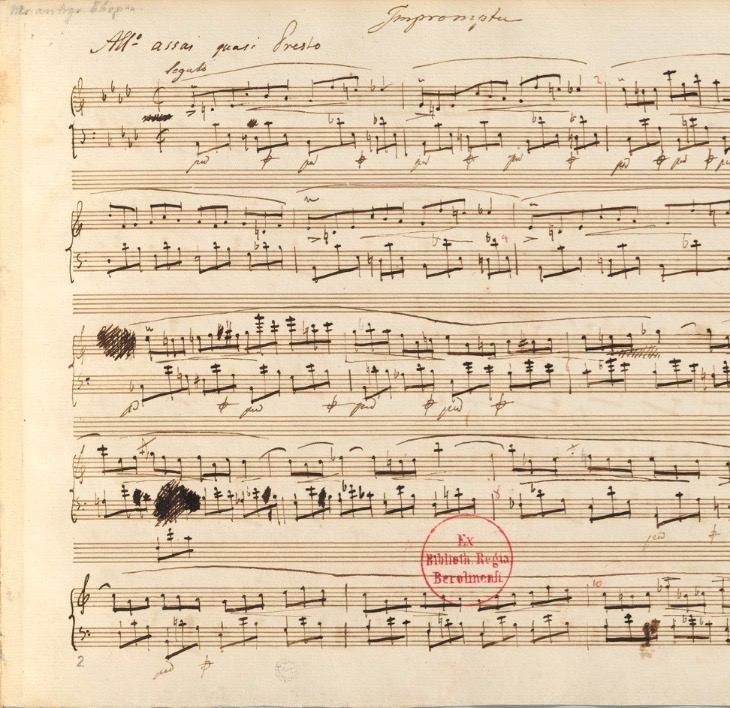
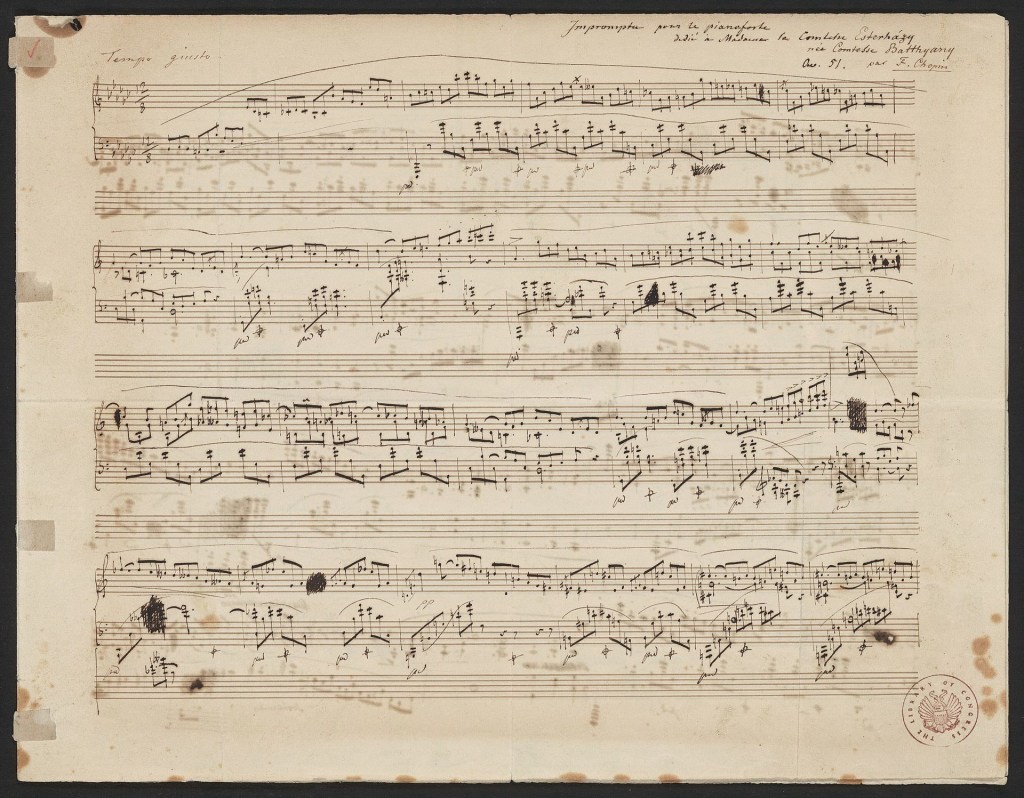
Chopin’s four Impromptus have a strongly improvisatory character, while still overflowing with fleet-footed lightness, as well as with dignity and tastefulness. This applies above all to the first three pieces of this volume, opp. 29, 36 and 51.
Autograph op 29
Whereas the first was written in 1837, the other two were composed during Chopin’s relationship with the authoress George Sand, at her country seat of Nohant: op. 36 in 1839, op. 51 three years later.
Autograph op 66
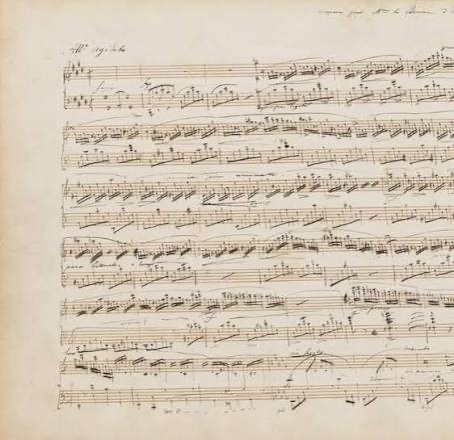
The opus number of the Fantaisie Impromptu, op. 66, is misleading, since the piece had already been written in 1834 as the first of the four works. Chopin had apparently notenvisioned its printing, and it was issued only after his death, thanks to the efforts of his friend Julian Fontana. The print diverges so strongly from the fortunately extant autograph,
Autograph op 51
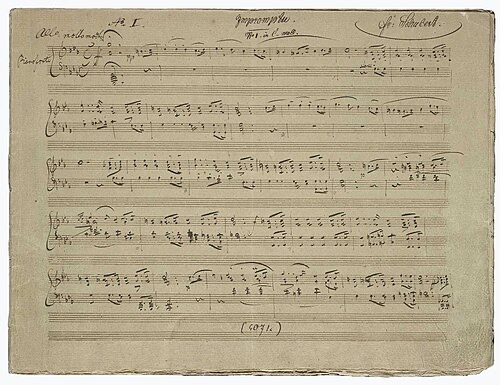
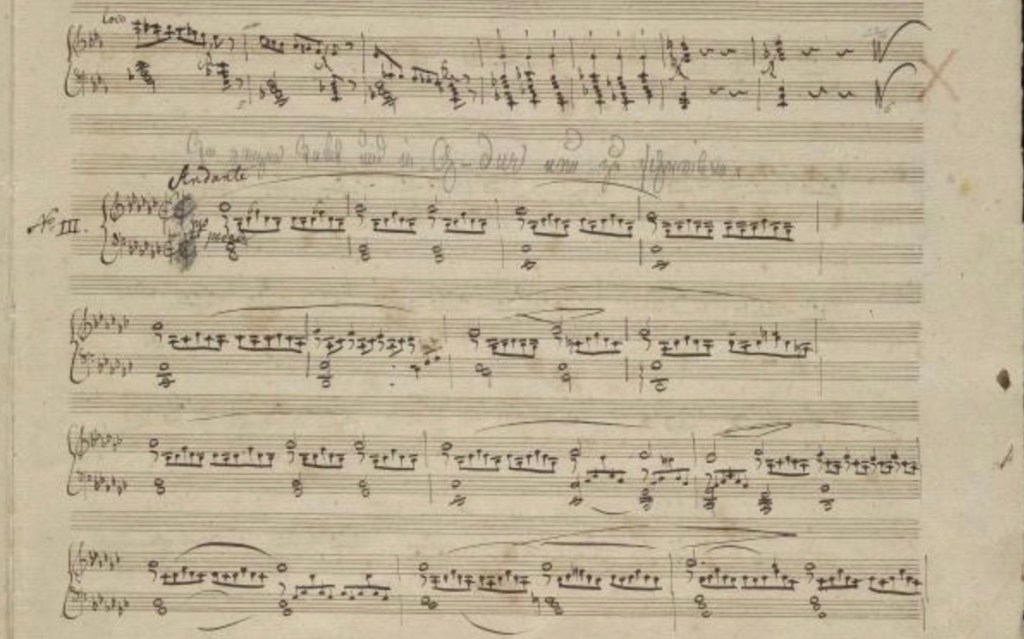
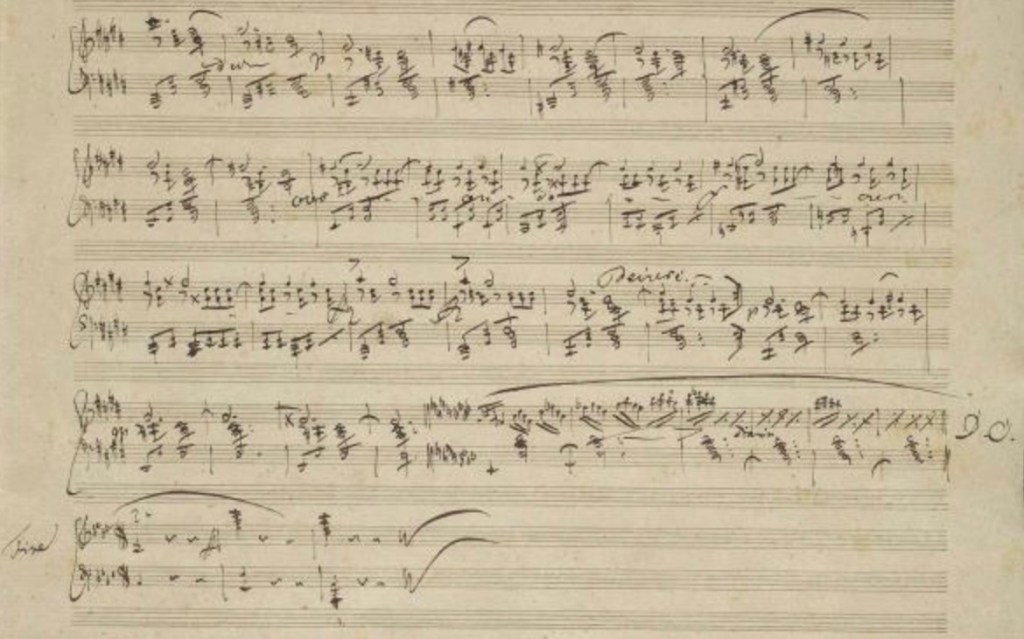
Schubert’sImpromptus are a series of eight pieces for solo piano composed in 1827. They were published in two sets of four impromptusi each: the first two pieces in the first set were published in the composer’s lifetime as Op. 90; the second set was published posthumously as Op. 142 in 1839 (with a dedication added by the publisher to Franz Liszt ). The third and fourth pieces in the first set were published in 1857 (although the third piece was printed by the publisher in G major, instead of G♭ as Schubert had written it, and remained available only in this key for many years). The two sets are now catalogued as D. 899 and D. 935 respectively. They are considered to be among the most important examples of this popular early 19th-century genre.
Autograph of Schubert’s Ist Impromptu D.899
It has been said that Schubert was deeply influenced in writing these pieces by the Impromptus, Op. 7 (1822) of Jan Václav Vořišek and by the music of Voříšek’s teacher Václav Tomášek
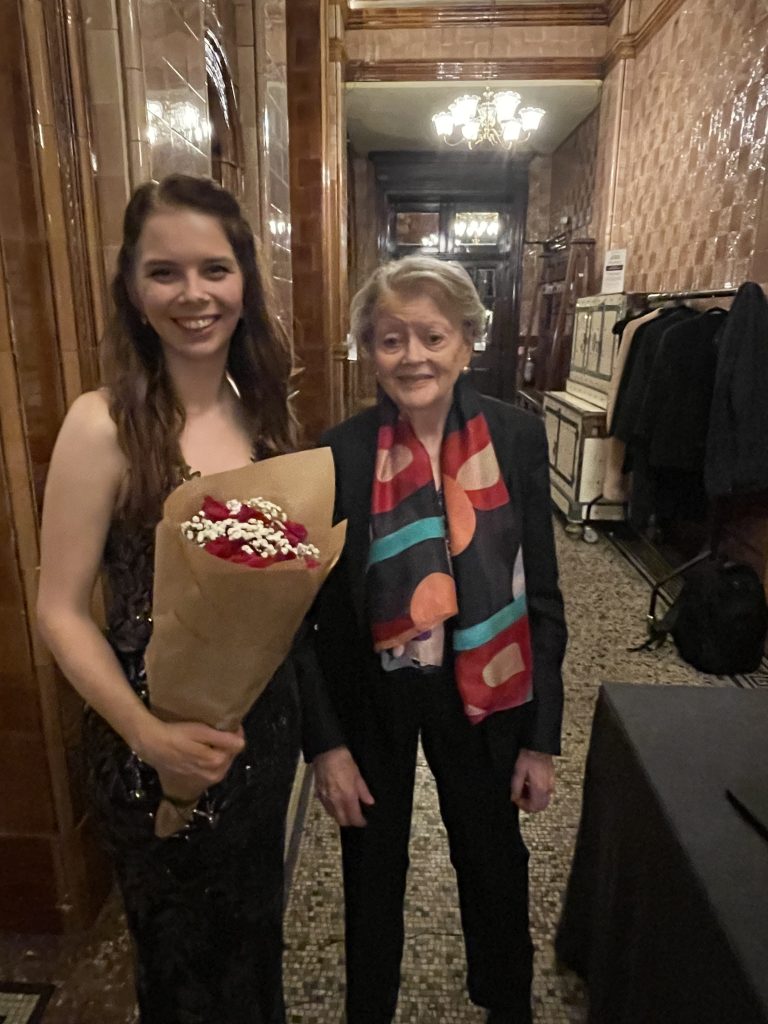
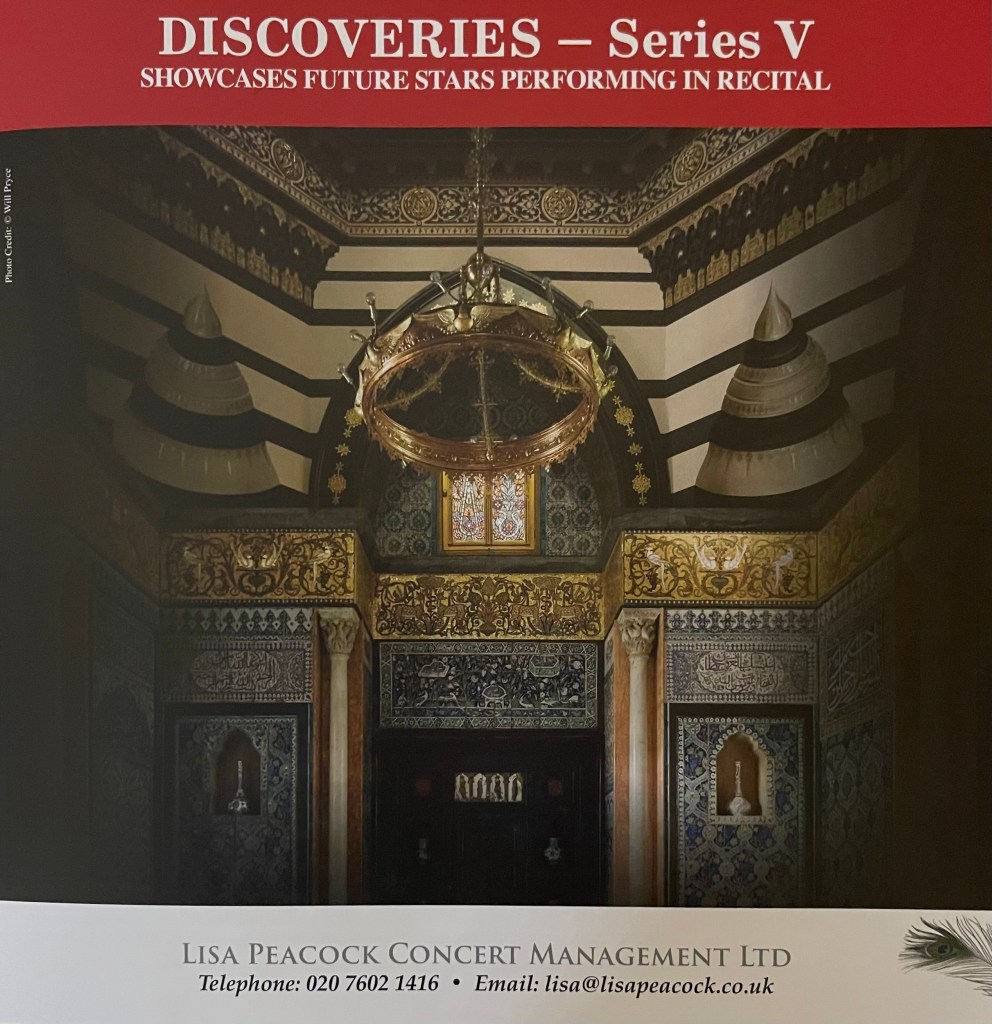
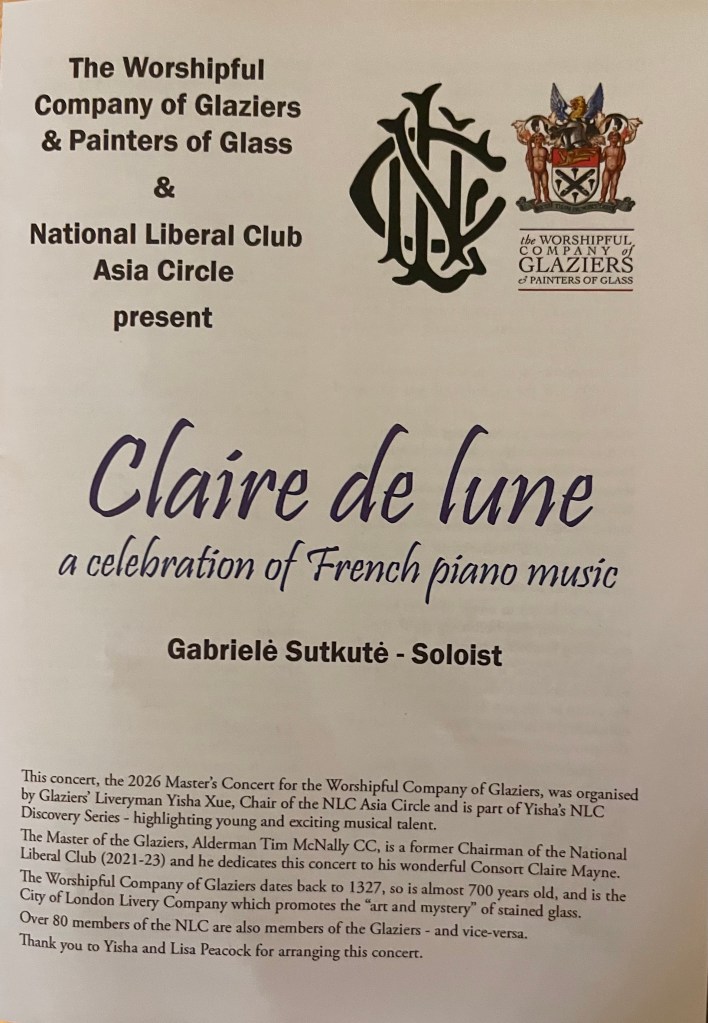
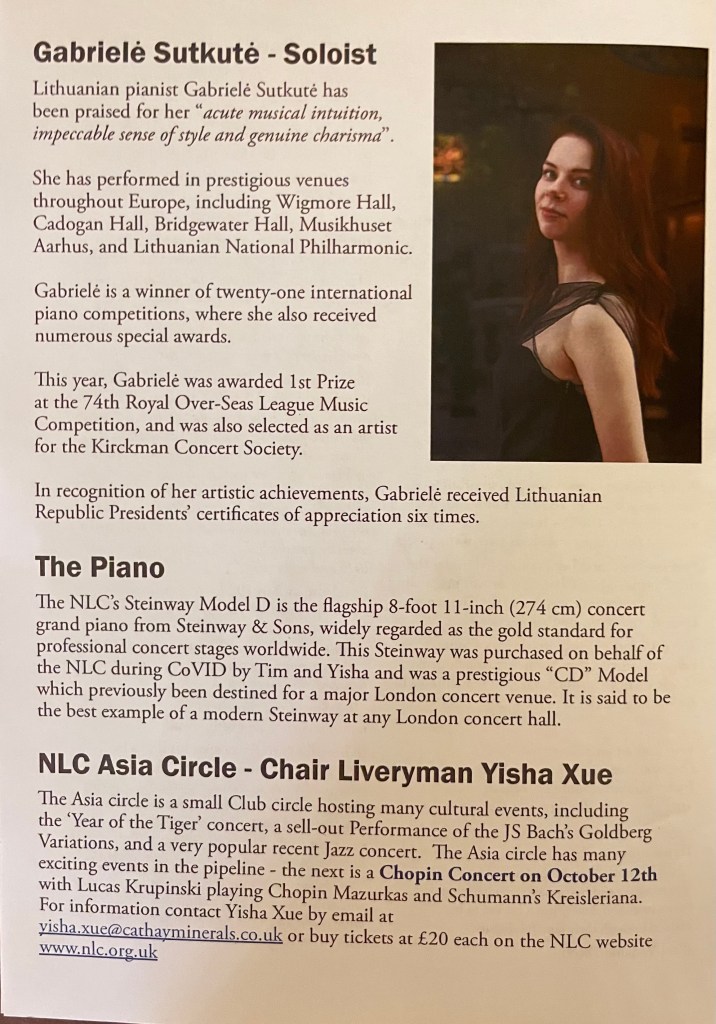
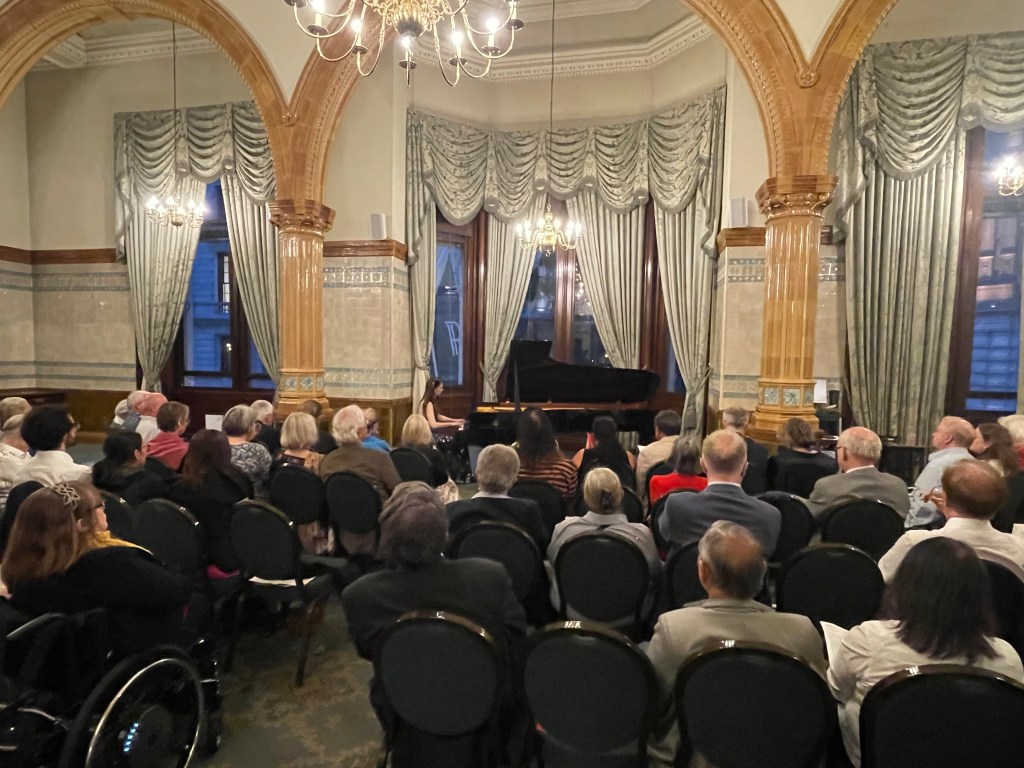
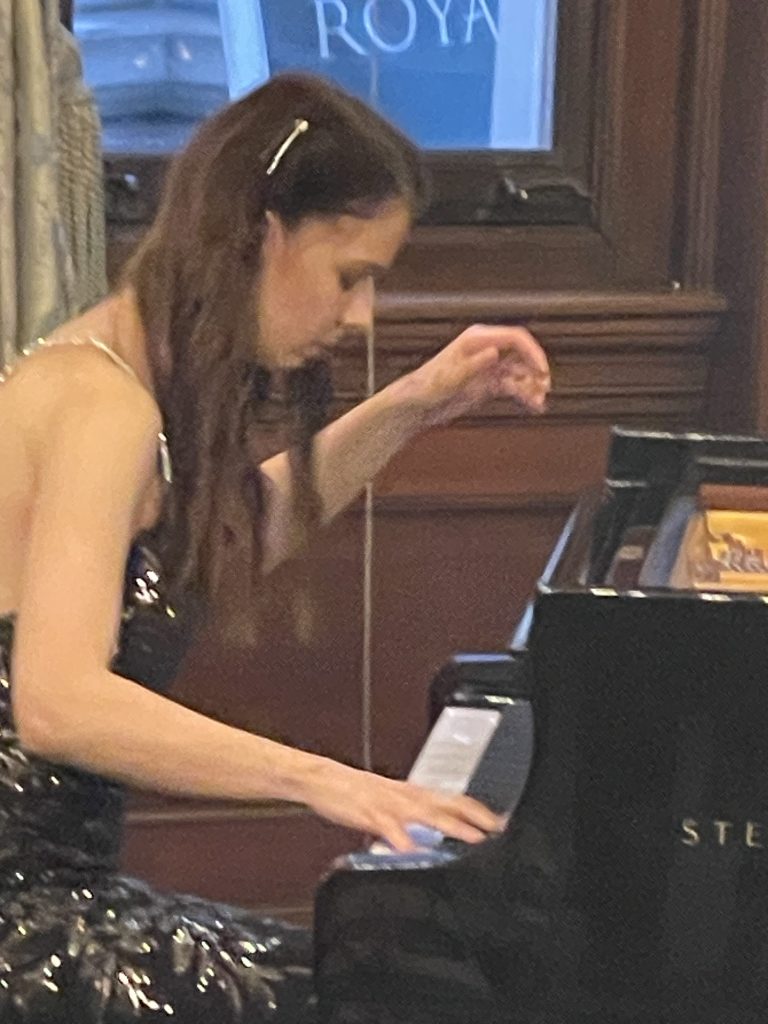
Gabrielé Sutkuté for the the 700 year old Worship Company of Glaziers presenting an evening of French Music on a voyage of ‘Discovery’ organised by Yisha Xue and Lisa Peacock
the distinguished concert manager Lisa Peacock in her first collaboration with the Asia Circle of Yisha Xue
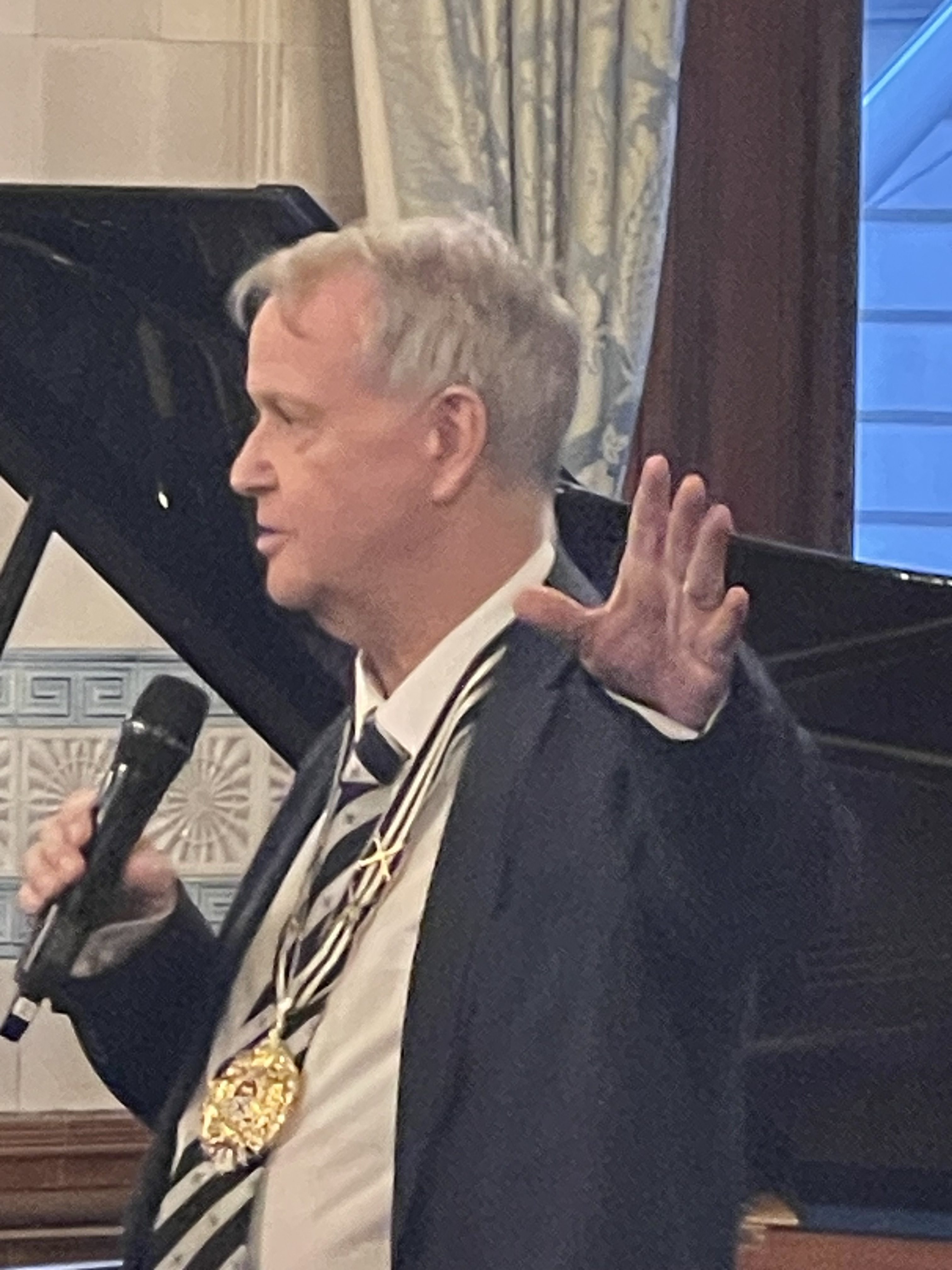
Master of the Glaziers , Alderman Tim McNally CC, former chairman of the National Liberal Club dedicated the concert to his wife Claire entitling the evening ‘Claire de lune’ which of course had to include Debussy’s much loved piano piece ‘Clair de lune’.
Master of the Glaziers Alderman Tim McNally CC
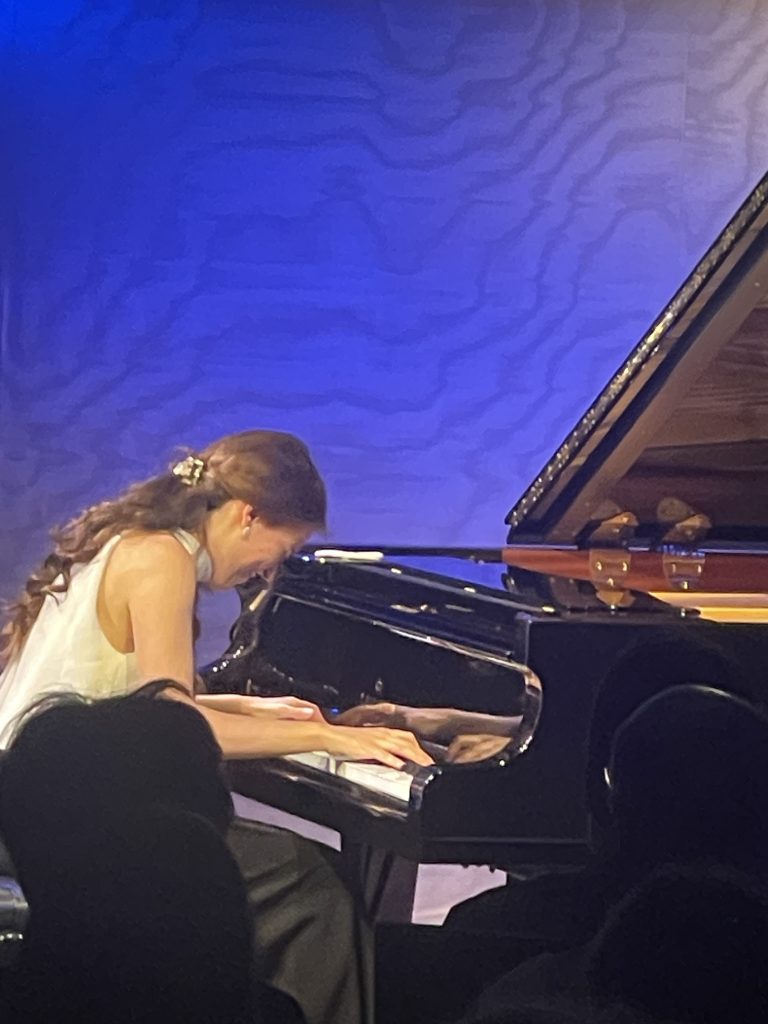
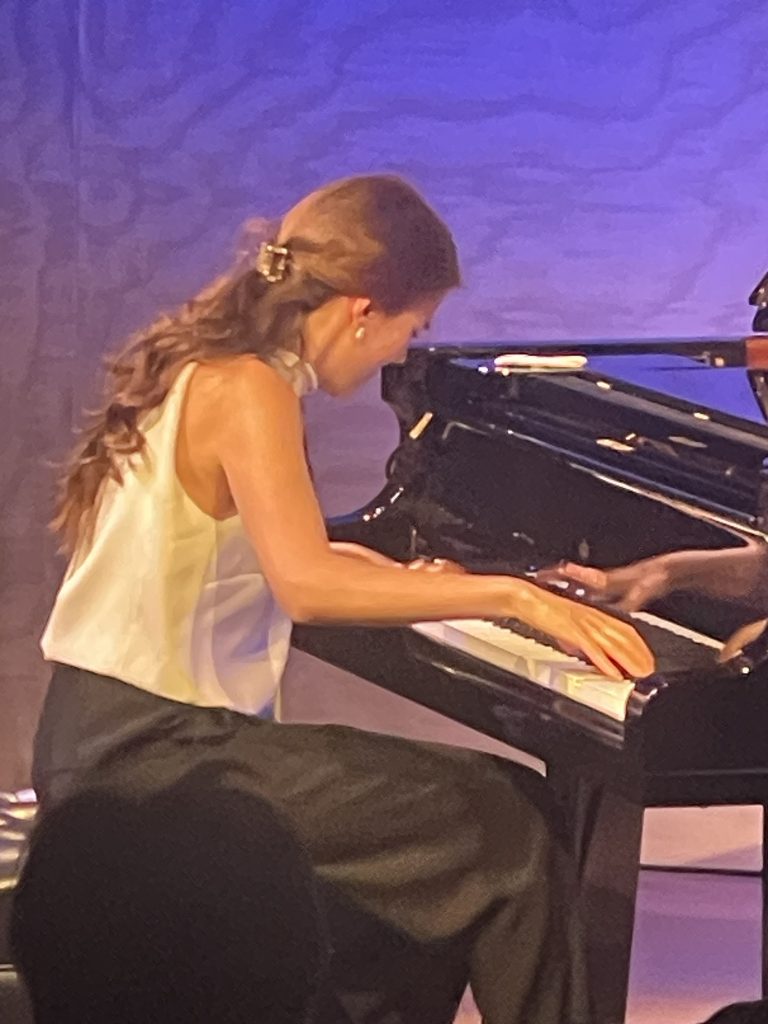
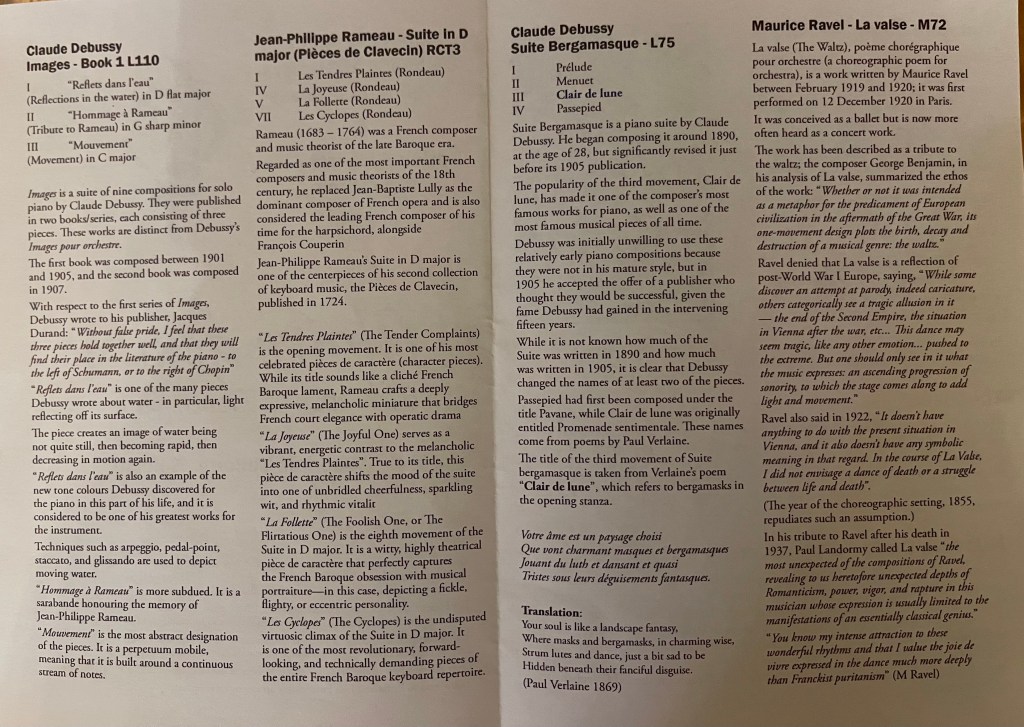
A piece that Gabrielé had relearned from her childhood piano lessons and which she played with exquisite finesse and ravishing moonlit beauty. But now a distinguished artist celebrated in many International competitions she decided to learn the entire early suite by Debussy of four miniature tone poems of beguiling charm and beauty that make up his ‘Suite Bergamasque.’ The opening flourish of the Prélude was enacted with gentle authority and was enough to catch our attention and open a mellifluous flood gate of delicacy and atmospheric beauty. There was an impish capriciousness to the Minuet but that blossomed into a melody intoned with sumptuous luxuriant beauty and after such an unashamedly romantic outburst there was a cheeky ending thrown off with a lightweight glissando and two final short notes in the bass sure to catch an enthusiastic audience unawares as Debussy has the last laugh. Gabrielé brilliantly living every moment and communicating this wonderful youthful ‘joie de vivre’ of early Debussy. ‘Clair de lune’ was played with ravishing sounds and an intense freedom as if an improvised song inspired by the beautiful lines of ‘Verlaine’. Obviously lines that were dedicated on this occasion to Claire Mayne, Tim McNally’s wonderful consort : ‘ Your soul is like a landscape fantasy, where mask and bergamasques, in charming wise, strum lutes and dance, just a bit sad to be hidden beneath their fanciful disguise ‘. The final ‘Passepied’ was played with an infectious rhythmic vitality. The other work by Debussy was his first book of ‘Images’ which is mentioned below.
Adding them to four pieces by Rameau written a century earlier and possessing the same painting in sound. From the heart rending ‘Les Tendres Plaintes’ to the terrifying ‘Les Cyclopes’ with one hand chasing the other over the keyboard from the revolutionally descriptive ‘Pièces de clavecin.’ As the programme notes say ‘Les Tendres Plaintes’ is a deeply expressive, melancholic miniature that bridges the formal French court elegance with operatic drama. Gabrielé played it with beauty and disarming simplicity of radiance and glowing fluidity. The chattering of the voices in ‘La joyeuse’ were played with vibrant clarity as she brought a wistful radiance to ‘La Follette’ with ornaments of knotty twine and etherial sounds of poetic beauty. A masterly performance of ‘Les Cyclopes’ as Gabrielé’s well oiled fingers chased each other up and down the keyboard with hypnotic insistence.
An evening of French music that are pictures painted in sound, opened with the magic imagery of Debussy.
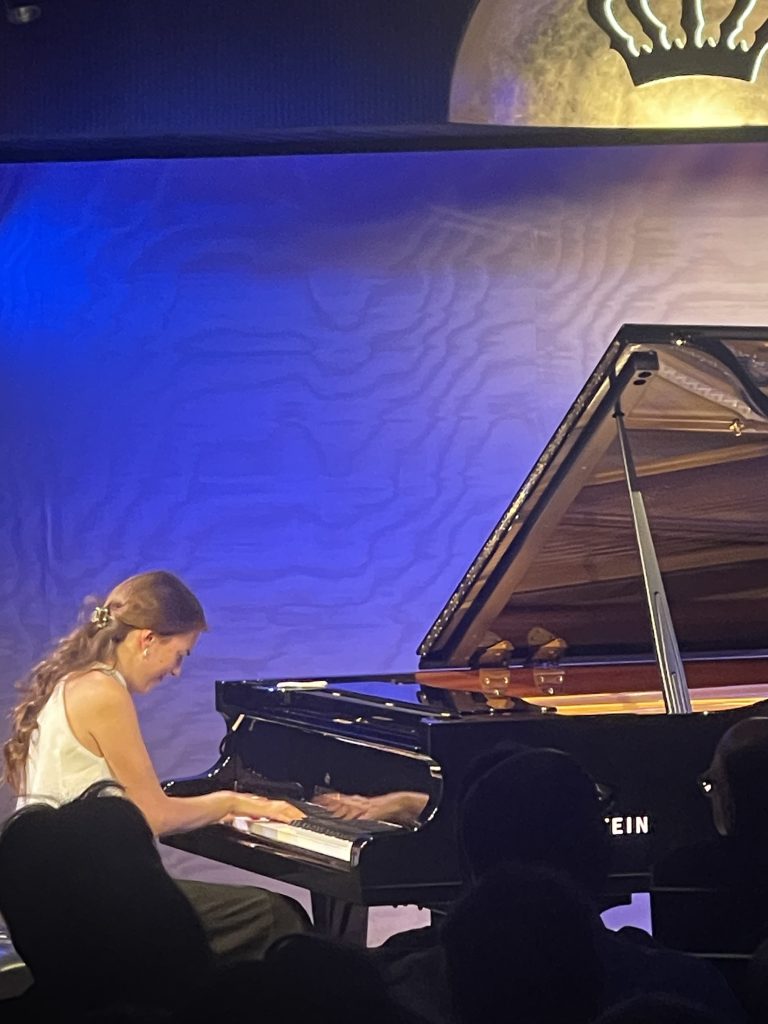
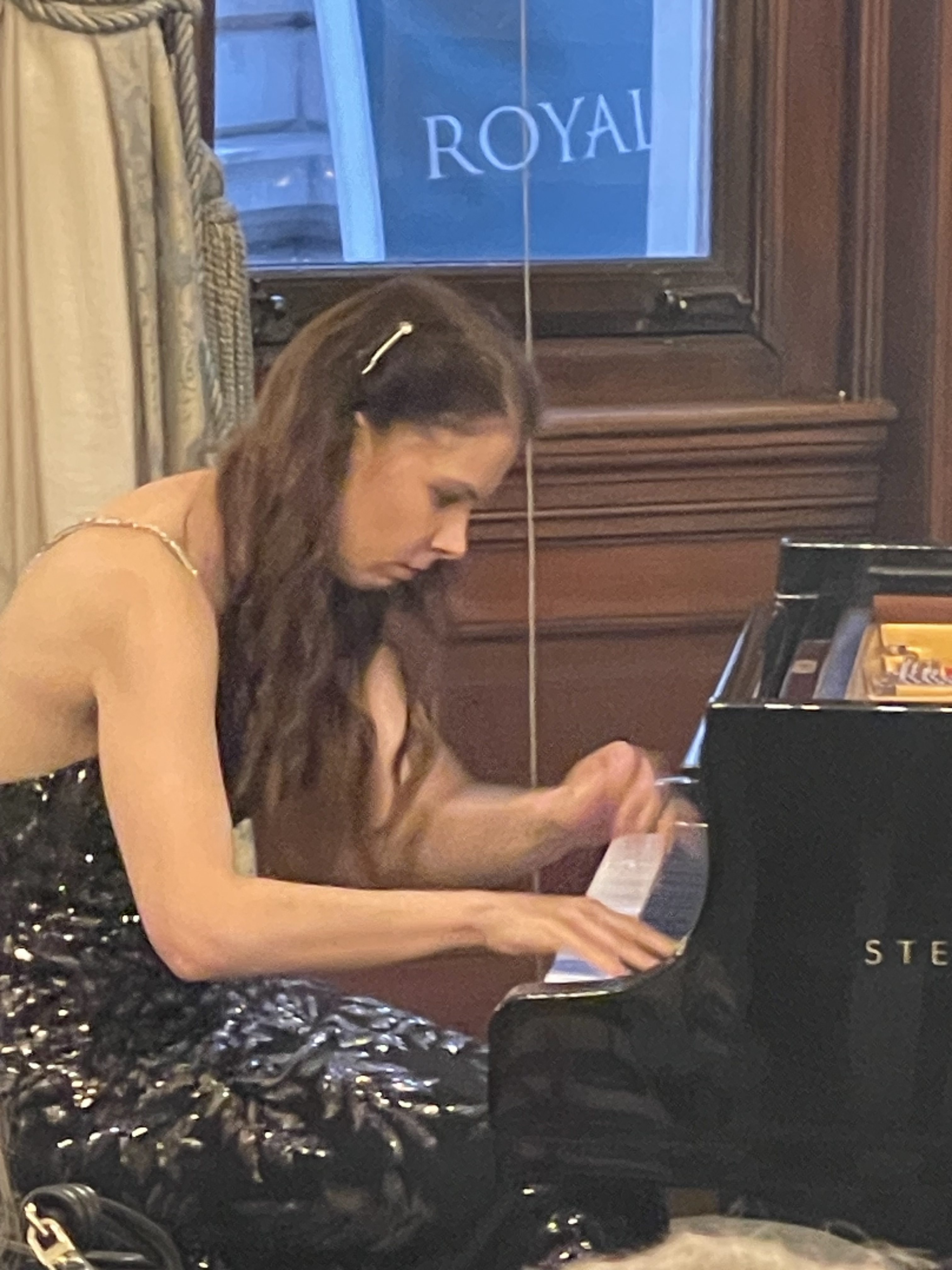
‘Reflections in water’ played by Gabrielé with ravishing jeux perlé and a subtle palette of sounds that allowed this magnificent Steinway Concert Grand to sing with a glowing fluidity and golden beauty of rarified radiance . Debussy’s ‘Hommage à Rameau’ was every bit as descriptive as the four pieces that followed by this much overlooked master. Aristocratic potency gave way to whispered beauty in Gabrielé’s sensitive hands and made one marvel as to how a box of hammers and strings could be transformed into a wondrous casket of jewels. From her ten magic fingers she was able to create an orchestra with a palette of colours as descriptive as any of the pointilless painters of the neo impressionistic school. A continuous stream of notes in the busy round of ‘Movement’ played with masterly clarity as washes of whispered sounds swept across the keyboard with gossamer lightness and poetic intensity, disappearing into the stratosphere with ethereal sounds thrown off with masterly ease .
All pieces of refreshing radiance and beauty until Gabrielé took us into the depths of descriptive decadence with Ravel’s ‘La Valse.’ With the menacing rumblings and troubling boiling waters bursting into flames and all played with fearless virtuosity and frenetic impetuosity. Gone was the refined good manners of a poetess of the keyboard as now she appeared as the devil in disguise throwing herself into the keys whilst shooting off glissandi in all directions. The music all the time reaching a boiling point where the burning intensity of the music was matched by the passionate mastery of the performer. At certain points she was even on her feet reaching ever deeper into the keys, extracting demonic sounds that ignited the atmosphere resulting in cheers and a standing ovation from an up to now very sedate audience .
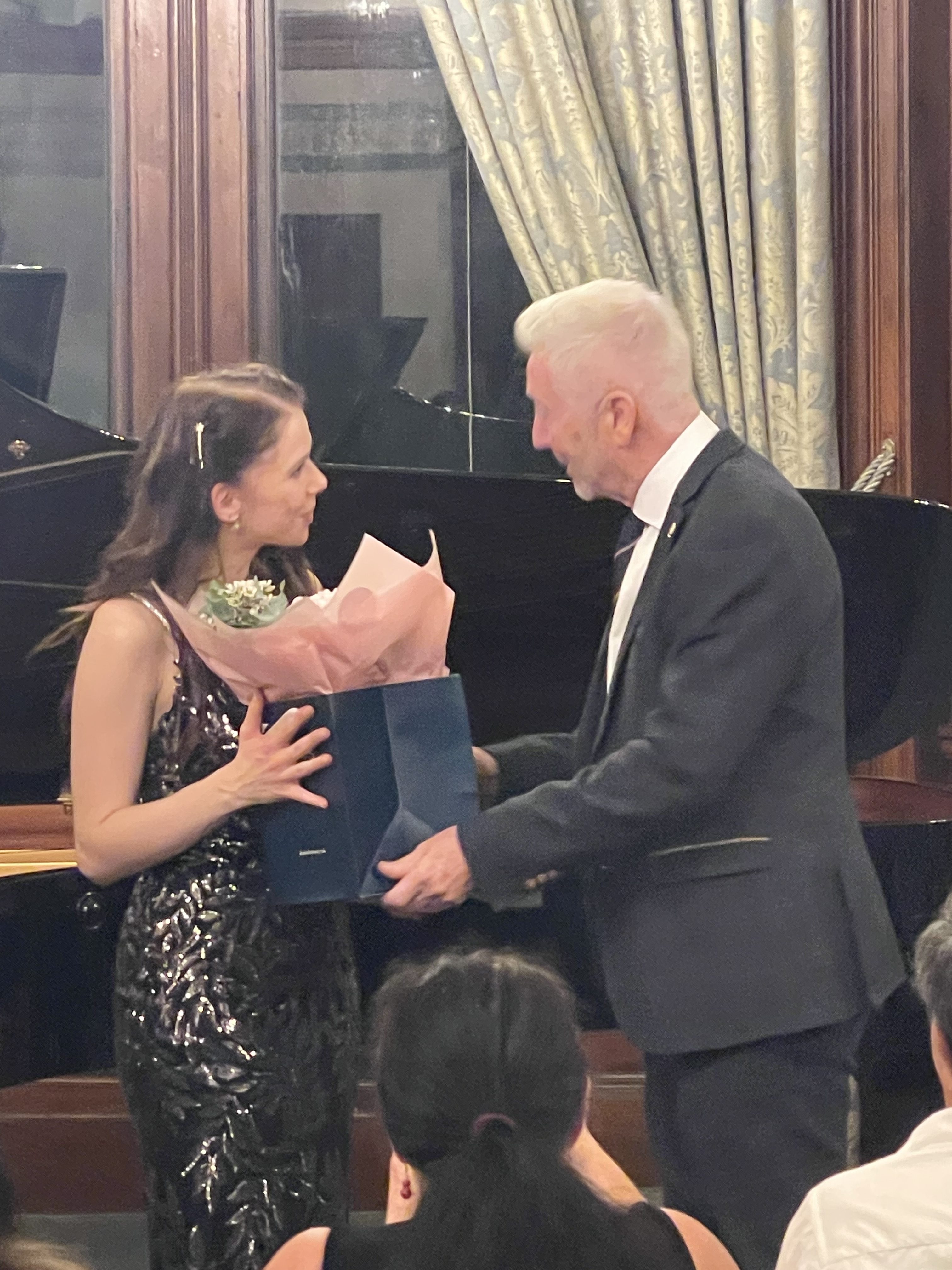
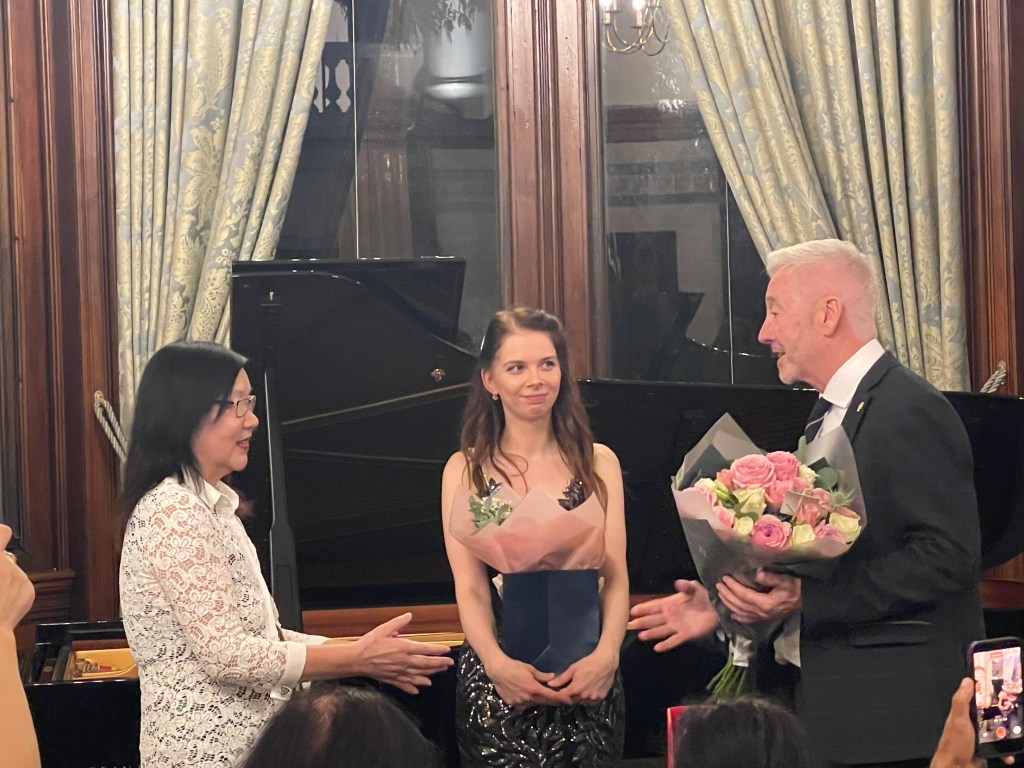
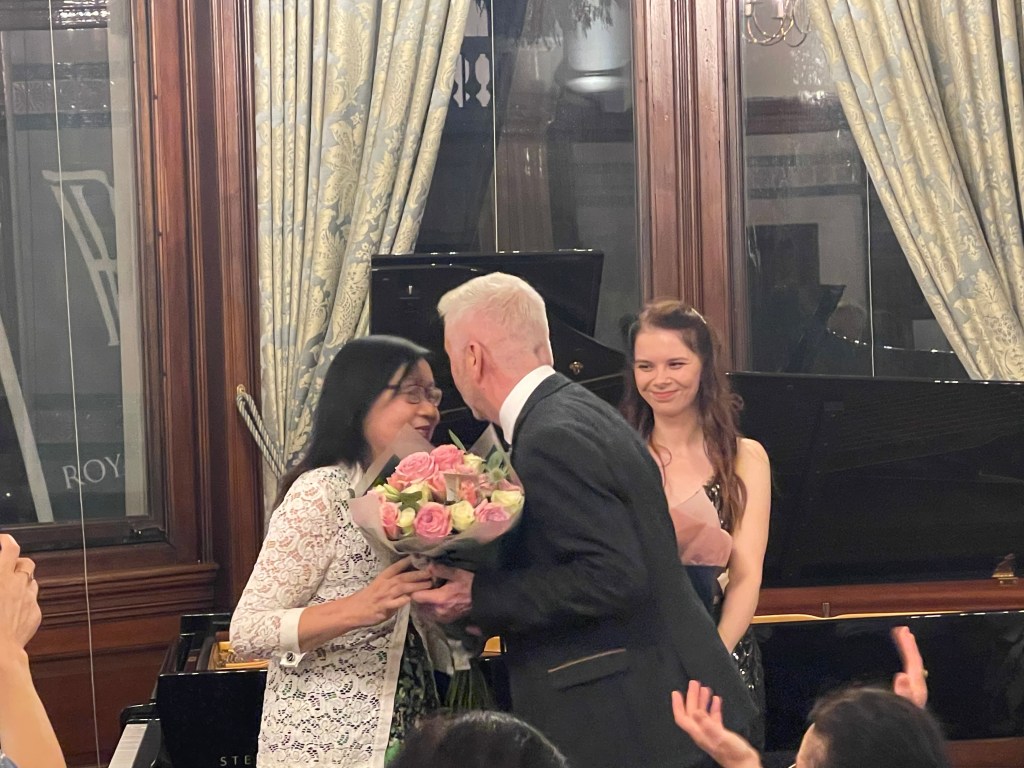
Paul Vesper CEO of the National Liberal Club presenting a bouquet to Gabrielé
Covered in flowers Gabrielé calmed the waters with an exquisite trifle of early Beethoven. Written when all was still well in his world but that was later to be a trial and torment of ‘sturm und drang’ in a tormented life cut short at only 57 and whose bicentenary, coincidentally, falls next year in 2027
CEO Paul Vesper
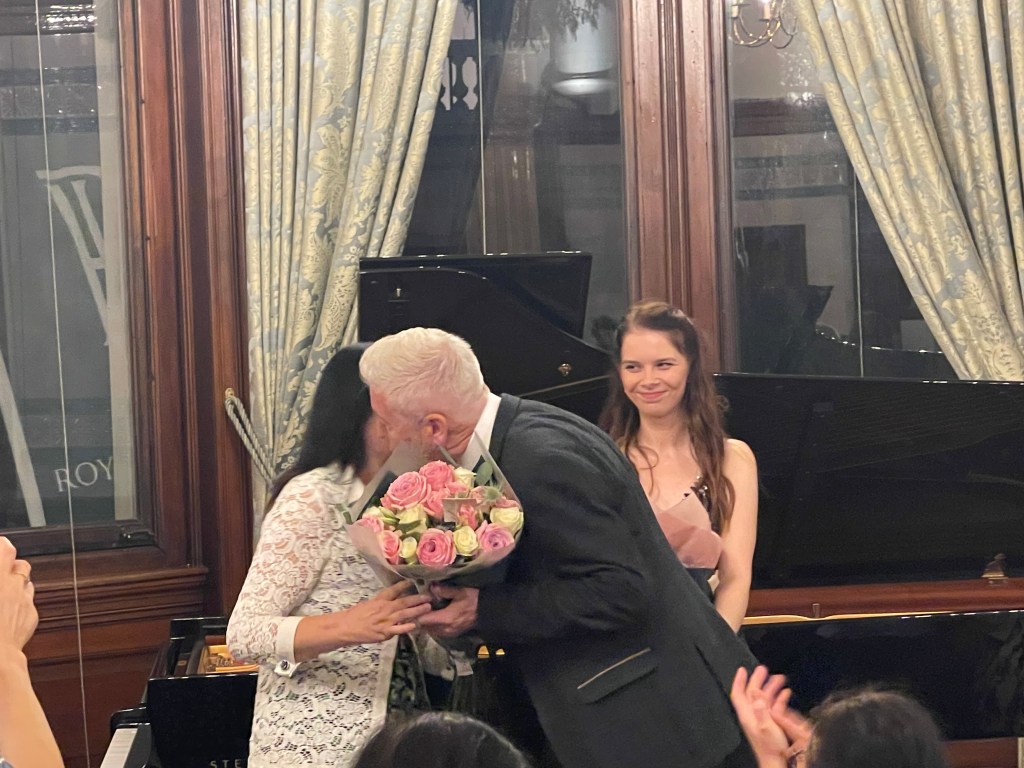
Flowers for the pianist from Paul Vesper CEO of the NLC, but also a very touching bouquet for Yisha from her Club, happy to welcome her back after a two month long illness, where her enthusiasm and expertise were much missed.