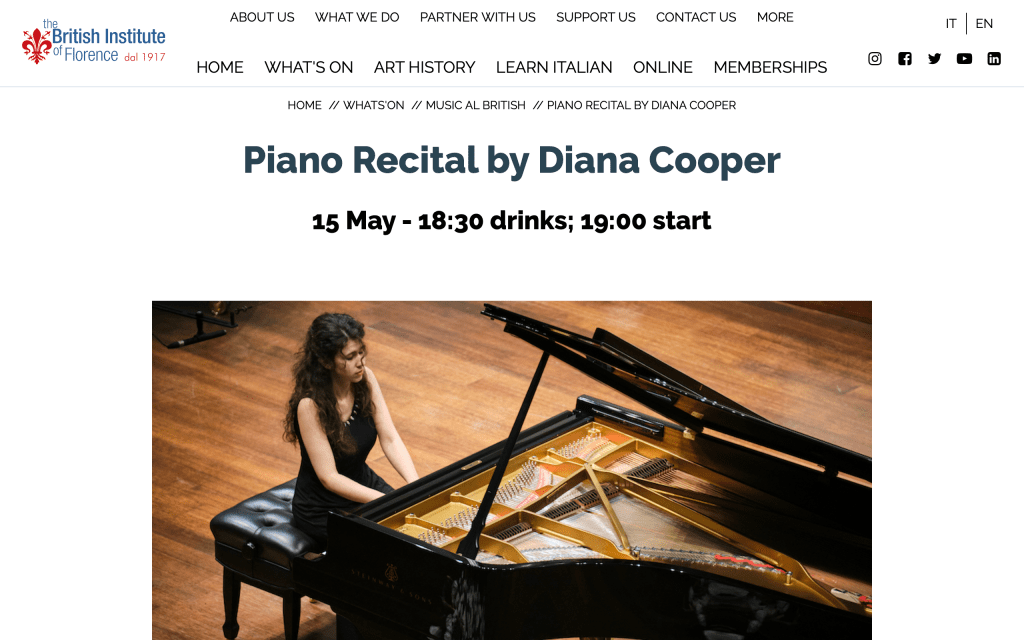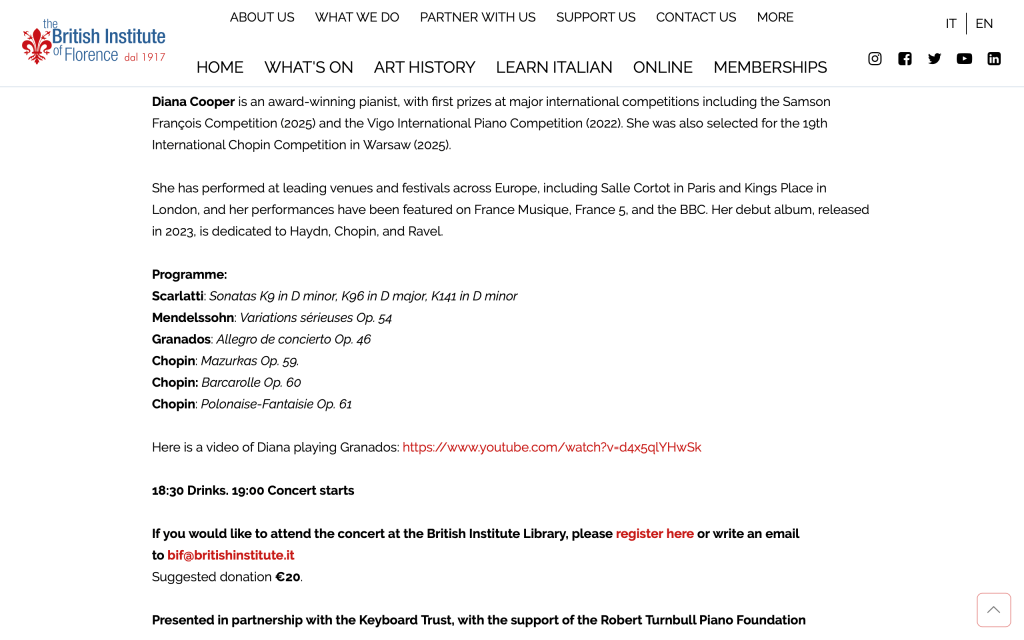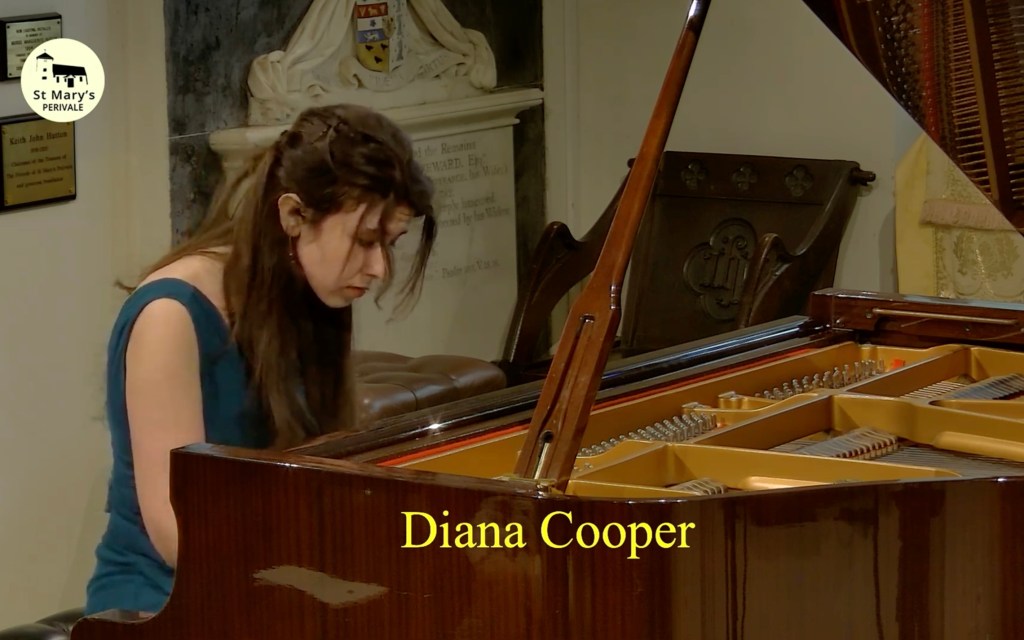
Prior to her Florentine debut on Friday it was good to be reminded of the artistry of this young artist. I have heard her play many times over the past few years since she was first noticed by the esteemed New York based critic Jed Distler,at the Royal College of Music, as he was judging a final duel amongst giants.
She was just coming to the end of her studies with Norma Fisher and is now making a mark in the concert world for her refined artistry and aristocratic musicianship. All qualities bequeathed to her at the RCM by Norma Fisher, having acquired a technical training from Rena Shereshevskaya in Paris , who like Ilona Kabos (Norma Fishers teacher ) was renowned for her very demanding no nonsense approach to training brilliant young pianists. Piano playing is, as Curzon would famously declare, 90% hard work and 10% a God given talent that can be nurtured but not taught.
https://youtu.be/gex0sOR7XZ0?si=6EMztK8dm-iRES_p
Diana made a great mark in the concert world with her performances at the International Chopin Competition in Warsaw. There were three young artists who although not selected by the jury to proceed to the final fight out, were noticed by a world hungry for artistry, not just industry. All three received a great boost to their careers via live streaming, as Dr Mather in Perivale is well aware of. It is a way of reaching out to a world hungry for music but rarely given a chance by a mass media that is more interested in quantity rather than quality.
Winner takes all is not the case here as we heard today from Diana who has a very special quality which is called artistry. Nowhere more than in her performances of Chopin where her aristocratic control and musicianship were allied to delving deep into the scores to find the very soul of Chopin. A soul that is not all delicacy and beauty as a certain Chopin tradition would have us believe, but at times heroic and exciting, profound and overwhelming. It is no coincidence that Schumann was to call the Mazurkas ‘canons covered in flowers’.
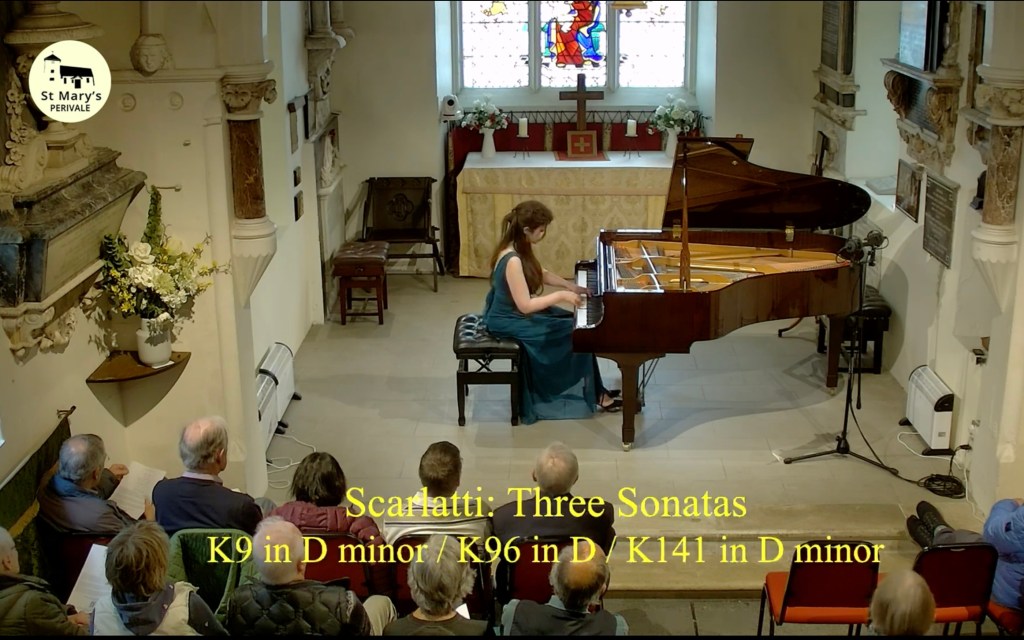
Three Scarlatti Sonatas immediately showed off the characteristics of an artist who can turn baubles into gems. Scarlatti wrote over five hundred sonatas which are an amazing array of miniature tone poems each different from the other with a range of fantasy and brilliance of masterly invention. The intelligence of Diana finding in the key of D, three contrasting pieces that made a coherent whole and a scintillating opening to her recitals this week in Perivale and Florence. An opening of glowing beauty of refined simplicity contrasted with the brilliant energy of the major key, all radiance and sparkling brilliance. Finishing with the repeated notes of Argerich intensity and scintillating mastery.
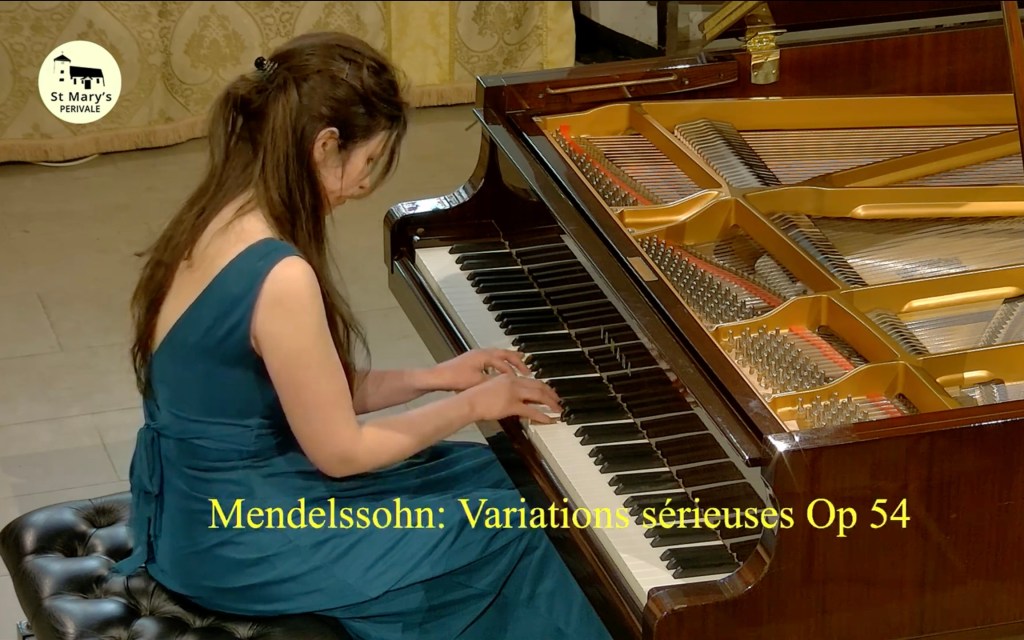
Mendelssohn Variations that grow out of the opening theme that Diana played with poetic beauty and aristocratic poise. A kaleidoscope of colour and brilliance as the variations became ever more agitated . There were moments of deep contemplation too played with subtle beauty and intense sentiment but never sentimental.There was always an architectural sense of direction and shape to all she did. An ending of exhilaration and excitement with notes that flowed from her fingers with a natural fluidity that was much more than just a jeu perlé but more like a jeux d’eau of flowing intensity. The final three chords were the calm after the storm, a balm played with refined beauty and sumptuous full sound. It was ,after all, only storm in a Victorian teacup!
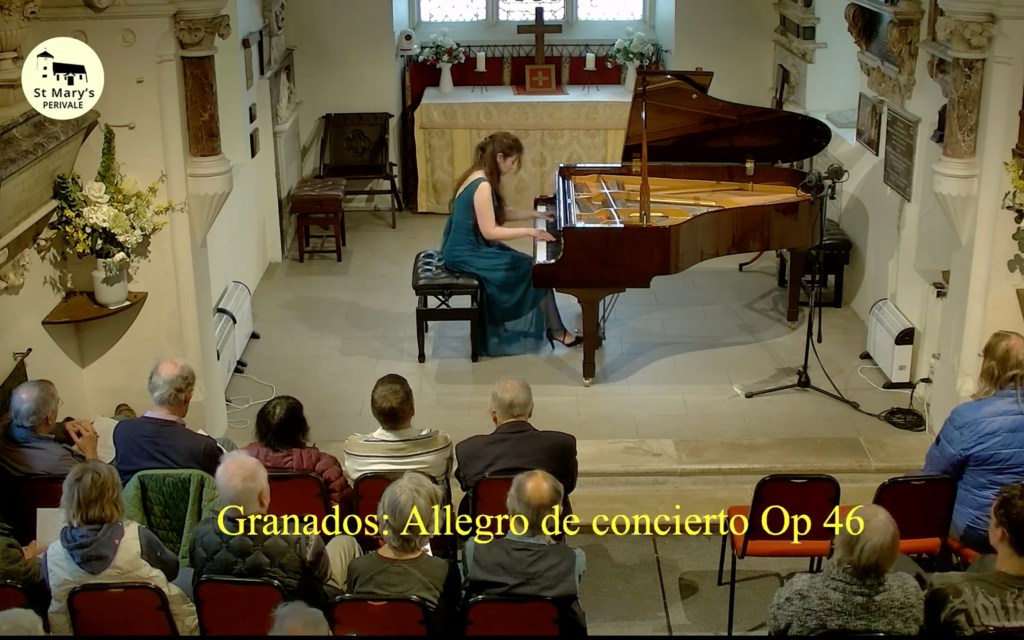
Granados was all brilliance and style with showers of notes to announce a beautiful melodic outpouring played with beguiling insinuation and teasing brilliance. A command of the keyboard as she played with authority and freedom with natural movements of horizontal beauty, swimming in a sea of sounds. Waters that were just waiting to claim the composer and his wife as a German torpedo struck the boat in the English Channel on the 24th March 1916 as he was travelling back from America where his opera ‘Goyescas’ had been greeted with such acclaim by the President of the United States. Sparkling brilliance of daring playing of romantic effusions demonstrated what other glories the world might have been denied by useless combat! President Trump please note.
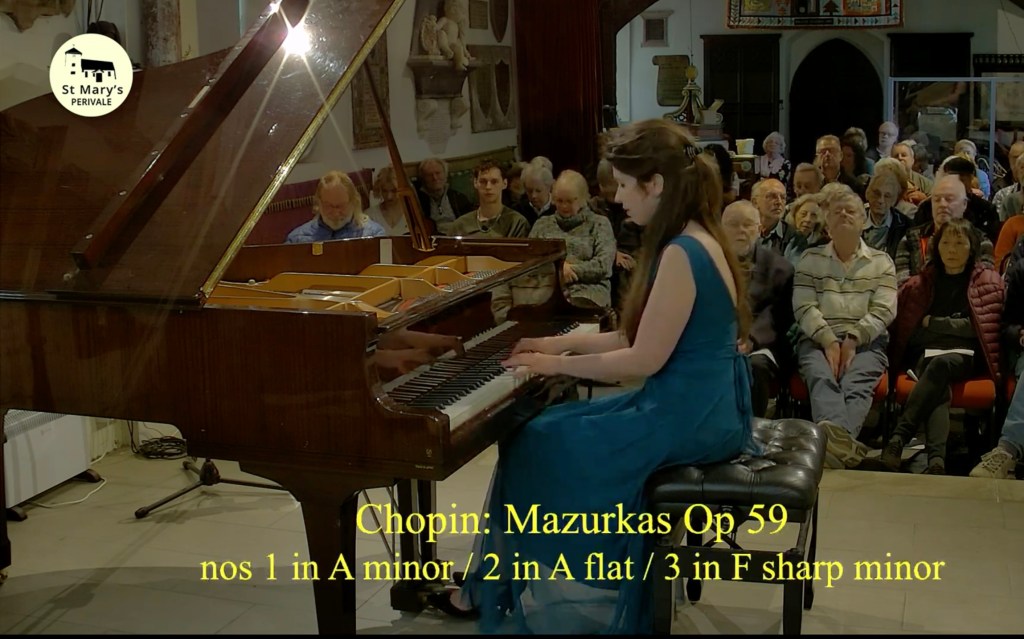
The world of Chopin has found in Diana an ideal interpreter where the beauty of sound is allied to an intelligence and fearless sense of style. Three Mazurkas op 59 were played with radiance and subtle colouring. N. 1 with a rhapsodic central episode followed by the beautiful sense of dance of n. 2 and the nobility and passion of n. 3 , where the Polish dance is full of nostalgia and the energy of refined brilliance of Chopin’s homeland that he was destined never to see again, having fled just a month before the 1830 uprising. Transferring his innocent soul to Paris where he was to enjoy the refined elegance of the Parisian salons. His final wish being that his heart should be buried in his homeland after his early death at only 39 years of age. A wish which is celebrated every year on his birthday in Poland, that has become the shrine and celebration of his genius.
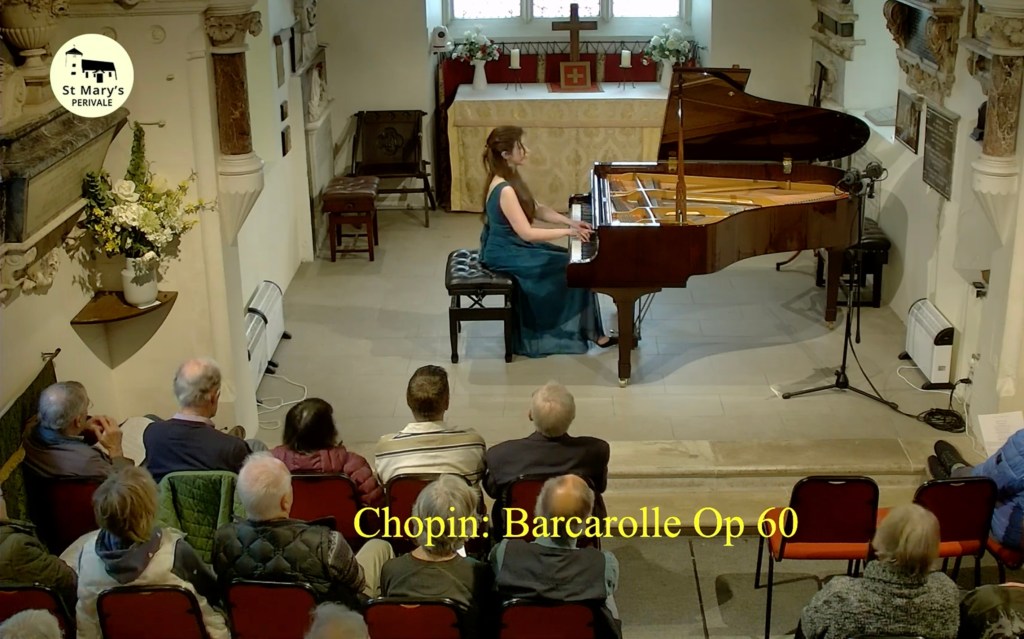
The Barcarolle is one of Chopin’s last works , a great song and a highly original form of beauty and freedom. It was here that Diana could demonstrate her complete mastery with a continual flowing movement of passion and mellifluous beauty. Simplicity and radiance combined with style and mastery, an intoxicating mix for one of Chopin’s greatest creations.
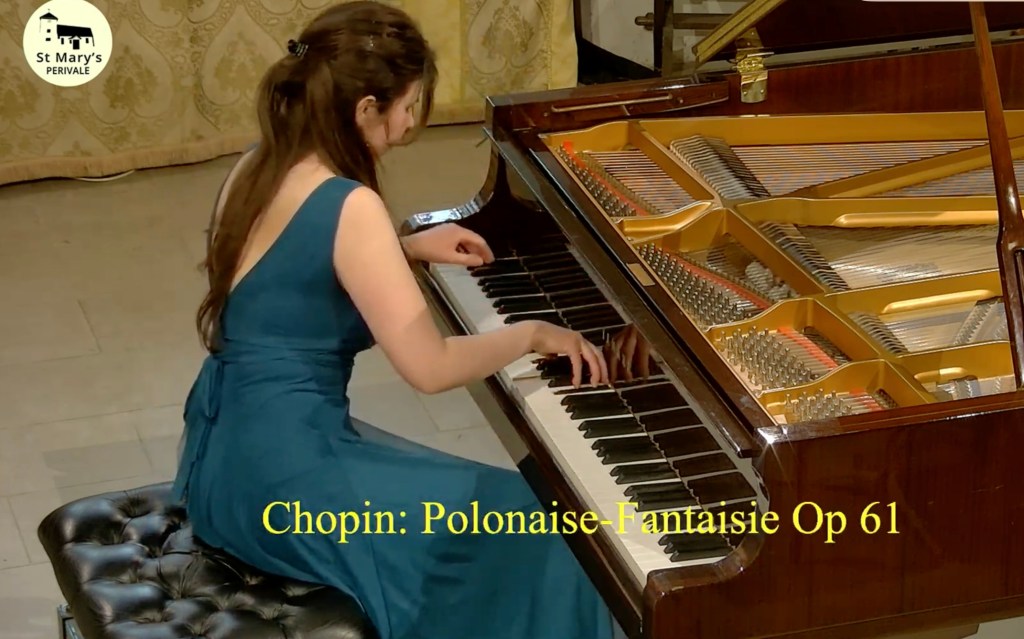
The Polonaise – Fantaisie is the work that immediately follows the Barcarolle and is where Chopin could marry the two forms into one architectural whole. Opening with imposing authority with a perfect tempo that allowed the chords to be shaped into one whole of reverberating sounds until the announcement of the Polonaise and the marriage of the two forms living together in a wonder world of emotional turbulence and bewitching fantasy. Beautifully shaped passages like a singer with natural inflections and momentary breath taking hesitations. Leading to the central outpouring of mellifluous beauty before the gradual reappearance of a magical re- call to arms and the emotionally driven final exhilaration and excitement that Diana played with the fearless abandon of a great artist.
An encore of Chopin’s teasingly brilliant Waltz op 42 was played to the manner born. Some things cannot be taught but are recreations of an artist blessed by the Gods.
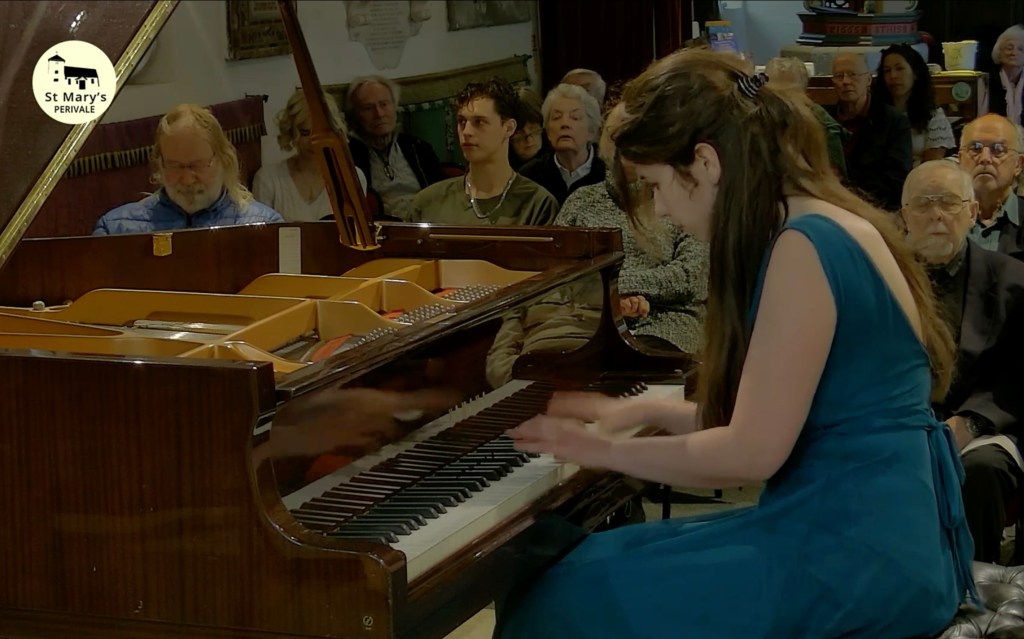
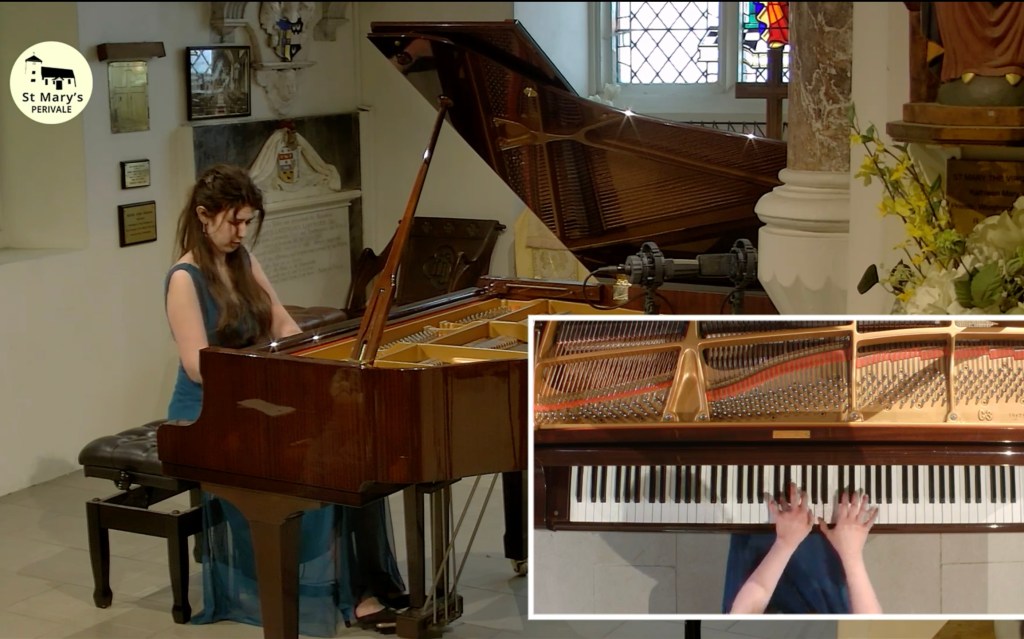
Winner of numerous awards, including 1st Prize at the Samson François International Piano Competition (France – 2025), 1st Prize at the Halina Czerny-Stefanska International Piano Competition in Poznan (Poland – 2022), 1st Prize at the Concurso Internacional de Piano de Vigo (Spain – 2022), and 1st Prize at the Brest Chopin Competition (France – 2017), Diana Cooper was selected to participate in the 19th International Chopin Competition in Warsaw in October 2025, chosen from 84 pianists out of 642 applicants. She was invited to perform solo on the Générations Jeunes Interprètes program on France Musique, as well as with violinist Yevgeny Kutik on the BBC Radio 3 program In Tune. Additionally, she performed as part of a trio on the television program Fauteuils d’orchestre, filmed at the Théâtre des Champs-Élysées in Paris and broadcast on France 5 in 2024. That same year, she was selected to participate in a masterclass with Yuja Wang, which was filmed and produced by the BBC for the series Arts in Motion.
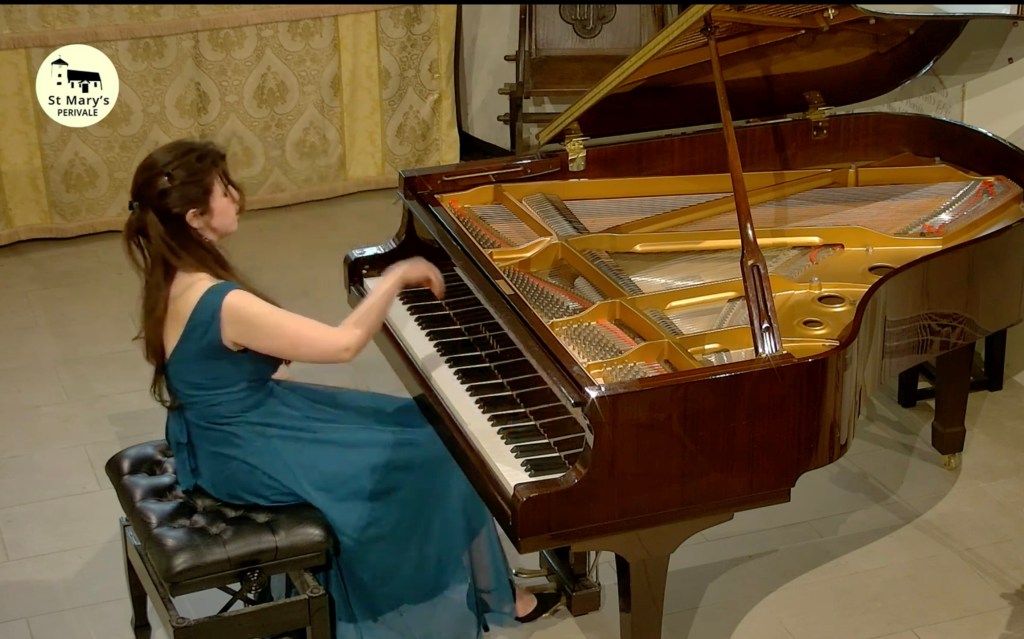
Her performances have been further enriched by solo appearances with several orchestras, including the Orchestre Appassionato, conducted by Mathieu Herzog, in Mozart’s Piano Concerto No. 20 at the Seine Musicale in Paris; the Orchestre des Lauréats du Conservatoire de Paris, led by Félix Benati, in Schumann’s Piano Concerto at the Cité de la Musique – Philharmonie de Paris; and the Grammy Award-winning Orkiestra Symfoniczna Filharmonii Kaliskiej, conducted by Maciej Kotarba, in Chopin’s Piano Concerto No. 1 at Kalisz’s Philharmonic Hall in Poland. Diana has recently recorded her first CD, featuring works by Haydn, Chopin and Ravel, after winning 1st Prize in the Concours d’aide aux Jeunes Artistes organised by the Festival du Vexin.
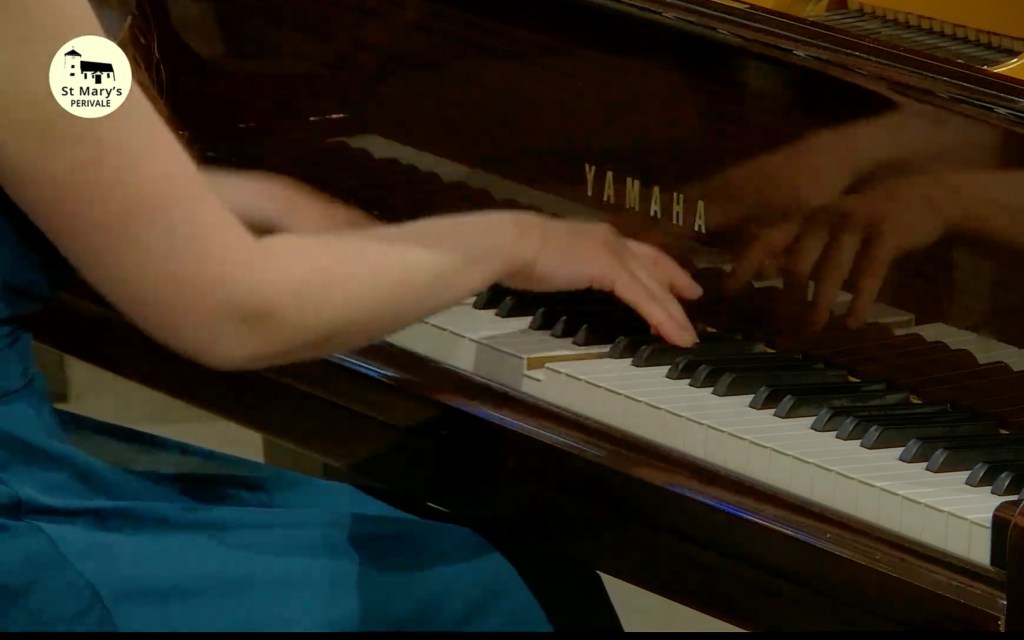
Born in Tarbes to a Franco-Spanish mother and a British father, Diana began her piano studies with Jean-Paul Cristille. She pursued her musical education with Jean-François Heisser, Marie-Josèphe Jude, Rena Shereshevskaya, Pascal Amoyel, Norma Fisher, and Philippe Giusiano. A graduate of both the Conservatoire National Supérieur de Musique de Paris (CNSMDP) and the Royal College of Music in London with a second Artist Diploma, Diana also studied at the École Normale de Musique Alfred Cortot in Paris and the Académie Musicale Philippe Jaroussky where she honed her skills under the guidance of Cédric Tiberghien. Diana is an Artist awardee of the Fondation de la Banque Populaire and the Fondation Safran in France, as well as the Kirckman Concert Society in the UK.