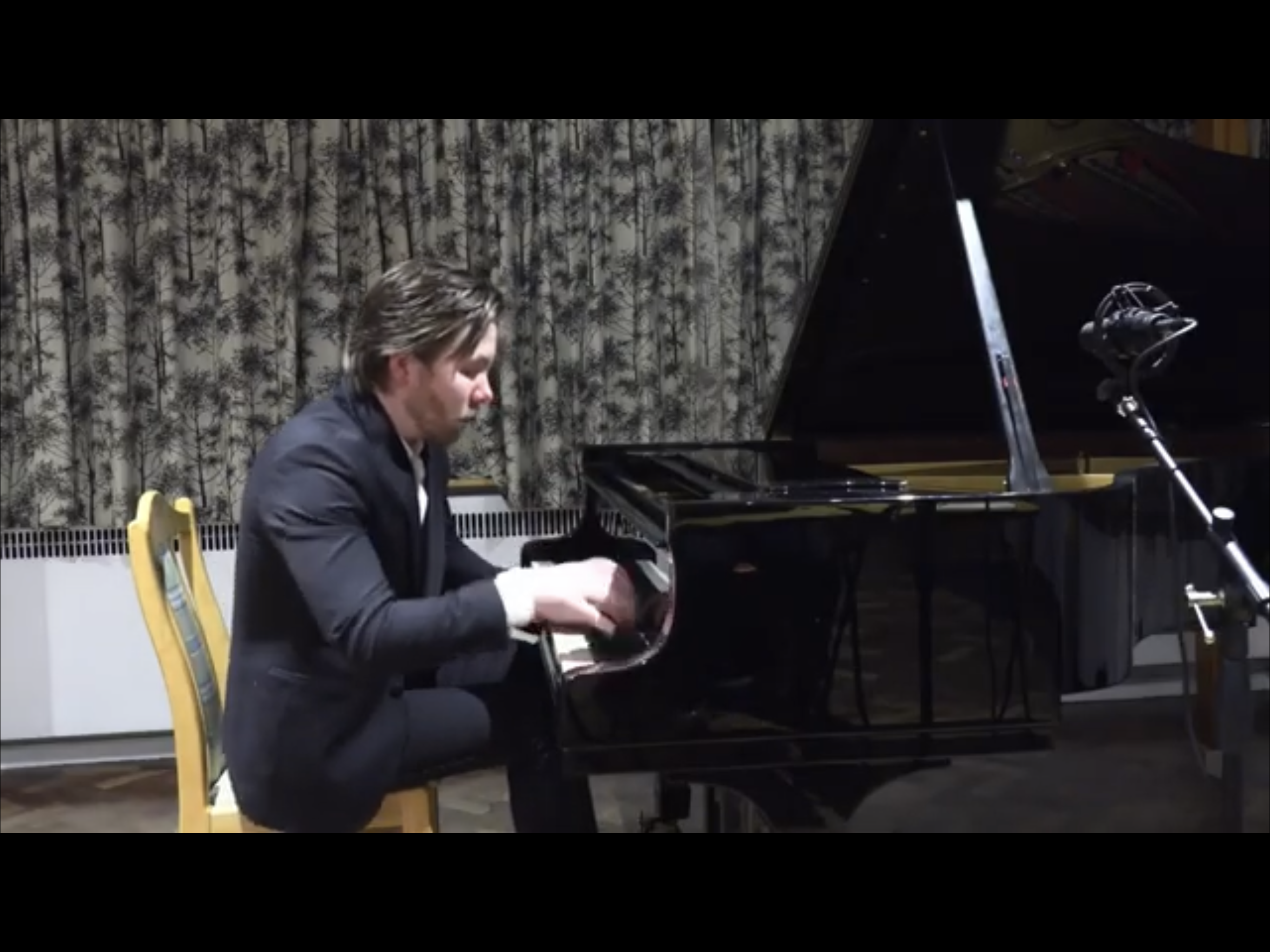
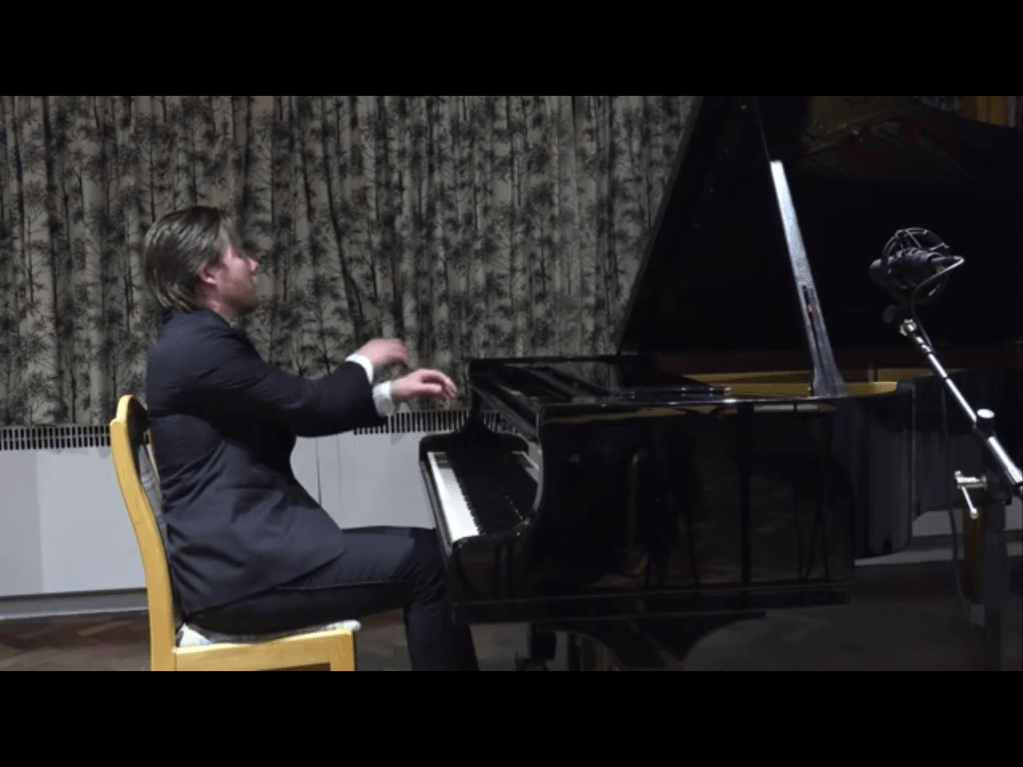
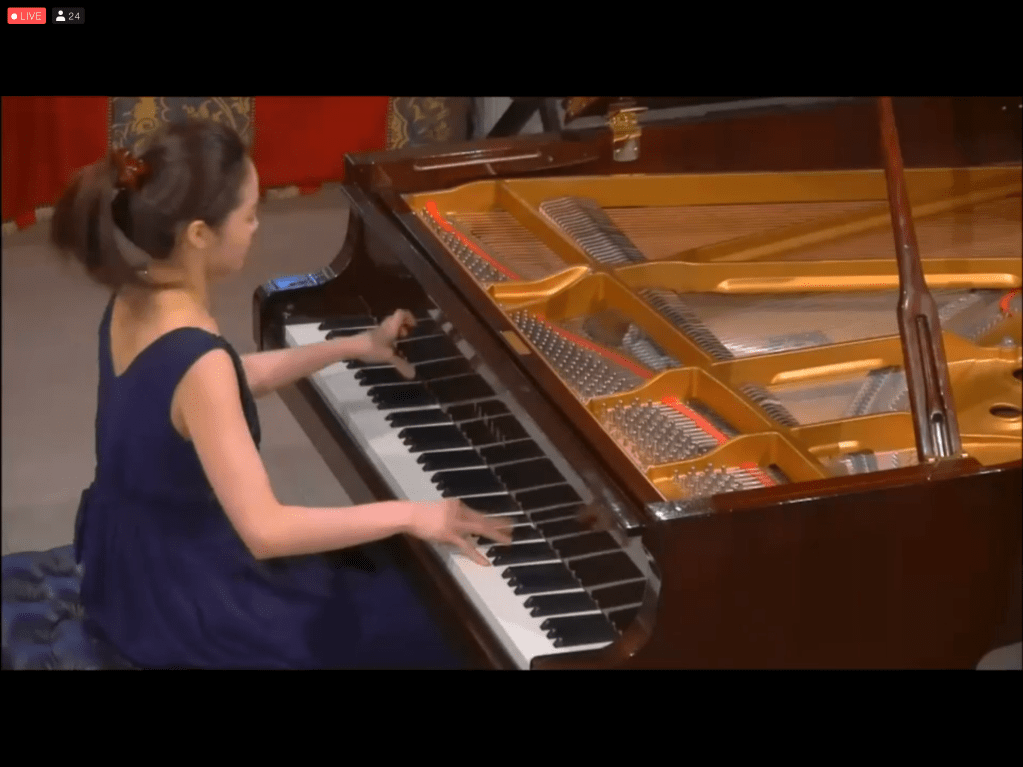
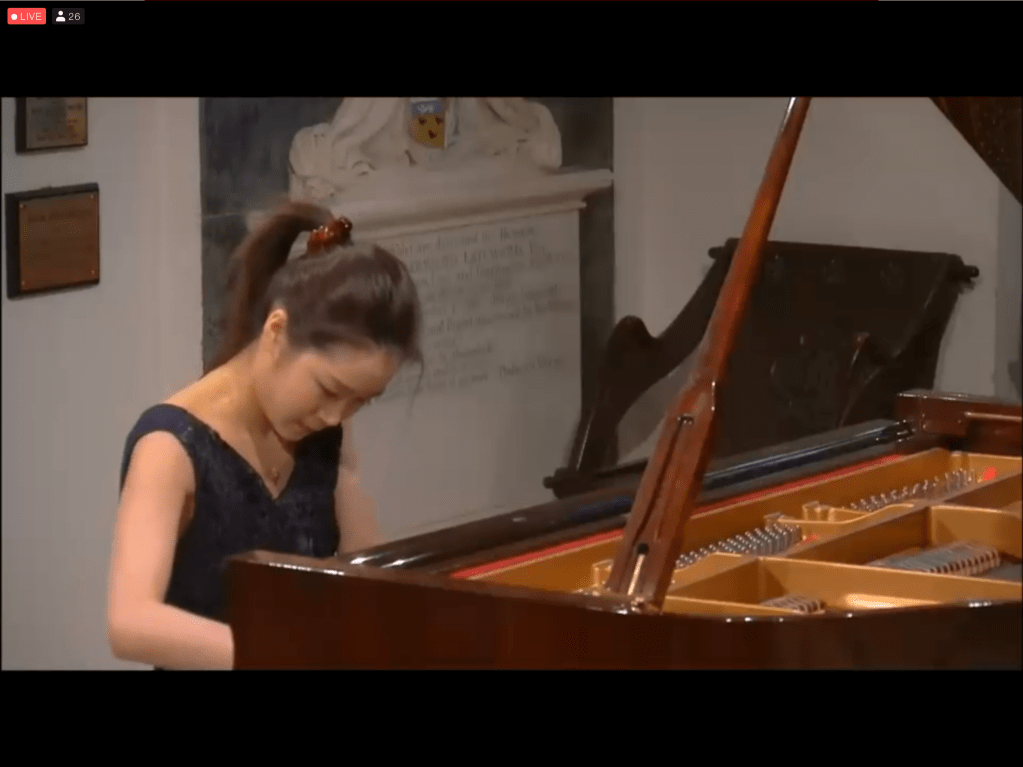
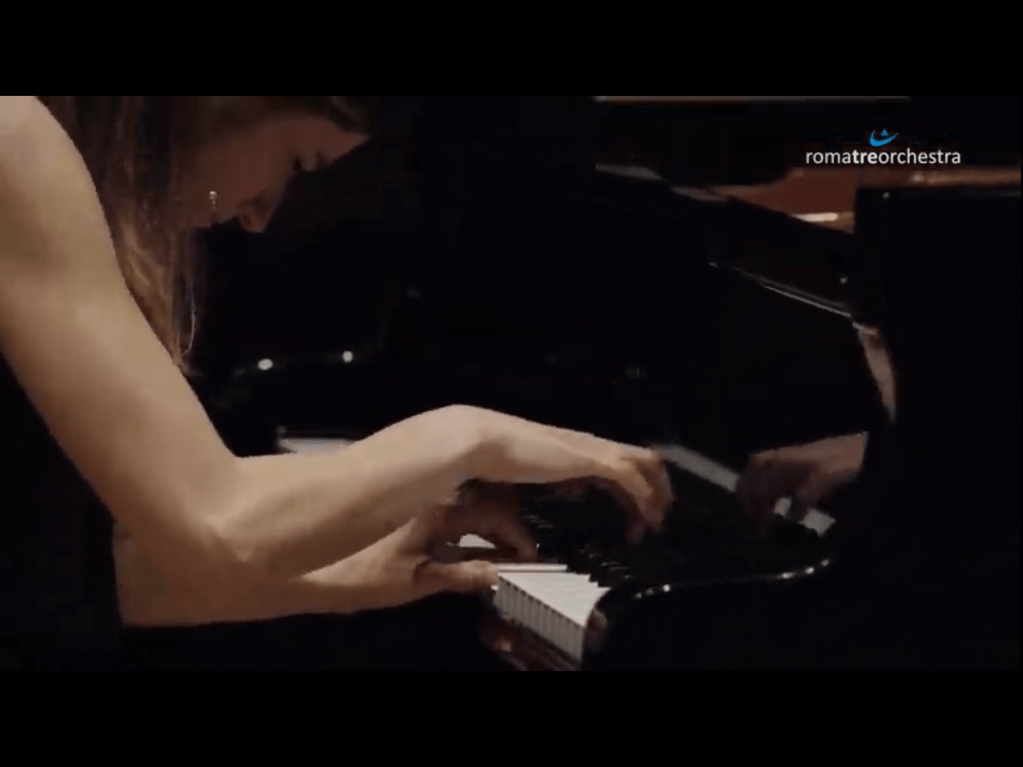
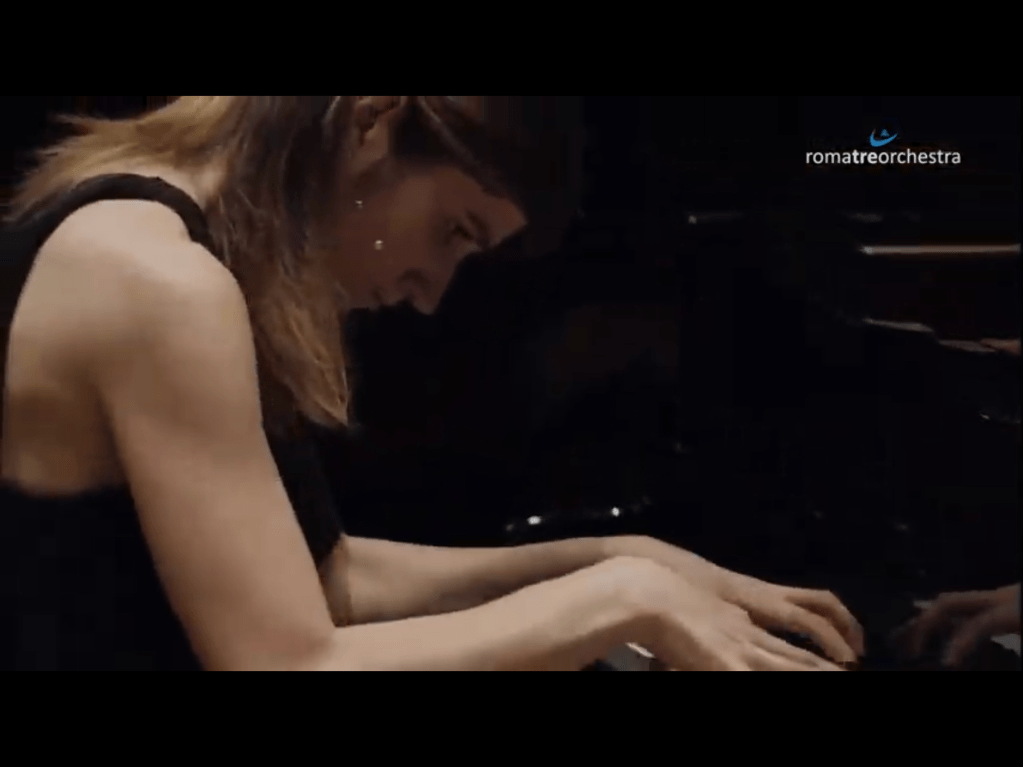
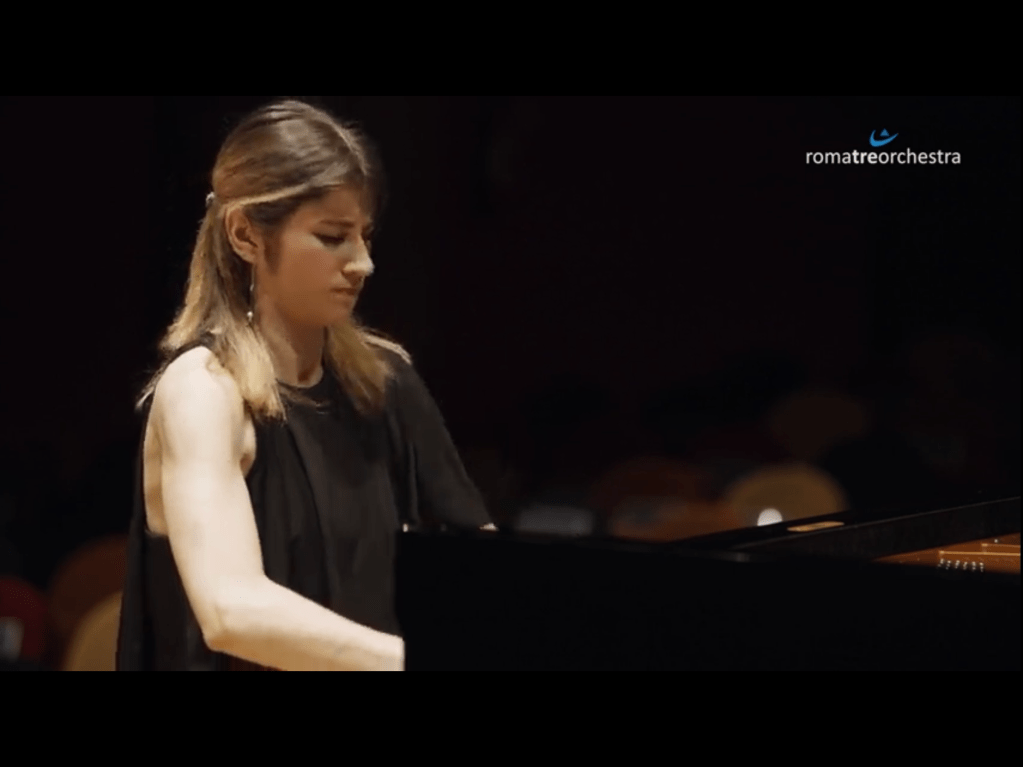
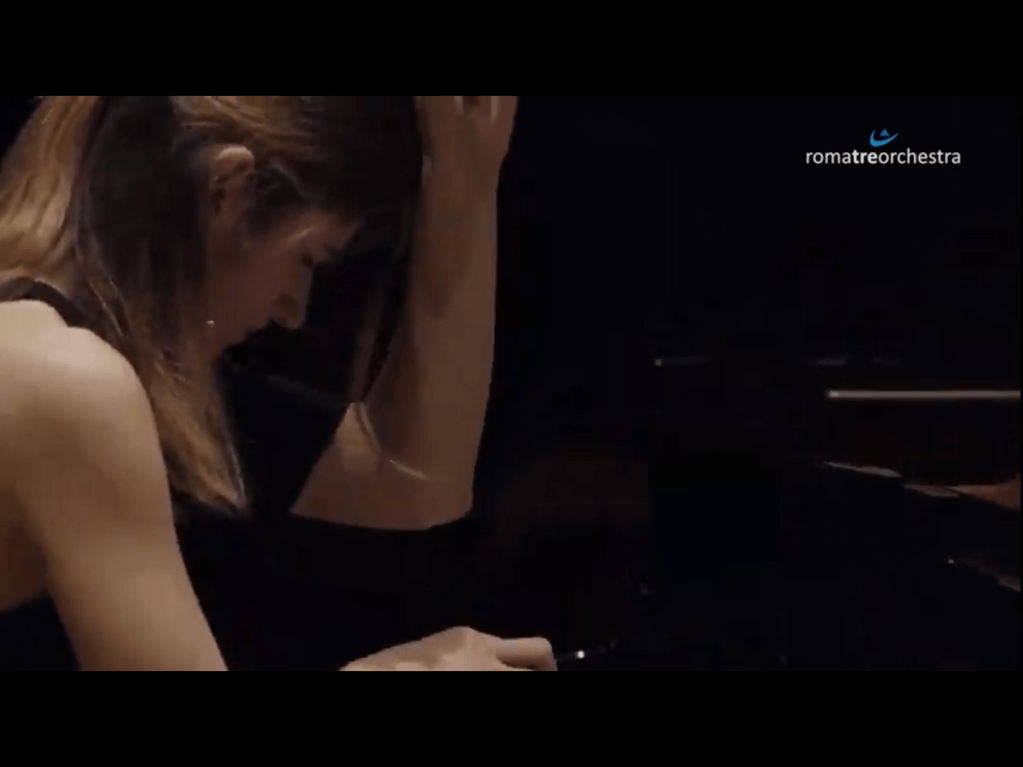
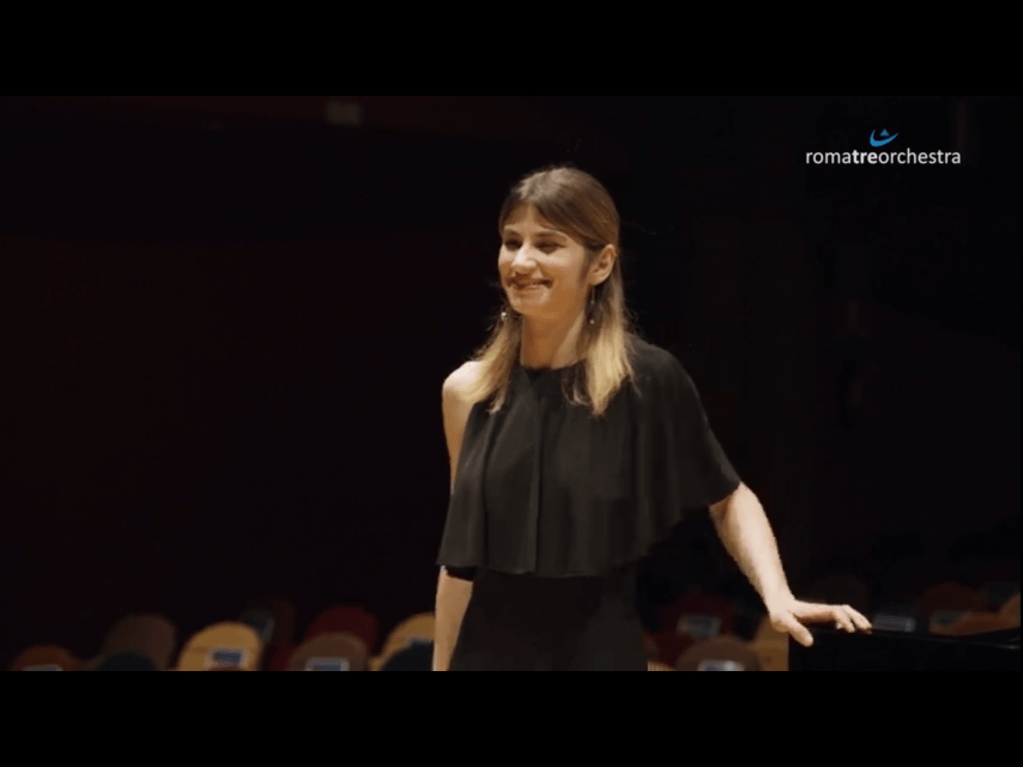
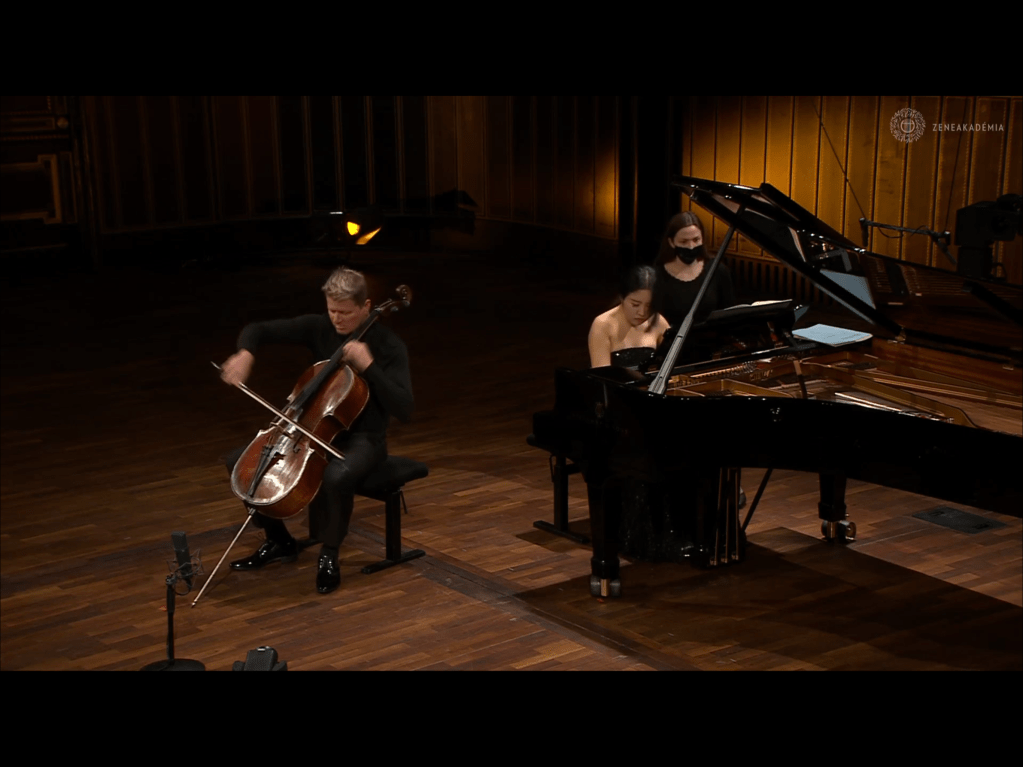
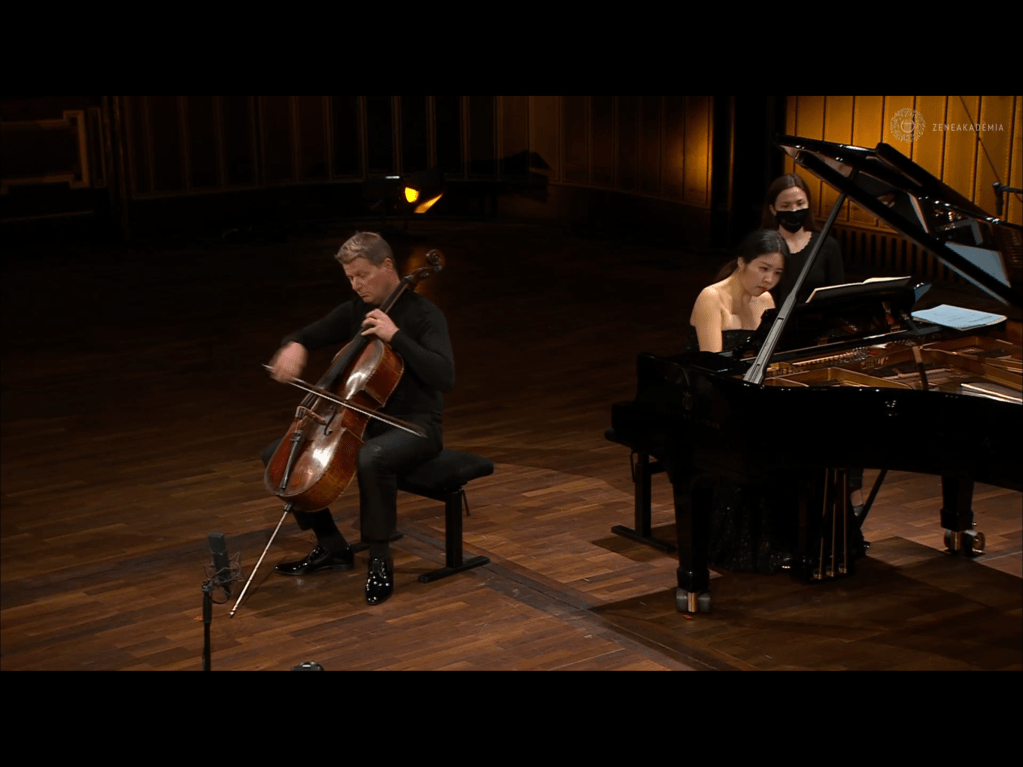
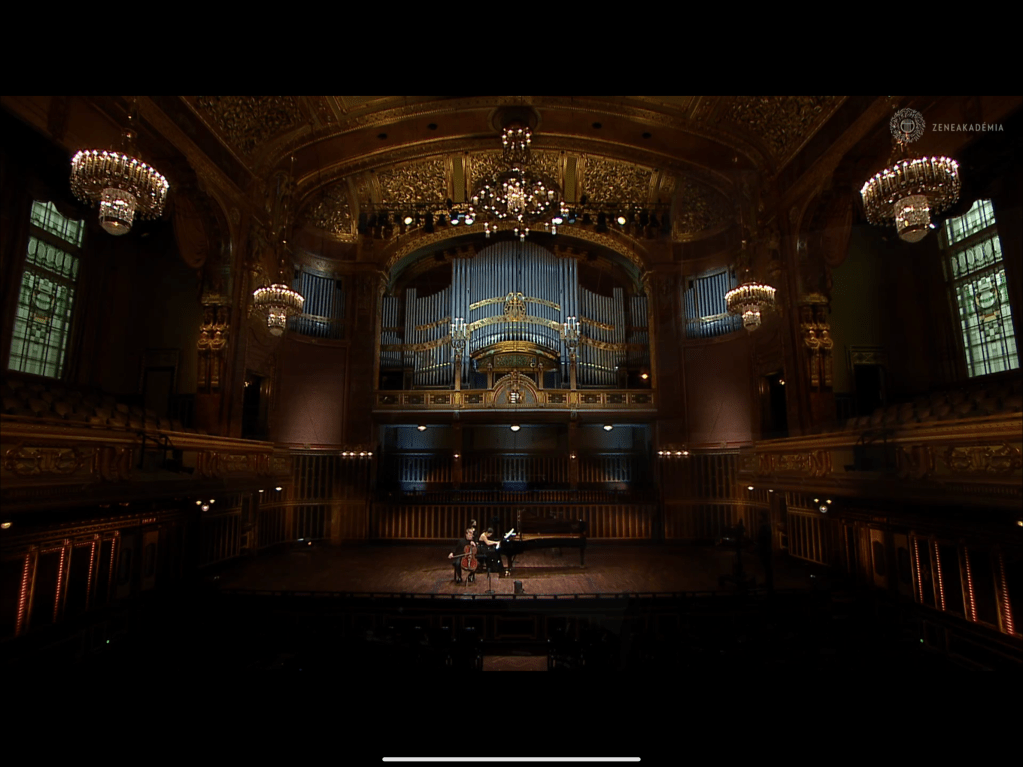
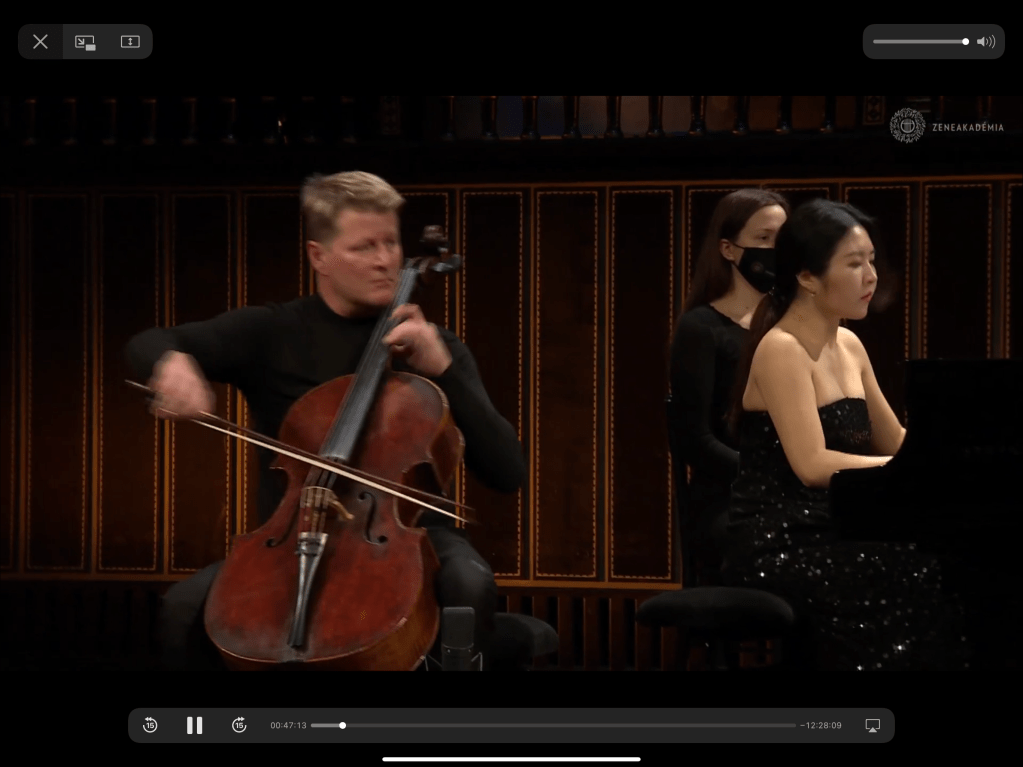
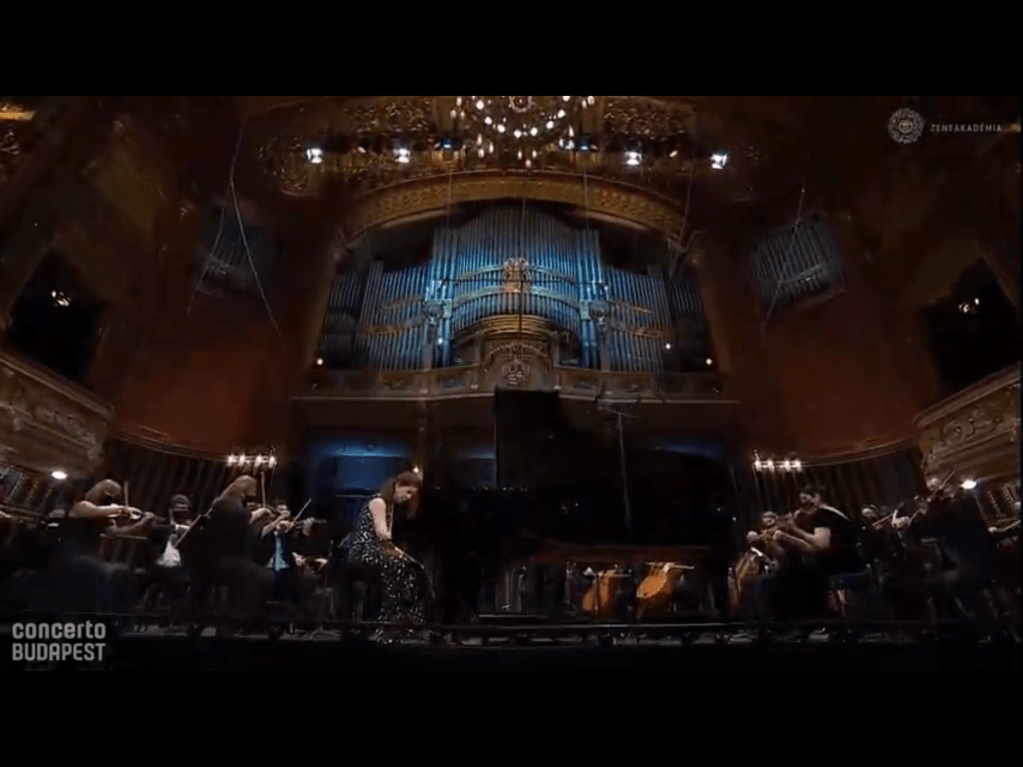
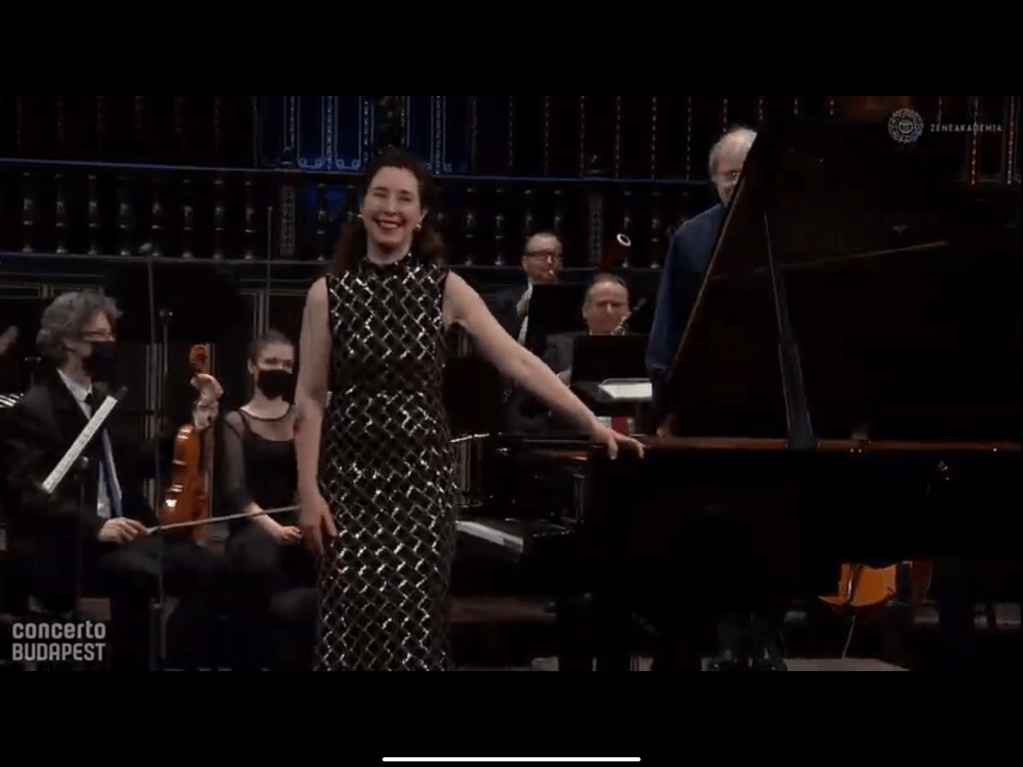
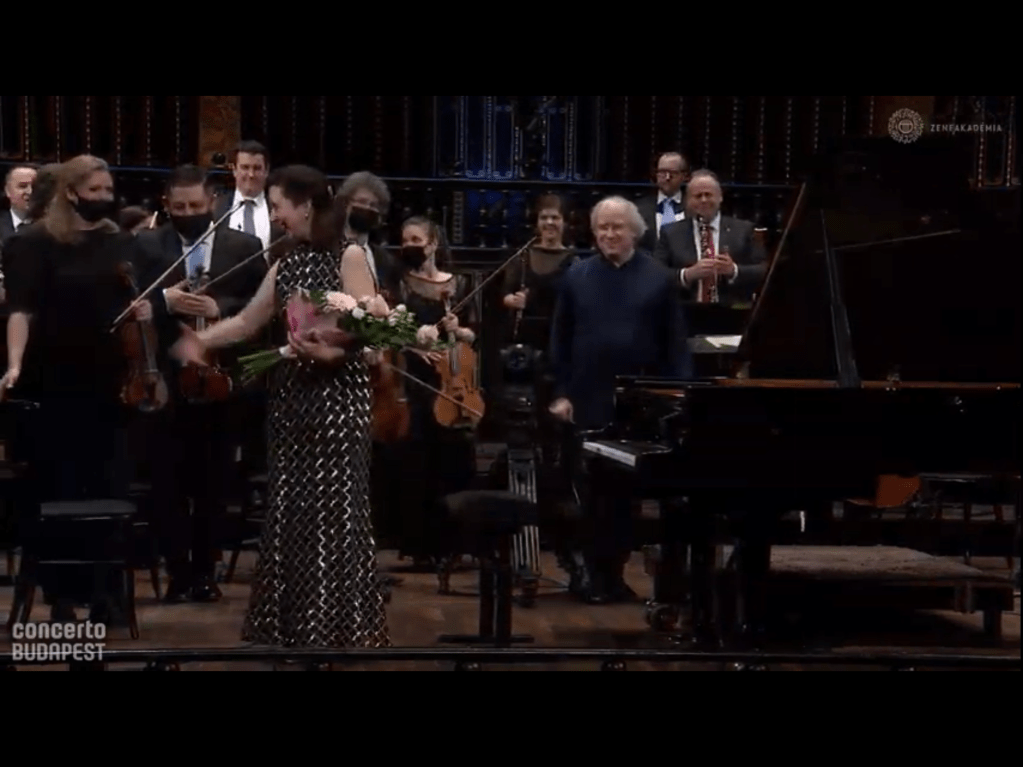
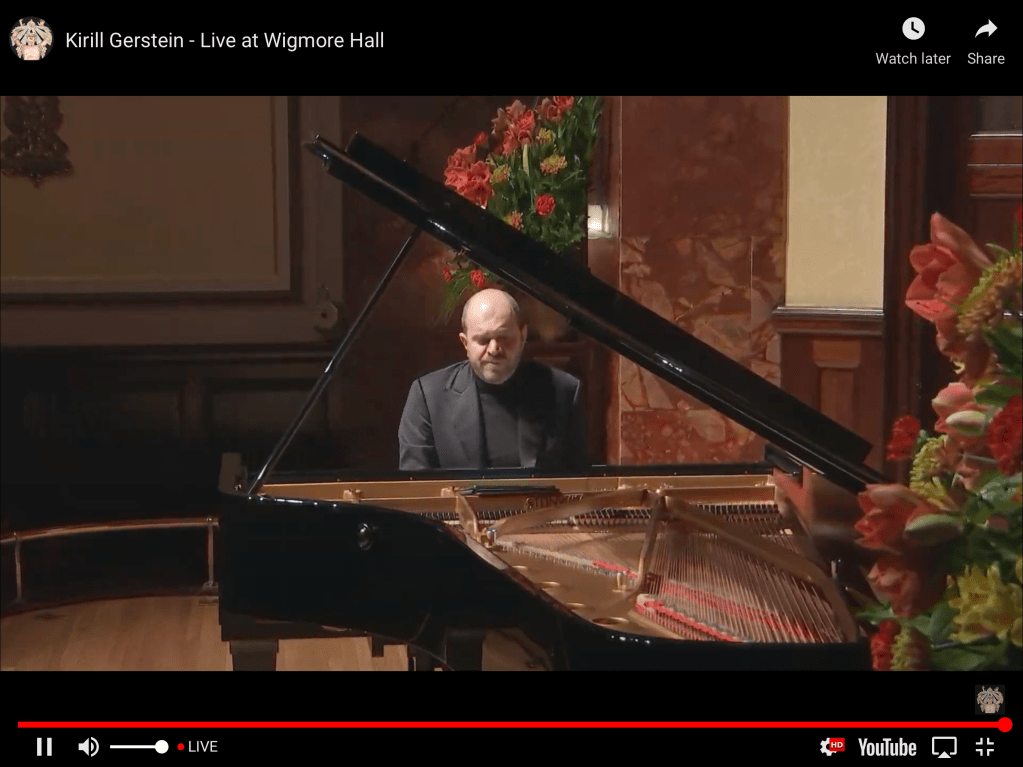
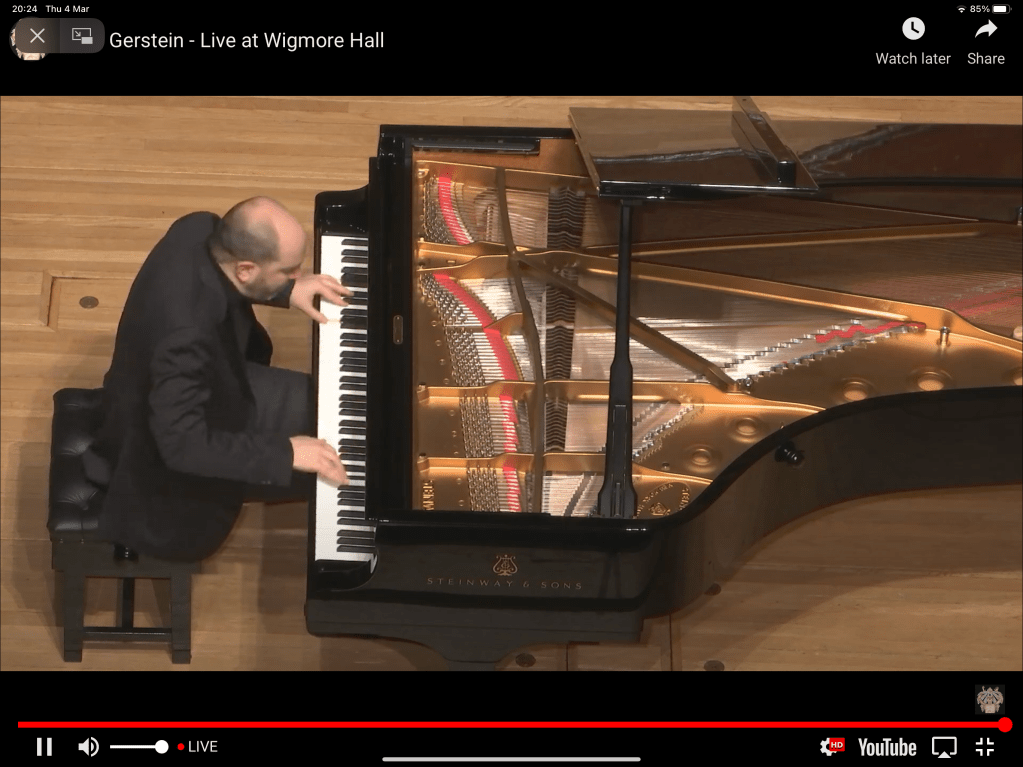
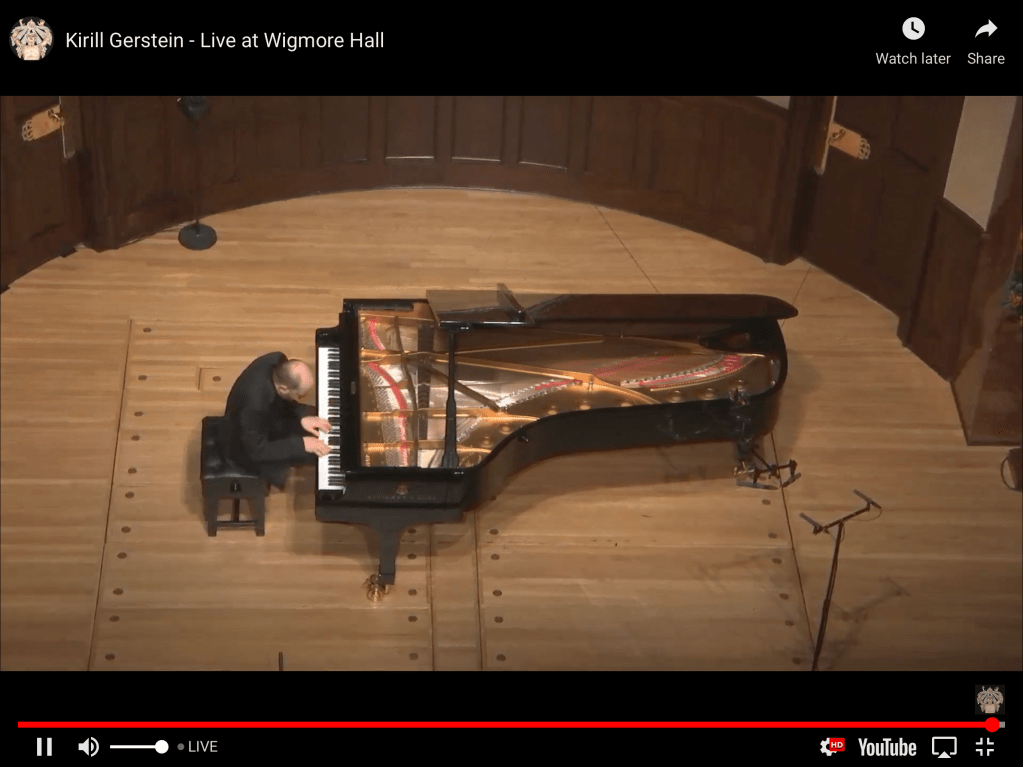
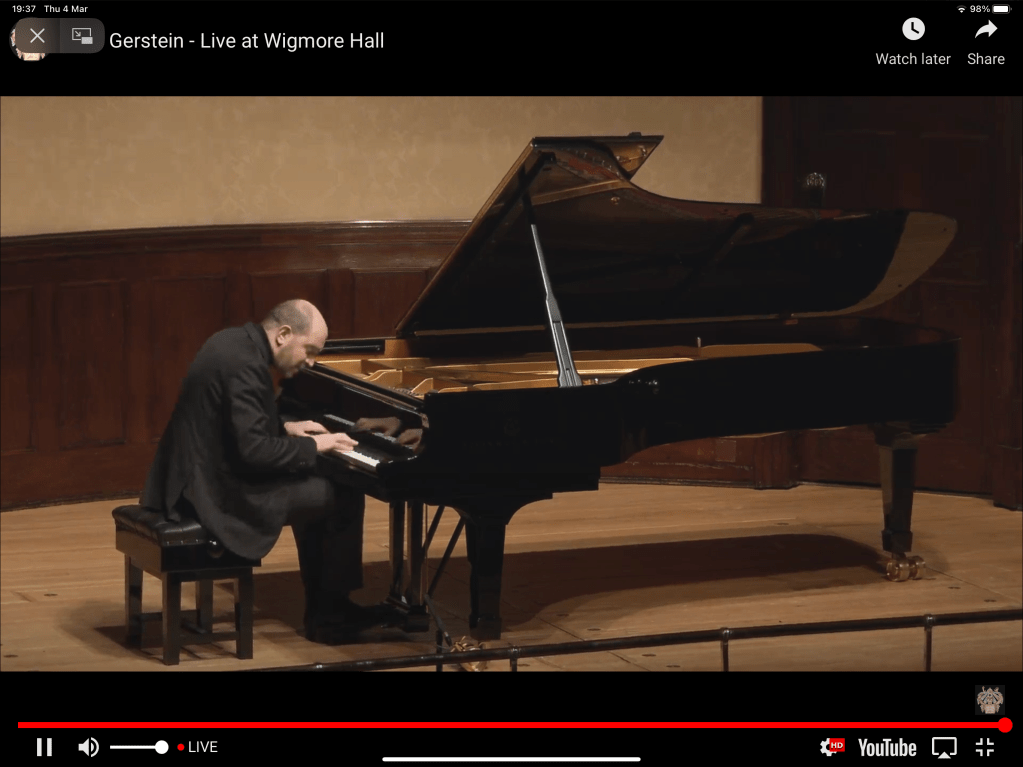
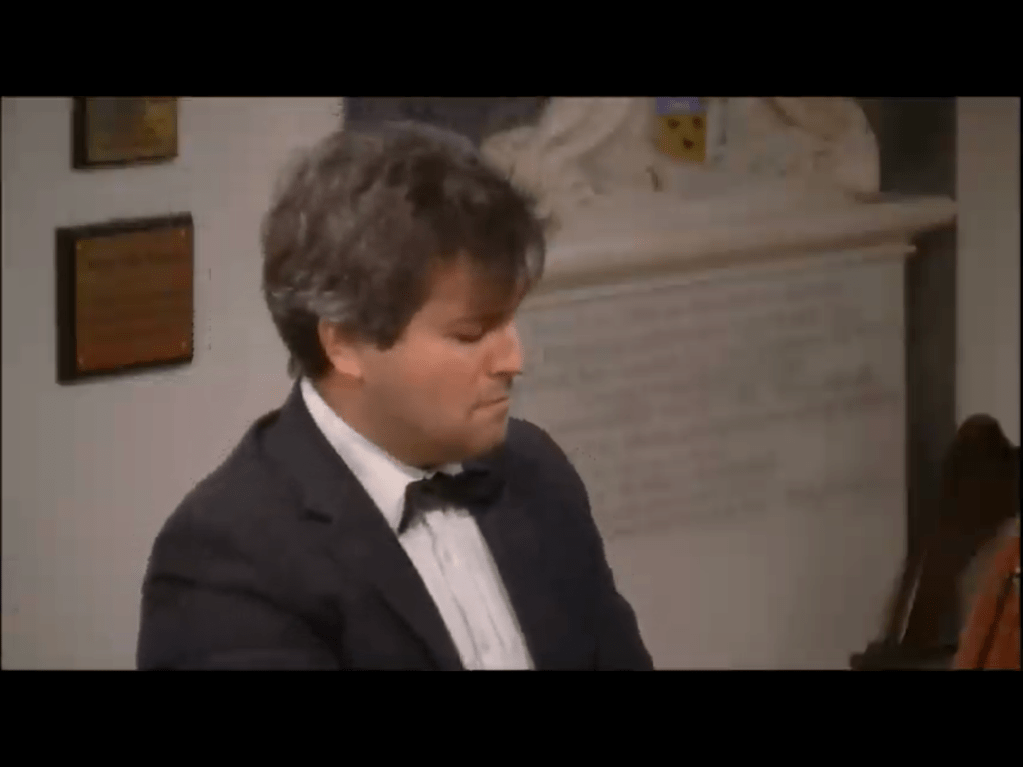
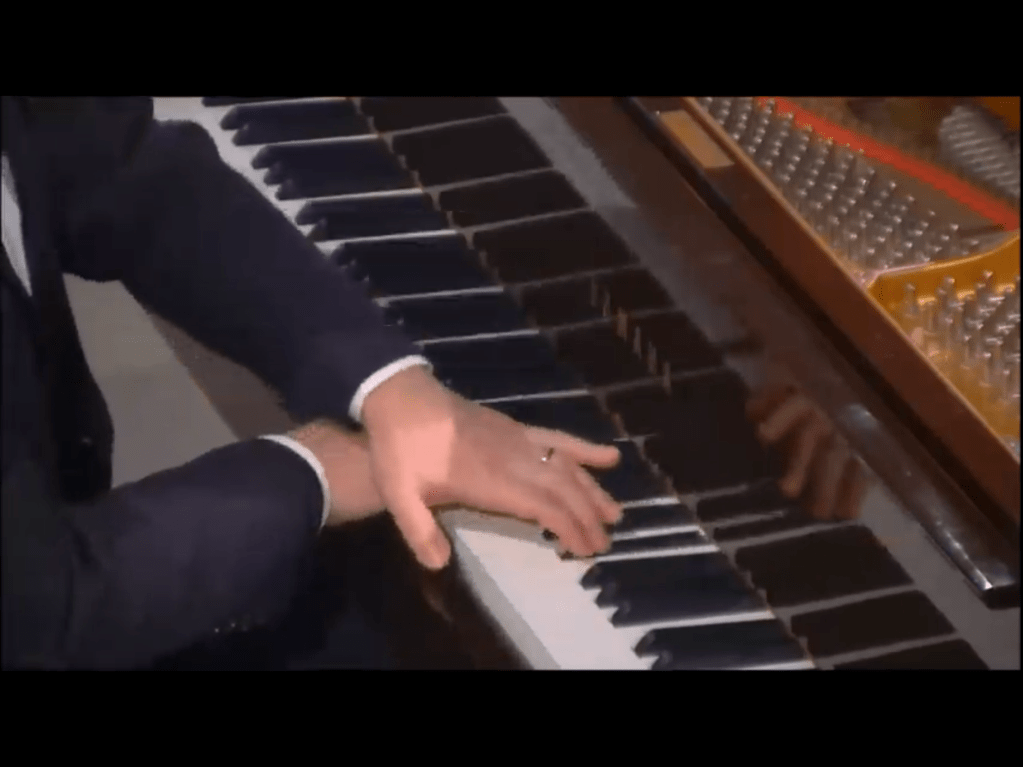
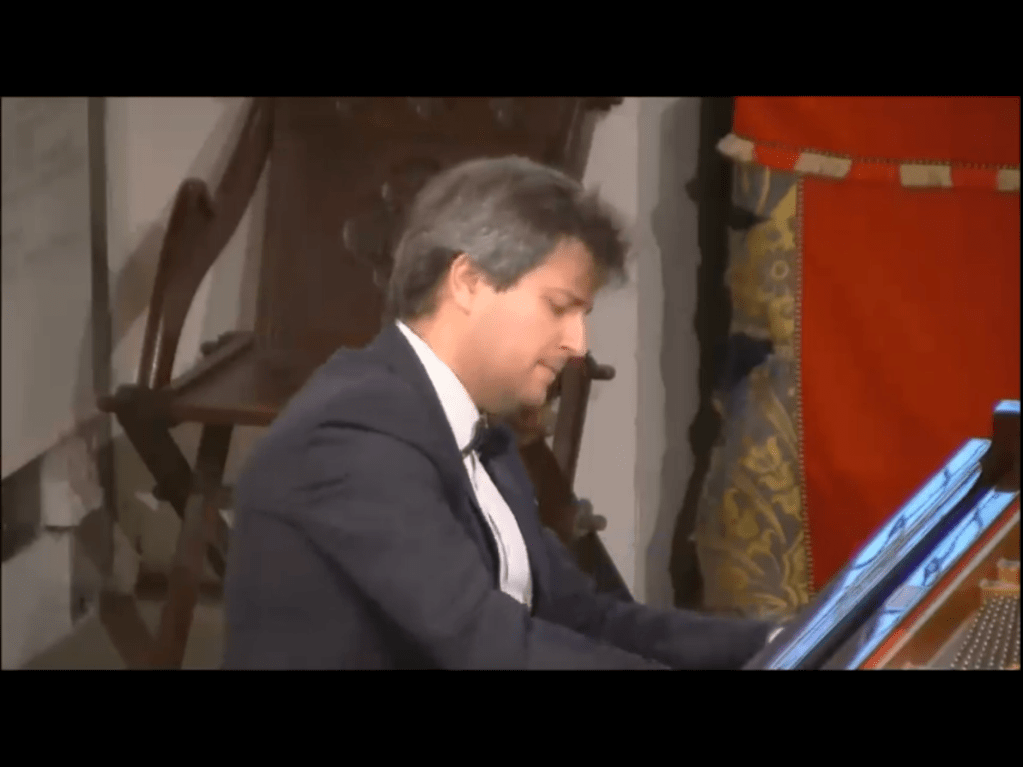
Angela Hewitt – the long awaited return to the Wigmore Hall


Programme Saturday 19th September 2020

Johann Sebastian Bach (1685-1750)

        • 4 Duettos from Clavier-Ubung (Book III) BWV802-805
        • Prelude in C BWV924
        • Prelude in G minor BWV930
        • Prelude in D BWV925
        • Prelude in A minor BWV931
        • Prelude in D minor BWV926
        • Prelude in F BWV927
        • Prelude in F BWV928
        • Prelude in C major BWV933
        • Prelude in C minor BWV934
        • Prelude in D minor BWV935
        • Prelude in D major BWV936
        • Prelude in E major BWV937
        • Prelude in E minor BWV938
        • Prelude in C major BWV939
        • Prelude in D minor BWV940
        • Prelude in E minor BWV941
        • Prelude in A minor BWV942
        • Prelude in C major BWV943
        • Prelude in C minor BWV999
        • Fantasia and Fugue in A minor BWV944
        • Ouvertüre nach französischer Art BWV831
        • Italian Concerto in F BWV971

ENCORE

Johann Sebastian Bach (1685-1750) transcribed Wilhelm Kempff

Wachet auf! ruft uns die Stimme BWV645

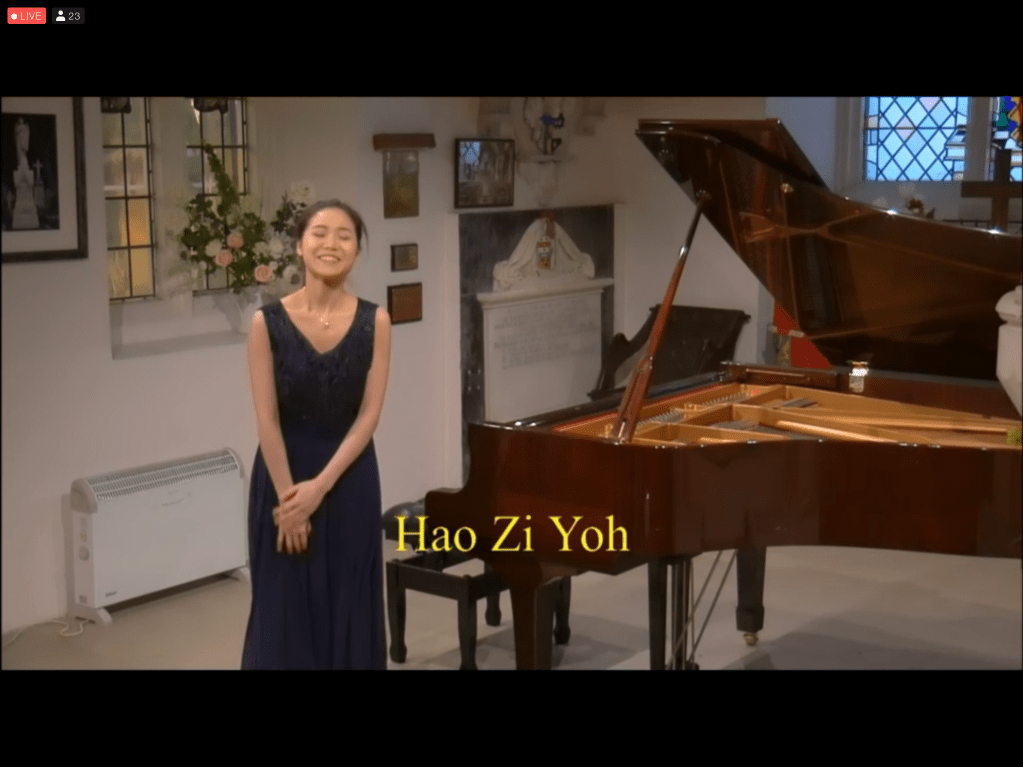
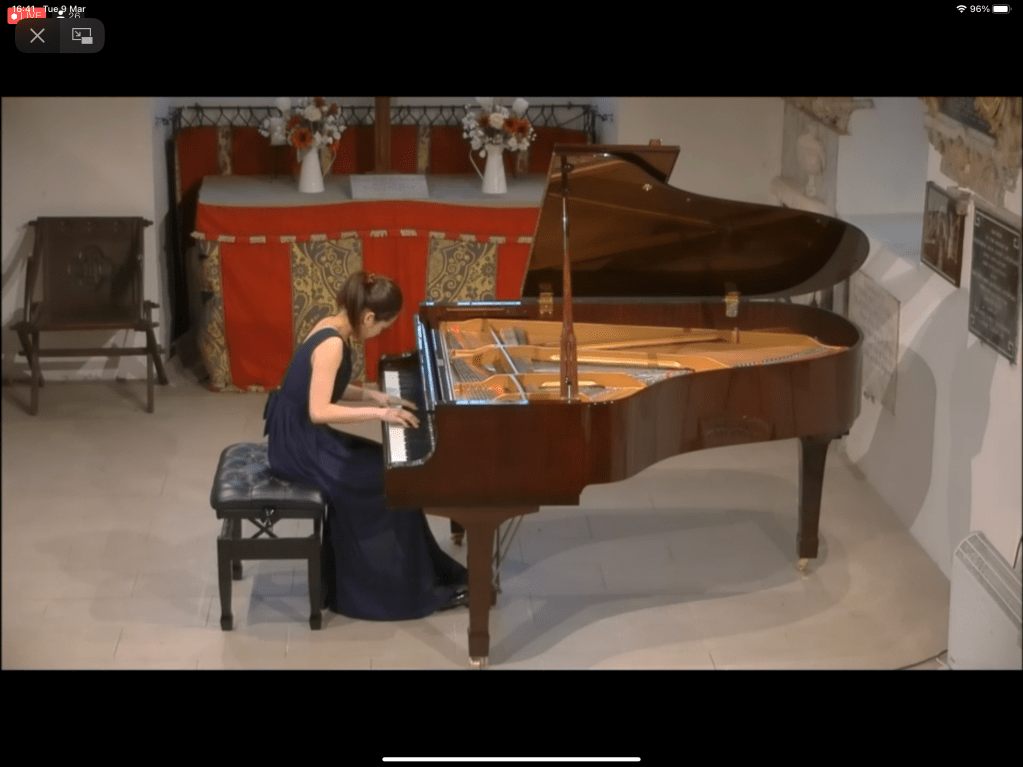
It was last June when Angela Hewitt played at the Wigmore Hall to a live stream public but an empty hall.

An exhilarating occasion for us all.

https://christopheraxworthymusiccommentary.wordpress.com/2020/06/25/angela-hewitt-the-glory-of-god-to-refresh-our-spirits-live-stream-from-the-wigmore-hall/

But it was today for her beloved Wigmore  audience that she truly rose to the occasion.The eleventh concert in her series of twelve that she has been performing  all over the world under the title of Bach Odyssey that she was  persuaded to undertake by John Gilhooly.The final – 12th Concert with Bach’s monumental Art of Fugue will be on the 28th September.

Today we were treated to an eclectic series of works – no Partitas , English or French Suites or Variations – but the  Little Keyboard book written as a teaching aid for his nine year old son Wilhelm Friedemann in 1720.Ferruccio Busoni combined the Twelve Little Preludes and the Six Little Preludes in a set of 18 kleine Präludien (18 Short Preludes), followed by the  Fughetta BWV 961.Angela chose to follow them with the Prelude in C minor for lute BWV 999.It was indeed the perfect way to lead into the Fantasia and Fugue in A minor BWV 944 that closed the first part of the concert.

A variety of fascinating sounds in the preludes  from the meanderings of the Praeambulum in G minor to the grandeur of the D major or the subtle ornamentation of the beautiful A minor.The perpetual motion of the Preambulum in F to the pure joy of the prelude that follows.The subtle colour and inflections of the  final C minor so similar to the first prelude of the ’48 – “too easy for children and too difficult for grown ups”In Angela’s magic hands,however, it was played with a simplicity and purity that only someone who has lived with this music for a lifetime could achieve.

The concert began with  four duetti BWV 802–805  which were included at a fairly late stage in 1739 in the engraved plates for Klavier-Übung III. As the distinguished critic Michael White explained in his fascinating and amusing  introduction to the concert ,the Duets were intended as meaning two voices living together. Bach wrote the duets to lie comfortably  within the relatively narrow compass of almost every organ of the time. From the lyrical beauty of the opening E minor to the extreme clarity of the voices  and the rhythmic energy of the second in F.The extreme simplicity of the third in G with voices seeming to appear from every part of the keyboard.To the urgency of the final Duet in A minor.

The Fantasy and Fugue in A minor BWV 944 closed the first half of the concert. The ten-bar fantasia is more complicated than it looks. On paper, it’s just a series of chords taking less than a minute to play; in reality, the performer is expected to arpeggiate and improvise on the chords as lavishly as desired, exploring the chords’ dissonances and harmonic surprises. The mellifluous  fugue,Bach’s longest outside The Art of the Fugue, shares its basic theme with the Fugue for organ in A minor (BWV 543).The first notes almost conducted by Angela’s hands with  the restless music gradually  thickening its texture with counterpoint derived from the main theme in a gradual crescendo with deep bass notes adding to the grandeur of Bach with astonishing technical brilliance that brought this first part to an exhilarating end.

The second part of the programme was dedicated to two major works from the second book of the Klavier-Ubung

The Overture in the French style BWV 831 was published as the second half of the Klavier-Ubung in 1735  and was paired with the  Italian Concerto as it was indeed today . The work was transposed into B minor  from the  C minor original version BWV 831 a, to complete the cycle of tonalities in Parts One and Two of the Klavier-Übung.

It is fascinating to read about the almost mathematical and  scientific mind of Bach.Rosalyn Tureck in the editorial for her  first  Interaction Symposium in Oxford as part of her Bach Reseach Foundation states:”At least as far back as Pythagoras  we have known that there is a correspondence between soundwaves and arithmetic.But composed music is more than wavelengths,vibrations and numbers.It partakes of,indeed its very essence is dependent upon ,processes of thought,form and structure.”  The keys of the six Partitas (B major, C minor, A minor, D major, G major, E minor) form a sequence of intervals going up and then down by increasing amounts: a second up (B to C), a third down (C to A), a fourth up (A to D), a fifth down (D to G), and finally a sixth up (G to E). The key sequence continues into  Clavier- Ubung II (1735) with two larger works: the Italian Concerto, a seventh down (E to F), and the French Overture, an augmented fourth up (F to B). Thus this sequence of customary tonalities for 18th-century keyboard compositions is complete, extending from the first letter of his name (Bach’s “home” key, B, in German is B) to the last letter of his name (B in German is H).

The genius of Bach indeed.A monumental performance where Angela’s own comment that Bach is ‘pure,cleansing and comforting but with backbone’ became perfectly clear in a performance to quote a critic where ‘everything is right – everything is natural’.With eleven movements, the French Overture is the longest keyboard suite ever composed by Bach.From the majesty of the opening to the refined shaping of the dance movements and the sheer exuberance of the final Eco.

It seemed impossible that we could experience anything better.However turning off her ‘aide memoire’ I pad she threw herself into the Italian Concerto with a freedom and irresistible sense of rhythm and colour that kept her audience, both in the hall and at home,spellbound.The slight hesitations and inflections injected into this continuous flow of music was absolutely mesmerising.The stillness and ravishing beauty of the slow movement was something to cherish indeed.The rhythmic drive ,energy  and sheer joy of the last movement was remarkable  especially after  two hours of continuous concentrated playing.The  Busoni like transcription of  Wilhelm Kempff of ‘Wachet auf,ruft uns die stimme’ (Sleepers Awake) was her way of thanking her audience for their thirty faithful years of following all the great performances that she has given in this hallowed hall.As she herself said : the Wigmore Hall is indeed the best thing in London in this rather bleak Corona virus period.

        I

Simovic – Pisarenko Duo “On wings of song” at Hatchlands for the Cobbe Collection Trusto

The season at Hatchlands Park opened after months of enforced silence  with  an recital from Milena Simovic on her Testore viola from 1740 and Vitaly Pisarenko on a  1864  Steinway Grand Piano ,New York.

The piano was from the extraordinary Cobbe  collection of instruments housed in the splendid surrounds of  Hatchland Park  in Surrey.In the same room  there was even Liszt’s  upright piano  and an Erard grand too . Elgars piano and the Broadwood that Chopin had used on his last tour in England was in the room next door.

I have been to many  concerts in their beautiful music room but always solo keyboard recitals on the various historic intruments from this remarkable collection.Infact Vitaly Pisarenko had given a few years ago  a solo recital on the same Steinway  that he played today.

https://www.facebook.com/notes/christopher-axworthy/vitaly-pisarenko-at-hatchlands/10155688214697309/ https://www.facebook.com/notes/christopher-axworthy/tyler-hay-at-hatchlands-for-the-cobbe-collection/10156554648092309/

This however was the first time that I have been able to listen to a duo recital in these beautiful surroundings and it was quite a revelation.
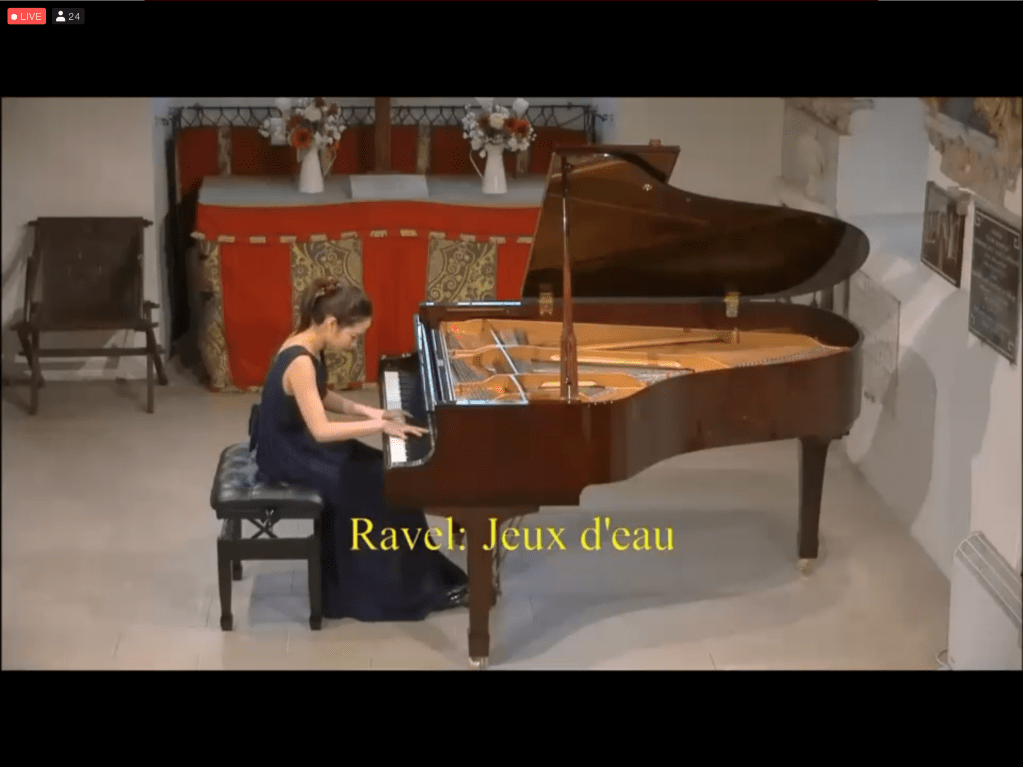
“It could not be better than  that ” was just one of the many similar  comments from the small audience allowed to attend on this occasion.Due to the distancing regulations instead of the usual 80 people in these drawing room midday concerts there were  allowed only 20.However the genial Alec Cobbe and his faithful collaborators are  recording the concerts  and they will be available for future listening   to a much larger audience on their website.

Alec Cobbe with Milena  Simovic                       

Schubert’s Arpeggione Sonata opened this short programme and it is the only substantial composition for the arpeggione (which was essentially a bowed guitar) which remains extant today. It was probably commissioned by Schubert’s friend Vincenz Schuster, who was a  virtuoso of the arpeggione, an instrument which had been invented only the previous year. By the time the sonata was published posthumously in 1871 the enthusiasm for the novelty of the arpeggione had long since vanished, together with the instrument itself.Today, the piece is heard almost exclusively in transcriptions for  cello / viola and  piano.

It was the sheer passion of Milena’s viola that took me by surprise today  as  the cello of Jaqueline Du Pré had years ago.Sir John Barbirolli famously said “If you don’t play with passion in your youth what do you pare off in old age”.Sadly with Jaqueline Du Pré we were never to know.

One is so used to Schubert’s intrumental works being played with a lyrical restraint that it is refreshing to hear the burning intensity behind the seemingly simple notes.Imperceptable breaths and slight inflections just like the greatest of lieder singers brought the music to life so vividly and with such personality.Here was a beautiful young lady with something to say and with the technical  means and control to convey it and involve all those around her.After the opening Allegro moderato there was the stillness of the Adagio where the melodic line soared into the heights to dissolve so magically into the opening of the final Allegretto.This was played with a true lyrical abandon and the throbbing heartbeat from Vitaly’s left hand together with  the restrained beauty  of the melodic line in the opening Allegro moderato were things to cherish.It was though Milena’s viola that captivated us with all the heartfelt abandon that is rarely apparent to lesser souls in the multi faceted canvas  that Schubert in his short life was to bequeath.The magical music box in Vitaly’s sensitive hands with the gently modulated pizzicato from Milena was indeed one of those sublime,seemless moments  that Schubert  keeps up his sleeve and that   can take one’s breath away.

Brahms Sonata in F minor op 120 n.1 was the second work on the programme.As with the Schubert it was left to Vitaly’s poetic artistry to open the Allegro appasionato with a  disarming simplicity before being united with Milena in sumptuous sounds and rhythmic urgency.  Filling this hallowed hall before the touching lyricism of  the  sostenuto ed espressivo and the magical ending to this  movement.A true dialogue between the two players with some magical colours from this historic instrument of 1864 even though it lacks the luminosity and projection of the later Steinway pianos.The Andante was beautifully shaped and  the glorious pastoral lyricism of the Allegretto grazioso gave a magical respite from the burning intensity of the outer movements.Some truly atmospheric playing from the piano in the trio section created a magical  contrast to the  almost orchestral lyricism of the outer sections.The vivace final movement burst in with extreme urgency and the trascendental technical command from both players created an energy that was quite exhilarating as it brought this masterpiece to an exciting conclusion.
It was again Vitaly with the deep brooding opening notes of Enescu’s Concertstuck that created the atmosphere of this extraordinary hommage to his  Romanian homeland.It was commissioned in 1906 by Gabriel Fauré for the internal competition of the Paris Conservatoire, of which  George Enescu was a jury member between the years 1904-1910.A very early work designed to show off the technical and interpretative skill of the players.Alternating fantastic colours and technical brilliance for both players  with all the  fantasy of the  Romanian folk world.It brought this midday concert to a truly exhilarating end and bodes well for the series that  once again will fill Hatchlands with live music making . “On wings of song” indeed!
https://www.cobbecollection.co.uk/events/

DAMIR DURMANOVIC’ at St James’s – A Poet speaks

                                           St   James’s Church, Piccadilly
                                                           
Lunchtime Recital Series
Wednesday 16th September 2020: 1:10-2pm
                                     Damir Durmanović, piano

Franz Schubert (1797-1828) 4 Ländler from D.366
No.1 in A major (da capo al fine)
No.3 in A minor
No.4 in A minor
No.5 in A minor
Franz Schubert (1797-1828) Piano Sonata No.20 in A major, D.959
Allegro
Andantino
Scherzo: Allegro vivace
Rondo: Allegretto
As an internationally sought-after performer, Damir Durmanović has performed in venues and festivals including the
Wigmore Hall, Champs Hill Studios, YPF Festival Amsterdam, Wimbledon Music Festival, Renia Sofia Audotorium Madrid,
Gstaad Menuhin Festival, Derby Multifaith Center, Flusserei Flums, ‘Ballenlager’ Vaduz. He has won prizes in numerous
international competitions including The Beethoven Intercollegiate Junior Competition in London, Adilia Alieva
International Piano Competition in Geneva and Isidor Bajic International Piano Competition in Novi Sad.
He has performed in masterclasses with Claudio Martinez-Mehner, Dmitri Bashkirov, Pascal Devoyon, Jacques Rouvier,
Robert Levin, JeanBernard Pommier, Tatyana Sarkisova, and chamber ensembles such as the Emerson Quartet. Damir
is also a scholar at the ‘Musikakademie Liechtestein’ and participates annually in the courses offered by the Academy.
Damir began his studies at age of eight with Maja Azabagic before commencing his studies at the Yehudi Menuhin
School where he studied with Professor Marcel Baudet.
Damir is an ABRSM scholar and is kindly supported by the Talent Unlimited Scheme. He is currently studying at the
Royal College of Music in London with professor Dmitri Alexeev.

Could there be any better way to open the lunchtime series of concerts at St James’s Piccadilly than with an all Schubert recital.Especially when there is such a fine young musician to guide us through the magic sound world of this poet of the piano destined to have such a tragically short life.It was the penultimate Sonata in A major that was the main work in this short lunchtime recital.Together with the C minor and B flat sonatas they were written during the last months of Schubert’s life, between the spring and autumn of 1828, but were not published until about ten years after his death, in 1838–39.

Four short Landler D 366  created just the intimate atmosphere of charm and elegance before bursting into the grandeur and nobility of the A major sonata D 959.A few improvised arpeggios took us from the A minor of the last of the landler to the major of the sonata.Damir showed himself  to be a true stylist where imperceptable hesitations and changes of colour brought an almost orchestral variety to the sounds that he was able to find on this not easy Fazioli piano.A true musician who could make every phrase speak so eloquently with such ravishingly beautiful sound.Has the ending of the first movement ever sounded so beautiful?An ideal preparation for the full blossomed beauty of the Andantino.But there was also a fierce tempest blowing where the piano from a whisper was made to roar and tear up and down the keyboard in an astonishing transcendental way.The storm passing and the melody returning embellished with the most ravishing comments like jewels glistening from afar.A quite extraordinary control of the keyboard that could create so many different sounds but at the same time keep the overall architectural shape.

The Scherso had the same irresistible lilt as in the opening landler and contrasted so well with the tempestuous trio.Maybe the same hesitations each time gave the game away too obviously but it was played with such ravishing delicacy that one could forgive this youthful indulgence! He found a fuller almost orchestral sound for the Rondo which allowed him some truly wondrous changes of colour with a left hand like a wind brewing in the distance with a whirlwind swirling above it that gave  way to one of  Schubert’s unexpected glorious outburst of song and the magic reappearance of the rondo.

A whole world created by this extraordinary young musican where time seemed to stand still.Such was his ability to make the music speak so eloquently with total concentration that he led his masked audience into a wondrous world that we have missed for too long.I was not surprised to read that has been trained at the Menuhin School under Marcel Baudet and that now he is working with that supreme stylist Dmitri Alexeev at the Royal College here in London.

Friends and colleagues after concert celebrations  in the September sunshine in the strangely bare front patio of St James’s Piccadilly

Joanna Kacperek at St Mary’s

Tuesday 15 September 4.00 pm

Streamed LIVE concert in an empty church

Joanna Kacperek (piano)

Chopin: Fantasy in F minor Op 49
Chopin: 4 Mazurkas Op 30
Liszt: Ballade no 2 in B Minor S 171
P. Mykietyn: Preludes 1-3 from ‘Four Preludes for Piano’ (1992)

International concert pianist, Joanna Kacperek has performed in major concert halls in Poland (Warsaw Philharmonic, Concert Studio of the Polish Radio, the Royal Castle in Warsaw, NOSPR in Katowice) and abroad (including United Kingdom, France, Italy, Spain, Germany, Norway, Russia, the Ukraine, Canada and Japan). As a soloist, she has performed with such orchestras as the Symphony Orchestra of the National Philharmonic in Warsaw, State Academic Symphony Orchestra in Moscow and Lviv Virtuosos Chamber Orchestra.From September 2019, Joanna has been studying at The Royal College of Music in London in the class of Norma Fisher, as the recipient of the C. Bechstein Scholarship and The Zetland Foundation Scholarship. J oanna is a graduate from the Fryderyk Chopin University of Music in Warsaw (diploma with distinction) where she studied with Ewa Poblocka. She also studied at the ‘Berlin University of Arts’ in Germany (academic year 2016/2017) where she was mentored by Professor Markus Groh as the receipt of an Erasmus scholarship. Joanna has also received the scholarships from the Minister of Culture and from the Prime Minister.Joanna Kacperek has won international piano competitions in Szafarnia (‘F.Chopin’), Pilsen (‘B.Smetana’), Paris (‘M.Magin’) as well as the National Witold Lutoslawski Music Competition in Warsaw. The achievements of the pianist include winning a special prize at the International Edvard Grieg Piano Competition in Bergen (2016), granted unanimously by the jury and the composer Christian Blom for the best performance of his work. In November 2017, togeather with violinist Roksana Kwasnikowska, Joanna won The 2 nd International Beethoven Chamber Music Competition, organized by The Krzysztof Penderecki European Music Centre, Internationale Beethoven Gesellschaft and The Ludwig van Beethoven Association.Alongside a growing career as a soloist, Joanna Kacperek is highly celebrated for being a multi-faceted pianist. She regularly performs with singers and instrumental players. Her duo with violinist Roksana Kwasnikowska represented Poland at the Kyoto International Music Students Festival in Japan (2015) and regularly performs recitals both in Poland and abroad.

Some beautifully musicianly playing as you would expect from a student in  the class of Norma Fisher .From the very first notes of the Chopin Fantasy  everything was allowed to sing so naturally even though hampered by a small hand that did not allow her to abandon herself completely to some of the transcendental demands that both Chopin and Liszt make.The magical pedal effect at the end of the fantasy revealed a true musician who listens so carefully and obviously feels the music deeply.It was a pity the lyrical chords in the Liszt had to be arpeggiated but the majestic ever more passionate outbursts were played with real control and sense of architectural shape.


It was in the four mazurkas op 30 by Chopin that her beautiful liquid sound and true lyricism allowed her to shape these touchingly nostalgic works and make them glitter as the jewels they truly are.The three Preludes from 1992 by Mykietyn showed off her true command of the keyboard with the almost Bartokian rhythmic impetus  of the first and the beautiful lyricism of the second that seemed to float on a cloud of magical sounds.The extreme gaity of the third with it deep bass melody and the sparse dialogue between the hands and suggestive pedal effects were played with the fearless abandon and total  conviction that had strangely been missing in the two larger romantic works.

Wonderful to think that this is just a prelude to the forthcoming Beethoven marathon where 32 pianists will perform Beethoven’s 32 Sonatas over the first weekend in October.What wonders this beautiful deconsecrated church still holds thanks to Hugh Mather and his dedicated team and the many many young musicians who have found a true home where their talent can be  appreciated and celebrated .

http://www.st-marys-perivale.org.uk/events-beethovenfestival3.shtml


Ben Schoeman at St Mary’s

Tuesday 8 September 4.00 pm

Streamed LIVE concert in an empty church

Ben Schoeman (piano)

Bach: Toccata in E minor BWV 914

Szymanowski: Etude in B flat minor Op 4 no 3

Chopin: Scherzo no. 3 in C sharp minor Op 39

Chopin: Impromptu in G flat major Op 51

Scriabin: 9 Preludes from Op 11

Rachmaninov: Sonata no 2 in B flat minor Op 36

Pianist Ben Schoeman is a Steinway Artist. He won several awards, including the first grand prize in the 11th UNISA Vodacom International Piano Competition, Pretoria (2008), the gold medal in the Royal Over-Seas League Music Competition, London (2009), the Standard Bank Young Artist Award (2011), the contemporary music prize at the Cleveland International Piano Competition, USA (2013), and the Huberte Rupert Prize from the South African Academy for Science and Art (2016).He has given solo, chamber music and concerto performances in such prestigious concert halls as the Wigmore, Barbican, Cadogan, LSO St Luke’s and Queen Elizabeth Halls in London, the Konzerthaus in Berlin, the Gulbenkian Auditorium in Lisbon, the Fondazione Cariplo Auditorium in Milan, the Durban and Cape Town City Halls and the Romanian Athenaeum in Bucharest. He has performed at many international festivals such as City of London, Edinburgh Fringe, Chester, Enescu Bucharest, Grahamstown and Ottawa. As a concerto soloist he has collaborated with several conductors, including Wolfram Christ, Nicholas Cleobury, Carlos Izcaray, James Judd, Gérard Korsten, Theodore Kuchar, Diego Masson, En Shao, Yasuo Shinozaki, Arjan Tien and Conrad van Alphen.Schoeman studied at the University of Pretoria, the Accademia Pianistica ‘Incontri col Maestro’ in Imola, the Scuola di Musica di Fiesole in Florence and the Guildhall School of Music and Drama in London with renowned professors such as Joseph Stanford, Louis Lortie, Michel Dalberto, Boris Petrushansky, Ronan O’Hora and Eliso Virsaladze. He obtained a doctorate in music from City, University of London and the Guildhall School of Music & Drama with a thesis on the piano works of the eminent South African composer Stefans Grové.In collaboration with his duo partner, cellist Anzél Gerber, Ben Schoeman was awarded the first prize in the Ibla Grand Prize Competition in Italy. The duo performed at Carnegie Hall in New York and has received the gold medal in the Global Music Awards for their recording of music by Anton Rubinstein. Stefans Grové dedicated his Concerto for Piano, Cello and Orchestra ‘Bushman Prayers’ (2013) to Gerber and Schoeman, and they premiered the work with the Cape and KwaZulu-Natal Philharmonic Orchestras.Schoeman’s solo album, featuring works of Franz Liszt, is available under the TwoPianists label. His performance in London with pianist Tessa Uys of Beethoven’s 9 th Symphony, arranged for piano duet by Xaver Scharwenka, was recorded for broadcast on South African national television.Ben Schoeman is a senior lecturer in piano and musicology at the University of Pretoria, where he received the Laureate Award. His students have received prizes at several competitions, and he has served as a jury member at national and international competitions


I had last heard Ben together with another distinguished South African pianist Tessa Uys playing the Beethoven 9th Symphony in the Scharwenka edition for piano duet.The nine symphonies  in the Scharwenka edition  that Tessa had grown up with in her mother’s studio   in South Africa.Before the Corona virus pandemic struck they had in programme the complete Symphonies for the Beethoven 250 celebrations. I had already been able to hear in various venues in London  their superb performances of  the third,fifth and sixth symphonies and am looking forward to an eventual marathon from these two remarkable musicians .

In the meantime Ben arrived in Perivale with a solo programme that  showed off his full range of sounds.From the  clarity of  Bach to the sumptuous romantic outpourings of  Rachmaninov.


The Bach Toccata in E minor SV 914 was played with a clarity and a sense of fantasy especially in the quasi improvised Adagio.All leading to the Fuga  – Allegro played at breakneck speed but with a control and sense of line that was remarkable .An infectious sense of rhythmic urgency that was only interrupted by the grandiloquent final flourish.

As a complete contrast the beautiful song like study in B flat minor op 4 n.3 by Szymanowski followed.A great song almost Hollywoodian in its romantic fervour was played with a great sense of colour and passionate conviction.The third Scherzo and third Impromptu by Chopin were a little disappointing as they followed the old tradition of  sentimentality and  lack of precision.This was  especially notceable in the cascading comments in the scherzo that should glisten like a ray of sunlight with a rhythmic precision that contrasts with the great choral which they ornament.The Impromptu  is almost Poulencian in its suave clear melodic line.I remember Rubinstein playing it without any sentimentality but with the same clarity and inner meaning that he gave to Poulenc’s much neglected Impromtus.Ben played them with great sentiment which he obviously feels  very deeply but for me too personal and  gets in the way of the aristocratic sentiment that is within the notes themself without any external help.The 9 Preludes op 11 by Scriabin were given a superlative performance where his very sense of shape ,colour and freedom gave life to these remarkable tone poems in a way that had escaped Benedetto Lupo who I had heard from Milan the day before.


This in turn led so naturally to the sumptuous sound world and astonishing technical brilliance of the second sonata by Rachmaninov. Feats of virtuosity were thrown off with great ease and the amazingly rich textures played with sumptuous sound.But it was also remarkable for the beauty  in the meno mosso of the first  movement that  was played with such subtle nostalgia . The sheer beauty of sound in the simple melodic line of the opening of the second movement  led to the rhapsodic sound world that is so much part of Rachmaninov before the eruption and romantic effusions of the last movement.The coda was quite astonishing for it’s total command allied to such excitement and breathtaking virtuosity.


Yoanna Prodanova and Mihai Ritivoiu at St Mary’s

Thursday 3 September 4.00 pm

Streamed LIVE concert in an empty church

Yoanna Prodanova (cello)
Mihai Ritivoiu(piano)

Beethoven: Cello sonata Op 102 no 1 in C

  1. Andante – Allegro vivace 2. Adagio – Tempo d’andante – Allegro vivace

            Schumann: Three Romances Op 94

  •              I. Nicht schnell   II. Einfach, innig  III. Nicht schnell

  Mendelssohn: Cello sonata no 1 in B flat Op 45

  1. Allegro vivace    2. Andante   3. Allegro assai


Cellist Yoanna Prodanova was born in Varna, Bulgaria. She completed her studies in 2019 at the Royal Academy of Music in London where she was a Bicentenary Scholar on the prestigious Advanced Diploma course, already having obtained her Bachelor and Master’s degrees at the Guildhall School of Music and Drama. Previously she studied in Varna and in Montreal where her family immigrated in 2006.Yoanna has performed concertos with the RAM Orchestra and the Doric String Quartet, the Amati Orchestra, the Surrey Philharmonic and the Guildford Symphony Orchestra among others. She regularly performs as a recitalist in the UK and Europe. Yoanna’s awards include The Philip and Dorothy Green Award for Young Artists (2016), the Sylva Gelber Award (2017, 2018), Tunnell Trust Award (2019) and the First prize at the International Joachim Competition in Weimar with her string quartet, the Barbican Quartet. Yoanna’s most important cello mentors have been, in chronological order, Daniela Kirilova, Denis Brott, Louise Hopkins, Rebecca Gilliver, Richard Lester and Hannah Roberts. She is extremely grateful to the Canimex Group for the loan of a beautiful cello made by Giuseppe Gagliano.

Born in Bucharest, Mihai Ritivoiu won the Dinu Lipatti National Competition in 2010 and was laureate of numerous international competitions including the George Enescu Competition in 2011 (Bucharest), Tunbridge Wells International Young Concert Artist Competition in 2014 and Teresa Llacuna Competition in 2015 (Valence). Most recently, he was awarded the Gold Medal at the Beethoven Piano Society of Europe Intercollegiate Competition. He leads an international career performing solo and chamber music recitals in Europe and Asia. He also played concertos with the Bucharest Philharmonic Orchestra, the Lausanne Chamber Orchestra, the English Chamber Orchestra and the MDR Leipzig Radio Orchestra. Regularly invited to play on BBC Radio 3’s programme ‘In Tune’, his performances have been broadcast on Radio Romania Muzical, Radio Television Suisse and Medici TV He studied at the National University of Music in Bucharest and at the Guildhall School of Music & Drama in London with Joan Havill. Mihai is a City Music Foundation artist and a Yeoman of the Worshipful Company of Musicians. He has received generous support from the Liliana and Peter Ilica Foundation for the Endowment of the Arts, Erbiceanu Cultural Foundation and Ratiu Family Charitable Foundation.

For the second concert of Dr Mather’s Autumn season it was refreshing to hear late Beethoven in the hands of such a distinguished young duo.I have heard Mihai many times as a solo pianist but this is the first time that I could really appreciate his superb musicianship as he partnered Yoanna Prodanova in a programme that included one of Beethoven’s last piano and  cello sonatas and also the rarely heard Sonata in B flat by Mendelssohn.

The two sonatas op 102 by Beethoven were composed between May and December 1815. During the period 1812 to 1817 Beethoven, ailing and overcome by all sorts of difficulties, experienced a period of literal and figurative silence as his deafness became overwhelmingly profound and his productivity diminished. Following seven years after the A Major Sonata op 69, the complexity of their composition and their visionary character marks (together with the  piano sonata op 101) the start of Beethoven’s”third period”.The critics of the time, often perplexed by Beethoven’s last compositions, described the sonatas in the Allgemeine musikalische Zeitung  :’They elicit the most unexpected and unusual reactions, not only by their form but by the use of the piano as well…We have never been able to warm up to the two sonatas; but these compositions are perhaps a necessary link in the chain of Beethoven’s works in order to lead us there where the steady hand of the maestro wanted to lead us.’

The beautiful opening Andante with a magical  transition to the  Vivace risoluto was played with great rhythmic energy and lyricism .A meltingly beautiful Adagio with the poignant ‘teneramente’ that led to the impish Allegro Vivace with its typical Beethoven sting in a tail theme that appears in so many different guises throughout this movement.A superb dialogue between piano and cello each listening so attentively to the other in a fascinating intelligent musical conversation between real musicians.

As Yoanna pointed out in her introduction it is the high register of the cello that Beethoven surprisingly exploits in this late work.She also said how beautifully Schumann’s Romances for Oboe and piano fitted  the cello register which explains why it is more often heard on the cello than in its original form!The rarely heard Mendelssohn Sonata was in many ways almost like a piano concerto with its virtuosistic writing for the piano with cascades of notes glistening with a freshness and lyricism that is so much part of Mendelssohns’ age.

The Three Romances originally  for Oboe and Piano, op. 94  is Schumann’s  only composition for oboe although more often played these days on the cello.It was composed in December 1849 one of the most productive years of Schumann’s entire career. Previously that year, Schumann had written two other works for wind instruments and piano: the Adagio and Allegro, op. 70, for French Horn and piano, and the Fantasy Pieces for Clarinet and Piano op 73. Unlike many other oboe works at the time, the pieces were not the result of a commision by a prominent soloist of the day  and Schumann gave the pieces to his wife ,Clara, whom he once described as his own “right hand”,] as a Christmas present, calling them his “hundredth opusculum.” His mental health was quickly deteriorating during the time of the composition; shortly afterwards, he moved from Dresden to  Dusseldorf, where he was admitted to and eventually died in an asylum.His publisher Nikolaus Simrock had written to Schumann on November 19, 1850, asking whether or not he “would be in agreement if we were to print on the title page: ‘for oboe and pianoforte’ and on the second  ‘for violin and pianoforte’ and on the third ‘for clarinet and pianoforte’, since it is not looked upon with favour when several instruments appear on the title page.” However, Schumann denied the request, replying, “If I had originally written the work for violin or clarinet it would have become a completely different piece. I regret not being able to comply with your wishes, but I can do no other.”

The first Romance was beautifully shaped in a great arch followed by the  passionate lyricism of the second and the great character they brought to the story that is told in the third.Some sumptuous sounds of great beauty.

The Sonata in B flat major, Opus 45, by Mendelssohn was written around the beginning of 1838. In a letter of January 20th Mendelssohn mentions that it is finished, and also that he had been suffering from an ear infection which had left him temporarily deaf in one ear and fearful of the consequences. It was, nevertheless, a happy time: his wife Cecile was about to give birth to their first child, Karl Wolfgang Paul, who was born on February 7th. The child’s third name was in honour of Mendelssohn’s brother Paul, a financier and amateur cellist for whom this sonata, and the earlier Variations concertantes, were written.The Mendelssohns were at this time living in Leipzig, where Felix was the conductor of the orchestral concerts in the Gewandhaus. His innovations in this series had a far-reaching effect on German musical life in general. He took over the conducting of symphonies, which had previously been directed ‘from the violin’ by the orchestral leader. He hired better players, and fought successfully to get their salaries raised. Equally important were his imaginative programmes. In the 1837/38 season, when this Sonata was written, he devised four ‘historical concerts’ which introduced the public to the music of Handel, Bach, Viotti, Cimarosa, Haydn, Naumann, Righini, Mozart, Salieri, Beethoven and the Abbé Vogler. Perhaps the large amount of music from the Classical era influenced the character of his own compositions, for the B flat Sonata is certainly Classical in form and mentality. Its textures are light and clear, its pacing superbly graded; only the piano writing, with the excited heartbeats common to both sonatas, shows the restless temperament of the nineteenth century.

A rarely heard sonata with beautiful interplay between the cello and the piano.Full of typical freshness and charm with great excitement to the coda of the first movement before the simplicity of the second.A true ‘song without words’ of great delicacy dissolving so magically into nothing.The passionate forward motion  of the last movement was played with a refreshing lilt before the ever more virtuosistic exchanges superbly played by this fine duo .The ending was pure  unexpected magic.

Tim Horton at St Mary’s Perivale


Tuesday 1 September 4.00 pm

Streamed LIVE concert in an empty church

Tim Horton (piano)

Mozart: Fantasia in C minor K396
Chopin: Ballade no 1 in G minor Op 23
Chopin: Ballade no 2 in F Op 38

Chopin: Ballade no 3 in A flat Op 47

Chopin: Ballade no 4 in F minor Op 52

Tim Horton studied at Chetham’s School of Music with Charles Hopkins and Heather Slade-Lipkin and graduated from Trinity College, Cambridge in 1995. In the same year he replaced Alfred Brendel at short notice in two performances of Schoenberg’s Piano Concerto with the CBSO and Sir Simon Rattle at Symphony Hall, Birmingham and at the Royal Festival Hall, London. Since then he has played with the RLPO, Bournemouth Symphony Orchestra, Birmingham Contemporary Music Group and Trondheim Symphony Orchestra.In 2005 Tim was chosen as the scholar of the Klavier Festival Ruhr at the recommendation of Alfred Brendel, an honour that included a recital at the Festival and a bursary. Tim has a duo partnership with cellist Adrian Brendel with whom he has given tours of Spain, Germany, Italy and the UK, including concerts at the Wigmore Hall, London. In 2011 they made their debut at the Enescu Festival in Bucharest. He has played regularly at the Plush, Aldeburgh, Bath and Elverum Festivals and has collaborated with many leading chamber musicians including Paul Lewis, Peter Cropper, the Elias Quartet, the Vertavo Quartet and the members of the Kungsbacka Piano Trio.Tim has been playing with violist Robin Ireland since 2008 and they have toured Britain extensively. Their Nimbus Alliance disc of Shostakovich and Prokofiev was highly acclaimed on its release. They have also released a disc of the Brahms Sonatas and the Schubert Arpeggione Sonata. Along with violinist Benjamin Nabarro and cellist Gemma Rosefield, Tim is a founder member of the internationally acclaimed Leonore Piano Trio.


Hugh Mather and his team have come up trumps yet again with a season of concerts which are innumerable – listed below- giving an opportunity to musicians whether at the beginning of their career or distinguished artists like Norma Fisher who in her celebration year will be giving what promises to be a fascinating talk about her life in music https://christopheraxworthymusiccommentary.wordpress.com/2020/05/18/norma-fisher-a-celebration-in-music/ https://www.academia.edu/43931470/Commentary_Norma_Fisher_a_Celebration_in_Music

The opening concert of this new autumn series was a surprise solo recital by the distinguished chamber music player Tim Horton.A programme that showed off to the full his intelligent musicianship and command of the keyboard.The Mozart Fantasia K.396 of such clarity and subtle phrasing it was the ideal opening work in a programme that was dedicated principally to  Chopin’s Four Ballades .


His intelligence  and lack of rhetoric was indeed refreshing and nowhere was it more evident than in the first Ballade in G minor .An opening where all Chopin’s most  precise indications were interpreted with a beauty of sound and sense of architecture that gave such poignancy to  a work that all too often is maligned in lesser hands.His sense of control was remarkable and allied to a great sense of balance even the most passionate outbursts were beautifully shaped within a vision of the whole work.


The extreme delicacy of the opening of the second ballade was such a contrast to the Presto con fuoco that follows and the agitato coda as with the G minor Ballade was never allowed to  overwhelm the overall shape.The beautiful lyricism of the third ballade ,the most pastoral of them all, was played with a gentle lilt that was indeed beguiling.The development was masterly played and led so naturally to the final lyrical outburst and the final flourish played with great assurance .The four last chords perfectly shaped without any overt showmanship.The fourth Ballade was played as the absolute masterpiece it is .I found the gentle theme written in two a little agitated and I remember Perlemuter writing so many changes of fingering in my score to find just the right weight and simplicity of this theme that Chopin is to trasform so magically.The final triumphant pages before the coda were played with great control  the melodic line never overpowered by the ever more passionate left hand turbulance.He brought a great calm to the five pianissimo chords before the eruption of the coda.But even here there was always a true musician keeping the technically very complex passages under control and with a shape that was exemplary.A very satisfying view of these four remarkable Ballades lacking maybe a sense of drama and wonder but nevertheless a musicianly account played with total control and a sense of overall shape that was remarkable


Here is the  Autumn Season:

Tuesday 1 September Tim Horton (piano) Mozart: Fantasis in C minor K396, Chopin: 4 Ballades more details
Thursday 3 September Yoanna Prodanova (cello) Mihai Ritivoiu (piano) Beethoven: Cello sonata Op102 no 1 in C, Schumann: Three Romances Op 94, Mendelssohn: Cello sonata no 1 in B flat Op 45  more details
Friday 4 September Julia Flint (bassoon) Jozef Janik (piano) Vivaldi: Cello Sonata no 6 in B flat, Spohr: Adagio for bassoon and piano, Scarlatti: 3 Sonatas, William Hurlstone: Bassoon sonata in F major, Gordon Jacob: Bassoon concerto (1st movt) more details
Sunday 6 September Norma Fisher: Illustrated talk- ‘My Life and Music’ more details
Tuesday 8 September Ben Schoeman (piano) Bach: Toccata in E minor BWV 914, Szymanowski: Etude in B flat minor Op 4 no 3, Chopin: Scherzo no. 3 in C sharp minor Op 39, Chopin: Impromptu in G flat major Op 51, Scriabin: 9 Preludes from Op 11, Rachmaninov: Sonata no 2 in B flat minor Op 36 more details
Thursday 10 September The Odysseus Piano trio : Sara Trickey (violin) Rosie Biss (cello) Robin Green (piano) Haydn Piano trio no 42 in E flat Hob XV:30, Huw Watkins: Piano trio (2009), Schumann arr. Kirchner : Canonic studies Op 56 (arr. for piano trio) more details
Tuesday 15 September Joanna Kacperek (piano) A Chopin recital: Fantasy in F minor Op 49, 4 Mazurkas Op 30, Sonata no 3 in B minor Op 58 more details
Thursday 17 September Lisa Ueda (violin) Daniele Rinaldo (piano) Reynaldo Hahn: Violin sonata in C, Beethoven: Violin sonata in G Op 96 more details
Sunday 20 September Howard Blake (piano) presents a concert of his compositions for violin and piano with Madeleine Mitchell(violin) Penillion Op 571, Violin Sonata Op 586, The Ice Princess & The Snowman, Jazz Dances Op 520a, Walking in the Air more details
Tuesday 22 September Martin Cousin (piano) Chopin: Ballade no.1 in G minor Op 23, Brahms: Intermezzo in E Op 116 no 4, Grieg: March of the Dwarfs Op 54 no 3, Grieg: Notturno Op 54 no 4, Grieg: Wedding Day at Troldhaugen Op 65 no 6, Debussy: Clair de Lune, Rachmaninov: Prelude in C# minor Op 3 no 2, Rachmaninov: Romance Op 10 no 6, Rachmaninov: Humoresque Op.10 no 5 more details
Thursday 24 September Lana Trotovsek (violin) Maria Canyigueral (piano) Beethoven: Violin sonata in C minor Op 30 no 2, Prokofiev: Violin sonata in D Op 94a more details
Tuesday 29 September Sonya Pigot (piano) Stravinsky arr, Agosti: Firebird Suite, Chopin: Barcarolle Op 60, Beethoven: sonata in A flat Op 110  more details
Thursday 1 October The Barbican String Quartet Haydn: Quartet in B flat Op 76 no 4 ‘Sunrise’, Beethoven: Quartet in E flat Op 74 ‘Harp’ more details
Saturday 3 October 2 – 6 pm
St Mary’s Perivale Beethoven Piano Sonata Festival – Session 1
2.00 Edward Leung: Sonata in F minor Op 2 no 1, 2.25 Andrew Yiangou: Sonata in A major Op 2 no 2, 2.55 Florian Mitrea: Sonata in C major Op 2 no 3, 3.30 Simon Watterton: Sonata in E flat major Op 7, 4.05 Simone Tavoni: Sonata in C minor Op 10 no 1, 4.30 Colin Stone: Sonata in F major Op 10 no 2, 4.50 Mengyang Pan: Sonata in D major Op 10 no 3, 5.20 Callum McLachlan: Sonata in C minor Op 13 ‘Pathetique’, 5.45 Petr Limonov: Sonata in E major Op 14 no 1 more details
Saturday 3 October 7 – 10pm St Mary’s Perivale Beethoven Piano Sonata Festival – Session 2
7.00 Ashley FrippSonata in G major Op 14 no 2, 7.25 Thomas Kelly: Sonata in B flat major Op 22, 7.55 Mishka Rushdie Momen: Sonata in A flat major Op 26 ‘Funeral March’, 8.20 Margaret Fingerhut: Sonata in E flat Op 27 no 1, 8.40 Evelyne Berezovsky: Sonata in C sharp minor Op 27 no 2 ‘Moonlight’, 9.05 Julian Jacobson: Sonata in D major Op 28 ‘Pastoral’, 9.35 Olga Paliy: Sonata in G major Op 31 no 1 more details
Sunday 4 October 2 – 6 pm St Mary’s Perivale Beethoven Piano Sonata Festival – Session 3
2.00 Iyad Sughayer: Sonata in D minor Op 31 no 2 ‘Tempest’, 2.30 Sasha Grynyuk: Sonata in E flat major Op 31 no 3, 3.00 Andrew Bottrill: Sonata in G minor Op 49 no 1, 3.15 Veronika Shoot: Sonata in G major Op 49 no 2, 3.30 Luke Jones: Sonata in C major Op 53 ‘Waldstein’, 4.05 Ben Schoeman: Sonata in F major Op 54, 4.25 Martin Cousin: Sonata in F minor Op 57 ‘Appassionata’, 5.00 Dinara Klinton: Sonata in F sharp major Op 78, 5.20 Daniel Lebhardt: Sonata in G major Op 79, 5.35 Ilya Kondratiev: Sonata in E flat major Op 81a ‘Les Adieux’ more details
Sunday 4 October 7 – 10 pm St Mary’s Perivale Beethoven Piano Sonata Festival – Session 4
7.00 Mark Viner: Sonata in E minor Op 90, 7.20 Yehuda Inbar: Sonata in A major Op 101, 7.50 Julian Trevelyan: Sonata in B flat major Op 106 ‘Hammerklavier’, 8.40 Amit Yahav: Sonata in E major Op 109, 9.05 Konstantin Lapshin: Sonata in A flat major Op 110, 9.30 Alim Beisembayev: Sonata in C minor Op 111 more details
Tuesday 6 October Tyler Hay (piano) Czerny: Piano Sonata no 7 in E minor Op 143, Chopin: Waltz in A flat Major Op 34 no 1/ Waltz in D flat Major Op 64 no 1 / Waltz in C sharp minor Op 64 no 2 / Waltz in E minor Op posth /Beethoven: Piano Sonata no 23 in F minor Op 57 ‘Appassionata’ more details
Thursday 8 October Sarah Gabriel (soprano) Iain Farrington (piano) Songs from the Great American Musicals more details
Sunday 11 October So-Ock Kim (violin) Josephine Knight (cello) Petr Limonov (piano) Shostakovich: Piano trio in E minor Op 67 etc more details
Tuesday 13 October Cristian Sandrin (piano) Bach: Goldberg Variations BWV 988 more details
Thursday 15 October Emily Sun (violin) Caterina Grewe (piano) Beethoven: Violin sonata in D Op 12 no 1, Clara Schumann: 3 Romances Op 22Robert Schumann: Violin sonata in A minor Op 105 more details
Sunday 18 October Thomas Carroll (cello) Graham Caskie (piano) Marcel Baudet: ‘Disclosure’ for solo piano, Rachmaninov: Cello sonata in G minor Op 19, Stephen Goss: ‘ Alba ‘ from ‘ Caught Between’ for cello and piano more details
Tuesday 20 October Francis Grier (piano) Beethoven: Piano sonata in E Op 109; Beethoven Piano sonata in A flat Op 110, Beethoven: Piano sonata in C minor Op 111 more details
Thursday 22 October Kate Gould (cello) Viv McLean (piano) Shostakovich: Cello sonata in D minor Op 40, Beethoven: Cello sonata in A Op 69
Sunday 25 October Leslie Howard and Ludovico Troncanetti (piano duo) Mendelssohn: Andante and Variations Op 83a, Rubinstein: Sonata in D major Op 89, Liszt: The Three Holy Kings – March from the oratorio Christus S579/2 more details
Tuesday 27 October Petar Dimov (piano) Debussy: 2 Preludes (Ce qu’a vu le vent d’ouest/ La fille aux cheveux de lin ), Dimov: Passacaglia, Debussy: Prelude (La cathédrale engloutie) Dimov: Aura (Daylight), Brahms: Sonata no 3 in F minor Op 5 more details
Thursday 29 October Dillon Jeffares (violin) Kumi Matsuo (piano) Bach: ‘Loure’ and ‘Gavotte’ from Partita no 3 in E BWV 1006, Beethoven: Violin Sonata in C Minor Op 30 no 2, Ravel: Tzigane, Chopin arr. Milstein: : Nocturne in C# Minor more details
Tuesday 3 November Roman Kosyakov (piano) Schumann: Humoresque Op 20, Mussorgsky: Pictures at an Exhibition more details
Thursday 5 November Milos Milivojevic (accordion) more details
Sunday 8 November Christopher Kent (actor) Gamal Khamis (piano) Strauss: Enoch Arden more details
Tuesday 10 November George Todica (piano) Chopin: Mazurka in C# minor Op 41 no 4, Chopin: Rondo à la Mazur, Enescu: ‘Choral’ and ‘Carillon Nocturne’ from Suite no 3 Op 18, Rachmaninov: Variations on a theme by Corelli Op 42 more details
Thursday 12 November Coco Tomita (violin) Kan Tomita (piano) Beethoven: Violin Sonata in F Op 24 ‘Spring’, Chausson: Poeme, Ravel: Violin Sonata no.2 in G more details
Sunday 15 November Jessica Duchen (narrator) Viv McLean (piano) ‘Immortal – a concert drama’ based on Jessica Duchen’s recent book on Beethoven, with liberal piano works.more details
Tuesday 17 November Aristo Sham (piano) A Brahms recital : Variations on a theme of Schumann Op 9, 16 Waltzes Op 39, Piano sonata no 2 in F# minor Op 2 more details
Thursday 19 November The Corran String Quartet: Haydn: String Quartet in E flat Op 20 no 1, Beethoven: String quartet in B flat Op 18 no 6 more details
Sunday 22 November Evelyne Berezovsky (piano) Programme to follow more details
Tuesday 24 November tbc
Thursday 26 November Natalia Lomeiko (violin) Yuri Zhislin (violin) Ivan Martin (piano)
Saturday 28 November Liszt Society Day (tbc)
Tuesday 1 December Simone Tavoni (piano)
Thursday 3 December The Rautio Piano Trio
Sunday 6 December Mengyang Pan (piano) Chopin: Variations on ‘La ci darem la mano’ Op 2, Kalkbrenner: Variations Brilliantes on a Chopin Mazurka Op 120, Albéniz: Mallorca, Barcarola Op 202, Albéniz: Pavana Capricho Op 12, Liszt: Spanish Rhapsody S254 more details
Tuesday 8 December Caterina Grewe (piano) Beethoven: Sonata in C# minor Op 27 no 2 ‘Moonlight’, Liszt: Sonata in B minor S178 more details
Thursday 10 December Ionel Manciu (violin)
Sunday 13 December Lipatti Piano Quartet
Tuesday 15 December Krzyzstof Moskalewicz (piano)
Friday 18 December Indira Grier (cello) Francis Grier (piano)

Dmitri Alexeev in Poland 2 “Bewitched,bothered and bewildered”

Another superb recital by Dmitri Alexeev in Warsaw for the 16th International Music Festival Chopin and his Europe .
A tormented soul that can transmit the very essence of the music.
From the superb freedom of Schumann where the melodic line in the first novelette was something to wonder at .As were so many refined details in a Kreisleriana of such freedom but with such magisterial shape .
There is only one other person before the public today that can spin the same magic with the same freedom that comes from living with the the music for a lifetime.Such daring and a voice that has so much to say.
Martha Argerich and Dmitri Alexeev are quite unique in this age where quantity seems to have taken over from quality.
The same timeless quality of a great wine that has had time to mature.
And listening for the third time this week ,streamed live from Poland,in Chopin’s birthplace one is aware of the sumptuous sound that creates a cocoon in which he is free to allow the music a freedom of expression that must have been exactly as the composer himself contemplated it.
The message is so immediate and of seeming simplicity that not only Alexeev is totally absorbed in a trance like concentration but he involves us too in a continual voyage of discovery and search for the beauty that is in the eye of the beholder.
Bewitched,bothered and bewildered indeed.

Andrzej Wiercinski in Poland from the ridiculous to the sublime

It was last April that I was able to hear  Andrzej Wiercinski  in the  young pianist’s Mecca of St Mary’s Perivale in London.It  gave me great pleasure to read  my impressions before listening to the recital streamed from the  remarkable 75th Duszniki International Chopin Festival in Poland .I had heard Federico Colli and Dmitri Alexeev both give superb performances- by coincidence on their birthdays.Arcadi Volodos’s concert that I was so looking forward to hearing again after Rome last february was not streamed.(I have included my impressions below from his performance in Rome last February)

So I was a little apprehensive to listen to a young pianist in such august company. I need not have been because he offered a recital of such refined good taste and clarity of both musical thought allied to a purity of sound.It reminded  me of  a study weekend  by Rome University dedicated to  the art of Arturo Benedetti Michelangeli with the title “Every note a drop of crystal”.In fact it was this very clear crystal clean sound that reminded me  more of the young Tamas Vasary and the Hungarian school of Dohnyani of Geza Anda or Andor Foldes.A clarity and intelligence allied to a sense of colour and architecture that in a way is the opposite of that other Hungarian school, that of  Liszt which is all sturm und drang and fireworks when not seeking eternal grace!

After a long programme that included three of the greatest works for the piano:The Bach/Busoni Chaconne,Chopin 4th Ballade and 4th Scherzo it was in the second of three encores that the heavens truly opened with a sublime performance of the Prelude in B minor by Bach/Siloti.It was here that one held one’s breath as he barely touched the keys ,dusting them with the same beautiful movements as the sounds he was creating.A transcendental control of sound allied to such a refined subtle musicality that when the choral melody floated into  view it was  as if on some magic cloud  where we could indeed catch a glimpse of the angels that we admire in the Italian Renaissance frescos of divine faith.

The other two encores were by Chopin,of course.

The Polonaise op 53 ‘Heroique’ that I remembered from his performance last April in London.Truly aristocratic playing of such clarity and intelligence.Shorn of all the rhetoric that some pianists seem to think belong to the so called Chopin tradition but at the same time played with a wondrous sense of colour and style.After the amazing precision of the military who enter on his left (slightly too fast for my taste but nevertheless astonishing) dissolving into the most mellifluous and sensually shaped melodic line with a flexibility of subtle contrapuntal colours that shone like a prism in this pianist’s poetic hands.It led to the final triumphant declaration played with true passionate control.The last encore was of the young virtuoso Chopin who would astonish the salons of the day with his refined artistry as we today were astonished and seduced  by this young man who  at 23 is the same age as the young Chopin when he composed these Variazioni Brillanti op 12

A young man who is obviously following in the footsteps of his compatriot Krystian Zimmerman as was wonderfully evident from the very first notes of the Bach/Busoni Chaconne or  even more so in Chopin’s Fourth Ballade  and Scherzo and the Four Mazurkas op 24.

From the first notes of the  Chaconne there was a subtle sense of balance and the same crystal clear sound that mesmerised my generation when Michelangeli’s famous recording became available.It was always very difficult to  hear Michelangeli live in London as he cancelled more concerts than he gave such was his striving for the pianistic and technical perfection that even he could only achieve on rare occasions.Andrzej was a much more classical approach than Federico Colli but both had the same forward impetus that is fundamental to its architectural shape.Federico taking slightly more risks and time in a performance of a real stylist .Andrzej on the other hand kept a stricter  control and took less liberties .But both had a great sense of colour and majesty as befits one of the greatest works that Bach ever conceived.Busoni brought it to the piano but with the same grandeur and virtuosity that Bach had given to the solo violin.It is a true recreation rather than a trascription.Andrzej followed Busoni’s very precise indications to the letter from the ‘misurato’ octaves to the grandiose’ largamente marcatissimo con bravura’ climax of the first great cadenza dissolving to a ‘dolce espressivo’ and’ sostenuto’ of almost religious tranquility.The gentle almost distant murmur of the solo violin was enhanced by the magic appearance in the tenor voice ‘poco marcato e tenuto’. Leading to the first great  climax in which all the organ stops are suddenly interrupted by the poignant stillness ‘quasi tromboni’ memorably played by Andrzej.The long pedal note that followed showed a masterly control as did the build up to the final triumphant appearance of the opening theme .Always played with a complete control of sound and a maturity way beyond his years.

The Nocturne in B major op 62 n.1 was played with a loving care for detail and a sumptuous delicacy, beautifully shaped with an aristocratic rubato of refined taste. The change to A flat was pure magic and the final pages were full of the same beauty as in the Barcarolle op 60 -The final chords were of a heartrending nostalgia of someone never wanting to say goodbye.

The Fourth Ballade opened on this magic cloud of sound and the slight emphasis on the final thumb notes prepared the way for the simplicity of the theme that follows where he seemed to caress the keys .This is obviously a young man in love with the sounds that he can coax out of this box of hammers and strings.His sense of legato too in the  most intricate passages allowed the music to sing in a most natural way.The gradual build up to the final climax before the coda was masterly.The final five gentle chords were a prelude to the trancendentally difficult coda that was played with a wonderful sense of line.

The four mazukas op 24 were played with a flexibility and sense of rhythm that brought these gems to life as is rarely heard in the concert hall.Every detail that Chopin  so carefully indicates  was scrupulously noted – from the pedal at the end of op 24 n.3  to the indications of calando,mancando smorzando of the final bars of op 24 n.4.Played with a great feeling for style they were uplifting and heartrending,  nostalgic even but never sentimental.

The Fourth Scherzo too was played like the great song that it is with its impish interruptions  thrown off with fleeting lightness that  contrasted with the  beautifully shaped melodic line of the central section.The gradual build up to the final triumphant climax was masterly judged and brought the official part of the programme to an end .

Andrzej Wiercinski at St Mary’s streamed worldwide.

By

Christopher Axworthy

— Thursday, 11 April 2019

(https://www.facebook.com/notes/christopher-axworthy/andrzej-wiercinski-at-st-marys-streamed-worldwide/10156411204807309/)

https://christopheraxworthymusiccommentary.wordpress.com/2020/08/11/dmitri-alexeev-in-poland-a-master-speaks-the-supreme-stylist/

https://christopheraxworthymusiccommentary.wordpress.com/2020/08/11/federico-colli-in-poland/

Dmitri Alexeev in Poland ….A master speaks …….the supreme stylist


Wonders will never cease it would appear  in Poland.The 75th anniversary of the Duszniki International Chopin Festival  that has been streamed so perfectly into my home for the past two days.Federico Colli’s beautiful recital and now Dmitri Alexeev.

It is thanks to Federico that I have stumbled upon this gem of a festival that will fulfill and delight the lack of live concerts  in this strange new world that has been thrust upon us.Federico Colli and Dmitri Alexeev both won the Leeds International Competition with about 37 ears between them .2012 and 1975.Their birthdays are both this week and celebrated with concerts  in Poland.

https://christopheraxworthymusiccommentary.wordpress.com/2020/08/11/federico-colli-in-poland/

I have missed the first few recitals  that have included Avdeeva and Nehring(they can still be heard on you tube I believe)  and now that I know I will certainly not miss Volodos live on the 13th.

However  I cannot imagine anything could have prepared me for the recital of Dmitri Alexeev.Playing of such authority,sumptuous beauty and supreme intelligence .He bears the weight of maturity like the truly great artist he is.A simplicity,directness and generosity that is seductive and overwhelming.He too was visibly moved when at the end of his recital the whole audience stood up to sing to him in Polish- I imagine a tradition of thanksgiving for great occasions such as this.

I have written about Alexeev last year when he played for the Chopin society in London.How could I forget the occasions when he came to play for us at the Ghione Theatre in Rome and the distinguished pianist and jury member Annarosa Taddei exclaiming that this was better than S. Cecilia or the Filarmonica!He was a favourite of Lanza Tommasi who directed the Rome Rai Orchestra and often invited Alexeev and many other great musicians such as Tortelier that were excluded for lack of space from Rome.His Rachmaninov 3rd Piano Concerto will never be forgotten for its almost animal partecipation,sumptuous beauty and astonishing virtuosity.He won the Leeds piano competition in 1975. 2nd and 3rd prizes were awarded to Mitsuko Uchida and Andras Schiff – no comment is necessary.Alexeev has chosen to dedicate a large part of his musical life to teaching in London where he holds a very special place at the Royal College of Music.I know some of the students who are starting to have important careers thanks to the care and mentoring of the Alexeev’s.They have a lot to answer for and we are all truly grateful to them- his wife is the distinguished pianist  and teacher Tatiana Sarkissova.

The programme was made up of Schumann,Chopin and Scriabin and so was obviously a celebration of the true poets of the piano.

From the very first notes of the Arabeske op 18 after the intial shock of his almost improvisatory opening it turned into total absorption with how this was plasmatised into an ever changing world of sounds that seemed to derive one from the other.The great fantasy, sense of colour and very subtle bass notes that were not always sincronised with the treble were like a great poet playing with sounds and inflections searching for the truth behind them that could transmit  the real secret  meaning.A world totaly understood by Alexeev, as I  had remember years ago from his CD of the works of Schumann, but now with a liberty and understanding that comes with maturity and living with works for a lifetime.A very fine line that for those that cannot do less than climb onto the tightrope without fear of falling or worse- self indulgence!All or nothing indeed.As Cherkassky exclaimed in Le Monde de la Musique a few years ago when asked to describe what he does:”Je resens,je joue,je transmets”

Infact all through the recital there seemed to be so much time – all those who have heard Rubinstein will know what I mean- but then at a crucial moment a sudden change into fifth gear that is overwhelming.The coda  ‘zum schluss’ of the Arabeske was as sublime as the ending of Schumann’s Dichterliebe where words are just not enough to express the deep inner feeling  that only music can fulfill.

The opening of the Symphonic Studies had great weight from the bass which gave such depth and colour especially when the thumb of the right hand was slightly more prominant that the top notes.It led so naturally into the rhythmic bass of the first variation but still giving so much time to all the most detailed instructions that Schumann implores.The second variation was played with an aristocratic passion with seemingly endless time to find every  secret hidden in the notes.The final C sharp played quite forcefully gave the strong link to the third study that floated in on this note like some wondrous butterfly.The usual strident chords of the third variation were given unusual shape and meaning and the slight rhythmic  hesitation in the fourth was an  unforgettable touch.Plunging into the fifth with great passion but never forgetting the melodic line in the tenor register with a duet slightly hinted at with the bass.A quite transcendental example of piano playing.The Sixth variation was played with great rhythmic impetus but with such subtle variety of sounds that gave an architectural shape to a piece that in lesser hands can sound quite monotonous and mechanical.This prepared the ground for the great Gothic Cathedral – to use Guido Agosti’s words- of the seventh variation.

But no, here Alexeev had chosen to insert  the five  optional posthumous studies that were played with  delicacy and breathtaking beauty.The fifth of these that is perhaps the most magical and sounds like a music box was unusually brought to a great climax that provided the link back to the seventh variation before it had been so magically interrupted. The presto possible was  thrown off with great lightness that contrasted so well with the chordal eighth.The beautiful ninth variation was a true belcanto duet with the left hand accompanying so magically and the melodic line allowed all the freedom to move as the branches of a tree in the breeze (to use Chopin’s own words) .The finale was played with great aplomb and the integration of part of the first edition changes was a very pleasant surprise.Again it was the total control of sound that never allowed for any hardness even the drop in tone before the final triumphant fanfare was truly masterly.

During the interval  on line  we had been treated to the programmes of some of the concerts of the past 75 years of the festival.

Two Chopin works from the first to almost the last .The Rondo op 1 was played with a clarity and an infectious mazuka rhythm and was played with the same  irrisistible  charm that the young Chopin must have used in the salons of the day.

From the very first bass note of the Barcarolle op 60 there was no doubt that we were in the presence of a true master.A Barcarolle like the great outpouring of song that makes it one of Chopin’s greatest works where the word percussive just does not exist.The change to A major created a magic where the melody seemed to float on a wave of sound.The ‘dolce sfogato’ – Perlemuter wrote in my score years ago :’this is heaven’.And indeed in Alexeev’s hands it was.All the time in the world for the ‘leggiero pianissimo’ that Ravel loved so much with even the final pedaling of Chopin  incorporated into the final bar in this masterly performance.

Alexeev has been recording recently all the works of Scriabin and gave us a sample of  Scriabin’s early almost Chopinesque style with four preludes op 22 .The slightly more virtuosistic style of the Valse op 38 through to the brooding troubled waters of the Poems op 69.This led to the insistent obsessive cry of Vers la flamme op 72.The continual repeated notes of the star in anguish were played with terrifying conviction.

After a waltz, I presume by Scriabin, the whole audience stood and sang in hommage and to thank this great artist for what he had shared so generously and unstintingly with them.Actually it was the Polish equivalent of Happy Birthday (Sto lat- may you live 100 years)

A Liszt arrangement of one of Chopin’s songs was thrown off with great elan -a Bachanal indeed .The final glissando had the audience this time cheering their hero and solicited the most beautiful of all Chopin Mazukas- op 63 n. 2 in F minor

Unforgettable …please listen at your leasure ………..below is the link.