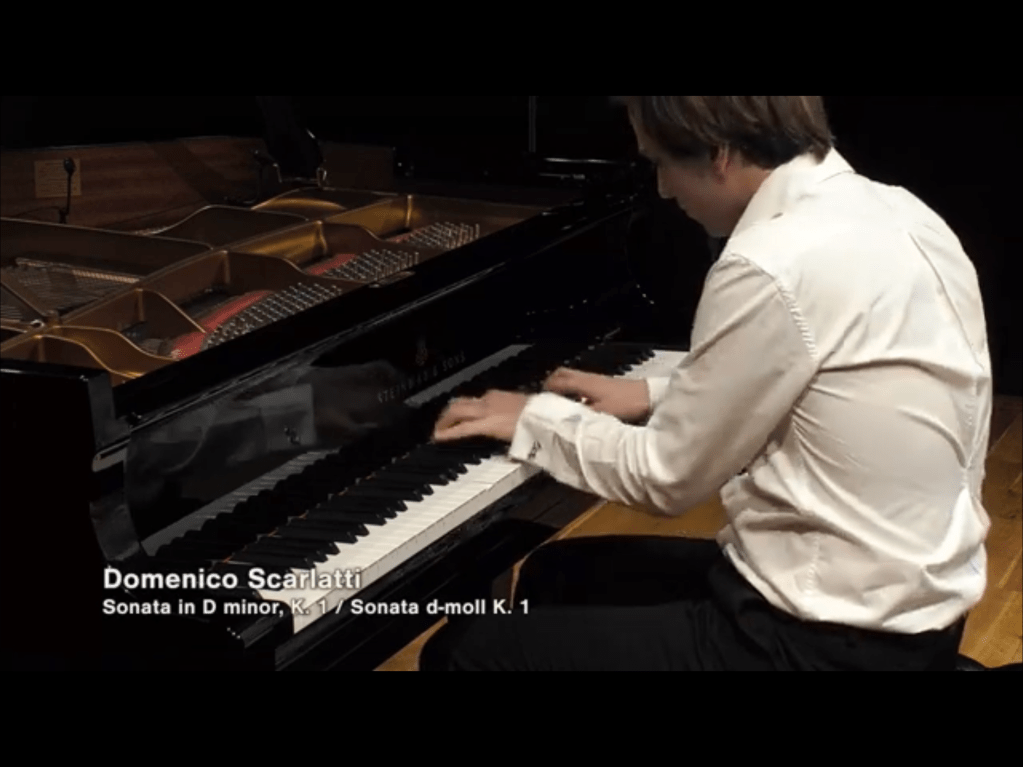
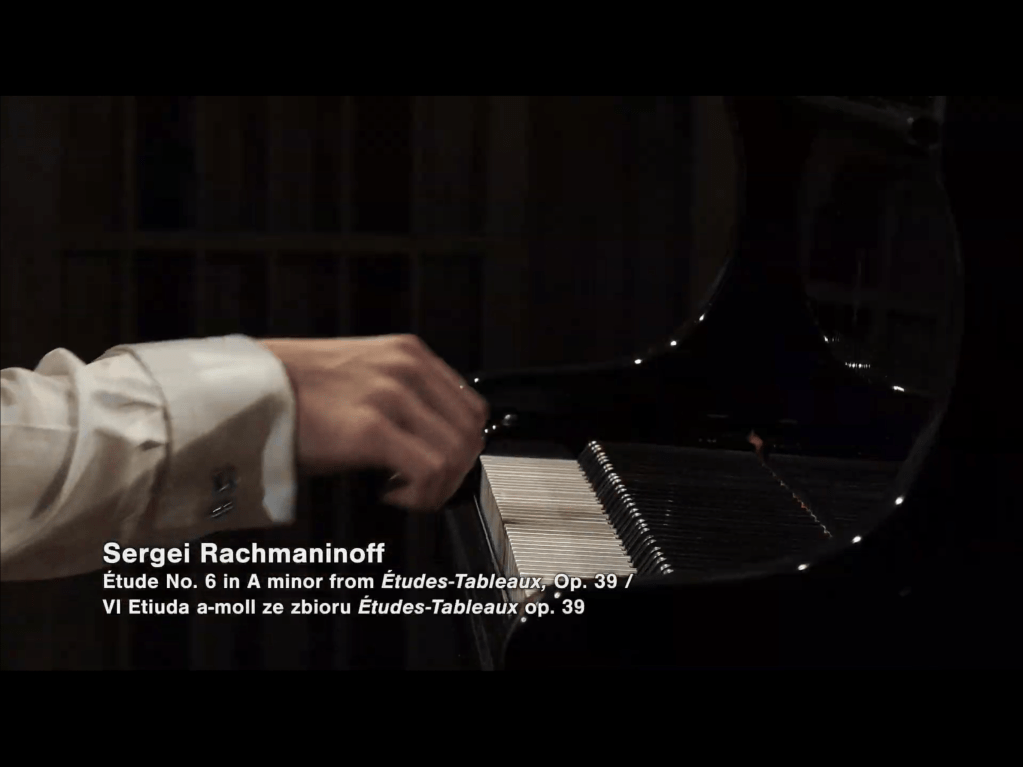
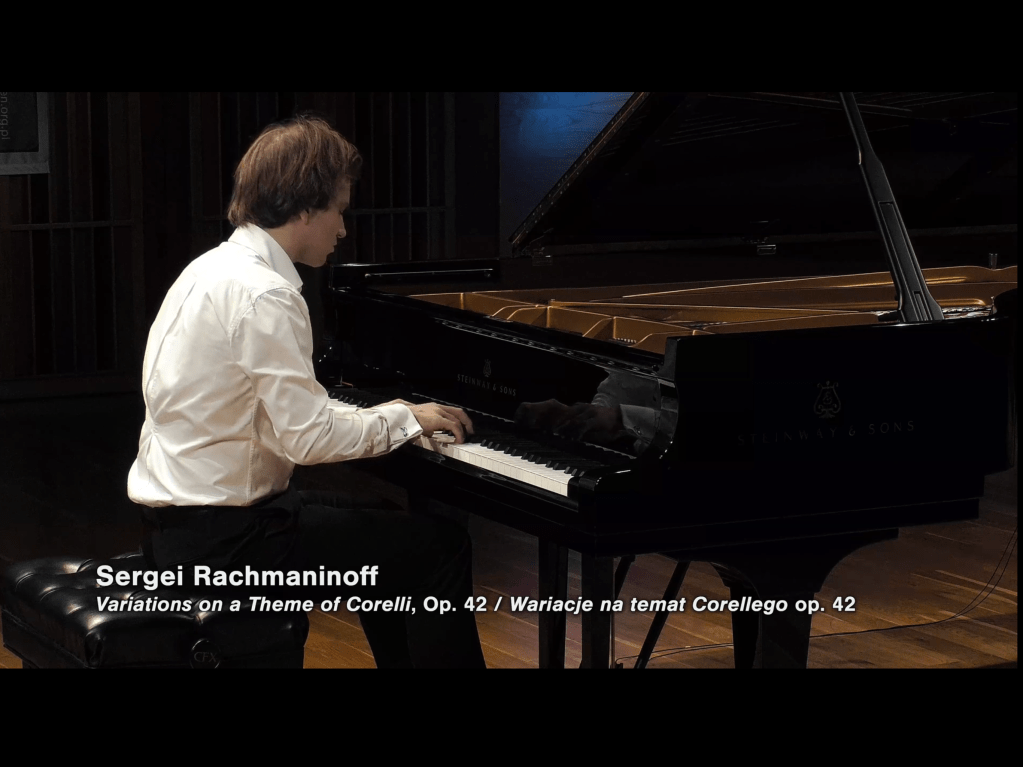
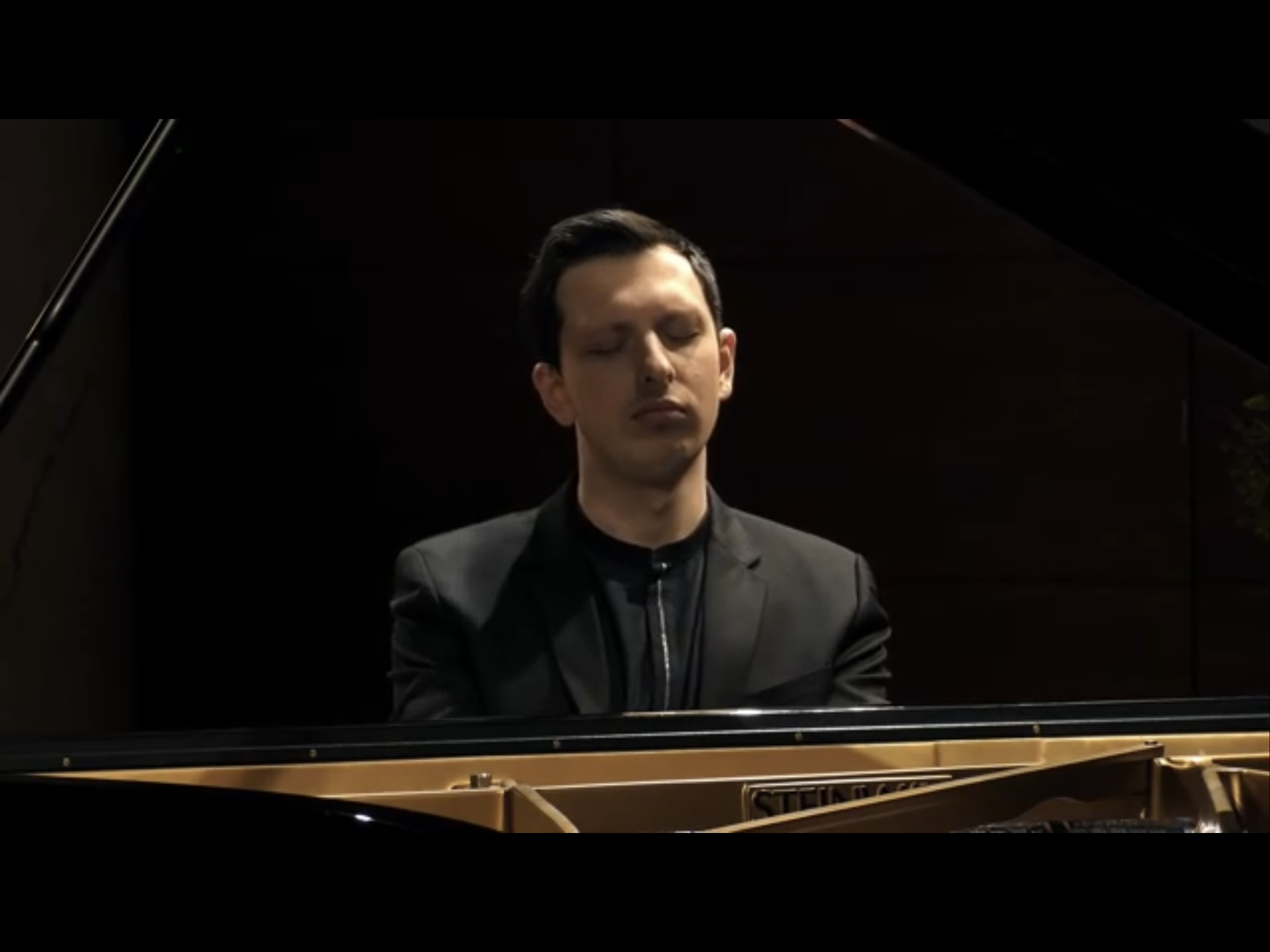
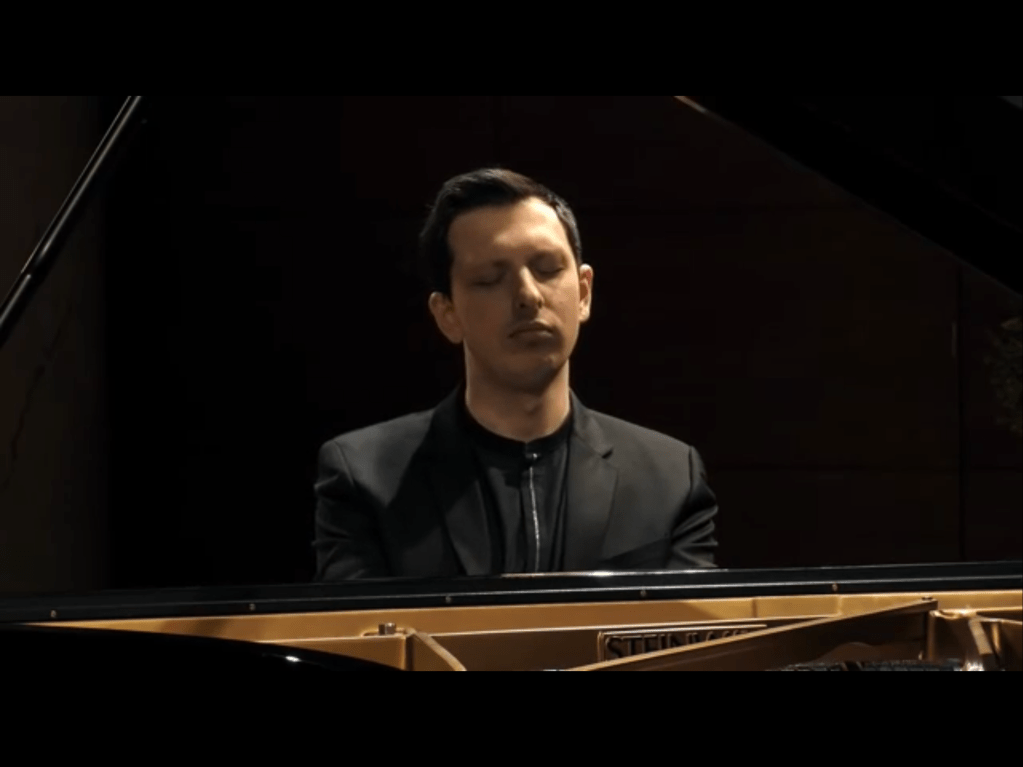
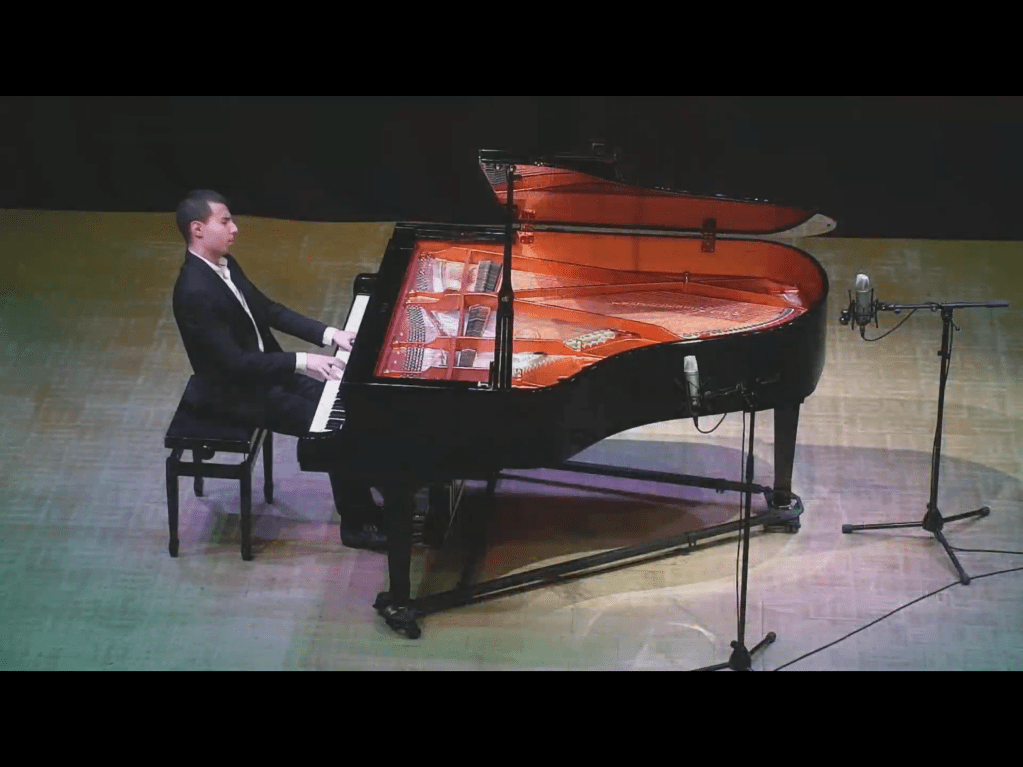
Playing of crystalline clarity by Andrzej Wiercinski in the Beethoven-Penderecki Sfera Sacrum Easter Festival From Scarlatti of such jewels with rays of light just sparkling from his wonderfully agile fingertips. A Litanei by Schubert in a sumptuous transcription by Liszt played with truly heartrending delicacy contrasting with the transcendental fireworks of the A minor Paganini study. Has Red riding hood ever had a more terrifying journey than with his Rachmaninov op 39 n. 6 Etude Tableau? And I would never like to climb Ligeti’s Diabolic Staircase with this expert climber where even watching from the sidelines left one completely breathless. But a Chopin B Minor Scherzo played with such mastery where Chopin’s extraordinary opening exuberance dissolved into the most sumptuous sounds and colours as he shaped the passionate contours as only a true native musician could.The beautiful Polish folk song that Chopin quotes in the central section was played with a magical sense of balance that seemed to give the piano a golden sheen before the final outburst of quite transcendental playing. Rachmaninov’s Corelli variations were given an extraordinary performance of beauty and exuberance that I have already spoken about in a previous recital together with his recital that was so unforgettable last summer https://christopheraxworthymusiccommentary.wordpress.com/2020/08/16/andrzej-wiercinski-in-poland-from-the-ridiculous-to-the-sublime/
Domenico Scarlatti
Sonata in D minor, K. 1
Sonata in C major, K. 159
Sonata in G minor, K. 450
Franz Schubert (ar. Ferenc Liszt)
Litanei (Auf das Fest Aller Seelen), D. 343
Ferenc Liszt
Étude No. 6 in A minor from Grandes études de Paganini, S. 141
Sergei Rachmaninov
Étude No. 6 in A minor from Études-Tableaux, Op. 39
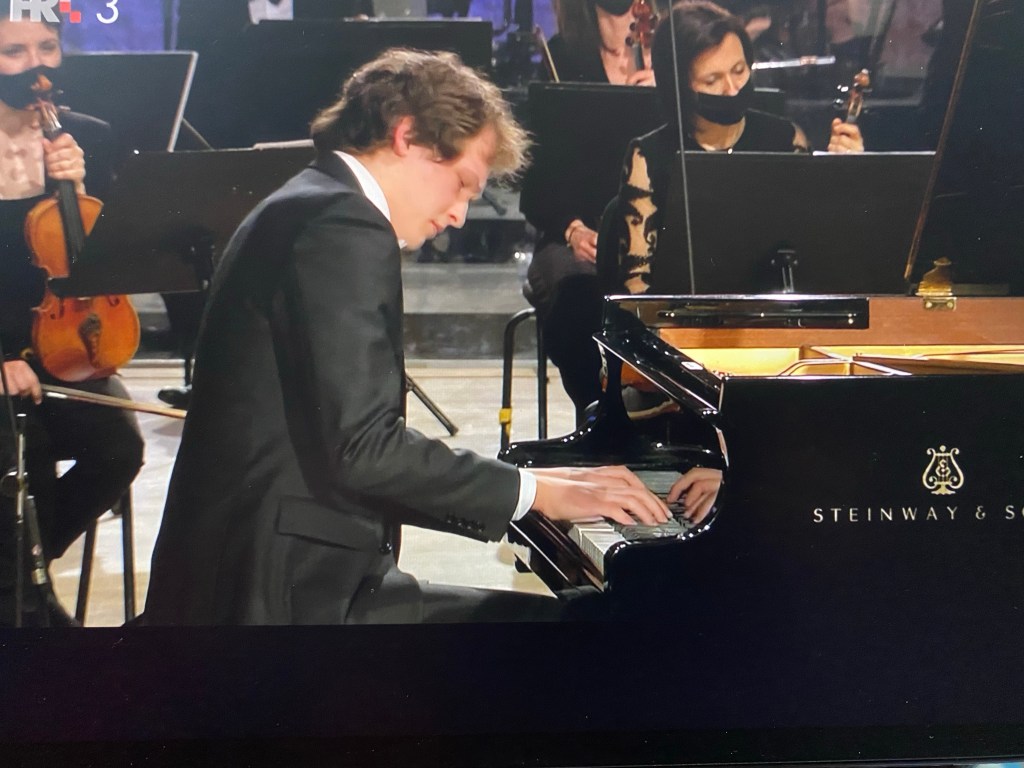
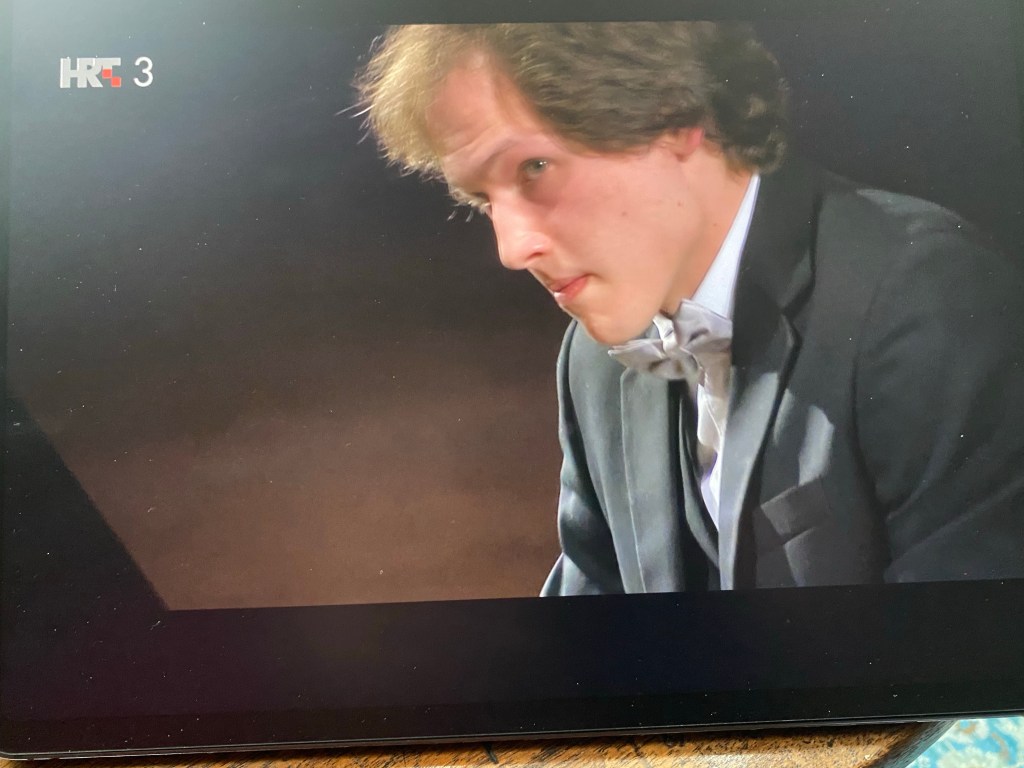
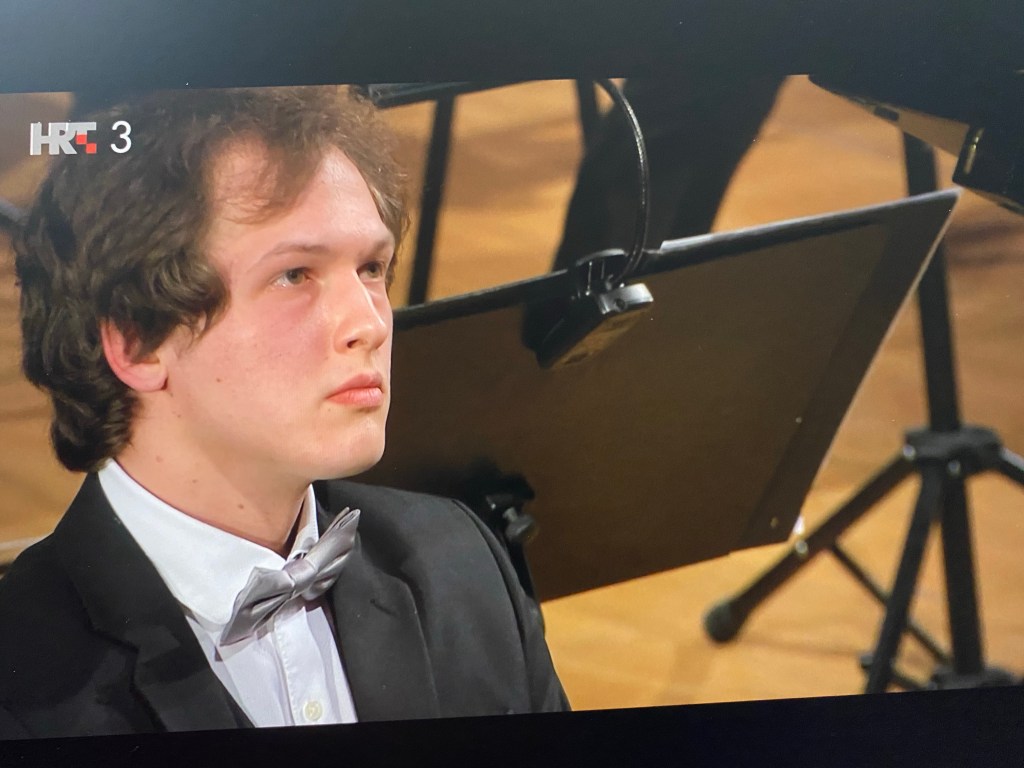
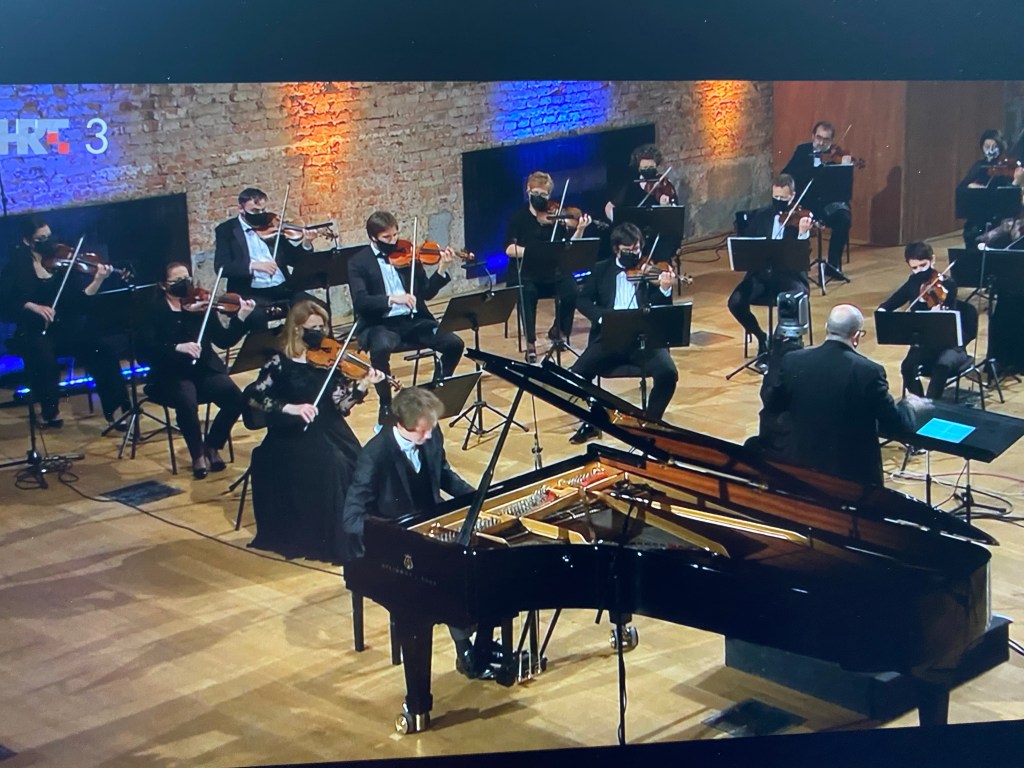
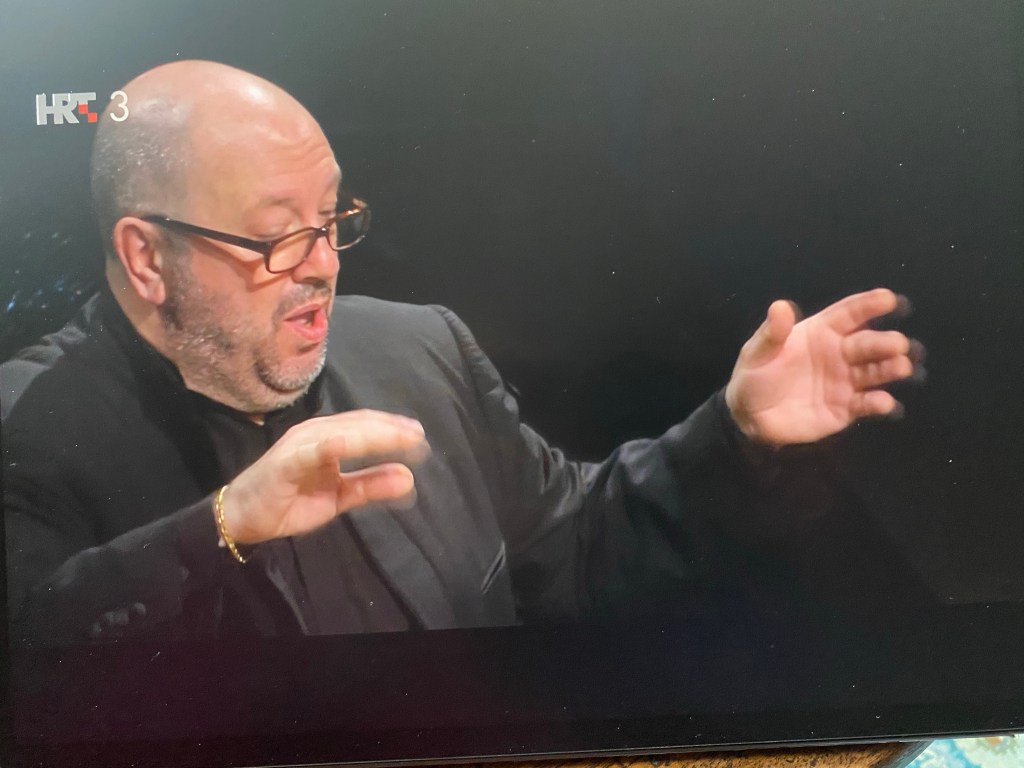
Ivan Krpan with Enrico Dindo performing on Croatian television last night Mozart’s last concerto K 595. Dindo better known in the past as a cellist with his pianist brother,knew exactly how to extract the sounds and character from his players in a real chamber music performance from the young 2017 Busoni Competition winner Ivan Krpan. Playing of a maturity way above his youthful appearance Ivan played Mozart’s last concerto with a simplicity and intelligence as he etched the crystalline sounds in gold and silver re creating the music under the ever watchful Enrico Dindo.
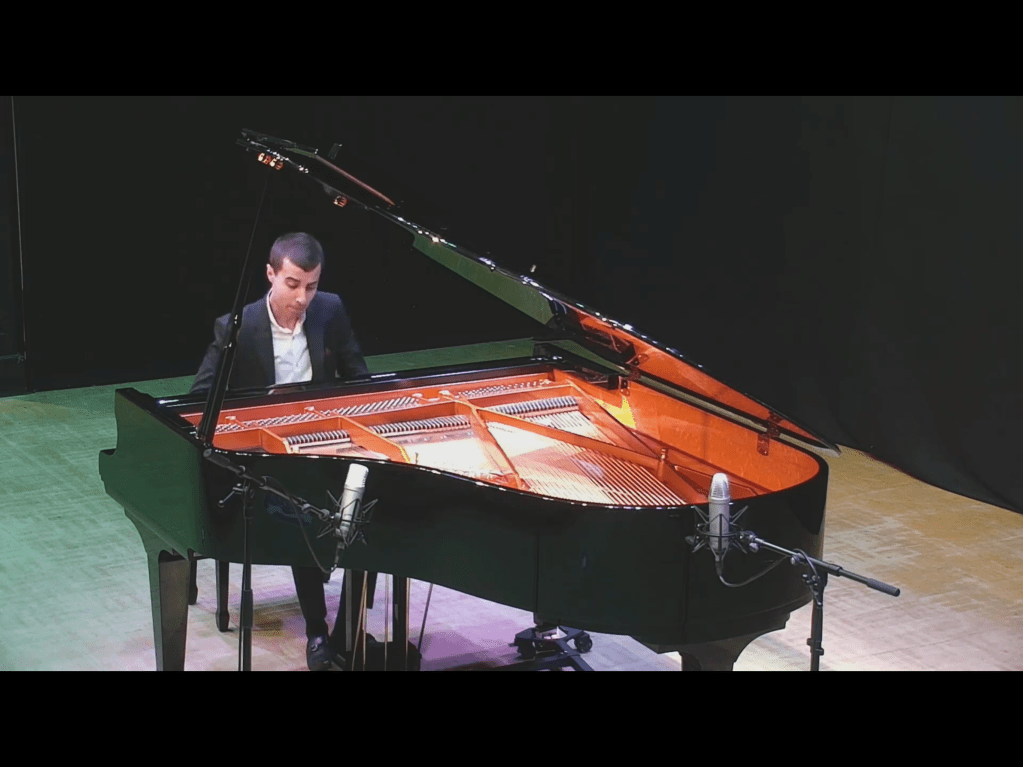
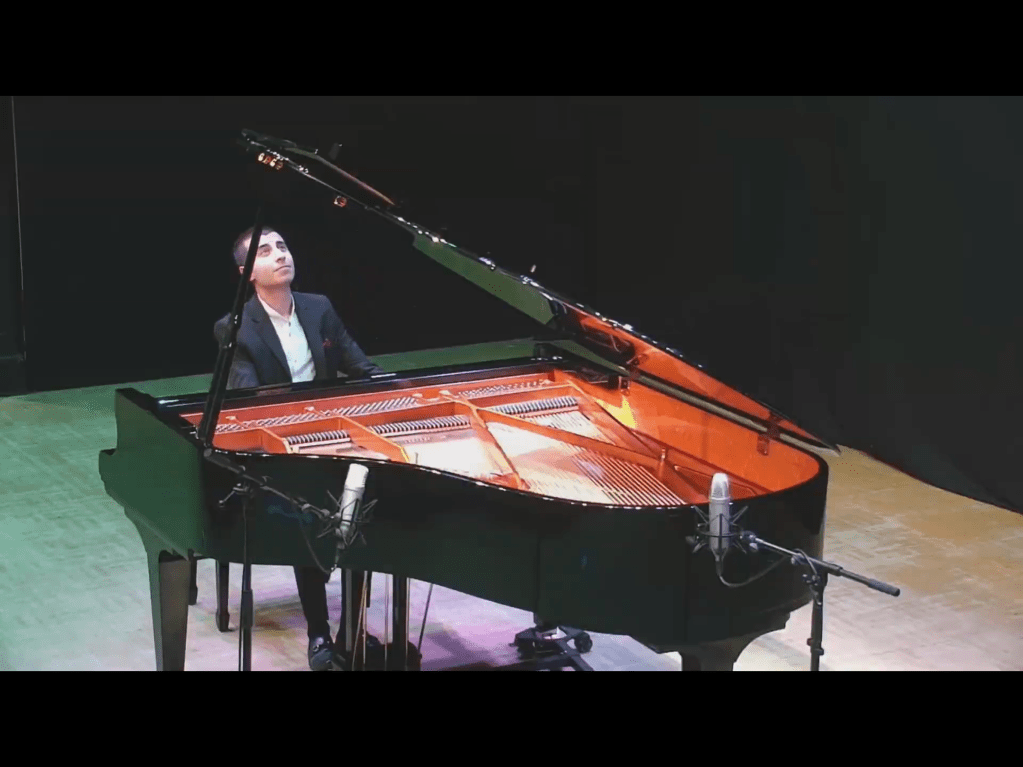
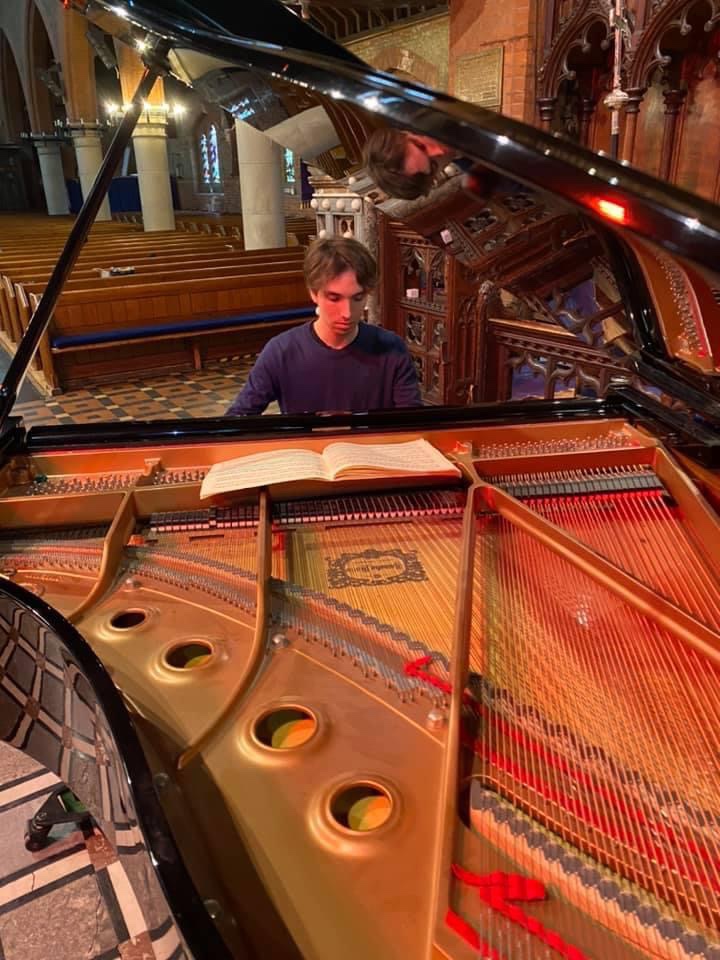
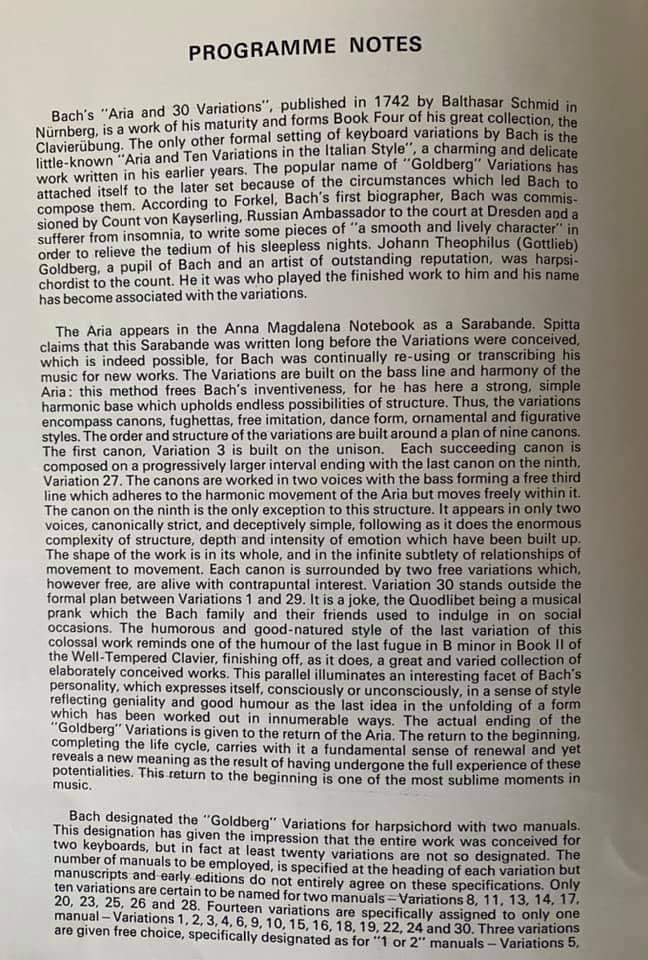
An extraordinary performance of the Goldberg Variations from Jonathan Ferrucci. An 80 minute journey from the opening aria to its whispered repeat after a spiritual and uplifting journey through all the human sentiments from the ridiculous to the sublime. It was exactly the same timing as Rosalyn Tureck’s memorable comeback performance in Rome thirty years ago. So completely different though but with the same mastery that does not allow for wrong notes.How could there be when every note and nuance is so pregnant with meaning? Jonathan playing with all the repeats,as Andras Schiff rightly says:’who are we mere performers to presume to know better than the creator’ Here indeed the word creator is the key one as there was in this young man’s hands a great spiritual message that kept us mesmerised from the first to the last note. What wonders there were too …has the 28th variation ever glowed as in late Beethoven with a seemless trill on which floated such magic sounds.Semiquavers that seemed to grow out of this luminous light.Before the great organ stops in the 29th variation and the physical enjoyment of letting his hair down as Bach had done with the quodlibet.A whispered aria just once this time was absolutely breathtaking in its sublime simplicity. As Jonathan says with the humility of a true artist:the beginning of a journey.
His ornamentation in the repeats too was highly individual from the very outset with the first variation, tongue in cheek.poking fun at the almost too serious rhythmic buoyancy from the very outset of this long journey.It contrasted with the utmost delicacy of the second and third variations before the very strident fourth.Amazing dexterity in the meanderings of the fifth obviously meant for a two manual instrument although not specified by Bach.There was a great sense of bucolic character to the dance rhythm of the seventh and the rhythmic clarity of the eighth reminded me of the rock like monument that Rosalyn Tureck created here.There was such serenity and utmost simplicity in the ninth but it was the very individual phrasing of the tenth that took me unawares especially with his very telling ornamentation in the repeats.The poignant beauty of the thirteenth that almost anticipates that of the twenty fifth was rudely interrupted by the very rhythmic alternating of hands in the fourteenth that swept across the keyboard like a whirlwind.And what better way to finish this first half of this monumental work than with the deep communing of feeling.A deep lament where the pulsing of the heartbeat was truly felt as the final delicate scale disappeared into infinity.
There was a real reawakening with the imperious French overture with its very decided rhythm and gilded ornamentation.Taking delicate flight as it joins hands with the seventeenth.There was a flowing beauty to the eighteenth alla breve and then an unexpectedly slow dance to the nineteenth with a very marked differentiation between legato and non legato.The twentieth,one of the ten that Bach specifically marks for a two manual instrument,was here that Jonathan’s transcendental clarity and control gave us a glimpse of the build up of excitement in these final virtuosistic variations.Very telling his holding the bass notes on the 3rd,5th and 6th bars which is implied and Jonathan courageously underlines with the sustaining pedal – a real master stroke indeed. There was a deeply felt intensity to the twenty first before the sun begins to show from behind the clouds with the real reawakening of the twenty second .The almost ‘prim’ precision of the twenty third that Rosalyn Tureck had confided was the variation that gave her the most problems memory wise,as it led to the gentle lilt in 9/8 of the twenty fourth.The great personal statement of the twenty fifth was played with real anguish as we could see on Jonathan’s face the effort that each note cost him.Beethoven too in his great Diabelli chooses this moment to unburden himself before the build up to the final lap in a similar monument to the art of variation.18/16 against 3/4 put the ball back in the court for the final transcendental build up to the explosion of joy in the quodlibet.The twenty eighth I have mentioned above and was a remarkable subdued variation where the actual transcendental control was hidden behind Jonathan’s message of musical magic.The semiquavers usually just rattled off rhythmically here took over gradually from the trills in the same way that they do in Beethoven’s Sonata op 109.They are ethereal sounds written on the page in a certain way but understood only by a true artist who can delve deep into the meaning of creation.
Just one of the many remarkable moments of sublime maturity of someone who has lived and slept with these variations for a long time.Infact the variations kept Jonathan company into lockdown and as he says this is just the beginning of a long journey of discovery.The addition of bass octaves was perfectly judged for the twenty ninth variation as suddenly one could hear the blaze of the church organ in all its glory.Bach’s family also had a sense of fun and humour as was made even more apparent by the incorporation of two folk songs always on the same bass framework.Jonathan played them with great exhilaration “I have not been with you for so long” and “ cabbages and turnips have driven me away …..if my mother had cooked meat ,I would have stayed longer!”
I am reminded of Jonathan’s mentor at the Guildhall ,Joan Havill,telling him he would need to build himself up if he intended to work on the Brahms second concerto.Anyone who has seen Jonathan with his ashtanga yoga exercises will know that that there is a great deal more to true internal energy than brute force.We were made blissfully aware of that today after his tumultuous 29th and 30th variations gave way to an aching silence out of which could be heard the delicate whisper of Bach’s aria for a final moving farewell.
Italian-Australian pianist Jonathan Ferrucci has given concerts throughout Europe, Australia, the US and Japan. In London he has performed in Wigmore Hall, Barbican Hall, Milton Court Concert Hall. As winner of the Jaques Samuel Competition in 2016, his Wigmore recital was professionally recorded and he was invited to play at Fazioli Concert Hall in Italy. In 2018 he made his debut at Carnegie Weill Hall as part of the “Guildhall Artists in New York” project and was a winner at the International Bach Competition in Leipzig. In 2019 he was a Rising Star for Portland Piano International and gave a masterclass and recitals throughout Oregon. Jonathan studied at the Conservatory of Music in Florence with Giovanni Carmassi, then in London with Joan Havill at the Guildhall, where he completed a masters degree, Artist Diploma, and Artist Fellowship. His studies have been supported by the Leverhulme Trust, Jessie Wakefield Award, Guildhall School Trust and Tait Memorial Trust. Jonathan’s artistic development has been profoundly influenced by Aldo Ciccolini and Robert Levin, and by his ongoing studies with Angela Hewitt, as well as masterclasses with Murray Perahia, Richard Goode, Peter Frankl and Christian Zacharias. As co-founder of Made in Music, a non-profit, he organized two festivals bringing together musicians from eight countries. He believes that music is a universal language that can unite people from different cultures and backgrounds. Alongside his time at the piano, Jonathan practises Ashtanga yoga and considers it an integral part of his work, and essential in his life.
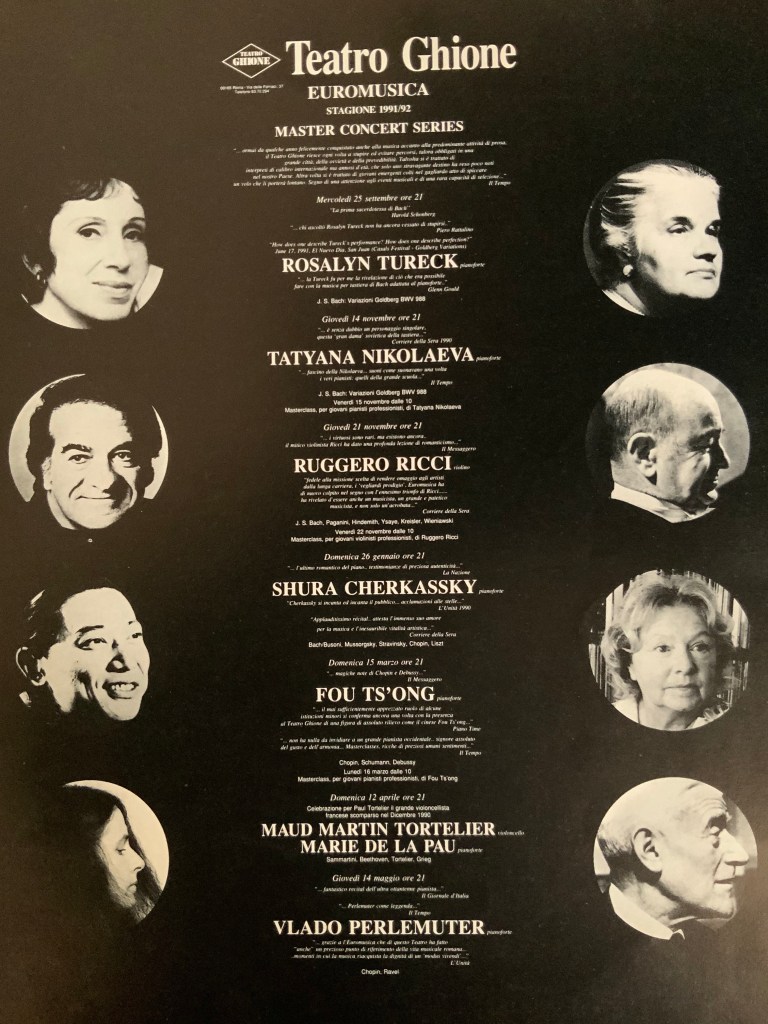
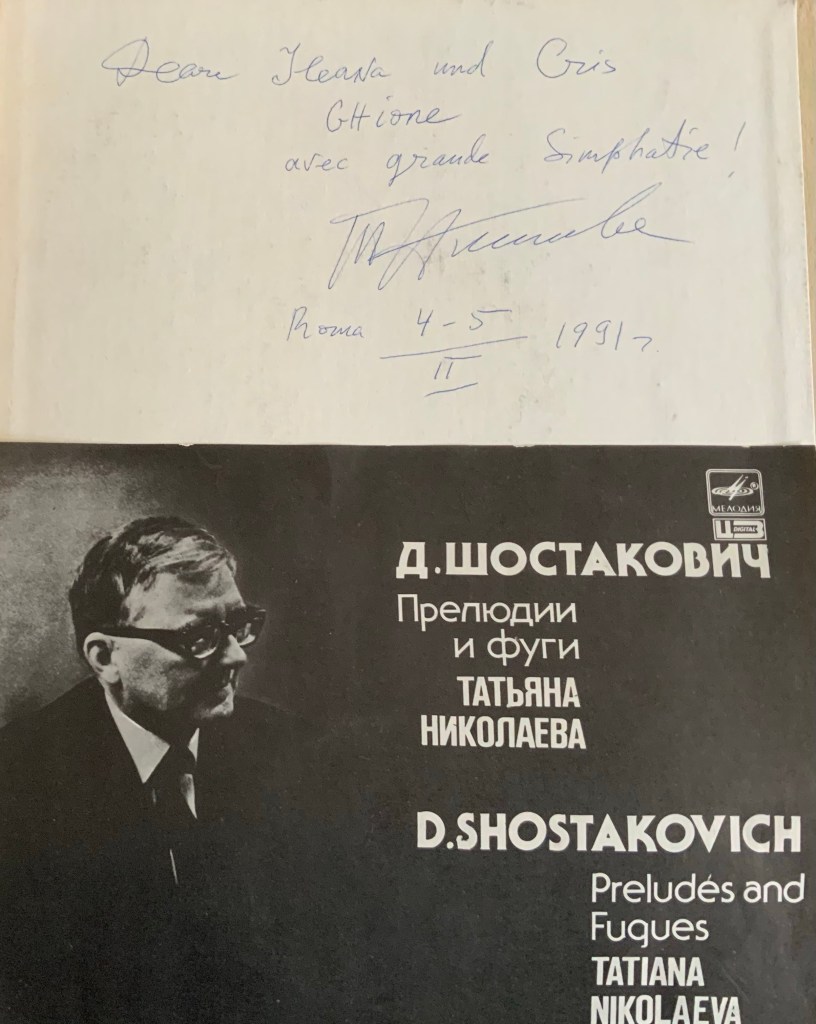
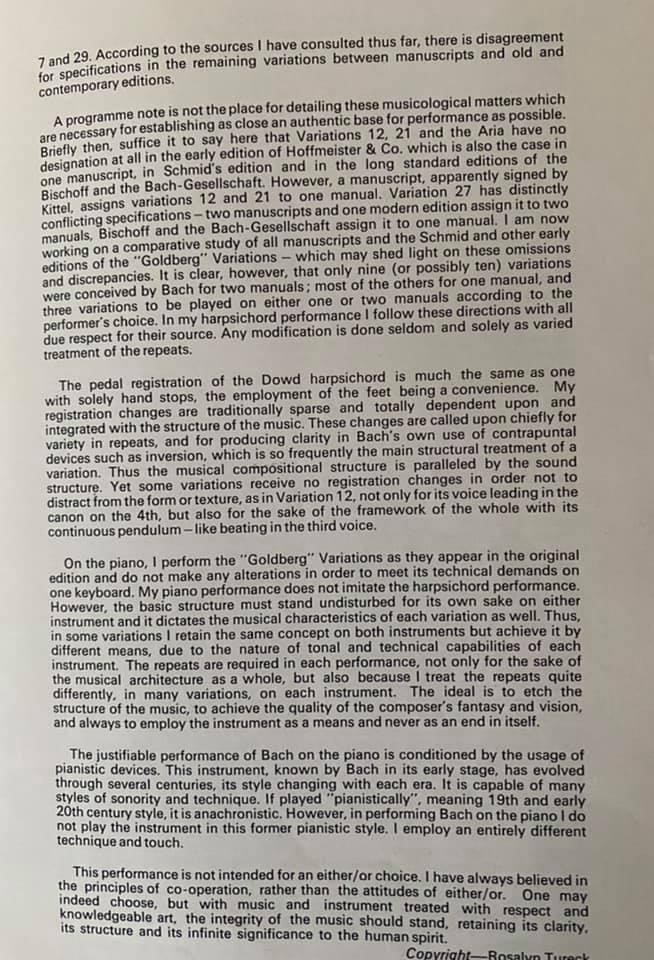
Both Rosalyn Tureck and Tatyana Nikolaeva performing the Goldberg Variations in my concert series in 1991
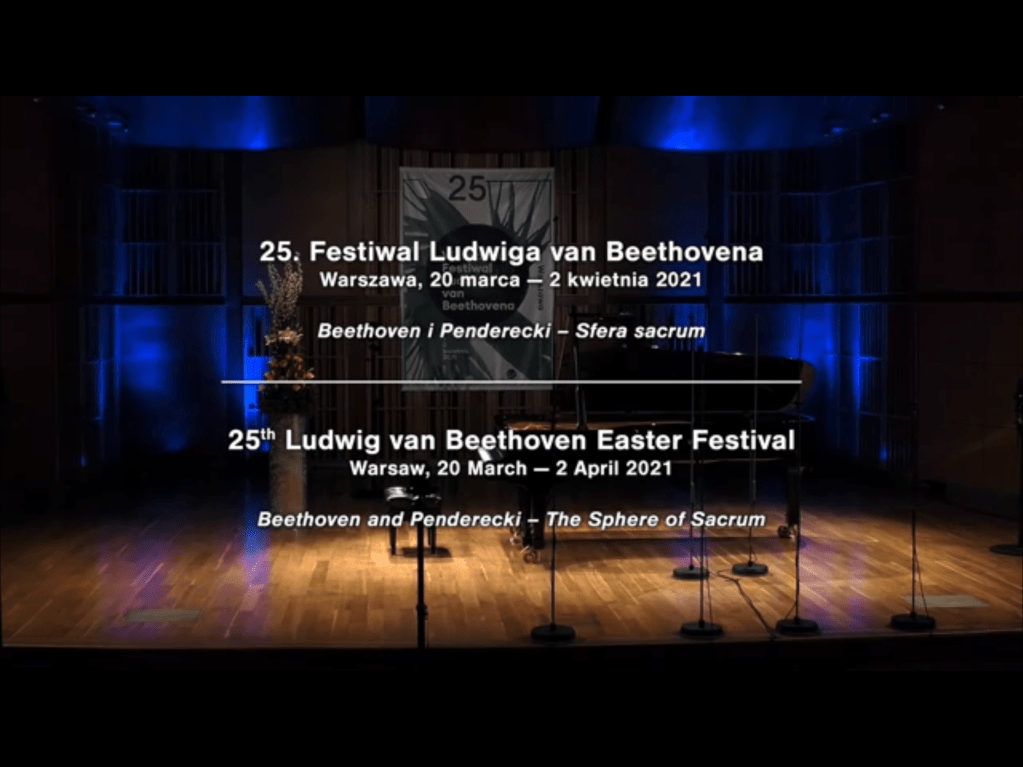
25th Ludwig van Beethoven Easter Festival “Beethoven and Penderecki. The Sphere of Sacrum”
Lukasz Krupinski plays Bach,Beethoven,Chopin and Prokofiev
March 2021 is a special time. It is the 25th jubilee edition of the Ludwig van Beethoven Easter Festival and we will also commemorate the great Polish composer Krzysztof Penderecki. Leading cultural institutions, international artists, close friends of Maestro and Madame Penderecki, Management’s artists and all the staff from the Beethoven Association would like to pay tribute to this remarkable composer, conductor and a great man.
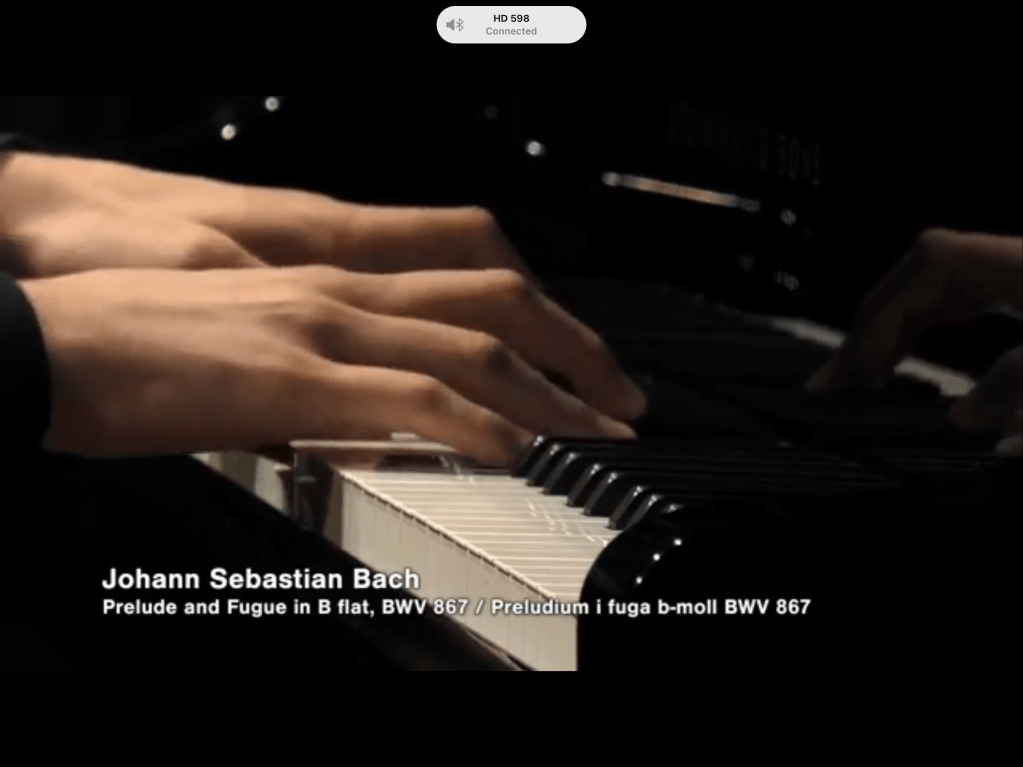
Some superb playing from Lukasz Krupinski with the beautifully clear sounds and a deep sense of longing in the opening Bach Prelude in B flat minor Bk 1.A great song played with a fluidity and architectural shape and a coda of quite extraordinary beauty.It led into the five part fugue of equal beauty as the voices came together with the breathtaking bass bringing this sublime contrapuntal drama to a fitting close dedicated as it is to the memory of Krzysztof Penderecki.
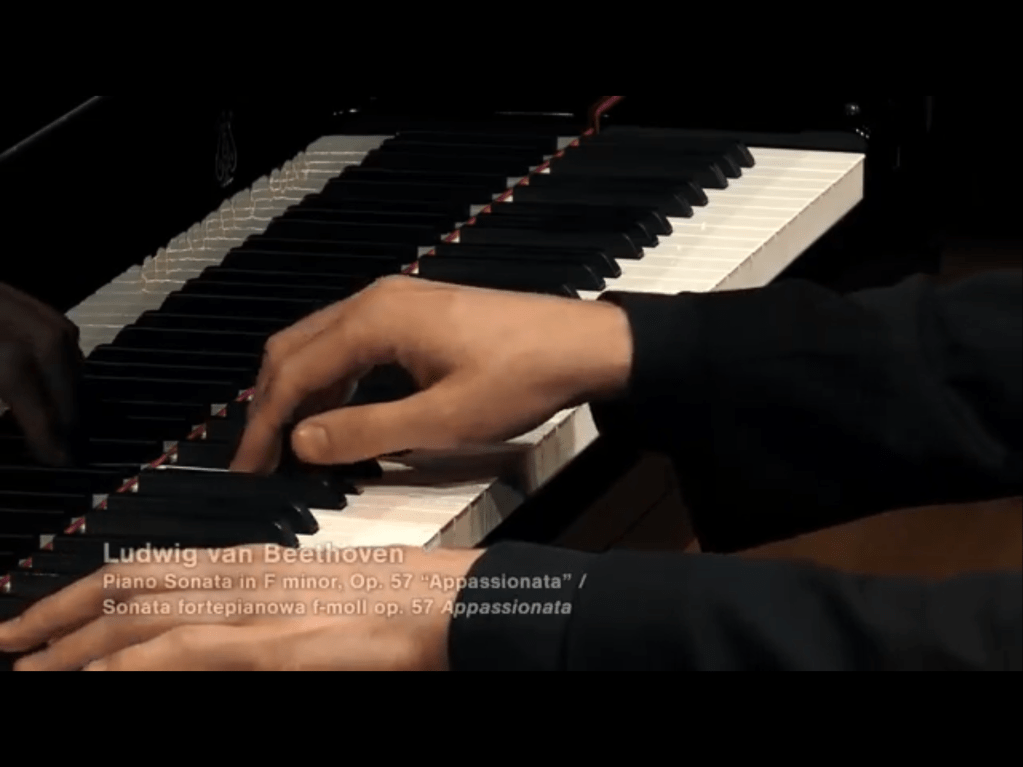
Beethoven’s Appassionata Sonata op 57 was given a very fine performance where Beethoven’s jagged edges had been smoothed out in a performance of great poetry and drama.Rarely have I heard the second subject played so beautifully contrasting so well with the dramatic outbursts of virtuosity but always incorporated into the overall architectural shape.With scrupulous attention to the composers indications there was also room for his own very marked personality that brought new life to this much worn warhorse. A beautifully flowing Andante con moto with some sumptuous colours in the more flowing variations to the final whispered pianissimo chord before the shattering announcement of the Allegro ma non troppo.A last movement played with just the right amount of menace but even here there was beauty to behold in this young man’s poetic hands.If sometimes he took Beethoven’s rests a little too literally it was always to make a musical point as after the opening trill of the first movement or the quavers of the first variation in the Andante or here in the last movement where he strangely chose not to follow Beethoven’s own pedal indication.These are tiny details in an inspiring performance where the beauty of the sounds he made at the piano were of a true poet.
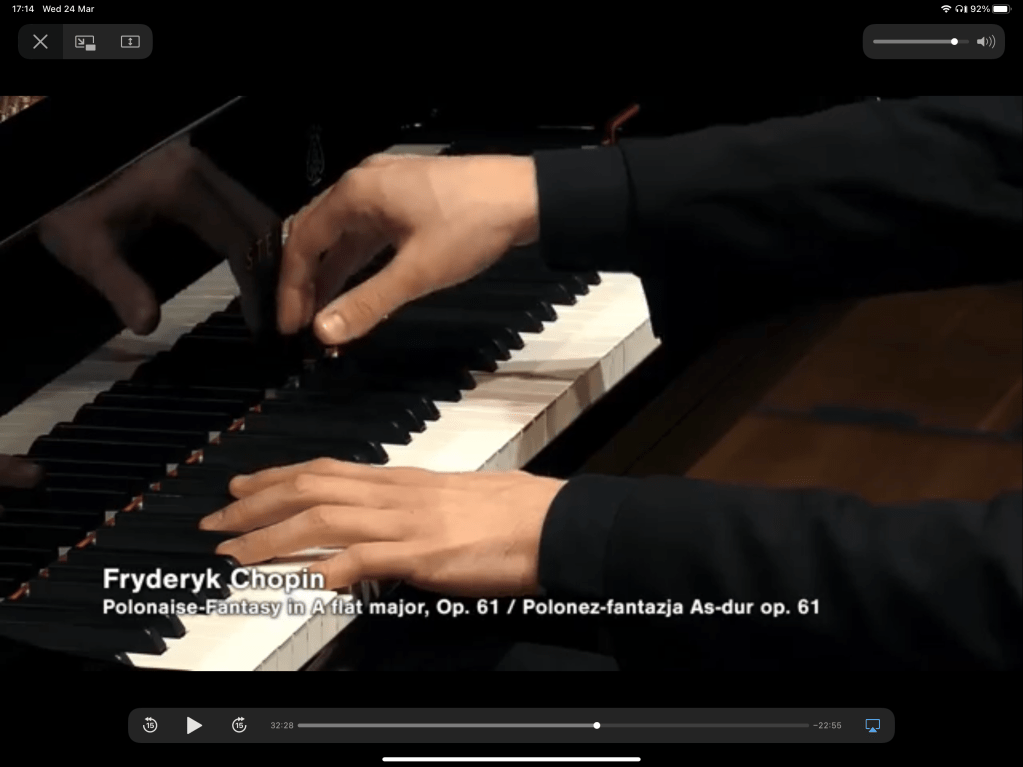
Aristocratic good taste in the Polonaise Fantasie of Chopin where the Polonaise seemed to grow out of a fantasie of glowing sounds that he produced from the very first opening chords spread so miraculously by Chopin like a vibration over the whole keyboard.There was a wonderful sense of balance in the central section where the melodic line seemed to float above the bass counterpoints .Deep bass notes just opening up the magic that was to be found in the upper reaches.Embellishments that just seemed to grow so naturally out of the melodic line all in one breath like the greatest of bel canto singers.The final triumphant outpouring I found a little slow and after such sublime beauty I think he could have allowed his passionate involvement to overwhelm us all.
What to say of Prokofiev’s demonic third sonata when played with such mastery?A kaleidoscope of sounds from the most delicate to the most overwhelming and here he too was overtaken by his temperament as he treated us to the enthralling exaltant excitement of the final few bars.
Shostakovich: Prelude and Fugue no 15 in D flat Major
Rachmaninov: Etudes-tableaux Op 33 no 4 in D minor and Op 39 no 1 in C minor
Chopin: Sonata in B minor Op 58 Allegro maestoso-Scherzo,molto vivace-Largo-Finale Presto non tanto
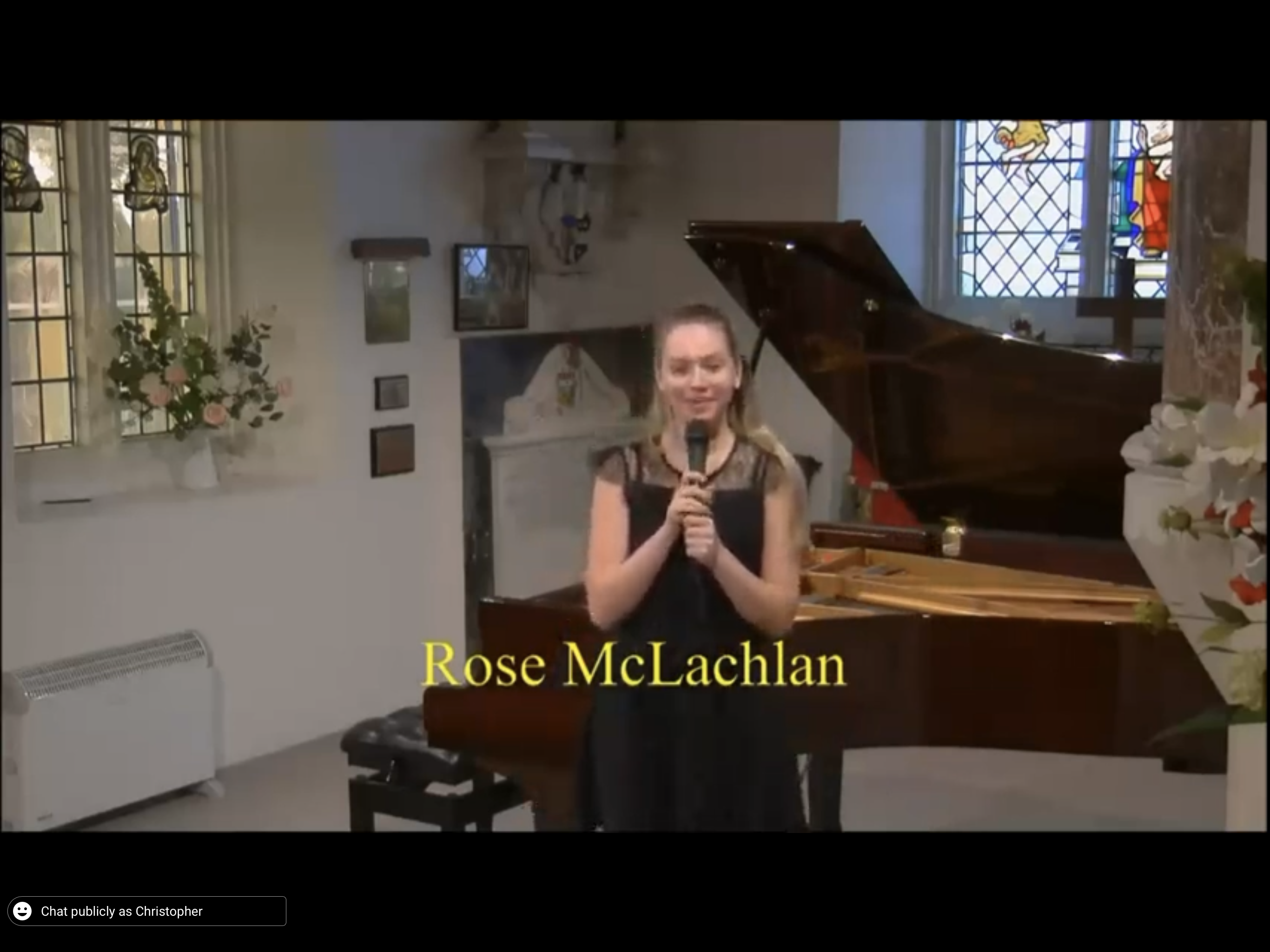
Some beautiful musicianly playing from Rose McLachlan standing in at short notice for her COVID stricken brother Mathew who will now play on the 8th June. A very rhythmic 15th Prelude and a very busy Fugue by Shostakovich was followed by two beautifully played Etudes Tableaux by Rachmaninov.
The prelude n.15 is a brusque waltz typical of Shostakovich. The opening theme resembles ‘We wish you a merry Christmas’.The date of the composition (20 December) may explain this. The vivace fugue is a tour de force of chromatic and atonal writing. The subject contains 11 of the 12 semitones available, with the twelfth only introduced at the very end of the fugue. Ronald Stevenson,mentor of father Murray McLachlan,has suggested this to be a sardonic commentary on serial music, as by the end of the piece tonic/dominant harmony is finally established, though not very convincingly.
The Études-Tableaux (“study pictures”),are two sets of piano études composed by Sergei Rachmaninoff .They were intended to be “picture pieces”, essentially “musical evocations of external visual stimuli”. But Rachmaninoff did not disclose what inspired each one, stating: “I do not believe in the artist that discloses too much of his images. Let the listener paint for themselves what it most suggests.”Op 33 n.4 in D minor is a simple march that grows into a thing of striking contrapuntal complexity.Op 39 n.1 is a quick-paced étude that demands a tireless right hand, a syncopated left hand and considerable dexterity.
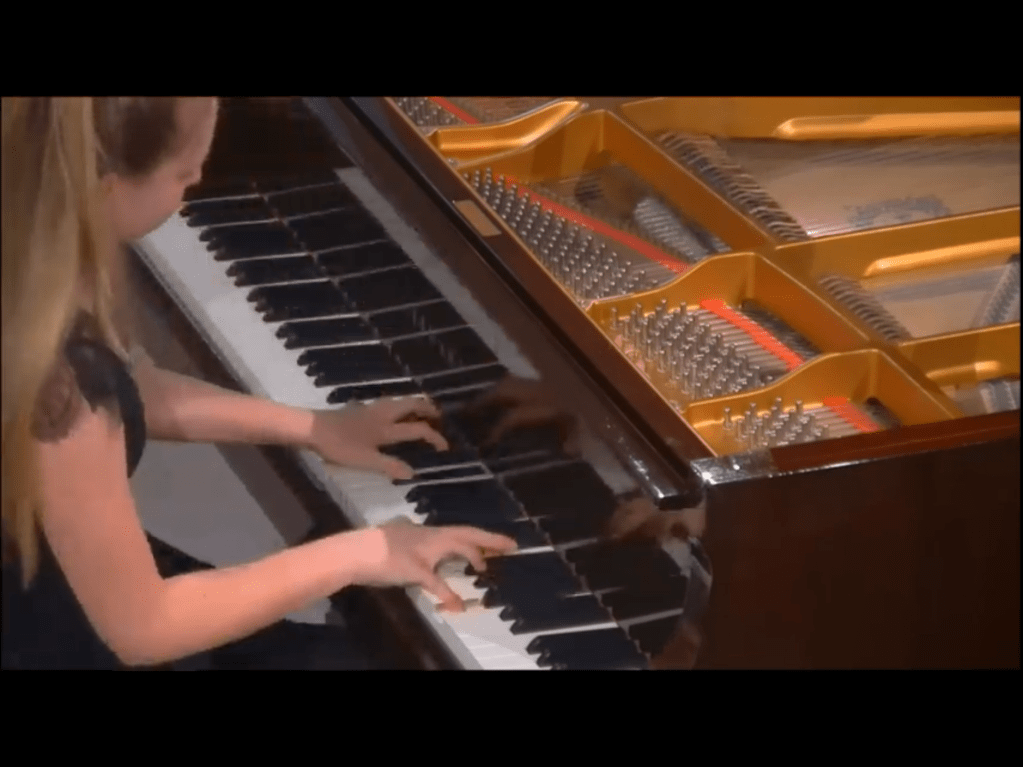
It was in the Chopin B minor Sonata though that we could really appreciate to the full her intelligence and sensibility allied to a technical command that allowed her to give great nobility and shape to a work that so often can seem a series of episodes.An architectural line from the Maestoso opening to the Presto non tanto finale taking in a scintillating Scherzo and a Largo always with the same pulse that allowed great sentiment and beauty but without any trace of sentimentality.
After the Second World War,Dmitri Shostakovich was Russia’s most prominent composer. Although out of favour with the Sovuet Communist Party he was still sent abroad as a cultural ambassador. One such trip was to Leipzig in 1950 for a music festival marking the bicentennial of J.S. Bach’s death. As part of the festival, Shostakovich was asked to sit on the judging panel for the first International Johann Sebastian Bach Competition.One of the entrants in the competition was the 26-year-old Tatiana Nikolayeva from Moscow. Though not required by competition regulations, she had come prepared to play any of the 48 preludes and fugues of on request. She won the gold medal.Inspired by the competition and impressed by Nikolayeva’s playing, Shostakovich returned to Moscow and started composing his own cycle of 24 preludes and fugues. Shostakovich worked fairly quickly, taking only three days on average to write each piece. As each was completed, he would ask Nikolayeva to come and visit him in his Moscow apartment where he would play her the latest piece. The complete work was written between 10 October 1950 and 25 February 1951. Once finished, Shostakovich dedicated the work to Nikolayeva, who undertook the public premiere in Leningrad on 23 December 1952. Shostakovich wrote out all the pieces without many corrections except the B♭ minor prelude, with which he was dissatisfied and replaced what he had begun initially.
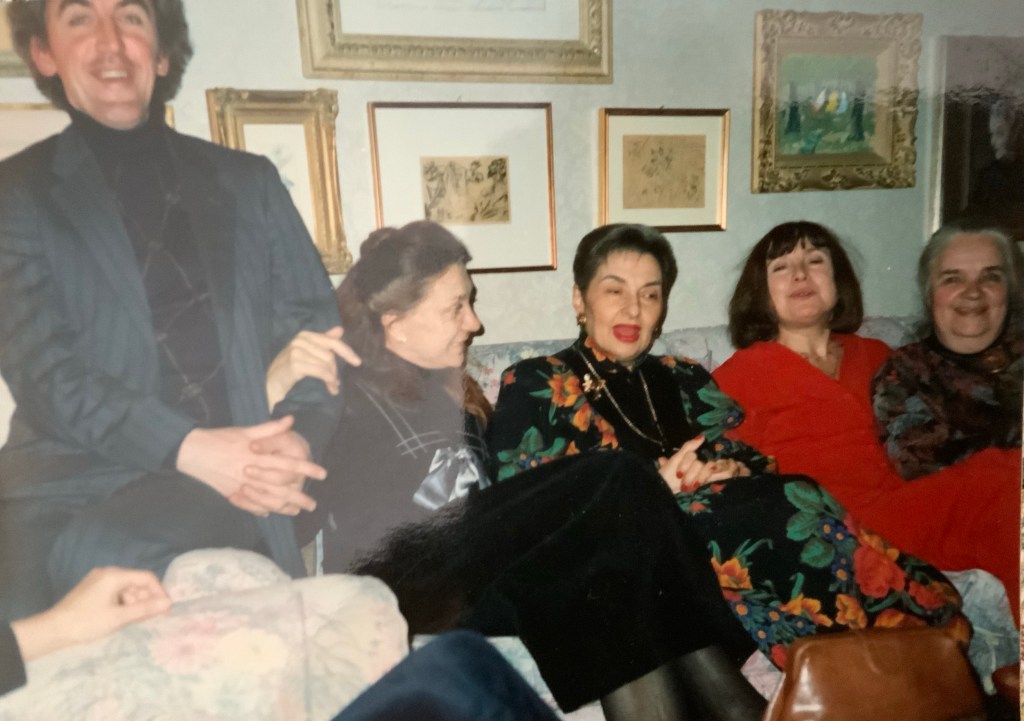
Ileana Ghione with Tatyana Nikolaeva at Teatro Ghione RomeHappy times in Rome with Nikolaeva -far right .My wife and I far left with friends at home.
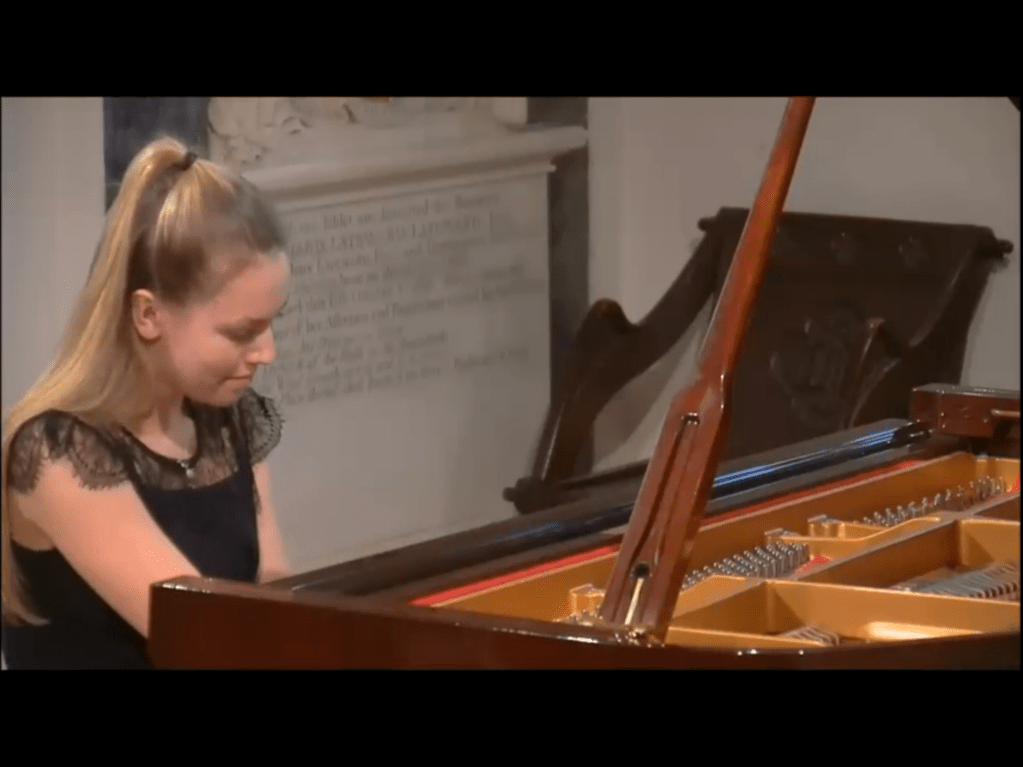
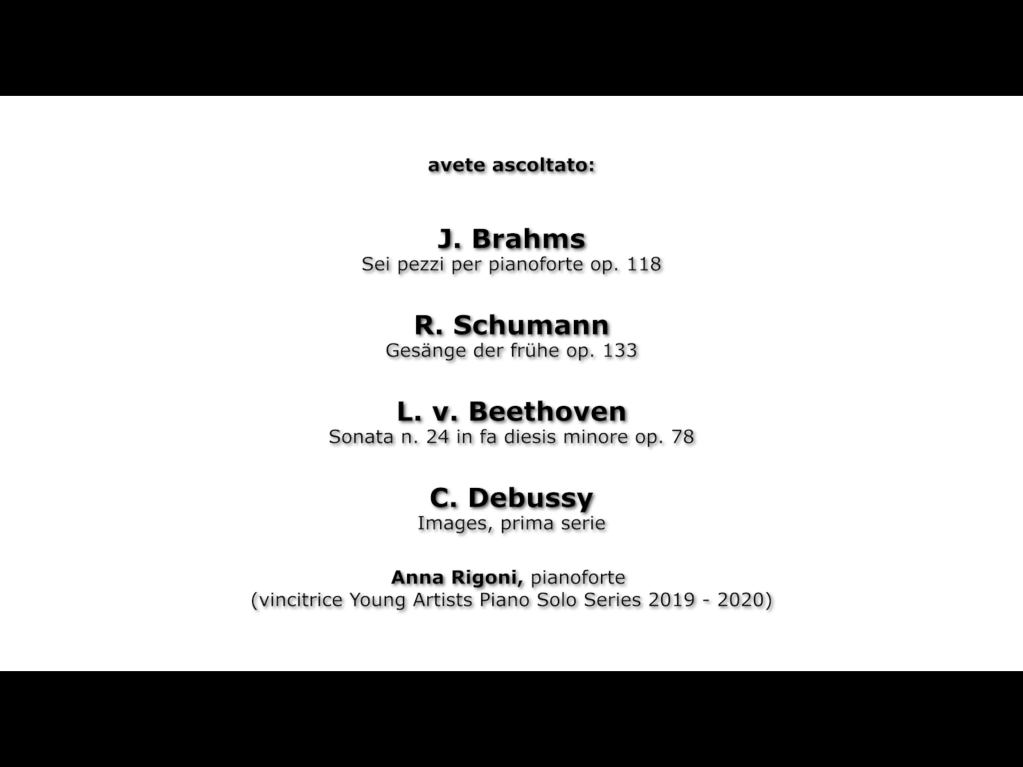
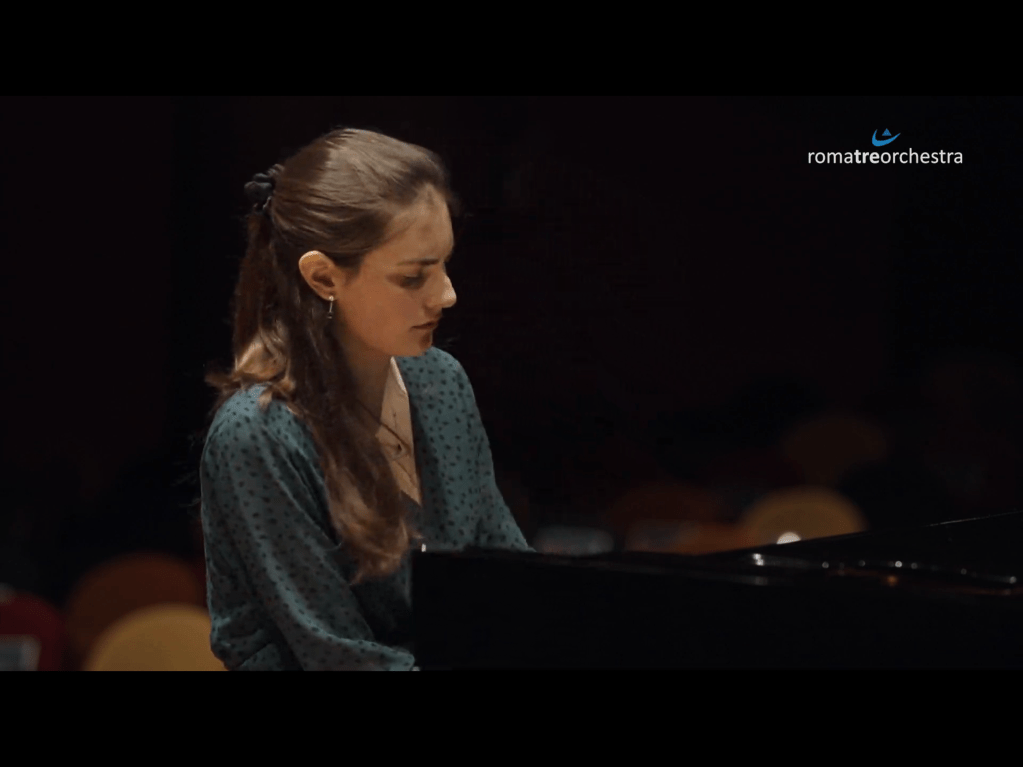
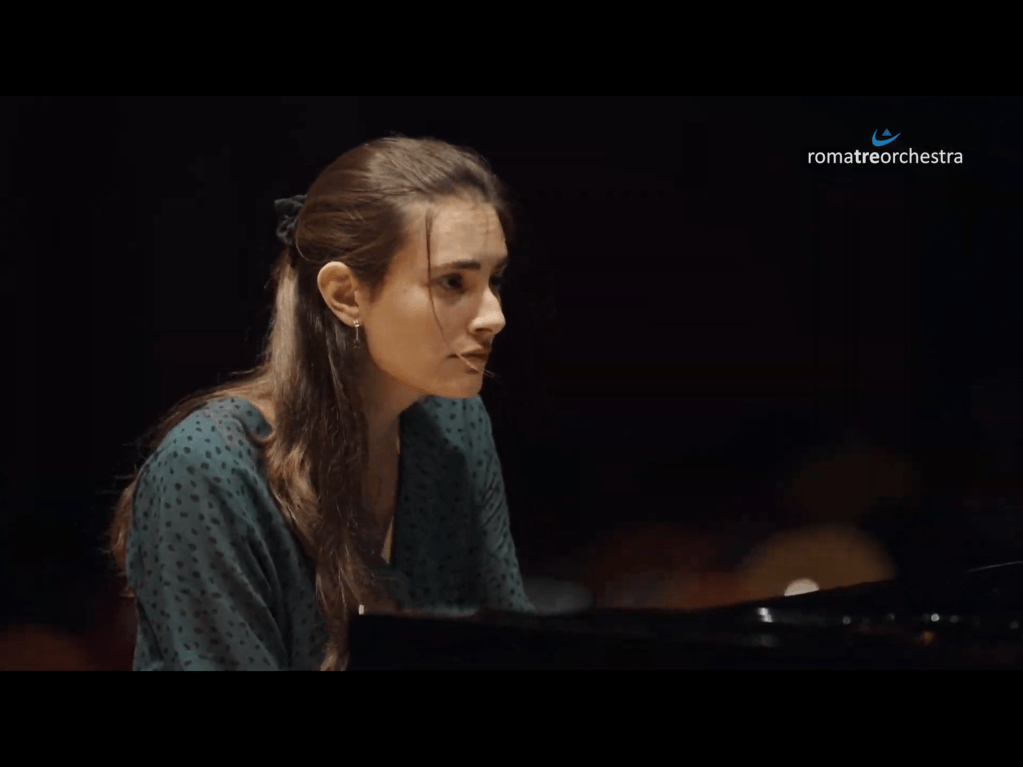
Lunedì 22 marzo 2021 ore 21.30 Teatro Palladium (diretta streaming canale YouTube Roma Tre Orchestra) Il ritorno di Anna Rigoni J. Brahms: Sei pezzi per pianoforte op. 118 R. Schumann: Gesänge der frühe op. 133 L. v. Beethoven: Sonata n. 24 in fa diesis minore op. 78 C. Debussy: Images, prima serie
Anna Rigoni ,a name to remember,was the young pianist who closed this series of Young Artists Piano concerts for Roma 3 University in Rome With looks like the young Argerich and the refined musicianship of a Pires what better way to accept this enforced lockdown that has overtaken Italy at Easter. Valerio Vicari the enlightened artistic director of Roma 3 Orchestra had told me that she was good but he had not told me how good! From the inspired opening notes of the six pieces that Brahms breathed and whispered in his op 118 to the crystalline clarity of Beethoven’s little Sonata in F sharp op 78 played with such subtle colouring and masterly control. But the revelation were Schumann’s Songs of Dawn played with a poetry,sense of line and passionate conviction that I have not heard since Agosti used to haunt his studio with them as he intoned together with his playing what he considered a master work.In other hands it had been neglected and considered as a rather obscure late work of a composer who had lost his way. In Anna’s hands her supreme musicianship showed us just how right Agosti had been. The first book of Images by Debussy was a magical way to end this recital with her crystalline sounds that made this beautiful piano glisten as it will not do for quite some time.The sounds of Movement seemed to float into the distance as we hope this cunning little virus will do in the near future ………..to be continued………….
The Six Pieces for Piano, Op. 118, are some of the most cherished compositions that Johannes Brahms wrote for solo piano.They were completed in 1893 and dedicated to Clara Schumann and was the penultimate composition published during Brahms’ lifetime and also his penultimate work that he composed for piano solo. They were written Between 1892 and 1893 along with other collections of smaller piano pieces: Seven Fantasias Op. 116, Three Intermezzos Op. 117, and Four pieces op 119 .Op 118 and 119 were premiered in London by Brahms in 1894.The six pieces of op 118 are made up of four intermezzi a Ballade and a Romanze.
The Intermezzo in A minor. Allegro non assai, ma molto appassionato immediately showed us her superb musicianship as she plunged into the passionate outpouring of sumptuous sounds with such intelligence and scrupulous attention to detail.She had absorbed the inner meaning behind the notes and her wonderful fluid technique swept us along as we knew that we were in the sensitive hands of someone we could trust.A true interpreter starts with what the composer tries to indicate on the printed page but that is just the start in trying to understand the meaning behind every single detail ,without loosing sight of the greater musical line.The path of the true interpreter is never easy but to risk the tightrope is too often only for the chosen few.Murray Perahia and Krystian Zimmerman spring to mind as interpreters who can illuminate a score in a way that has us running to take a better look at a work we mortals thought we knew intimately.All this was evident from these very first sweeping notes on this sumptuous sounding piano.Can it really be a Schimmel or have the magic hands of Mauro Buccitti waved a wand and transformed it into a Bosendorfer,the preferred piano of Brahms himself?The rich bass in the Intermezzo in A major. Andante teneramente gave such depth to a whole range of emotions.The extreme delicacy of the pianissimo chords ‘piu lento’was contrasted with the passionate duet that followed only to dissolve to the touching nostalgic tenderness of the opening.Throwing herself into the Ballade in G minor. Allegro energico with great passion but full of subtle colours that allowed her to shape the architectural contours with such sumptuous sounds.The mellifluous chorale middle section was almost orchestral in its conception and the gradual reawakening was beautifully judged before the final touching disintegration.The ever more passionate agitations in the Intermezzo in F minor. Allegretto un poco agitato contrasting so well with the tender beautifully described swapping of hands like a painter conjuring colours out of thin air.The tender Romanze in F major. Andante touchingly beautiful as the melodic lines intertwined like a great string orchestra before the sun comes out in the Allegretto grazioso.Brahms seeming to loose his way as he takes us through a fantastic maze of trills and embellishments played with just the right sense of astonishment before finding the way back ever more poignant and painfully beautiful in these ultra sensitive hands.The final bleak landscape of the remarkable tone poem that is the Intermezzo in E♭ minor Andante, largo e mesto The gradual awakening of the central section to its tumultuous passionate outpouring of emotion before dying away to a whisper brought these remarkable performances to an overwhelming end.
Gesänge der Frühe (Songs of Dawn), op.133,was composed in October 1853 and is one of Schumann’s last works composed three years before his death. By the time he began work on these pieces, he was suffering from mental and emotional decline and they were written just five months before Schumann’s attempted suicide and confinement to a mental institution.Clara Schumann wrote in her private diary, “dawn-songs, very original as always but hard to understand, their tone is so very strange.”
They were very much admired by Guido Agosti who would intone in particular the fourth of the five pieces that in many ways is similar to the last of the Four ballades op 10 by Brahms.Fou Ts’ong too was enthusiastic about the work and gradually it is to be seen on concert programmes two hundred years on!
‘Im ruhigen tempo’played with an almost religious sensitivity and made one immediately aware of what a similar world of deep emotions they inhabit as in the last pieces by Brahms.A deep communing in Schumann’s case with a deeply troubled soul.There were beautiful sounds from deep within the piano in ‘Belebt nicht su rasch’ where the dotted rhythms of Schumann were incorporated into the very soul of the melodic sound world she created.’Lebhaft’ so similar to the Brahms Ballade op 118 with its rich chords so beautifully shaped by a masterly control of the sustaining pedal.To the jewel of the set: ‘Bewegt ‘ with the anguished beseeching cry over a continuous stream of sounds.I can hear Agosti playing it with the same magic sounds as Anna found today.He of course would intone sottovoce in a way that no one who had heard him would ever forget.Today in these very special hands I was reminded of the magic that had been instilled in me all those years ago when I would spend the day playing four hands with the Maestro whilst our wives went to the beach.In the evening we would be the after dinner entertainment whilst Lydia,his wife did her crochet! The final ‘Im Anfange ruhiges,Im verlauf bewegtes tempo’a magic web of sounds played with searing intensity to the final whispered appoggiatura of uncertainty.Another remarkable performance from this extraordinary pianist who demonstrates a maturity way above her youthful appearance.
The Piano Sonata No. 24 in F sharp op.78, nicknamed “ a Thérèse” (because it was written for Countess Thérèse von Brunswick )was written in 1809 and Czerny tells us it was one of Beethoven’s favourites.The beautiful Adagio cantabile led to an equally mellifluous Allegro ma non troppo where all Beethoven’s meticulous indications were incorporated into a movement that just sang from the first to the last note.It contrasted with the great character that Anna gave to the Allegro vivace where her delicate fleeting fingers seemed to flow so naturally to the final flourish and rhythmic full stop.
Images is a suite of six compositions for solo piano by Claude Debussy.They were published in two books/series, each consisting of three pieces.The first book was composed between 1901 and 1905, and the second book was composed in 1907.Have there ever been more beautiful ‘Reflets dans l’eau’ than in Anna’s hands?The shimmering water covering the entire keyboard as it built to an urgency where the melodic line was allowed to shine on the surface before becoming merely a shadow on the water.The aristocratic melodic line that she etched out in Hommage a Rameau ‘expressif et dolcemente soutenu’ was every bit as moving as Debussy’s other sarabande in his suite ‘Pour le piano’.Magical gradations of sound at the end where Debussy exhorts such care and attention ‘un peu plus lent’.pp. più p. Retenu.plus retenu and finally pppp.All so magically interpreted by this poetess of the piano very similar in so many ways to Maria João Pires .There was a lightness and sense of rhythmic drive from the whispered opening and close of Movement with an extraordinary central outburst of quite transcendental difficulty all thrown of with ease in the name of music!
It was Serkin exclaiming to Richard Goode on listening to the young Murray Perahia:’You said he was good ,but you did not tell me how good!’ I think we could say the same about Anna Rigoni today.
Anna è una pianista italiana, esibitasi come solista e in formazioni di musica da camera in Italia, Olanda, Lituania, Austria. Ammessa alla Universität für Musik und darstellende Kunst Wien, attualmente studia con Lilija Zilberstein e Massimiliano Ferrati. Inizia il percorso di studi giovanissima al Conservatorio A. Pedrollo di Vicenza, nella classe di Antonio Tessoni. Qui prosegue gli studi con Roberto Plano e Davide Franceschetti, conseguendo infine il diploma sotto la guida di Riccardo Zadra con dieci e lode e menzione d’onore. Prosegue poi gli studi al Conservatorio “G. Donizetti” di Bergamo sotto la guida di Maria Grazia Bellocchio, dove ottiene il Diploma Accademico di II livello con votazione 110/110. Grazie al progetto Erasmus, studia anche al Conservatorium Van Amsterdam nella classe di Naum Grubert. Ottiene vari primi premi a concorsi pianistici nazionali e internazionali fra cui quello assoluto al IV Concorso Pianistico Internazionale “Andrea Baldi” di Rastignano (Bologna), quelli al 18° e al 21° Concorso “Riviera della Versilia, al 7° e al 9° Concorso Nazionale “Città di Piove di Sacco”, alla XX edizione del concorso “Città di Giussano”, al 3° Concorso Pianistico Nazionale “Villa Oliva” di Cassano Magnago (VA), al “Concorso internazionale giovani musicisti Antonio Salieri di Verona e al 28° concorso Pianistico “Città di Albenga”. Vince anche una borsa di studio nell’ambito del 32° e del 33° Festival Internazionale di Musica di Portogruaro. Selezionata fra i migliori allievi del Conservatorio di Vicenza ha partecipato alle Masterclass di Wolfram Schmitt Leonardy, John O’Conor, Benedetto Lupo e Boris Berman, Roberto Prosseda. Ha seguito con Stefania Redaelli i “Corsi Annuali di Alto Perfezionamento Musicale” all’Accademia Musicale di Sacile e l’Accademia Musicale Varesina con Roberto Plano, diplomandosi con il massimo dei voti
Roberto Pujia, Presidente Roma Tre Orchestra Valerio Vicari, Direttore Artistico Roma Tre Orchestra
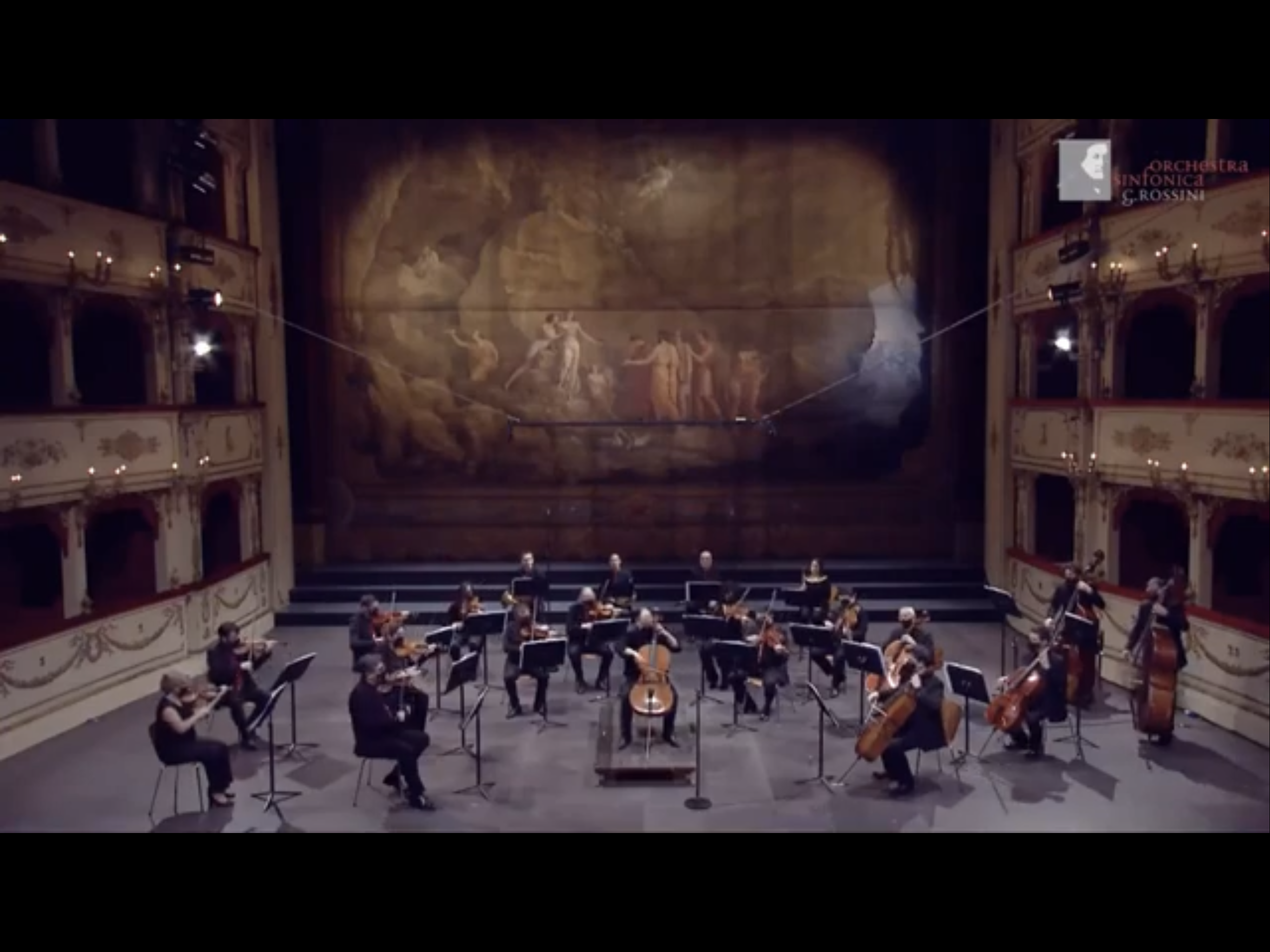
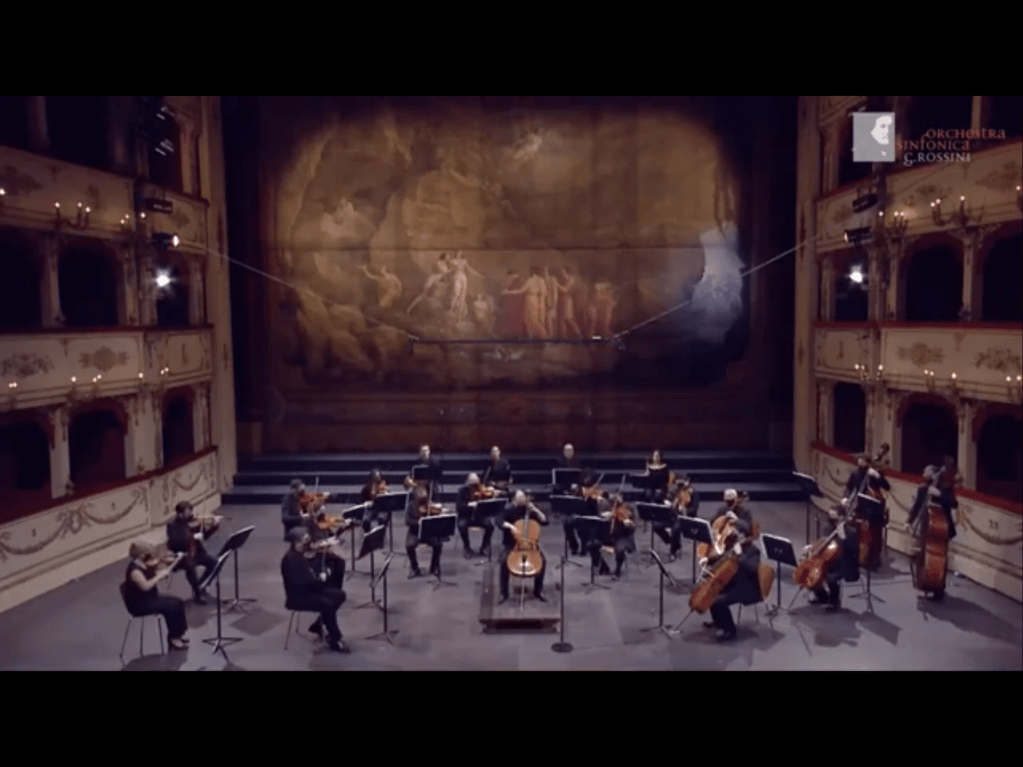
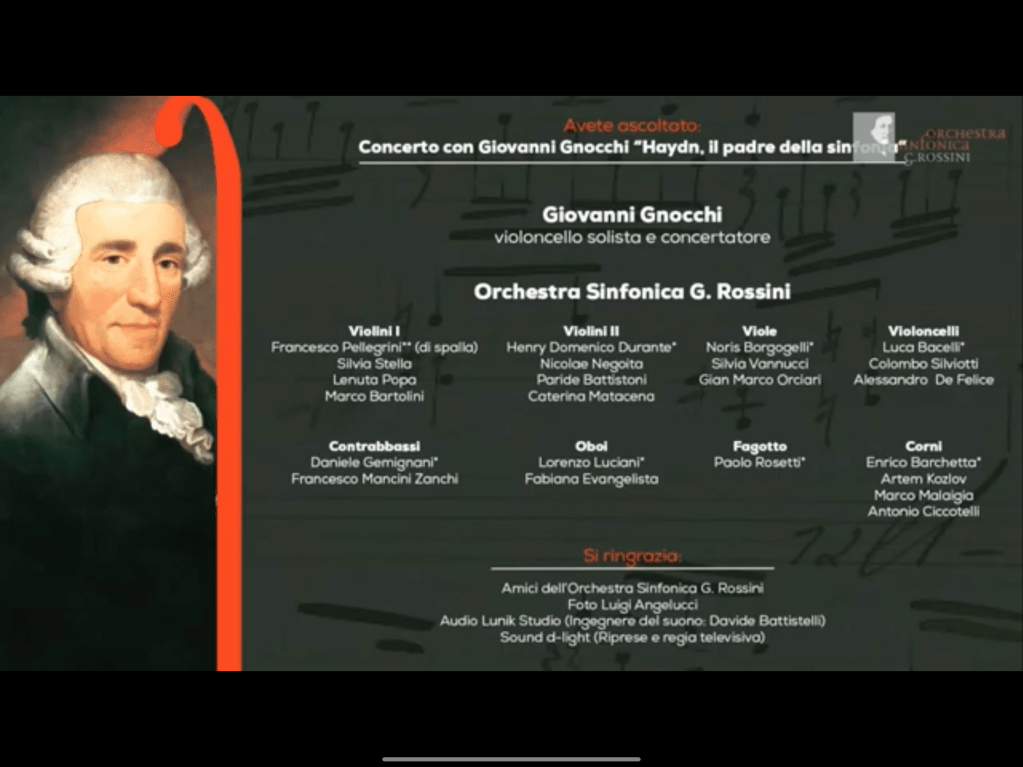
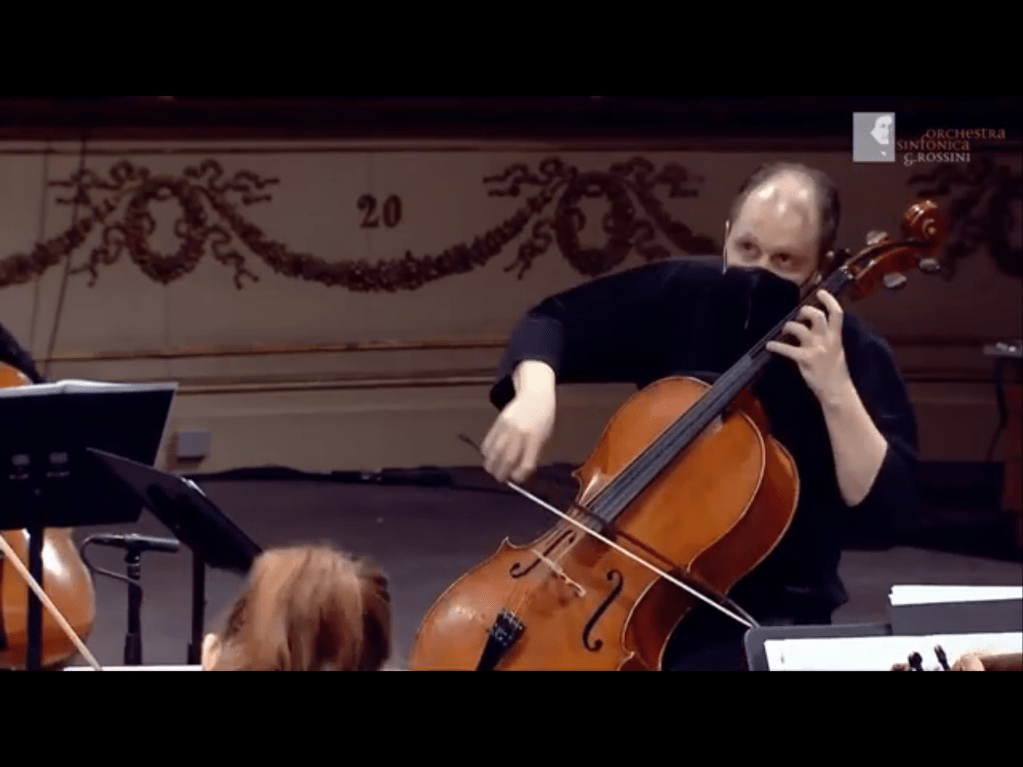
Some superb performances from these masked performers conducted from the cello by Giovanni Gnocchi.In the beautiful Teatro Rossini in Pesaro he led his very fine players in Haydn’s first cello concerto and also still with his beautiful steed in hand,conducted Haydn’s 39th Symphony.
Performances of such character and lightness.Playing the concerto without the score he also joined in the orchestral tuttis as well,such was his total understanding of the style and overall shape of this remarkable work.
The symphony,conducting from the score this time,but bringing such character to this the first of Haydn’s Symphonies in the minor key and of his ‘sturm und drang’ period.In G minor ‘Il tempesta di mare’ that was the inspiration for Mozart’s symphony n.25 in the same key.Haydn the father of the symphony indeed
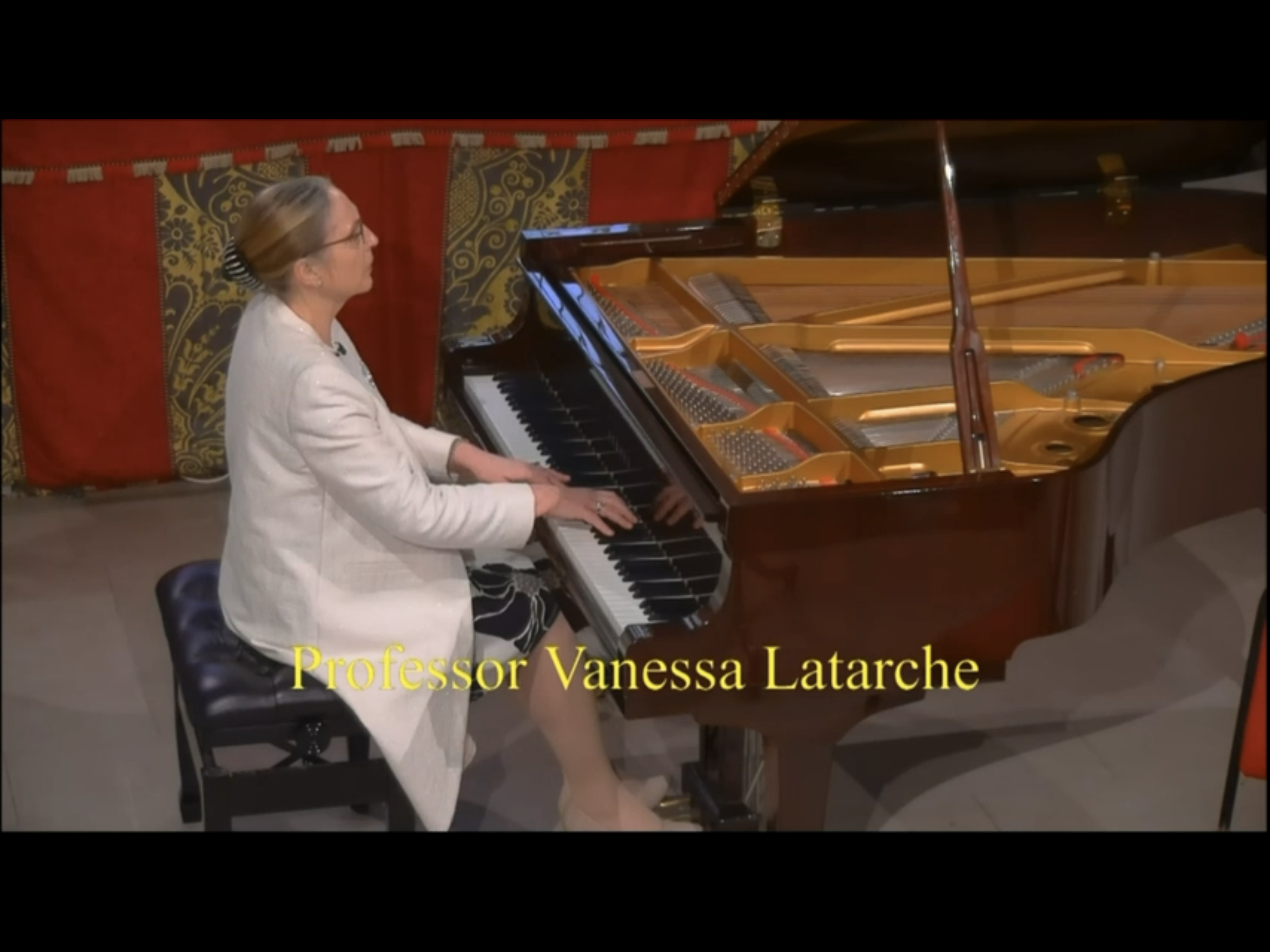
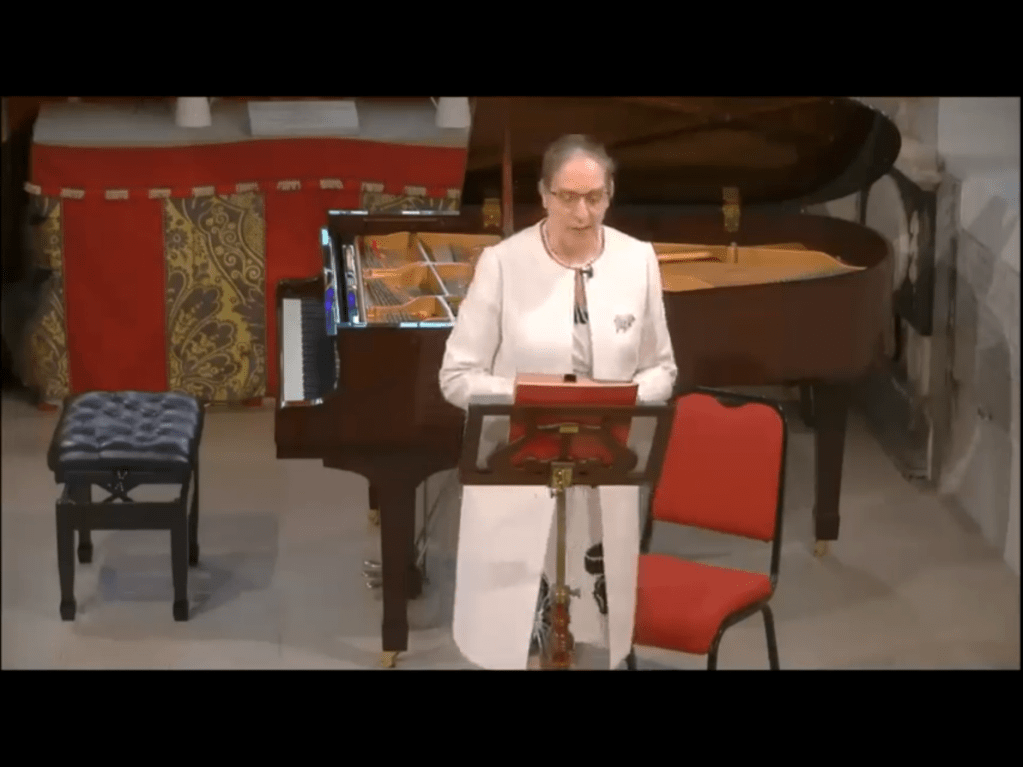
‘Guiding young talents’ A lecture by Professor Vanessa Latarche
Chair of International Keyboard Studies and Head of Keyboard, Royal College of Music Associate Director for Partnerships in China
Professor Latarche discusses her life and work from her early piano playing days in Ealing to her current work as Head of Keyboard at the Royal College of Music.
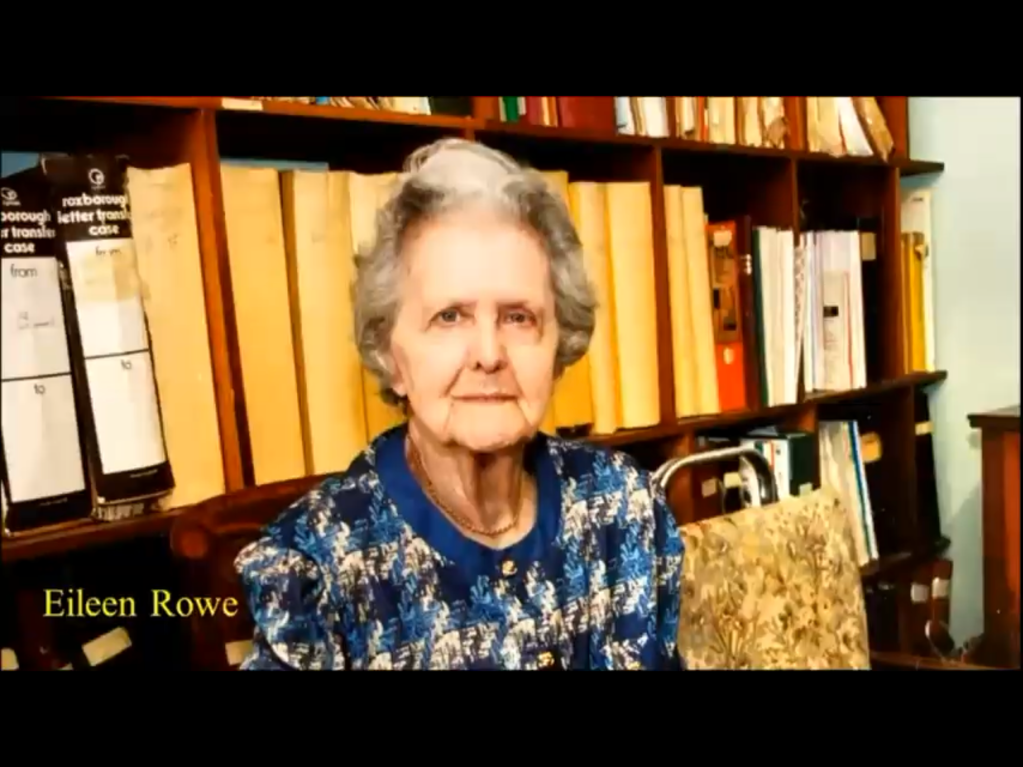
Fascinating talk by Vanessa Latarche from her early lessons with the fondly remembered Eileen Rowe and Alex Kelly.Her time with Christopher Elton,Kendall Taylor and Vlado Perlemuter to becoming head of Keyboard studies at the Royal College of Music . But what do you do ? Listen and marvel at all that she does. But the biggest marvel of all was her sumptuous fluid playing of Granados Epilogue that she played as a thank you at the end of a fascinating hour long journey. There is something about the air in Ealing that nurtures people that are very special indeed. Humility,integrity,passionate selfless commitment. All values that I too and many others received from Eileen Rowe who even left all her worldly goods to helping young musicians in a Trust fund administered by Vanessa and the indefatigable Hugh Mather.
After studying at the Royal College of Music and completing her training in the USA and Paris, Vanessa Latarche was awarded many scholarships and prizes from international competitions. Her concert career has taken her to Europe, the USA and the Far East, as well as many festivals within the UK, including Cheltenham, Harrogate and Huddersfield. Her interest in Bach led to a performance of the complete 48 Preludes and Fugues at the Lichfield International Festival in 1992, the performances being given over four consecutive evenings. She has performed as a soloist with international orchestras and those in the UK including the Royal Liverpool Philharmonic Orchestra, BBC Concert Orchestra, BBC Welsh Symphony Orchestra, working with many leading conductors. She is a Steinway Artist. She has broadcast for over 30 years for BBC Radio 3 and has also broadcast extensively on the BBC World Service and BBC Radio 4. She has been a juror for international competitions in China, Russia, Kazakhstan, Serbia, Italy, New Zealand, and Hong Kong and has adjudicated the national keyboard final of the BBC Young Musician of the Year, which was broadcast on BBC television. In 2007 she was an advisor to the BBC TV programme ‘Classical Star’. Vanessa frequently travels to give masterclasses, to such institutions as Moscow Tchaikovsky State Conservatory, Hong Kong Academy for the Performing Arts, Shanghai Conservatory of Music, Beijing Central Conservatory, Nanyang Academy of Fine Arts, Singapore, Tokyo College of Music, Seoul National University as well as to other UK conservatoires and specialist music schools She is an advisor to Lang Lang’s music school, Lang Lang Music World, in Shenzhen, China, where she formerly held the position of Vice-Chairman. Since September 2005, Vanessa has been Head of Keyboard at the Royal College of Music, having been previously a professor of piano at the Royal Academy of Music for 14 years, where she was made an Honorary Associate in 1997.A renowned pedagogue, with many international piano competition prize-winners amongst her students, Vanessa was made a Fellow of the Royal College of Music, for outstanding services to music, an honour conferred on her by HRH Prince of Wales in May 2010. In September 2011, she was granted a Personal Chair at the RCM, which gave her the title of Chair of International Keyboard Studies. In 2017, as an extension to her keyboard faculty work, Vanessa was made the Associate Director for Partnerships in China, which involves managing the RCM’s collaborative work in China, particularly the RCM/SHCM Joint Institute in Shanghai.
Chosen as ‘One to Watch’ by International Piano Magazine, pianist Iyad Sughayer’s debut album, the Khachaturian Piano Works, on BIS Records received critical acclaim when it was released in November 2019. The album was described by Gramophone as ‘exhilarating and delivered with perfect clarity’ and ‘He captures the music’s essence with such a close sense of re-creative identity that it feels on occasion as though he could be composing it as he goes along. An outstanding debut’ BBC Music Magazine.Sughayer appeared as a soloist with many leading orchestras including the BBC Philharmonic Orchestra, the European Union Chamber Orchestra and the Manchester Camerata.Future engagements include a series of recitals in the UK, Europe and the Middle East and the recording of Khachaturian’s Piano and Orchestral works with the BBC National Orchestra of Wales for BIS Records.
Programme:
Schubert Impromptus D.899. No.2 in Eb. No.3 in Gb. No.4 in Ab
Beethoven Sonata no.17 in D minor, Op.31 no.2 ‘The Tempest’. Largo-allegro; Adagio; Allegretto
I have heard Iyad many times over the past few years and have followed his career with great interest. Like many young pianists they want to run before they can walk. It is quite understandable that when a young musician can at last approach the repertoire of his dreams there starts a great love affair. It is a sudden awareness that all the years of training have led to the possibility of giving public performances with great success. This lockdown with all the disadvantages it has downloaded on young musicians at the start of their career there have also been hidden advantages. Where there was the promise of weekly concerts now they are lucky to have just a few concerts a year in these bleak times .An audience at the other end of a lense that records their every move without giving anything in return to the performer. But for a real artist it has given them more time for profound study where every rare performance becomes an event to cherish. I remember talking to Ruggiero Ricci about the fact that although the standard of performance has never been so high the performances seem too to have become standard. Performances that seem to lack the personality and very personal sense of sound. From just a few notes one could immediately tell if it was Rubinstein,Cortot,Horowitz or Serkin. I remember Cherkassky telling me of a visit to Horowitz’s house to play duets and Horowitz telling him that after the death of Bolet they were the only two left. Cherkassky often used to say to me that he thought many pianists no longer listened to themselves. Ricci told me that to get to America by boat gave one all the time to contemplate and think about the programmes that they were to play on arrival. Whereas today you play in London and the next day in New York or Tokyo. The pandemic has taken away so much but has given us back time. Time is the essence of true art. This unexpected pandemic has given us back the time that seemed to have evaporated in a world that moves too fast for comfort. Time to contemplate many things but above all time to appreciate the very fundamental things which are the very essence of existence. All this to say that from the first note of Iyad’s recital to the last I was aware of the maturity and authority of a great artist. No longer the young lion let loose on the world but a lion who is not only king of his kingdom but surveys all he sees with the wisdom of experience.
Schubert of such subtle beauty -Art that conceals art. The E flat impromptu glistened like silver as it wove it’s way on its magic journey.Passionate outbursts were momentary intrusions on this stream of sounds.The G flat impromptu was played with such aristocratic good taste and the rippling accompaniment so unobtrusive as it supported the melodic line as in Schubert’s most mellifluous of lieder.The same gentle cascades of notes in the A flat impromptu led to the passionate outpourings of his soul.
A truly magical opening of Beethoven’s Tempest Sonata where the composers intimate use of the sustaining pedal was wonderfully interpreted as were so many other remarkable details.Never detracting from his overall architectural view through a rhythmic undercurrent that created a hypnotic hidden pulse.The beautiful embellishments of the Adagio both menacing and enchanting.And the sheer pastoral simplicity of the Allegretto as it made it’s inexorable way forward with a relentless lilt that was never allowed to rest until the final descending scale .
Entering another world with Khatchaturian where the well known opening waltz was thrown off with all the charm and colour of someone totally immersed in this almost cinematagraphic world .The beautiful fluid melodic line of the nocturne and the great character of the Mazurka and Romance were upstaged by the Galop that showed us the true ‘kitten on the keys’ as Iyad played with such unobtrusive elan and masterly control. It brought the recital to a brilliant end. Who knows when the next recital will be for Iyad but whenever it is I will be there to admire his artistry as much as he will enjoy sharing it with his awaiting audience.
A pre concert interview with Iyad and Clive Wouters
Iyad on tour for the Keyboard Trust in 2019 with Beth Glendenning in Philadelphia – former assistant to Eugene Ormandy and indefatigable organiser of young musicians concerts
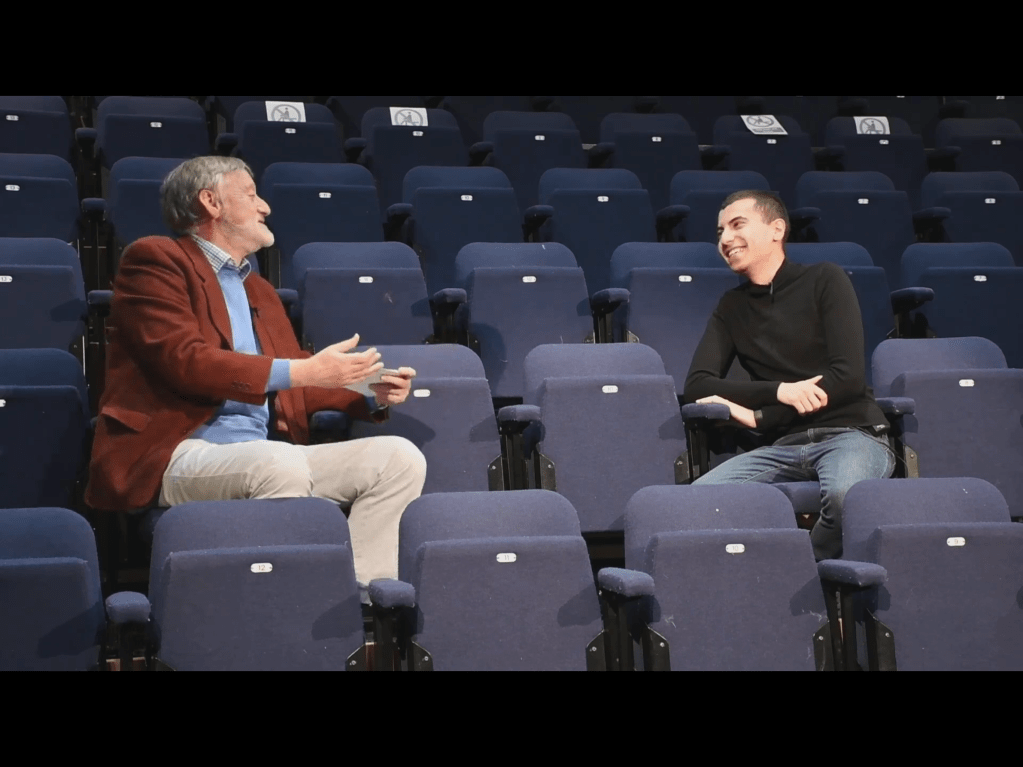
Facinating pod cast for the Keyboard Trust with Jonathan Ferrucci ……some inspired and inspiring comments on his forthcoming performance of the Goldberg variations.It will be available on the Trust website and his performance will be streamed live from St Mary’s Perivale on Sunday 28th March at 4.
There was lots to discuss all centred around Florence…….and Bach! It was there that I first heard Rosalyn Tureck giving a lecture on Bach in the Cristofori museum of Stefano Fiuzzi.I could not believe that she had not been invited to give a recital so I invited her to play in Rome.A performance of the Goldberg Variations ,one that I had never forgotten from my student days in London.( see programme below) It created a sensation after 25 years absence from the stage when she had stopped performing in order to dedicate herself to the study of Bach in Oxford.Creating her own Bach research institute of which I was eventually invited to be a trustee.
Florence immediately woke up and invited her to La Pergola theatre and she became the diva of this centre of European culture,playing sometimes twice a season.
That mantle has now passed to Angela Hewitt and it is she who had noted in 2014 a young florentine boy of quite exceptional human and pianistic gifts with whom she has been sharing her unique ideas from a life immersed in the world of the Universal Genius of J.S.Bach. Rosalyn’s performance was like a rock to be revered and honoured from a distance whereas Angela’s is based on the song and the dance to be enjoyed and moved ,touched as it is by the human spirit. Angela had trained as a dancer which one can admire in all that she does. Jonathan practises Ashtanga yoga and considers it an integral part of his work ,and essential in his life.In fact he stands on his head for a few minutes before starting the day. Jonathan’s teacher for 10 years ,Giovanni Carmassi,inspired him to pursue music in life but did warn him that music is a “dangerous disease” .The book of conversations with Carmassi is the New Testament as Neuhaus the Old.Both are a pianist’s bible . All discussed over some magnificent examples from Jonathan’s upcoming performance.It will be a performance to cherish as was Angela’s recently in the church where Bach is laid to rest in Leipzig. If music be the food of love …..play on ……… We certainly need it in these unexpected times. “I have not been with you for so long” “Cabbages and turnips have driven me away”………”If my mother had cooked meat ,I would have stayed longer!” What can this last variation mean ………Jonathan reveals what he has discovered in his lockdown study of the greatest set of variations ever written.






































 ChristopherAxworthy-MusicCommentary