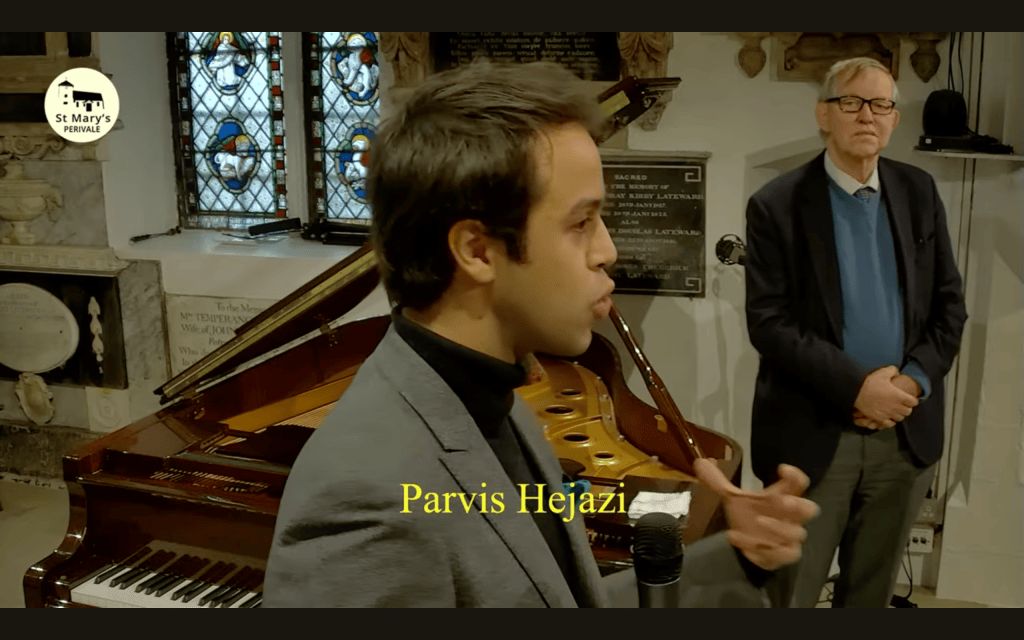
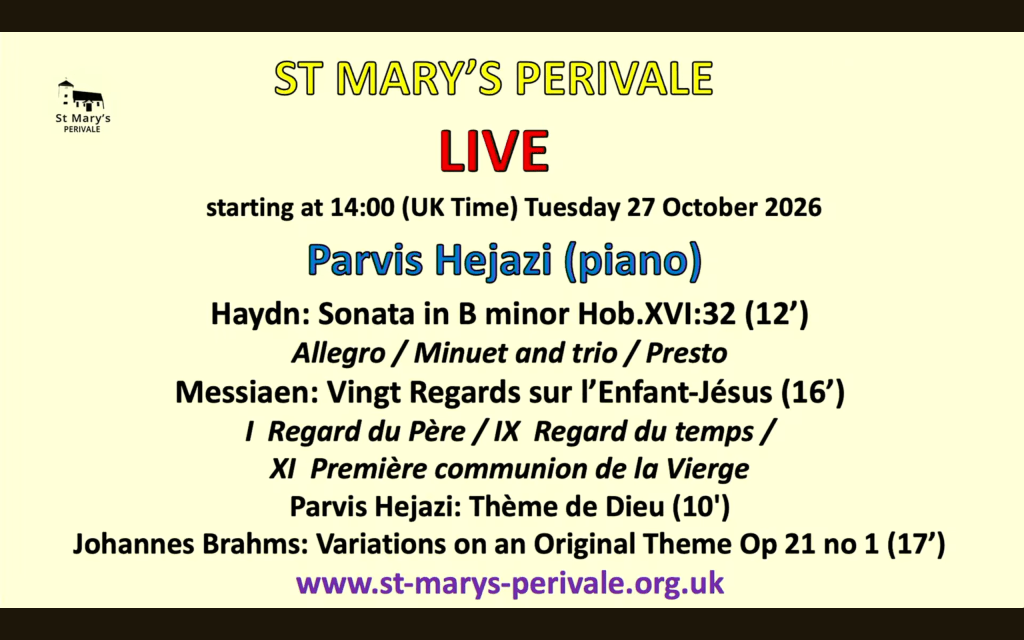
It is always a revelation to listen to students from Norma Fisher’s class where music reigns with a capital ‘M’. Masterworks that are played from the bass upwards with an anchor on which the music can flow with a simplicity and beauty without any unnecessary personal intervention. Parvis has graduated from the Royal College and divides a professional life between Germany and England. He has not only been dedicated to his solo repertoire but also sharing his music making with others and recently I heard him with a very fine singer in a lieder recital of significant beauty and also in two pianos with another student of Norma Fisher, Sonya Pigot.
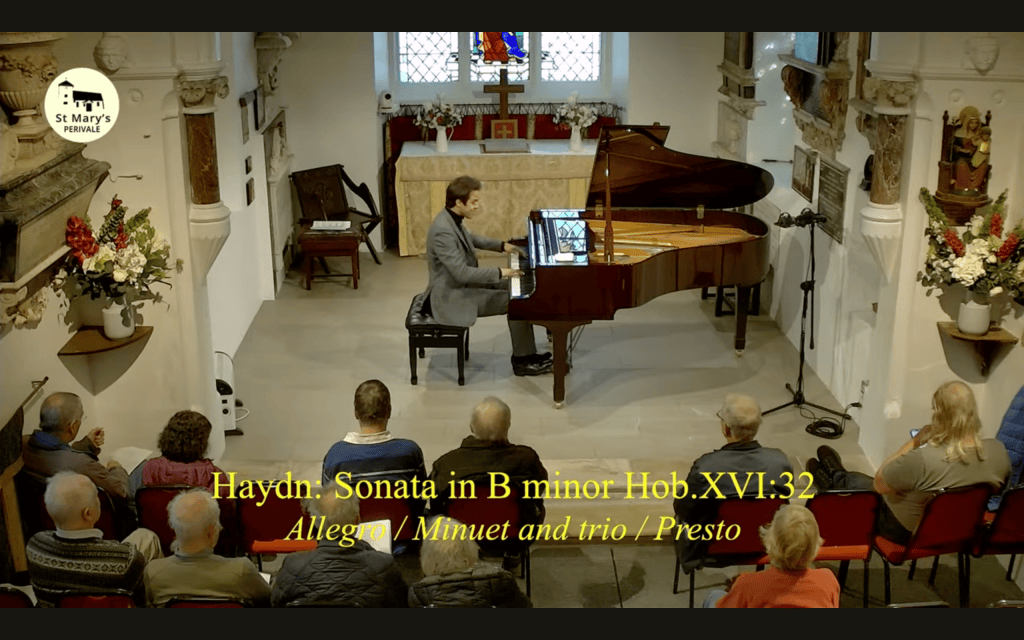
The Haydn Sonata in B minor is one of six published in 1776 and Parvis played with crystalline clarity with impish ornaments and playing of fantasy with a refined palette of colour. He brought simplicity and radiance to the Minuet which was allowed to flow beautifully, interrupted only by the Trio that was played with measured insistence and aristocratic poise. The ‘Presto’ Finale was played with a dynamic drive of scintillating brilliance.
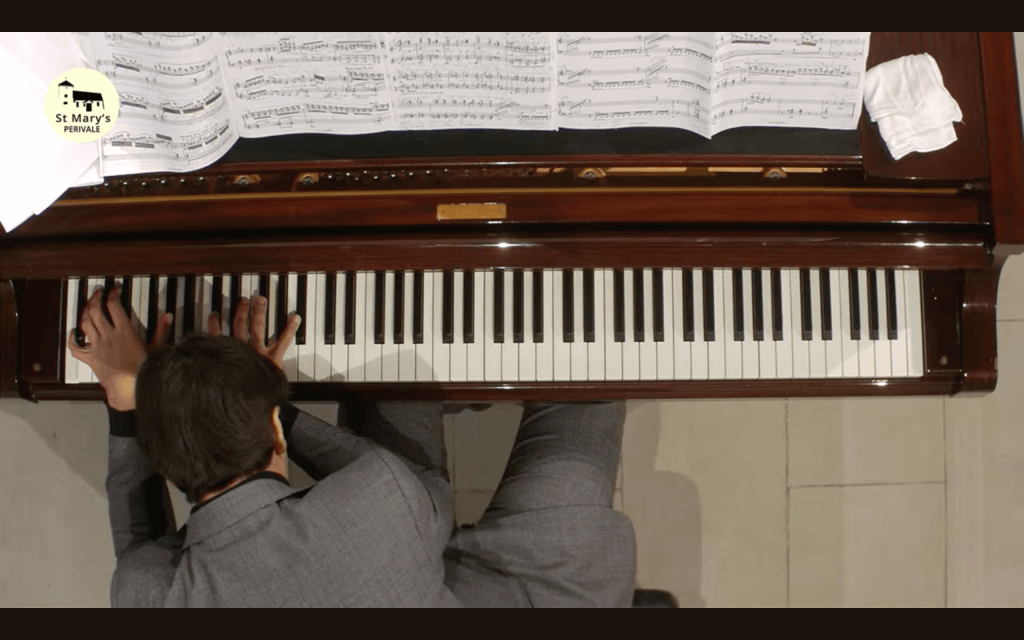
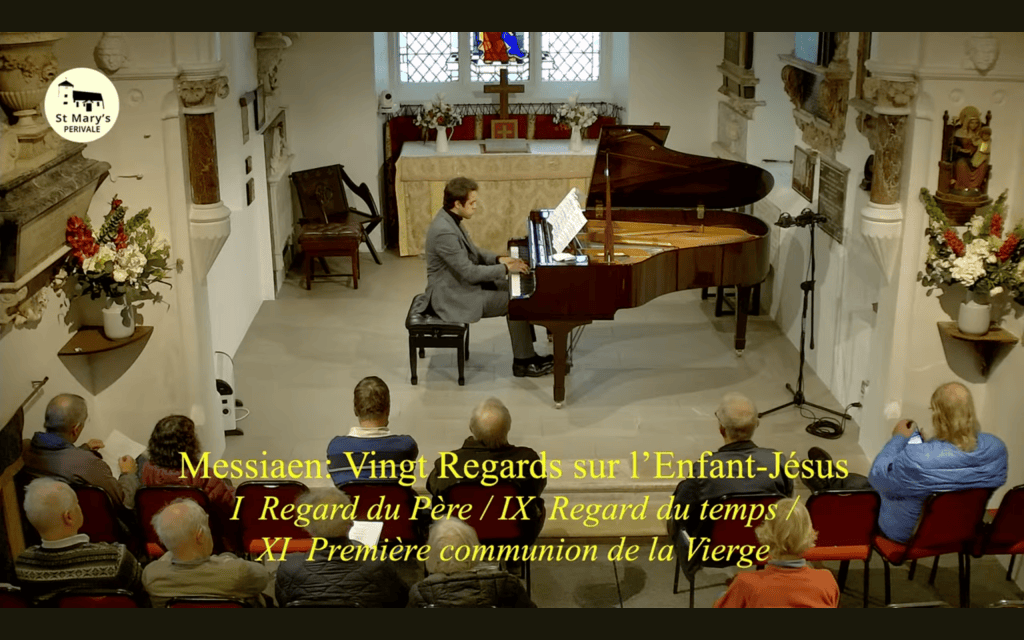
The Haydn Sonata was just a prelude to the ethereal peaceful glowing sounds of a true believer. A radiance and poignant intensity of a series of chords that are part of Messiaen’s Vingt Regards sur l’Enfant-Jésus. Chords and progressions that had great significance for Messiaen and that Parvis was to use in his own very suggestive composition simply called Thème de Dieu.
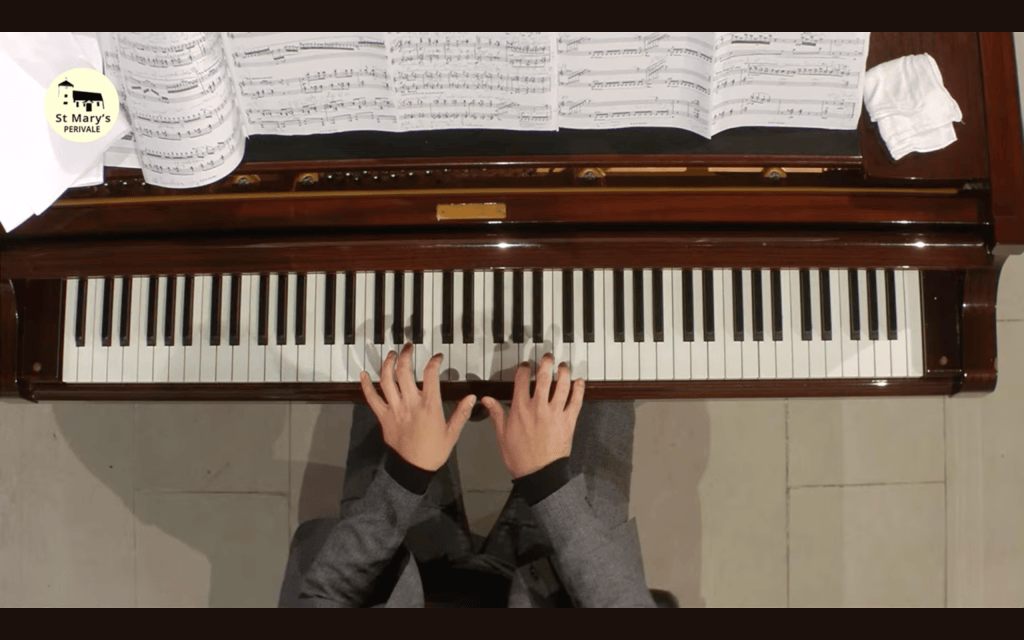
‘A giant fresco, a kind of odyssey,” is Bertrand Chamayou’s description of Olivier Messiaen’s piano masterwork, Vingt Regards sur L’Enfant-Jésus. Written in 1944, it is a monumental, mystical and iridescent sequence of 20 gazes or contemplations on the infant Jesus. Messiaen once wrote that ‘The drama of my life is that I have written religious music for an audience that has no faith.’
Vingt Regards ‘is a mystical rather than a religious experience … It arouses the same kind of awe as walking into a magnificent cathedral or seeing a glorious sunset. You feel that time stops.’
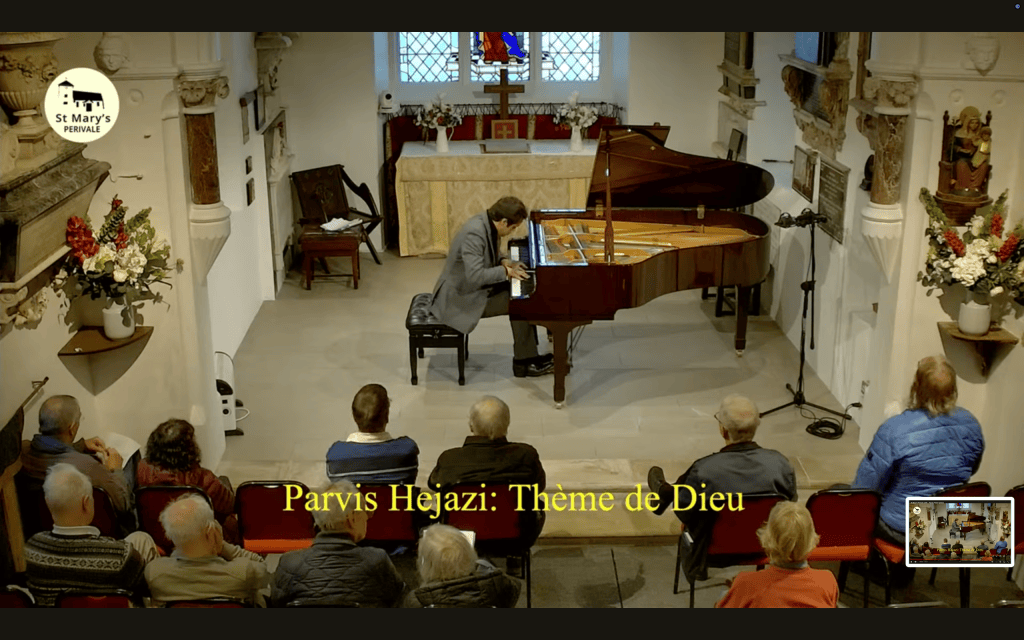
Regard du Père (“Contemplation of the Father”) is the first of the set of twenty and Regard du temps (“Contemplation of time”) is the ninth just before the well known Regard de l’esprit de joie. Parvis created an atmosphere of a seance with chords played very slowly with poignant sensibility and timeless beauty . His own composition was much more complex and was played with searing luminosity and an authority with a palette of sounds bathed in pedal that was an impressive display of control and projection. He created an extraordinary atmosphere with his audience who were now following his every move with intense concentration as there appeared a vision of radiance and beauty on the horizon, of the paradise that Brahms’s Variations on an Original theme inhabit.
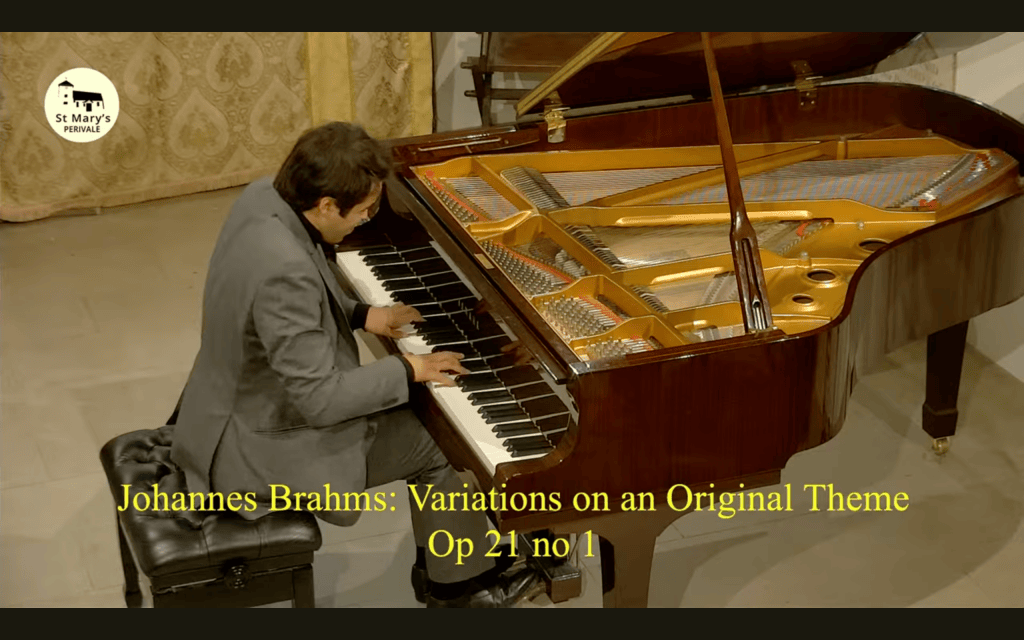
Brahms wrote this set of eleven variations in 1857 and they were first performed by Clara Schumann two years later. A work rarely heard in the concert hall it is the only set of variations on Brahms’s own theme. A continuous outpouring of flowing radiance and beauty. Parvis brought a nobility to the opening with the generous sonority of sumptuous sounds with the inner counterpoints just adding to the opening grandeur . Played with a fluidity and exquisite beauty of rare sensibility as it build to a climax with authority and passionate intensity.
A recital that was by a young artist who has something important to say sharing an intense love for all he does with his audience with playing of the extraordinary beauty and intensity of an intelligent musician.
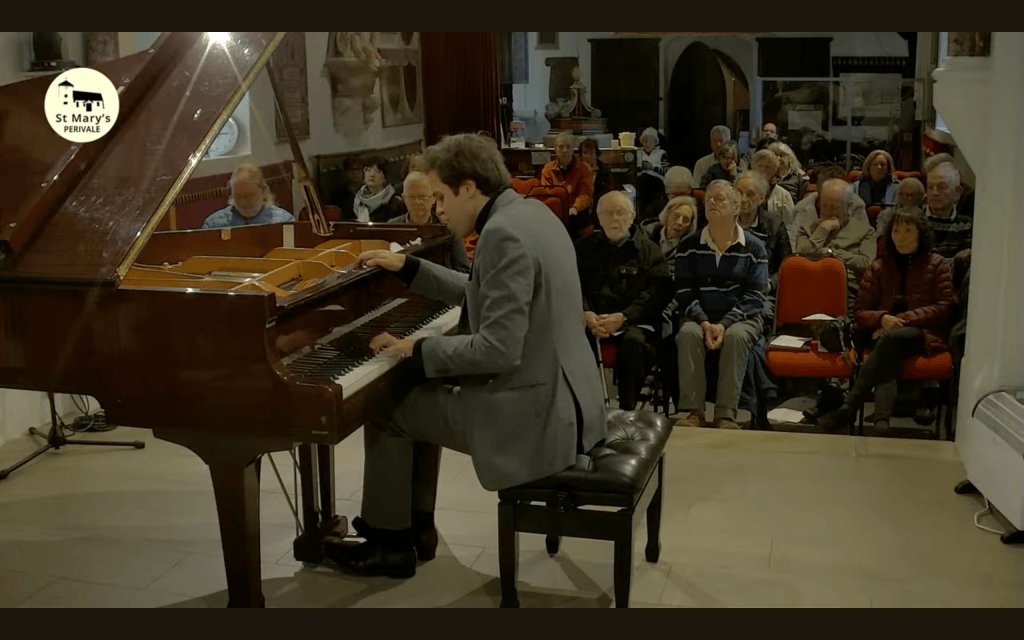
1999, London-based German Persian concert pianist Parvis Hejazi has been acclaimed as a “rising star on the piano sky” (Ulla Hamann, ARD ). Highlights of this year include the award of Absolute Winner at the Brahms International Music Competition in Gdansk, a tour with Beethoven 5th piano concerto with Musica Viva Orchestra under the baton of Nicolas Hrudnik at Die Glocke Bremen as well as several recitals at the LiedBasel Festival with his Duopartner Jakob Schad as well as with Annette Dasch and Wolfram Rieger. For the 2026/2027 season, concerts across Europe are planned, including an all-Messiaen at the Koepelkerk in Groningen, as well as performances in Amsterdam, Berlin, Hamburg, Munich, Paris and London.
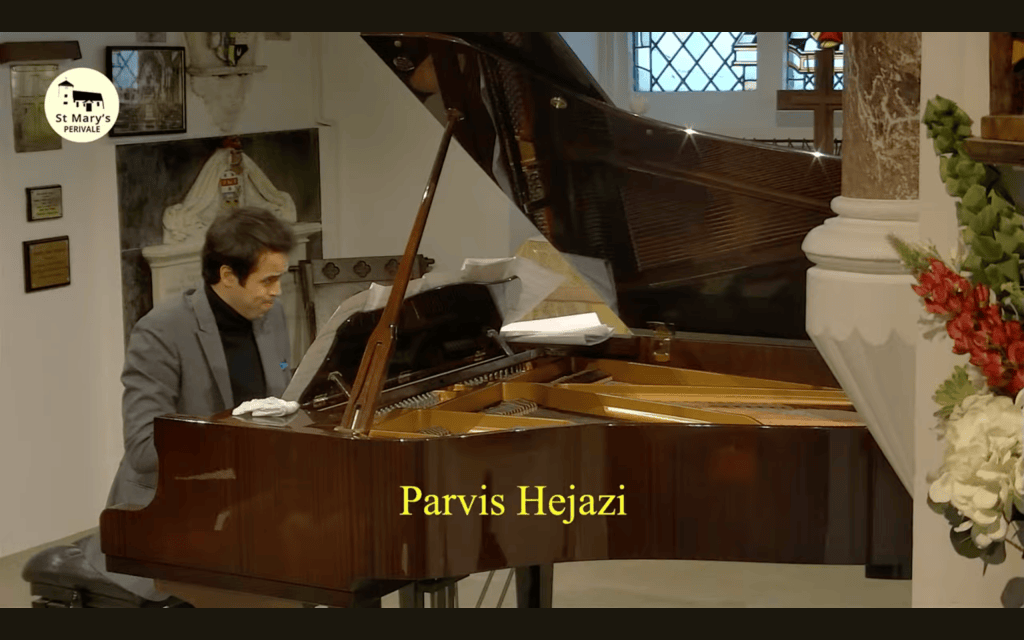
Parvis has performed with the Bremen Philharmonics under the baton of Marko Letonja, with the Jena Philharmonics under the baton of Markus Frank, with Musica Viva Orchestra under the baton of Nicolas Hrudnik, with Wratislavia Chamber Orchestra , Circle Symphony Orchestra , and others. In 2025, Parvis performed Pierre Boulez’s Sur Incises at Bradshaw Hall and CBSO Centre Birmingham under the baton of Daniele Rosina, making him one of only very few pianists to perform the work, which is notorious for its extreme difficulty. Parvis made his debut at Laeiszhalle Hamburg in 2015 upon winning the Federal Jugend Musiziert Competition. In 2016, he made his debut at the Wiener Saal Salzburg in 2016, following the prizewinner’s selection of the International Summer Academy Mozarteum in co-operation with the Salzburg Festival. Parvis now calls national and international stages in over 30 countries home, such as Die Glocke Bremen, Federal Chancellery Berlin, Villa Medici Giulini Milan, Gnessin Institute Moscow, the Old War Office London, the Kaufman Center and Klavierhaus in New York City. He has also given lecture recitals at the ConVivial Foundation Wiesbaden and Villa Ichon Bremen.
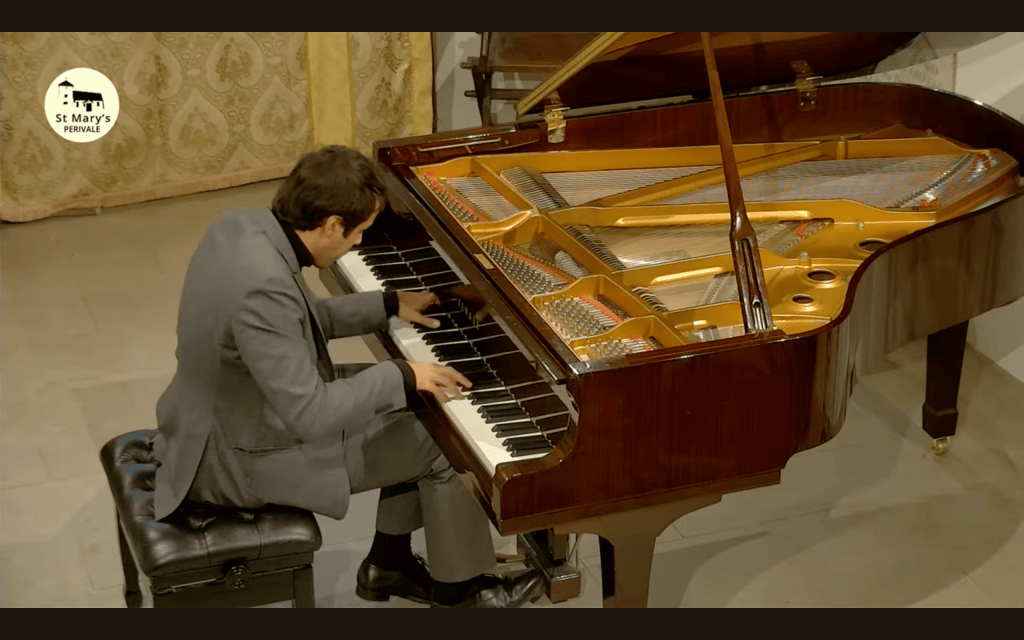
Parvis is an alumnus of the Royal College of Music in London, where he studied with Norma Fisher and Vanessa Latarche. He graduated from both Bachelor and postgraduate programmes as a Scholar of the Royal College of Music with highest distinctions and holds a prestigious Artist Diploma Award.
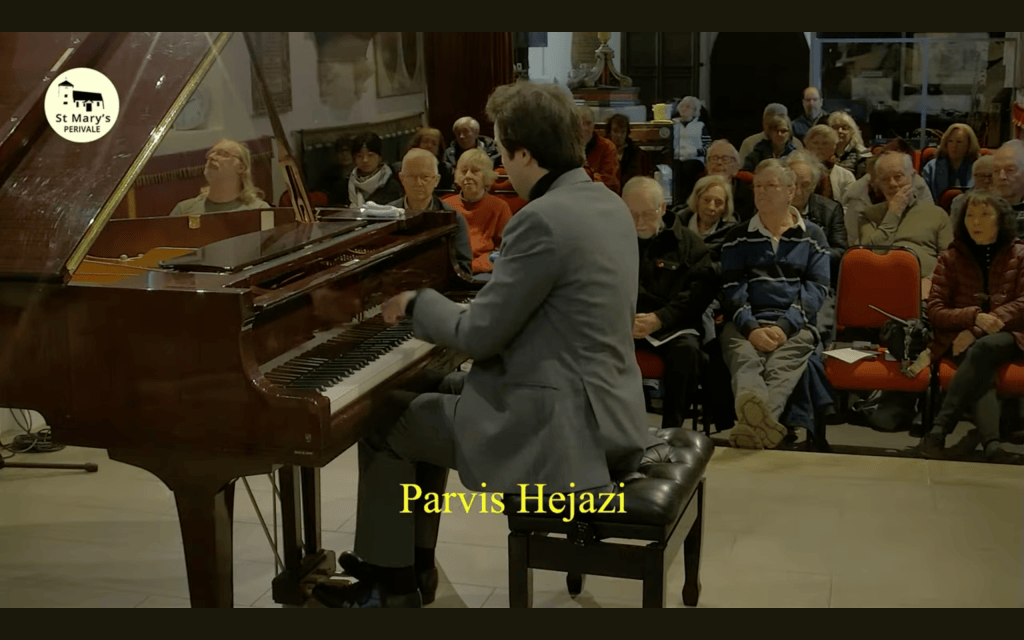
Parvis has won over 30 national and international piano competitions, including the Grand Prix and Special Prize “Les Maitres du Piano” of the International Piano Competition Gagny , three first prizes at the Federal Jugend musiziert competition in Germany, and five awards at the Jeunesses Musicales Competition for Young Composers ( Bundeswettbewerb Komposition ).