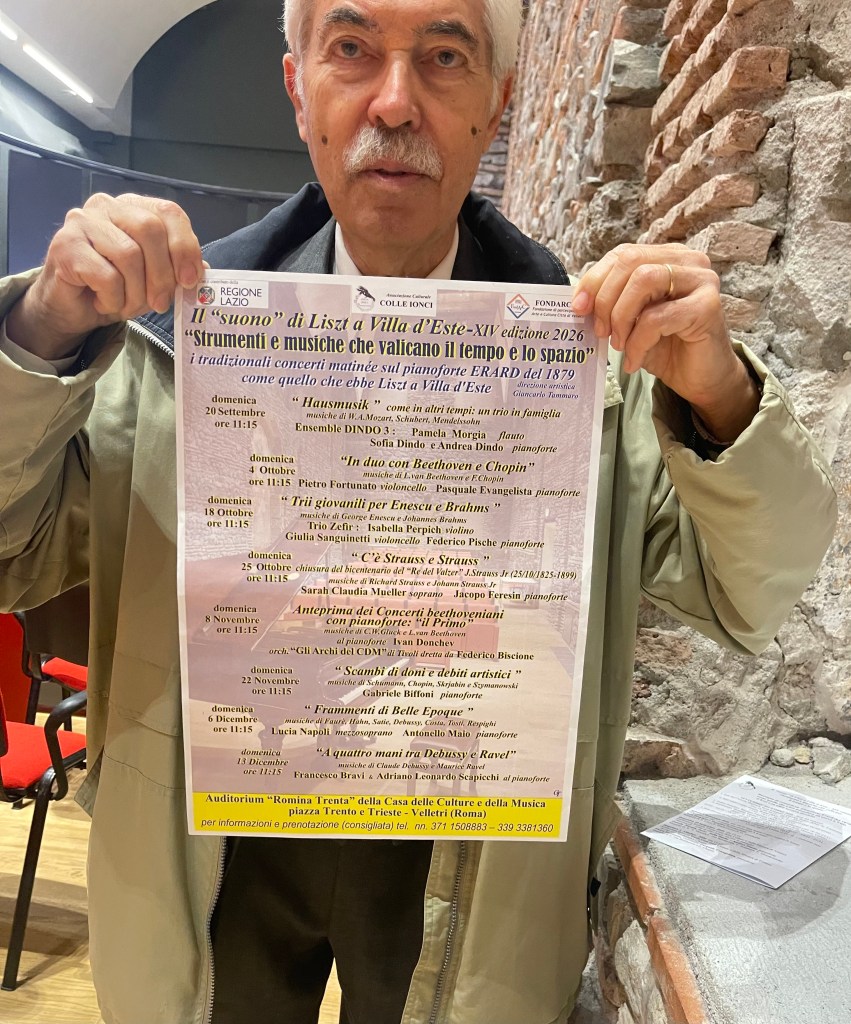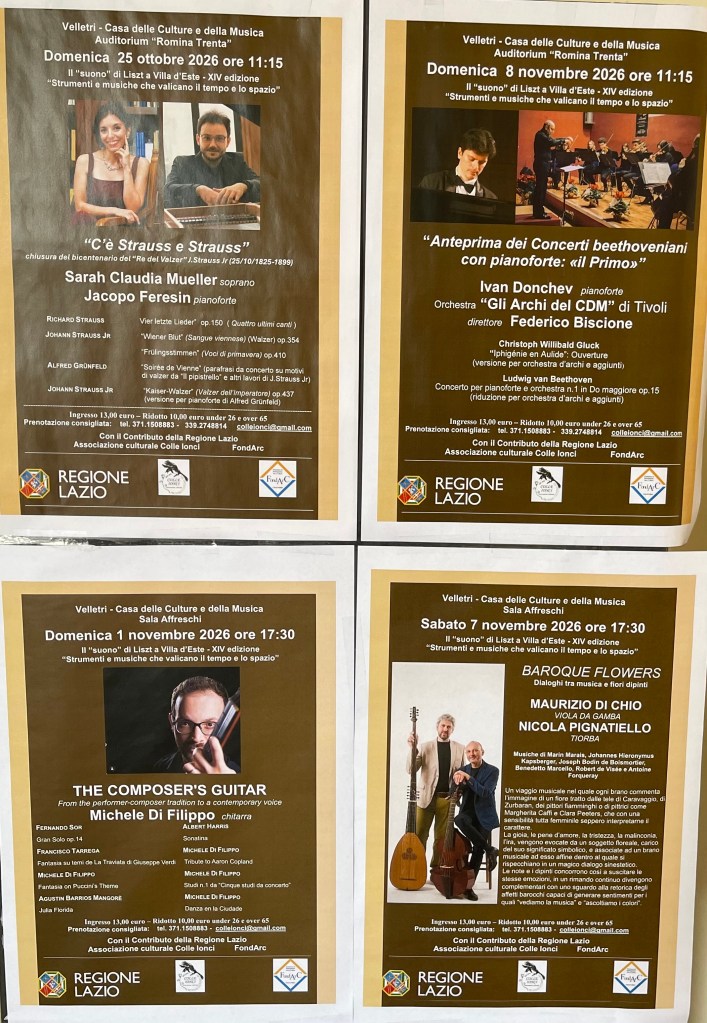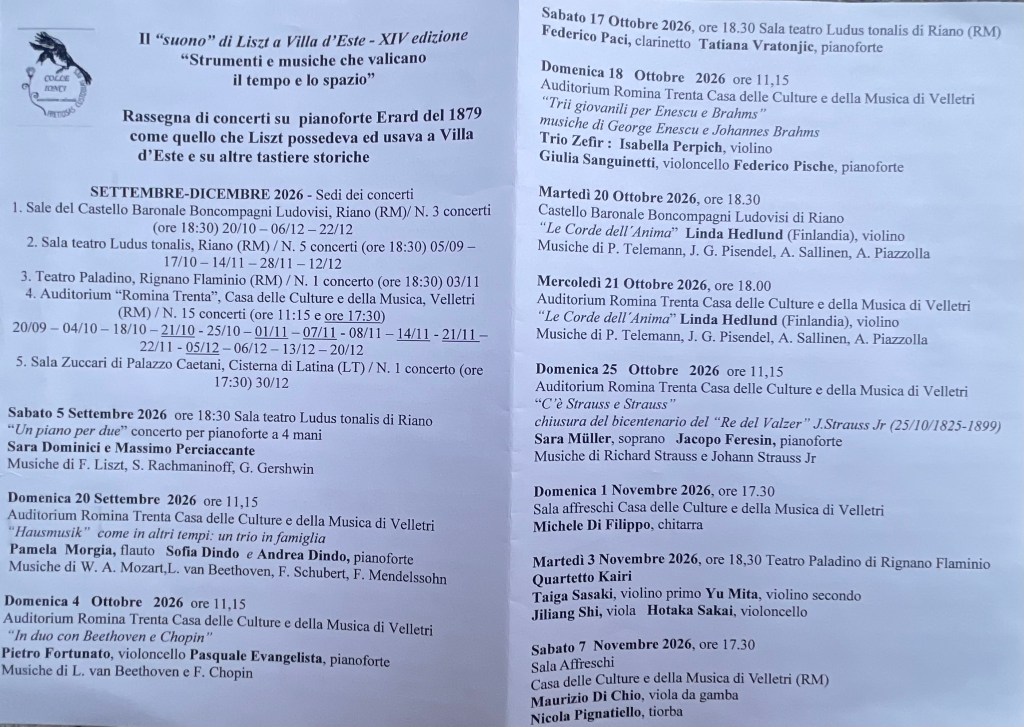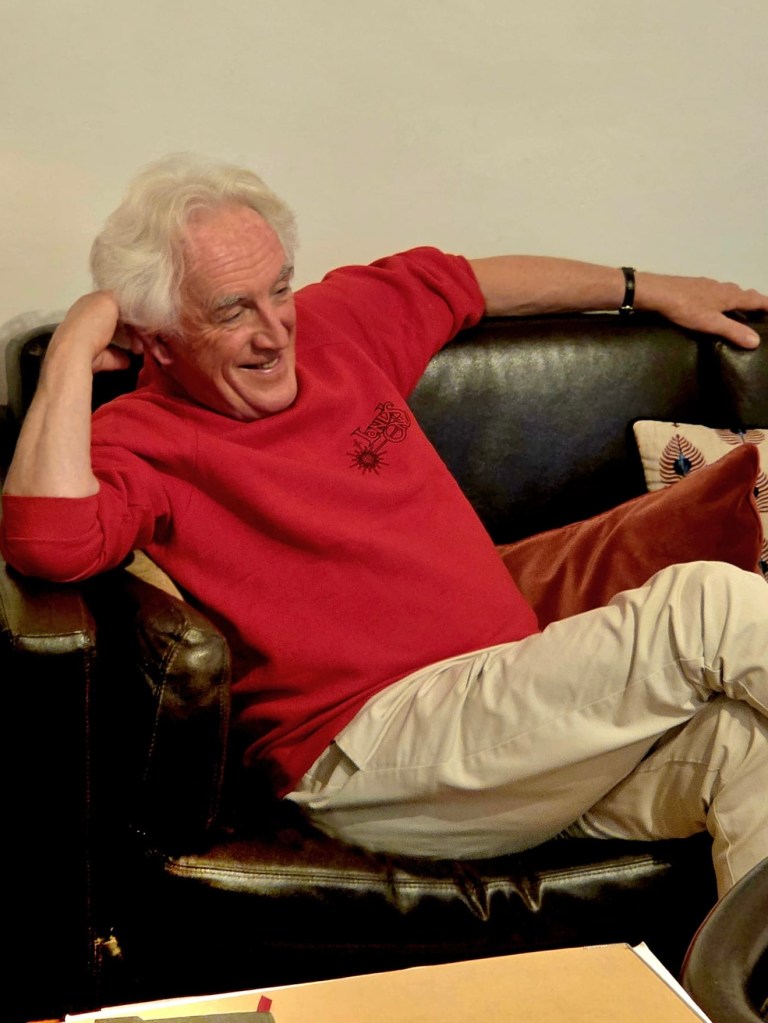
Johann Strauss junior was born this day in 1825 and it was Ing. Tammaro who decided to celebrate it 201 years later with a concert in Velletri dedicated to both Richard and Johann jr.
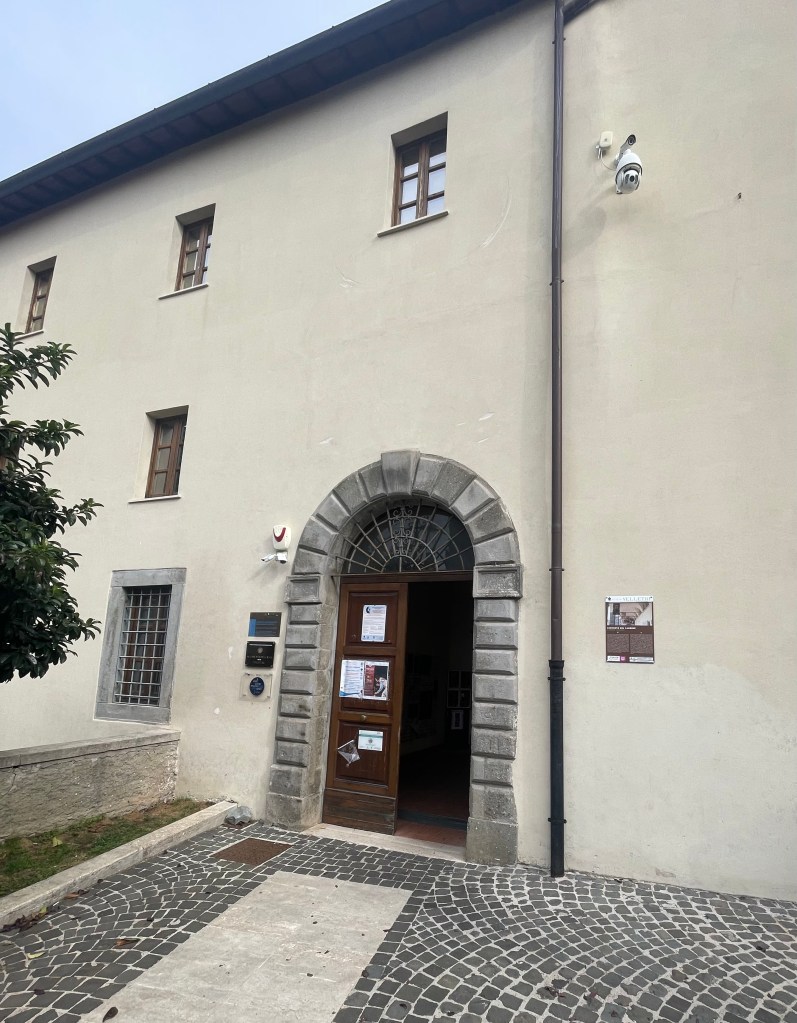
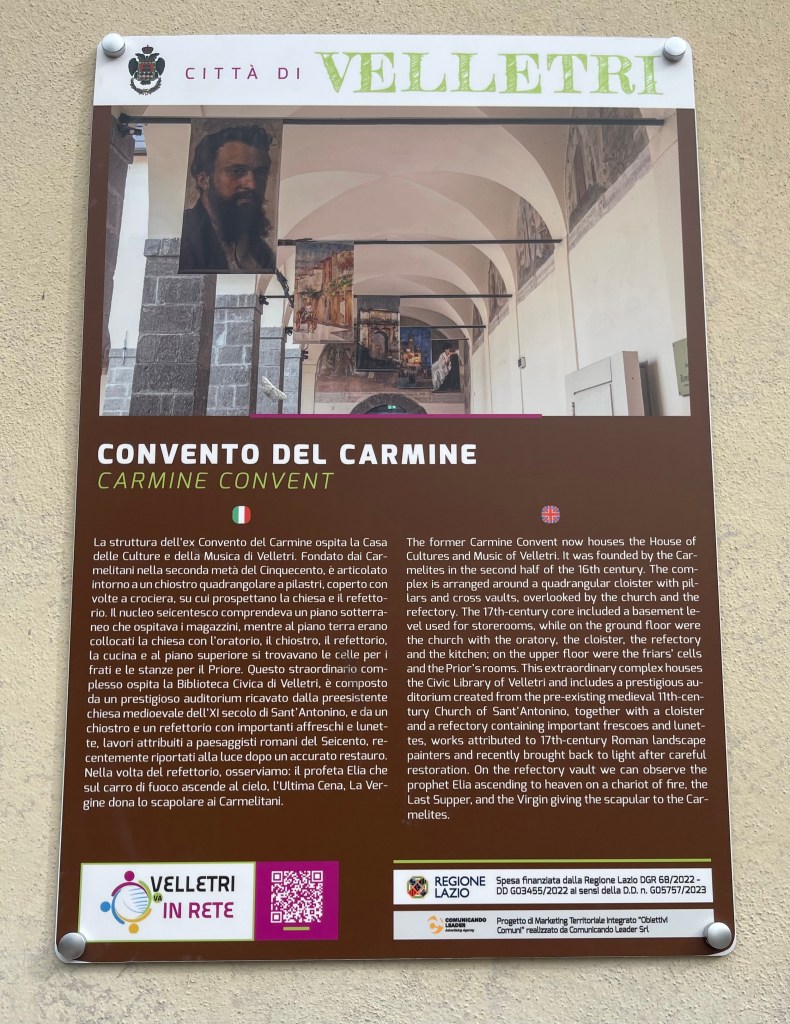
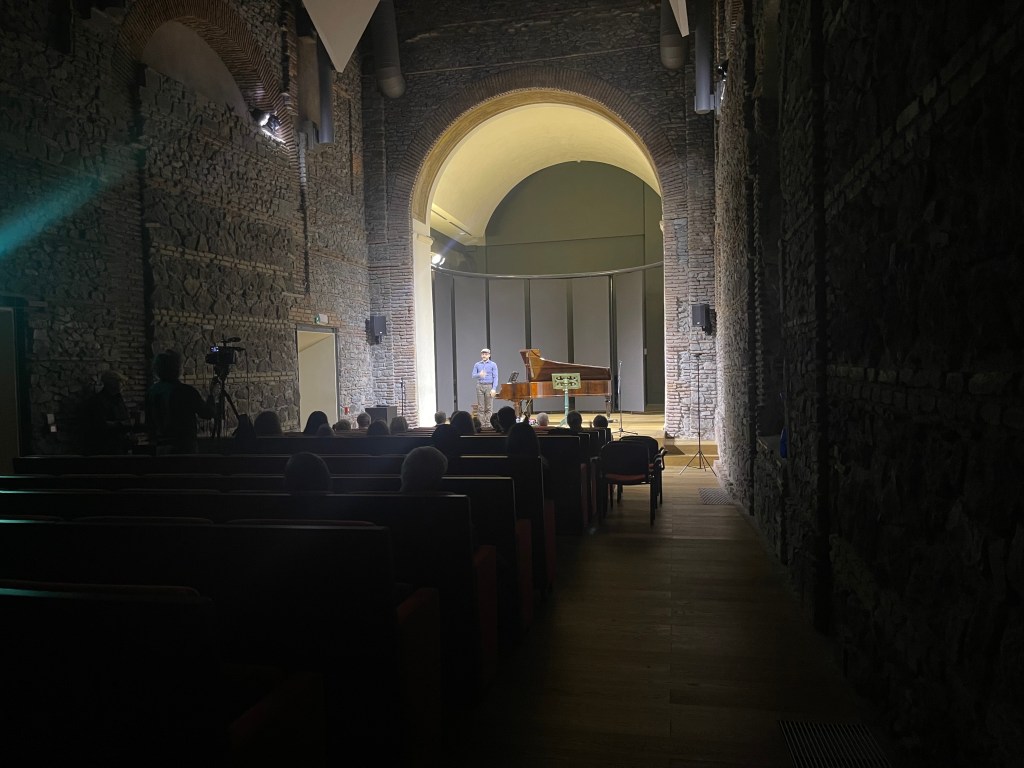
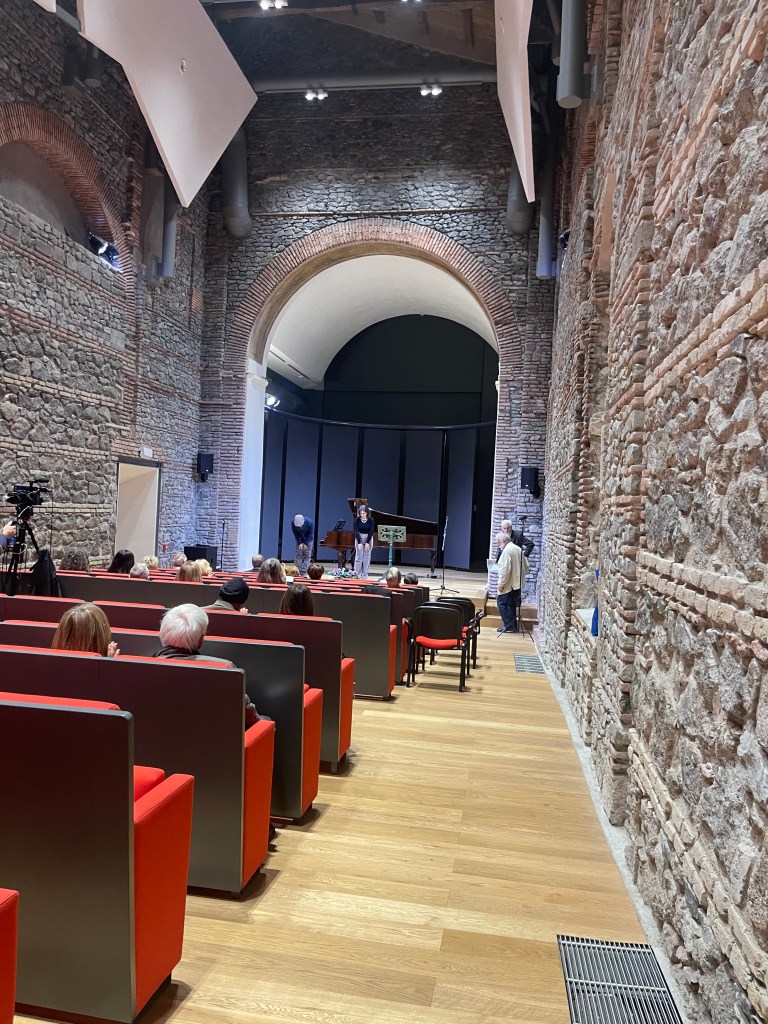
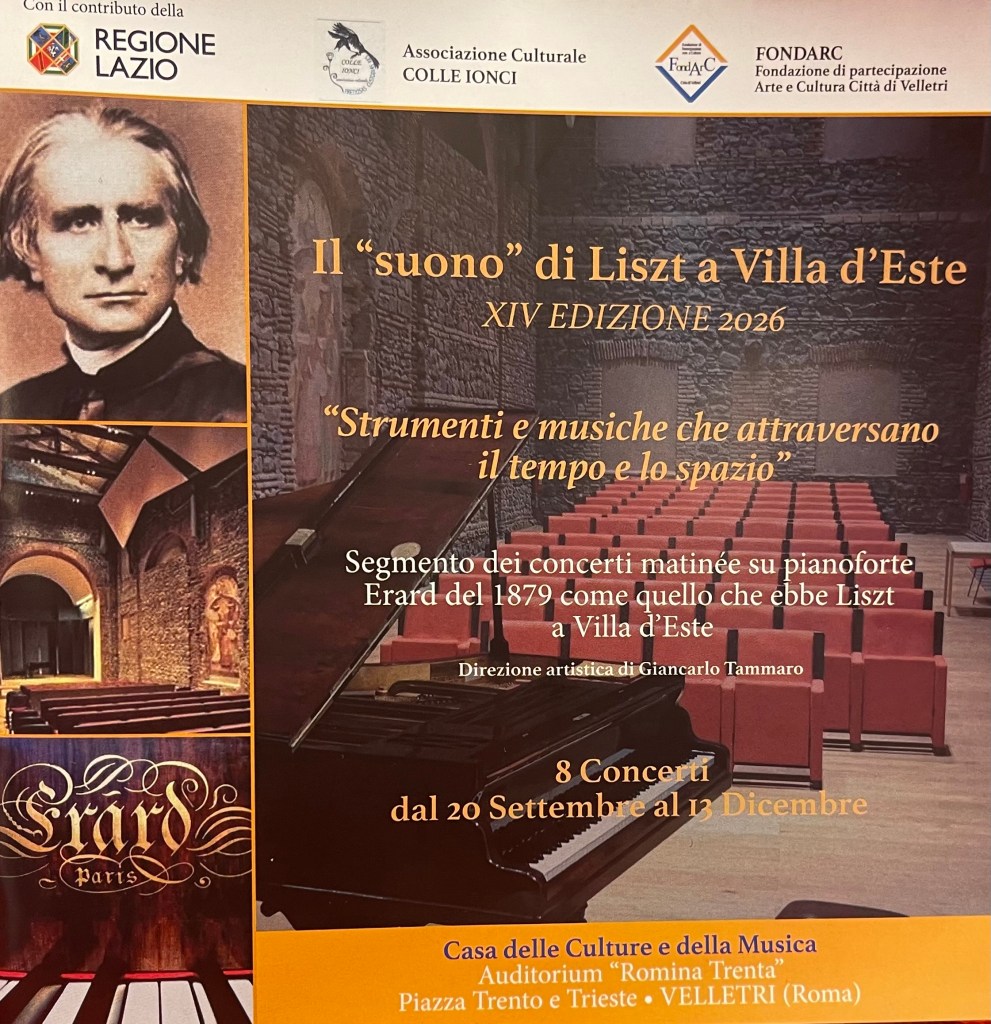
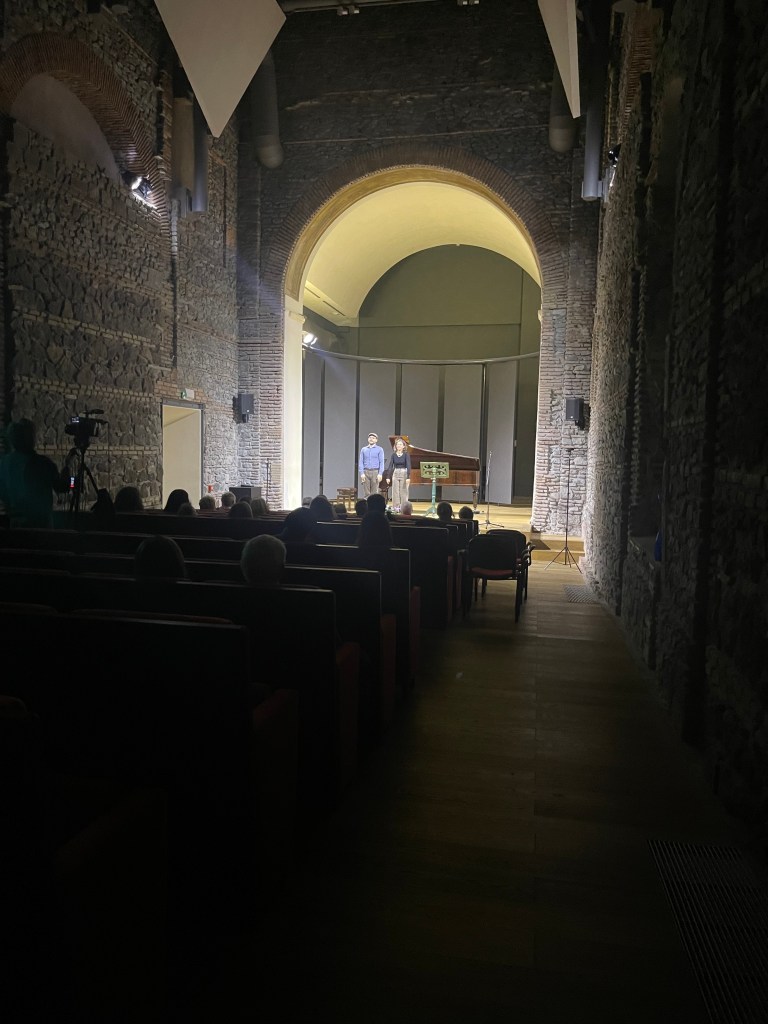
Ing. Tammarow’s superbly restored Erard piano from1879, with its mellow tone and lightweight brilliance, was a poignant reminder of the deep significance of Richard Strauss’s last outpouring of beauty and resignation. The rich golden sounds of Sarah Claudia Mueller’s voice soaring into the heights of this ex convent sited at the end of a meandering lane and an oasis of beauty in a town that has become the crossroads to the ‘Castelli Romani’ where the nobility of the day would have their sumptuous country residences.
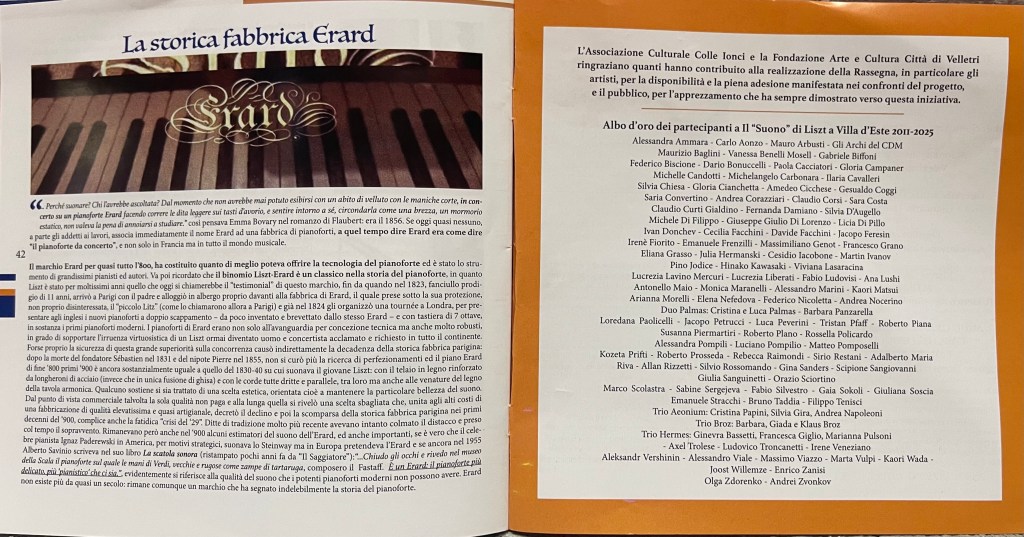
It is the very title of this concerts series, now in its fourteenth edition, that was born in the Villa d’Este where Liszt would spend much time whilst taking holy orders in the Eternal City below.
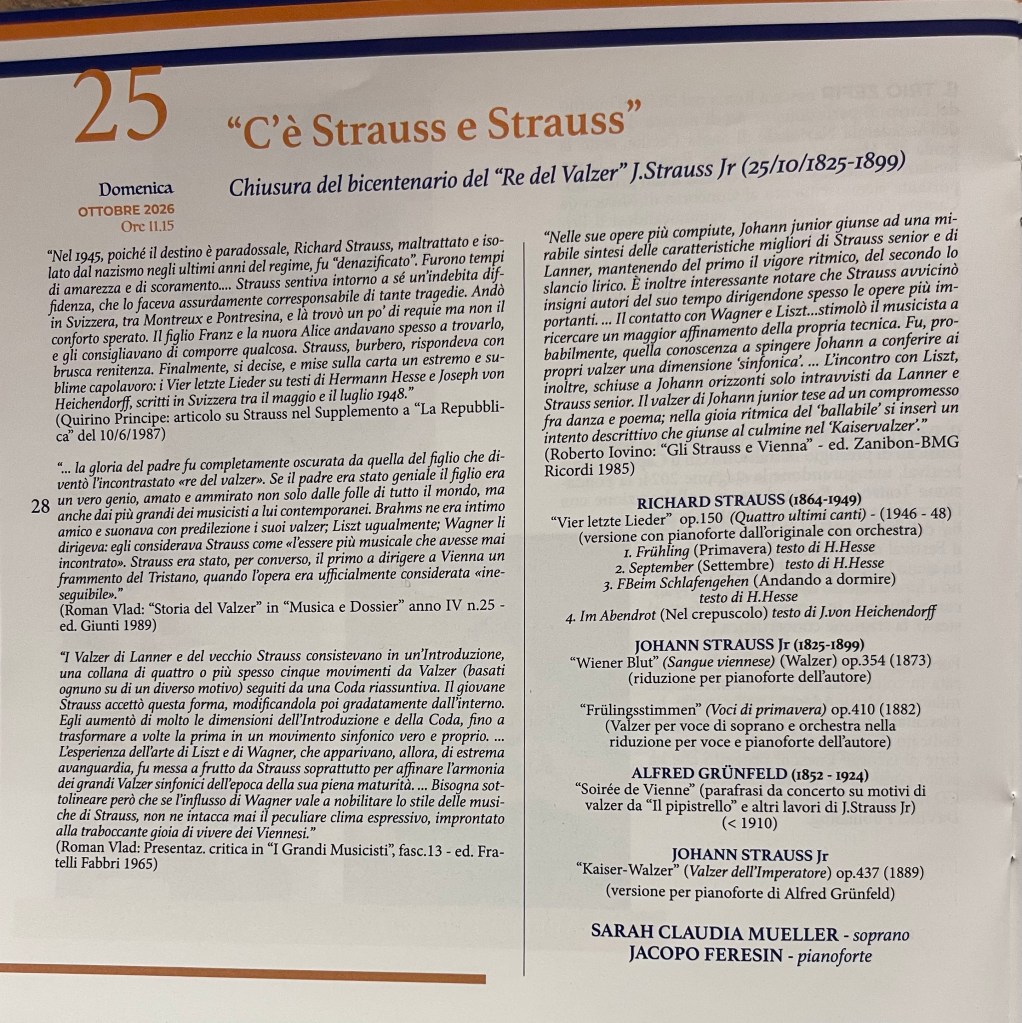
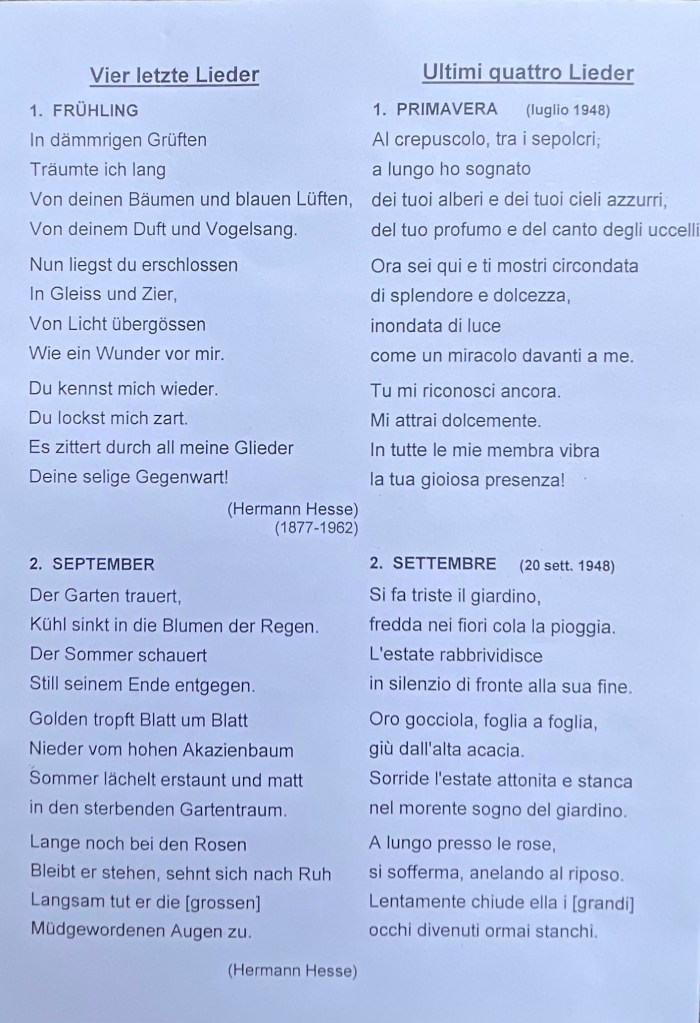
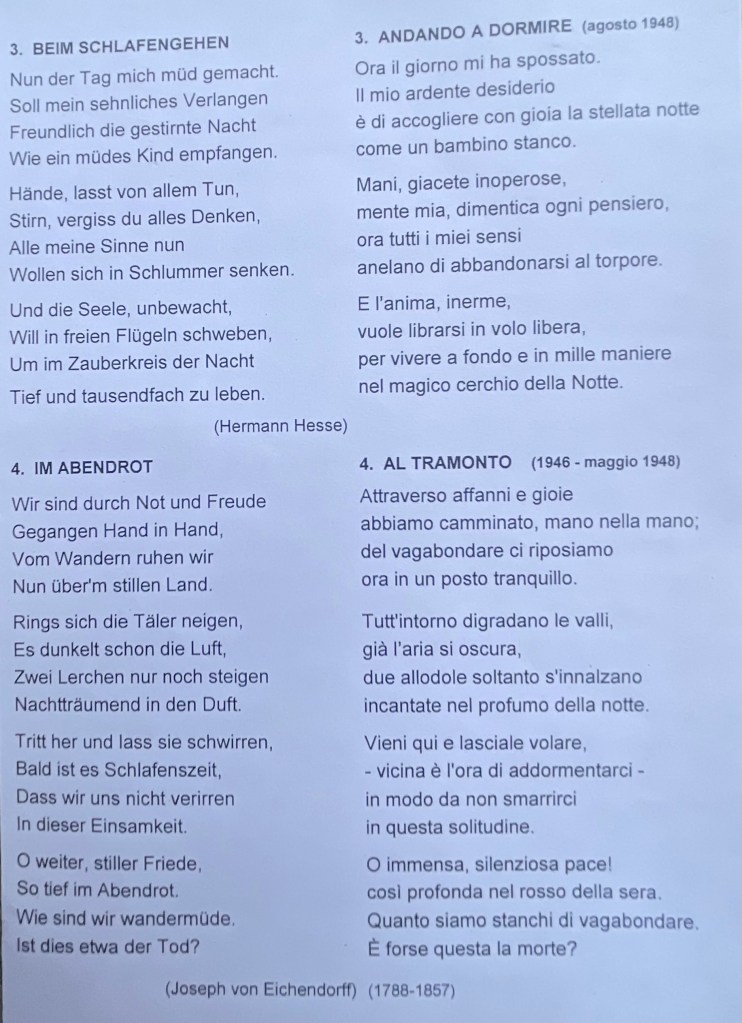
The concert had begun with Richard Strauss’s Four last songs. A sublime outpouring written at the end of the Second World War when Strauss had been vindicated as being part of an evil regime but had suffered from insinuations that were being thrust at a man whose only crime was to inhabit a world of sublime music that would last much longer than any political or social conflicts. Four songs that were to be his glowing testament that beauty can outlive evil and be the inspiration to others intent on conflict.The Four Last Songs (German: Vier letzte Lieder), op posth., for soprano and orchestra were composed in 1948 when Richard Strauss was 84. They are – with the exception of the song “Malven” (Mallows), composed later the same year – Strauss final completed works. The title Four Last Songs was provided posthumously by Strauss’s friend Ernst Roth , who published the four songs as a single unit in 1950 after Strauss’s death.
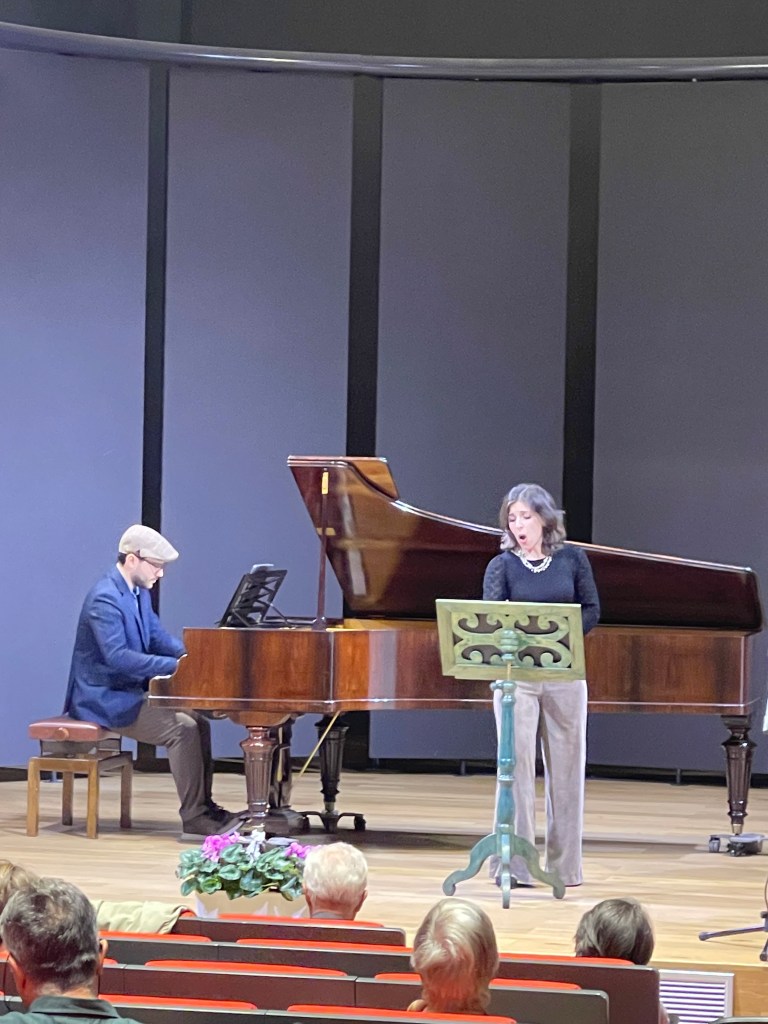
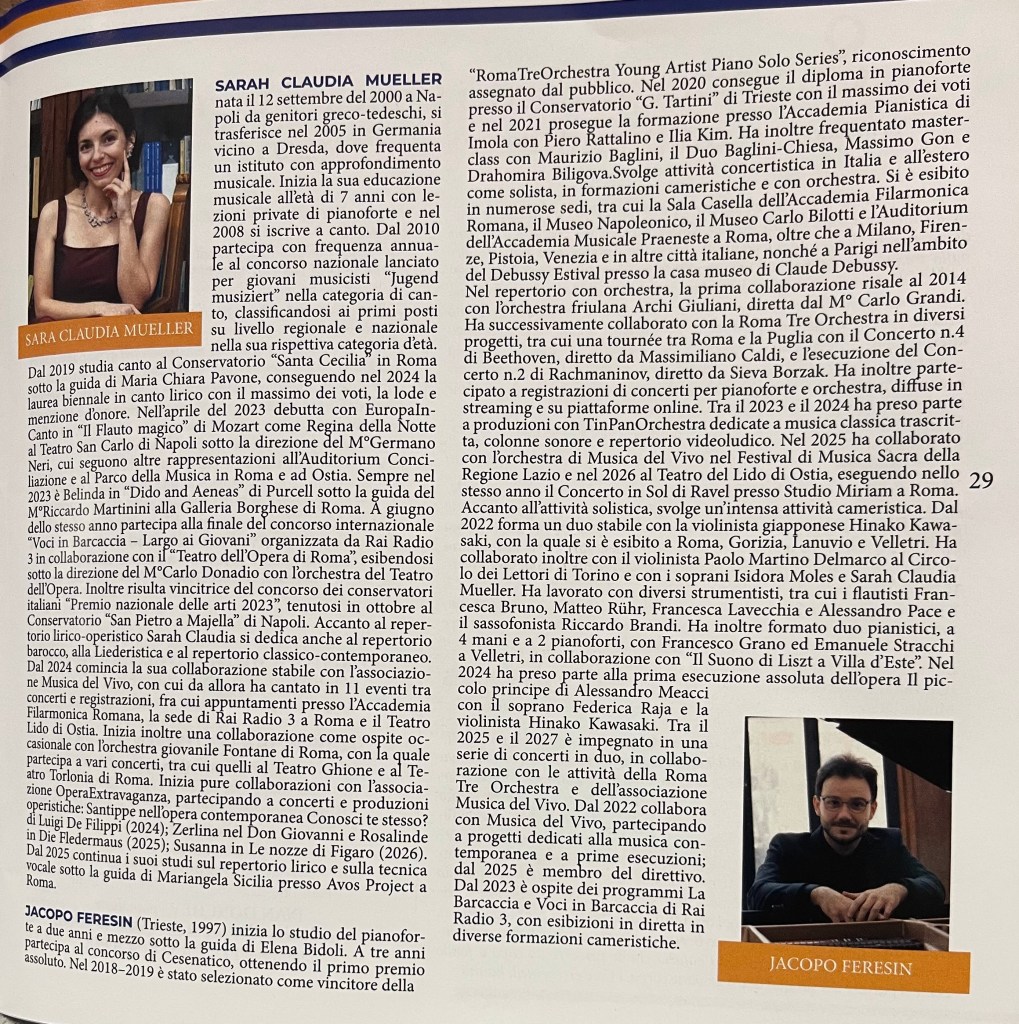
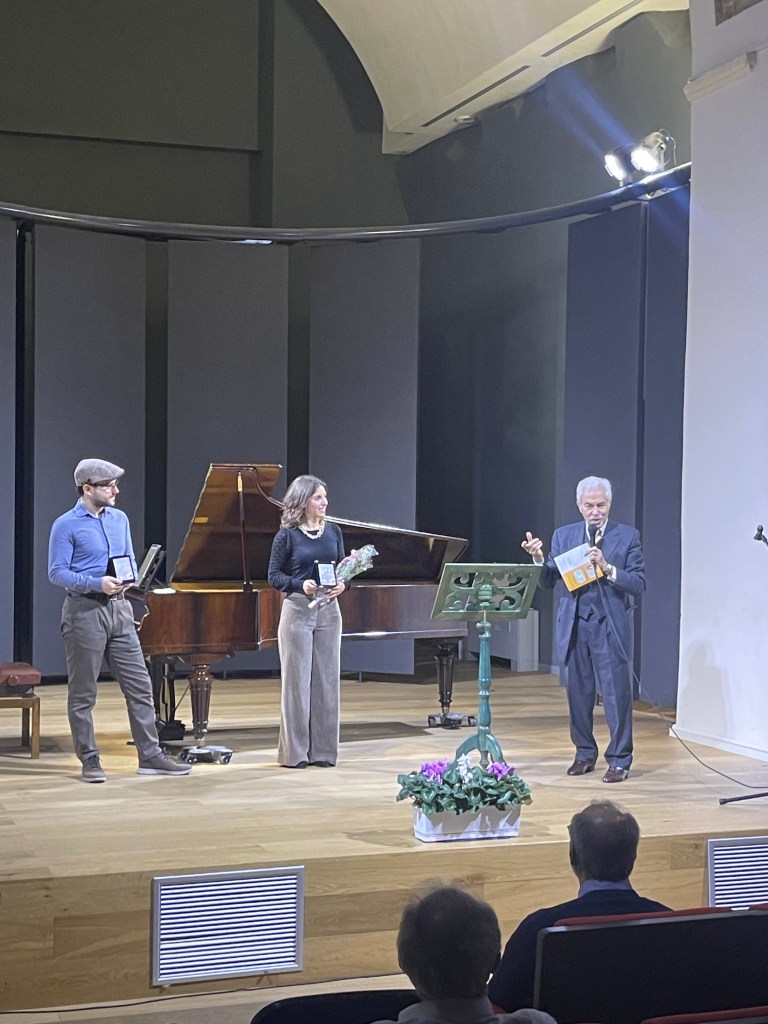
Jacopo Feresin I have heard play many times and with his superb musicianship and technical mastery he was a very sensitive partner. The piano lid fully opened but there was never any fear of him overpowering the radiant outpourings of Sarah Mueller because sharing the same sound board with their similar poetic mastery, the sounds wafted into this oasis of beauty with radiance and power. A great emotional intensity to ‘Frühling’ was contrasted with the mellow sounds of the countryside in ‘September’ as we too could contemplate the end of summer where the cycle of life becomes so evident. Deep bass notes resounded from Jacopo’s sensitive fingers as the gentle lullaby ‘Beim Schlafengehen’ was allowed to unfold with disarming beauty. The mellifluous sounds of the Erard only adding to the touching poignancy as Sarah’s radiant tones reached for the heights of sublime beauty. The poignant lament of ‘Im Abendrot’ was outlined with deeply felt sentiments as death appears on the horizon with the rich subtle colours of the Erard bringing a stillness and eery unease as birds were heard to utter their crystalline plaintive call.
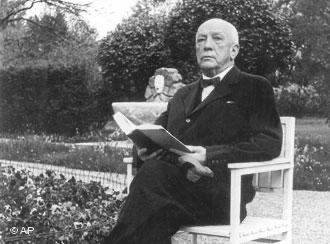
11 June 1864. Munich 8 September 1949 (aged 85) Garmisch- Partenkirchen Germany
Strauss died in September 1949 and the premiere was given at the Royal Albert Hall in London on 22 May 1950 by soprano Kirsten Flagstad and the Philarmonia Orchestra conducted by Wilhelm Furtwängler as was the composers dying wish. All of the songs but “Frühling” deal with death and being written shortly before Strauss died, they are suffused with a sense of calm, acceptance, and completeness.Towards the end of “Im Abendrot”, after the soprano’s intonation of “Ist dies etwa der Tod?” (“Is this perhaps death?”), Strauss musically quotes his own tone poem Death and Transfiguration, written 60 years earlier where the quoted seven-note phrase (known as the “transfiguration theme”) has been seen as the fulfilment of the soul through death.
Through sorrow and joy
we have gone hand in hand;
we are both at rest from our wanderings
now above the quiet land.
Around us, the valleys bow,
the air already darkens.
Only two larks soar
musingly into the haze.
Come close, and let them flutter,
soon it will be time to sleep
so that we don’t get lost
in this solitude.
O vast, tranquil peace,
so deep in the afterglow!
How weary we are of wandering –
Is this perhaps death?
Strauss had come across the poem “Im Abendrot” by Joseph von Eichendorff, which had a special meaning for him. He set its text to music in May 1948. Strauss had also recently been given a copy of the complete poems of Hermann Hesse and was strongly inspired by them. He set three of them – “Frühling”, “September”, and “Beim Schlafengehen” – for soprano and orchestra, and contemplated setting two more, “Nacht” (Night) and “Höhe des Sommers” (Height of Summer), in the same manner. He also embarked on a choral setting of Hesse’s “Besinnung” (Reflection), but laid it aside after the projected fugue became “too complicated”.
The Four Last Songs, are seen as his final statements about music, and the links they exhibit to Strauss’s earlier works, as well as some of the symbols Strauss includes in the songs, lend them a retrospective, valedictory character.
Two worlds apart with the sublime final outpourings of a composer accused of collaborating with an evil regime but who vindicated himself showing the world that it was he who had found the keys to a sublime heavenly kingdom.
And almost a century earlier a composer whose waltzes were to define an era of lighthearted elegance and enjoyment. An art form that was to finish with Strauss’s death in 1899 and the conflict of the First World War that underlined the social and political injustices that had been swept aside in waltz time.
After the deep contemplation and clouds of doubt and resignation of the first half of this Sunday morning concert, Johann Strauss jr was the ideal antidote with the beguiling timeless, carefree world of the elegance and frivolity of an age of privilege that would soon come to a violent end with the death of the ‘King of the waltz’.The beguiling style and commanding tessitura of Sarah Mueller was matched by the robust rhythmic drive from her partner in a performance of Johann Strauss’s own transcription for voice and piano of ‘Frülingsstimmen’.
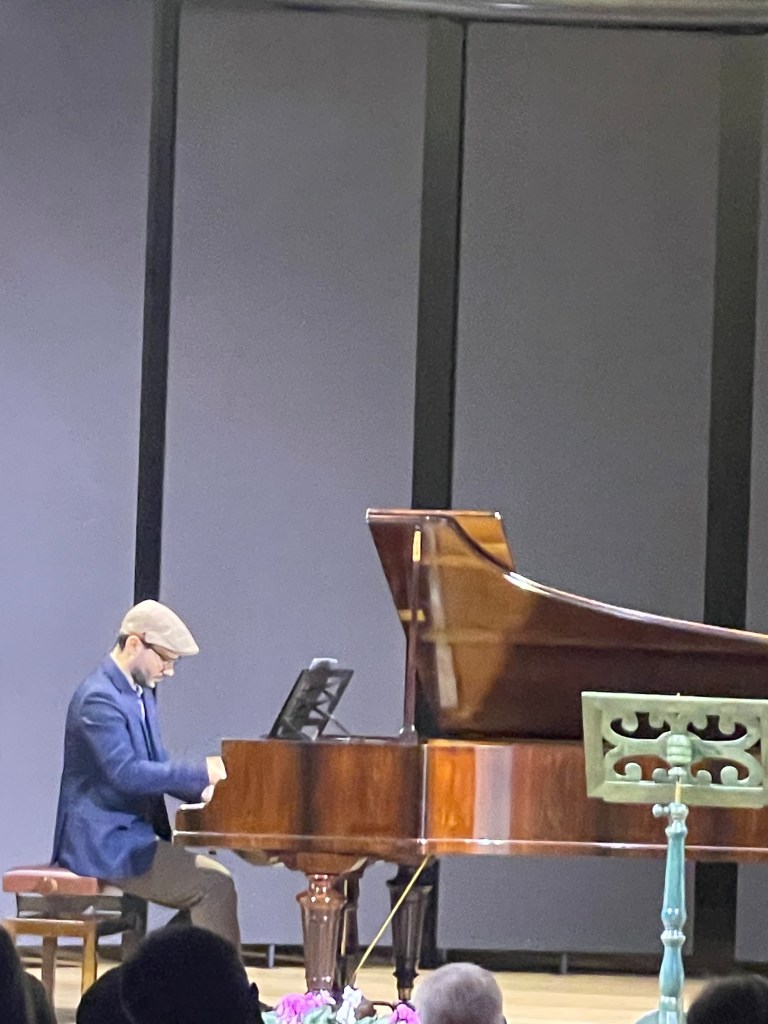
It was time now for Jacopo to unleash his technical wizardry as he played three piano solo versions of Strauss Waltzes.
The first ‘Wiener Blut’ was a rather literal transcription by the composer and although Jacopo did all he could it was outclassed by the extraordinary transcriptions from a pianists of the Golden Age of Piano Playing.
Two breathtaking paraphrases by Alfred Grünfeld with the ‘Soirée de Vienne’ ( Moritz Rosenthal also wrote a paraphrase with the same title ) where Jacopo could now demonstrate his refined technical mastery with ‘tricks of the trade’ paraded one after the other with each change of Waltz heralded by a bird call high in the keyboard .
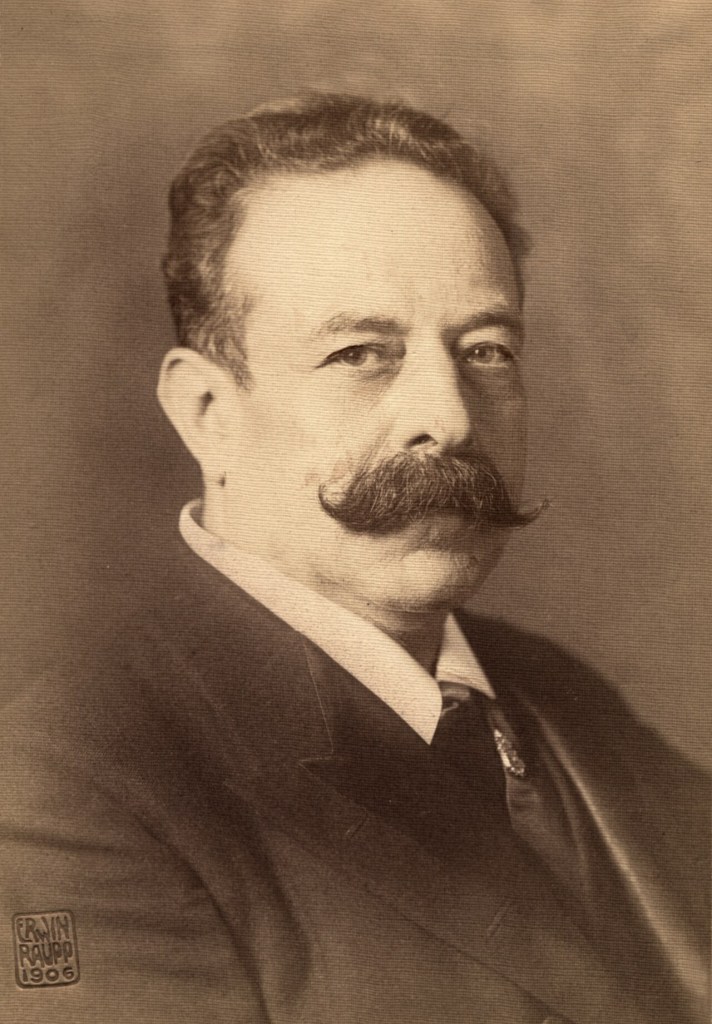
Grünfeld became the most popular salon pianist in Vienna, performing frequently in the salons of Viennese high society. His concert tours took him around Austro-Hungary, to Paris, London, Germany, Scandinavia, Holland, Russia, Poland, Romania, Estonia, Constantinople, Belgrade and the USA. He received many honours and titles for his performances.He was close friend of Johann Strauss who dedicated his Frühlingsstimmen Waltz to him . He became famous for his transcriptions of Strauss waltzes, and particularly of the Frühlingsstimmen which he often played as an encore. He was the first pianist of note to make commercial recordings. His earliest recording was made in 1889 on wax cylinder for the Edison Phonograph
The crystalline clarity of these birds too was something to marvel at with Jacopo’s well oiled fingers able to demonstrate the clarity and ease of an instrument that was to be forgotten within the next fifty years ,outclassed by the innovative technical improvements of the great German pianos. Sumptuous rich sounds too as Jacopo delved deep into the keyboard and with a masterly sense of balance could bring a richness and orchestral fullness with moments of breathtaking daring and technical bravura.
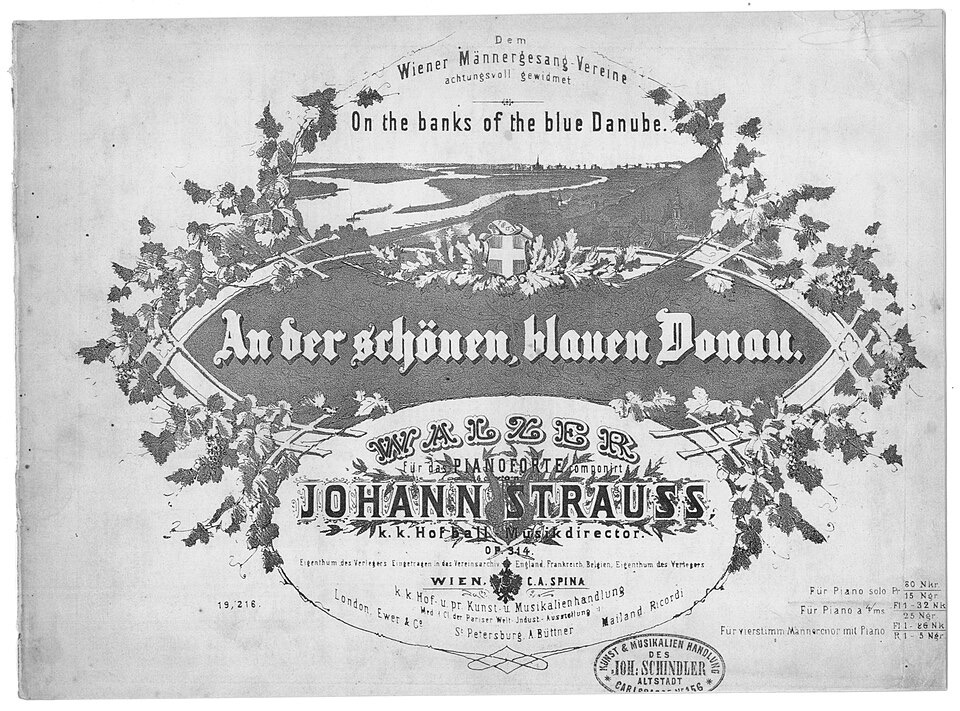
It was Johann Strauss’s 201st birthday and of course we celebrated with the most celebrated waltz of all : ‘The Blue Danube’. Originally performed on 15 February 1867 at a concert of the Wiener Männergesang- Verein (Vienna Men’s Choral Association), it has been one of the most consistently popular pieces of music in the classical repertoire. Its initial performance was considered only a mild success,however, and Strauss is reputed to have said, “The devil take the waltz, my only regret is for the coda—I wish that had been a success!”. Such was its fame however that when Strauss’s stepdaughter, Alice von Meyszner-Strauss, asked Brahms to sign her autograph-book , he wrote down the first bars of “The Blue Danube”, but added “Leider nicht von Johannes Brahms” (“Unfortunately not by Johannes Brahms”)!
Jacopo had prepared the solo piano version to play but of course was happy to share the spotlight with Sarah even though he had to master the score in just a few minutes before the concert.