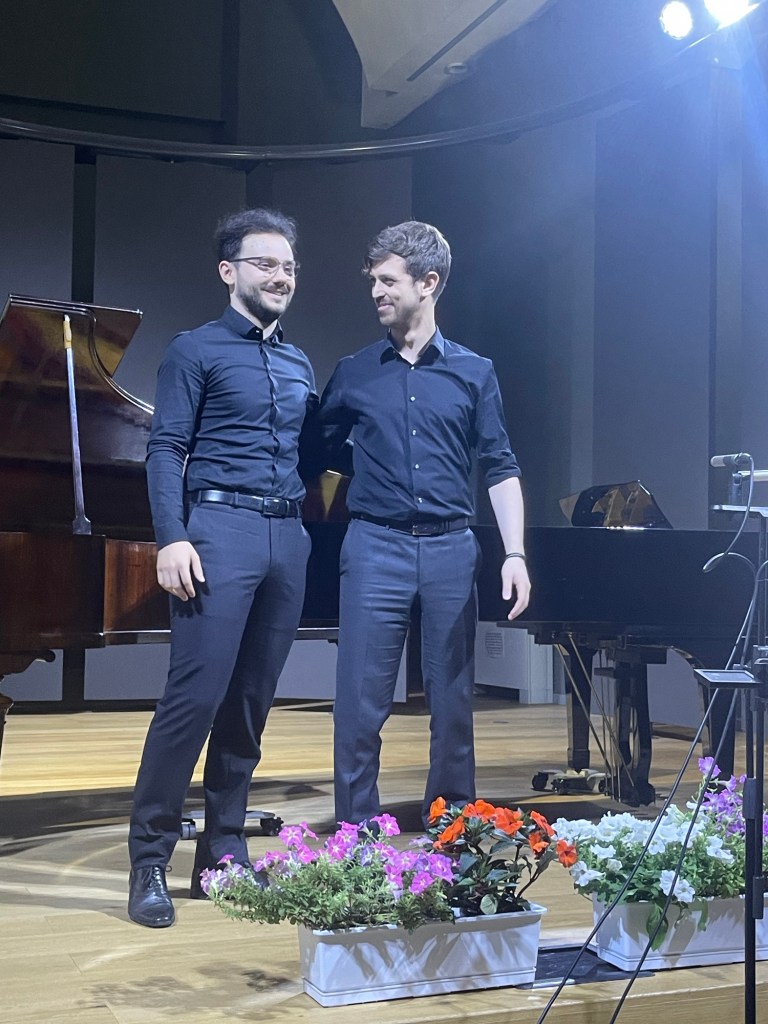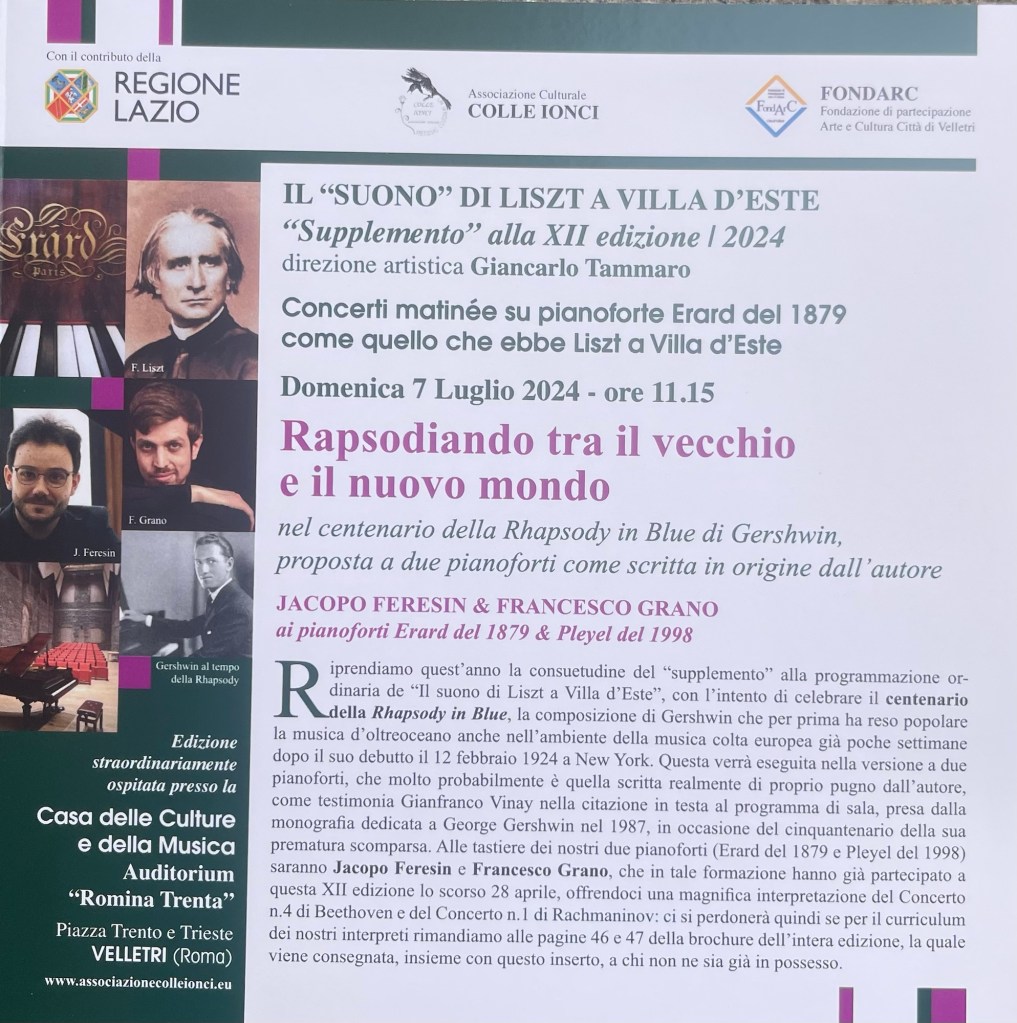

Rhapsody in Blue comes of age in Velletri with the centenary performance played by Jacopo Feresin and Francesco Grano.
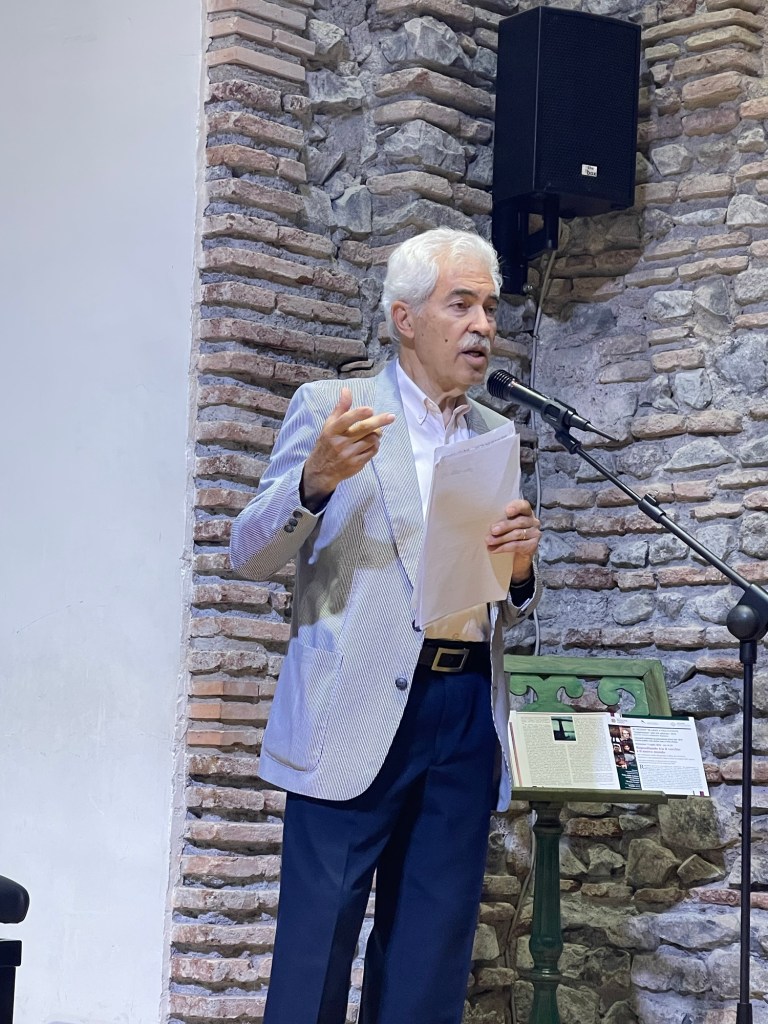
Other anniversaries could not escape the genial eyes of Ing Giancarlo Tammaro whose passion and erudite musicianship have guided twelve seasons since the very first at Villa d’Este to celebrate Liszt’s bicentenary.These two pianist had given such masterly performances just two months ago of Beethoven and Rachmaninov that Ing Tammaro was only too pleased to invite them back for this extra concert to close his 12th season.
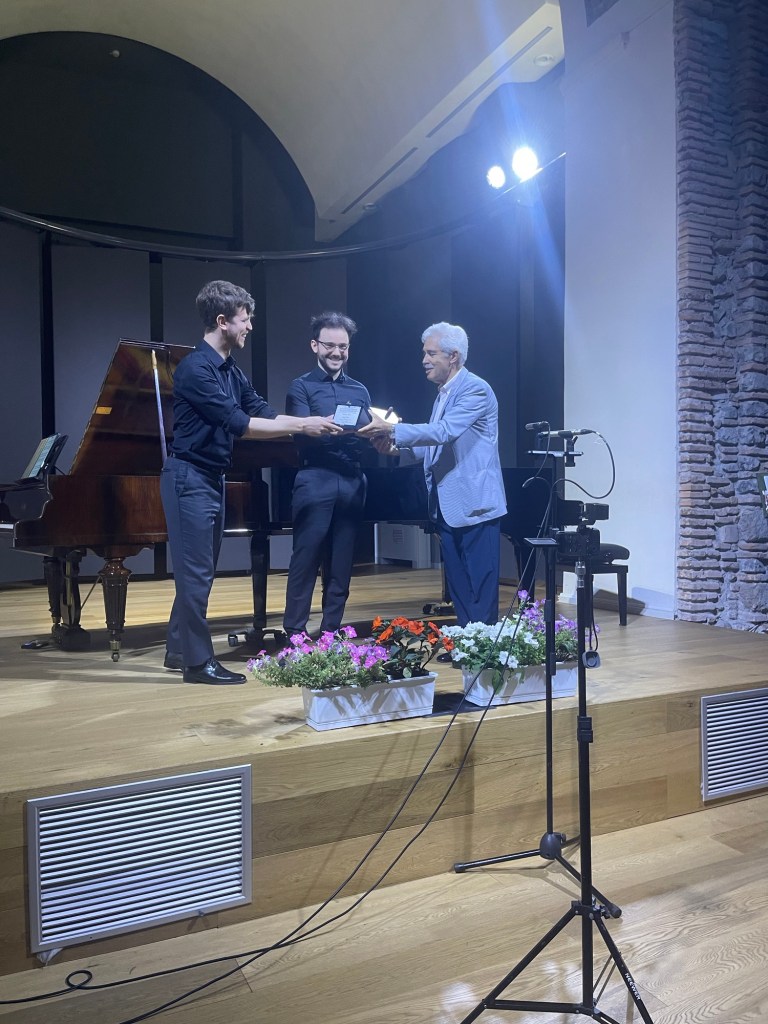
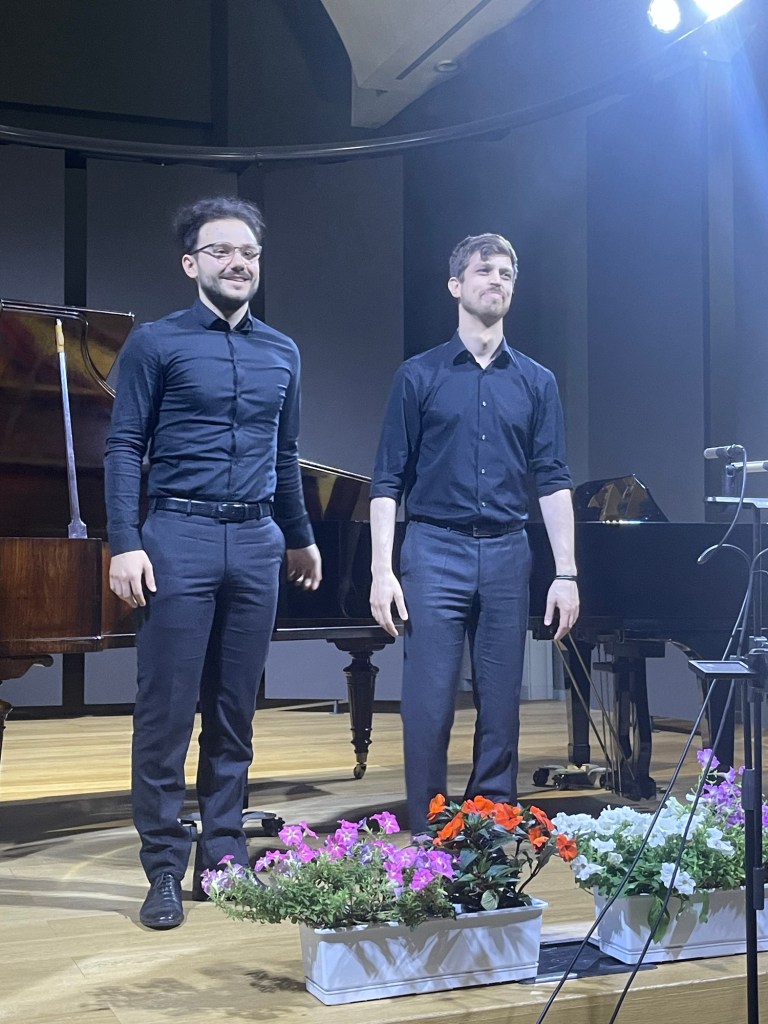
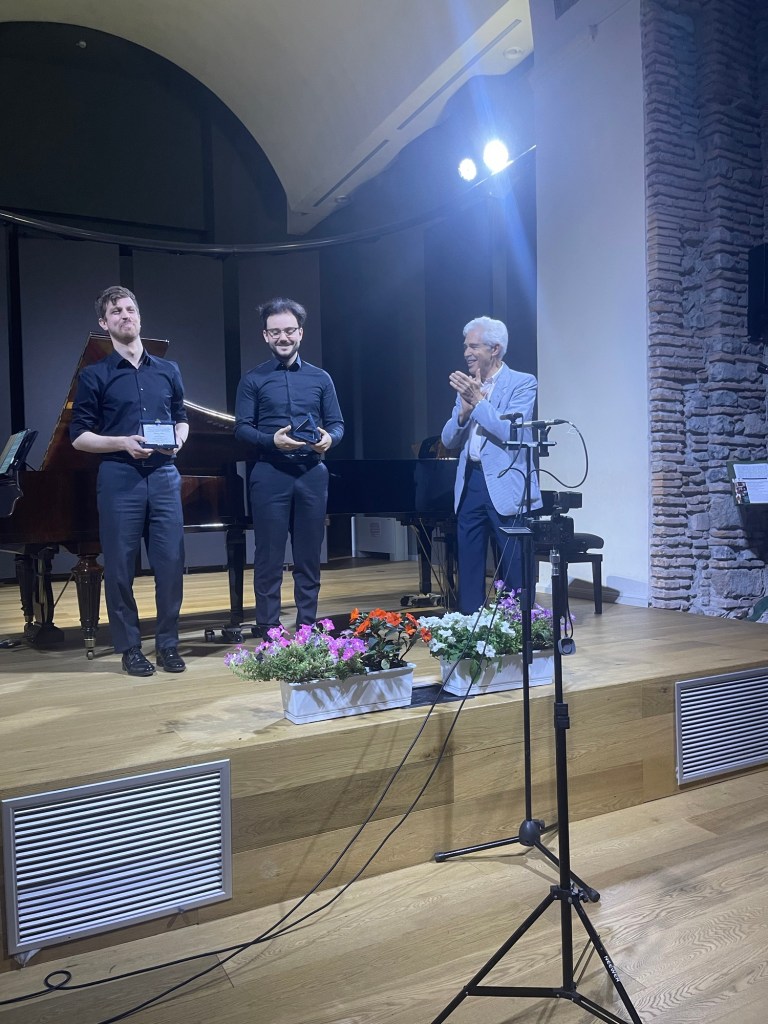
Jacopo Feresin and Franceso Grano two superb musicians united with mastery,intelligence and artistry.
Seasons based around an Erard piano similar to Liszt’s favourite instrument and now lovingly restored by its proud owner.
Jacopo Feresin chose to play a Brahms Rhapsody that just happened to be composed in the same year as this Erard piano.
An Erard piano that Gershwin would certainly not have known was matched with a modern day Pleyel as these two pianos took centre stage in a programme ranging from Bach to Kurtag. Culminating in the evergreen Blue of Gershwin’s Rhapsody where there is no business like show business .
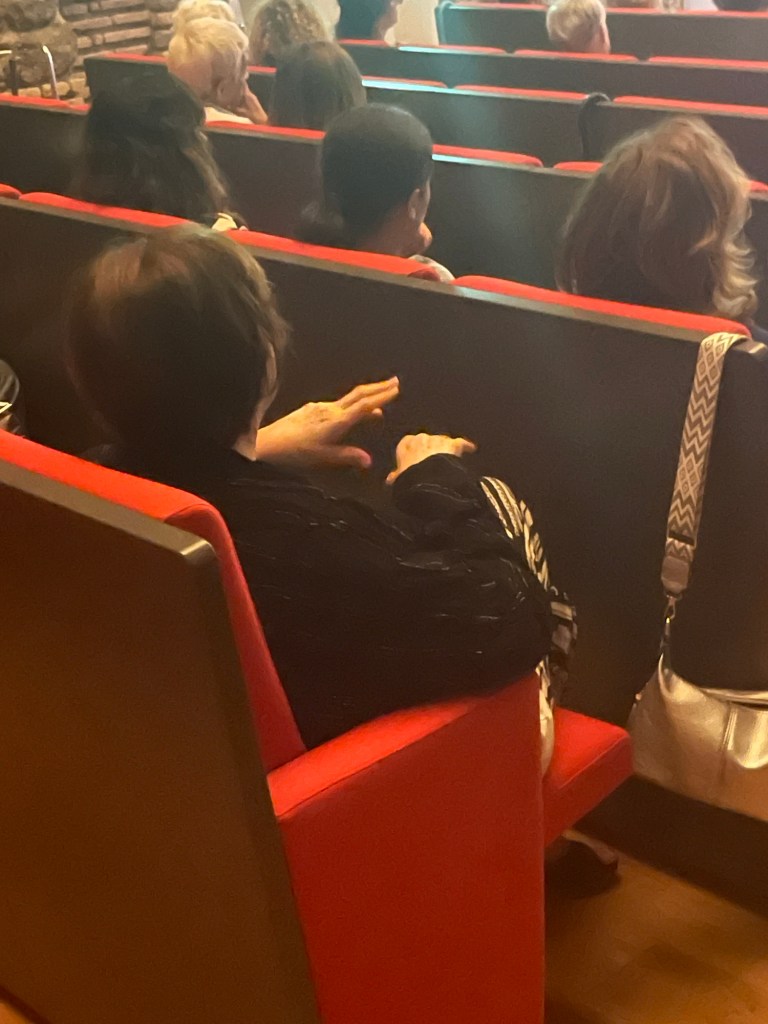
It was the scintillating bravura of both players who had us rocking in the aisles and a little old lady in front of me was conducting with her hands unable to keep them still with such electricity being generated by these two virtuosi.
Virtuosi they certainly are but above all masterly musicians as they demonstrated throughout a long and varied programme.

Grieg played with delicacy and beauty and once one had got attuned to the mellow sound of the Erard one began to appreciate the beauty without percusiveness of these early instruments. ‘Morgenstemning’ – ‘ Morning Mood’ from Act IV of Ibsen’s Peer Gynt was beautifully stylish with subtle rubato and a kaleidoscope of colour where even the bird calls provided on the Pleyel by Francesco were wonderfully evocative of this pastoral landscape.’The Death of Aase’ was suitably sombre with chords of poignant portent from both pianists where the lack of a gripping inner energy was replaced with a subtle pastel colouring and perfect coordination with these slow moving chords.
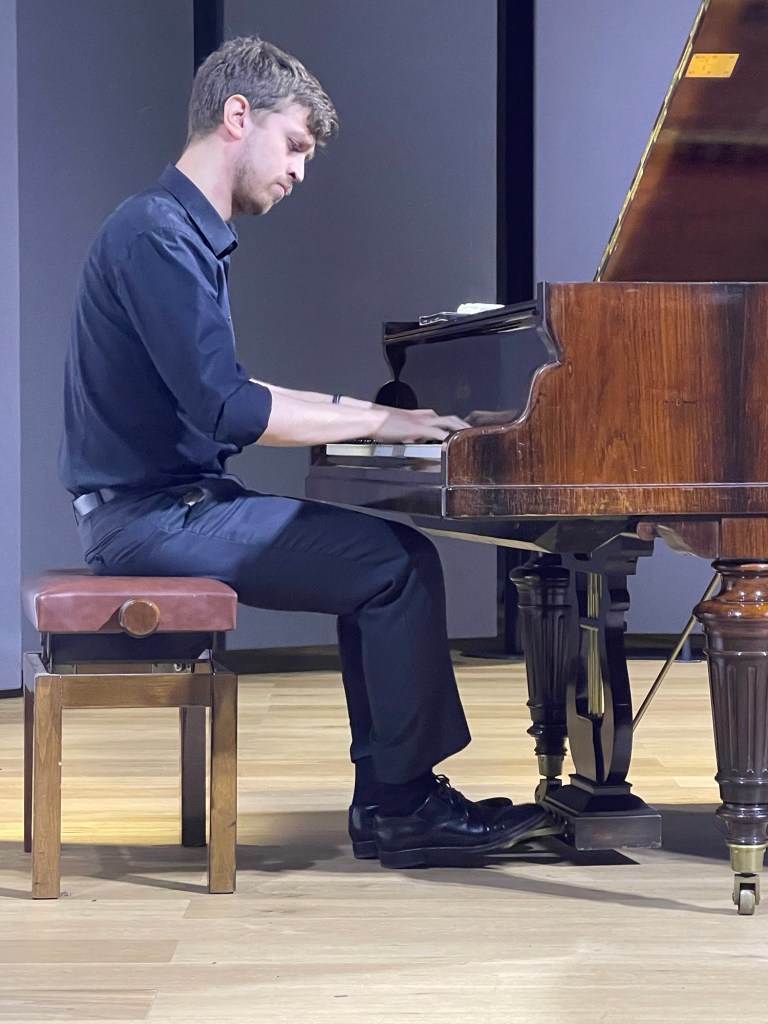
Francesco Grano chose two aria’s from Bach Cantatas in transcriptions by Harold Bauer and Egon Petri. ‘Die Seele ruht in Jesu Handen’ from the Cantata BWV 127 was played with ravishing colour as the melodic line was whispered with heart rending simplicity. The gentle pulsating of it’s heart beat was richly enhanced by the mellifluous beauty of this Erard ,much praised by the Scottish pianist Harold Bauer ( see below) , where this beautiful instrument could offer a ravishing beauty to the counterpoints with their seemingly infinite meanderings into Paradise.

The famous Aria ‘Schafe konnen sicher weiden’ in this transcription from the Cantata BWV 208 by Egon Petri.He was a disciple of Busoni whose centenary had also been celebrated by Ivan Donchev just a month ago on this very stage.Busoni,of course,was famous for his transcriptions of Bach – his wife was once introduced at a party as Mrs Bach- Busoni! I had never thought that Egon Petri was Dutch of original until informed by Ing Tammaro reading his very informative programme brochure . However ‘Sheep may safely graze’ has been transcribed by many great pianists not least Percy Grainger who liked to call his transcriptions a ‘ramble’ which in this case is very apt.Petri’s transcription has the same pure magic as his master with it’s gentle pastoral beauty where the purity of the melodic line is allowed to sing gloriously embellished by such peace and well- being.
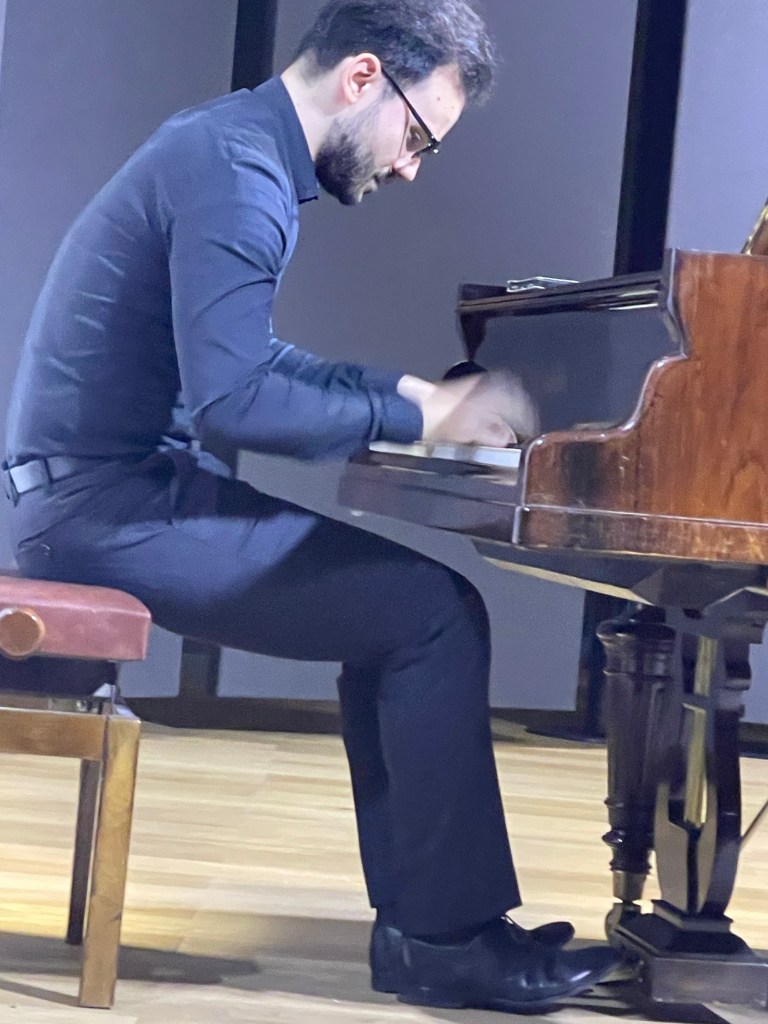
Jacopo Feresin chose to play the Brahms Rhapsody in G minor op 79 n. 2 written in the same year that this Erard was made ! A performance that was at once bold and free with orchestral colours and deep bass notes sustaining the nobility of all that was placed on it. Jacopo had a great sense of freedom which I have a feeling must stem from a research of historic performance practices with a license of freedom that was of an improvised creativity.
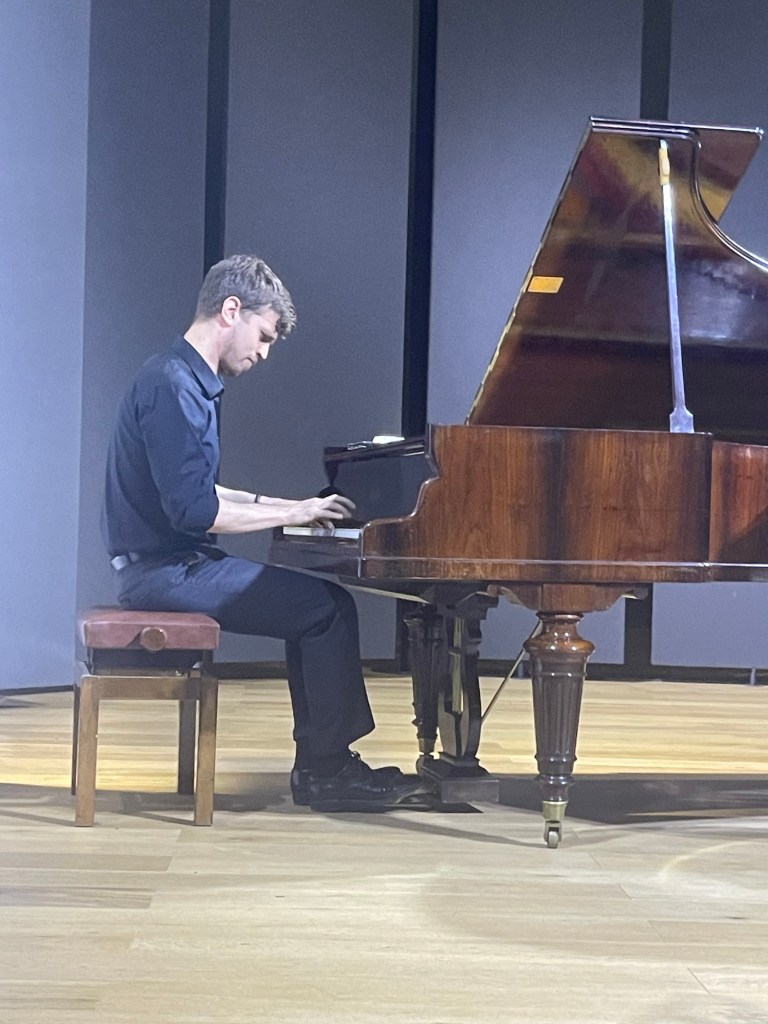
Francesco Grano returned into the circus arena with Liszt’s transcription of Bach’s Fantasy and Fugue in G minor for Organ BWV 542.Nothing improvised about this but a grandiose opening of great portent.A masterly control of sound and balance with the innocent appearance of the fugue growing out of the final mighty chord of the fantasy. There was absolute clarity and rhythmic drive to the fugue with a continuous build up of sound until the breathtaking entry of the bass exulting the glory of ‘God on High’. The temperature was rising though and maybe Francesco’s total commitment would have been better accommodated on a modern day Steinway instead of an Erard beginning to shake in terror at such overwhelming vehemence and passionate commitment. Nevertheless it was a masterly performance of a fervent believer.
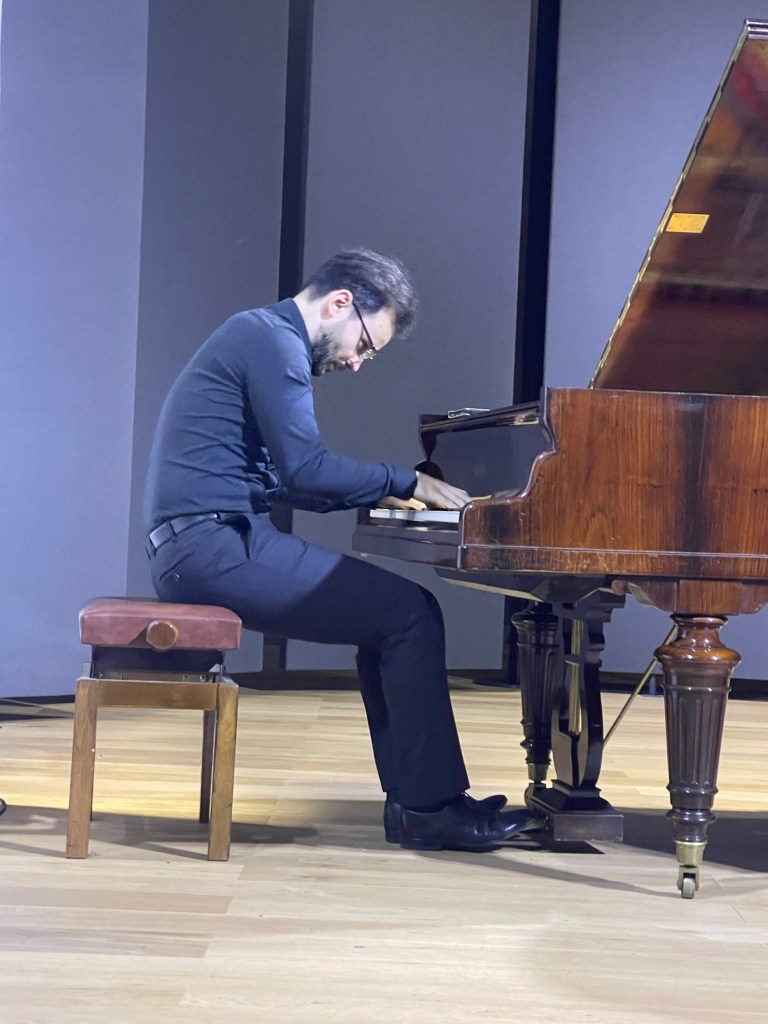
It was complimented by the ravishing beauty and delicacy the Jacopo brought to another Liszt transcription,this time of Schumann. ‘Widmung’ was one of the songs that Schumann gave to his betrothed as a wedding gift and which Jacopo played with an intensity and beautiful sense of balance.Tenor and soprano duetting with the freedom and passionate intensity of two lovers entwined.Some beautifully spread chords where Jacopo understood that the strength in these pianos is to be found horizontally not vertically.
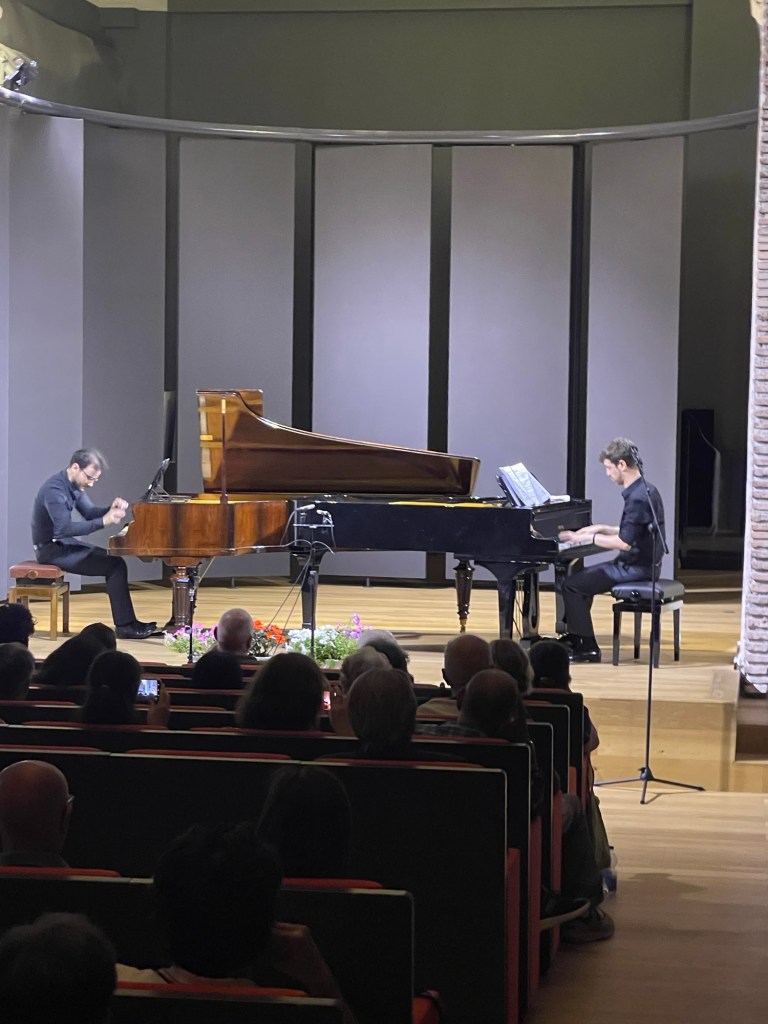
Both players had lain their artistic credentials before us and now fully warmed up and attuned to one another and these two instruments, they were free to really relish the bright lights of Broadway. Breathtaking virtuosity went side by side with subtle colouring and mischievous rubato. Francesco was Paul Whiteman and Jacopo was George Gershwin as they joined forces in a performance that Ing.Tammaro declared better than the orchestral version.It was certainly a performance that held the audience spellbound as Jacopo raced up and down the keyboard like a ‘kitten on the keys’ and Francesco provided the sumptuous sounds of a big band of radiance with rhythms of hypnotic driving intensity.

After such high jinks our two brilliant soloists played the Bach Choral ‘Gottes Zeit ist die allebeste Zeit ‘ Actus Tragicus in Kurtag’s beautiful transcription for four hands.Stillness, beauty and peace what better way to end such a feast of ‘rhapsodies’ between the old and new worlds.

“Anche la Rhapsody in Blue fu orchestrata dall’arrangiatore fisso dell’orchestra di Whiteman, Grofé, sulla base della versione per due pianoforti che Gershwin sfornò in meno di un mese. …”
(Gianfranco Vinay: “Gli anni di Gershwin” in ‘Musica e Dossier’n.8-ed. Giunti 1987)
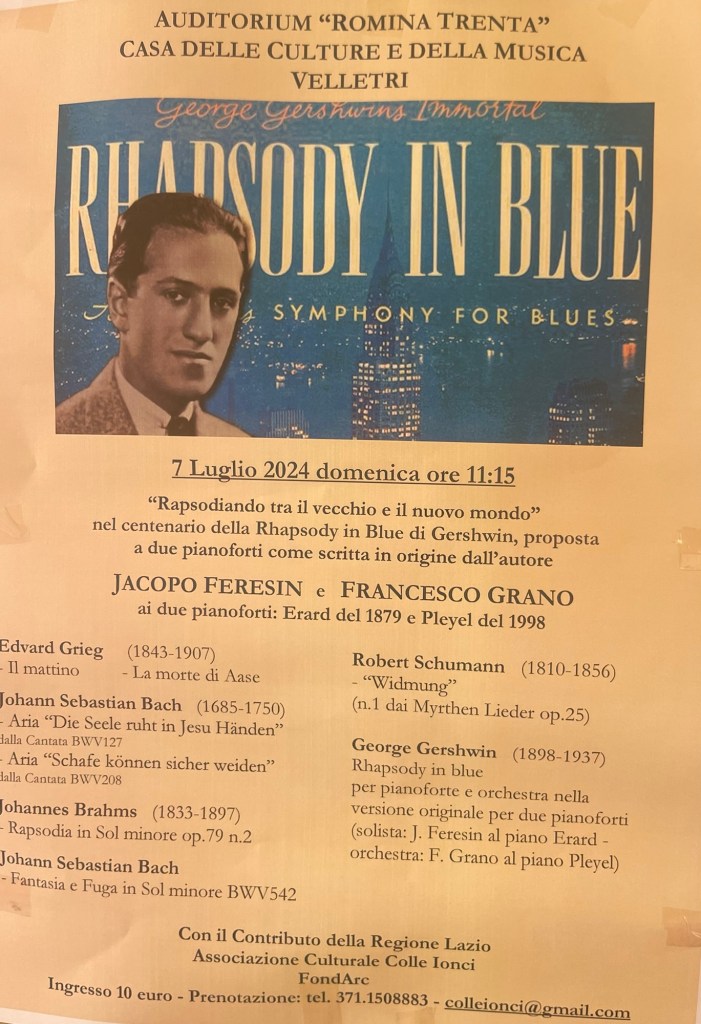
Riprendiamo quest’anno la consuetudine del “supplemento” alla programmazione ordinaria de “Il suono di Liszt a Villa d’Este”, anche per recuperare un concerto annullato in precedenza e soprattutto con l’intento di celebrare il centenario di questa composizione di Gershwin, che per prima ha reso popolare la musica d’oltreoceano anche nell’ambiente della musica colta europea già poche settimane dopo il suo debutto il 12 febbraio 1924 a New York. Il programma ci conduce, in modo realmente “rapsodico”, attraverso brani di grandi autori europei quali Bach, Schumann, Brahms e Grieg – ma anche Liszt, in qualità di eccelso trascrittore – per approdare infine, nella seconda parte, in America con la Rhapsody in Blue. Questa verrà eseguita nella versione a due pianoforti, che molto probabilmente è quella scritta realmente di proprio pugno dall’autore in quel febbraio del 1924, come testimonia Gianfranco Vinay nella sua monografia dedicata a George Gershwin del 1987. Alle tastiere dei nostri due pianoforti (Erard del 1879 e Pleyel del 1998) saranno Jacopo Feresin e Francesco Grano che in tale formazione hanno già partecipato a questa XII edizione lo scorso 28 aprile, offrendoci una magnifica interpretazione del Concerto n.4 di Beethoven e del Concerto n.1 di Rachmaninov.
George Gershwin rappresenta un caso particolare nella storia della musica, tanto di quella popolare, canzoni per commedie musicali e film, quanto di quella colta, quella che definiamo comunemente “musica classica”. Autore ed esecutore (quasi esclusivamente di se stesso) di grandissimo successo durante la sua breve ed intensa vita, conquistò la popolarità proprio grazie alle canzoni ed alle commedie musicali, ma la sua passione per la musica afro-americana, blues e jazz in particolare, e la sua mai sopita aspirazione alla composizione colta, sinfonica e operistica sul grande modello europeo, sono quelle che gli hanno dato la massima notorietà internazionale ed una fama duratura.Nato da genitori entrambi russi solo quattro anni dopo il loro arrivo negli Stati Uniti – il suo vero nome era Jacob Gershovitz – ha però incarnato perfettamente il personaggio tipico dell’America emergente di quegli anni: l’uomo di successo che si è fatto da sé grazie ad un abile sfruttamento del proprio talento naturale. Il piccolo George cresce, come tutti i ragazzini di famiglie di modeste condizioni, nelle strade rumorose e cosmopolite di Brooklyn e di Manhattan, dove sicuramente non gli mancava l’occasione di ascoltare musica, e canti dal vivo: canti ebraici, canzoni irlandesi, francesi, napoletane, i canti afro-americani, le prime orchestrine jazz e soprattutto le prime composizioni di quelli che furono i suoi due idoli e modelli, prima che egli stesso li raggiungesse nel firmamento della canzone d’autore americana: Jerome Kern e Irving Berlin. A quell’epoca tra l’altro cominciavano a funzionare le prime macchine sonore a gettone e anche i primi rudimentali juke-box che utilizzavano addirittura i cilindri del fonografo di Edison, e quindi il piccolo George ebbe modo di formare l’orecchio a tutti questi diversi stimoli musicali. Da questo substrato di esperienze multiculturali e dal suo innato, formidabile talento musicale deriva il fenomeno Gershwin che attraversa, purtroppo veloce come una meteora, i due decenni tra gli anni ’20 e ’40 del ’900.Eppure malgrado l’incredibile successo nel campo della musica di consumo (e a quel tempo, con l’avvento del grammofono e poi della radio, già si poteva definire così) nella quale del resto egli aveva raggiunto un altissimo livello artistico, per quanto riguarda le sue aspirazioni più profonde – quelle di compositore colto e che per di più era riuscito a nobilitare nelle forme classiche un linguaggio musicale allora ritenuto popolare e di secondo ordine come il jazz – ebbe in vita più considerazione nella vecchia Europa che non in patria. Le sue tournée europee, a Londra nel ’24 e a Parigi, Londra e Vienna nel ’28, furono trionfali, ebbe l’amicizia e la stima di grandi compositori e interpreti come Ravel, Schönberg, Milhaud, Toscanini, e addirittura pochi giorni prima della morte, tanto che la notizia non gli giunse in tempo, era stato nominato ad honorem “accademico di S.Cecilia”, il che, per un autore quasi autodidatta e di ambiente angloamericano, nell’Italia autarchica del 1937 è un segno di stima che non ammette riserve. (Giancarlo Tammaro)
A parziale sostegno di una non trascurabile radice “lisztiana” nella musica di Gershwin, che quindi la rende naturalmente pertinente in una rassegna intitolata a Liszt, riportiamo un paio di interessanti citazioni ricavate dal libro di Stuart Isacoff: “Storia naturale del pianoforte (lo strumento, la musica, i musicisti: da Mozart al Jazz e oltre)” pubblicato per l’edizione italiana nel 2012 da EDT- Torino :
«Gershwin si trasformò in una spugna musicale, assorbendo il modernismo francese di Debussy e Ravel, il virtuosismo romantico di Franz Liszt, gli esperimenti atonali di Alban Berg e tutta una serie di popolari stili pianistici, tra cui quello tipico dei dimostratori (che impiegò nel suo primo lavoro, quello di venditore di spartiti), lo stile novelty (quello di pezzi ‘torci-dita’ come Kitten on the keysdi Zez Confrey) e lo swing di Harlem …»
«Le ‘rapsodie’ musicali sono opere che sembrano risultare dall’assemblaggio e dalla cucitura di frammenti musicali e idee diverse; questa, in particolare, [la ‘Rhapsody in blue’- n.d.r.] era un pot-pourri che conteneva saggi di tutto quanto Gershwin aveva imparato. Una sezione, spiegò, era stata innescata da un viaggio in treno “con i suoi ritmi d’acciaio, il suo rumoroso sferragliare”. Altre si compiacevano di temi d’amore di sapore lisztiano, oppure alludevano a ribalde danze ebraiche di origine europea. La scrittura del pianoforte univa figurazioni virtuosistiche ispirate a Liszt e Confrey e un bouquet di melodie ispirate ai lamenti del blues, … »


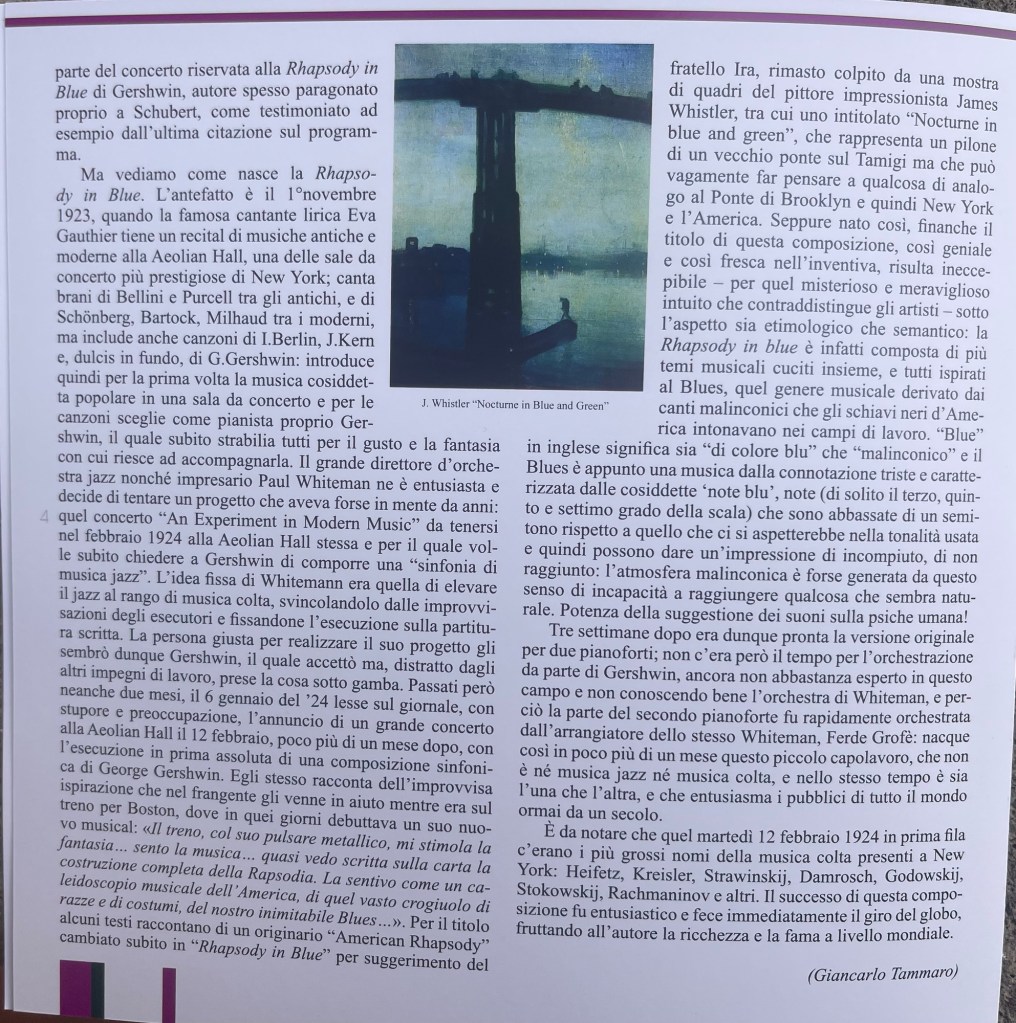

Cover of the original sheet music of Rhapsody in Blue
Rhapsody in Blue was written in 1924 for solo piano and jazz band, which combines elements of classical with jazz influenced effects. Commissioned by bandleader Paul Whiteman , the work premiered in a concert titled “An Experiment in Modern Music” on February 12, 1924, in Aeolian Hall ,New York City.Whiteman’s band performed the rhapsody with Gershwin playing the piano.Whiteman’s arranger Ferde Grofé orchestrated the rhapsody several times including the 1924 original.
With only five weeks remaining until the premiere, Gershwin hurriedly set about composing the work.He later claimed that, while on a train journey to Boston ,the thematic seeds for Rhapsody in Blue began to germinate in his mind.
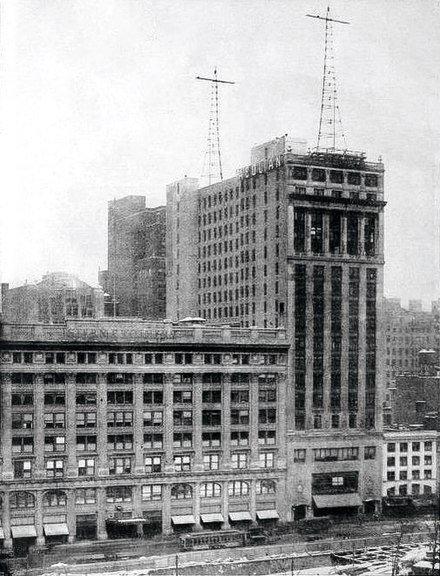
It was on the train, with its steely rhythms, its rattle-ty bang, that is so often so stimulating to a composer…. I frequently hear music in the very heart of the noise. And there I suddenly heard—and even saw on paper—the complete construction of the rhapsody, from beginning to end. No new themes came to me, but I worked on the thematic material already in my mind and tried to conceive the composition as a whole. I heard it as a sort of musical kaleidoscope of America, of our vast melting pot of our unduplicated national pep, of our metropolitan madness. By the time I reached Boston I had a definite plot of the piece, as distinguished from its actual substance.’


Francesco Grano
Nato a Catanzaro, si è diplomato in pianoforte presso il Conservatorio di Musica “Licinio Refice” di Frosinone all’età di 17 anni. Successivamente ha conseguito il diploma di alto perfezionamento presso l’Accademia Pianistica Internazionale “Incontri con il Maestro” di Imola sotto la guida di Roberto Giordano, Enrico Pace e Piero Rattalino.
Fin dall’età di nove anni ha tenuto regolarmente concerti pubblici e recital solistici in molte città italiane e all’estero (Francia, Polonia, Belgio, Olanda, Emirati Arabi).
Si è esibito in teatri e sale da concerto come la “Sala Mozart” della “Regia Accademia Filarmonica” di Bologna, “Teatro dell’Aquila” di Fermo, Teatro Politeama “Mario Foglietti” di Catanzaro, “Musei Capitolini” in Roma, “Sala Majeska” di Piła (Polonia), “Teatro Comunale” di Siracusa, “Teatro Massimo Troisi” di Nonantola, “Galleria di Arte Moderna” di Milano, “Teatro Rossini” di Gioia del Colle, Auditorium “Casa della Musica” di Cosenza, “Sala Accademica” del “Pontificio Istituto di Musica Sacra” di Roma, “Foyer Rossini” del “Teatro Comunale” di Bologna, “Teatro Ebe Stignani” di Imola, “Teatro Palladium” di Roma e tanti altri.
Tra i festival musicali e gli enti concertistici che lo hanno ospitato si ricordano tra i più importanti: “Accademia Filarmonica di Bologna”, Festival Pianistico Internazionale “Mario Ghislandi”, “Piła Festival&Academy”, “Amici della Musica di Modena”, “Armonie della Sera”, Fondazione “Politeama Città di Catanzaro”, “Associazione Siracusana Amici della Musica”, “Lirico Festival” del “Teatro Comunale” di Bologna, “Associazione Amici della Musica V. Cocito” di Novara, “Associazione InCanto” di Terni, “Imola Summer Music Academy and Festival”, “IMEP” di Namur (Belgio).
È stato solista anche con diverse orchestre quali “I Solisti Aquilani”, la “Youth Orchestra del Teatro Comunale di Bologna” e la “Roma Tre Orchestra”, collaborando con direttori
d’orchestra quali Sieva Borzak, Cinzia Pennesi, Tonino Battista e Anna Handler.
La sua discografia comprende un CD monografico su R. Schumann pubblicato da “La Bottega Discantica” nel 2022, con Pietro Tagliaferri come producer e sound engineer. La
rivista musicale “Amadeus” ha pubblicato nel 2019 la sua registrazione della Sonata n. 7 op. 72 di Alessandro Longo (prima incisione mondiale). È stato protagonista di un DVD
musicale, prodotto dall’ “Accademia del Po”, dedicato all’esecuzione de “L’Almanacco Musicale” di Giulio Ricordi. Ha inciso inoltre per la “2R Studio Produzioni Multimediali”.
Nel 2017 è stato selezionato dalla “Yamaha Music Foundation of Europe” tra i 6 finalisti per la borsa di studio.
È docente di Pratica e Lettura Pianistica presso il Conservatorio di Musica “Alessandro Scarlatti” di Palermo.
https://christopheraxworthymusiccommentary.com/2021/02/09/roma-3-orchestra-the-mozart-project/

Jacopo Feresin
Jacopo Feresin, nato a Trieste il 10 ottobre 1997, ha intrapreso lo studio del pianoforte a 2 anni e mezzo seguito dall’insegnante Elena Bidoli. All’età di 3 anni, ha partecipato al suo primo concorso a Cesenatico vincendo il 1° Premio Assoluto e da quella data ha continuato a riscuotere primi premi, primi premi assoluti e borse di
studio in tutti i concorsi Nazionali ed Internazionali a cui ha partecipato.
Ha suonato per importanti Rassegne Musicali dedicate ai giovani talenti. E’ stato ospite per due anni del «DEBUSSY FESTIVAL» tenuto presso la casa-museo di Claude Debussy e intitolata “Claude Debussy vu par de jeunes prodiges européens”.
A Salemi (Sicilia) si è esibito in due concerti in occasione dell’ouverture delle celebrazioni per il 150° anniversario dell’Unità d’Italia.
A Milano ha tenuto un concerto alla Showroom nella prestigiosa manifestazione “INCONTRIAMOCI DA FAZIOLI”.
Presso il Teatro Miela di Trieste e a Gradisca d’Isonzo (GO) presso il Nuovo Teatro Comunale si è esibito, in qualità di solista, con l’Orchestra da Camera Archi Giuliani diretta da Carlo Grandi.
A Roma si è esibito presso il Museo Napoleonico, il Museo Bilotti, l’ Aranciera di Villa Borghese e nell’Aula Magna dell’Università Roma Tre. A Villa Mondragone (Frosinone), dove si è esibito su un pianoforte Erard del 1879.
In collaborazione con l’Associazione Dino Ciani ha tenuto a Venezia un concerto presso il Palazzo Albrizzi-Capello e a Milano presso il Teatro Volta.
Nel 2020 e nel 2021 in quanto vincitore di “RomaTreOrchestra Young Pianist 2019” ha tenuto concerti con RomaTreOrchestra sotto la direzione di Massimiliano Caldi a Roma e in Puglia.
https://christopheraxworthymusiccommentary.com/2021/07/15/summer-harmonies-at-teatro-palladium-for-roma-tre-orchestra/