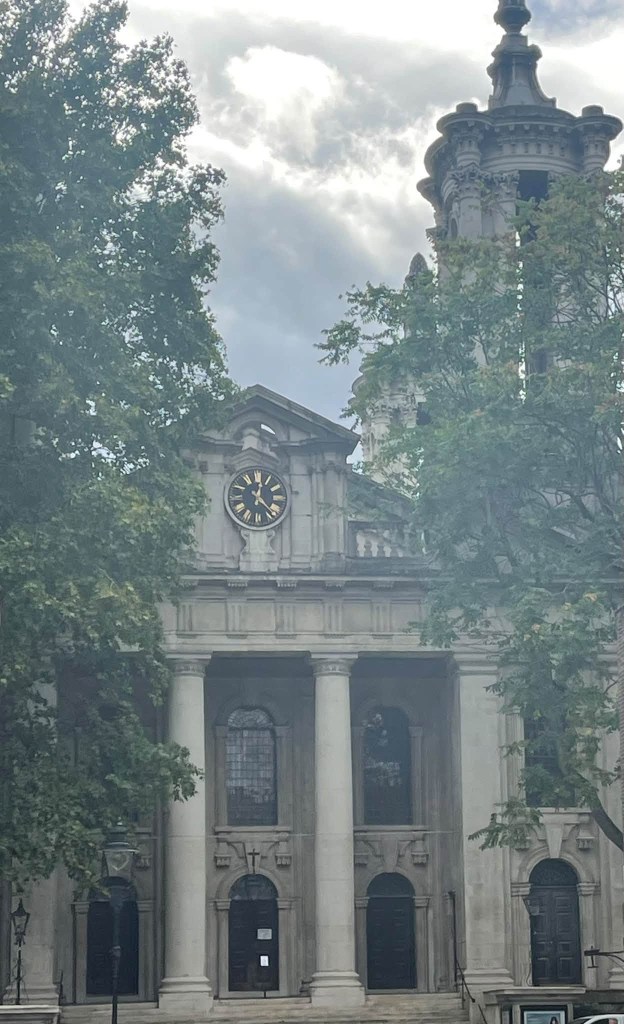
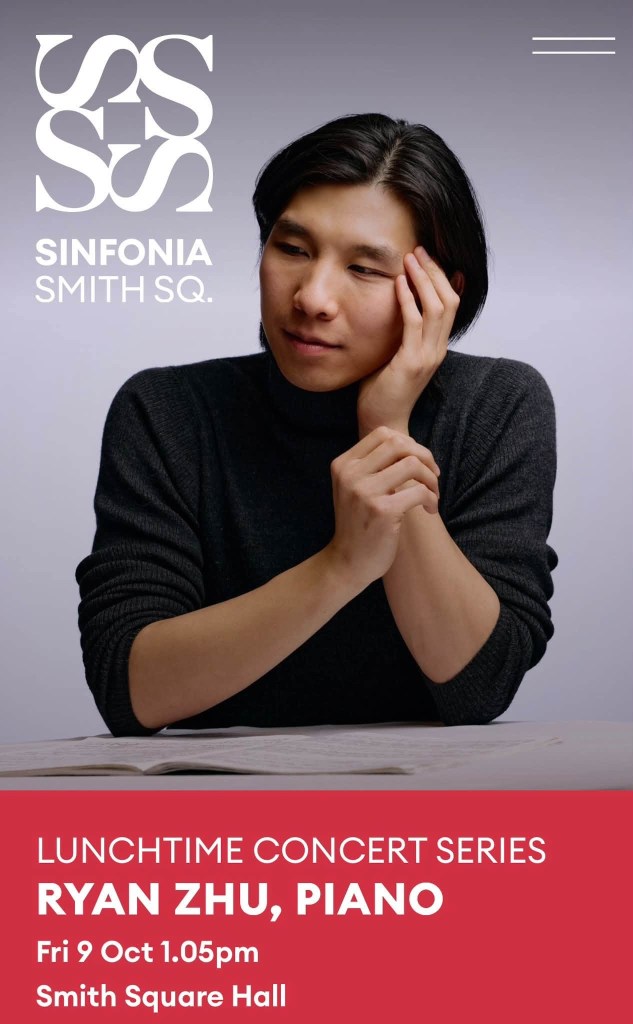
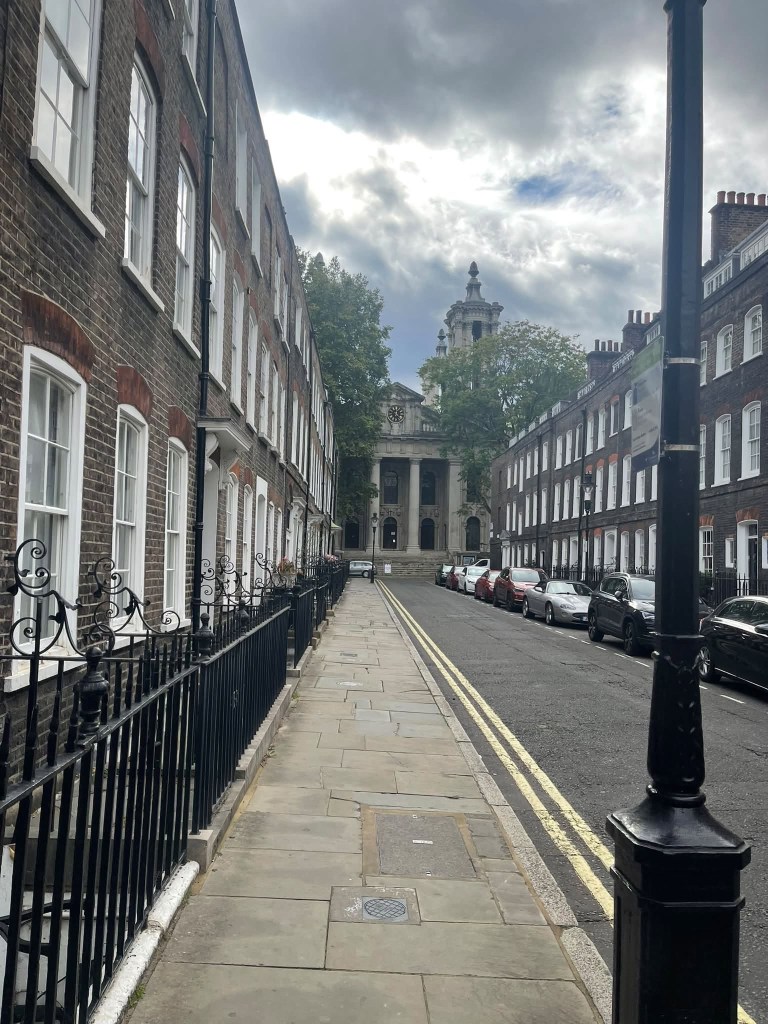
Ryan Zhu the Chinese Canadian winner of the 2026 Hastings, making his London debut today in St John’s Smith Square .
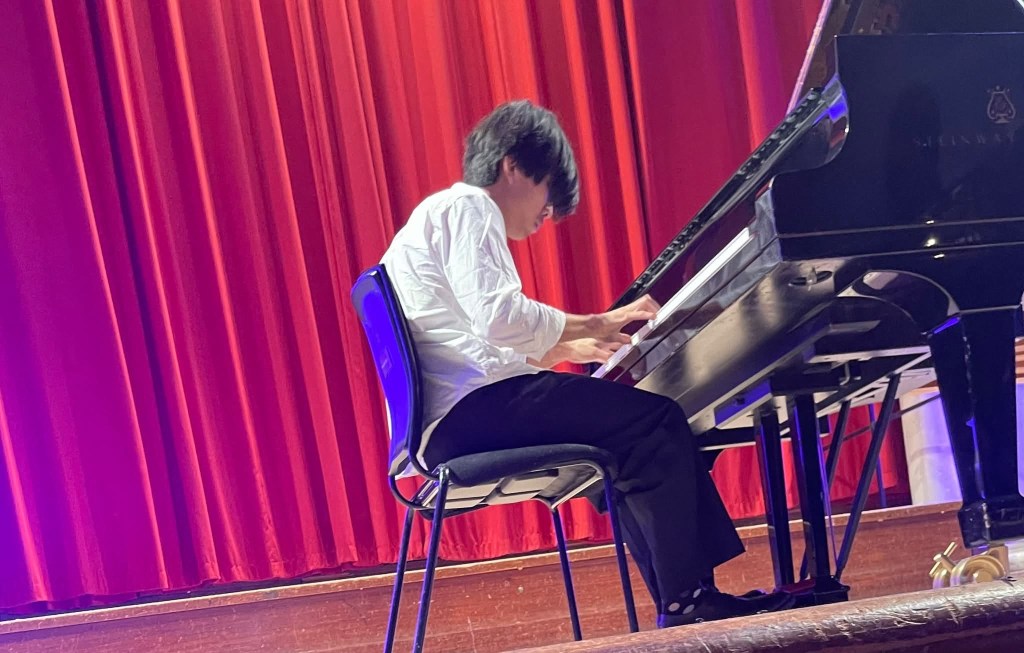
Opening with Schumann’s disarmingly simple ‘Arabesque’ op 18 he imbued it with ethereal sounds from a palette of colours that allowed each phrase to speak with whispered radiance . Even the intrusive Florestanesque interruptions just made one long for the return of the rondo melody that this poet of the piano imbued with ever more subtle tenderness . The opening E of the postlude shone with a crystalline purity as Schumann’s final thoughts were played with wondrous sounds of palpitating vibrant beauty .
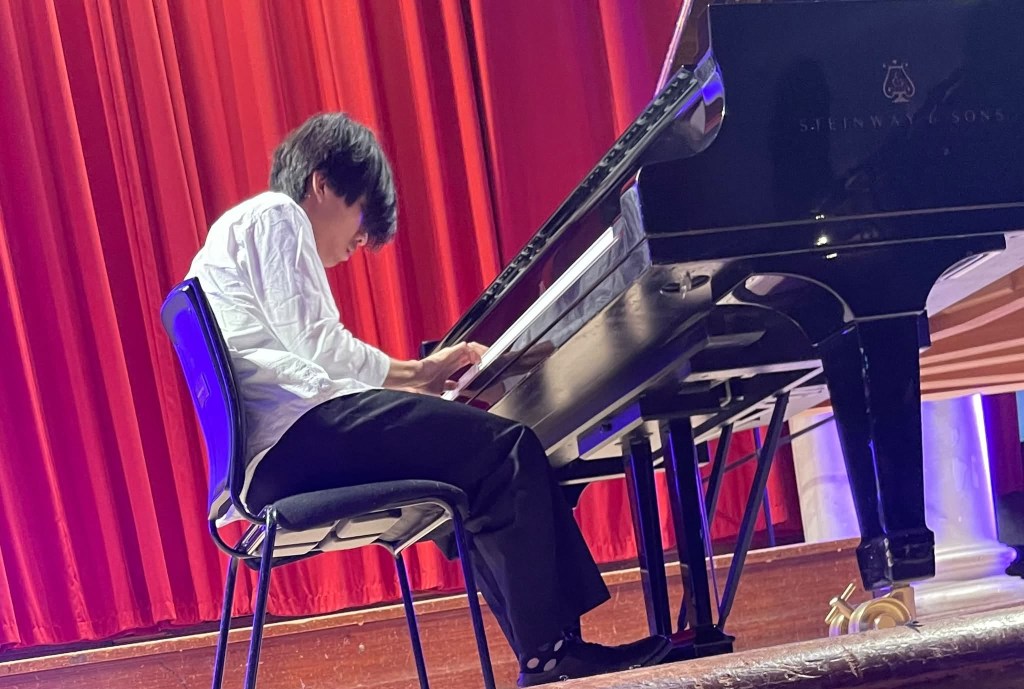
Ryan with a chameleonic palette of sounds makes everything he plays sound like a rare discovery. Most young prize winning pianists present Beethoven’s last sonatas in their programmes but Ryan chose the first which he imbued with subtle sounds and poetic imagination whilst paying scrupulous attention to Beethoven’s indications . I may have been astonished by Serkin’s red hot performances of the Sonata op 2 n 1 but today I was seduced by the ravishing sounds that in no way reduced the intensity or dynamic drive that Serkin astonished us with . This was a poet of the piano looking at the score from on high. Even the opening was barely audible as it rose in sound only until the left hand took over. Of course there were cascades of scales but which merely accompanied the left hand figurations .With his refined palette of sounds even the impish syncopations were unusually characterful rather than being forcefully underlined . Ryan brought freshness and youthful vigour but always with the palette of sounds of its Haydnesque times. A beautiful sense of balance in the ‘Adagio’ allowed the melody to unwind with simplicity and poignant beauty.There was a subtle delicacy with which he played the moving accompaniment leaning over to barely touch the deep bass notes as the melodic line was played with chiselled beauty whilst the accompaniment was of breathtaking subtlety . Ornaments that unwound with crystalline clarity with a final delicate flourish and two very deliberately placed detached chords . An attention to detail of a master craftsman with such extraordinary intricacy and perfection that it was as though we were listening to the Sonata for the very first time . A voyage of discovery and a revelation of the simple beauty and perfection of one of Beethoven’s earliest works.
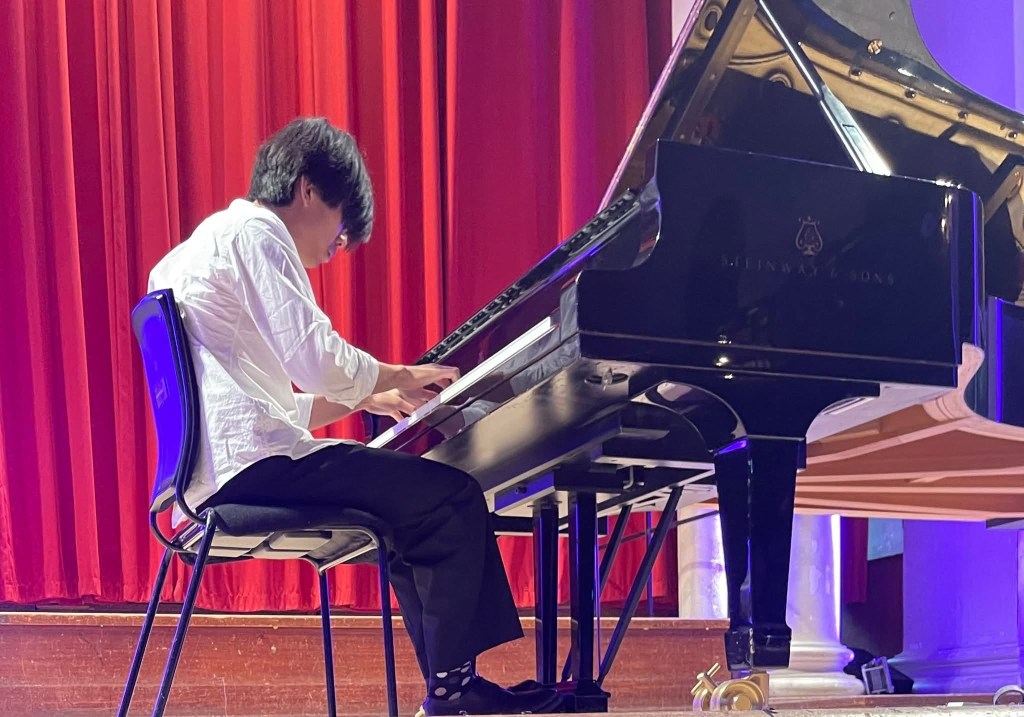
The second half of the concert was dedicated to the two books of Paganini Studies op 35 by Brahms.A ‘ tour de force’ for any pianist, where Michelangeli has set the standard for all to follow. Studies they may be and they are full of challenges for any pianist but they are miniature tone poems where technique means turning the most challenging pieces into music where the technical mastery is always at the service of the music.Brahms intended the work to be more than simply a set of theme and variations each variation also has the characteristic of a study. He published it as Studies for Pianoforte: Variations on a Theme of Paganini and it is dedicated to the piano virtuoso Carl Tausig . It is well known for its harmonic depth and extreme physical difficulty with a particular emphasis of the technical challenges that lie on hand independence, with the left hand often mirroring the right throughout the piece or having its own set of obstacles.Clara Schumann described them as Hexenvariationen Witches Variations because of its difficulty of diabolical variations that are also vast spiritual problems. ‘ To play them requires fingers of steel, a heart of burning lava and the courage of a lion’, to quote James Huneker. With Ryan we were never aware of the technical challenges as the music flowed from his fingers with a glowing fluidity that was all consuming.There was always an extraordinary fluidity to Ryan’s playing even in the rather pedantic outpouring of sixths, but the imitation of the solo violin in the third variation was transformed into a sumptuous outpouring of buzzing beauty. A beguiling insinuation to the fifth and the extraordinary mastery as Ryan managed to convey the legato right hand with the insistent staccato left. Great quasi orchestral sounds in the seventh and eighth were answered by the harrowing almost ghostly murmurings of the ninth A radiant beauty to the music box sounds of the eleventh where Ryan allowed the left hand to lead and was merely shadowed by the right. What ravishing beauty he brought to the twelfth with the left hand melodic line accompanied by sounds of glistening radiance. A Viennese charm to the thirteenth with the leisurely glissandi lazily joining the phrases to one another.A finale of quite extraordinary dynamic drive and rhythmic elan brought this first book to a sumptuous close. Some masterly playing of great control and nobility with an unstoppable build up to the final great flourish.
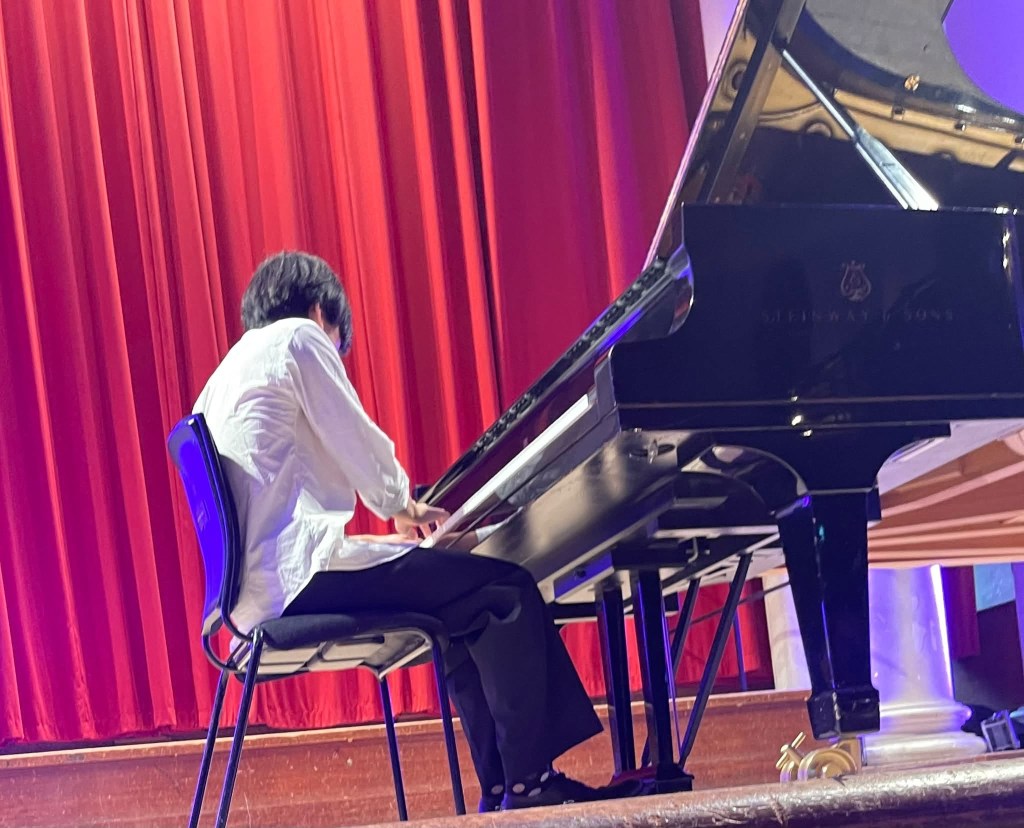
Book 2 is often played on it’s own in concert and it is a complete work in its own right. What care Ryan brought to the left hand in the fourth variation before the fleeting brilliance of the fifth and sixth. Rhythmic conundrums abound in the seventh and eighth before the explosion of octave brilliance of the ninth and tenth. Sumptuous rich sounds filled the piano with nobility and grandeur as the eleventh was a cat and mouse game of teasing brilliance. The final variation was a gradual build up of aristocratic excitement that Ryan played with quite extraordinary sumptuous brilliance.
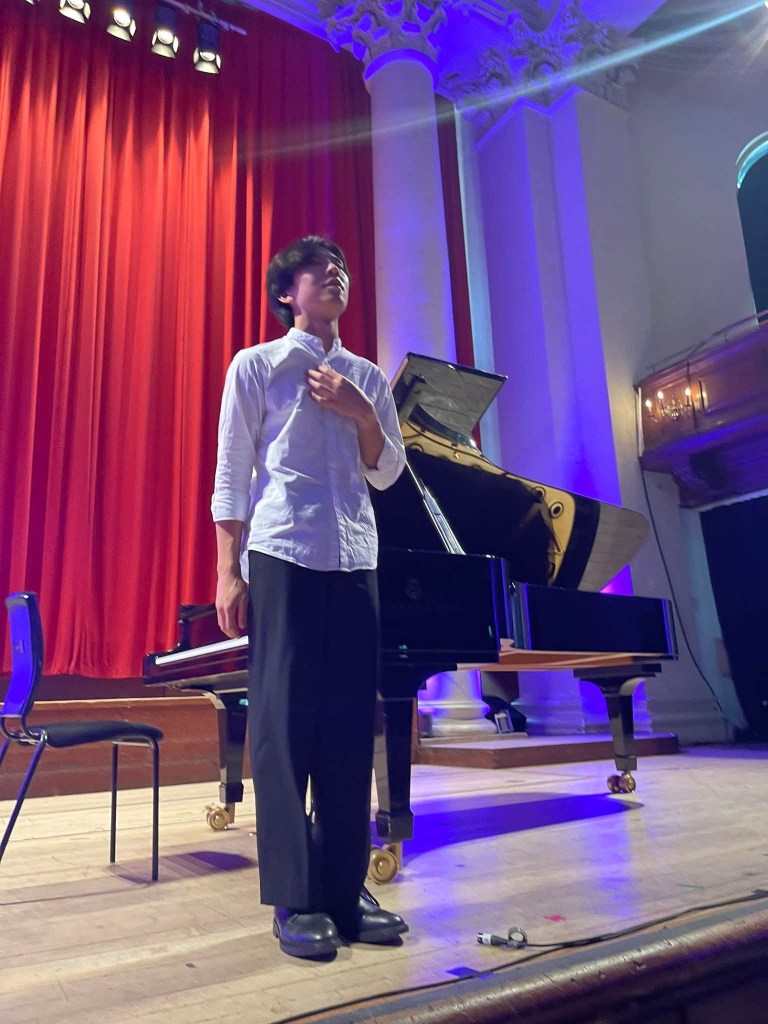
A masterly performance that demonstrated Ryan’s technical authority and poetic fantasy. Difficulties just disappeared as he shaped the music with style and ravishing beauty.
An encore of Scriabin’s beguiling Waltz op 38 was played with subtle glowing sounds and moments of passionate intensity.
https://christopheraxworthymusiccommentary.com/2024/03/20/christopher-axworthy-dip-ram-aram/
https://christopheraxworthymusiccommentary.com/2023/12/05/ileana-and-joan-3rd-december-2023/

