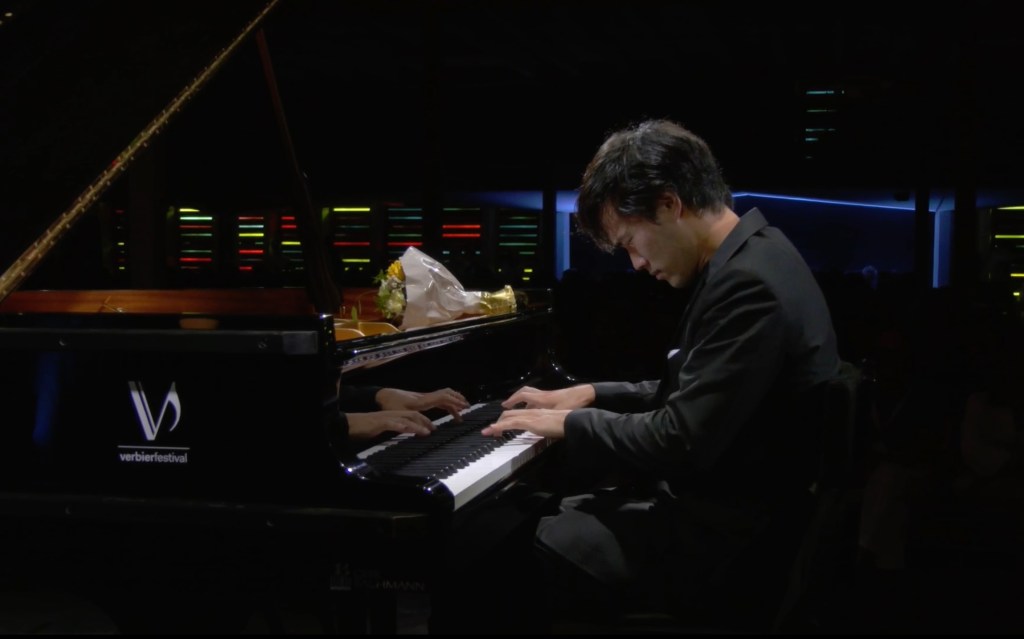
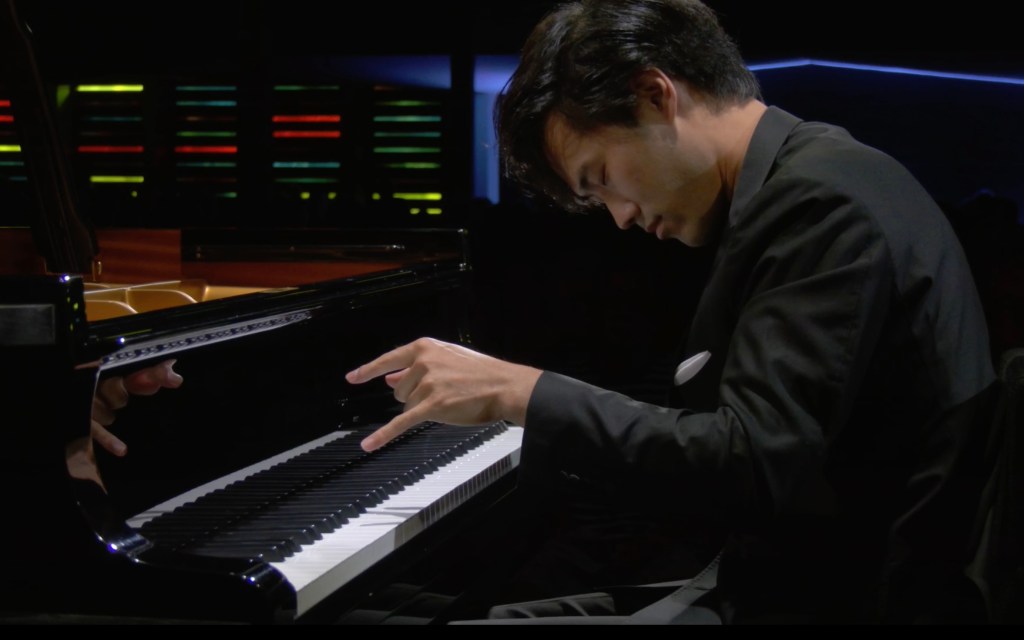
Some impeccable playing from Bruce Liu with a programme ideally suited to a pianist who plays with a clarity and simplicity of extraordinary jewel like perfection. He can create, too, moments of passion and rhythmic drive that are exhilarating and exciting as well as astonishing. A total concentration of a pianist who is listening to himself with intelligence and burning commitment with a well oiled ease that allows him to take risks that in lesser hands might be considered imprudent in a live performance, but like Gilels can generate an excitement that keeps us on the edge of our seats
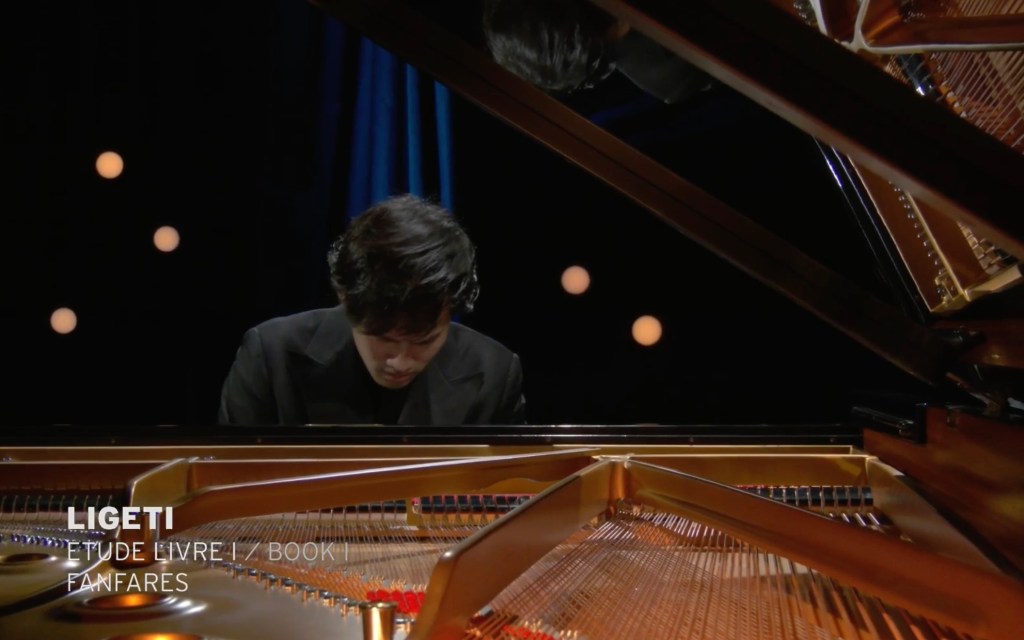
Beginning with a Ligeti study that was played with extraordinary clockwork precision. A continual left hand moving anchor was mesmerising with its absolute perfection as Bruce added comments of extraordinary poetic fantasy, creating the world of Ligeti with his studies for piano of notorious complexity . In many ways he mirrors the Debussy studies creating miniature tone poems for all those that dare enter a land that is for the very few endowed with masterly technical perfection and poetic fantasy. Leading directly into the simple beauty of Bach with the Fifth French Suite.
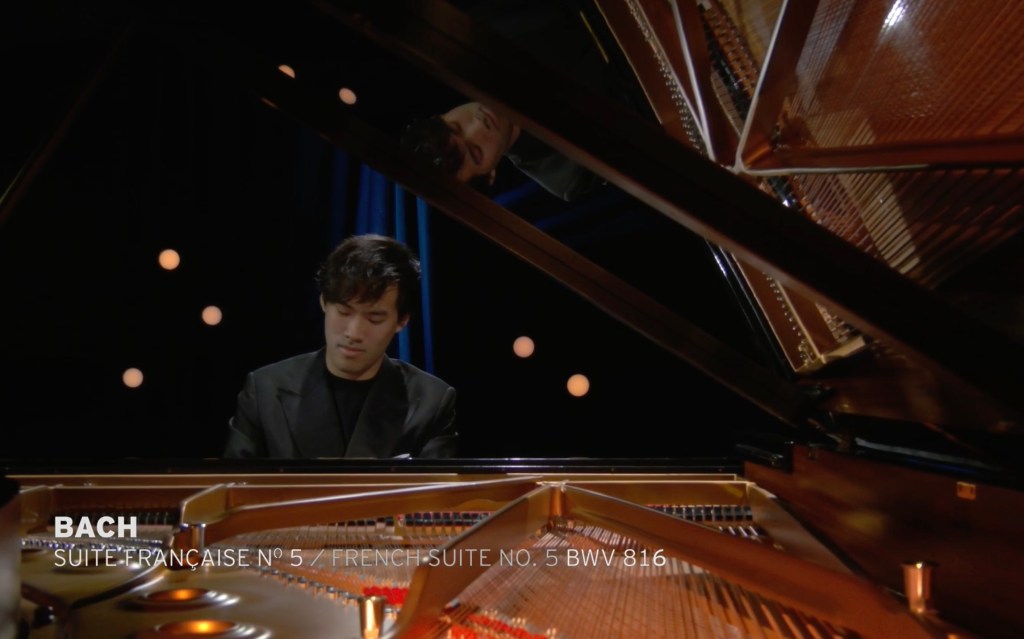
A ray of light as the cloud of Ligeti passed, leaving the ‘Allemande’ to open with flowing beauty, the bass just adding an anchor at key moments. It was followed by a ‘Courante’ that sprang to life with an independence of the hands that gave such energy to this crystalline outpouring. A ‘Sarabande’ that was of radiance and simple beauty and he brought a coquettish charm to the ‘Gavotte’ imbued with beguiling impish character before the energy of the Bourrée bubbled onto the keys. A deeply questioning Loure of genial questioning invention was immediately interrupted but the dynamic drive of the ‘Gigue’.
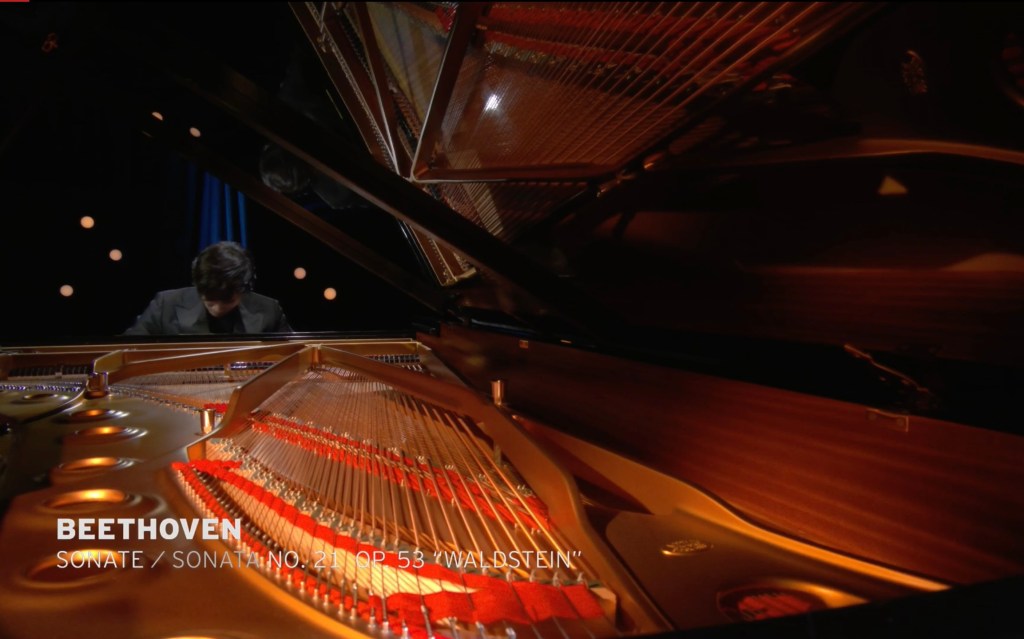
Nowhere is Debussy’s dismissal of Beethoven as all scales and arpeggios more apparent than in the ‘Waldstein’ Sonata. Bach he dismissed as ‘ knotty twine’. Bruce Liu showed us that there might be an element of truth in Delius’s impish declarations but what genius that can create such a tightly knit form with a driving energy that like a whirlwind entered from the very first notes to the dynamic drive of the final coda played with music box precision. Bruce brought a burning energy from the very outset and maintained the tempo which carried us through the first movement with a rhythmic drive that was of exhilarating freshness . Even the second subject, played with crystalline beauty, but always maintaining the same tempo and underlying drive that is the very key to this middle period Beethoven, shortly to be followed by that other extraordinary work: the ‘Appassionata’. An introduction to the last movement that was played with poignant significance and a range of orchestral colours that allowed the final ‘G’ to ring out with inevitability, as Beethoven transformed it into the first note of the undulating beauty of the Rondò. A rondò that returned after each energetic episode where Bruce’s agility and burning conviction became ever more intense as it moved toward the music box simplicity of the coda. Beethoven’s glissandi held no fear for Bruce as they created wafts of sound leading to the long trills on which Beethoven floats the rondò theme with masterly invention. Ending in typical Beethovenian impatient irascibility as Bruce brought this remarkable performance to an exhilarating end.
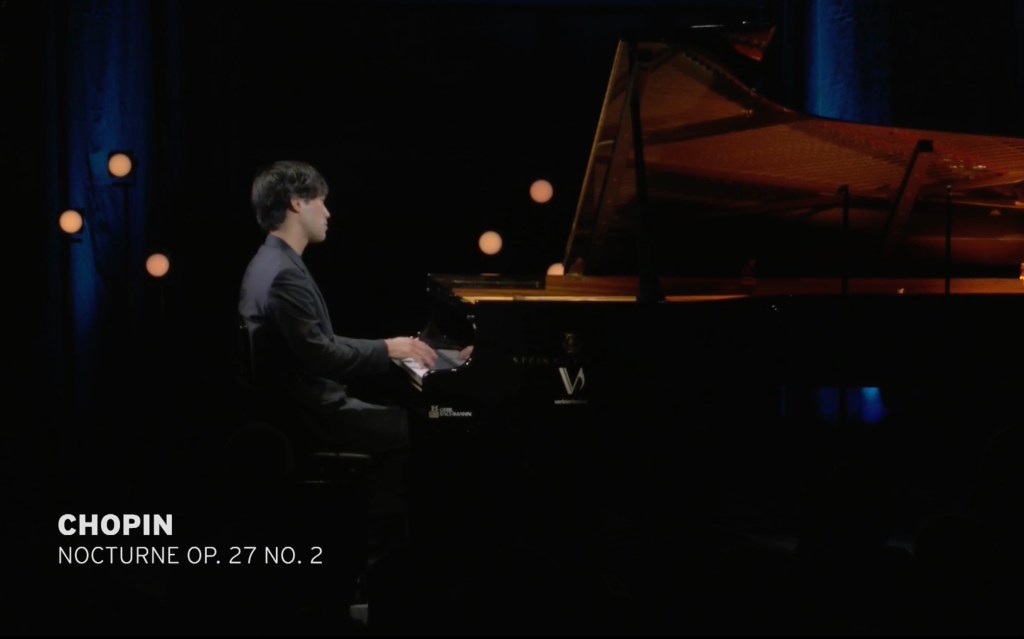
The second half opened with Chopin’s most beautiful Bel canto of the Nocturne in D flat op 27 n. 2 . Played rather slowly but with masterly control and a sense of balance that could allow the melodic line to glow with radiance and beauty. Bruce imbued it with passionate intensity, drawing the audience in to his private world rather than projecting it impersonally out. An atmosphere created from the first work, as he had done with Ligeti in the first half, and that held the audience’s attention from the very first notes.
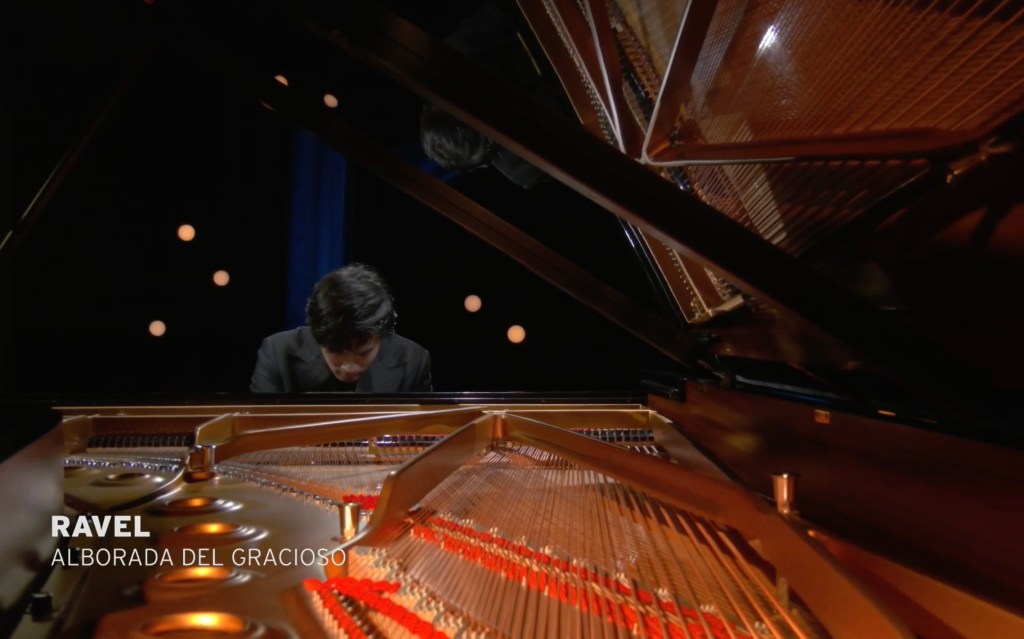
This is the fourth of Ravel’s extraordinarily evocative suite ‘Miroirs’, where Ravel’s clockwork precision and extraordinary sense of colour are allied to his great admiration for the technical innovations of Liszt and Balakirev. In fact this piece is one of the most taxing of the ‘Miroirs’, with its burning drive and double glissandi, but it also contains moments of intensity and extraordinary Spanish fiery sentiments. Alborada, or dawn in English, has various musical meanings: a song for a wedding day;a folk dance; a Galician folk tune; and a type of rhythmically free music played on bagpipes and drum. It is an announcement of dawn, a sunrise song, an aubade. Gracioso has roots in the troubadour and was a figure of Spanish comedy, the genial buffoon, the grotesque lover, an amusingly entertaining person, a servant who comments on the actions of his superiors. Accordingly the whole title is The Morning Song of the Clown, or The Jester’s Aubade. Ideally suited to Bruce’s clarity and precision he brought a burning intensity and animal like excitement to a work that opened the door to his visit to Spain in the following three works.
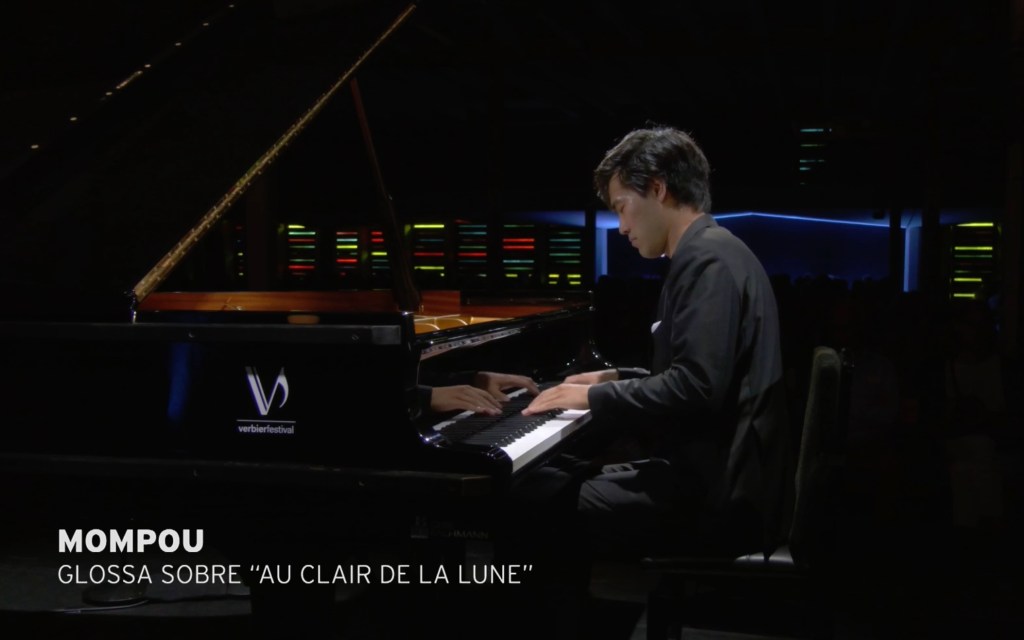
The world of Mompou is of radiance and beauty and Bruce brought a glistening fluidity to the magic of the unmistakeable Spanish world that the composer could evoke.
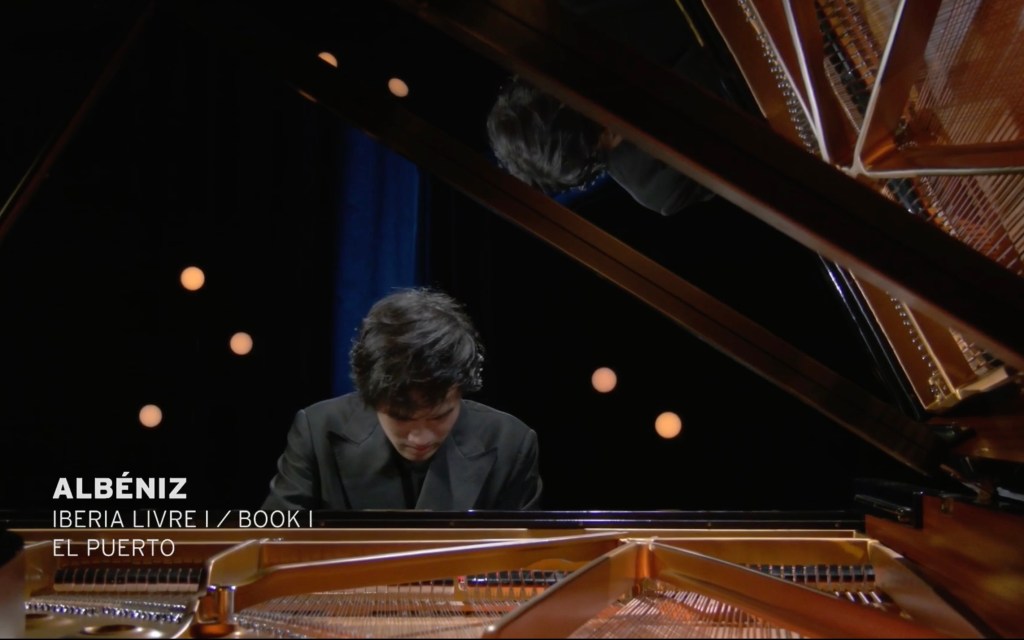
Albeniz burst onto the scene with its dynamic drive and savage beauty creating a miniature tone poem of extraordinary evocation and pulsating intensity.
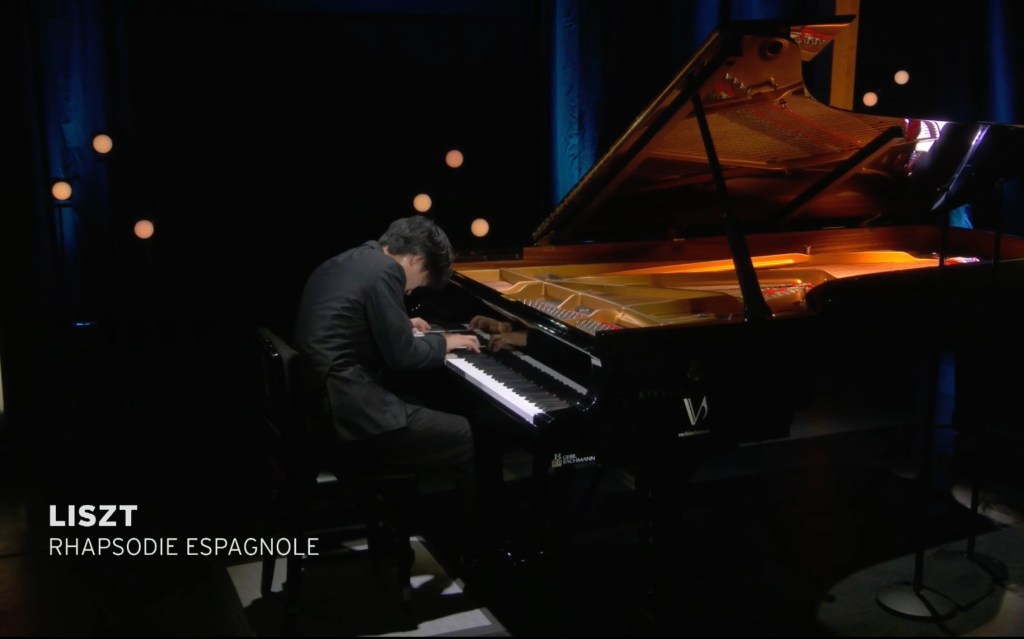
The final work was Liszt’s Spanish Rhapsody opening with the grandiosity and theatricality of one of the greatest showpieces for piano. A burning intensity to a work based on variations of ‘La Folia’ and the ‘Jota Aragonesa’ . Bruce played with breathtaking mastery and a kaleidoscope of colour added to a technical mastery that seemed to know no limits. I had heard Gilels play this work many years ago in London and we sat on the edge of our seats, as we did today, the tension and animal excitement growing with ever more burning hypnotic intensity. Bruce shows no outward sign of the passionate intensity that he reserves for the music, but even he towards the end of the Rhapsody seemed to be caught up in the animalistic drive that we were all party to.
A standing ovation from this very eclectic and totally spoilt audience in Verbier. Bruce offered a beautifully stylistic account of Chopin’s ‘Aeolian Harp’ study op 25 n. 1 followed by the last movement of the ‘Moonlight’ Sonata op 27 n. 1 that was like a wind passing through the hall. Last, but certainly not least was an enticing performance of Schubert’s Moment Musicaux in F minor that Bruce played with the same subtle charm and irresistible rhythmic subtlety that was Curzon’s.
https://christopheraxworthymusiccommentary.com/2024/03/20/christopher-axworthy-dip-ram-aram/

