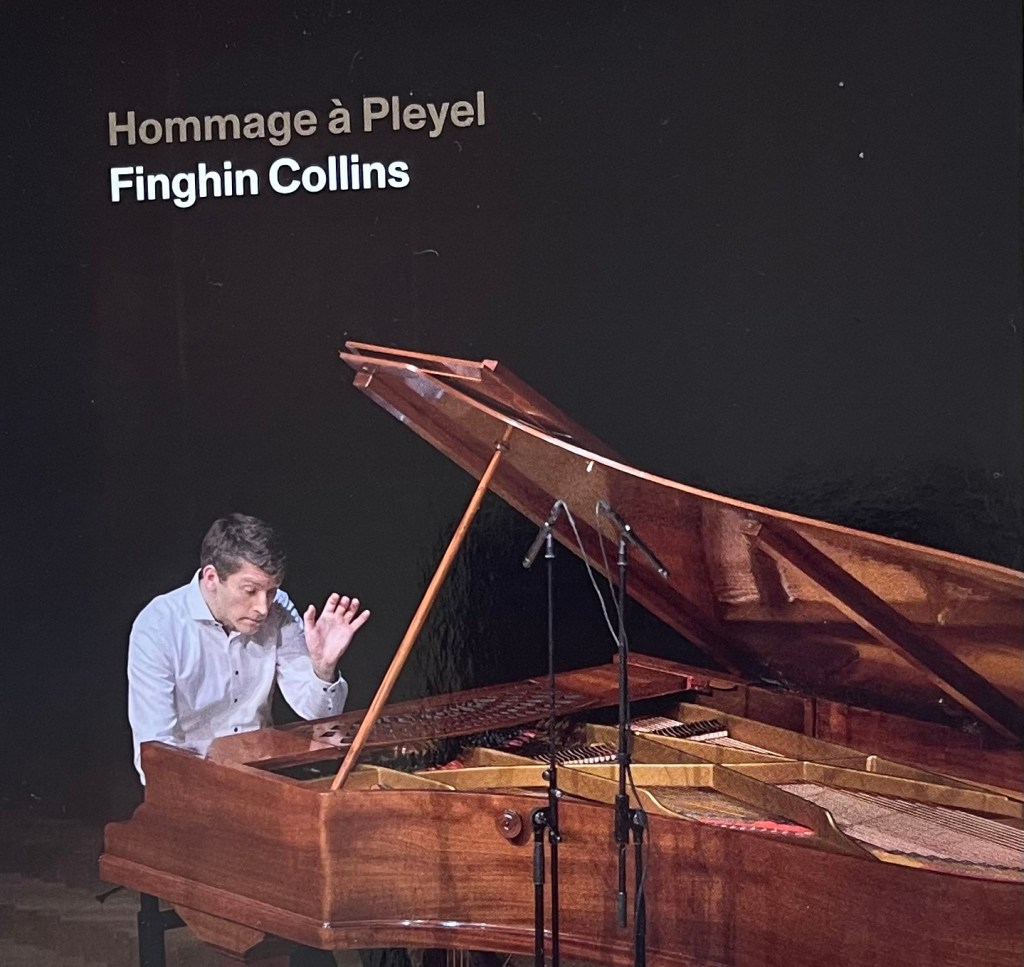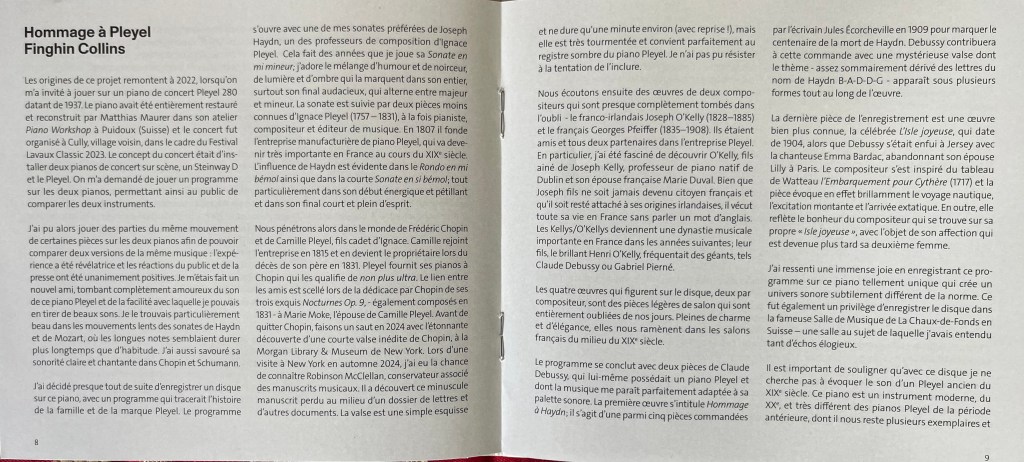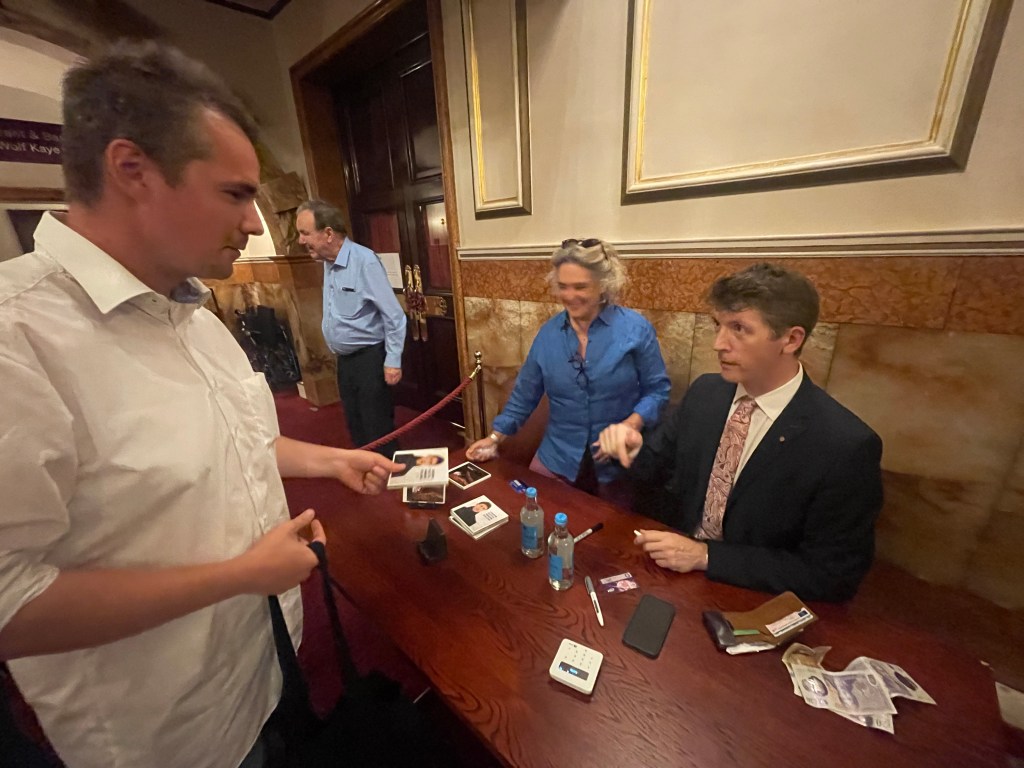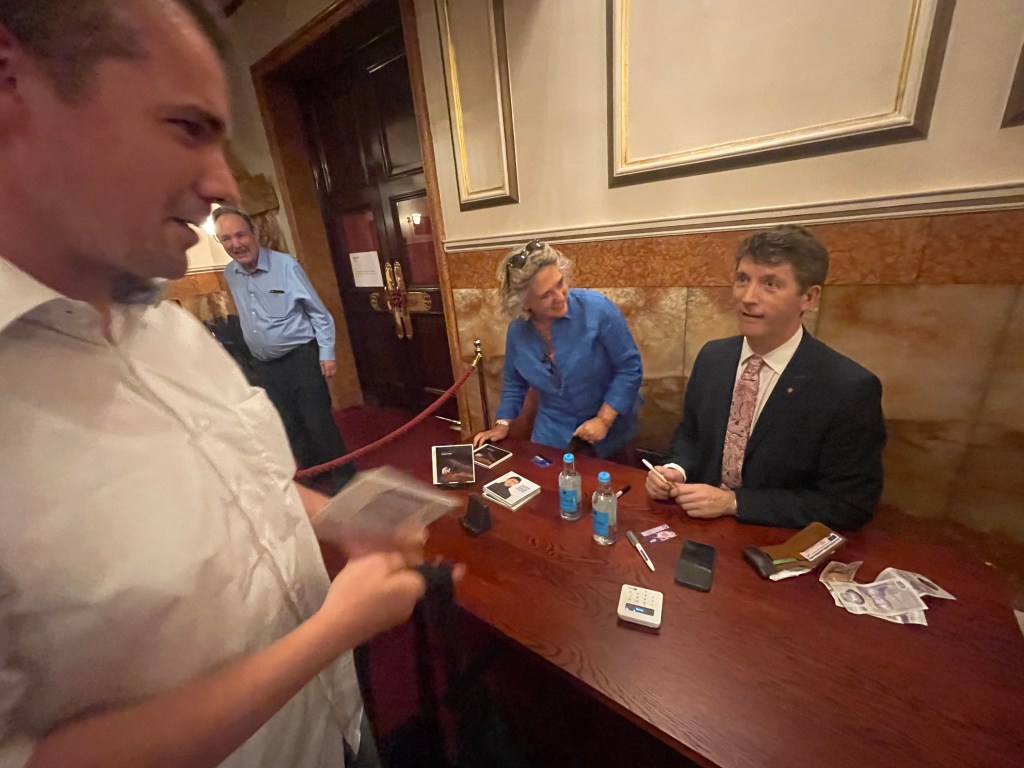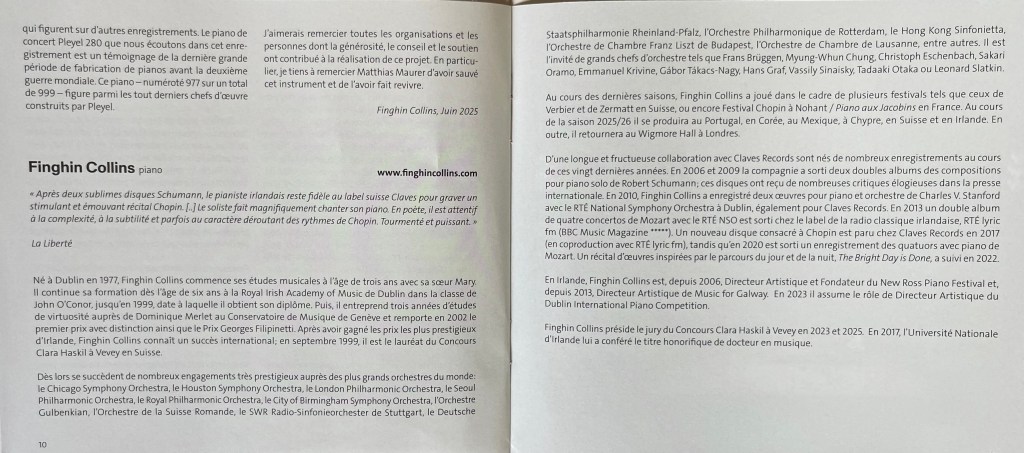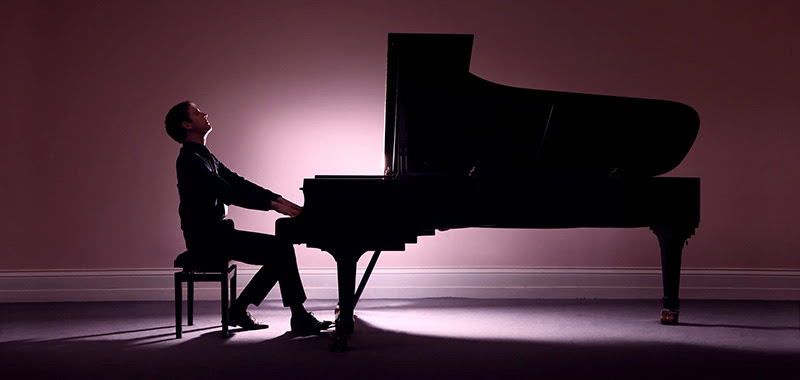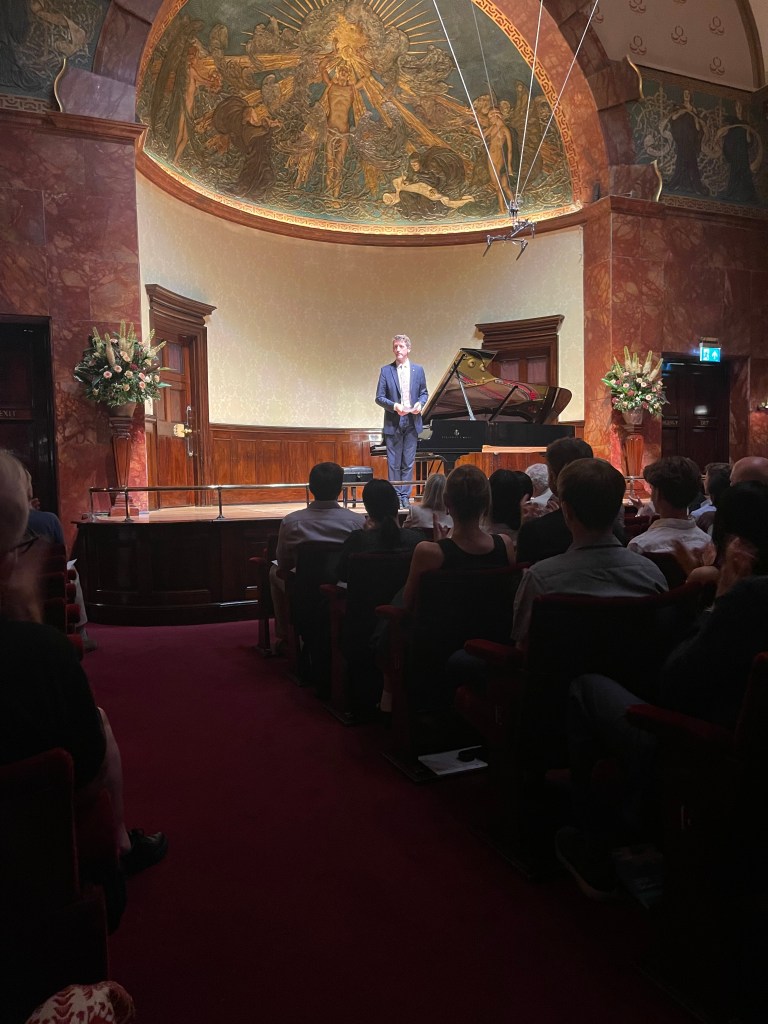
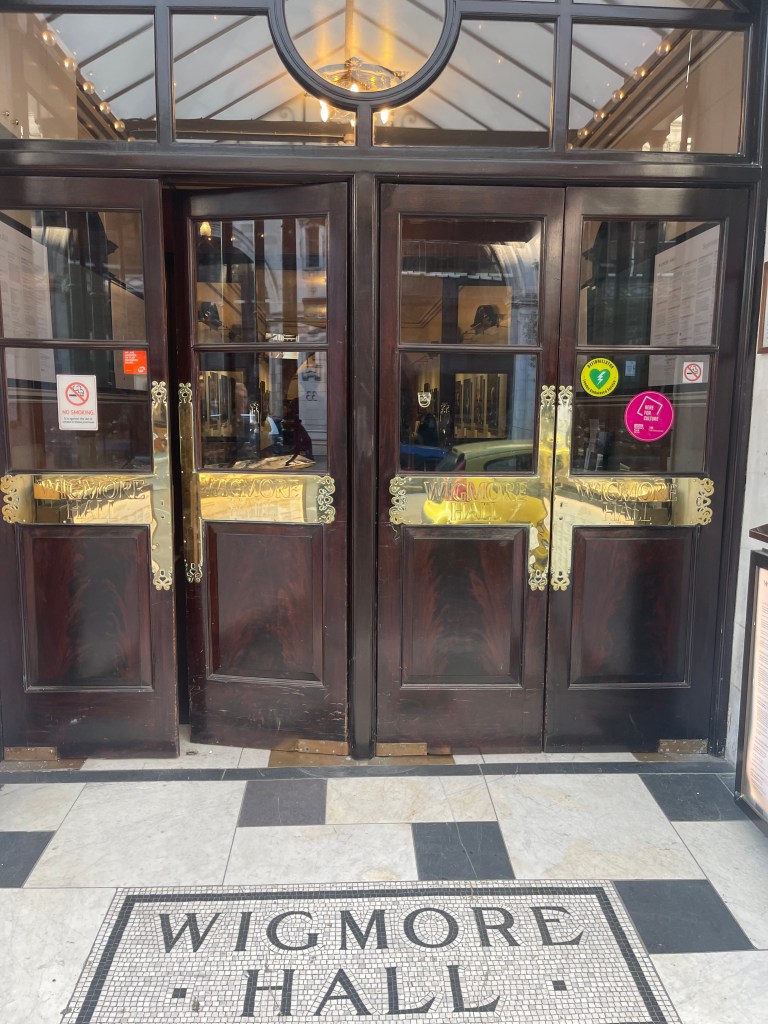
Some extraordinary playing from Finghin Collins with the piano on the extreme right of the stage where it takes on a resonance of quite noticeable difference from its usual position. Paul Lewis had the same idea too and it is just such thinking and listening musicians that can search in a hall the sound that they have in their head. Finghin, like Paul , is a quite remarkable musician who could turn a bauble into a gem, allowing the music to talk with the same inflections as the human voice. It was quite a revelation to hear two works by Pleyel brought to life with an operatic characterisation of quite hypnotic radiance and charm. After the beguiling charm and brilliance of the Rondo in E flat, the Sonata B flat was born on the same wing of bel canto luminosity with a quite extraordinary sense of character and a dynamic drive of jeu perlé brilliance . An ‘Andante’, almost too serious, was played with crystalline clarity followed by a comparatively short ‘Allegro molto’ with a ‘joie de vivre’ of burning insistence.
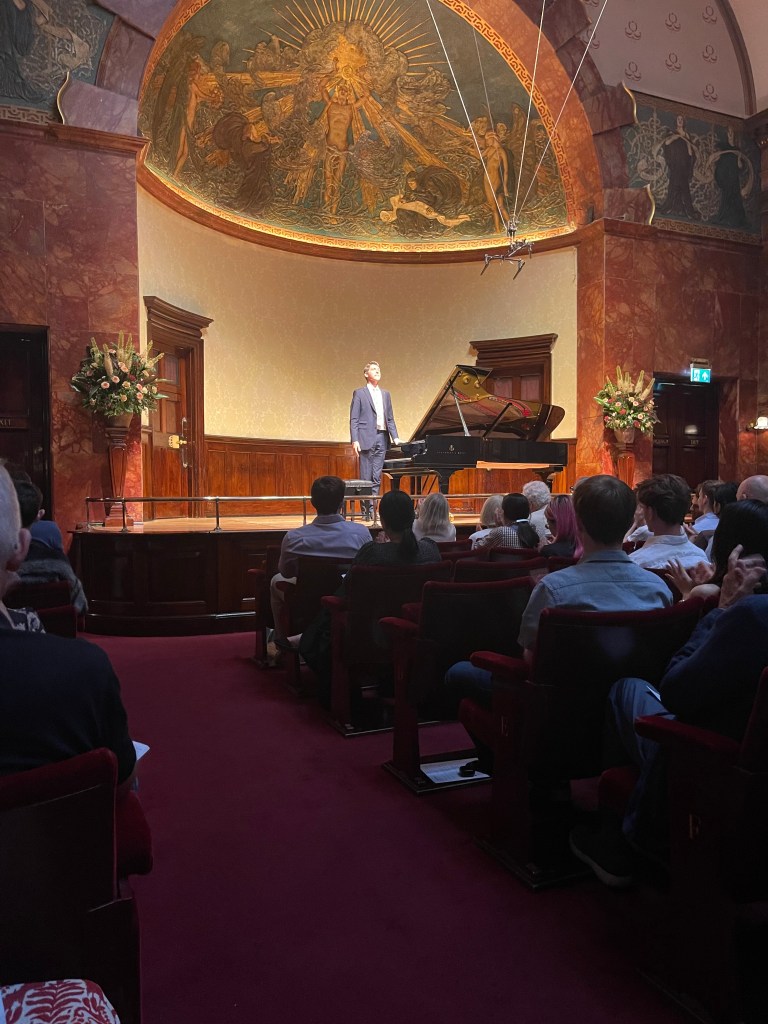
A group of Chopin pieces from the very earliest nocturnes to a waltz discovered only two years ago. It had been buried away in the Morgan Library in New York and although very brief it has a certain harmonic corpulence that made it an ideal launching pad for the sublime beauty of Chopin’s fourth Ballade.
The B flat minor Nocturne was played with a radiant timeless beauty that did not deny moments of passionate intensity . The famous E flat Nocturne was of refined good taste with a radiant bel canto of extraordinary potency, and with Finghin bringing a wistful beauty to the B major Nocturne with a beguiling style of poignant significance.
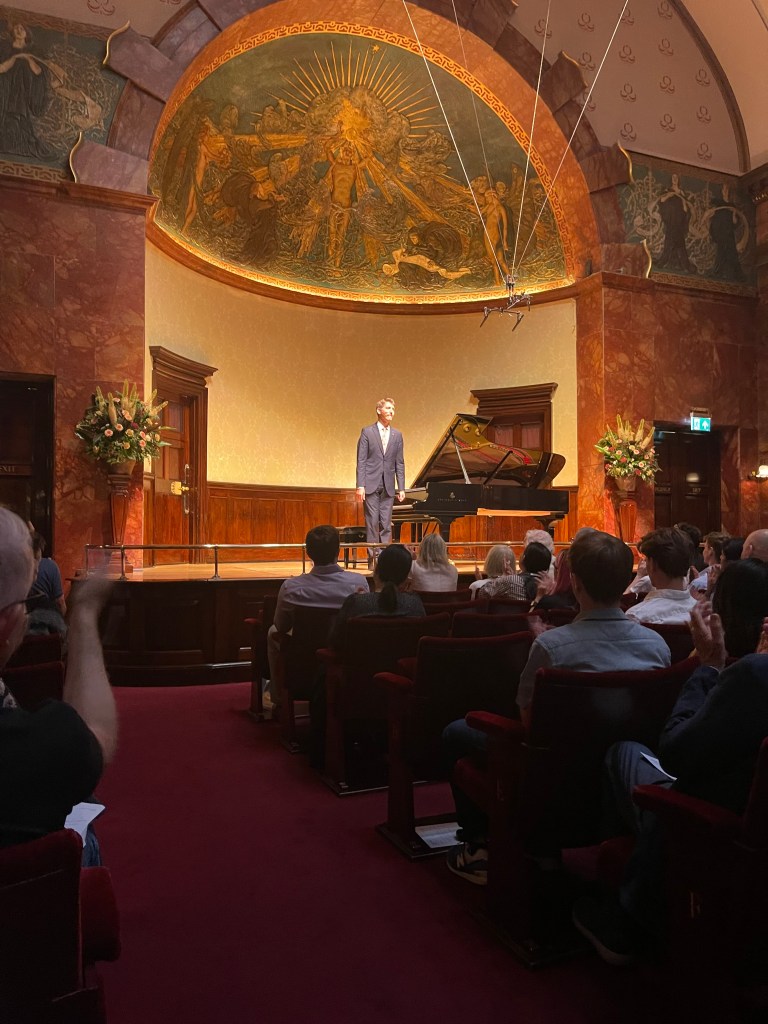
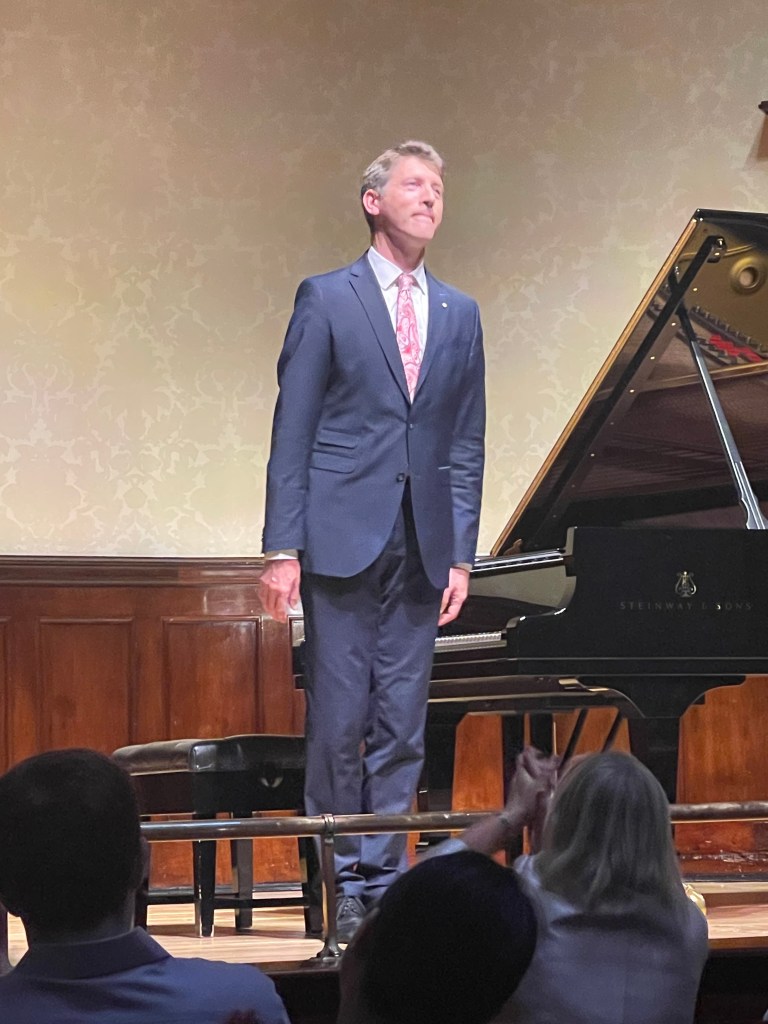
But it was the Fourth Ballade that was the crowning glory of the concert where poetry was combined with passion, in a genial form based on a theme and variations. Finghin gave a forward movement to the theme that unfolded with great musical personality illuminating but never suffocating the simplicity of Chopin’s genius. Leading to a passionate outpouring of exhilaration and excitement before being defused by a simple scale, bringing us to the sublime innocence of the second subject and the return of the opening introduction , as Cortot says ‘avec un sentiment de regret.’ After a magical cadenza Chopin embarks on some knotty twine before allowing the theme to take wing in a whirlwind of overwhelming intensity. The piano being engulfed by a great wave of sound that Finghin played with aristocratic control and a quite extraordinary sense of balance that never lost sight of the great architectural line. Five gentle chords are the calm after such an emotional storm but also a prelude to a coda that I have never heard played with such overwhelming explosive volatility but always keeping the architectural shape and sense of colour of a sumptuous sound world. A masterly performance of the Pinnacle of the Romantic pianistic repertoire played with aristocratic control but above all with poetic intensity and intelligence.
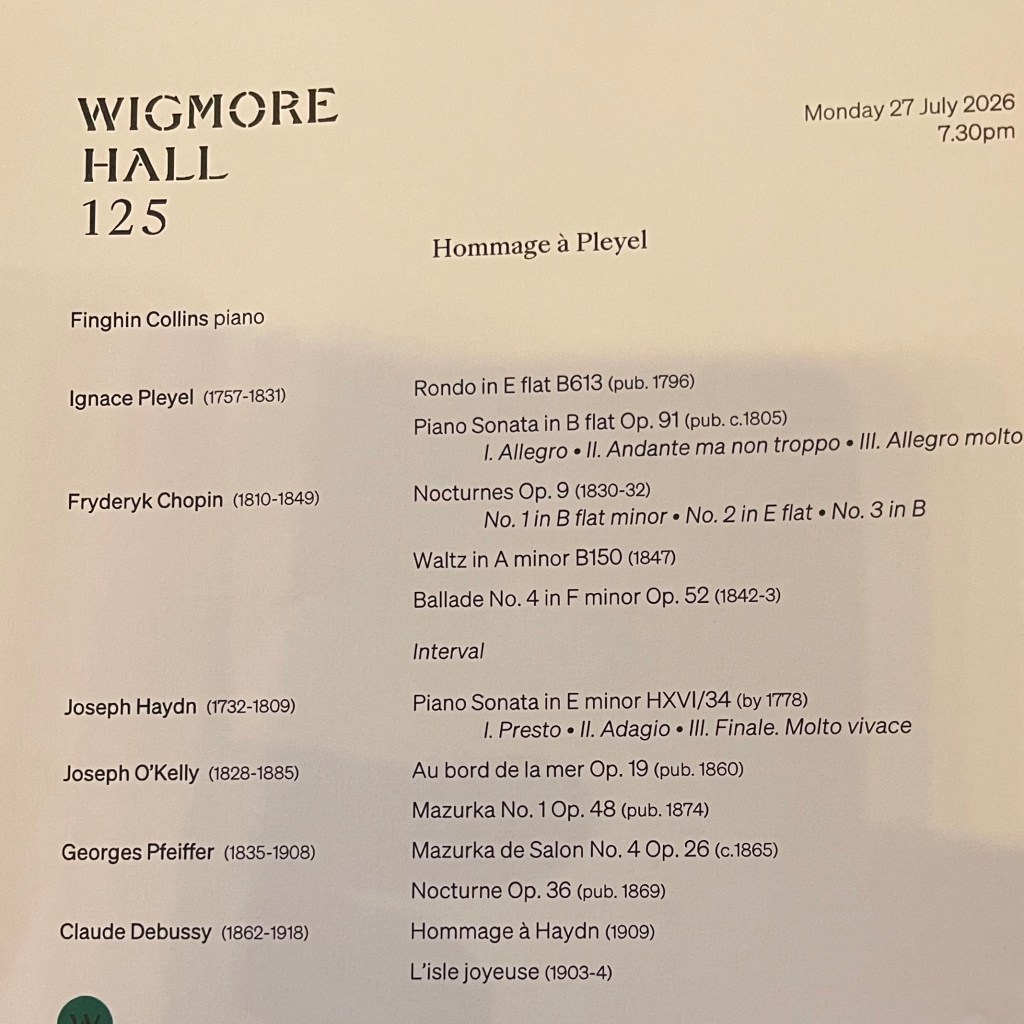
After the interval we were treated to Haydn’s E minor Sonata Hob 34, and it was the same remarkable characterisation that Finghin brought to the opening that made the comparison with Pleyel even more interesting. Of course the elegance and poise of the ‘Adagio’ was of genius and the whispered entry of the finale, followed by all the coquettish variants was indeed why Haydn is referred to as Papà Haydn. Opening the way for his pupil Beethoven to follow and surpass his master.
This is where Finghin took us on a voyage of discovery with two composers who were partners in the firm of Pleyel. Joseph O’Kelly’s ‘Au bord de la mer’ was a sumptuous outpouring of mellifluous opulence with a popular melody of salon brilliance, played with extraordinary style and burning conviction. It was very interesting in this context, but really a poor man’s Liszt mostly of empty rhetoric. The Mazurka n. 1 op 48 owed more to Strauss than Chopin and again was beautifully played with burning conviction. It was very interesting to hear these early salon pieces from a pianist who could turn baubles into gems in this very well thought out Hommage à Pleyel. Pfeiffer’s Mazuka too was played with great charm and technical ease but it was the Nocturne that was more interesting with its simple beauty of gasping insistence.
Two works by Debussy closed the concert with ‘Hommage à Haydn’ and L’isle joyeuse’ . The ‘hommage’ is a rarity in concert and is a mysterious amalgam of sounds drifting off in mid air as the magic of L’isle Joyeuse was allowed to unfold with a masterly sense of colour and a passionate intensity that made one wonder if the inhabitants of Eastbourne had ever imagined this Jersey seen through the eyes of a musical genius!
Finghin has a way of living every moment both physically and poetically and everything he played was touched by a poet of the keyboard who could delve deep into the heart of the music and reveal the very essence with sounds that can speak so much more eloquently than words.
Field’s 5th Nocturne in B flat was played with glowing radiance and was a fitting way to close a concert that had been a true voyage of discovery by a fellow Irish poet of the keyboard.