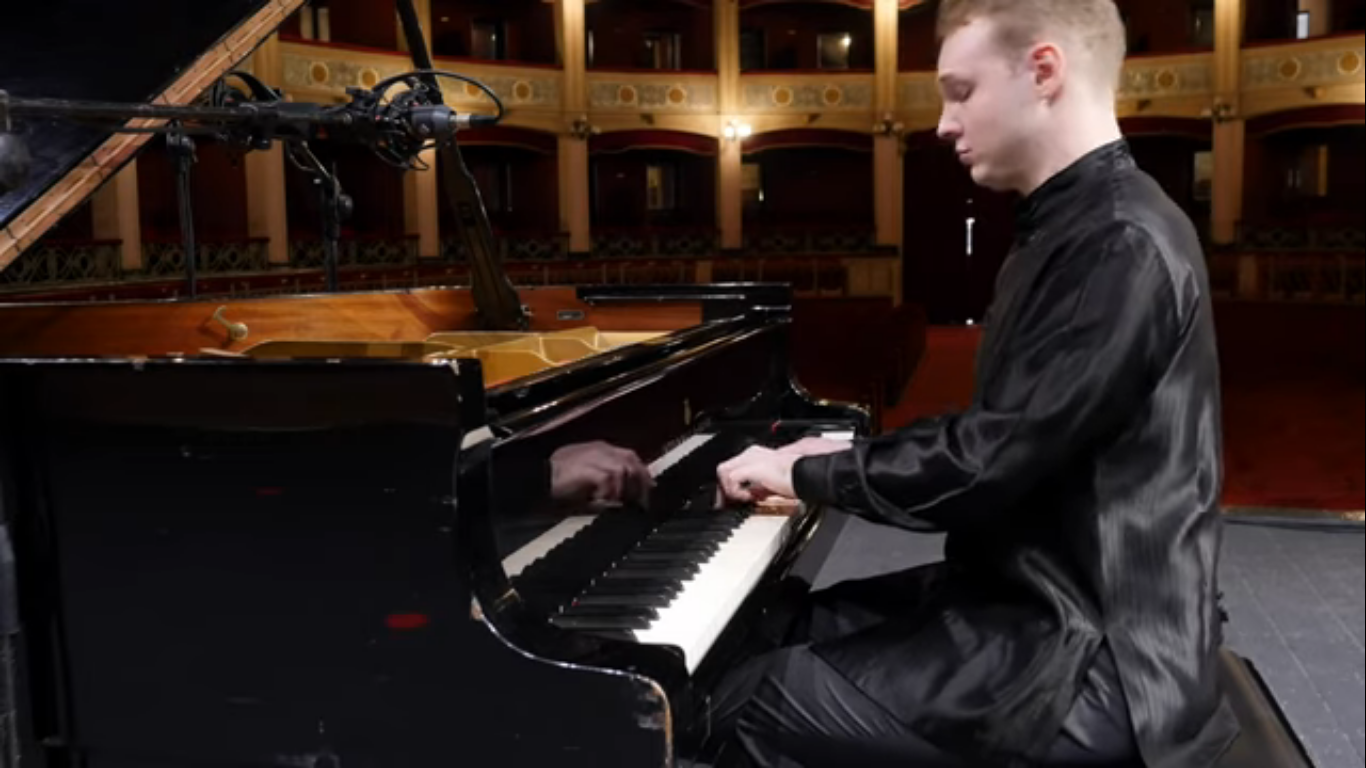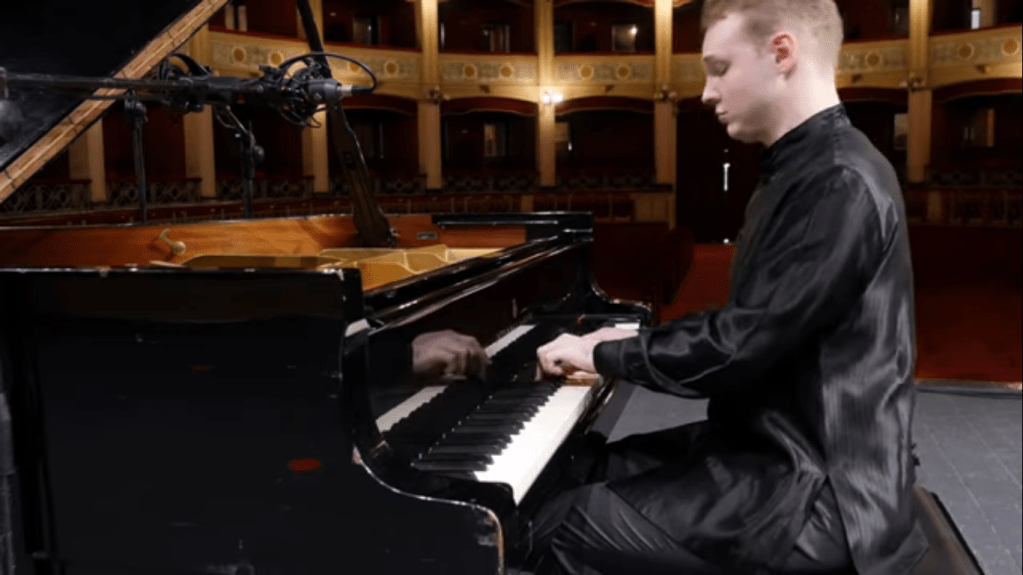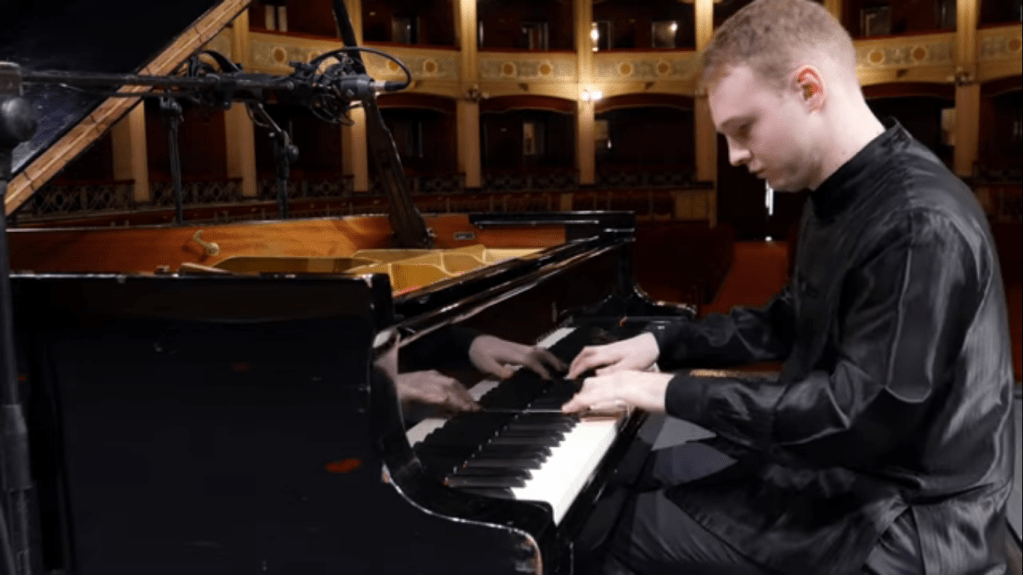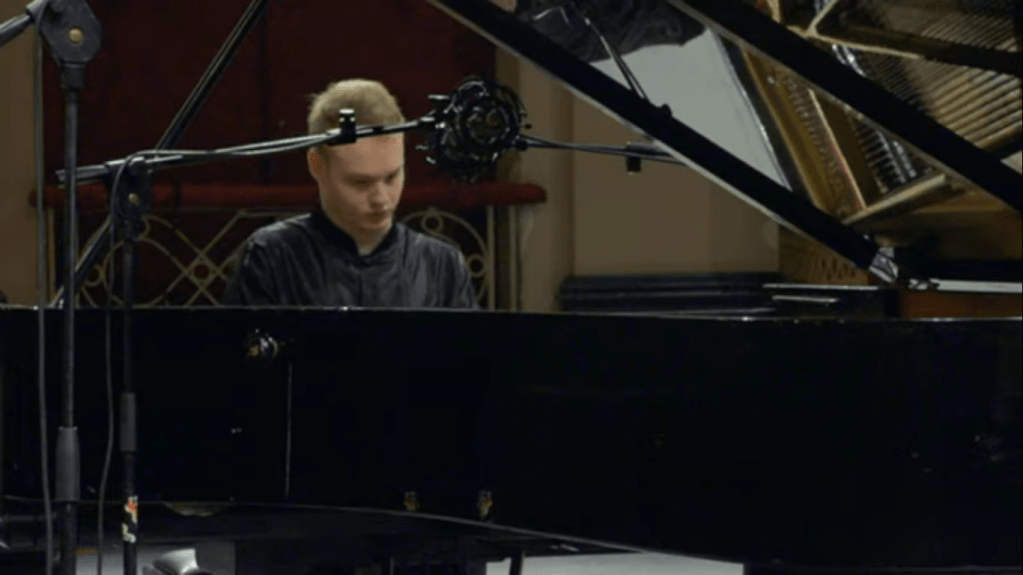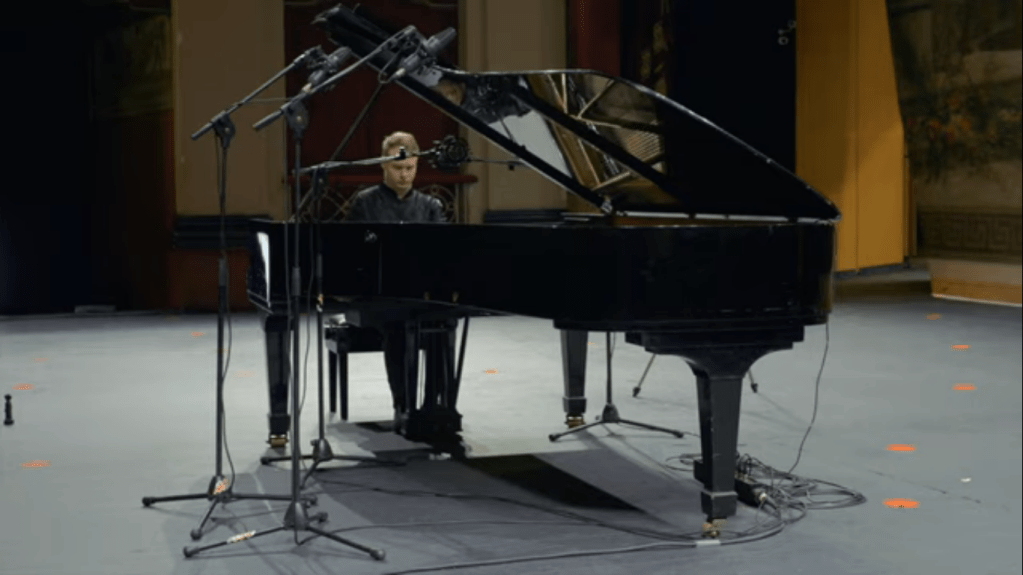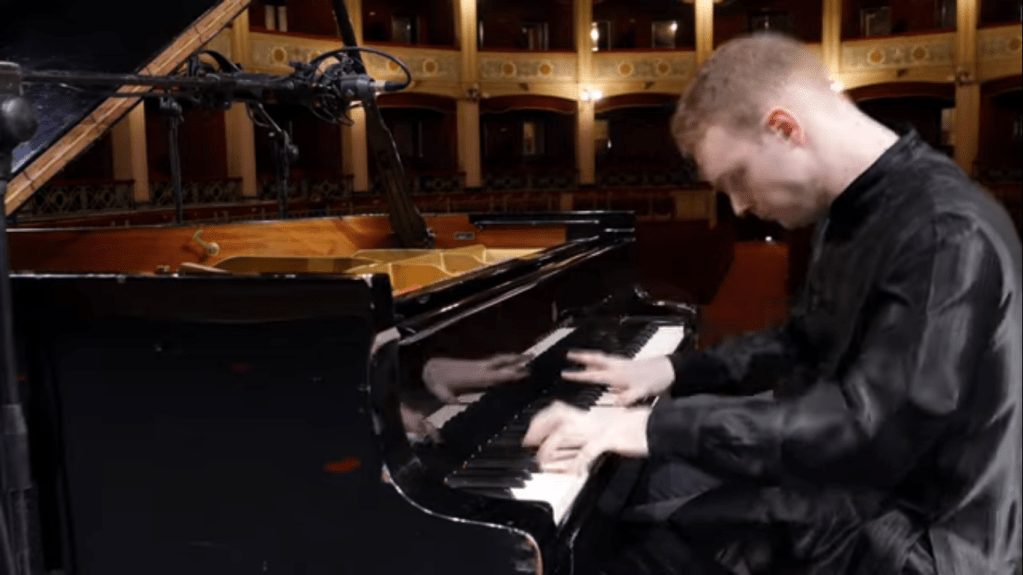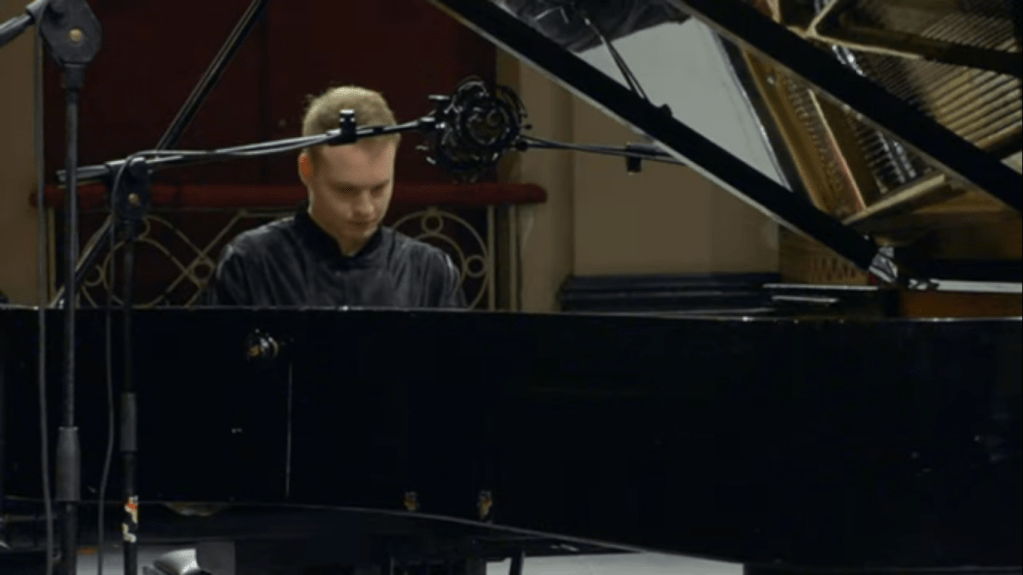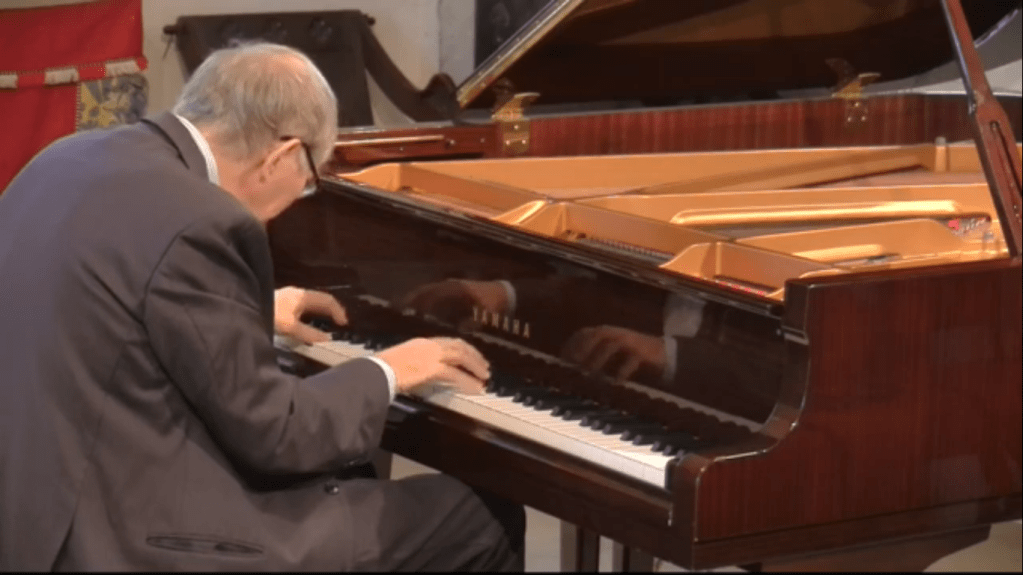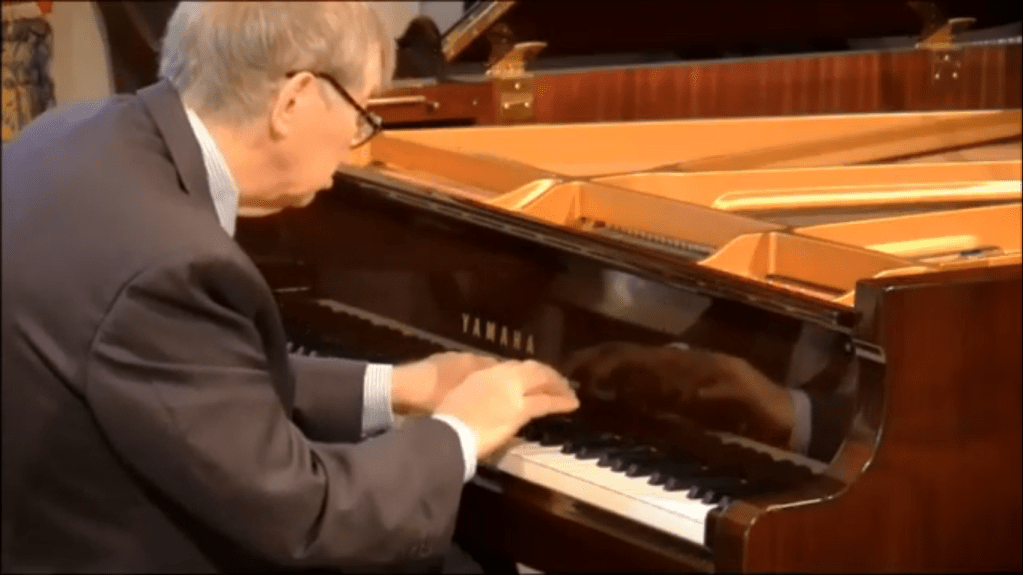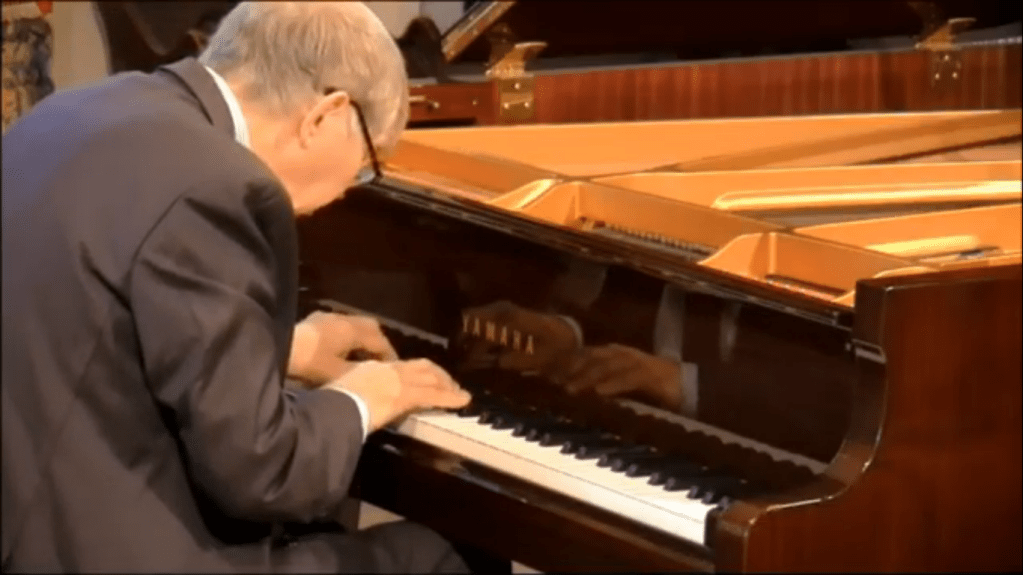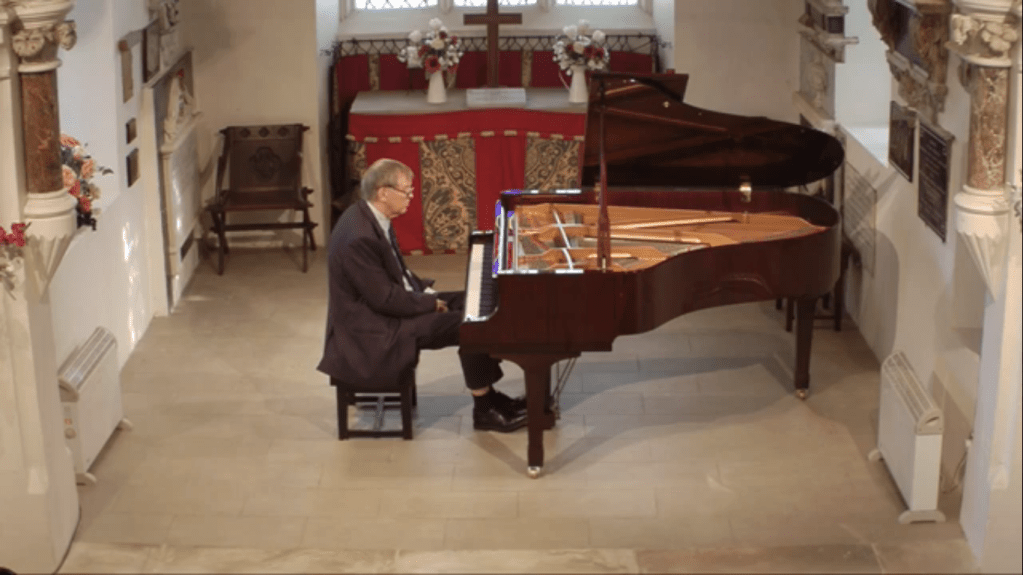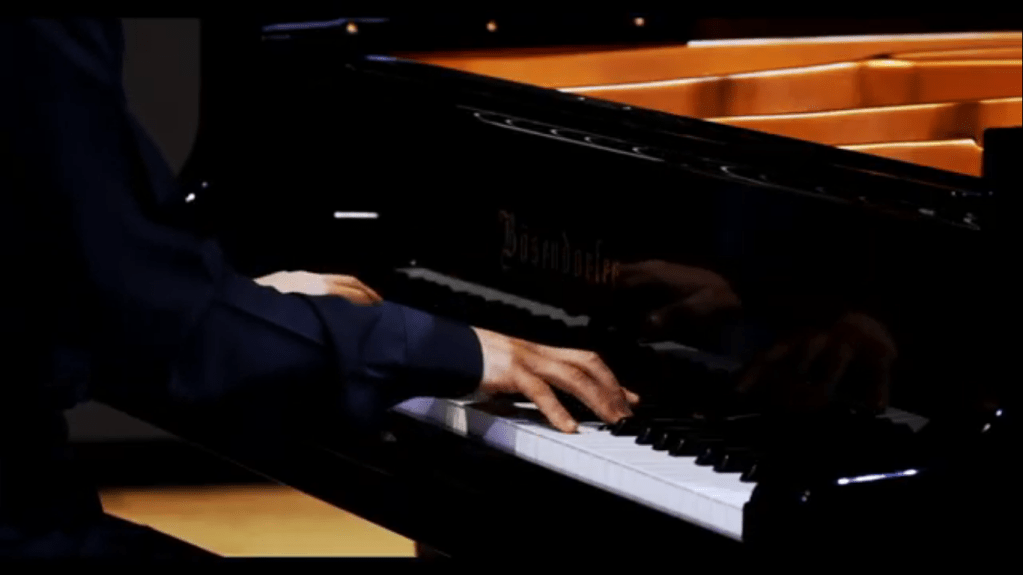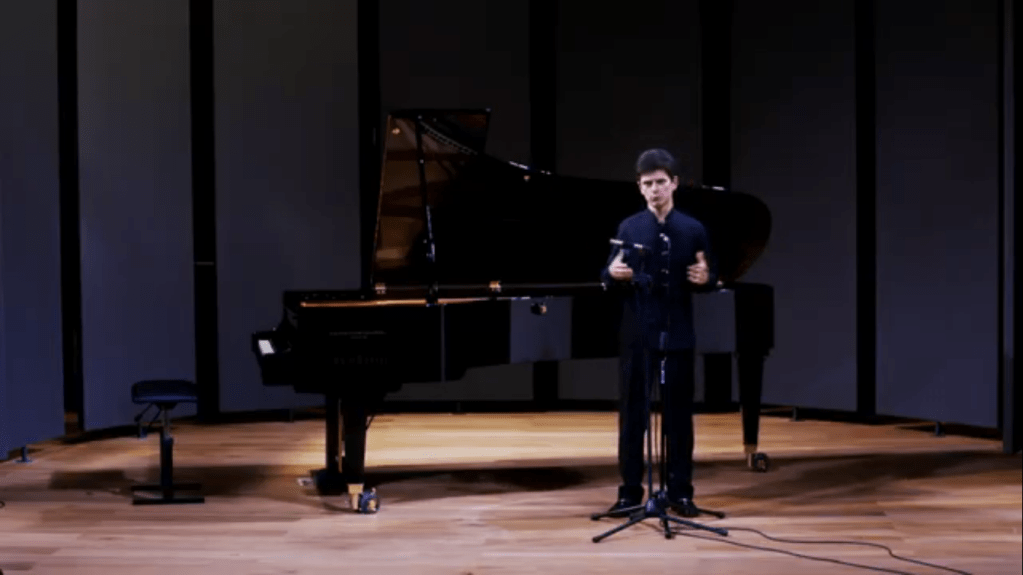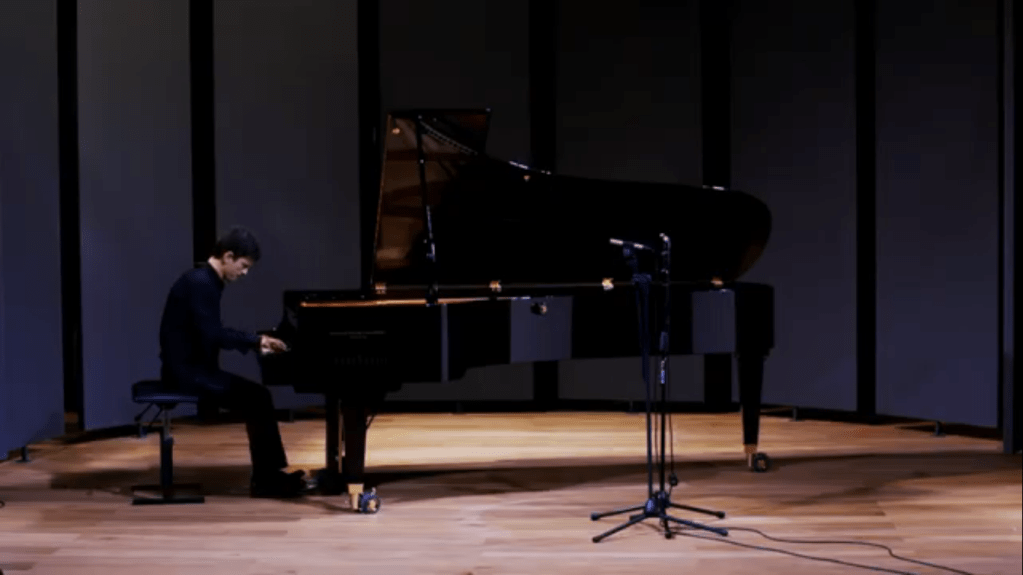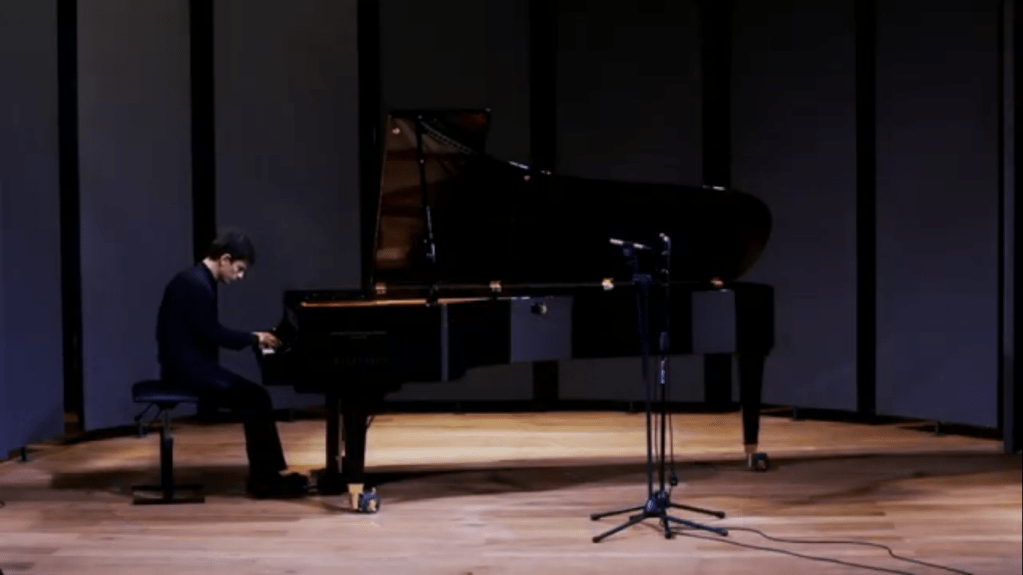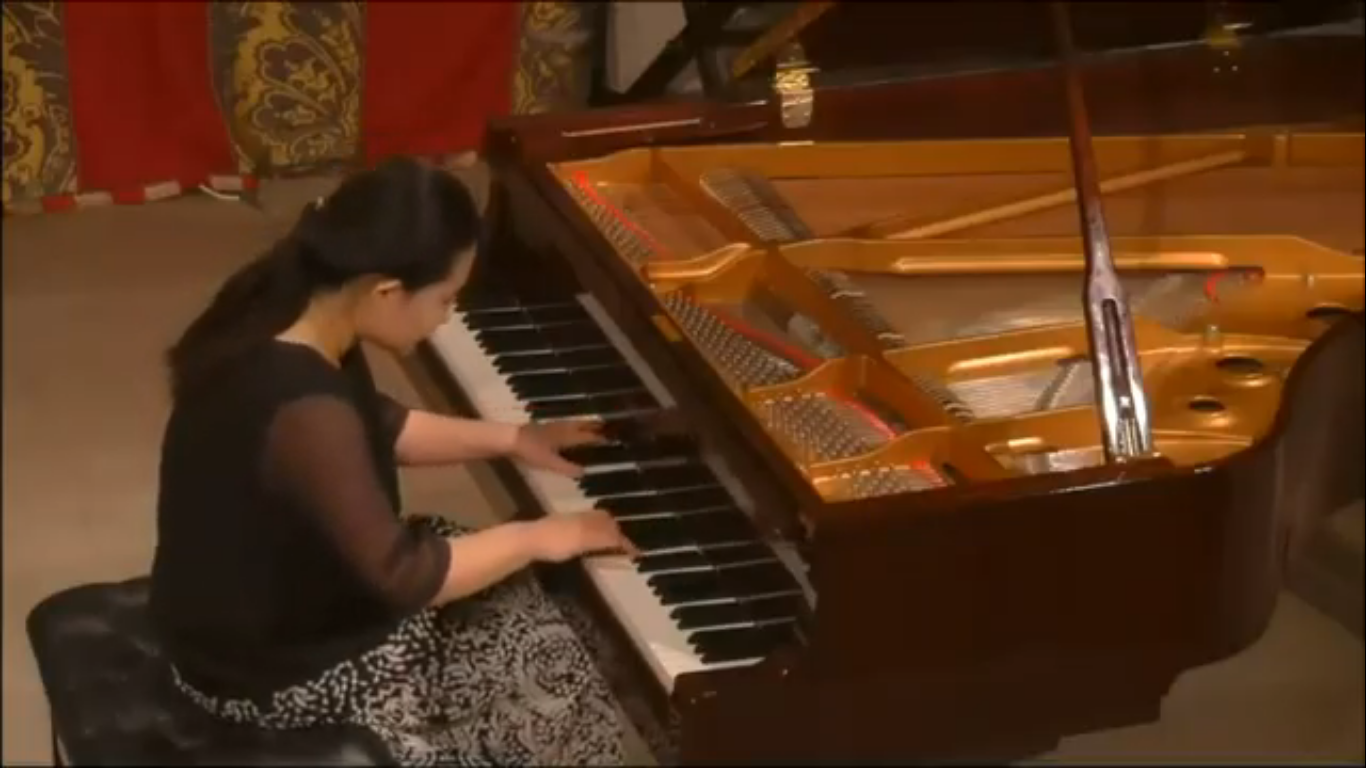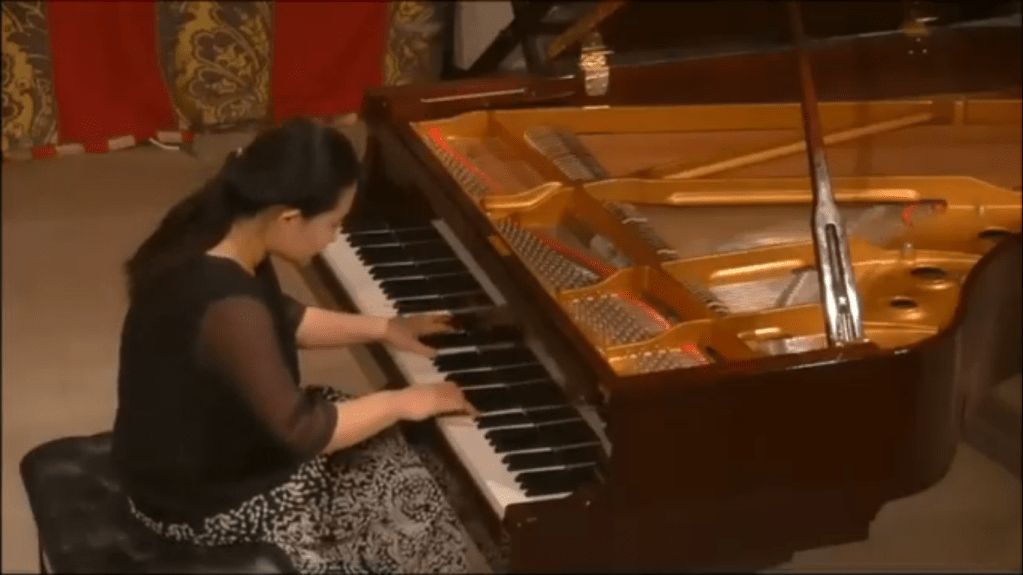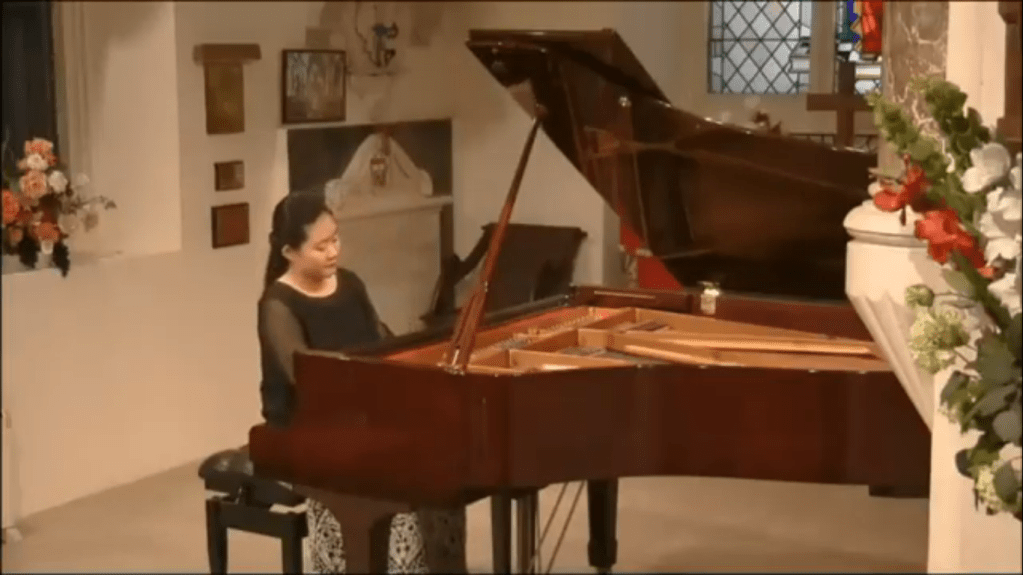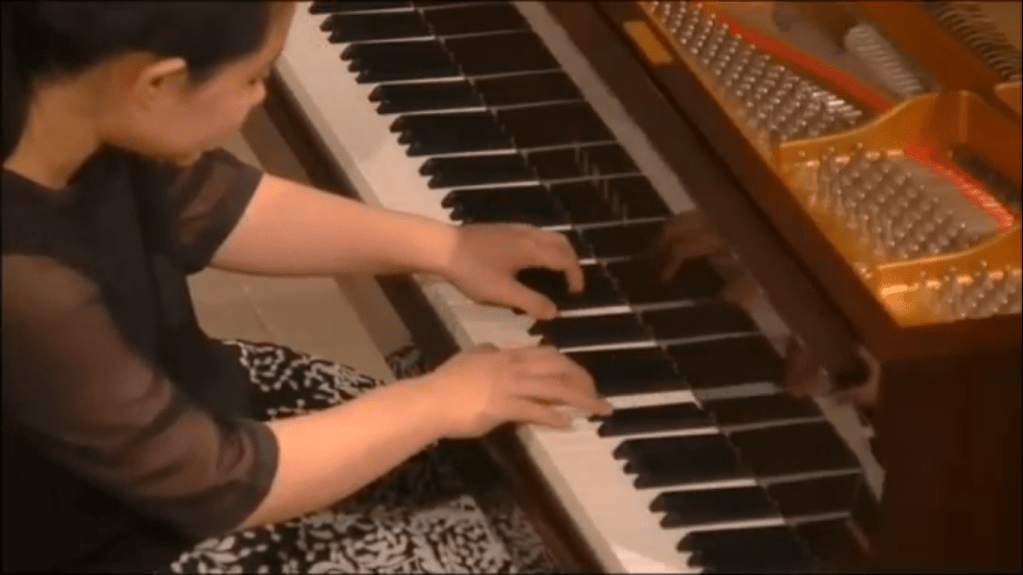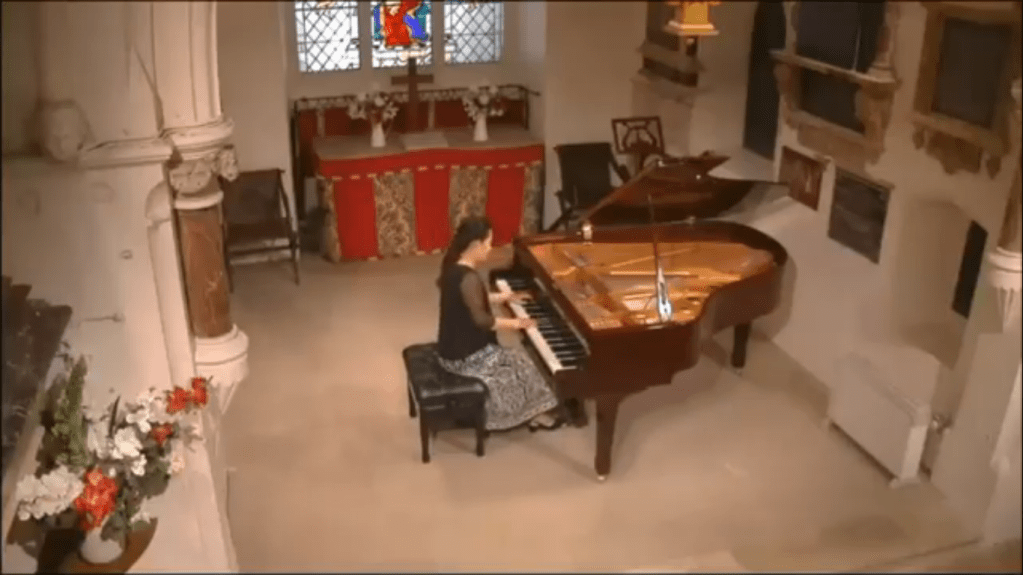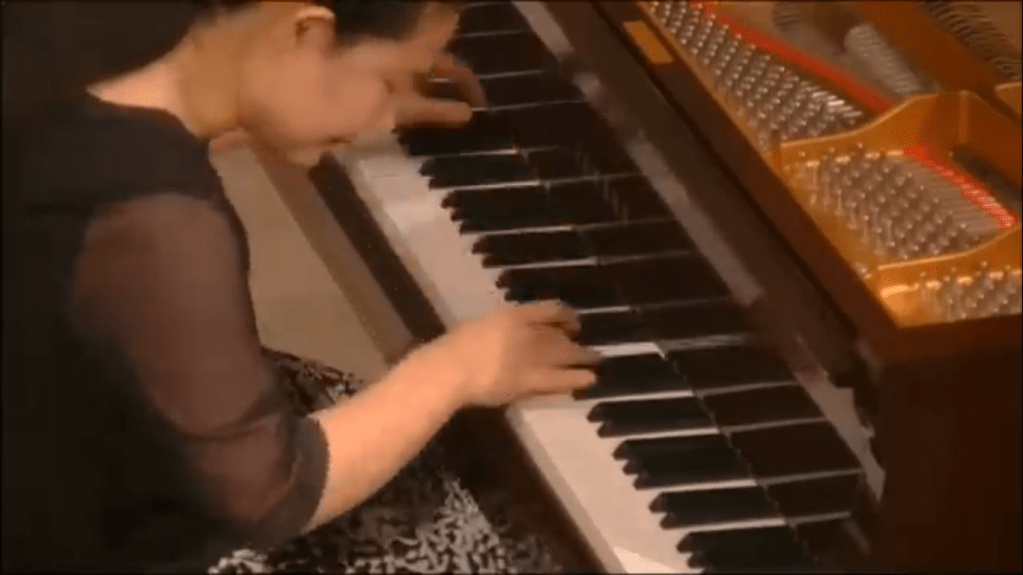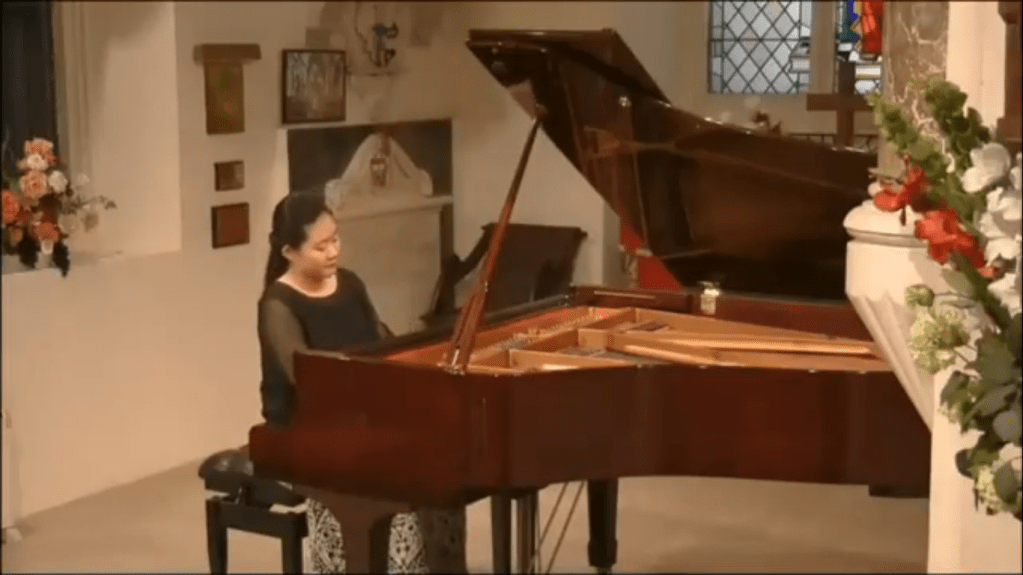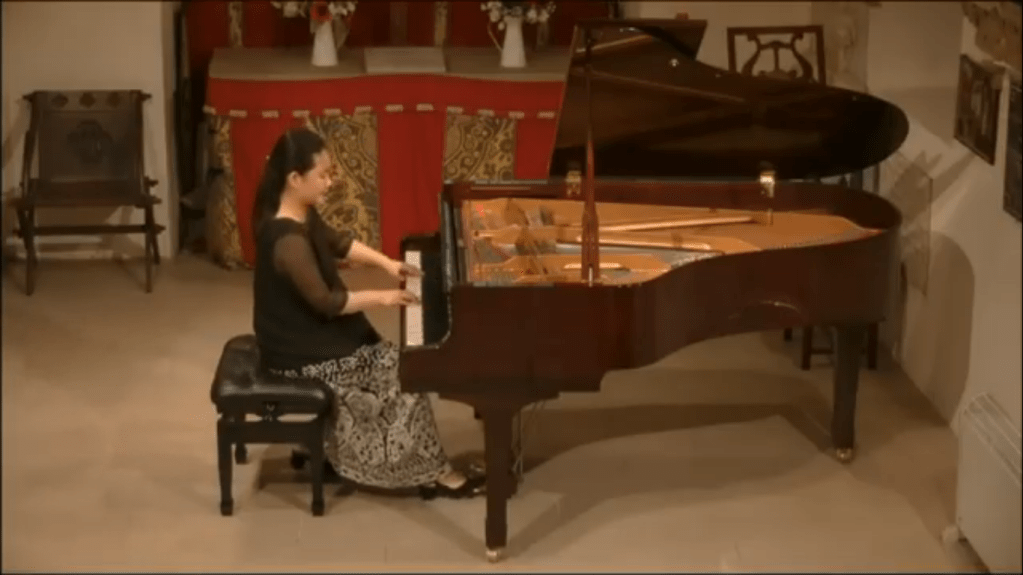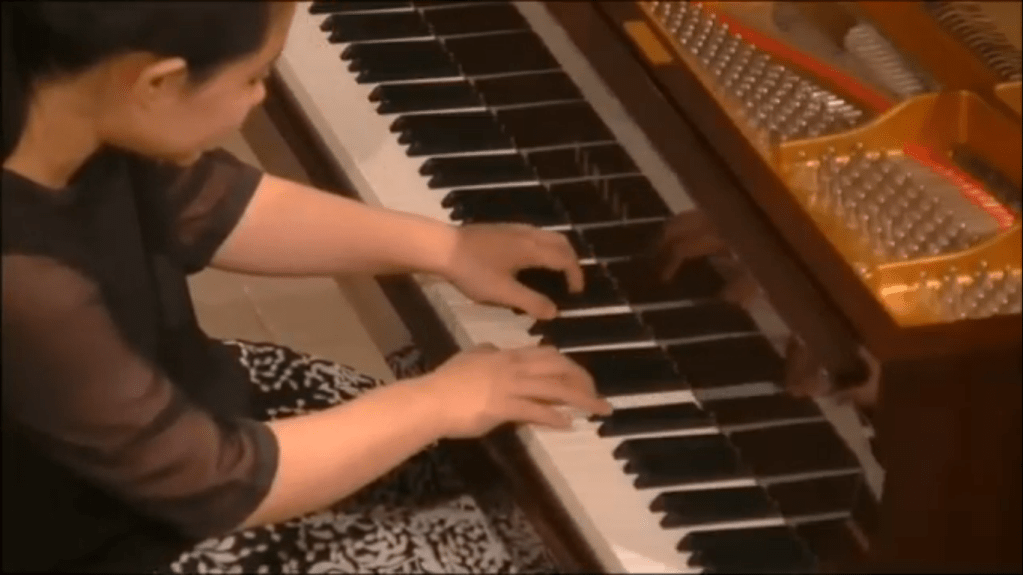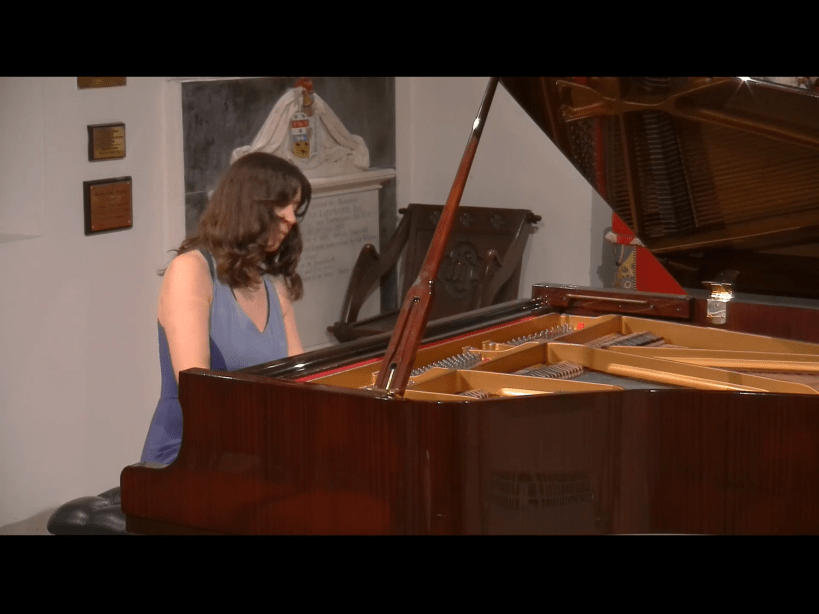
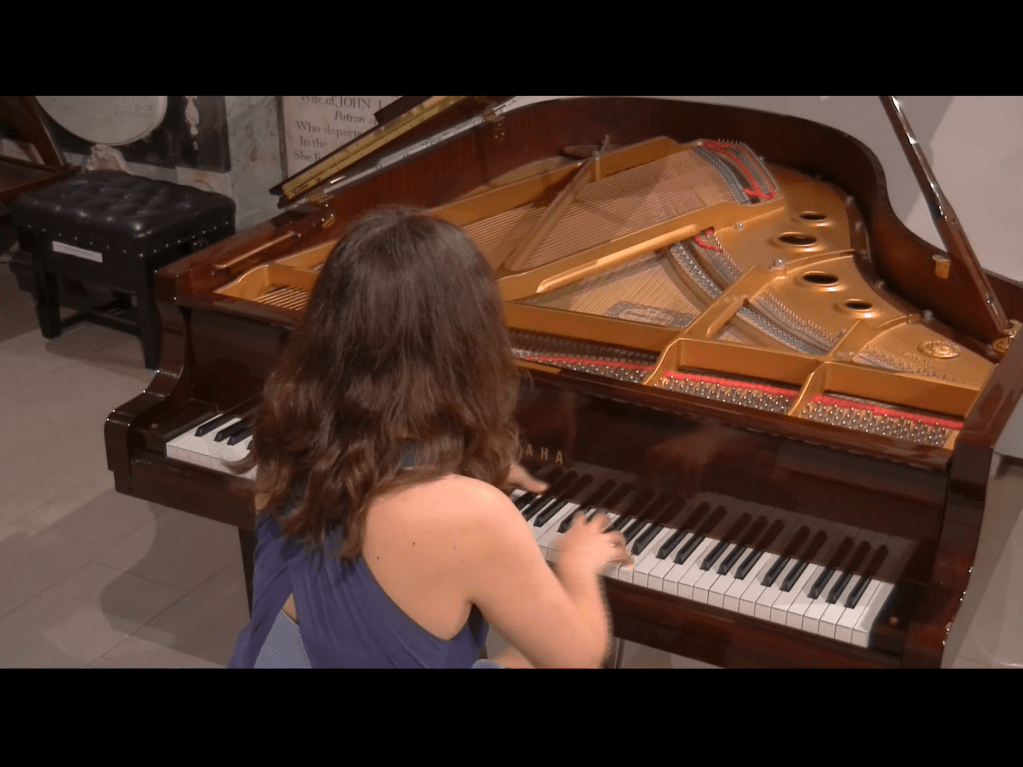
Evelyne Berezovsky at St Mary’s A new Golden Age takes us by storm

Sunday 22 November 4.00 pm

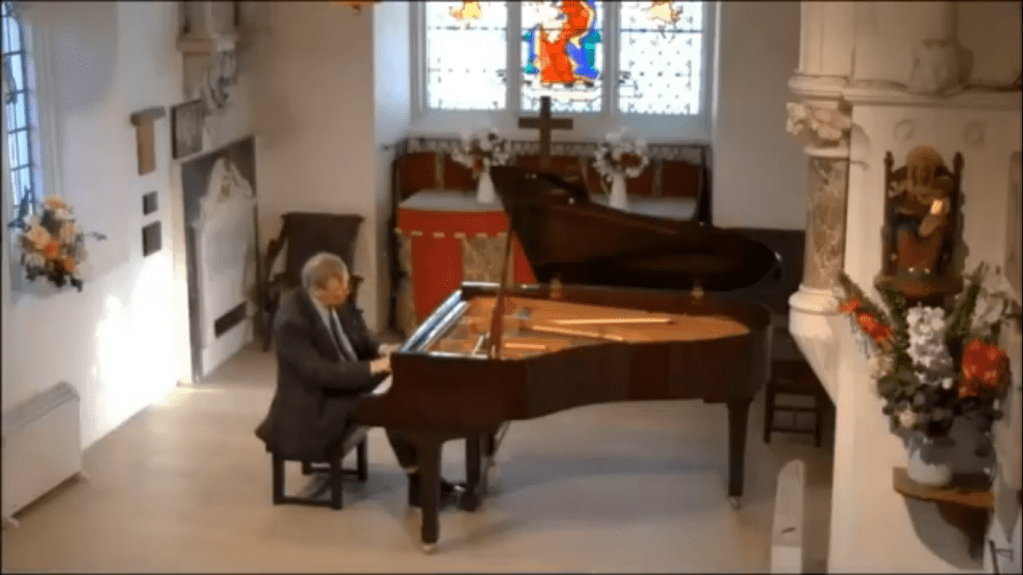
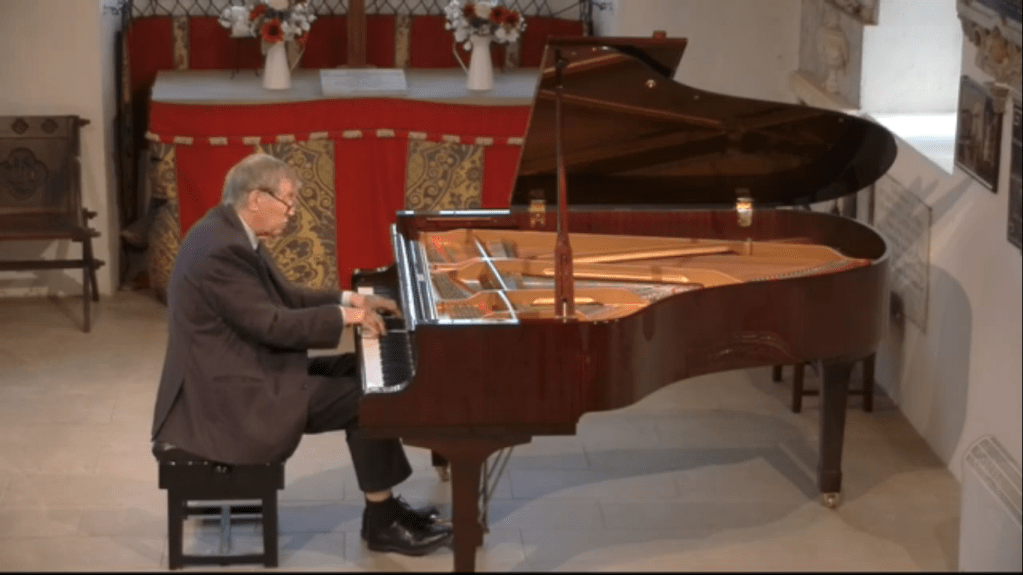
Streamed LIVE concert in an empty church
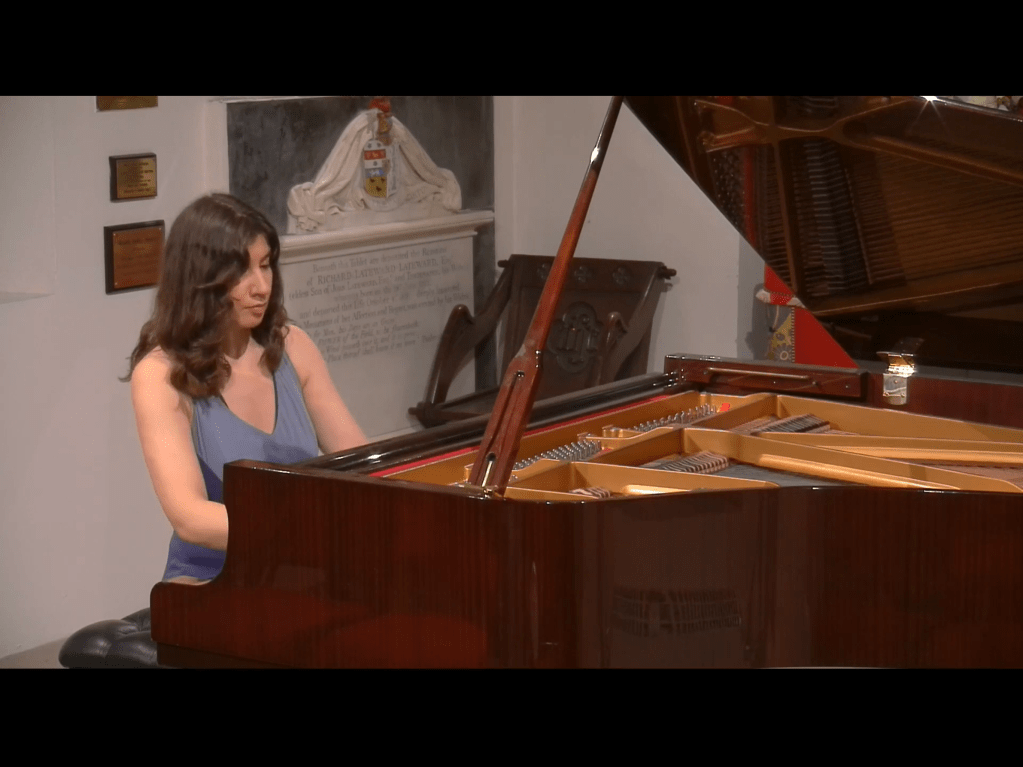
Evelyne Berezovsky (piano)

Grieg:
Arietta Op 12

Schmetterling (Butterfly) Op 43 no 1

Valse-Impromptu op 47 n.1
Traumgesicht (Dreams) Op 62 no 5

Ravel: Jeux  d’eau

Ravel: La Valse

Rachmaninov: Piano sonata no 2 in B flat minor Op 36 (revised version)

Kreisler arr. Rachmaninov: Liebesleid
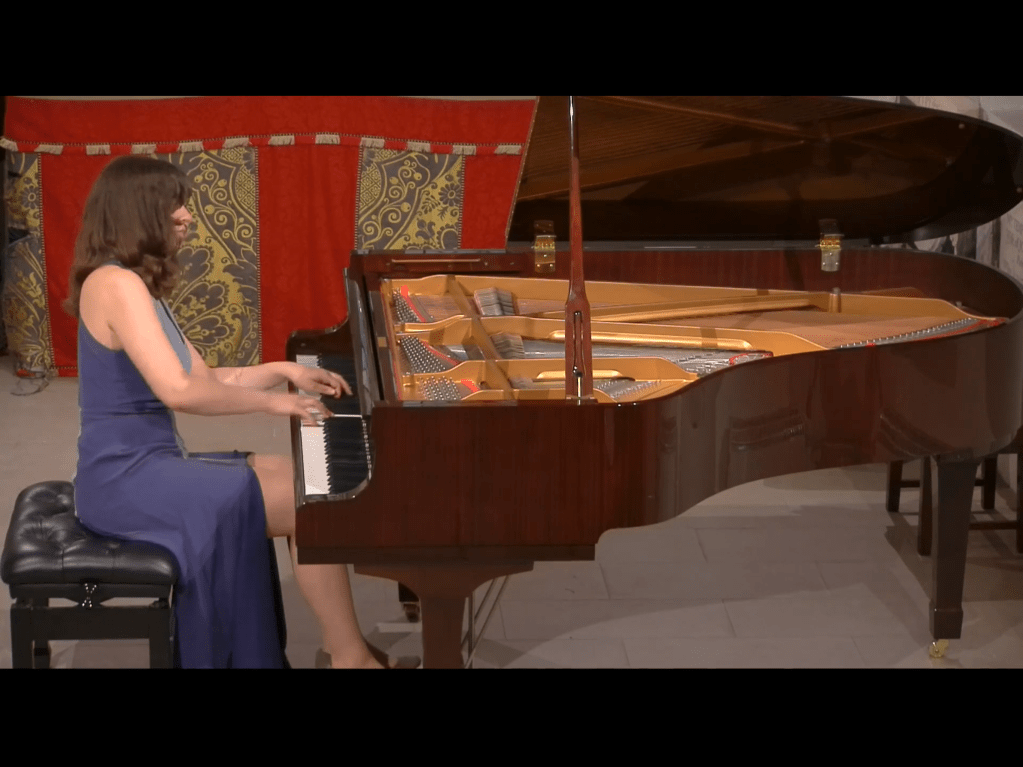
https://christopheraxworthymusiccommentary.wordpress.com/2019/10/14/evelyne-berezovsky-a-shining-light-illuminates-st-marys/

https://christopheraxworthymusiccommentary.wordpress.com/2019/07/06/waiting-for-evie/

Fantastic recital by our Evie of Horowitz proportions .At last someone who understands and can extract such magic from this box of hammers and strings.A glorious effortless stream of golden sounds.There is only one other person who can do that these days.She too is a woman but unbelievably in her eightieth year.
Evie still in her 20’s gives hope for the rebirth of a new Golden Age of piano playing.
With tears in my eyes I will try to write a fuller appreciation but what use are words except to quel the demons that her talent makes her suffer.

Genius is not easy to live with!
See for yourself :https://youtu.be/OLsKEE_Z17I
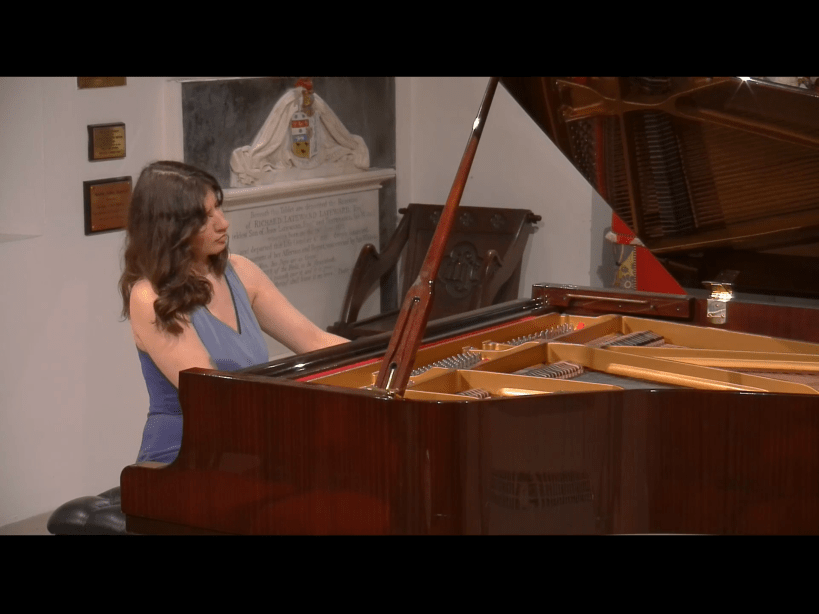
From the very first notes of Grieg it was as though we were eavesdropping on some whimsical improvisation of a description of a beautiful pastoral scene.Hauntingly beautiful like a breath of fresh air exuding such loving care as she caressed the keys with infinite inflections that only a Schwarzkopf could have envisaged.Butterflies that flew from her fingers with featherlite agility.Like Martha Argerich whatever direction the music took the fingers just followed with seemingly infinite ease.There were no extraneous thoughts about technique but just an instant magnetism that one was compelled to follow.The time she took over the last added bass note ,only a great artist would have dared.The circus entertainer that dares to get on the high wire and with such elegance and assurance gives no thought to falling off but just sailing magically through the air.The nostalgic ride through the snow of the Valse – Impromptu or the ravishingly delicate sounds that she shared with us and was the stuff that dreams are made of.

’Awesome’ as one of her colleagues exclaimed afterwards.

Such subtle rubato in Ravel’s Jeux d’eau and a freedom that seemed almost too romantic.That is until you came under her spell and you could not imagine that there could be any other way.Water lapped all around us sometimes silent and tranquil like in Venice or the passing turbulent wave that soon passed and left the infinite silence that is indeed of that magic city.A mist of sound on which floated strands of the melody as it searched to find its way before emerging complete on a wave of sound disappearing into the distance where like water it is probably still continuing its infinite never ending journey.

The diabolic excesses of La Valse were played with astonishing abandon and sumptuous magical sounds.An almost indecent decadence was enacted before our very eyes with glissandi and pyrotechnics of a breathtaking unforgettable bachanal as she allowed the music to possess her.Building up to such a frenzy.Thank goodness Ravel had had the sense to bring a halt to such indecency with a final full stop deep in the bass.
I remember my actress wife telling me that at her final performance at Drama school she made a wrong turning and asked forgiveness from the great actor Sergio Tofano for not following his rules.There is no such thing as right or wrong Ghione just convince me as you have done today!

There are no rules in art but total dedication and communication take over from the regulations that one has to absorb during one’s early education.In the end it is the true artist who dares to cross the footlights and touches the hearts of others sharing their deepest secrets without even contemplating that there might be a right or wrong way.

It is God given gift bestowed on the blessed few.

Fully warmed up Evie plunged headlong into the final opening flourish of Rachmaninov’s second sonata.I have written about her performances before (see above).Here today there was a performance of almost Horowitz proportions in the freedom,the colours and the romantic passionate outpouring of sounds.I can well understand my old teacher Vlado Perlemuter (mentored by Ravel and Fauré) telling me of the deceptive appearance of Rachmaninov on stage looking as though he had swallowed a knife but when he touched the keys his was the most romantic of sounds as colours flowed from his fingertips.Evie certainly did not look as though she had swallowed a knife but the sounds she could conjure from this fine but much used piano were in Dr Mather’s own words .’of genius.’The crystal clear sound in the slow movement bathed in sumptuous sunshine but always with that typical hint of Russian nostalgia.The gradual build up to the final tumultuous explosion of romantic effusiveness and the coda that shot out of her fingers like fireworks with an incredible accumulation of notes dispatched with passionate ease.

An encore of Kreisler’s Liebesleid \was played with the same irresistible charm as its composer was renowned for.In this famous transcription by Rachmaninov Evie gave us a golden web of sounds seemingly cascading from every part of the keyboard with such subtle colouring that was quite enchanting.For anyone who has tried to find those sounds it was quite astonishing.Rachmaninov and Kreisler used to play together in concerts and one day during a performance Kreisler got lost and whispered to Rachmaninov:’where are we?’ ‘In Carnegie Hall’ boomed a sour faced Rachmaninov.

Here Evie took us back to those magic recordings that were found in the 60’s on piano rolls in Brentford Piano Museum lovingly cared for by Frank Holland and broadcast late at night on BBC.It allowed us to hear the sheer magic of the lost age piano playing of Lhevine ,Rosenthal,Godowsky or Levizki amongst others .Horowitz used to say to Shura Cherkassky that they were the only two left.Indeed they were although Stephen Hough and Benjamin Grosvenor give us hope of refinding the secret path to this lost art today.We can certainly add the name of Evelyne Beresovsky to that.

Evelyne Berezovsky was born in Moscow in 1991, the daughter of the eminent pianist Boris Berezovsky. She started playing the piano at the age of five and two years later joined the Purcell School of Music. She then studied at the Royal Academy of Music in London with Hamish Milne, in Italy with Elisso Virssaladze, and with Rena Shereshevskaya in Paris. She has played in public since she was 7 years old and appeared with the orchestra for the first time at the age of 11. Since then she has performed at major venues in London, including the Wigmore Hall, St. John’s Smith Square and the Southbank Centre, and at concert venues in Germany, Belgium, Holland, France, Norway, Russia and Japan, including a recital at the prestigious piano festival in La Roque d’Antheron. In February 2012 she won First Prize in the Lagny-sur-Marne International Piano Competition in France. Following this, she has been regularly invited to play on Radio France, including a performance at the Fête de la Musique which took place at the Olympia, Paris. Evelyne has given concerts and recitals in the UK, France, Belgium, Germany and the USA, including performances at Lorin Maazel’s Festival in Castelton, VA and Steinway Hall, New York. She has performed with London Musical Arts Orchestra, Enschede Symphony Orchestra, Hulencourt Soloists Chamber Orchestra, Tokyo Mozart Players, Musica Viva, Thailand Symphony Orchestra and North Czech Philharmonic, and the Latvian National Symphony Orchestra.

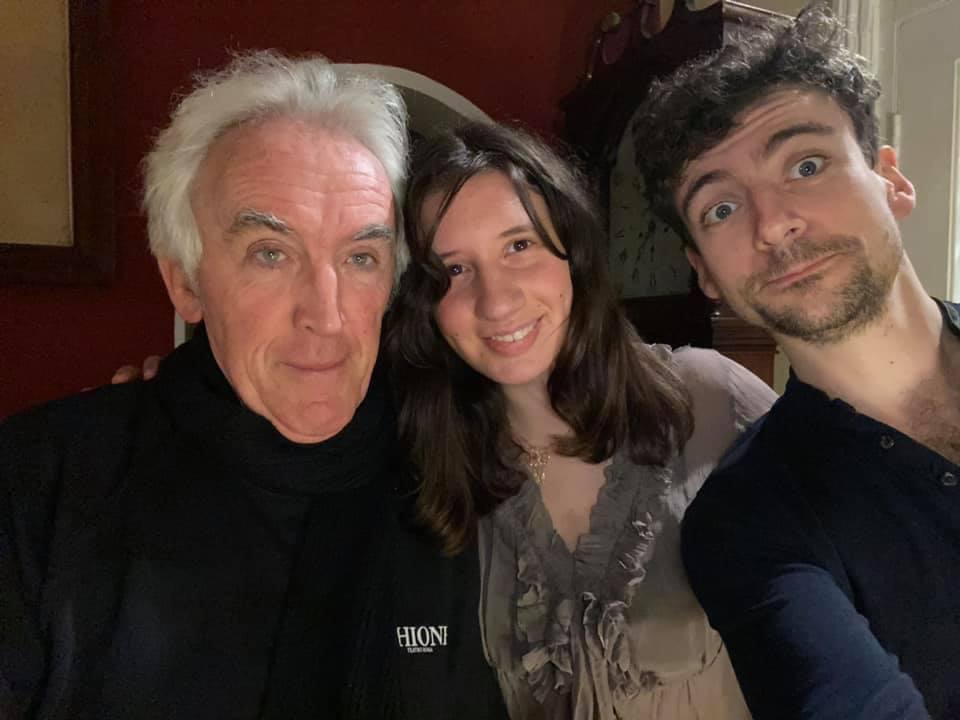
Christopher Axworthy with the two most brilliant young pianists Evelyne Beresowsky and Alexander Ullman
Reform club 2014 Liebeslied encore together .All Schumann concert Fantasie op 17 with Alex and Davidsbundller op 6 with Evie

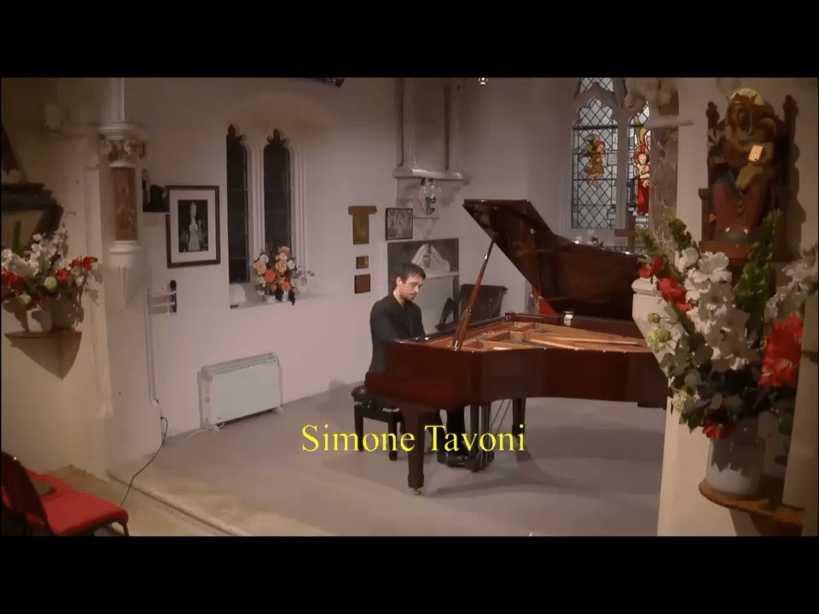
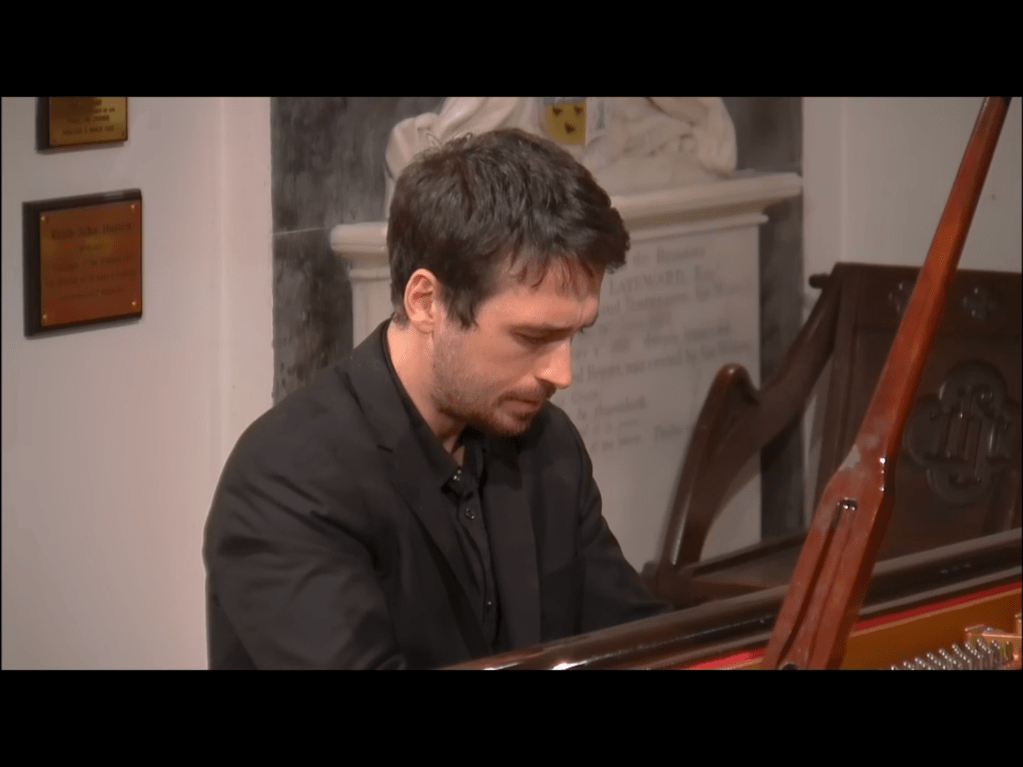
Simone Tavoni at St Mary’s

Streamed LIVE concert in an empty church

Tuesday 1 December 4.00 pm

Simone Tavoni (piano)


Sibelius arr. Tavoni : Sonata

Chopin: 4 Mazurkas Op 41

Chopin: Ballade no 3 in A flat Op 47

Martucci: Three pieces
(Pensiero Musicale Op 10, Melodia no 2 Op 21, Barcarola Op 20 no 1)

Tavoni: Fiasco

https://christopheraxworthymusiccommentary.wordpress.com/2019/11/14/simone-tavoni-at-steinway-hall-for-the-keyboard-trust/

Liszt:  Grande fantaisie sur des motifs de Soirées musicales S422ii

A stimulating and scintillating programme from the young Italian pianist Simone Tavoni.A beautiful sense of colour but above all allied to a musicianship that never failed to show us so clearly the way in a programme that was made up of works rarely if ever heard in the concert hall.

The first movement was very lyrical but full of technical hurdles beautifully played with a driving rhythmic impetus and clear sense of architectural line.The second movement with its nostalgic melodic line accompanied by a staccato bass showed off Simone’s refined finger legato with a melodic line shaped so poignantly over the gentle staccato accompaniment.Interrupted by a Nordic dance of impish good humour leading to a sumptuous rhapsodic melodic outpouring accompanied by swirling arabesques building to a passionate climax before the return to the impish dance and to the final almost hymn like return of the main theme and an exquisitely delicate ending.The last movement was played with great urgency with arpeggios over the entire keyboard in a scintillating display of driving energy.

Opening with the Sonata op 12 by Sibelius.A work that Simone admired for the ideas and musical invention of Sibelius but felt the work was not very pianistic and sounded ‘ more like a transcription from orchestra than a piece for piano.’So during this lockdown period Simone has rearranged the material in a more pianistic way.Trying to imitate the style of the period and possible development of the original ideas it made for a very stimulating opening to his recital.

Followed by Four Chopin Mazukas op 41 played with a very delicate and flexible melodic line of great beauty.The stamping feet of the second mazurka almost took Simone by surprise as his temperament just added to the excitement.A beautiful sense of colouring and a real feeling for the nostalgic yearning in these gems that Chopin penned far from his homeland.

The third Ballade from the very first notes it was evident we were in the hands of a true poet.Extreme delicacy alternating with passionate outbursts but always with a clear sense of line and direction.The gradual exciting build up to the final melodic climax almost took Simone by surprise as his great temperament could have been slightly more controlled.But as Barbirolli famously said to Jaqueline Du Pré if you don’t play with passion in your youth what do you pare off in maturity!

Three short pieces by Martucci a composer that is the diet of most piano students in Italy but almost unknown elsewhere.I remember being very impressed by a student in Martina Franca when he played the Fantasia op 51.A virtuoso work in the style of Liszt,Thalberg or Mendelssohn springs to mind but without the same weight or inspiration but nevertheless of great effect.Giuseppe Martucci 1856 –1909) was influential in reviving Italian interest in non-operatic music. As a conductor he helped to introduce Wagner’s operas to Italy and also gave important early concerts of English music there.Martucci’s career as an international pianist began with a tour through Germany, France and England in 1875, at the age of 19.He was appointed piano professor at the Naples Conservatory in 1880,and moved to Bologna in 1886 and in 1902 he returned for the last time to Naples, as director of the Royal Conservatory of Music.He began composing at the age of 16, with short piano works.He wrote no operas  which was unusual for an Italian composer of his generation, but instead concentrated on instrumental music and songs, but did write an oratorio.Being an important part of the great Neapolitan school of piano playing from Thalberg to Longo,Vitale,Scaramuzza and Fiorentino.

In fact the three early pieces chosen by Simone were charming salon pieces that the seventeen year old Martucci would have played in his own recitals much as Chaminade would have similarly done.Simone played them with ravishing tone and charm.Almost mazurka like Pensiero Musicale op 10 played with a yearning delicate rubato of great nostalgia and a final sad farewell.There followed the flowing arabesques of Melodia n.2 op 21 very much in the style of Thalberg with a melody embellished with magic sounds spread over the entire keyboard.Played with a haunting charm disappearing into the heights flying away on wings of song.The Barcarola op 20.n1 was played with an infectious lilt with the typical beguiling Neapolitan aria captivating all hearts with the true charm of a Latin lover.In the hands of this young Italian pianist we were indeed charmed and seduced by some playing of simplicity and ravishing beauty.

It was the perfect interlude before Simone’s own work ‘Fiasco‘ inspired by the second book of the Hungarian Nobel prize winner Imre Kertés.The philosophical meaning of unsuccessful which was written after the cool reception of his first book ‘Fateless.’Imre Kertész was born in Budapest in 1929 of Jewish descent and in 1944 he was deported to Auschwitz and from there to Buchenwald .Kertész’s first novel,  Sorstalanság ( Fateless,), is a work based on his experiences in Auschwitz and Buchenwald and was published in 1975. “When I am thinking about a new novel, I always think of Auschwitz,” he has said. A short but intense work full of stillness contemplation and mystery.Clouds of sound,the reverberations of a sudden struck note out of which a melody appears maybe a Jewish folk song so clear but so unsure of its way before ending with a question mark.Rubinstein used to include four mazurkas by his friend Szymanowski in the middle of a Chopin recital that like a sorbet could be so refreshing and cleansing as it strangely was today.

And so it was to the grande finale with Liszt’s ‘Grande Fantasie sur des motifs de La Serenade e L’orgia des Soirées musicales’by Rossini.A work like the ones that Liszt or Thalberg would astonish the aristocratic public of the salons with.A pot-pourri of fantastic embellishments of the popular melodies of the day.Based on the 4th and 11th of the popular Rossini song cycle it has been strangely neglected in the concert programmes of today.It is a fascinating work with the cheeky Rossini melody in the bass before the typical ravishing Bellinian cantabile in all it glory.A musical duet between bass and soprano and a rumbling bass straight out of his second ballade.Making way for the typical coquettish Rossinian melody embellished and varied in ways that only Liszt could envisage with his ten diabolical fingers devouring the keys.A triumphant return of the first theme over a stampede of octaves almost combining the two melodies in one as he has in the much better known Norma Fantasy.

Giving Rossini the typical last laugh with a seemingly false finale that leads to an ending of astonishing virtuosity.It was played by Simone with an ease and sumptuous sense of colour that was quite ravishing and was indeed astonishing.A fitting ending with all the fun of the circus for a quite stimulating and refreshing afternoon of rarely heard music .


Simone Alessandro Tavoni has given recitals internationally across Europe and U.S in venue such the Southbank Centre, Wigmore Hall, Royal Festival Hall, St Martin in the Fields, Steinway Hall in London, Liszt Museum in Budapest, Palau de la Musica Catalana in Barcelona, the Aarhus concert hall and the Florence Conservatory hall. In 2019, Simone has been selected as a Parklane Group Artist, as Keyboard Charitable Trust Artist and received the Luciano and Giancarla Berti full-ride scholarship to attend the Aspen Music Festival and School studying with renowned professor Fabio Bidini.  Graduated at Royal College of Music with professor Andrew Ball, and Simone has recently attained an Artist Diploma at Trinity Laban Conservatoire with professors Deniz Gelenbe and Peter Tuite. He began his musical education in Italy with professor Marco Podesta’ and pursue his studies at the Liszt Academy of Budapest with Dr.Kecskes Balazs and in Germany at the Hochschule fur Musik un Darstellende of Stuttgart with Dr,Peter Nagy. In 2016 was selected for the BBC pathway scheme and he is a fellow at the Aspen Music Festival and School.

Giovanni Bertolazzi pays homage to Barone Agnello

Amici della Musica di Palermo in memory of Barone Francesco Agnello on the 10th anniversary of his death.A Beethoven recital by the young veronese pianist Giovanni Bertolazzi

https://youtu.be/ljM4m9d4WFM

https://christopheraxworthymusiccommentary.wordpress.com/…

I remember Barone Agnello from when he came to my theatre on the 9th October 1989 to hear an eighteen year old violinist from Siberia: Vadim Repin.Already winner of the Queen Elisabeth and Wieniawski Competitions this was his debut in Italy.Opening a season of Russian musicians for Italconcert in Genoa that could not get a foot in Rome to show off their collection of amazing Russian musicians.The Ghione theatre was glad to offer them the space that they had been denied as it was to many many musicians before the opening of the Parco della Musica concert halls. The Baron went back stage in the interval and offered this young boy a concert tour of Sicily who was infact only interested in driving his agents fast sports car!That was my first of many meetings with this Noble Sicilian who was an important figure in the musical life of Italy. Dedicating his life to music,helping many artists via his Amici della Musica and CIDIM that he had created with Gisella Belgeri for the divulgation of Italian Music.So it was only fitting that one of the finest young Italian pianists should be chosen to pay homage to him on the stage of his Amici della Musica in Palermo.

I have heard Giovanni many times since that first time in Bolzano two summers ago.Just a few weeks ago he gave a superb recital in the President’s Palace in Rome that was televised live.It was his Beethoven Waldstein on that occasion that was so impressive for it’s authority and rhythmic drive as it was today in two sonatas op 10 n.2 and op 22.

Two early sonatas.Op 10 n.2 was a favourite of Glenn Gould and the Sonata op 22 I remember Richter playing at the Festival Hall in London.They are infact two remarkable sonatas that are often overlooked even today.

The beautiful pastoral opening of the Sonata op 10 was played with a real sense of Beethoven drive even in this most lyrical of passages.Played with a great sense of character with one phrase answering another with subtle inflections but always of masculine sentiment.The bass trills never allowed to disturb the driving flow as the sudden quiet opening of the development took him and us by surprise.Infact in Giovanni’s playing there is always an element of freshness and new discovery that is invigorating and very much of the Serkin school of Beethoven playing.The rhythmic buoyancy of the development was captivating, dying away as it does with Beethoven seeking a way back to the relative calm of the opening phrase.The Allegretto was played with a clarity that contrasted so well with the almost Schubertian middle section.The Finale Presto was thrown off with great drive and precision.His sparing use of the sustaining pedal was indeed refreshing and allowed for a sparkling clarity as we were swept along on the momentum of a great wave of rhythmic emergy.

The Sonata op 22 I remember well from one of Richter’s first appearances in London.We were astonished not only by his complete identification with the works he was playing but above all how quietly and slowly he could play always with perfect control and projection.It was though on this occasion that one ‘learned’ critic exclaimed in print that the Adagio had been inexistant!We were not used in the west to the amazing sound world of the Russian school from mezzo forte to pianissimo.As Richter would say we were used to the good old concert cantabile that Rubinstein would seduce us with on his much awaited annual visits.Rubinstein and Richter were good friends and great admirers of each others art .Two different schools but two of the greatest of artists.There is the story of the historic meeting that Sol Hurok had arranged between these two great artists.They had a long and stimulating evening where much champagne was drunk.The next day the hotel doctor was needed to visit Rubinstein.Oh what a coincidence,he exclaimed I have just come from maestro Richters room!

A four movement Sonata with a profound ‘Adagio con molta espressione’ that Giovanni played with a simplicity and sense of line that gave it great weight and meaning.The embellishments were played with a great sense of melodic line and the subtle changes of harmony took us by surprise as did the heartfelt intensity of the middle section.The Menuetto was played with a refreshing simplicity and led to the mellifluous outpouring of the Rondo.Even here the driving rhythmic energy was mesmerising and contrasted so well with the recurring innocence of the Rondo theme.The opening movement was played with a great sense of architectural line.The jewel like precision of the passage work contrasted so well with the insistent majestic outbursts.The long development was played as if on a long cloud of sound out of which emerges the left hand melodic line.

Some remarkable performances from a true Beethoven player and a fitting tribute to Barone Agnello

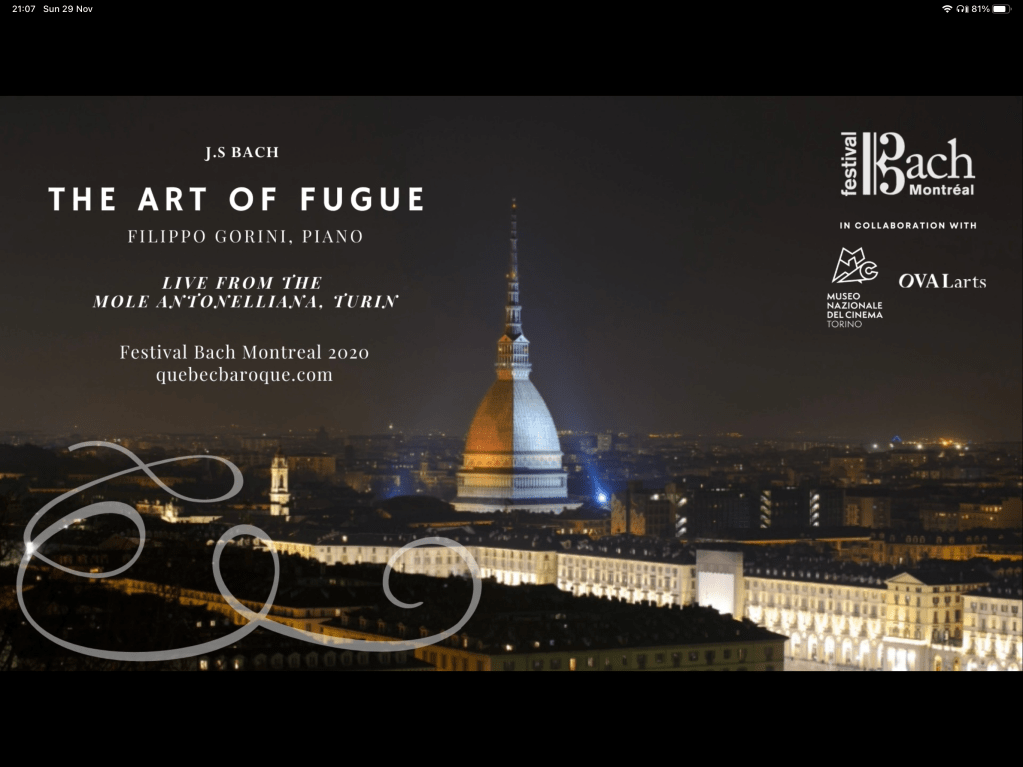
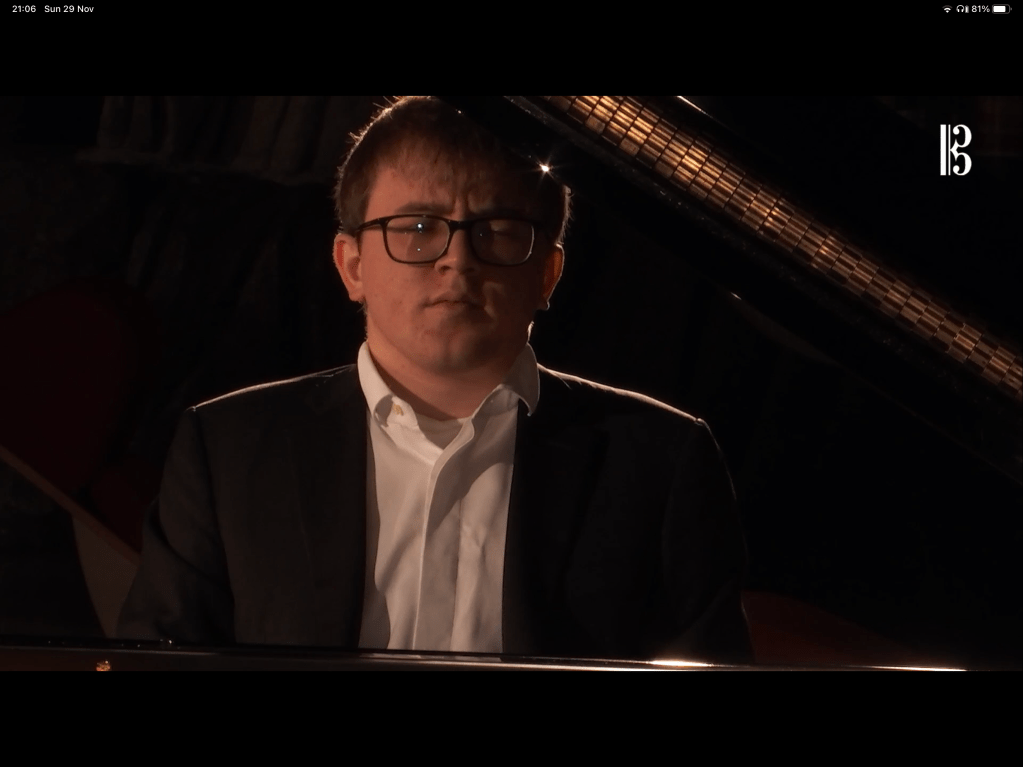
Filippo Gorini The Art of Fugue

“There is no doubt: a star has risen, perhaps of the brightest kind”

https://youtu.be/pRaVgmsX7dM

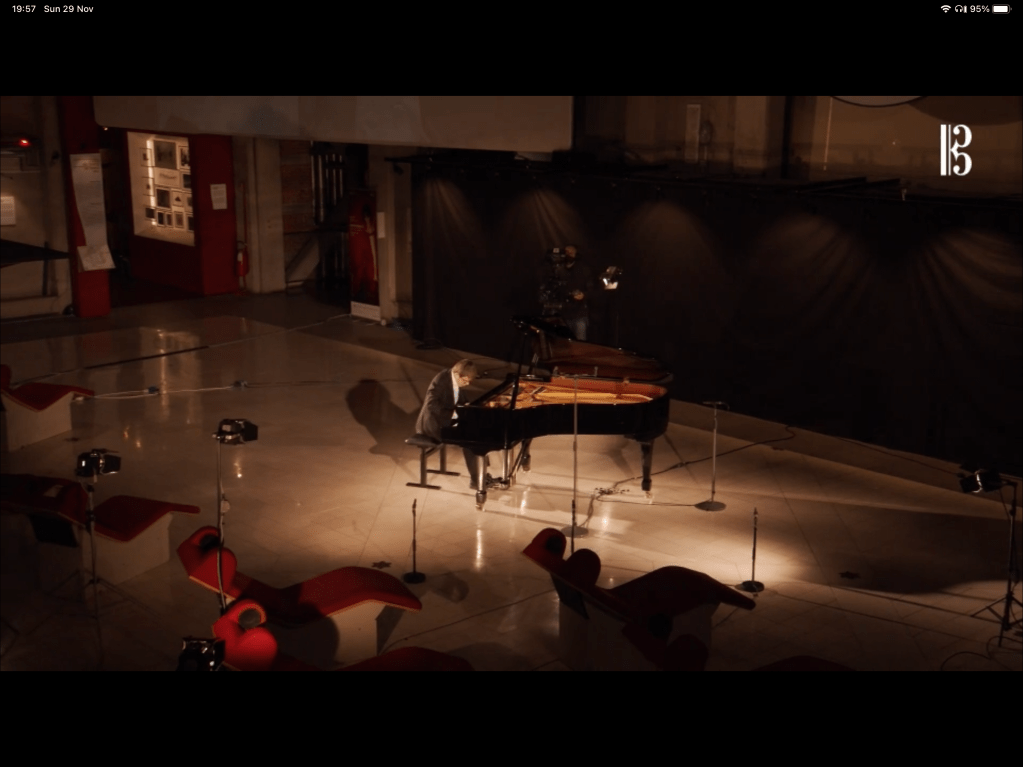
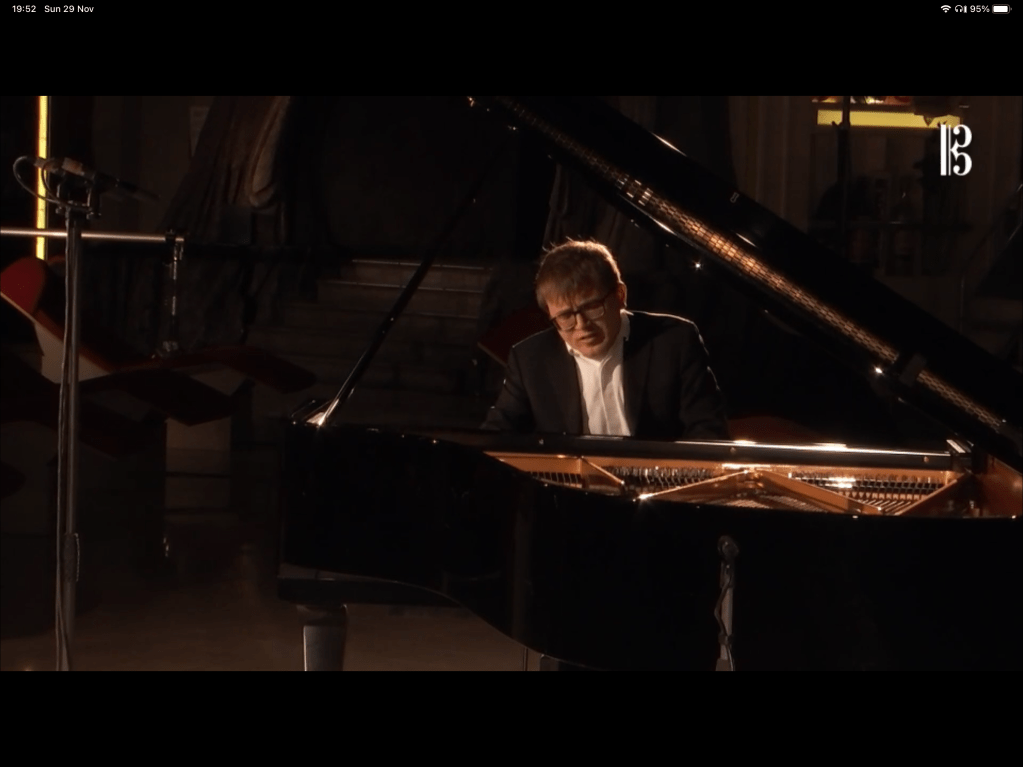
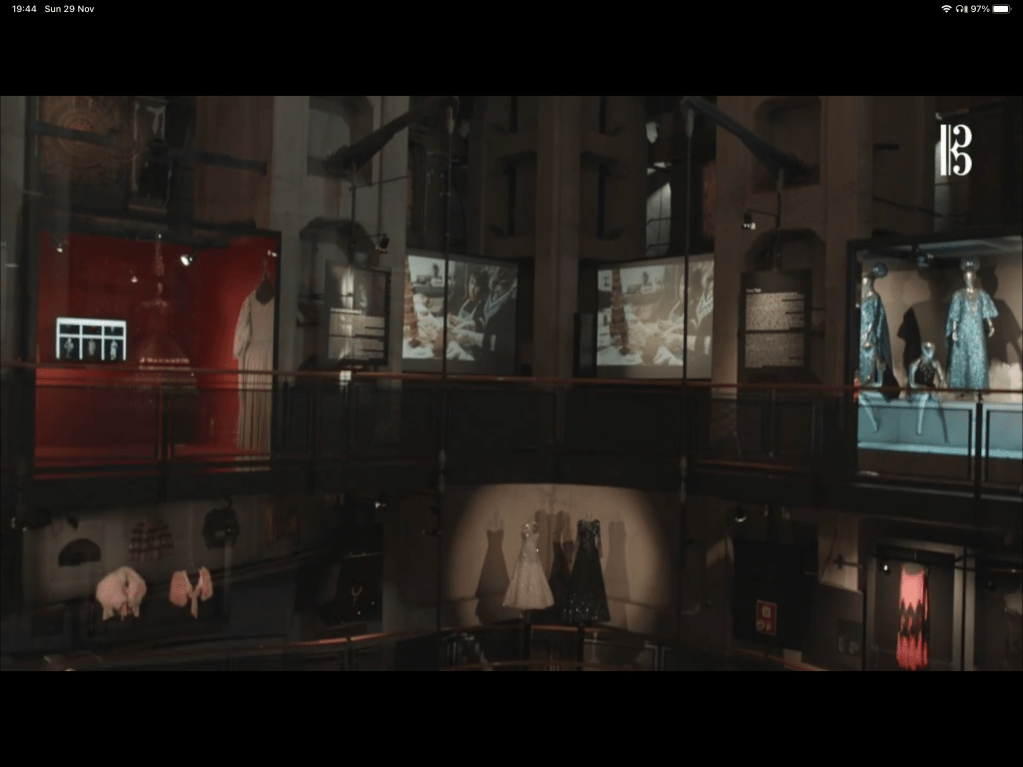
The Art of Fugue.Two hours of Bach’s mathematical genius revealed in an extraordinary performance by Filippo Gorini streamed live from the Molle Antoniana in Turin the tallest museum in the world.It is a major landmark in  Turin and takes its name from its architect,Alessandro Antonelli.Construction began in 1863 and was completed in 1889, after the architect’s death and it was originally conceived of as a synagogue but it now houses the National Museum of Cinema. 

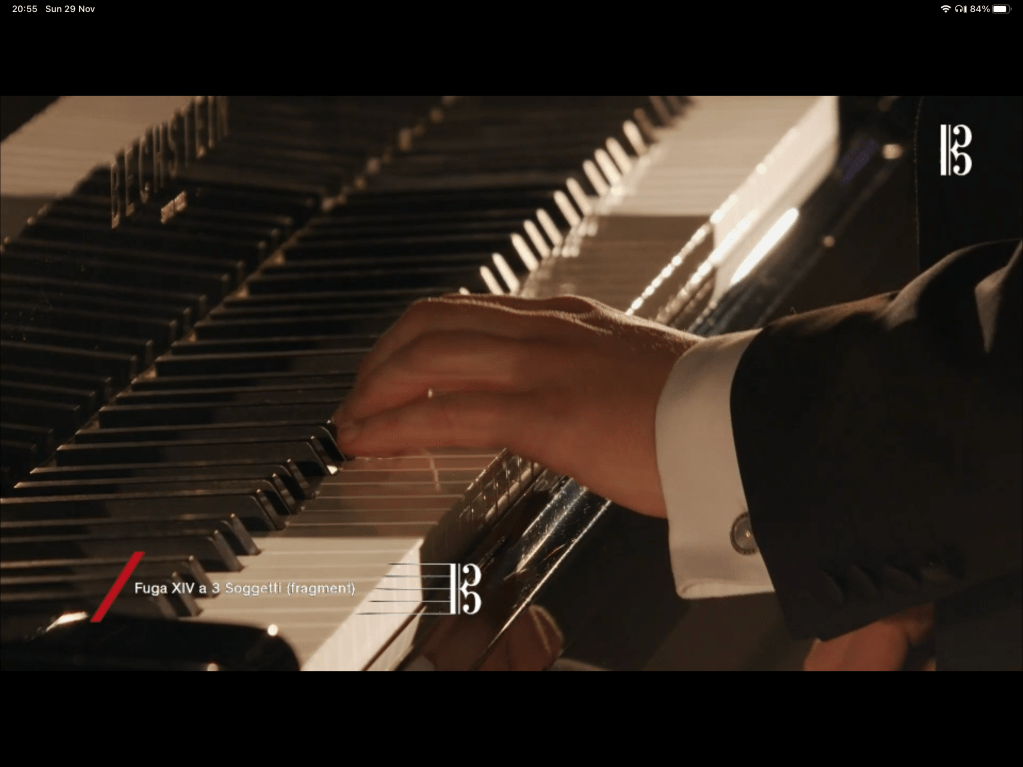
With help from the Borletti Buitoni Trust this young musician mentored by Alfred Brendel and Mitsuko Uchida has tried to unravel,during this long lockdown period,the mysterious last masterpiece of Bach.Left unfinished Bach threw down the gauntlet at the 14th fugue as he left the world for good.

Written in the last decade of his life,The Art of Fugue is the culmination of Bach’s experimentation with monothematic instrumental works.It consists of 14 fugues and four canons in D minor, each using some variation of a single principal subject, and generally ordered to increase in complexity.It is an exploration in depth of the contrapuntal possibilities inherent in a single musical subject.

A handwritten manuscript of the piece known as the Unfinished Fugue is among the three bundled with the autograph manuscript. It breaks off abruptly in the middle of its third section, with an only partially written measure 239. This autograph carries a note in the handwriting of  Bach’s son Carl Philipp Emanuel, stating “Über dieser Fuge, wo der Name B A C H im Contrasubject angebracht worden, ist der Verfasser gestorben.” “At the point where the composer introduces the name BACH [for which the English notation would be B♭–A–C–B♮] in the countersubject to this fugue, the composer died.”

The abruptness and the aching minutes of silence as time was frozen was most moving.In this enormous building with a Bechstein piano sitting in its midst and a young man playing for almost two hours the most complicated music immaginable without a score and then suddenly stopping.I was reminded of Tatyana Nikolaeva playing it for us at the Teatro Ghione in Rome thirty years ago and insisting that not only the stage but also the auditiorium should be illuminated as much as possible.Licht, licht she implored.Today in this vast space I can understand the fact that the universality of The Art of Fugue cannot be contained in a restricted space.

The Genius of Bach indeed revealed by this young musician not only in his playing but in his nobly informed introduction https://youtu.be/pRaVgmsX7dM

“There is no doubt: a star has risen, perhaps of the brightest kind” ★★★★★, Diapason D’Or Patrick Sznersovicz, Diapason

https://christopheraxworthymusiccommentary.wordpress.com/…

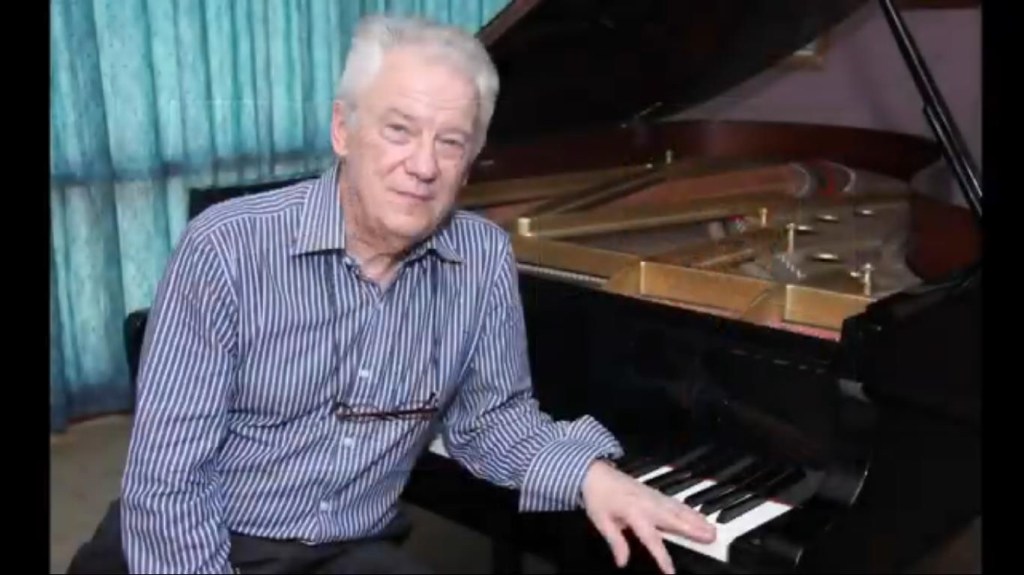
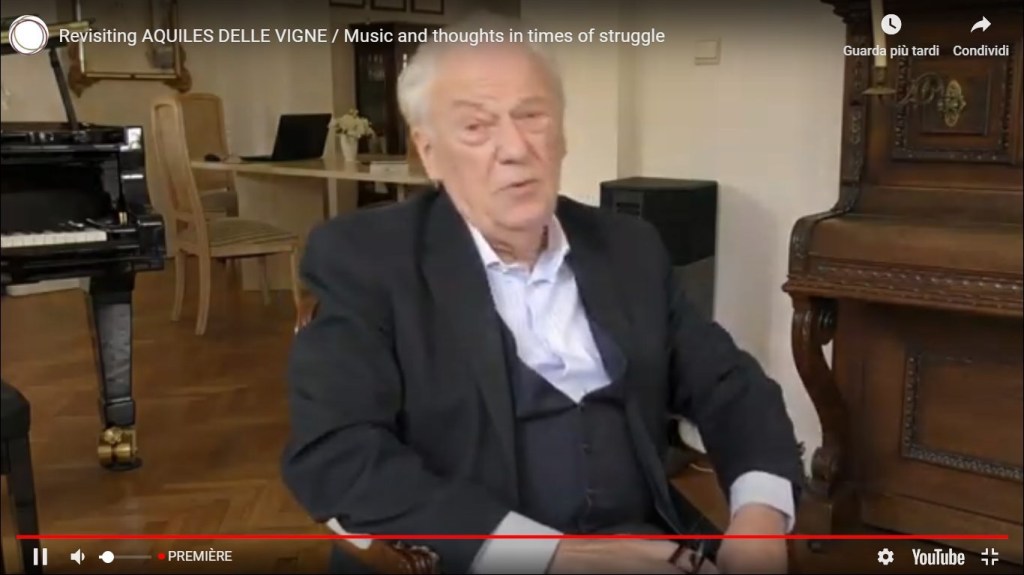
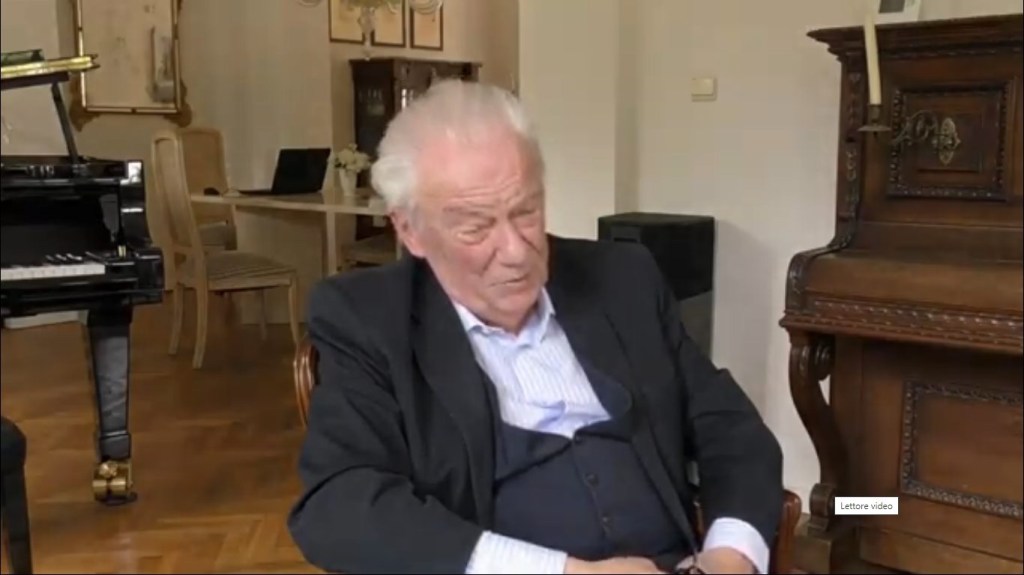
Aquiles delle Vigne una vita per la musica

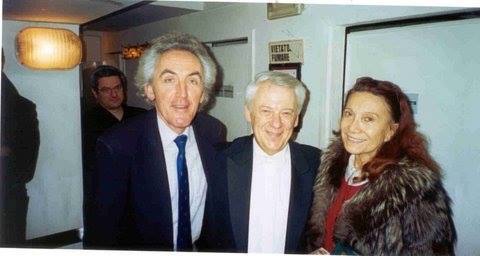
Ileana Ghione with her husband Christopher Axworthy backstage in their theatre in Rome with Aquiles delle Vigne

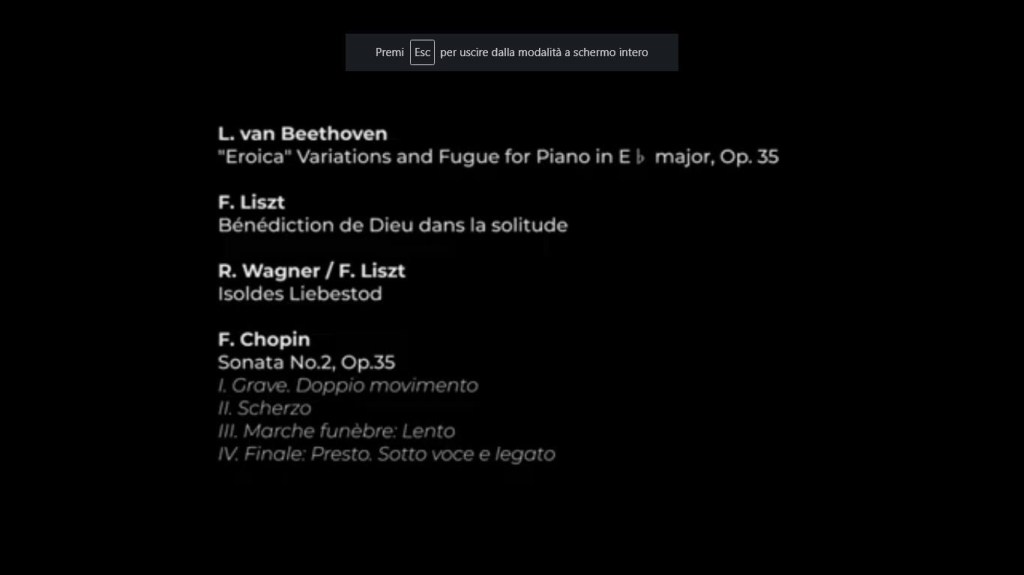
Wonderful to see Aquiles delle Vigne again after the concerts and masterclasses that he gave for us in Rome.His visits brought a radiance not only to us all but especially the students whom he helped with his great experience and humanity .A recital prefaced by some thoughts about the meaning of music.’An artist must trasmit ethics that will influence us all as human beings.’ Schnabel said that ‘ the truth is not in the note but behind and beside it.’ Liszt said that’ the score is only half the story that must be completed by the artist.’A final statement :’You are a pianist if you are born with the piano,suffer with the piano and die with the piano.In that case I will consider you a pianist!’

http://www.youtube.com/user/musiciartis https://youtu.be/BAT8hAmBgaU

Dr Hugh Mather 1000 not out

Tuesday 24 November 4.00 pm

Streamed concert in an empty church

Hugh Mather (piano)
to celebrate 1000 concerts at St Mary’s Perivale since 2004

Beethoven: Sonata in F minor Op 57 ‘Appassionata’ 

Allegro assai -Andante con moto -Allegro ma non troppo

Schumann: Fantasie Op 17

  • Durchaus fantastisch und leidenschaftlich vorzutragen; Im Legenden-Ton – Fantastic and passionate throughout;in a story telling way.
  • Mäßig. Durchaus energisch – Moderate .Energetic throughout. 
  • Langsam getragen. Durchweg leise zu halten. –  A slow and quiet pace throughout .

Read all about the past 16 years and 1000 concerts here

Comments from two distinguished musicians :

Jonathan Orr-Ewing:Hugh. It was fabulous to see and hear you. Your playing was terrific and it’s no surprise all of your musicians are inspired by your great example

Jelena Makarova:Dear Hugh, really enjoyed watching it. Bravo, beautiful programme wonderfully performed!Congratulations with the 1000th concert at the St. Mary’s Perivale!

A typical modest aside from our much loved master of Ceremonies:

‘An eventful afternoon at St Mary’s Perivale for my 1000th concert recital with a programme of Beethoven Appassionata and Schumann Fantasie. I get bad nerves before solo performances, and became paranoid about having a memory lapse in a live concert so I recorded the recital a few days ago. By Murphy’s law the machine playing back the recording today broke down at 40 mins – at the end of the Schumann 1st movt. Sincere apologies to everyone who was watching the recital. I have now uploaded the Schumann as a separate file. The whole episode will teach me to stay away from solo performances in future.’

There is indeed no business like show business and the show must go on as Dr Mather and his team have shown us in these difficult times.Three concerts a week and now even melologues and learned talks and all professional engagements offered mostly to young talented musicians.A whole generation of superb musicians who find themselves in great difficulty with one foot on a ladder that has been taken away by a cunning little chinese virus.

What to do?Actions speak louder than words and music takes over where words are just not enough.

Dr Mather and his team of volontary helpers includes a retired consultant physician,an expert BBC technician,a Government official and even a GP who makes tea and cakes and keeps this beautiful redundant church in order.All done for passion and the belief that culture replenishes the soul and that in being useful to young musicians who have sacrificed their youth for their art they are providing a much needed platform from which they can still weave their all important magic thread between artist and public.

Public recognition is growing rapidly, due to their superb streaming facilities.A true oasis that is fast being discovered in these barren times.Official recognition is long overdue.Hardly surprising as Barbara Hosking the 92 year old PR to Edward Heath said on BBC Private Passions:’ culture is what is sadly missing in Government today and we are paying dearly and daily the consequencies in our lives and expectations’

Few would have expected such masterly performances as we were offered today by our Master of Cermonies.

Schumann wrote his Fantasie as a contribution to Liszt’s monument for his master Beethoven, in Bonn. It was written as an outpouring of love for his future wife Clara Wieck and even contains a quote from Beethoven’s song ‘An die Ferne Geliebte- To the distant beloved.’It is dedicated to Liszt who later dedicated his Sonata in B minor to Schumann.Pinnacles of the Romantic piano repertoire.

The ‘Appassionata’ is one of the last works of Beethoven from his middle period before the final glorious outpouring of his later Sonatas.It is one of his greatest and most technically challenging and was considered by Beethoven to be his most tempestuous piano sonata until the arrival of the ‘Hammerklavier.'(A work that Dr Mather played just a few years ago at St Mary’s and can still be enjoyed on their you tube archive channel).It was written around 1804 just a year after Beethoven had come to grips with the irreversibility of his incroaching deafness.

Hugh Mather studied the piano and organ from an early age, gaining the FRCO and the ARCM piano performers diplomas. He then pursued a medical career and was Consultant Physician at Ealing Hospital from 1982 to 2006, before retiring to pursue his musical interests. He continued his piano studies with James Gibb for many years, and gave countless concerts at St Mary’s Perivale, St Barnabas and elsewhere, as concerto soloist, recitalist, accompanist and chamber musician. More recently he has effectively retired from public performances and concentrated on organizing concerts. He has been Chairman of the Friends of St Mary’s Perivale since 2005, and has organised 1000 concerts there, as well as a further 600 at St Barnabas Church.

The Appassionata showed an enviable clarity and sense of line.There were no short cuts for Dr Mather as with Arrau like authority he took Beethoven’s word as sacrosanct with the solid musicianship of someone who has also played the organ for years.The opening flourish was thrown off with a youthful agility and sense of dynamic purpose that Beethoven himself is reported to have done.The whispered opening motif played with a rhythmic forward drive that is the key to this rather menacing precursor of the fifth symphony written only a few years later (op 67).There were beautiful contrasts too between the rhythmic outbursts and the lyrical second subject.Even the left hand repeated notes were played in an unusually mellifluous way and it made Beethoven’s furious outbursts even more astonishing.Here in this surprising first movement Beethoven’s not easy temperament is laid bare.Not the introspection of Schumann’s Florestan and Eusebius but the’ sturm and drang’ of an unquiet soul of a revolutionary.All this was brought to the fore in Dr Mather’s jewel like simplicity and clarity .One could almost see his scientific mind at work with his head down as he studied in minute detail the specimen.This was no cold hearted performance though but one where his love,respect and intelligence shone through in every phrase.The slight jiggery pockery in the explosive arpeggios before the coda was of a true professional musician who had no intention of being tripped up by Beethoven at the last hurdle!

A beautiful flowing ‘Andante con moto’ where every note sang with such loving understanding.Not the clinical precision of youth but a mature understanding of someone who has lived with this music for a lifetime. A beautiful slow transition from the Andante to the tempestuous ‘Allegro ma non troppo.’One could not help but admire the precision of Dr Mather’s fingerfertigkeit especially as his fourth and fifth fingers were not allowed to ride on the backseat as is often the case with this extremely busy movement.No slacking but a unrelenting rhythmic drive always with a wish to find the utmost lyricism and sense of line hidden in Beethoven’s knotty twine!The coda Presto could have been more frantic though- oh for one’s youth!- and the two long chords more legato to contrast with the frenetic rhythmic fervour that Beethoven demands afterwards.

As Hugh said he was worried about having a memory lapse in such a long and important recital but little did he count of the machine stopping during a replay.Human resiliance is so much more accomodating than a machine’s soulessness!Q.E.D.

A virtuoso performance even here as Dr Mather and his team downloaded the performance and had it on line before the end of the evening!Hats off indeed – I am sure Schumann would have approved as he did when the young Chopin appeared on the scene with his op 2 Variations!

The Schumann Fantasie is prefaced by some lines by the poet Schlegel where: “Resounding through all the notes ,In the earth’s colourful dream,There sounds a faint long-drawn note,For the one who listens in secret.”

I remember Agosti writing in my copy ‘cla…..ra’ over the first melodic notes of the sublime ‘Constellation’ last movement to give it the original title.

Agosti was a leggendary musician who held court during the summer months in Siena.All those that had heard him (the most renowned musicians of the day flocked to his studio)have never forgotten the intensity,power and beauty of his playing.It was created by never playing too loud too soon and his famous words are still ringing in my ears :’troppo forte ,troppo forte.’

It was exactly this sense of balance that Dr Mather realised today as the very opening ‘G’ marked ‘sfp’ is nothing more than an opening up of the sound within the piano giving reverberations on which Schumann’s passionate outpourings could float undisturbed.Some pianists play this opening G with such a bang that Agosti likened it ,rather cruelly, to Schumann giving his beloved Clara a clout on the jaw!

In Dr Mather’s hands it was a glorious outpouring of melody.The meandering triplets before the second subject was slightly slower and more carefully phrased than I was expecting and just demonstrated his continuous search for the not alway apparent song within the notes.I got the impression though that Dr Mather was a little intimidated by the silences that Schumann often indicates and rather liked to join the strands with his right foot.It was a beautiful performance that was infact the original ‘Ruins’ movement that Schumann had written for his as yet distant Clara.
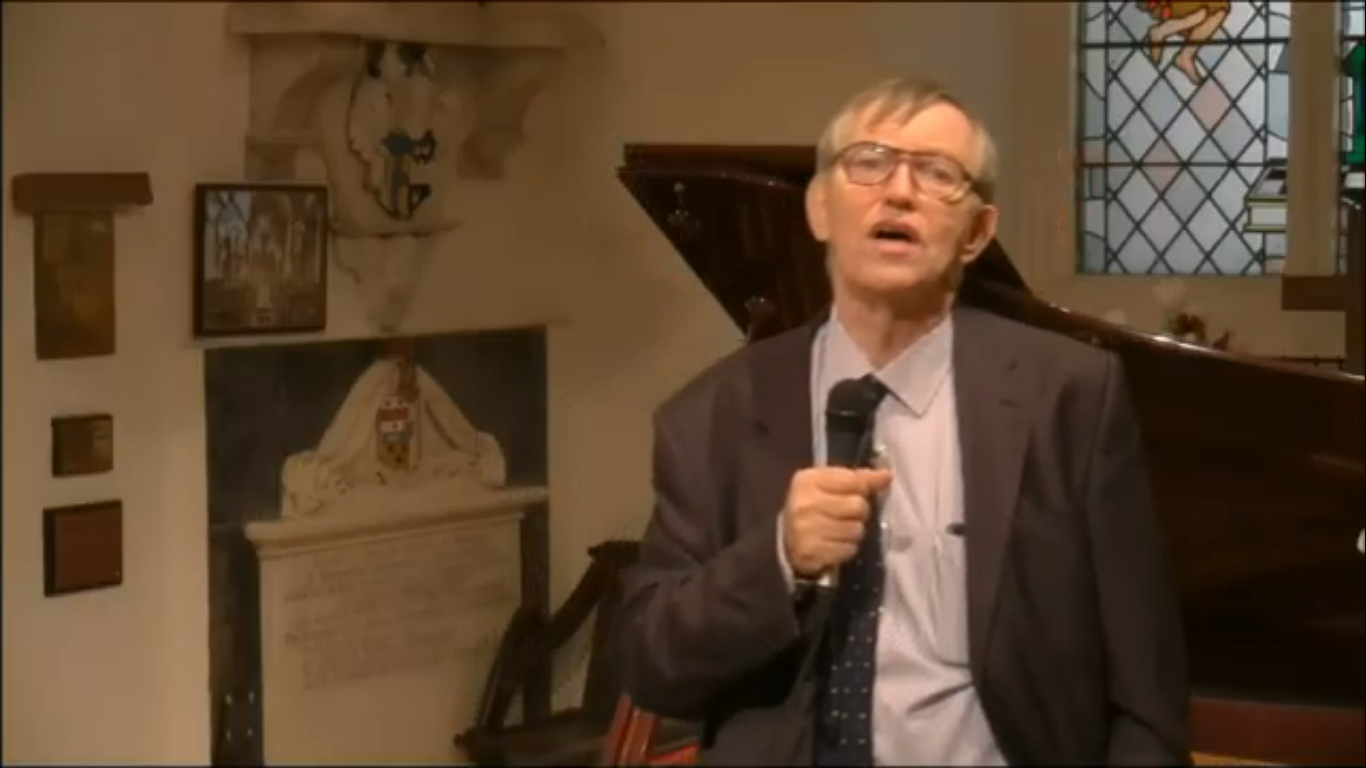
The ‘Triumphal Arch’ of the second movement was played with great architectural sense of line .The poco meno and scherzando middle section was played with great sensitivity and the infamous coda was thrown off with great courage and the enviable precision of a mature thinking musician.The last movement was played as a great song from the first to the last note.Not disturbing the atmosphere at the end where Schumann marks poco a poco accelerando and many also add crescendo, playing only the final three chords piano.But Dr Hugh is obviously aware of the original edition where Schumann repeated the first movement coda to his distant beloved, and was content for us to bask in the extreme beauty of his performance.It comes with the loving care in maturity of he who has understood the real meaning of passion.

The same passion with which he has dedicated himself as he reaches his one thousandth concert in this beautiful unsuspecting church.

‘If music be the food of love play on’

Rudundant no longer!

Many congratulations and to the next millennio! Thanks are just not enough.

Ivan Donchev -The grand tour with Beethoven in Velletri

Ludwig van BeethovenSonata N. 5 in Do minore, Op.10 N.1- Allegro molto e con brio- Adagio molto- PrestissimoSonata N. 6 in Fa maggiore, Op.10 N.2- Allegro- Allegretto- PrestoPiano Sonata No. 7 in Re maggiore, Op. 10 N. 3- Presto- Largo e mesto- Menuetto: Allegro- Rondo: Allegro

This is what the distinguished french pianist Marylene​ Mouquet had to say about the recital:’Magnifico appuntamento con Beethoven grazie ad un artista esperto che ha capito l’essenza di Beethoven… Sa esprimerlo con brio, stile, forza d’animo e delicatezza. Grazie Ivan!

And this is what I have written about Ivan’s previous concerts nei Castelli Romani :

https://christopheraxworthymusiccommentary.wordpress.com/2019/11/25/the-hills-of-rome-are-ringing-to-the-sound-of-music-donchev-in-velletri-and-taddei-ciammarughi-in-ariccia/

https://christopheraxworthymusiccommentary.wordpress.com/2019/04/29/ivan-donchev-in-search-of-liszt/

Some very fine playing from Ivan Donchev in the third of his series of the 32 Sonatas by Beethoven.Three early works of op. 10 written between 1796-98 belong to the close of the eighteenth century, part of that group of thirteen sonatas that remain within the classical tradition that Beethoven was at first to explore and expand. The Opus 10 sonatas are dedicated to Countess von Browne, the wife of Count Johann Georg von Browne-Camus, a nobleman of Irish ancestry in the Russian Imperial service in Vienna. Beethoven had dedicated his three String Trios, Opus 9, to the Count, to whom he was indebted in various ways, including the gift of a horse that he had soon abandoned.
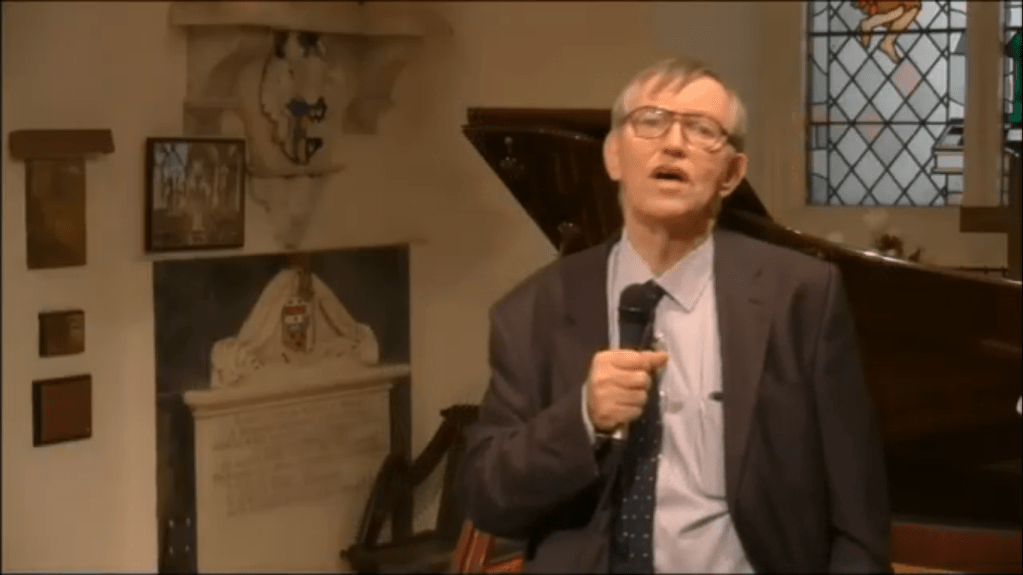
They are full of youthful energy but already show signs of Beethoven’s personality alternating a startling rhythmic call to arms with classical lyricism.Always there is an undercurrent that carries us from the first to the last note almost without rest.The Bosendorfer that Ivan played with its bright clear sound was ideally suited to this early sound world whereas the later sonatas are more dense and melodic and may need a much richer almost orchestral sound.The Arietta from op 111 or the theme from op 109 are surely contemplated with the same density of a string quartet.Already Beethoven in slow movement- Largo e mesto-of op 10 n.3 anticipates what is to come in the later Sonatas from op 106 to op 111.All this was brilliantly described by Ivan in his short but very succinct introductory talk.

The first Sonata op 10 n.1 in C minor anticipates the later op 13 Pathétique with its imperious opening alternating with contrasting lyricism.It was played with a precision and absolute faithfulness to Beethoven’s indications.The coda before the development showed a striking resemblance to a similar passage in the later op 10 n.3 where Beethoven had already taken the germ of this idea one step further.It was beautifully realised by Ivan and just confirmed what he had said about the chronological order of the sonatas showing so clearly Beethoven’s development as a composer.It is infact a unique journey and very rare that an evolutionary path can be seen so clearly from the first op 2 n.1 to the last op 111.

There was a great purity of sound and a sense of balance that allowed the melodic line of the ‘Adagio molto’ to sing out so clearly.The almost belcanto ornamentation was played with a lightness and sense of shape that was quite magical.The turbulent question and answer phrases were integrated so well into the overall architectural shape of this great song.Disappearing to a whisper before the driving energy of the Prestissimo finale which was played with great vigour but alternating with passages of eloquent charm.

The Sonata in F major op 10 n.2 was a favourite of Glenn Gould and it is a remarkable work where the usual slow movement is substituted with a minuet and trio of quite startling originality.The opening movement has something of a pastoral feel to it which has a playful development section played with a rhythmic buoyancy and forward movement that is quite hypnotic.The explosive left hand trills could have unwound even more abruptly so as not to disturb the relentless rhythmic energy that Ivan had instilled. The Minuet too could have been even more legato like a plasma that spreads across the keys in such a remarkable way.A beautiful trio section though moved so well one in a bar that made the comments in the left hand even more poignant .The devilish Presto finale was played with such precision and a relentlessness that was breathtaking.

The Sonata op 10 n.3 is the first of Beethoven’s great works where he stamps the Sonata formula with his own unique personality.The first movement played in two with Beethoven’s startling sforzandi like a call to arms interrupting the rhythmic flow.One can already see on the horizon op 13 and 22 with a visual pattern that is gradually becoming more marked as he moves away from the classical shape of Haydn and Mozart.The left hand figurations in the development section were played with driving insistence with pleading comments from the right hand sforzandi. There were beautiful lyrical contrasts where Ivan’s playing reminded me of Gelber with his way of slightly playing out of sinc on occasion that gave such expressive power without harshness of tone.Infact all through today’s performances were Ivan’s sense of fullness without hardness and expressivness without sentimentality.It was just this that gave such depth of meaning to the intense Largo e mesto of great beauty and powerful emotional meaning.Beethoven’s remarkable way of holding a long bass note whilst allowing the right hand to comment above with such clarity was to be exploited in his later Sonata op 31.n 2 ‘The Tempest.’The magical mists of sound that had been hinted at in the earlier op 2 n.3 are here used to startling effect as it reaches a climax where the bubble bursts as we are brought back to the final magical notes which again anticipate the last notes of the very final op 111.The Menuetto was played unusually gently and it contrasted so well with the bubbling charm of the Trio .The question and answer of the final Rondo was played with a brilliance and precision,the final scales and arpeggios just hovered over the keys as the work came to a gentle end.

This was indeed a remarkable third stop in a journey of discovery and I look forward to the next stop of this stimulating panorama.

Ke Ma at S Mary’s Beauty and perfection

Tuesday 17 November 4.00 pm

Streamed LIVE concert in an empty church

Ke Ma (piano)

Mozart: Piano sonata in D K 311 (16′)Allegro con spirito-Andante con espressione -Rondeau Allegro

Chopin: Three Mazurkas Op 59 (10′)
1 in A minor, 2 in A flat, 3 in F sharp minor

Debussy: Suite Bergamasque  (17′)
Prélude / Minuet / Clair de lune / Passepied

Brahms: Variations on a theme of Paganini Op 35 Book 2 (11′)

Born in 1994 in China, Ke studied at the Royal Academy of Music in London with Christopher Elton,Michael Dussek and Andrew West graduating with a Masters with distinction (DipRAM) in 2017.  She is currently pursuing her Doctoral study at Guildhall School of Music and Drama with Joan Havill,Dr Alexander Soares and Rolf Hind. She has won top prizes at international competitions including 1st Prize at the 2016 Concours International de la vie de Maisons-Laffitte and Karoly Mocsari Special Prize (France), 1st Prize at the 2014 Shenzhen Competition (China) and 3rd Prize at the 2012 Ettlingen Competition (Germany. In 2017 Ke made her debut at Wigmore Hall under the auspices of the Kirckman Concert Society.  She has given concerts across the UK, in France, Germany, Poland, the US and Canada. Recent engagements include recitals at the Purcell Room, Kings Place, the Saintonge Festival, Maison Laffitte and Salle Molière Lyon in France and the Chopin Festival at the Fisher Center in Bard College, New York.A committed chamber musician, Ke has undertaken a Tunnell Trust Award tour of Scotland, given a recital at Wigmore Hall and recorded music by Vieuxtemps for Champs Hill Records with violist Timothy Ridout.  She has collaborated with the Cuarteto Casals at Santander International Piano Competition. Last summer Ke made her first appearance in Winchester Festival this summer. Ke is grateful for support from the Ian Fleming Award from Help Musicians UK; prizes from the Worshipful Company of Musicians, the Maisie Lewis Young Artist Fund and the Prince’s Award. She recently performed the Tchaikovsky Piano Concerto No.1 under the baton of Adrian Leaper at the Barbican Hall, as one of the finalists at the Gold Medal competition at Guildhall School of Music and Drama.

https://christopheraxworthymusiccommentary.wordpress.com/2018/03/27/ke-ma-and-the-worshipful-company/

I have often admired Ke Ma’s playing for her precision and impeccable musicianship but sometimes found it could be rather cool and detached.Today she revealed her true self from the very opening notes of Mozart’s early D major Sonata K 311 written when only 21.It is full of wit and character which Ke Ma understood so well and to which she added her sense of colour and very sensitive phrasing.From the very first notes there was a delicacy added to her precision with also a beautiful sense of legato.There was great clarity and purity to the ‘Andante con espressione’ with a truly luminous cantabile due to her remarkable sense of balance .It gave such a wondrous sense of colour and heartrending meaning to every note.The Rondeau- ‘allegro’ had an operatic sense of character one could almost see the different personalities entering the stage one by one.

Three Mazukas by Chopin op 59 once again showed the affinity of the Polish and Chinese heart.The A minor was played with great shape full of subtle nostalgia and unexpected drama very sensitively portrayed.In contrast to the A flat and F sharp minor Mazukas that had a lovely lilt and sense of dance.The A flat, one of the happiest of Mazukas with a ravishing ending disappearing into the heights of the piano with the final gentle farewell stamp of the feet.The F sharp Mazurka still dancing into the distance at the end.Each one a tone picture with a story to tell brought vividly to life by this young chinese pianist.

Suite bergamasque by Claude Debussy is one of the composer’s most famous works for the piano. He began composing it around 1890, at the age of 28, but significantly revised it just before its 1905 publication.He was initially unwilling to use these relatively early piano pieces because they were not in his mature style, but in 1905 he accepted the offer of a publisher who thought they would be successful, given the fame Debussy had gained in the intervening fifteen years.The names of the movements were inspired by the poems of Paul Verlaine. The title of the third movement of Suite bergamasque is taken from Verlaine’s poem “Clair de lune” which refers to bergamasks:”Your soul is like a landscape fantasy,Where masks and bergamasks, in charming wise,Strum lutes and dance, just a bit sad to be ,Hidden beneath their fanciful disguise.”It was indeed Clair de lune that Ke Ma played with such delicate luminosity with some wonderful colouring and deep resonant bass notes that opened up the sound within the piano and gave a gentle glow to the very flexible melody.The Prelude was played with poetic declamations and some magical sounds.It was followed by a fairy light Minuet played with irresistible grace and charm as it built up gradually to a euphoric climax.The Passepied had a feather light buoyant bass on which floated Debussy’s magical melodic inventions disappearing to a whisper.Passion and delicacy combined to create a magic spell indeed.

She ended her programme with Book 2 of the Brahms Paganini Variations. The entire work consists of two books each one opening with the theme, Paganini’s Caprice No. 24 in A minor, followed by fourteen variations. It was published as Studies for Pianoforte: Variations on a Theme of Paganini. and dedicated to the piano virtuoso  Carl Tausig.As Dr Mather rightly said today it is a work that strikes fear into the hearts even of the most accomplished pianists.Clara Schumann called it Hexenvariationen (Witch’s Variations) because of its difficulty. 

Ke Ma certainly did not seem intimidated as she not only surmounted the great technical difficulties but imbued each variation with subtle character.A beautifully simple understated theme was followed by the first variation where Brahms immediately expects the pianist to embark on double thirds at breakneck speed.It was played with great rhythmic energy and architectural shape whose tension was relieved by the sumptuous melodic outpouring of the second variation.The playfulness of the 3rd belied tha actual technical difficulties involved and was played with an ease and grace by Ke Ma.Followed again by a sumptuous romantic melodic outpouring played with a subtle sense of colouring.The fleetingly featherweight triplets at lightening speed in the next two variations were followed by a combination of two’s against three’s that would have confounded the greatest of mathematicians.Now Brahms deals with the problems of octaves and againeven these held no terror for our young chinese pianist.They were thrown off with great ease and in such convincing Romantic style.A complete change of character with the beautifully mellifluous 12th variation gently led to the final ‘Presto ma non tanto’ finale thrown off with amazing technical assurance and sumptuously full sounds bringing the work to a grand conclusion via again the combination of two against three this time in double octaves!A work not for the faint- hearted and Ke Ma certainly has a heart that beats so expressively in everything that she plays.

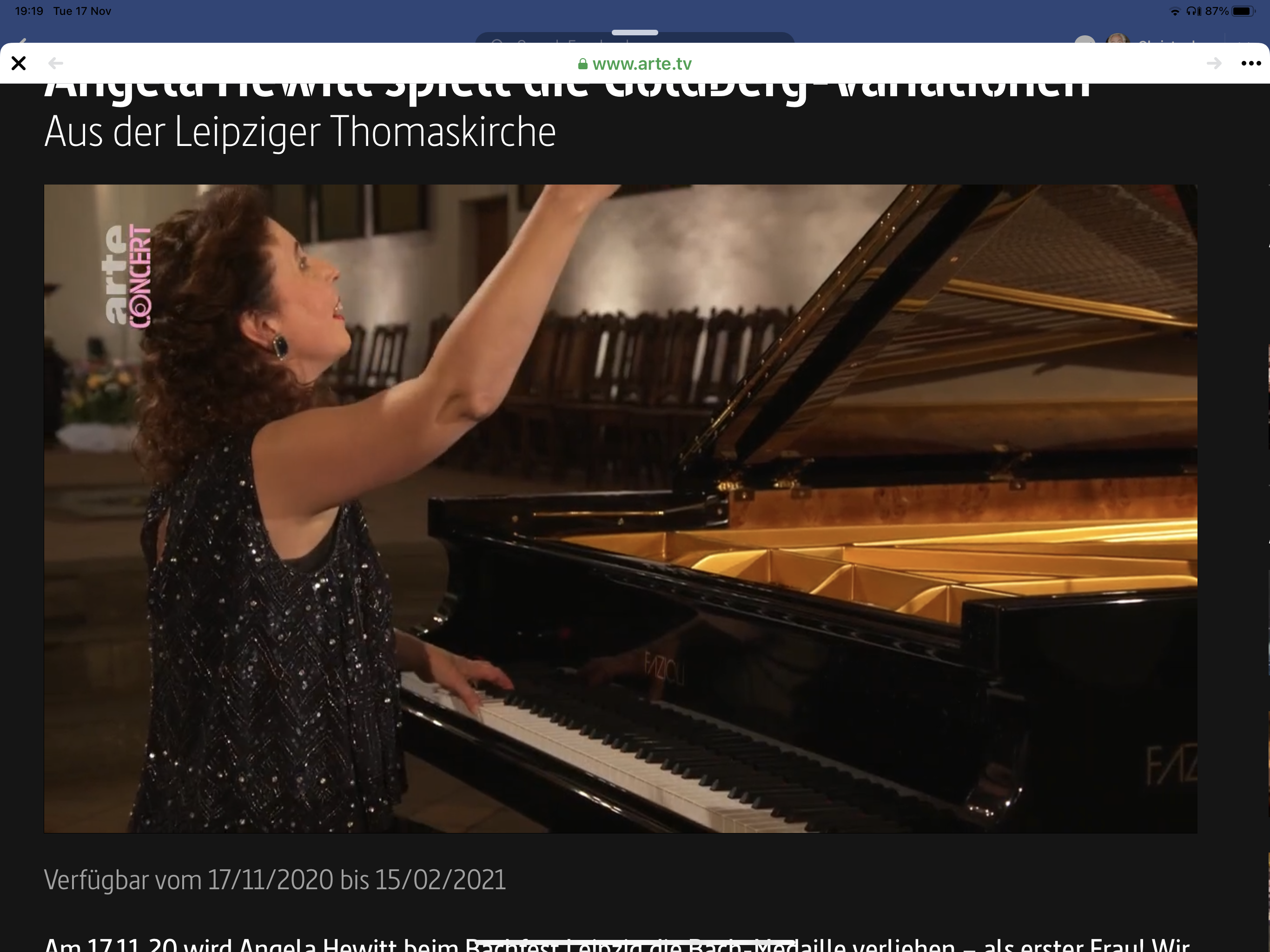
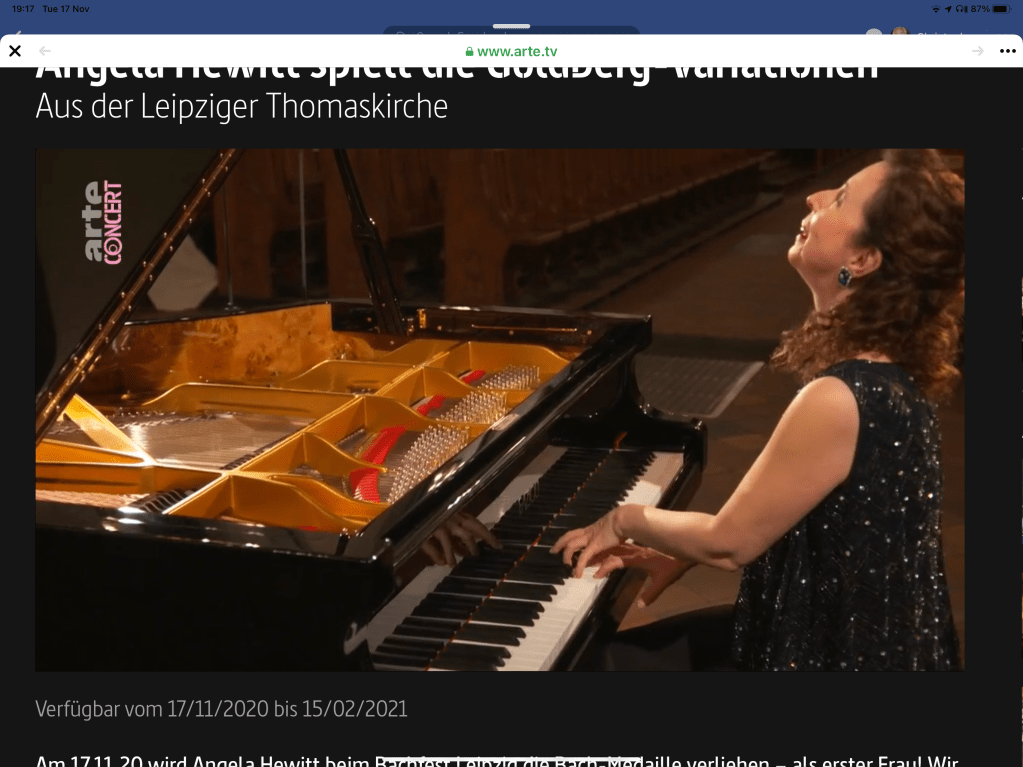
Angela Hewitt for the glory of Bach.The pinnacle of pianistic perfection

https://christopheraxworthymusiccommentary.wordpress.com/2020/09/20/angela-hewitt-the-long-awaited-return-to-the-wigmore-hall/

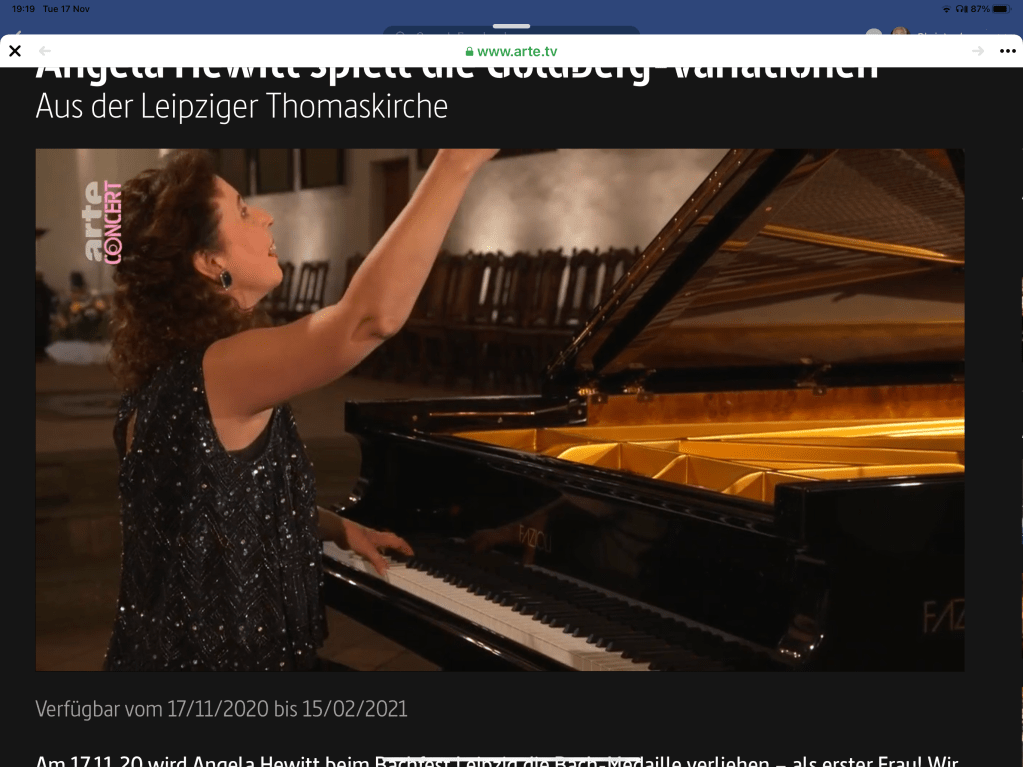
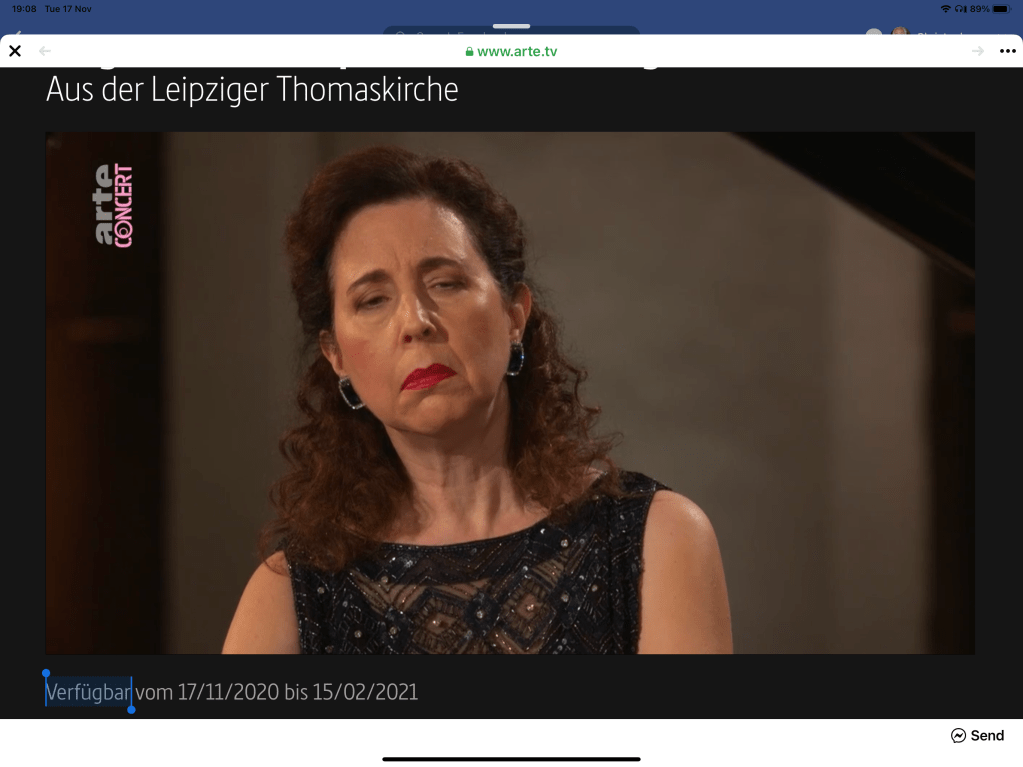
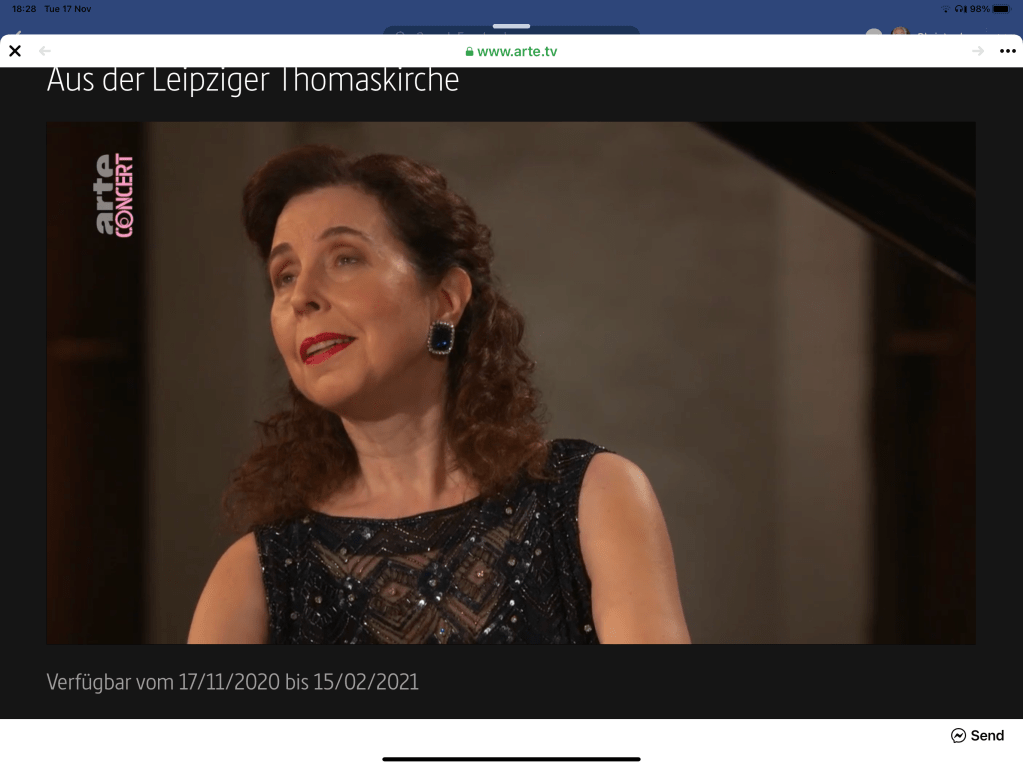
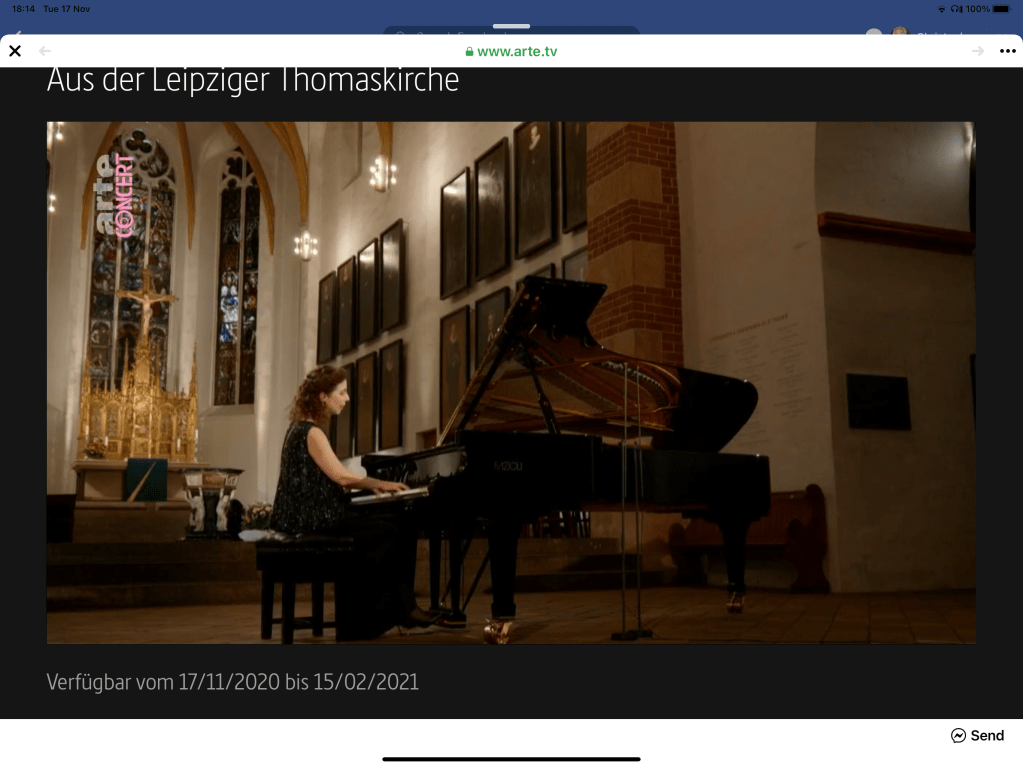
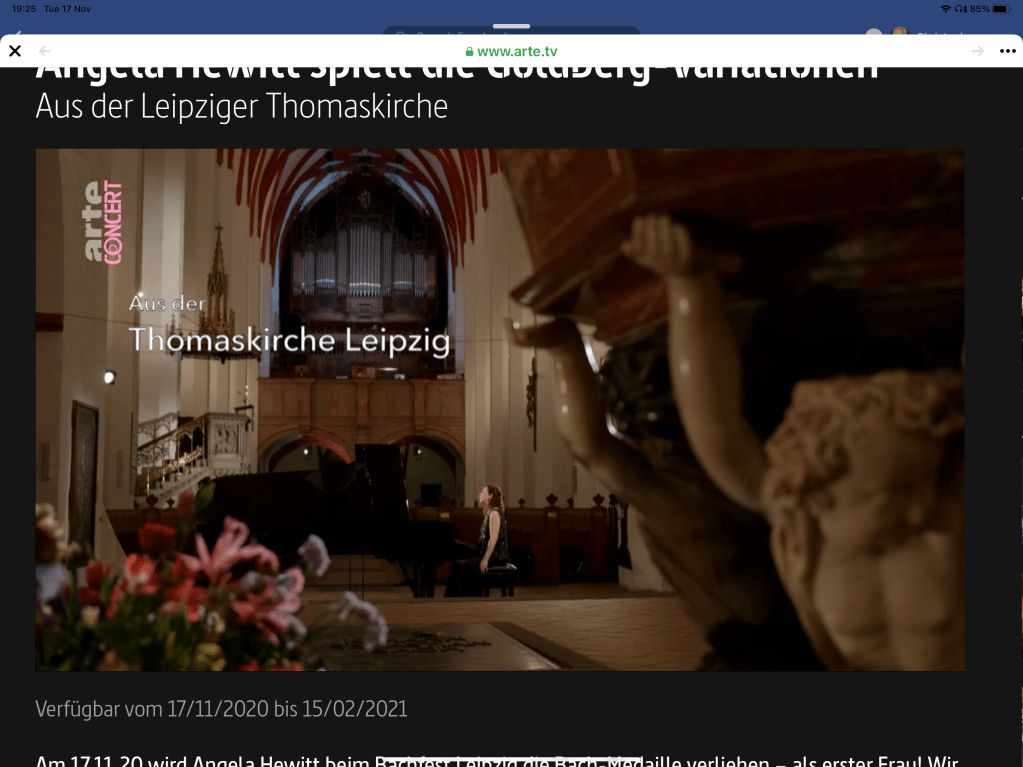
A wonderful performance in Bach’s own church in Leipzig.With Bach looking on how could it not be absolute perfection.Without doubt the greatest performance I have ever heard.One hour and twenty three minutes with all the repeats save one.

Such a personal performance from someone who has lived with this music for a lifetime.Small inflections,hesitations,rallentandi,rinforzandi from someone who had totally understood the message that Bach reveals in the music.

The massive added octaves in the mighty 29th variation,a knowing smile in the Quodlibet,the sublime beauty of the 25th,the teasingly playful voices in the 27th,the reawakening of the 22nd,the haunting lament of the 21st,the simple charm of the 19th,the majesty of the 16th,the subtle delicacy of the 13th,the transcendental difficulties of the 14h or even more of the 20th or 26th.

The almost religious pause before the reappearance of the aria,played with the knowledge of someone who had traversed a world of feelings and because of that had instilled every note and ornament with such deep meaning.The message of absolute faith for the glory of God.Here before Bach’s resting place there was just Angela and Bach in a magic communion that we were allowed to eavesdrop on.An unforgettably moving experience that luckily was recorded for posterity.

Mark Viner at St Mary’s Faustian Struggles and Promethean Prophesies

Sunday 15 November 4.00 pm

Streamed LIVE concert in an empty church

Mark Viner (piano) – lecture/recital

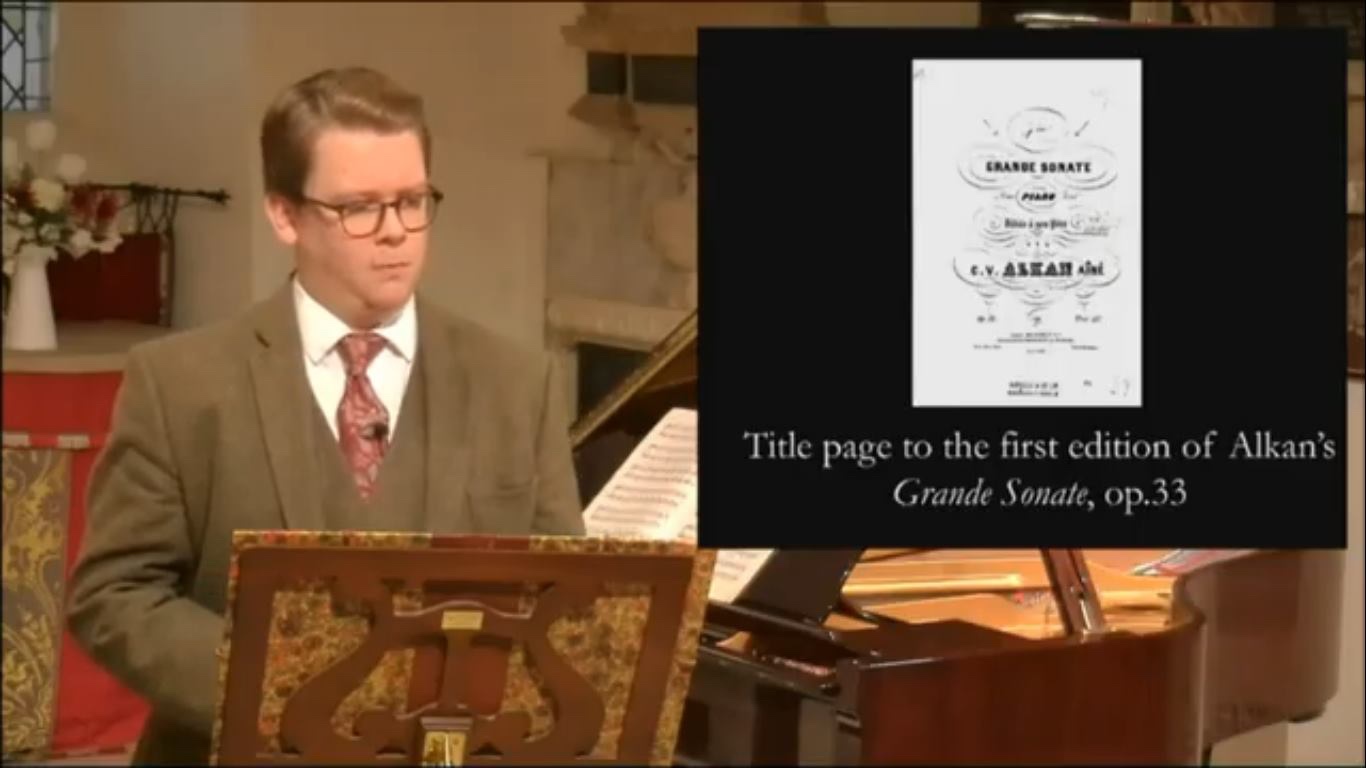
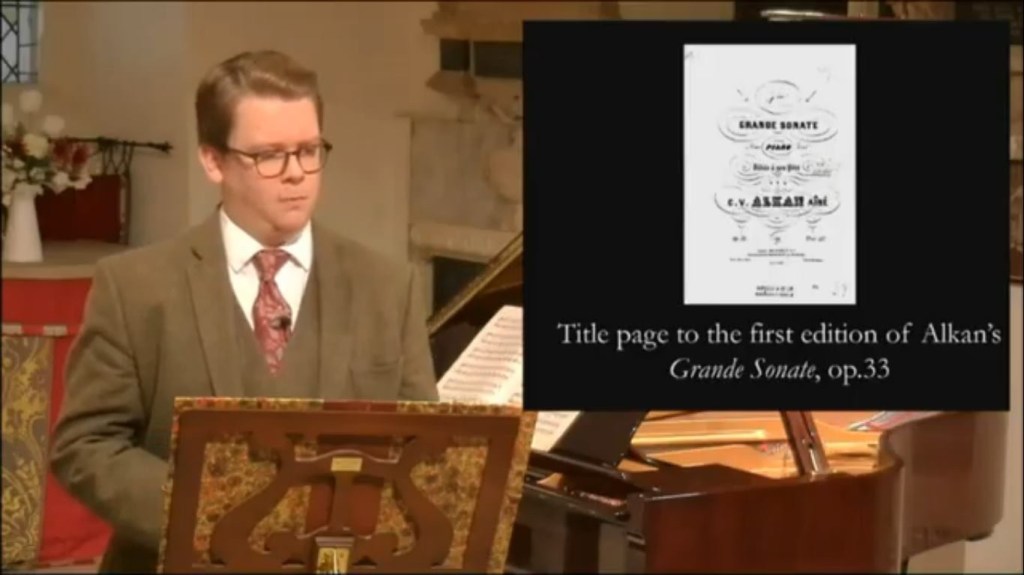
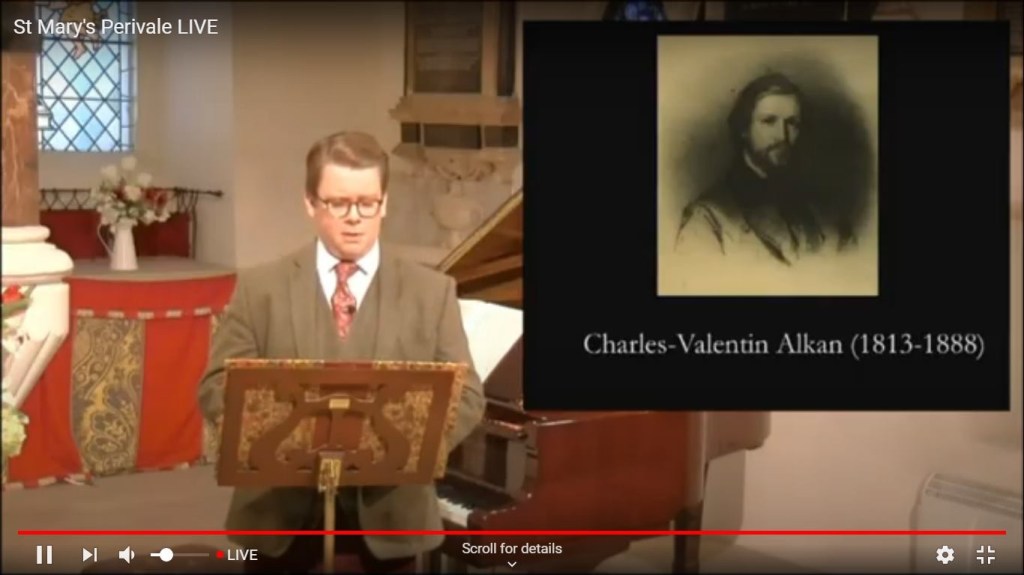
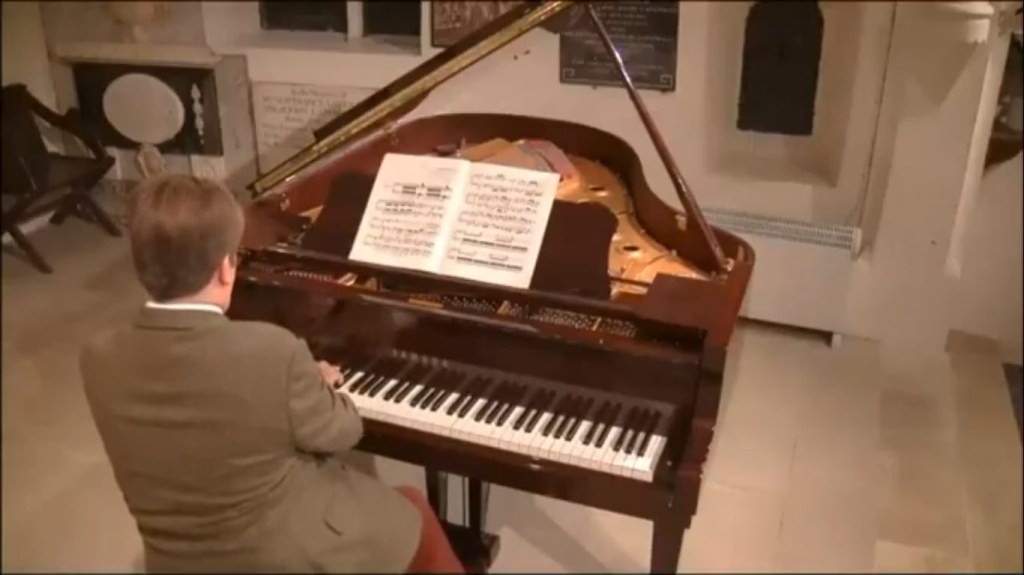
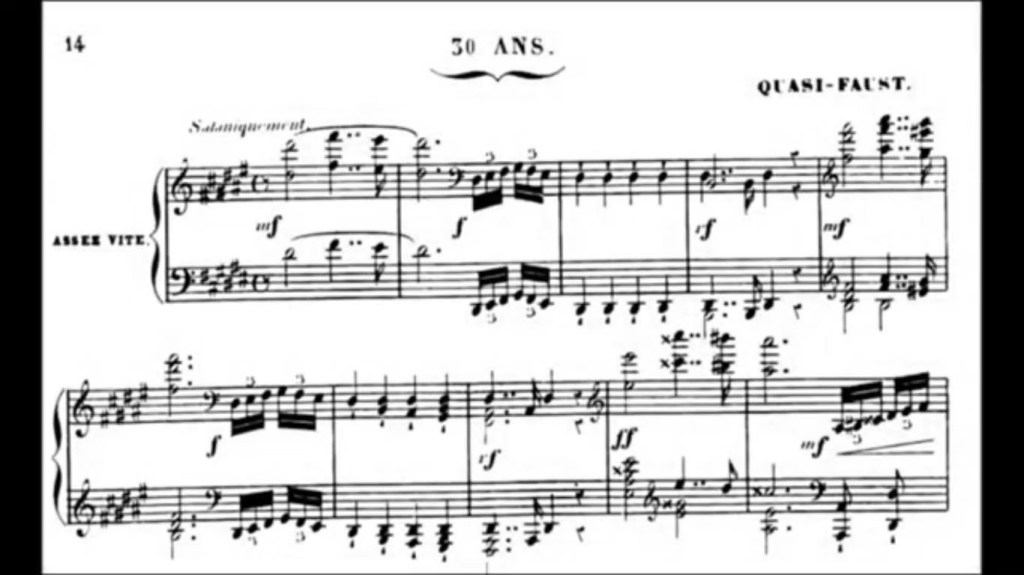
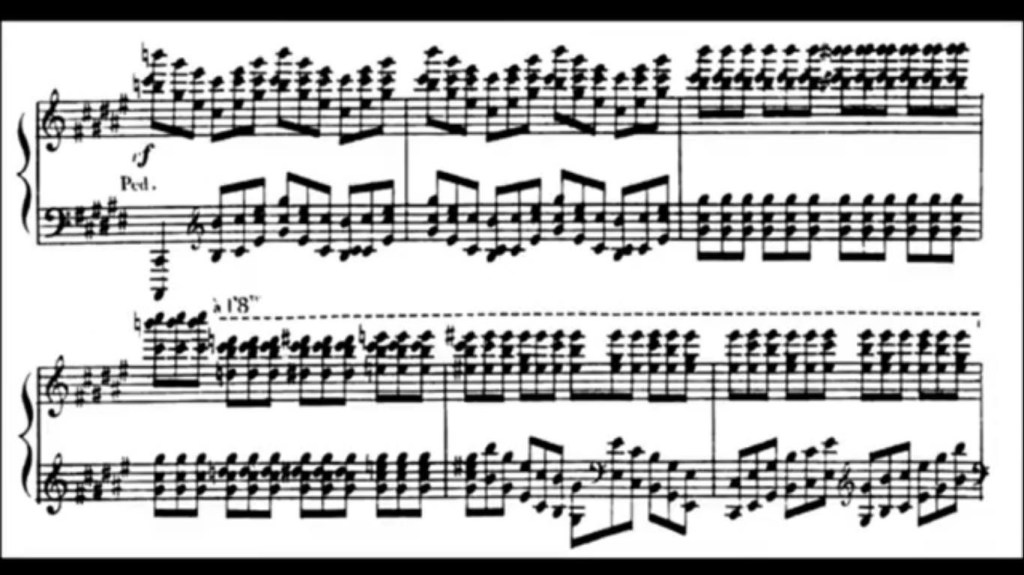
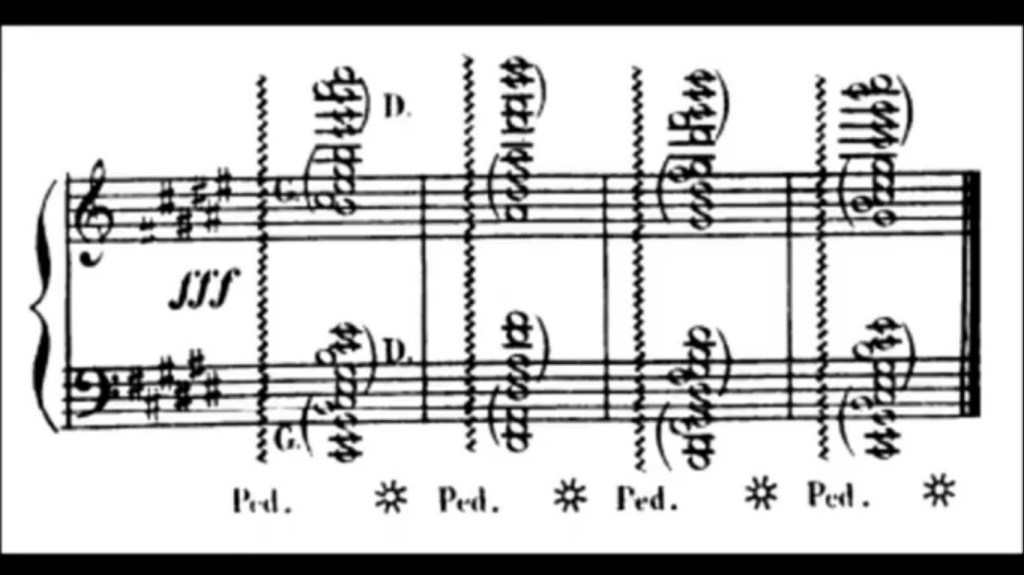
Alkan and his Grande Sonate Op 33
‘Faustian Struggles and Promethean Prophesies’

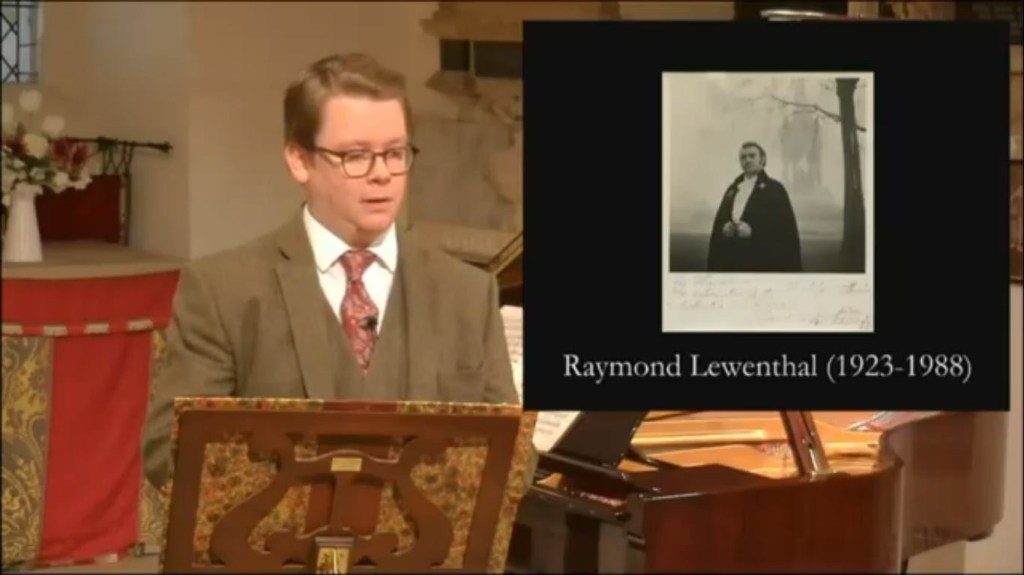
Today Mark Viner in professorial mode just as remarkable as his performances at the keyboard.I have been following his career for some years and via the Keyboard Charitable Trust we have been offering tours of Italy,USA as well as his official London debut at the Wigmore Hall .I remember the eclectic public in my theatre in Rome amazed and ravished as was the critic in Vicenza when I showed her the score of Alkan’s Le Vent with fingerings on every note ……it looked as though some virus had been at it! Bryce Morrison was on his feet cheering at his London debut and the five star reviews that his 7 CD’s have received is proof enough that here a unique figure has appeared on the musical horizon.Just as I remember Raymond Lewenthal and the queues around the hall to try to get a ticket.Raymond Lewenthal is Mark’s favourite pianist and the same heros welcome awaits his next major appearances.

This is what I have written over the years faites vos jeux:

https://christopheraxworthymusiccommentary.wordpress.com/2020/03/12/mark-viner-at-st-marys-2/

https://christopheraxworthymusiccommentary.wordpress.com/2020/03/12/mark-viner-at-st-marys-2/

https://christopheraxworthymusiccommentary.wordpress.com/2019/03/11/mark-viner-at-st-marys/

https://christopheraxworthymusiccommentary.wordpress.com/2018/05/06/mark-viner-with-the-camerata/

https://christopheraxworthymusiccommentary.wordpress.com/2018/03/03/mark-viner-takes-london-by-storm/

https://christopheraxworthymusiccommentary.wordpress.com/2018/01/18/mark-viner-takes-italy-by-storm/

Described by International Piano Magazine as “one of the most gifted pianists of his generation”, Mark Viner is steadily gaining a reputation as one of Britain’s leading concert pianists; his unique blend of individual artistry combined with his bold exploration of the byways of the piano literature garnering international renown. Born in 1989, he began playing at the age of 11 before being awarded a scholarship two years later to enter the Purcell School of Music where he studied with Tessa Nicholson for the next five years. Another scholarship took him to the Royal College of Music where he studied with Niel Immelman for the next six years, graduating with first class honours in a Bachelor of Music degree in 2011 and a distinction in Master of Performance 2013; the same year which afforded him the honour to perform before HRH the Prince of Wales.

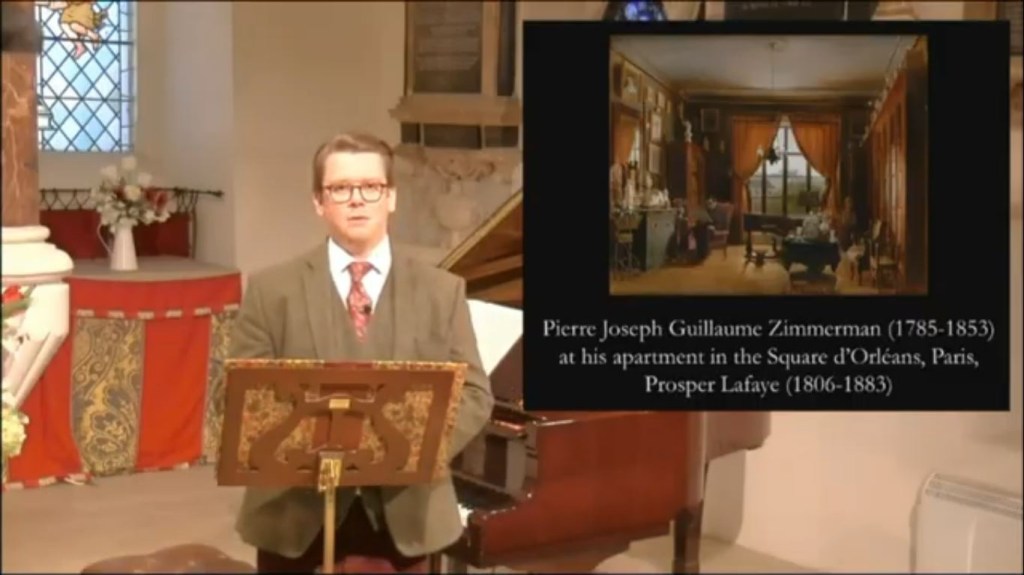
After winning 1st prize at the Alkan-Zimmerman International Piano Competition in Athens, Greece in 2012, his career has brought him across much of Europe as well as North and South America. While festival invitations include appearances the Raritäten der Klaviermusik, Husum in Germany, the Cheltenham Music Festival and Harrogate Music Festival in the United Kingdom and the Festival Chopiniana in Argentina, radio broadcasts include recitals and interviews aired on Deutschlandfunk together with frequent appearances on BBC Radio 3. His acclaimed Wigmore Hall début recital in 2018 confirmed his reputation as one of today’s indisputable torchbearers of the Romantic Revival.

He is particularly renowned for his CD recordings on the Piano Classics label which include music by Alkan, Chaminade, Liszt and Thalberg, all of which have garnered exceptional international critical acclaim. His most important project to date is a survey of the complete piano music of Alkan: the first of its kind and which is expected to run to some 17 CDs in length. Aside from a busy schedule of concerts and teaching, he is also a published composer and writer and his advocacy for the music of Alkan and Liszt led to his election as Chairman of both the Alkan Society and the Liszt Society in 2014 and 2017 respectively.