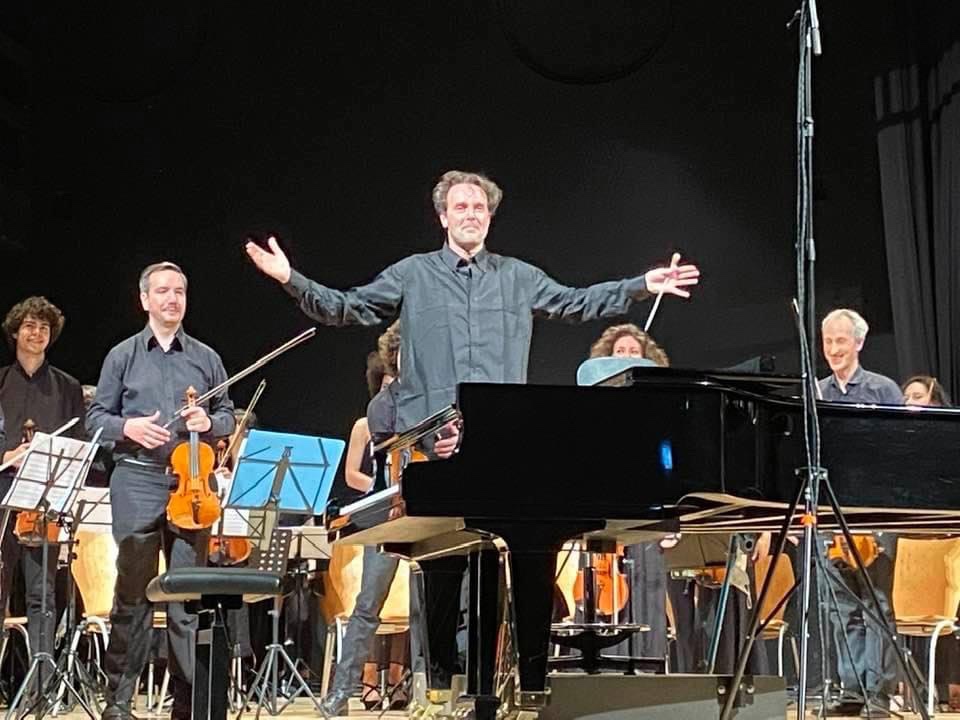
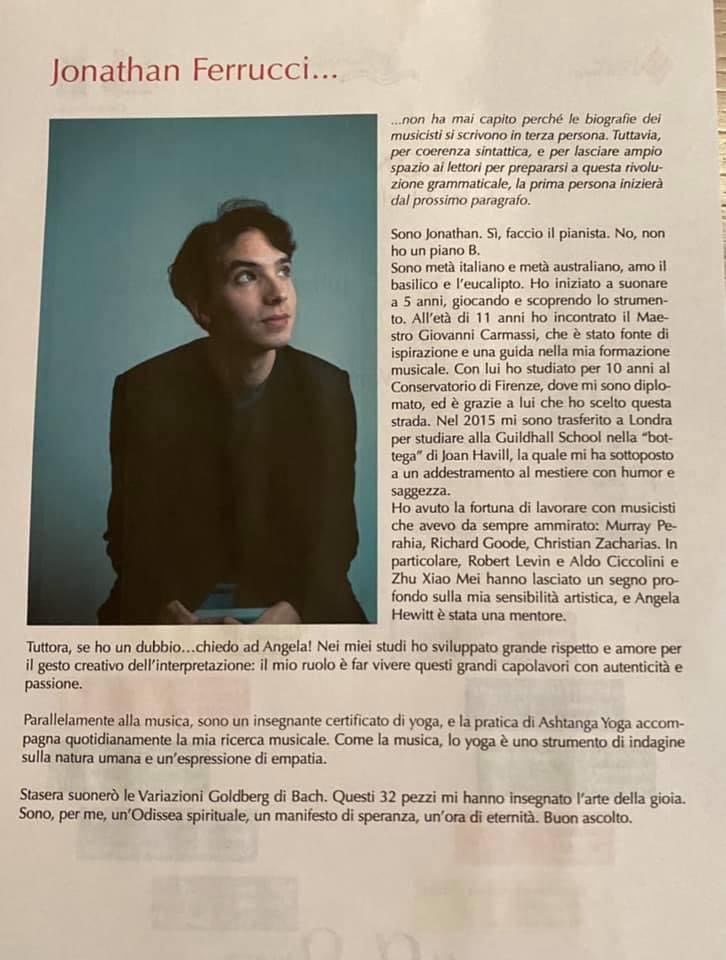
Zimerman and Rattle a seamless stream of beauty and joy for Beethoven’s 250


Sheer perfection from Krystian Zimerman -Simon Rattle and the LSO.
The joy these two ‘lads’ brought to the Rondo of the first concert was a marvel to behold.The little bell like acciaccaturas just before the piano’s delicate farewell and the full Beethovenian outburst from the orchestra was one of the most wondrous moments in this desolate year.
The impish humour of such joy and fun as Krystian and Simon kicked Beethoven’s old ball around from one to another was unforgettable.
Zimerman playing with the score as the composer himself would have done but with this unique artist who carries the golden sound of his mentor Rubinstein in his chubby hands it only adds to the continual voyage of discovery.Truly one of the marvels of the age and quite rightly dedicated to Beethoven on his 250th birthday.

More marvels from Zimerman and Rattle.
Beethoven 2 and 4 played with an improvisatory fantasy that was like hearing these much loved works for the first time.
Perhaps Beethoven could have imagined such wondrous sounds in his private ear but to share them with others is one of the greatest gifts that we could have in these troubled times.
The 2nd concerto with such whispered asides followed by Toscanini like injections of energy from the orchestra.An opening of the 4th concerto like angels calling from afar played with such a whispered delicacy.Trills just vibrations of magic sounds.Cadenzas of improvised inspiration.


A knowing smile on their faces as they shared the innermost secrets and schoolboy humour bouncing Beethoven’s ideas from one to the other.The simple scales in the first movement of the 2nd concerto I never imagined I could listen to them again after Gilels’s magic account with Sir Adrian Boult all those years ago.But here was the same magic golden sound that had Rubinstein exclaiming,on listening to a chubby red haired school boy in Russia,that if he ever came to the west he may as well pack up his bags and leave.
Pack up your troubles in an old kit bag indeed.
How can we ever thank them enough!

The Prince of pianist’s wears the Emperors cloak as Zimerman and Rattle together with the LSO bring their unforgettable survey of Beethoven’s five piano concertos to a glorious conclusion.Could there ever have been a better way of celebrating Beethoven 250 than this?


An Emperor starting with the right hand on that first low E flat as the cadenza unfolded on their wondrous journey.An orchestra under Rattle that played with a beauty,freedom and conviction as rarely heard in the recording studio.Such was the energy generated by the almost chamber music interplay that Zimerman and Rattle created it would have been impossible not to be wound up in this seamless stream of both ravishing and tumultuous sounds.An Adagio even more simple than Rubinstein’s unforgettable account.The descending scales allowed to whisper without any inflections but just allowed to trickle from Zimerman’s fingers with such ravishing beauty.Scrupulously sustained by the sumptuous sounds that Rattle and his colleagues so poignantly provided.The interplay and rhythmic energy of the Rondo did not exclude slight hesitations and inflections that brought a knowing smile to Simon and Krystian’s faces as they seemed to be discovering the music for the first time.
Performances that will go down in history and be the measure by which all others are compared.

Mengyang Pan at Cranleigh Arts Centre Beethoven birthday concert

Programme:Beethoven Sonata in F major op 10 no 2 – Allegro- Menuetto, Allegretto- Presto
Beethoven Sonata in D major op 10 no 3 – Presto- Largo e mesto – Menuetto; Allegro- Rondo: Allegro
–Interval–
Beethoven Sonata in E major op 109 – Vivace ma non troppo – Adagio expressivo – Prestissimo- Gesangvoll, mit innigster Empfindung. Andante molto cantabile ed espressivo
Beethoven Sonata in F minor op 57 ‘Appassionata’ – Allegro Assai- Andante con moto- Allegro ma non troppo – presto

Clive Wouters in conversation with Mengyang Pan

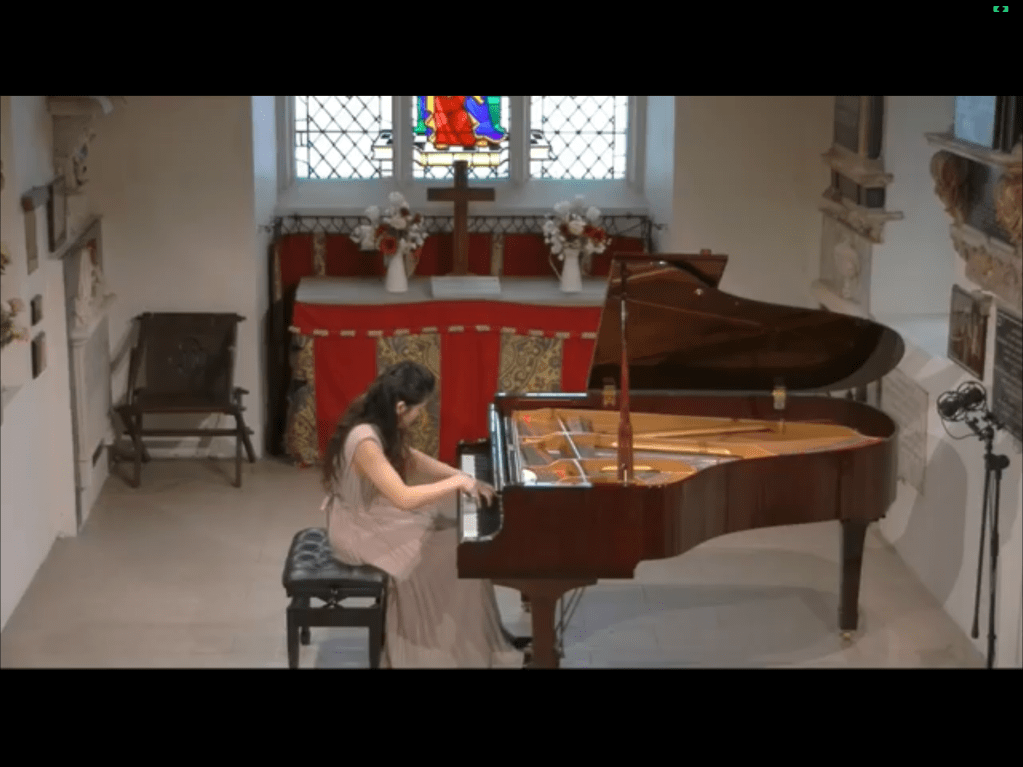
A recital of four Sonatas by Beethoven found the ideal interpreter in Mengyang Pan for the 250th birthday concert at Cranleigh Arts Centre on what is presumed to be the exact date of 16th December 1770.I have admired Mengyang’s playing since first hearing her in the Rina Sala Gallo International Piano Competition in Monza,Italy in 2008.I was a jury member and remember very well her prize winning performance of Beethoven’s Emperor Concerto.It was the clarity and precision together with her intelligence that struck me then as it has every time I have heard her since.Allied to a strong artistic temperament and sense of balance and colour her playing of Beethoven is in a very special class of it’s own.I have written previously about her early training in the class of Tessa Nicholson,that extraordinary trainer of young musicians at the Purcell School.Her graduation from the Royal College of Music was under the Head of Piano:Vanessa Latarche who I have known since she was the star pupil as a child of that dedicated teacher in Ealing,Eileen Rowe .Katherine Stott,Tessa Nicholson,Danielle Salamon and I used to help her with her ever growing number of pupils that she taught in her multipianoed house.She left all her worldly possession to create a Trust to help young musicians in Ealing.The Trust is administered by Vanessa and that other remarkable pupil of Miss Rowe ,Dr Hugh Mather of St Mary’s Perivale where Mengyang had recently played one of these Beethoven sonatas in a weekend dedicated to the 32 sonatas played by 32 different pianists.I was delighted to learn that recently Mengyang was invited to join the RCM faculty as a full professor.

Infact it was Stephen Dennison’s own words as artistic director that reminded me of a performance that I should not miss :’You must be overdone with Beethoven 250 concerts but may I bring to your attention one more.I am no expert but I believe MengYang’s performance at Cranleigh this week, in front of a Covid secure audience of 35, was pretty special.Not just for the performance on piano but for her overall “show” and her words about each sonata; all made a great package.’

How right he was and it was a surprise to hear myself quoted by Clive Wouters in his interval interview with the artist and to still agree wholeheartedly!Quoting from an article I wrote of a previous performance I stated:’her playing demonstrated clarity and precision going from the imperious to the most touching’ He also quoted The Times that had written about her performance of the mammoth Serenade by Helmut Lachenmann:’poised like a cat spying its prey before the pounce’

Stephen Dennison presenting the concert

The first half of her programme was dedicated to two of the three early Sonatas that make up op 10.The second in F major was a great favourite of Glenn Gould and is in only three movements ,the usual slow movement being replaced with an Allegretto almost Schubertian in it’s mellifluous lilt contrasting between the opening and the middle Trio like section.Here I felt Mengyang was trying to delve too deeply and it sounded a little too serious played in three instead of the much lighter one in a bar that the Trio obviously is.However it was played with scrupulous attention to detail and Beethoven’s sforzandi were played with just the right weight to indicate the inner counterpoint imitation In the trio she found the perfect lilt that she had missed in the outer sections and the comments in the bass alternating with the treble were most eloquent.The final two chords marcato instead of lighter staccato made me realise that she had a different vision of this movement from mine.Not so the opening Allegro that was full of the bustling fun of early Beethoven.There was a great rhythmic buoyancy to the development section and the return of the opening theme was with even more impish good humour than at the opening.The final scintillating Presto was played with all the brilliance that Czerny had described of his master’s own performance.Mengyang played it with great control with precision and relentlessness that brought this opening work to an exhilarating conclusion.

The Sonata op 10 n.3 is a work in four movements and contains a profound slow movement that begins to show what would evolve from Beethoven’s pen just a few years later.The rolled chords of the Largo e mesto -like the fourth piano concerto were arpeggiated even though not written specifically in the score.There are letters of the period that tell us of Beethoven’s performance of the fourth piano concerto with arpeggiated chords which both Angela Hewitt and Steven Kovacevich adhere to in their recordings.Of course,as Mengyang had said in her interval conversation,pianos were still evolving in that period and both touch and sound were very different from the pianos of today.It must be left to the integrity of the performer and to their informed good taste to decide.Here in Mengyang’s hands it was very discreet and totally convincing although she did not repeat it on the return of the theme.She played with an almost chiselled cantabile of great purity and the hushed change of key was most moving as it led to great outbursts with delicate comments high up in the treble.The gradual arpeggiated climax was played with great conviction and died away to a languid farewell finishing on a single note deep in the bass.There followed a Menuetto that was like a ray of light played with simple radiance.The joyous Trio bubbled along building to a climax before the gentle reappearance of the Menuetto.The rondo was played with remarkable clarity and jewel like precision.The final chromatic scales and arpeggios were played almost without pedal as the rondo came to a scintillating tranquil ending.The opening Presto was played with scrupulous attention to detail,the sforzandi played so mellifluously.The development was played with rhythmic urgency and sense of line before the return of the quiet opening octaves leading to the coda of brilliant urgency.

After the interval we were treated to a masterly performance of the Sonata op 109.The first of the final trilogy where Beethoven now completely deaf could obviously hear sounds that were both unearthly and probably not able to be reproduced on the pianos of the period.With the modern day piano we have an orchestra on which to seek out the sounds that Beethoven could only have imagined.The beautiful opening of the Sonata where everything was played with a bell like clarity and a sense of architectural shape that created a panorama of almost pastoral tranquility.It was interrupted by the Prestissimo second movement of great turbulence and continual forward movement.It prepared the path for the theme and variations of profound dignity and sublime beauty .Played with the same intensity of a string quartet where every strand of sound had a meaning.The first variation was beautifully shaped and kept in sumptuous control.There was a gentle clarity to the leggiermente second variation alternating with some beautiful legato part playing where every voice had such shape and meaning.There was superb technical control in the third variation that led to the continuous flow of sounds in the fourth.The nobly stated fifth variation had an urgent forward movement before the searching sixth and final variation where Mengyang’s sense of line and technical assurance was remarkable.The swirling arpeggios over bass trills was played with passionate conviction as the theme appeared in the heights over long trills and very busy left hand embellishments.All dissolving so magically in Mengyang’s hands as the theme reappeared out of a cloud of sound as it made its way to the profound final chords.

I have written before about Mengyang’s remarkable performance of the Appassionata Sonata op 57 with which she closed her programme at Cranleigh.It is of a remarkable clarity and technical mastery.Even the great arpeggios in the first movement were played with one hand as Beethoven indicates and is so often ignored by lesser pianists who prefer to take less risks!The slow movement too was played as a string quartet with such rich meaningful sounds.The last movement was a tour de force of technical control,resilience and excitement.The final exhilarating arpeggios of the coda brought cheers from the small but very appreciative live audience.

The Beethoven Eccosaise WoO86 was Mengyang’s way of thanking all the people that had made her performance possible in these difficult times.

https://christopheraxworthymusiccommentary.wordpress.com/2018/10/25/china-comes-to-perivale-mengyang-pan-at-st-marys/

Menyang Pan was born in China and has been living in the UK since 2000. She began her piano study at the age of three before becoming a junior student at the Central Conservatory of Music in Beijing. At the age of 14, she left her native China to study at the Purcell School in the UK with professor Tessa Nicholson. Upon graduating with high honours, she went on to complete her musical education at the Royal College of Music training under professor Gordon Fergus-Thompson and Professor Vanessa Latarche.The prize winner of many competitions including Rina Sala Gallo International Piano competition, Bromsgrove International Young Musician’s Platform, Dudley International Piano Competition, Norah Sands Award, MBF Educational Award, Mengyang has performed in many prestigious venues such as the Royal Festival Hall, Wigmore Hall, Cadogan Hall, Bridgewater Hall, Birmingham Symphony Hall, Bruckner Haus amongst many others. As soloist, Mengyang has appeared with many orchestras and her collaboration with conductors such as Maestro Vladimir Ashkenazy, John Wilson and Mikk Murdvee has gained the highest acclaim. Apart from performing, Mengyang also finds much joy in teaching. In 2019, Mengyang was appointed piano professor at the world renowned Royal College of Music in London, she also teaches at Imperial College Blyth Centre for Music and Visual Arts.

Cranleigh Arts Centre is a registered charity (no. 284186) and a company limited by guarantee. It is governed by a board of Trustees appointed by Members who represent the local community. Waverley Borough Council and Cranleigh Parish Council are also involved as observers at Board level. Originally run by volunteers, Cranleigh Arts still only employs a team of four staff with many operations still undertaken by members of the local community. Volunteers play a vital role within the arts centre and are fundamental to our success and sustainability.

Formerly the local village school (1847 – 1966), our building is steeped in history and something of a landmark on Cranleigh’s high street.The organisation was founded in 1978 when a number of local community groups – including The Photographic Society, The Film Society, The Arts Society, Cranleigh Players, Adult Education and a local pottery group – came together to lease the disused Victorian school building from Waverley Borough Council. Their founding principle “to enrich, entertain and inspire” remains our mission today.Under the Chairmanship of Jack Wagg, plans were drawn up to develop and extend the premises. This was expedited by Catherine Pike in the ’90s, culminating in major work in 1997/8 with the aid of Lottery money and other grants. Our multi-purpose auditorium was added to the premises and the rest of the building stylishly refurbished. Over the last twenty years, we have continued to enhance the facilities for our visitors and maintain our heritage building for the community.

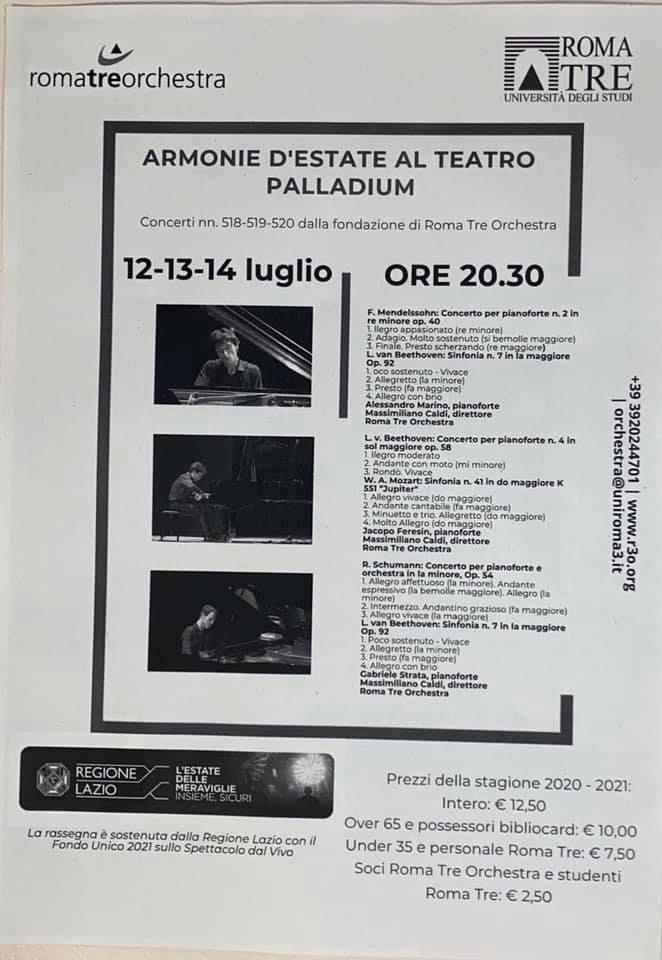
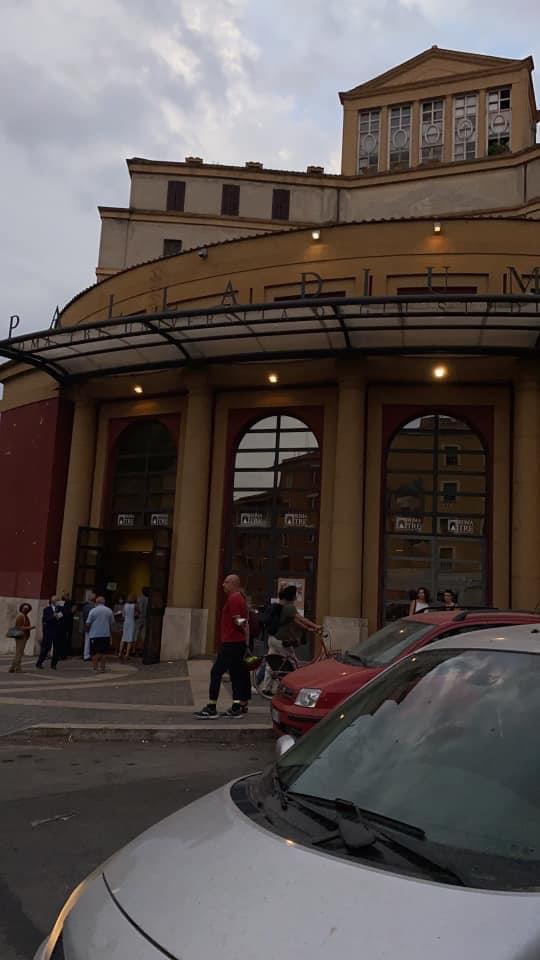
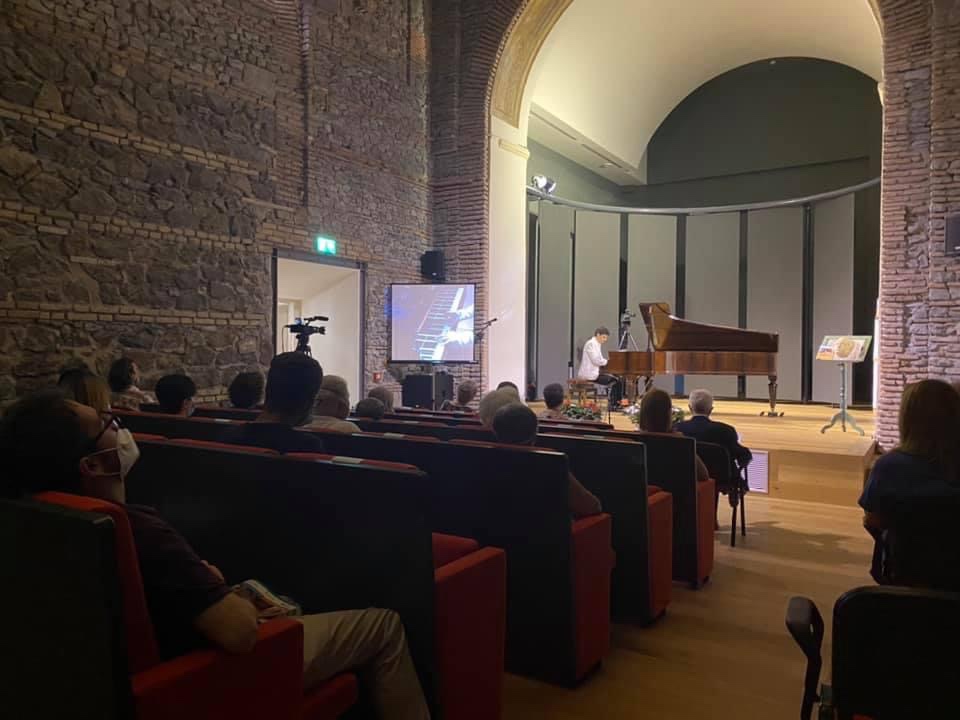
Roma 3 Orchestra comes of age at Teatro Palladium in Rome

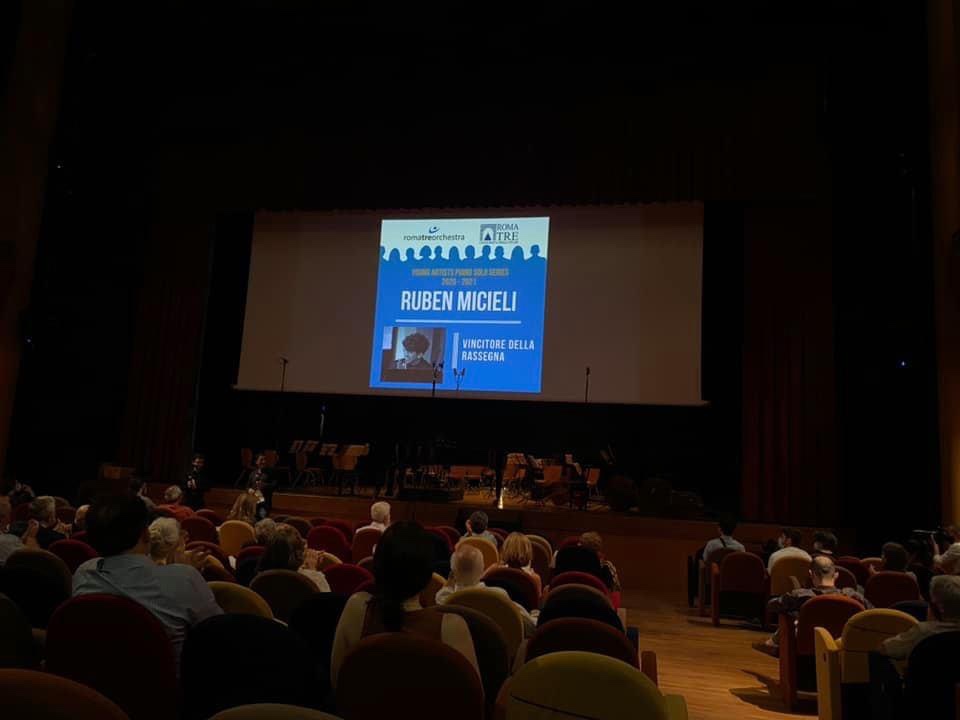
An exchange of views with Valerio Vicari,the enlightened Artistic director of Roma 3 University.Not content with helping young musicians find a platform for their solo performances for the past 15 years he has united them in an complete orchestra.A noble gesture and one that has needed an expert guide with much patience to guide them through all the problems of ‘convivenza’-living and working as an ensemble.

Starting later than advertised I was worried that the live stream might have started in the caverns of my computer without my being aware of it.So I was desperately in comunication with Rome from my home in London.

I had just heard Zimerman and Rattle play on DG live stream Beethoven 3 and 1 and was anxious to hear 2,4 and 5 and also Barenboim live on Radio 3 from Bonn with Beethoven 1 and the Fifth Symphony.It was ,after all,Beethoven’s birthday.

But a promise is a promise and I have been supporting with much admiration the splendid platform that Valerio has been giving so selflessly,for so many years,to needy young musicians.The same dedication and support that they find here at St Mary’s Perivale from Dr Hugh Mather and his valiant team of volonteers.

Not entirely happy to hear that it would be streamed twenty minutes late and Zimerman and co would just have to wait their turn.

Here is my surprise exchange at the start of the concert:’What a difference with this Bronzi and some vibrato,real style of sound and dynamics – a great sense of balance.Superb musicianship they are listening to each other like with Pappano and his Rome Orchestra.’-‘Yes he is great’-‘ so are they ….just listen to the difference.This is a real orchestra that you can be proud of’-‘and I am ,Very much.They are like my children’-‘Sign him up Valerio don’t let him get way…..you will not regret it!’-‘already planned another concert with Bronzi for the Spring’-‘how many rehearsals did he have?’-‘two only ,three days of work together’-‘but you brought in other players too’-‘no,they are my top players’

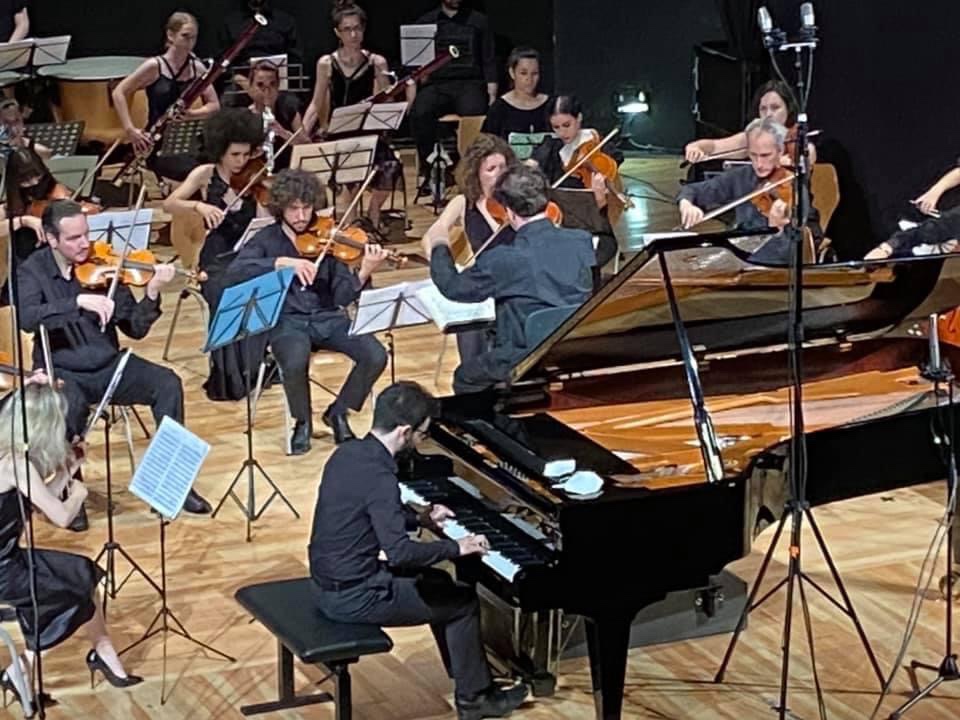
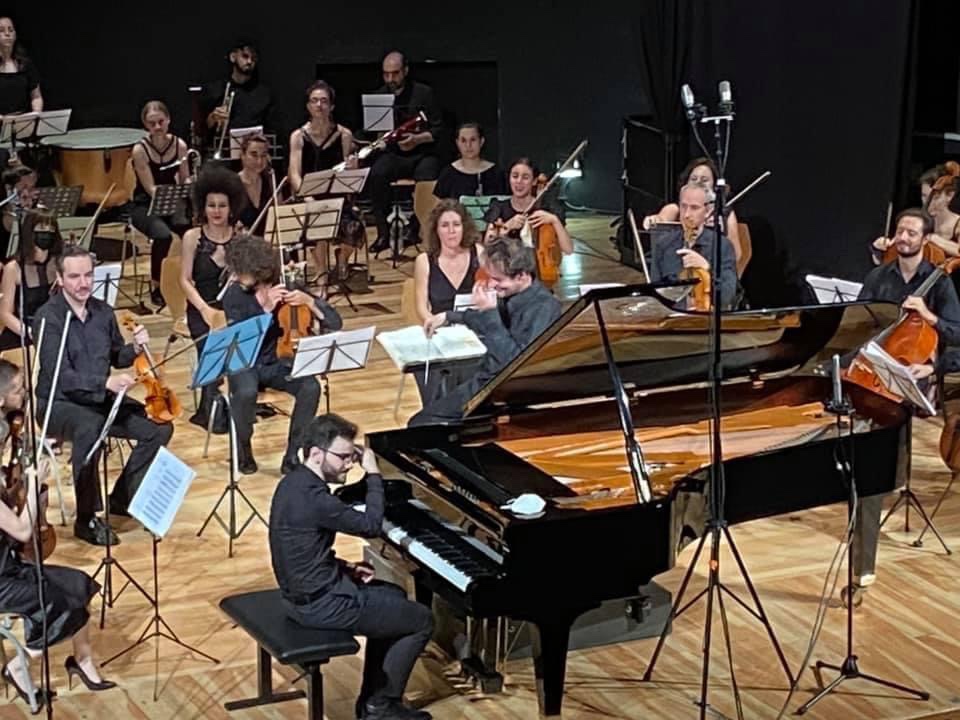
An unbelievable transformation of the Roma 3 Orchestra under Enrico Bronzi who also conducted from the cello.Streamed live from the Teatro Palladium in Rome
An orchestra that listens to itself is an orchestra to be reckoned with indeed!
Superb cello playing too from Enrico Bronzi in Strauss’s rarely performed Romance.
Some superb ensemble in the opening Sextett from Strauss’s Capriccio.
But it was in the Schubert hinted at in the Entr’acte from Rosamunde but then more than confirmed in their gloriously sensitive performance of the ‘Unfinished’Symphony.Such refined sounds from the strings as one might have expected with such a distinguished cellist at the helm.
But superb wind soloists too.
All listening to each other as Enrico Bronzi shaped with such loving care this Unfinished masterpiece.A sense of dynamic control and range as they seemed to breathe as one with such united feeling.

Dame Mitsuko at the Wigmore Hall…..the sublime remedy in these troubled times

https://christopheraxworthymusiccommentary.wordpress.com/2019/03/04/miracles-in-perugia-dame-mitsuko-plays-schubert/

https://christopheraxworthymusiccommentary.wordpress.com/2019/03/04/miracles-in-perugia-dame-mitsuko-plays-schubert/

One of the marvels of our age Mitsuko Uchida playing Schubert.
Sublime perfection that had me hurrying to Perugia to hear the marvels again that she had created in the Festival Hall .Now for the world to hear thanks to the Wigmore Hall live streaming.


In Perugia backstage she said she wanted no pictures or films as a concert should remain as a beautiful thing in one’s memory.Could it be that this COVID epidemic has made her rethink her philosophy and feel that in these sublime performances there is a message that no politician’s words could even begin to evaluate ?Hope you were listening.That is truly such masterly playing that technique become irrelevant as she produces with the minimum of movement an enormous range of nuances and sounds.From the enormous climax of the Gmajor first movement played with the same vehemence that I remember from Serkin .To a barely audible piano that becomes even pianississimo.I thought Volodos was the only pianist alive who could find those sounds .But she who seeks finds as she has proven today.I did not want to say it but I went to Perugia to try to meet this most remarkable lady who stands as a Tureck or Fischer in this very barren landscape.

https://wigmore-hall.org.uk/whats-on/mitsuko-uchida-202012161930

https://christopheraxworthymusiccommentary.wordpress.com/2015/12/12/miracles-in-rome/

Beethoven’s Birthday concert

Wednesday 16 December 1.10 pm

Joint recital with the Beethoven Piano Society of Europe
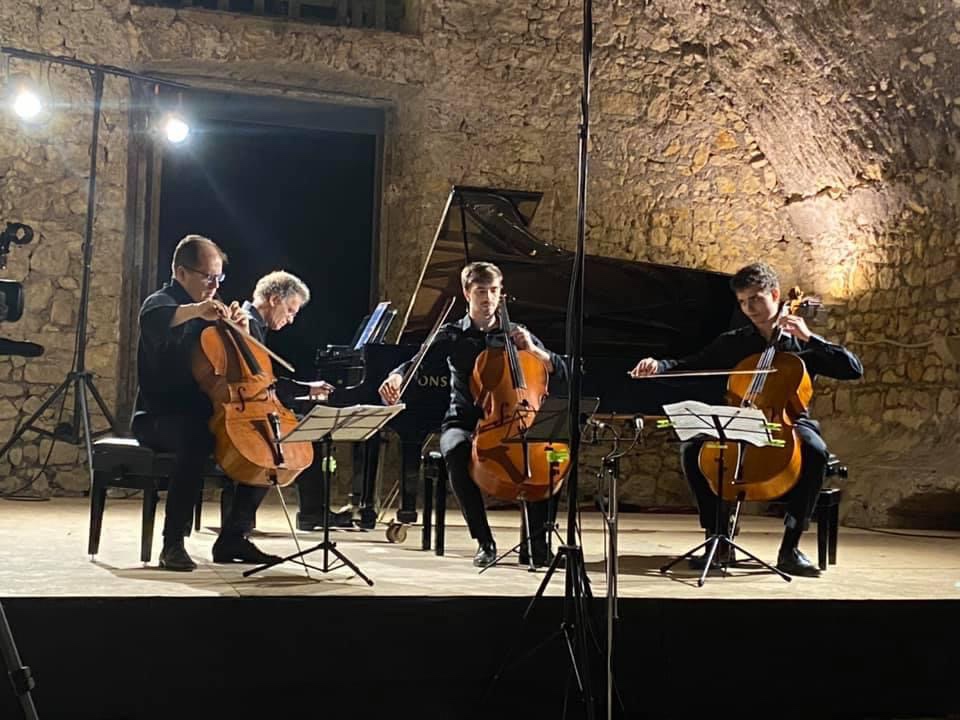
completing their survey of all 32 sonatas during 2020
on Beethoven’s 250th birthday – today ! 

Julian Jacobson

Beethoven: Piano sonata in C minor Op 13 ‘Pathetique’

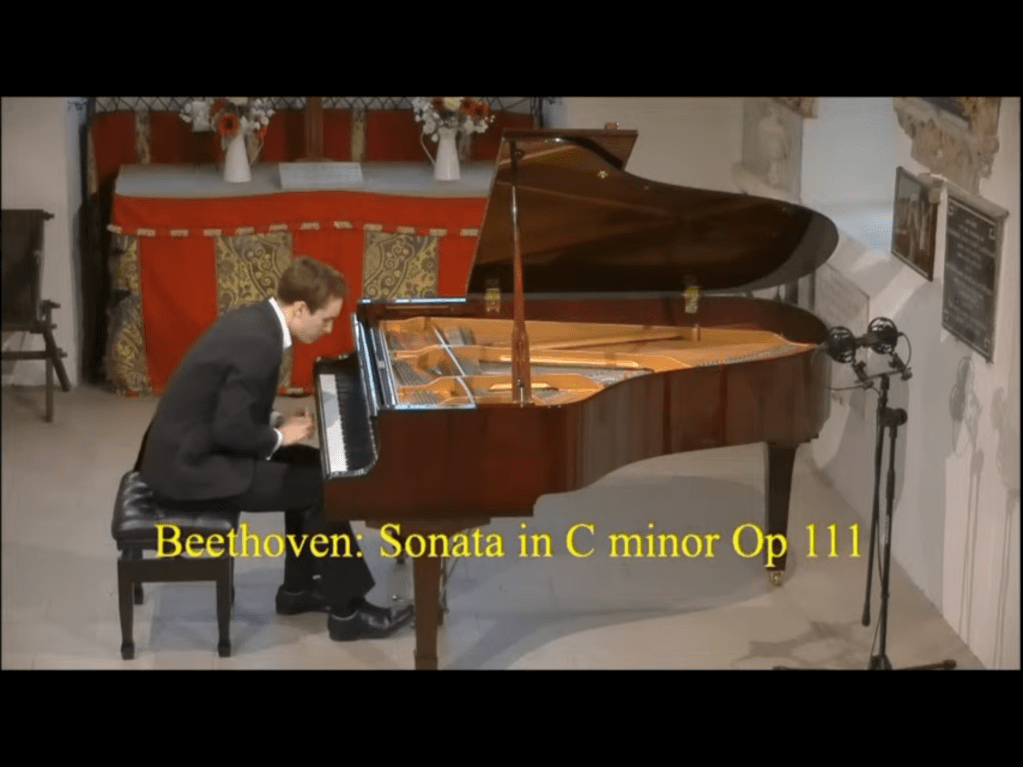
Beethoven: Piano sonata in C minor Op 111

Beethoven 250 celebration on what is presumed to be the actual birthdate.The final concert of the complete Sonatas programmed over the year by different pianists for the Beethoven Society.Today was to have been the final recital with the last Sonata op 111 to be played in a public concert at St James’s Piccadilly.It was cancelled for the new COVID Tier 3 restrictions brought into place last night.

Thanks to the generosity and passion of Dr Hugh Mather and his team the concert was rescheduled and streamed live from St Mary’s Perivale.So as not to upset Beethoven who was also celebrated with an opening flourish by Julian Jacobson,the chairman of the Beethoven Society.He gave musicianly performances of the Sonata in C minor op 13 and in Hugh’s own words a very poignantly moving performance of the last Sonata op 111.Julian is the only person I know who has played the entire cycle of 32 Sonatas on the same day all from memory …..or at least as he corrected me all but the Hammerklavier op 106!

https://christopheraxworthymusiccommentary.wordpress.com/2020/06/28/julian-jacobson-at-st-marys/


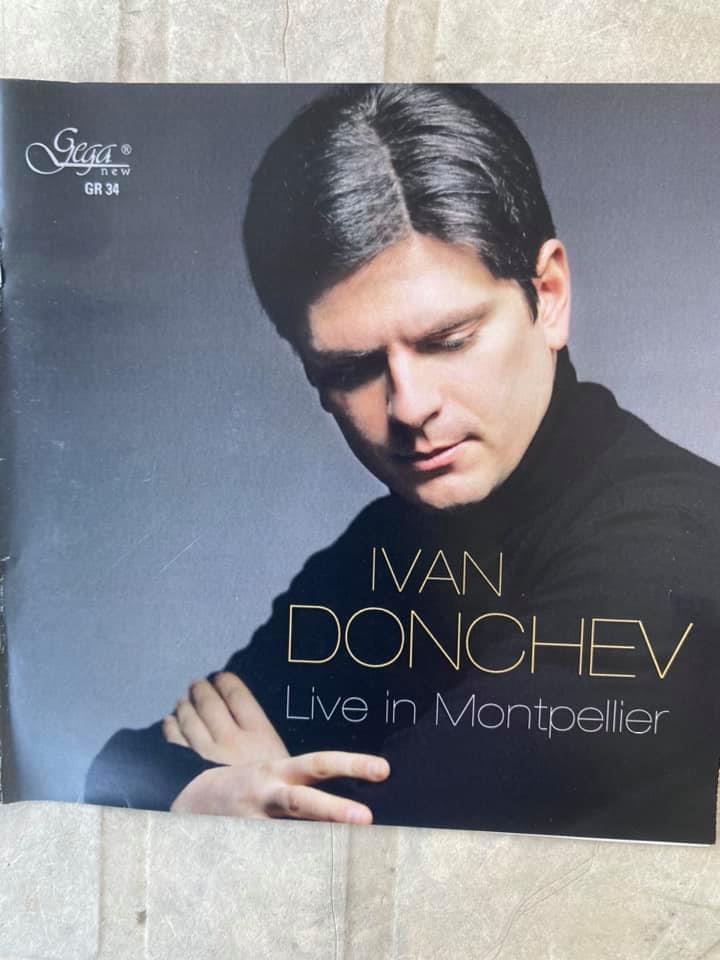
Julian Jacobson enjoys a distinguished career as pianist, composer, writer, teacher and conductor. Trained classically at the Royal College of Music London (where he now teaches, as well as at the Royal Birmingham Conservatoire) and Oxford University, he was also the inaugural pianist of the National Youth Jazz Orchestra of Great Britain. Julian has performed in more than forty countries on five continents. Frequently apppearing in China, he is Guest Professor at Xiamen University, and gives masterclasses internationally. A large and varied discography includes rarities such as the four sonatas of Carl Maria von Weber and the Violin Sonatas of Georges Enesco. He is Chairman of the Beethoven Piano Society of Europe and is in the process of recording the 32 sonatas. In 2003 he made history by performing all the sonatas from memory in a single day, repeating this in 2004 and 2013; he his planning one final “marathon” for 2022. He has composed several film and TV scores including To The Lighthouse and We Think The World Of You, as well as instrumental pieces and songs. His virtuoso transcriptions for piano duet of Gershwin’s An American in Paris and Second Rhapsody, published by Schott/Bardic Edition, have received rave reviews; Julian recorded them in August for the SOMM label with his duo partner Mariko Brown.
https://christopheraxworthymusiccommentary.wordpress.com/2020/06/28/julian-jacobson-at-st-marys/

https://christopheraxworthymusiccommentary.wordpress.com/2017/10/23/julian-jacobson-70th-birthday-series-at-st-johns-smith-square/

Artur Haftman at St Mary’s for the glory of Chopin

Tuesday 15 December 4.00 pm 


Artur Haftman (piano)

A Chopin recital :

Sonata in B flat minor Op 35 ‘Funeral March’

Grave – Doppio movimento / Scherzo / Lento / Presto

Nocturne in F sharp op 15 n.2

Variations Brillantes Op 12

4 Mazurkas Op 24
no 1 in G minor / no 2 in C major / no 3 in A flat / no 4 in B flat minor

Ballade in A flat major Op 47

Polonaise in A flat major Op 53

It is some time since I heard a young Polish boy at St James’s Piccadilly give a recital that had such an impact on the usually staid lunchtime audience that he was called back time and time again to play encores for almost another half hour.I remember being so impressed that I spoke about him to many musician friends but this was just the beginning of a young Polish boy’s first adventure outside his homeland. He was in London for an extensive period of study at the Royal College of Music with one of the mostly highly respected Professors Dmitri Alexeev.He has had to cope with the inevitable transition from an innocent instinctive highly talented young boy to becoming a mature experienced artist able to cope with the difficult world that awaits.Similar indeed to the young Chopin who also left his homeland and was accepted into the Parisian salons as a virtuoso until Schumann exclaimed in an article about his op 2 Variations ‘Hats off ,Gentlemen,a Genius.’

It was in his recital dedicated to his compatriot Chopin that Artur was able to show how this highly talented young boy had been transformed over a four year study period (with two former Leeds Piano first prize winners Dmitri Alexeev and Sofia Gulyak) into a mature artist adding wisdom and considerable technical assurance to his natural juvenile talent.

It was in the four Mazukas op 24 that it became obvious that here was an artist who felt these dances as only a native could.As Dr Mather commented at the end of the recital daring to say that Polish born pianists seem to understand so instinctively the Mazurkas of Chopin . A whole world is described in the 52 little tone poems that were penned a long way from his homeland and are full of delicacy,nostalgia and hypnotic dance rhythms.

The first Mazurka was played with ravishing delicacy and a real sense of natural shape and direction with some very subtle changes of colour.The whispered return of the opening theme was pure magic.The crisp and clear dance of the second opening to a flood of melody bursting out in the bass reminded me of the memorable Chopin recitals of Smeterlin that I was captivated by as a child.The gentle musings of the third Mazurka disappearing into the distance from where the fourth emerged so poignantly.In anyone else’s hands the rubato would have seemed excessive but here in Arthur’s hands it was captivating.The beautiful question and answer in the middle section with it’s echo effect was so compelling.A beautiful ending clouded by the pedal as the mazurka disappeared into the mist.It is so rare to hear Mazurkas included into recital programmes these days that it became today like a breath of fresh air between the two more substantial parts of the programme.

Of course part of being a mature artist is to know how to make up a programme so it did not worry me in the slightest the unannounced addition of the F sharp nocturne after the opening Bflat minor Sonata.It just made such sense as did everything he played today.

Especially as this second most played nocturne can sound very sentimental in the wrong hands.It was Rubinstein that showed us how aristocratic sentiments can add such power and emotion to these delicate bel canto works that can slip so easily into sickly sentimental rhetoric.Artur played them in just such an aristocratic way .The mellifluous middle episode played with some unexpected but ravishing tenor counterpoints building to a sumptuous climax before dying away to the return of the opening melody and the final delicate notes high in the piano descending so magically to the single final note that was placed to perfection with such knowing care.

The B flat minor Sonata opened with passionate energy contrasting so well with the beautifully shaped second subject.I would have been interested to see how he would have played the repeat but he decided to go straight into the development section.Played with almost Beethovenian contrasts as he built up to the mighty climax where the all important bass notes gave such nobility to the sumptuous full sounds that he produced so effortlessly.One or two small stumbles were immediately remedied and forgotten and were in any case much less than on occasion in Rubinstein’s hands where the search for discovery and inspiration could lead to momentary stumbles that were of no overall importance.There was great shape to the Scherzo played with exhilarating rhythmic release but it was the meltingly beautiful middle section that showed his aristocratic Polish heritage.A melodic line fully sustained by the tender harmonic colours and trills that were mere vibrations of sound in such sensitive hands.The somber Funeral March in which the melodic line seemed to appear above a growling bass finally finding voice for its wailing lament.There was a release of tension in the sublime Trio where even here there was a full sonority from the bass on which the melodic line was allowed to float.The final ‘wind over the graves’was played with a relentless forward movement showing remarkable control as he hinted at the melodic line in this turmoil of wailing sounds weaving it’s way to its glorious fate.

The early variations op 12 were played with all the brilliance and elegance that I am sure Chopin would have demonstrated as he charmed the salons of the day with his scintillating playing.The opening was thrown off with an easy elegance and beautifully shaped fiortiori.Leading to the Ronde de ‘Ludovic’theme that was played with a simplicity full of ravishing sounds.The beautifully mellifluous first variation in which the right hand spun it’s magic web and the second played with a hypnotic Mazurka rhythm before the beauty of the third.Ravishing arpeggios led to the intricacies of the fourth and the exhilarating finale played with scintillating virtuosity of such subtle inflections and colouring.It reminded me of the Rondo op 1 that Dmitri Aleeev had played so magically at the Chopin festival in Warsaw this summer.These early works have all the innocent charm of youth but with Chopin there is always the unmistakable voice of the genius that was to emerge in his later works.

The third ballade ,the most pastoral of all four,floated in on a wave of sound.There was such subtle colouring and sumptuous sounds .The embellishments flew from his fingers as they spun a golden web of sound.Passionate climaxes of another age led to the gradual build up to the final glorious outpouring that was played with a passionate involvement that was quite overwhelming .

The famous Polonaise Héroique op 53 opened with sparse use of pedal and very clear and clean sounds.This was just to contrast with the superb later famous declamations that built up in ever growing intensity.His magnificent cavalry rode so intrepidly across the field with the military band sounding out above the charging brigade.Some transcendental playing never forgetting the long architectural lines that were driving us on to the climax and the desolation and yearning as we were led to the triumphant final tumultuous outpouring of the Héroique theme.

It is always good to see what artist emerges from early promise.Artur was a lean young man with his mother taking photos of his first London concert when I was struck by his talent.Now four years on and in a dapper matinée idol red velvet jacket he looks and plays like he is enjoying the good things in life just as his famous Polish namesake with whom he obviously has much in common!


Artur Haftman is a Polish pianist and is currently studying for Artist diploma at the Royal College of Music under Professor Dmitri Alexeev, Jianing Kong and Sofya Gulyak. He began playing piano at the age of seven with Ewa Kubiak-Kubacka and Jolanta Reszelska and made his début performance with an orchestra at the age of eight. Due to great opportunities, teachings and talent, he has received numerous awards in international competitions including 1st prize in the International Music Competition “Musicaclassica” in Moscow, 7th in International Chopin Competition in Narva – Estonia, “Gold Parnas” (The Grand Prize) at International Piano Forum “Bieszczady bez granic” in Sanok, 2nd in “Cesar Franck International Piano Competition” in Brussels, 2nd in Music Club of London Music Competition and 2nd in III International Piano Competition ”Villa de Xàbia ”. Recently he was awarded with 1st prize at Thomas Harris International Piano Competition in London (November 2019).

Since young, Artur has built his international reputation by participating in masterclasses with renowned pianists such as Russell Sherman, Janina Fialkowska, Arie Vardi, Jacques Rouvier and Meng-Chieh Liu. He has also performed solo recitals across the United Kingdom, Poland, France, Estonia, Lithuania, Italy and Slovakia. In 2018, he has launched his debut CD in London, commemorating the 100th Anniversary of Poland’s Independence and performed in various venues such as Steinway Hall, Lancaster House, St Martin-in-the-Fields, St Mary’s Perivale, Delbridge Hall in Walnut Hill School for the Arts in Boston (USA), Culture Center in Stargard, Gallery 13, and Artist Homes in Berlin and Renaissance Hotel for for Nobel Prize Winners. 

Artur’s talent is recognised by many. Namely, he is RCM Gary and Eleanor Brass Scholar, supported by Henry Wood Trust and a recipient of Carnwath Piano Scholarship awarded by Worshipful Company of Musicians. He is also supported by Drake Calleja Trust, Talent Unlimited Musical Charity, the Hanna and Zdzislaw Broncel Charitable Trust and “Konfraternia Artystów Polskich.” Currently, upcoming concerts include Grand Tour in China and Recital in Royal Albert Hall.

https://christopheraxworthymusiccommentary.wordpress.com/2019/02/27/artur-haftman-at-st-marys/

Paul Lewis crowns Beethoven 250 at the Wigmore Hall

It is only fitting that it should be Paul Lewis to crown this Beethoven 250 year at the Wigmore Hall in the very month of his birth on the 16th or 17th December 1770.Paul Lewis has long been in the forefront of the concert world since he inherited the mantle for his integrity and understand of the great master of Bonn from his mentor Alfred Brendel.Continuing in the line of past masters from Schnabel,Backhaus,Kempff ,Gilels,Arrau and Serkin through Perahia,Goode,Ashkenazy and Brendel to today.It also interesting to note the significance of the key of C for Beethoven.Especially when one thinks of the 3rd piano concerto,fifth symphony and his final substantial piano works with his last Sonata op 111 and the Diabelli variations op 120.It is significant too that Paul Lewis should have chosen Haydn’s early C minor Sonata as companion to the Diabelli variations.It is in many respects the most Beethovenian of Haydn’s vast output of sonatas and was written in 1771 the year after Beethoven’s birth.

It was played with utmost delicacy and absolute fidelity to all of Haydn’s most precise indications.It brought the notes vividly to life with a wonderful sense of colour and fantasy.It was Serkin who told his disciples that if you do not discover something new every time you play a work then something is wrong.And in fact it seemed that Paul was discovering the work afresh with such subtle inflections and changes of colour reaching some truly sublime moments in the development section.Strangely it was more the warmth of a Curzon than the sweet bitterness of a Brendel.Every note was played with such devoted care but at the same time not missing the overall architectural shape and characterisation.The Andante con moto was played with a touching aristocratic rubato with a very telling hesitation before the final cadence.And how he breathes with the music like a singer just taking that fraction of a second between the question and the answer.There was a hidden melancholic sadness to the Allegro as he so poignantly allowed himself the time to lean on the expressive notes.The tongue in cheek reply to the last reprieve of the rondo theme was a delicious final stroke as was the real Beethovenian beefy final two chords – C minor indeed.No doubt anywhere.

50 years later Beethoven was conjuring ‘the sublime from the ridiculous’when he produced 33 variations on a little tune by Diabelli instead of just the one asked for. As Mahler was to say ‘all of human life is here’The work was composed after Diabelli, a well-known music publisher and composer sent a waltz of his creation to all the important composers of the Austrian Empire including Schubert, Czerny, Hummel , and the Archduke Rudolph, asking each of them to write a variation on it. His plan was to publish all the variations in a patriotic volume called Vaterlandischer Kunsterverein and to use the profits to benefit orphans and widows of the Napoleonic Wars .Franz Liszt was not included, but it seems his teacher Czerny arranged for him to also provide a variation, which he composed at the age of 11.

Alfred Brendel has described it as “the greatest of all piano works”.Martin Cooper says: “The variety of treatment is almost without parallel, so that the work represents a book of advanced studies in Beethoven’s manner of expression and his use of the keyboard, as well as a monumental work in its own right”.In his Structural Functions of Harmony, Arnold Schoenberg states “in respect of its harmony, deserves to be called the most adventurous work by Beethoven”.Beethoven’s first biographer, Anton Schindler, says that the composition of this work ‘amused Beethoven to a rare degree’, that it was written ‘in a rosy mood’, and that it was ‘bubbling with unusual humour’, disproving the belief that Beethoven spent his late years in complete gloom. According to Von Lenz,one of the most perceptive early commentators on Beethoven’s music, Beethoven here shines as the ‘most thoroughly initiated high priest of humour’; he calls the variations ‘a satire on their theme’.

There was a great sense of character from the very first note and a subtle sense of colour even in the ponderous first variation with a slight leaning into the bass on the repeats.The syncopation of the second was allowed to speak for itself so simply,drifting into the sweet melodic third even though shortening the left hand quavers!The sheer fun he had with the Allegro vivace of the fifth variation placing the notes with such impish glee.It was contrasted with the seriousness of the insistent trills of the sixth with its busy semi quavers chattering amongst themselves before taking wing with the seventh with its great resonant bass notes ringing out.The eighth was played with such tender care and with such a perfect sense of balance and clarity.There followed the ever insistent ninth and the rhythmic liberation of the tenth with some truly transcendental playing of great clarity and remarkable agility.Answered by the sly comments of the eleventh and the superb finger legato of the twelfth.It was indeed hilarious the way he played the thirteenth with two fingers poking fun at the almost too serious chordal exclamations.

This led to the beautiful sumptuous sonorities of the Grave with its whispered vibrating notes.A charming contrast between the staccato question and legato reply in the fifteenth and the explosion of the sixteenth and seventeenth played with great contrasting seriousness and vehemence.(Paul’s head moving idiosyncratically like his mentor Brendel at this point).The beautiful question and answer of the eighteenth was played with an operatic freedom and startling change of colours.The sheer fluidity of the nineteenth with its abrupt end led to the most profound series of chords played with painfully poignant feeling as it charts its way from 3/2 to 6/4.The spell was immediately broken by the trills bursting in and a meno allegro of startling expressive freedom.Immediately contrasted with the utmost baroque precision of the Allegro molto that Beethoven prefaces with ‘Notte e giorno faticar’ by Mozart.The transcendental activity of the twenty third was played with relentless nervous energy answered by the utter simplicity of the ‘Fughetta’.It was played with a beautiful sense of line and touching sentiment very reminiscent of op 110 Sonata.The buoyancy of the twenty-fifth was of an almost infectious dance rhythm and the gentle unfolding of the twenty-sixth was followed by the rhythmic impetus of the twenty-seventh.I can still remember Brendels unforgettable performance at the Royal Festival Hall which together with Serkin’s performance was so memorable for the jagged edges of the twenty-eighth and the frenzied abandon of the fugue in the thirty second.But the Adagio of the twenty ninth I will never forget Andrè Tchaikowsky for the way he made the rests really speak so eloquently.Paul as most other pianists here pedal over the rests that is far less poignant.Gradually descending or is it ascending to the heart of the work with the thirty first variation.And it was here that Paul made the rests speak so movingly as he played the embellishments with seemingly infinite inflections of almost bel canto proportions.There may have been just a fraction too much weight on the espressive top notes that showed that this was the vision still of a young man.The Fugue of the thirty-second variation was played with a clarity and rhythmic energy but just missing the total abandon and frenzy of Serkin but leading more gently to the final explosion,the burst of tension and the disarming search for the lost theme.

Diabelli’s little tune started as a waltz and finished as a minuet as Beethoven draws his last piano masterpiece to a poetic conclusion after having explored the most complete range of human emotions imaginable.

A magnificent performance by one of today’s leading musicians.

We can now look forward to another of today’s leading musicians, Angela Hewitt as she plays on the 19th December at St John’s Waterloo Beethoven’s mighty Hammerklavier sonata op 106 and his last sonata op 111 in C minor.The two works she has just recorded in Germany completing her recorded survey of the 32 Sonatas.

Roma 3 Orchestra shine in Bach and Marcello at Teatro Palladium in Rome

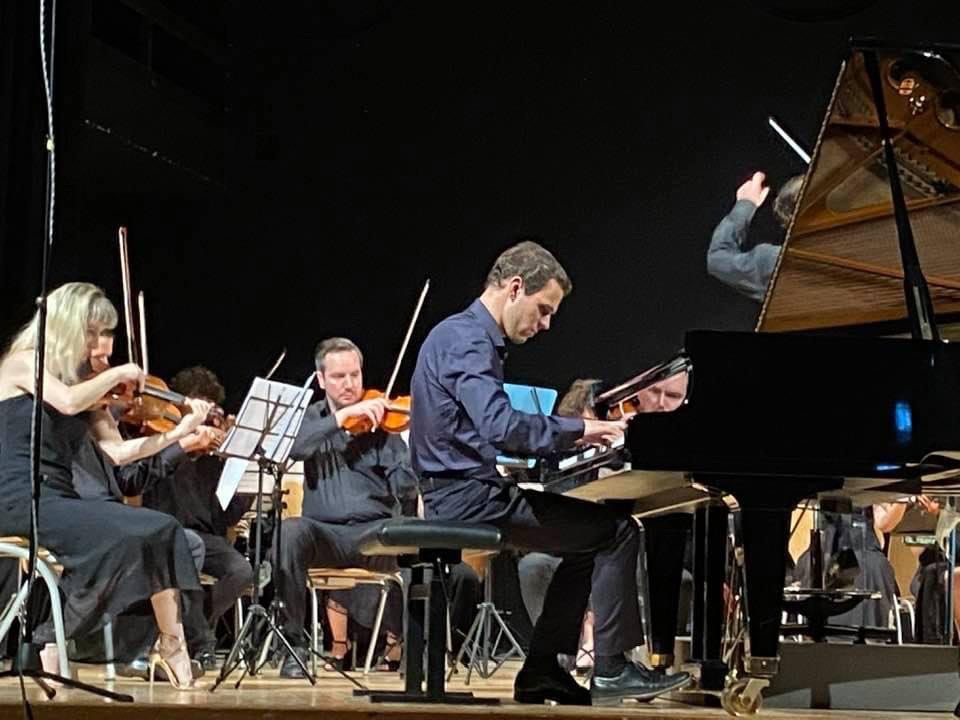
Some very fine playing from this orchestra created within Roma 3 University by their indomitable artistic director Valerio Vicari.Determined that his quest not be broken in this very bleak COVID period and that his mission should carry on, in spite of seemingly insurmountable hurdles, to bring a new younger generation to classical music.In this lockdown period it is remarkable that Valerio has still found a means of offering work to these young artists providing concerts beautifully streamed live whilst Rome struggles with the closure of all artistic venues .A very interesting juxtaposition of two keyboard concertos by Bach with the brilliant young pianist Scipione Sangiovanni.The original concerto n.5 in f minor BWV 1056 and Bach’s transcription for keyboard of Alessandro Marcello’s oboe concerto in D minor S.2799.To open the concert was Bach’s Suite n.1 in C BWV 1066

Giorgio Matteoli

The four orchestral suites (called ouvertures by Bach), BWV 1066–1069 in which the name ouverture refers only in part to the opening movement in the style of the French overture.The seven movements were played with much regard to the style without vibrato and with a rhythmic impulse that gave great shape to the whole suite.In the expert hands of Giorgio Matteoli he was able to guide his orchestra of young musicians in a fine performance that showed off in particular their fine woodwind section.

This was the curtain raiser for the two keyboard concerti played by a young musician who I had heard in Monza when he won first prize in the International Competition in 2012 of which I was a jury member.There were some very fine young musicians that year in the Rina Sala Gallo competition that included Julian Brocal and Menyang Pan who are fast making names for themselves. It remember above all ,however, the encore that Scipione played after his prizewinning performance of Liszt second piano concerto.It has remained in my memory as the highlight of a very busy week of listening to some fine performances.A baroque keyboard piece that was played with a clarity and crystal like precision that was the best thing that we had heard all that week.It was that same crystalline clarity that he brought to the two concerti that he offered at the Teatro Palladium for Roma 3.

The Oboe Concerto in D minor S.D935, is an early 18th-century concerto for oboe,strings and continuo attributed to the Venetian composer Alessandro Marcello.The earliest extant manuscript containing J.S. Bach’s solo keyboard arrangement of the concerto, BWV 974, dates from around 1715.In his Weimar period (1708–17) Bach arranged several concertos by Venetian composers, most of them by Vivaldi , for solo keyboard, known as his Weimar concerto transcriptions.In three movements the Andante spiccato and Presto were played with a crystal clear clarity and precision by Scipione.But it was the Adagio that was so beautifully projected with a sculptured precision that rose above the gentle accompaniment and was quite memorable.

That is until we heard the original concerto number 5 in f minor where the masterly genius of Bach was immediately evident in comparison. The works BWV 1052–1057 were intended as a set of six concerti shown in the manuscript in Bach’s traditional manner beginning with’J.J.’ (Jesu juva, “Jesus, help”) and ending with ‘Finis. S. D. Gl.’ (Soli Deo Gloria). Apart from the Brandenburg concertos it is the only such collection of concertos in Bach’s oeuvre, and it is the only set of concertos from his Leipzig years.

Even here in Bach’s own concerto the outer movements probably come from a violin concerto which was in G minor, and the middle movement is probably from an oboe concerto in F major; this movement is also the sinfonia to the cantata Ich Steh mit einem Fuss im Grabe .BWV 156 This middle movement too closely resembles the opening Andante of a Flute Concerto in G major (TWV 51:G2) by Telemann; the soloists play essentially identical notes for the first two-and-a-half measures. Although the chronology cannot be known for certain, It would appear that the Telemann concerto came first, and that Bach intended his movement as an elaboration of his friend Telemann’s original.This of course was how music was written for occasions for the court or the church and the composers had to oblige sometimes transcribing other works to suit the occasion.However the genius of Bach shines through in this fifth concerto and it was indeed in the Largo that Scipione’s artistry was allowed to shine.Some very subtle inflections brought the golden thread of melodic invention vividly to life as it rose so eloquently over the orchestral accompaniment.The outer movements were played with rhythmic energy and precision that only made more poignant the Largo when time seemed to stand still.

Scipione Sangiovanni is a graduate of Italy’s Conservatory “Tito Schipa” of Lecce and the Mendelssohn Piano Academy of Lecce. To complete his studies, he took masterclasses with Emilia Fadini, Arie Vardi, Franco Scala, Aldo Ciccolini, Vincenzo Balzani, Marcello Abbado, Sergio Perticaroli, Fabio Bidini, Marcella Crudeli, Enrico Pace, Leonid Margarius, Alexander Lonquich, Paul Badura – Skoda as well as with Angela Hewitt. He won numerous top prizes at renowned international Piano Competitions, including 1st prize at “Città di Marsala”, 1st prize at “Premio Monopoli”, 1st prize at “Premio Chopin” and 1st prize at “Svetislav Stancic”, as well as at “Concorso Rina Sala Gallo”. He was awarded 2nd prize at International piano competition “Ricard Viñes” as well as at 52nd Concurso Internacional de Piano “Premio Jaén” and finished as runner up in many competitions.

Canan Maxton’s Christmas Carol

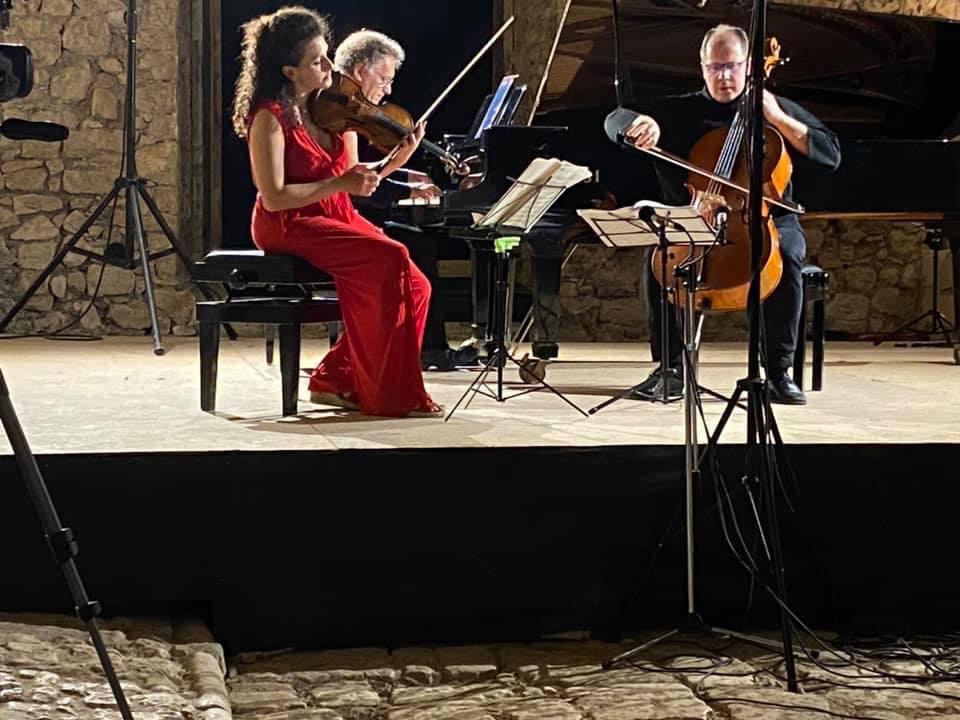
Nuno Lucas and Dillon Jeffares with Kumi Matsuo at St James’s Piccadilly.

Nuno Lucas with Canan Maxton

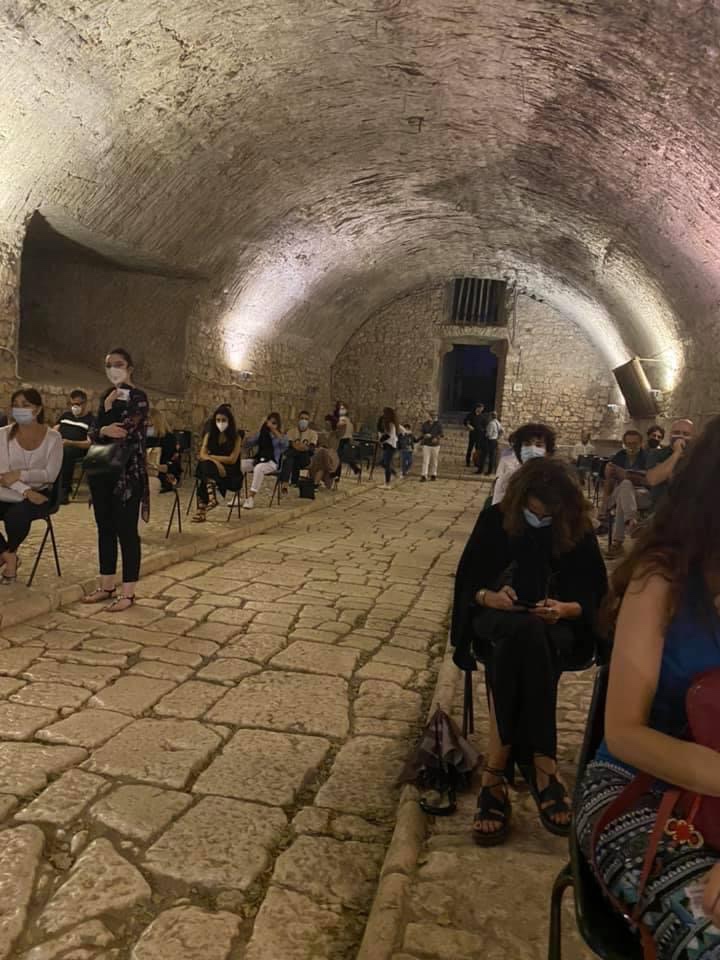
Thanks to Talent Unlimited at last a live concert with public. Public with social distancing means we get to really appreciate what must be the most beautiful concert hall in London.Every angle used for social distancing means the chance to explore this magical space. With it’s very fine Fazioli piano chosen a few years ago by Alberto Portugheis but above all such welcoming hosts led by David McClee’ry
Usually these days concerts held with public allowed in,are with the suspicion of the accused going to the gallows that makes streaming seem like a blessing in disguise.


Here in my wife’s favourite church we are not only welcomed with open arms but regaled with such wondrous sounds as the carefully chosen artists by Canan Maxton demonstrated today.
The truly magical sounds of Carl Vine’s Threnody found in Nuno Lucas a true poet. A tenor melody shadowed delicately from the top of the piano whilst sumptuous bass notes just opened up this Pandora’s box to show us the glistening jewels it contained.I was waiting for some explosion in a piece I do not know but Carl Vine was happy just to seduce us with sounds that one only expects in Puccini arias and is so unexpected in pieces that all too often follow an ABA design.

Nuno Lucas


This was the ideal aria with which to take us to the full opera house with Verdi’s Rigoletto in the famous transcription of Franz Liszt.
Here was true theatre in this young Portuguese pianist’s hands. Scintillating streams of seamless sounds accompanied the potpourri of well known melodies. Played by a true musician as one would expect from a student of Leon McCawley but with all the expertise of a man of the theatre who knows how to pass the footlights and hold the audience in the palm of his hand like a Flores or Domingo.Breathtaking sense of timing with the technical challenges not even considered as the curtain opened and all the drama and seduction was enacted to our delight and astonishment.


There had been a hint of his remarkable artistry in the beginning of the Mendelssohn variations that had opened the programme. But the faster variations were hampered by tempi that did not take into consideration the very resonant acoustic.The slower variations were played with ravishing tone and superb timing as he listened so lovingly to the sounds he was cherishing.Brilliance and youthful exuberance were not yet substituted for the superb display that was to come later in the programme.


Chausson’s beautiful Poeme was played with superb refined musicianship but was missing the passion and theatricality that had seduced us in the Rigoletto paraphrase.We were not seduced and ravished so much as looking on with admiration at such fine playing from Dillon and Kumi.
It was in the Chopin Nocturne op post in the arrangement by Nathan Milstein that they created the missing magic. The final fiortiori were so much more magical on the violin than they have ever been on the piano!

Dillon Jeffares and Kumi Matsuo


A breath of fresh air in these difficult times and Beethoven op 111 and op 13 to look toward to next week on the 16th here at St James’s.
On the 19th at St John’s Waterloo Angela Hewitt will regale us for Beethoven’s 250th birthday ( which is officially on the 17th) with the Hammerklavier op 106 and his farewell to the sonata with op 111.The two sonatas recorded in Germany last month to complete her complete survey of the 32 .A path that shows so clearly Beethoven’s early influence of his teacher Haydn to the true visionary of his last works written when he was completely deaf.
Out of human suffering true art is always born.Q.E.D
Please take note Signori Politicians as it is art that will replenish our souls after this cruel calculation of numbers is long forgotten.

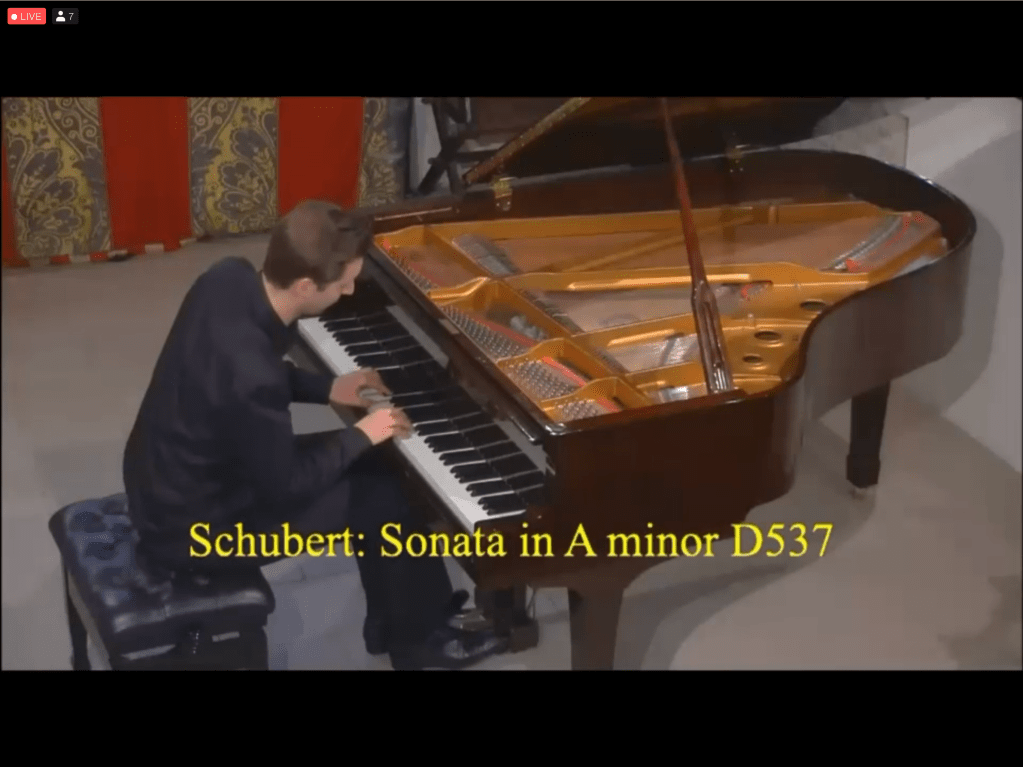
Andrei Iliushkin at St Mary’s

Sunday 6 December 4.00 pm 

Andrei Iliushkin (piano)

Bach: Chromatic Fantasy and Fugue BWV903

Schubert: Piano sonata in C minor D958

Allegro-Adagio-Menuetto allegro-Trio -Allegro

Janacek: Piano Sonata 1.X.1905 From the street Foreboding-con moto Death-Adagio

Some very fine playing from this young Russian pianist that showed off his ultra sensitivity to sound and a quite remarkable finger legato.

The Chromatic Fantasy and Fugue was played with masterly control .The opening played without the help of either pedal but played with such ravishing sound and perfect legato.The addition of the pedal for the swirling arpeggios and recitato was of startling effect as was the whispered entry of the fugue subject.A remarkably refined performance and what it missed in dramatic contrasts it gained in aristocratic control of subtle delicate sounds.

The Schubert Cminor Sonata D958 is the most Beethovenian of Schubert’s last great trilogy.D.958, 959 and 960, are Schubert’s last major compositions for piano and they were written during the last months of his life, between the spring and autumn of 1828, but were not published until about ten years after his death, in 1838-39.Schubert had been struggling with syphilis since 1822–23, and suffered from weakness, headaches and dizziness. However, he seems to have led a relatively normal life until September 1828, when new symptoms appeared. At this stage he moved from the Vienna home of his friend Franz von Schober to his brother Ferdinand’s house in the suburbs, following the advice of his doctor; unfortunately, this may have actually worsened his condition. However, up until the last weeks of his life in November 1828, he continued to compose an extraordinary amount of music, including such masterpieces as the three last sonatas.

Played with superb control and ravishing sound of great introspection which missed the full dramatic impact of the first of the trilogy that was to end with the sublime outpouring of song of the Sonata in B flat.The Adagio was played with a quite remarkably sensitive tone palette as was the Menuetto and Trio.The swirling frenzy of the tarantelle like last movement I remember so well from the drive and rhythmic urgency of Richter.Andrei has the same fantastic control but the drive and passion he substitutes for ravishing beauty and calm.All Eusebius and Floristan only occasionally looking on from afar.A remarkable sense of architectural shape and impeccable musicianship but lacking in contrast and character.

The Janacek Sonata on the other hand found the perfect interpreter with the magical sounds and deep introspection of this profoundly felt masterpiece .Only in two movements Foreboding and Death the third Funeral march had been destroyed by the composer as he had thrown the entire work into the river.It is only thanks to the first performer who had made a copy that the works exists today.

Janáček intended the composition to be a tribute to a worker named František Pavlík (1885–1905), who on 1 October 1905 was bayoneted during demonstrations in support for a Czech university in Brno.In the work, Janáček expresses his disapproval of the violent death of the young carpenter and he started to compose it immediately after the incident occurred and finished it in January 1906. The première took place on 27 January 1906 in Brno (Friends of the Arts Club), with Ludmila Tučková at the piano. Janáček also wrote a third movement, a funeral march, which he cut out and burned shortly before the first public performance of the piece in 1906. He was not satisfied with the rest of the composition either and later tossed the manuscript of the two remaining movements into the river Vltava. He later commented with regret about his impulsive action: “And it floated along on the water that day, like white swans”.The composition remained lost until 1924 (the year of Janáček’s seventieth birthday), when Tučková announced that she owned a copy. The renewed premiere took place on 23 November 1924 in Prague, under the title 1. X. 1905. Janáček later accompanied the work with the following inscription:

“The white marble of the steps of the Besedni dum in Brno. The ordinary labourer František Pavlík falls, stained with blood. He came merely to champion higher learning and has been slain by cruel murderers.”

Some remarkable playing of a true poet of the piano

Described as a “pure and sensitive musician” by the Chopin Magazine (Japan), Andrei has been performing as a soloist in various renowned concert halls throughout the Netherlands, Germany, Italy, Russia, Spain, Japan, Norway and the UK, as well as collaborating with orchestras of London, Moscow, Rostov, Yaroslavl and Shenzhen. Following his London debut on stage of Wigmore hall in October 2015 as a finalist of Jaques Samuel Piano Competition, Andrei gave a recital at the prestigious St. Martin-in-the-Fields as the winner of Intercollegiate Beethoven Piano Competition, as well as various concerto performances at St. John’s Smith Square (for Parkinson’s UK and the 75th Anniversary of the Siege of Leningrad). Showing a great interest in a chamber music, Andrei was invited to perform in Encuentro de Santander chamber music festival (Santander, Spain). He was also honoured to perform J. Brahms’ Piano Quintet with Maxim Vengerov at the Royal Academy of Music. He is a recipient of Beethoven Silver Medal and Carnwath Piano Scholarship, both awarded by the Worshipful Company of Musicians. After his successful performances in 10 th Hamamatsu Piano Competition and reaching semifinal, he received an award of Outstanding Merit.

https://christopheraxworthymusiccommentary.wordpress.com/2017/10/14/andrei-iliushkin-at-st-martins-for-the-beethoven-piano-society-of-europe-and-the-worshipful-company-of-musicians/