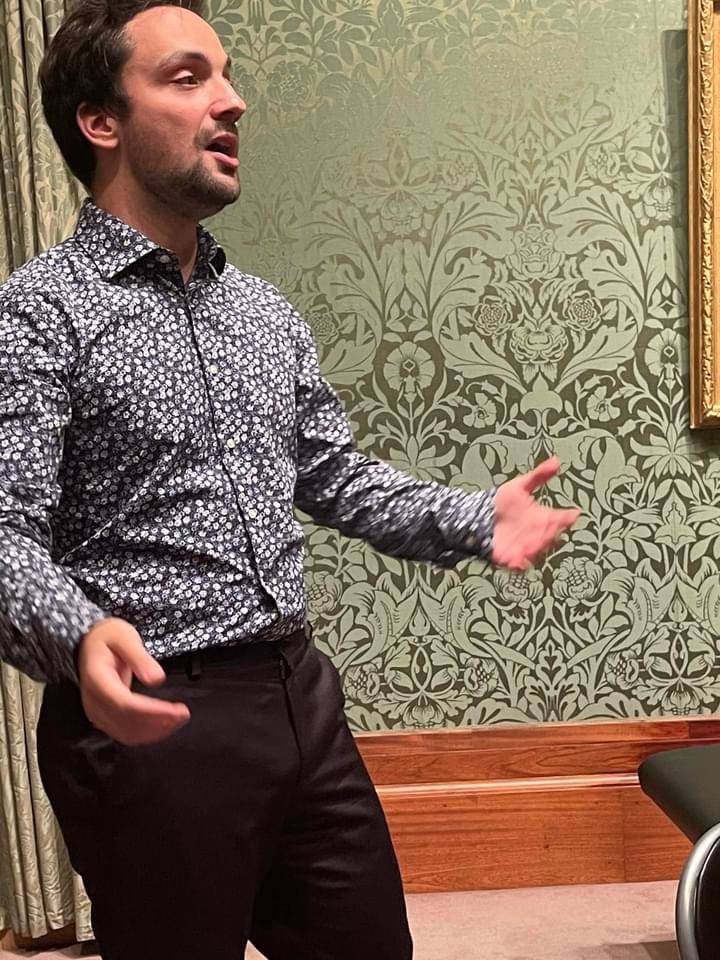
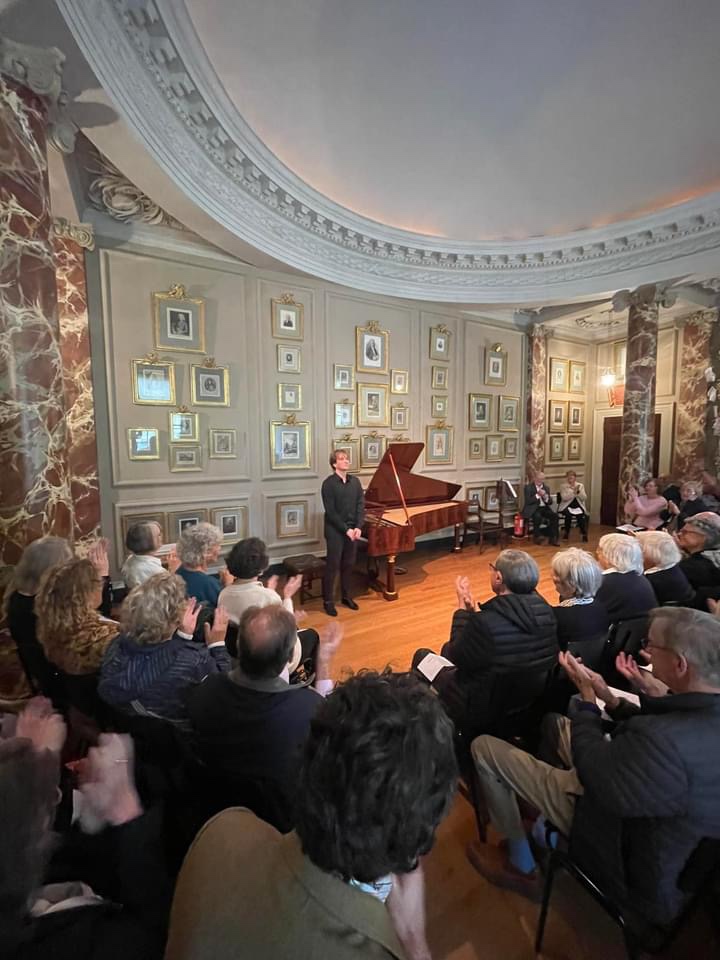
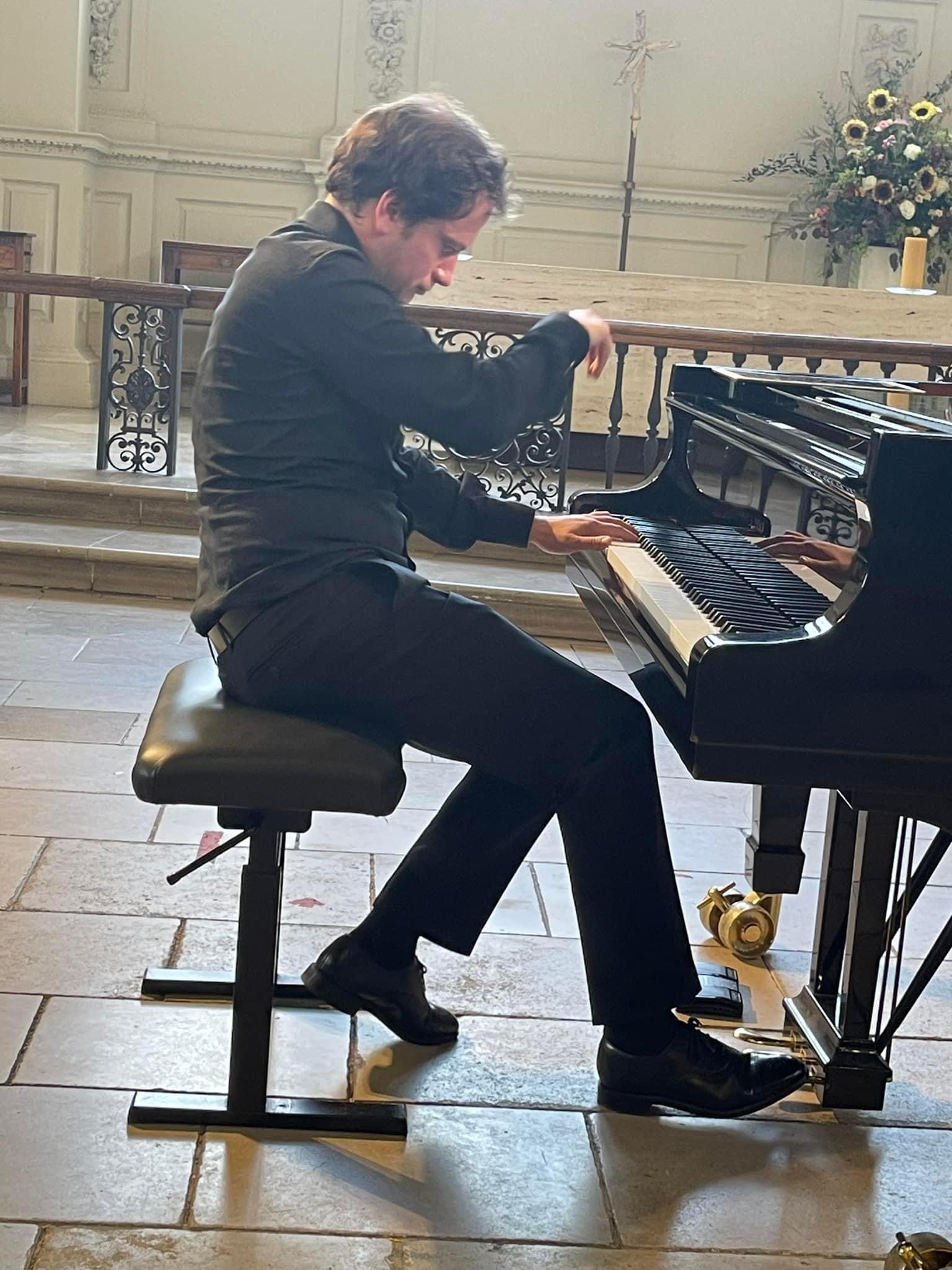
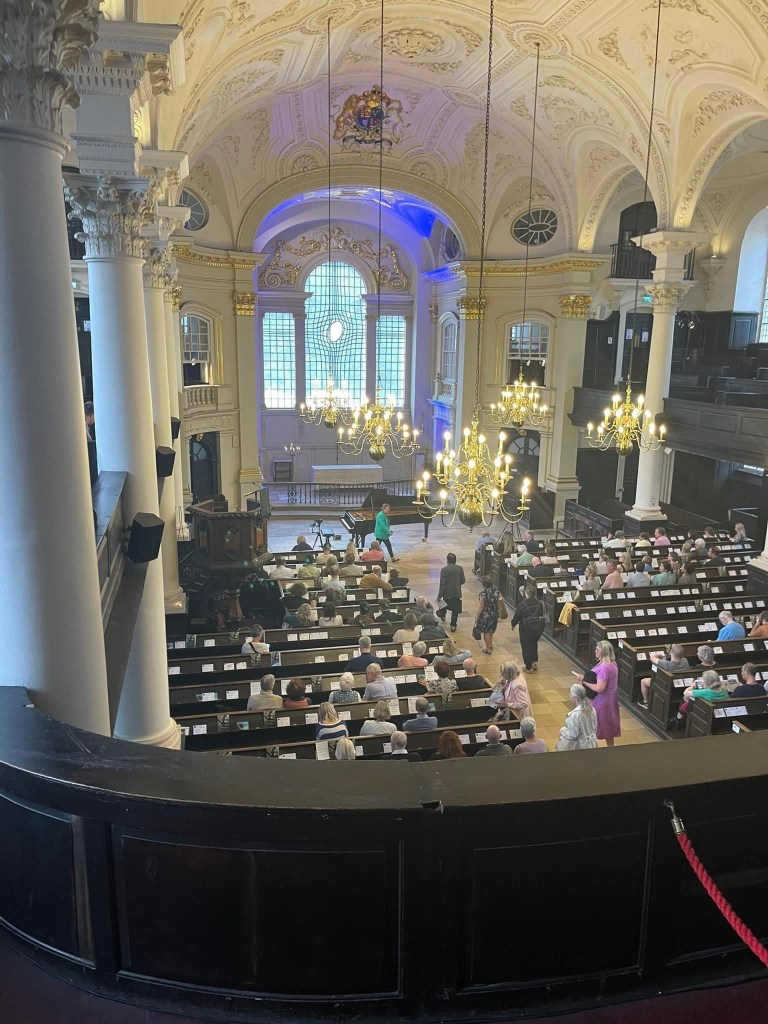
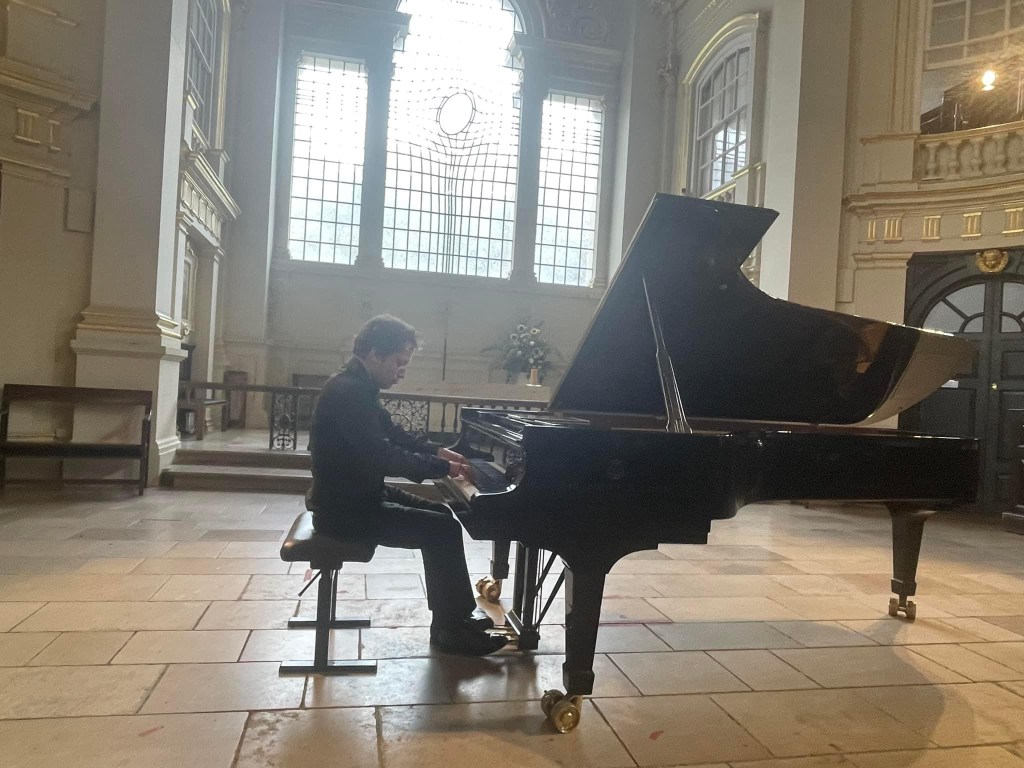
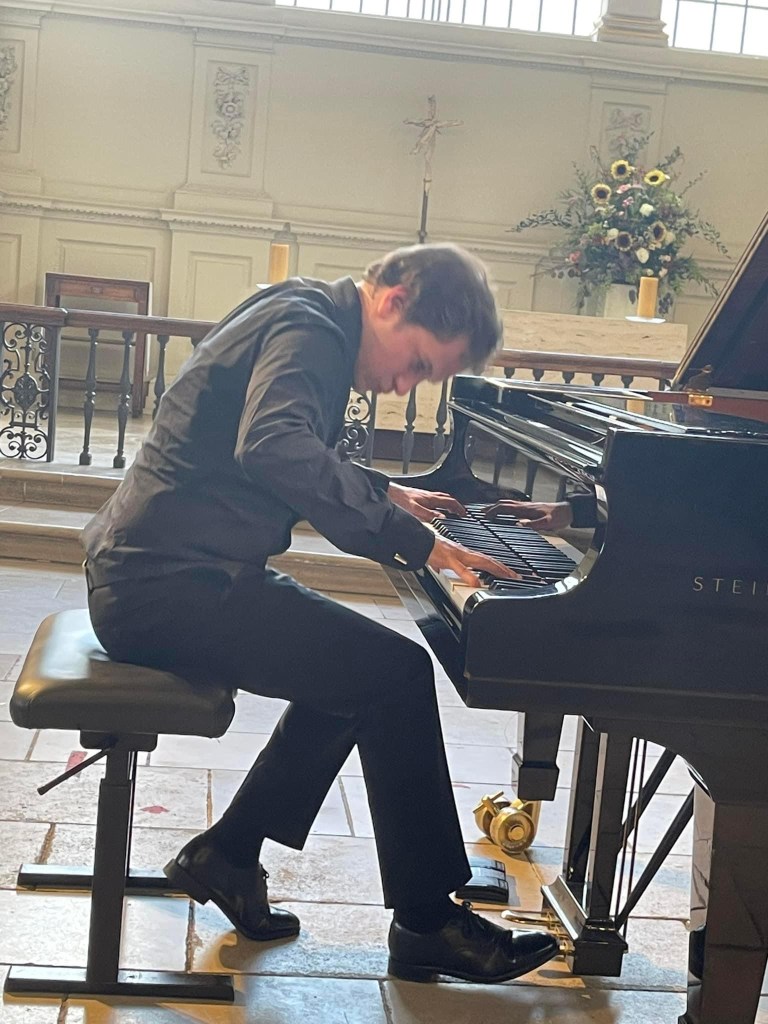
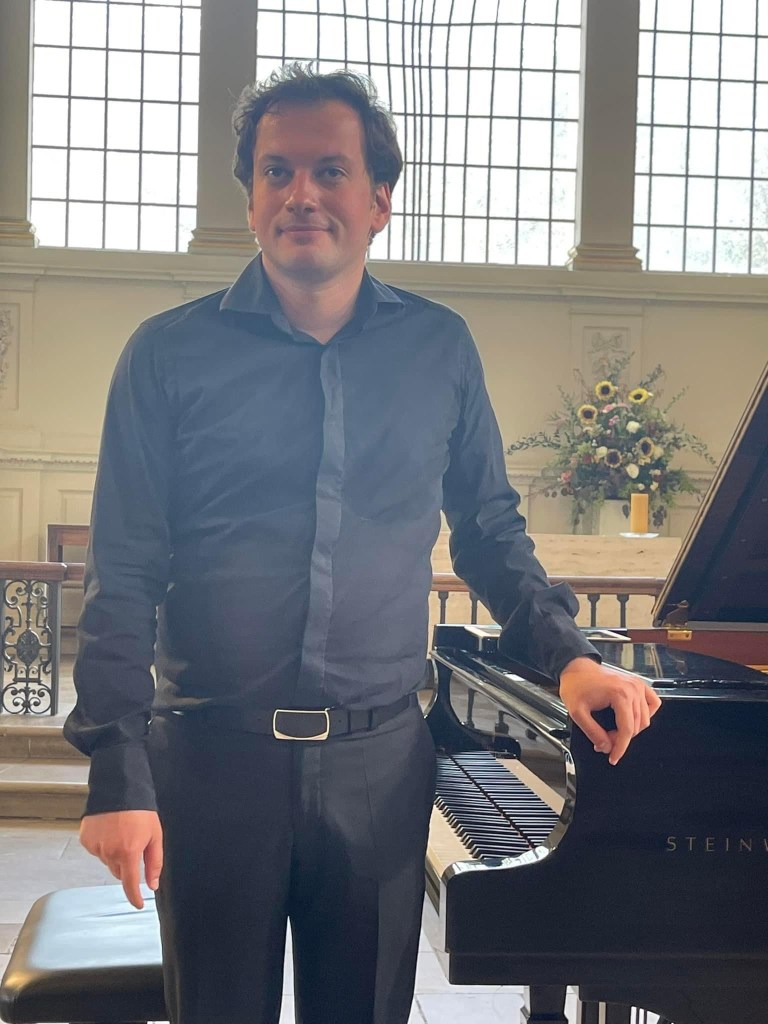
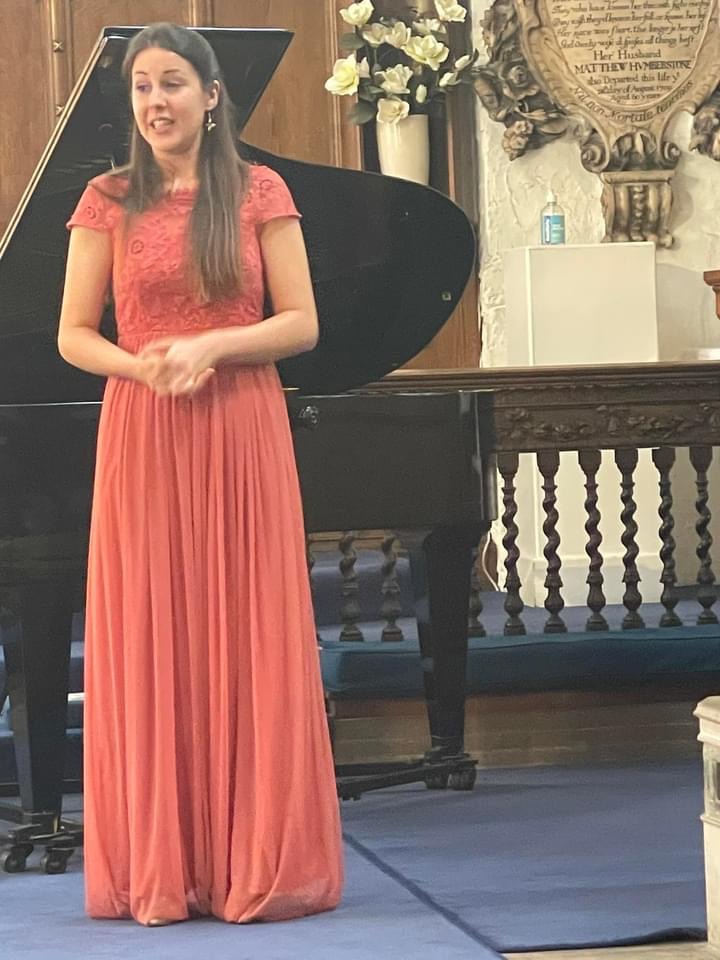
Yuanfan Yang at Latymer Upper ‘If music be the food of life ……play on!’

A Mozart Sonata played with rare style with embellishments so naturally incorporated into the simplicity of a work of such uncontaminated purity.
Rachmaninov Corelli variations played with a kaleidoscopic range of sounds and a technical mastery that could shape these gems into a cohesive whole taking us on a journey of wondrous discovery.
Chopin Preludes that were an example of mastery and musicianship as he turned 24 problems into a continual flow of emotions until the final triumphant explosion of Romantic fervour.
Waves written by the pianist in 2011 tells the story of a pebble thrown into the water and its repercussions that end with the continual flow that it began with.
A story of life itself told by the extraordinary Yuanfan Yang in a recital in Latymer Upper School.
A school that has literally been reborn on a wave of music.


A school that has seen old boys such as my piano ‘daddy’ Sidney Harrison ( the first person to give piano lessons on television and teacher of Norma Fisher,Ian Hobson and generations of young musicians ).

Also the illustrious giant of the music industry the much feared Walter Legge,the husband of Elisabeth Schwarzkopf and founder of the New Philharmonia after the war,and much else besides.
Sidney had opened with Ingrid Bergman in the 60’s the Polish Cultural Centre opposite.
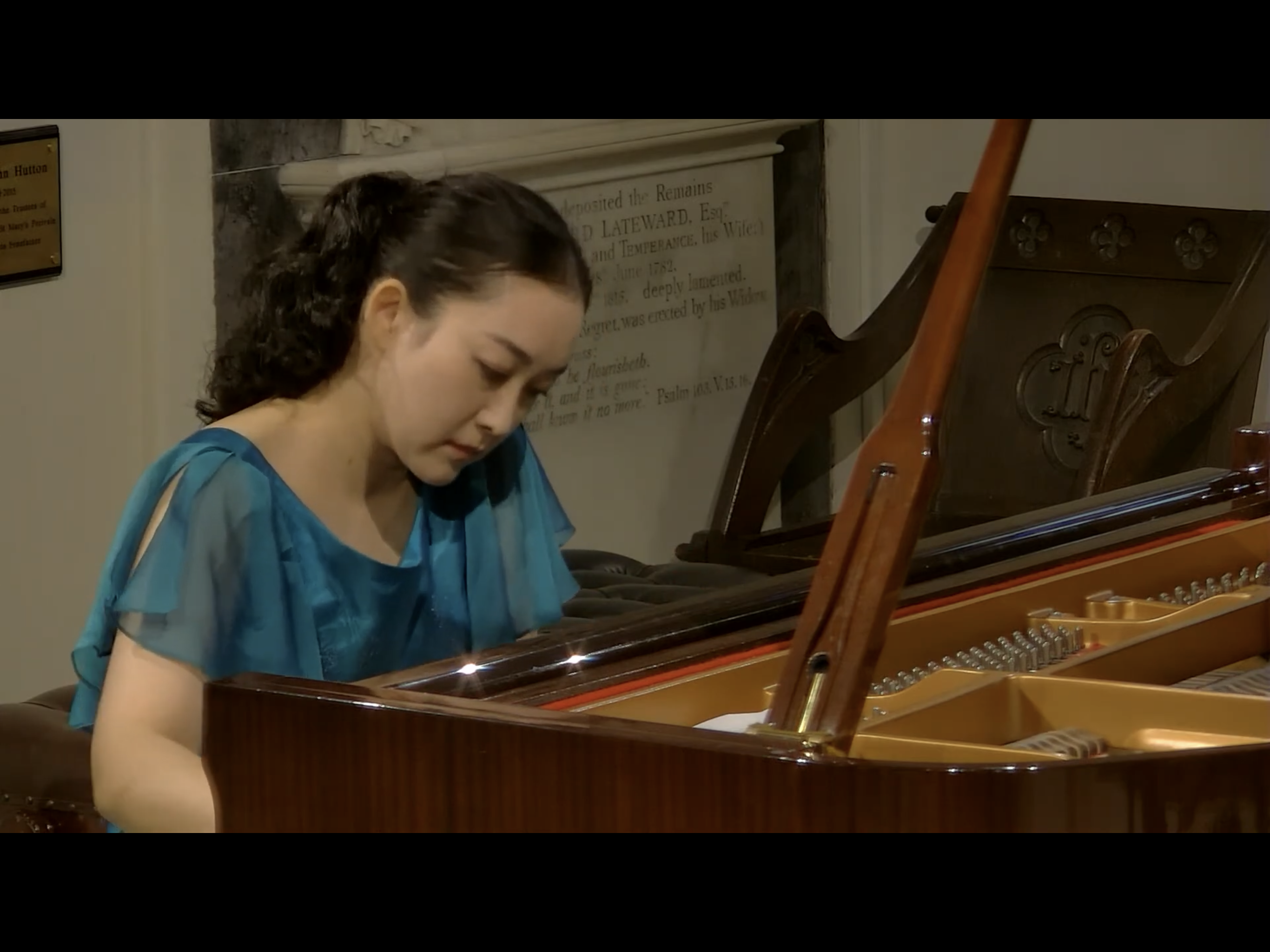

Little could he have imagined a music faculty which can boast a roster of distinguished musicians,a recital hall and a theatre in his old Alma Mater opposite!


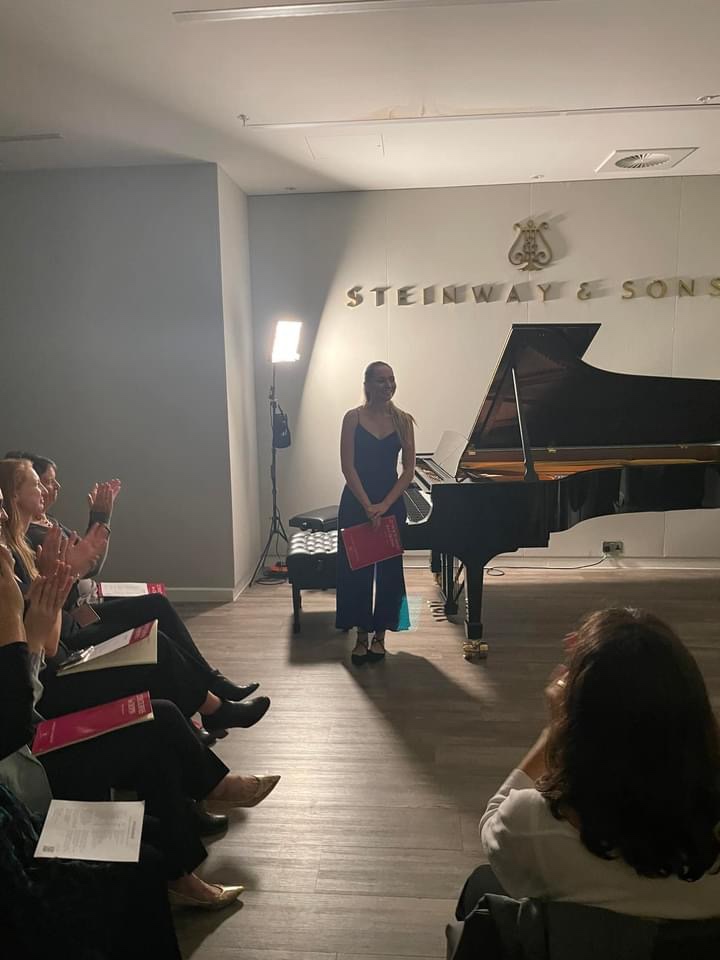
In fact Yuanfan before his recital gave a Masterclass in the recital hall on a very fine Steinway.


A class of young students able not only to rattle off ‘Gnomenreigen’ with consumate ease but also,like their young master,produce piano compositions of great promise.

Programme of the Masterclass at 4.30 in the Recital Hall


Yuanfan of course with his superb musicianship was able to inspire these young musicians not only in his Masterclass.

Andrew Bottrill,Head of Keyboard thanking Yuanfan


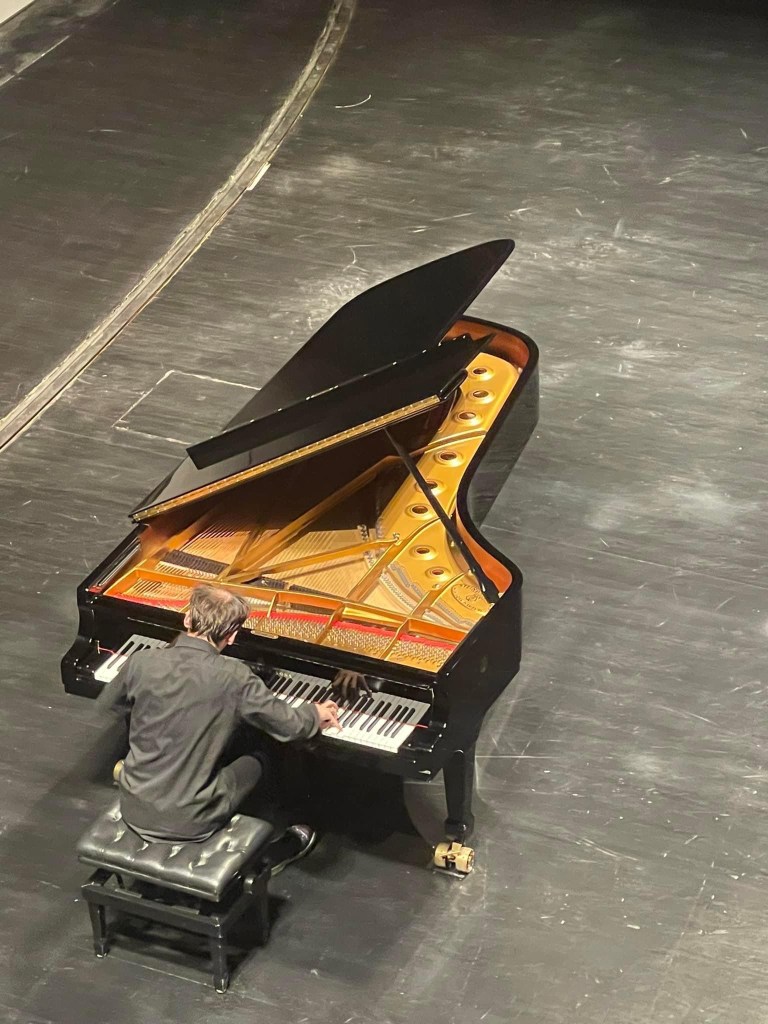
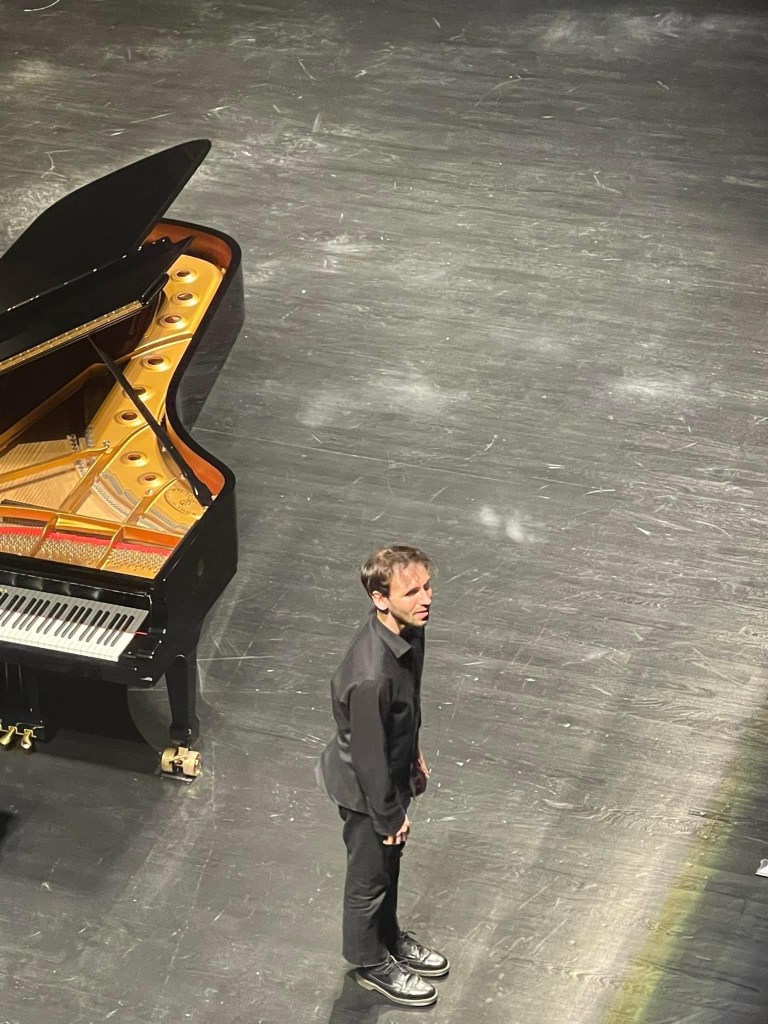
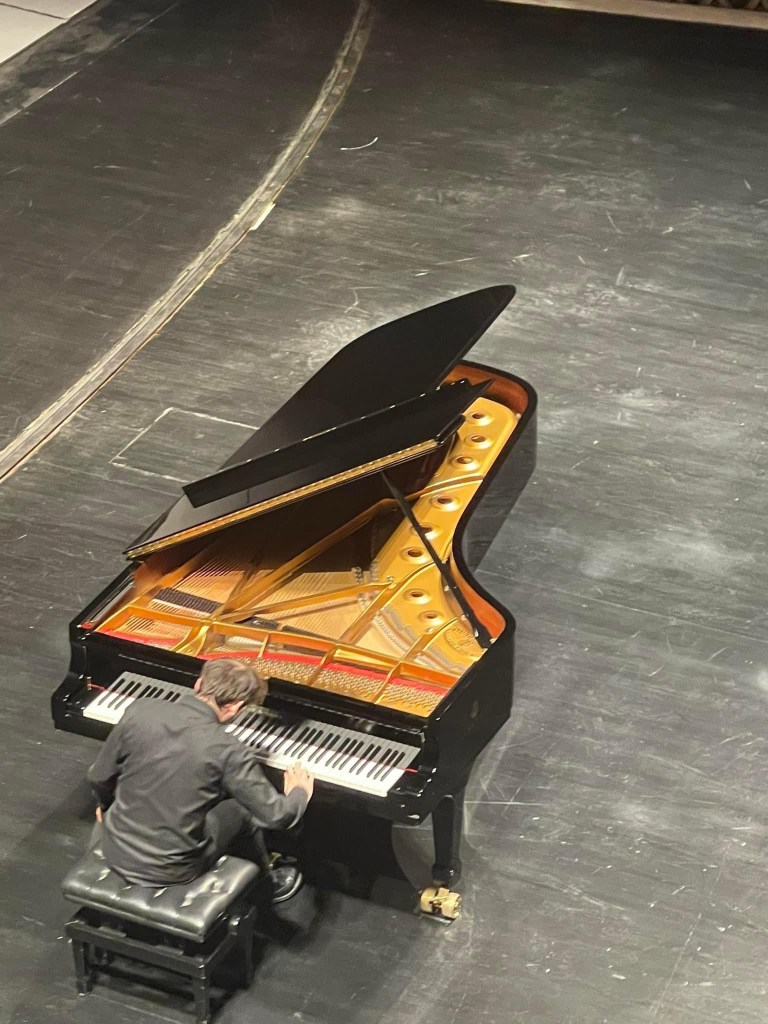
Moving into the theatre next door and onto a Yamaha concert grand he astounded us all,only five minutes after his class finished, with a full recital of superb performances.

The simplicity and purity of his Mozart Sonata K.330 was enriched by his discreet adding of embellishments.So discreet in this age where the purity of composers is often distorted by musicians that have read a book but not digested the very meaning and use of embellishments to sustain and illuminate the composers architectural line.A beautiful clarity and very precise articulation contrasted with the playful beauty of the development before the joyous reappearance of the opening.A languidly flowing Andante with contrasts of the hauntingly veiled pianissimi was followed by the sheer ‘joie de vivre ‘of the Allegretto and even the tongue in cheek final slide from a musician who is a real artist.
The Corelli Variations by Rachmaninov were played with virtuosity,mystery,colour and quixotic energy.The same purity of a sound as in his Mozart he gave to the haunting theme gradually brought to life with Rachmaninov’s first false footing variations.There was magic in the air with the fourth variation and the dynamic drive of the next three brought them to a monumental full stop.Awakened by the lugubrious eighth and the gradual build up to the cadenza of the ‘Intermezzo’.The improvisational character in this cadenza was beautifully played with scintillating embellishments that led to a magic change of key to the major as the sun appeared on the horizon.A gradual build up of tension and virtuosity all played with total command until the explosion of octaves and the insistent bass home pedal note.The expansive opulence of this final Andante was drawn out by Yuanfan to the limit as only a true artist can judge and the absolute aching silence after the final two pianissimi
chords was evidence enough of the magic that Yuanfan had shared with us today.
Chopin’s 24 preludes I have written about Yuanfan’s performance many times,most notably on Ischia in the music room/concert hall of Sir William Walton.A performance where intricate detail and poetic commitment unite to create a unified whole with a work that Chopin would only play a selection of four or five .It is only after his death that they are played as a whole creating one of the masterpieces of the Romantic repertoire..
What to play as an encore after such a monumental performance of Chopin’s Preludes ?Turning to the audience to request a melody that he would transform into a piece in any style that was requested.
Party Time indeed but only for the prodigiously gifted as he proceeded to improvise on The James Bond Theme and more to the point ‘God save the King’ in Boogie Woogie Style!


Able too to astonish us all with his ability to improvise in any style any melody given to him by the audience.
I remember when on tour in Italy with Yuanfan for the Keyboard Trust learning about the fact that music had chosen this young man from birth. https://christopheraxworthymusiccommentary.com/2021/09/06/yuanfan-yang-in-paradise/

Yuanfan’s parents extreme right and left.(His father is a Professor at Leeds University).Yisha Xue of the liberal Club and Sofya Gulyak (centre) Yuanfan’s distinguished teacher at the RCM
https://christopheraxworthymusiccommentary.com/2023/05/01/sofya-gulyak-the-mastery-and-poetic-vision-of-a-great-artist/


At a birthday party for six year old children one of the mothers wanted the name of Yuanfan’s teacher as she had been so impressed with the way he played his friend’s piano.
His mother was astounded as he did not have a piano at home and she did not know that he could play!Neither did he evidently!
Music chooses you and is indeed a vocation a wondrous ‘wave’on which the truly gifted are carried into a world in which music becomes the very meaning of life itself .

https://christopheraxworthymusiccommentary.com/2022/10/04/yuanfan-yang-a-celebration-in-music-the-universal-language-of-all-nations/

https://christopheraxworthymusiccommentary.com/2021/10/29/yuanfan-yang-premio-chopin-2018-celebrates-the-30th-anniversary-of-rome-international-piano-competition/

Yuanfan with his parents,Yisha Xue and colleague Noah Zhou
https://christopheraxworthymusiccommentary.com/2022/11/28/noah-zhou-at-st-marys-the-virtuosity-and-poetry-of-a-great-artist/

Keyboard Trust Online Silent Auction- Help us to help the next generation

Keyboard Charitable Trust
Online Silent Auction

https://christopheraxworthymusiccommentary.com/2022/09/14/the-gift-of-life-the-keyboard-trust-at-30/

https://uk.givergy.com/keyboardtrust/?skipHolding=MZVPD2P

https://youtu.be/tLUZKoNb0eY

Take advantage of this rare opportunity to attend Garsington Opera, or a Finals Day at Wimbledon, or to sit in the best seats for a Gala Concert at the Royal Festival Hall.
We can also offer you Tea for 3 at the House of Lords, with a private guided tour, or a composers’ walk around London, or even a private piano recital in your own home.

And you’ll be helping the Keyboard Trust raise valuable funds to help us continue our support of many fine young musicians into the future.
 

Why not take a look? There’s no commitment.

https://uk.givergy.com/keyboardtrust/?skipHolding=MZVPD2P


Help us to help these wonderful young musicians


Twitter

Facebook

Website


Copyright © 2023 The Keyboard Charitable Trust, All rights reserved.
You are receiving this email because you opted in via our website, in person at a Keyboard Trust concert or by email.

Our mailing address is:

The Keyboard Charitable Trust

54 Raleigh Road

LondonN8 0HY

United Kingdom


Add us to your address book

Email Marketing Powered by Mailchimp


Want to change how you receive these emails?
You can update your preferences or unsubscribe from this list.

Jeneba Kanneh – Mason takes the Wigmore Hall by storm ‘Oh what a Wonderful World’

When music is also fun what more could one want?
A family of superb musicians united to hear Jeneba Kanneh-Mason take a packed Wigmore Hall by storm.

Three of the five Kanneh- Masons with Patsy Fou


With Fou Ts’ongs widow the teacher of the pianists in the family.As children who came aged nine to the Junior Academy to be trained and inspired as Fou Ts’ong himself would do for years in my theatre in Rome.
Patsy used to thank me for being so faithful to Ts’ong but it was we that were so grateful to him.

The mother and father of a remarkable family with Patsy Fou


Just as the Kanneh-Masons were today to Patsy Fou.
I remember Patsy Toh as a star student of Harold Craxton at the RAM who dedicated herself to Ts’ong and a life together in music.
What fun we had backstage with a friend who had made a cake to celebrate and with almost the entire family united around their youngest member now in the equally expert hands of Vanessa Latarche at the Royal College .


A relaxed way of playing like swimming gave her a flexibility able to produce ravishing sounds with a naturalness and simplicity no matter what challenges she faced.
Music just poured from her long spindly fingers with the same freshness and simplicity with which the family was united around her today.Fluidity and flexibility and above all clarity in Shostakovich.The beauty of sounds in Debussy where the pedal was indeed the soul of the piano allowing Jeneba to float sounds with luminosity and simplicity.Her completely relaxed arms allowing her fingers a direct link to a heart that beat with sincerity and warmth.A Fantasy by Florence Price that was of wondrous sounds of elegance and beguiling charm as the melodic line passed from tenor to soprano with irresistible innocence and purity.Driving insistent rhythms brought a frenzy of passion like the Gospels proclaiming glory to our maker.This was truly sumptuous playing of great style.She brought great character to the ten episodes of Prokofiev’s Romeo and Juliet with the final languid beauty of Romeo and Juliet after the exhilaration and excitement of the Montagues and the Capulets.The Toccata by Kapustin was a scintillating way to thank an enthusiastic audience in this Sunday morning coffee concert
Oh what a wonderful world!’ https://youtu.be/A3yCcXgbKrE

Hear Me Out: Fantasie nègre No. 1 (Florence Price, 1929)

Composer Florence Price

In 1933, Florence Price became the first Black female composer to have a symphony premiered by a major national orchestra, when the Chicago Symphony Orchestra played her Symphony No 1. At the same concert, her friend and contemporary Margaret Bonds also made history as the first Black female soloist with the orchestra. (She would later go on to premiere Price’s Piano Concerto too). Florence Price and Margaret Bonds together were leaders in the Black Chicago Renaissance movement in 1930’s USA. There was a real uplifting of Black folk songs during this era, with both Price and Bonds paving the way by incorporating them into Western classical music. Their pride in their history and determination to create a new modern Black voice created music that still resonates today. In a period of so much strife and uncertainty this programme has a resounding theme of friendship and support. Fantasie Nègre No 1 in E minor is dedicated to Margaret Bonds, and shows the legacy of Price’s influence.Fantasie nègre, like the title suggests, is black as night — a sonic equivalent to a Sunday mac in the fellowship hall. This is definitely in no small part due to the liberal interpretation of that old Negro spiritual, “Sinner Please Don’t Let this Harvest Pass”.As the title implies, the song deals with the damnation of souls and the procrastination of getting your literal life together. With the tips of her fingers, Price transforms these lyrically haunting melodies into a somnambulant nocturne. Speaking of nocturnes, there is a moment particularly reminiscent of Chopin — around the halfway point, Price’s left hand gives me some serious vibes from the Polish composer’s First Ballade. Almost 30 years later, Thelonious Monk released an album of solo piano interpretations of Duke Ellington’s music. As we listen to this Price piece, we can also hear Monk’s version of Black and Tan Fantasy. I don’t know how familiar the angular idiosyncratic pianist was with Price’s music, but there is a definite a bond between these two pieces, a bond that lasts far beyond their Fantastic titles.


Sofya Gulyak the mastery and poetic vision of a great artist

Sofya Gulyak at the Chopin Society in London with playing of mastery and poetry.
A fascinating programme which was on a wave of ravishing sounds where notes just disappeared in a continual outpouring of sumptuous sounds.
Bar lines just did not exist as she breathed as a singer bringing poignant meaning to all she recreated.

Sofya with some of her many students after the concert .


Surrounded by illustrious students and friends who had flocked to hear such mastery from an artist who rarely plays in London.
As one of her students ( winner of the Chappell Gold medal at the RCM this year) exclaimed : she was so proud and lucky to have such a master as her mentor.
Streams of glorious sounds and phenomenal technical ease even in Ravel’s daunting transcription of La Valse.An architectural vision of Franck that did not exclude the ravishing exultation and seduction of a true believer.
It was ,though,in the waltz in A minor op 34 by Chopin that her artistry was even more revealing,as she showed us that so few notes could mean so much.A performance of aching nostalgia similar to that which has remained in my memory from one of Rubinstein’s last performances in London in the 70’s.

Lady Rose Cholmondeley thanking Sofya after the concert


I suppose it was fitting that Chopin should have stolen the show for the Society in his name that is so valiantly run by Lady Rose Cholmondeley and Gillian Margaret Newman.But even an encore of a sonata by Clementi showed off more colours as the clarity of sound that she so brilliantly etched was of purity and refreshing radiance.A crystal clear light after the sombre depths of brooding intensity of Ravel.

Sofya with Bryce Morrison the distinguished critic who had been on the jury of the William Kapell Competition when she was awarded first prize in 2007.
Clara Schumann’s variations immediately showed the beauty of movement as Sofya drew sounds of great delicacy with caressing horizontal movements.Stroking the keys with a fluidity as though wading through wondrous waters.There was also the breath control of a great singer and a technical command that was always at the service of the music.Even in the most passionate outbursts there was a sound that was never allowed to leave this wondrous architectural shape that was being created before our very eyes.Ravishing wistful beauty on a wave of etherial sounds.It made one wonder why this hauntingly beautiful work is so rarely played.


A curiosity was the Variations on a Theme of Robert Schumann op 20 by Clara Wieck Schumann. A work from around 1854 and one of the few of her own compositions that she would love to play in her recitals.It is based on the theme from Schumann’s ‘Bunte Blatter’ op 99 n 4.
It was dedicated to her husband and was one of the very few compositions that she wrote before Robert was committed to an asylum where he died .Leaving Clara to bring up alone their eight children when in order to survive financially she had to maintain her concert activity to the exclusion of composition.
Robert Schumann suffered from a mental disorder that first was manifested in 1833 as severe depression,recurring several times alternating with phases of “exaltation” and increasingly also delusional ideas of being poisoned .After a suicide attempt in 1854, Schumann was admitted at his own request to a mental asylum in Endenich (now Bonn ).Diagnosed with psychotic melancholia he died of pneumonia two years later at the age of 46, without recovering from his mental illness.The Variations on a theme of Schumann op 20 were dedicated to her already sick husband and were completed just in time for his 43 birthday with a dedication :’For my dear husband a renewed and weak attempt to compose from your dear old Clara ‘.It was infact completed just in time as in 1854 Robert attempted suicide and was admitted to an asylum.
The theme is from Robert’s own ‘Bunte Blatter’ and it is the same theme that Brahms ,a close family friend ,was to use for his own Variations on a Theme of Schumann op 9.Seven variations from Clara where Brahms had written sixteen that he had dedicated to Clara.
There was a great fluidity to Clara’s variations and there was the chordal simplicity of the second alternating with the slow harmonically varied third.Sumptuous beauty in the fourth with the theme in the tenor register surrounded by exquisite embellishments.The great drama in the octave variation with the pompous chordal declamation of the theme dissolved so beautifully into the delicately shadowed mellifluous theme.A ending of arpeggiando chords was spread over the keyboard with ravishing beauty.
It was fascinating to hear this rarely performed work.Apparently Brahms had studied Clara’s unpublished score and on his own manuscript he wrote, “Little variations on a theme by him dedicated to her”.

Robert Schumann’s also rarely heard Allegro op 8 was a revelation with it’s imperious opening leading to jeux perlé expressive shifts of harmony.It was played with mastery and a control of the pedal that allowed the numerous notes that were pouring with such ease from her fingers to be merely waves of romantic sounds on which mere glimpses of melody were allowed to float.

Schumann’s Allegro op 8 where a contemporary critic said:’Everywhere only confused combinations of figures, dissonances, passages in short, for us torture’ He only published the opening movement “Allegro di bravura” of what was originally meant to be a sonata the other parts were apparently destroyed. Clara, who was otherwise rather reserved as far as Schumann’s early works were concerned, soon incorporate this piece into her repertoire. Ernestine von Fricken, the dedicatee with whom Schumann was still engaged at its time of composition, often played it after their separation, even if ‘with quite curious expression.’

Chopin’s Variations brillante op 12 was the third work in this refreshingly chosen programme of works rarely heard in the concert hall.Of course these variations were written for the virtuoso Chopin who would be feted in the music salons in Paris.It was the earlier variations op 2 that Schumann had reviewed with his famous comment:’Hats off gentlemen a genius !.’Sofya played them with all the jeux perlé brilliance for which they were composed.A sense of dance too as she brought subtle virtuosity and exhilaration to the work of a young virtuoso.

In May 1833 Chopin heard Louis Joseph Ferdinand Herold’s (1791–1833) opera Ludovic, finished by Hálevy. The Variations brillantes “Je vends des Scapulaires” Op 12, based on the homonymous aria from the opera, are Chopin’s final variation set and a virtual farewell to the virtuoso style cherished in Paris. Written after the early nocturnes and etudes and in the year he wrote his first ballade, it almost represents a regression or a final concession to the bravura stile brillante, so much clichéd—in particular in variation form.Schumann called it ‘writing à la mode’ and thought that ‘they belong altogether to the drawing-room or concert-hall, and … are far removed from any poetic sphere’. This piece, together with Bolero and Rondo, Op 16, represents Chopin’s last attempt at such conventional and fairly anonymous writing that perpetrated the tradition of contemporary concert-hall crowd pleasers. Nevertheless, Franz Liszt apparently referred to the set as Chopin’s favourite piece of his own, commenting after hearing Chopin play it for himself: ‘Such a poetic temperament as Chopin’s never existed, nor have I ever heard such delicacy and refinement of playing. The tone, though small, was absolutely beyond criticism, and although his execution was not forcible, nor by any means fitted for the concert room, still it was perfect in the extreme.’

Brahms Four Klavierstucke op 119 .Beauty and simplicity combined in Sofya’s delicate hands as there was an outpouring of melody where bar lines did not seem to exist or be necessary.The purity of sound in the first Intermezzo in B minor created an atmosphere where time stood still with pungent sounds of sublime beauty.There was a gentle forward movement to the Intermezzo in E minor and mystery too as it built to a climax of romantic effusions of great shared intimacy only to reveal a melody of simplicity and purity before the return of the opening.It was like a gentle breeze carrying us along on some wondrous journey.The Intermezzo in C major was indeed played ‘grazioso’ and ‘giocoso’ as it wove its way lightly and quietly to an ending thrown off with great nonchalance and easy elegance.It was immediately interrupted by the sumptuously rich sounds of the Rhapsodie with the beautiful fluidity of the central episode before the excitement and frenzy of the final exhilarating chords.

The Four Pieces for Piano Op. 119, were composed in 1893 .The collection is the last composition for solo piano by Brahms. Together with the six pieces op 118 ,Op. 119 was premiered in London in January 1894.

In a letter from May 1893 to Clara Schumann ,Brahms wrote: I am tempted to copy out a small piano piece for you, because I would like to know how you agree with it. It is teeming with dissonances! These may [well] be correct and [can] be explained—but maybe they won’t please your palate, and now I wished, they would be less correct, but more appetizing and agreeable to your taste. The little piece is exceptionally melancholic and ‘to be played very slowly’ is not an understatement. Every bar and every note must sound like a ritard[ando], as if one wanted to suck melancholy out of each and every one, lustily and with pleasure out of these very dissonances! Good Lord, this description will [surely] awaken your desire!
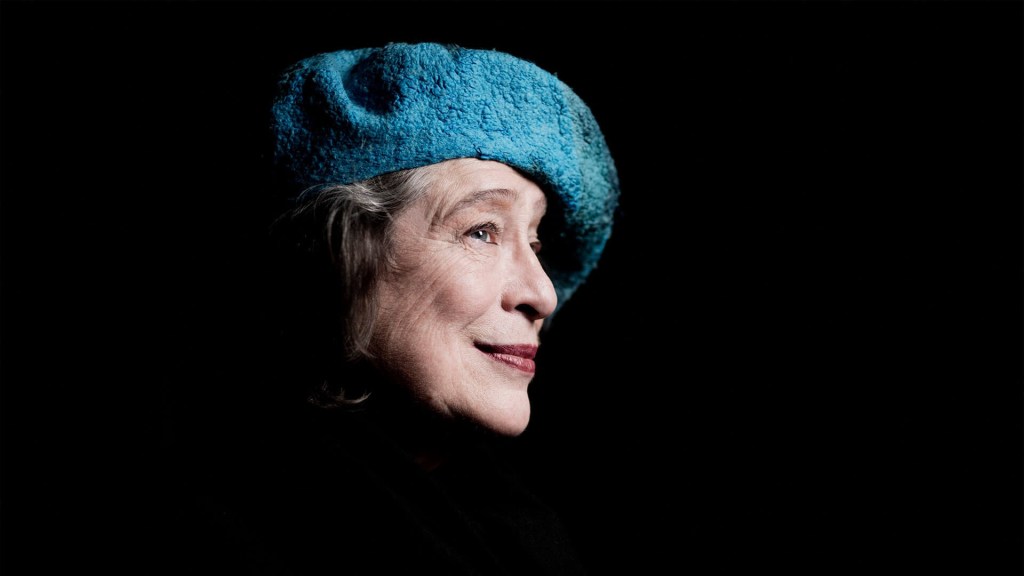
Clara Schumann was enthusiastic and asked him to send the remaining pieces of his new work.

There were etherial sounds of beauty and majesty in the Prelude which was allowed to flow naturally with a forward movement before the absolute silence that was so poignant and expressive before the rather solemn organ like chords.Chords of the Chorale that immediately dissolved into celestial heights with arpeggiandos spread over the entire keyboard.An ever present bass that allowed the music to move inexorable forward to a climax of fervent exultation.A break before the announcement of the fugue subject cleared the air of such refined sounds as it had done before the Chorale.There was a clarity to the fugue as it built to a tumultuous climax and the explosion of the cadenza was sustained by deep bass notes on which the clouds subsided to reveal the opening motif whispered from afar.Building to the final tumultuous declaration of a true believer.
A remarkable performance in which Sofya had been able to give an architectural shape to a work that so often can seem fragmented or over emphatic.It was played with a simplicity where every detail was allowed to shine but on a great wave that took us from the first to the last note.The sumptuous sounds even in the most powerful episodes showed again her ability to draw the sounds out of the keys as a painter would add colour to his canvas.

Prélude, Choral et Fugue, FWV 21 was written in 1884 by César Franck with his distinctive use of cyclic form.Franck had huge hands ,wide like the span of emotions he conveys,capable of spanning the interval of a 12th on the keyboard.This allowed him unusual flexibility in voice-leading between internal parts in fugal composition, and in the wide chords and stretches featured in much of his keyboard music.Of the famous Violin Sonata’s writing it has been said: “Franck, blissfully apt to forget that not every musician’s hands were as enormous as his own, littered the piano part (the last movement in particular) with major-tenth chords… most pianistic mortals ever since have been obliged to spread them in order to play them at all.”The key to his music may be found in his personality. His friends record that he was “a man of utmost humility, simplicity, reverence and industry.” Louis Vierne a pupil and later organist titulaire of Notre-Dame, wrote in his memoirs that Franck showed a “constant concern for the dignity of his art, for the nobility of his mission, and for the fervent sincerity of his sermon in sound… Joyous or melancholy, solemn or mystic, powerful or ethereal: Franck was all those at Sainte-Clotilde.”In his search to master new organ-playing techniques he was both challenged and stimulated by his third and last change in organ posts. On 22 January 1858, he became organist and maître de chapelle at the newly consecrated Sainte Clotilde (from 1896 the Basilique-Sainte-Clotilde), where he remained until his death. Eleven months later, the parish installed a new three-manual Cavaillé-Coll instrument,whereupon he was made titulaire.The impact of this organ on Franck’s performance and composition cannot be overestimated; together with his early pianistic experience it shaped his music-making for the remainder of his life.

Ravel’s transcription of La Valse was a tour de force with a technical command and a phenomenal kaleidoscope of colour.Glissandi played with an ease and beauty as they shot sounds from one end of the keyboard to the other.A boiling cauldron that burst into flames at the end with an excitement and hypnotic frenzy of exhilaration.The tension relieved only by Ravel’s own hand deep in the bass.

La valse, poème chorégraphique pour orchestre (a choreographic poem for orchestra), was written between February 1919 and 1920 and was first performed on 12 December 1920 in Paris. It was conceived as a ballet but is now more often heard as a concert work.In Ravel’sown words he describes it thus: ‘While some discover an attempt at parody, indeed caricature, others categorically see a tragic allusion in it – the end of the Second Empire, the situation in Vienna after the war, etc… This dance may seem tragic, like any other emotion… pushed to the extreme. But one should only see in it what the music expresses: an ascending progression of sonority, to which the stage comes along to add light and movement.”He also commented, in 1922, that “It doesn’t have anything to do with the present situation in Vienna, and it also doesn’t have any symbolic meaning in that regard. In the course of La Valse, I did not envision a dance of death or a struggle between life and death. (The year of the choreographic setting, 1855, repudiates such an assumption.)” The idea of La valse began first with the title “Vienne”, then Wien as early as 1906, where Ravel intended to orchestrate a piece in tribute to the waltz form and to johann Strauss 11.Ravel described his own attraction to waltz rhythm as follows, to Jean Marnold, while writing La valse: ‘You know my intense attraction to these wonderful rhythms and that I value the joie de vivre expressed in the dance much more deeply than Franckist puritanism.Ravel described La valse with the following preface to the score:’Through whirling clouds, waltzing couples may be faintly distinguished. The clouds gradually scatter: one sees at letter A an immense hall peopled with a whirling crowd. The scene is gradually illuminated. The light of the chandeliers bursts forth at the fortissimo letter B. Set in an imperial court, about 1855.’ Apart from the two-piano arrangement, which was first publicly performed by Ravel and Alfredo Casella ,Ravel also transcribed this work for one piano that used to be rarely performed due to its difficulty – that is not the case these days!

Parvis Hejazi The Musicanship and Poetry of a true artist – a winning combination at Netherhall Auditorium

Wolfgang Amadeus Mozart

Sonata in C minor K457 Allegro – Adagio – Allegro assai

Dmitrii Shostakovich

Four Preludes op. 34 1. Moderato – 6. Allegretto – 10.Moderato non troppo – 24. Allegretto

Interval

Johannes Brahms

Variations on an Original Theme op. 21 No. 1

Johannes Brahms

Variations on a Hungarian Song op. 21 No. 2

Parvis Hejazi in recital with Mozart,Shostakovich,Brahms .Some remarkable musicianly performances from a true artist.Always a great showman but one who has learnt that the message of music is the greatest show that one can share.A performance of Mozart C minor Sonata that was both dramatic and tender.
Early Shostakovich Preludes with their sometimes grotesque sense of humour but that spoke as eloquently as Prokofiev’s poetic Visions Fugitives.
But it was the Brahms variations op 21
n.1 and 2 that unleashed the depth of sound and ravishing sense of colour from this young poet of the piano,together with his aristocratic sense of harmonic structure.
It gave great weight and meaning to these sumptuous scores of passionate pulsating harmonic blocks of ever moving romantic effusions.
A single encore of Couperin who’s sublime simplicity was the ideal antidote to Brahms’s passionate effusions and the allusion to the Mysteries of Bacchus led very nicely to the post concert drink.

There was a clarity and rhythmic drive to the opening movement where the energy of the opening statement was answered by the plaintive questioning reply.It was these contrasts that were so poignantly played never allowing the tempo to slacken even for the most mellifluous of second subjects.There was an imperious drive as the opening motive was expanded in the development only to dissolve onto a pianissimo questioning chord as the recapitulation regenerated the initial opening energy.The mysterious coda was beautifully played as it disappeared into the depths of the piano.There was a fluidity to the tempo of the Adagio played very much in four that allowed it to flow so naturally with simplicity and beauty.The central episode,so similar to Schubert,was played with a sense of peace and reverence as it’s dark colours contrasted so well with the luminosity of its surrounds.There was great mystery to the opening of the Allegro assai that contrasted so well with the rhythmic interruptions that follow.A fluidity and simplicity in Parvis’s playing that brought a freshness combined with drama to this remarkable movement.A hypnotic coda brought this extraordinary sonata to a Beethovenian conclusion from the hands of a real musician.

The Piano Sonata No. 14 in C minor K.457, was composed and completed in 1784, with the official date of completion recorded as 14 October 1784 in Mozart’s own catalogue of works.It is dedicated to Theresia von Trattner (1758–1793), who was one of Mozart’s pupils in Vienna. Her husband, Thomas 1717–1798), was an important publisher as well as Mozart’s landlord in 1784. Eventually, the Trattners would become godparents to four of Mozart’s children.It was composed during the approximately 10-year period of Mozart’s life as a freelance artist in Vienna after he left the patronage of the Archbishop of Salzburg in 1781 and is one of the earliest of only six sonatas composed during the Vienna years.It is only one of two sonatas Mozart wrote in a minor key, the other being the the A minor K.310 which was written six years earlier, around the time of the death of Mozart’s mother.He was extremely deliberate in choosing tonalities for his compositions; therefore, his choice of C minor for this sonata implies that this piece was perhaps a very personal work.Kochel said of this sonata, “Without question this is the most important of all Mozart’s pianoforte sonatas. Surpassing all the others by reason of the fire and passion which, to its last note, breathe through it, it foreshadows the pianoforte sonata, as it was destined to become in the hands of Beethoven The last movement is unlike many of Mozart’s sonatas’ last movements, which tend to have fast tempo and joyfulness and happiness. This movement contains a great tragic sense that really makes it stand out.

A choice of four preludes that were four miniature tone poems .With each one that could portray so much in such a short space of time.There were the pungent harmonies and deep bass notes of the Moderato and the brittle strident sounds of the parody of a dance in the Allegretto .There was a beautiful fluid melodic line to the Moderato n.10 very similar in atmosphere to Prokofiev’s Visions with the calm and tranquility of brittle sounds.A magical ending in trills that in Parvis’s hands were mere vibrations of sound.The last n.24 Parvis relished the grotesque parody of the dance that he was obviously enjoying as much as the audience.

The 24 Preludes, op.34 is a set of short piano pieces written and premiered by Shostakovich in 1933. They are arranged following the circle of fifths with one prelude in each major and minor key.He began composing the preludes in December 1932, shortly after finishing his opera Lady Macbeth .He completed the cycle in March 1933, and premiered it in Moscow himself in May of the same year.He composed the preludes largely in order to return to public performance as he had stopped performing in 1930, after his failure to be placed at the 1927 First International Chopin Competition.The preludes are intimate and brief forming a link to Shostakovich’s next work, the Piano Concerto No 1 (for piano, trumpet and strings), which he began just four days after completing the preludes.Each prelude shows that Shostakovich was able to distil his genius into the shortest time span, as well as, of course, he would prove able to explore on the largest scale in his next work, the fourth symphony.

There was grandeur and sumptuous full sounds to the simple mellifluous theme of op 21 n.1 that spread over into a series of variations of fluidity and ravishing beauty.Sounds that spread gradually over the whole keyboard with a radiance and harmonic richness without any hardness.There was grandeur and brilliance too but always within a sound world that he built from the bass and that gave such ecstatic warmth to this beautiful work.The variations op 21 n.2 were of an orchestral brilliance and rhythmic energy that contrasted so well with it’s twin.Parvis brought to it a completely different sound of radiance and sunlight where it’s twin had been bathed in a twilight area of subtlety and deep emotions.

Brahms began his career as a pianist. His contribution to the piano music of the 19th century is significant in two respects: following Schubert and Schumann he cultivated the small, lyrical form, while as Beethoven’s successor he admitted large forms such as the piano sonata and variation cycle. His two variation cycles op. 21, published in 1862, place great demands on the performer. In the first cycle, on a lyrical theme in D major, the technique of figurative and contrapuntal alterations is highly developed. The “Variations on an Original Theme” although published as “No. 1,” as a set of independent piano variations–the only one on a theme of Brahms’s own devising–was certainly composed a few years later than the ‘Hungarian song ‘ set published as “No. 2.” The two sets work well when performed together, as they share a central key. The Hungarian Song op 21 n.2 was composed as early as 1853, thus even predating the “Schumann” variations op 9 .The “Hungarian Song” was given to Brahms by his violinist collaborator Eduard Reményi and as used in the variations, the “theme” is a brief, vigorous eight bars. Its distinctive aspect is the alternation between 3/4 and 4/4 bars, a typical example of Eastern European mixed meter. The ‘Hungarian Song ‘set can function as an extroverted “encore” to the more introspective and longer “Original Theme” set. The “Variations on an Original Theme” were probably composed in the late 1850s, partly as an exercise in variation technique. Brahms set several challenges for himself in devising the theme. The irregular lengths of each repeated half–nine bars each–remain mostly consistent through the variations, lending stability and recognition as other elements range farther from the theme.

There was a beguiling ease to the rondo theme of Couperin ‘Les Barricades’ as it returned with hypnotic fluidity.It was an ideal encore after such a sumptuous feast of music from the hands of a true musician.

Les Barricades Mystérieuses (The Mysterious Barricades) by Couperin for harpsichord and was composed in 1717. It is the fifth piece in his “Ordre 6ème de clavecin” from his second book of collected harpsichord pieces (Pièces de Clavecin).Debussy expressed particular admiration for Les Barricades Mystérieuses and in 1903 wrote: ‘We should think about the example Couperin’s harpsichord works set us: they are marvelous models of grace and innocence long past. Nothing could ever make us forget the subtly voluptuous perfume, so delicately perverse, that so innocently hovers over the Barricades Mystérieuses.The title is probably meant to be evocative rather than a reference to a specific object, musical or otherwise.It has suggested that, in keeping with the bucolic character of other pieces in Couperin’s Ordre 6ème de clavecin, the pounding rhythm may represent the stamping of grapes in winemaking (given that the French word barrique means ‘barrel’, and barriquade was a designation adopted by viticultualists of the day in France).In this view, the “mysterious” epithet could allude to the significance of wine in the Mysteries of Bacchus.

Parvis Hejazi is known as a “rising star on the piano sky” (ARD), and “a poet and virtuoso at the piano” (Christopher Axworthy). Playing his debut at the Salzburg Festival aged 16, Parvis has performed throughout Europe, the Middle East, and the US at venues such as the Laeiszhalle Hamburg, Die Glocke Bremen, and the Gnessin Institute Moscow. Having won more than 30 first prizes in national and international competitions, Parvis has received coverage by ARD, NDR, and HR, and in foreign and domestic print media. Parvis is a graduate Scholar of the Royal College of Music, where he currently pursues a Master of Music, studying with Norma Fisher and Vanessa Latarche. In autumn, Parvis will commence his studies on the prestigious Artist Diploma programme at the College on a full scholarship. A Member of the Keyboard Charitable Trust and Talent Unlimited UK, Parvis holds the Music Talks Award and the Bärenreiter Urtext Award. He is supported by the Evangelisches Studienwerk Villigst, the Karin and Uwe Hollweg Foundation and Susan Sturrock.

Parvis waiting to greet his guests ready to unwind and discuss the concert over a glass of wine
Robert Tickle a great admirer of classical music with Parvis and Parvis’s duo partner Sonia Tulea Pigot both in the class of Norma Fischer.
Our genial host with the Netherhall House tie .Pietro Genova Gaia will give a violin and piano recital with Parvis in a future concert on the 26th May in their season.

https://christopheraxworthymusiccommentary.com/2023/01/08/parvis-hejazi-the-clarity-and-intelligence-of-a-youthful-poet-in-perivale/

https://christopheraxworthymusiccommentary.com/2022/07/09/parvis-hejazi-in-recital-in-london-july-2022/

Aidan Mikdad at the Wigmore Hall astonishes and ravishes with Scriabin of mystery,passion and colour as he reaches for the stars.

Promoted by the Royal Academy of Music.

Aidan Mikdad at the Wigmore Hall in the Royal Academy Piano Series astonished and amazed in Scriabin as he entered completely into a world of mystery,passion and above all colour.
Reaching for the elusive star that was very much Scriabin’s llfelong obsession with the ominous opening appearing as a menacing shadow before the passionate frenzy of the Presto con fuoco.
The sumptuous opening sounds marked ‘Drammatico’opened a Pandora’s box of colour with strands of melody that were like jewels sparkling in this cauldron of effusive sounds.


There was mystery even in the Allegretto second movement with it’s constant forward moving rhythmic energy and whispered drive.
But it was the Andante with it’s liquid luminosity that cast a magic spell from this true poet of the piano.The gentle menacing opening motive was like a distant memory entering into the spell cast by the Andante .It burst into action with the transcendental pyrotechnics of the last movement.The triumphant explosion of the ‘star’ was played with the youthful passionate conviction of someone who had completely understood this mysterious world that Scriabin inhabited.
An audience that was totally mesmerised by an extraordinarily powerful performance was rewarded by even more ravishing effusions with Scriabin’s early Waltz.The jeux perlé and lightweight sounds that flew from his hands reached peaks of passionate effusions before returning into it’s opening shell.


It is obviously no coincidence that Aidan has been touring with Arcadi Volodos whose ravishing sense of colour is legendary.
If Aidan has acquired something of the the same love for sound he has not yet acquired the sheer beauty of movement of Volodos who like a sculpture shapes the sounds giving the same form to his hands on the keys as the sounds he is painting in the air.
It was this rather pianistic approach to the keyboard that made his brilliant performance of Schumann’s Carnaval rather lacking in charm and seemed strangely black and white compared to the multicoloured performance that was to follow.
Surely there are many variations of forte and piano as marked by Schumann that he was later to find so wonderfully in Scriabin.
It was scrupulously played and technically flawless but needed more time to breathe and Schumann’s duel personality of Eusebius and Floristan seemed unfairly one sided .

There were of course many beautiful things because Aidan’s natural artistry will always shine through but it was a world that he looked at rather than inhabited.It was a young man’s Carnaval but was not Rubinstein’s always youthful even at 90 on this very stage!There were some beautiful moments in Chiarina which reached ravishing heights in Chopin played with the same aristocratic sentiment that was very much Rubinstein’s.But the fleeting vision in Reconnaissance is marked pianissimo in the score as was missing the playful squabbling between Pantalon and Colombine.Paganini was played with flawless perfection but many passages are marked piano and if the final four chords are played too loudly the magical pianississimo echo will not stand a chance of appearing like a magic vibration.Schumann marks the final March ‘non allegro’ which was certainly not the case today but Aidan’s youthful exuberance did add great excitement to the final pages .Eusebius and Aveu were beautifully played as the melodic line was allowed to unravel and breathe so magically.Aidan did bring astonishing bravura and excitement to his Carnaval but the melancholy wistful fantasy and subtle rubato of a Rubinstein were missing.Aidan was happier with the deep brooding of Scriabin rather than the seemingly frivolous effervescence of Schumann.

https://christopheraxworthymusiccommentary.com/2022/10/06/nothing-like-a-dameaiden-mikdad-ignites-the-imogen-cooper-trust-part-1/

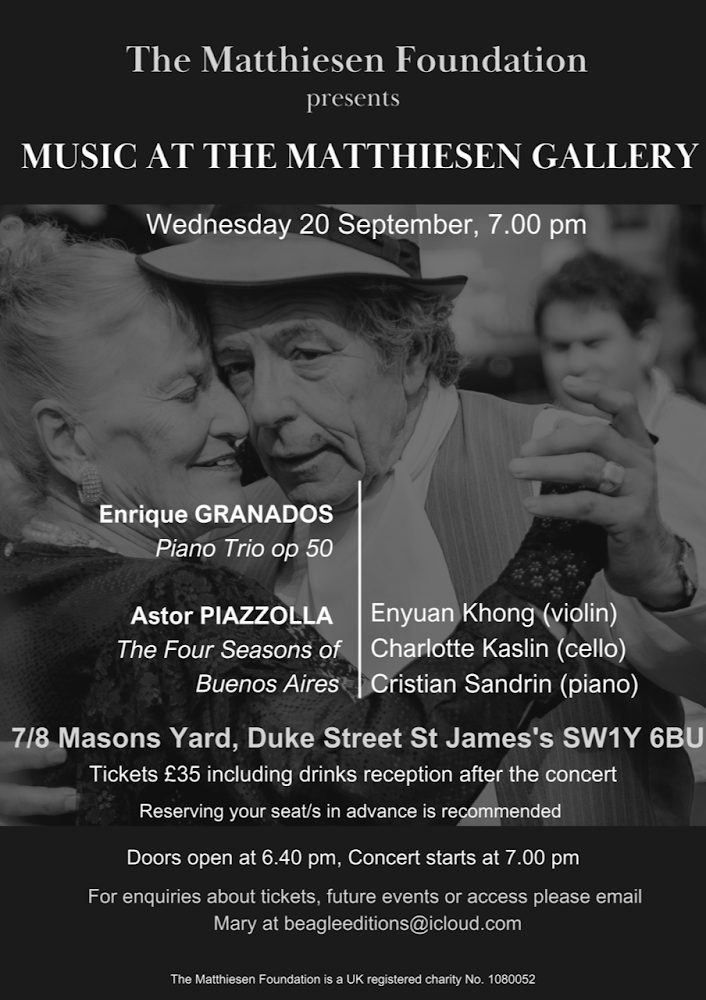
Cristian Sandrin Visions of Life dedicated to his father Sandu Sandrin .

Wed 26 Apr 2023 7.30pm – 9.00pm 

Jerwood Hall, LSO St Luke’s, London

Ludwig van Beethoven 
Piano Sonata in E-major major Op 109
Piano Sonata in A-flat major Op 110
Piano Sonata in C minor Op 111

Cristian Sandrin piano

The distinguished pianist and pedagogue Sandu Sandrin with Radu Lupu
https://youtu.be/9aTgP2SO3UY

https://christopheraxworthymusiccommentary.com/2022/02/25/cristian-sandrin-a-message-of-hope-and-peace-in-florence-the-cradle-of-our-culture/


Visions of Life. ….a memorable occasion dedicated to the distinguished pianist Sandu Sandrin by his son …………….we await the video recording with the Scriabin Colour Keyboard :Blue for E major op 109; Purple for A flat op 110;Red for C minor op 111.And three superb performance of Beethoven’s farewell to the Sonata as he at last finds peace and serenity and a Vision of the life that awaits.


https://christopheraxworthymusiccommentary.wordpress.com/2022/02/03/cristian-sandrin-the-beethoven-trilogy-birth-of-a-great-artist/

I have written many times about Cristian’s performance of the Trilogy that I have heard slowly maturing over the past two years.Today was something special as he gathered all his strength and courage to pay tribute to his father who passed away in November last year.A performance that was video recorded in the same hall that had seen the recording of Zimerman and Rattle with the five Beethoven Concertos.Cristian not only shared his voyage of discovery with us but also wrote the programme notes and chose from from Scriabin’s Colour Keyboard the lights that discreetly created rays of light for each sonata.

A full hall with many distinguished guests Tessa Uys with Siva Oke of Somm Records

Earthly. Tragic. Exalted. Delve into Beethoven’s magisterial late works for the piano, as acclaimed Romanian-British pianist Cristian Sandrin examines the intricate pianism and the complex narratives told by his Piano Sonatas Op 109, 110 and 111.

Sieva Oke of Somm records with the distinguished critic and pianofile Bryce Morrison

Composed in tandem with the Missa Solemnis and the Diabelli Variations, and in spite of Beethoven’s aggravating deafness and social isolation, these Sonatas reveal an optimistic approach to life and music, as well as painting a vast emotional and psychological landscape. We observe the composer searching for the spiritual whilst resurrecting old styles or experimenting with innovative ideas – formidable artistic acts that would influence the course of music and inspire an entire new generation of artists and musicians, the Romantics.

Cristian’s mother had flown in especially for this tribute for her husband from their son……….with Mihai Ritivoiu the distinguished Romanian pianist helping his friend and colleague with the editing of the recording

https://christopheraxworthymusiccommentary.com/2023/02/12/cristian-sandrin-at-the-romanian-cultural-institute-mastery-and-musicianship-combine-in-a-celebration-of-enescu/

Mrs Sandrin with french colleague of her son,Philippe Duffour

https://christopheraxworthymusiccommentary.com/2022/05/17/cristian-sandrin-plays-goldberg-variations-the-start-of-a-lifetime-journey-of-discovery/

LSO St Luke’s

https://christopheraxworthymusiccommentary.com/2022/03/17/cristian-sandrin-liberally-speaking/

Filip Michalak at St Mary’s ‘something old but oh so new in a great artists hands’

Tuesday 2 May 3.00 pm 

Exhilarating afternoon of wonderful playing ‘something old but something so new’ in the hands of an artist of his calibre.
Please take time to listen you will not regret it
https://youtube.com/live/3266-hrHyjw?feature=share
Myra Hess with Bruno Walter in 1956

Songs from the shows indeed !But what a show with the simplicity of ‘Jesu Joy of man’s desiring’ with the strength of the tenor register giving such hope as it had done to Dame Myra in her ‘penny concerts ‘at the National Gallery during the air raids that raged in London during the war.In Filip’s hands immediately showed his credentials as an artist of refined aristocratic musicianship.Deep sonorous sounds of Busoni’s magical ‘Ich ruf zu dir , Herr Jesu Christ’ every bit a beautiful as the performances of the much lamented Nelson Freire.

Bursting into the sunlight with Mozart’s Rondo alla turca as beguiling in Filip’s crystalline hands as the pyrotechnical wizardry that has befallen it from the dazzling Fazil Say or Arcadi Volodos.What a revelation to hear the Mozart ‘Lacrimosa’ in a sumptuous heartrending transcription by Evgeny Sudbin,of a true believer .Magnificent full sounds of orchestral proportions where every strand in every chord had a special role to play.

There was a wonderful sense of balance in Liszt’s recreation of Schubert’s Standchen where the musical line was allowed to sing with such beauty as it duetted in magic harmony with the world.

A minute waltz that Filip almost completed in 55 seconds and luckily slowed himself down enough to give it ravishing shape without any ‘traditional’ messing with Chopin’s ‘tip toeing through the tulips!’The C sharp minor waltz had something of the refined elegance that Rubinstein used to bring to it with the slight hesitation of the reply to the opening deep sigh.An E flat nocturne that was played simply and with a fluidity of sound that was refreshingly innocent as it built to a climax and it’s feigned cadenza of shimmering beauty.

Straight into Liebestraum which took me by surprise as I did not recognise it at first until it burst into the sumptuous melodic outpouring that we are all too rarely treated to these days.And a dream that came true in Filip’s hands with the simple beauty of Schumann’s song without words.

The spell was broken by Pletnev’s Nutcracker.An ingenious transcription of doubly troubled genii!There was sumptuous beauty of the Rachmaninov Vocalise as it built to a climax as ravishing as anything the Philadelphia and Ormandy could have provided.

Filip was now diving into the depths of the piano into the Hall of the Mountain King.Again a piece so well known that one dares not play it in public for fear of a cliché,and is fast falling into oblivion.

The oblivion of Piazzola following on from the most famous waltz of Brahms.In the good old pre- television days the music would sit on the music stand in every respectable ‘front parlour’,between the two candelabra and the piano overlooked by the aspidistra and lace doilies.

The hysterical rhythmic drive of Liebertango worked its magic even in Perivale and was greeted by an ovation for our young Dane who impishly exclaimed that we had had all his encores already so that was that !

But there was still one more treat in store with a scintillatingly pure account of Scarlatti’s famous E major Sonata K.380.Unfortunatley it brought this wonderfully enjoyable survey of old ‘favourites’ to an end.A presto to the next sumptuous Danish sandwich..

https://christopheraxworthymusiccommentary.com/2018/03/22/filip-michalak-in-london-for-the-keyboard-charitable-trust/

The young Danish/Polish classical pianist, Filip Michalak is an active soloist and chamber musician. He has performed across Europe in countries such as Poland, Germany, England, France, Italy and all Scandinavian countries and has future engagements in more European countries, China and USA. Filip has won numerous prizes abroad and in his home country and has also been awarded prestigious scholarships for his studies. In 2021 he performed Beethoven’s 5th Piano Concerto with Shrewsbury Sinfonia. This year he is going to play Chopin’s 2nd Piano Concerto with a string quartet in Poland and few weeks after he will be performing Brahms’ 1st Piano Concerto in USA. Filip is also an active chamber musician playing with all different ensembles. Future engagements include a concert tour in China with violinist Kehan Zhang and performances with his duo partner Lovisa Huledal in Sweden and Denmark. He is the Artistic Director of Södertälje Chamber Music Festival in Sweden which had its first edition in 2019 and this summer it had its 3rd edition. He started his studies at The Royal Danish Academy of Music in Copenhagen in prof. Niklas Sivelövs class. Later on he received many scholarships to study abroad and for 3 years he was a student of prof. Julia Mustonen-Dahlkvist at Ingesund Musikhögskolan in Sweden and simultaneously he was pursuing his master-degree at Royal College of Music in Stockholm. Filip has finished his Post Graduate Diploma at Royal Northern College of Music in Manchester with prof. Graham Scott, and is currently being mentored by the world famous pianist Gabriela Montero.

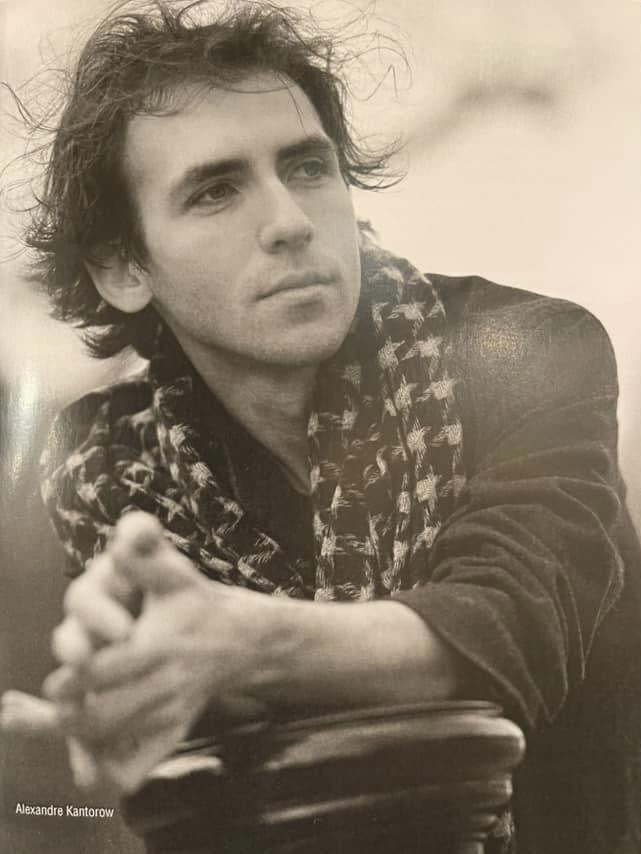
Alexandre Kantarow ignites and delights Naples at San Carlo with his great artistry

April 22, 2023

ALEXANDRE KANTOROW

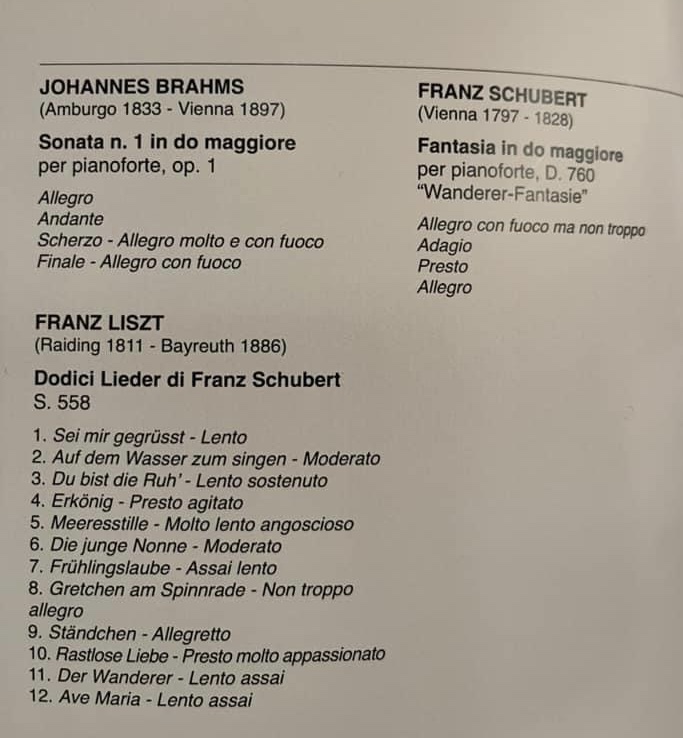
A truly breathtaking and exhilarating performance of Brahms first Piano Sonata op 1.
From the very first notes there was a sumptuous richness to the sound with the deep bass harmonies opening up endless possibilities of colour.
Infact the melting whispered cantabile of the second subject had a fluidity of ravishing beauty.Here was a true musician the same one that had mesmerised me in the performance he gave to an empty Philharmonie in Paris during the Covid pandemic.An oasis of beauty and hope for the future.A performance of Rachmaninov’s seemingly ungrateful first sonata that in his hands revealed a hidden masterpiece.

https://christopheraxworthymusiccommentary.com/2021/01/31/alexander-kantorow-takes-the-philharmonie-de-paris-by-storm/

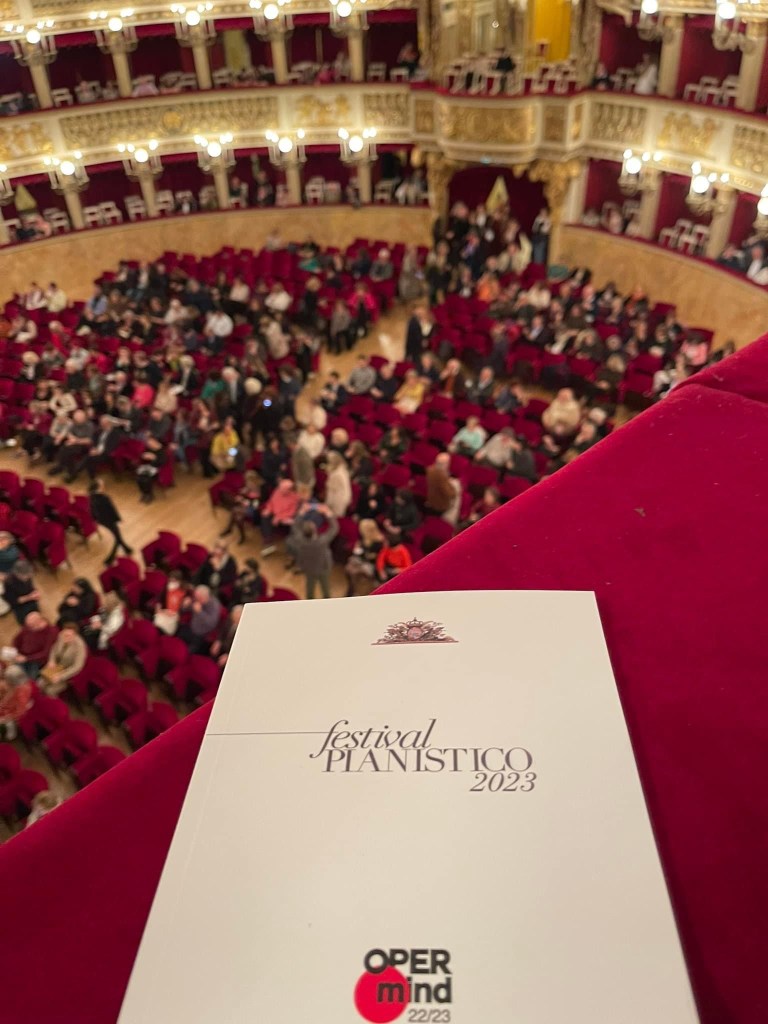
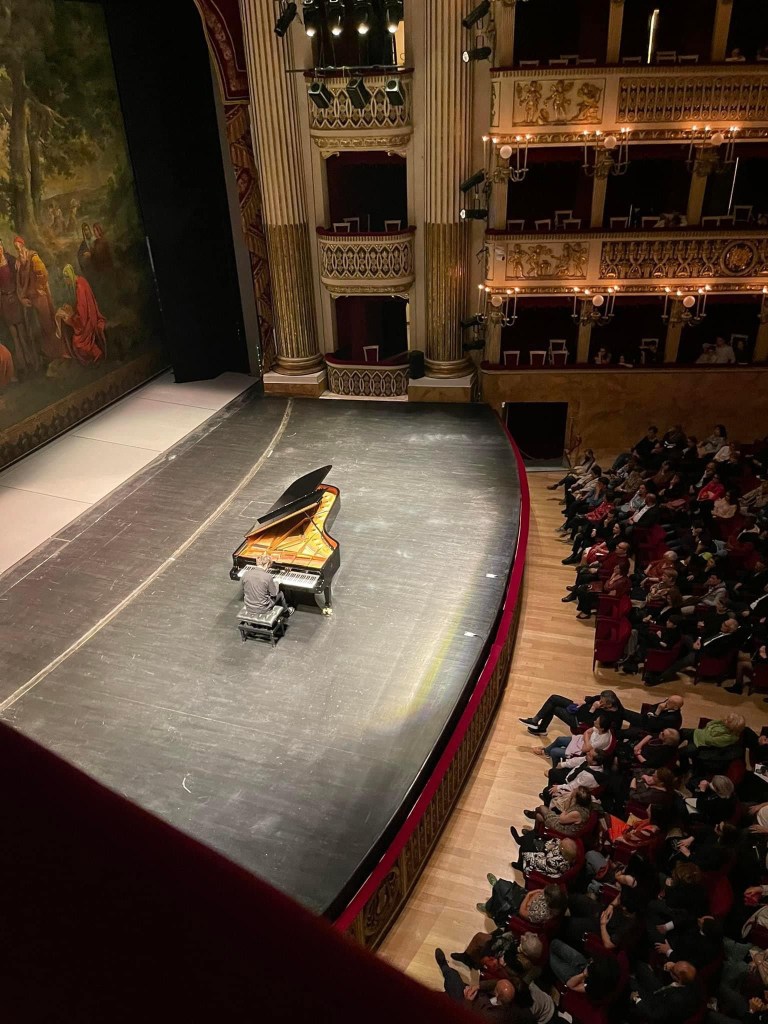
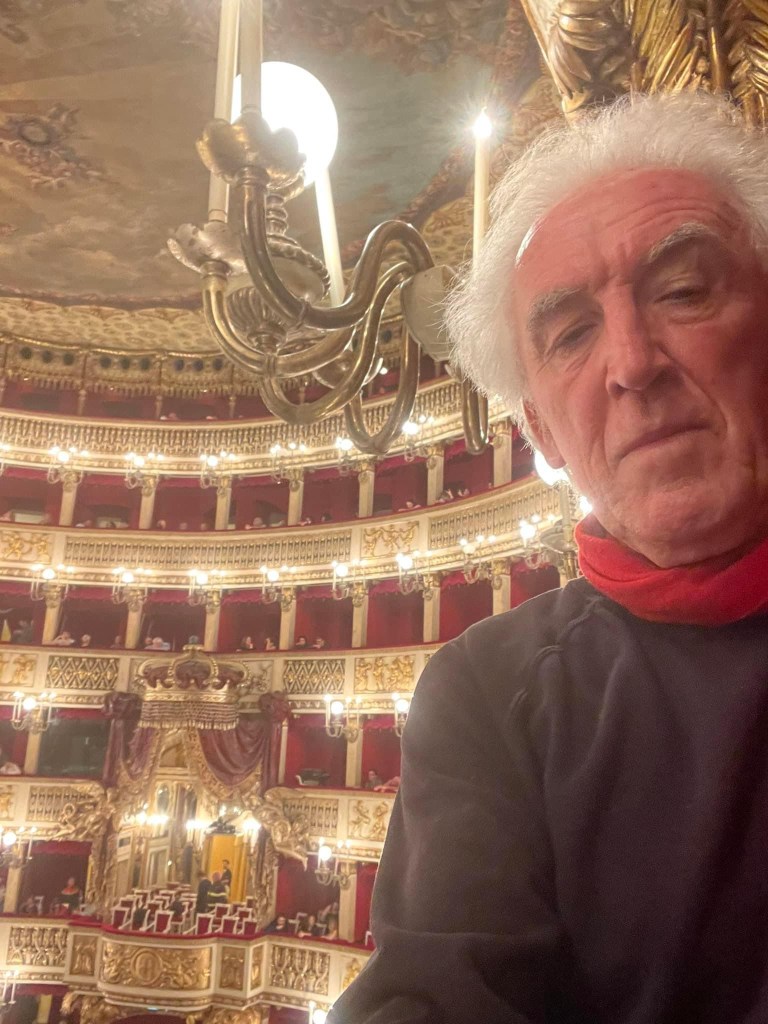
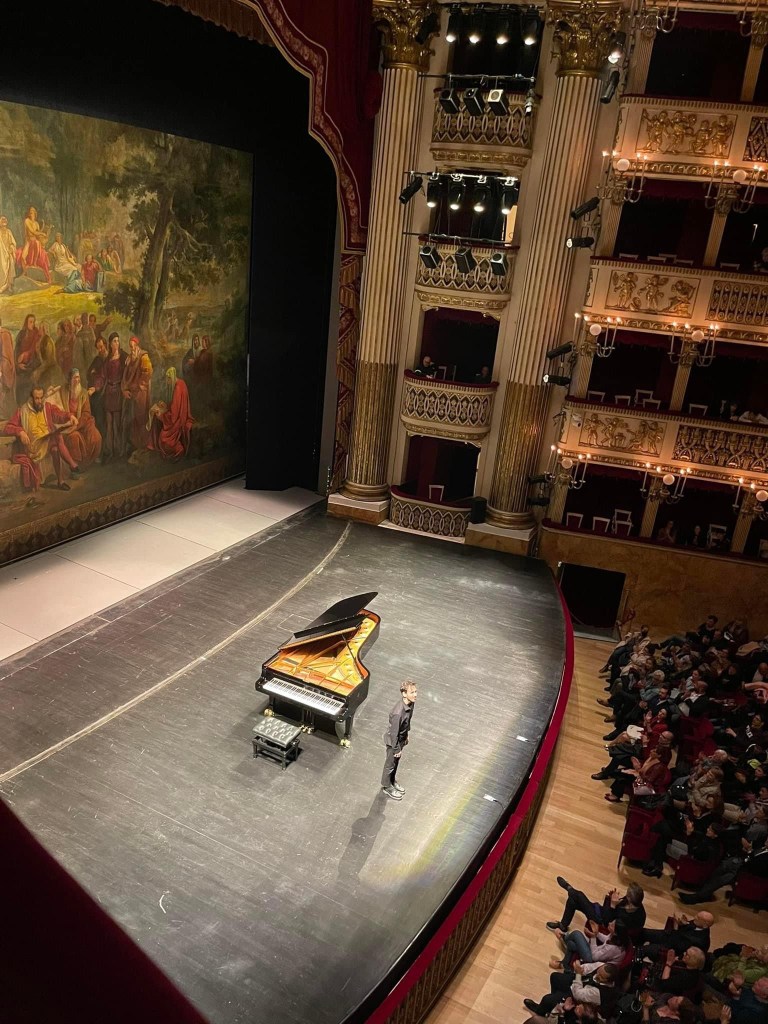
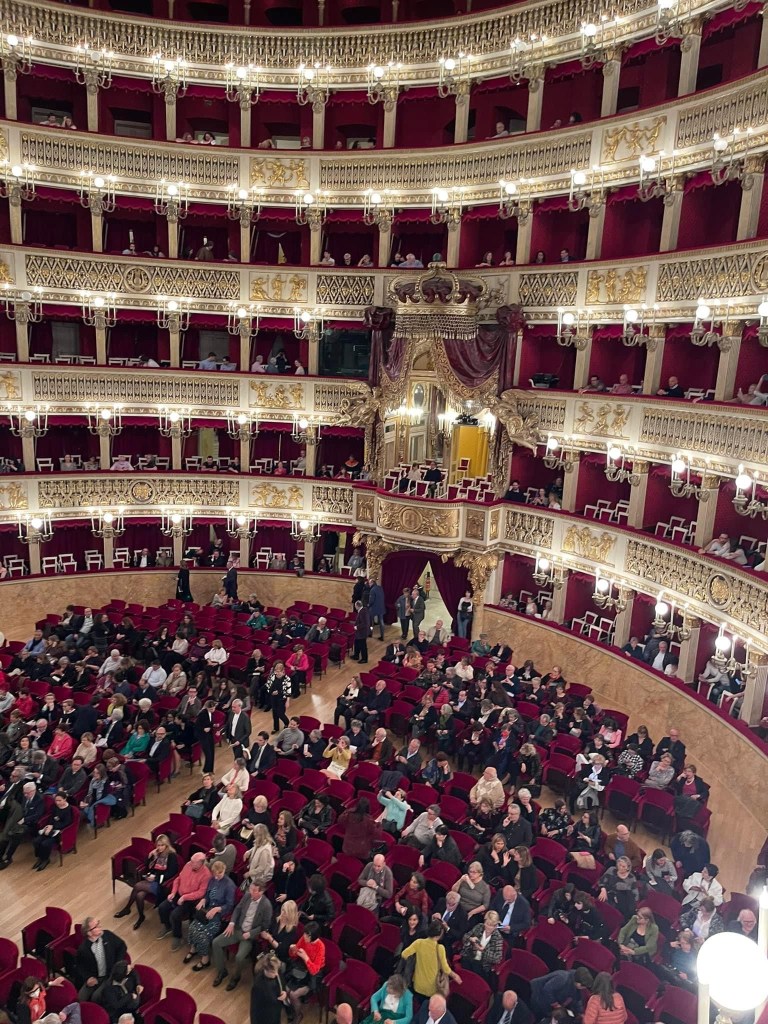
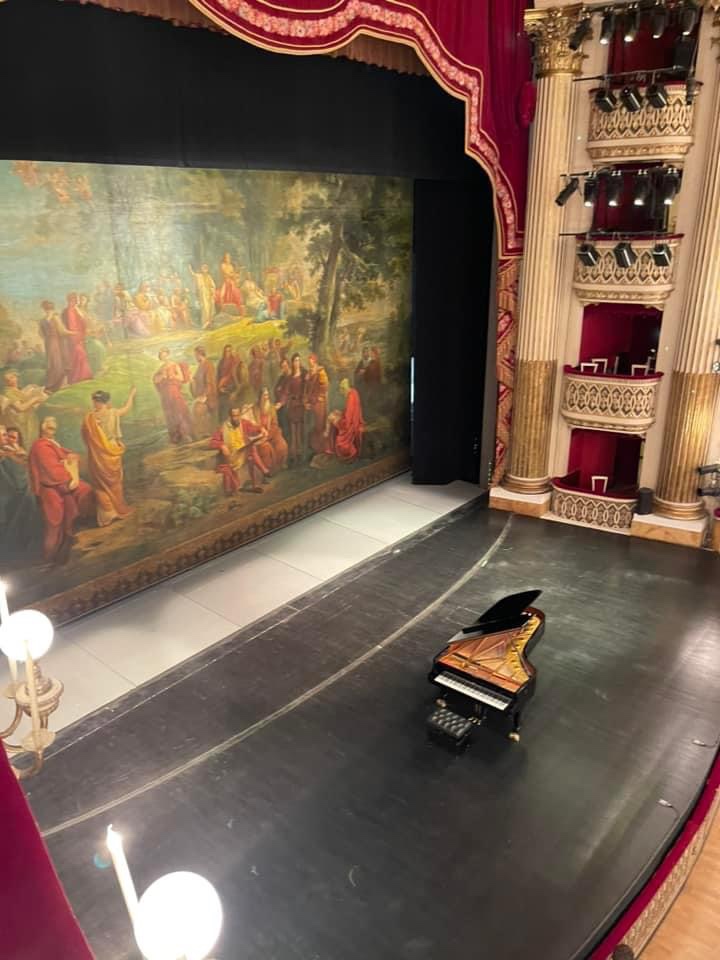
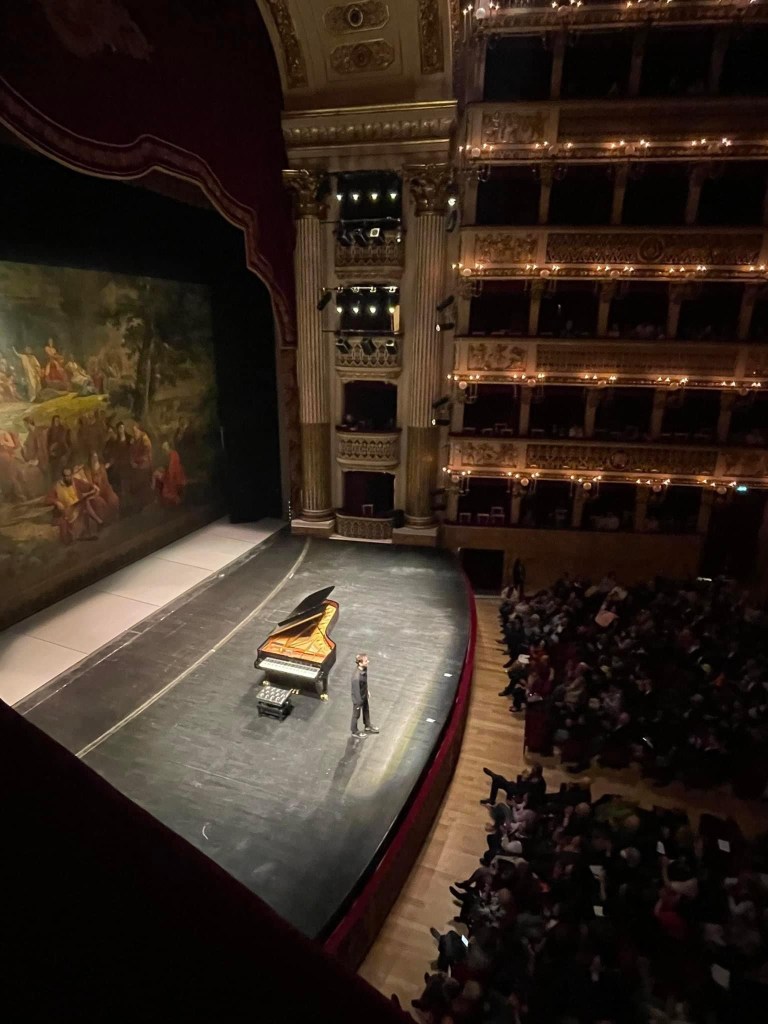
Waiting for Kantarow in the sumptuous beauty of San Carlo Opera House in the heart of Naples

It was the same today in the bustle of Naples on a Saturday night where he created an oasis of beauty revealing a masterpiece every bit as noble as the better known third sonata.Revealing a true symphony for piano with transcendental command and a technical mastery at the service of the composer.Here was a Furtwangler at the piano commanding attention and revealing the very soul of recreation.The Schubertian questioning and answering of the Andante was unforgettable for the portent that was concealed in so few notes.A truly magical duet between the tenor and soprano voices was a celestial ending.A spectacular Scherzo immediately broke the spell with its dynamic driving energy contrasting with the beautifully fluid trio.The finale was indeed Allegro con fuoco with it’s burning intensity and driving bass energy.Above all there was clarity and precision not only technically but of the mind of a great artist that can give us the complete architectural shape of a very complex work

A selection of six Schubert Lieder in the transcription of Liszt.Miniature masterpieces recreated by the genius Liszt.In Kantorow’s hands they were indeed imbued with the magical atmosphere of Schubert that Liszt had miraculously recreated.Six miniature tone poems in this artist’s sensitive hands where each one was a true ‘song without words’.Avoiding the more obvious well known Erlkonig,Standchen etc Kantarow brought us the rarely heard ‘other six’.I imagine he may have chosen them at the last minute like Schiff and Richter preferring not to be pinned down to a specific programme years in advance.’Sei mir gegrusst,Du bist die Ruh’,Meeresstille,Die junge Nonne,Rastlose Liebe,Der Wanderer’ by process of elimination were the Lieder he actually played.I have rarely heard them in concert and they were a revelation of sumptuous golden sounds,melancholic simplicity,mystery but above all a sense of balance that allowed the melodic line to sing out no matter the glittering ingenious cascades of notes that Liszt envelopes them in.They sparkled and shone like the jewels they are but above all communicated the emotion of the poetry and digging even deeper,revealing a world where the actual words are just not enough.Hypnotic performances that showed the extraordinary sensitivity and artistry of this youthful poet of the piano.A remarkable technical command of hands and feet! Yes,it was Anton Rubinstein who said the pedal was the soul of the piano and nowhere has it been more apparent than in the series of wondrous sounds and atmospheres that surrounded this beautiful black box on a stage that is used to welcoming the greatest voices of the age.A public that had escaped to a world of pure magic as they surrendered to the beauty and passion that was filling this historic temple of music that has resounded to some of the greatest performances ever heard.

The Wanderer Fantasy continued this Schubertiade without a break (probably because we were expecting all twelve Lieder as printed) but also because it had created an atmosphere that Kantarow was happy to maintain to the tumultuous ending of Schubert’s Wanderer Fantasy.A Fantasy that had opened the door for Liszt with it’s newly created form created with the transformation of themes.Liszt was to continue and pursue this new form bringing to it to even more Romantic self identification.He was happy to inspire his son in law Richard Wagner who was to bring it to unheard of heights of inspiration.To quote Badura Skoda :’It is Schubert’s most monumental piano piece and stands as a guidepost to the future not only in the matter of form ,but also in its grandiose ‘orchestral’ use of the piano’.Kantarow imbued it with orchestral sounds and even the scales and arpeggios that abound were linked to a bass that was the anchor that guided us through a work written in the same year as Beethoven’s visionary last thoughts in the evolution of the Sonata from op 2 to the final Sonata op 111. The four movements are developed from a single thematic cell ,a rhythmic motive taken from the song Der Wanderer (that we had heard earlier in Liszt’s transcription ). All the themes in the Fantasy are developed from a single Leitmotiv as in the symphonic poem of a later era.Here the classical symphonic order of movements -Allegro,Adagio,Scherzo,Finale – corresponds to the principal sections of one larger sonata movement (exposition,development,recapitulation and coda).

It was this architectural shape that was missing in a performance of great beauty and transcendental command where he chose rather fast tempi that meant there was a continual relaxation of tempo in the more lyrical passages that rather fragmented a work that in many ways anticipates the symphonic sonata of the Brahms op 1.In Brahms Kantarow had kept a bass anchor that was like a great wave that took us from the first note to the last and gave great weight and authority as in fact he had done in the Rachmaninov Sonata from the Philharmonie.His Schubert of course was played with the same artistry and sensitivity but I missed this undercurrent that could have given great weight and authority to this most Beethovenian of all Schubert’s piano works.I found the opening of the Scherzo – Presto rather fragmented and the last movement too fast for it’s Allegro indication.The last movement lost something of it’s accumulation of grandeur and crescendo of excitement that was so telling in Arrau’s artistocratic hands.This was a Schubert Fantasy of a young poet that I am sure will gain in weight and authority as it enters his soul.

Amazingly only the night before Kantarow had played a magnificent Rachmaninov First Piano Concert in Turin with Barenboim’s assistant Thomas Guggeis – two artists in their twenties who can be heard in this link to the live radio broadcast:

https://www.raiplaysound.it/audio/2023/04/Radio3-Suite—Il-Cartellone-del-21042023-99a3944b-9d83-4ad2-9378-0e65eb224d08.html.

Three encores in a crescendo of acceptance as Kantarow treated us to another Schubert transcription of sumptuous beauty.

It was followed by the encore he had played the night before in Turin :Vecsey/Cziffra ‘Valse Triste’.Played with passion and insinuating style together with all the jeux perlé ‘tricks of the trade’ associated with the heir to Liszt that was the extraordinary Cziffra.Like the ‘bel canto’ stars that have ignited this stage for the past two centuries Kantarow knew how to ignite and excite an audience that was now following his every move with rapt attention and adulation.Realising like the great artist he is that he could not leave his audience yet he gave them what they were craving for with the greatest circus act of our age :Volodos’s revisitation of Mozart’s ‘Turkish March’.It sent the audience into delirium with everyone on their feet cheering this great new star that had arrived in their midst.

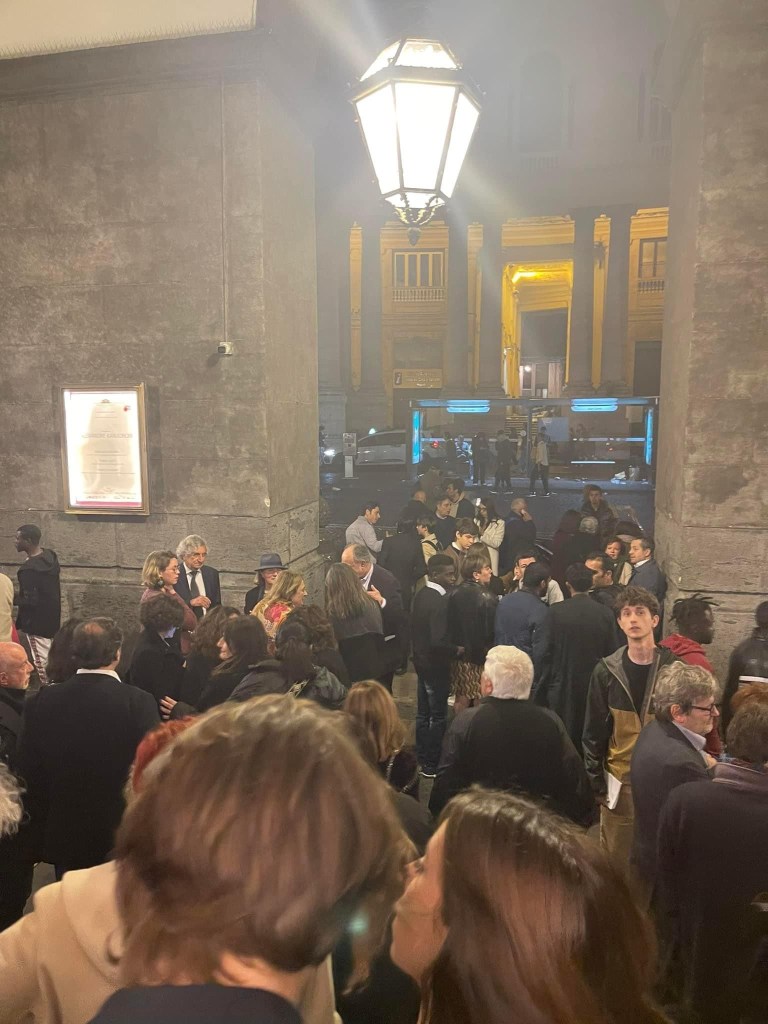
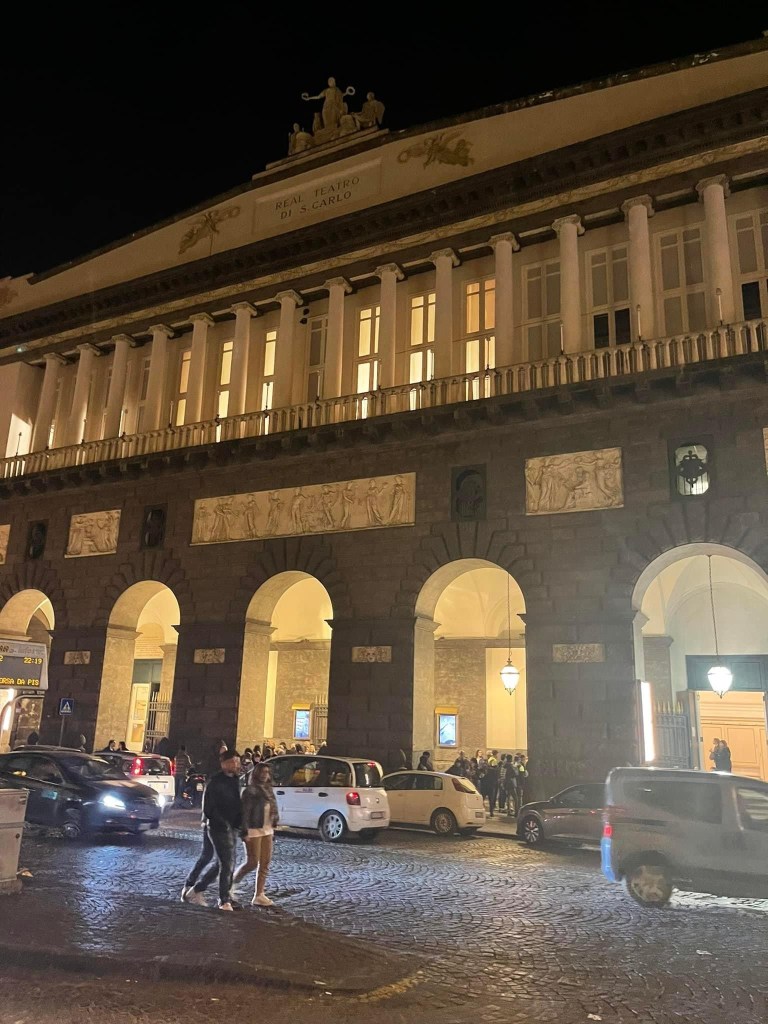
A surging mass of people outside on a festive Saturday evening in the centre of Naples
Waiting for Kantarow in one of the most beautiful theatres in the world
Kantarow ‘Veni,vidi,vici’
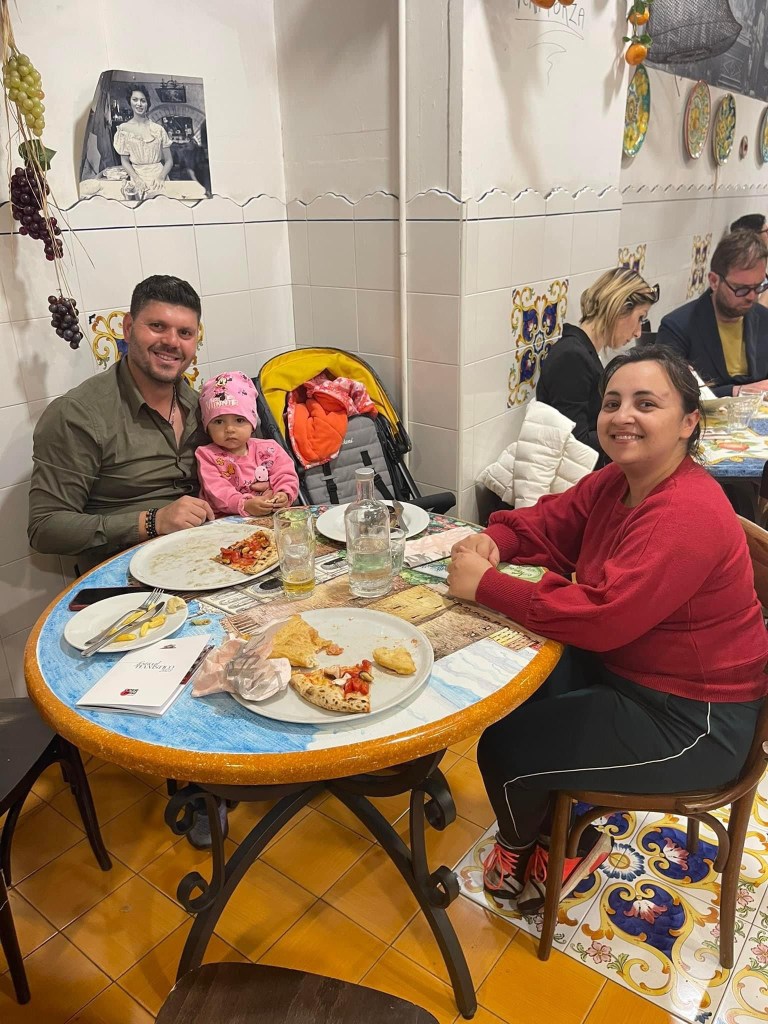
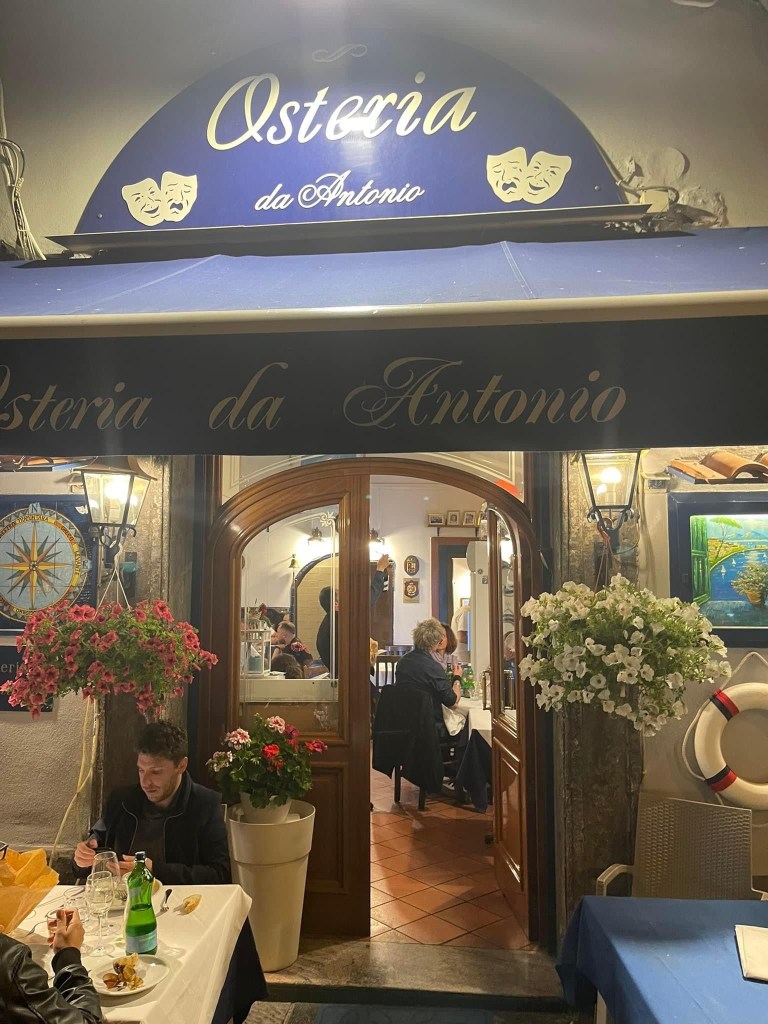
Nice to join in the fun of Naples by night in the Pizzeria opposite San Carlo with my adopted family waiting to run me home.
Nice to know that Michael Aspinall’s favourite restaurant awaits just around the corner too

https://youtu.be/iwLnSGPtero

Ruben Micieli triumphs in London for the Keyboard Trust at Steinway Hall

A standing ovation for Ruben Micieli after his scintillating performance of Fazil Say’s fantasmagoric manipulation of Mozart’s Turkish March!
Chopin Mazukas op 24,the second Ballade and Polonaise Heroique opened his recital before Ruben lifted the lid to his discovery of opera paraphrases and fantasies by long forgotten virtuosi of the 1800’s.
Immersed in a style from another age this young Sicilian musician,disciple of the much missed Aquiles delle Vigne, gave scintillating not to say titivating accounts of ’songs from the shows’ Thalberg style.

Founders of the Keyboard Trust still following the great young talents that they offer a step in the ladder to a career in music .John Leech who celebrates his 98th birthday tomorrow and is looking forward to his letter from King Charles 111 in two years time!
https://christopheraxworthymusiccommentary.com/2022/09/14/the-gift-of-life-the-keyboard-trust-at-30/


As a child near Catania and an aspiring young pianist he was shown the scores of Ignace Leybach by an elderly ex pupil of this long forgotten virtuoso.
She bequeathed her entire library to Ruben entrusting him with her invaluable archive.
It was in Catania the birthplace of Bellini whose bel canto was to be such an influence on music of the nineteenth century.
Chopin and Field above all brought it to the piano with refined aristocratic elegance.
Liszt and Thalberg used the famous opera melodies for an intricate web of virtuosity where they gave the illusion of having many more hands than just the two that God gave them.
The Norma fantasy by Liszt has become a standard piano showpiece often played by great virtuosi of our day such as Hammelin and Arrau.
Mark Viner another Keyboard Trust alumni has made a special study of this legendary period seeking out and recording the works of Alkan,Thalberg,Liszt and many other pioneers of a past age.
The golden age of piano playing when pianists were feted like pop stars by the aristocratic salons of the time.Refined gentry were turned into a hysterical mob seeking out souvenirs of their idols to take home perchance to dream.

Sir Geoffrey Nice a long time trustee of the KT taking time off from negotiating peace in the world,introducing his grandson Leo to the much more beautiful world of music


Ruben had gone a step further after this childhood discovery and now has been commissioned by Naxos recording company to seek out further gems in the archives of the musty libraries and institutions where these scores have lain undisturbed for centuries.
Ruben has a virtuoso technique acquired from the Russian school of his first Serbian teacher in Catania.
Much more importantly he has a sense of style and colour,nurtured by Jasinski and Delle Vigne,that brings these works vividly to life with the same love and sense of showmanship for which they were born.
There was a crescendo of cheers and applause as Ruben unraveled this magic in transcriptions of Gluck,Mozart,Verdi and Bellini that cast the same spell on today’s audience as they had obviously done at their birth.
It was interesting to note that Leybach’s Norma fantasie uses many of the arias that Liszt chooses to ignore.Of course it is a sign of the genius of Liszt who knew how to transform and even improve on Bellini’s order.Leybach is a good workmanlike fantasy,black and white as compared to Liszt’s multicoloured score.

Ruben in discussion with Alberto Portugheis a true renaissance man
https://christopheraxworthymusiccommentary.com/2023/02/23/alberto-portugheis-a-renaissance-man-goes-posk-to-celebrate-the-213th-birthday-of-fryderyk-franciszek-chopin/


It was strange to hear Raff’s treatment of Gluck’s ‘Che faro’,having been so used to Sgambati’s magical transcription.It often cast it’s spell as an encore piece from the hands of the much loved Nelson Freire.The Raff transcription is much longer and more complex and was in itself a great discovery from a name that I have only ever seen as editor on the cover of early scores.

Two of the three artistic directors of the KT celebrating the success of this young Sicilian virtuoso.
Leslie Howard after his triumphant 75th birthday concert last night needed a much earned day of rest.
https://christopheraxworthymusiccommentary.com/2023/04/18/leslie-howard-75th-birthday-concert-an-experience-beyond-compare-the-true-heir-to-agosti-busoni-liszt/


Duvernoy’s ‘Don Giovanni’ fantasy was simple and ingenious but of course not the masterpiece that Liszt had penned,but well worth hearing.
Eugenia Appiani ,a female virtuoso like Clara Wieck,in what was predominantly a man’s world in that period.A fascinating and beautiful Ballade on Verdi’s Rigoletto and as Ruben told us afterwarda he hopes to find many more pioneering ladies in the archives.
A fascinating conversation after his triumphant performances just whet the appetite for more discoveries.Watch this space!
His encore was a modern day caprice on Mozart by the now much feted Turkish pianist Fazil Say.A few years ago Say was made to suffer imprisonment from a regime he chose to challenge in his home country.
I have never seen an audience so enthusiastic giving a spontaneous standing ovation to this remarkably committed young artist.
Music hidden in musty archives and now given a new lease of life?!
Last night in this young artist’s golden hands it had the same effect as they would have received from the hands of long forgotten virtuosi of the past.
Hats off and more please !

What fun we had too with Cremonese Mario,ex head waiter at the Hilton,now at 89 an enthusiastic follower of the Keyboard Trust
Exciting times for the KT with one of the finest pianists of his generation opening the new season at the national Liberal Club.Four stars will be shining brightly thanks to the Robert Turnbull Foundation and Yisha Xue at the Liberal Club

https://christopheraxworthymusiccommentary.com/2023/04/15/giovanni-bertolazzi-at-the-quirinale-a-kaleidoscope-of-ravishing-sounds-that-astonish-and-seduce-for-the-genius-of-liszt/
Our general manager Sarah Biggs and administrator Richard Thomas leave no stones unturned in trying to raise funds to give more concert opportunities to the marvellous young musicians the KT is sworn to help
A very fruitful partnership has been forged with Roma 3 Orchestra University in Rome.Valerio Vicari,the artistic director,like us at the KT is dedicated to helping young musicians by giving opportunities with numerous public performances solo and with their magnificent orchestra

https://christopheraxworthymusiccommentary.com/2023/02/03/mozart-gala-for-roma-3-orchestra-the-vieni-vedivinciof-valerio-vicari/