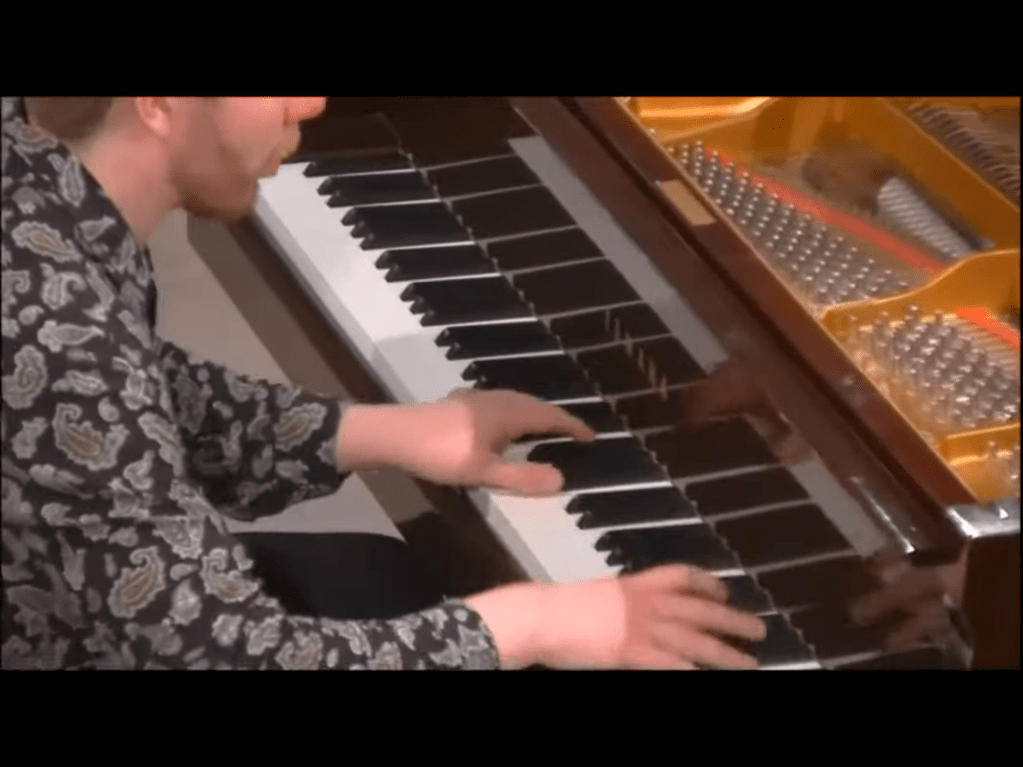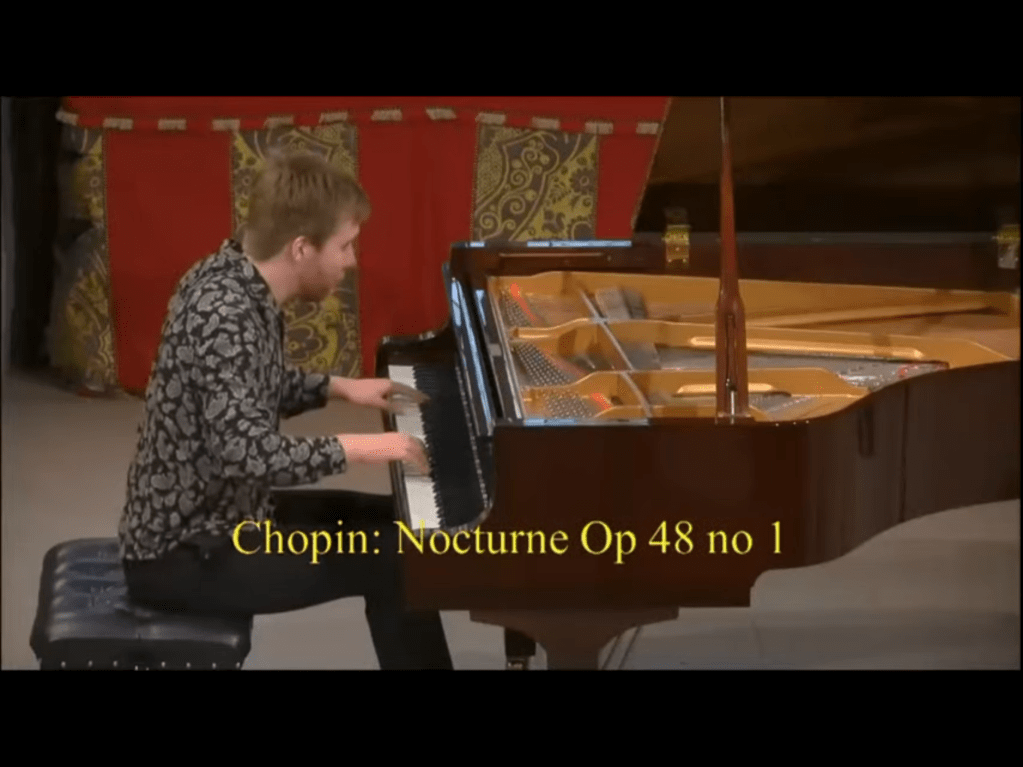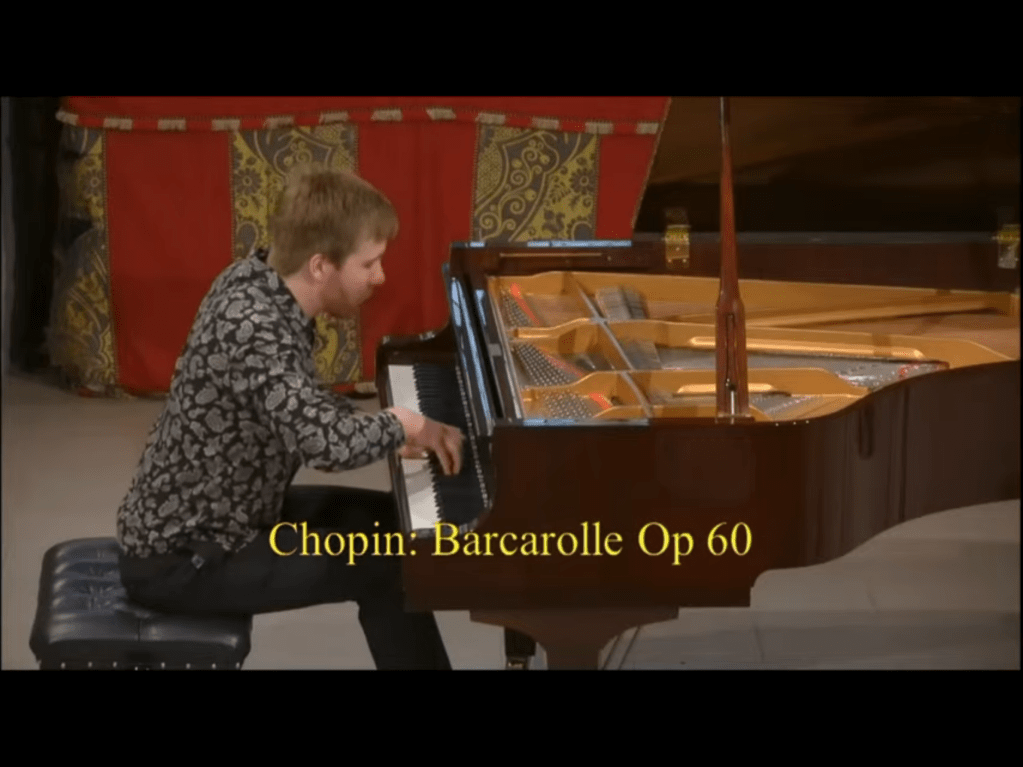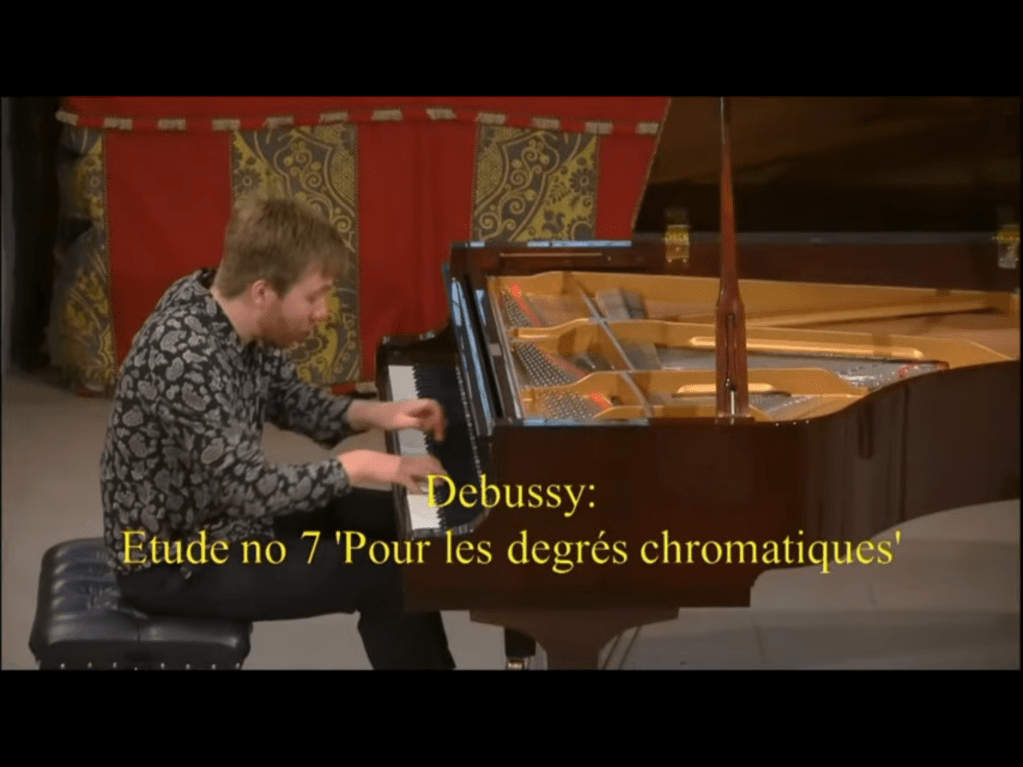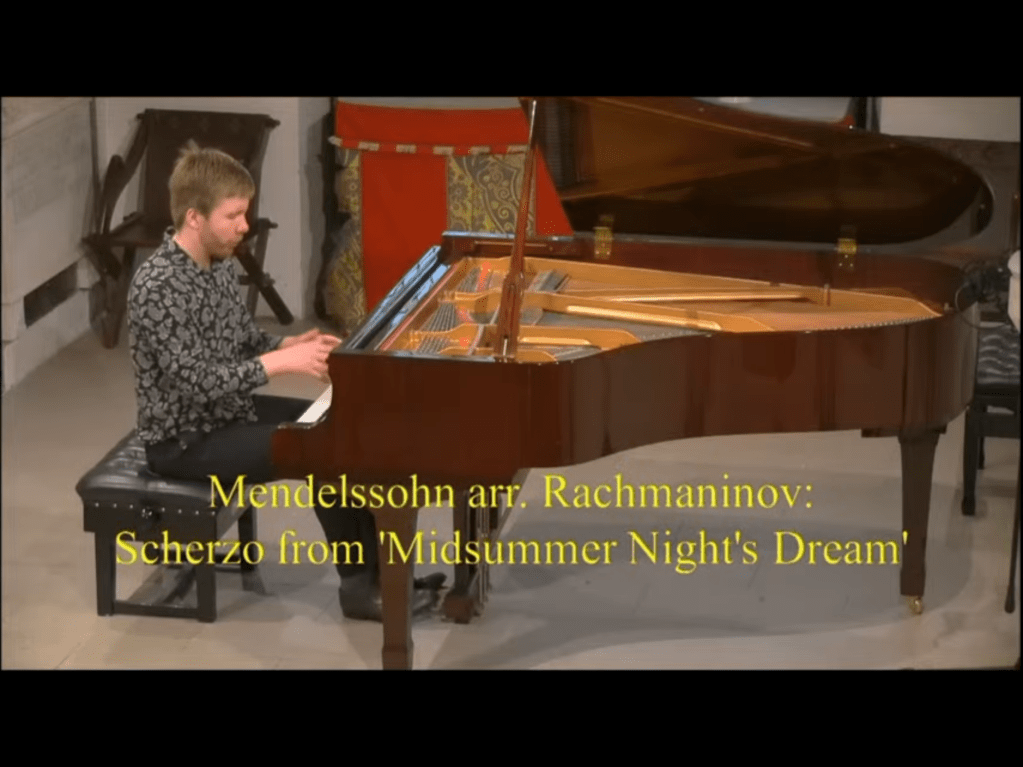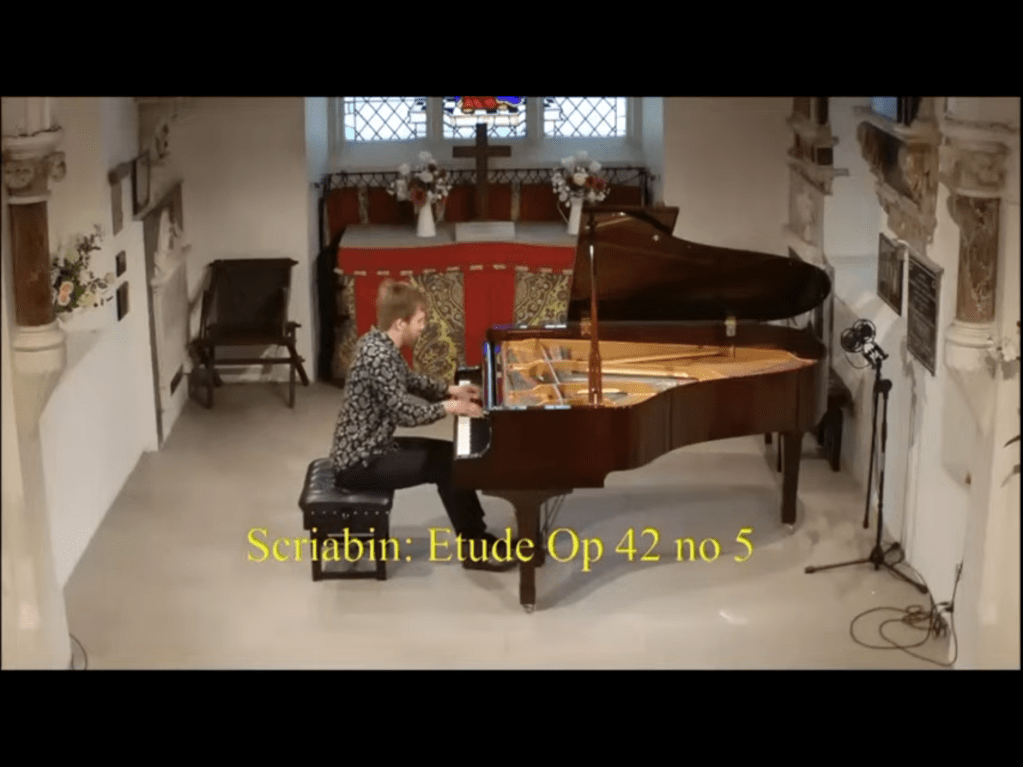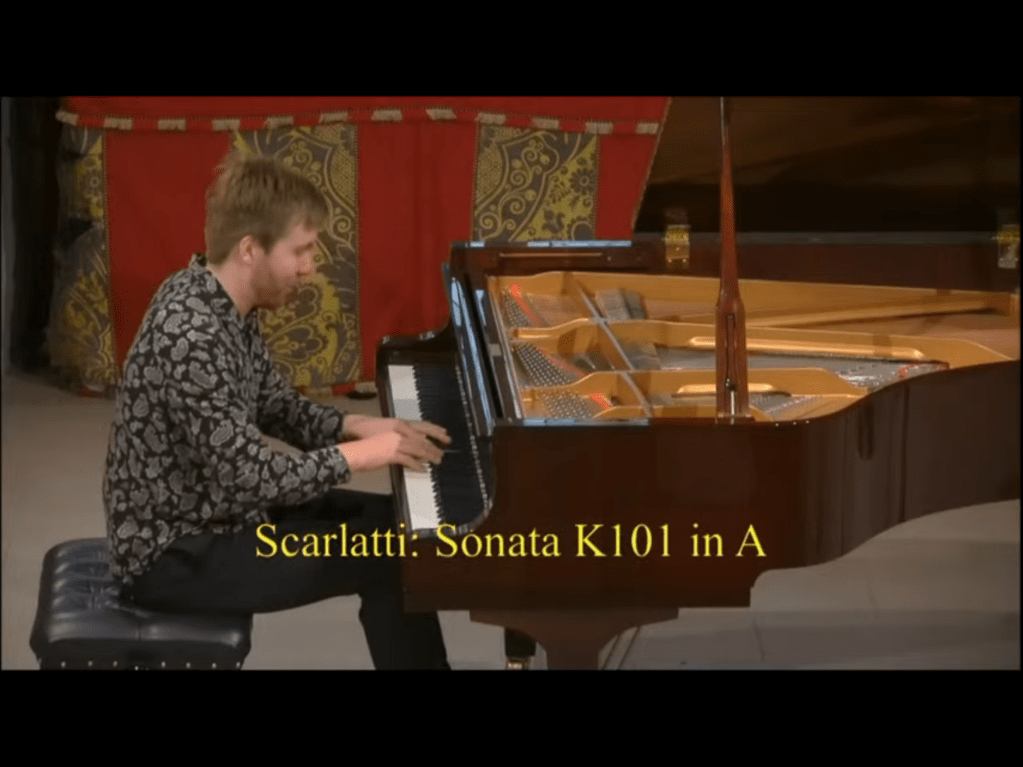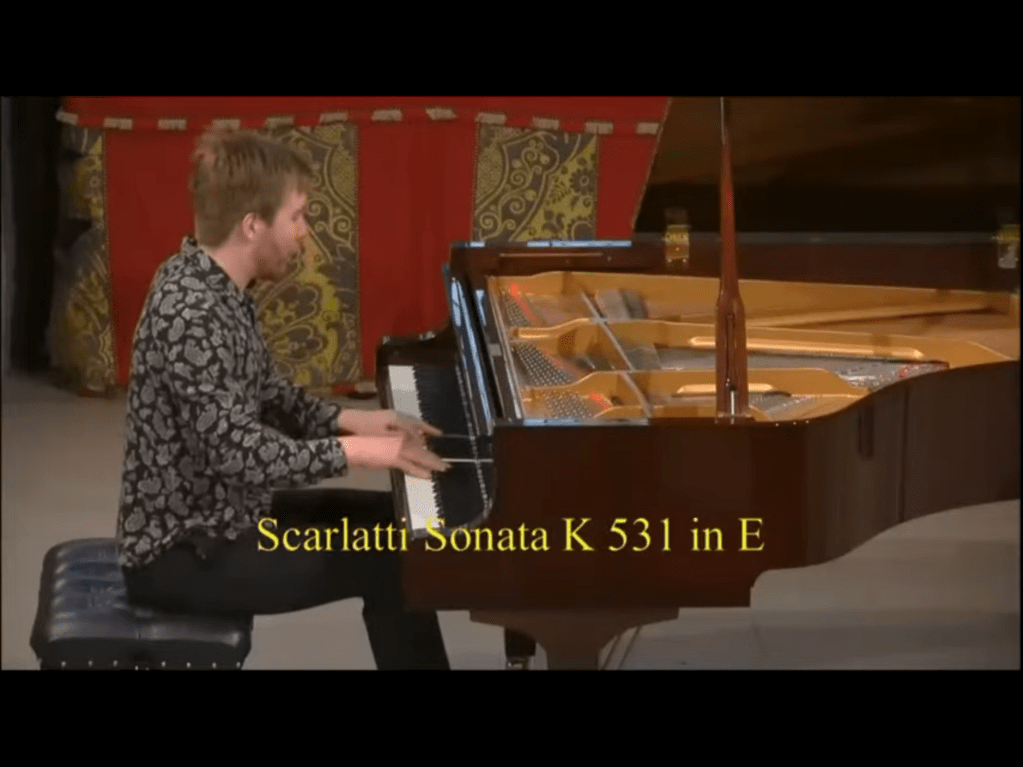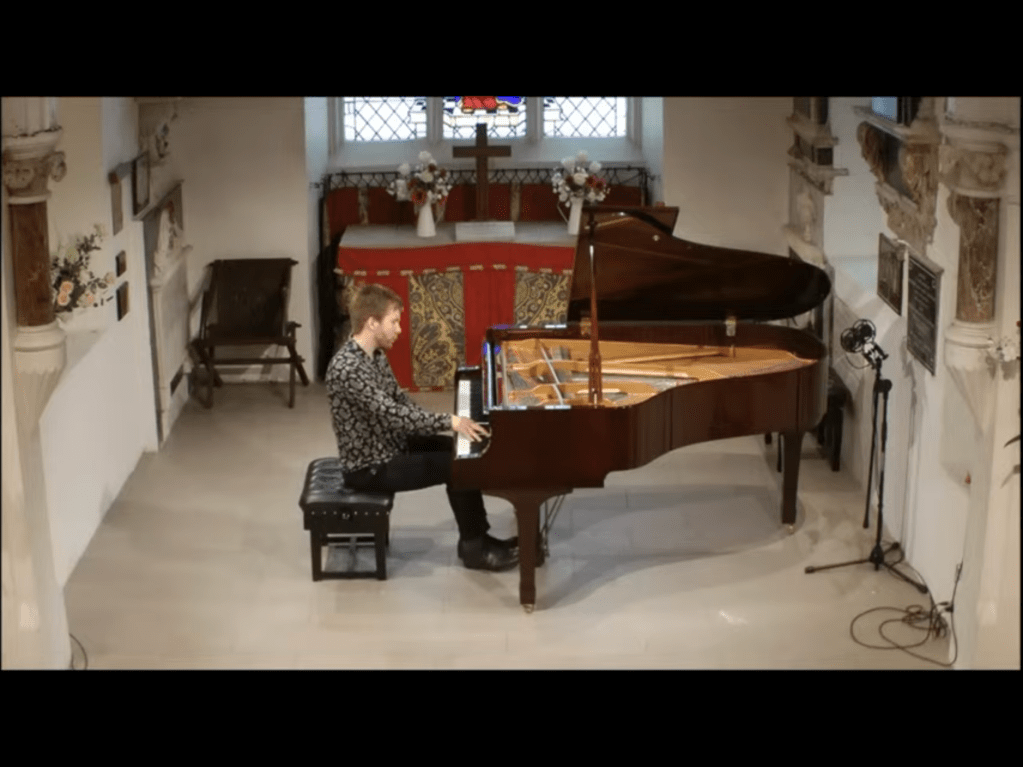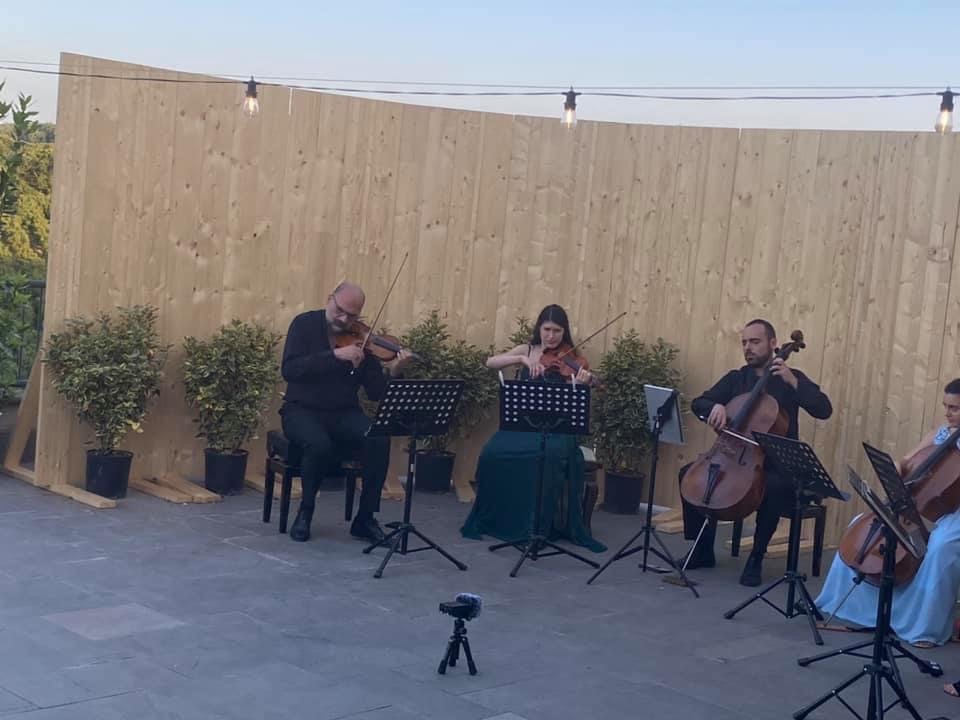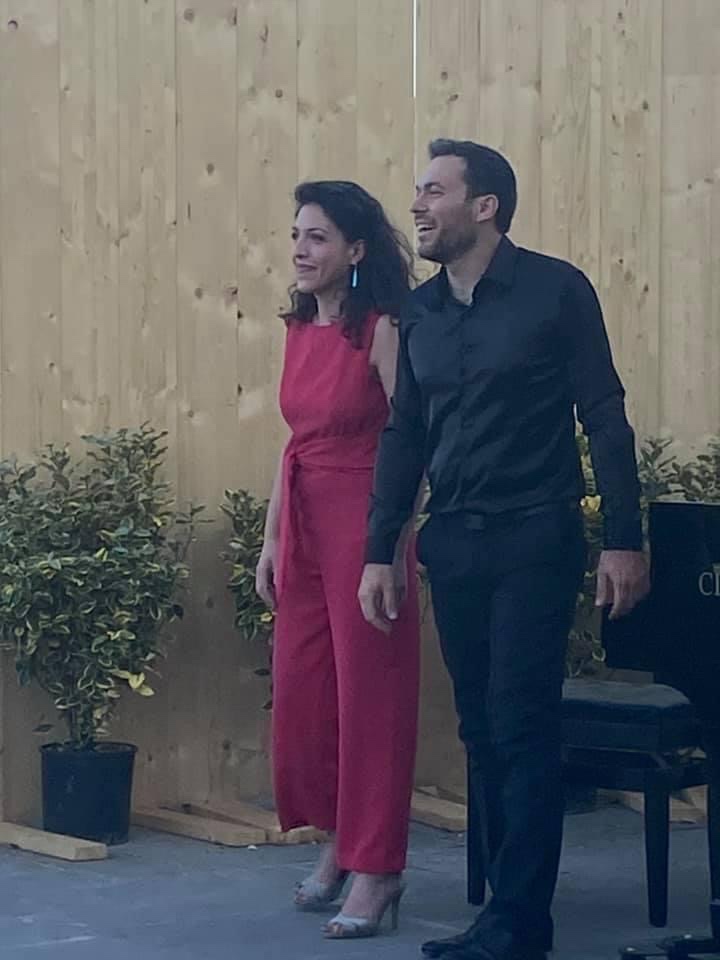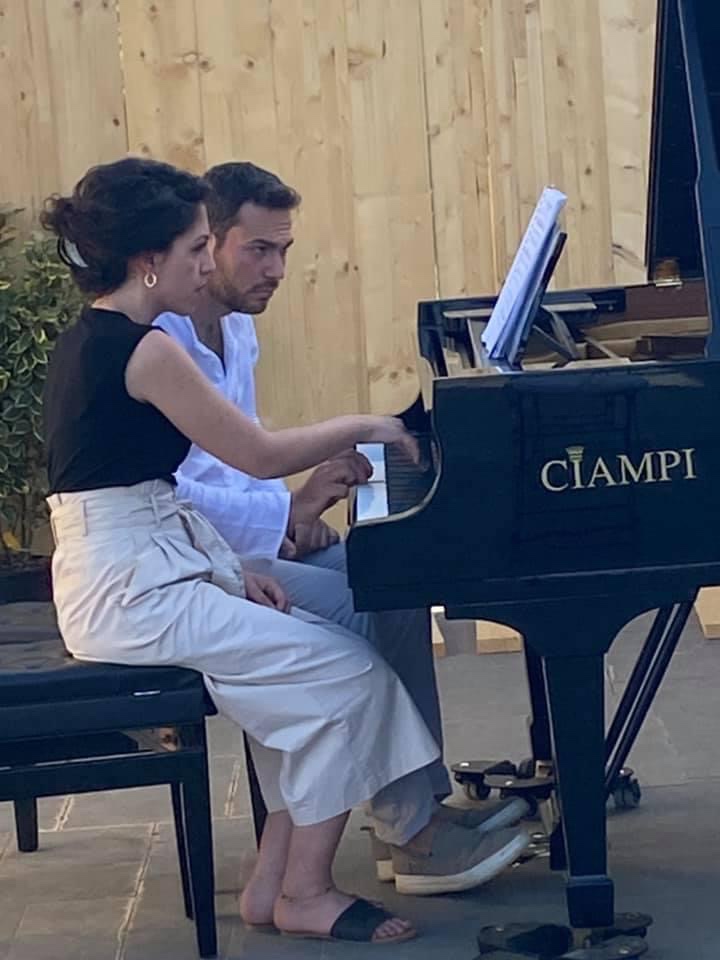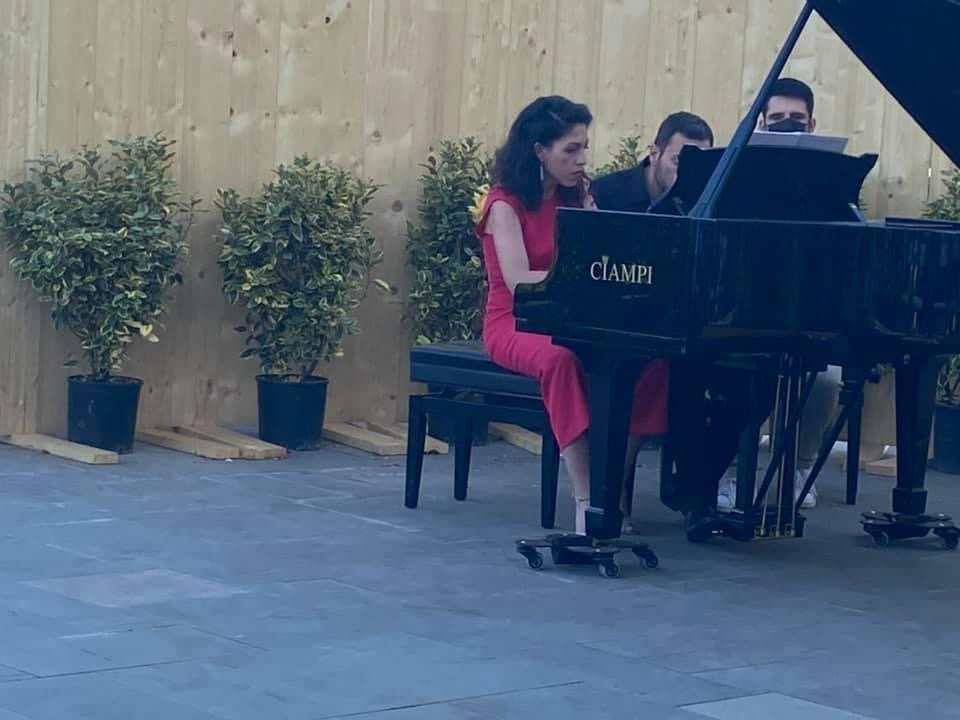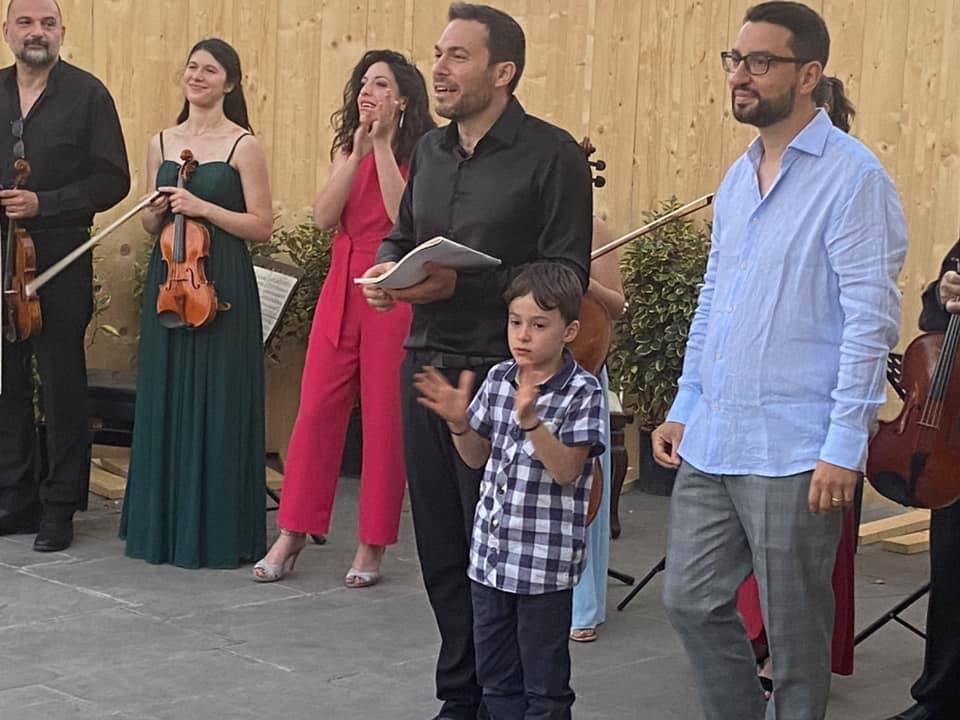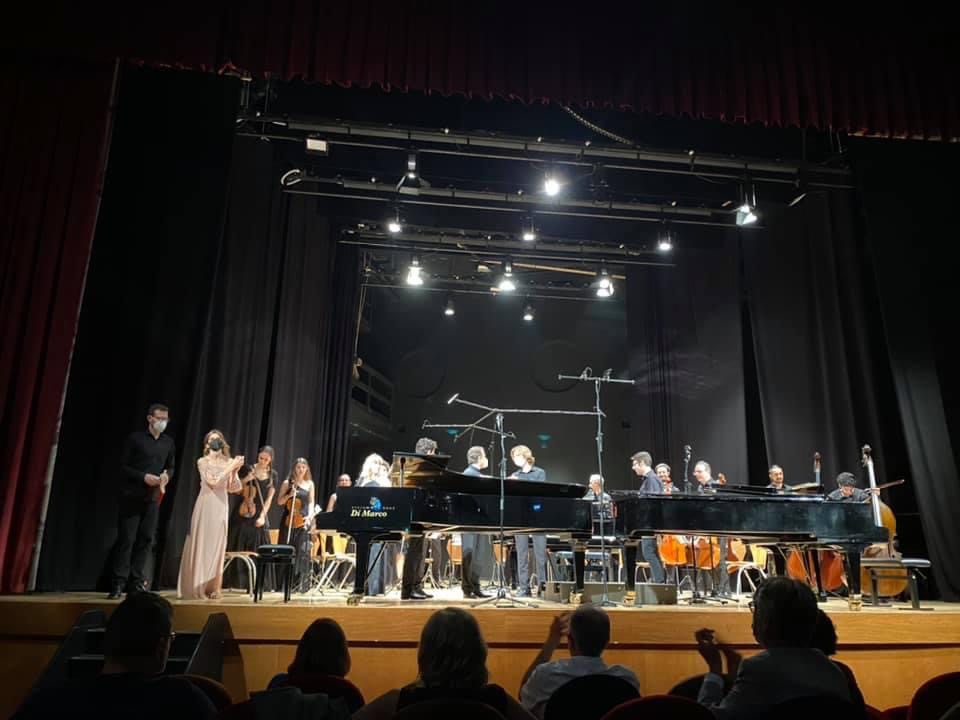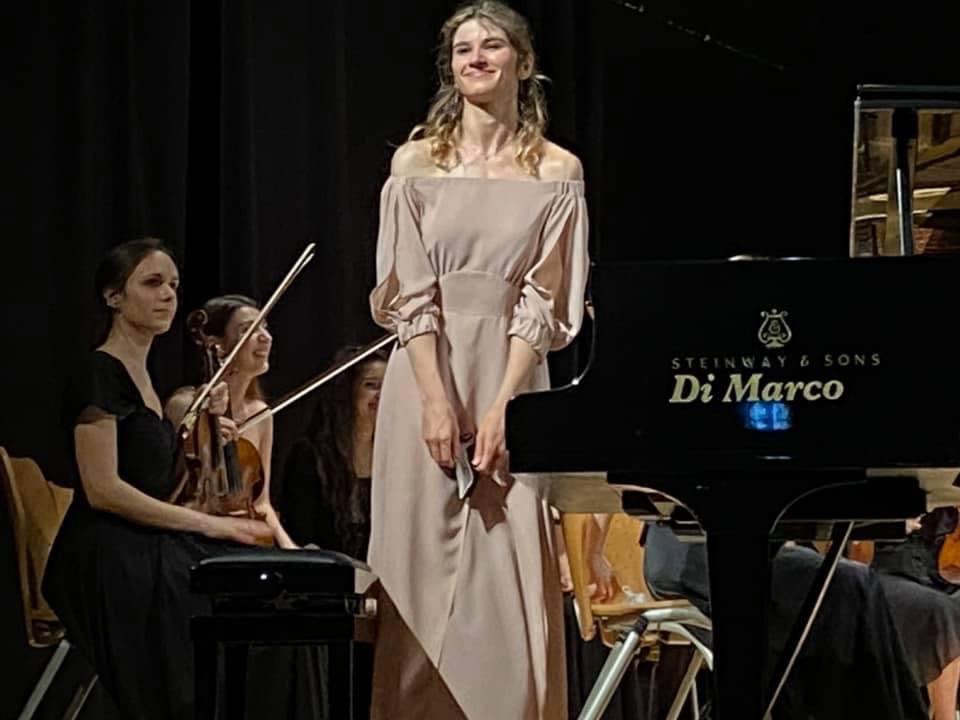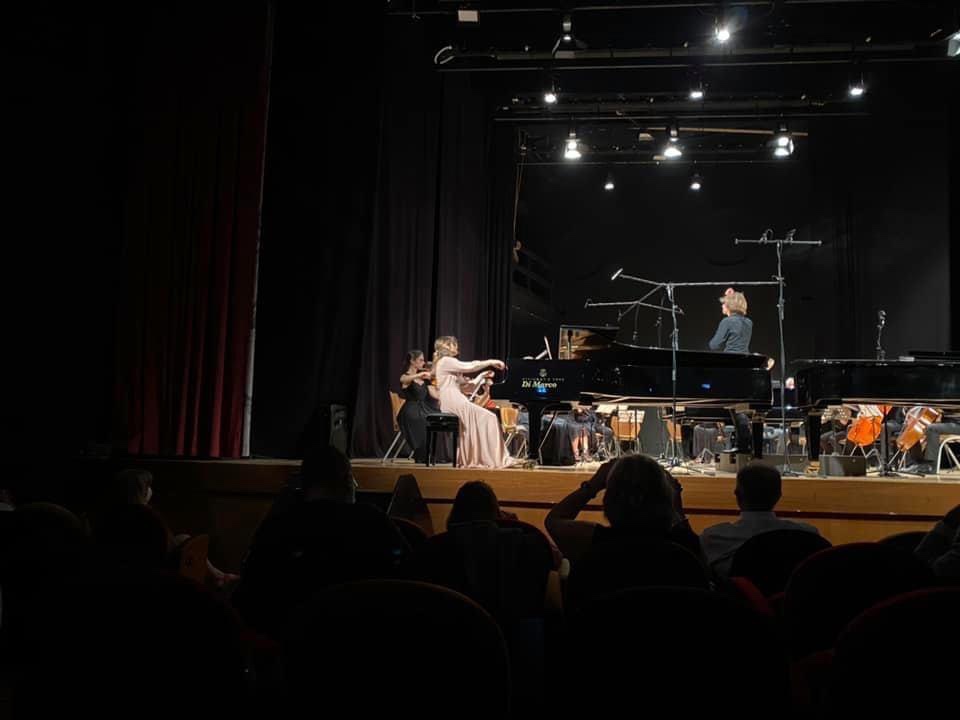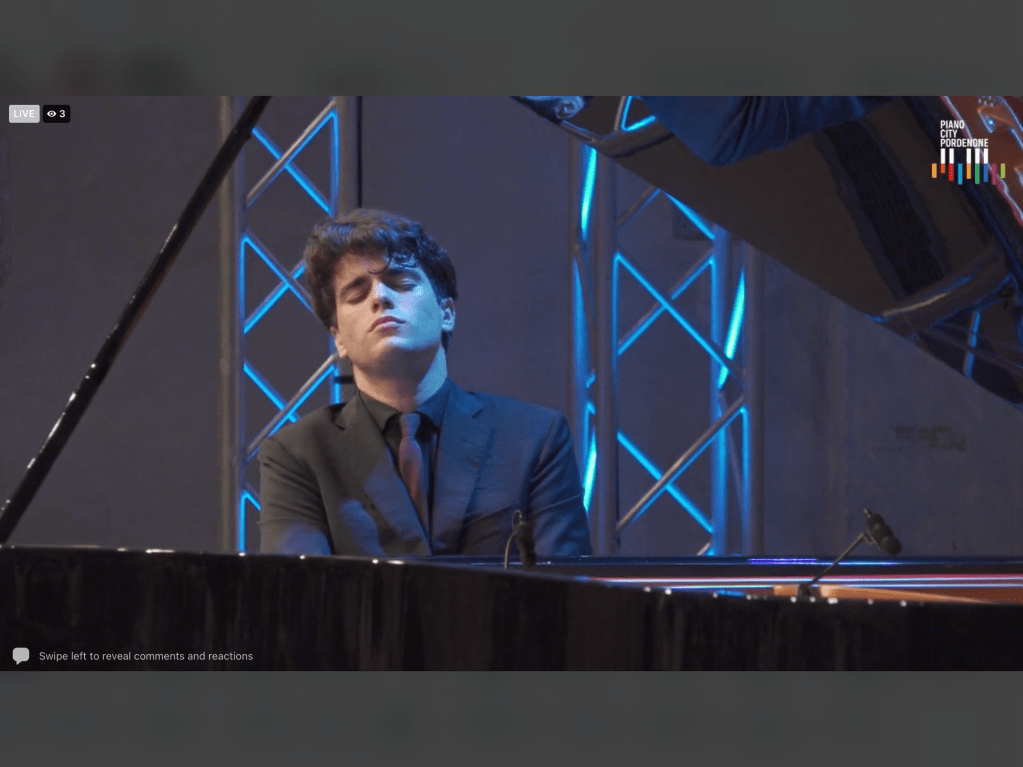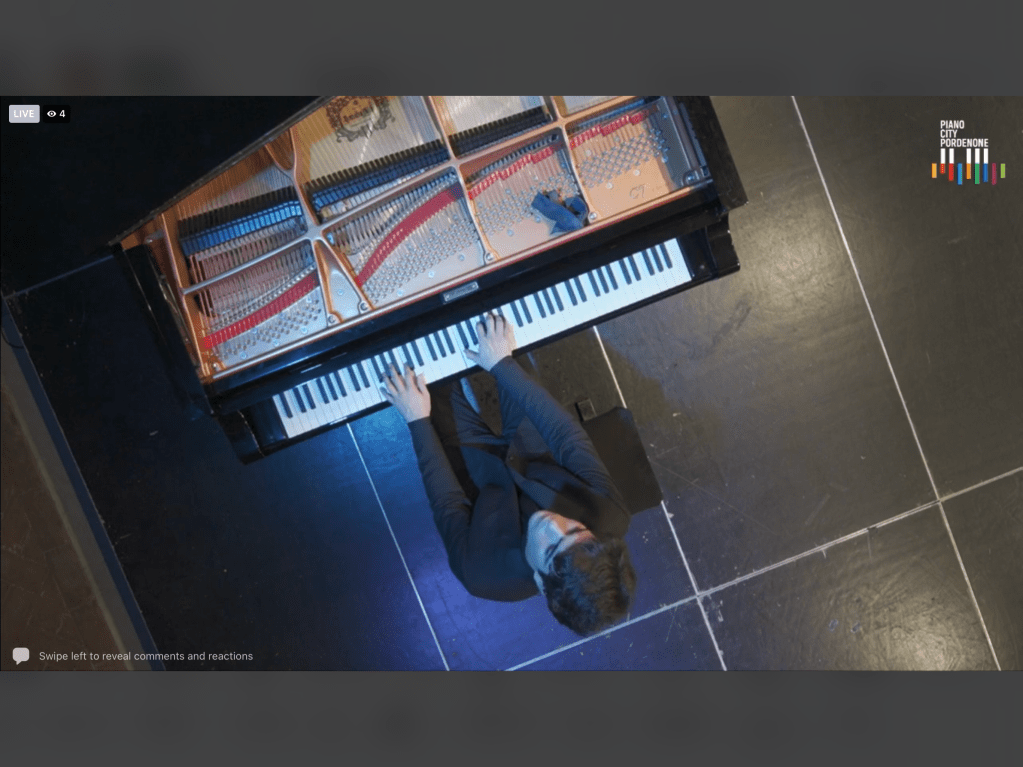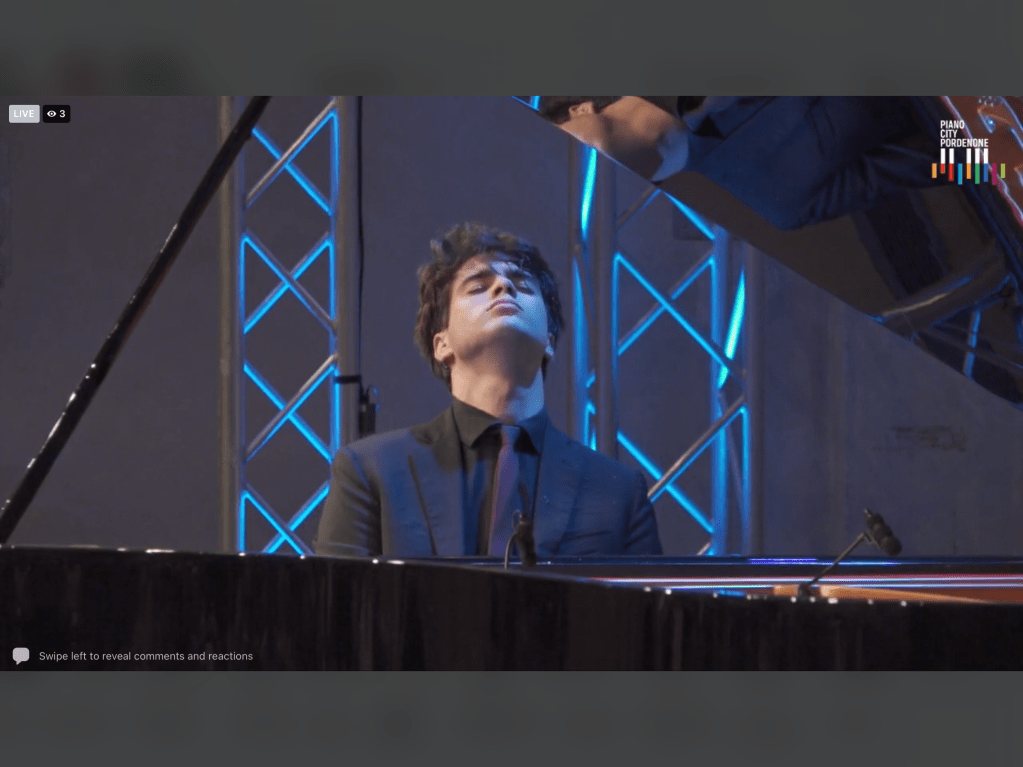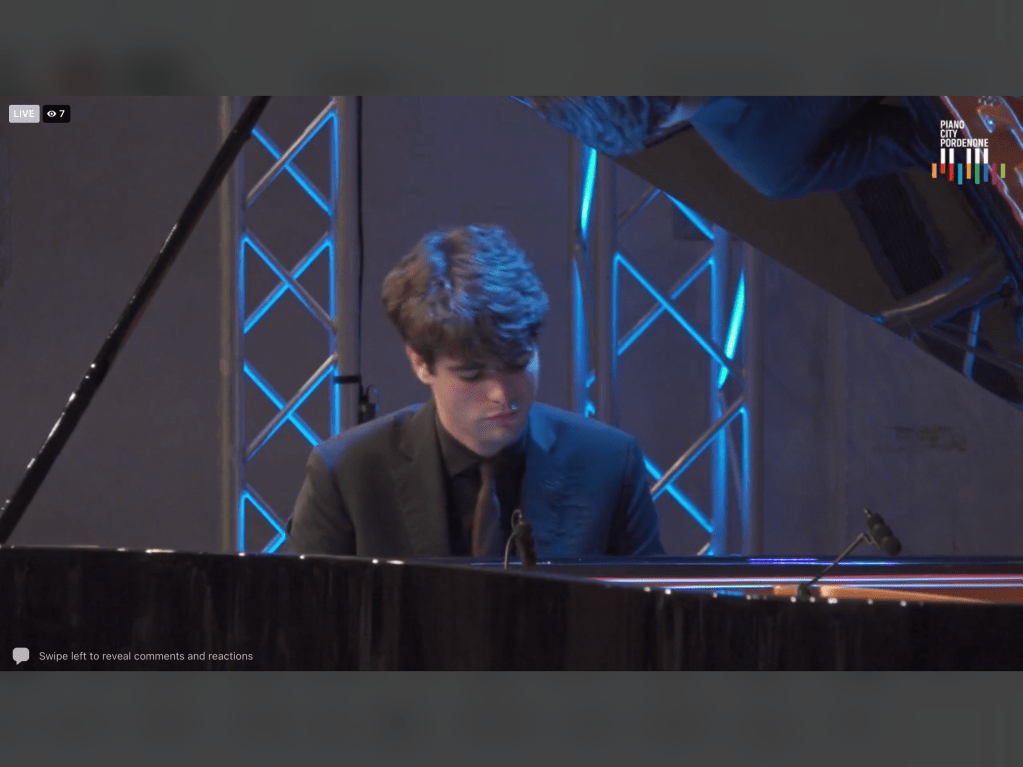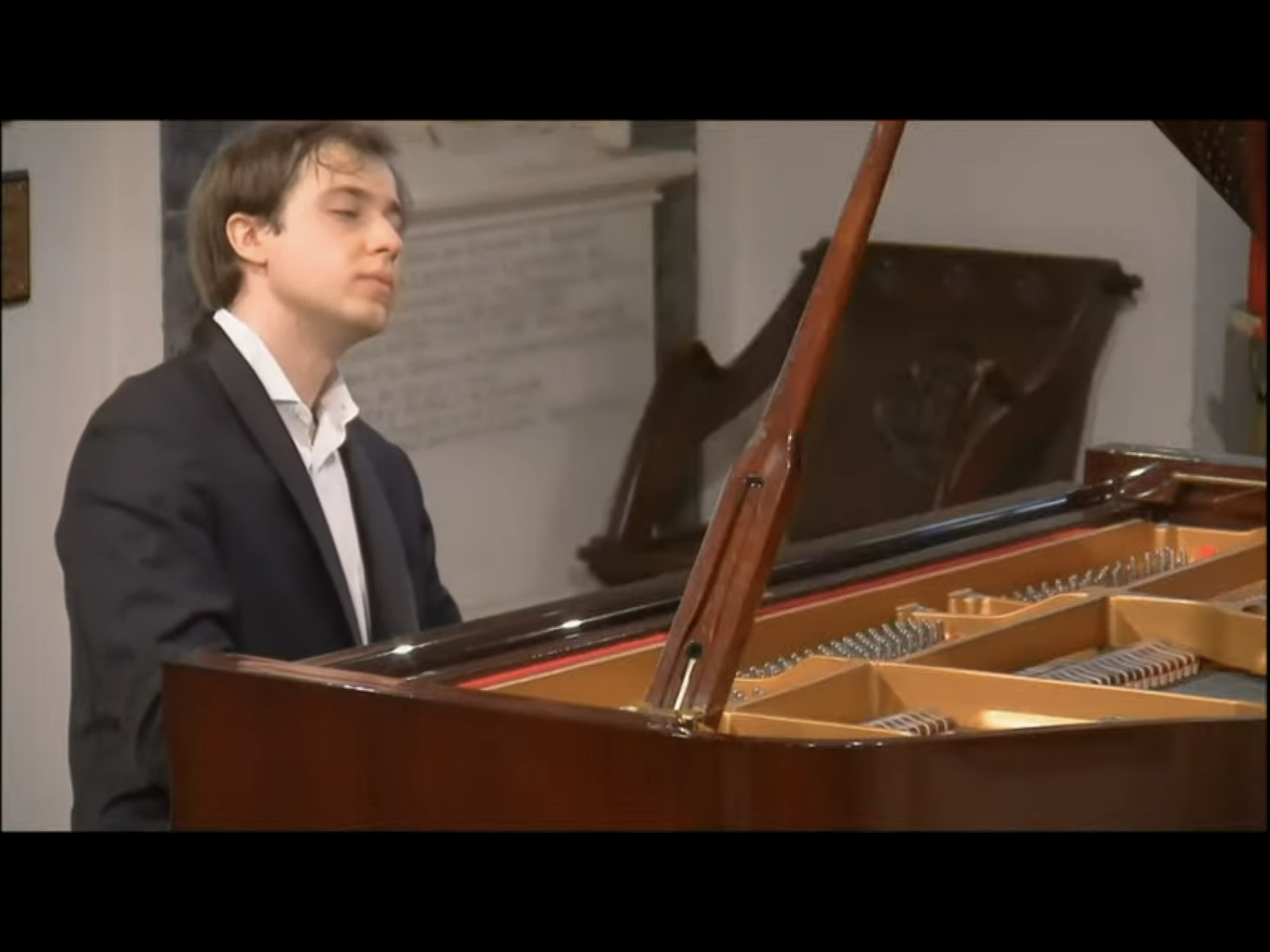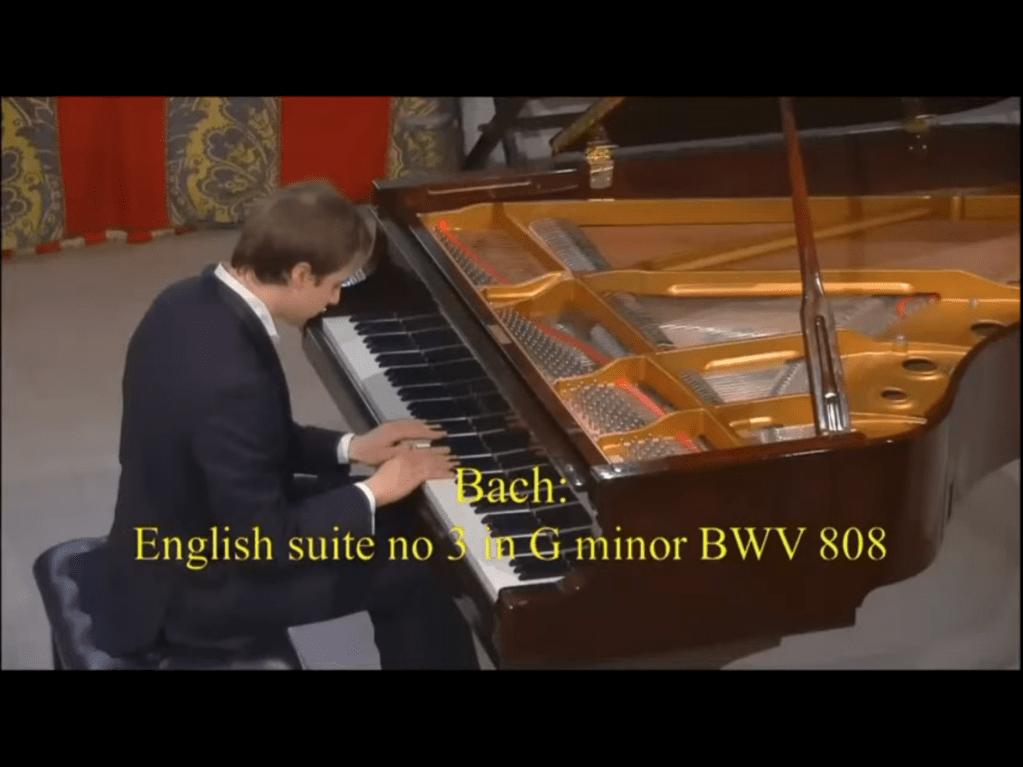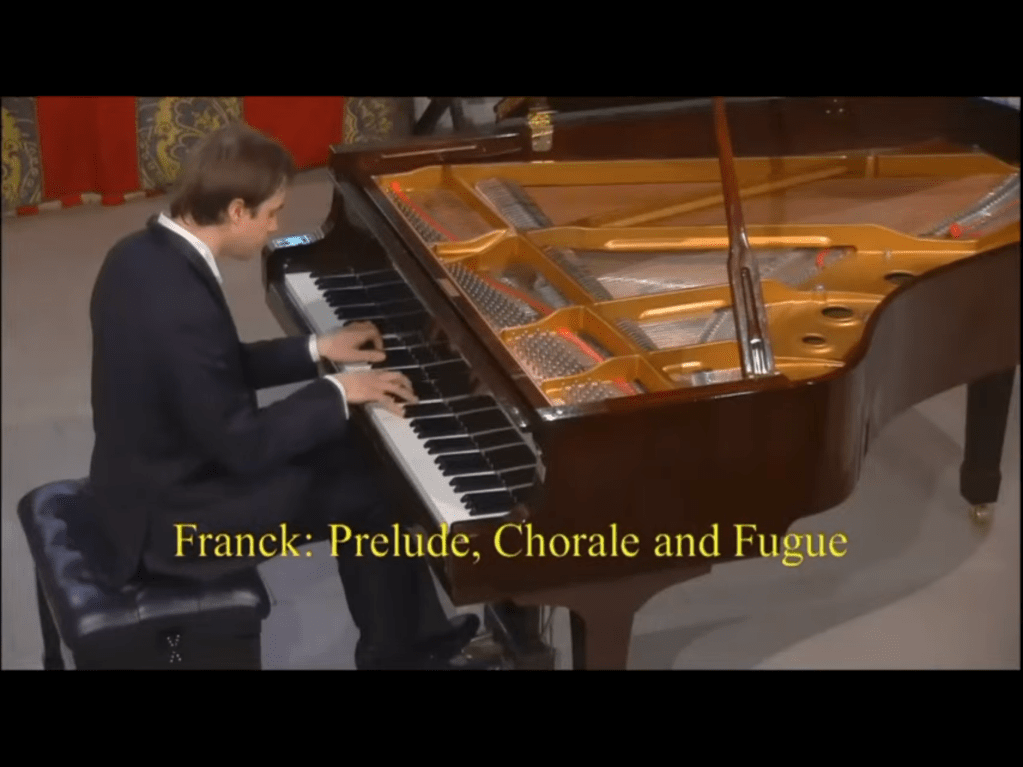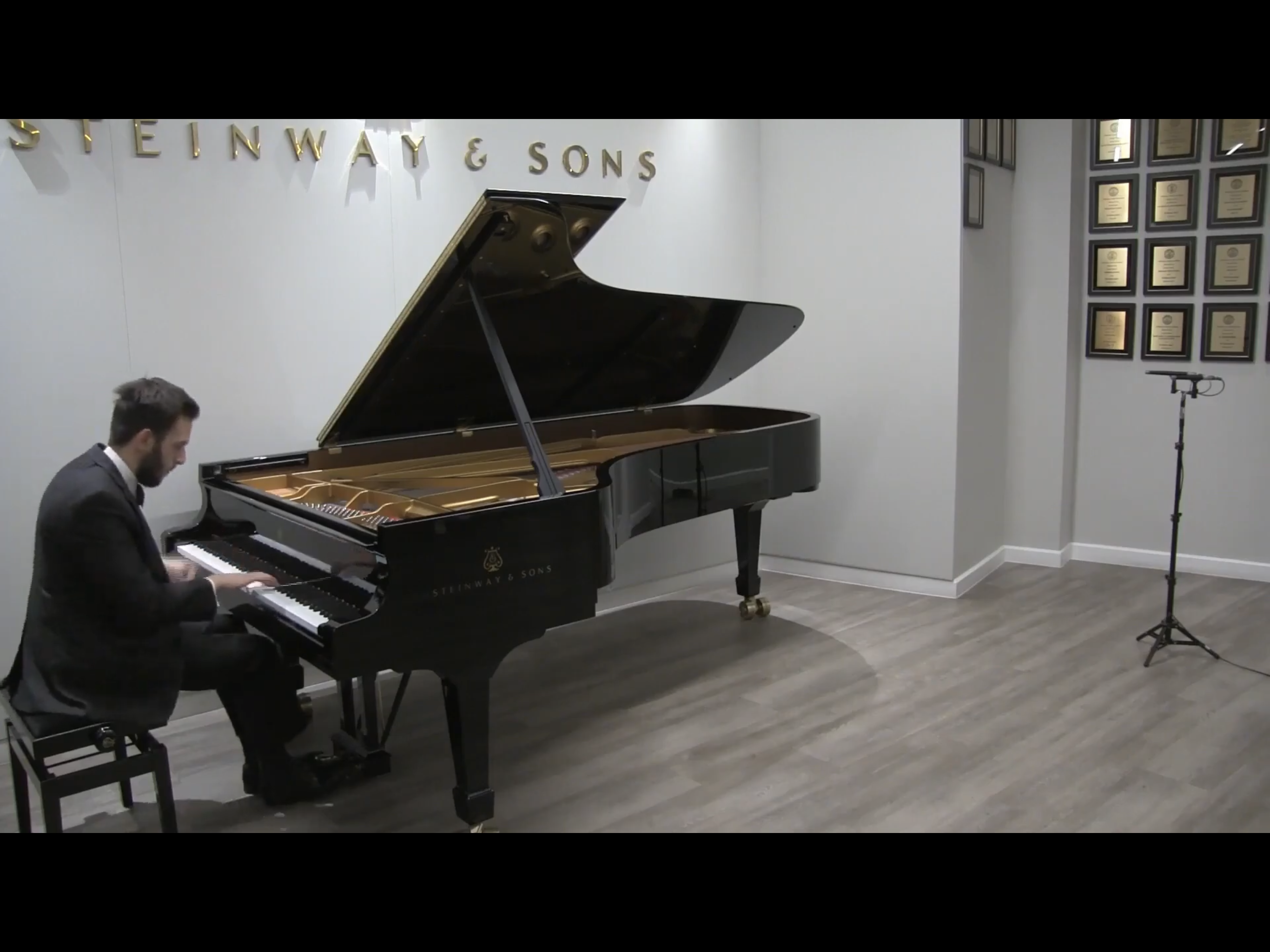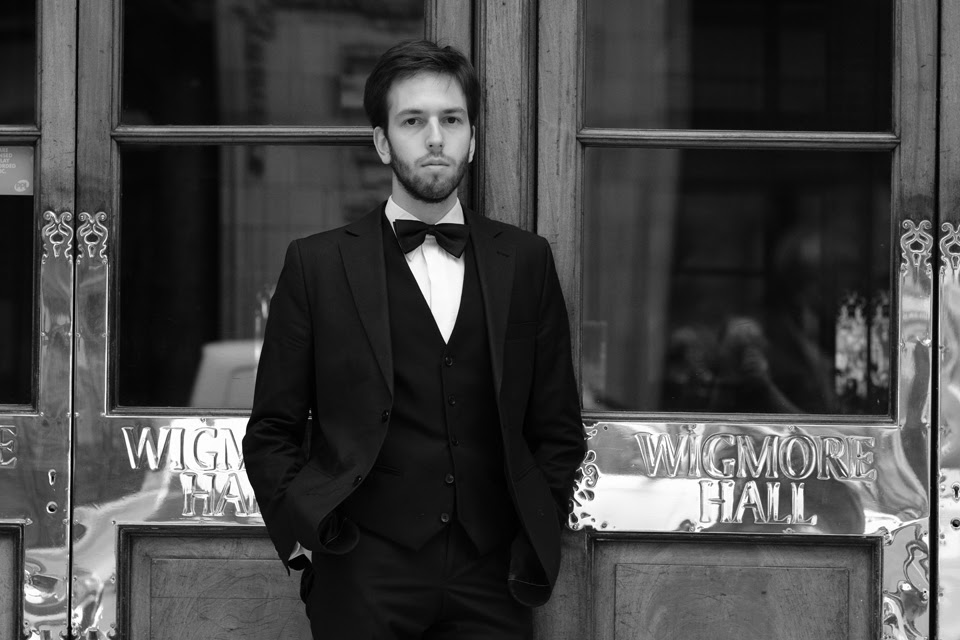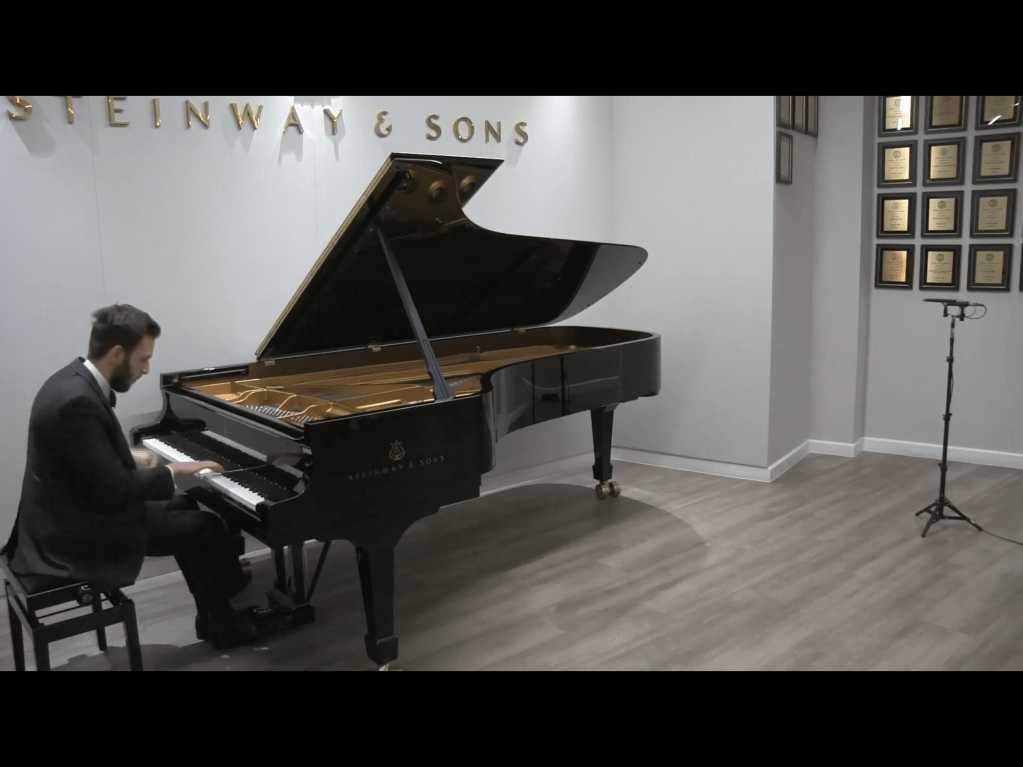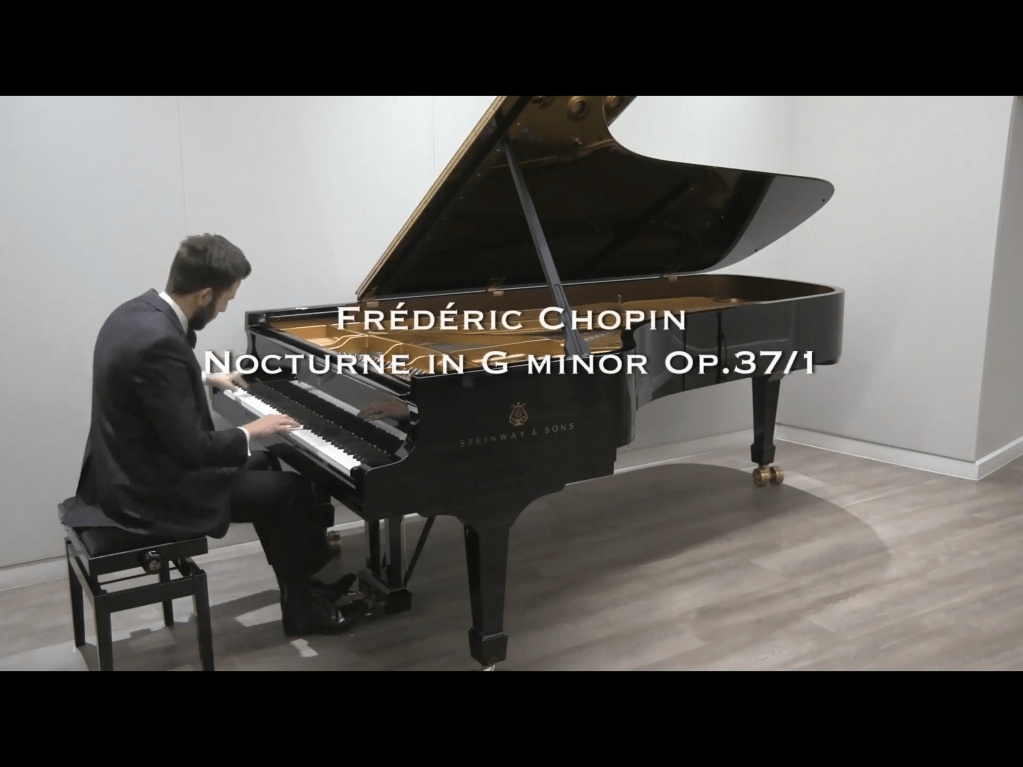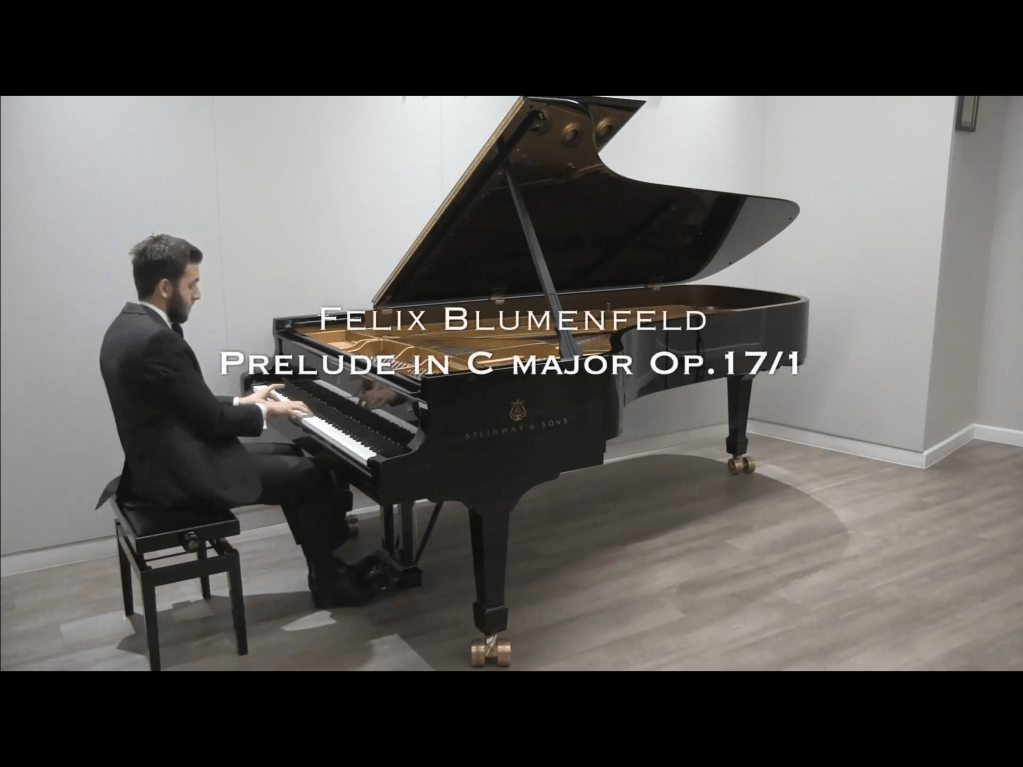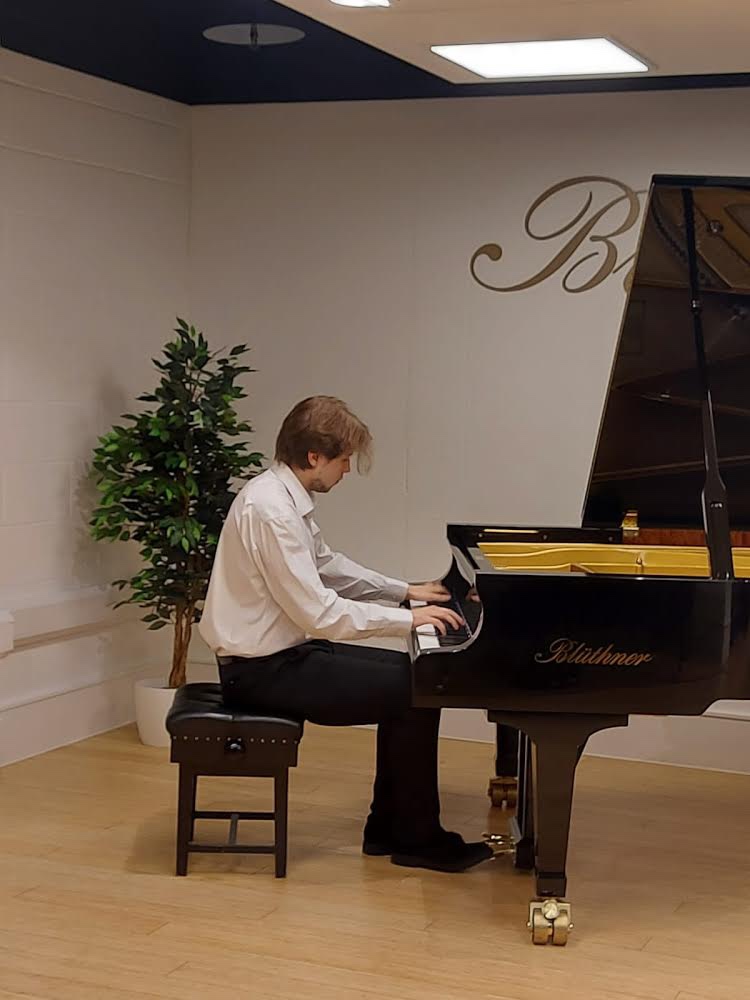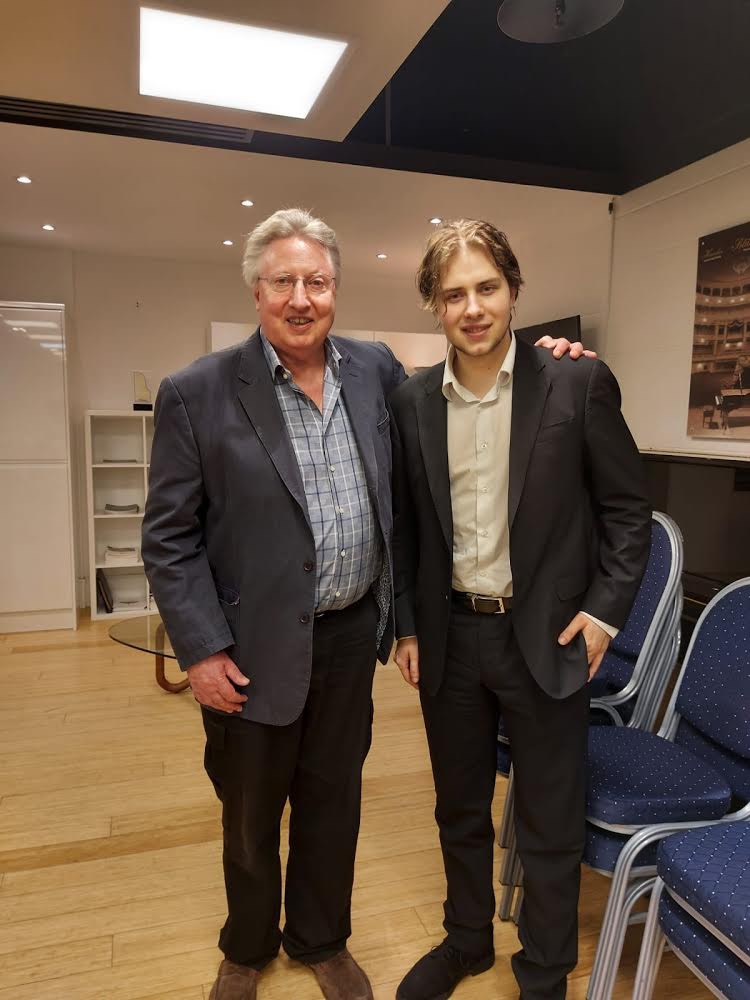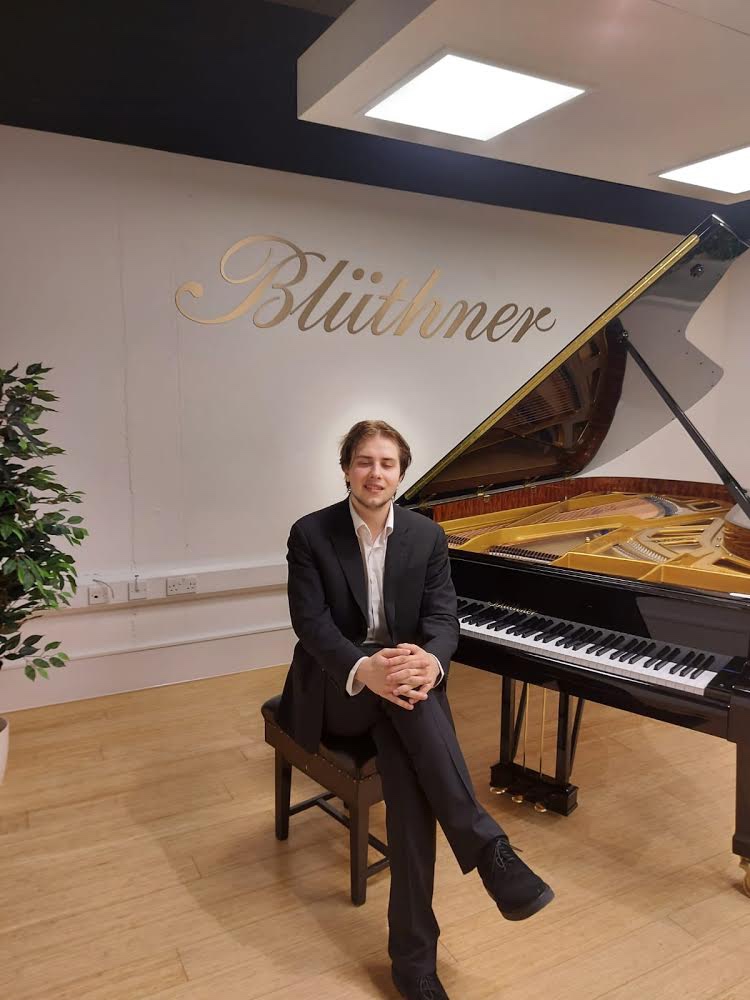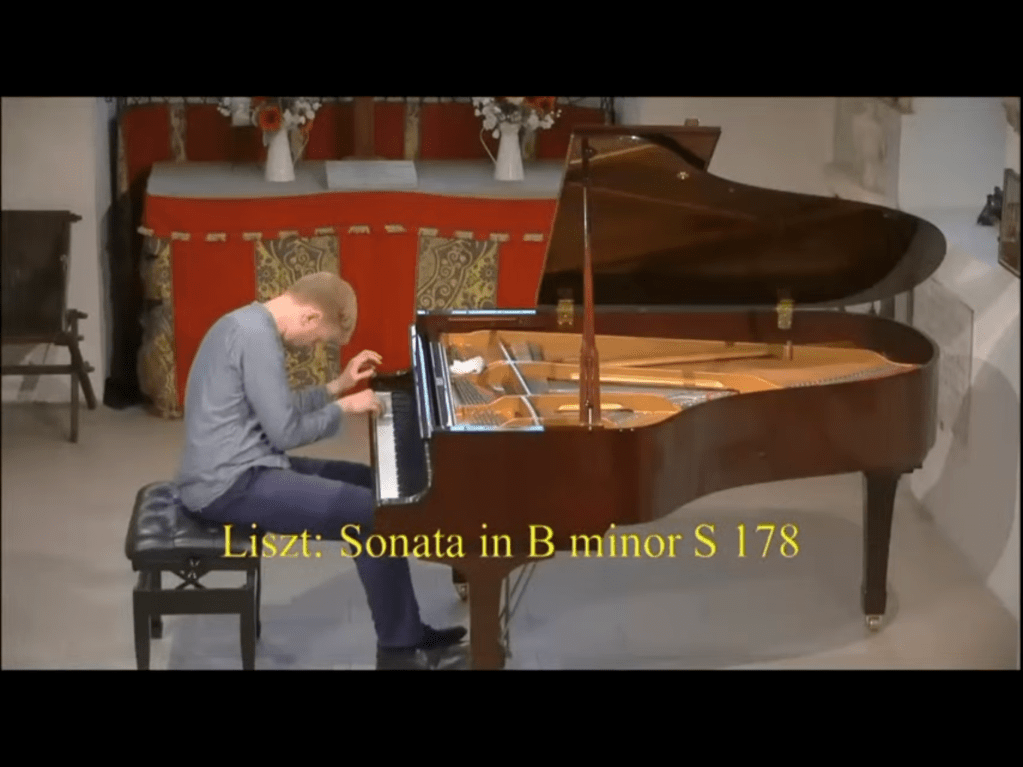
Luke Jones for Cranleigh Arts Simplicity,Intelligence and virtuosity

Programme:

Bach: Italian Concerto in F BWV 971 —— Andante -Presto

Bach: French Suite No.5 in G BWV 816 Allemande-Courante-Sarabande-Gavotte-Bourée-Louvre-Gigue

Feinberg-Tchaikovsky: Scherzo from Symphony No.6

Interval

Myaskovsky: Sonata No.2 in f-sharp minor, Op.13

Liszt: Sonata in B minor, S.178

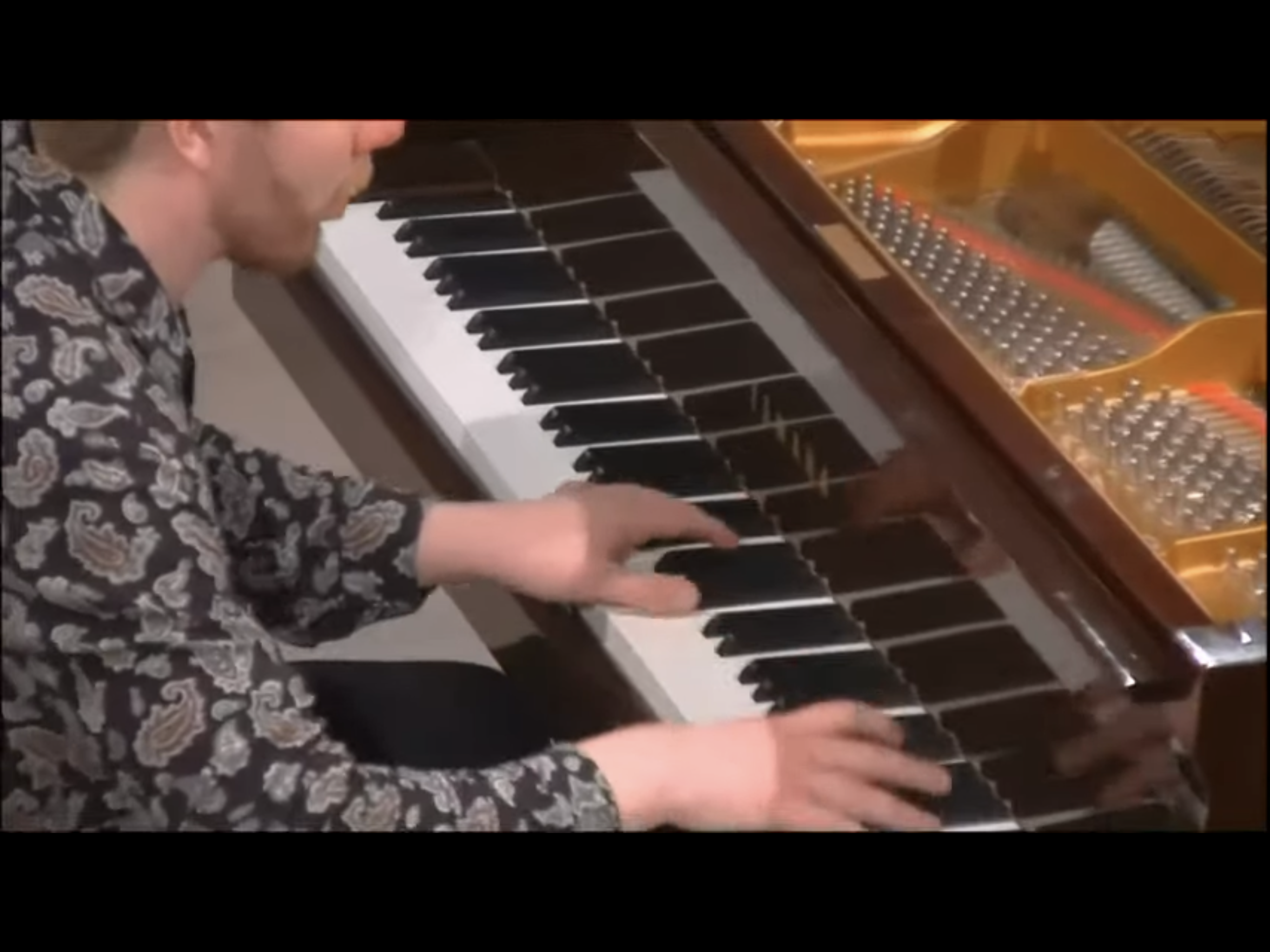
What better way to start a recital than with Bach and two of his best known and much loved works.The Italian Concerto and the Fifth French suite.They were played with a clarity and subtle sense of dynamics but also with a clarity and sense of line that was remarkable.You could almost envisage the soloist and tutti in the first movement of the Italian concert where his non legato touch was very telling.It contrasted so well with the long melodic lines of the Andante and the sheer exuberance of the Presto.In fact it was this song and dance element that was so evident in the beautiful Fifth French suite.Expressive but always in style with a sense of rhythmic propulsion that was quiet exhilarating.

It is some years ago that we used to be visited in Rome, for my Euromusica series,by the Russian pianist Vladimir Leyetchkiss,a student of Neuhaus .It was he who introduced me to the numerous piano transcriptions including this by Feinberg and many others, including his own of The Rite of Spring.Nikolaeva even gave me her own transcription of the Bach D minor Toccata and fugue .It was obviously a tradition of transcriptions that needed the phenomenal technical ease of the Russian school where sound,colour and virtuosity seem to flow with such ease from their early trained fingers!Horowitz /Mussorgsky or Rachmaninov/Mendelssohn are well known to us in the west but many others are not .Hats off to Luke for playing this famous but rarely heard transcription with a clarity and rhythmic impetus of such exemplary virtuosity.The more he plays it in public he will find more colour and flexibility,but his intelligence and superb technical ability allowed him to give a scintillating if rather overlong performance.Maybe some judicious pruning might make it an ideal encore?Certainly coming after two exemplary performances of masterpieces by Bach it was difficult to enter into the mood of a Tchaikowsky transcription!

Samuil Yevgenyevich Feinberg also Samuel was born 26 May 1890 in Odessa,like many other great pianists,and died in Moscow on 22 October 1962.He was the first pianist to perform the complete The Well-Tempered Clavier in concert in the USSR.He also composed three piano concertos, a dozen piano sonatas as well as fantasias and other works for the instrument.Tatyana Nikolaeva,a fellow student of Goldenweiser,said that each of his sonatas was a “poem of life”.Feinberg has been called “A musical heir to Scriabin”who heard the young pianist play his fourth Sonata and praised it highly. He was a life-long bachelor. He lived with his brother Leonid, who was a poet and painter. He died in 1962, aged 72.

It was indeed refreshing to hear a work rarely performed in concert, as Luke had said in his conversation with Stephen Dennison.Maybe not the pinnacle of the piano repertoire,that was to follow,but nevertheless one that has many points of interest and was indeed fascinating to hear alongside an undisputed masterpiece such as Liszt’s B minor Sonata.It was obvious that both works were composed by virtuosi and it was the exclamatory opening that caught our attention in what Luke described as his lockdown recital.All works,apart from Bach that he had prepared in the long months without public concerts.This sonata is very intricate,full of Prokofiev and Shostakovich influences.A continuous outpouring of great technical difficulty dissolving to sultry melodic contemplation.Even the Dies Irae was quoted over a mumbling brooding bass and later with a scintillating accompaniment of delicate arabesques.Was it not Liszt that was inspired by the Dies Irae in his Totentanz or Rachmaninov in his Paganini Rhapsody,both the greatest virtuosi of their age.In this Sonata there was also a fugato finale (as in the Liszt Sonata) that was beautifully articulated with great clarity before ending with the Dies Irae deep in the bass.A fascinating journey that Luke had reserved for us and played with the same intelligence and sense of architectural shape that was to distinguish his performance of Liszt that followed.

Among the finest of Miaskovsky’s compositions is the pessimistic yet powerful Sonata No. 2 in F Sharp Minor, composed in 1912 and revised in 1948. Like the third and fourth sonatas it bares the composer’s inner turbulence, and its structure displays impressive formal control. The slow but forceful introduction’s rich chords establish a harmonic ambience closely related to Scriabin’s sound-world. An air of anxiety enters with the first subject. appropriately marked “Allegro affanato”, and finds relief in the contrasting beauty of the second theme. Completing the exposition is a third idea, the “Dies Irae”,which along with fragments of the first and second subjects, plays an important role in the development section, where Miaskovsky shows an impressive mastery of contrapuntal and variation techniques. After a straightforward reprise there follows an insistent, ever-accelerating fugue, based on the first subject and the “Dies Irae”. The marking “Allegro disperato” eloquently describes the concluding

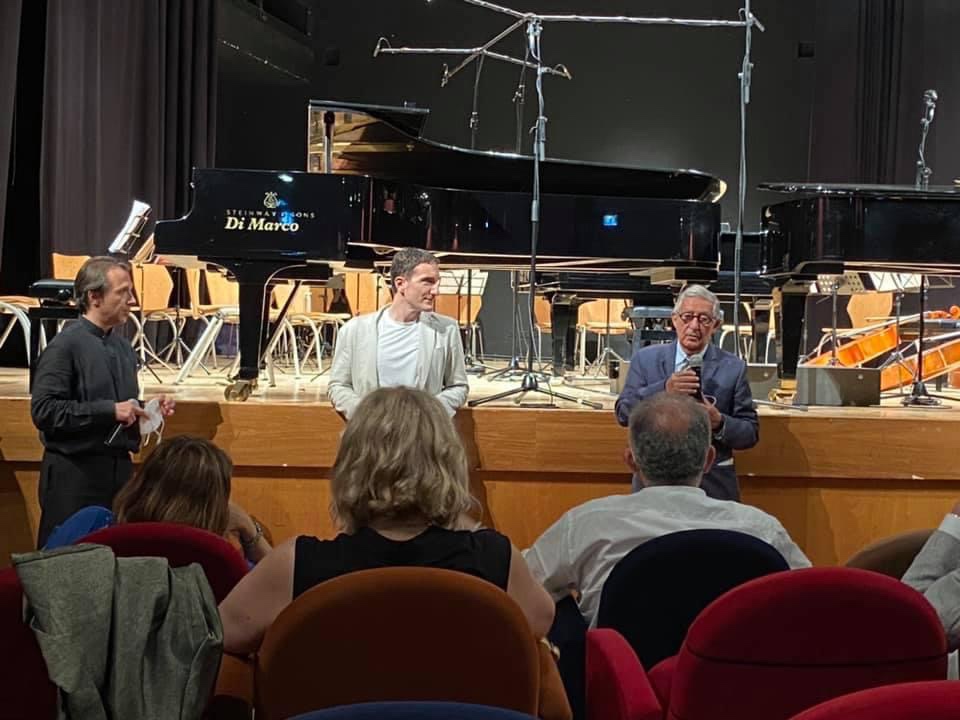
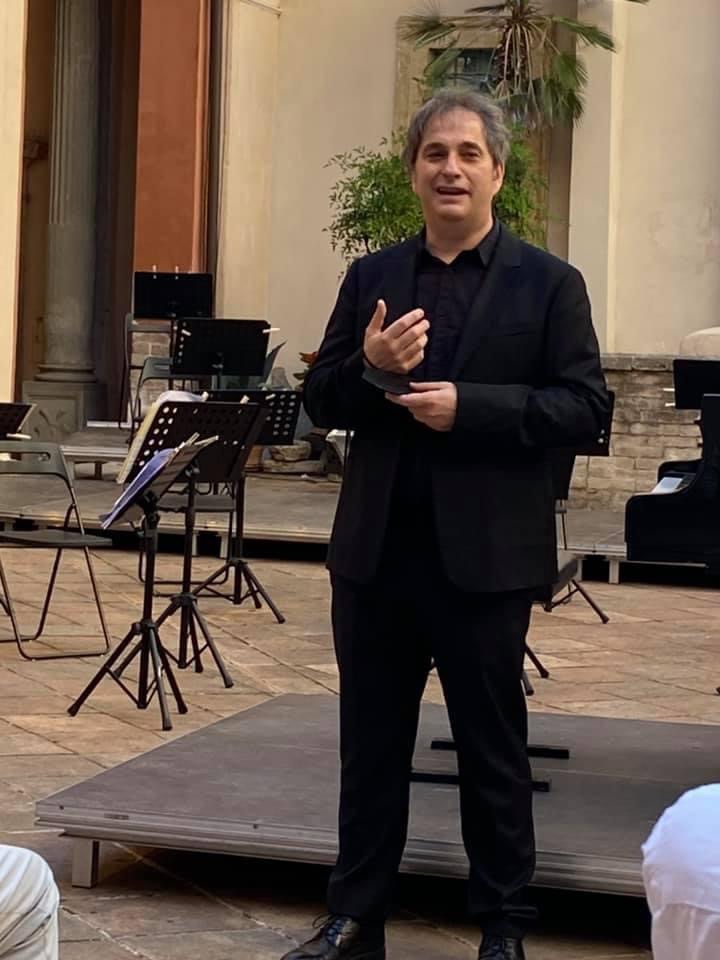
Stephen Dennison in discussion with Luke Jones

Nikolai Yakovlevich Miaskovsky was born on 20 April 1881 in Novogeorgiyevsk near Warsaw and discovered while still young that the symphony was the form in which he could best express himself. His work has been called a lifelong meditation on sonata form, perhaps arising from the need to create unity out of diversity and resolution out of conflict.He wrote twenty-seven symphonies, thirteen string quartets and nine published piano sonatas.He was a musician of unshakable integrity, an introvert who attempted all his life to reconcile his inner being with his outer circumstances.He was the most respected teacher of composition in the Soviet Union (he held this position from 1921 until the end of his life) and was known as “the musical conscience of Moscow”. With an honorary Doctor of Arts, People’s Artist (1946) and recipient of two Stalin Prizes, he was one of seven composers named in the infamous Decree on Music issued in 1948 by the central Committee of the Communist Party, denounced with Shostakovich, ‘ Prokofiev, Khachaturian, Shebalin, Popov and Muradeli for “formalist perversions” and “anti-democratic tendencies…alien to the Soviet people and their artistic tastes”.Already gravely ill and predisposed to reticence, Miaskovsky did not make a public confession of his “errors” but responded with his twenty-seventh symphony, a work of autumnal beauty that makes few concessions to socialist realism. Thoroughly embittered, he died in Moscow on 8 August 1950. Not long afterwards the symphony was premiered and declared the correct model for Soviet symphonism.

The Liszt Sonata in B minor was dedicated to Robert Schumann in return for Schumann’s dedication of his Fantasie op 17 to Liszt (it was Schumann’s contribution to Liszt’s effort to erect a statue to Beethoven in Bonn).A copy of the work arrived at Schumann’s house in May 1854, after he had entered Endenich sanatorium. Schumann’s wife Clara,an accomplished concert pianist and composer in her own right, did not perform the Sonata as she found it “merely a blind noise”.It was published by Breitkopf & Härtel in 1854 and first performed on January 27, 1857 in Berlin by Hans von Bulow.It was attacked by the distinguished critic Hanslik who said “anyone who has heard it and finds it beautiful is beyond help”.Brahms reputedly fell asleep when Liszt performed the work in 1853.It was also criticized by the pianist and composer Anton Rubinstein but drew enthusiasm from Wagner following a private performance of the piece by Karl Klindworth on April 5, 1855.Otto Gumprecht of the German newspaper Nationalzeitung referred to it as “an invitation to hissing and stomping”.It took a long time for the Sonata to become commonplace in concert repertoire, because of its technical difficulty and negative initial reception due to its status as “new” music. It is generally regarded now together with the Schumann Fantasie and Chopin Fourth Ballade to be one of the pinnacles of the Romantic repertoire

I remember André Tchaikowsky persuading his colleague Radu Lupu to spend more time at the keyboard rather than at the chess board and to learn what is one of the most musically complex works in the piano repertoire.( Radu also learnt a one off performance of André’s own concerto such was their esteem for each other).Richter played it in London and was not happy with his performance and refused to greet people in the green room afterwards.It is a work that requires a sense of orchestral colour but also of architectural shape.Being in one long movement it can so easily turn into a series of episodes some more rhetorical than others.Wagner had noted what a visionary Liszt was as he saw quite clearly a form in which themes were transformed and given new guises as the music unfolded with a programme rather than a set formula .That is why the Liszt sonata reveals not only the technical skill,colour and poetry but above the musical intelligence of an interpreter able to follow this transformation of themes with a sense of architectural shape that gives us an overall satisfying form.So it was remarkable to hear such intelligence in Luke’s performance playing with such commanding authority but also such tenderness and colour.Missing only the grand sweep and sense of abandon that can only come from playing it in public many times.Today was his first public performance and it showed a rare sensibility and intelligence – he now needs to dare and push himself to the limit as he shares that sense of magic that can only be created between performer and listener.A very evocative opening full of menace led to the great drama of the opening statements.Immediately we were made aware of the silences between these three great opening statements.Followed by a brilliance like rays of light leading to the tempestuous opening of the sonata.Gradually building up to the great octave statement dissolving so magically to the first passionate Grandioso.There was ravishing beauty in his sense of balance that allowed the ‘second subject’ to sing so beautifully ‘cantando espressivo’and there was a jeux perlé sensitivity in the arabesques that accompanied and led to the beautiful embellishments that suddenly explode into passionate outbursts of great virtuosity.After the massive rhetorical chords there was great stillness to the Andante sostenuto and quasi Adagio.I remember Richter playing this so slowly,as only he could,but I felt that Luke could have allowed himself more freedom and more sense of fantasy to contrast with the outer episodes that he played with such control and power.The end of this episode where the opening theme returns was played with aristocratic simplicity that made the eruption of the Allegro energico fugato even more surprising.It was refreshing to note in everything that Luke did that there seemed such a sparing use of the sustaining pedal that allowed for a clarity of line and detail that is often submerged and smudged.Of course the treacherous octaves at the end were played with such passionate conviction and musicianship that led so naturally to the final great climax.The gradual dissolving and the meditative ending just made one relieved that Liszt had abandoned his original thoughts of a triumphant March to the end much as Busoni had inflicted on poor Bach in the Goldberg Variations!

Originally from Wrexham in North Wales, Luke Jones started playing the piano at the age of 5 and made his debut recital at Oriel Wrecsam aged 10. Since then, he has performed in venues throughout Britain and across the globe. He has won prizes in competitions around Europe notably 2nd Prize and Mompou Prize at the prestigious Maria Canals International Piano Competition, 1st Prize at the Bromsgrove International Musicians Competition, 1st Prize in “Aci Bertoncelj” International Piano Competition, Slovenia and 1st Prize in “Section A” Chopin-Roma International Piano Competition, Italy. Luke was also awarded the RNCM Gold Medal, the college’s highest award for Performance. Furthermore, he has had broadcasts of his performances on BBC Wales Radio, S4C Television, Radio Vaticana and Telepace in Italy.He has performed with orchestras such as BBC National Orchestra of Wales, Manchester Camerata, Orchestra of the Swan and Jove Orquestra Nacional de Catalunya.

https://christopheraxworthymusiccommentary.wordpress.com/2019/10/17/luke-jones-reaching-for-the-stars/

https://christopheraxworthymusiccommentary.wordpress.com/2018/09/08/luke-jones-at-st-barnabas-perivale/

https://www.facebook.com/notes/christopher-axworthy/luke-jones-at-the-rncm-manchester/10155778052077309/

This concert is kindly supported by The Keyboard Charitable Trust. www.keyboardtrust.org The Keyboard Charitable Trust’s mission is to help young keyboard players reduce the element of chance in building a professional musical career. The Trust identifies the most talented young performers (aged 18-30) and assists their development by offering them opportunities to perform throughout the world.

Bocheng Wang’s wondrous Chopin at St Mary’s

Thursday May 20 4.0 pm

I agree ! I was very moved at various points in Bocheng Wang’s recital. Some wonderful poetic playing . He is an exceptional pianist. Here is the HD link for everyone to enjoy https://youtu.be/7FbtvSrflNM. Dr Hugh Mather

Chopin: Prelude in C sharp minor Op 45

Chopin: 3 Mazurkas Op 50

Chopin: Barcarolle Op 60

Chopin: 24 Preludes Op 28

Now I know that miracles do exist.
In the shadow of St Peter’s Basilica in Rome to hear such wondrous sounds from a young Chinese pianist was quite overwhelming.
Was it because it is his birthday treat or my homecoming after seven months away or is it that the Chinese and Polish souls seem to beat with the same intensity.
Fou Ts’ong ,much to everyone’s surprise won the mazurka prize at one of the very first Chopin competitions in Warsaw.The very competition that Bocheng has been selected to participate in this year.
It was in fact Ts’ong on one of his annual visits to Rome for concerts and Masterclasses who likened the works of Chopin to Chinese poetry.The soul,you see ,like COVID,knows no frontiers.


From the very first notes today one could sense there was magic in the air.
The solitary prelude in C sharp minor op 45 was played with a languid cantabile of crystal clarity on a flow of arpeggiandi of great sensitivity.A rare feeling for the style of nostalgia,aristocratic nobility with flexibility and freedom allied to great architectural shape.
He has a way of caressing the keys allowing him to produce so naturally such rich fluid sounds.
The beauty of his movements is mirrored in the sounds he produces.Delving deep into the keys like a great sculptor shaping a block of magnificent Carrara marble.A true artist is one where every facet of his being reflects his artistry.This is what we were made blissfully aware of today by Bocheng on his birthday.


Mazurkas that Schumann described as ‘canons covered in flowers’ must surely be directed to the marvel that is the last of the set of three that Bocheng played today.
A hauntingly beautiful Mazurka with the echo between the voices exploding into sumptuously rich dance rhythms.The ecstasy of the ending that simply dissolves with sublime aching nostalgia before the final beating of the drums.A real tone poem where so few words can mean so much.


The Barcarolle op 60 is surely Chopin’s most perfect work with an endless stream of song from the first to the last note.It was played with a constant flowing forward movement that sometimes Bocheng’s instinctive rubato was excessive where Chopin’s words are enough and it’s supreme simplicity and purity owe much to Mozart.
There were some magical modulations though and passionate outbursts played with sumptuous rich sounds.The cascades of notes before the final build up to the climax were played with just the ravishing beauty that had Perlemuter simply write in my score ‘paradise’.
Bocheng’s youthful passion came into it’s own at the end with a breathtaking climax with such natural care of sound and balance – to the manner born indeed.The gradual disintegration of this magical world was beautifully realised as a whole world dissolves to the final cascades of notes and the final passage that Ravel admired so much with such a subtle left hand melodic line.It was this work that Janina Fialkowska,playing at a concert dedicated to my late wife,whispered in my ear as she came off stage :‘that was Ileana’.


The 24 Preludes op 28 that FouTs’ong described as 24 problems were no such thing for Bocheng.He gave a wondrous performance of seamless sounds from the softly whispered opening flourish to the dazzling virtuosity of the sixteenth and the passionate declarations of operatic proportions of the eighteenth.The ferocious savagery of the twelfth was answered by the sublime tone poem of the so called ‘Raindrop’ Prelude .The great C minor twentieth prelude was played with a nobility of sound and an almost mystical calm that made one realise why this prelude had been used by composers as a basis for variations.There was youthful passion in the eighth after the absolute simplicity of the elegant waltz of the seventh that was to be used for the ballet Les Sylphides.Have just two notes ever had such poignant meaning as in the fourth and there was such haunting beauty in the seventeenth.
The performance was a kaleidoscope of aristocratic good taste ,brilliance,ravishing beauty and passion.
But is was above all the sublime poetry that this young Chinese pianist was able to convey that will remain with me for a long time.
Happy Birthday dear Bocheng!

I agree ! I was very moved at various points in Bocheng Wang’s recital. Some wonderful poetic playing . He is an exceptional pianist. Here is the HD link for everyone to enjoy https://youtu.be/7FbtvSrflNM. Dr Hugh Mather

Concert pianist Bocheng Wang is a scholar of the Elton John Award, Drake Calleja Trust and YAMAHA Foundation of Europe. He is also an artist of the Keyboard Charitable Trust and Talent Unlimited Foundation. Born in Lanzhou, China. Bocheng Wang first began his career by performing a celebratory concert in honour of HM The Queen Elizabeth II’s 90th birthday, where he made a debut performing Mozart’s Concerto in D minor No.20 with the London Mozart Players in June 2016 (cond. Dominic Ellis-Peckham). In the same year, he also played the Beethoven’s Emperor Piano Concerto with the Dulwich Symphony Orchestra (cond. Leigh O’Hara), and Prokofiev’s Piano Concerto No.3 with the Purcell Symphony Orchestra (cond. Robin O’Neil). In January 2020, Bocheng collaborated with the Royal Academy of Music Symphony Orchestra by performing the Prokofiev’s Piano Concerto No.3 (cond. John Wilson).

Throughout his career so far, Bocheng has performed in many venues such as the Wigmore Hall, King’s Place, St.Martins-in-the-field and FAZIOLI Hall. He is a prizewinner in many prestigious international piano competitions, including Yamaha Music Foundation of Europe Scholarships Competition(First Prize), Croydon Concerto Competition(First Prize), Liszt International Society Piano Competition(Second prize), The “Young Pianist of the North” International Piano Competition(Third Prize), UK Open International Piano Competition(Fifth Prize) and Semifinalist at the Santander International Piano Competition. He also appeared in many international festivals such as Konzertarbeitswochen Goslar(Germany), PianoTexas(USA), Ferrara,(Italy) Oxford and Dartington(UK), as well as having many masterclasses worldwide with maestros such as Professor Dmitri Bashkirov, Arie Vardi, Yoheved Kaplinsky, Dmitri Alexeev, Pascal Rogé and Pascal Devoyon. ?Most recently, Bocheng has graduated from his Bachelor Degree with First Class Honours under professor Christopher Elton and he is currently studying his Master Degree under Professor Ian Fountain at the Royal Academy of Music in London. Bocheng has also been awarded LRAM(Licentiate of the Royal Academy of Music) and he is the Founder and Artistic Director at the Pianoland Academy. Bocheng’s upcoming engagements are including performing at the Southbank Centre in London, as well as one of the participants at the prestigious XVIII Chopin International Piano Competition in 2021.

https://christopheraxworthymusiccommentary.wordpress.com/2020/07/07/bocheng-wangs-magnificent-rachmaninov-at-st-marys/

Edward Leung beauty and introspection at St Mary’s

Tuesday May 18 4.0 pm 

Edward Leung (piano)  

Rameau: ‘Les Tendres Plaintes’ from Suite in D

Couperin: ‘Les Barricades Mystérieuses’ from Second livre de pièces de clavecin

Pachulski: Polonaise in E flat Op 5

Chopin: Polonaise-Fantaisie in A flat Op 61

Granados: ‘El Amor y la muerte: Balade’ from Goyescas Op 11

Scriabin: Five Preludes Op 16

Liszt: Hungarian Rhapsody no 2 in C sharp minor S 244

Edward in pensive mood today with playing of sumptuous beauty and introspection.
A lament by Rameau of great delicacy with crystal clear ornaments and Couperin of unusually moving intensity.Such deep nostalgia and beautiful luminous sounds for Granados’s sultry depiction of Love and Death.Scriabin too ,five miniature preludes op 16 of whispered meditative sounds of ravishing beauty.


But it was in the little Polonaise by Pachulski, the little known contemporary of Chopin who chose the Russian rather than the Parisian escape from his homeland ,that suddenly ignited the hidden passion and sumptuous pianism of Edward.Played with a rhythmic energy and real involvement together with such rich sounds.


It was this change of character from Eusebius to Florestan that gave such shape to Chopin’s last Polonaise op 61 that he himself described as more of a fantasy than Polonaise.The opening chords were made to vibrate as they spread across the entire keyboard and he brought a beautiful cantabile to the long architectural line that brings us to the final tumultuous Polonaise ending.Here finally Edward let Florestan take over bringing this fantasy to a tumultuous ending with playing of great authority.


It was the same transcendental control and intelligence that he brought to Liszt’s most famous Hungarian Rhapsody .From the opening fanfare through the delicious traditional Hungarian dances played with a beguiling sense of delicacy and colour before the explosion of the entire orchestra in which Edward’s infallible technical command brought us to a triumphant ending.
A recital of great delicacy and passion from a pianist who puts himself at the service of music with an intelligence and technical command that is rare indeed.

Lauded as one of ’16 Incredibly Impressive Students at Princeton University’ by Business Insider , American pianist Edward Leung has performed in concert halls across North America, Europe, and Asia. Highlights of the current season include concerto performances with the Atlanta Symphony Orchestra and Orchestra of the Swan; debuts at the Wigmore Hall and Laieszhalle in Hamburg; recitals in London, Winchester, Wiltshire, Ulverston, and Wye Valley, and a debut commercial recording with violinist Usha Kapoor for Resonus Classics. A 2019 – 2020 Live Music Now artist, he has swept all the major prizes at the Royal Birmingham Conservatoire, including the Piano Prize, Donohoe Gold Medal, Andrew Downes Performance Prize, Delia Hall Accompaniment Prize, Herbert Lumby Prize, and Sheila and Colina Hodge Memorial Prize. After receiving a Master of Music from the Royal Birmingham Conservatoire, he continues his studies in the Advanced Postgraduate Diploma programme with Pascal Nemirovski. He is gratefully supported by the Keyboard Charitable Trust.

https://www.facebook.com/notes/christopher-axworthy/in-praise-of-liszt-annual-day-and-international-piano-competition-of-the-liszt-s/10155251368972309/

https://www.facebook.com/notes/christopher-axworthy/beethoven-piano-concerto-competition/10156102750557309/?fref=mentions

Ronan Magill Mature Mastery at St Mary’s

Tuesday May 11th 4.00 pm 

Ronan Magill (piano) 

Scarlatti: Sonata in E major K162

Bach: Prelude and Fugue in C# Major BWV 848

Beethoven: Sonata in E Op 109

Chopin: Mazurka in A minor Op 17 no 4

Liszt: ‘Vallée d’Obermann’
from Années de Pèlerinage: Suisse

What an afternoon ……..always surprises at St Mary’s and this afternoon to hear such masterly playing and hear such eloquence from a pianist …musician three times the age of the usual performers who only an extravagant past has kept him from our shores.
Now returned with playing of rare musicianship helped by a true finger legato ,so rare these days ,that allowed a rare depth of sound and profundity on Dr Mather’s fine Yamaha piano.In Dr Mather’s own words he made the piano sound like a piano of the great German tradition.


The contrasts he immediately brought to the opening Scarlatti Sonata where subtle shading ,delicacy and exhilaration all lived together in a basket of jewels that glistened and shone in his magnificent hands.


Even Bach’s C sharp major prelude was played with a jeux perlé touch that contrasted so well with the militaristic fugue.


It is in late Beethoven that men are sorted from the boys.And as Ronan himself said in his very informative introduction that having learnt the sonata when he was 19 ,at 67 he is still making new discoveries in it.
It was just this freshness of discovery that came over with such a powerful personality.From the mellifluous opening with it’s astonishing interruptions to the superb energy and quite considerable technical command of the second movement.It was in the last movement though that he managed to bring such depth of meaning with such clarity and richness of sound .The first variation already sang with a voice of such penetrating clarity without ever hardening the sound by a careful sense of balance and mature musicianship that can understand Beethoven’s true meaning .The non legato second variation that delicately dissolves into melody leading to the transcendental eruption of the third with playing of such enviable technical assurance.There was a gradual entry into the miraculous final variation where the melodic line rose above the cloud on which Beethoven places it before dissolving and returning ,full circle ,to the opening theme.This time played with even more intensity until the final chord was allowed so poignantly to add its final farewell.
As Dr Mather rightly said it was a truly profound Beethoven of a simplicity that comes from maturity and true technical mastery.


Not only was there great playing but the same profound simplicity he brought to his introductions of Chopin and Liszt.A Mazurka of ‘hope and despair’where his slight hesitation in the return of the opening theme was quite breathtaking.


His command of Liszt’s ‘introspective emotions’ in the Vallée d’Obermann was indeed overwhelming.The beauty and drama he brought to this great tone poem showed his transcendental command of the keyboard .From the opening profound rhetoric to the beseeching choir of angels through the great personality of the middle recitativo.Finally he threw all caution to the wind as he allowed the music to build in tension without any regard for the quite considerable technical difficulty.We were swept along on a great wave of passionate outpouring where Liszt’s treacherous octaves in both hands were never allowed to waver as the tempo seemed to get even more agitated.The final great rhetorical statement was played with all the dramatic emphasis of an operatic performance.
Hats off to Dr Mather and above all to Ronan Magill for a memorable afternoon .

The pianist and composer RONAN MAGILL (born Sheffield 1954) was, as a nine year old, chosen to be one of the founder pupils of the Yehudi Menuhin School. Later after a period at Ampleforth College, and on the advice of Benjamin Britten, he went to the Royal College of Music working with David Parkhouse and later John Barstow, and winning all the major prizes for piano and composition. After his Wigmore and South Bank debuts (Brahms 2 nd Concerto) in 1974, and again on Britten’s advice, he moved to Paris to study with Yvonne Lefebure at the Conservatoire, and then remained in Paris for a number of years, performing regularly both in concert and on TV and radio, and also receiving advice from Pierre Sancan, and Nikita Magaloff and Arturo Benedetti Michelangeli in Switzerland. In 1985 Magill won ist Prize in the 1 st “Milosz Magin” International Competition for Polish Music, followed by a European tour, and then after returning to the UK , he won the 3rd British Contemporary Piano Competition which a UK tour and concerts on BBC Radio 3. In recent years Magill has been performing in the UK, USA (Rachmaninoff 3 rd Concerto) and most recently in Japan where he has been living since 2013 performing in many cities.

In Julien Brocal’s magic garden with Maria Joao Pires

https://fb.watch/5nLnwFrPZm/

Julian Brocal’s musical garden was surely blessed tonight .Simplicity and humility a sound that projects what she has inside – a true box of jewels that glistened and glowed in a continual stream of ravishing sounds .Sublime.Claire de lune played in a series of gasps ,one more beautiful than the other as though she could not believe the magical creation in her hands.It led of course to the sublime ecstasy of the central episode before dissolving to a whisper ending with a perfect stream of gold.Chopin’s first nocturne op 9 was played with the same aristocratic beauty that was Rubinstein’s.There was sublime rubato in the well known op 9 n.2 and n.3 was even more beautiful than in Lhevine’s hands.Op 27 n.1 was played very slowly building up to a passionate climax before the coda full of heartbreaking nostalgia .The famous D flat nocturne was played too like the sublime tone poem it can be in the hands of a great artist.The Valse de l’adieu was thrown off with just the jeux perlé that she had brought to the nocturne op 9 n.3 allowing the bel canto embellishments to flow from her fingers like streams of gold and silver as she delved ever more deeply into the true meaning hidden in these miniature masterpieces.The mazurkas were described by Schumann as canons covered in flowers but surely today in these pieces too it was never more evident than in Maria’s hands ,the poignant deep meaning that Chopin miraculously could conjure out of this box of hammers and strings.His heart may have been taken back to his homeland but it is to France that his aristocratic bearing could allow him to describe so eloquently the nostalgia for his birthplace.The Debussy Arabesque n.2 was played as an encore with the same delicacy that she brought to the Suite Bergamasque.Such colours and sumptuous sounds of ravishing beauty that had bewitched all those that Julian had enticed into his magic garden.
https://youtu.be/x1Md7QbPPo4
Debussy Suite Bergamasque ,Arabesque n.2 ; Chopin 3 Nocturnes op 9 ,2 Nocturnes op 27 ,Nocturne op 72 n.1, Valse de l’adieu op 69 n.1

Jardin Musical Misha & Lily Maisky in Julien Brocal’s wonderful garden

Julien Brocal at the Wigmore Hall on Wings of Song

https://www.facebook.com/notes/christopher-axworthy/vive-la-france-brocal-and-bavouzet-in-london/10156288749692309/

Not to be missed Roby Lakatos ,considered by many the greatest gypsy violinist of today ,closing this wonderful series on the 27th June

Nikita Lukinov at St Mary’s No pumpkins just the magic of music making at its finest

Tuesday May 4th 4.00 pm 

Prokofiev of such beauty never since Rubinstein’s magical Visions Fugitives have I ever put those two words together until listening to this young man’s Cinderella suite today.
Six pieces one more beautiful and characterful than the other and far from ending with a bang there was the same magic that had ended Rachmaninov’s Corelli variations minutes before.Or the same beautiful pastoral ending to Beethoven’s most Schubertian outpouring of his sonata op 90.All from a young man as he himself declared:’ I have always studied with Russian teachers at the Purcell School with Alexeev’s wife Tatyana Sarkissova and now in Glasgow with Petras Geniusas.’
.Sing a song of sixpence indeed as he has learnt how to extract the magic from this box of strings and hammers and shape them with his own sensibility into sumptuous music.A secret that is kept locked away in a box and the key evidently only given to a special few of which Nikita is most definitely the only one I have heard for a long long time.

A memorable recital – one of the best in recent weeks. Very impressive. Here is the HD version – enjoy https://youtu.be/S6nL1gObIRQ

Beethoven: Sonata in E minor Op 90 con vivacità ma sempre con sentimento ed espressione -Non tanto mosso e molto cantabile

There was an architectural shape and sense of direction from the very first notes of Beethoven’s most mellifluous outpouring with his Sonata op 90.Opening the door to Beethoven’s final thoughts as his survey of 32 sonatas comes to a close.One of the simplest of Sonatas in just two movements to be followed by one of the most complex:op 101 or the longest :op 106 ‘Hammerklavier’ before entering the realms of glory with the final trilogy where the song of life has taken over from his conflict and strife.There was immediately a great sense of character but with an almost orchestral fullness to the sound even with the continual contrasts of very strong and rhythmic dissolving to the absolute essential outline.Of course Beethoven’s precise indications were scrupulously incorporated into a carefully orchestrated architectural line.Even in the development section there were taught rhythms and beautifully shaped lines.The melodic nature of the semi quavers was never allowed to interrupt this continual rhythmic undercurrent as it gradually disintegrates taking us back to the recapitulation so naturally.The coda was played with such masculine delicacy as it led into one of Beethoven’s most simple melodies.This almost Schubertian outpouring was played with a rhythmic buoyancy that together with Nikita’s superb sense of balance allowed one episode to grow so naturally out of another as the melody returns in a continual flow of mellifluous sounds.There was a magical duet between left and right hand before the sublime pastoral conclusion …..like water in a brook with a feeling that this was only a momentary interruption in a continual natural flow.

Rachmaninov:Variations on a theme of Corelli Op 42 Andante Theme -20 variations – Andante Coda

Variations on a Theme of Corelli op 42 by Rachmaninov was written in 1931 at his holiday home in Switzerland and was his last work for piano solo.The theme known as La Folia was used by Corelli in his Sonata op 5 n.12 but it was a theme popularly used as the basis for variations in baroque music.Liszt used it too in his Spanish Rhapsody .Rachmaninov dedicated the work to his friend and duo partner Fritz Kreisler,one of the greatest violinists of all time and with whom he famously asked where he was when he lost his way in the score during a recital.’In Carnegie Hall’,came the dour reply from Rachmaninov.My old teacher ,Vlado Perlemuter ,used to tell me that Rachmaninov appeared in public looking as though he had just swallowed a knife ,but the romantic sounds he could conjure from the piano with his two huge hands was quite unique.

Rachmaninov wrote to composer friend Nikolai Medtner, on 21 December 1931:’I’ve played the Variations about fifteen times, but of these fifteen performances only one was good. The others were sloppy. I can’t play my own compositions! And it’s so boring! Not once have I played these all in continuity. I was guided by the coughing of the audience. Whenever the coughing would increase, I would skip the next variation. Whenever there was no coughing, I would play them in proper order. In one concert, I don’t remember where – some small town – the coughing was so violent that I played only ten variations (out of 20). My best record was set in New York, where I played 18 variations. However, I hope that you will play all of them, and won’t “cough”.’Rachmaninov recorded many of his own works, but this piece wasn’t one of them.

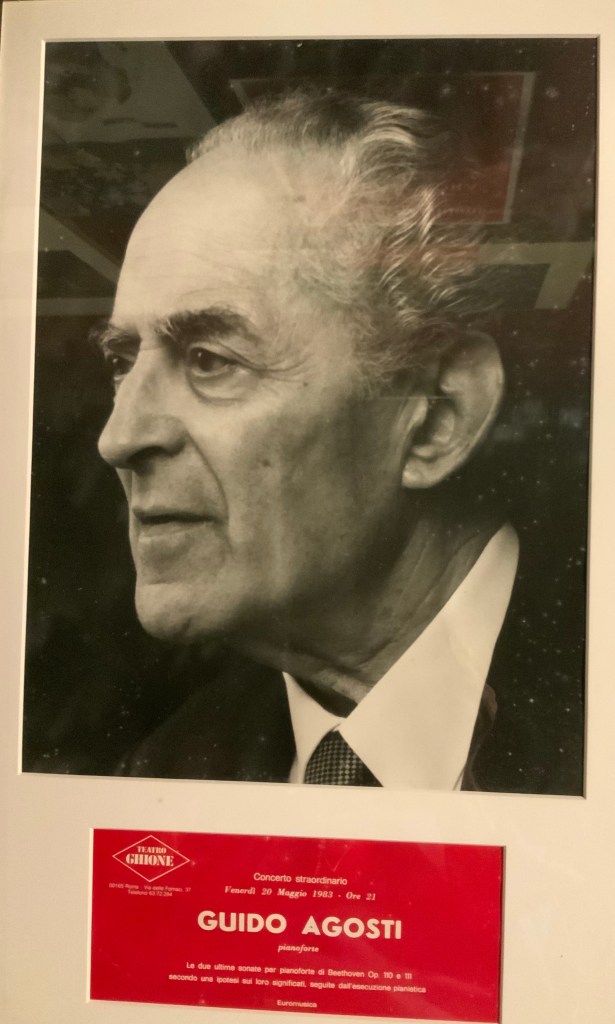
I heard them for the first time in Siena when I remember Agosti interrupting his masterclass to be able to watch on television the first man to set foot on the moon.I remember him being astonished by this achievement as a student friend- we had skived off from the RAM together -played him these variations.Agosti not known for his generosity was overcome by the performance and that occasion of over 50 years ago has remained with me every time I hear them.Today there was an absolute purity of sound in the theme which was played with such disarming simplicity contrasting with the sumptuous sounds of the first variation with its beautiful haunting syncopations and counterpoints.There was a stillness to the second where the inner legato melodic line was commented on with great technical control by the staccato outer line leading to the capricious interruption of the Tempo di Menuetto.Hauntingly delicate comments on the solemn melodic line played by his delicate orchestra before the rhythmic energy of the fifth and sixth.The bass pedal note marked ‘laissez vibrer’ was exactly that and so rarely observed that I had to look carefully at my score.But here in Nikita we have a real interpreter who delves deeply into the scores of all that he plays.He plays with great fantasy and colour but always having scrupulously understood the composers intentions.An Adagio misterioso was played with all the impish dry humour typical of Rachmaninov and followed by a continual flow of harmonious sounds before the almost clockwork precision and clarity of the tenth variation.The ending just thrown off with ease before plunging into the hammered rhythms of the next variation but never allowing the sound to harden only enrichen it’s character.Molto marcato Rachmaninov writes for this sparse almost Prokofiev like variation before the driving rhythms leading up to the central cadenza.Even here the accents in the left hand were carefully pointed and gave such shape to what so often sounds like an empty gallop.A cadenza of wondrous colours and true magic that dissolves amidst cascading sounds leading us to the theme in the warmth of the major key .There was some glorious legato playing of ravishing beauty with Rachmaninov’s ever present shadow of nostalgia before the almost re-tuning of the sixteenth variation and the theme that comes riding in gently on horseback in the seventeenth.There was much power in the eighteenth and a gust of wind in the nineteenth as we came to the last variation of double octaves played with transcendental skill allowing even here a great sense of colour and shape.The long vibrating note of D left a cloud of sound on which floats one of Rachmaninov’s most haunting melodies before the utmost simplicity of the transformed theme …….’folia’indeed as the two final chords were barely whispered and certainly not struck at the end of this extraordinary performance

Prokofiev: 6 pieces from Cinderella Op 102

  1. Waltz: Cinderella and the Prince (Вальс: Золушка и принц)
  2. Cinderella’s Variation (Вариация Золушка)
  3. Quarrel (Ссора)
  4. Waltz: Cinderella Goes to the Ball (Вальс: отъезд Золушки на бал)
  5. Pas de Chale (Па-де-шаль)
  6. Amoroso

This collection of six transcriptions was the last of the three sets for piano that Prokofiev extracted from Cinderella, the other two being ten pieces (Op. 97) and three pieces (Op. 95). He wrote the ballet from 1940-44, during which time he also worked on these transcriptions, as well as other music, including parts of his opera War and Peace, the whole of his orchestral suite, The Year 1941, and the String Quartet No. 2. Along with his Ten Pieces from Romeo & Juliet, Op. 75, this collection represents the composer’s best piano transcriptions. Prokofiev arranged them in 1944 and published them the same year.

This is only the second time I have heard this suite complete although I think Richter played some of them as encores in the many memorable recitals he used to give in London in the 60’s and 70’s.I heard the complete set in Italy with a Russian protégée of Eliso Virsaladze. A fine performance but one that I could take or leave.So I was not over enthusiastic about hearing it again today.But as Joan Chissell famously said in a review of a concert by Rubinstein,the Prince of pianists : ‘Mr Rubinstein turned baubles into gems’.I have no wish to infer that Prokofiev’s Cinderella are baubles but I do mean in the wider sense that the music today was made to talk and tell a story.In Nikita’s hands it was a wondrous story indeed full of colour,imagination and a sense of line.Someone who has the ‘gift of the gab’ and that can keep you enthralled with the story he has to tell.Tomorrow I will add the score to my library but for now just recommend that you listen to this exemplary performance of a Prokofiev that can be made to SING! In the meantime I just copy these notes that may be of interest:

This collection of six pieces from Cinderella is without doubt the most substantial of the three sets. It contains not only some of the ballet’s most memorable themes but also its darker and more profound music. Many have viewed the work as a light piece, almost on the direct and generally simple level of Peter and the Wolf. Its music, however, goes far deeper in its often-thorny expressive language and complex conflicts than any of his children’s works. For example, the third piece, The Quarrel, taken from Nos. 2, Pas-du-châle) and 4, The Father, in the ballet, contrasts playful mischief at the outset with a dissonant buildup in the middle section that could well depict a bloody sword fight, rather than the nagging Cinderella’s father suffers from his second wife and her daughters. The opening piece in the set, Waltz (Cinderella and the Prince), portraying the Grand Waltz (No. 30 in the ballet), is sinister and suggests strife and anything but romance between Cinderella and the Prince. The second piece, Cinderella’s Variation, is one of the lighter items, yet even it portends anxiety in its closing moments. Taken from Cinderella’s Dance (No. 32), it is a fairly literal transcription of the music, as is generally the case here. Prokofiev rarely enlarged upon or substantially altered music he transcribed, though he often shifted sections around and rearranged their order. The fourth piece is the famous Waltz, No. 37 in the ballet, that occurs just before Midnight. It is sinister and ominous, quite effective on the piano too, but Prokofiev had to tack on an ending to it since this section in the ballet leads right into Midnight. The next piece, Pas-du-châle, is taken from music in the first act dance of the same name (No. 2) and from Duet of the Sisters with the Oranges. The mood is humorous at the outset, then turns mocking. It fits well on the piano, the color and sarcasm conveyed splendidly, with the music not landing softly on its dissonances. The final piece here is Amoroso, comprised of Cinderella’s theme, which occurs in No. 1, Introduction (and elsewhere in the ballet), a portion from No. 3 Cinderella, and from the closing number, Amoroso. This is probably the best of the six pieces, not only because it combines music from throughout the ballet, but because it captures Cinderella’s sadness and adversity at the outset, her inner beauty and love for the Prince in the latter half and her happily-ever-after triumph at the close. It is a musical depiction of her character’s growth. Prokofiev here does make a few minor changes in accommodating the music from the ballet’s Amoroso close, but the differences sound greater than they actually are, partly because of the piano’s non-sustaining sonority.

Nikita Lukinov was born in Russia in 1998. In 2005 Nikita started studying at Voronezh Central Music School with Svetlana Semenkova, an alumna of Dmitry Bashkirov. Nikita’s first success was a Grand-Prix at the 2010 International Shostakovich Piano Competition for Youth (Moscow). Nikita’s debut with a symphonic orchestra was at the age of 11. Other achievements include 1st place in the Inter-Russian piano competition for young pianists, Finalist of an International television competition for young musicians “Nutcracker”, 1st place in the Inter-Russian Concerto competition, where he performed a Chopin piano Concerto No1 op.11 with on orchestra at the age of 14. Nikita’s most recent awards include 1st place in the Inter-Russian Competition “Music Talents of Russia” (Russia, 2020), 2nd place at the Franz Liszt Center International Piano Competition (Spain, 2021).
After studying in Russia, Nikita won a full scholarship to continue his studies in London at Purcell School for Young Musicians, the oldest and one of the most prestigious specialist music school in the UK. His musicianship was cultivated by Professor Tatiana Sarkissova, a Dmitry Bashkirov’s alumna. While studying at the Purcell School Nikita had his Kings Place and Wigmore Hall debuts, he also won The Purcell School Concerto Competition. He performed Prokofiev Concerto 1 op.10 and Mozart Concerto 15 K.450 with the Purcell School Orchestra at the age of 15. Since September 2017, Nikita continues his education at the Royal Conservatoire of Scotland on a full scholarship with Professor Petras Geniušas. Nikita has been fortunate to gain numerous concert opportunities at prestigious venues across the UK and outside, such as St. Martin in the Fields, Wigmore Hall (London), Kings Place (London), Fazioli Hall (Italy), Vaduz Rathaussaal (Liechtenstein), The Small Hall of Moscow Conservatory, St. Petersburg Music House. He is the recipient of a personal scholarship from Voronezh’s State Government “For Outstanding Cultural Achievements”, “Russian Children’s Foundation” and an international charity foundation “New Names”, personal scholarship from the National Artist of Russia V. Ovchinnikov, scholarship from the International Academy of Music in Liechtenstein, where he participated in the Intensive Music Weeks and activities offered by the Academy in 2020. In 2020 Nikita was appointed as “Emissary of the Muses of San Antonio, Texas”. Nikita is one of the musicians at the Talent Unlimited scheme (London). 2021 highlights should include participation at the “Verbier Music Festival”, “Art of the Piano” Festival in the USA and a debut recital at the Steinway Hall in London.

The indomitable Canan Maxton’s Talent Unlimited comes to the rescue with Sisevic and Zheleznov at St Mary’s

Sunday May 2 4.00 pm

It was only a few months ago that Dr Hugh Mather ,a 75 year old retired physician celebrated the 1000th concert in a series that he together with his enthusiastic and expert colleagues have been running for some years .St Mary’s Perivale is a beautiful redundant church in the centre of Ealing golf course,only a stone’s throw from central London,that has become one of the most important chamber music concert halls in the country.With the passion of people that enjoy selflessly sharing their expertise with the next generation it gives a platform to the most talented young musicians in London.

Canan Maxton too has created for quite some time ,Talent Unlimited,designed to help young musicians find a platform for their outstanding talent.So it was very refreshing to see the two united in presenting two aspiring young musicians from the Royal,College of Music in two of the masterworks for piano.An unexpected illness had left a last minute space in the calendar that was immediately filled by Simo Sisevic from Montenegro and Kirill Zheleznov from Russia.

Little did they know that their host had played both those works in a memorable celebration concert https://christopheraxworthymusiccommentary.wordpress.com/2020/11/25/dr-hugh-mather-1000-not-out/

Simo Šiševic (piano) 

Rachmaninov: Prelude Op 23 no 4 in D

Beethoven: Sonata no 23 in F minor Op 57 ‘Appassionata’ Allegro assai-Andante con moto-Allegro ma non troppo /Presto

They are two of the most important works in the piano repertoire.Beethoven’s revolutionary Appassionata Sonata op 57 and Schumann’s Fantasie op 17 .It was Schumann’s contribution towards Liszt’s cost of erecting a monument to Beethoven in Bonn.Hat’s off to both the young artists that at very short notice could give such exemplary performances .Simo even playing Rachmaninov’s beautiful prelude in D op 23 as a tranquil, opening to the drama that was about to be enacted .A sense of architectural shape was the overall impression of the two performances of Beethoven and Schumann.The very precise indications of Beethoven regarding his revolutionary use of the pedal was not always noted but the Andante con moto was played at just the right tempo of the corteo that it depicts.Great contrasts in the first movement could have been even more accentuated had the second subject been more expressive and mysterious.The Allegro ma non troppo was played with great control even if it could have been almost lighter in places especially in the coda where Beethoven does indicated the dramatic contrasts that he imagined.There were some beautiful things too in the Schumann Fantasie but sometimes Kirill felt this passionate outpouring for Clara a little too strongly which could sometimes blur the overall line of this masterpiece.There were some exquisite moments in the sostenuto where Agosti had written the words Clar. ……..a in my score at bar 4.The coda of the second movement was thrown off with technical proficiency but somewhat at the expense of the overall shape.An afternoon of sumptuous music played by two aspiring young musicians that we wish the success that they deserve with their future studies in London.

Simo Šiševic is an award-winning Montenegrin pianist and a current student at the Royal College of Music in London. His competition successes include the Absolute Prize in the Academy Award International Competition in Rome (2013), Special Prize in the Windsor International Piano Competition^ (2015), First Prize in the International Piano Competition in Tivat, Montenegro (2016), First Prize in the Pieter Gaci International Competition in Shkoder, Albania. (2017) He has performed extensively at Montenegrin festivals including Fortepiano, Bartok for Young Pianists , Piano in the Spirit of Folklore and French Music in the Early 20th Century . Šiševic also took part in Montenegrin Cultural Symphony event organized by the Embassy of Republic of Montenegro in the UK. He has also performed at the RCM Keyboard Festival (2019) and gave a solo recital in London at the English-Speaking Union in organisation of The Zetland Trust. In 2016, Šiševic represented his country and its musical heritage in the Monténégro au coeur de l’Europe concert at the Festival Weekend de Clavier Contemporain at the Frederic Chopin Conservatoire in Paris. As a jazz pianist, Šiševic has performed extensively including at the opening of the jazz festival Made in New York in Montenegro alongside Randy Brecker, Bobby Sanabria, and Edsel Gomez. Šiševic has been generously supported by The Katheleen Trust, The Zetland Foundation, The Talent Unlimited, The Henry Wood Trust, St Maryleboune Educational Foundation, PAM Montenegro, Ministry of Culture of Montenegro, and Capital City of Podgorica. Throughout his education in Podgorica and previous two years in London he awarded a scholarship by Montenegrin Ministry of Education. Šiševic was recently awarded a scholarship by Municipality of City of Bar (Montenegro) as well as a scholarship by Global Ports Holding. Simo Šiševic was born in Podgorica, Montenegro. He is a graduate of the Art School of Music and Ballet in Podgorica, where he studied with Anka Asanovic. Šiševic is currently a 4th year undergraduate student at the Royal College of Music in London where he has studied with pianist Gordon Fergus-Thompson and John Byrne.


Kirill Zheleznov (piano)

Schumann: Fantasy in C Op 17 Appassionato e fantastico-Maestoso e con energia-Sostenuto

Kirill Zheleznov – Russian concert pianist and a composer currently based in London. He is studying at the Royal College of Music, London, for a Bachelor of Music with John Byrne and Sofya Gulyak, where he is a ‘Kenneth and Violet Scott Scholar’. Kirill was nominated for ‘Study award in recognition of progress’ in 2019 and became an artist of Talent Unlimited Trust in 2020. Since childhood, he has performed in numerous concert halls such as Vienna Concert Hall in Vienna, Austria, and Yehudi Menuhin Hall in Brussels, Belgium. Kirill performed his first solo recital at St. Petersburg House of Music Concert Hall in 2015, aged 19. The most recent Kirill’s successes in international piano competitions include the first prize as well as 2 award-concerts in Italy at the international piano competition “Città di Arona” 2021, the Grand Prize at the XVIII Crimean Spring International Music Competition, the second prize at the Franz Liszt Centre Piano Competition and the third prize at the VI Odin International Music Competition. In 2018 Kirill was also awarded the second prize and the special prize for the best performance of the given composition at the Classic Pure Vienna International Music Competition. Kirill graduated from the St. Petersburg Mussorgsky College of Music (Russia) in 2016 where he studied with Tatiana Osipova. Since then, he has become a prize winner in many international piano competitions, and he has also actively participated in numerous festivals and master classes across Russia and other European countries. Kirill also participated in various programs sponsored by state authorities (including the Russian Ministry of Education) and by well-known multinational companies. As a student he became acquainted with film music and realised that he wants to become not only a concert pianist but a film composer. Therefore, Kirill started to participate in production of films as a film composer. Since then, he collaborated with many directors such as Alena Mikhailina, Valery Ushakov and Andrew Klementev.The most recent Kirill’s collaboration as a composer is a score and production of soundtracks for the play ‘While It was Raining’ (dir. Valery Ushakov) presented by the theatre ‘S.A.D.’ (Moscow). This play is going to be distributed by ‘Stage Russia HD’ company across the Globe in 2021. In 2019 he composed a score and produced soundtracks for Alena Mikhailina’s musical ‘An Eye for a Window’ which won Cannes Corporate Media & TV Award for the ‘Best Student Film’. Kirill Zheleznov also significantly contributed to production of movies by composing soundtracks in collaboration with the St. Petersburg State University of Film and Television.
Mishka Rushdie Momen a timeless message of comfort and beauty

Mishka Rushdie Momen’s solo debut recital included the plaintive elegance of Janáček’s In the Mists, alongside extracts from Schumann’s Waldscenen and Ravel’s Miroirs , in a programme that explores cyclical works and keys. The programme begins with Rameau’s Les tendres plaints (‘The tender sighs’), a rondeau which shimmers with grace.

A programme at the Wigmore Hall that sparkled and shone to the glory of music.There is a tendency these days to underestimate the power of music in the mistaken idea that it is quantity not quality that counts.Nowhere was I more aware of this than listening to Christian Blackshaw a while ago playing the Mozart Adagio in B minor K 540 that had me running to look at the score such were the subtle sounds reminiscent of a string quartet but coming from two hands on a keyboard.Of course Murray Perahia regularly surprises us with his revelatory readings of much loved works as do a chosen few such as Mitsuko Uchida,Krystian Zimerman,Richard Goode.All top prize winners in the past of International Competitions and hats off to the discerning jury that could pin point them.A jury usually made up in those days of great pianists who had given up their time – bullied by the indomitable Dame Fanny Waterman – who in her early competitions in Leeds insisted that great pianists should be prepared to give up some of their time to ensure the quality of the next generation.She also got Benjamin Britten to write a test piece.Nowadays there are so many competitions that if the great performing musicians had to give up their time for them there would be no time for their own concerts.But there are young artists who do not have the infallible preparation that competitions require and many technically better prepared young pianists suddenly find the field wide open.Many of the truly aspiring young artists need time and experience to mature but venture into the circus arena in the hope of gaining some recognition and future concerts.Would Myra Hess Clifford Curzon ,Alfred Cortot or Edwin Fischer have got through the preliminary rounds of a competition?So it is very refreshing to find the Wigmore Hall offering space to emerging young artists that have been nurtured and encouraged by the great interpreters who have themselves found a haven in this much revered hall.Such was the case today with Mishka who has for some time been mentored by Andras Schiff,Angela Hewitt,Imogen Cooper and Steven Isserlis.After her extraordinary duo recitals with Steven Isserlis she was left on her own in this hallowed space – just her and the pure music that she conjured from a black box full of hammers and strings.

I was reminded of another recital less than a week ago in that other venue dedicated to giving a platform to young artists in a beautiful redundant church in the middle of Ealing golf course:“The deep melancholy of the andante was so poignant – can only three notes mean so much?That,of course is the art of the true interpreter and so rare these days where young musicians are cultivated in the Russian repertoire that seems to require many more notes to say much less !What a lesson and an eye or should I say ear opener today.I remember Serkin listening to a young Murray Perahia and admonishing Richard Goode for not telling him quite how good he was!’

  • Jean-Philippe Rameau (1683-1764)
  • Pièces de clavecin avec une methode pour la mechanique des doigts XI. Les tendres plaintes .Such beautifully delicate playing with ravishing ornaments that gleamed like jewels.It made one wonder why we are not treated more often to the deep melancholy and tenderness of Rameau instead of the usual brilliance and clockwork precision of his more technically explosive pieces.
  • Felix Mendelssohn (1809-1847)
  • Variations sérieuses in D minor Op. 54.The beauty of the Andante sostenuto theme was played with such subtle colouring and led to the first variation where her legato in the right hand was matched by the gentle staccato of the left.The continual flow of the second led us to the drama of the third and the fleeting jeux perlé that followed.Building up the tension with the agitato fifth and the almost playful sixth before the virtuosity and excitement of the seventh and eighth.The beautiful change of mood with the warmth and sublime calm before the tempest was magically controlled with quite exquisite sounds.The beautiful tenor melody was accompanied by the butterfly staccato cascades of delicate notes so similar to Schumann op 13 studies.There was deep meditation too in the following two variations :Adagio and gradually poco a poco più agitato.The tumultuous final two variations were played not only with brilliance but with such colour and architectural shape that was breathtaking in its audacity and at times even delicacy before coming to rest on the last three magical chords.

  • Fryderyk Chopin (1810-1849)
  • Ballade No. 2 in F Op. 38 It was the extreme delicacy of the andantino where her absolute legato in the bass gave such subtle colour to the seemingly innocent melodic line and made the eruption of the Presto con fuoco so thrilling.A true Schumannesque Florestan and Eusebius as a tribute to its dedicatee?It was played with such flowing forward movement that led to the technical brilliance of the agitato coda but with such sumptuous sounds that the final pianissimo comment with which it ends came as a true surprise as was the pause,so pregnant with meaning,before the final farewell.
  • Leoš Janáček (1854-1928)
  • In the Mists is a piano cycle and the last of Janacek’s more substantial solo works for piano It was composed in 1912, some years after Janáček had suffered the death of his daughter Olga and while his operas were still being rejected by the Prague opera houses. All four parts of the cycle are largely written in “misty” keys with five or six flats; it is in four parts Andante ;Molto adagio ;Andantino ;Presto.A work very much championed by Mishka’s mentor Andras Schiff and is indeed remarkable,full of haunting melodies and elusive harmonies of great character and was given a totally committed performance.
  • Robert Schumann (1810-1856)
  • Waldscenen Op. 82 No. 7 Vogel als Prophet
  • Maurice Ravel (1875-1937)
  • Miroirs. Oiseaux tristes. Alborada del gracioso The subtle colours and atmosphere created in these final works created the magic out of which sprung the pyrotechnics of Alborada with its treacherous repeated notes and double glissandi bringing this magical recital to an exciting end. Not before admiring the sumptuous central prayer like episode where Schumann’s prophet bird miraculously reappears before Ravel’s sad birds take wing .
  • ENCORE
  • Franz Schubert (1797-1828)
  • Ungarische Melodie in B minor D817 A beautifully shaped melody dedicated to the people suffering in India was this sensitive artist’s way of thanking her imaginary audience.Listening, I am sure,from every part of the globe where the message within her music of comfort and beauty is indeed timeless and universal

Mishka Rushdie Momen -In search of beauty – St Mary’s Live

Ivelina Krasteva beauty and simplicity at St Mary’s All the world’s a stage

Tuesday April 27 4.00 pm 

Ivelina Krasteva (piano)

Mozart: Fantasy in C minor K475 Adagio-Allegro-Andantino-Più allegro

Beethoven: Sonata in E major Op 109 Vivace ma non troppo — Adagio espressivo —Prestissimo—Gesangvoll, mit innigster Empfindung. Andante molto cantabile ed espressivo

Brahms: 7 Fantasies Op 116 Capriccio. Presto energico (D minor)Intermezzo. Andante (A minor)Capriccio. Allegro passionato (G minor)Intermezzo. Adagio (E major)Intermezzo. Andante con grazia ed intimissimo sentimento (E minor)Intermezzo. Andantino teneramente (E major)Capriccio. Allegro agitato (D minor)

A gorgeous recital – beautiful playing throughout. Here is the HD version https://youtu.be/JeXTN7qwIhg .

A terrific recital to use Dr Mather’s words where his long suffering piano today found someone who could allow it to express all the love and beauty that it can reveal in the right hands.I am reminded of Tobias Matthay and his famous school which included Myra Hess and Moura Lympany never capable of making ugly sounds.
Well another young lady just showed us that today in a repertoire that was very much of a Hess or Kovacevich.

A Mozart Fantasy where all the world’s a stage and we were treated to opera on a grand scale.From the very first notes where a string quartet was in play with the deeply contemplative depth of sound and the beautifully searching melodic line.The question and answer amongst the characters dying away to a whisper before the questioning opening returns to complete the scene.The left hand melodic line given great weight and meaning as it moves higher and arrives at its terrible inevitable conclusion.There was excitement too with the sheer drama of the Allegro where the menacing bass notes were aided and abetted by the fiery tremolandi.The absolute precision with which she threw herself into the fury of the Più allegro was just as astonishing as it must have been for the audience in Mozart’s day as were the sheer orchestral sounds of the slurred arpeggios with their calming chordal response.The final pianissimi chords on high made the reappearance of the opening intense notes even more poignant as it gradually blew itself out with a final surge of energy.


It was a panorama that she opened for us where every note spoke to the next as in her scrupulous attention to Beethoven’s meticulous indications in his Sonata op 109.
This more than any other was a work that Myra Hess moved a world as Ivelina did today .They showed us Beethoven’s vision of life with the deep restrained contemplation with which like Bach he ends his journey through life with acceptance and nobility.The first movement had an overall shape of grandeur with a tender almost pastoral longing as it flowed in and out like the stream of life.Dolce,forte,piano,crescendo, piano ,crescendo ,piano all within the first few bars that give some indication of the silent world that Beethoven inhabited.Without doubt a better world than he had suffered all his irritated life.All played with such serenity and simplicity but with a beauty of sound that was quite overwhelming.The prestissimo created a surge of energy with its continuous forward movement where even the quieter sections had a certain ominous presence and there was a final irritated swipe to finish.There followed Beethoven’s almost Nimrodian acceptance of what life had offered him in what is surely his most clearly defined benediction.The theme was most beautifully shaped with such quiet authority and inner feeling .The total rhythmic mastery of the third variation followed the utmost delicacy of the second and the scrupulous attention to detail in the first ,which is probably the hardest to interpret without falling into banality.There was a feeling of circular movement to the fourth variation that was very moving with Beethoven’s own pedal effects just adding to the magic of creation that was in his own head and private ear.The Allegro of the fifth was thankfully ma non troppo,never rising above the forte that is indicated and not always noticed by lesser interpreters.It was at this point that in Moura Lympany’s recital for us in Rome she screamed that she could see five pedals.Poor Moura she was able to finish the recital but it was the beginning of a stroke that was to hit hard a year later.The magical return of the theme in all its glory and mystery signalled the sixth and final variation.Passion and celestial sounds combine dissolving into the deep contemplation of the return of the theme ( or aria in Bach’s case) played with an aristocratic simplicity where even the final chords were judged to absolute perfection.


There was a complete change of sound for Brahms as the velvety sumptuous sounds flooded these emotional gates that Brahms’intimate being had kept to himself for too long.Like Beethoven who had come to terms with life too ,they were able to share their true inner feelings at the end of their lives via the magic world of music.There was passion in the opening Capriccio with a full orchestral sound created by a superb sense of balance and a magic transformation by a sense of touch and subtle use of pedal.Octaves just thrown off so delicately on their downward path on which the melodic line spun its passionate web.What questions there were in the beseeching search of the Intermezzo in A minor.Entering into the centre of Brahms’ most intimate self with glorious celestial sounds from on high.The deep melancholy of the andante was so poignant – can only three notes mean so much ?That,of course is the art of the true interpreter and so rare these days where young musicians are cultivated in the Russian repertoire that seems to require many more notes to say much less !What a lesson and an eye or should I say ear opener today.I remember Serkin listening to a young Murray Perahia and admonishing Richard Goode for not telling him quite how good he was!

A capriccio in G minor of astonishing sweep but also with such shape .A sumptuous ‘un poco meno Allegro’ like a great hymn to life played with glorious resonant sounds.An Intermezzo Adagio in E major of heart melting intimacy with such exquisite sounds of tentative tenderness in reply to Brahms’ deep sighs.Clouds parting in the dolce una corda interval before the celestial ending.The eery Intermezzo in E minor played with a superb sense of phrasing that gave such sad yearning to the sparse notes. The almost hidden explosion of ecstatic melody before the sublime resolution.The flowing Intermezzo in E major with the beauty of the middle section played with an exquisite sense of colour that led to the mysterious entry of the Intermezzo before the gradual disintegration to the magical drawn out final resolution.The final Capriccio Allegro agitato burst onto the scene but even here Brahms had a Schubertian outpouring of melodic invention to share .The passion at the end was even more remarkable for its control of sound and colour.
Music that can talk to the soul is music to cherish indeed.
Thank you dear Iva for reminding us that it is quality not quantity that makes a true artist.

Ivelina Krasteva was born in 1998 in Plovdiv, Bulgaria. She started to play the piano at the age of 4. Two years later she got accepted in the National School of Music and Dance in Plovdiv, where she studied with Elena Velcheva until her graduation with distinction in 2017. Currently, Ivelina is acquiring her undergraduate degree studying as a HWE and WL Tovery Scholar with Ronan O’Hora and Katya Apekisheva at the Guildhall School of Music and Drama in London. Ivelina has received numerous awards from international competitions such as first prize and a livestreamed recital on Radio Plovdiv from the International Piano Competition “Schumann-Brahms” in Plovdiv, Bulgaria; third prize at the Pera Piano Competition in Istanbul, Turkey; second prize at The Golden Keys Piano Competition; third prize at International competition “Wiener Pianisten”, Vienna, Austria; and others. In addition to her studies, she has worked with internationally acclaimed musicians, such as Itamar Golan, Boris Petrushansky, Paul Roberts, Charles Owen, Noriko Ogawa, Stephan Moeller among others. As a dedicated chamber musician, Ivelina has worked in various ensembles and has been a prize winner in numerous competitions such as the First prize at the International Music Competition in Belgrade, Serbia, category “Chamber music”, as a part of a piano trio, 2016. She has received tuition from the Endellion Quartet, the Gould Piano Trio, Carole Presland, Caroline Palmer, Adrian Brendel, Ralf Gothoni, Levon Chilingirian. Ivelina has given concerts both as a solo pianist and with orchestra. She has performed in several countries – Bulgaria, Turkey, Austria, Romania, Italy and the UK. Highlights include a performance of Prokofiev’s First Piano Concerto with the Plovdiv Philharmonic Orchestra and Mozart’s 24th Piano Concerto with the Vratsa State Orchestra. Days before the UK lockdown Ivelina won the Coulsdon and Purley Concerto Competition, which will result in her concerto debut in the UK in the next season, performing Prokofiev’s Piano Concerto no.3 with the Worthing Philharmonic Orchestra under Dominic Grier. Throughout her education, she has been supported with scholarships from the Bulgarian Ministry of Culture, the “Prof. Lyuba Encheva” Foundation and the Henry Wood Accommodation Trust.

Jardin Musical Misha & Lily Maisky in Julien Brocal’s wonderful garden

Romanticism and eclecticism, for a program driven by a unique father-daughter bond.
With the duo, discover or rediscover key works from the repertoire for cello and piano: Beethoven’s Variations, Rachmaninoff’s sonata, overflowing with romanticism, Britten’s sonata, perhaps the most beautiful cello work of the twentieth century, and the Great tango of Piazzolla.

Program: 

What a wonderful garden Julien Brocal has created in his atelier in Brussels .
Julien who I met many years ago in Monza has been taken under the wing of Maria Joao Pires and has now earned his own wings creating his Jardin Musical where Misha and Lily Maisky performed tonight.
What a great cellist ,playing with his daughter Lily creating that wonderful fusion that Tortelier created with his daughter all those years ago.
What refined intensity and what luminous sounds from the piano too

O+ Beethoven – Seven Variations in E flat major on Mozart’s Magic Flute in E flat major, WoO 46
+ Britten – Sonata for Cello and Piano in C
+ Tchaikovsky – Autumn Song (“October” from “The Seasons”, Op.37a/10)
+ Tchaikovsky – Valse Sentimentale, Op.51/6
+ Rachmaninov:
– Melodie, op.3/3
– Twilight, op.21/3
– Vocalise, op.34/14
– Elegie, op.3/1
+ Piazzolla – Le Grand Tango

jardinmusical.org/plans-pricing

Next concert on May 9th at 18 h with Julien ‘s mentor the wonderful Maria Joao Pires.
I heard Julien play the Mozart double with her in Oxford and when I went to thank her for all she was doing to help young musicians.She very simply said: ‘But it is I who should thank them for all that they give me!’

She like that other great lady of the keyboard Martha Argerich are a lesson to us all of the humility and simplicity with which true greatness is wrapped.

Julien Brocal at the Wigmore Hall on Wings of Song

https://www.facebook.com/notes/christopher-axworthy/vive-la-france-brocal-and-bavouzet-in-london/10156288749692309/

https://fb.watch/5oU5SSrxip/

https://fb.watch/5oUnMPoyMn/