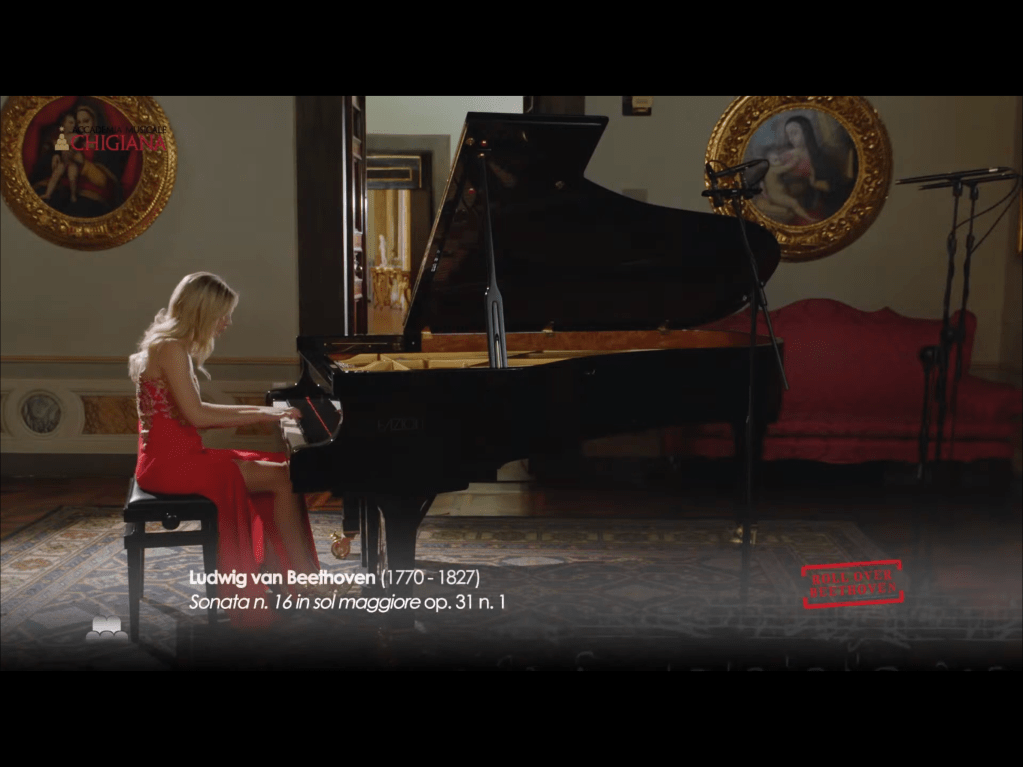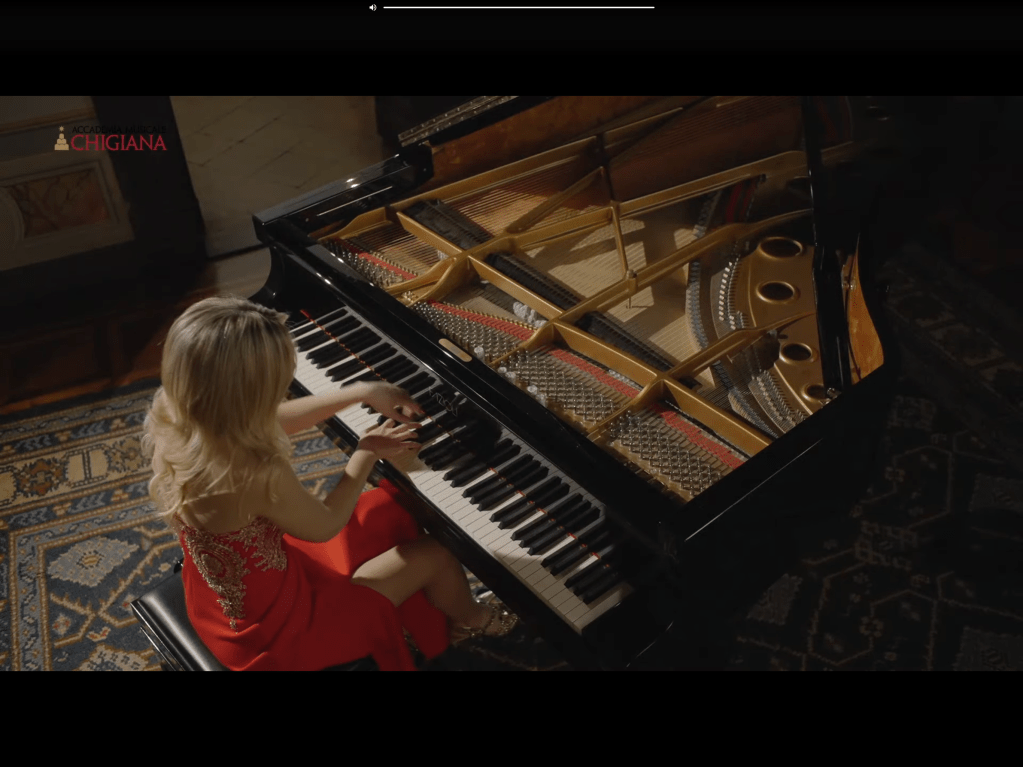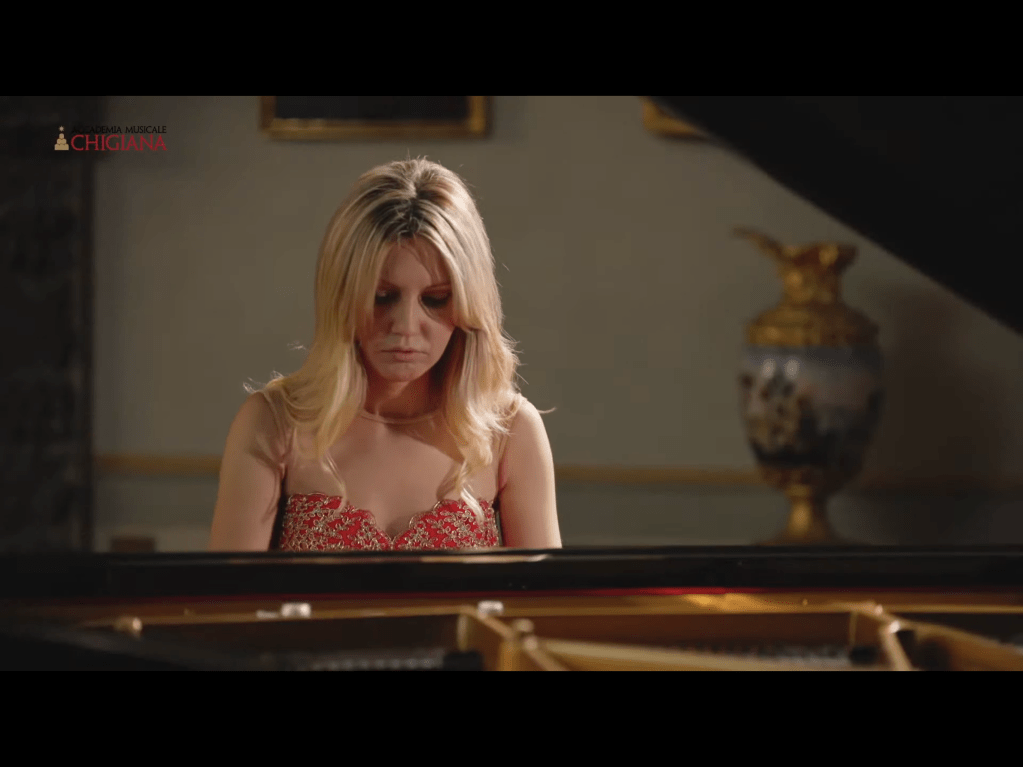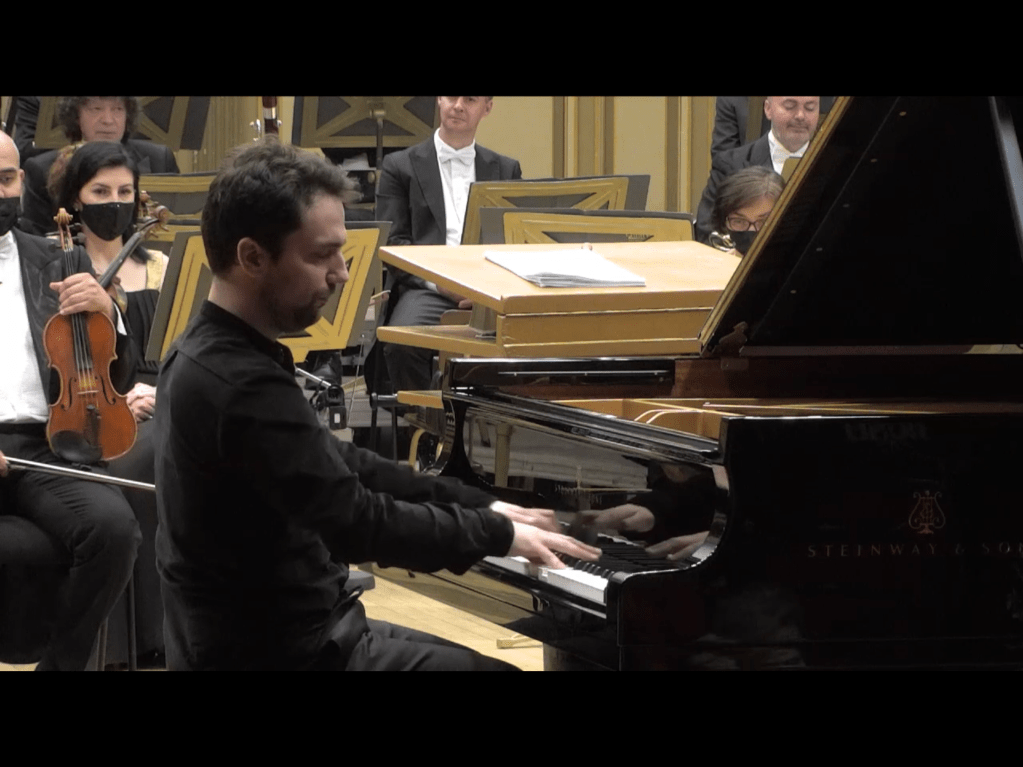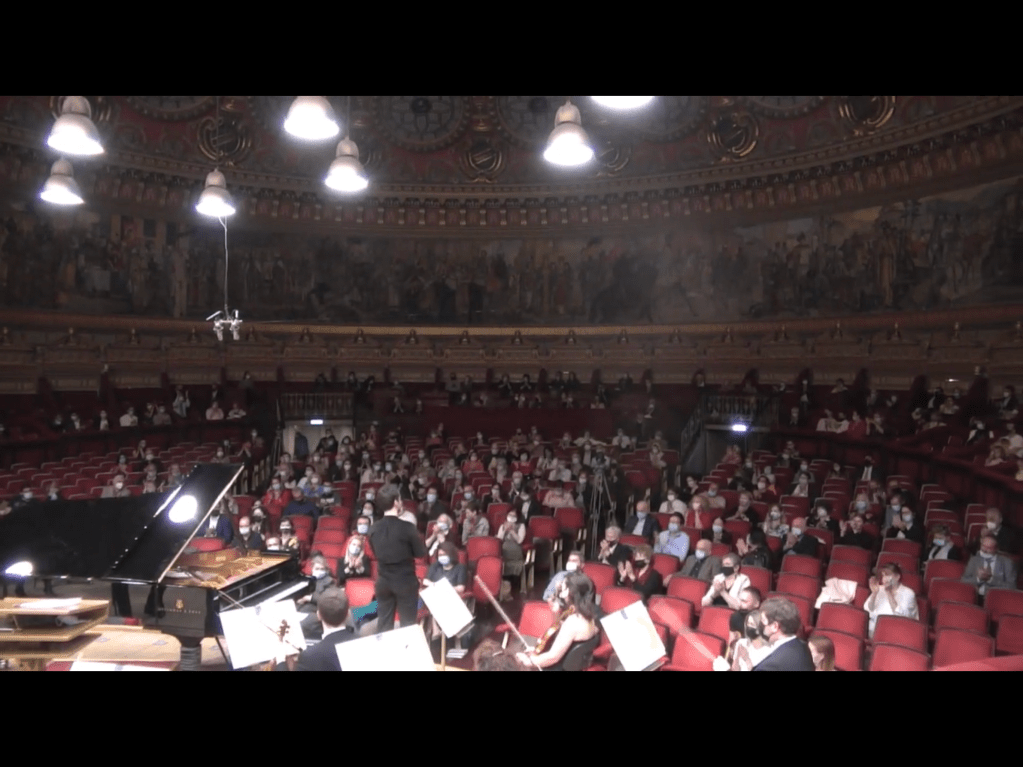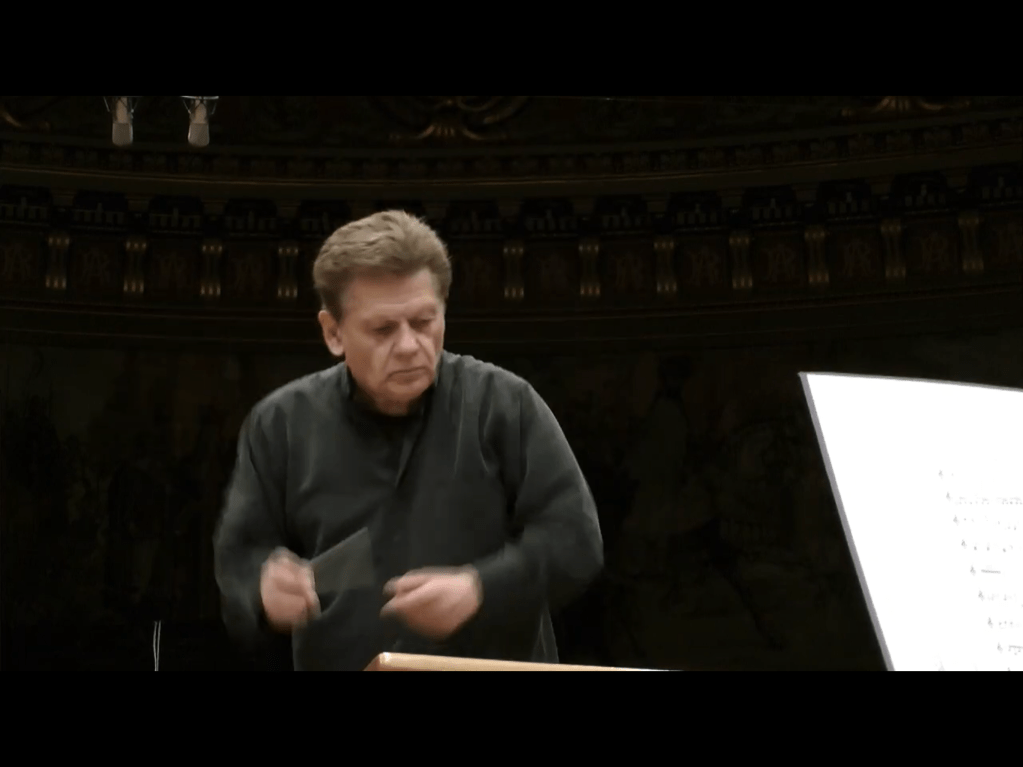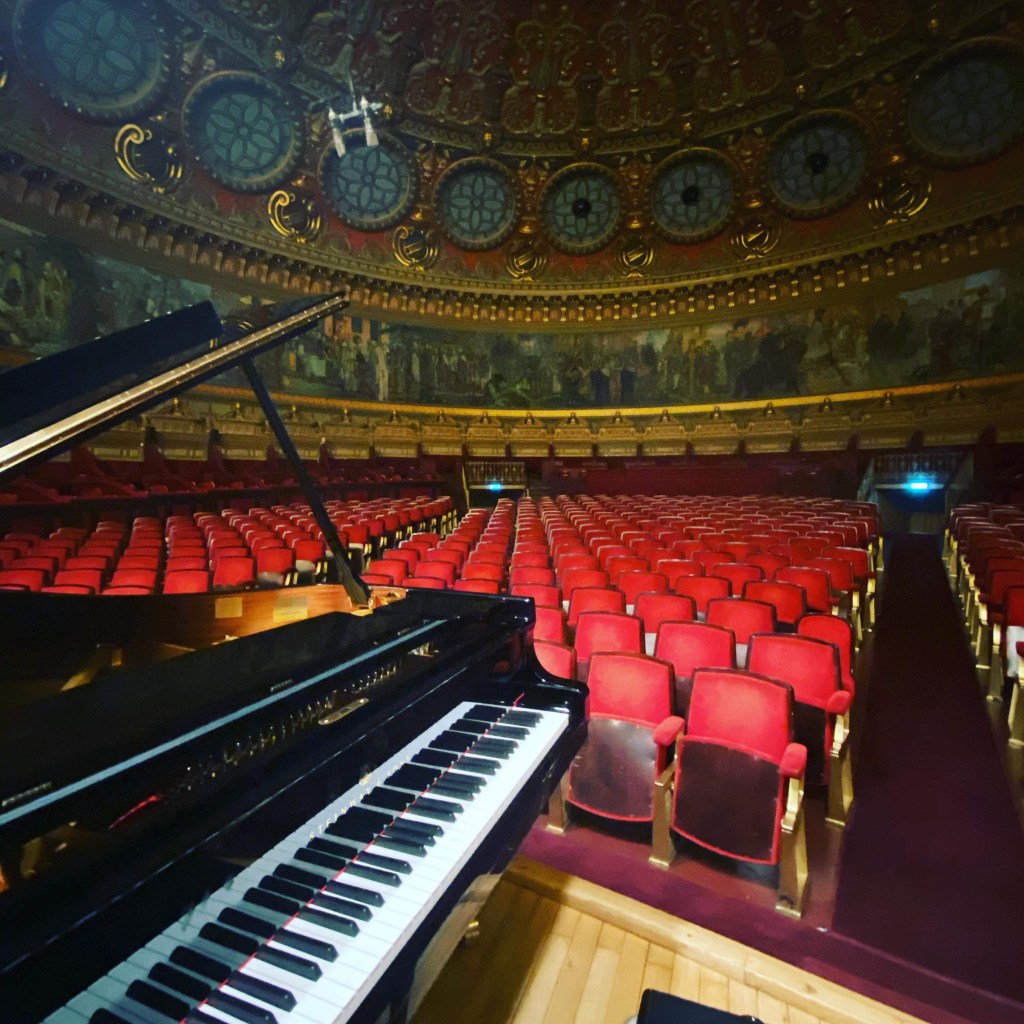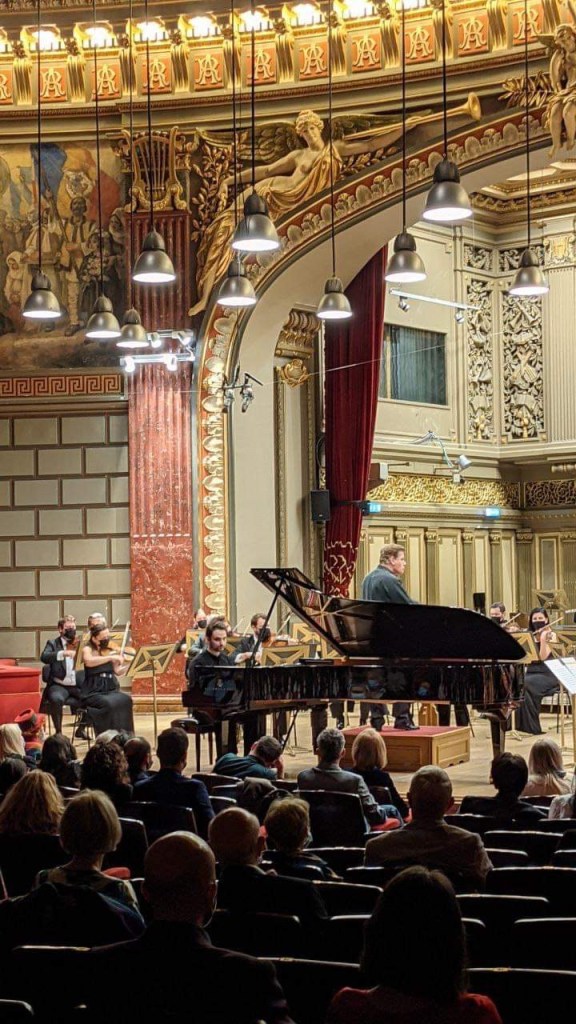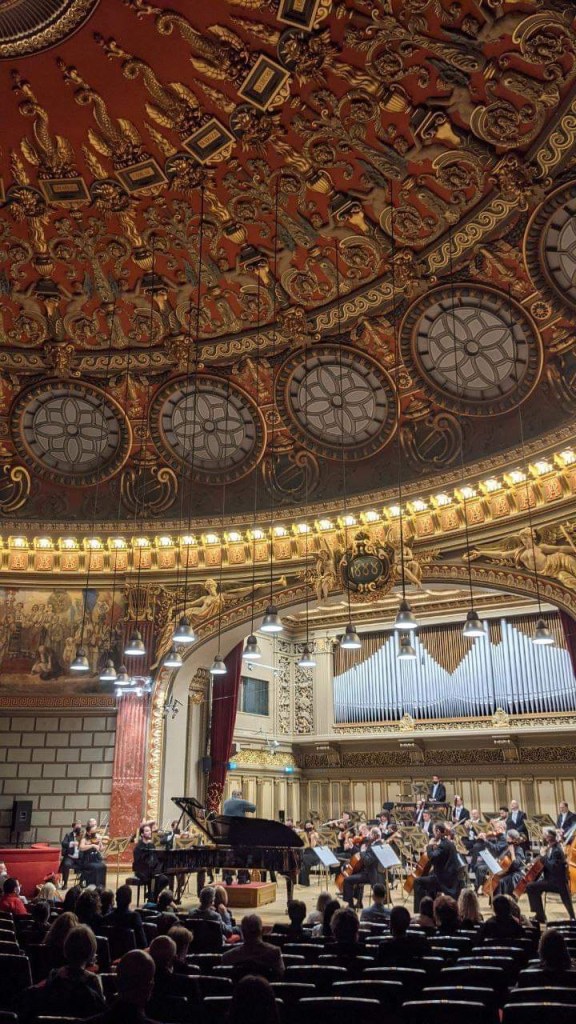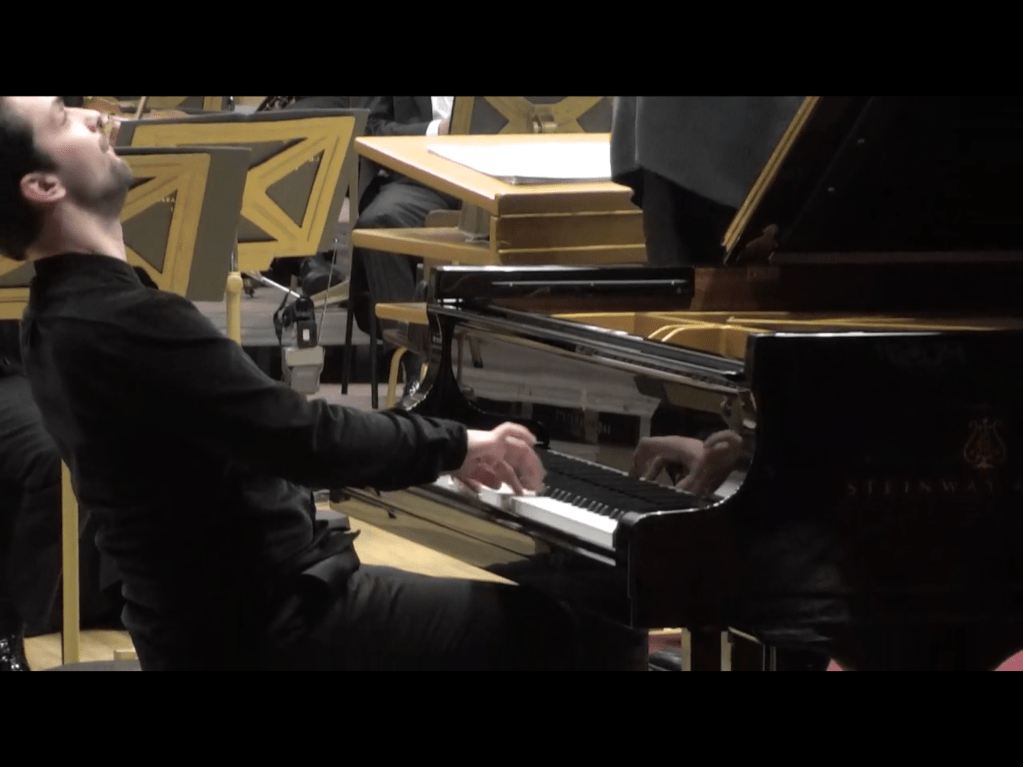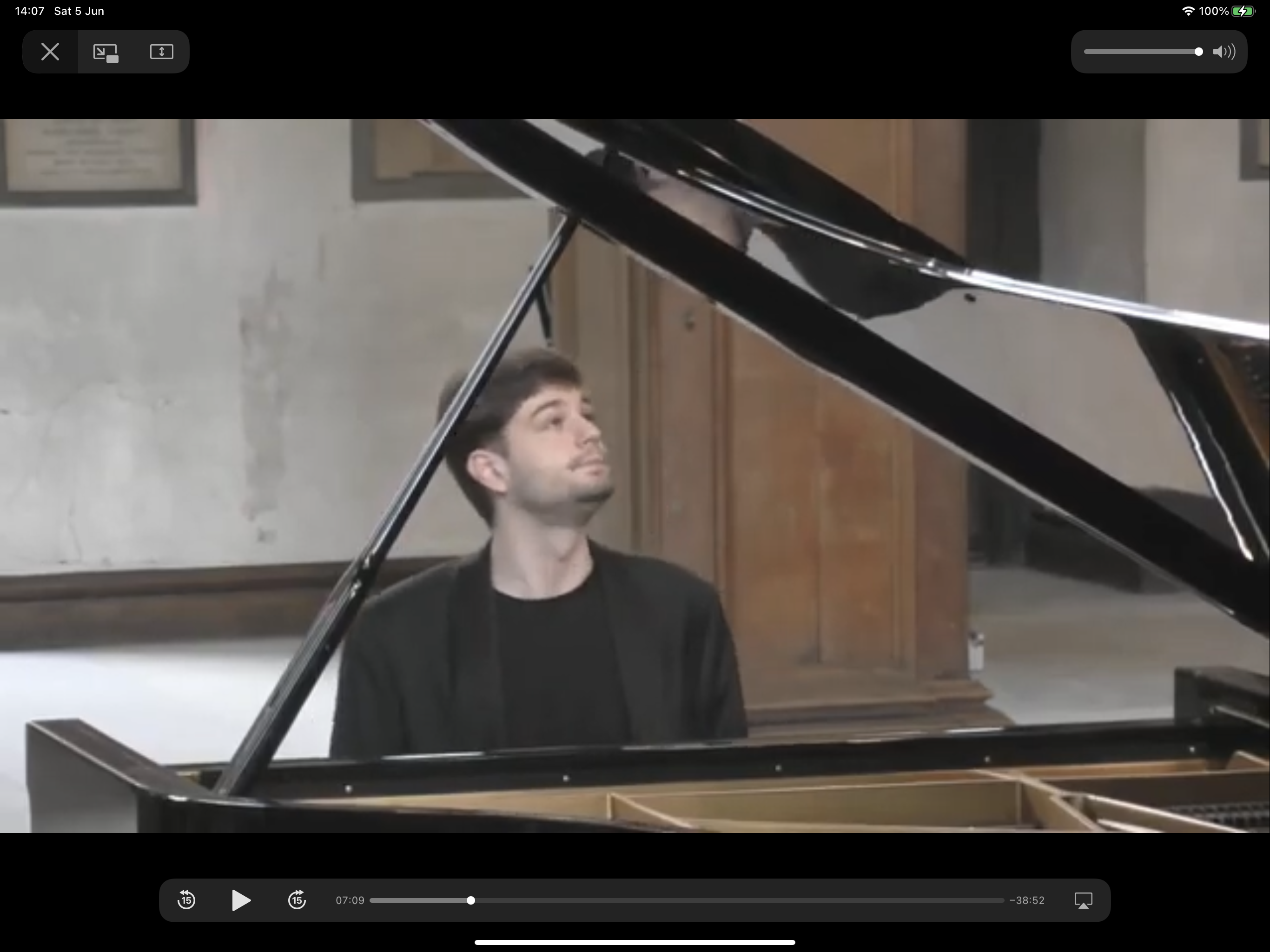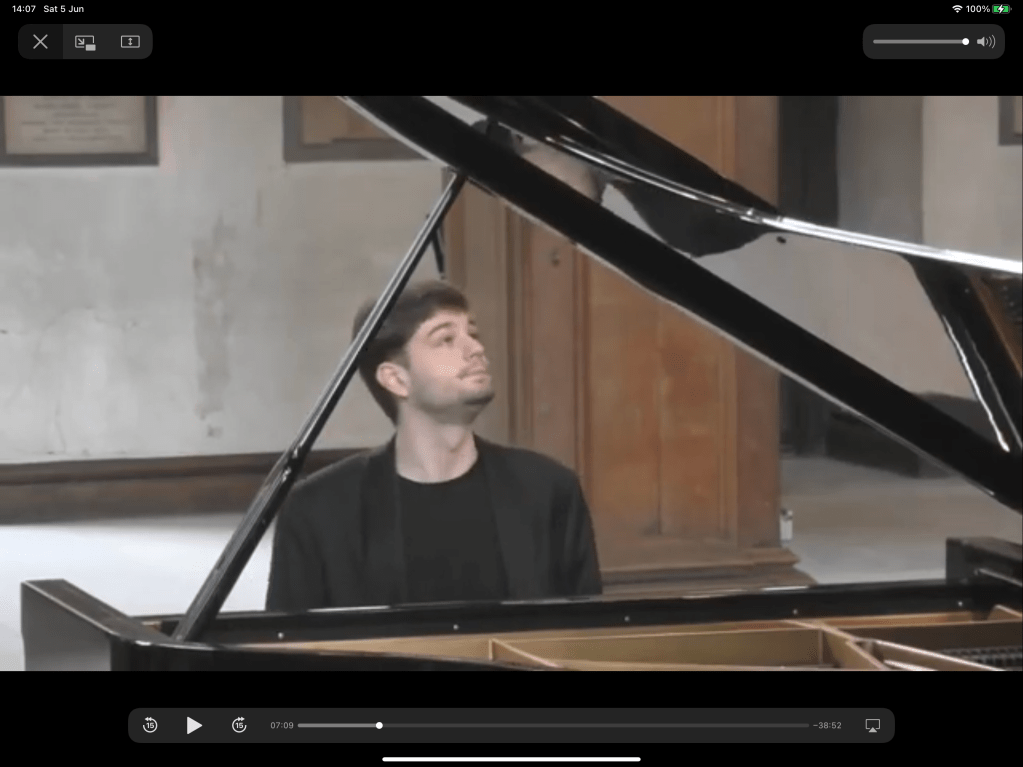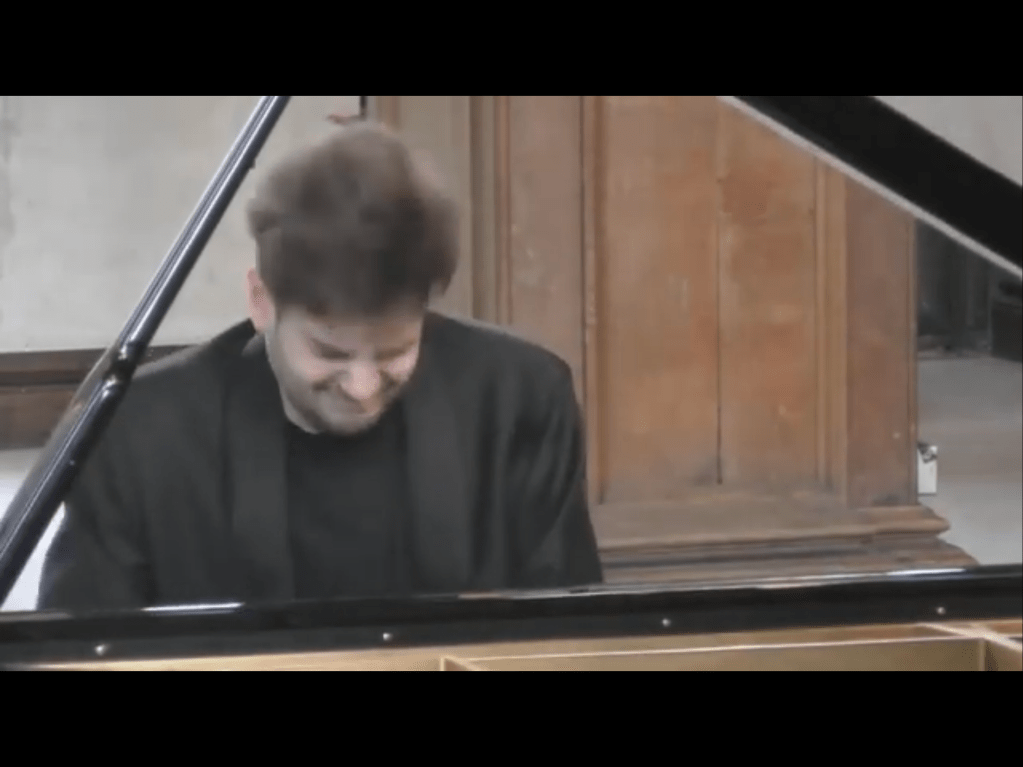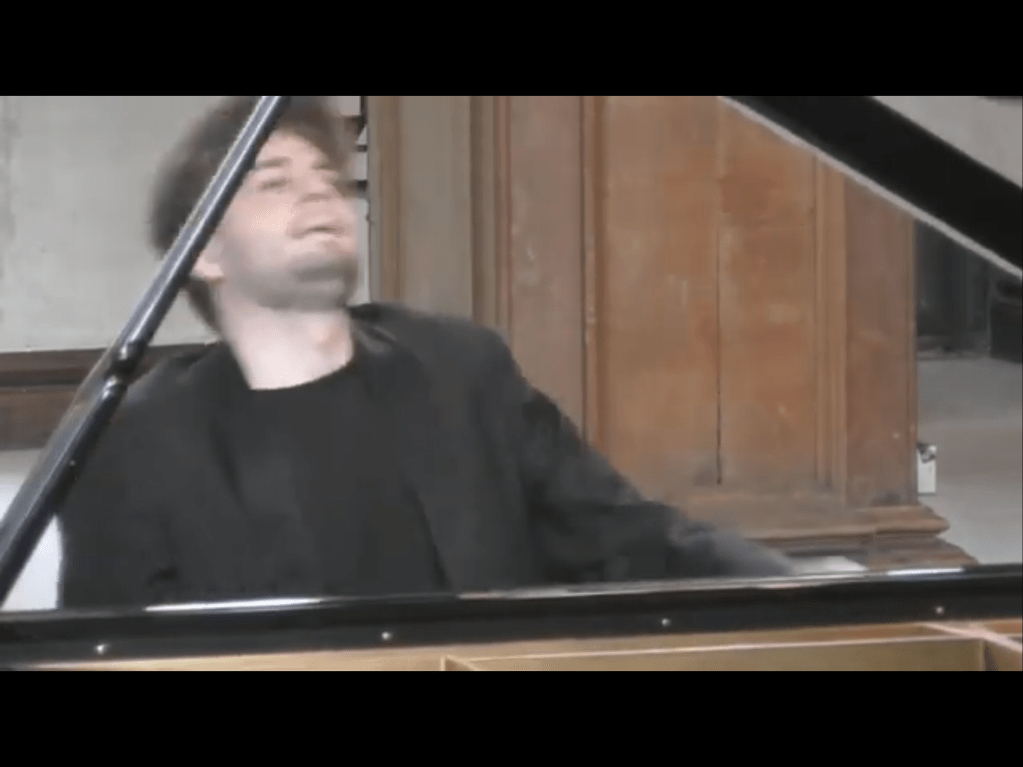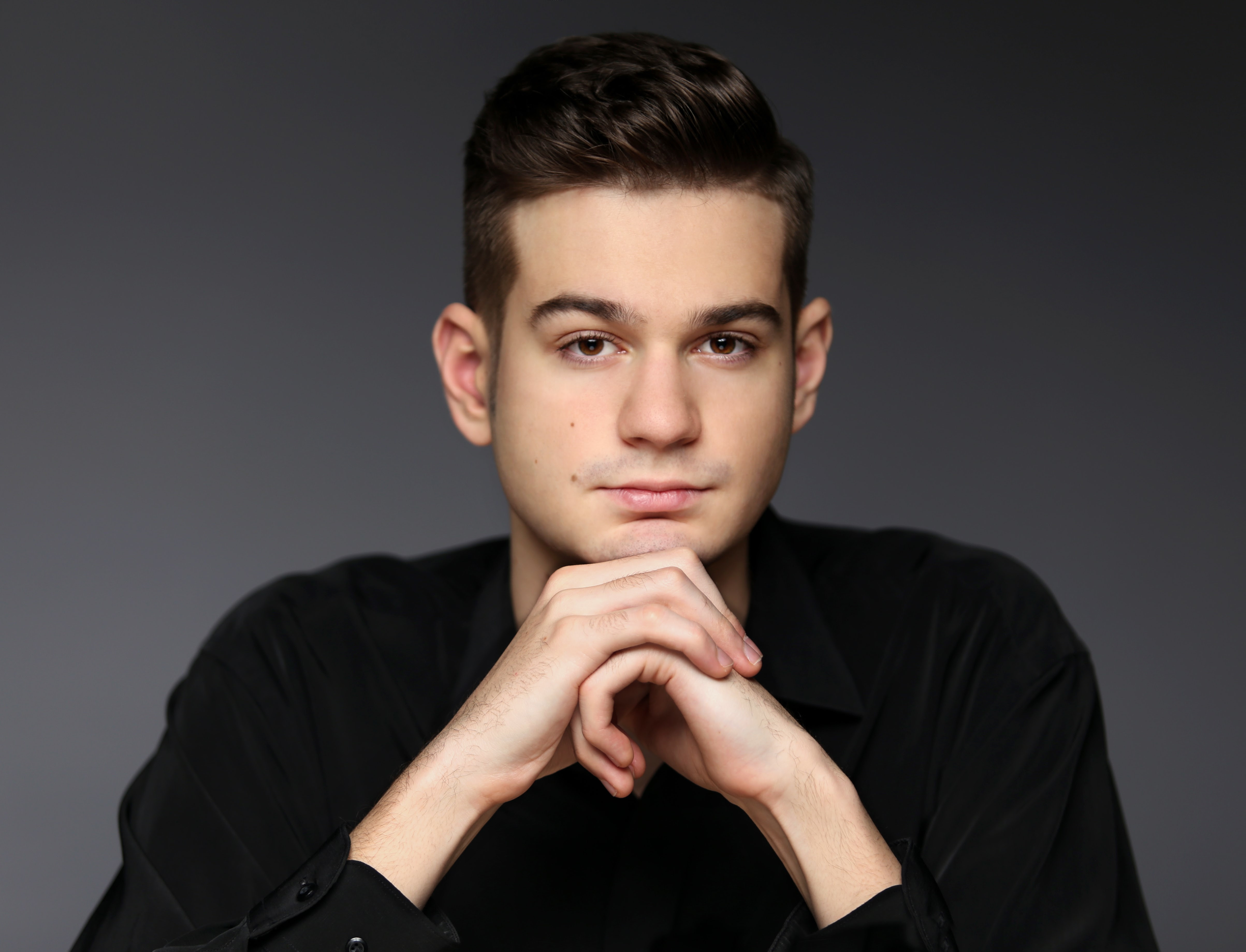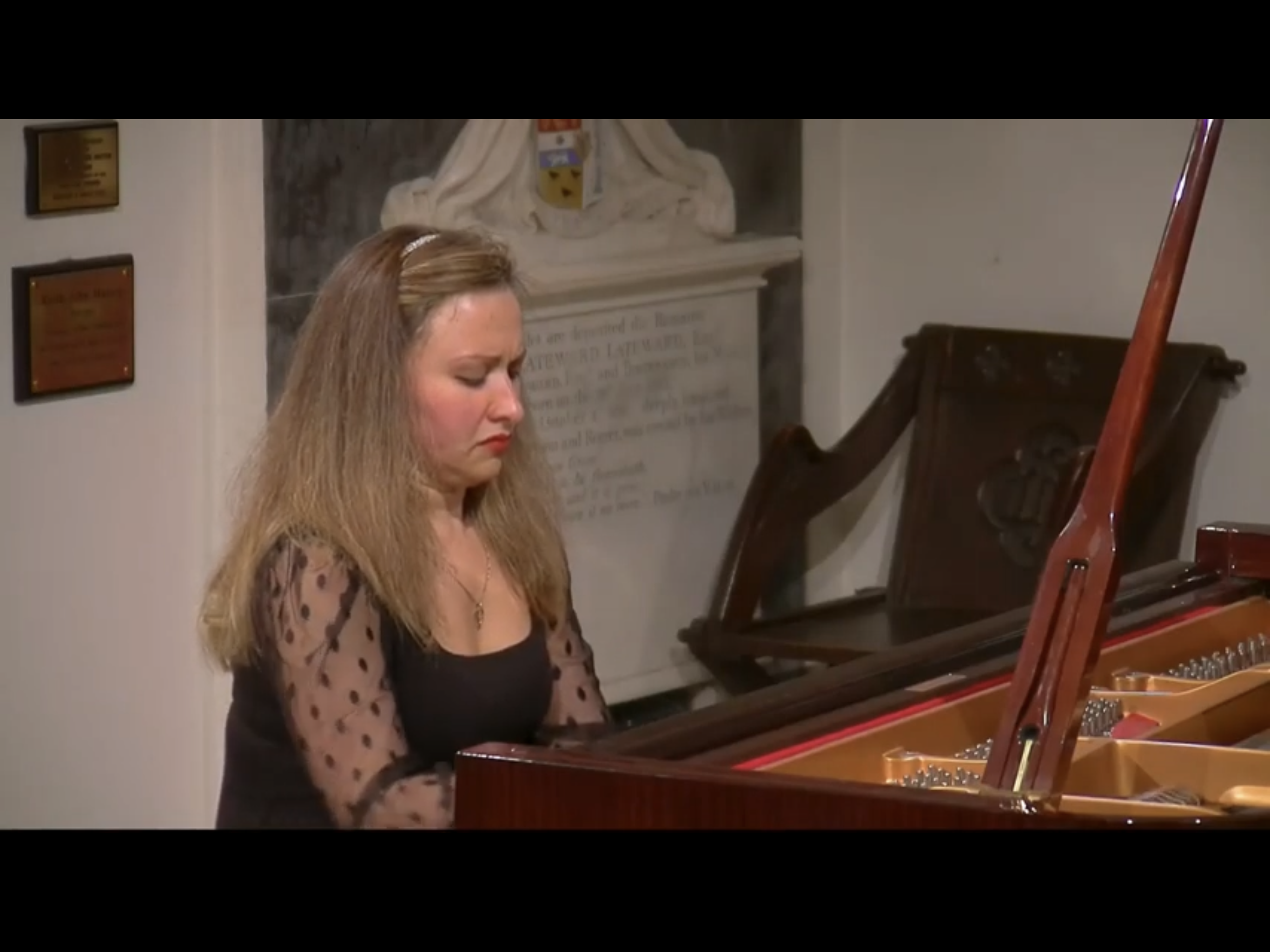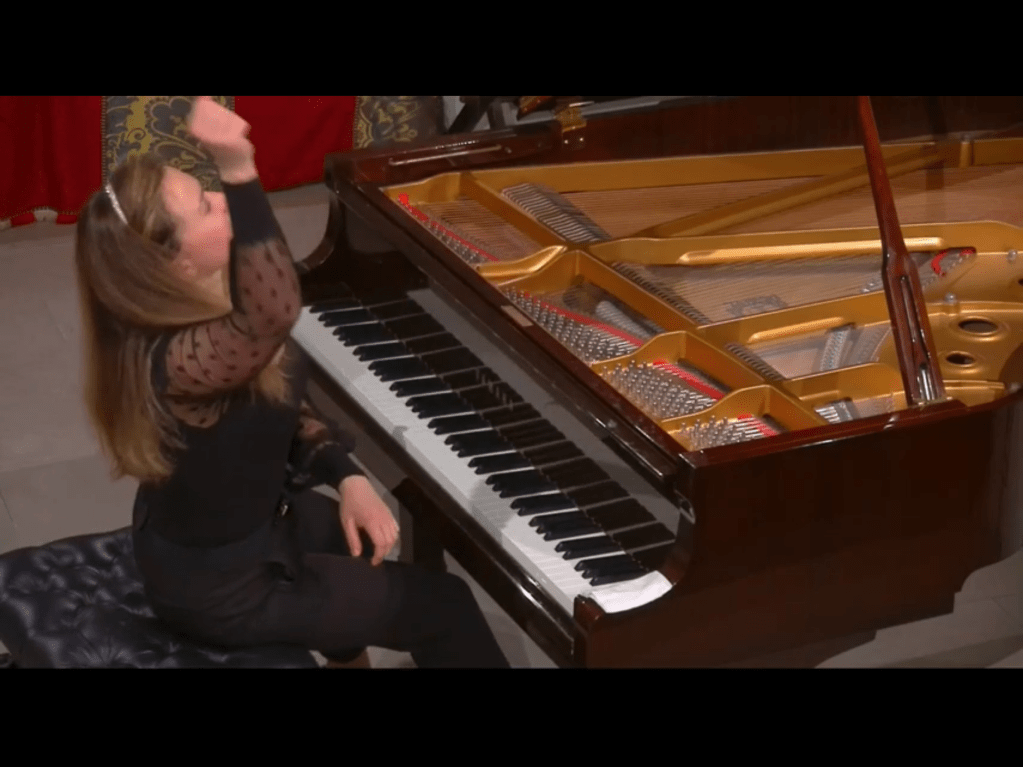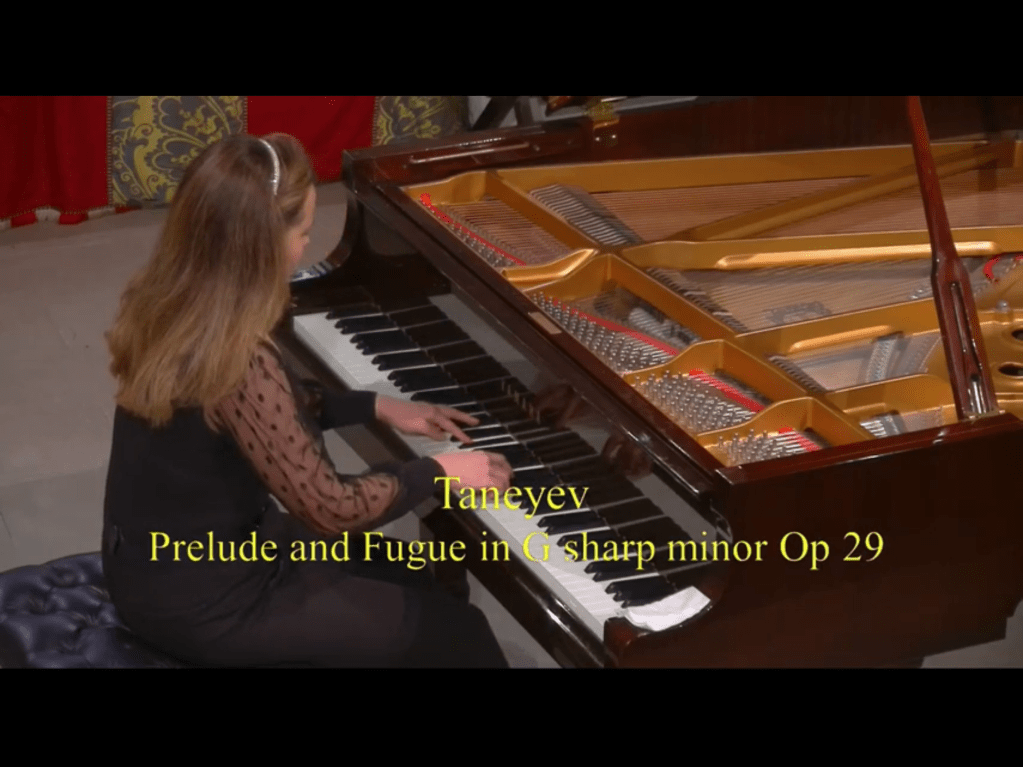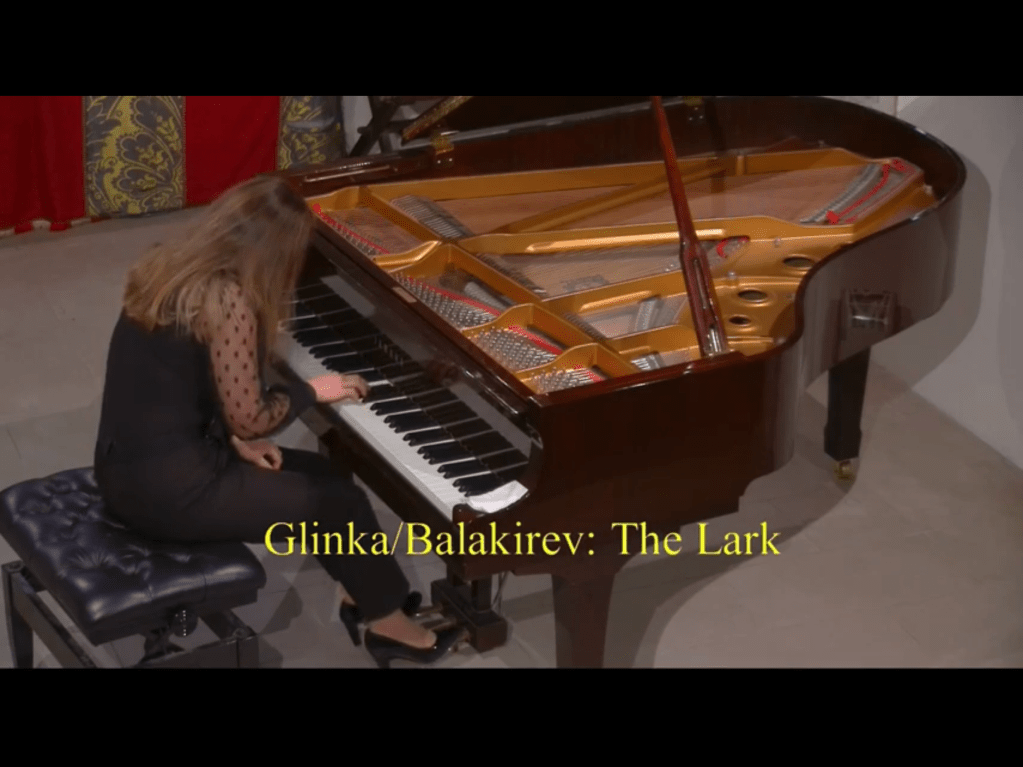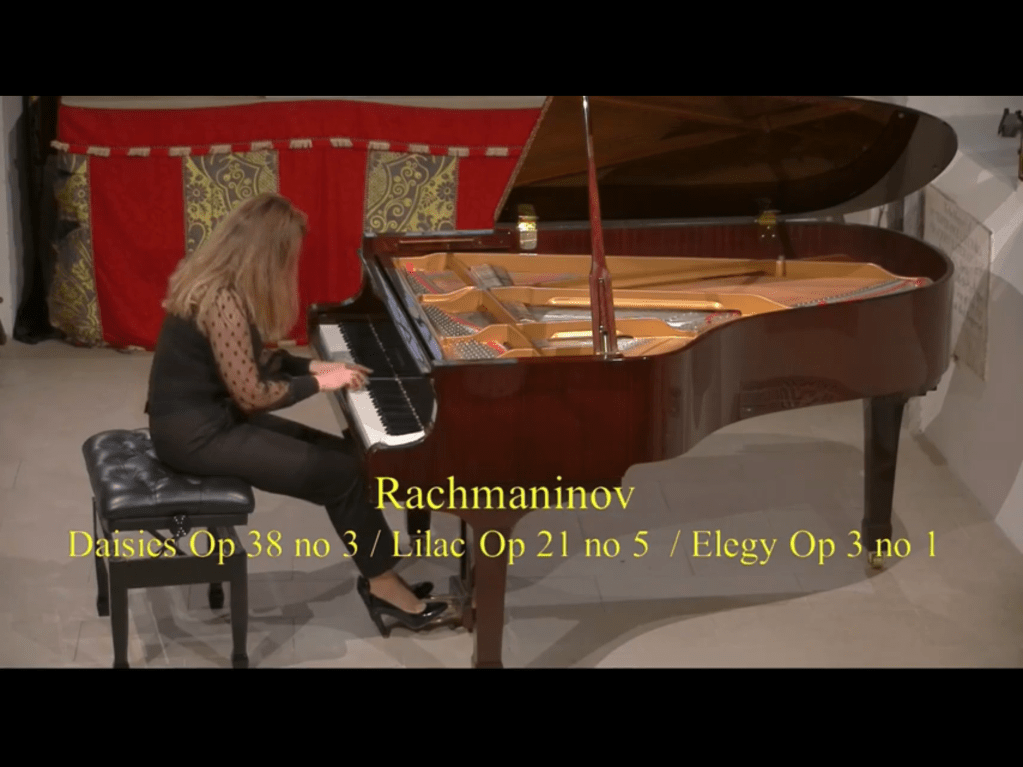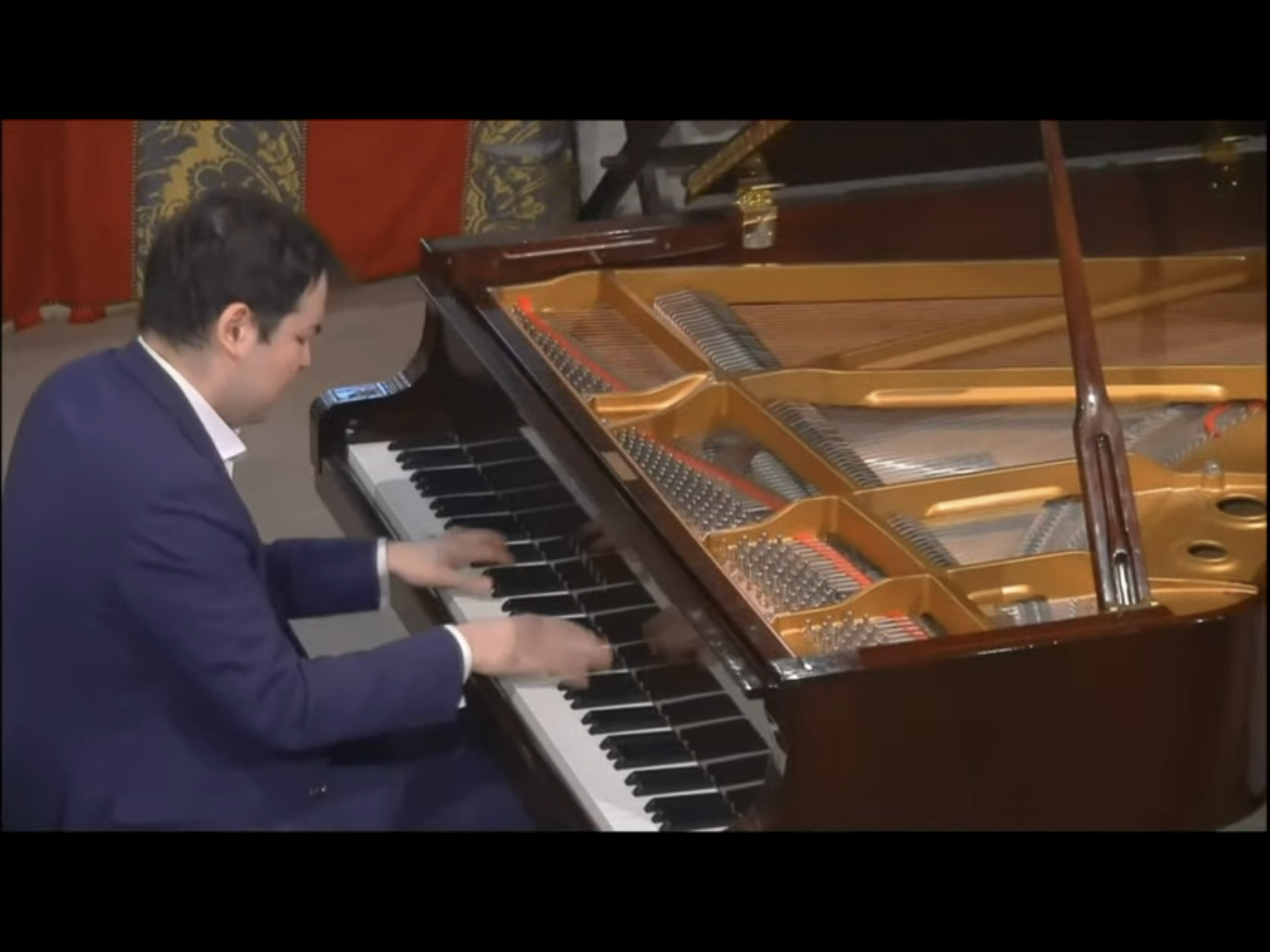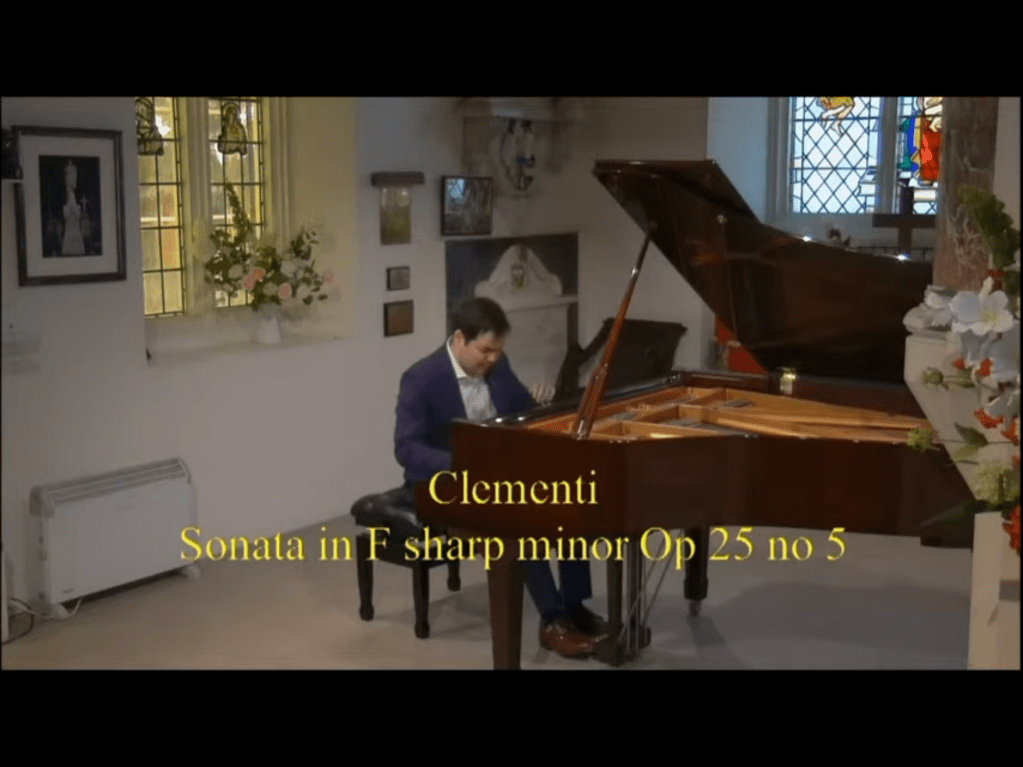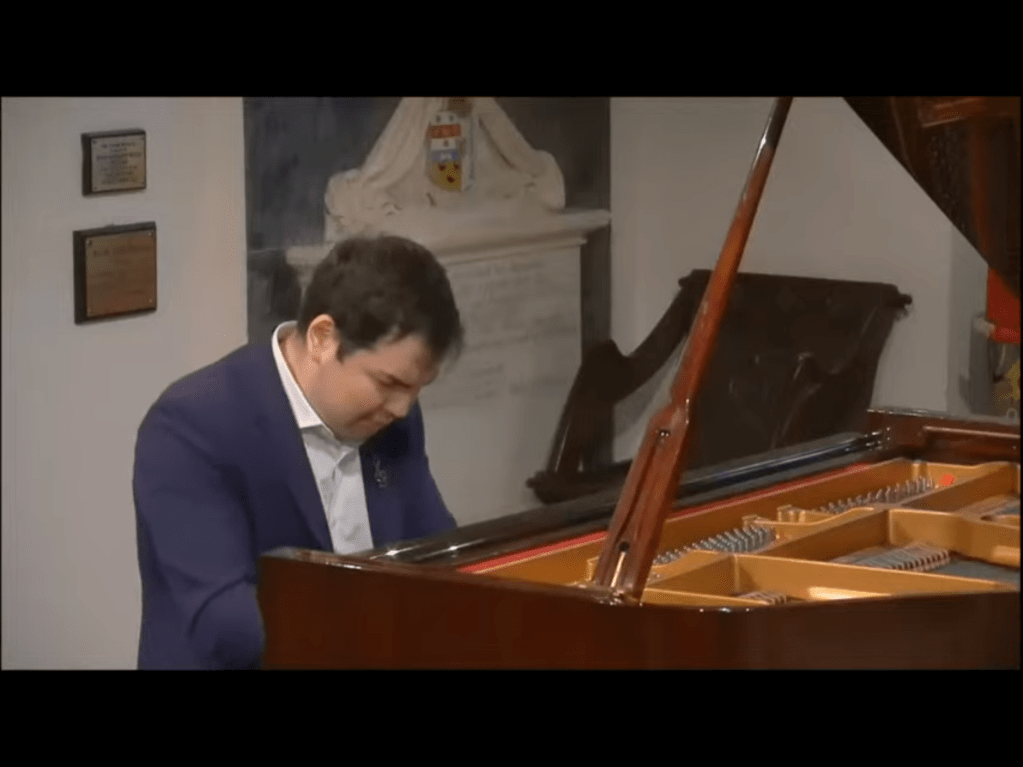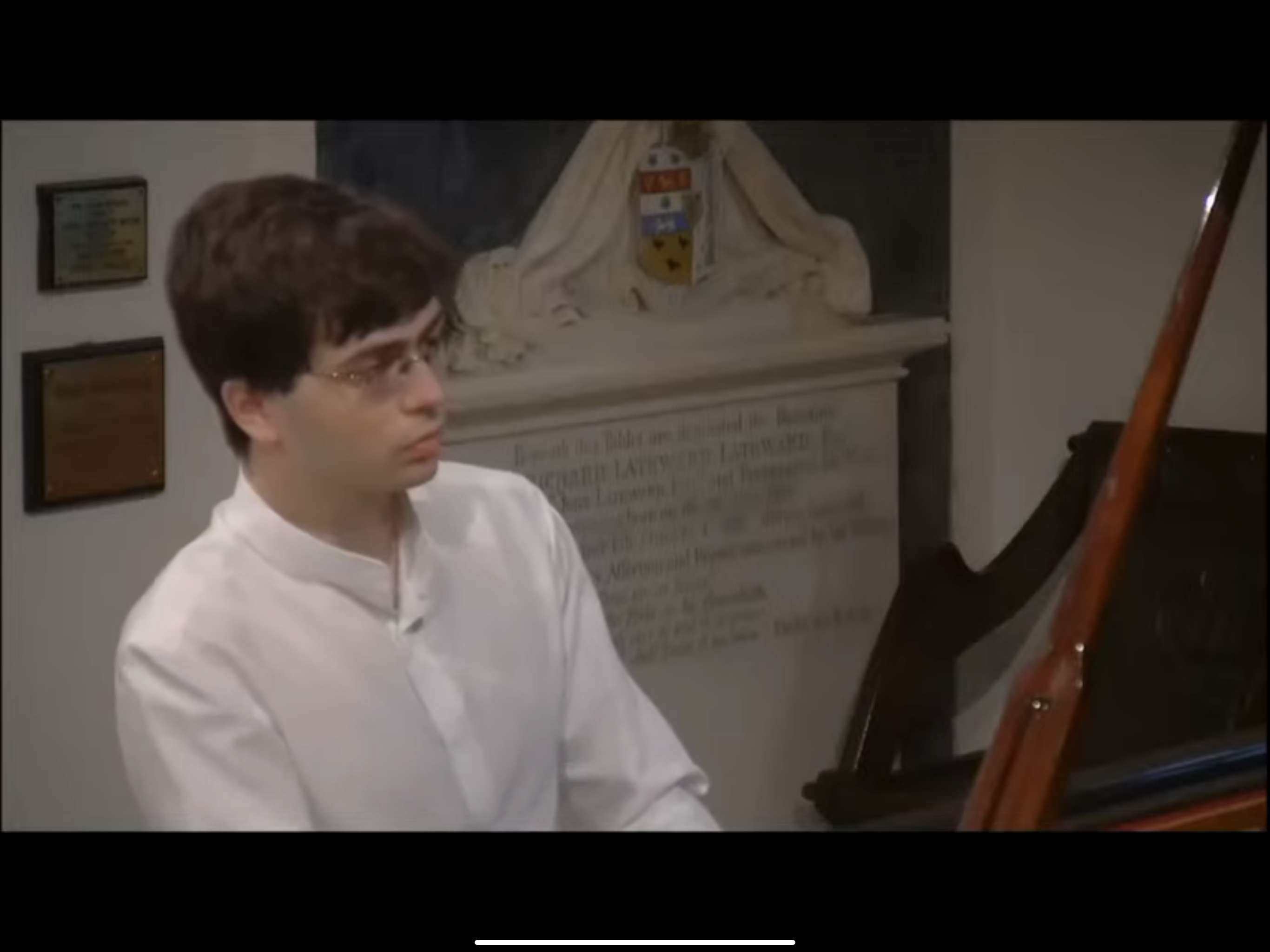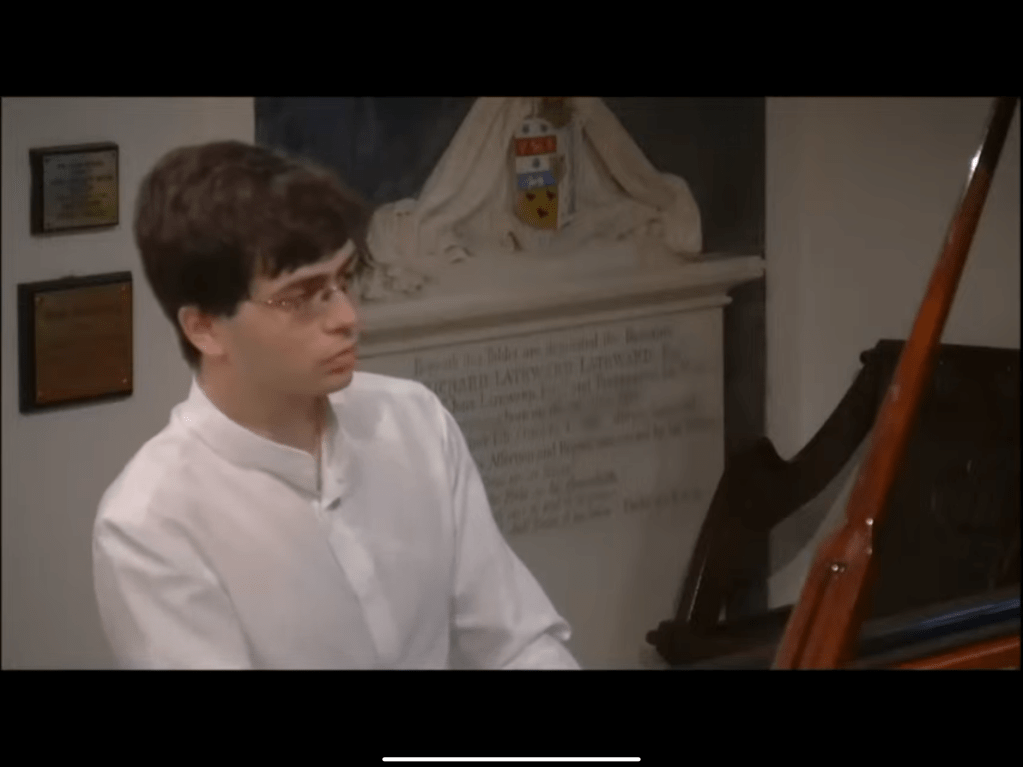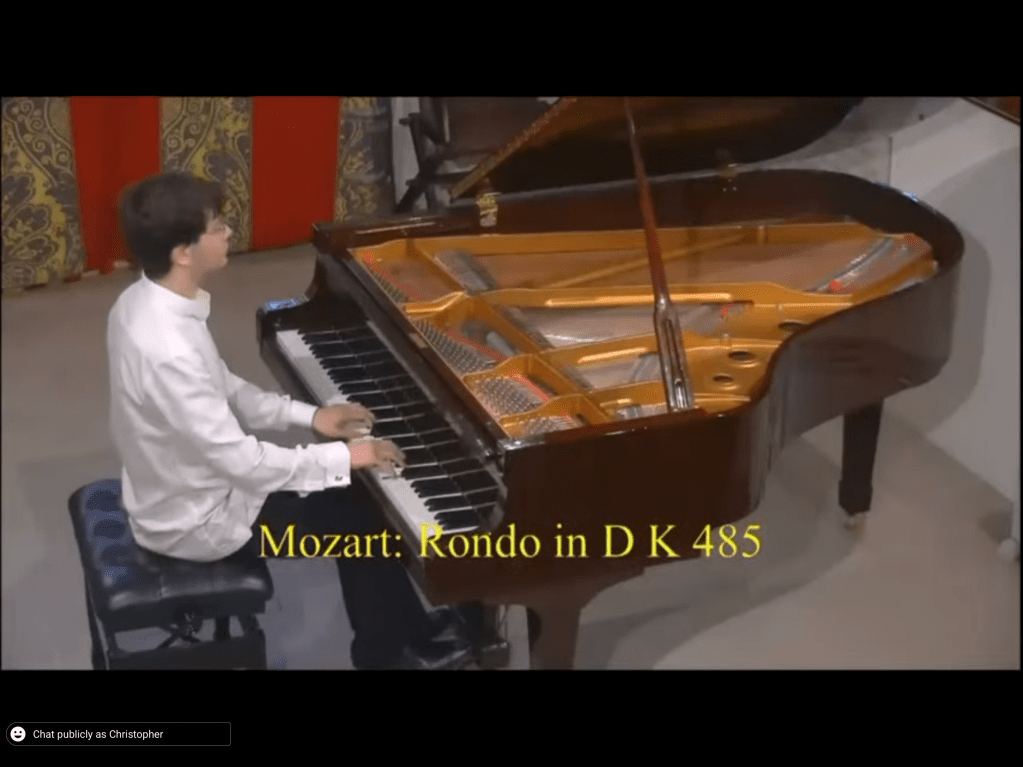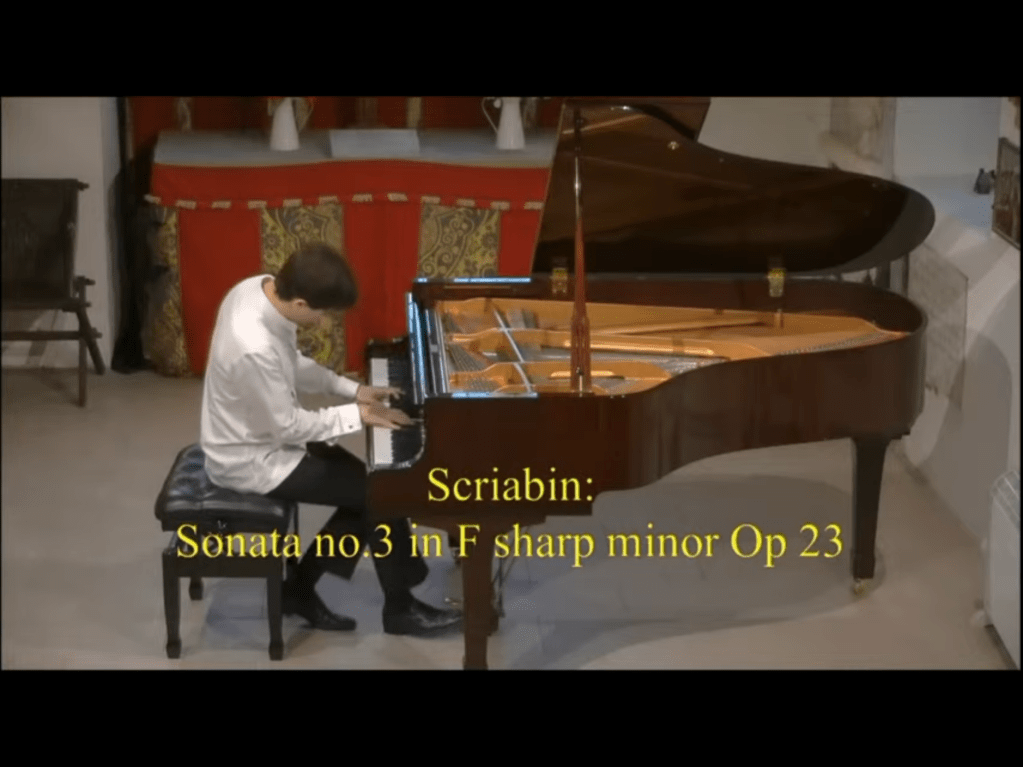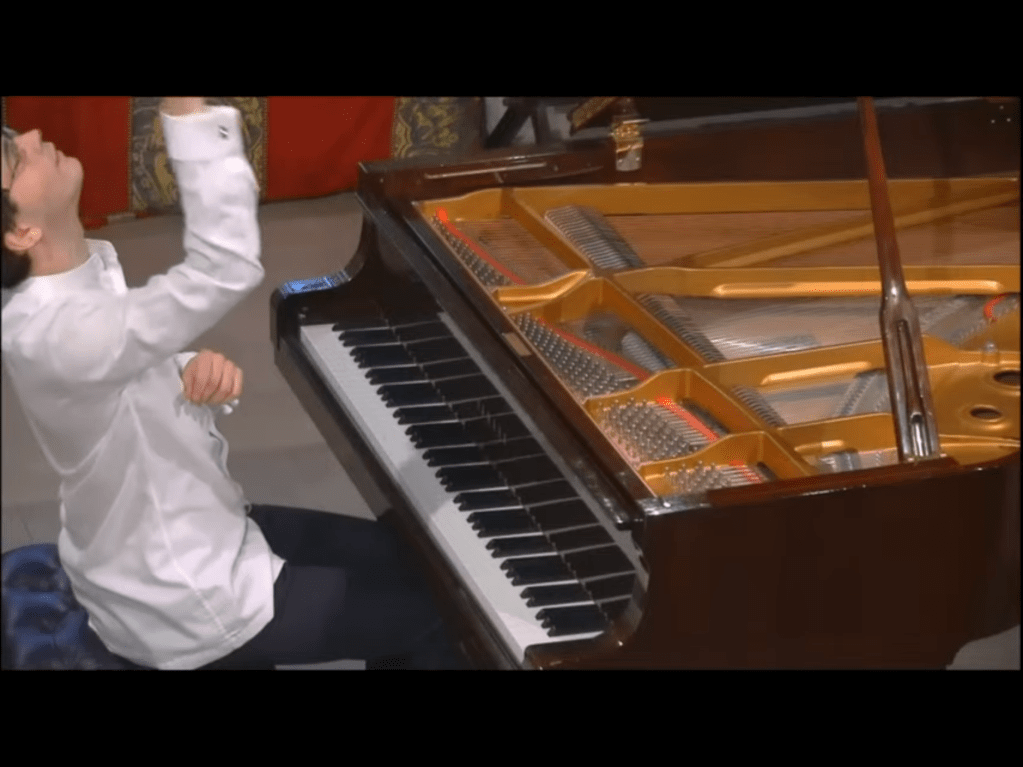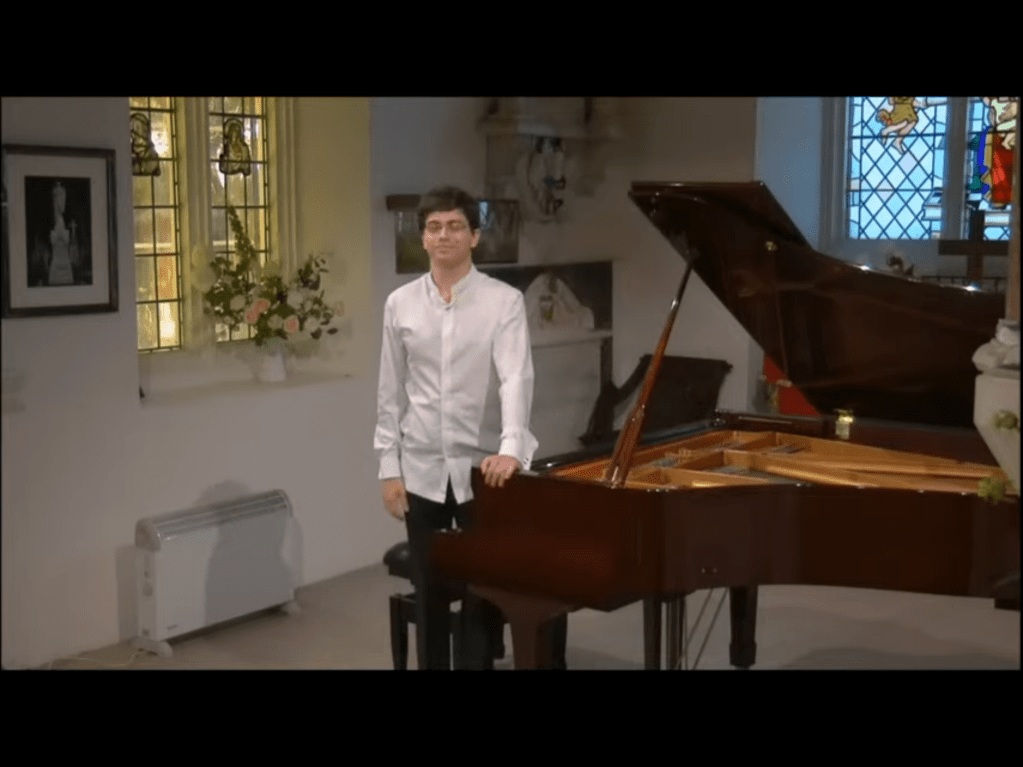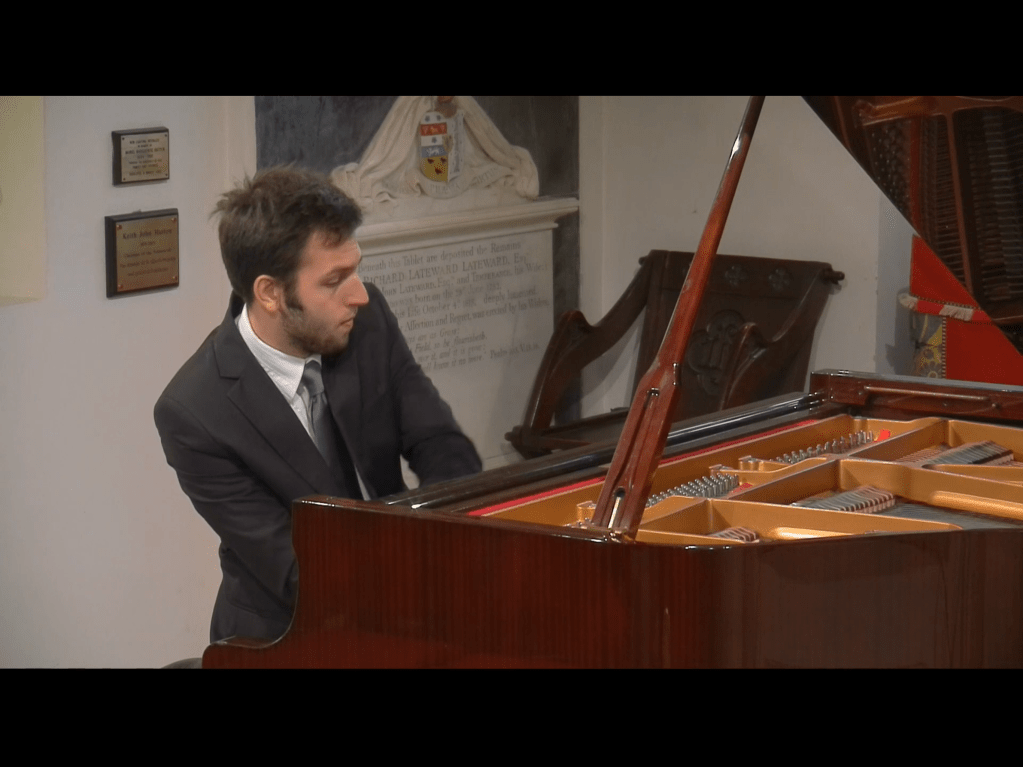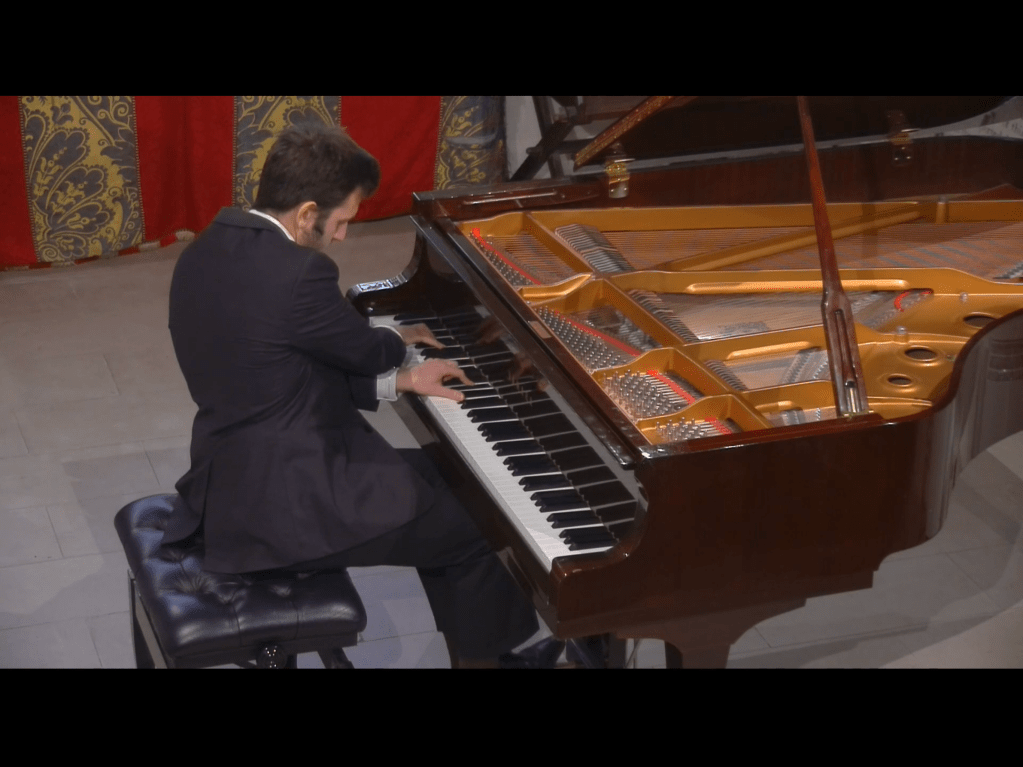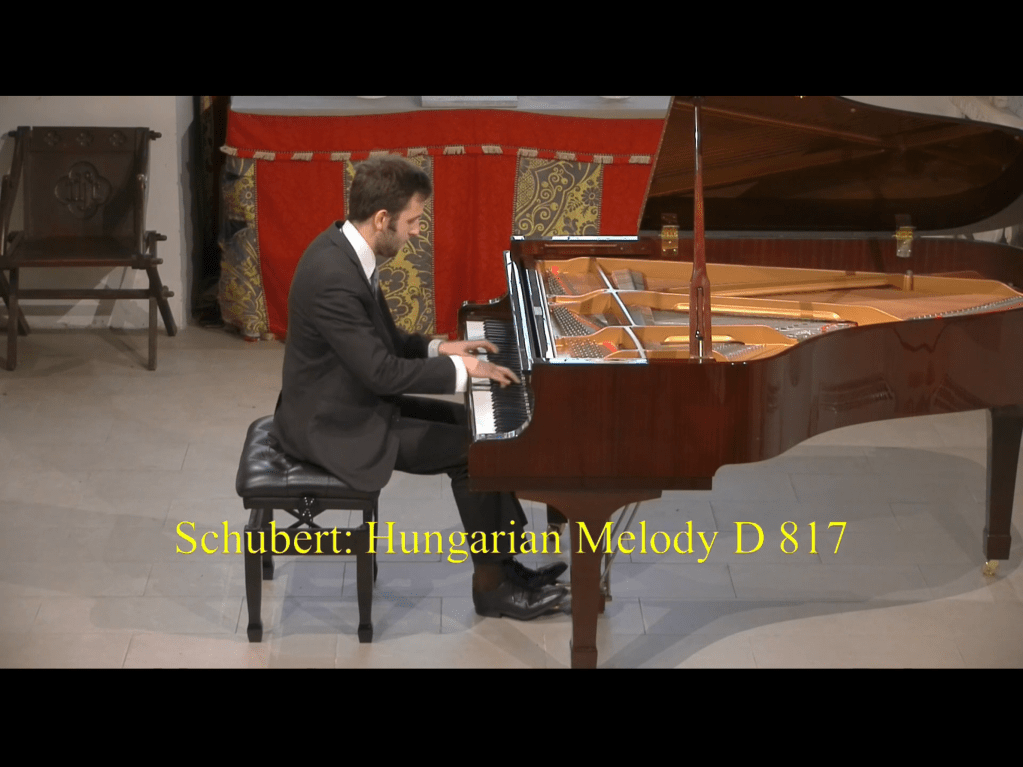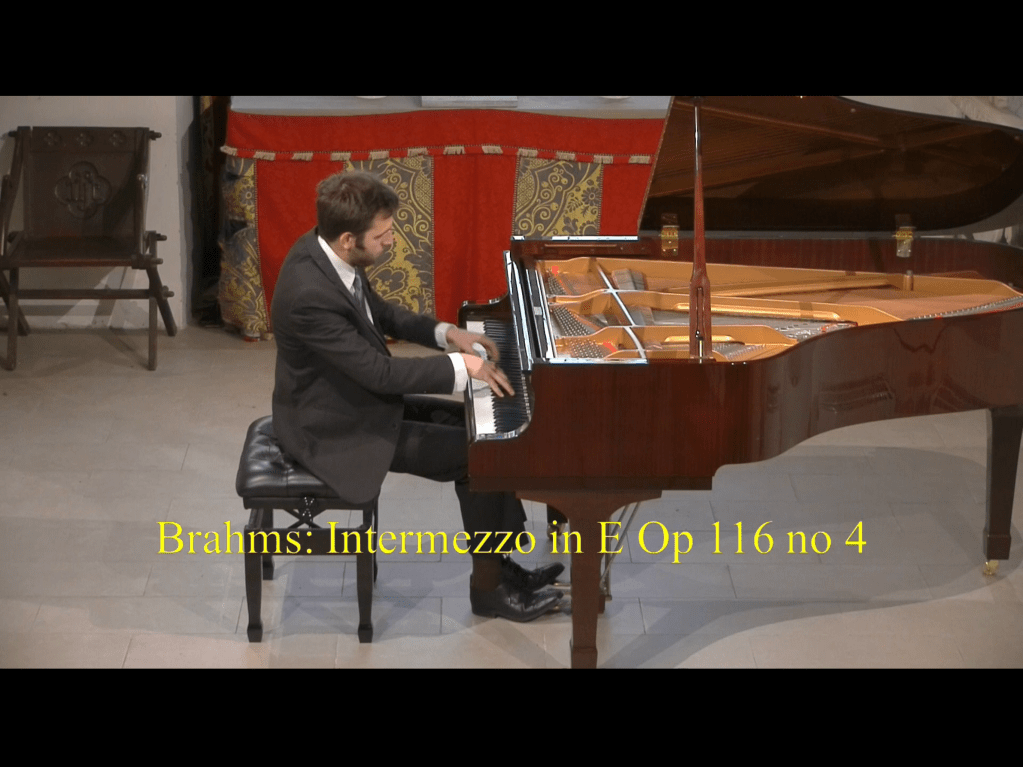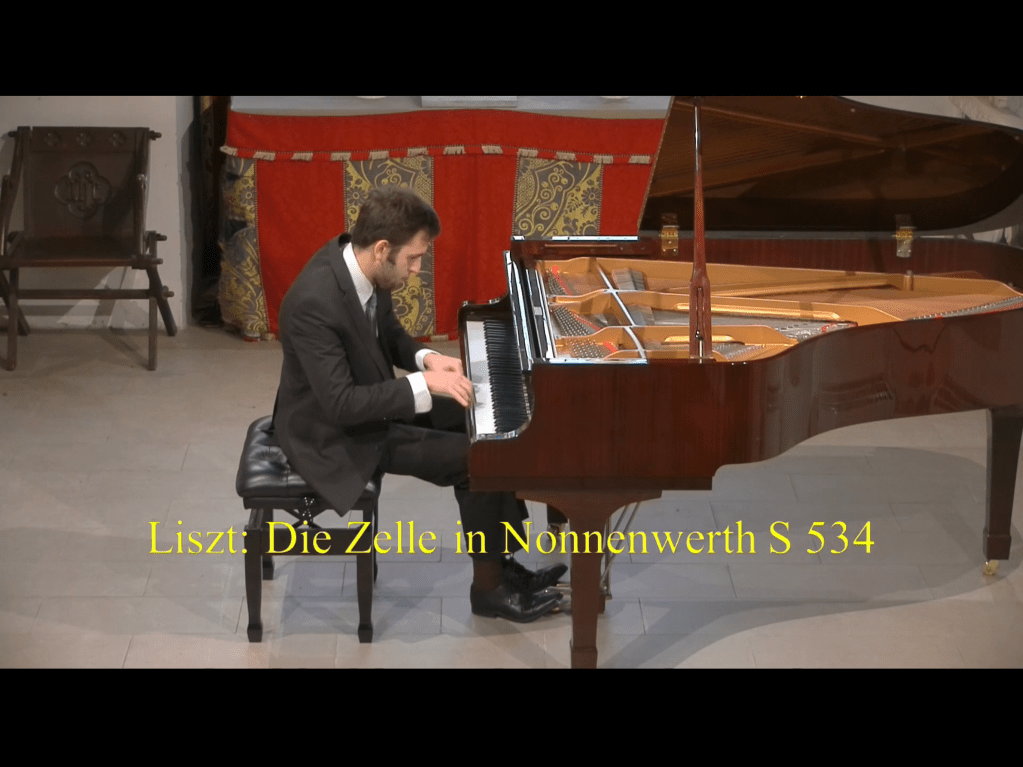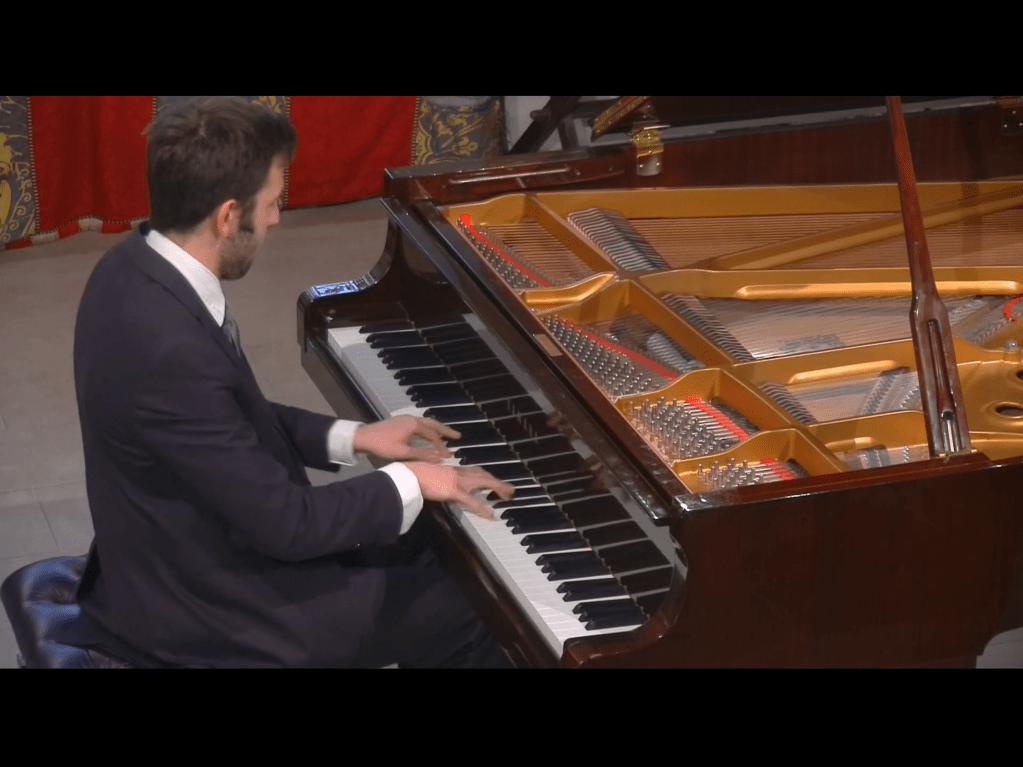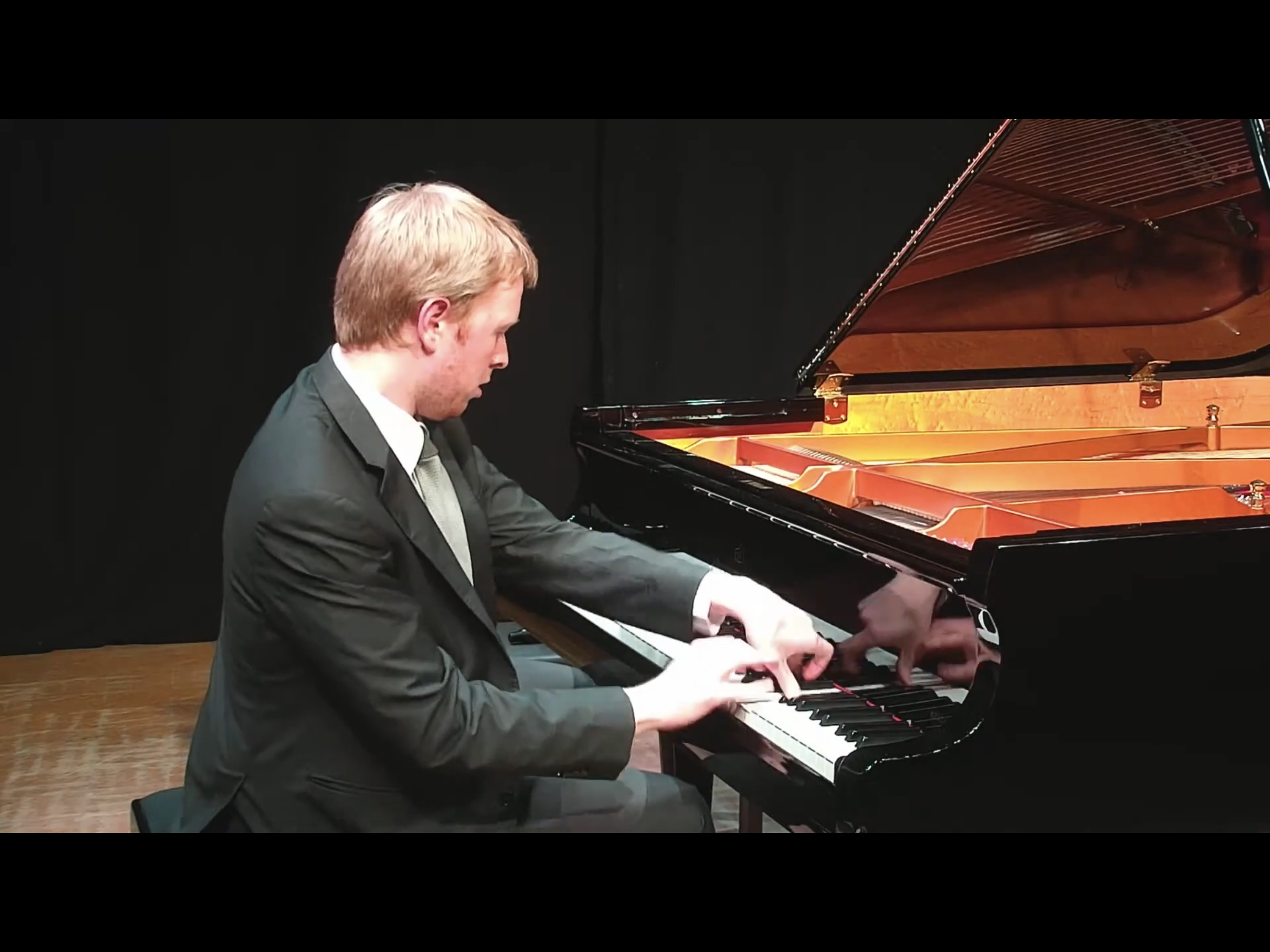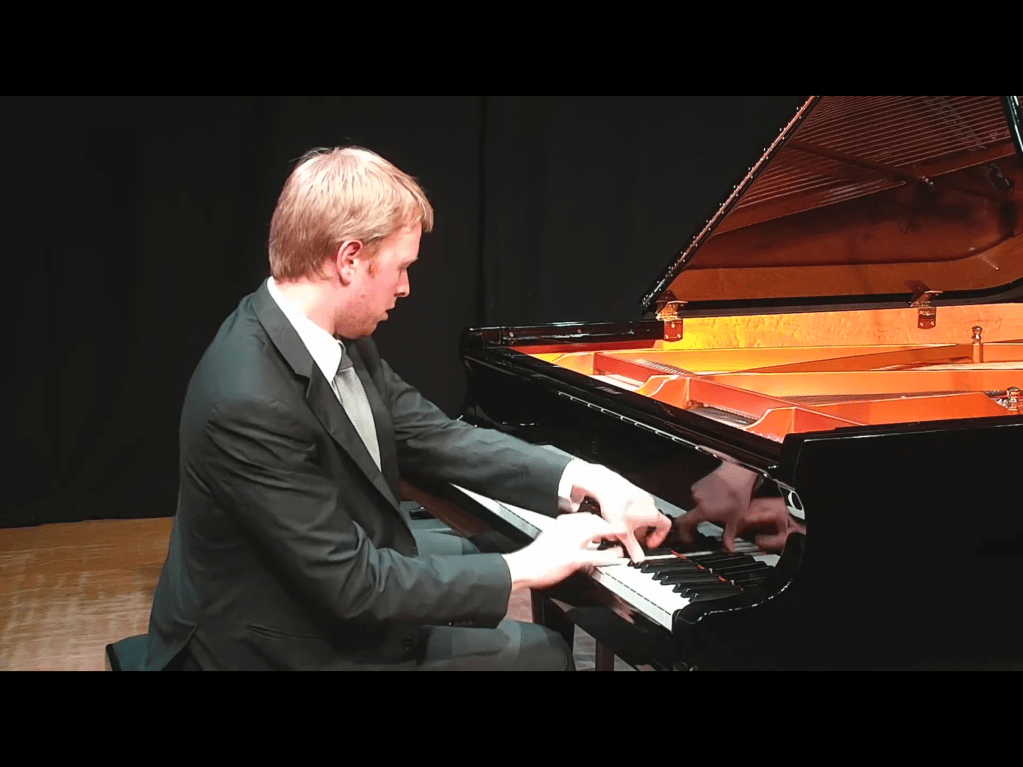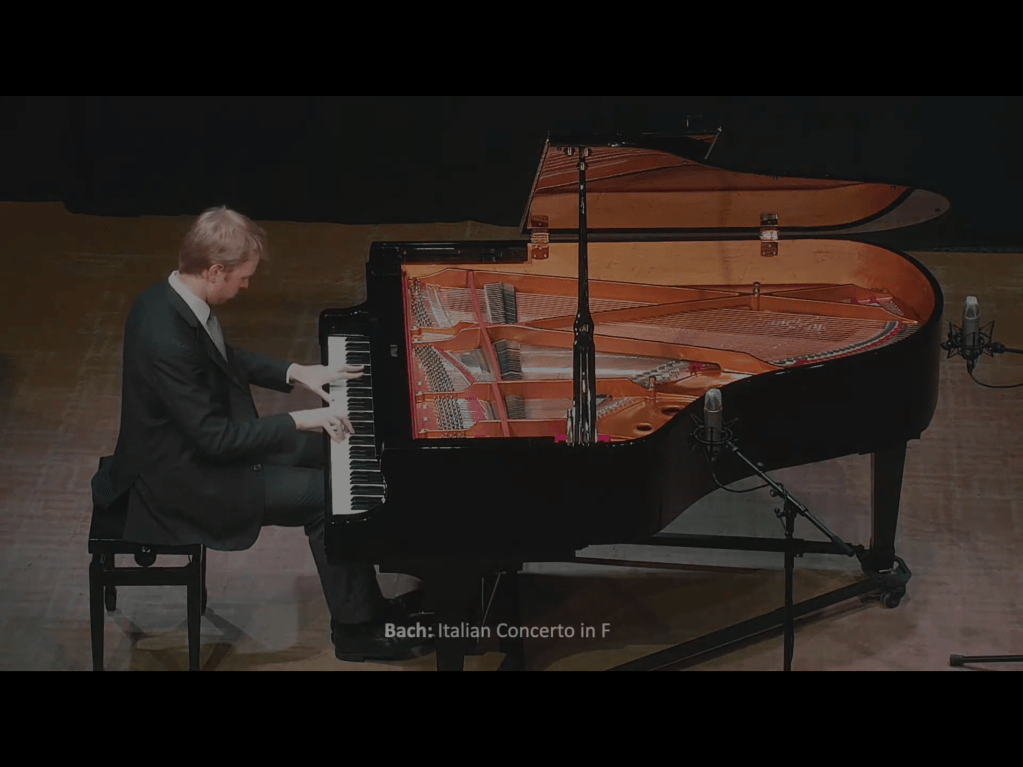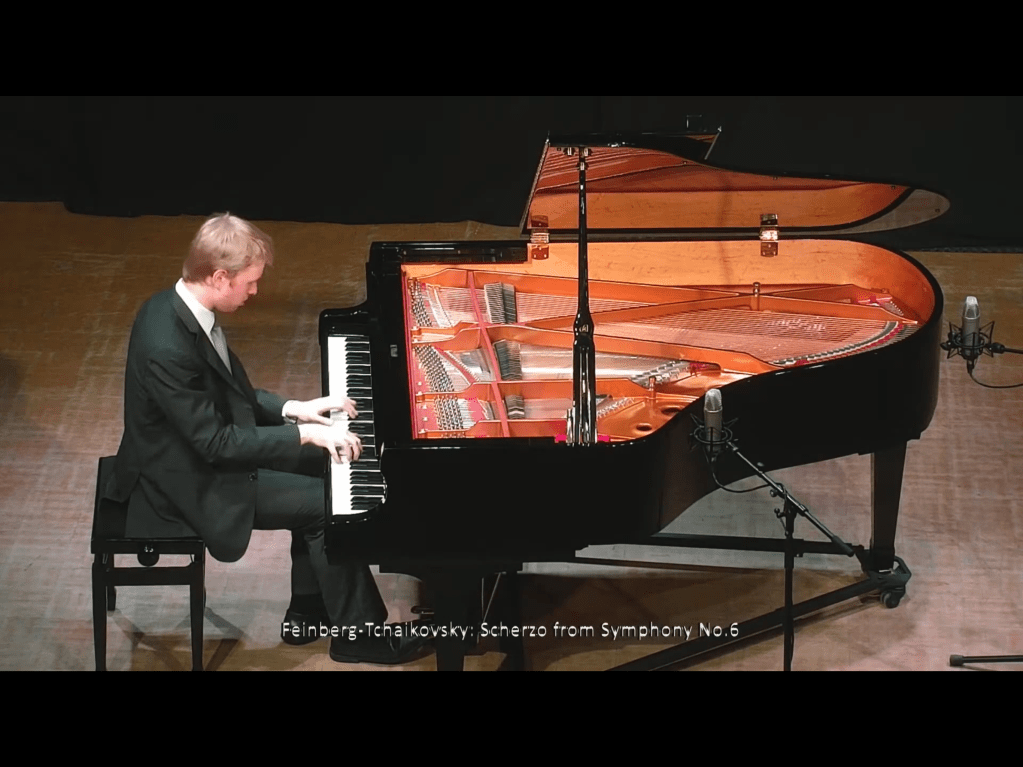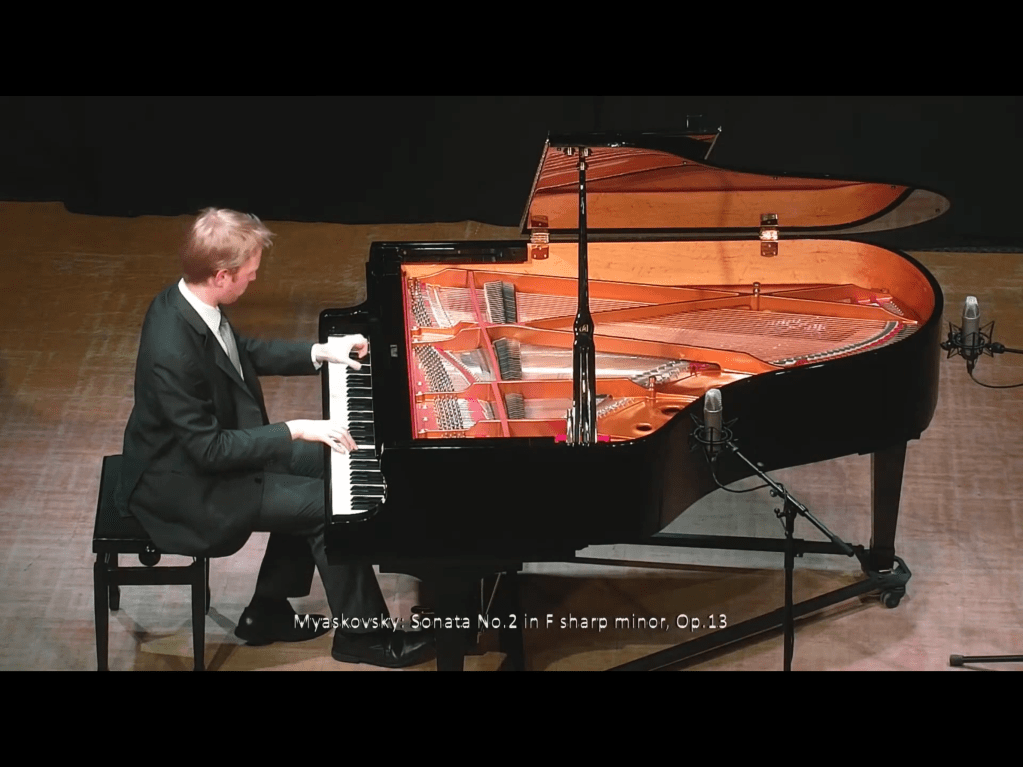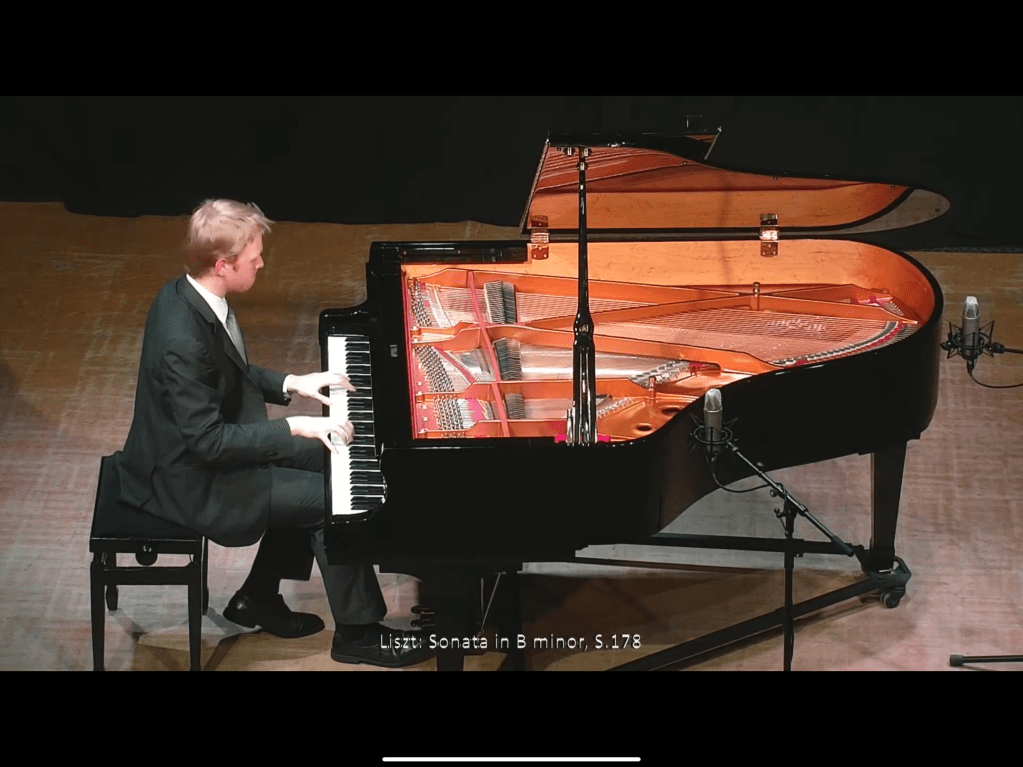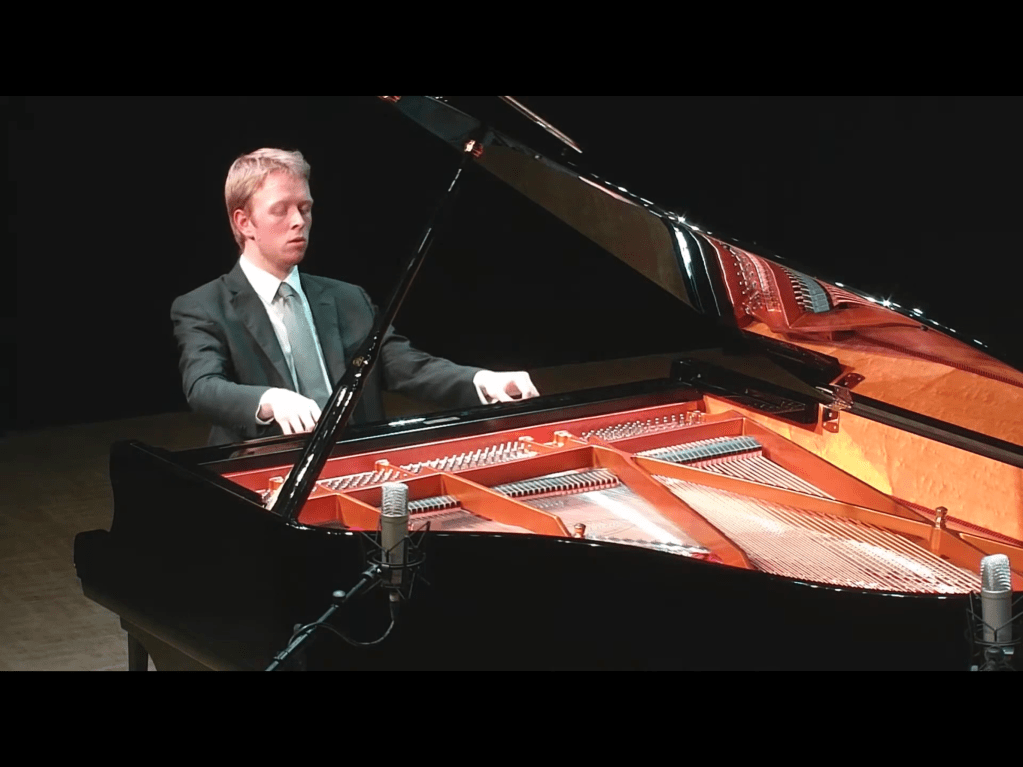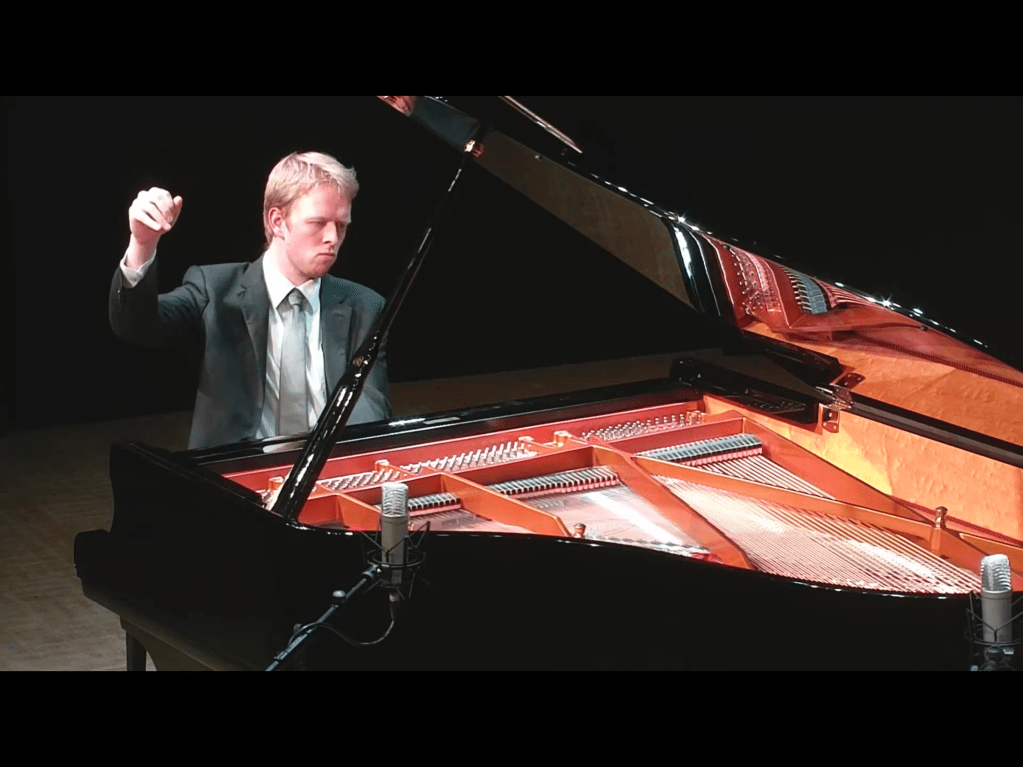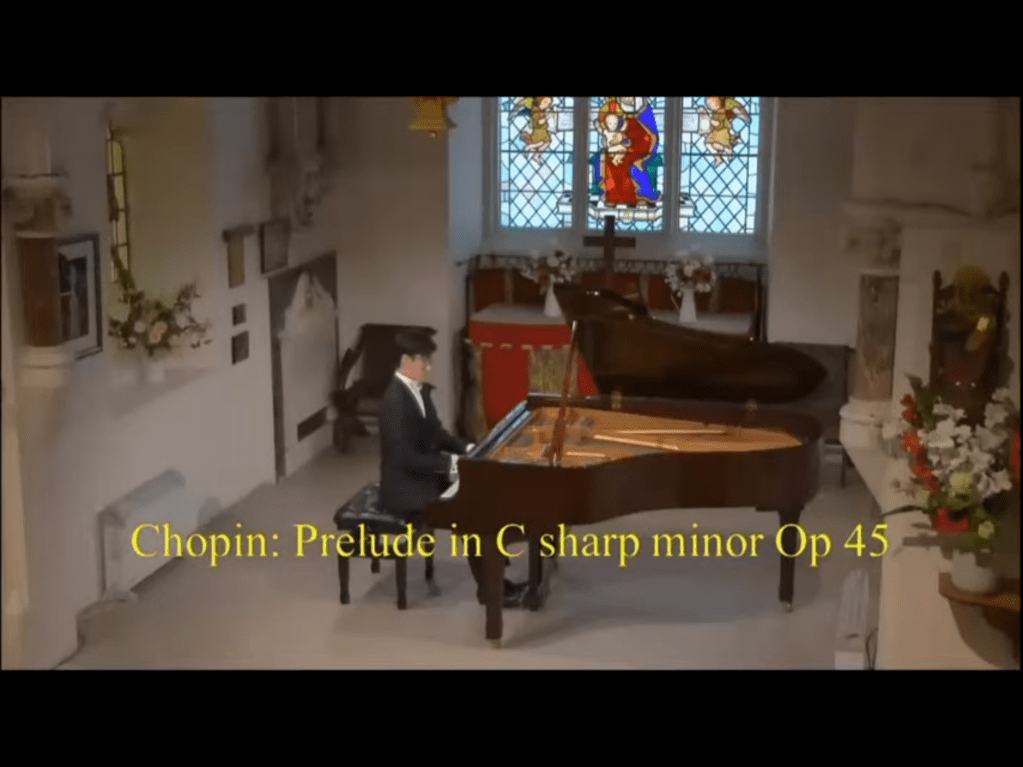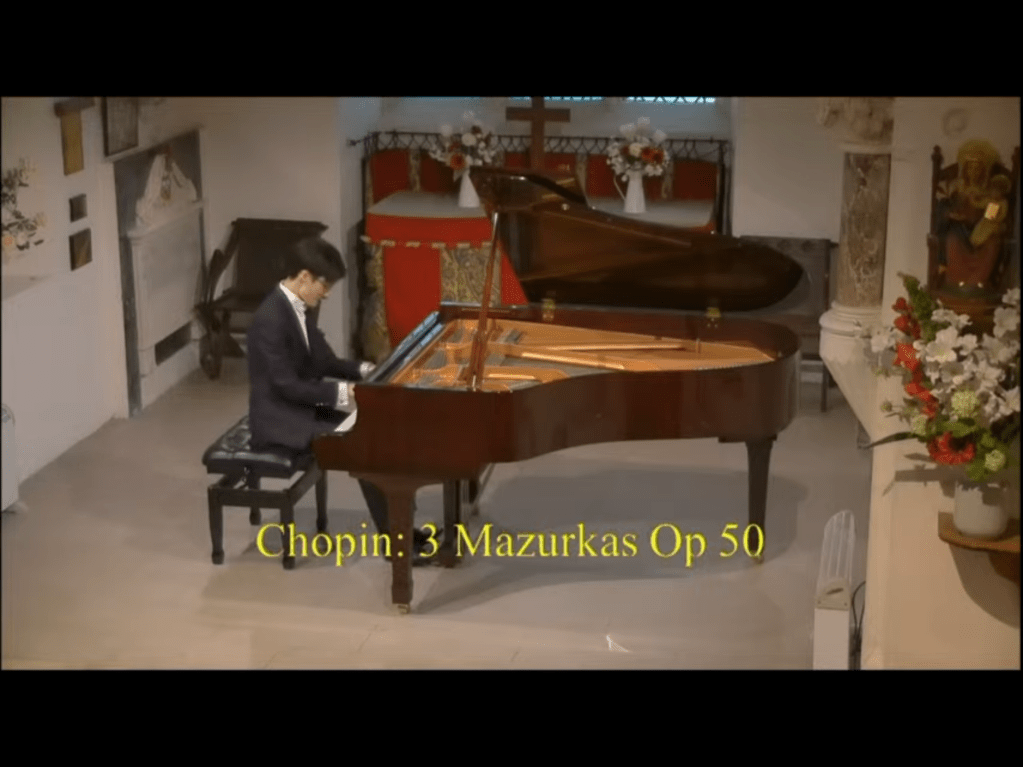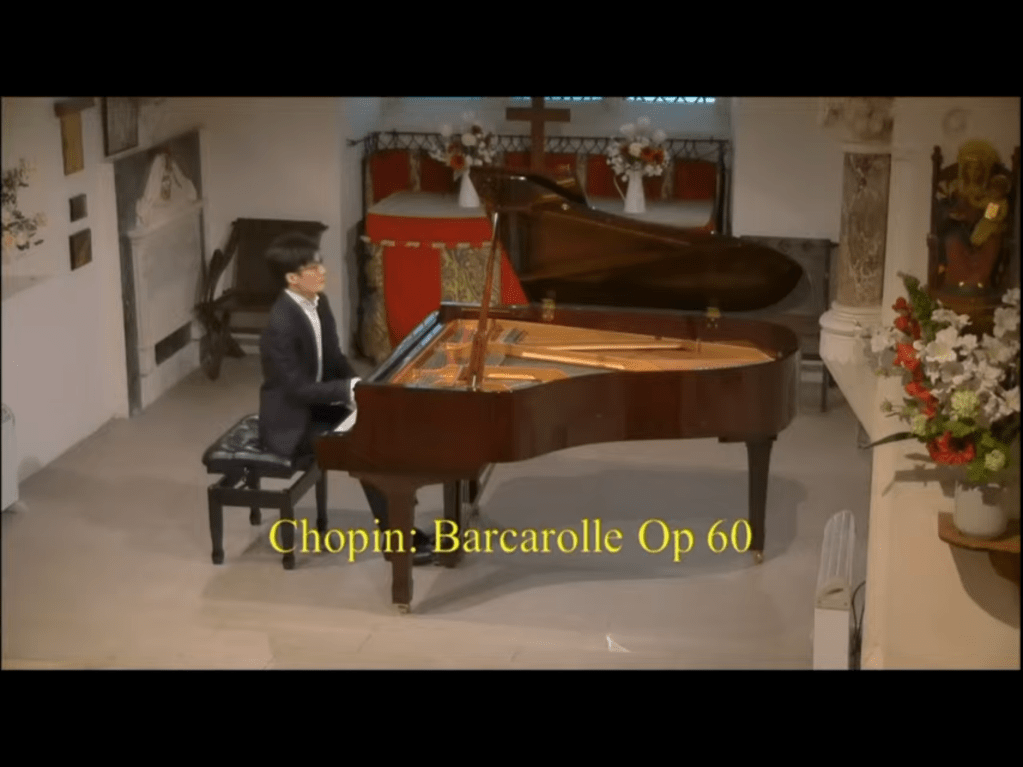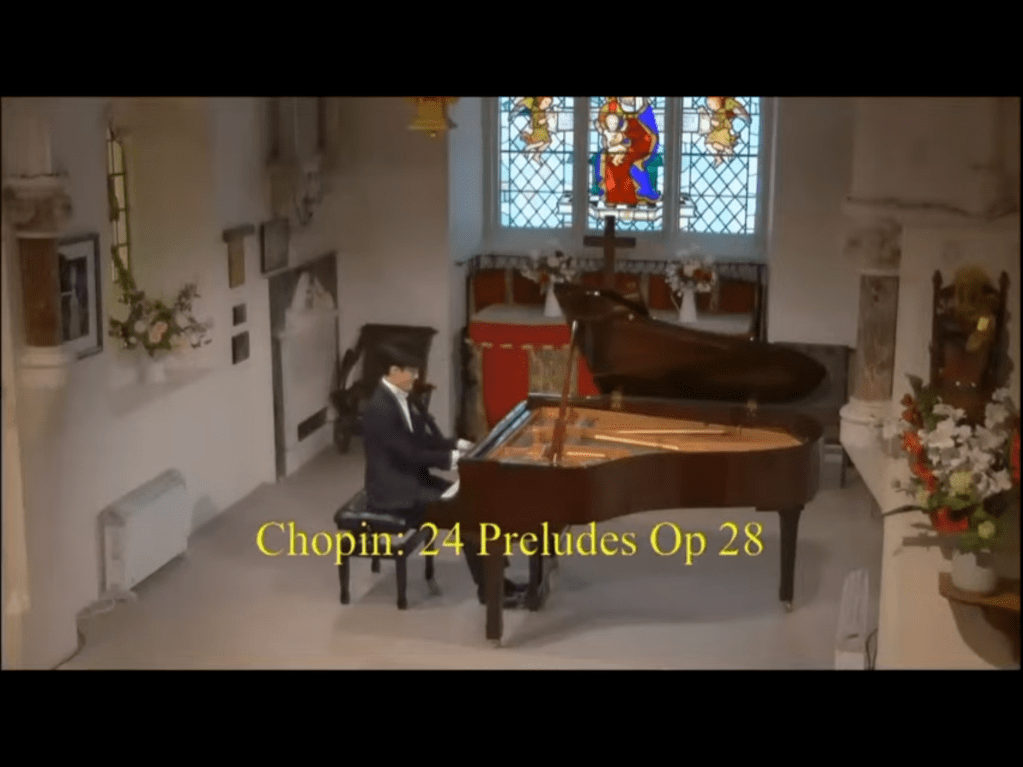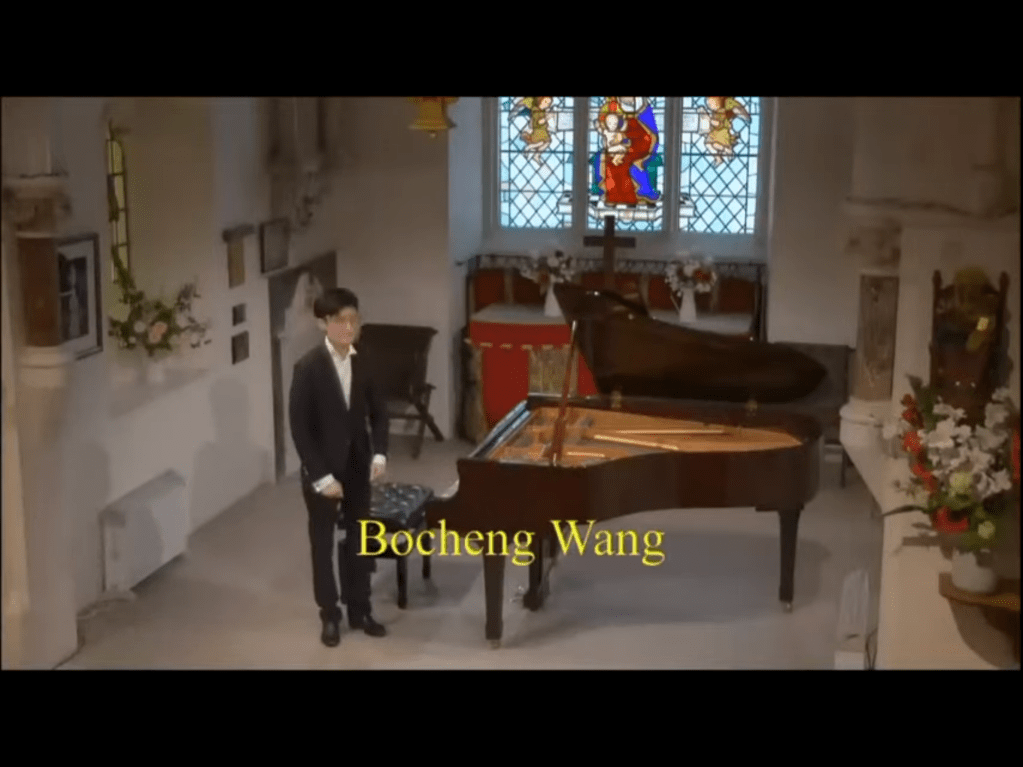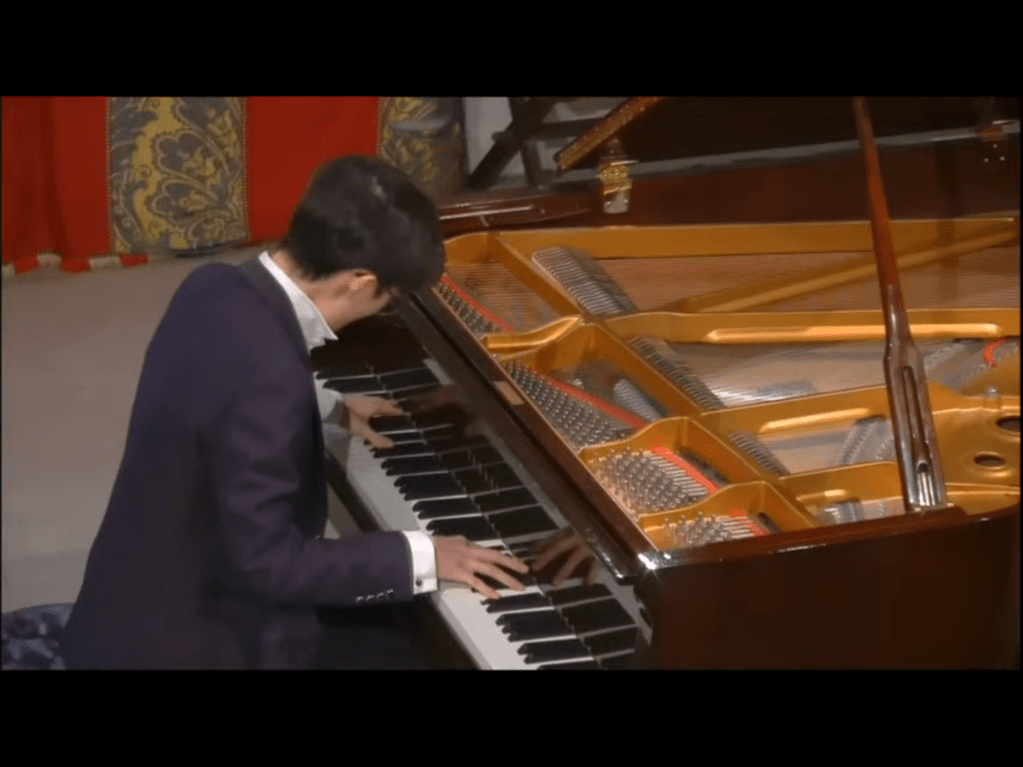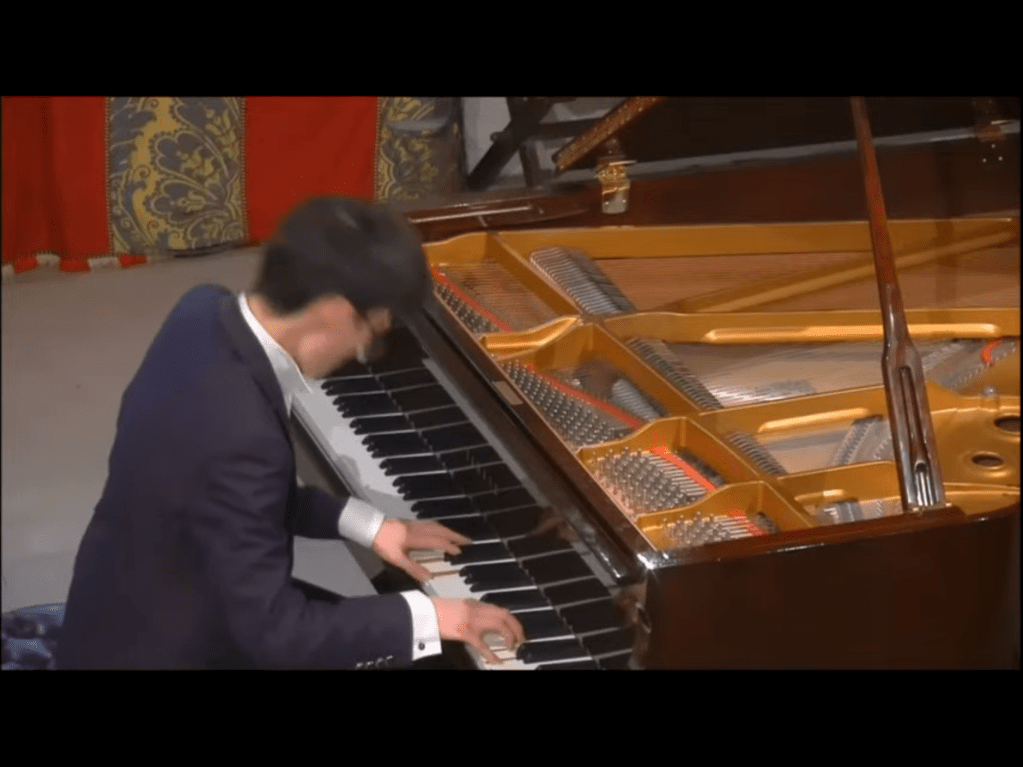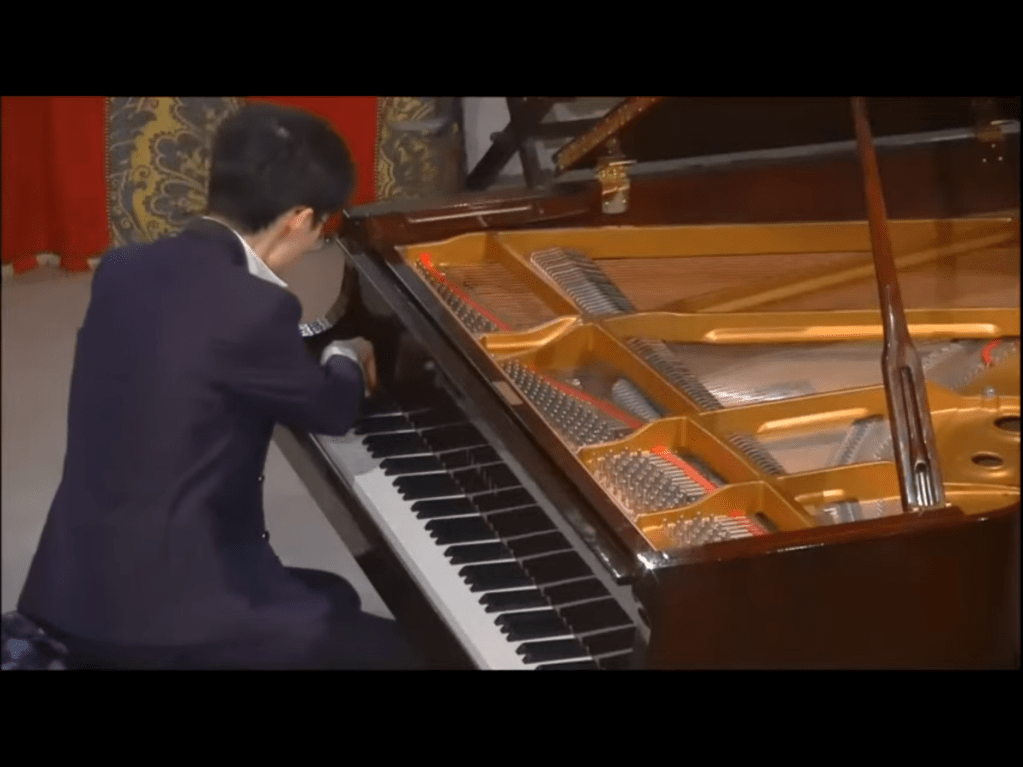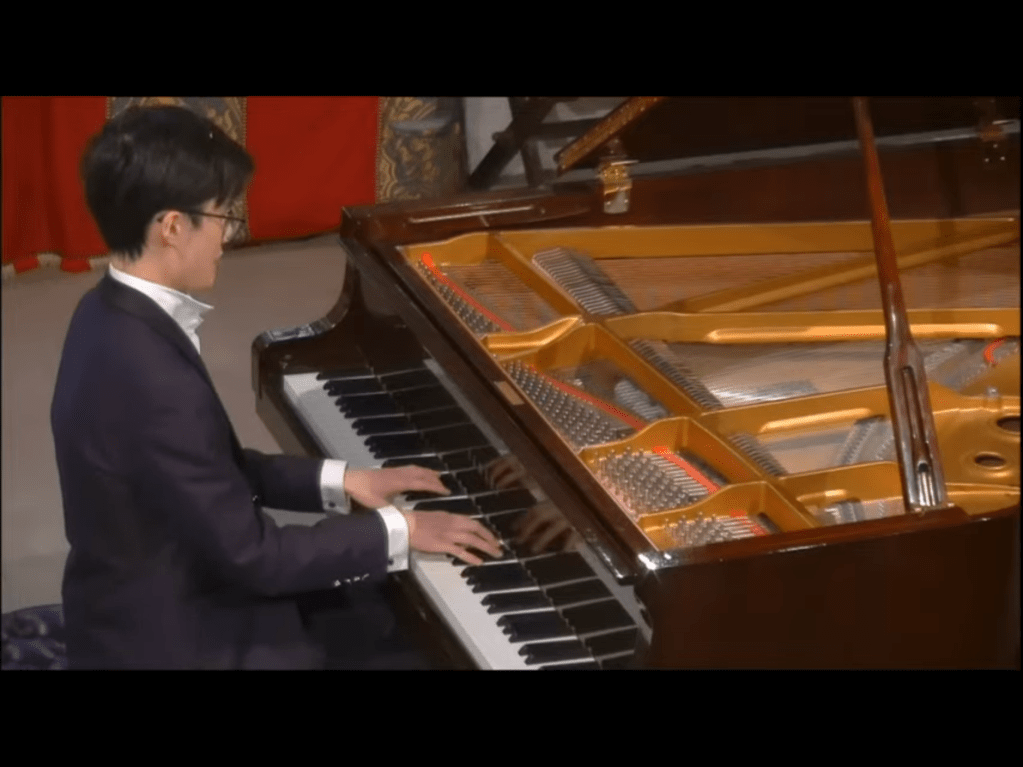

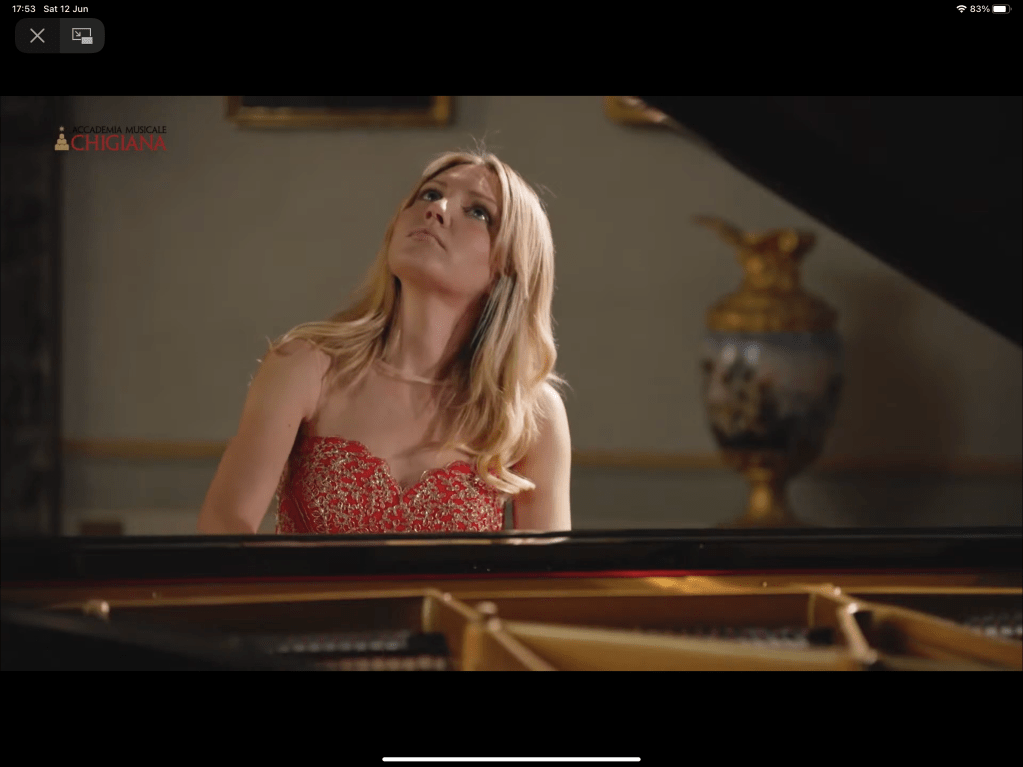
SASHA GRYNYUK for Cranleigh Arts Online-Passion and Persuasion

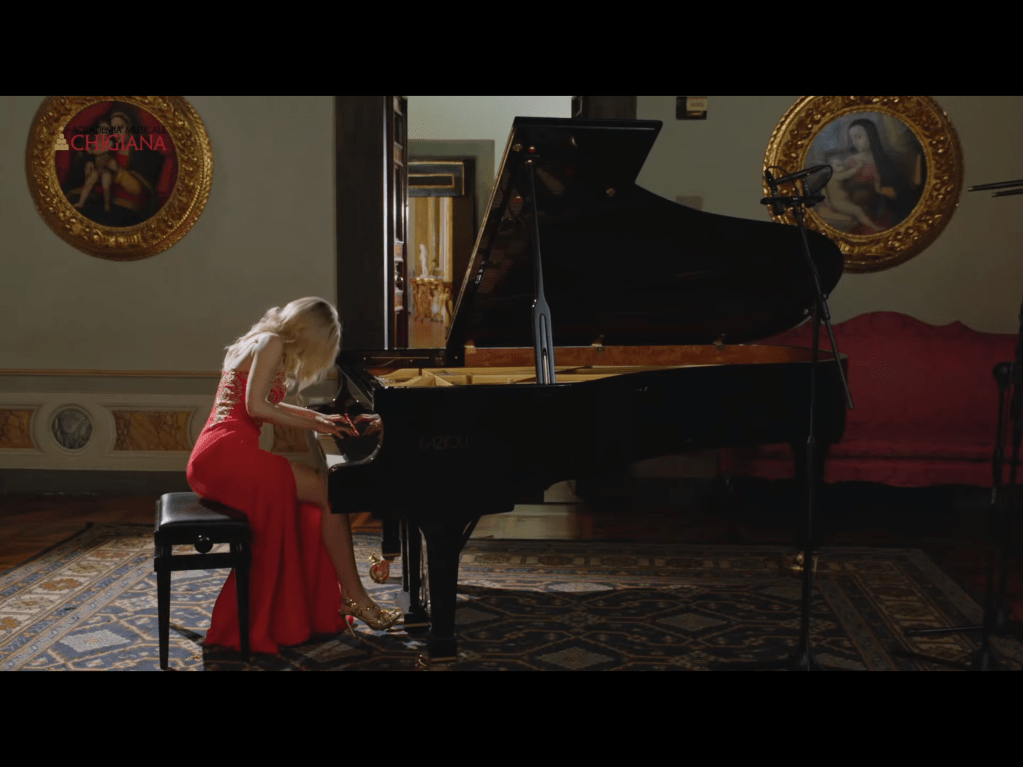
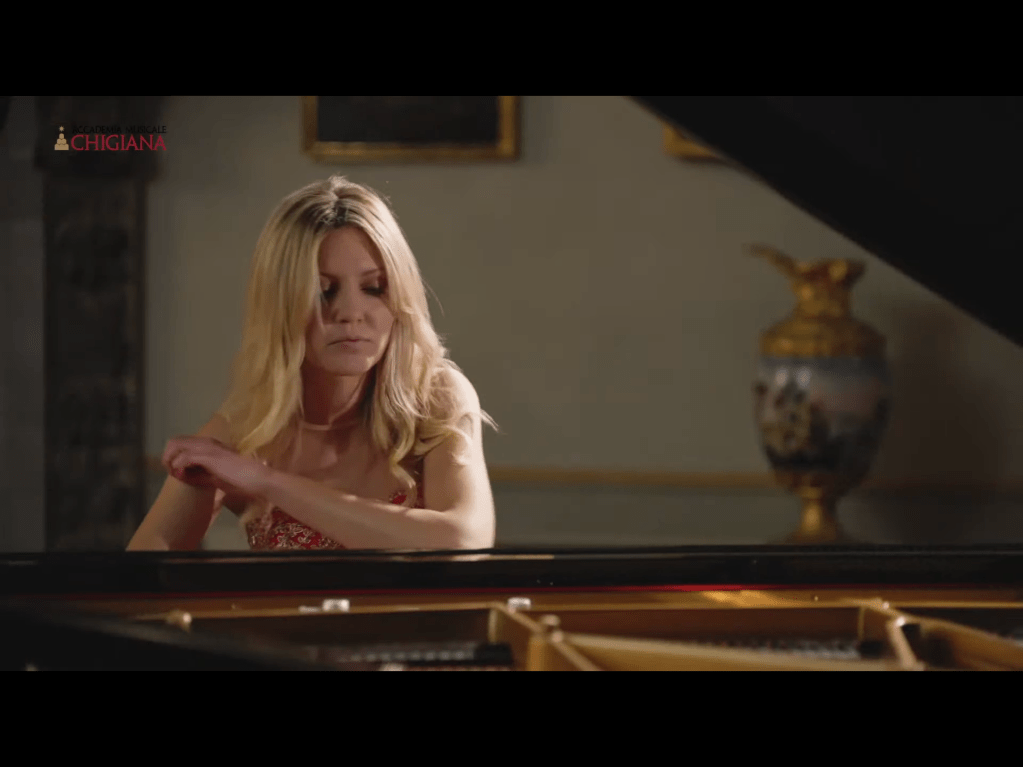
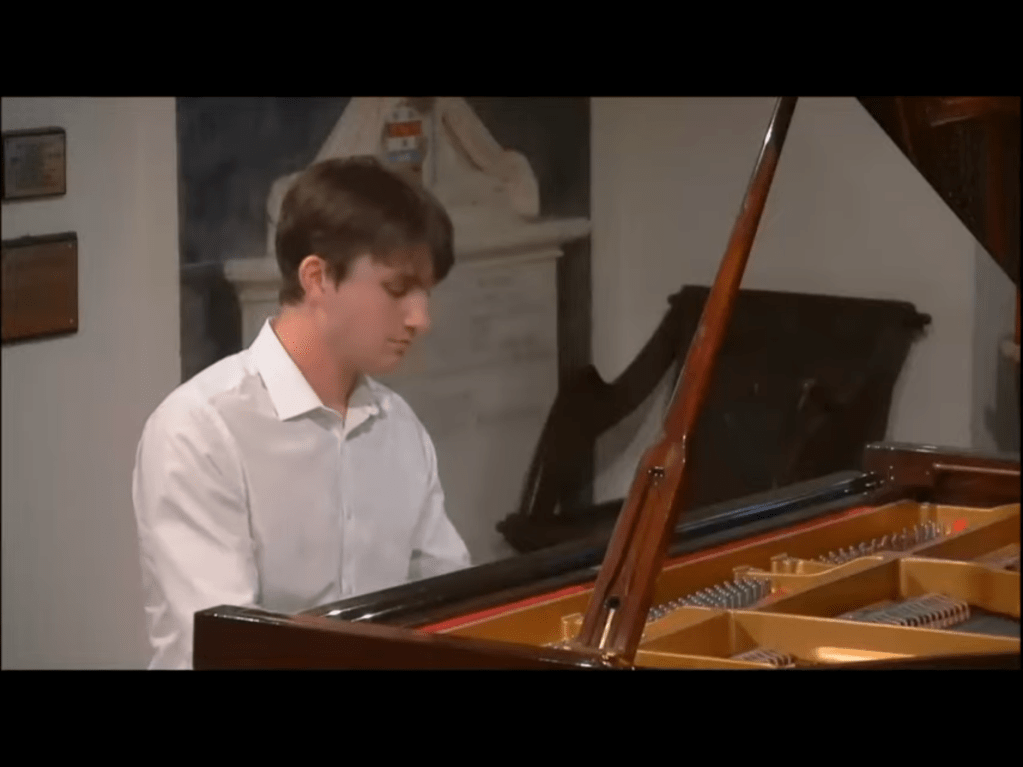
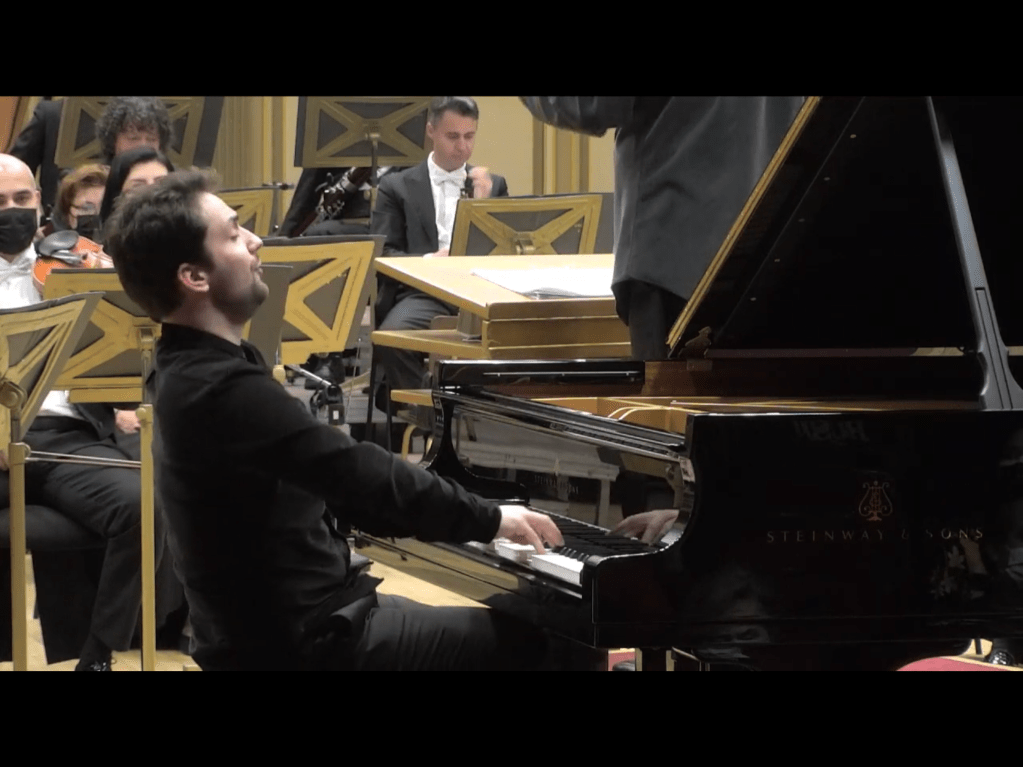
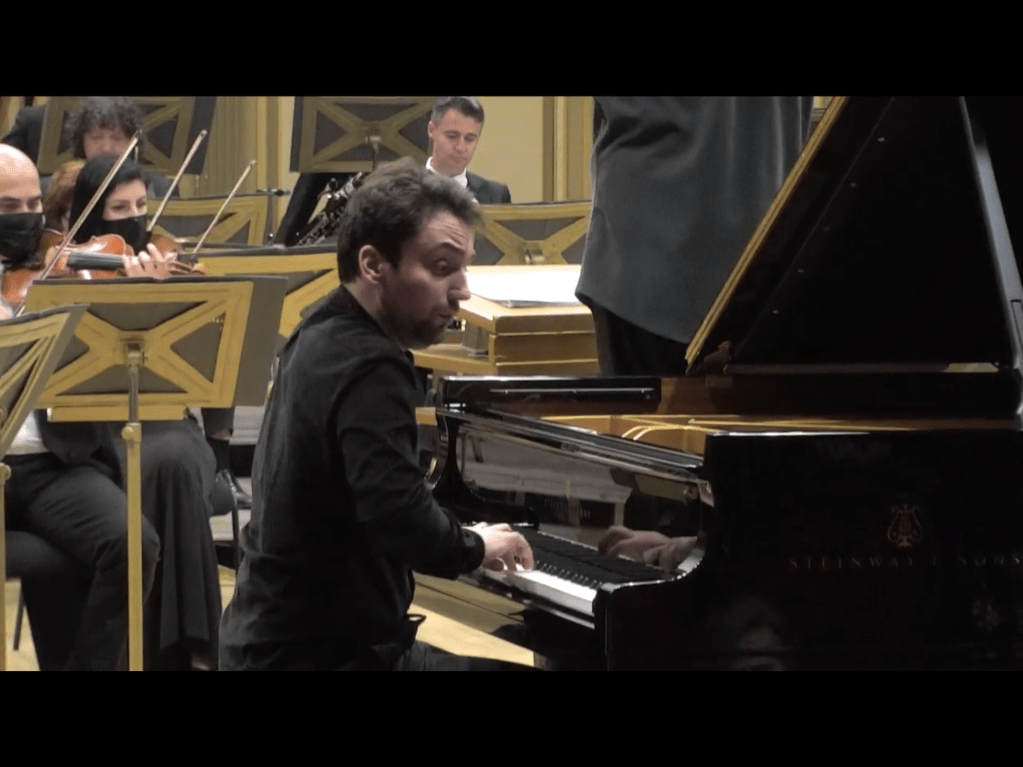
Sasha Grynyuk playing in collaboration with the Keyboard Charitable Trust founded by Noretta Conci Leech and her husband John

Join pianist Sasha Grynyuk for his lunchtime performance as part of the Cranleigh Online performance! It will be available to watch live on Cranleigh Arts’ YouTube channel at https://www.youtube.com/watch?v=80mnhPw4ADg.

Born in Kyiv, Ukraine, Sasha Grynyuk studied at the National Music Academy of Ukraine and later at the Guildhall School of Music and Drama in London with Ronan O’Hora. After graduation he benefited from the artistic guidance of such great musicians as Alfred Brendel and Murray Perahia. Sasha was described by legendary Charles Rosen as “an impressive artist with remarkable, unfailing musicality always moving with the most natural, electrifying, and satisfying interpretations”.

Winner of over ten International competitions, prizes and awards, Sasha was chosen as a ‘Rising Star’ for BBC Music Magazine and International Piano Magazine. His successes also include First Prizes in the Grieg International Piano Competition and the BNDES International Piano Competition, in addition to winning the Guildhall School of Music’s most prestigious award – the Gold Medal – previously won by such artists as Jacqueline Du Pré and Bryn Terfel.

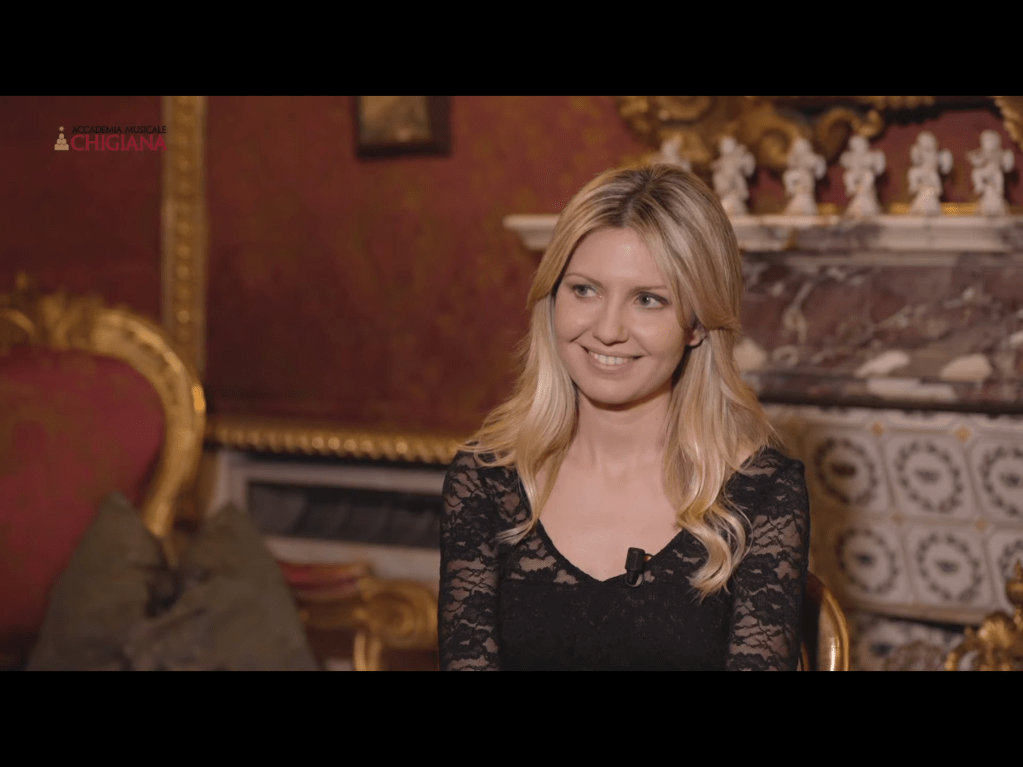
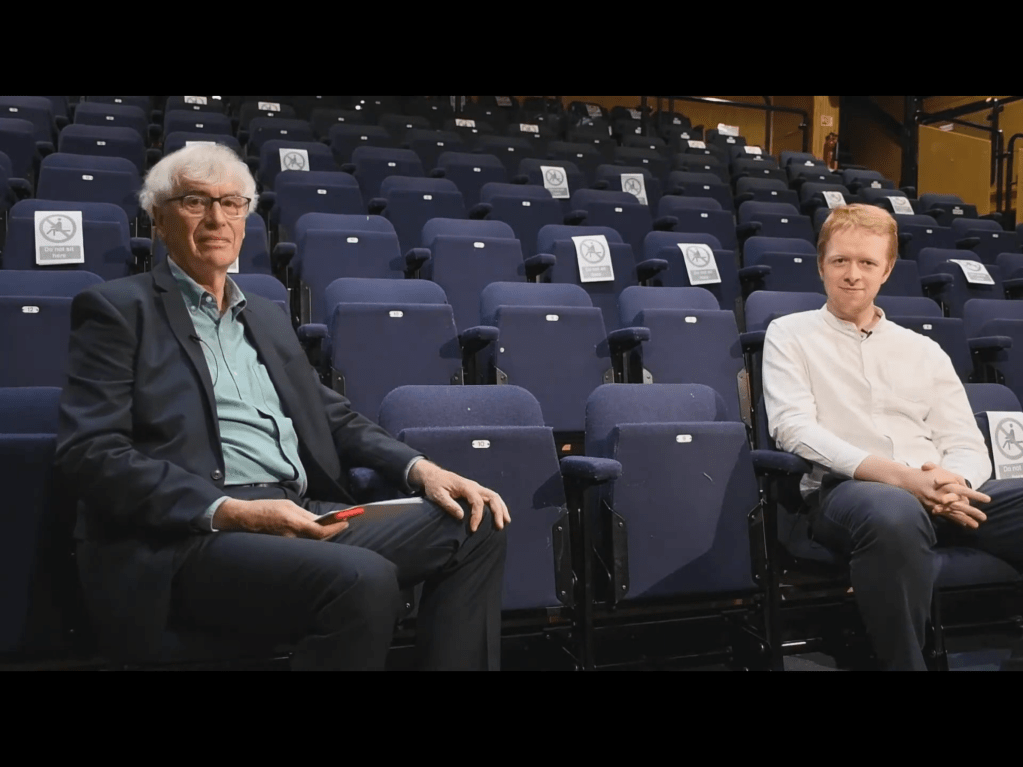
a fascinating preconcert talk with the artist

Programme:
L Beethoven Sonata No 18 in E flat
Major Op 31 No 3(22’)

Allegro;
Scherzo; Minuet; Presto con Fuoco

R Schumann “Faschingsschwank aus Wien” Op 26 (21’)

Allegro;
Romanze; Scherzo; Intermezzo

O Messiaen “Regard de l’esprit de
joie (from Messiaen – Vingt Regards Sur L’Enfant-Jesus) (9’)

As you can see from the articles below I have heard Sasha on many occasions, also recently at St Dunstan in the West in Fleet Steet in a recital of not only the Beethoven Sonata op 31 n.3 but also in duo with Beethoven’s mellifluous ‘Spring’ Sonata for violin and piano.Indeed it was an inspiring combination of two of Beethoven’s most pastoral of works full of sunshine and love of the rustic countryside.It is true that Beethoven’s Sonata op 28 written only a few months earlier is known as his Pastoral Sonata but this one too has a country flavour and is known as the Hunt because of the sound of the chase and horn calls in the galloping finale.

You can read about his performance of the Beethoven below but it should be noted that an artist like Sasha does not just reproduce a blue print performance but he lives and breaths the moment.Today he was in more sedate mood and played with all the aristocratic simplicity that Rubinstein brought to this work that was at the opening of the last recital of his life in 1976 in the Wigmore Hall.

This splendid new Shegaru Kwai piano at Cranleigh obviously allowed him to take a little more time so all the subtle pastoral phrasing of the duplets were allowed to speak for themselves like water bubbling over a brook.Every detail was perfectly in its place as he brought the score amazingly to life.

Michelangeli’s particular characteristic was his sparse use of the pedal only using it to add colour and not to hide one’s sins!It allowed Sasha to make the real difference between legato and staccato often within the same phrase.The final two chords of the first movement Sasha chooses again to play’ piano’ instead of the marked ‘forte’.It fits perfectly into the style of his performance but does Sasha know something we do not or is it just his very rare poetic licence? The Menuetto was played with rare aristocratic elegance with a timelessness that was truly Rubinstein’s .The Scherzo and Presto con fuoco bubbled over with rhythmic energy,precision and delicacy but as I said this was Sasha in pastoral mood and I missed some of the rustic,animal urgency and participation that he was obviously saving for the Schumann and Messiaen!

https://christopheraxworthymusiccommentary.wordpress.com/2020/09/30/happy-days-at-st-dunstan-in-the-west-with-sasha-grynyuk-and-jaga-klimaszewska/

I was very pleased to be able to hear him play the Schumann Carnaval Jest from Vienna which was one of Michelangeli’s specialities in his later years.It was especially interesting because as Sasha said in his all too brief pre- concert discussion he has been working with Noretta Conci-Leech who was for mamy years Michelangeli’s assistant.

The Faschingsschwank Aus Wien as Sasha said in his talk had inspired him as a child in Kiev from the video performances of Sviatoslav Richter that he used to listen to over and over again.I too remember very well the two recitals that Richter gave in London in the 60’s as his visiting card broadcast by the BBC on Christmas Day ( He also played the Dvorak Piano Concerto and Andante Spianato and Grande Polonaise of Chopin with Kleiber at the Royal Albert Hall).Everything that Gilels had said, on his earlier visit to the west,was true.’If you think I am good wait until you hear who follows me!’

The opening Allegro molto was played with great forward movement and energy and it was the same continual forward movement that carried us on the wings of song that follow in the intervening episodes.Even the brief entry of the Marseillaise was played with the same exhilarating sense of Carnaval.This was infact the last of a long stream of masterpieces that flowed from Schumann’s pen.Beginning with The Abegg Variation op 1 ( that incidentally was the first work of Schumann that Richter played in those two historic first London recitals)taking in all his great works for piano.There was to be after this work a break until the final works from op 68 onwards with the Album for the young finishing with the rarely played Gesange der Fruhe- Songs of dawn op 133(A work that that other great italian musician Guido Agosti adored) .There was a supreme simplicity to the very short Romanze played with extraordinary attention to detail and it contrasted so well with the gaiety of the Scherzino.The Intermezzo was played with controlled passion that allowed this almost Mendelssohnian movement to sing like a song without words.The gentle answering of one voice by another always with this passionate undercurrent was very touching as it died away to a whisper.It was rudely interrupted by the exuberance of the Finale.Again a wonderful sense of forward movement that only relaxed slightly as one of Schumann’s most poignant melodies floated above(A melody very reminiscent of Fauré’s Dolly suite!-Listen with mother and all that- for anyone that might still remember the good old days!)Sasha threw himself into the final few pages with a passionate involvement that was indeed the ideal preparation for the Messiaen that followed.

But the real interest for me was to hear him talk so eloquently and with obvious passion about Messiaen’s Regard de l’esprit de Joie.Together with Le baiser de l’Enfant Jésus these are two masterpieces from his collection of Vingt Regards sur l’Enfant Jésus. As Sasha pointed out they could hardly be categorised as contemporary music as they were written in 1944!Apart from the savage rhythms and strikingly original harmonies there are very poignant melodic outpourings ,declarations of the composer’s absolute belief.

Tredding sometimes on what seems broken glass but entering into Messiaen’s mystic world of a true believer it can be very moving indeed.As it obviously was for Sasha.Transcendentally difficult the very first performance I ever heard was in the first Leeds International Piano Competition .A young french pianist,who had recently given a recital at my old school : Chiswick Boys Grammar – gave an astounding performance of a work hardly yet known to a vast public.Jean Rodolphe Kars won fourth prize in 1966 to Rafael Orozco’s first and Victoria Postnikova’s 2nd.

He later became a trappist monk!Yes Messiaen can indeed have this effect as was shown today in Sasha’s totally committed performance.Absolute clarity as in the other works in his programme and always a beautiful sound but not so beautiful that the passionate outbursts were deeply felt and driven home.One could see on his face but above all hear from his playing the same passion with which he had spoken earlier.Tredding on broken glass with glee it was so moving as the great hymn like declarations were played with almost heartbreaking sincerity.Quite spectacular too the final savage race to the end and the oh so final note played as a final triumphant score as his threw his whole body into the fray.

https://www.facebook.com/notes/christopher-axworthy/sasha-grynyuk-an-unexpected-visit-from-a-master-pianist/10156957474887309/

Enoch Arden at St Mary’s

Sunday 8 November 4.00 pm

Streamed LIVE concert in an empty church

Christopher Kent (actor) and Gamal Khamis (piano)

Enoch Arden for voice and piano by Richard Strauss Op 38

based on the poem by Alfred, Lord Tennyson

Following previous acclaimed performances at St Mary’s of their narrative recitals Never Such Innocence ( 2018) and Odyssey (2019), Christopher Kent and Gamal Khamis return with a rare opportunity to hear a hidden gem of the romantic repertoire. Enoch Arden is a deeply touching narrative poem originally written by Tennyson in 1864 and set by Richard Strauss for speaker and piano in 1897. Although Strauss performed it widely himself with the actor Ernst Possart at the time, it has been heard infrequently since, despite advocacy from such notable figures as Glenn Gould, Dietrich Fischer-Dieskau and Patrick Stewart.

Enoch Arden tells the story of three childhood friends who grow up in a remote fishing village. Enoch becomes a sailor, marries his sweetheart Annie Lee and then sets off on a long voyage from which he never returns. After many years, assuming he is lost forever, Annie reluctantly marries the third friend, the miller Philip Ray, who has offered to bring up her children. But then Odysseus-like, Enoch does return only to find, unlike Odysseus, that his wife has not waited for him. What happens next is both stirringly dramatic and agonisingly tender. With words and music of haunting beauty, Enoch Arden is a masterwork of the now almost lost genre of musical melodrama.

Wonderful performance of Enoch Arden by Tennyson and Strauss………it still holds its magic as a melalogue as was obvious to the record of views at St Mary’s Perivale today with a magnificent performance from Christopher Kent with the very difficult piano part played by Gamal Khamis.I thought Claude Rains with Glenn Gould was good but this is up there with them.

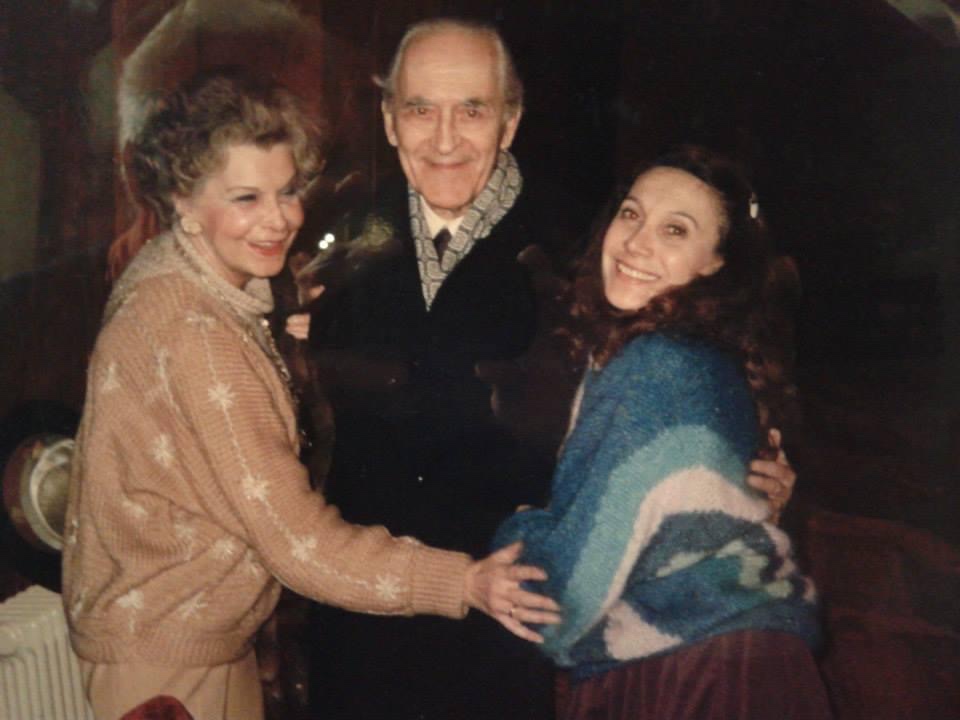
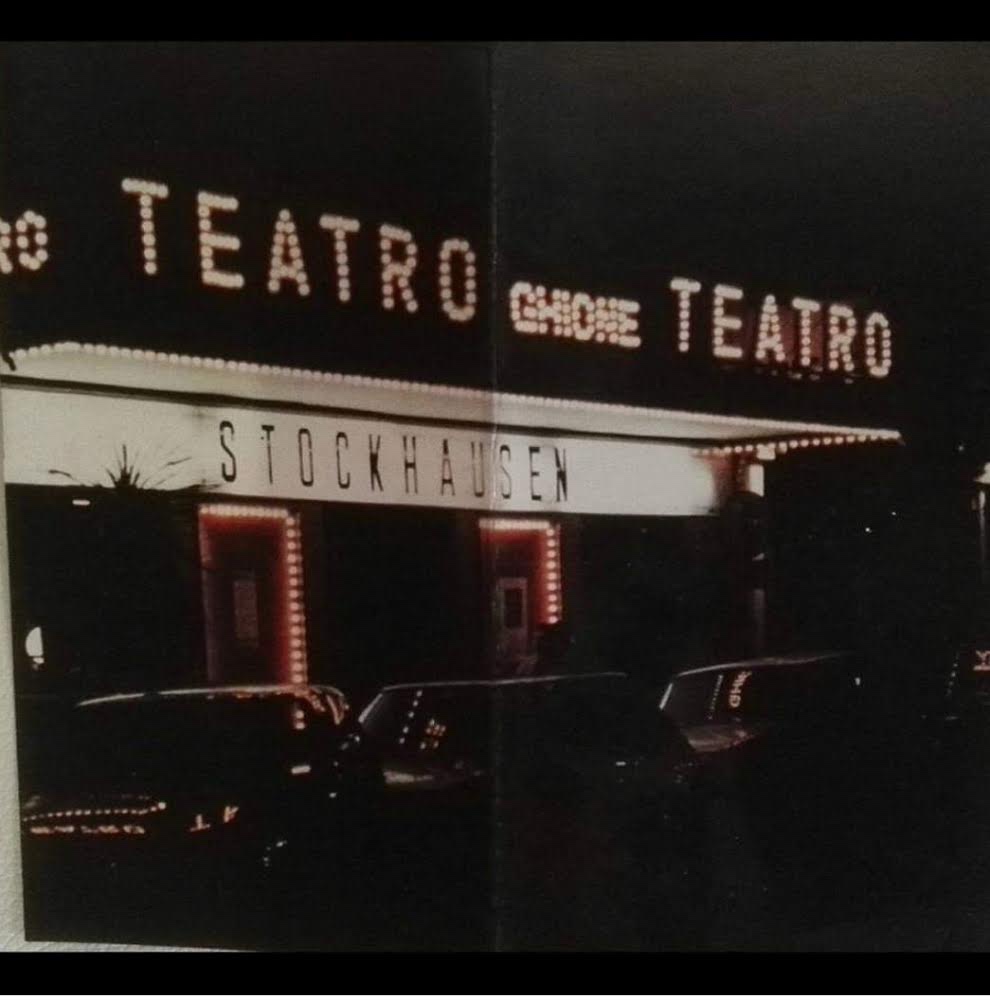
I performed it all over Italy with my wife Ileana Ghione and after her death with her best friend and illustrious colleague Milena Vukotic but rarely have I been so moved.Now I understand why our performances too had the same effect as today because I have never sat through a live performance except from the driving seat ! Unfortunately it is the only melalogue that really works in this modern age.Liszt and Schumann wrote some too but Strauss knew better!

Christopher Kent has appeared on stage, screen and radio in a wide range of roles from Shakespeare to contemporary drama. London theatre appearances have included Cyrano de Bergerac with Robert Lindsay at the Theatre Royal Haymarket and The Government Inspector with Timothy Spall at Greenwich Theatre. He is also one of the UK’s best-known voiceover actors and his voice is regularly heard on commercials, documentaries, film trailers and literary recordings. Recent concert work includes collaborations with the Bridge String Quartet, West London Sinfonia and the Voice of God in Britten’s Noye’s Fludde.

Gamal Khamis gained a degree in Mathematics at Imperial College London and completed his formal musical education at the Royal College of Music. He first performed at the Wigmore Hall at the age of 10 and has since appeared at most of the major U.K. concert halls, across Europe, North America and Australasia, and on BBC television and radio. Gamal has won major awards for both solo and collaborative piano playing, including at the Royal Over-Seas League and the Ferrier Awards. He is an Artist with the Concordia Foundation, Royal Over-Seas League, Park Lane Group and Samling, and is a member of the Lipatti Piano Quartet.

https://www.facebook.com/notes/christopher-axworthy/the-evergreen-fascino-of-enoch-arden-stefano-greco-and-tommaso-ragno-at-scecilia/10155210177252309/

Roman Kosyakov – Mastery at St Mary’s

Tuesday 3 November 4.00 pm

Streamed LIVE concert in an empty church


Roman Kosyakov (piano)

Schumann: Humoreske Op 20

Mussorgsky: Pictures at an Exhibition

Roman Kosyakov was born in a musical family and made his debut with an orchestra at the age of 12 with the Mozart Concerto No 23 in A Major.  In 2012, he graduated from the Central Music School in Moscow where he studied with F.I. Nurizade and then in 2017 from the Tchaikovsky Moscow Conservatory with V. Ovchinnikov.  Since September 2017, he has studied at the Royal Birmingham Conservatoire on a full scholarship with P avel Nemirovski.He is a laureate and a winner of many national and international competitions, among them “Young Talents of Russia” (Russia, Moscow 2006), the 1st International competition “Sforzando” (1 st Prize, Berlin, 2007), the International Alexander Scriabin Piano Competition (1 st Prize, Paris 2011), the 8 th Open Competition of Musicians Performers N. Savita (1 st Prize, Russia, Ufa, 2012), the International Piano Competition “Minsk-2014” (2 nd Prize, Republic of Belarus, Minsk, 2014), the 4 th International Piano Competition “ Russian season in Ekaterinburg “ (1 st Prize, Russia, Ekaterinburg, 2015), the 4 th International Piano Competition “Vera Lotar-Shevchenko” (2 nd Prize, Russia, Ekaterinburg, 2016), the 4 th Prize of the 1 st Saint-Priest International Piano Competition Saint-Priest (Lyon-France, 2017), the Gold award for the 3rd Manhattan International Music Competition ( 2018 ) and 1 st Prize and the Audience prize for 10th Sheepdrove Piano Competition ( 2018, UK). He is regularly invited to give concerts in France, Italy, Germany, Republic of Belarus, Russia, UK, USA, and was guest soloist from 2014 to 2017 at the Kemerovsky State Symphony Orchestra. Roman has also participated in Berginos Music Festival as a guest pianist in Bergamo (2018, Italy). He has performed with the Hastings Philharmonic Orchestra and English Symphony Orchestra in 2018 in UK.Most recently Roman won the prestigious 1st Prize and the Royal Philharmonia Orchestra Prize of the 14th Hastings International Piano Concerto Competition (2018, UK).

It is rare indeed to hear these two works played with such mastery .A sense of colour and sound that brought the magic sound world of Florestan and Eusebius to life in Schumann’s Humoreske.

It brought too an entire orchestra and pealing bells into this charming rendundant church with Mussorgsky’s Pictures at an Exhibition..Redundant no longer as it has resounded for quite some years now to the sounds of so many magnificent young musicians given the opportunity of a professional and recorded performances by Dr Hugh Mather .A retired physician and active musician, who with his dedicated team offer three concerts a week to their vast virtual public.Public performances have been the norm in pre Covid times but it is one of the only venues in this difficult lockdown period that offers valuable engagements to young musicians being plunged into disarray at the beginning of their careers.

Humoreske in B-flat major, op. 20 was composed in 1839  Schumann cited Romantic writer Jean Paul’s style of humour as source of inspiration, although there are no direct links to his works to be found in the piece.It  consists of seven sections (not originally indicated as such by the composer except for the last one, “Zum Beschluss“), to be played without a break one  after each other.It is less popular with audiences than with pianists and some think it as an ill-judged attempt by Schumann to take his formula in Kreisleriana op 16 a step further. However, it has been championed by some who consider it  among Schumann’s greatest pieces and one of his most astonishing, and most overlooked, piano works.Certainly from op 1- The Abegg variations through all the much loved masterpieces in the intervening period the Humoreske is still one of the least heard works of this early period of Schumann before illness took over his sanity and his output became more varied.

The Humoreske needs not only a great virtuoso but above all a great musician with a meticulous sense of balance and colour in order to bring it to life.It has to be treated with loving care ,passion and dexterity but above all an extra sensitive palette and sense of balance.I have heard artists such as Radu Lupu and most recently Sokolov give superlative performances but neither having all the chameleon type qualities that Schumann demands. Horowitz and Richter of course paved the way for lesser mortals- but genius can turns even baubles into gems!

It was today a refreshing surprise to hear this young Russian pianist with all the qualities needed to show us just what a masterpiece it is.From the very first notes of the sublime Einfach(simple) one could immediately appreciate his delicate hand movements that seemed to caress the keys with a swimming movement that followed the rise and fall of this beautiful opening.It is somewhat reminiscent of the Blumenstuck-Flowerpiece op 19 that immediately preceeds it.The Sehr rasch und leicht (Very fast and light)  flowed so well with such well marked contrasts and Noch rascher (Even faster)  was beautifully judged and shaped with some beautifully pointed harmonies due to his superb use of the sustaining pedal.Erstes Tempo, Wie im Anfang (First tempo, as in the beginning) with the return of the opening theme that seemed to glow with even more luminous sounds due to his perfect sense of balance between the hands.

The second section with Florestan at play Hastig (Hastily) showed a great sense of control and passionate involvement Nach und nach immer lebhafter und stärker” (Gradually more lively and stronger) was all played with sumptuous rich sonorities with never any harshness. The magical entry of Eusebius as he takes control with tender caressing harmonies Wie vorher” (As previously)  led to the very poignant coda, Adagio, where the poet truly speaks.

Einfach und zart (Simple and delicate) was played with a delicious sense of nostalgia – a great song of remembrance and the amazingly busy intermezzo entered so lightly and at great speed like a swarm of bees around the honey pot!The difficulty of course, for most mortals, is that these busy bees multiply into ferocious octaves that often require the breaks to be put on!This was no worry for today’s pianist who threw them off with the same panache as the previous single notes!An amazing tour de force of technical prowess and above all relaxed wrists!

Innig (Heartfelt) was played like a glorious expansive song interrupted in Schneller” (Quicker) by Florestan in impish mood.Before the return of the main melody with a subtle use of the bass notes to give an even richer sonority as it opened up the sound palette above. Sehr lebhaft (Very lively)-Immer lebhafter” (Increasingly lively  was played with great elan and a quite extraordinary sense of shape and colour – has Florestan ever been in such playful mood?

It led quite ‘helter skelter’ to the Mit einigem Pomp (With some pomp) with its pompous almost too serious chords and which in most pianist’s hands is always too loud and bombastic(Sokolov fell down here)and does not allow the hints of melody to be overheard in the distance.Roman today played this like a true master – hats off indeed!

Zum Beschluss (To the resolution)  was played with almost heartbreaking yearning with a disarming innocence and freshness.It is so difficult to interpret this seemingly simple melodic line in octaves and requires, like the second piece in Kreisleriana,a refined sense of balance and a perfect finger legato.

I have rarely heard it so beautifully played as today .A true poet of the piano as befits this most complex work that marks the end of Schumann’s extraordinarily productive years before insanity finally overtook him and took him to a world that he can only hint at as he shares it with us in his music.The beautifully sonorous Allegro of the coda brought this magnificent performance to a truly joyous conclusion.

As with most of Mussorgsky’s works, Pictures at an Exhibition has a complicated publication history. Although composed very rapidly, during June 1874, the work did not appear in print until 1886, five years after the composer’s death, when an edition by the composer’s friend and colleague Nikolai Rimsky- Korsakov was published The composition is based on pictures by the artist, architect, and designer  Viktor Hartmann. It was probably in 1868 that Mussorgsky first met Hartmann, not long after the latter’s return to Russia from abroad. Both men were devoted to the cause of an intrinsically Russian art and quickly became friends.Hartmann’s sudden death on 4 August 1873 from an  aneurysm shook Mussorgsky along with others in Russia’s art world. The loss of the artist, aged only 39, plunged the composer into deep despair. A memorial exhibition of over 400 of Hartmann works was organised in the Imperial Academy of Arts in St Petersburg in February and March 1874. Mussorgsky lent the exhibition the two pictures Hartmann had given him, and viewed the show in person. Later in June he was inspired to compose Pictures at an Exhibition, quickly completing the score in three weeks (2–22 June 1874) 

Usually a piece taken up by rather bombastic virtuosi but today it was a refreshing surprise to hear the beautiful mellifluous opening with a string orchestra rather than the usual barnstorming trumpets!

The demonic Gnome sprang like a spring out of his fingers and the different colours he found in the first repeated passage gave hope for a rebirth of this masterpiece in my mind!The final velocissimi scales thrown off more lightly than the ‘con tutta forza’ indicated when usually more than hammered home!A beautiful delicate promenade brought us to the Old Castle like a dream as it floated on the left hand heart beat with a variety of sounds that was breathtaking.

Have the children ever sounded more petulant and fun in theTuileries or the cattle cart more laiden and ponderous as it struggled on its way.Disappearing into the distance with some magical whispered sounds and a barely audible promenade before the Ballet of Unhatched Chicks that was played with immaculate precision and lightness and a sense of humour as they almost bumped into each other in a very effective ( but unmarked in my score) accelerando.

Have Samuel Goldberg and Schmuyle ever sounded so serious and unctious .No ammount of pleading would satisfy them even from Roman’s very sensitive hands.A wonderful string orchestra promenade before the amazing pyrotechnics of the Market Place in Limoges that burst in on the final vibrating B flat of the promenade.The sonorous eruption of the Catacombs had some wonderfully suggestive sounds with the almost unbearable beautiful resolution of stillness and peace in ‘Con mortuis in lingua mortua’.Rudely interrupted with no promenade as BabaYaga – The Hut on Hen’s legs took us by storm.With such virtuosity that contrasted with the orchestral calm of the central, Andante mosso, superbly controlled whilst the most extraordinary sounds appeared above and below.

An enormous crescendo of octaves of all shapes and sizes prepared us for the vision of the Great Gate of Kiev.Played with true majesty and grandeur with the sounds of bells pealing again around this beautiful ancient church.Not much pealing these days as St Mary’s bells were used to call the audience back from the concert interval in the pre Covid days when one could take a stroll in the beautiful historic graveyard that surrounds this oasis only a stone’s throw from the M40!).There was an almost religious peace in the plain chant interludes before the ever more insistent bells led to the overwhelming climax of what I now consider to be a masterwork.

Thanks to this extraordinary young musician who could bring this work once again so vividly to life for me.Richter was the first person I heard play this on a rare recording from Prague Festival long before he came to the west.Horowitz’s devil like performance was the second .Roman for his musicianship and superb technical control today will not be forgotten for a long time either.

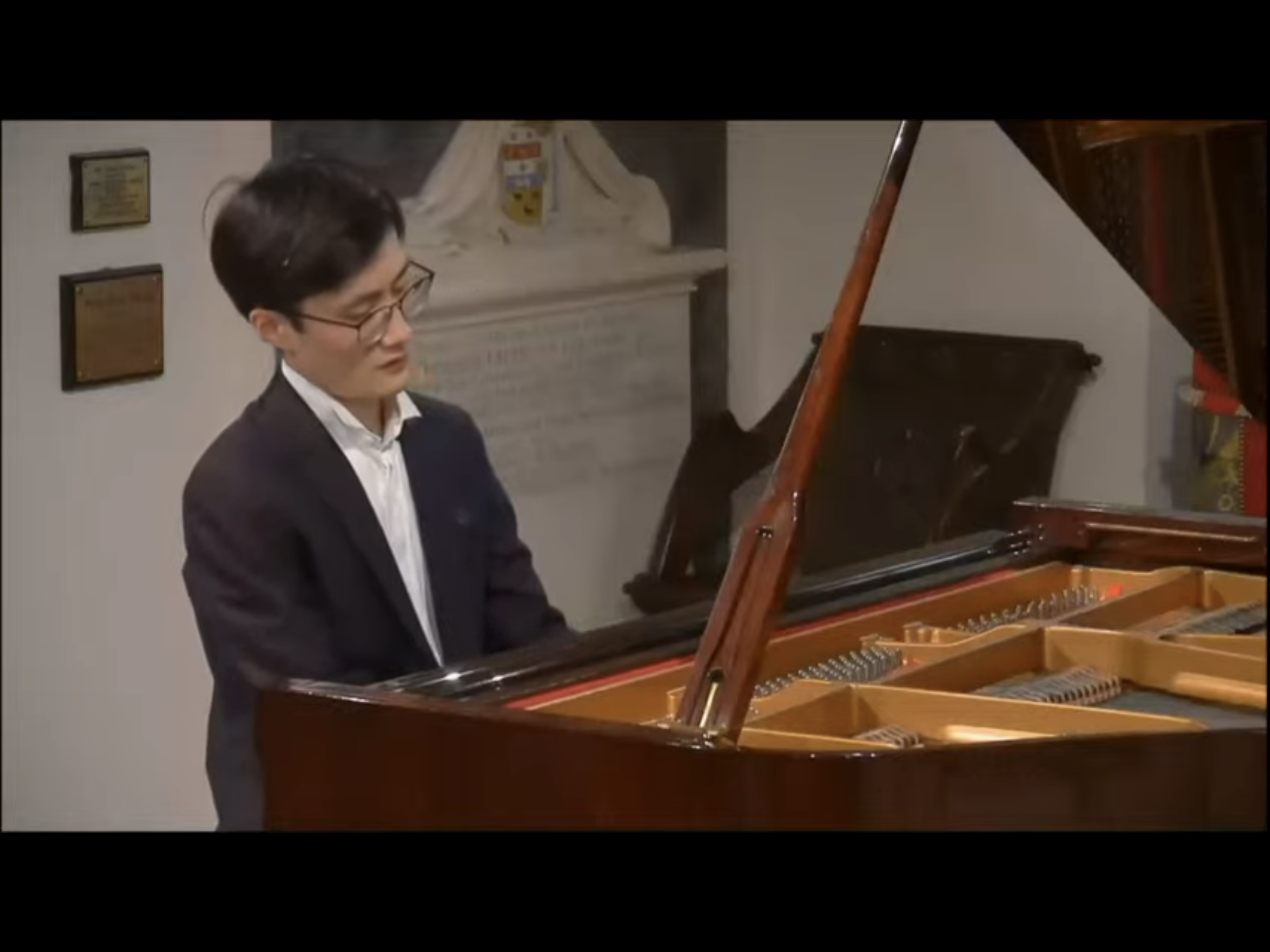
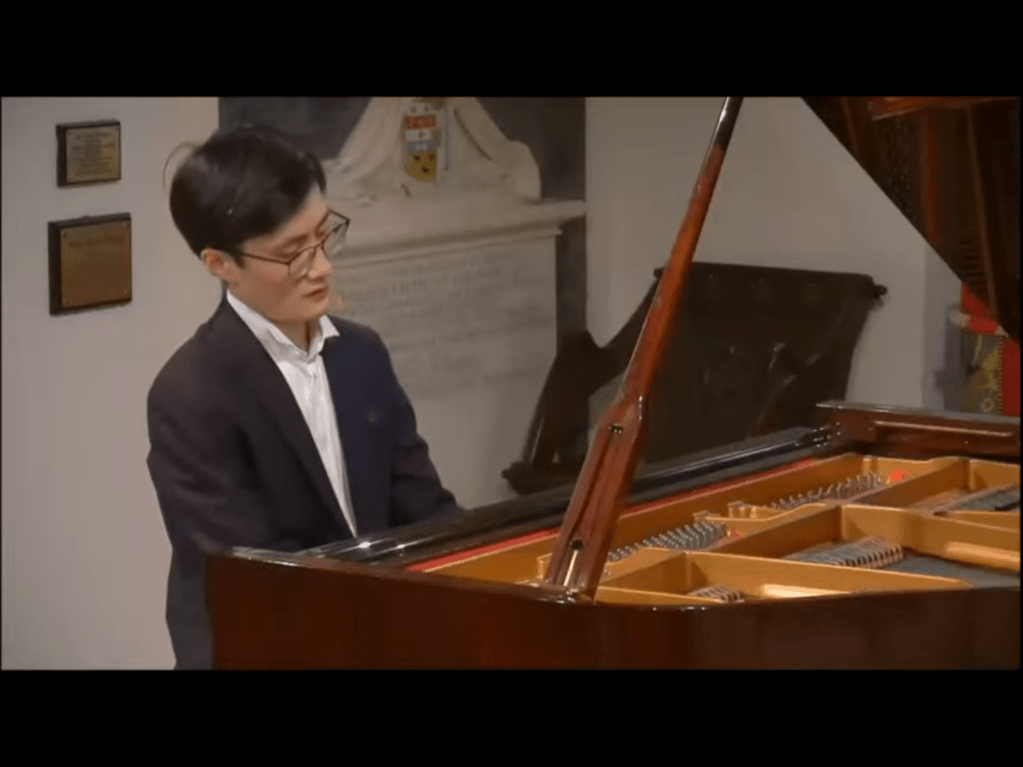
Hao Zi Yoh for Cranleigh Arts Online

Hao Zi Yoh at Cranleigh Arts Centre in collaboration with the Keyboard Charitable Trust

I have heard Hao Zi on many occasions as you can see below.Her playing of the Chopin Preludes at Regent Hall a few years ago left Bryce Morrison speechless with admiration.Now in that transitional period between finishing her studies and embarking on a professional career she has come under the wing of the Keyboard Charitable Trust.We are very happy to be able to share in the honours of their very first online concert.The second concert too next week will be Sasha Grynyuk who was selected a few years ago to give the KCT Prizewinners concert at the Wigmore Hall.https://www.facebook.com/notes/christopher-axworthy/sasha-grynyuk-an-unexpected-visit-from-a-master-pianist/10156957474887309/

Two quite remarkable artists both earning a special place in the music profession.

https://www.facebook.com/notes/christopher-axworthy/hao-zi-yoh-at-st-martin-in-the-fields/10156215461122309/

https://www.facebook.com/notes/christopher-axworthy/hao-zi-yoh-at-regent-hall/10155929756752309/

https://www.facebook.com/notes/christopher-axworthy/hao-zi-yoh-at-st-jamess/10153454898747309/

Malaysian pianist Hao Zi Yoh was born in 1995 and began her music studies at the age of 3. By the age of 12, she already performed at Carnegie Hall as a gold medallist of the Bradshaw and Buono International Piano Competition. Most recently, Hao Zi is selected as participant in the Preliminary Round of Chopin Piano Competition in Warsaw 2021.In Malaysia, Hao Zi studied under Chong Lim Ng, who showed her the path into the classical music world. She explored composing and her composition “Bustling City and Peaceful Suburb” was selected to represent Malaysia at the Yamaha APJOC concert 2007. At the age of 14, she moved to Germany to study with Prof. Elza Kolodin at the Hochschule für Musik Freiburg. It was then she won top prizes in many international competitions including EPTA Belgium, Enschede, RNCM James Mottram (Manchester, 2012) and Concurso internacional de piano Rotary Club Palma Ramon LLull, Mallorca (Spain 2013). This led her to performing as soloist in festivals around Europe, USA, China, Japan and Malaysia. Besides, she also performed with the Royal Liverpool Philharmonic, Nova Amadeus and Baleares Symphony Orchestra.In 2014, she came under the tutelage of Prof. Christopher Elton at the Royal Academy of Music, London, generously supported by Lynn Foundation, Leverhulme Trust, Countess of Munster and Craxton Memorial Trust. She received 3rdPrize at Roma International Piano Competition, the Phillip Crawshaw Memorial Prize for an Outstanding Musician from Overseas at the Royal Overseas League Competition. She was also recipient of prestigious Martin Musical Scholarship Trust Philharmonia Piano Fellowships on the Emerging Artists Programme 2017/18. During her studies, she explored her relationship with music and her interest in creating sound colours: her MMus Project 2016 involved collaborating with percussionist Daniel Gonzalez to create a version of Ravel’s Gaspard de la nuit for Piano and Percussion. In her interpretation of “A Distant Voice of the Rainforest” by Chong Lim Ng, she included improvised extended piano techniques as well as improvised singing to draw the audience into the soundworld of a rainforest.Apart from this, Hao Zi also participated in creative outreach projects led by the Open Academy for children and elderly with Dementia, where she performed in Music for Moment Concerts at the Wigmore Hall. She collaborated with author-illustrator David Litchfield and improvised to his storytelling of award-winning book “The Bear and the Piano”. Hao Zi remains in close contact with the music scene in Malaysia. She has given talks, performances and masterclasses to the students of University of Malaya, Bentley Music and Persatuan Chopin in hope to share her experiences and help the younger generation. During the Covid-19 lockdown, Hao Zi held online livestream and fundraiser for St. Nicholas’ Home for the Blind, Penang, Malaysia. A Young Steinway Artist, Hao Zi is currently based in London and has performed in venues such as Wigmore Hall, Southbank Royal Festival Hall, Salle Cortot, Steinway Hall London, St. Martin-in-the-Fields, Dewan Filharmonik Petronas (Malaysia) and Teatro Quirino (Italy). She is further developing her performing career being part of the Keyboard Trust London, Talent Unlimited. Hao Zi is also a piano tutor at King’s College London and gives masterclasses at Imperial College London.

The Mozart Sonata was played with a delicate precision almost without pedal that gave a clarity and simplicity that is rare indeed.Artur Schnabel said, ”Mozart piano sonatas are too easy for children and too difficult for adults. … ” ”No one ever said so much with so little as Mozart did in his keyboard works. ”And it was this purity that Hao Zi was able to show us with her scrupulous attention to detail of phrasing and touch.It was quite exemplary playing but I just wondered if she knew the operas of Mozart and the different characters that appear.Whilst admiring enormously her playing I just felt that she was a little afraid of stepping out of style and bringing the notes of Mozart more vividly to life.It was the same with the Allegretto last movement one just longed for a more luminous sound with more colour and character. The Andante Cantabile on the other hand showed some beautiful playing and her sense of colour and delicate phrasing here was memorable.

Her playing of Schumann as with Chopin later in the programme revealed an artist with a quite remarkable sensitivity to sound and a real natural feeling of flexible phrasing – rubato- that allowed the music to speak in a very simple and direct way.She was convinced and convincing where in Mozart she obviously felt constrained.

Schumann wrote 30 movements for Kinderszenen- Scenes from childhood but chose 13 for the final version. The unused movements were later published in Bunte Blatter- coloured leaves op 99, and Albumblatter Op. 124.  Schumann told his wife  Clara that the “thirty small, droll things”, most of them less than a page in length, were inspired by her comment that he sometimes seemed “like a child”. He described them in 1840 as “more cheerful, gentler, more melodic” than his earlier works.

It was just this sense of character that came across so vividly with the same inflections and slight pauses that Curzon and Cortot brought to these seemingly simple pieces.The beautiful fluid sounds ‘Of foreign lands and people’with the melodic line shaped so eloquently with a magical sense of balance.The playful rhythmic lilt she gave ‘A curious story’ led so well to the hell for leather fun of ‘Blind man’s bluff’ .Could one ever resist such a ‘Pleading child ‘that made him ‘Happy enough’to sing such a joyous song on his way to a truly ‘Important event’.Played with such grandeur and precision never allowing the tone of this beautiful new Shegaru Kwai to harden.’Dreaming’ with such magical sounds and subtle phrasing shaped with infinite love and care.Ready for the duet between the voices ‘At the fireside’ before jumping onto a ‘Hobby horse’ of such rhythmic energy.It was ‘Almost too serious’ for her delicate projection of the melodic line helped by the rich bass notes of this magnificent piano.Shegaru Kwai was infact the preferred piano of many pianists who were given a vast choice of instruments at the last Warsaw Chopin Competition. Hao Zi would have found out as she had been selected for this year’s competition had it not been postponed.Her delicacy and precision was beautiful as it was ‘Frightening’ and the ‘Child falling asleep’ must have been an angel indeed as it shone out like a diamond amongst these jewels.The final chords of ‘A poet speaks’ was a lesson in how to persuade us that the piano was not a percussive instrument.

The Prokofiev one movement 3rd Sonata was played with pungent rhythmic energy and with a clarity and precision of great technical prowess.There were also some beautiful moments of peace shielded by clouds of pedal in the central section moderato before the reawakening of Allegro tempestoso con elevazione.Poco più mosso was an exhilarating race to the final tumultuous chords.

Hao Zi in conversation with Clive Wouters

One of the benefits of on line concertising ,like the relays from the Met, is the interesting and informative intervals.Gone is the bun fight for a glass of sherry or queue for the bathroom and instead, like today, an interesting voyage of discovery into the world of the concert artist who is sharing her music making with us.

It was Bryce Morrison,one of the world’s most renowned pianofiles,who admired Hao Zi’s Chopin Preludes a few years ago and listening again today to her Chopin one could immediately see why.

From the very first notes of the three Mazukas op 59 there was a feeling that she had arrived home.This was a world of fantasy,ravishing sounds and a flexibility of rhythm that is instinctive and can never just be taught. Chopin likened it to a tree with the roots in the ground but the branches free to sway in the wind.

Such melancholy in the opening bare notes of the first mazurka were followed by notes weaving their magic spell with such freshness and spontaneity.The second slightly more serious mazuka with a haunting central left hand melody and that dissolved so magically into the stratosphere with just a very gentle full stop on the final pair of barely whispered chords.I remember so well Smeterlin playing this in the Festival Hall years ago and it has haunted me ever since, as Hao Zi’s performance will today.A real sense of dance in the final Mazurka that was so natural for her and seemingly inborn.

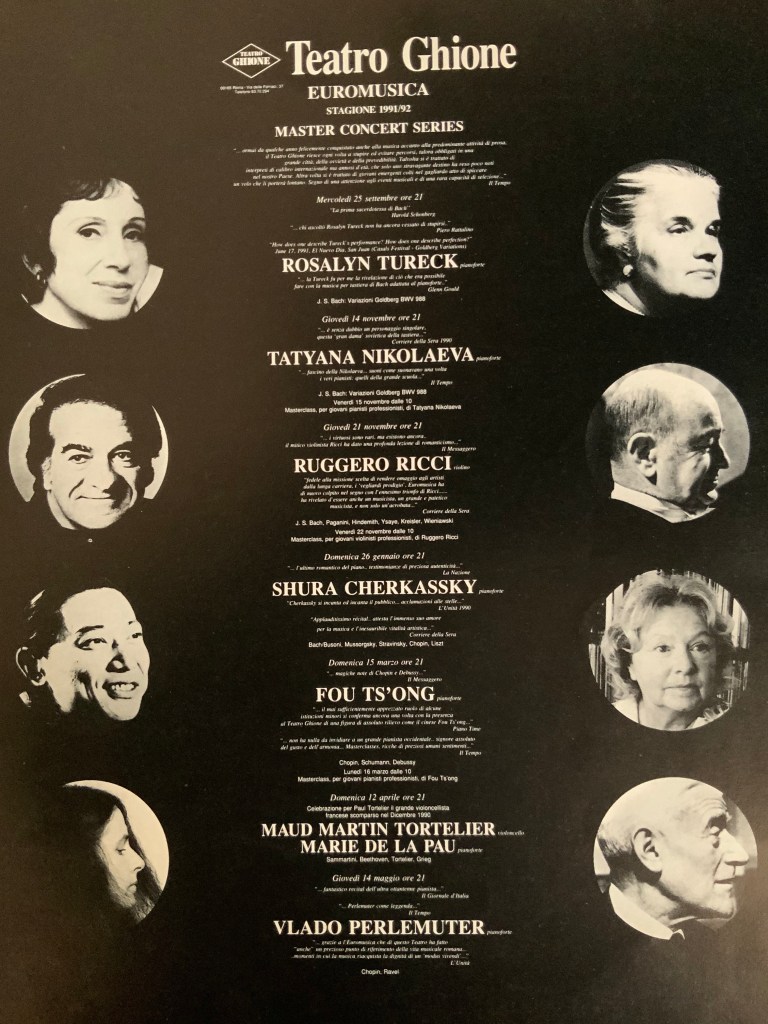
It was Fou Ts’ong who much to everyone’s surprise won the prize for the Mazukas in one of the very first Chopin Competitions in Warsaw.He gave many masterclasses in my theatre in Rome and I was always intrigued and inspired by how he would relate the feeling in Chinese poetry to the same feeling in the music of Chopin.Small world- music is a universal language and the heart beats the same in China as it does in Poland ! Ca va sans dire!

The Sonata in B minor op 58 was given a memorable performance as were her Preludes op 28 a few years ago.A great sense of architecture that did not preclude a complete poetic freedom.Bold contours mixed with ravishingly beautiful detail .The gentle voicing at the beginning of the development was so clearly played and the gradual build up to the recapitulation was played with fiery passion.The return of the second subject was played with such masculine authority and simple heartfelt sense of line that owed more to the school of Rubinstein than Paderewski.The Scherzo was played with a scintillating jeux perlé that seemed to move like a living thing feeling its way.Full of shape and ravishing colour.The Trio too was played with great feeling and sense of direction .The Largo showed her supreme sense of balance where there was such a glow to the long cantabile melodic line.The sostenuto middle section barely murmured as the melodic line was gently hinted at.The coda was pure magic.We were awakened by the Presto non tanto chords that gradually took us to the relentless agitato.Her sense of control and changes of colour were quite mesmerising as the agitato built up relentlessly to the final triumphant explosion.The fanfare at the end rang out as never before but always with a beauty of sound that in all the animal excitement was never allowed to become harsh.

The simplicity and purity of Erik Satie’s Gymnopédie n-1 The work’s unusual title comes from the French form of  gimnopaedia, the ancient Greek word for an annual festival where young men danced naked! It was offered as a thank you to Cranleigh Arts Centre and just summed up in a few simple bars the complete artistry of this brilliant young pianist.

Victor Braojos at Wesley’s Chapel – Passion and Poetry united

An very interesting visit to Wesley’s Chapel to hear the young Spanish pianist Victor Braojos in a exceptionally beautiful programme of Brahms op 117 and Schumann Fantasie op 17.Two of the most poetic works of the Romantic repertoire played together by a true musician.

And what does a true artist do to add a cherry on such a cake :the ósublime Bagatelle op 126 n.3 by Beethoven.Victor did not let us down.His musical credentials were obvious from the programme he presented.

I had already heard Victor, streamed from the Guildhall , with a very fine performance and an unusually stimulating masterclass with Stephen Hough on Beethoven’s Appassionata Sonata.I was not surprised to learn that he is preparing for his master’s degree in performance with Martin Roscoe.Martin and I were at Dartington together playing in the class of Stephen Bishop-Kovacevich and I well remember his Brahms D minor concerto that showed all the musicianly qualities that were to come to the fore in a long and illustrious career.He of me ,when prompted, only remembered the pints we used to down together in the White Hart!

It was fascinating to have time before the concert to visit the cemetary opposite where Bunyan and Defoe are buried in an oasis in the very center of the city next to Old Street.

I was not expecting to find the Chapel so easily or quickly and so had time before the recital to explore this magical and to me unknown part of London.

It was nothing though compared to what awaited at the appointed hour with 50 minutes of some of the most beautiful music ever written for the piano and more importantly played with such musicianly care and intelligence.The passion too of a young man. The same that had ignited Schumann’s pen when he wrote this outpouring of love for Clara his beloved but still distanced future wife by an unapproving father!

The Three Intermezzi for piano, Op. 117 by Brahms,  were described by the critic Eduard Hanslick as “monologues”… pieces of a “thoroughly personal and subjective character” striking a “pensive, graceful, dreamy, resigned, and elegiac note.”They were written in 1892 and the first intermezzo, in E♭ major, is prefaced in the score by two lines from an old Scottish ballad, Lady Anne Bothwell’s Lament:’Balow,my babe,lie still and sleep!It grieves me sore to see thee weep’.Victor opened with beautiful singing tone and a flowing tempo with bass notes that gave great depth to the sound and allowed some very delicate shading.The second in B flat minor flowed so mellifluously and the deeply languid middle section portraying,according to Walter Niemann,Brahms’ biographer, ‘a man as he stands with the bleak,gusty autumn wind eddying round him’.The opening theme returns building to a sumptuous climax that dies away to a sorrowful,nostalgic farewell with a ravishing final chord stretched over the entire keyboard.The final intermezzo in C sharp minor has an autumnal quality with the melodic line shadowed in unison by the bass and of a searing melancholy.The florid middle section was played with a great sense of line and colour before the gradual magic return of the opening theme.

What better preparation could there be for the Fantasie op 17 by Schumann which he described as “an outpouring of love for his beloved Clara”

It has its origin in early 1836, when Schumann composed a piece entitled Ruines expressing his distress at being parted from his beloved Cara Wieck (later to become his wife). It became the first movement of the Fantasie. Later that year, he wrote two more movements to create a work intended as a contribution to the appeal by Liszt for funds to erect a monument to Beethoven in his birthplace of Bonn. Other contributions to the Beethoven monument fund included Mendelssohn’s Variations sérieuses.The original title of Schumann’s work was “Obolen auf Beethovens Monument: Ruinen, Trophaen, Palmen, Grosse Sonate f.d. Piano f. Für Beethovens Denkmal”-Ruins, Trophies, Palms became Ruins, Triumphal Arch, and Constellation, and were abandoned when in 1839 it was printed with a dedication to Franz Liszt.

The Beethoven monument was eventually completed, due mainly to the efforts of Liszt, who paid 2,666 thaler,the largest single contribution. It was unveiled in grand style in 1845, the attendees including Queen Victoria and Prince Albert, and many other dignitaries and composers, but not Schumann, who was already ill.

Liszt in turn in 1853 dedicated his Sonata in B minor to Schumann.

A passionate performance from this young Spanish virtuoso played with an unusually clear sense of line . The very first left hand ‘G’ played strangely with the right which was made to resonate ‘appassionato e fantastico’ as it then played the opening declamatory melody. It was played with great forward movement with the passion of a young man but also with the intelligence and control of a fine musician.A very direct simplicity that seemed to arrive so naturally to the quote from Beethoven’s ‘to the distant beloved’.Schumann had infact prefaced the work with a quote from the poet Friedrich Schlegel :”Resounding through all the notes in the earth’s colourful dream, there sounds a faint long-drawn note for the one who listens in secret.”

In fact the melodic line was made to float so well on the throbbing undercurrent of sounds and the numerous indications of ritardando and changes of tempo never distracted this young man from projecting the overall melodic line or architectural shape.The chords that seem to gradually disintigrate before the passages marked Adagio I have never heard played so clearly or make such magical sense.The same pedal effect that Schumann asks for in Papillons op 2?

The second movement – or Triumphal Arch made a great contrast even if the mezzo forte opening was played with a bit too much vehemence to be able to contrast with the ‘triumphal ‘ restatement later. Trecherous bass notes held no terror for him as they were played with a wonderful natural arch of the arm.A middle section of sumptuous beauty and fleeting lightness that gradually led to the return of the opening march leading to the ‘gallows!’-The coda is one of the most notoriously difficult passages in Schumann and Victor took it bravely on his first outing with this monumental work.(He had been asked to substitute for a colleague who had to cancel at the last minute and Victor bravely offered to play a work that is new to his repertoire).

The last movement – Constellation- again was allowed to flow so naturally with some truly sumptuous sounds.It had a beautiful melodic line mirrored by the tenor and bass sonorities that gave the depth and strength of a full string orchestra. The shadowing of the thumb in the great build up to the declamatory chordal interruptions was very interesting and gave great depth without hardness.The final melodic outpouring passing from the treble to the bass was magically played and the gradual final build up, as Schumann obviously intended, was played with the passion of a young man.His heartbeat finally coming to rest on the final three quiet chords with which he finds solace.

The Bagatelle op 126 n.3 by Beethoven, offered as a thank you to his appreciative audience, not only showed his poetic sensibility but also the scrupulous attention to detail with Beethoven’s very precise pedal indications brought so naturally to life

Filippo Gorini at Rome University La Sapienza

https://www.facebook.com/notes/christopher-axworthy/filippo-gorini-at-teatro-argentina-rome-for-the-filarmonica-romana/10157004554932309/

A very interesting programme of Beethoven’s last two Sonatas:op 110 and op 111 in the last of a series of three concerts dedicated to the composer in his 250th anniversary year.The concert was presented by Rome University in collaboration with the German Embassy.It was fitting that the young Italian pianist Filippo Gorini should be invited to play both Sonatas as he had won the Beethoven Competition in Bonn at the age of 20 and has since been taken under the wing of Alfred Brendel.His first two CD’s of Beethoven op 106 (Hammerklavier) op 111 and the Diabelli Variations have been rapturously received by the critics.

Still in his early twenties he has been preparing , during the long lockdown, the Art of Fugue ,one of Bach’s infinitely complex works that even the composer left unfinished…infact it dissolves into the infinite after 14 fugues and 4 canons………a riddle that is still left unsolved to this day.

Filippo Gorini is very serious young musician with something important to say with a transcendental technique and an intellect way beyond his 24 years.I enclose two articles about recent performances one of which was the op 111 that was on the programme today with it’s twin op 110.

It was in 1983 that I managed to persuade my friend and teacher Guido Agosti to give a lecture recital on op 110 and 111.He too prefaced his masterly performances with an introduction much as Professor Rostagno did today.

The recording of op 110 from the Teatro Ghione is one of the very few recordings by this leggendary figure who had been befriended in his youth by Busoni.Far too reserved to have a major public career the world used to flock to his studio in Siena each summer to be informed,enlightened and invigorated by his playing and total dedication to music.For him music was the Bible – Beethoven his God.

An unexpected on line concert without an audience due to the restrictions reintroduced for public performances in Italy.Some interesting references to Adorno,Bekker,Rosen and Mann in Professor Rostagno’s brief but informed introductions as he attempted to explain what he thought was the message that lay in these two works.The catastrophy and return to life of op 110.The coming to terms with contrasts in life and the acquisition of simplicity in op.111.

Agosti had attempted something similar too.Interesting concepts and mercifully short as the true answer lies in the music itself .Music takes over where words are just not enough and nothing could be clearer than the music in the hands of a true musician of the calbre of Filippo Gorini.

Op 110 was full of subtle detail almost orchestral in conception and for that was full of beauty without any sentimentality.The opening more like a string quartet than a melody and accompaniment.The trill beautifully prolonged as it dissoved into the sublime simplicity of Beethoven’s melodic line.Sustained by the left hand that gave great weight and an inner strength to this seemingly simple opening statement.The fleeting passage work up and down the keyboard was played with a clarity and lightness as Beethoven himself has indicated.The half bowed left hand chords again just added depth and weight without for a moment allowing any heavyness in the etherial right hand figurations.There was a controlled passion in the robust syncopated passage that follows dissolving to a whisper as the meanderings of the development gradually enter.The precise crescendo and diminuendo markings of Beethoven unobtrusively realised in the left hand as the opening theme appears in many different guises above. The contrasting vigour of the Allegro molto second movement with its bursts of syncopated energy dissolved so magically as it prepared the scene for the very heart of the Sonata : Adagio ma non troppo and above all the miraculous arioso dolente.

There was no break between the movements and Beethovens pedal indications in the recitativo were beautifully translated into magic sounds The vibrations of the ‘bebung’- repeated notes- created exactly the atmosphere in which Beethoven could float miraculously one of his most beautiful melodies.Again following the very precise pedal indications of the composer the fugue that follows seemed to grow out of the arioso so naturally.A mellifluous fugue with a forward movement that swept us along on a continuous wave breaking only momentarily the pastoral feel with the entry of the great bass octaves.The arioso seemed to reappear like a wondrous vision even more tender than before.The inversion of the fugue slipping in almost unnoticed as it gradually became more alive. Transformed into passionate declamations and a glorious outpouring of sounds-a true reaffirmation of life to quote Charles Rosen.

https://christopheraxworthymusiccommentary.wordpress.com/2020/07/03/filippo-gorini-at-ravenna-festival-live-2nd-july-2020/

I have written about op 111 this summer at the Ravenna Festival and it was played with the same gripping rhythmic energy.It alternated with moments of reflection before dissolving into the major key for the Arietta. Played simply in three so that the variations that follow,grow naturally out of the previous one.Plunging into the third tumultuous variation in 12/32 time that in turn dissolves leaving the fragmented theme searching for it’s way forward.The absolute clarity of Filippo’s playing here was quite remarkable with a control and maturity way beyond his years.The leggiermente, un poco legato writes Schnabel, was perfectly judged leading gradually to it’s climax via even more fragmented trills and a question and answer between the hands.Gradually the way forward is found with a simple passionate outpouring of the theme that ascends into the stratosphere amongst magic trills sustained by a barely whispered left hand.A final disintigration of the falling interval of the theme leads to the gentle whispered farewell in the major key.Peace at last .Simple and lasting.This was Beethovens last word on the Sonata.

Francesco Piemontesi at the Wigmore Hall – A poet speaks

Francesco Piemontesi piano

The Swiss pianist presents three major piano works including Schubert’s 1826 sonata, the last published during his lifetime, and Liszt’s 1853 sonata dedicated to Robert Schumann.

Helmut Lachenmann (b.1935)

5 Variations on a Theme of Schubert

Franz Schubert (1797-1828)

Fantasy Sonata in G D894

Molto moderato and cantabile-Andante-Menuetto Allegro moderato- Allegretto

Franz Liszt (1811-1886)

Piano Sonata in B minor S178

“Francesco Piemontesi combines stunning technique with an intellectual capacity that few can match” Spectator

Francesco Piemontesi is a pianist of exceptional refinement of expression, which is allied to a consummate technical skill. Widely renowned for his interpretation of Mozart and the early Romantic repertoire, Piemontesi’s pianism and sensibility has a close affinity too with the later 19th century and 20th century repertoire of Brahms, Liszt, Dvořák, Ravel, Debussy, Bartók and beyond. Of one of his great teachers and mentors, Alfred Brendel, Piemontesi says that Brendel taught him “to love the detail of things.”He was born in 1983 in Locarno and studied at the Hochschule für Musik und Theater Hannover with Arie Vardi before closely collaborating with Alfred Brendel. He rose to international prominence with prizes at several major competitions, including the 2007 Queen Elisabeth Competition in Brussels. In 2009 he was awarded the fellowship of the Borletti-Buitoni Trust. Between 2009-2011 he was chosen as a BBC New Generation Artist.In 2012he was announced as Artistic Director of the ‘Settimane Musicali’ music festival in Ascona,and received the BBC Music Magazine Newcomer Award for his ‘Recital’ disc with works by Haendel, Brahms, Bach and Liszt.Since 2012 he records exclusively for the French label Naïve Classique. He currently lives in Berlin.

I first heard Francesco Piemontesi when he appeared at a Prom concert a few years ago playing the Strauss Burlesque and a concert Rondo by Mozart.His musicianship together, in that period, with another young musician, Martin Helmschen, immediately struck me as a quite exceptional light.He has gone on since then to establish himself as the real musician he is who can shed new light on the works he plays with a refreshing simplicity without any rhetoric.And so it was today in a programme with the magical G major Sonata by Schubert and the monumental Sonata by Liszt prefaced by Variations on the Waltz in C sharp minor of Schubert by the contemporary composer Helmut Lachenmann

Lachenmann was born in Stuttgart and after the end of the Second World War (when he was 11) started singing in his local church choir. Showing an early aptitude for music, he was already composing in his teens. He studied piano with Jürgen Uhde and composition and theory with Johann Nepomuk David at the Musikhochschule Stuttgart from 1955 to 1958[1] and was the first private student of the Italian composer Luigi Nono in Venice from 1958 to 1960. The Five Variations on a theme by Schubert – the waltz in C sharp minor D643 was written in 1956

Immediately taking us into his own very particular sound world of clarity and delicacy with the jewel like precision of sounds barely rising above piano.The first variation was played with a rhythmic energy, the ending thrown off with nonchalant charm.It was followed by a deeply melancholic second variation that sang so beautifully thanks to an extraordinary sense of balance that allowed for such a kaleidoscope of multicoloured effects.Sounds sweeping up and down the keyboard in the third with glissandi where even faster motion was needed all thrown off with such subtle ease and virtuosity.A barely whispered fourth variation followed in which the extreme legato of the right hand was mirrored by the delicate almost plucked staccato of the left.

It made for the ideal preparation to the serene masterpiece of Schubert’s fantasy sonata which Schumann described a the most perfect in form and spirit .David Owen Norris described it as uninterrupted sunshine but that was before the performance of Francesco Piemontesi that was truly Beethovenian and anything but a sunny romp.This was not just an outpouring of Schubert’s sublime melodic invention but a full blooded account where Schubert’s seeming innocence had also an undercurrent of menace and foreboding that every so often would erupt with quite openly drammatic contrasts.

A barely whispered opening to the magic chords of an intimate confession that Richter loved so much he made them last as long as possible and added a good ten minutes to the normal performance time.Francesco Piemontesi played with a simplicity barely caressing the notes with a wondrous flexibility.It made every note talk with a tenderness and yearning that made the sudden outburst of the development in the minor and the gradual build up of tension even more surprising.These brief interruptions were juxtaposed with some of Schubert’s most sublime melodic inventions seemingly of joy but with an undercurrent of melancholic nostalgia .The return of the opening chords after these outburts was even more sublime because Schubert had shared this panorama of emotions with us.

The excellent streaming allowed us to appreciate not only the extreme beauty of sound but the beauty of the pianist’s hands as he caressed the keys with a simplicity and sincerity that belied any rhetoric or showmanship.

The Andante was played with the purity of a creamy rich sound that was very moving as nothing was added to the emotion within the notes that Schubert himself had penned. The turbulance of a passing cloud was soon forgotten with the sublime melodic invention that flows continuously from Schubert’s pen in the final years of his short life.Francesco Piemontesi showed a remarkable sense of balance and of self identification with the emotional world of Schubert.He is only a few years older than the composer when he wrote this remarkable work.

The Menuetto was played with a subdued lilt and sense of lyriciam that precluded any percussive hardening of sound.Infact there had been created, from the very first note to the last of this Sonata, a sonorous bubble within which all these marvels were revealed by this true poet of the piano.The Trio, a landler, seemed to grow so naturally out of the Menuetto with a simple uplifting charm and delicate sound that was indeed mesmerising.

The last movement burst in too, quite naturally, with a joyously refreshing lilt as if a window had been opened on the simple folk enjoying the wonders of country life.A beguiling sense of rubato was really quite hypnotic as we were led around this rural scene until the miracle occurs. A barely prepared interruption with one of Schubert’s most sublime melodies.It is as though a cloud has lifted and we are all reduced to silence as we marvel at this heavenly apparition.The delicate ritardando towards the final meanderings was a truly magic ending to a dream.One is reminded of a report of Schubert’s only performance in public where it was noted much to his approval that ‘the keys in his hands became singing voices?

The Liszt Sonata is a monument and together with the Fantasie of Schumann constitutes the peak of the Romantic repertoire (together of course with the Fourth Ballade of Chopin).The Sonata by Liszt is dedicated to Schumann as the Fantasie is dedicated to Liszt – birds of a feather indeed .The Sonata was dedicated to Schumann in return for the dedication of the Fantasie op 17 (published 1839) to Liszt.It was Schumann’s contribution to the Beethoven monument that Liszt had taken in hand (as Mendelssohn’s Variations Serieuses was too) A copy of the work arrived at Schumann’s house in May 1854, after he had entered Endenlich sanatorium. Schumann’s wife Clara, an accomplished concert pianist and composer in her own right, did not perform the Sonata; apparently she found it “merely a blind noise!”.

I remember André Tchaikowsky persuading his friend Radu Lupu to spend time learning the sonata.Richter played it in London that for us mortals was an absolute eye opener and marvel.Richter was so disgusted by his performance that he would not see anyone after the concert!Gilels and Curzon have shown us that this work although seemingly a showpiece is a work of startling originality.It created a completely new direction of perfect form from the classical style sonata of yore. Liszt, the revolutionary original thinker, was to foresee the direction that music was to take fifty years hence.

I was expecting from Francesco Piemontesi a performance of the introspection of Lupu or the absolute originality of Richter but instead we got a youthful make or break performance that nevertheless kept us riveted from the opening whispered G’s to the all too final submerged murmur of B – played with the right hand deep in the bass!

From the opening notes his supreme musicianship shone through .The contrast between the opening notes that will be trasformed during the percourse of the following thirty minutes was captivating from the very first sounds.This after all is the leit motif idea that was to inspire Liszt’s son in law Wagner in his operas.The first agitato semiquavers were played like rays of light (as Agosti played them) leading to the first triumphant octave declaration.A masterly sense of colour and shape led to the passionate outpouring of the ‘grandioso’.It immediatley dissolved into the mellifluous ‘dolce con grazia’.

It was ,in fact, the total identification with the demonic Florestan and and the ever more tender and magical Eusebius that was remarkable.From the passionate virtuosistic outbursts to the most intimate comuning it was all played with an overall sense of architectutral shape..There was always a sense of balance and colour that never once evolved into the barnstorming of lesser musicians that has been the rule amongst so called virtuosi that plunder this masterpiece!

The Andante sostenuto was of a wondrous beauty coming as it did after such sould searching virtuosity.Managing to keep the pulse flowing even in the’ quasi Adagio’ (where Richter almost came to a stop) leading so naturally and gradually to the passionate central outburst of romantic fervour. It was indeed a ‘scorching’ performance as David Owen Norris aptly described it .But judging from the moments of absolute silence that greeted the final note it was also a deeply touching comuning of the soul.This indeed was a performance to treasure .

The beautiful ‘Au Lac de Wallenstadt’ offered as a thank you to the audience, both real and virtual, seemed to flow from his fingers with such freshness and simplicity and belied the fighting off of the demons that we had witnessed only a few moments before.

Petar Dimov at St Mary’s A musician speaks

in collaboration with the Keyboard Charitable Trust

Tuesday 27 October 4.00 pm

Streamed LIVE concert in an empty church


Petar Dimov (piano)

Debussy: 2 Preludes
Ce qu’a vu le vent d’ouest
La fille aux cheveux de lin

Dimov: Passacaglia

Debussy: Prelude
La cathédrale engloutie

Dimov: Aura (Daylight) (UK premiere)

Brahms Sonata in F minor op 5

Allegro maestoso-Andante-Scherzo:Allegro energico-Intermezzo:Andante-Finale :Allegro moderato ma rubato

A very interesting programme from this young Bulgarian pianist graduate of the Royal College of Music where he was in the class of Norma Fisher for six years.A programme that was so well thought out where one work grew out of another and created a fascinating sound picture which culminated in the youthful masterpiece of Brahms’ all too rarely heard third sonata op 5.

I have heard in the past such great pianists such as Annie Fischer,Kempff,Rubinstein,Arrau,Cherkassky,Curzon play this monumental five movement work.More recently I heard a magnificent performance in London and in Rome from Louis Lortie with not a little help, as he pointed out to his audience afterwards in the Wigmore Hall ,from the aristocratic rich sounds of a Bosendorfer piano.

The sonata of course needs a real musician to hold it together and find the orchestral colours with which it was obviously conceived.One could almost say that it is his fifth symphony such is the overall architectural conception of this monumental work.It was just such a performance we heard today from this young musician.Maybe lacking in the overall sweep and some of Brahms’s youthful romantic verve but there was a control of sound and colour and an overall architectural conception of the work that showed a quite remarkable musical maturity allied to an impressive technical prowess.All this he could do on a fine but limited Yamaha piano, so hats off indeed!

The concert had begun with a juxtaposition of three Debussy Preludes and two of Petar’s own works.All knotted together to create one whole sound picture that started with Debussy’s depiction of the west wind where immediately we were thrown into a world of swirling waves and violent contrasts.Some evocative sounds from deep within the piano took us by surprise as they led to bursts of violent storms with notes encompassing the entire keyboard played with astonishing technical mastery.This led to the simple beauty of the girl with the flaxen hair where the melodic line was not so much projected but seemed to emerge from the underlying harmonies as if we were eavesdropping on some distant beauty.Petar’s own Passacaglia followed with barely whispered sounds leading to a peal of bells with full orchestral sounds that were allowed to resonate as Debussy’s sunken cathedral began to emerge from the depths.Again the melodic line was never forced but seemed to be sustained by the underlying harmonies.The majestic nobility of the risen cathedral was quite overwhelming with its reverberant sounds created by a masterly use of the pedals as was the descent into the depths with a barely audible left hand on which floated the memory of the apparition that had appeared so magically before us.

A remarkable technical control allied to an extraodinary sense of immagination.Last but not least in this opening group was Petar’s own Aura or Daylight with the sun now glistening on the waves of a perpetum mobile that concluded so well this atmospheric prelude to the great F minor Sonata.

The grandiose opening to the Sonata broke the spell that he had created and brought us into the more sedate but passionate world of Brahms.A great sense of control and contrasts where one could almost envisage the whole orchestra.The solo horns alternating with the full sumptuous string section.This work in lesser hands can often seem fragmented and it takes a real musician to be able to see the whole line from the first to the last note without getting distracted by Brahms’s seemless melodic lines.The Andante was played with a sense of foreward movement where deeply felt sounds emerged with touching insight. The ‘Ben cantando’ section was even more mellifluous contrasting with the opening melodic line that had been deliberately subdued and the poco piu lento section was very beautiful indeed .One of the most touching moments though came in the Andante molto coda, where the gradual reawakening leads to a passionate outburst that dies away to a whisper as Debussy’s cathedral had done only moments before.The Scherzo was thrown off with great verve and a slight wrong turning was a small price to pay for a performance of such technical assurance.

An intermezzo of haunting beauty and desolate nobility was the prelude to the Finale where Brahms’s rather fragmented comments were held together with the same expertise of a conductor directing an orchestra.The sumptuous central choral melody was beautifully controlled and the piu mosso coda was thrown off with great ease but not without being aware of the melodic line hidden in it’s midst.It led to the final passionate outbursts of full orchestral sounds with which the work triumphantly ends.

Petar Dimov was born in 1994 in Plovdiv (Bulgaria). He studied there with Svetlana Koseva until his graduation with distinction in 2014. He then studied at the Royal College of Music, graduating with distinction in 2018. He is now a postgraduate student at the RCM, studying with Norma Fisher and Vanessa Latarche, supported by the Henry Wood Accommodation Trust and the St. Marylebone Foundation. He has won numerous prizes at music competitions in recent years. In 2011 he was awarded 2nd prize at the International Competition for Young Pianists in Craiova (Romania), and in 2012 he received two 1st prizes at the International Piano Competition ‘Schumann-Brahms’ in Plovdiv (Bulgaria) and at the International Competition for Young Musicians ‘Ohrid Pearls’ in Ohrid (Macedonia). In 2013,he won first prize at the ‘Scriabin’ International Piano Competition in Paris (France). In 2020 he won third prize and a performance of Brahms – Piano Concerto No. 2, op. 83 with the Worthing Philharmonic Orchestra. In 2013 his accomplishments as a pianist, chamber musician and accompanist were acknowledged with two prizes – from the Union of the Bulgarian Composers and the Bulgarian Ministry of Culture. He has performed Prokofiev’s Second Piano Concerto with the Plovdiv Philharmonic Orchestra. He has performed across multiple venues in England between 2014 and 2020, including Steinway hall, St. James’ Piccadilly, Amaryllis Fleming Concert Hall, Austrian Cultural Forum, Waltham Abbey, Pallant House Gallery and St. Mary Abbots amongst others. In addition, he has given solo recitals in Athens, Crete, Edirne, Istanbul, Volos, Sofia and his native Plovdiv. As a composer, Dimov has worked with Nikolay Stoykov, and has written a number of works for various instruments and ensembles including Nocturne, Passacaglia, Alpha and Omega Sonata No. 1) and Butterfly dream for solo piano, Forwards for violin and piano duo, 19 Devouring time ) for unaccompanied choir, Aphelion for string quartet, Laniakea for orchestra, Circle of Light for soprano and piano, amongst others. His piano works are often performed by RCM pianists.

Exploring Liszt with Leslie Howard

Sunday 25 October 4.00 pm

Streamed LIVE concert in an empty church

Leslie Howard – Lecture – recital

‘Exploring Liszt at the piano’

Programme to include Grosses Konzertsolo S176

The oracle speaks indeed.Leslie Howard gave a sometimes amusing and moving talk , full of information,wisdom and insights into the extraordinary world of Franz Liszt.

https://www.facebook.com/notes/christopher-axworthy/in-praise-of-liszt-annual-day-and-international-piano-competition-of-the-liszt-s/10155251368972309/

https://www.facebook.com/notes/christopher-axworthy/liszt-comes-to-st-marys/10156117991422309/

It is some years that the Liszt Society chaired by Leslie Howard have held their annual Liszt Day and Competition at St Mary’s and it was only logical that Leslie Howard should be the first for their new series of lecture recitals by renowned musicians.

Lecture sounds so pompous and academic but here was a man who was praised to the skies, 50 years ago, by Guido Agosti (a pupil of Busoni who was a pupil of Liszt) in the summer school of the Chigiana in Siena.Always with a twinkle in his eye as he share the facts from his profound study of the world of Liszt with a humour and simpatia that belies the information that he is sharing with us.

https://www.facebook.com/notes/christopher-axworthy/leslie-howard-reformed-liszt/10154744463347309/

A fascinating afternoon, visible always on the St Mary’s web site, full of insights that are too numerous to ‘Liszt’ here.

Some extraordinary performances such as the late nocturne En reve , that was a favourite with my old teacher Gordon Green.Interesting the original idea for La Ricordanza one of the most mellifluous of his later Transcendental Studies.

The tour de force of the afternoon was an extraordinary performance of the Grosses Konzertsolo that was the forerunner of the B minor Sonata.

https://www.facebook.com/notes/christopher-axworthy/tea-for-two-leslie-howard-45th-wigmore-celebration-and-burnett-thompson-the-age-/10156917413147309/

https://www.facebook.com/notes/christopher-axworthy/leslie-howard-in-belgravia/10154678959267309/

To celebrate his seventieth birthday, Leslie Howard prepared some of the works which have proved most in demand by his many followers throughout the years: a programme of Liszt’s operatically inspired piano music that he is playing in many countries.  2018 will also see the release of one further CD of hitherto unrecorded pieces by Liszt, finally bringing the total to 100, and so extending the already unequalled accomplishment of the largest solo artist recording project in the history of classical music.  (The new disc can be safely slotted into the famous complete Liszt boxed set which has been available from Hyperion Records since 2011.)  This critically acclaimed project merited Leslie Howard’s entry in the Guinness Book of World Records, six Grands Prix du Disque, the Medal of St. Stephen, the Pro Cultura Hungarica award and a mounted bronze cast of Liszt’s hand presented by the Hungarian President. 

Leslie Howard has balanced his prodigious recording career with an international concert itinerary which has seen him performing regularly throughout the world for more than half a century, always with a repertoire that seeks to extend the audience’s experience and to challenge accepted hierarchies of received wisdom.  He has appeared regularly with the world’s finest orchestras, and has also pursued a distinguished career as a chamber musician, partnering many of the greatest solo musicians and ensembles of our time. In addition to his solo Liszt recordings, Leslie Howard’s CD discography contains many other important world première recordings, including the four piano sonatas of Rubinstein, the three piano sonatas of Tchaikovsky and a disc of Scandinavian piano sonatas. All his early solo and duo recordings (with David Stanhope) of the music of Grainger have been reissued in a 5-CD set by Eloquence. There are also the Piano Quartets of Rubinstein – world première recordings for Hyperion, 25 Etudes in Black and White – his own compositions recorded for ArtCorp, and a disc pairing the two Rakhmaninov piano sonatas for Melba Recordings.  Melba has also released two CDs with Mattia Ometto joining Howard in the complete music of Reynaldo Hahn for two pianos and piano duet.  A work in progress, Brilliant Classics are issuing three sets each of 3 CDs of Liszt’s complete music for two pianos, again with Mattia Ometto – the first box contains all 12 of Liszt’s own two-piano versions of his symphonic poems.  


In his capacity as a renowned scholar working from primary sources, Professor Howard has produced 13 volumes of Liszt Society Publications for The Hardie Press, including the complete chamber music, 30 volumes of the Music Section of the Liszt Society Journal, and 4 volumes of the new Urtext Liszt scores for Edition Peters (with a much-praised version of the Liszt Sonata).  His other editorial work includes a new reconstruction and orchestration of Paganini’s fifth violin concerto for the collected Paganini Edition in Italy, the full score of Bellini’s ‘Adelson e Salvini’, and the now-standard two-piano score of Rakhmaninov’s 4th Concerto for Boosey & Hawkes. 

Giovanni Bertolazzi a star shining brightly at the President’s Palace ,Rome

Ludwig van Beethoven (1770 – 1827)
Sonata per pianoforte n. 21 in do maggiore op.53
“Waldstein” (1804)
– Allegro con brio
– Introduzione. Adagio molto (fa maggiore)
– Rondò. Allegretto moderato

Felix Mendelssohn Bartholdy (1809 – 1847)
Variations sérieuses in re minore op.54 (1841)
– Tema: Andante sostenuto
– 
– Un poco più animato
– Più animato
– Scherzo in forma di canone
– Variation en écho
– Con fuoco
– Allegro vivace
– 
– Moderato
– Cantabile
– Tempo del tema
– Sempre assai leggero
– Adagio in re maggiore
– Poco a poco più agitato
– Allegro vivace
– Presto

Fryderyk Chopin (1810 – 1849)
Scherzo n. 4 in mi maggiore op.54 (1842)

Franz Liszt (1811 – 1886)
Rapsodia ungherese n. 12 per pianoforte S 244 (1847)


Giovanni Bertolazzi , pianoforte

Veneto, nato nel 1998, Giovanni Bertolazzi si è imposto in numerosi premi internazionali e si è segnalato alla critica specializzata nel 2019, dopo un exploit al Concorso Busoni e il secondo posto conseguito al Premio Venezia. Esordisce ai Concerti di Radio3 al Quirinale con un programma che parte da Beethoven (Sonata per pianoforte n. 21 op. 53) e attraversa alcuni capisaldi del suo repertorio: Mendelssohn, Chopin e Liszt.

A star was shining brightly at the President’s Palace in Rome today and Giovanni Bertolazzi‘s magnificent recital might be the last for a long time as the Prime Minister Conte will probably announce tonight…………

A Waldstein Sonata of great rhythmic energy and astonishing contrasts.The wonderful deep notes of a superb Fazioli gave such poignancy to the introduction to the Rondo that was a true miracle of subtle colouring and virtuosity.Even Beethoven’s very precise pedal indications made such sense as did the glissandi that seemed to slip from this young musicians fingers with such ease and mastery.

Mendelssohn’s Variations Serieuses were played with such subtle colouring and an undercurrent of energy that was hypnotic.The sudden hushed fugato out of which was ,after a moving respite, a rebirth of almost mystical beauty.It led so naturally to the final pages of transcendental pyrotechnics thrown off with an ease and grace that was astonishing.

A great sense of characterisation in Chopin’s fourth Scherzo built to a monumental climax before melting away to a heartrendingly haunting melodic line that was masterly.The almost timeless ornaments and whispered repeat were pure magic.But nothing could compare with the aristocratic control of an exultant ending of passionate excitement .

The Liszt 12th Rhapsody was full of subtle colouring alternating almost animal stimulation with moments of mouthwatering delicacy and charm.Whispered confessions of intimacy alternated with truly demonic technical wizardry-No wonder Liszt was chased like a pop star by all the usually well behaved artistocracy of his day.

I have heard all these pieces from Giovanni over the last year or so since hearing him at the Busoni Competition

https://www.facebook.com/notes/christopher-axworthy/viva-busoni-alive-and-well-in-bolzano-part-one-two-and-three-the-final/10156743202282309 I was not expecting such maturity and total mastery as he revealed today.

The last time I heard him was in Padua in the Sala dei Giganti, just before the lockdown last february

https://christopheraxworthymusiccommentary.wordpress.com/2020/02/22/giovanni-bertolazzi-a-giant-amongst-the-giants/

.It looks as though this too will be the last concert for a while.Another threatened lockdown seems inevitable as the Prime Minister of Italy will explain tonight on television.

https://christopheraxworthymusiccommentary.wordpress.com/2020/06/07/giovanni-bertolazzi-the-way-forward/

https://www.facebook.com/notes/christopher-axworthy/viva-busoni-alive-and-well-in-bolzano-part-one-two-and-three-the-final/10156743202282309/