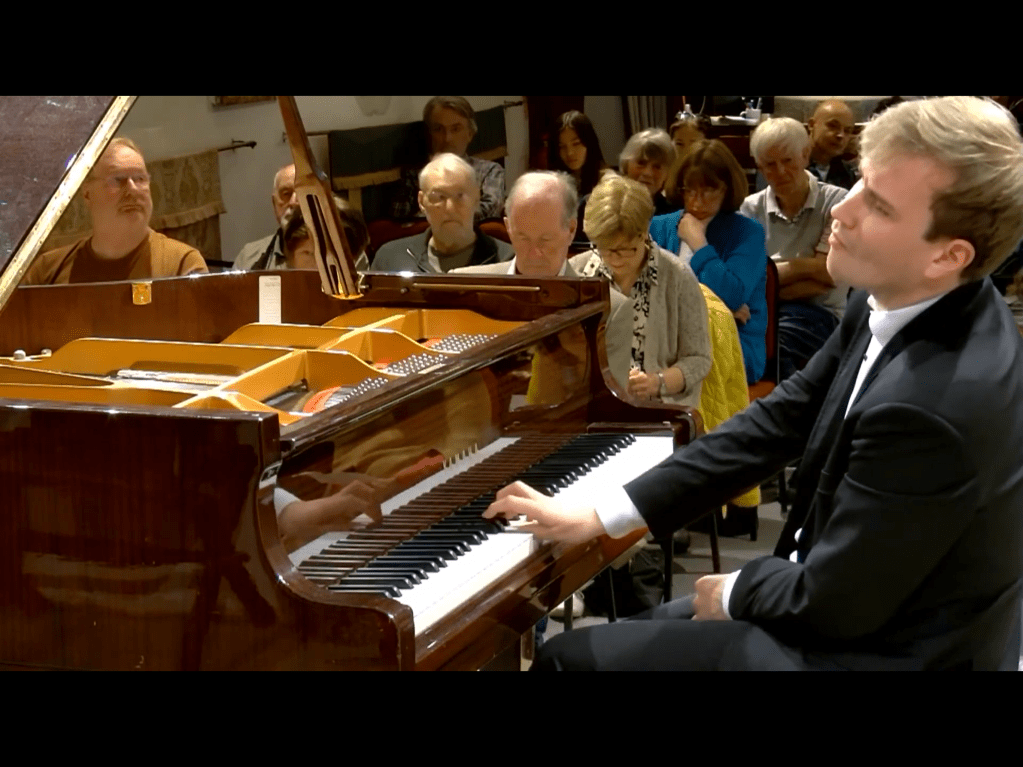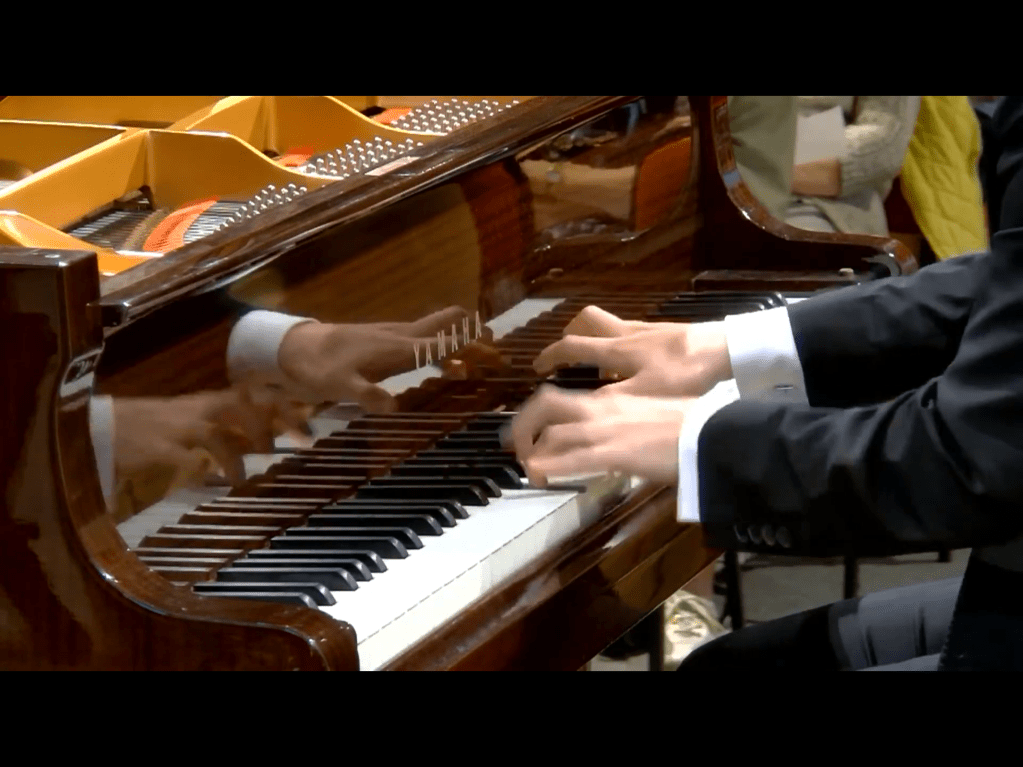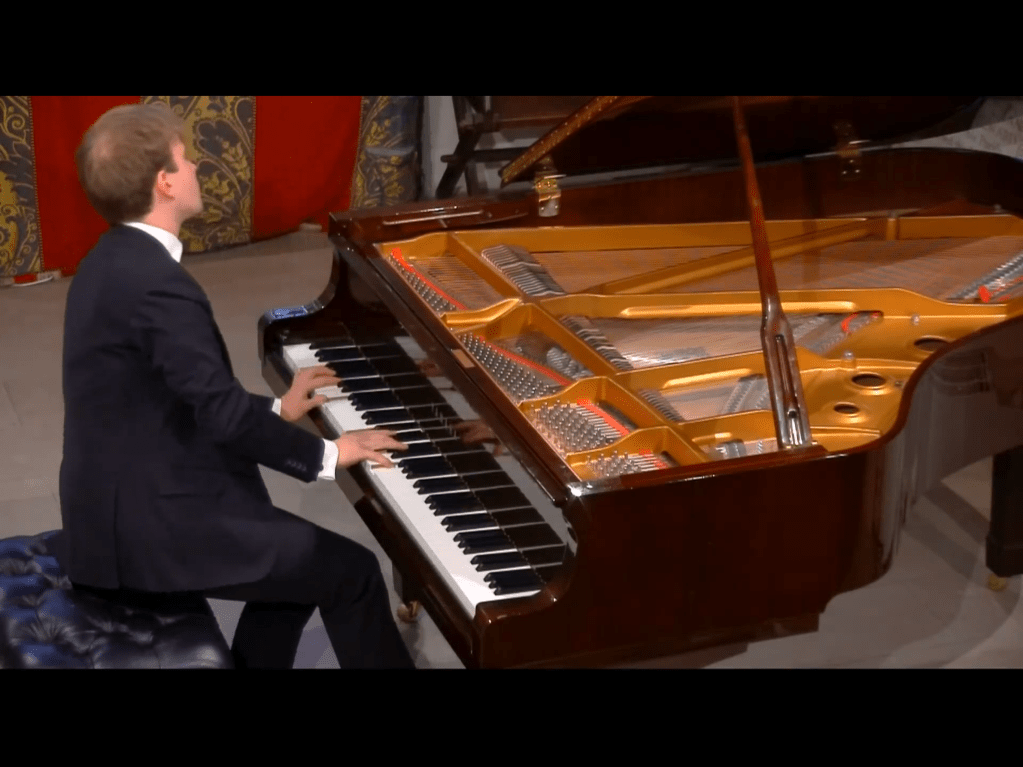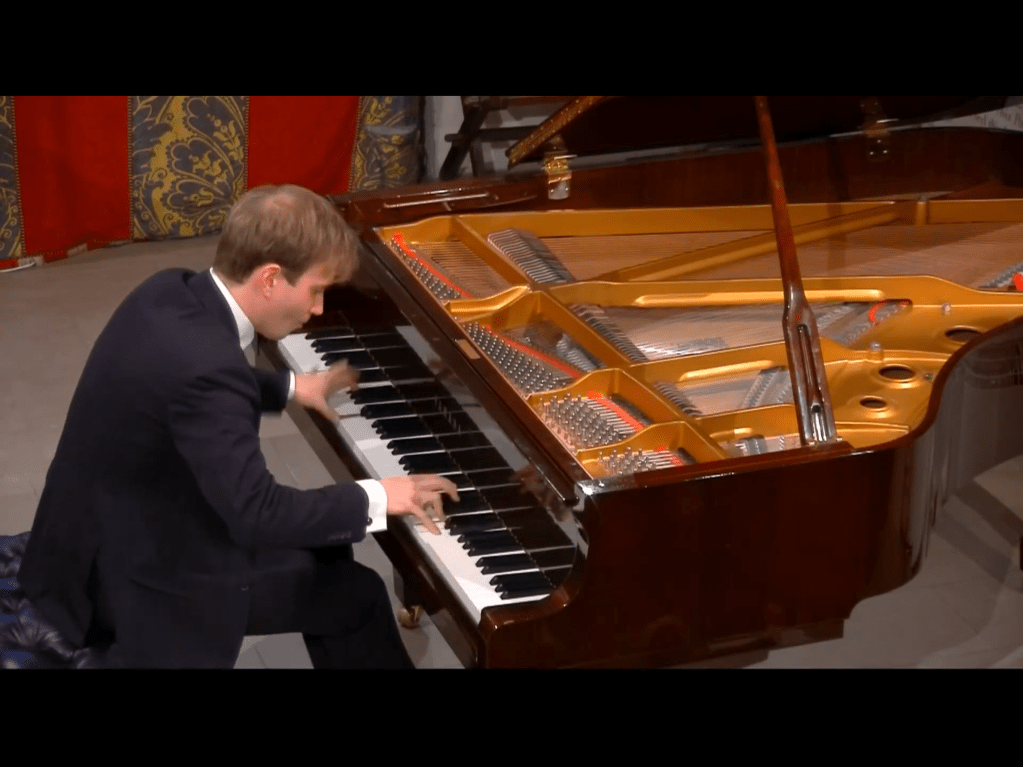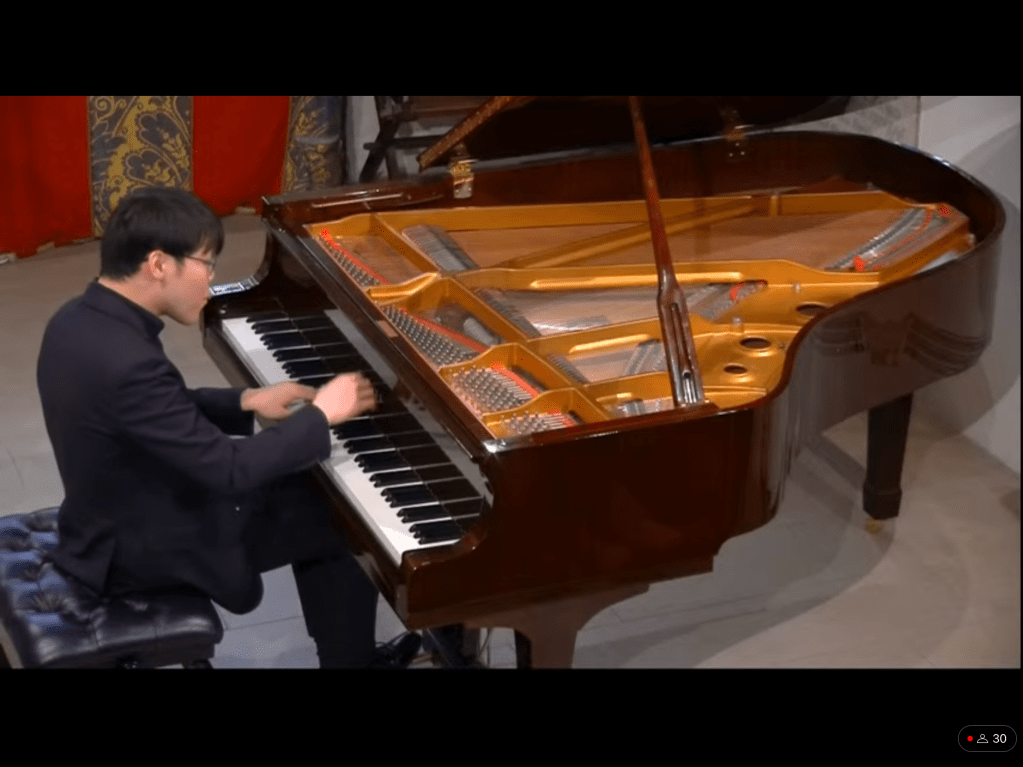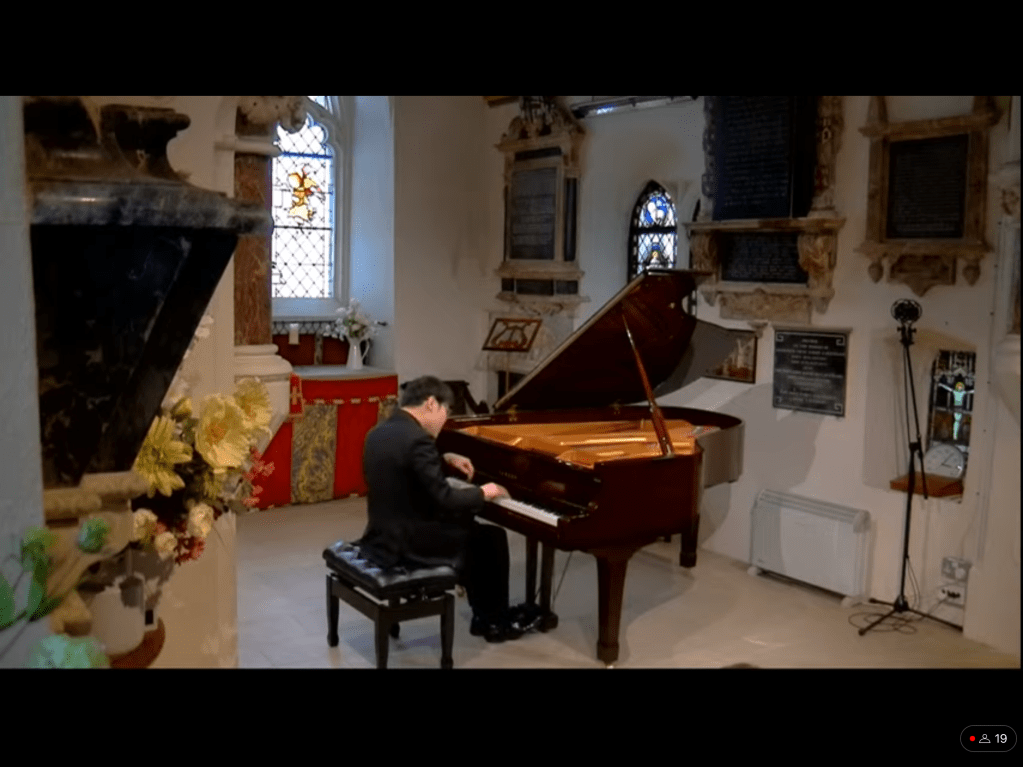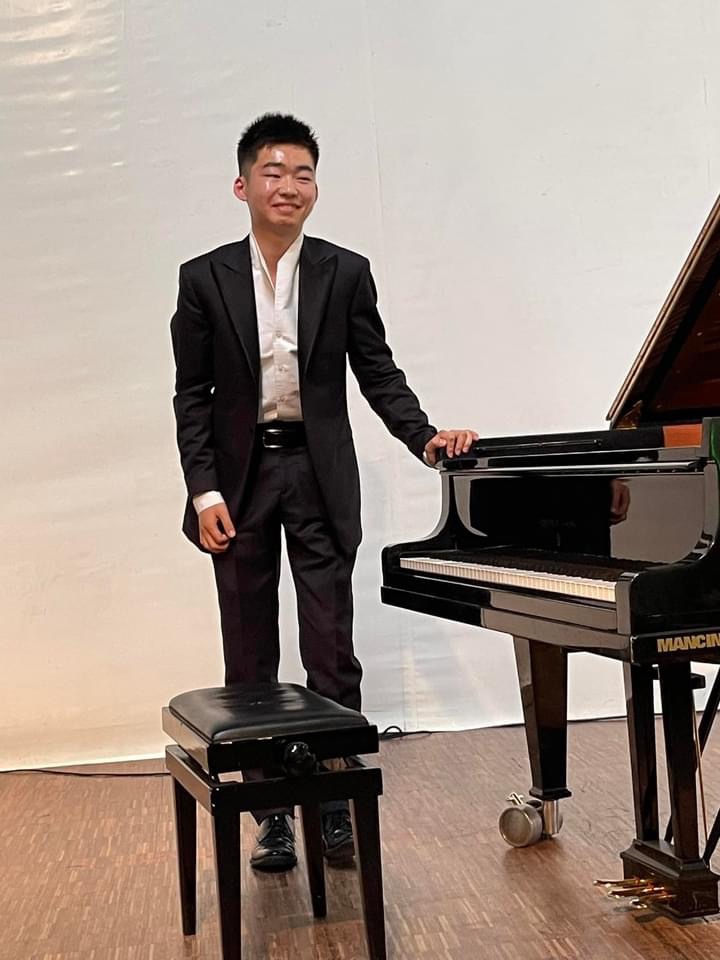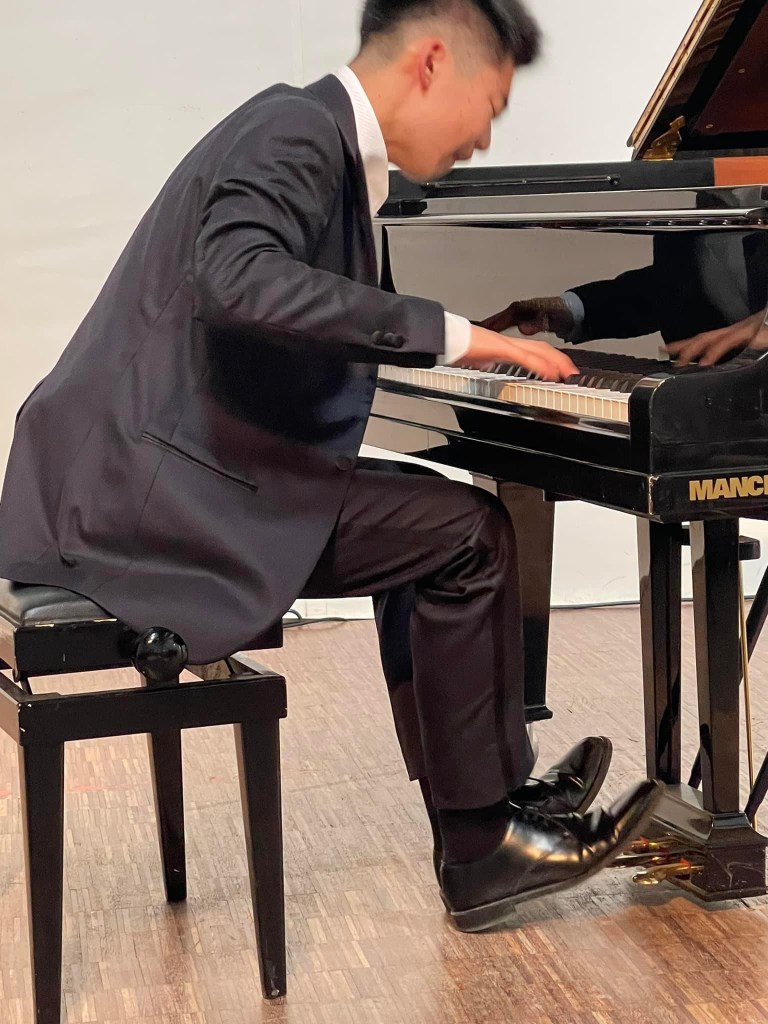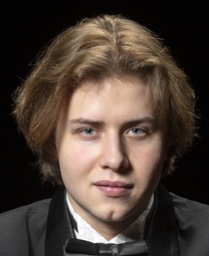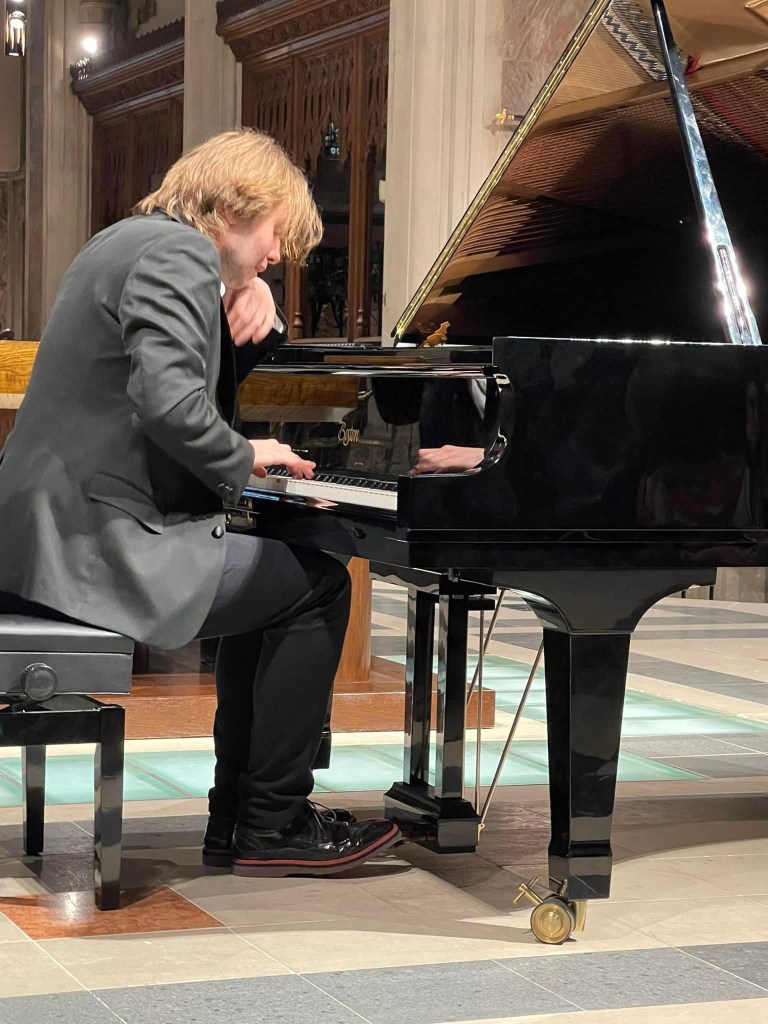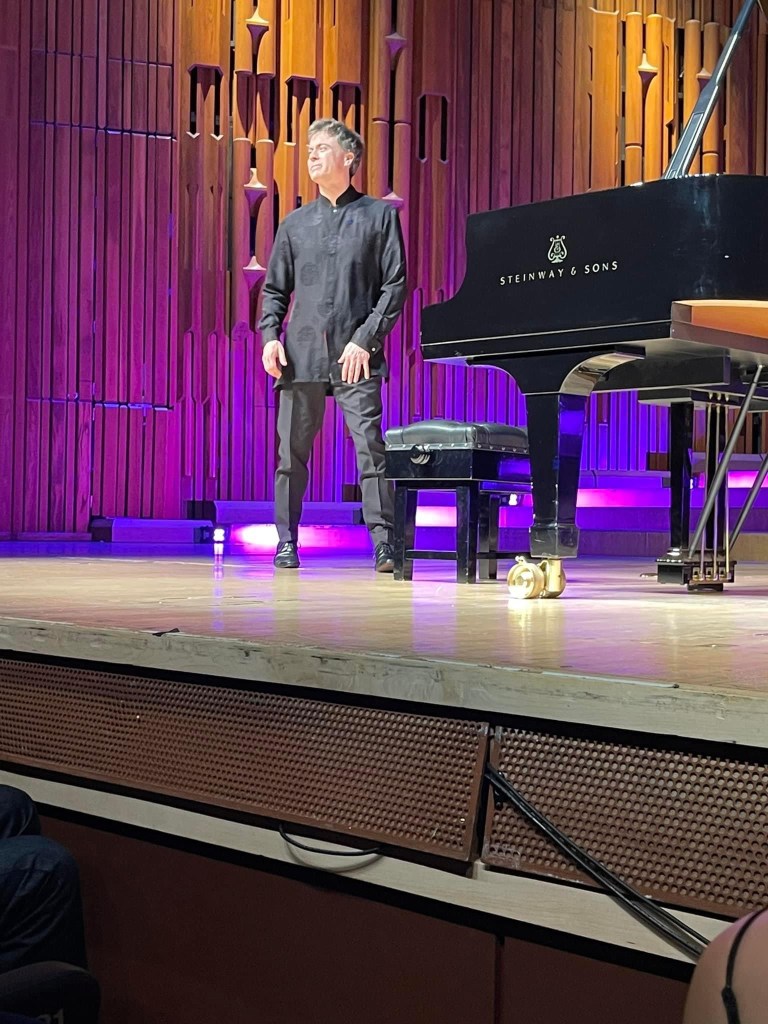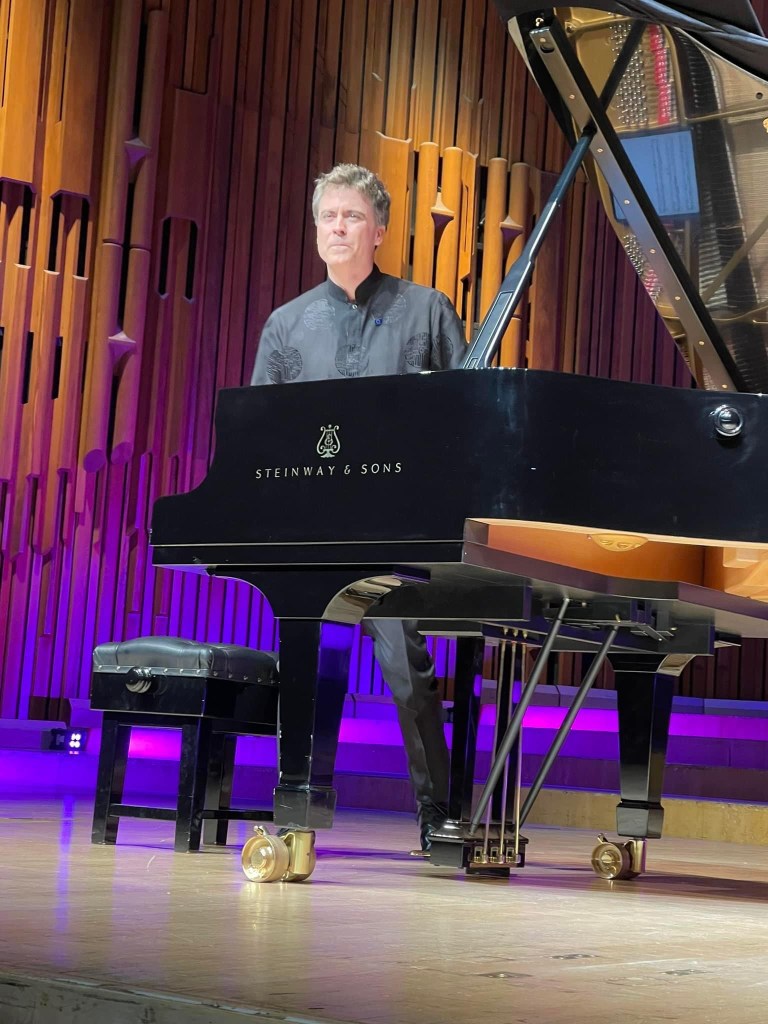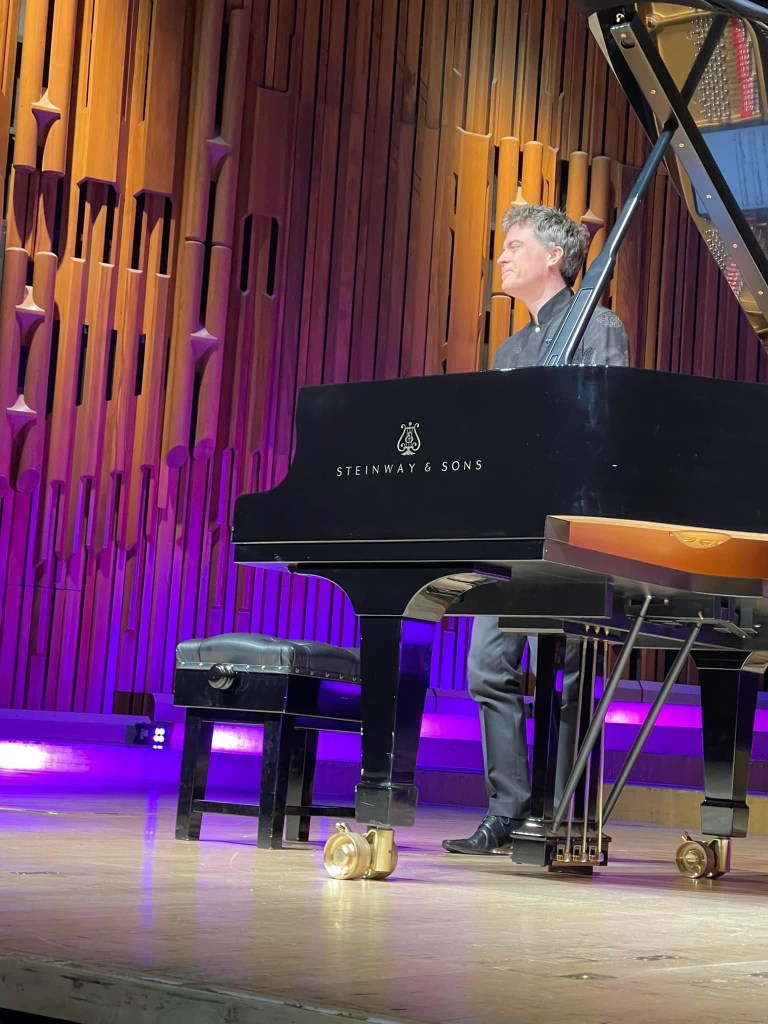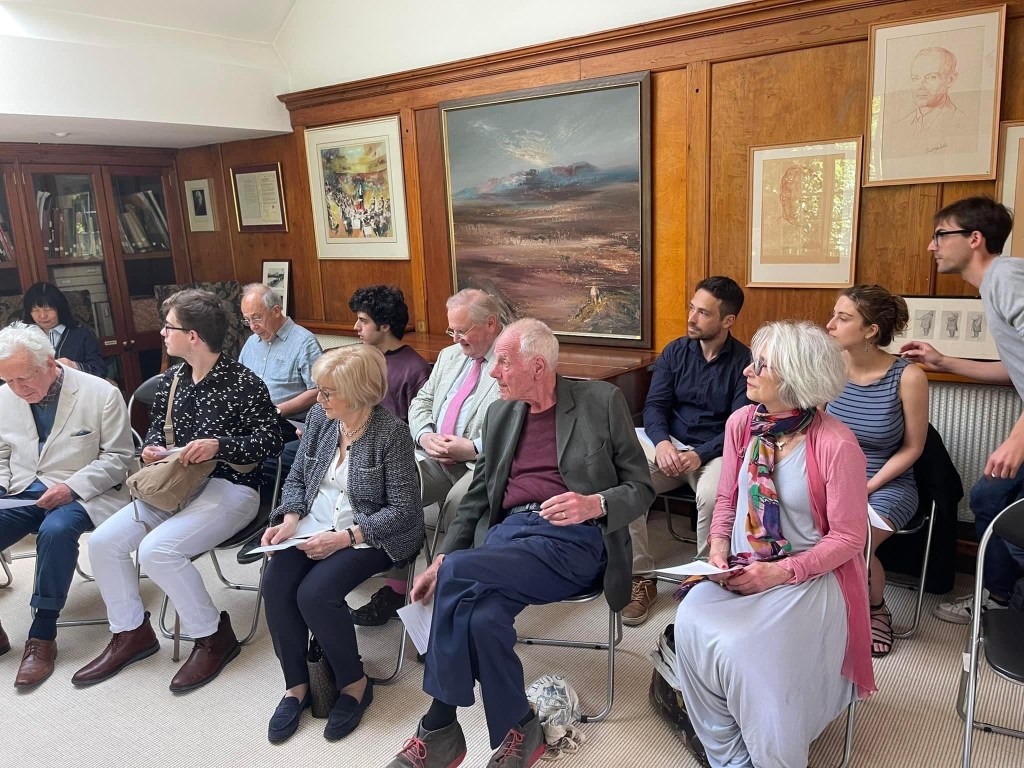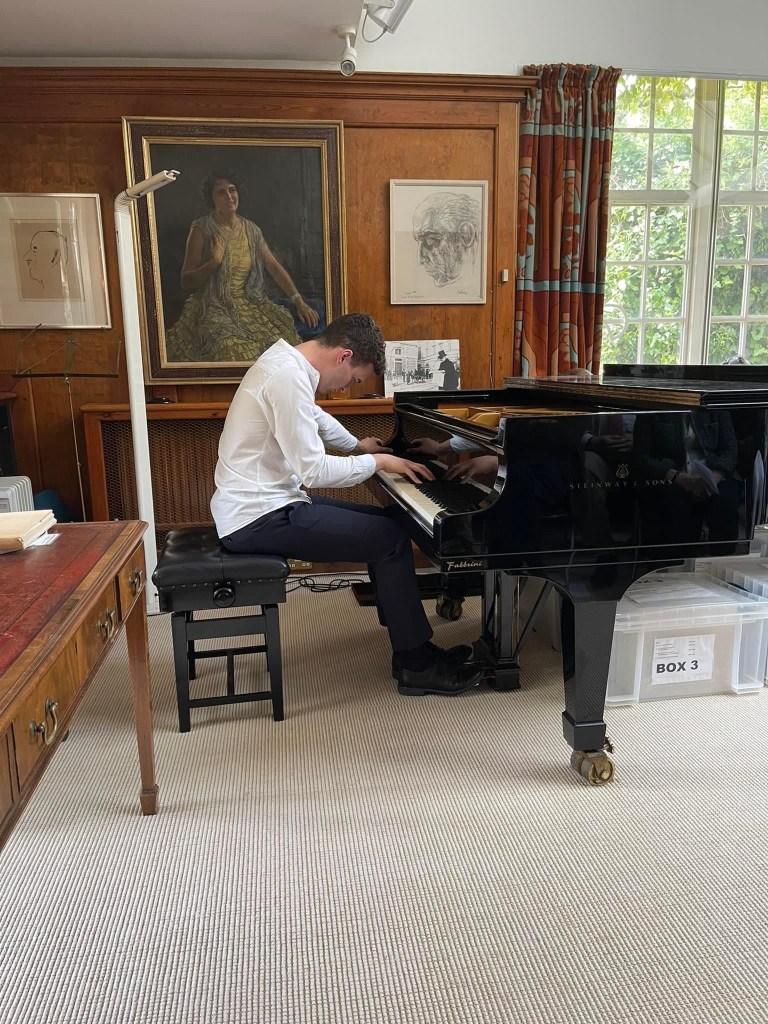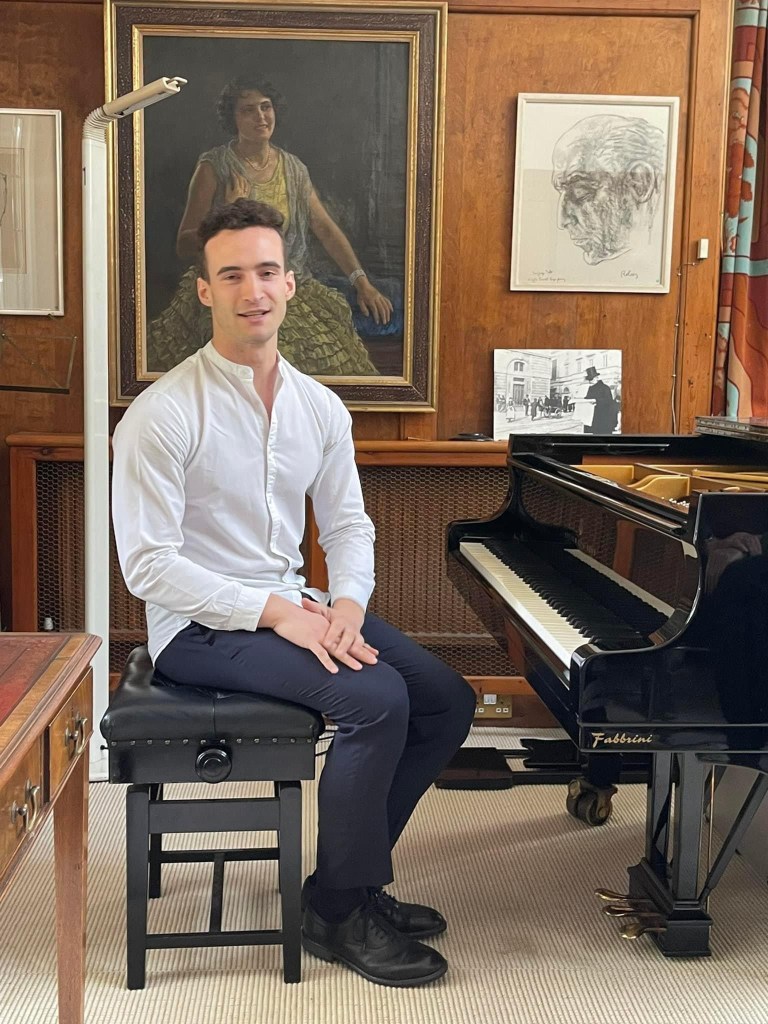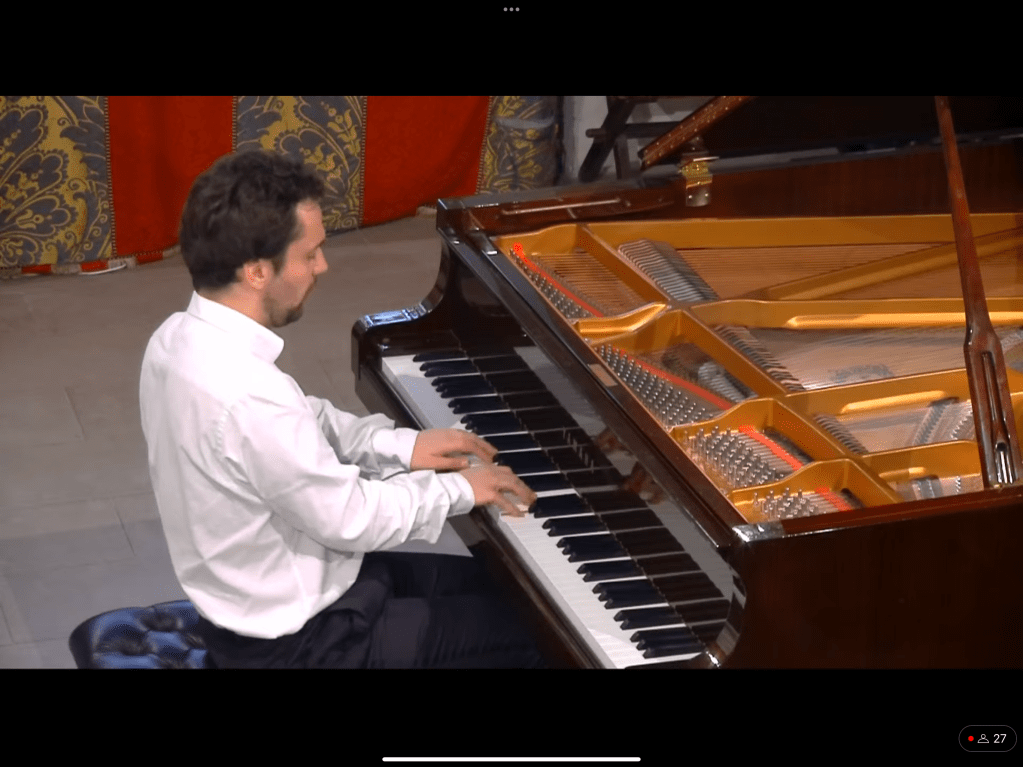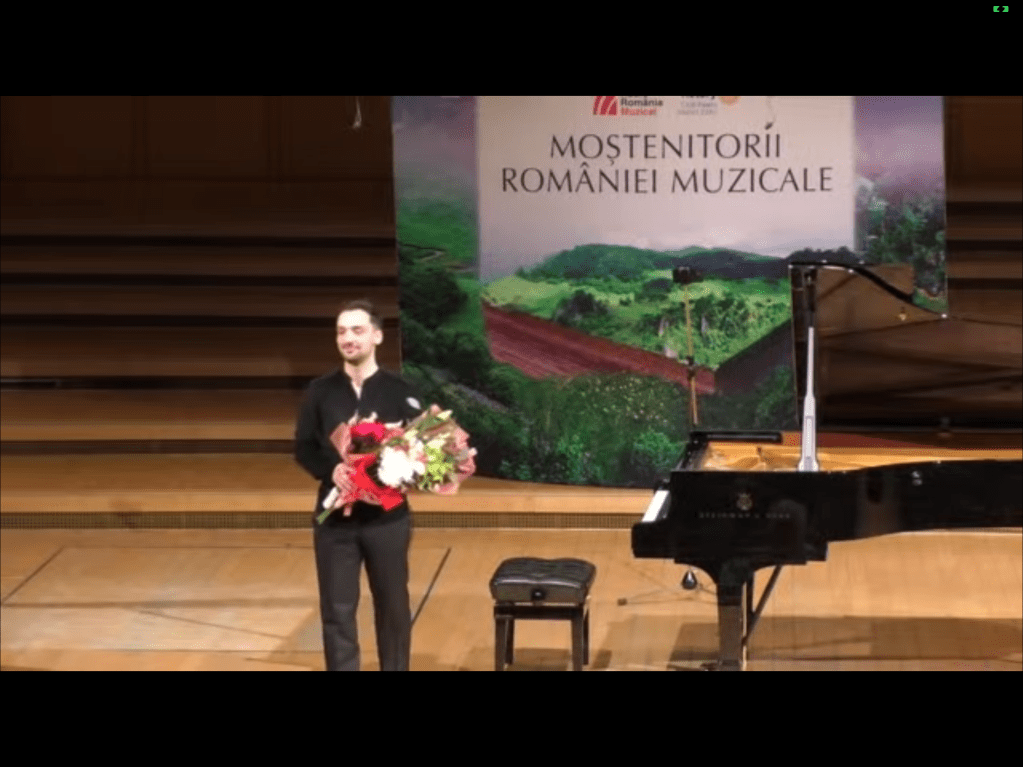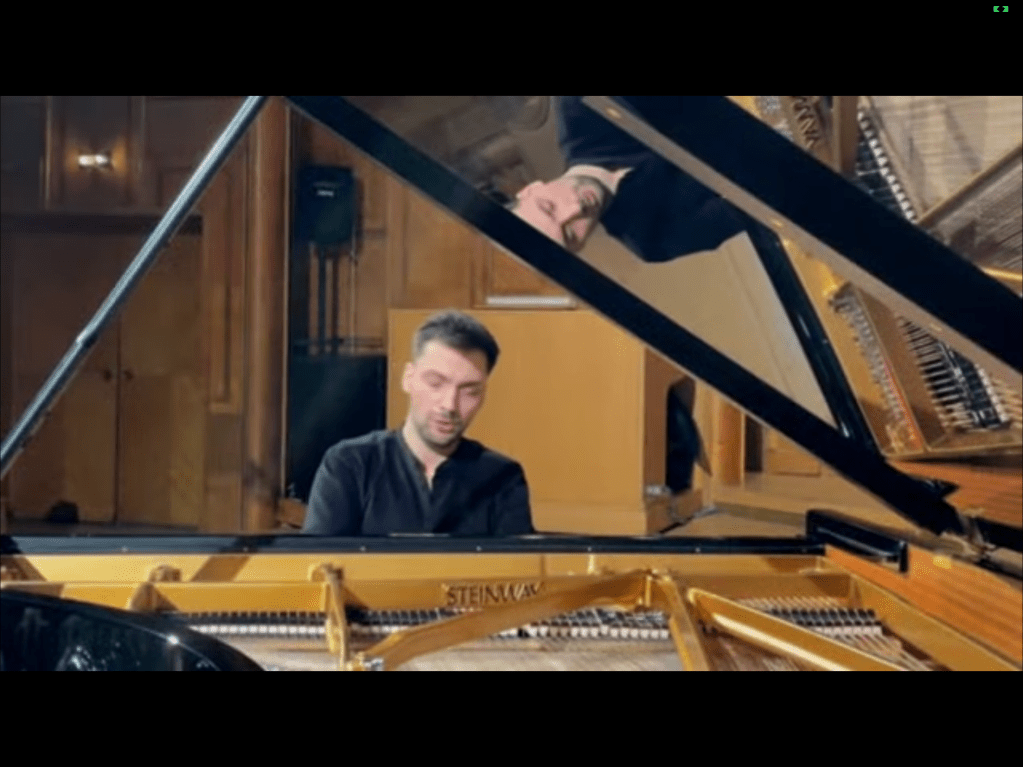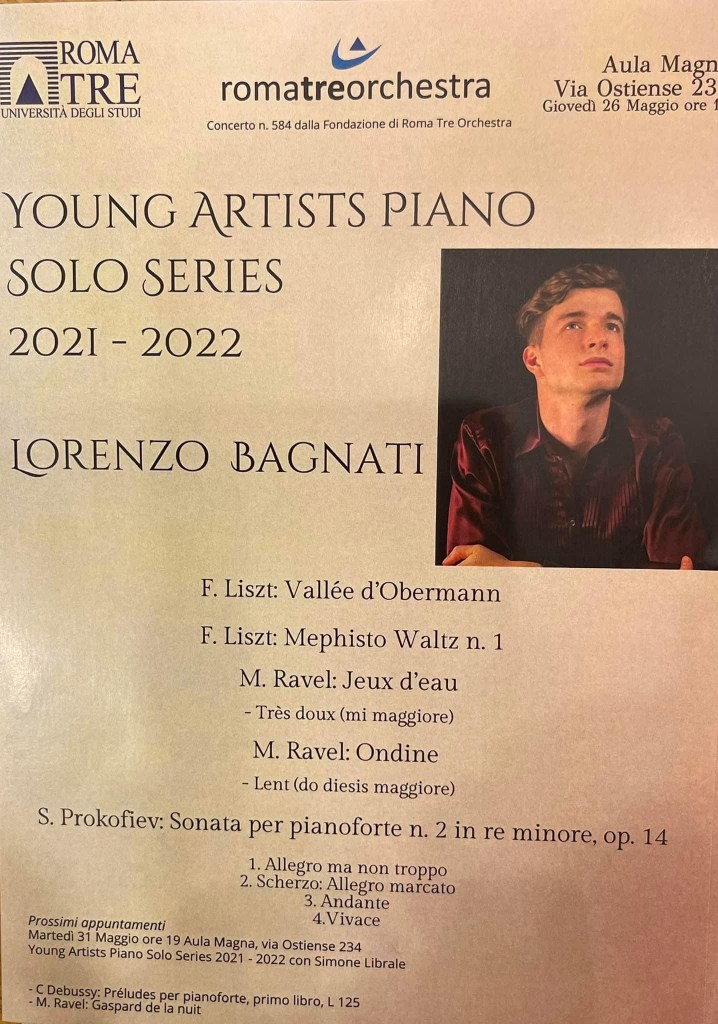
Lorenzo Bagnati a romantic virtuoso at Roma 3

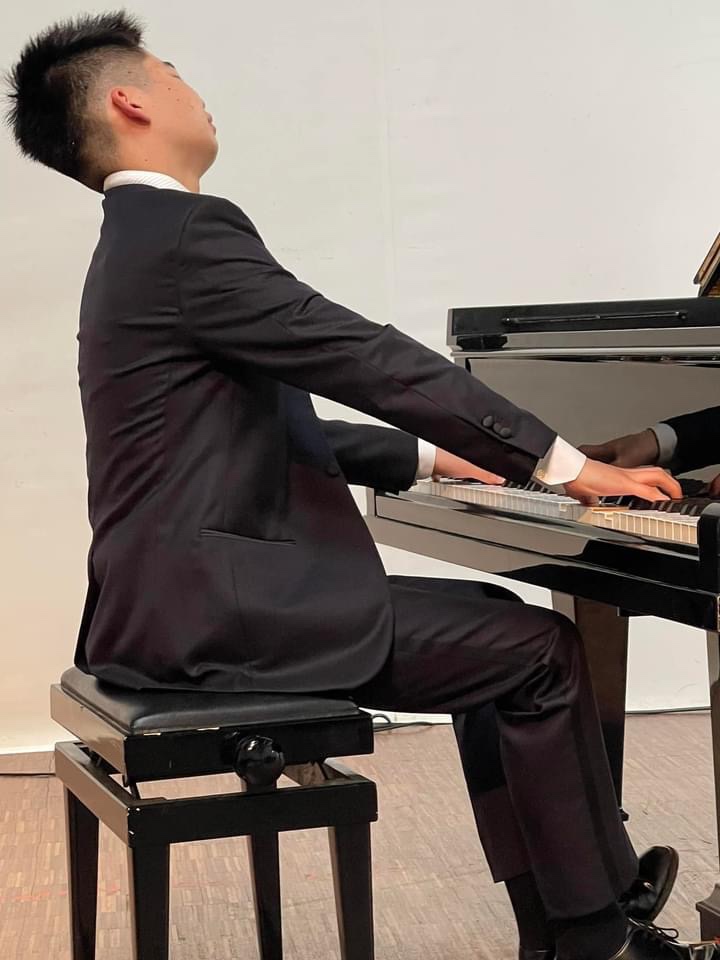
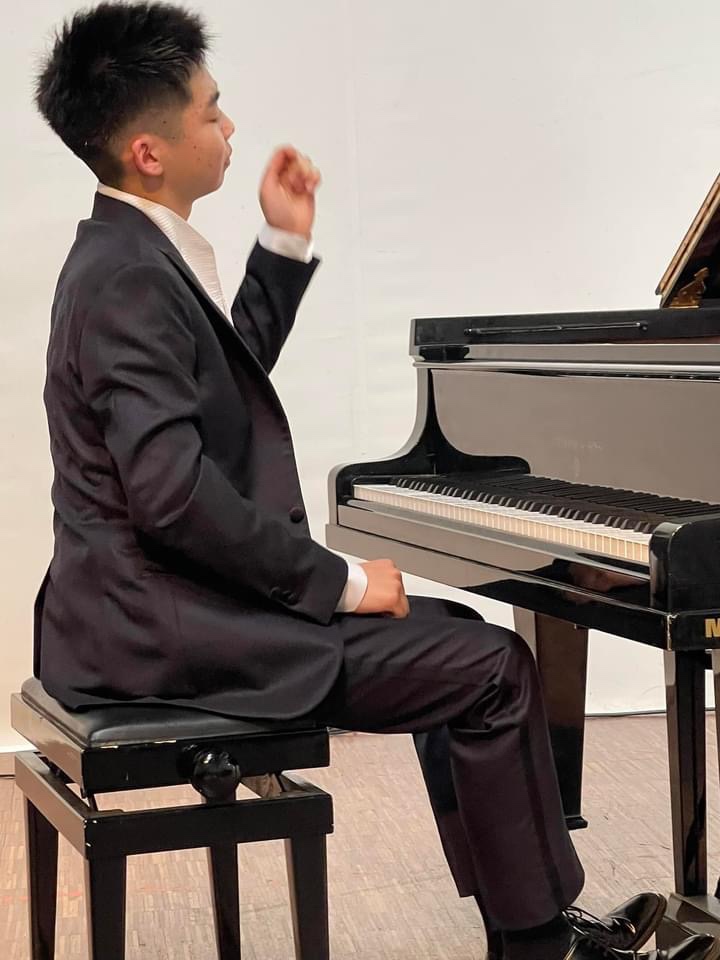
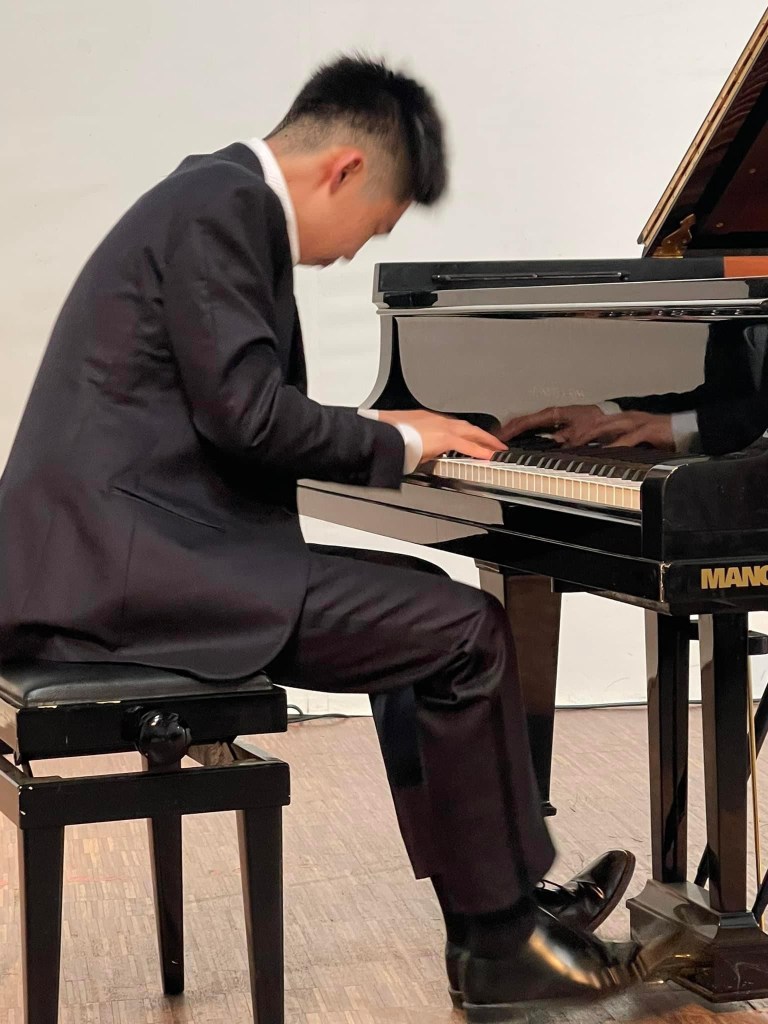
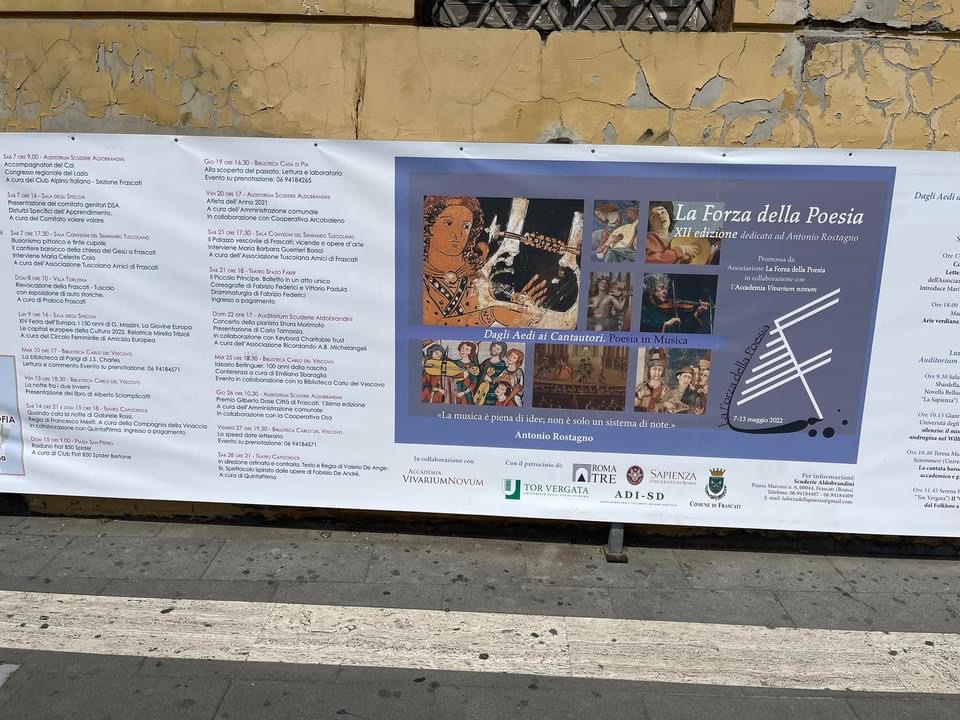
Another fine pianist to add to the remarkable series in which Valerio Vicari is giving an important stage in Rome.A space for young musicians where they can demonstrate their remarkable talent with a series of recitals in the Aula Magna of Roma 3 or in the historic Teatro di Villa Torlonia.
There is a school of piano playing in Italy that is revealing itself to be quite unique.Roma 3 is underlining this thanks to Roberto Pujia ,President and his ex student Valerio Vicari ,Artistic director.Also to the Vice President Piero Rattalino,who has spent a lifetime dedicated to the study of pianos and pianists past and present .A formidable team indeed!Pianists in Italy now with the essential early training that we used to think they could only receive in the East.
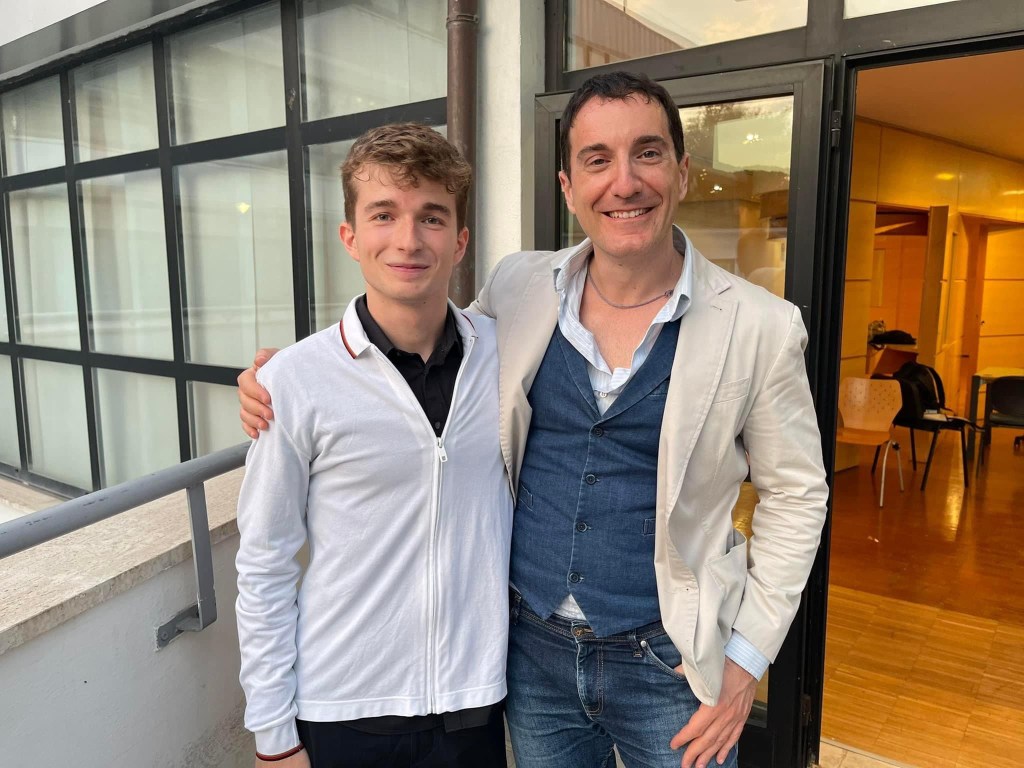
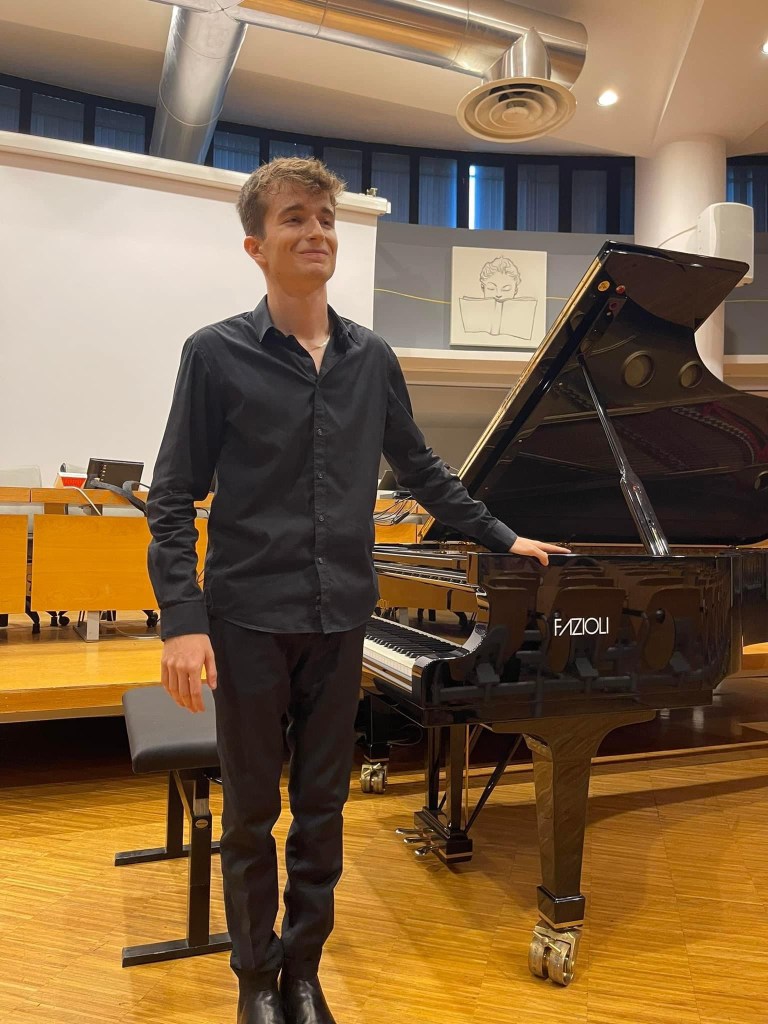
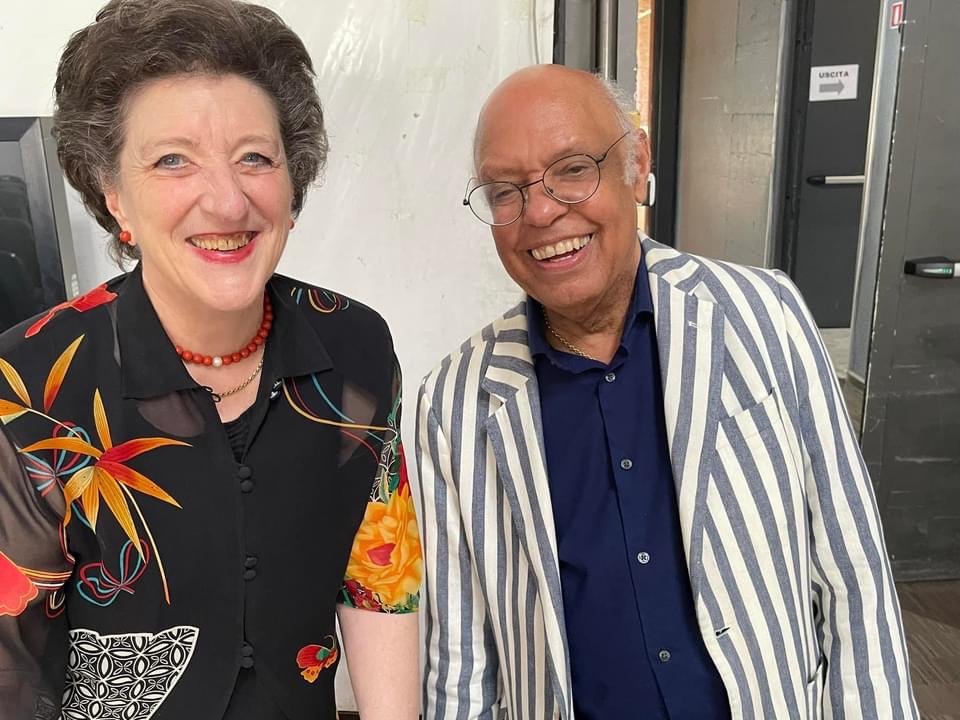
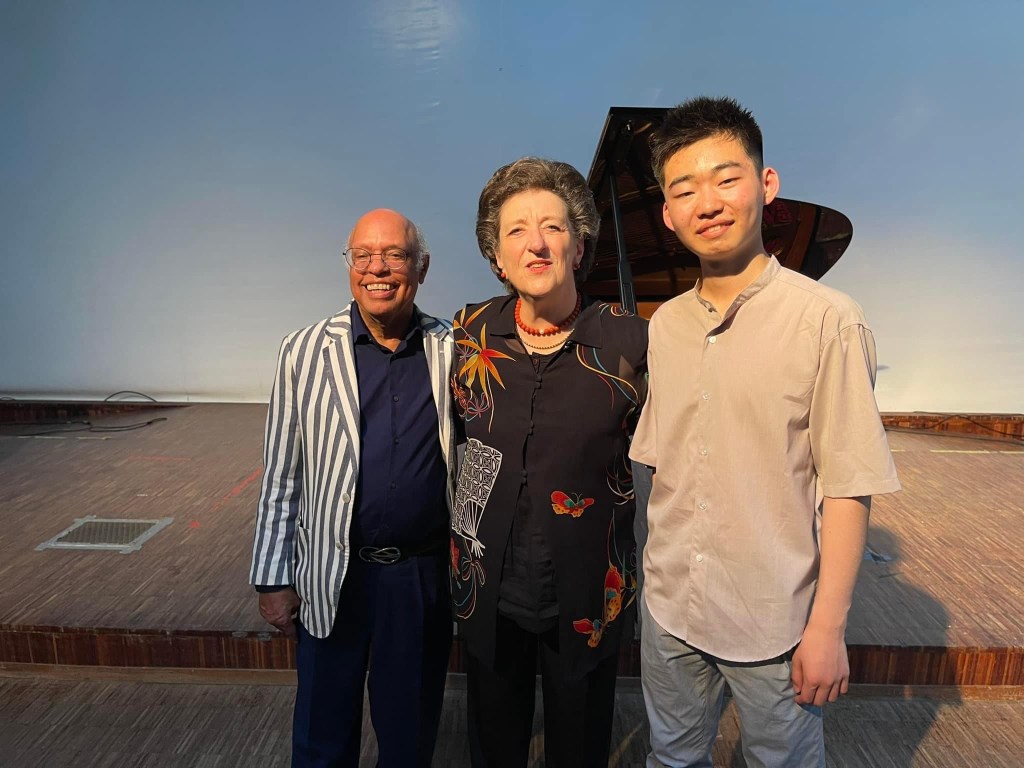
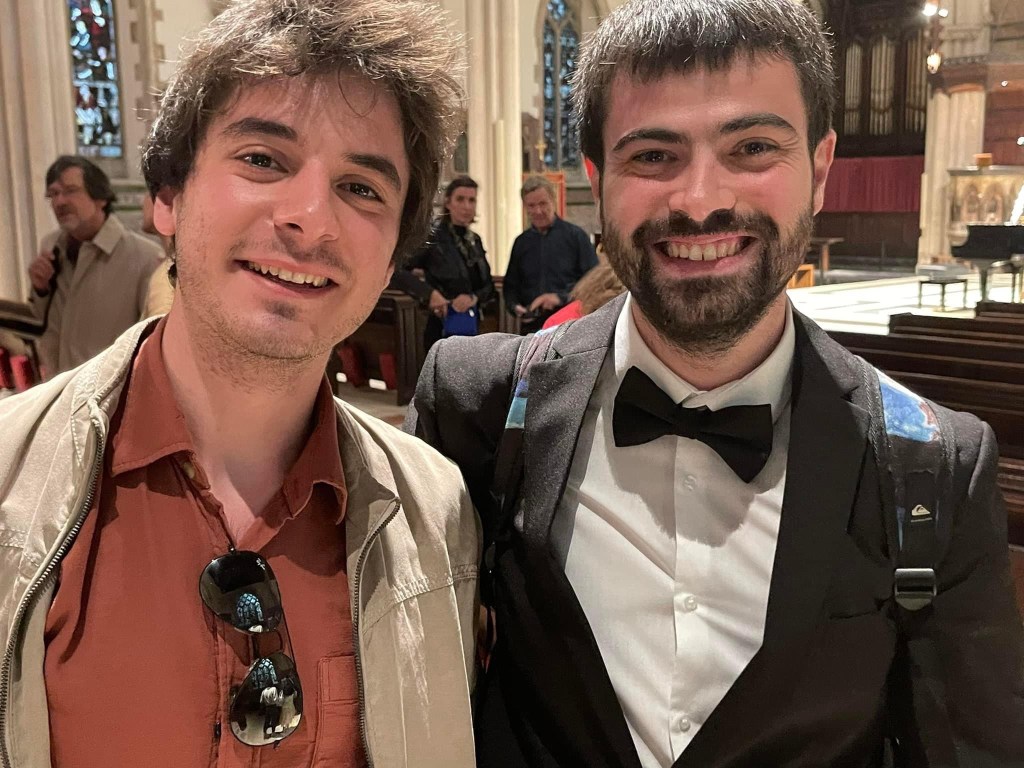
Valerio Vicari with Lorenzo Bagnati


I was very interested to hear Lorenzo Bagnati today especially as he is studying with the remarkable Epifanio Comis in Catania.
We had already heard another of his remarkable students this season: Giovanni Bertolazzi who with his performance of the two Liszt Sonatas in Villa Torlonia revealed himself to be a great artist on the crest of an important career.
https://christopheraxworthymusiccommentary.com/2022/01/17/giovanni-bertolazzi-in-rome-liszt-is-alive-and-well-at-teatro-di-villa-torlonia/
So I was enticed by an unusually interesting programme today to the Aula Magna of Roma 3 orchestra.
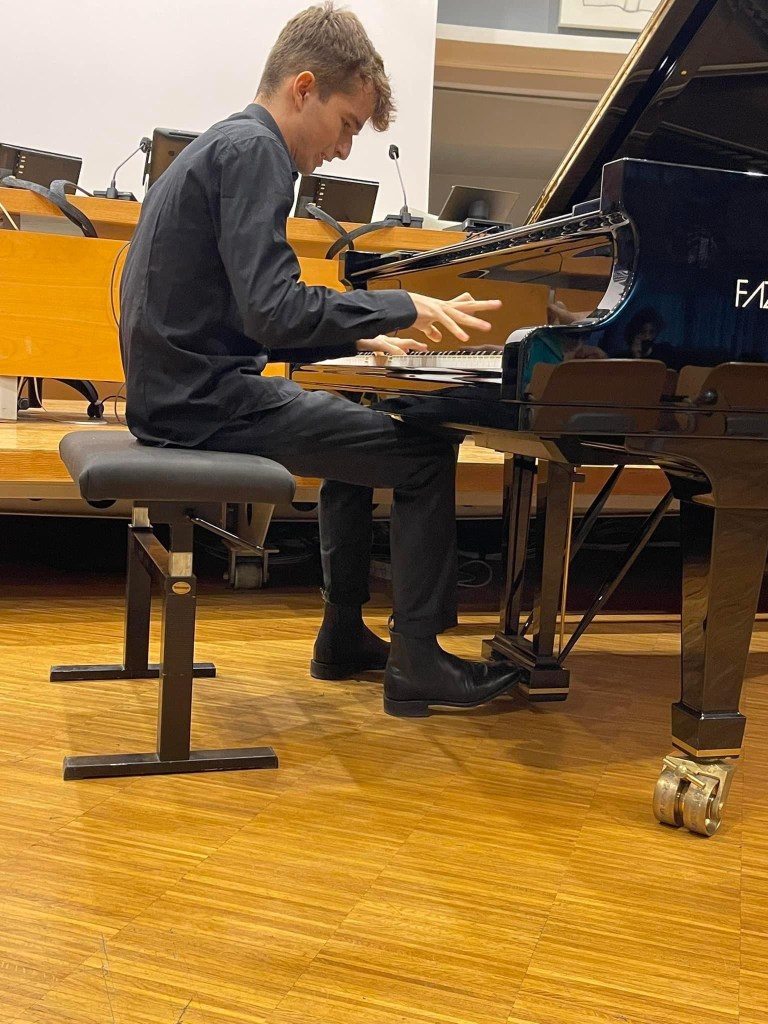

Starting with the beautiful Vallée d’Obermann that since Horowitz’s performances in the 70s has been accepted more readily into the piano repertoire (together with the Rachmaninov second sonata that since that astonishing Horowitz performance in his same Indian summer has now become even over exposed!)
There was great beauty from the very first notes of the haunting opening of this remarkable tone poem from Liszt’s years of pilgrimage.
Vallée d’Obermann is a large-scale character piece of Années de Pèlerinage : Suisse.It was published in 1842 and inspired by the landscape and literary works that Liszt and Countess Marie d’Agoult read whilst travelling to Switzerland. Its musical content is closely related to the novel Obermann by French writer Étienne Pivert de Senancour. Liszt quoted the Letter 63 from the novel as the preface of Vallée d’Obermann.
A letter with the great question of the romantic era :’What do I want?what am I?what may I demand of nature ?All cause is invisible ,all effect misleading ;every form changes ,all time runs it’s course ….I feel ,I exist only to exhaust myself in untameable desires,to drink deep of the allurement of a fantastic world,only to be finally vanquished by its sensuous illusion ‘
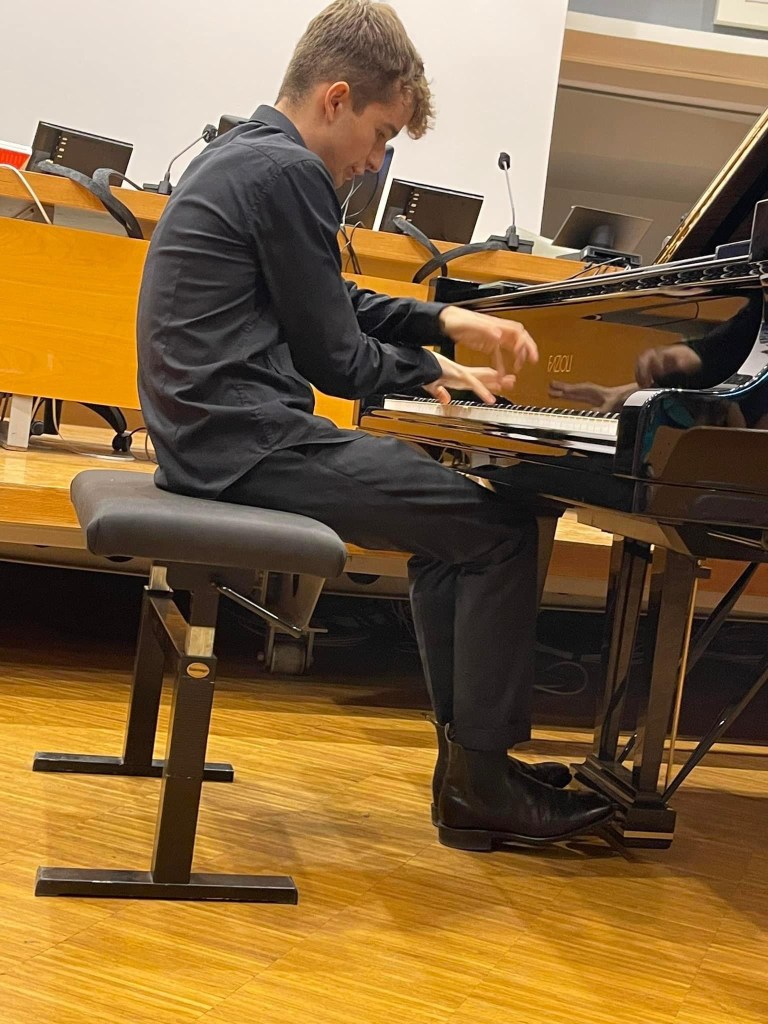
From the beauty of the tenor melody Lorenzo passed to the haunting reply in the treble of subtle crystalline purity.The great recitativo that follows showed off all the technical command of this young virtuoso but soon dissolved into the heart rending ‘Lento’ that Liszt develops via a crescendo of ever more transcendentally demanding outpourings of romantic fervour.
Octaves thrown off with astonishing ease by this young poet but not always with the sumptuous full sound of Philadelphian richness and grandeur that is the culmination of this passionate fervour as he brought this great tone poem to an exhilarating end with its rhetorical final gasping statement.
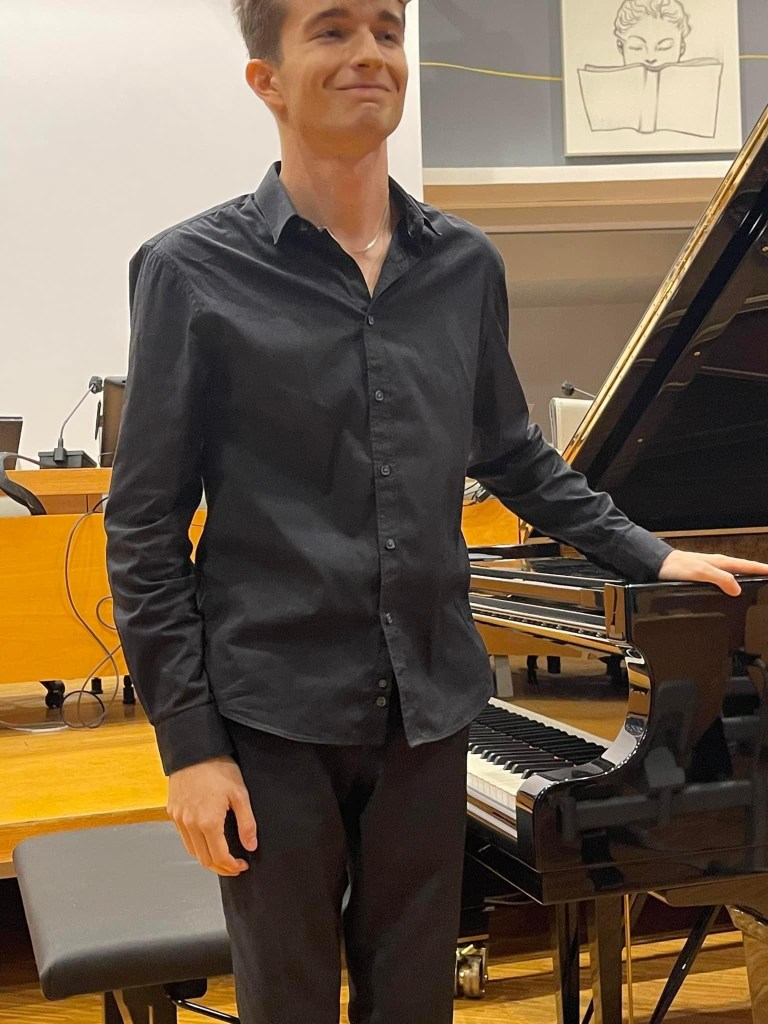

Lorenzo’s passionate romantic soul must now try to shape the sounds like a sculptor rather than a pianist.The shape of the hand and arm should be in harmony with the music he is passionately extolling.A young man with a fearless technical command who needs now to sit back and listen to the great canvas he is so passionately depicting – a hard lesson that will come as his interpretations gain in maturity.
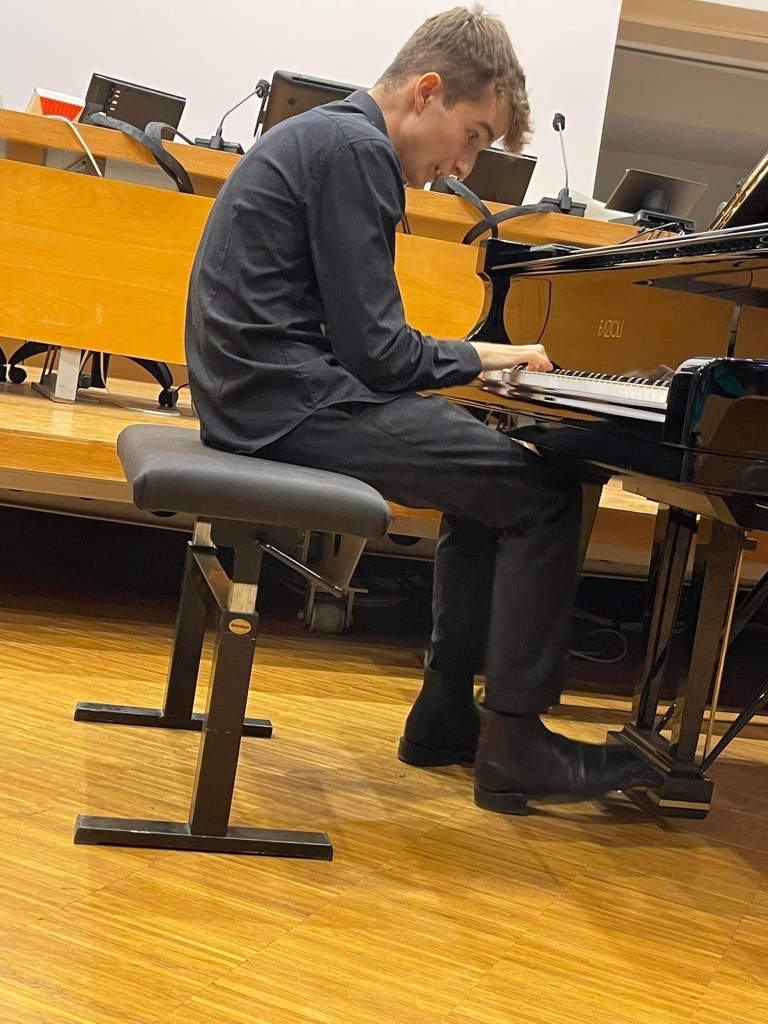
His performance of the Mephisto waltz n.1 was programmed remarkably at the beginning of his recital and again showed off his passionate romantic temperament and fearless technical command but sacrificing the sumptuously rich sonority of a really ‘Grand’ piano.
Of course the magnificent Fazioli that had been especially hired for this series of concerts is well known for its bright clear sounds that suit so well the baroque keyboard works and the subtle counterpoints of Chopin.
But as Louis Lortie publically exclaimed,after performances of the Brahms F minor and Schubert G major Sonatas on a Bosendorfer piano in London.The great Romantic works of Brahms,Schubert or Liszt one can only really find their rich velvet soul on a German piano of great pedigree rather than on the too honest Fazioli sound.That was very sincerely expressed in the programme in London explaining why a Fazioli artist played Brahms snd Schubert on a Bosendorfer piano in the first half and Chopin on Fazioli in the second !
Giovanni Bertolazzi with his immovable artistic integrity insisted on a Steinway D for his remarkably beautiful Liszt performances even offering to pay for the piano himself but like Lortie could not compromise his artistic integrity.
Richter on the other hand used to enjoy the voyage of discovery into the heart of any piano that was placed before him!
But Richter was indeed an Enigma as he toured the world in his last years with a Yamaha piano!
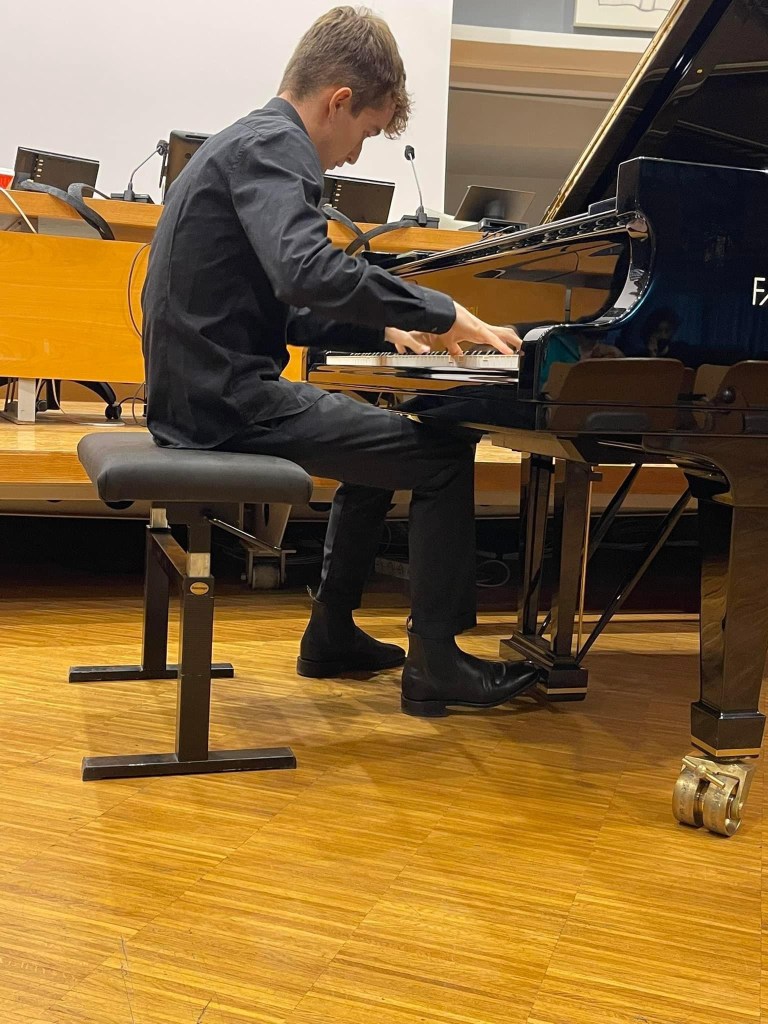
The choice of two works by Ravel opened up another world of sounds.Jeux d’eau and Ondine from Gaspard de La Nuit are full of the liquid sounds of water that Lorenzo allowed to flow from his fingers with such ease.The luminous beauty of Jeux d’eau led to final magical sounds where the melodic line floats on cascades of delicate filigree notes .They were the same sounds that the water nymph ‘Ondine’ was to find as she weaved her way so magically in and out of the sprays of water in the delicate springs.Building to a climax of transcendental technical difficulty where Lorenzo even allowed the melodic line to resound clearly but still with overwhelming passion.Dying away to a mere whisper as the nymph says her delicate farewell that Ravel marks to be bathed in pedal.It was interesting to note how Lorenzo held the deeps bass D whilst he allowed Ondine her final delicate farewell without being submerged.Suddenly overwhelmed by an avalanche of water in a cadenza of astonishing bravura and as the waters calmed Ravel indicates the now ‘pianississimo’ waves are to be played ‘bien égal de sonorité’ and ‘sans ralentir’.The water continues disappearing on high like at the end of ‘Jeux d’eau’ just waiting for an artist like Lorenzo to bring Ravels magic water world into focus again.
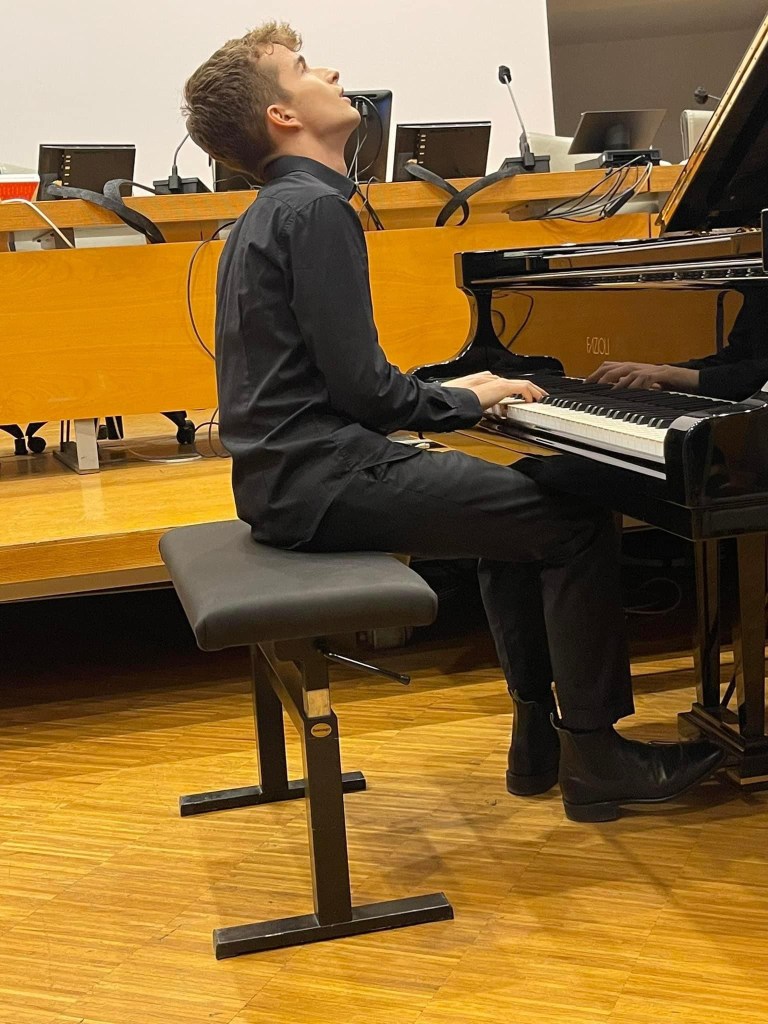
Prokofiev’s early second sonata is rarely heard these days in the concert hall replaced as these early works are by the later ‘War’ sonatas.It was refreshing to hear the energy and rhythmic elan this young man brought to the four movements.There was a kaleidoscope of ravishing colours too and if his temperament sometimes overwhelmed the sound it was his fearless youthful exuberance that brought this work vividly to life.In his enthusiasm he sometimes exchanged clarity for a more overall excitement and a little less pedal would have shown us the remarkable technical assurance of Prokofiev the young virtuoso.

However it brought the concert to an exhilarating end with my neighbour ready to give him full marks on the voting card that the season ticket public are encouraged to complete.The audience winner will be rewarded with a chance to play with Roma 3’s splendid Orchestra that Valerio has insisted on for the past 16 years.The Orchestra of Roma 3 give young music graduates a chance to have orchestral experience for their future careers in music.
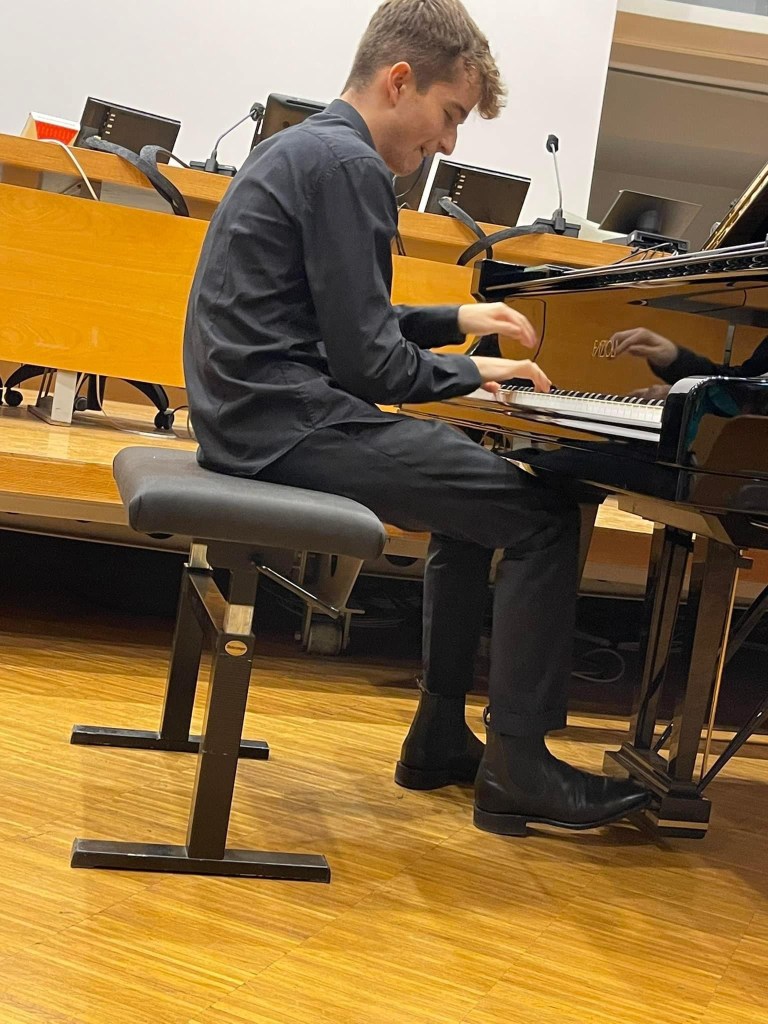
By great request Lorenzo gave us two eclectic encores that had me baffled until I did a bit of research.A sumptuous performance of a piece from Ravel’s early suite of four short pieces ‘a la manière de….’.In the manner of Chabrier is subtitled “ paraphrase on an air of Gounod”. It is indeed a paraphrase of a paraphrase , the pastiche of a Chabrier who himself would pastiche Gounod ,the aria being the romance of Siébel, from the second act of Faust.Written in 1913 and first performed in Paris at the Salle Pleyel by Alfredo Casella.It was Casella who had persuaded Ravel to follow in the footsteps of his own 1911 suite of six pieces .Casella had chosen:Wagner,Fauré,Brahms,Debussy,Strauss and Franck.Ravel on the other hand had chosen:Chabrier,Borodin,D’Indy and Ravel!A performance by Lorenzo of ravishing colours and subtle embellishments where his great romantic temperament had been held at bay as he listened so attentively to the beauty that was pouring from his delicate fingers.
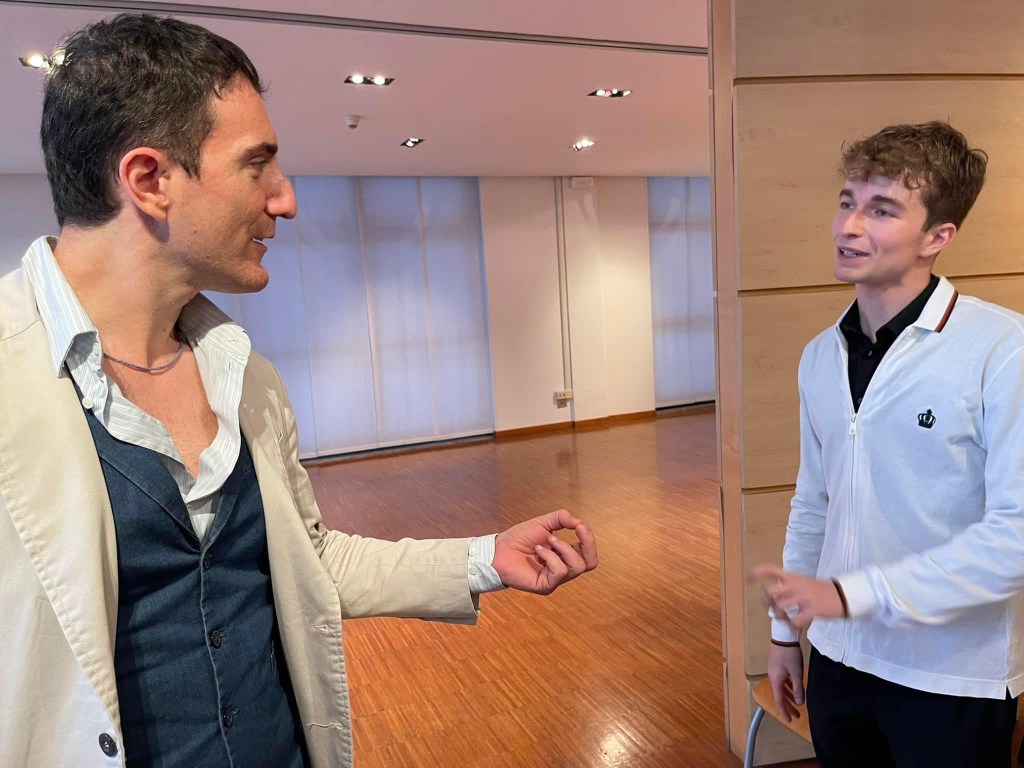
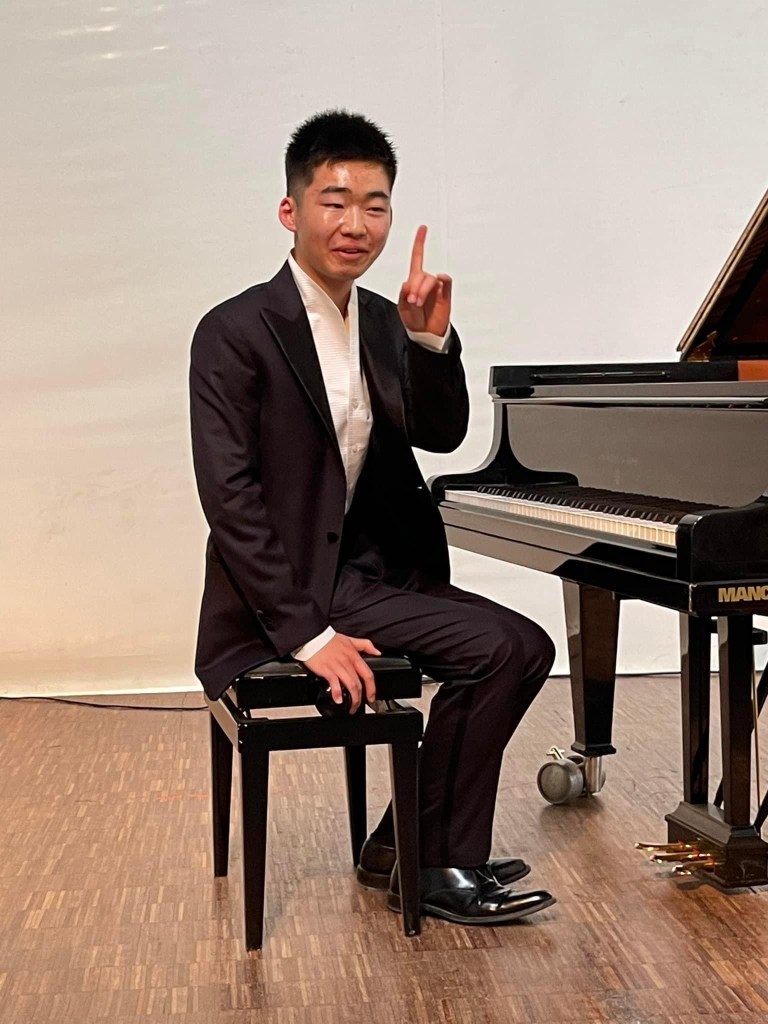
Discussing the encore that Valerio had recognised as being from Gounod’s Faust

The second encore was ‘Notturno’ the third piece from Sei pezzi per pianoforte (“Six pieces for piano”)written by Ottorino Respighi between 1903 and 1905. It is the most popular of the set and represents one of Respighi’s finest piano compositions.It is an eclectic work that has been described as “an exercise in musical moonlight and shadow”,and as having a distinctly Rachmaninovian style.Again some beautifully sensitive playing this time with the help of an ‘I pad’ which he only barely glanced at as he listened so carefully to the ravishing sounds.

A fascinating finish to a real voyage of discovery from this young romantic thinking musician .
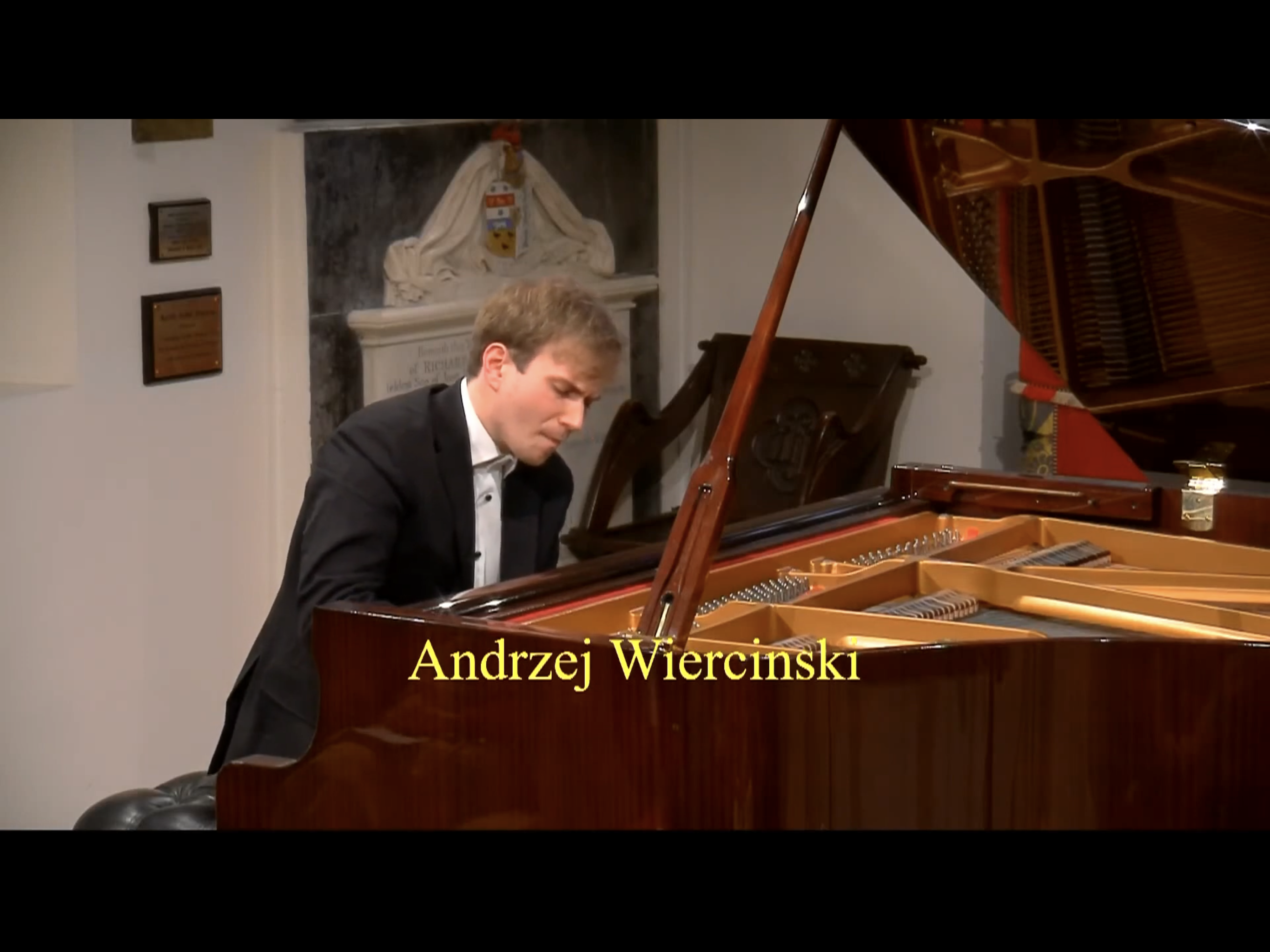
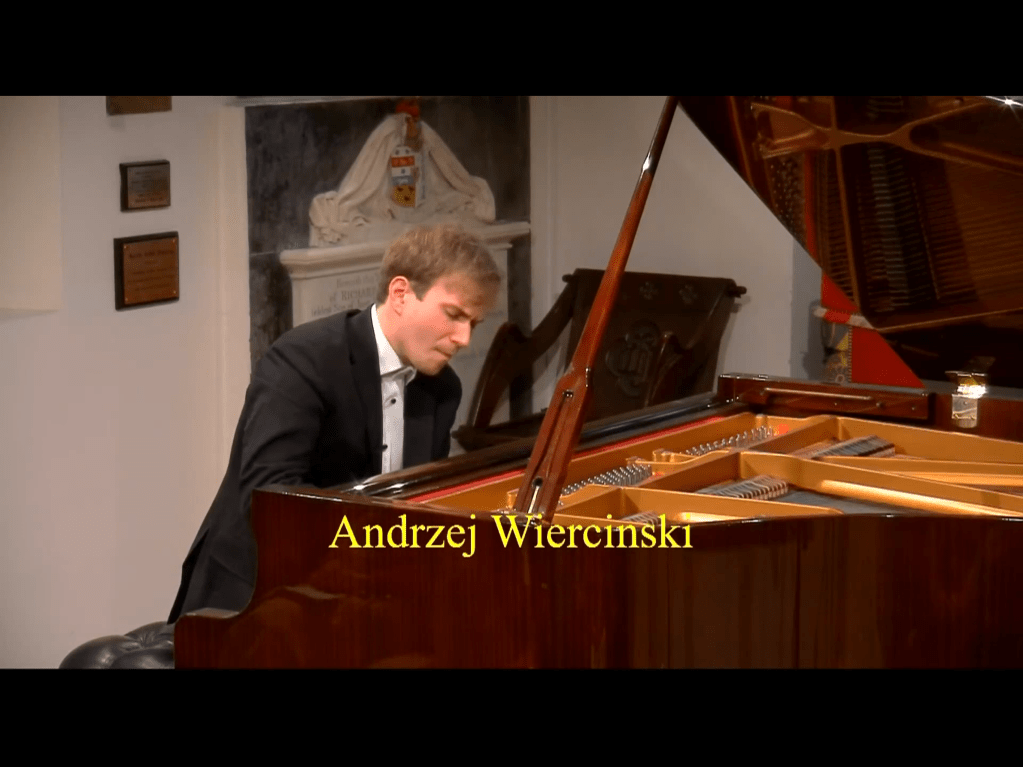
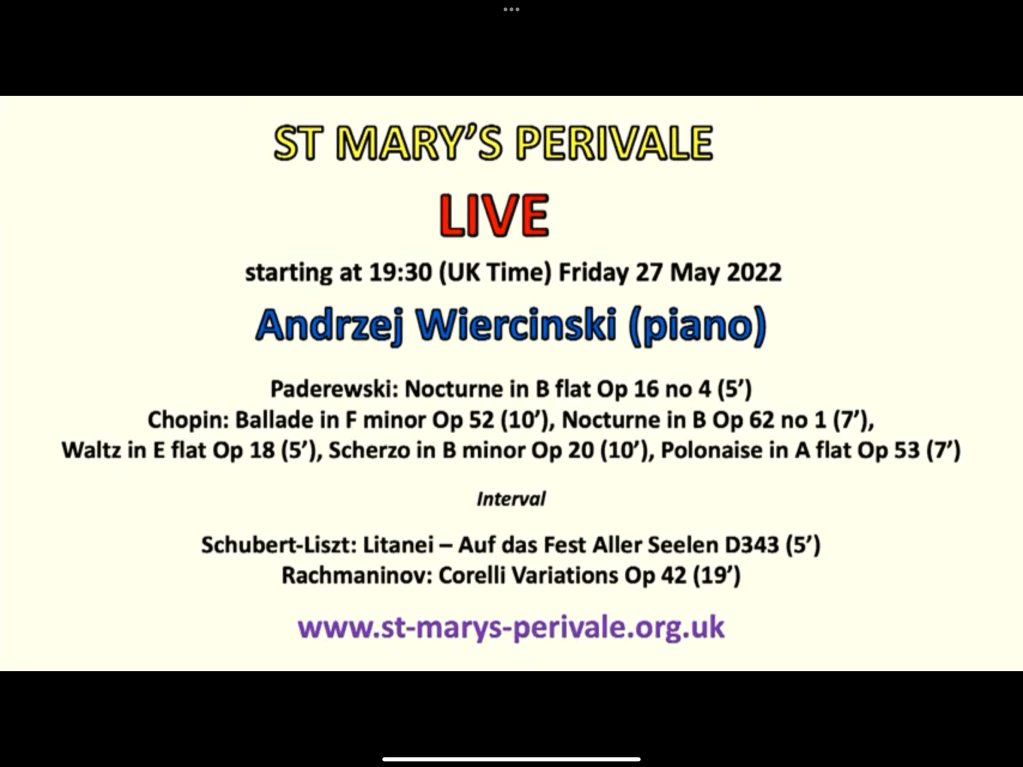
Andrzej Wiercinski at St Mary’s the making of a great artist

Friday 27 May 7.30 pm

https://youtube.com/watch?v=EnmF7klNEw8&feature=share

With this special evening concert I was unable to watch live but I was able to hear enough of the fourth ballade on my phone to realise that the young pianist I have heard many times in Perivale, also streamed from Poland has matured into an artist of quite considerable stature.I even confused him with his look alike brother ,Krzysztof,also a very talented pianist streamed from Warsaw :https://christopheraxworthymusiccommentary.com/2021/04/21/krzysztof-wiercinski-in-warsaw/. Unfortunately in Italy we are an hour ahead of the UK so an 8.30 start coincides with so many other family activities but I had heard enough to whet my appetite to be able to listen just a few hours later.

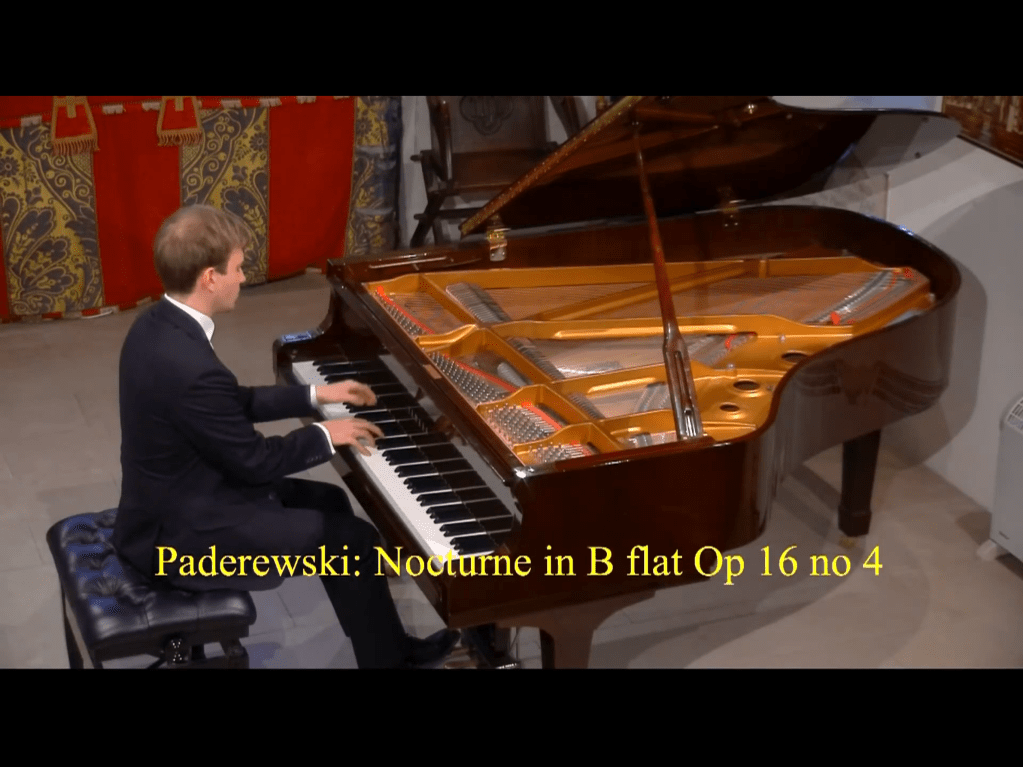
There was a great sense of style and ravishing colours in Paderewski’s much neglected Nocturne from his set of pieces op 16.It was immediately apparent his authority and personality as he shaped this simple piece with such flexibility and a ravishing sense of colour and style.It was this that was to be the hallmark of all he did during the recital as he imbued each work with such character finding subtle colours within the counterpoints that he just allowed to glow for a moment without disturbing the overall flow of the music.It is interesting to note that Paderewski was born to Polish parents in the village of Kuryłówka that is now part of the Khmilnyk raion of Vinnytsia Oblast in Ukraine.After three years of study with Leschetizky Paderewski made his concert debut in Vienna in 1887 and soon gained great popularity in Paris in 1889 and in London in 1890.Audiences responded to his brilliant playing with almost extravagant displays of admiration, and Paderewski also gained access to the halls of power.In 1891, Paderewski repeated his triumphs on an American tour where he toured more than 30 times for the next five decades, and it would become his second home.In 1919, in the newly independent Poland, Paderewski was appointed Prime Minister of Poland and the Minister of Foreign Affairs of Poland (January 1919 – December 1919). He and Dmowski represented Poland at the 1919 Paris Peace Conference and dealt with issues regarding territorial claims and minority rights.He signed the Treaty of Versailles which recognized Polish independence won after World War I.This beautiful piece is the fourth in his set of seven pieces op 16 that he would obviously have used on his concert tours.It was published in 1892 in New York.

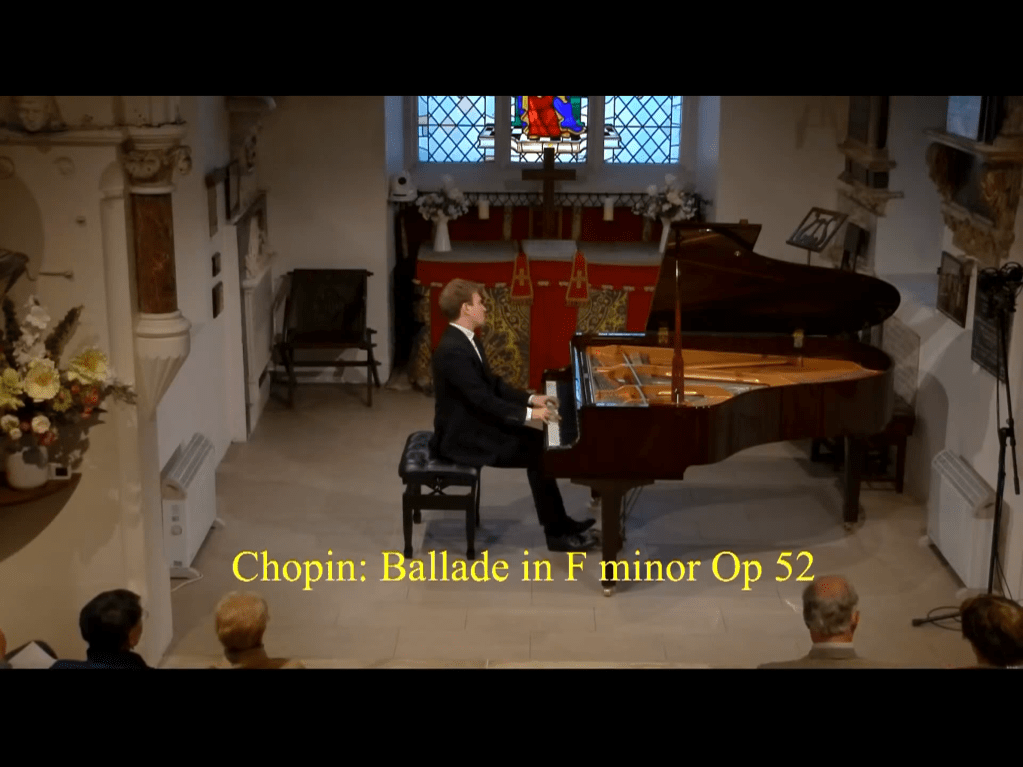
The fourth Ballade by Chopin, together with the Schumann Fantasie and Liszt B minor Sonata, is considered to be the pinnacle of the Romantic repertoire.Andrzej from the very opening with his sense of freedom and style illuminated the introduction with some magical colouring.It was this flexibility and great personality that illuminated this work as only a great artist can do.A personality that allows the music to speak without interrupting or disturbing what the composer had actually written on the page.It was a true lesson of how a work can be brought to life and bring such new meaning to a well worn classic.Today Andrzej brought this work vividly to life as he allowed the music to flow with such ease and naturalness.There was great power too as he brought the music to its climax adding just a very subtle bass D flat at the beginning of the tumultuous build up.The coda too was given great shape with a technical authority that allowed him to mould this often maltreated coda into the exciting culmination of one of Chopin’s greatest journeys.There was great beauty in the first variation where the melodic line can so often be submerged by the ever more insistent counterpoints as it builds up to the first full climax.It was a climax though that was but a short stop on the long journey that Andrzej could see so clearly.It was but a bridge to the second subject that was played with beauty and a ravishing sense of balance as it brought us to the return of the opening introduction ‘avec un sentiment de regret’ according to Cortot.It was the same vision that Andrzej showed us with the magical cadenza before the almost Bachian counterpoints that Chopin adds to his simple theme before the beautiful embellishments decorating the theme on its way to the lead up to the final explosion of romantic fervour.

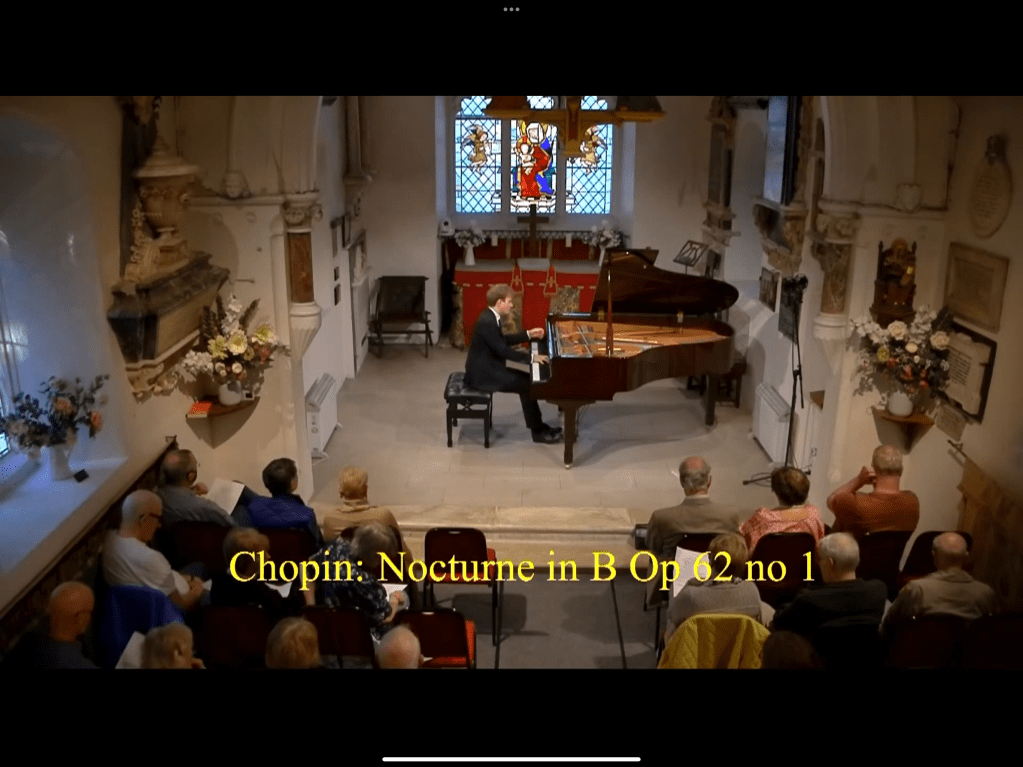
The late nocturne op 62 n.1 was full of ravishing sounds with his superb sense of balance that allowed the melodic line to sing with such luminosity unimpeded by the intricate countermelodies which just added colour to the overall musical line.There were cascades of notes that seemed to flow so naturally from his hands and the trills that were just vibrations of sound as they wove their way around the melodic line.There was also a great sense of nostalgia as the nocturne gently weaved its way to the final bars with such exquisite sensibility .A deep added bass note just gave a final glow to this ravishing performance.

One had been aware too of Andrzej’s gentle circular movements almost as though swimming in water where there were no splashes but a constant movement out of which the music flowed so naturally.It was so refreshing to see how the beauty of sound was linked to the beauty of his movements as a painter might brush strokes to a canvas.

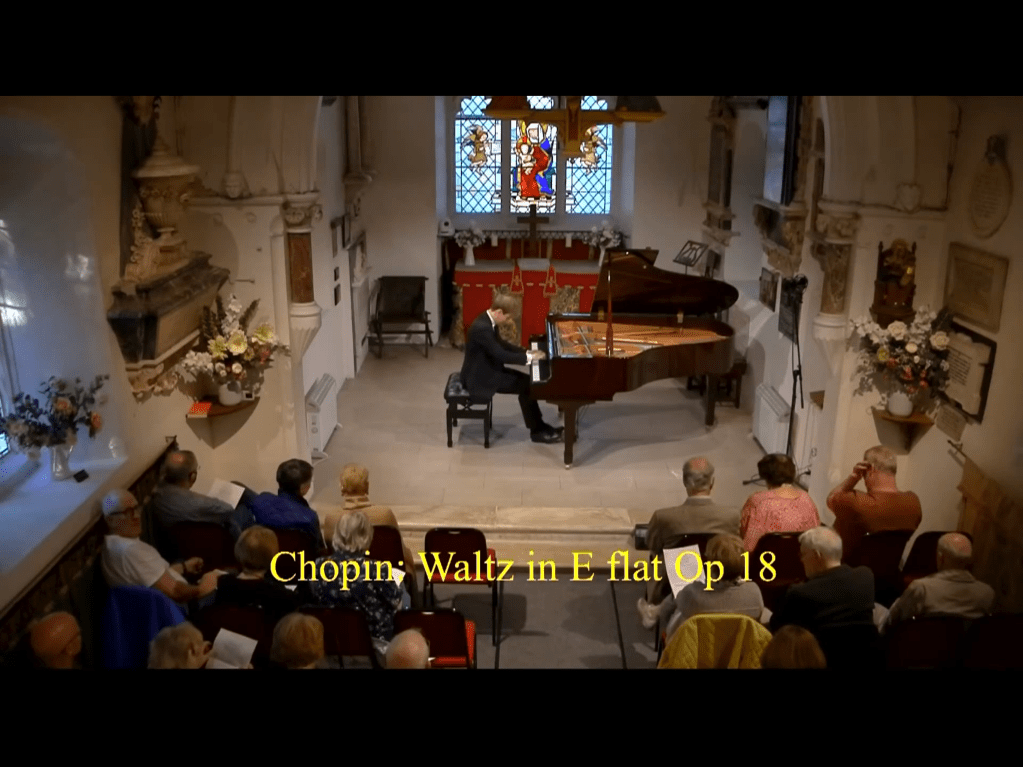
The first of Chopin’s waltzes is one of the most scintillating and technically demanding.Op 18 was also used for the ballet Les Sylphides a collection of Chopin’s most famous pieces.Grande Valse Brillante is just that ,with its irresistible sense of dance played with a clarity and sense of subtle rubato that I have not heard played with such style since the Sunday afternoon Chopin recitals by Jan Smeterlin and Stefan Askenase .The great sense of character that he brought to this waltz was of a born Chopin player.With impeccable good taste and a technical mastery whether it be the jeux perlé repeated notes,lines of acciaccaturas or the streams of seemless scales that poured from his hands like silver.The energy and exhilaration that he brought to the end I have only heard from his compatriot Artur Rubinstein.An aristocratic sense of style with the just amount of showmanship with pieces that the composer himself would have ravished and excited his audiences with,in the Parisian salons of the day.

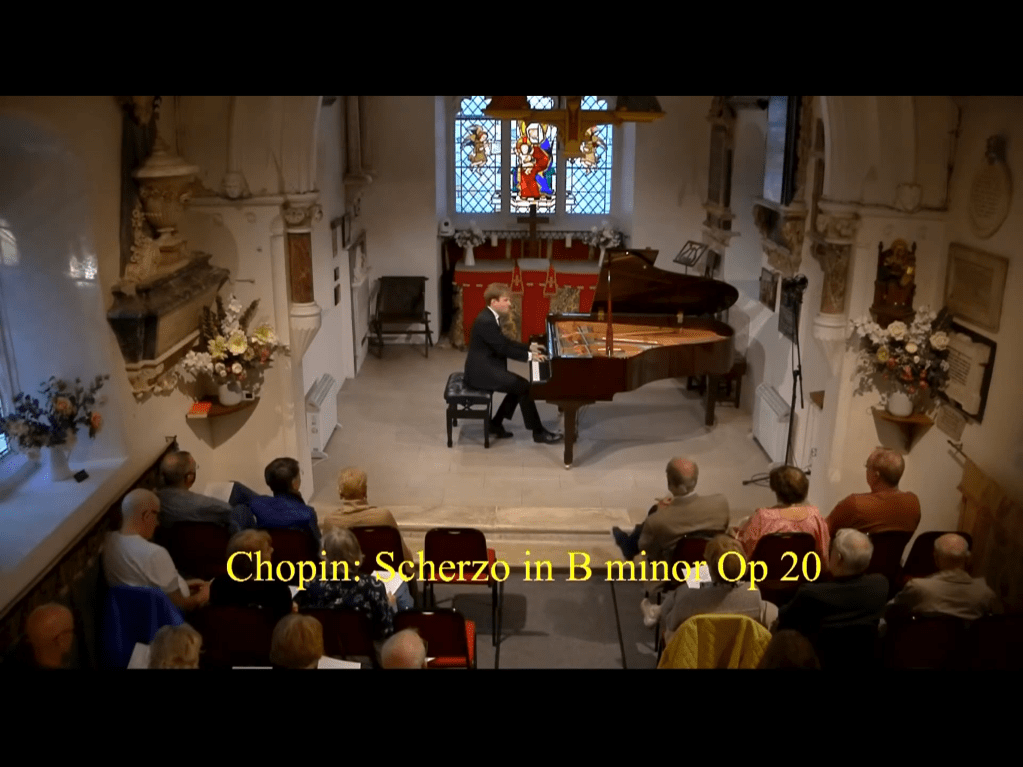
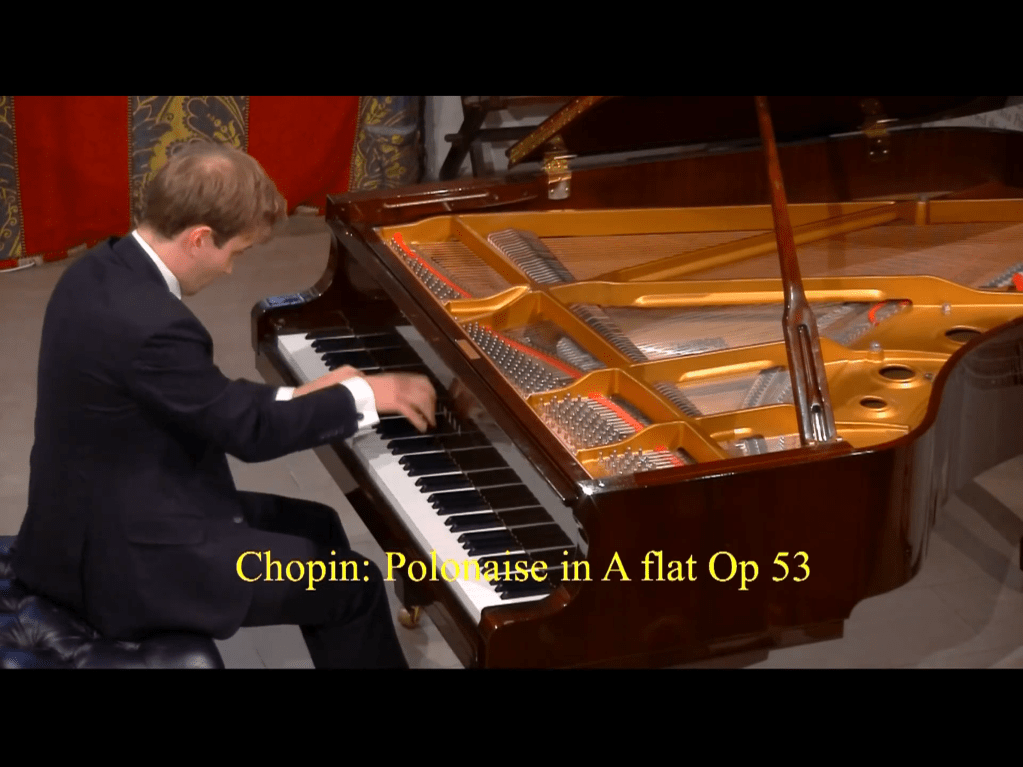
The Scherzo in B minor op 20 and the Polonaise op 53 are two of Chopin’s best known works.They both received remarkable performances free of any rhetoric but full of invention and colour allied to a transcendental control of the keyboard that allowed him to plunge into the opening flourishes of notes in the scherzo or attack at full speed the demonic octaves at the centre of the Polonaise.He gave such shape to the intricate web of notes in the scherzo and the Christmas song that Chopin quotes in the central section was played with enviably rich mellow sound.There was beauty in the Polonaise too as he allowed a respite to the galloping horses in the magical build up to the final heroic climax.Passion and control – authority and character were the outstanding features of these very fine performances

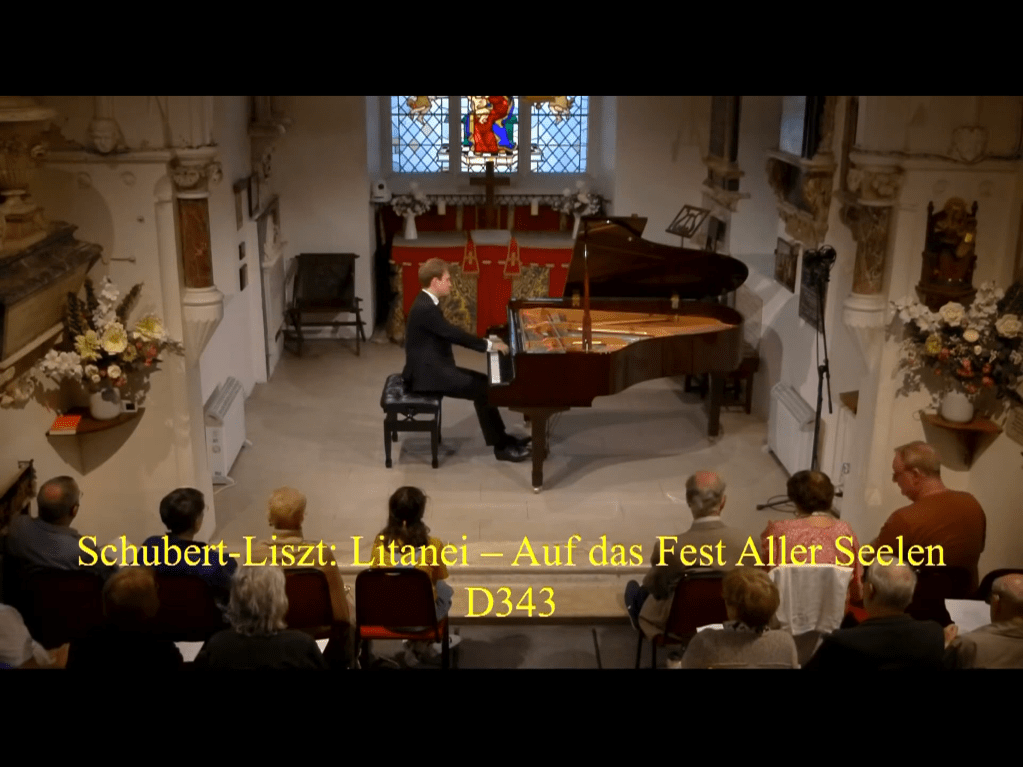
The beautiful Litanei by Schubert was given a ravishing performance in Liszt’s transcription ,where in just two pages he could create a religious stillness with a sense of balance and beauty of sound that was breathtaking.


Rachmaninov Corelli Variations Op 42

Rachmaninov’s Corelli variations were a ‘tour de force’ of technical brilliance and masterly control of sound.From the luminosity of the simple theme he was able to give such character to each of the variations.Even the sparkling cadenzas were shaped in such a musicianly way giving meaning to the notes that were just musical shapes of exquisite beauty and excitement.The tumultuous final octaves at the end were allowed to vibrate as the theme magically reappeared on a cloud of sound much as Bach’s Aria in the Goldberg variations returns after a momentous voyage of discovery.

A remarkable recital from a pianist that over these few years has matured into a artist of great stature.The little Mazurka op 24 n.2 was the perfect way of thanking his faithful public after his fifth performance at St Mary’s.We look forward to many more occasions of appreciating the great artistry of this young musician.

Andrzej Wierciński is a semi finalist of the XVIII International Fryderyk Chopin Piano Competition in Warsaw in 2021. Over the last decade Andrzej has earned an impressive string of awards at prestigious Polish and international piano competitions – most notably winning 1st Prizes at: the International F. Chopin Competition “Golden Ring” in Slovenia (2014), the International F. Chopin Competition in Budapest (2014), the International Neapolitan Masters Competition in Naples (2018), the First ViennaInternational Music Competition (2019), the International Piano Competition in Saint-Priest in France (2019) and the 46th Polish F. Chopin Competition in Warsaw. Those prizes have included many concert engagements abroad, golden medals and cooperation with recording labels in Europe and the Far East, as well as gaining for Andrzej an expanded following of listeners to his music. For example, during the visit to Japan in 2015 of the President of Poland (H. E. Bronisław Komorowski), Andrzej played a Chopin recital in Tokyo in the presence of Princess Masako Owada. In 2015 the KAWAI company invited him to play in Asia whilst in 2019 Andrzej performed a special recital for the Cobbe Collection Trust of historic instruments at Hatchlands Park in the UK, then playing on the 1845 Erard used by Thalberg. He has played concerts in most European countries – including several in the UK – as well as in Canada, Japan and Indonesia. He has performed at significant venues throughout Holland – Het Concertgebouw, and in Slovak Philharmonic and in Warsaw at the Łazienki Królewskie (Chopin’s statue). Andrzej has also collaborated with the best orchestras in the country, such as the National Philharmonic Orchestra and the Polish National Radio Symphony Orchestra.
In developing his music career Andrzej has taken part in international master courses conducted by eminent pedagogues such as Michel Beroff, Dmitri Alexeev, Akiko Ebi, Andrzej Jasiński, Lee Kum-Sing, Anna Malikova, Dang Thai Son. He has also benefited from invaluable advice and encouragement from Daniil Trifonov. Andrzej Wierciński holds Artistic Scholarships from the Sinfonia Varsovia Foundation, the Krystian Zimerman Scholarship and the YAMAHA Foundation. In 2016 he released his first CD (of works by Chopin, Schumann and Scarlatti).

Andrzej Wiercinski in Warsaw Sfera Sacrum Easter Festival

Andrzej Wiercinski in Poland from the ridiculous to the sublime

https://christopheraxworthymusiccommentary.com/2019/04/11/andrzej-wiercinski-at-st-marys-perivale-and-streamed-worldwide/

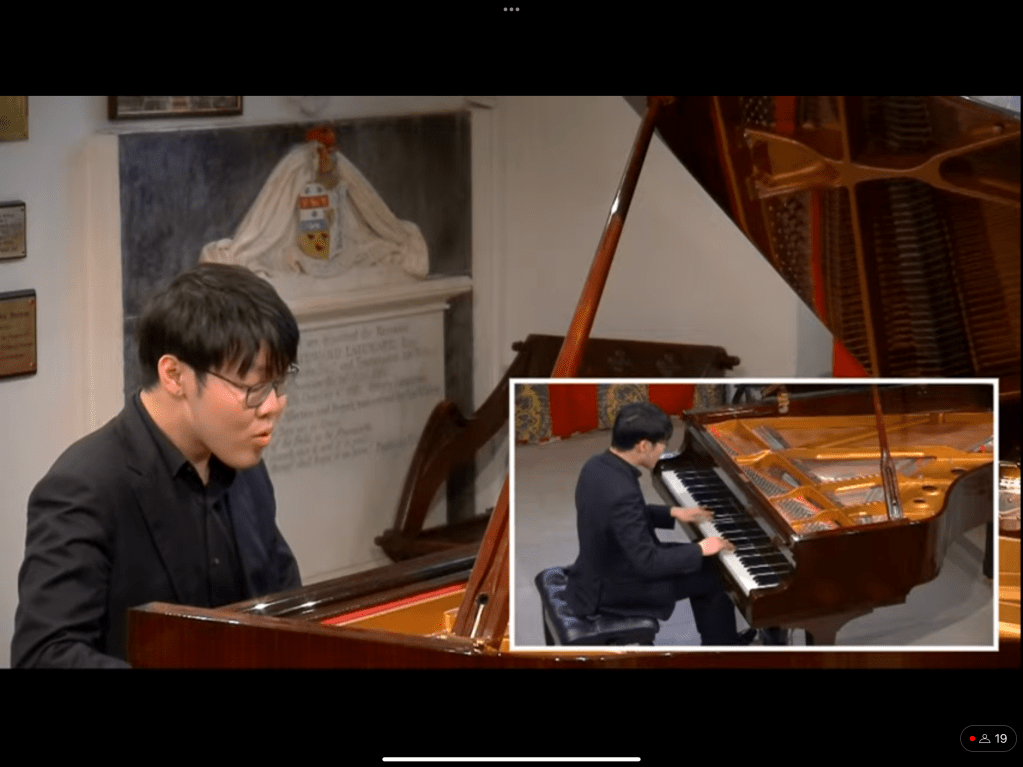
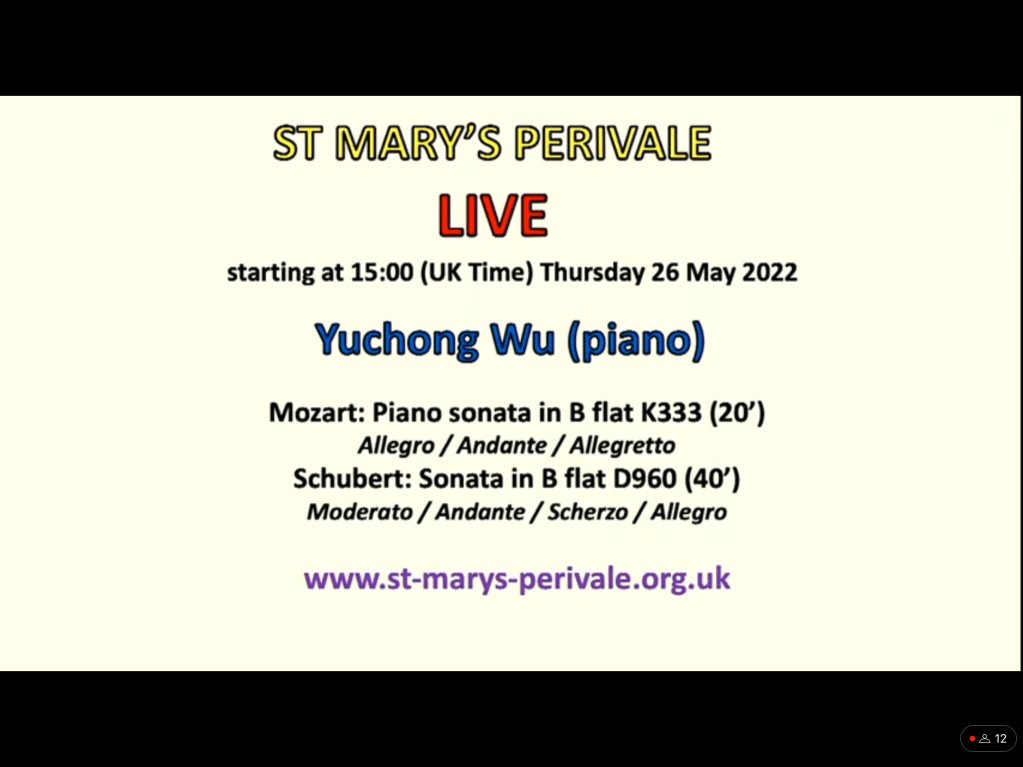
Yuchong Wu at St Mary’s The simplicity and beauty of a great artist

Thursday 26 May 3.00 pm

Dear Christopher,Have a look at Yuchong Wu yesterday. He arrived at 3.0 and had no warm up time. His Schubert was wonderful – fabulous slow movement. He dedicated his recital to Radu Lupu which was nice… https://christopheraxworthymusiccommentary.com/2019/02/09/the-indian-summer-of-a-giant-radu-lupu-plays-beethoven/

https://youtube.com/watch?v=6eUI26fBToQ&feature=share

and this is what I found…………

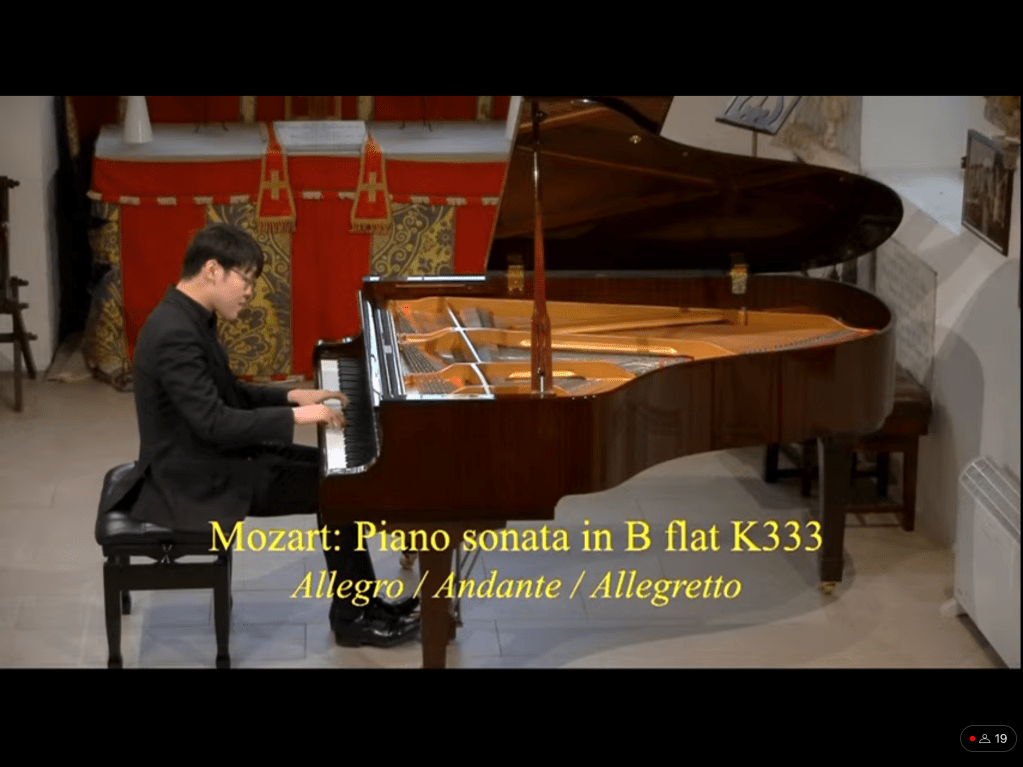
Some very refined playing of such simplicity and crystalline beauty but not that of an Ingrid Haebler but more like the luminous sound of Geza Anda.But there was also great temperament and phrasing of a subtle beauty without ever disturbing the mechanism that Mozart so miraculously sets in motion.Playing of great honesty without feeling the need to add embellishments that these days we are told are historically correct.There was absolute precision with sounds etched in gold played with a freshness and exhilaration.Drama too in the development but always in style where his temperament was inside the very notes he was playing with such humility.There was a smile of joyful recognition on his face as he returned to the opening theme in the recapitulation.Such beautifully distilled luminous sounds in the Andante with the clashing dissonances played with real astonishment and the ending of timeless beauty.The disarming simplicity of the Allegretto was so gracefully elegant but there was brilliance too as he arrived at the cadenza and then the almost nostalgic final phrases interrupted as Beethoven would have done with three no nonsense chords.This indeed was a real tribute to Radu Lupu who could play with the disarming simplicity of a child and disprove that Mozart is too difficult for adults but too easy for children.There are a few great artists who can reveal the naivety of a child with the experience of an adult.Yuchong like Radu Lupu is one of the chosen few.


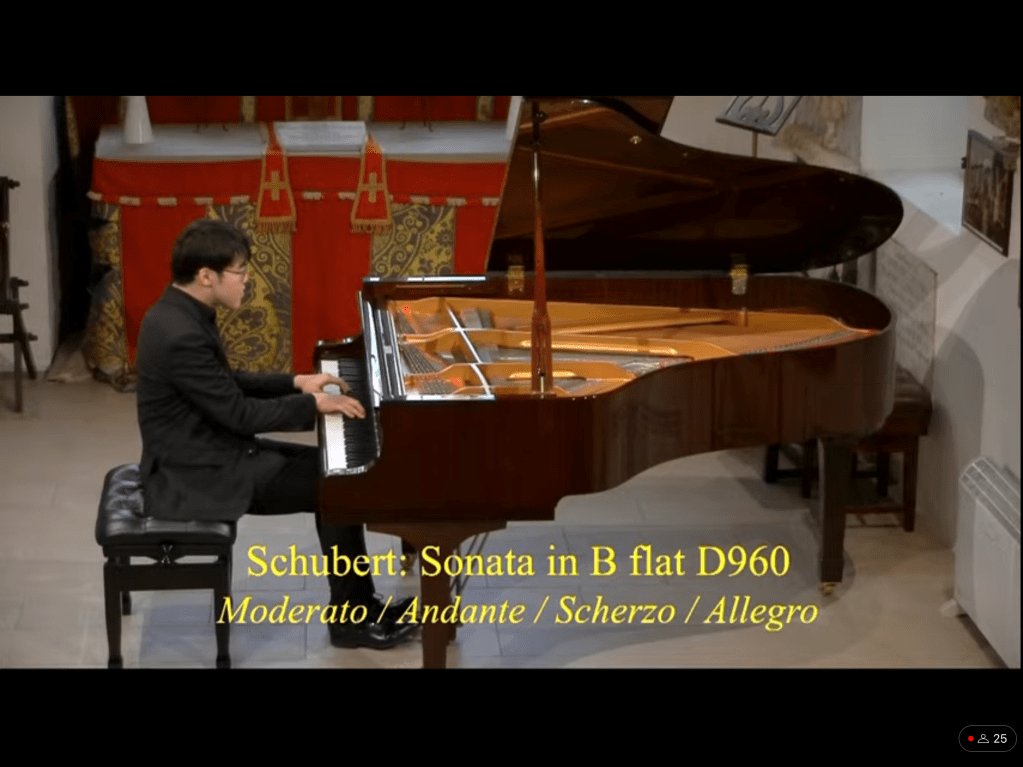
An opening of such subtle phrasing and sensibility to changing harmonies .A wondrous sense of balance where the duet between tenor and treble voices was magically judged.There was something very special about the transition from B flat to C sharp minor a whole new world opened up with just three chords played with a quite unique sensibility as we entered the development. A journey full of wondrous surprises and an attempt at a climax where the bubble explodes to reveal ever more wondrous visions of the world that was awaiting Schubert only a few months later.A hauntingly whispered coda prepared us for the marvels that were to await in the Andante sostenuto.Yuchong’s fingers blessed by the Gods indeed. The sheer beauty of the slow movement was sublime as not only the beauty of the melody but the delicacy of the embellishments had something of miraculous.The stillness and purity that this young Chinese pianist found came across even on the streaming and just proved that St Mary’s may be redundant as a church but it is certainly not deconsecrated!Miracles can still happen!The rich Brahmsian chorale was played with ravishing sound and the return to the opening melody with even more delicate embroidery was in Dr Mathers usually measured words ,simply sublime.What can one say after that about the scherzo that was played with refreshing vigour and delicacy as Schubert himself asks and a Trio where the sforzandi pianos were played so gently with none of the jack in the box accents that are usual and totally out of place.The wonderfully luminous call to order of the single note ‘G’ chiming out as the Allegro ma non troppo unfolds with such simple energy before Schubert bursts into his final miraculous melodic outpouring.Leading to moments of great drama and passion all played with such simple honest musicianship.A memorable performance from a young man who had been held up in traffic and just had time to sit at the piano and allow pure simple music to pour from his poetic soul.

Yuchong Wu was born into a musical family in China in 1995. He began playing the piano at the age of four and made his debut recital at the age of nine. In 2010 he entered The Juilliard School with a full scholarship, and continued his study toward a bachelor’s degree. During his time at Juilliard, he has been guided by Veda Kaplinsky, Matti Raekallio and Robert McDonald. Yuchong has also worked privately with Paul Badura Skoda, Leon Fleisher, Menahem Pressler, Robert Levin, and Murray Perahia. More recently he has been studying at the Royal Academy of Music. He is a laureate of numerous international competitions such as the Sixth Tchaikovsky International Youth Music Competition (2009, second prize), the Sendai International Piano Competition (2013, the special jury award and the audience prize), the Warsaw Chopin International Piano Competition (2015), the Leeds International Piano Competition (2018) and many others.

Shunta Morimoto – A colossus bestrides Villa Aldobrandini as it had when Liszt was in residence – complete review with Tokyo link to Schumann op 13

Shunta Morimoto at Villa Aldobrandini for Marylene Mouquets oassociation that is dedicated to her mentor Arturo Benedetti Michelangeli.

Marylene Mouquet with William Naboré


A programme that took even his teacher William Naboré by surprise as he sat at the piano after an hour of playing in which every note had been given a weight and an authority of rare concentration.
Offering as an encore Chopin’s Polonaise Fantasie of such architectural shape and power that was quite breathtaking.
He had evidently been thinking about the performance he gave in Japan a week ago and needed to share these new thoughts with an audience that were only too happy to add another great performance to the three on the programme.


Beethoven’s quasi una fantasia op 27 n 1 was played with even more authority than I remember from his recent performances.
A rhythmic drive and scrupulous attention to the composers indications were added now a refined sense of colour and shape that gave this neglected work the same power and musical integrity that Serkin used to bring to it.
The B flat minor Scherzo by Chopin was was remarkable for the revelatory contrasts he found in the score and the same clarity and precision that was a hallmark of all his interpretations.
The menace that he brought to the little triplet which is the very germ of this much maligned work.
But also the ravishing beauty of Chopin’s bel canto and the overwhelming power he brought to the left hand bass notes at key moments of passionate abandon. The excitement in the coda allied to a precision and fearless technical command was as breathtaking as I remember from Artur Rubinstein.


The beauty and transcendental command he brought to Schumann’s Etudes Symphoniques was indeed another revelation .
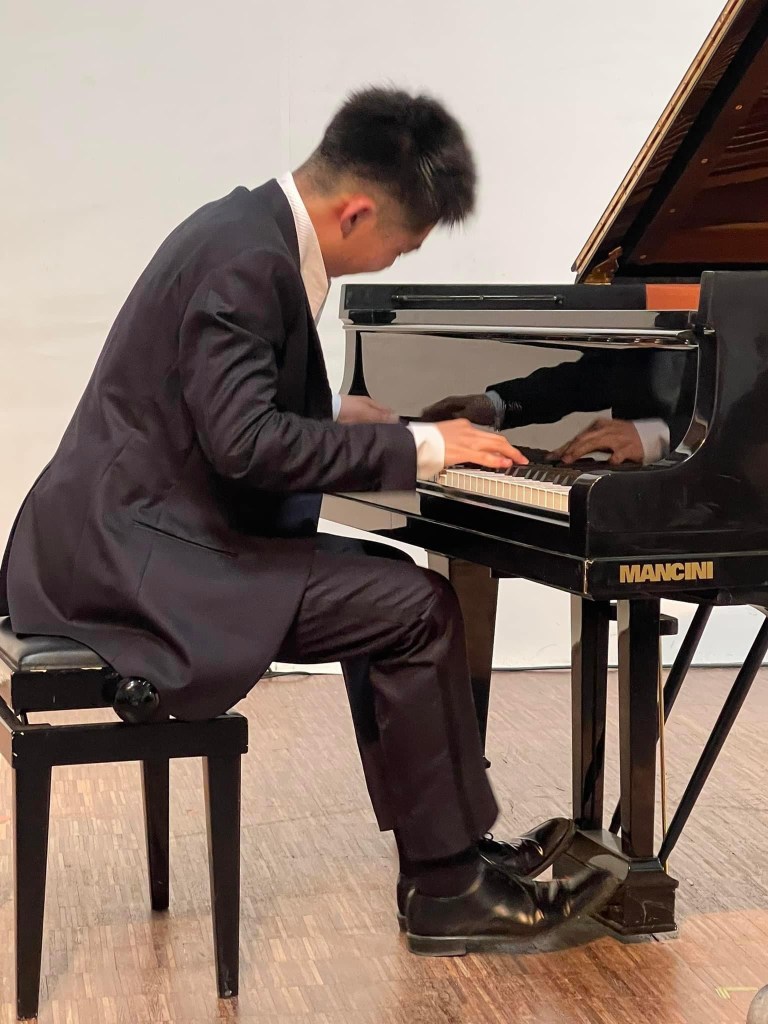
A work he had just added to his repertoire to play in Japan and very much a voyage of discovery as was clear from listening to his rehearsal before the concert.I was eavesdropping and recovering from a long journey that had taken me from Kew to Frascati in one extra long morning ( due to the time change).I was privileged to hear him searching for hidden colour and playing with the harmonies in a way that many renowned pianists do in public performances!This was a private view in which he was searching in his practicing for hidden secrets of structure as he followed every strand of the music playing with such ravishing beauty.Very quietly and with such concentration sometimes stopping almost meditating as he spoke to himself in private indulgences all of which would later add such colour and authority to his public performance .
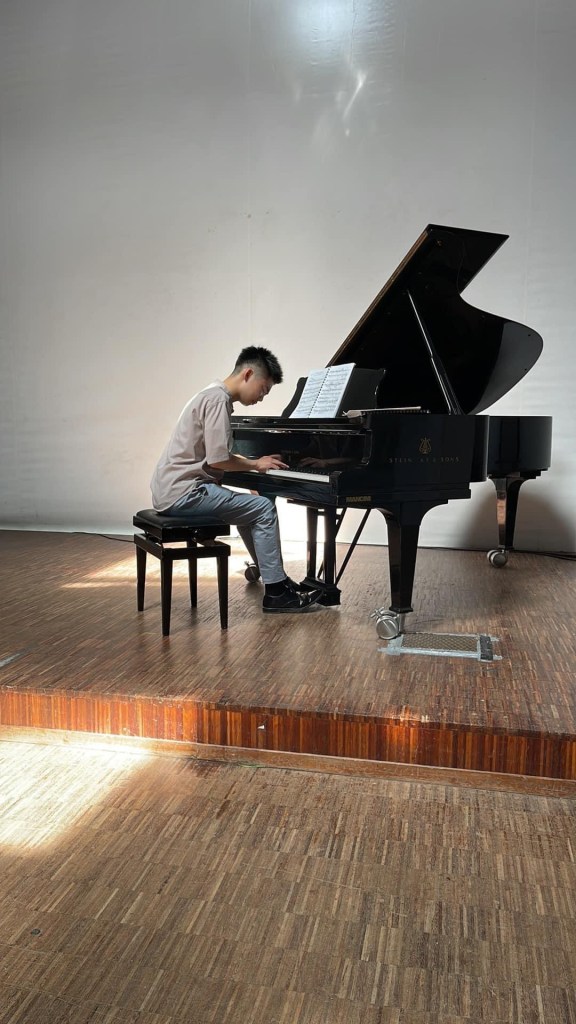

His sense of legato too in these sessions was of a transcendental command of the keyboard as he also played technically challenging passages slowly but with such care of the counterpoints and strands of melodic shape that the composer obviously discovered as he jotted down the notes in the moment of inspiration and technical mastery.
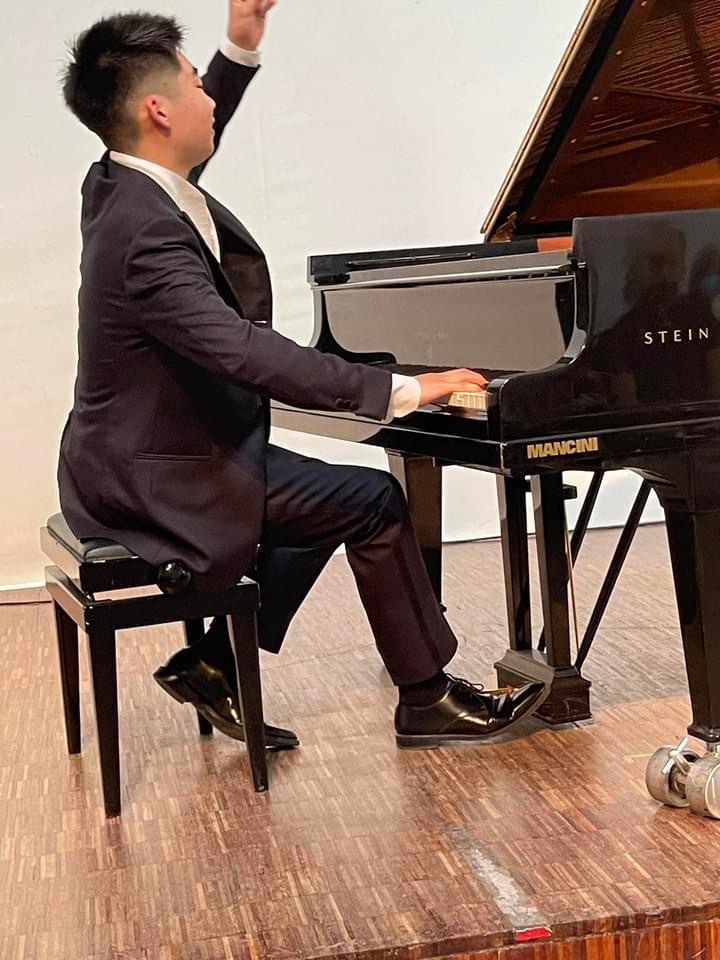
The difference with Shunta as with all great musicians is that all these strands and discoveries come together in performance as the great currents of underlying energy were ignited by a temperament and a sensitivity to his surroundings that swept all before it giving such architectural meaning to the overall shape .He could see the wood but he also saw and,oh how he loved,the trees !
It was refreshing to see how he had incorporated four of the posthumous studies into the fabric of the original op 13.The five extra studies of which he chose only four are sometimes played individually as encores or played in a block added to Schumann’s op 13 .Today they added moments of sublime beauty as they were allowed to glisten like jewels in the crown without disturbing the overall structure that Schumann had intended.
A performance where each study merits a special mention not only for his total technical command -ca va sans dire!-but for much much more besides.
A colossus bestrides this magnificent Villa today as it had when Liszt himself was resident .

Bill Naboré Marylene Mouquet Shunta Morimoto

https://christopheraxworthymusiccommentary.wordpress.com/2022/02/16/shunta-morimoto-a-star-shining-brightly-at-st-marys-the-uk-debut-of-a-master/

https://christopheraxworthymusiccommentary.wordpress.com/2022/01/17/shunta-morimoto-in-viterbo-refined-sensibility-and-artistry-of-a-true-virtuoso/

https://christopheraxworthymusiccommentary.wordpress.com/2021/11/23/shunta-morimoto-takes-rome-by-storm/

Shunta’s recital in Tokyo on Saturday was a great success. Journalists, audience, and the members of PTNA who came to the concert all gave their hearty praise. I would like to send my compliments and appreciation to you Maestro Naboré once again. This is a recording of the concert with his first public performance of Schumann op 13 two weeks ago in Japan – his second was in Frascati for Marylene Mouquet’s Associazione Michelangeli : https://www.youtube.com/watch?v=whlU8-Cc988

Ms Yuko Ninomiya came to Shunta’s recital with her family. I am sending you an email she gave me after the recital, though it is my poor translation.

‘How many years has it been since I’ve been to a concert that was so wonderful and I listened so attentively? He came out with a lovely smile on his face, and once he touched the piano, I was so impressed that I wondered which maestro was playing!

Shunta with the distinguished teacher Yuko Ninomiya

I was so moved by Shunta’s music, remembering many times when Shohei (Shunta’s teacher, and Yuko’s student) used to come to my home for lessons. I sincerely hope Shunta will continue to improve as a musician.’

The first edition of Schumann op 13 in 1837 carried an annotation that the tune was “the composition of an amateur”: this referred to the origin of the theme, which had been sent to Schumann by Baron von Fricken, guardian of Ernestine von Fricken, the Estrella of his Carnaval op 9 .The baron, an amateur musician, had used the melody in a Theme with Variations for flute. Schumann had been engaged to Ernestine in 1834, only to break abruptly with her the year after. An autobiographical element is thus interwoven in the genesis of the Études symphoniques

It was played by Shunta with great weight where every strand was given it’s just meaning.I had heard him rehearsing this when he was experimenting with the balance between the voices.It was this infinite attention to balance that gave this opening statement such importance as it opened the door to the following variations.The first variation I have never heard with the clarity of a Bach fugue but with independent phrasing of each voice as it overlapped and wove it’s way to the final two chords thrown off with such grace.There was architectural shape to the third played with passion and power and the lightness of his jeux perlé in the third was even more remarkable for the legato melodic line that he sustained with such refined phrasing in the tenor register.Even the problematic trill in the melodic line was played with the legato and simplicity of a Monserrat Caballé.It was here that he inserted the first of the posthumous studies to great effect.It continued the same left hand melodic line but with its majestic ending on a deep C sharp that was interrupted by the chords of the third and fourth variations.The alternating chords usually such a battle were here a civilised conversation between the two voices that led so naturally to the scherzando fluttering of lightness and freshness like opening a window to let in some air after such seriousness.Here he inserted the second opus posthumous study with all its atmospheric vibrations of sound as the melodic line floats on these magic sounds with such emotional comments from the bass voice too.An extraordinary effect of improvisation coming after the rather more solidly placed chords of the previous variations.It allowed us to appreciate even more the romantic effusions and passionate virtuosity of the fifth variation where he not only gave space to the melodic line with the left hand thumb but also managed to shape the bass played by the little finger with an independence that was of quite extraordinary technical command.But Shunta has ten fingers that can become an orchestra with the colours and the instrumental independence that creates a whole.The sixth variation was played with the same rhythmic energy but his hands moved from one position to another with wrists that even one of the audience noted were like rubber as they seemed to wave so naturally at the keyboard.It was this that Agosti told us ,in his studio in Siena,that pianists should have fingers of steel but wrists of rubber?Agosti a disciple of Busoni who was a pupil of Liszt was able to explain so succinctly how to treat this box of hammers and strings and turn it into a full symphony orchestra without hardness or percussive sounds and also make it sing like the greatest bel canto singers of the day.It was indeed Agosti who would intone the seventh variation likening it to a great Gothic Cathedral.

It was exactly the weight and importance that Shunta brought to this remarkable variation.With the architectural structure of nobility and absolute authority that like the structure of a mighty Gothic Cathedral where one can only marvel that man is capable of creating something so monumental but at the same time so simple.Faith can bring man to heights of extraordinary genius as Bach has shown us.It was here that Shunta added the desolate simple skeleton of the fourth posthumous study.The simplicity and the colours he brought to the answering counterpoints was quite extraordinary for it’s sense of calm reflection after the great statement of the seventh.As though we had entered this monument to man’s faith and found just the simple lone crucifix of Christ on the cross.Yes it was a world that Shunta opened up to all those that could appreciate his great artistry and vision.Of course the Presto possible of the ninth variation was thrown off with all the ease of Mendelssohnian lightness.The only thing being ,as all pianist know ,Schumann wrote it as a true ‘tour de force’ of transcendental playing with which he had laboured to devastating effect and had led to him being unable to continue a pianistic career !The majestic tenth variation with it insistent rhythmic drive was contrasted with the miraculous fifth posthumous study.One of Schumann’s most beautiful creations together with the seventeenth of the Davidsbundler -a moment of breathtaking beauty and delicacy.

In rehearsal …..work work work ……Curzon said:’to be a great pianist is 90% work and 10% God given talent’.God has been very generous to Shunta!

I had been particularly interested in the way he had prepared this and the following ninth variation in rehearsal with a meditative concentration even talking to himself (unfortunately for me in Japanese) as he searched for the colour and points of arrival in the deep bass notes that would give such resonance to the deeply moving melodic line.He had hardly touched the keys at the beginning of this final variations finding a colour of such ravishing delicacy that he had taken from his kaleidoscopic repertoire of sounds hidden in his ten fingers.There was a long pause of deep reflection at the end of this variation before embarking of the Finale.The rhythmic chords usually so heavy and ungrateful were here given a shape and sense of direction that he linked so naturally to the beautiful melody that appears in its midst.Always with the dotted rhythm accompaniment but with a melodic line of such beauty as his finger legato allowed him to shape it without pedal accompanied by the lightness of these dotted rhythms that in lesser hands can become so uniform and ungrateful.The sudden change of key in the coda was breathtaking as he unleashed his full symphony orchestra with the same unrelenting rhythmic drive of a Toscanini.I anxiously await Shunta’s next voyage of discovery with his third performance that I think will be in England soon as winner of the Hastings International Concerto Competition.His UK debut will be in London on the 23rd March with the Royal Philharmonic Orchestra playing the most beautiful of all concertos:Beethoven n.4 op 58

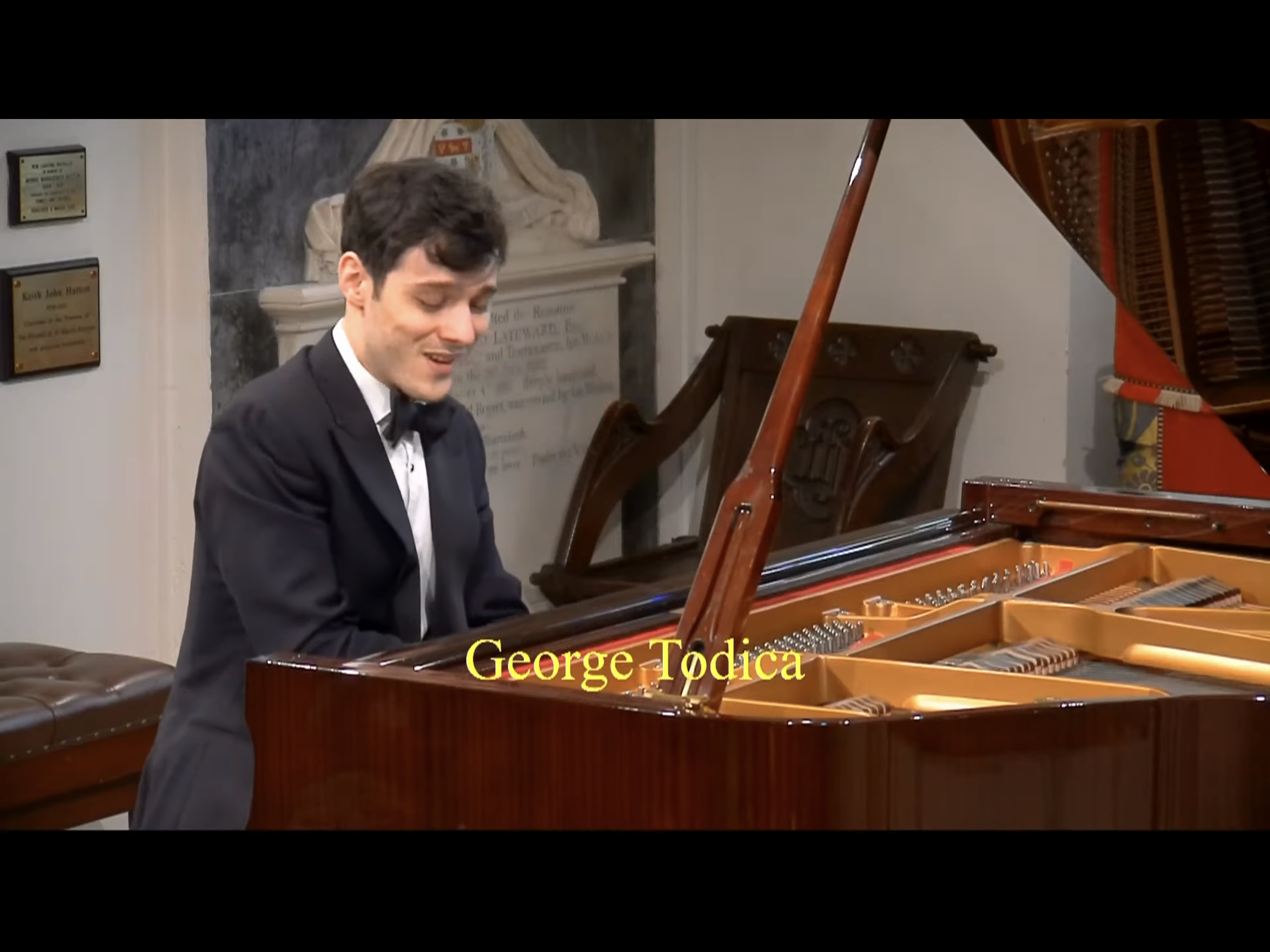
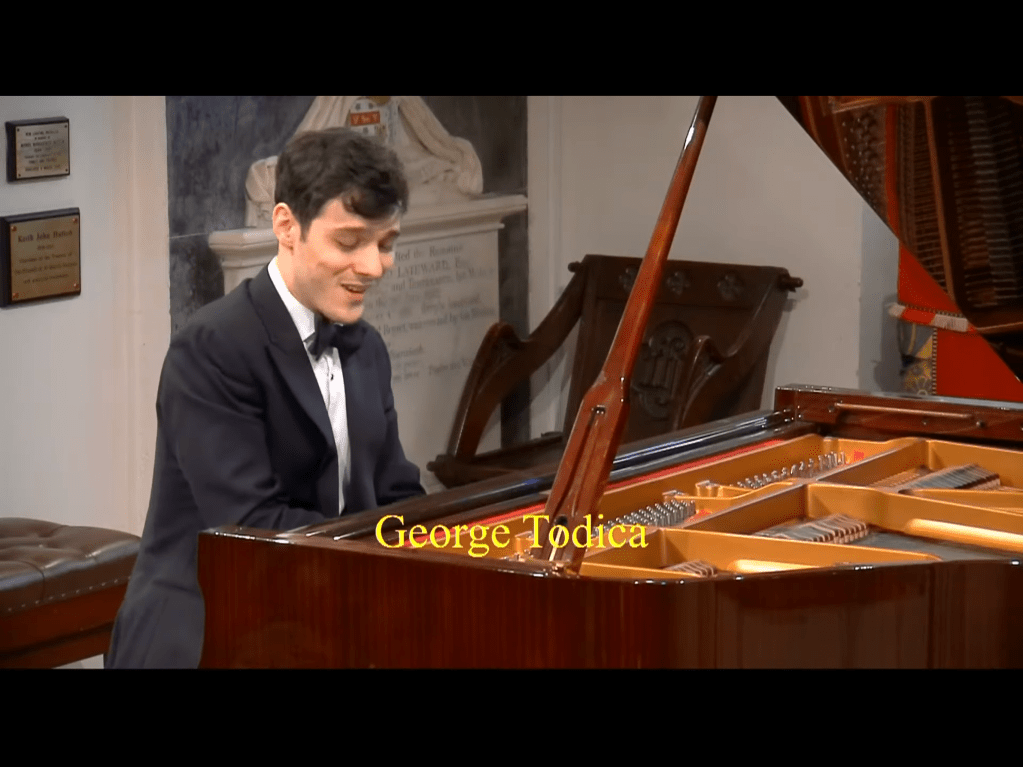
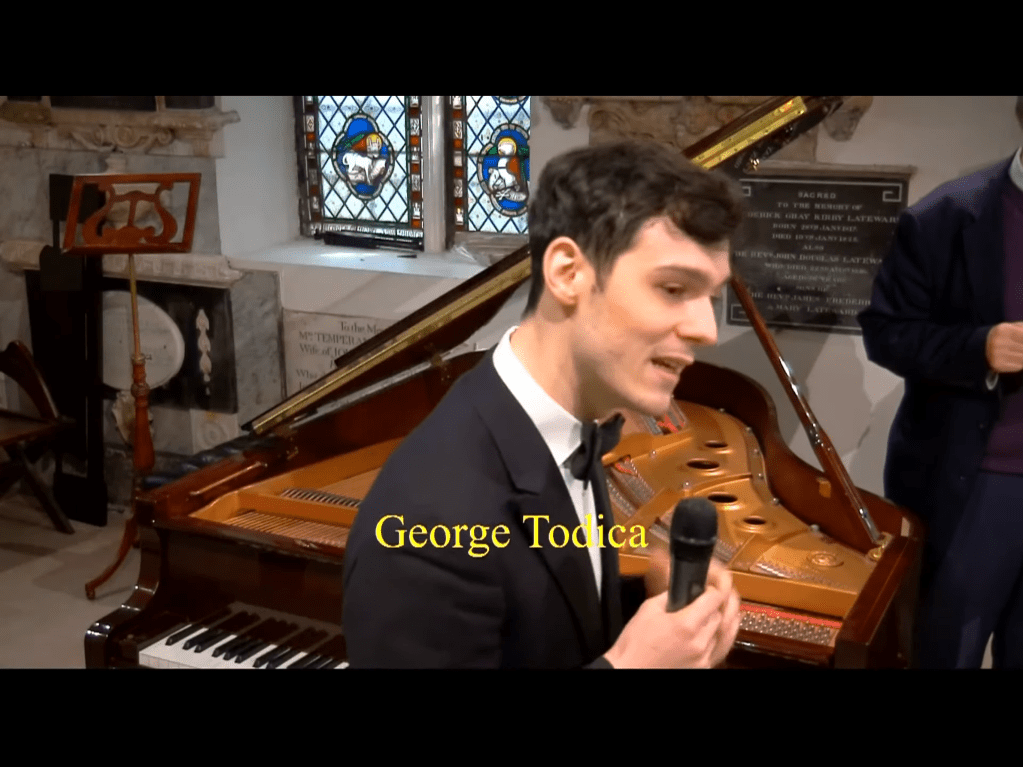
George Todica Master Musician at St Mary’s

Tuesday 24 May 3.00 pm

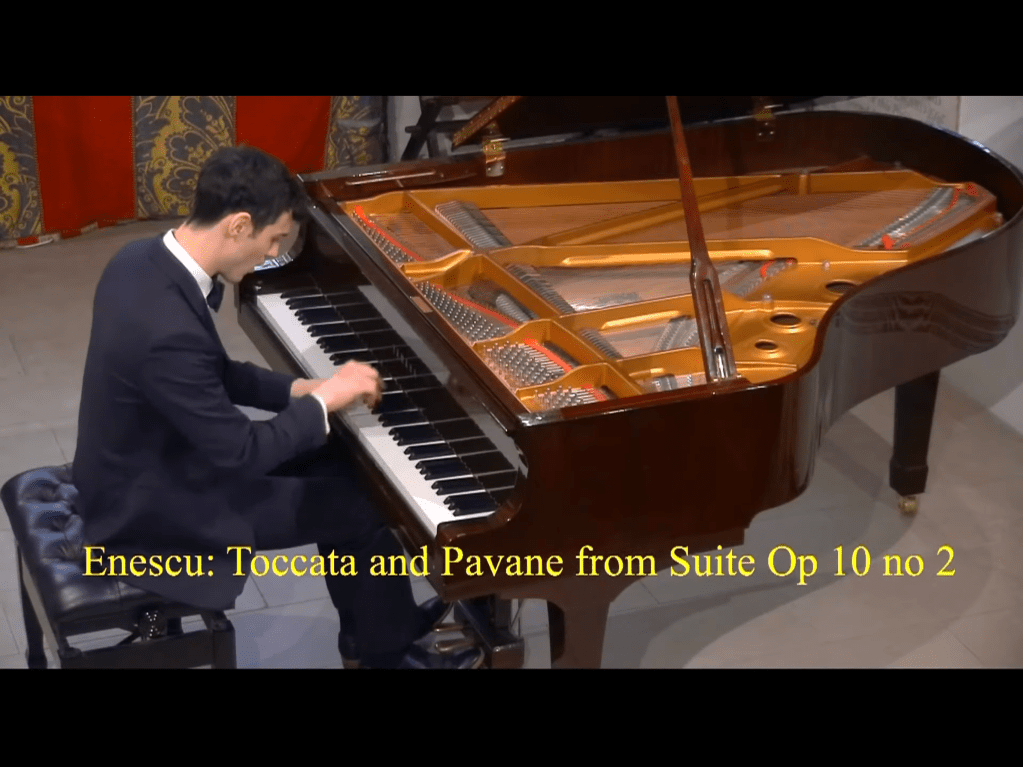
Enescu: Toccata and Pavane from Suite Op 10 no 2

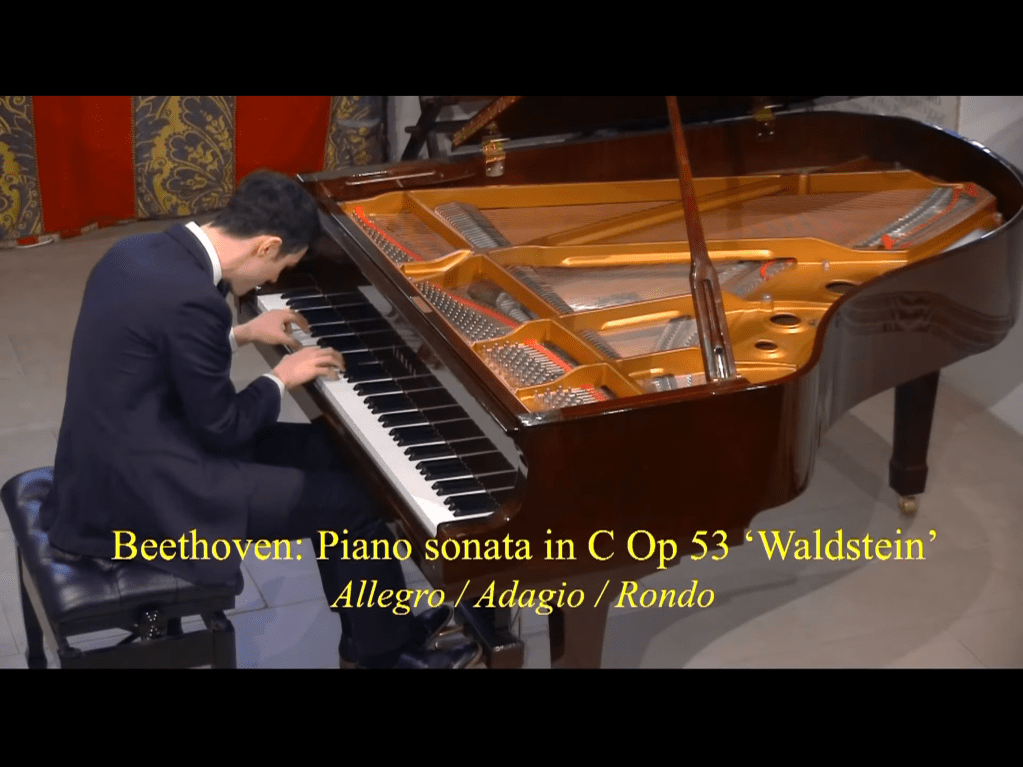
Beethoven: Piano Sonata in C Op 53 ‘Waldstein’
Allegro / Adagio / Rondo

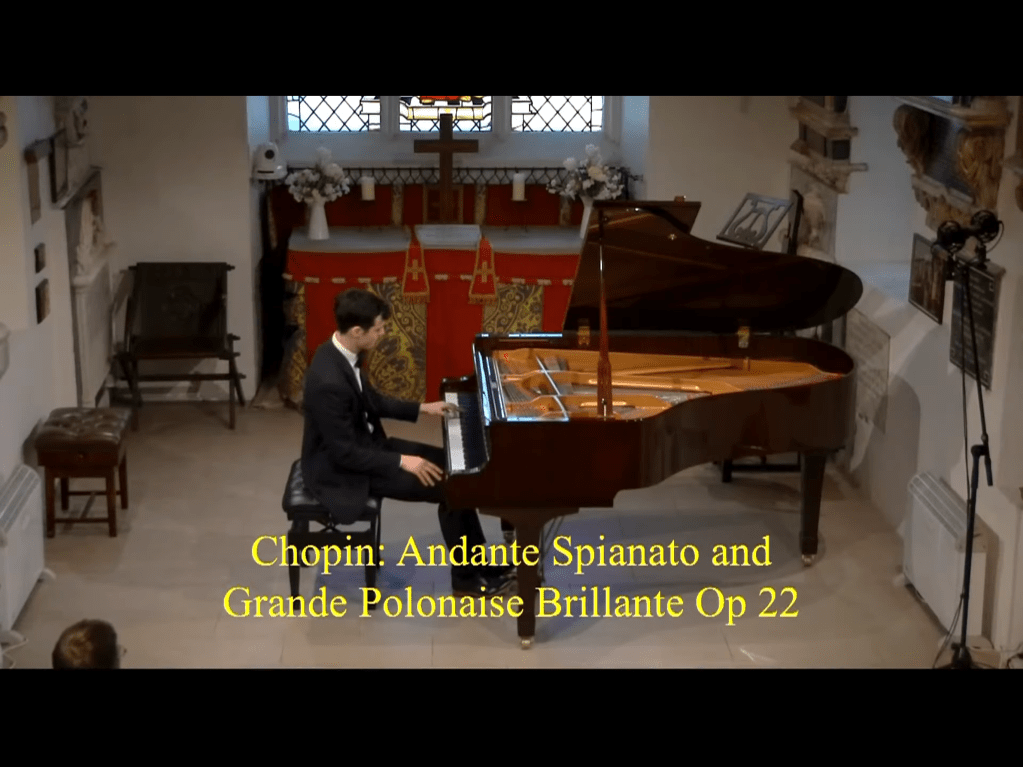
Chopin: Andante Spianato & Grande Polonaise Brillante Op 22

Some superb playing from the winner of this years much sought after Royal Overseas League Competition.
It was last October that after listening to 32 pianists playing in the Beethoven Festival at St Mary’s.I was asked which of all the fine performances of the complete sonatas remained in my memory.It was without doubt this Waldstein Sonata that we heard today. https://christopheraxworthymusiccommentary.com/2021/10/03/beethoven-is-alive-and-well-and-in-perivale/


There was absolute authority with rhythmic drive and clarity allied to a technical command of extraordinary perfection.It was just these qualities that were present today but there was something even deeper about his playing especially in the introduction to the last movement.
Suddenly after the rhythmic drive and exhilaration of the Allegro con brio there was a stillness and contemplation with a completely different tone palette.As he had said in his very enjoyable presentation that after the bright sunlight there was something dark and brooding about the Adagio molto introduction before the sun appeared through the clouds with the Rondo that grows out of it.The original slow movement,Beethoven substituted for this introduction and his first thoughts were published as his Andante Favori.The Rondo was played with scrupulous attention to the composers very precise instructions.The beautiful haze out of which emerges the Rondo theme was exactly as Beethoven had asked and contrasted with the ever more technical hurdles of the intervening episodes.A transcendental technical command that allowed a contrasting clarity with the Rondo theme in a crescendo of rhythmic excitement – Delius’s words come to mind as he dismissed Bach as knotty twine and Beethoven all scales and arpeggios!But in a real musicians hands these scales and arpeggios can lead to an ever increasing rhythmic excitement spilling out into a coda of the invention of a genius.An almost music box beginning leading via glissando scales ( played with the same effect as glissando by George but with an unnoticeable agility of a real magician).It was this real musicianship of George that shone through all he did.Not just doing what the composer writes on the page but turning his sterile markings into the intention behind them.George too is a real showman knowing when to allow himself a real flourish of final exhilaration.


The Enescu was new to me and I remember the interesting discussion I had with George about Enescu during the pandemic when he gave a recital at St Mary’s in collaboration with the Keyboard Charitable Trust. https://christopheraxworthymusiccommentary.wordpress.com/2020/11/11/george-todica-at-st-marys-duality-and-transformation/
George is a remarkable musician as you would expect from the school of Norma Fisher but he also has such charm and intelligence that he is able to talk about music in such a fascinating way.
The pandemic had thwarted his marriage plans a few times but had not stopped him and his future wife from giving lockdown concerts on their balcony for all their neighbours.Neighbours who had showered their wonderfully talented young friends with wedding presents as I see from the ring on George’s finger that third time was lucky.
Enescu is something of a hero in Romania – violinist teacher of Menuhin, composer and pianist is rarely heard in the concert hall except occasionally his Rhapsodies on popular tunes that George told us Enescu did not consider them as representing his true more serious compositions.
There is an Enescu Piano Competition and Festival that slowly is trying to bring his music to the fore.George too always tries to include a work of his fellow Romanian in his programmes.
Today he included two movements from Enescu’s early second Suite which he played very persuasively.There was absolute clarity and control of sound as he gave such a robust performance of Enescu’s joyously grandiose melodic invention.There was great delicacy too in the Pavane with embellishments of ravishing beauty.A kaleidoscope of harp like sounds with a music box full of sparkling jewels.


It was the same beauty that he brought to Chopin’s Andante Spianato thanks to a very careful balance between the hands.There was such a refined sense of rubato that allowed the embellishments the same flexibility of a bel canto singer without loosing the overall architectural shape and musical flow.The polonaise too was played with infectious rhythmic elan and moments of transcendental command but there was always the nostalgia and Chopin’s aristocratic style that came to the fore.
I was hoping we might get the promised Ravel Pavane as an encore but time was obviously up and that will have to wait for another occasion

Romanian concert pianist George Todica completed an Artist Diploma degree from the Royal College of Music in 2019 studying with Norma Fisher, and a Masters of Music at the Royal Conservatoire of Scotland in 2017, studying with Norman Beedie and Jonathan Plowright. George had his Wigmore Hall debut in October 2018 as a Tillett Trust Young Artist, and his more recent competition success include first prizes at the Royal Over-Seas League Keyboard Prize, in 2022 Norah Sande Award in England, ‘Stefano Marizza’ Piano Competition in Italy, the Moray Piano Competition in Scotland, the Llangollen International Eisteddfod in Wales, 2 nd prize at the International Piano Campus Competition in France, and 3 rd Prize at the International Piano Competition Istanbul. His international performances include prestigious halls such as the Trento Philharmonic Hall, the Mozarteum Concert Hall, the Dôme de Pontoise in France, Wigmore Hall, St. Martin-in-the-field, Glasgow Royal Concert Hall, West Road Concert Hall in Cambridge, Theatre by the Lake, Theatre Clwyd, Buxton Festival and King’s Lynn Festival. A keen chamber musician, George is regularly performing with soprano Charlotte Hoather, with whom he has recorded 4 CD albums, and as part of the Chloe Piano Trio with violinist Maria G îlicel and cellist Jobine Siekman. The Trio has been awarded the Royal Philharmonic Society’s Henderson Chamber Ensemble Award in 2021 and have been selected as Kirckman Trust Young Artists’ for the 22/23 season. Projects for 2022 include the release of a CD album with music by women composers, in collaboration with the Abbey Road Institute, as well the launching of a concert series in South East London that highlights women in music and arts.

https://christopheraxworthymusiccommentary.wordpress.com/2020/11/11/george-todica-at-st-marys-duality-and-transformation/

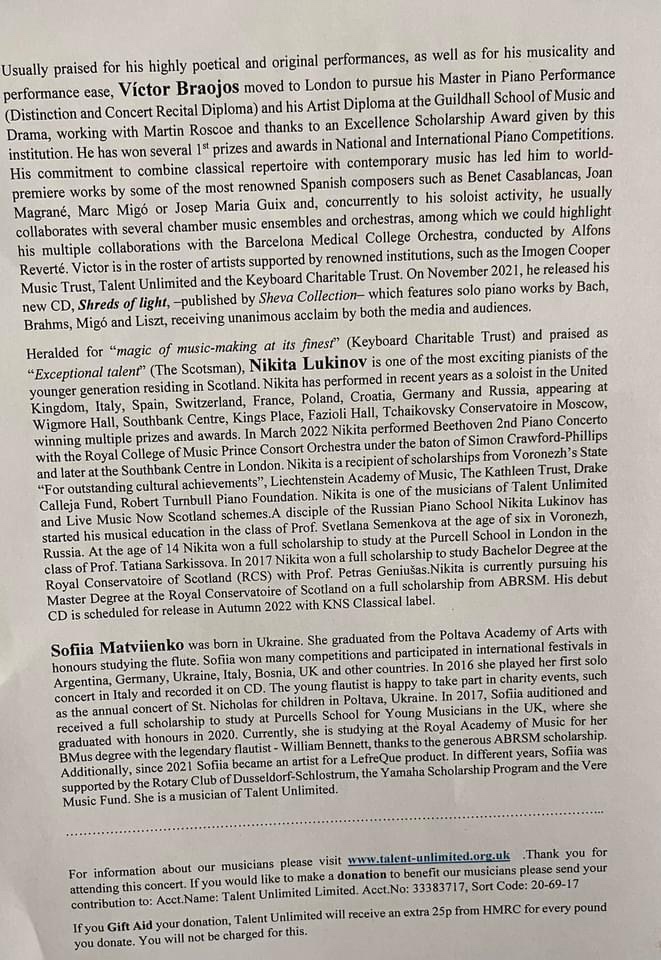
Talent Unlimited Showcase recital with Braojos,Lukinov and Matviienko

Jessie Harrington and Canan Maxton tireless promotors of young artists via Talent Unlimited

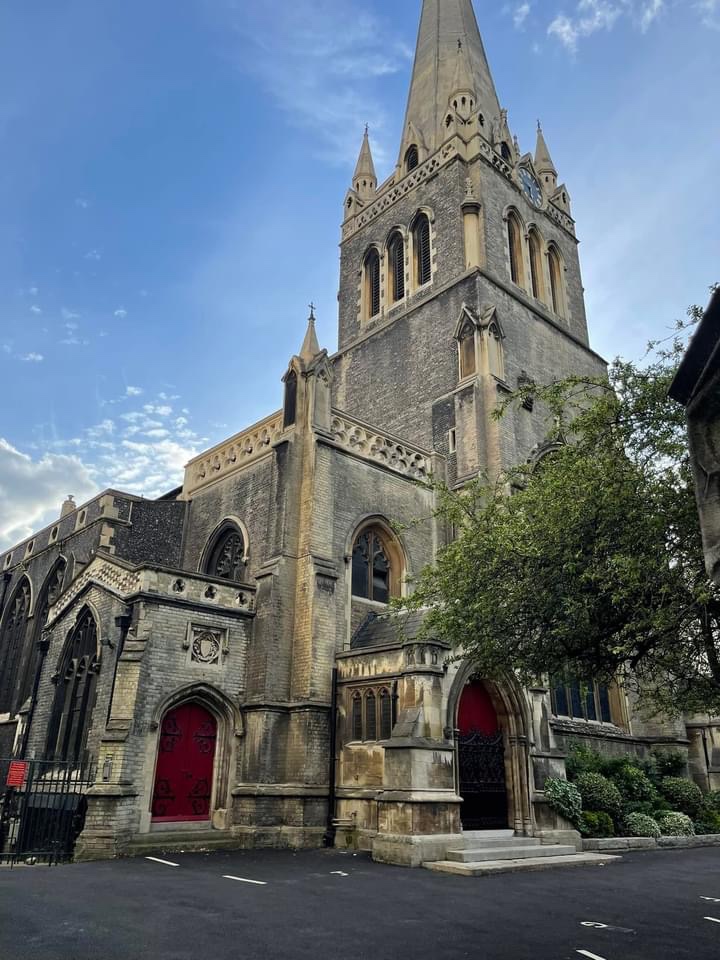
Saturday 21 May 2022, 7pm, at St James’s Church Sussex Gardens Lancaster Gate
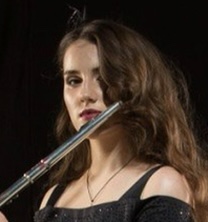
Nikita Lukinov, Victor Braojos, pianists and Sofiia Matviienko, flute

https://christopheraxworthymusiccommentary.wordpress.com/2022/05/09/victor-braojos-at-st-marys-authority-and-intelligence-illuminates-shreds-of-light/
Programme Victor Braojos:
Enrique Granados (Lleida 1867–English Channel 1916)
Quejas o la maja y el ruiseñor [from Goyescas]
Ludwig v. Beethoven (Bonn 1770 – Vienna 1827)
Sonata nº32 Op. 111 in C minor
Maestoso – Allegro con brio ed appassionato
Arietta: Adagio molto semplice e cantabile

https://christopheraxworthymusiccommentary.wordpress.com/2022/04/11/nikita-lukinov-at-st-marys-a-masterly-warrior-with-canons-covered-in-flowers/
Programme Nikita Lukinov:
Scriabin (1872-1915), Valse op.38
Tchaikovsky (1840-1893), Scherzo-fantasie, Vivace assai
Prokofiev (1891-1953), Sonata 7 op.83 “Stalingrad”
I – Allegro inquieto (in B♭ major)
II – Andante caloroso (in E major)
III – Precipitato (in B♭ major)


Programme Sofiia Matviienko:
Homo Ludens, a piece by the Ukrainian composer Volodymir Runchak,
Evening concert, St James’s Church, Sussex Gardens, Paddington W2 3UD –

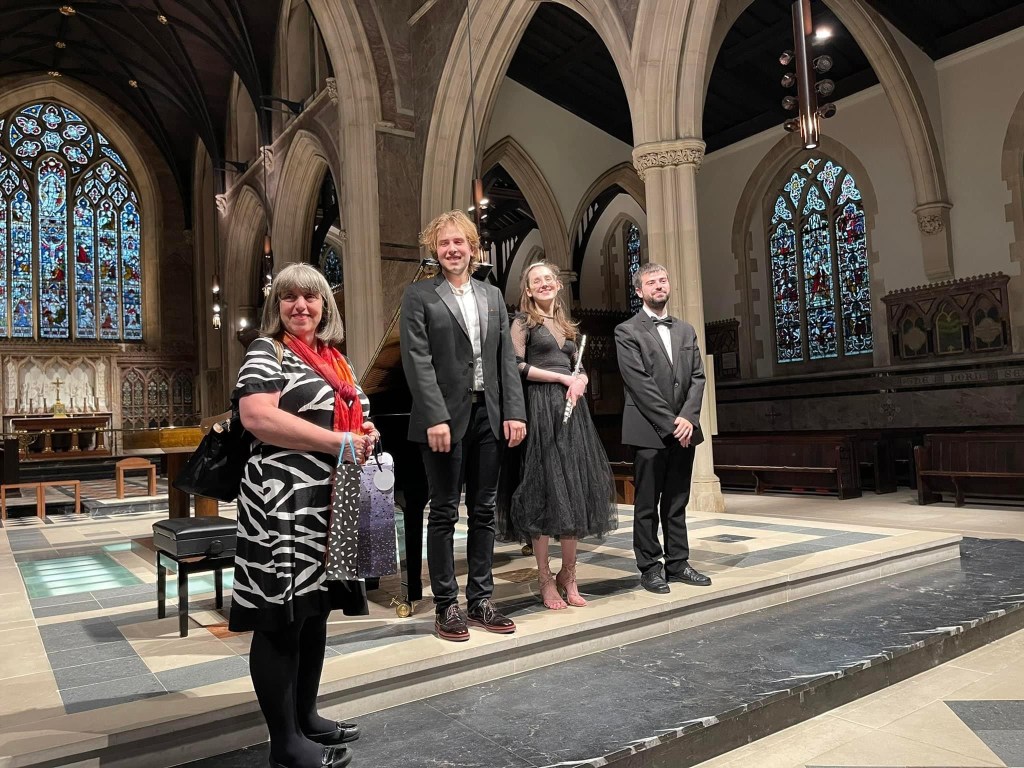
Jessie Harrington congratulating the artists at the end of the concert

Refined Beethoven Scintillating Prokofiev and atmospheric Ukrainian composer Runchak was on the menu with artists from Canan Maxton’s Talented Unlimited team at St James’s in Lancaster Gate.


The delicacy and kaleidoscopic colour that Víctor Braojos brought to Granados’s Maiden and the Nightingale set the atmosphere that was to remain for the entire concert.His performance of Beethoven’s last piano sonata had authority and weight and the magic of the trills at the end of this great last journey that Beethoven makes had been ignited by the delicacy of Granados’s enchanted nightingale.
Here though in Beethoven they had a different significance as the Arietta traversed a lifetime journey before reaching the paradise that awaits.
A profound sense of stillness and beauty were revealed by this young Catalan pianist whose new recording ‘Shreds of life’ have ignited in him the maturity and authority of a true artist.


The stage was set for Nikita Lukinov with a completely different palette of colours as he embellished Tchaikowsky’s richly embroidered Scherzo Fantasie with scintillating streams of notes that poured so effortlessly from his hands.
The charm and grace that he brought to Scriabin’s Valse op 38 was of another age with such subtle colours that ignited this salon concert waltz as the great pianists of the Golden Age must have done.
The luminosity of sound with the Allegro inquieto of Prokofiev’s 7th Sonata was refreshingly unexpected and was just the start of a long journey of remarkable colours that this young Russian extracted from the piano inbetween bursts of unrelenting rhythmic energy.Sumptuous rich sounds in the Andante Caloroso were contrasted with the absolute clarity of the precipitato that Nikita brought to red hot boiling point with transcendental virtuosity.


It seemed a strange choice to close a concert of such major masterpieces for the piano with solo flute.
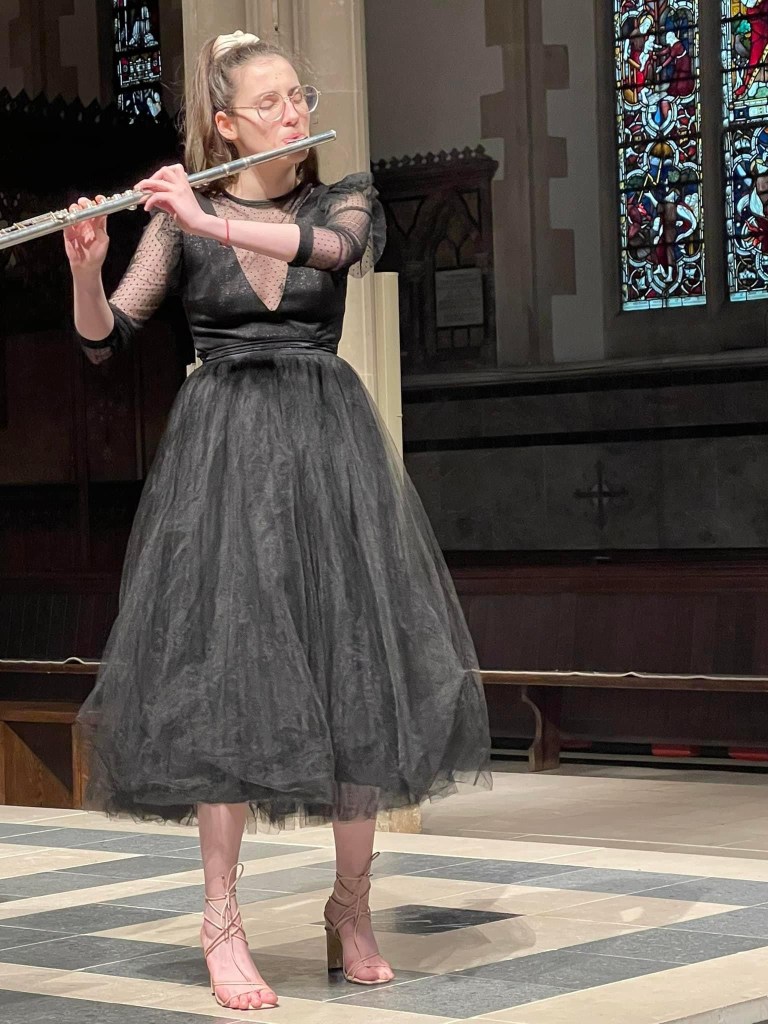
The surprise of the evening was the ravishing performance by Sofia Matviienko of Homo Ludens by a fellow Ukrainian.
Some remarkable colours in which she not only blew into the flute but she also caressed it and even sang into it as this single instrument became a world of atmospheric sounds and indeed the cherry on the cake of a remarkable concert

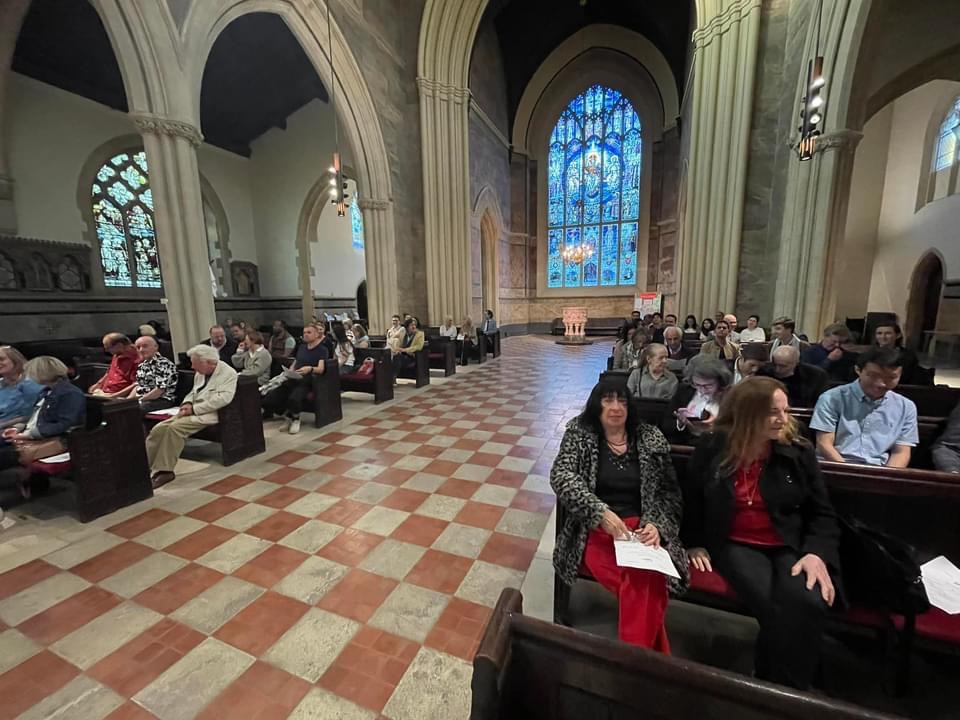
The audience at St James’s
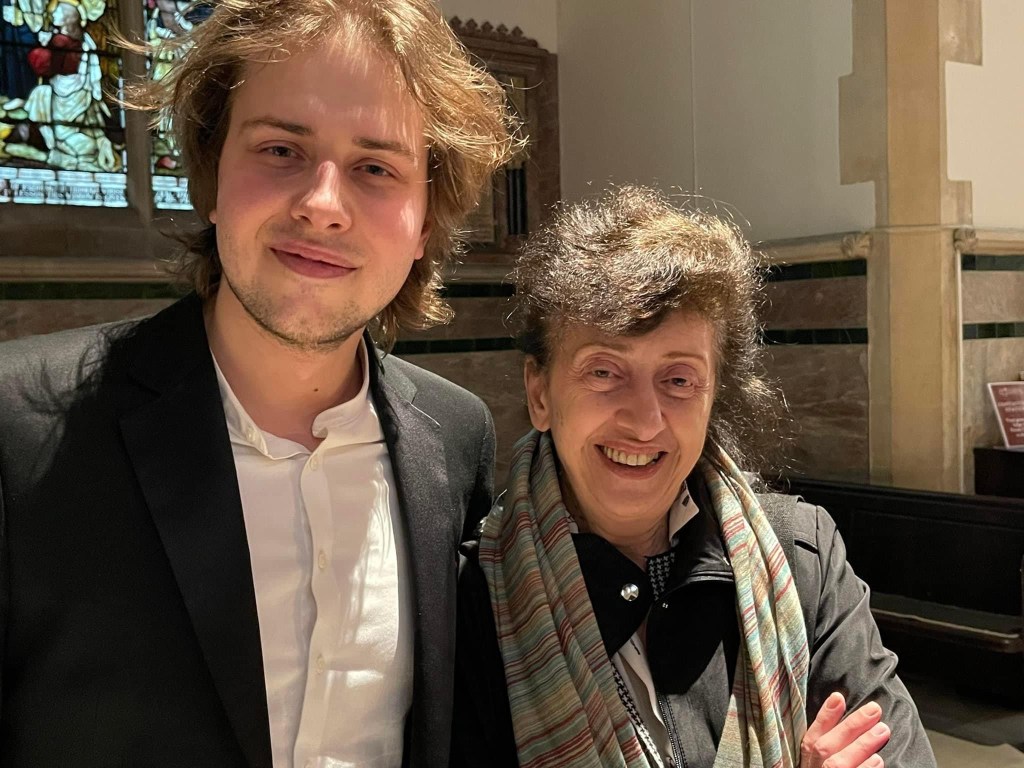
Nikita Lukinov with his teacher Tatiana Sarkissova
Víctor Braojos with Can Arisoy both artists of Talent Unlimited
Jessie Harrington with the distinguished pianist Angela Brownridge and friend
Canan Maxton selfless promoter of young talent via her Talent Unlimited

Sergei Babayan Artist in residence -‘Bewitched,bothered and bewildered ‘

I have rarely seen the Wigmore Hall so full as for the charismatic teacher of Trifonov,Sergei Babayan .The announced first book of the ‘48 had been changed to a mixed programme with Bach Busoni as near as we got to the original.
Followed by a selection of Schubert songs transcribed by Liszt (one of which he left out,Aufenthalt- surely the most beautifully haunting ) and 3 Etudes tableau instead of the two advertised and a Moment musical by Rachmaninov.


Some serious work was needed from the piano tuner in the interval which gave some indication of the power and physical onslaught the piano had endured.


His playing is of the old Russian school of massive sonorities that are never hard due to the complete relaxation of his arms .
I remember just the same overwhelming sonorities in the Festival Hall with Lazar Berman ( known by some as Laser Beam) playing the 12 transcendental studies by Liszt -I had a hard job to get out after the third one ,due to my student choir seat,but I just could not take these offensively overwhelming sounds.
Babayan even jerked his arms down with all his force into the keyboard to produce ever more overpowering sounds.
The massive amount of pedal did allow some ravishing sounds in the quieter passages but with some rather too personal rubati that in the Bach could be best described as grotesque.
The Schubert songs a favourite warhorse of Russian pianists produced a mixture or ravishing almost improvised playing that one felt it a pity he could not keep more control as the temperature rose.
I was hoping for better things in Rachmaninov but his search for massive overwhelming sonorities with such enormous amounts of pedal meant that the clarity and beauty of Rachmaninov was lost in a general rather vague haze.


I was interested to hear Liszt’s B minor Ballade but it was so wayward with such violent sudden accents and notes thrown off with astonishing bravura more of a general impression than a measured interpretation.
I had hoped to leave discreetly before Kreisleriana but as no one had realised the Ballade was over he immediately ‘attacked’ the Schumann with such strange accents and wayward rhythms that was to be the key to his whole interpretation .
There were many ravishing things in the second piece but without any real sense of logic or line that after a while became just sounds without form or direction and were ultimately just boring .
I managed to leave before the contemporary final piece and listen from outside whilst I wrote this chronicle.
An ovation with cat calls and shouts rarely heard in this hall brought forth the Aria from the Goldberg variations.


A good rest which I think the piano deserved.
It seemed very beautiful from behind the doors .Measured ,simple with subtle ornamentation and it was a wonderful cleansing of the air that had been too full of passionate sonorities and improvisations.Obviously even Babayan craved for the simple beauty that he gave us at the end – he had been hammering away at the piano hours before the public was let in the hall – somewhat reminiscent of a recent experience in Rome with Pogorelich. https://christopheraxworthymusiccommentary.wordpress.com/2019/12/02/the-return-of-the-rebel-pogorelich-is-back-in-town/. It had me thinking what a pity he had changed the original programme where his fantasy and colours might have fitted into Bach’s mathematical structure and illuminated the knotty twine in a revelatory way.
Unfortunately this was not to be and has left me feeling perplexed and not a little offended by his performances today.


Anyone who reads my personal chronicles often complain that I only write positive things and I often say that if I don’t like a performance I do not feel it necessary to share my opinion with others .Playing in public is never easy and I take my hat off to all those that dare tread the boards and if an interpretation does not convince who am I to criticise?
Today I feel so offended not only by what I heard but also the reaction of an audience who have known the excellence of artists like Andras Schiff,Angela Hewitt ,Paul Lewis,Igor Levit,Martha Argerich or Steven Isserlis to mention just a few of the eminent musicians who play in this hallowed hall.


I cannot help thinking of another Russian pianist who played here last week to an empty hall giving one of the finest interpretations of Beethoven op 111 that I have ever heard.
https://christopheraxworthymusiccommentary.wordpress.com/2022/05/09/dinara-klinton-at-the-wigmore-hall-rcm-benjamin-britten-fellow-recital/
Or Paul Lewis’s 50th birthday concert in a half empty Barbican yesterday with revelatory performances.
https://christopheraxworthymusiccommentary.wordpress.com/2022/05/20/paul-lewis-at-50-celebration-of-a-poet-and-musician/

Rachel Cheung flew in today from Singapore to record in Germany and was unable to find space in London to give a recital.A great talent from Yale University where she was mentored by Peter Frankl whom she has flown in to see and play to at his home tomorrow. https://christopheraxworthymusiccommentary.wordpress.com/2018/11/13/rachel-cheung-at-st-marys-perivale/


Could it be that the ever diminishing public for classical music is happy to be entertained rather than moved?
Babayan is an artist in residence at the Wigmore Hall which is certainly food for thought.


I am sure that in his teaching his fantasy and preoccupation with the message behind the notes might be illuminating for someone with an already classical training.
It is a school of thought that other eminent teachers from the Russian school impart to their talented students.I was told just the other day that there is no such thing as style but it is the emotional content that counts more than the frame it is in!
An interesting point of view but in the end surely the composers very precise indications should be the starting point for any interpretation -just look at Liszt’s own very faithful edition of the Beethoven Sonatas or Debussy’s Chopin.


Anything less than respect for the composers written wishes is a free improvisation which may have moments of illuminating certain passages but without a frame or sense of architectural shape it ultimately become boring.The underlying rhythmic current is continually disturbed by not seeing the wood for the trees.
A true artist with integrity,honesty and much suffering should be able to show us both.
The artist who does that more than any other in my day is Murray Perahia who alas has been away from the concert stage for too long for health reasons.
For his mentor Rufolf Serkin the score was the absolute bible,as it was for mine Guido Agosti (a disciple of Busoni who was a disciple of Liszt).
Perahia was ready to be illuminated by his other mentor Vladimir Horowitz who on his appearance in Paris like Liszt before him was considered by many to be the greatest pianist alive or dead!
Tonight at the Wigmore Hall I left ‘Bewitched.bothered and bewildered ‘

Paul Lewis at 50 …….celebration of a Poet and Musician

Paul Lewis 50th Birthday concert at the Barbican

Paul Lewis’s extraordinary musicianship shone through every note of the much loved Pathétique that opened his celebratory recital.
The weight and meaning he brought to such a well worn piece was a revelation of simplicity and sensitivity.There was also a control of sound and transcendental command of the keyboard much to do with his masterly use of the pedals.
The arresting opening was like a call to arms with the beseeching reply that immediately created a rhythmic tension that was the undercurrent of all he did.
An ‘Adagio Cantabile’ that was allowed to flow so simply with a sense of balance that allowed the melodic line to sing so naturally.
The rondo was played with a delicious twinkle in his eye and with such subtle shading.


The five Mendelssohn songs without words were linked to the six Sibelius Bagatelles and were a continuous stream of ravishing sounds played with a sense of style and charm that brought each of these charming pieces to life .
The title ‘songs without words’ was an anomaly as they did speak in Paul Lewis’s hands so eloquently.
We have not heard Mendelssohn in the concert hall for too long.I well remember the same musicianship and beauty that Paul Lewis brought to them today as Serkin and Perahia had done too many years ago.
Have the opening chords of Chopin’s Polonaise Fantasie ever sounded so beautiful?
A fantasy or dream world that Chopin shares with us with the Polonaise a voice in the distant past.
There was such an aristocratic sense of rubato that brought to Chopin’s ever more Bellinian inspired melodic line with heart rending simplicity of rare beauty.
The accumulation of trills in lesser hands,usually hammered home, here were played with the same fantasy that had pervaded the entire performance of this late masterpiece.
The triumphant polonaise was the consequence of the exciting transcendental build up that Paul Lewis had kept up his sleeve.
But now all hell was let loose with sumptuous full sounds and driving rhythmic excitement.But even here Chopin returns to the fantasy in the final few bars where the tension is relaxed and the final chord is the consequence of the fantasy world that Chopin has revealed to us in his final years.


Paul may have exclaimed at the end of his extraordinary ‘Appassionata’Sonata,’I’m still only forty nine ………until tomorrow.’
That is already ten more years on this earth than Chopin was to enjoy……if that is the word for a weak and ailing composer who had born a lifelong nostalgia for the land he had left as a teenager.
It is well known that Paul Lewis left behind him the world of the virtuoso to emerse himself in the Viennese classics under the guidance of Alfred Brendel.
It was indeed Brendel ‘s performance that sprang to mind as I listened to Paul Lewis today.
Of course Brendel could be more brittle edged than Paul could ever be.Paul’s poetic soul shone through everything he did but the drive and architectural shape he brought to the Appassionata was the same.
The precision and scrupulous attention to Beethoven’s very precise markings whether it be the rhythmic urgency and precision of the opening fanfares or the long held pedals that Beethoven scatters in the score of the Allegro assai .
An ‘Andante con moto ‘ with the quality of string quartet where every strand had a meaning and only added to the full sound of a cortège.
Little could we have expected the assault that he brought to the exciting coda of the last movement -well,Beethoven does mark it Presto and he does ask for the pedal to be left on for the final massive accumulation of sounds.
This I have not heard with such animal excitement since that performance of Paul’s mentor in the QEH too many years ago.


A spontaneous standing ovation brought what must be the highlight of this memorable concert.A ‘re-enactment’ of a piece that Paul tells us he learnt when he was 12.
The ‘Gollywogs Cake Walk’ was played with the same irresistible charm and character that Horowitz was to bring to ‘The snow is dancing’ years ago on his return to the stage in 1968.
Here the Gollywog was given full reign,letting his hair down and having a ball.
The sumptuous melody that interrupts the cake walk was commented on with such tongue in cheek replies.Paul even looking at the public and rolling his eyes as he brought this delightful bijou vividly to life.
What a way to end your first half century and I look forward to what delights he has in store for us in his second!

Programme :
Ludwig van Beethoven

Piano Sonata No 8 in C minor, Pathétique Grave – Allegro di molto e con brio. Adagio cantabile. Rondo: Allegro


Felix Mendelssohn

No 1 in E major from Songs without words, Op 19
No 3 in G minor from Songs without words, Op 53
No 2 in E-flat major from Songs without words, Op 53
No 2 in A minor from Songs without words, Op 19
No 3 in E major from Songs without words, Op 30


Jean Sibelius Six Bagatelles. Humoreske I. Lied. Kleiner Walzer. Humoristischer Marsch. Impromptu. Humoreske II

Frédéric Chopin Polonaise-fantaisie op 61


Ludwig van Beethoven

Piano Sonata No 23 in F minor, Appassionata Allegro assai. Andante con moto. Allegro ma non troppo – Presto

Paul Lewis is one of today’s foremost interpreters of the Central European piano repertoire, his performances and recordings of Beethoven and Schubert receiving universal critical acclaim. He was awarded a CBE for his services to music in 2016, and the sincerity and depth of his musical approach have won him fans around the world. This global popularity is reflected in the world-class orchestras with whom he works and the international concert halls and festivals where he performs.Born in Liverpool in 1972, Paul studied at the Guildhall School of Music and Drama with Joan Havill before going on to study privately with Alfred Brendel. He quickly became a favourite with London’s concert audience in particular, and has performed at the Wigmore Hall over 100 times, as well as making regular appearances at the Barbican, Southbank Centre and the BBC Proms, where he was the first pianist to perform all 5 Beethoven piano concerti in a single season in 2010.His award-winning and extensive discography for Harmonia Mundi ranges from Haydn, Beethoven, Schubert and Weber through to Schumann, Liszt, Mussorgsky and Brahms. He has also recorded Schubert ‘s 3 lieder cycles with Mark Padmore.In addition to his busy concert career Paul and his wife Bjørg are co-Artistic Directors of the Midsummer Music festival in Buckinghamshire. He makes his debut solo recital at the Barbican Centre tonight in celebration of his 50th birthday.

https://christopheraxworthymusiccommentary.wordpress.com/2020/12/13/paul-lewis-crowns-beethoven-250-at-the-wigmore-hall/

John Leech

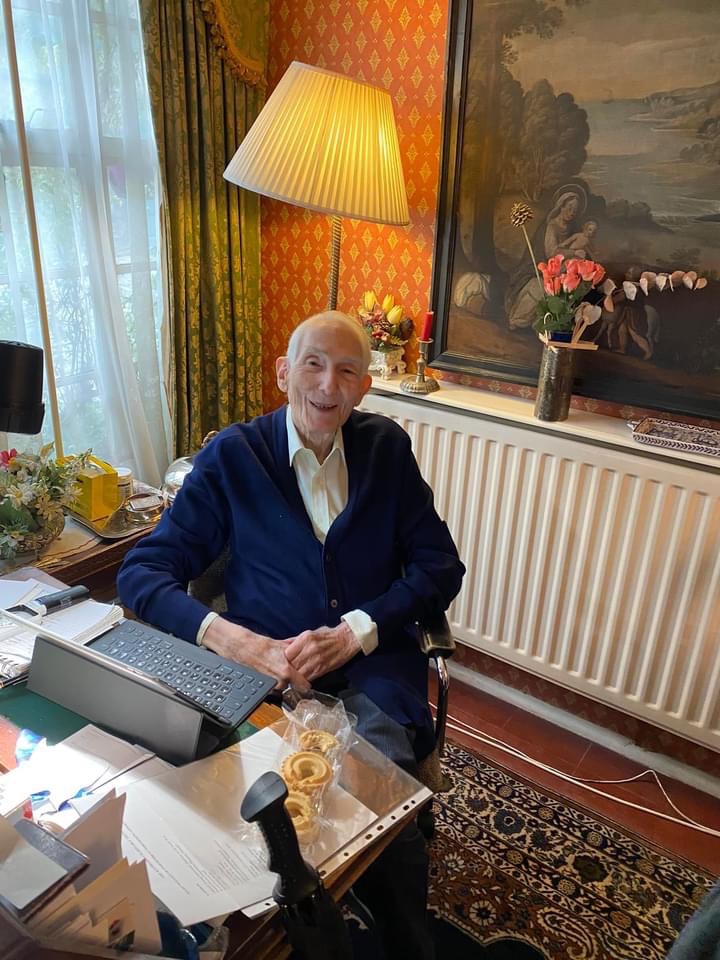
John Leech in his 97th year and founder of the Keyboard Trust with Noretta Conci proudly tells me that Paul Lewis was the first artist selected by Noretta to benefit from the Trust.Celebrating it’s 30th anniversary with the publication of ‘The Gift of Music ’.A book about the activity of the trust that John had up for his wife on her sixtieth birthday.A retirement gift!! I met John on his 60th birthday when they accompanied Leslie Howard to play in my concert series in Rome 37 years ago!………I have been involved with the trust and young musicians ever since ………..such is their power of persuasion!

John and Noretta celebrating ‘The Gift of Music’

Giordano Buondonno at the Solti Studio- Masterly performances of searing intensity

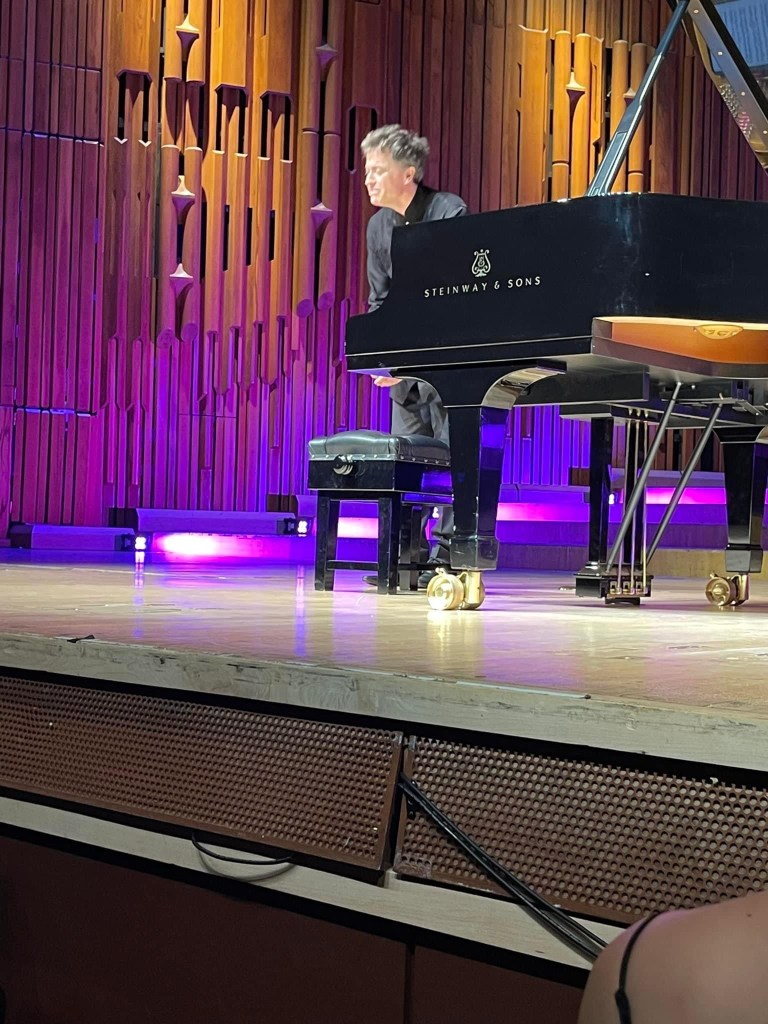
Giordano Buondonno playing on Michelangeli’s own Fabbrini Steinway concert grand

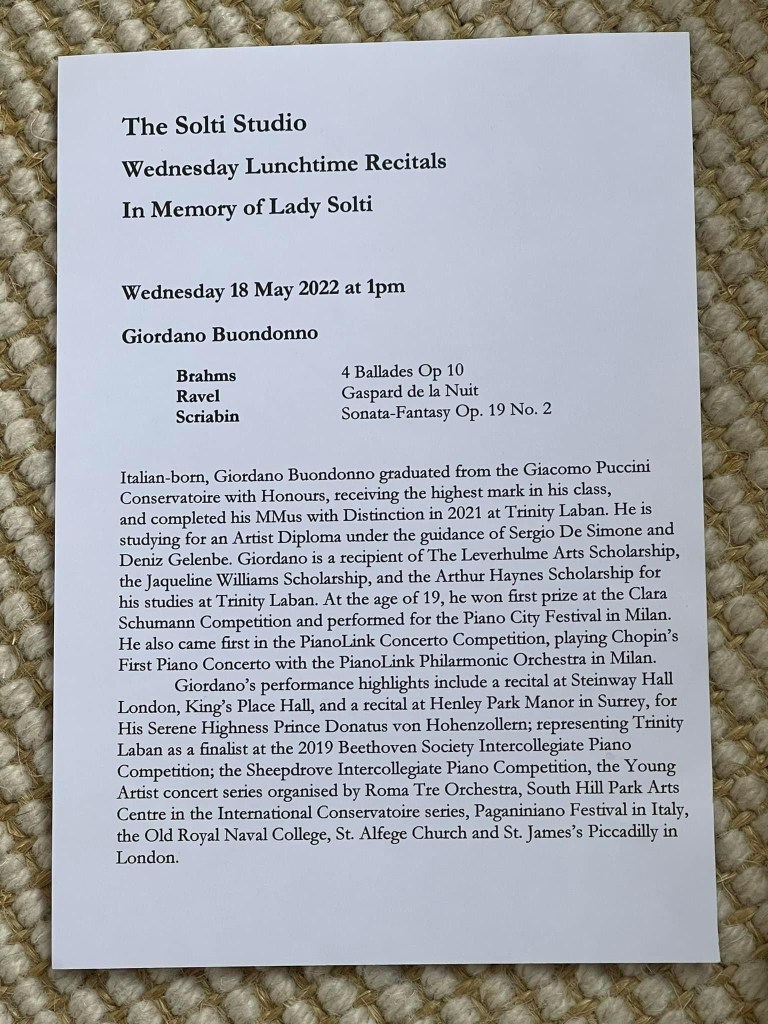
There was magic in the air at the Solti Studio today with a young Italian pianist Giordano Buondonno surely a name to remember after today’s masterly performances.
A student of Deniz Arman Gelenbe that was immediately apparent from the refined musicality of his performance of the Brahms Ballades op 10.

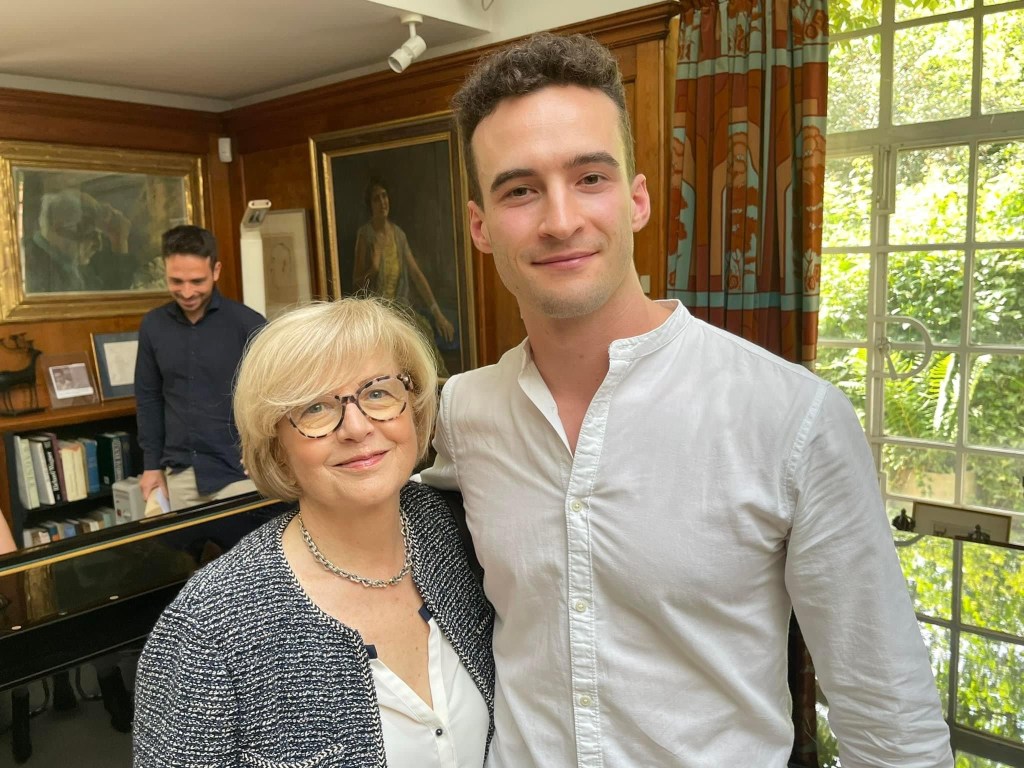
with Deniz Gelenbe

https://christopheraxworthymusiccommentary.wordpress.com/2017/05/08/all-about-mozart-deniz-arman-gelenbe-and-friends-at-st-johns-smith-square/


A work that in Michelangeli’s hands could touch the sublime as it did today with moments of searing intensity and sublime beauty as this young man allowed himself to be seduced by Michelangeli’s own piano that sits so proudly still in Sir George Solti’s studio in Elsworthy Road St Johns Wood.


A pianist who listens to himself is a rarity indeed but when one enters their magic world it reveals a land of magic colours and passionate emotions.
The intensity which this young man brought to the final pages of the last Ballade were of unbearable emotions with the clashing harmonies that reminded me of the scorching intensity of the supreme believer Messiaen.There was delicacy in the first Ballade and an outpouring of song in the second with great clarity in the contrasting middle episode.A startling rhythmic urgency in the third but with an architectural sense of line – the glowing prayer of the middle episode was pure magic with the delicately embroidered comments played with such refined delicacy.
Kantarow recently touched the same heights in an empty Philharmonie de Paris during the pandemic.Heights that I remember from the atmosphere that Michelangeli could create in the vast space of the Festival Hall.Fou Ts’ong would often say that it is easier to be intimate in a large space rather than a small one!

The distinguished audience for the Wednesday Lunchtime Recital Series in memory of Lady Solti


There too on a Fabbrini piano with Fabbrini who would travel with him to make sure that the piano would respond to the Maestros demanding needs.
Michelangeli was Godfather to Fabbrini’s children and it was to Fabbrini that I turned to choose a piano for my concert season in Rome.
Today’s young pianist chose also Ravel’s Gaspard de La Nuit,another of Michelangeli’s cavalli di battaglia.Could it be that the Maestro’s
soul was hidden deep in the piano just waiting for an artist of Giordano’s calibre to ignite and excite once again this black box of hammers and strings.


Another remarkable performance;from the glowing fluidity of Ondine where the water was allowed to flow so naturally from his magic hands as it built to an overwhelming climax and where even the final pedal indication with Ravel’s precise indications were scrupulously interpreted – yes not just played as written but played as intended by the composer!
The desolate insistence of Le Gibet with austere chiselled sounds etched with such desolation and with the relentless insistence of the distant tolling bell – a true tour de force of transcendental control with his pointed fingers as the plaintive isolated melody cried out loud in anguish .It was followed by a performance of one of the most technically challenging works for the piano:that of the devilish goblin Scarbo.Such a kaleidoscope of colours and emotions that one was not aware of the technical mastery of this young man.
Sandwiched between these two glorious works was Scriabin’s Fantasy Sonata which was a continuous outpouring of streams of gold and silver.The final great passionate outpouring which Scriabin was eventually to call the star was played with an aristocratic passion of searing intensity.A star shining brightly indeed!Ravishing golden sounds in this sumptuous early world of Scriabin were allowed to pour from his fingers with subtle beauty.It was this piercing beauty of sound with refined shading that was so seductive and overwhelmingly convincing.The transcendental sweep he gave to the second movement with swirls of notes of romantic sounds and an outpouring of passion in the climax dying away to a whispered ending of ravishing beauty.
The Etude tableaux op 39 n 3 was played as the picture book that Rachmaninov intended with ravishing colours and transcendental playing of sumptuous sounds.


They had told me in Rome that Giordano was a culturist which made me a bit worried looking at the programme and knowing that this concert grand was in a small music room .


What they did not tell me was that here was a sensitive artist of aristocratic good taste and intelligence who actually listens to himself sharing his passion and love which could reach the sublime heights that this piano has rarely known.

the distinguished critic Bryce Morrison with Yisha Xue of the National Liberal Club

https://christopheraxworthymusiccommentary.wordpress.com/2022/05/11/junlin-wu-at-the-solti-studio-savagery-and-refined-elegance-of-a-warrior/

https://christopheraxworthymusiccommentary.wordpress.com/2022/05/04/lorenzo-adamo-rhythmic-tension-and-luminosity-at-the-solti-studio/

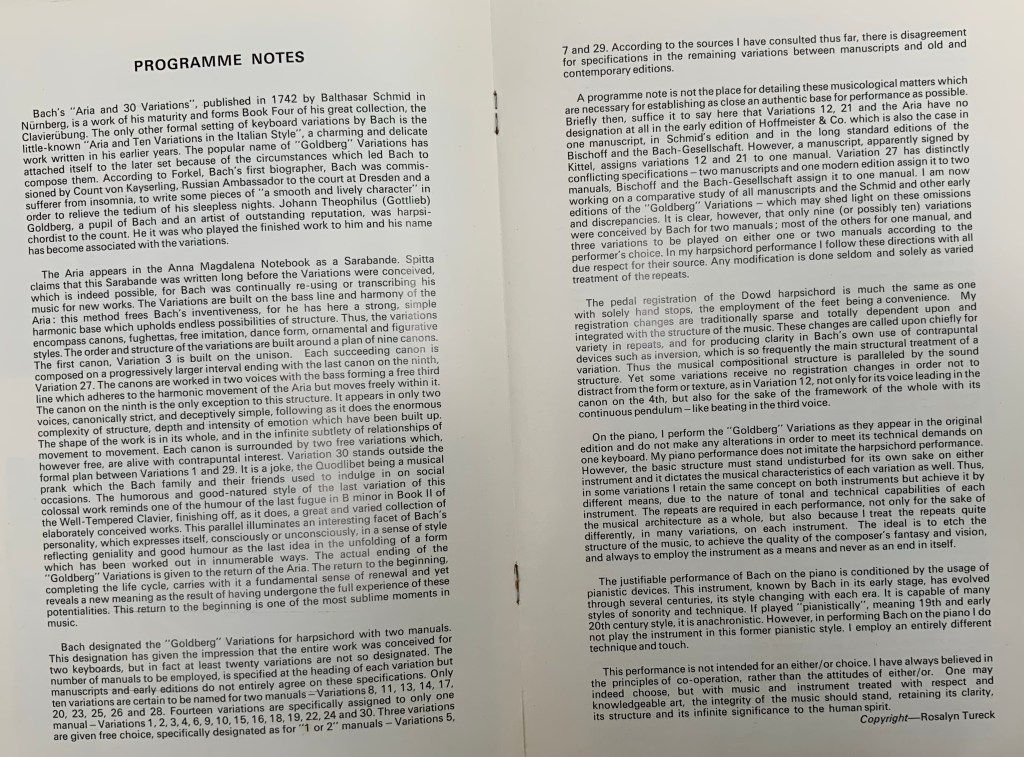
Cristian Sandrin plays Goldberg Variations the start of a lifetime journey of discovery from Perivale to Bucharest

Thursday 19 May 3.00 pm and 9th June Radio Hall Bucharest

A voyage of discovery with the monumental Goldberg Variations.
Cristian Sandrin on his fourth outing with them(the second at St Mary’s) and in between enthralling us with his Beethoven trilogy. https://christopheraxworthymusiccommentary.wordpress.com/2022/02/25/cristian-sandrin-a-message-of-hope-and-peace-in-florence-the-cradle-of-our-culture/


This remarkable young musician is about to return to his native Romania where he has been invited to play them on the 9th June in a live broadcast performance in Bucharest.


The absolute clarity and simplicity of his performance is becoming ever more authoritative with some very subtle ornamentation that just add even more character to these extraordinary variations.
Bringing a smile to our face with the impish good humour of the 7th or captivated by the fleeting non legato of the 14th.A sudden tear in the sublime contemplation of the 15th with it sighing leaning duplets and the imperious 16th French overture call to arms at the mid way point of a journey that from here on is one big crescendo of emotion and technical intricacy to the mighty organ stops of the 29th .
‘I’ve not been with you for so long.Come closer,closer,closer.Beets and spinach drove me far away.Had my mother cooked meat,then I’d have stayed much longer’ These are the words from the two folk songs that Bach combines in his final variation the 30th ‘Quodlibet’ Who says Bach had no sense of humour or emotion .


Cristian showed us every facet of his character in a voyage of discovery that will continue for a lifetime.Refreshing and rejuvenating him for years to come as it did the High Priestess of Bach :Rosalyn Tureck https://christopheraxworthymusiccommentary.wordpress.com/2020/10/13/cristian-sandrin-at-st-marys/

Born to a family of musicians from Bucharest, Romania, Cristian Sandrin made his solo debut at prestigious Romanian Atheneum Hall at the age of 13. After graduating the “Dinu Lipatti” Art College in Bucharest, Cristian moved to London where he studied at the Royal Academy of Music. Having graduated with First Class Honours in 2016, he is currently pursuing a postgraduate degree at the same institution. He is currently a receiver of the Piano Fellowship of the Philharmonia Orchestra’s Martin Musical Scholarship Fund 2017/2018, benefiting also from a scholarship of the Imogen Cooper Music Trust. Cristian Sandrin won numerous prizes and awards at international and national competitions. A Second Prize Winner of the Windsor International Piano Competition (2018) and Third Prize Winner of the Sheepdrove Intercollegiate Piano Competition (2018). He had his solo debut recital at the Wigmore Hall in London in September 2017. In Romania, Cristian Sandrin is a regular guest artist of the Filarmonica “Mihail Jora” Bacau, the Sibiu Sibiu Philharmonic, Ramnicu-Valcea National Philharmonic and Bucharest Symphony Orchestra. Other international engagements include performances at “La Fenice” Theatre in Venice, Theatre de la Montjoie, Salla Manuel de Falla in Madrid, Palazzo Ricci in Montepulciano, the Romanian Atheneum in Bucharest, and “Bulgaria Philharmonic Hall” in Sophia.

Cristian after his fifth outing with Bach Goldberg

https://christopheraxworthymusiccommentary.wordpress.com/2022/02/25/cristian-sandrin-a-message-of-hope-and-peace-in-florence-the-cradle-of-our-culture/

https://christopheraxworthymusiccommentary.wordpress.com/2021/09/24/cristian-sandrin-the-imogen-cooper-trust/

Unfortunately the Youtube version of this superb recital is now unavailable because of an absurd ‘copyright infringement’ ! Very tiresome and completely barmy. It is still available on Vimeo https://vimeo.com/manage/videos/710837101 . Apologies – the vagaries of the internet. A terrific performance this afternoon
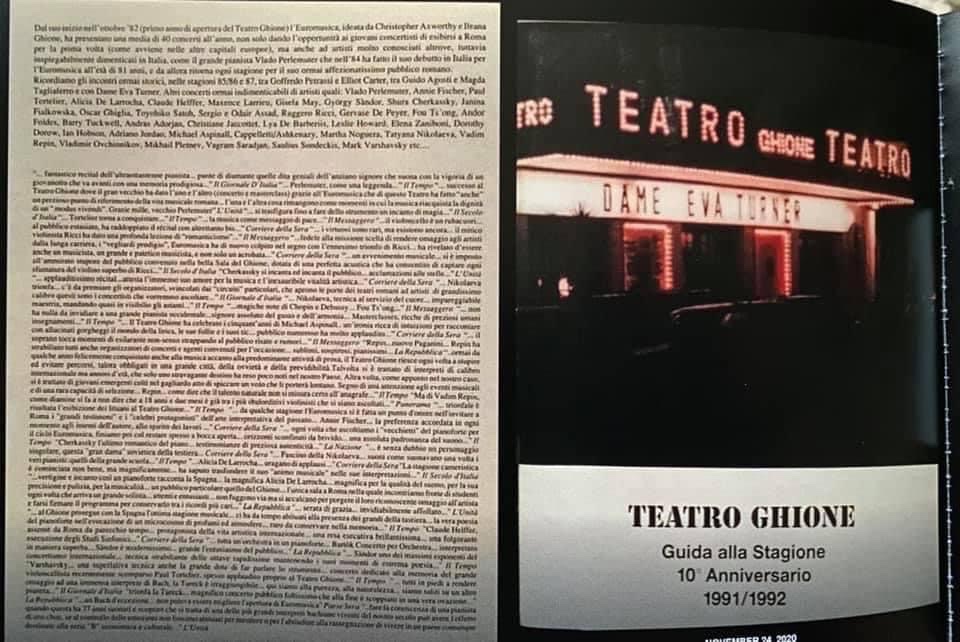
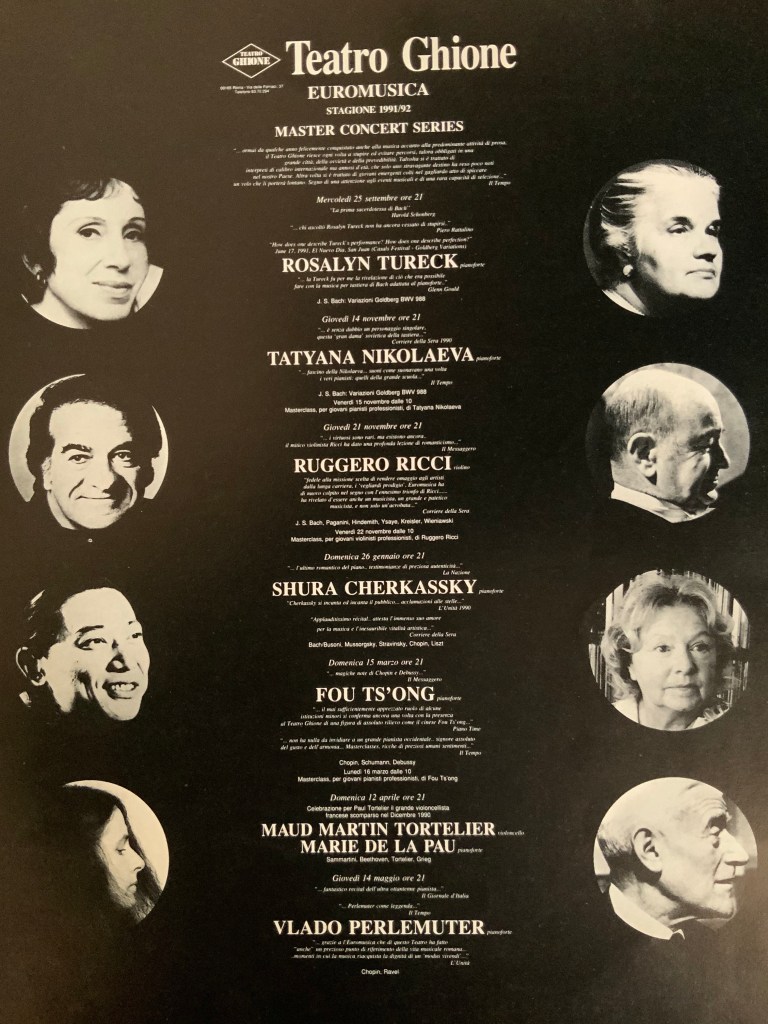
Rosalyn Tureck with Ileana Ghione at home in Circeo

The historic return in Rome to the concert platform of Rosalyn Tureck

Philharmonia London 1959

Https://youtube.com/user/RadioRomaniaMuzical