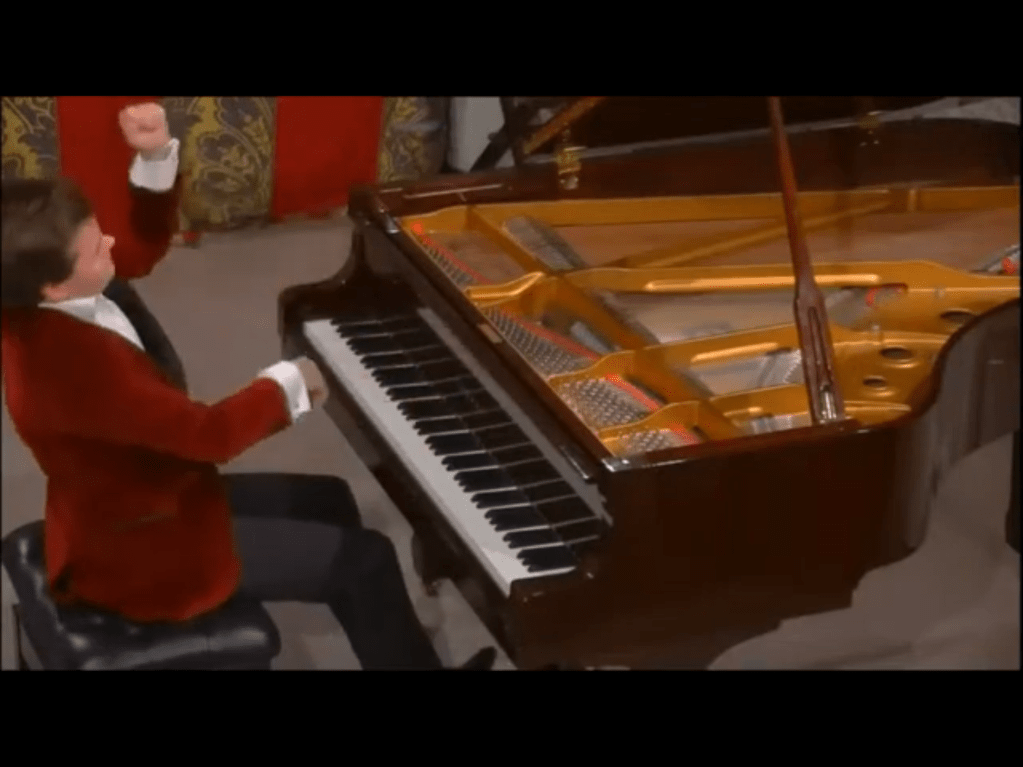
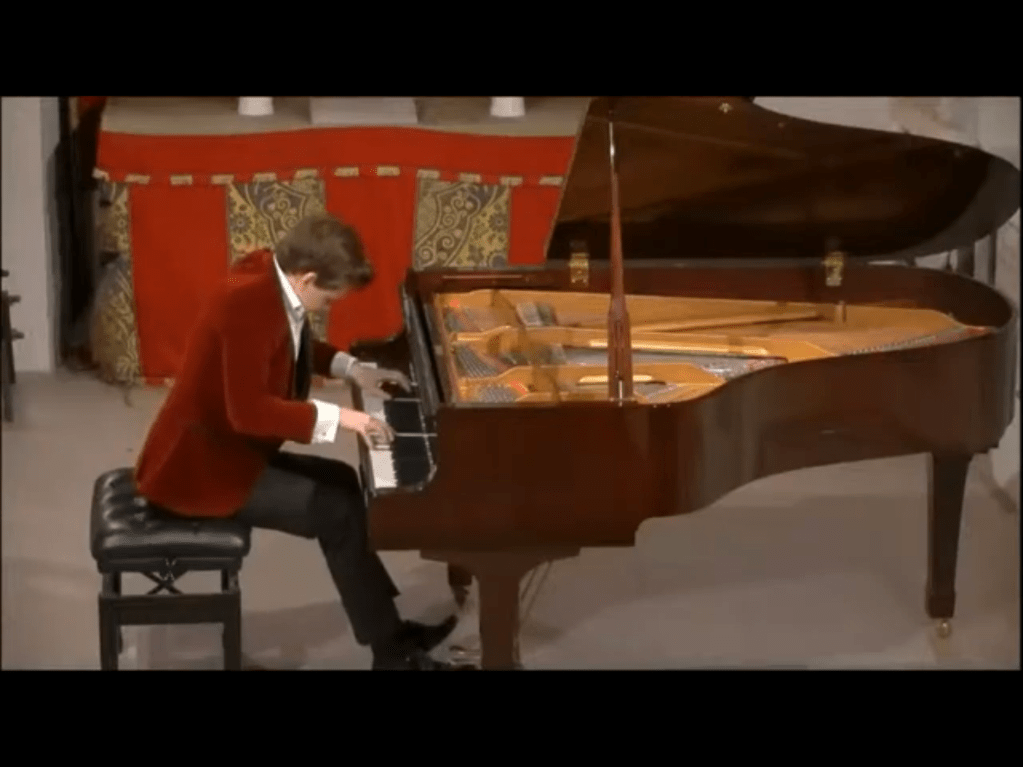
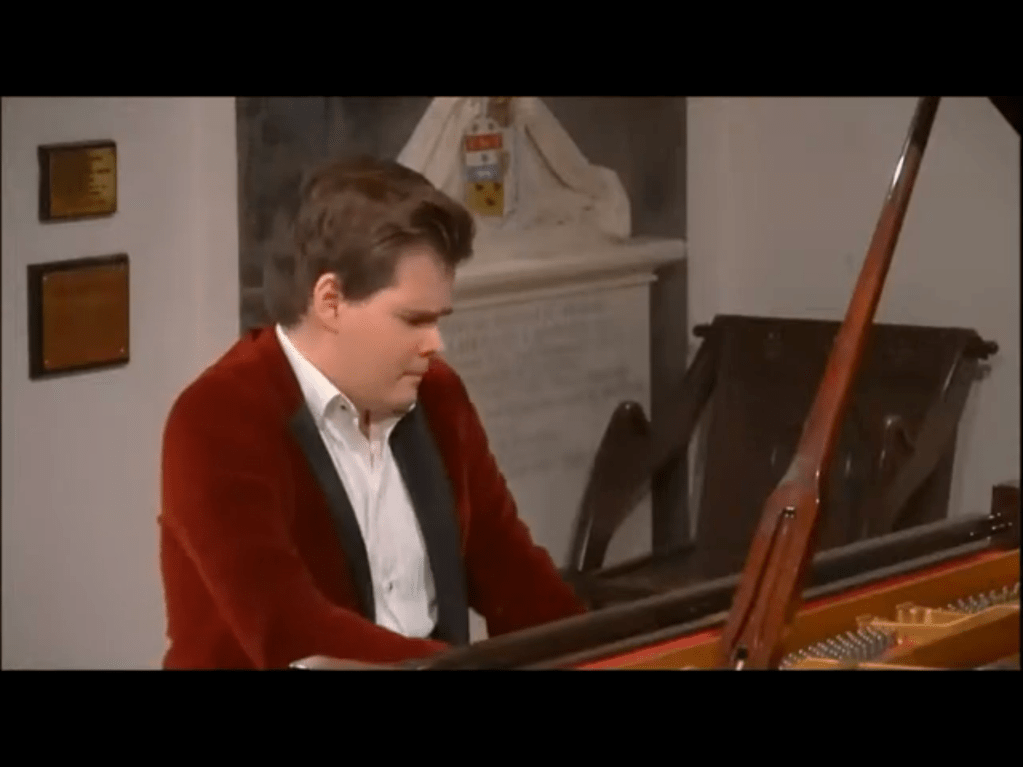
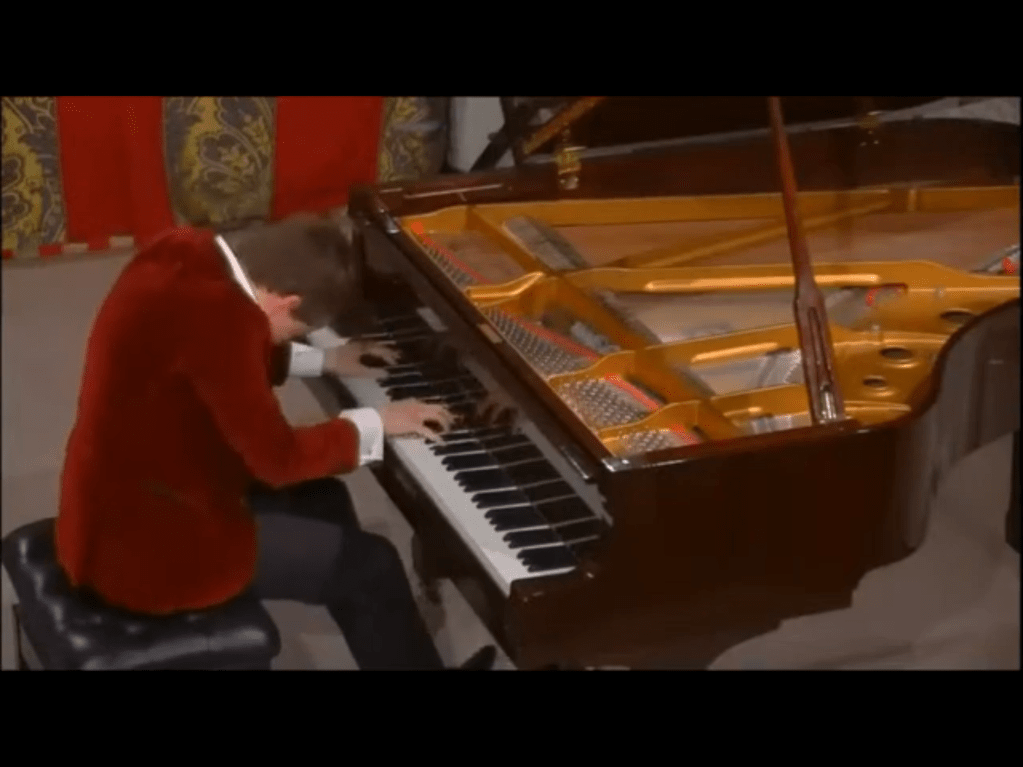
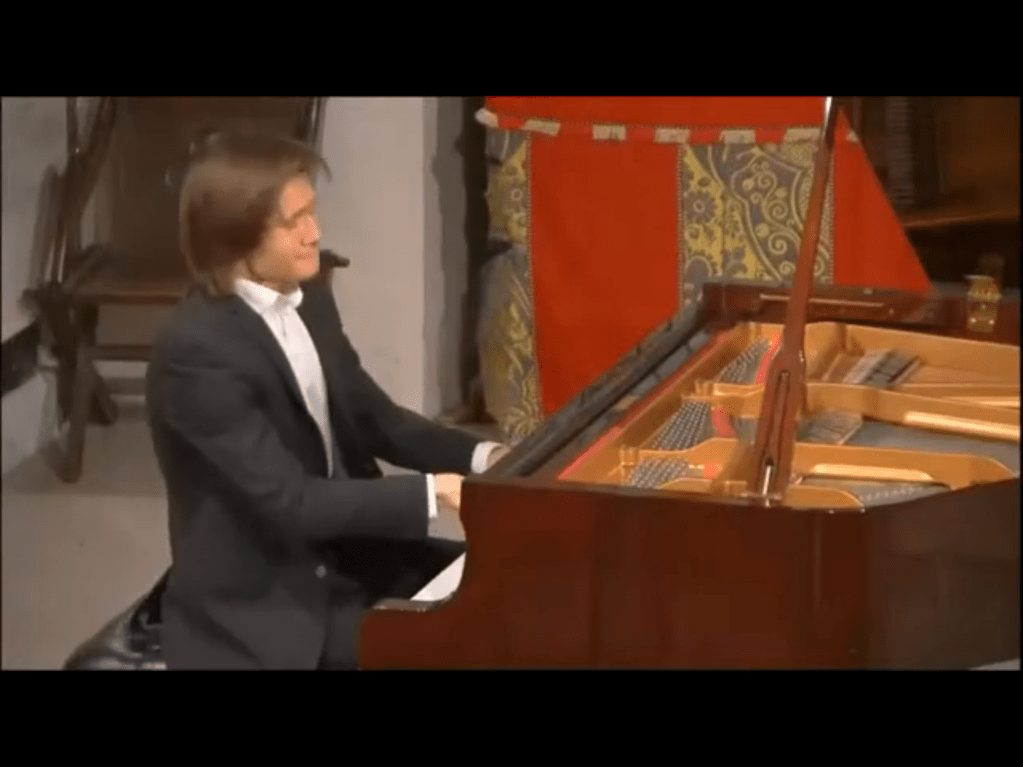
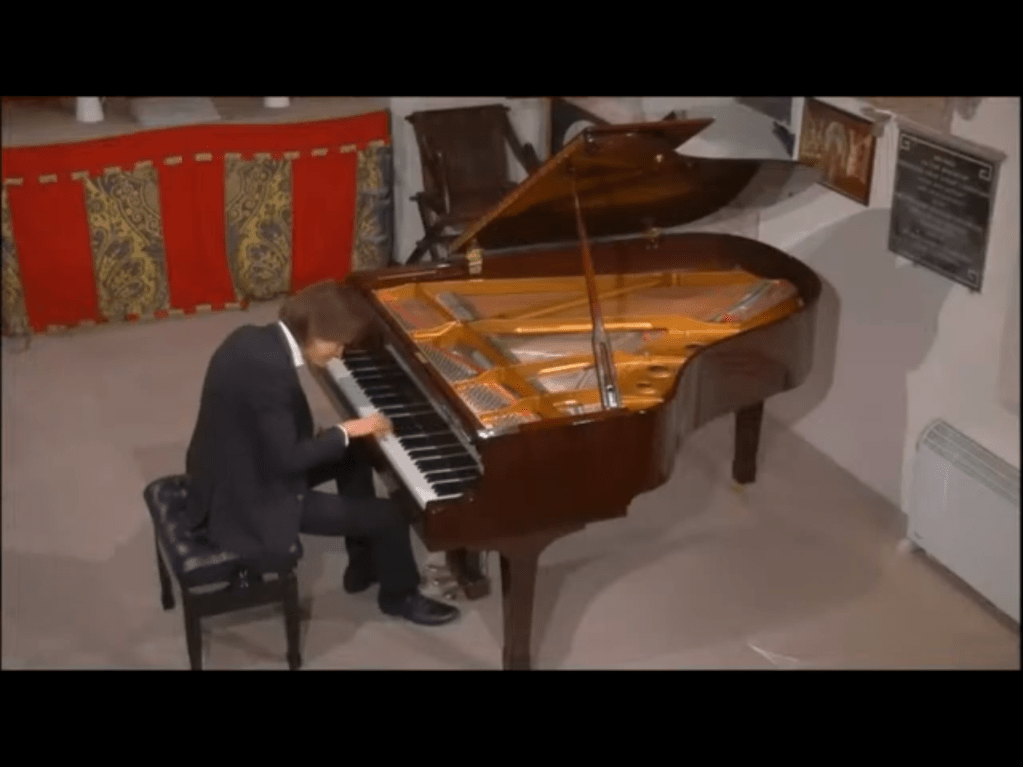
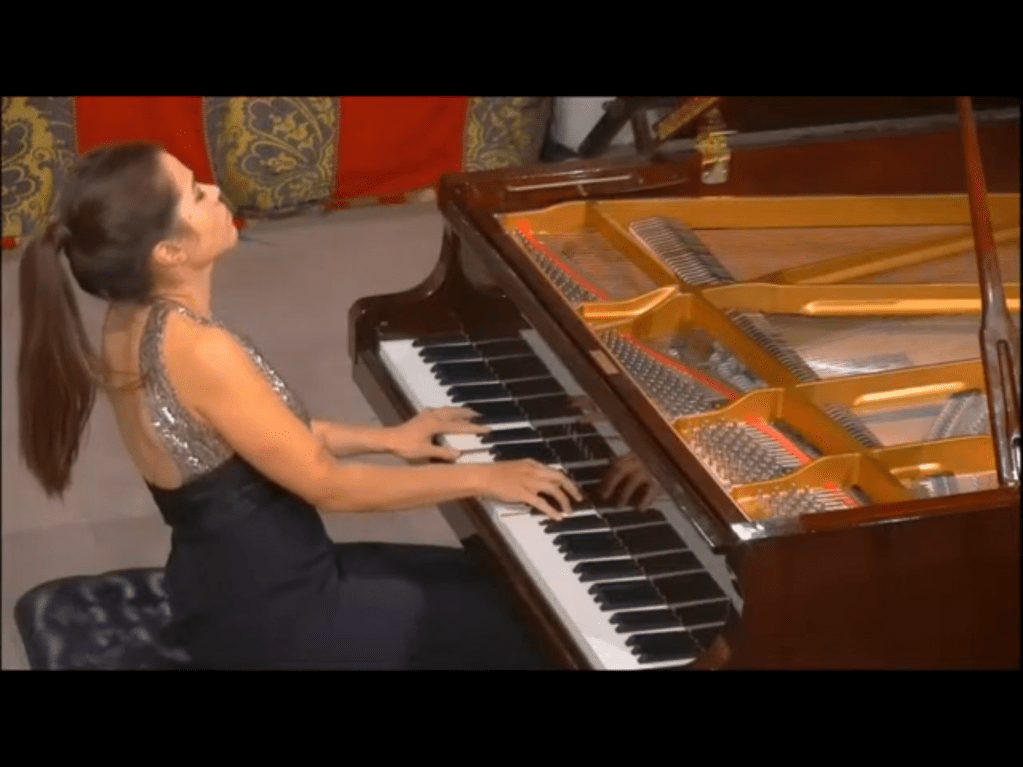
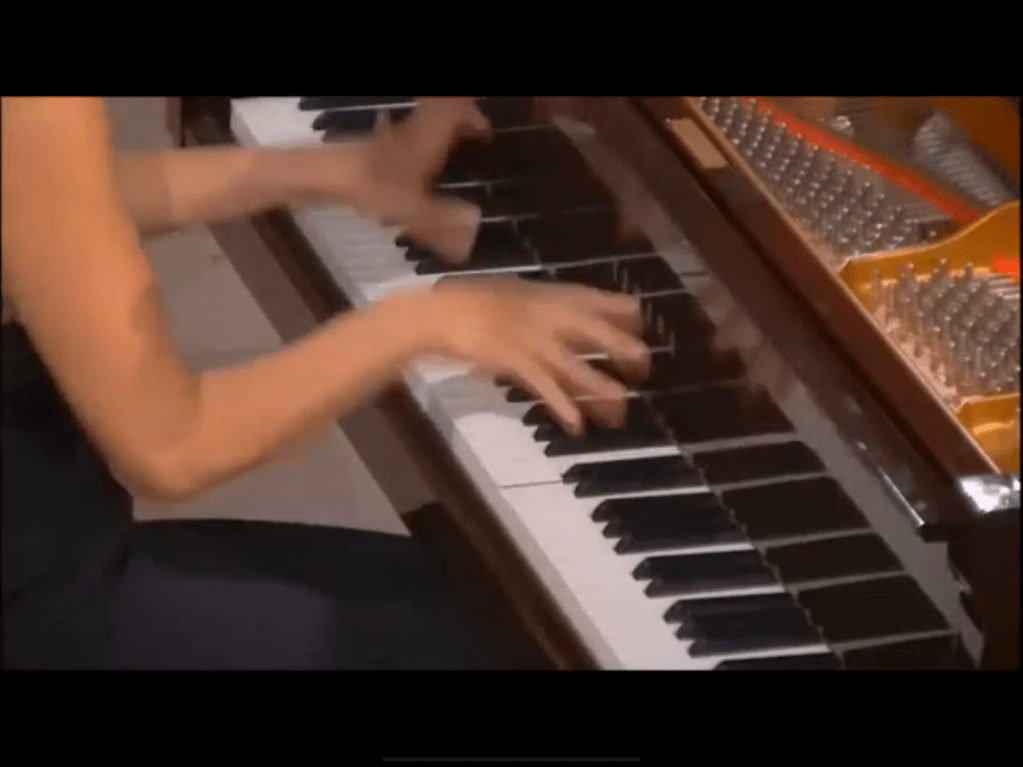
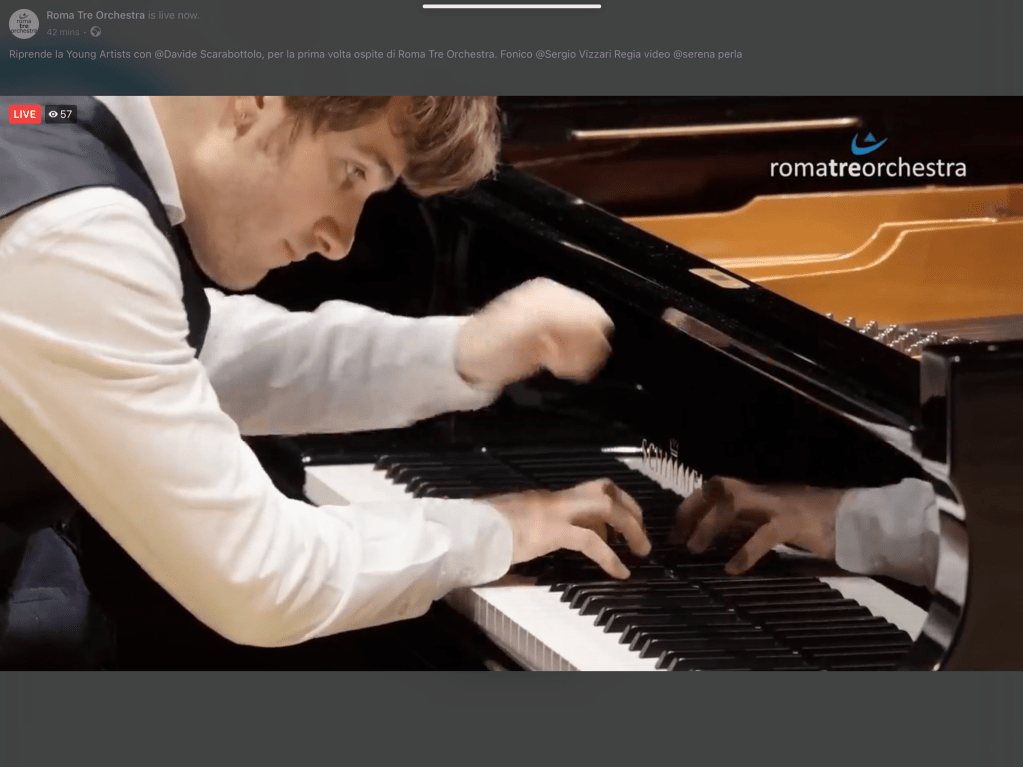
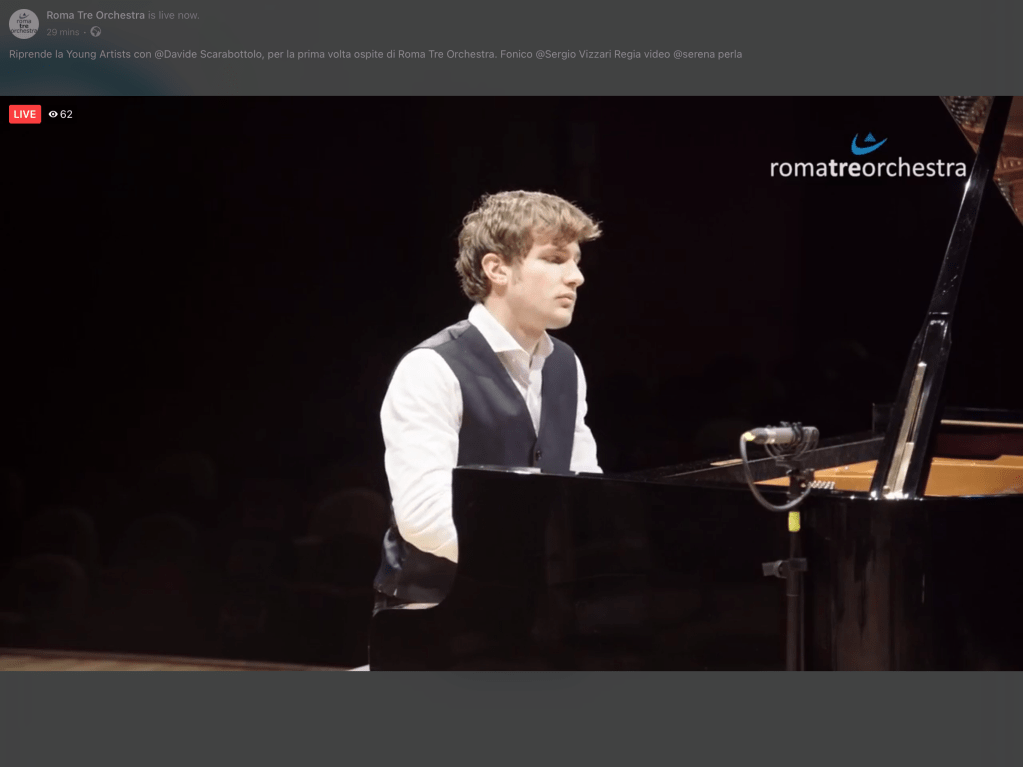
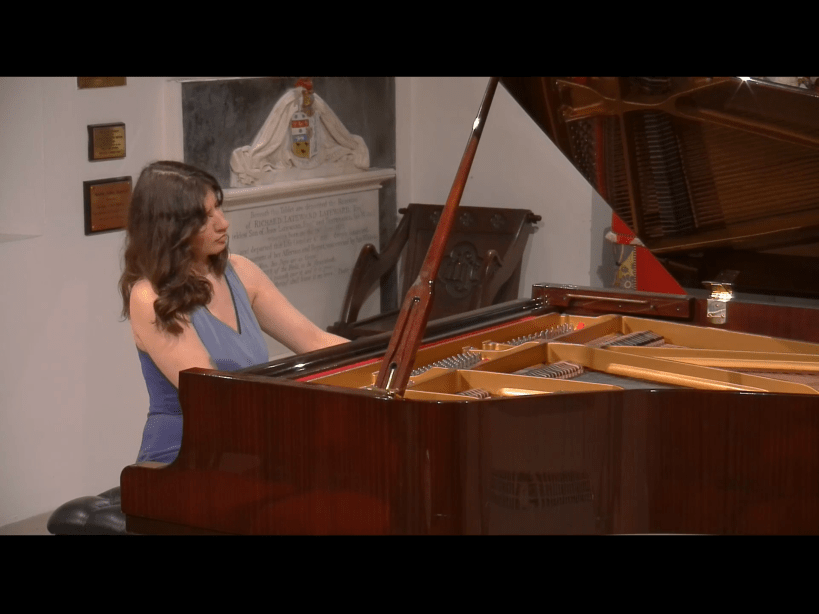
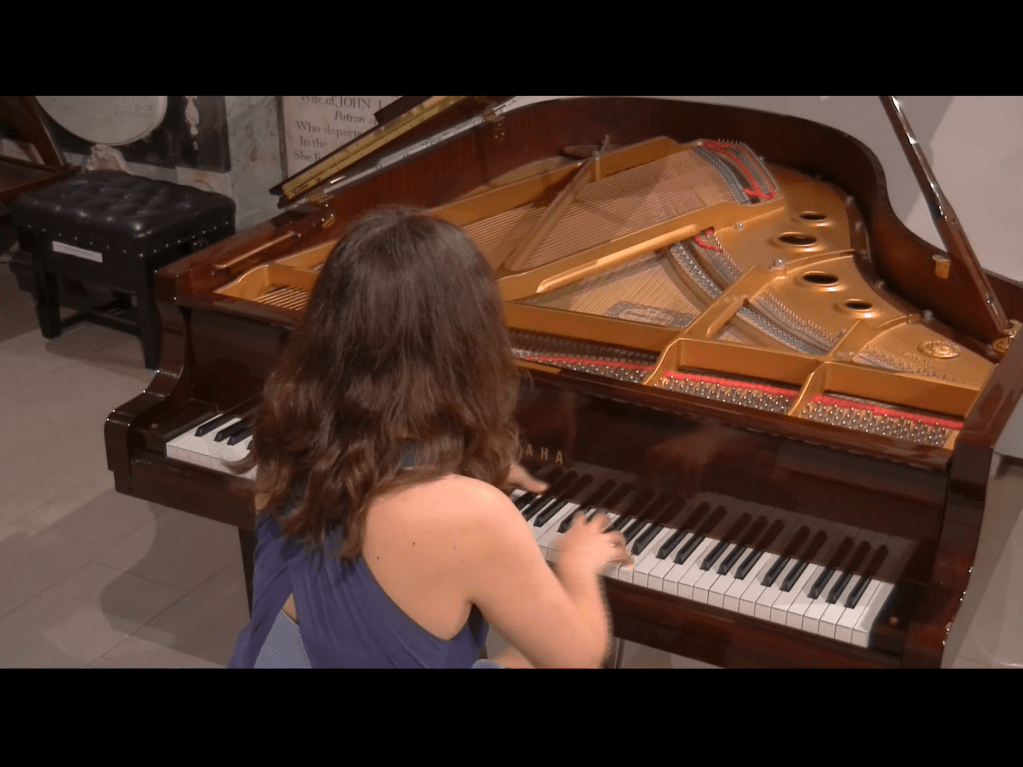
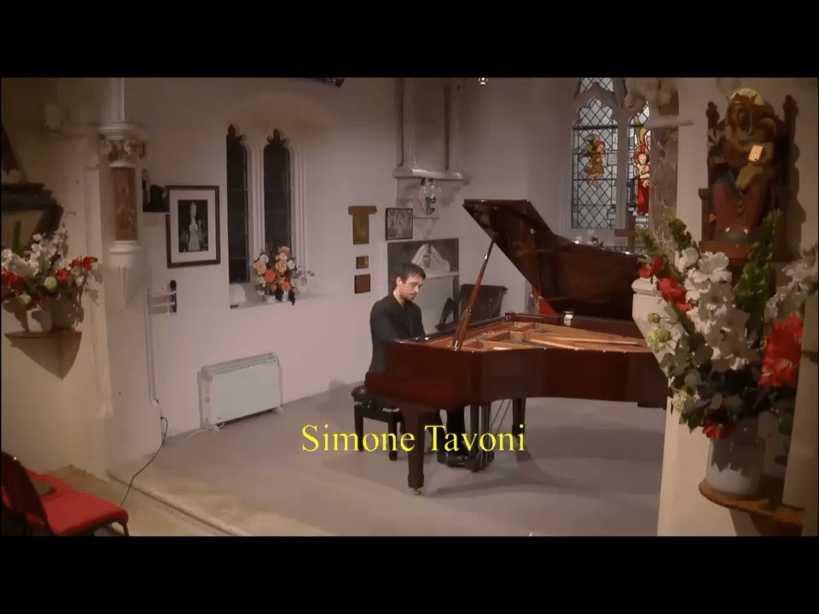
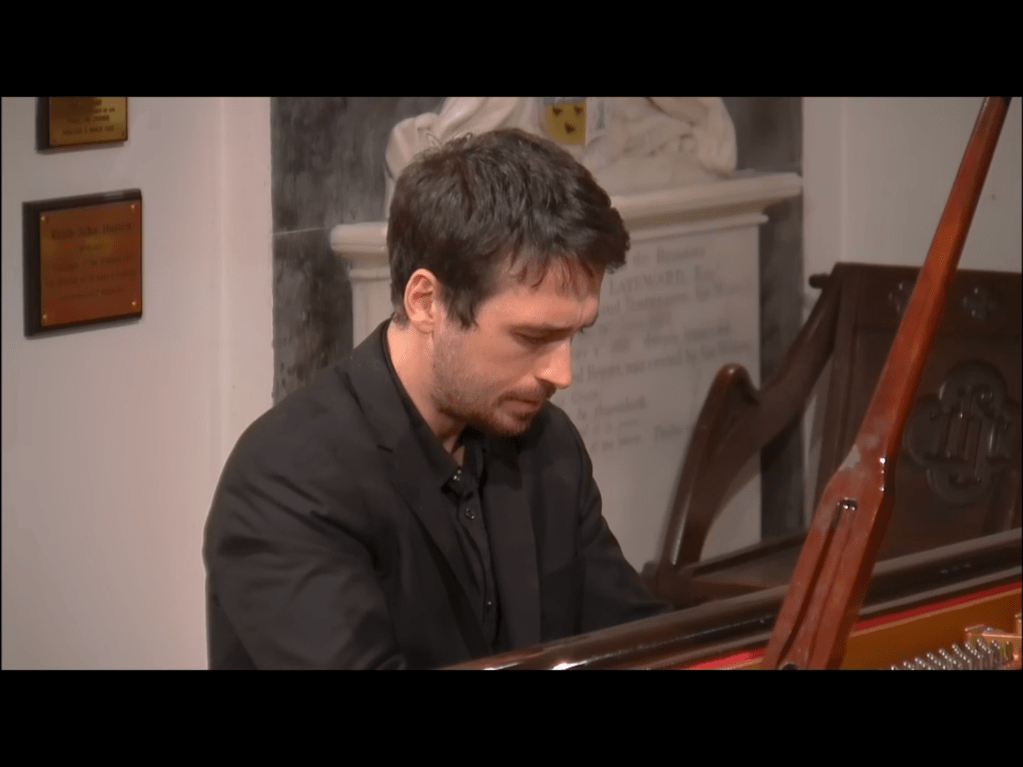
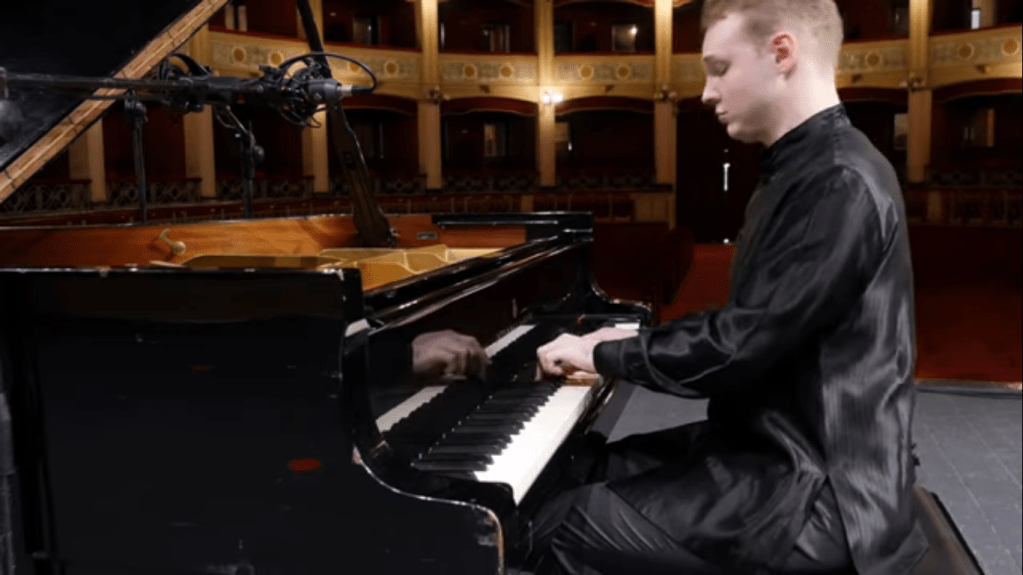
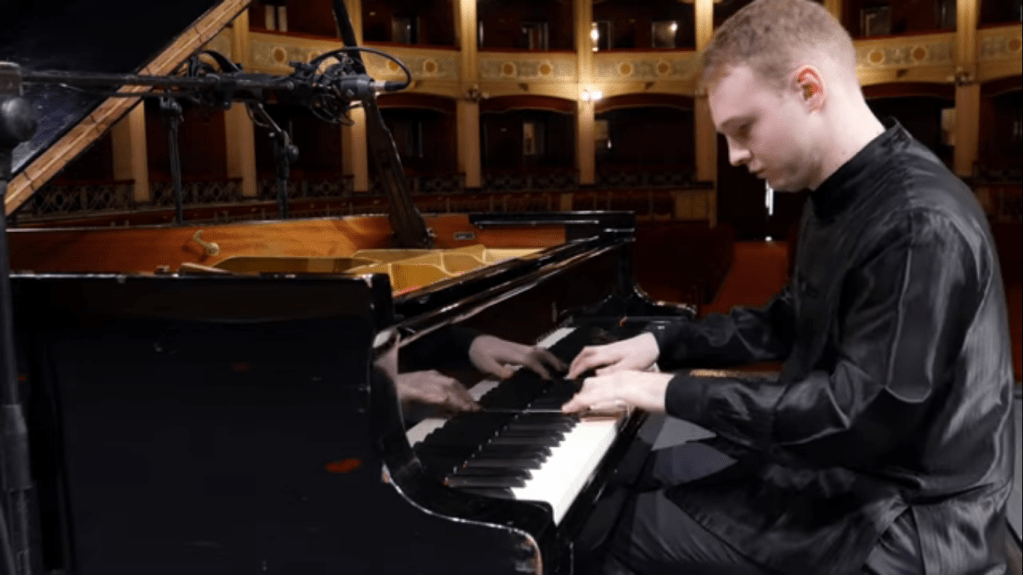
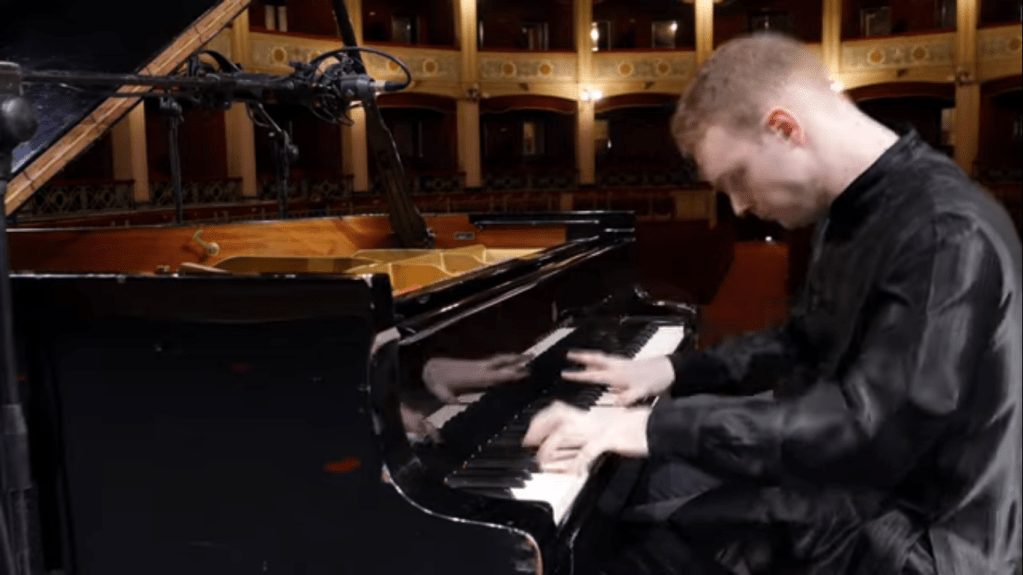
Inon Barnatan takes the Wigmore Hall by storm

Inon Barnatan at the Wigmore Hall
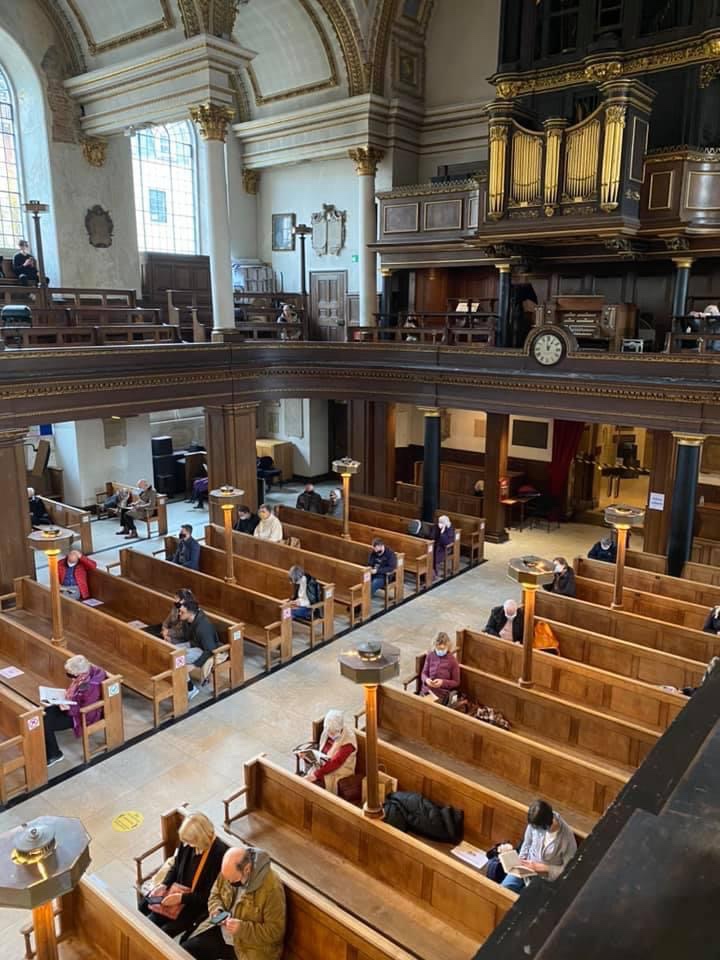
I had heard Inon Barnatan on the radio in a magical performance of Schubert G major sonata.And so I was very pleased to have the chance to hear him live in concert at last.
He has quite a reputation in America but judging by a less than half full Wigmore hall his reputation has yet to reach these shores.Who is Inon Bantanan? …….. like most of the programmes these days it does not tell you who he is or his formation but lists  the many prestigious engagements that he has coming up.This is what I was able to find out on the web though :

The Israeli pianist, Inon Barnatan, born in 1979 in Tel Aviv, started playing the piano at the age of 3 after his parents discovered he had perfect pitch, and he made his orchestral debut at 11. His studies connect him to some of the 20th century’s most illustrious pianists and teachers: he studied with Professor Victor Derevianko, who himself studied with the Russian master Heinrich Neuhaus, and in 1997 he moved to London to study at the Royal Academy of Music with Maria Curcio – who was a student of the legendary Artur Schnabel – and with Christopher Elton. Leon Fleisher has also been an influential teacher and mentor. In 2006 Barnatan moved to New York City, where he currently resides in a converted warehouse in Harlem.!He regularly performs with cellist Alisa Weilerstein.In 2014 Barnatan became the first Artist in Association at the New York Philharmonicand The New York Times listed his album Darknesse Visible as one of the best classical recordings of 2012.He has received many awards, including an Avery Fisher Career Grant in 2009 and the Andrew Wolf Memorial Award.


Image may contain: text
A programme of which the Schubert B flat Sonata was its crowning glory.
Prefaced by nine Mendelssohn Songs without Words and Ronald Stevenson’s remarkable Peter Grimes Fantasy ( or should one apply Grainger’s terminology of ‘ramble’ here?)
Concluding this prelude to the main course of the evening in true show business style with Gershwin’s sleezy second prelude and the amazingly energetic antics of Earl Wild’s reworking of ‘I Got Rhythm.’

Some commanding playing of such assurance both musical and technical.There was never a moment of doubt of what his intentions were.
Playing of complete conviction and intelligent musicianship that is rare indeed.
But it was exactly his total self assurance that precluded any discovery or feeling that anything could happen.
Etherial,magical,fantasy or kaleidoscopic sounds were not part of his vocabulary.Intellectual control,total command of the instrument and absolute respect for the score were.
Here was an artist that gave such perfect performances but one was left with the impression that our presence was superfluous!

Image may contain: 1 person, shoes
There are some artists these days that are so enormously gifted they can play perfectly all the works of Beethoven,Schubert,Mozart or even Busoni ,Prokofiev and Shostakovich.Even fly to Rome in the intervening period of complete cycles to perform the mammoth Busoni Piano Concerto.Or even give definitive performances of the Grosse Fuge for four hands in their spare time.
They are impeccabile and can and do give urtext performances of the entire piano repertoire.
But there is not a single memorable moment that one longs to cherish!

I heard just such a genius play the last three sonatas of Beethoven at 7.30 relayed live from the Wigmore Hall.I followed with the Urtext score at home and was very impressed by the perfection in every sense.There were so many people that wanted to attend he had to repeat the  performance half an hour later.A performance that was equally as perfect- maybe after a quick cup of tea!
Serkin or Arrau could never have done that!Not only they, but also the audience, would be so exhausted and overwhelmed with performances of towering commitment it would have been impossible to even contemplate a repeat.
Neither the audience or the performer could have possible sustained such a daunting prospect.

I heard Mitsuko Uchida playing the Schubert B flat in London and I then travelled thousands of miles to have the same experience in Perugia months later.In the hope to meet her and try to understand who the artist was that could create such magic and wield such power over me.
Of course I am thinking above of Igor Levit and Jeremy Denk.Inon Barnatan certainly joins their ranks……….they have a superhuman talent to play and to know so intimately such a vast repertoire but ultimately do not wield the same power as a Serkin or an Arrau.Image may contain: text

The nine Songs without Words were the most popular ones chosen from the 48 Songs in eight books.The Hunt is  one of the longest and it was played immediately with great rhythmic propulsion and shaped so beautifully it became a miniature tone poem that contrasted so well with the staccato/ legato song in F sharp that followed and was so much part of Horowitz and Ivan Davis’s repertoire.Marked leggiero with the beautiful legato melodic line added above its delicate accompaniment.It is a magical song that was played with great assurance and shape but already one became aware that he missed that lightness of touch and quicksilver sounds that can turn these well known works into real jewels that can be made to sparkle and shine.
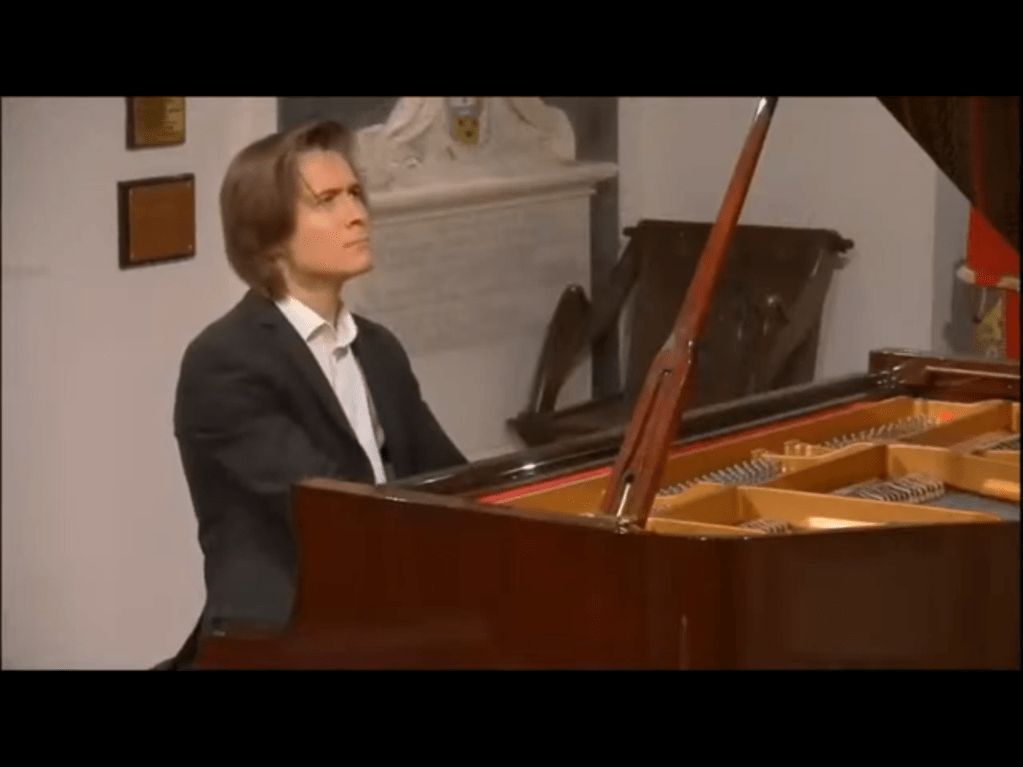
The approach to the keyboard of Inon Barnatan with his wonderfully assured fingers gripping the keys like limpets does not allow for a more etherial touch that barely dusts the keys.

It is the so called Russian school that has reminded us of the value of being able to modulate so infinately not the sounds from mf to ff necessarily but the sounds from mp to pppp.When I first heard Richter it was how quietly he could play and with what control that took us all by surprise.Generally the beauty of the hand movements and the flexibility of the wrist allow the music to be shaped with such colour and naturalness.The shape of the hand movement could almost be the same shape as the music on the page or like a  conductor painting the music in the air like a  painter would with a brush on the canvas.Image may contain: 1 person, standing, shoes, suit and indoor

Inon Barnatan has a different type of approach that somewhat limits his choice of colour.In these pieces by Mendelssohn in particular they could sound a little colourless  and  as one of the public said rather hard and without charm.Nevertheless it was remarkable playing of great assurance and of a musician of great intelligence.There were many things to admire from the passionate outpourings of the B minor op 30 n.4 to the beautifully shaped ‘Shepherd’s Lament.’The extreme beauty of op 62.n.1 ‘Maidufte’- a  song spun with great expression that excluded any sentimentality.The imperious march of op 62 n.3 ‘Trauermarsch’that dissolved so magically was contrasted with the ‘Bee’s wedding’played with such clarity and assurance but lacking in that last ounce of charm and wicked sparkle that can be so persuasive as it was in Rubinstein’s hands. There were beautiful sonorous sounds in the ‘Venetian Gondola Song’with a crystal clear melodic line of such melancholy and sadness.The ‘Elegie’ was played with a glorious outpouring of melody contrasting so well with the final joyous dance of op 62.n.2.These were fine musicianly performances but just missing that ultimate touch of  magic because of a lack of a full  kaleidoscopic range of sounds.

The bleak and bare world of Stevenson’s Peter Grimes Fantasy was ideal territory for him and there were suddenly some magical colours and transcendental playing of great conviction.Magical pedal effects and even some plucking of strings as a whole fantasy world of sound was suddenly opened up.The final chains of rising and falling thirds were pure magic and created the atmosphere that Britten had conjured up with his masterpiece of Grimes. The work that created such a stir just three months before the end of the second world war when it was premiered in London at Sadlers Wells in June 1945(the war finished in September).Image may contain: 1 person, on stage, standing, shoes, living room and indoor

The sleezy Prelude n.2 in C sharp minor missed that wonderful fluidity that  real jazz pianist’s have up their sleeve.Talking of which it was his no holes barred performance – elbows at the ready-of Earl Wild’s  ‘I got rhythm’that  brought the first part to a glorious show busy end. His transcendental rhythmic command, total assurance and evident ‘joie de vivre’  was intoxicating indeed.

After the interval the last of Schuberts great trilogy written just a few months before his death.Here he found a much more fluid sound and there was a great outpouring of emotion and passion.His very solid musicianship gave great architectural shape and weight and it was in many ways a remarkable performance.

But it was a Schubert with his feet very much on the ground.Etherial,magical and subtle phrasing were not for him.This was a more intellectual approach of great involvement like I remember from Serkin.

One is searching for that elusive unknown world and the other lives in a established world of certainty .The difference between a believer and non believer one might say.Both are valid when played by artists that are convinced and can be convincing.The search though is more memorable than that of the arrival.I am surprised he did not play the repeat in the first movement that for an intellectual musician of his stature I would have thought a necessity.The slow movement was monumental indeed played with masculine sentiment that excluded any sentimentality of falseness.The scherzo was played with a very smooth legato and with great rhythmic energy.The last movement was played with almost pastoral calm that contrasted so well with the passionate outbursts that dissolved into the seemless song which seemed to pour from Schuberts pen with such spontaneity.

In many ways a great performance of one of the masterpieces of the piano repertoire.

The transcription of Bach’s ‘ Sheep may safely graze’  was offered as an encore after much insistence from a small but very enthusastic audience. It was here that he revealed some of the magic that had eluded him earlier.The final whispered confession  floated into the auditorium and held us all spellbound long after the final notes had resounded.

Image may contain: 1 person, shoes

+3

Hao Zi Yoh flying high at St James’s Piccadilly- Kind Hearts and Coronets!

https://christopheraxworthymusiccommentary.wordpress.com/2018/09/01/hao-zi-yoh-at-regent-hall/https://www.facebook.com/notes/christopher-axworthy/hao-zi-yoh-at-regent-hall/10155929756752309/Image may contain: sky and outdoor

I have heard Hao Zi Yoh  play many times and I am always glad to attend her concerts in the many churches and halls that give a platform to these gifted young performers whilst they are perfecting their quite considerables skills here in London.

I was rather surprised when Hao Zi sent me a last minute invitation to a recital in St James’s Piccadilly.

These are uncertain times with the Corona virus taking an ever stronger hold of our lives.In fact a concert by a chamber orchestra from the Guildhall School of Music and Drama had been cancelled as the School has also been closed due to this scare.A scare that is fast dominating our lives ,not only for the uncertainty and worries for health issues but also for our educational,cultural and spiritual welfare.Could Hao Zi take over at the last minute to offer some music to the vast audience that still overflows this most beautiful of churches a stone’s throw from Piccadilly Circus?No photo description available.

However out of bad comes some good and we were able to applaud Hao Zi’s quite considerable artistry before she embarks on a tour of Spain for the Keyboard Charitable Trust .Her programme for Spain consists of two of the most difficult pieces for piano:Feux Follets and Gaspard de la Nuit.Today she had decided to offer works by Haydn,Brahms and Chopin .Musically equally  as demanding though.

The little Haydn Sonata in C Hob XVI-48  in two movements.It immediately established her musical credentials demonstrating her intelligent musicianship and untrasensitivity.The first movement ‘Andante con espressione’ could not have been more expressive but within a rhythmic framework with some very subtle phrasing.So beautifully and delicately shaped with such fantasy but without ever loosing sight of the overall shape and direction of this remarkable movement.She immediately drew us in to her extraordinarily sensitive  world of fantasy and exquisite piano playing.The Rondo I found a little too fast for this church acoustic and the faster passages lost something of that precision of which other lady performers like Maria Joao  Pires and  Alicia de Larrocha were masters.

Her playing did in many respects though remind me of the playing of Maria Joao Pires for its clarity and delicacy allied to extreme musical intelligence.

.Image may contain: one or more people and indoor

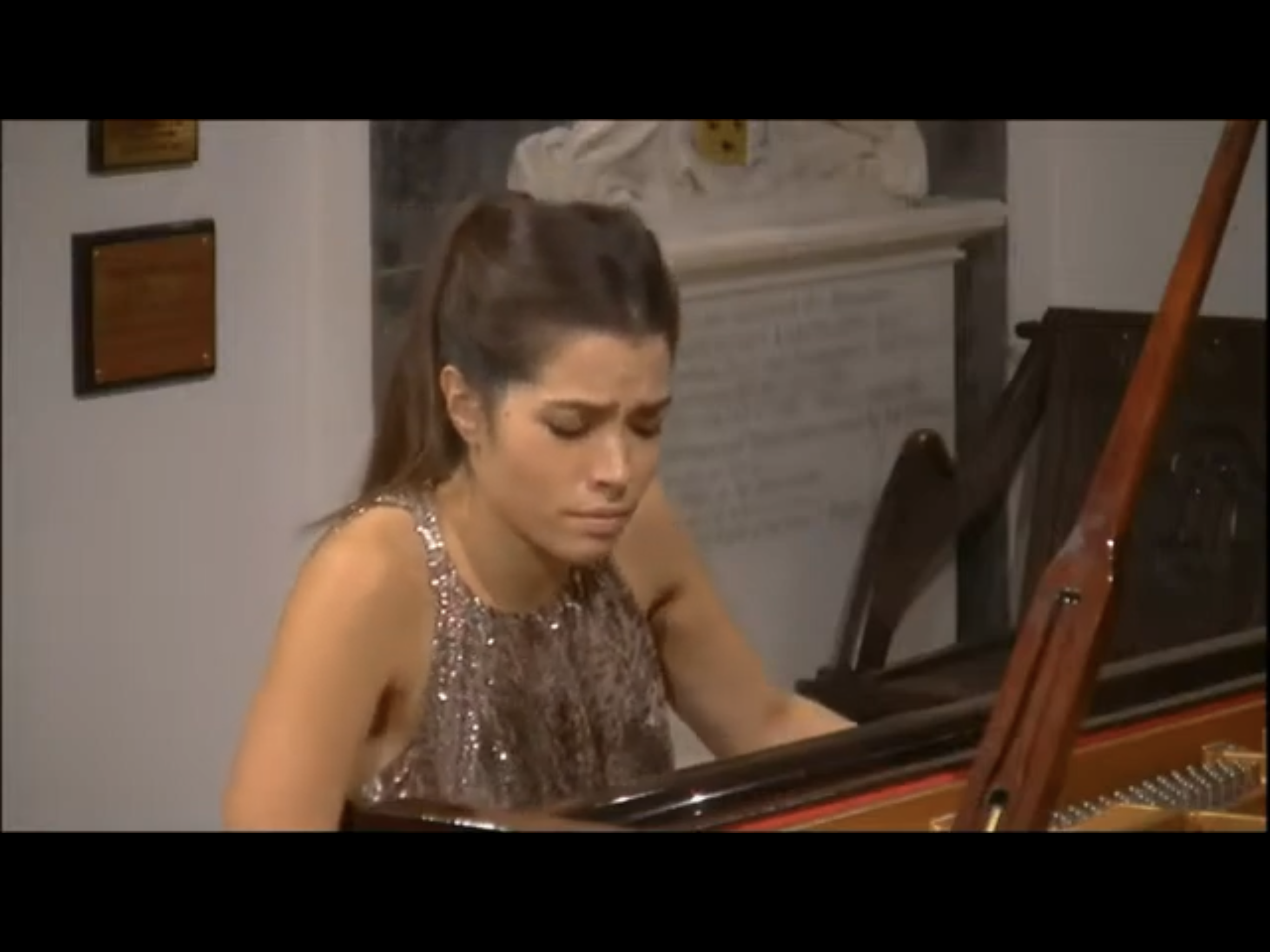
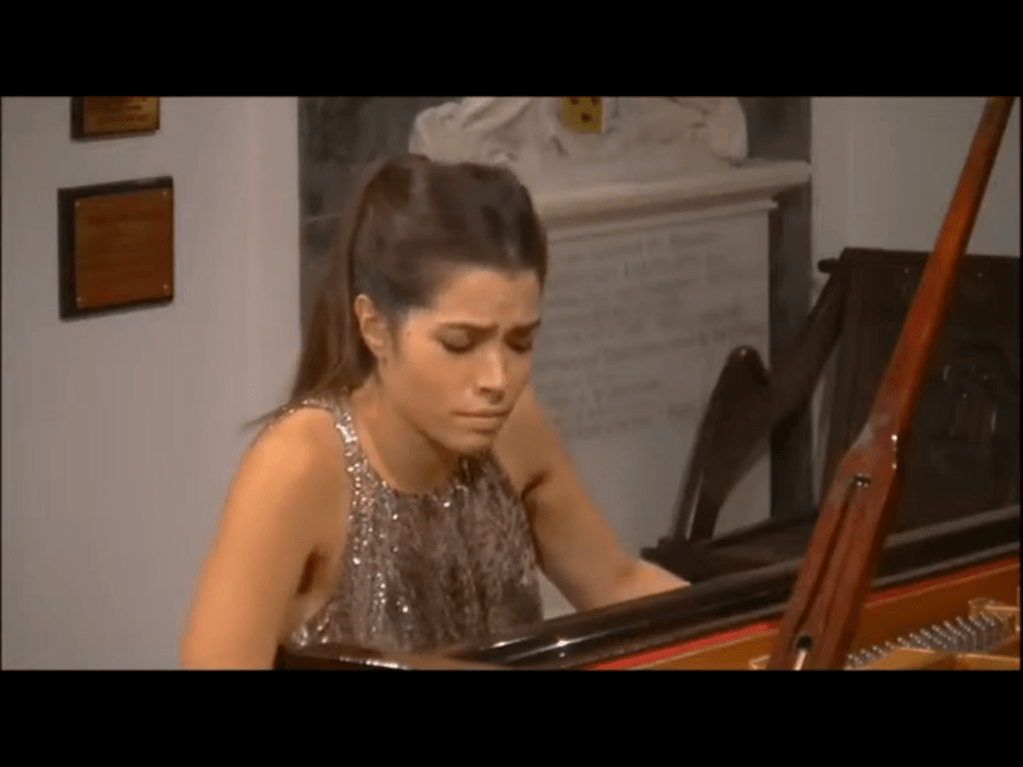
And it was this very rare talent that allowed her to shape the four Klavierstucke op 119 by Brahms with such sumptuous sound.Ranging from the most delicate to the most robust but never loosing that radiance and feeling that the roots are very firmly placed in the bass.

This was the last work for solo piano by Brahms and received its premiere in London in 1894 .Brahms had written to Clara Schumann about the elusive first Intermezzo in B minor: “I am tempted to copy out a small piano piece for you, because I would like to know how you agree with it. It is teeming with dissonances! These may well be correct and can be explained—but maybe they won’t please your palate, and now I wished, they would be less correct, but more appetizing and agreeable to your taste. The little piece is exceptionally melancholic and ‘to be played very slowly’ is not an understatement. Every bar and every note must sound like a ritardando, as if one wanted to suck melancholy out of each and every one, lustily and with pleasure out of these very dissonances! Good Lord, this description will surely awaken your desire!”Clara Schumann was enthusiastic and asked him to send the remaining pieces of his new work.

Hao Zi  brought a beautiful stillness to this first Intermezzo. Revealing some of the extraordinary  inner secrets that Brahms had obviously added for  those like his adored  Clara with the soul to seek them out!It is extraordinary how the inner meaning of these pieces as in those of Chopin transcends all frontiers. We can find musicians a long way from where these pieces were written  with a deep understanding of their inner depths.

I remember Fou Ts’0ng explaining that the beauty in chinese poetry was so similar to the poetry found in the works of Chopin.And so it was today that this beautiful young Malaysian pianist could understand and transmit so movingly these last romantic confessions of Johannes Brahms.The second Intermezzo in E minor was played with a great sense of character and range of dynamics as it revealed a real miniature tone poem.The third in C major, that was so much a piece for the hands of Curzon, was played today with such infectious rhythmic energy and subtle colouring with the ending thrown off with the same beautifully knowing nonchalance as Curzon.All with a minimum use of the sustaining pedal and it gave a clarity to music that can in so many lesser hands be a cloudy mess.The mighty Rhapsody in E flat revealed the enormous sounds that this waif of a pianist had up her sleeve when needed.A wonderful sense of balance allowed the magical central lyrical section a unique voice that took us into the exhilarating almost orchestral sounds of the finale as the excitement mounted to almost fever pitch.

Image may contain: indoor

Three mazukas op 59 were played with such subtle understanding and delicacy.It was almost a shame that applause interrupted the sheer magic  created before the opening of the Fourth Ballade op 52.

This was a monumental performance of one of the greatest works in the piano repertoire.It was played with an aristocratic nobility but a sensitivity to sound that made one realise what Cortot meant when he said:’ avec un sentiment de regret’ at the return of the opening heartbeating repeated notes.A magical cadenza brought us to the main theme seemingly lost until it found its way with such swirling mists of sound and a gradual magisterial build up to the final explosion and the five redeeming chords that seem to find such peace after  such a storm of romantic passion. The transcendentally intricate coda that follows was indeed breathtaking in Hao Zi’s hands.It was played with an unrelenting forward propulsion that did not exclude the most intricate shaping of this extraordinary after thought of pure genius.

Christopher Axworthy noting the details of the encore played by Hao Zi Yoh at her piano recital today as part of the
Concerts at St James’s Church, Piccadilly.
In fact “A Distant Voice in the Rainforest” by Ng Chong Lim 
Documented  by Geoff Cox the tireless promoter of young musician without whom we would never know where and when they were all playing.
Image may contain: 1 person
Image may contain: Hao Zi Yoh and Geoff Cox, people smiling, beard and glasses
Geoff Cox- caught by me this time –  a retired chemistry teacher who has become the tireless PR man of  so many young musicians.
An extraordinary encore for an extraordinary concert.The piece by a co-national had her wailing and flaying her arms as she produced such
magic both inside and out from this true Pandora’s box.
. Image may contain: one or more people, people sitting, people playing musical instruments and indoor
I just wish I could hear her Feux Follets and Gaspard in Spain next week.I am sure that the Corona virus will not have spread its wings as far as the wilds of Malaga so she can enchant the local people with the same magic with which she enchanted us today.


Julien Brocal at the Wigmore Hall on Wings of Song

Julien Brocal

at the Wigmore HallImage may contain: one or more people, people sitting and indoor

                                                                              PART 1
In 2008 I was asked by a dear friend and fellow student of Guido Agosti: Constance Channon Douglass to stand in for her on the jury of the Rina Gallo  International Piano Competition in Monza.
I do not usually accept those sort of engagements as I feel only those that can play equally as well as the contestants should be asked to judge them!
But for Connie one could never say no either!Image may contain: 5 people
Ileana Ghione,my wife with Constance Channon Douglass Marinsanti with husband Cesare .Lydia Agosti and husband Guido centre and right
I have for almost 30 years created Euromusica in Teatro Ghione in Rome that has given an average of 50 concerts a year.No photo description available.
A Wigmore Hall type venue that was so useful before the opening of the magnificent concert halls of Renzo Piano.
So many musicians from the legendary to the aspiring, from Vlado Perlemuter to Angela Hewitt and Roberto Prosseda who could find  no space in Rome.
They were never turned away from my doors  where we welcomed them all with open arms.
Nearly all are now flying high in one sense or another!Image may contain: night
Image may contain: 7 people, people smiling
My very first concert that I attended as a child in 1962 was Joaquin Achucarro in Rachmaninov second piano concerto with Charles Mackerras and in over 50 years of concert going has included most of the greatest artists both large and small.So I think I have acquired a certain taste that allows me to appreciate great talent when it presents itself.
There was in 2008 a performance of Schumann Carnaval in the competition in Monza that immediately struck me for its fantasy,colour and understanding, combined with  youthful vigour and passion.
A young frenchman by the name of Julien Brocal gave this very fine performance.
He did not pass to the final as the circus element on these occasions does not always suit the sensitivity of all the aspiring participants.
He asked me afterwards what he should do next?
How could he advance and allow his talent to mature in order to enter the profession and share his music with more people?
We discussed various avenues that he might like to explore.
And then quite a few years later I saw that he was performing  in concerts with Maria Joao Pires.Concerts that in using her great name and following she very generously shared  the platform with young artists whom she admired and who only needed experience of playing often in public. Concerts where Maria Joao shared the platform with one or at most two young artists.Alternating  their performances with hers each sitting on the platform whilst the other performed.
Discussing and enjoying making music together.
It was in Oxford a few years ago when Julien played the Mozart Double Concerto with her and the Oxford Philomusica under Marios Papadopoulos.On going backstage to congratulate Julien I thanked Madame Pires for all that she was doing to help these young artists.
She  replied quite simply :”But it is what they do for me and I should thank them!”
Another great woman Martha Argerich also similarly shares the platform with young  friends as they share music together with their doting public.
And now Julien has his first CD and has already been spotted by the Chopin Society where he was invited to play last year.
At last he has arrived at the hallowed Wigmore Hall flying high with his own wings.
Image may contain: text
Image may contain: one or more people and text
An announcement at the beginning of the Wigmore concert by a charming young lady to say that we would get more than our moneys worth as there was an addition to the programme!
The concert would now commence with a piece by Mompow…………….?!
The title in spanish was of course equally unintelligible
It had no matter- a rose is always a rose.
And they were the most beautiful multicoloured flowers of ‘The Fountain and the  Bell’ by Mompou(sic).
It was a piece that immediately took us into a special world – the world of Julien Brocal that I remember from all those years ago in Monza.
It was a magic sound world of such kaleidoscopic colours.
It opened our taste buds and it made us aware of every slight nuance of sound as Julien, crouched over the keyboard, coaxed the most wondrous sounds out of this piano.
The same piano that I had heard in the equally wonderful hands of Graham Johnson just a few hours before.
Leaning back too as he allowed his hands to caress the keys bringing out bell like sounds that belied the fact that the piano is a percussion instrument where hammers simply hit the strings.
It takes a  very special musician that can convince us otherwise.
They say miracles never strike twice but with Graham and Julien that  certainly was not the case today.
As Stephen Hough says in his new book of ‘Rough Ideas’:’The music of Federico Mompou is the music of evaporation.The printed page seems to have faded,as if the bar lines,time signatures,key signatures,and even the notes themselves have disappeared over a timeless number of years’
Musical Interlude:
Anna Huntley and Graham Johnson

at the Wigmore Hall .”Confinememt and Freedom :women abandoned and on the open road” was the title of an hour of sublime music making.

Graham playing with the lid fully opened as Anna Huntley’s sumptuously creamy rich voice floated into the hall with a communcative immediacy that ranged from the overwhelming to the most delicately whispered confessions.

As Graham has often said ‘I leave the piano lid fully open because I know how to drive.’
Infact with Graham in the driving seat Anna could allow herself all the freedom that her quite considerable artistry deserves.
An encore of Noel Coward had all the subtle innuendo and style that was at the bottom of Cathy Berberian’s fairy garden.
With both artists enjoying each others company an hour together passed all too quickly but was indeed to cherish.
Graham Johnson with Linn Rothstein – where would we all be without them?
                                                                                            PART 2
And so Julien had prepared us for the main menu…just as the great pianists of the past would improvise interludes between one work and another.Preparing the way and making sure that our ears were ready and truly thankful for what we were about to receive!
In fact it was a beautifully fluid Mozart that at times with his care not to produce percussive sounds we missed that absolute precision of which both Pires and De Larrocha were masters.One could almost say that he loves the music too much and in his attempt to shape the phrases he gave himself a little too much freedom.The music lost its sense of forward propulsion and inner rhythmic energy.
The legato of the Andante cantabile was extremely beautiful as he crouched over the keyboard to find the whispered secrets within.
The Allegretto grazioso too suffered a little from this lack of absolute, almost clockwork, precision that Schnabel  described so well as :’Too easy for children and too difficult for grown ups!’
It was in the Bach G minor English Suite that he came into his own
A rocksteady pulse allied to his great sense of characterisation.
An almost hypnotic sense of rhythm gave great architectural shape and allowed full range to his extraordinary sense of imagination and  colour.
A beautifully fluid Allemande and the rhythmic propulsion of the Courante all leading to the very heart of this Suite which is the Sarabande.
Played with such subtle colours and with great aristocratic bearing that was indeed very moving.
The Gavotte seemed a little too fast  but contrasted so well with the childlike simplicity of the whispered Musette.
I thought the Gigue could have been more carefully articulated but this was a very personal vision that was totally convincing.
It was the vision of a real artist and thinking musician.
His magnificent performance of the 24 Preludes held his audience spellbound on a journey of such variety,passion and rhythmic drive allied to moments of sublime beauty and calm.
It will live with me for a long time to come.
Fou Ts’ong describes them as 24 problems but in Julien’s hands they were 24 jewels in a crown of such radiance I doubt the Wigmore Hall has resounded with a  performance of this stature for a long time.
The very leisurely opening contrasted with the very dramatic lento where a whole world of emotion  was envisaged  in just one page.
The joy of the vivace where the melodic line floated on a wave of sound was followed by the touching simplicity of the E minor Largo.The fifth appeared out of the last chord leading into the poignant B minor Lento assai that in turn ended so delicately to prepare the scene for the innocence of the Andantino.
The passion and subtle colours of the Molto Agitato n.8 was matched by the frenzied dance of the 12th in G sharp minor.The astonishing transcendental difficulties of the 16th were played with a real Presto con fuoco where he threw himself  with great excitement into the swirling mist of notes and extracted himself with such drama after the final rising scales.
The so called ‘Raindrop’ prelude was played with such disarming simplicity as was the beautiful F sharp lento with such ravishing beauty.The A flat bell toll of the 17th had created such magic that the recitativo of the 18th came as such an astonishingly dramatic contrast.The E flat vivace of very subtle difficulty was played with a beautiful almost pastoral calm.The final chord preparing us for the great C minor prelude that has been taken as the theme by many other composers for variations.
Played with great poise and almost religious calm.
An enormous full sound never hard from the left hand octaves in the 22nd prelude  and the beautiful fluidity of the penultimate  led so well into the passionate final excitement of the final D minot Allegro Appassionato.
The final three D’s played with great dramatic effect.
A truly  memorable performance of such a well know work just demonstrated the great and original artistry of this young musician.
A sublime performance of the Andante spianato was the ideal way to thank such an attentive audience .
But as Mitsuko Uchida rightly says a great performance should live in your memory and remain with you as a joy forever.
It will certainly be that in this debut recital by Julien Brocal.
Image may contain: Julien Brocal

Giuseppe Guarrera at the Wigmore Hall

Giuseppe Guarrera at the Wigmore Hall for YCAT
Some truly commanding playing from this young Sicilian pianist.
Interesting to know he is from the school
of Siavush Gadjiev whose son Alexander Gadjiev made his London debut with such success a few months ago.The total conviction and personal aplomb of Giuseppe Guarrera was allied to such intelligent musicianship.
His sense of dramatic colouring was quite overwhelming in the menacing bell like chimes of the Andante caloroso of the Prokofiev 7th Sonata.
The sense of architectural understanding in what must surely rank as one of Chopin’s greatest works – The Polonaise Fantasie op 61 – together with a very personal style never overstepping the aristocratic taste of Chopin, was of a chosen few.He had a strange way of taking his hands off the keyboard but leaving the sustaining pedal.Listening so intently to the beautiful sounds he had created, gradually dying away, before placing his hands on the keys again.A pianist who actually listens to what he is creating is rare indeed.
The very deliberate opening of Alborada by Ravel was soon whipped up into a frenzy of quite transcendental playing.
The famous glissandi in thirds glided as swirls of sound as Ravel brought the extreme contrast between the song and the frenzied dance to its ultimate conclusion.
No encore was possible,although dearly sought by a very full hall,after the Prokofierv Precipitato.
This last movement of the Prokofiev Sonata had crept in so quietly in the shadow of the Andante before completely mesmerising us with his unrelenting rhythmic drive that verged on the hysterically hypnotic.
Hats off to YCAT for finding yet another very special talent amongst the many very fine pianists who had auditioned.
Flippo Juvarra the artistic director of the Amici della Musica
in Padua had told me not to miss this exceptionally gifted young artist at the start of a great career.
I am glad he did …….but then Filippo and I have over the past 40 years shared artists such as Vlado Perlemuter and Annie Fischer and we often exchange ideas.

He too has a young Italian musicians series and just the other day I was there with Giovanni Bertolazzi.Concerts, unfortunately, are now postponed in Padua otherwise I would have been there with Nicola Losito for the Keyboard Trust this Sunday again.

All great talents of which Giuseppe Guarrera and Alexander Gadjiev are from the Venetian school of Professor Siavush Gadjiev and are both first prize winners of the prestigious Premio Italia.

Barenreiter Beethoven of Jonathan Del Mar

I was more than curious to see Jonathan Del Mar introducing his now completed edition of the Beethoven Sonatas at the Wigmore Hall for their Beethoven 250 series.
I came across a new edition of the ‘Hammerklavier’ Sonata in the music shop of the S.Cecilia Conservatory in Rome.
Beautiful to look at as it was fascinating to consult , I gladly took it back home to study at my leisure.
Edited for Barenreiter by Jonathan Del Mar…..could it be the son of the conductor Norman Del Mar?
Listed as a Pre-concert talk to Jonathan Biss’s Beethoven 250 series.
I gladly skipped the concert but gratefully accepted the free filler.
Nice to see Leslie Howard,Stephen Hough,Julian Jacobson,Misha Donat,Bobby Chen,Ronan O’Hora and many other notable musicians come to be informed and entertained by this remarkable man.
Ever generous in thanking the late and much missed Paul Badura Skoda and Leslie Howard for their invaluable contributions as well as Misha Donat and Julian Jacobson.
It was nice to be in the company of such distinguished musicians who had come to celebrate this momentous event.
Sorry to hear that there was a change of programme in the evening concert due to illness and the promised ‘Hammerklavier’that had originally drawn me to Jonathan Del Mar had been substituted for op.109!

Uncovering mistakes in Beethoven’s manuscript

Beethoven scholar Jonathan Del Mar delves deep into the history of the composer’s manuscripts to uncover the secrets hidden within…

Beethoven’s symphonies and string quartets are accepted to be the bedrock of Western classical music; so would you be shocked to learn that the printed editions of cornerstone works such as the Fifth Symphony and the Violin Concerto are littered with mistakes? For example, the famous French horn calls after the Turkish March in the ‘Choral’ Symphony are not quite what Beethoven wrote, while the version we’ve been handed down of his last string quartet, Op.135, is a hotchpotch compared with the great man’s original intentions. 

None of this comes as a surprise to Beethoven editor Jonathan Del Mar who, for the past 20 years, has been forensically unpicking manuscripts to discover where “real” Beethoven ends and historical distortion begins. To many, Del Mar is Beethoven’s earthly representative and his Editor-in-Chief, an awesome responsibility that he takes in his stride.

“I once did an interview in Hamburg,” he chuckles, “and the journalist asked ‘if Beethoven symphonies are the Bible, are you the Pope?’ This sort of thing is nonsense. My editions are about making life easier for musicians. I have to admit that average concert-goers might not even notice my corrections. My editions were born out of problems such as a clarinetist putting his hand up and asking ‘is that an A or a G?’ Orchestral time is incredibly expensive and my work allows musicians to forget about the text and get on with the music.” 

Del Mar operates out of a beautiful house in Clapham, London, that’s stuffed to the ceiling with Beethoven facsimiles and first editions. His upstairs den has an air of 221b Baker Street as he unearths the tools of his trade – paperweights, magnifiers and slim-line torches that illuminate manuscripts from underneath.

We’re looking at the facsimile of Beethoven’s autograph score for the Choral Symphony.

“There’s some weird and wonderful things here. By the time Beethoven’s copyist has produced a neat copy, the material in the French horns [Del Mar sings what’s in Beethoven’s original manuscript] has become this. You see – there are notes tied over the barline in Beethoven’s manuscript, but not in the copyist’s hand.” 

Next we take a look at the Fifth Symphony, and again there are shocking discrepancies between the subtleties of Beethoven’s original and the published version. “You can see clearly how Beethoven has corrected and revised what his copyist wrote, but these changes have still been overlooked.”

The notation a composer deploys is distinctive, like a Picasso brushstroke. In these few bars of the Fifth, Del Mar points out just how refined Beethoven’s instructions are for his strings, with regard to how they should sustain a note. Above, the wind are stabbing away with violent staccatos. Beethoven’s notation – now restored – demonstrates a dramatic clash of material more vividly than the vanilla version that has existed since the copyist’s misreading. Beethoven’s Fifth becomes a better piece. 

“There’s a note I’ve corrected in the Choral Symphony that Claudio Abbado refuses to acknowledge,” Del Mar reveals. “But he must accept that he’s playing a note that was changed in the 1860s, some 30 years after Beethoven’s death. Simon Rattle phoned me about the French horns in the same symphony, and asked: ‘What am I going to tell the orchestra?'”

The humble copyist – the packhorse employed to copy Beethoven’s autograph score into neat – is getting bad press here. Are they the bane of Del Mar’s life? 

“I have to think myself back to the conditions under which they operated. They were working by candlelight in freezing cold conditions, probably at some ungodly hour, so it’s no surprise they made mistakes. Beethoven would get furious if they ignored his corrections. He’d scratch in the margin ‘You damn fool’, and I don’t blame him – he had better things to do.” 

That nobody had thought to correct Beethoven’s scores before is puzzling. Del Mar explains that the realisation that all was not well with present editions grew through the 1930s. But at this time Beethoven’s manuscripts were scattered around the globe in private collections. Then the Second World War broke out and the Nazis compounded difficulties for scholars by shipping scores, owned by the German state, to Poland for safe-keeping, many of which didn’t resurface until the 1960s and 1970s. 

Del Mar inherited from his father, the British conductor Norman Del Mar, his suspicion that printed scores aren’t necessarily tablets of stone.

“My father wrote a book called Orchestral Variations in which he discusses discrepancies in modern published scores,” he recalls. “He bought a facsimile of the autograph of Beethoven’s Ninth from a second-hand music shop in 1949, and that became my starting point. As my wife always complains, I have to do things to the absolute limit, so I had to investigate further. Waking up every morning knowing that I’m going to spend my day with this fabulous music is just wonderful, and I feel very honoured to be doing this fascinating work.” 

Beethoven Op. 135: an unsolved case?

Despite being regarded as one of Beethoven’s most profound masterpieces, and having been recorded many times, his final string quartet is not considered “definitive”, as Jonathan Del Mar explains… 

“The Op. 135 string quartet will always be a mystery because Beethoven didn’t finish his thoughts on the piece. There’s the autograph score as you would expect, but normally he’d have given this to a copyist whose responsibility was to prepare a part for each individual player and then send those parts to the publisher. 

“However, he couldn’t find a trustworthy copyist, so he wrote the parts himself. Beethoven’s mind was so fertile that in the process of copying the parts he had second thoughts.

“For example, he altered rhythms but sometimes only in one violin part – the other he would forget about. So we’re in the unique position with Op. 135 of a score that’s been superseded by a set of parts. The version that players have used since the 1860s is based on the score, and editors have ignored the parts. 

“It all works as an edition and is consistent – but it’s not the piece Beethoven intended. His mind had moved on.”

+6

The Aristocratic Brahms of Ariel Lanyi – with Henry Kennedy and the Resonate Symphony Orchestra

Image may contain: one or more people, people on stage and indoor

I had heard Ariel Lanyi only a few weeks ago via the superb streaming from Perivale and had been overwhelmed by his masterly playing.

https://christopheraxworthymusiccommentary.wordpress.com/2020/02/11/ariel-lanyi-the-return-of-a-star-the-sublime-schubert-of-a-master-musician/

It was the same simple direct musicianship  that was today the hallmark of an extraordinary performance of Brahms 2nd Piano Concerto.A concerto that Brahms described as : ‘a tiny little piano concert with a tiny little wisp of a scherzo.’ In reality, he had composed one of the most monumental piano concertos ever imagined- a concerto set in four movements rather than the customary three, which unfolds as a virtual symphony for piano and orchestra instead of the usual “soloist versus orchestra” .Brahms began work on the piece in 1878 and completed it in 1881 while in Pressbaum near Vienna. It is dedicated to his teacher,Eduard Marxsen and Brahms gave the first performance  in  Budapest on 9 November 1881, with  the  Budapest Philharmonic Orchestra.It was an immediate success and Brahms proceeded to perform the piece in many cities across Europe.

Some superb playing from Ariel Lanyi together with Henry Kennedy and the Resonate Symphony.Orchestra in a true symphonic performance of a much loved concerto.
Viva la gioventu!
It was nice to see my old Alma Mater the Royal Academy out in full force today with two brilliant young artists united with other outstanding young musicians- I imagine from the RAM .They are without doubt the next generation that will guide the way for the next fifty years.
All united to support the Israel Philharmonic Orchestra Foundation whose aim is to promote peace and open dialogue through the power of music.
Tonight’s concert was promoted by Marsha Lee of the IPO Foundation together with Jessie Harrington of Canan Maxton’s Talent Unlimited.
Both Canan and Jessie are tireless supporters of some of the finest young musicians who are just in need of an audience to play to whilst they build up their careers.
This concert hopes to sustain a historic next chapter for the IPO and their award- winning music education programmes that transcends divides amongst Christian,Jewish and Muslim communities in Israel and on tour worldwide.
2019 marked a pivotal momenti in the orchestras 84 year history,as the legendary Zubin Mehta handed the baton to Lahav Shani after 50 years as music director.
He follows in  the  shadow not only of Mehta but  that  of Huberman,Toscanini and Bernstein.
It was exactly this dedication to music that was the hallmark of a moving experience to see these young musicians  sacrificing their youth for their art.
The 18 year old virtuoso Alexander Malofeev when confronted with this remark in an interview recently replied quite simply  that it was no sacrifice – it was simply his life!
And so it was today when these young musicians treated us to a performance of such youthful passion as they joyously swept all before them in a sink or swim totally committed performance.
These musicians have been  highly trained and are all greatly talented but  above all they are survivors.
There were some moments where their youthful passion took over where  more  aristocratic  weight might have been more effective.
But as Barbirolli famously said of  just that criticism of Jaqueline Du Pré’s early performances ……’ but if you don’t play with passion at that age what do you pair off later……….I love it!’
Indeed how right he was and it was after her marriage to Barenboim in Israel during the 40 day war that she managed to control and to channel her enormous talent into performances that will  long be remembered by those that will never forget their glorious performances  together for the few years that were still left to her.They were rightly known as the ‘Golden Couple’ but alas it was to last for an intensive period that was far too short. Her career was over at the age 28!
The concert had begun with the Mozart Symphony n.36 in C major K.425 “Linz” It had immediately established the credentials not only of this very fine orchestra but above all of a conductor with such fluid expressive movements who could immediately convey  his overall vision to his fellow colleagues.It is rare to see such naturally expressive movements that can convey so clearly the shape and style of the mature Mozart.
Image may contain: 2 people, people sitting
I had been at the rehearsal earlier and had seen with what care he actually listened so intently to the balance between the players. Sometimes leaving the rostrum to stand in the centre of the hall to judge the exact weight needed to allow the complete architectural line to emerge without any impediment.
I had been pleasantly surprised to witness the discussions between Ariel and Henry and see with what immediate professional style they were able to correct minor details from the orchestra.
No wasting of time where  there were facts to get right!
The actual music making was such a natural shared experience where  the music just seemed to pour from the musicians with a spontaneity that was quite overwhelming at times.
Image may contain: 2 people, people on stage, people playing musical instruments, concert and indoor
It was a fine performance of the Mozart but it was the Brahms that united them as they entered into the spirit of the passionate majesty and heartmelting delicacy of Brahm’s magic world.
I was sure that this must have been one of many performances of this concerto that Ariel had performed and was taken aback when he quite modestly said it was the first time for him and he hoped he would be up to the challenge!
His authority and total command of some of the most difficult passages in all the piano repertoire was quite astonishing .The treacherous double thirds in the last movement,or the octave cadenza in the second  where Brahms asks them to be played sotto voce and legato. The audacious  grandiose flourishes of the first movement were played too with an ease that did not preclude the grandiose character of the music.
There must be a sense of struggle in this concerto that holds us all on the edge of our seats.Even if the technical difficulties can be dispatched with ease they should never sound easy.
I remember hearing Arcadi Volodos play this concerto with such ease and grace which completely contradicted the very spirit that Curzon would conquer  so magnificently only with  blood and tears .
I remember many performances of this concerto but above all it was Gilels that I doubt will ever be surpassed for me.
It was during the cold war and he came to play  at the Royal Festival Hall :Tchaikowsky 3rd piano concerto together with the Brahms.
Sir Andrian Boult that most english of conductors was very much at the helm.
Gilels dared to complain about the opening of the Tchaikowsky to which Sir Adrian replied very sharply:’would you please tell  the player Mr Gilels exactly what you want!’
No more words were spoken during the rehearsal but the performances were memorable.
Rubinstein too had played it in an afternoon concert with Barenboim at the helm.It was in the Brighton Festival and the concert took place obviously after a rather strenuous luncheon party.Even Barenboim looked down surprised as Rubinstein tore into the opening cadenza at a badly misjudged breakneck speed  !
These are all technical details that one is only aware of when they are not played by masters.
I have rarely heard this concerto played as today with the simplicity and sensitivity that belied the transcendental difficulties involved.
Today they were incorporated into musical values of both drammatic and subtle effect.
From the very first notes of the piano entry one could hear that this was a poet of the piano with the seemingly impossible hairpin of Brahms on the last  single F so magically conveyed.The contrast between that and the first entry of the opening cadenza was quite startling and the very subtle colouring of the build up to the explosive entry of the full orchestra was quite masterly.The re – entry of the piano with its imperious chords dissolved into a quite exquisitely phrased build up of the theme from mezzopiano to forte.Here I think the imperious chords marked staccato were rather too literal and should be  the longer staccato of a blown instrument and I remember the weight that Claudio Arrau gave to them.
The majestic entry of the second subject was beautifully judged and the careful sense of balance gave a great architecutural shape to a passage that so often can seem hammered out.The  opening of the recapitulation with the gentle mist of notes from the piano and  with the distant reminiscence of the  horn finally made wonderful sense as it was played with a simplicity and sensitivity that I have rarely heard in the concert hall.
The great rhythmic impetus and washes of sound in the second movement were an ideal contrast to the  Andante  played quite beautifully by the solo cello.
A little on the fast side even though it was the crotchet at 84 that Brahms marks.I just felt it could have breathed a little more  especially coming as it does after the triumphant close of the Allegro appassionato.
Some truly ravishing playing in the ‘più adagio molto espressivo’where this usually rather bright sounding Fazioli seemed to seminate jewels amidst the beautiful sustained chords from the orchestra .The duet with the clarinet was something to cherish indeed.
The buoyancy of the ‘Allegretto grazioso’ entered as if growing out of the sumptuous last chord of the Andante.So often there is a break between movements but if ever there were twins they are surely these two movements.
There were some beautifully elegant things and rustic pastoral moments contrasting with the sheer animal excitement of the coda.
A slightly steadier tempo at the beginning would have made life easier to interrupt in the varying contrasting passages.
As I said above the treacherous double thirds marked to be played pianissimo and always lightly were thrown off like streaks of lights almost glissandi in their atmospheric  effect.
The great rhythmic input from Ariel was matched  too by his colleague Henry in a  partnership that was made in heaven indeed.
There were about five major concerts in London last night but it was nice to see that the people that count had all flocked to St James’s not only to support the Israel Philharmonic Foundation but also two stars on the horizon.
Ariel Lanyi and Henry Kennedy after their superb performance of Brahms together
Image may contain: text
No photo description available.
Image may contain: 2 people, people on stage, people sitting and people playing musical instruments
Ariel Lanyi with his mentor at the Royal Academy Ian Fountain,winner of the Rubinstein International Piano Competition
Image may contain: 2 people, people smiling, suit and indoor
Ariel Lanyi with Ian Fountain
Image may contain: 2 people, people standing
Henry Kennedy,conductor with Sir Norman Rosenthal and Ian Fountain
Image may contain: 4 people, including Canan Maxton, people smiling, people standing
Arile Lanyi Jessie Harrington(centre) Canan Maxton (right)
Image may contain: 2 people, indoor
Tireless promoter of young musicians Sir Norman Rosenthal in discussion with Ariel – he had recently promoted Ariel’s Diabelli Variations in his series for the Solti Foundation.
Image may contain: Linn Rothstein, smiling, indoor
Left in the wings Linn Rothstein – like her late husband the violinist Jack Rothstein supporting and helping greatly talented young musicians.
Image may contain: 2 people, including Pilar Fernandez, people smiling, suit
with Pilar Fernandez Image may contain: one or more people, people sitting and indoor
a grateful embrace for Canan Maxton founder of Talent Unlimited
Image may contain: one or more people and indoor

A Lion in Villa Torlonia – Luca Lione at Teatro di Villa Torlonia

Luca Lione in Villa Torlonia ……”Il pianoforte intimo”
Not sure what the title has to do with what we heard tonight for here was a piano of ravishing beauty played with the passion and energy of a young ‘Lion’ indeed.
It is always nice to see Mimmi Martinelli/Cafaro in the audience and it is  invariably a sign that we will hear a real musician play.
She and her late husband Sergio Cafaro have taught and helped so many artists who have established themselves in a profession that is always happy to welcome real musicians.
I am thinking of the many who have passed through my theatre just down the road from the Cafaro studio:
Roberto Prosseda,Alessandra Amara,Luisa Prayer,Lisa Mancini,Francesco Libetta and many many others.
Luca had not studied with them but he had received a top award in the competition that bears the name of Sergio Cafaro.
It was in particular his Scarlatti Sonata in D minor K 77 in the programme and the C major sonata offered as an encore that showed to the full his intelligent musicianship.
The opening of the Sonata K.77 could almost be mistaken for a Bach sarabande but the clockwork precision of what followed was beautifully shaped.Not sure I liked the staccato imitation but it was played with convincing style and remarkable sense of colour.
The C major Sonata as an encore was played with great rhythmic energy and remarkable precision.
The highlight of the concert though was the Granados ‘Allegro de concierto’ op 46.
He threw himself into this magic world full of ravishing colours and scintillating pianism.
This was a world with which this young ‘lion’ from Calabria could identify himself with as he entered the fray with such total conviction.
Throughout the recital I was struck by the beauty of sound of the piano.
I thought maybe it was no longer the usual Yamaha but a very fine Steinway,such was the full rich sound.
Reading the biography of Luca I was pleasantly surprised that he had been taught in Potenza Conservatory with a teacher from the Matthay school.
It was infact the same Yamaha piano but played by someone with the extreme sensibility to sound as a Myra Hess or a Moura Lympany.
I used to have lessons in the Matthay room at the Royal Academy in London.There were all sorts of objects like the ones you see on a billiard table but as Moura Lympany used to tell me it was Uncle Tobb’s sensitivity to touch and sound that was so remarkable.
The Schumann op 20 and 22 fared less well.
Luca’s great temperament made him choose breakneck tempi where the articulation and precision that he had brought to Scarlatti were abandoned as he threw himself with such passionate involvement into these masterpieces.
Unfortunately he had to over rely on the pedal to cover his sins.
There were of course some very beautiful things in the Humoresque in the more lyrical episodes as there were in the G minor sonata. It was just a pity that his great sense of self identification precluded a clearer looking glass.
Some of the most memorable things in a very interesting recital were the sublime opening of the Humoresque or the exquisite lyrical central section of the last movement of the sonata.The sublime lied – Andantino- that is the second movement of the sonata had given the title to this concert-‘Intimate piano’ so Valerio explained afterwards.It was indeed beautifully expressive even if the singer might well have asked her accomplished partner to play down a bit !

That is the clue to the “Intimate Pianoforte” of the title……..according to

Valerio Vicari our ever present host to so many talented musicians via the Roma 3 University of which he is artistic director.
Matteo Rocchi,viola and Valerio Vicari
Signora Martinelli/Cafaro
Valerio Vicari with Luca Lione

Giovanni Bertolazzi – “A Giant amongst the Giants”

Giovanni Bertolazzi

The concert in Padua in the historic Sala dei Giganti.

10 Sunday morning concerts in the series for the Amici della Musica di Padova dedicated to young Italian prize winners.
Today it was the turn of the 22 year old pianist from Verona,Giovanni Bertolazzi, who had made such an impression at the Busoni International Competition last summer.( see below)
I knew he was special but did not realise how special until Sig.Zanta the piano technician (who has been the guardian angel of such artists as Richter,Serkin,Fischer,Argerich and more recently Virsaladze,Goode,Romanovsky,Zilberstein etc)took me to one side to tell me that this young man today was really very special.
I knew that of course from Bolzano this summer which is where we met.
He took the competition by storm – in my opinion head and shoulders above all the other extraordinary young musicians that had chosen to enter the circus ring!
He fell at the final hurdle when he was unable to tame the magnificent but highly experienced unwielding quartet with whom the semi finalists had to play.
He chose Schumann where Franck and Shostakovich were more their cup of tea.
His sensitive artistry and sense of style was not given the time to breathe,swept along as he was by four magnificent winners of past Tchaikowsky competitions.
Pity but that is all part of being a professional musician and knowing how to fight for what you believe in so passionately.
However today on the piano that Richter loved so much he was given free reign to his quite considerable artistry.Playing to an audience depleted by the fear of Corona virus the news of which is being so amply and continuously described on the mass media.
For a real artist just one person is enough to ignite the touch paper that unleashes the passionate total dedication to comunicating the composers wishes.It is like a ‘sunami’ that takes hold of us and is the only thing that matters in that moment.
A great wave unleashed that carries us all along on a shared journey of discovery.
Serkin,of course,was one of the prime examples of this extraordinary energy that explodes from the very first note until long after the final note has been struck.
Who could ever forget the final chord of Serkin’s ‘Hammerklavier’ in the Festival Hall in London and seeing this slight seventy year old legendary figure spitting and kicking as he held on to the final chord after a truly towering performance.
And so it was that I was reminded of Serkin as the ‘Waldstein’ sonata unfolded like a spring being unleashed on this unsuspecting public.
A rhythmic drive but with such surprising colours especially with help from slight insinuating hints from the left hand thumb.
Remarkable how he managed to give the impression of rock solid tempo with such rhythmic urgency.
It showed off his transcendental control not only of the notes but of the very sound within their very soul.
The introduction to the last movement I have never heard with such intelligent deep understanding . Beautiful rich very masculine sound,Adagio molto but with a sense of line and direction that led via a great arch to the bell like first note of the Rondo.
Played’ moderato’ as Beethoven beseeches us – a pastoral calm before the ever more vigorous wind takes us into the helter skelter of the Prestissimo coda.
A calm on a wave of gentle sounds that Beethoven asks to be bathed in pedal as Giovanni interpreted so intelligently on this instrument that Beethoven would have never known except in his inner ear.
Interrupted by episodes of ever more rhythmic impetus.
Pure magic was the way he played the long pedal held chords on which the rondo theme was allowed to float before the final tumultuous episodes.
We were never aware of his transcendental technical assurance as we were swept along on such an exhilarating musical wave.
The treacherous glissandi were thrown off with an ease as he was obviously not aware of the transcendental hurdles he was surmounting on his journey of scaling the mountain.
I remember Serkin wetting his fingers to play the glissandi first in the right then the left.
Kissin just played them as very fast scales with a very deft magician’s slight of hand.
I mentioned it to Giovanni at the end and he just modestly shrugged and said he did the best he could.
But the point was that it was of no importance to him.
It was his nervous energy that swept all before it.
There were no hurdles but an unrelenting forward journey.
Sink or swim indeed.
And he is a survivor!
Mendelssohn ‘Variations Serieuses’ are just made for him with all his youthful passion and vigour.It is a young mans music that just seems to slip so easily out of ones sleeve.
I must say Saint- Saens owes much to this much neglected master.
It was Mendelssohn who discovered Bach but who is going to discover Mendelssohn?
Well Roberto Prosseda is flying the flag high and I think Giovanni will not be far behind in a year or two.
It is a new work to his repertoire and as he gradually worked his way in after one or two rather hasty variations his great poetic artistry shone through with a very beautiful sense of balance and astonishing range of colours.The physical excitemement he brought to the ending bodes well for future performances.
It is not only the playing of this young man that is so extraordinary but his sense of occasion and theatre too.
A programme must be shaped in a great arch as its components are within.
It was the sudden burst of power with the opening declamatory chords of the B minor scherzo by Chopin,following a slight pause after Beethoven and Mendelssohn that was so perfectly timed.It could not have been more subtley directed by Visconti!
Now we were in the realm of Rubinstein with a Chopin of such noble sentiment and of such delicacy contrasted with a virility that was at times breathtaking.
Florestan and Eusebius in the most aristocratic of company.
Even ‘Ondine’ a constant in Rubinstein’s recitals was played with the same creamy richness but with a savage dance like contrast that had me searching through the score afterwards.
‘Scintillant’ – ‘doux ‘..so that is what it means.
And in the mists of ‘Brouillards’ the chiselled sounds – ‘un peu en dehors’ – it is all there in the score for he who has the ultra sensitive intelligent soul.
Murray Perahia springs to mind!
How many Rubinstein recitals I have heard end with the 12th Hungarian Rhapsody.
Here was the same enormous rhythmic energy that had us on our seats cheering Rubinstein, at his triumphant end, when he was well into his 80’s.
It was the same energy that this 22 year old pianist had today.
The same irresistible sense of colour and charm and the wild gypsy passion.
Contrast of such breathtaking daring that only a true artist would be able to lead us to the end unscathed.
Bewitched bothered and not a little bewildered that we could witness something of such genuine aristocratic simplicity from someone sixty years younger.
I was not expecting an encore of the Chopin study op 10 n.1 that I doubt Rubinstein.would ever have dared  play in public.
A breathtaking performance not only for the transcendental technical difficulties overcome with such ease .But he showed us the great melodic arch in the aristocratic bass line that the right hand arabesques just illuminate.
One interesting fingering I noted where the left hand very deftly came to the rescue of the right.
It was the sense of shape and colour that made us aware that this,the first of Chopin’s monumental 24 studies,is so similar to the last great arpeggios of the  study op 25 n.12.
We will be hearing a lot more from this young lion of the keyboard and above all supreme poetic artist.Two of the discerning public had realised too when they asked Giovanni at the end for an autograph to add to their collection of great pianists that they have heard over the past 50 years in this hallowed hall.
The hall of giants indeed where I brought my beloved mentor Vlado Perlemuter to play all those years ago.
Mr Zanta without whom we would all be at
 Filippo Juvarra recounting his encounters with Richter and Argerich in nearly sixty years of activity in Padua 
Giovanni Bertolazzi domani mattina un” Gigante tra I Giganti”……in ” ll salone dei Giganti” at 11 in Padua
“A Giant amongst the Giants “….and thanks to Filippo Juvarra for inviting these great young musicians to play on Richter’s favourite instrument.
DOMENICA IN MUSICA 2020
Dieci concerti con giovani vincitori di concorsi
la domenica mattina alle ore 11.00 in Sala dei Giganti al Liviano
dal 19 gennaio al 22 marzo 2020
Domenica 23 febbraio 2020 – ore 11.00
Sala dei Giganti, Liviano
GIOVANNI BERTOLAZZI pianoforte
4° Premio – 62° Concorso Pianistico Internazionale Ferruccio Busoni, 2019
Musiche di Beethoven, Mendelssohn, Liszt, Chopin, Debussy
link al programma completo
Nato nel 1998 a Verona, si avvicina al pianoforte all’età di 10 anni, venendo fin da subito supportato da una famiglia particolarmente interessata alla cultura, all’arte ed alla musica. Ha conseguito il diploma accademico di I livello in pianoforte con votazione di 110 e lode presso il Conservatorio “B. Marcello” di Venezia, sotto la guida di Massimo Somenzi. Attualmente, Giovanni è allievo di Epifanio Comis, presso l’Istituto Superiore di Studi Musicali “V. Bellini” di Catania.
Durante il suo percorso di studi frequenta corsi di perfezionamento pianistico con Alberto Nosè, Riccardo Risaliti, Lily Dorfman, Matti Raekallio, Violetta Egorova, Joaquín Achúcarro e Boris Berezovsky.
Nel Giugno 2019 è stato premiato con il “Premio Alkan per il virtuosismo pianistico” a Piacenza. Più recentemente, ha vinto il 4° Premio al prestigioso Concorso Pianistico Internazionale “Ferruccio Busoni” di Bolzano (2019).
Christopher Axworthy

Viva Busoni …alive and well in Bolzano Part one ,two and three – The Final
Bolzano and the final chamber music round of the Busoni competition. Two Shostakovich Quintets op 57 One clean and literal and the other mysterious and full of colour.

Cesira Ferrani and the Fig Tree

Cesira Ferrani - Sì. Mi Chiamano Mimì - 1903 - from 78 RPM
YOUTUBE.COM
Cesira Ferrani – Sì. Mi Chiamano Mimì – 1903 – from 78 RPM
Image result for cesira ferrani
The fig tree under which Toscanini and Puccini fought over their muse Cesira Ferrani in the garden of her villa in Biella.
Cesira Ferrani (May 8, 1863 in Turin – May 4, 1943 in Pollone) was an Italian operatic soprano who is best known for debuting two of the most iconic roles in opera history, Mimì in the original 1896 production of Giacomo Puccini’s La bohème and the title role in Puccini’s Manon Lescaut in its 1893 world premiere. Ferrani sang a wide repertoire that encompassed not only verismo opera but the works of composers like Verdi, Gounod, Wagner, and Debussy.
Born Cesira Zanazzio, Ferrani studied with Antonietta Fricci in Turin before making her professional opera début in 1887 as Micaëla in Bizet’s Carmen at the Teatro Regio di Torino. That same year she sang Gilda from Verdi’s Rigoletto and Marguerite in Gounod’s Faust at the same theater. Over the next four years she appeared in numerous productions in Catania, Genoa, and Venice. She also sang in several productions in France. In 1892 she appeared at the Teatro Carlo Felice as Amelia into Verdi’s Simon Boccanegra and as the title role in Catalani’s Loreley under Arturo Toscanini.[1]
Ferrani’s costume for Act I of La bohème designed by Adolf Hohenstein for the world premiere
On 1 February 1893, Ferrani sang the title role in the world premiere of Puccini’s Manon Lescaut at the Teatro Regio di Torino. It was the first time of many that she would sing opposite Giuseppe Cremonini, who originated the role of Chevalier des Grieux. In 1894 Ferrani and Cremonini reprised their roles in Manon Lescaut’s La Scala premiere and sang opposite each other in the world premiere of Alberto Franchetti’s Il fior d’Alpe as Maria and Paolo. Ferrani later reprised the role of Manon in productions at the Teatro Colón in Buenos Aires and cities throughout Italy.
In 1895 Ferrani sang the role of Suzel in L’amico Fritz at the Opéra de Monte-Carlo and created the title role in the world premiere of Giacomo Orefice’s Consuelo at the Teatro Comunale di Bologna. The following year she portrayed the role of Mimì in the original production of Puccini’s La bohème in Turin (1896). The day after the successful premiere of La bohème, with the cast receiving 15 curtain calls, Puccini gave Ferrani his photograph with the dedication:
“To my true and splendid Mimì, signorina Cesira Ferrani, with gratitude, G. Puccini” [2]
Following the success of La bohème, Ferrani embarked on performance tours of Russia and Spain, and appeared in productions in Cairo and Lisbon in addition to continuing to perform throughout Italy. In 1901 Ferrani sang in the world premiere of Mascagni’s Le maschere at the Teatro Carlo Felice in Genoa.[1]
At La Scala she sang Mélisande in the first Milan performance of Pelléas et Mélisande with Toscanini in 1908. Her other roles included Juliette from Roméo et Juliette, Fanny in Sapho, Charlotte from Werther, Amelia from Simon Boccanegra, Elisabeth in Tannhäuser, and both Elsa in Lohengrin and Eva in Die Meistersinger among others. Her final appearance was in 1909 as Mélisande.[3]
In 1928 when the first recording of Puccini’s Madama Butterfly was made, the Gramophone Company invited her out of retirement to sing Kate Pinkerton’s handful of lines in Act 3.
Mi chiamano Mimi from La bohème sung by Cesira Ferrani (recorded 1903). Library and Archives Canada.
Image may contain: tree, sky, plant, outdoor and nature
The fig tree still stands in then garden of the Villa in Biella


Miracles at the Basilica …Francesca Benedetti plays Beckett and even more in Padua with Maria Teresa Benedetti ‘900 Italiano

A wonder to behold at Teatro Basilica in Rome
Francesca Benedetti in “Back to Beckett”

An amazing one woman 90 minute performance directed by

Marco Carniti

.

With a special introduction by Antonio Calenda and an even more particular epilogue by the poet Elio Pecora.
After Beckett there can only be silence……..not with Francesca though!!!!!!! …………………………and after tonight’s performance by the octogenarian actress Francesca Benedetti
We can only thank God that in the shadow of the magnificent San Giovanni in Laterano,the most ancient Basilica in Rome, we were present to witness such a miracle.
Tommaso Le Pera,the renowned photographer whose son Pino is manager of this unique space were both present as were the Signora Pirandello and Signora Sironi.
David Paryla,Romeo and Hamlet in Rome a few years ago and now a star of German TV was amongst the many personalities who were witness to a star shining brightly tonight.
Ever generous Francesca had the whole world in her hands tonight.
She implored me to tell the public my experiences with Beckett .
Via numerous messages we had been in touch with each other in these traumatic days for her of preparing such a marthon.
Luckily she had that most eclectic and adorable of directors Marco Carniti at her side.
Fresh from their triumph with Pasolini last year.
I told Francesca that she was the ‘Diva’ and I had no right or wish to share the stage with her even for a second.
At the end of her marathon monologue she insisted that I come on stage with her …..
…………..what could I do when a Queen demands…………. her faithful servants must obey.
Noblesse oblige!
Beckett directs Beckett in 1983 at the newly opened Ghione Theatre in Rome.
Reminded last night with the great and adorable  Francesca Benedetti of the time the prisoners,in for life at San Quentin prison in the USA, performed Becket in Rome as part of a world tour organised from Australia!
Beckett had gone into the prison to direct three works:Waiting for Godot,Krapps Last Tape and End Game.
No women in sight.
No ‘Happy Days’ for these lifers!
It was Cluchy the star who every evening I would accompany to the bar opposite the Ghione Theatre for many stiff whiskies to give him the courage to go on stage.
It was a great event and much publicised .
When this rather elite audience began to realise that the few words that Beckett gave them were in english and without surtitles, the numbers rapidly diminished!
 Beckett was hard to find too.
No mobile or telephone for him.
If you wanted to contact him you would have to ring a bar in Paris and ask to be passed to one of their habitual clients!
Sad to discover, much later, that the whole cast one by one was stricken with AIDS  in a period when so many great artists were struck down so cruelly and  unjustly.
I was living in Chelsea,the centre of London years before meeting my wife to be Ileana Ghione.
I had finished my studies at the RAM and in Rome and Paris and was a struggling musician happy to take on some students to tide me over to the next engagements.
One of these was a little french child about six years old and her father Arikha was the man that helped Beckett design his sparse very essential sets.
Little did I know that I would marry a famous actress and build and run a theatre in Rome for forty years!Small world!………
Image may contain: one or more people
Image may contain: grass and outdoor
    • Image may contain: one or more people
    • Image may contain: one or more people and people standing
    • Photos by Tommaso Le Pera in 1983
    • Tommaso and Pino Le Pera this evening
    • Image may contain: 1 person, smiling, glasses and close-up
      • Image may contain: 3 people, people smiling, close-up and indoor

David Paryla and beautiful friend

Image may contain: 3 people, people sitting

Image may contain: 2 people, people standing
Signora Sironi and Signora Pirandello
Below Elio Pecora with Francesca Benedetti and Marco Carniti
Image may contain: 3 people
Image may contain: one or more people, people on stage, people standing and indoor
a Triumph for the great Francesca Benedetti