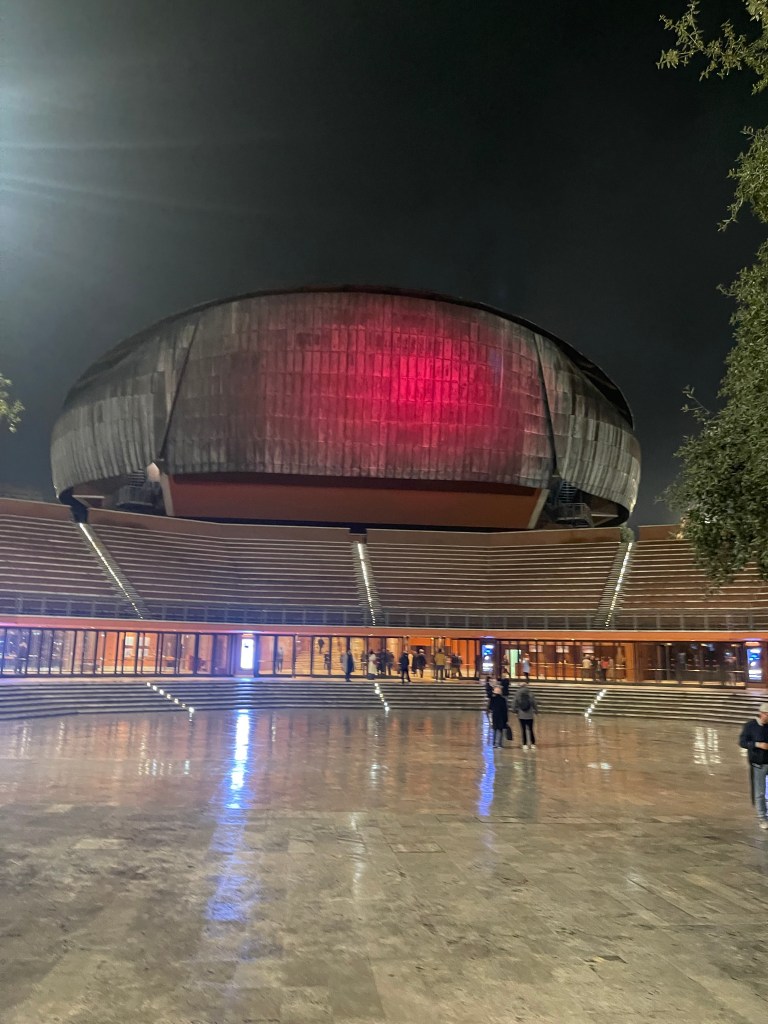
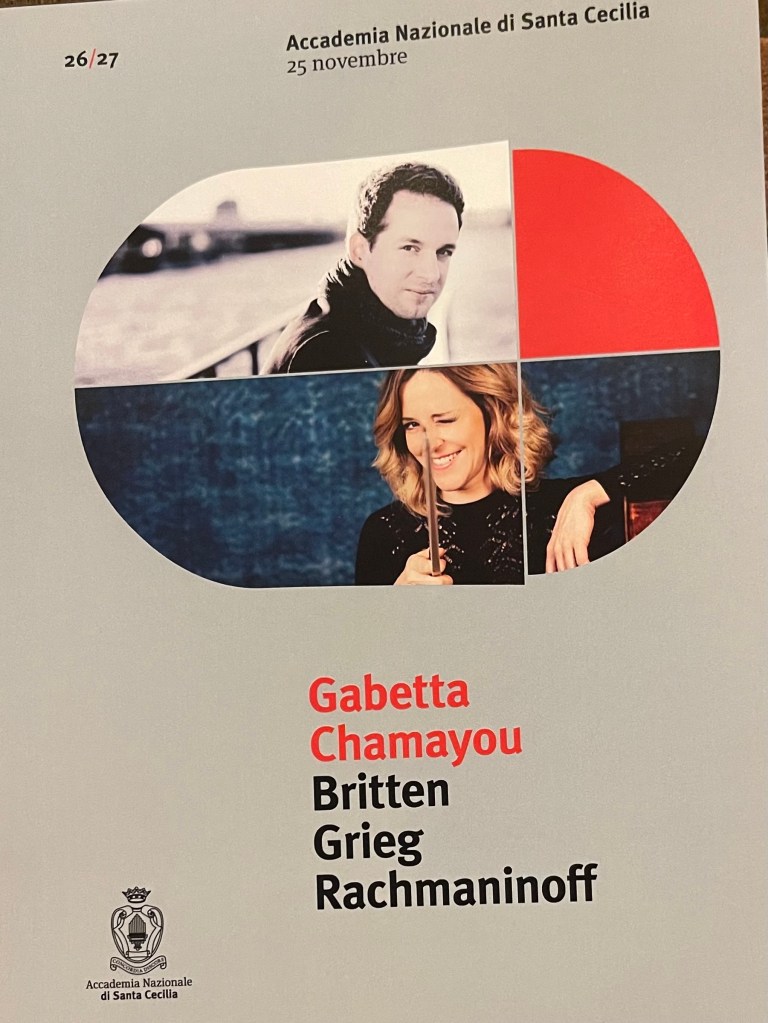
‘One of the finest performances of the Rachmaninov Sonata that one could wish to hear’ that is how Andrea Penna of Radio 3 described it as we awaited for the torrential rain to abate in order to get home from the rather isolated Parco della Musica in Rome.
Recorded live for RAI radio 3 t can be listened to on their website.
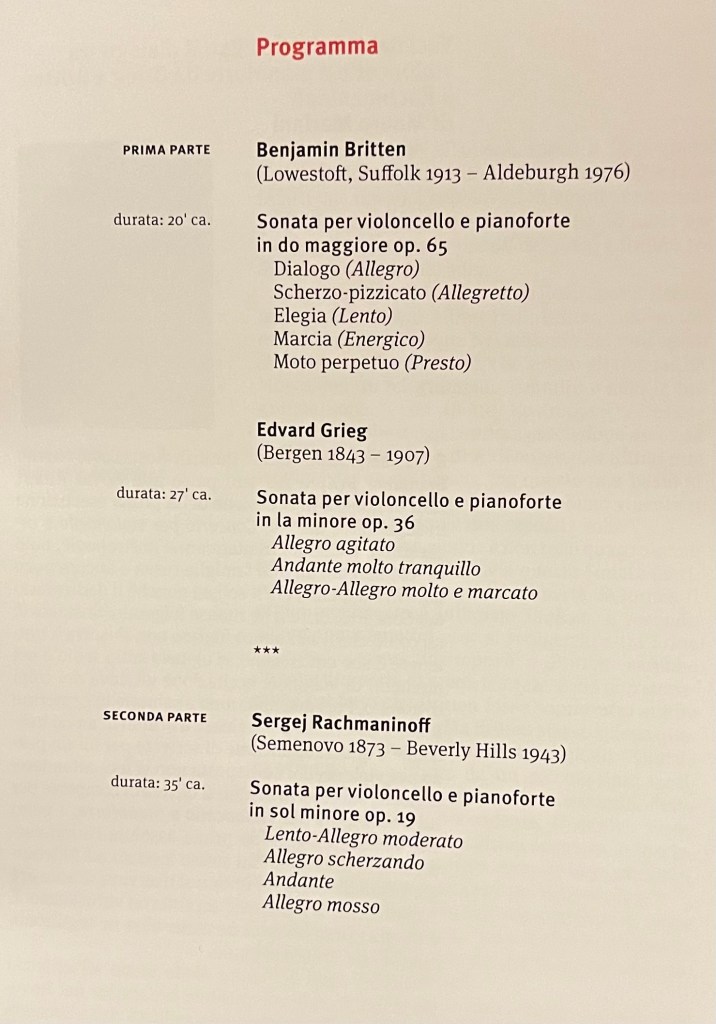
Just three works in an eclectic programme consisting of Britten’s 1961 ‘cello sonata written for Rostropovich . The evergreen Grieg sonata in A minor ( of course) from 1883 and finishing with Rachmaninov’s 1901 Sonata. Two De Falla encores sealed a concert of refined musicianship and masterly control.
The Cello Sonata, Op. 65, by Benjamin Britten was premiered in July 1961 at the Aldeburgh Festival in Suffolk and is in five movements.
History. On 21 September 1960, a concert at the Royal Festival Hall in London introduced Britten to the cellist Mstislav Rostropovich. The programme included the British premiere of Dmitri Shostakovich’s First Cello Concerto performed by Rostropovich, alongside Britten’s The Young Person’s Guide to the Orchestra . The two composers shared a ceremonial audience box. Shostakovich later confided to Rostropovich:
Slava, do you know I am aching from so many bruises along my side.” “What happened, Dmitri Dmitriyevich, did you fall down?” “No, but at the concert tonight, every time Britten admired something in your playing, he would poke me in the ribs, and say, ‘Isn’t that simply marvelous!’ As he liked so many things throughout the concerto, I am now suffering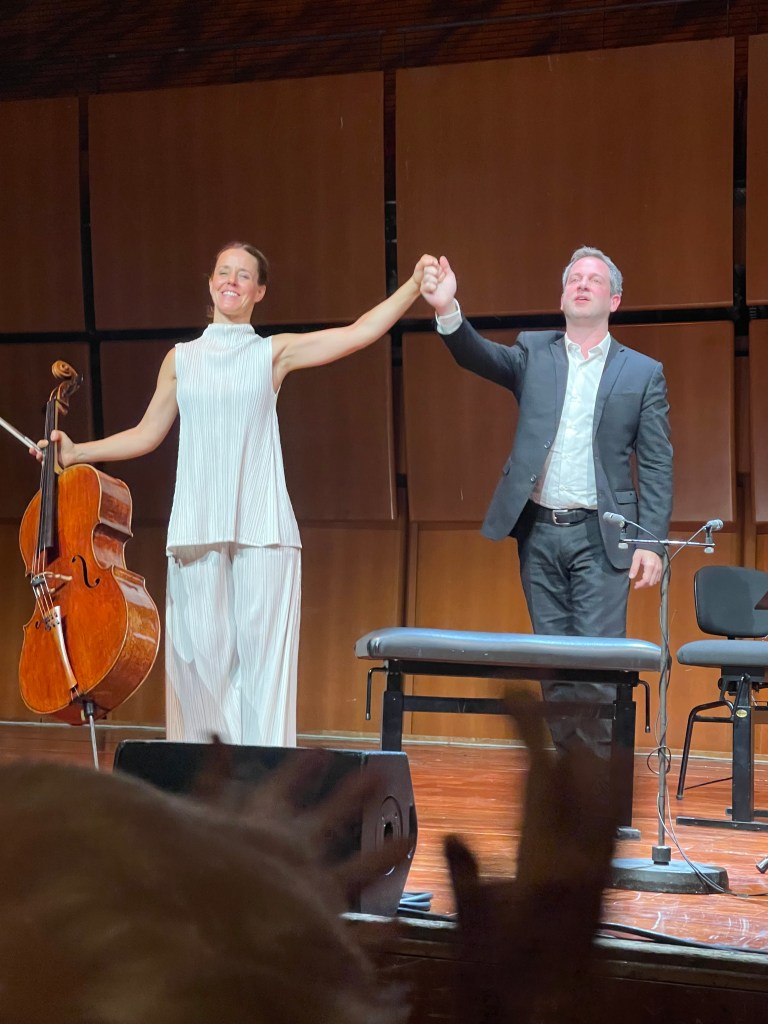
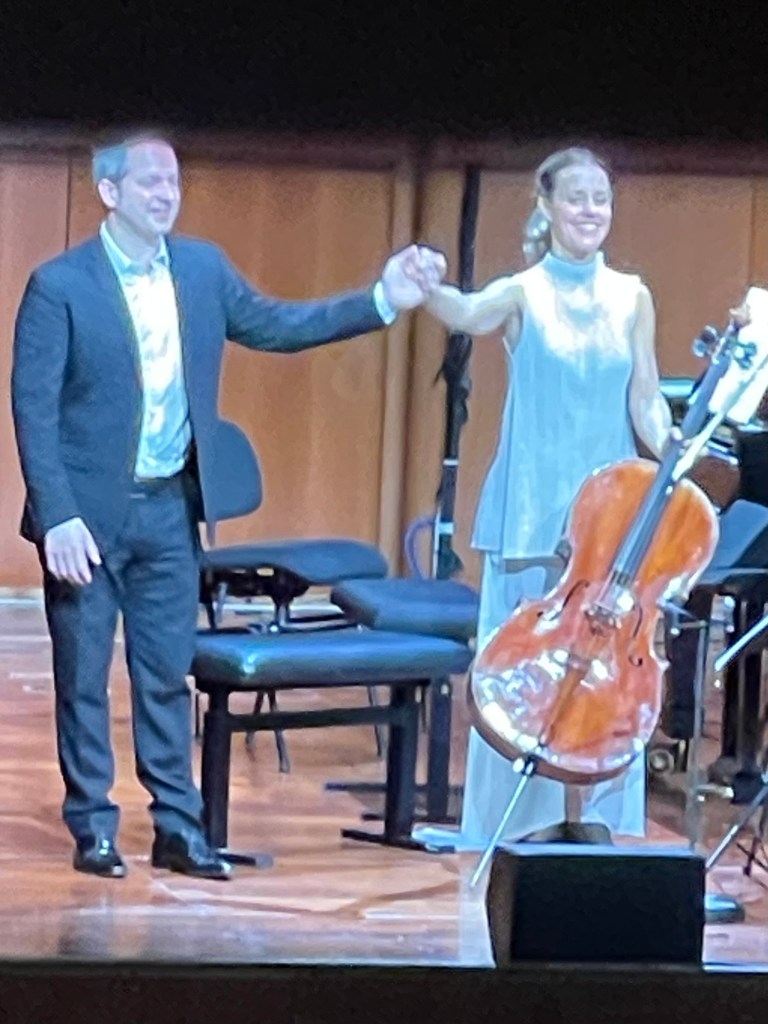
In the second half of the concert I moved as near to the cello as possible and could see that Chamayou had a tear in his eye in the last movement of the Rachmaninov. Coming as it does after the sublime Andante slow movement, I thought he was so moved by Sol Gabetta’s playing that in the heat of the moment became emotively involved in a performance of such superb duo playing. Andrea, however knew the true story, and confided that Chamayou was actually trying to stifle a cough which might have ruined a near perfect performance! Which reminds me of the story that Rachmaninov himself told about his performances of his last solo piano work the Corelli Variations op 42
When anyone in the audience coughed he skipped a few variations and actually never got to play all twenty!
Chamayou may have suffered but he certainly did not skip a note but gave a truly masterly performance.
Rachmaninov’s Sonata in G minor for Cello and Piano, op 19, was completed on 20 November 1901and premiered by cellist Anatolly Bradukov the dedicatee of the work and Rachmaninoff’s friend, with the composer at the piano, on 2 December 1901 in Moscow with the final version was completed 10 days after the premiere, 12 December 1901. Rachmaninoff regarded the role of the piano as not just an accompaniment but equal to the cello. Most of the themes are introduced by the piano, while they are embellished and expanded in the cello’s part .The opening of the first alludes to Rachmaninoff’s “signature” Gregorian chant, “Dies irae”, and the first two cello notes imply the hidden word “Warum?” (German for “Why?”).The latter was revealed in Yuki Ito’s 2023 monograph commemorating the composer’s 150th birth anniversary. This “Warum?” motif appears frequently in the sonata in different forms. Throughout the work, there are references to the bells of Russian Orthodox churches (carillons) and homages to Rachmaninoff’s Symphony No. 1, which he held dear for his entire life, making this sonata a masterpiece that displays Rachmaninoff’s distinctive characteristics
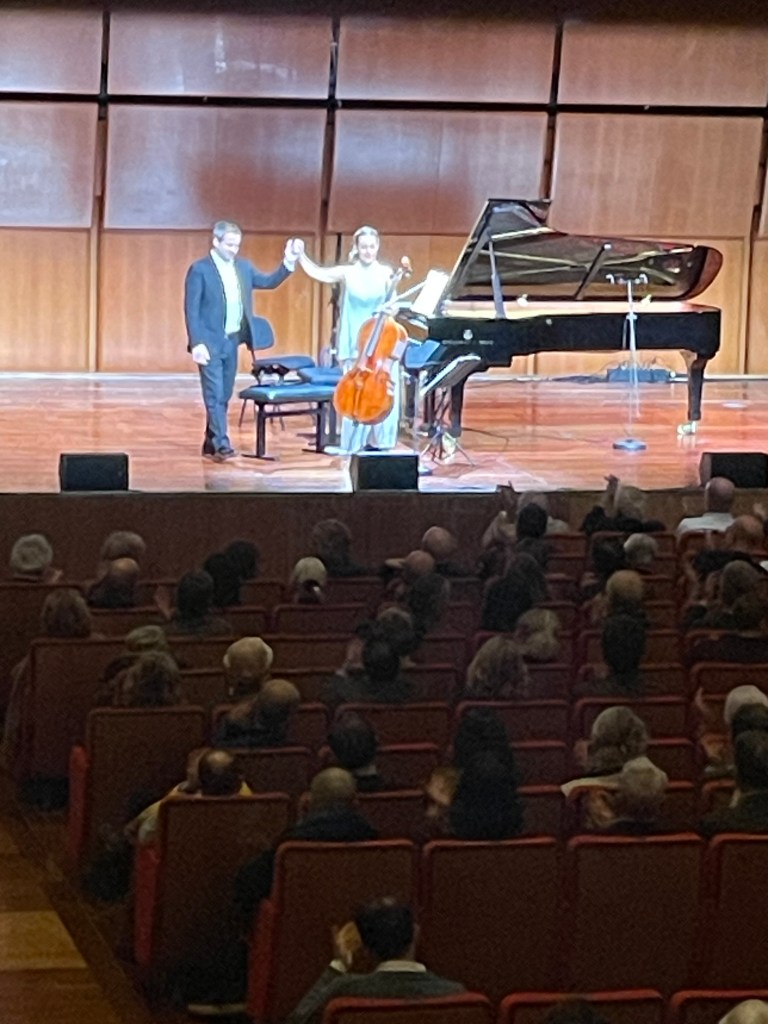
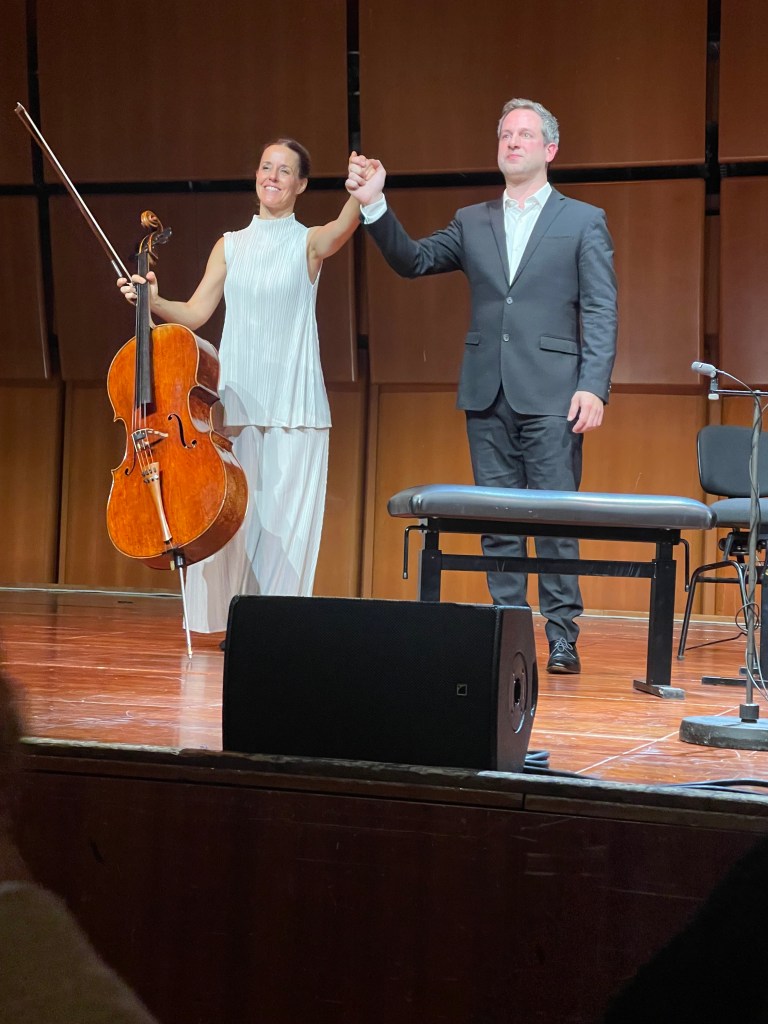
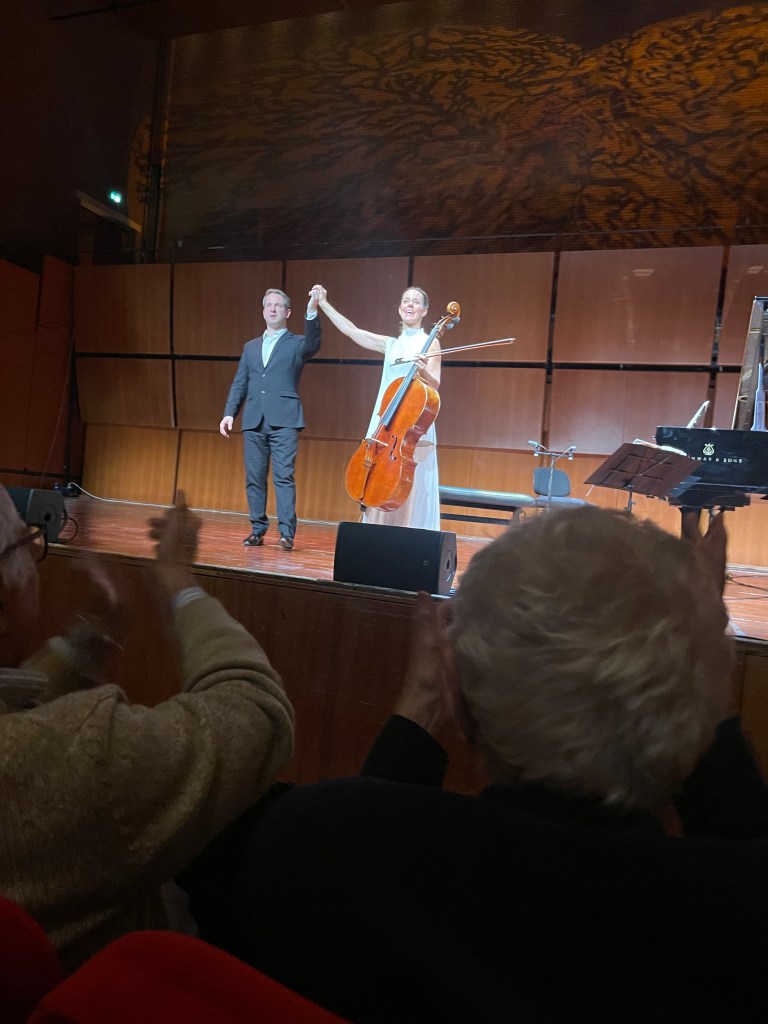
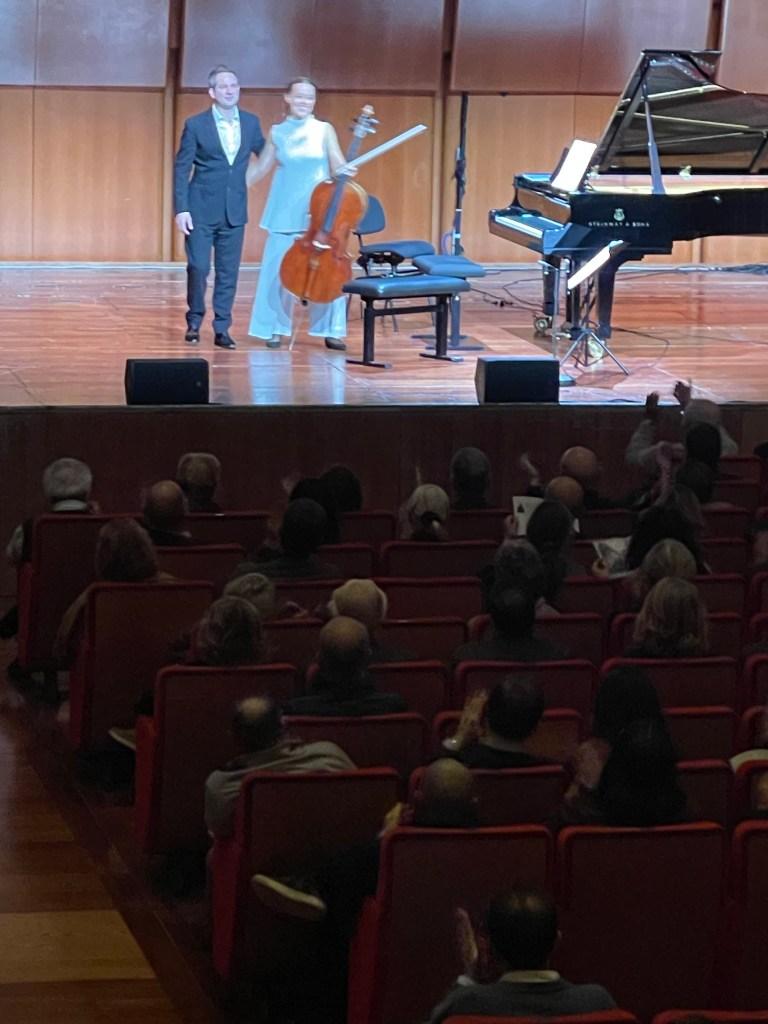
Music making and programming that is lost on audiences from Florence downwards, but that the rather poor audience that did attend were obviously the few real music lovers in the Eternal City, glad to give these two great artists a standing ovation
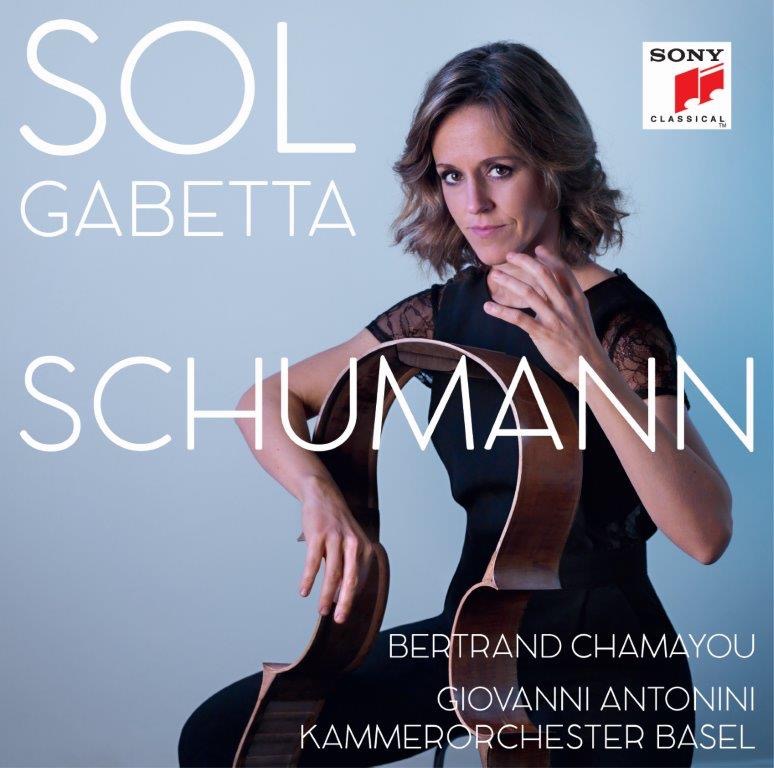
Following her reunion last year with New York Philharmonic and Jakub Hrůša at Bravo! Vail Music Festival in Colorado, and the release of her historically inspired recording project paying tribute to the pioneering cellist Lise Cristiani, Sol Gabetta’s 2026/27 season is defined by two major London residencies. As Artist in Residence with Philharmonia Orchestra, she appears in prominent concerts at the Royal Festival Hall under Santtu-Matias Rouvali and Tugan Sokhiev, and joins the orchestra’s musicians in a chamber programme centred on works by Haydn. In parallel, as Focus Artist at Wigmore Hall, Gabetta brings several of her hallmark chamber music projects to the British capital, including recitals with pianist Kristian Bezuidenhout, violist Timothy Ridout and violinist Hana Chang, as well as a trio programme with Veronika Eberle and Beatrice Rana.
Asia forms another significant focus of the season, with Gabetta appearing alongside her friend and longstanding stage partner Patricia Kopatchinskaja in Taipei, Seoul, Tokyo, Shanghai and Hong Kong. Her orchestral engagements include appearances with Yomiuri Nippon Symphony Orchestra under Giovanni Antonini, Royal Concertgebouw Orchestra under Klaus Mäkelä, Gewandhausorchester Leipzig with Petr Popelka, Washington’s National Symphony Orchestra with Gianandrea Noseda, Staatskapelle Berlin, Bamberger Symphoniker and Orchestre National du Capitole de Toulouse, among others. She also embarks on major tours with Les Siècles across Central Europe and with kammerorchesterbasel in Spain, again appearing with Antonini.
A sought-after guest at leading festivals, Gabetta was Artiste étoile at Lucerne Festival, appearing with Wiener Philharmoniker under Franz Welser-Möst, Mahler Chamber Orchestra under François-Xavier Roth and London Philharmonic Orchestra under Marin Alsop. She continues to draw inspiration from a wide circle of collaborators and musical encounters at Solsberg Festival, which flourishes under her leadership as Artistic Director. Chamber music remains central to Gabetta’s work. She appears regularly with Isabelle Faust, Bertrand Chamayou, Kristian Bezuidenhout, Alexander Melnikov and Francesco Piemontesi. Her performances have taken her to Lincoln Center, Wigmore Hall, Lucerne, Verbier, Salzburg, Schwetzingen, Schubertiade Schwarzenberg and Beethovenfest Bonn.
In recognition of her exceptional artistic achievements, vision and creativity and her significant contribution to Europe’s cultural life, Gabetta was honoured with the European Culture Prize in 2022. She also received the Herbert von Karajan Prize at the Salzburg Easter Festival in 2018, when she appeared as soloist with Staatskapelle Dresden and Christian Thielemann. In 2019, she was awarded her first OPUS KLASSIK Award, as Instrumentalist of the Year, for her interpretation of Schumann’s Cello Concerto. She received ECHO Klassik awards biennially from 2007 to 2013 and again in 2016. A Grammy Award nominee, she also received the Gramophone Young Artist of the Year Award in 2010 and the Würth-Preis of the Jeunesses Musicales in 2012, as well as commendations at the Tchaikovsky Competition in Moscow and the ARD International Music Competition in Munich. She continues to build her extensive discography with Sony Classical, with recent releases including a recording of late works by Schumann and live recordings of Elgar’s and Martinů’s Cello Concertos with Berliner Philharmoniker under Sir Simon Rattle and Krzysztof Urbański. In 2017, Gabetta joined forces with Cecilia Bartoli on a tour of Europe showcasing their album Dolce Duello, released by Decca Classics.
Gabetta performs on several early 18th-century Italian master instruments, including a 1730 cello by Matteo Goffriller, made in Venice and provided to her by Atelier Cels Paris. She has taught at Musik-Akademie Basel since 2005.
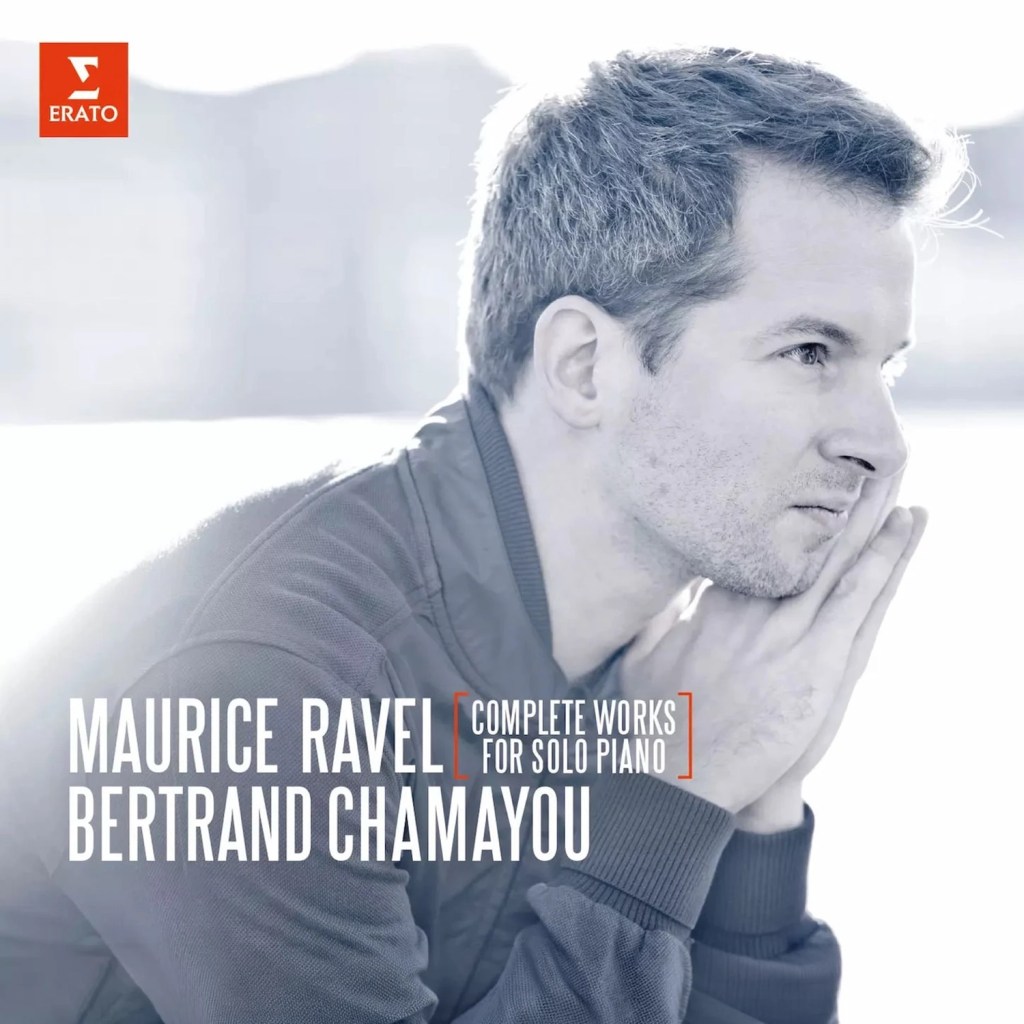
Curiosity has always been at the heart of Bertrand Chamayou’s musical world.
One of the most distinctive pianists of his generation, Bertrand Chamayoucombines a deep affinity with the French repertoire with a fascination for the great landmarks of the piano literature and an enduring commitment to the music of our time. From Ravel’s complete works for solo piano and Liszt’s Étudesand Années de pèlerinage to Messiaen’s monumental Vingt Regards sur l’Enfant-Jésus, he has made ambitious, immersive projects a defining feature of his artistic life. Alongside them runs a constant dialogue with living composers, making discovery and reinvention as central to his identity as his relationship with the core repertoire.
That spirit of exploration shapes his 2026/27 season. At its heart is the release on Warner/Erato of his complete recording of Mendelssohn’s Songs without Words, which he takes beyond the recording studio into a recital programme exploring the idea of music as song without text, from Mendelssohn to Takemitsu’s transcriptions of Paul McCartney. Following its launch at the Théâtre des Champs-Élysées, the programme travels to Wigmore Hall, Gulbenkian, Harpa Reykjavík, Rudolfinum Prague, Opéra de Lyon, Toronto, Montreal, Klavier-Festival Ruhr and La Roque d’Anthéron.
The same breadth is reflected on the orchestral stage. He makes debuts with the Swedish Radio Symphony Orchestra and George Benjamin, Finnish Radio Symphony Orchestra and Nicholas Collon, and Munich Philharmonic with Barbara Hannigan. He returns to the Orchestre de Pariswith Esa-Pekka Salonen to perform both Ravel concertos in a single programme, and reunites with the London Symphony Orchestra and Thomas Adès, Oslo Philharmonic and Vasily Petrenko, Santa Cecilia and Tarmo Peltokoski, NDR Elbphilharmonie and Barbara Hannigan, and Ensemble intercontemporain under Pierre Bleuse. He is Artist in Residence at both Wigmore Hall and with the Iceland Symphony Orchestrathroughout the season.
In Berlin, he revisits one of the defining projects of his career, performing Messiaen’s complete Vingt Regards sur l’Enfant-Jésus in a one-off concert at the Philharmonie. His commitment to contemporary music is equally fundamental: he worked closely with Pierre Boulez, Henri Dutilleux and György Kurtág, and has developed relationships with composers including Thomas Adès, Unsuk Chin, Bryce Dessner and Michael Jarrell, whose piano concerto Reflections was written for him.
Collaboration provides another thread through his musical life. In 2026/27 he tours with two long-standing artistic partners: Sol Gabetta, including the duo’s first appearance together in the Grande Salle Pierre Boulez at the Philharmonie de Paris, and Barbara Hannigan, with whom he undertakes an extensive European recital tour. His growing presence in Asia continues with a Korean tour alongside the Orchestre National de France and Cristian Măcelaru, appearances with the Shanghai and Guangzhou Symphony orchestras, and a Mendelssohn recital in Shanghai.
His international orchestral career has taken him to the Wiener Philharmoniker, New York Philharmonic, Cleveland Orchestra, Chicago Symphony Orchestra, San Francisco Symphony, Pittsburgh Symphony Orchestra, London Symphony Orchestra, Philharmonia Orchestra, Orchestre de Paris, Orchestre National de France, Orchestre Philharmonique de Radio France, Gewandhausorchester Leipzig, Tonhalle-Orchester Zürich and Orchestra dell’Accademia Nazionale di Santa Cecilia. He has performed under conductors including Pierre Boulez, Esa-Pekka Salonen, Herbert Blomstedt, Semyon Bychkov, Thomas Adès, Philippe Jordan, Andris Nelsons, Sir Antonio Pappano, Tugan Sokhiev, Gianandrea Noseda, François-Xavier Roth and Mikko Franck.
An exclusive Warner Classics/Erato artist, Bertrand Chamayou has built a critically acclaimed discography reflecting the breadth of his repertoire, his curiosity and his adventurous approach to music. From Liszt’s Années de pèlerinageand the complete solo piano works of Ravel, awarded an ECHO Klassik in 2016, to Saint-Saëns’ Piano Concertos Nos. 2 and 5, named Gramophone’s Recording of the Year in 2019, his recordings have earned international acclaim. Among his most ambitious projects is Messiaen’s monumental Vingt Regards sur l’Enfant-Jésus(2022), alongside more personal and imaginative programmes such as Good Night!, Letter(s) to Erik Satie and Cage², devoted to the music of John Cage. His recent recording of Schubert’s works for piano four hands with Leif Ove Andsnes won the Piano Award at the 2026 Gramophone Classical Music Awards, marking his second Gramophone triumph. Other recent releases include Ravel: Fragments and Mendelssohn’s Songs without Words. The only artist to have won France’s prestigious Victoires de la Musique Classique on five occasions, he is also Artistic Director of the Festival Ravel in the French Basque Country.
Born in Toulouse, Bertrand Chamayou studied with Jean-François Heisserat the Conservatoire National Supérieur de Musique de Paris before completing his training with Maria Curcio in London.