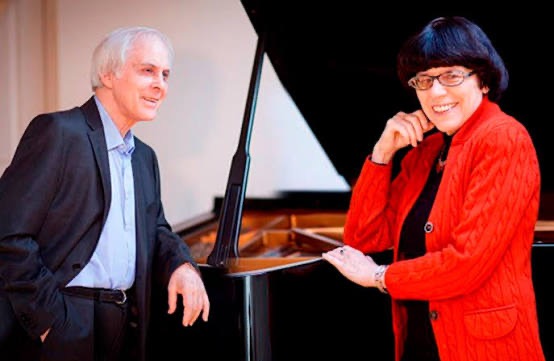
A conversation with Tatiana Zelikman and Vladimir Tropp, surprise performance by Vladimir Tropp was followed by young artist’s appearance: Deva Mira Sperandio played Schumann “Kreisleriana”, Op.16 and Mischa Carr played Medtner Sonata-Idyll, Op.56
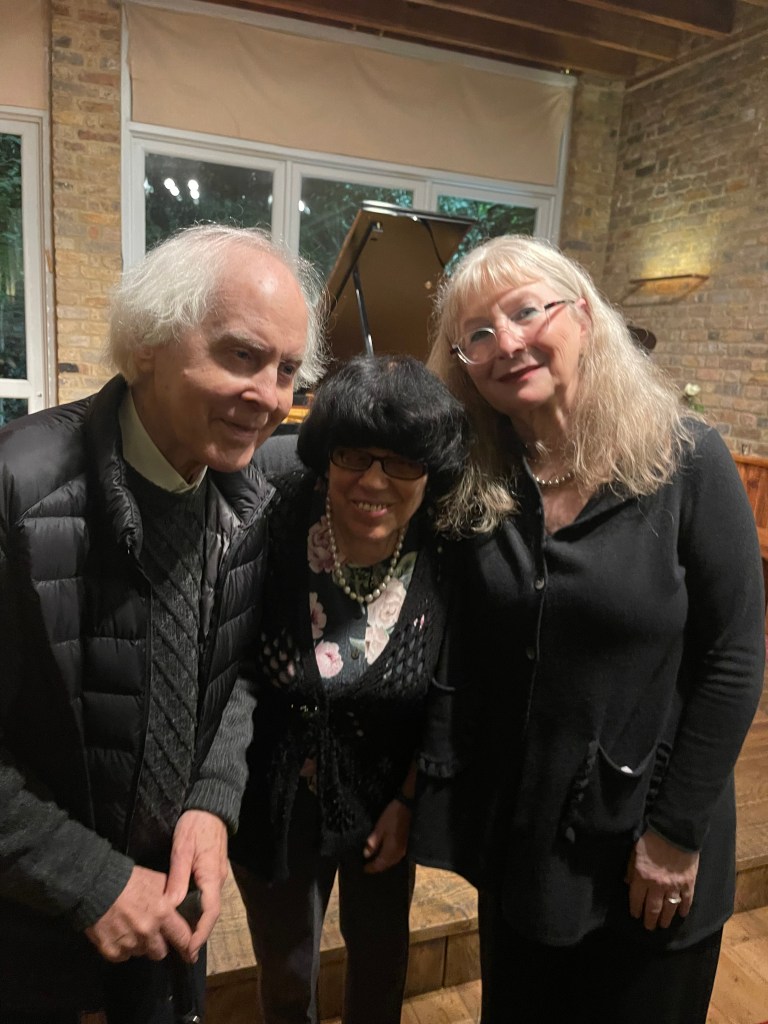
What an evening and all thanks to Dina Parakhina where our two illustrious musicians are guests and above all to Oleg Kogan,and his wonderfully independent Razumovsky Academy, who could immediately decide that these two historic figures at the age of 87 could and should meet a public that has only read about them in books or heard them on historic re issued CD performances.
It was a very private and intimate gathering around FouTs’ong’s Steinway D that stands so proudly in the Razumovsky Academy that the distinguished ‘cellist Oleg Kogan built with his own hands. With the same loving care he invites selected people into his home where they can be engulfed in warmth, remarkable music making and on occasion Oleg’s cordon bleu cuisine. Today these two legendary figures not only performed but also answered questions and listened to two students of Dina with whom they were happy to share their precious advice. Such an informal gathering that Dina was not sure if they would be happy to play, but it was Vladimir Tropp who felt so at ease that he was happy to play much longer than we could have hoped for.
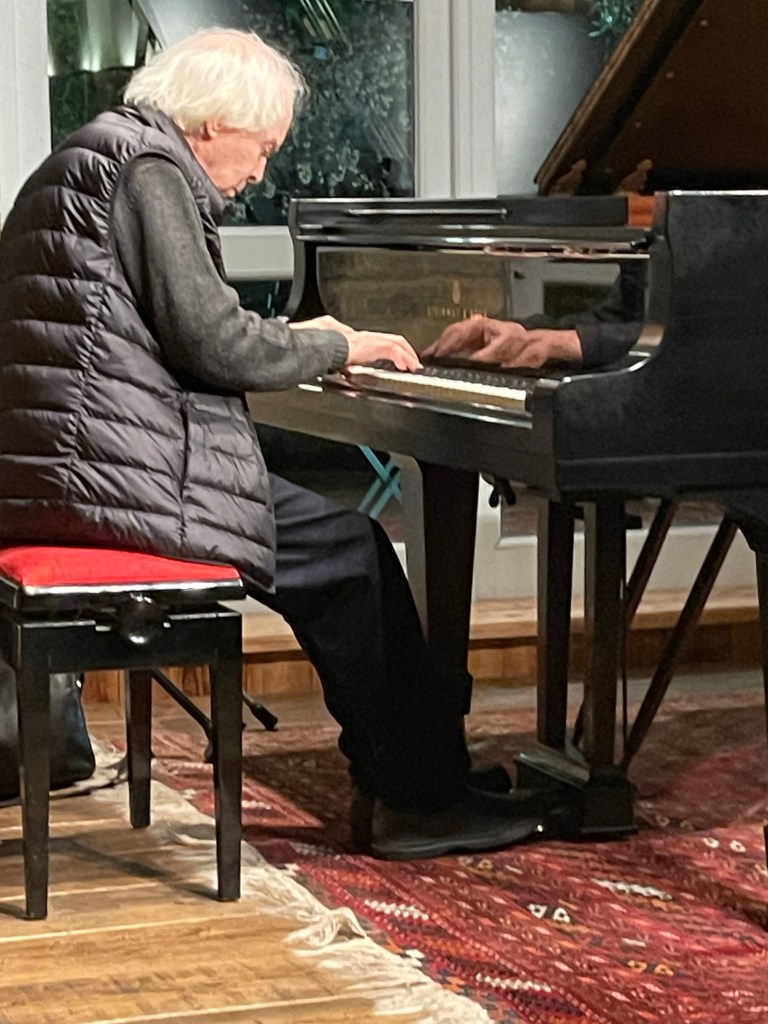
Three short works by Scriabin were played with chiselled eloquence, vibrant intensity and even impish good humour. A truly epic performance of Chopin’s Nocturne op 27 n. 1. Chiselled and etched in gold as this nocturne was played with imposing nobility and not the usual whispered whimperings but a voice of extraordinary strength and imposing importance bursting into an overpowering left hand octave cadenza before disappearing into a whispered land of glowing beauty. This Nocturne maybe the most Scriabineque and also showed Maestro Tropp’s Scriabin that was played with imposing sounds of authority and aristocratic simplicity. But the surprise was to come with Rachmaninov’s C sharp minor prelude op 3 that was played with overwhelming power. Two voices, one of overpowering sounds and the other with whispered echos. It was an extraordinarily forceful declamation that exploded with the enormous sonorities of the climax before the hesitant and distant final bars played with timeless wonder. This was indeed a revelation and a performance of searing originality from a musician with a towering personality. Tchaikovsky’s Evening Prayer from the seasons was the final work that this master was to share with us.
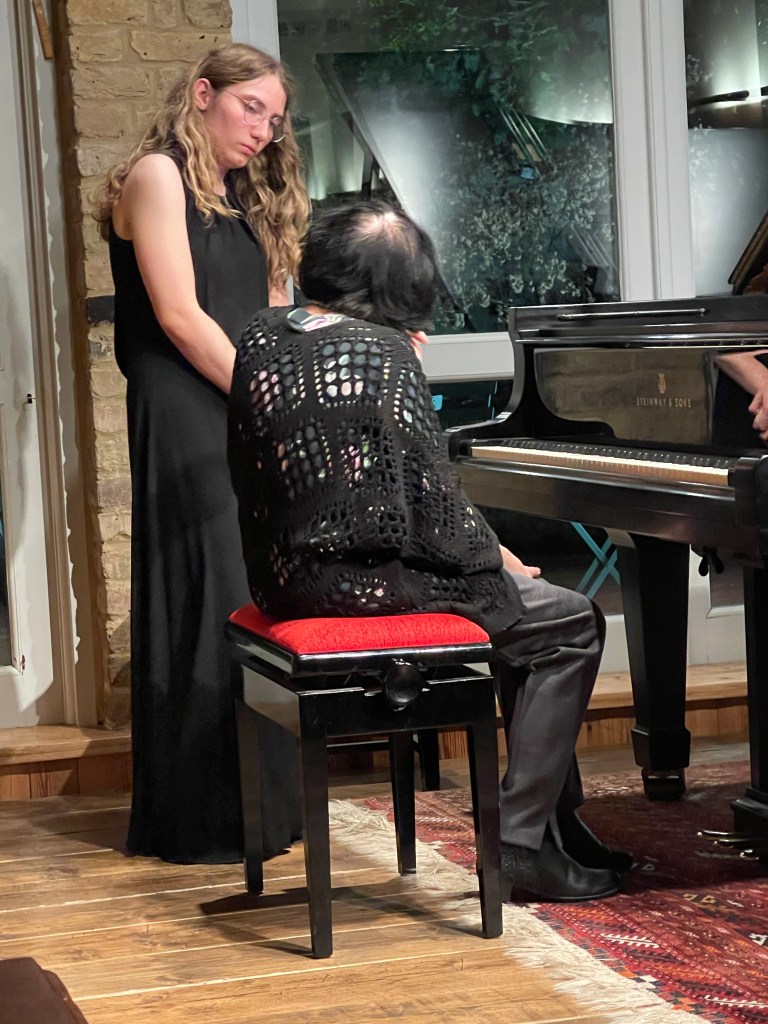
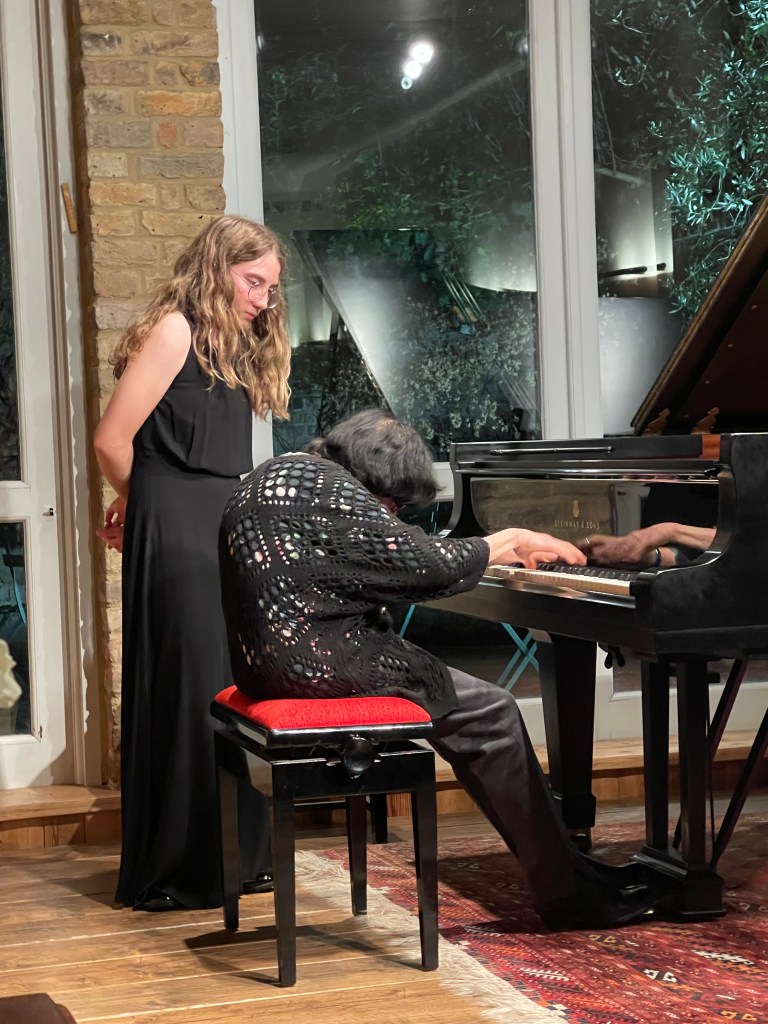
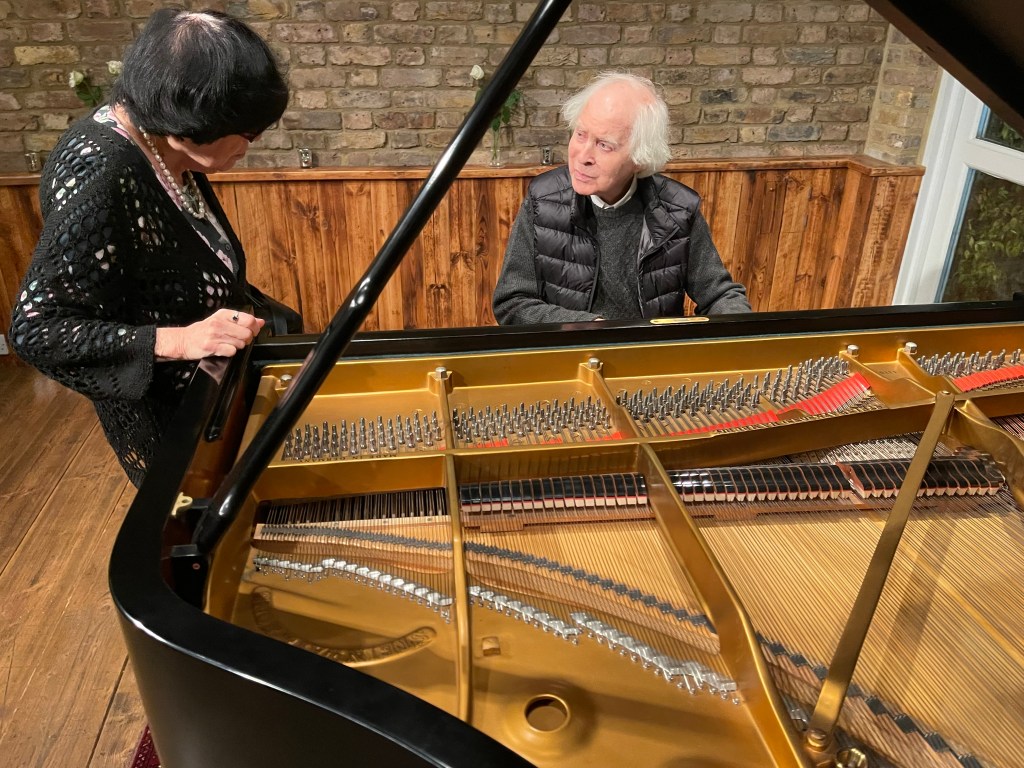
Now it was his wife Tatiana Zelikman who was to give an extraordinarily original performance of Schumann’s Arabesque op 18 with many details underlined and pointed out with chiselled weight. It was ,though, in the excerpts from Schumann’s Kreisleriana that she played in the short masterclass afterwards ,that showed her remarkable fantasy and fearless authority. Playing with hands that look as though they are swimming in sounds as she played without the score remembering all the details that she had heard from this brilliant young student of Dina Parakhina,Deva Mira Sperandio.Imploring this young musician to play with more fantasy and horizontally not vertically.
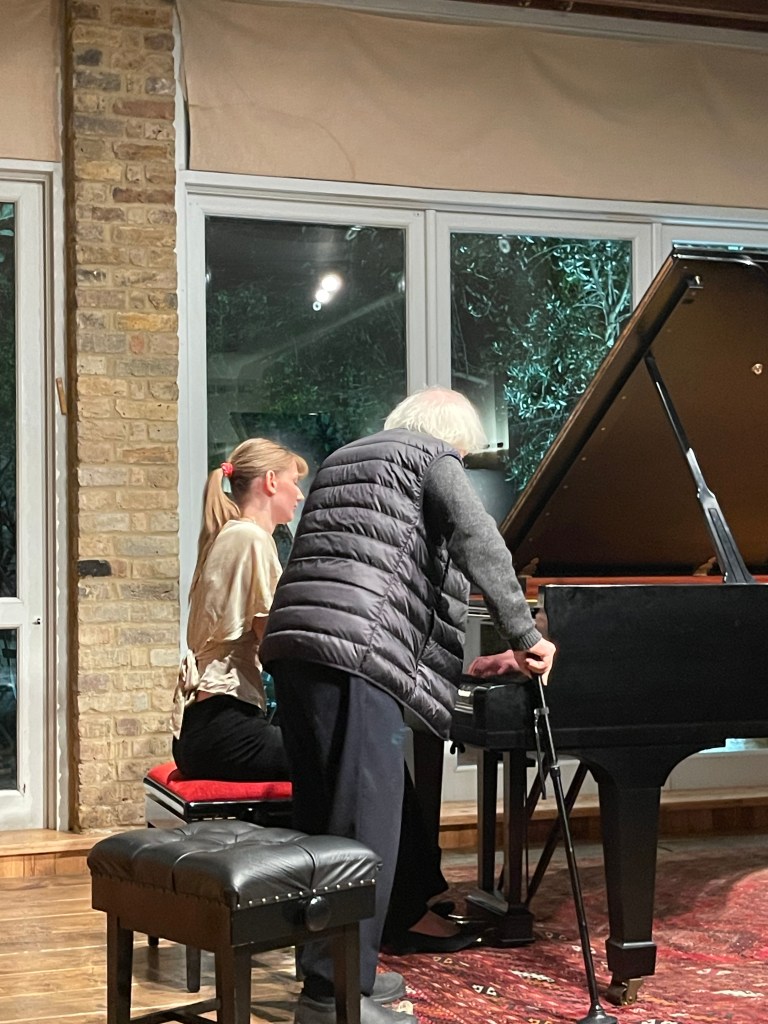
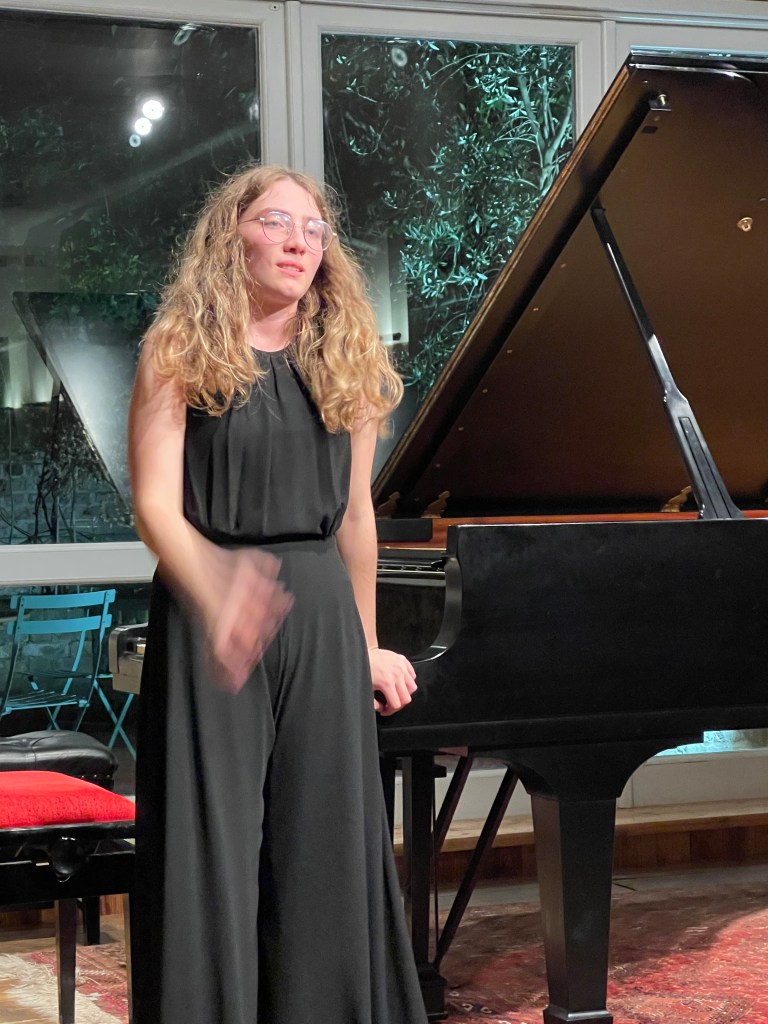
Both she and her husband had made copious notes in the score whilst Deva was playing. Pointing to particular points which they took in turns to mark with delicate circles in her score.
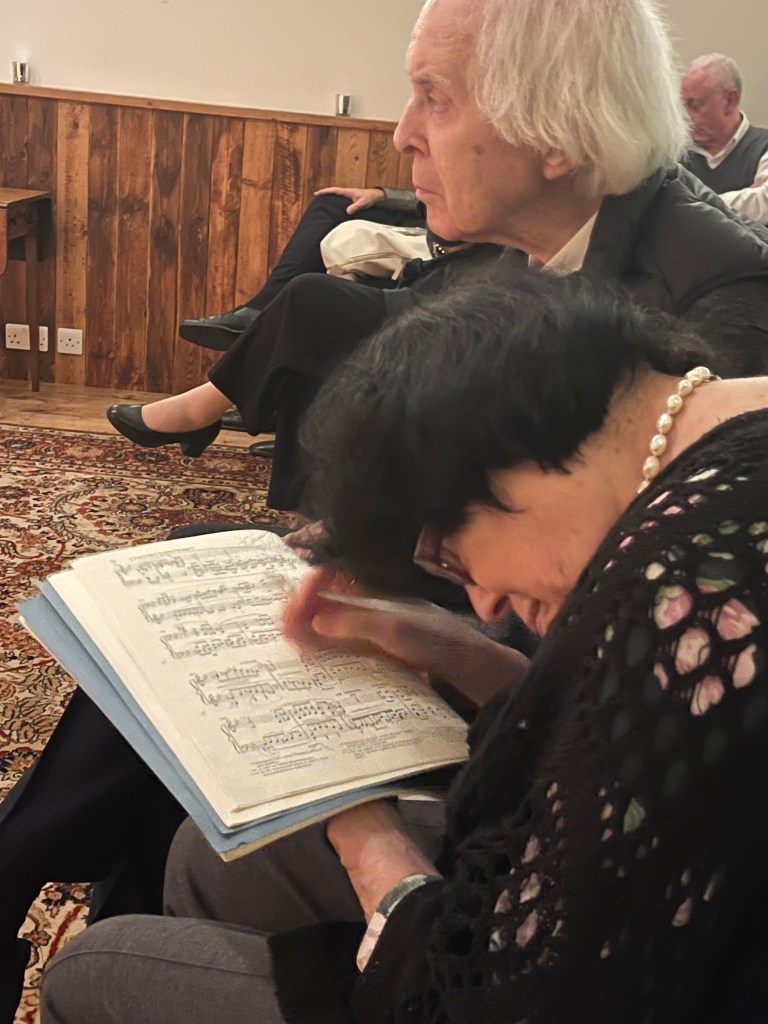
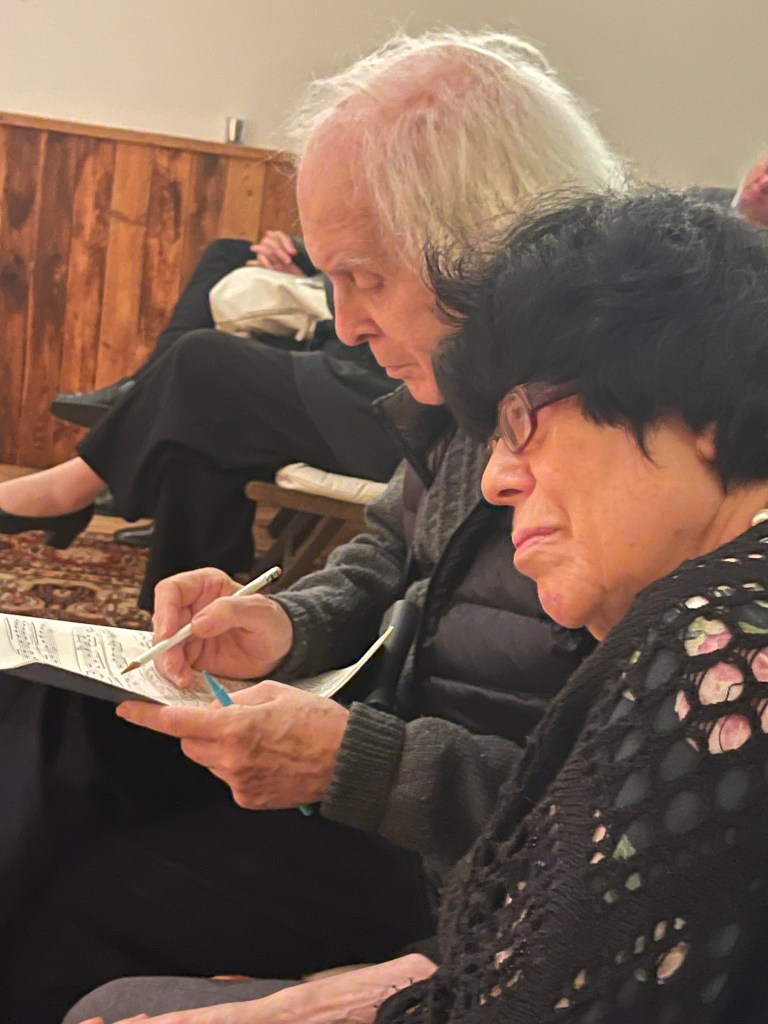
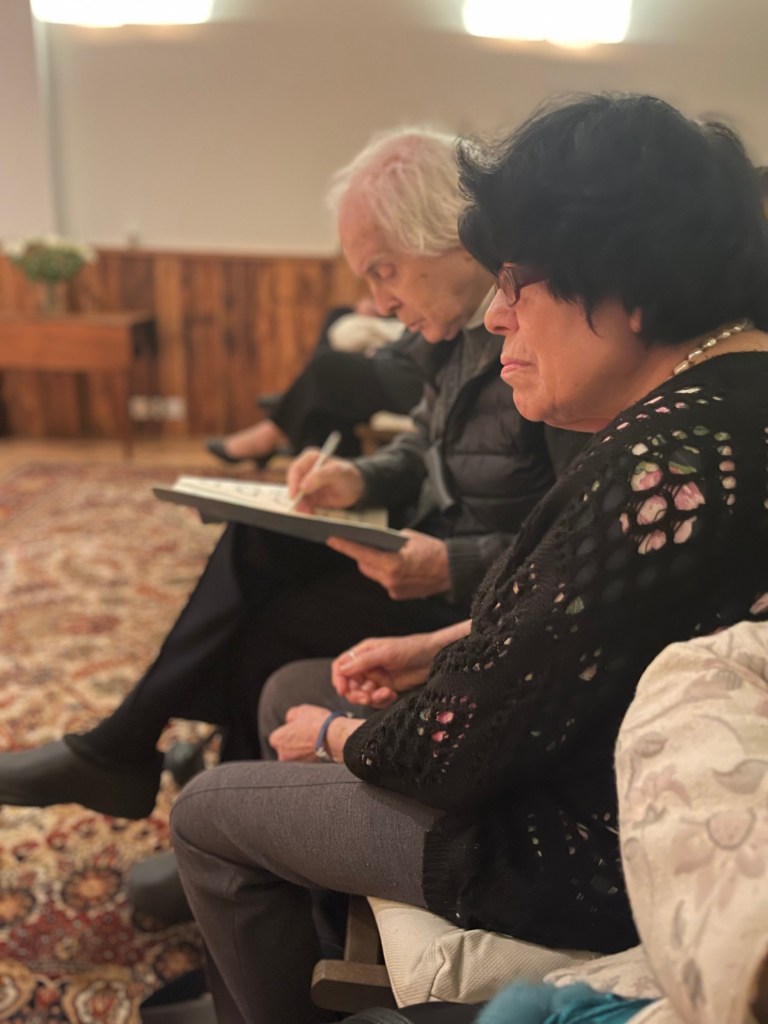
Nothing was missed, with Tatiana curled up over the score like a croissant, whilst Victor was bolt upright with burning eyes of concentration. What a formidable team! At 87 their burning passion for the music uniting them with a dedication that the only thing that mattered were the sounds in that very minute. Vladimir Tropp had pointed out to Misha Carr many refined phrasings that would clarify the melodic line in her very fine performance of Medtner’s Sonata -Idyll.
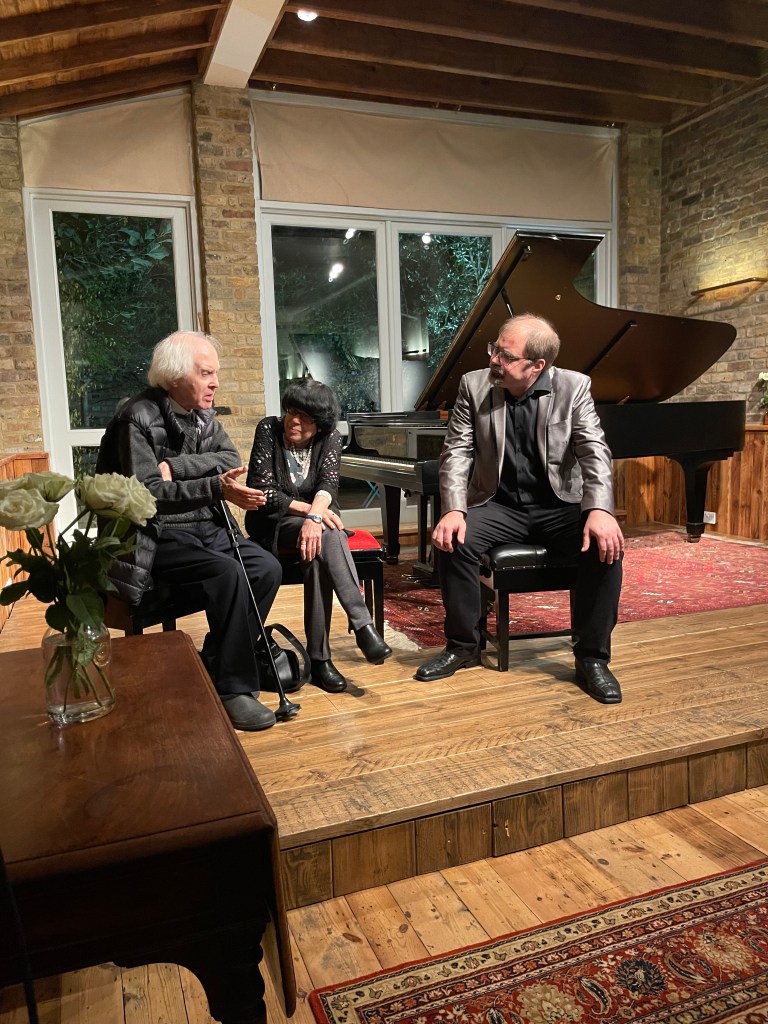
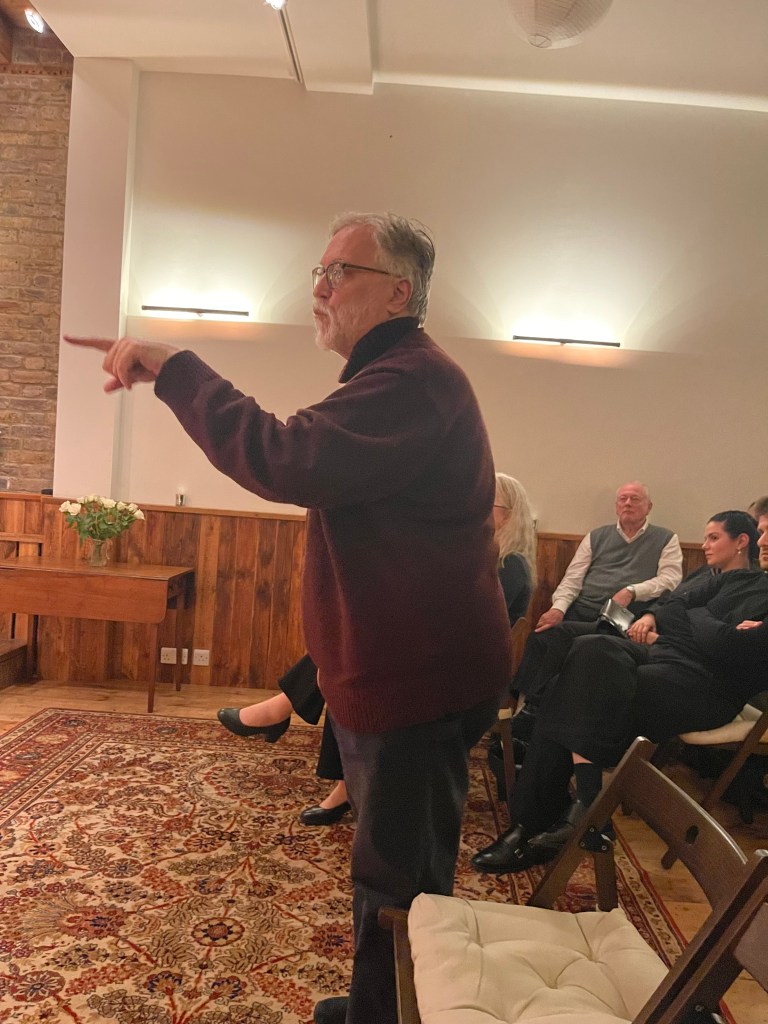
A question and answer session was a fascinating journey to be able to touch history from the people that had been In Moscow when history was being made. Jed Distler was anxious to know about the appearance of Glenn Gould in Moscow in the 50’s. An empty hall where Tatiana was seated in the front row intrigued by the mastery of Gould’s ‘Art of Fugue’. Neuhaus was so overwhelmed that he had the interval prolonged whilst he communicated to his colleagues and students the marvels that were taking place from this unknown Canadian pianist. The next concerts of course were completely sold out!
To hear of Sofronitsky who was considered a God by all those that had heard him live. Including Richter, who they both heard many times and who bowed to Sofonitsky as a leading light. Even if he was uneven his playing was always of the vibrant presence of recreation.
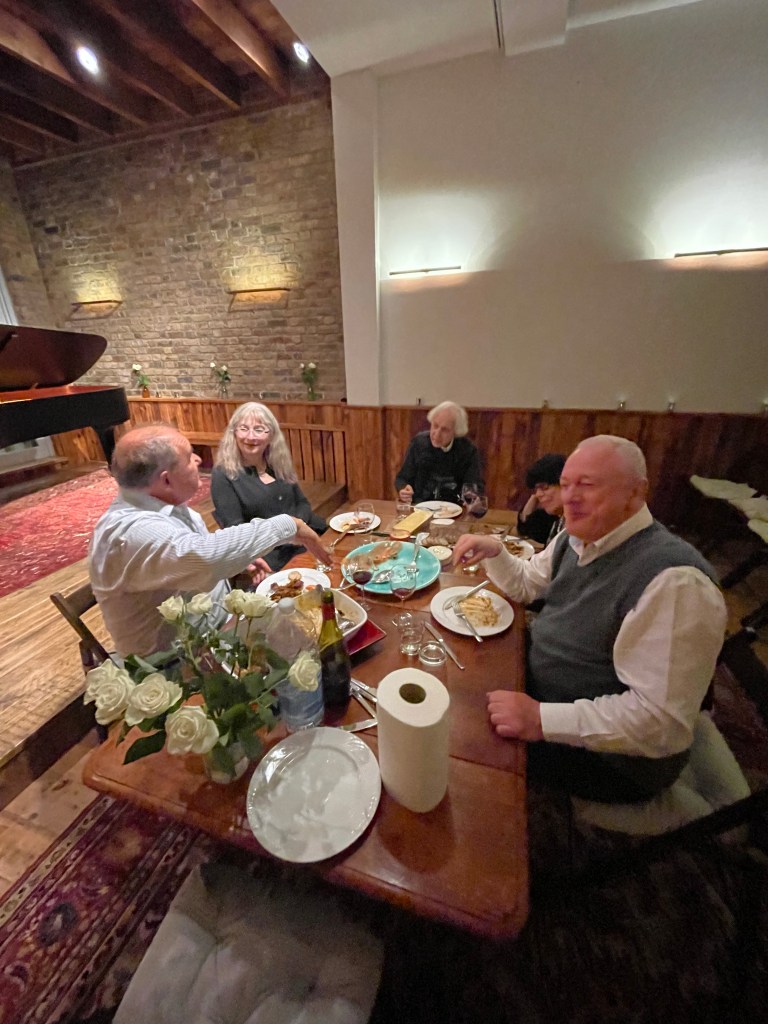
An extraordinary evening when we could have a direct link with the past as we watched these remarkable artists at the age of 87 living for the present and united in their quest for perfection, with a passion and intensity that was truly a lesson to us all.
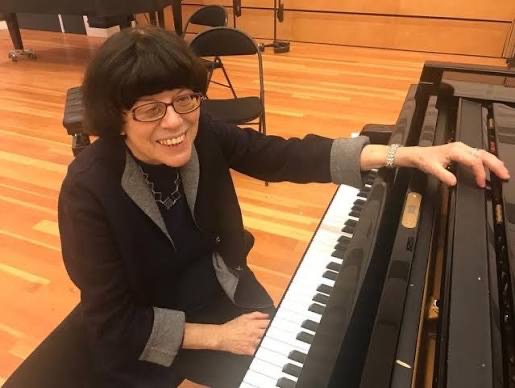
Tatiana Zelikman is considered to be one of the finest piano teachers today. Over the years she has taught pianists such as Daniil Trifonov, Konstantin Lifschitz, Alexei Volodin and Alexander Kobrin, all artists of rare talent who have become celebrities. Many of her students have enjoyed remarkable careers have obtained the most prestigious prizes, including the Tchaikovsky and the Rubinstein, Van Cliburn, Busoni and Chopin piano competitions, and today perform on the major stages of the world. Many have also followed in her footsteps and become highly regarded teachers. Her entire career, from the School to her higher studies in the class of Teodor Gutman, a disciple of the great Heinrich Neuhaus, has been characterised by a sound, a memory and an ear of rare quality, musical subtlety, and most important a distinctive personality that shines through in her art of interpretation. Her repertoire included works by François Couperin, Scriabin, Schumann, Haydn, Mozart and Beethoven, Schubert and Chopin; she had an insatiable passion for the music of Ravel and Debussy.
Vladimir Tropp was born in Moscow and studied at the celebrated Gnessins Music School from an early age. His teachers were the distinguished Russian pedagogues, Moisey Feigin and Teodor Gutman, both pupils of Heinrich Neuhaus.
In 1963 Tropp graduated with distinction from the Gnessins State Musical Institute, now named the Gnessins Russian Academy of Music. He immediately began his graduate work while teaching there and is now regarded as of the Academy’s leading professors. In 1997 he became chair of the Academy’s piano department. He has also held a professorship at the Tchaikovsky Moscow State Conservatory. In his teaching Professor Tropp strives to maintain the highest traditions of the Russian piano school. In 1970, Tropp became a laureate of the International Enesco Piano Competition in Bucharest. Since then, he has regularly appeared in performance and gave maseterclasses in Russia and many countries all over the world. The principal part of his repertoire is romantic music, with acclaimed performances of Rachmaninoff, Scriabin and Medtner. He serves on the boards of the Rachmaninoff (as a vice-president) and Scriabin Societies in Russia and is a member of the Teodor Leschetizki and Scriabin Societies in the US and the Glenn Gould Society in Canada. He regularly serves on juries of international and national piano competitions.
Dina Parkhina and Dmitri Alexeev are a very special presence at the Royal College of Music representing the Russian School of piano playing. Inviting the masters that had inspired them to share their unique message with young musicians in London.
https://christopheraxworthymusiccommentary.com/2023/12/05/ileana-and-joan-3rd-december-2023/

