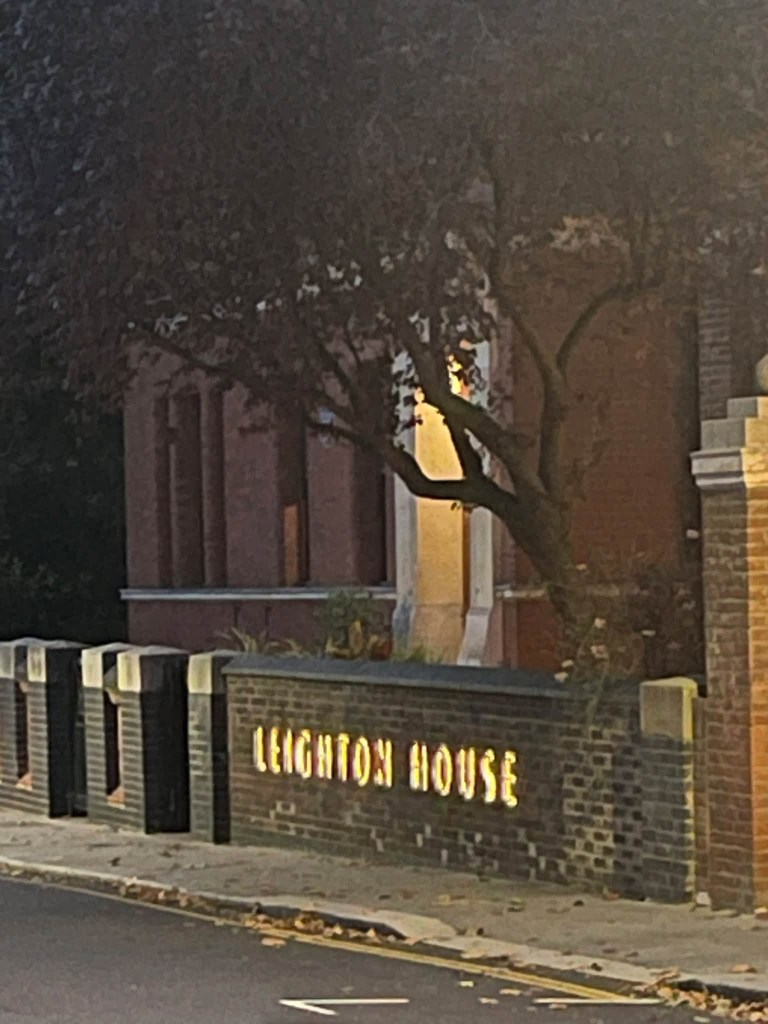
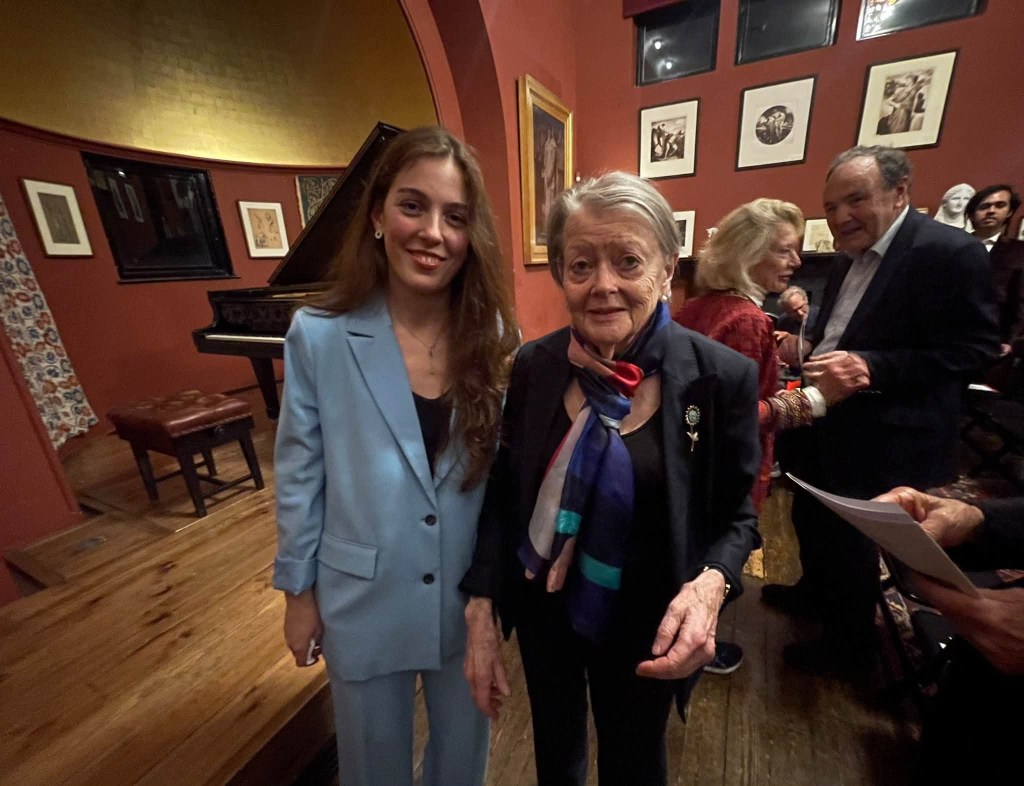
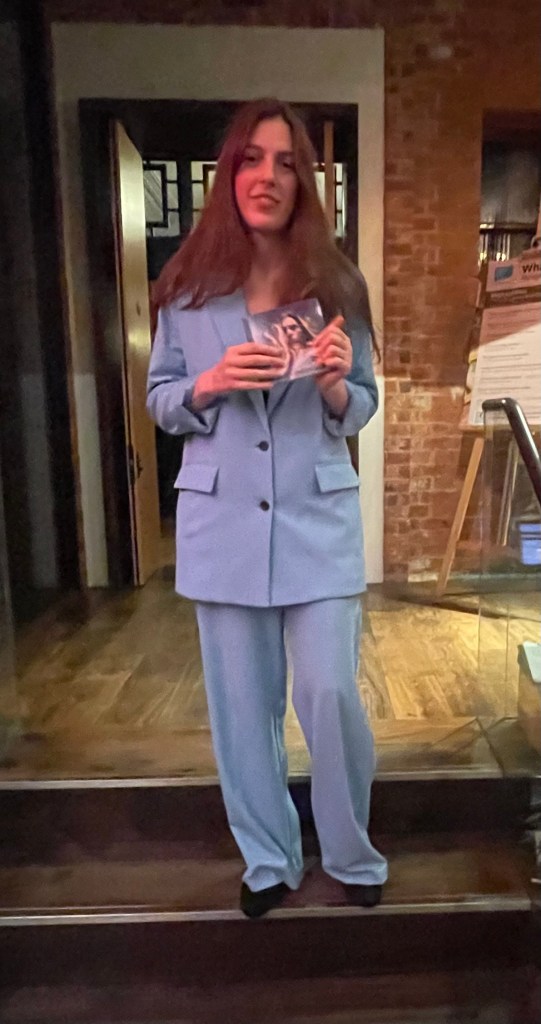
An ovation for Salome Jordania as her Spiritual Odyssey drew to a close with a monumental performance of Mussorgsky’s Pictures.
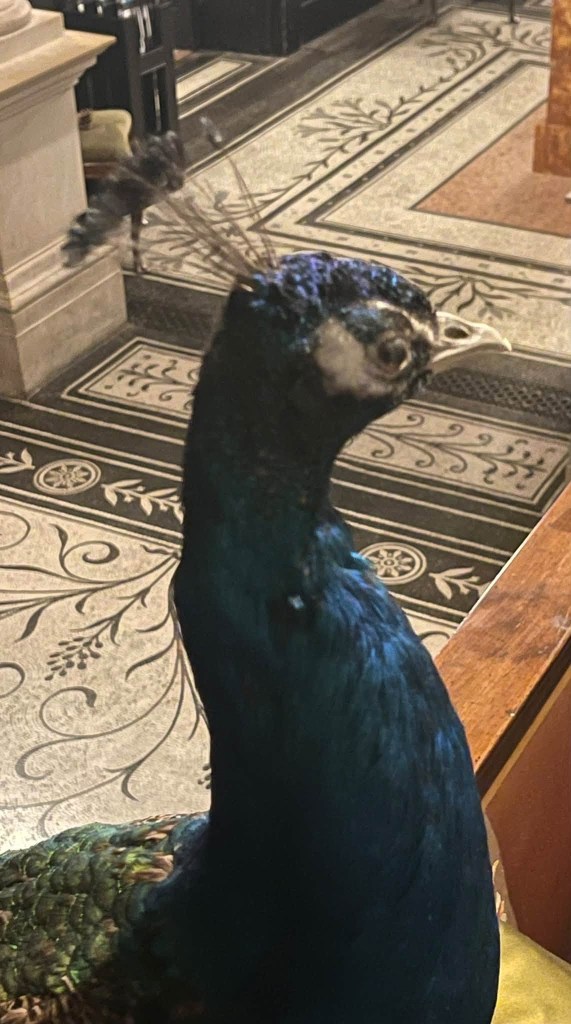
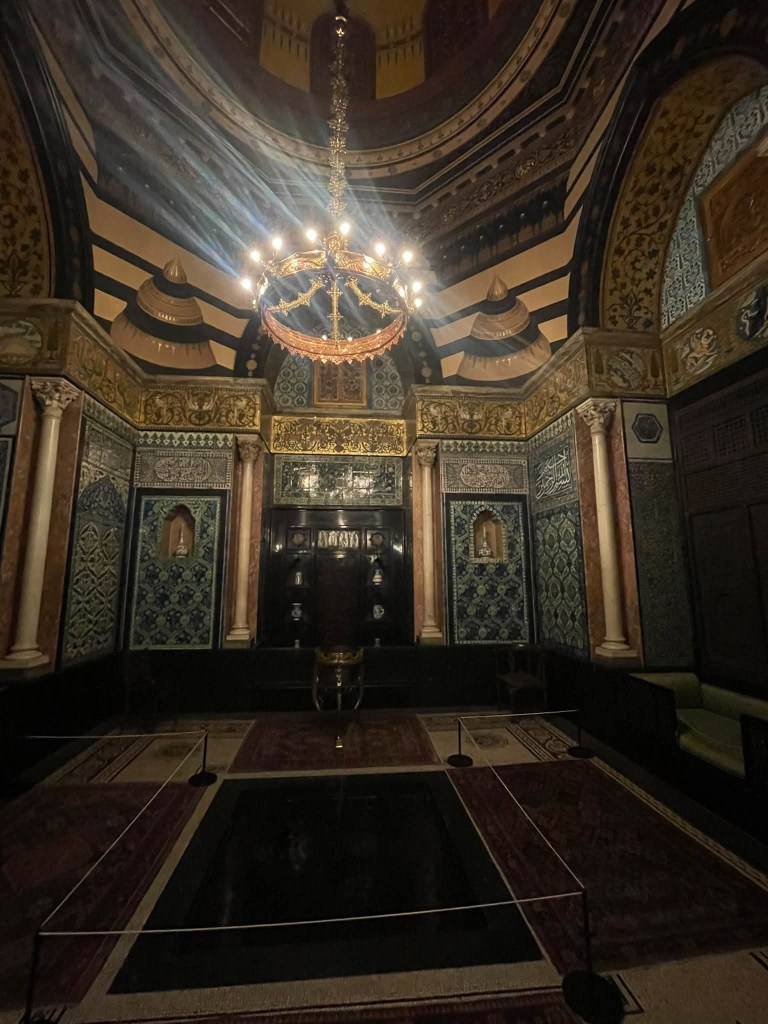
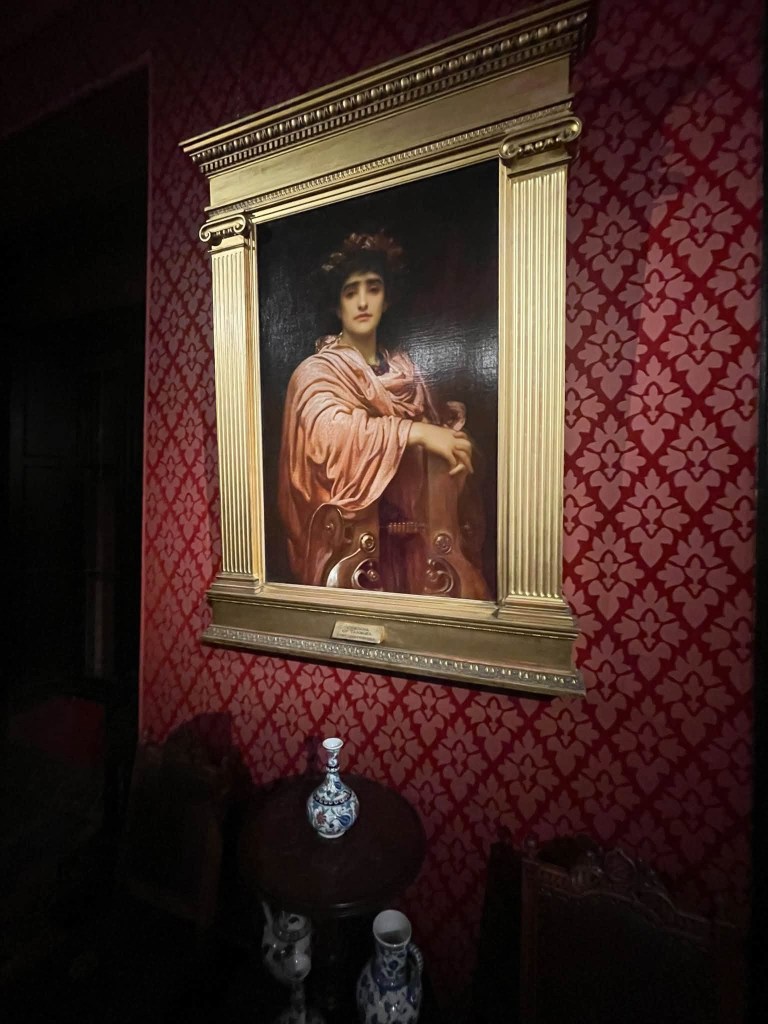
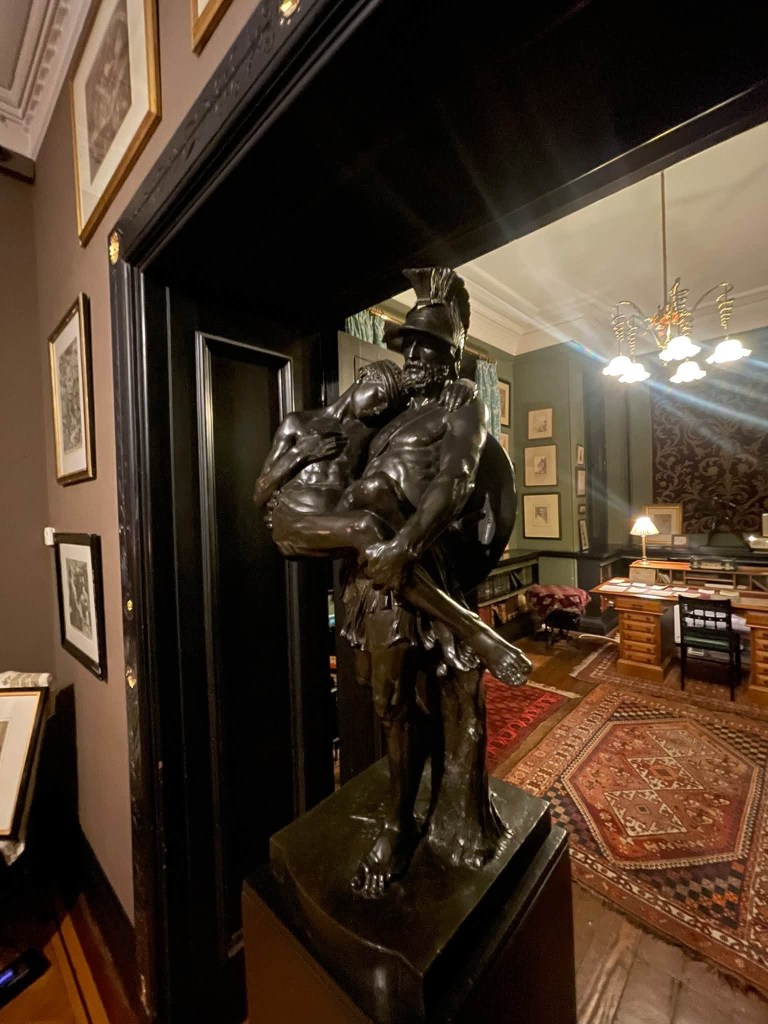
Here in these sumptuous surrounds where pre-Raphaelite beauty reigns rather than Mussorgsky’s friend Hartman’s posthumous exhibition of paintings .
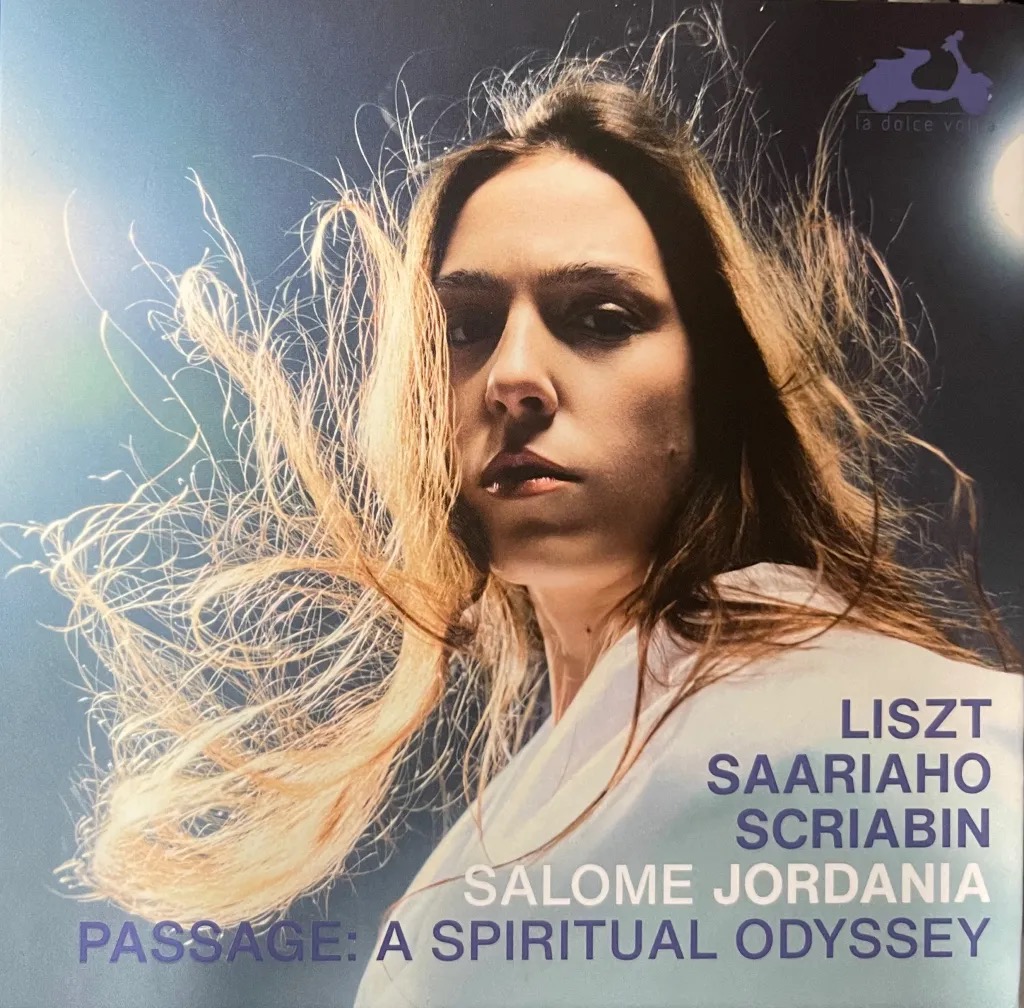
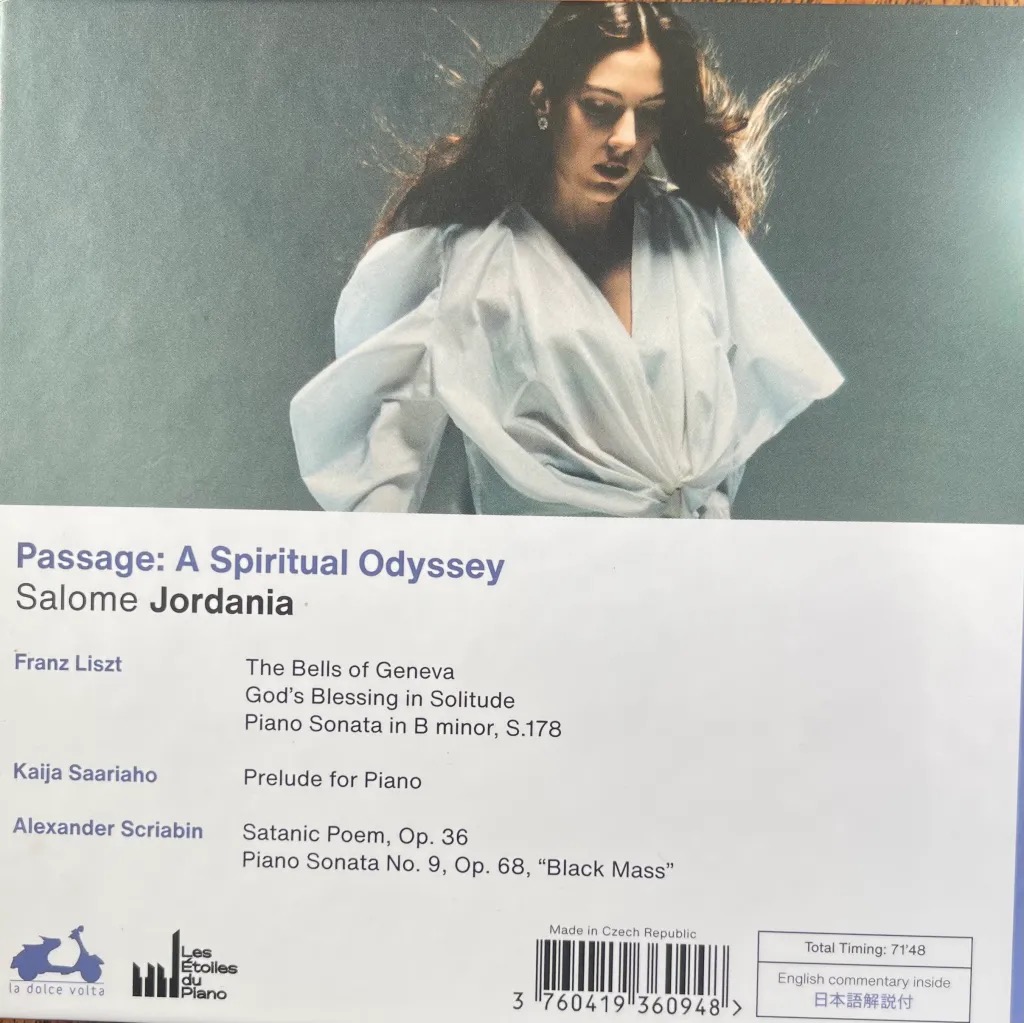
Salome restoring Mussorgsky’s masterpiece to the original piano with all the mastery and artistry of a young lady on the crest of a wave, with a ravishing and sometimes almost overwhelming palette of sounds . With the solidity of Berman from her studies in Yale but the style of O’Hora from the Guildhall she kept us bewitched bothered but never bewildered. Bells pealing from the first glorious notes of Rachmaninov to those of hope and resistance of the Great Gate of Kyiv
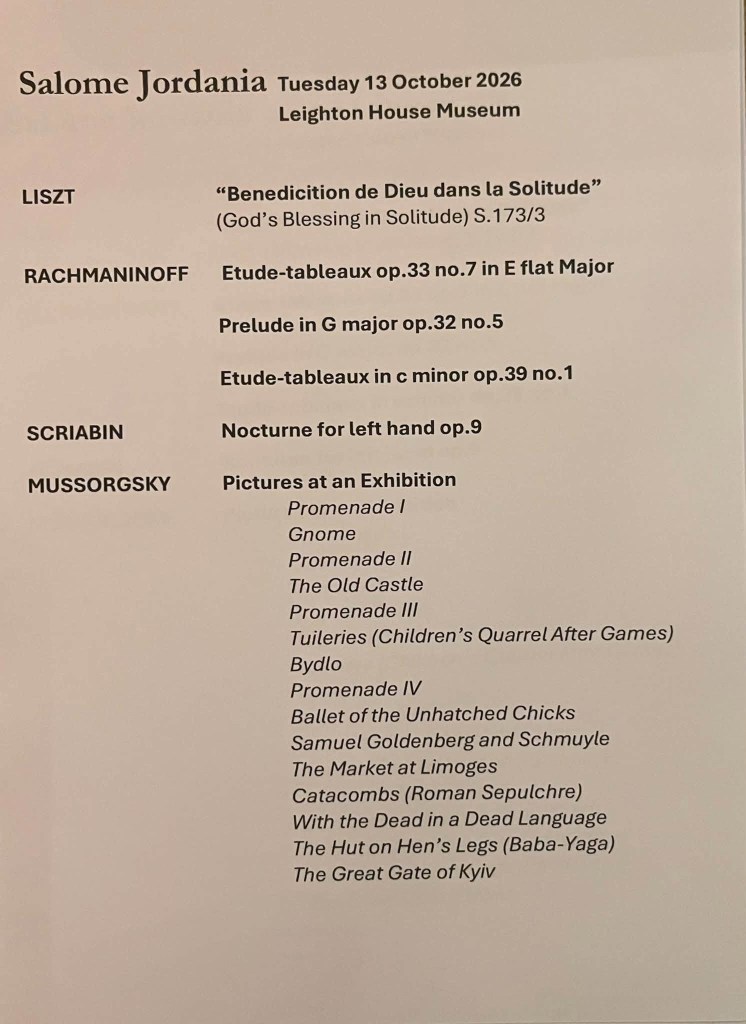
Blessed by the Gods with the ‘Benediction ‘ of Liszt , this is a young lady with something important to say.
Deciding to alter the order of the programme, as she wanted to start and end with the bells .One of elation and the other of expectation.
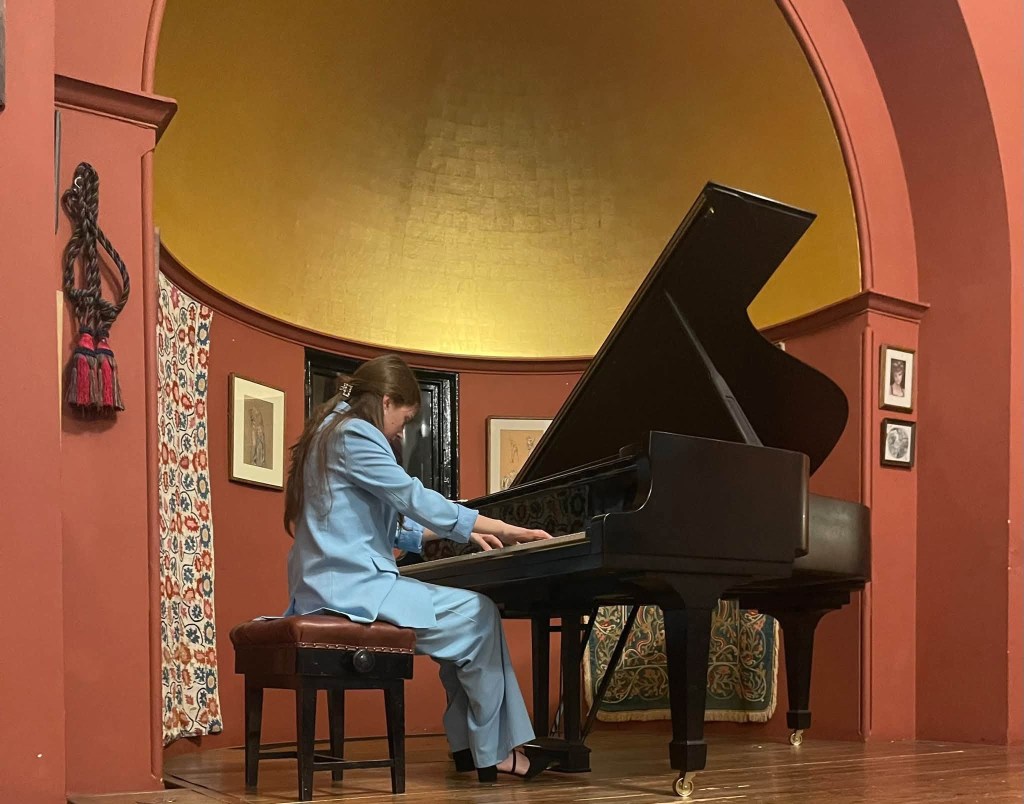
So it was with Rachmaninov’s call to arms of the Etude-Tableaux op 33 n. 7 that was to be the fanfare to a recital of extraordinary intensity and poetic fantasy. She brought power and grandeur to the study with her extraordinary sense of balance which allowed her to play with sumptuous full sounds but never with the ungrateful force that we are so often witness to.There was radiance and flowing beauty to the prelude in G major op 32 n. 5 followed by the astonishing bravura of the Etude-Tableaux op 39 n. 1. A dynamic drive that swept all before it with a pulsating menace relieved momentarily by the sumptuous radiance of the tenor melody before all hell let loose again with transcendental brilliance.
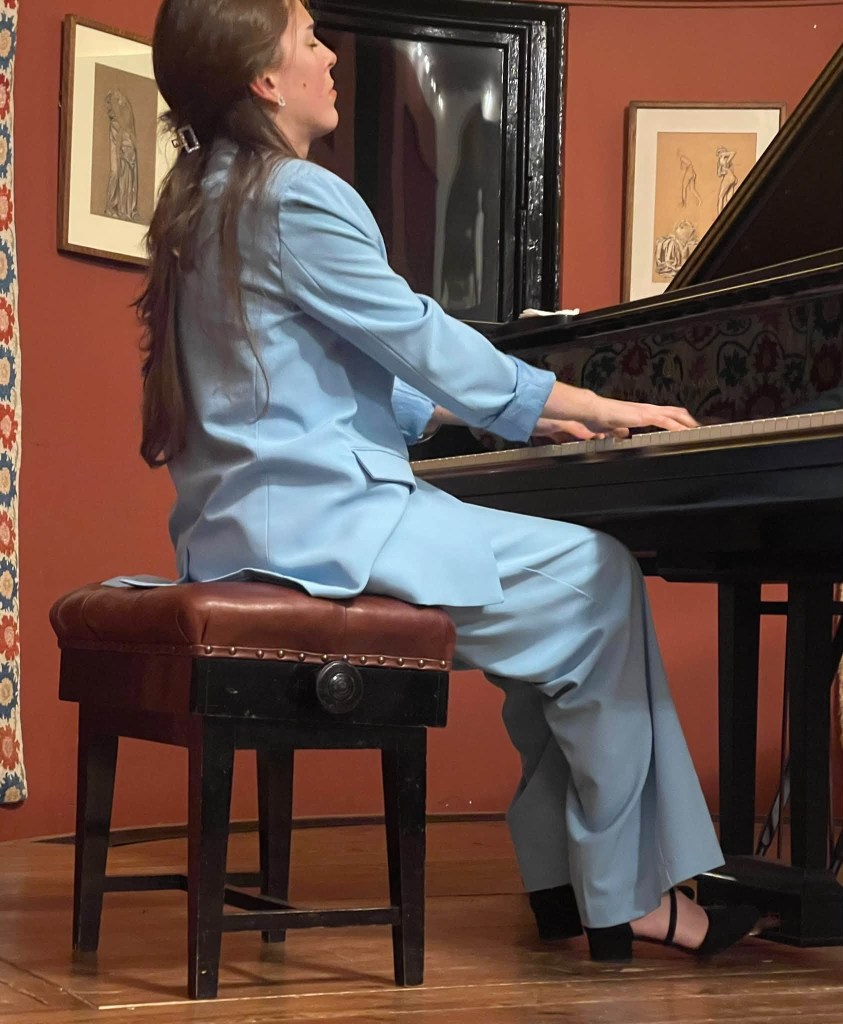
Passing from darkness to light with one of Liszt’s most neglected masterpieces : ‘Bénédiction de Dieu dans la solitude’. It closely corresponds to Lamartine’s poem in its content and form, showing the composer’s indebtedness to French Romanticism. In the key of F sharp which gives it a very warm sound as with Chopin’s Barcarolle, as this too is a great song of ravishing beauty. Salome played the opening tenderly, with a noble tenor voice with washes of undulating sounds in the right hand. A remarkable control of balance with subtle shading as the music built to a climax with aristocratic poise and she placed the great bass notes with breathtakingly daring authority. A deep meditative silence before the opening of a window to hear the simple pastoral beauty of the ‘Andante. It was transformed into the radiance of ‘più sostenuto quasi Preludio’ leading to the main theme on waves of sounds that Salome played with masterly control and refined beauty. Building to the final great climax which opened a box of jewels that were spread with whispered gossamer beauty over the entire keyboard and where the tenor voice, once again, intoned Liszt’s magical melody. Gasps of sounds were interrupted by a deep prayer of solace ‘Andante semplice espressivo’ that was reverently intoned as the Andante theme appeared on high as a distant memory, before the final chords that Salome played with the refined finesse that only comes from listening intently to the very soul that is being bared in that moment. One of the finest accounts that I have ever heard of this remarkable work with an ending played with the same whispered intensity and concentration as the visionary last bars of the B minor Sonata. https://christopheraxworthymusiccommentary.com/2021/02/11/ivan-krapan-premio-busoni-2017-presents-liszt-harmonies-poetiques-et-religieuses/
It is the third of Liszt’s ten Harmonies Poètiques et Religieuses.
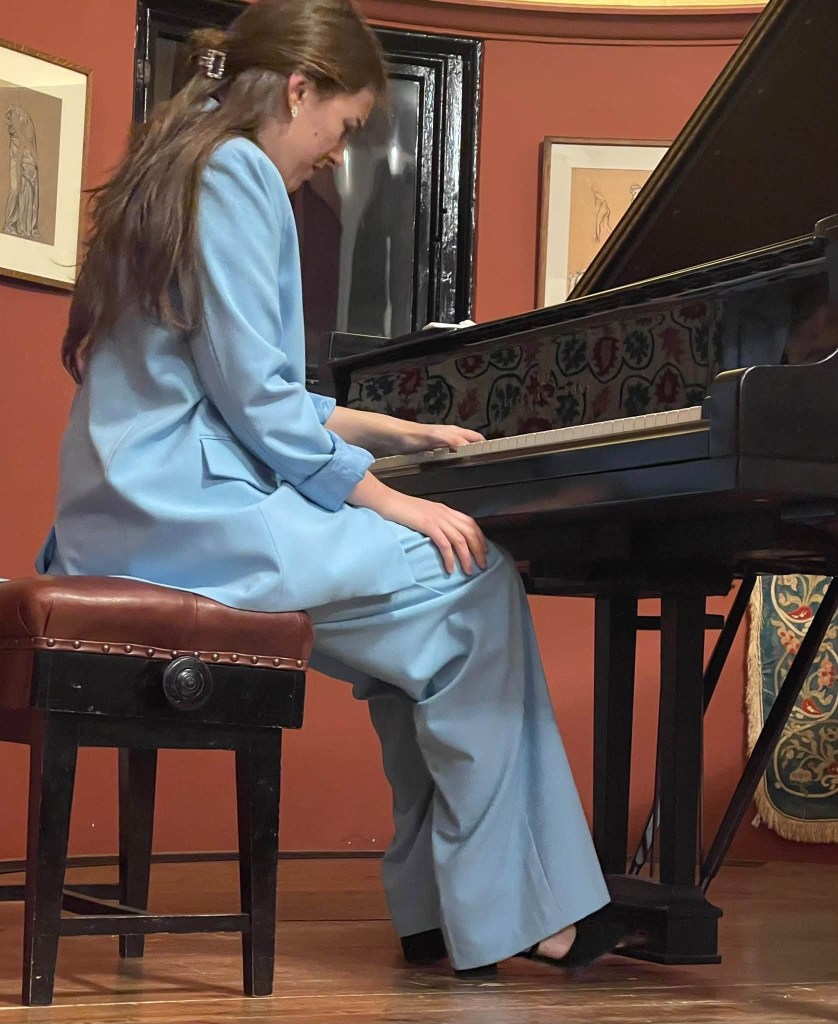
If one had closed one’s eyes and heard her Scriabin Nocturne for the left hand I doubt one would have ever believed that it was possible to play with such a sumptuous palette of sounds and a magical sense of balance that we heard today. A timeless beauty where she allowed the music to breathe as a singer without ever loosing the golden thread that held it so miraculously together.
Pictures at an Exhibition is based on pictures by the artist, architect, and designer Viktor Hartmann It was probably in 1868 that Mussorgsky first met Hartmann, not long after the latter’s return to Russia from abroad. Both men were devoted to the cause of an intrinsically Russian art and quickly became friends.
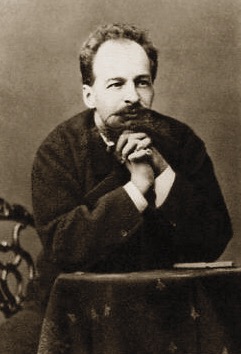
Hartmann’s sudden death on 4 August 1873 from an aneurysm shook Mussorgsky along with others in Russia’s art world. The loss of the artist, aged only 39, plunged the composer into deep despair. Stasov helped to organize a memorial exhibition of over 400 Hartmann works in the Imperial Academy of Arts in Saint Petersburg in February and March 1874. Mussorgsky lent to the exhibition the two pictures Hartmann had given him, and viewed the show in person. Later in June, two-thirds of the way through composing his song cycle Sunless . Mussorgsky was inspired to compose Pictures at an Exhibition, quickly completing the score in three weeks (2–22 June 1874).In a letter to Stasov (see photo), probably written on 12 June 1874, he describes his progress:

My dear généralissime, Hartmann is boiling as Borisboiled—sounds and ideas hung in the air, I am gulping and overeating, and can barely manage to scribble them on paper. I am writing the 4th No.—the transitions are good (on the ‘promenade’). I want to work more quickly and steadily. My physiognomy can be seen in the interludes. So far I think it’s well turned …
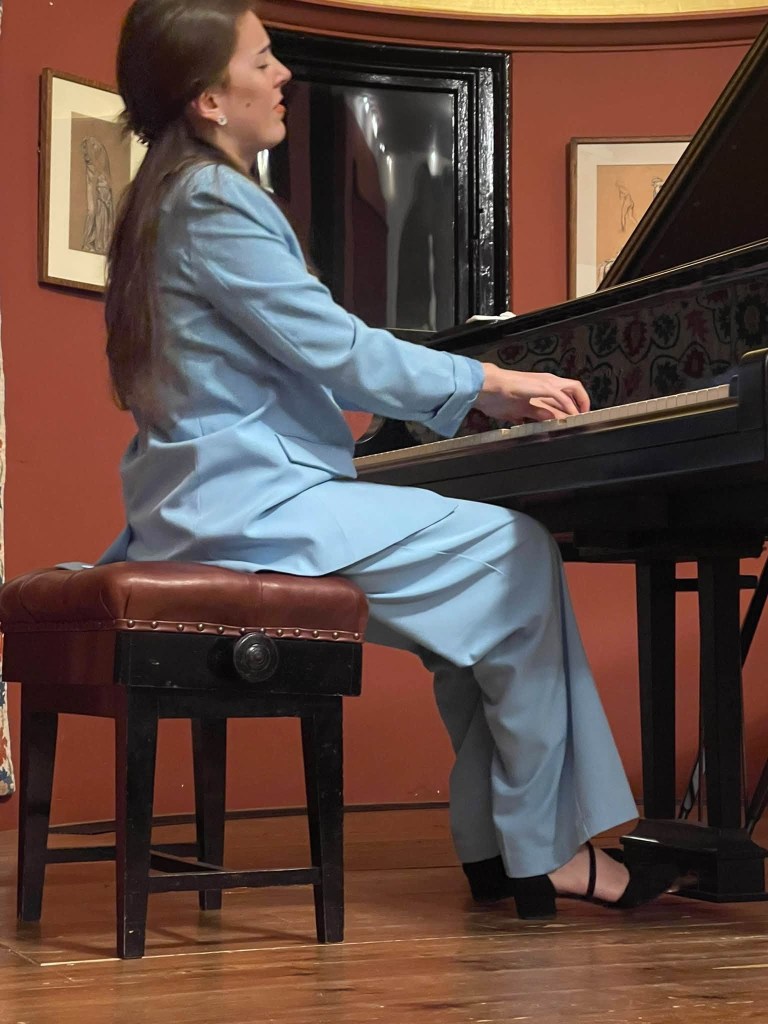
The music depicts his tour of the exhibition, with each of the ten numbers of the suite serving as a musical illustration of an individual work by Hartmann.
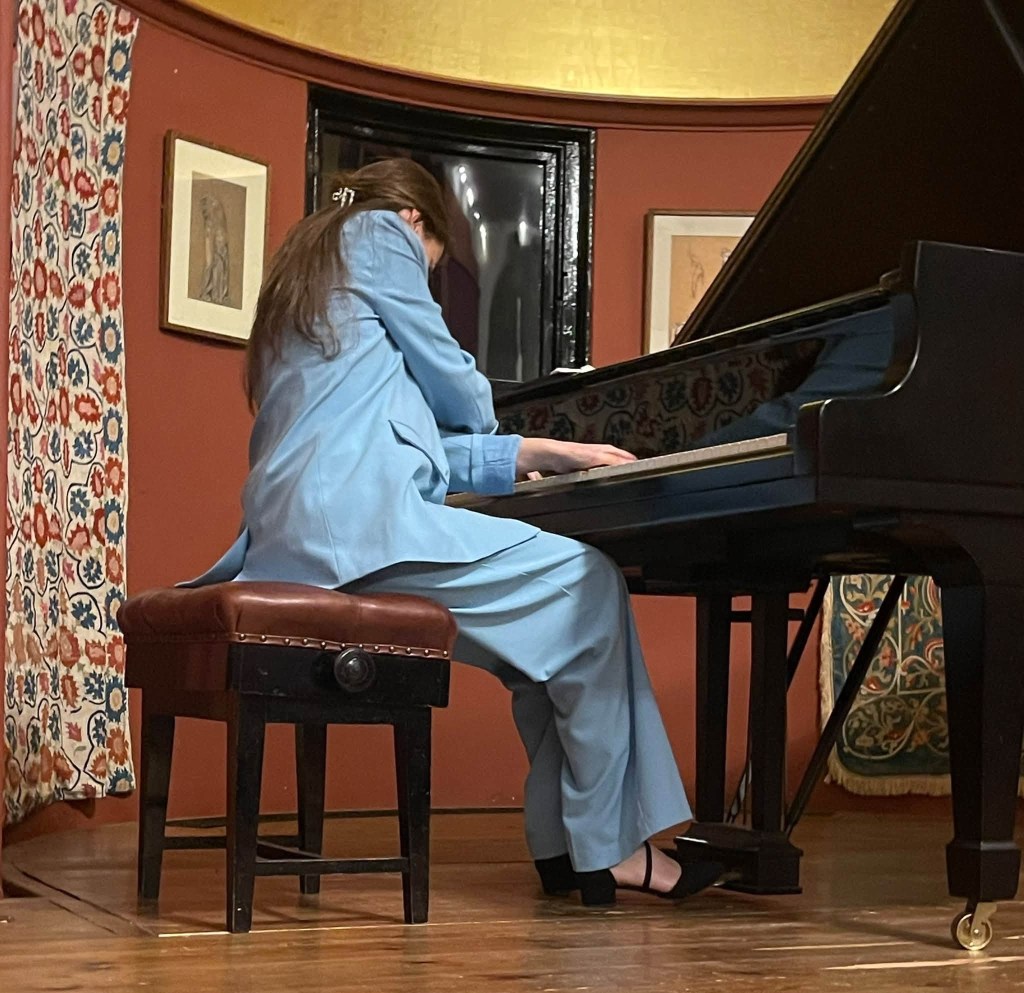
Salome brought a refreshing simplicity to a score that was originally written for the piano and that was eventually orchestrated by Ravel and others. Also transcribed by Horowitz for his performances with demonic playing as powerful as any orchestra and is one of those unique performances that have been captured on disc. Salome played it as the composer had written for the piano bringing a refreshing brilliance and sense of colour to each of the paintings with the composers varying moods as he approached each canvas. ‘Gnomus’ was played with electric precision and diabolical contrasts and her fearless final flourish was enviable indeed! A whispered beauty to the ‘Old Castle’ where she played with simplicity and a continual forward movement as the castle came into view and then disappeared into the distance like Debussy’s ‘Cathédrale engloutie’. A quicksilver clarity to the children quarrelling in the ‘Tuileries’ was followed by the remarkable ‘Bydlo’ that lumbered onto the scene with awkward movements and again disappeared with barely audible sounds, where Salome seemed to be hardly touching the keys. More brilliance with the chicks hatching with some remarkable fingerfertigkeit of trills that were like well oiled springs shooting from one to the other. The extraordinary characterisation of ‘Goldenberg and Schmuyle’ was followed by the transcendental brilliance of the ‘Market Place in Limoges’ where the fleeting lightness of her playing was played with a relentless forward movement never showing sign of fatigue or hardness. ‘Catacombae” and con mortis in lingua mortua’ was pure magic before ‘Baba Yaga’ that she strangely underplayed at the beginning . A piece that can sound oppressive for its percussive insistence Salome turned into a piece of dynamic drive but with a palette of sound that could be shaped and given an architectural meaning .’The Great Gate’ was where Salome’s extraordinary sensibility of balance and overall shape showed her musical maturity with playing off sumptuous fullness but never overwhelming, except in the final declamation which was so much more powerful because saved as the culmination of all that had gone before.
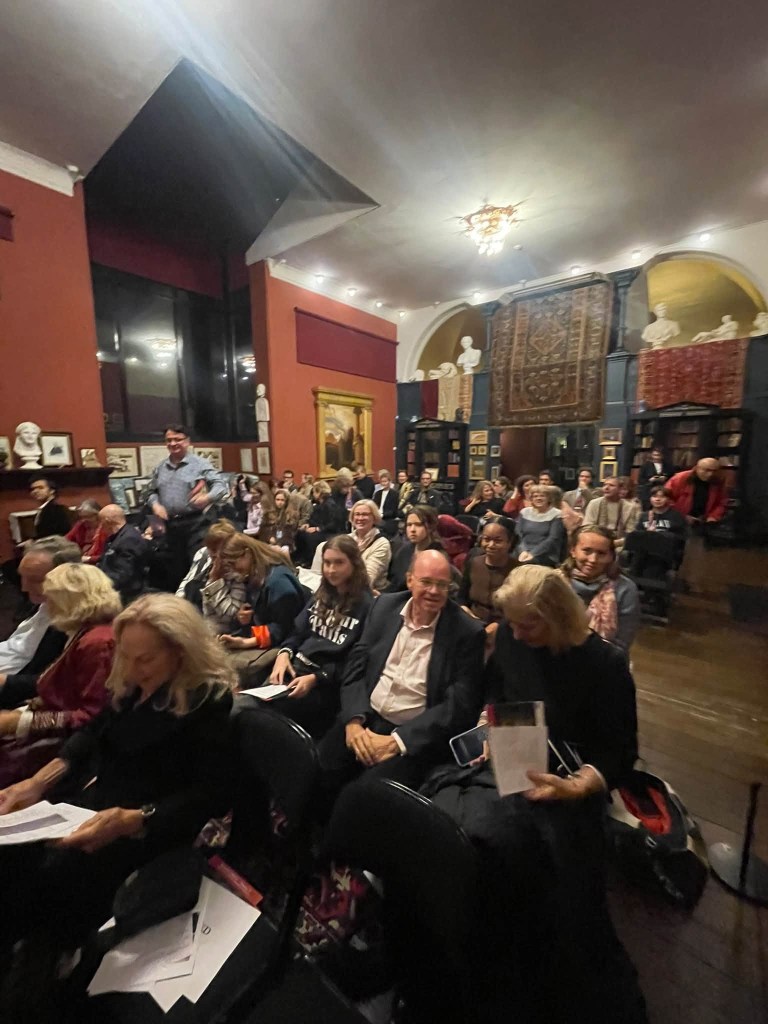
The Chopin waltz op 34 n 1,that she played as an encore , I have heard Rubinstein play with inimitable style many times, but today we heard a performance from an artist who also has much to say and a beguiling musical personality that brought this work magically to life.
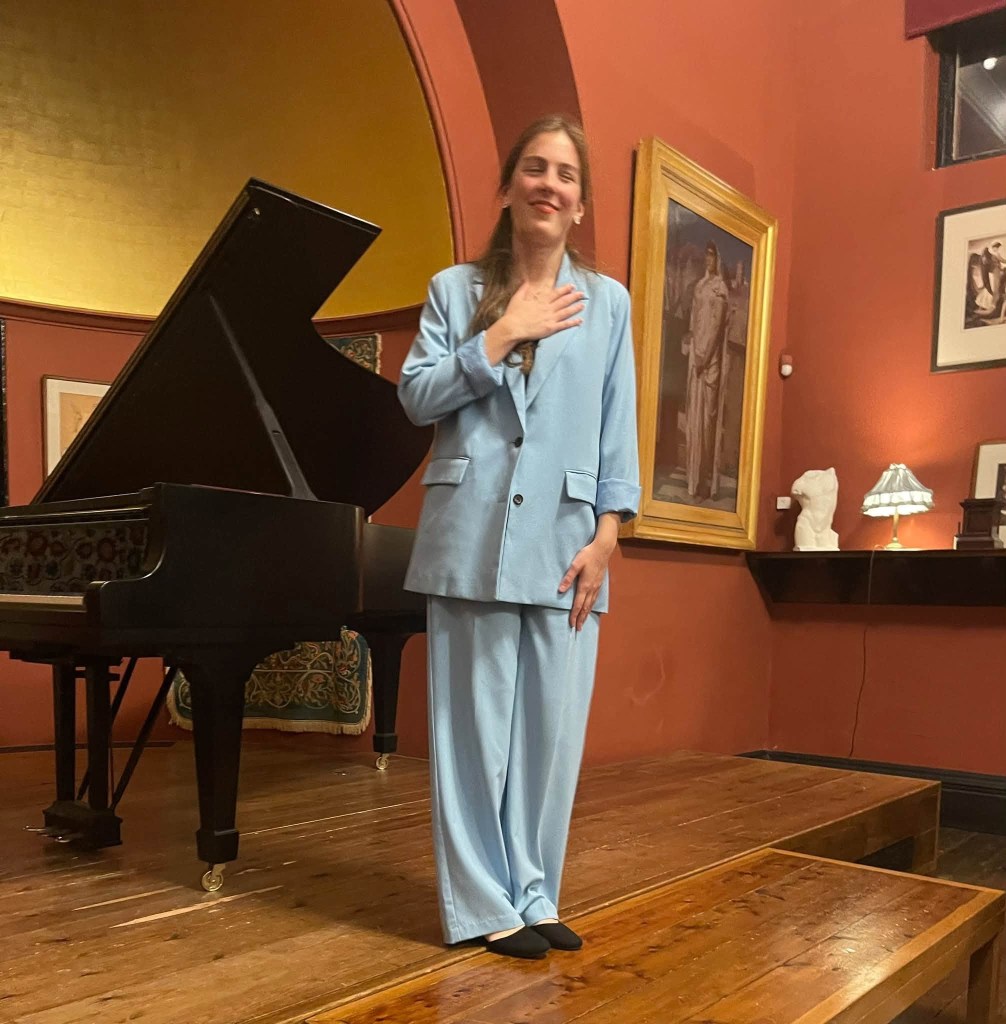
As a concerto soloist, Jordania has collaborated with orchestras including the Georgian Philharmonic Orchestra, Orquesta de Valencia, SLO Symphony Orchestra, Wisconsin Chamber Orchestra, Potsdam Philharmonic, Orchestra Giuseppe Verdi, Kharkiv Philharmonic Orchestra and Moscow Virtuosi. In 2023, she made her debut at the Berlin Philharmonie as a winner of the New York Concert Artists Worldwide Competition. A passionate advocate for contemporary music, her first CD, released by Naxos, features works by Argentine composer Martin Matalon. She has worked closely with leading composers including John Corigliano, Jennifer Higdon and Gabriela Lena Frank, and has received more than thirty international awards, among them the Georges Cziffra Award and top prizes at the Étoiles du Piano International Competition and the José Iturbi International Piano Competition.
Jordania studied at The Juilliard School, Yale School of Music and the Guildhall School of Music & Drama. Her performances have been featured on ARTE and the Dutch television programme Podium Klassiek. Upcoming highlights include performances across the United Kingdom, her debut recital at Salle Cortot in Paris, and the release of her debut solo album on the French label La Dolce Volta on 18 September.
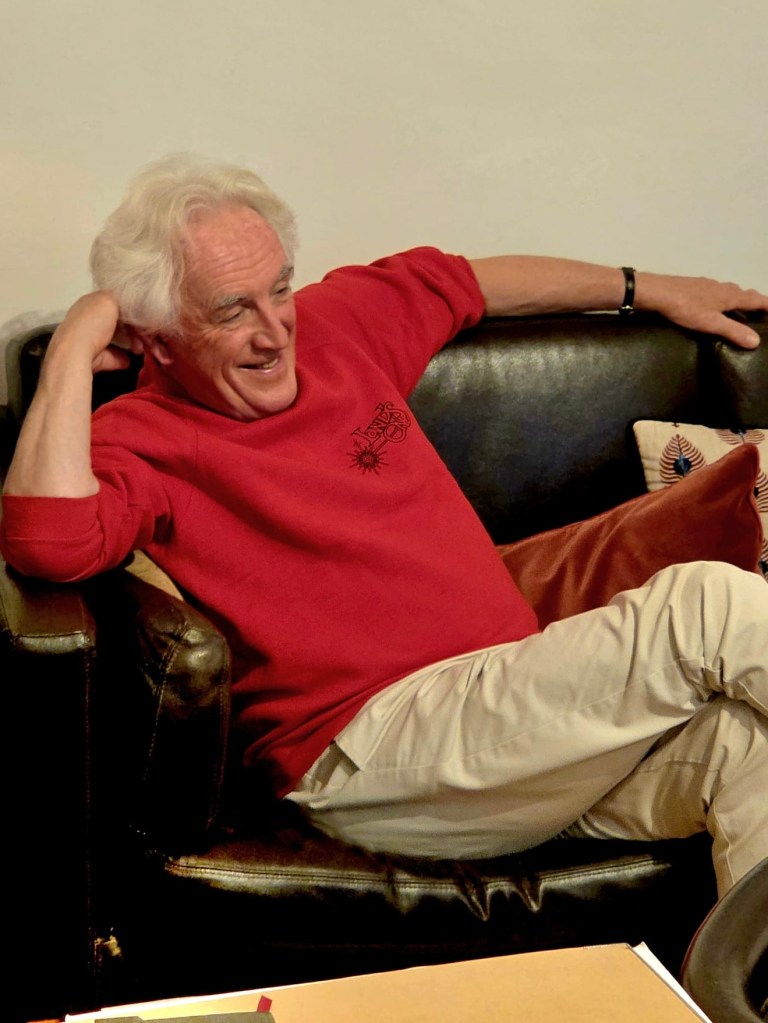
https://christopheraxworthymusiccommentary.com/2024/03/20/christopher-axworthy-dip-ram-aram/https://christopheraxworthymusiccommentary.com/2023/12/05/ileana-and-joan-3rd-december-2023/

