The art of Chopin’s bel canto seduces the senses in the Riviera di Ulisse
The two Chopin concerto’s ignite the perfumed air in the Teatro Romano of Minturno as the ravishing melodic invention of the young Chopin was allowed to unfold on the golden web with which they were born.
Players from the orchestra da camera di Mantova were ready to join this wondrous voyage of discovery, as the jewel like sounds of the chiselled beauty that Luigi sculptured with his refined fingers wafted over the centuries of history that surrounded us.
Players from one of the finest chamber orchestras in Europe were : Filippo Lama and Filippo Ghidoni ,violin; Tessa Rippo,viola; Leonardo Notarangelo,’cello; Alessandro Schillaci,double bass. I have heard the Chopin Concerti several times with a chamber ensemble of string quartet but this is the first time with a quintet. The double bass gave a depth of sound that gives so much more strength to the ‘tutti’s’ where one can easily miss the full climactic moments of the piano continued into the orchestral tutti’s. It was the superb viola of Tessa Rippo who could even imitate Chopin’s horn call in the second concerto and the sumptuous beauty of the first violin of Filippo Lama that could give such full radiance alone. The ‘cello and second violin too filling the textures with chamber music subtlety but there were one or two strange non legato phrasings where we missed the weight of the orchestra.
Chopin concertos that have never been allowed to sing so eloquently and vibrantly. Even the brilliant jeux perlé became but streams of wondrous sounds greeting an audience that this theatre has not seen since the Romans found and inhabited this wondrous paradise.Hopefully this rediscovery of well known classics in chamber formation will continue next year with the 3rd Season of the Riviera di Ulisse. I have heard recently the Beethoven Piano concertos being reborn in the arrangement for piano and quintet by Vinzenz Lachner There is of course the supreme magic of Mozart’s own three concerti K413,K 414,K 415 for piano and quartet that I had heard years ago from Fou Ts’ong and the Allegri Quartet and that I have never forgotten.
the sindaco of Minturno presenting the concert and more music in this magic Teatro Romanocentre Natalie Gabrielli Carroccia together with her husband bringing magic to this sacred land
Chopin, 28, at piano, from the joint portrait of Chopin and Sand , by Delacroix 1838 Fryderyk Franciszek Chopin. 1 March 1810 Żelazowa Wola ,Poland -17 October 1849 (aged 39) Paris, France
Chopin’s compositions for piano and orchestra originated from the late 1820s to the early 1830s, and comprise three concert pieces he composed 1827–1828, while a student at the Central School of Music in Warsaw, two piano concertos , completed and premièred between finishing his studies (mid 1829) and leaving Poland (late 1830), and later drafts, resulting in two more published works. Among these, and the other works in the brilliant style which Chopin composed in this period, the concertos are the most accomplished.
Variations on ‘Là ci darem la mano’in B♭ major (1827), Op. 2.
Fantasy on Polish Airs , in A major (1828), Op. 13.
Rondo à la Krakowiak , in F major (1828), Op. 14.
Piano Concerto n. 2 in F minor (1829–1830), Op. 21.
Piano Concerto n. 1 in E minor in E minor (1830), Op. 11.
Grande polonaise brillante (1830–1831), in 1834 expanded with an introductory Andante spianato for solo piano, and a fanfare-like transition to the earlier composition, together published as op. 22
Drafts for more concertos, ultimately resulting in the Allegro de Concert for solo piano (1832–41), Op. 46.
The Piano Concerto No. 1 in E minor, Op. 11, was written in 1830, when he was twenty years old. It was first performed on 12 October of that year, at the Teatr Narodowy (the National Theatre) in Warsaw, with the composer as soloist, during one of his “farewell” concerts before leaving Poland
Teatr Narodowy
It was the first of Chopin’s two piano concertos to be published, and was therefore given the designation of Piano Concerto “No. 1” at the time of publication, even though it was actually written immediately after the premiere of what was later published as n. 2. The presenter of the concert form S. Cecilia Academy in Rome , told us that it was published as number one because the orchestral parts of the other concerto could not be found!
The premiere, on 12 October 1830, was “a success…. a full house”. There was “an audience of about 700” and the he concerto was premiered with Chopin himself at the piano and Carlo Evasio Soliva conducting. The piece was followed by “thunderous applause”. Seven weeks later, in Paris, following the political outbreaks in Poland , Chopin played his concerto for the first time in France at the Salle Playel . It was received well, once again. François-Joseph Fétis wrote in La Revue musicale the next day that “There is spirit in these melodies, there is fantasy in these passages, and everywhere there is originality”. Opinions of the concerto differ. Some critics feel that the orchestral support as written is dry and uninteresting, for example the critic James Huneker , who wrote in Chopin: The Man and his Musicthat it was “not Chopin at his very best”. Sometimes musicians such as Mikhail Pletnev feel a need to amend Chopin’s orchestration.On the other hand, many others feel that the orchestral backing is carefully and deliberately written to fit in with the sound of the piano, and that the simplicity of arrangement is in deliberate contrast to the complexity of the harmony. It has been suggested that the orchestral writing is reminiscent of Hummel’s concertos in giving support to the piano rather than providing drama. Harold Schonberg , in The Great Pianists, writes “…the openings of the Hummel A minor and Chopin E minor concertos are too close to be coincidental”.However, Schumann took a rather different view when he reviewed Chopin’s concerti in 1836 declaring that “Chopin introduces the spirit of Beethoven into the concert hall” with these pieces.While composing it, Chopin wrote to his friend Tytus Woyciechowski, saying “Here you doubtless observe my tendency to do wrong against my will. As something has involuntarily crept into my head through my eyes, I love to indulge it, even though it may be all wrong”. This sight may have been the well-known soprano Konstancja Gladkowska, believed by some to be the “ideal” behind the Larghetto from Chopin’s Second Piano Concerto, although some believe Chopin may have been referring to Woyciechowski
The Piano Concerto No. 2 in F minor, . op. 21, was written in 1829. Chopin composed the piece before he had finished his formal education, at around 20 years of age. It was first performed on 17 March 1830, in Warsaw, with the composer as soloist. It was the second of his piano concertos to be published (after n. 1), and so was designated as “No. 2”, even though it was written first.
A star shining brightly in Fondi as the artistry of Jonathan Fournel shows how passion poetry and mastery can intoxicate and mesmerise the audience of the Riviera di Ulisse Festival of Luigi and Natalie Carroccia .
Fondi a magical town to discover due to the unpredictable weather the concert in the Chiostro di San Domenico was moved into their auditorium
Bach played with a kaleidoscope of colour and aristocratic nobility.The Bach Italian Concerto was played with extraordinarily refined colouring that was respectful of the period it was written. Full of fantasy and dynamism in every note but with a very refined musical palette without ever loosing the dynamic drive that is so much part of the genius of Köthen. The slow movement was very expressive but strangely very orchestral with rich but delicate sounds (as Jonathan was to find in Brahms later too). Here there was an architectural shape of the nobility and authority of a thinking and feeling musician. The last movement sprang from his masterly fingers with dynamic drive and a rhythmic energy of exhilaration and ‘joie de vivre’, Counterpoints that were so clearly differentiated by contrasted dynamic levels of sound. There was also no rallentando or grandiose ending to ruin the architectural shape that had been created by the master of knotty twine so perfectly differentiated by Jonathan’s true pianistic mastery.
Brahms played with almost orchestral richness that was both tender and passionate.Three Intermezzi op 117 that Brahms described as ‘three lullabies of my grief’ were played with whispered luminosity and a delicately chiselled orchestral beauty. Op 117 n.1 is based on an anonymous Scottish Ballade : ‘lie still and sleep; It grieves me sore to see thee weep’ ,where Jonathan found a beautiful gentle doubling of the tenor register. As the melody returned the gently rocking from the bass to the soprano created a frame of pure magic, with barely audible final notes placed with infinite delicacy and breathtaking beauty.There was the insinuating beauty of the second in B flat minor with a richness but also a tenderness and an ending of exquisite beauty. A central episode that has been described as :’man as he stands with the bleak, gusty autumn wind eddying round him’ was indeed played with a rich full tone of glowing beauty and timeless wonder. The third in C sharp minor is the most disturbing with it’s almost oriental feel to the opening doubling of the melodic line and which Jonathan transformed into a wondrous tone poem of beguiling insinuating beauty.
And finally the Liszt Sonata played with fearless abandon and respect for the pinnacle of the romantic piano repertoire.
Restored to its rightful place with breathtaking beauty and earthshattering conviction but above all the respect for the genius of Liszt, as Jonathan recreated this masterpiece as rarely ever heard since Gilels. I have never experienced the almost religious rite of the opening with hands poised as he was about to embark on a truly wondrous voyage. The dynamic values within forte may have been slightly the same but this was a man playing with passionate commitment and quite extraordinary technical mastery. As Barbirolli famously said of criticism of Jaqueline Du Pré ;’If you don’t play with passion and love when you are young what do you pare off when you are older’. Jonathan,like Du Pré, is a great musician and always foremost in his playing was the sense of line and an overall sense of balance. Sometimes at the height of passionate involvement suddenly reducing the sound so it could lead to the climax without any hard or ungrateful sounds. The sign of a great musician is the meaning that is given to the rests or silences between the notes and it was this that became so noticeable as Jonathan began the descent into the recapitulation after the searing intensity of the central movement. The gradual disintegration into descending scales like glistening jewels just coming to rest after such a traumatic experience was truly memorable for the energy that he could install in notes of such seeming simplicity. There were terrifying contrasts between the enormous sonorities of the chords and the touching delicacy of the recitativi. Passion and poetry combined in a truly memorable performance of this pinnacle of the romantic piano repertoire. The fearless mastery of the treacherous final octaves were played at a speed that would have put fear into any other pianist as they passed from the right hand to the left with quite extraordinary passionate involvement and remarkable accuracy.
The final visionary pages were played by a true poet but also a thinking musician, where rests I have never noticed before became as eloquent and meaningful as the notes. There were moments of aching silence as Jonathan reached the heights with three delicately placed chords, the last one played quieter than the others , as Liszt asks, and barely touching the final B. Moved by this moment of recreation as he involved us in this act of mutual communion that can only happen in live performance. Again it was the aching final silence that spoke even louder than the notes because we were all involved in this almost religious rite of recreation.
As Gilels so rightly said ‘live performance is like fresh food and recorded performances like canned food’. And as the ‘Bard’ said : ‘If Music be the food of love, please oh please play on’.
Exhausted but not completely spent this young man could still create a magic spell with the Bach-Siloti Prelude in B minor.The shadow of Gilels watching from above as this young man recreated the magic that was his many years ago.
Natalie Carroccia,co artistic director and distinguished musicologist thanking Jonathan
A star was truly born tonight with Jonathan Fournel’s much awaited return to Italy after winning the Gold Medal at the Queen Elisabeth Competion in 2021 .
The very first competition in 1938 was won by Emil Gilels, could that be a coincidence or is great artistry born on these wings of song?
This is Gilels playing the same Bach-Siloti that Jonathan treated us to as an encore :
Jonathan began studying piano at age seven in his hometown of Sarreguemines in eastern France before entering the Strasbourg Conservatoire. At 12, he was admitted to the Saarbrücken Musikhochschule in Germany, where he studied with Prof. Robert Leonardy and Jean Micault. Around this time, he also began working with pianist Gisèle Magnan, from whom Jonathan received mentorship for years. At 15, he entered the Conservatoire National Supérieur de Musique de Paris, studying with Brigitte Engerer, Bruno Rigutto, Claire Désert, and Michel Dalberto, and graduated with honors five years later. In September 2016, Jonathan joined Louis Lortie and Avo Kouyoumdjian’s class at Chapelle Musicale Reine Elisabeth in Belgium for five years.He is a guest at prestigious venues and festivals including the Concertgebouw Amsterdam, Gewandhaus Leipzig, Elbphilharmonie Hamburg, NDR Landesfunkhaus Hannover, Rheingau Musik Festival, Klavier Festival Ruhr, Konzerthaus Vienna, Philharmonie de Paris, Théâtre des Champs-Élysées, Auditorium de Radio France, Louis Vuitton Foundation, La Roque d’Anthéron Festival, Piano aux Jacobins Festival, Les Concerts de Poche, Verbier Festival, Sommets Musicaux de Gstaad, Sala Verdi Milan, Suntory Hall, Kioi Hall Tokyo, Philharmonie Luxembourg, Flagey, Bozar Brussels, de Bijloke Gent, Louisiana Museum Denmark, Kumho Art Hall Seoul, Tongyeong Concert Hall, Sala São Paulo, Warsaw Philharmonic, Glasgow Royal Concert Hall and Usher Hall Edinburgh.Jonathan has performed under the baton of conductors such as Alexandre Bloch, Jean-Claude Casadesus, Thomas Dausgaard, Stéphane Denève, Sascha Goetzel, Howard Griffiths, Jonathon Heyward, Eivind Gullberg Jensen, Gabor Kali, Lio Kuokman, Alexander Markovic, Peter Oundjian, Daniel Raiskin, Pascal Rophé, Michael Schønwandt, Fan Tao, and Hugh Wolff. He has collaborated with orchestras including the NHK Symphony Orchestra, Macao Orchestra, Royal Scottish National Orchestra, Orchestre Philharmonique du Luxembourg, Orchestre National d’Île-de-France, Orchestre de Chambre de Paris, Orchestre National de Bordeaux, Orchestre National de Lille, Orchestre National de Montpellier, Deutsche Radio Philharmonie, Nordwestdeutsche Philharmonie, Brussels Philharmonic, Belgian National Orchestra, European Union Youth Orchestra, NOSPR Katowice, Slovak Philharmonic and the Croatian Radio and Television Orchestra.
Artistic director and master pianist , friend and colleague of the artists. With Julian Kainrath https://christopheraxworthymusiccommentary.com/2025/08/28/julian-kainrath-rides-high-on-the-wings-of-ulisse-some-enchanted-evening/gastronomic feast after the concerts in this land kissed by the Godsthe proof of the pudding is certainly in the eating behind the scene preparations gastronomic delights to enhance the intoxicating senses of Bach,Brahms and Liszt our hosts for the gastronomic treats Luigi Carroccia ,artistic director with his wife Natalie, seen here applauding his friend and colleague,Jonathan, before his own concert tonight of the two Chopin Piano concerti in the Teatro Romano in Minturno https://christopheraxworthymusiccommentary.com/2024/05/04/luigi-carroccia-the-poet-of-the-piano-chopin-concerti-op-11-and-21-in-rome-orchestra-delle-cento-citta-directed-by-luigi-piovano/Emil Gilels was born in Odessa. He did not come from a musical family: his father worked as a clerk in the sugar refinery and his mother looked after the large family. At the age of five and a half he was taken to Yakov Tkach, a famous piano pedagogue in Odessa. He completed his first period of studies with unprecedented ease. In 1929 aged twelve, he gave his first public concert. In 1930 he was accepted to the conservatory in Odessa into the class of Berta Reingbald. Her main goal was his participation in the First All-Union Competition of Performers which was announced to take place in 1933 in Moscow. Gilels’ playing created a sensation – when he finished his programme the auditorium rose up in tumultuous ovation and even the jury stood to applaud. The question of first prize was not even discussed: in a unanimous decision Gilels was announced the winner. The competition changed Emil’s life – he was suddenly famous throughout the land. Following the competition, Gilels embarked on an extensive concert tour around the USSR. In 1938 Gilels and Flier set off to the Queen Elisabeth Competition. They were expected to uphold the victories of the Soviet violinists, lead by David Oistrakh a year earlier, and to return in triumph. Gilels was awarded the first prize and Flier took the third. Moura Lympany,second and Arturo Benedetti Michelangeli 7th ! The whole musical world began to talk about Emil Gilels. Following the competition he was meant to embark on a lengthy concert tour, including a tour of the USA. These plans were abruptly interrupted by the Second World War. On home soil Gilels became a hero: he received a medal for his achievements, was greeted by a welcome party upon his return and in the Soviet consciousness his name sounded in equal rank with the names of famous explorers, pilots and film stars. Final (29/05/1938) programme : PYOTR TCHAIKOVSKY Concerto n. 1 in B flat minor op. 23 JOHANNES BRAHMS Variations on a Theme by Paganini op. 35 I FELIX MENDELSSOHN Scherzo (A midsummer night’s dream ) RICHARD WAGNER Mort d’Yseult MILY BALAKIREV Islamey FRANZ LISZT Hungarian Rhapsody n. 6 in D flat major JOSEPH JONGEN Toccata Emil Gilels Orchestre Symphonique de l’INR, dir. Franz AndréArthur Rubinstein dedication to Emil Gilels, “from my heart, your old friend Arthur Rubinstein.” 17 January 1960
In May 1929, aged 12, Gilels gave his first public concert.In 1929, Gilels was accepted to the Odessa Conservatory into the class of Bertha Reingbald. Under the tutelage of Reingbald, Gilels broadened his range of cultural interests, with a particular aptitude for history and literature. In 1932, Artur Rubinstein visited the Odessa Conservatory and met Gilels, and the two of them remained friends through the remainder of Rubinstein’s life.Rubinstein recounts that in hearing this red haired teenager he declared that if he ever came to the west Rubinstein may as well pack up his bags retire Franz Liszt Born. 22 October 1811 Doborján, Austrian Empire Died 31 July 1886 Bayreuth
The Piano Sonata in B minor S.178 is in a single movement . Liszt completed the work during his time in Weimar, Germany in 1853, a year before it was published in 1854 and performed in 1857. He dedicated the piece to Robert Schumann , in return for Schumann’s dedication to Liszt in his Fantasie in C major op 17 .A copy of the work arrived at Schumann’s house in May 1854, after he had entered Endenich sanatorium. Clara Schumann did not perform the Sonata despite her marriage to Robert Schumann as she found it “merely a blind noise”.The Sonata was published by Breitkopf & Härtel in 1854 and first performed on 27 January 1857 in Berlin by Hans von Bulow. It was attacked by Eduard Hanslick who said “anyone who has heard it and finds it beautiful is beyond help”.Brahms reputedly fell asleep when Liszt performed the work in 1853, and it was also criticized by the pianist and composer Anton Rubinstein . However, the Sonata drew enthusiasm from Richard Wagner following a private performance of the piece by Karl Klindworth on April 5, 1855. Otto Gumprecht of the German newspaper Nationalzeitung referred to it as “an invitation to hissing and stomping”. It took a long time for the Sonata to become commonplace in concert repertoire because of its technical difficulty and negative initial reception due to its status as “new” music. However by the early stages of the twentieth century, the piece had become established as a pinnacle of Liszt’s repertoire and has been a popularly performed and extensively analyzed piece ever since
The complexity of the sonata means no analytical interpretation has been widely accepted. Some analyses suggest that the Sonata has four movements, although there is no gap between them. Superimposed upon the four movements is a large sonata form structure, although the precise beginnings and endings of the traditional development and recapitulation sections have long been a topic of debate. Others claim a three-movement form, an extended one-movement sonata form, and a rotational three-movement work with a double exposition and recapitulation. Liszt effectively composed a sonata within a sonata, which is part of the work’s uniqueness, and he was economical with his thematic material. The first page contains three motive ideas that provide the basis for nearly all that follows, with the ideas being transformed throughout having been inspired by Schubert’s Wanderer Fantasy and the transformation of themes that Liszt’s son in law Wagner was to make his own.
The quiet ending of the Sonata was an afterthought; the original manuscript contains a crossed-out ending section which would have ended the work in a loud flourish instead. Vladimir Ashkenazy considers these final two pages to be the most inspirational of all the romantic piano repertoire .
Richard Zhang was born in Jiashan, China in 2005 and showed a great interest in music at a very early age. He began playing the piano when he was six, studying with William Zhou
Frédéric Chopin: Nocturne No.1 , Op 55.
Although rather slow Richard’s aristocratic musicianship shone through this most beautiful of all Chopin Nocturnes which was in fact the favourite of that magician of the keyboard Shura Cherkassky.https://fb.watch/BNojHde30K/
It was obvious that Richard has had some wonderful training from the Menuhin School where he has been studying with Marcel Baudet who has instilled in so many young musicians a real sense of musicianship and respect for the score. Damir Duramovic and Can Arisoy are both products of Marcel Baudet at the Menuhin School and have both received a real grounding in true musicianship going on to graduate from the Royal College and The Guildhall .https://christopheraxworthymusiccommentary.com/2022/03/29/brazil-200-and-keyboard-trust-30-a-collaboration-born-on-wings-of-brazilian-song/
Many years ago I had the honour to be on the jury of the Monza competition with Marcel and could witness the musical integrity and humility that he now shares with his lucky students. It was this musical integrity that allowed this nocturne to sing with simplicity and a superb sense of balance where the bel canto could sing sustained by a discretely placed bass. Even the coda unfolded with refined colouring in which the bass melody was allowed to emerge with great beauty.
Claude Debussy: Images, série I I. Reflets dans l’eau II. Hommage à Rameau III. Mouvement
A beautiful fluidity to the sound in ‘Reflets’ as there was a gradual build up to the passionate climax but always with control and an architectural sense of line. The final page was of refined beauty and ravishing colouring. There was an aristocratic poise to ‘Hommage’ with some beautiful atmospheric pedal effects and a haunting sense of line to the final page before the sotto voce of ‘Movement’. Played with transcendental control and fantasy as it wove its way into the stratosphere with refined brilliance.
Robert Schumann: Faschingsschwank aus Wien, Op 26 I. Allegro, (Sehr Lebhaft), B-flat major II. Romanze (Ziemlich Langsam), g minor III. Scherzino, B-flat major IV: Intermezzo, (Mit Größter Energie), e-flat minor V: Finale, (Höchst Lebhaft), B-flat major
There was a great sense of forward movement and an overall sense of line even in the differing interludes of the ‘Allegro’ that was played with a dynamic drive of passionate intensity.There was a simplicity and beauty to the ‘Romanze’ that was contrasted with the capricious driving rhythms of the Scherzo where lightness and beauty were given to the musical line. The ‘Intermezzo’ just burst from Richard’s fingers with controlled passion but always with a superb sense of line and phrasing of refined elegance. The ‘Finale’ showed off Richard’s remarkable ‘fingerfertigkeit’ that together with a relentless drive even in the mellifluous contrasting episodes finally exploded with exhilaration and excitement in the coda of the final bars.
A full church greeted this young man with a justly deserved ovation and it augurs well for his studies that will continue with Ronan o’Hora at the Guildhall – another superb trainer of so many remarkable young musicians.
In October 2015 he met the harpsichord maker Ferguson Hoey at the China Music Exhibition, and tried a harpsichord for the first time. Immediately realising his exceptional talent, Mr. Hoey arranged for him to come to the UK and audition at the Yehudi Menuhin School. Here he continued his piano studies with Marcel Baudet.
Richard has given various solo performances in China and Europe, taking part in a number of concerts in the Menuhin Hall and other venues since joining the school. In December 2017 he was the soloist for a performance of Finzi’s Eclogue with the school’s Junior Orchestra, a mature performance much praised for its meditative qualities. In February 2018 he performed Liszt Transcendental Studies in Amsterdam to considerable acclaim.
His love of chamber music came to the fore in the Menuhin School’s Summer Festival 2018, when he performed Schumann’s Piano Quintet with other pupils. In March 2019 he progressed to the finals of the Aarhus International Piano Competition in Denmark and in June performed with other students at London’s Wigmore Hall. In the Summer Festival he joined string players at the school in a dazzling performance of the Dvorak Piano Quintet. Then in October he partnered Alina Ibragimova in the Violin Sonata by Debussy at Zamira Menuhin Benthall’s 80th Birthday Concert in the Menuhin Hall. In 2021 Richard was awarded Distinction in the Tunbridge Wells International Music Competition.
Richard has taken part in master classes with many distinguished teachers including Cristina Ortiz, Angela Hewitt, Klaus Hellwig and Jacques Rouvier. His musical interests and repertoire are wide-ranging, from early C17th keyboard masters up to contemporary composers. He also composes and has been a contributor to the “250 Piano Pieces for Beethoven” international composition project.
He has been awarded a scholarship to study at the Guildhall School of Music and Drama and in addition to this generous bursary, he has been selected by the Keyboard Trust to receive the 2024 Dr. Weir Legacy Award to help support his further studies.
He will also be joining Talent Unlimited since his study at the Guildhall School of Music and Drama.
The mighty Chaconne was wafted into this magic land with mastery and the magisterial authority that is of the very few. An extraordinary architectural and rhythmic drive that allowed this great gothic cathedral to arise from the hands of this young man creating a unified whole of extraordinary potency. Even the contrasting episodes were combined so naturally with that aristocratic authority and humility that I well remember on listening to Menuhin when he gave a lecture recital at the Royal College of Music. An illustrated lesson in which he described the difficulty of phrasing and bowing in a way that would never break the musical line. It was this today that I heard from Julian with a musical line that from the opening to the final triumphant ending was never allowed to sag or loose the energy within the very notes themselves.
It was Ruggiero Ricci who played this great work at his 80th birthday concert in London. He insisted on standing up for this work whereas the others he had to play sitting down. He had been to a Chinese restaurant the night before the Wigmore Concert and was left with food poisoning on the actual day when Jack Rothstein had organised a celebration for one of the greatest violinists of our age.
There was no celebration for him after the concert but a trip to spend the night at the London Clinic nearby. Liver sausage sandwiches and a bill for fifteen hundred pounds for the night. ‘ That was the most expensive Chinese meal I have ever had ‘,he quipped in his dry American humour’ .
Julian of course played it standing up with his back to the sea and the magnificent outline of Gaeta and Formia creating a magical backdrop in this almost unknown paradise that is the Gianola Park.
Like Ysäye whose Dies Irae was also heard floating in this rarified air as the birds glided by to see where such wondrous sounds were coming from. I remember Ruggiero Ricci playing this Sonata in a solo recital he gave for Euromusica in Rome. Julia his wife could not accompany him this trip so I looked after him as over the years they had become close friends. He had made a mistake packing his shoes and had two different ones that he tried to hide by standing one on the other whilst giving a phenomenal display of mastery – his left hand even in his 70’s was the envy of all other violinists.
He was staying in his usual Hotel S. Anna the other side of S.Peters Square. After a dinner next to the theatre , I accompanied him back to the hotel. We did not know that S. Peter’s Square is shut at night ! No problem exclaimed Ruggiero as he climbed over the barrier and we were chased by the police through the square. Ruggiero had the priceless Huberman Strad under his arm!
The Ysaÿe Sonatas are a ‘tour de force’ for any violinist and Julian played this second sonata with impeccable technical perfection but also a sense of style that made sense of the capricious nature of the work . All the ‘tricks of the trade’ that a master violinist could contemplate were mastered with ease and the final variations were quite breathtaking in their dynamic drive.
An encore of the Sarabande from the same Partita n. 2 was a magical farewell before de scaling the heights from paradise to the parked car!
Natalie Gabrielli with the Sindaco di Minturno Gerardo StefanelliLuigi Carroccia with Julian in the ‘Green Room’ before his appearance on stage
con Luigi Carroccia artistic director of the Festival gastronomic delights after the musical ones Julian Kainrath is one of those unique talents that the world needs. His insights are deeply rooted in the wisdom of the past while simultaneously possessing a keen foresight into the future. Louis Lortie Julian Kainrath is a highly talented violinist and a wonderful friend. I have had the pleasure of performing with him when he was 15. His playing is becoming more and more confident and personal. He is intelligent, curious and versatile. He has a bright future ahead of him! Till Fellner
Winner of the International Classical Music Awards (ICMA) Discovery Award in 2022 at the age of 16, and of the Ysaye International Music Competition in 2025, Julian Kainrath regularly performs both as a soloist and recitalist. Born in Merano, Italy, he started his violin studies at the age of six and has been given public performances since he was ten years old. Announcing the ICMA’s Discovery Award the President of the Jury Remy Franck said: “our winners are the expression of the highest artistry”. Julian’s appearance under conductor Adam Fischer with the Luxembourg Philharmonic Orchestra at the Luxembourg Philharmonie was highly praised by critics: “In the second program item, the audience was treated to a particularly outstanding performance. The 16-year-old violinist Julian Kainrath from Merano, winner of the Discovery Award, not only gave a brilliant rendition of the Introduction and Rondo capriccioso by Camille Saint-Saens, but also, despite his young age, knew how to give this work a very personal interpretation, after which one can hope for much more to come from this true artist”. During the 2024/2025 season, Julian performed recitals and concertos with orchestra in Italy, Germany, France, Austria, Switzerland, and the United States. Highlights include his debut in Venice at the Apollonian Halls of Teatro La Fenice; a performance of Bach’s Sonatas and Partitas for solo violin at the Ristori Baroque Festival in Verona; debuts with the Leverkusen Symphony in Germany, the University of Milan Orchestra, and the Bari Symphony Orchestra under the baton of Neil Thompson; as well as a Bach-focused project with the Klassische Philharmonie Bonn. He also undertook several tours across cities in Italy, Austria, Germany, and Belgium. His 2024 summer festival appearances included the Engadin Festival in St. Moritz, Switzerland; the Althafen Stiftung in Berlin; and the Tonadico Festival in Italy. In 2025, he performed in Austria (Stiftskonzerte Klassik), Rome (Riviera di Ulisse Festival), and Bulgaria (Art Gallery of Sofia). In the upcoming season, Julian will return to the Merano Music Weeks Festival in Italy, perform with the Zürcher Kammerorchester under the direction of Daniel Hope, and embark on an extensive tour in Italy alongside pianist Lilya Zilberstein.Julian’s performances included recitals with pianists Till Fellner and Louis Lortie. The recital at the BA Classica Festival in Busto Arsizio, Italy, with the great pianist Louis Lortie was a milestone in Julian’s musical development: “The concert offered moments of sublime music thanks to the synergy between the two performers, which deeply moved the audience,” wrote the critics. Since then, Louis Lortie has become an important mentor and point of reference. During the 2020 pandemic, Julian was invited by the Konzerthaus Wien, the renowned concert hall in Vienna, to participate in their virtual concert series Konzertzuhaus. Together with the celebrated pianist Till Fellner, Julian performed a Beethoven violin sonata to mark the composer’s anniversary year. Shortly afterward, the two were invited to perform a full recital in Appiano, Italy. Julian has also performed at the Società del Quartetto in Bergamo, at Amici della Musica in Padua, at the Austrian Cultural Center in Washington, D.C., USA, and at the Jeunes Talents Festival in Cannes, France. He appeared at the Suoni a Ledro Festival, in the Sala delle Colonne of the Leonardo da Vinci Museum in Milan, in Trieste with the Ferruccio Busoni Orchestra, and at the magnificent Ehrbar Saal in Vienna, Austria. He has performed in the Angelika-Kauffmann-Hall in Schwarzenberg, Austria; at the Teatro alla Scala Museum in Milan; at the Teatro Ristori in Verona with the orchestra I Virtuosi Italiani; at the Bergerac Festival in France; and in Bern, Marseille, Munich, and Liechtenstein. Since the age of 15, Julian has maintained an intense performing schedule. In previous seasons, he was invited to perform at numerous venues in Italy, including the Settimane Musicali Festival in Merano, the Società dei Concerti in Milan, Mattinate Musicali Internazionali in Trieste, Camerata Ducale in Vercelli, and the Bolzano Bozen Festival with the Streicherakademie Bozen orchestra. At the age of 14, Julian was selected as a “resident student” at the 26th Verbier Festival, where he performed concerts and took masterclasses with renowned violinists such as Pamela Frank, Donald Weilerstein, and Kristóf Baráti. He also studied under violinist Ilya Gringolts at the Accademia Chigiana in Siena, Italy, and had the opportunity to perform a recital dedicated to Steve Reich together with Gringolts. He participated in the Sommerakademie Schloss Heiligenberg under the guidance of Marc Bouchkov and was awarded a prize for his performance. Julian made his orchestral solo debut in South America (Bolivia) in 2015, at the age of 10. In 2016, he was invited by the National Symphony Orchestra of Ukraine to perform in Kyiv. At the age of 13, he toured with the Innstrumenti Chamber Orchestra, performing at the Haus der Musik in Innsbruck and at the Kursaal in Merano, earning enthusiastic praise from the press (“the young South Tyrolean has such an organic connection to his instrument, and outstanding technique and musicality,” “the applause was for the 13-year-old Julian Kainrath, who confidently played Sarasate’s Zigeunerweisen… what a fullness of sound came from his instrument!”, “he dashed through the variations with bravura and received a thunderous ovation”). Julian has also performed at the Arsonore Festival in Graz, in the Young Excellence in Concert series in Salzburg, in recital in Bressanone, Italy, and appeared in a RAI broadcast performing works by Paganini and Bartók. Julian studied violin with Dora Schwarzberg in Vienna and was admitted at the age of twelve into the class of Boris Kuschnir at the University of Music and Performing Arts in Graz, Austria. Since 2023, he has been a student of Marc Bouchkov at the Conservatoire Royal de Liège in Belgium. From 2019 to 2021, Julian was a scholarship holder of the International Music Academy in Liechtenstein. Eugène-Auguste Ysaÿe 16 July 1858 – 12 May 1931 was a Belgian virtuoso violinist,composer and conductor . He was regarded as “The King of the Violin”, or, as Milstein put it, the “tsar”.
The Sonata for Solo Violin, Op. 27, No. 2 “Jacques Thibaud” is in four movements from Six sonatas for solo violin by Eugène Ysaÿe, each one dedicated to one of Ysaÿe’s contemporary violinists.6 Sonatas for solo violin op 27 (each dedicated to a different famous violinist and written in their corresponding styles)
Sonata No. 1 (“Joseph Szigeti “)
Sonata No.2 (“Jaques Thibaud “)
Sonata No.3 (“Georges Enescu “)
Sonata No. 4 (“Fritz Kreisler”)
Sonata No. 5 (“Mathieu Crickboom”)
Sonata No. 6 (“Manuel Quiroga”)
Sonata No. 7 (posthume) (“Manuel Quiroga”)
Characteristics of the “Thibaud” sonata
Obsession; Prelude
Malinconia
Danse des Ombres; Sarabande
Les furies
Sonata No. 2 was dedicated to Jacques Thibaud , a friend of Ysaÿe’s. The fact that Thibaud had lived in Ysaÿe’s home, and the fact that Ysaÿe once lent his Guarnerius and Stradivarius to Thibaud when Thibaud’s violin adjustment was not ready for concert, show Ysaÿe’s admiration for his friend. This sonata greatly resembles the style of Johann Sebastian Bach, and includes direct quotations of his music within.
I. Obsession – Prelude :Poco vivace
At the very beginning of the movement, Ysaÿe directly quotes the beginning of Prelude from J.S.Bach’s Partita n. 3in E major for solo violin. Much like Bach’s E major Prelude, the movement consists of virtuosic sixteenth notes throughout, yet Ysaÿe’s use of chromatic tonality clearly sets the piece in the genre of early 20th century music. Direct quotes from Bach’s Prelude appear frequently, showing Ysaÿe’s “obsession” with Bach’s work. Another prominent theme is the “Dies Irae”, a plainchant from the Catholic Mass for the Dead Ysaÿe often employed his own symbols to indicate specific directions to players; for example, in the 74th bar of this movement, he uses one of his symbols over the first note of each beat to indicate that these notes should be played by the whole bow.
II. Malinconia – Poco lento
The Malinconia contrapuntally resembles the style of Bach, perhaps most of any of the movements of the second sonata. It employs the siciliano rhythm, found in the first solo sonata for violin by Bach. It specifies the violinist to play with a mute, to dampen the tone and volume, something fairly unusual for a solo sonata. The Dies irae is not stated within the movement until the final few bars, where it is played uninterrupted on top of a drone.
III. Danse des ombres – Sarabande (Lento )
The sarabande is based on a theme-and-variation pattern. The theme itself is again a variation of Dies irae. In the first few bars, the theme is played with pizzicato , making it sound as if played by guitar or lute. The movement consists of six variations, and each variation develops gradually to the end. In the first variation, for example, Ysaÿe instructs the player not to use vibrato , in order to maintain a simple tone. The last variation is composed of technically demanding thirty-second notes , all played forte. Then, the theme is repeated, but this time, it is played with the bow.
IV. Les Furies – Allegro furioso
The Dies Irae melody appears recurrently throughout the movement. Some of the Dies Irae figures are played sul ponticello, for instance in measures 41 and 58.
Johann Sebastian Bach 1748 portrait holding a copy of the canon BWV 1076 Born 21 March 1685 Eisenach Died 28 July 1750 (aged 65) Leipzig
The Partita in D minor for solo violin, BWV 1004 Johann Sebastian Bach , by , was written between 1717 and 1720. It is a part of his compositional cycle called Sonatas and Partitas for Solo Violin .
Allenande
Corrente
Sarabanda
Giga
Ciaccona
Except for the ciaccona, the movements are dance types of the time, and they are frequently listed by their French names. The final movement is written in the form of variations, and lasts approximately as long as the first four movements combined.Yehudi Menuhin called the Chaconne “the greatest structure for solo violin that exists”.
Joshua Bell has said the Chaconne is “not just one of the greatest pieces of music ever written, but one of the greatest achievements of any man in history. It’s a spiritually powerful piece, emotionally powerful, structurally perfect.”
Johannes Brahms in a letter to Clara Schumann described the piece, “On one stave, for a small instrument, the man [Bach] writes a whole world of the deepest thoughts and most powerful feelings. If I imagined that I could have created, even conceived the piece, I am quite certain that the excess of excitement and earth-shattering experience would have driven me out of my mind.” He later transcribed it for piano left hand.
autograph of the Chaconne
This was the first concert in this years’ series .
On Friday the 29th August in Fondi for the third concert in Riviera di Ulisse 2025, the long awaited appearance in Italy of Jonathan Fournel, 2021 winner of the Gold Medal at the Queen Elisabeth of the Belgian’s Competition.
The programme includes; Bach Italian Concerto, Brahms Intermezzi op 117 and the Liszt B minor Sonata .
Jonathan began studying piano at age seven in his hometown of Sarreguemines in eastern France before entering the Strasbourg Conservatoire. At 12, he was admitted to the Saarbrücken Musikhochschule in Germany, where he studied with Prof. Robert Leonardy and Jean Micault. Around this time, he also began working with pianist Gisèle Magnan, from whom Jonathan received mentorship for years. At 15, he entered the Conservatoire National Supérieur de Musique de Paris, studying with Brigitte Engerer, Bruno Rigutto, Claire Désert, and Michel Dalberto, and graduated with honors five years later. In September 2016, Jonathan joined Louis Lortie and Avo Kouyoumdjian’s class at Chapelle Musicale Reine Elisabeth in Belgium for five years.He is a guest at prestigious venues and festivals including the Concertgebouw Amsterdam, Gewandhaus Leipzig, Elbphilharmonie Hamburg, NDR Landesfunkhaus Hannover, Rheingau Musik Festival, Klavier Festival Ruhr, Konzerthaus Vienna, Philharmonie de Paris, Théâtre des Champs-Élysées, Auditorium de Radio France, Louis Vuitton Foundation, La Roque d’Anthéron Festival, Piano aux Jacobins Festival, Les Concerts de Poche, Verbier Festival, Sommets Musicaux de Gstaad, Sala Verdi Milan, Suntory Hall, Kioi Hall Tokyo, Philharmonie Luxembourg, Flagey, Bozar Brussels, de Bijloke Gent, Louisiana Museum Denmark, Kumho Art Hall Seoul, Tongyeong Concert Hall, Sala São Paulo, Warsaw Philharmonic, Glasgow Royal Concert Hall and Usher Hall Edinburgh.Jonathan has performed under the baton of conductors such as Alexandre Bloch, Jean-Claude Casadesus, Thomas Dausgaard, Stéphane Denève, Sascha Goetzel, Howard Griffiths, Jonathon Heyward, Eivind Gullberg Jensen, Gabor Kali, Lio Kuokman, Alexander Markovic, Peter Oundjian, Daniel Raiskin, Pascal Rophé, Michael Schønwandt, Fan Tao, and Hugh Wolff. He has collaborated with orchestras including the NHK Symphony Orchestra, Macao Orchestra, Royal Scottish National Orchestra, Orchestre Philharmonique du Luxembourg, Orchestre National d’Île-de-France, Orchestre de Chambre de Paris, Orchestre National de Bordeaux, Orchestre National de Lille, Orchestre National de Montpellier, Deutsche Radio Philharmonie, Nordwestdeutsche Philharmonie, Brussels Philharmonic, Belgian National Orchestra, European Union Youth Orchestra, NOSPR Katowice, Slovak Philharmonic and the Croatian Radio and Television Orchestra.
On Saturday 30th August in the Teatro Romano in Minturno ,the fourth concert 2025, Luigi Carroccia performs the Two Chopin Piano Concerti
A violinist’s dream come true Roman Simovic writes : ‘Recording complete Ysaÿe sonatas has always been a dream of mine’. Full album coming 29 August 2025
Roman Simovic writes :Recording complete Ysaÿe sonatas has always been a dream of mine. Full album coming 29 August 2025 Stinchcombe reviews the latest classical CDs
Ysaÿe: Sonatas for Solo Violin, Roman Simovic (LSO Live CD & SACD) ★★★★★ The Belgian violinist and composer Eugène Ysaÿe (1858-1931) was nicknamed “The King of the Violin” for his amazing virtuoso technique and refinement as a chamber musician and founder of the lauded Quatuor Ysaÿe. He composed too but none of his eight concertos were published in his lifetime. He wrote one undoubted masterpiece, a set of Six Sonatas for Solo Violin of 1924 inspired by hearing the great Joseph Szigeti play Bach’s solo sonatas and partitas. Ysaÿe’s set pays homage to them but he never indulges in pastiche and mock-baroque, and uses the musical language of his own time. He does allow himself a moment of whimsy in the opening of Sonata No.2 which has a direct quote from the Prelude of Bach’s Partita in E minor, as if the soloist were overheard practising before beginning Ysaÿe’s piece. Each Sonata was dedicated to a soloist and with their style and technique in mind, from star players like Szigeti, Jacques Thibaud, George Enescu and Fritz Kreisler to the little-known Matthieu Crickboom who played second fiddle in the Quatuor Ysaÿe. Tackling the Six Sonatas requires phenomenal technique, versatility and imagination and Roman Simovic, leader of the London Symphony Orchestra and a world renowned soloist, has all three. Ysaÿe’s is a well-designed programme beginning with the longest and most Bachian, the four-movement No.1 in G minor dedicated to Szigeti, with its Grave opening and a fugato section, and ending with the sparkling single movement No.6 infused with dance rhythms from the dedicatee Manuel Quiroga’s native Spain. Simovic chills the bone with No.1’s weird sul ponticello effects and delights with the irresistible Iberian gaiety of No.6. There’s lots to admire along the way; No.3’s gradual build up from dark mutterings to blisteringly fast conclusion; No.2’s wistful slow ‘Malinconia’ movement played raptly by Simovic and his extrovert panache in the final whirlwind rustic dance of No.6. He is aided by Jonathan Stokes’ perfect sound balance, recorded at Jerwood Hall in the LSO’s St Luke’s Centre, giving Simovic an almost palpable presence.https://christopheraxworthymusiccommentary.com/2024/03/20/christopher-axworthy-dip-ram-aram/
Mike Oldham the greatest page turner the world has ever known With his protégée Misha Kaploukhii
The Art of Fugue or the Art of understatement. Andras Schiff with humility and mastery held us captive in the name of Bach. Five thousand people listening with baited breath to ‘the greatest work of the greatest composer who ever lived’ .
A mystical and magical experience that ended with minutes of aching silence .
The silence of the innocent as even Bach did not know to what heights his genius would take him
With simplicity and integrity Andras Schiff took us on a wondrous voyage to oblivion.
There was no way out or no escape for the Genius of Köthen for whom life was music and music inextricably the very meaning of life .
Cristian Sandrin writes : ‘It was first time I heard the Art of Fugue being played in its entirety live. A momentous musical experience, merging in with a crowd of people in awe of Bach’s musical and mathematical genius. Schiff playing was infused with a certain mysticism, revealing the counterpoint in its spiritual glory. Calmness, stillness and sobriety permeated the slow moments and the strettos becoming momentous effusions of contrapuntal frenzy. We all gathered to hear the culmination of a long lost art, in the hands of Bach’s greatest apostle. Truly memorable. I also loved the fact that he played from the score – his humility towards Bach is boundless, the show was not a feat of memory, but a spiritual journey to be shared with everyone.’ https://christopheraxworthymusiccommentary.com/2025/02/03/cristian-sandrins-new-goldbergs-ravish-and-astonish-perchance-to-dream/
1748 portrait of Bach holding a copy of the canon BWV 1076 Born 21 March 1685 Eisenach Died 28 July 1750 (aged 65) Leipzig The final page of the Fuga a 3 Soggetti fragment, with a handwritten note by Carl Philipp Emanuel Bach that the composer died at this point.
The Art of Fugue, or The Art of the Fugue (German: Die Kunst der Fuge), BWV 1080, is an incomplete musical work of unspecified instrumentation by Johann Sebastian Bach . Written in the last decade of his life, The Art of Fugue is the culmination of Bach’s experimentation with monothematic instrumental works.
The work divides into seven groups, according to each piece’s prevailing contrapuntal device; in both editions, these groups and their respective components are generally ordered to increase in complexity. In the order in which they occur in the printed edition of 1751 (without the aforementioned works of spurious inclusion), the groups, and their components are as follows.
This work consists of fourteen fugues and four canons in D minor, each using some variation of a single principal subject, and generally ordered to increase in complexity. “The governing idea of the work”, as put by Bach specialist Christoph Wolff, “was an exploration in depth of the contrapuntal possibilities inherent in a single musical subject.” The word “contrapunctus” is often used for each fugue .
The autograph contains twelve untitled fugues and two canons arranged in a different order than in the first printed edition, with the absence of Contrapunctus 4, Fuga a 2 clav (two-keyboard version of Contrapunctus 13), Canon alla decima, and Canon alla duodecima.
The autograph manuscript presents the then-untitled Contrapunctiand canons in the following order: [Contrapunctus 1], [Contrapunctus 3], [Contrapunctus 2], [Contrapunctus 5], [Contrapunctus 9], an early version of [Contrapunctus 10], [Contrapunctus 6], [Contrapunctus 7], Canon in Hypodiapasonwith its two-stave solution Resolutio Canonis (entitled Canon alla Ottava in the first printed edition), [Contrapunctus 8], [Contrapunctus 11], Canon in Hypodiatesseron, al roversio [sic] e per augmentationem, perpetuus presented in two staves and then on one, [Contrapunctus 12] with the inversus form of the fugue written directly below the rectus form, [Contrapunctus 13] with the same rectus–inversus format, and a two-stave Canon al roverscio et per augmentationem—a second version of Canon in Hypodiatesseron
Simple fugues:
Contrapunctus 1: four-voice fugue on principal subject
Contrapunctus 2: four-voice fugue on principal subject, accompanied by a ‘French’ style dotted rhythm
Contrapunctus 3: four-voice fugue on principal subject in inversion, employing intense chromaticism
Contrapunctus 4: four-voice fugue on principal subject in inversion, employing counter-subjects
Stretto-fugues (counter-fugues), in which the subject is used simultaneously in regular, inverted, augmented, and diminished forms:
Contrapunctus 5: has many stretto entries, as do Contrapuncti 6 and 7
Contrapunctus 6, a 4 in Stylo Francese: adds both forms of the theme in diminution, (halving note lengths), with little rising and descending clusters of semiquavers in one voice answered or punctuated by similar groups in demisemiquavers in another, against sustained notes in the accompanying voices. The dotted rhythm, enhanced by these little rising and descending groups, suggests what is called “French style” in Bach’s day, hence the name Stylo Francese.
Contrapunctus 7, a 4 per Augment[ationem] et Diminut[ionem]: uses augmented (doubling all note lengths) and diminished versions of the main subject and its inversion.
Double and triple fugues, employing two and three subjects respectively:
Contrapunctus 8, a 3: triple fugue with three subjects, having independent expositions
Contrapunctus 9, a 4, alla Duodecima: double fugue, with two subjects occurring dependently and in invertible counterpoint at the twelfth
Contrapunctus 10, a 4, alla Decima: double fugue, with two subjects occurring dependently and in invertible counterpoint at the tenth
Contrapunctus 11, a 4: triple fugue, employing the three subjects of Contrapunctus 8 in inversion
Mirror fugues, in which a piece is notated once and then with voices and counterpoint completely inverted, without violating contrapuntal rules or musicality:
Contrapunctus inversus 12 a 4 [forma inversa and recta]
Contrapunctus inversus 13 a 3 [forma recta and inversa]
Canons, labeled by interval and technique:
Canon per Augmentationem in Contrario Motu: Canon in which the following voice is both inverted and augmented. The following voice, running at half-speed, eventually lags the first voice by 20 bars, making the canon effect hard to hear. Three versions have appeared in the autograph Mus. ms. autogr. P 200: Canon in Hypodiatesseron, al roversio [sic] e per augmentationem, perpetuus, Canon al roverscio et per augmentationem, and Canon p. Augmentationem contrario Motu, the third of which appears on the second supplemental Beilage.
Canon alla Ottava: canon in imitation at the octave; titled Canon in Hypodiapason in Mus. ms. autogr. P 200.
Canon alla Decima [in] Contrapunto alla Terza: canon in imitation at the tenth
Canon alla Duodecima in Contrapunto alla Quinta: canon in imitation at the twelfth
Alternate variants and arrangements:
Contra[punctus] a 4: alternate version of the last 22 bars of Contrapunctus 10.
Fuga a 2 Clav: and Alio modo. Fuga a 2 Clav.: two-keyboard arrangements of Contrapunctus inversus a 3, the forma inversa and recta, respectively.
Incomplete fugue:
[Contrapunctus 14] Fuga a 3 Soggetti: four-voice triple fugue (not completed by Bach, but likely to have become a quadruple fugue: see below), the third subject of which begins with the BACH motif , B♭–A–C–B♮ (‘H’ in German letter notation)
Fuga a 3 Soggetti (“fugue in three subjects”), also called the “Unfinished Fugue” and Contrapunctus 14, was contained in a handwritten manuscript bundled with the autograph manuscript Mus. ms. autogr. P 200. It breaks off abruptly in the middle of its third section, with an only partially written measure 239. This autograph carries a note in the handwriting of C.P.E. Bach, stating “Über dieser Fuge, wo der Name B A C H im Contrasubject angebracht worden, ist der Verfasser gestorben.” (“While working on this fugue, which introduces the name BACH [for which the English notation would be B♭–A–C–B♮] in the countersubject, the composer died.”) This account is disputed by modern scholars, as the manuscript was written in Bach’s own handwriting, and thus dates to a time before his deteriorating health and vision prevented him from writing, in their view probably 1748–1749.
It has long been thought that The Art of the Fugue was the last piece he was working on at the time of his death; evidence was the unfinished final fugue with the famous words added at the end of the manuscript, supposedly in Carl Philipp Emmanuel’s writing: “At the point where the composer introduced the name B-A-C-H in the countersubject to this fugue, the composer died.”
This is a beautiful and romantic story: imagine the old Bach, by then almost completely blind, painfully writing the last notes of the unfinished fugue, suddenly dropping the pen and exhaling his last breath… It would make for a great scene of a film.
Unfortunately, things didn’t happen that way.
First and foremost, the name of B-A-C-H (musical notes in the German system: B-flat, A, C and B-natural) constitutes the core of the third subject of the fugue; it is not part of any countersubject. This might sound like hair splitting to non-musicians, but any member of the Bach family knew the difference between a subject and a countersubject. The famous words at the end of the manuscript could not have been written by Carl Philipp Emmanuel or any of Bach’s other sons.
Second, Bach was already working on the edition of The Art of the Fugue at the end of his life. Never before did he ever prepare the edition of a piece or a collection that he had not yet finished composing; there is no reason to believe it was different with The Art of the Fugue. As for the unfinished final fugue, it is much more plausible to think that Bach had indeed completed it, but that the last bars are missing from the only manuscript we have and were not found by those who attended to the posthumous publication of the work. In all likelihood, Bach’s last project before his death was the completion of the Mass in B minor.
Another myth about The Art of the Fugue needs to be looked into carefully: it is not some kind of “theoretical” music intended for no specific instrument, as it is often said. Bach’s instrument was the keyboard, and The Art of the Fugue is undoubtedly a keyboard piece. Every single note can be played on it by a gifted player. The fact that Bach was writing the music on four independent staves doesn’t mean anything: this was common practice for contrapuntal keyboard music in the early 18th century.
Now the fact that The Art of the Fugue was intended for keyboard doesn’t prevent us from performing it on other instruments. Of all of Bach’s keyboard works, it is the one that offers itself the most naturally to orchestration or arrangement, and indeed many such reworkings have been realized in the past fifty years. (An important detail though: the four canons included in the collection are different animals, and three of them don’t really lend themselves to any other instrument than the keyboard ).
The Art of the Fugue is probably Bach’s keyboard work that benefits the most from a well-crafted transcription for other instruments. Although some great organists, harpsichordists and pianists have offered us remarkable interpretations of the piece, a performance with independent instruments, each one of them responsible for playing an individual line (in solo or tutti configuration), provides the listener with far greater legibility and allows a much easier understanding of Bach’s complex writing.
Bruce Liu takes the proms by storm with a performance of Tchaikowsky G major concerto that will go down in history .
A concerto made famous by Cherkassky and of course Emil Gilels and now in our time Alexander Kantarow .
But today magnificence from this lythe Chinese Canadian winner of the Gold medal in Warsaw in 2022 filling the halls worldwide with playing of such streamlined purity but tinged with the style of the great pianists of the Golden Age .
To see the delight on his face as scintillating streams of notes flowed from his fingers with refined brilliance a sort of modern day jeux perlé . It reminded me of Cherkassky who took a delight in his ravishing playing that could stream from his fingers and create a bond between him and the audience.
Fearless technical feats of sumptuous octaves and chords that would be transformed into the seductive melodic outpouring for which Tchaikowsky is loved .
A slow movement thankfully not cut so we could revel in the seductive beauty of the first violin and cello communing with the piano in what is a trio with orchestra of radiance and melting beauty .
The driving rhythms of the last movement played with a ‘joie de vivre’ and a tonal mastery as Bruce bounced the melodic line on top of the orchestral accompaniment in a play of chamber music proportions, where he suddenly played with a twinkle in his eye a beguiling sotto voce that was daring for its audacity. The race to the end showed off the phenomenal technical perfection of this remarkable young man and a superb conductor Santtu-Matias Rouvali who was never left behind but stimulated by such brilliance as they reached for the heights together.
Another Trio for an encore where the conductor on drums and percussion with double bass joined Bruce in Scott Joplin’s Maple Leaf rag that brought the house down .https://www.facebook.com/reel/2742485082617637
The distinguished pianist Sir Stephen Hough veteran of so many memorable Proms appearances photo credit Yisha Xuein the Green Room afterwards photo credit Yisha XueWaiting for Bruce Yisha Xue on the right with friends
Pyotr Ilyich Tchaikovsky, in . 1888. Born. 7 May 1840 Votkinsk Russia Died 6 November 1893 (aged 53) Saint Petersburg, Russia
By 1879 the First Piano Concerto was becoming increasingly popular.
Nikolai Rubinstein
Nikolai Rubinstein had likewise made amends with the composer (after his initial harsh criticism) by learning and performing the work, which added to its popularity. Tchaikovsky felt compelled to reciprocate. He started composing a new piano concerto in October while staying with his sister in Kamenka. He wrote to his patroness, Nadezhda von Meck, “I want to dedicate it [the new work] to N. G. Rubinstein in recognition of his magnificent playing of my First Concerto and of my Sonata, which left me in utter rapture after he performed it for me in Moscow.”
The writing went quickly. By the following March, Tchaikovsky had completed the concerto and orchestrated it. Still, he was concerned about Rubinstein’s reaction, writing again to von Meck, “I tremble at the thought of the criticisms I may again hear from Nikolai Grigoryevich, to whom this concerto is dedicated. Still, even if once more he does criticise yet nevertheless goes on to perform it brilliantly as with the First Concerto, I won’t mind. It would be nice, though, if on this occasion the period between the criticism and the performance were shorter. In the meantime I am very pleased and self-satisfied about this concerto, but what lies ahead—I cannot say.”
The composer need not have worried. Rubinstein’s reaction was this time understandably cautious. He suggested tactfully that perhaps the solo part was episodic, too much engaged in dialogue with the orchestra rather than standing in the foreground, but adding, “… as I say all this, having scarcely played the concerto once through, perhaps I am wrong.” Tchaikovsky rejected Rubinstein’s criticism, but without any rancour whatsoever. In fact, when Tchaikovsky received news of Rubinstein’s death in March 1881, he was devastated and left immediately from Paris to attend the funeral. The first Russian performance was entrusted to Tchaikovsky’s friend and former pupil Sergei Taneyev , but the concerto had its world premiere in November 1881 in New York City , with the pianist Madeline Schiller.
Tchaikovsky with Siloti
During the course of July–September 1880, Tchaikovsky worked on the proofs of the concerto, which was subsequently published by Pyotr Jurgenson in Moscow :
Arrangement for two pianos — October 1880
Full score — February 1881
Orchestral parts — February 1881.
When in 1888 Pyotr Jurgenson wanted to reprint the concerto, Aleksandr Siloti proposed to Tchaikovsky a number of fundamental changes to the first and second movements. Tchaikovsky did not agree with these, and decided only to make changes to the piano part: “I absolutely cannot agree to your cuts, and especially those in respect of the first movement… my author’s sensibilities strongly riled by your displacements and changes, and it is impossible for me to agree to them. I want the Second Concerto in the form I had Sapelnikov play it , and I have marked your copy accordingly… your idea of transferring the cadenza to the end left a bitter taste, and made my hair stand on end” . In his letter of reply of 1/13 January 1889, Siloti wrote: “Of course I will play the Second Concerto in the way you indicated, with the big violin solo in the second movement completely cut!” . The concerto was not reprinted in the 1880s.
In 1891, Tchaikovsky returned to the idea of reprinting the concerto. In a letter to Pyotr Jurgenson of 30 March/11 April 1891, he wrote: “The Second Concerto is also impossible in its current form. I recall that you wanted to reprint it—but I don’t know your position now. It contains many blunders of mine, but the number of mistakes in the parts is, in a word, disgraceful. I have endured many torments with this concerto at rehearsals” .
However it was not until 1893 that Alexsandr Siloti began to prepare the concerto in a revised edition, with the agreement of the author. Under intense pressure from Siloti , Tchaikovsky agreed to many changes, while being careful to preserve its overall form and protect his original concept:
No, my dear Sasha, I’m not completely happy with your projected changes in the Andante. You would have it that the melody occurs twice, and then for no rhyme nor reason an inexplicably long coda at the end. This structure seems somehow very odd and curtailed! On the other hand, with my cut there is at least a brief piano cadenza which serves to separate the shortened andante from the coda […] And so in my opinion, one should use either 1) my earlier cuts or 2) your version, but preserving pages 68 and 69. Later on page 71 your cut is absolutely fine […] As for the small changes in the other movements, for various reasons I cannot quite reconcile myself to them […] So let all your corrections appear in the form of ossia, i.e. as one chooses.
Cuts are unnecessary in the 1st movement, and if you have your way then it would turn out as something terribly odd and incomplete in form. The repeat of the main section after the recapitulation is absolutely essential in sonata form—otherwise the listener might not catch on, and will be surprised and confused that the end has come so abruptly. Would you really play this concerto in such a state? I don’t know. And so, sweet, kind, dear Sasha, thank you for your interest and attention to this unfortunate second concerto, which, however, I like far more than the first. And I shall be terribly grateful to you for your proofs to come. And do not be angry that I do not completely agree with you about the changes and cuts [28].
Notwithstanding the fact that Tchaikovsky rejected many of the proposed changes, Aleksandr Siloti significantly altered the concerto, introducing cuts and transpositions to which the author had not given his consent. This version of the concerto was published by Pyotr Jurgenson in 1897, after the composer’s death: the full score and orchestral parts in September and the arrangement for two pianos in October.
In 1955, the original version of the concerto was published in volumes 28 and 46 of Tchaikovsky’s Complete Collected Works , edited by Aleksandr Goldenweiser, in which the author’s text was reproduced from the autograph full score and arrangement for two pianos.
Following the first performances Tchaikovsky was upset by the concerto’s relative lack of popularity , as he considered it to be among his best works, and one with which he had worked with pleasure. In the late 1880s he made some alterations and cuts, as many pianists considered the concerto to be too long.
The extraordinary thing about Mark’s concerts is the fact that there are invariable works which are rarely heard in concert as he takes us on a voyage of discovery together. Mark too is very eloquent and in so few words he can open up a whole new world. A world that he has inhabited since as a teenage pianist at the Purcell School in the class of Tessa Nicholson, when Ronald Smith came to give a recital of Alkan which changed Mark’s life. It pointed him in the direction which he is sharing with a world hungry to know more about the mysterious world of Alkan, the salon music of Chaminade and even unknown gems from the vast output of Liszt.
Its was this that we were treated to last night in Bedford Park.
I was born and spent my first 25 years almost opposite this church that I had never visited until Mark moved in next door and was discovered by the inhabitants of Bedford Park – lucky them ! I frequented the Chiswick Polytechnic that is now an Arts School and in the street where we lived. It was then the Chiswick Music Centre and the hall of the Fairfax Music society of which my teacher Sidney Harrison was president. We had concerts by Moura Lympany,Peter Katin, Gerald Moore ,Iso Elinson,Louis Kentner, Fou Ts’ong and many more. David Carhart would play concertos by Rimsky Korsakov or Scriabin with his teacher Harry Isaacs in the audience and his pupils that included Graham Johnson!
Mark in these days is touring the UK ,Germany and Scotland in-between a recording career that does not have equal. We are at volume 7 of his complete Alkan recordings with many more already available of Thalberg, Chaminade ,Blumenthal etc that have been rapturously received by the critics with five star accolades.
The highlight of the evening was Liszt’s ‘Hymne à Sainte Cécile de Charles Gounod’ S.491 a most beautiful paraphrase with an outpouring of melody of whispered beauty. Arabesques of radiant glowing lightness just accompanied a work that Liszt had forgotten about. As Mark tells us he had prepared the score for the printer but it was not published until 128 years later in 1993. In Mark’s words :’ an astonishing thing to contemplate given the sheer beauty of this most fervent paean to the patron saint of music’. It was played with mastery and superb musicianship and on this 1920 Bluthner with the dagherreotype sheen creating all the atmosphere necessary for the salons of the period.One was only surprised not to see Alkan or Liszt seated in the pews next to us.
Like Mendelssohn she created works that seem more difficult than they actually are, so the perfect fodder for amateur pianists. Mark played these three pieces with charm and glowing beauty and the fingerfertigkeit in Ondine would certainly have got any amateur into a terrible twist. Paderewski of course was the greatest pianist the world has ever known ( after Liszt) and he and Thalberg were the Lang Lang’s of America. https://christopheraxworthymusiccommentary.com/2020/01/04/a-la-recherche-de-thalberg/
Paderewski was not only pianist and composer but also became Prime Minister of Poland in 1919 and it was he that signed the Treaty of Versailles that ended World War I. Mark played his charming ‘Nocturne’ which like the ‘Minuet in G’ or Liebestraum used to be on every piano stand in the front living room of every decent middle class family, with their upright piano with candles and lace and the aspidistra in the corner. A beautiful little cameo ( actually similar to the Respighi Nocturne) from Paderewski’s collection of pieces op.16 which he would have played on his concert tours in the Wild West ! Mark played it with aristocratic charm and the respectful love that it has always known. This was paired with ‘Ragusa’ or Dubrovnik by a pupil of Paderewski ,Ernest Schelling, who was an American composer and pianist, conductor of the Baltimore Symphony. Dedicated to his teacher and played with ravishing sounds of great effect. A tenor melody of beauty accompanied by gossamer glissandi on the black and white notes which may be why it is not heard today with the weightier touch of modern day pianos . A blood stained nocturne is always good to avoid in the concert hall! It is where Beethoven sorted the men from the boys with his Waldstein Sonata. Serkin would wet his fingers before attempting them and others slow down and play scales rather than risking the fire brigade!
It was interesting to hear two original pieces by the pianist’s pianist, Leopold Godowsky. It was Rubinstein who said that even if he practiced for 500 years he would never be able to play like him ! Famous for his 53 Studies on Chopin’s Studies, his Java Suite is gradually making it’s way into the concert hall. Two pieces n. 2 and n. 6 were on the menu today , and it was good to hear the passionate outpouring of The Bromo Volcano played with mastery and searing conviction.
Of course Alkan is a must on Mark’s programmes and he chose to end the first and second half with this mysterious composer, a much esteemed friend of Chopin and Liszt. It was to Alkan that Chopin bequeathed to complete his unfinished treatis on piano technique that Fétis had commissioned.
‘Le griffon’ is the fourth and last of his Nocturnes and the gentle lyrical outpouring was only disturbed by the insistent crickets at the top of the keyboard which were played with pan faced seriousness by Mark – Victor Borge eat your heart out ! ‘Posément’ ,the 11th of the 12 studies in the major keys is a hypnotic series of chords in which the different voices are brought out as part of the exercise. It is a remarkable tone poem that Mark played with control and the ease with which someone who actually listens to himself can shape and control a kaleidoscope of sounds with seeming ease,building up to a remarkable climax of relentless repeated chords.
The Trois petites fantaisies op 41 by Alkan closed the concert with its seeming Schumannesque opening and astonishing gymnastics of the Presto that was a very fitting way to close this extraordinary voyage that we had experienced together.
Mastery,mystery and discovery are the ingredients that make for another dish fit for the natives of the first garden suburb of Bedford Park!
Ceclia Mc Dowell the distinguished composer living in Bedford Park Simonetta Allder ,Ballet critic from Rome and PR for the Spoleto Festival this year
Today a special mid August concert for Andrzej Wierciński who will be participating at the competition in Warsaw in October. A surprisingly full hall in this holiday period as word must have spread that something special was to be heard in Westminster Hall .
Andrzej, together with our friends in Perivale, I have known and admired for quite some years. A somewhat turbulent past, as musical genius is not easy to live with , especially when one has to come to terms with the joys and sorrows of youth.
photo Marek Ostas- The Chopin Society UK
I even accompanied Andrzej to Ischia where the Walton Foundation, under the inspired artistic direction of Lina Tufano, were honoured to invite Andrzej to play in their beautiful concert hall next to the room where Sir William would compose . It was the Walton’s express wish that young musicians should be encouraged and helped in the early stages of their career and a Foundation was officially created, and celebrated with Prince Charles who flew in especially by helicopter some years ago.
photo Marek Ostas – Chopin Society UK
Two afternoon recitals to a full hall of visitors in the botanical garden that Lady Walton had created. When she was still present the visitors would be invited to tea together afterwards . Alas Susana joined her husband in 2010 and both survey the scene from a rock that overlooks the garden. It is Alessandra Vinciguerra who greets the public now with the same warmth as her great friend Susana Walton.
Andrzej gave a very fine recital the first day but he was not happy with his performance and we had time in this paradise to talk about his artistic doubts and uncertainties . The concert the next day was truly memorable such is the magic that pervades this paradise, and the help it can offer young musicians searching for musical perfection and in many ways sacrificing their youth to their art.
A wonderful Chopin programme today in London of works that will be heard next October in Warsaw . They were presented with such extraordinary mastery today that I was pleased to see this young talented musician transformed into a great artist.
I have heard these works from many great hands over the past sixty years of concert going but what I heard today will long remain with me as one of the most beautiful recitals I have ever heard.
A relaxed Andrzej with Dominika by his side had come to terms with his doubts and uncertainties as he allowed the music to pour from his fingers with a natural radiance and beauty and above all an authority which was mesmerising.
A Polonaise- Fantasy that was truly a fantasy, with the opening call to arms dissolving into a stream of notes just continuing the vibrations of the arresting opening. Notes that were a stream of gold painted with one stroke like a painter before his canvas.The left hand hovering above, waiting to land with breathtaking beauty at the top of this stream of sounds. They say silence is golden but in this case the rests took on a poignant meaning adding moments of contemplation and extraordinary changes of colour. There was a mellifluous outpouring of ravishing counterpoints as the playing became increasingly passionately involved. The long descent into the ‘Poco più lento’ I have never heard played with such meaning like a swooping bird hesitantly perching on the earth. Such beauty to this central episode before the return of the opening theme, but this time played ‘avec un sentiment de regret’ with its tenderness and heartrending longing for things past. Andrzej has the ability to create moments of stillness and glowing radiance as he built up the tension to the glorious explosion of aristocratic grandeur and astonishing sumptuous excitement. Dying away to a whisper as the final few bars unraveled with a magical sense of line before the final simple A flat . Like the Barcarolle op. 60,the late works of Chopin rarely finish with a crowd pleasing flourish, but with a gentle full stop of a Genius who has quite simply shared a story and lays exhausted as he has said all he has to say.
But it is it’s twin that is even more extraordinary for it’s passionate outpouring of explosive emotions with a moving web of harmonic weaving on which Chopin could allow his yearning passion to express itself with extraordinarily expressive counterpoints and asides, with a coda that unwinds with magical sounds of a heart unwinding and finding rest after such X certificate passion. Andrzej played it with unrestrained passion but also a kaleidoscope of colour that one never wanted to end. But end it did as his hands like a graceful bird or ballet dancer reached the extremities of the keyboard with a whispered farewell – parting indeed is such sweet sorrow. Our poet of the piano with five strokes just turned the page. There followed a silence that spoke as eloquently as the sounds and it was out of this silence that the ‘G’ could be heard vibrating with bell like beauty as the Fourth Ballade was born on a wave of song. A flowing forward movement as Andrzej allowed the variations to unfold with poetic sensibility with the music taking hold of him as the second variation became more agitated.The technical command and control passed unnoticed as the music was allowed to flow like water with a natural forward movement where technical problems were of no importance, as it was the meaning behind the notes that was paramount .A brief respite before taking flight again with a mazurka type episode of such control and originality that I went to look at the score afterwards to see where these poetic marvels had lain in a score that I have known for a lifetime. There was quite extraordinary colouring just before the doliccissima cadenza with counterpoints that gleamed like jewels and that I had never been aware of before.This was the originality of an artist who could look deeply into the score with a poetic sensibility and still find things that others have never noticed . The independence of the counterpoints that followed were of quite extraordinary control of colour and an episode that can in lesser hands sound like the calm before the storm was a marvellous platform from which to sail off on the wondrous outpouring of notes that is to take us to the passionate climax of this masterpiece.
Dominika – Andrzej – Lady Rosę Cholmondeley – Professor John Rink
It is also a work that Andrzej recently presented with the Polish Chopin Society and the Chopin Museum who have acquired one of the original manuscripts obviously with many secrets hidden within, in Chopin’s own hand written manuscript. https://www.youtube.com/live/QHk1LbWTYWE?si=vnVrqKX-YuLZ7Ru-
An interval was awaited but Andrzej obviously did not want to interrupt this magic that had been created between artist and listener, and immediately intoned the three Mazurkas the make up op. 59. These three are amongst the last works that Chopin wrote, with the unfinished Mazurka op 68 n 4 being the very last of his 59 miniature tone poems that Schumann was to describe as ‘canons covered in flowers’. The whispered opening of a lone voice of op 59 n. 1 spoke so eloquently of mystery and nostalgia on a true voyage of discovery in a wondrous fantasy world of colour.The ending just thrown off with glistening simplicity as the A flat Mazurka op 59 n,2 crept in with insinuating beauty.There were never any hard sounds or accents but the sumptuous joyous sound of a truly ‘Grand’ piano. Robust sounds with the strength of real sentiment dissolving into ravishing radiance after such emotional turbulence, with just two whispered stomps of the feet to finish. There followed the ‘joie de vivre ‘ of the Mazurka in F sharp minor with playing of great authority and poetic understanding. A real country dance of passion and joy always tinged with sadness and nostalgia.
However the performances we heard today from this young Polish musician were a potent mix of emotions that I have rarely heard before, played with such poetic imagination.
Six preludes from Chopin’s Twenty Four op 28 . Chopin himself never played the complete set in concert but always a selection ( as Sviatoslav Richter would also do ) The six that Andrzej had chosen n. 13 – 18 are a marvellous group that include two of the longest preludes together with certainly the most treacherously difficult one. The thirteenth is one of the most beautiful with a bel canto floated on a continuous wave of gentle undulating sounds. A beautiful cantabile produced by a wondrous sense of balance that could allow the melody to be revealed rather than projected. The radiance of the F sharp in the ‘più lento’ is one of those magic moments that will remain with me for a long time. Andrzej bringing this Prelude to an end with simplicity and whispered beauty out of which entered the ominous wind over the graves of the fourteenth. Building to a passionate tempest of sounds with strange inner counterpoints, ending so abruptly that the glowing radiance of the ‘Raindrop’ Prelude had something of pure magic about it. It was played with aristocratic refinement with a subtle underlining of the tenor register adding an extra dimension to this tone poem. The return of the melody after a restrained turbulence was truly exquisite with a beguiling freedom within the architectural shape that Andrzej shared with us. I loved the way Andrzej split the opening chord of the sixteenth like someone about to plunge with courage into the unknown. A technical command that was breathtaking in its audacity and daring adding a musical intensity that was quite overwhelming. Leaving the pulsating heart of Chopin beating with radiance and beauty as the seventeenth was allowed to flow in long lines of mellifluous song. A sense of balance that was of extraordinary sensitivity with the gentle bass gong of A flat creating a cloud on which the melodic line could float with heartrending beauty. The eighteenth is a cadenza entering so surreptitiously, that the climax and transcendental outpouring came as an astonishing surprise.
The concert ended with the Second Scherzo in B flat minor op 31 and as Professor Rink ( the renowned Chopin expert) confided he had rarely heard such a magnificent performance. A work that we have heard, of course, above all from Rubinstein, but from a thousand pianist downwards ever since. Andrzej, through his scrupulous attention to Chopin’s indications, managed to create a work as it must have seemed to the public when the ink was still wet on the page. Above all the rests were of such importance and created an energy that usually only Beethoven can create – before and after the rest becomes of fundamental importance. There was a subdued beauty to the trio with chords of poignant whispered meaning as the luminosity of the melodic line emerged. Playing of gigantic proportions too but always as a musician with the sense of architectural line and overall sense of colour paramount, recreating this musical masterpiece.
With our Master of ceremonies discussing the Chopin Society Book of Chopin’s Piano
We had discussed whether he would play an encore and so he was surprised when the applause was curtailed as our mastery of ceremonies stood up to make the announcement that he probably would have made had there been an interval.
As I told Andrzej, tongue in cheek , No interval – No encore !!!
Marek Ostas with Dr Deidre ,dentist friend of Norma Fisherwith Lady Rose with Jing Zhuwith Marina Chan
Dina Parakhina has long been an advocate of Medtner and it was inspiring to hear her magnificent playing of his Romantic ‘Sketches for the young’ op 54.
Followed by a very informed talk, which I must say was difficult to decifer with the rather poor sound system and a microphone too distant from the speaker.
But it was her music that spoke louder than words. And what music!
Dina can play streams of notes with a subtle brilliance and ease that can turn Medtner’s elusive scores into streams of golden sounds.She can find the melodic line and architectural shape to music that so often can seem suffocated by busy counterpoints. The fluidity of her playing allowed Medtner’s notes to be waves of magic sound with playing that was of a horizontal beauty never allowing any ragged or ungrateful sounds to enter this unique magic world.
I was in her studio the other day when an eleven year old girl played to her Chopin’s notoriously difficult study op 10 n. 2 followed by op 10 n. 5. Exhilarating, astonishing performances for a little girl but Dina looked her in the eyes telling her that she must love what she is doing. She should listen more to music of operas, symphonies , songs so that she could fill the notes with meaning and real feeling .
It was just such love that Dina shared with us today. A composer much overlooked but that Dina has taken to heart and transformed endless reams of notes with fantasy and poignant meaning . Medtner is too often dismissed as Rachmaninov without the tunes. Dina today showed us the path to interpreting this seemingly uninviting music and to be able to transmit the jewels that Medtner has bequeathed to us with a vast range of works too seldom heard in public . The much loved Benno Moiseiwitch recorded one of Medtner ‘s three concerti just after the war but how often do we hear his 14 piano sonatas?
Preludes and tales alternated making up the eight Sketches that Dina played today.
A prelude or ‘Pastorale’ of fluidity and mellifluous beauty with a streaming web of silvery notes of undulating beauty.
Followed by the capricious ‘Bird’s tale’ of playful character, with flights of fleeting sounds of great beauty and a charming ending just thrown off with nonchalant ease.
Another prelude in tempo di ‘Sarabanda’ with a long drawn out gentle melodic line and a whispered ending of ravishing beauty. Followed by the next tale which was a ‘Scherzo’ with its continuous outpouring of notes of silvery undulating sounds.
A prelude of ‘Tender Reproach ‘ with gasping phrases of breathless beauty and a ‘ Barrel Organ’ of extraordinary eloquence was followed by a prelude or ‘ Hymn’ of beguiling beauty . The final ‘Beggar’ with its long melodic line of Slavic nostalgia ended this parade of Sketches for the young .
a surprise visit from Yulia Chaplina with baby Nico
In Dina’s hands a magic web was woven with extraordinary mastery and simplicity and any words that she added could only underline her undying love and dedication to Nicolai Medtner.
Two great ladies in Chethams Nina Tichman and Dina Parakhina both giving lecture recitals in Stoller Hall
Many do not know that he passed his final years in England helped by his pupil Edna Iles, who I once heard in recital in the Festival Hall playing the Liszt Sonata and works by Medtner.
He was buried in Hendon Cemetery on 13 November 1951.
A gentle giant with the ravishing sounds of Strauss’s Morgen wafting from Leon’s Studio
What a revelation it was to listen to playing of fluidity and authority with the simplicity and beauty of a master.
Simon Callaghan an ex Chetham’s alumnus is now not only a distinguished member of the music profession, but also holds a Doctorate in music and is a pianist with an International career as soloist and chamber musician.
The first impression is of a pianist of the physical stature of Ashkenazy where everything seems tailored to fit so perfectly at the piano. A hand with that curve and arch which is of a born pianist ( actually a superbly trained one from an early age ). But it was not only the physical stature but also the metaphysical with playing of such intelligence and simplicity that he was able to communicate the music directly from the page into sounds.
An eclectic programme of Grieg and Poulenc turned out to be a continual discovery and delight, with playing of authority where each note played, seemed to belong in the right place at the right time such was the immediacy of communication!
Grieg’s ‘Holberg Suite ‘ more often heard in the later orchestral version was in Callaghan’s hands turned into a stream of delight. Melodies so well known were reborn and given a new life of scintillating brilliance and ravishing beauty. There was a remarkable fluidity but also a clarity to the Praeludium that unwound with fingers that were of an agility and precision but at the same time seemed wrapped in velvet, such was the sumptuous richness of the sound.
This was playing of a rare mastery from an artist with an orchestra of ten wonderful players in his hands.There was a sublime simplicity to the ‘Sarabande’ with a magical range of colours . He brought a charm of orchestral proportions to the ‘Gavotte’ with its vigour and scintillating rhythmic energy contrasting with a Trio of pure magic. There was a profound Bachian beauty to the ‘Air’ with a masterly sense of balance that could allow the melodic line to glow with radiance, supported but unimpeded by the glorious richness of the accompanying figures. It was the sparkling character of the Rigaudon that demonstrated Simon’s extraordinary digital mastery with an enviable fluidity and purity.
‘Les Soirées de Nazelles’ by Poulenc was another work rarely heard in the concert hall. Brilliance,charm and scintillating virtuosity all tinged with the aristocratic sound of Paris in the ’30’s. A wonderful sense of character and wit combined with the sumptuous sounds of the unique harmonic language of Poulenc. It is strange how Grieg and Poulenc have been unjustly neglected in the concert hall these days, but with performances like those we heard today that will surely change.
With the inquisitive mind of a true thinking musician Simon had found a page written by Poulenc as a commission from several composers for music to accompany a painting. It was with this charming cameo that he finished his concert today.
A fascinating cameo that just whets our appetite for more from a master pianist with an eclectic appetite.
Nina Tichman and Leon McCawley enthusiastic admirers of Simon Simon after the concert Steven Osborne and Murray Mclachlan on their way to the bar
A remarkable recital from the winner of the Leeds, with a programme of Bach,Scriabin and Chopin, before letting his hair down with Oscar Peterson and even Medtner.
I have heard Jaeden many times since the very first time as Gold medal winner of what turned out to be the last Santander competition. Paloma o’ Shea that very night announced her retirement at the Wigmore Hall where this young Canadian pianist had astonished us with a performance of Rachmaninov’s First Sonata, where his technical mastery and musical intelligence were of astonishing polished perfection. But he was equally at home in the Brahms Quintet with the Casals Quartet ,where his ability to listen and become part of an ensemble showed his extraordinary musicianship.
His teacher from Canada, Corey Hamm is on the faculty of Chethams and it was fascinating to hear of the challenge of guiding such extraordinary talent. Jaeden in his quest to know more is now perfecting his studies at the Rome Academy Santa Cecilia under Benedetto Lupo, as he is delving ever deeper into the mysteries that are to be found in the score. A young man with such mastery in his fingers and an extraordinary mind that can steer his way through an enormous amount of music with seeming ease and total mastery.
Last night was an example, as after his programme of three major works from the piano repertoire he let his hair down and ignited the atmosphere with a performance of Oscar Peterson that I doubt even that Canadian genius could have matched for exhilaration and animal excitement. He seemed to have unlocked a door that continued with a Fairy Tale by Medtner that would have had even Dina Parakhina cheering, for the character and scintillating life that he brought to this much misunderstood composer.
The indefatigable Murray welcoming Jaeden
The concert had begun with a monumental performance of Bach’s Fourth Partita. The overture was played with authority and crystalline clarity where the bass was a fundamental part of creating a kaleidoscope of colour. The subtle rhythmic energy he brought to the central episode was of such slippery ease with discreet ornaments added with fleeing brilliance like highly wound springs. Even more noticeable in the repeat where he increased the volume and intensity giving an architectural shape to this extraordinary opening movement. There was a simple beauty to the Allemande that was played with a purity and rhythmic drive that I found slightly too fast for the dance like character but which Jaeden played with remarkable tonal control. The Courante of knotty twine was full of character and an extraordinary rhythmic buoyancy. An Aria of charm and grace before the questioning radiance of the Sarabande. A beautifully paced Minuet was followed by the mighty Gigue of fluidity and a hypnotic drive. An extraordinary technical brilliance but with a sense of balance that allowed him to reveal always the music line.
This contrasted with the brooding insistence of Scriabin with its barely whispered opening bathed in pedal creating the mysterious atmosphere that builds with ever more intensity until the explosive vision of the ‘star’. Jaeden had an incredible range of sound which never became hard or percussive even in the most strenuous passages where there was a sumptuous beauty to the sound. A seemingly effortless mastery of selfless dedication to the composer he is serving. There is no showmanship or crowd pleasing gestures but a mastery that with enviable humility he shares his musical discoveries without any personal idiosyncrasies
Chopin’s B minor Sonata was played with remarkable control and a subtle tonal palette that was evident from the opening phrases.The second subject played with great strength and beauty and all through this movement there was a constant forward movement that did not allow any time to wallow or distort in the so-called Chopin tradition.Here was a master musician looking carefully at what the composer had indicated and with poetic intelligence transforming the printed page into sounds with a masterly strength and sense of architectural shape. He even repeated the exposition but in a way that made such sense from a much debated indication, as in the second sonata too. There was a scintillating jeux perlé of brilliance to the Scherzo, but always with a poetic shaping of the phrases. A trio of sumptuous rich pedalled sounds as the music was allowed to evolve with mystery and radiance. The reappearance of the scherzo I have rarely heard played with such subtle poetic meaning as in Jaeden’s hands today. The final chords of the scherzo became the great opening fanfare of the Largo. The movement was allowed to unfold with a subtle whispered beauty and a sense of balance of extraordinary sensitivity. The final bars bathed in pedal as the opening theme reappeared as a distant dream with delicacy and sensitivity. There was a gradual entry of the octaves that open the finale, leading to the ‘Presto non tanto’ that was played with driving intensity and excitement. Streams of notes thrown off with breathtaking brilliance as the music moved with ever more intensity to the exhilarating final bars that were played with astonishing mastery.
An extraordinary concert and afterwards in the green room many colleagues and friends to congratulate a young man on the crest of a wave. In fact a wave that will take him to Peru and the Dominican Republic in the next few days and at the end of the month performances of Rachmaninov third concerto. I asked him which cadenza he was playing and of course he said he played them both but thought the bigger one was with less problems.
I really do not think this young man has many problems to worry about judging from his note perfect recital tonight !
Yuanfan Yang with Chopin in top gear Part 2 in Dracula’s Castle. Mazurkas op 33 ,Sonata op 35 ,Variations op 2 and Polonaise Fantasy op 61. More masterly playing from Yuanfan as try out performances for his participation at the International Chopin Competition in Warsaw in October.
A parting shot on my last almost full day .A day full of extraordinary stimulating events. Parting is indeed such sweet sorrow ………….
Neil Rutman not only playing the wonderful score of Poulenc without the music but also reciting from memory ‘The Story of Babar the little Elephant’. Playing of refined good taste as we were to appreciate in his performance of Liszt’s ‘Bénédiction de Dieu dans la solitude’. Playing of glowing beauty and remarkable technical mastery. But as with Babar, Neil is a master story teller and his tale with and without words kept us enthralled in this short Lunchtime Recital.
Another quite remarkable ‘tour de force’ from Murray Mc Lachlan with a recital dedicated to the work of Edward Gregson . Performances of transcendental command and authority that even the composer enthusiastically endorsed with his magnificent performance of his marathon Sonata.
A performance of ravishing beauty and a voyage of discovery into the wonder world of the Ukraine of which she is an authority.
There is obviously something very special in the air in Manchester these days. Music of radiance and beauty is filling the air from musicians of dedication with a musicianship of integrity and honesty . Artists dedicated to serving the composer and not abusing the composer, as Brendel would say.
Today the first of four concerts began with two young artists : Susanna Braun and Luis Ribeiro perfecting their studies at the RNCM .
The first in the Young Artists Recital lunchtime series that Susanna opened with Scarlatti of delicacy and precision. A dynamic drive and energy within the notes themselves with subtle refined phrasing, managing to create a jewel of glistening brilliance. It was the same intelligence and refined tonal palette that gave such weight and importance to Liszt’s late Hungarian Rhapsody. A work rarely heard in the concert hall was here rediscovered and reborn with a refined musicianship that was of radiance and beauty rather than rhetorical showmanship.
Scriabin’s magical fourth sonata found the ideal interpreter in Susanna with a sense of balance that could allow Scriabin’s mellifluous invention to sing with glowing beauty wrapped in arabesques of gold and silver. Such sensitivity and sensibility that the melodic line was revealed rather than projected. The pianistic gymnastics of the second movement were played with masterly precision but always allowing for the sense of line the builds to the sumptuous vision of the star which she allowed to overpower and fill the piano with sumptuous sounds of exhilaration and excitement.
Chethams is far from the circus arena mentality of comparative performance.It is a living , vibrant shrine to music with a capital ‘M’. Luis Ribeiro who I had just met having an early lunch , like me, before the music making began. The difference of course I can listen passively but a performer has to actively produce the sounds .
Luis had obviously enjoyed his early lunch as was evident from the authority and beauty he brought to all he did. An innocence of humility and mastery as music just poured from his fingers with a glowing radiance of beauty. Rarely performed works of Bortkiewicz who I had heard in a recital of Ukrainian composers given recently by Margaret Fingerhut at the Wigmore Hall , who will be performing here on Saturday.
Luis, a student of Murray McLachlan played four of the lamentations and consolations from op 17 . The two lamentations were played with a flowing mellifluous output of great beauty . The seventh in E flat minor , in Scriabinesque style, full of technical challenges that Luis played with masterly musicianship and passionate persuasion . The two consolations were played with an ethereal beauty that Luis projected with great poignancy and subtle colouring.
Suddenly Luis tuned into fifth gear for the sound world of Prokofiev . A menacing relentless rhythmic drive but played with a kaleidoscope of colour with wild insinuating sounds thrown onto this throbbing persistent outpouring . A tour de force for any pianist but in an artist’s hands,as today, it can turn into a tone poem of remarkable potency and brilliance . It was a teenage Martha Argerich who astonished the world with the same combination of transcendental brilliance combined with a kaleidoscope of fantasy and colour.
The exquisite cuisine at Chethams obviously played its part today too !!!
The Taubman Approach explained by Nina Tichman in a fascinating illustrated talk where we were given just a snippet of her superb playing. Music speaks louder than words but Nina’s ability to explain the Taubman myth was fascinating and cleared up
many misunderstandings that have grown over the years via musical gossip and ignorance .
Nina tells me she is playing a Schubert Sonata programme next month: the little A major , big Aminor and the D major. Her range of sound and kaleidoscope of colour will speak louder than any words ever could. The ending of the D major was pure magic as I could appreciate as she tried the piano before her talk.
Two great ladies : Dina Parakhina and Noriko Ogawa sharing their artistry with aspiring students
Leon Mc Cawley with a gentle giant playing with ravishing sensitivity Morgen by Strauss in the transcription of Reger !
An incredible ‘ tour de force ‘ with a recital by Murray Mc Lachlan based on the Fantasy.
Murray who had started the day with early morning warm- ups at 8.15 and a full teaching schedule all day. He even presented Nina Tichman just a couple of hours before sitting at the piano himself to embark on a recital that would strike fear into the most courageous of pianists.
But then the Mc Lachlan clan are renowned for their seeming endless amounts of energy and organisational skills and its is thanks to them that this oasis for pianists has existed for the past 22 years.It was nice that Murray remembered his mentor Peter Katin to whom he dedicated the concert, having studied the first two works with him .Peter Katin was a great friend of mine too and he would often come and play in my concert series in Rome towards the end of his life when his fame seemed to be on the wane after his return from a long period spent in Canada.
A monumental performance of the Chromatic Fantasia and Fugue of Bach. There are many editions of the opening Fantasia that is a great improvisation of monumental proportions of drama ,brilliance and recitativi of poignant significance. I like to think he used the Busoni elaborations as he was to shine a spotlight on Busoni later in the programme with the Carmen fantasy and the works of Ronald Stevenson dubbed by many as the Scottish Busoni.
Murray played then Bach with crystalline clarity and remarkable rhythmic precision bringing all the improvised elements of the Fantasia together to create a unified whole of monumental proportions. The Fugue subject entering on the whispered final chord of the fantasia and building into a complex work of knotty twine, where Murray could steer us through the genial maze with superb musicianship and a sense of line that brought the work to a conclusion of nobility and searing emotional intensity.
From the very first notes of the Chopin Fantasy I could feel the presence of Peter Katin who in his day would regularly give Chopin recitals in a sold out Festival Hall. There was a weight and sense of portamento to Murray’s playing which allowed for a continuous flow of music invention under a roof of sound that united all the exquisite details and passionate outpourings into one unified whole.
The extraordinary central episode was played with a poignant simple beauty before exploding with dynamic drive and passionate commitment with playing of remarkable strength and a harmonic precision that allowed for such freedom and intensity.
The Busoni Carmen Fantasy burst onto the scene with an enviable dynamic drive as it’s hustle and bustle just prepared us for the arrival of Carmen. Voluptuous beauty and scintillating beguiling streams of notes created the red hot atmosphere that Busoni could conjure up in his hotel room, one afternoon, as a refreshing change to the challenge of the birth of his masterpiece Doktor Faust. This is a tour de force for any pianist and a display of jeux perlé and dynamic brilliance added to a chameleonic change of character. Needing a kaleidoscopic palette of sounds that Murray amazingly demonstrated with his scintillating playing of ravishing seduction. It was unearthed in my day by the young John Ogdon and it was Ogdon that Murray mentioned when talking about his first meeting with that genial musician Ronald Stevenson.
Arriving at the composers house he was asked to sight read the Fantasy on Peter Grimes that he had just written. Murray tells us that Stevenson did not think much of his sight reading as Ogdon had done much better the week before! Approved by Benjamin Britten himself in 1974 who was responsible for finding a publisher too, it is a work that is part of Murray’s repertoire. It shows a remarkable range of colour as Stevenson seems ,like Busoni , to find the very essence of the work and is able to elaborate a free and improvised work of great invention and originality. The final piece on the programme was in fact a rarity that is Stevenson’s fantasy on Busoni’s Doktor Faust .It was fascinating to hear Murray tell us about the birth of a work that had been put to one side until quite recently. It was a work conceived in Victoria Station just next door to Chethams when Stevenson had finally got hold of the score of Busoni’s monumental Doktor Faust. It was a life changing experience for Stevenson and this very early work had been put to one side until only recently.
Tonight was perhaps only the second public performance and its was a heroic gesture that Murray could include it tonight in his recital which comes in the midst of a musical activity that would strike terror in to the most intrepid souls.
Not our Murray who after an authoritative performance of this innovative work he also played an encore written by a composer actually present in the hall.
A charming waltz by Euan T Moseley who is an 82 year old geography teacher whose complete works Murray is recording .Murray will also celebrate the works of another composer Edward Gregson whose 80th birthday Murray will be celebrating on Saturday with a recital dedicated entirely to a selection of his piano works.
Murray after such a tour de force still had the energy to present the next recital by Leon McCawley just half an hour later!
Murray presenting Leon just minutes after his own recital Katherine Page McLachlan presenting Murray’s copncertLeon McCawley
Hot on the heels of Murray McLachlan, Leon McCawley bestrode the Stoller Hall like a Colossus. Playing of such intelligence and integrity and a pianist who could bring Beethoven’s ill fated Andante favori into the spotlight with an extraordinary range of sounds.A classical discipline that was filled with music making of such character never allowing Beethoven’s dynamic drive to loose its momentum or the constant undercurrent of energy or to be distracted by fussy detail. This was playing of refined artistry combined with a scrupulous attention to the indications of the composer. It was strong vibrant playing with moments of Beethoven’s constant changes of character played with a mastery that brought the music vividly to life .
The ‘Waldstein’ Sonata burst into life on the tail of the Andante Favori, which originally was to have been the slow movement. Beethoven obviously realised that it was far too an important work to include in the sonata and it was published separately, the composer substituting it with an introduction to the Rondò. It was an intelligent choice to preface the sonata with the Andante and in Leon’s magical hands it seemed that this was its rightful place rather than actually being part of it.The ‘Waldstein’ just flew from his hands with a whispered rhythmic drive played with remarkable clarity and precision. The second subject beautifully shaped without any slowing, which allowed the music to flow with a continuous forward movement leading to the gradual build up of harmonies in the development that Leon played with rich full sounds before returning to the pulsating rhythmic energy of the beginning. The introduction to the Rondò was played with sonorous sounds of great poignancy until the final G rang out with a luminosity that became the beginning of the beautiful Rondò theme of the ‘Allegretto moderato.’ Beethoven’s pedalling was scrupulously observed and it gave a magic sheen to the theme, contrasting with the ever more strenuous intervening episodes where power and extraordinary clarity was allied to an exhilarating rhythmic drive .Delius was quoted as describing Beethoven’s works as all scales and arpeggios, and nowhere is that more evident than in this sonata. But when there is such a burning energy behind the notes even scales and arpeggios become a giant spring unwinding before our very eyes.The coda too was beautifully played even if the famous glissandi were not attempted on this modern piano . Leon was so fleet of finger that it was not of any importance as the music moved inexorably forward with beauty and drive united in a master work of power and originality. It was the exciting sequel to the overwhelming ‘Appassionata’ that Martin Roscoe had played in the opening concert here at Chethams.
Franck’s Prelude, Chorale and Fugue is another work that needs a great musician to transform the rather rhapsodic nature into one monumental whole. Leon began with a wondrous whisper on which the theme emerged, as it was to do later in the last movement after the fugue. Leon has a masterly sense of balance and proportion and his scrupulous attention to detail makes for a wondrous journey.The expanding chords of the chorale are a magical way to make the chords vibrate and live with radiance and beauty – reaching for the stars which was the chorale played by Leon with masterly authority.The enormous build up to the climax of the fugue was defused by the glorious appearance on the horizon of the opening theme. It floated on the magical web of sounds that Leon could conjure from the piano and led to the aristocratic authority of the final joyous outpouring of chords reaching ever higher, with the majesty and devotion of a fervent believer.
A whispered prelude by Rachmaninov op 32 n. 5 offered as an encore, was played with magical sounds and sumptuous sonorities built up with a masterly use of the pedals.
Cheered to the rafters by a public that included many of Leon’s illustrious colleagues and was a concert to add to the memorable music making that we have been treated to in the past few days.
Douglas Finch Joseph Tong Corey HammMurray McLachlan ,Steven Osborne and Martin Roscoe
Yuanfan Yang giving two late night concerts playing through his repertoire for the International Chopin Competition in Warsaw for which he was one of the few selected from hundreds of applicants of aspiring young pianists.
His first recital was with the works he will present in the first round.
Beginning with the famous Chopin Study op 10.n.3 the so called ‘Tristesse’ etude or ‘How deep is the night’ – a good title for a concert that started at 10 and was the fourth on this very full day!
Corey Hamm ,left with Katherine Page McLachlan and Leon McCawley
Corey Hamm , on the faculty this year , his former student Jaeden Izik-Dzurko will give a recital tonight, had been asked by Yuanfan to make notes during his performance of some of the major works of Chopin.
From the very first notes of this much abused study the refined elegance and sense of style was the key to all he played.
The Barcarolle one of the greatest works of Chopin with it’s outpouring of mellifluous invention was allowed to flow on a wave simple natural beauty reaching heights of radiant bel canto before the increase of intensity to the climax that Yuanfan played with nobility and remarkable control . Letting his hair down with the impish cross rhythms of the waltz op 42 that Yuanfan played with a brilliant jeux perlé and almost improvised freedom of passionate intensity .
The Polonaise op 44 showed Yuanfan’s sense of architectural design, nowhere more than in the mazurka central episode that in lesser hands can seem so shapeless and more often than not pointless! Not in Yuanfan’s hands where the long repetitive motiv was given a sense of direction as it dissolved into the ravishing beauty of long drawn out bel canto. The rhythmic drive and technical mastery of the actual Polonaise was played within a sound world where the technical challenges passed unnoticed, as the forward propulsion and architectural shape were played with extraordinary musicianship and understanding. This is not always the case with an often misunderstood masterwork.
The six preludes from the heart of Chopin’s twenty four, 13 to 18, allowed Yuanfan to pass from the sublime to the ridiculous ! The thirteenth a sublime outpouring of bel canto where the beauty and delicacy of the meandering left hand should be of harmonic support but also discreet to allow the melodic line to sing with a natural glowing radiance. Yuanfan did not project the sound but allowed it to emerge with his masterly sense of balance. A rumbustuous wind blew over the fourteenth before the simple refined beauty of the ‘Raindrop’ prelude. It was played with restraint and aristocratic good taste and it lead to the sweeping mellifluous beauty of the seventeenth. Allowed to flow with a natural unaffected beauty where even the deep A flats in the bass allowed the melody to return floating on a cloud of wondrous sonorities. The sixteenth is in fact a ridiculous stream of notes with a relentless pounding bass that leaves no room for a moments doubt . A ‘tour de force’ played with mastery but also with passionate intensity by Yuanfan. A dramatic cadenza was thrown off with transcendental streams of notes before Yuanfan’s teasing escapade into the bel canto world to be found in Chopin’s Nocturnes .
The famous nocturne in E flat with unexpected variations that the new definitive version of Chopin’s works has included as authenticated elaborations by Chopin himself. It was true to Yuanfan’s enquiring musicianship that he should have uncovered this somewhat controversial element in performances practices of the day. Embellishments or not it was played with the same intelligence of refined good taste and style that is the hallmark of all he plays.
Yuanfan is a remarkable composer and improviser so can appreciate the motivation behind these practices that can seem to some an unnecessary intrusion on modern day instruments that can sustain and resonate in a way that was not possibile in the day when the ink was still wet on the page .
A controversial subject that really is of little importance when structure and architectural shape are paramount and as Yuanfan showed us with the final two works on his programme, the second Ballade and second Scherzo . A masterly control of musical intelligence that with humility and respect can recreate these masterpieces with strength and beauty leaving the so called Chopin tradition to self indulgent entertainers .These are not the dedicated interpreters delving deep into the composers scores to extract the very essence of the creation of such masterworks like we were witnessing at this late hour tonight – Je resens, je joue, je trasmets….Bravo Yuanfan onwards and upwards
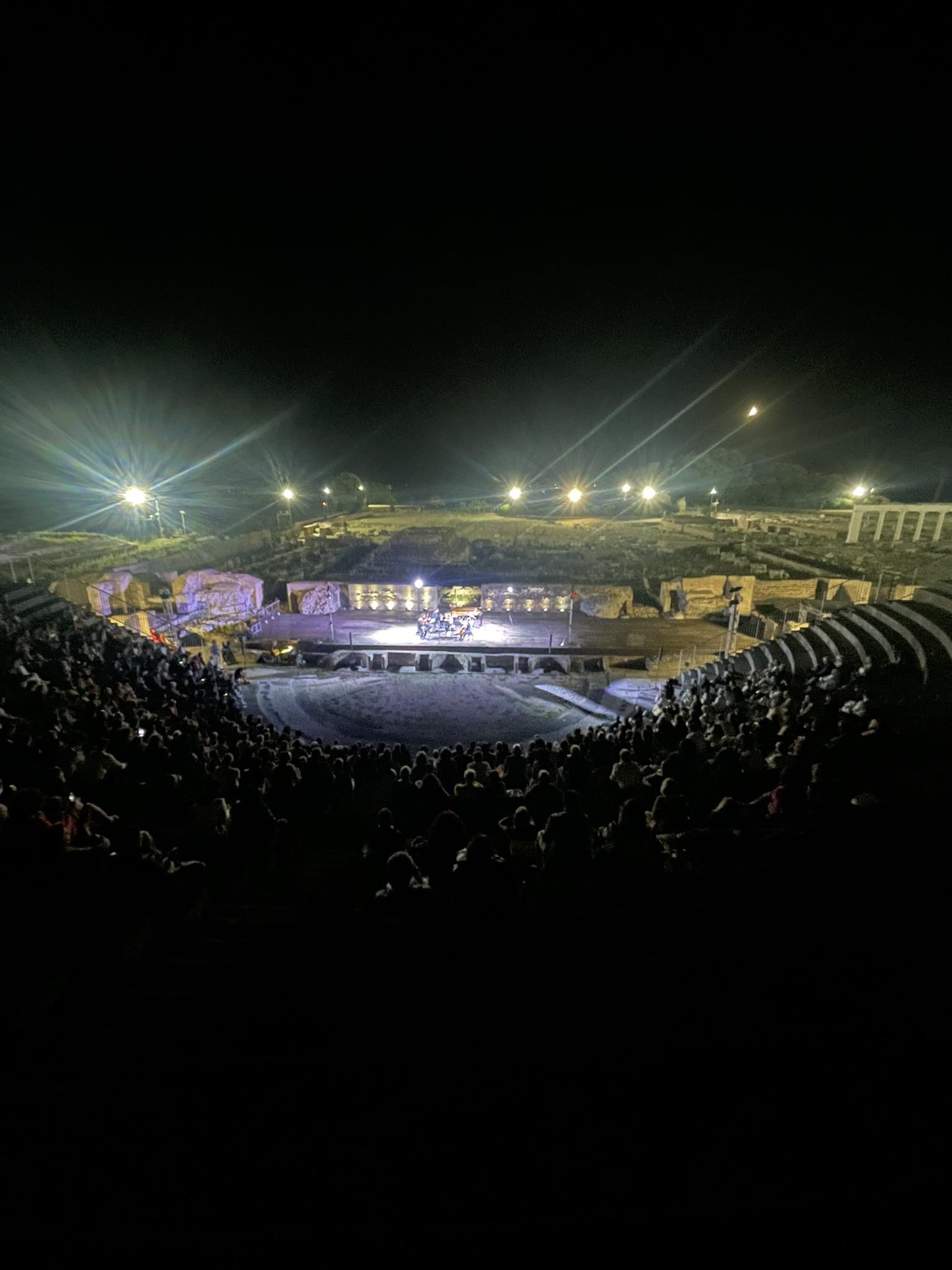
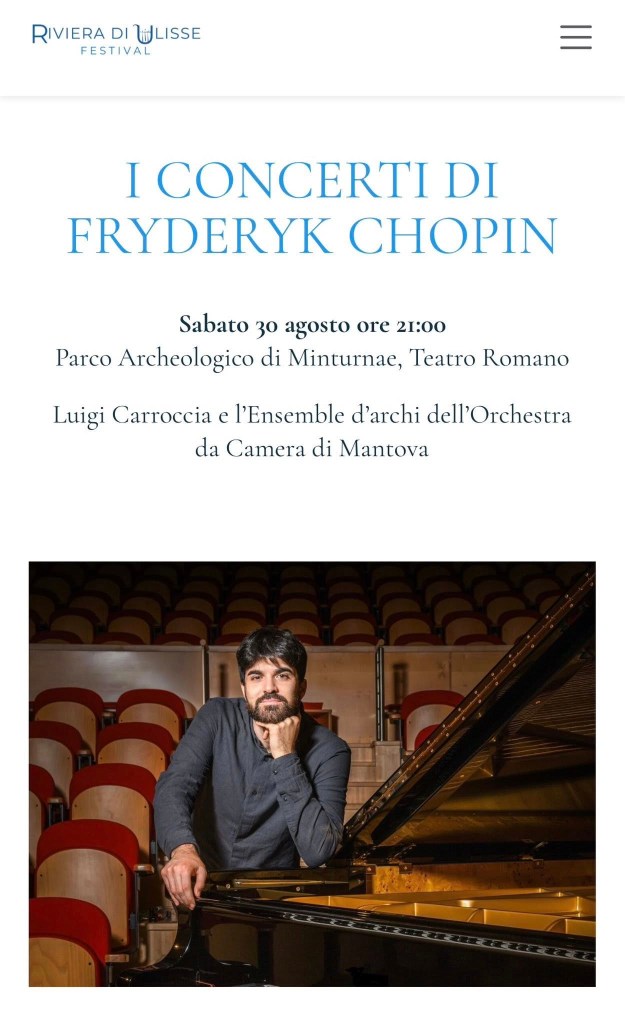
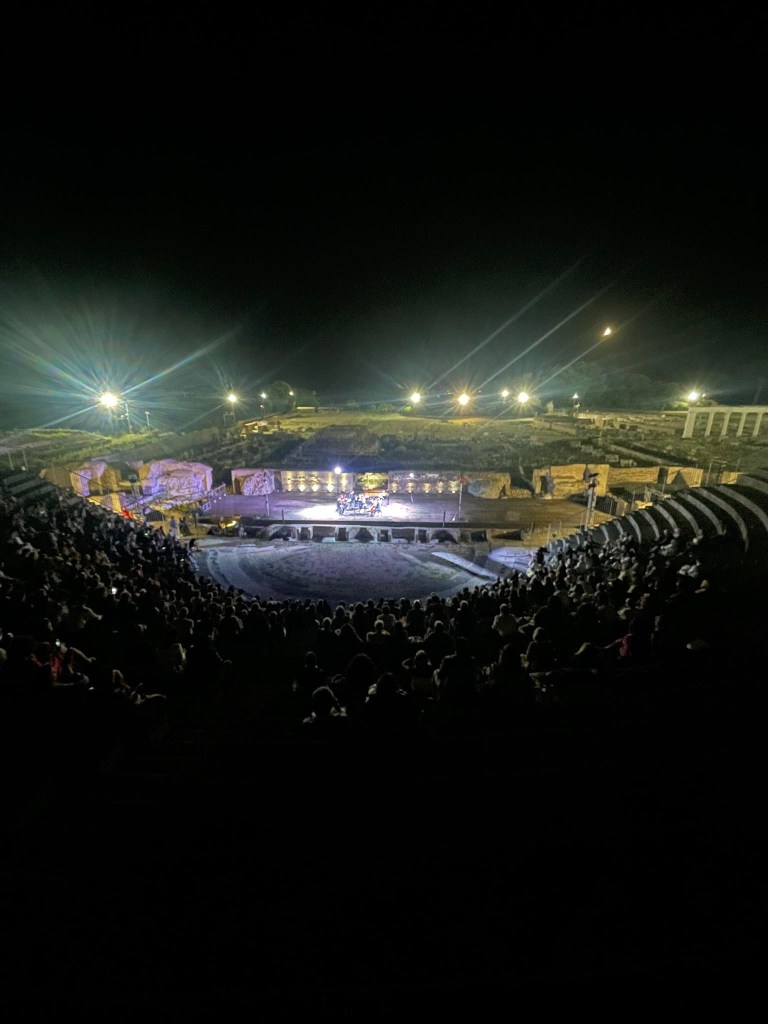
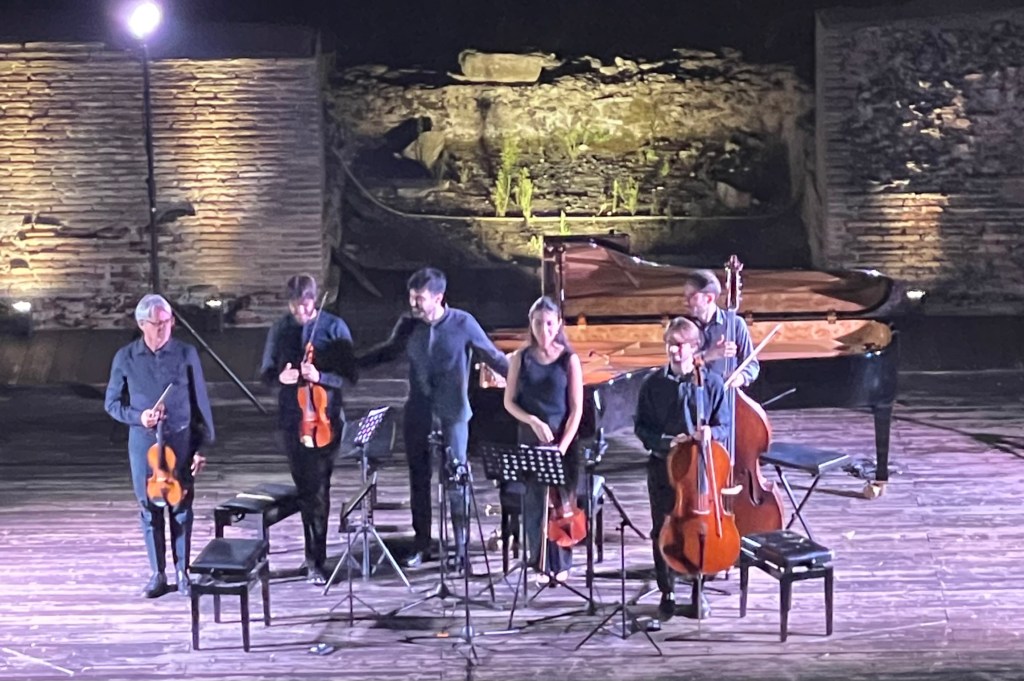
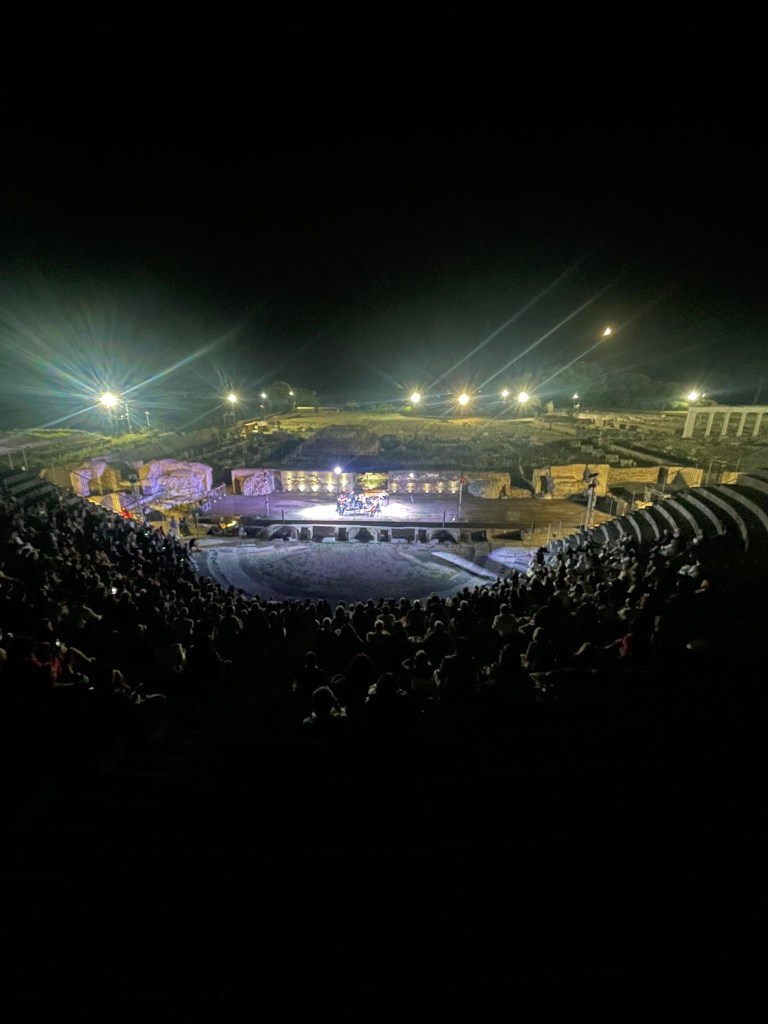
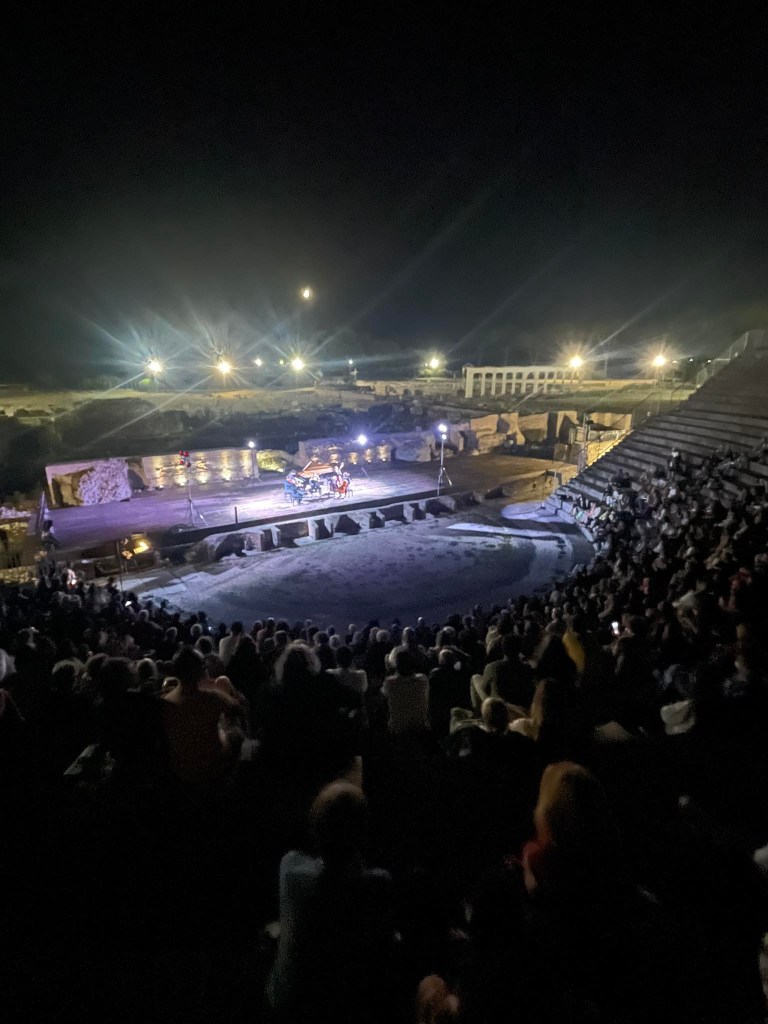
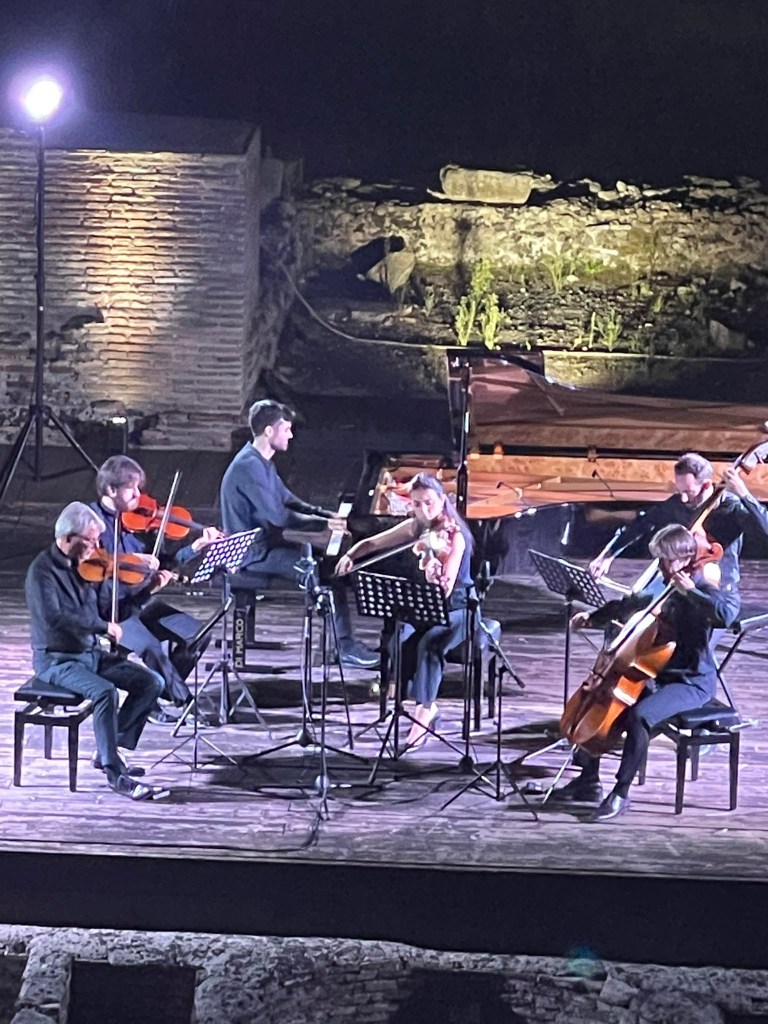
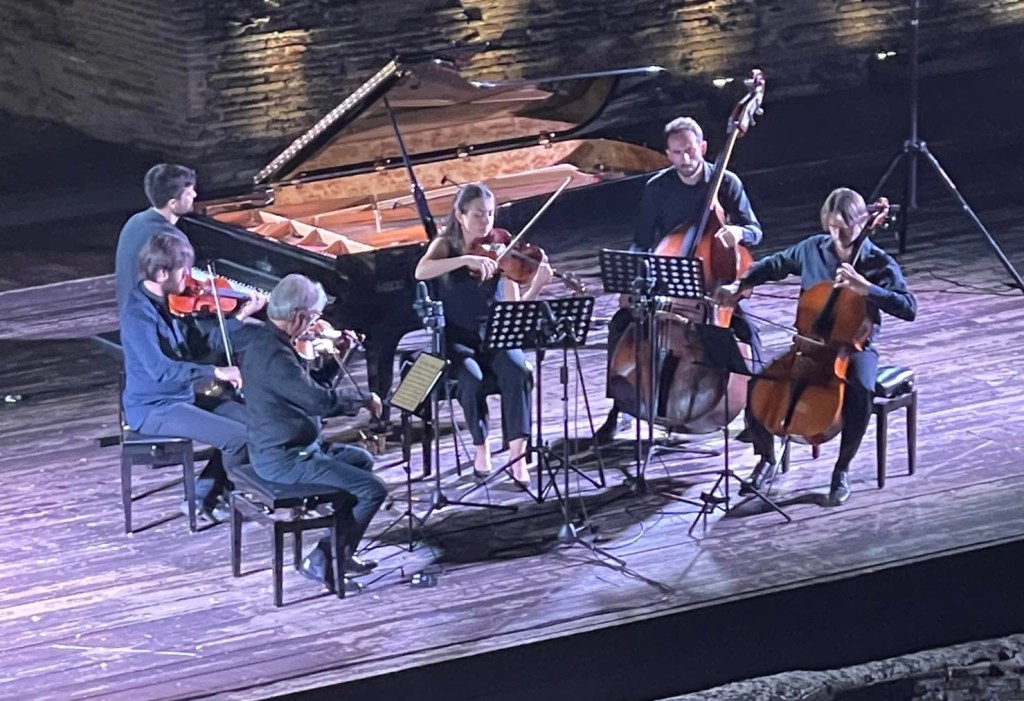
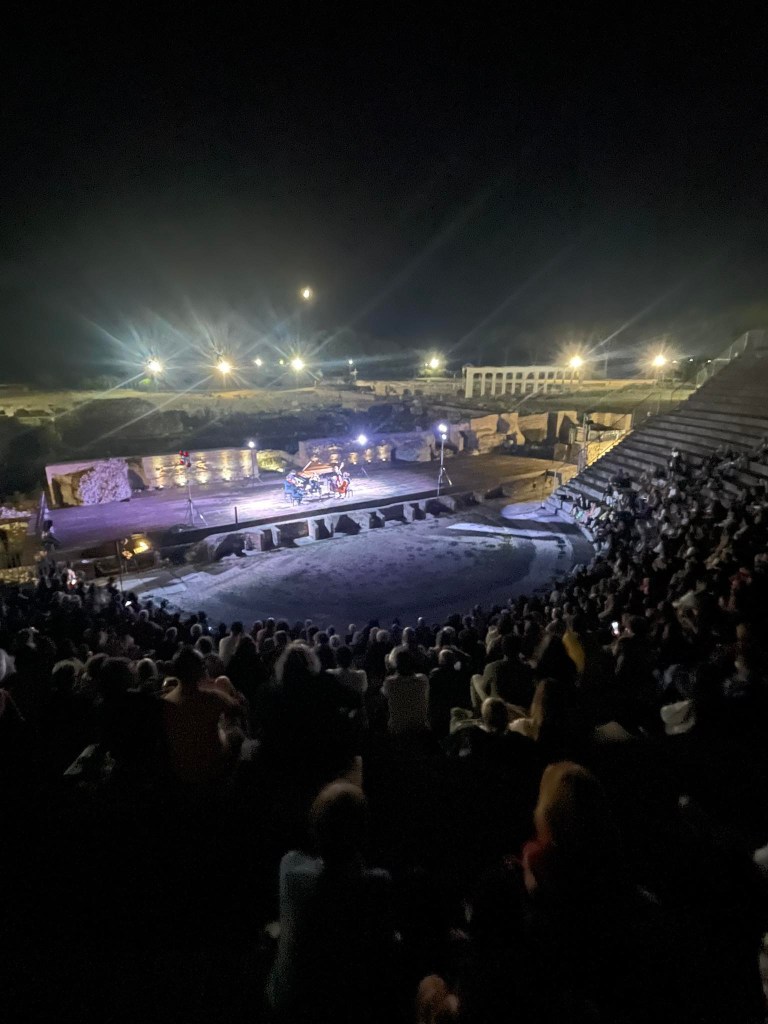
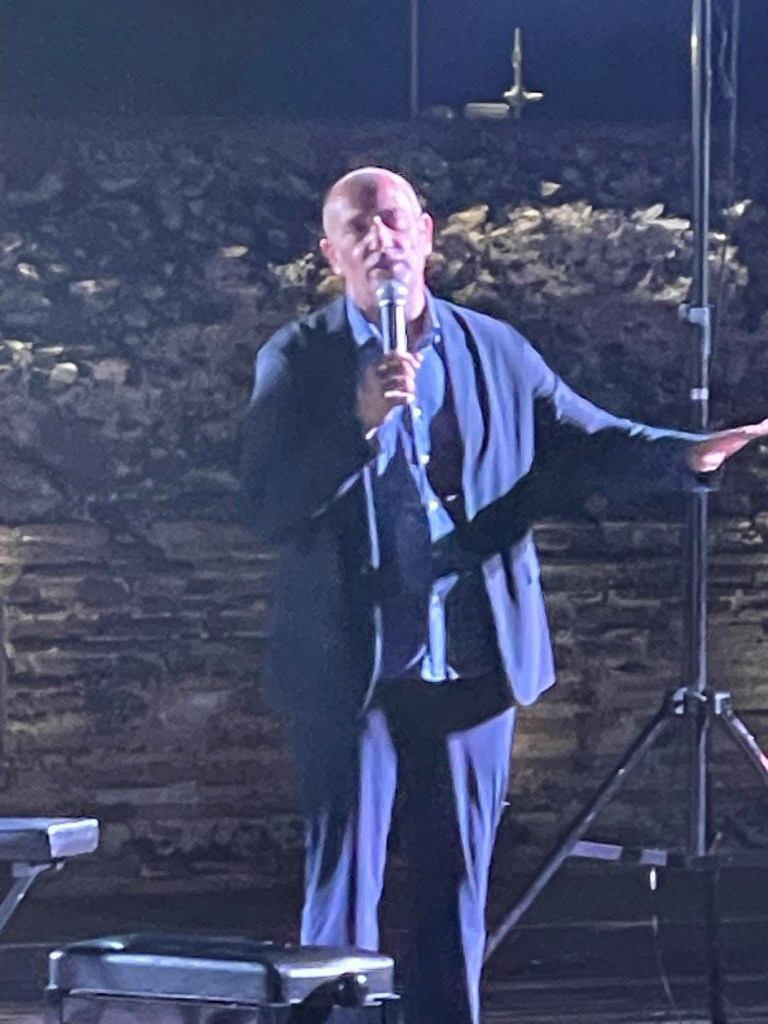
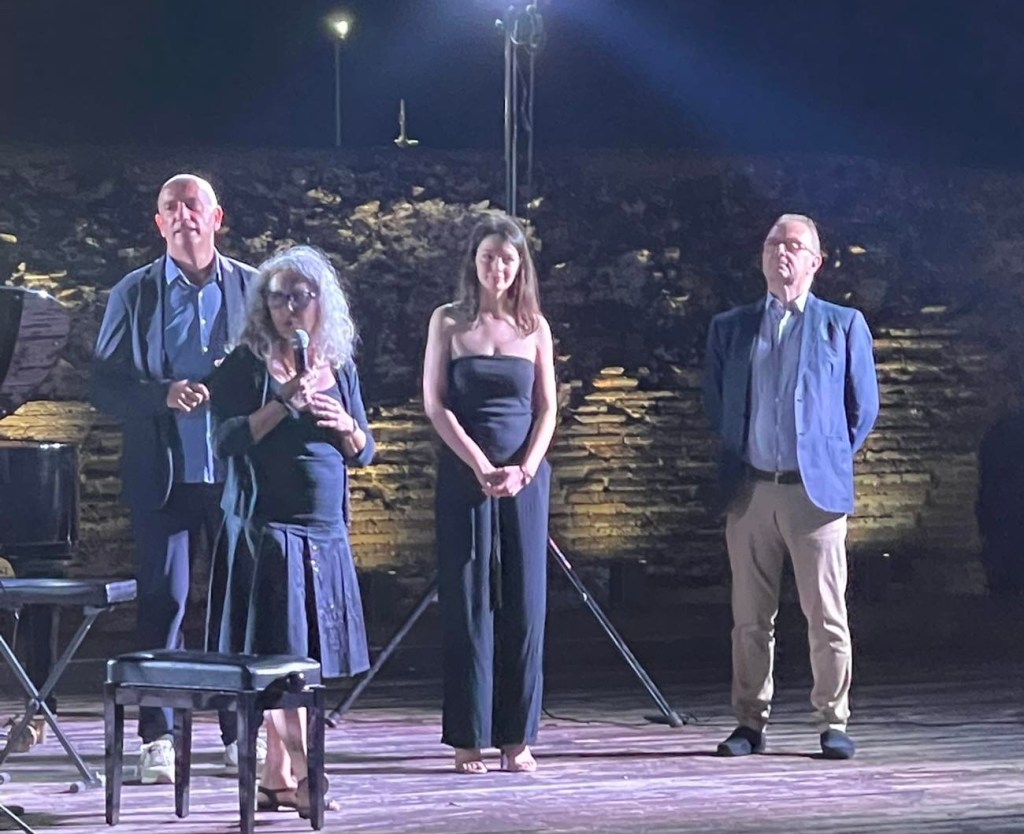
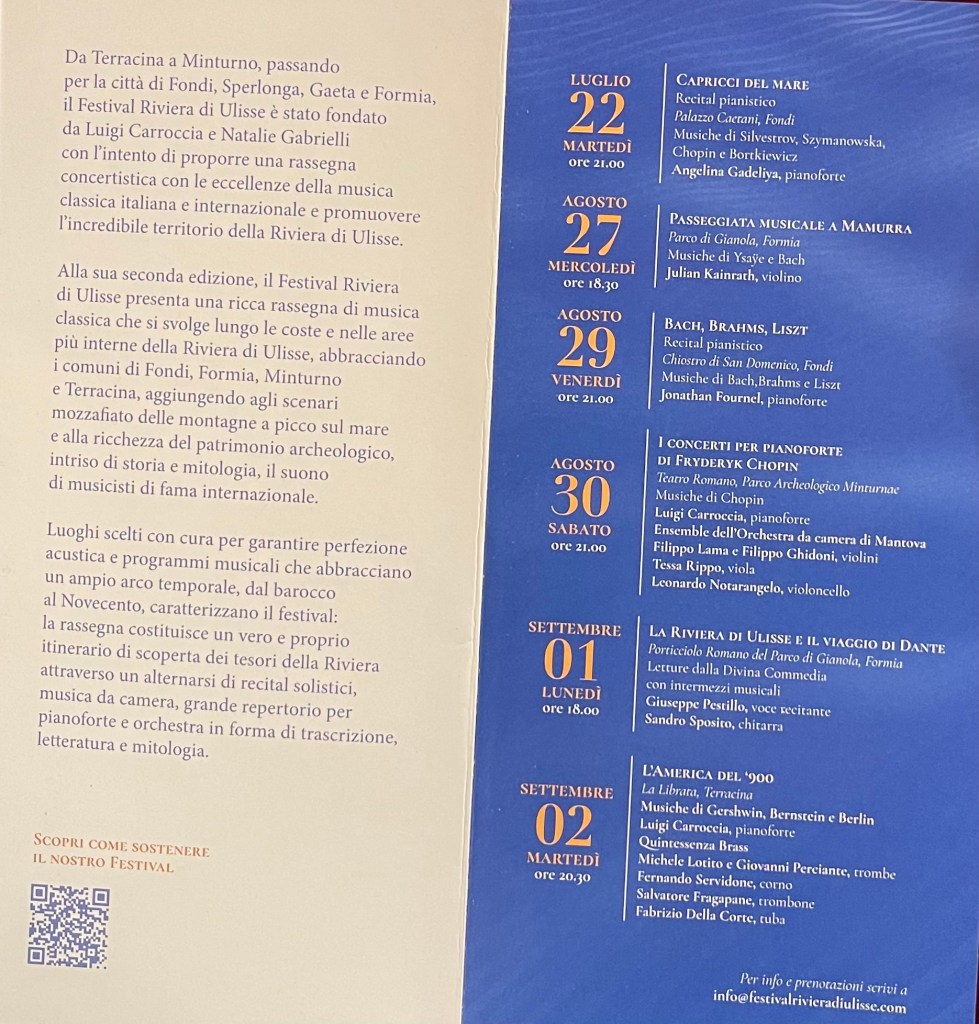
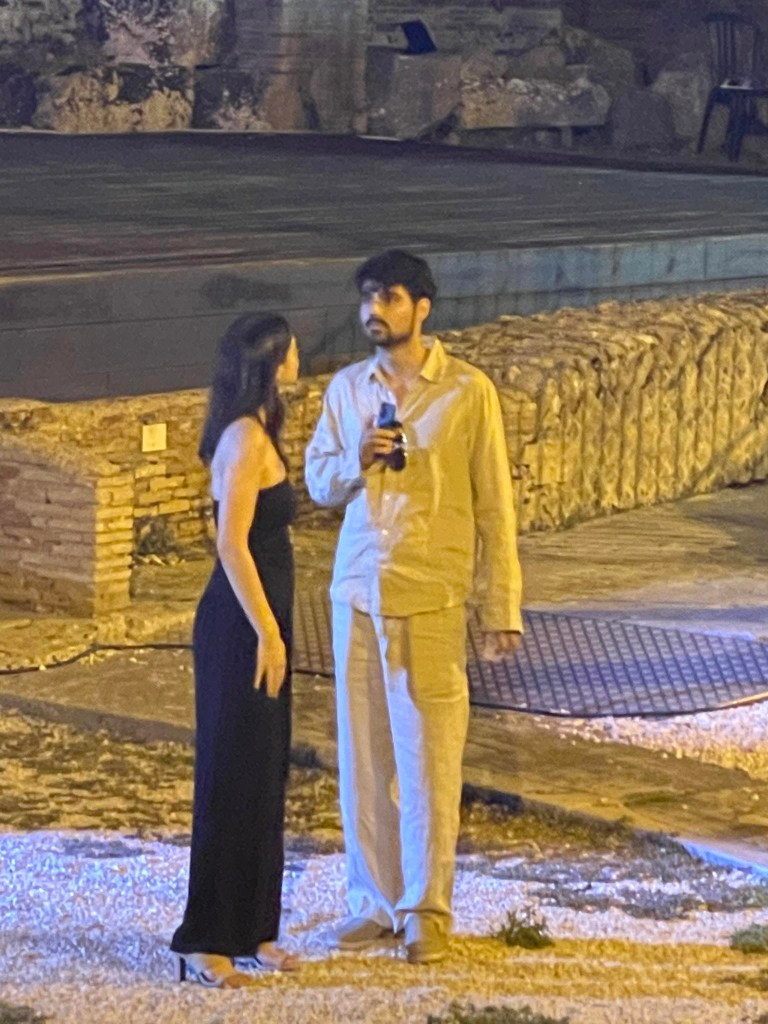
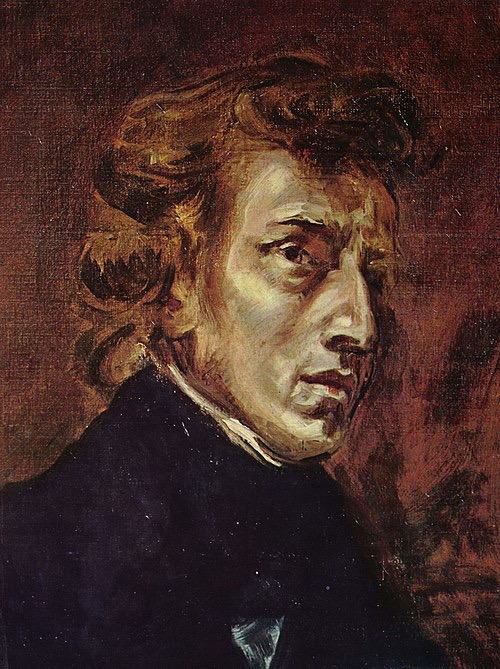
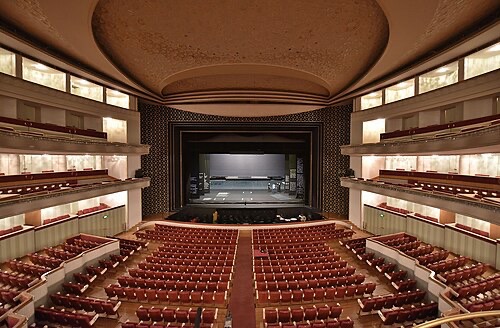
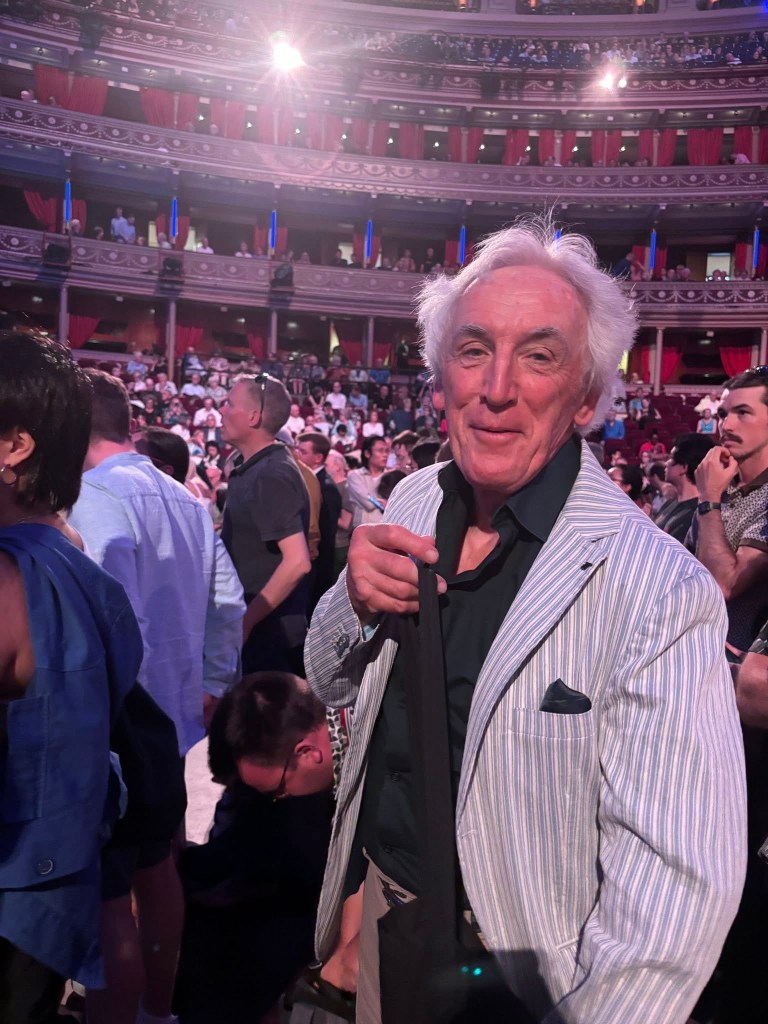
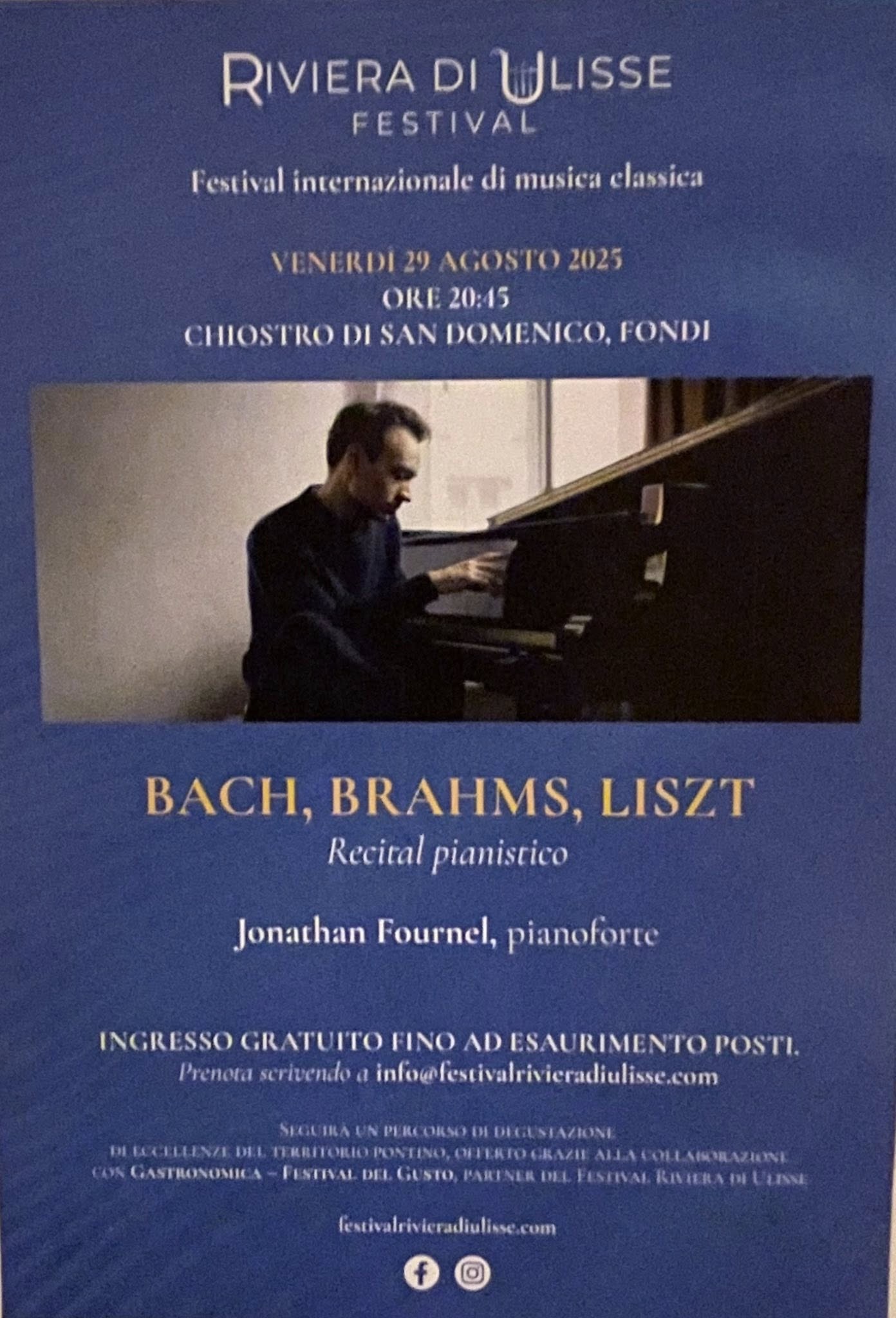
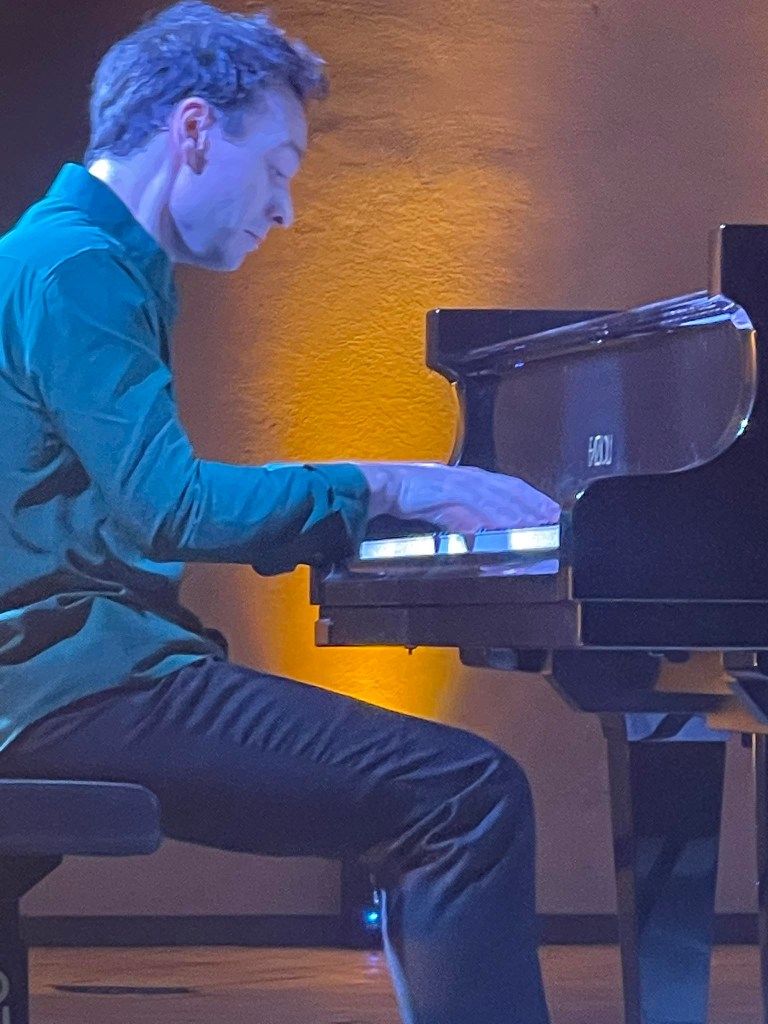

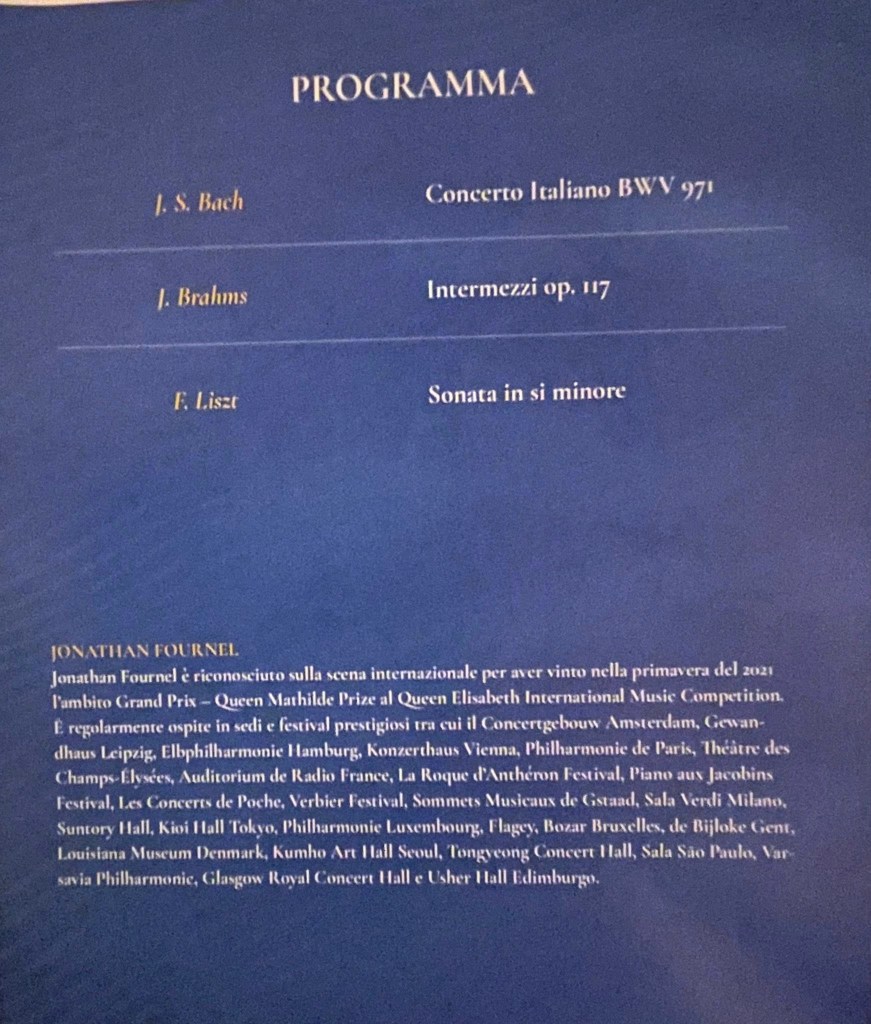
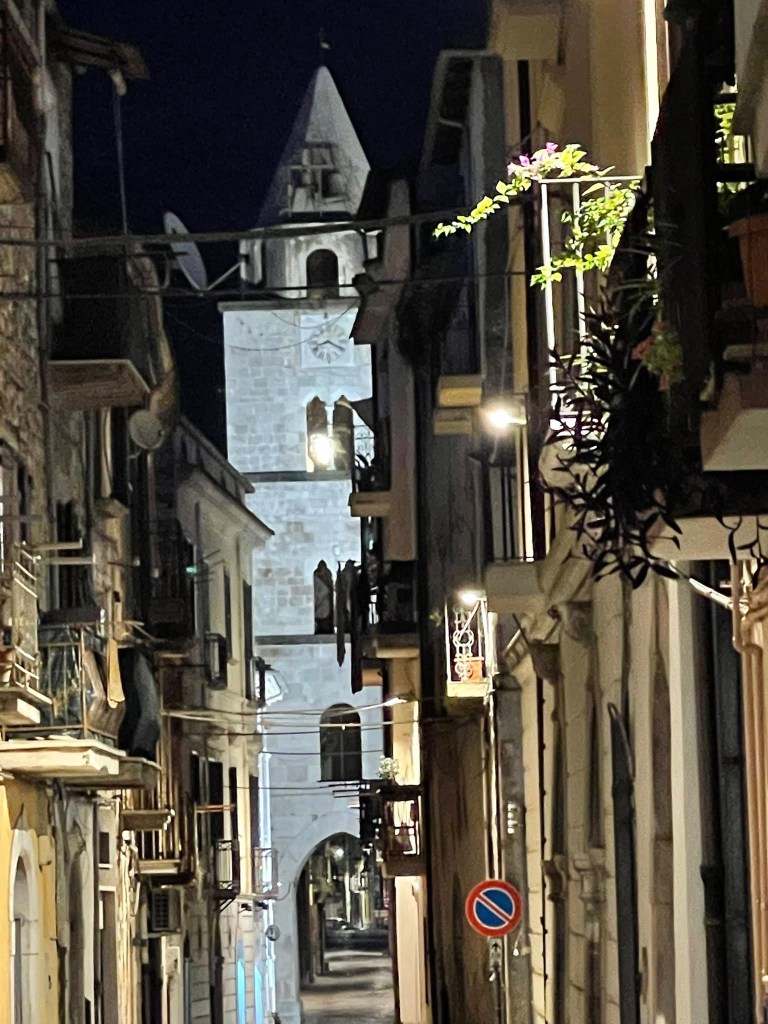

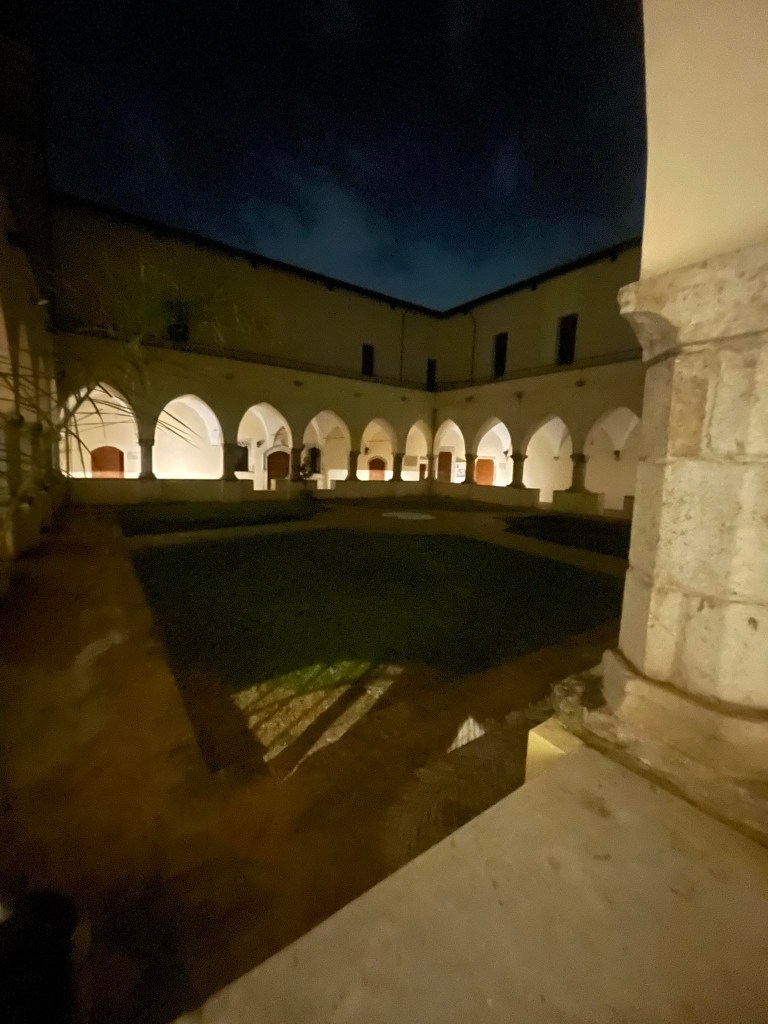
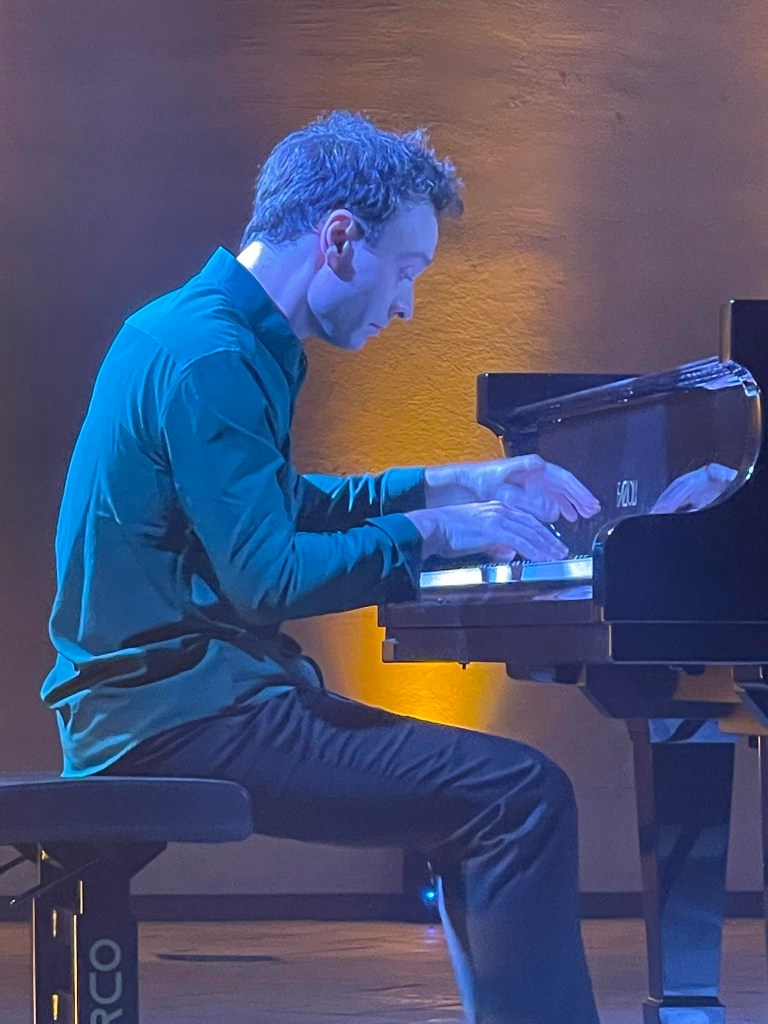
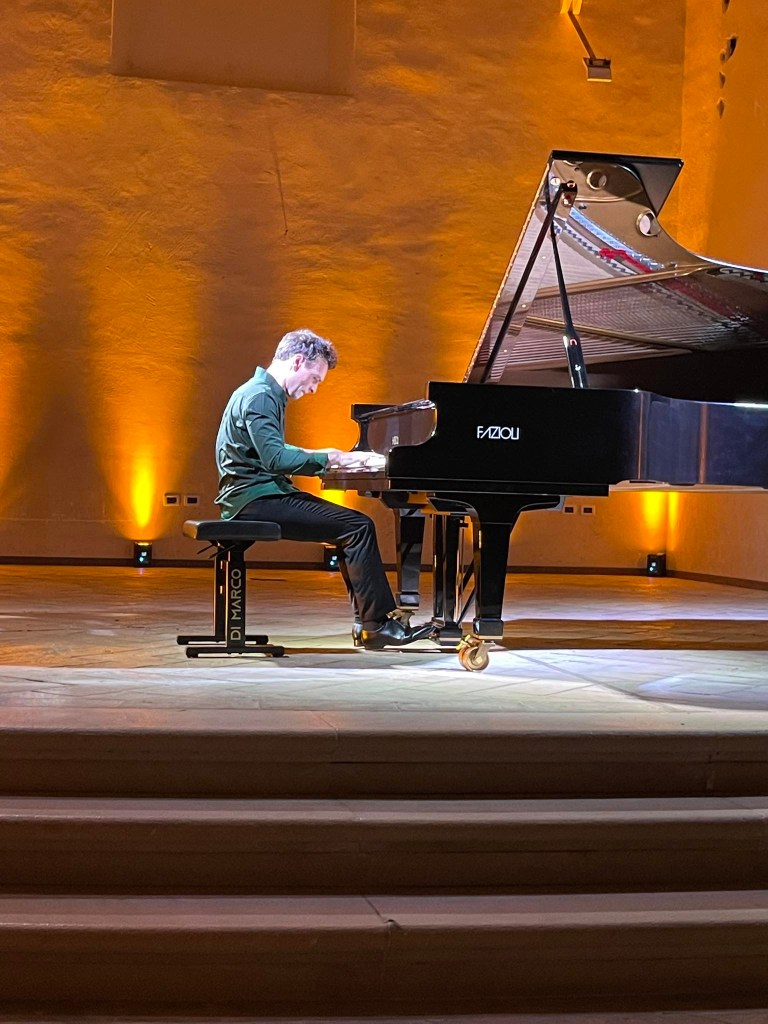

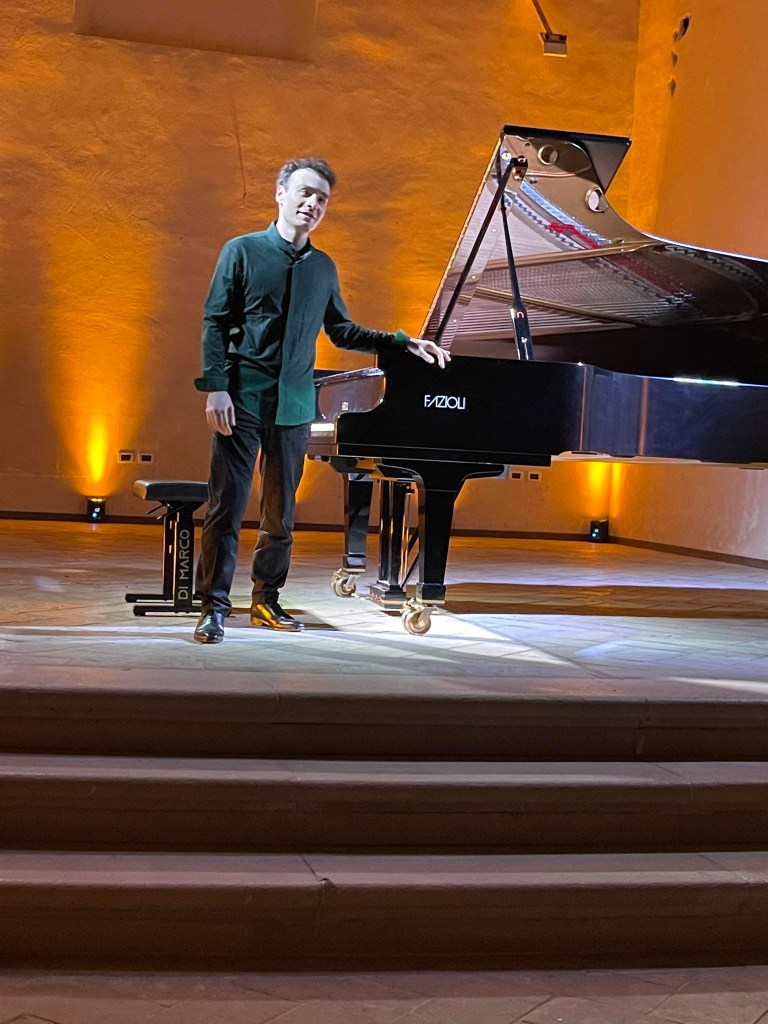
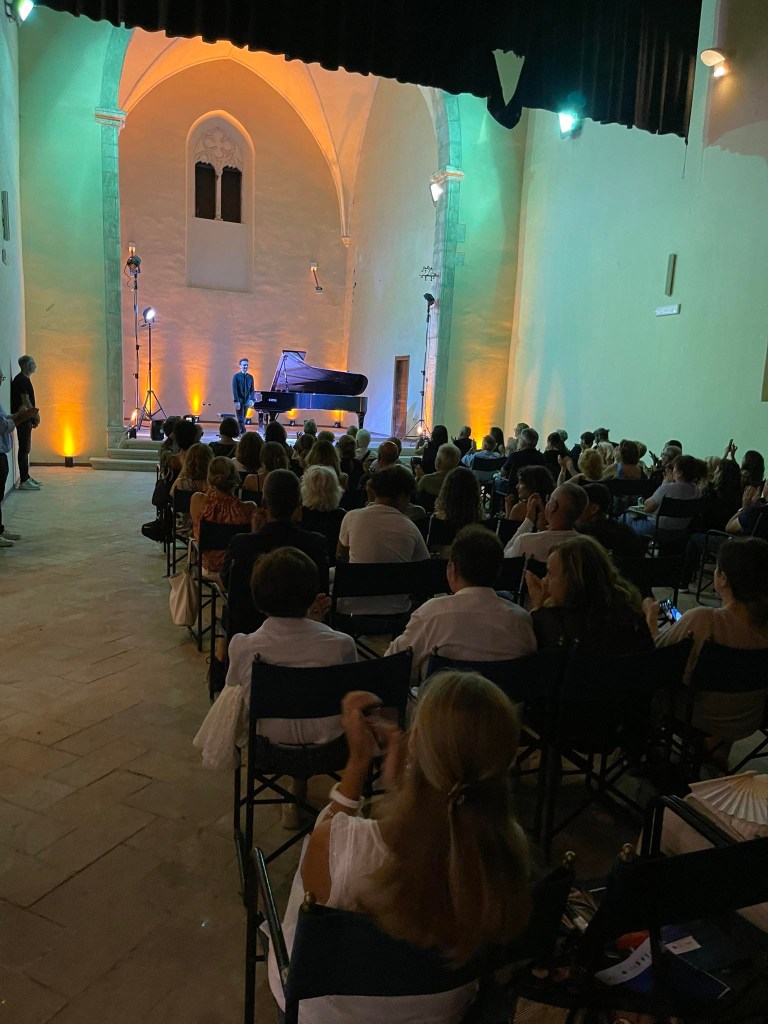
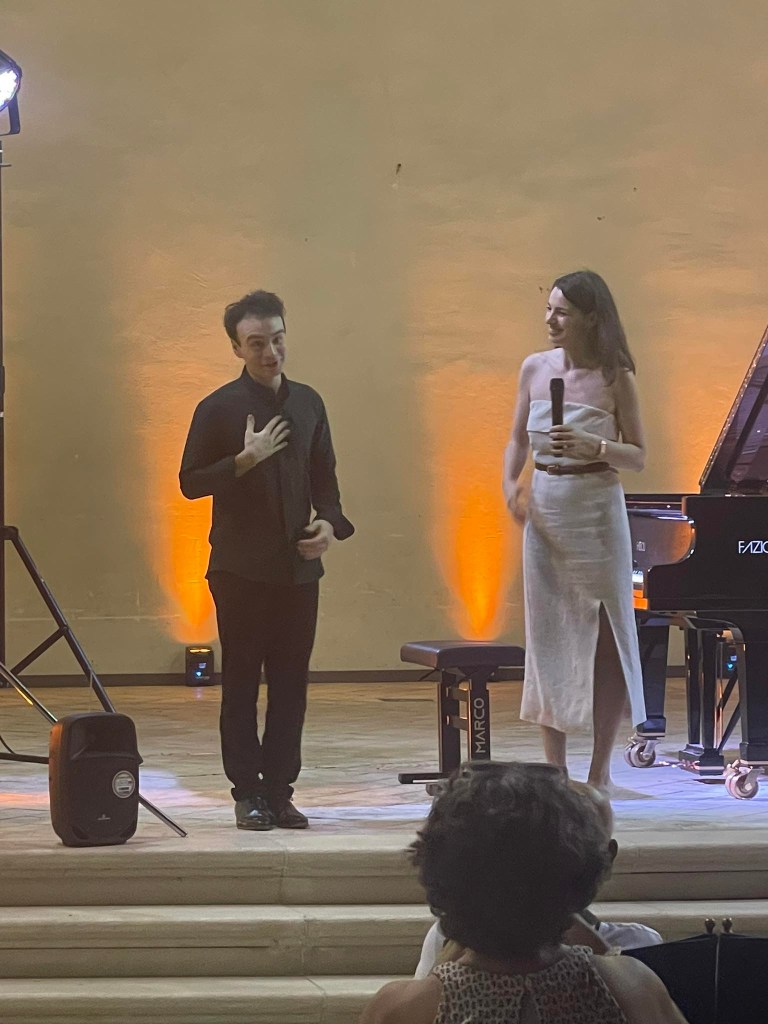
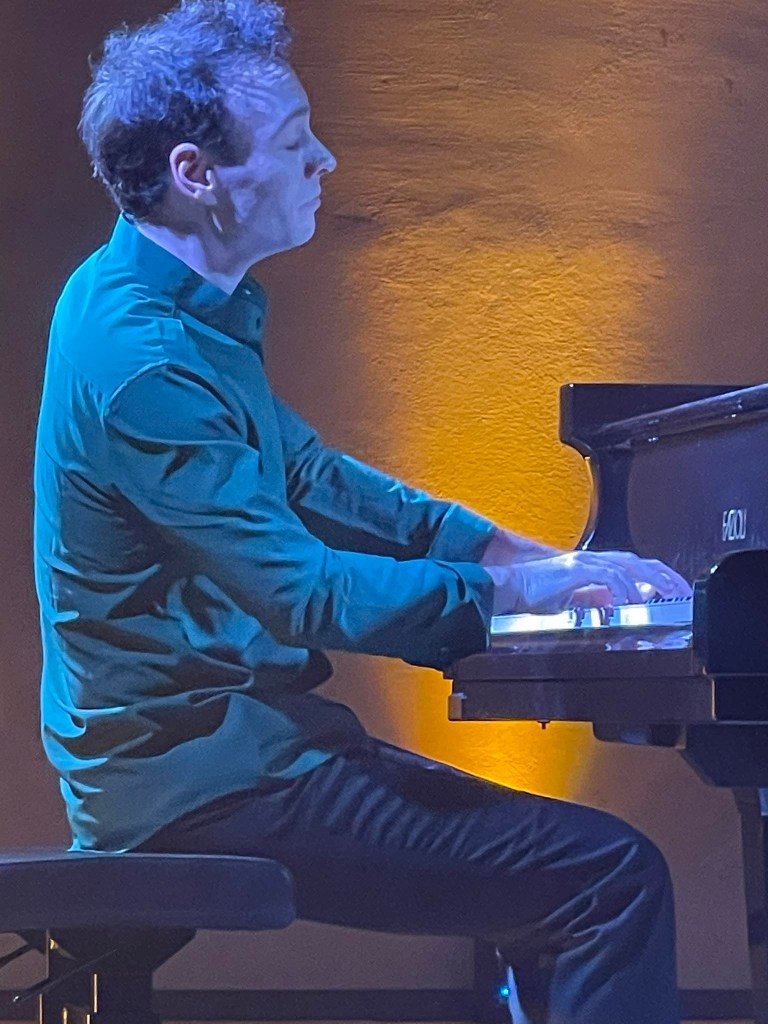







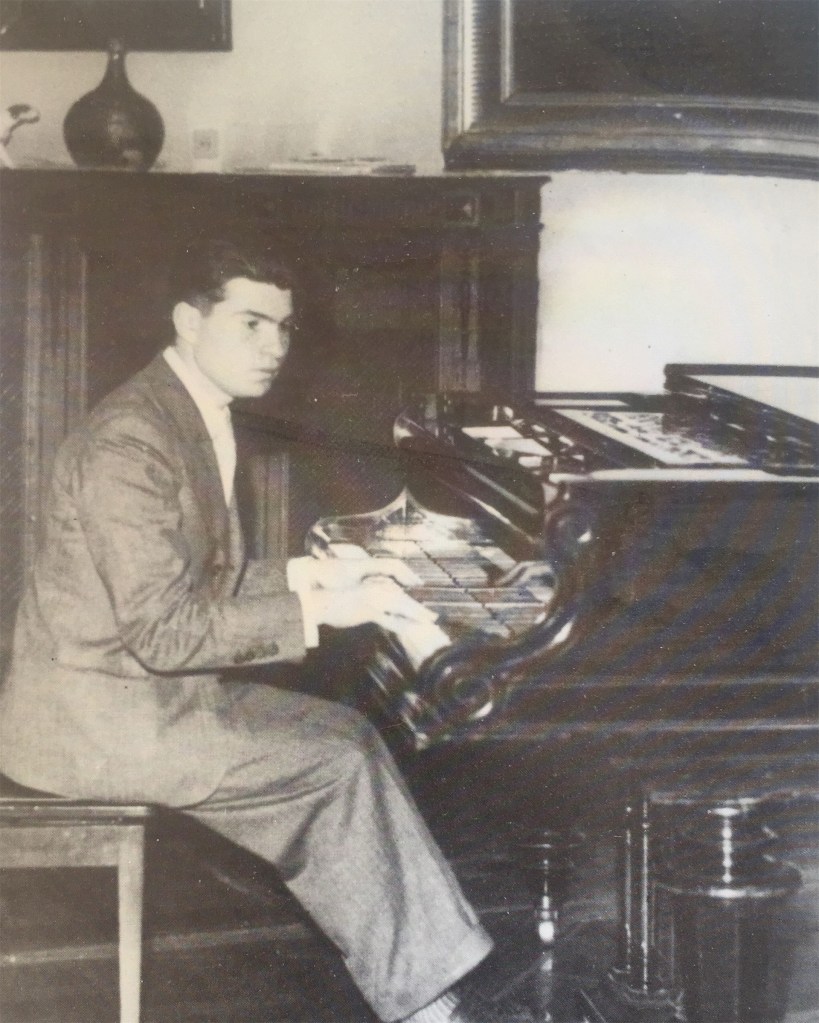
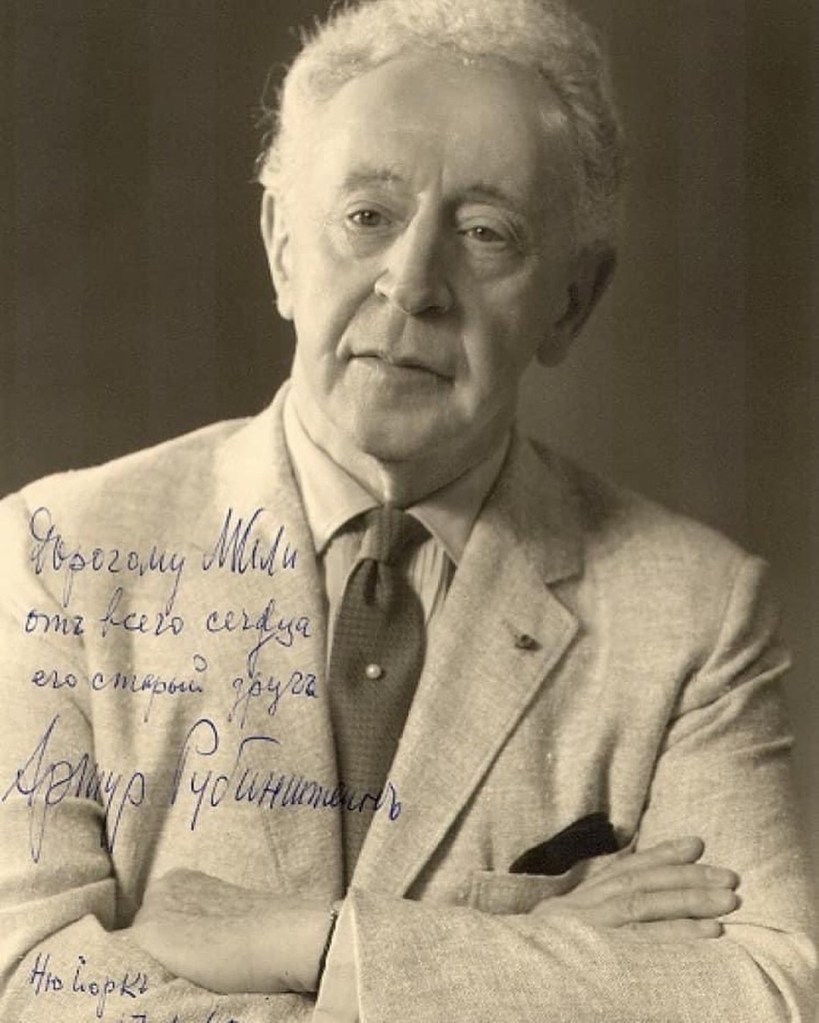
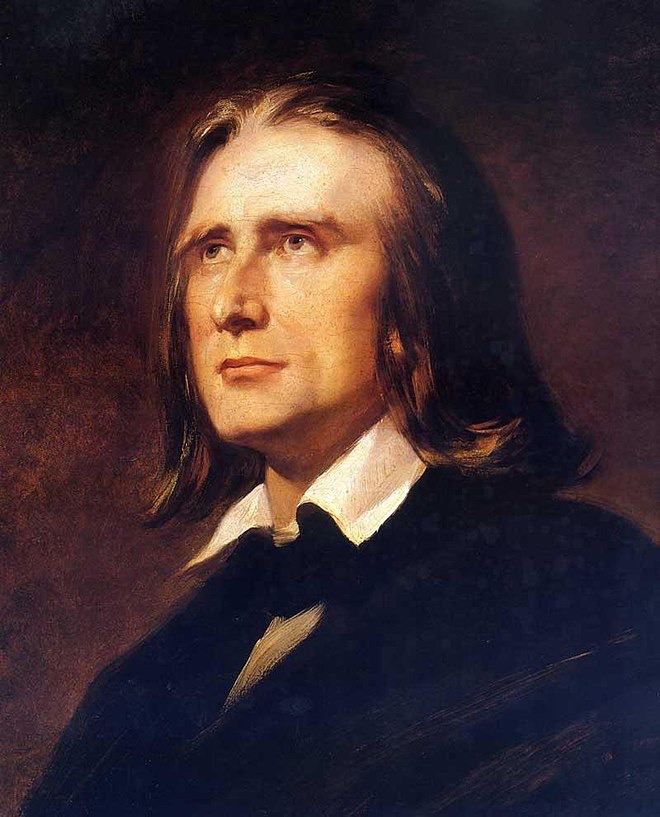
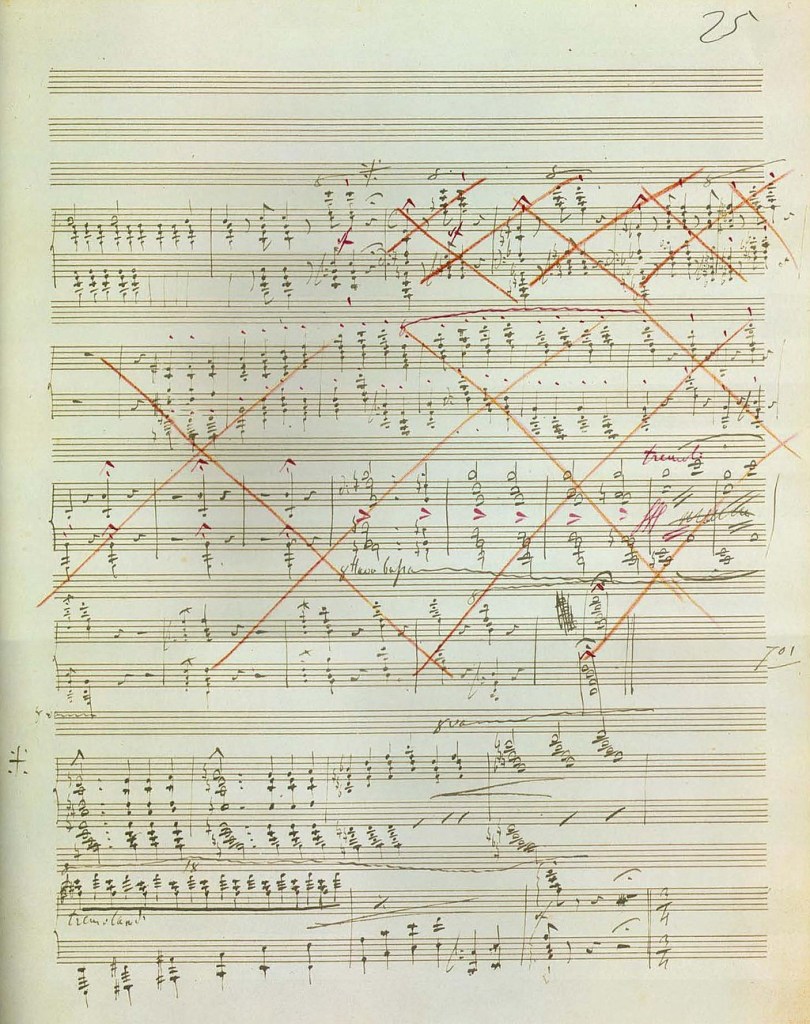
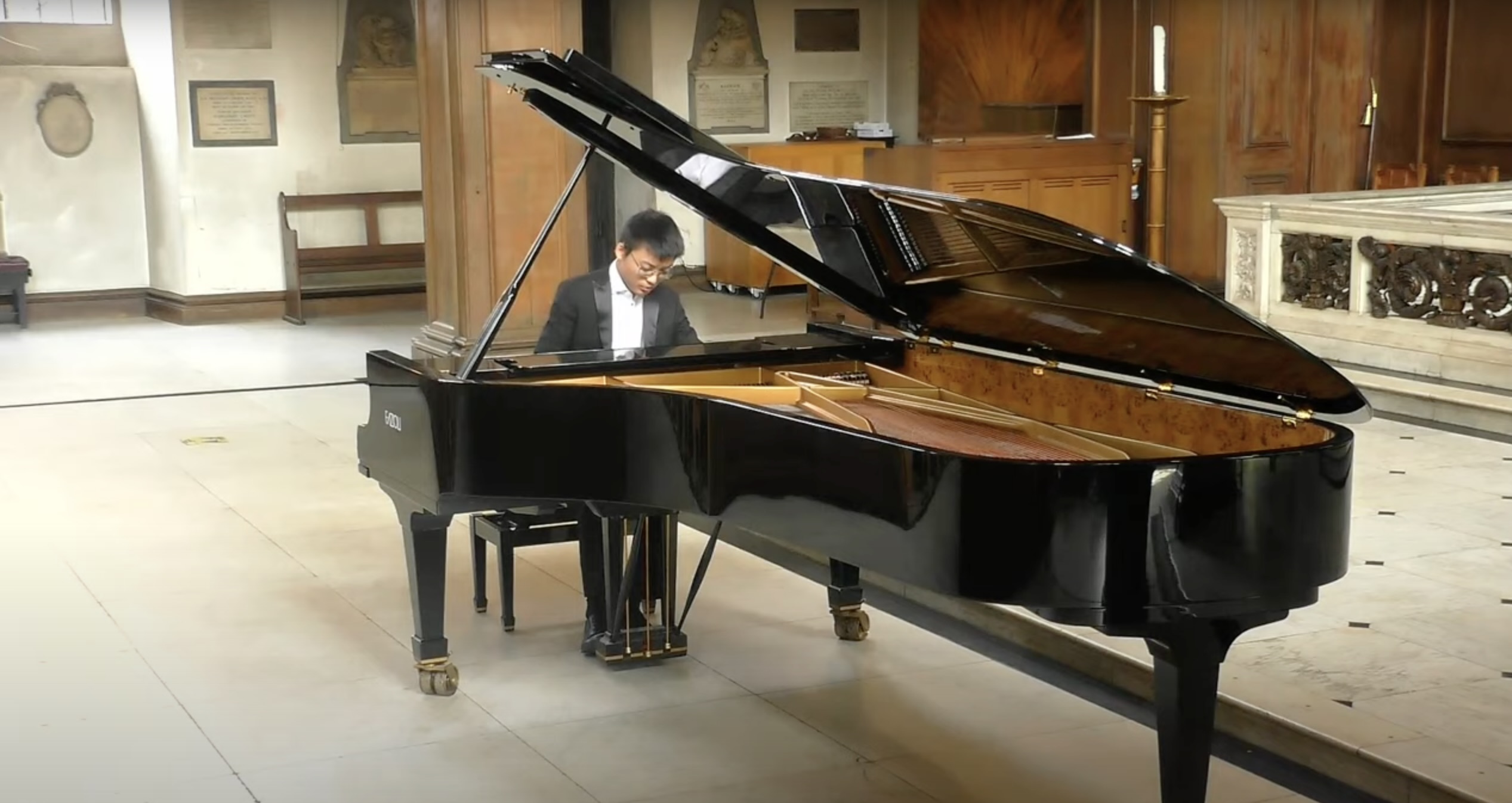
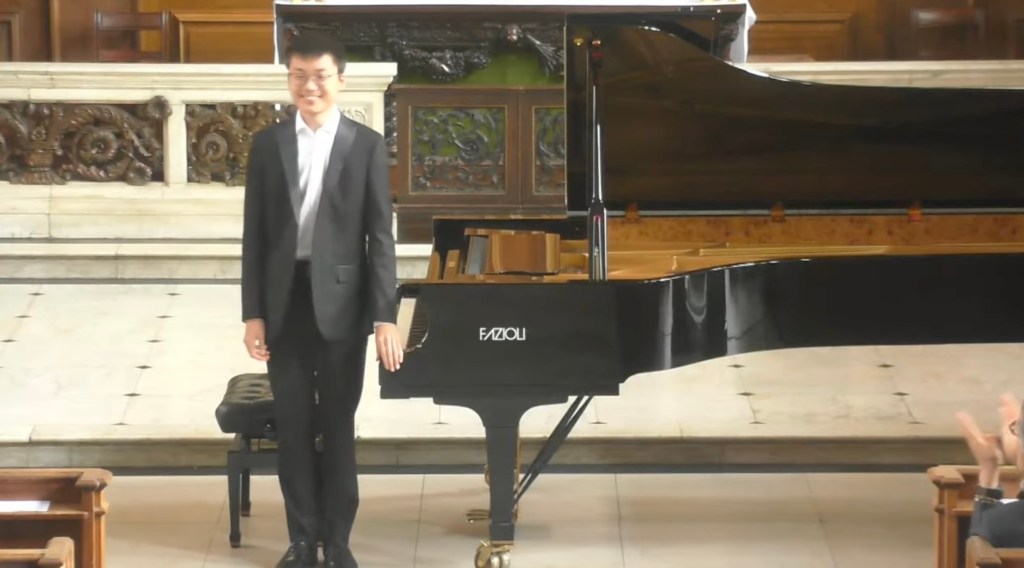


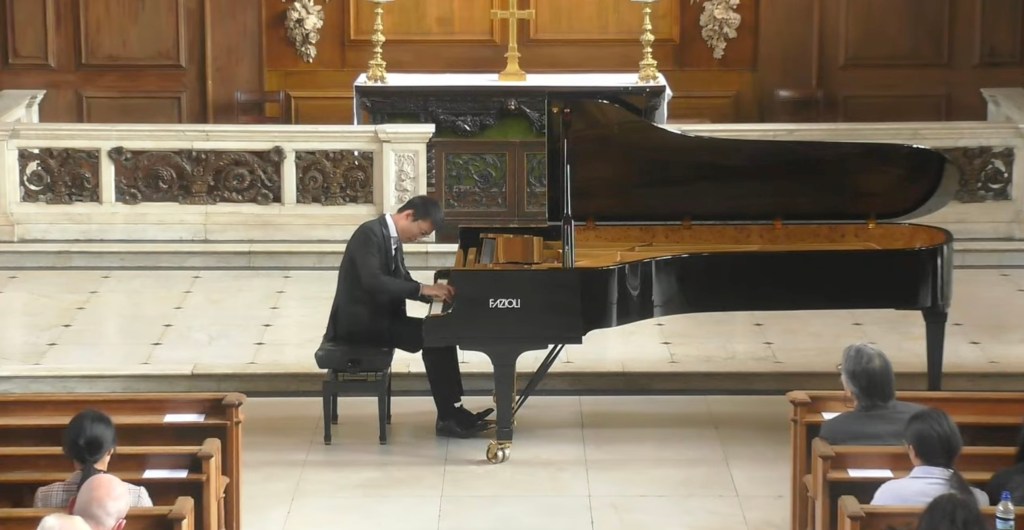


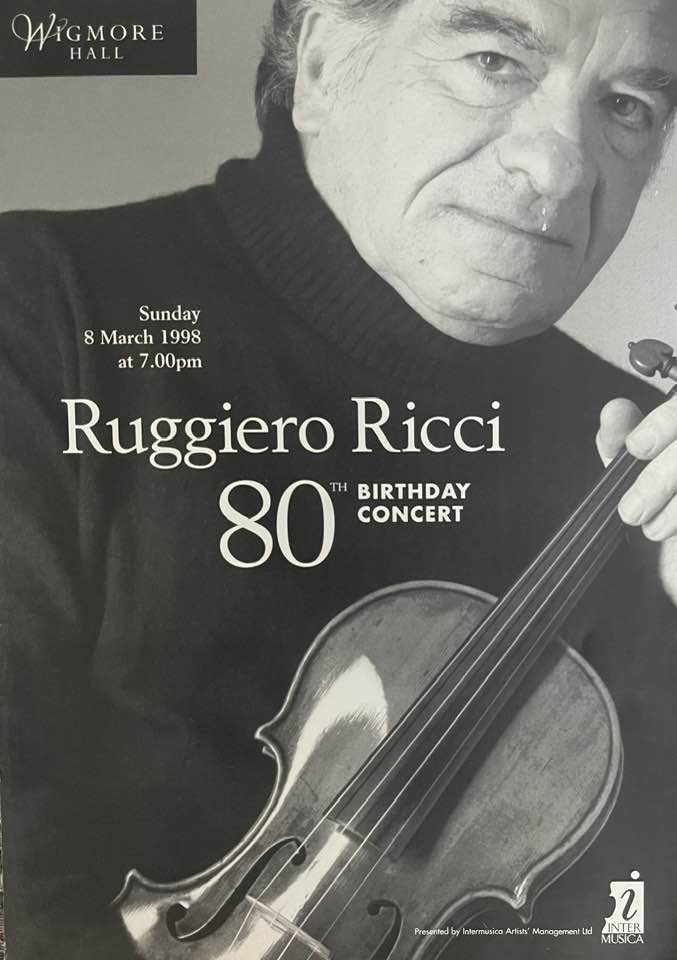
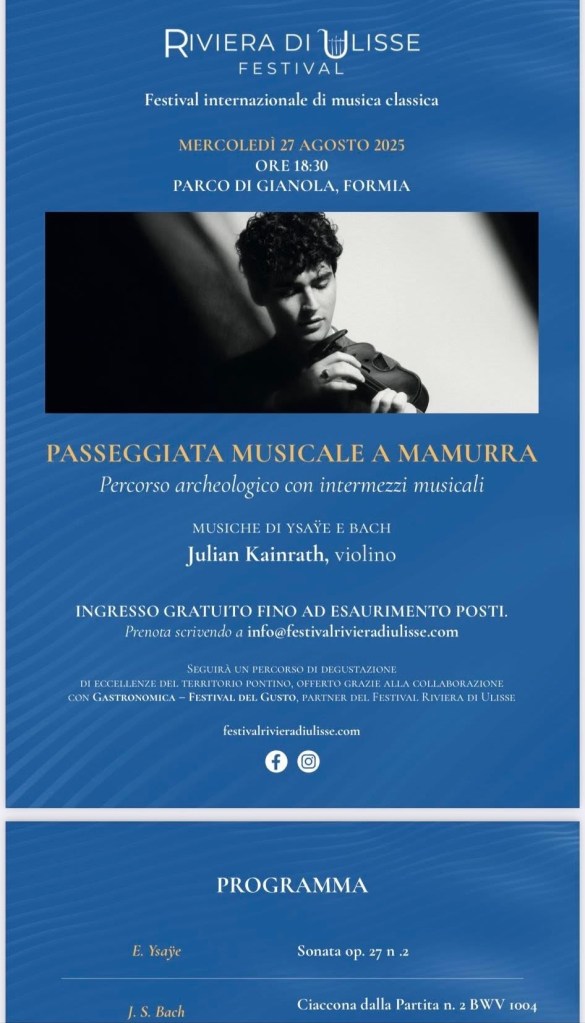
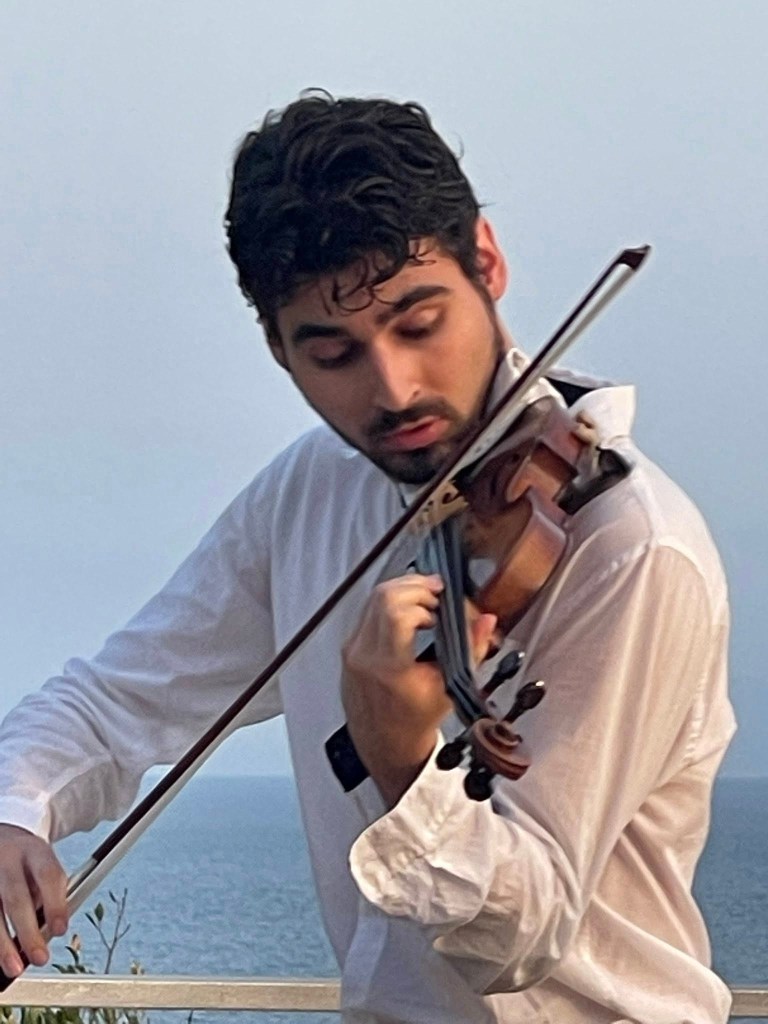

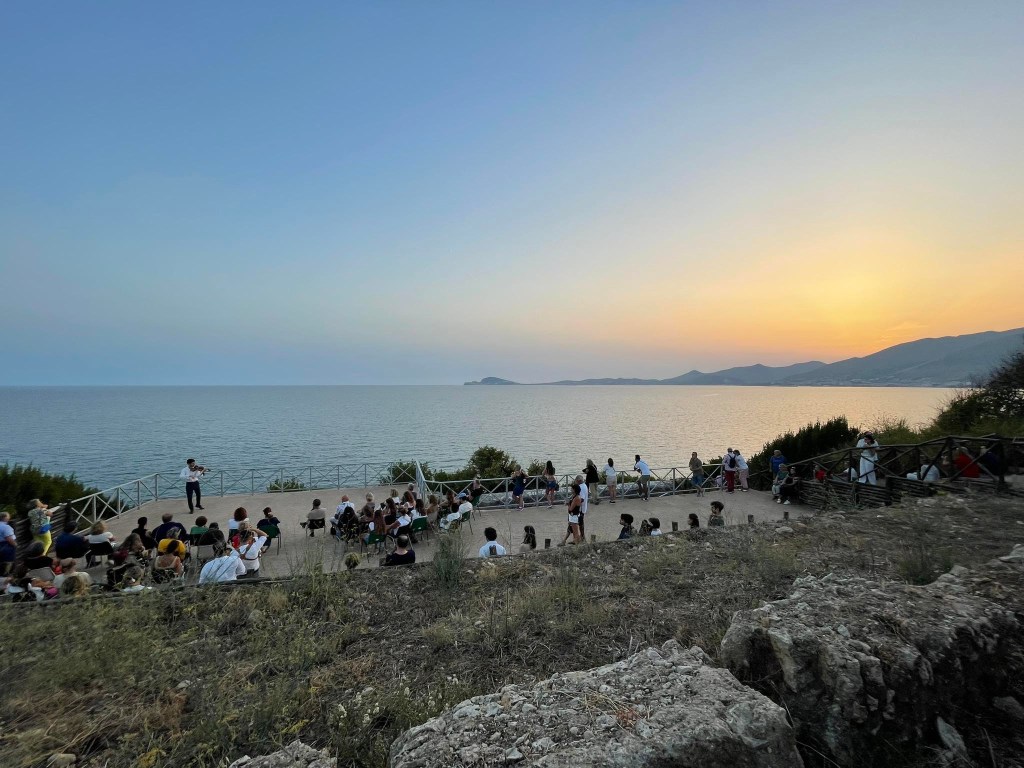


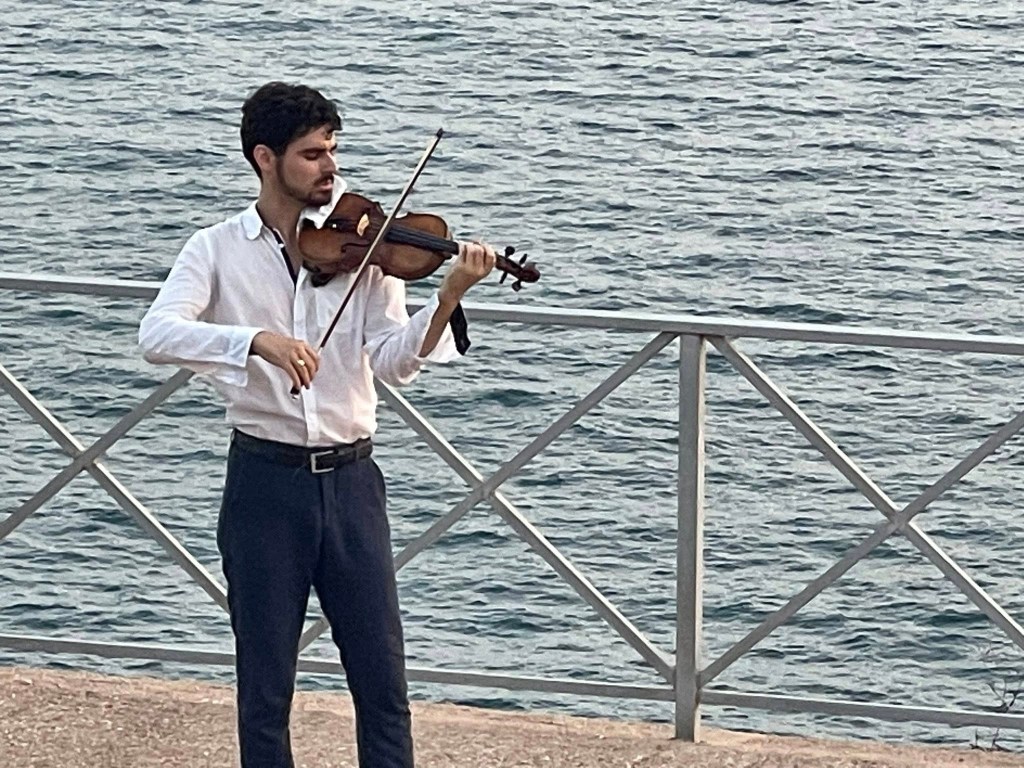
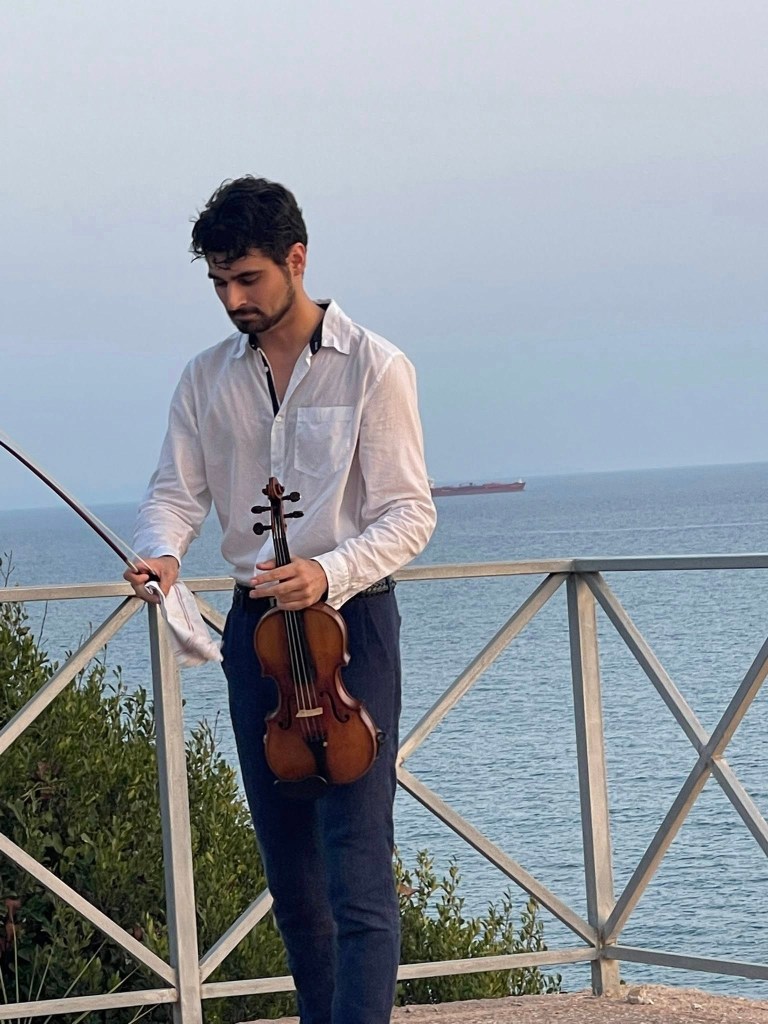


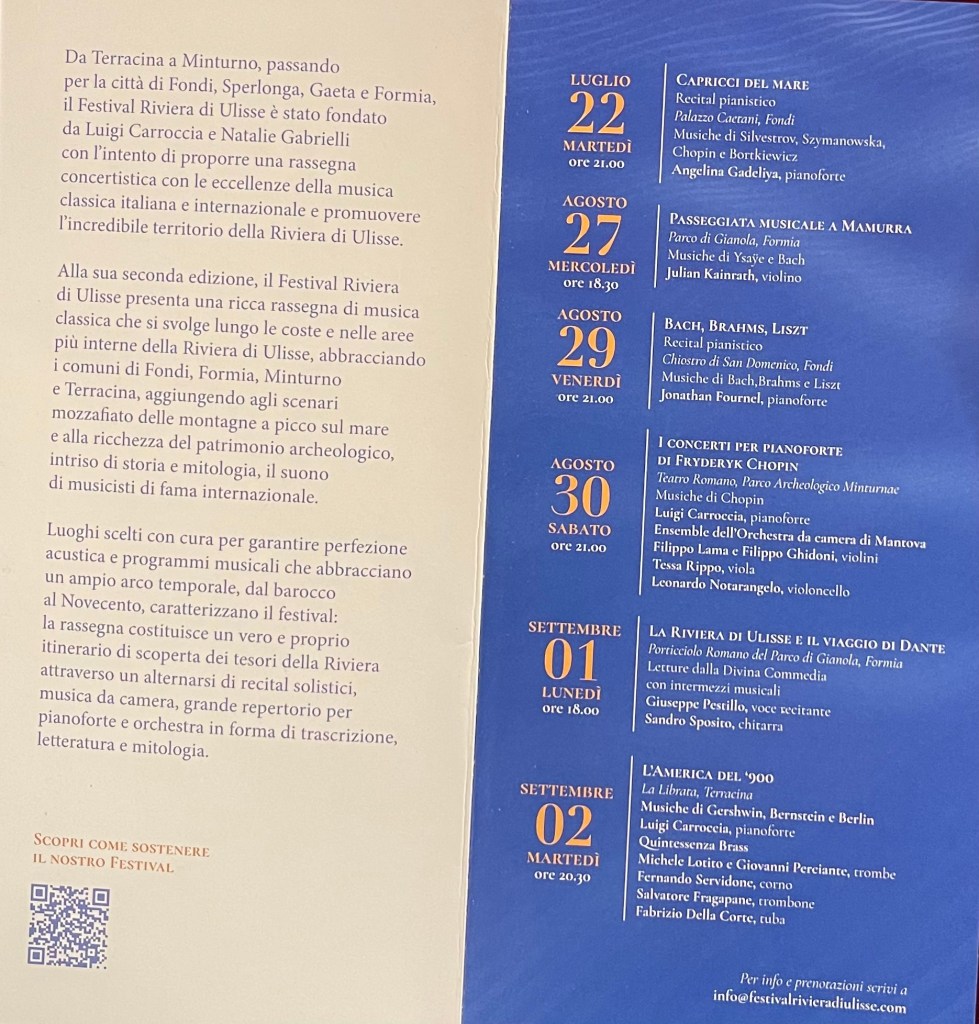

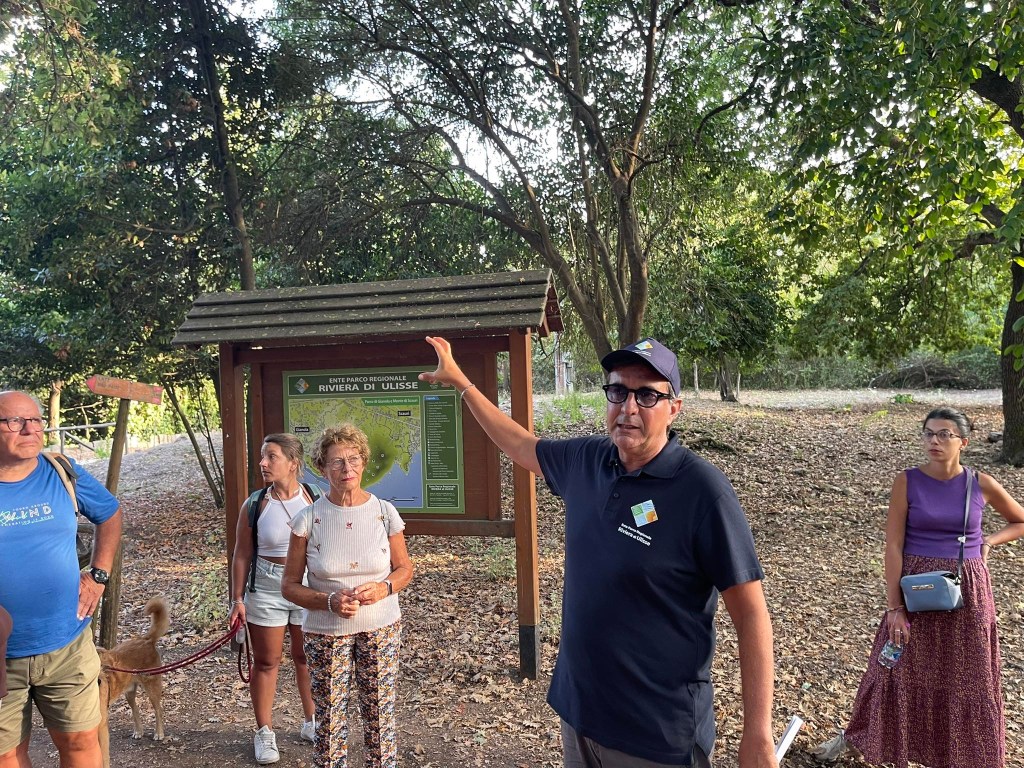

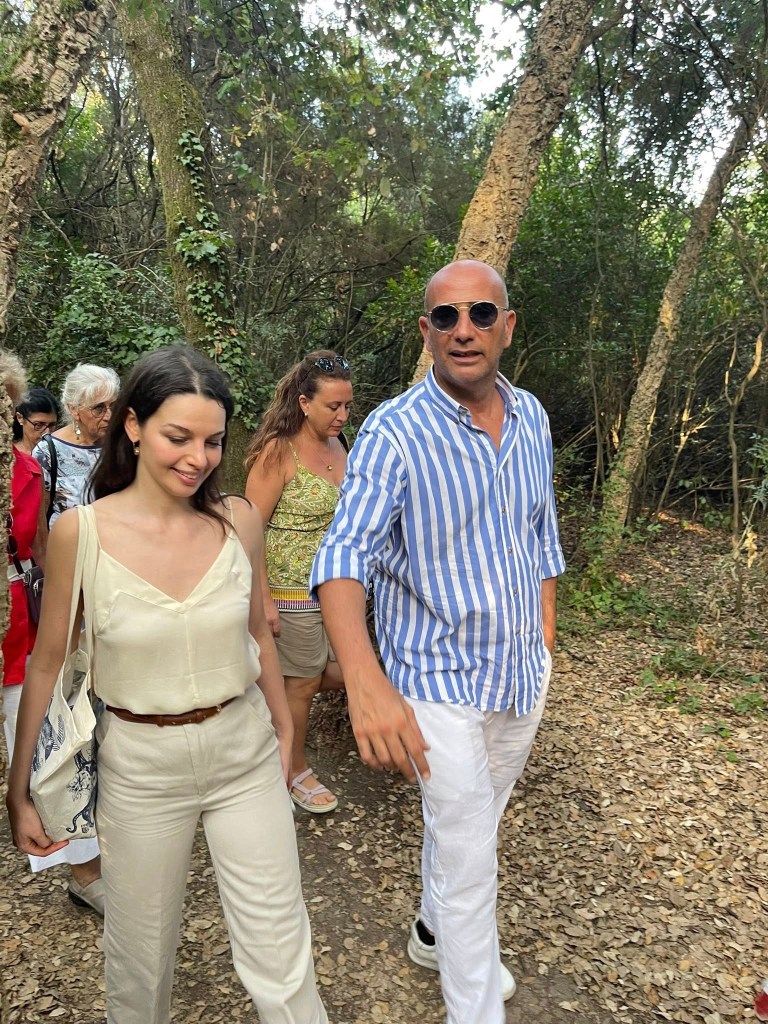


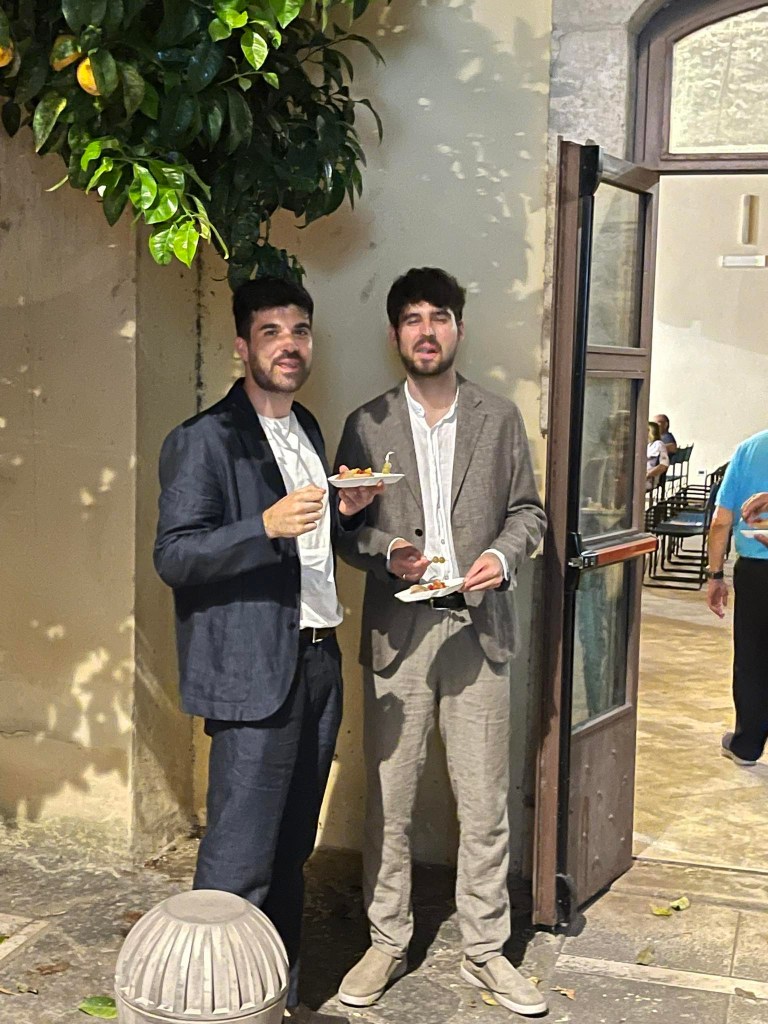
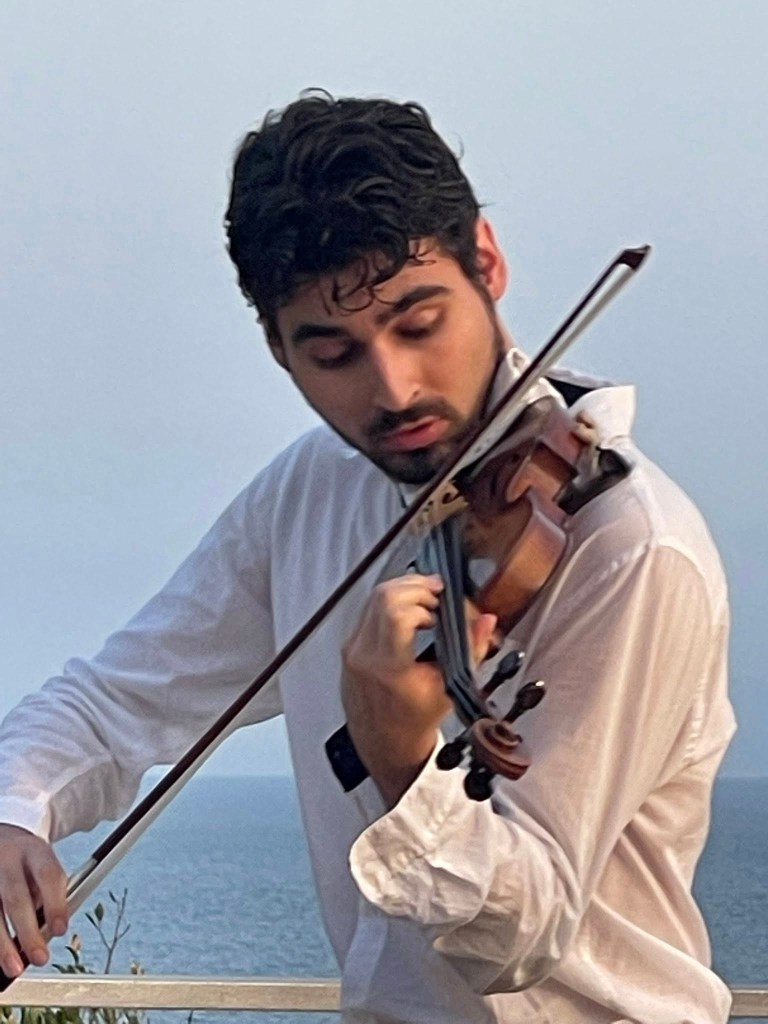
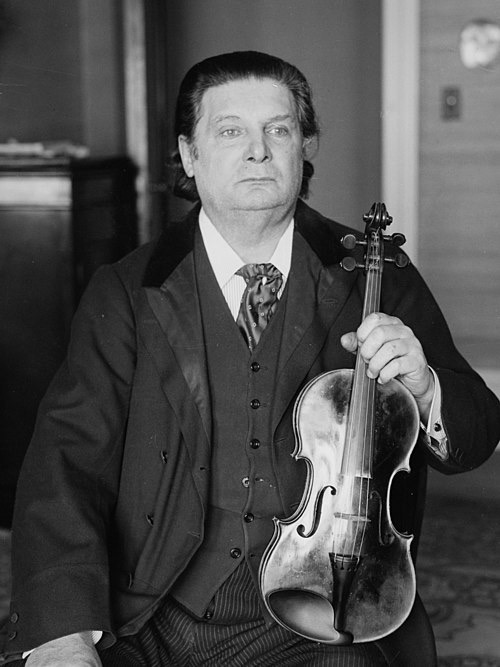


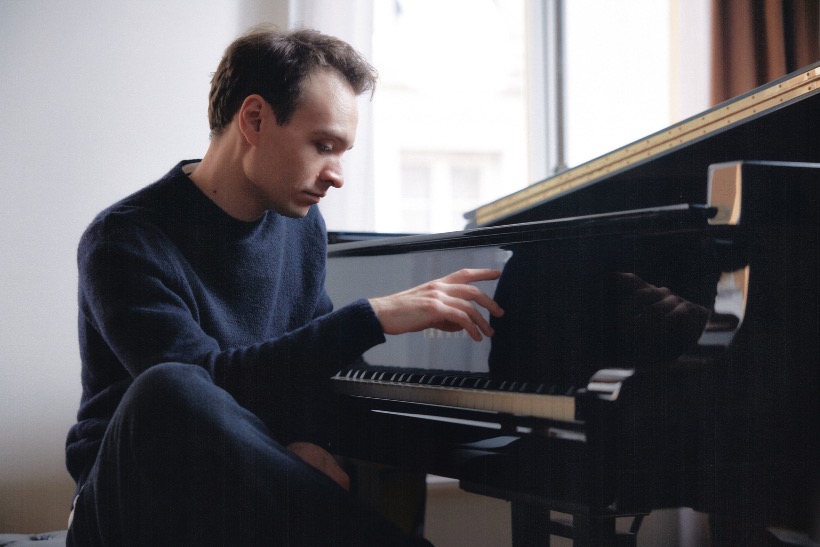
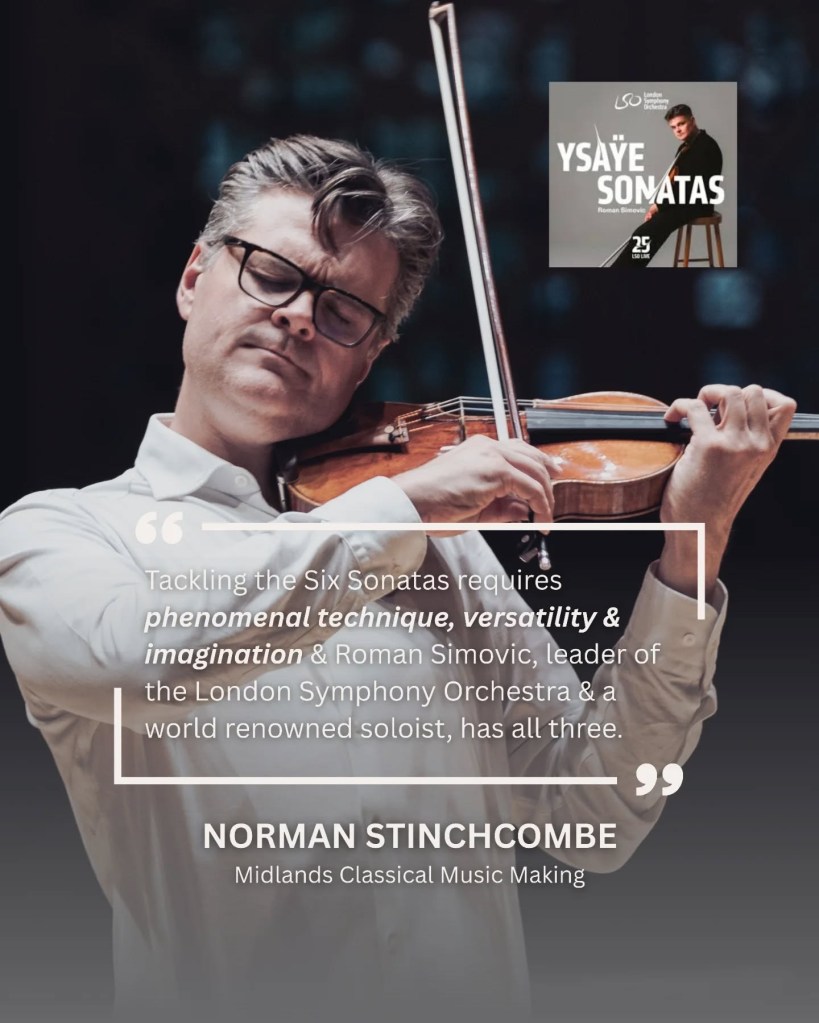


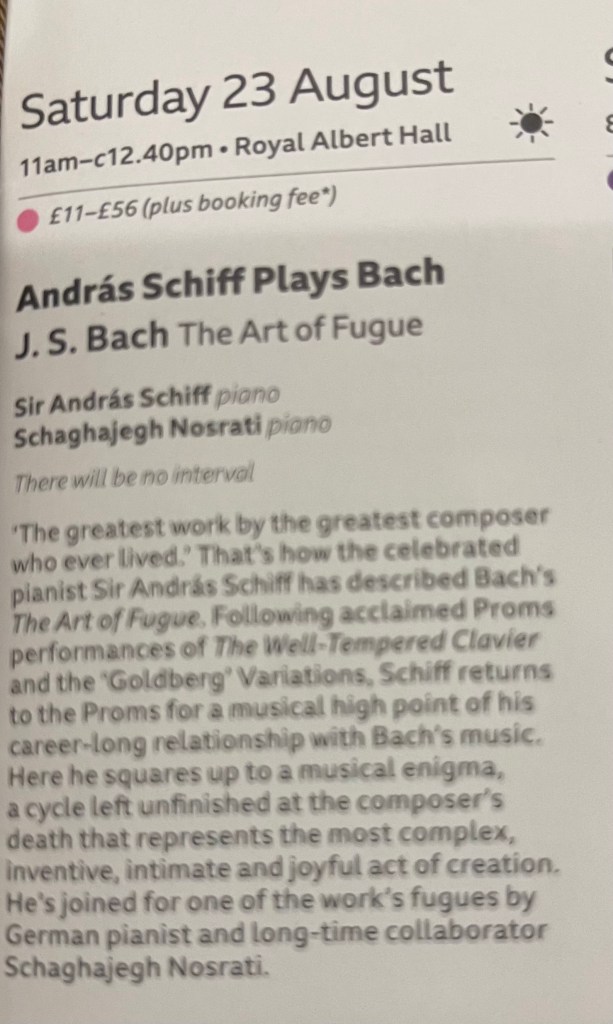

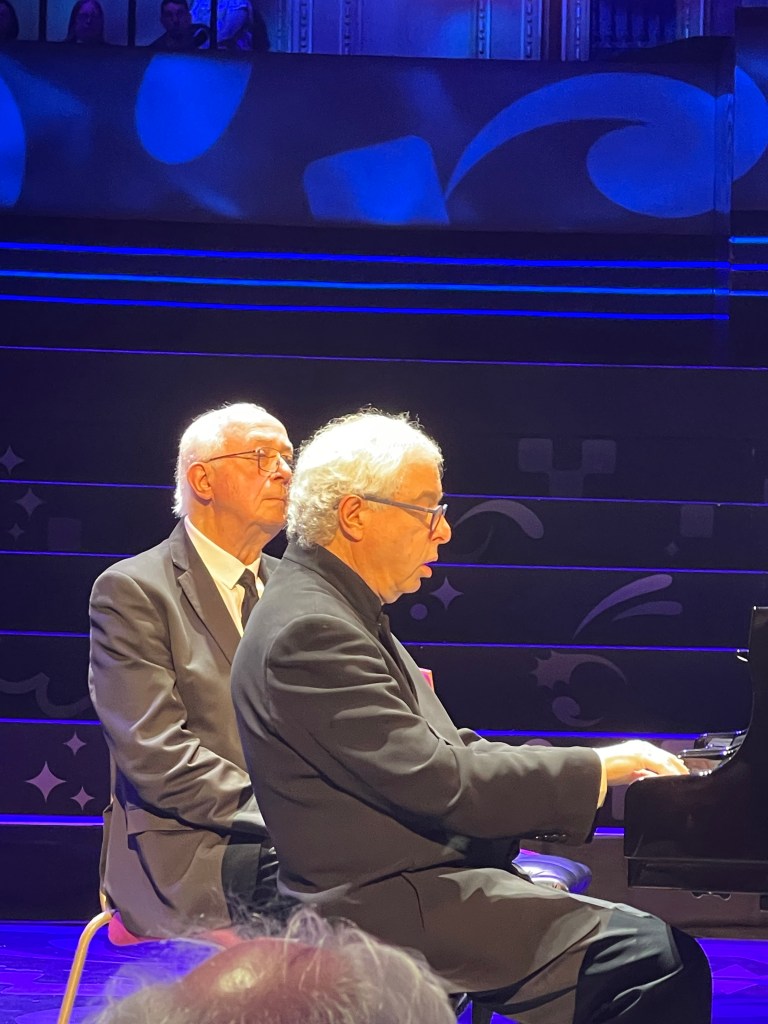
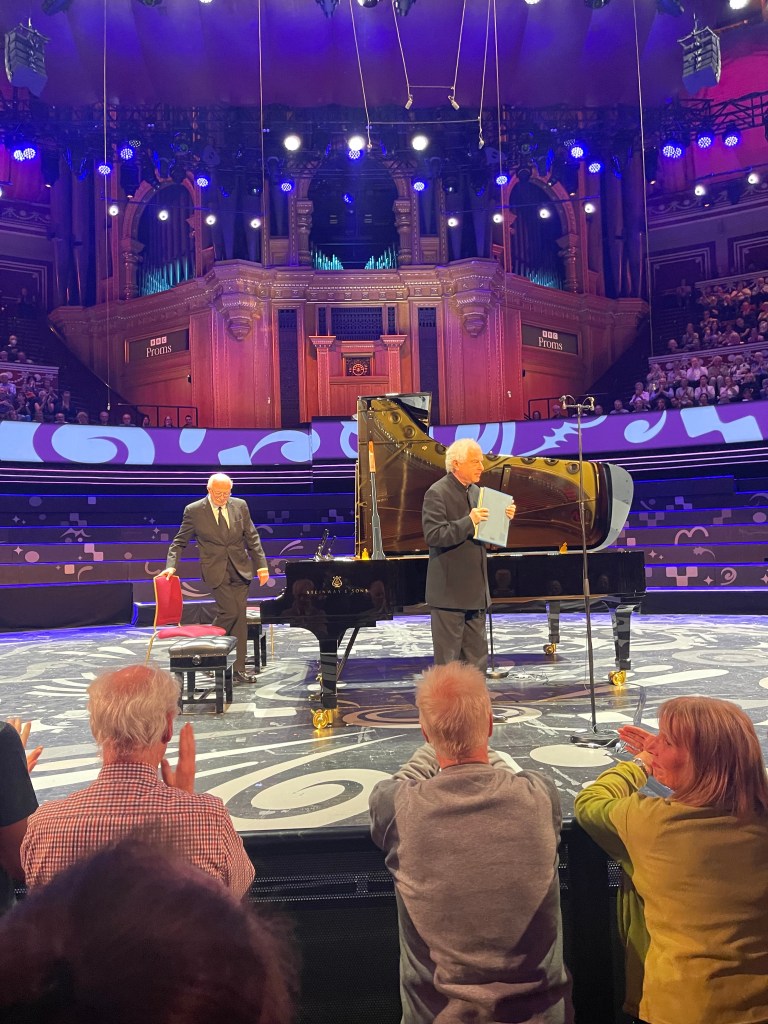




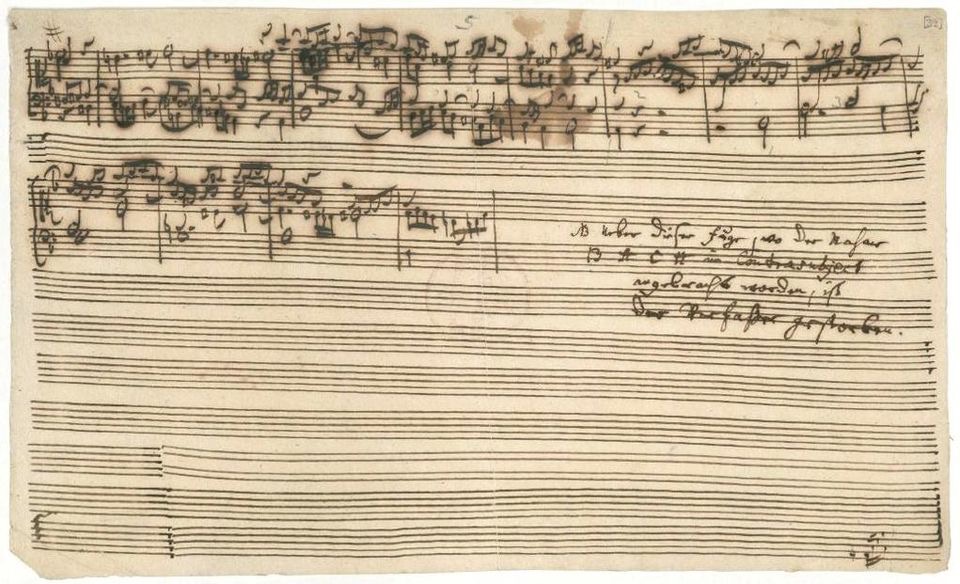


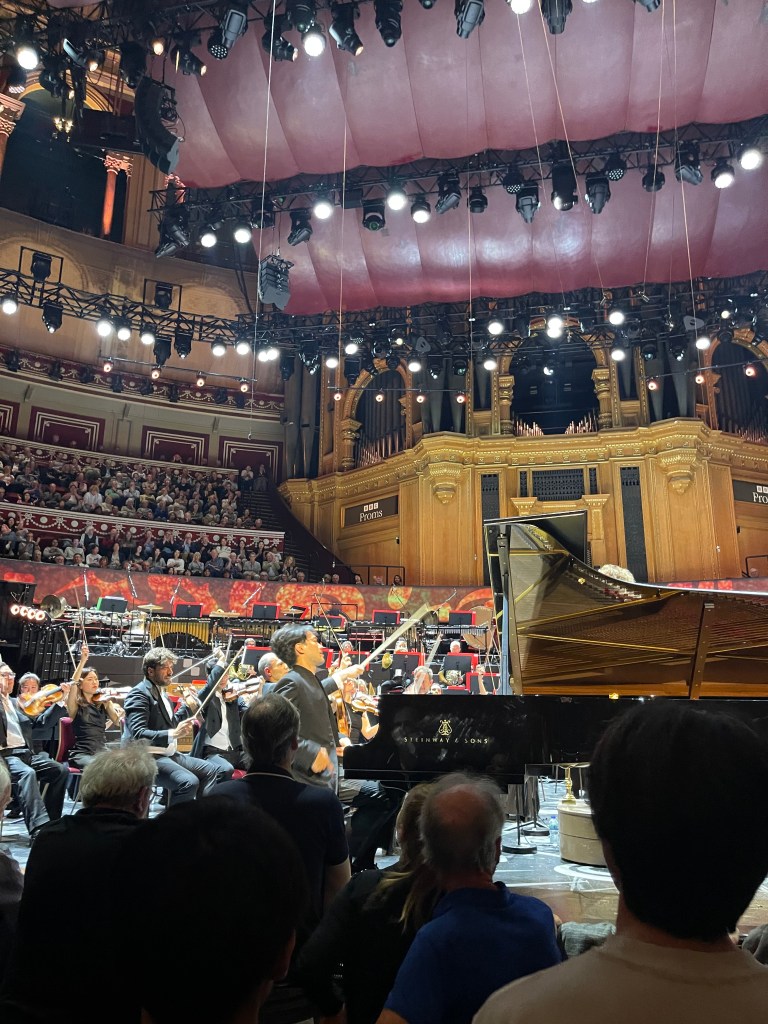
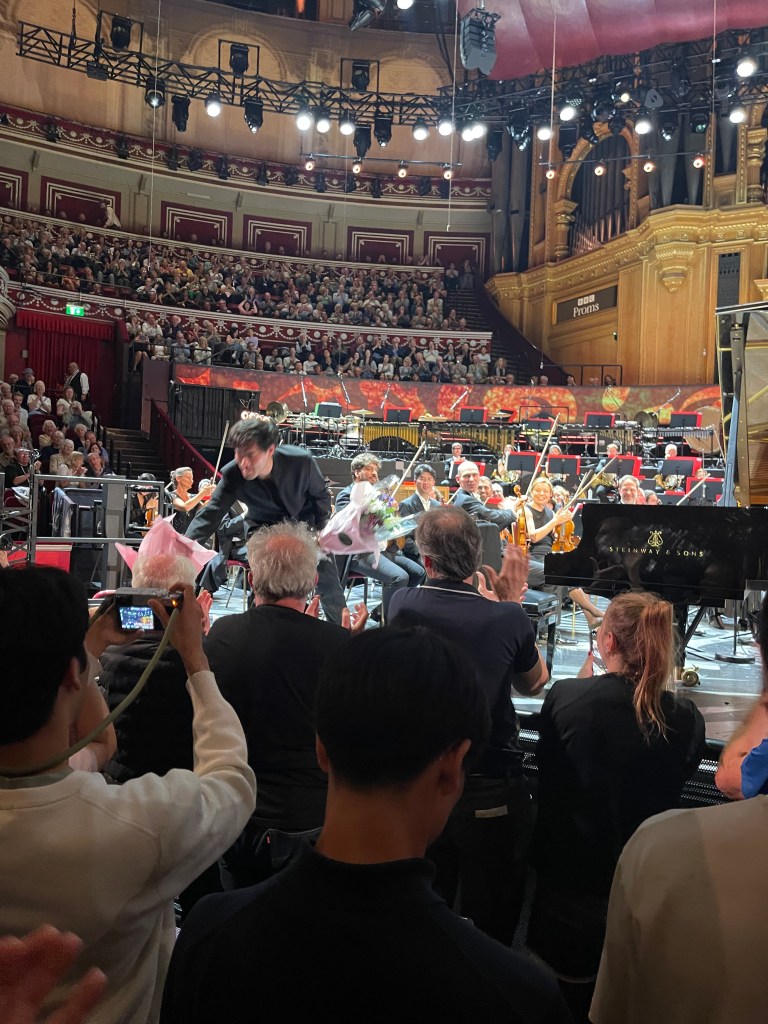
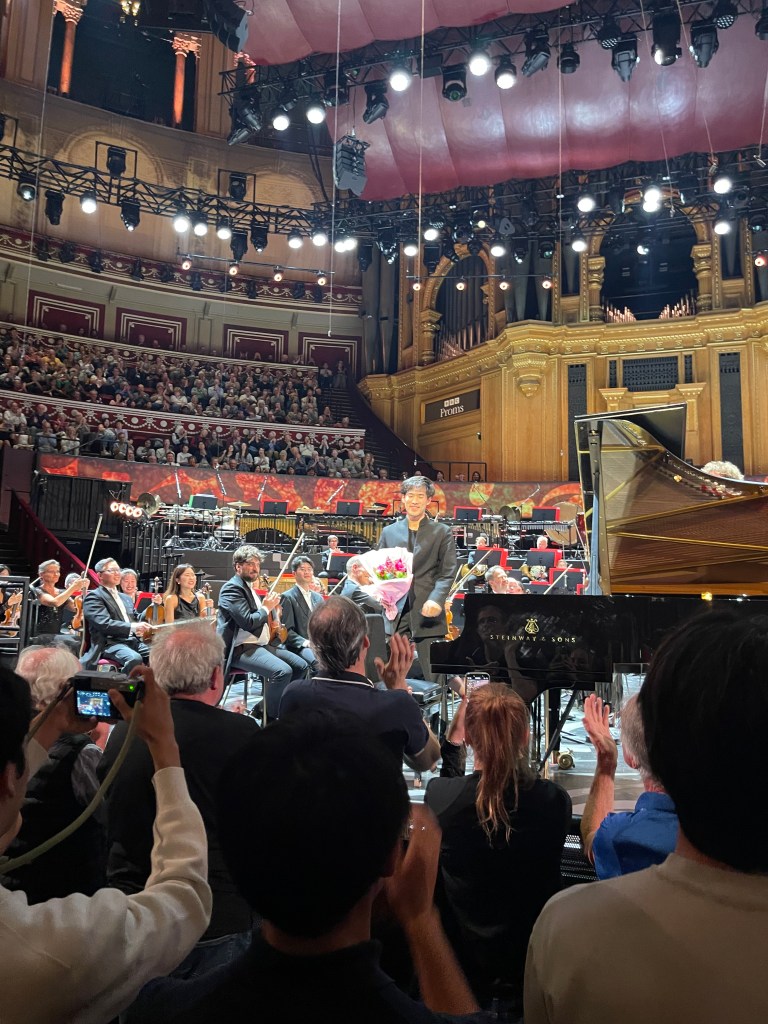


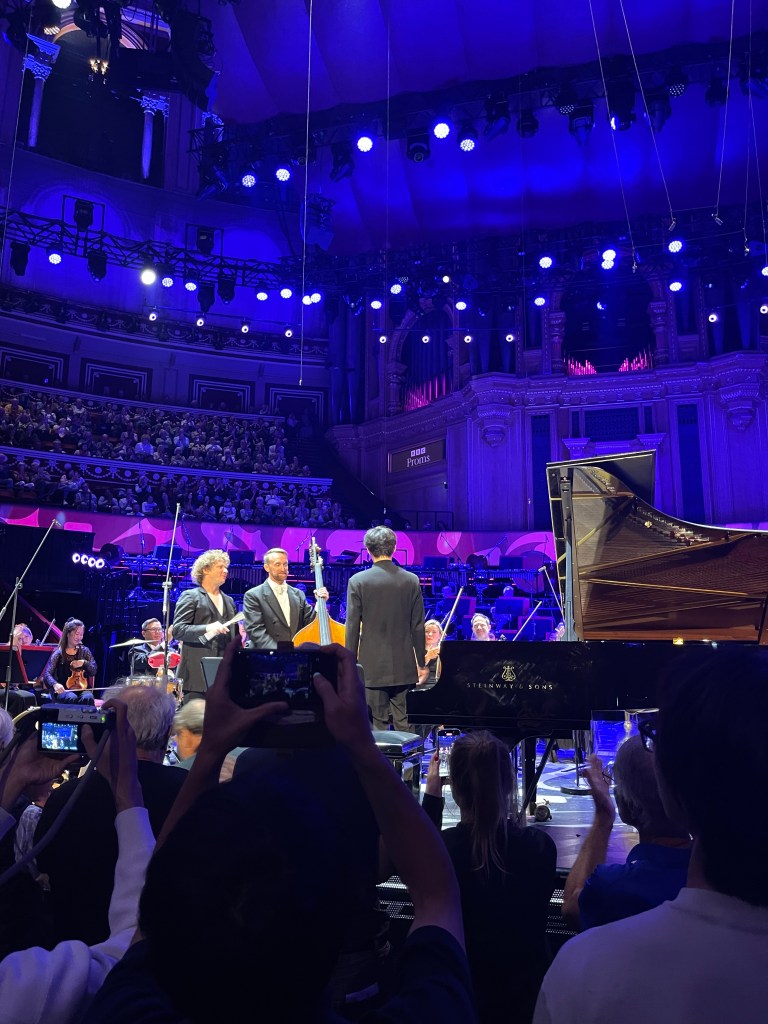






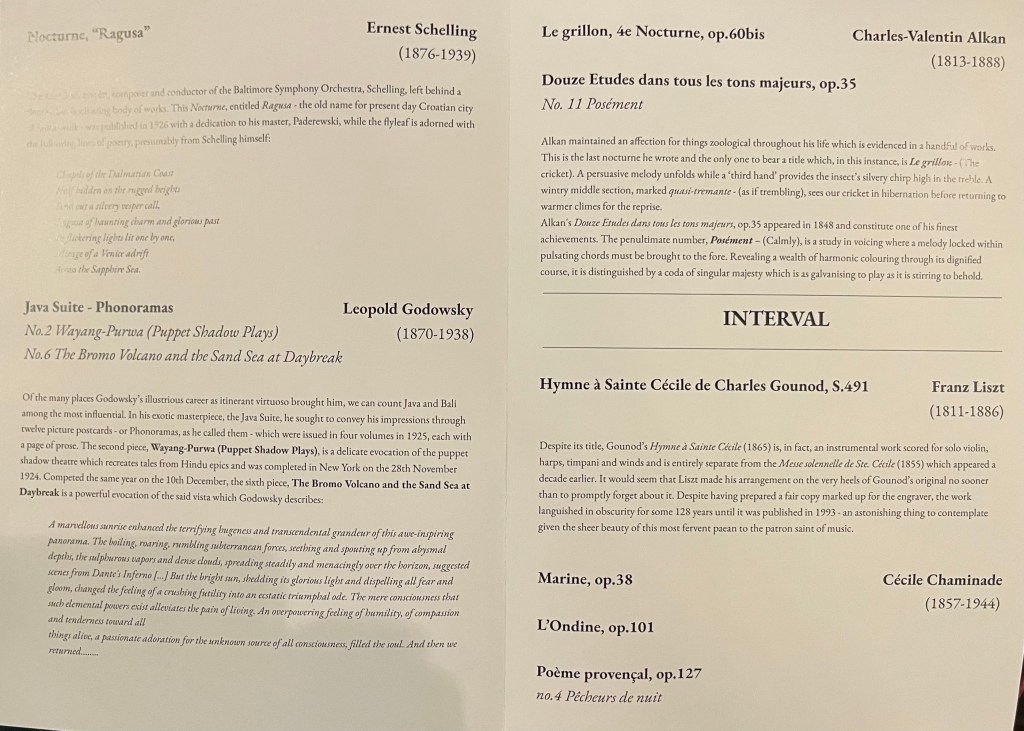

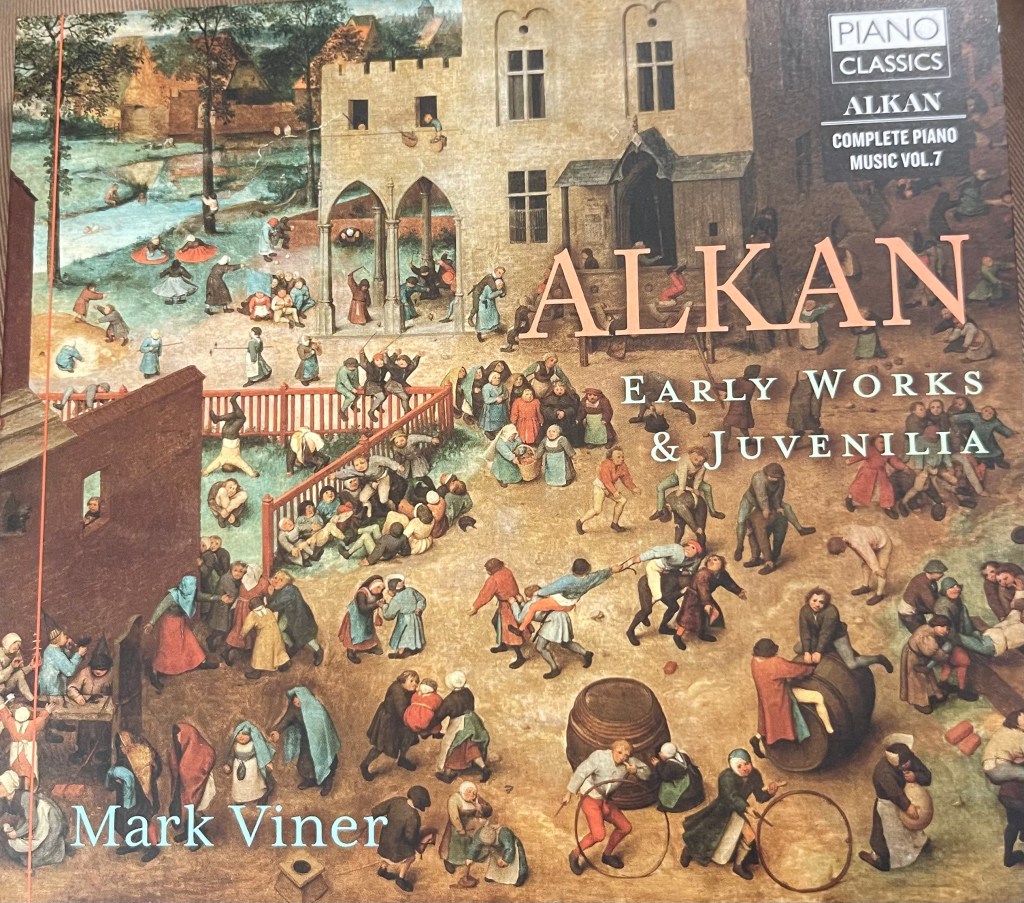
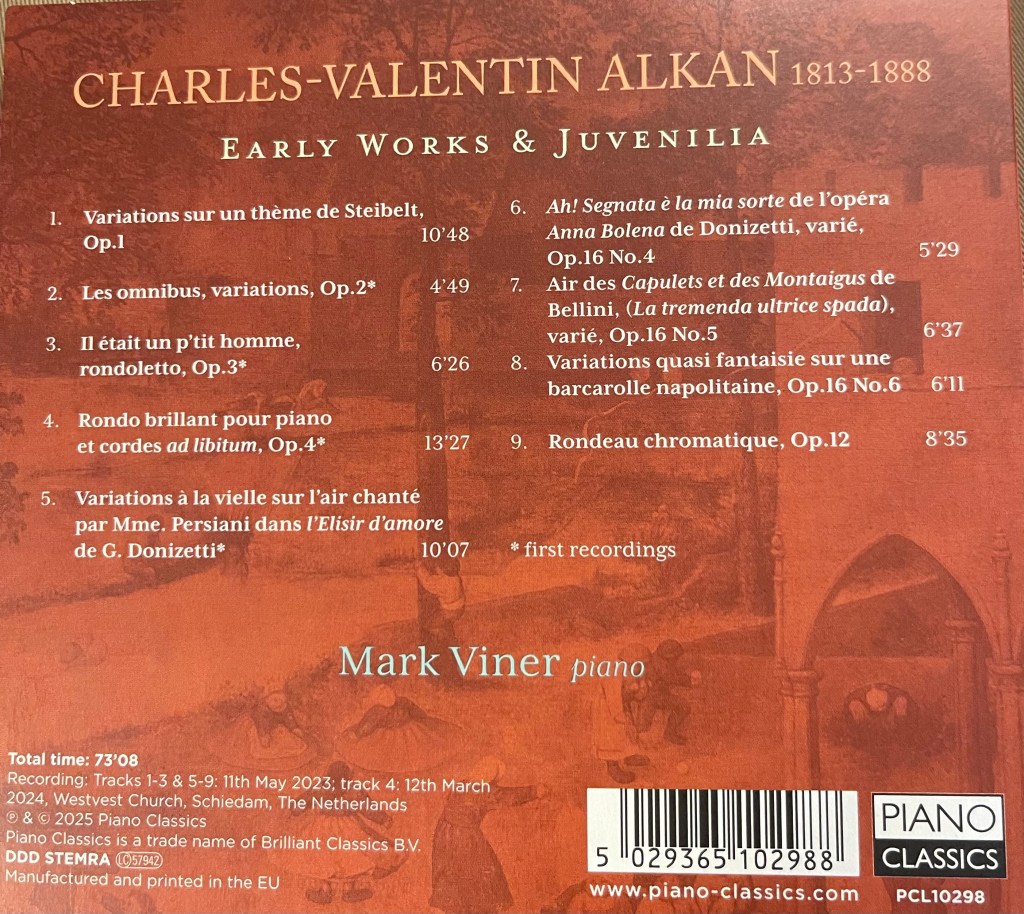


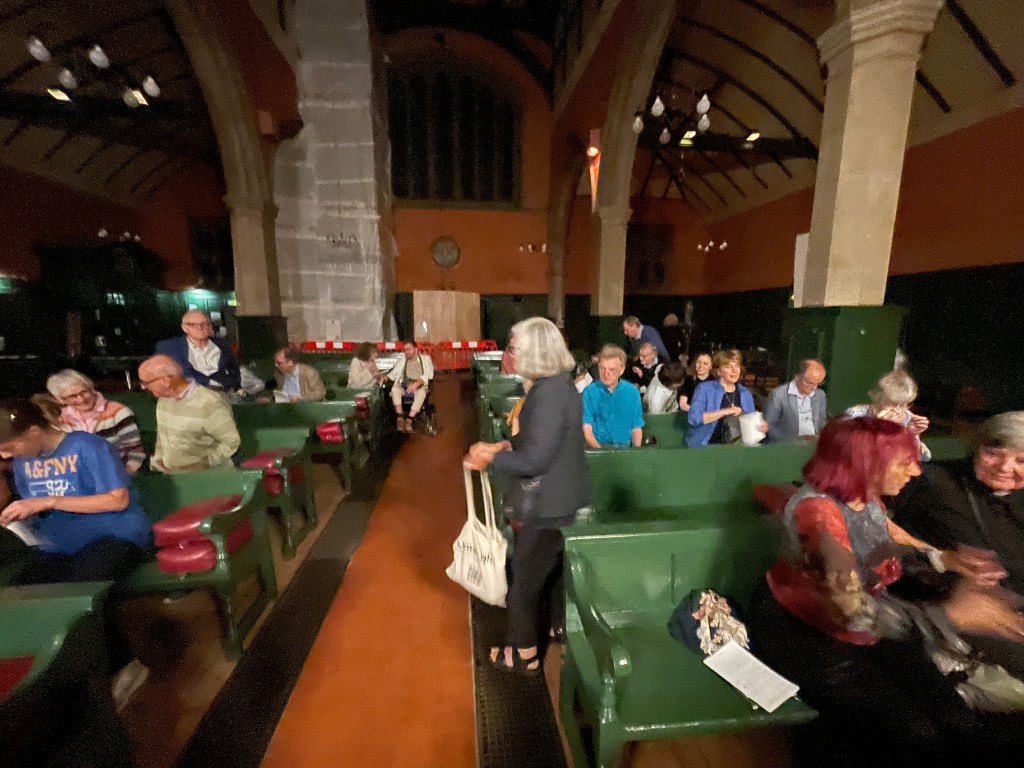
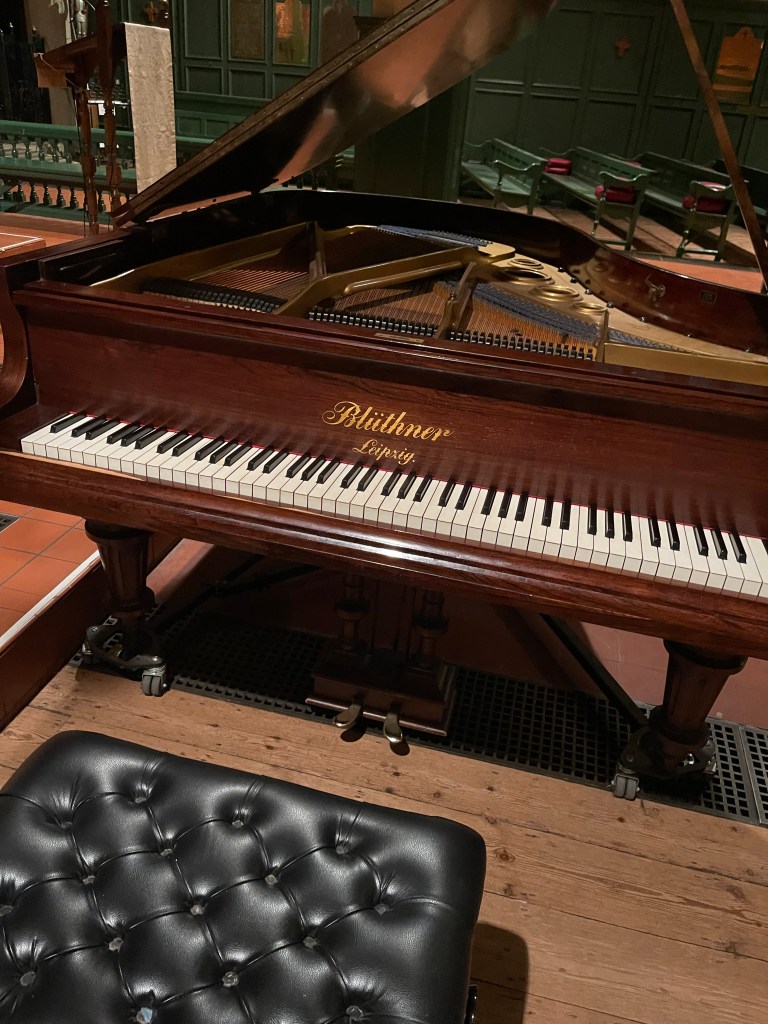
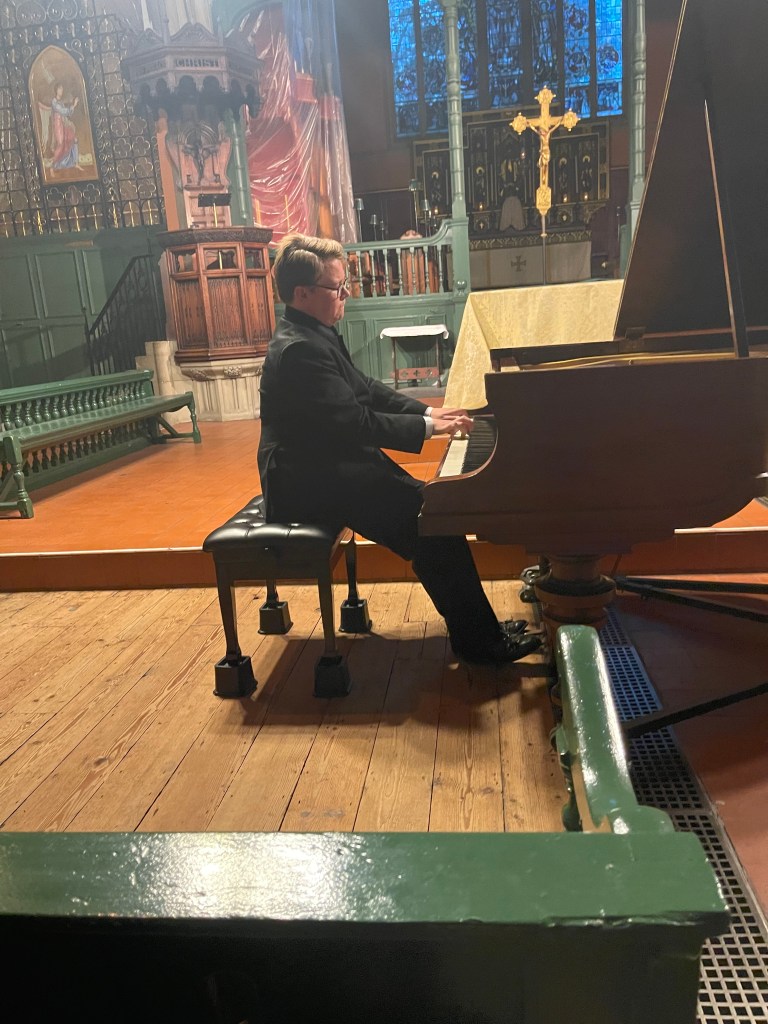

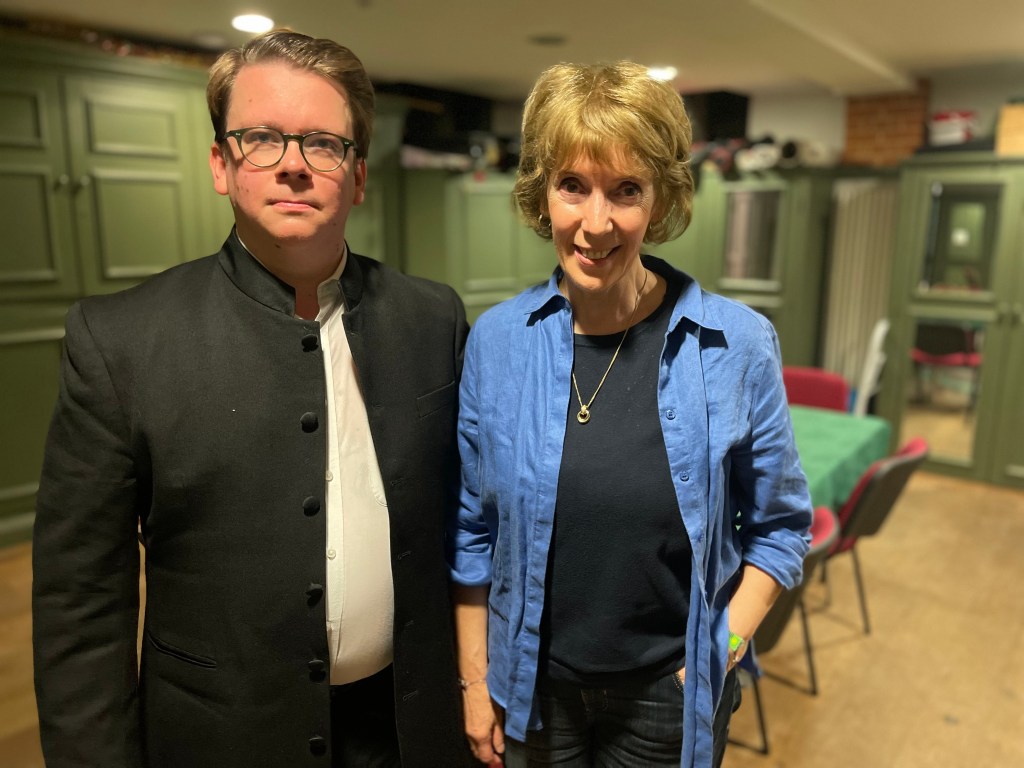


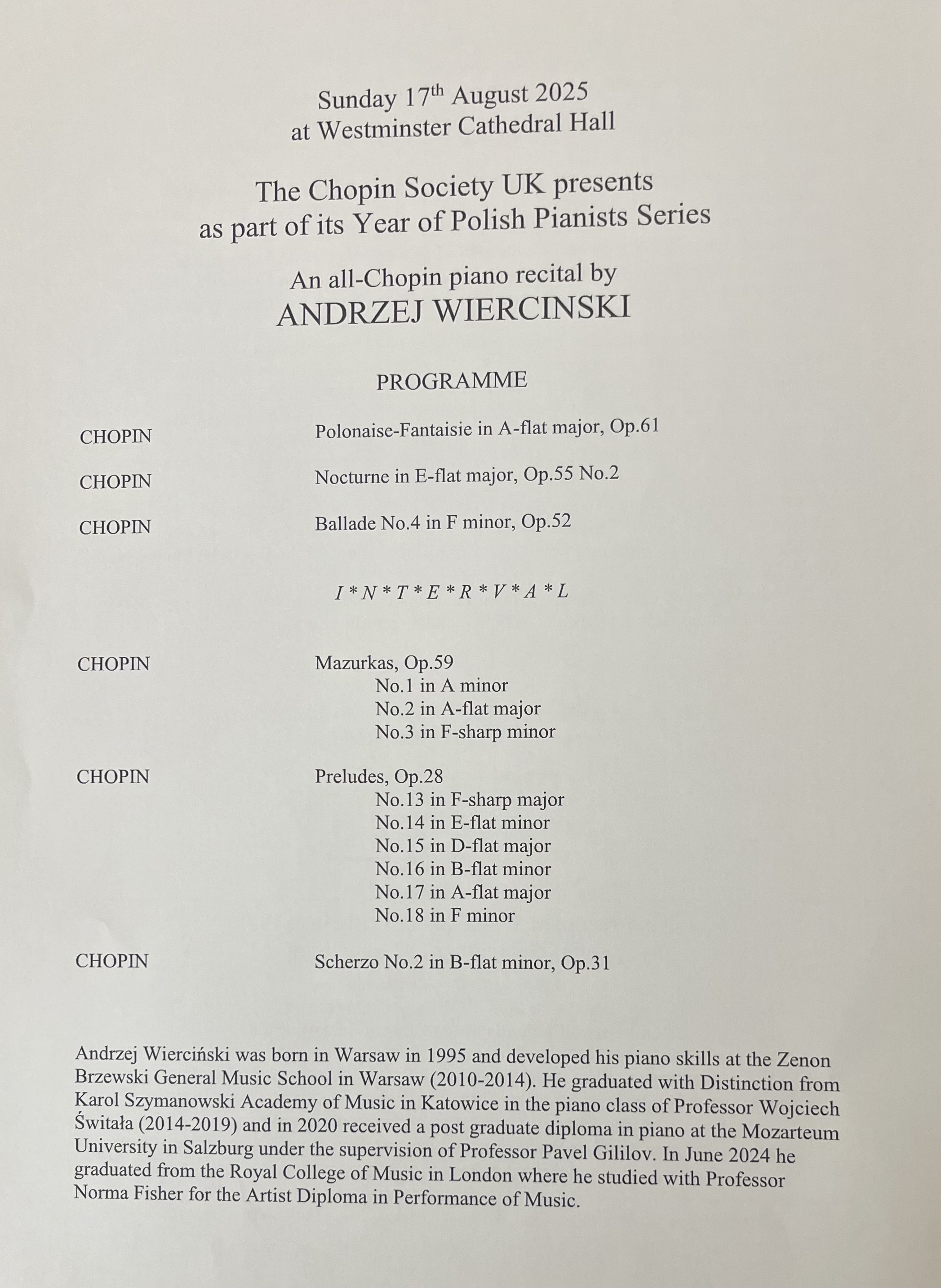
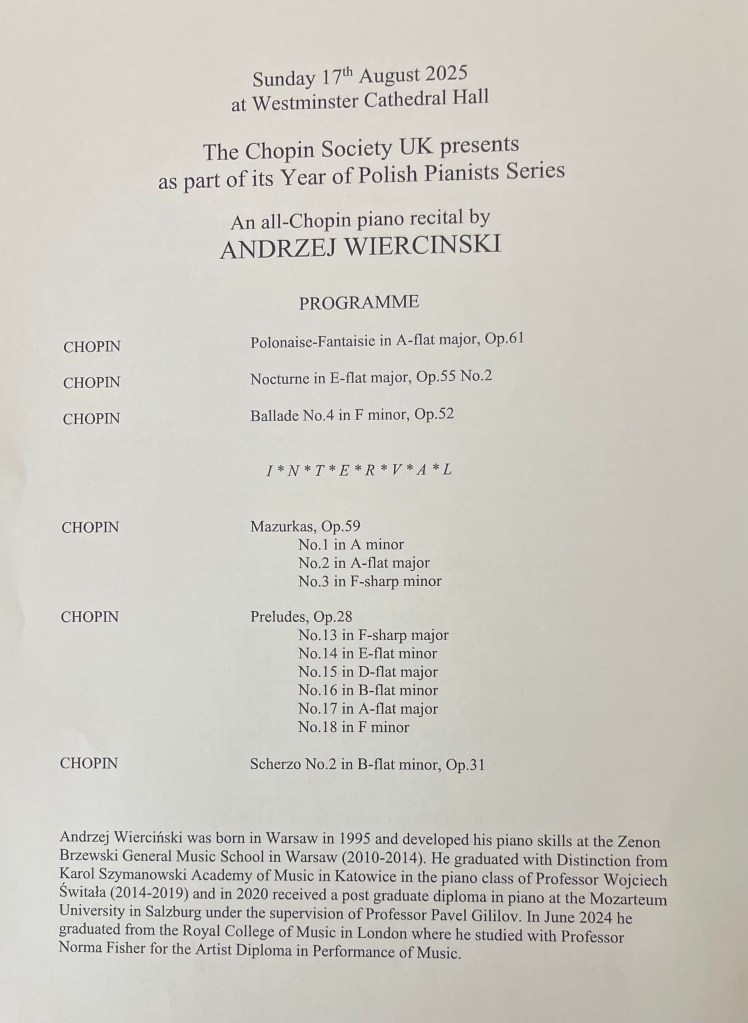
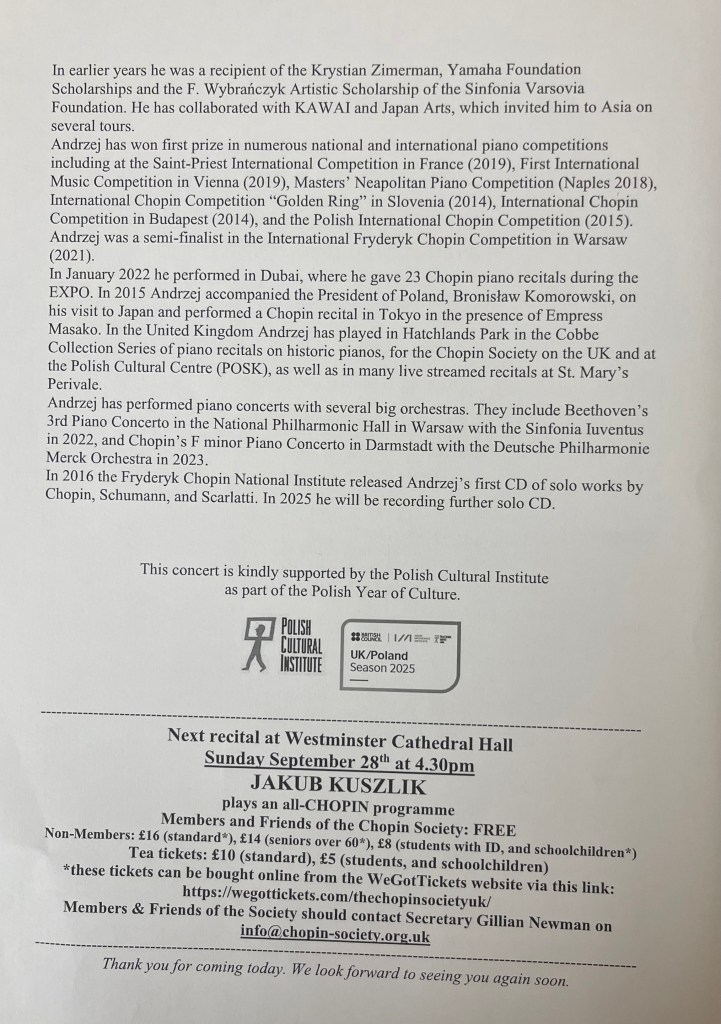


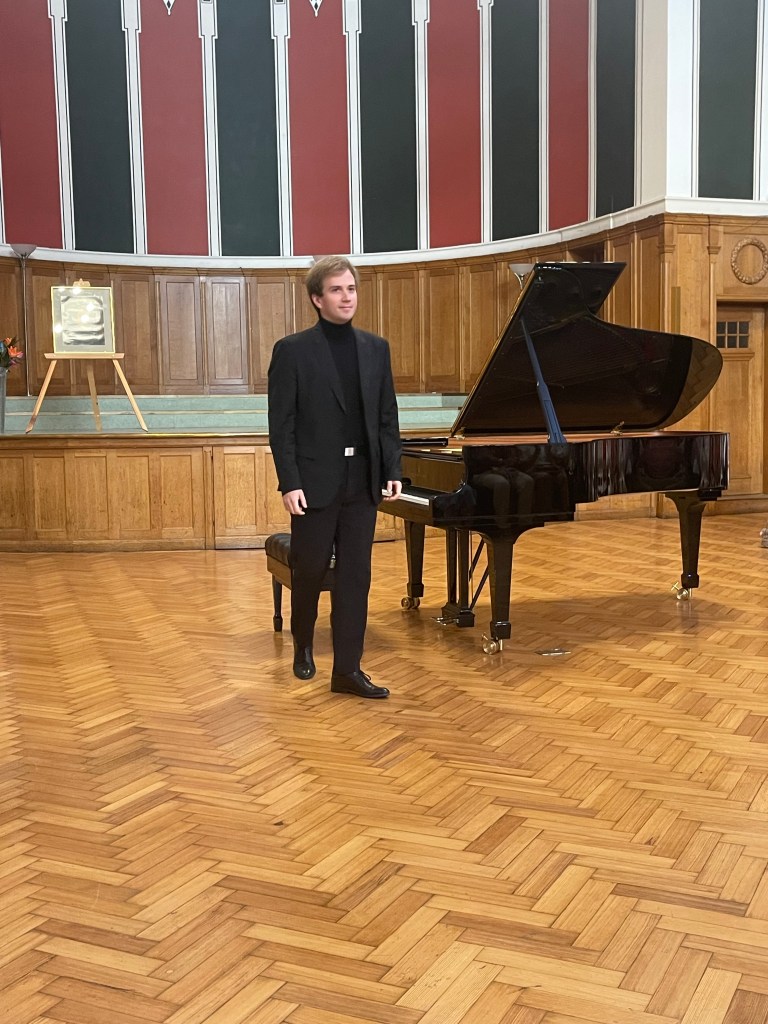
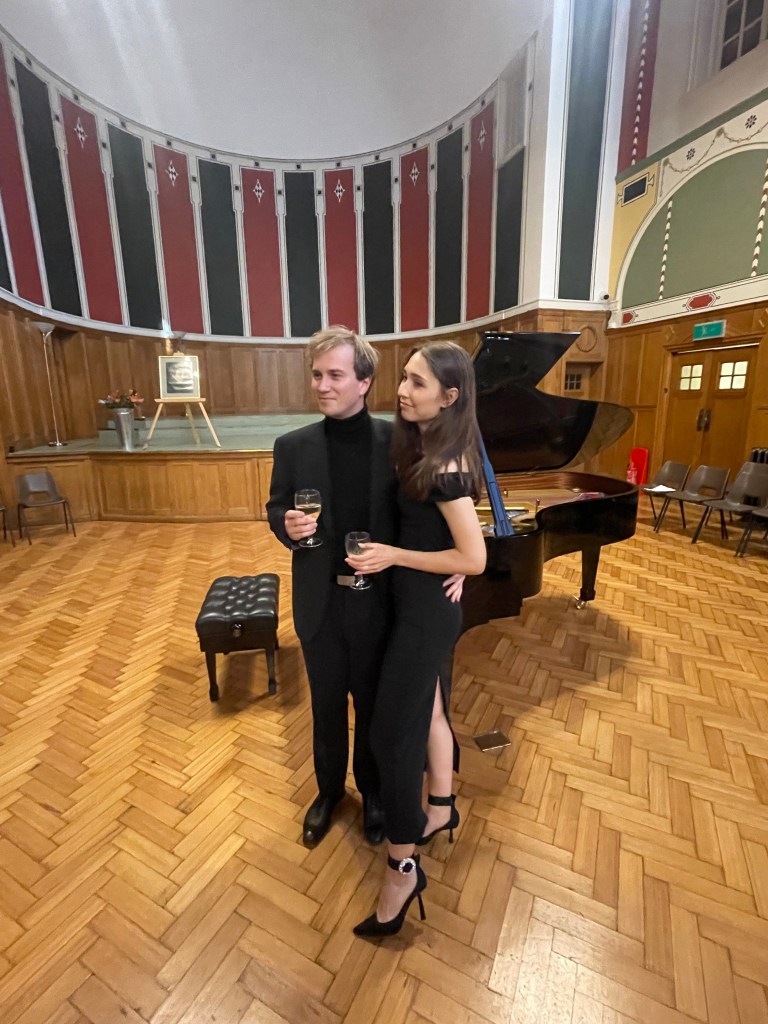
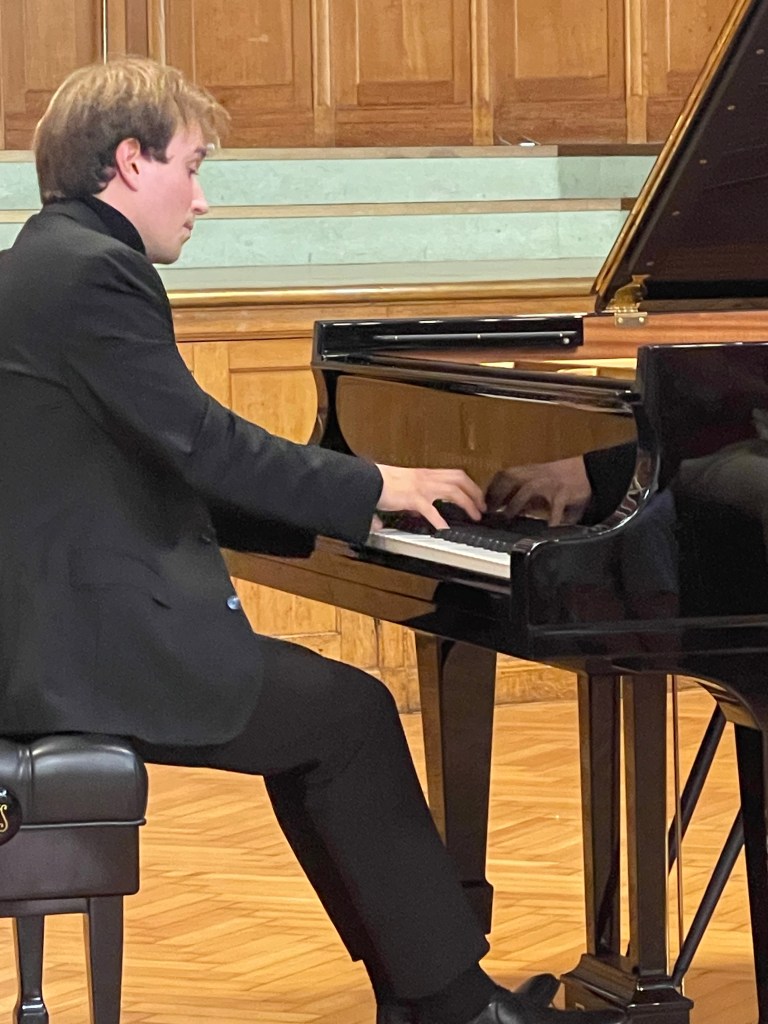
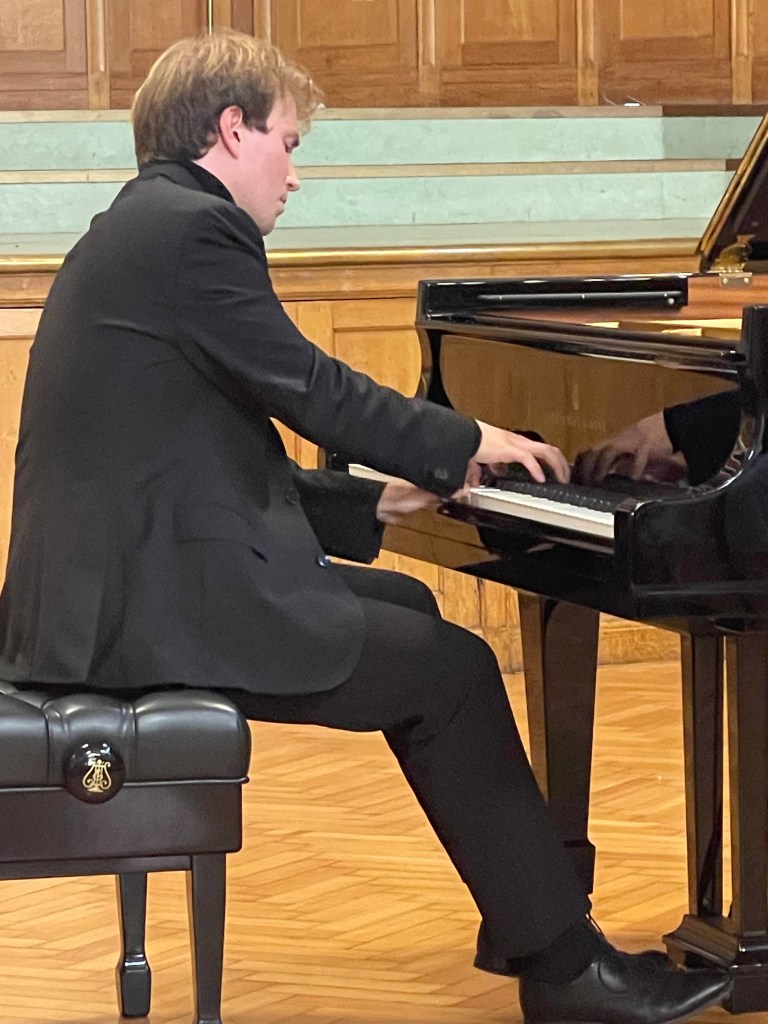
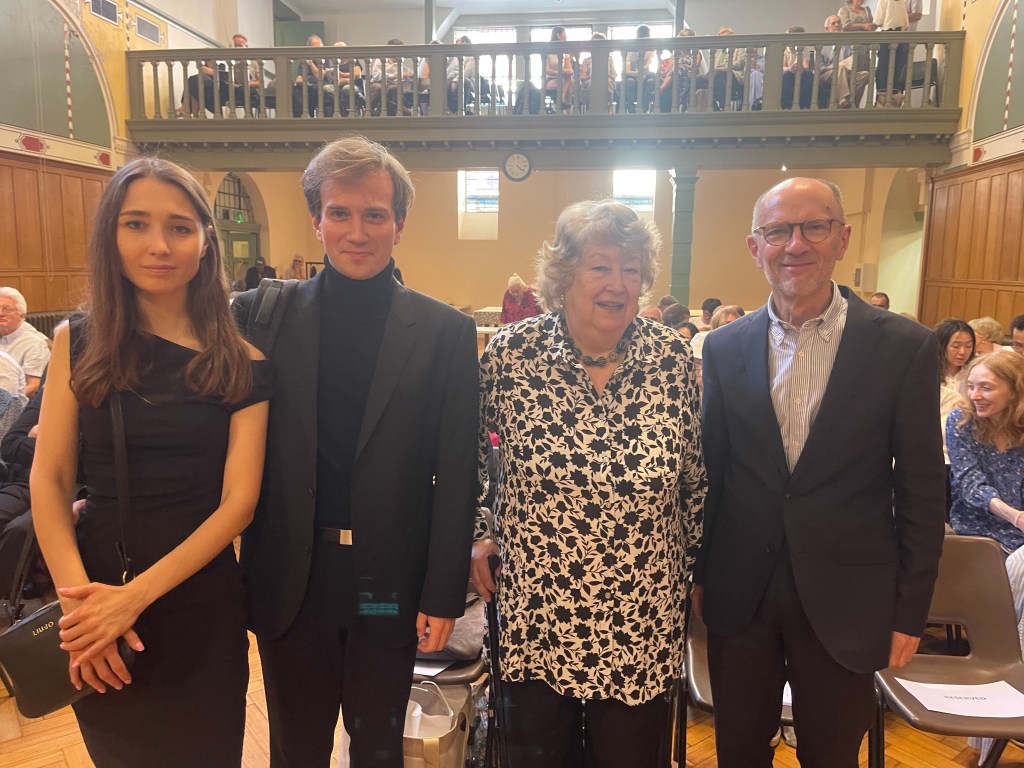
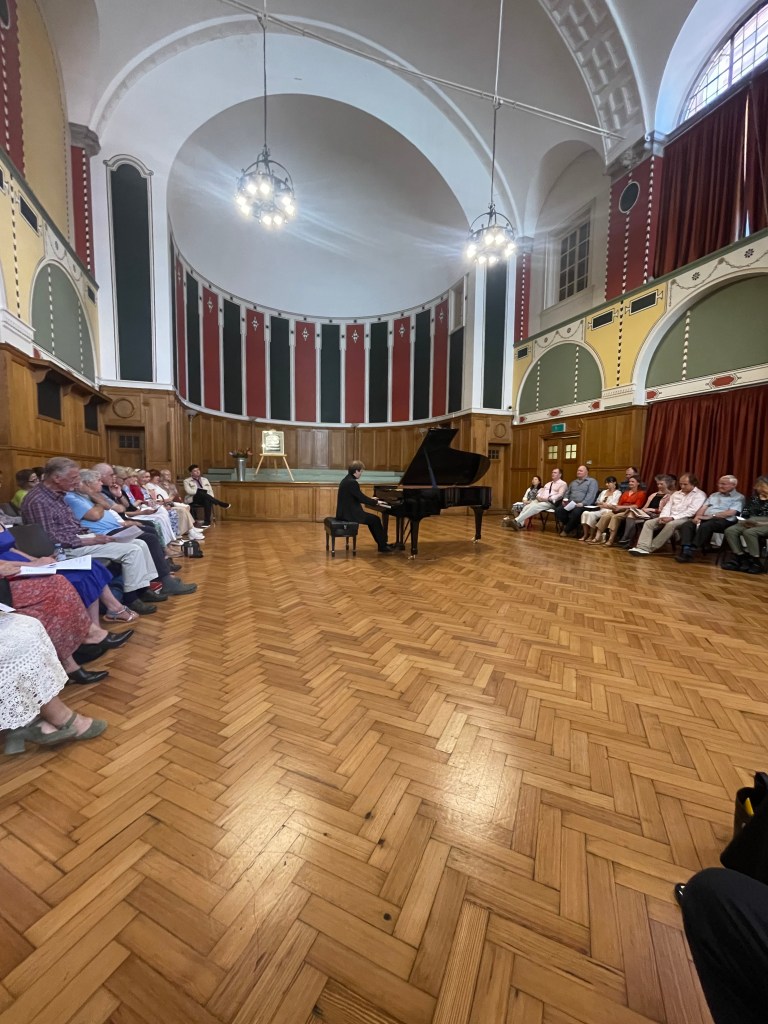
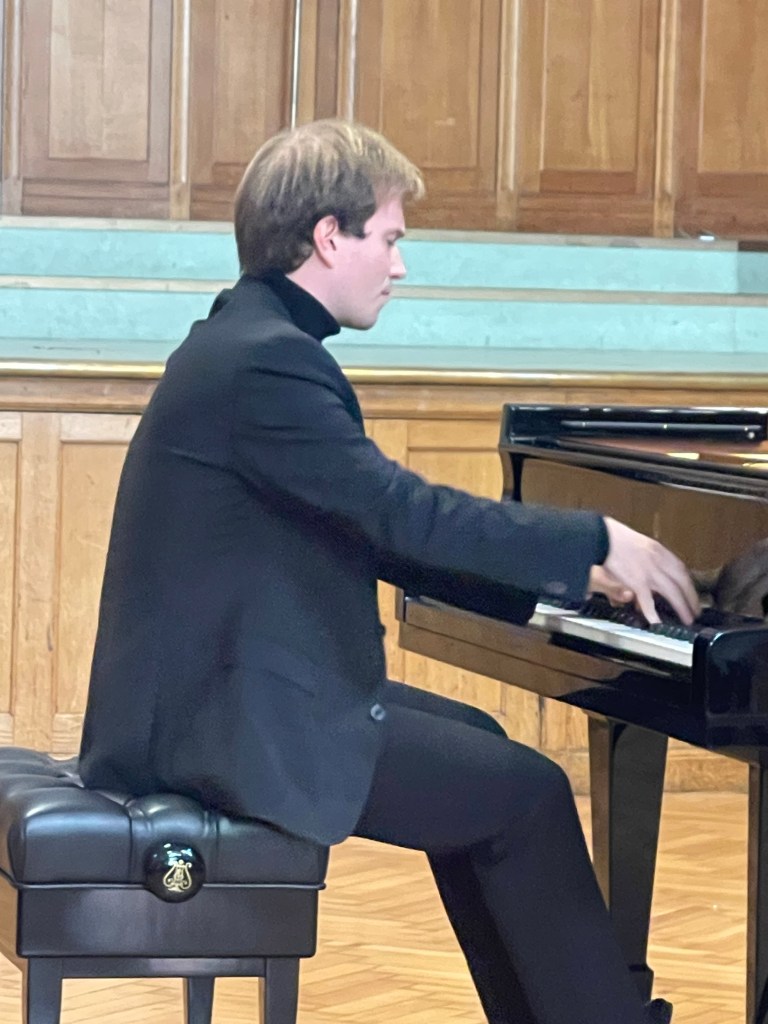



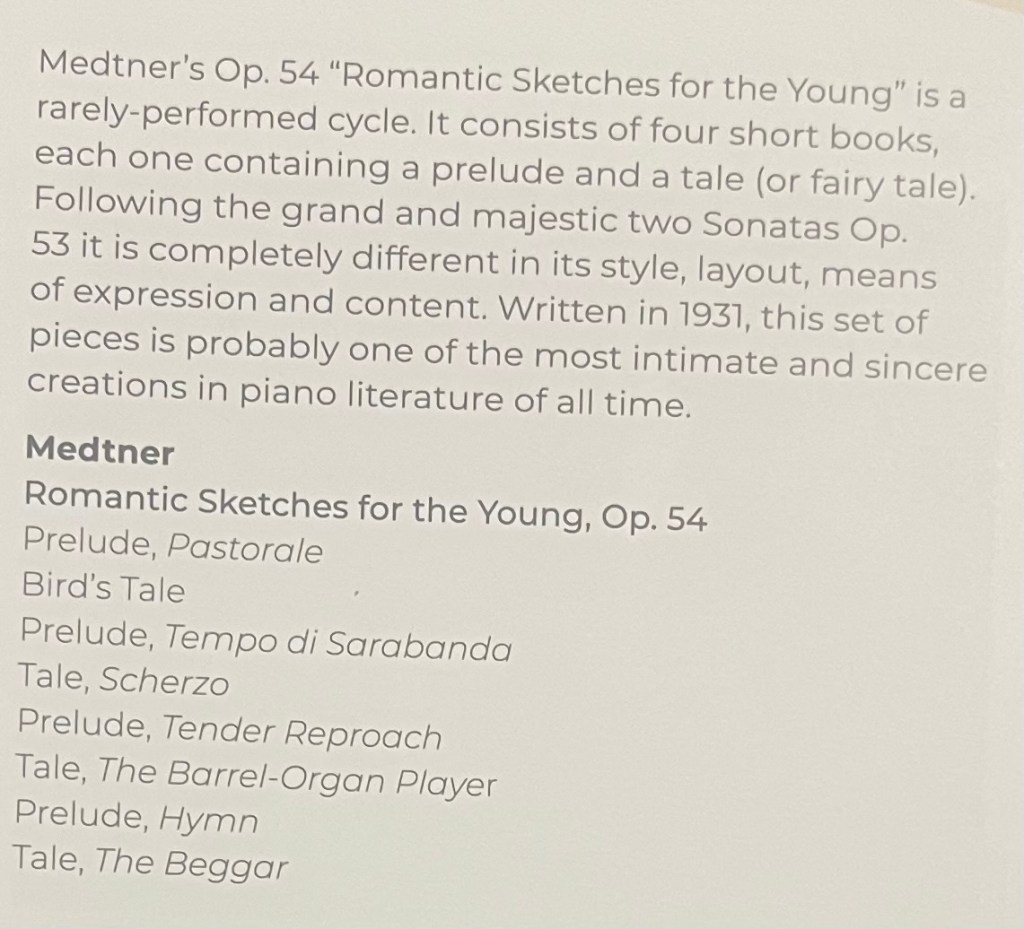


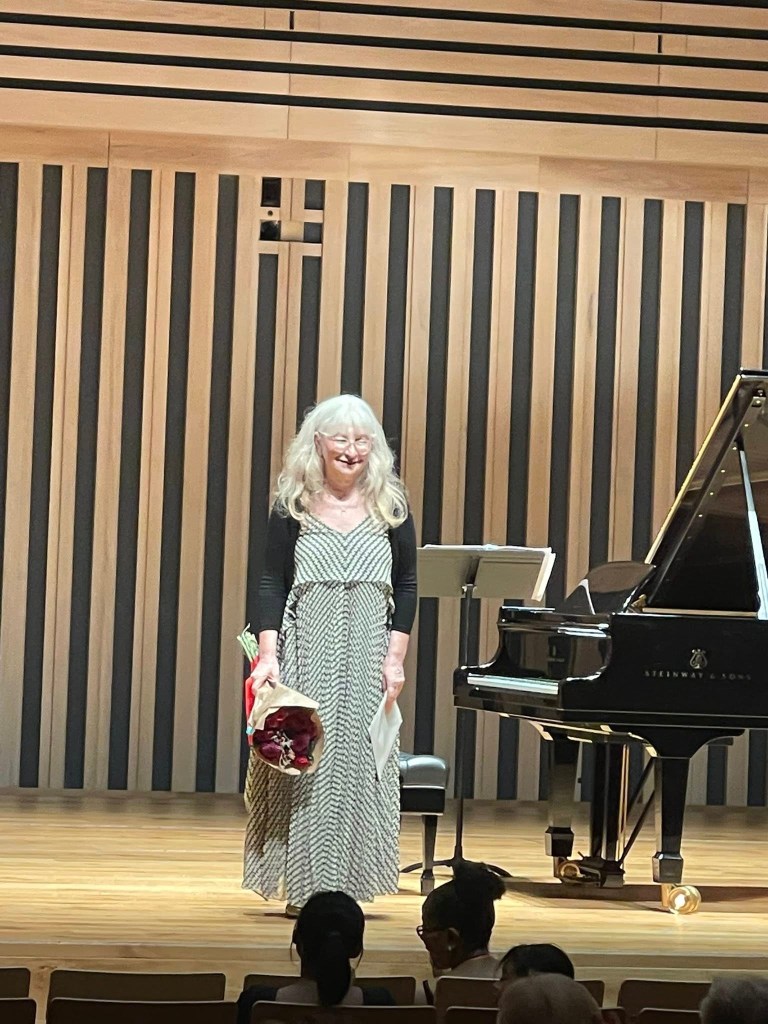


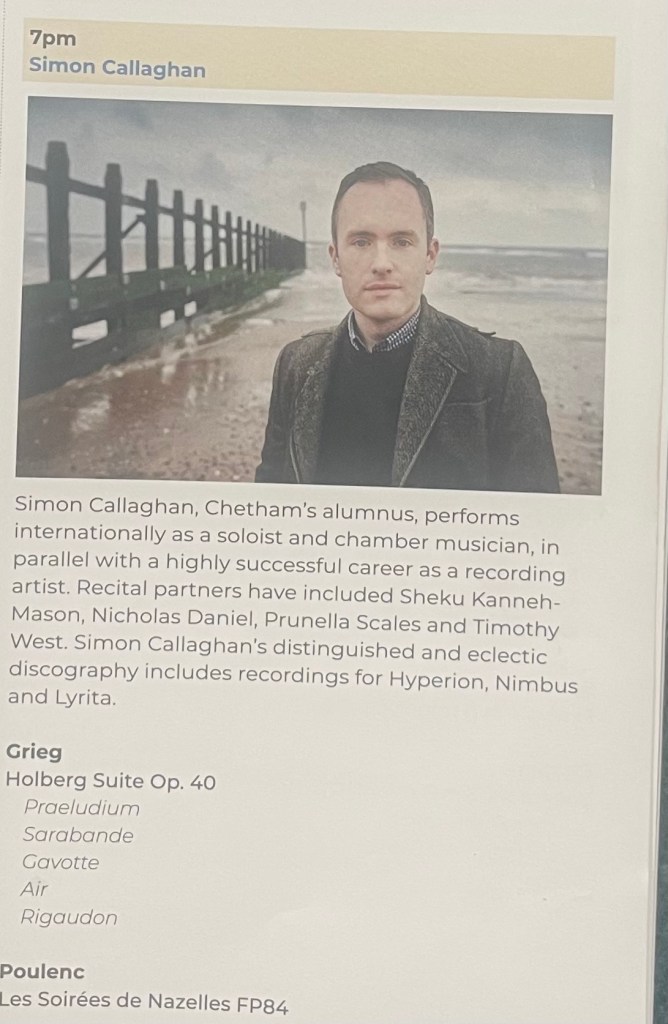

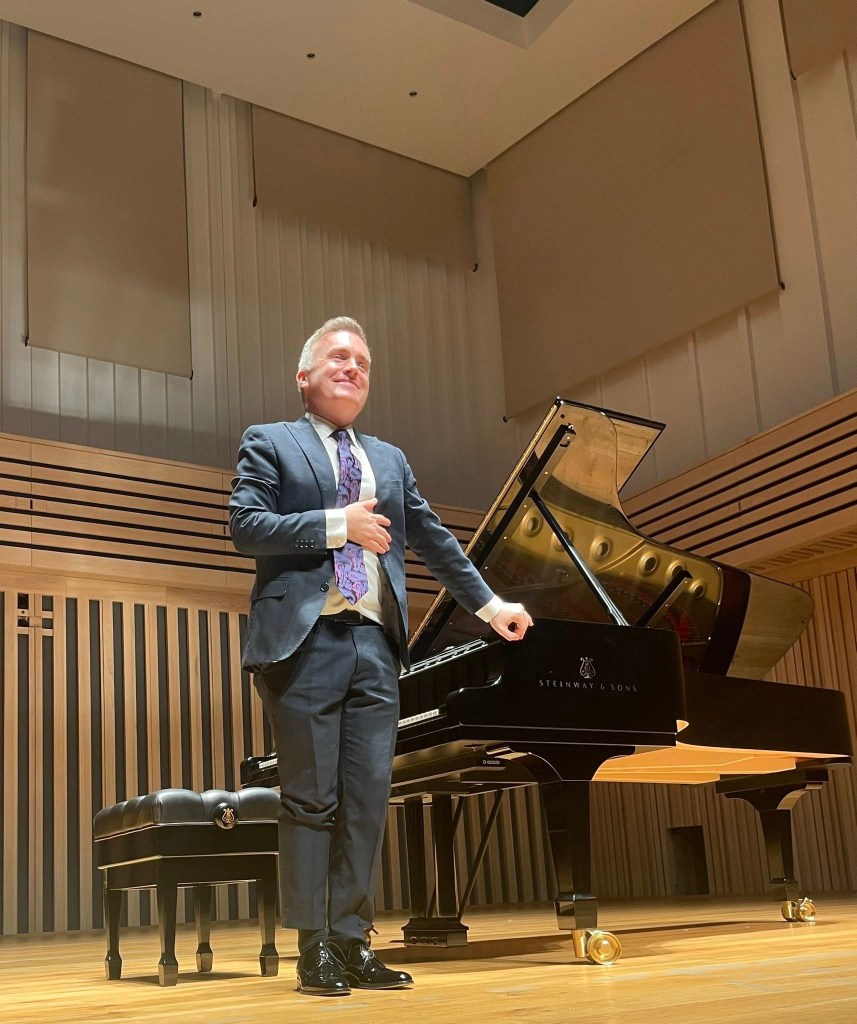
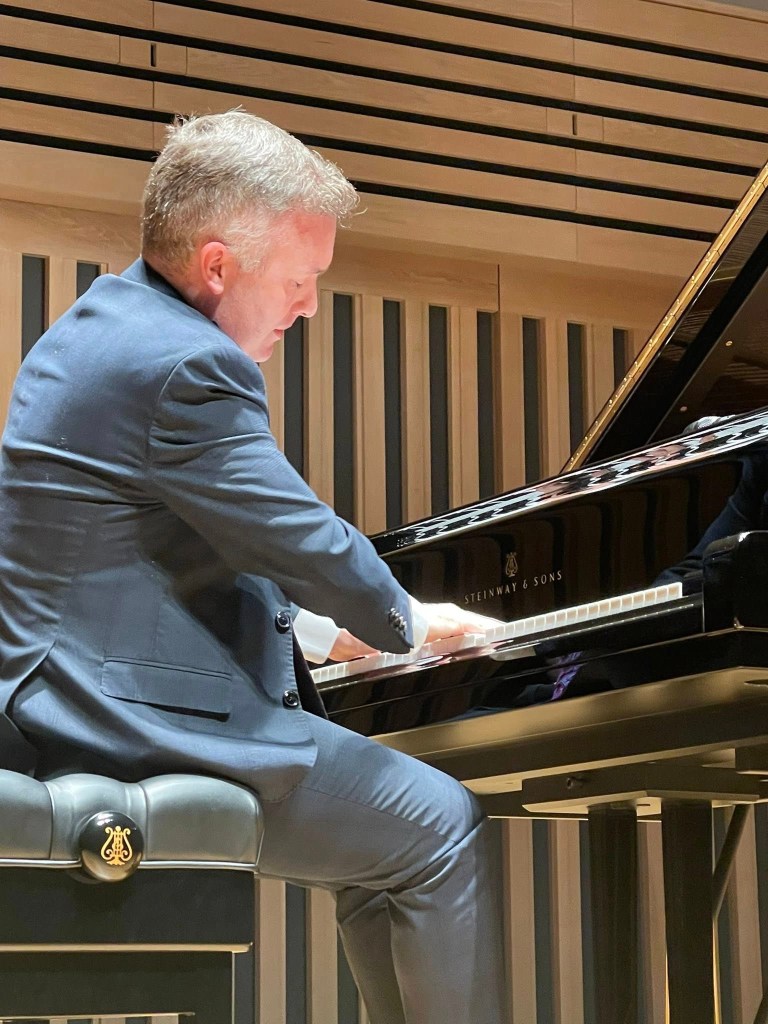
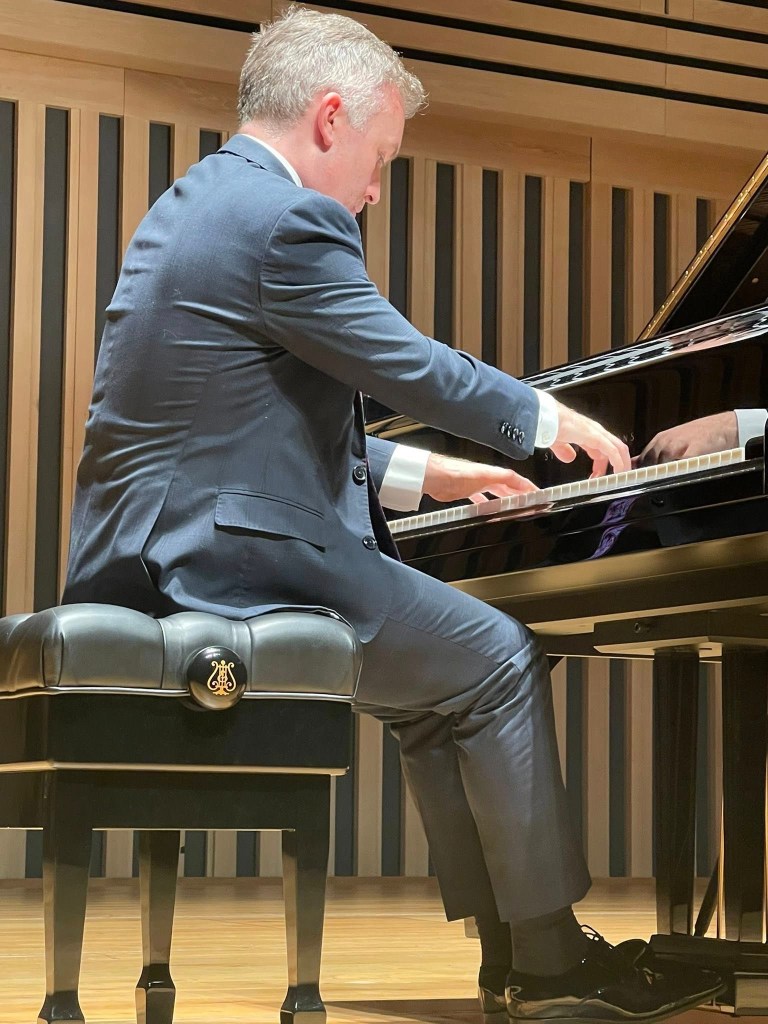
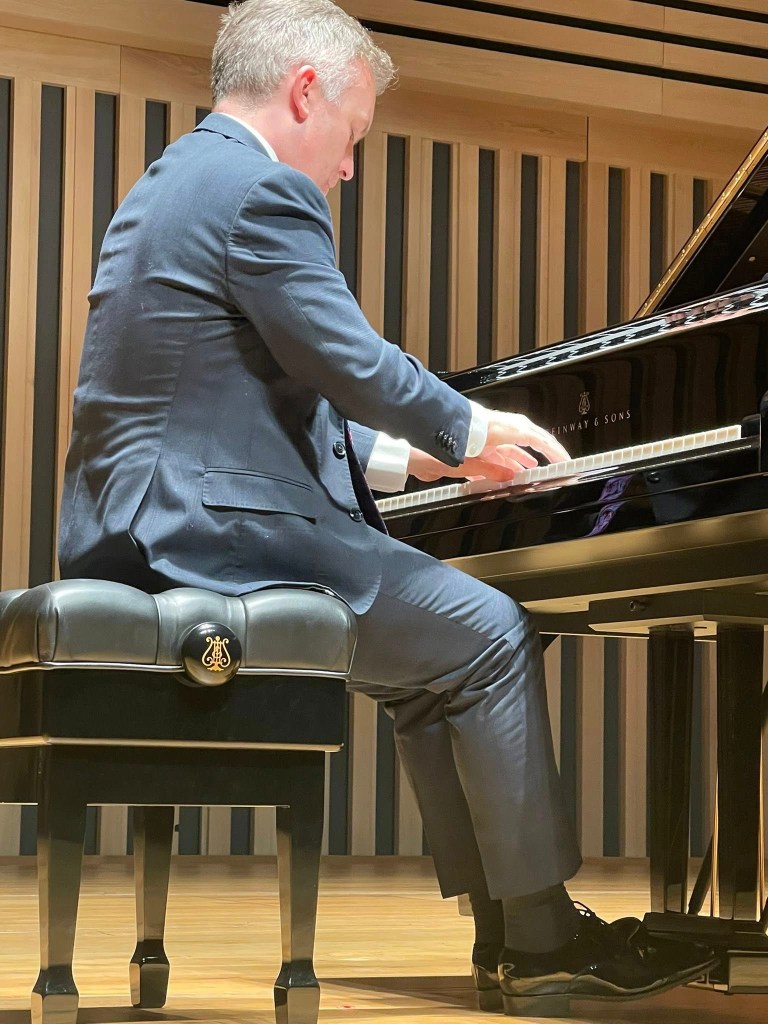
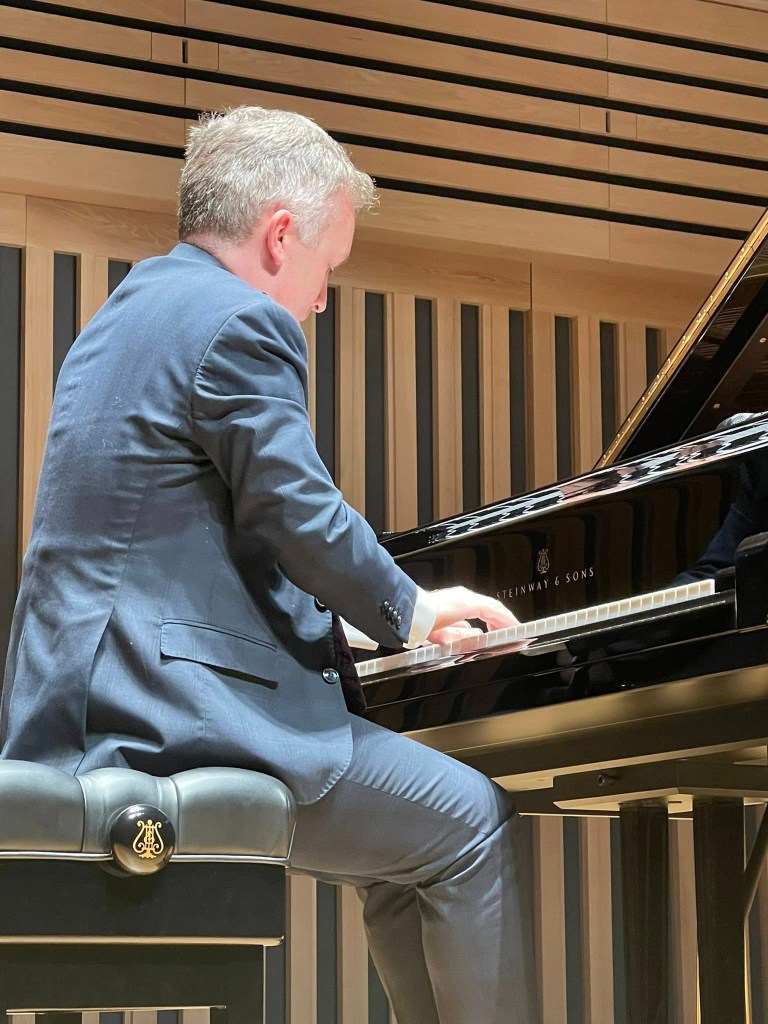


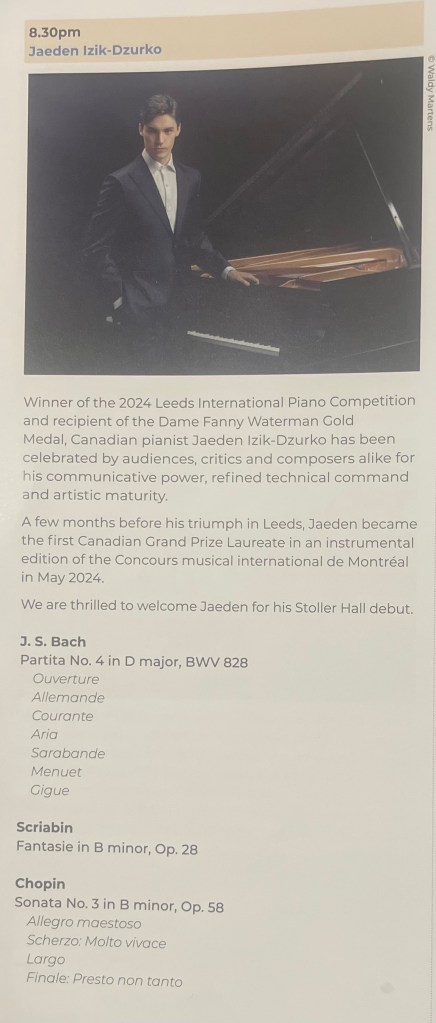

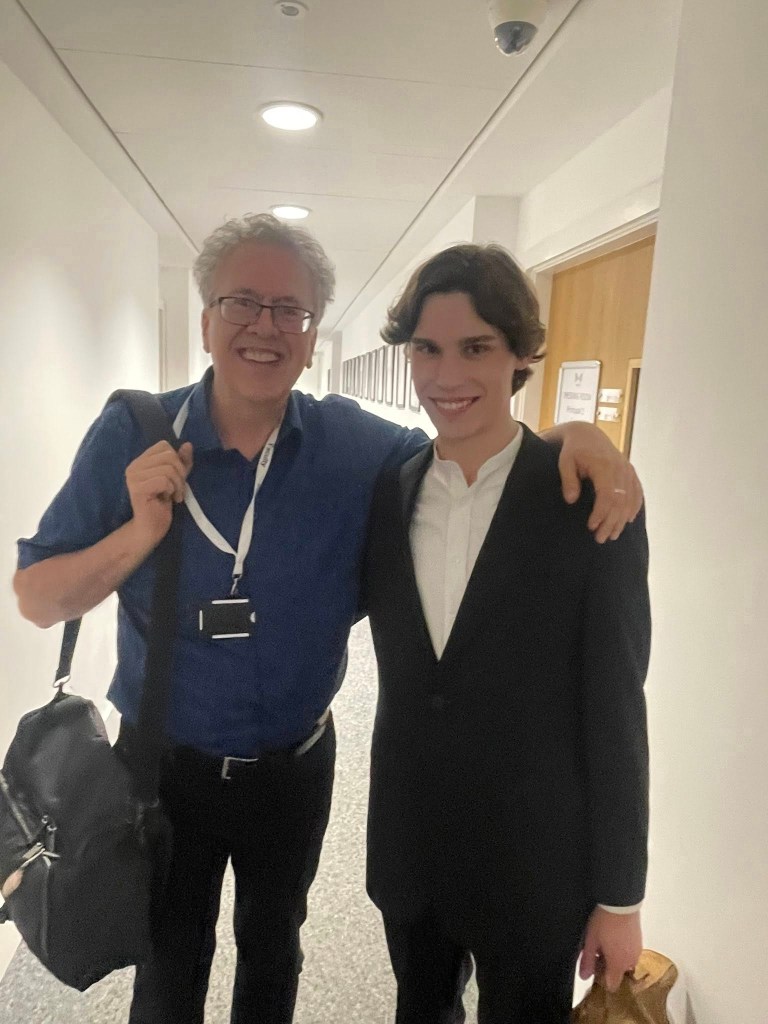




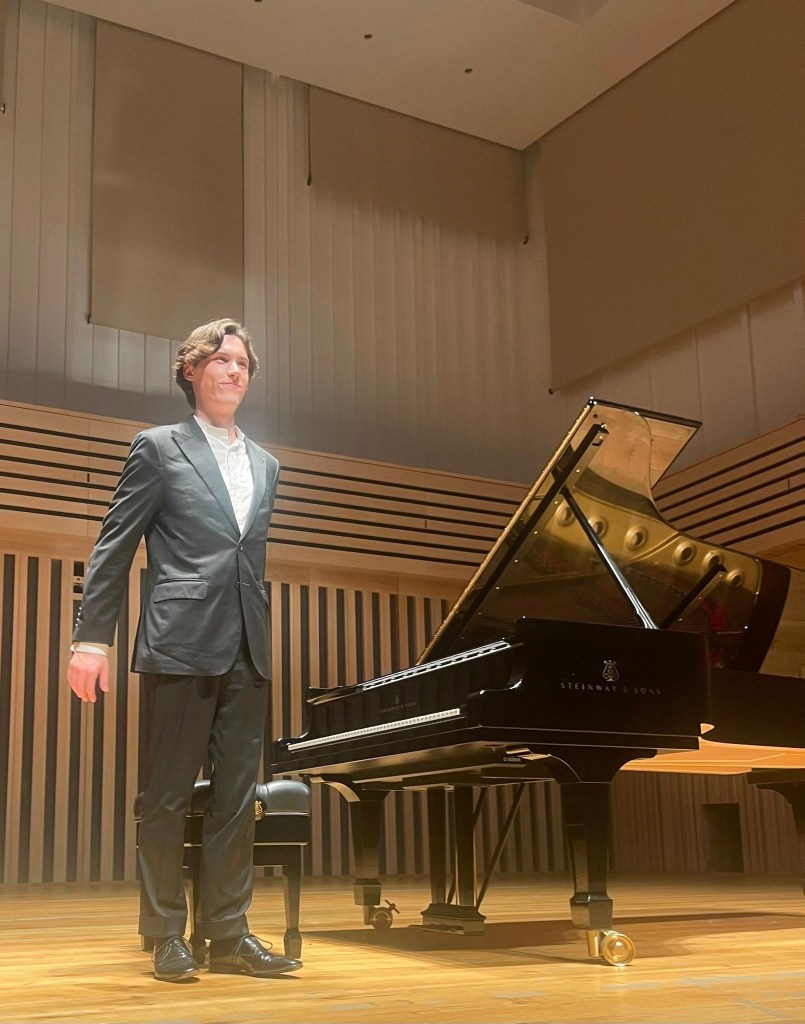
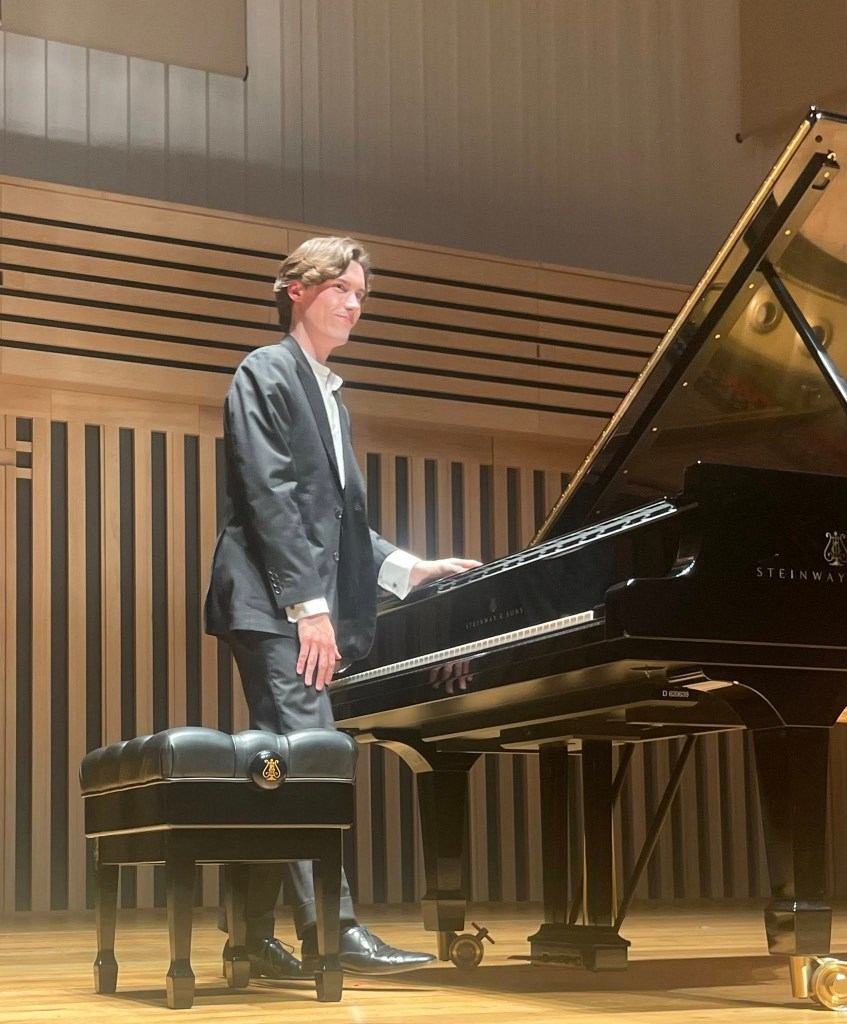

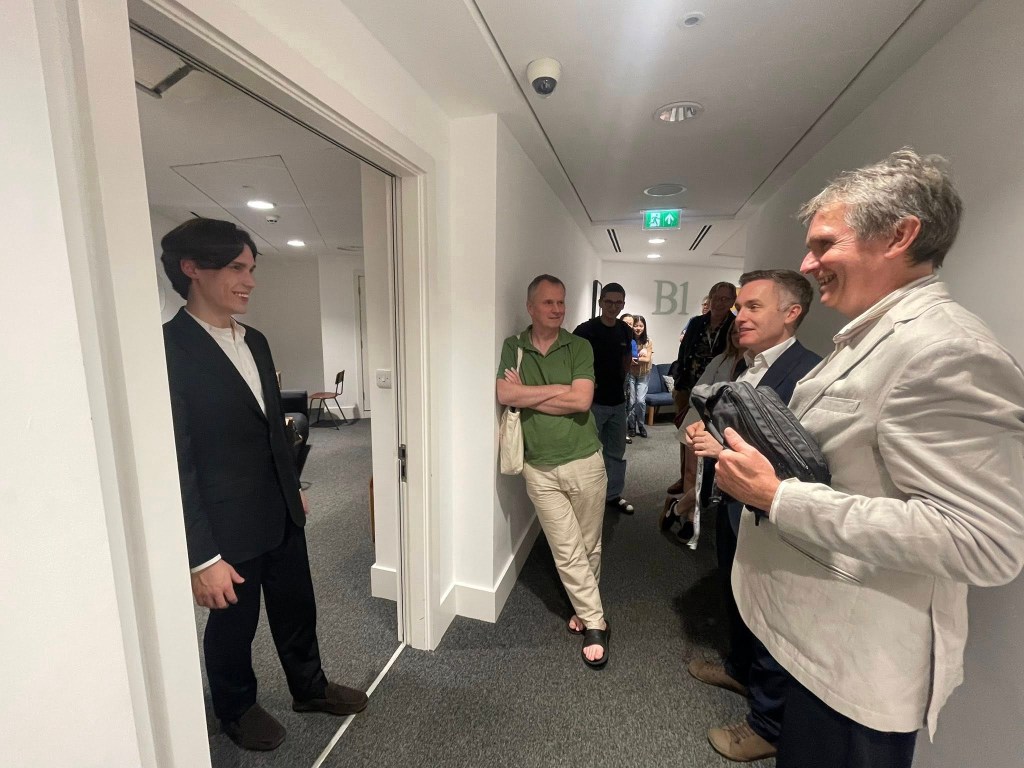








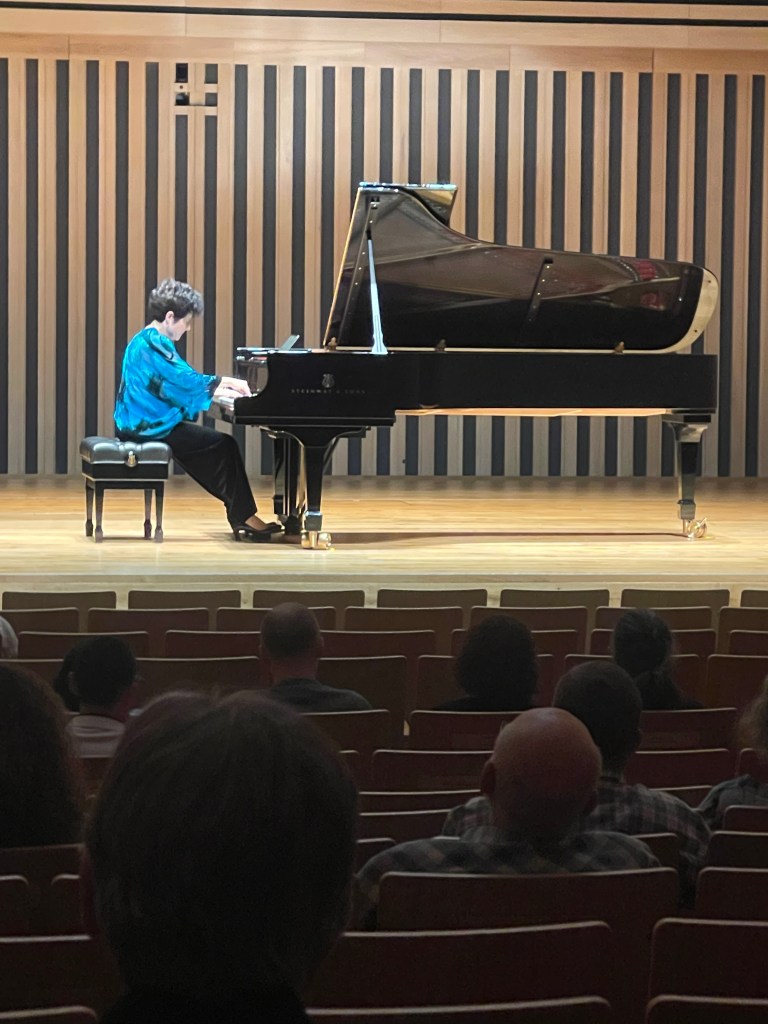
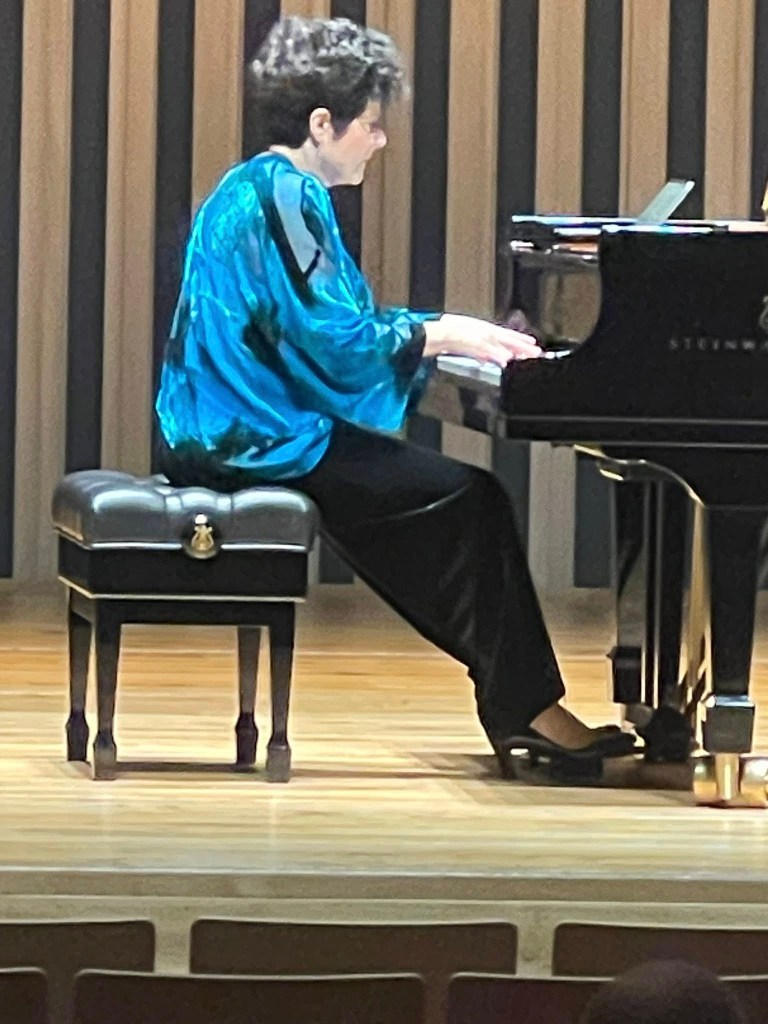


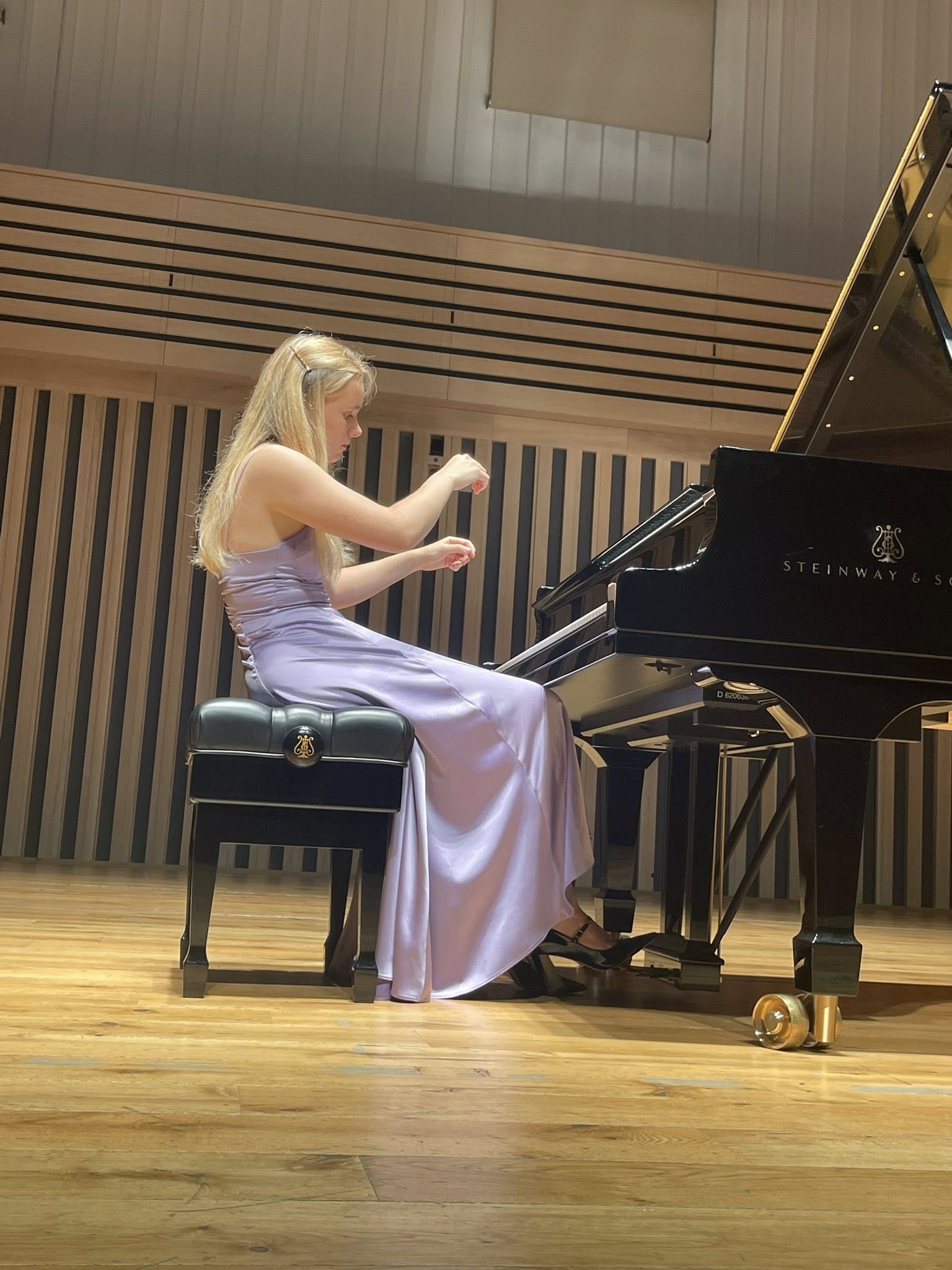

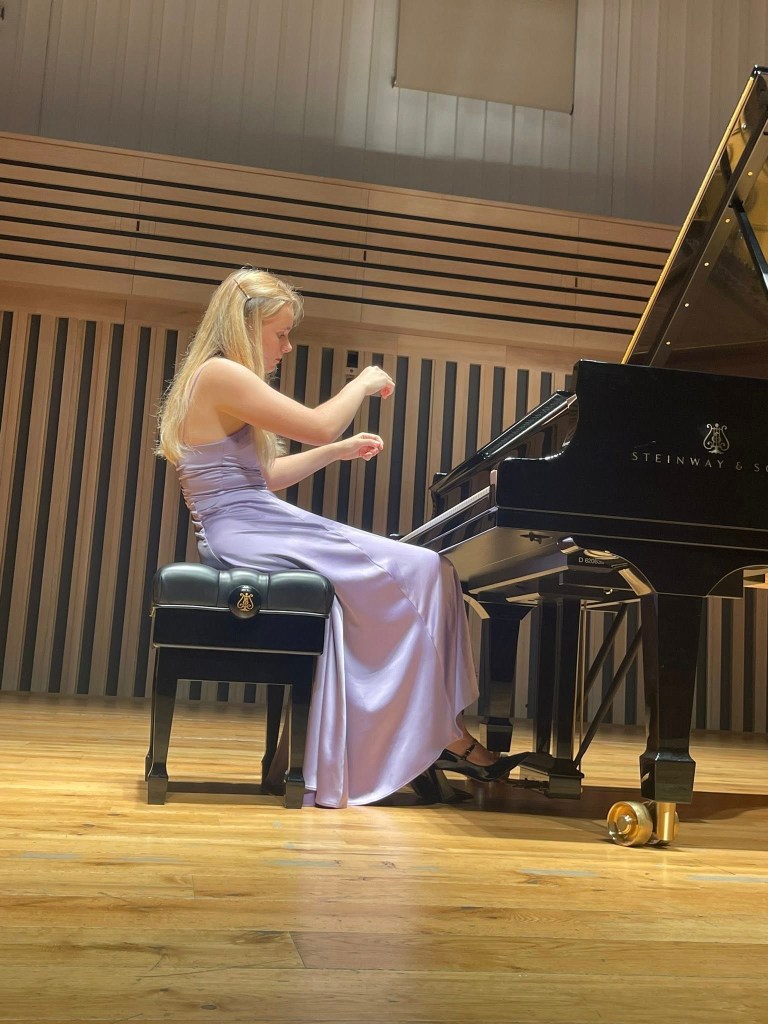


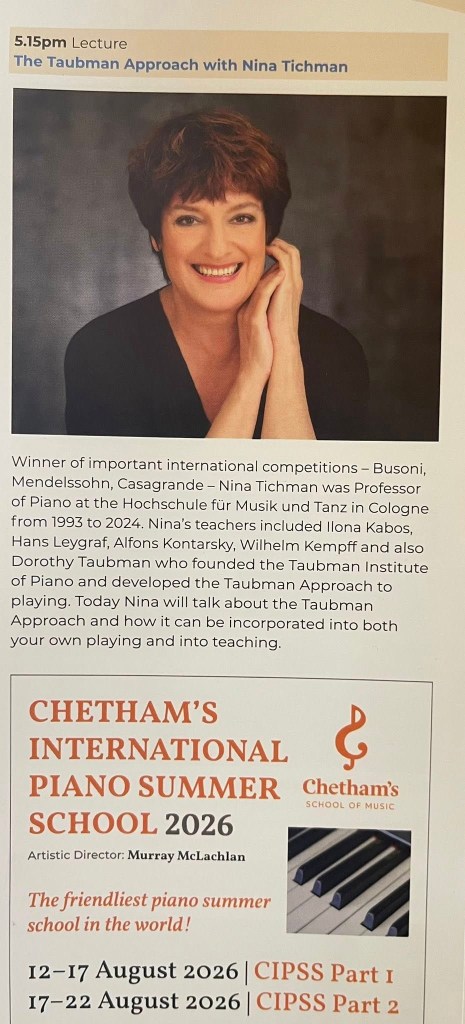







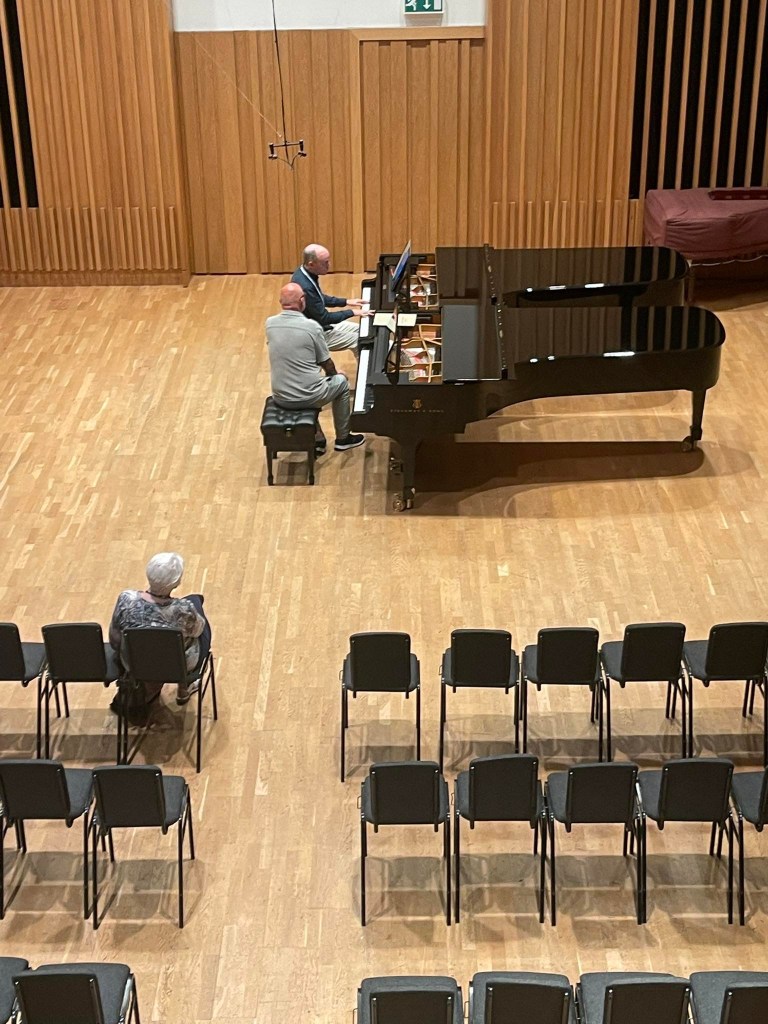




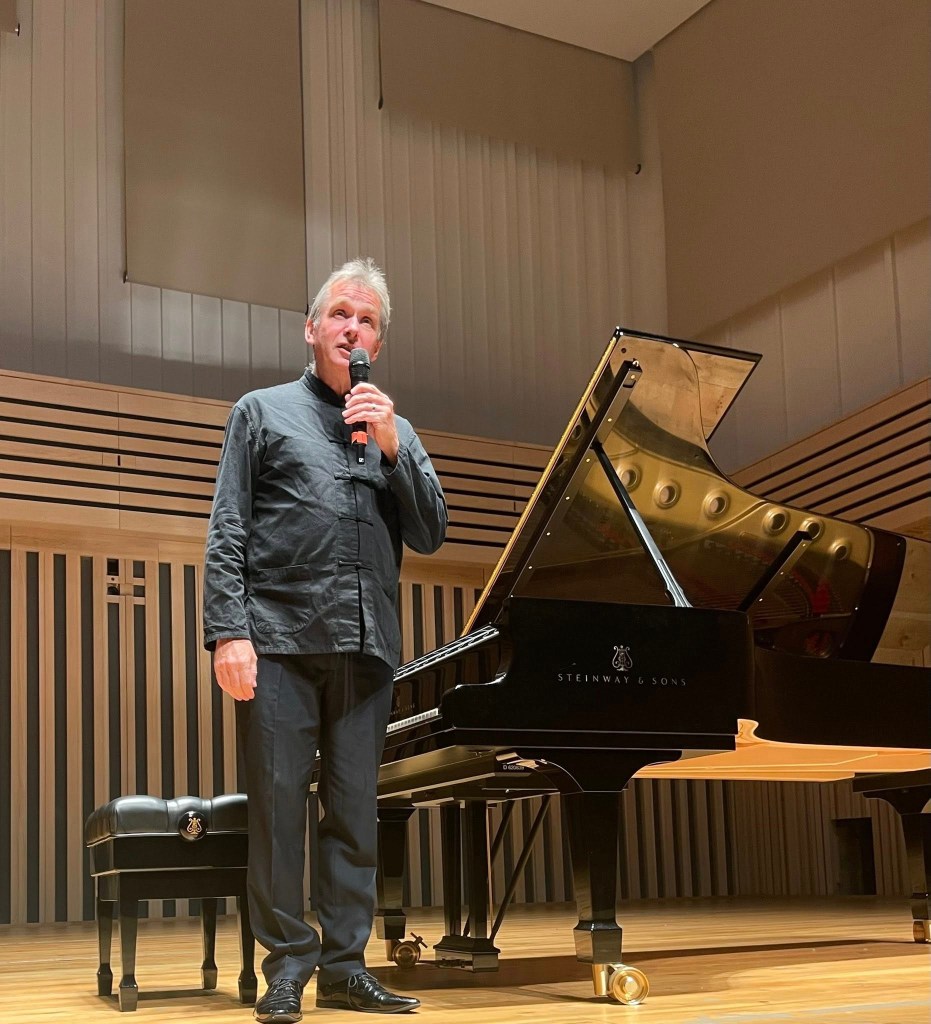

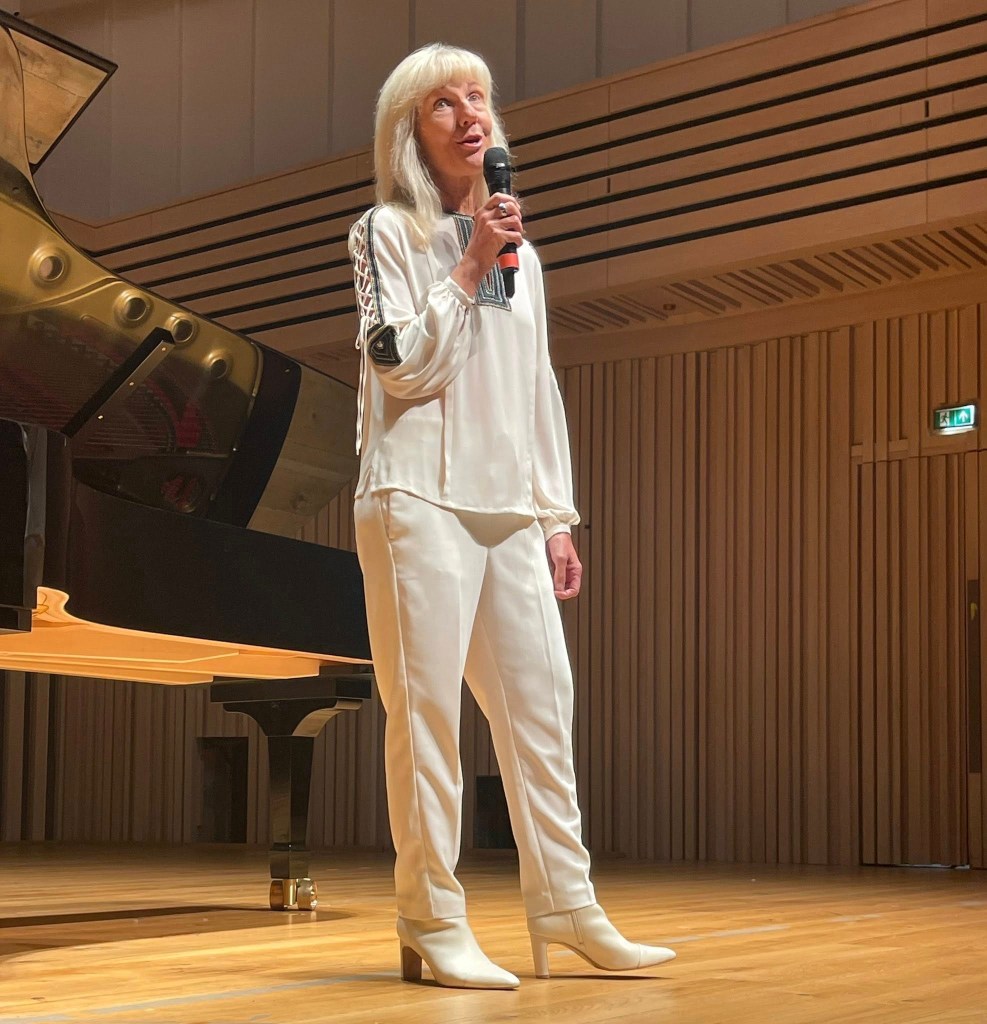
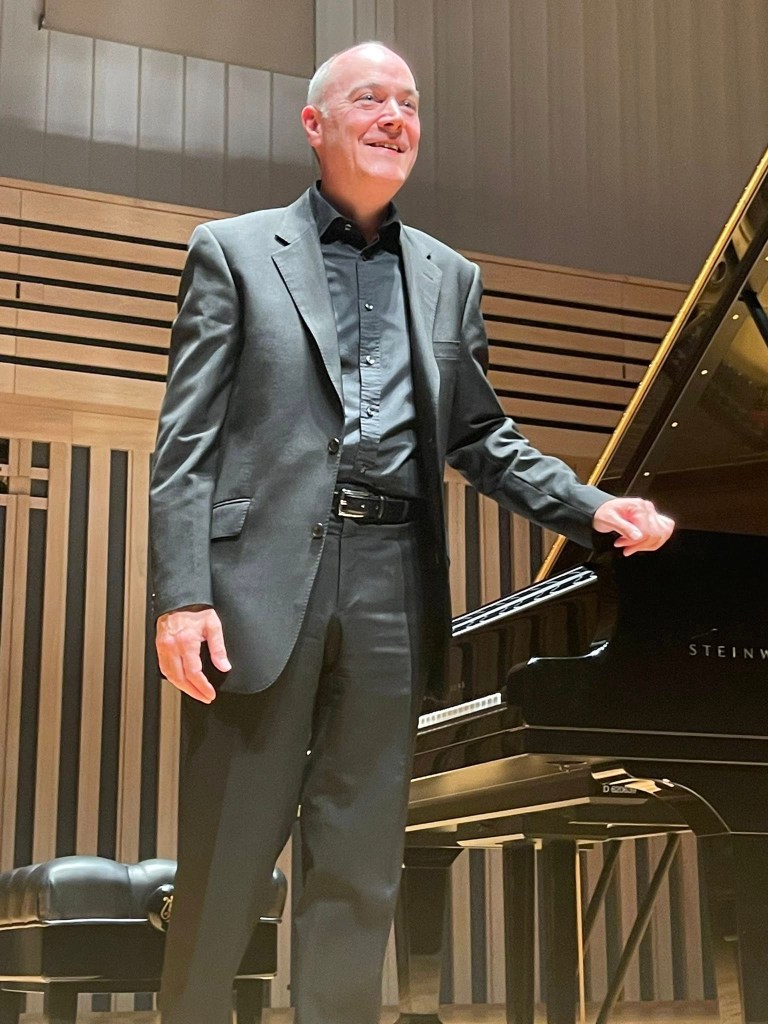







 ChristopherAxworthy-MusicCommentary