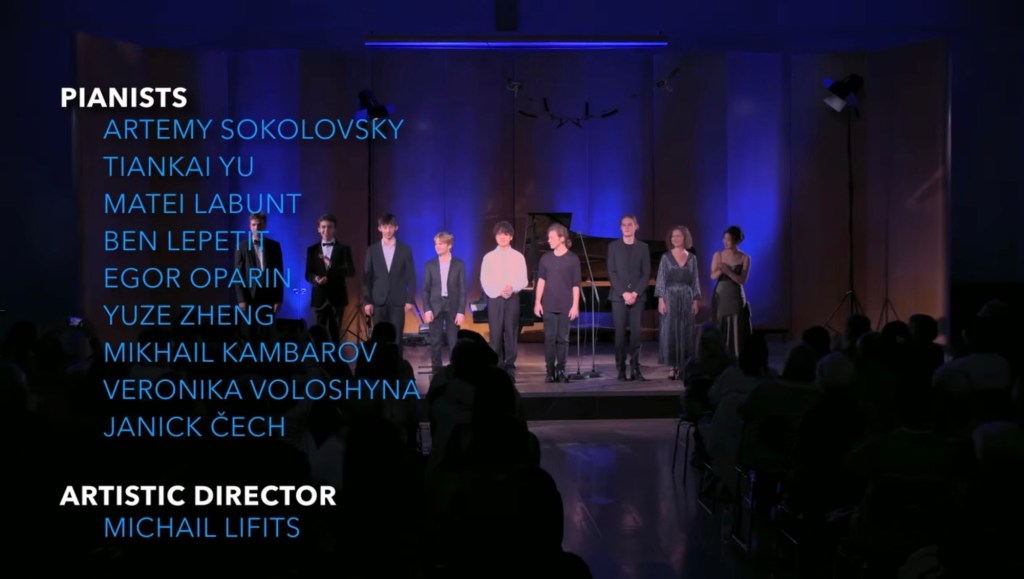
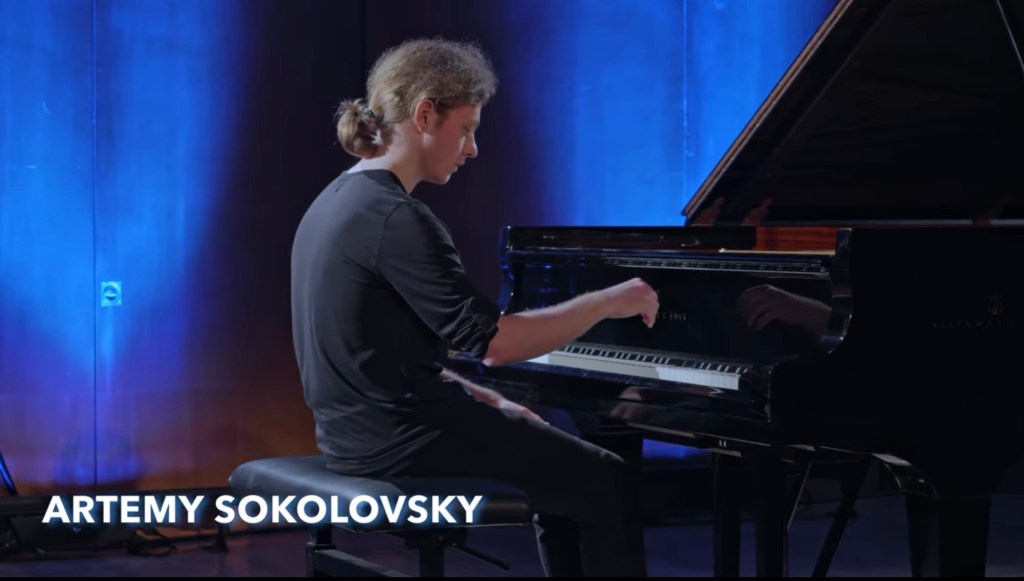
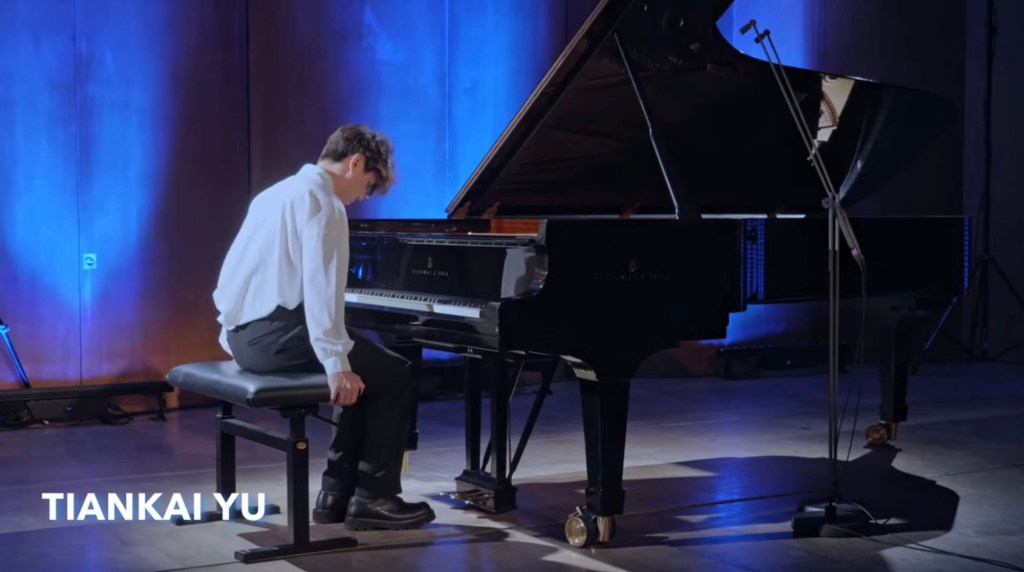
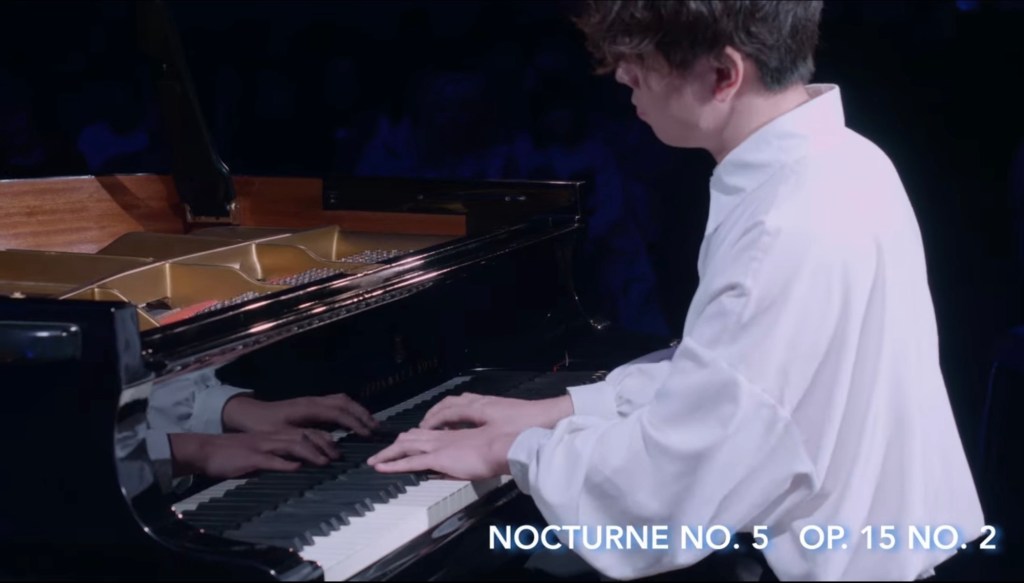
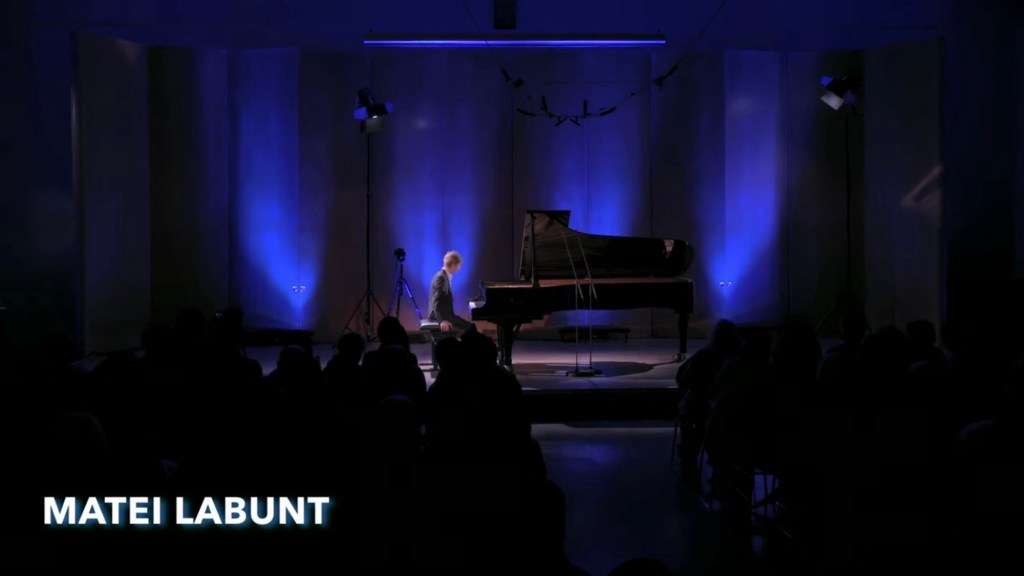
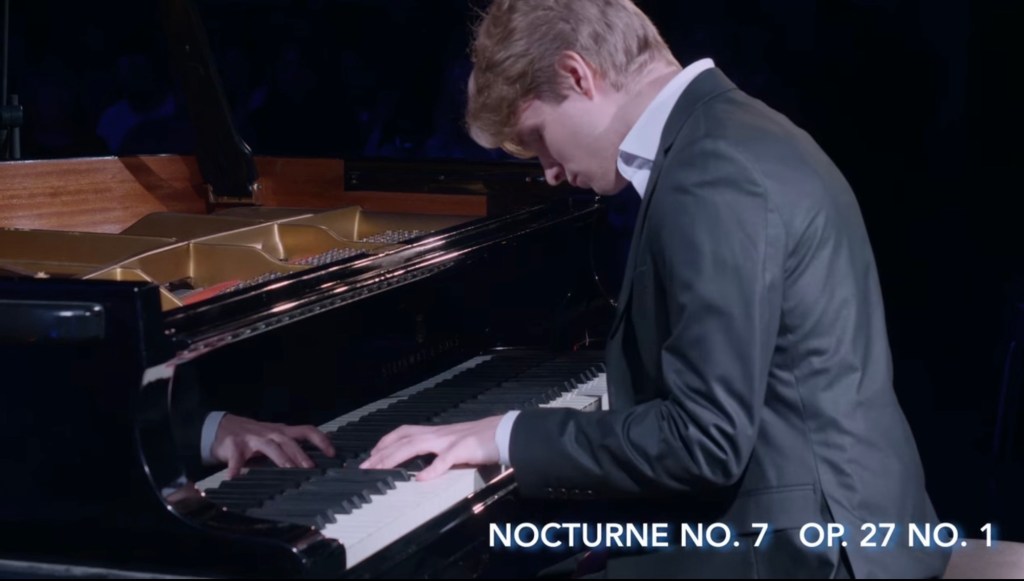
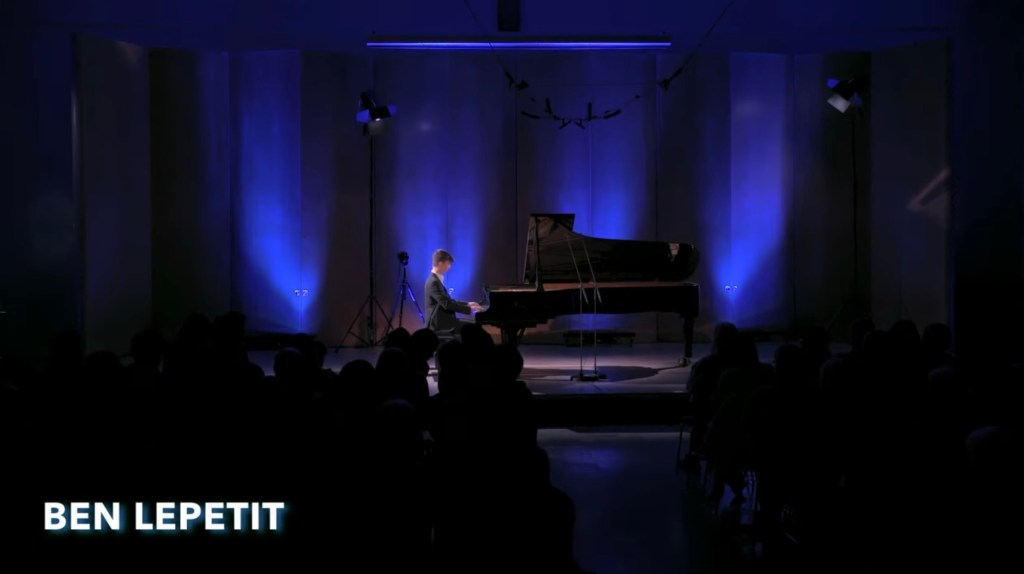
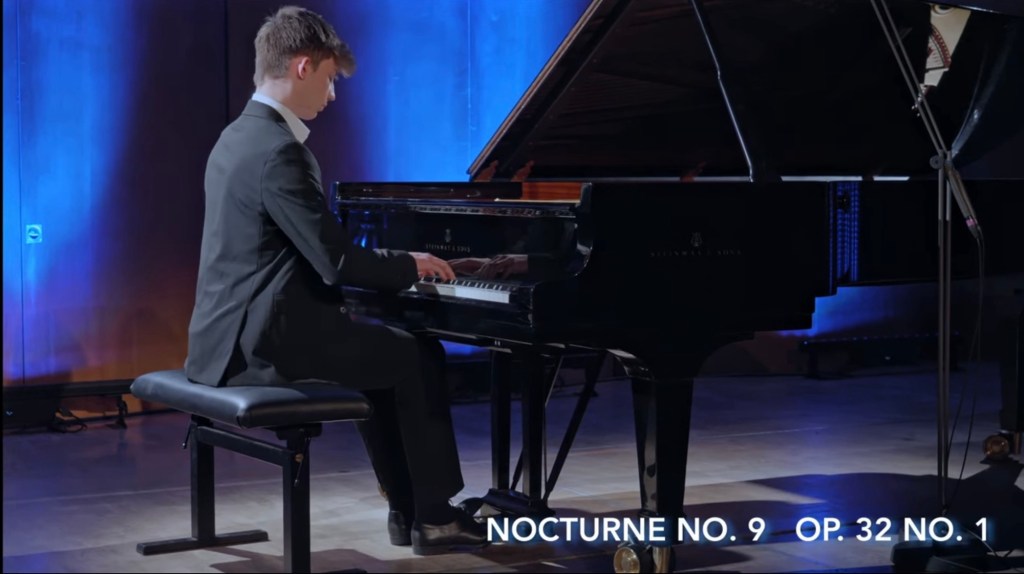
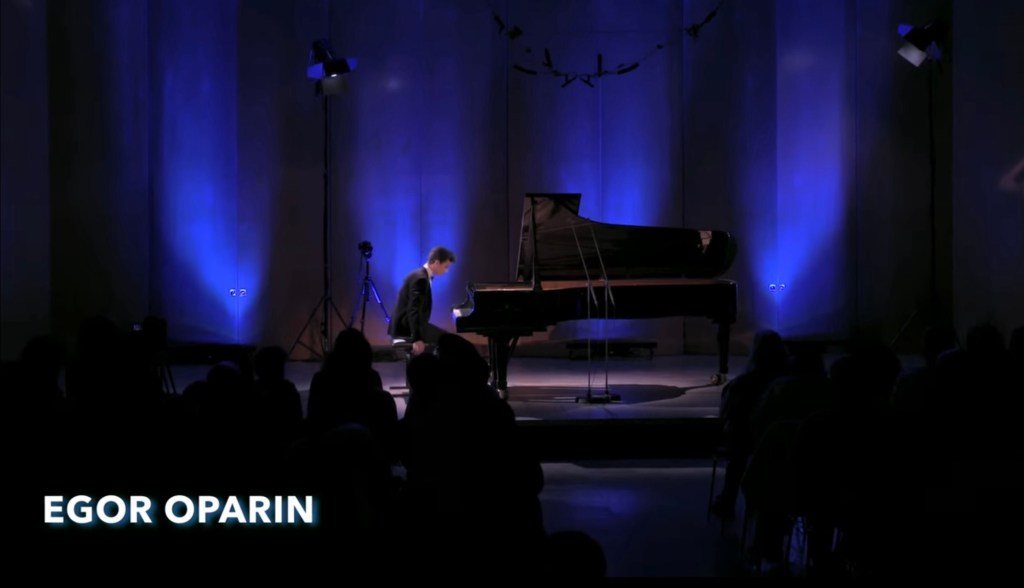
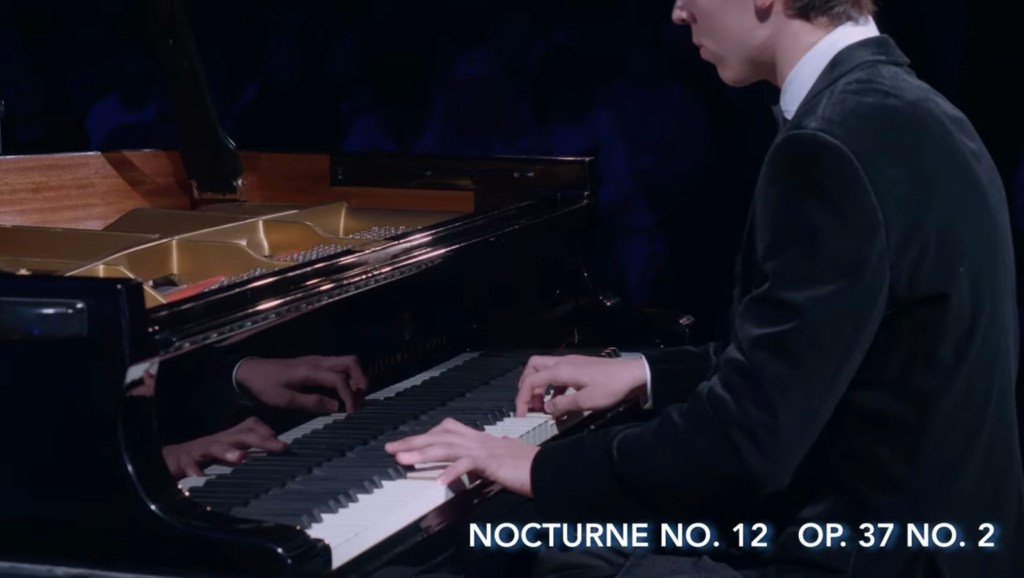
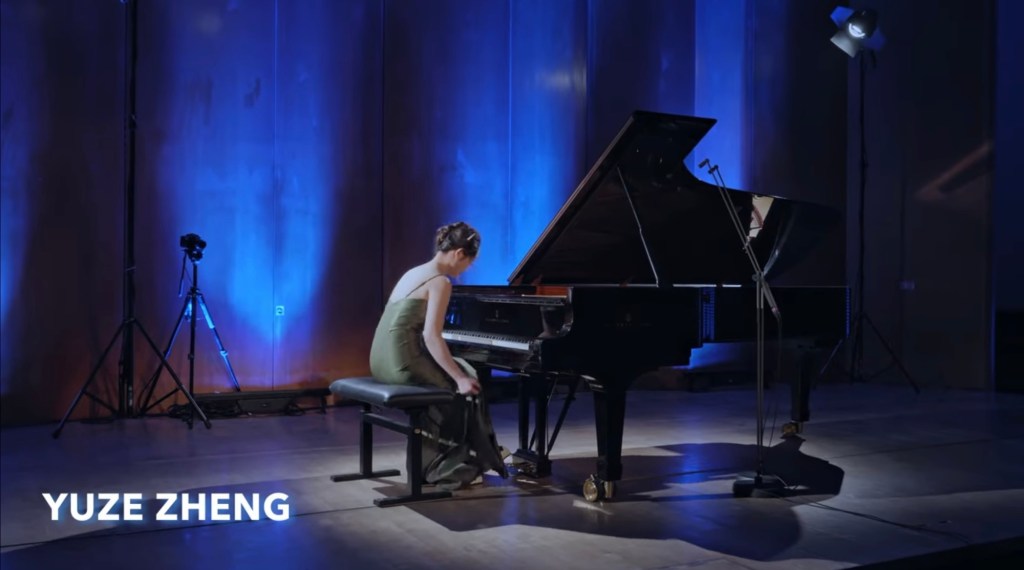
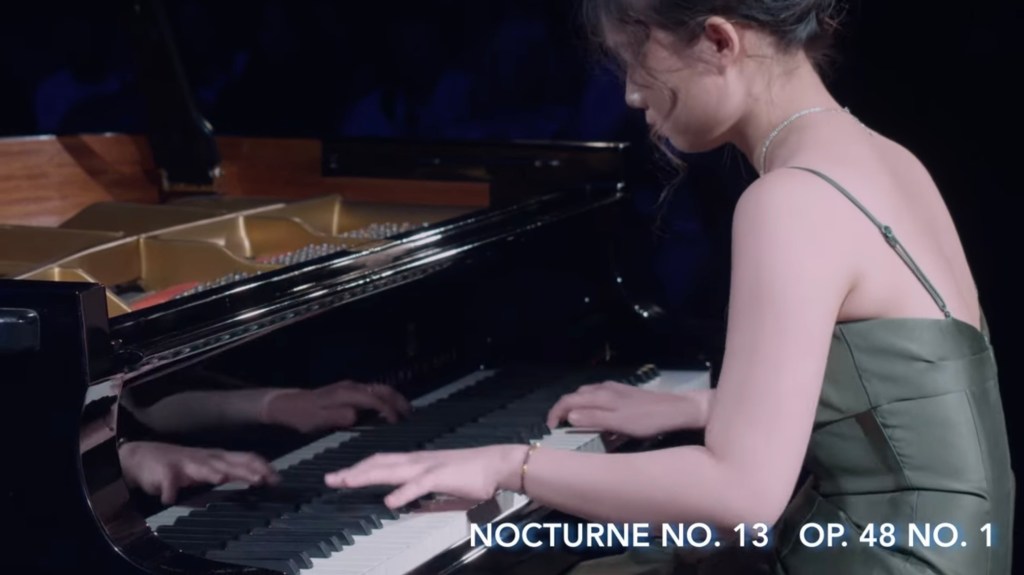
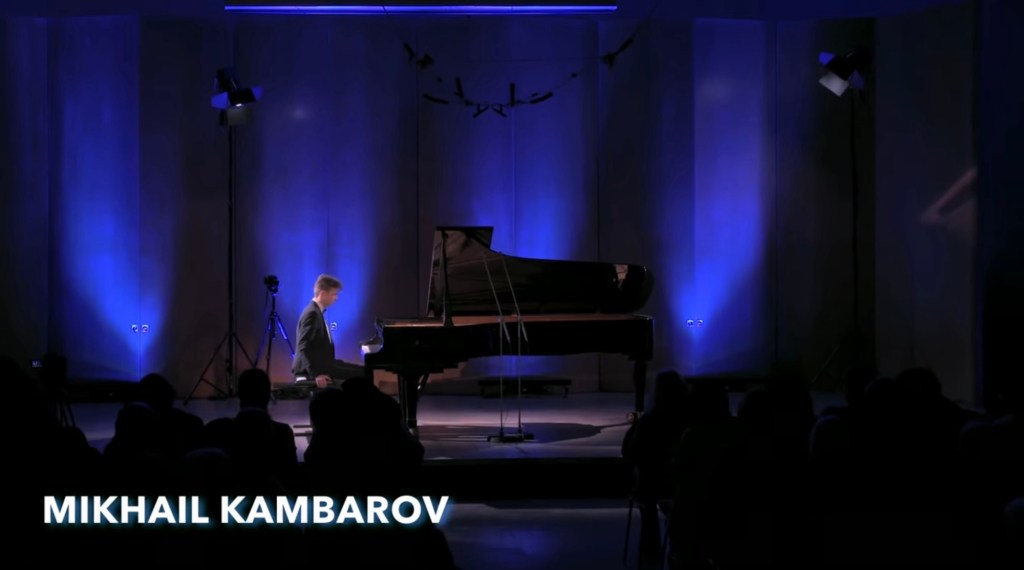
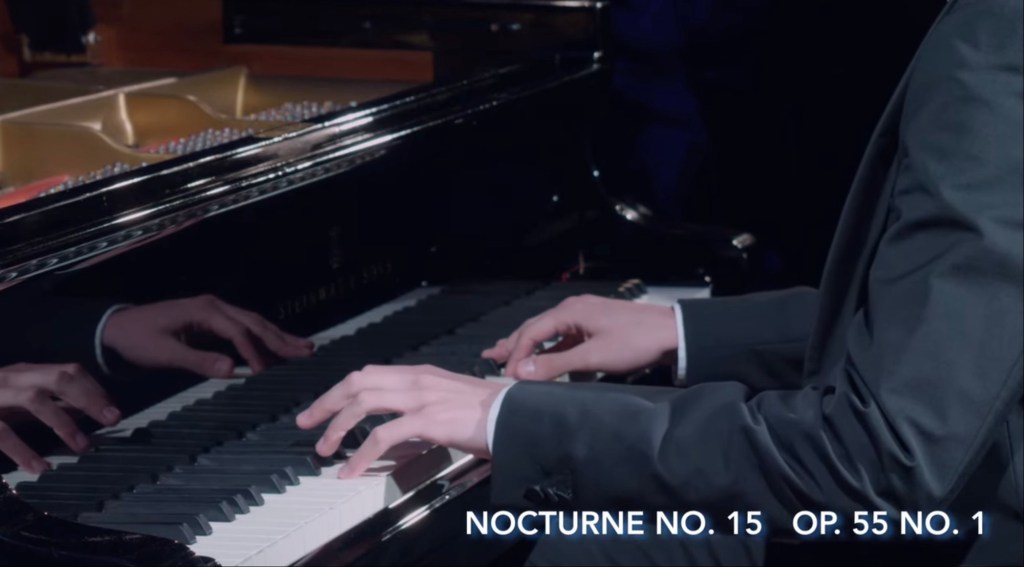
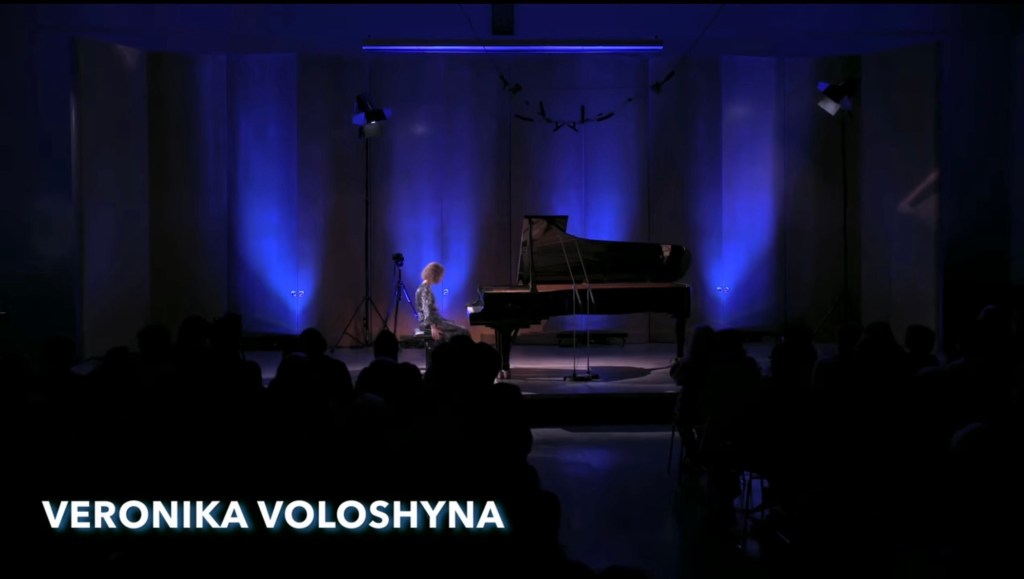
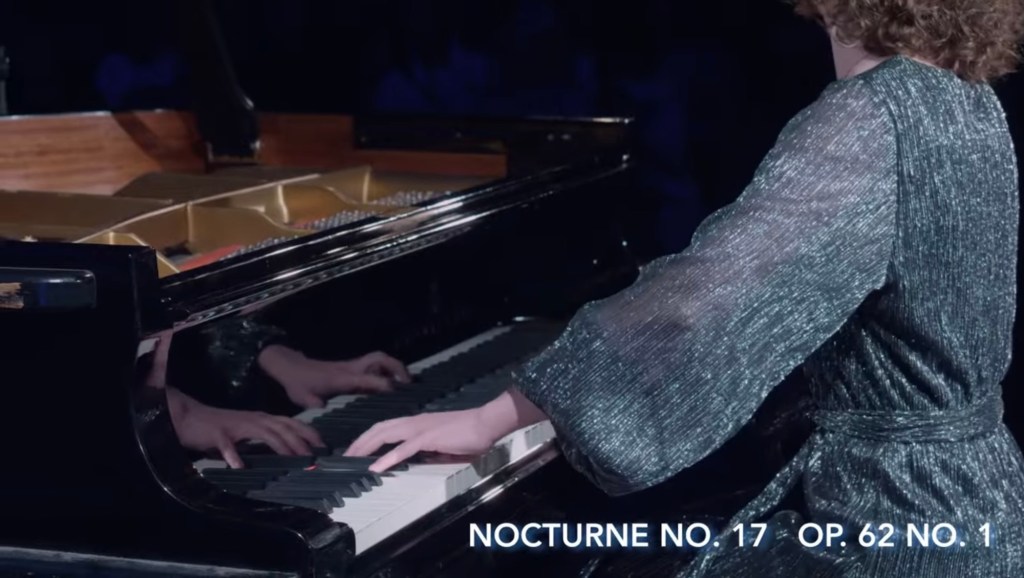
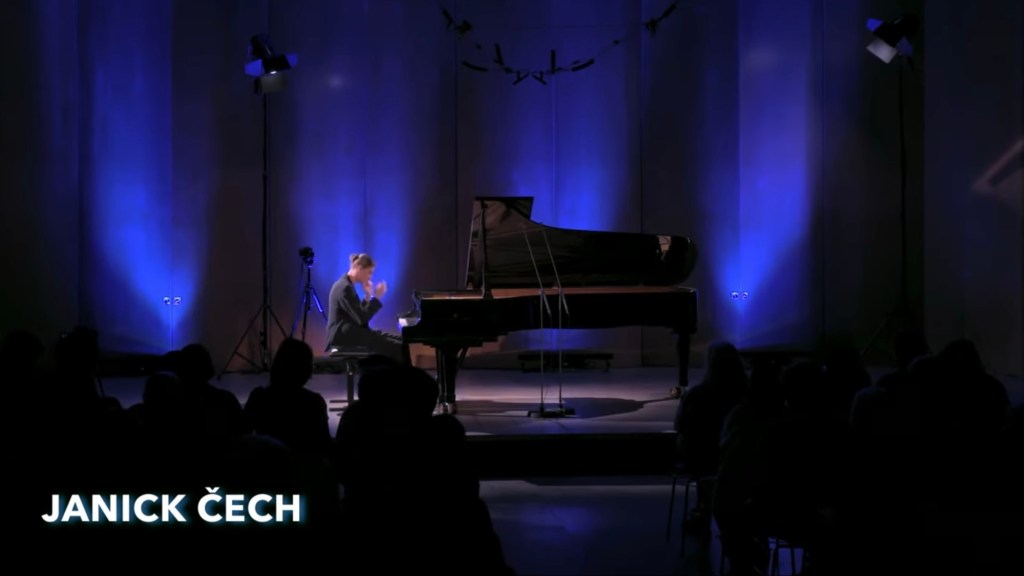
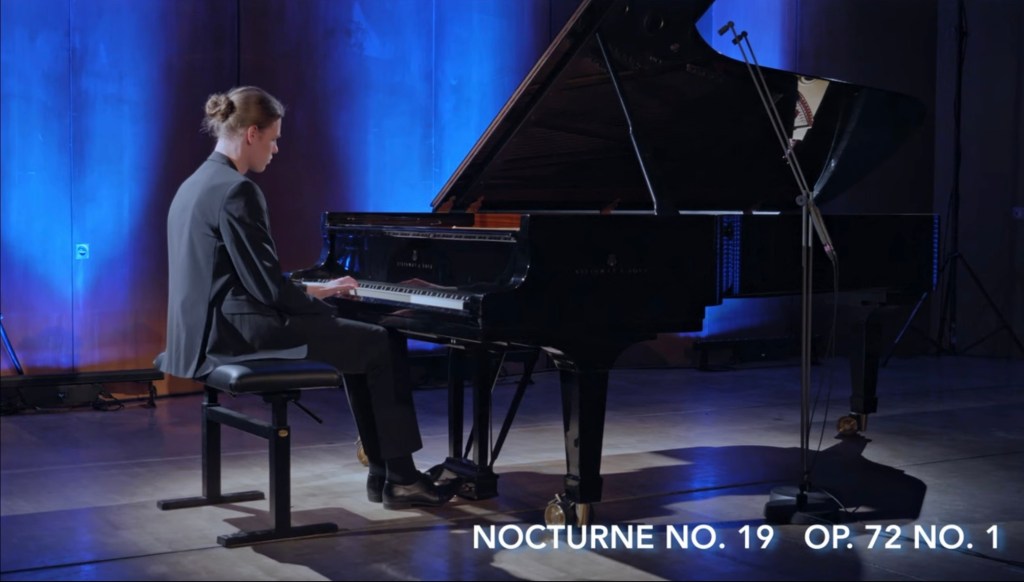
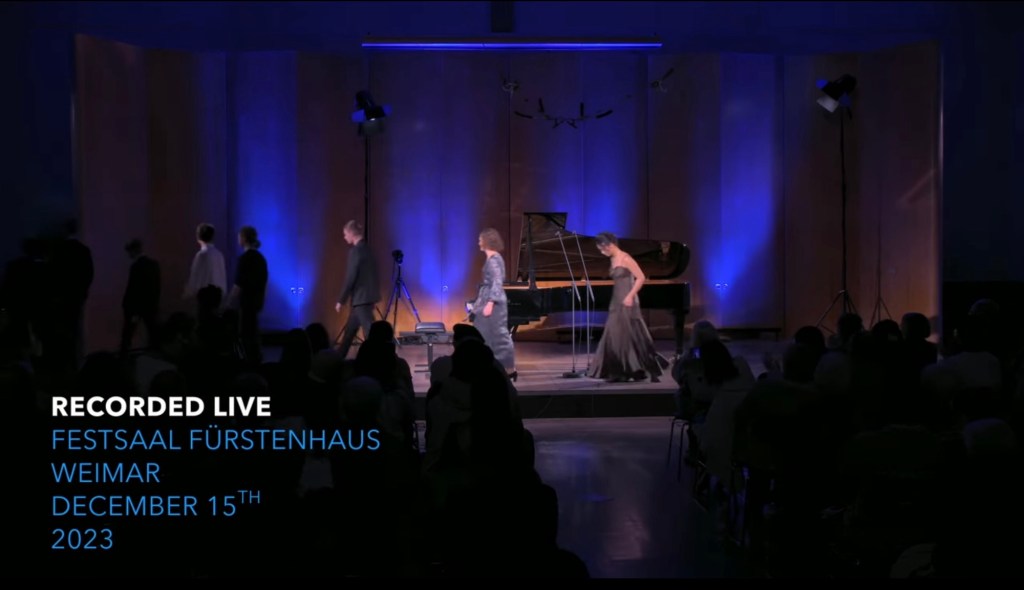
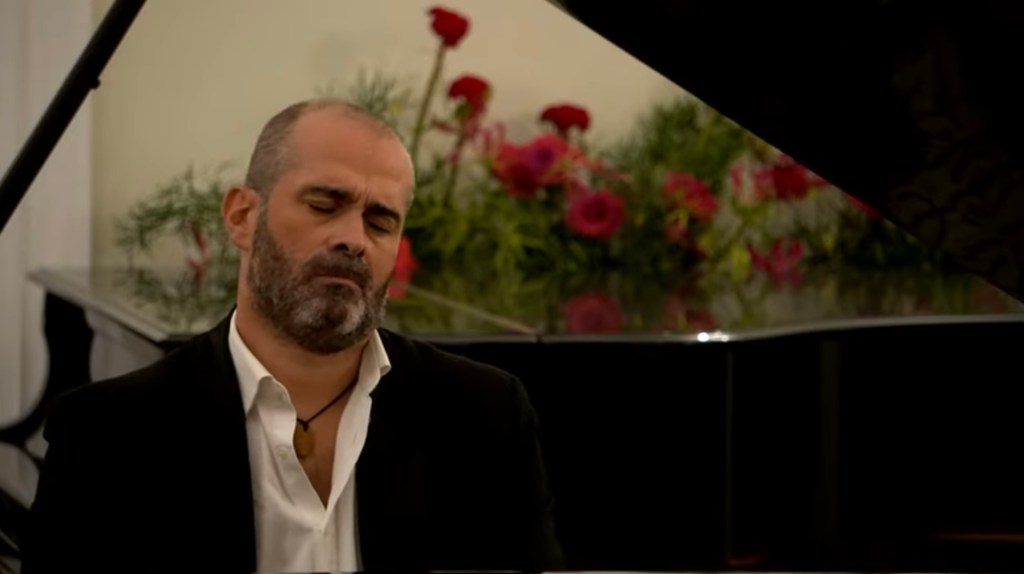
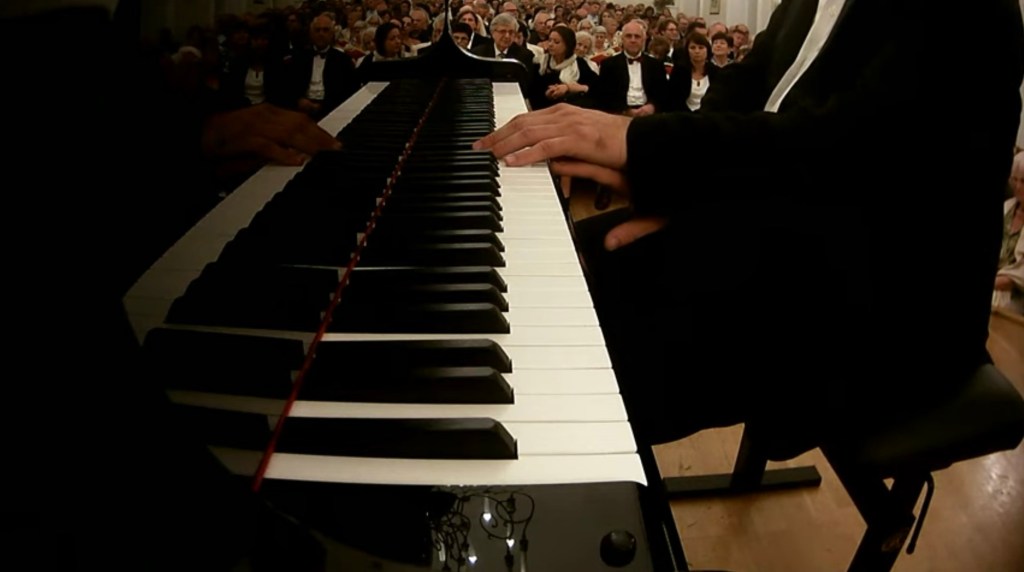
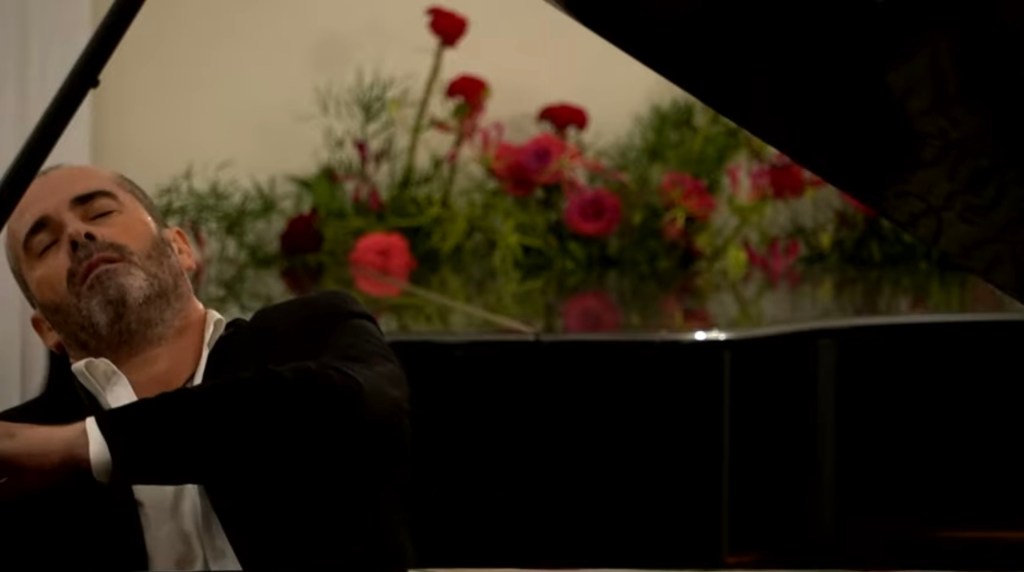
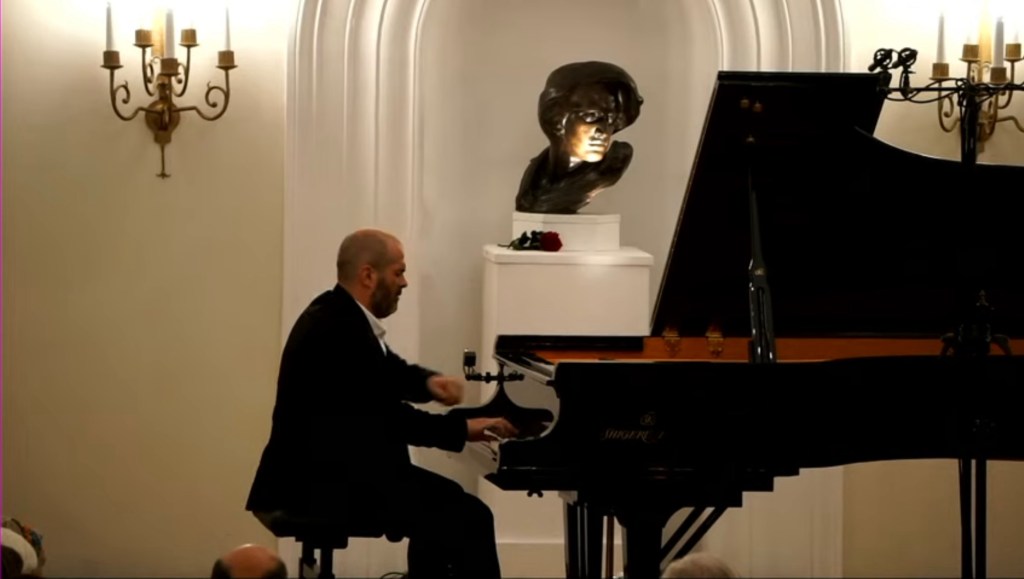
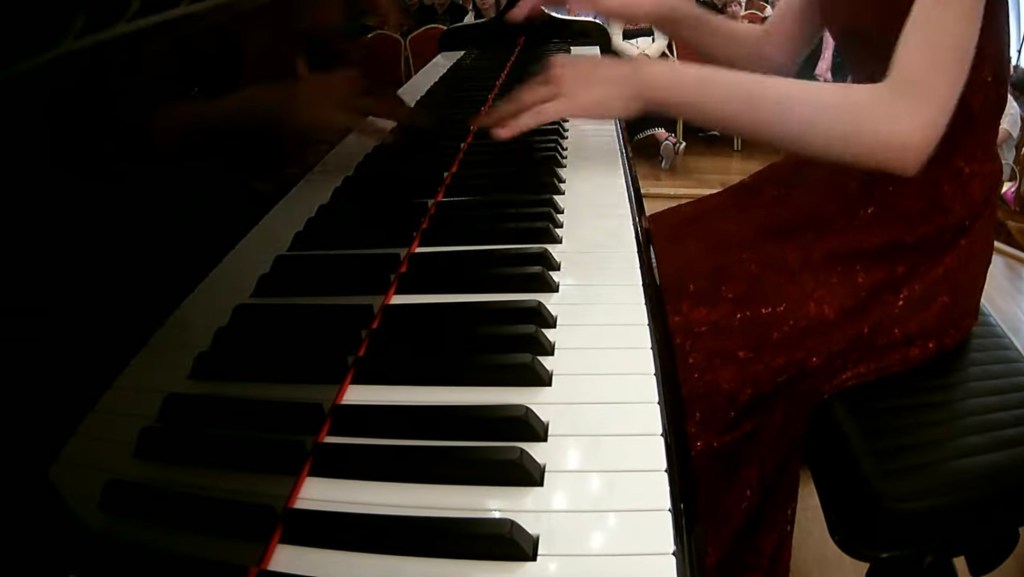
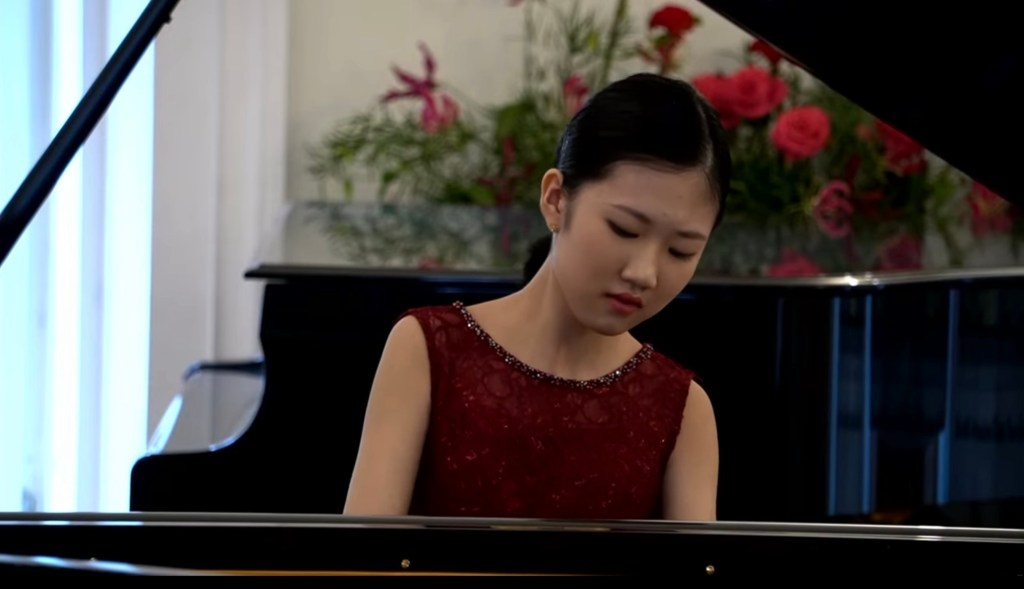
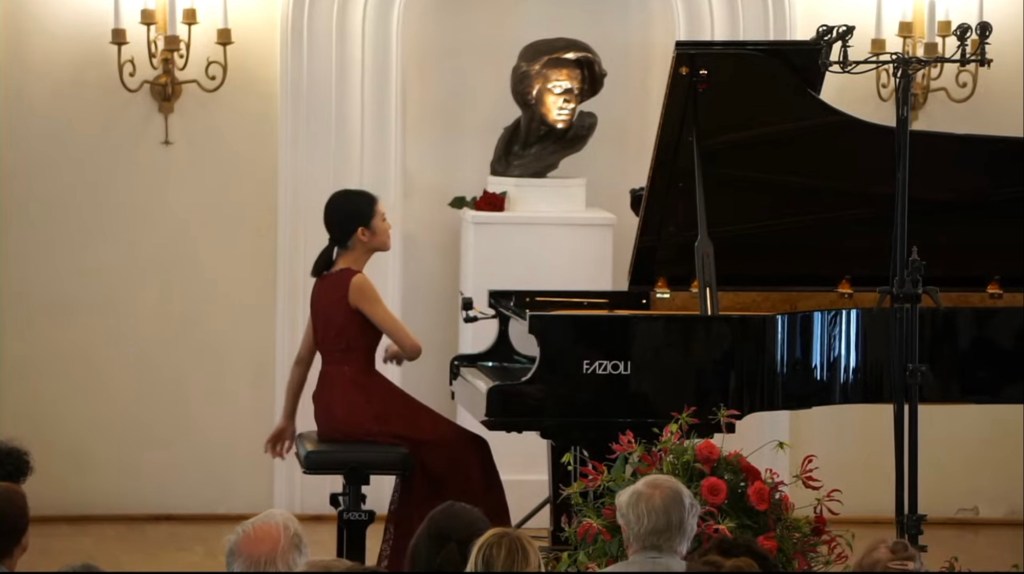
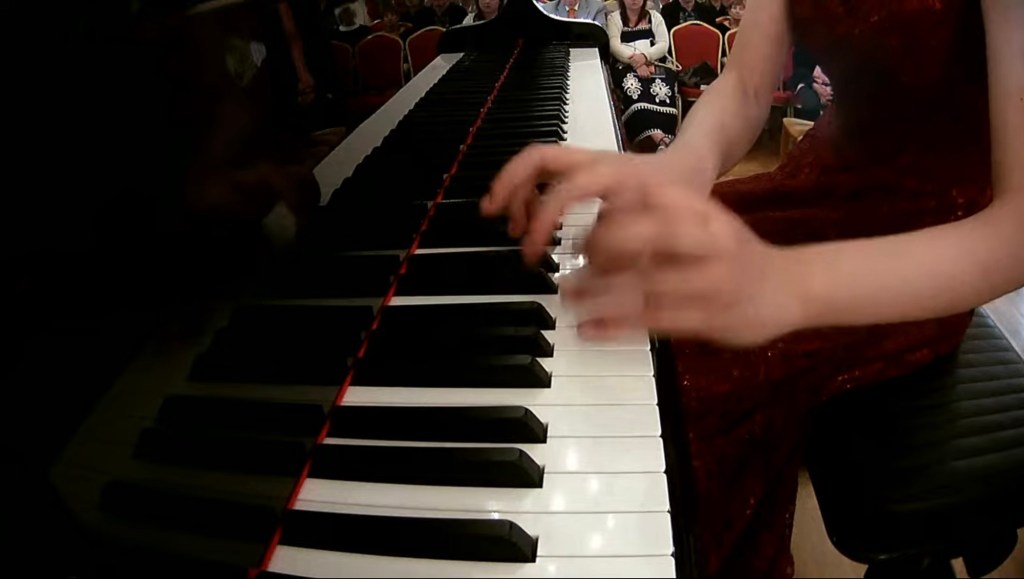
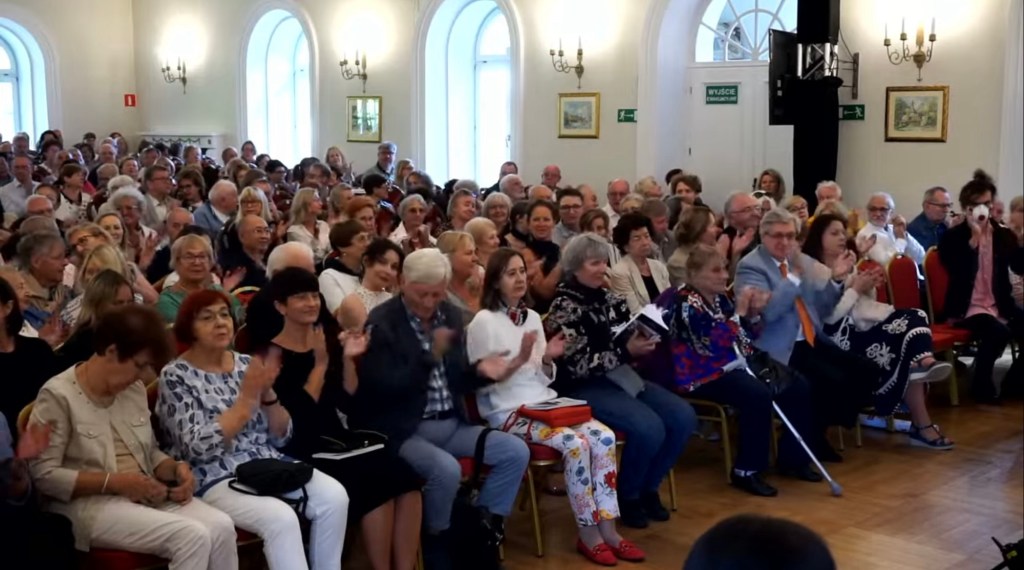
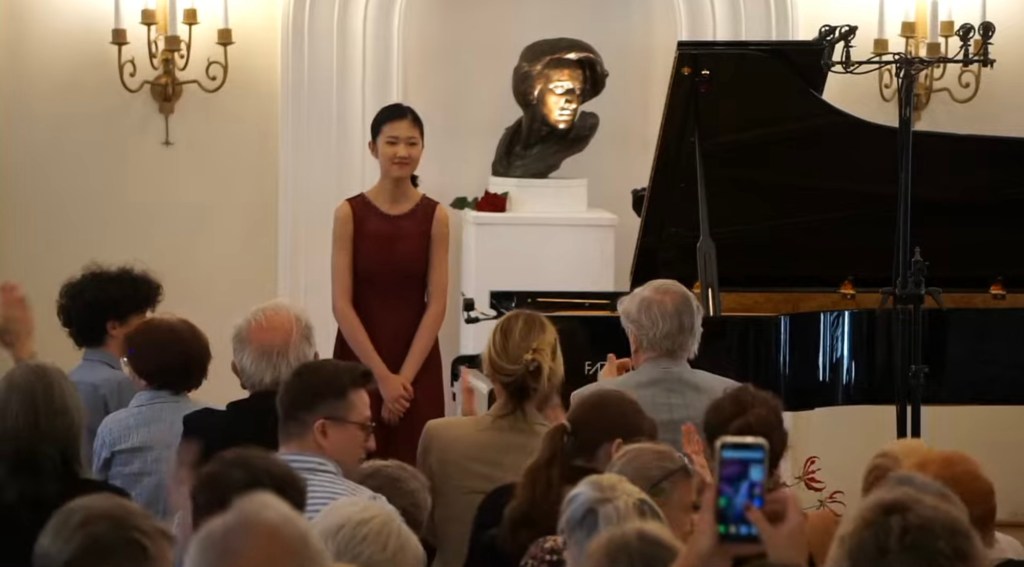
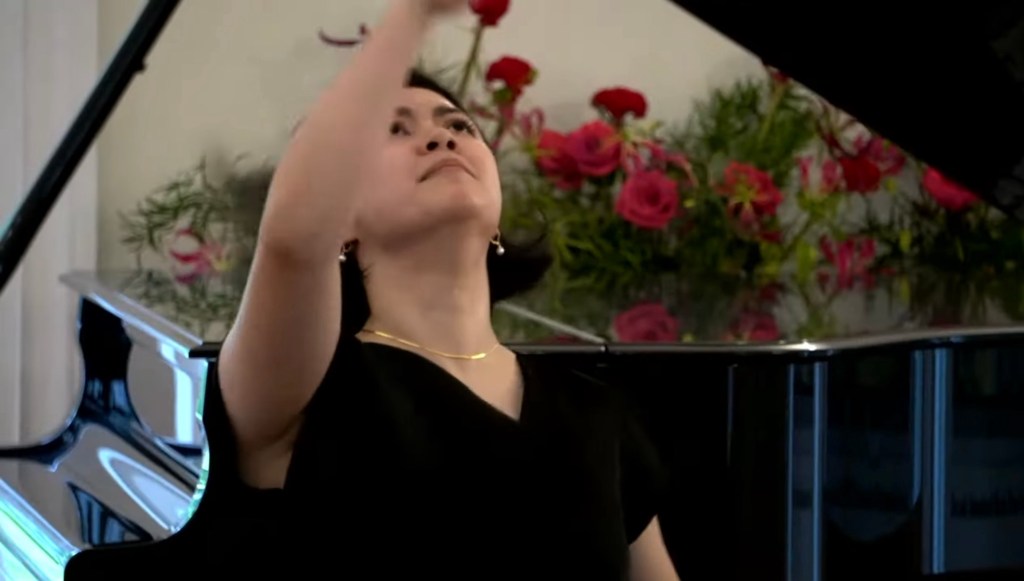
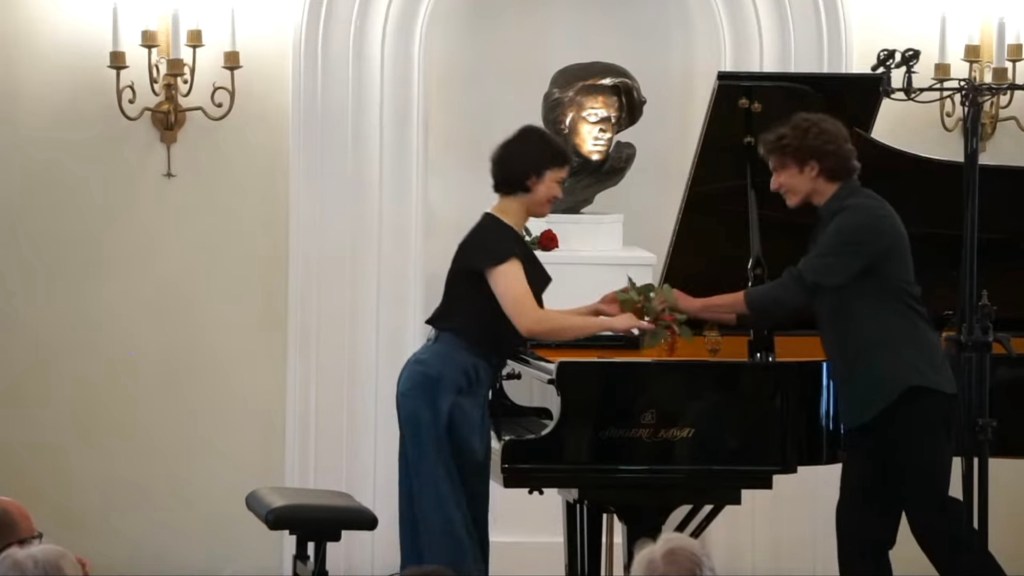
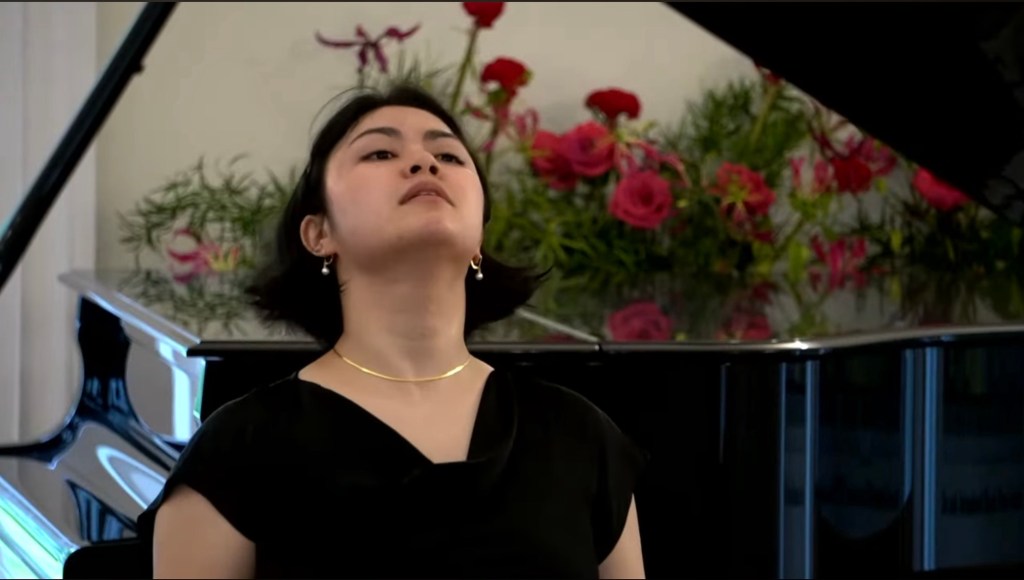
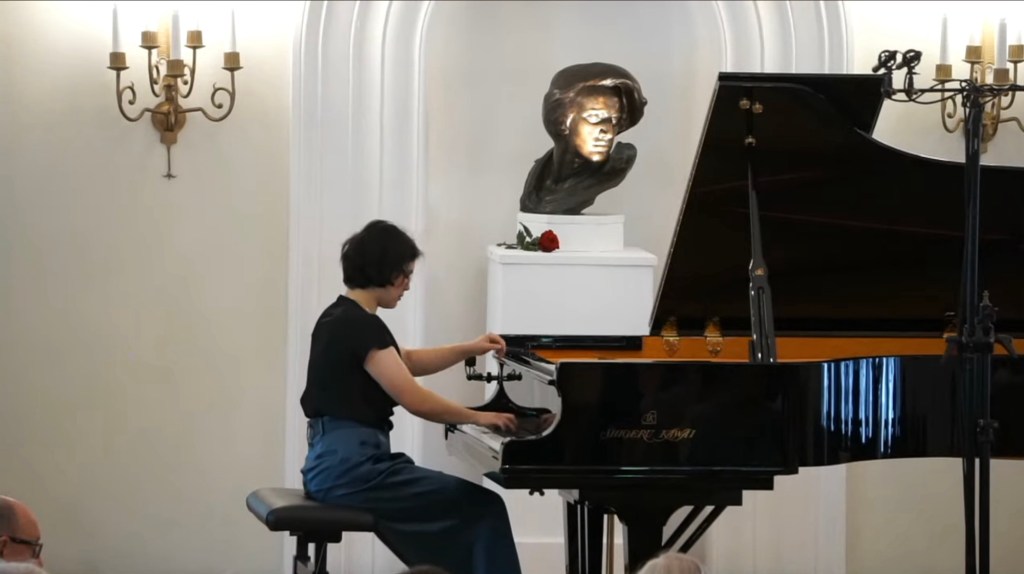
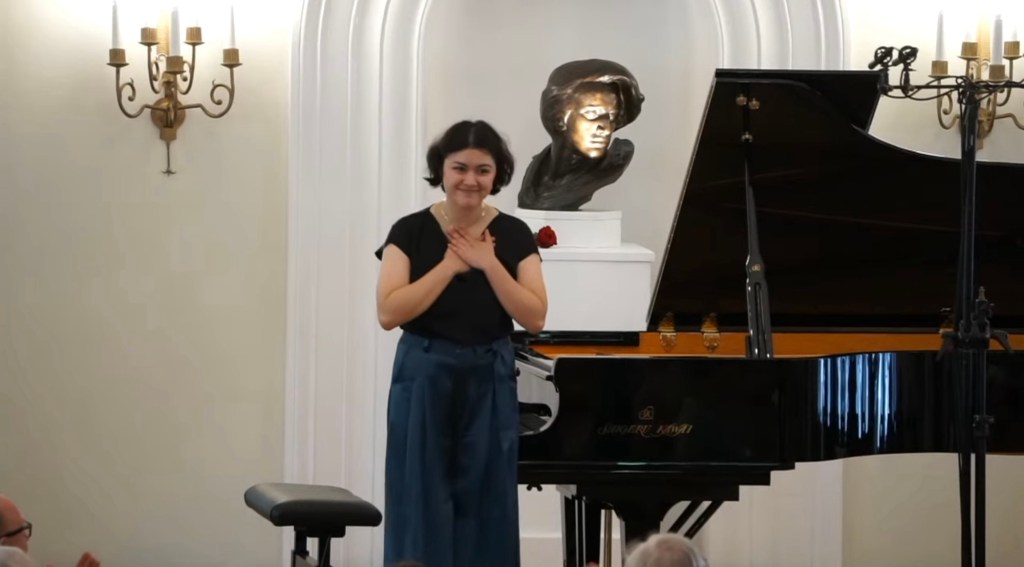
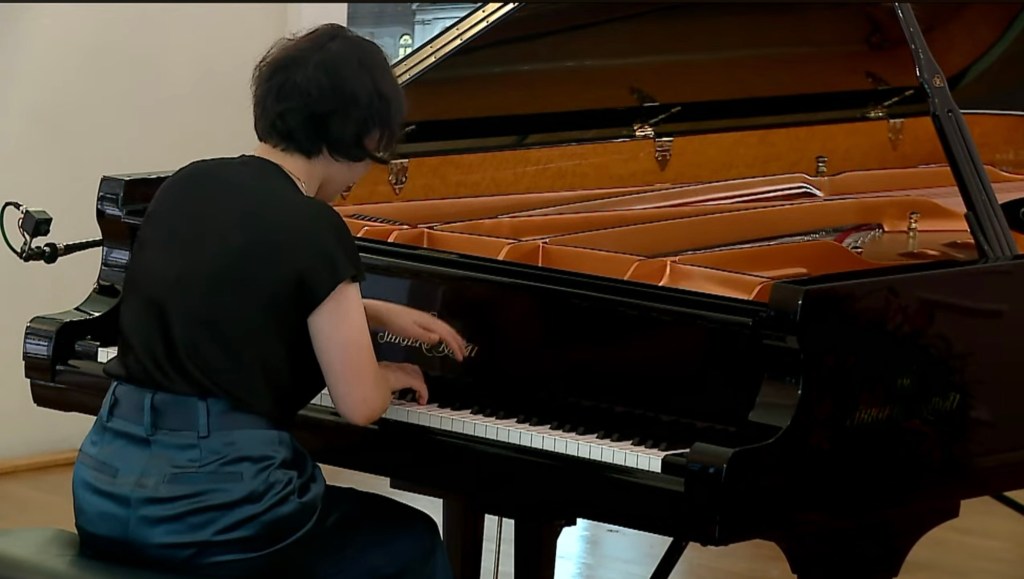
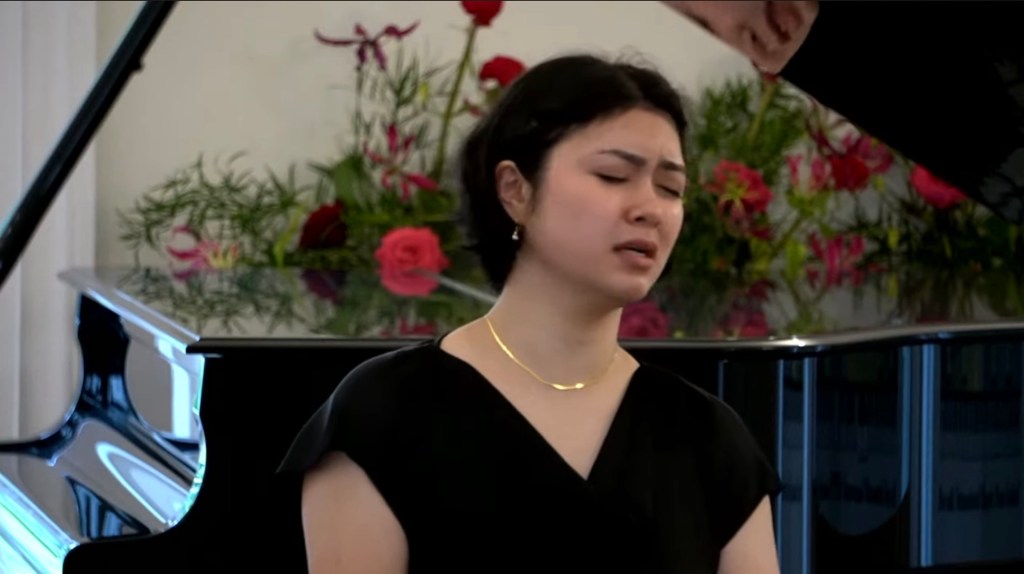
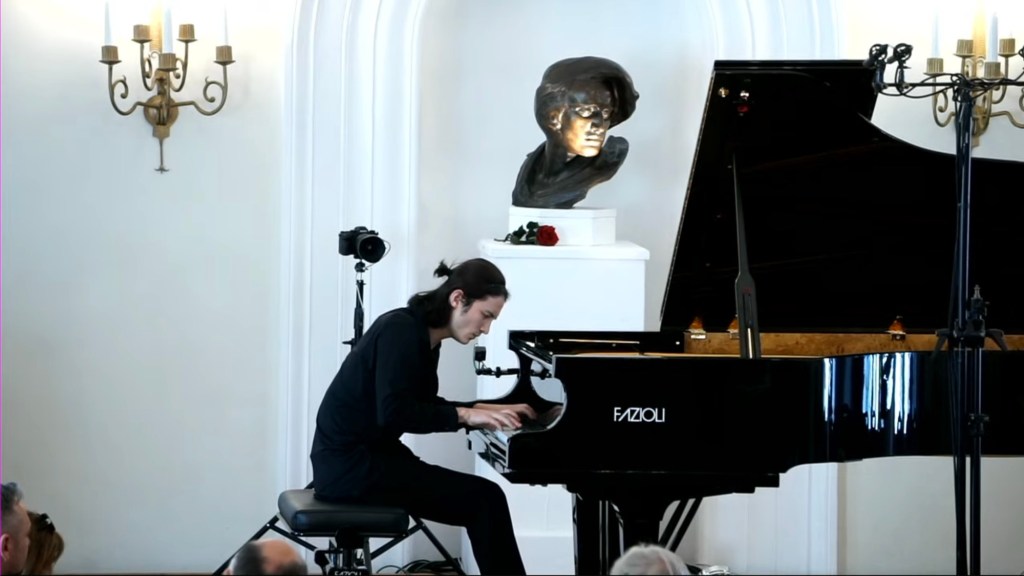
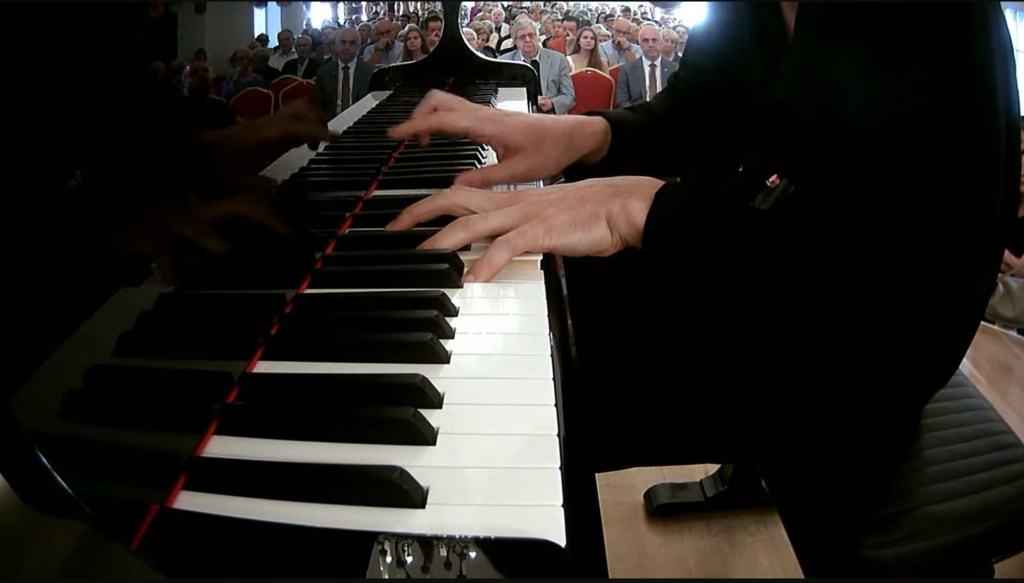
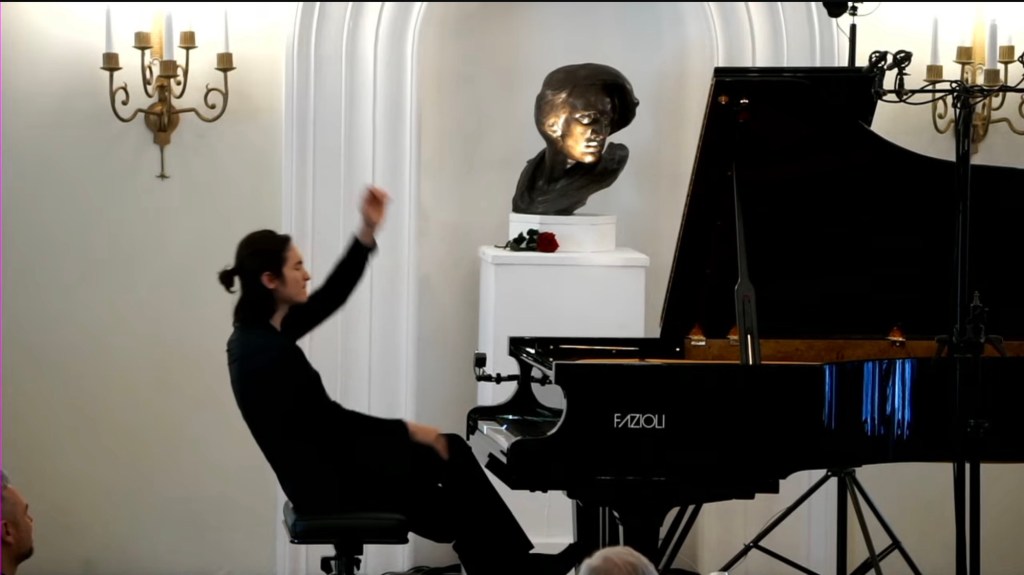
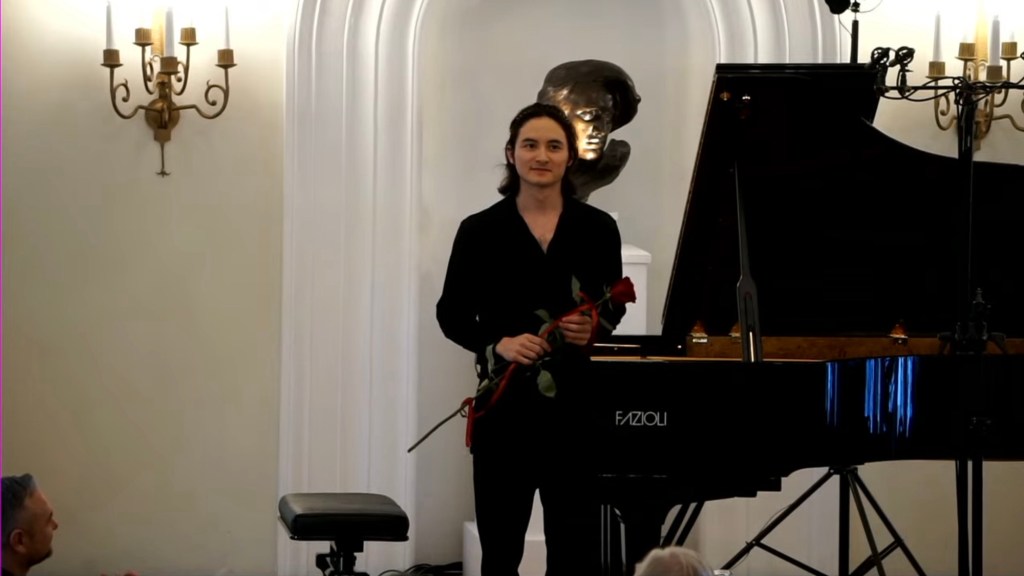
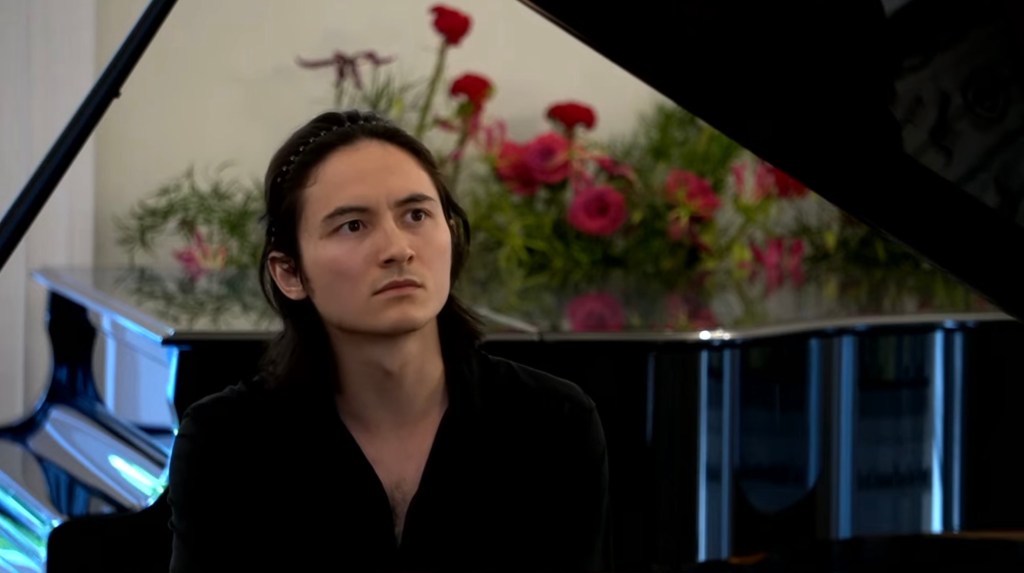
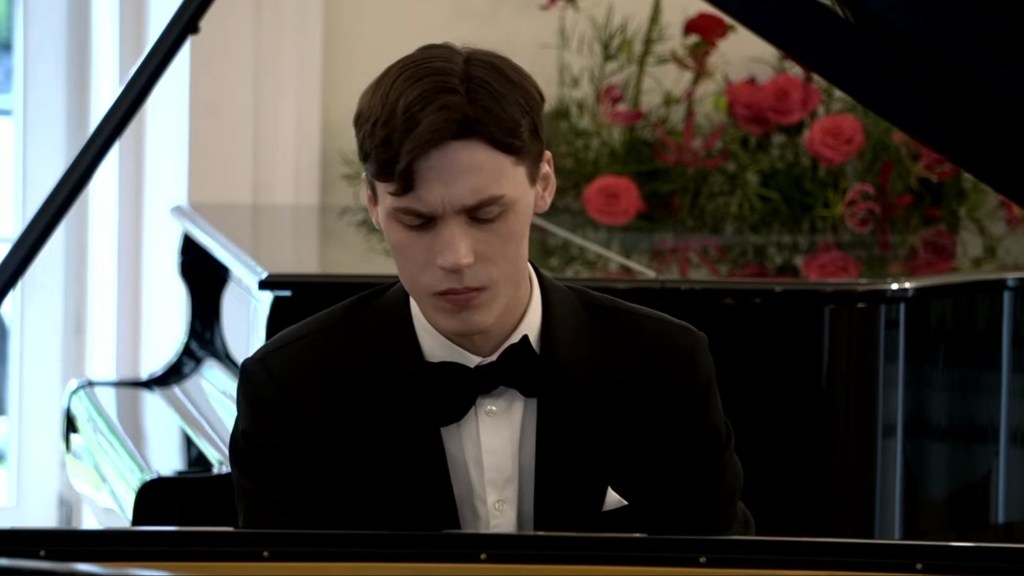
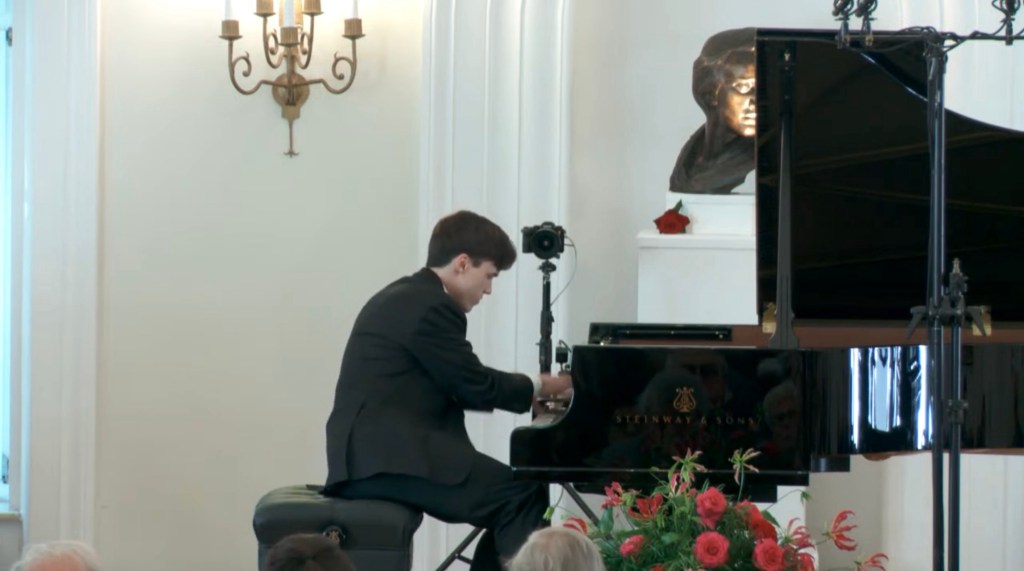
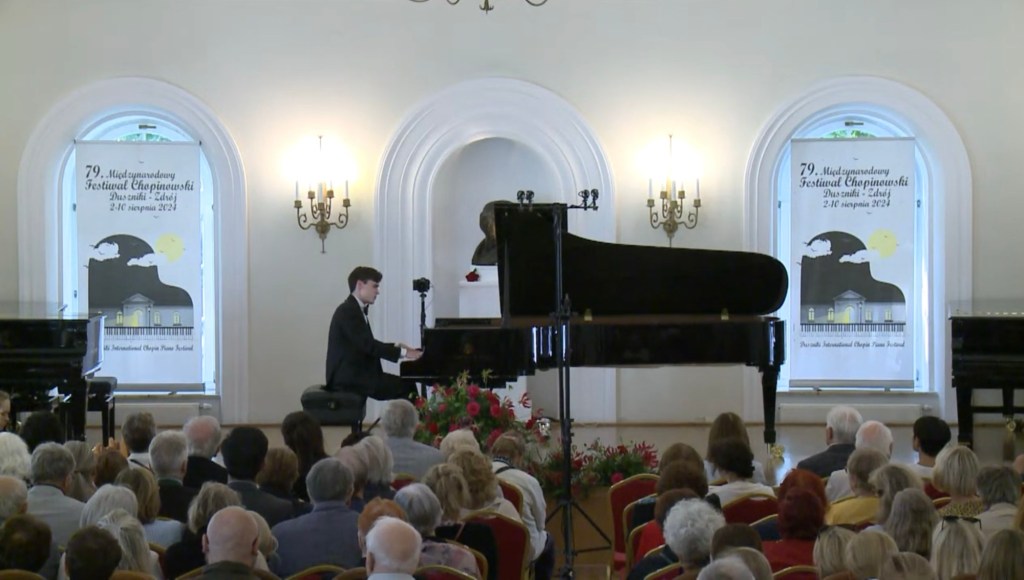
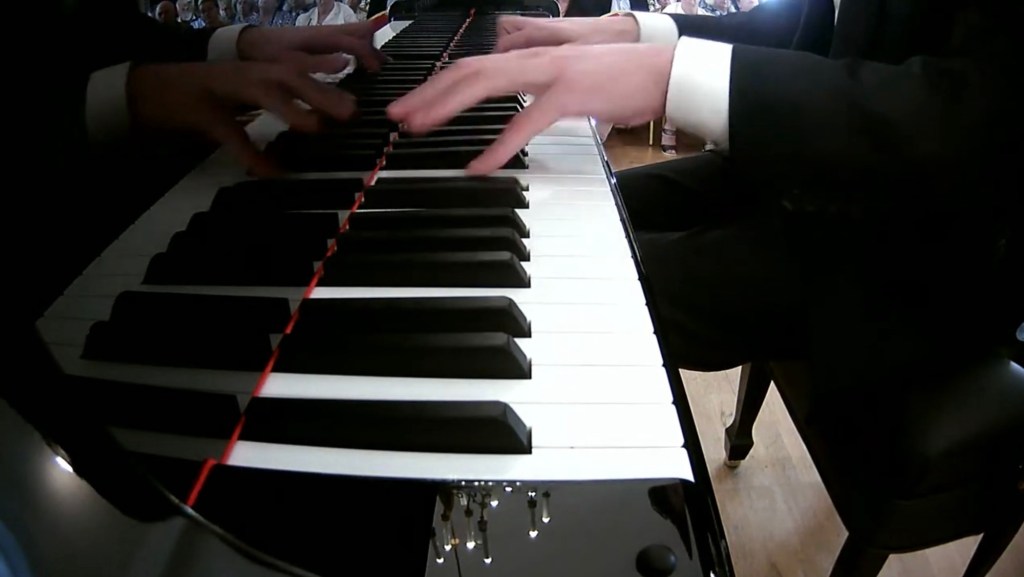
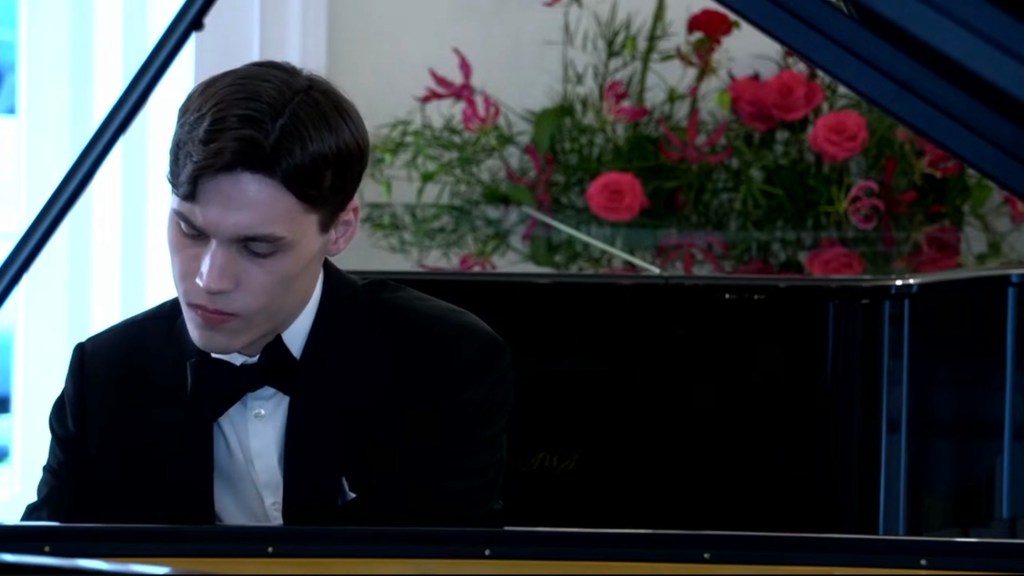
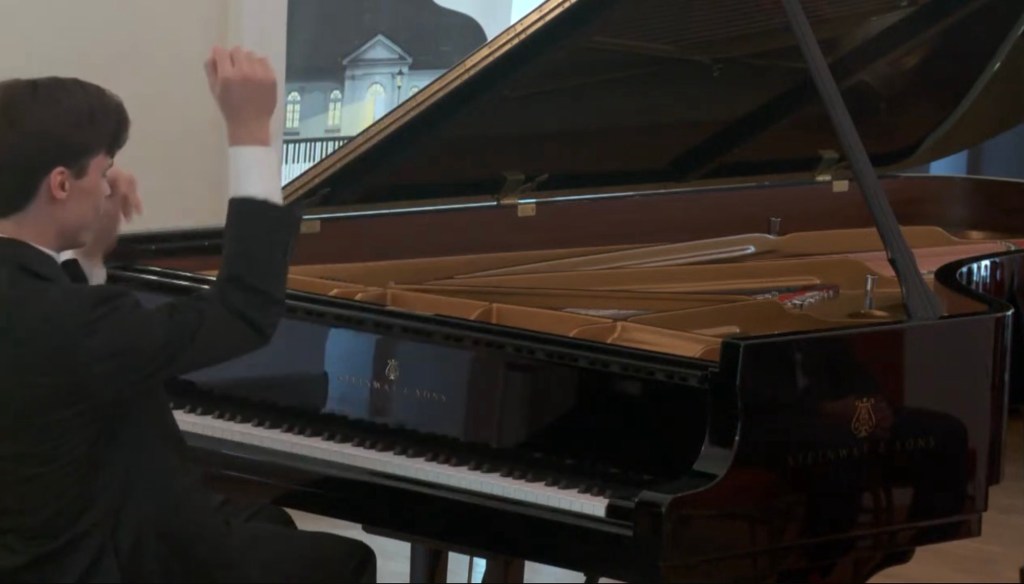
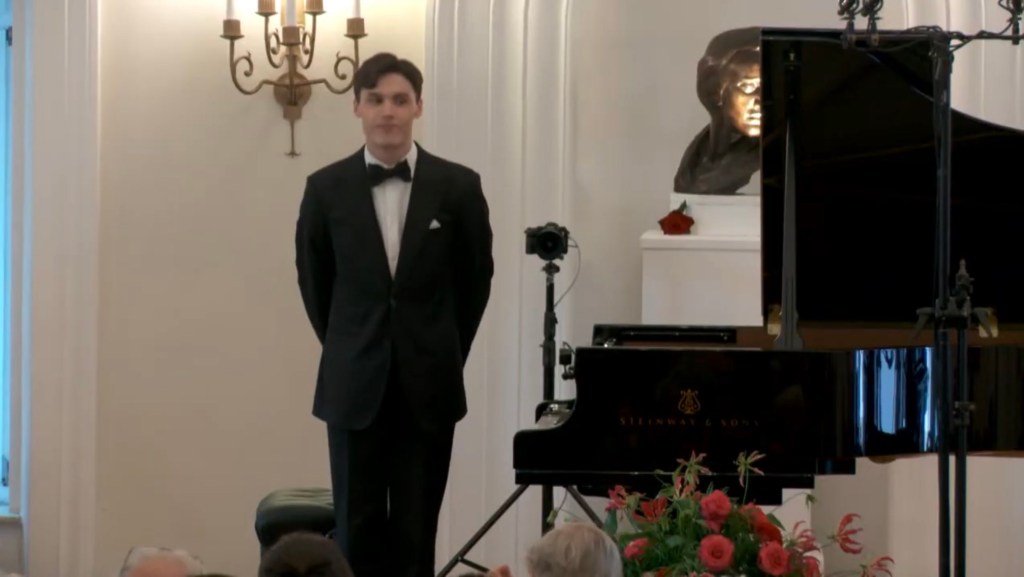
All 21 nocturnes by Frédéric Chopin were performed under the motto ‘Images of the Night’ on the same evening. The cycle, which is an important part of piano literature and which Chopin composed between 1827 and 1846, was presented to the public by various students of Prof. Michail Lifits’ piano class at the Weimar University of Music in December 2023. “Chopin made the soul of the piano sing. His music combines the singing and the virtuoso in a very organic way, which allows us pianists to experience a very intense connection with our instrument,” says Lifits.
A quite extraordinary line up of pianists each with an individual poetic sensibility that illuminated these 21 gems with refined artistry and musicianly intelligence.Professor Lifits sharing his genial mastery with young musicians only too ready to be inspired and moved by such refined beauty where every note has a poignant meaning to bring to life the wishes of the composer.
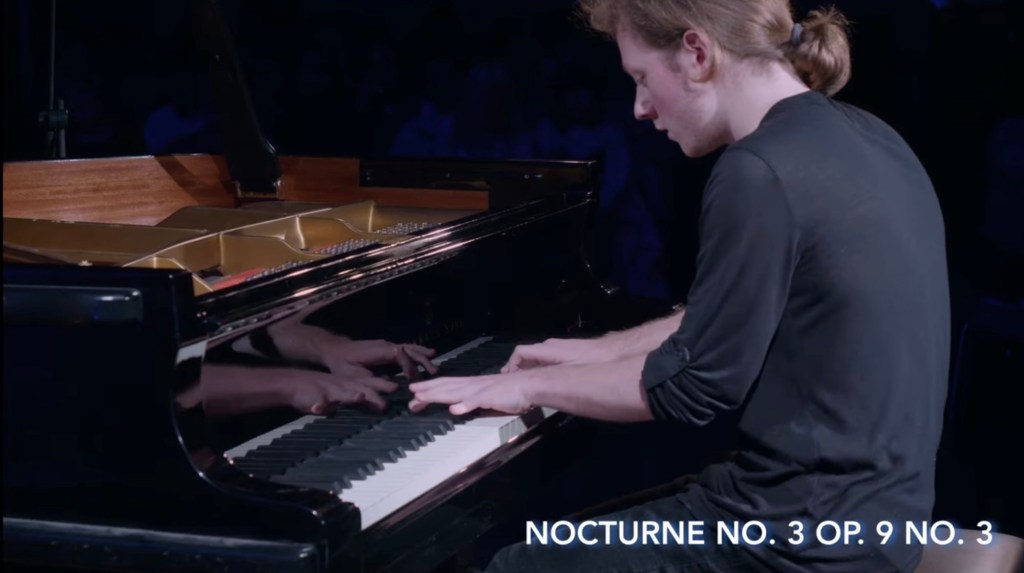
A beautifully shaped aristocratic rubato of natural fluidity .Beautiful voicing of the thumb in the central octave episode of op 9 n.1 and there was mystery and poetic beauty of the pianississimo legatissimo of timeless beauty before the final return of the opening. Beguiling radiance and a refined tone palette he brought to one of the best known Nocturnes : op 9 n. 2 ,and the agitato of op 9 n. 3 was played with a superb sense of balance sustained by a bass that allowed the melodic line to sing out unimpededA chiselled beauty of the Andante cantabile of op 15 n.1 ,wistful and enticing of disarming simplicity.The beautiful physical movement of his arms and hands gave great fluidity to all he caressed from the keys.Even the ‘con fuoco’ was played with nobility but always singing and never harsh or ungrateful but part of the overall architectural shape.He brought rich bold sounds to op 15 n. 2 ,the nocturne that Rubinstein made his own .There were trills and embellishments that were mere vibrations of sound and if his youthful passion made the ‘doppio movimento’ a little unsteady he brought pure magic of timeless beauty to the coda.A beautiful architectural shape of subtle shading in op 15 n.3 ,the poor relation of the three,but not in this man’s sensitive poetic hands.There was a wondrous stillness to the chorale and his control of sound in the coda showed a masterly sense of legato as the music disappeared into the distance with wondrous beauty.The barely murmured left hand of op 27 n.1 caressing the keys as the melancholic melodic line just floated and hovered above the radiantly poignant sounds .The ‘piu mosso’ entered so stealthily building to a passionate climax with the ‘con anima’ played with ‘soul’ not strength and the left hand octave recitativo played with nobility and enviable legato.Op 27 n. 2 was rather slow but was imbued with poetic beauty with a magic question and answer and the dying sighs in the coda were of truly glowing beauty.Simplicity and beauty rather than drama and nobility until the final bars where the drama was finally played out with passionate commitment . Its twin op 31 n. 2 was allowed to flow so naturally and if the central ‘piu agitato’ could have been more horizontal than vertical it was played with the great temperament more of an Impromptu than a NocturneHe brought a beautiful cantabile to op 37 n.1 with the chorale played with string quartet richness .Op 37 n. 2 was thrown off with the same ease and charm as the third Impromptu as he brought a gentle pastoral flow to the beautiful central episode Sumptuous elegance and style as the ‘ poco più lento’ entered in whispered tones building very subtly to a climax and cascades of octaves as it reached out for the ‘doppio movimento’. Here the melodic line was floated on a passionate outpouring of exhilaration and excitement as the final notes spread their wings to reach into the infinite of the longest and most complex of all the nocturnes. Op 48 n. 2 was played with a flowing tempo full of subtle colours and inflections and poetically slowing down almost to a halt before the return of the theme .The often whimsical ‘molto più lento’ was here played with subtle shaping of poetic beauty as vibrations of sound filled the air before a final etherial farewell and a beautifully placed final chord.Op 55 n.1 was Cherkassky’s favourite nocturne and Mikhail played it with the same poetic fantasy as the great master.The ‘piu mosso’ entering with elegance and subdued passion leading to a beautifully shaped cadenza of passion and breathtaking beauty as the main theme returned. This time embellished with poetic artistry and cascades of notes gently accompanying a deep tenor melody of subtle beauty.The ‘Lento sostenuto’ of op 55 n.2 is one of the most passionate outpourings of all the nocturnes and was played with aristocratic authority with whispered counterpoints of scintillating radiance and hidden beauty. https://christopheraxworthymusiccommentary.com/2024/04/11/trapani-the-jewel-of-sicily-where-dreams-can-become-reality-the-international-piano-competition-domenico-scarlatti/Hands that waded into the waters with beautiful natural movements as she sculptured the sounds of these two last late nocturnes.There was a whispered beauty to the B major nocturne ,played rather slowly but with a poetic explosion of ornaments of ravishing beauty.There was languid beauty to the E major nocturne with a beautifully fluid central episode of imposing ‘agitato’ and the meeting of the two worlds as the nocturne was brought to a poignant ending.Three posthumous nocturnes were played with a simplicity and beguiling beauty .Op 72 n. 1 was bathed in pedal as the melody of nostalgia was played with subtle artistry and beauty.The nocturne in C sharp minor op posth was played with great delicacy and a chiselled beauty and the final C minor was played with aristocratic poise.
All 21 nocturnes by Frédéric Chopin were performed under the motto ‘Images of the Night’ on the same evening. The cycle, which is an important part of piano literature and which Chopin composed between 1827 and 1846, was presented to the public by various students of Prof. Michail Lifits’ piano class at the Weimar University of Music in December 2023. “Chopin made the soul of the piano sing. His music combines the singing and the virtuoso in a very organic way, which allows us pianists to experience a very intense connection with our instrument,” says Lifits.
A quite extraordinary line up of pianists each with an individual poetic sensibility that illuminated these 21 gems with refined artistry and musicianly intelligence.Professor Lifits sharing his genial mastery with young musicians only too ready to be inspired and moved by such refined beauty where every note has a poignant meaning to bring to life the wishes of the composer.
A beautifully shaped aristocratic rubato of natural fluidity .Beautiful voicing of the thumb in the central octave episode of op 9 n.1 and there was mystery and poetic beauty of the pianississimo legatissimo of timeless beauty before the final return of the opening. Beguiling radiance and a refined tone palette he brought to one of the best known Nocturnes : op 9 n. 2 ,and the agitato of op 9 n. 3 was played with a superb sense of balance sustained by a bass that allowed the melodic line to sing out unimpededA chiselled beauty of the Andante cantabile of op 15 n.1 ,wistful and enticing of disarming simplicity.The beautiful physical movement of his arms and hands gave great fluidity to all he caressed from the keys.Even the ‘con fuoco’ was played with nobility but always singing and never harsh or ungrateful but part of the overall architectural shape.He brought rich bold sounds to op 15 n. 2 ,the nocturne that Rubinstein made his own .There were trills and embellishments that were mere vibrations of sound and if his youthful passion made the ‘doppio movimento’ a little unsteady he brought pure magic of timeless beauty to the coda.A beautiful architectural shape of subtle shading in op 15 n.3 ,the poor relation of the three,but not in this man’s sensitive poetic hands.There was a wondrous stillness to the chorale and his control of sound in the coda showed a masterly sense of legato as the music disappeared into the distance with wondrous beauty.The barely murmured left hand of op 27 n.1 caressing the keys as the melancholic melodic line just floated and hovered above the radiantly poignant sounds .The ‘piu mosso’ entered so stealthily building to a passionate climax with the ‘con anima’ played with ‘soul’ not strength and the left hand octave recitativo played with nobility and enviable legato.Op 27 n. 2 was rather slow but was imbued with poetic beauty with a magic question and answer and the dying sighs in the coda were of truly glowing beauty.Simplicity and beauty rather than drama and nobility until the final bars where the drama was finally played out with passionate commitment . Its twin op 31 n. 2 was allowed to flow so naturally and if the central ‘piu agitato’ could have been more horizontal than vertical it was played with the great temperament more of an Impromptu than a NocturneHe brought a beautiful cantabile to op 37 n.1 with the chorale played with string quartet richness .Op 37 n. 2 was thrown off with the same ease and charm as the third Impromptu as he brought a gentle pastoral flow to the beautiful central episode Sumptuous elegance and style as the ‘ poco più lento’ entered in whispered tones building very subtly to a climax and cascades of octaves as it reached out for the ‘doppio movimento’. Here the melodic line was floated on a passionate outpouring of exhilaration and excitement as the final notes spread their wings to reach into the infinite of the longest and most complex of all the nocturnes. Op 48 n. 2 was played with a flowing tempo full of subtle colours and inflections and poetically slowing down almost to a halt before the return of the theme .The often whimsical ‘molto più lento’ was here played with subtle shaping of poetic beauty as vibrations of sound filled the air before a final etherial farewell and a beautifully placed final chord.Op 55 n.1 was Cherkassky’s favourite nocturne and Mikhail played it with the same poetic fantasy as the great master.The ‘piu mosso’ entering with elegance and subdued passion leading to a beautifully shaped cadenza of passion and breathtaking beauty as the main theme returned. This time embellished with poetic artistry and cascades of notes gently accompanying a deep tenor melody of subtle beauty.The ‘Lento sostenuto’ of op 55 n.2 is one of the most passionate outpourings of all the nocturnes and was played with aristocratic authority with whispered counterpoints of scintillating radiance and hidden beauty. https://christopheraxworthymusiccommentary.com/2024/04/11/trapani-the-jewel-of-sicily-where-dreams-can-become-reality-the-international-piano-competition-domenico-scarlatti/Hands that waded into the waters with beautiful natural movements as she sculptured the sounds of these two last late nocturnes.There was a whispered beauty to the B major nocturne ,played rather slowly but with a poetic explosion of ornaments of ravishing beauty.There was languid beauty to the E major nocturne with a beautifully fluid central episode of imposing ‘agitato’ and the meeting of the two worlds as the nocturne was brought to a poignant ending.Three posthumous nocturnes were played with a simplicity and beguiling beauty .Op 72 n. 1 was bathed in pedal as the melody of nostalgia was played with subtle artistry and beauty.The nocturne in C sharp minor op posth was played with great delicacy and a chiselled beauty and the final C minor was played with aristocratic poise.
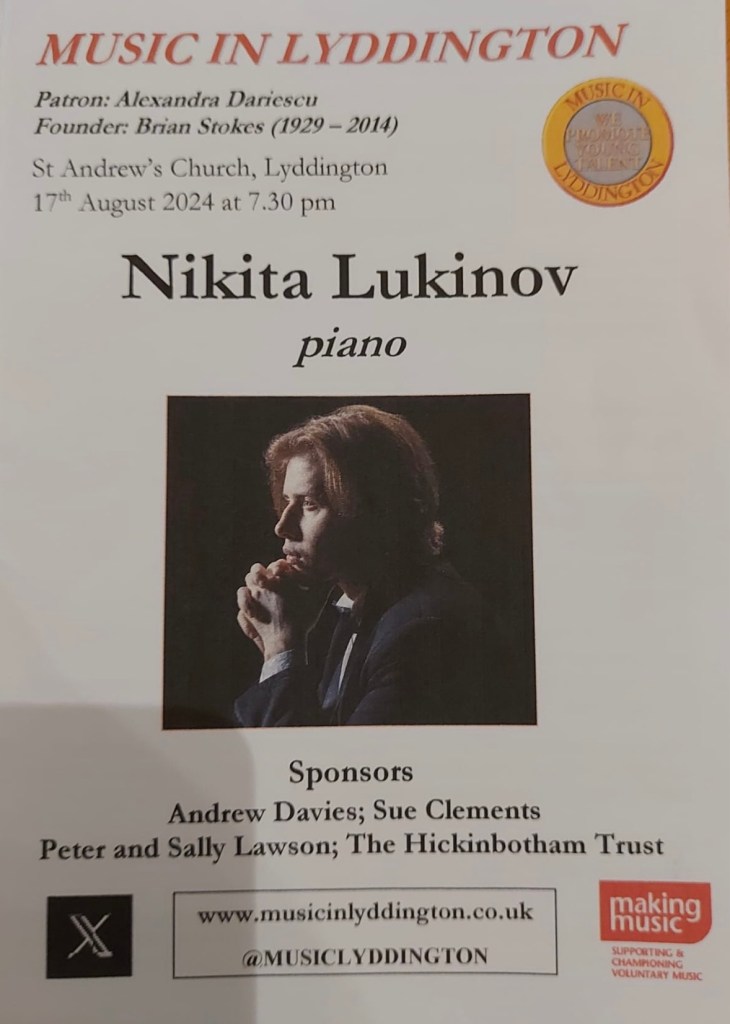
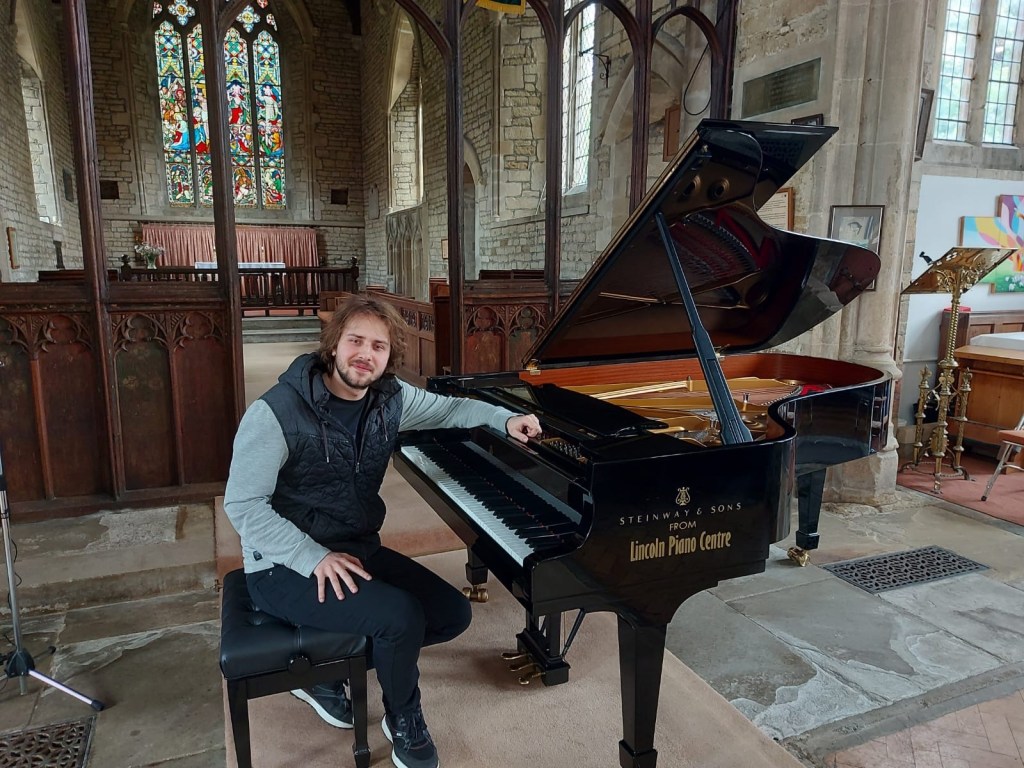
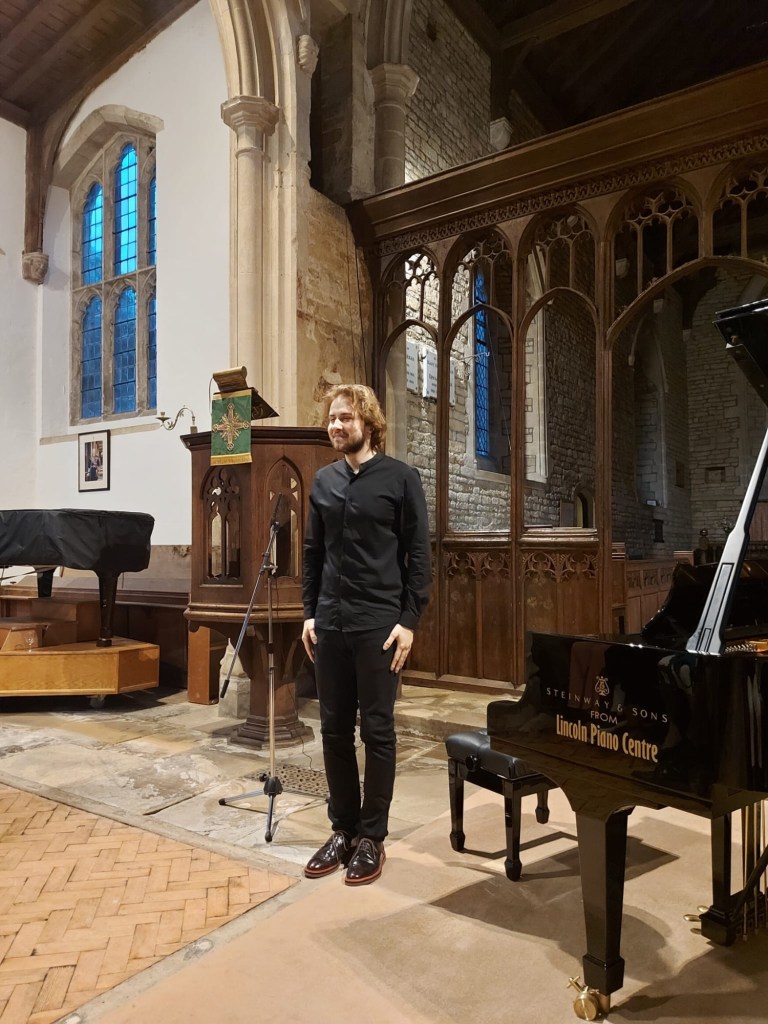
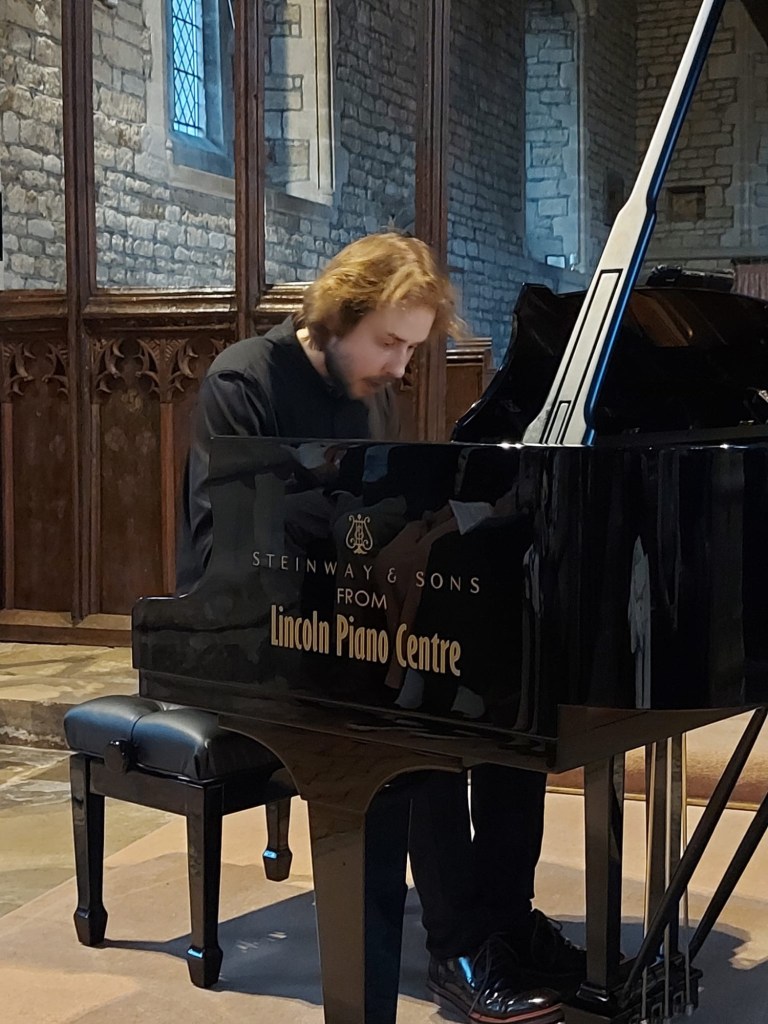
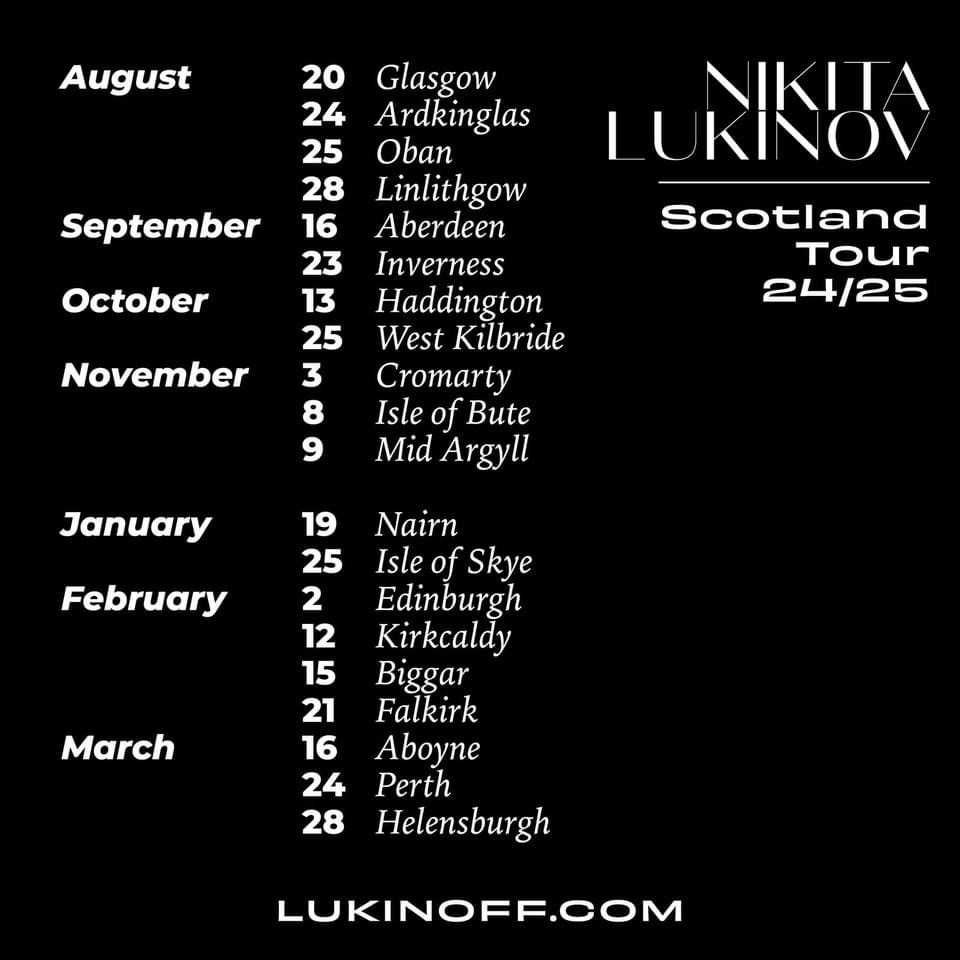
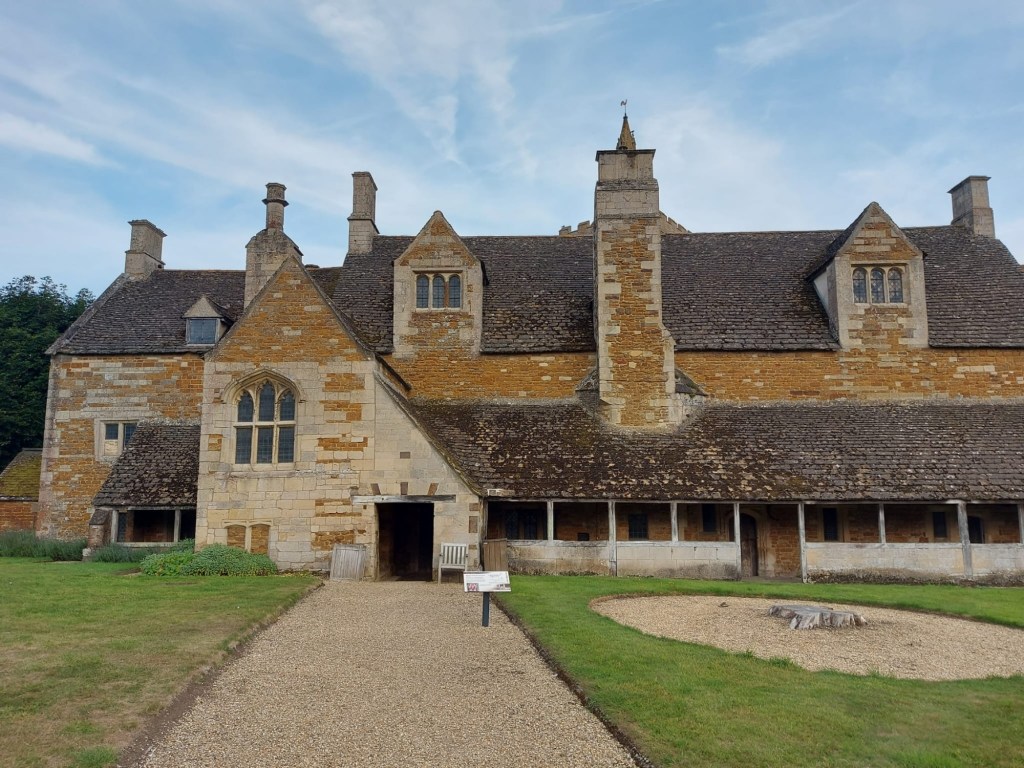
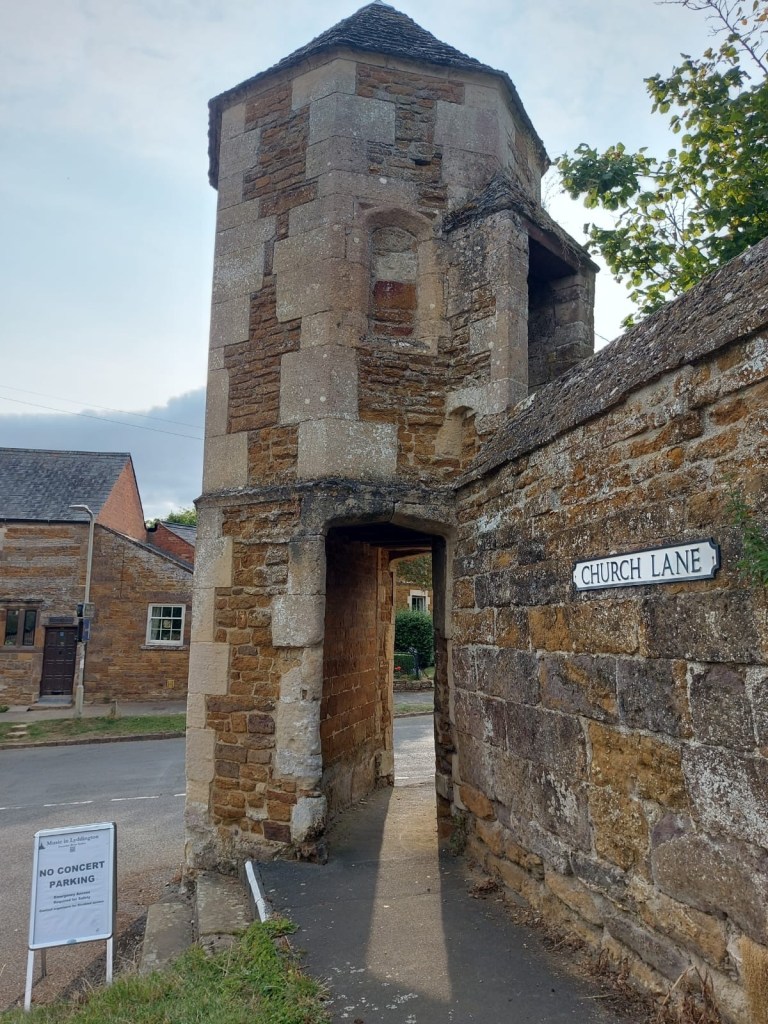
Just three days before his 20 concert tour of Scotland Nikita Lukinov treated Lyddington to a taste of what the people in Scotland can look forward to over the bleak winter months when live music is much more than a rarity. It reminds me of the tours in the remotest parts of Canada that Angela Hewitt,Janina Fialkowska , Marc Andre Hamelin and Jon Kimura Parker ,would undertake to bring music into the remotest parts of that vast country .Hats off to Nikita who has organised this tour that will bring the message of music and fill the lives of so many people in some of the remotest parts of Scotland.
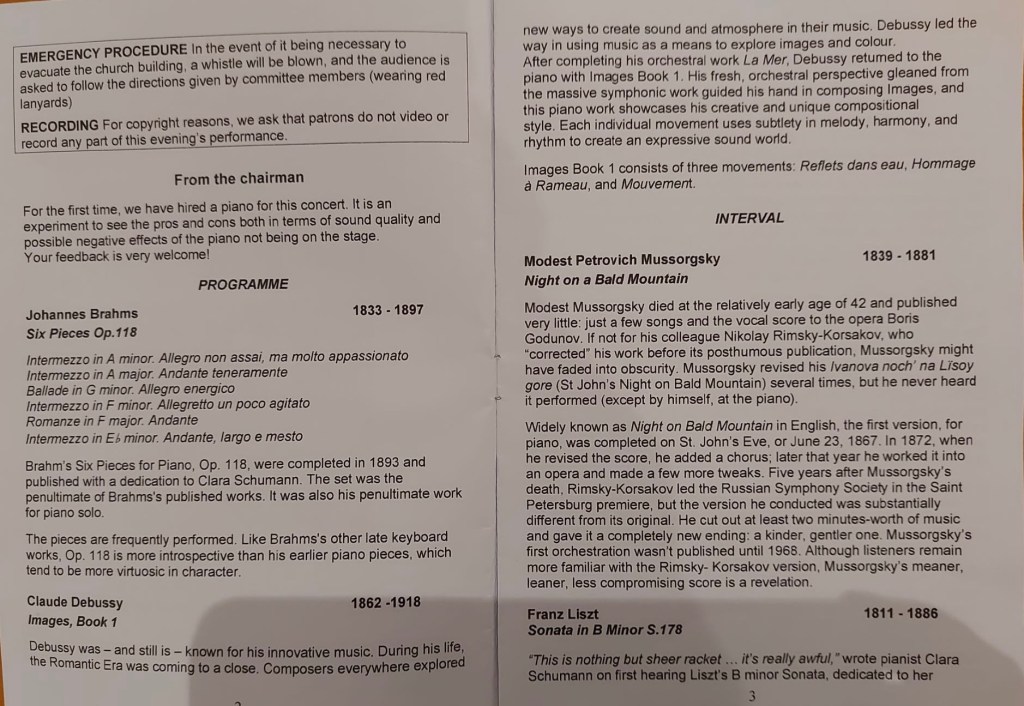
A programme of Brahms,Debussy,Mussorgsky finishing with the pinnacle of the Romantic repertoire Liszt’s mighty B minor Sonata.
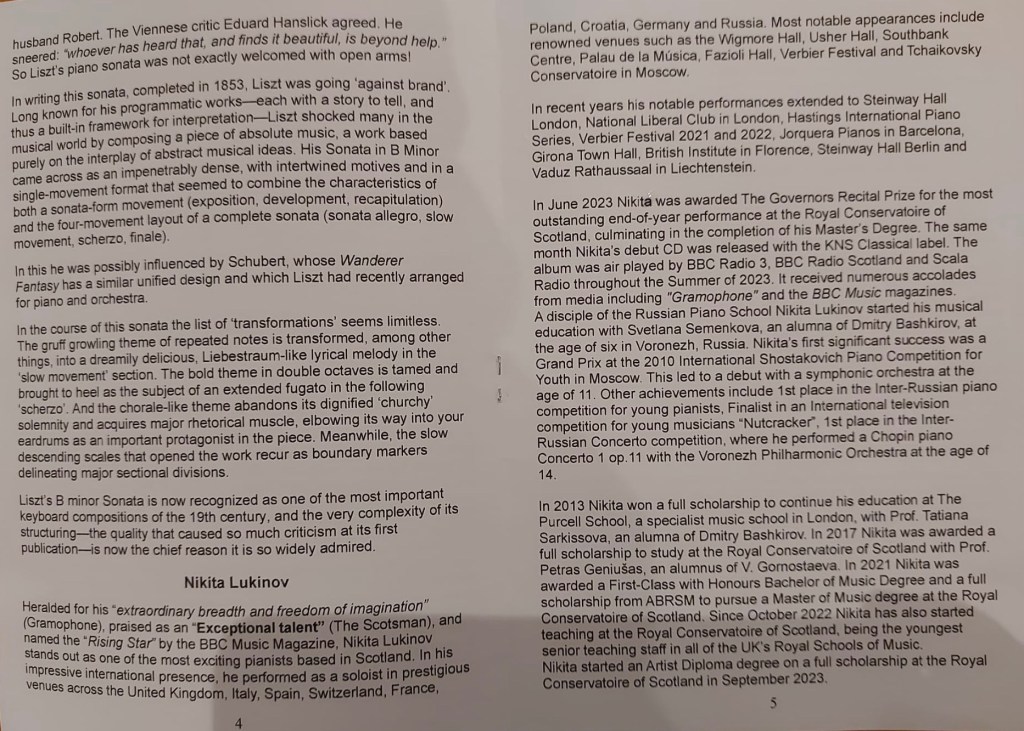
I have heard Nikita play it quite a few times since he took us by surprise at the Bluthner Piano Centre in London with playing of an intelligence and a scrupulous attention to what the composer actually wrote! Leslie Howard the legendary Liszt expert interviewed him afterwards and of course the Keyboard Trust has been honoured to help a young musician who has all the ingredients to bewitch and beguile audiences around the world for years to come. In fact he has gone on to play in Switzerland,Italy and Germany with ever more success. A graduate and now fellow of the Royal Scottish Conservatoire in Glasgow where he studied with Petras Genusias.Having studied in Russia with Svetlana Semenkova, a student of Dmitri Bashkirov before winning a scholarship to the Purcell School where he studied with another disciple of Bashkirov ,Tatiana Sarkissova – Alexeev. It is enough to listen to the first page of the Liszt Sonata to realise that we are in the hands of a master who with maturity and mastery can show us an architectural monument full of sublime poetry and passionate declarations.
The concert had begun with the six piano pieces op 118 by Brahms .His penultimate work for piano which are intimate confessions dedicated to Clara Schumann.Each piece is so intense and full of poetic and passionate significance that it requires not only great sensitivity from the performer but also a deep concentration from the audience. Nikita from the first notes of the opening Intermezzo showed his authority as he carved out each of the pieces with architectural shape and glowing fluidity. A simplicity that allowed the melodic line to shine through all he did with the passionate flowing opening Intermezzo answered by the extraordinarily poignant lyricism of the second. He brought a beautiful glowing stillness to the pianissimi chords before the return and the pastoral beauty of the intertwined counterpoints communing so intimately together. A Ballade that was full of sumptuous sounds with the simple flowing lyrical central episode contrasting with the nobility and grandeur of the opening. An ending of supreme poetic significance as grandeur dissolves into intimate confessions. A beautiful flowing tempo to the third Intermezzo where the music was allowed to unfold so simply as it led into the unearthly beauty of the Romance.A deep meditative beauty where suddenly a ray of sun shines so radiantly with an interlude of heartrending simplicity played with a rare sensibility but always with a sense of line of intense sentiment but never sentimentality. The last Intermezzo is one of Brahms most concise tone poems for solo piano. Nikita played it with a wondrous sense of poetic yearning with glowing luminosity and fluidity. There was a grandiose orchestral central episode building to a mighty climax of sumptuous rich sounds before dissolving back to a land of beauty and mystery.The final gasp that Brahms marks ‘sff’ could in fact have been played with even more of a dying cry for help as it dissolved so magically into infinity. This was a remarkable performance as Nikita had managed to unite these six miniature tone poems into one unified whole which showed a rare intelligence and mature musicianship allied to a deeply poetic sensibility.
Debussy’s three Images Book 1 followed with a kaleidoscope of colours in ‘Reflets dans l’eau’ but there was also a beautiful clarity and sense of balance that gave a great sense of line to a piece that can so often be submerged in pedal. ‘Homage a Rameau’ too had the same aristocratic timeless beauty that I remember from Rubinstein and the change of colour in the central episode is one of those magic moments that Nikita could savour with his extraordinarily sensitive tone palette.’Mouvement’ I have never heard played with such clarity and driving rhythmic impetus.Building in excitement as the chordal melodic line is surrounded by notes spread over the entire keyboard. Played with relentless energy it was truly a tour de force of refined virtuosity.
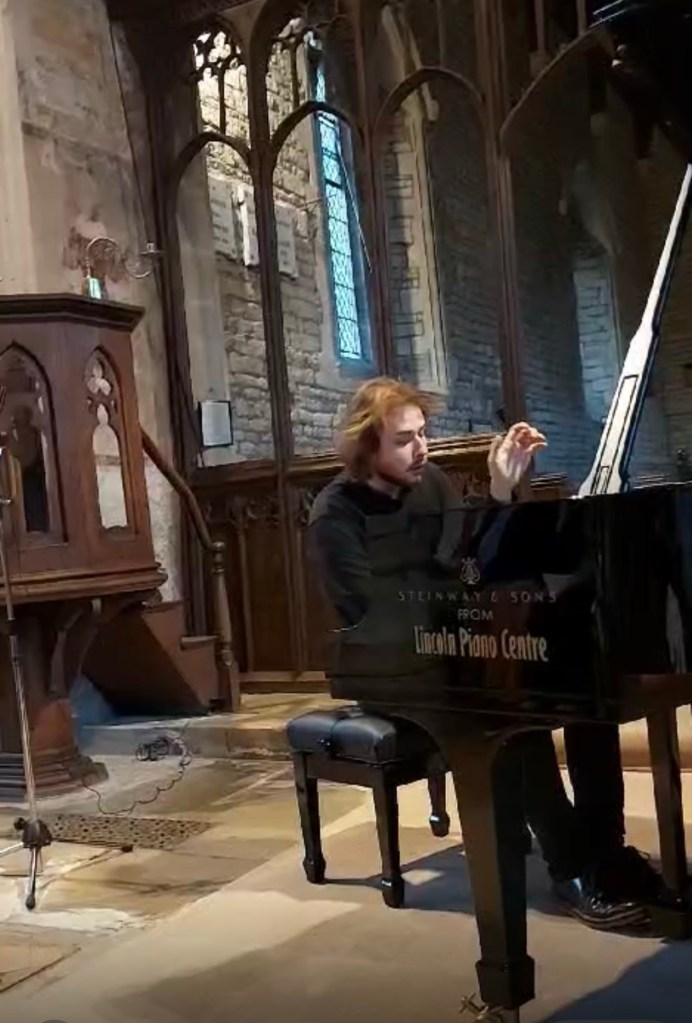
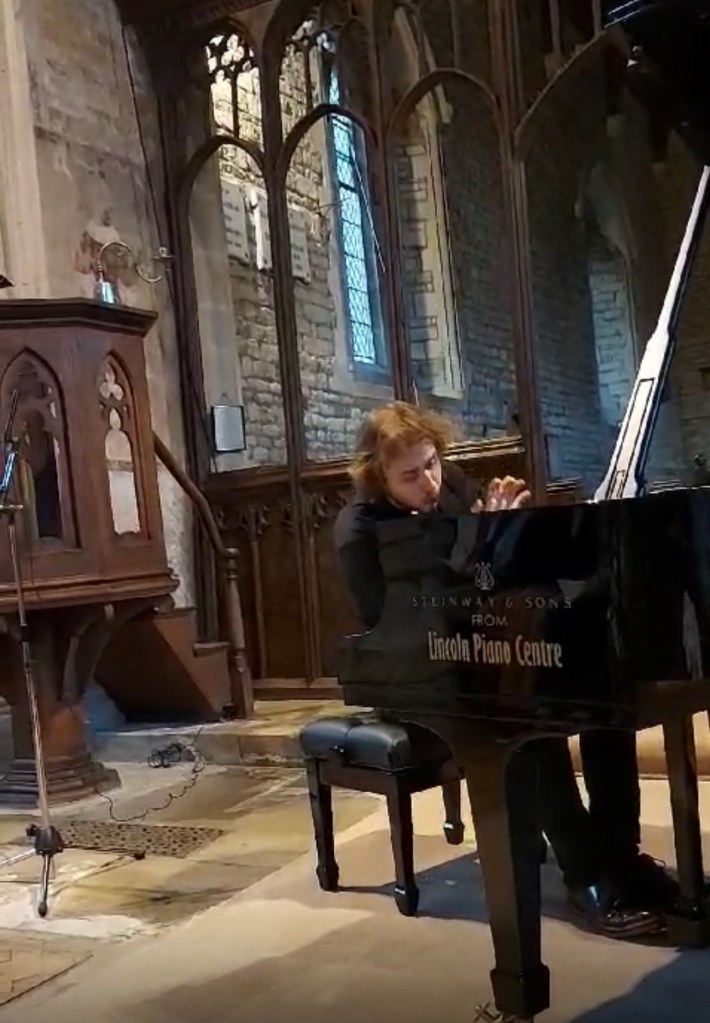
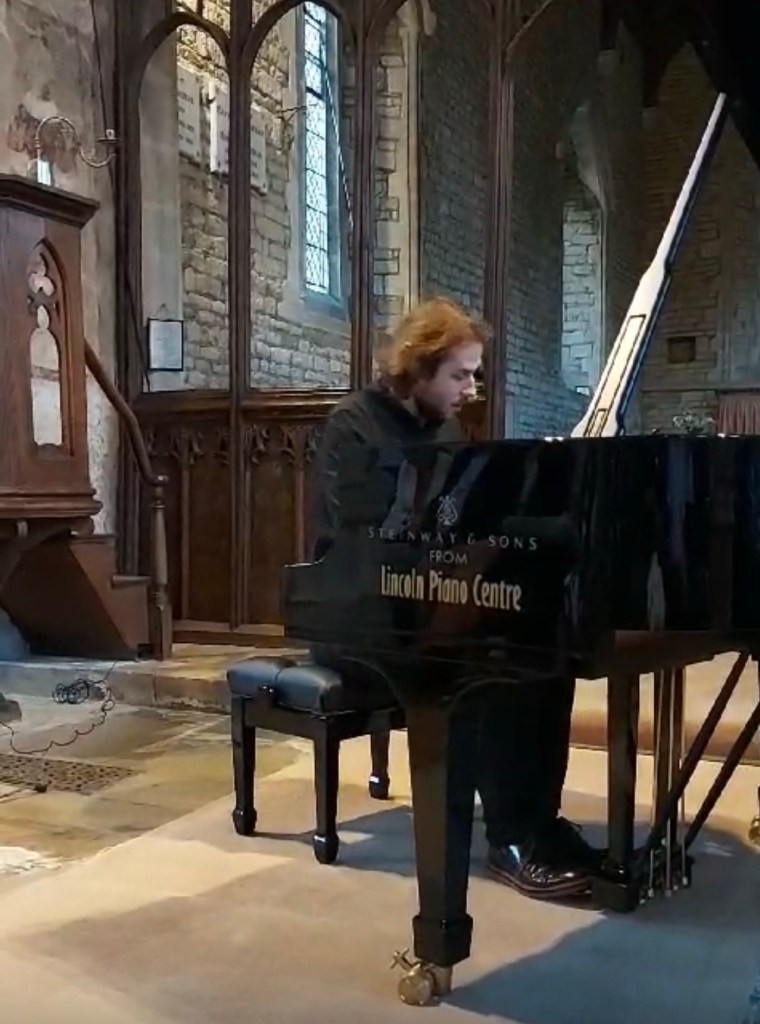
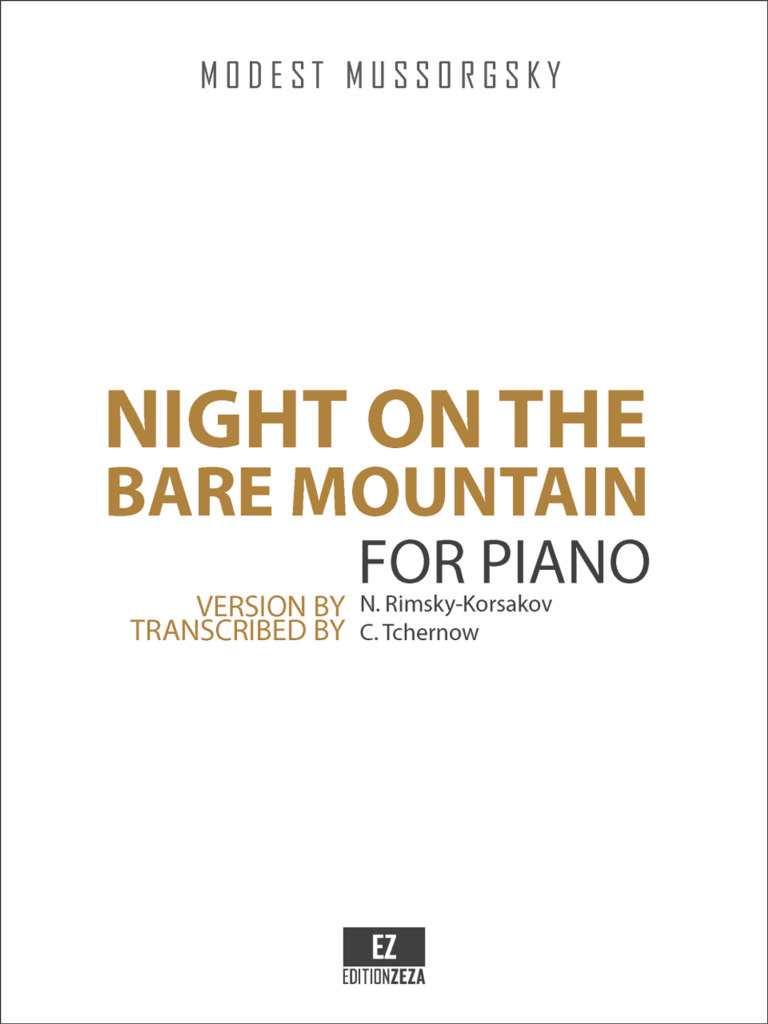
The Mussorgsky was an arrangement of Rimsky Korsakov transcribed for piano by Tchernow. A musical picture of of ‘St John’s eve on a Bald Mountain’ it is a true tone poem in the style of Saint-Saens /Liszt .Mussorgsky described the story of ‘a witches’ sabbath, separate episodes of sorcerers, a ceremonial march of all this rubbish, a finale—glory to the sabbath.’ It was played with a dramatic sense of colour and building excitement of obsessive rhythmic insistence .There was a dynamic rhythmic drive that dissolved into the beauty of the ending with magical arpeggios and a melodic line of great nostalgia and luminosity before the final subdued note very similar to the ending of Liszt sonata that was to follow.
Night on the Bare Mountain” is a composition by Modest Mussorgsky, and this piano transcription by C.Tchernow is based on N. Rimsky-Korsakov’s version. Night on Bald Mountain is a composition by Modest Mussorgsky that exists in at least two versions—a seldom performed 1867 version or a later (1886) and very popular “fantasy for orchestra” arranged by Nikolai Rimsky-Korsakov, A Night on the Bare Mountain, based on the vocal score of the “Dream Vision of the Peasant Lad” (1880) from The Fair at Sorochyntsi with some revisions, most notably the omission of the choir. There is also a version orchestrated by twentieth-century conductor Leopold Stokowski; this is the version used in the now-classic 1940 Walt Disney animated film Fantasia.
Nikita’s Liszt Sonata I have admired from the first time I heard him play it almost four years ago.It has grown in stature since then and has an unmistakable authority without losing his scrupulous attention to Liszt’s very precise markings in the score.It is a poetical journey with a great sense of architectural shape of a driving energy that even in the beauty of the Andante Sostenuto or Adagio never looses its sense of line or direction.Cascades of notes of glistening and gleaming brilliance and a poetic sensibility of passionate conviction but never losing the overall shape of a new form that Liszt brought to perfection in this masterpiece.Themes that become the great characters of a drama that is played out with aristocratic authority and mastery. There was a controlled passion to the entry of the ‘fugato’ that evolved so naturally from the sombre return of the opening theme.Building to a sumptuous climax of octaves passed from the right to the left hand with transcendental command and a final drawn out chord allowed to vibrate in the pedal with such knowing daring.The genius of Liszt took over at this point as he substituted his original triumphant ending with one of the most remarkable pages ever written for the piano and which Nikita played with aristocratic authority and poetic significance.The final three chords reaching into the future and a world that Liszt could foresee in the distance and would be pursued by his disciple Busoni.
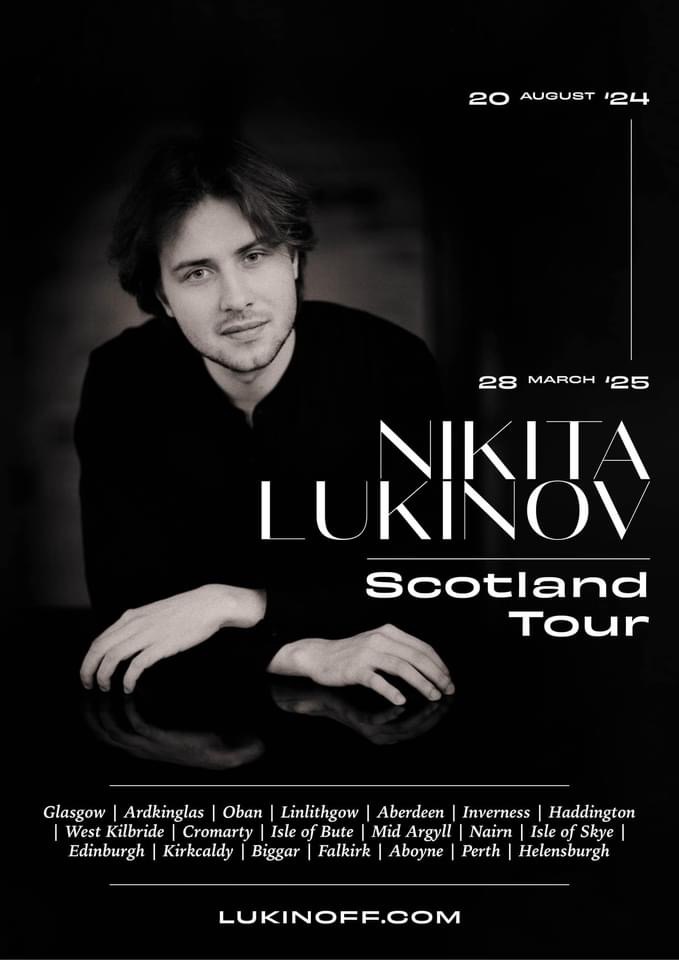
Join me on this extraordinary musical journey across Scotland in the 2024/25 season, featuring 20 captivating recitals from the Scottish Borders to Cromarty and from Aberdeen to the Isle of Skye! 🏴 Swipe for a recital agenda and check the website for more information about each concert 🎹 This tour brings world-class classical music to diverse communities, with special outreach events in local care homes and schools organised by the Live Music Now Scotland. Experience the magic of live performances that uplift and connect us all! 🥳 Hugely looking forward to exploring Bonnie Scotland! Gratitude to the City Music Foundation for recognising and supporting this milestone project! Special thanks to Denis Epifantsev for a truly amazing design of this poster, agenda and many other things I will soon finally share Live Music Now Scotland City Music Foundation Royal Conservatoire of Scotland Hu Huixin Paul Docherty Sarah Hanniffy Annabel Stevens Ursula Coe Rebekah Woodierhttps://christopheraxworthymusiccommentary.com/2023/06/02/the-gift-of-music-the-keyboard-trust-at-30/
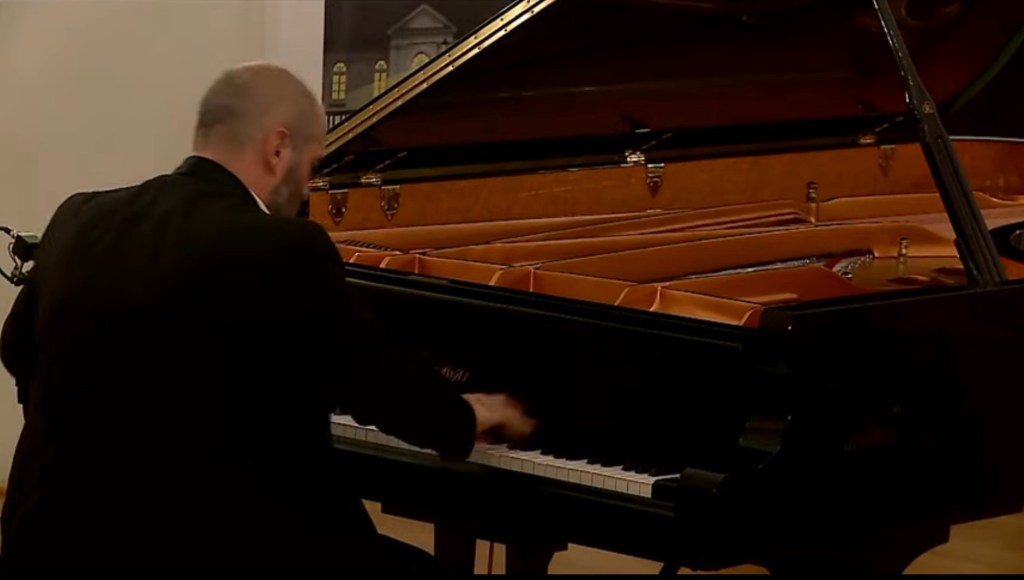
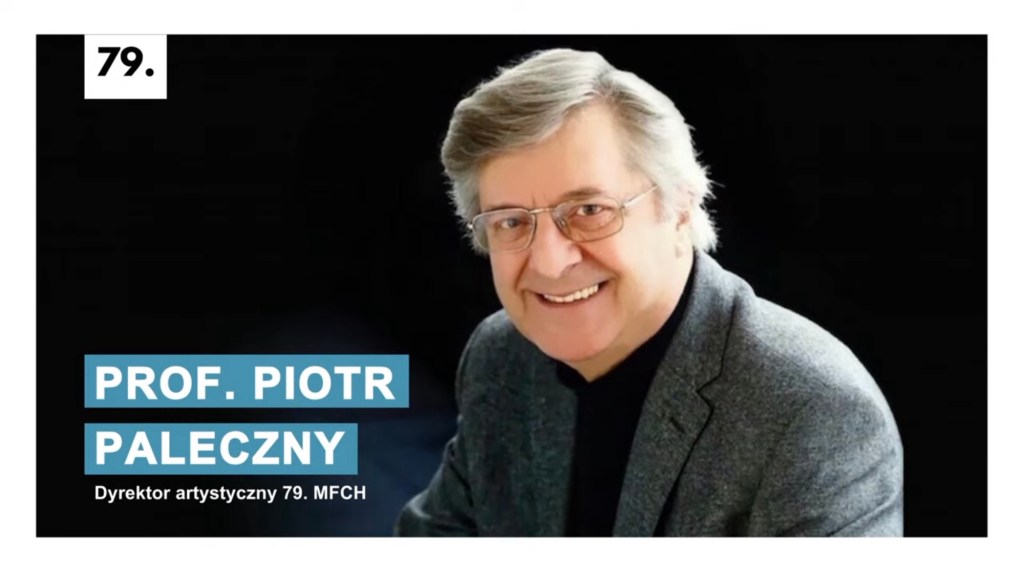
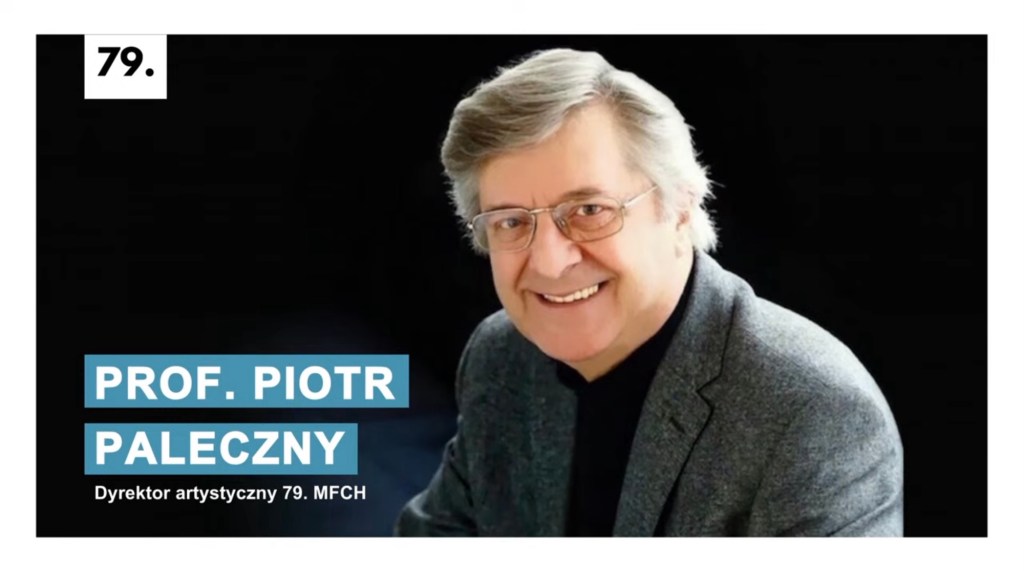
Wonderful to be able to listen to this final recital of the Duszniki Festival 2024. Prof.Paleczny is usually a master of understatement but on this occasion he had told me that this was the real thing !
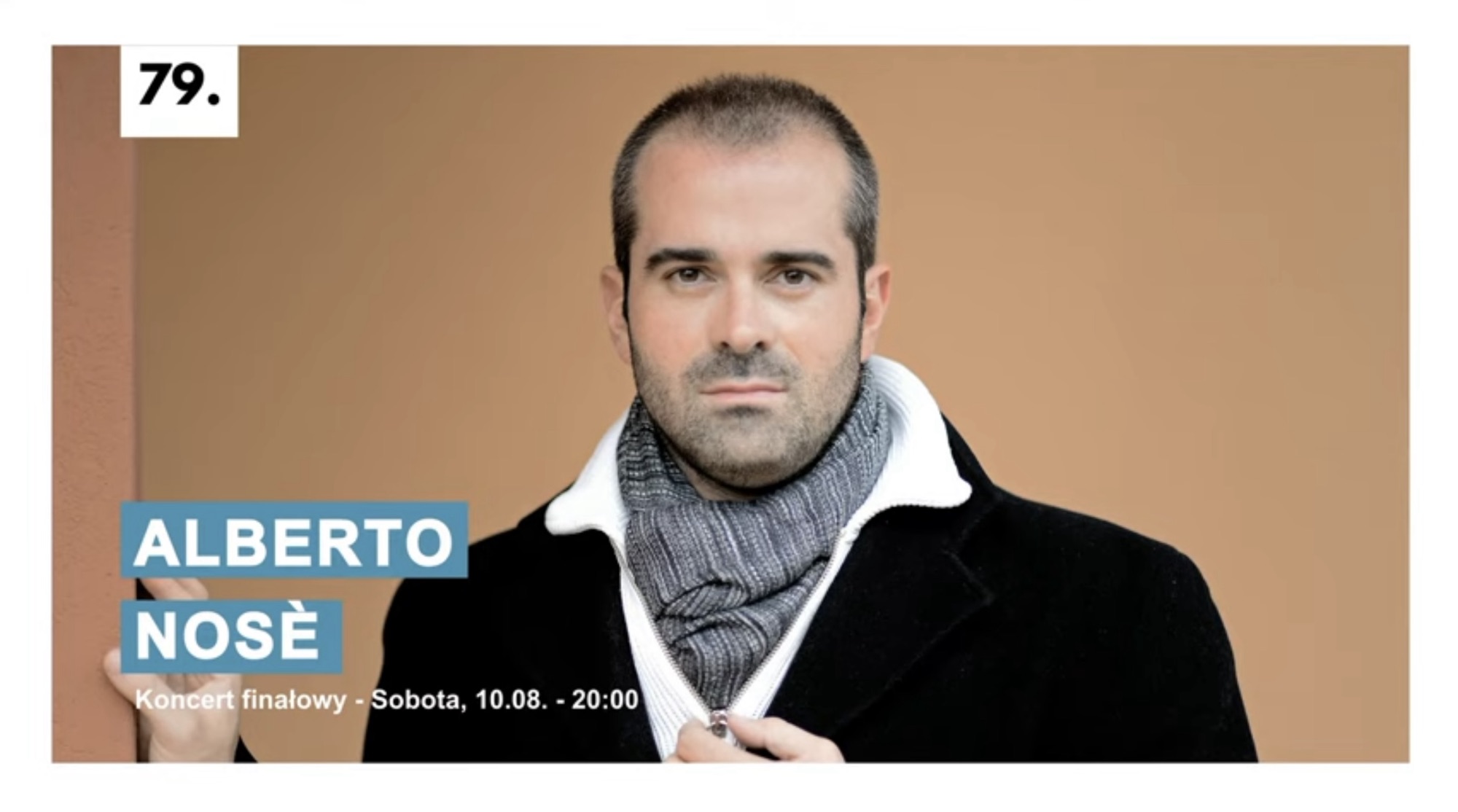
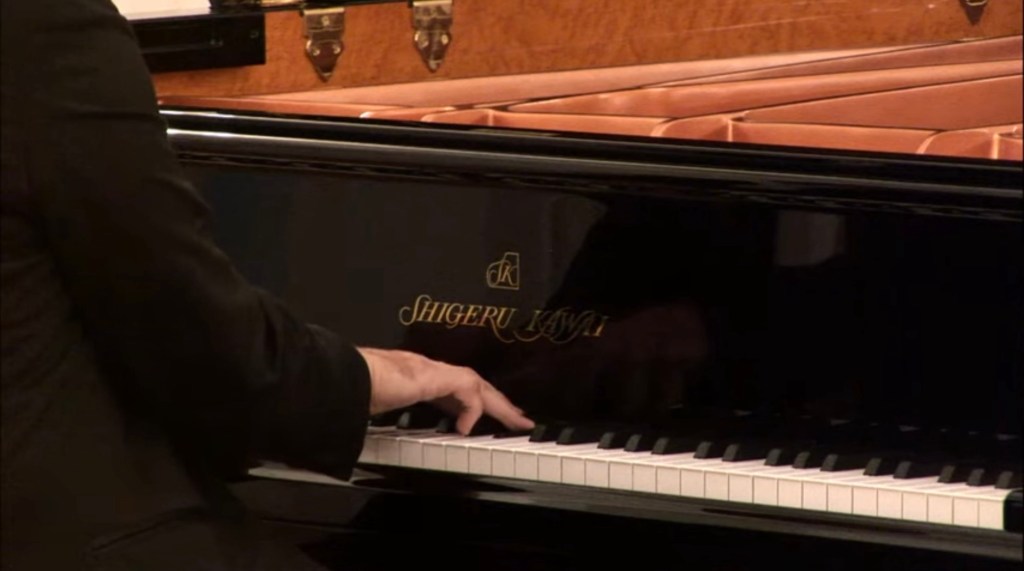
It was quite simply the finest Chopin recital I have ever heard.Played as a great outpouring of song from the very first note to the last. There was no moment where Nadia Boulanger’s favourite exhortation from Shakespeare :’words without thought no more to heaven go ‘ would have been applicable .Maestro Nosè took us to a world of wondrous sounds with the sumptuous rich colours of this Shigeru Kwai of luxuriant Philadelphian richness and it was as if we had entered a world where nothing else exists.There was no moment where a musical language was not allowed to unfold with timeless beauty and overwhelming mastery as he shared a unique voyage of discovery.
The very first Chopin recitals I heard as a child were those of Jan Smeterlin one of many great pianists who would give Chopin recitals in the Royal Festival Hall in London.I remember Vlado Perlemuter and Stefan Askenase,Alexander Brailowsky ,Stanislas Niedzielski and of course later Shura Cherkassky,Claudio Arrau,Fou Ts’ong ,Vladimir Ashkenazy,Daniel Barenboim,Sviatoslav Richter .The greatest of them all was Artur Rubinstein in his wonderful Indian Summer when we would queue up at dawn for tickets for his annual recitals in June. Peter Katin too would sell out the Festival Hall for his Chopin recitals even though his was a Chopin of miniaturist perfection that many critics found rather cold ,but he should not be forgotten.
All this to say that today I heard a Chopin of aristocratic nobility and beauty allied to an intelligence where Chopin’s indications in the score were scrupulously interpreted.It was not a cold perfection but an artist who had become Chopin at the moment of creation and could imbue every note with an authority and passionate conviction that held us in his – Chopin’s- spell for over two hours.
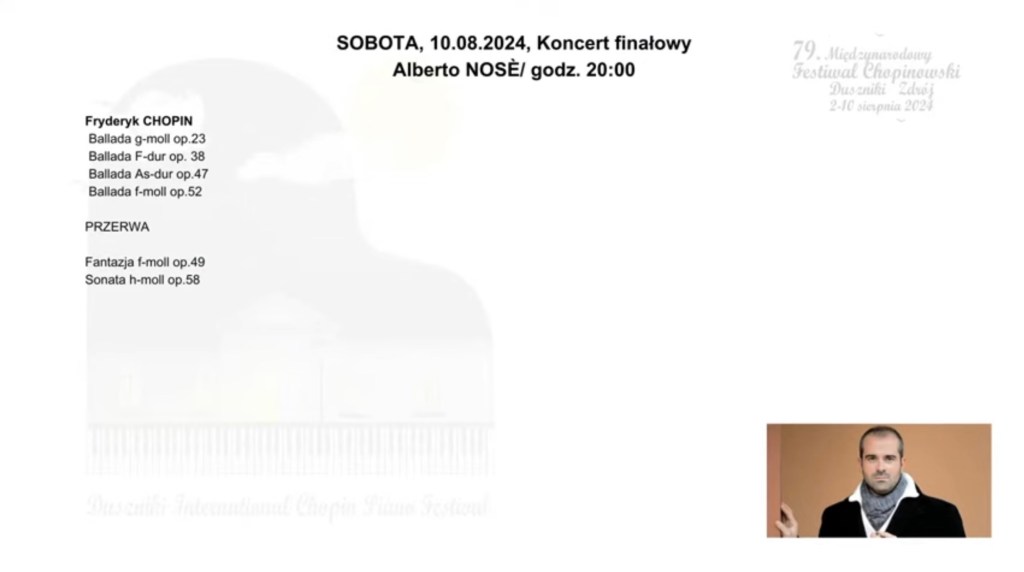
A programme that included the Four Ballades played as one glorious whole.The F minor Fantasie and the B minor Sonata were followed by four encores that included not only a Revolutionary study of overwhelming passion but the Mazurka op 17 n. 4 that we had heard in recitals this week from Arsenii Moon and Sophia Liu. Maestro Nosè ,though,brought a magic to this most delicate of Mazurkas that was nothing short of miraculous.A poetic freedom and subtle beauty that saw his two hands entwined at the end as Chopin’s final gasps were barely whispered by both hands united in poetic beauty.And what poignant beauty he brought to the barely audible sounds that he dedicated to two recently deceased colleagues ,Eugen Indjic and a Polish pianist and teacher, Prof. Stefan Wojtas.
The Ballade in G minor ,from the very first note there was a beauty of sound where Chopin writes ‘pesante’ which means playing with the weight of fingers that delve deeply into each note, not just an opening flourish. Chopin sang from the very first notes of this ‘Largo’ with the exquisite poignancy of the cadenza out of which would grow a heart melting melody that was played with such a sensitive balance that it touched us as never before.Every phrase made such musical sense even the most seemingly virtuosistic was simply a glorious outpouring of ravishing sounds.Sumptuous climaxes grew so naturally out of this musical discourse that we were barely aware of the subtle musicianship involved of being able to conceive the whole architectural whole whilst still finding so much poetic meaning in every phrase.The ‘Presto con fuoco’ was a true lesson in selfless musicianship as the technical difficulties just dissolved into miraculous phrasing and passionate drive.Delicacy and gently flowing beauty of the Second Ballade belied the scrupulous attention to detail that even a barely noticed ‘pianissimo’ became such a poignant moment of subtle beauty. The ‘ Presto con fuoco’ was played with limpet like fingers of sumptuous enrichment finding the deep meaning behind the notes so often played as disjointed episodes.Suddenly Chopin’s indication of ‘slentando’ illuminated the return of the main theme that was played with ravishing beauty as the counterpoints duetted so poignantly together. Even the trills into the agitato coda were played like a stream of legato sounds that took us into the exhilaration of these final pages.Until the abrupt interruption and the stroke of Genius of the return of the opening theme .It was played with a sensitivity of sublime beauty as we awaited it’s whispered entry where even the rests before the final cadence were of such overwhelming significance.
The pastoral gentleness of the third ballade was played with simplicity where even ‘forte’ was played in relation to the musical line and not cutting through it as is often the case in lesser hands. The trills and arabesques were like jewels leading the way to the real opening of the ballade where gentle sounds just dropped onto the keys as the music moved forward with interruptions of delicious jeux perlé and passionate outcries.The build up to the final glorious climax was played with such subtle colouring that the inevitability of this glorious outpouring came as a blinding light in a pastoral landscape.
There was radiance and beauty as the Fourth Ballade was allowed to unfold with aristocratic simplicity of art that disguises art.This like the slow movement of the B minor Sonata is one of the most difficult things to play .It should be played with a simplicity that as Schnabel famously said about Mozart :’is too easy for children and too difficult for adults’.A left hand accompaniment that took over so naturally as the theme is transformed on its voyage of discovery of sublime beauty and genial invention. A continuous flowing pulse gave a great architectural shape to this work that is truly one of the pinnacles of the Romantic repertoire.There was a flowing uninterrupted beauty as the music unfolded on a wave of glorious sounds reaching it tumultuous climax.Five pianissimo chords that shone like stars brought us to the coda that I have never heard played with such mastery and musical understanding.
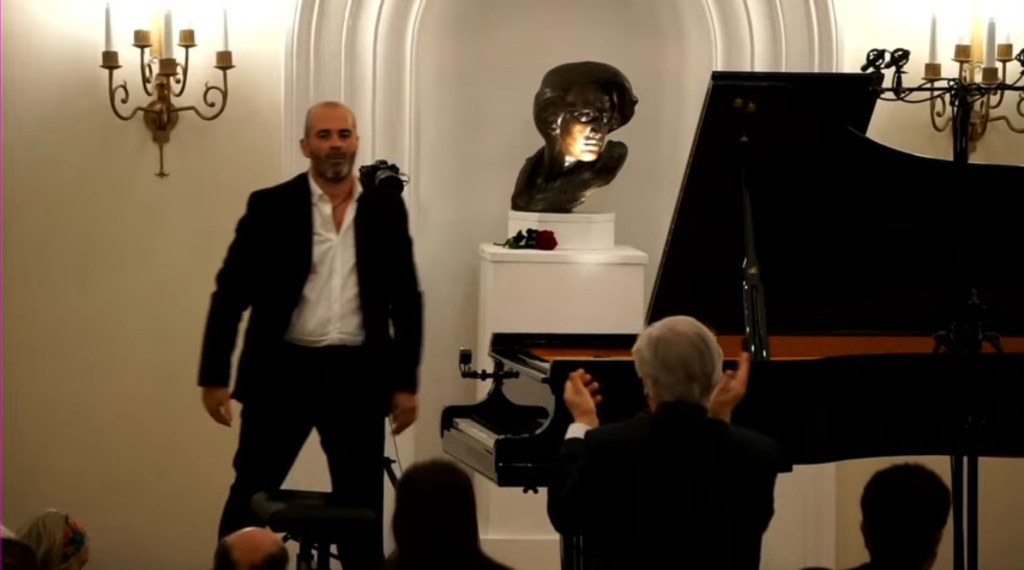
A standing ovation from an audience overwhelmed by such performances of mastery and poetic authority .
After the interval more masterly performance of the Fantasie and Sonata in B minor .The beautiful phrasing of the opening of the Fantasie was made so clear in Maestro Nosè’s poetic hands .Staccato and legato merely dots and dashes to show the real phrasing which is in an artist’s blood.There was a wonderful sensitivity to Chopin’s changing harmonies and the sumptuous climax of octaves were infact just vibrations of horizontal harmonies played with fearless understanding .Wonderful change from G flat to the warm opening of B of the ‘Lento sostenuto’ was played with such poignant meaning as it disappeared to a mere whisper about to explode back onto G flat.What passion and exhilaration he brought to this wondrous tone poem and the only Fantasie that Chopin was to write (the Polonaise Fantasie was a completely new creation in Chopin’s last years).
The B minor Sonata was another great outpouring of song where every note had a significance and was played with nobility and aristocratic control.Have Chopin’s counterpoints ever been allowed to chatter together so poignantly? A ravishing beauty to the second subject as he went straight into the development leaving the repeat to others.There was a jewel like clarity to the ‘Scherzo’ of subtle shape and a living stream of beauty.A trio bathed in pedal that has rarely been played with such simplicity and shape.Straight into the declamation of the ‘Largo’ melting into a cantabile of magic and ravishing beauty. Inner counterpoints were hinted at with poetic sensibility as the harmonies were just floated in the air until the final magical cadence that was played with breathtaking beauty.The return of the cantabile even more radiant and beautifully embellished brought the ‘Largo’ to a noble end on two beautifully placed final chords played with aristocratic poise.Out of these chords grew the opening of the ‘Presto con fuoco’.A rondo in which each return grew more in intensity and excitement.A tour de force of masterly playing but above all of control and sumptuous sound.Following Chopin’s famous 2/3 fingering to give even more impetus to the growing excitement being generated .A masterly performance from a ‘Giant’ of the keyboard. Four encores and a standing ovation were a wonderful way to crown this final concert of the Duszniki Festival.
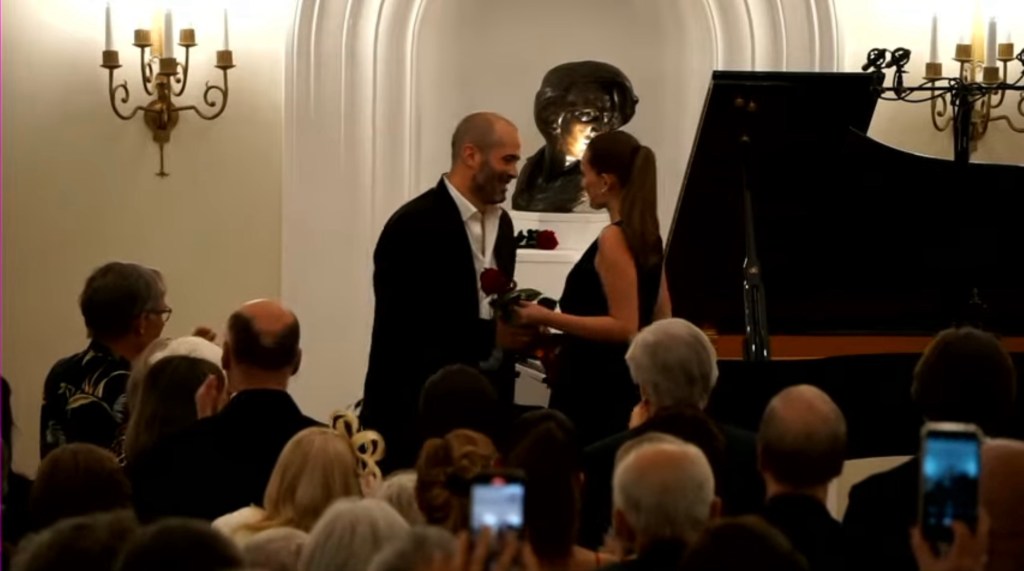
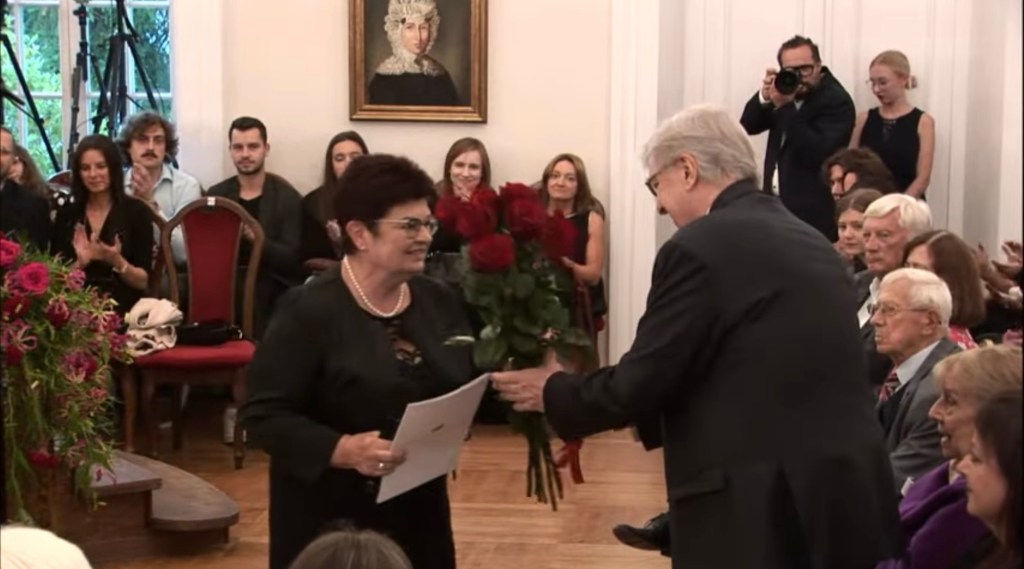
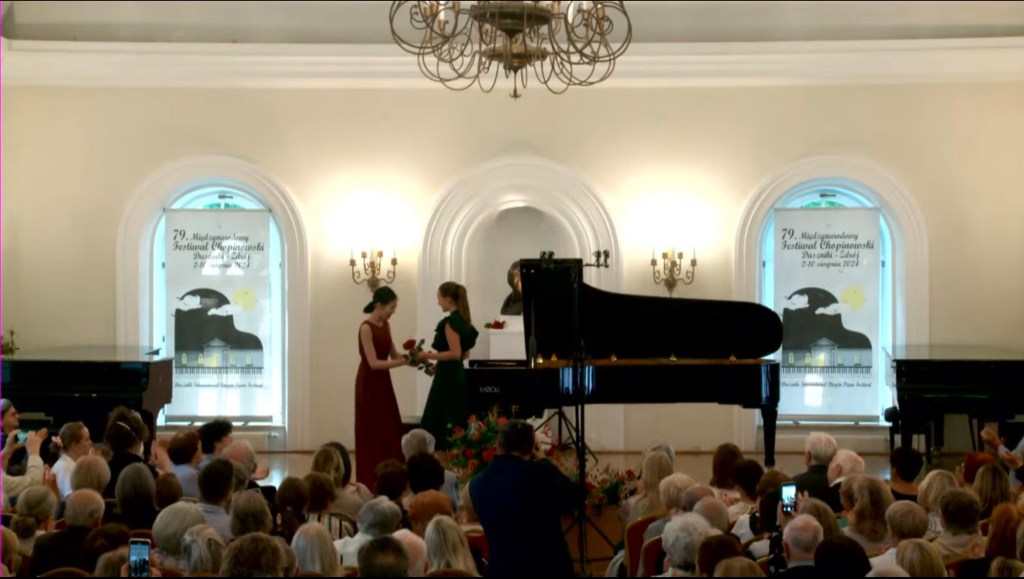
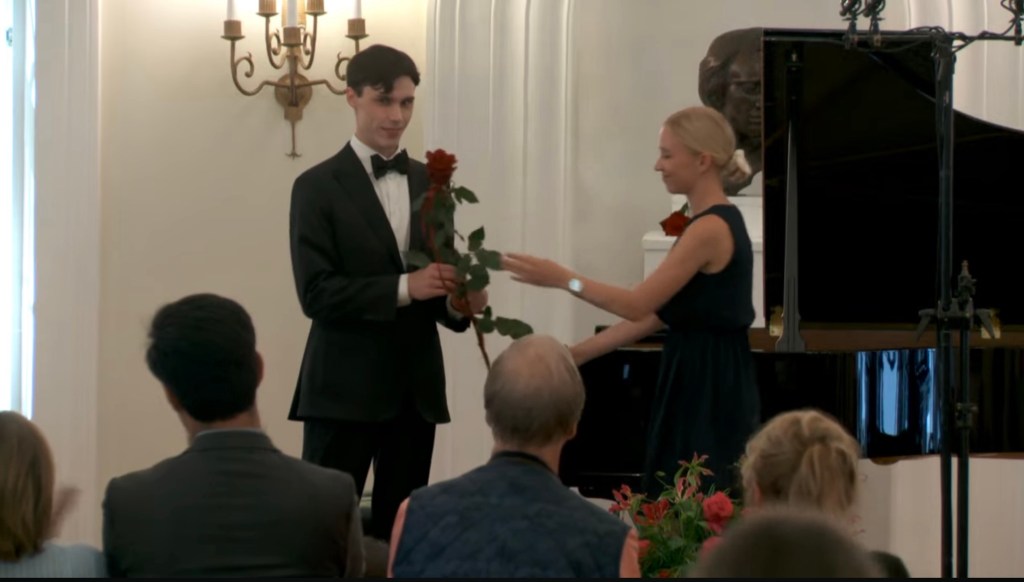
Artistic director Poitr Paleczny receiving red roses too
Defined by The New York Times “an artist with supreme technical mastery, dazzling and charming with his highly cultivated sound”, Alberto Nosè is one of the most awarded piano artists of his generation.He stood out the international music world at the age of eleven winning 1st Prize at the Jugend für Mozart International Competition in Salzburg.Top prize winner of Montecarlo Piano Masters, New York Concert Artists, Paloma O’Shea in Santander, Long-Thibaud in Paris, Maj Lind in Helsinki, Busoni in Bolzano, he was laureate at the F. Chopin International Piano Competition in 2000 which led him to a worldwide career as soloist as well as with major orchestras (London Philharmonic Orchestra, English Chamber Orchestra, Philharmonique de Radio France, Sinfonica de Madrid) in the most renowed concert venues like Carnegie Hall in New York, Southbank Centre in London, Konzerhaus in Berlin, Théâtre du Châtelet and Salle Pleyel in Paris, Auditorium in Madrid, Mozarteum in Salzburg, Suntory Hall in Tokyo, City Hall in Hong Kong, Bellas Artes in Mexico City, Teatro Colon in Buenos Aires, La Fenice in Venice, Santa Cecilia in Rome.Jury member in many international piano competitions like Kiev, Tbilisi, New York, Hong Kong, Helsinki, Budapest, Graz, Ljubljana, Warsaw, he is co-founder of the International Amadeus Competition in Lazise, Italy.His debut album for Piano Le Magazine featuring works by Brahms, Chopin, Liszt and Prokofiev won several awards like CHOC du Monde de la Musique and La Clef by ResMusica.His CD of the Keyboard Sonatas by J. Ch. Bach, recorded on modern piano and published by Naxos, has been broadcast by Radio France, BBC 3, Radio 4 Netherland, Radio New Zealand, ABC Classic FM USA and Australia.His third album with Schumann’s Symphonic Etudes and Prokofiev’s Romeo and Juliet for Harmonia Mundi won Diapason d’Or.Since 2019 he has been founder, artistic director and producer of Amadeus Sound Project, an independent record label which releases all his new recording projects.Invited to teach master classes around the world, he was guest professor at the Music Conservatory in Geneva, Sibelius Academy in Helsinki, Mannes College of Music in New York, as well as at Music Academies in Gdansk and Bydgoszcz.
His musical education started at Verona Conservatory and continued at Imola International Piano Academy. His artistic development has been also enriched by his musical studies with Maurizio Pollini, Murray Perhaia, Andrzej Jasinski, Paul Badura-Skoda, Michael Beroff, Alexander Lonquich, Arie Vardi, Fou Ts’ong, Karl-Heinz Kämmerling.
He has been Piano Professor at Verona Conservatory of Music since 2022 and on the faculty of the International Accademia Amadeus in Valeggio sul Mincio, Italy.
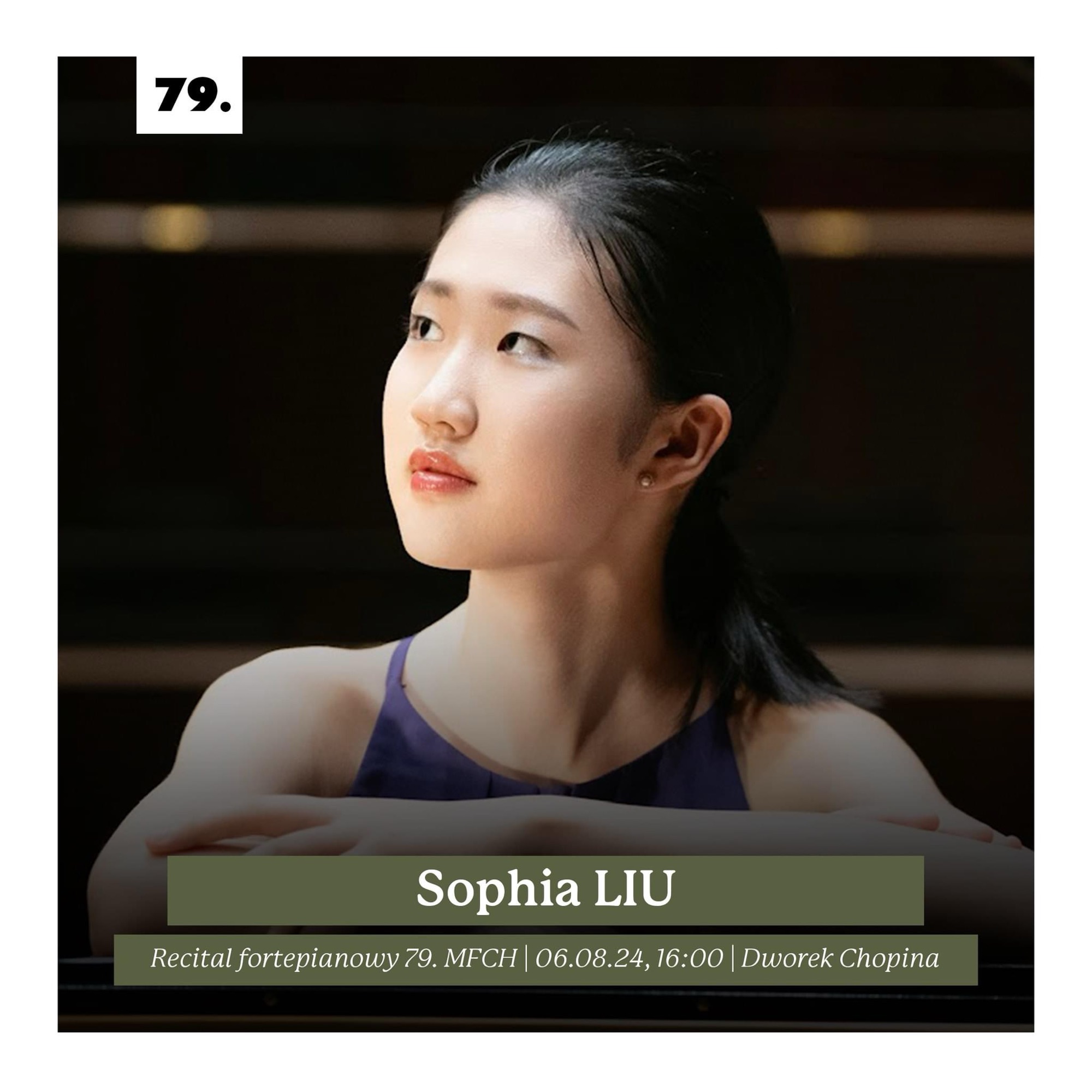
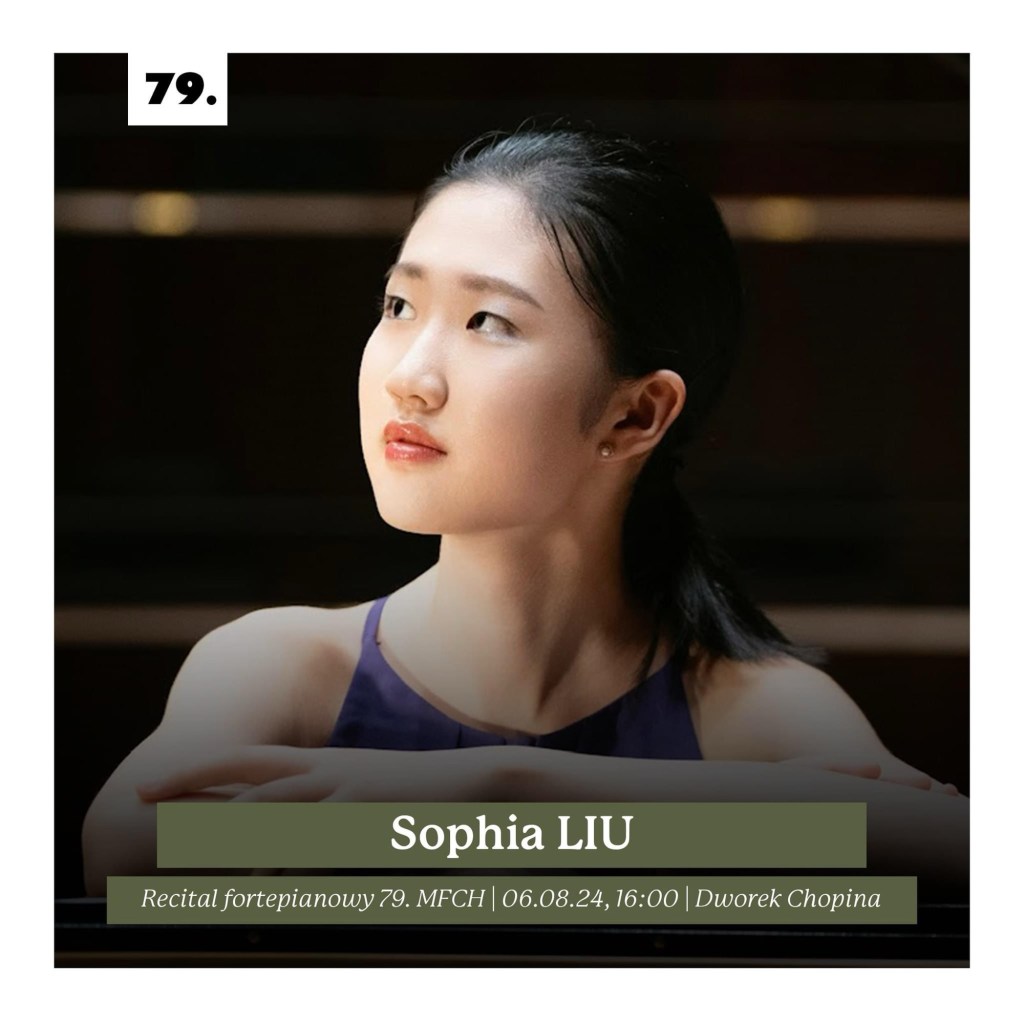
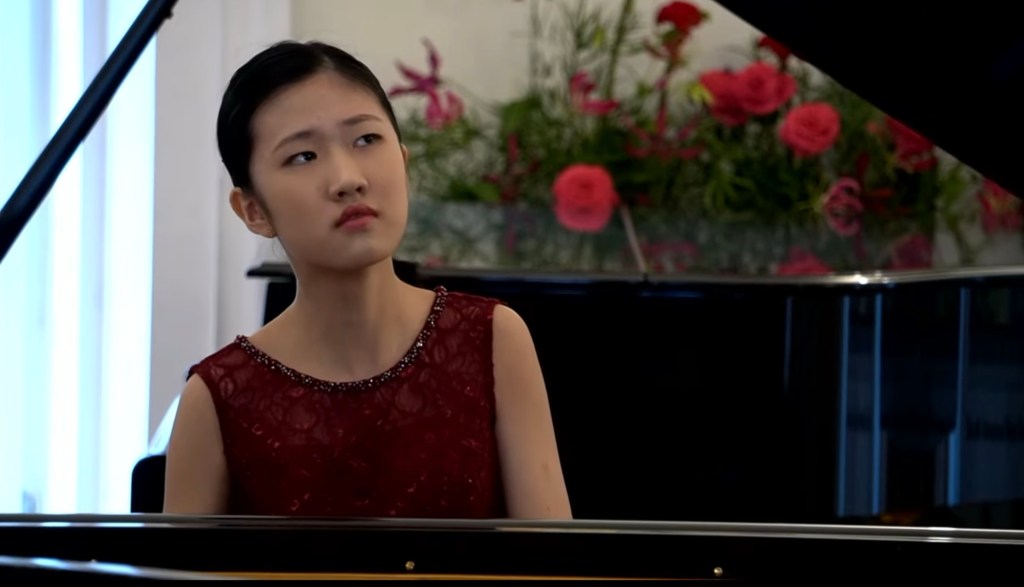
Sophia Liu was born in Shanghai China, moved to Japan at the age of 2. She started learning piano at age 4.
Her first public performance on the stage was at age 5, won the Gold Award of Kobe City Piano Competition and Government’s Education Committee Award; won the Grand Prize of category up 12y in Piano Competition of Chinese Composition in Hangzhou China.
Sophia moved to Montreal at age 7. Shortly after she won the Second Prize of category up 10y in Canada Music Competition.
At age 8 she won the First Prize of category up 10y in Concerto Competition of McGill University and a full scholarship of McGill Conservatory. She performed with the symphony orchestra to play Beethoven fifth piano concerto and had a great success.
At age 9 she won the First Prize of category up 12y and Third Prize of category 13-17y in Chopin International Piano Competition Hartford,CT. She performed twice at Carnegie Hall in New York City. She won the gold medal at the Quebec Music Festival in Canada.
Start with the current teacher: Mr. Dang Thai Son(private) Professor of McGill Sara Laimon(Conservatory) Mr. Zhengyu Chen Ms. Tina Kakabadze Ms. Motoko Takeuchi Ms. Xiaoling Wen
Sophia LIU / godz. 16:00 Ferenc LISZT Walc Mefisto nr 1 S. 514 Sonetto 123 del Petrarca nr 6 z “Annèes de pèlerinage. Italie S.161 Réminiscences de Norma S. 394 PRZERWA Fryderyk CHOPIN Nokturn G-dur op. 37 nr 2 4 Mazurki op.17: B-dur, e-moll, As-dur, a-moll Wariacje na temat “Là ci darem la mano” z opery “Don Giovanni”, Mozart
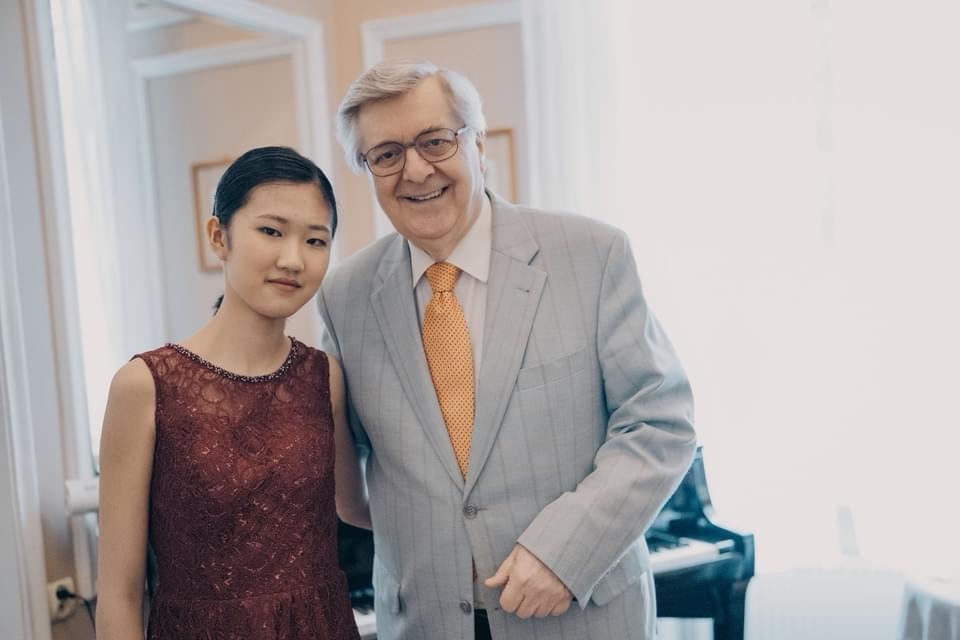
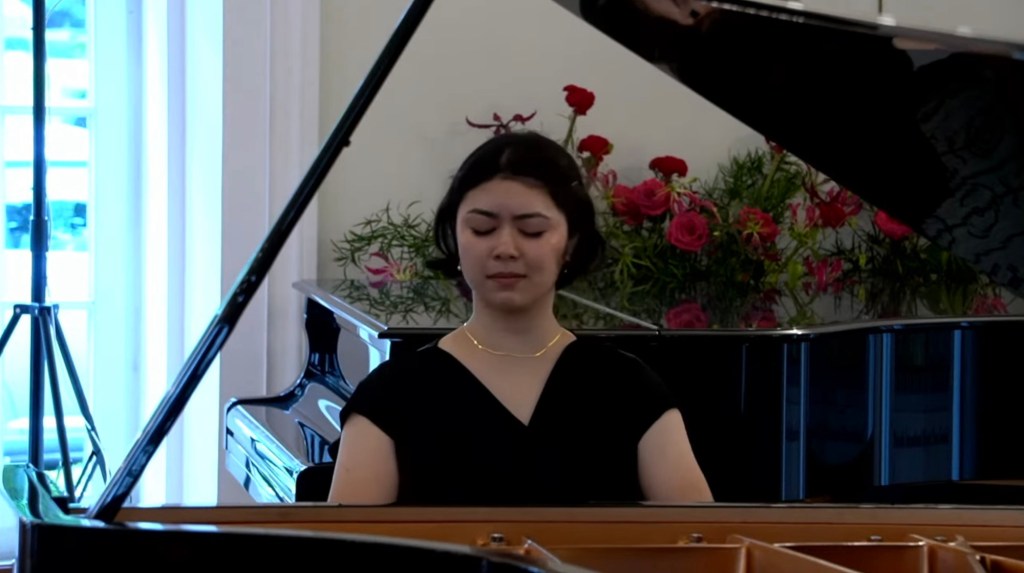
I am lost for words.I listened by chance to Sophia intrigued by Prof Paleczny saying that she was a name to watch .That must be the understatement of the century !I remember Serkin telling Richard Goode off after he had heard Murray Perahia .’You told me he was good ,but you did not tell me how good!’. Here is a young lady who plays with the same phenomenal mastery as Kevin Chen and Yunchan Lim both of whom were absolute revelations at Duszniki and have gone on to conquer the world.Both Kevin Chen,Bruce Liu and now Sophia are from the remarkable Canadian school of piano playing.Both Sophia and Bruce with Dang Thai Son in Montreal and Kevin with Marilyn Engle in Calgary.But if one adds up all the Canadians from Glenn Gould,Janina Fialkowska ,Angela Hewitt,Marc André Hamelin ,John Kimura Parker to the present day one begins to realise that there is something special in the air in Canada that can produce pianists of such intelligence ,stylistic and technical mastery with such a relaxed natural way of playing.
Sophia opened with Liszt ,not the barnstorming virtuoso but the poetic pianistic genius who like Chopin and Thalberg had created a completely new world for a piano that had evolved from a percussive instrument to one where the pedals became ‘ it’s very soul ’ .A black box of hammers and strings could give the illusion of being able to sing with the same beauty as the human voice or become a complete orchestra of ten wonderful players that could multiply into an infinite number of orchestral musicians.A pianist that must be an illusionist and know the secrets of balance,touch and of course fingerfertigkeit.
This used to be a novelty for the virtuosi of the nineteenth century where playing with sounds and teasing of sentiments became the power of an entertainer over an audience.Gradually this new technical mastery was placed at the service of an interpreter whose only wish was to transmit the composers wishes into sound.Leschetisky accused Schnabel of being a musician not a pianist.De Pachmann used to talk to the public whilst he played his ‘lollipops’ to let them know how it was going.There appeared out of this the great pianist who was above all a great musician.As students we would buy the recordings of Brendel or Pollini to hear exactly how the score could be translated into sound.Rubinstein too broke away from the so called ‘tradition’ where the tricks of the trade of pianists became more and more distant from what the composer had actually bequeathed to us on the printed page.
All this to say that the phenomenal technical command of this young lady was always at the service of the composer whether it be Liszt or Chopin.Liszt edited the works of Beethoven and knew exactly the importance of the indications the composer had written in the score.Chopin’s scores are of a clockwork precision and especially his pedal markings that give a clear indication of the phrasing and type of touch required.Debussy edited the works of Chopin and the precise detail in Debussy’s works is of quite extraordinary clarity.
A Mephisto Waltz with an inner energy and extraordinary command of the keyboard imbuing all she did with character and authority.Crystalline fingers allied to a great temperament.A poet too with the way she gently phrased the entry to the ravishingly beautiful central episode.Brilliantly clear bird calls were played with sparkling clarity .A driving passion but with a masterly control where the treacherous leaps held no terror for her because it was part of a musical language .A red hot passion ignited the piano with sumptuous sounds as Mephisto reached it’s climax with notes soaring across the keyboard with masterly ease .The control at the end where she managed to reduce the sound before unleashing diabolical double octaves showed a maturity way above her actual years.
The sonetto 123 del Petrarca was a wonderful oasis of luminosity and delicacy.A great architectural shape to poetic musings with a beautifully whispered but etched melodic line of breathtaking beauty .Exquisite arpeggios of radiance created a poignant atmosphere to the final prolong sigh.
There was nobility and authority to the opening of ‘Norma’ as a tale was about to unfold of quite extraordinary theatrical intensity.There was a kaleidoscope of colours and a ravishing sense of balance but also a clarity where the melodic line is accompanied by octaves as the piano ignites with burning intensity.There was a subtle beauty to the recitativi answered by the orchestral tutti’s as the music melts into a deep lament of radiant colour. Building in beauty with the barely audible whispered bass drum on which the haunting Bellinian melodies unfold with breathtaking virtuosity but above all a sumptuous beauty and absolute control.
Digging deep into the keys for the ‘war’ theme that was played with extraordinary rhythmic precision and a virtuosity of amazing elasticity and fluidity.A wind blows across the keys on which the melodic line sings out with ever more exultation and excitement.The genial combination of the two themes together I have never heard played with such fearless abandon and clarity.I remember being astonished by Kevin Chen but today I was truly astounded!
After the interval Sophia dedicated the recital to Chopin and it was here that she showed her aristocratic sense of style with four Mazurka’s that were for me the highlight of all I had heard in Duszniki this year ….or others if it comes to that .
Some things cannot be taught but natural instinct can be deadened instead of being nurtured! There was a National outcry in the ‘50’s when a Chinese pianist was awarded the coveted Mazurka prize at the Chopin Competition in Warsaw.But as Fou Ts’ong pointed out the poetic soul of nostalgia and melancholy are the same sentiments as in Chinese poetry ( of which his father was an expert and the first to translate them – both parents later committed suicide in the cultural revolution ).You see a ‘soul’ knows no frontiers !
The first Mazurka was played with crystalline clarity and beguiling rhythms with an especially hauntingly capricious central episode.A heart rending nostalgia inhabited the second with a ravishing sense of style and delicacy.A haunting melodic line to the third with exquisite embellishments played with disarming poetic simplicity and exquisite finesse.Arsenii Moon had just played op 17 n. 4 very beautifully but Sophia played it with even more refined delicacy and above all a poetic simplicity that was deeply touching.
There was a beautiful natural freedom to the Nocturne in G op.37 n.2 where Chopin’s exquisite bel canto in this nocturne resembled more an Impromptu.Unwinding with ravishing harmonic changes with refined sensitivity and above all simplicity.The beautiful lilting central episode, so reminiscent of the second Ballade glistened with refined streams of sound with a pastoral feeling of subtle nostalgia.A miraculous performance from the refined delicacy of Sophia’s sensitive fingers . I had not heard this nocturne for too long and was made aware of it by the artistry of this young artist.
The variations of ‘La ci darem la mano ‘ from Mozart’s Don Giovanni I have not heard since Cherkassky used to play them in his recitals for us in Rome.It is a ‘tour de force’ of refined technical mastery but it is above all a piece that needs a supreme stylist to keep up with the chameleonic changes of character allied to subtle technical difficulties.Sophia played the introduction with simplicity and refined elegance of half lights.Magic colours illuminated the piano as never before as intelligence and fantasy combined with such style.Even the simple statement of Mozart’s theme was full of subtle colouring that it became truly a thing to cherish .There was an amazing jeux perlé of another age which not even Cherkassky could rival ,because Sophia also had a youthful spirit of discovery and exhilaration as the notes just spun so magically from her well oiled fingers.There was an amazing dexterity too as the the leaps were thrown off with such ease.The final Polonaise was played with refined beauty and the same scintillating brilliance that had Schumann declare ‘Hats off Gentlemen a Genius’ when Chopin first played them as a teenager to the aristocratic audiences of the time.
Three encores each more astonishing than the other .Chopin’s rarely played Ecossaises were played with brilliance and exquisite style.The Black Key Study op 10 n.5 will never be forgotten by those that heard such a miracle.I have no idea what the last encore was but it is enough to say that at last this rather staid audience were on their feet to cheer one of the great pianists of our time as they had Kevin Chen and Yunchan Lim
Avery Gagliano is a thoughtful and reflective interpreter, and one looks forward to her future performances.” – South Florida Classical Review
“Her ability to inhabit every room in the immense imagination of Frédéric Chopin came as a revelation.” – New York Classical Review
Avery is a recent graduate of the Curtis Institute of Music, where she studied with Robert McDonald, Gary Graffman, and Jonathan Biss. In Fall 2024, she joins Sir András Schiff’s Performance Programme for Young Pianists at the Kronberg Academy in Germany.
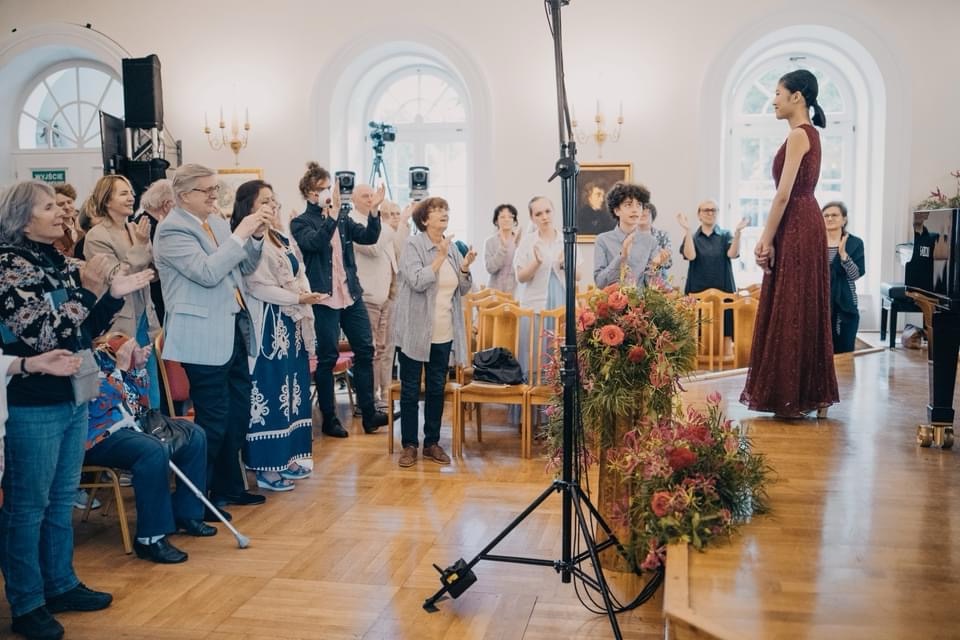
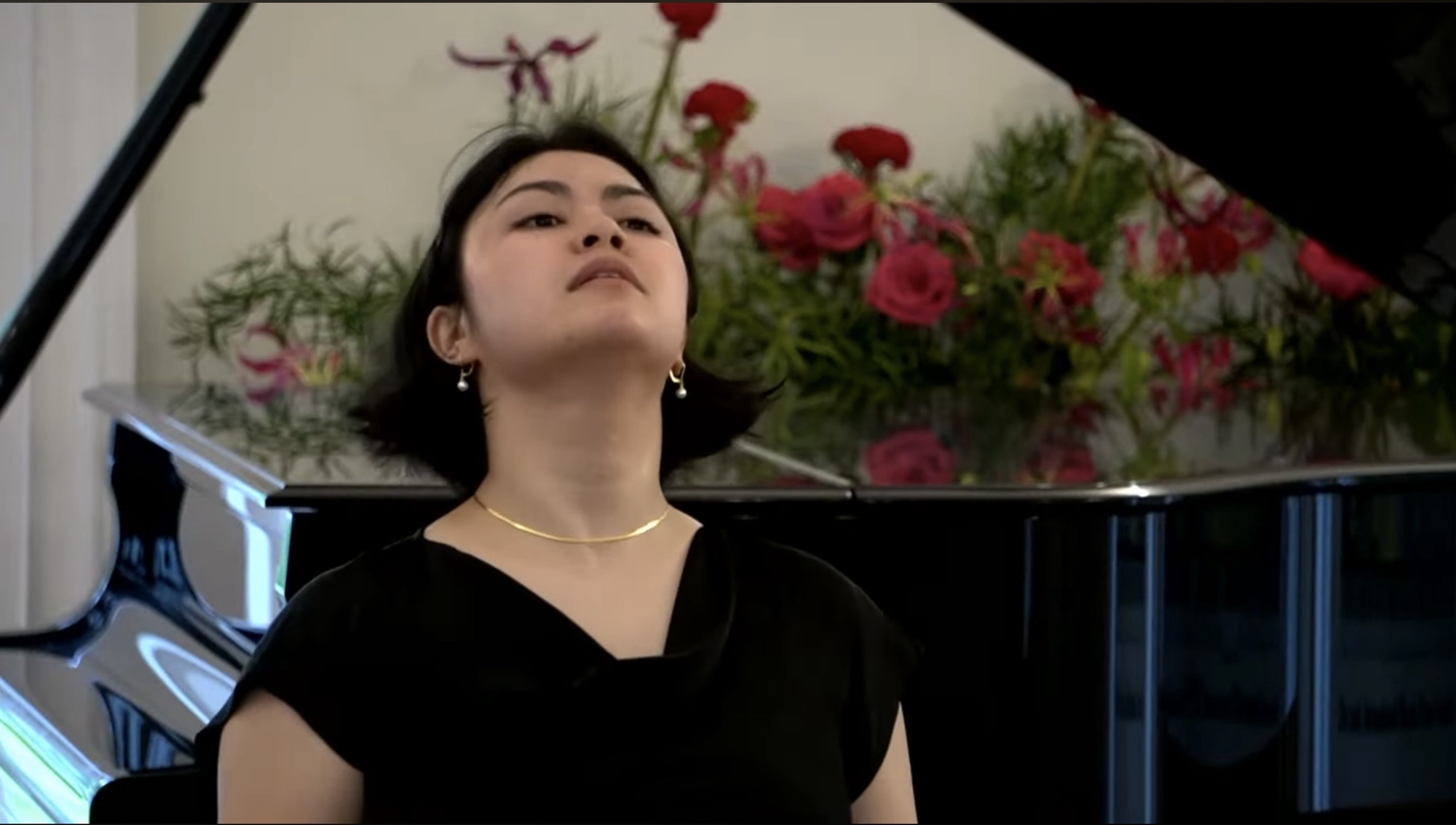
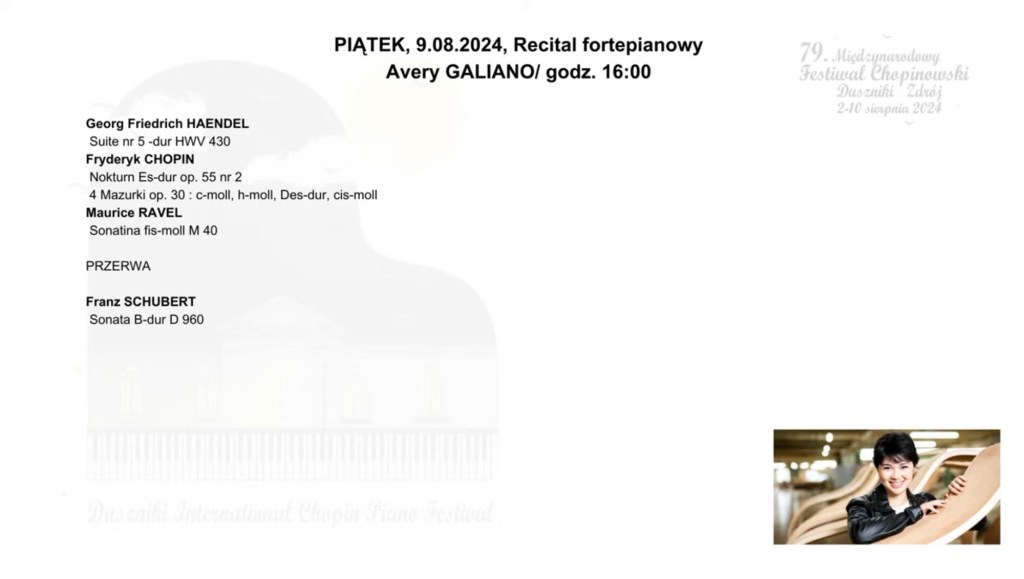
9.08.2024 16:00 Wonderful recital – crystalline musicality and naturalness of the game! A pianist without exception devoted to the message of the depth of music, honest and modest – avoiding non-musical, cheap, theatrical gestures intended to arouse and unfortunately often effectively inducing applause from the audience. The entire second part of Avery Gagliano’s recital was filled with one monumental work. Schubert- exquisitely performed, extremely demanding Sonata in B flat major in D. 960 !! Well done and hearty congratulations 👏👏👏
I was very pleased to be able to hear this recital that Prof Paleczny had praised so highly.
Due to a copyright problem I was not able to hear the last recital of this year’s festival by Alberto Nosé and decided that I would listen instead to this beautiful programme of Avery Gagliano that I had missed but was still available on streaming.
Playing of a true musician and it was her encore of ‘Jesu Joy of Man’s Desiring ‘ that reminded me of Dame Myra Hess as had her whole programme.The imperious opening of Handel’s 5th Suite was played with a natural musicianship that allowed the music to breathe so beautifully.Rich golden sounds with hands that seemed to belong to the keys as they extracted the very life blood that was hidden within each note.
Uncle Tobbs (Tobias Matthay) the teacher of both Dame Myra Hess and Dame Moura Lympany wrote many a treatise on the art of touch .It was though these two great ladies who could show the world that with simple musicianship and infinite gradations of sound what it meant to make the music speak without resorting to crowd pleasing circus tricks.Murray Perahia and Andras Schiff have taken over that mantle today and they can take the most simple music and imbue it with such poignant meaning.Not for them the virtuosity or grandiloquence of the works of the Russian repertoire but more attuned to the deeply meaningful works of the Viennese classics where a lifetime is not enough to delve into the inner meaning of such masterpieces.
Avery today just looking a her programme showed the same selfless musicianship where the performer is at the service of the composer, delving deeply into the scores to find their inner meaning.There was a beautiful flowing tempo to the Allemande of the Handel Suite with a stimulating dialogue between the two hands.Even the Courante had a dynamic drive but always with a subtle musical shape to each phrase.The majestic opening of the Air with variations belied the simplicity with which she played this innocent melody.Variations that were played with a clarity and ever more exhilaration.
Even in Chopin her restrained passion and luminosity of sound gave such nobility to one of Chopin’s most passionate outpourings,the Nocturne op 55 n. 2 .Beautifully moulded mazurkas showed off the robust dance and deeply nostalgic melancholy of these miniature tone poems.
A completely different sound for Ravel that had a natural flexibility but above all a simplicity of ravishing glowing sound.The minuet was played with a velvet beauty to the sound with glowing colours glistening as the music moved inexorably forward.There was a dynamic drive to the Animé of moving harmonies and sumptuous sounds.
It was Schubert’s last Sonata ,though, that was given a monumental performance with the simplicity and poise of this great outpouring of song.The beauty of the opening with the ominous bass trill hardly changing the atmosphere but was a premonition of the deep uncertainty that was obviously encircling Schubert in his final year on this earth.In fact there was always a sense of the unknown as the modulations and even the attempts at bucolic brilliance always had a slight shadow over them thanks to Avery’s extraordinary poetic sensitivity.Such was her scrupulous attention to the composers wishes she even included the repeat of the first movement which includes some very important bars that are very often overlooked in trying not to overburden the listener.This is never the case for a true interpreter because such is the musical discourse that the listener can be taken on a wondrous voyage of discovery together.There was a simple noble beauty to the slow movement with full rich sound of the central chorale .A brilliant Scherzo and a trio that was allowed to speak for itself without any exaggeration.A slightly reticent Rondo that built in energy and depth each time that it was called to arms.Passion and rhythmic energy went hand in hand with the glorious outpouring of Schubert’s seemingly endless mellifluous invention.A performance of a true musician but also of a pianist of remarkable technical command and authority .
Two encores for a very enthusiastic audience that had listened with rapt attention to the wonderful music making that Avery had shared with them. ‘Jesu Joy of Man’S Desiring’ in the famous transcription of J.S. Bach by Myra Hess and a final rumbustuous Mazurka by Chopin.
A standing ovation after an extraordinary performance of Liszt’s ‘La Campanella’ which was the last encore in a recital of radiance and beauty.A kaleidoscope of sounds from a pianist who was also a magician who knew how to extract an extraordinary range of sounds by a sense of balance without ever overstepping the limit of the instrument.Sumptuous full sounds ,never hard or ungrateful .
What a revelation ‘The Great Gate of Kiev’ was after the enormous build up of Baba Yaga to suddenly see the vision of the imaginary gate from a distance .It gradually came nearer and nearer with the bells pealing and the whole air resonating with the vibrant outpouring of sounds.
There had been radiance and nobility from the very opening of this extraordinary recital with Bach’s Chorale Prelude ‘Nun komm der Heiden Heiland’ in the beautiful transcription by Busoni in his centenary year.There was a religious simplicity to the opening,out of which emerged the beauty of Bach’s Chorale.Sumptuous bass notes allowed radiance and luminosity in the upper reaches of the piano with quite magical effect.A whispered final few bars as the audience sat in revered silence as the deep bass C sharp of Chopin’s Barcarolle was allowed to enter this magic land.
The Barcarolle is one of Chopin’s greatest works and is a continuous outpouring of song .Arsenii gave a glowing fluidity to the melody as it floated on a very deliberately placed barcarolle of gently lapping water and was allowed to flow with ravishing beauty.There was an almost improvised freedom of ‘bel canto’ flexibility but it was always played with aristocratic nobility and heart rending beauty.The embellishments were cascades of jewels enriching this extraordinary late masterpiece.Some wonderfully original colours appeared in the left hand as the sotto voce throbbing of the waves enveloped this central episode leading to the ‘poco più mosso’ before the almost orchestral transition to the marvel that is the ‘dolce sfogato’ .The only time Chopin used this phrase as even he was stuck for an expression for something that in Perlemuter’s words is so heavenly. Arsenii played it with exquisite timeless beauty and a freedom that made the final build up even more passionate and breathtaking.The final page was played with an improvised freedom and the ‘leggiero’ ending that was particularly admired by Ravel was played with the same radiance and beauty of ‘Gaspard’ that we were shortly to admire from Arsenii’s magic fingers.
Three Chopin Mazurkas were played with a fantasy and sense of colour that was of quite extraordinary poetic sensibility.The A minor op 17 I have never heard played with such improvised freedom and beauty – ‘ Canons covered in flowers’ says Schumann and they were indeed miniature tone poems in the hands of a supreme stylist with a truly poetic soul.
The beauty of the shimmering water in which Ondine ,the water nymph cavorts with ever more fleeting glee,was at tour de force of technical perfection that I have rarely heard before in the concert hall. How lucky ‘Ondine’ was today to find such sumptuous beauty as she sang her song with delicacy and luminosity.There was great control in the mighty climax where the gradual build up of double notes lead to a sumptuous climax and ravishing glissandi that just shimmered on the surface of the keys. Ondine sang her final song bathed in the resonance of the pedal before disappearing into the distance. I have rarely heard this final page played with such poetic perfection as today .It was followed by the bleak picture of the gallows swinging in a barren landscape.Ravel marks ‘Le Gibet’ ‘Très lent sans presser ni ralentir jusqu’à la fin’ and it was exactly this that Arsenii played to perfection with a sense of architectural line that was quite extraordinary.The magic entry ‘pp un peu en dehors mais sans expression’ was quite sublime with playing of disarming simplicity and purity.
The tolling bell was repeated with hallowing effect and Arsenii lifting his left hand as the right barely touched the keys.This left hand that would become the devil in disguise of ‘Scarbo’. A work written by Ravel with the idea of writing a piece that would be even more technically challenging that Balakirev’s Islamey! Well he certainly succeeded but it was no trouble for Arsenii who not only met all the technical challenges but imbued them with passion and dynamic drive.There was an extraordinary clarity to the pianississimo central episode so often bathed in pedal but here ,like in the Debussy encore, was played with quite remarkable ‘fingerfertigkeit’.
There was nobility and clarity from the very first notes of Mussorgsky’s ‘Pictures’.A remarkable performance in which each picture was described with quite extraordinary conviction and character.From the startling contrasts of ‘Gnomus’ to the continuous heart beat of the ‘Old Castle’ with it’s inner colouring of mystery and luminosity.A hypnotic sense of phrasing where the squabbles in the ‘Tuileries’ were answered by the robust pedalled old cart horse ‘Bydlo’ that disappeared into the distance with masterly control of sound.A mysterious promenade was rudely interrupted by the squarking antics of the unhatched chicks.’Goldberg’ entered with such preposterous importance as poor ‘Schmyle’ was left whimpering in the distance.The ‘Market at Limoges’ has never sounded so busy as in Arsenii’s hands today or the ‘Catacombs’ sounded so imposing with a great sense of line dissolving into glistening sounds of barely whispered reverence.’Baba Yaga’ was surprisingly restrained at the beginning but soon build up energy and fervour in Arsenii’s sumptuous hands.The central episode usually played rather dryly was here played with remarkable colour and beautiful shape.’Baba Yaga’ taking complete control with technical prowess and volume only to be stopped in his tracks by the vision of such imaginary beauty as ‘The Great Gate of Kiev’.A masterly performance as Arsenii’s control of balance and sound allowed the final appearance of the Great Gate to be truly breathtaking in majesty and nobility as we all shared in the magic vibrations that were allowed to resound in the air.A remarkable performance from a supreme stylist and master of sound.
Three encores demanded by an audience that had been seduced,ravished and excited by performances of such poetic significance and communication .Debussy’s ‘Feux d artifice’ has rarely sounded so clear and precise ,as the Marseilles could just be heard in the distance.A ravishing lyric piece by Grieg was played with subtle colouring and ravishing beauty.Liszt’s La Campanella brought the audience to its feet to salute a remarkable virtuoso pianist who is a true poet and above all a supreme stylist.
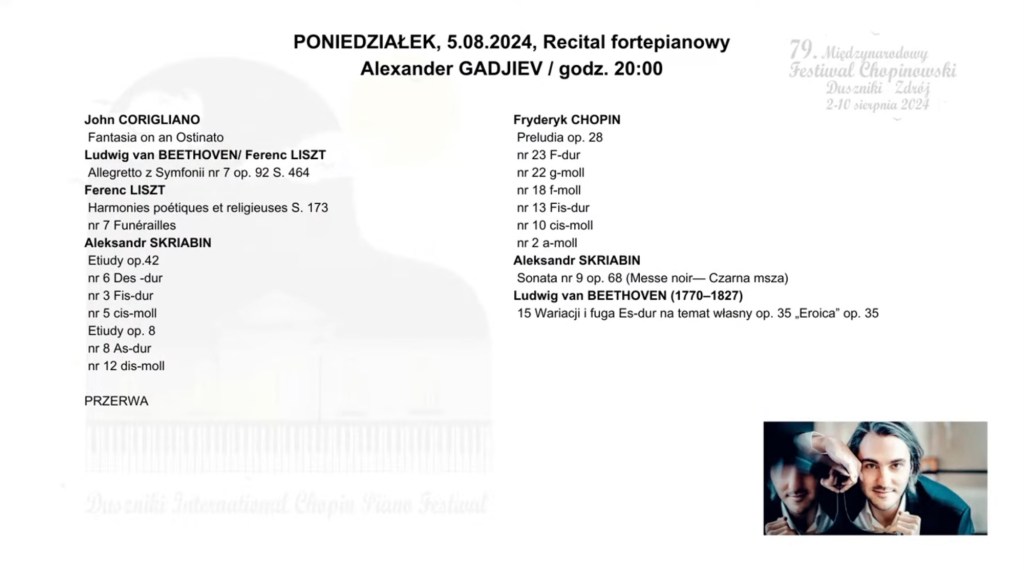
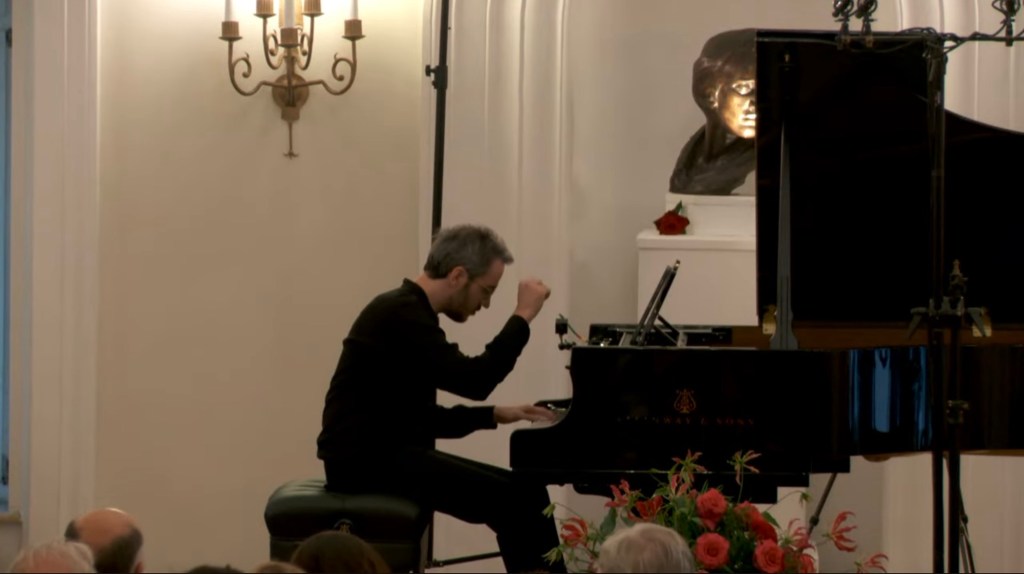
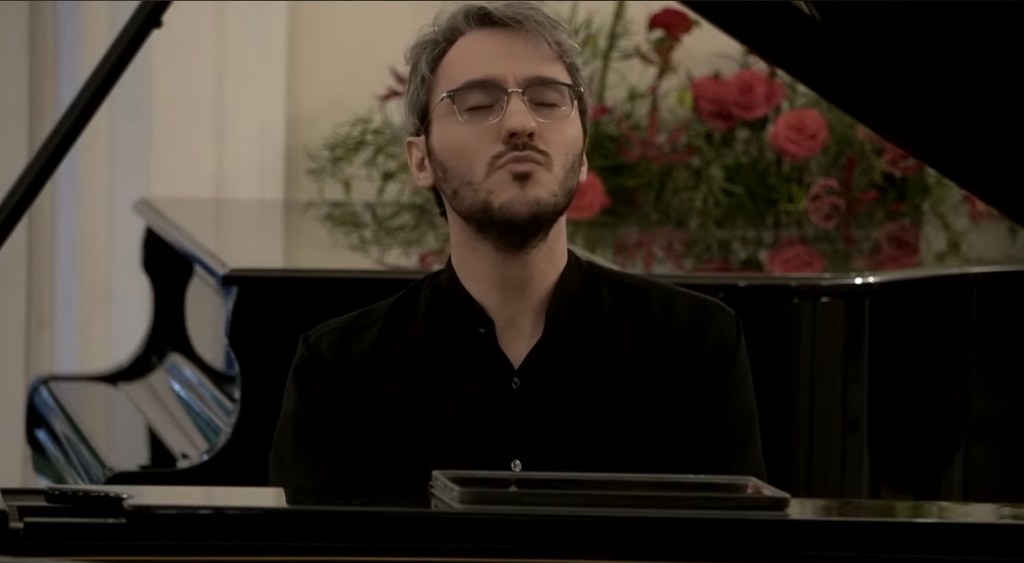
Having heard Alex many times over the last six years it was refreshing to hear him again after a period of reflection and physical reeducation.Having been a top prize winner in the 18th Chopin Competition in Warsaw I was able to listen to him three times the following year before he took a sabbatical to reflect and refresh his remarkably original musicianship.I remember in Rome the hall being plunged into darkness as we were asked to prepare ourselves with two minutes of complete silence out of which a shadowy figure appeared playing the opening chords of Chopin’s Polonaise Fantasie.’Sounds were born before words’ we were told as Alex went on to enchant and enrapture the discerning Roman public with performances that have never been forgotten by those who were present that day.
Today I was reminded of that Roman concert as Alex began the concert with a work by Corigliano that was based on reverberations of luminosity and a quite extraordinary range of colours.Matthay sprang to mind with his treatise on the Art of Touch and his insistence that in every key there were endless varieties of touch and sounds.I remember Luciano Berio supervising a performance of a work of his written for vibrations created by deep bass notes in the piano.We got through three piano tuners that day as Berio’s superfine ear was not satisfied with the overtones that he knew were there in the piano for those with ultra sensitivity!
It was exactly this sound world that pervaded the whole of today’s recital.Corigliano ‘Fantasia on an Ostinato’ opened with sounds of glowing fluidity from every part of the keyboard .It made the appearance of dry lifeless sounds such a contrast as they appeared over insistent repeated notes.Suddenly Beethoven could be heard in the distance with jingling and tingling whispered sounds of Corigliano as Beethoven appeared as a vision from afar until it gradually appeared in Liszt’s quite extraordinary transcription.By now our ears and Alex’s were attuned to a kaleidoscope of sumptuous sounds and with Alex’s quite extraordinary sense of balance and masterly musicianship Beethoven’s Allegretto took on a clarity and beauty that is rare indeed.
Now the deep resonant bass notes of Liszt’s Funerailles rang out and it was the start of a journey with a musician of rare sensitivity and fantasy who could surprise and seduce at every turn as he listened so carefully to the sounds he was making.Music takes over where words are just not enough and it was this that made Alex’s playing so startlingly original without any idiosyncratic distortions or self gratification.This was a musician with the power of communication where the sounds became a musical language that created a bond between the performer ,the music and the listener.Over the deep Lisztian bass notes were chords of pleading insistence stopped in their track by a call to arms from single repeated notes. A desolate bass melody appeared of deep yearning gradually passing to the soprano with a wonderful luminosity and ravishing sense of balance as the melody grew in intensity.This was music making of a great tone poem that spoke with poetic sensitivity and beauty with a kaleidoscope of colours that could ravish and surprise. Silences too became so important as the deep aristocratic bass notes of great authority entered and the cavalry was unleashed with breathtaking power of sumptuous rich sounds.Reaching an enormous climax and suddenly there was a silence so achingly poignant before the triumphant melody resounded with nobility and passionate control.The cavalry could now only be seen as dust in the distance as this great poem was suddenly curtailed.
Five studies by Scriabin closed the first half of this highly original recital.There were the sumptuous sounds of richness and fluidity of op 42 n 6 and the absolute clarity of the teasingly beguiling trills of op 42 n. 3 .But it was the sound of a truly ‘Grand’ piano that rang out with romantic fervour and mastery with the passionate outpouring of op 42 n 5 .There was a beautiful simplicity and glowing melodic line to the early op 8 n. 8 and the sumptuous ‘revolutionary’ outpouring of unashamed virtuosity and romantic fervour of the study in D sharp minor op 8 n 12.
Five Scriabin Preludes were answered after the interval by six Chopin Preludes from op 28. Alex had opened with the penultimate prelude n.23 like a breath of fresh air pervading the red hot atmosphere generated in the first half.A beautiful pastoral meandering of chiselled luminosity followed by the octave prelude that was played as a great bass melody of unusual beauty.The recitativo of n 18 was played with an extraordinary sense of theatrical rhetoric of operatic proportions. Ravishing cantabile of the 13th with a glowing cantabile and a flowing bass of subtle colour and flexibility with noble simplicity of poignant beauty.Capricious light relief from the 10th that was played with beguiling rhythmic insistence as we arrived at the deep brooding of the second prelude.
It was the same brooding bass that linked the opening of the Black Mass by Scriabin to this most troubled of Chopin’s Preludes.And trouble was brooding with Scriabin’s extraordinary penultimate Sonata with its meanderings of such ominous overtones.Trills like electric shocks suddenly appeared answered by ominous bass clouds.Becoming ever more insistent like a cauldron building up to boiling point until erupting with a climax pounded out with one finger insistence by our young poetic hero.A quite remarkable work at the end of a remarkable journey that had taken us on a magic carpet to lands we never knew existed until today. From Corigliano through Liszt and Chopin and finally Scriabin with the star shine so brilliantly.
Now we were brought back to the world of Beethoven .Irascible irrational outbursts contrasted with ravishing beauty and originality wrapped up in the convention of the day that Beethoven allowed to encompass his unpredictable genius. Beethoven’s ‘Eroica’ 15 variations and fugue were played with scrupulous attention to Beethoven’s indications but also the fantasy and mastery of Alex who could breathe such new life into the score. From the very first opening chord that resonanted so imperiously at the beginning as it was to do throughout this remarkable work. Amazing technical prowess – has n. 4 or 6 ever been played with such mastery.It was ,though ,the character he could bring to the variations ,like Curzon, that could have us dancing one moment and crying the next.The charm of the eleventh or the brutal insistence of the thirteenth was followed by the sublime beauty of the fifteenth with its mysterious final whispered chord.The Final fugue was played at a real Allegro con brio with scintillating brilliance and transcendental authority.
Four encores all dedicated to Chopin crowned this recital that was a lesson in musicianship and communication. Chopin Mazurkas that were played with extraordinary sensitivity and style but it was the Third Scherzo that showed off the poetic brilliance and intelligence of this supreme stylist
I had heard Jaeden play in the Wigmore Hall in London in 2022 as winner of the Santander Competition with a remarkable performance of Rachmaninov’s First Sonata and the Brahms Quintet with the Casals Quartet.
The difference between the extrovert Floristan and the restrained Jaeden was made even more evident by the extraordinary Vera Martinez Mehner of the Casals Quartet.Try as I could there was such a compelling authority and conviction to all she did that for me she stole the show with a quite hypnotic stage presence in what was a remarkably unified performance of the Brahms Quintet. I had heard Jaeden again in Perugia playing in the masterclasses given by another extraordinary Canadian Angela Hewitt.Two movements of Ravel Miroirs were enough to show his absolute mastery and pianistic perfection but a hypnotic stage presence again seemed to elude him.
Jaeden has since gone on to win the Montreal competition adding yet another gold medal to his honours .They say there are not two without three and I hear Jaeden will be in Leeds next September trying for the triumvirate like Kevin Chen ! Jaeden is now mentored by Benedetto Lupo at the Rome Academy where he will graduate next summer when he will obviously be an established figure on the concert circuit ready to conquer the world’s greatest concert halls.It is interesting to note that another pianist from the remarkable class of Lupo- Gabriele Strata came second in Montreal.https://christopheraxworthymusiccommentary.com/2023/03/02/gabriele-strata-in-siena-micat-in-vertice-100-a-poet-speaks/
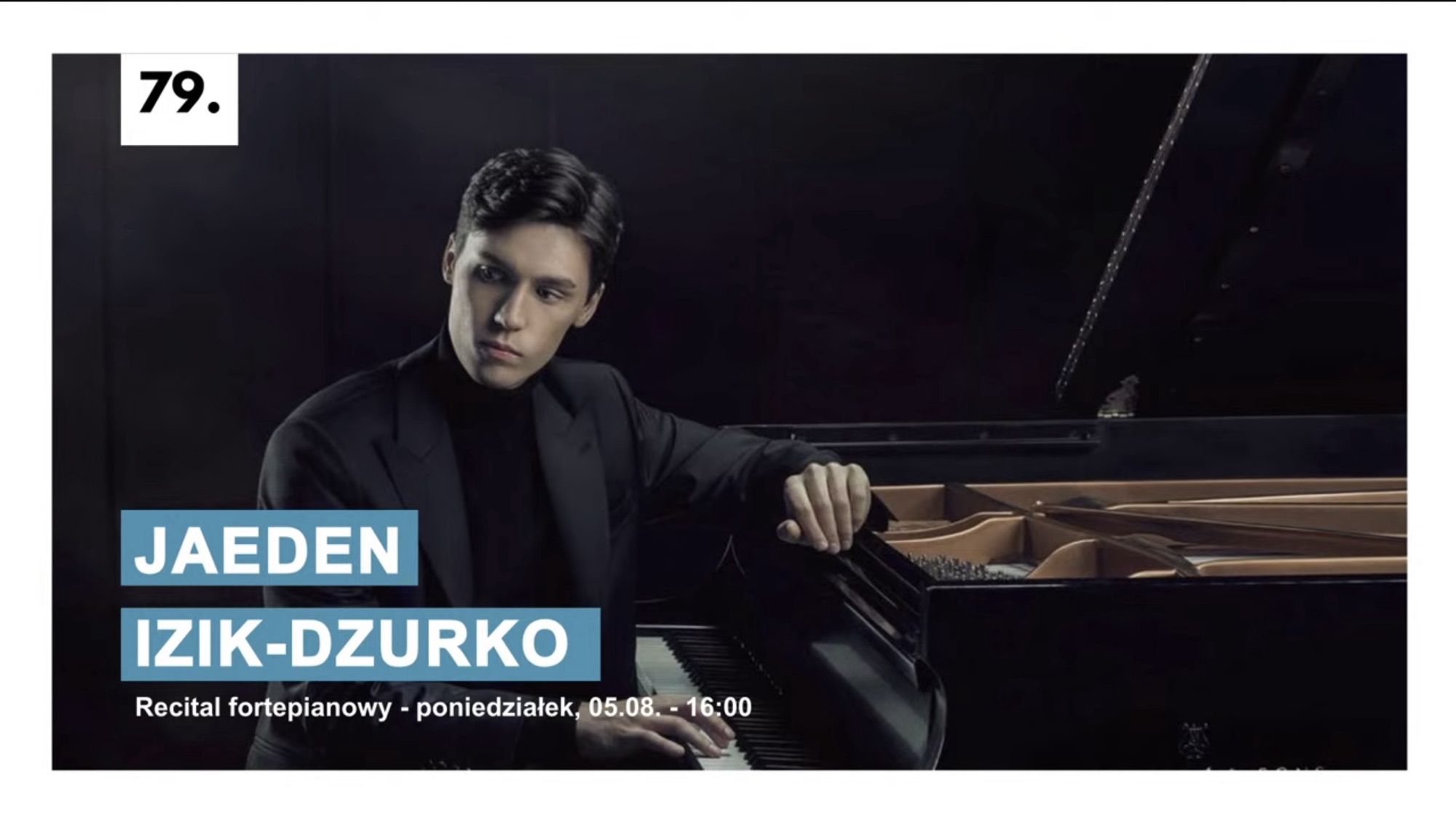
Jaeden is a First Prize winner at the 2022 Hilton Head International Piano Competition and the 2022 Maria Canals International Music Competition. Most recently, he was awarded the First Prize, the Canon Audience Prize, and the Chamber Music Award at the 20th Paloma O’Shea Santander International Piano Competition. He is also a Grand Prize winner at the Federation of Canadian Music Festivals’ National Competition, a winner of Juilliard’s Gina Bachauer Scholarship Competition, and a Second Prize and J.S. Bach Prize winner at the OSM Competition. Jaeden is the recipient of a 2024 Borletti- Buitoni Fellowship.Winner of the 2024 Montreal Competitionhttps://www.wfimc.org/news-media/jaeden-izik-dzurko-crowned-grand-prize-laureate-montreal#:~:text=Pianist%20Jaeden%20Izik%2DDzurko%20has,for%20his%20captivating%20stage%20charisma.
Born in Salmon Arm, British Columbia, Jaeden earned his Bachelor of Music degree at The Juilliard School with Yoheved Kaplinsky and his Master of Music degree at the University of British Columbia with Corey Hamm. He is also a former student of Ian Parker. He currently studies with Jacob Leuschner at the Hochschule für Musik Detmold and Benedetto Lupo at the Accademia Nazionale di Santa Cecilia.
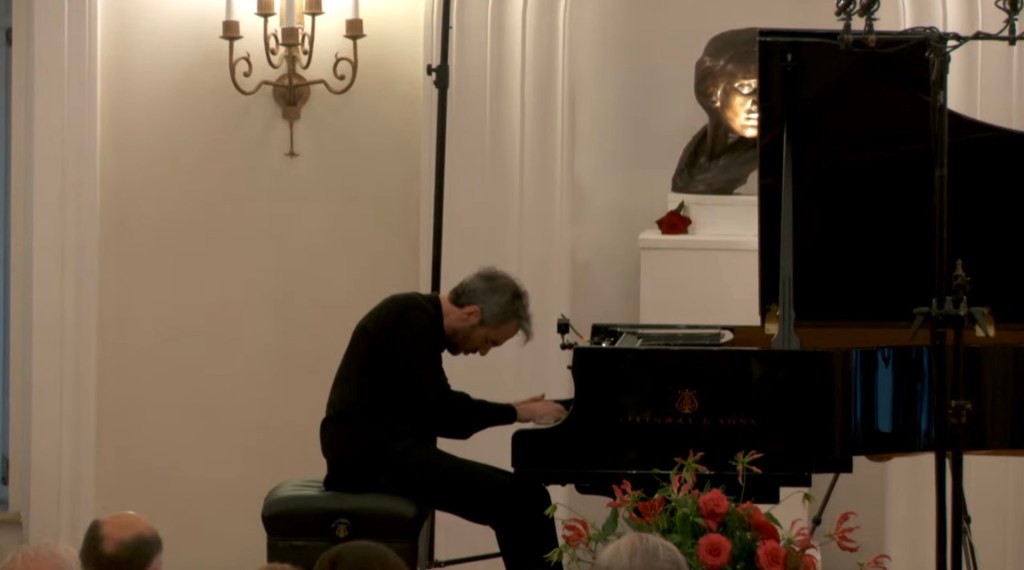
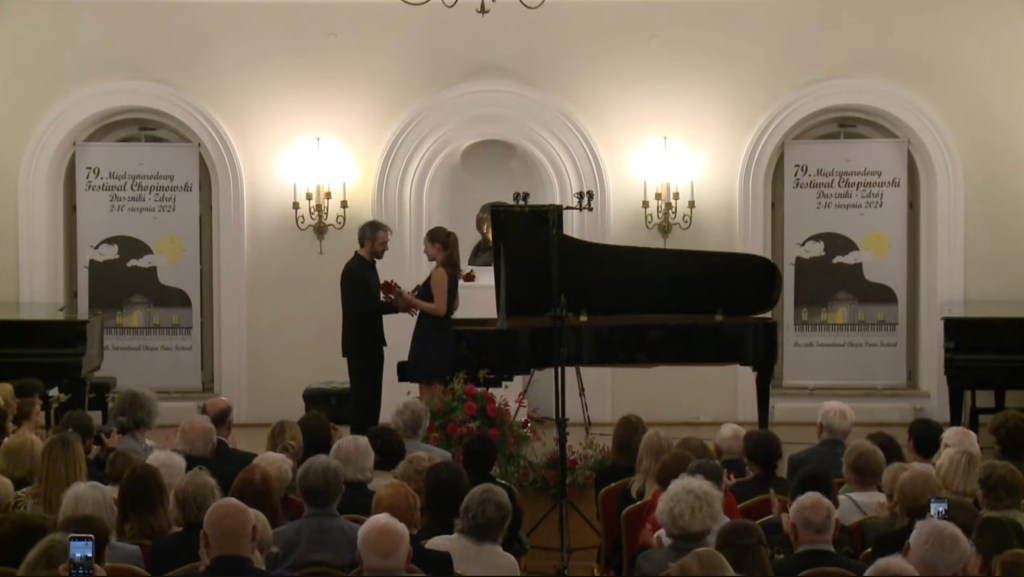
Today thanks to Piotr Paleczny again for his extraordinary choice of artists at the Duszniki Festival ,I heard a different Jaeden with playing of burning intensity and conviction. A remarkable young musician who has turned into a great artist.The key to this elusive gate was Ligeti!
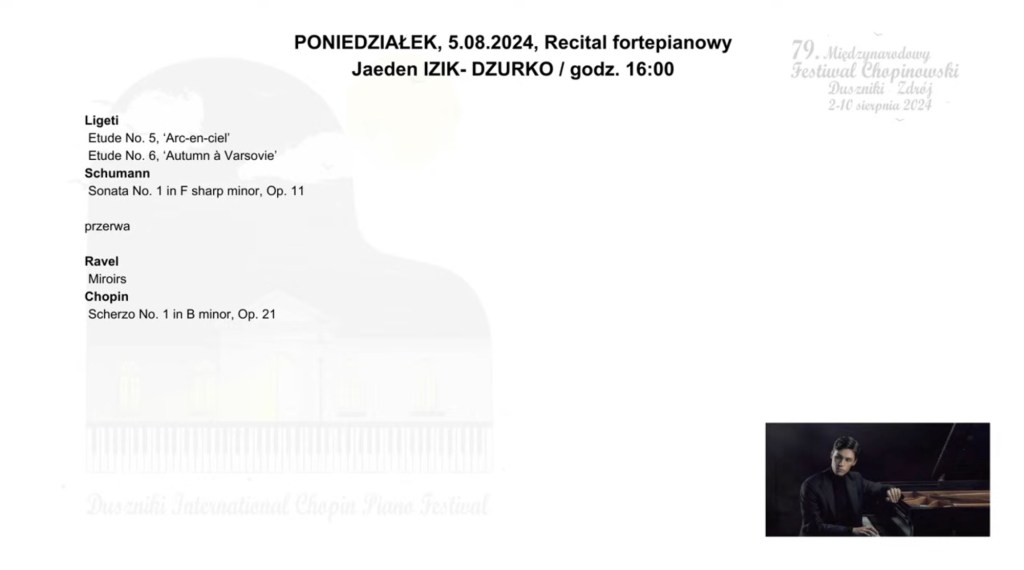
From the very first note of the Ligeti Etude n. 5 there were etched sounds of Messiaenic sharpness like broken glass played with a prismatic sense of colour .A kaleidoscope of sounds as they reached on high with heart rending intensity.A truly astonishing range of colours of poignant meaning as the notes disappeared into the infinity that lies at the top of the keyboard .In the Etude n. 6 there was a gradual burning intensity as the melodic line built in fervour with remarkable clarity and an extraordinary sense of balance.Magical sounds and an incredible technical mastery ending in an eruption in the bass of the piano that was truly breathtaking. This young man had taken us to ‘his’ world with hypnotic commanding mastery.
Everything paled in comparison to such intense masterly performances even though there was a refined musicianship of intelligence and mastery in everything he did.A technical and musical perfection that was quite remarkable as has been proven on the Competition circuit with the prospect of a great artist that awaits us in the wings which is an exciting prospect indeed.
Schumann’s Sonata op 11 is a great tone poem of refined elegance and beauty but it needs the burning intensity of an Annie Fischer to make it breathe with the dynamism and drive where the two personalities of Schumann can live together under one roof. It is a Sonata that needs a great architectural sense of shape to stop it being a collection of beautiful episodes.Jaeden is a remarkable musician of great intelligence and it is exactly this great arc that he was able to construct from the improvised beauty of the opening to the tumultuous orchestral finale.The opening had been played with great freedom and an extraordinary sensibility with a flexibility sustained by a sumptuously sonorous bass.Phrasing with the same sensibility as a singer until the entry of the impish left hand with it’s capricious sly entry as the chase was on.There was poignant nostalgia as the melodic line was allowed to wallow in an oasis of beauty interrupted only by the sinister entry of the left hand with its brooding interruptions.There were some exquisite embellishments too of sensitive artistry as the music moved inexorably forward.
Ravishing beauty of the slow movement – Aria- with a glowing melodic line played with great sensitivity and a wonderful sense of balance with comments from the bass of poignant beauty as the Aria remains suspended in thin air.Interrupted by the scherzo with scintillating lightness and drive with a beautiful sound world and great sense of style.Bursting into song ‘Alla burla ma pomposo’ with the dramatic beauty of the recitativi just missing the burning intensity that Jaeden had brought to his wondrous world of Ligeti.The Finale had a dynamic drive allied to a ravishing beauty where Florestan and Eusebius were at last united as the gradual build up to the final tumultuous ending was masterly controlled.
Ravel Miroirs was given a masterly performance of precision and delicacy .’Moths’ that were wisps of fleeting beauty with the whispered beauty of the ‘Saddest of Birds’ played with quite extraordinary control.A beautiful breathtaking fluidity to the ‘Boat on the Ocean’ with the magical apparition after the storm I have never heard played with such perfection missing only the depth of sound that I have only ever heard from Perlemuter. ‘Alborada’ was breathtaking in command and colour with double thirds thrown off with a mastery that I have rarely witnessed and where driving rhythms of animal excitement ignited the atmosphere as the bells were gently heard tolling in the distance.An ending of pure magic suspended in air as the notes were allowed to melt into the distance from where they had first appeared.
Chopin’s First Scherzo was given a fearless performance of poetic mastery.The ‘molto più lento’ I have rarely heard played more beautifully.Some hidden inner counterpoints in the ‘agitato’ that followed gave great depth to the streams of notes that ignited the atmosphere as we moved inexorably to the brilliance of the coda that was played with breathtaking audacity.
Two encores were offered by this remarkable young man with a standing ovation from many admirers would could appreciate the refined perfection of an artist headed for the heights.The second encore was a passionate outpouring of Romantic fervour with Scriabin’s early D sharp minor study .The first was a work of clockwork precision and extraordinary technical prowess and I could not even guess who the composer might be! Perhaps Jayden can tell us ?
Maestro Lupo has come to the rescue telling us it was Medtner Fairy Tale op 26 n. 2!
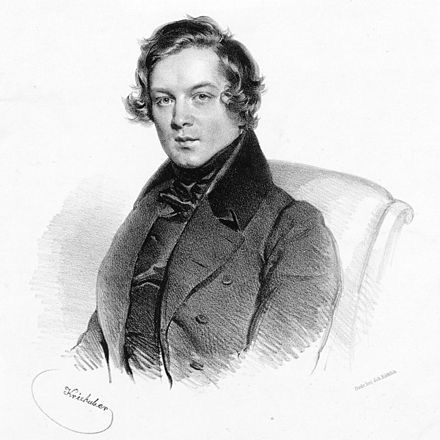
Robert Schumann. 8 June 1810 Zwickau 29 July 1856 Bonn
The Piano Sonata No. 1 in F♯ minor, Op. 11, was composed from 1833 to 1835. Schumann published it anonymously as “Pianoforte Sonata, dedicated to Clara by Florestan and Eusebius”.The Aria is based on his earlier Lied setting, “An Anna” or “Nicht im Thale”.Schumann later told his wife, Clara , that the sonata was “a solitary outcry for you from my heart … in which your theme appears in every possible.
Un poco adagio – Allegro vivace
Aria: Senza passione, ma espressivo
Scherzo : Allegrissimo (F♯ minor) – Intermezzo : Lento. Alla burla, ma pomposo – Tempo I
I will never forget the first time I heard Kevin Chen at the Liszt Competition in Budapest in 2021.Peter Frankl and I were flabbergasted by this young boy who could play with such mastery and breathtaking virtuosity.He swept the board at the competition and even Giovanni Bertolazzi,one of the finest pianists of his generation,had to bow to such a phenomenal genius.We discovered afterwards that he had studied with Marilyn Engle in Canada who had been one of the most remarkable Canadian pianists of her generation. https://www.thecanadianencyclopedia.ca/en/article/marilyn-engle-emc
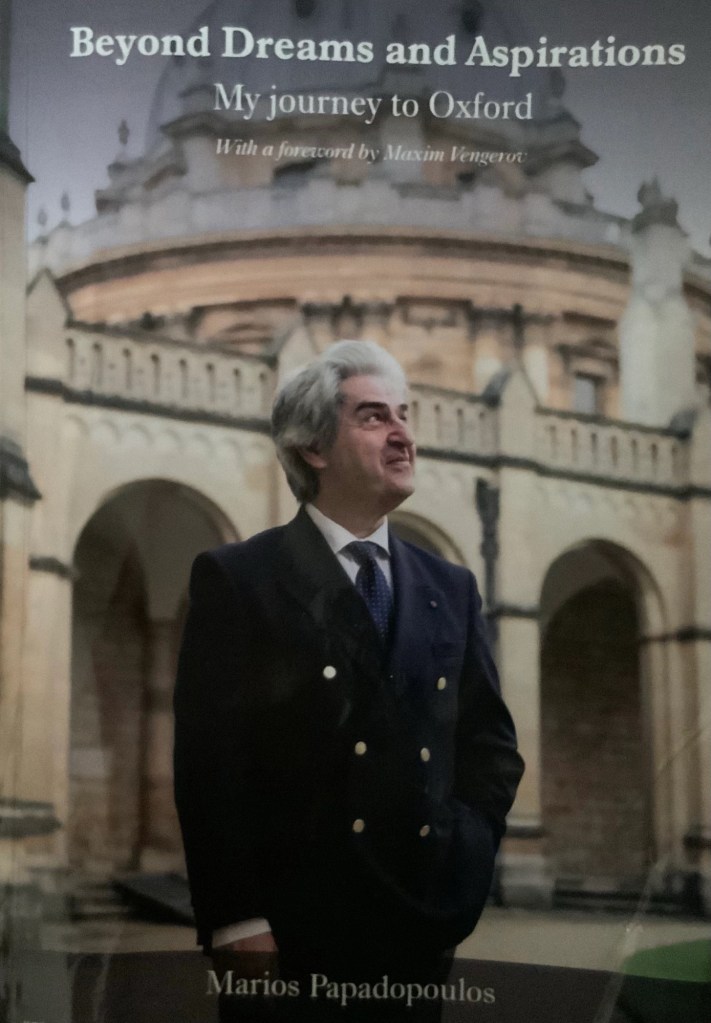
Kevin Chen went on to win the International Competition in Geneva in 2022 and the Rubinstein Competition in 2023 . It is Marios Papadopoulos who has invited Marilyn Engle to give masterclasses at his annual Oxford Piano Festival and of course her star pupil to give a recital.( Since October 2023, Kevin currently studies at the Hochschule für Musik, Theater und Medien Hannover mentored by Professor Arie Vardi.)
The concert in Oxford had begun with four Scarlatti Sonatas played not only with scintillating clarity and brilliance but also with delicacy and elegance where ornaments were like tightly wound springs that just sparkled under his well oiled fingers.
There was a chiselled beauty to K.266 of great delicacy and charm with absolute precision and a non legato touch of beguiling elegance.
K 124 glistened with brilliance and ‘joie de vivre’ with a kaleidoscope of sounds of jewels shining so brilliantly and also bringing a heartwarming beauty of a mellifluous contrast of colours bathed in pedal.
K 87 where the languid beauty was allowed to emerge from all the accompanying counterpoints with a clarity and luminosity where every strand had a poignant meaning.
Kevin’s Chopin again reminded me so much of Solomon where Chopin is restored to it’s rightful place ,as Kevin followed scrupulously Chopin’s very precise indications.Gone were the rhetoric and tradition but a door was opened to a Chopin of nobility ,intelligence and poetic musicianship.I have never heard the Polonaise- Fantasie played with such a clarity of line from the very first opening chords played with aristocratic authority and an extraordinary sensitivity without ever forgetting the throbbing insistence that was to take us from the etherial fantasy of the opening reverberations to the blazing brilliance of the Polonaise.In Kevin’s hands it was all done with a subtlety and extraordinary sense of balance.There was a richness to the central chordal episode played with sumptuous sounds and rare sensibility. A nostalgic beguiling beauty of the gradual return to the opening polonaise as it built almost imperceptibly to the glorious outpouring of triumphant beauty.Dying away to a gentle ending in a performance that showed the rare humility of a musician who puts the composer before himself.
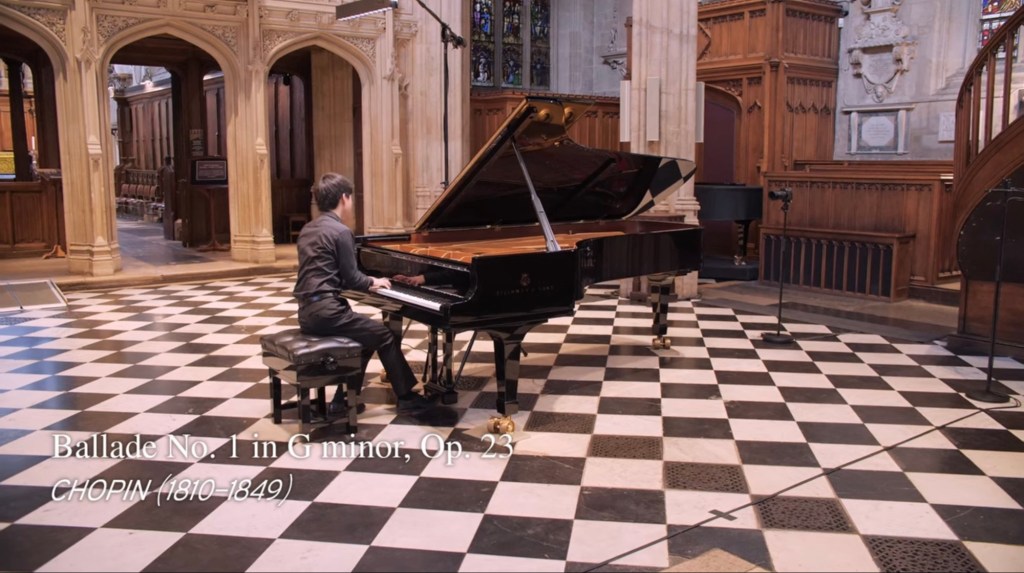
The first Ballade is one of the best known works of Chopin but rarely have we heard it restored to such greatness as today.The rare chiselled beauty of the opening was of simplicity and desolation.A maturity of measured beauty as Chopin’s bel canto was unfolded with rare simplicity.It was Kevin’s absolute clarity of thought that was so apparent as the music was allowed to unfold without any rhetoric or exaggeration.A sumptuous climax brought us to the brilliance of the coda that was given a musical shape of startling originality and excitement.The final scales were mere washes of sound as the recitativi became ever more insistent.
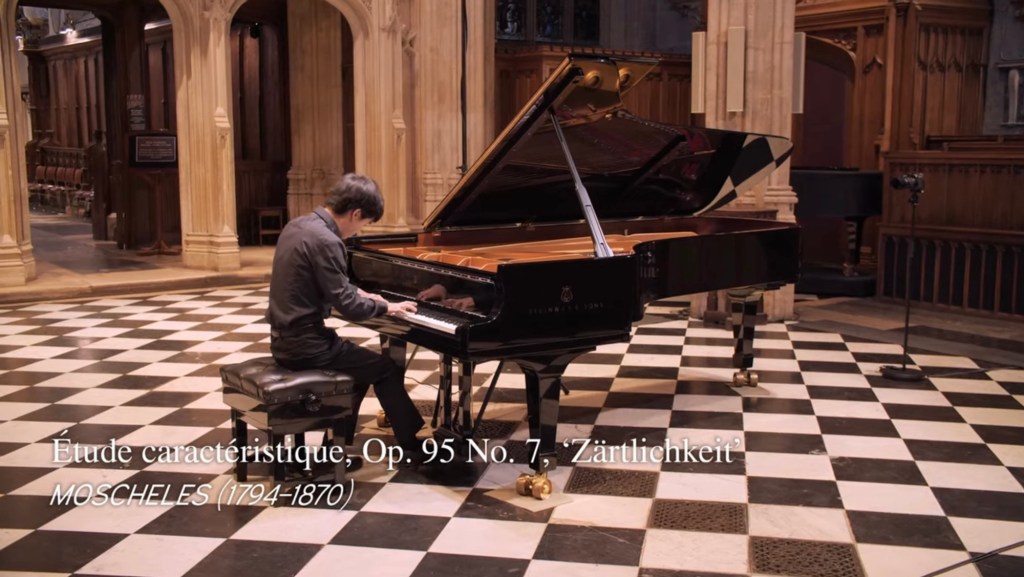
A beautiful Study by Moscheles where the beauty of the melodic line was allowed to float above a flowing bass in a Mendelssohnian mode of Neapolitan fantasy.There was great flexibility and poetic sensibility with scintillating embellishments of beauty and refined delicacy.
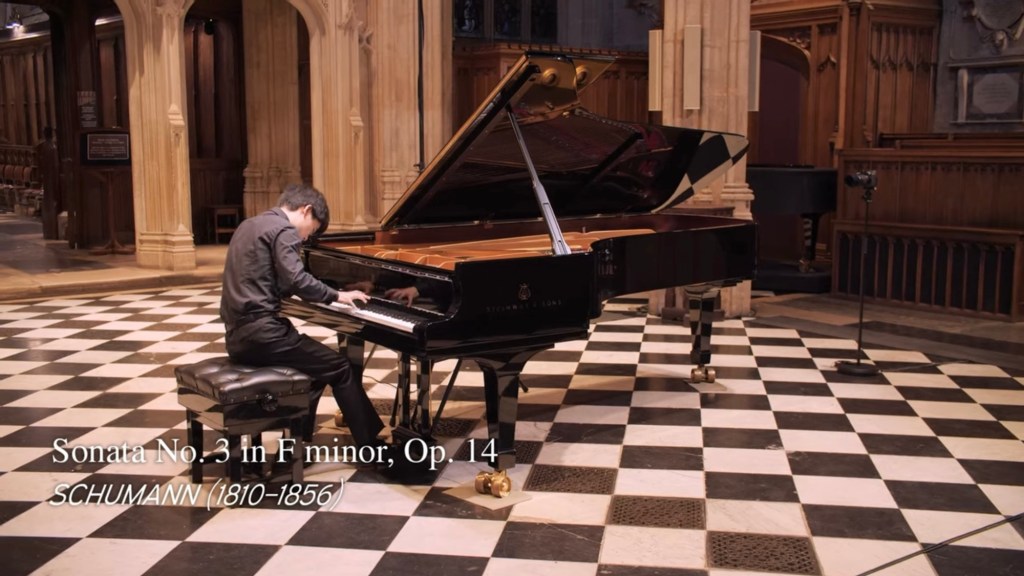
Schumann’s ‘Concert without orchestra’ was put on the map in my day when Horowitz played it in the recitals of his Indian summer.It was since taken up by Pollini and many other pianists.A work in four movements that in lesser hands can sound disjointed and rhapsodic.Kevin managed to link all four movements into one architectural whole where even the famous Clara Wieck Variations had a crucial part to play in a whole.It is interesting to note that the Sonata is dedicated to Moscheles with whom Kevin had prefaced it with his ‘Etude caractéristique’ . A passionate outpouring of sumptuous sounds of rare delicacy.Even Schumann’s dotted rhythms were give a shape and meaning of driving fluidity.A Scherzo of lightness and rhythmic drive with mellifluous outpourings never losing this fleeting forward movement.The Andantino was played very slowly with deeply felt meaning as the variations unfolded with subtle beauty gradually increasing in pace with a quixotic scherzando variation giving way to a noble outpouring of an almost too seriously poignant farewell. There followed a scintillating Prestissimo of constantly moving harmonies on which the genius of Schumann shines through with magical mellifluousness.This was one of the most satisfying performances I have ever heard of a work that is rarely given the architectural shape and understanding that we heard today.
Liszt’s beautiful transcription of Schumann’s Widmung was played as an encore and just showed even more the poetic sensibility and intelligence of this young genius.
Marilyn Engle’s colleague Linn Hendry /Rothstein writes :”Canada is a very big country and we all knew each other from the radio…..Marilyn’s teacher in Calgary was very well known for producing solid piano skills…Gladys Egbert…I met Marilyn in Switzerland,by chance, we were having dinner with Tibor Varga and she was in the same restaurant with Peter Feuchtwanger !!! https://christopheraxworthymusiccommentary.com/2016/07/02/peter-feuchtwanger/
She won CBC talent festival in 1966 and I think Janina (Fialkowska) did it in 1968 or 69.I came 2nd to William Tritt in 70 (he played Prokofiev 2 and I played Brahms 1) then the next year I played Rach 3 and got the top prize….I think in between Jane Coop was a winner and after me was Angela Hewitt as I remember. In those days there were quite a few CBC radio orchestras;one in each province so you could be pretty busy. I was always in awe of Marilyn’s bravery in travelling away from home to study. She did go back to Calgary though quite early which may have been for family reasons…and a career in music for a woman was not an easy ride.Janina was taken under the wing of Rubinstein when she was at a crossroads in her life.Angela Hewitt was offered a recording contract for all the works of Bach with the then almost unknown Hyperion label.Marilyn has obviously become a magnificent teacher which the world has discovered via Kevin Chen.
The only real contact between all of us was the CBC…We all knew each other from the radio though…personally I was given a ridiculous number of recital and concerto recording opportunities because of the CBC competition.
I just hope he can make a happy life..he has certainly brought cheer to my life with those 2 recitals…absolutely renews hope in the future if piano playing …the boy has integrity and true and deep respect for the composer…for once a young player who does not put himself forward as the most important part of the equation……he does not need a teacher now just support” Linn Hendry/Rothstein
Robert Schumann. 8 June 1810 Zwickau. 29 July 1856 Bonn
The Piano Sonata No. 3 in F minor, Op. 14, called “Concerto for piano without orchestra” by Tobias Haslinger , was composed in 1836 and dedicated to Ignaz Moscheles , to whom in a letter he comments “what crazy inspirations one can have”. Liszt believed that the work was rich and powerful. In 1853 Schumann revised the work and added a Scherzo as a second movement, which the performer could choose to play, or not play.
We offer all our livestreams free of charge. Please consider making a gift to support the Oxford Piano Festival, so we can continue to do so in future years: https://oxfordphil.com/support-us/ This stream will be available to watch on-demand for two years after initial broadcast. Filmed by Apple and Biscuit at the University Church of St Mary the Virgin, Oxford.