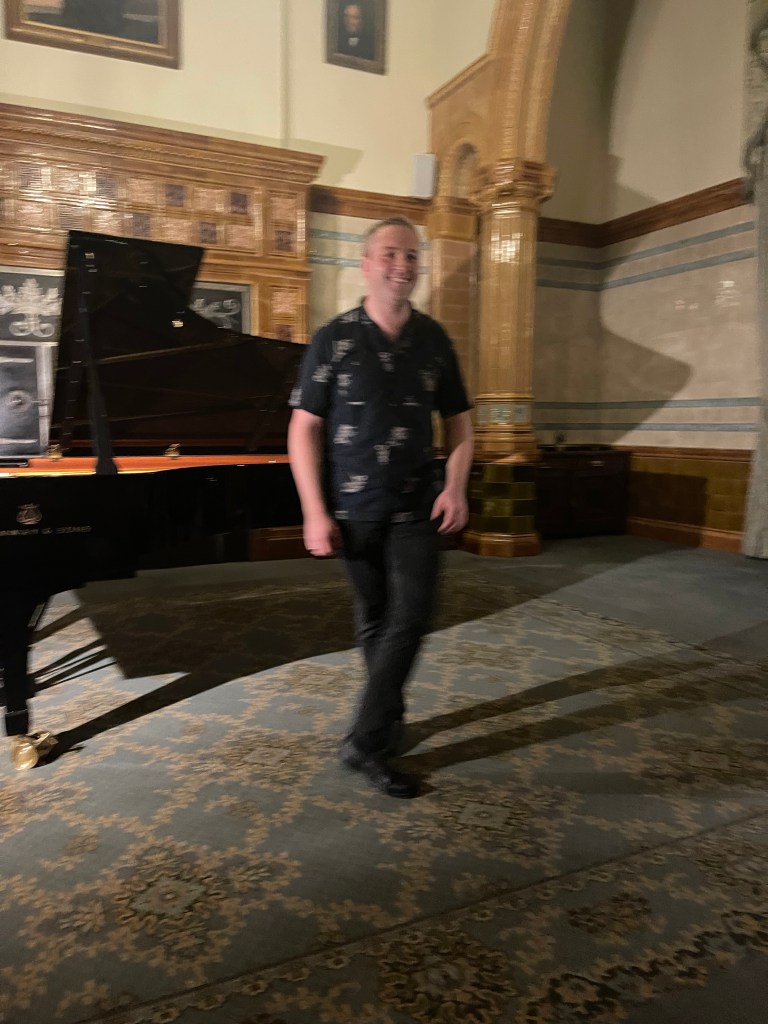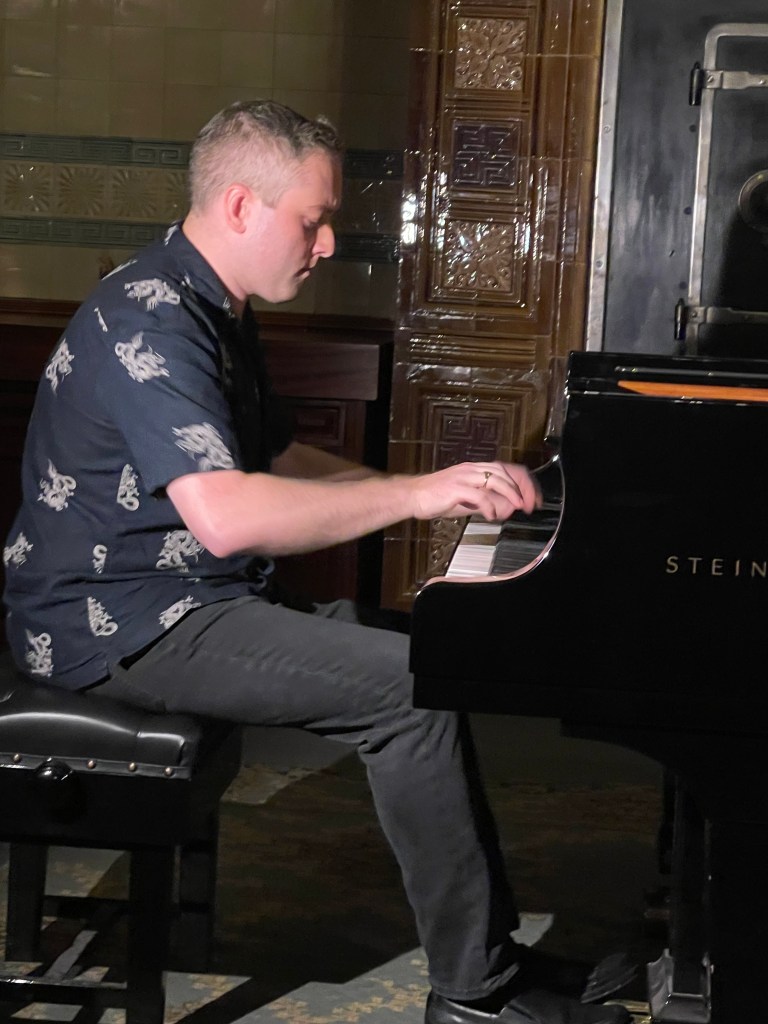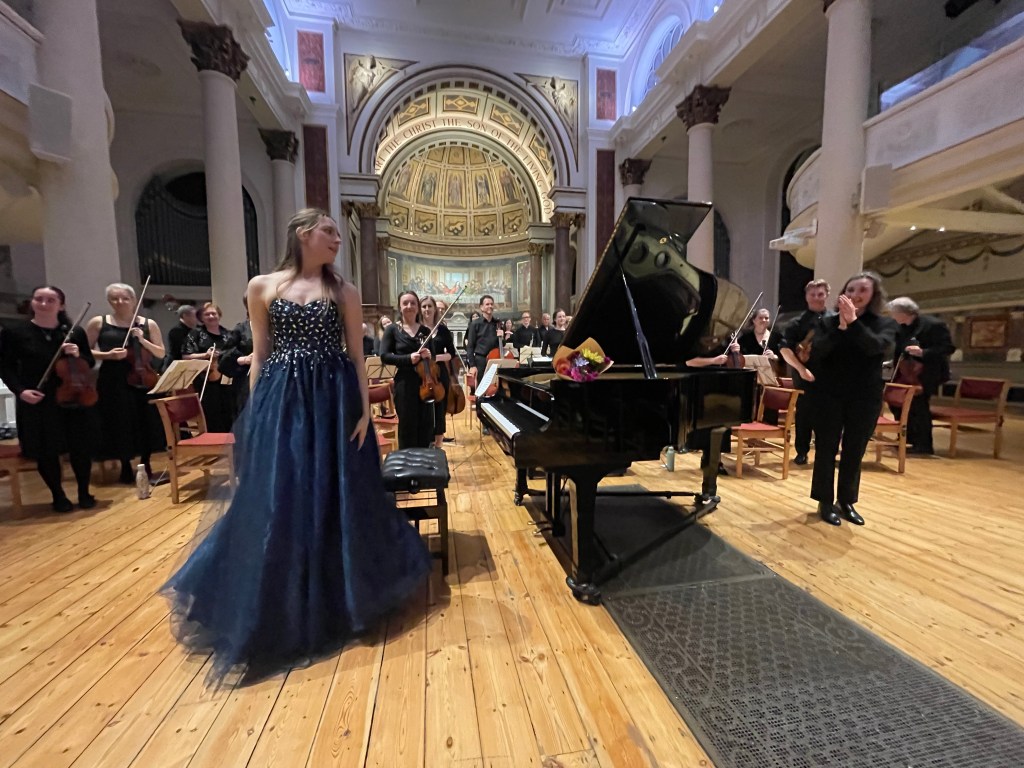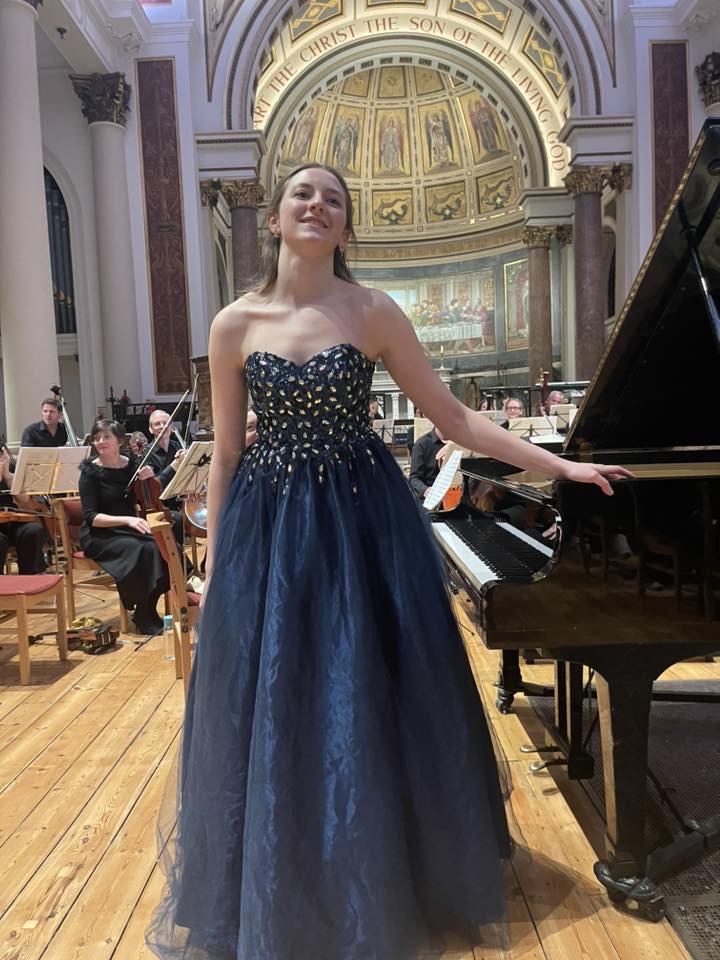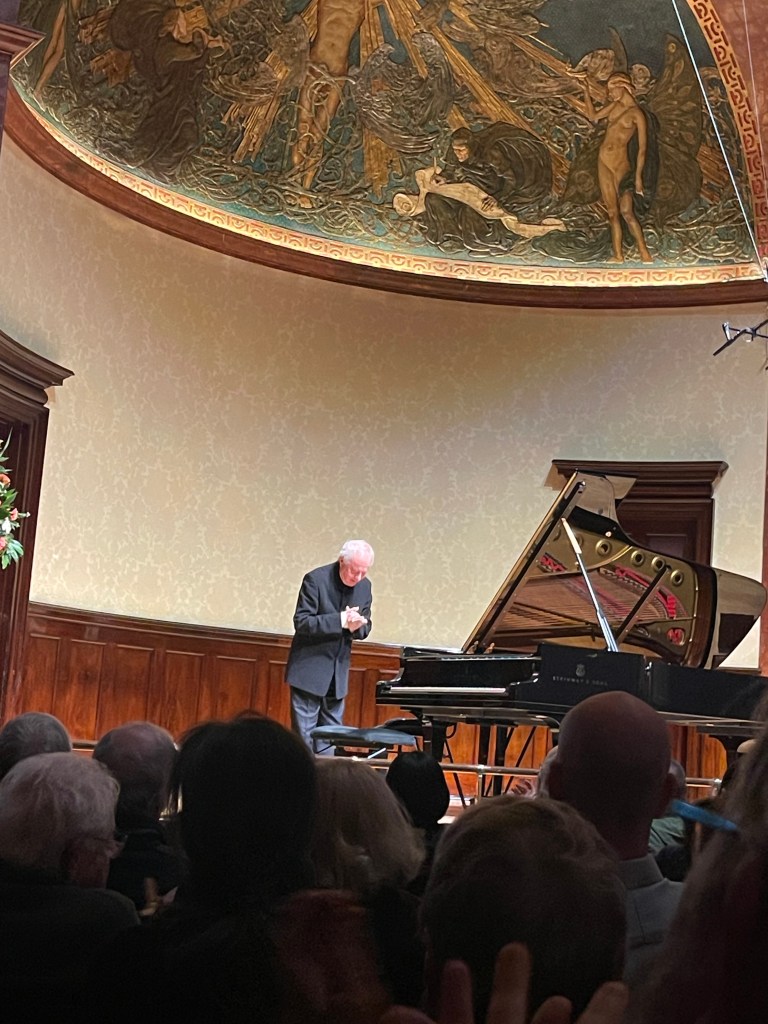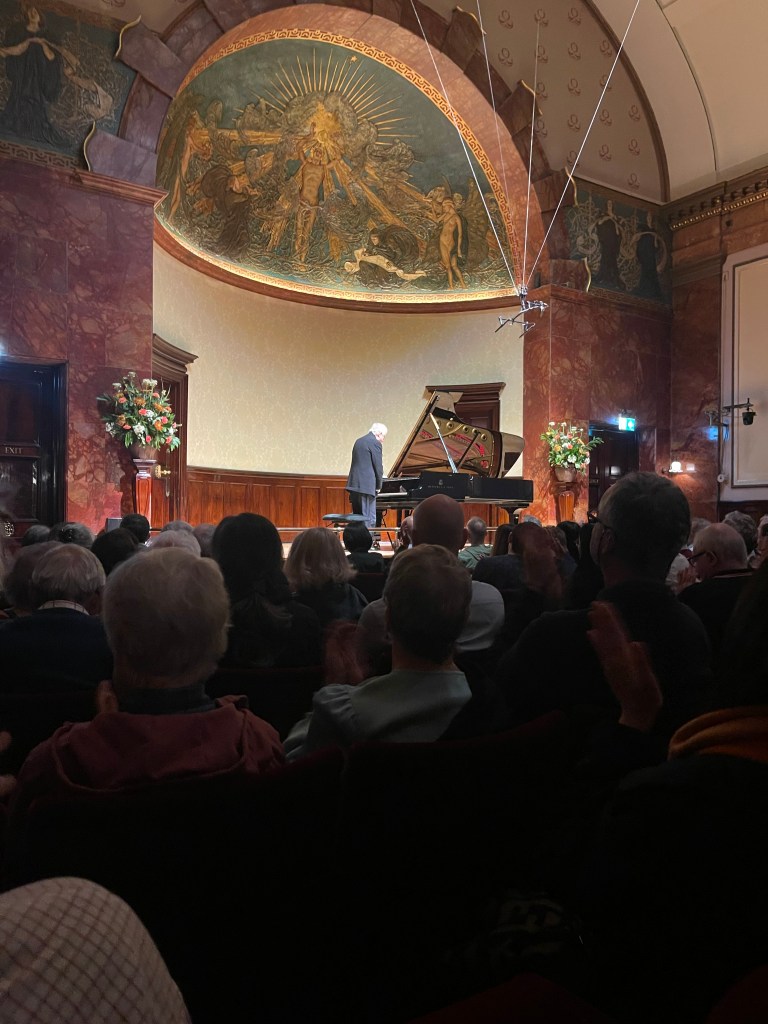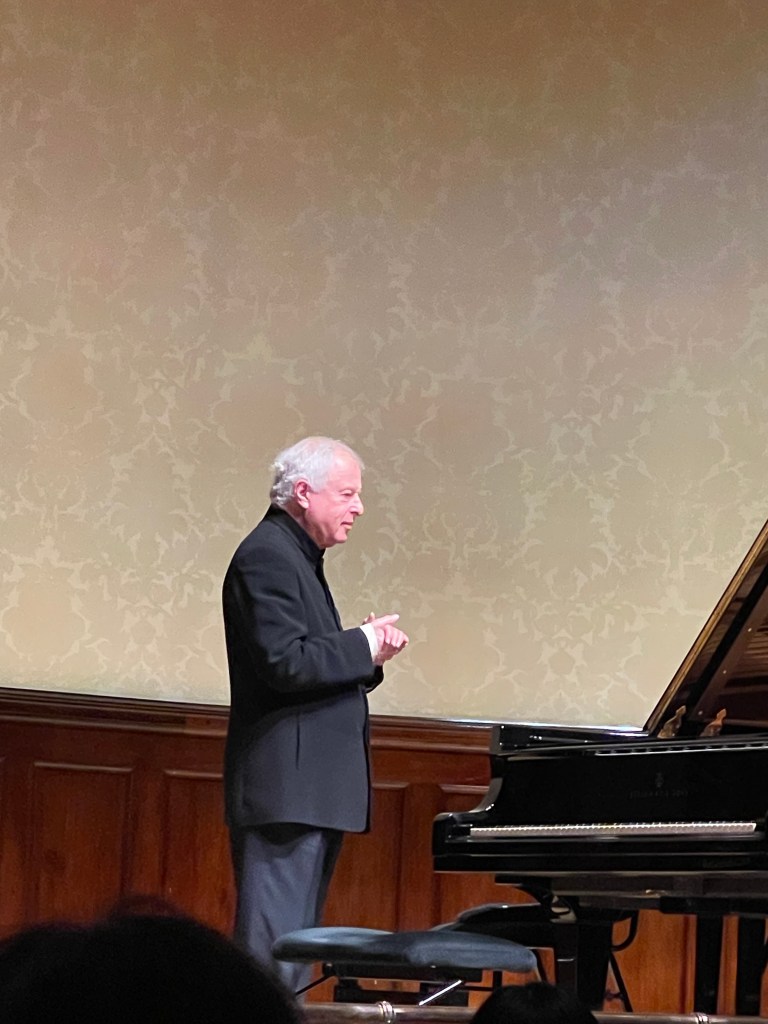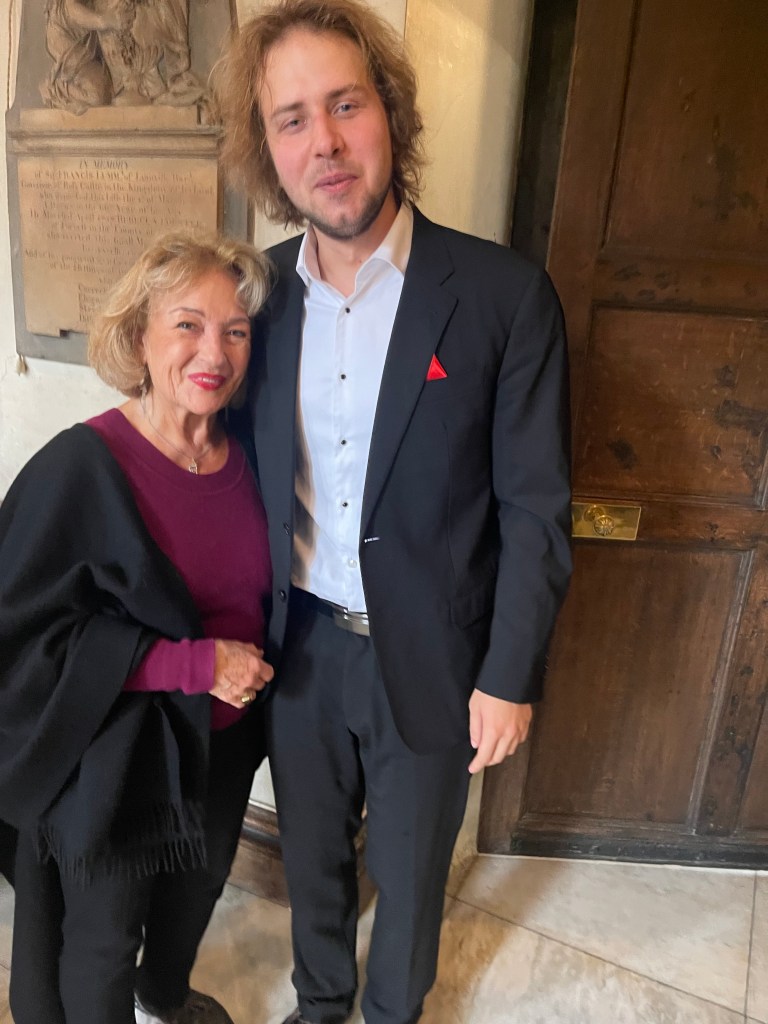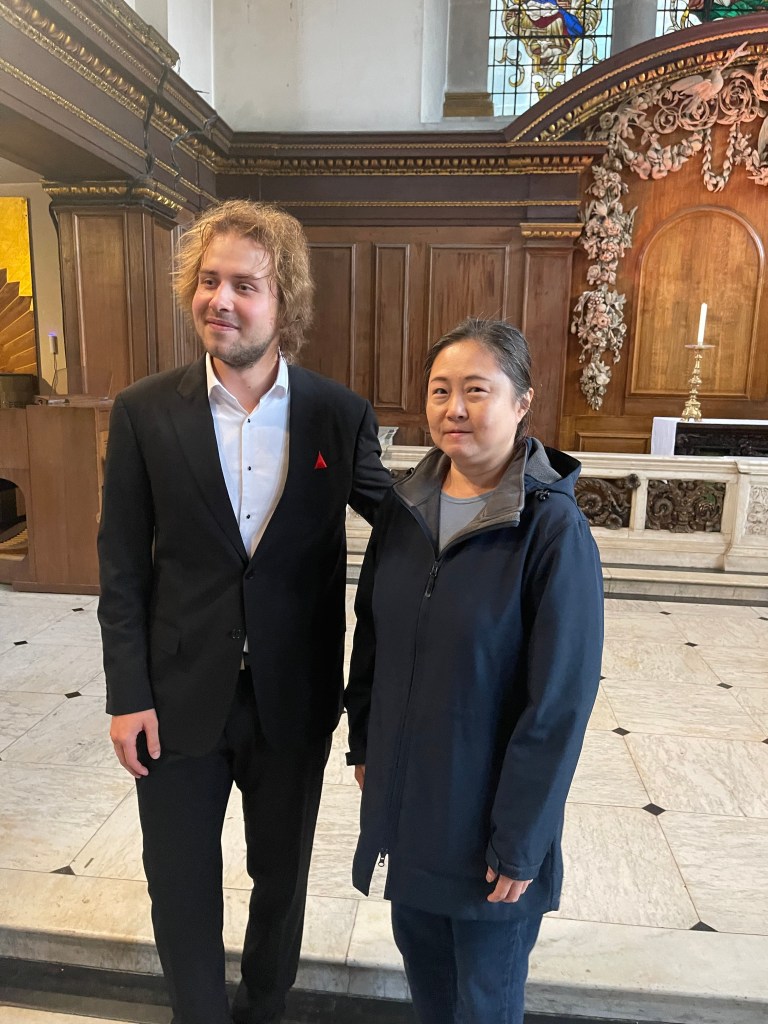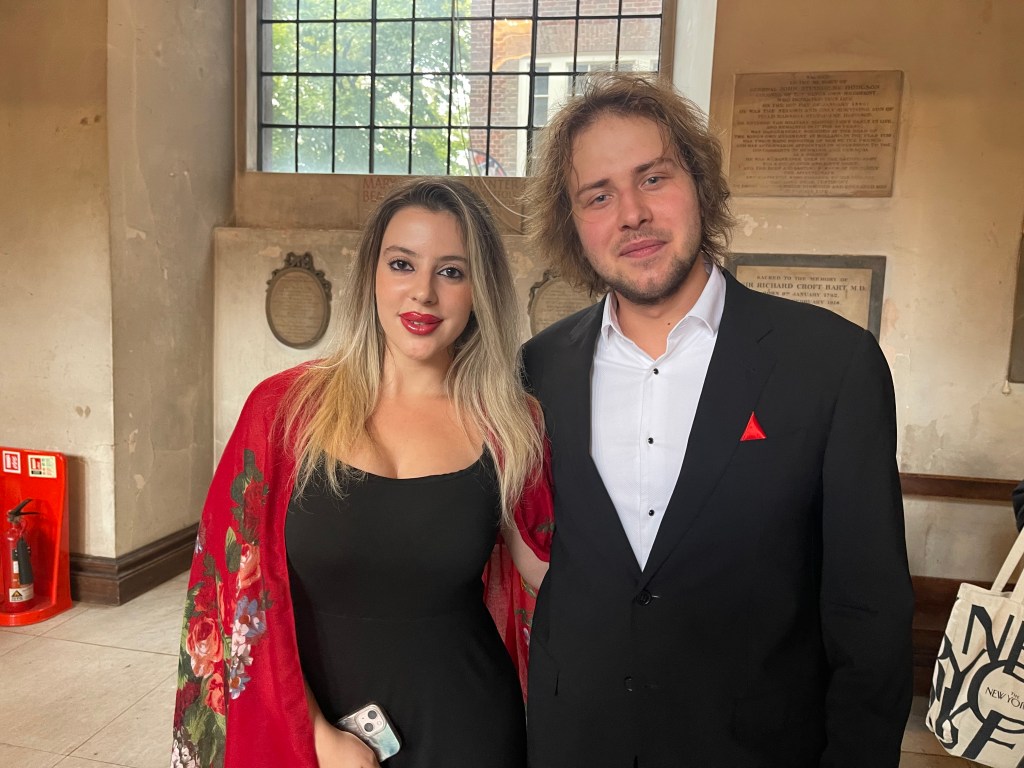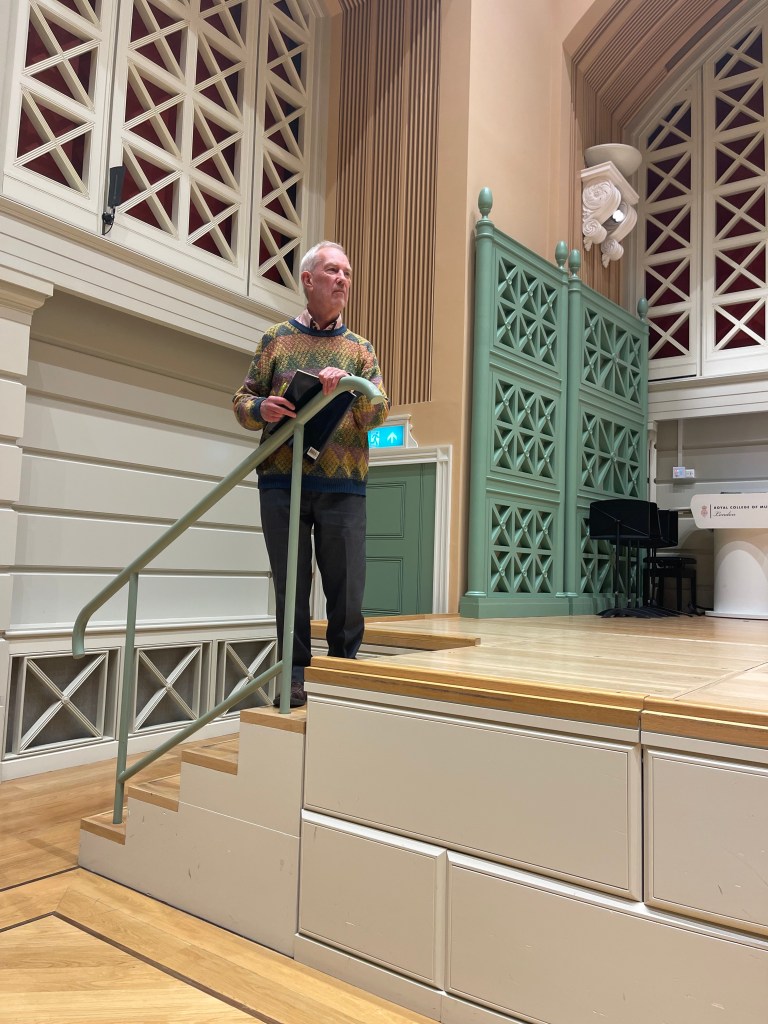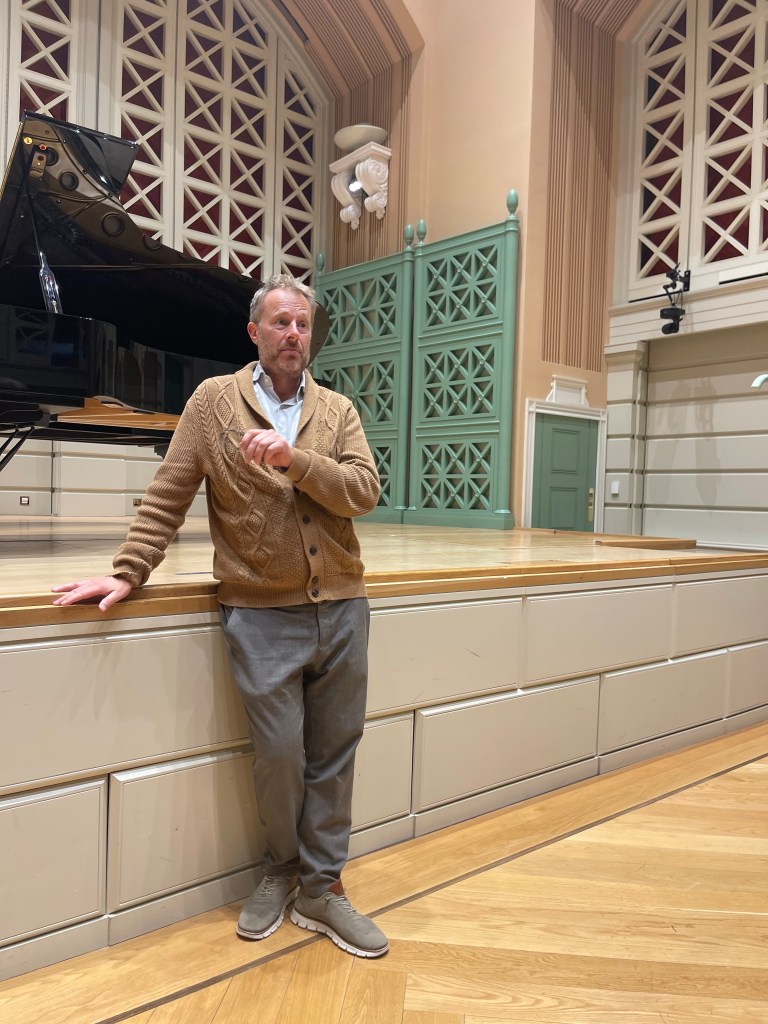
William Grant Naboré in Siena Legends Series ‘A voyage of discovery from an eclectic master’

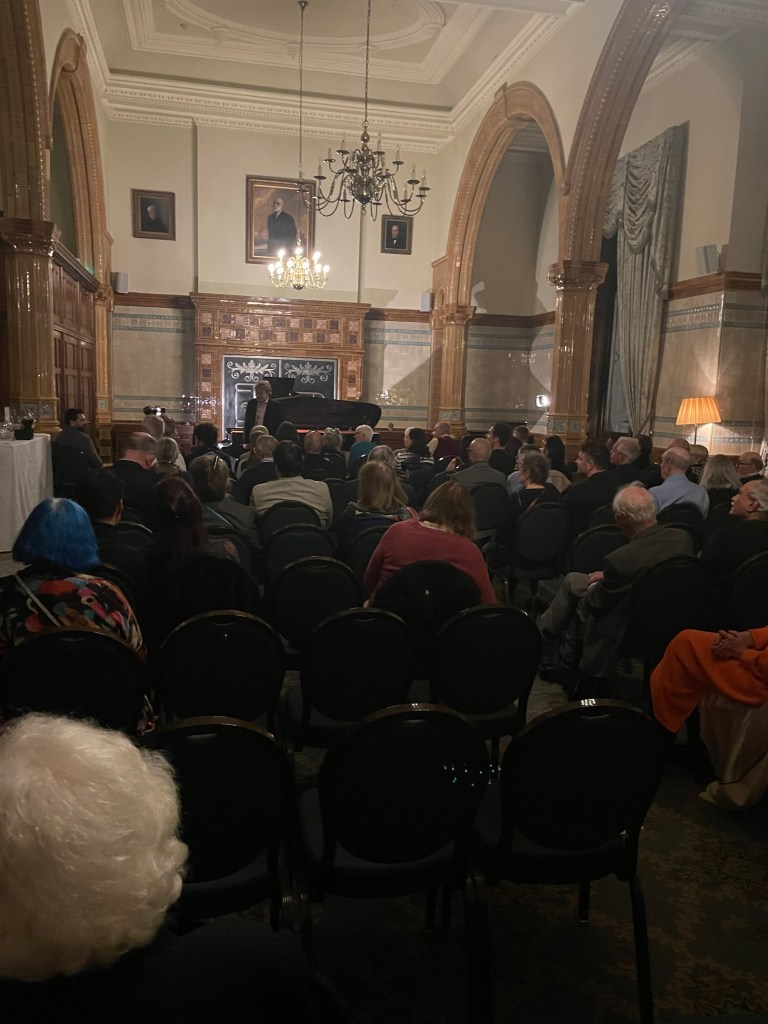
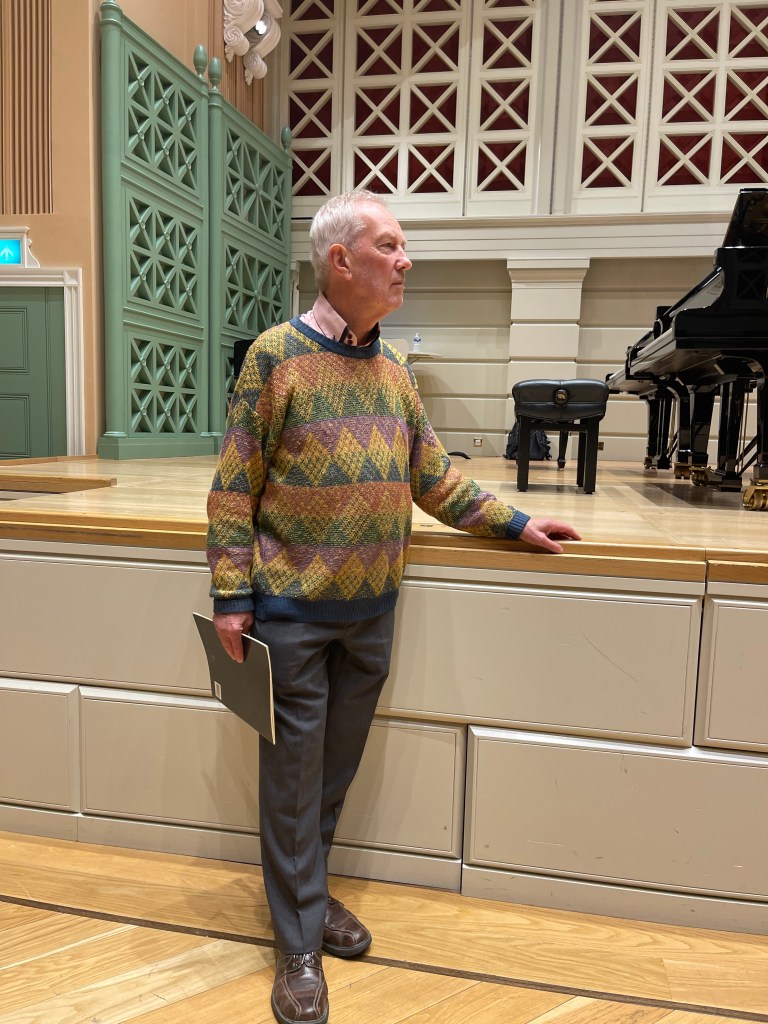
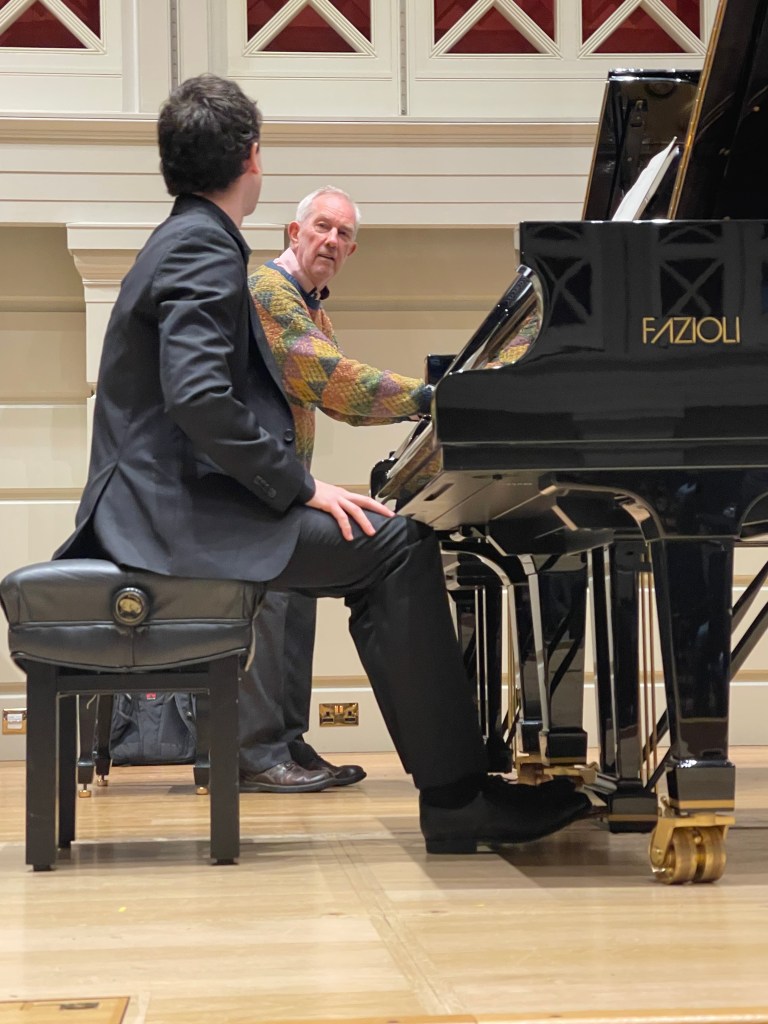
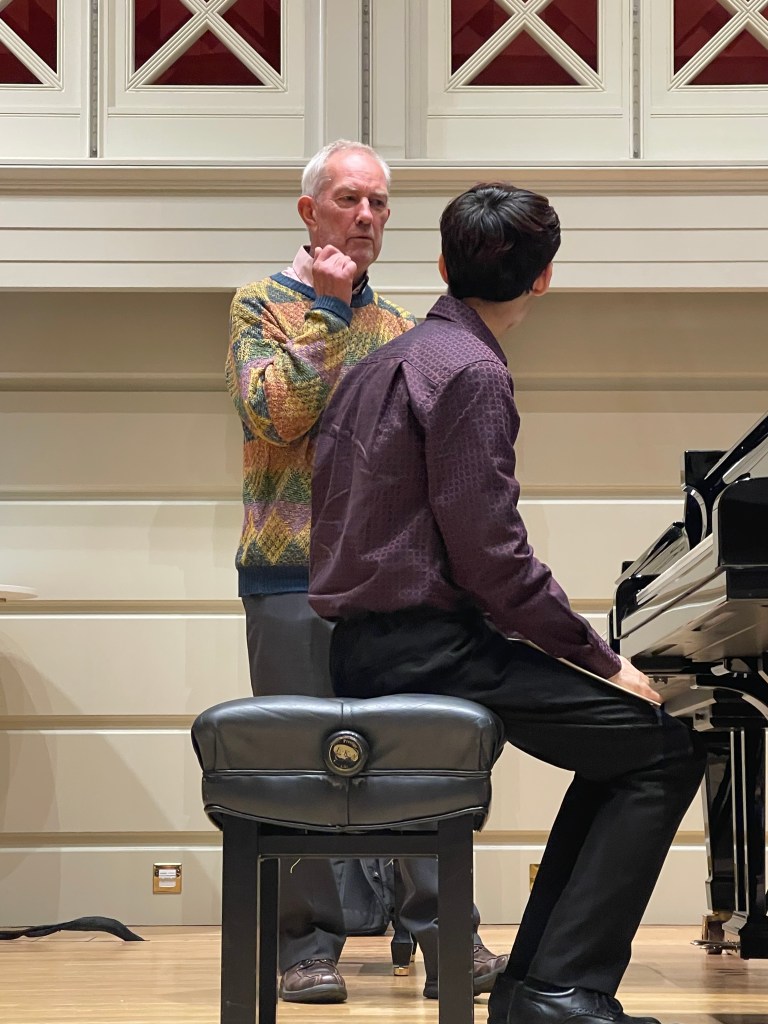
An amazing performance by this legendary 84 year old American born pianist who perfected his art in Italy with Renata Borgatti and Carlo Zecchi. Transferred permanently to Italy for almost sixty years he has created The International Piano Academy, Lake Como, of which the President is his close friend Martha Argerich. Born in the same year, it must have been quite a vintage year, as both Martha and Bill are astonishing and ravishing audiences world wide as never before! A teacher of many of the finest young musicians before the public today he has just returned from China and Korea where he is much sought after for his musical pedigree and insights. He spends most summers in Siena , where he receives privately a few carefully selected talented students in his studio. It was the enlightened Artistic Director of the Chigiana Academy in Siena, Nicola Sani, who had thought to convince William Naboré to play in the prestigious Palace of Count Chigi where many of the greatest musicians have flocked for the Summer months since the 1930’s, to share ideas amongst master musicians. Having just played this recital in Korea ,amazingly without the score , which is his latest CD to be released shortly. I have known ‘Bill’ for the past fifty years and shared many of the artists who played in my Euromusica season in Rome with his Academy in Como. Artists that included Rosalyn Tureck, Moura Lympany, Fou Ts’ong ,Peter Frankl and Steven Kovacevich. He had set up ten years after I had opened a theatre with my wife in Rome where I invited many of the greatest musicians to play in Rome ,some for the first time , having by a strange twist of fate strangely been ignored in Italy. By coincidence my wife, Ileana Ghione, I had met in Siena, when I was helping my teacher’s wife Lydia Stix Agosti with her course ‘Da Schoenberg ad oggi’.

Bill had asked me to listen to the rough proof of this recording which I was very honoured to do. He had recorded it mostly in one take and it was perfect and crystal clear with impeccable musicianship and technical mastery. There was really nothing to edit and I believe this is the recording that will appear in the Autumn.It was obviously the same performance that he gave publicly in the ‘legends’ series in the Chigiana International Music Festival which in his own modest words was an unexpected success :

‘The concert was an amazing success. It was sold out and many came back stage afterwards and said it was a life changing experience!! I have been stopped in the streets by students who were at the concert saying they had never heard similar, especially the SOUND!’

Ciao Bill,
Yesterday was truly a wonderful evening, and you gave a memorable concert!
Thanks again for your amazing and passionate performance.
Un abbraccio ,
Nicola Sani, Artistic Director of the Chigiana Academy.

1. Johann Sebastian Bach/Johannes Brahms:

     Five Studies Anh. 1a/1. V Chaconne for the left hand (after the violin partita n. 2. in d minor BWV 1004)

2. Johann Sebastian Bach/Rafael Joseffy:

Gavotte en Rondeau transcribed from the Lute Suite in E major BWV 1006a

Carl Reinecke:

     Sonata for the pianoforte for the left hand in C minor. Op. 179

3. Allegro moderato

4. Andante lento “Nemenj rozsam a tarlora”

5. Menuetto Moderato 

6. Finale Allegro molto

Alexander Scriabine for the left hand 

7. Prelude op. 9 n.1

8. Nocturne op. 9 n.2

Leopold Godowsky for the left hand

9. Elegy

10. Prelude on the name of BACH 

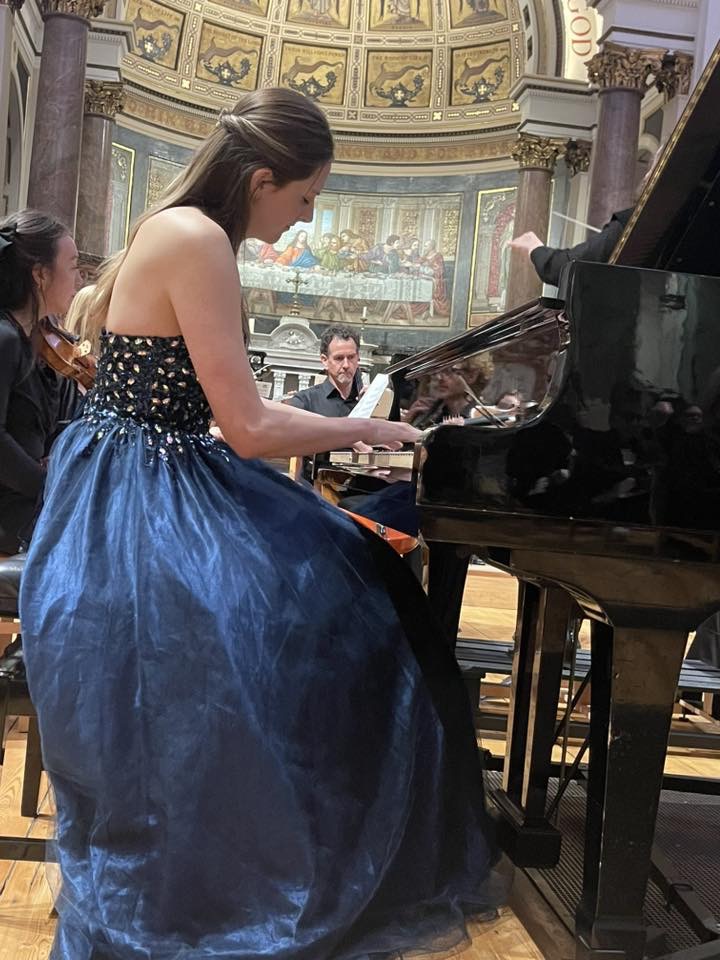
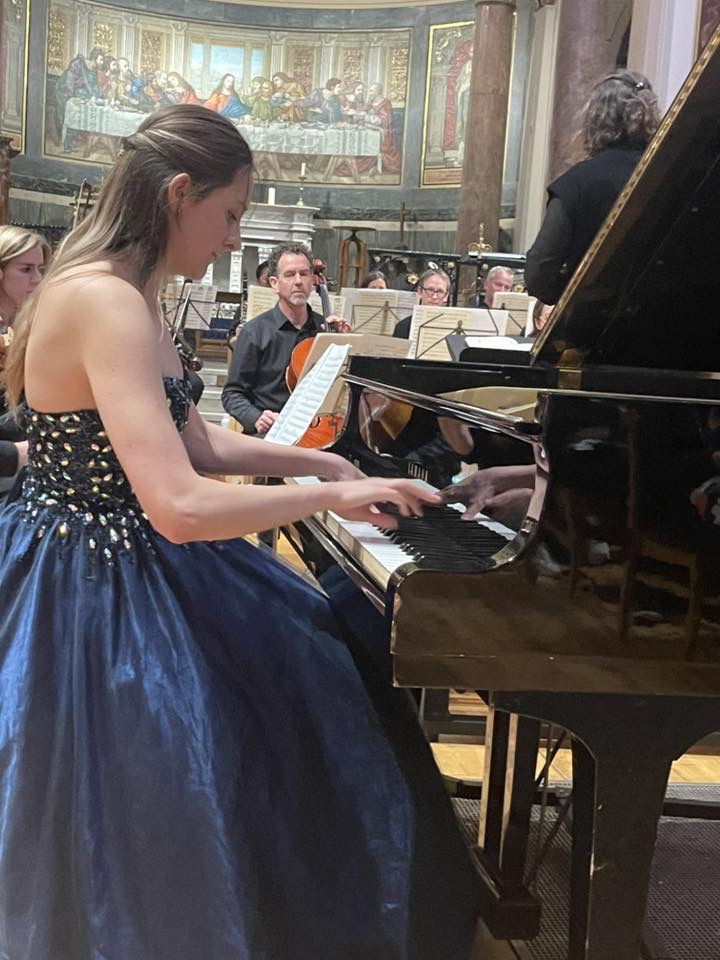
Photos by Giovanni Vai

Programme notes written by William Naboré for the recording of imminent release:

The absolute masterpiece in this collection of works for the left hand is the work of Brahms based on the Chaconne of Bach.
Contrary to what most people surmise, Brahms never described his work as a transcription but as a study for the left hand based on the Chaconne of Bach.
In fact, Brahms only discovered the Chaconne of Bach at the age of 44 in 1877.
In a letter at the time to Clara Schumann “Brahms wrote:

“The Chaconne is, in my opinion, one of the most wonderful and most incomprehensible pieces of music.
Using the technique adapted to a small instrument, the man writes a whole world of the deepest thoughts and  most powerful feelings. If I could picture myself writing, or even conceiving such a piece, I am certain that the extreme excitement and emotional tension would have driven me mad. If one has no supremely great violinist at hand, the most exquisite of joys is probably simply to let the Chaconne ring in one’s mind but the piece certainly inspires one to occupy oneself with it somehow… There is only one way in which I can secure undiluted joy from the piece on a small and only appropriate scale, and that is when I play it
with the left hand alone.The same difficulty, the nature of the technique, the rendering of the arpeggios everything that conspires to make me feel like a violinist!”
Hence the genesis of the Bach/Brahms Chaconne Study for the Left Hand.

However, before going further, a word about the origin of the Chaconne, Bach’s longest single instrumental
work.
The Chaconne is said to have been imported into Spanish culture in the sixteenth century as a lively dance that originated from Latin America. By the 18th century the Chaconne had become in Europe a slow triple meter instrumental form. Obviously, Bach had not forgotten it was originally a dance.
The Chaconne of Bach was composed between 1717 -20, and it is said, in grieving memory of his first wife, Maria Barbara, who died while he was absent on a trip. In this sprawling and monumental work Bach expresses a depth and variety of feelings rarely encountered in music.
Brahms’ exuberant embrace of every note of Bach’s score is evident in his masterly study. This is not a transcription but a celebration of the highest order.
By transposing the score an octave down, Brahms is able to expand the range of the original while enriching the pianistic possibilities considerably.
Brahms also gives interpretive indications in his study that are most astute and effective yet he also
respects the Baroque practices that were known in his time.
The Chaconne is a series of variations on a repeated series of chords. It is the connection between these variations which make any interpretation of this particular realization of Bach’s Chaconne a supreme challenge.

Leopold Godowsky (1870-1938) was one of the world’s greatest pianists. He was held in the highest esteem in his lifetime by public, critics and public alike.
The astonishing thing is that he was largely self-taught. His point of pride, however, was his amazing technique which even his most famous colleagues envied and admired. He was considered the “Buddha” of the piano. Arthur Rubinstein said it would have taken him 500 years to acquire a piano technique like that
of Godowsky. He was also an important pedagogue who taught in many of the important institutions
around the world (Berlin, Vienna, New York, etc.) but after a particularly nomadic life finally settled down in New York after the First World War.
He was also an important and innovative composer, notably for the piano. Ferruccio Busoni said that himself and Godowsky were the only ones to have added anything of significance to keyboard writing since Franz Liszt. 
Godowsky is best known for his transcriptions and paraphrases of other composers which are of a
diabolical difficulty. Even today, only the most intrepid pianists venture to play them. His most famous work in the genre is his 53 Studies on Chopin Etudes. But he is also called the “King of the Left Hand” as he wrote a sizable number of works exclusively for the left hand which include paraphrases of other composers and
original works.
It is, however, in the original works where Godowsky really shines as a great composer. I have chosen two his pieces of great beauty for this recording.
The Elegy for the left hand composed in 1929 is one of the most poignant and moving expressions of grief in music while the Prelude on BACH is one of the most exuberant!

The Gavotte en rondeau for solo violin is the third movement from the third Partita in E major (BWV 1006), the last work in a series of sonatas and partitas (BWV 1001 -1006) Bach composed around 1720. It is one of
Bach’s most popular smaller works and has been transposed for innumerable instruments including the marimba!
However, Bach himself made a transcription for the Lute as a suite (BWV 1006a) which in itself has
spawned countless other transcriptions, notably for the guitar. The modern piano is no exception and
probably the most well-known take on the piece is a pastiche of the entire suite by Rachmaninov which is a favorite of some pianists today.
However, a transcription for left hand on the piano is a rarity. 
Rafael Joseffy, a brilliant Hungarian pianist (1852-1915) and pupil of Franz Liszt who settled in the United States made a faithful transcription of the lute transcription of Bach which was published in New York in 1888.
This is the transcription used for this recording.

In 1892, at the age of 20, Scriabin damaged his right hand (overuse syndrome) while practicing relentlessly Liszt’s Reminiscences of Don Juan and Islamey by Balakirev in an intense rivalry with his fellow student, Josef Lhevinne at the Moscow Conservatory. He immediately turned to composition to vent his rage and composed his first sonata, op.6 as a “cry against God and fate!
He eventually fully recovered the use of his right hand and, although he had a brilliant career as a concert pianist, he was always wary and fretful of his right hand. 
In 1894, Scriabin made his debut as a concert pianist in St. Petersburg and in the same year composed the Prelude and Nocturne, op. 9 as a result of concentrating his virtuosity on his left hand. 
It is interesting to note that Scriabin had small hands (he could barely stretch a 9th), but wrote piano works that require a broad span, especially in the left hand as we can witness in the Prelude and Nocturne, op. 9. Scriabin and Rachmaninov (who had huge hands) were classmates at the Moscow Conservatory and had a
complex and sometimes contentious relationship with during their careers, and esthetically, even if they didn’t always agree, they were close friends. Rachmaninov was a pallbearer at Scriabin’s funeral and played only Scriabin’s works in concert for one whole year after his death.
 Scriabin was much closer to Chopin in his early years yet Rachmaninov always venerated Tschaikovsky. The Prelude and Nocturne op. 9 of Scriabin are close to the traditional romantic tradition to which Rachmaninov always adhered. However, the individual voice of Scriabin can be fully heard here. 
The Prelude and Nocturne are some of the loveliest works of early Scriabin and have always been a concert favorite.

Carl Reinecke (1824-1910) is one of those “forgotten” mid era Romantic composers who was born in Denmark and became one of the most influential musicians of his time. In 1843, he settled in Leipzig where he became part of a group of musicians that included Schumann, Mendelssohn and Friedrich Wieck.
Although as a youth, he was a formidable violinist, he later became an equally formidable pianist and
became a widely sought after professor of composition and piano at the Leipzig Conservatory. His students included Grieg, Janacek, and Albeniz. He was also a notable interpreter of Mozart piano Concerti of which he wrote several cadenzas.
It is a mystery that a composer of such a renown in his lifetime was forgotten so quickly after his death. 
This is probably due to the fact that his style never evolved over the years and he was composing in 1910 exactly like he did in 1843!
That said, his compositional output is enormous and, in all genres, and combinations of instruments and it is not surprising that he even composed a sonata for left hand, op. 179 in 1884.
In fact, the left-hand Piano Sonata of Reinecke is one of those hidden gems of the Romantic
piano repertoire, and a real masterpiece! 
The first movement is troubled, mysterious yet forceful with a beguiling second theme.
The second movement, based on a Hungarian folksong “My love, do not enter a field that has been harvested” is also a most beautiful work.
The third movement, Menuetto, is more of a Valse-Caprice with a charming and lilting Intermezzo.
The finale, a fiery, virtuoso tour de force rounds out the sonata in heroic style.

https://christopheraxworthymusiccommentary.com/2024/03/20/christopher-axworthy-dip-ram-aram/

Boris Giltburg in Duszniki ‘Masterly performances of integrity and beauty’

https://www.youtube.com/live/7oz45O3Ij3Y?feature=shared

Having heard Aristo Sham and Kevin Chen recently at Duszniki I was fascinated to hear also Boris Giltburg. Maestro Paleczny has such a line up for his festival that unfortunately time to hear them all on their superb streaming is just not possible during the summer months. However I was very interested to hear Boris Giltburg, an established artist and a house favourite at London’s Wigmore Hall, with recordings of Rachmaninov Concerti that have been very highly praised. I recently was at a masterclass for the Beethoven Society at the Reform club in London and was very impressed by his musicianship and simplicity but above all his absolute respect for the score allied to a technical mastery that could find colours and subtle shadings that seemed to elude his young colleagues. 

Whilst in the recording studio artists more often than not use the score, which can take away from the thrill and instant communication of Iive recording of public performances, Boris Giltburg chooses to have an I pad ever present as an aide memoire for his live performances. I have heard him in the Wigmore Hall and although there are always highly prepared performances of impeccable musical and technical perfection there is something of a barrier between the music and the listener ! It means that the thrill of live performance, hit and miss you might say , is often missing, together with the magic that can be created by the stimulation of an audience and that can give rise to performances of discovery, reaching heights of inspiration that take even the artist by surprise.

Boris Giltburg had prepared a dream programme for Duszniki, with four of Chopin’s greatest most perfect creations. The Preludes op 28, the Sonata in B flat minor op 35, the Fourth Ballade op 52 ending with the Fourth Scherzo op 54. The I pad placed discreetly in the piano but today there was magic in the air. Chopin was obviously looking on, as Boris never seemed to even glance at the score, but it obviously gave him a reassurance as a simple aide memoire in moments of need. Some artists prepare two programmes a season and a hand full of concerti ( Cherkassky for example you could choose any of the pieces on his two programmes even suggesting a different order. In Rome some years ago Shura came off stage after nearly two hours exclaiming that we had chosen a very long programme, as it was hard for us enthusiasts to exclude any of the works on offer ! He wasn’t complaining as he was our friend ) . Sokolov famously plays his programme all season, having decided that concertos with a bare minimum of preparation are artistically not for him any more. Giltburg has just been playing all the Beethoven Sonatas and much else besides, so one can sympathise with his need to have an aide memoire for the amount of notes he is required to play all season. Today though listening via the live stream I noticed that Giltburg hardly glanced at the score and his performances were of such extraordinary beauty and freshness allied to an impeccable musical intelligence and refined taste that I sat riveted to the screen, sharing this voyage of discovery that Giltburg was today embarked on. Chopin Preludes that Fou Ts’ong described as twenty four problems but for Giltburg were twenty four miniature tone poems of quite extraordinary aristocratic nobility and finesse. The first opened with a sense of improvised freedom only coming into focus with the final few bars. A deeply ponderous second with the long sustained lines over a deeply troubled left hand. The third just glided from his well oiled fingers but it was the melodic line that was always uppermost in his mind with a sense of line and loving shape. A profoundly moving fourth of searing intensity and monumental nobility. The fifth usually so disjointed was here shaped with style and beguiling subtlety.There was a seamless legato to the long melodic line and a simple elegance tinged with nostalgia of the seventh, the shortest of all the preludes. There was a passionate intensity to the eighth but always phrased with poetic contr
ol

Drama and nobility combined in the ninth and the tenth was thrown off with charm and humour.The dramatic intensity of the hard driven twelfth was relieved by the rustic mazurka rhythm that Boris found hidden within. A languid flowing beauty to the thirteenth was answered by the searing momentary intensity of the fourteenth.There was a radiance and lightness to his ‘raindrop’ ,fifteenth, with a brooding troubled intensity to the central episode played with crane like movements of his arms that gave a dramatic rhythmic punch to this extraordinarily evocative Prelude. Almost jumping off the seat for the tumultuous opening flourish of the sixteenth which he went on to dispatch with enviable mastery and breathtaking precision, the phrases swelling as they rose and fell with excitement and exhilaration. The seventeenth entered immediately with its flowing luxuriant beauty with the deep bass notes creating a magical atmosphere on which the melodic line was allowed to sleep walk in this wondrous landscape. A very slow unwinding of the cadenza flourish of the eighteen build up in intensity until the final chiselled notes were driven home with burning vigour deep in the bass. Beauty and radiance of the nineteenth showed no sign of the technical difficulty of this prelude as Boris shaped the melodic line with refined good taste and style. The mighty twentieth in C minor, used by Rachmaninov and Busoni as a basis for variations ,was played very slowly and deliberately with an enviable control of sound.We held our breath as the sounds became ever more whispered. A beautiful radiance to the melodic line of the twenty first was interrupted by the melodic entry of the octaves deep in the bass of the twenty second. A refreshing fluidity of the twenty third was played with great restraint until a pause before the dynamic passionate intensity of the final heroic explosion of transcendental drive leading to the final three inexorable ‘D’s ‘ deep in the bass. This was a quite extraordinary performance of the elusive preludes where Boris was able to give an architectural shape to the whole whilst giving such character to each one.

The opening of the B flat minor Sonata immediately demonstrated the power and nobility that Boris was to imbue to this remarkable work. Like a great opera singer or actor entering the scene with an overwhelming physical presence that immediately caught our attention as the ‘doppio movemento’ unfolded with agitated brilliance. The debate of whether or where to repeat the exposition was dismissed by Boris by entering immediately the development with Chopin’s extraordinary inventive mastery combining the two main themes in a question and answer that was to explode with passionate vehemence. There was the same aristocratic control that I remember from Rubinstein which like him made the exhilarating accelerando towards the final chord even more breathtaking. A ‘Scherzo’ played with fearless abandon and extraordinary mastery only interrupted by the disarming simplicity of the Trio which in the coda was allowed all the time necessary to unwind with the final two bass notes played with a whispered barely audible pizzicato.The scene was set for the desolate stillness of the Funeral March that was played with a rich palette of harmonic sounds with the Trio of a barely whispered radiance glistening over a masterly controlled left hand wave of sounds. ‘The wind over the graves’ of Chopin’s extraordinarily original last movement was played with a clarity and phrased as rarely heard in lesser hands giving such an intense musical line before the final majestic chord.

The Fourth Ballade and Scherzo were given masterly performances. The Ballade, from the whispered radiance of the opening where the variations were allowed to unfold so naturally gradually increasing in intensity and transcendental difficulty. All played with superbly phrased passages but with a forward movement that was to take us to the explosion of undulating waves of sound and dramatic enigmatic chords. A coda that was the romantic outpouring of a disturbed soul and genial master of contrapuntal pianistic flourishes. A quite extraordinary mastery and control was tinged with the burning sense of excitement that only live performance can add.

The Fourth Scherzo too was played with masterly control and ravishing beauty. The jeux perlé thrown off with golden sounds that just embroidered Chopin’s genial melodic invention. A flowing luxuriant beauty to the central episode that was allowed to unfold with radiance and poignant beauty before the exhilaration and excitement of the final glorious pages. I would have expected a spontaneous standing ovation usually lead by Maestro Paleczny but although three glorious encores were requested and shouts of approval were heard from the back of the hall the audience remained stubbornly and surprisingly seated.

Encores that had included Rachmaninov’s ravishingly beguiling Polka to WR, an exquisite Chopin study op 25 n. 5 and an extraordinarily agile Rachmaninov Prelude op 25 n. 5 . All played with the mastery and musical intelligence that had been then hallmark of some of the finest performances of these masterworks that I have ever heard. Could it be, as I had indicated before that the use of the I pad whilst allowing me to enjoy the live stream did not have the same emotional impact in the hall that one would have expected. However ‘Hats off’ to an extraordinary musician who with or without an aide memoire is one of the finest pianists before the public today.

https://christopheraxworthymusiccommentary.com/2024/03/20/christopher-axworthy-dip-ram-aram/

Kevin Chen at Duszniki ‘The refined artistry of a young master coming of age ‘

https://www.youtube.com/live/NncQB52zSlE?feature=shared
It was a few years ago that a sixteen year old Canadian pianist astounded the music world running off with the first prize at the coveted International Liszt Competition in Budapest. I was following the competition with Peter Frankl as there was a young Italian prodigy of ours who was tipped to win, Giovanni Bertolazzi. Well, when we heard this sixteen year old boy we were so astounded that we gladly accepted second prize for our prodigy, as Genius cannot be beaten or even taken into consideration in the circus arena.
Where did he come from ?
A student of Marilyn Engle in Canada, who was unknown to us at the time, although both Janina Fialkowska and Linn Hendry said that she was in their class, and was the best of them all, but did not pursue a career on the concert platform.
This young man went on two years later to win the Geneva International Piano competition and at 18 took the Gold Medal at the Rubinstein Competition.
I have written many articles about the artistic progress of this young man, who has had to grow up in public view. It was only last summer that I heard him in Oxford and that he seemed to have lost something of that very special talent, that is a burning wish to communicate.
Being born with talent is a great responsabiliy and also a great burden, as a boy must find his way as a man, and spending hours perfecting his artistry is a great sacrifice, when others his age are mixing with people their own age and discovering the joys and sorrows of life.It is thanks to Maestro Paleczny that we have been able to listen to so many remarkable young musicians that he discovers in International Competitions and invites every year to his Duszniki Festival. The last article I wrote about Kevin I likened his musical perfection to that of Cutner Solomon. But today listening to this young man come of age, smiling and obviously now enjoying himself at the piano. He has come through that ever difficult moment, from prodigy to professional, and his playing is of such musical perfection and mastery it can only, for me, be likened to Dinu Lipatti.
 Fryderyk CHOPIN (1810–1849) Nocturne in C minor op. 48 n 1 (1841)
Beauty and poetry combine with a disarming simplicity and nobility to recreate this miniature tone poem. A discovery of architectural shape, where the genius of Chopin can turn such a simple bel canto melody into a vibrant emotional outpouring, after an overpowering climax, that in Kevin’s hands just grew so naturally out of the seemingly static opening. A crescendo of emotions that were almost unnoticed as it was the clearly etched melodic line that unwound, supported by an ever increasing wave of sounds from below. From this very first work on the programme it was clear that here was a master of sound and balance with a technical control at the service of the music.
.
Polonaise -Fantasy in A flat op. 61 (1845–1846).
The very opening chords were played with a mastery that was at once arresting, but also with sounds within the chords that were of a sumptuous richness and refined poignancy. There was a clarity to the musical line that no matter how intricate, there was a shape and burning sense of direction. A beauty and aristocratic authority to the central episode before the dynamic drive and passionate outpouring of the final exhilarating explosion of romantic fervour. 
Sonata B minor op. 58 (1844) Allegro maestoso – Scherzo. Molto vivace -Largo- Finale. Presto non tanto.
There is a famous recording of Dinu Lipatti playing this work, and it is this that comes to mind, listening to this young man today. A sense of architecture and a sound world like entering a Gothic Cathedral and breathing noble air where everything seems to emanate from a monumental beauty of immutable inevitability. Kevin brought a sense of wonderment too. to the second subject that was played with poignant strength but also ravishing beauty. A radiance that was even more intense in the recapitulation after a development that was kept under the same roof and not allowed to overpower or overstay its welcome. Above all, in all his playing, there was a seamless legato, that like water, flowed with undulating horizontal beauty. Nowhere more than in the jeux perlé of the Scherzo, with a trio given strength because maintaining the same tempo.
Strangely Kevin chose to have a silence between the final chords of the Scherzo and the imperious opening of the Largo. It was the disarming simplicity and kaleidoscope of sounds, though, that created a beguiling hypnotic spell before the magical return of the opening melody with the whispered beauty of times passed. The Finale ‘Presto non tanto’ is a tour de force for any pianist, but Kevin managed to keep it under control as the rondò theme became ever more insistent, until exploding into the coda that Kevin played with fearless mastery and exhilaration.Franz Liszt (1811–1886) Ballade n.2 in B minor S. 171 (1853)
Kevin’s playing of Liszt is poetic, intelligent, exciting and exhilarating. His extraordinary seamless legato was of a radiant beauty as the story of Hero and Leander was re-enacted in magic sounds. The piano became an orchestra with a kaleidoscope of colours, but allied to an aristocratic control that made everything so clear. There was brilliance and breathtaking cascades of notes but there was also poetic musings of radiance and disarming simplicity. 
Anneés de pèlerinage. Deuxième année – Italie S. 161 (1849) 5. Sonetto 104 del Petrarca,
A burning intensity and radiant beauty as Kevin played with almost improvised freedom and delicacy.Réminiscences de Don Juan, S. 418 (1841).
Overwhelming, breathtaking and phenomenal come to mind, trying to describe what we heard today. This was the same pianistic genius that I had heard from this young man at the Liszt Competition. But now it was tempered with maturity and wisdom as he brought a sense of characterisation to the personages of Mozart’s Don Juan . It was also full of coquettish beauty, that contrasted with the diabolical technical feats of pianistic gymnastics that in Liszt’s day turned his refined aristocratic audience into a mob of screaming fans.
The audience in Duszniki are much more restrained, but they did offer a spontaneous standing ovation lead by Maestro Paleczny, for a Genius who has come of age. 
Two encores for an audience becoming ever more insistent, were rewarded with two works by Chopin.
The Waltz op 18 played with refined beauty and beguiling technical perfection.
This was followed by the Prelude in C minor op 28 n 20 played with an extraordinary control of sound and breathtaking whispered wonderment.
This young man will create quite an earthquake when he embarks in Warsaw next October.
I can feel the air shaking already !
 A standing ovation led by Maestro PalecznyThe concerts will be broadcast on our YouTube channel, but not all of them –
with the exception of three: the opening concert, the concert by Piotr
Anderszewski and the final concert, due to the lack of consent from the
artists.
The remaining concerts will be streamed on this YouTube channel:
https://www.youtube.com/@fundacjamiedzynarodowychfe7529/featured
Kevin Chen at the Oxford Piano Festival A gentle giant of humility and genius
Kevin Chen in Warsaw – at only 18 a star of genius shines brightly in our midst.
Kevin Chen A gentle giant of humility and geniusDINU LIPATTI – THE PRINCE OF PIANISTS – with Alfred Cortot
https://www.google.com/url?sa=t&source=web&rct=j&opi=89978449&url=https://www.thepianofiles.com/dinu-lipatti-prince-of-pianists/&ved=2ahUKEwj9tur6lO-OAxWjlP0HHW1eFeIQFnoECBUQAQ&usg=AOvVaw1sX3asv5u2n8qaLL0qfSuA
https://christopheraxworthymusiccommentary.com/2024/03/20/christopher-axworthy-dip-ram-aram/

Aristo Sham at Duszniki ‘A musical mastery that knows no boundaries.’

https://www.youtube.com/live/yPZr5vQVSg4?feature=shared

Some remarkable playing from a pianist who I have heard many times over the past few years, but the absolute mastery and intellectual authority that he has shown since playing in Fort Worth has astounded me. A very talented young man of an intelligence that allowed him to graduate from some of the finest institutions starting with Harrow in England and finishing at Harvard in America. I had heard him when he played Mozart A major concerto at a school concert in Harrow and later at the Music fair that is held every year in Cremona in preparation, via the Fazioli studio, for International Competitions. Very fine intelligent playing but somehow he could not see the wood for the trees. Chopin Mazurkas that were exquisite but the Sonata in B flat minor was missing an overall sense of architectural shape. Since then he has gone on to study with that magnificent trainer of pianists, Robert McDonald who has liberated all the musical values that have been bestowed on him by his other illustrious teachers ( above all the remarkable Eleanor Wong in early studies in Hong Kong ).McDonald who was the assistant to Leon Fleisher at Curtis that I heard from some of his students about the gruelling training that he insisted on giving them as a basis of authority and keyboard mastery, born of hours of hard work! Curzon exclaimed that playing the piano was 90% hard work and 10% talent – Rubinstein had something famously to say about that too https://youtu.be/gex0sOR7XZ0?feature=shared

Aristo has an impeccable musical pedigree and intelligence, but now he has a towering authority and absolute mastery that allow him to express himself with simplicity and humility.

Johann Sebastian Bach (1685–1750) / Sergei Rachmaninov (1873–1943) Partita in E major from the violin suite BWV 1006 (1720) Preludio , Gavotte and Gigue. There was a crystalline clarity to his playing with a dynamic drive of brilliance and jewel like perfection. The Gavotte was played with charm and elegance but above all the beauty of the melodic line shone out like light shining on a prism. The knotty twine of the Gigue was played with incredible clarity and a rhythmic drive that was within the very notes themselves .An inner energy and forward propulsion allied to a clarity of vision that was to be the hallmark of all he played.

Johann Sebastian Bach (1685–1750) / Ferruccio Busoni (1866–1924) Chaconne from the Partita n 2 in D minor for violin BWV 1004 (1720). The very first time I heard this work was a recording of Michelangeli, whose perfection and sumptuous beauty of sound was an inspiration not only for me but for generations of pianists that followed. I have heard many pianists play it since, including Rubinstein with his inimitable aristocratic nobility and beauty. Today I heard a performance that was of such perfection that it was hard to believe that I was watching a live stream performance. Opening the chaconne with two hands ( something his innate musicianship would not allow him to do in the ‘Hammerklavier’ ) because he was searching for a piercing clarity with a sense of purity and at the same time simplicity. There was a poignant noble beauty that pervaded the whole of this remarkable performance.The octaves entered like a whispered wind that gradually grew in intensity adding an inner tension and a noble sense of exhilaration. There was a relentless sense of line and forward movement no matter what hurdles Busoni throws in the path of Bach. We were caught up in a continual wave of sounds that fearlessly enveloped all in its path. There were moments of absolute stillness and calm with a ravishing kaleidoscope of sounds that strangely were not preceded by silences but rather by masterly changes of colour. This was a true ‘tour de force’ of musicianship and mastery and was a wonderful way to open a concert, declaring so openly his complete dedication to the masters he was serving.

Fryderyk Chopin (1810–1849) Nocturne in C minor op. 48 nr 1 (1841) Ballade F minor op. 52 (1842–1843). Of course in Duszniki Chopin is ‘de rigueur’ and what better than one of the true pinnacles of the pianistic repertoire with the Fourth Ballade and the longest of his twenty one nocturnes. The Nocturne in C minor op 48 is a miniature tone poem and was played by Aristo with the same burning intensity and sense of architectural shape that I remember from Fou Ts’ong, who could give such strength and meaning to Chopin’s extraordinary bel canto. There was a luminosity and fluidity with a superb sense of balance and a subtle shaping of phrases that was so disarmingly simple that it was quite breathtaking in its originality. Passion and beauty combining with poetry and nobility. An intensity to the final outpouring that was quite overwhelming in its impact as this masterpiece was brought to life with such vibrant beauty.

There was no break between these two Chopin works that were an oasis of ravishing colours and a lesson in simplicity and intelligence. A beautiful theme unwound with a flowing tempo of tender poetic beauty with each variation evolving so naturally. Leading to the return of the murmured opening which with ‘un sentiment de regret ‘ was allowed to take flight with a very slow and delicate cadenza.There followed an intricate knotty counterpoint and the passionate build up to the great emotional climax, with its wave of arpeggios sweeping across the keys like a tidal wave of passionate declamations. A coda that just flew from his fingers but with a musical shape and dynamic drive that swept all before it until the final imperious chords. This was Chopin playing of great authority and musicianship but above all of intelligence and humility with no traditional extravagances or personal interventions. This was the rock on which Chopin stood with aristocratic nobility and pride.

Ludwig van Beethoven (1770–1827) Sonata in B flat op. 106 „Hammerklavier” (1817–1818) Allegro – Scherzo. Assai vivace – Adagio sostenuto Introduction . Largo – Fugue: Allegro risoluto. A monumental performance that I remember hearing together with Brahms Second Concerto and Ravel Gaspard at the Cliburn. The ‘Hammerklavier’ gave the impression that it was even more impressive now, but that may just be because taking away the pressure of the circus arena may have allowed me to concentrate more fully on this quite extraordinary performance. It was bursting with energy from the very first imperious declamations that were fearlessly played by a musician who could transmit the burning intensity and irascible impatience of Beethoven, but also the poetic soul hidden deep within the notes of a composer who had suffered such a turbulent life. There was an absolute clarity of thought and execution with a sense of orchestral colour that was of a radiant purity and originality. Even in the Scherzo there was a certain grace but tempered by menace or the demons that were ever present in Beethoven’s world.Suddenly being chased across the keyboard with extraordinary dynamic drive from Artisto, only to be greeted by an impatient full stop before continuing as if nothing had happened at all. The ‘Adagio sostenuto’ was played with remarkable concentration and some truly whispered wonders and if it missed the burning intensity of Serkin it gained in its inner simplicity and deeply felt weight. There was a quiet ravishing beauty to the introduction or transition before a fugue that I have never heard played with such clarity and burning rhythmic drive. I have heard many great pianists play this monumental edifice including Richter, Serkin,Brendel,Pollini and Annie Fischer but rarely have I heard such pianistic perfection or musical intelligence as today from this young man.

The Brahms Intermezzo op 117 n. 1 was a gentle antidote to the searing emotions of Beethoven and was played with a disarming simplicity and once again a simple musicianship of radiance and sensitivity.

a marvel of deft characterization and sophisticated interaction with the orchestra. – The Dallas Morning News

…with purpose, direction, structural awareness, technical finesse and mature artistry. – Gramophone

Pianist Aristo Sham exudes astounding intellect and a deep emotional resonance; a cultivated sophistication and an immediately engaging presence; a penchant to take on the great monuments of the piano repertoire and a natural, infectious spontaneity. This makeup is fueled by a fascination with the world and its rich cultures: he was an international prodigy, is a voracious student of wide-ranging interests, and currently splits his time between three continents.  

At the 2025 Van Cliburn International Piano Competition, Aristo found his breakthrough moment, taking home both the gold medal and the audience award at “one of the most prestigious contests in classical music” (The New York Times, June 2022). And the critics showered him with imaginative praise, calling him “a marvel of deft characterization,” “consistently authoritative,” “a card-carrying risk taker,” “a dapper, aristocratic figure on stage,” “a pianist I look forward to hearing again” (The Dallas Morning News, Gramophone, Texas Classical Voice). In just two months’ time, he was mentioned in more than 800 news articles, and his Cliburn performance videos were streamed 2 million times across 125 countries.  

Aristo was featured in the 2009 documentary The World’s Greatest Musical Prodigies on Channel 4 (UK), has performed for royalty including King Charles, and was hailed by The New York Times in 2020 as an artist “whose playing combines clarity, elegance and abundant technique.” He has concertized across Asia, Europe, and the United States, with major highlights including the London Symphony Orchestra under Sir Simon Rattle, Hong Kong Philharmonic Orchestra under Edo de Waart, English Chamber Orchestra under the late Sir Raymond Leppard, Orchestre de Chambre de Lausanne, and Minnesota Orchestra. His 2025–2026 debut season as Cliburn winner includes a major tour of Asia through South Korea and China, and U.S. recitals for Aspen Music Festival, La Jolla Music Society/The Conrad, UCSB Arts and Lectures, and the Skyline Piano Artist Series at Northwestern University. 

Recently, he recorded and hosted the complete Brahms solo piano music on RTHK4, Classical Radio in Hong Kong. Upcoming seasons will see the release of two albums on Platoon: a Cliburn live release, as well as his debut studio album.  

Aristo Sham’s mother taught piano in their Hong Kong home, so he says: “I was enveloped in the environment of the piano even before I was born.” His parents recall his immense curiosity towards the instrument when he was a toddler and started him in lessons when he was 3. At the age of 10, he began competing and concertizing. But he also went to regular schools, never making the conscious decision to focus solely on the piano or his other studies; this made the dual degree program at Harvard and the New England Conservatory a perfect fit when he went to college. Aristo holds a Bachelors in Economics from Harvard University and a Masters in Piano Performance from New England Conservatory. His principal teachers include Eleanor Wong, Colin Stone, Victor Rosenbaum, and Julia Mustonen-Dahlkvist, and has been mentored by Gabriela Montero. He finished his Bachelor of Arts at Harvard in 2019 and master’s at NEC under Victor Rosenbaum in 2020. He then went to the Ingesund School of Music in Sweden to study with Julia Mustonen-Dahlkvist before returning to the States to earn an artist diploma at The Juilliard School with Robert McDonald and Orli Shaham. In addition to the Cliburn, he’s a laureate of international competitions, with first-prize wins at Young Concert Artists, Ettlingen, Gina Bachauer, and Monte Carlo Music Masters. 

https://christopheraxworthymusiccommentary.com/2024/03/20/christopher-axworthy-dip-ram-aram/
Important information for Melomaniacs interested in 80s concert broadcasts. Chopinowski Festival
in Duszniki-Zdrój !
🎹 Radio broadcasts:
Polish Radio – 2nd Programme
3.08. 16.00 – Kevin Chen
4.08. 20.00 – Krzysztof Jablonski
6.08. 20.00 – Boris Giltburg
8.08. 20.00 – vocal recital
Olga Pasiecznik – soprano
Natalia Pasiecznik – piano
🎹 Almost all invited Artists have agreed to online broadcasts.
However, we did not receive permission and therefore there will be no online streaming of the 3 concerts:
* 2.08. 2025 – Inaugural Concert
Mikhail Pletnev
National Philharmonic Orchestra
* 7.08. 2025 – Peter Anderszewski
* 9.08. 2025 – Final Recital
Kate Liu & Eric Lu.
The remaining concerts will be streamed on this YouTube channel:
https://www.youtube.com/@fundacjamiedzynarodowychfe7529/featured

http://www.michael-moran.com/2025/07/duszniki-zdroj-international-chopin.html?m=1

Tchaikowsky reigns in the Eternal City ‘A magic carpet of beauty and radiance’

Bella e brava che non guasta, as we await the most famous concerto ever written from her magic hands ……Costanza Principe is back in town to illuminate the Eternal City with Tchaikowsky. It was with the subtle poetic playing of a true musician who can shape this well worn war horse into a radiance and beauty that it must have had when the ink was still wet on the page. An artist who looks at the score and with a kaleidoscope of colours and technical mastery can shape such well known phrases into a vibrant musical conversation of great originality.

Leaning on the inner notes of chords to give more depth to the sound and with arpeggios stretched to the limit, for which the very attentive conductor was only too happy to wait for the final delicate caress from his dancing partner for the evening. There was a romantic sweep to Tchaikovsky’s long lines in which both piano and orchestra were united under the expert guidance of Maestro Caldi. The second subject of the first movement was played with the same innocence and languid timeless beauty that she was to bring to her Schumann encore -with a scene of childhood that is too easy for children but too elusive for adults. There was a freshness to Costanza’s playing that made one listen with special ears ready to capture moments of rare delicacy or even overwhelming passion. Costanza is a poet but with the muscles of a giant.The great octave passages that abound in this concerto, so scared the life out of Anton Rubinstein that he refused to play it. Hans von Bulow the faithful son in law of Wagner, fearless, like Costanza tonight ,was not afraid of the challenge that Tchaikowsky demands from his soloists whether piano ,violin, cello or even more dance! On occasion the love and need of prolonging beauty can lead to lack of dynamic drive ,nowhere more than in the cadenza, but it is a small price to pay for such ravishment and intimacy compared to the militia who too often present this concerto as a war horse to be conquered!

Caldi started the ‘Andantino’ much too slow but Costanza together with her colleagues Antonio Troncone,flute and Angelo Maria Santisi,cello soon found the perfect tempo and were justly awarded a special applause by the conductor at the end.

The final Allegro con fuoco rang around this beautiful new summer venue with the same glorious impact that I remember as a child hearing resound around the Royal Albert Hall .They were special Tchaikowsky evenings presented by Victor Hochhauser and we were missing tonight only the 1812 Overture with the canons that used to be fired from the gallery overhead. Canons unfortunately getting closer and closer these days and it is good to find an oasis, especially in the Eternal City, where beauty and mutual anticipation still reigns. A very occasional plane straying from its flight path was the only interruption or minor irritation that reminded us of the world that awaits outside these magical gates.

Costanza awarded an ovation, was happy to share with us a timelessly delicate encore from Schumann’s ‘Kinderszenen’. ‘Of foreign lands and peoples’. An encore that she played slowly with beguiling timeless beauty as she stretched the phrases with poetic fantasy and intimate rapture.( It is the preferred encore of another great lady virtuoso Martha Argerich)

Costanza was paired with her equally beautiful and accomplished colleague Maria Andreeva. A first movement of the violin concerto that is a tour de force for a violinist but also a poetic outpouring that Maria played with passionate commitment and subtle beauty. A cadenza that showed off her technical prowess but always with the character and poetry of a true artist. The Canzonetta was played with ravishing beauty and a stillness that created a magic atmosphere that was only interrupted by the Allegro vivacissimo bursting onto the scene with dynamic drive and sumptuous rich sounds.

Unfortunately I was not able to stay for the encore that I am sure the very enthusiastic audience would have demanded from this magnificent young artist.

Two of the most loved concerti by Tchaikovsky in a dream team under the reins of Massimiliano Caldi with Valerio Vicari’s magnificent Roma 3 Orchestra .

What a way to finish this month of sumptuous music making in this oasis of peace and tranquility, whilst all around the Eternal city is taken by siege by visitors wanting to share in the beauty that only Rome can radiate.

Magnificent performances of beauty and radiance, visual and audial. A magic carpet of sounds descended on Rome to seduce and ravish an audience too often treated to bombastic amplification. Next week the ‘Emperor’ of Roberto Prosseda awaits for the final concert of this summer season that has shared with Rome eight mono thematic concerts dedicated to Wagner, Bruckner, Mahler, Rachmaninov, Verdi, Schumann,Tchaikowsky and finally Beethoven in Emperor’s clothing!

True secrets are shared with whispered subtlety for those that still have ears able to appreciate the vibrant message of beauty, without confines, that only music can portray.

Foto Flavio Muriana
https://christopheraxworthymusiccommentary.com/2024/03/20/christopher-axworthy-dip-ram-aram/

Giovedì 7 agosto 2025 / Venerdì 8 agosto 2025 ore 20.30, Convitto Vittorio Locchi, via Carlo Spinola 11

Ludwig van Beethoven: Concerto per pianoforte n. 5 “Imperatore”; Sinfonia n. 5

Roberto Prosseda, pianoforte

Marco Boni, direttore

The final concert in this series was dedicated to Beethoven – The Emperor Concerto and Fifth Symphony .Sorry to miss this especially as Roberto Prosseda was the soloist

Giovani Artisti dal mondo a cura di Giovanni Gnocchi ‘An infectious joie de vivre with poetry and mastery’

An evening dedicated to pure music making with the final concert of the course of Giovanni Gnocchi .

Eight cellists filling this magnificent twelfth century deconsecrated church with sumptuous music making and spirited introductions from a Giovanni Gnocchi who seems to get younger as the years pass.

His knowledge and playing of course display his mastery and mature musicianship with his generosity in sharing his unbounded love for music with his younger colleagues.

Two performances of the Dvorák concerto, both completely different, but both displaying the genius of a composer and his unbounded love for the lady in his life who had passed away .

Enea Fava playing with a wide range of sounds etched in sand with youthful sensitivity . Gerardo Scavone playing with more nobility and monumental sounds etched in stone. In both, their musicianship and discipline shone through, helped by an orchestra always ready to support and rejoice with them.

It was interesting to hear the two youngest students from the class duetting with one of the many works written for Baryton by Haydn. Mariano Fusco contrasted with Leonardo Sanchez,a real Florestan and Eusebius duo , with the charm of Leonardo and the more down to earth reply of Mariano.

Always interesting to learn about instruments that inspired composers to such heights but are now obsolete.

Would we have ever had Schubert ‘s inspired ‘Arpeggione’ Sonata without an instrument that was just a whistle in the wind? It was a complete performance of this genial outpouring that closed the concert. Joël Geniet,a very youthful looking cellist, who I had noted playing Trios with the masters the other day.

He was here given full reign to show his remarkable sensitivity and artistry with playing of real give and take with his superb partner Alexandra Dicariu.

Ravishingly sensitive piano sounds just inspired this young man to greater poetic heights .

But before this we had heard a remarkably profound performance of the Moderato from Shostakovich’s first concerto .Written for Rostropovich who was probably the same age as Alina Holender today, who played it with great weight and searing authority. It is amazing to think that the dedicatee after just one play through, with the ink still wet in the page, could play it from memory with the composer the following day. A very complex sound world that Alina played with conviction and extraordinary concentration

This was after Allegra Britton gave a beautiful account of Schumann’s Adagio and Allegro . Initially conceived for horn, but has long become part of the standard cello repertoire.

The long lines of the Adagio were played with poetic beauty and there was remarkable technical finesse to the knotty twine of the Allegro.

The final work on the programme was dedicated to two movements of the most famous work of César Franck . The Sonata in A was a wedding present for Ysaÿe and one that has been shared with the cello ever since.

Francesco Barosi played it with passion and weight with a deeply felt intensity and a real interplay between the piano and cello. Nowhere more than in the notorious second movement with its whirlwind of notes shared between the instruments with dynamic drive and transcendental mastery.

Another exhilarating evening of music making played with mastery and the ‘joie di vivre’ that Maestro Gnocchi injects into his infectious music making with unbounded love and generosity.

https://christopheraxworthymusiccommentary.com/2024/03/20/christopher-axworthy-dip-ram-aram/

Giovani Artisti dal Mondo a cura di Andrea Lucchesini ‘The Pillars of Hercules’ Strength with Humility and Integrity

Twelve superb musicians each one with his own personality but stamped with the integrity and musicianship of the light that guides them.

Concerto finale dei pianisti del corso di Andrea Lucchesini

The great tradition continues in Sermoneta with the class of Andrea Lucchesini .

From the dynamic drive and searing authority of Alessio Ciprietti who opened this final concert with five Rachmaninov Preludes from op 32

to the final breathtaking virtuosity and stylish playing of Liszt’s Tarantella from Laura Licinio , not only brava but also bella , che non guasta as they say over here !

An incredible clarity and drive to Federica Lucci’s Bach second partita was only matched by Vera Cecino’s magical account of Ravel’s Sonatine.

Federico Pische

A hair raising account of Mendelssohn variations from a simpatico but above all masterly Federico Pische.

Musicianly playing of great authority and aristocratic poise of two master works by Beethoven (op 109) and Schumann (op 11) was by Antonio Cicala and Andrea Cannata .

Matched by an equally impressive account of the scales and arpeggios of Beethoven’s op 53 ( to quote Delius) played with great intelligence by Giorgio Bolognesi. Irene De Filippo showed off the same poetic artistry as in her Clara Schumann Trio but this time with Debussy Estampes . Davide Mancini brought poetic justice to the most pastoral of Chopin’s four Ballades bringing this third one to a noble and sumptuous climax.

Eleonora Lauro was our ‘red riding hood’ with Rachmaninov’s tone poem of op 39 n 6 played with diabolical characterisation and technical mastery .

Davide Conte

But it was Davide Conte who stole the show with a breathtaking ,all or nothing performance,of Liszt’s Wilde Jagd .

This nineteen year old pianist looked as though he was born at the keyboard such was the total conviction of a remarkable performance that looked and sounded so right.

All the pianists dressed impeccably for this gala concert and each one presenting their performance with exemplary professionality .

Maestro Lucchesini with President Elisa Cerrochi

Under the eagle eye of a great pianist who had known how to unite this happy band into a unified group of dedicated artists of humility and mastery .

Maintaining a tradition that was started with Kempff and continued through the years with amongst others Charles Rosen,Fou Ts’ong and Eliso Virsaladze

Serghei Rachmaninov Preludes op. 32 nn. 1 3 6 7 8 . Playing of great authority with sumptuous sounds and and exhilarating dynamic drive. Beautiful hand position with long spindly fingers that play with delicacy and precision. He brought a subtle beauty and radiance to the slow meditative  n 7 in F major after the dark transcendental difficulties of n. 6 in F minor.Ending with quite extraordinary clarity and mastery and a brilliant sense of characterisation of n. 8 in A minor                                                           Alessio Ciprietti

Ludwig van Beethoven, first movement of the Sonata in C major op. 53 ( Waldstein -Aurora ), Allegro con brio.  Played with precision and rhythmic drive and a sense of architectural shaping that allowed him to maintain the same tempo throughout and gave such strength to this the first of the great sonatas of the composers so called middle period.The second subject flowed well but could have been connected to the opening where more bodily participation would have helped with the natural flow of the music that is in fact made up of scales and arpeggios ( like the ‘Emperor’ concerto ).These are but elements of a master craftsman and was played with respect and intelligence where the joints could have been more well oiled. A very fine performance and a pity there was no time to hear the last movement with its radiant genial introduction. Giorgio Bolognesi 

Claude Debussy from Estampes La soirée dans Grenade, Jardins sous la pluie. Irene,as with her Clara Schumann Trio, likes to bathe her sounds in sumptuous long pedals that can blur the images but give access to a kaleidoscope of colours. It was the same in her sumptuously atmospheric performance of ‘La soirée dans Grenade’, where her reliance on the pedal seemed to exclude a true finger legato and sense of weight. What a revelation her ‘Jardins’ was, where she allowed the music to flow without blurring the edges and it made for a clarity with the chiselled melodic line allowed to sing out with the simplicity and purity of the two nursery rhymes that Debussy incorporates with such mastery into this evocative score .            Irene De Filippo

Frederick Chopin Ballade n. 3 in A flat major op. 47  Beautifully shaped with subtle delicate phrasing for one of Chopin’s most mellifluous Ballades. A continual flow that Davide allowed to grow so naturally, with beautiful subtle decorations played with strength and beauty with the ‘fiortiori’ played on the beat as the music lead inexorably to the final noble climax, played with sumptuous full sounds. The final cascade from the top to the bottom of the keyboard was played like a painter with one stroke on the canvas ( too often divided between the hands for technical reasons ) with the imperious final chords played with aristocratic authority.                                                          Davide Mancini

Serghei Rachmaninov  Étude-Tableau op. 39 n. 6 . A tour de force of brilliantly characterised playing. The terrifying  outbursts of the ‘Red Riding Hood’ Study were played with fearless abandon and masterly control with a dynamic drive of hypnotic persuasion.                                                             Eleonora Lauro

Franz Liszt from the  Études d’exécution transcendante : n. 8 in C minor, ‘Der Wilde Jagd’ . A young man who truly belongs to the keyboard with playing of mastery and control, producing playing of breathtaking abandon. Ravishing beauty with the minimum of pedal that allowed for such clarity and with beautiful inner voices that just added to the sumptuous Romantic outpouring of overwhelming emotional impact.               Davide Conte                               

J. S. Bach from the Partita n. 2 in C minor BWV 826  Sinfonia e Capriccio. This was really quite masterly Bach playing of extraordinary clarity and a flowing radiance that just made one aware that Bach’s music is based on the song and the dance. A purity and radiance to the melodic line played almost without pedal but with a remarkable finger legato. A ‘fingerfertigkeit’ that created an almost hypnotic rhythmic drive with the energy coming from within the very notes themselves. This is one performance that I would have loved to have heard complete, not just two movements. A musician with a burning fire from within allied to a masterly control of the keyboard                   Federica Lucci

Maurice Ravel’s  Sonatine :  Modéré – Mouvement de menuet – Animé  This was a pure outpouring of sumptuous music making. Colours that were born from a need to create beauty and ravishment. A range of colours but above all a sound world that created a remarkable musical picture where there was no note out of place. Beauty, passion and intelligence combined in a masterly performance of Ravel’s elusive Sonatine ,where Schnabels famous dictum referring to Mozart is so  apposite also here: ‘Too easy for children but too difficult for adults’ Vera risked all because her talent and vision demanded it, and coming from the magnificent school of Maddalena De Facci, who like her brother Elia cannot do any less than allow her talent to flower and speak for itself. As Rubinstein says you cannot teach talent…….but I would add that you can ruin it ! https://youtu.be/gex0sOR7XZ0?si=JPhXDBIy0x5DFnjn

Vera Cecino

Ludwig van Beethoven from the Sonata in E major op. 109 Tema e variazioni .This is the very heart of Beethoven’s last thoughts expressed with simplicity and beauty, only to be equalled by the Arietta and variations of his final sonata op 111. It was played with bold string quartet texture where every note had a role to play as the variations gradually evolved with mellifluous beauty and unusual delicacy. A more horizontal approach would have allowed for even more fluidity but Andrea’s technical and musical mastery was never in doubt. Eliminating a sometimes hard vertical edge to the sound could have made the etherial voyage into paradise of the last variation even more magical. An enviable technical command and intellectual understanding that now needs to be tampered with the poetic inner meaning behind the notes.              Andrea Cannata

Felix Mendelssohn-Bartholdy Variations sérieuses op. 54.  A tour de force of playing with the refined poetic opening tempered by the ravishing jeux perlé of the variations. An architectural shape to a work of great effect where in lesser hands Mendelssohn’s seemingly endless musical and pianistic invention can seem superficial and just facile note spinning. Federico imbued all he did with masterly musicianship and a humility that defied the exhilaration and excitement that Mendelssohn’s cascade of notes can produce.This was a tone poem of poetic enticement and ravishment from a young man who was obviously listening attentively to the sounds that were pouring from his well oiled fingers and intent of turning what so often can seem like a bauble into a gleaming gem.                                           Federico Pische

Robert Schumann from the Sonata in F sharp minor op. 11 Quasi adagio – Allegro vivace . This is one of the hardest works of Schumann to give an overall architectural shape to. This young pianist opened with the great passionate outpouring of the ‘Quasi adagio’ that he played with almost operatic abandon and freedom . A deeply moving opening statement played with great authority and poetic understanding that burst into the ‘Allegro vivace’ that bubbled over with rhythmic drive alternating with unexpected bursts of melodic beauty. Played with a continual flowing drive and a technical mastery that swept all before it and created a first movement that is quite unique in the Romantic piano repertoire.         Antonio Cicala

Franz Liszt from Venezia e Napoli :Tarantella. Liszt asks specifically that the Tarantella should be linked to the aria that preceeds it in the Suite Venezia e Napoli ( the pedal indications make this quite clear). However it is often played by great virtuosi on its own, as it was today (I remember taking Cherkassky to the Amici della Music of Florence, of which Maestro Lucchesini is now artistic director, where he too played it as a solo piece together with Brahms Sonata op 5,Scriabin 4th Sonata and Chopin Ballade op 23 ) It is a piece of great effect and when played as today, with extraordinary clarity and mastery, it can be a breathtaking ending to a recital.The beautiful song of the central episode was played with ravishing beauty and the embellishments played with absolute mastery never allowing the tempo to sag.The final pages were overwhelming and breathtaking and this beautiful young lady reminded me of Martha Argerich who I also remember playing Liszt at La Pergola in Florence and I remember the entire audience cheering this extraordinary young lady as we should have done today!                                                                        Laura Licinio                                                                                     

https://christopheraxworthymusiccommentary.com/2024/03/20/christopher-axworthy-dip-ram-aram/

Sebastian-Benedict Flore Rising Star Series City Productions in Association with the Keyboard Trust

The Strand Rising Stars Series – Sebastian-Benedict Flore

July 24 @ 6:00 pm – 7:00 As part of the exciting new Strand Rising Stars Series, in Association with The Keyboard Trust, an exceptional piano recital at the beautiful candlelit venue of St Mary le Strand. A unique opportunity to hear new some of the brightest new stars of the piano world.

Sebastian-Benedict Flore (piano)

Programme

F. Chopin – Scherzo No.3 in C-sharp minor, Op.39

F. Chopin – Berceuse in D-flat major, Op.57

A. Scriabin – Sonata No.1 in F minor, Op.6

J.S. Bach – Ich ruf zu dir, Herr Jesu Christ BWV 639 (transcribed by W. Kempff)

F. Liszt – Zweite Elegie S.197

F. Chopin – Ballade No.3 in A-flat major, Op.47

Sebastian-Benedict Flore, born in Rome, began his piano studies at the age of five. He studied for five years at the Centre for Young Musicians with Francis Reneau and is currently in his final year of study at the Guildhall School of Music and Drama in the studio of Katya Apekisheva. He has won various prizes, including the third prize in the Beethoven Piano Society of Europe’s Junior Intercollegiate Piano Competition and, most recently, first prize in the Liszt Society’s International Piano Competition. In demand as a solo and chamber musician, he has also performed in some of London’s most prestigious venues, including Milton Court, the Barbican Hall and Queen Elizabeth Hall.

This seasons series finishes with Sebastian- Benedict Flore, the winner of the Liszt Society’s International Piano Competition

https://christopheraxworthymusiccommentary.com/2024/12/25/the-liszt-society-day-in-perivale/

61 FESTIVAL PONTINO RIZZI- GNOCCHI-LUCCHESINI and Friends ‘Brahms and Schumann, a love without confines’

The eternal triangle was revealed of Brahms and the Schumann’s in the historic Cardinal’s hall in the Castle at Sermoneta. Three distinguished artists joined forces with six talented young musicians to make music together.

Youthful enthusiasm joining forces with the weight and nobility that has been acquired in important careers of professional music making. Brahms late trio in C minor op 101, was paired with Schumann’s trio in G minor op 110, written towards the end of his tragic life. Ending this ‘tris’ with his wife Clara’s early G minor Trio op 17, written before she bore Robert’s 8 children !

A Steinway of 1890 that has sat in this regal hall for as long as I have been frequenting it ( over 40 years ) and now recently restored to it’s antique splendour with the magic wand and considerable expert knowledge of Mauro Buccitti .

An instrument with a mellow sound like an old photo, brown at the edges but that exudes a rounded beauty, just like a great vintage wine that if stored well gains in nobility revealing the veiled beauty that has been locked within it’s very body.

Andrea Lucchesini with Federico Pische

Instead of transporting pianos up and down very well worn steps to the stables, or hoisting it onto a temporary stage in the middle of the courtyard, thanks to Elisa Cerocchi, the heir to the precious festival her father founded 61 years ago, we have a piano that truly belongs to it’s surroundings. It can be enjoyed by a public that once arrived in the mighty inner most sanctuary does not have to risk life and limb any more, as the horses had to in times of yore!

What will the ladies of the Festival Pontino dream up for the 62nd Season? Elisa Cerocchi (seated as befits a President), Tiziana Cherubini ( centre ) Deus ex machine alias secretary

It was with this mellow nobility that Andrea Lucchesini opened the concert. With his absolute precision and dedication to the text, garnered from the school of Maria Tipo, he could temper the youthful passion of Andrea Scapola’s sumptuous violin and Joël Geniet’s passionate cello playing.

Lucchesini winner, at the same age as his youthful companions today, of the Dino Ciani International Piano Competition, and was indeed the star student of the much missed Maria Tipo. He was also taken under the wing, at an early age, by Luciano Berio,whose musicianship like Boulez required artists of exceptional calibre to do justice to their complicated, musically innovative, imagination. Allied to his early masterly discipline I have heard Lucchesini play Chopin Preludes in this very festival that exuded the same poetic mastery as Cortot ( who probably would not have had the same bravura with the mosquitos as Andrea did in Ninfa ) . Pianists like good wine together with pianos of a certain vintage mature and grow in stature with age.

Passion and rhythmic energy ignited this Brahms from the first notes. The beguiling ‘Presto-non assai’ ,second movement, was gracefully played with an amalgam of sounds, as they played ‘cat and mouse’ together, but never forsaking the long architectural lines that mark Brahms as a great master and just heir to Beethoven.There was a radiant beauty to the solo violin and cello of the ‘Andante grazioso’ before the piano entered in an exchange of rare beauty of golden sounds. The dance is never far from Brahms’works and it was the ‘Allegro molto’ of the final movement, that sprang to life with searing intensity and noble regality.

Late Schumann is never easy to master, as his mind was so full of fantasy and intimate contrapuntal weavings that the sense of line can easily be suffocated.

Not with Giovanni Gnocchi at the helm, who looked at each of his partners like a cat about to pounce, whilst facially enacting the picture that was so clear in his mind . Federico Pische is a refined, dedicated artist who I have admired in recital before, and here he showed his musicianship as he listened to his colleagues, never overpowering them, but joining them in an amalgam of sounds all shielded by the wide open piano lid that acted as a sound board for his colleagues too.

Beauty and discretion from the young Spanish violinist David Martinez Gonzales, whose sixteen year old sister was to astonish us, in the Trio by Robert’s adored Clara, later. There was a gentle mellifluous flow to the second movement with a beautiful meandering web of sounds from the piano on which the cello and violin could converse with eloquence, disappearing to a mere whisper before the quixotic ‘Scherzo’. An interplay of mystery and capriciousness, with Schumann’s knotty twine played with knowing mastery .

‘Mit humor ‘ Schumann marks the last movement, and it was this great characterisation that all three brought to this movement with the unmistakable voice of Schumann shining through the enormous traumas that were effecting his all too short life.
Last but certainly not least there was the Trio of the woman that they both loved.

Clara who gave Robert eight children, and Brahms who admired her from afar and was by her side when her husband was put in an asylum. Both shared a disliking for their colleague Franz Liszt, and it was Brahms who famously fell asleep when Liszt played his Sonata to Wagner. Liszt dedicated it to Schumann as Schumann had dedicated his Fantasy op 17 to Liszt . Robert was in an asylum when the manuscript with dedication arrived at his house. Clara thought it was an unbearable noise and refused ever to play it !

Her own Trio ( by coincidence op 17) is an early work showing very much the influence of Mendelssohn and the taste of their age. It is what made Mendelssohn a favourite at the court of Queen Victoria with his stylish mellifluous outpourings that did not disturb the decorum of an age! Both were undoubtedly master craftsmen but stylishly conventional.

With Marco Rizzi at the helm there was an authority and stylish mastery that he shared with Irene De Filippo’s caring and careful musicianship and Ana Martinez Gonzales’s at times astonishing youthful audacity.

A well constructed work , of course, missing the genius of her husband’s sometimes uneven or misunderstood late works . There was a passionate mellifluous outpouring to the opening ‘Allegro moderato’ contrasting with the flexible charm and style of the ‘Scherzo’. An ‘Andante’ of Mendelssohnian charm with the piano (as in his D minor Trio ) setting the scene of a ‘song without words’. It was beautifully shaped under the eagle eye and great artistry of Marco Rizzi, encouraging his young colleagues to caress and shape with loving care such an eloquent outpouring.

The ‘Allegretto’ too ( reminiscent of the pastoral beauty of the last movement of Franck’s violin sonata ) with it beautiful flowing lines and virtuosistic moments of glory that brought this trio by the adored Clara to a magnificent ending .

A hall full to overflowing, and it was Maestro Rizzi who with great authority and generosity insisted that all this evening’s artists – all creatures great and small as the song goes – should share in this well deserved ovation, before struggling down the cobbled steps and the clock struck midnight, when who knows where we might end up! ( Butterly’s abounding as Schumann’s op 2 made perfectly clear )

Marco Rizzi
Premiato nei 3 concorsi più prestigiosi per violin: il Čaikovskij di Mosca, il Queen Elizabeth di Bruxelles e l’Indianapolis Violin Competition. Marco Rizzi è particolarmente oggi apprezzato per la qualità, la forza e la profondità delle sue interpretazioni. Nel 1991 gli viene conferito su indicazione di C. Abbado l’”Europäischen Musikförderpreis” come uno dei più interessanti violinisti della nuova generazione. È in Italia considerato uno dei musicisti più apprezzati del paese, la sua attività artistica lo ha portato ad essere regolarmente ospite di sale quali la Scala di Milano, la Salle Gaveau e la Salle Pleyel a Parigi, il Lincoln Center di New York, la Sala Grande del Conservatorio di Mosca, la Musikhalle di Amburgo, il Tivoli di Copenhagen, il Concertgebouw di Amsterdam, la Konzerthaus di Berlino. Ha suonato con direttori quali R. Chailly, H. Vonk, A. Ceccato, G. Noseda, V. Jurowski, P. Eötvös, S. Denéve, G. Neuhold e con rinomate orchestre quali la Staatskapelle Dresden, la Indianapolis Symphony Orchestra, la Royal Liverpool Philharmonic, l’Orchestre de Concerts Lamoreux, la Hong Kong Philharmonic, la Rotterdam Philharmonisch, l’Orquesta RTVE di Madrid, la BBC Scottish, la Nederlands Philharmonic, e numerose altre. In collaborazione con artisti quali A. Lucchesini, M. Brunello, E. Dindo, L. Zylberstein, G. Hoffman, N. Imai, M. Fischer-Dieskau, D. Poppen, Marco Rizzi affianca all’attività solistica una dimensione cameristica vissuta con passione. È dedicatario inoltre di brani composti da importanti autori contemporanei quali A. Corghi, L. Francesconi, F. Vacchi, C. Galante, U. Leyendecker. Marco Rizzi ha inciso per Deutsche Grammophon, Amadeus, Nuova Era, Dynamic, Warehouse, etc. In Germania ha insegnato dal 1999 alla Hochschule für Musik a Detmold ed è stato chiamato nell’ ottobre 2008 alla Hochschule für Musik a Mannheim. Inoltre dal Settembre 2007 è professore titolare alla prestigiosa Escuela Superior de Musica Reina Sofia di Madrid. Marco Rizzi è giurato di importanti concorsi internazionali come il Concorso J. Joachim di Hannover, il Concorso Queen Elisabeth di Bruxelles oppure il Concorso Paganini di Genova, e vari suoi allievi sono stati premiati in rinomati concorsi internazionali. Marco Rizzi attualmente suona un violino P. Guarneri del 1743, messo a disposizione dalla Fondazione Pro Canale.

Giovanni Gnocchi
Ha debuttato giovanissimo come solista in concerto per 2 violoncelli e orchestra assieme a Yo-Yo Ma, che disse: “Giovane meravigliosamente pieno di talento, darà un grande contributo alla musica ovunque egli vada”. É stato solista in contesti prestigiosi, sotto la direzione di Gustavo Dudamel, Christopher Hogwood, Carlo Rizzi, Daniel Cohen, Enrico Bronzi, Michele Spotti, Daniele Giorgi, da Hong Kong alla Wiener Konzerthaus, alle grandi sale di Stuttgart, Manheim, Wiesbaden, Bonn e Salzburg, con la “Zagreb Philharmonic Orchestra“, “Camerata Salzburg“, “Orchestra della Toscana“, la “Filarmonica della Fenice” di Venezia, “Orchestra da Camera di Mantova“.
Nella passata stagione, ha debuttato nella Sinfonia Concertante op. 125 di Prokofiev, si è esibito nel Concerto op.129 di Schumann diretto da Daniele Agiman, protagonista con Haydn al “Festival Stradivari” di Cremona con “l’OTO-Orchestra” del “Teatro Olimpico” di Vicenza diretta da Alexander Lonquich, solista e concertatore con “l’Orchestra da Camera” di Mantova e agli “Amici della Musica” di Firenze ha suonato il Concerto di Gulda come solista e direttore dell’OGI (Orchestra Giovanile Italiana). Vincitore del 1° Premio al Concorso “F. J. Haydn” di Vienna, del Borletti-Buitoni Trust Fellowship di Londra (entrambi con il David Trio), si è, inoltre, laureato ai Concorsi violoncellistici Primavera di Praga, A. Janigro di Zagabria, e in duo con Mariangela Vacatello al Parkhouse Award alla “Wigmore Hall” di Londra.
Si è esibito in progetti cameristici con Leonidas Kavakos, i membri del Quartetto Hagen, Elizabeth Leonskaja, Pekka Kuusisto, Alena Baeva, Roman Simovic, Alexandra Conunova, Vadym Kholodenko, Cristian Budu, Jens-Peter Maintz, Wolfram Christ, Diemut Poppen, Herbert Schuch. In duo e trio con Alexander Lonquich e Ilya Gringolts, al Lucerne Festival in trio con Olli Mustonen e Alessandro Carbonare, in Giappone inaugurando la “Ark-Nova Concert Hall“. È stato poi invitato nei festival internazionali come: “Ljubljana Cello Fest” in Slovenia, “Ilumina Festival” in Brasile, “Järna Music Festival” in Svezia, “Delft Music Festival” in Olanda, “KotorArt Festival” in Montenegro, “Festival Musikdorf Ernen” in Svizzera. Recentemente, ha tenuto concerti cameristici a Singapore alla “Esplanade” e un recital solistico alla “Hong Kong City Hall” per la Hong Kong International Cello Association. I prossimi impegni lo vedono impegnato in duo con Andrea Lucchesini e Alasdair Beatson, nella partecipazione solistica e cameristica al “Festival Résonances” in Belgio (con Liza Ferschtman, Aleksander Madzar, Esther Hoppe), il Concerto di Elgar a Bari e a Matera, “Gulda” a Perugia con Enrico Bronzi e al “Viotti Festival” con la Camerata Ducale, di nuovo la “Sinfonia Concertante di Prokofiev” in Colombia con “l’Orchestra Sinfonica di Stato” a Bogotá e alcuni impegni cameristici in Messico e in Cile. Solo-Cellist della “Camerata Salzburg” per 8 anni (2002-2010), è stato, inoltre,  Guest Principal Cellist alla “Royal Philharmonic Orchestra” di Londra con Daniele Gatti (2011-2012), Guest Principal nei “Münchner Philharmoniker“, “Mahler Chamber Orchestra” con Daniel Harding, “Philharmonia Orchestra” di Londra, “Orchestra Mozart“, co-principal cellist alla “London Symphony” con Valery Gergiev, e dal 2008 membro della “Lucerne Festival Orchestra” sotto la direzione di Claudio Abbado. Dal 2012, Docente di Violoncello all’Universität Mozarteum di Salisburgo.

Andrea Lucchesini
Andrea Lucchesini è docente del Biennio di pianoforte per il Diploma AFAM di II livello e di corsi di perfezionamento e masterclass presso la Scuola di Musica di Fiesole. Si impone all’attenzione internazionale vincendo nel 1983, a soli diciotto anni, il Concorso Internazionale Dino Ciani del Teatro alla Scala di Milano e la sua vittoria segna l’inizio dell’attività internazionale e della produzione discografica con EMI International, che in pochi anni pubblica quattro dischi solistici con opere di Liszt, Chopin e Beethoven.
Figlio d’arte, Andrea Lucchesini era stato accolto a soli sei anni nella classe della celebre pianista Maria Tipo al Conservatorio di Firenze, ricevendo una severa formazione musicale grazie al magistero della grande artista napoletana.
La collaborazione con importanti orchestre di tutto il mondo è costante negli anni e così Lucchesini suona con alcuni tra i più celebri direttori del nostro tempo: Claudio Abbado, Semyon Bychkov, Daniele Gatti, Riccardo Chailly, Yurij Temirkanov, Gianandrea Gavazzeni, Dennis Russell Davies, Charles Dutoit, Zubin Mehta, Gianluigi Gelmetti, Yehudi Menhuin, Giuseppe Sinopoli e Theodor Guschlbauer.
La sua attività pianistica è ampia e festeggiata, ed è contrassegnata dal desiderio di esplorare la musica senza limitazioni: per questo riceve il riconoscimento dei musicologi europei, che nel 1994 gli assegnano – unico musicista italiano accanto ad artisti quali Gidon Kremer, Evgenij Kissin e Tabea Zimmermann – il Premio Internazionale Accademia Chigiana.
Dal 1990 Andrea Lucchesini si dedica anche alla musica da camera, a partire dalla stretta collaborazione col violoncellista Mario Brunello; la passione cameristica di Lucchesini si espande ad esplorare con partner illustri le più svariate aree del repertorio d’insieme.
All’inizio degli anni ’90 data anche l’incontro con Luciano Berio, che offre a Lucchesini il debutto ai PROMS di Londra con il suo Concerto II Echoing curves per pianoforte e due gruppi strumentali, con la BBC Symphony Orchestra. Seguono concerti nei principali teatri del mondo ed infine la registrazione per BMG con la London Symphony Orchestra e Luciano Berio sul podio. La collaborazione con il compositore prosegue fino alla morte di Berio (2003): accanto a lui Lucchesini vede nascere Sonata, l’ultima, grandiosa opera pianistica, e la esegue in prima mondiale nel 2001 alla Tonhalle di Zurigo ed in prima italiana all’Accademia Chigiana di Siena. L’omaggio alla memoria del grande compositore è l’incisione integrale delle opere pianistiche di Berio per AVIE Records, divenuta ben presto edizione di riferimento.
Grato per i doni musicali ricevuti – il talento paterno e una grande scuola pianistica per crescere – Andrea Lucchesini li restituisce fin da giovanissimo attraverso l’insegnamento. Raccoglie l’eredità del corso di perfezionamento di Maria Tipo presso la Scuola di Musica di Fiesole e onora i numerosi inviti per tenere masterclass in tutto il mondo, dal Mozarteum di Salisburgo all’International Keyboard Festival di New York. Accoglie inoltre gli inviti del Festival di Moritzburg, del Rome Music Chamber Festival, del Krzyżowa-Music e dell’European Chamber Music Academy a Shanghai, dove la gioia di suonare insieme aumenta nell’incontro tra generazioni.
Accademico di Santa Cecilia dal 2008, Lucchesini assume nello stesso anno la direzione artistica della Scuola di Musica di Fiesole, su invito del fondatore Piero Farulli. Dal 2018 dirige l’Accademia Filarmonica Romana e ne cura con passione le stagioni fino al 2021, ricevendo nel 2023 la nomina ad Accademico Filarmonico. Dal 2022 è direttore artistico degli Amici della Musica di Firenze: a 40 anni dal suo debutto fiorentino, Andrea Lucchesini dà il suo contributo di idee alla vita culturale della città dove ha scelto di vivere dal 1991.
L’attività concertistica prosegue in recital, concerti cameristici e solistici con prestigiose orchestre, dall’America Latina al Giappone, dagli Stati Uniti alla Cina, insieme a direttori quali Vladimir Jurowski, Daniel Harding, Manfred Honeck, Gianandrea Noseda, John Axelrod, Nicola Luisotti, Lorenzo Viotti. Negli ultimi anni Lucchesini si immerge con grande entusiasmo nella produzione di Franz Schubert registrando le ultime, grandiose Sonate per AUDITE. Così scrive Crescendo Magazine dopo la pubblicazione del secondo volume: “Andrea Lucchesini signe ici un superbe CD; il vient se placer parmi les plus éloquents témoignages schubertiens de notre temps. Le troisième volume est attendu avec une patiente impatience.”

https://christopheraxworthymusiccommentary.com/2024/03/20/christopher-axworthy-dip-ram-aram/

Piovano plays Schumann and ignites Roma Tre ‘The Mystery of Mastery and Passion’

Luigi Piovano swept away on a wave of inspired inspiration taking the Roma 3 Orchestra on a journey that will long be remembered.

Schumann’s cello concerto conducted from the cello, where Luigi’s passionate music making ignited this youthful orchestra and inspired them to heights that surprised even them .

As Piovano said at the end it is only possible to play without the ‘policeman’ because this orchestra listens to themselves. Like a true chamber ensemble they are ready to take on a voyage of discovery where every twist and turn is eagerly anticipated and enriches their music making with vibrant subtlety and ravishing beauty.

I remember Rostropovich in London, when he played thirty concertos in a festival of six concerts dedicated to his astonishing mastery. His enthusiasm and inspiration was such that some of the lesser known concertos such as by Mayakovsky or Saint Saens, he seemed to play even before he sat down. It was like a hurricane overwhelming all that stood between him and his music making.

Today it was that same wind of sublime inspiration that blew through the beautiful open air venue that INPS so generously shares with the genial Valerio Vicari and Roberto Pujia. A quest to offer a stepping stone to some of the most talented young musicians of their generation and allow them the possibility to gain valuable experience playing together, as Menuhin was to described it : with ‘ mutual anticipation’

Luigi with passion and mastery offered a continuous outpouring of sublime music making. A fluidity of movement that allowed the music to float on the air of a wave of beauty with a natural outpouring of poetic commitment. Creating a wonderful dialogue between the musicians in a musical conversation usually only possible with smaller more intimate chamber ensembles .

As Andras Schiff stated when he was asked why he played without a conductor, he very spiritedly replied that one is sometimes freer to play without a policeman leading the way.

As Piovano rightly added this is only possible when you have masterly musicians ready to listen and risk all, like a tightrope walker climbing onto the high wire with all the exhilaration and breathtaking panoramas that can be experienced but is only for those that dare to risk all.

Piovano is a master celllist but above all an inspired musician who lives every moment with vibrant anticipation. A cat on the prowl ready to pounce! A moment of creation so immediate, and a two way journey with the audience sharing in the voyage, and inspiring him to heights that he could never reach without the stimulation of live performance.

Playing the cello ,as he later conducted, is like swimming in a sumptuous sea of sounds in which the horizontal beauty of his whole body allowed us all to be submerged by a constant wave of sounds . Even jumping up from his cello , just as I remember Rostropovich would do , in moments when he was not physically required to produce sounds and where even his bow became a magic wand on this voyage of discovery.

It was later when he was conducting that his arms and whole body were swaying and persuading his players to join this great wave of mutual anticipation and where Piovano was merely the bridge coordinating the traffic with the shared vision of the paradise and rewards that awaited them all .

Luigi even had time to offer a short encore after the concerto but almost without a break returning to share in words his vision of Schumann’s Rhenish Symphony. His undying passion was as hypnotic as the music making he drew from this valiant band of youthful players.

Piovano like his great friend and partner in crime Antonio Pappano have a passion and sense of communication that is rare indeed . And the twenty years that Pappano spent on a voyage of discovery together with Piovano and his colleagues turned a fine orchestra into a great one.

It just proved Barenboim’s prediction when he took a young accompanist under his wing having heard the young Pappano accompanying an aspiring singer in an audition . ‘I’ll take the pianist you keep the singer !’

It takes genius to recognise genius !

Some things cannot be taught, and talent is one of them, as Barenboin’s mentor Artur Rubinstein so rightly pointed out .https://youtu.be/gex0sOR7XZ0?si=HWOXZwXjBTJdUZb-

I would add that it cannot be taught but it can so easily be ruined or dampened.

It was Luigi who showed us today that with encouragement and freedom the sky is the limit for the inspired music making that we were treated to today in the Eternal City.

It just proves that music truly is a marvellous thing !

Giovedì 24 luglio 2025 / Venerdì 25 luglio 2025 ore 20.30, Convitto Vittorio Locchi, via Carlo Spinola 11

La musica è una cosa meravigliosa: Robert Schumann

Robert Schumann: Concerto per violoncello e orchestra in la minore op. 129; Sinfonia n. 3 “Renana”

Roma Tre Orchestra

Luigi Piovano, direttore e solista

Robert Schumann (1810–1856) è una delle figure più affascinanti del romanticismo musicale tedesco. Compositore, critico musicale e intellettuale raffinato, Schumann ha saputo esprimere come pochi altri l’intimità, le inquietudini e i sogni della sensibilità romantica.

La sua musica, che spazia dai capolavori pianistici (come i Carnaval, le Kinderszenen, la Kreisleriana) ai Lieder, dalle sinfonie alla musica da camera, è segnata da una forte tensione espressiva e da una profonda introspezione psicologica. Celebre è anche la sua attività di critico e fondatore della Neue Zeitschrift für Musik, con cui promosse giovani talenti come Chopin e Brahms.

La sua vita fu segnata da alti slanci creativi e da una fragilità emotiva crescente, fino alla tragica fine in un ospedale psichiatrico. Accanto a lui, sempre, l’amata moglie Clara Wieck, straordinaria pianista e compositrice, che fu per lui musa, interprete e sostegno umano.


Born
8 June 1810 Zwickau, Saxony 29 July 1856 (aged 46) Bonn, Rhine Province, Prussia

The Cello Concerto in A minor, op 129, by Robert Schumann  was completed in a period of only two weeks, between 10 October and 24 October 1850, shortly after Schumann became the music director at Düsseldorf.

The concerto was never played in Schumann’s lifetime. It was premiered on 23 April 1860, four years after his death, in Oldenburg , with Ludwig Ebert as soloist. Written late in his short life, the concerto is considered one of Schumann’s more enigmatic works due to its structure, the length of the exposition , and the transcendental quality of the opening as well as the intense lyricism of the second movement.On the autograph score , Schumann gave the title Konzertstück  rather than Konzert , which suggested he intended to depart from the traditional conventions of a concerto from the beginning.

https://christopheraxworthymusiccommentary.com/2024/03/20/christopher-axworthy-dip-ram-aram/